
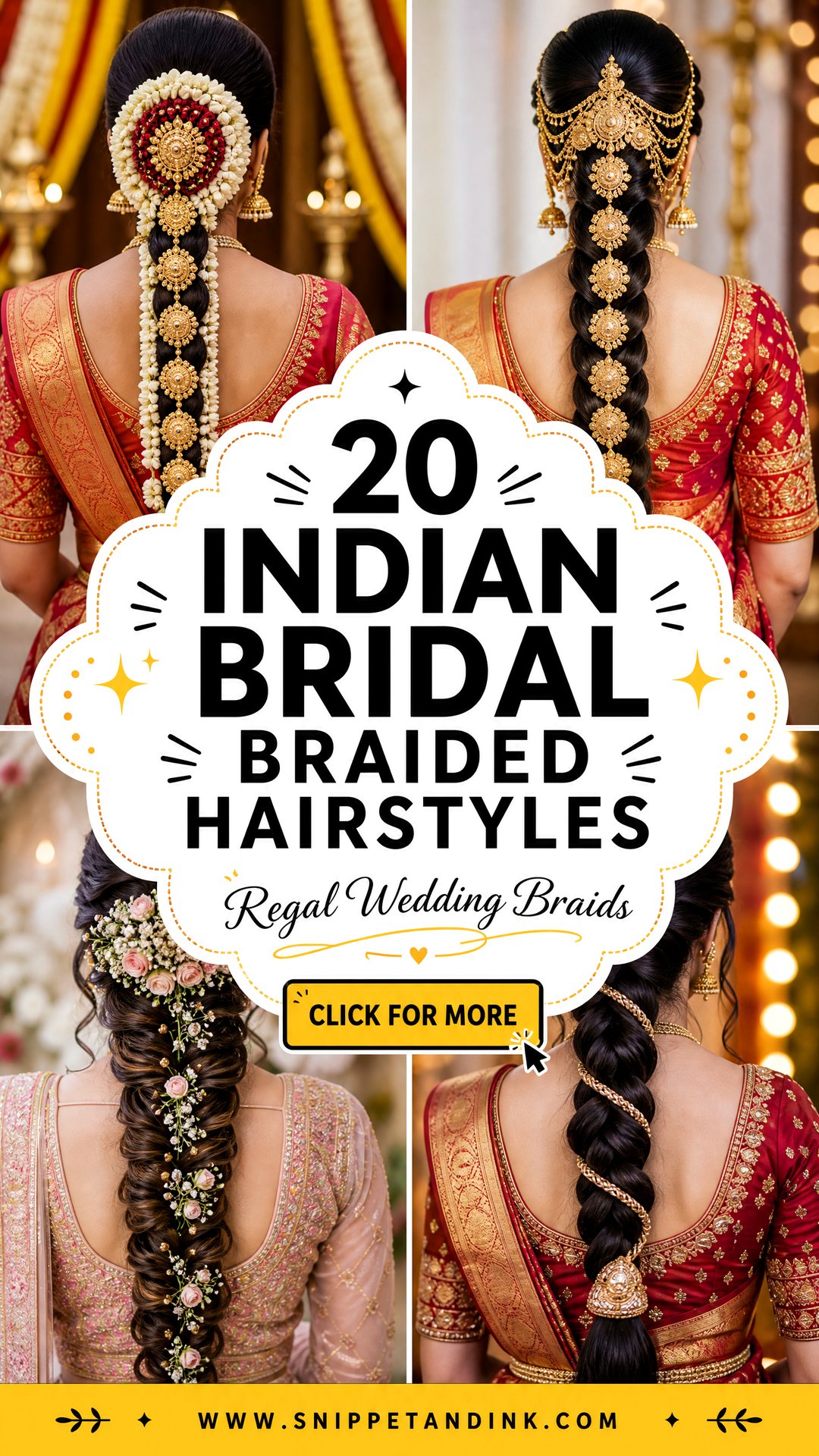
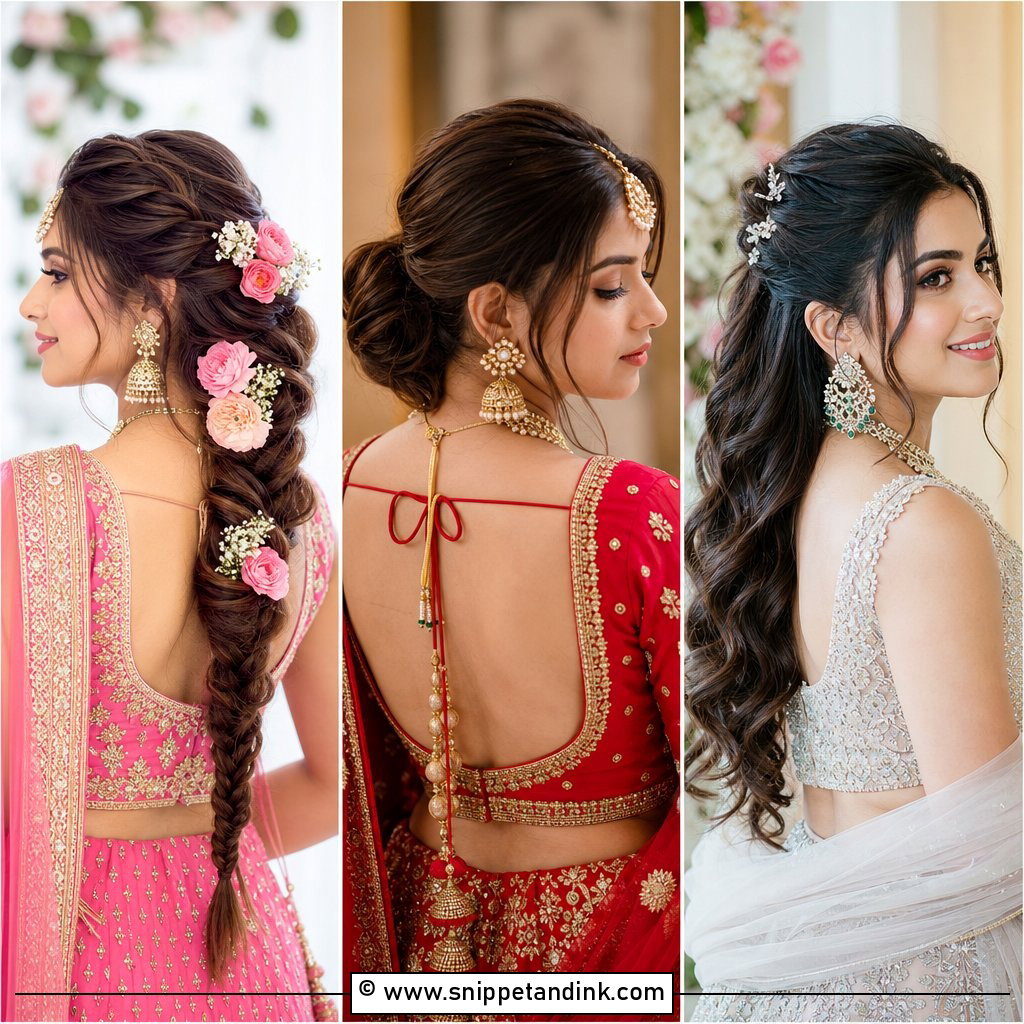
Most of my time on an Indian wedding morning goes into the braid, because a braid has to carry jewelry, hold a dupatta and stay neat through hours of ritual. It can be grand for a South Indian muhurtham, soft for mehendi, dramatic for a reception or plain for a small home ceremony. Which one suits you comes down to five things: outfit, hair length, jewelry weight, where the dupatta pins, and how long you will be sitting. Fresh flowers, gold jada pieces, pearls, kundan pins and soft curls each shift the mood. The twenty braids below are ones I would actually put on a bride, with what each needs to stay put.
A Dupatta Changes Which Braid Will Work
Before I suggest a single braid, I ask how the dupatta will be worn. It decides more about the hairstyle than the outfit does.
Draped over the head
A head-covering dupatta is pinned into the hair at the crown and often at the sides, so it needs a firm base underneath. A braided bun at mid height works, or a jada braid with a small padded section at the crown. Crown braids and high ponytails sit under the fabric as an odd lump and get crushed.
Pinned at the back or on one shoulder
When the dupatta falls from the back of the head or is fixed at a shoulder, most of the hair stays visible. This is where long jada braids, side braids and pearl or kundan braids show their full value. Put a side braid on the opposite shoulder to a shoulder-pinned dupatta so the two do not fight.
No dupatta at the reception
With nothing on the head, mermaid, bubble and soft curled braids come into play. These would flatten under fabric, so I save them for the events where the hair is the whole picture.
1. South Indian Bridal Jada Braid
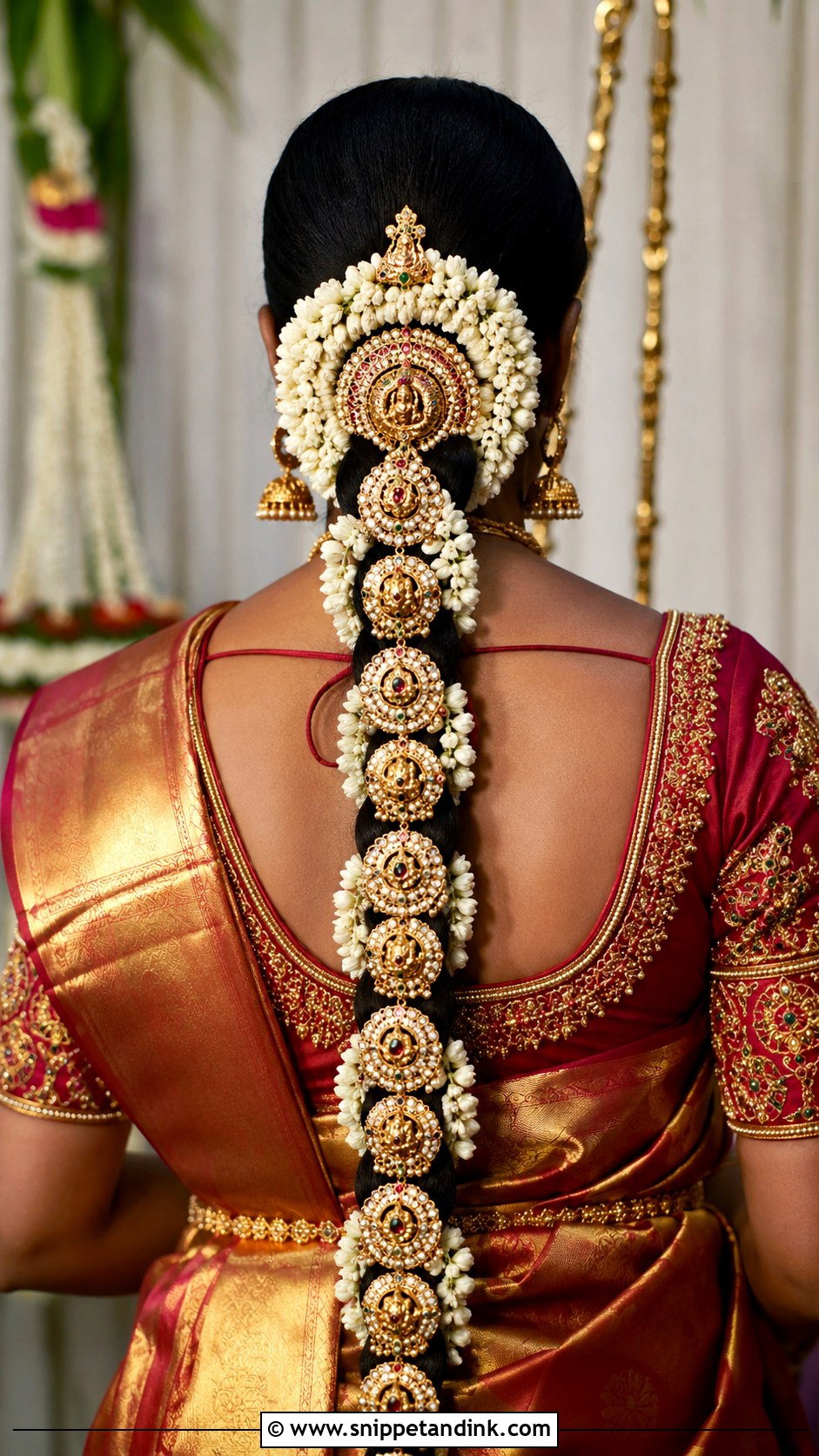
Grand and ceremonial, the jada braid starts with a precise center part and a crown smoothed flat, followed by one long, secure plait. Jada accessories, gold discs, temple pieces or flowers go on afterward. Kanjeevaram silk, temple jewelry, a waist belt and a heavy dupatta all sit comfortably with it. I rely on it for long rituals because a single firm plait barely moves. Short or thin hair is not a barrier: a matching extension woven in at the nape gives the same length, and once it is anchored the bride hardly feels it.
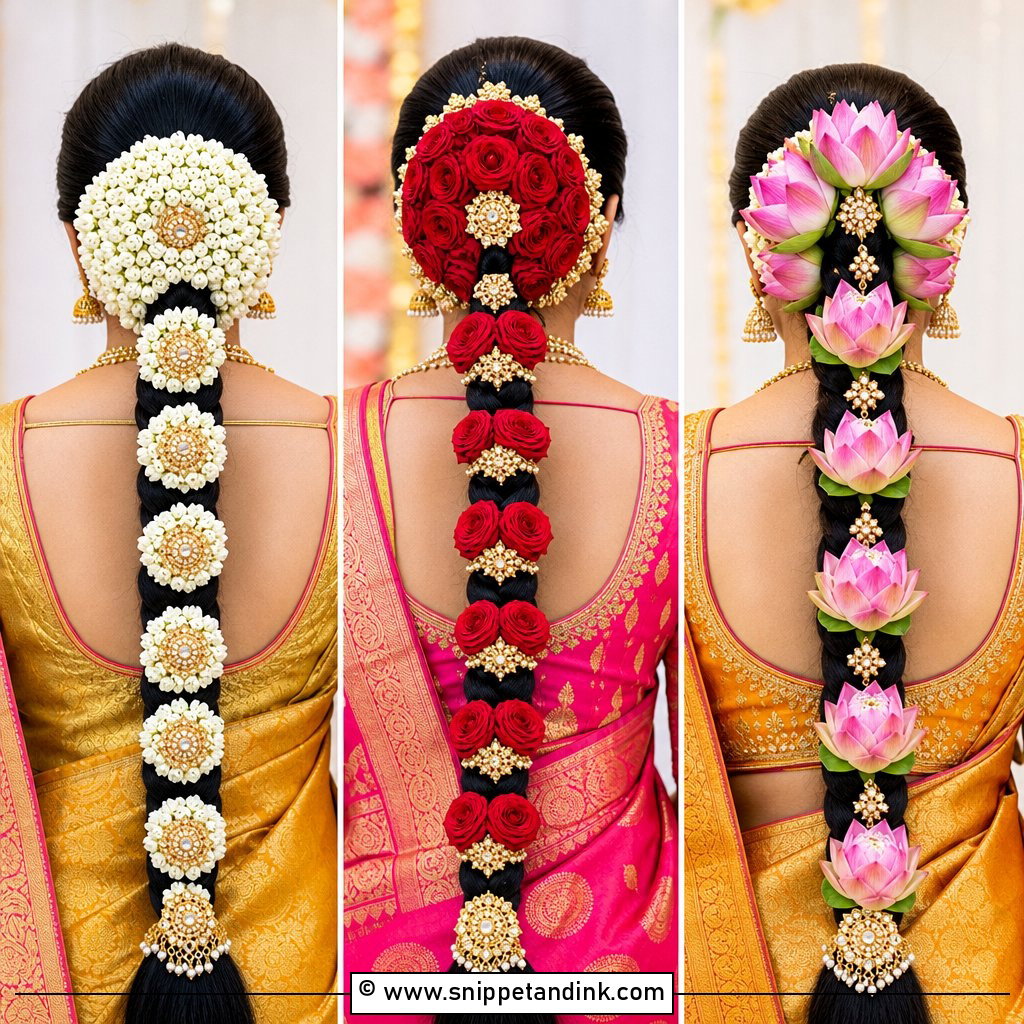
2. Poola Jada Bridal Braid
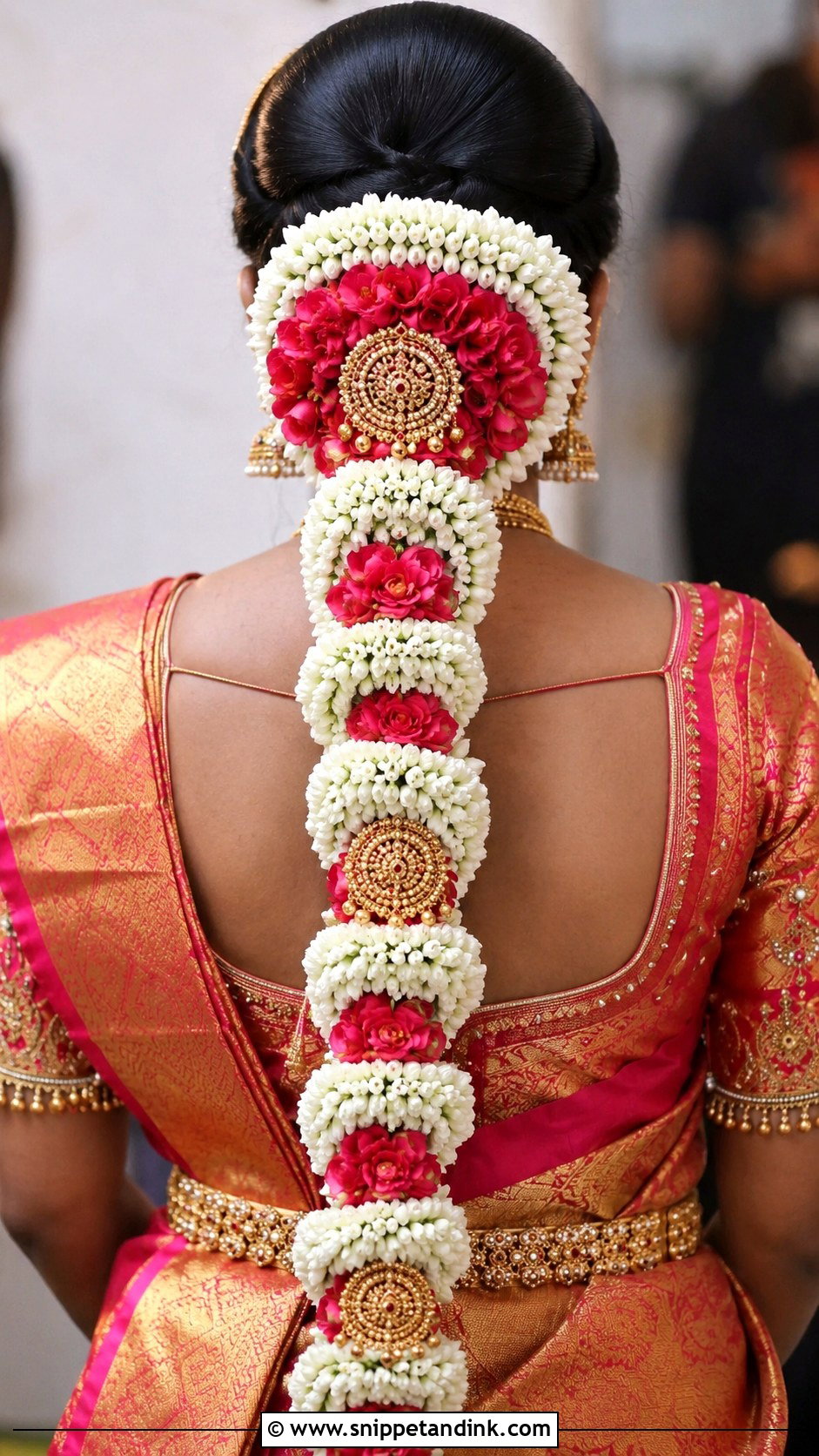
A poola jada bridal braid is a long plait covered in fresh flowers, usually jasmine, roses or whatever is in season, set as round discs, one continuous trail or clusters from crown to tip. In many South Indian ceremonies the bride spends long stretches with her back to the guests, so this is the view everyone remembers. Flower covers are heavier than they look. I sew the cover onto a sturdy base braid and take the load at the crown with crossed pins. When that step is skipped, the bride feels the pull within the first hour.
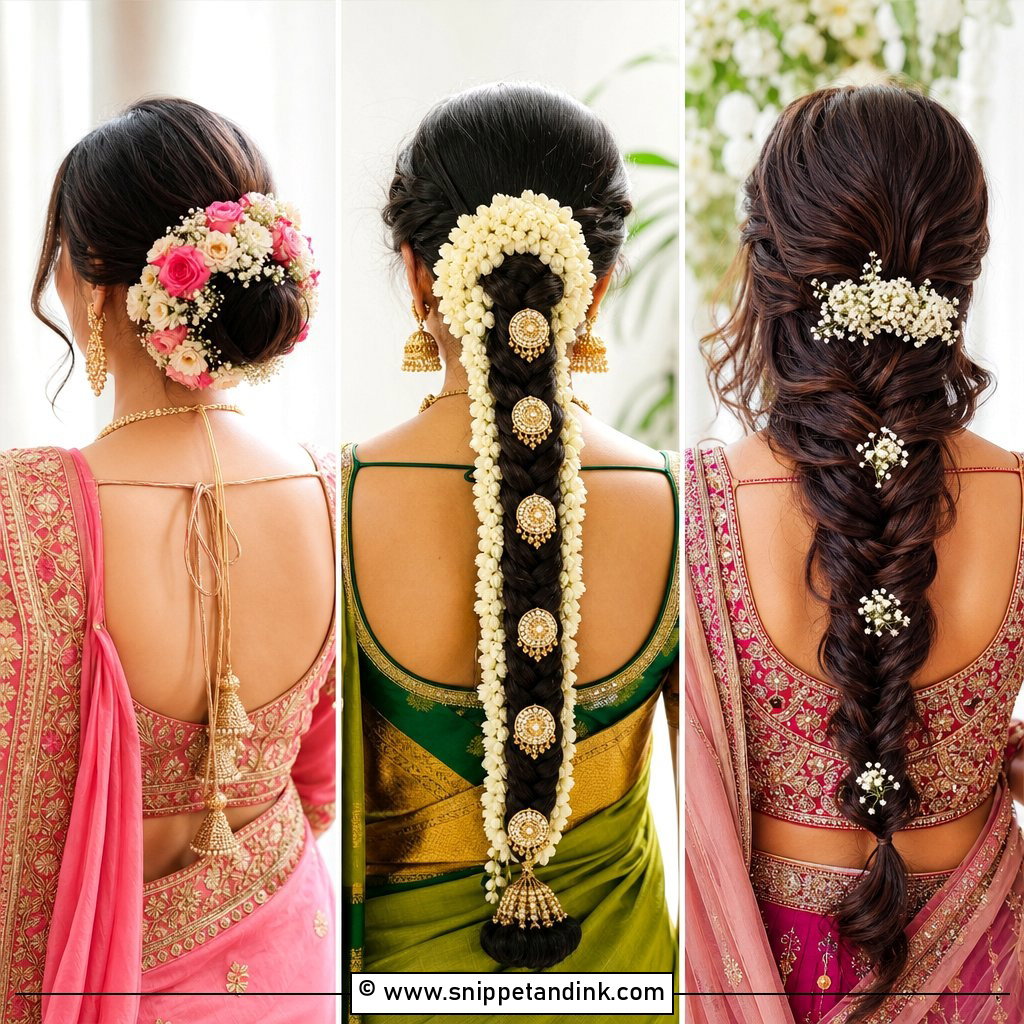
3. Indian Bridal Braid With Gajra
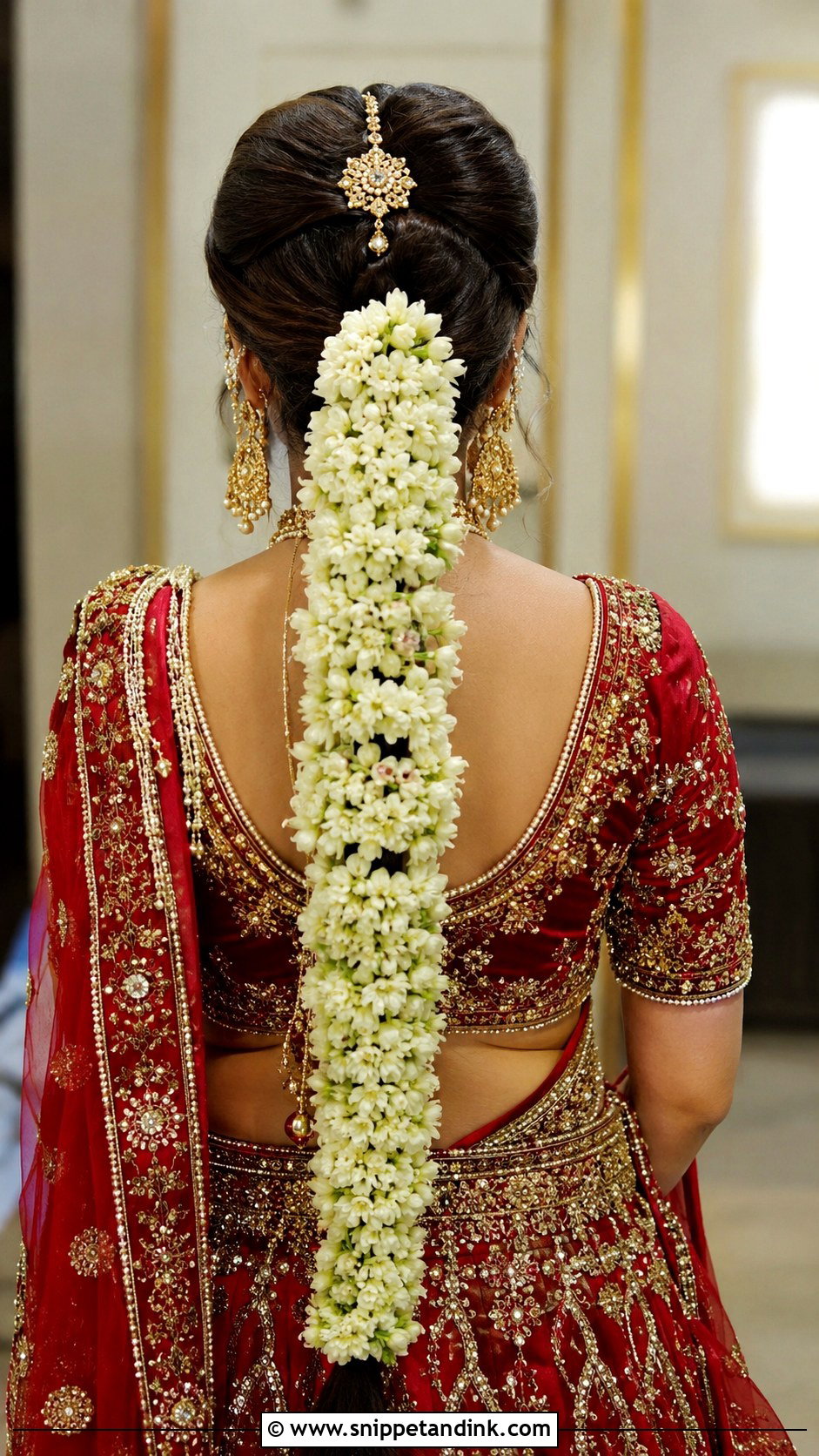
Gajra can spiral around the plait, run down one side or circle a crown bun, and each placement reads differently. A spiral looks the most traditional; a single side line is lighter and suits pre-wedding outfits. I usually add a little padding or an extension inside the braid so the jasmine has something full to wrap around, since a thin plait under a thick gajra looks like flowers on a string. A small maang tikka, a soft center part and smooth front sections finish it.
4. South Indian Bridal Braid With Gold Accessories
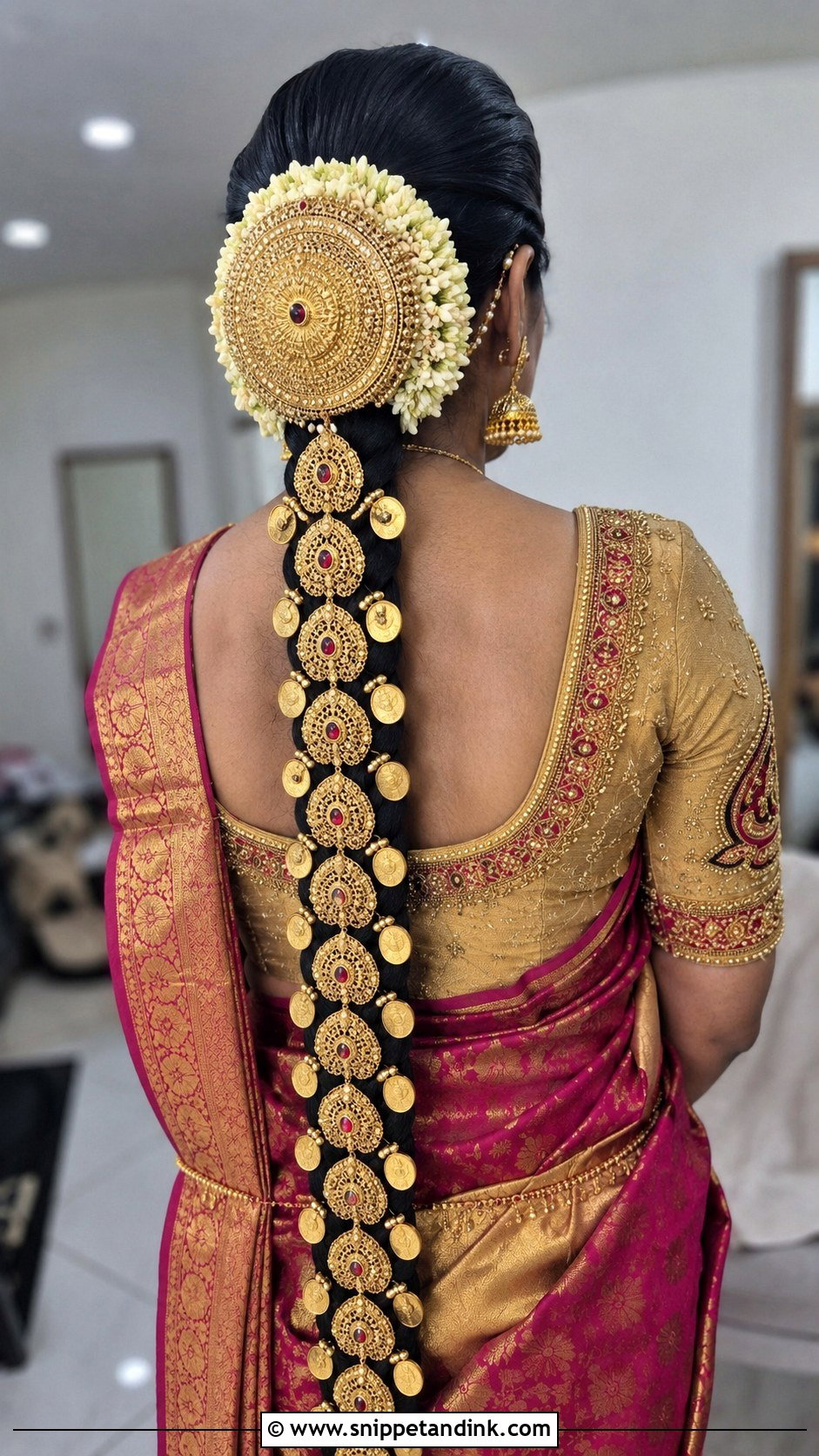
Decorative metal needs a firm surface, so the hair here is sleek, long and structured. Gold jada billalu, coin chains, floral clips and bun covers run down the braid in a measured pattern. Silk sarees, antique gold and stronger bridal makeup match its weight. At the trial I lay every piece out on the table and match it to the necklace, earrings and tikka before anything goes in. Gold adds up quickly on the scalp, which is the other reason for a trial: it shows whether the braid feels firm without feeling tight.
5. Indian Bridal Fishtail Braid
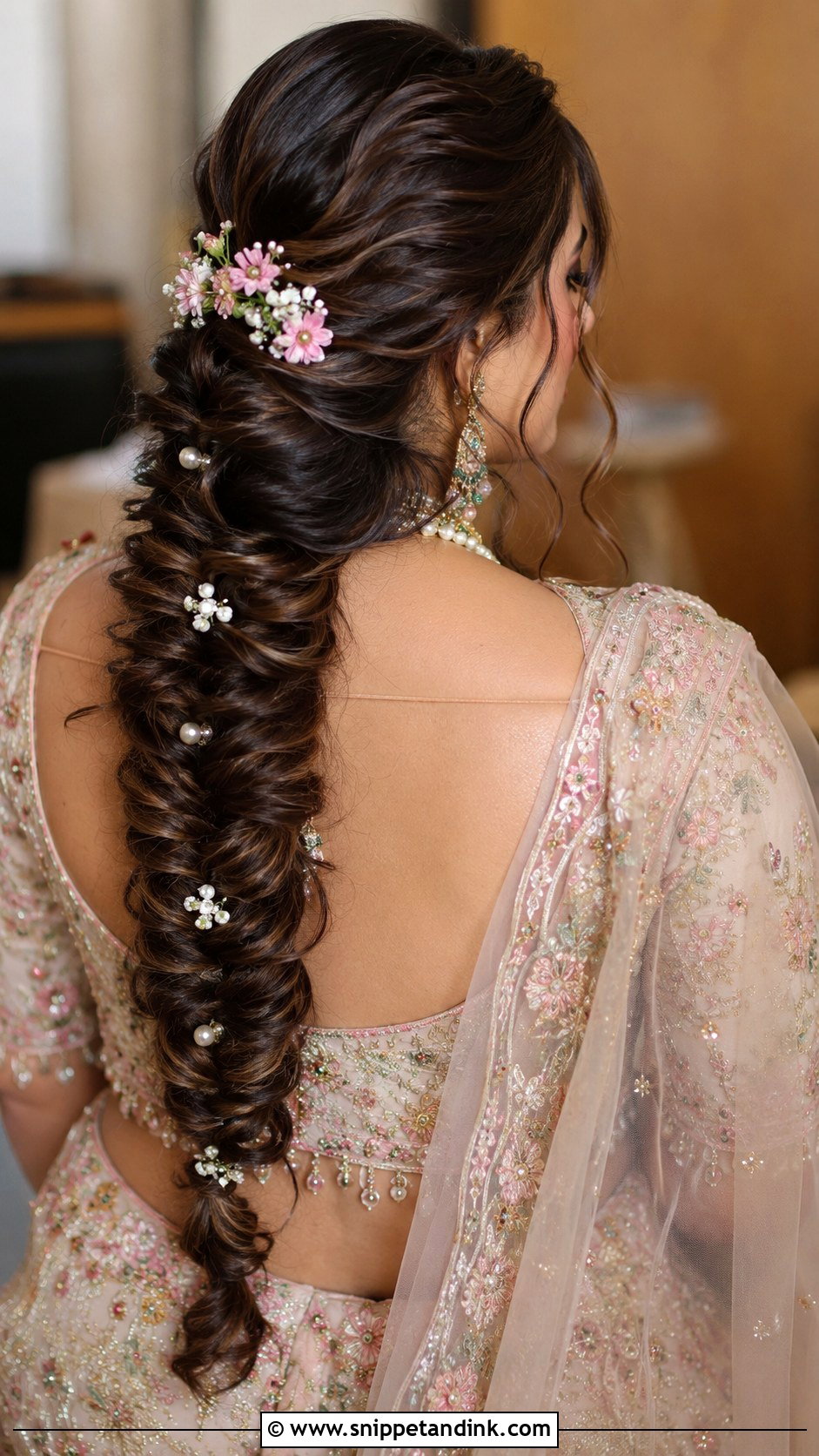
Fishtail weave shows its detail best in close-ups, especially once the edges are eased out for width. I tuck flowers, pearls or kundan pins along one side only, which keeps the pattern visible. Mehendi, haldi, an engagement or a relaxed ceremony all suit it. It needs length. On shoulder-length hair the pattern runs out after a few inches, so extensions are almost always part of the plan, and a few soft pieces left at the front stop it looking severe.
6. Indian Bridal Side Braid
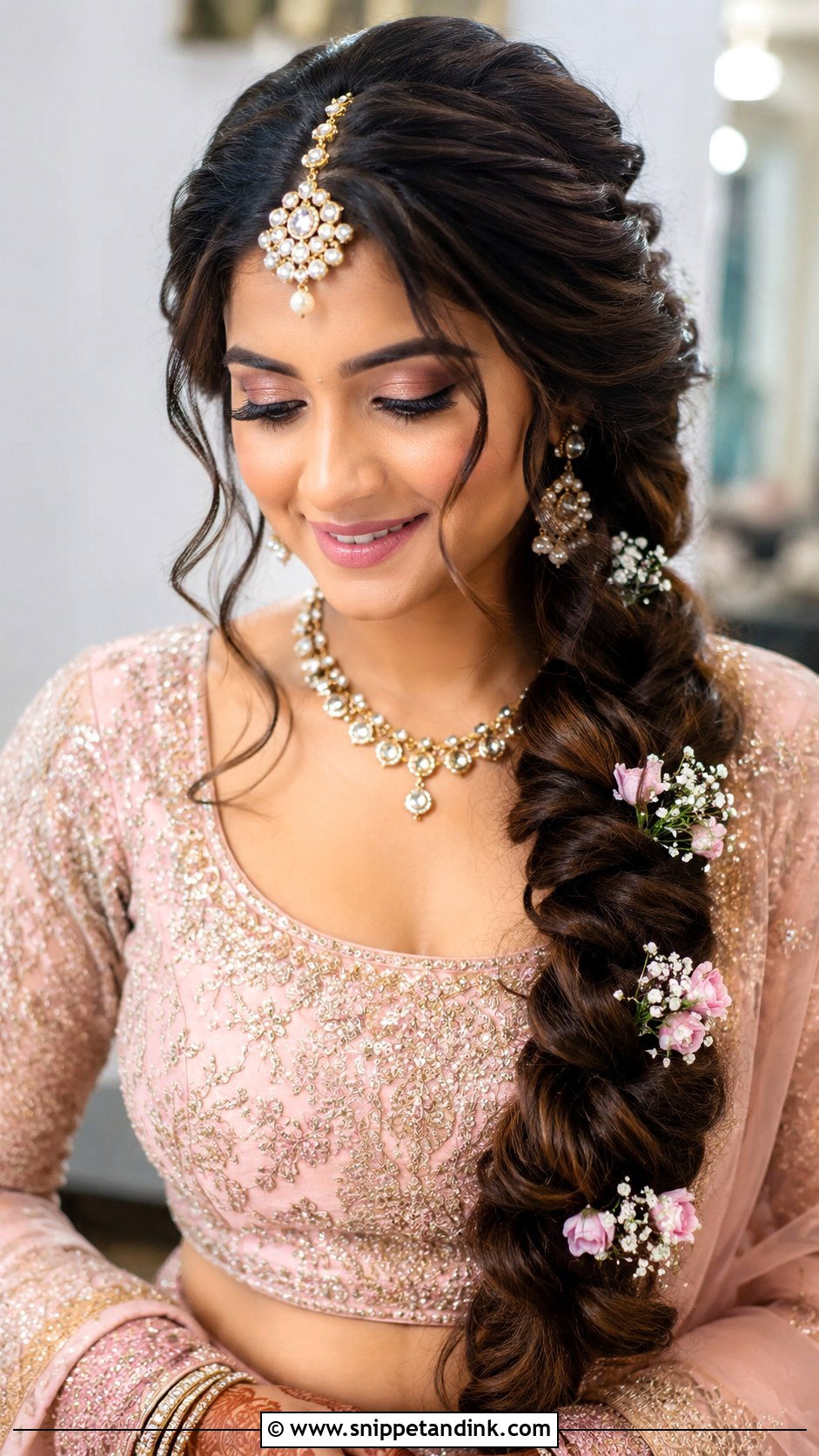
Brought over one shoulder, a side braid lands in the frame of every front-facing portrait. Lehengas, lighter sarees and dupattas that do not sit heavily on the head all work with it, and the base can be classic, fishtail, rope or pancaked. I add small flowers, pearl pins or a passa on the same side as the braid to balance it. It is kinder to brides with sensitive scalps too, since the weight rests on the shoulder instead of hanging from the crown all day.
7. Indian Bridal Braid With Flowers
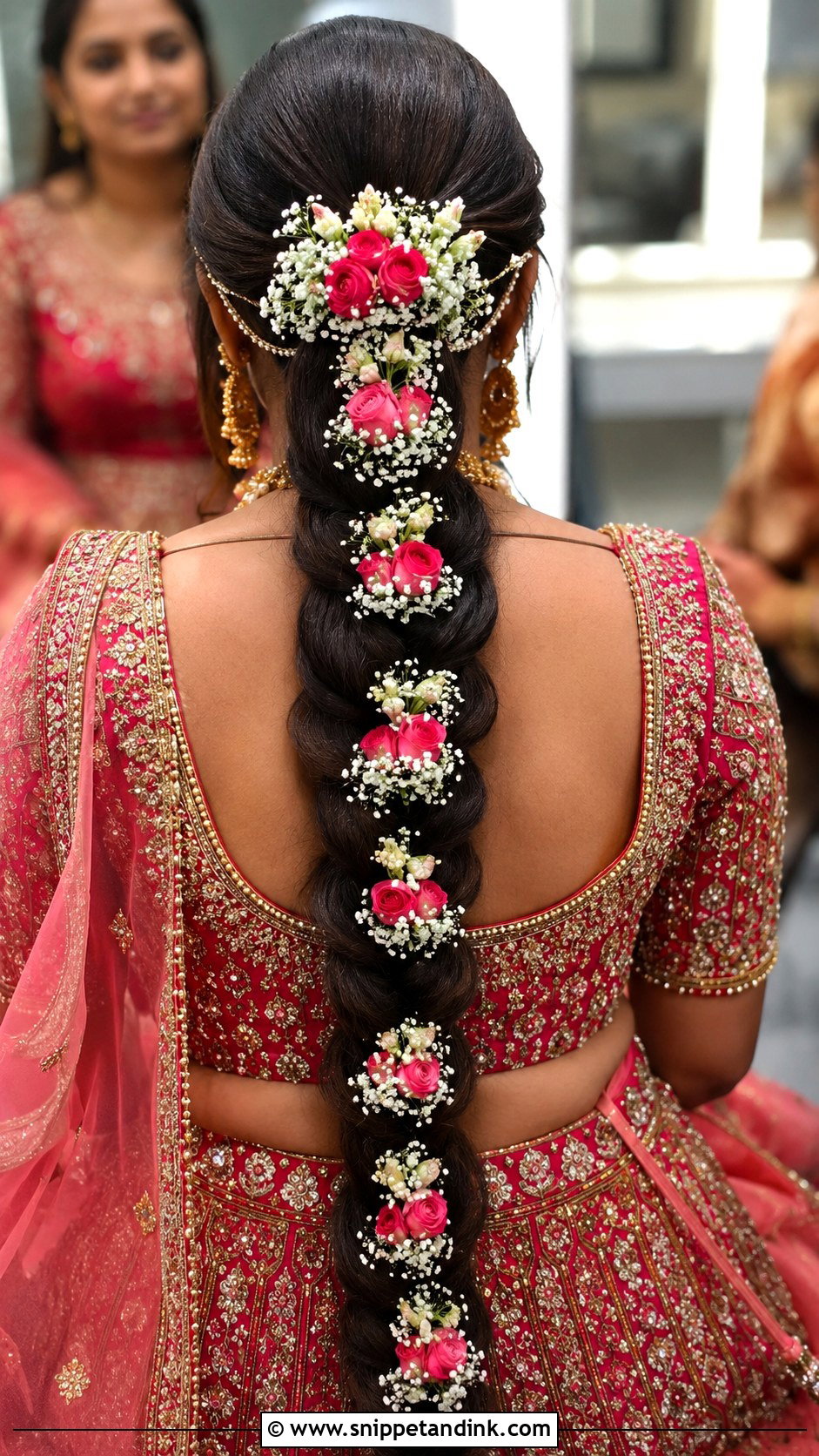
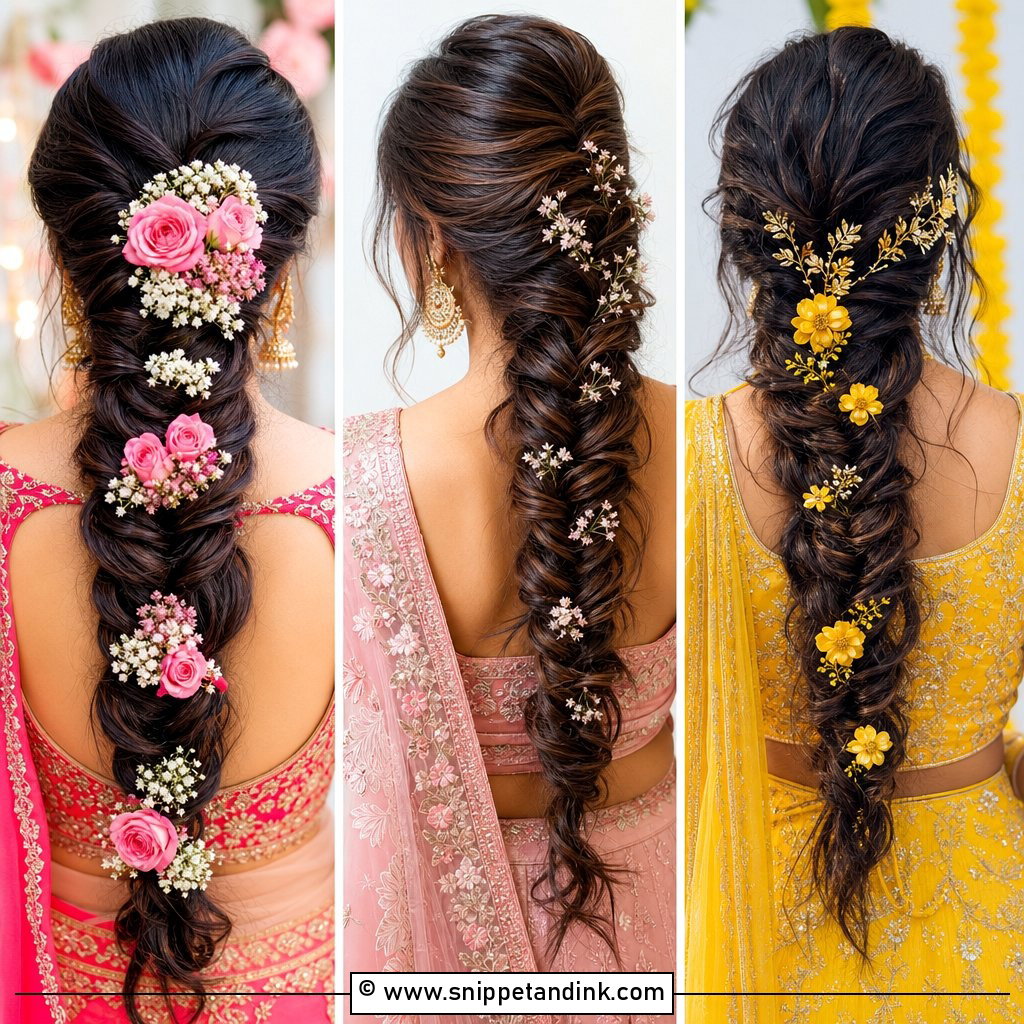
Flower choice sets the mood more than the braid itself. Jasmine reads classic, roses rich, baby’s breath airy and marigold festive. I keep the braid sleek under small blooms and slightly textured under bigger ones, because texture grips stems better. A heavily embroidered outfit wants smaller floral details; a plain outfit can take fuller placement. Ask your florist to wire the flowers in short sections so they bend with the braid instead of snapping off when you turn your head.
8. Indian Bridal Mermaid Braid
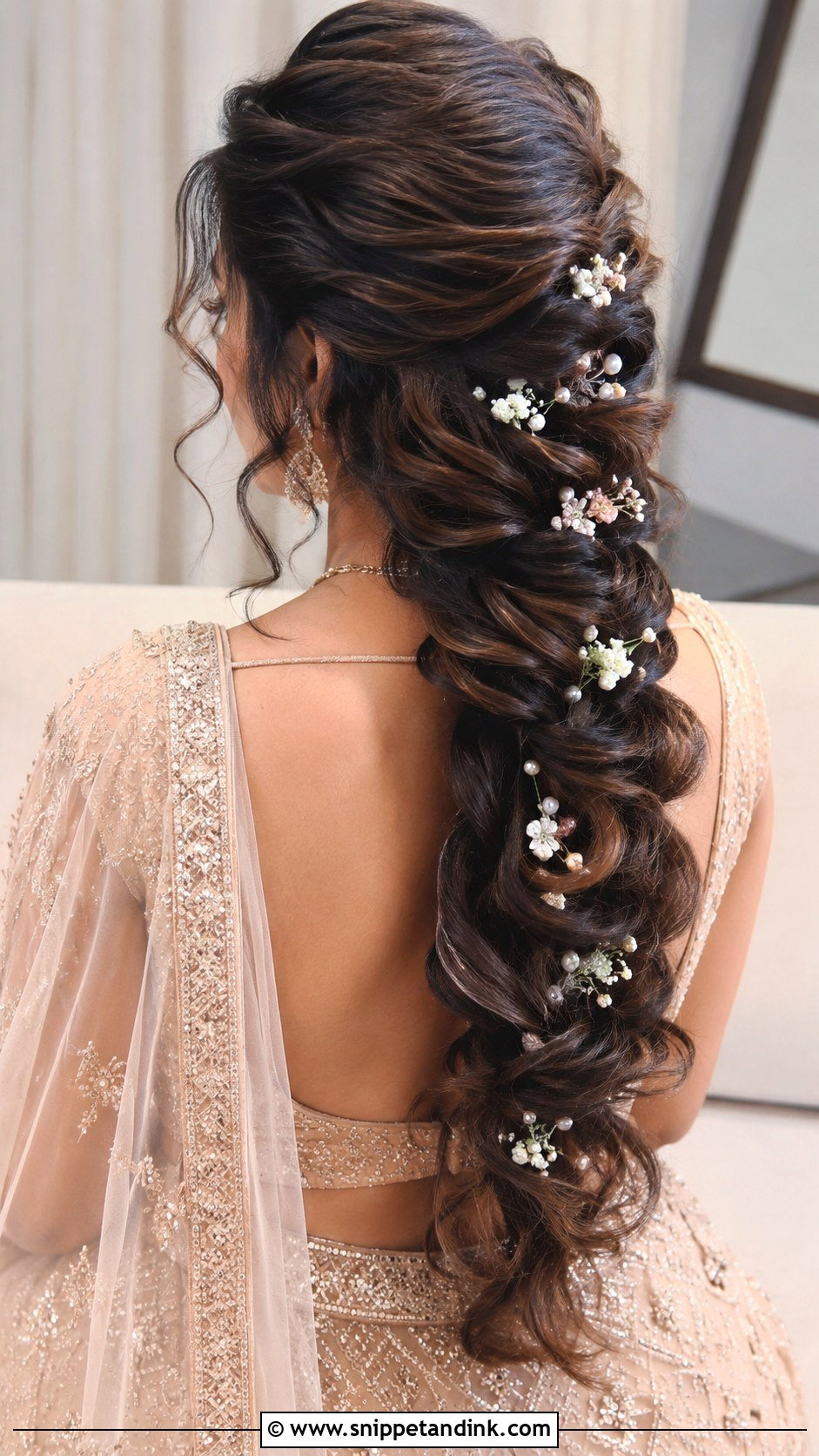
The mermaid braid starts with curling or crimping, which gives the hair grip and volume. Thin sections are then woven loosely across a wide base so the braid spreads into that broad, flowing shape. I keep it for reception, sangeet or engagement looks with pastel lehengas, shimmer fabrics and delicate jewelry. Only tiny pearls or floral pins go in; anything bigger hides the texture. Because it is so loose, it depends on strong hidden pins and a setting spray. Skip either and it widens into a mess by the second hour.
9. Indian Bridal Dutch Braid
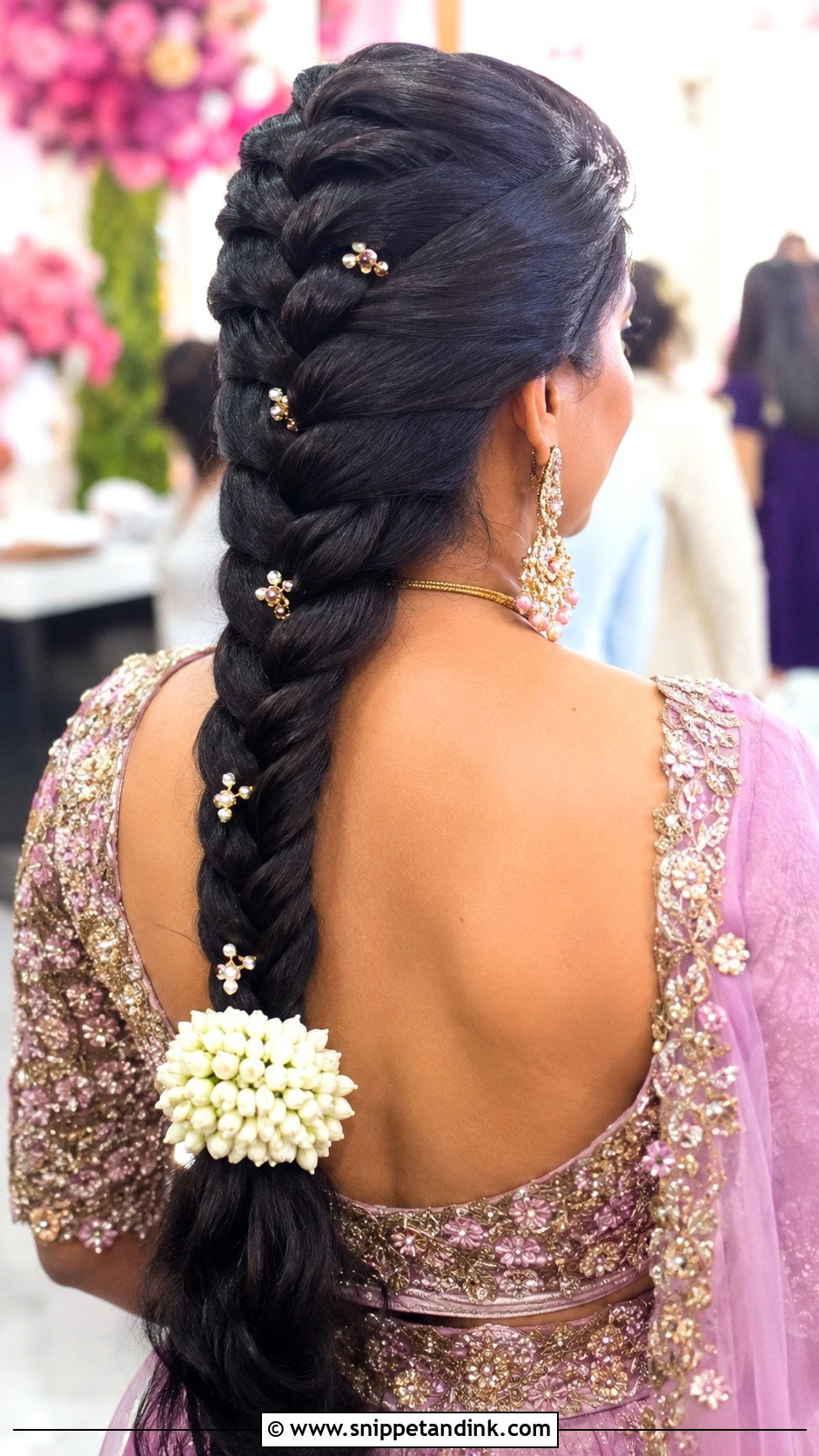
Dutch braids sit on top of the hair, so the pattern stands out before a single accessory goes in. The braid can run straight down the back, curve to the side or feed into a fuller plait. Layered hair is where it earns its place: shorter layers get locked under each crossing instead of poking out, which a plain three-strand braid cannot manage. Jasmine buds, gold pins or pearls finish it. I use it for the sangeet, since it does not budge with dancing.
10. Indian Bridal French Braid
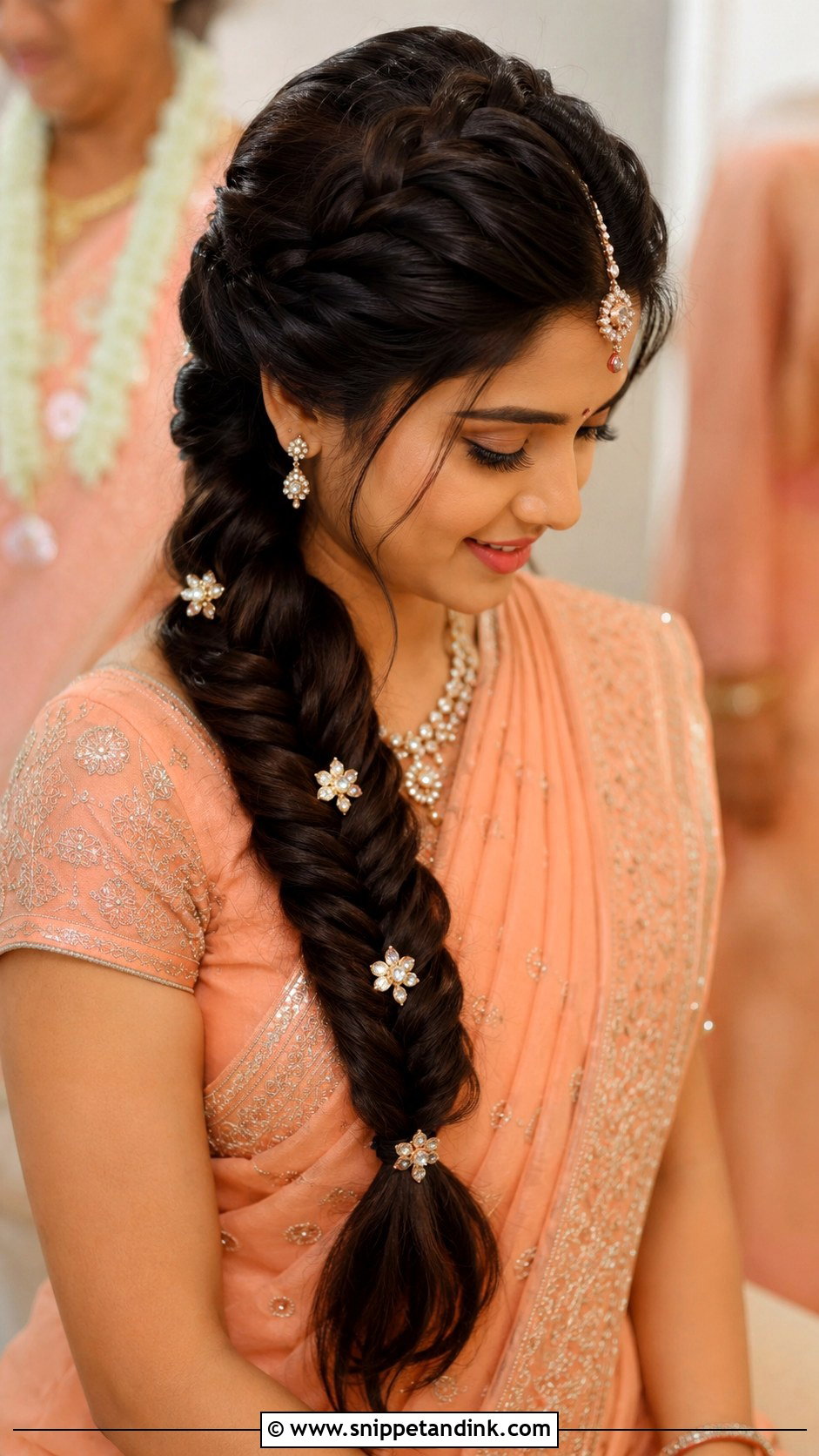
Neat and close to the head, the French braid starts near the crown and gathers hair as it moves down. It gives control without height, so it is the right base for a bride who dislikes volume. It can end as a long plait, a bun or a side braid. A maang tikka, light flowers or delicate pins keep it bridal. I choose it for pre-wedding events, small ceremonies and any bride who tells me she hates feeling her hair.
11. Indian Bridal Rope Braid
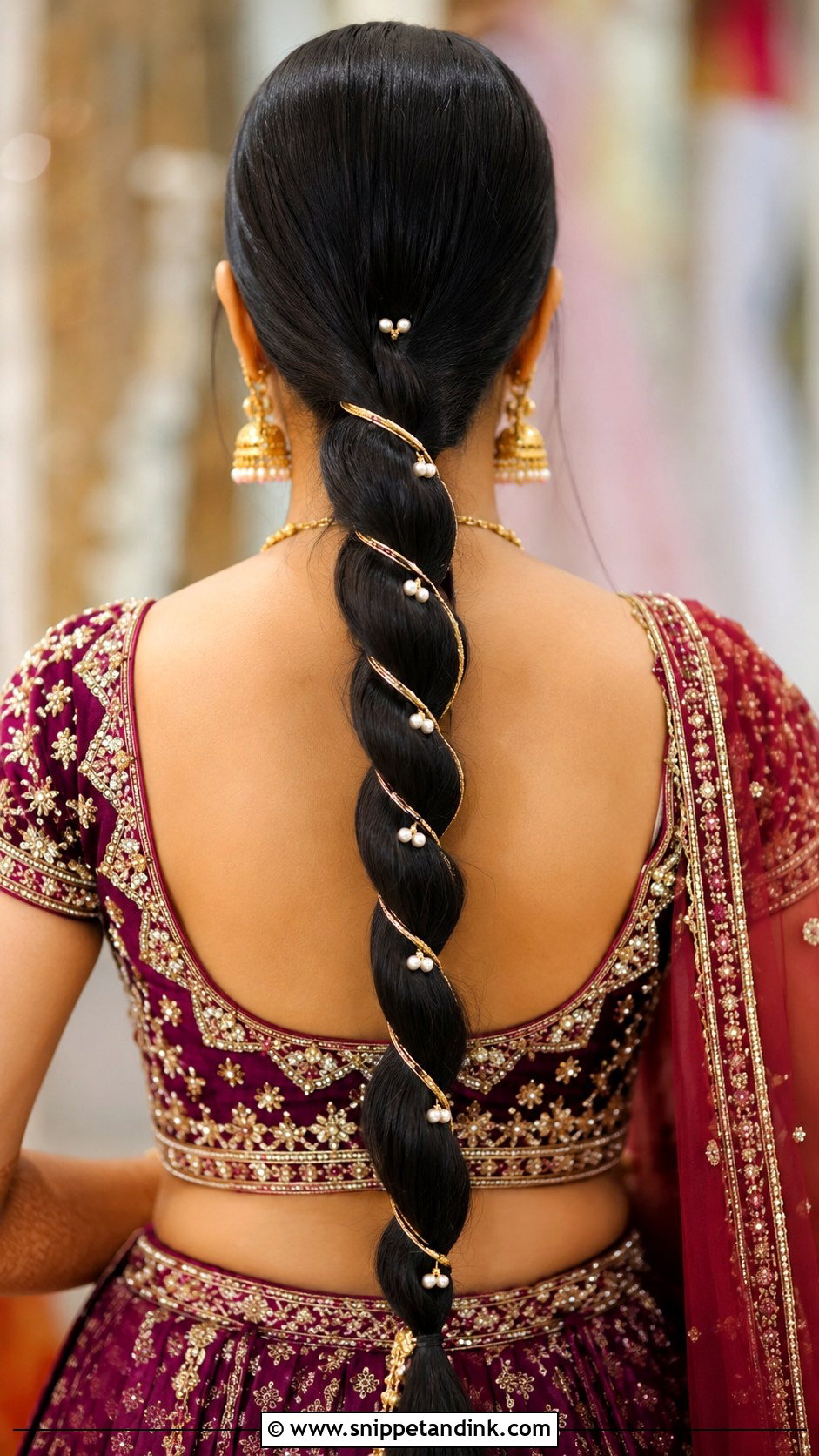
Two sections, each twisted one way and then wrapped around each other the opposite way, make a rope braid. That counter-twist is the whole trick; get the directions wrong and the rope unwinds in minutes. Shiny dark hair suits it, because the spiral throws light along its length. Gold thread, pearls or small flowers can follow the twist. A smooth crown keeps it classic, and a little lift at the top makes it modern.
12. Indian Bridal Bubble Braid
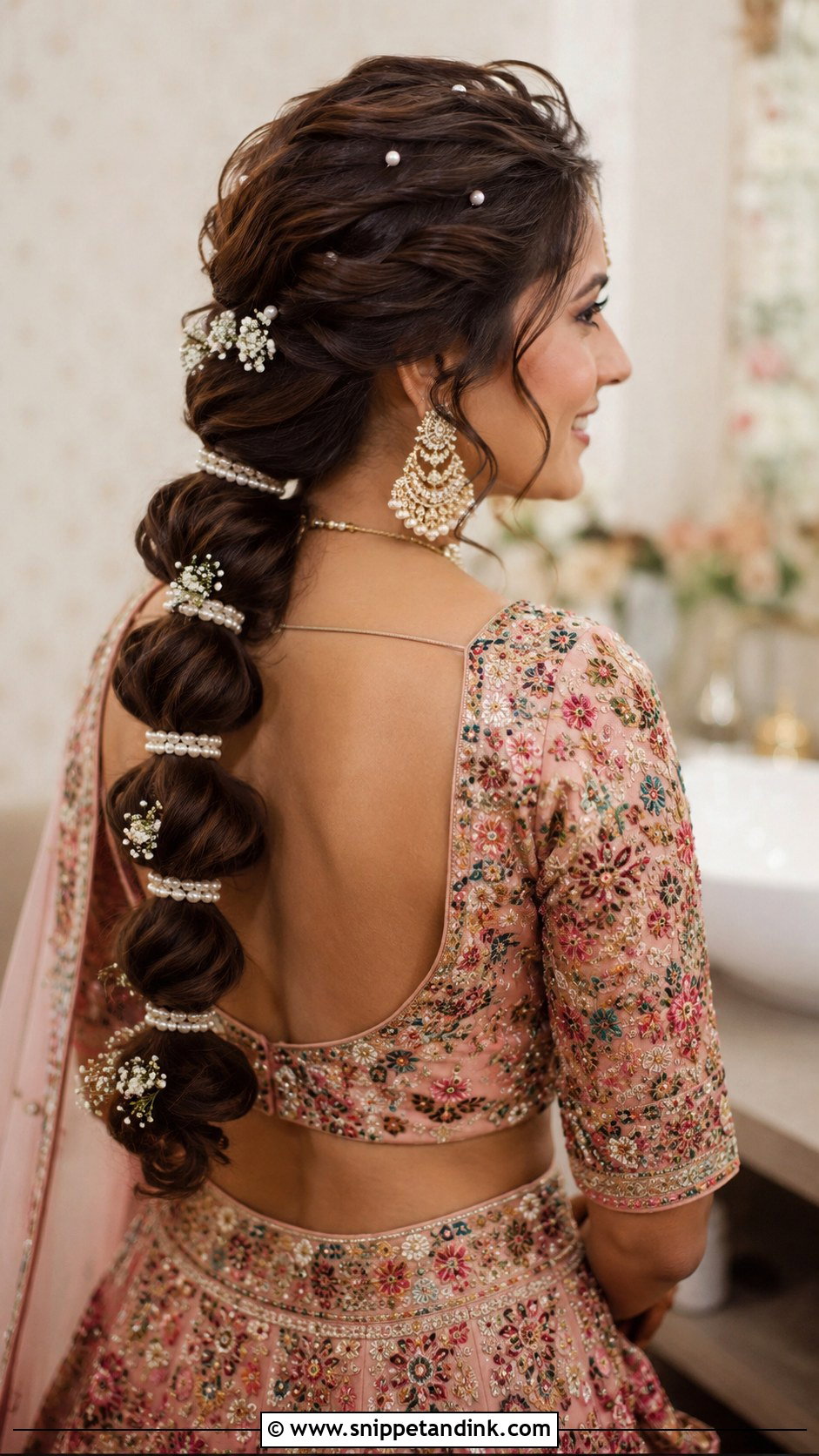
An Indian bridal bubble braid belongs at mehendi or sangeet more than at the main ceremony. The hair is tied in sections and each one is eased out into a rounded bubble, with the elastic wrapped in a strand of hair, gold thread, tiny flowers or a pearl band. With extensions it looks full even on medium-length hair, and because the weight is spread along the length it is comfortable. Keep the front polished with a center part or soft waves so it still reads bridal next to a colorful lehenga.
13. Indian Bridal Crown Braid
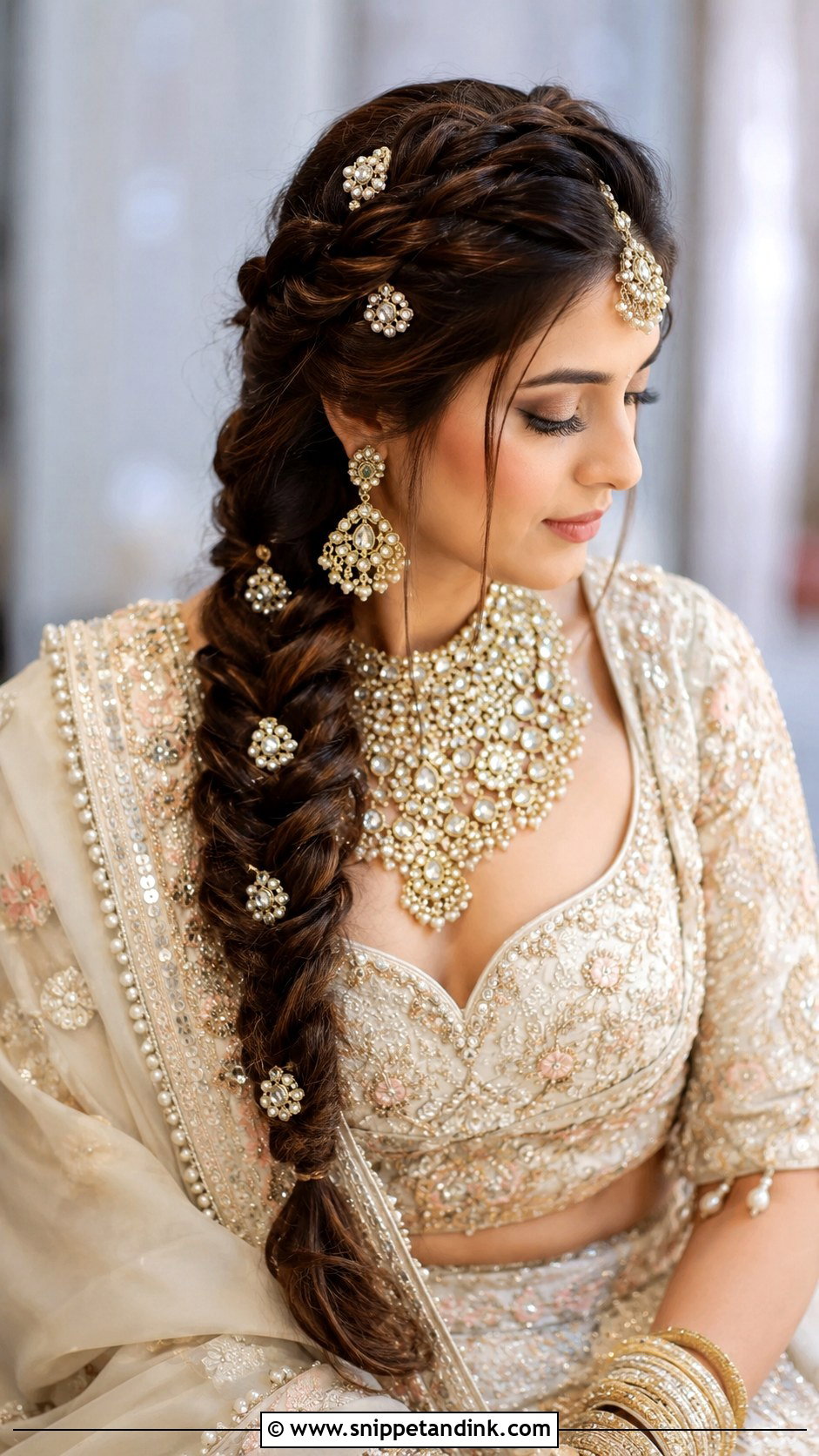
Wrapped around the head and blended into a bun, a long braid or curls, the crown braid keeps jewelry and makeup fully visible. It is a natural fit when the dupatta is pinned at the back rather than draped over the head. Small flowers, kundan pins or pearls along the braid complete it. My main caution is tension. A crown braid pulled tight at the hairline is the most common cause of a bridal headache, so I secure it with pins, not tightness.
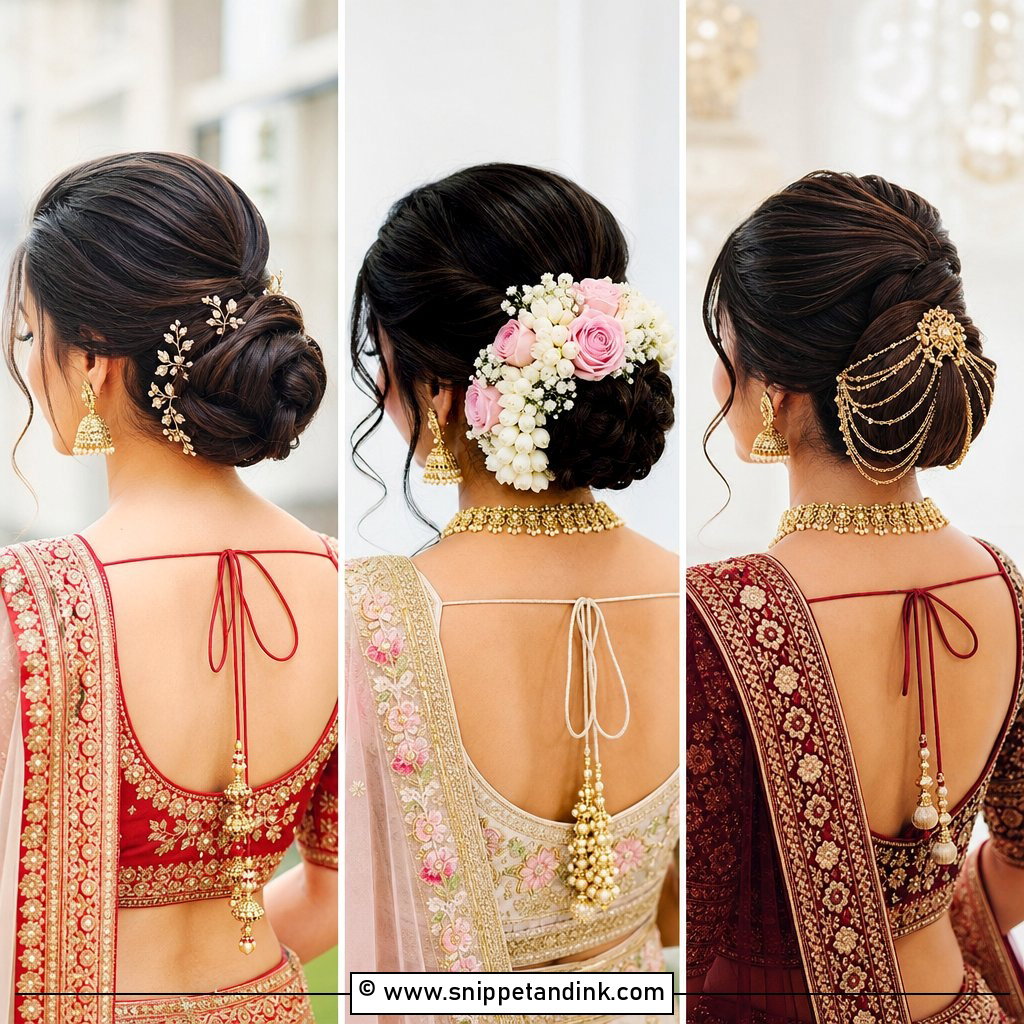
14. Indian Bridal Braided Bun
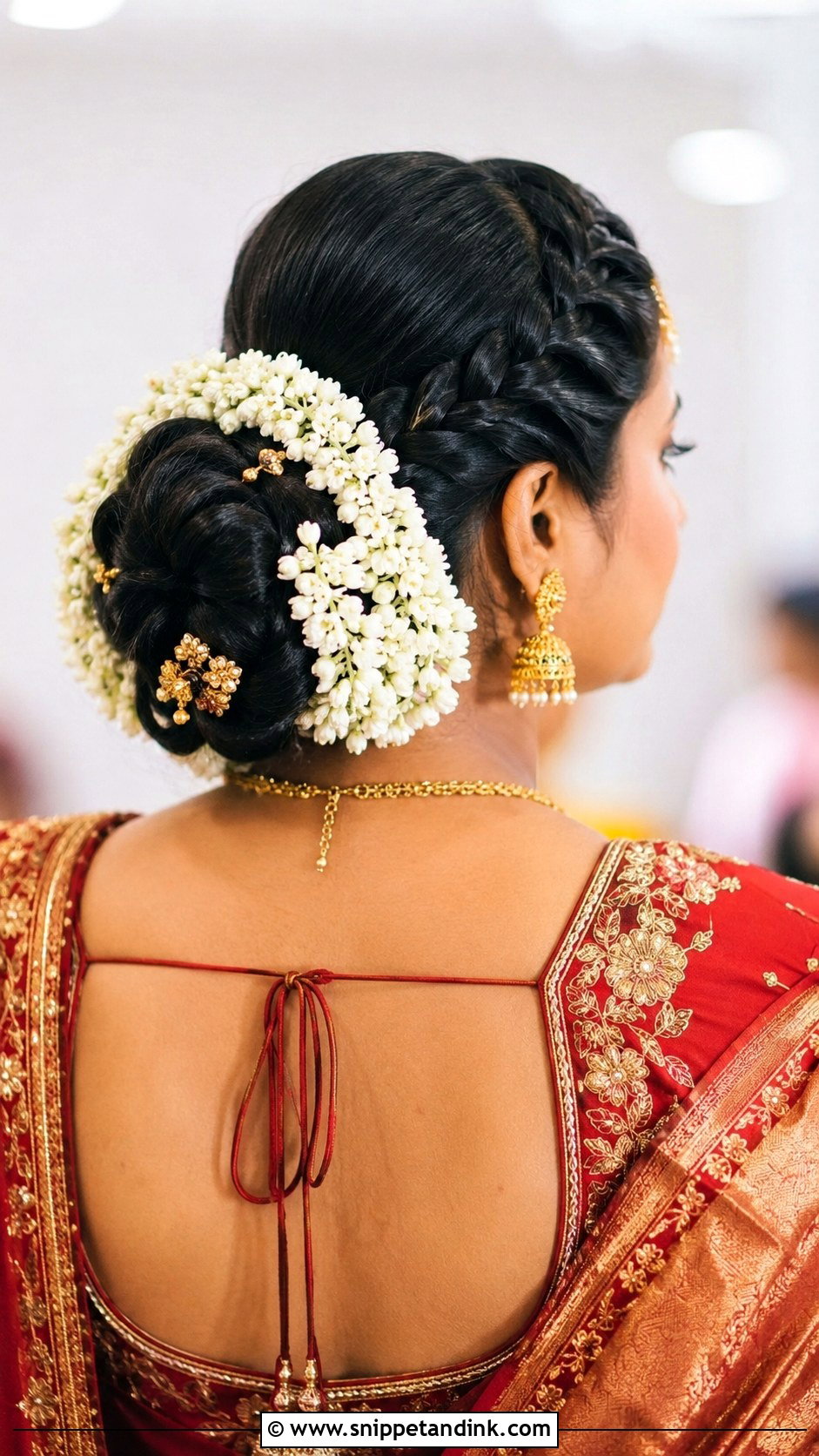
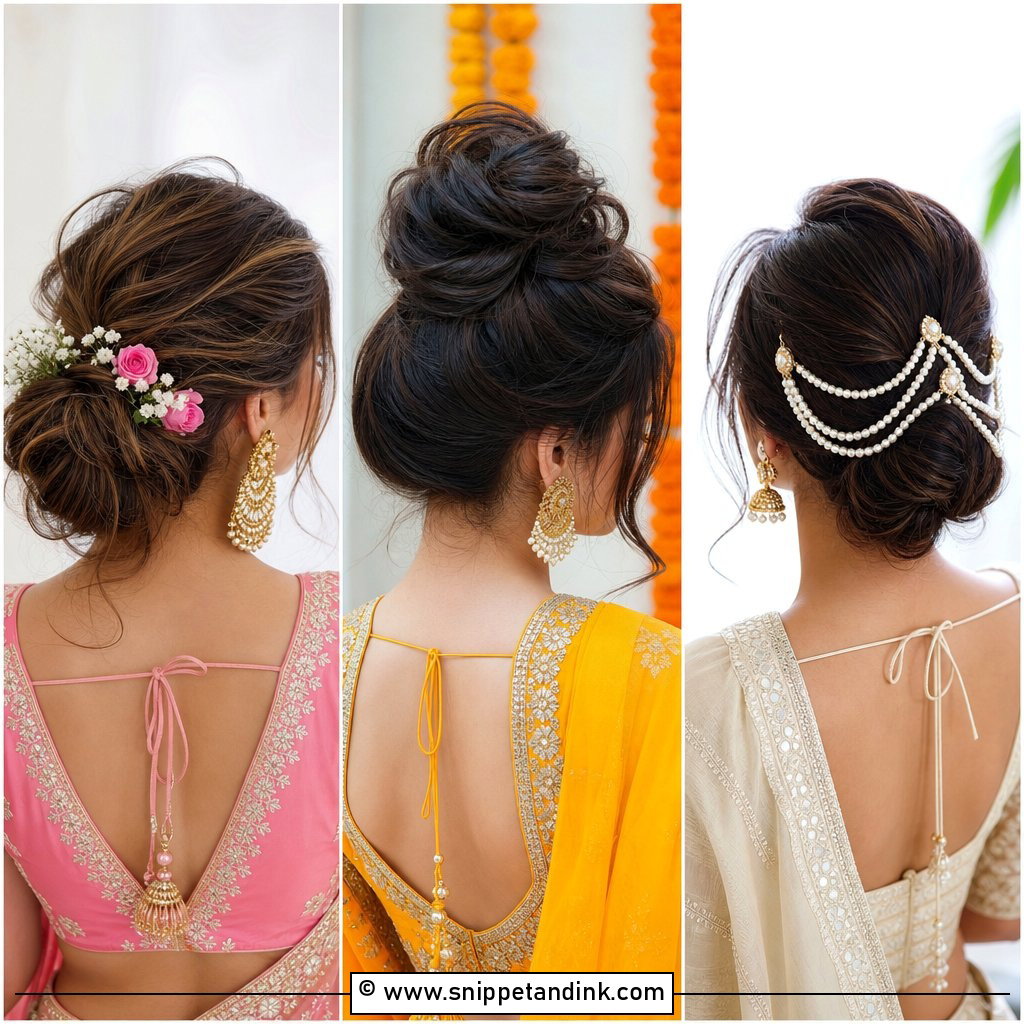
Braids at the crown, along the sides or around the bun, all pinned into a low or mid bun: this is the shape I trust most under a heavy dupatta, because the bun gives the dupatta pins something solid to grab. It suits heavy lehengas, sarees and formal ceremonies, and brides who would rather not have a plait down the back. Gajra around the bun, gold pins or pearls make it traditional. If your dupatta is draped over the head, a mid bun sits better than a high one.


15. Indian Bridal Braid With Maang Tikka
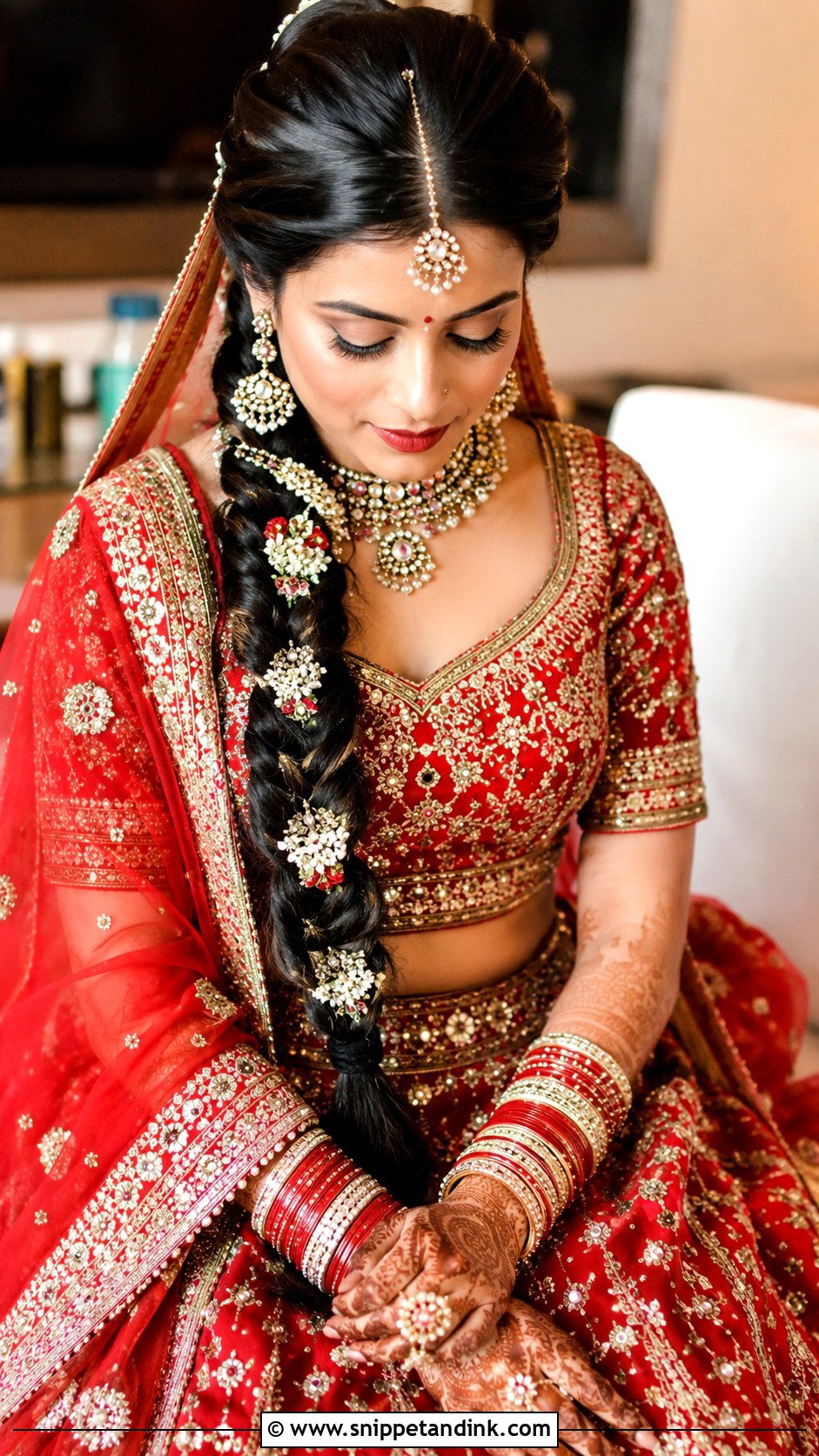
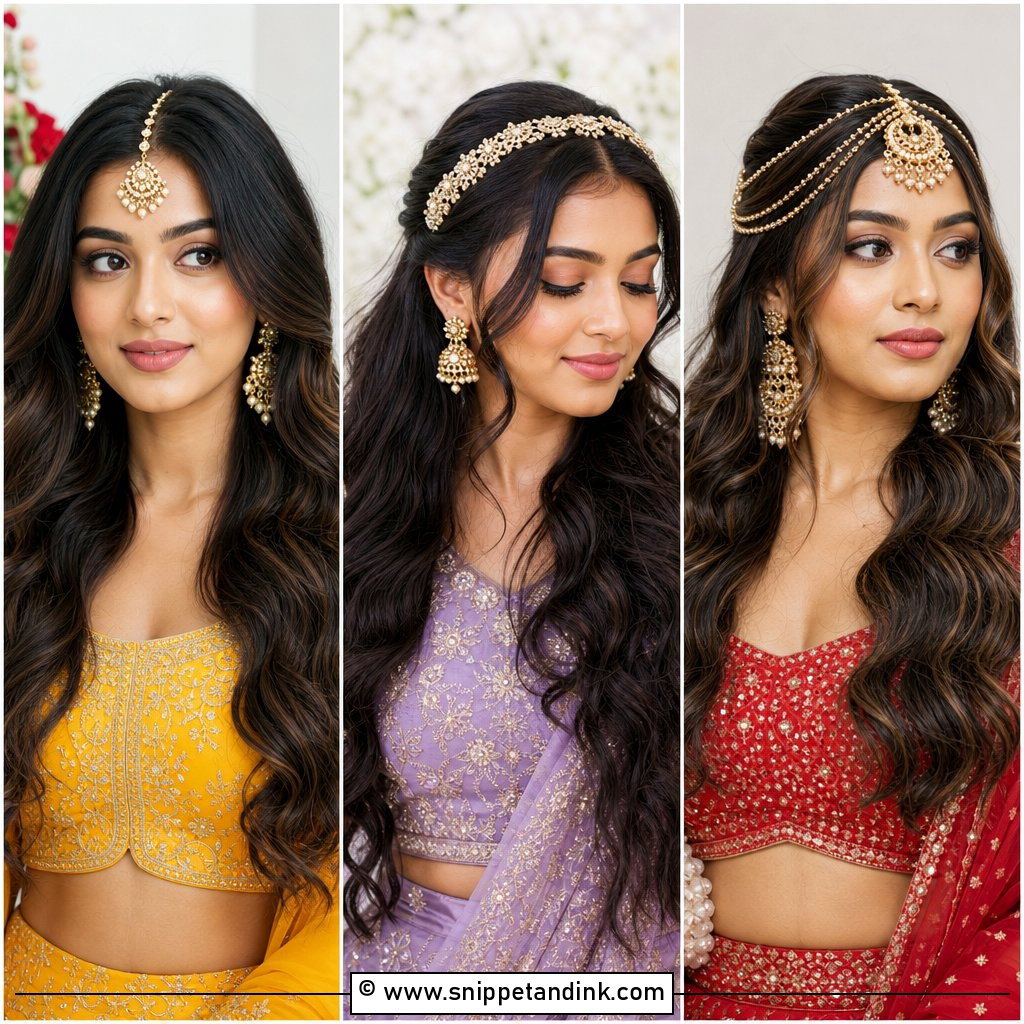
Front and back matter equally in a braid built around a maang tikka. The hair is center-parted and smoothed, and the parting has to hold the tikka without the chain sliding sideways. I pin the tikka into a small hidden section before the braid is finished, never after, because once the braid is done there is nothing left at the crown to anchor it. The braid can be simple, fishtail, jada or floral. A little front volume balances a heavier tikka.
16. Indian Bridal Braid With Pearls
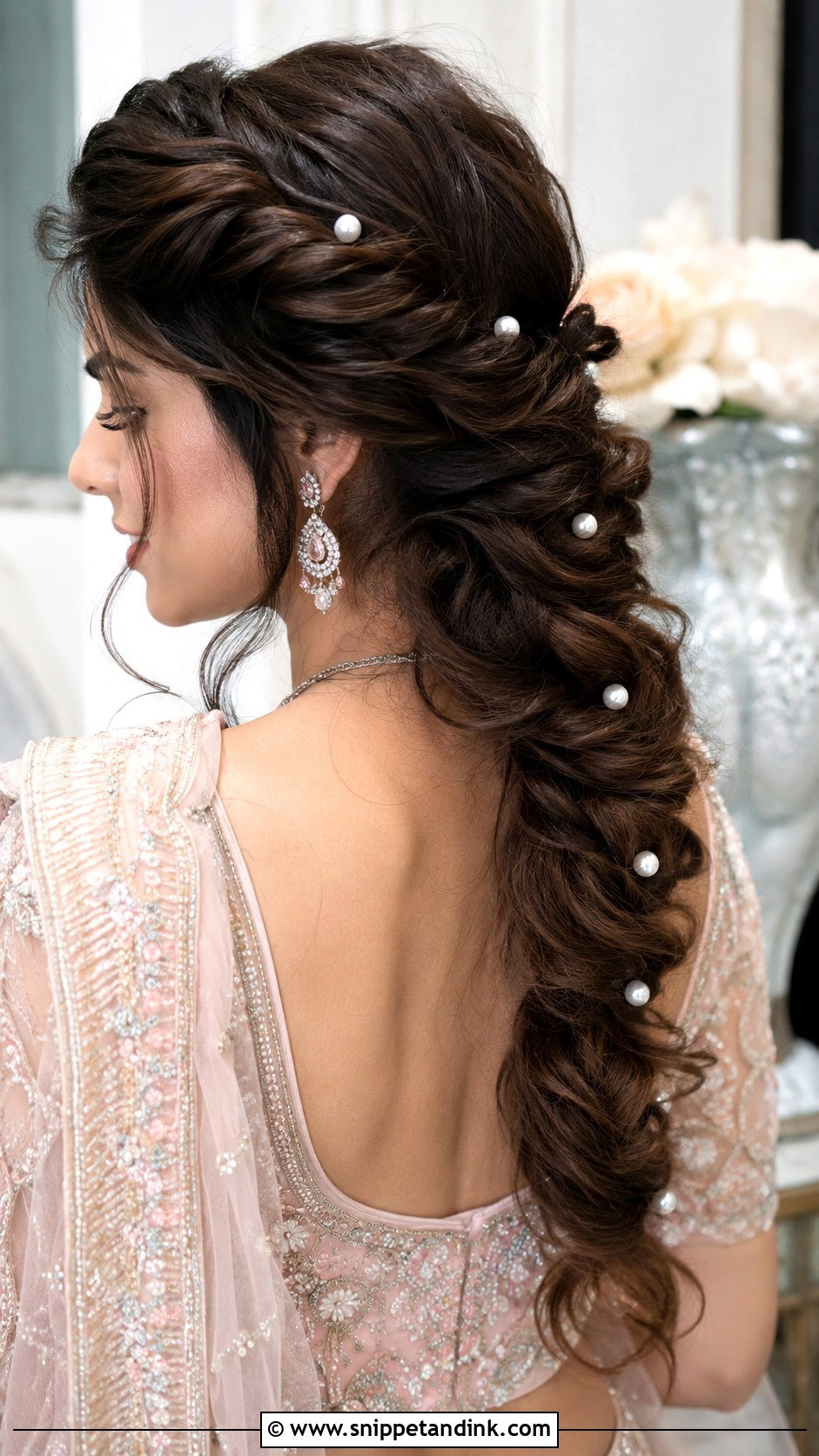
Pearls go in as pins, strings, clips or tiny scattered accents, and they suit pastel lehengas, ivory, champagne tones and fine embroidery. A fishtail, French, mermaid or classic three-strand plait will carry them. Keep the braid a little full. On a very tight braid pearls sink between the strands and vanish; on a looser one they sit on the surface where light reaches them. That light finish is why I suggest them for receptions and engagements.
17. Indian Bridal Braid With Kundan Pins
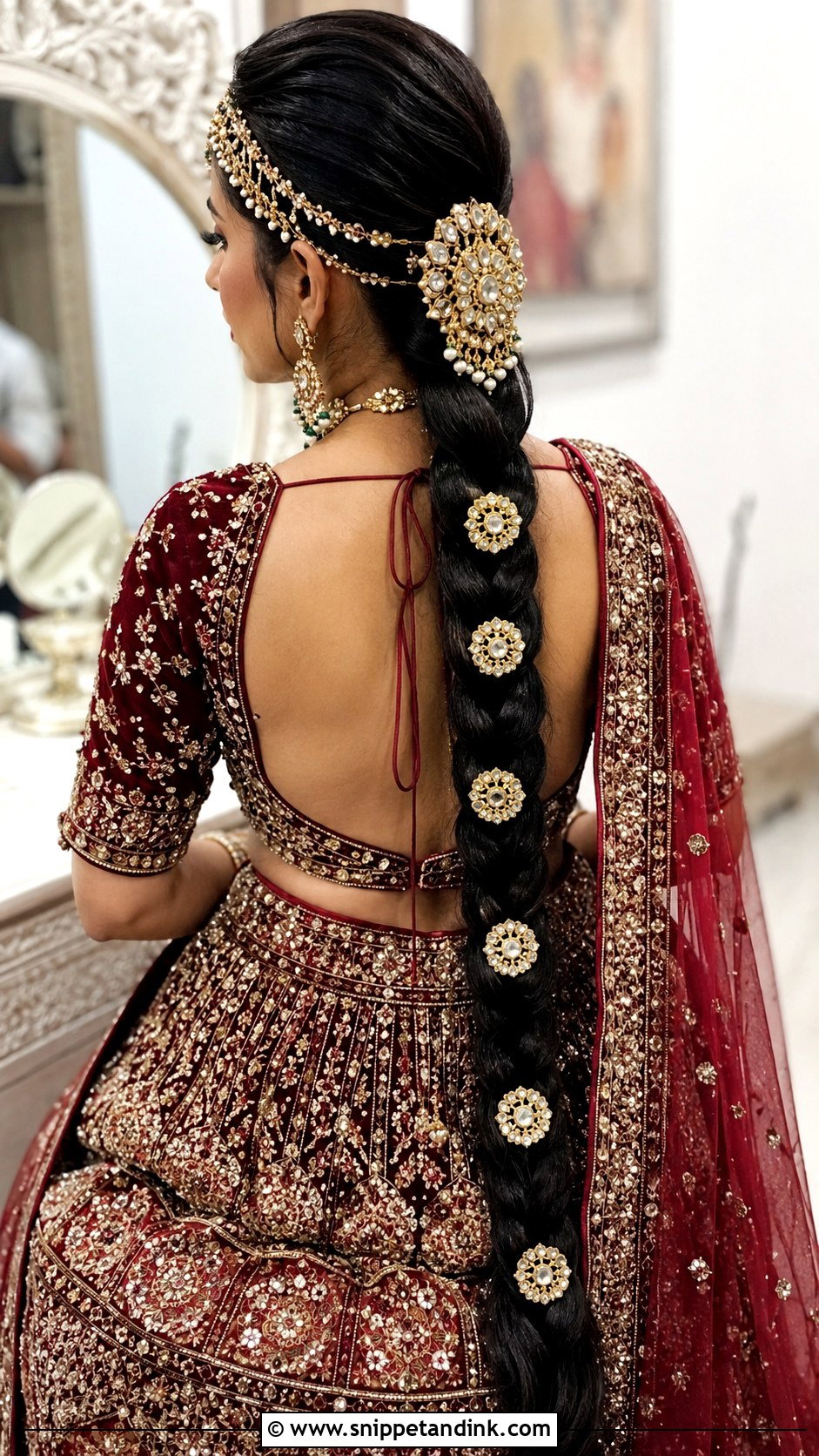
Kundan gives a rich North Indian finish and pairs with lehengas, matha pattis, passa jewelry and embroidered dupattas. Pins can run evenly down the braid or cluster near the crown for a heavier effect, with the braid down the back or pulled to one side. I only use them when the outfit already has gold, ivory or jewel-toned work, otherwise they look borrowed. Kundan pieces have flat backs, so on a perfectly sleek braid they lie dead flat. A touch of volume underneath tilts them toward the light.
18. Indian Bridal Braid With Soft Curls
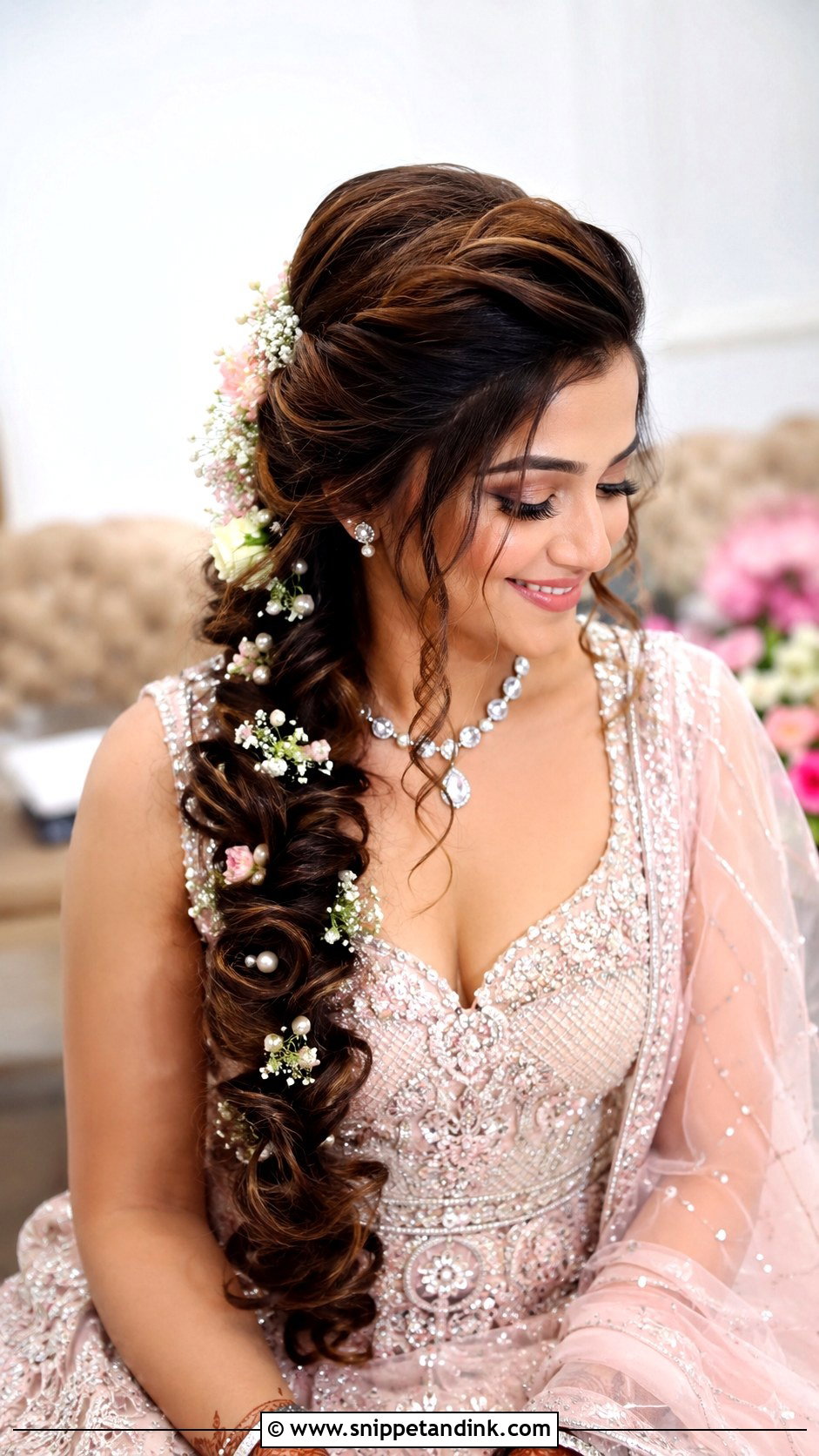
Starting at the crown or side, this braid blends into loose curls through its length, so you get movement while the hair stays controlled. Reception, engagement or sangeet suit it better than a traditional ceremony. Highlights and extensions make the curls look fuller, and tiny flowers, pearls or crystal pins are enough decoration. I curl with heat and let each curl cool completely before braiding, then finish with a flexible spray so the curls stay soft rather than crunchy.
19. Simple Indian Bridal Braid
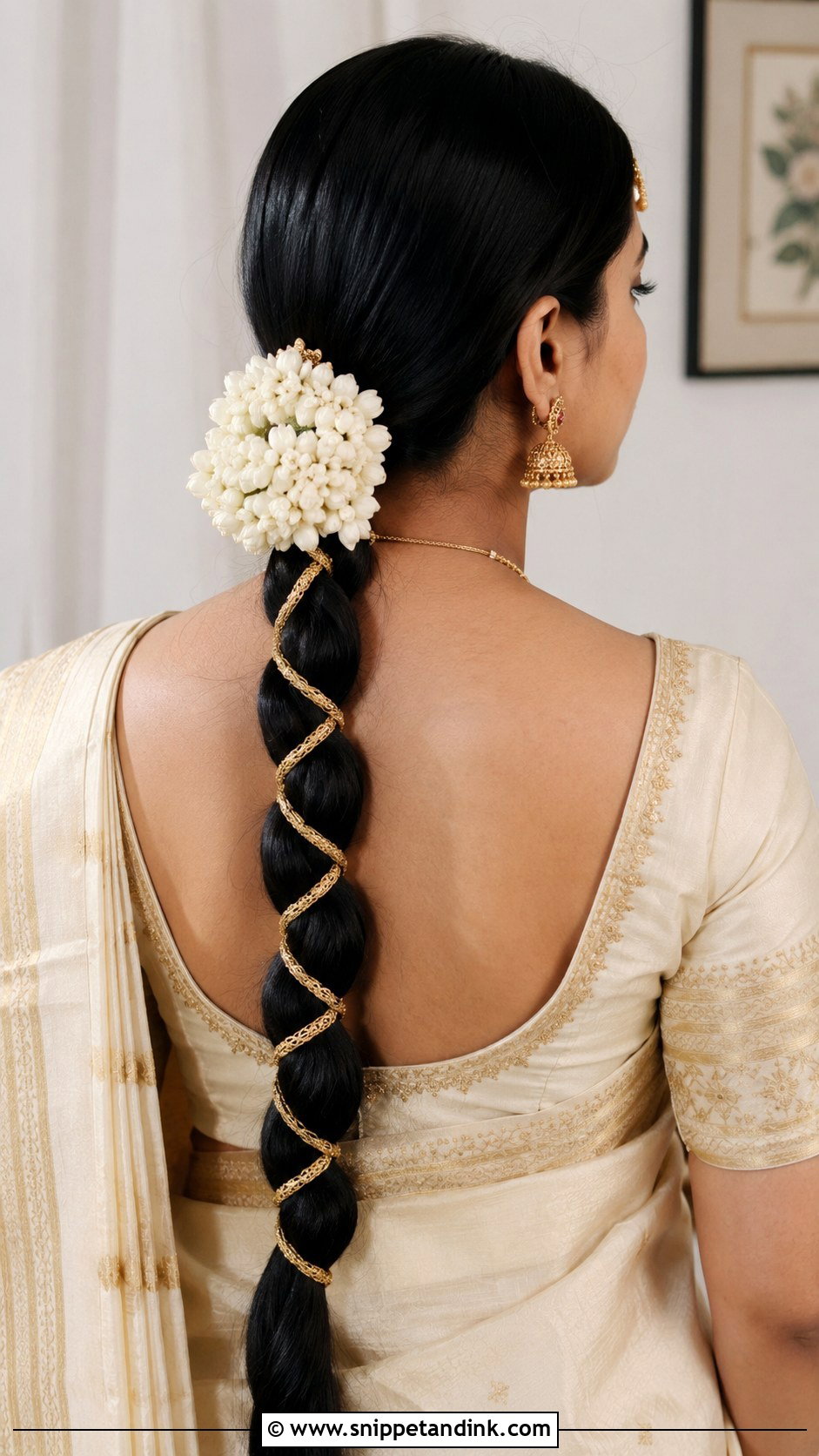
A simple Indian bridal braid is a neat part, smoothed hair and a clean three-strand plait, and done carefully it looks surprisingly graceful. A maang tikka, a gajra cluster, gold ribbon or fresh flowers make it wedding-ready without extra weight. Temple ceremonies, home weddings and long ritual schedules suit it. The polish is in small things: smooth flyaways with a clean toothbrush and a little gel, wrap the end elastic in a strand of hair, and keep accessories to the outfit’s own colors.
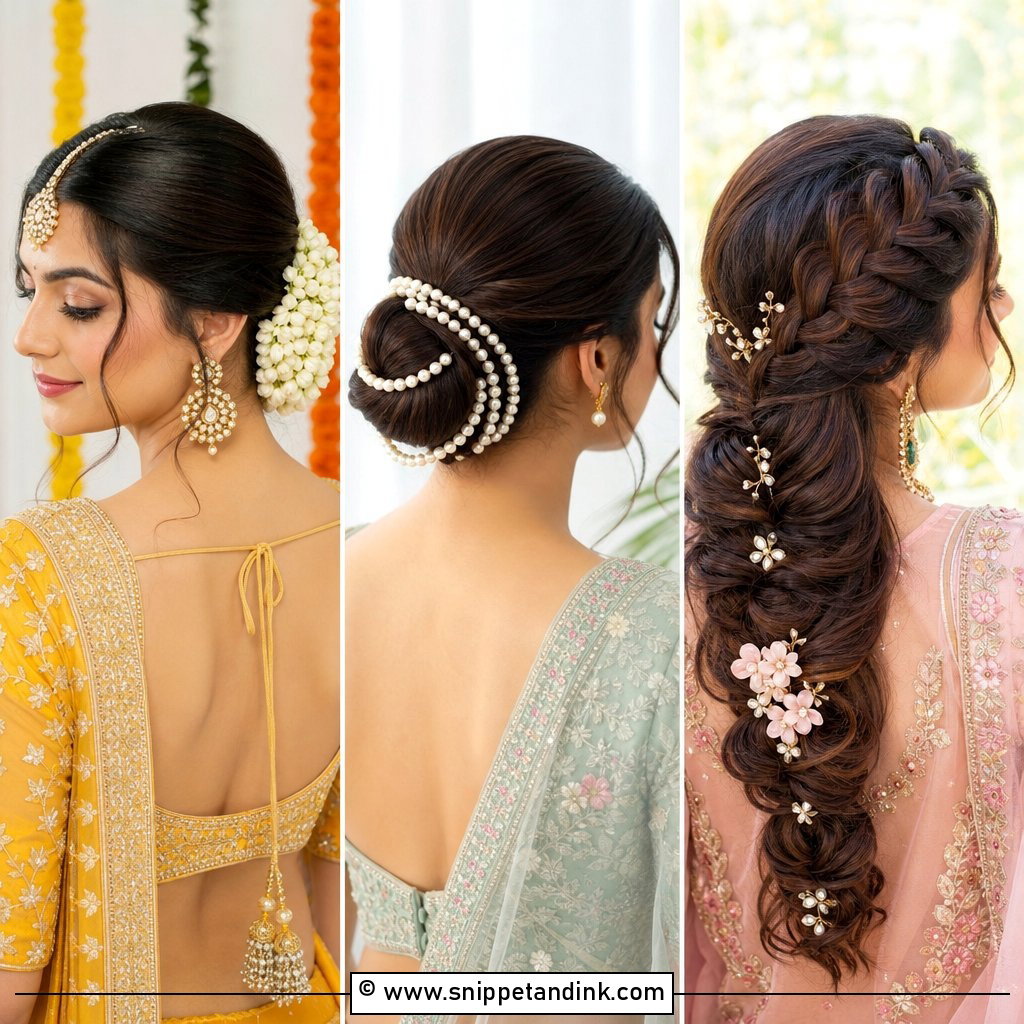
20. Modern Indian Bridal Braid
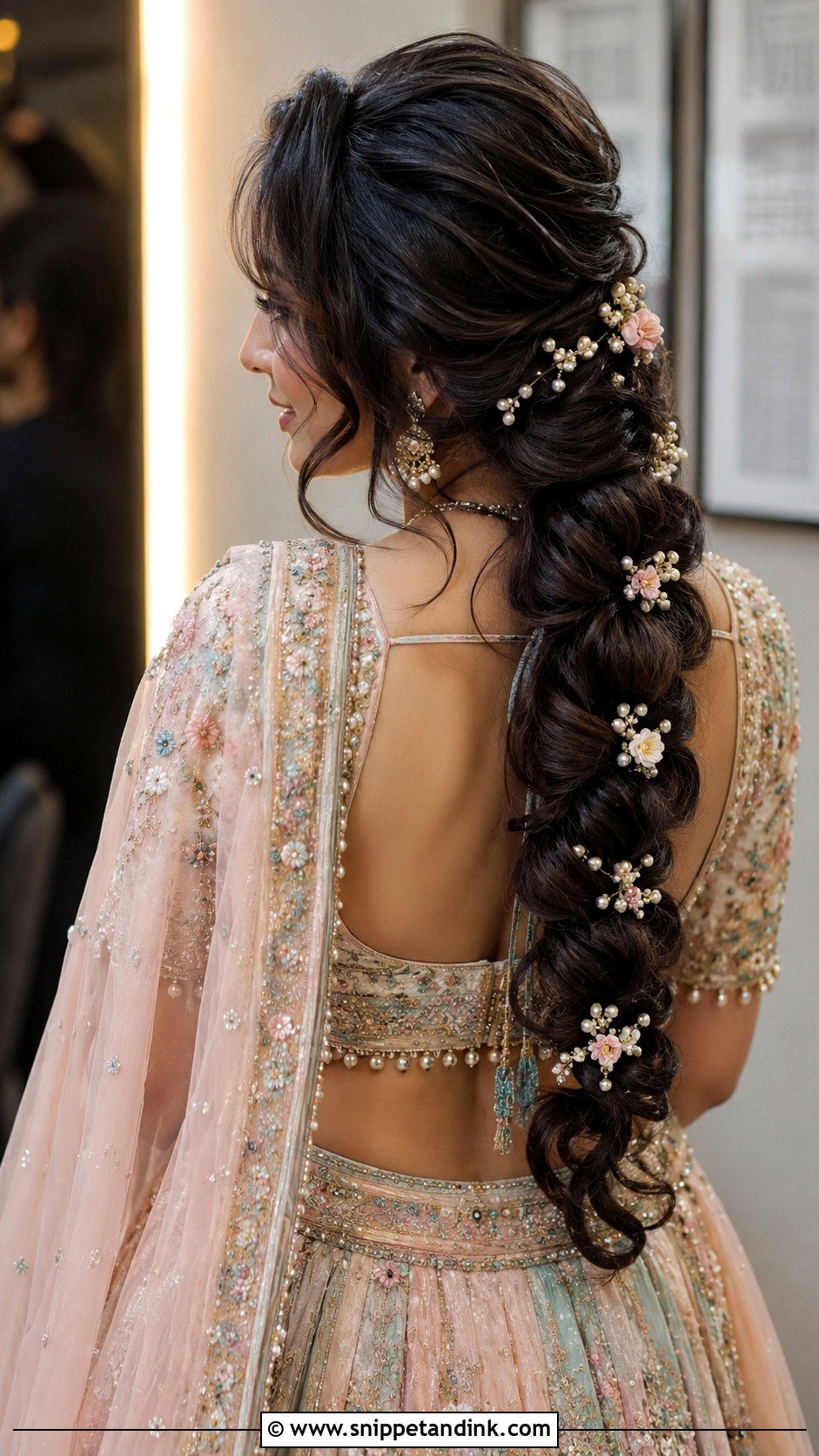
Soft waves at the crown, a fuller pancaked braid, pearl pins, flowers or a side-swept shape make this one feel current. It is less rigid than a traditional jada but still clearly bridal, and it suits contemporary lehengas, fusion sarees and pastel outfits. Pancaking means gently pulling each loop wider after braiding, and that is also where it fails: pull too far and the braid loses its outline. Texture spray before braiding and hidden pins through the plait make it last.
Oil, Washing and the Days Before Your Braid
Many brides oil their hair regularly, and that habit is good for the hair but bad for a bridal braid. Oil makes strands slip, pins slide and flower stems lose their grip. Here is the routine I give brides for the last few days:
- Stop oiling two to three days before the wedding, or at least wash thoroughly after the last oiling.
- Choose your wash day by texture. Fine or straight hair holds better a day after washing; very thick or curly hair often braids better freshly washed and fully dried.
- Use only a light leave-in on the lengths, not a heavy conditioner or mask.
- Dry the roots completely. A braid done on slightly damp roots feels fine at first and goes limp a few hours later.
If a Braid Slips Halfway Through the Rituals
Long ceremonies mean sitting, standing, bending for blessings and being hugged by every aunt. Something will shift. Give a small kit to a cousin or friend who stays close: bobby pins and U-pins in your hair color, a few small elastics, a fine-tooth comb, a mini hairspray and spare flowers in a damp box.
Most slips happen at the crown, where a heavy jada pulls. The fix is usually two U-pins pushed in toward the scalp, not a full restyle. If a gold piece starts to tilt, take it off. Nobody notices a missing pin, but everyone notices one hanging sideways.
Planning Braids Across the Whole Wedding Week
A classic jada still belongs to the grand ceremony, while a fishtail, mermaid or bubble braid feels fresher for mehendi, sangeet or reception. Flowers soften, gold enriches, pearls lighten and kundan adds formality. What matters most is how the braid fits your outfit, jewelry, dupatta placement and the length of the event. Book a trial with your real accessories and keep the braid in for a few hours afterward. That tells you more about comfort and hold than any photo can.
You'll Like These Ideas:







Leave a Reply