
Indian bridal hair now leans lighter than it used to, with less teasing, fewer stiff rolls, more polish and better-placed flowers. The craft underneath hasn’t changed much, though. A ceremony bun still has to carry a heavy dupatta and a maang tikka for hours, and a braid still has to look full from behind in every pheras photo. Many brides now wear a different style for each function, from mehendi to sangeet to the wedding itself. What I plan around first is the outfit, the jewelry and how long each look has to last, and the notes below explain why.
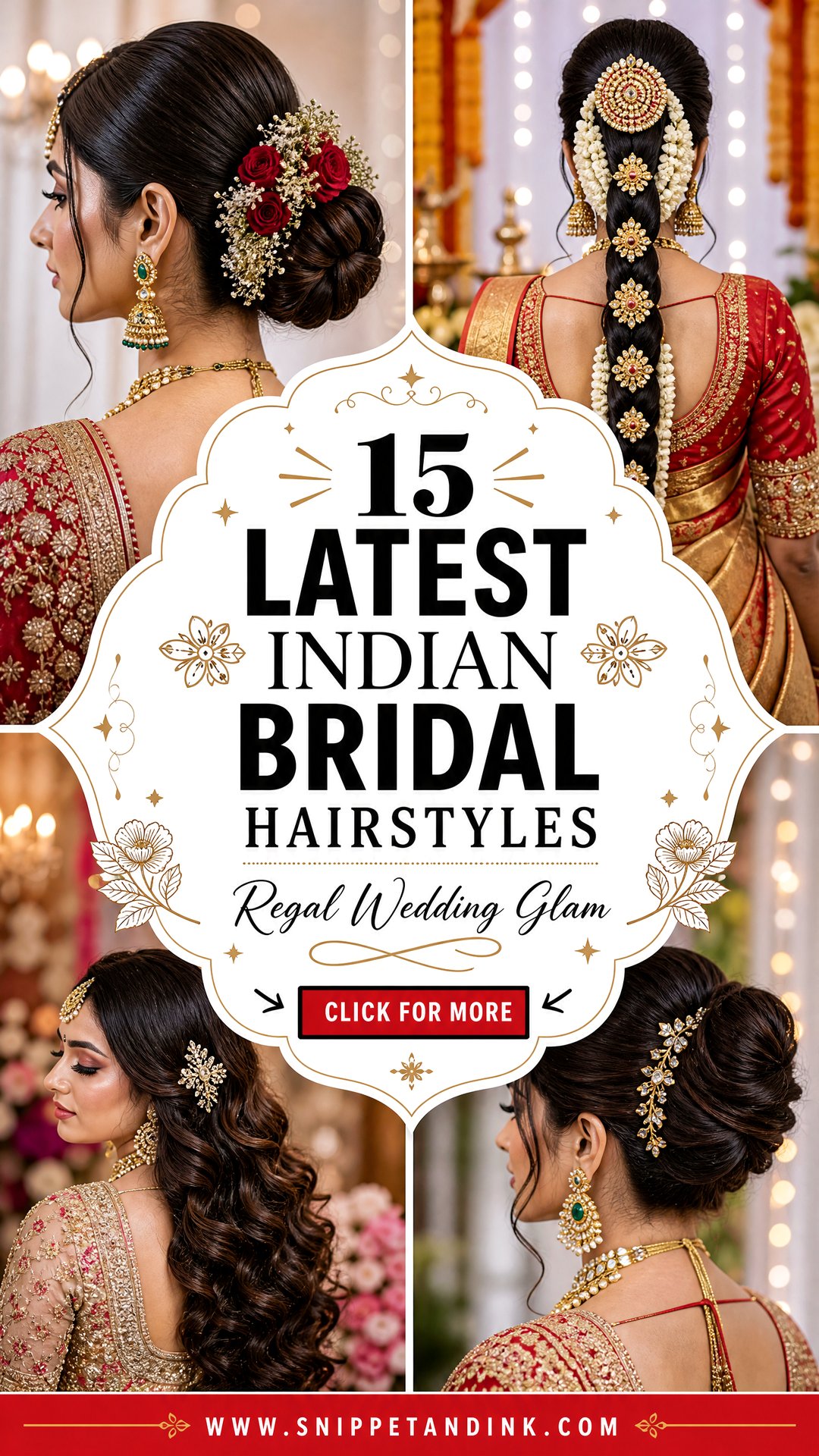
Oiling, Washing and Mehendi Week
Many brides oil their hair regularly, and a champi in the weeks before is a lovely habit for the hair itself. The problem is timing. Oiled hair won’t hold a curl or a pin, and oil usually takes more than one wash to come out completely.
- Stop oiling at least two days before any function where you want a styled look.
- Wash the day before styling, shampooing twice if you oiled recently, and keep heavy conditioner off the roots.
- Once mehendi is drying on your hands, you can’t wash your own hair. Wash before the mehendi session, or arrange for someone to help.
- Tell your stylist which functions you’ll do on day-old hair. Second-day hair often holds a bun better than freshly washed hair.
Matching extensions to your own hair
Most of the braids and full buns here use extensions. Ask for human hair if you want it curled, since synthetic hair can frizz or melt under an iron and has an unnatural shine on camera. I match color in daylight against the mid-lengths of your hair, not the roots, and I want the extensions in hand before the trial so they can be tested properly.
1. Indian Bridal Bun With Gajra
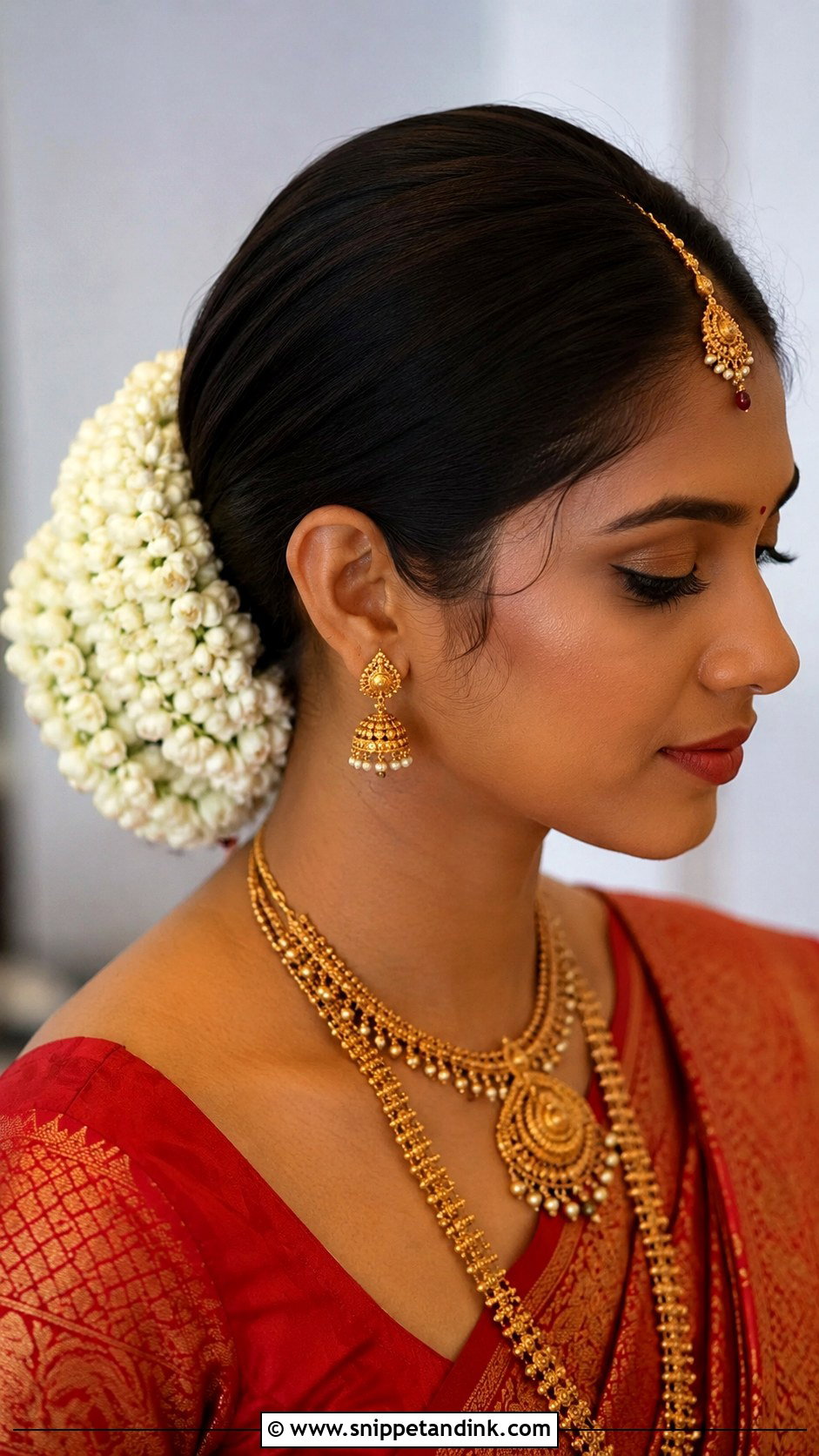
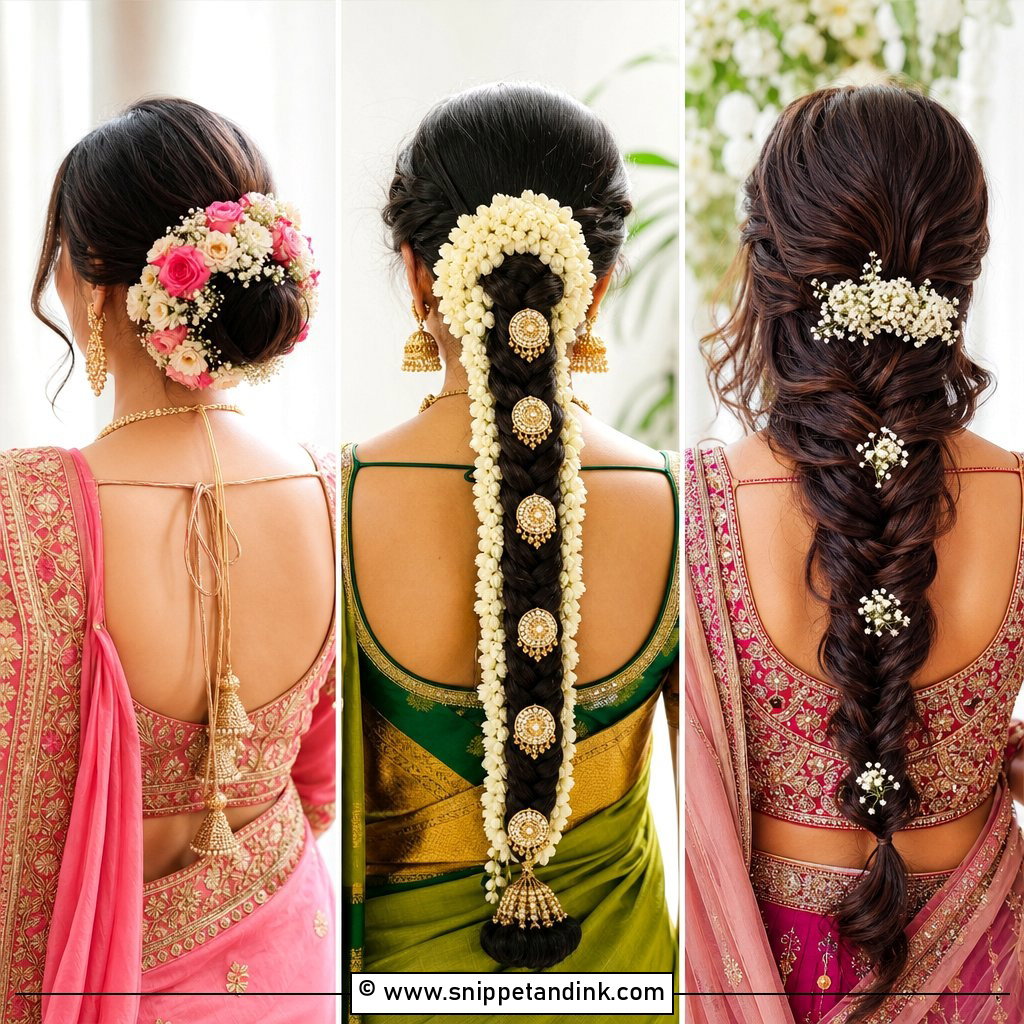
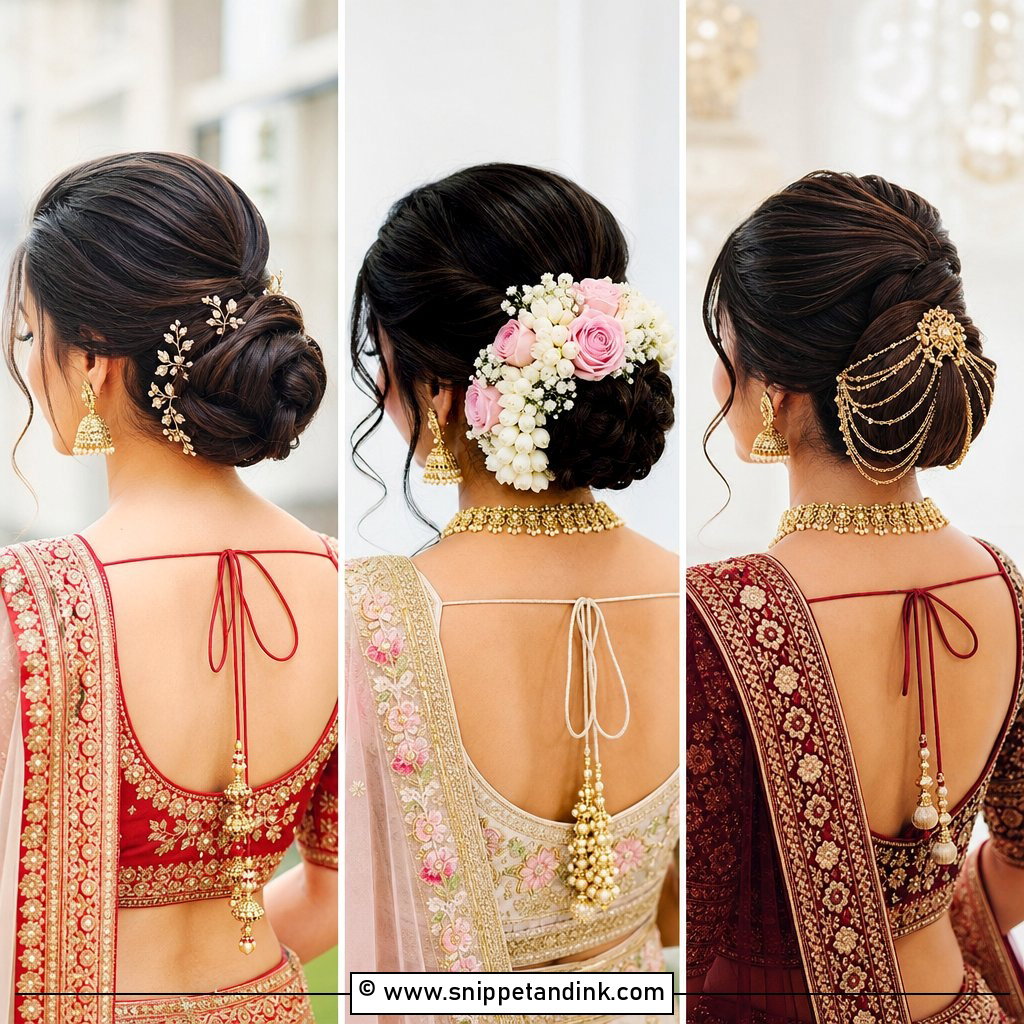
A bun with gajra is the look I’m asked for most for the main ceremony, and for good reason. It’s secure, it suits sarees, lehengas, temple jewelry and matha patti, and it gives a dupatta draped over the head something solid to sit on. Sit the bun low or slightly higher depending on where the dupatta will be pinned. Fresh jasmine adds softness and scent. I wrap the gajra only after the bun is fully pinned and secure it with U-pins every few inches, because a strand of jasmine is heavier than it looks and slides when you bow. A center part, a smooth front and a little crown lift keep it current.
2. Indian Bridal Sleek Low Bun
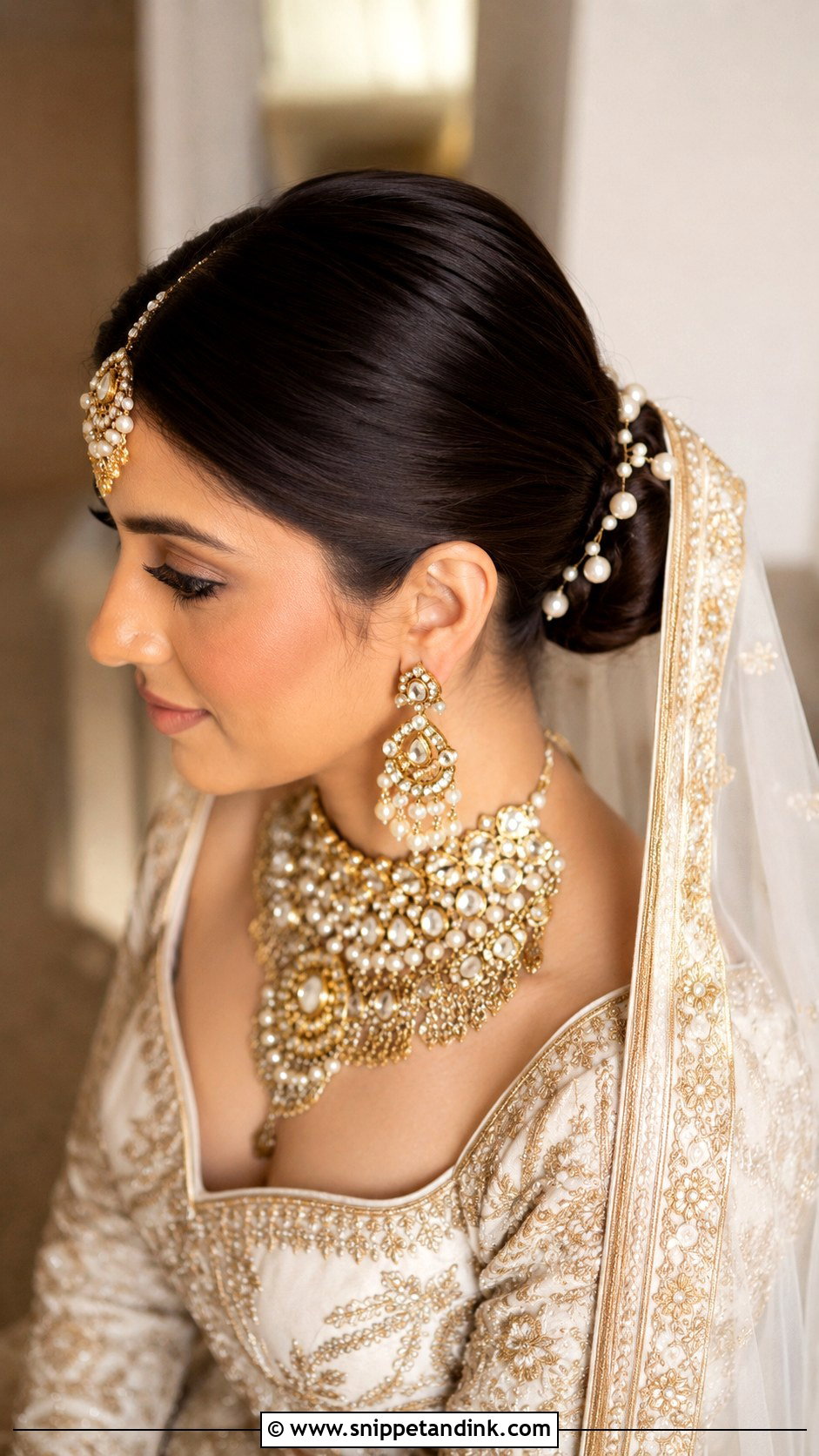
This one is about the jewelry. A clean center part leaves a straight line for the maang tikka, and smooth sides let heavy earrings and necklaces show. It holds a dupatta well and stays neat through long rituals. I smooth with a cream and a fine brush, then check that the tikka chain lies flat along the part; if the part is even slightly crooked, the tikka hangs crooked too. Pearl pins, gold accessories or a small floral ring around the bun add detail, and silk sarees and structured lehengas suit it best.
3. Indian Bridal Textured Low Bun
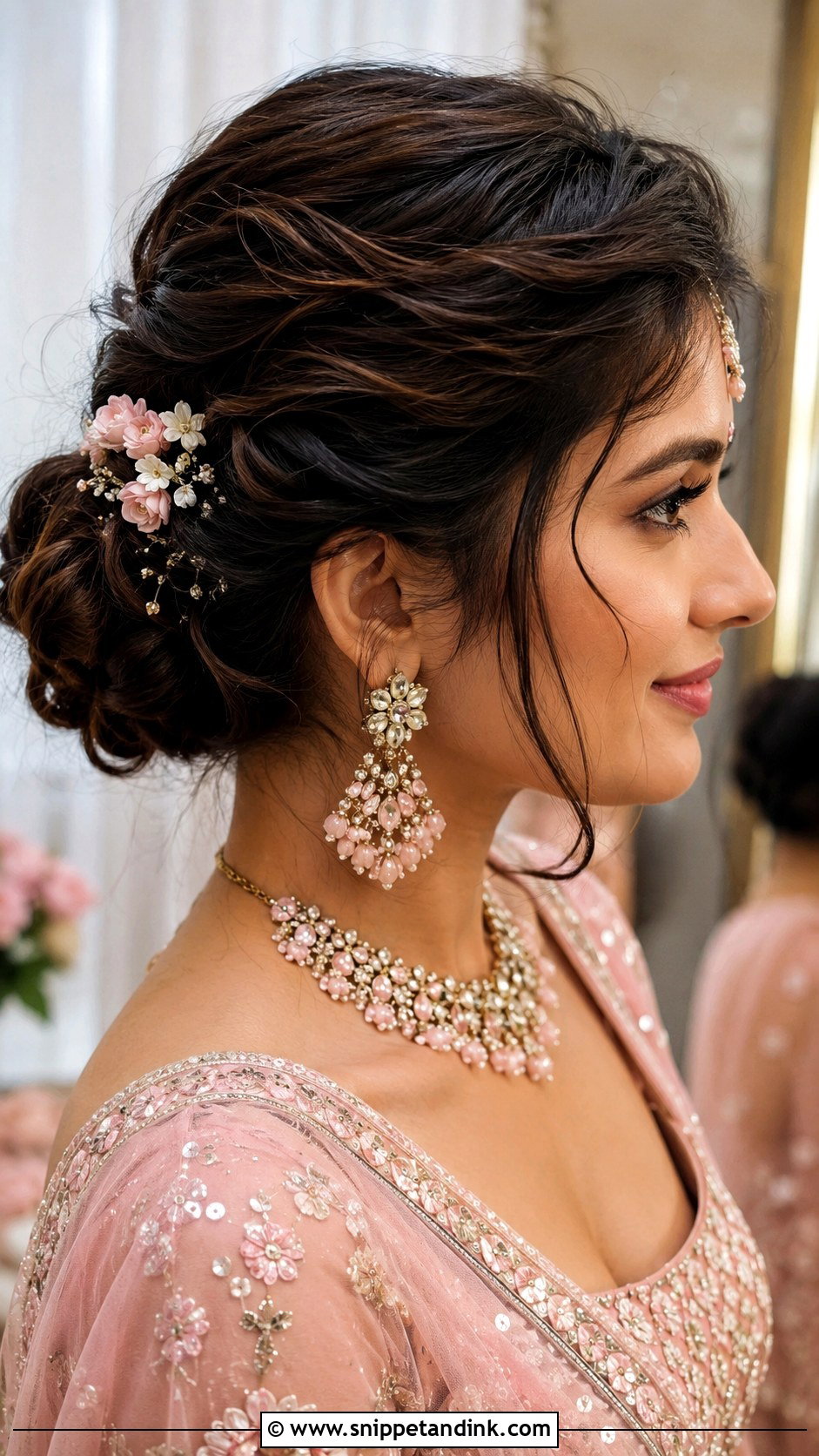
Not every bride wants the scraped-back look. A textured low bun uses loose twists, face-framing pieces and some volume, and it flatters round, oval and heart-shaped faces. It suits pastel lehengas, organza sarees, floral jewelry and outdoor venues. The texture has to be controlled, because a loose surface still has to hold pins, flowers and accessories through the ceremony. I build a firm inner base first and loosen only the outer twists, so it looks airy and still carries weight.
4. Indian Bridal Braided Bun
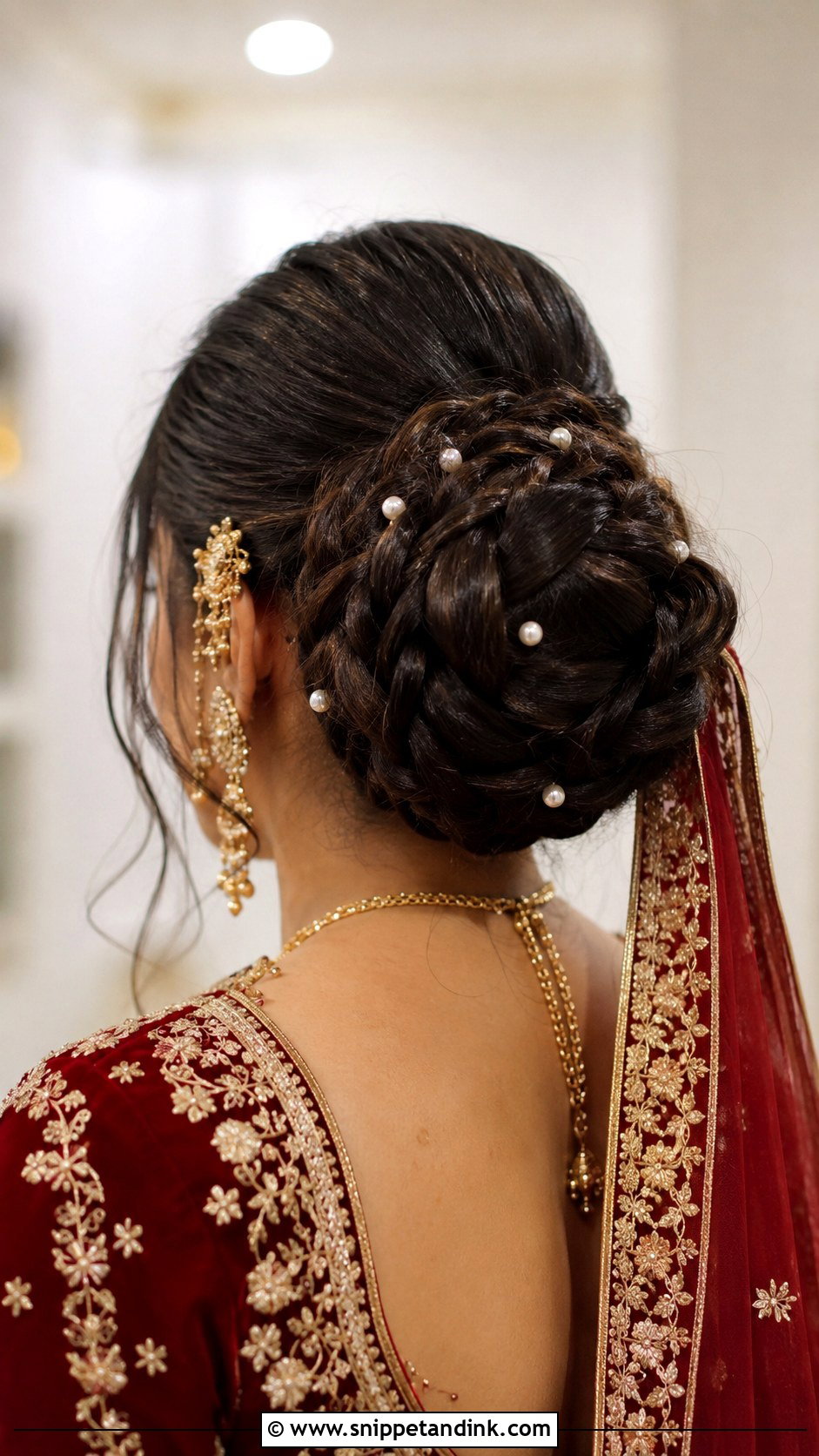
Wrapping a braid around the bun makes it look fuller in photos and gives pins a firm base, which matters under a heavy dupatta. It works for medium to long hair, with extensions added if volume falls short. Small pearls, gold pins, baby’s breath, jasmine or flowers matched to the outfit can go into the braid. With extensions, I braid the added hair in with your own instead of clipping a separate piece on top, so the join never shows when the dupatta shifts.
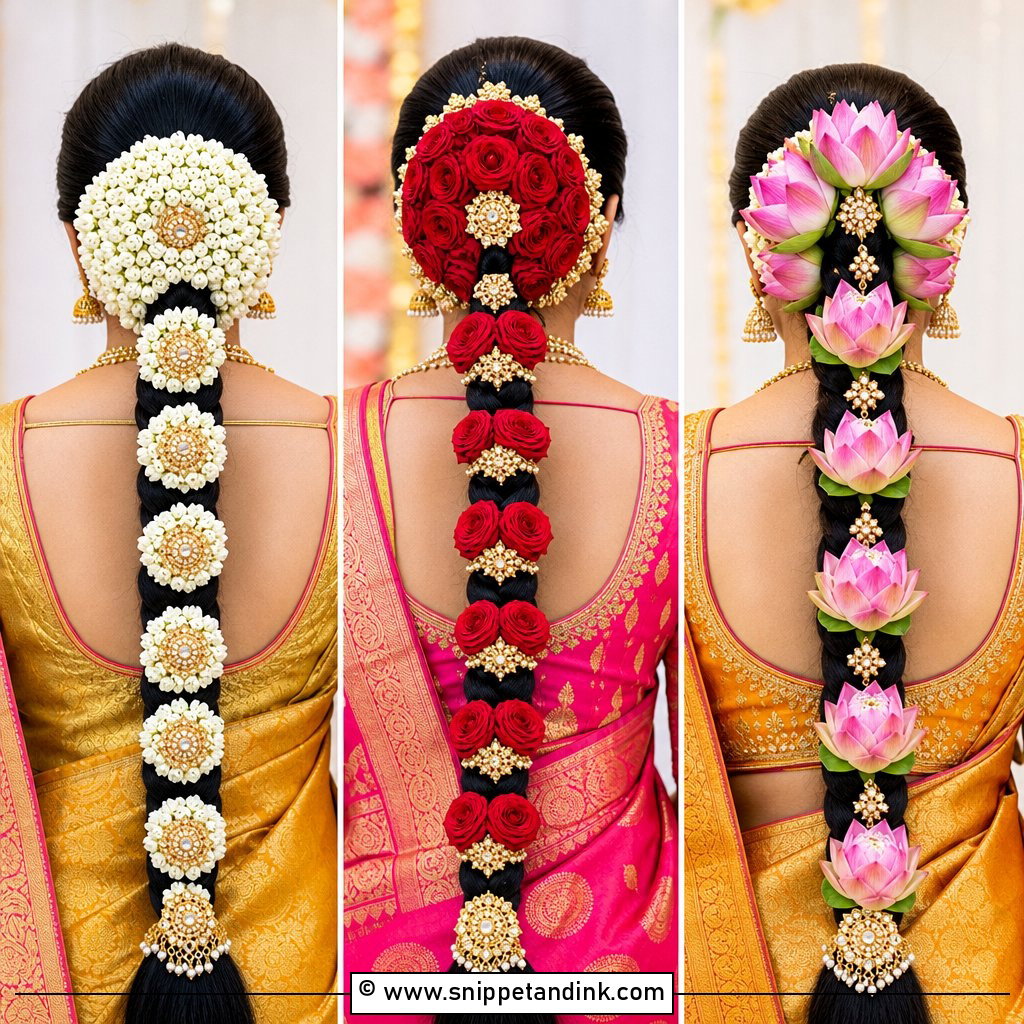
5. Indian Bridal South Indian Braid
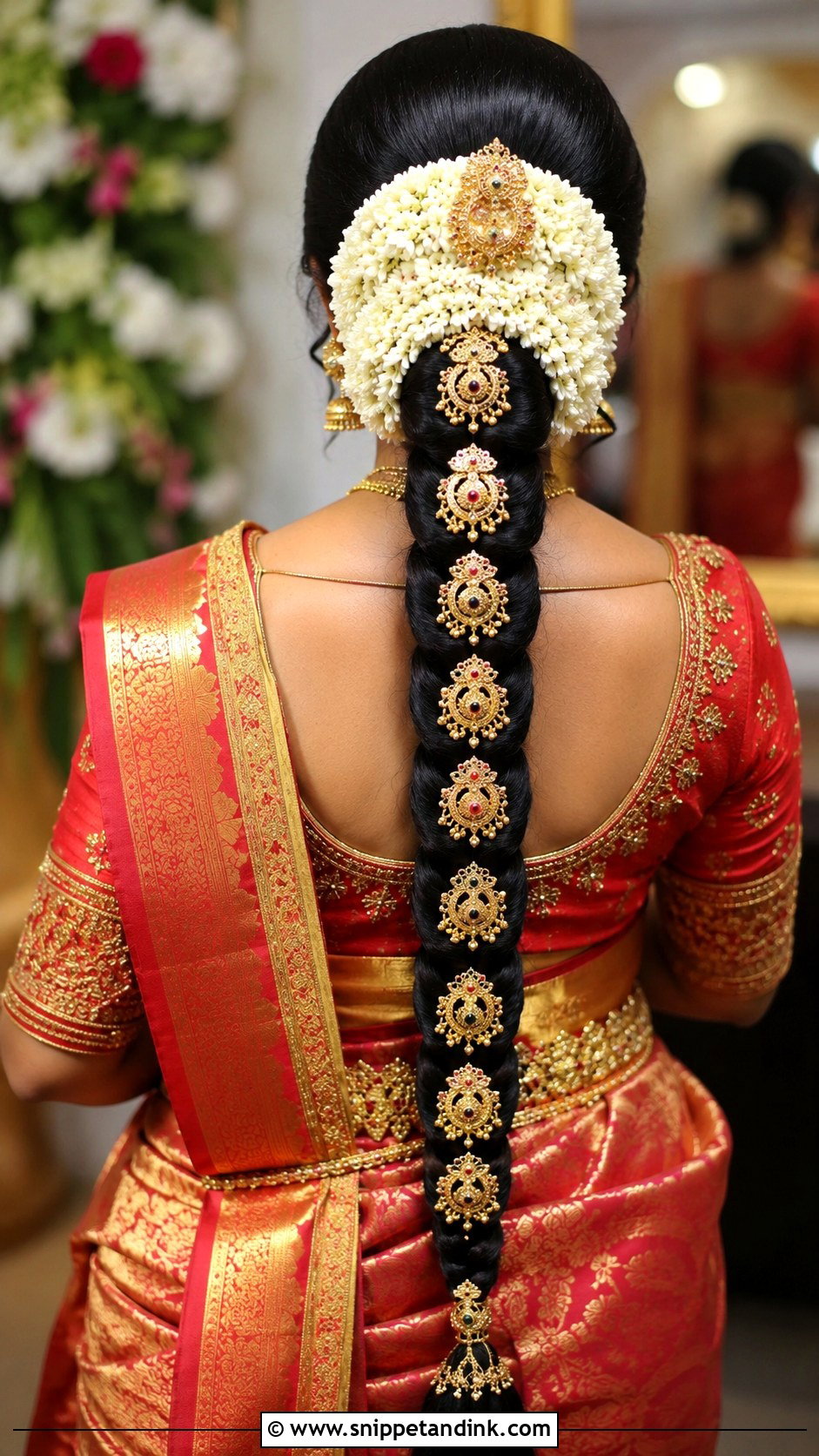
A South Indian bridal braid is long, decorated and part of the outfit rather than an extra. It’s paired with silk sarees, temple jewelry, fresh flowers, gold accessories and a center-parted front. Most brides need extensions for the length and thickness that read well from behind. I always match the color in daylight, since jet-black extensions can look blue-black next to dark brown hair. Keep it smooth and traditional or loosen it slightly for fullness; it’s photographed from the back during several rituals, so it has to look even from top to bottom.
6. Indian Bridal Poola Jada
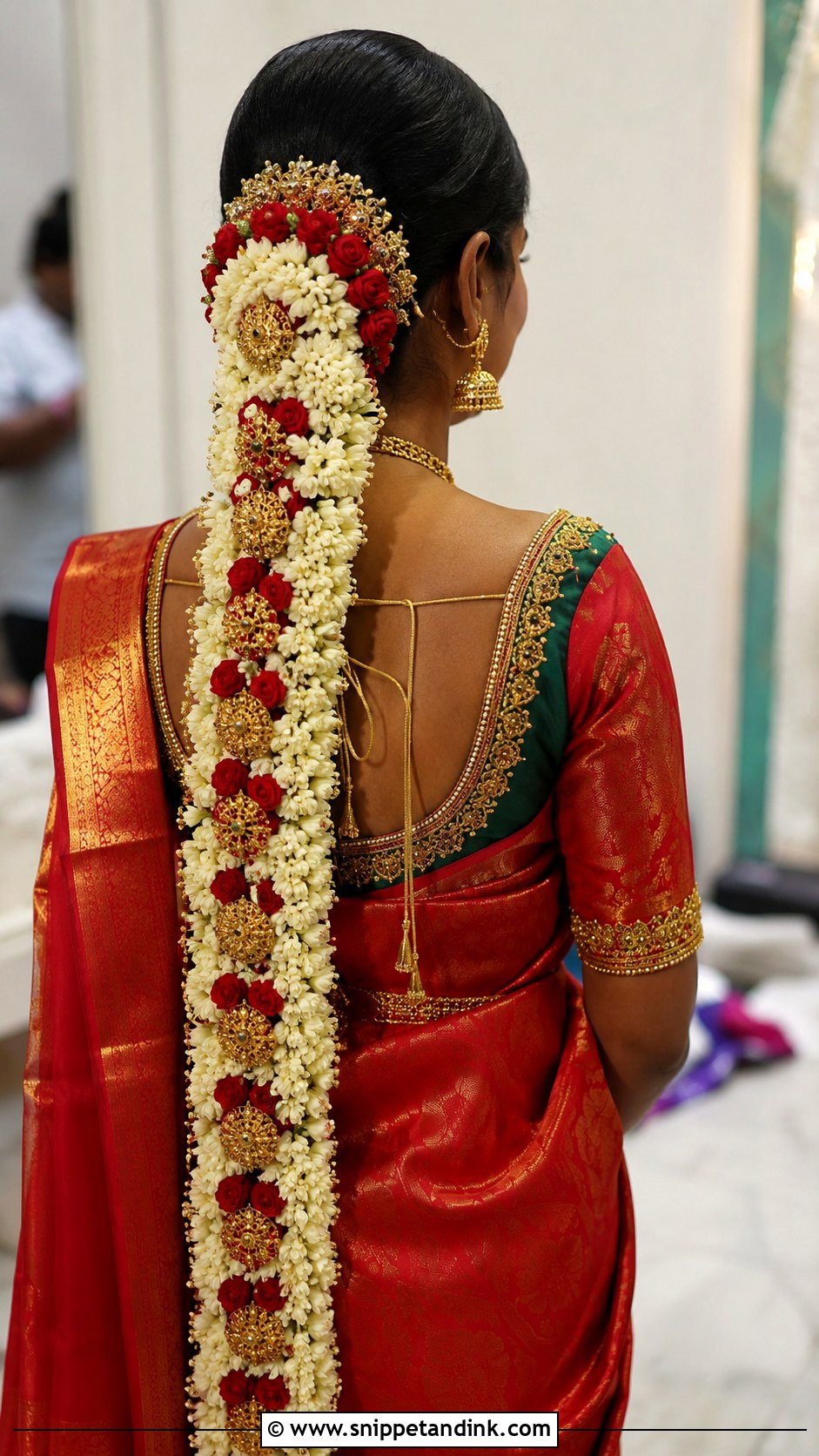
Indian bridal poola jada is a braid covered in flowers, much loved at South Indian weddings, and it gives the strongest back view of any style here. It goes with kanjeevaram sarees, gold jewelry and traditional makeup, sometimes with jada billalu or other gold ornaments along the braid. The current approach is neater, with flowers set evenly instead of covering every inch. A full flower jada is heavy and pulls on the scalp over a long ceremony, so I anchor it at several points along the braid, not only at the crown, and ask for the flowers to be made up that morning.
7. Indian Bridal Braid With Paranda
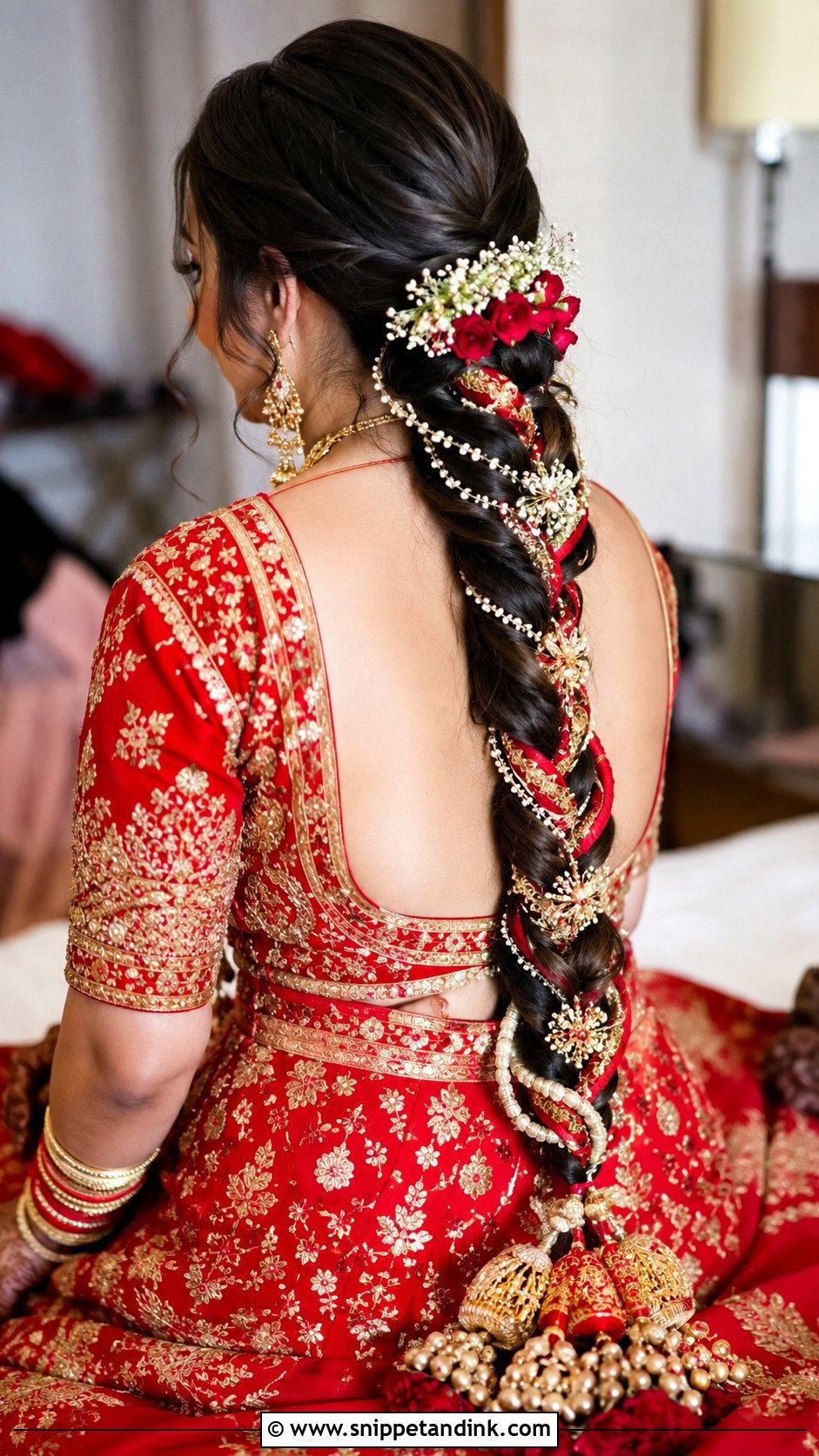
An Indian bridal braid with paranda suits a Punjabi or North Indian look. The tasseled paranda adds color and swing to a long braid and can be matched to the lehenga, the dupatta border, the bangles or the jewelry. It works for mehendi, haldi and sangeet, and for the wedding day if the outfit has a heritage feel. Because the paranda’s threads are braided in with your hair from near the top, it also adds visible length, which helps brides whose hair stops at the shoulder blades. Finish with small flowers, pearl strings or gold accents.
8. Indian Bridal Fishtail Braid
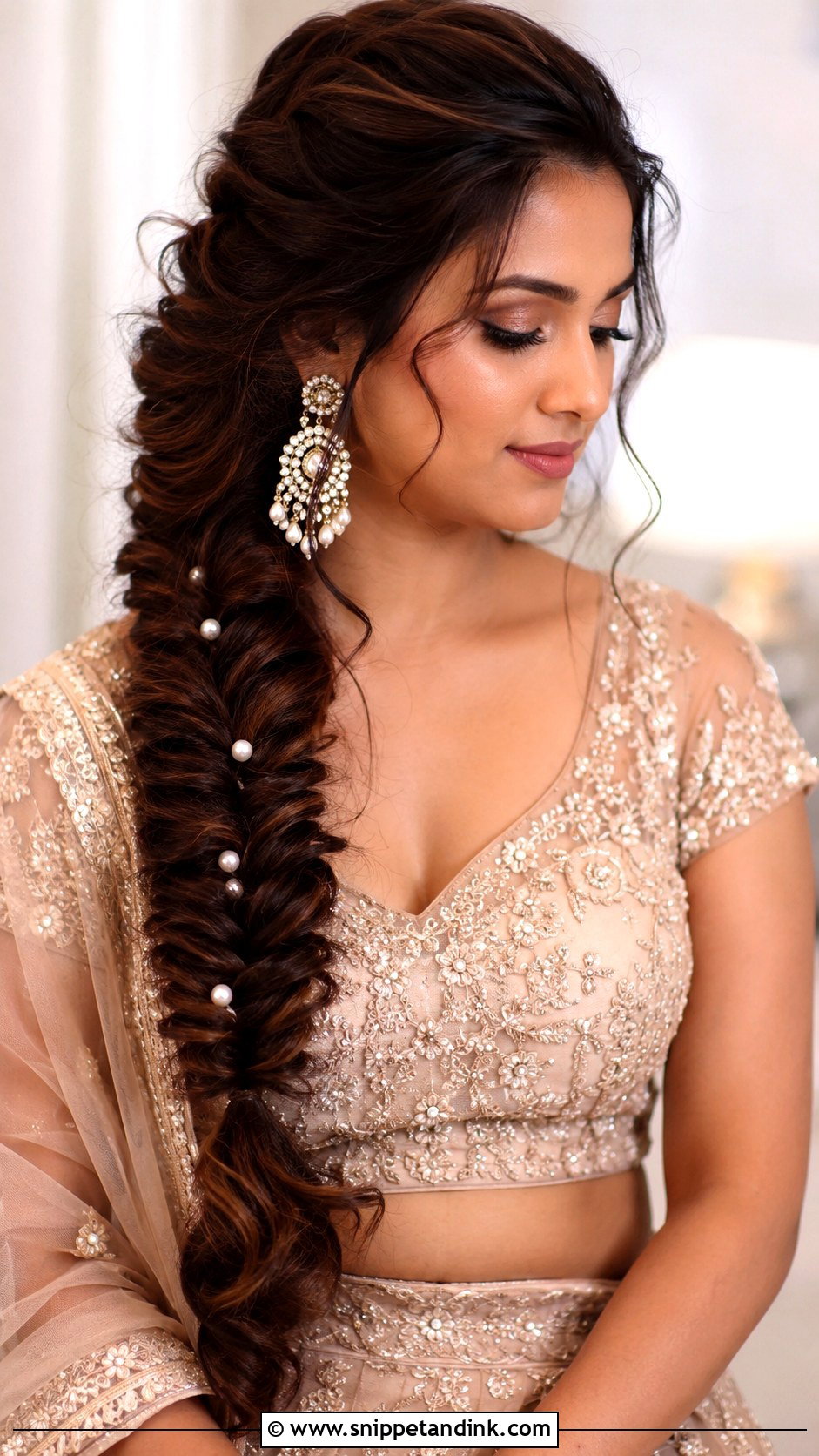
A fishtail looks detailed but lighter than a classic three-strand braid, and its fine weave shows texture up close. It can hang down the back or sit over one shoulder, which works better for portraits. Fishtails take longer to braid than standard plaits, and on layered hair the short ends poke out of the weave, so I smooth each section with a little cream as I go. Fresh flowers, pearl pins or small gold clips go through the braid. It suits lehengas, shararas and pre-wedding looks.
9. Indian Bridal Half Up Half Down
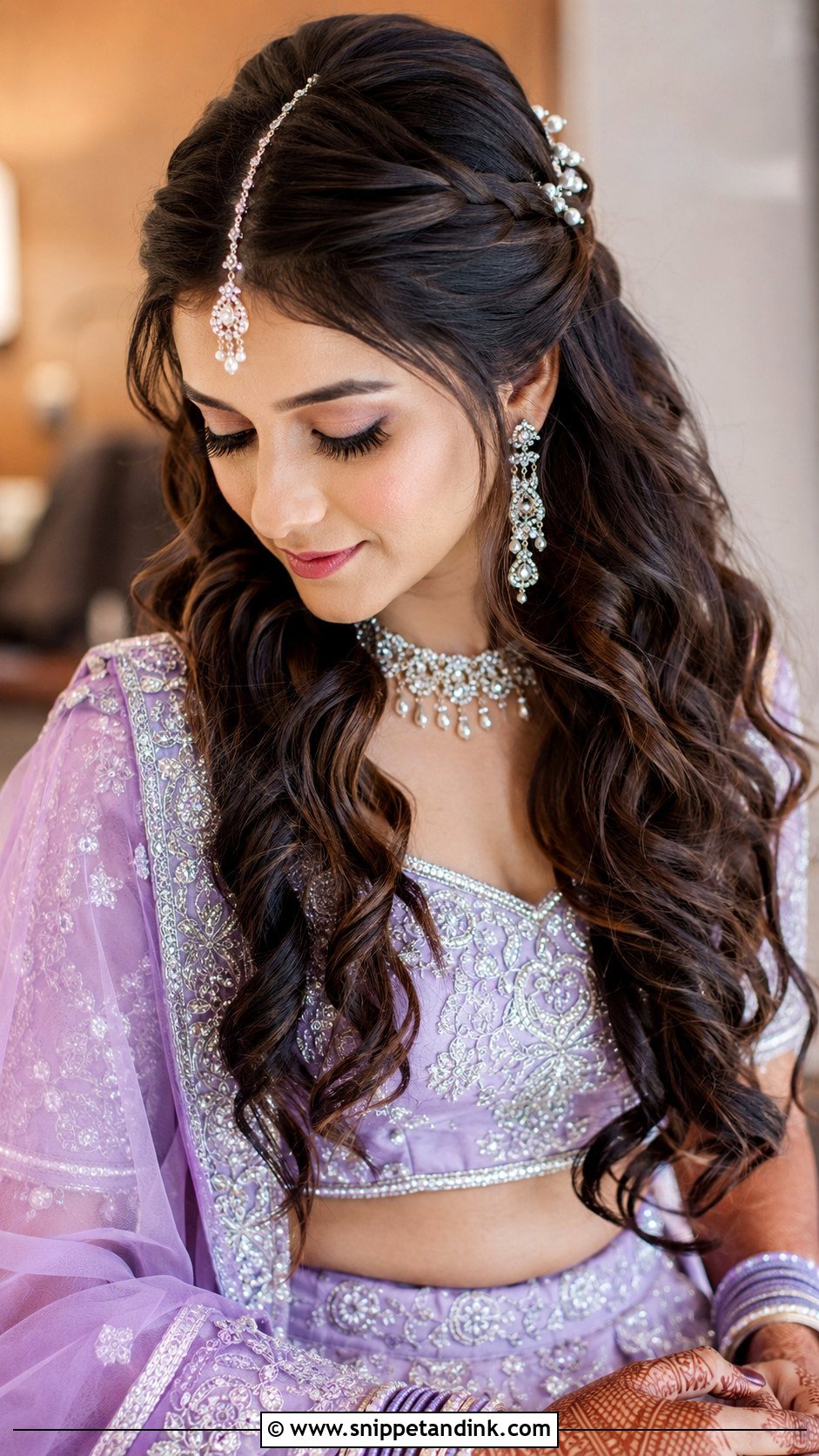
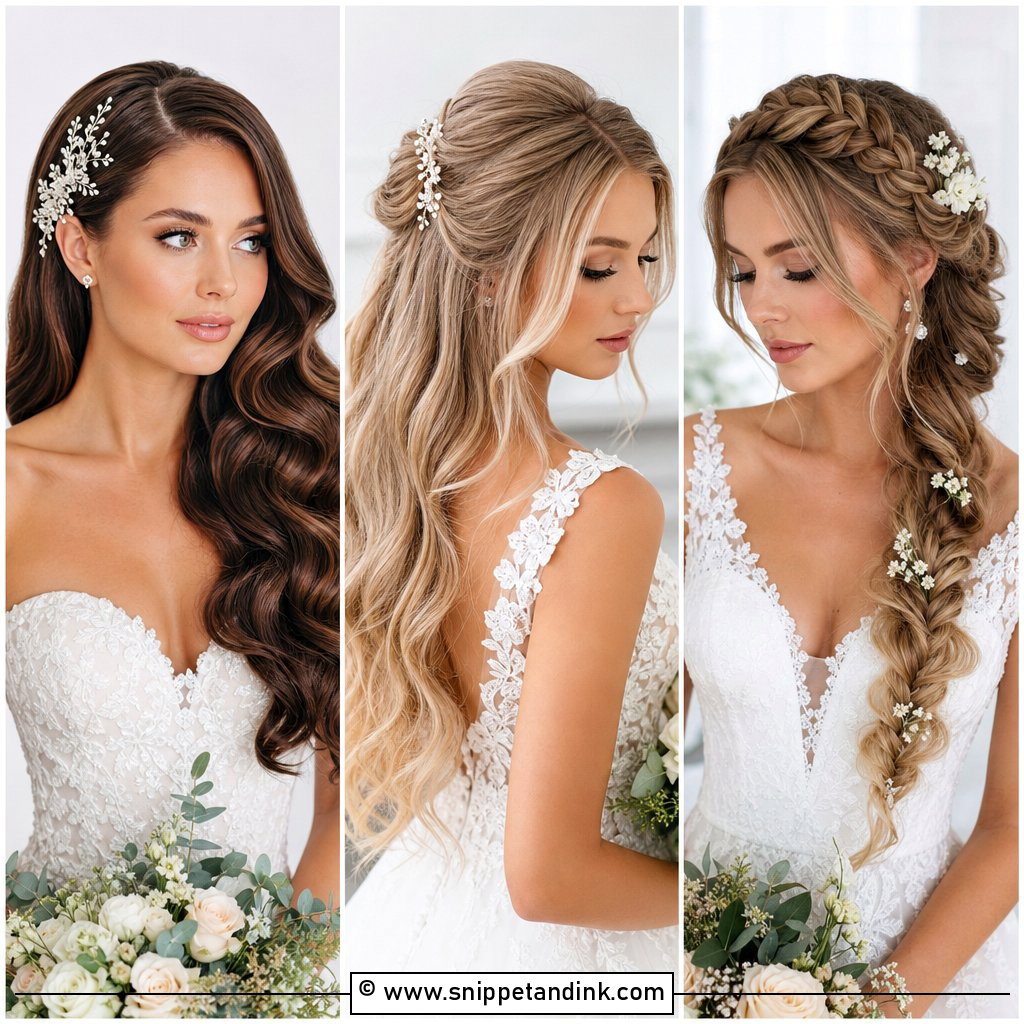
Receptions, engagements and sangeet nights are where I’d use half-up. The crown has structure while the lengths stay soft; the top can be twisted, braided or pinned with pearls and flowers, and the rest waved or curled. Its real advantage is that crown section, which gives a maang tikka or hair accessory a firm base while your hair stays visible. Without that structure, a tikka on loose hair slides back within the hour.
10. Indian Bridal Open Curls
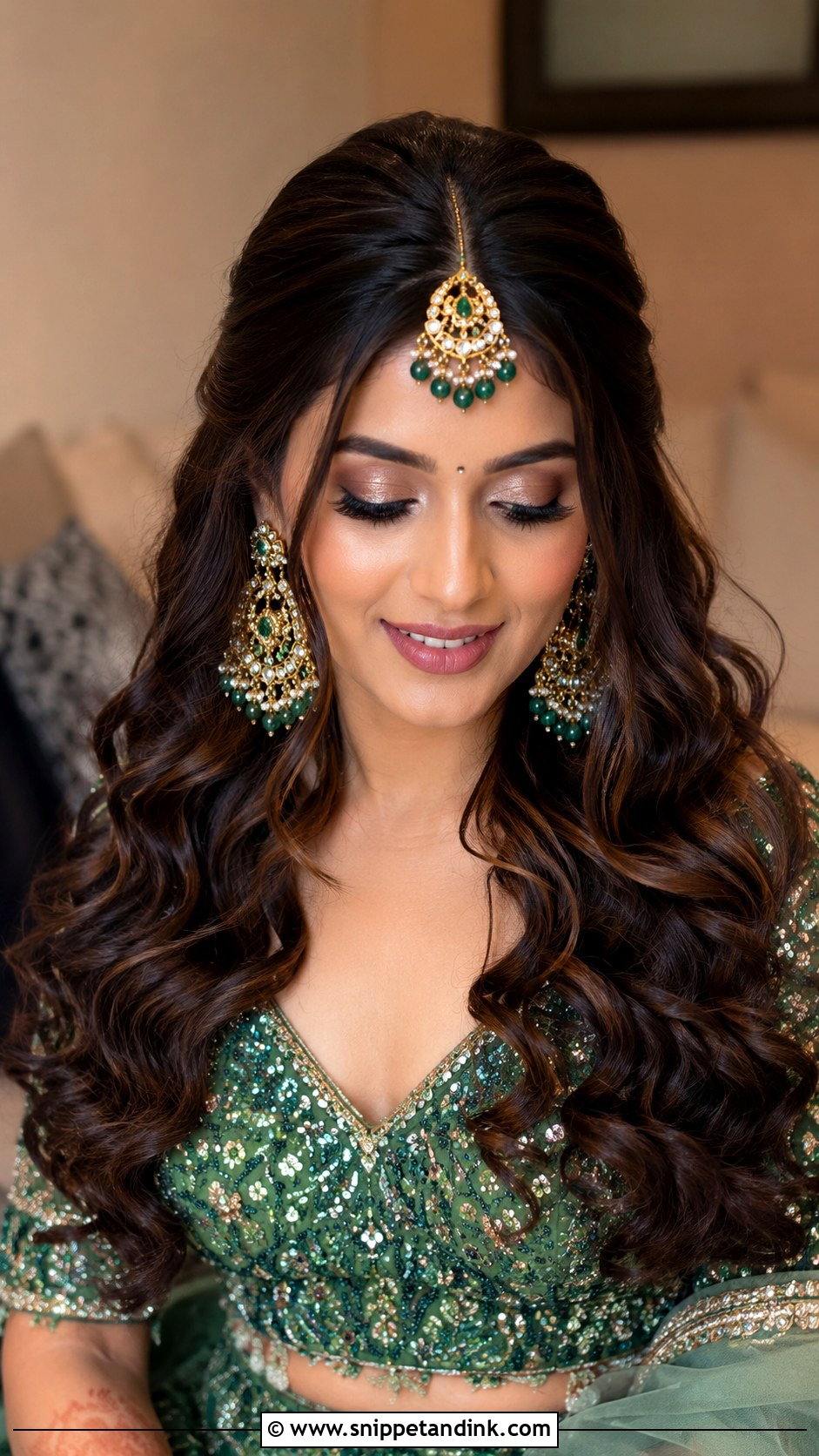
Open curls belong to the reception or sangeet, where you want volume and movement more than hold. They suit off-shoulder blouses, modern lehengas, gowns and lighter dupattas. Open hair drops faster than anything pinned, particularly in summer heat, so I curl with heat protection, let each curl set while pinned and add hidden pins at the crown and behind the ears. A small crown lift helps the shape last. Add a maang tikka, side clip or hair vine for the bridal touch.
11. Indian Bridal Hollywood Waves
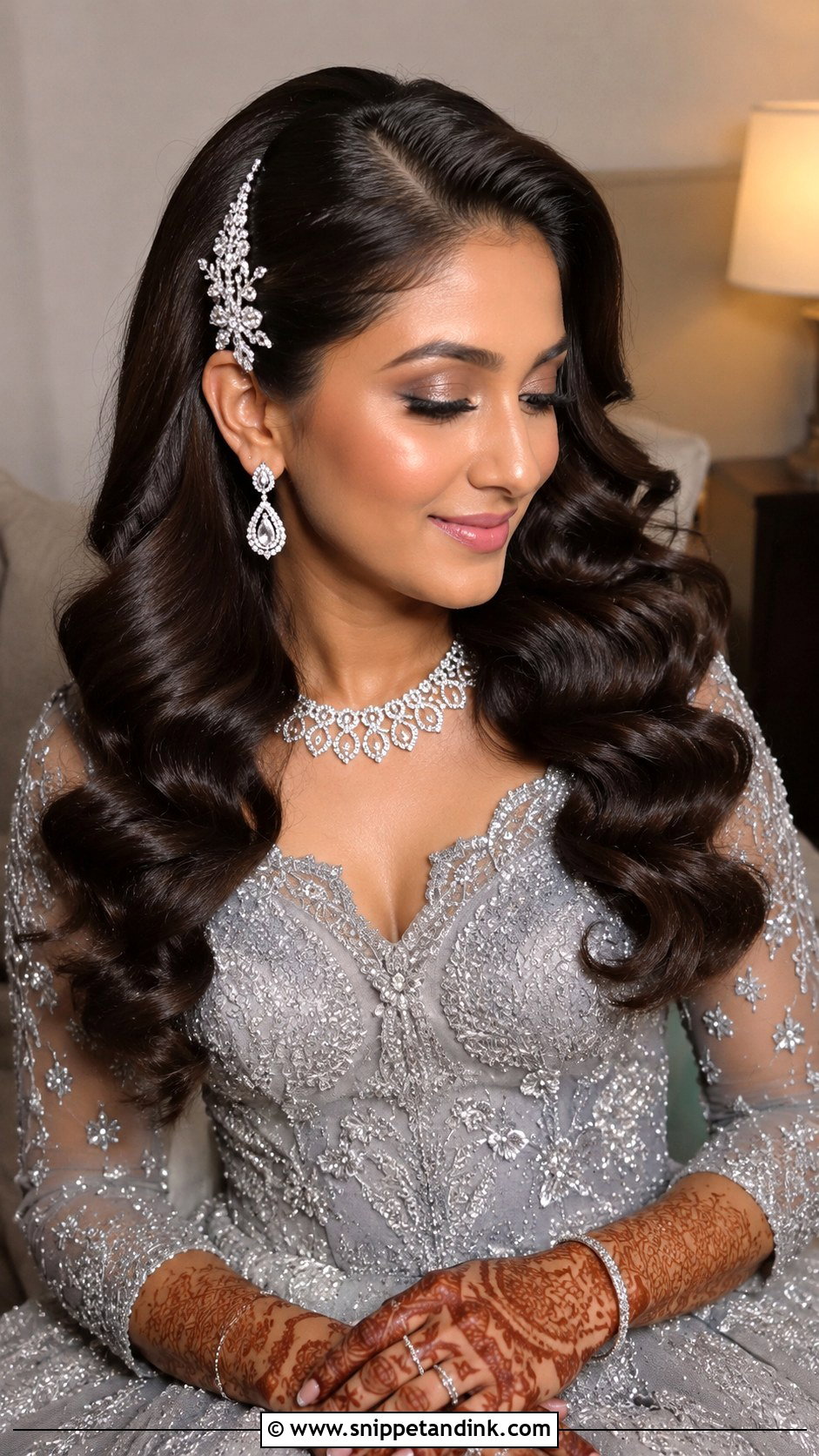
For a high-glam evening, Hollywood waves hold up well under stage lighting because the finish is smooth and glossy. They’re parted to the side or center and brushed into even, structured waves, and they pair with crystal jewelry, embroidered gowns, cocktail lehengas and stronger eye makeup. Unlike beach waves, they need a clean finish and firm hold. I’d keep them for the reception, cocktail night or engagement. Under a dupatta, the waves get crushed.
12. Indian Bridal Ponytail
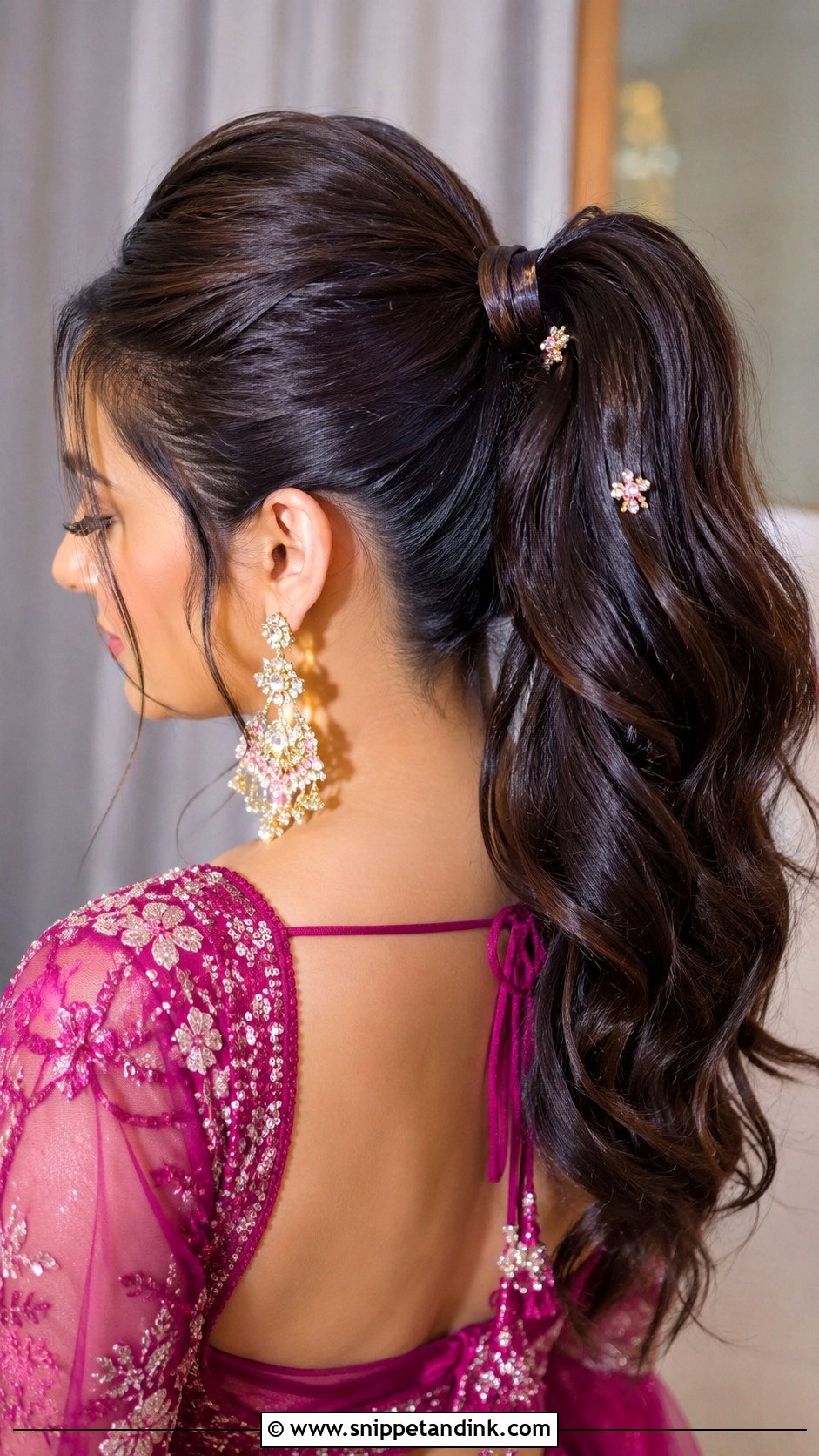
A ponytail is comfortable and a real change from the usual bun. Bridal versions are built up: volume at the crown, waves through the length, wrapped hair at the base and decorated pins or jewelry. It works for sangeet, mehendi, cocktail parties and modern reception outfits, and it keeps hair off the face for dancing. With a high-neck blouse, I place the ponytail higher so the tail clears the collar instead of rubbing against embroidery and frizzing.
13. Indian Bridal French Twist
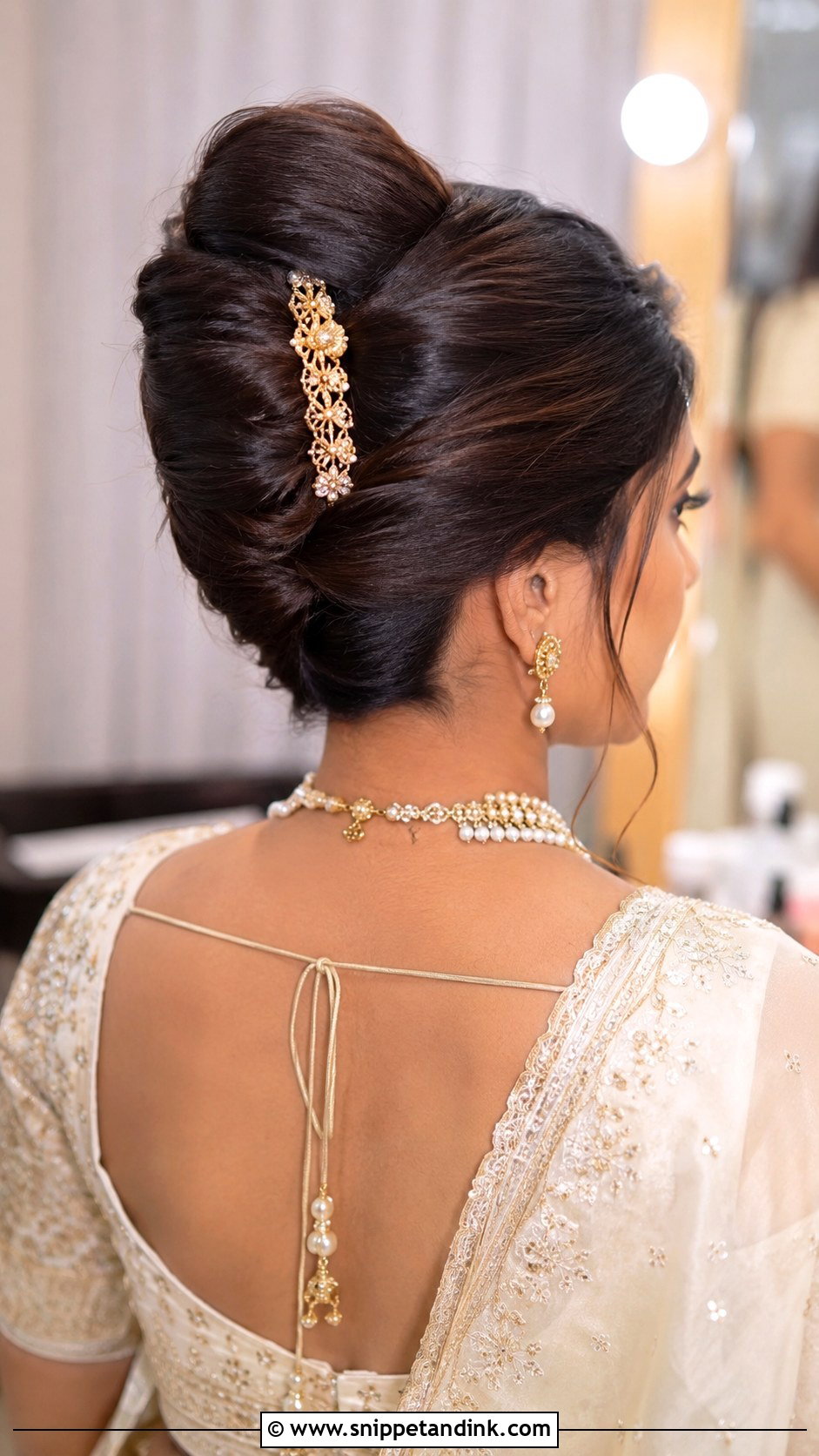
A French twist looks sculpted from the side and back, which is where many ceremony photos are taken. It suits sarees, classic lehengas, gowns and pearl or diamond jewelry, with a middle part, soft side sweep or a few face-framing strands at the front. Thick hair can make a twist too wide at the seam. I thin out the inside by pinning part of the length flat before rolling. Small pins, flowers or a hair comb finish it.
14. Indian Bridal Side Swept Curls
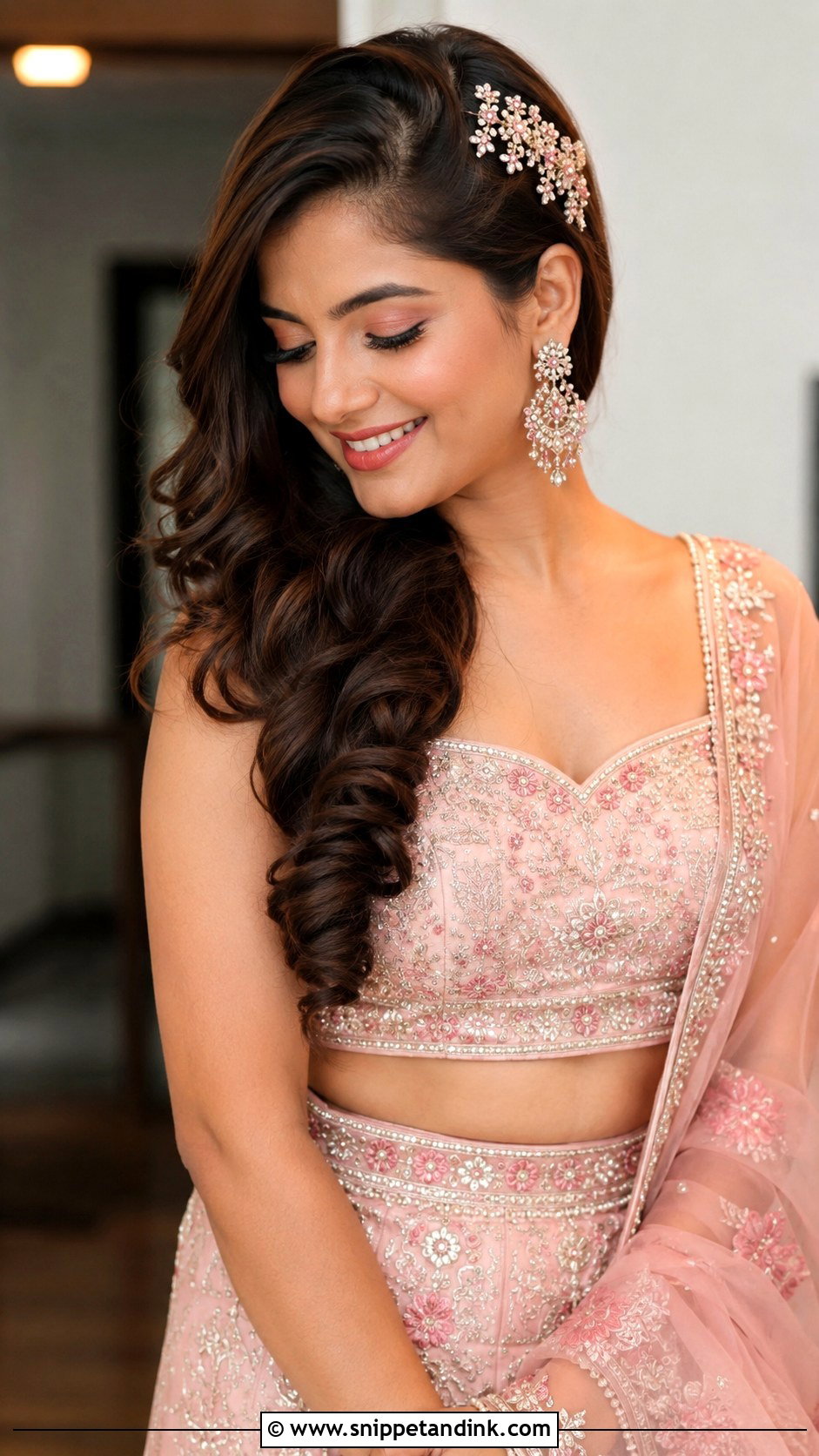
Gathering the curls over one shoulder shows off earrings and a blouse neckline, and it sits neatly with a dupatta draped on one side. Use it for the engagement, reception or sangeet. The far side is pinned flat and hidden, with the curls falling on the other. Choose the side with your draping in mind: the curls go on the side without the dupatta, or the two end up fighting for the same shoulder. Finish with a side clip, fresh flowers or a jeweled comb.
15. Indian Bridal Short Hair Bun
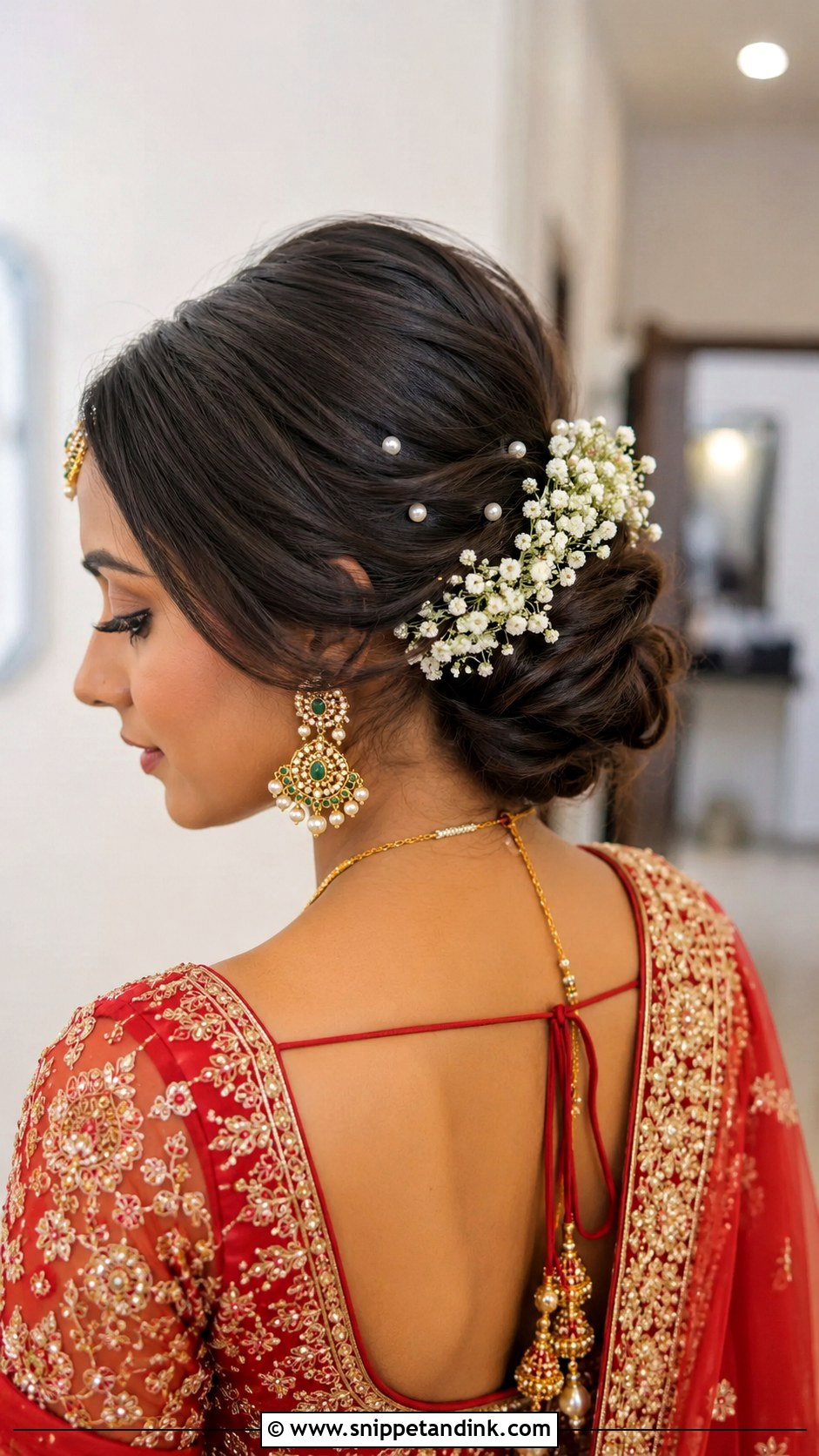
Short hair can still make a full bridal bun. With careful pinning, padding, extensions or a bun accessory, short and medium hair looks full and gives a dupatta a firm base. The front can be sleek, softly waved or center-parted for jewelry. For hair above the shoulders, I gather what I can into a small base, build the bun shape with a matching hairpiece and then cover the join with jasmine, roses, pearls or gold pins.
A Mandap in May: Holding Hair Through Heat and Sweat
Plenty of Indian weddings happen in hot months, often outdoors, with a fire in the mandap and a heavy dupatta over the head. That’s hard on any hairstyle. Sweat starts at the hairline and the nape, so the front and the base of a bun are the first places to give way.
- For daytime pheras, choose a pinned style and save open curls for an evening function, when it’s cooler.
- I set the hairline with a light hold product and keep face-framing pieces fewer and thicker, since thin strands stick to a damp face.
- Ask for the getting-ready room to be cooled. Curls set in a hot, steamy room drop before you’ve even left it.
- Give a bridesmaid blotting papers and a few spare U-pins. A quick blot at the hairline before photos does more than another layer of spray.
Start From the Heaviest Piece of Jewelry
Every look here has its place. A sleek bun suits a classic ceremony and a textured bun is softer; long braids, poola jada and paranda carry tradition; open curls, Hollywood waves and ponytails belong to the reception and sangeet. When I plan with a bride, I start with the heaviest thing her head has to carry, whether that’s a matha patti, a full dupatta or a flower jada, and build the base to hold it. Hair length, the venue and the hours on your feet decide the rest. Save your favorites early, book a trial and bring the real jewelry to it.
You'll Like These Ideas:








Leave a Reply