
A mathapatti is the piece of bridal jewellery that depends most on the hair underneath it. It follows the parting, rests along the hairline and hooks into the sides, so the style has to give it something firm to grip while still suiting your face, your dupatta and the hours you’ll be wearing it. I plan every bridal look around three questions: how heavy is the piece, where will the dupatta be pinned, and how long does it need to last. The twenty bridal mathapatti hairstyles below range from classic buns to open curls and braids, with notes on what each one asks of your hair.
Where the Chains Actually Hold On
Most brides imagine the mathapatti sitting on top of the hair. In reality it hangs from three or four points, and if those points are weak the piece slides forward, tilts or pinches by the second hour. Before I style anything, I decide where those points will be.
- The centre drop is pinned at the parting, just behind the hairline, with two bobby pins crossed in an X so it can’t swivel.
- Each side chain is hooked into a small section above or behind the ear, never onto loose curls.
- The back chain, if there is one, goes into the bun or a hidden twist at the crown.
- The weight should rest on hair, not on skin. If the chain presses on the forehead, it will leave a red line by the evening.
Silky or fine hair
Smooth, fine hair lets pins slip. I spray a little dry texture at the roots and make tiny hidden braids or knots under the anchor points so the pins have something to bite. It takes ten extra minutes and saves a lot of adjusting.
Thick or coarse hair
Dense hair holds pins well but can push the jewellery away from the head. I flatten the anchor sections with a little gel and use longer pins that reach through to the base.
1. Center Parted Bridal Mathapatti Bun
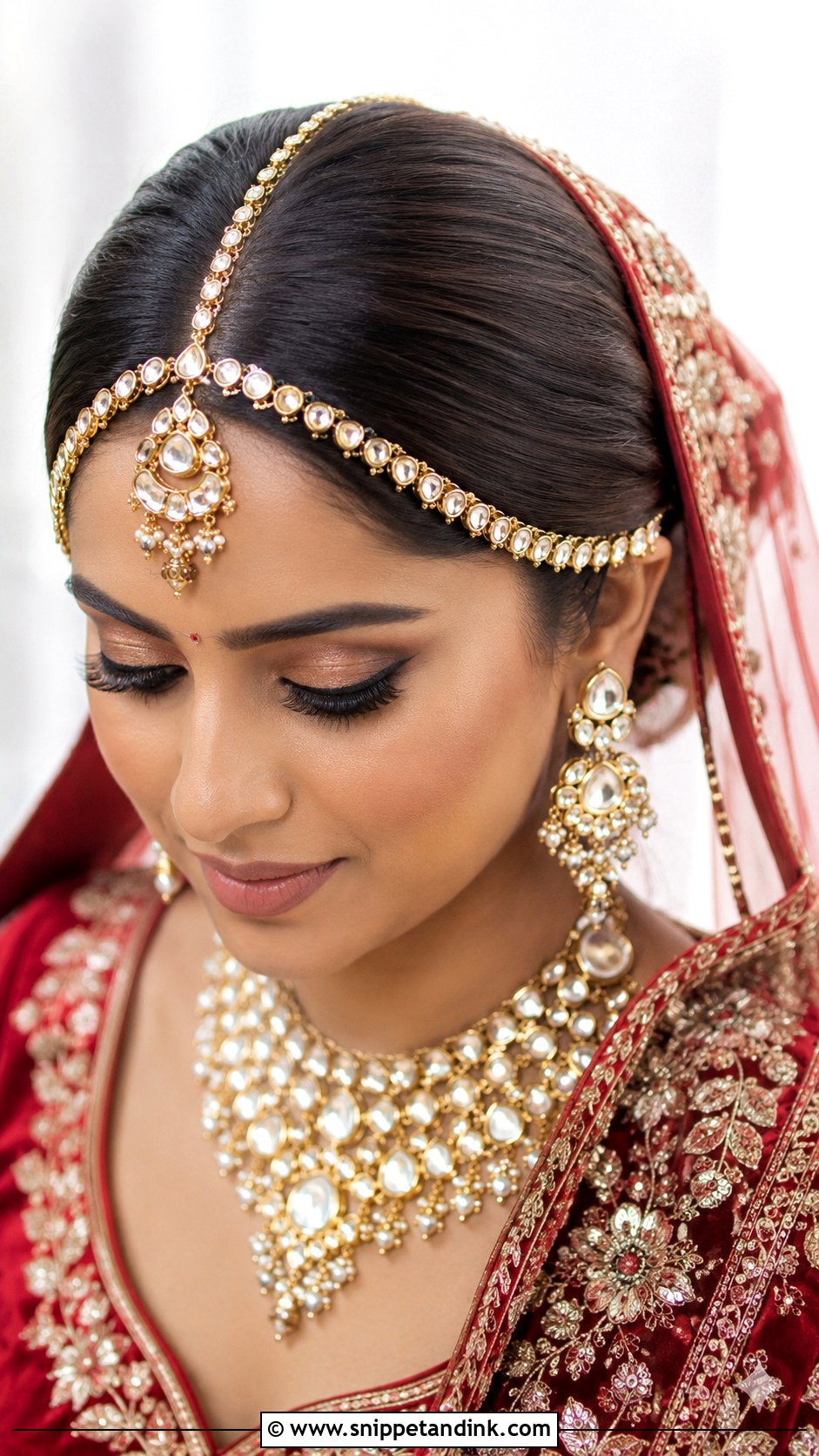
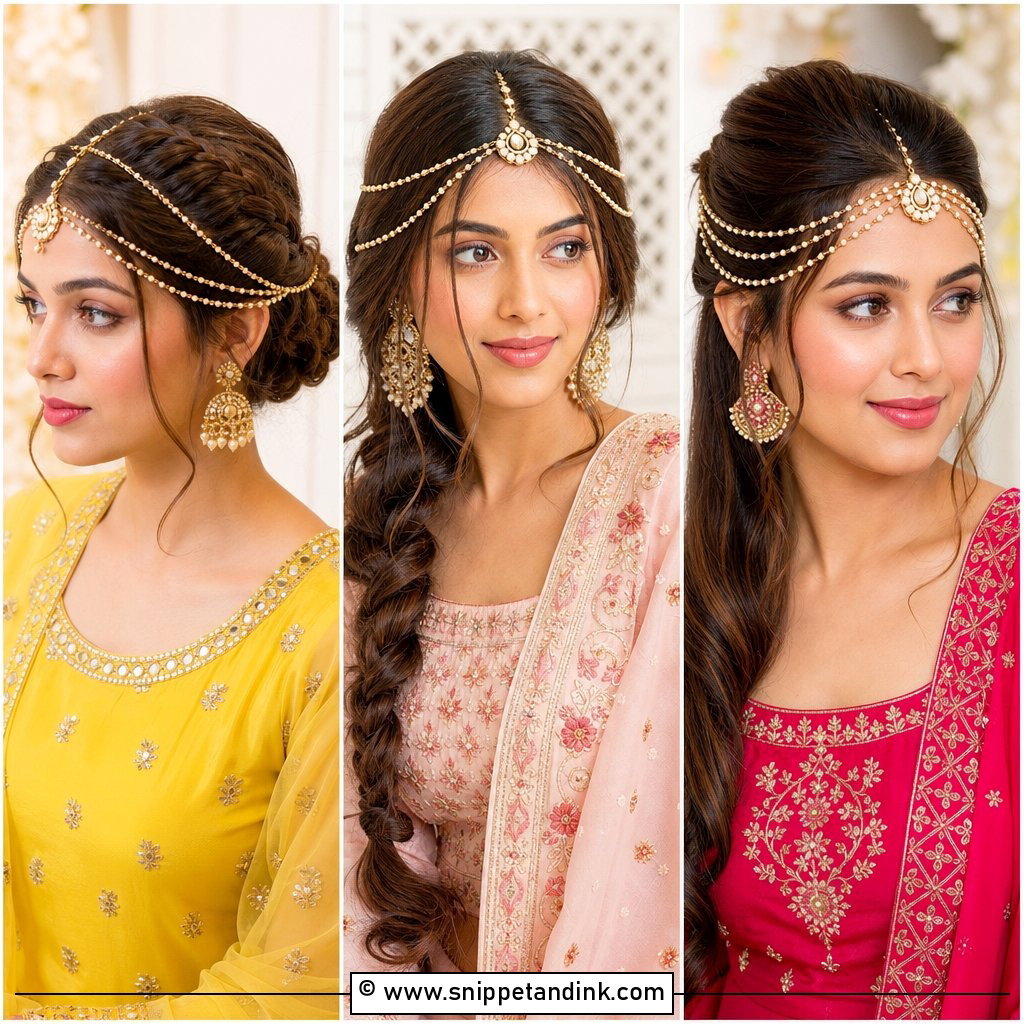
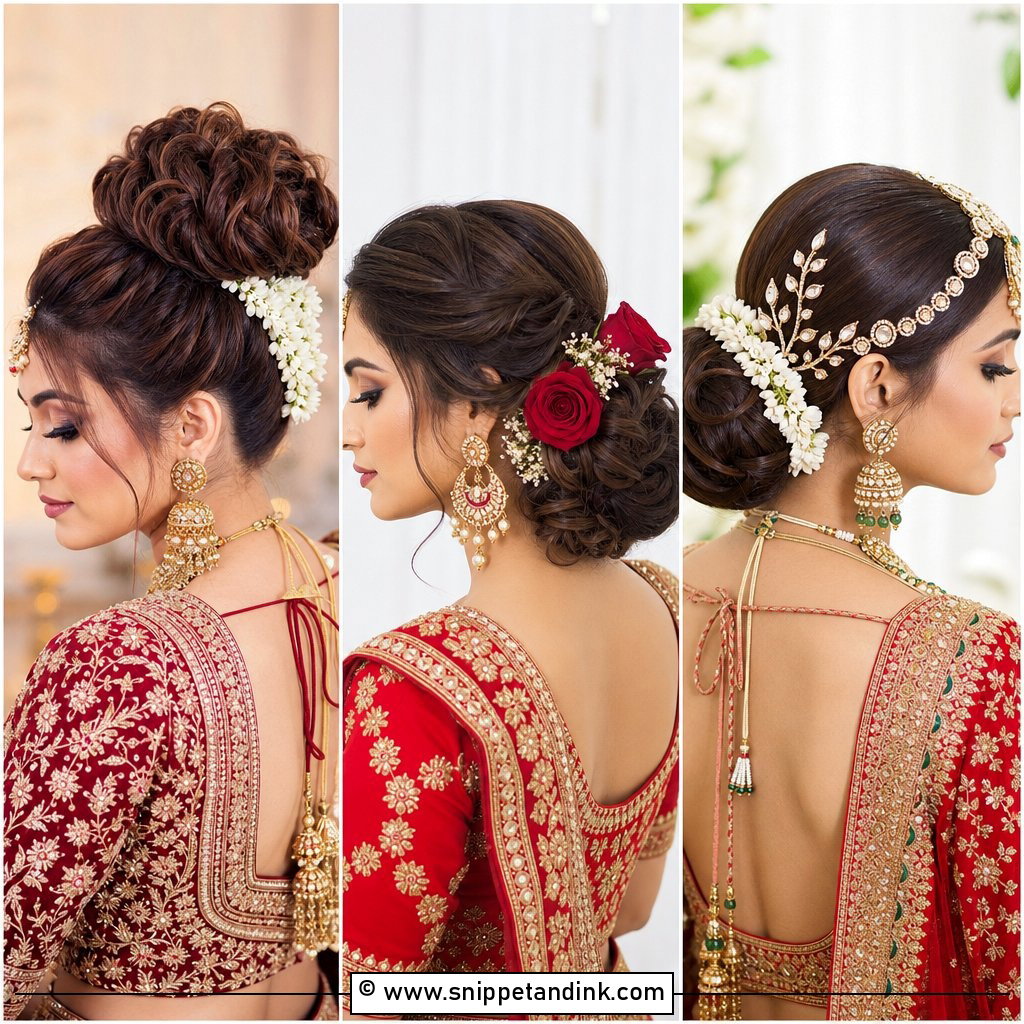
With a centre part and a bun, the mathapatti has a straight line to follow and a solid base at the back to hook into, which is why this is the look I fall back on for heavy kundan or polki pieces. I smooth the crown completely and add a little volume behind it so the dupatta doesn’t sit flat on the scalp. The bun height depends on where the dupatta is pinned: low if it drapes from the back of the head, mid-height if it sits further forward. It suits lehengas, sarees and shararas equally because it never fights the outfit.
2. Low Bridal Mathapatti Bun
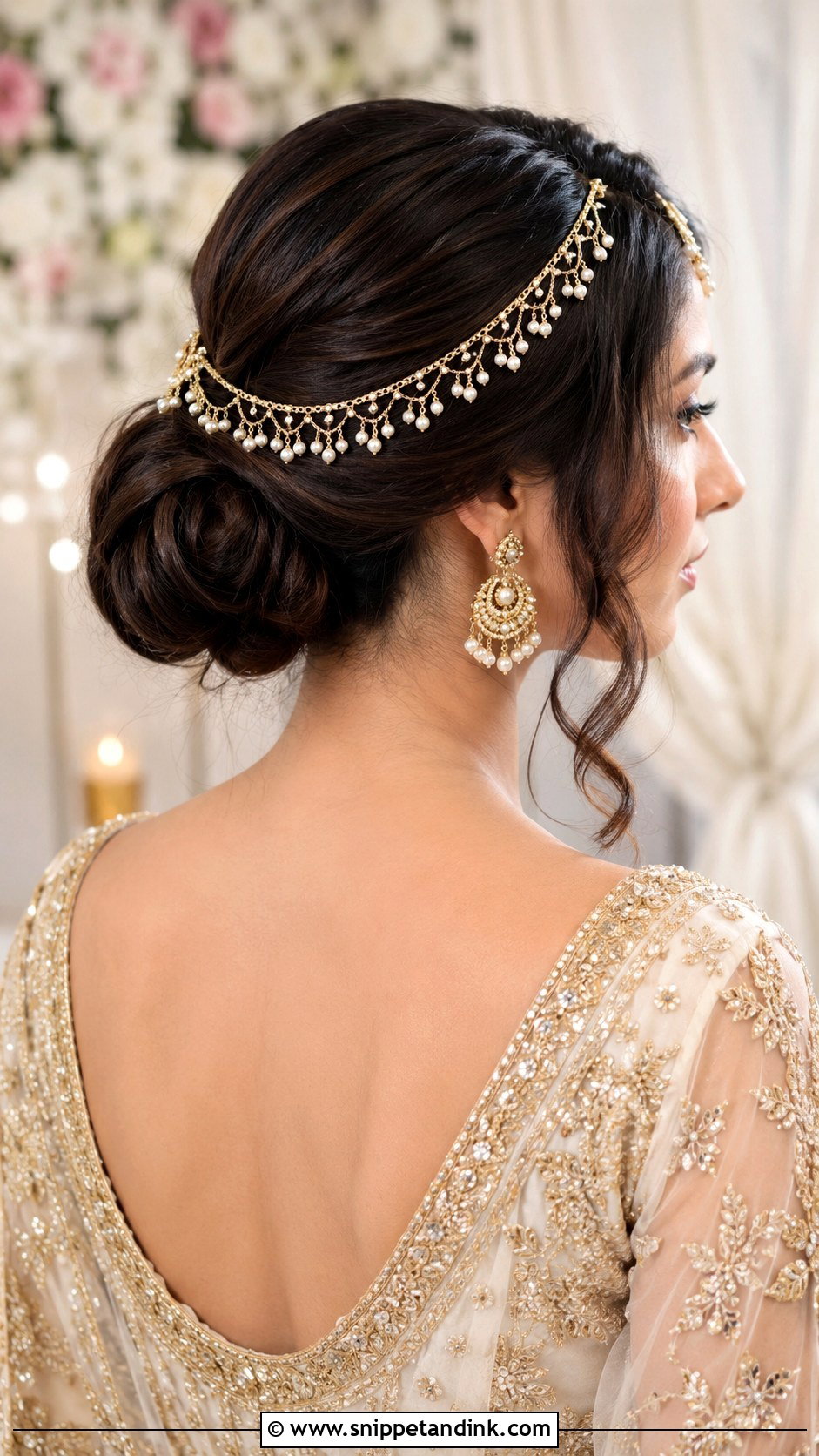
A bun at the nape is the most comfortable option for a long day of ceremonies, because its weight sits low and doesn’t drag on the crown. It also gives me a dense, firm section to pin a wide or layered mathapatti into, so the side chains don’t wander. A dupatta can be pinned over the head or draped from behind without crushing it. Brides with round faces sometimes find a fully sleek front too severe; two soft face-framing pieces fix that without loosening the jewellery.
3. High Bridal Mathapatti Bun
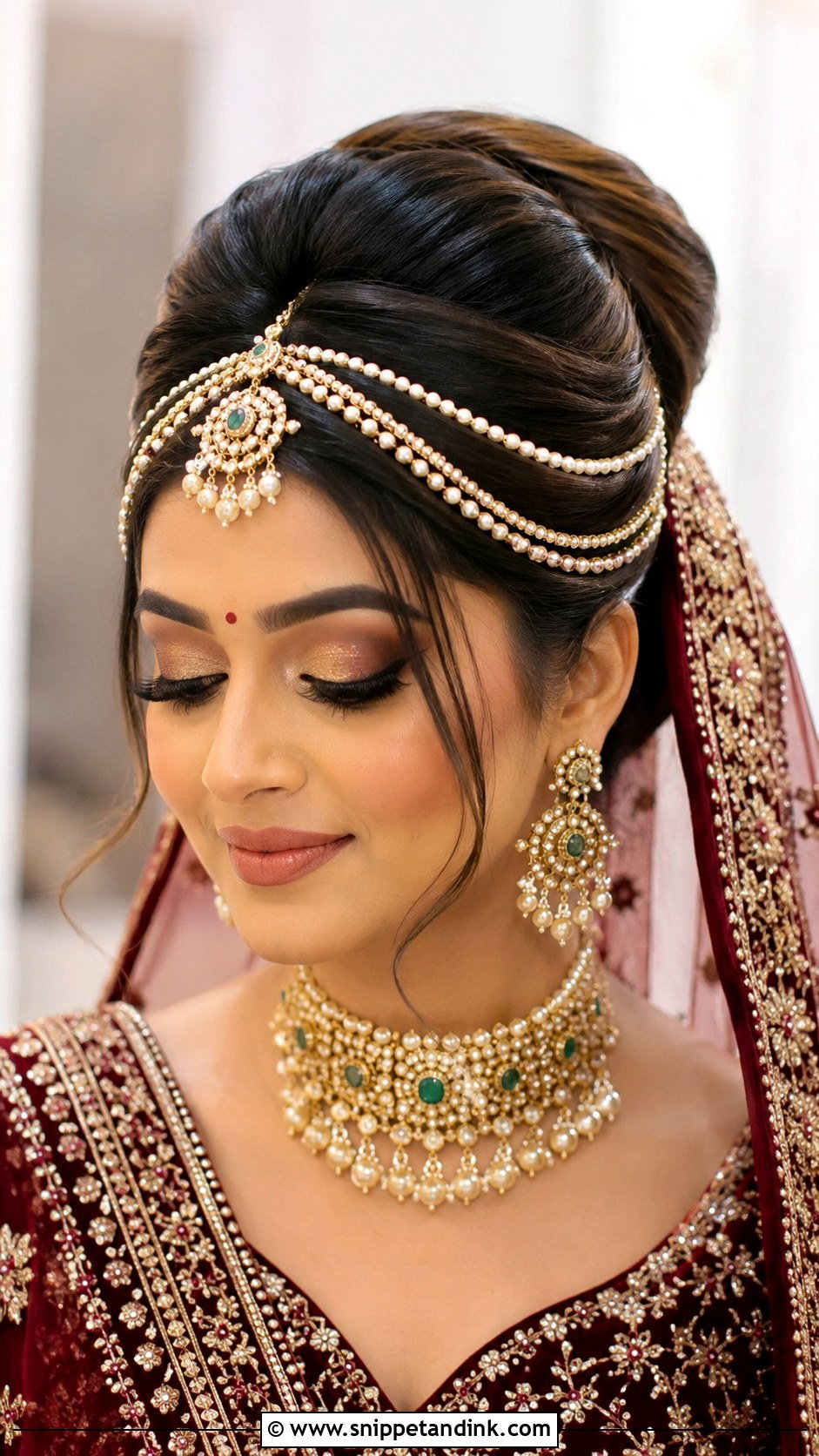
Height at the crown lengthens the neck and gives a dupatta a raised base, but it also lifts the back of the mathapatti chains, so I check from the side that the front drop still sits flat. This bun is the one I suggest for high-neck blouses, statement earrings and layered necklaces, since it keeps everything clear of the shoulders. Brides with fine hair usually need a hidden padding or donut to get the shape. The bun has to be built on a secure base of crossed pins, because a high bun that loosens mid-ceremony is very hard to fix under a dupatta.
4. Bridal Mathapatti Open Curls
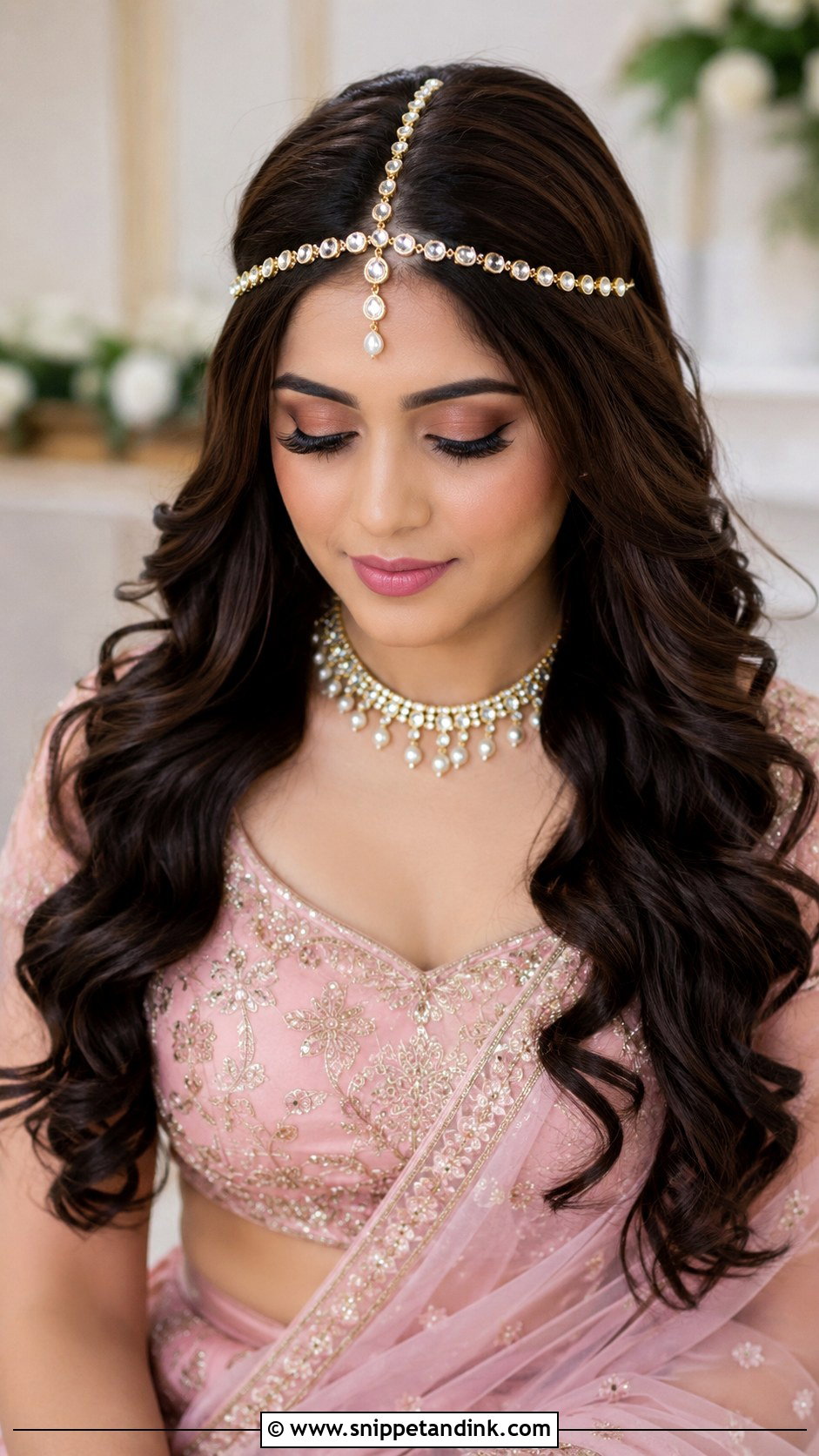
Open curls look soft and romantic, but they give the mathapatti nothing to hook into except the hair along the part, which is the weak point. I smooth the roots, then pin each side chain under a small hidden section just above the ear so the jewellery hangs from hair, not from the curls. The lengths are curled and set with a light spray. This is a good choice for a nikah, engagement or reception where you aren’t wearing a heavy dupatta over the head. With a dense, heavy piece I’d steer you toward a half-up style instead.
5. Bridal Mathapatti Half Up Curls
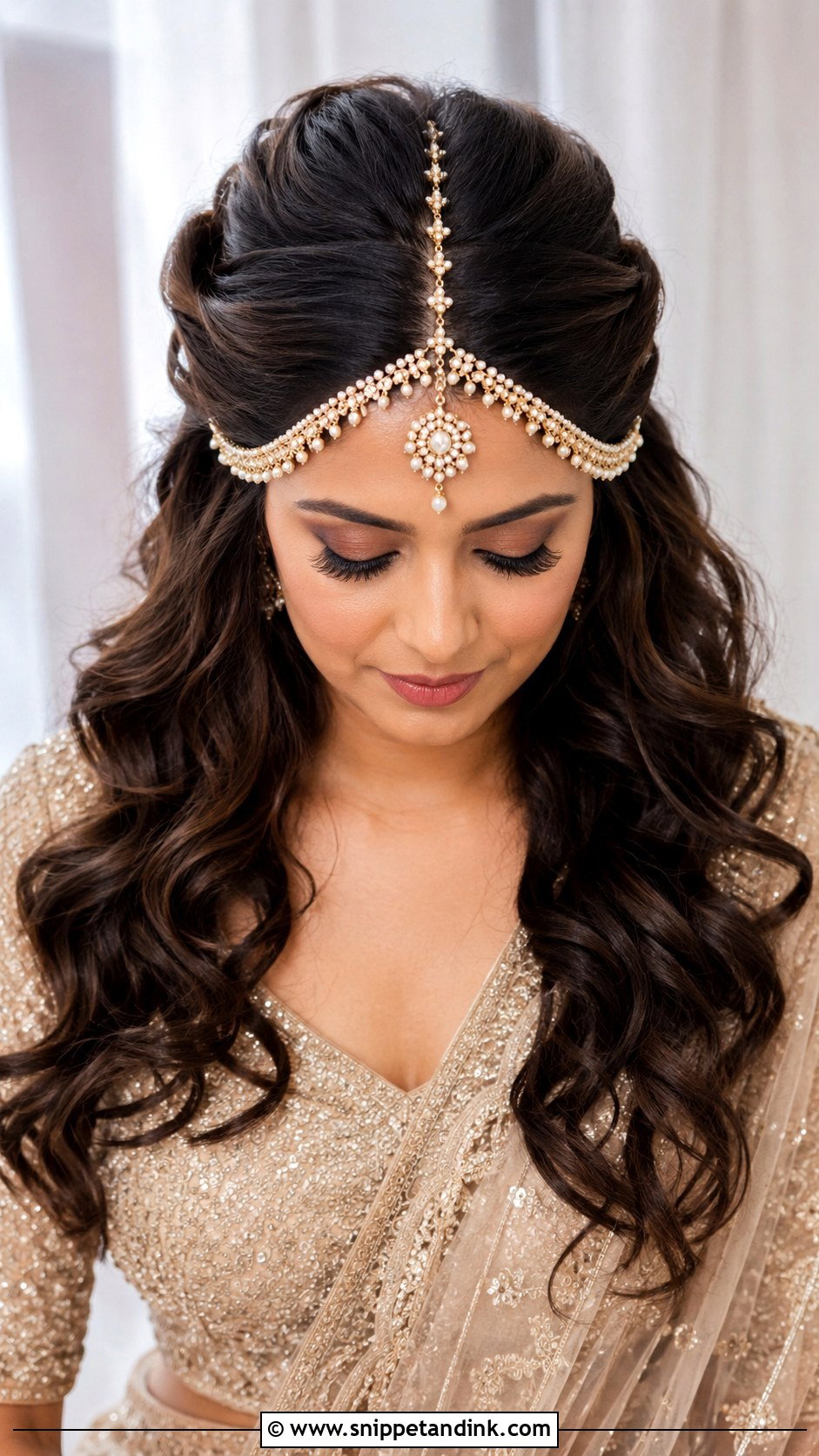
Half-up is my usual answer when a bride asks for her hair down but is wearing a mathapatti with real weight. The top section is twisted or pinned at the crown, which gives me an anchor for both the jewellery and dupatta pins, and the rest falls in curls or brushed waves. Medium to long hair works best, and clip-in extensions fill out the lower section if your hair is fine. The twist at the back is also where I hide most of the pins, so it needs to be bulky enough to carry them.
6. Side Swept Bridal Mathapatti Curls
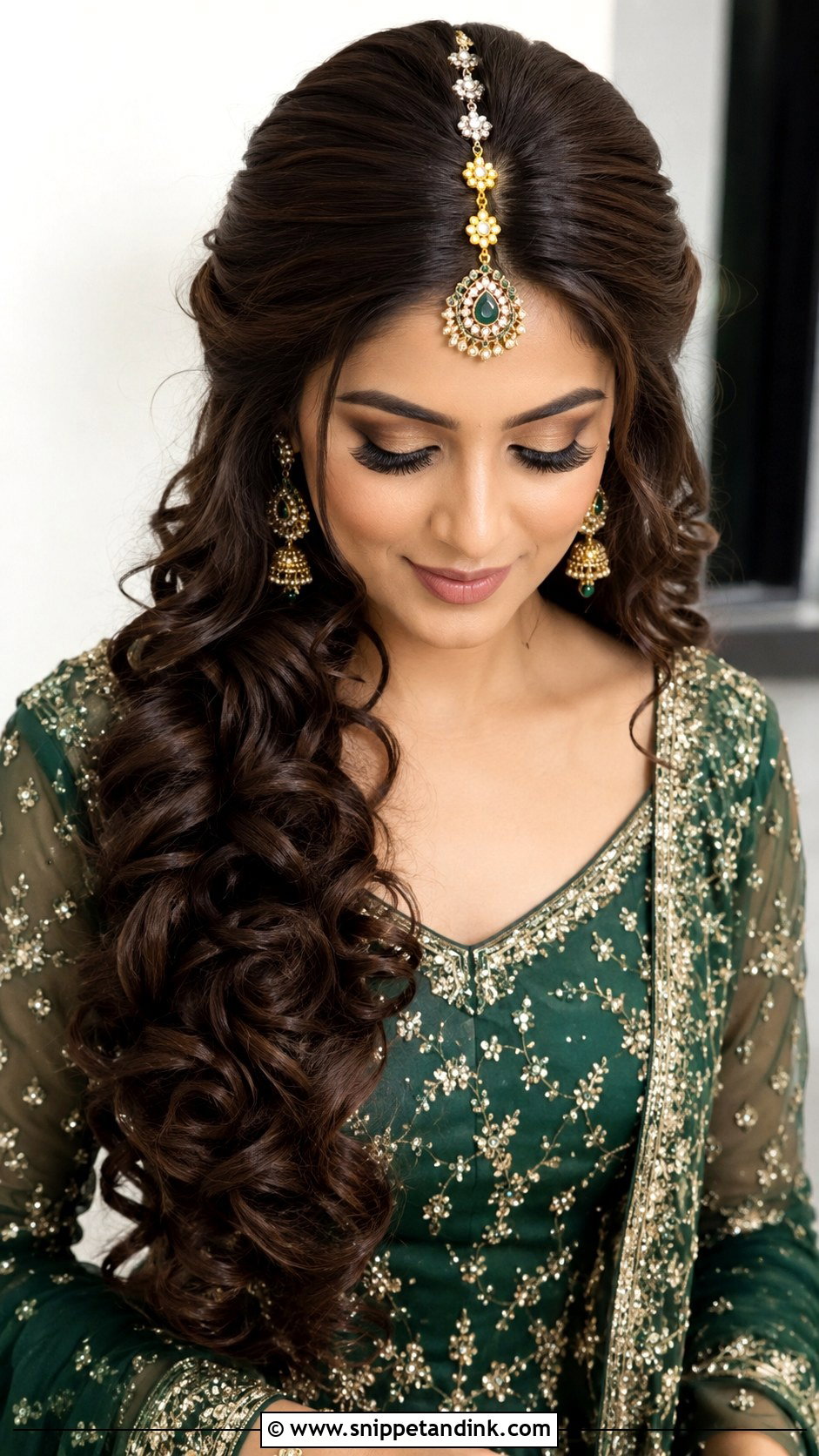
Sweeping the curls over one shoulder adds drama and leaves one ear clear for a statement earring. The part can stay at the centre or move slightly off it, but the mathapatti drop must still sit in the middle of the forehead, so I pin it from the jewellery’s centre line, not the hair’s. The bare side is smoothed and pinned tightly behind the ear. Because the weight of the hair pulls to one side, I’d only pair this with a light mathapatti; a heavy one tends to tilt toward the curls by the evening.
7. Bridal Mathapatti Braided Bun
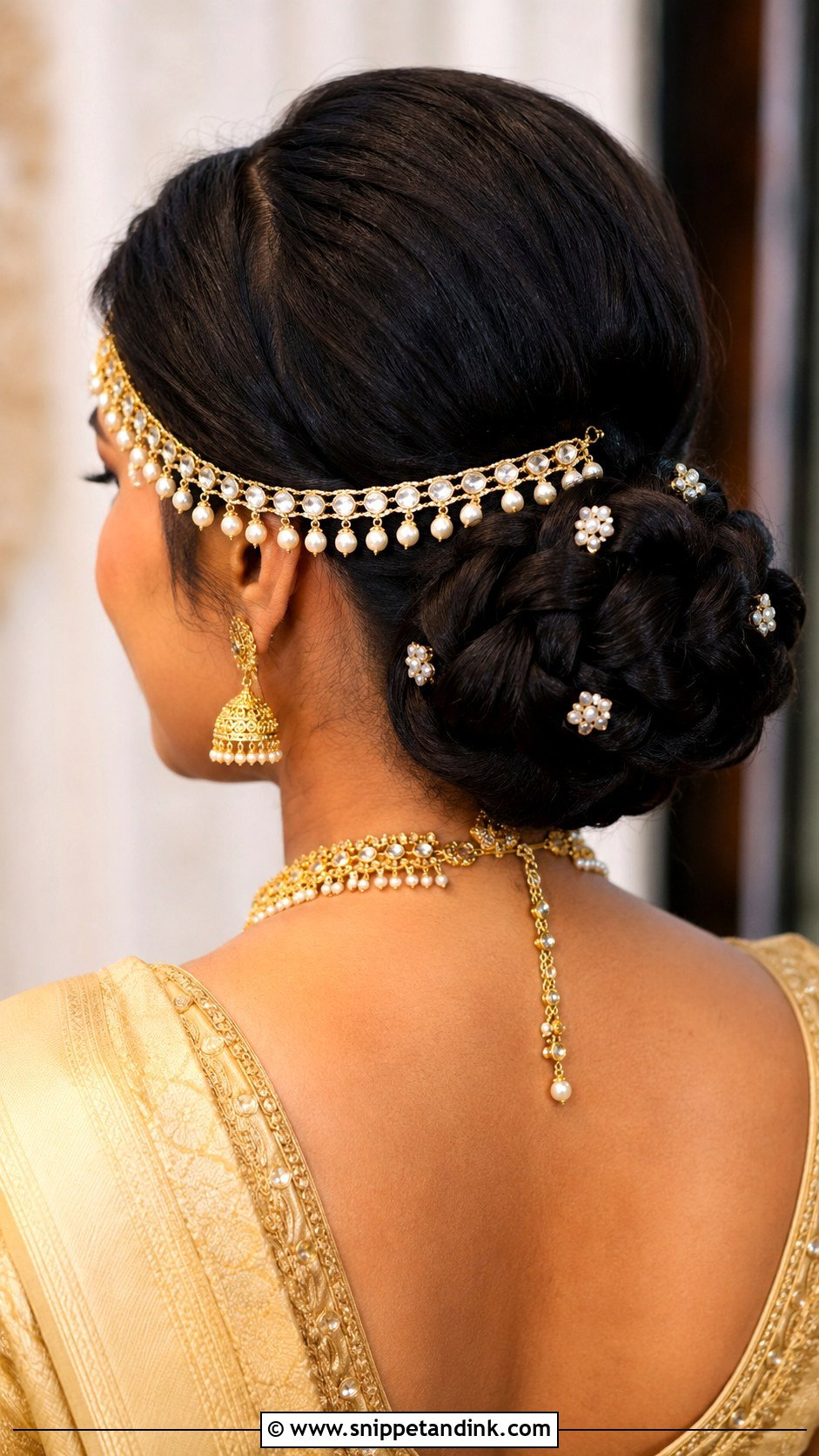
Braids are the best thing I know for controlling thick hair under jewellery. A plait wrapped around the bun, blended into a low chignon or laid across the crown gives a woven texture from the back and keeps the front clean for the mathapatti. Every braid is also a ready-made anchor for pins, which is why this style holds up so well under a heavy dupatta. Pearls, gold pins or small flowers can be tucked into the plaits without any extra base.
8. Bridal Mathapatti Gajra Bun
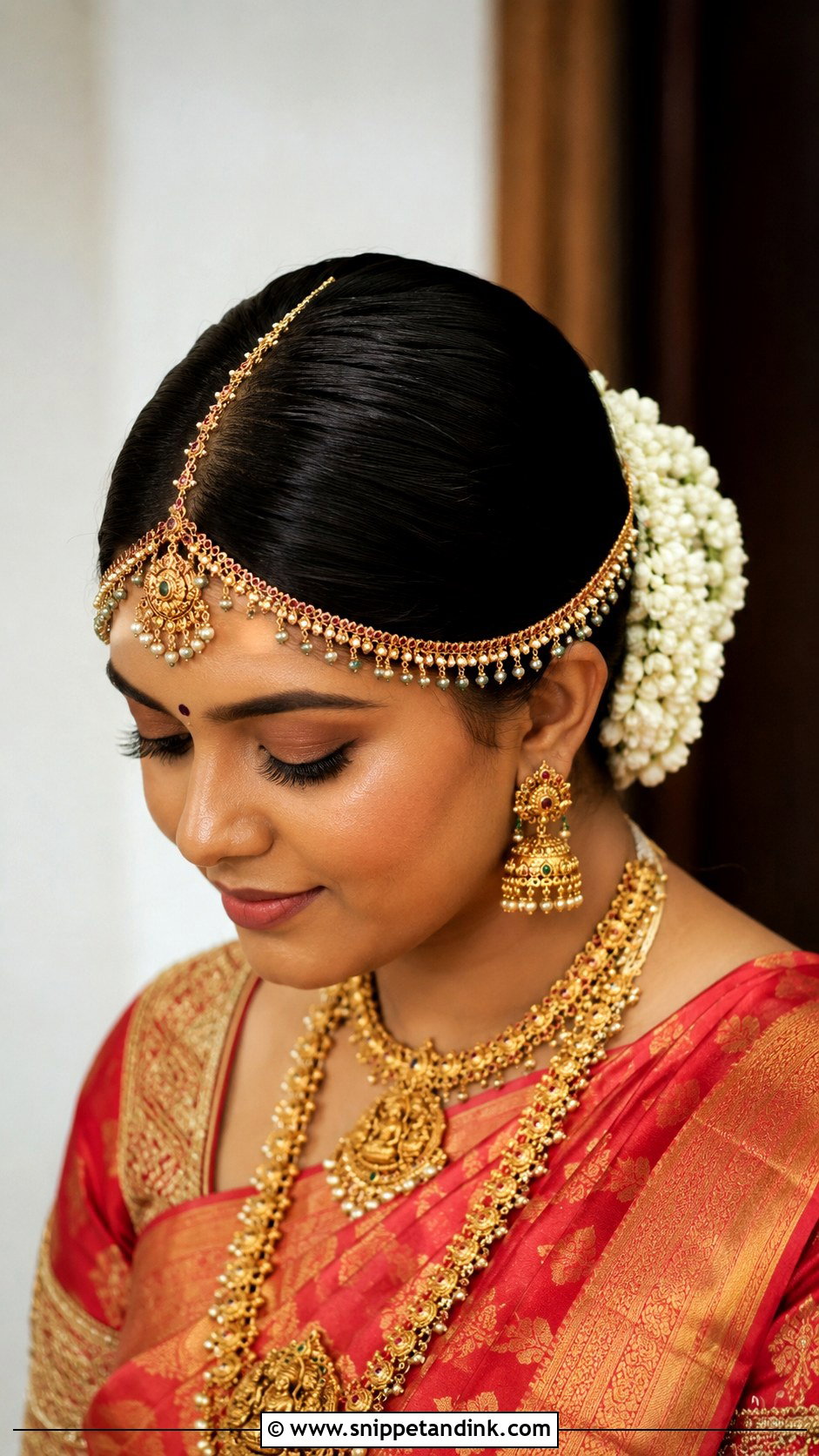
Fresh jasmine wrapped around a bun is the most traditional finish I do, and the scent is part of it. Jasmine is the usual choice, though roses, baby’s breath, and mixed florals also suit a gajra. Real flowers are heavier than they look, so I secure the gajra with U-pins into the bun itself rather than resting it on the surface. The front can be sleek or softly waved. In hot weather, jasmine browns within a few hours, so I ask families to keep a spare string in the fridge for the evening.
9. Floral Bridal Mathapatti Bun
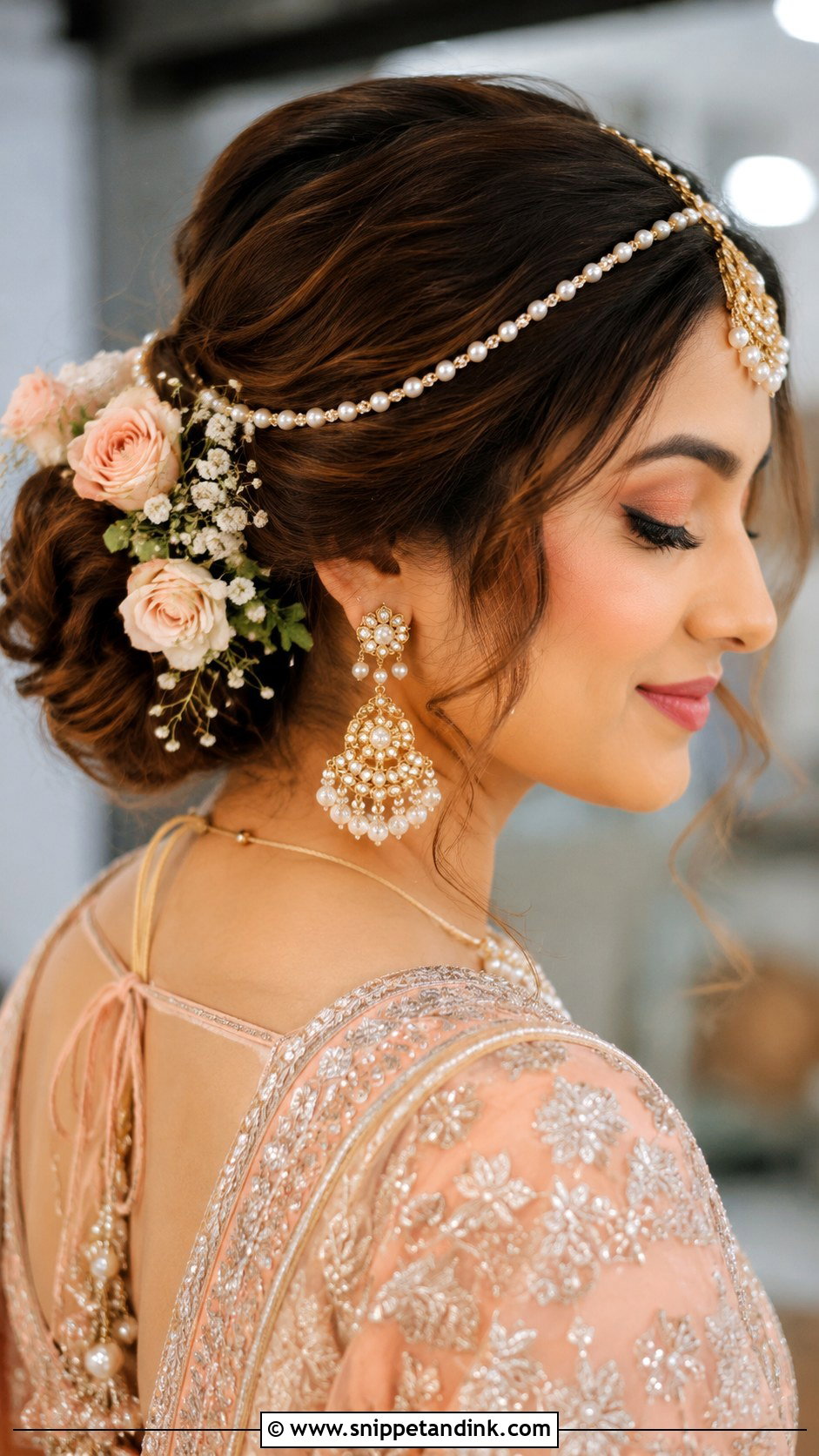
Instead of a full gajra ring, loose blooms are tucked in and around the bun, picking up colours from the lehenga, saree, or dupatta. It suits mehndi, haldi and daytime garden ceremonies. Fresh flowers wilt in heat, while good silk flowers hold their shape all day; I often mix both, with fresh blooms at the front where they’ll be photographed. Every stem needs its own pin, and I keep the bun textured but tightly secured underneath.
10. Bridal Mathapatti Fishtail Braid
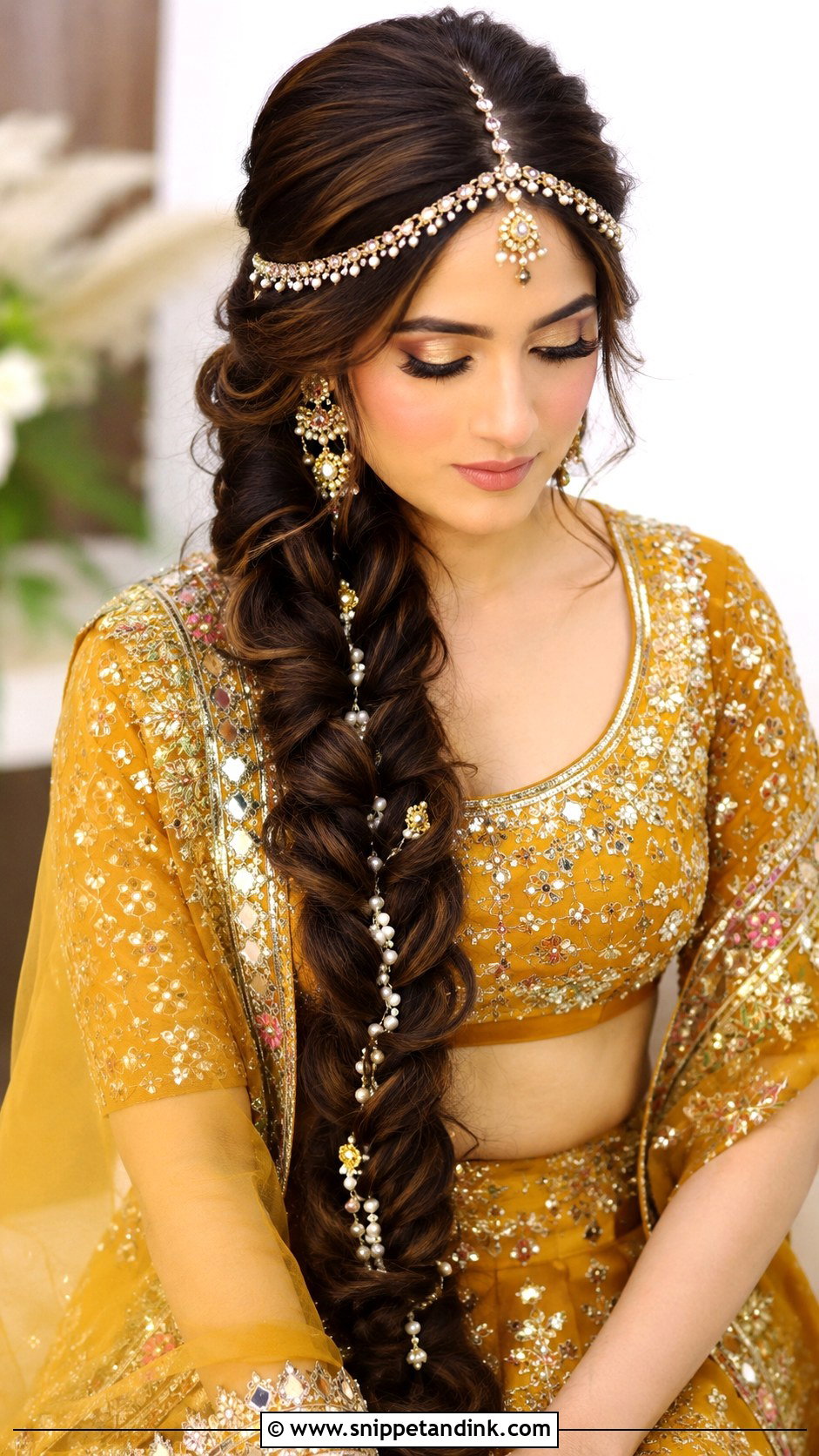
A fishtail is tighter and flatter than a regular three-strand plait, so it carries a lot of hair without turning bulky. That makes it a good partner for thick or extended hair. The part stays in the centre for the mathapatti, and the braid falls down the back or over one shoulder. I loosen the edges gently by hand after it’s tied for width, and add pearls or small flowers along it. It works well for a mehndi or sangeet, and for a wedding where you want something long and traditional without a bun.
11. Bridal Mathapatti Bubble Braid
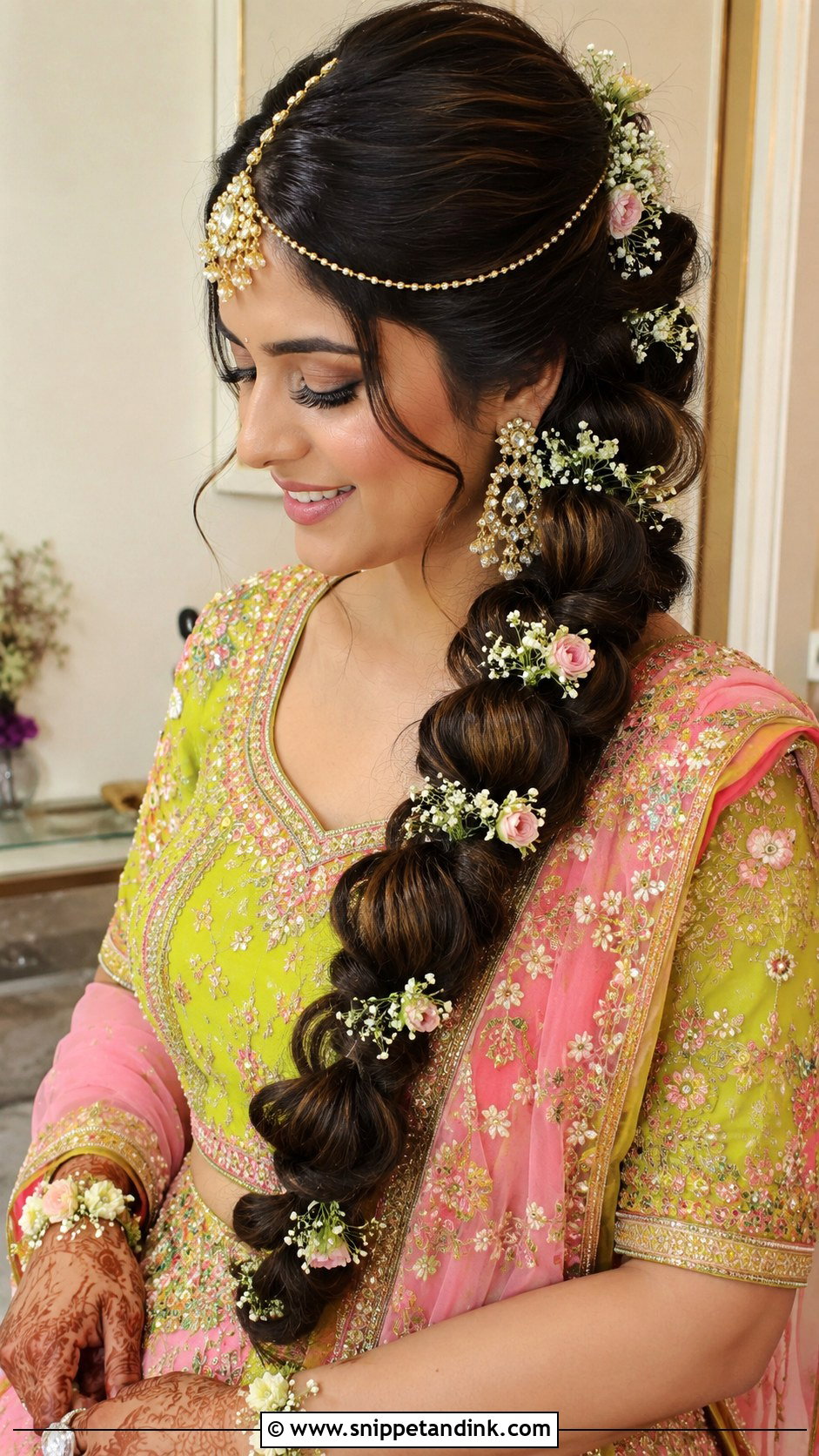
Bubble braids are sections of hair tied with small elastics and pulled into rounded shapes, so they need real length to look balanced; with shoulder-length hair I’d add extensions. The front is kept smooth along the centre part for the mathapatti. Each bubble can be pulled wider and decorated with tiny flowers, pearls or wrapped thread. This one reads playful rather than formal, which is why I tend to suggest it for mehndi, haldi, or sangeet events rather than the main ceremony.
12. Front Puff Bridal Mathapatti Bun
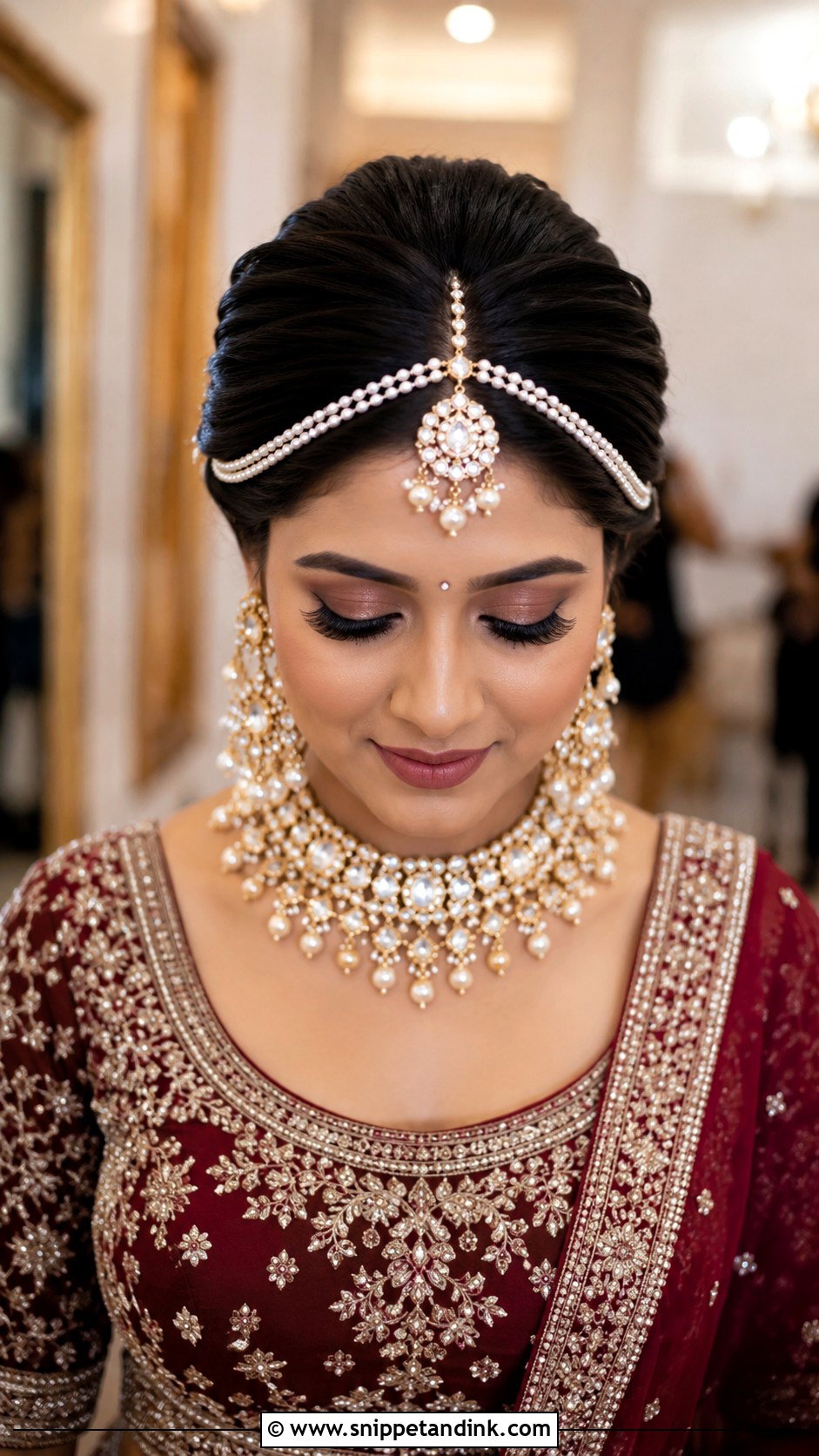
A front puff lifts the hair just behind the hairline and adds height, which helps brides with round or shorter faces. The mistake I see is making it too tall: a big puff pushes the mathapatti up off the forehead, and the drop ends up floating. I keep the lift small and set it so the jewellery can still lie flat and centred. The bun behind can be low, mid or slightly high depending on the dupatta, and the whole style is finished with strong pins and a smoothing spray.
13. Soft Messy Bridal Mathapatti Bun
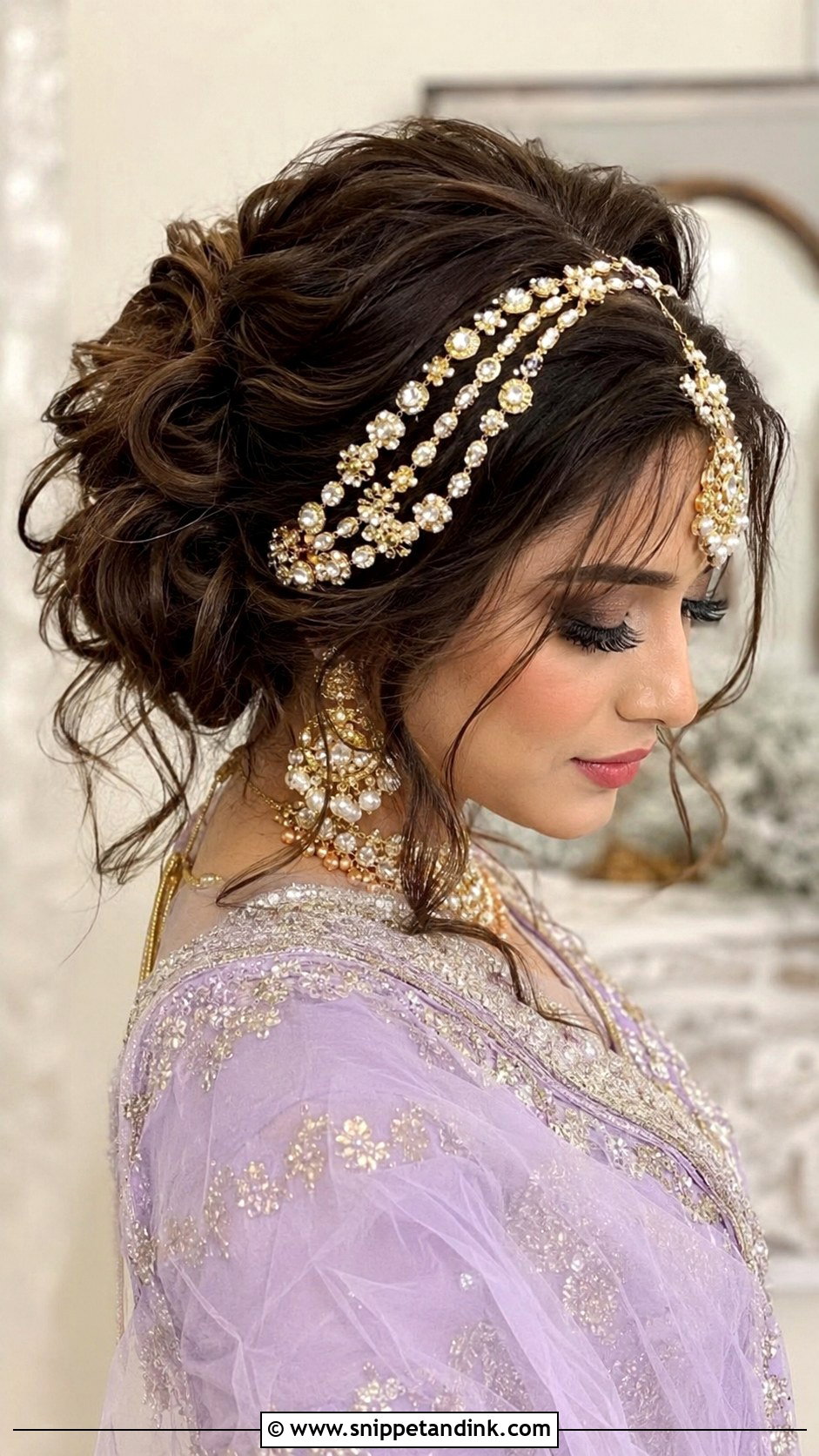
A messy bun is never really messy. It’s built from loose twists and curled sections pinned in place, with the front kept neat enough to carry the jewellery. A few strands near the cheeks soften it. It suits pastel lehengas, organza dupattas and floral jewellery. The limit is weight: loose texture gives a heavy mathapatti very little to grip, and the side chains can drag the twists apart over the evening, so keep this one for lighter pieces.
14. Sleek Straight Bridal Mathapatti Hair
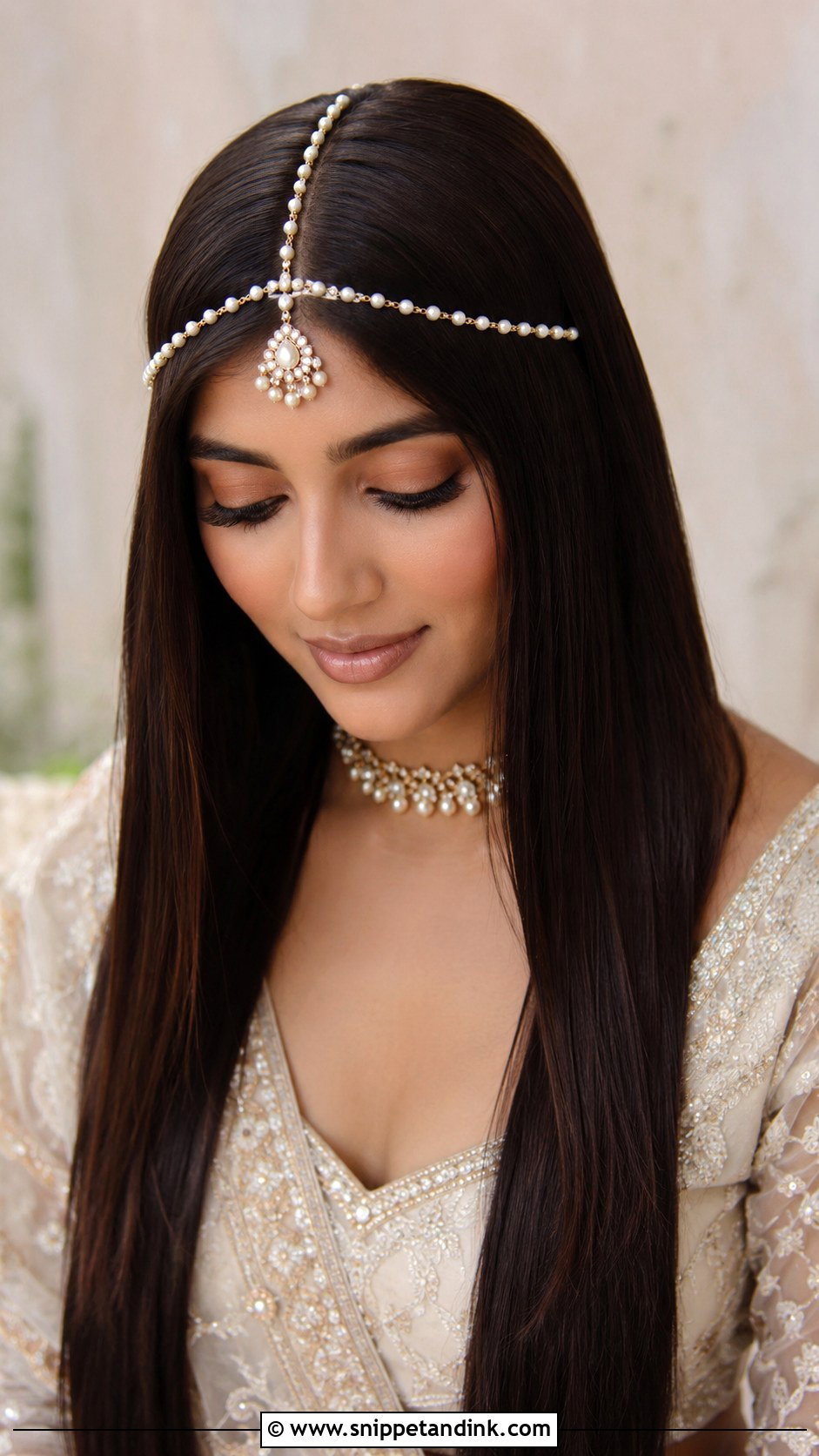
Sleek straight hair looks simple but shows every flaw, so it only works on hair in good condition or with quality extensions that give a clean fall. I part sharply in the middle, straighten, and pin the hair lightly behind the ears where the side chains attach. It suits a bride who wants her jewellery and makeup to lead. Shine spray is fine, but no oil near the forehead; oily roots make the mathapatti slide and leave marks on the gold.
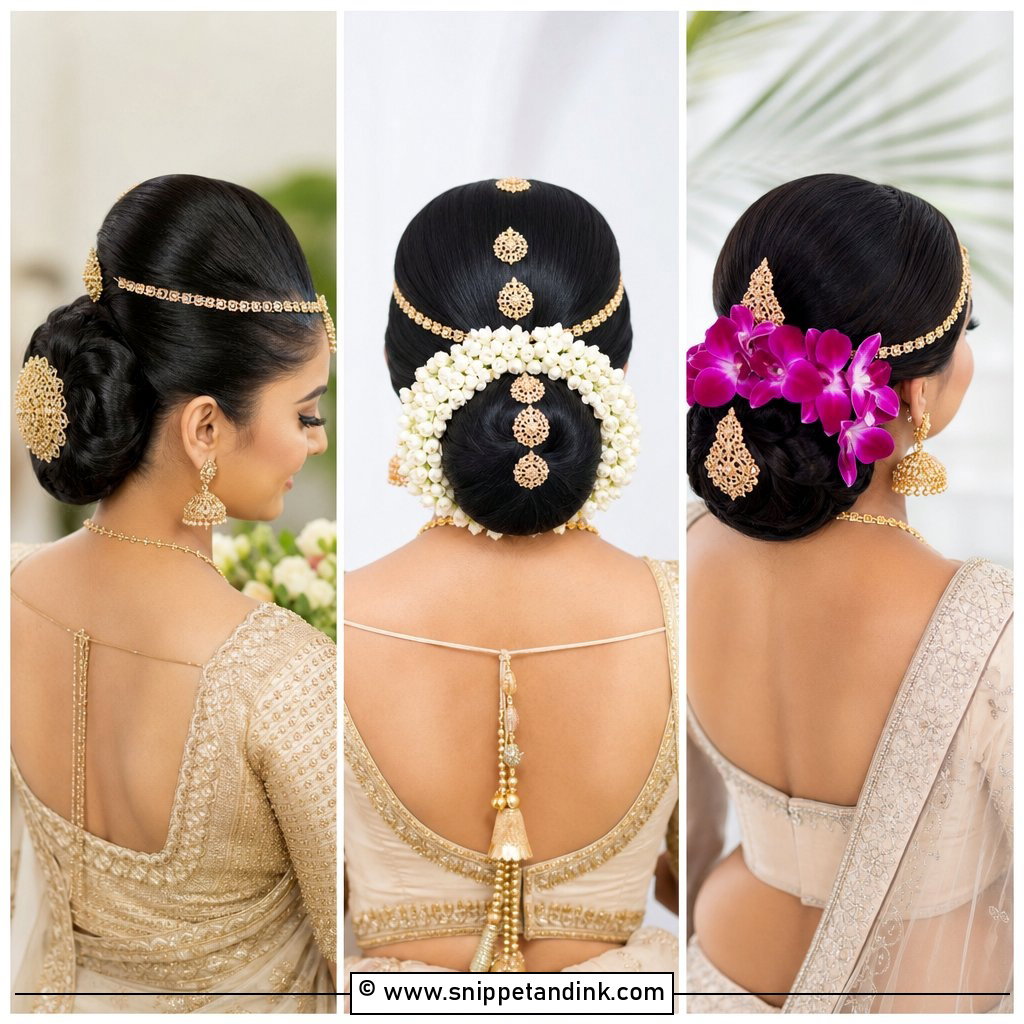

15. Loose Waves Bridal Mathapatti Hair
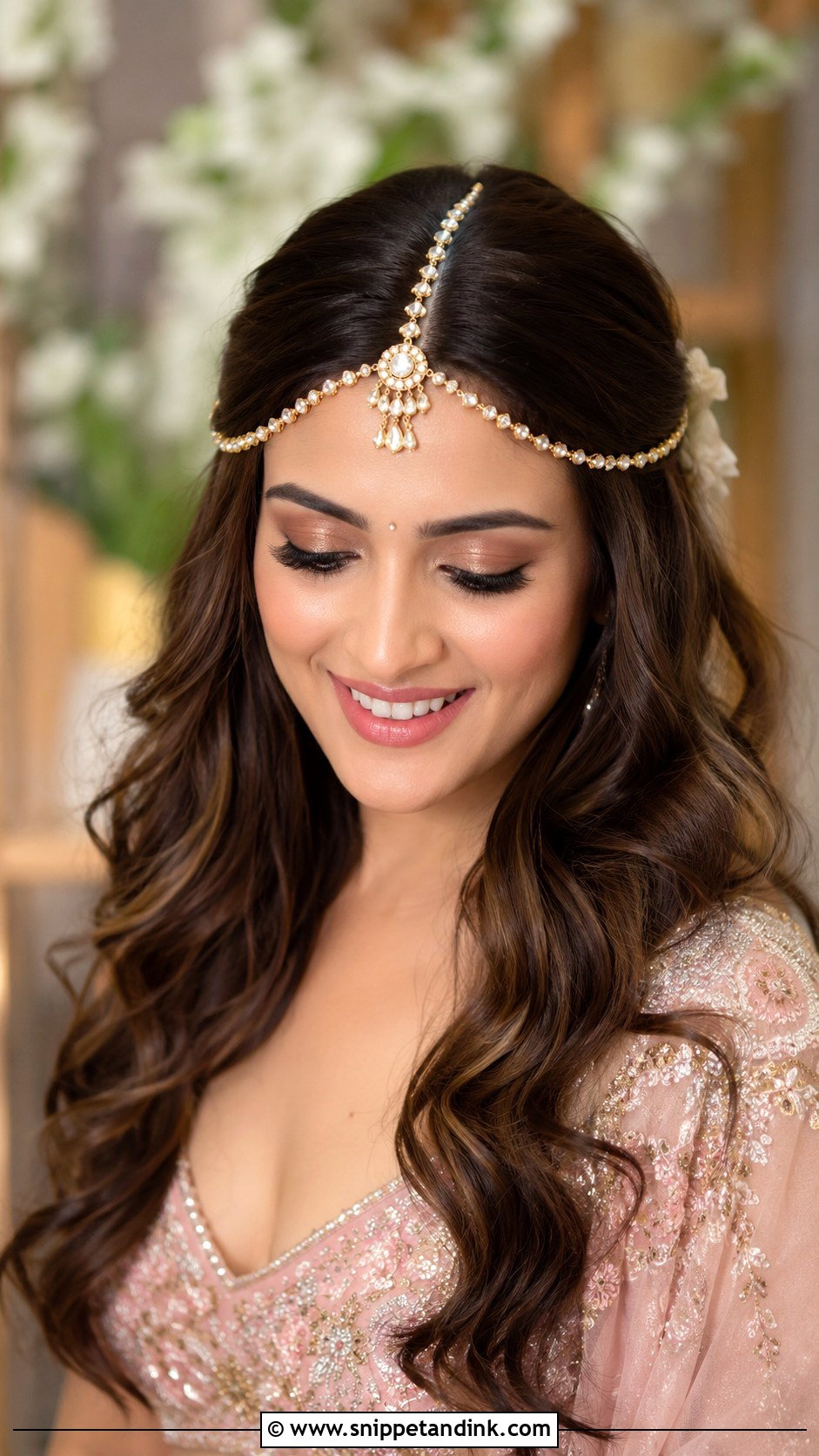
For waves, I start the bend below the cheekbones so the top stays smooth and the jewellery has a flat surface. It suits receptions, engagements and daytime weddings where a heavy bun would feel too formal. Hidden pins near the centre part and at the temples carry the mathapatti; the waves themselves hold nothing. Choose a lightweight piece here, such as pearl, kundan or a slim gold chain, because open hair can’t support much.
16. Bridal Mathapatti Bun With Dupatta
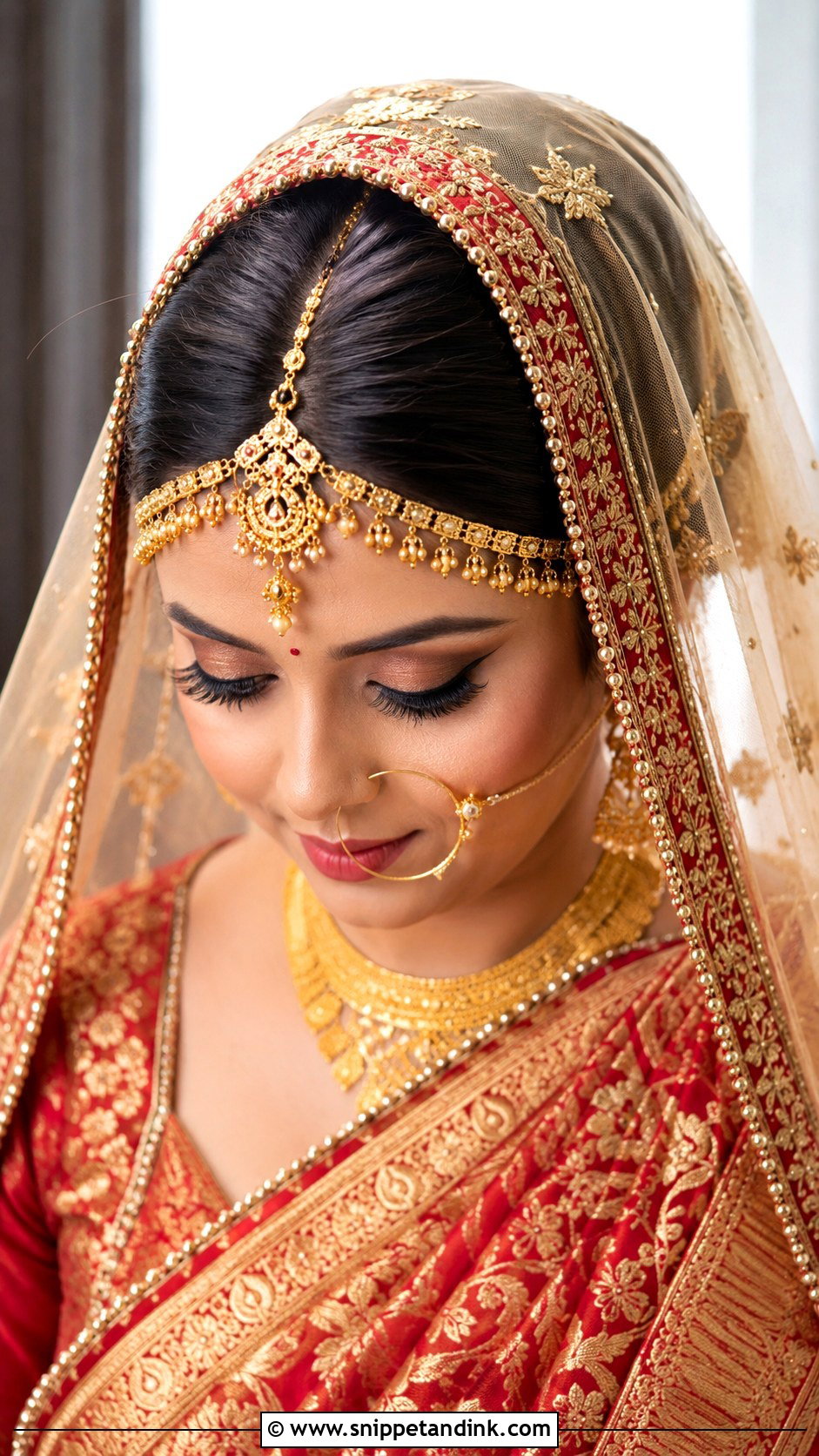
When a heavy dupatta goes over the head, a bun is the most practical base I can offer, because the pins go into the bun and crown instead of pulling loose hair. The centre part keeps the mathapatti straight and visible under the dupatta border. I avoid backcombing near the hairline, since teased hair pushes the border forward and hides the jewellery. Test the dupatta placement at your trial. This approach suits Indian, Pakistani, and Bangladeshi bridal outfits where jewellery and dupatta both need to be seen.
17. Bridal Mathapatti With Passa Hairstyle
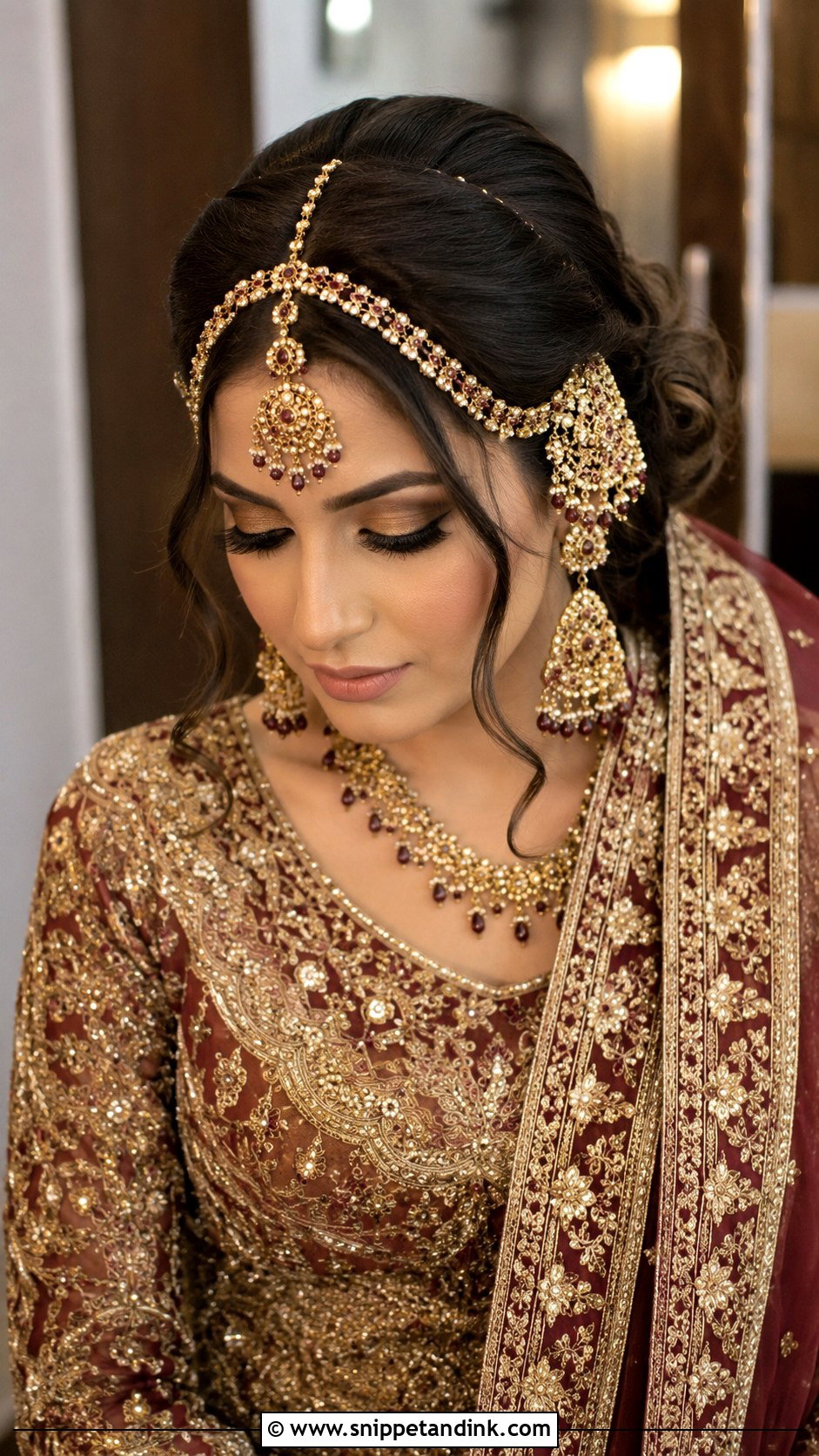
Wearing both pieces gives a rich, layered look that’s popular with Pakistani and North Indian brides, and the challenge is not crowding the face. A bridal mathapatti with passa hairstyle needs a calm base: a smooth low bun, side-swept curls or half-up curls. I centre the mathapatti first, then pin the passa slightly above one side of the forehead so it sits clear of the eye. Keep the crown volume soft so both pieces lie comfortably. It suits shararas, ghararas, lehengas and heavily embroidered dupattas.
18. Bridal Sheeshphool Mathapatti Bun
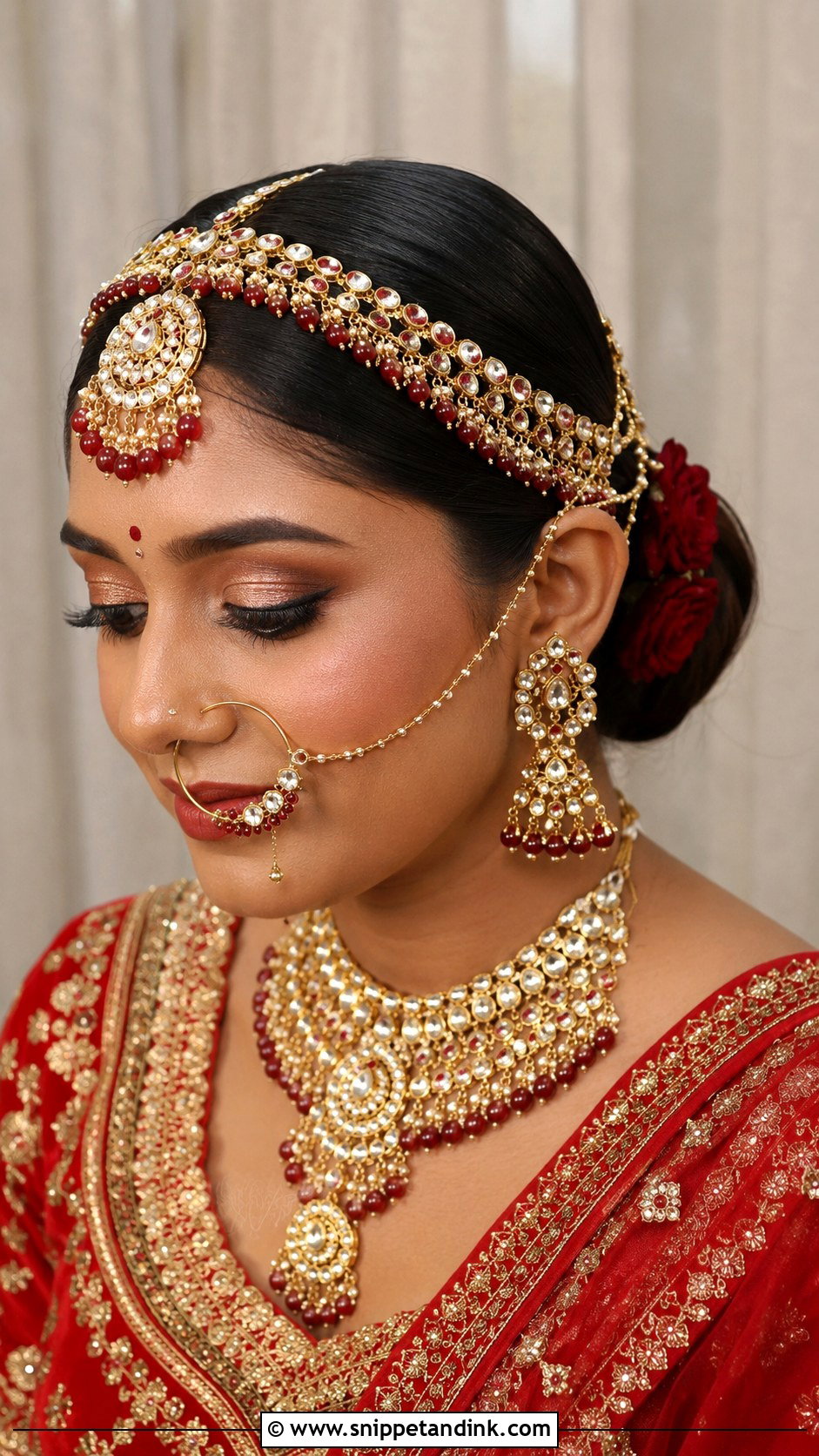
A sheeshphool covers more of the hairline and crown than a mathapatti, so it needs a cleaner, firmer base. A sleek bun is the safest match: it keeps the focus on the ornament and gives me a solid mass to pin the back chains into. Loose strands get tangled in the chains quickly, so I keep them to a minimum. The look suits red, maroon, gold, ivory and deep jewel-toned outfits, and I’d keep the makeup measured so the head jewellery leads.
19. Short Hair Bridal Mathapatti Bun
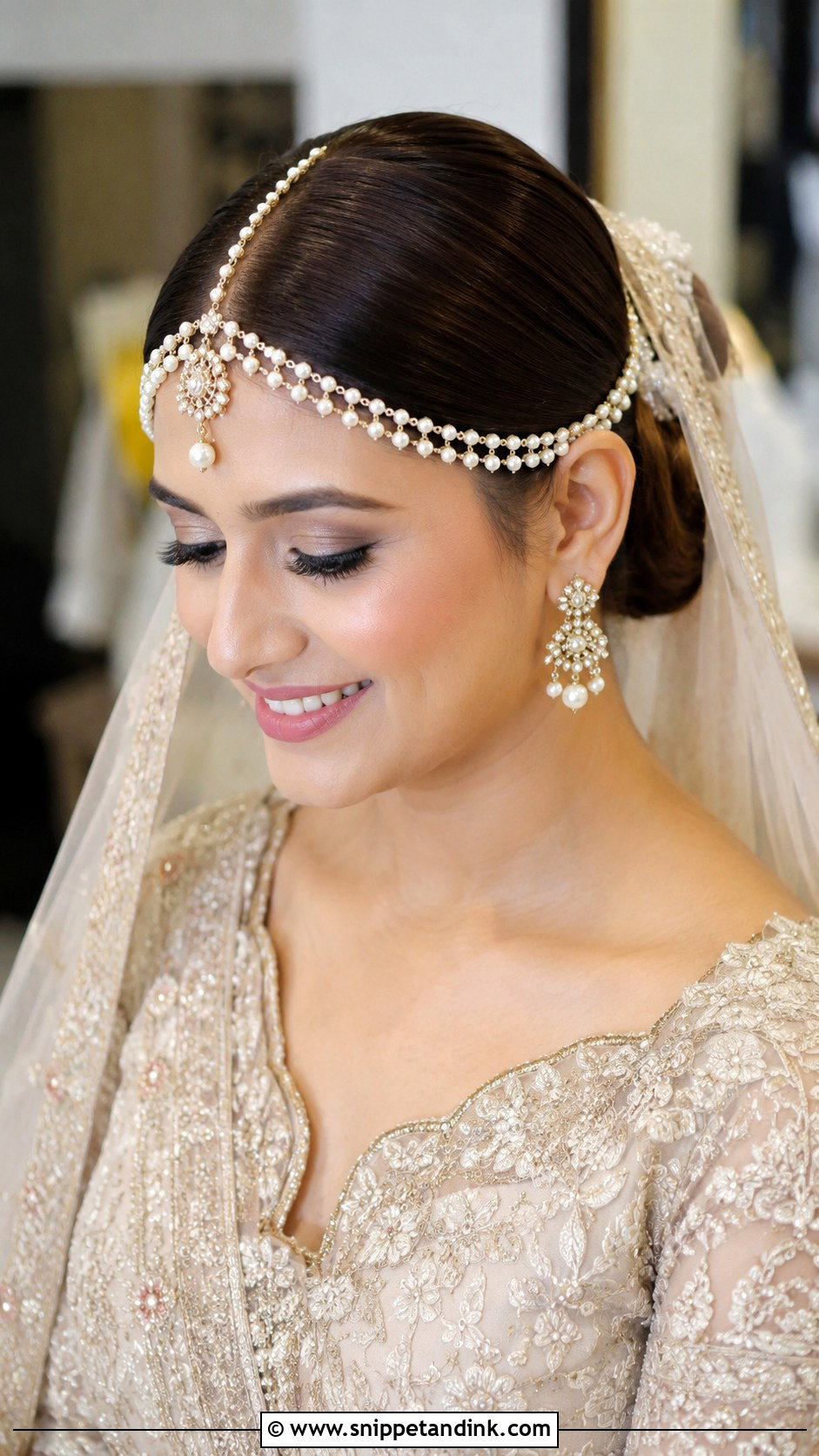
Short hair can carry a mathapatti well with a bit of planning. A small low bun, a tucked chignon or a padded faux bun gives the pins somewhere to go, and extensions or padding can build a more traditional silhouette if you want one. For bob or shoulder-length hair I part neatly, smooth the front and pin the side chains into tiny hidden sections above the ears. Choose a lightweight piece and skip oversized side chains; short hair simply has less to hold onto.
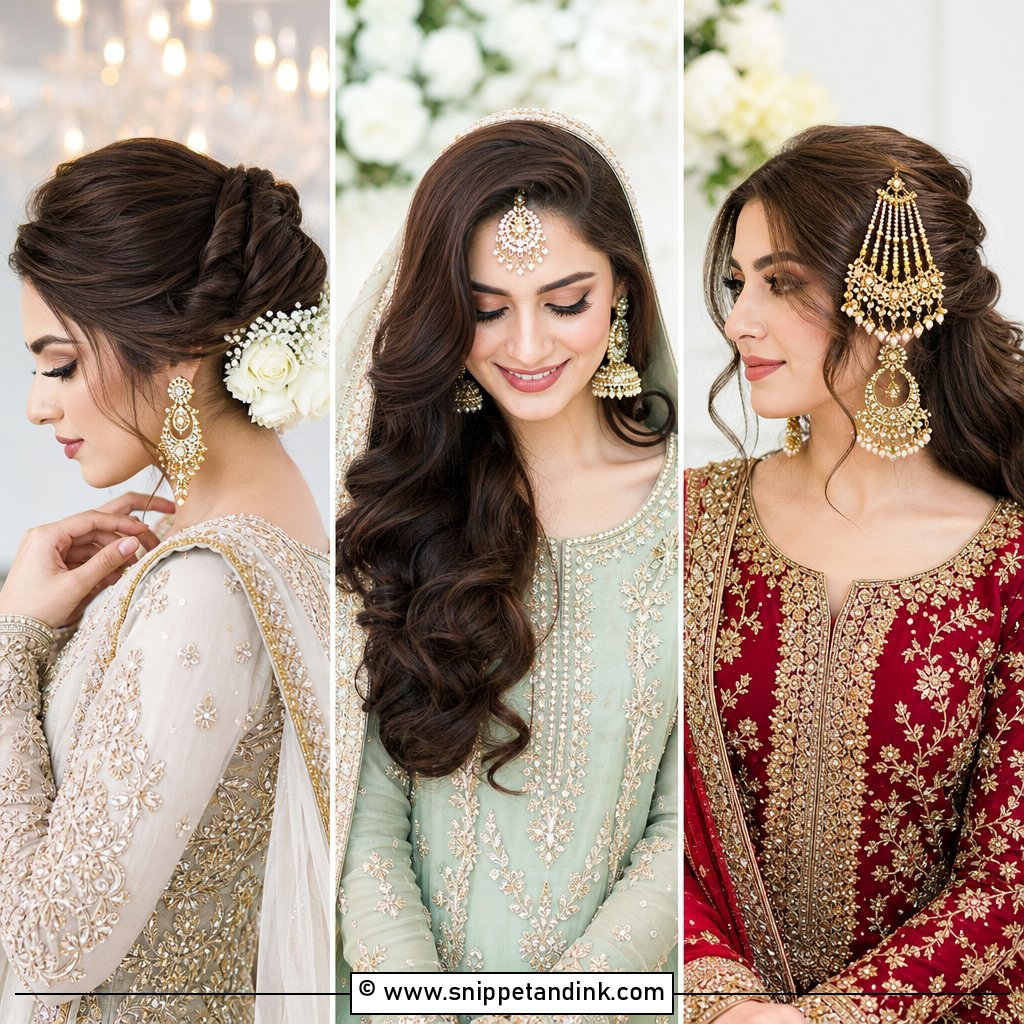

20. Curly Bridal Mathapatti Bun
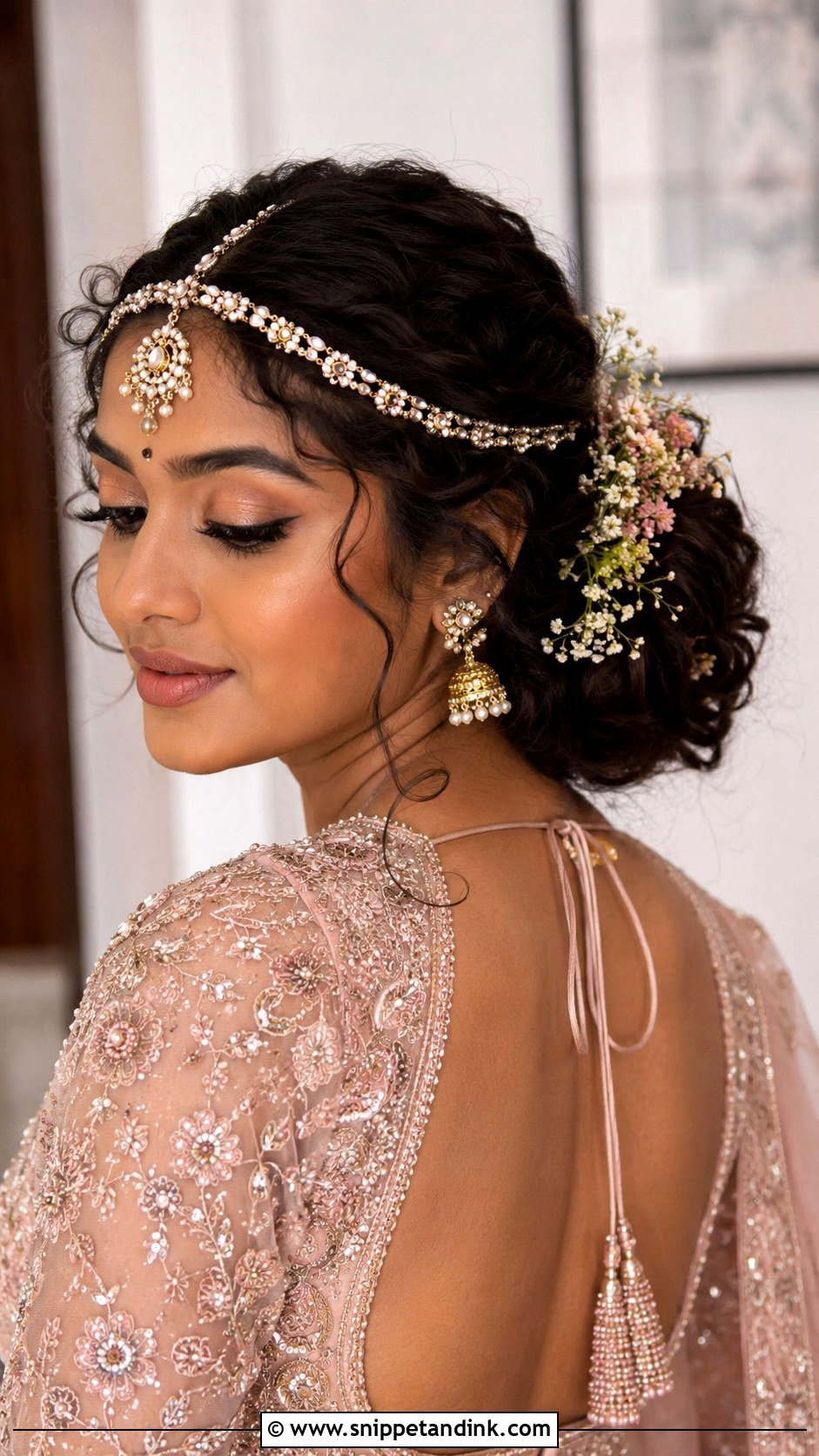
Curls make a full, textured bun with very little padding, which is a real advantage. Natural curls or styled curls are gathered into a low or mid bun while the front is smoothed for the jewellery. For naturally curly hair I work with a curl cream and avoid brushing the lengths, which turns curls to frizz, and finish with a humidity-resistant spray. Straight hair can be curled first, though the curls need to be set and cooled before pinning or they’ll drop. Floral accents and a pearl mathapatti sit well against this texture.
Sizing the Drop to Your Forehead
The centre pendant should sit at the hairline or just below it. A drop that reaches the eyebrows looks heavy in photos and moves every time you raise them. Brides with a short forehead usually need a shorter centre chain; with a high forehead the drop can come lower. Most jewellers can shorten a chain by a link or two, so check the length a few weeks before rather than on the day.
Side chains should follow the hairline toward the ears without cutting across the temples. If they hang loose, I gather the slack into the anchor section so the line stays clean.
Hair, Then Jewellery, Then Dupatta
The order of work on the morning matters, because each layer pins into the one beneath it.
- Finish the full hairstyle and set it with spray before any jewellery goes on.
- Place and pin the mathapatti, checking from the front and both sides that it sits level.
- Add the passa or sheeshphool, if you’re wearing one.
- Pin the dupatta last, with its pins going into the bun and crown rather than through the jewellery chains.
At the end of the night, reverse it. Take the dupatta off first, then unhook the chains one at a time while someone holds the jewellery. Pulling the whole piece off at once snags hair and can bend the hooks.
Your Mathapatti Belongs at the Hair Trial
A sleek bun carries heavy jewellery and a dupatta best, while open curls and waves suit lighter pieces and less formal events. Braids, gajra buns and half-up styles sit in between. What decides the final choice is how the real piece behaves on your real hair, so bring the actual mathapatti and dupatta to your trial, wear them for at least an hour, and move around. If anything slides, pinches or tilts, it will be worse by the end of the night, and that’s the moment to change the base, not on the morning itself.
You'll Like These Ideas:






Leave a Reply