
A tea-length hem sits below the knee and above the ankle, and that small window changes how a wedding dress behaves. You can walk across grass without gathering your skirt, your shoes become part of the outfit, and sitting through a long dinner stops being a negotiation with fabric. I like it for courthouse ceremonies, garden parties and city venues, but the shape is flexible enough to read vintage, minimal or quietly modern depending on the cloth and neckline. What I tell every bride who asks about it: the hem is unforgiving, so fit and shoe choice matter more than they would on a floor-length gown. The thirty ideas below are grouped by fabric, neckline, silhouette and setting, with notes on what each one asks of you.
Where a Tea Length Hem Should Actually Land
Tea length is a range, not a single measurement. Anything from just below the knee to just above the ankle can be sold under the name, and where it lands on your leg changes the whole look. At the lower end it reads 1950s and full; at the upper end it reads lighter and more modern.
When I set a hem, I stand the bride on a flat floor in her wedding shoes and look at her leg from the side. The most flattering point is usually just below the widest part of the calf or at the narrow point above the ankle. Ending right on the fullest part of the calf is the one placement I steer people away from, because it makes the leg look heavier than it is.
- Petite frames usually look best with the hem at the top of the calf.
- Taller brides can carry a lower hem and a fuller skirt without looking swamped.
- Full skirts with a petticoat sit higher once the underlayer is in, so always fit with the petticoat on.
- Bias-cut and soft fabrics drop a little over the first wear; a good seamstress lets them hang overnight before hemming.
Fittings, Petticoats and Shoes in the Right Order
A shorter dress has fewer places to hide alteration mistakes, so the order of your fittings matters. I ask brides to buy their shoes and any petticoat or shapewear before the first fitting. Changing heel height after the hem is cut means re-hemming, and lace hems cut around motifs cannot always be let down again.
Most ready-to-wear and made-to-order dresses need two or three fittings, spread over the last two months or so. Timelines vary a lot between shops, so ask at purchase. At the final fitting, do more than stand still: sit, climb a step, hug someone and walk briskly. That is where gaping necklines, riding skirts and rubbing straps show up.
What to bring to every fitting
- Your wedding shoes, already worn in a little at home.
- The exact bra or shapewear you will wear on the day.
- Your petticoat if the skirt uses one.
- Any belt, sash or heavy jewelry that sits on the dress.
1. Lace Tea Length Wedding Dress
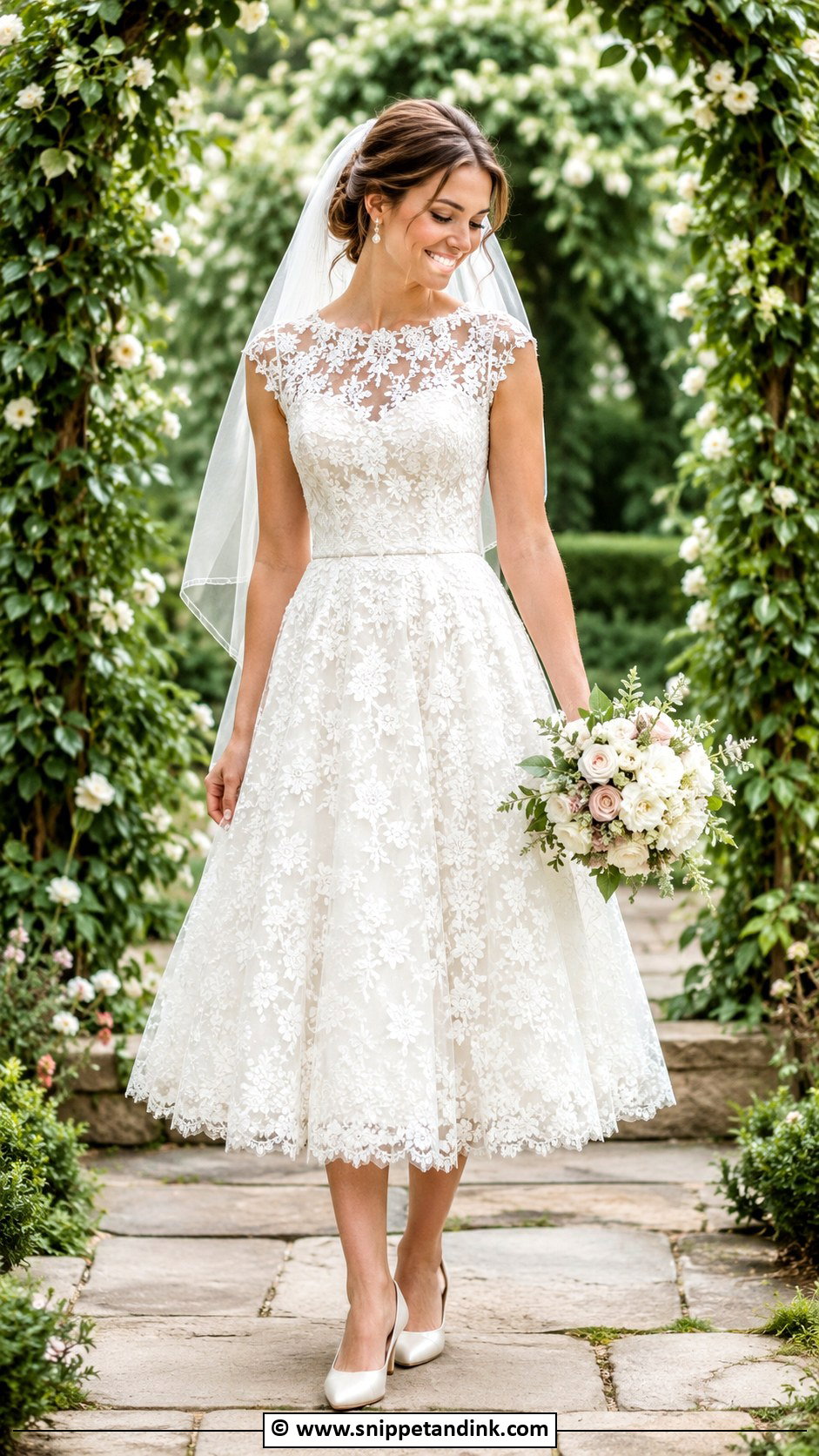
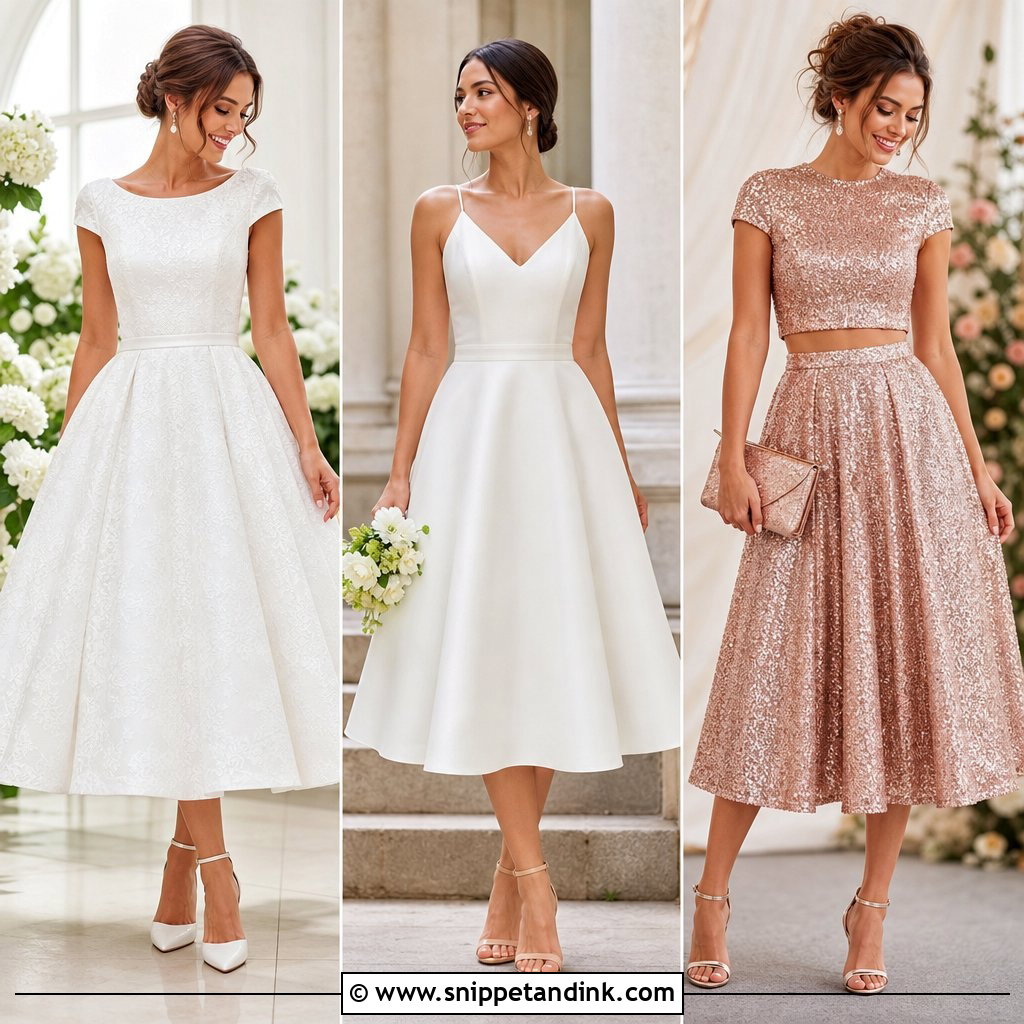
Lace is the fabric most people picture with this length, and for good reason: it hides a slightly imperfect hemline better than anything smooth. Floral lace suits a garden, corded lace leans vintage, and a fine Chantilly reads softer and lighter. At fittings I check how the lace motifs fall at the hem, because a good seamstress will cut around the motifs rather than straight through them, and that scalloped edge is what makes a shorter dress look finished. A fitted bodice with an A-line skirt is the safest shape here. Pearl earrings, low ivory heels and a simple veil are enough.
2. Satin Tea Length Wedding Dress
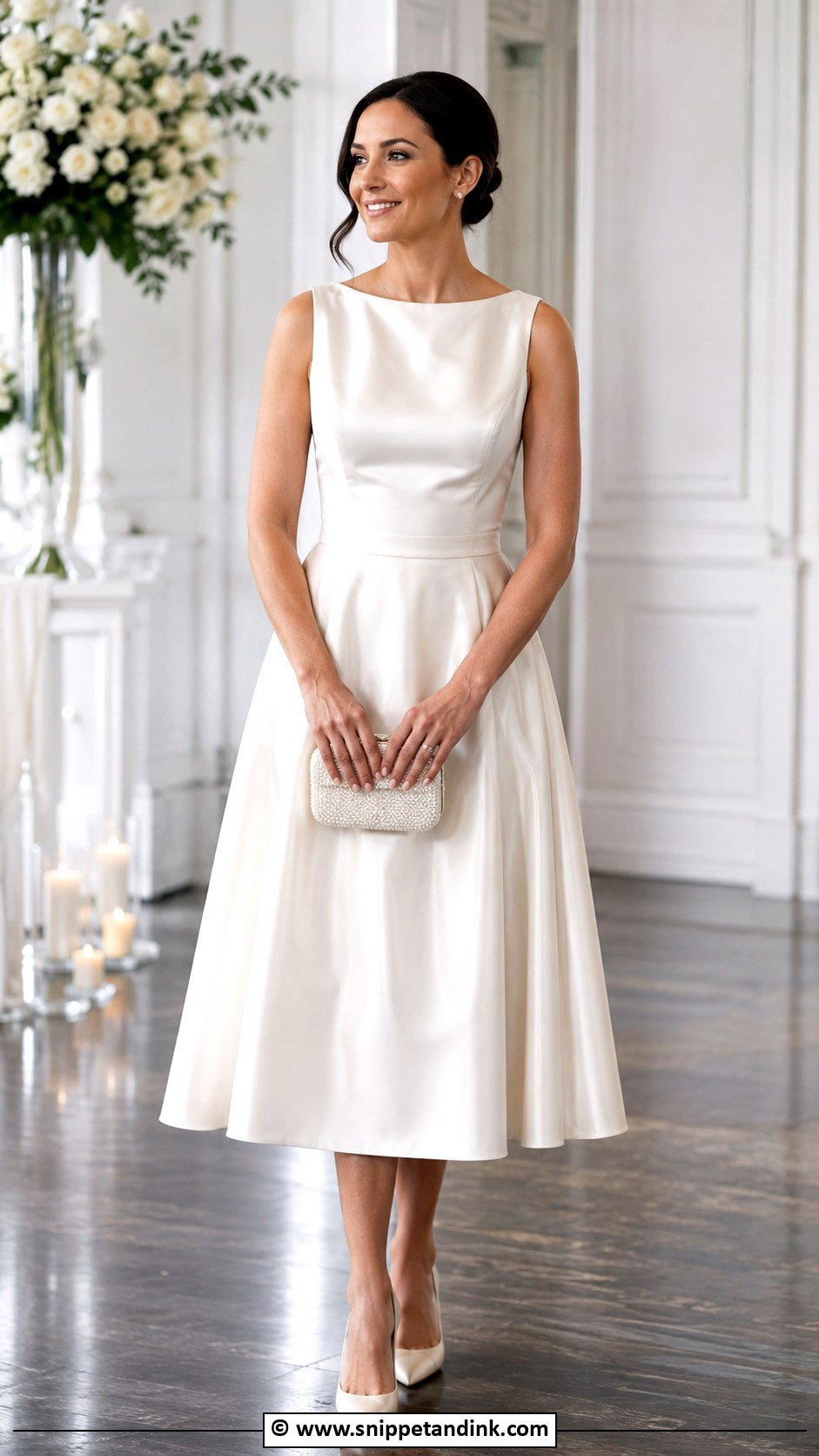
Satin gives you clean lines and a low sheen, and it holds an A-line or folded neckline without help. The trade-off is that it shows every crease and every pucker in a seam, so I always ask brides to sit down in it at the final fitting and look at the lap afterwards. Heavier duchess satin creases less than a thin polyester satin. Because the fabric already reads formal, I keep the rest pared back: a sleek bun, pointed pumps, pearl studs and perhaps a shoulder-length veil.
3. Tulle Tea Length Wedding Dress
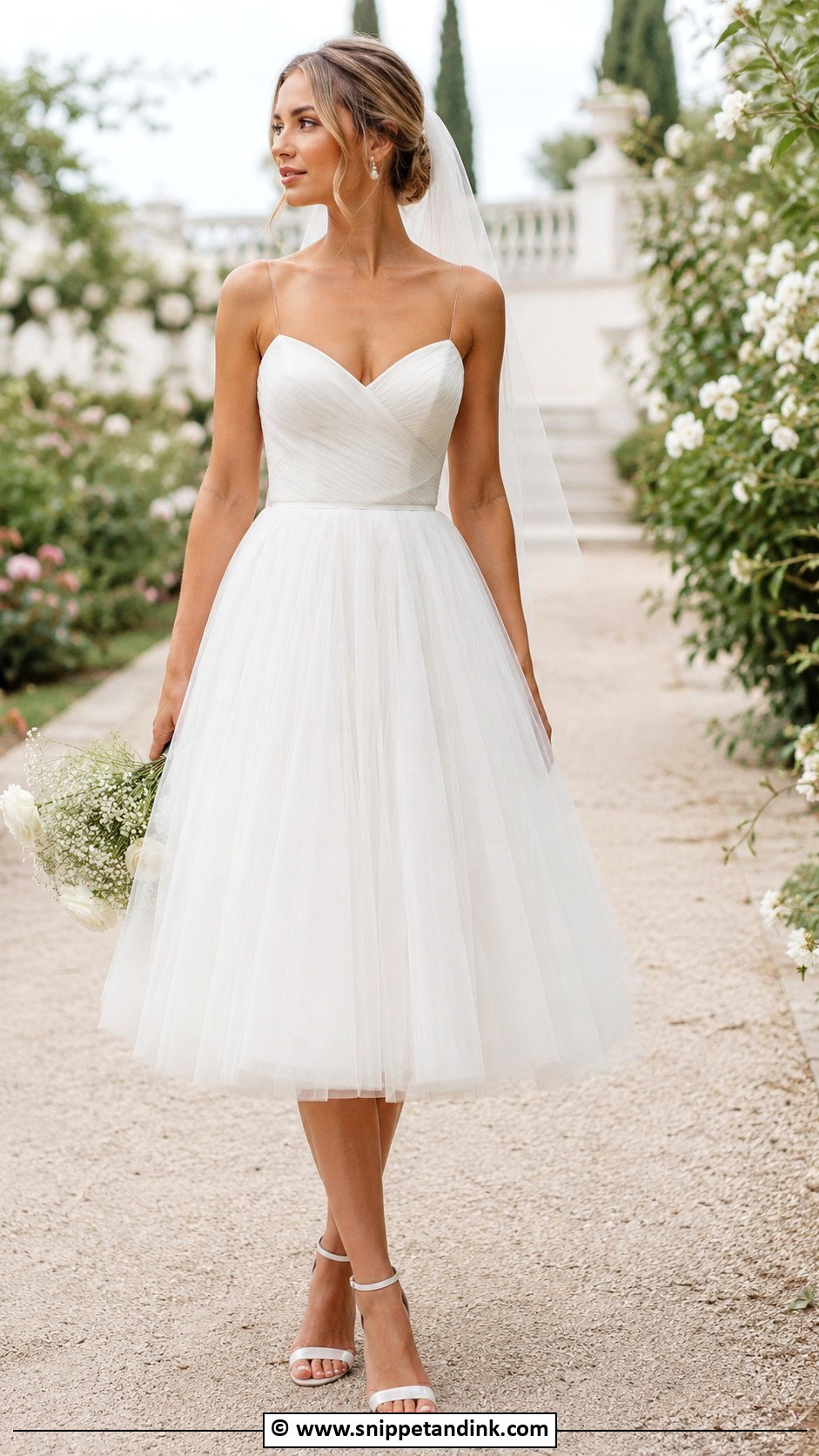
Tulle gives the skirt bounce without the weight of a ball gown, and at this length you see it move with every step. Several soft layers over a fitted bodice keep the shape balanced. The thing I warn people about is static and snagging: tulle catches on rough benches, bouquet wire and brooches, so check where you’ll be sitting. Ballet flats, block heels and ankle straps all show well under it. Small earrings and a fingertip veil keep attention on the skirt.
4. Vintage Tea Length Wedding Dress
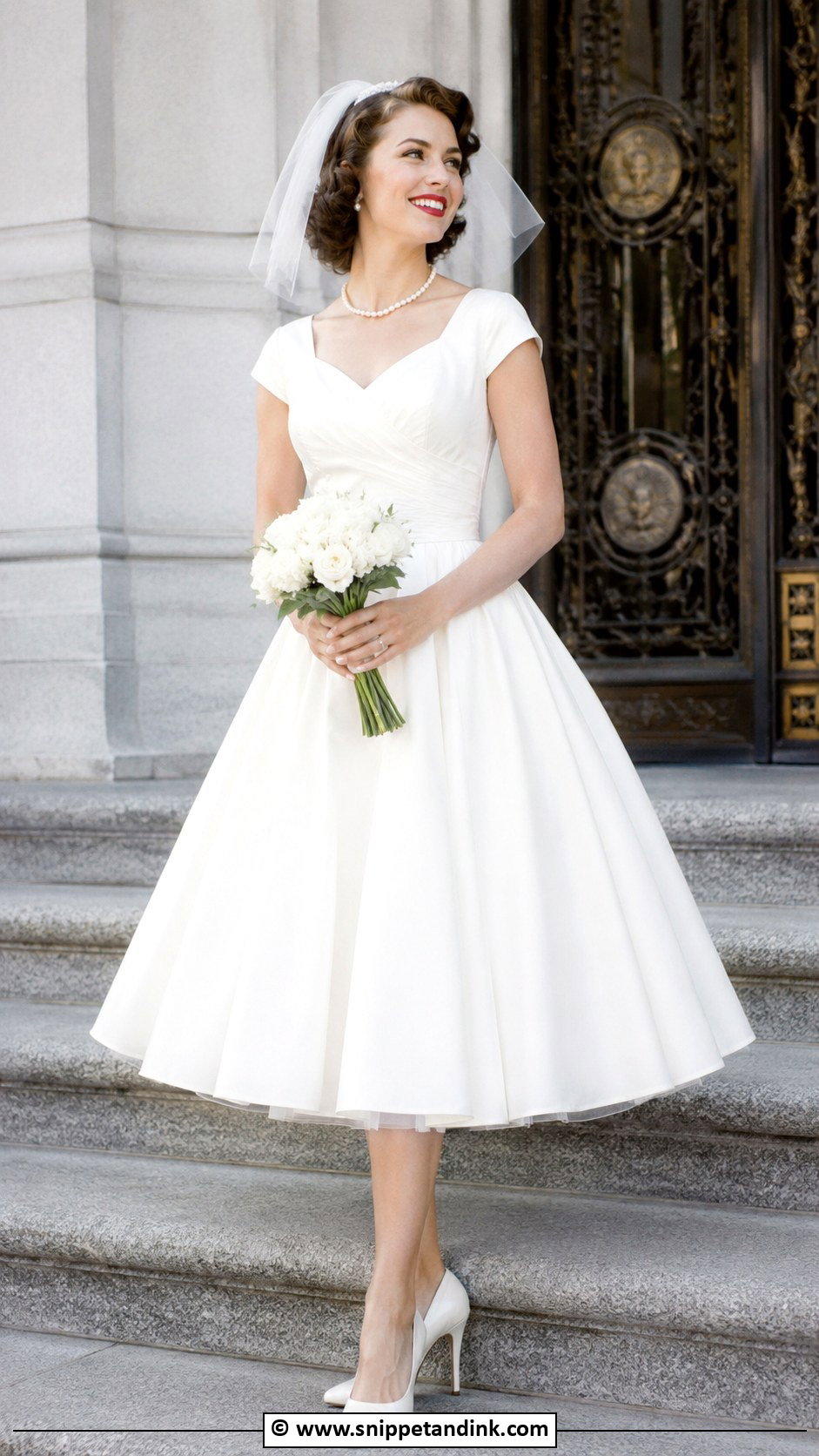
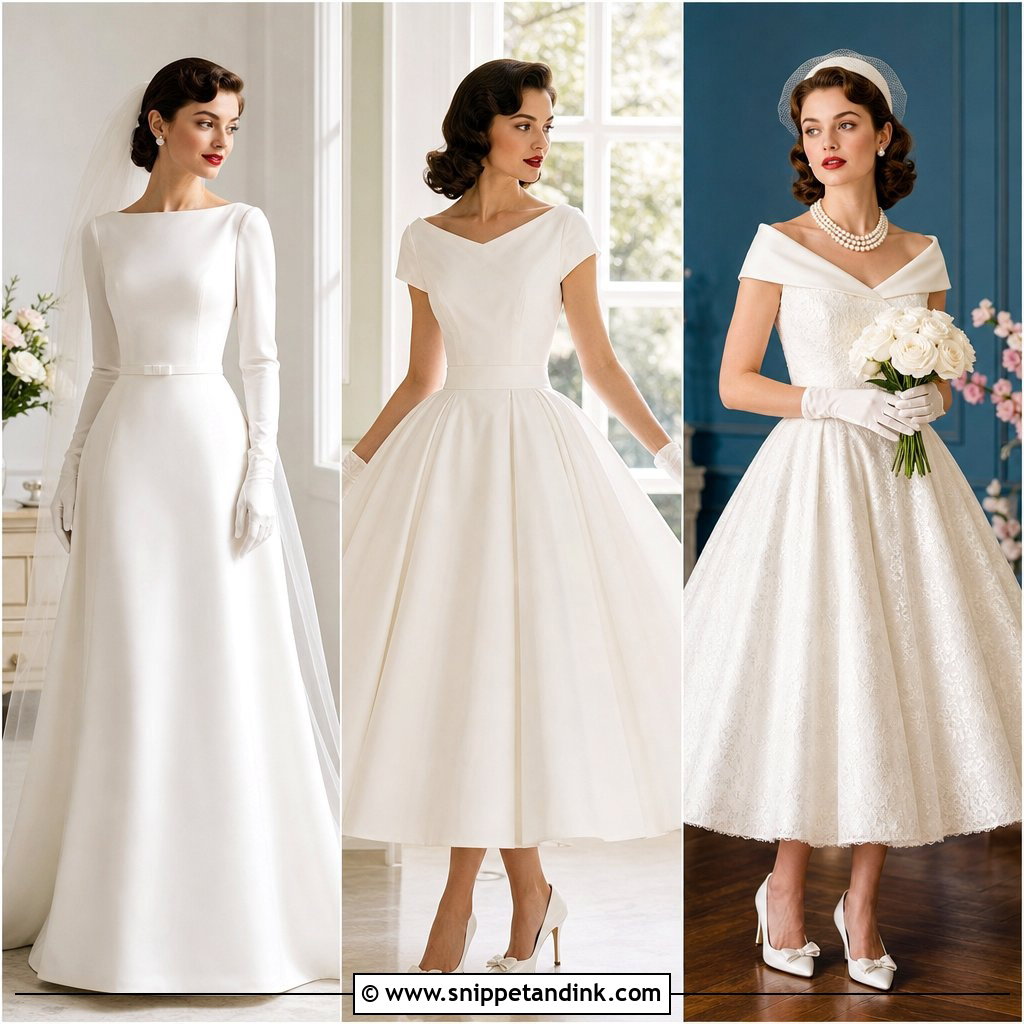
The vintage version usually means a 1950s-inspired shape: a defined waist, a full skirt and often a petticoat underneath. Sweetheart necklines, cap sleeves and a lace overlay all belong to that era. My rule for keeping it from tipping into costume is to pick one period detail to lead and keep the rest current, so clean ivory pumps and soft waves rather than a full set of gloves, hat and seamed stockings. A birdcage veil is the one accessory I’d add if you want a stronger nod to the decade. It dances well, which matters at an intimate reception or a city hall lunch.
5. Simple Tea Length Wedding Dress
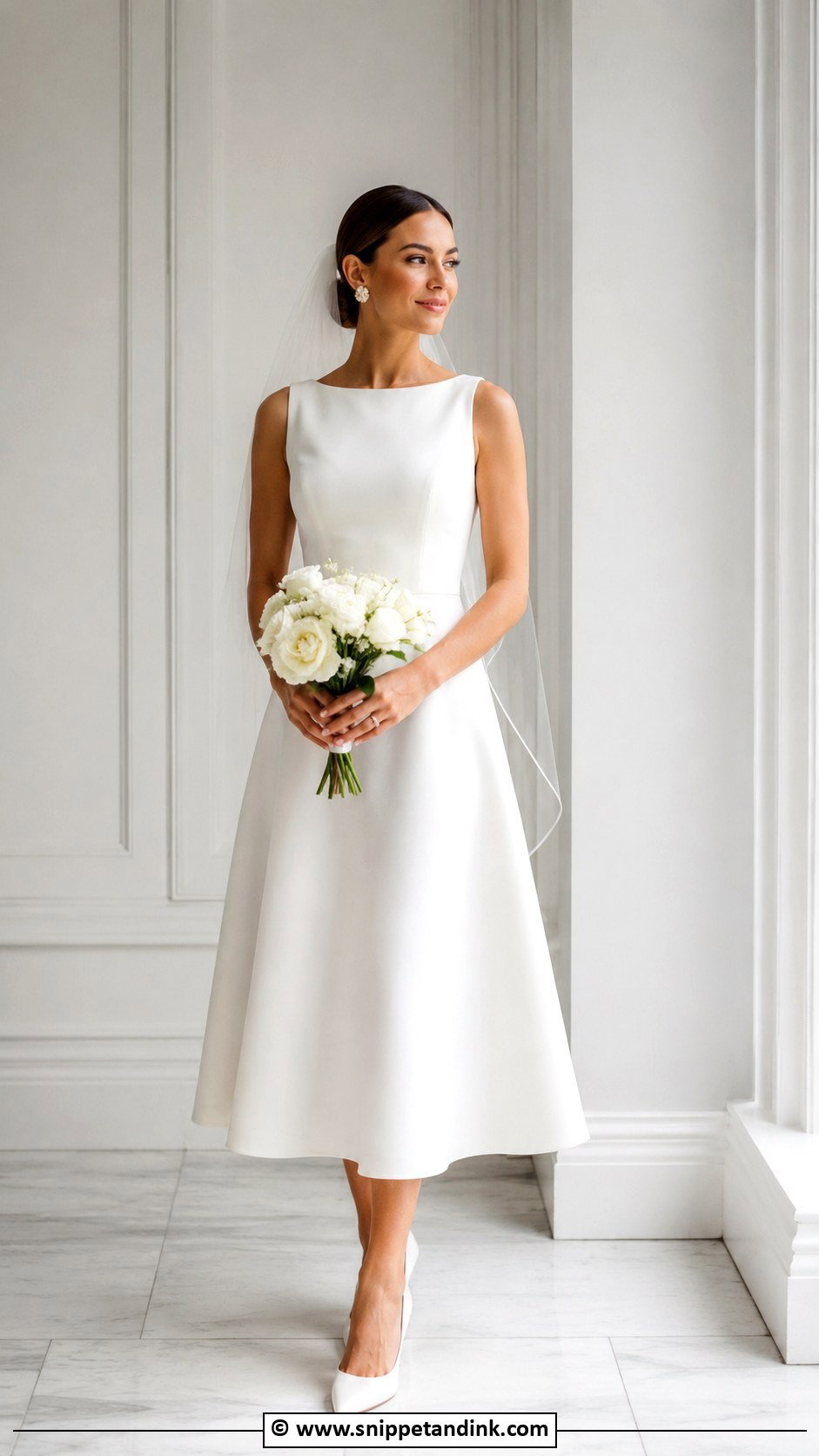
With nothing applied to the surface, the cut has to carry the whole dress, so this is where tailoring money is best spent. I look at three things on a plain dress: whether the waist seam sits level all the way round, whether the bodice gapes when you lift your arms, and whether the hem hangs evenly from the side. Cotton blends, crepe, satin and mikado all work, chosen by how formal the day is. A sleek veil and sculptural earrings give it intention. It moves from a courthouse to a small restaurant dinner without looking out of place.
6. Long Sleeve Tea Length Wedding Dress
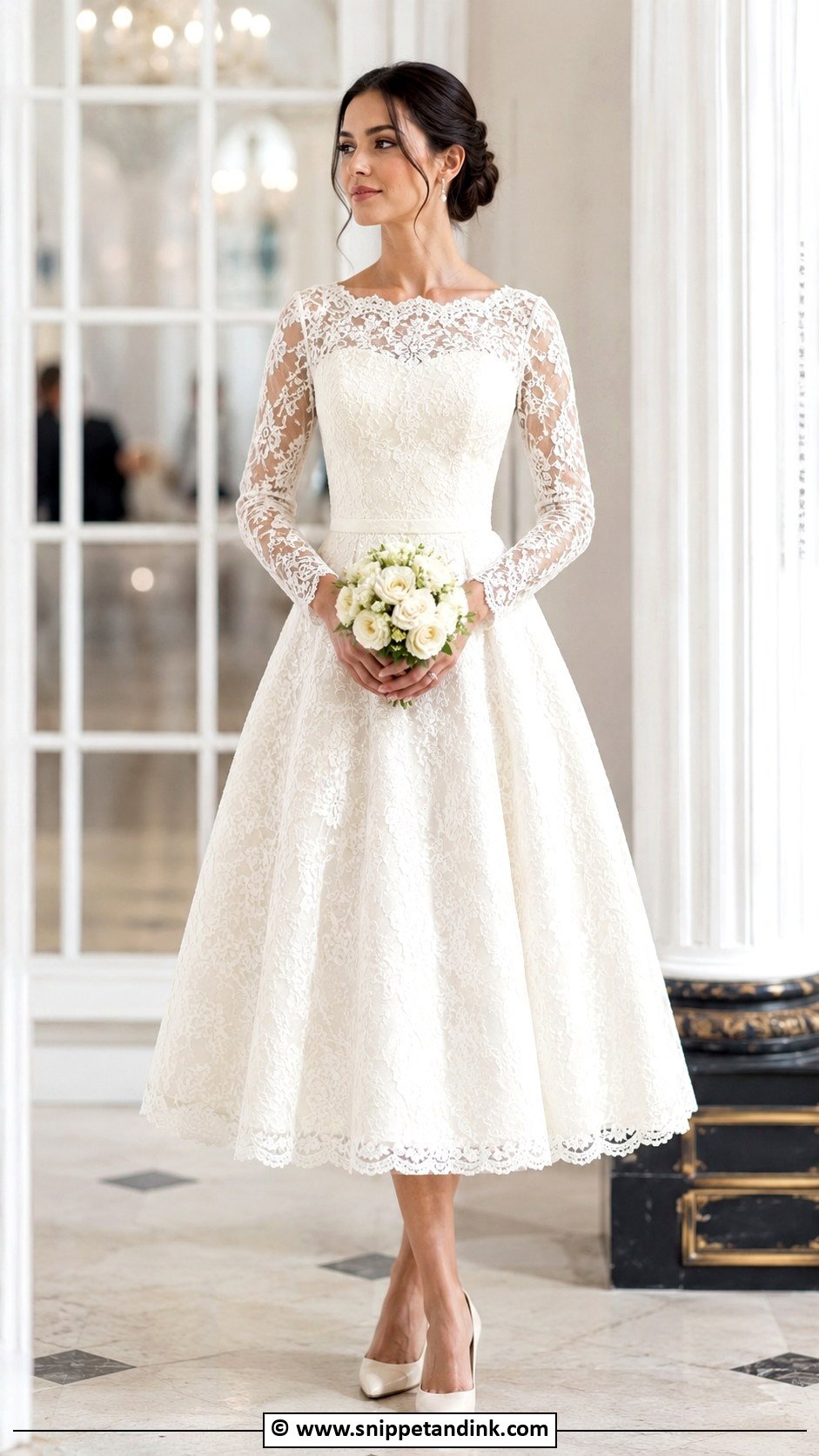
Long sleeves suit cooler months and formal indoor rooms, and they give coverage without making the dress heavy, because the shorter skirt balances them out. Sheer lace sleeves are softer; fitted crepe sleeves look sharper. The fitting check I never skip is the hug test: ask the bride to wrap her arms round someone, because tight sleeves pull the shoulder seams and that strain shows in every candid photo. Keep bracelets off if the sleeves are beaded or lace. Closed-toe heels, pearl drops and a smooth updo finish it for fall through early spring.
7. Strapless Tea Length Wedding Dress
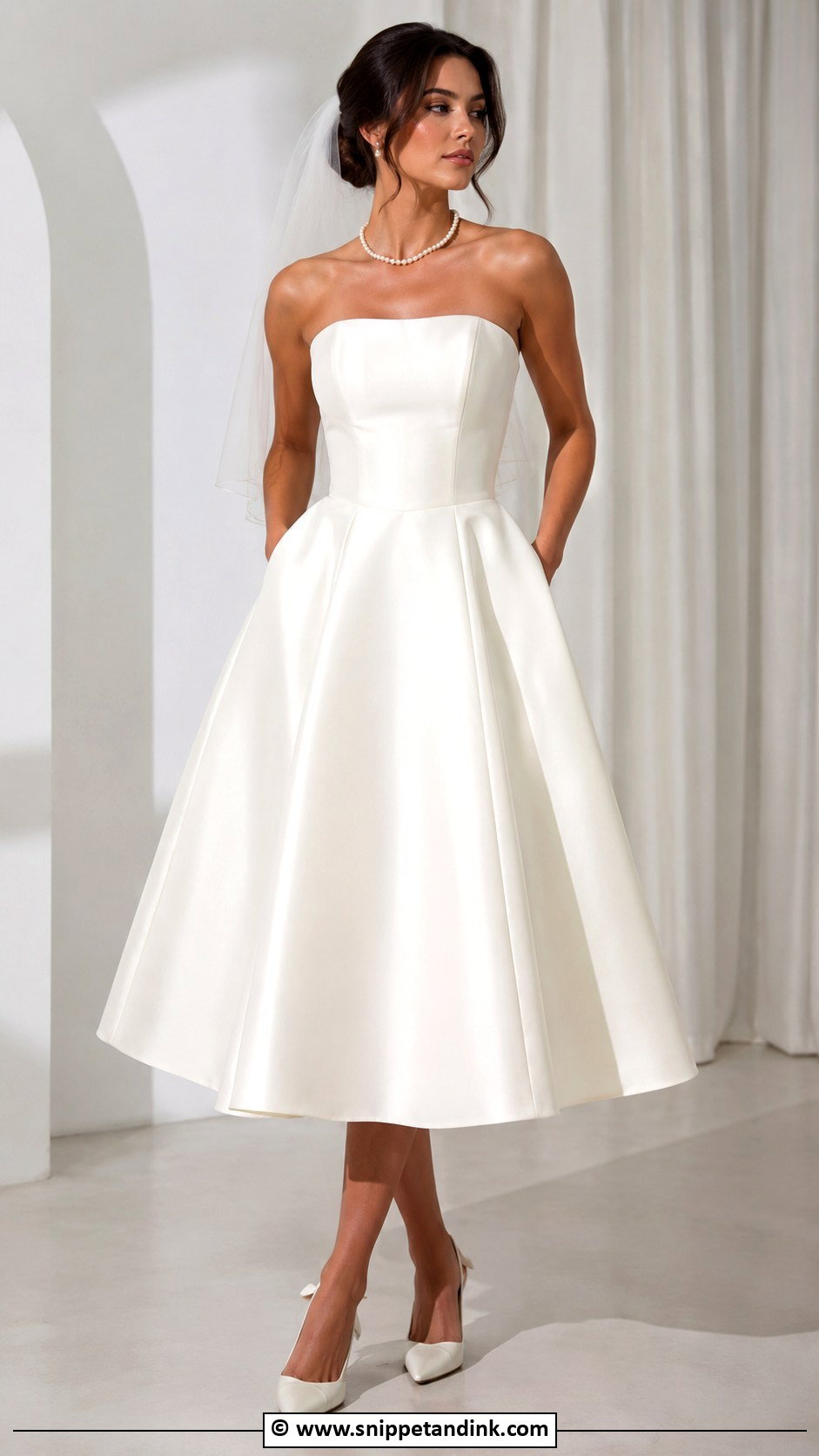
Strapless is simple to style and frames the collarbone cleanly, but it only works if the bodice stays put without you tugging at it. That means internal boning, a waist stay, and a fitting where you raise your arms, bend to pick something up and dance for a minute. Structured satin or mikado supports the bodice better than soft fabrics; tulle or organza can then soften the skirt. I’d add either a necklace or statement earrings, not both. Pointed pumps and slingbacks look sharp because the hemline puts them on show.
8. Off Shoulder Tea Length Wedding Dress
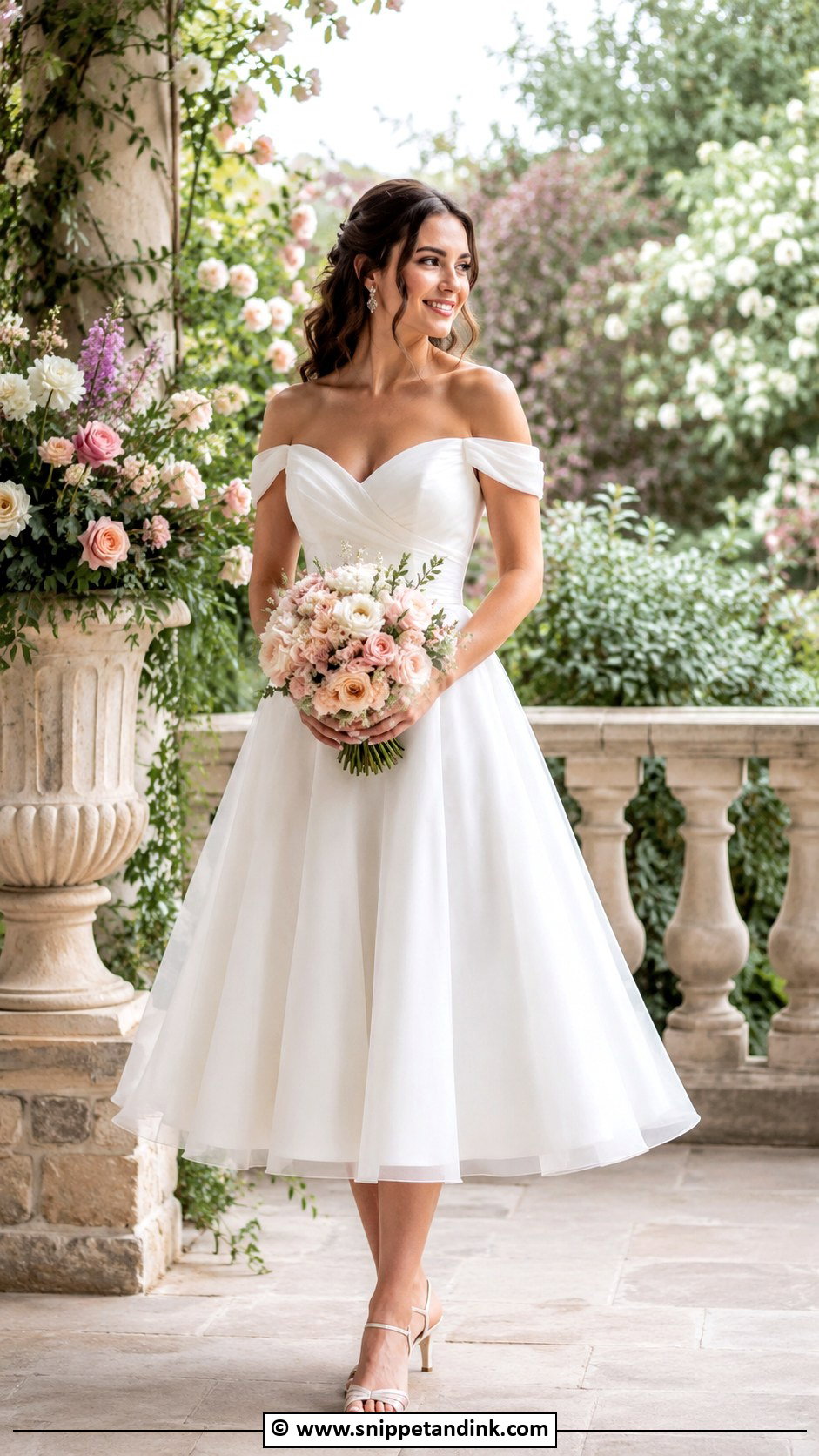
Off-shoulder necklines draw the eye to the collarbone and feel romantic without showing much skin. In practice they restrict how high you can lift your arms, so if you plan to dance with your hands in the air, try that at a fitting before you commit. Lace, satin, crepe and tulle all take the shape. The neckline is already the decoration, so I keep jewelry to small earrings or a fine choker, with soft curls and low heels. It sits naturally at a daytime garden or terrace wedding.
9. V Neck Tea Length Wedding Dress
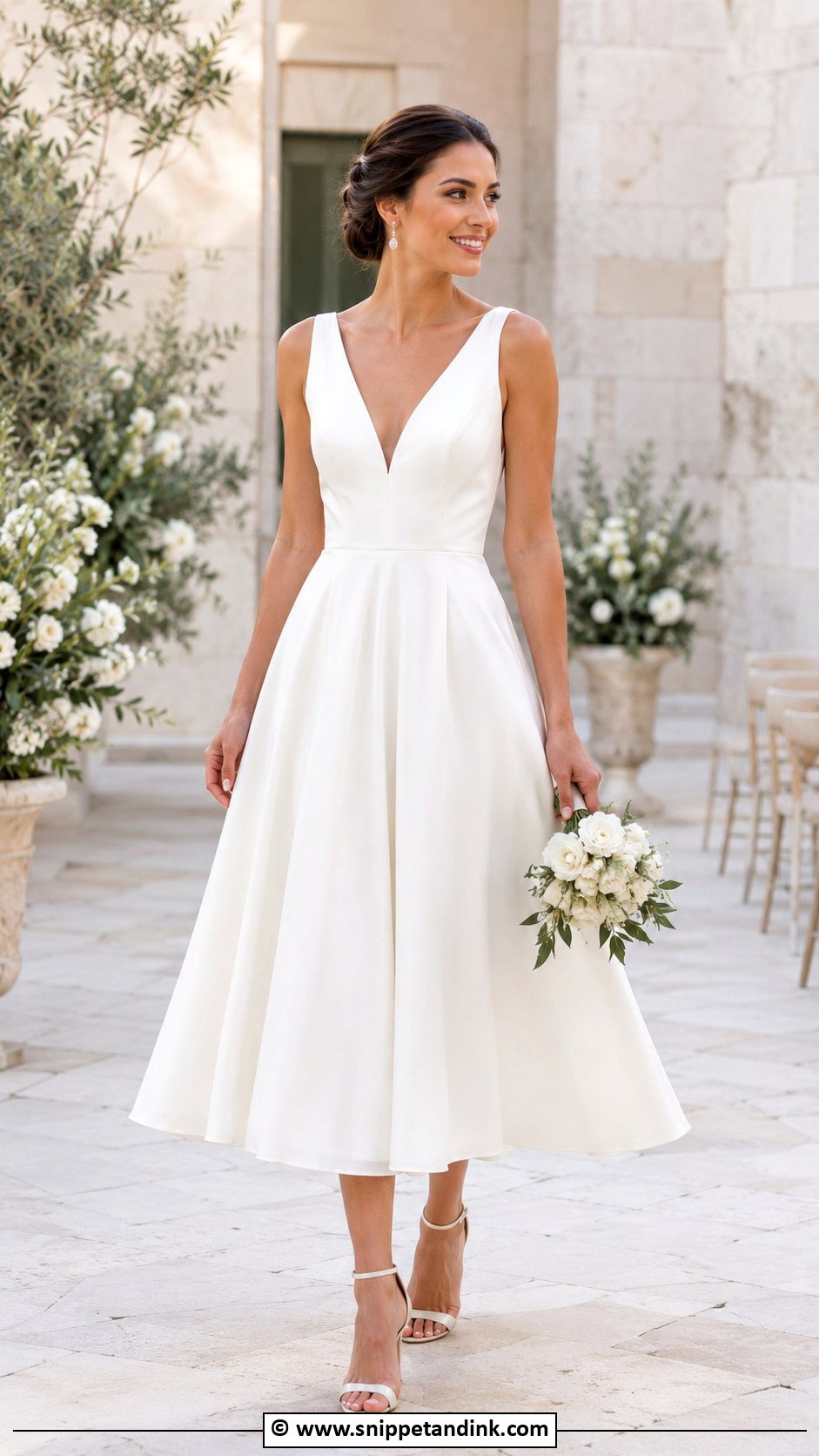
A V neck draws a vertical line through the torso, which lengthens a shorter frame and balances the cropped skirt. A shallow V reads classic; a deeper one reads more fashion-led and usually needs illusion mesh or a well-cut lining so nothing shifts when you lean forward. I pin-test deep Vs with fashion tape at the fitting rather than hoping on the day. Drop earrings or a small pendant fill the neckline neatly. Ankle-strap heels keep you steady on outdoor paths.
10. High Neck Tea Length Wedding Dress
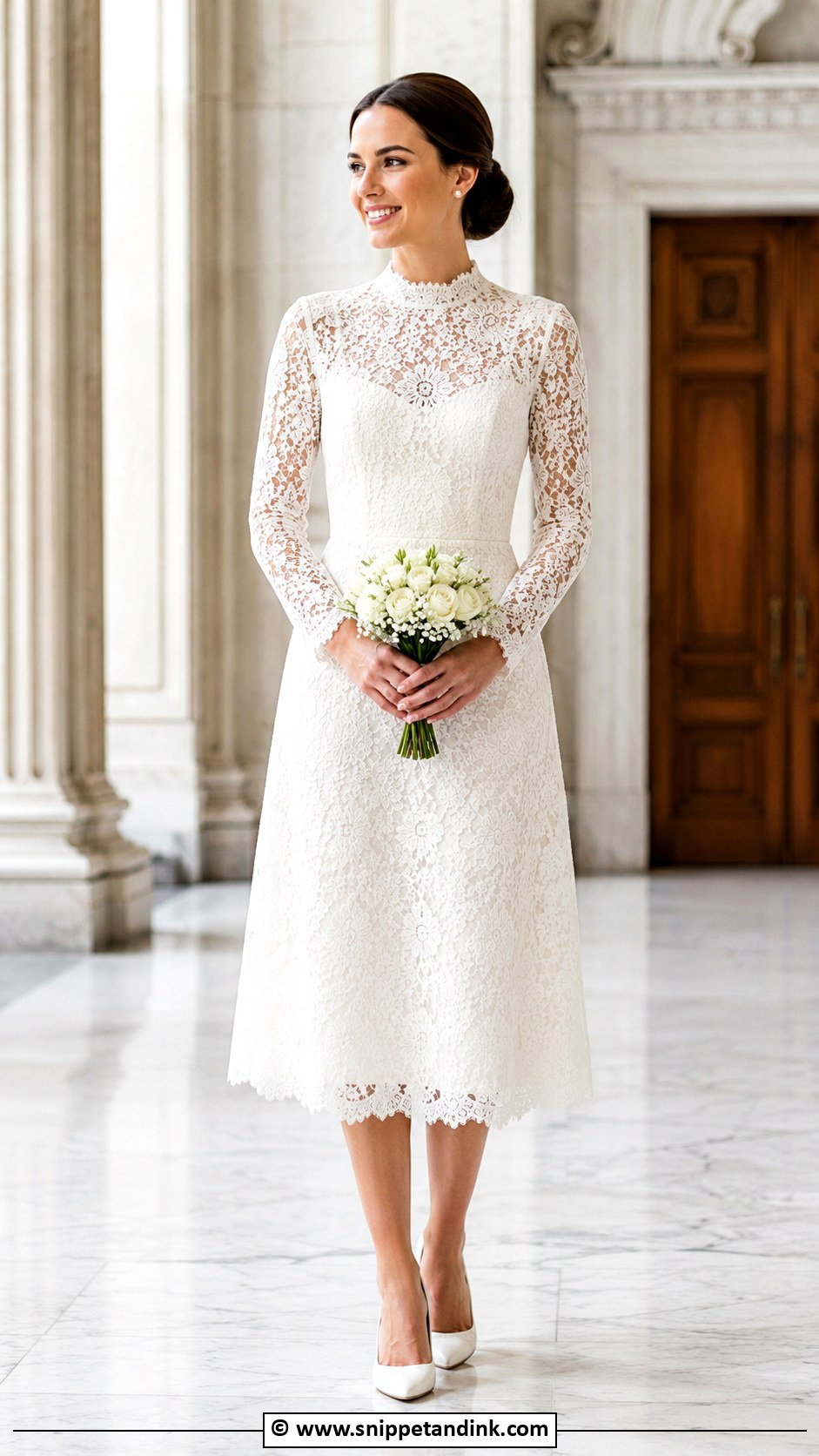
High necklines look polished and slightly vintage, especially in lace or embroidered tulle, and the shorter hem stops all that coverage from feeling heavy. The risk is a boxy torso, so a defined waist is essential. Wear your hair up or tucked back, otherwise the neckline disappears under it. Studs, one clean bracelet and pumps are plenty. I reach for this one for courthouse ceremonies and formal lunches.
11. Square Neck Tea Length Wedding Dress
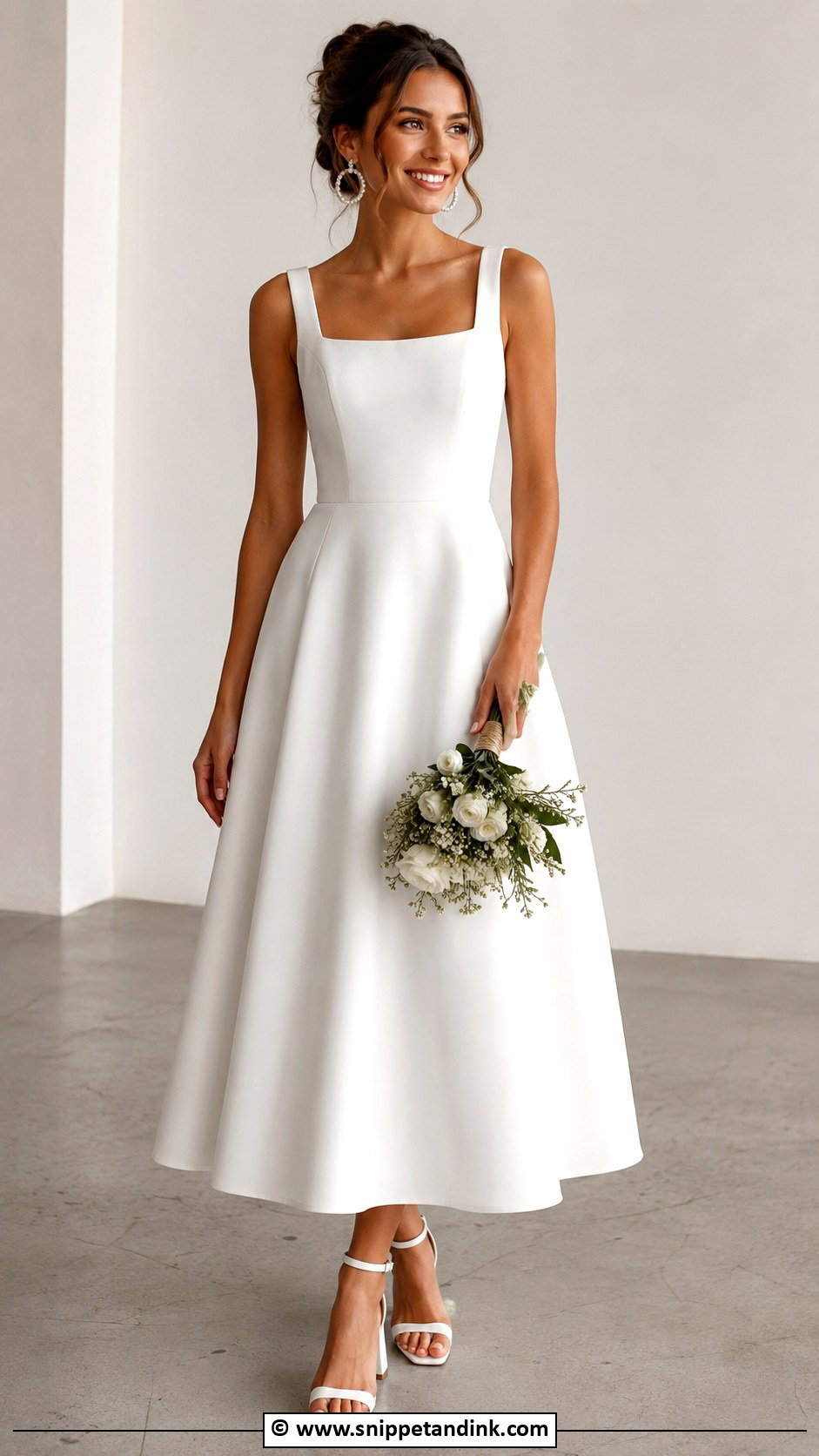
Square necklines frame the shoulders and suit a wide range of bust sizes, because the straight edge gives structure without plunging. Thicker straps and a fitted bodice keep it secure, and crisp A-line skirts suit it best. Satin or crepe reads contemporary; jacquard adds texture. When I fit these, I watch the corners of the square: if they pull outward, the bodice is too tight across the ribcage. Pearl hoops, a low bun and block heels or pointed pumps are all it needs.
12. A Line Tea Length Wedding Dress
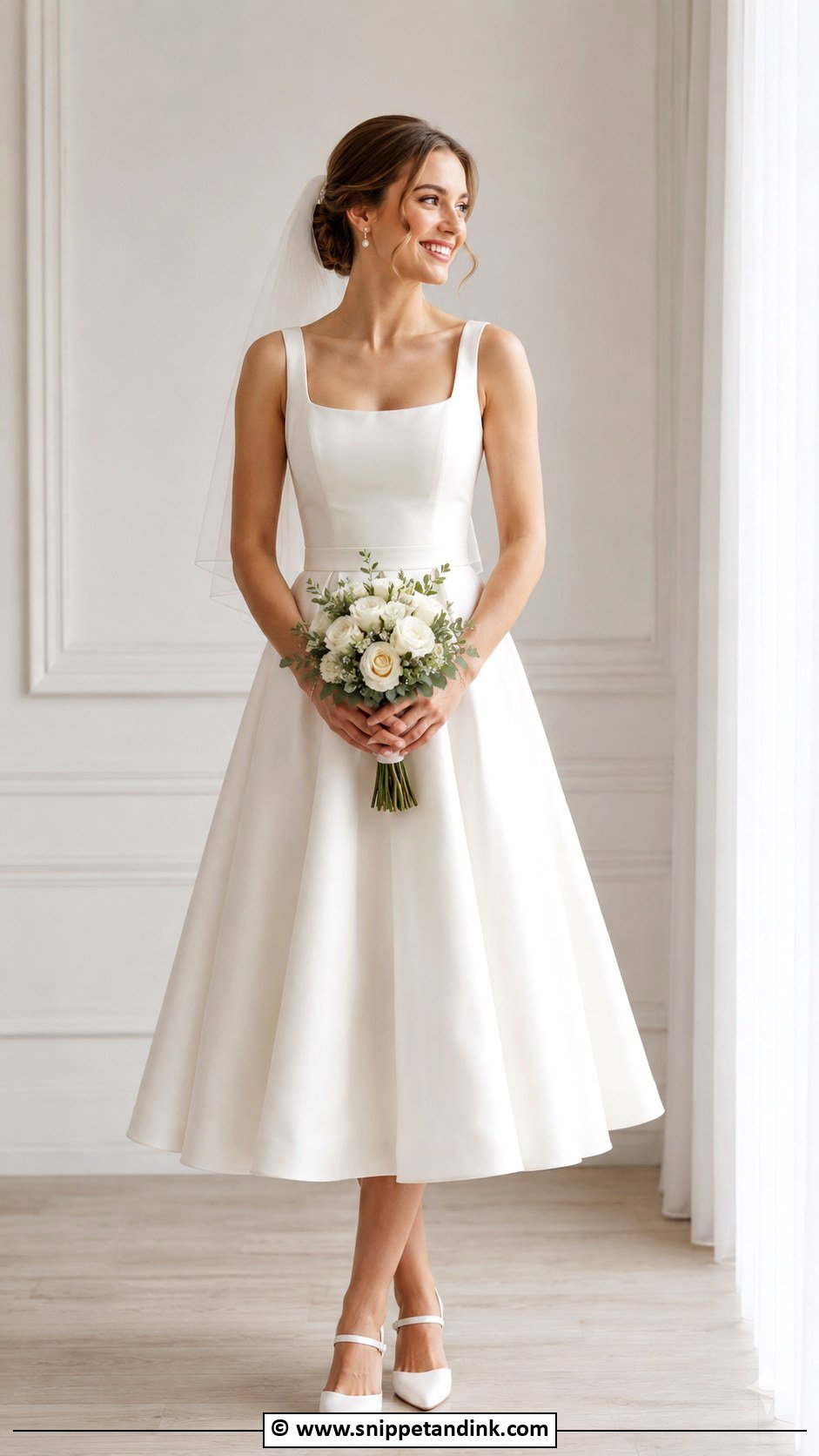
If a bride is unsure what suits her, I start her in an A-line, because the fitted waist and gently widening skirt flatter most shapes and let you walk, sit and dance freely. Fabric decides the mood: satin is formal, tulle is soft, lace is classic, crepe is modern. It suits a courthouse as easily as a garden. The one thing to check is skirt fullness against your height; a very full A-line on a short tea hem can look wider than it is tall. Add a short veil and a small bouquet.
13. Fit And Flare Tea Length Wedding Dress
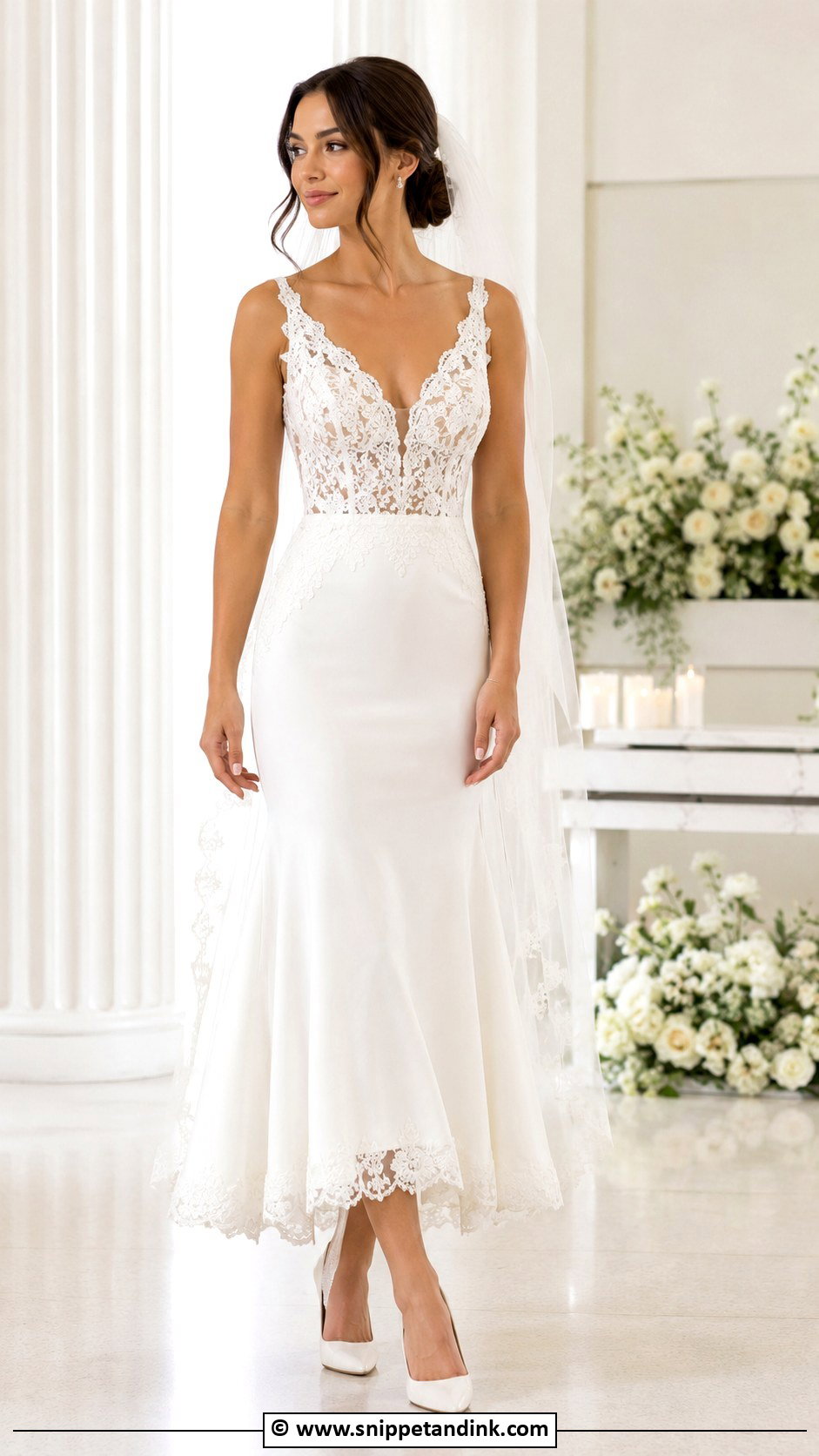
Fit and flare follows the body through the hips before flaring around the lower thigh or knee, so you get more shape than an A-line with less commitment than a mermaid gown. Stretch crepe, lace and satin blends hold the line without stiffness. Be honest at the fitting about sitting: the flare point limits how wide your stride can be, and a snug skirt can ride up when you sit. Sleek heels, a fitted veil and very little jewelry keep the silhouette clean.
14. Ball Gown Tea Length Wedding Dress
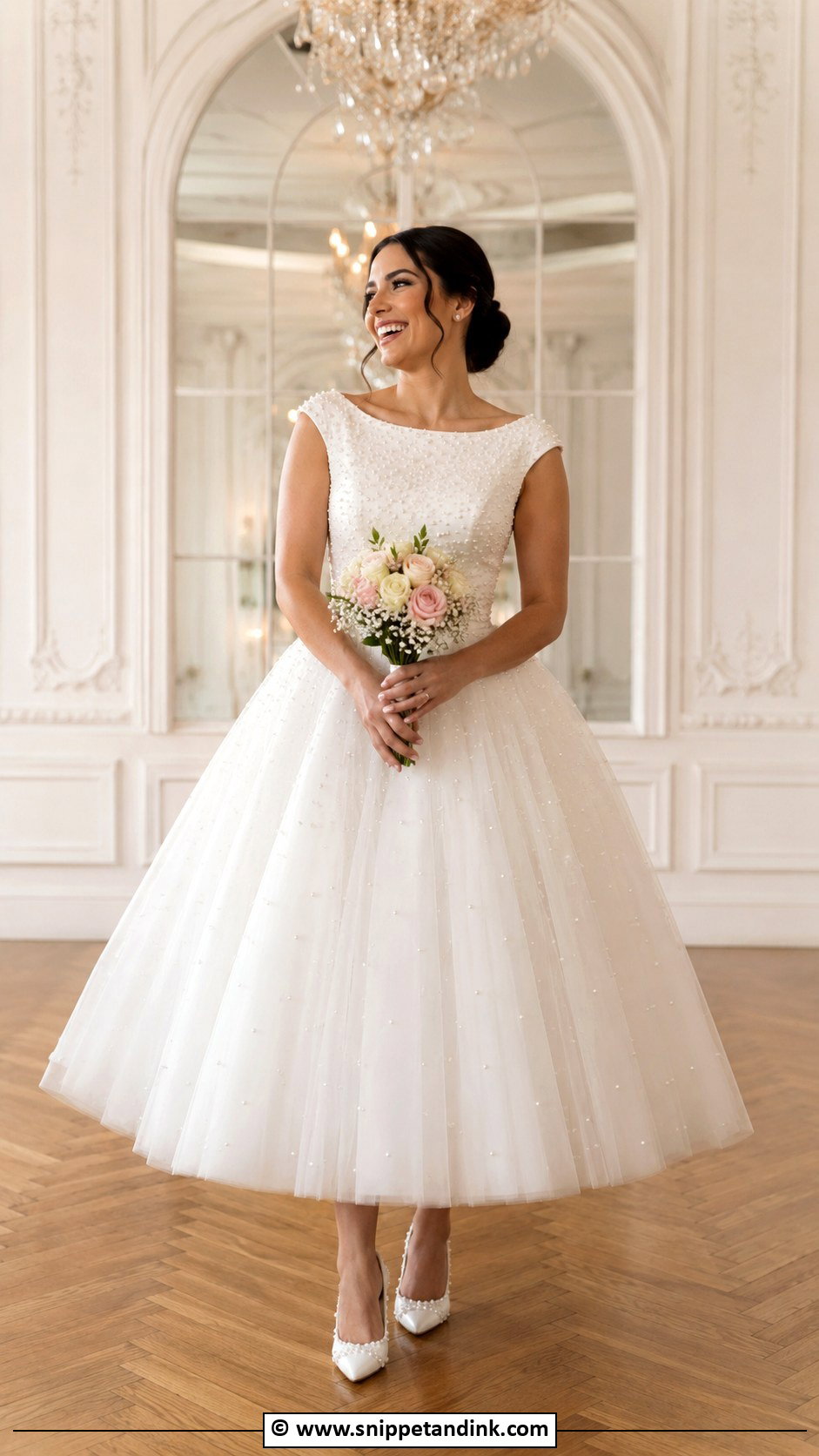
A ball gown tea length wedding dress gives you a full skirt without a train to manage, and at this length the volume feels playful instead of heavy. Expect a fitted bodice and layers of tulle, organza or structured satin, often with a petticoat for extra lift. With a skirt this wide, I keep the top half restrained: a simple necklace or pearl studs, neat heels. Practical note: measure doorways and car seats in your head. Full skirts crush in a small car, and the creases take time to steam out.
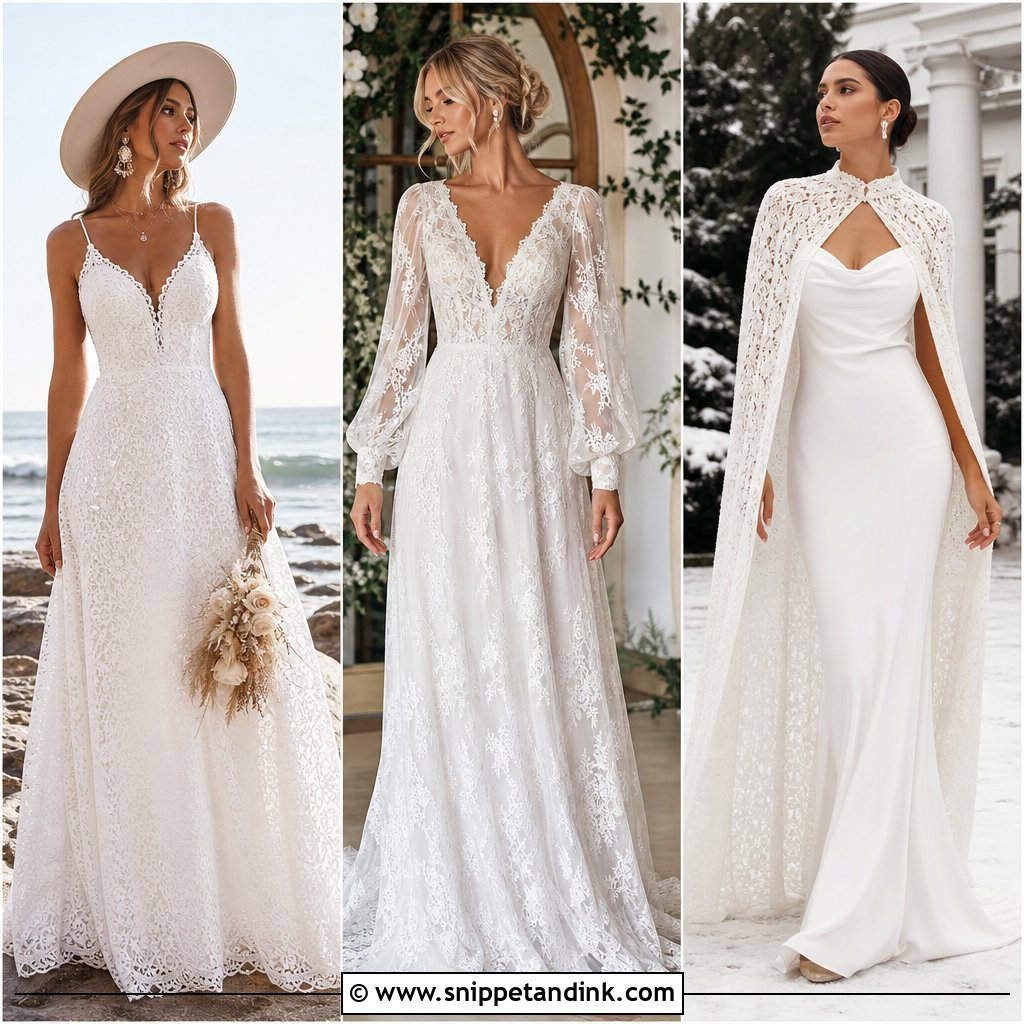

15. Tea Length Wedding Dress With Sleeves
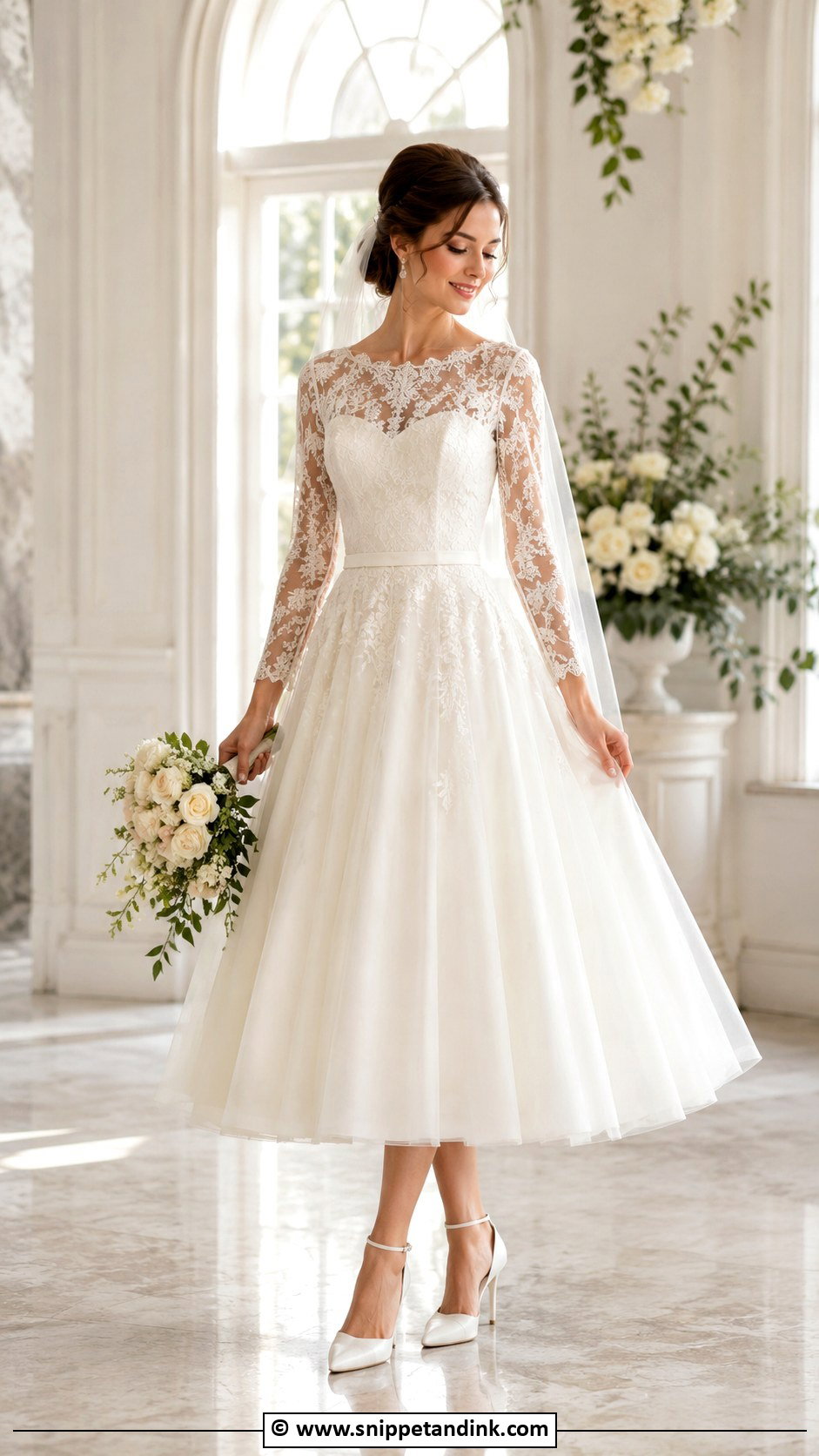
A tea length wedding dress with sleeves covers more of the arm, and the sleeve shape sets the mood. Cap sleeves feel vintage, flutter sleeves feel soft, three-quarter sleeves feel classic. Lace sleeves add detail with little weight, while crepe or satin sleeves look cleaner. Since the lower leg is on show, I match the shoe tone to the dress or choose one quiet accent. Watch the armhole height at the fitting; a low-cut armhole on a sleeved dress restricts movement more than people expect.
16. Tea Length Wedding Dress With Pockets
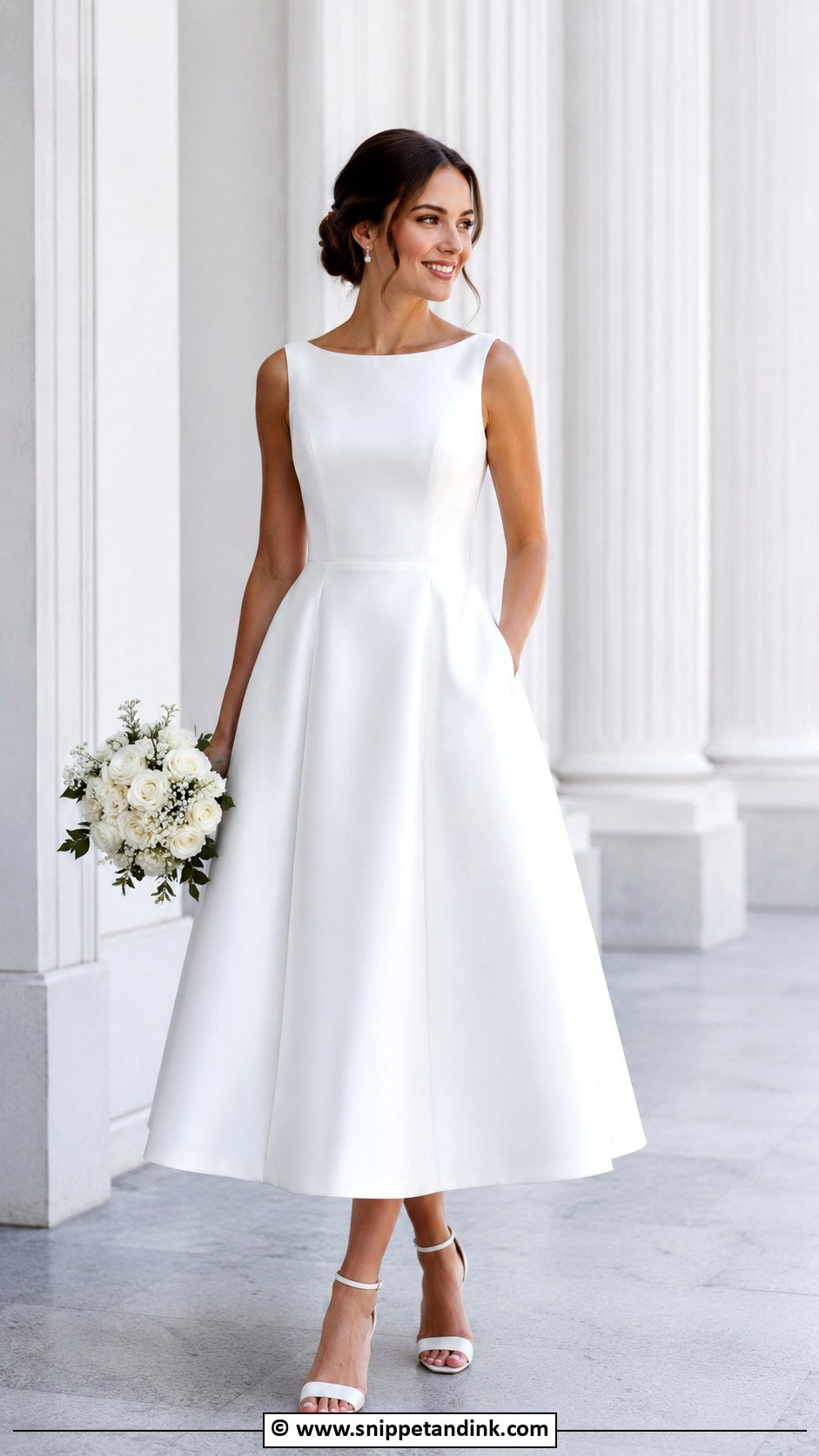
Pockets give your hands somewhere to go in portraits, which honestly helps nervous brides relax in front of a camera. They only sit flat in fabrics with body, such as mikado, satin, taffeta or a cotton blend; in soft fabrics they bag and pull the skirt out at the hips. Don’t load them with a phone and keys, because the weight shows. Keep the rest of the outfit crisp so the dress looks deliberate. Block heels and a neat bouquet suit it.
17. Tea Length Wedding Dress With Bow
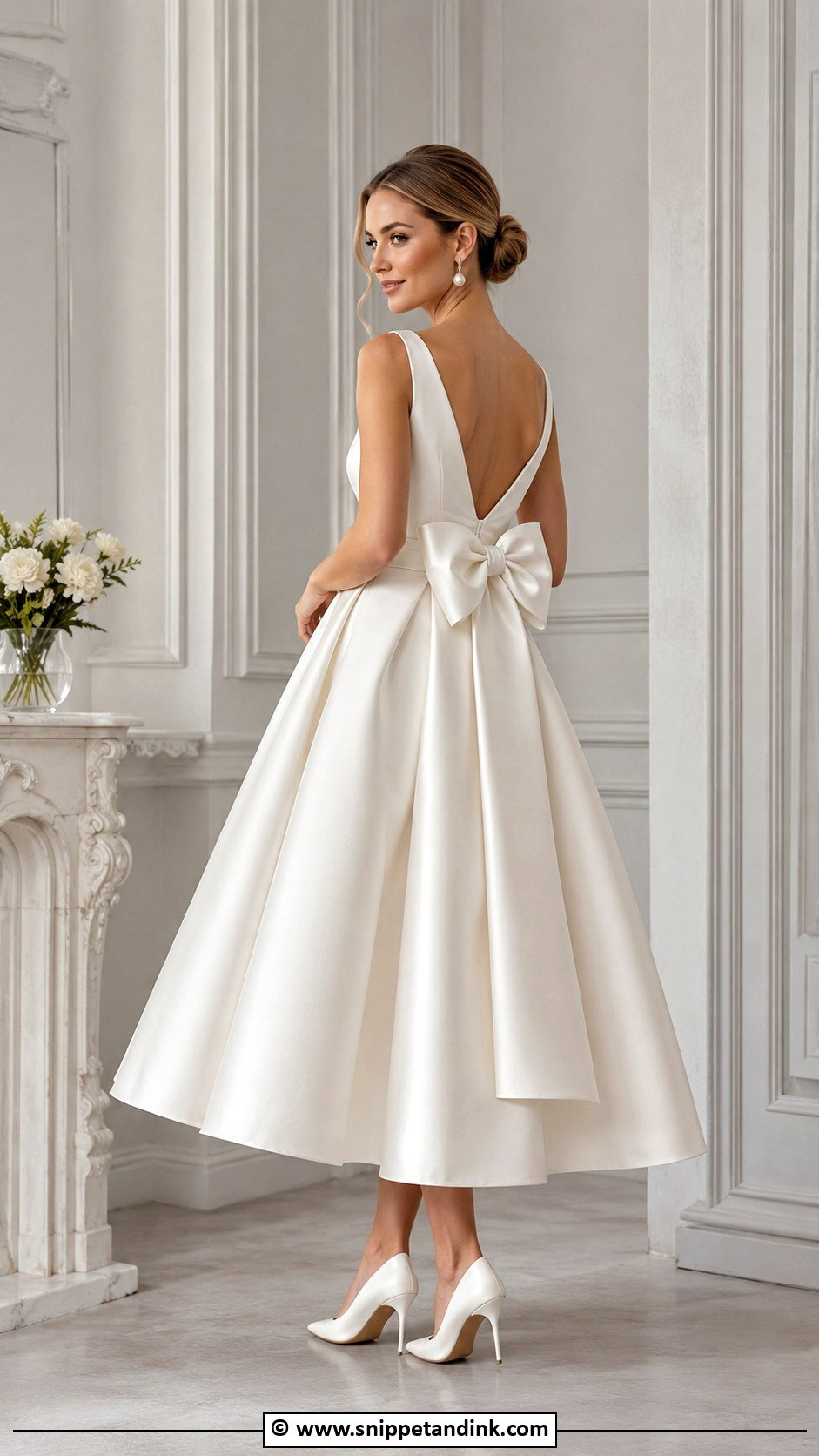
A bow can be sweet at the waist or dramatic at the back, and its effect depends almost entirely on scale. Satin, mikado, taffeta and organza hold a bow’s loops; softer fabrics let it droop by the reception. I always ask how the bow is attached, because a large back bow sewn only at the centre will flop sideways after you sit against a chair. A low bun shows a back bow clearly. Pointed heels or slingbacks finish it.
18. Tea Length Wedding Dress With Belt
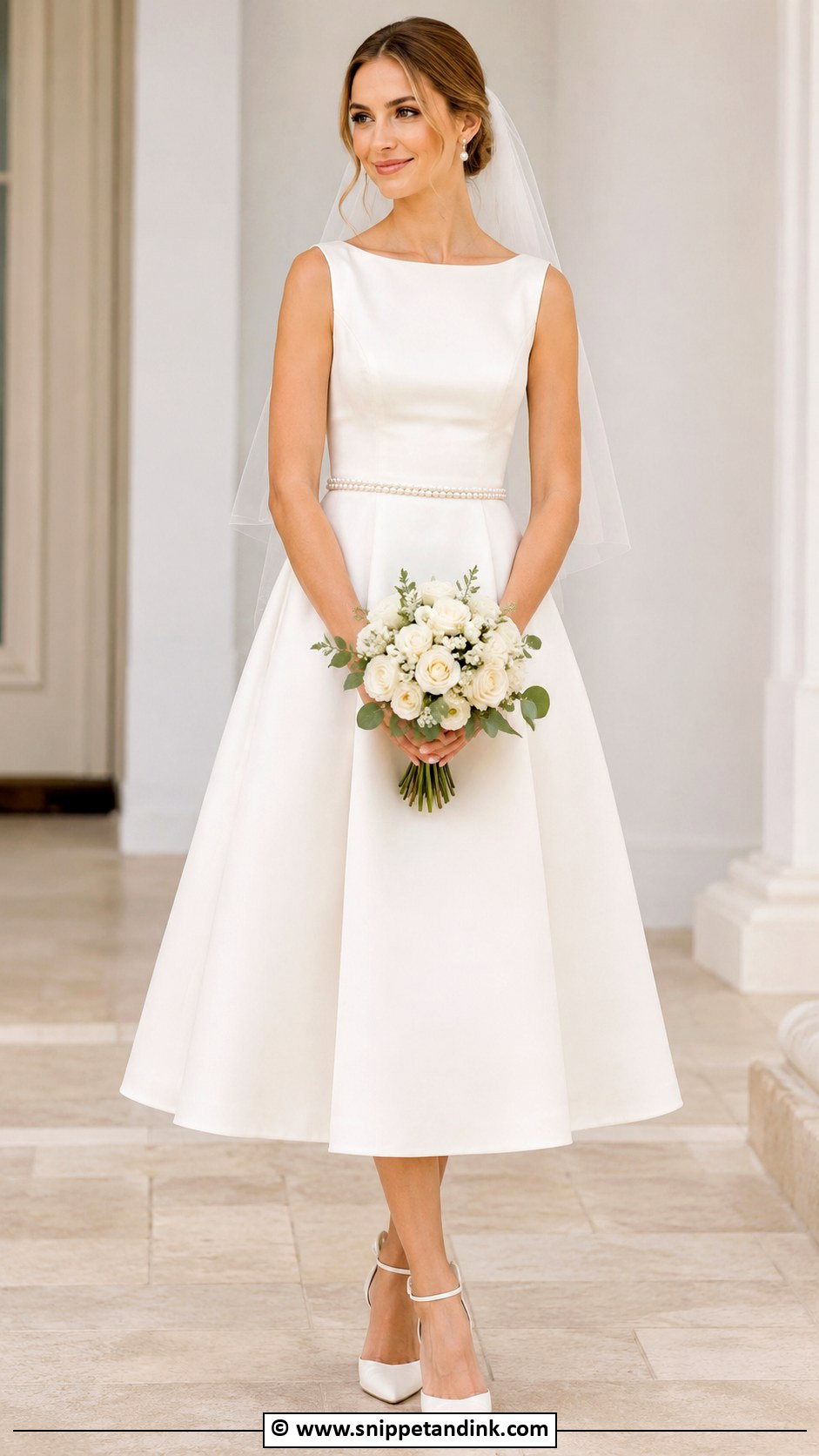
Belts define the waist and give a plain dress a focal point. Slim satin is clean, pearls lean romantic, crystal adds a little sparkle. I match the belt to one other piece, so pearl earrings with a pearl belt or silver shoes with crystal. The detail people miss is closure: a belt that fastens at the back needs someone to fix it, and beaded belts can snag delicate lace, so ask your seamstress to tack it in place at a couple of points.
19. Tea Length Wedding Dress With Veil
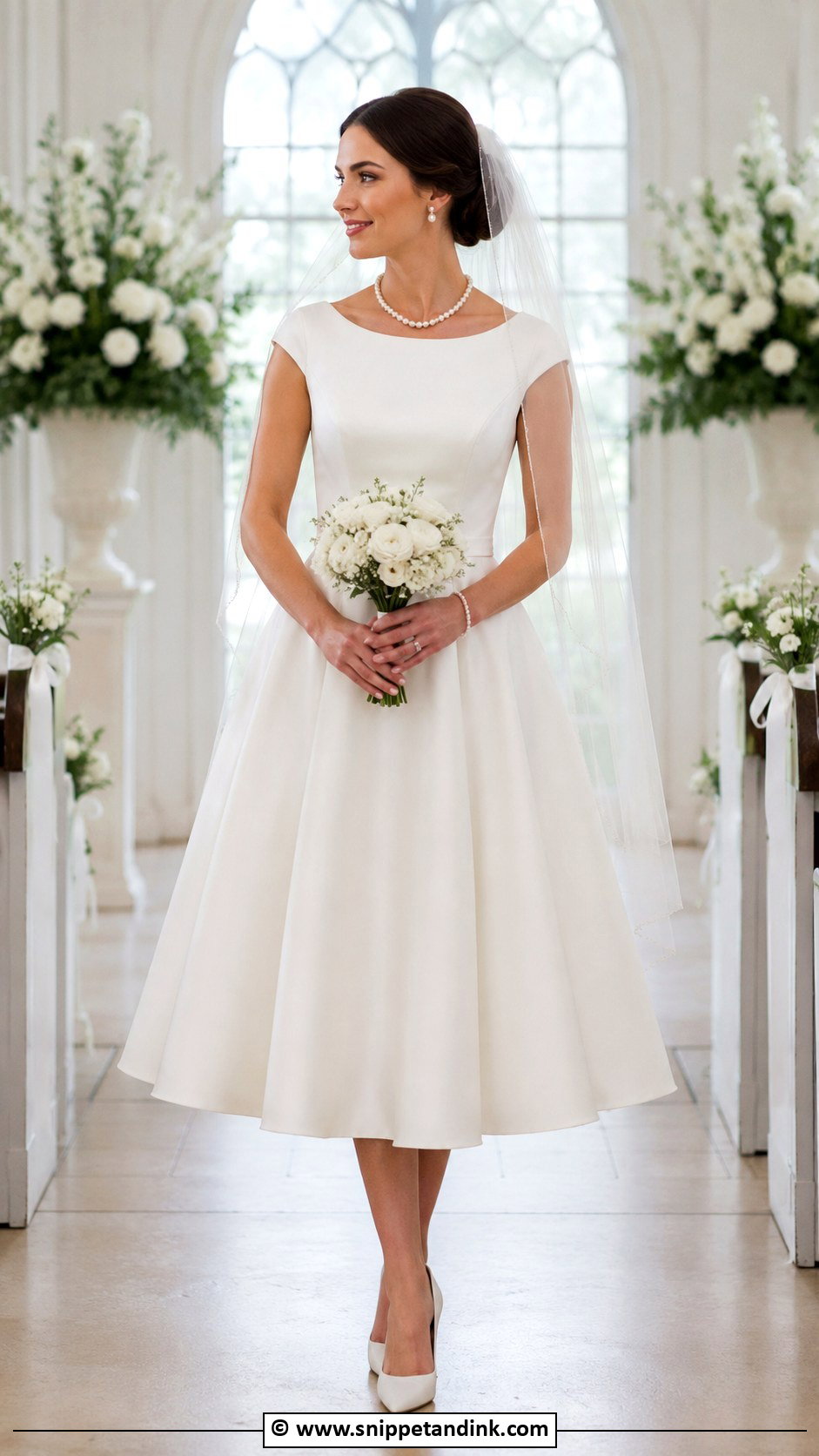
A veil gives a shorter dress a traditional finish, but the length needs to relate to the hem. A birdcage veil reads vintage, shoulder length feels sweet, and fingertip softens the line. My working rule is that a veil should not end at the same point as the skirt, because two edges stacked together look accidental. Busy lace dress, plain veil; plain dress, lace-trimmed veil. Small jewelry and elegant heels keep it bridal without fuss.
20. Courthouse Tea Length Wedding Dress
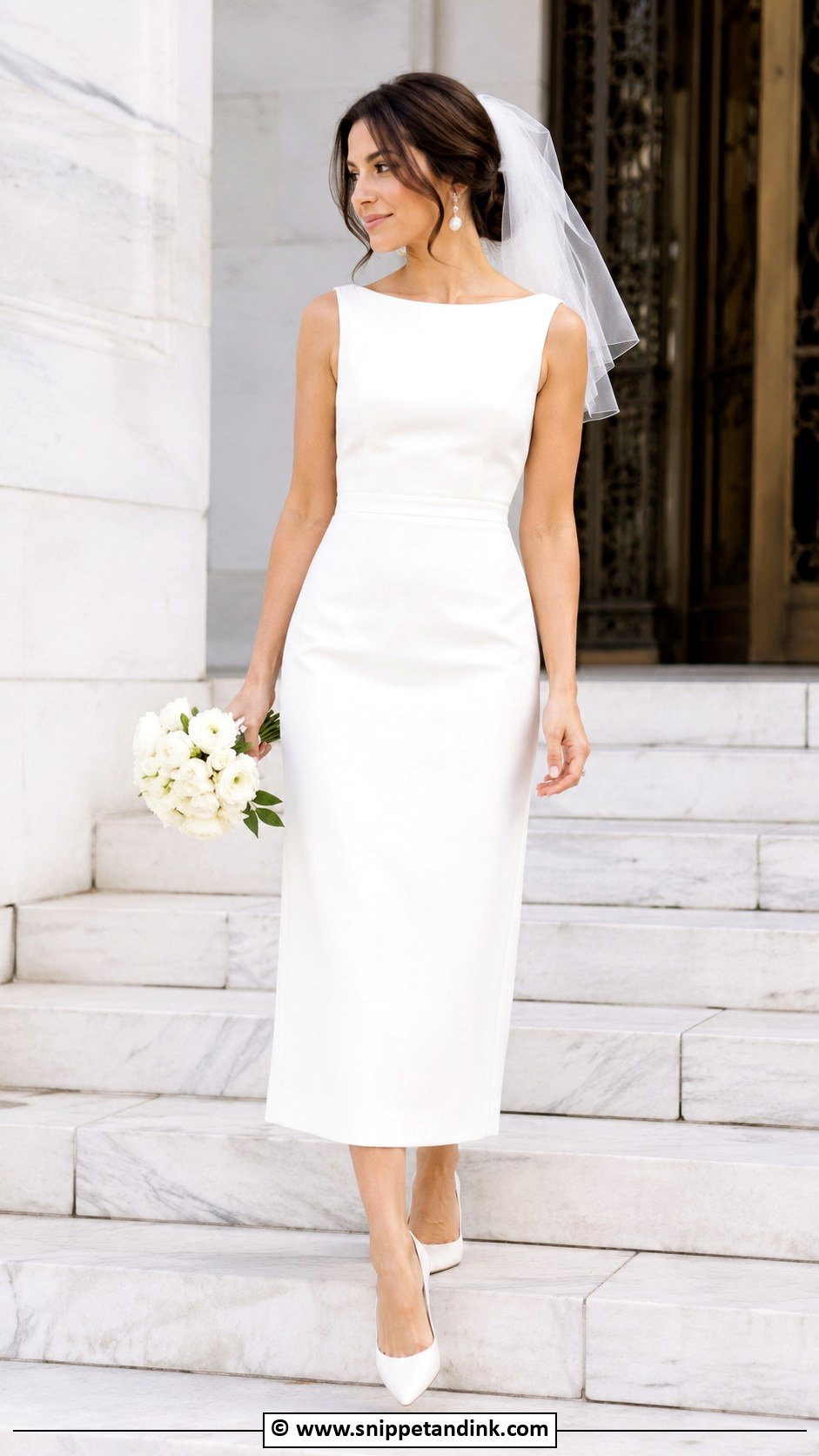
Courthouse ceremonies are short, often standing, and photographed in corridors and on steps, so the dress needs to look neat from every side. Satin, crepe and structured cotton blends hold their shape through a day of getting in and out of cars. A square, bateau or simple V neckline suits a city setting. I always plan the coat as part of the outfit for colder months, since it will be in half the photos. Pointed pumps, a small bouquet and pearl earrings, with an optional short veil.
21. Garden Tea Length Wedding Dress
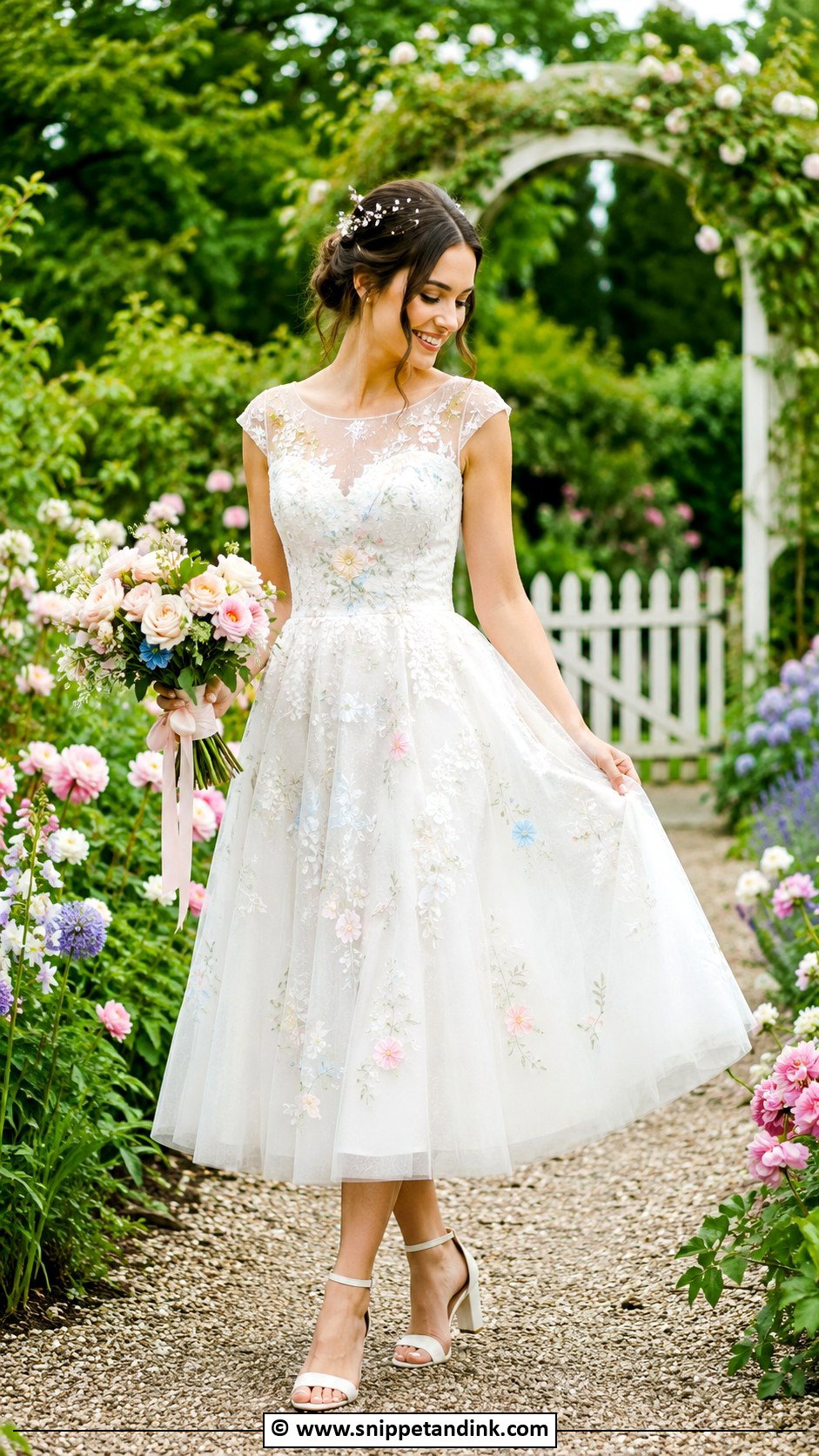
A garden tea length wedding dress should be light and easy to move in. Floral lace, embroidered tulle, organza and chiffon all suit greenery. The shorter hem keeps fabric off damp grass and gravel, which is the main practical reason I suggest this length for gardens. Thin stilettos sink into lawns, so choose block heels, wedges or embellished flats. A soft veil, floral pins and a pastel bouquet suit spring and summer.
22. Beach Tea Length Wedding Dress
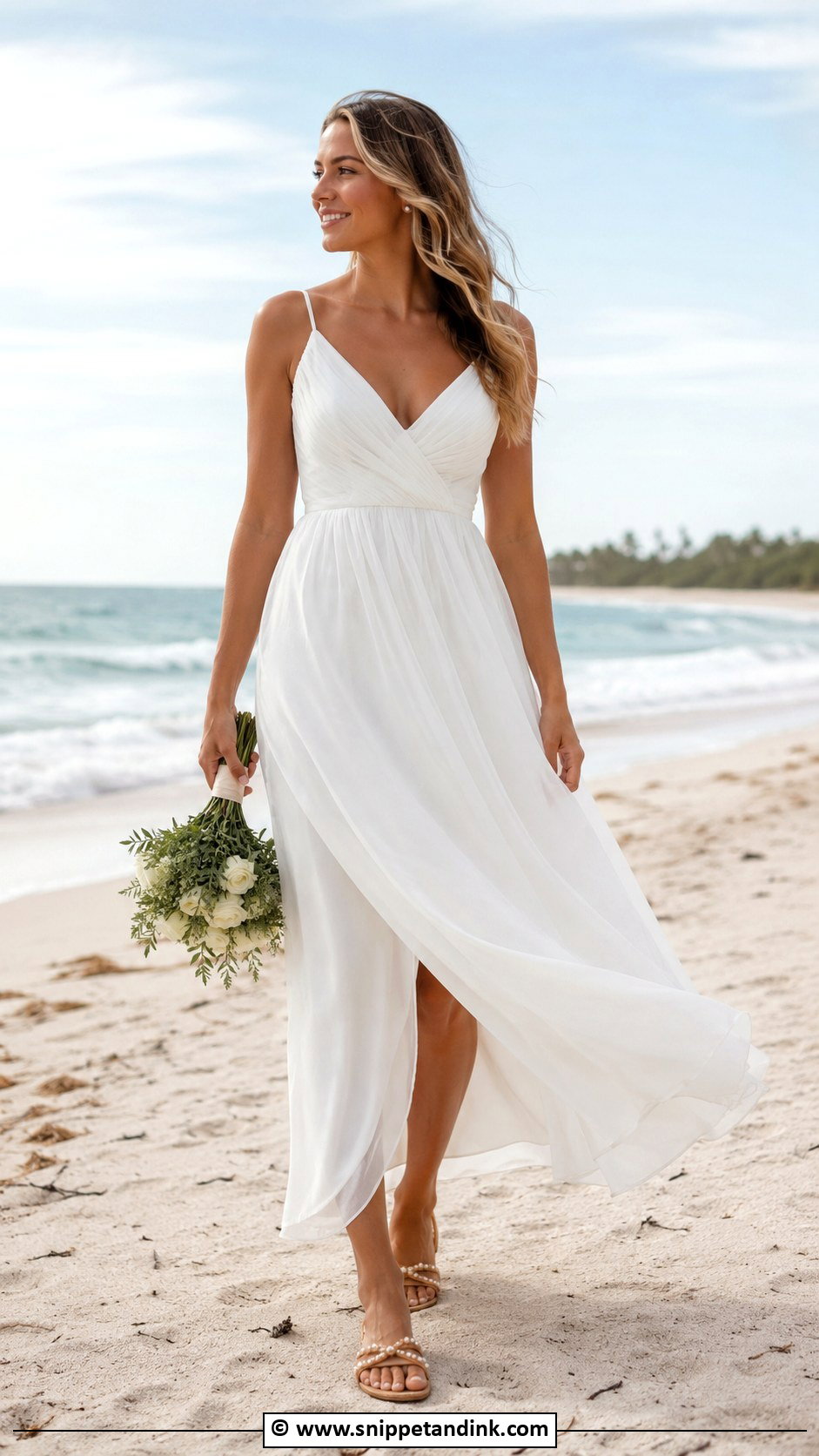
On a beach, a long train drags sand everywhere, so this length makes immediate sense. Choose fabrics that cope with heat and wind: chiffon, soft tulle, cotton lace or organza. Wind is the real issue; a full, light skirt will blow up in photos, so I sometimes add a few small weights inside the hem. Flat sandals or low wedges, never narrow heels. Pearl studs, a loose updo or soft waves suit the setting.
23. Reception Tea Length Wedding Dress
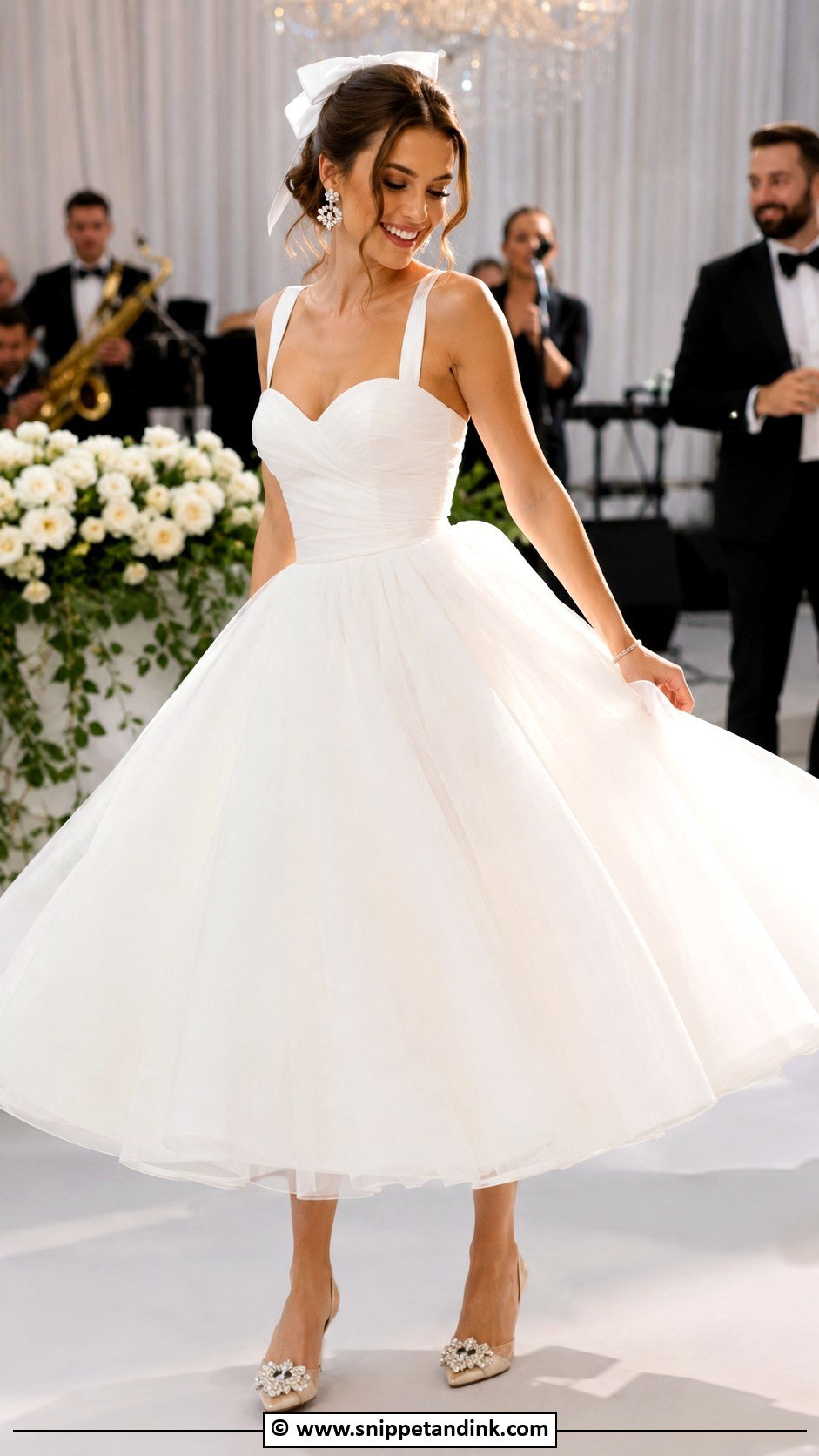
As a change for the reception, this length lets you dance and greet guests without holding your skirt. Choose a fuller skirt, a little sparkle, feathers at the hem or a satin bow to mark the switch to party mode. Your shoes will be visible all night, so pick ones you’ve already worn for a few hours at home: block heels, Mary Janes or embellished pumps. Swap the veil for a hair bow or headband. Plan where the ceremony dress goes after the change, and who carries it.
24. Plus Size Tea Length Wedding Dress
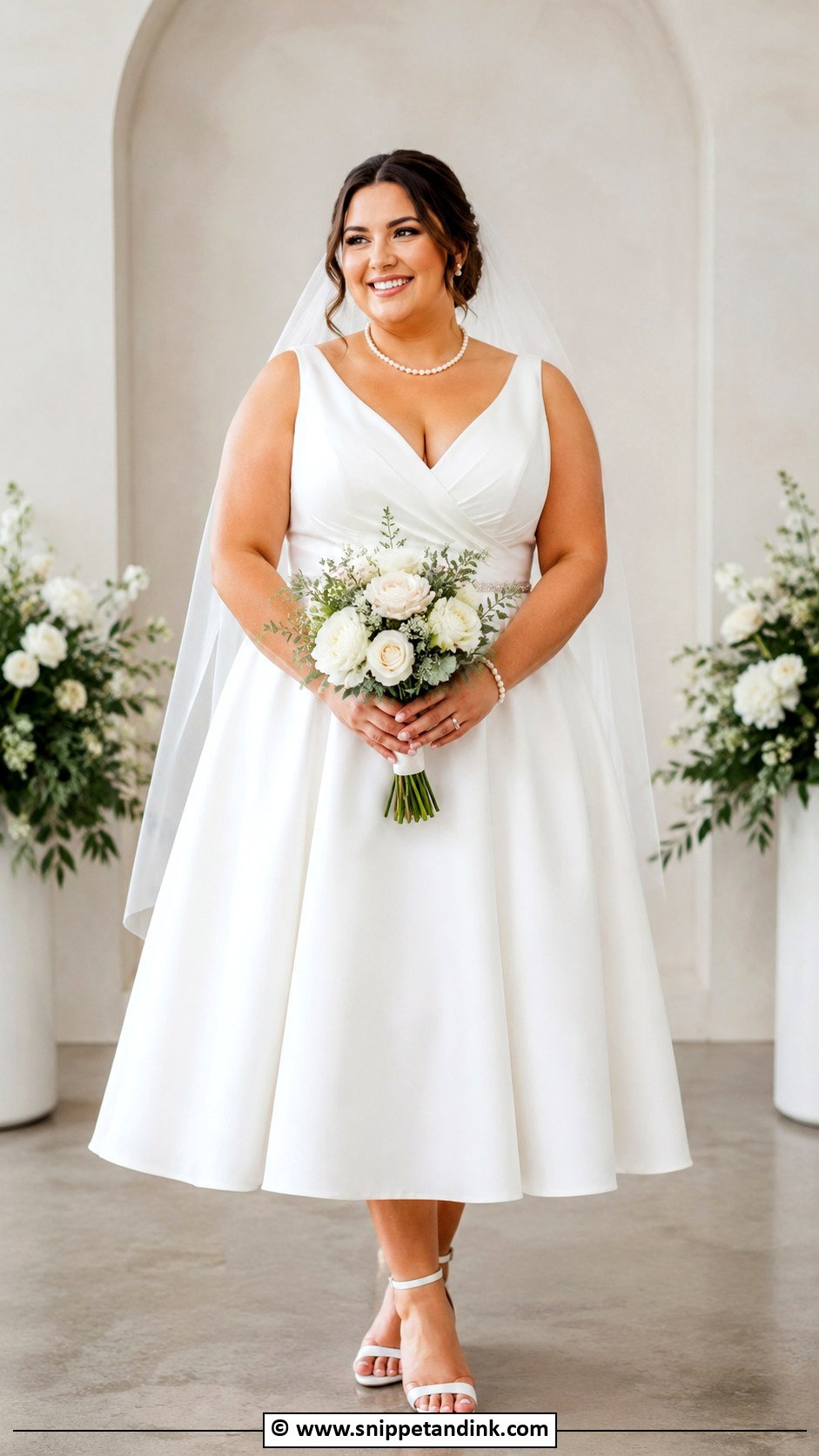
For a plus size tea length wedding dress, I prioritise support and lining before any styling. A structured bodice, defined waist and A-line skirt give shape without squeezing. V, square and off-shoulder necklines all flatter when the tailoring is right. Look for supportive straps and fabrics with body, such as satin, mikado, lined lace or crepe. Hem placement matters most here: ending at the narrowest point of the calf usually looks the most balanced. Comfortable heels and pearl jewelry finish it.
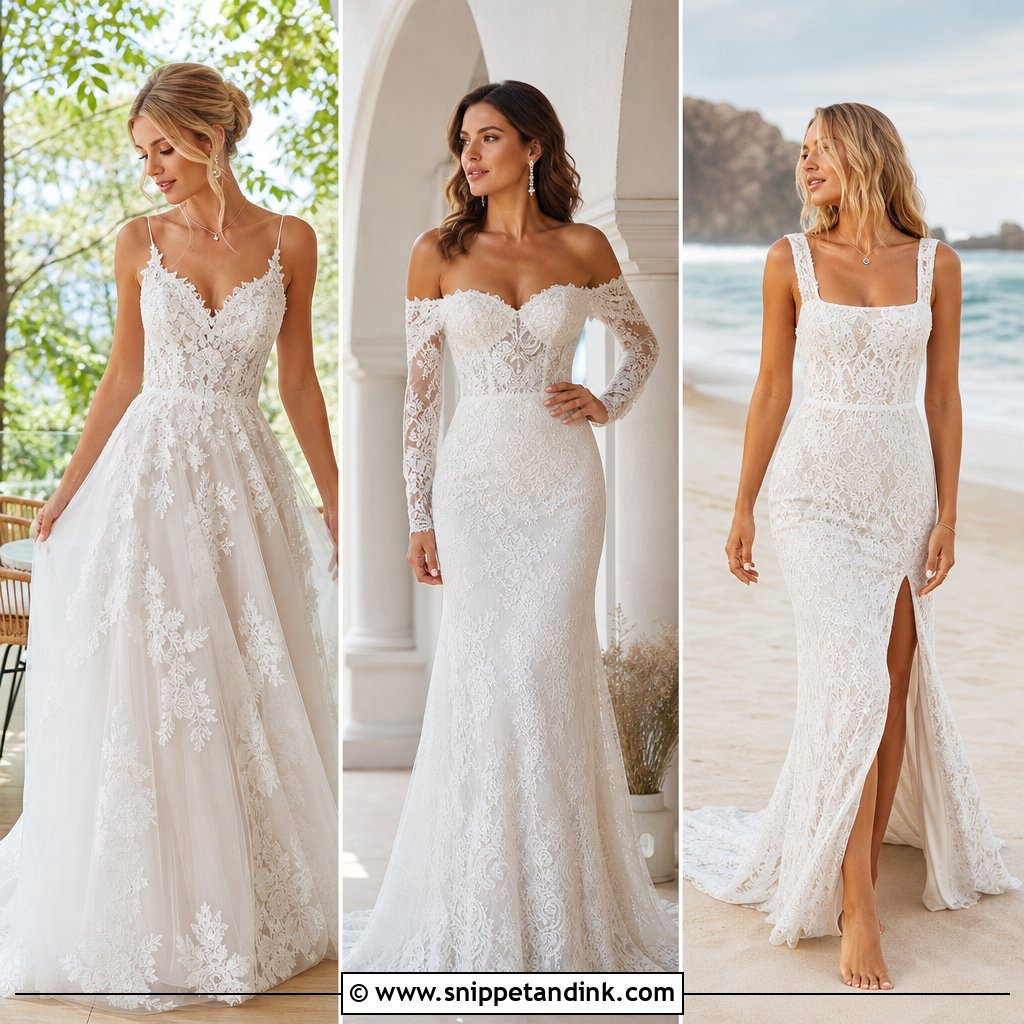

25. Petite Tea Length Wedding Dress
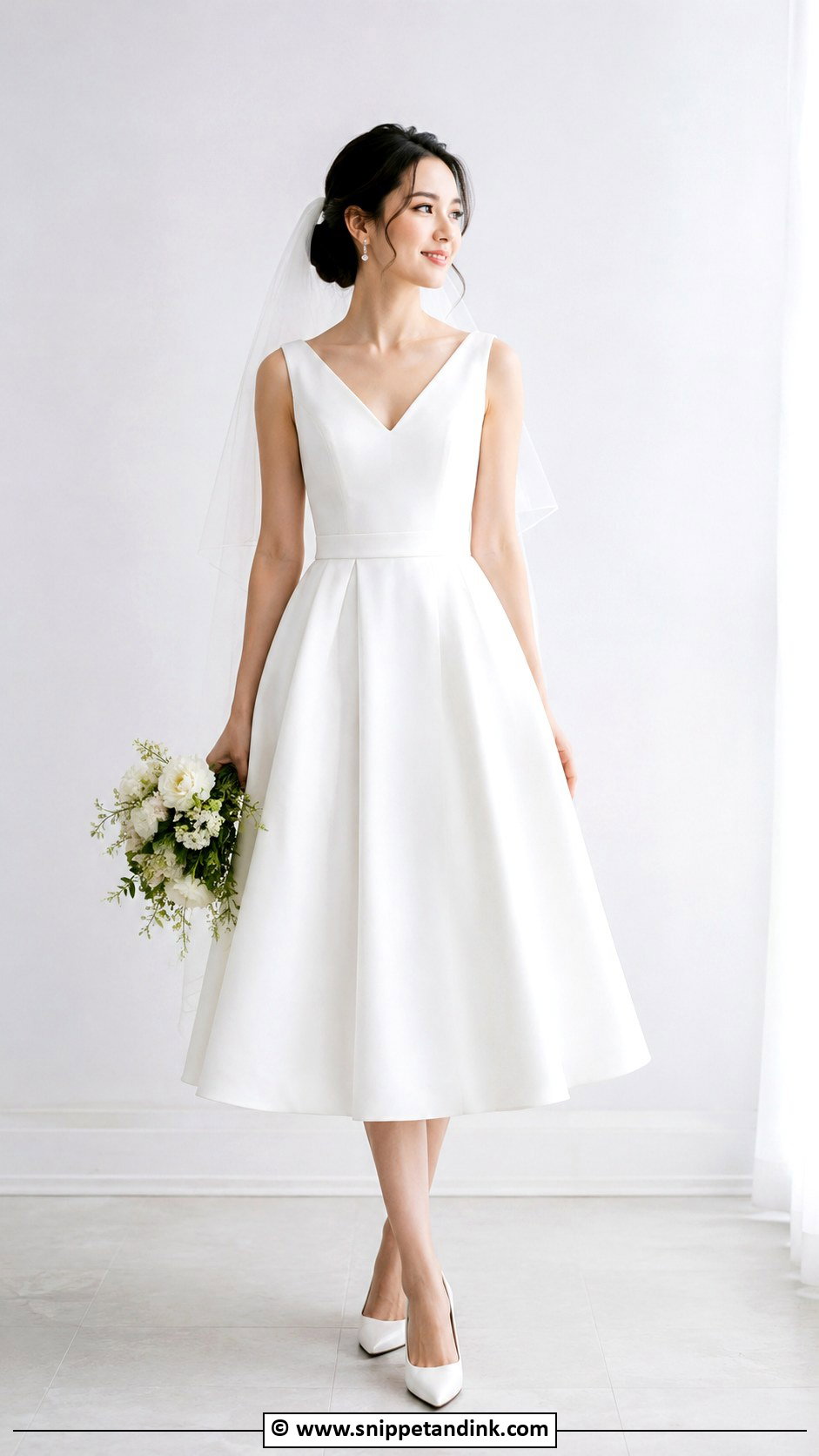
On a petite bride, a hem that lands too low on the calf cuts the leg in half, so I usually take a tea-length skirt up to just below the knee or the upper calf. A fitted bodice, slightly higher waistline and a simple A-line skirt lengthen the frame. Heavy, voluminous skirts tend to swamp shorter brides. Nude or ivory pointed-toe heels extend the leg line, and a V or square neck opens the upper body. Keep accessories small in scale.
26. Modern Tea Length Wedding Dress
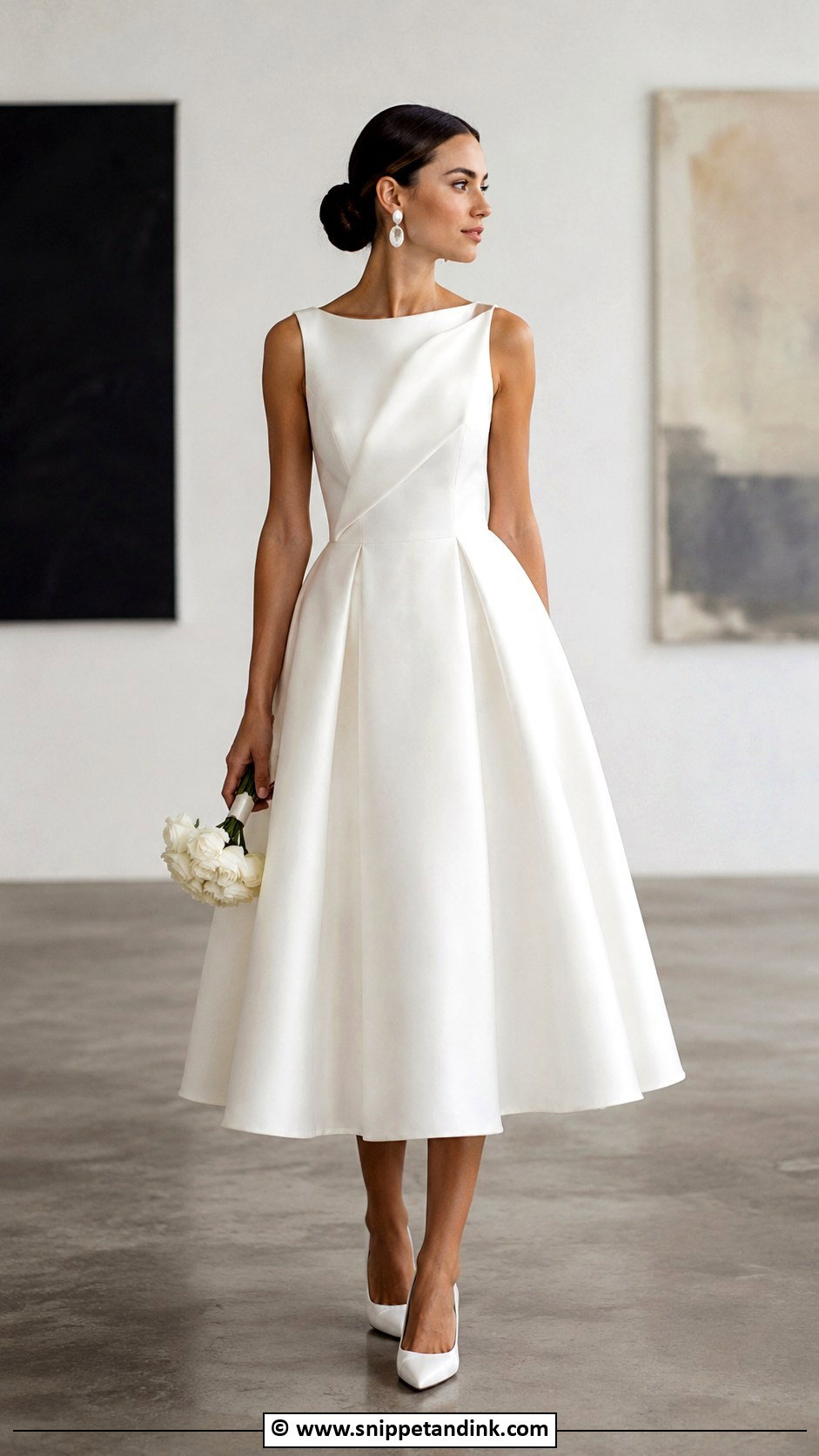
Modern means fewer details and stronger shape: architectural necklines, smooth satin, sharp pleats, asymmetry, a minimal bodice. It sits naturally in galleries, rooftops and city restaurants. Clean lines expose fit, so I spend extra fitting time on the shoulders and waist with these. Sculptural earrings, sleek pumps and a low bun work. A short veil softens it; going without one gives a more editorial feel.
27. Boho Tea Length Wedding Dress
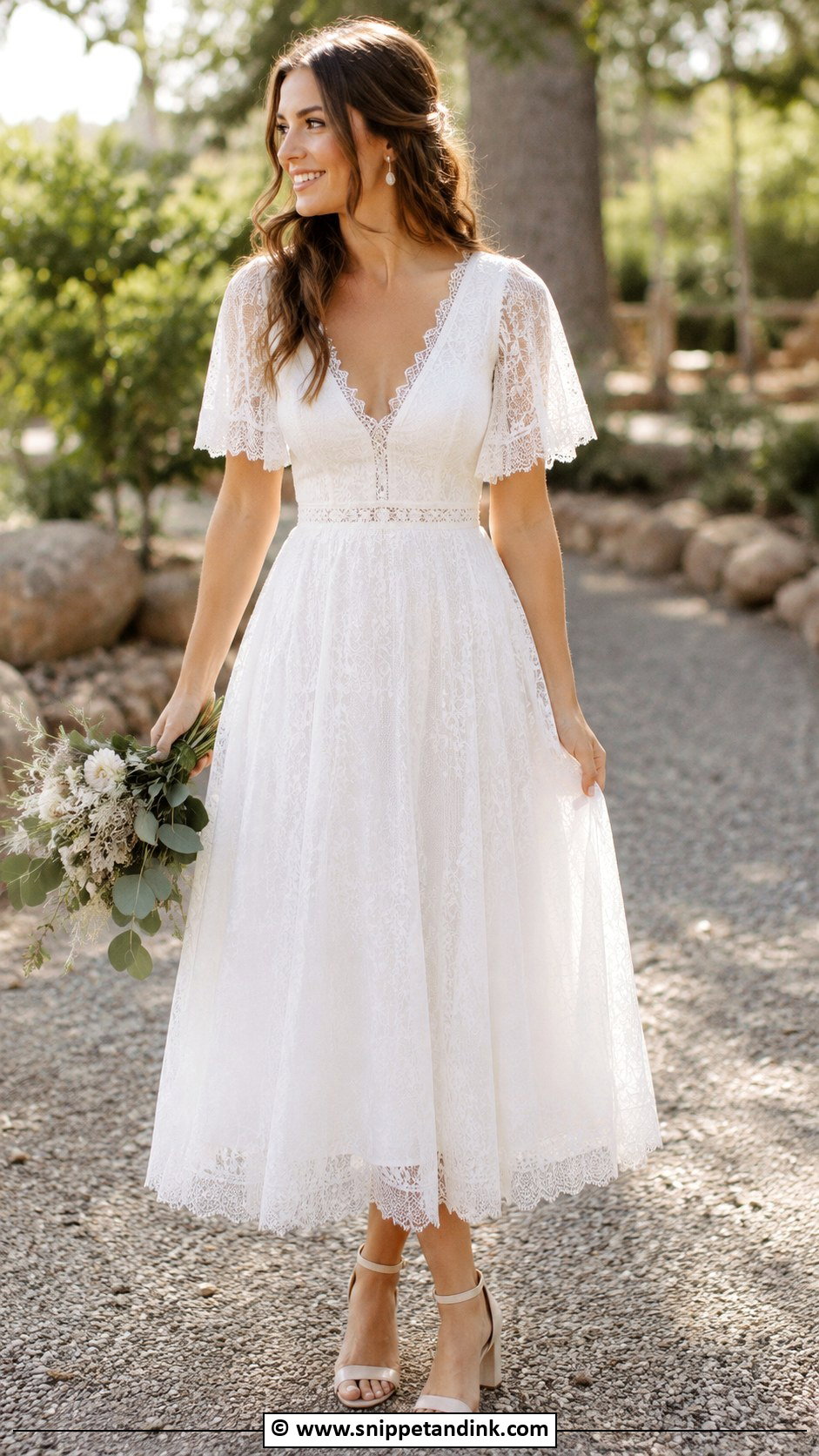
Boho dresses rely on texture and ease: soft lace, crochet-style patterns, flutter sleeves and a flowing skirt. Structured underpinnings fight that relaxed drape, so I usually skip heavy boning and a crinoline. Sandals, low block heels or flats suit outdoor and backyard venues. Hair in loose waves or a soft braid, a floral comb instead of heavy jewelry. Crochet lace stretches with wear, so ask your seamstress to allow for it when taking in the bodice.
28. Embroidered Tea Length Wedding Dress
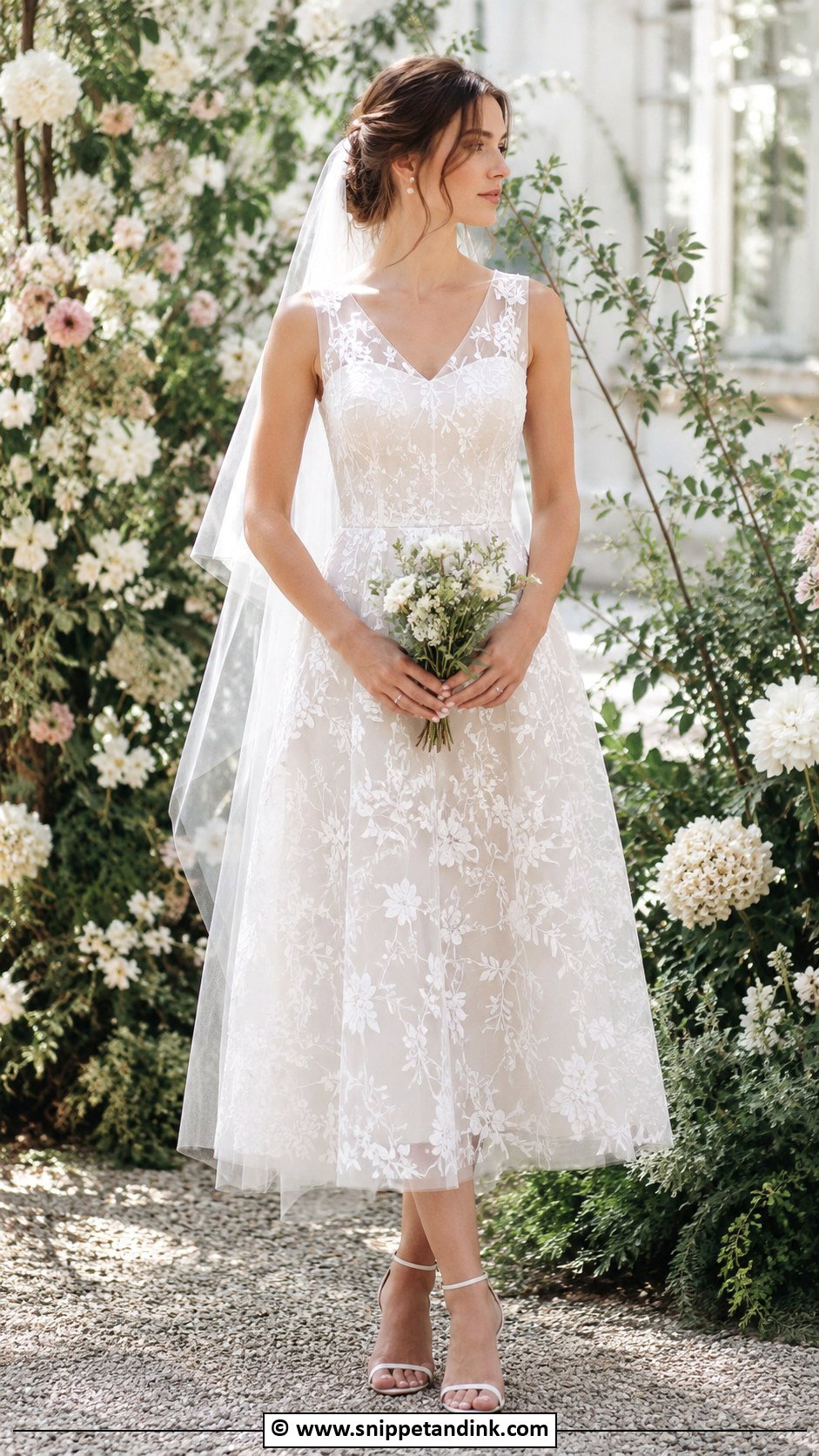
Embroidery gives a custom feel, either white-on-white for subtlety or with soft color for something more artistic. Floral motifs suit gardens; geometric work feels more modern. Because the dress already carries the detail, the accessories should step back. I pick up one tone from the threadwork in the shoes, or stay with plain ivory. A sheer veil lets the embroidery show through rather than hiding it, and heavy hand embroidery adds weight, so try it on with your actual shoes to check the hem.
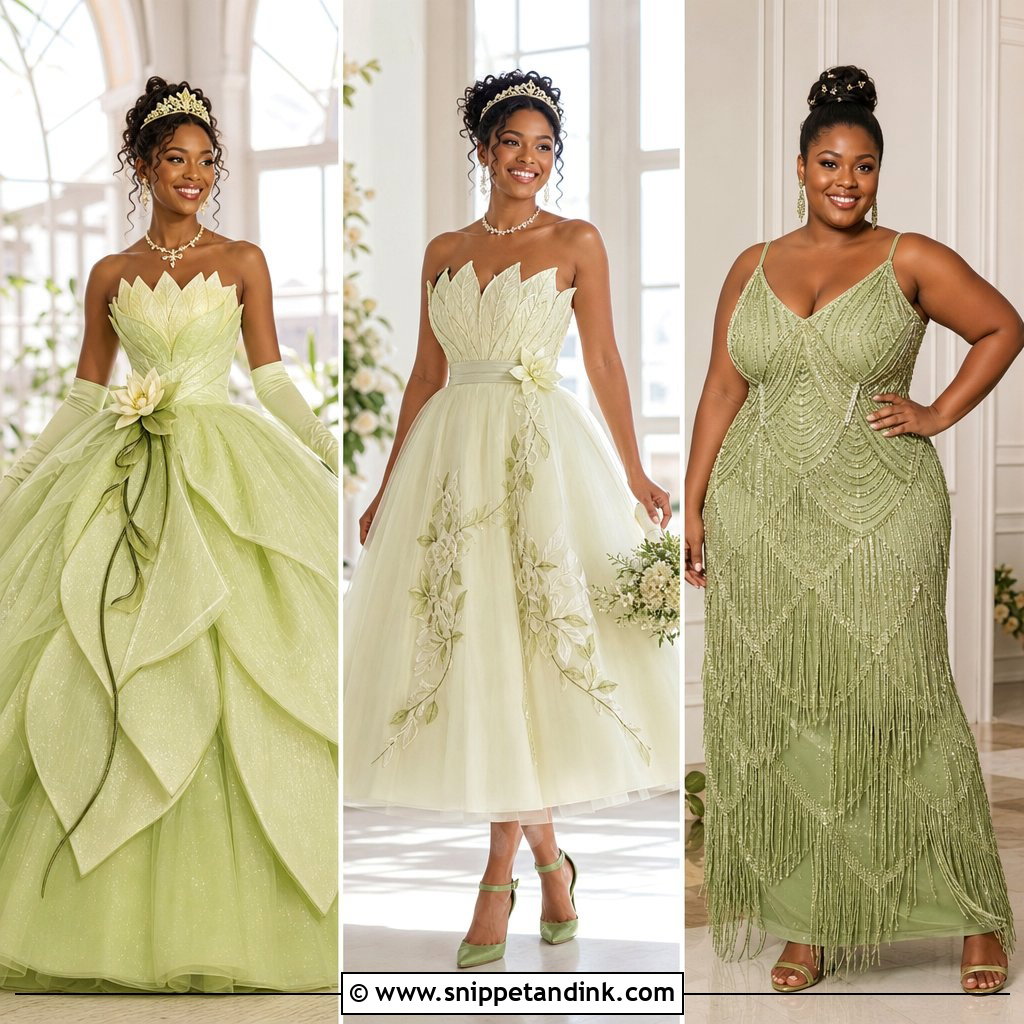
29. Tea Length Wedding Dress With Color
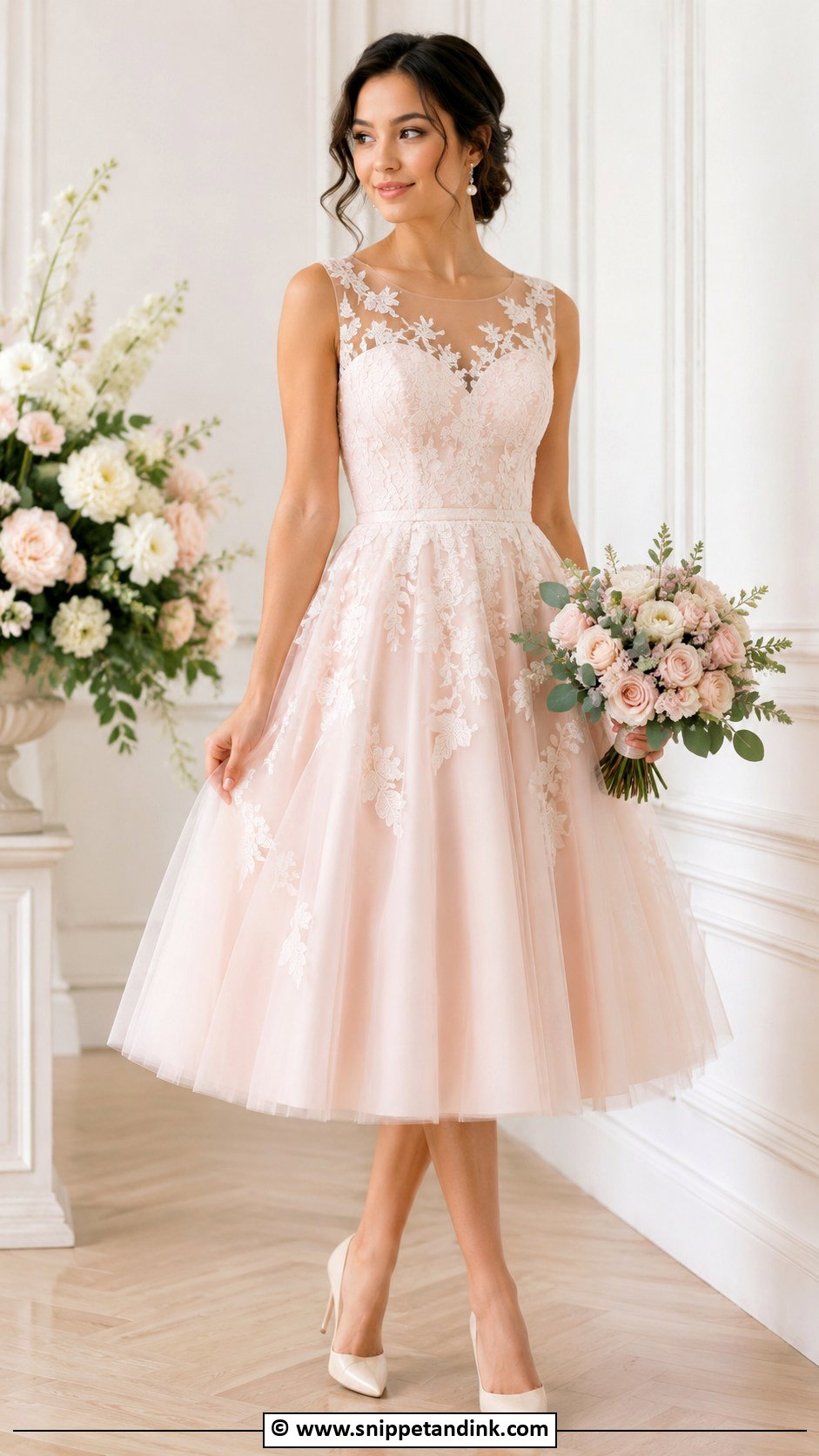
Color is a softer alternative to white: blush, champagne, pale blue, buttercream, lavender or a delicate floral print. The silhouette needs to stay clean so it still reads as bridal. Test colored fabric in daylight and under warm indoor light, because blush can turn beige and champagne can read grey in some photos. A blush dress with ivory heels feels romantic; pale blue with silver shoes feels fresh. With a print, keep the veil plain or skip it entirely.
30. Tea Length Wedding Dress With Statement Shoes
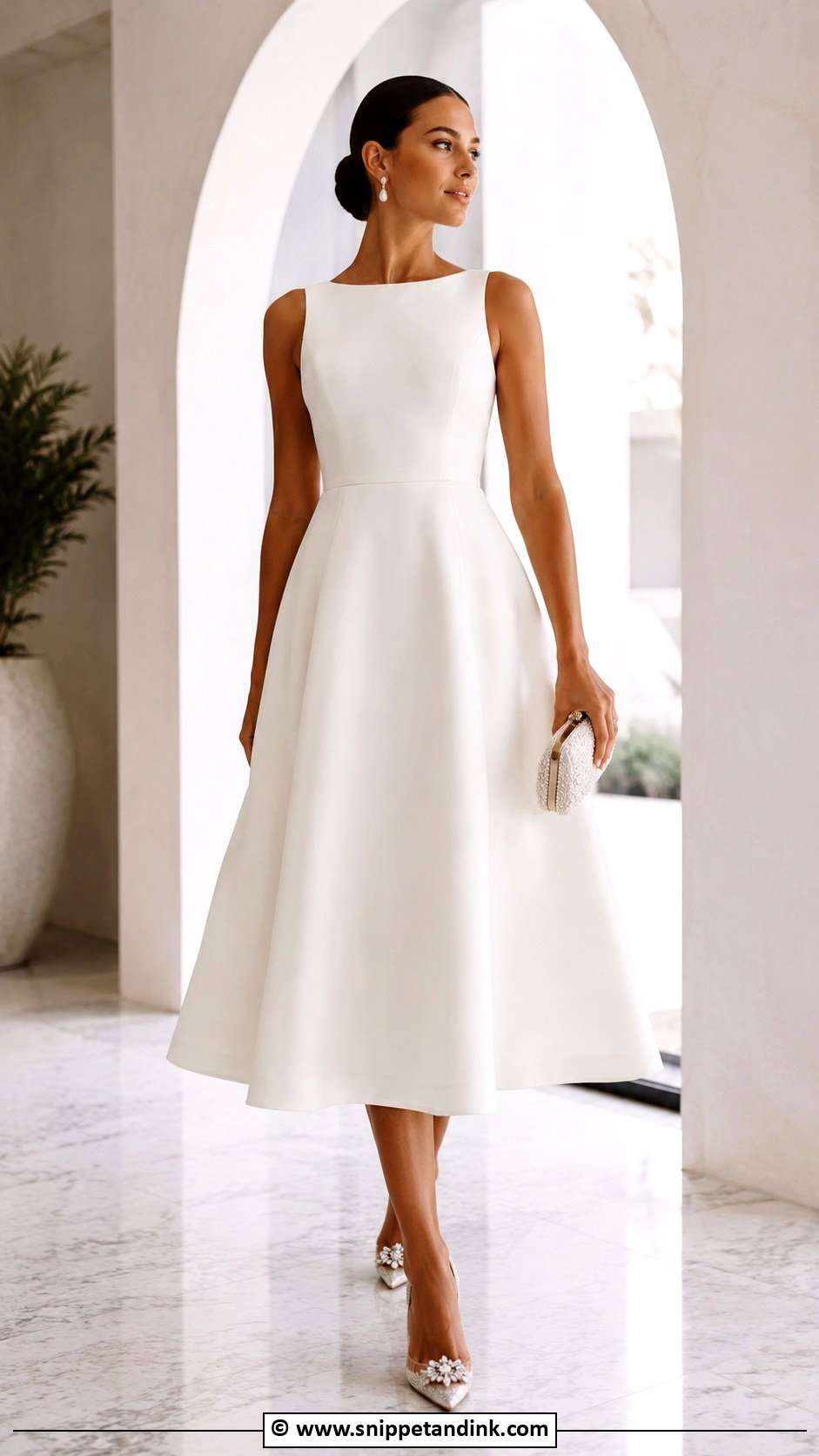
The hem naturally puts footwear on display, so this is the length where shoes can lead. Crystal pumps, satin heels, pearl Mary Janes, bow shoes, metallic sandals or colored heels all have room to shine against a plain satin or crepe dress. Tie one accessory back to the shoes, such as earrings, a clutch or a hair bow. Buy the shoes before the hem fitting; I can’t set a tea-length hem properly without them, because heel height changes where the skirt falls on your leg.
Steaming, Sitting and Storing a Shorter Gown
A tea-length skirt is right at eye level when you sit, so creases across the lap show far more than they would on a long gown hidden under a table. Satin and taffeta mark easily; lace, tulle and crepe recover better. Steam the dress the morning of the wedding, not the night before, and hang it from the inner loops rather than the shoulders so the weight doesn’t stretch the neckline.
When you sit, smooth the skirt under you and sit forward on the chair. It sounds fussy, but it is the difference between a crumpled lap in the speeches photos and a clean one. Keep a small kit nearby: a handheld steamer, a lint roller, white chalk for small marks on ivory, and a few safety pins.
Afterwards, get it professionally cleaned within a few weeks, even if it looks clean. Sugary drinks and perspiration dry invisible and turn yellow months later. Store it flat or folded with acid-free tissue in a breathable box, away from plastic garment bags, attics and damp basements. Shorter dresses are easy to wear again for an anniversary dinner, so it’s worth keeping it in good condition.
A Shorter Hem Asks for Better Fit, Not Less Thought
Tea length gives you the vintage pull of lace and pearls, the clean lines of modern satin, or the softness of tulle, all with the freedom to move and sit comfortably. Settle the venue and season first, then the silhouette, and only then the accessories. Spend the budget on fit and hem placement, because at this length those are the details people actually see. Get them right, and a shorter dress feels every bit as bridal as a full gown.
You'll Like These Ideas:





Leave a Reply