
The sixties gave bridal two completely different wardrobes. The early years were satin, lace and tidy A-lines, still close to the fifties. By the late sixties, hemlines had jumped above the knee, shift dresses replaced waists, and daisies and crochet crept in. That range is why I like dressing brides from this decade: there’s a version for the woman who wants modest lace and one for the woman who wants a mod mini and white tights. The ideas below are full outfits, dress, shoes, veil, gloves and bouquet, with notes on how each one actually wears.
Sixties Dresses Were Cut for Sixties Underwear
If you’re buying an original dress, this is the thing nobody warns you about. Bridal patterns of that decade were built around longline bras, girdles and firm foundation garments. The darts, waist and bust point were placed for a body shaped by them, so a genuine dress can look oddly loose at the bust and tight at the waist on a modern figure.
Sizing has shifted too. A dress labelled with a familiar size number from that period is often several sizes smaller than the same label today. I never trust the tag; I measure bust, waist, hip and the back length from the nape to the waist, and compare it with the bride’s measurements before she tries anything on.
- Look for deep seam allowances inside. Many home-sewn and dressmaker gowns from the era have generous ones that can be let out.
- Check the metal zip for rust marks and the fabric beside it for strain.
- Ask a seamstress to move bust darts rather than forcing a fit with padding.
- For a modern dress in a sixties style, you don’t need any of this. Fit it to your own shape.
1. 60s Lace A Line Wedding Dress
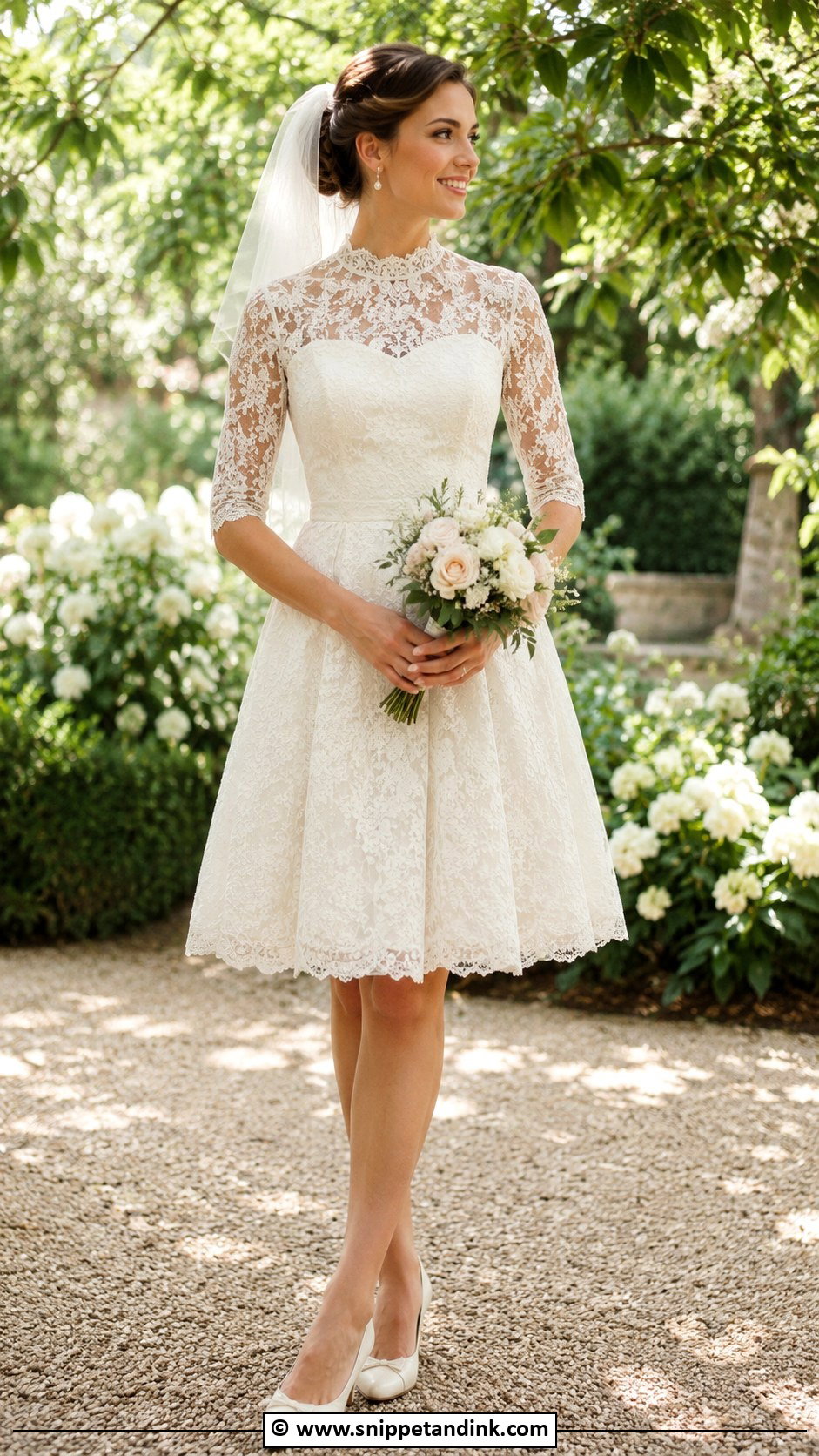
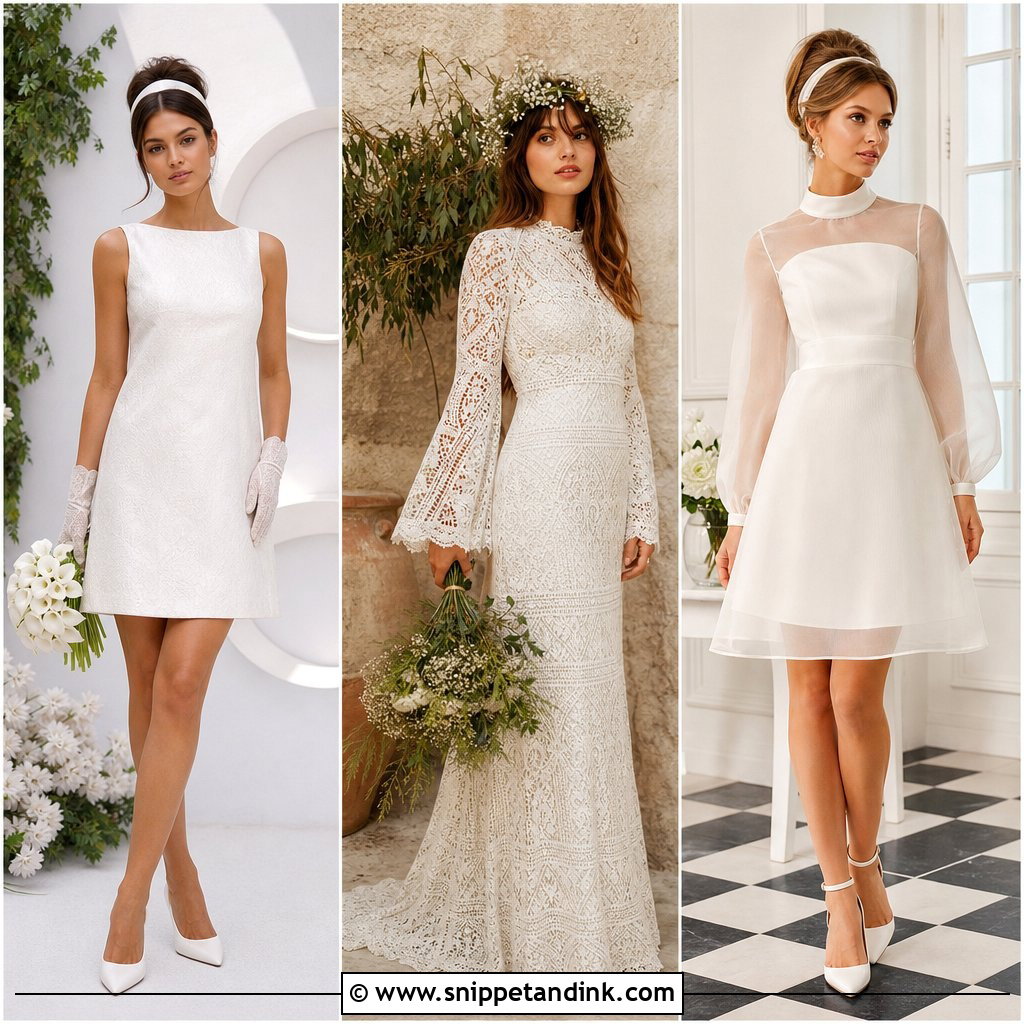
Of all the vintage shapes, the lace A-line is the one I’d hand to a bride who’s nervous about looking costumed. A knee-length or tea-length A-line dress with a fitted bodice and lace overlay flatters most figures. A bateau or high neckline and three-quarter sleeves keep it in period. Kitten heels, pearl studs and a short veil or bow headpiece finish it, with a small posy of daisies or roses. Watch the lace overlay at the waist seam: if it isn’t matched, the pattern breaks in a way that’s obvious in close-ups.
2. 60s Mini Wedding Dress
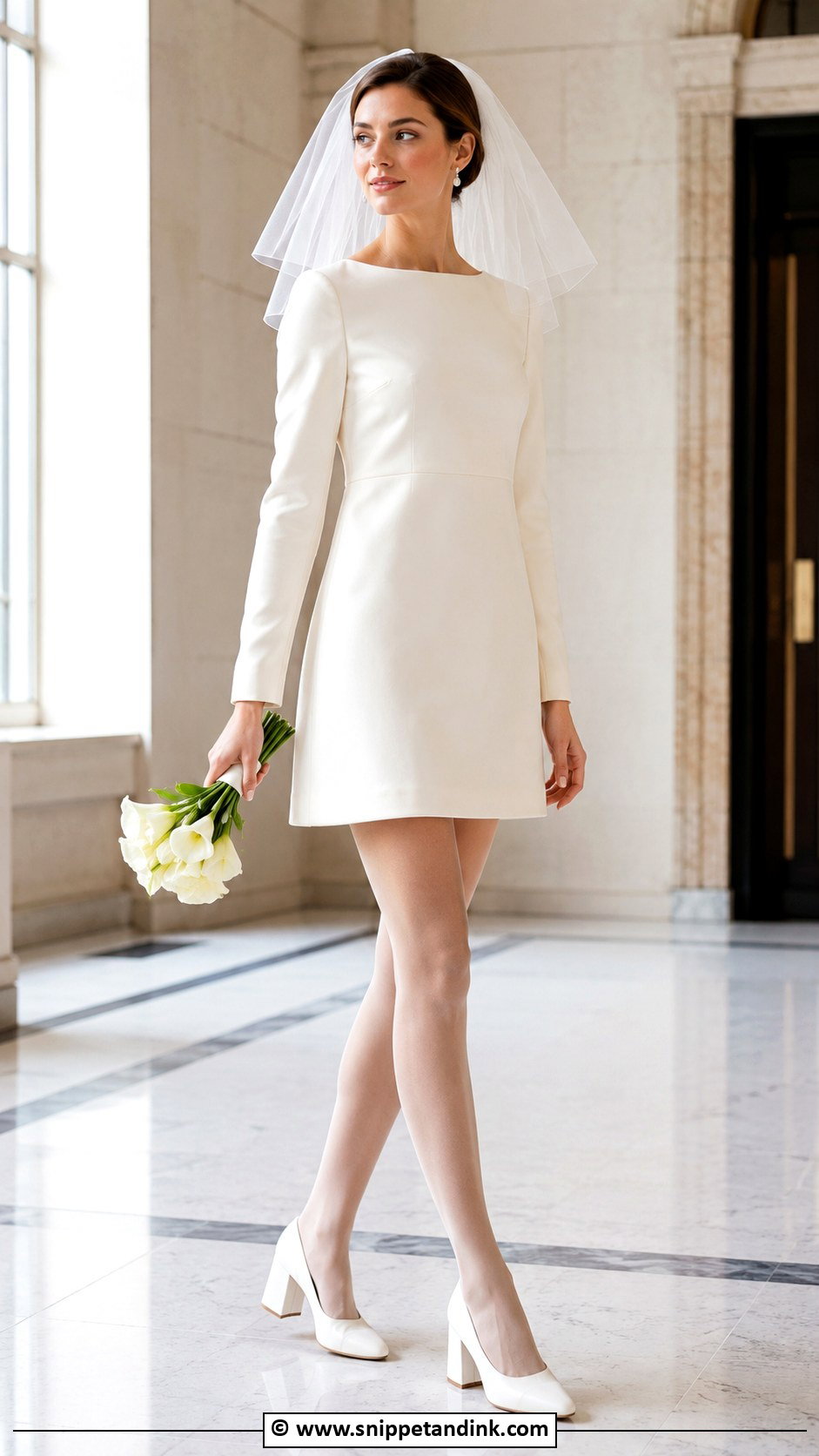
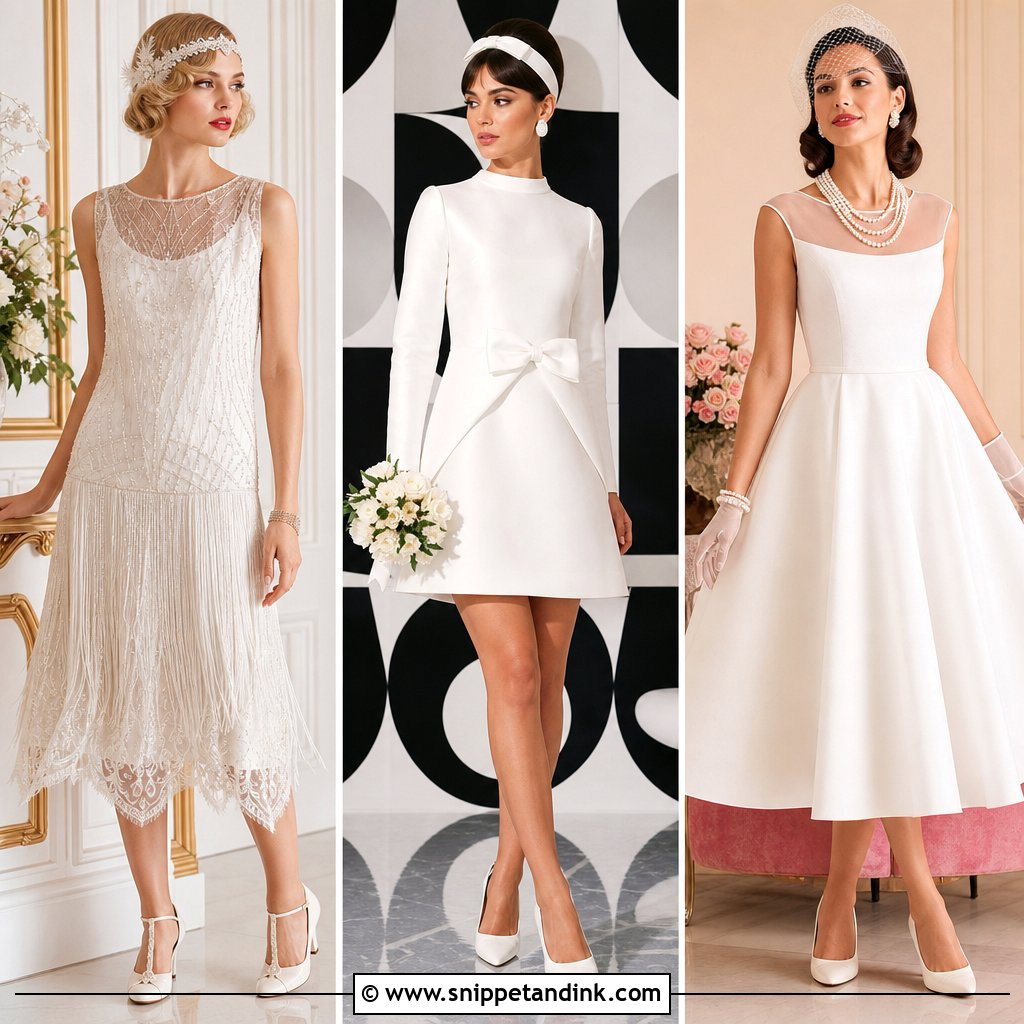
Mini wedding dresses were a real late-sixties phenomenon, not a modern invention. A shift or babydoll shape above the knee, in crepe, satin, lace or textured cotton, is the starting point. Long sleeves and a high neck balance the short hem. White block heels, sheer tights and pearl drops are classic. Sit in it before you buy. A shift that looks demure standing can ride a long way up in a chair, and that’s the angle most guests see during the ceremony.
3. 60s Mod Wedding Dress
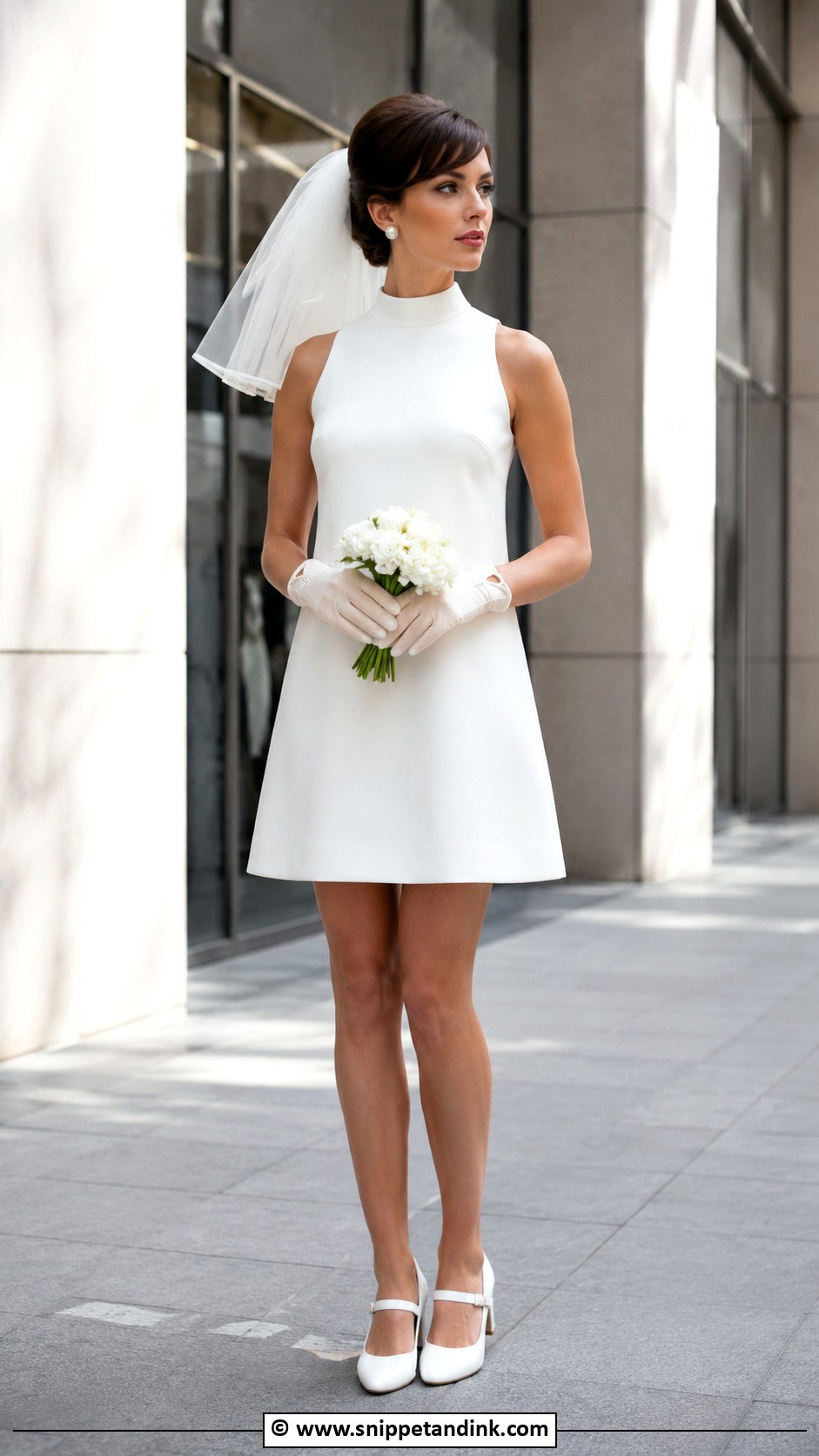
Mod is about geometry. A straight shift, a high neckline, clean seams and almost no decoration. White crepe, matte satin or a structured cotton holds that crisp line; soft fabrics collapse it. Patent Mary Janes or low block heels, pearl button earrings and a sleek short veil suit it, and white gloves with a pillbox push the look further. The fabric must have body. In a limp crepe, the shift just looks like a nightdress.
4. 60s Tea Length Wedding Dress
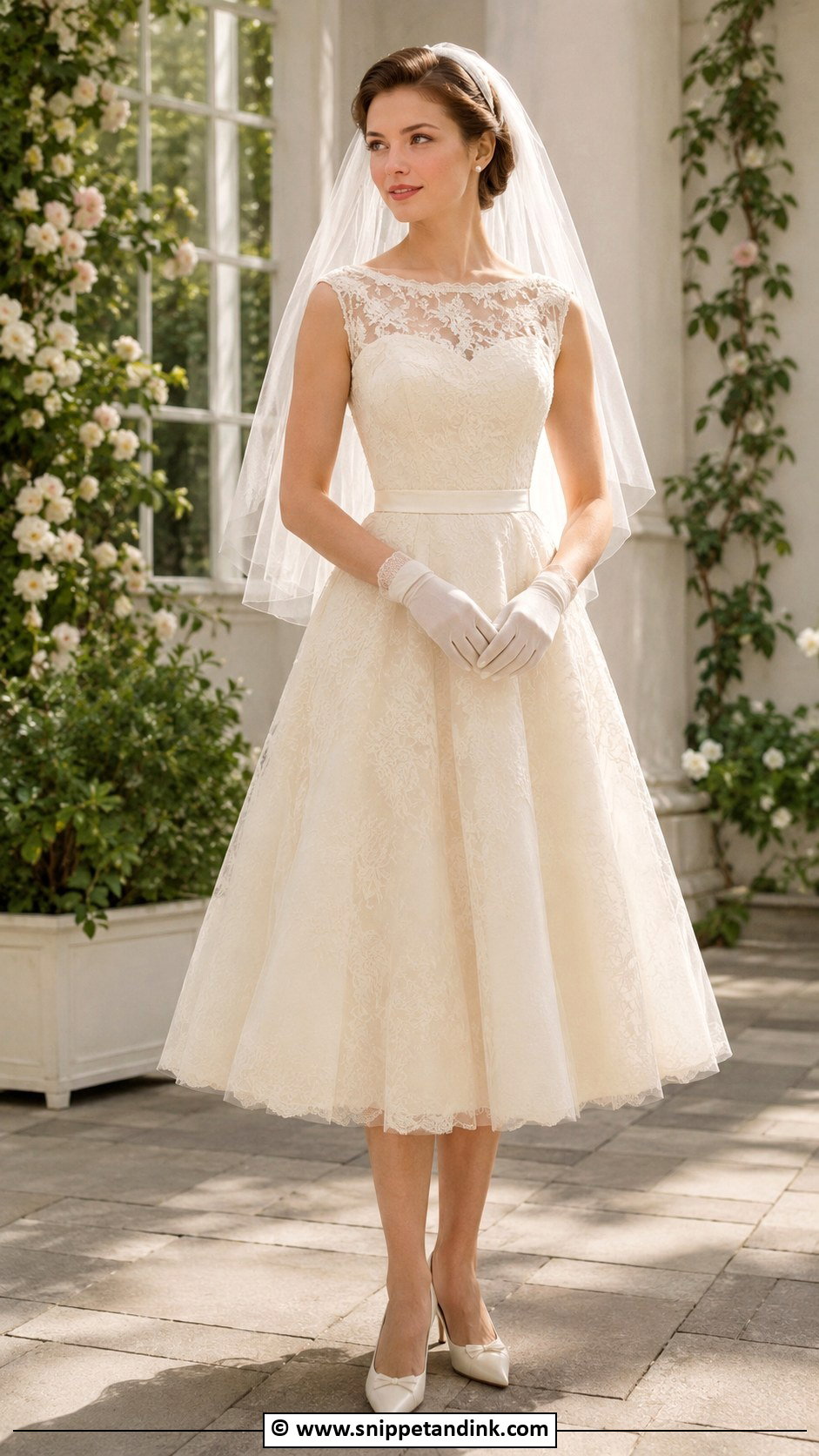
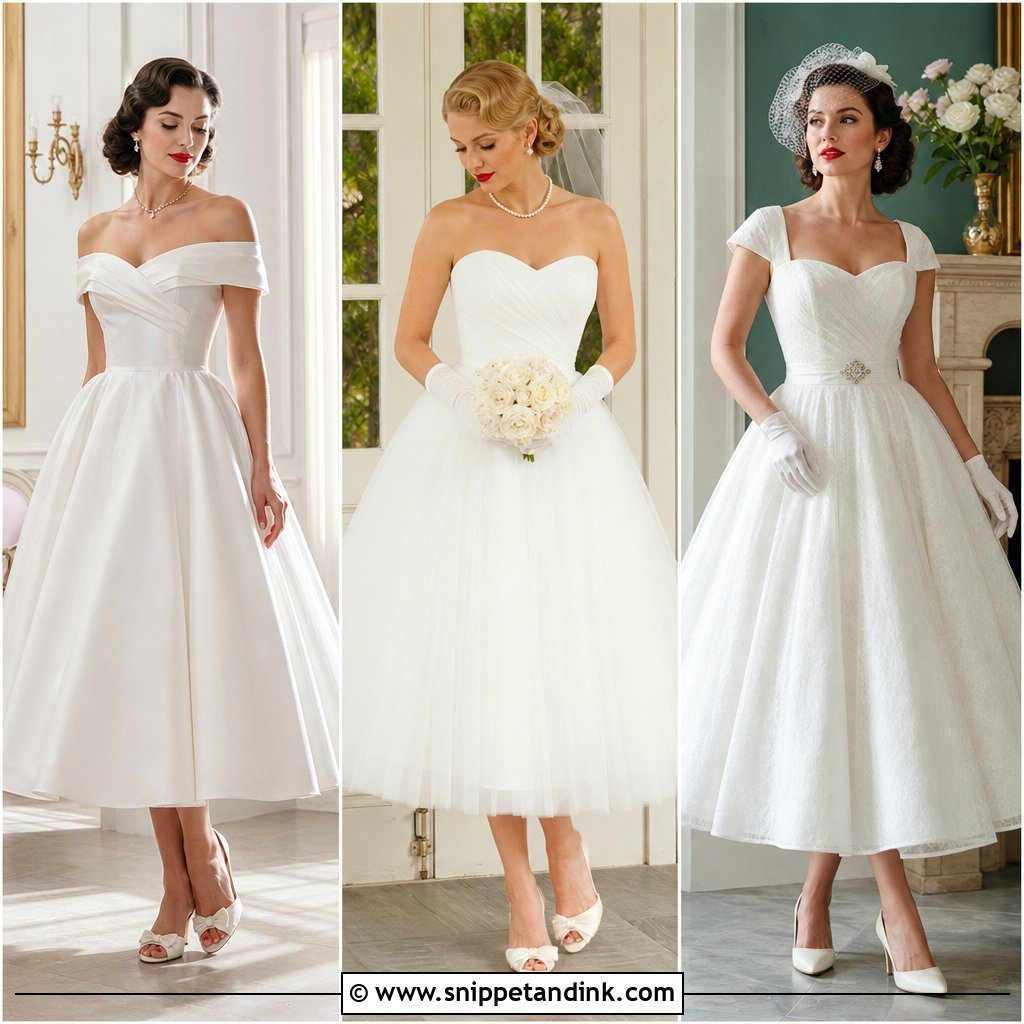
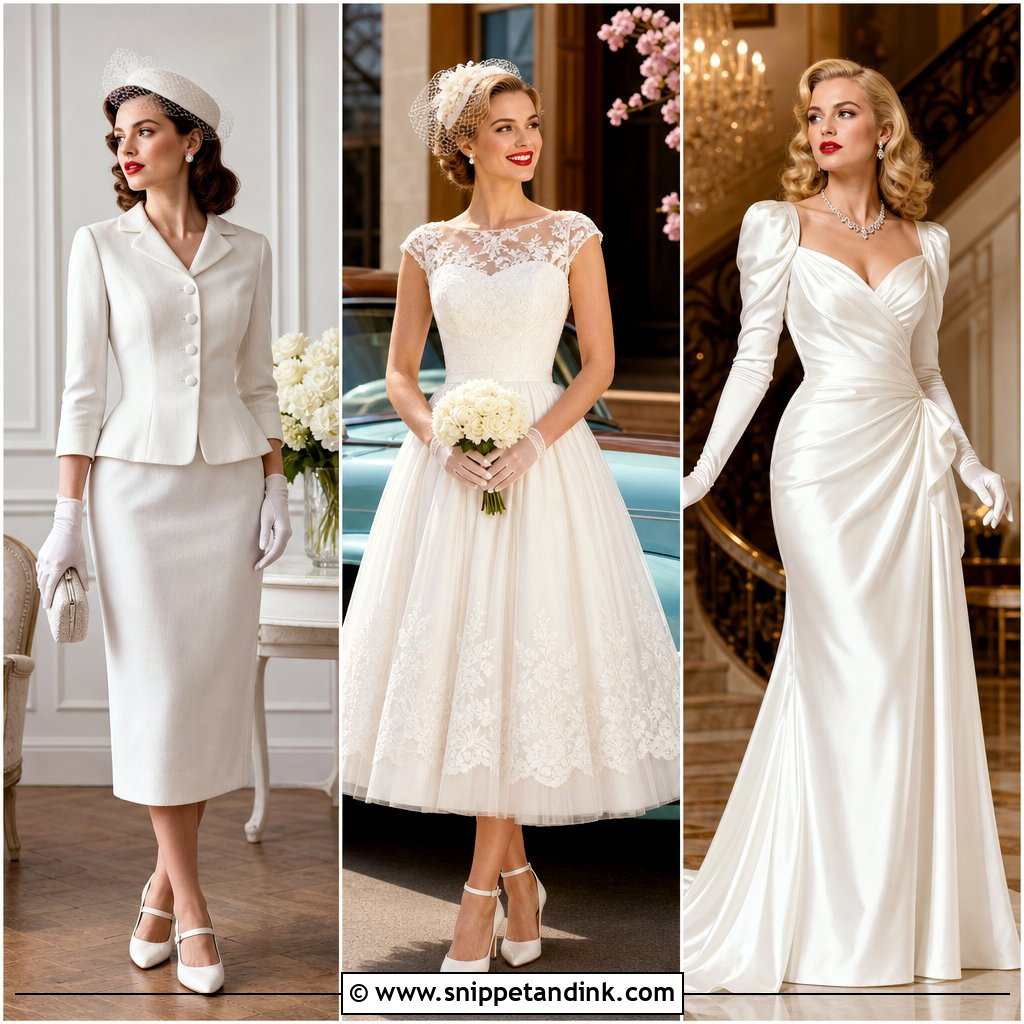
Tea length was a staple of early-sixties weddings, falling between knee and ankle with a fitted bodice and a gently flared skirt. Lace, organza, satin or tulle all work. A narrow satin belt defines the waist. Pointed kitten heels, short gloves and a waist-length veil are the period combination. I’d add a light petticoat underneath. Without one, the skirt hangs flat and loses that bell shape that makes it look sixties.
5. 60s High Neck Wedding Dress
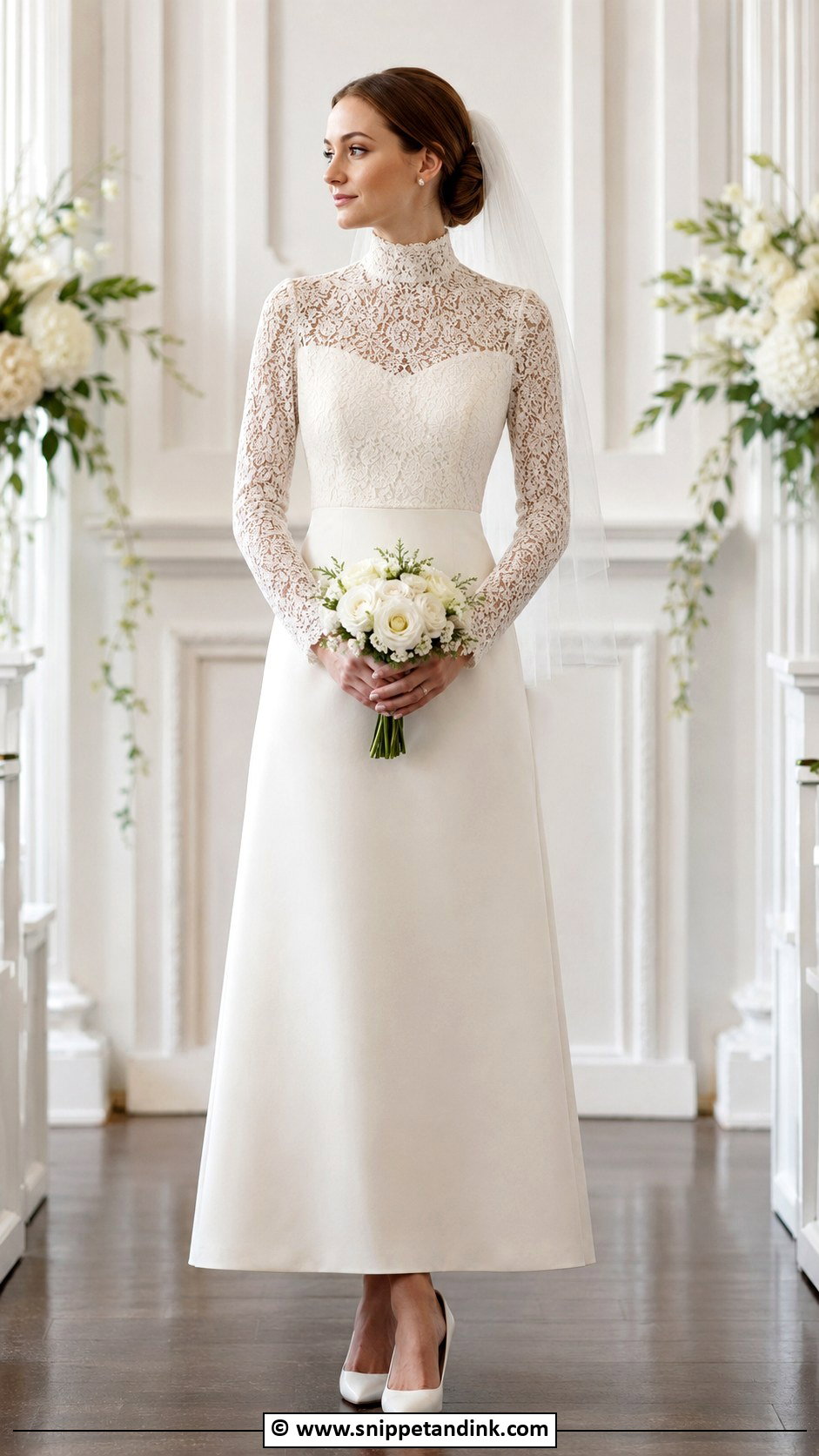
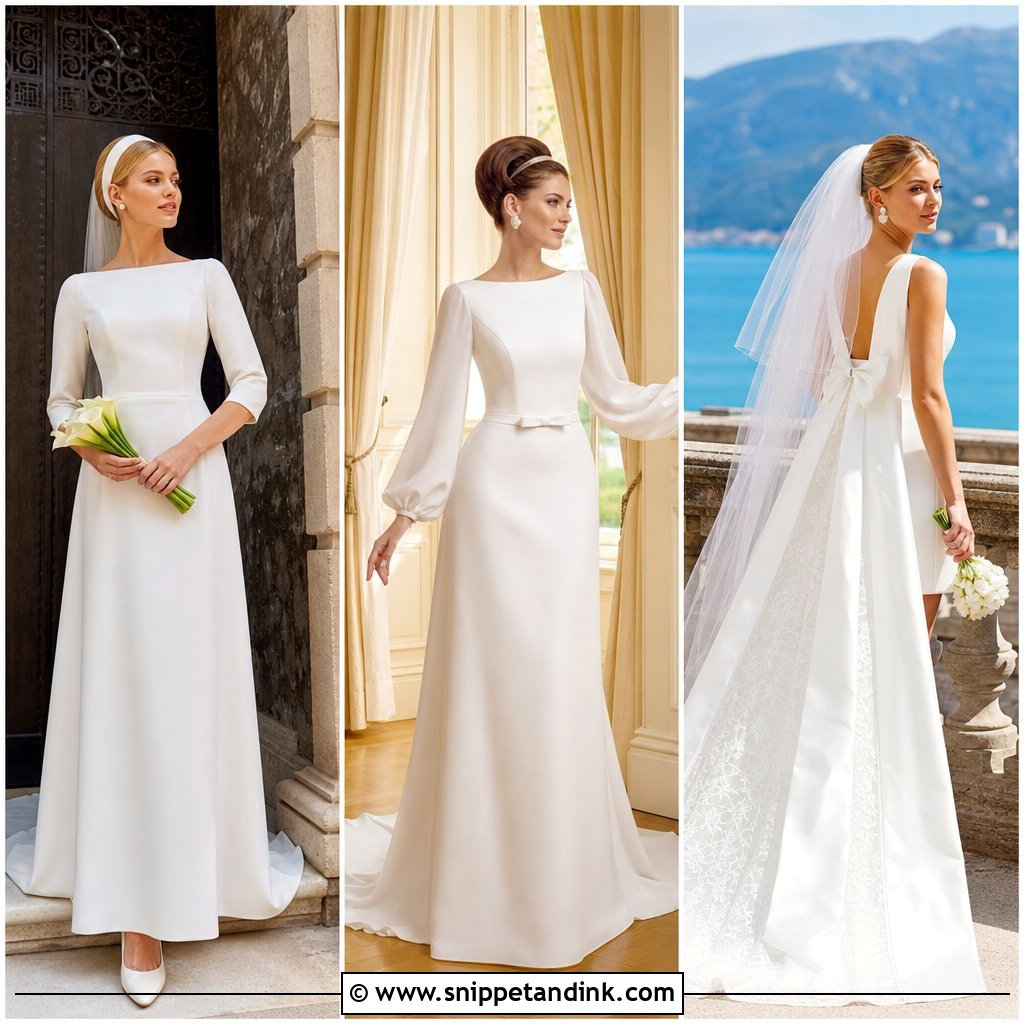
High necklines crossed both halves of the decade, so the fabric decides the mood. Lace with long sleeves and a slim A-line reads romantic; a crepe shift reads minimal. Pearl studs, a low bun and a short veil sitting neatly at the crown are enough. Necklaces just clutter it. Make sure there’s a button or zip opening at the back of the neck, since a high neck without one can be a struggle to get over set hair.
6. 60s Long Sleeve Wedding Dress
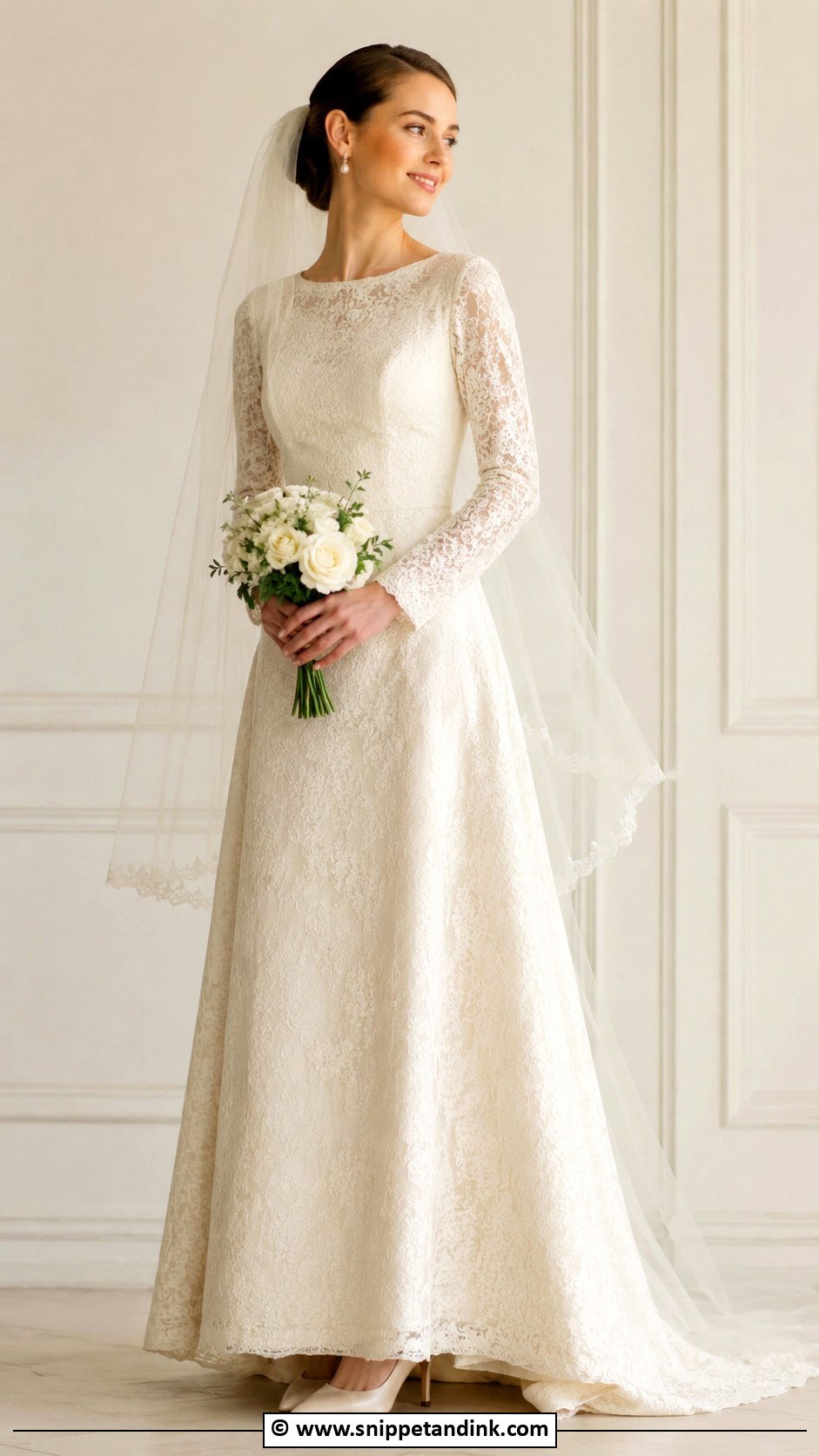
Sleeves suit brides who love modest vintage style. Lace sleeves are the romantic option; smooth satin or crepe with covered buttons at the wrist is sleeker. If the sleeves are detailed, keep the veil and jewelry plain. Original sixties sleeves were cut narrow and set high in the armhole, which looks elegant but limits how far you can reach, so test lifting a glass and hugging before you settle on a pattern.
7. 60s Short Sleeve Wedding Dress
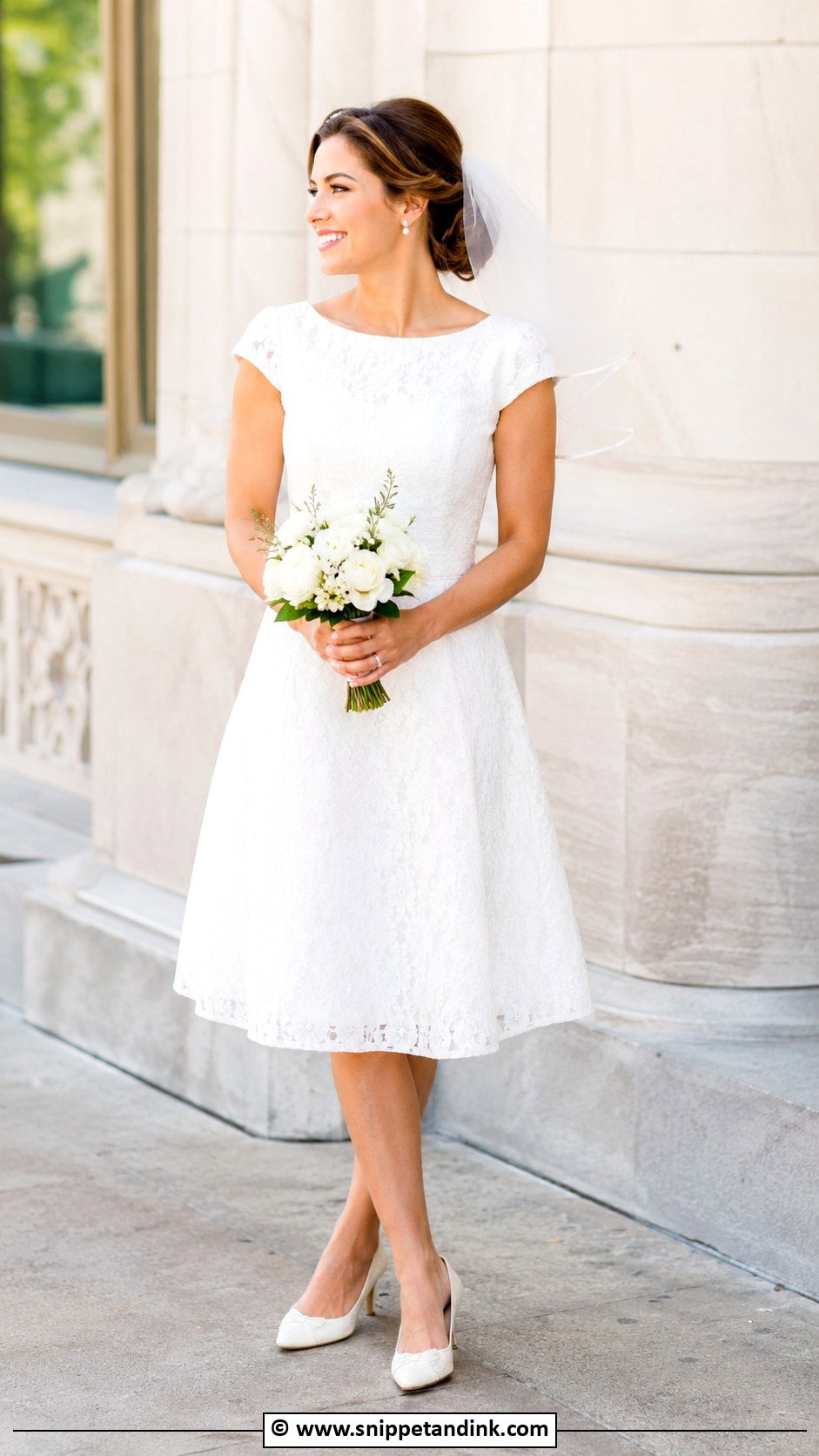
Short sleeves are cooler and more casual. Cap sleeves, small puffs or neat short sleeves on an A-line, shift or tea-length dress all fit the period. Lace, embroidered cotton and satin suit it. Low white heels, pearl studs and a posy with greenery finish it, and short white gloves add retro polish. Embroidered cotton breathes far better than satin in summer heat, so it’s my pick for a garden in July.
8. 60s Bell Sleeve Wedding Dress
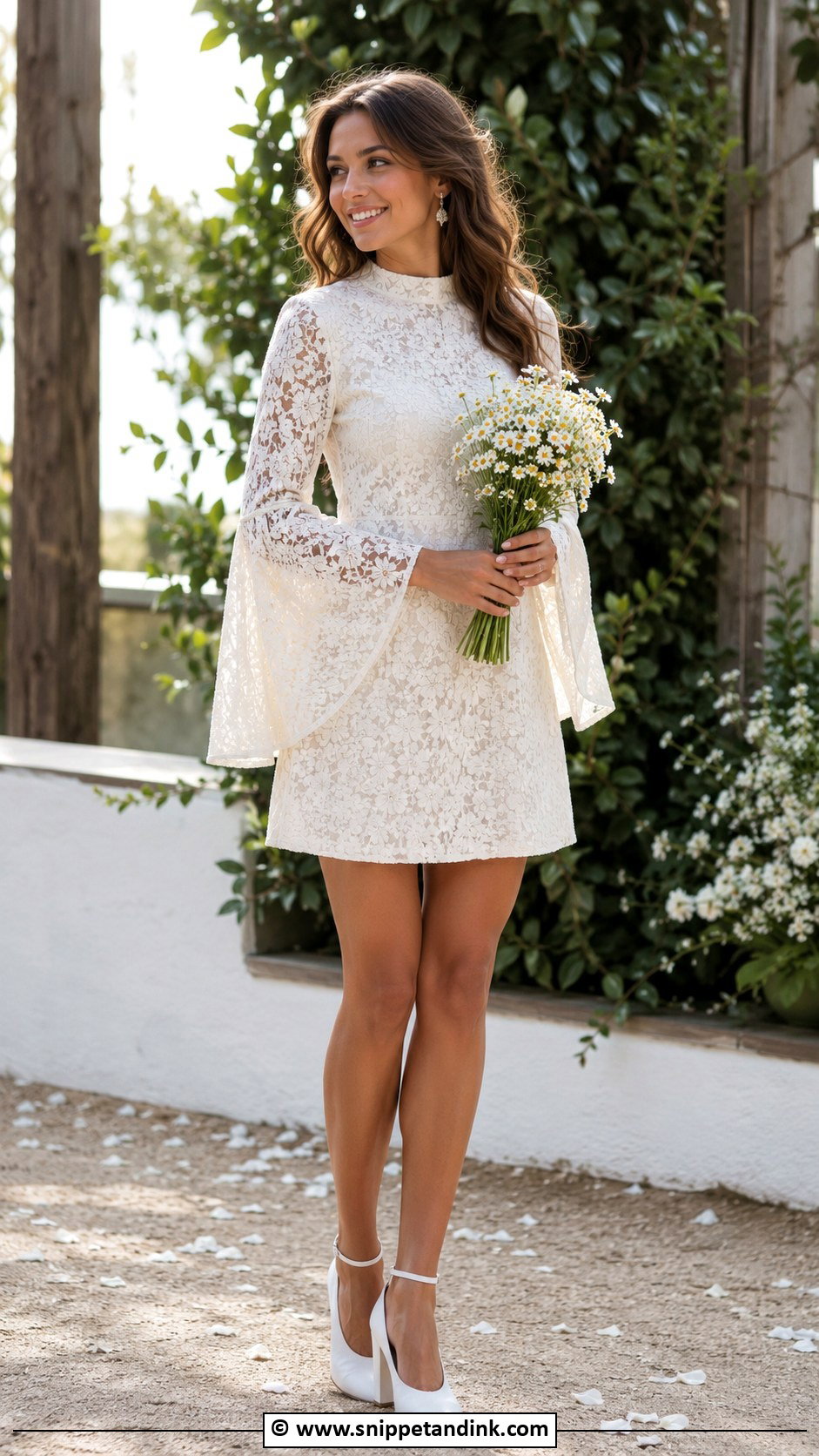
Bell sleeves belong to the late sixties. They can flare gently at the wrist or open into wide lace cuffs. Keep the dress itself a simple A-line or shift so the sleeves stay the focus. Lace, chiffon and crochet-style textures suit the mood, with block heels, loose waves and a floral hairpiece. A daisy bouquet fits. One practical warning: wide cuffs drag through cake and dip into glasses, so a hidden elastic loop to push them up during dinner is worth adding. It leans toward bohemian influence without losing its sixties edge.
9. 60s Empire Waist Wedding Dress
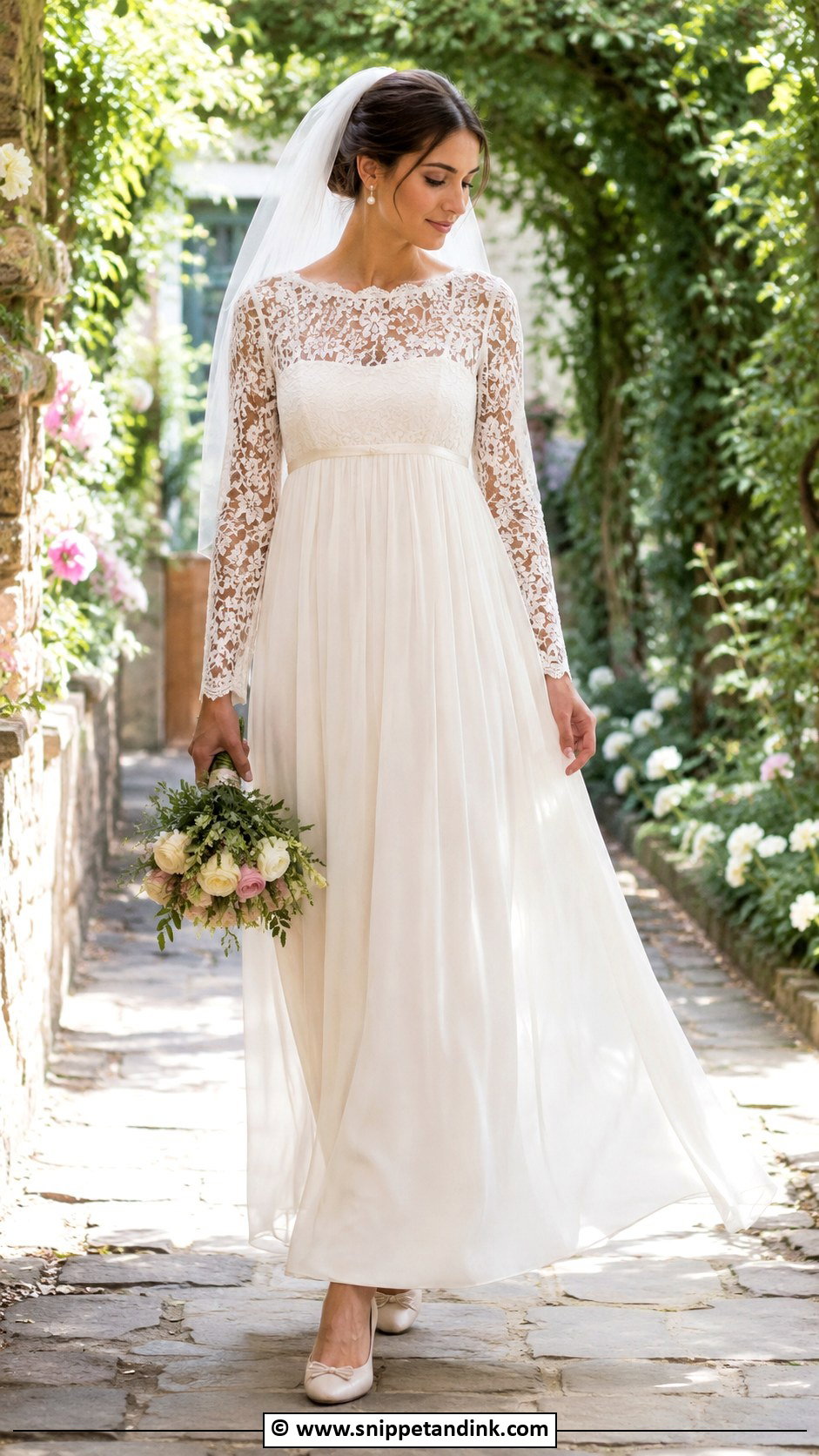
The empire waistline sits just under the bust and lets the skirt skim down from there. Lace, chiffon or lightweight satin keep it airy. Long sleeves, puff sleeves or a high neckline all suit it. Ballet flats or kitten heels keep it comfortable. Because nothing is tight below the ribs, it’s a natural choice for pregnant brides or anyone who wants to eat dinner without thinking about a waistband. A delicate veil and pearl earrings are all it needs.
10. 60s Babydoll Wedding Dress
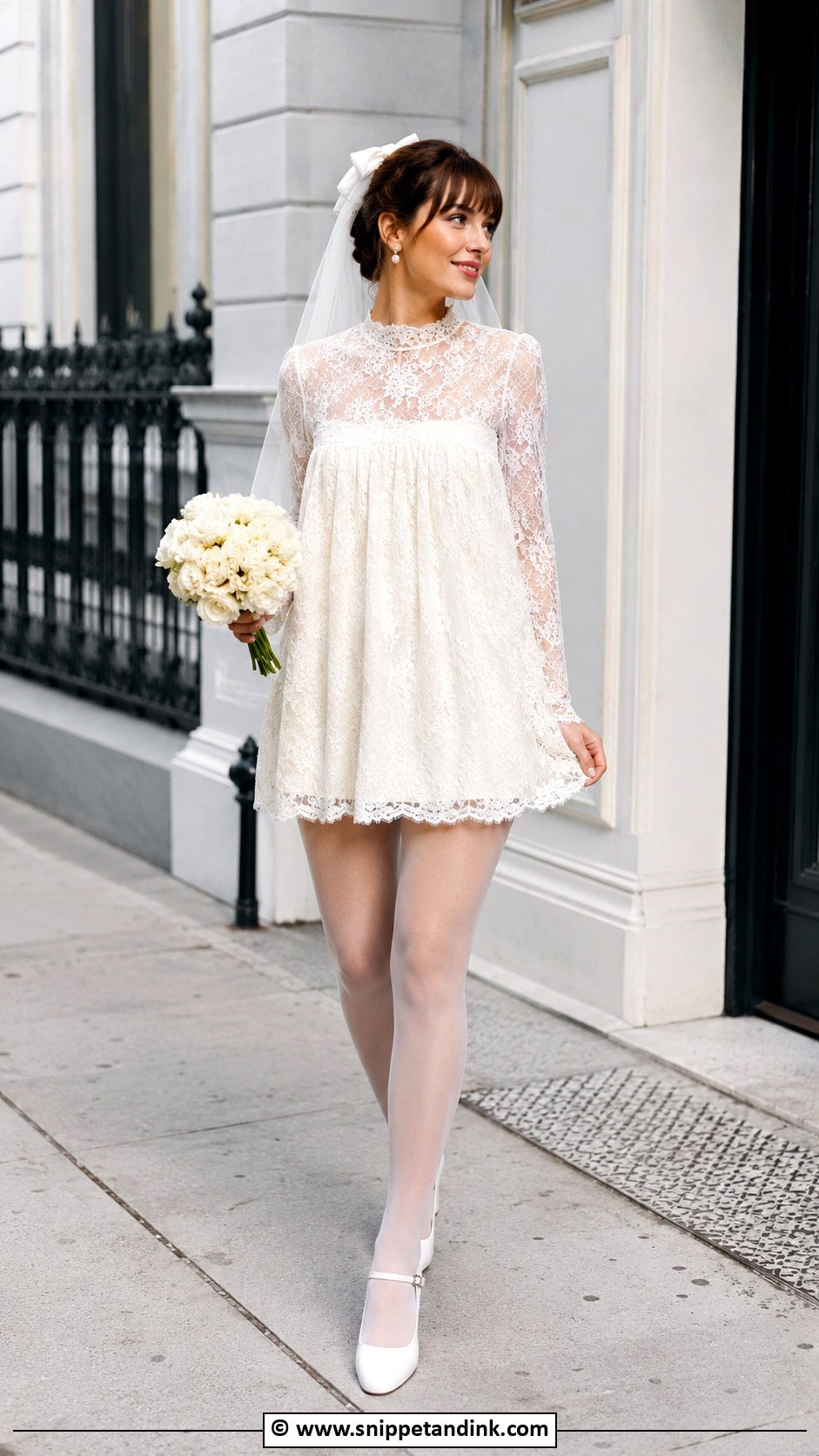
Babydoll dresses are youthful by design: a raised waist, short hem and loose skirt that bounces when you walk. White lace, satin or organza make it bridal; long or sheer sleeves stop it from looking too girlish. Mary Janes, sheer tights and a bow veil fit the period. Keep the bouquet small. On taller brides, check the hem in motion, since the swing of the skirt shows more leg than the standing length suggests.
11. 60s Shift Wedding Dress
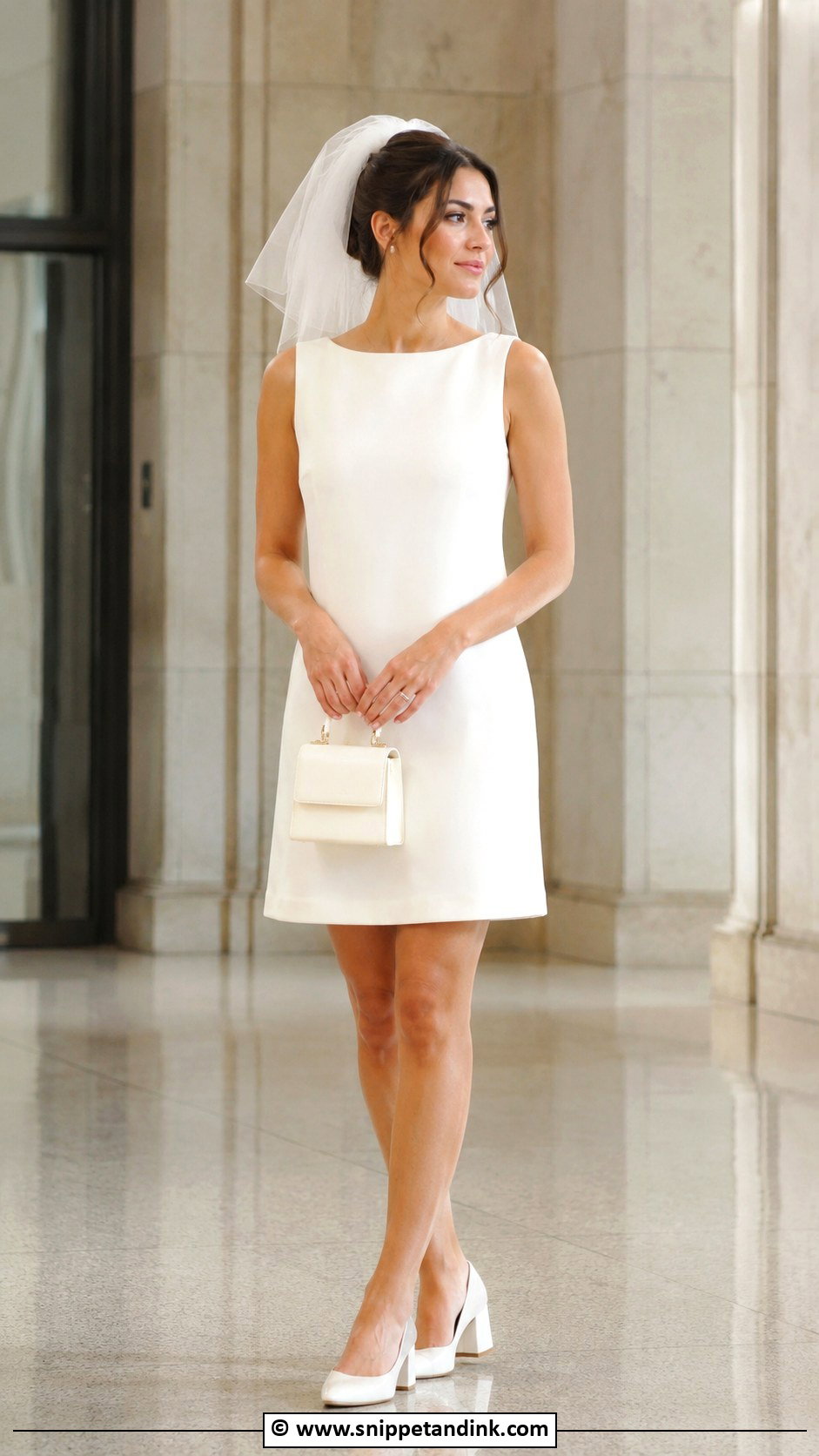
A shift hangs straight from the shoulders with little waist shaping, so it’s comfortable and suits many sizes without clinging. Structured crepe, satin, lace or textured fabric in ivory keeps the shape. High, boat or round necklines are authentic. The one fitting point that matters is the shoulder. If it’s too wide, the whole dress looks borrowed. White block heels, a short veil and a small structured bag complete a courthouse-ready outfit.
12. 60s Satin Wedding Dress
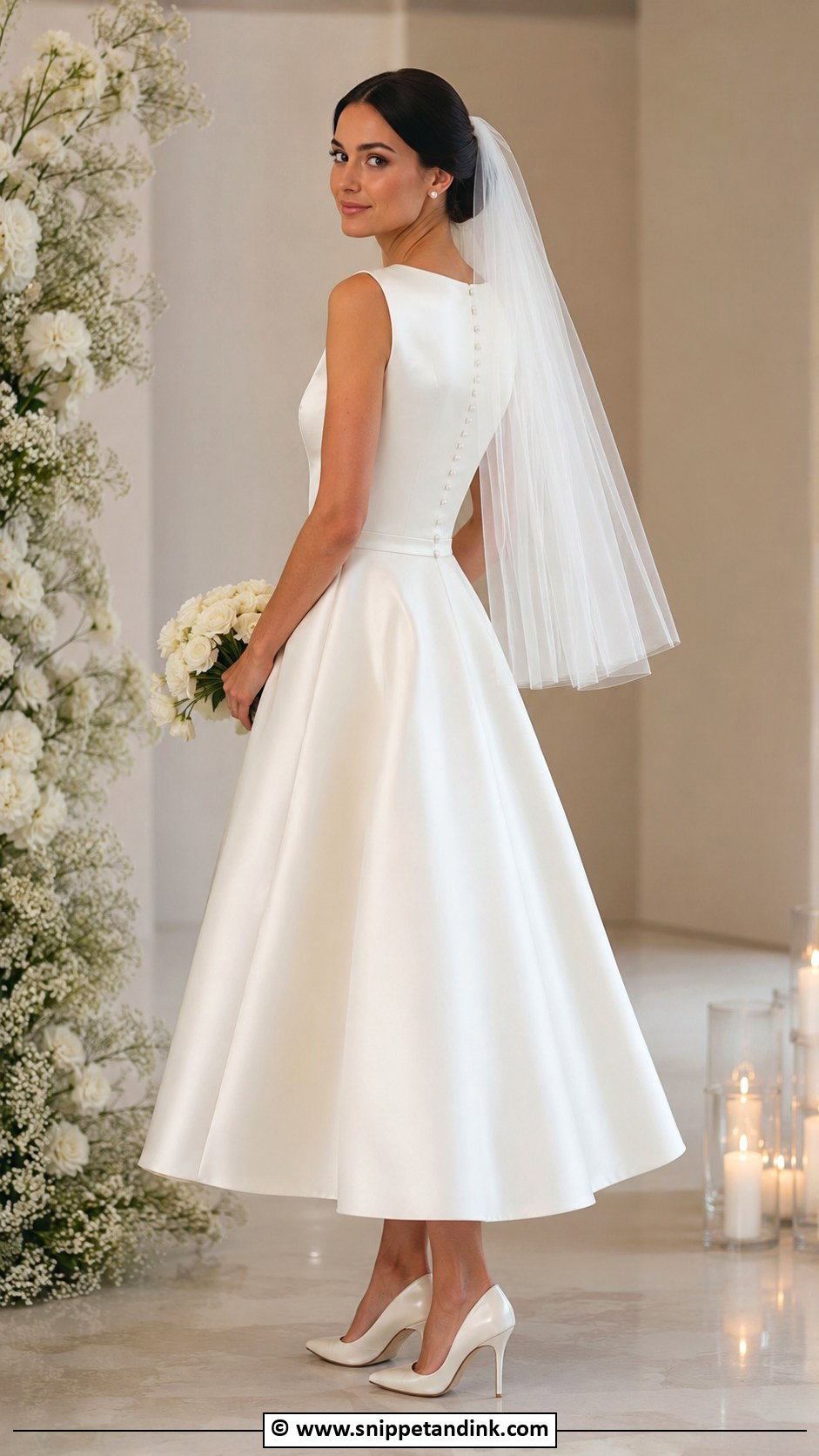
Satin brings shine to the decade’s clean lines. A simple A-line, a tea-length dress or a long-sleeve sheath in ivory satin needs almost no ornament. Covered buttons down the back or a bow at the waist add detail. Pointed pumps, pearl studs and a waist-length veil finish it. Satin catches every crease, so I steam it at the venue and remind brides to stand between car and ceremony. It suits indoor and evening weddings.
13. 60s Crepe Wedding Dress
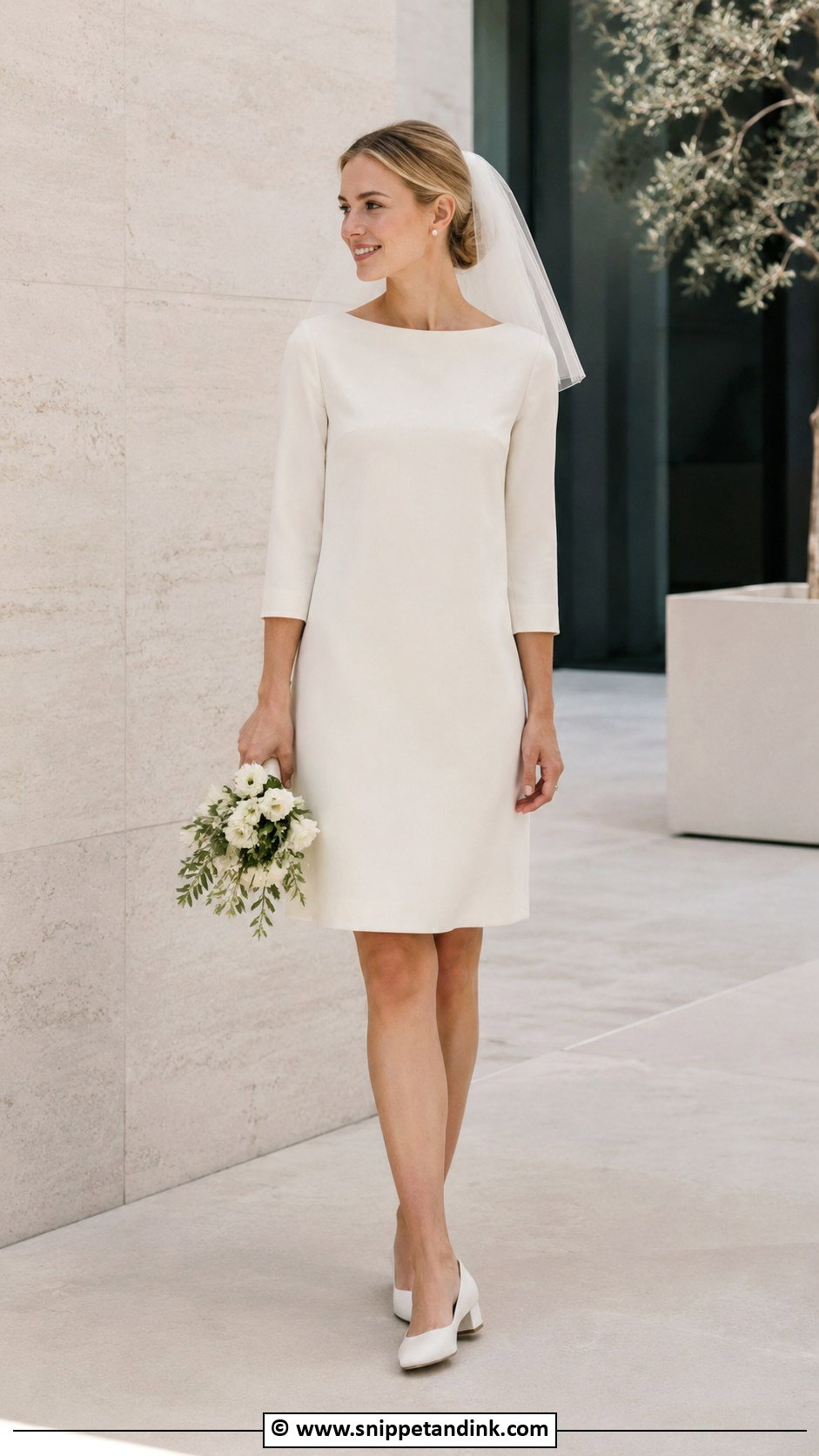
Crepe has structure without shine, which makes a sixties shape look modern. Shifts, A-lines and columns all work, with a high neck, three-quarter sleeves or a bateau line for authenticity. White block heels and a short veil keep it crisp. Good crepe has weight and drape; thin crepe shows every line underneath, so feel the fabric and look at it against the light before you commit.
14. 60s Organza Wedding Dress
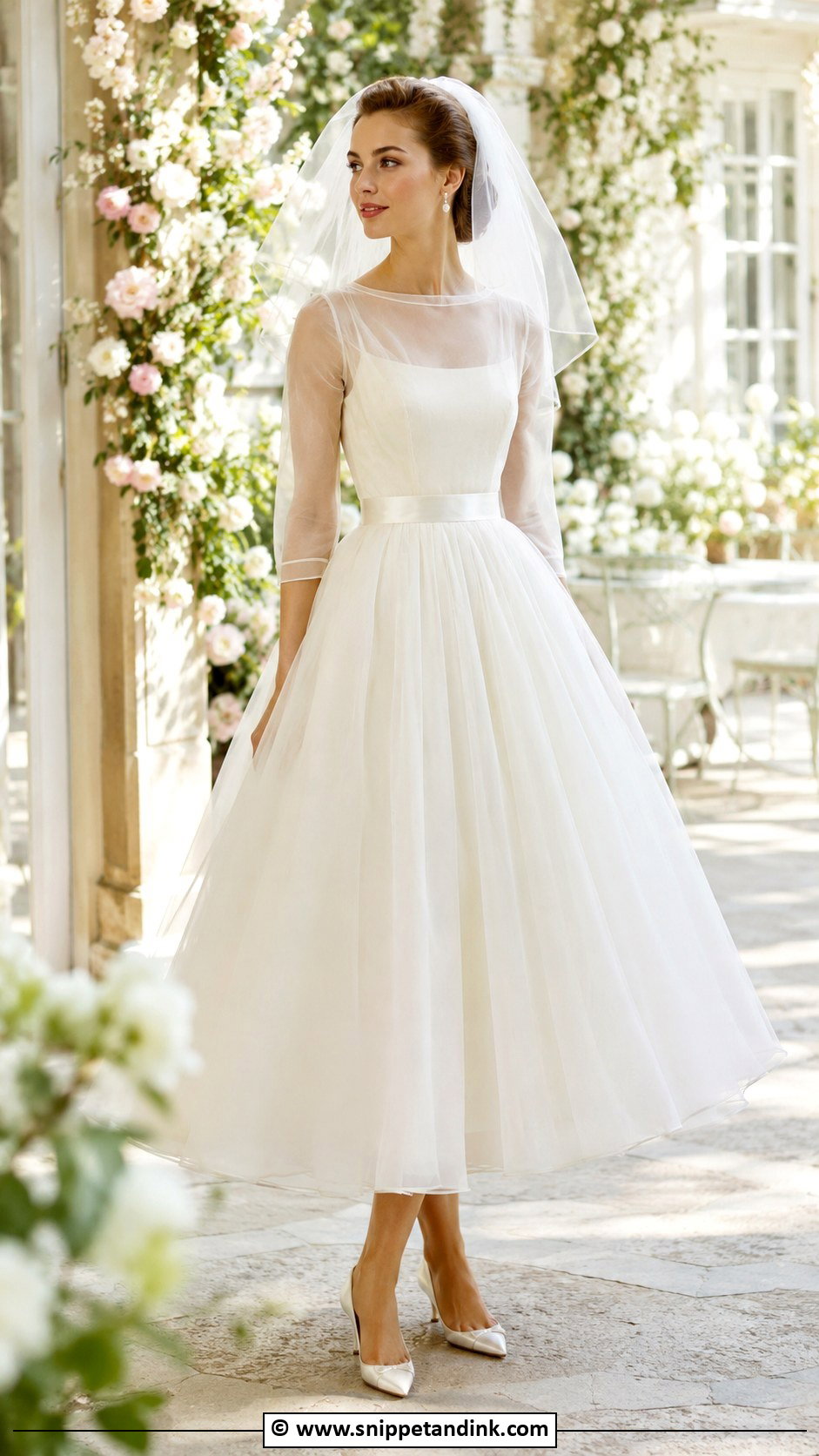
Organza gives shape without weight, ideal for tea-length skirts, overlays and sheer sleeves. A fitted bodice with a full but controlled skirt is the early-sixties version. Kitten heels, short gloves and a fingertip veil finish it, and a narrow ribbon at the waist adds definition. Organza creases sharply when sat on, so plan a quick steam at the venue for spring and summer garden weddings.
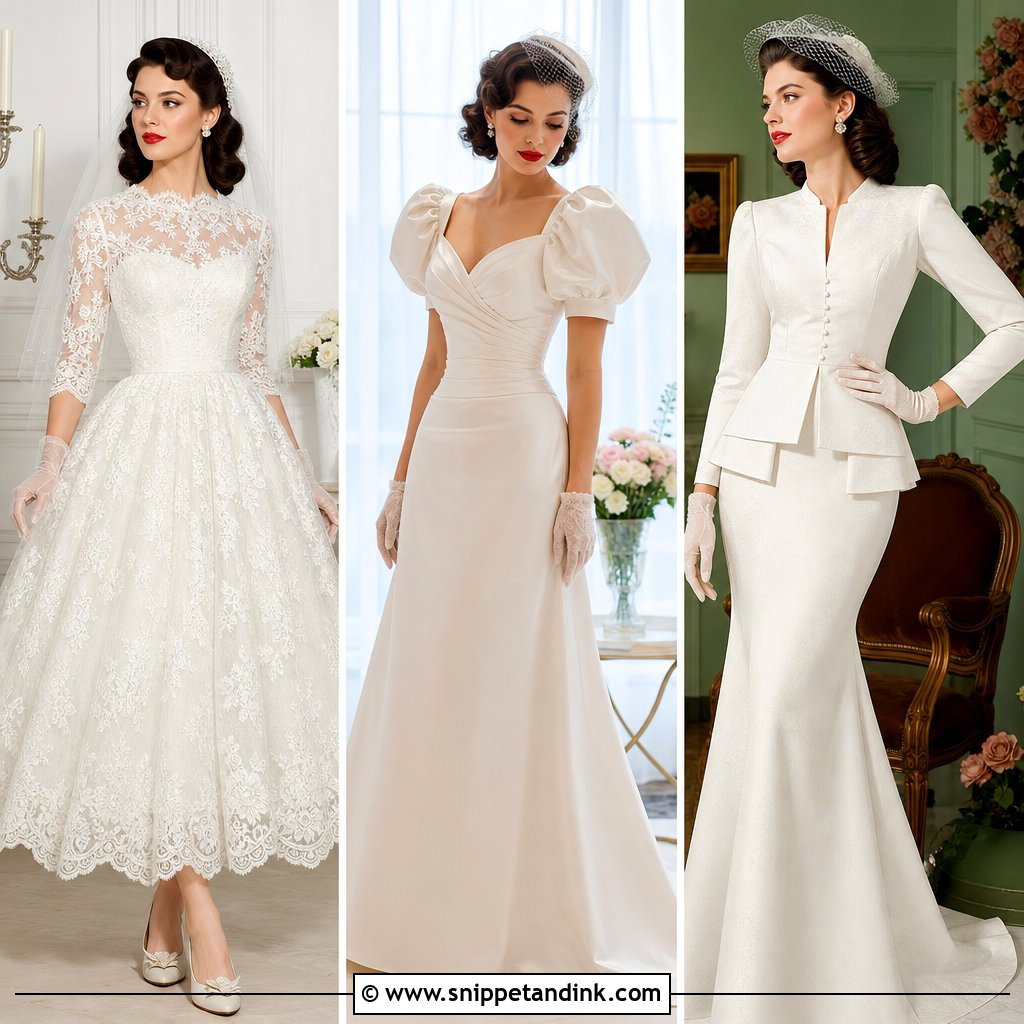
15. 60s Tulle Wedding Dress
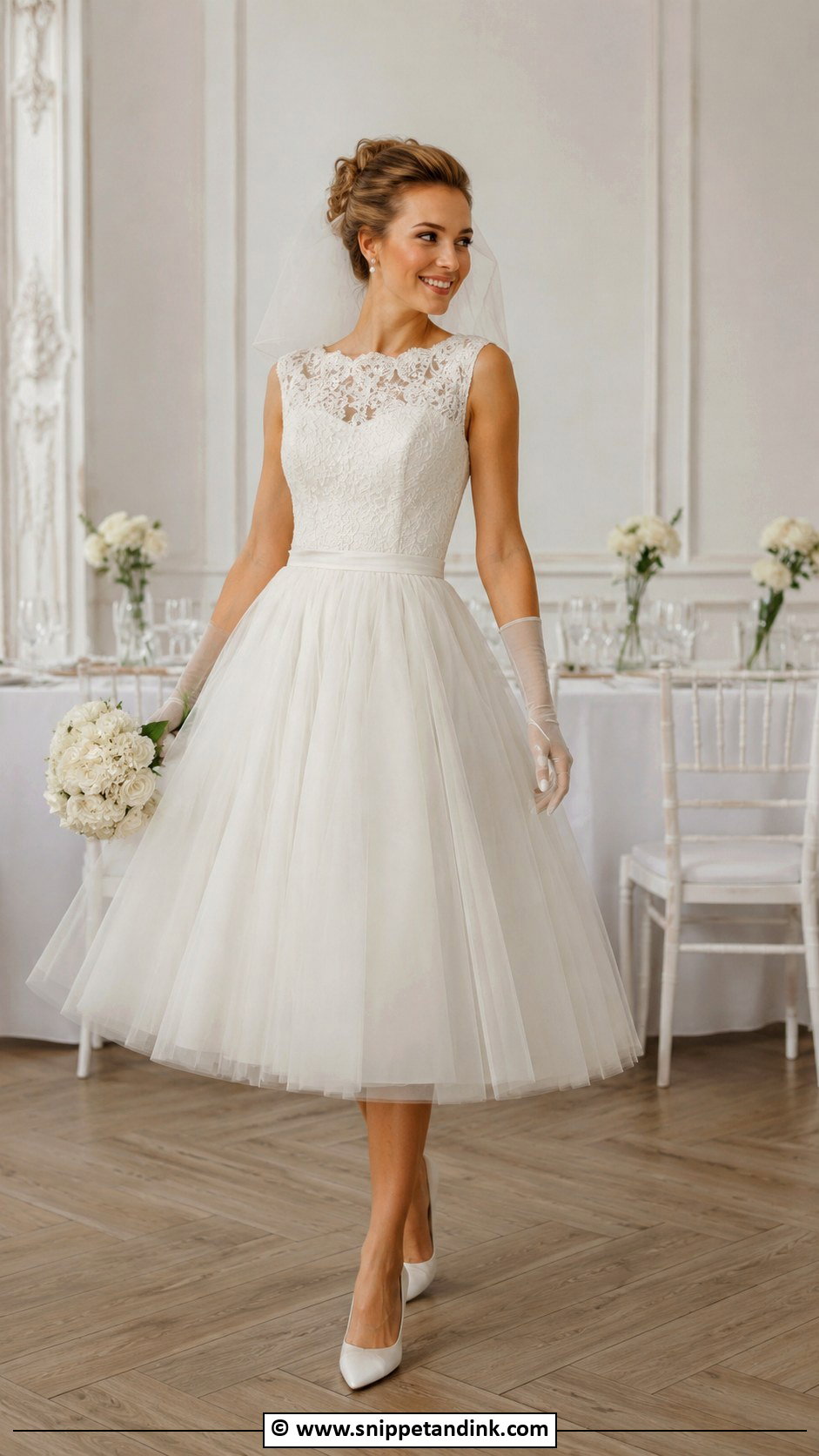
Layers of tulle over a simple lining give soft volume. A tea-length or ankle-length skirt with a fitted bodice, bateau neck or lace top keeps it from going too fluffy. Short gloves or a satin bow at the waist strengthen the sixties feel. Tulle is very light on the body, which helps on warm days, but it snags on rough stone and jewelry clasps, so keep bracelets smooth.
16. 60s Crochet Lace Wedding Dress
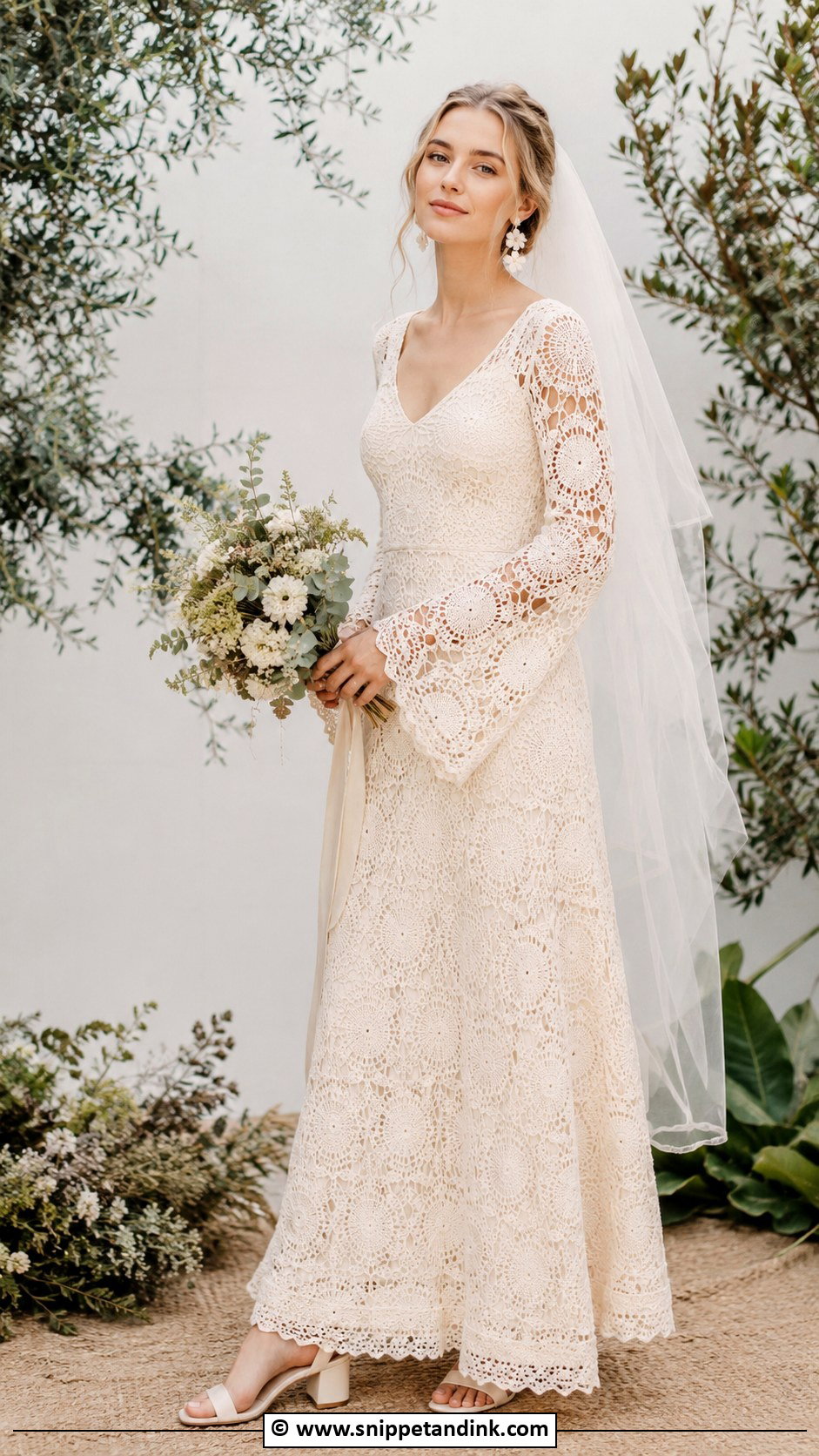
Crochet lace is pure late-sixties. Long sleeves, bell sleeves or a simple A-line in white or ivory, always with a slip underneath so it reads as bridal rather than beachwear. Block heels, soft waves and a few small white blooms in the hair suit it, with daisies or wildflowers in the bouquet. Crochet stretches over a long day, so I’d have it fitted slightly snug, and never hang it on a hanger for weeks before the wedding. Fold it flat.
17. 60s Daisy Lace Wedding Dress
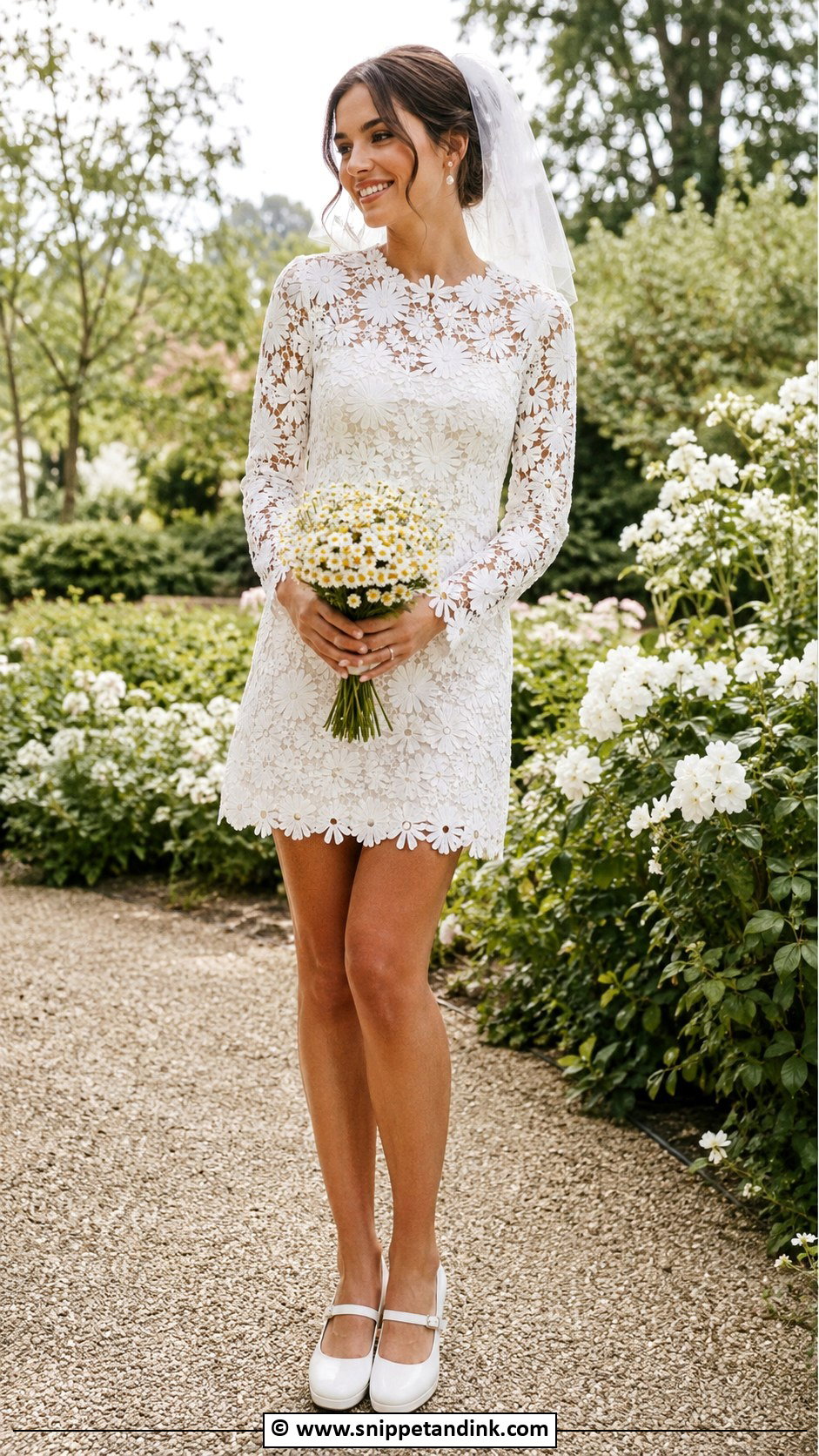
Daisies were everywhere in the late sixties, and daisy lace still feels cheerful. A mini, tea-length or A-line dress with daisy overlay works best with a simple silhouette so the pattern stays clear. White Mary Janes, pearl studs, a short veil and a bouquet of white daisies and greenery tie it together. Daisy lace is often guipure, which is heavier than it looks; check how the edges finish at the hem, since scallops can catch on tights.
18. 60s Pillbox Hat Wedding Dress
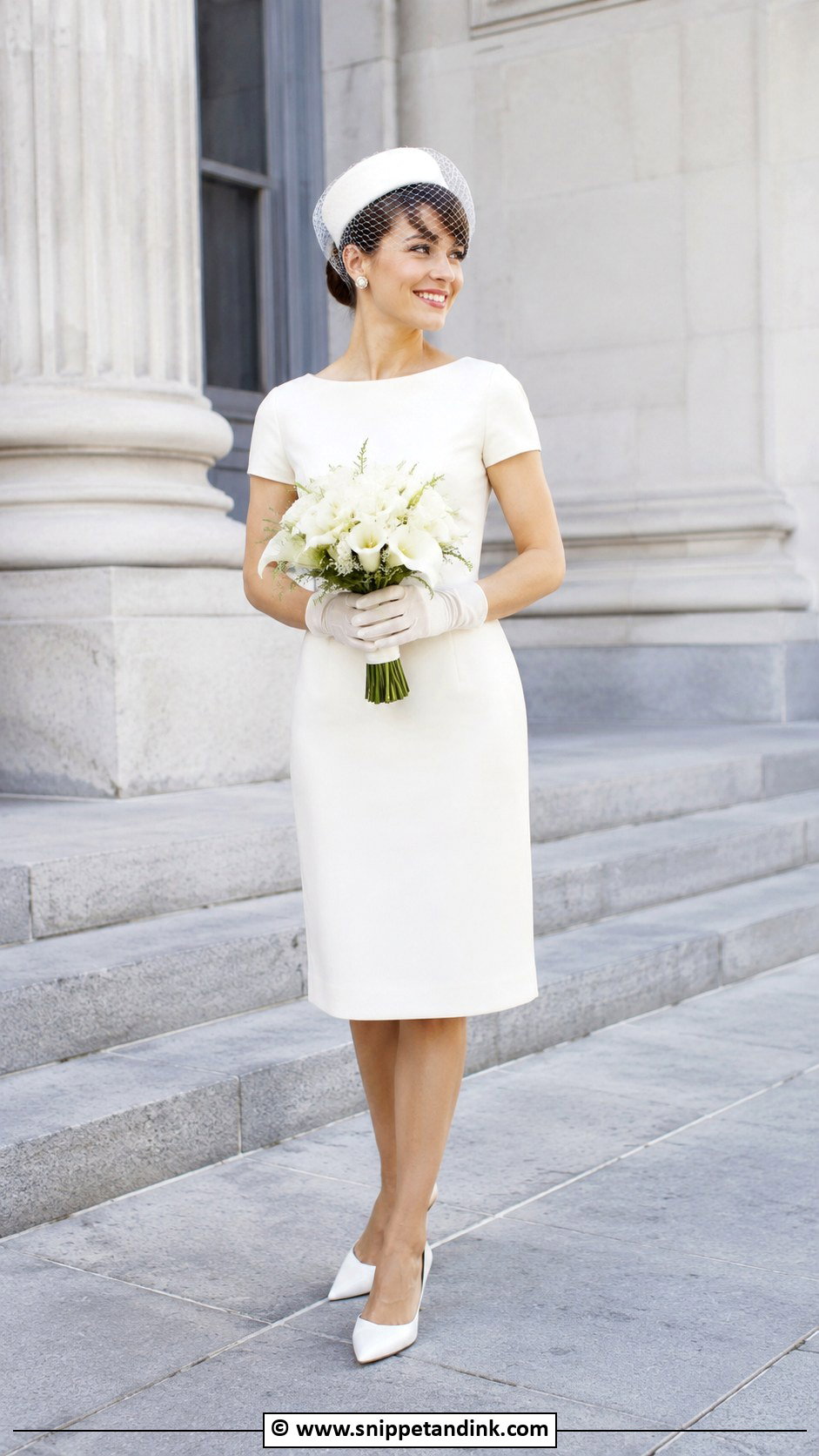
A pillbox hat is the accessory that makes people say ‘sixties’ at once. Pair it with a simple sheath, shift or A-line in lace, satin or crepe, and add a short veil or birdcage net to it. Pointed pumps, short gloves and a structured bouquet finish it. The hat needs clean lines below it; a busy dress makes the outfit look fussy. Pin it with two hat pins crossed through a small bun or padding, or it slides back when you tilt your head for a kiss.
19. 60s Bow Wedding Dress
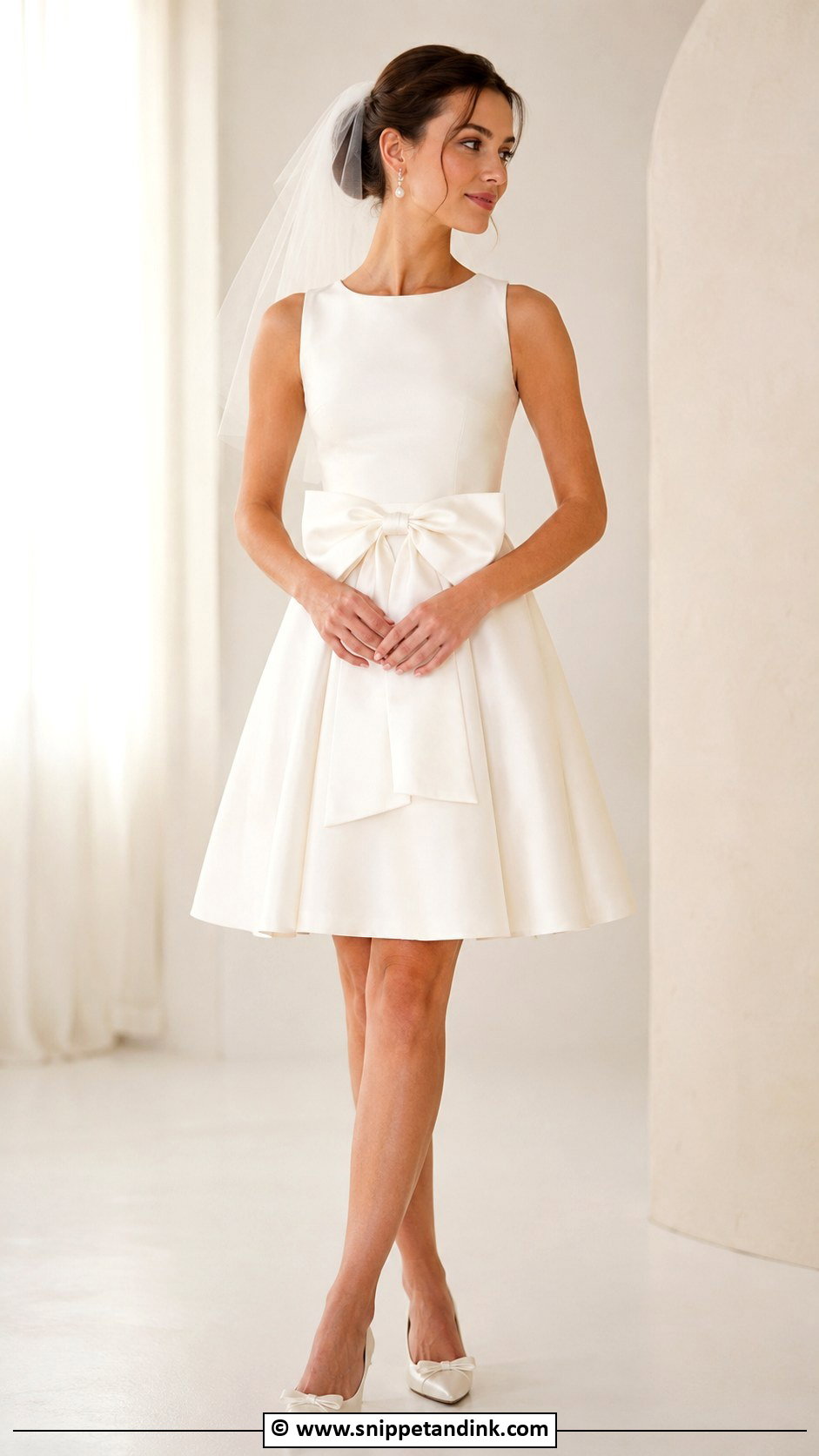
One bow, well placed, is very sixties. It can sit at the waist, neckline, back or shoulder of a short A-line, a tea-length dress or a clean shift. Kitten heels, pearl earrings and a short veil suit it. Big bow, less jewelry; small bow, room for gloves or a satin headband. Bows in soft fabric droop by evening, so I like them backed with a light interfacing that keeps the loops round.

20. 60s Bateau Neck Wedding Dress
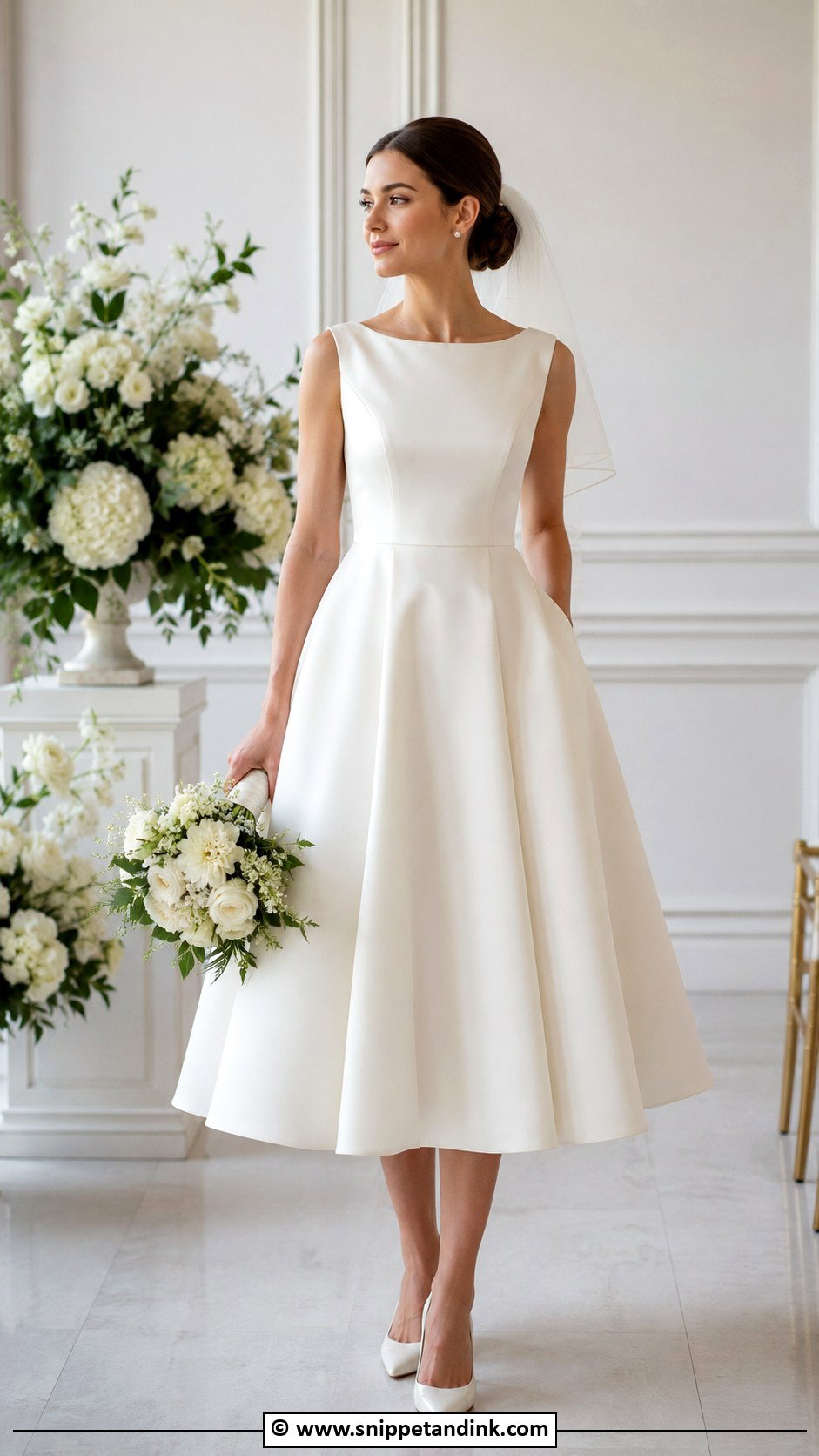
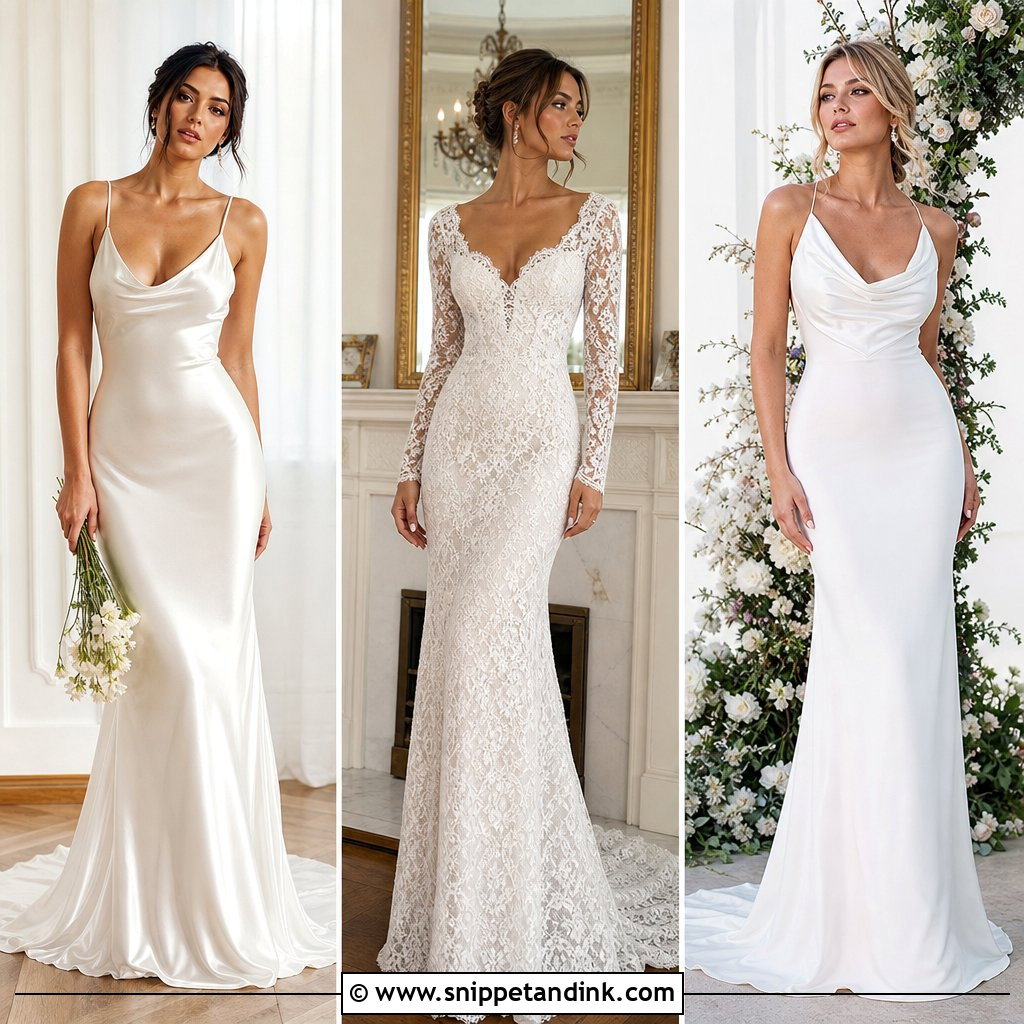
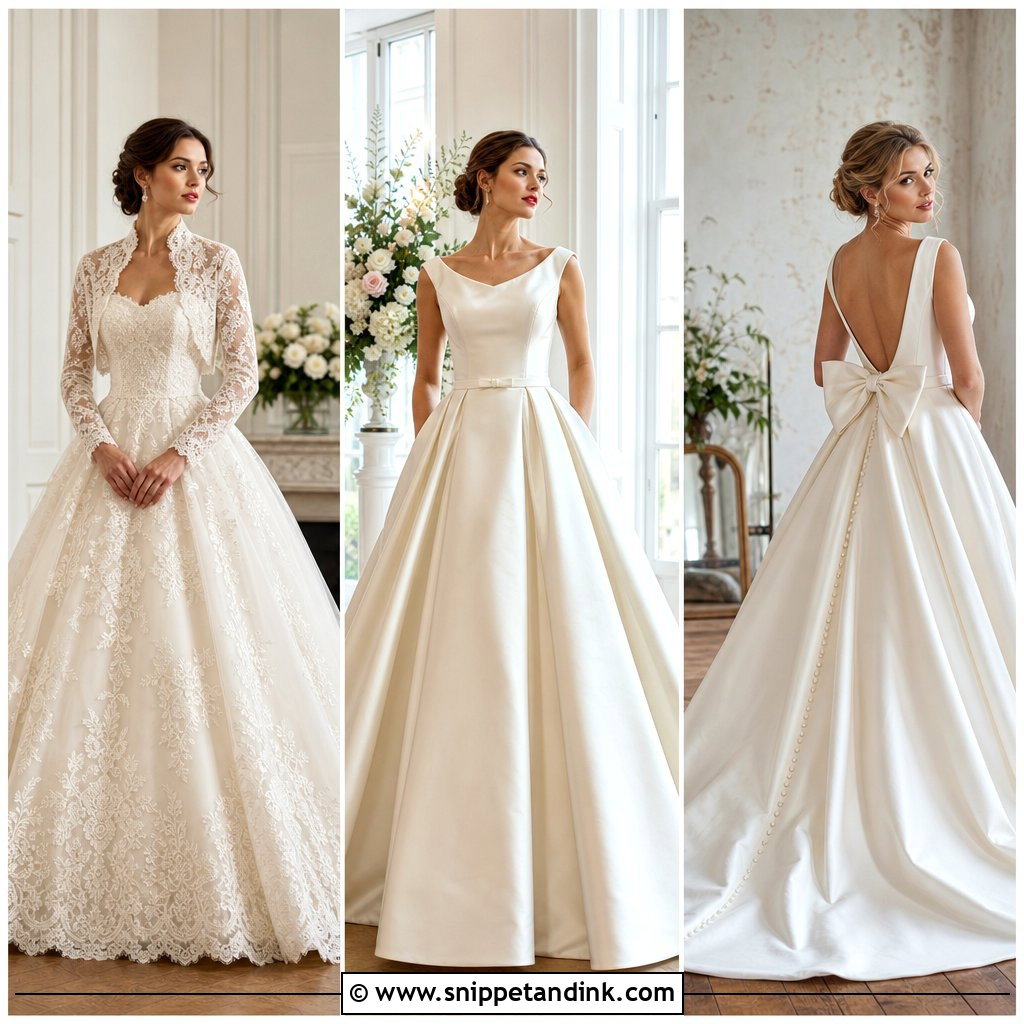
A bateau neck runs nearly straight across from shoulder to shoulder, giving a long, graceful line. It works on satin, crepe, lace and tulle. A fitted bodice with a tea-length skirt is classic; a slim shift is mod. A low bun and pearl studs let the collarbone stay clean. Wide necklines can slip off one shoulder when you raise your arm, so a lingerie strap guard sewn inside is worth the five minutes.
21. 60s Peter Pan Collar Wedding Dress
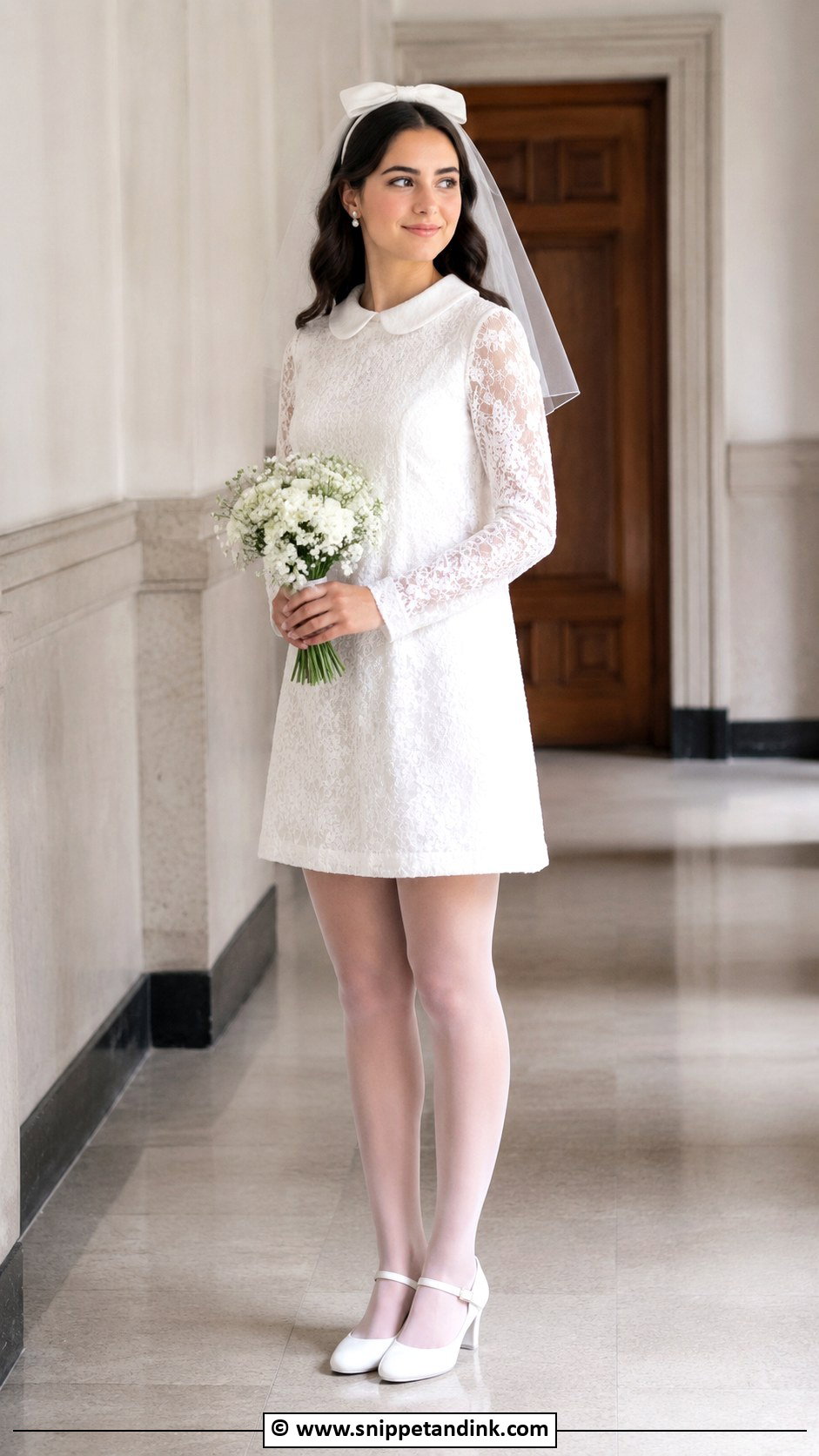
A Peter Pan collar wedding dress is sweet and youthful, with the rounded collar sitting best on minis, shifts and A-lines. Lace, crepe or satin in ivory works; the collar must stay crisp, so ask if it’s interfaced. Mary Janes, sheer tights and a bow headband fit the mood. Because the look is playful, I balance it with neat, smooth hair and minimal accessories. It suits courthouse ceremonies and modest brides.
22. 60s Mock Neck Wedding Dress
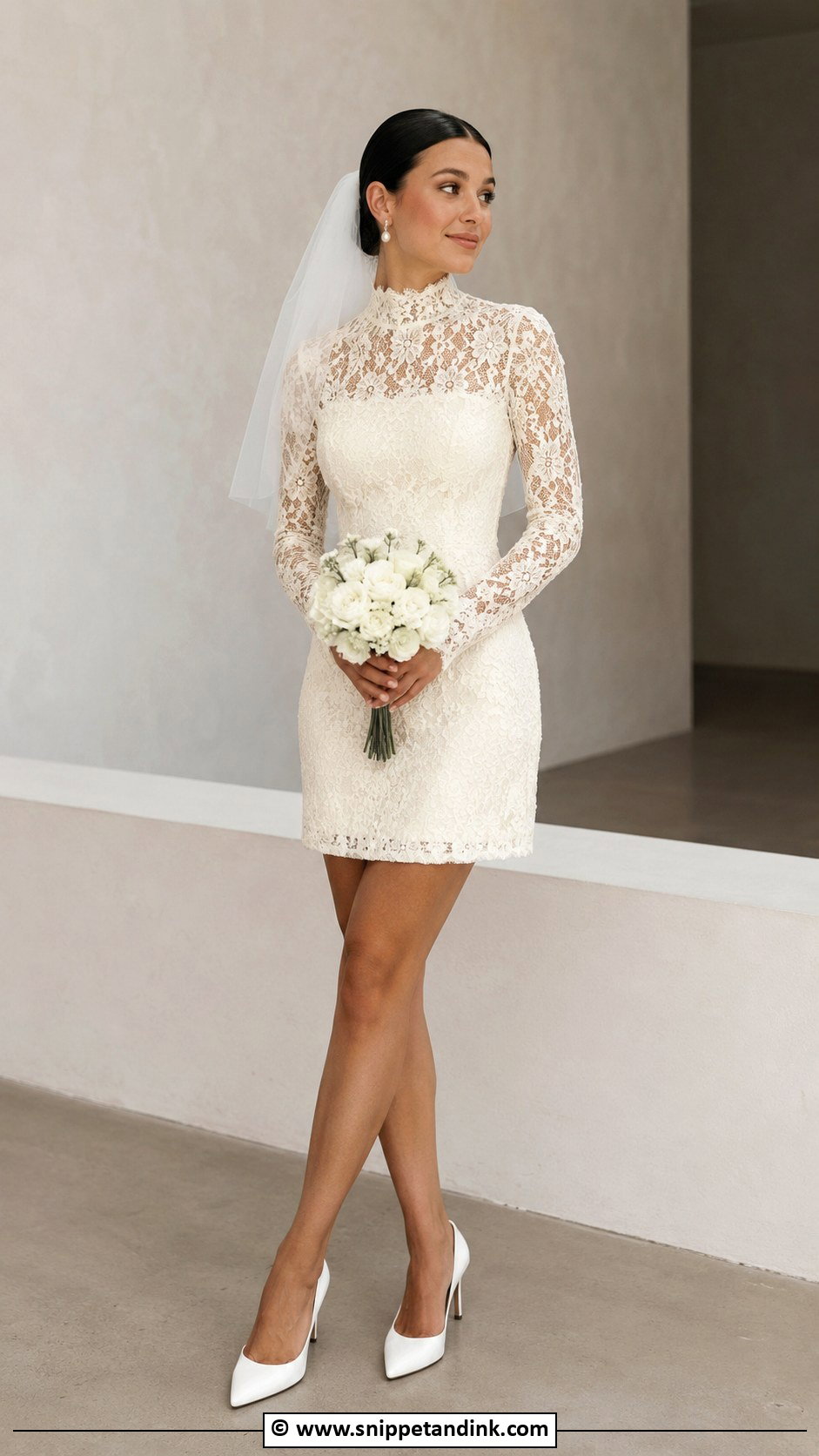
A mock neck sits higher than a crew neck but softer than a full turtleneck. A lace mini, a long-sleeve crepe gown or a slim A-line give the strongest sixties effect. Pull the hair back so the face stays open. It’s a good cold-weather option. Lace mock necks can scratch the skin under the chin, so look for a soft lining at the collar edge before you buy.
23. 60s Sheath Wedding Dress
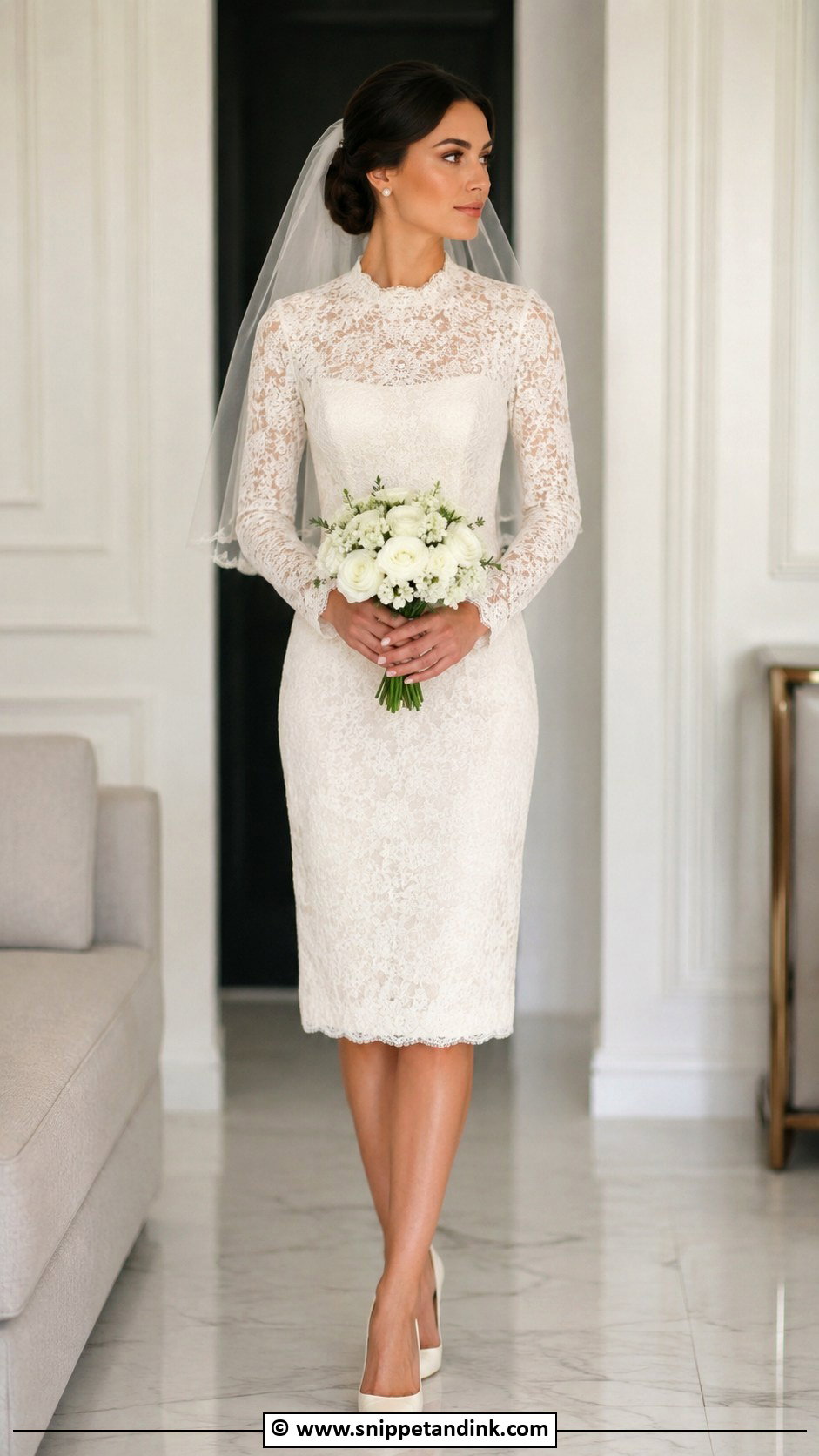
A sheath follows the body without a full skirt, giving a slim line. Crepe, satin or lace with a high neck, a bateau neck or long sleeves keep it in period. It works at knee length or floor length. A fingertip veil and pointed pumps finish it. Walking is the test: a slim floor-length sheath needs a kick pleat or slit at the back, or you’ll take tiny steps all day. Hotels and city venues suit it.
24. 60s Column Wedding Dress
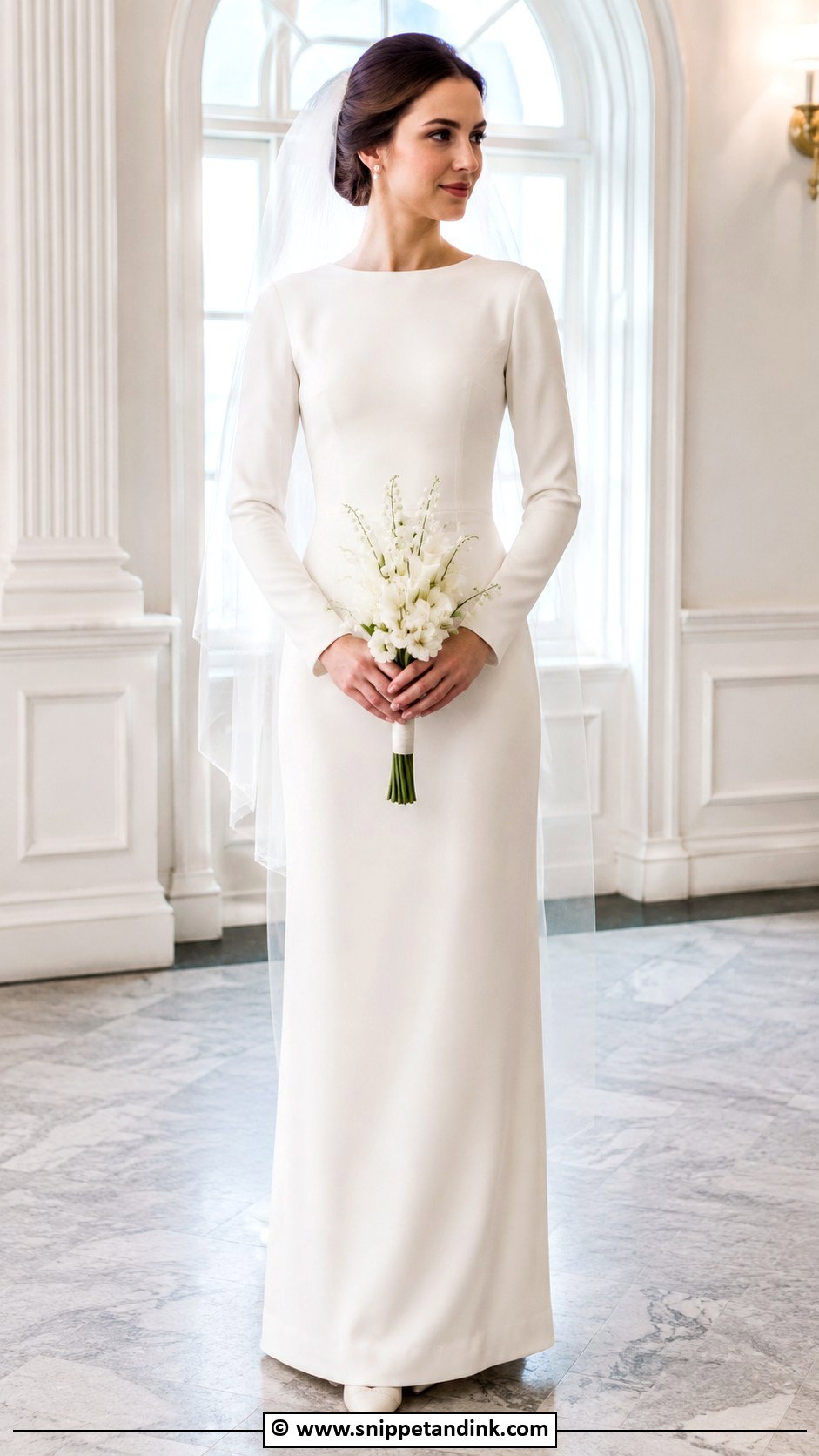
Columns rely on one long vertical line, so accessories should stay light: pearl studs, low heels, a soft veil and a narrow bouquet. Satin, crepe or lace with a high or round neck and slim long sleeves suit the decade. Covered buttons or a small bow at the back add vintage detail. It’s the sixties route to floor length and formality, with none of the short, playful hem.
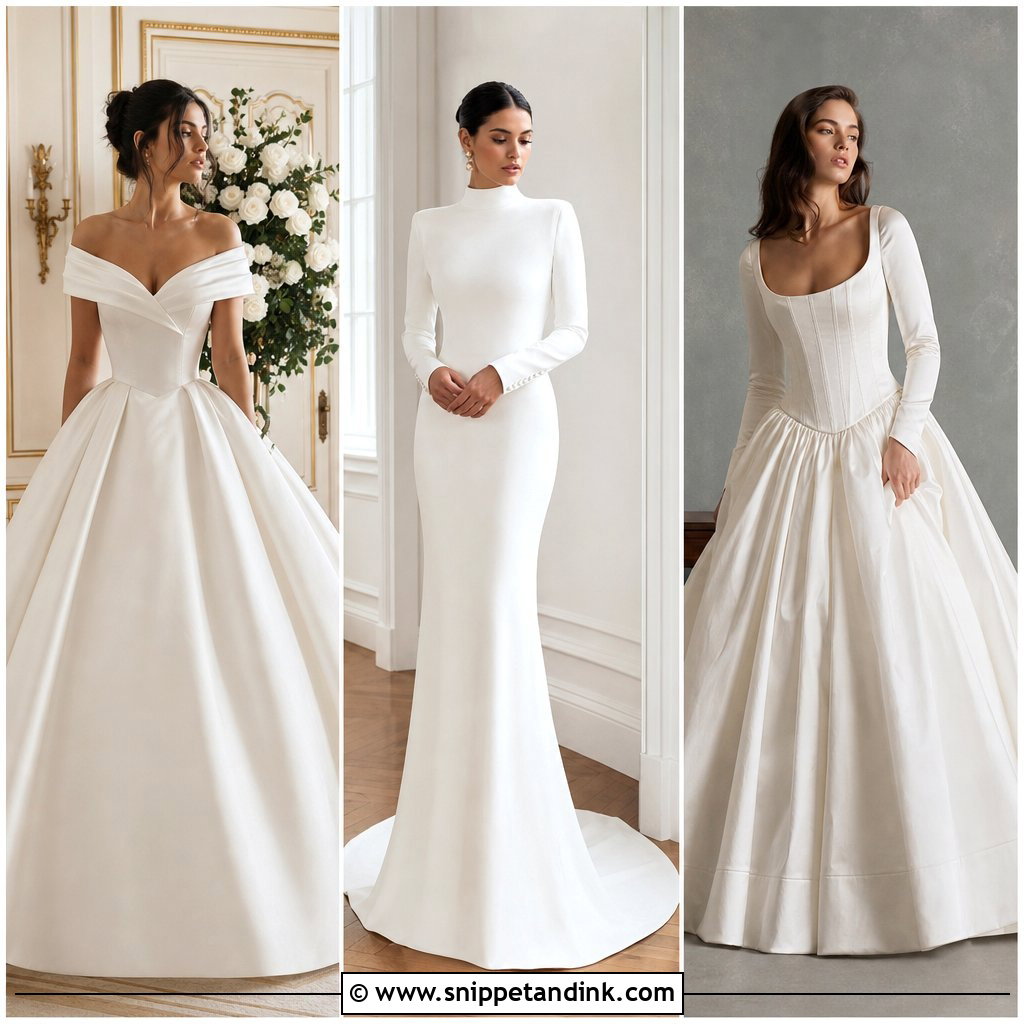

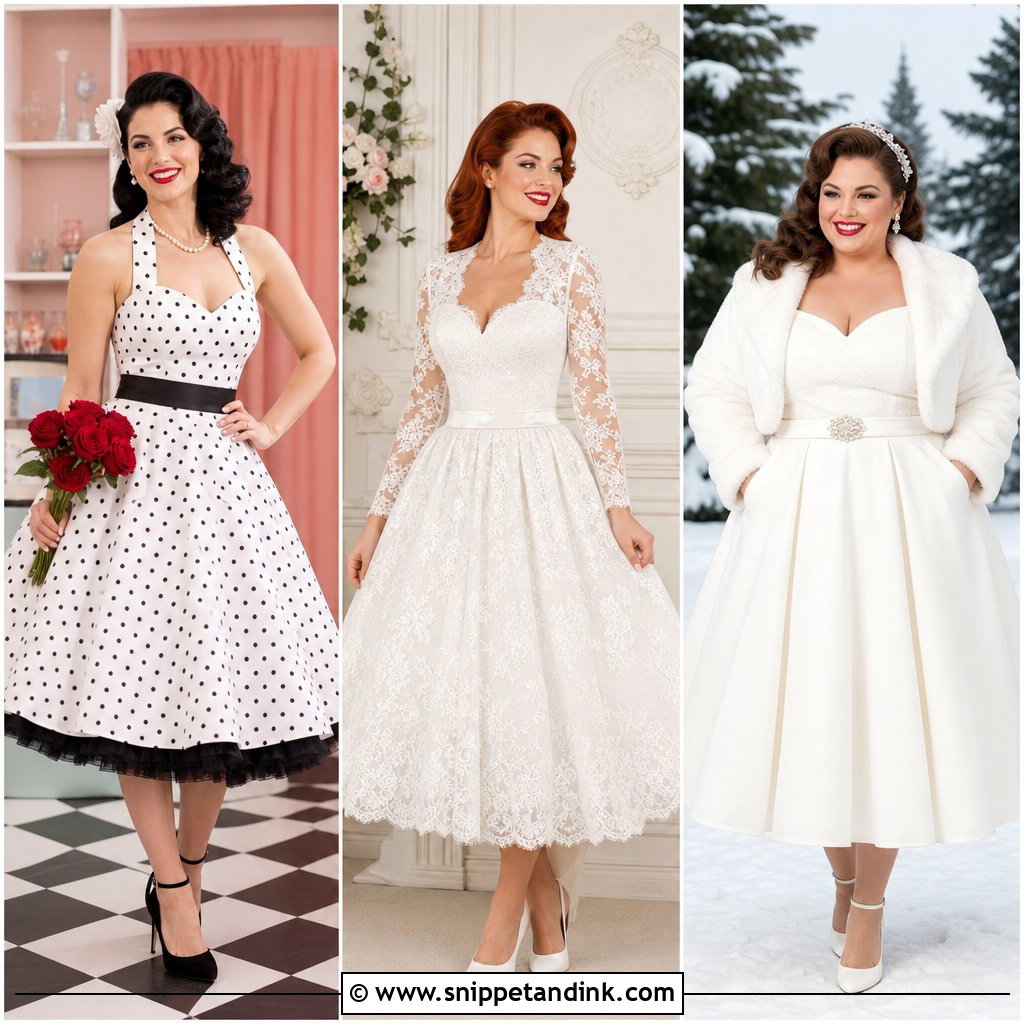

25. 60s Peplum Wedding Dress
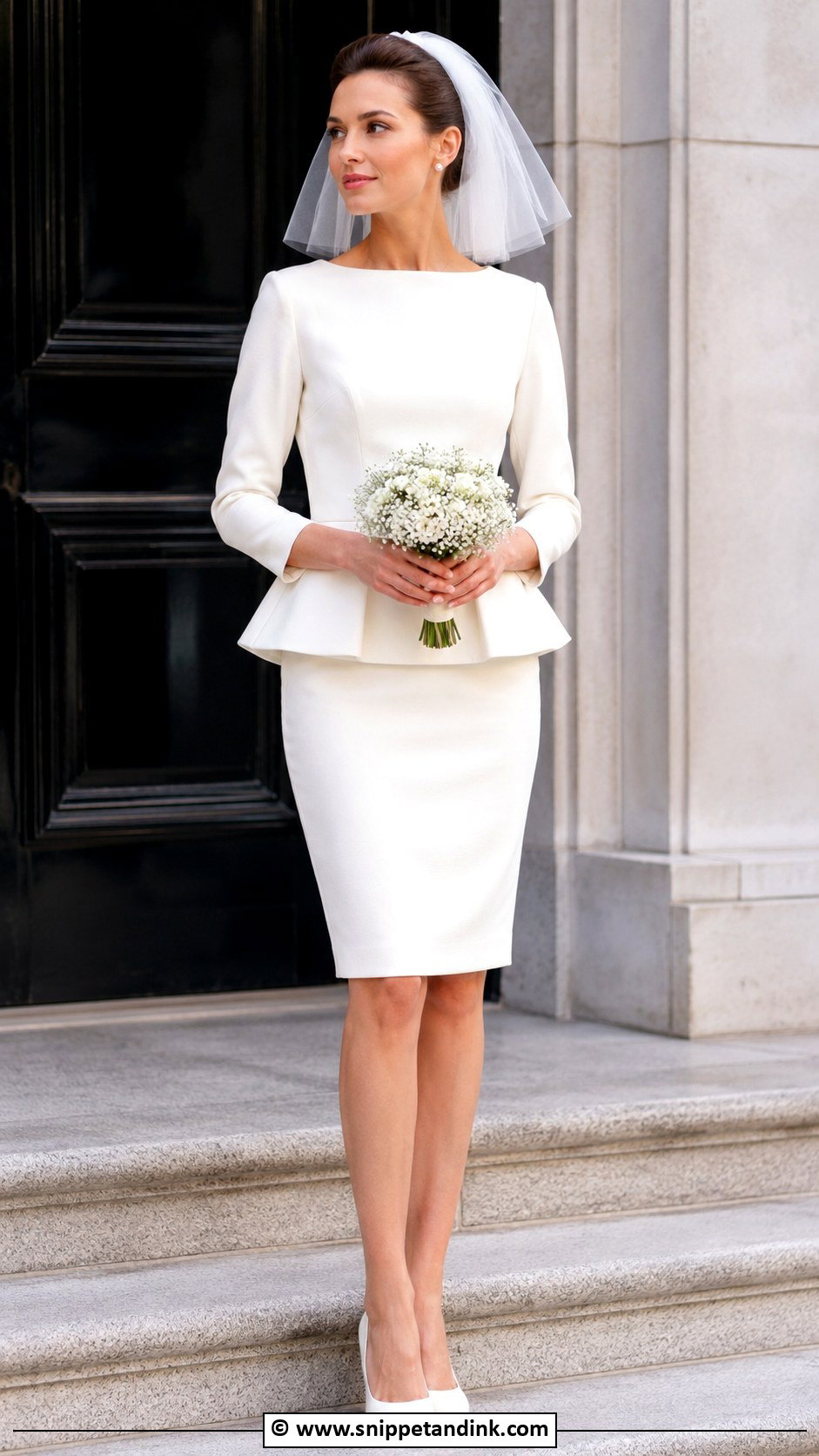
A peplum is a short flared panel at the waist that creates an hourglass shape over a slim skirt. Satin, lace or structured crepe hold it best. A high neck, short sleeves or three-quarter sleeves keep it in period. The peplum has to hit at your natural waist; set too low, it widens the hip rather than defining the waist. Pointed pumps and a short veil suit registry offices and city weddings.
26. 60s Coat Wedding Dress
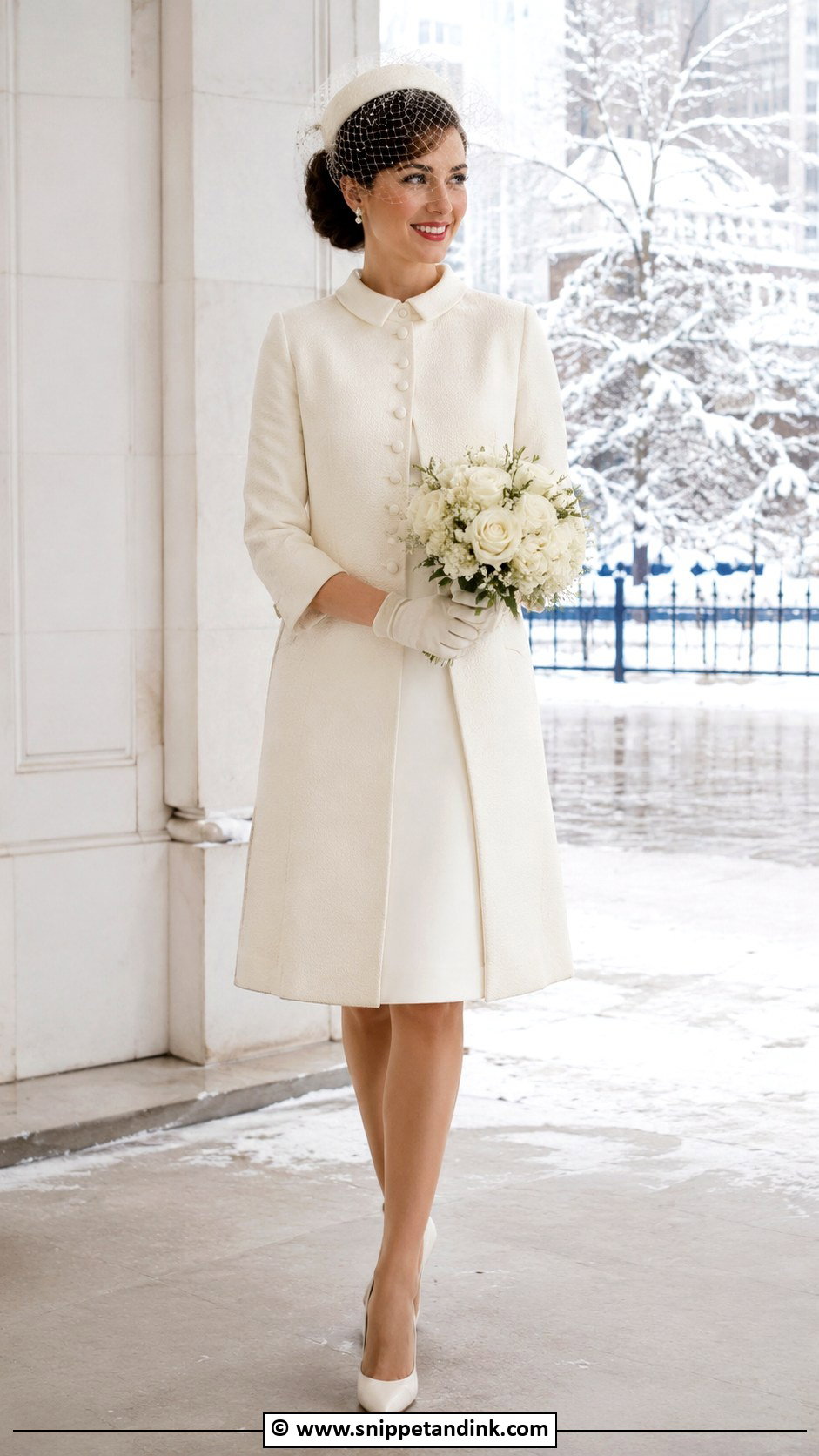
A bridal coat over a simple knee- or tea-length dress is one of my favorite period outfits for cold months. The coat can be lace, satin, brocade or structured crepe, with bracelet sleeves or covered buttons. Short gloves and a pillbox or neat veil complete it. The coat comes off for the reception, giving you a lighter second look without a change. Make sure the dress sleeves are slim enough to slide under the coat without bunching.
27. 60s Two Piece Wedding Dress
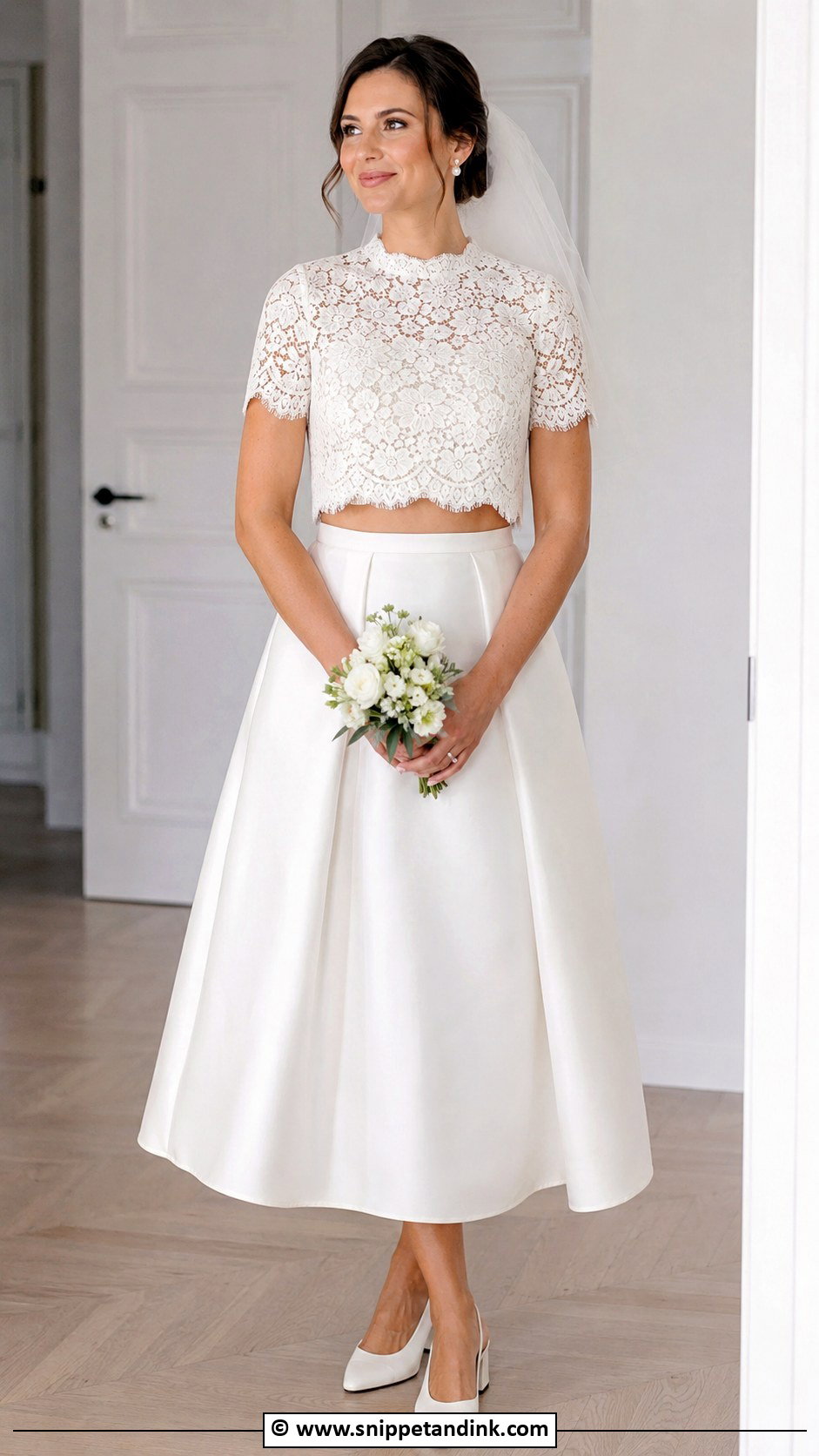
Two-piece outfits nod to the decade’s suits and separates. A cropped lace top with a high neck over a matching A-line skirt, or a structured jacket with a slim skirt, both work. Keep both pieces in the same white or ivory, since two whites rarely match under a camera flash. Low heels, pearl studs and a short veil keep it bridal. They’re comfortable and easy to rewear.
28. 60s Embroidered Wedding Dress
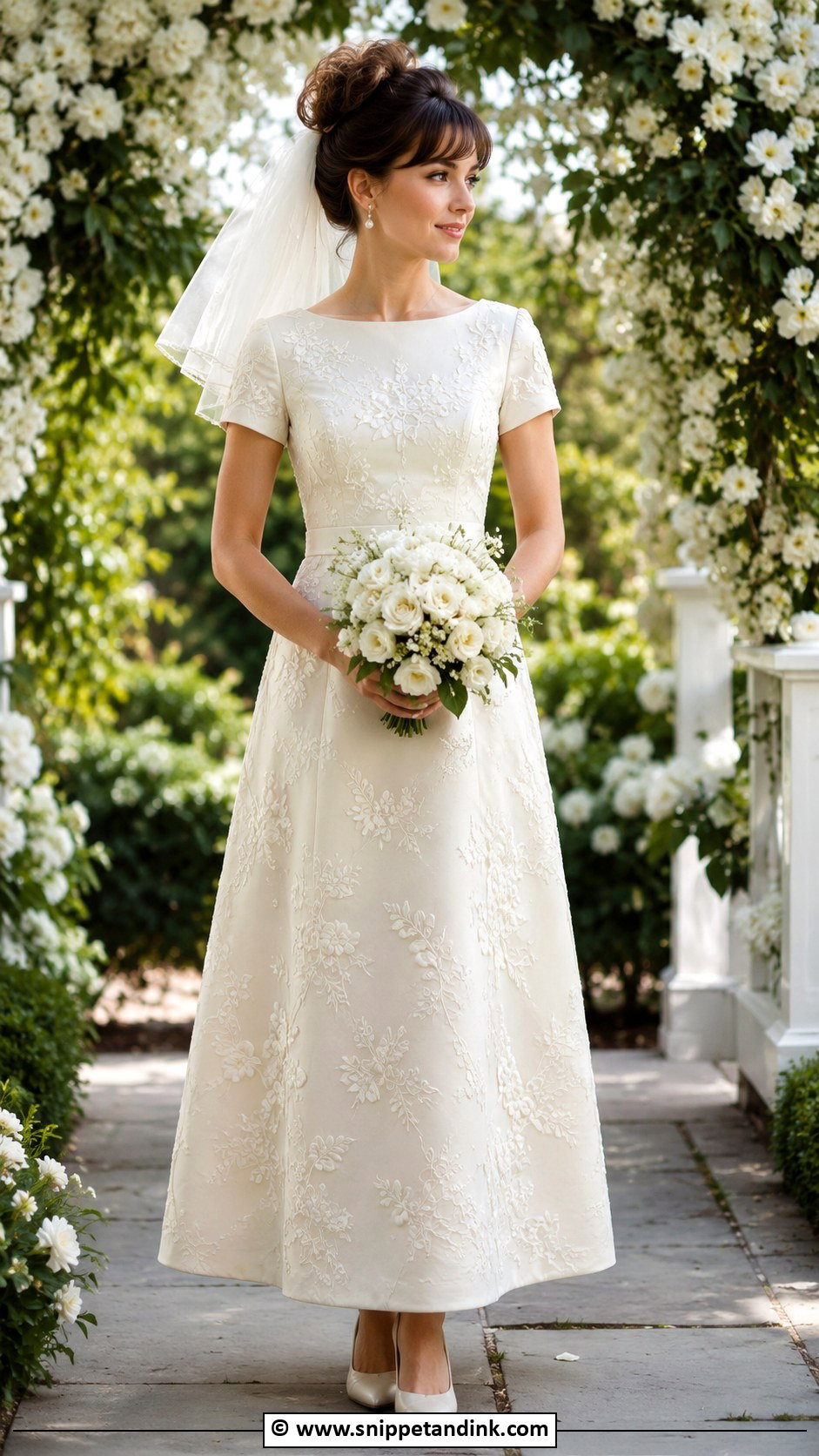
Embroidery adds detail with less formality than lace. Floral embroidery, daisy motifs or white-on-white patterns on a shift, A-line or tea-length dress all fit. Keep the silhouette simple. Ivory heels, pearl earrings and soft white flowers complete it. White-on-white embroidery is subtle in person and almost disappears in strong sunlight, so if you want it seen in photos, choose a slightly raised stitch or a faint ivory thread on white.
29. 60s Beaded Wedding Dress
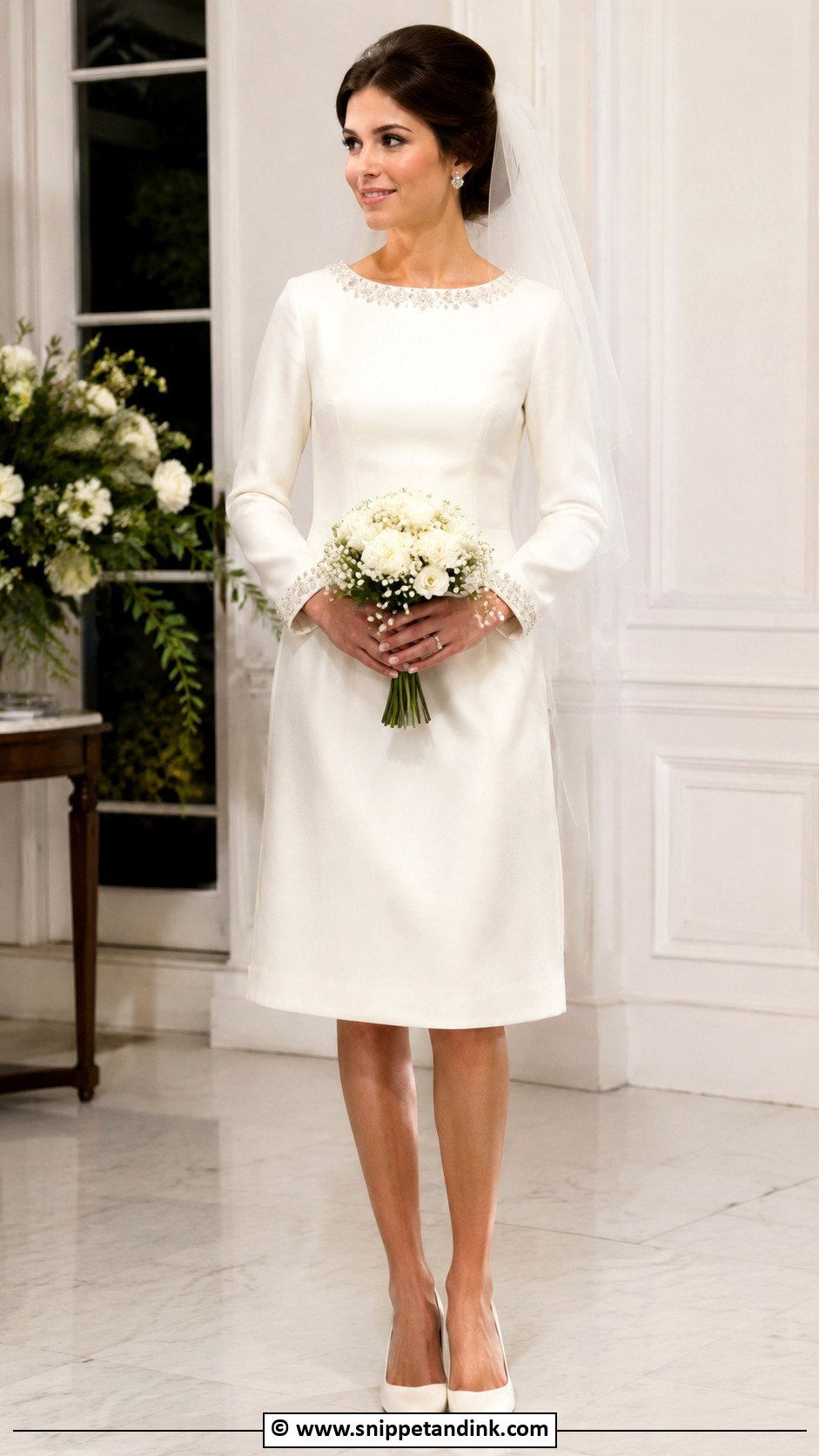
Sixties beading was restrained: a beaded neckline, cuffs or hem rather than all-over sparkle. A sheath, A-line or column carries it. Satin pumps and pearl or crystal earrings are enough. Beads on a neckline add weight that pulls the front down, so check it sits flat after you’ve worn it for a while. It suits evening ceremonies and hotel receptions.
30. 60s Courthouse Wedding Dress
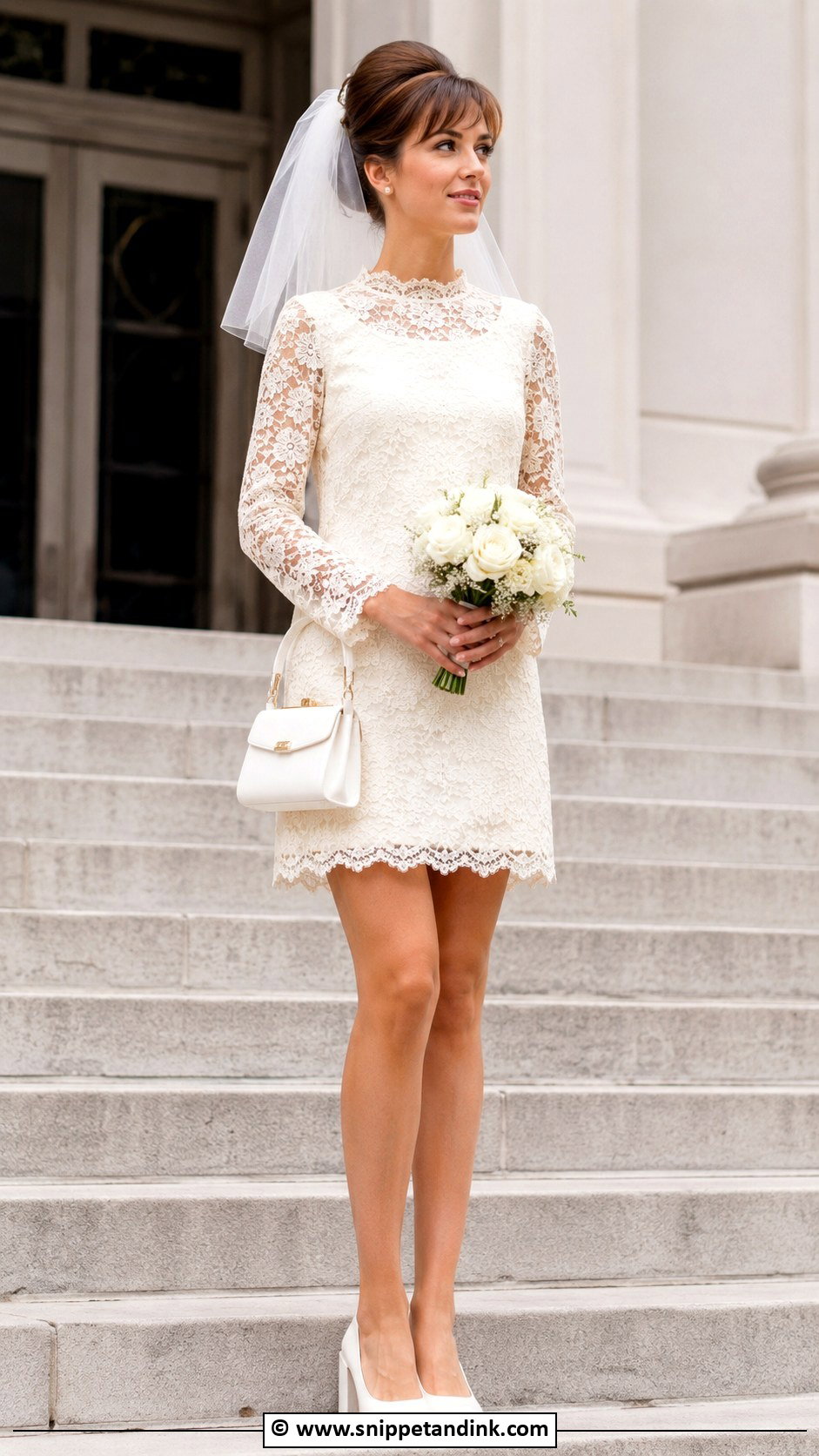
For a courthouse, think about what you can move, sit and queue in. A short shift, a lace mini, a tea-length A-line or a suit-style dress all work. Add white block heels, pearl studs, and a short veil or pillbox hat, with a small bouquet. Short gloves and a white handbag give a polished city look. Of all the ways to wear the decade now, this is the most practical.
Gloves, Hats and Kitten Heels on the Day Itself
Period accessories look natural in old photographs because people wore them every day. For a wedding, a few practical decisions make them easy.
Gloves and the ring
Wrist-length gloves are the easiest to manage. At the ring exchange, slip off the left glove and hand it to your maid of honor, or choose a glove with a small slit at the ring finger. Opera-length gloves look dramatic but take time to remove, so I’d save them for portraits.
Hats and veils
A pillbox sits slightly back on the crown, with hair smooth beneath it. Crossed hat pins anchored in a small bun keep it steady. A birdcage net clipped to the hat is lighter than a full veil and won’t catch in the wind at a city hall door.
Shoes
Kitten heels and low block heels are authentic and kind to feet. Since shorter hems show them fully, scuff the soles lightly before the day so they grip on polished floors.
One or Two Sixties Details, Then Stop
The sixties offer more moods than almost any other decade: polished lace A-lines, playful minis, clean mod shifts, romantic tea-length gowns and late-decade crochet. What keeps any of them from looking dated is choosing one or two period details rather than all of them. A high neckline with white block heels, or a short veil with pearl earrings, is enough to say sixties. Fit, fabric and comfort do the rest.
You'll Like These Ideas:










Leave a Reply