
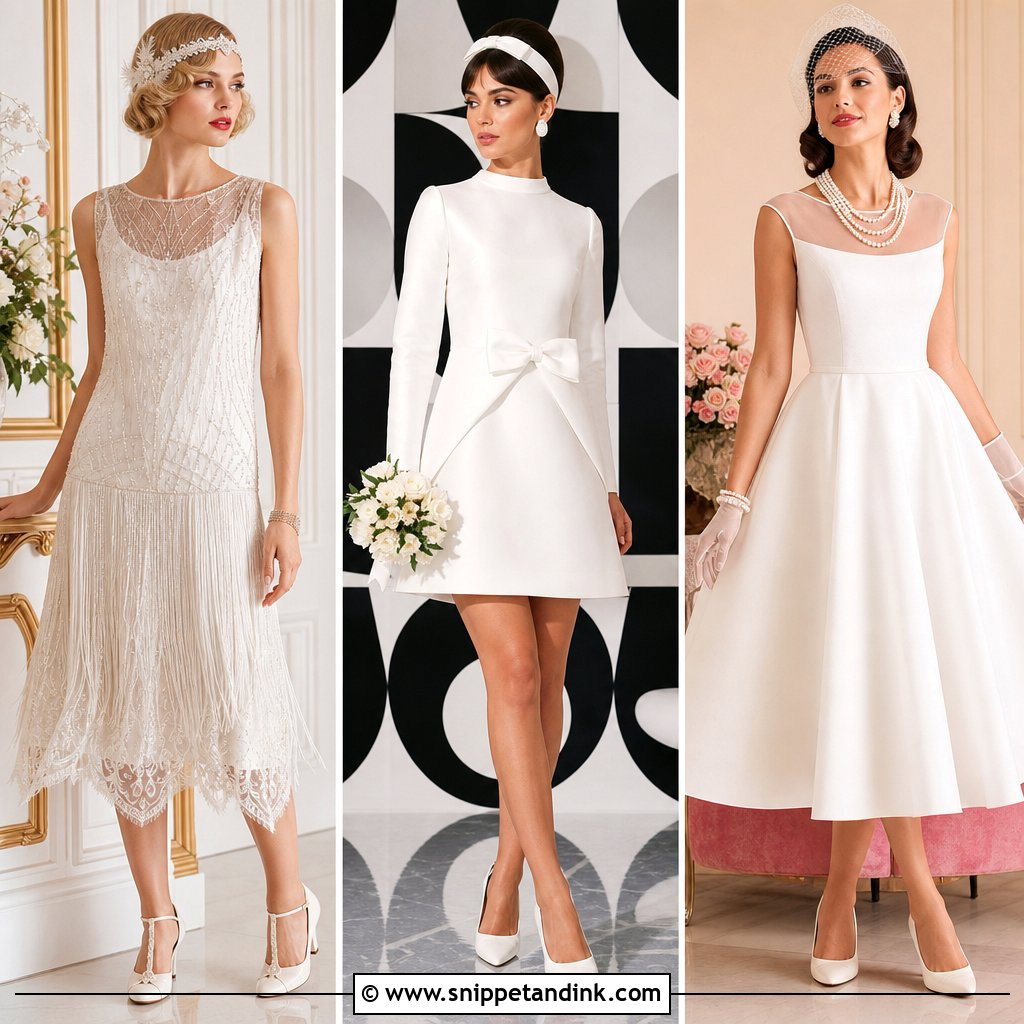
The 1950s gave brides a shape that still works: a fitted waist, a full skirt and a hem that stops at mid-calf so the shoes get seen. Tea length is lighter than a floor-length gown, which is why I reach for it with courthouse ceremonies, garden parties and city elopements. The trick is keeping it from looking like a costume. That comes down to fabric, how much volume you put underneath, and where exactly the hem lands on your leg. Below are the variations I fit most often, from lace and satin to petticoat-heavy swing skirts, with notes on who each one suits and where it tends to go wrong.
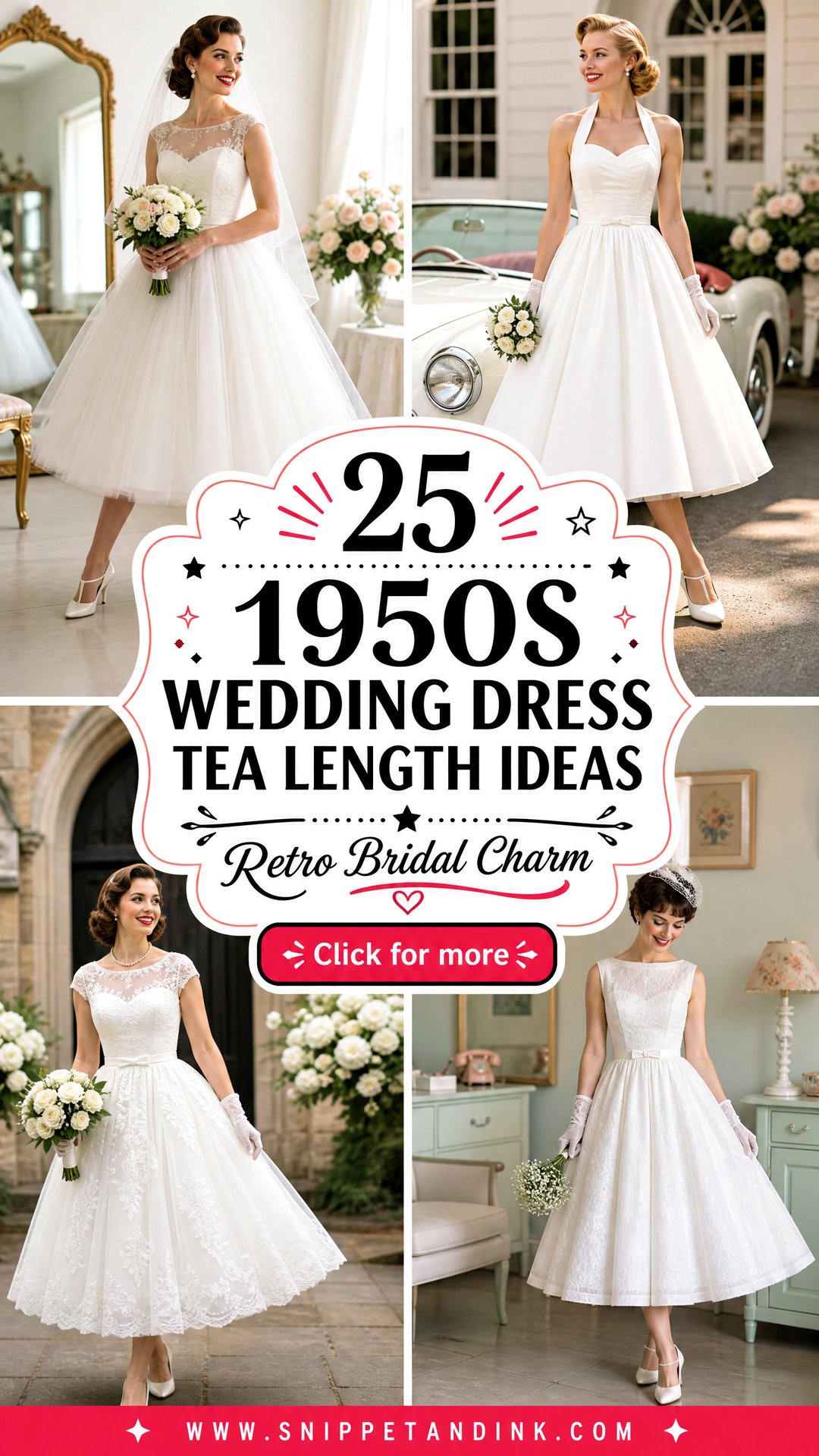
Where Exactly a Tea Length Hem Should Land on Your Leg
Tea length covers a wide band, anywhere from just below the knee to just above the ankle, and a couple of inches makes a real difference. I mark the hem with the bride standing in her wedding shoes and her petticoat on, because both change where the skirt falls.
- Aim for the narrowest part of the calf, or just below the knee, if you want the leg to look longer.
- A hem at the widest part of the calf tends to make legs look heavier, whatever your size.
- A lower, ankle-skimming hem feels more formal and suits a church or evening reception.
- Set the hem after you’ve chosen the heel height, never before.
Shoes matter more with this length than with any gown. They’re on show in every walking photo, so pick a pair you can stand in for six or seven hours, and wear them around the house for a week to soften the backs.
1. 1950S Lace Tea Length Wedding Dress
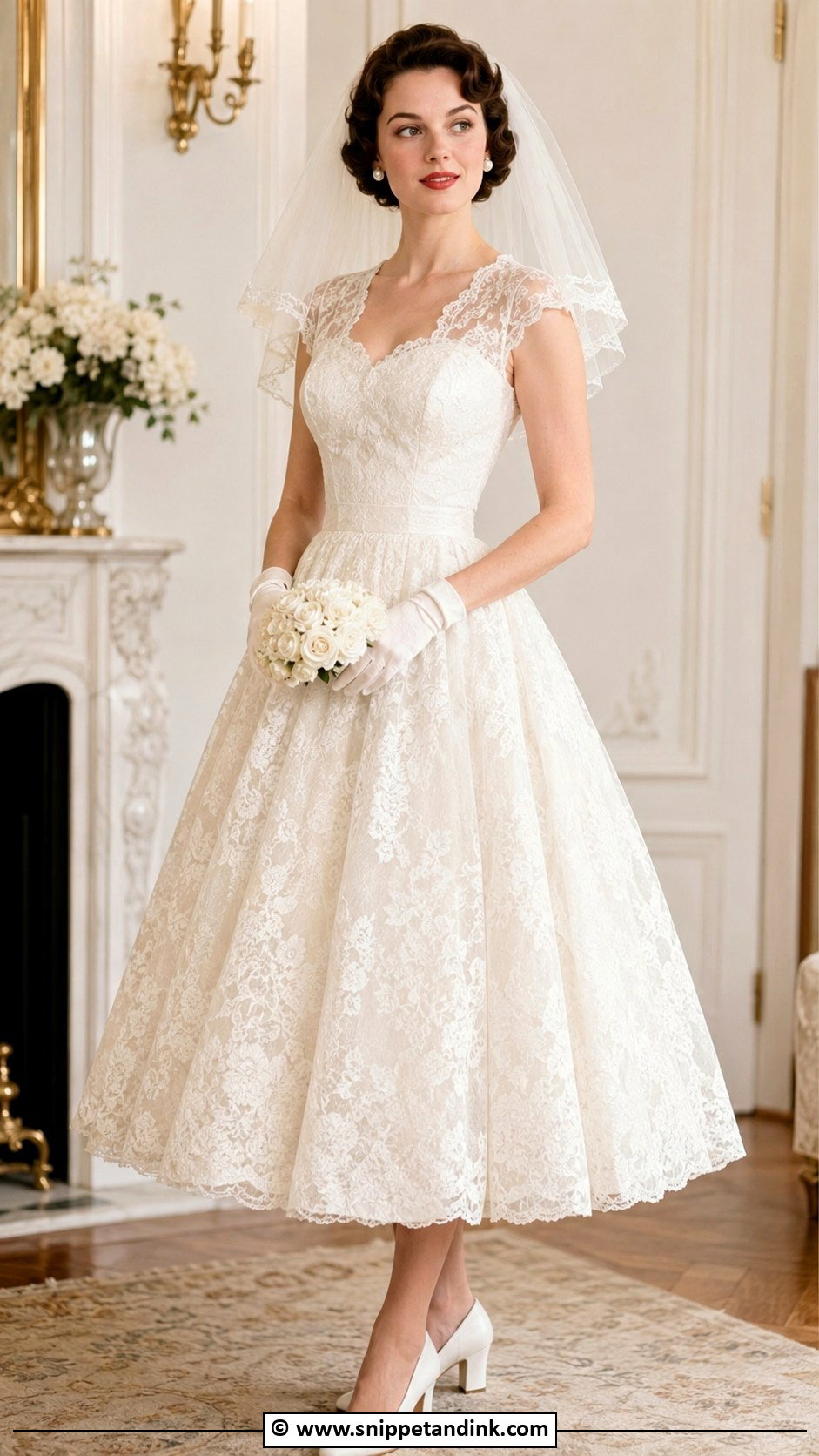
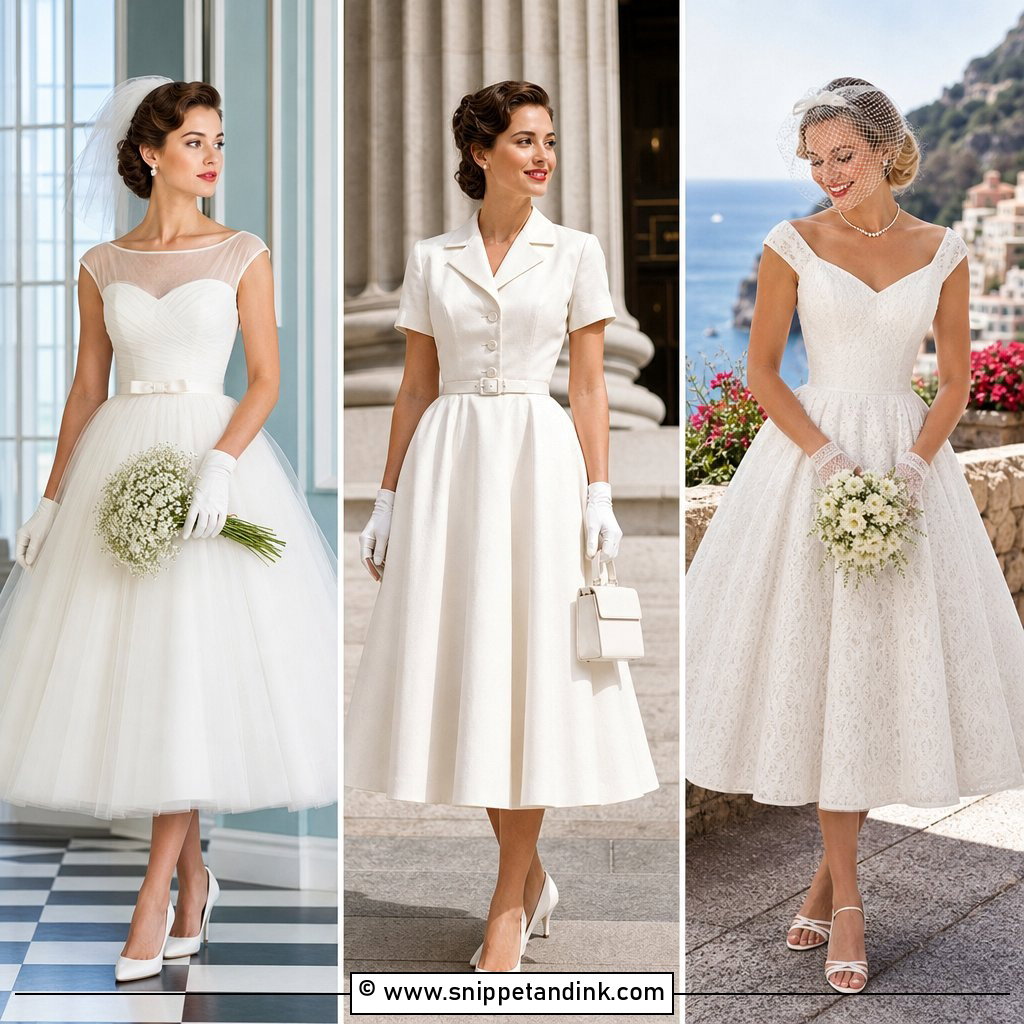
Lace over a soft lining is the version most people picture first, and it’s the easiest to wear. The fitted bodice holds you, the mid-calf skirt moves, and ivory lace reads warm in daylight. Cap sleeves, a sweetheart neckline or a bateau neck all suit it. What I check at a fitting is the lining color: a pale nude lining under ivory lace looks like skin from a distance, while an ivory lining keeps it bridal. Pearl earrings, a short veil and ivory block heels finish it, and a thin satin sash can mark the waist.
2. 1950S Satin Tea Length Wedding Dress
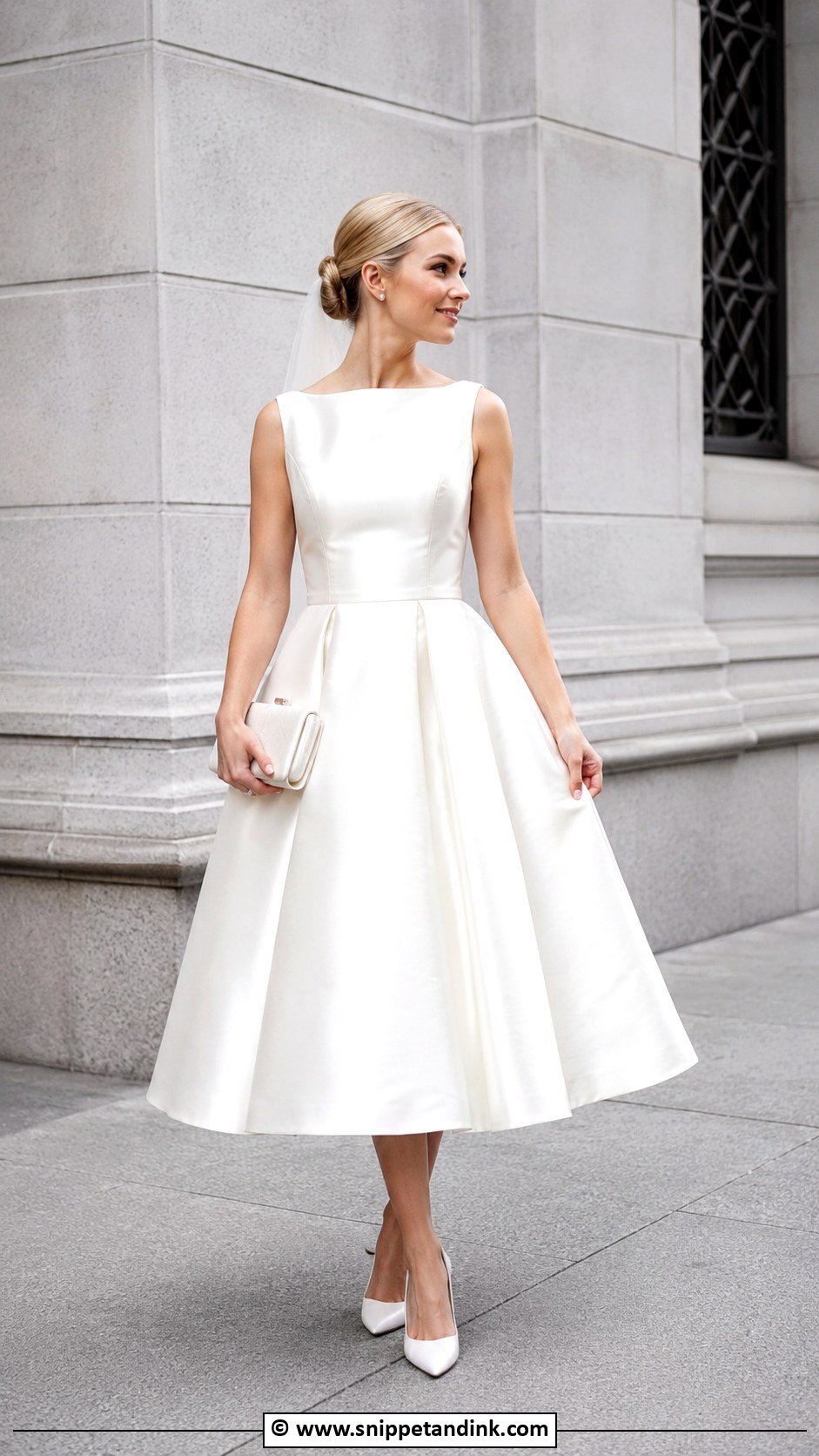
Satin has the body to hold a full skirt on its own, which is how the classic mid-century outline was made. Its weakness is creasing: duchess satin marks across the lap the first time you sit in the car, so I steam it on site and tell brides to sit with the skirt smoothed behind them. A scoop or off-the-shoulder neckline keeps it from feeling stiff. Satin pumps, pearl studs and a small structured clutch are enough. A birdcage veil leans retro; a fingertip veil softens it. Choose this if you like a sleek dress with very little decoration.
3. 1950S Tulle Tea Length Wedding Dress
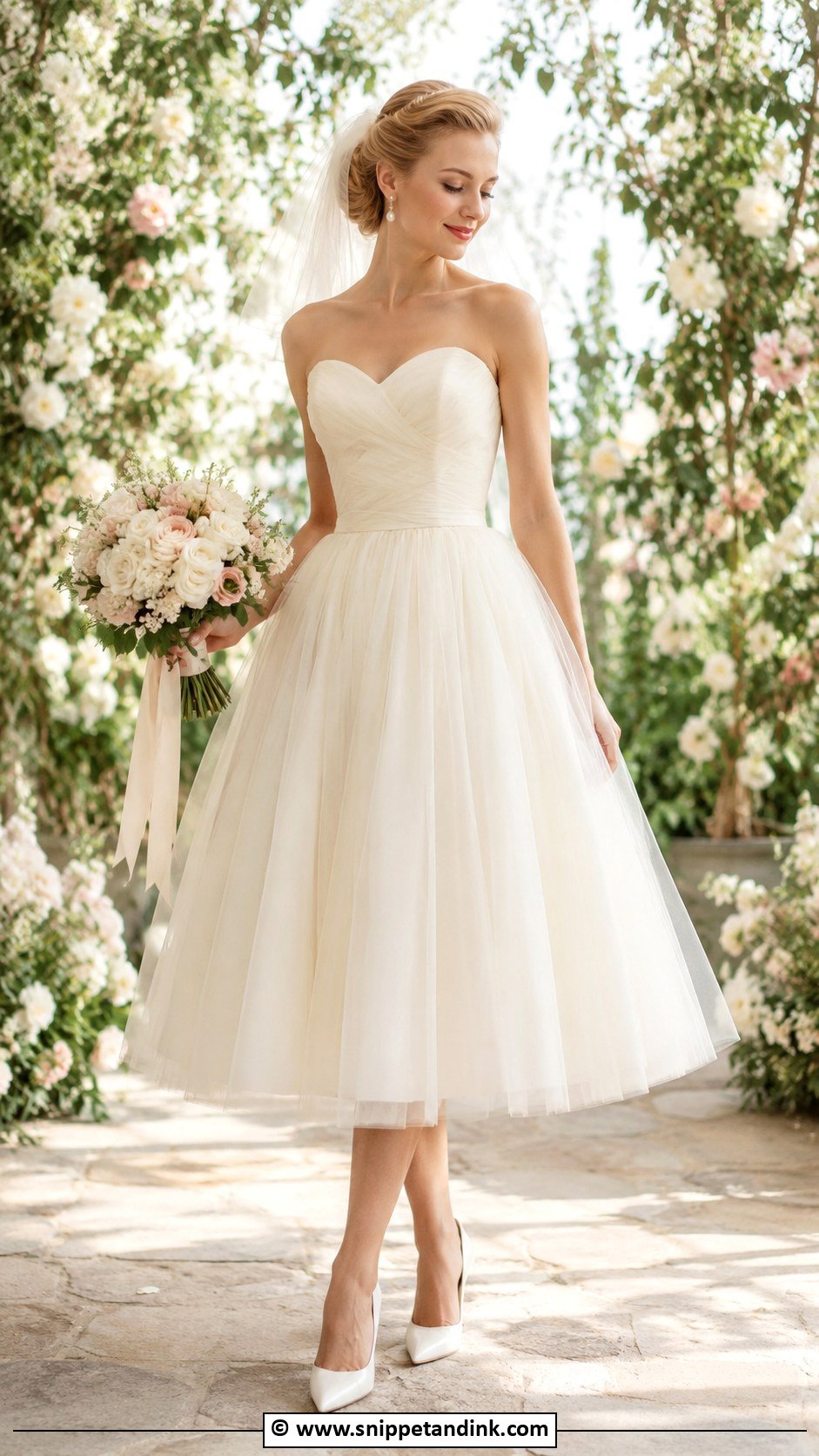
Tulle makes the skirt float, and it’s the lightest of the full-skirted options to wear for hours. The catch is that soft tulle collapses without help, so most tulle tea length dresses need a petticoat to keep that mid-century bell shape. A sweetheart neckline with thin straps or cap sleeves keeps the top delicate. Wear your hair up so the neckline shows, with pointed ivory heels and pearl drops. Watch out for rough brick walls and rose bushes at a garden venue; tulle snags easily.
4. 1950S Off Shoulder Tea Length Wedding Dress
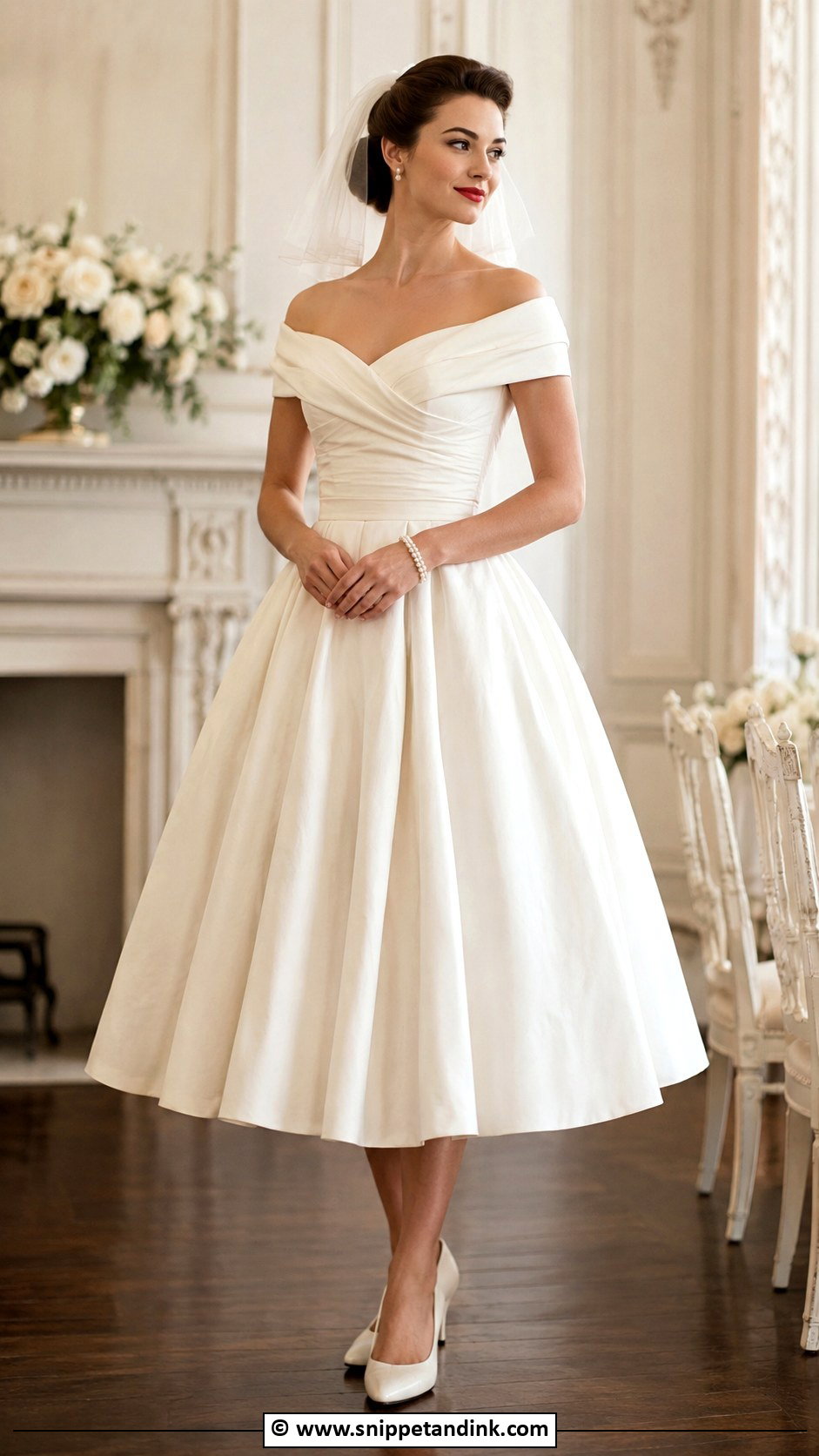
An off-shoulder neckline balances a full mid-calf skirt well, because the width at the shoulders echoes the width at the hem. It needs a fabric with structure to stay put: satin, mikado, organza or a lined lace. Before you commit, raise your arms and hug someone at the fitting. If the neckline climbs, the bodice needs boning or a grip band sewn in. Keep jewelry to pearl studs and a fine bracelet, since the bare collarbone already carries the look. A short veil or a soft bow in the hair adds vintage character.
5. 1950S Sweetheart Tea Length Wedding Dress
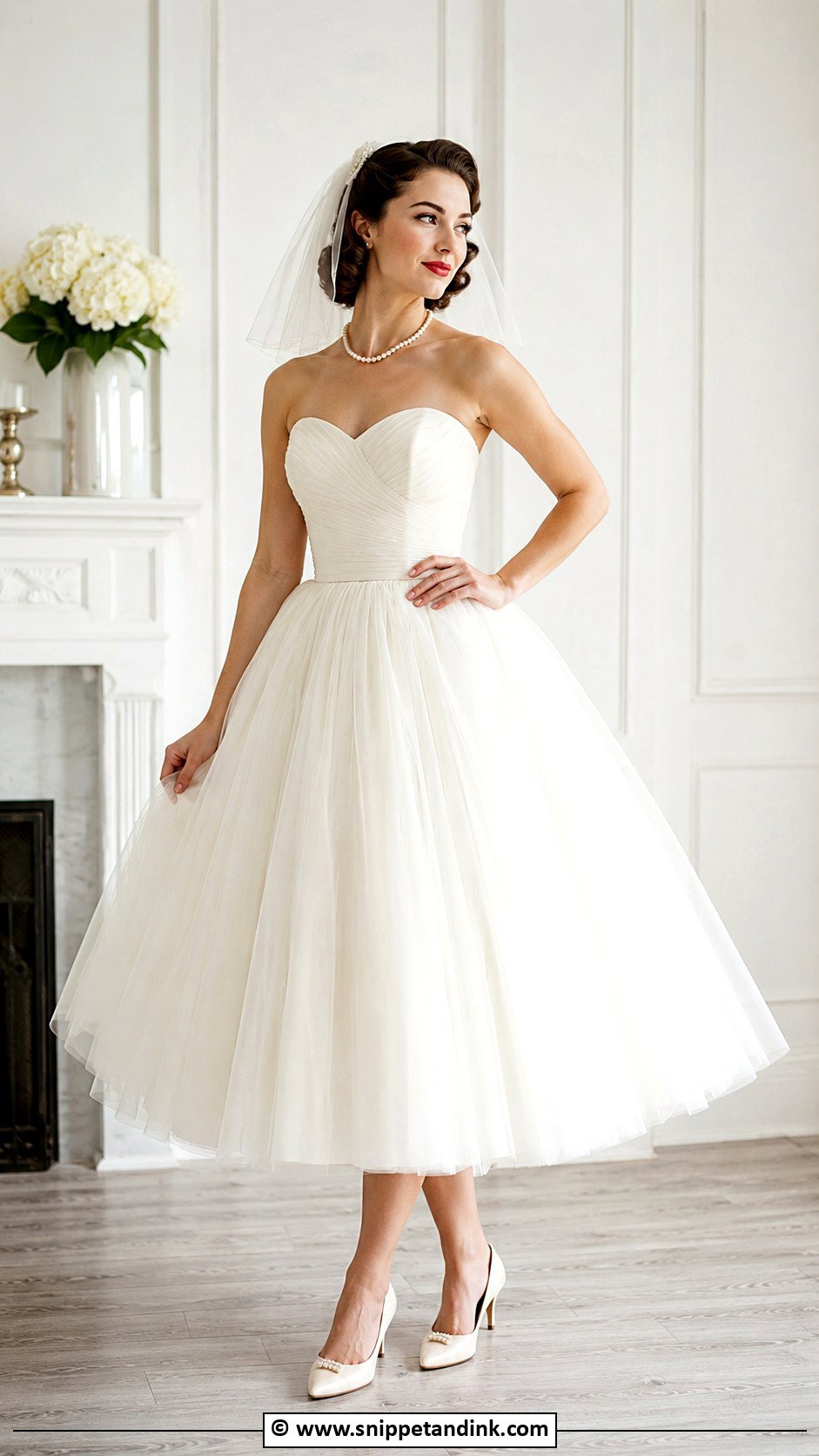
Sweetheart necklines and nipped waists are why so many brides call this the hourglass decade. The neckline curves over the bust and the full skirt hides the hips, so it suits a wide range of figures. If you need more support, ask for wider straps or internal boning rather than relying on a strapless bra, which can show at the dip of the sweetheart. Lace, satin and tulle all take this neckline. A short veil, a pearl necklace and low heels complete it.
6. 1950S Halter Tea Length Wedding Dress
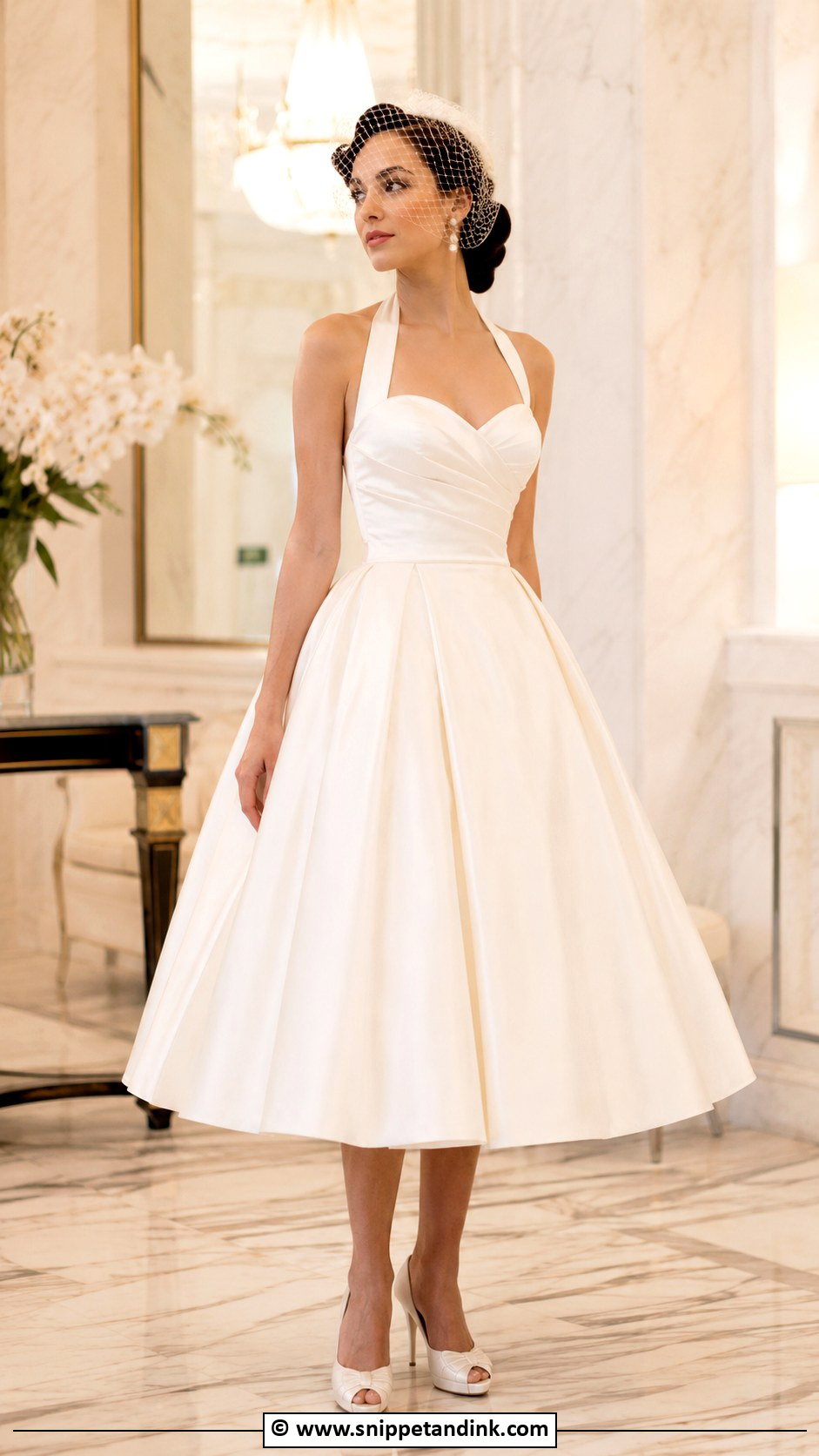
A halter neckline has more glamour than most 1950s shapes; think cocktail party rather than church hall. It pulls the eye up to the shoulders while the full skirt stays sweet. The weight of the skirt hangs partly from the neck strap, so a heavy satin halter can ache by evening. I’d choose cotton lace or crisp organza for this one. Peep-toe heels, pearl earrings and a low bun keep it clean, and a birdcage veil stays out of the neckline’s way.
7. 1950S Bateau Neck Tea Length Wedding Dress
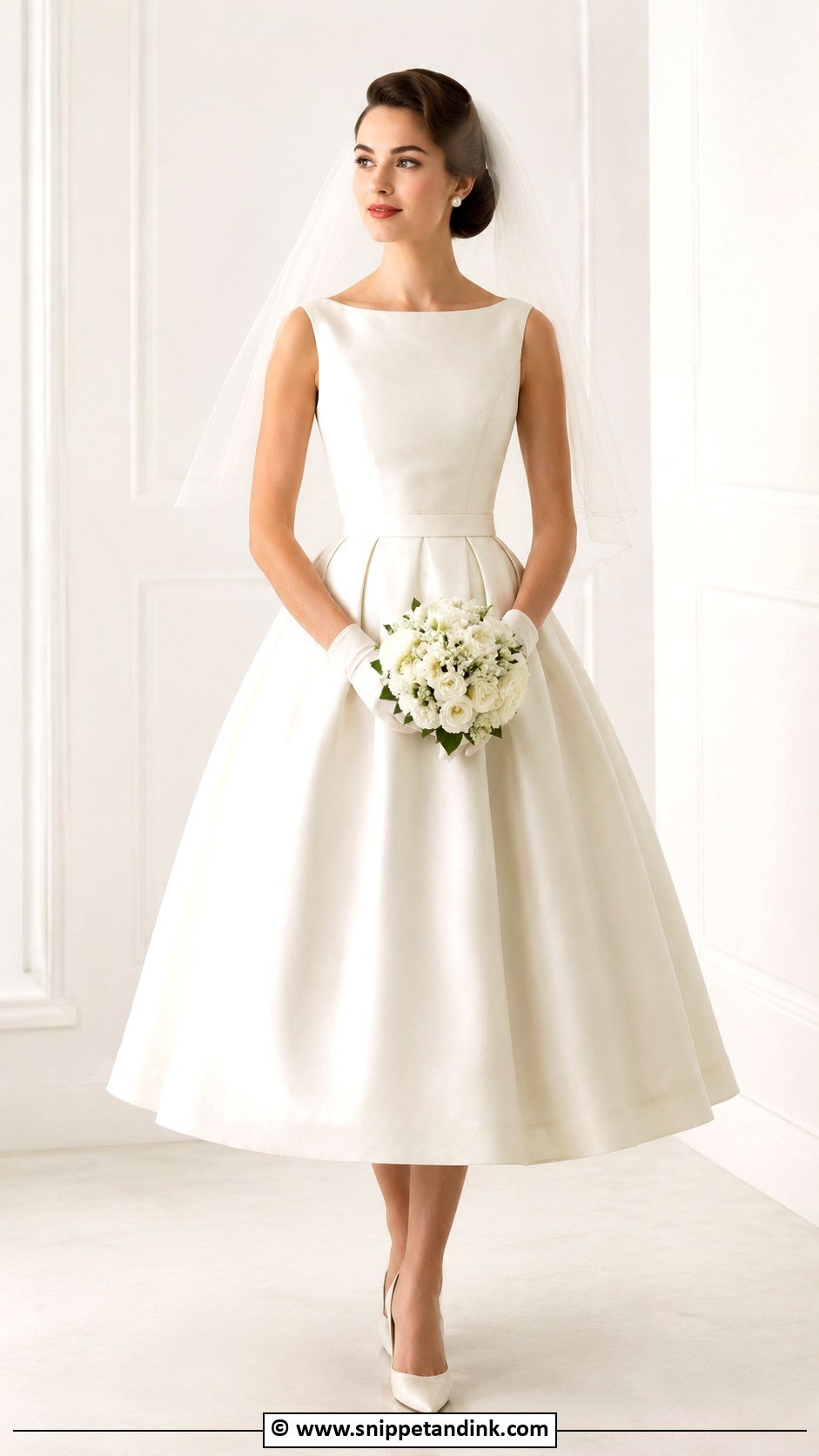
Bateau necks run straight across from shoulder to shoulder, just above the collarbone, and give a quiet, polished frame. They look best with lace sleeves or a simple crepe bodice over a fuller skirt. Skip necklaces entirely; anything at the throat fights the line. A narrow belt helps define the waist. Pearl studs, pointed pumps and a neat veil complete it. One fit note: a bateau neck that sits too wide slips off the shoulder, so pinning it at the fitting matters more than with most necklines.
8. 1950S High Neck Tea Length Wedding Dress
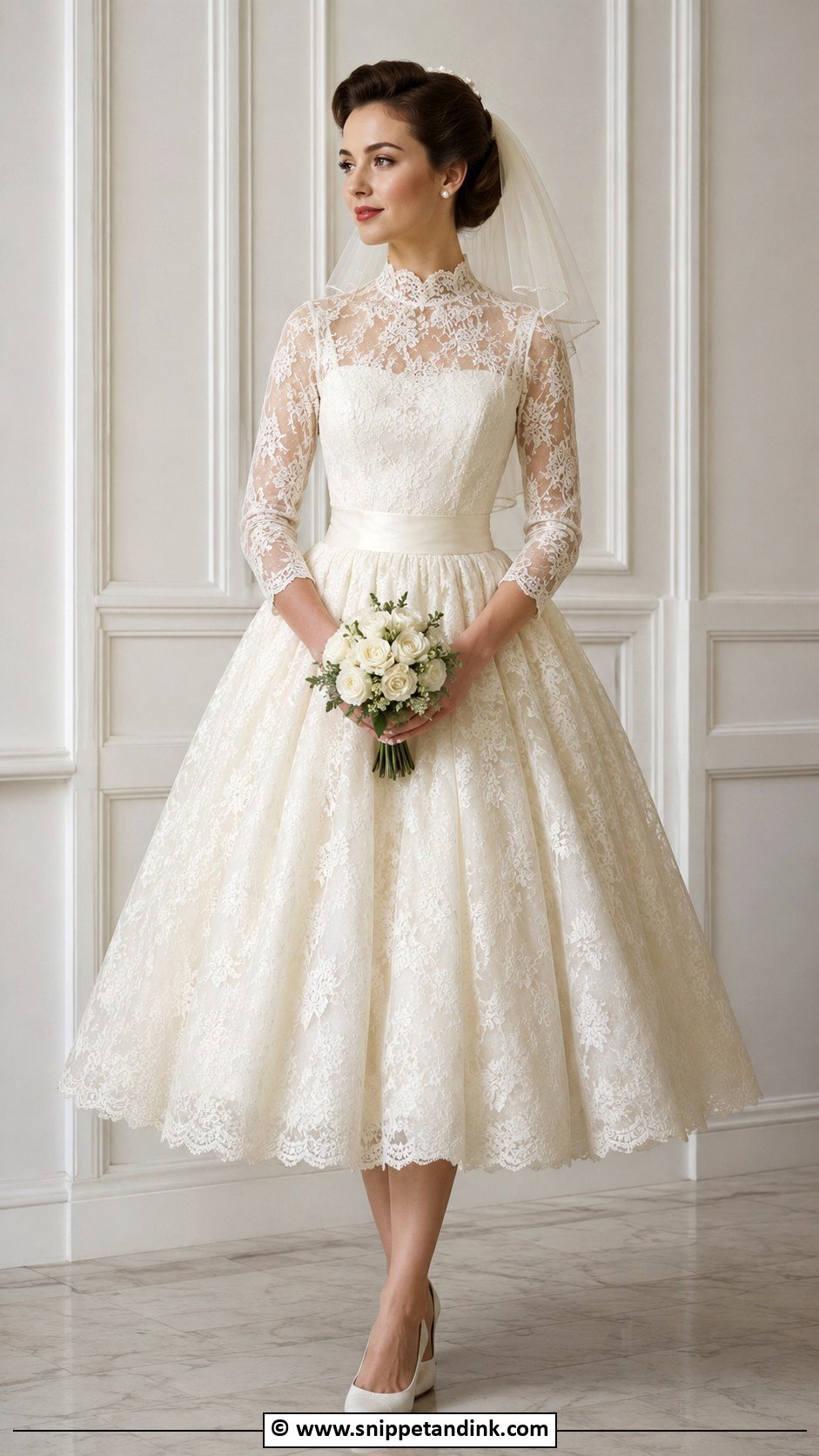
High necklines suit brides who want coverage, and lace keeps them from feeling severe. Balance is everything here. With the top covered, the waist has to be clearly defined or the dress reads as a block. I like a short veil placed behind a smooth updo, with small pearl earrings and sleek heels. Sheer sleeves keep it light. It’s my first suggestion for a cool-weather wedding or a formal religious venue.
9. 1950S Cap Sleeve Tea Length Wedding Dress
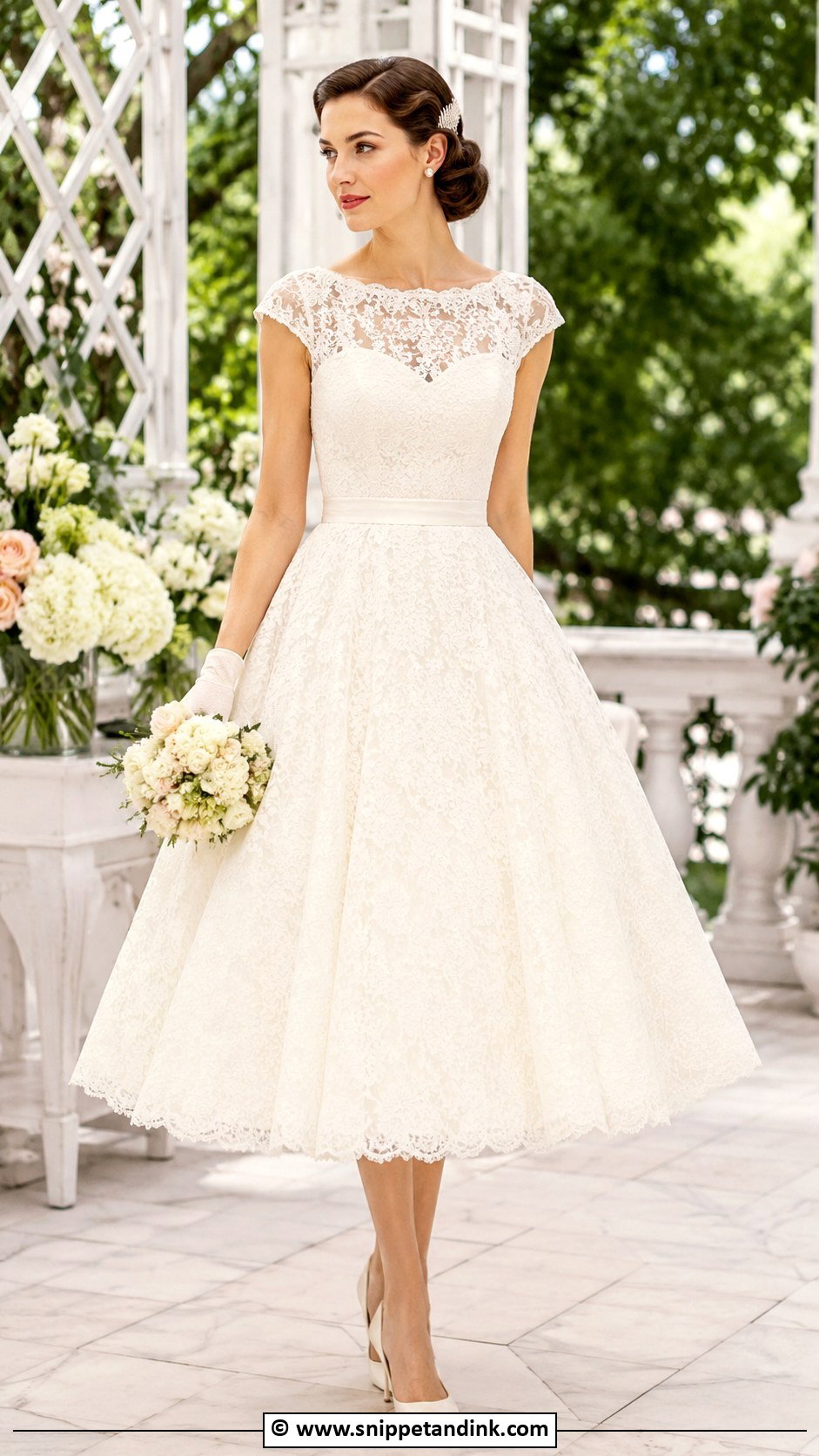
Cap sleeves give just enough coverage at the shoulder to feel secure, without the warmth of a full sleeve. They pair with lace, satin or tulle, over a fitted bodice and full skirt. Have the tailor check that the sleeve doesn’t cut into the upper arm when you lift a bouquet; a tight cap sleeve leaves a red line by the photos. Ivory pumps, pearl studs and a short veil or hair comb suit it, and it fits daytime weddings especially well.
10. 1950S Long Sleeve Tea Length Wedding Dress
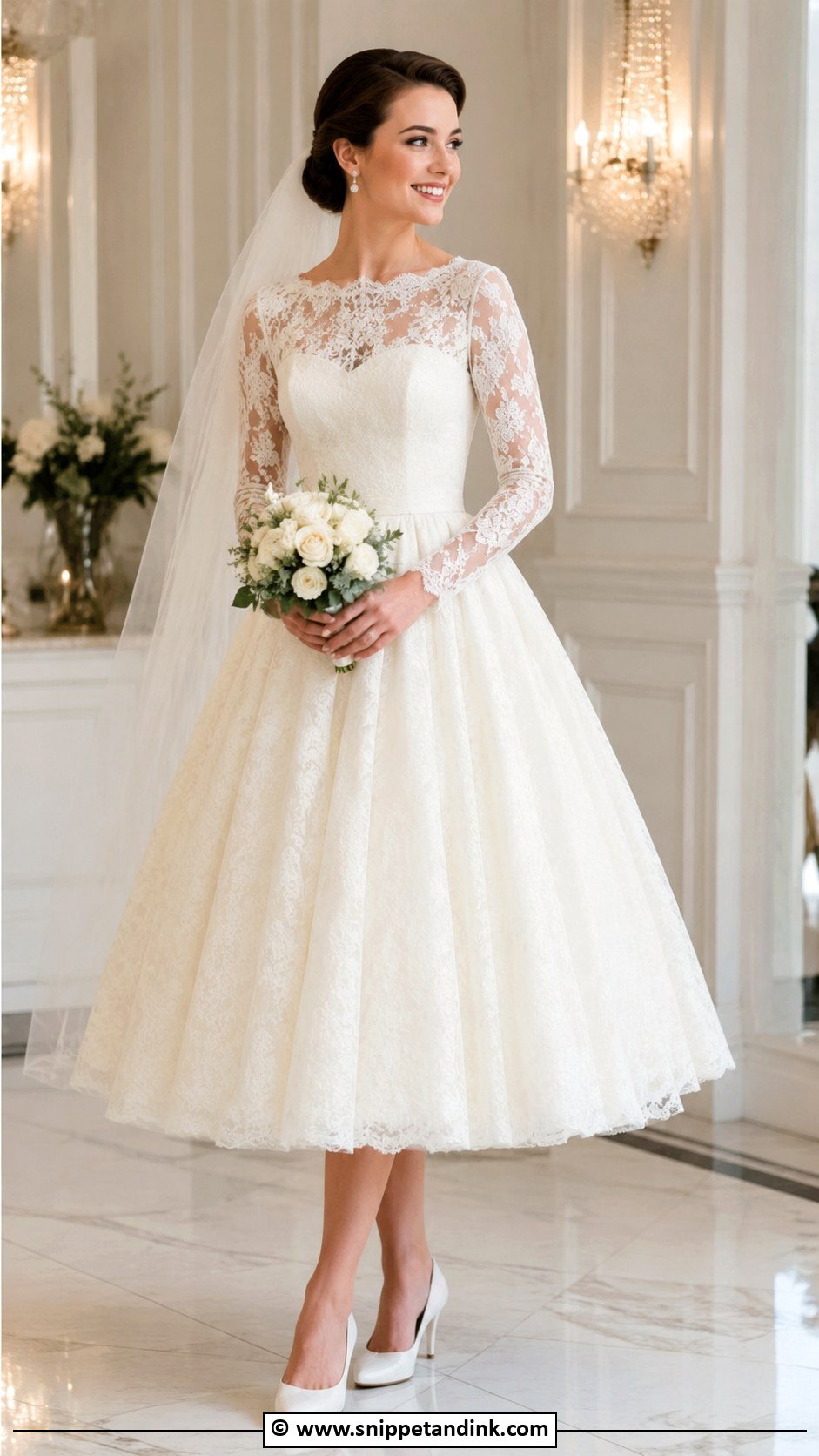
Sleeves bring warmth for autumn and winter, and the shorter skirt stops the whole look from feeling heavy. Sheer lace sleeves stay soft; fitted satin sleeves look tailored. A long sleeve needs a little ease at the elbow and a sleeve head that lets you raise your arms, so I always ask brides to mime cutting the cake at the fitting. Keep the waist sharply defined. Closed-toe heels, pearl earrings and a simple veil finish it.
11. 1950S Organza Tea Length Wedding Dress
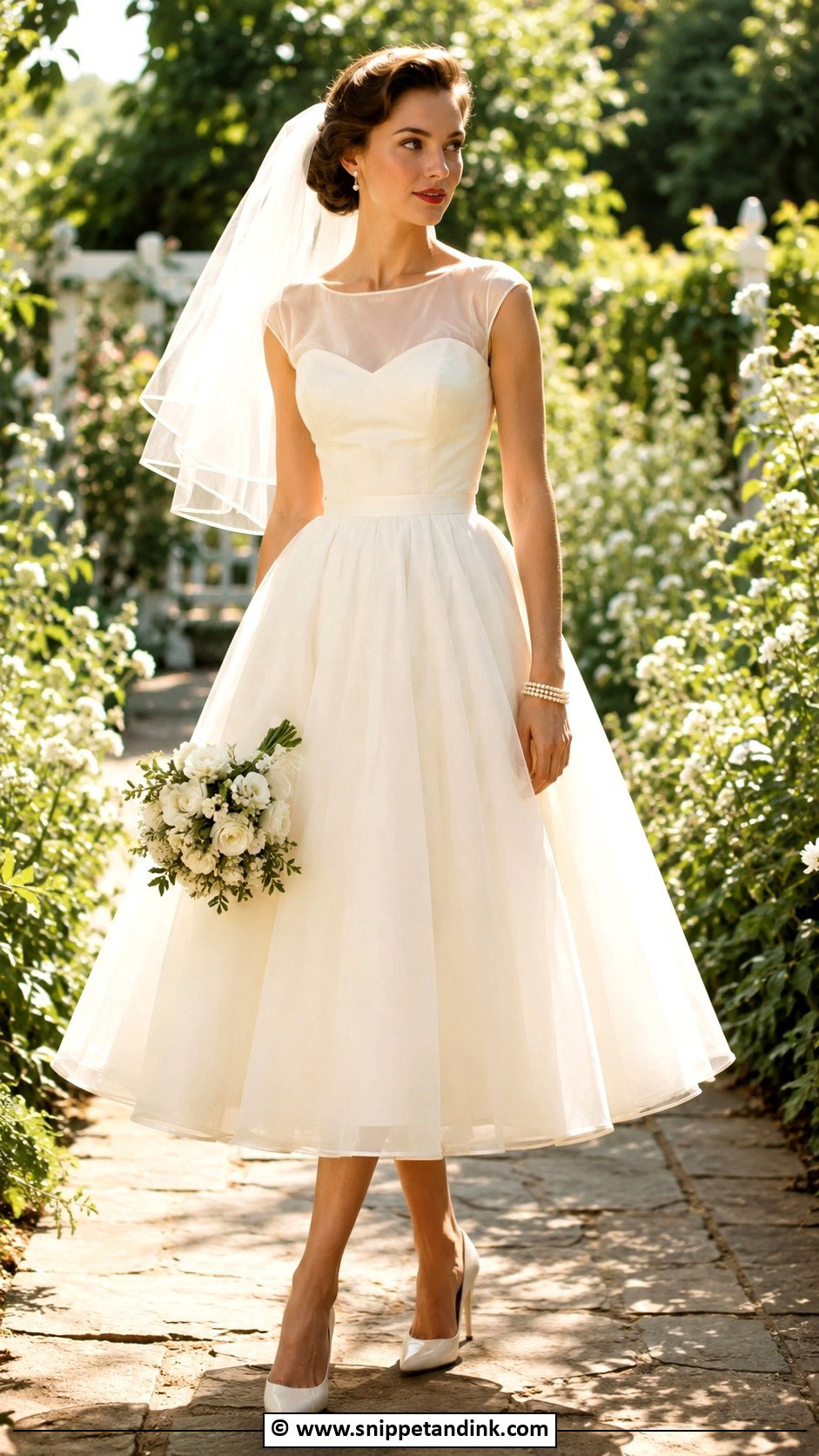
Organza is crisp and sheer, and it holds volume without much weight, so the skirt looks full but stays light on the hips. A simple fitted bodice keeps the focus on the fabric. If the dress has floral appliqué or embroidered details, pare the accessories right back. Organza moves in a breeze, which suits outdoor ceremonies, but it also shows every crease, so hang it in a steamy bathroom or steam it the morning of the wedding. Satin heels, a pearl bracelet and a soft veil complete it.
12. 1950S Chiffon Tea Length Wedding Dress
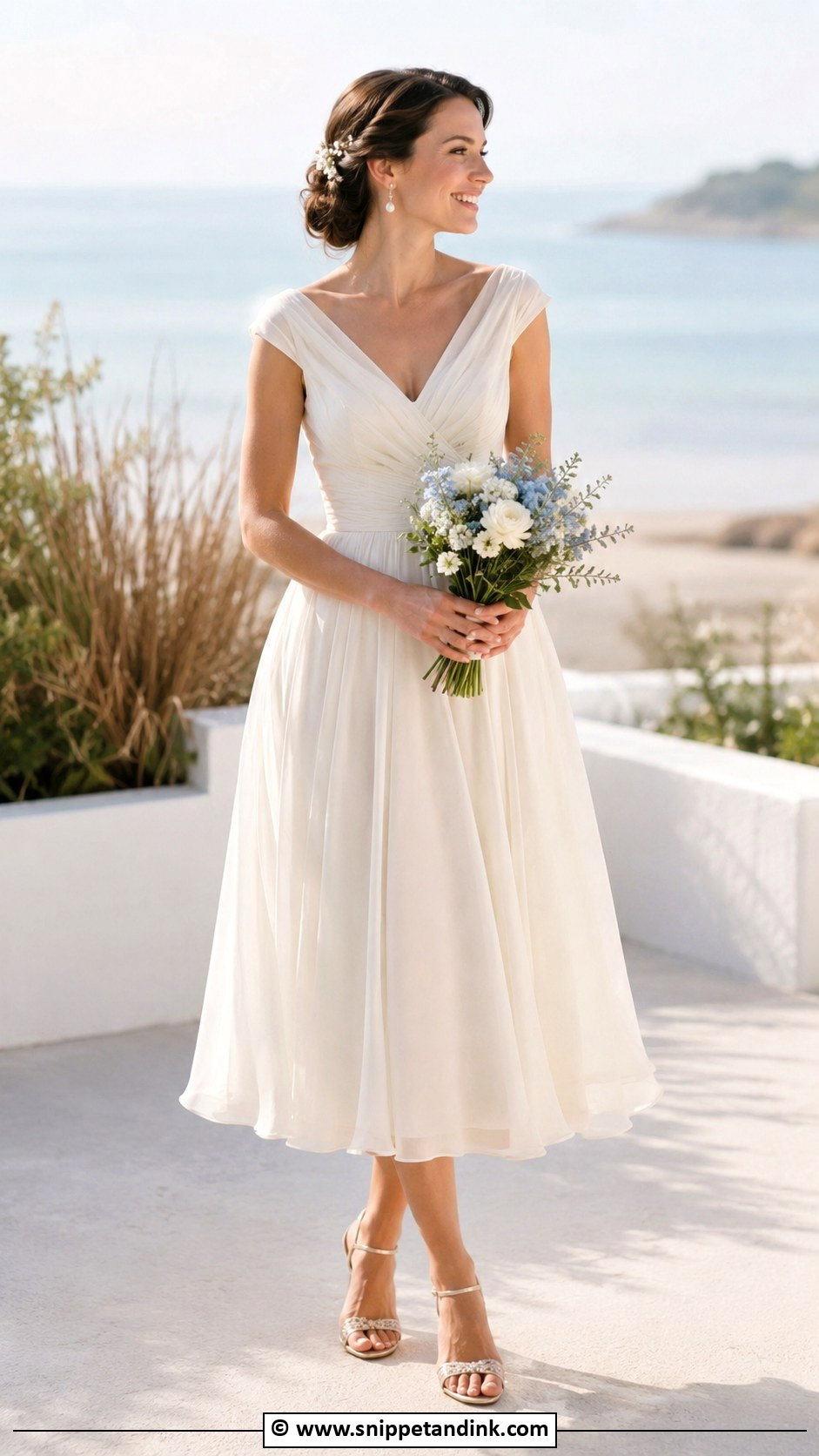
Chiffon is the softest take on the decade. You lose the bell shape and gain movement, which suits a breezy outdoor setting. A fitted waist keeps the 1950s outline readable, while a wrap bodice, a V-neck or cap sleeves keep it easy. Pair it with a light veil, as a heavy one drags the fine fabric down, plus delicate sandals and a hair comb. I’d steer brides who want a dramatic skirt away from this one; chiffon simply won’t hold it.
13. 1950S Mikado Tea Length Wedding Dress
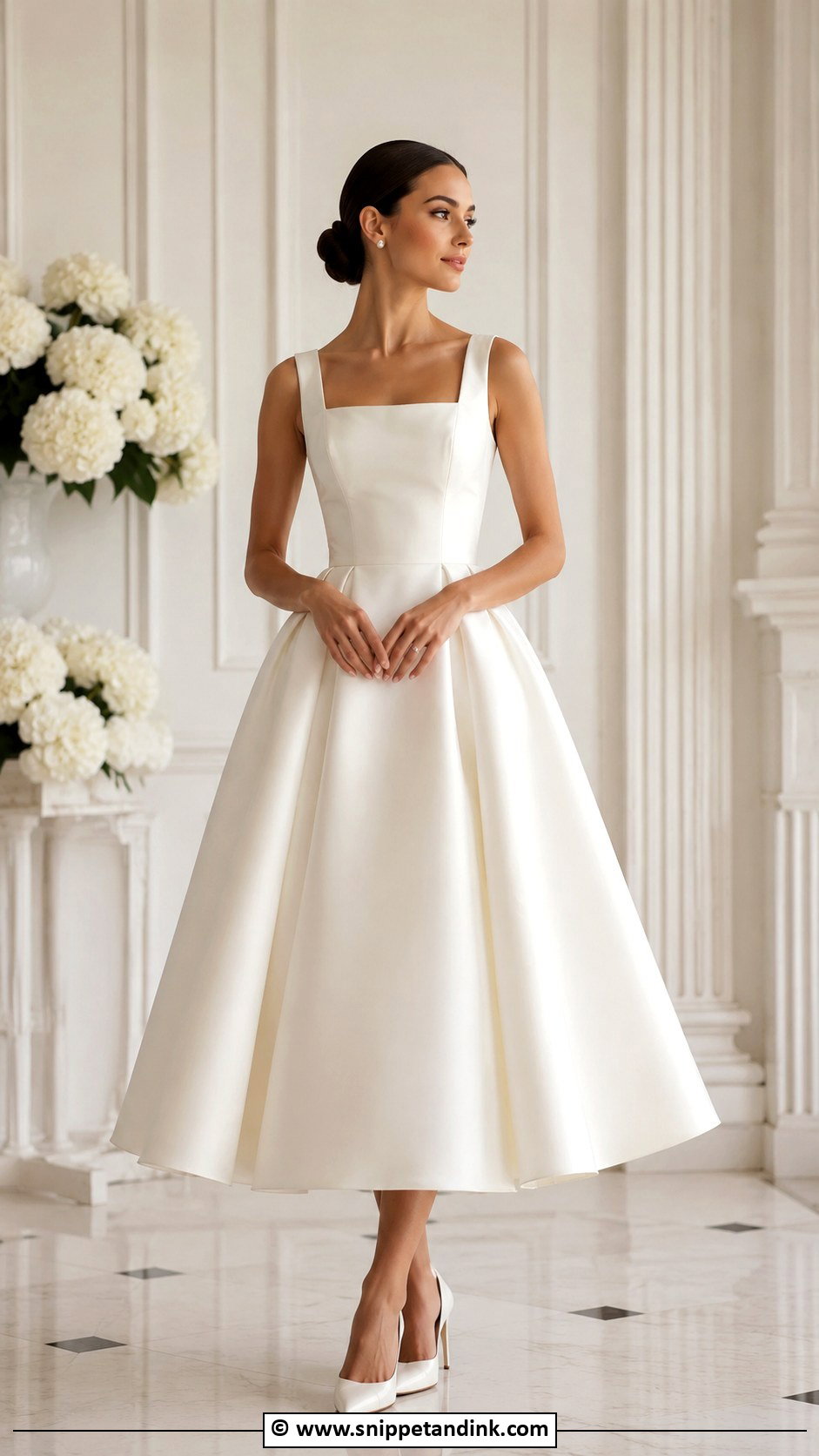
Mikado is a heavier silk or silk-blend with a slight sheen and a lot of body, and it holds a skirt shape with clean, sharp folds. It looks both modern and vintage, depending on how you style it. Wide straps, a clean bodice and a defined waist give a polished outline. A bow belt or a small bow at the back adds charm; a large front bow on mikado can tip into sweet. Pointed heels and a sleek low bun suit it. Mikado is warm, so I’d think twice about it for a July garden wedding.
14. 1950S Polka Dot Tea Length Wedding Dress
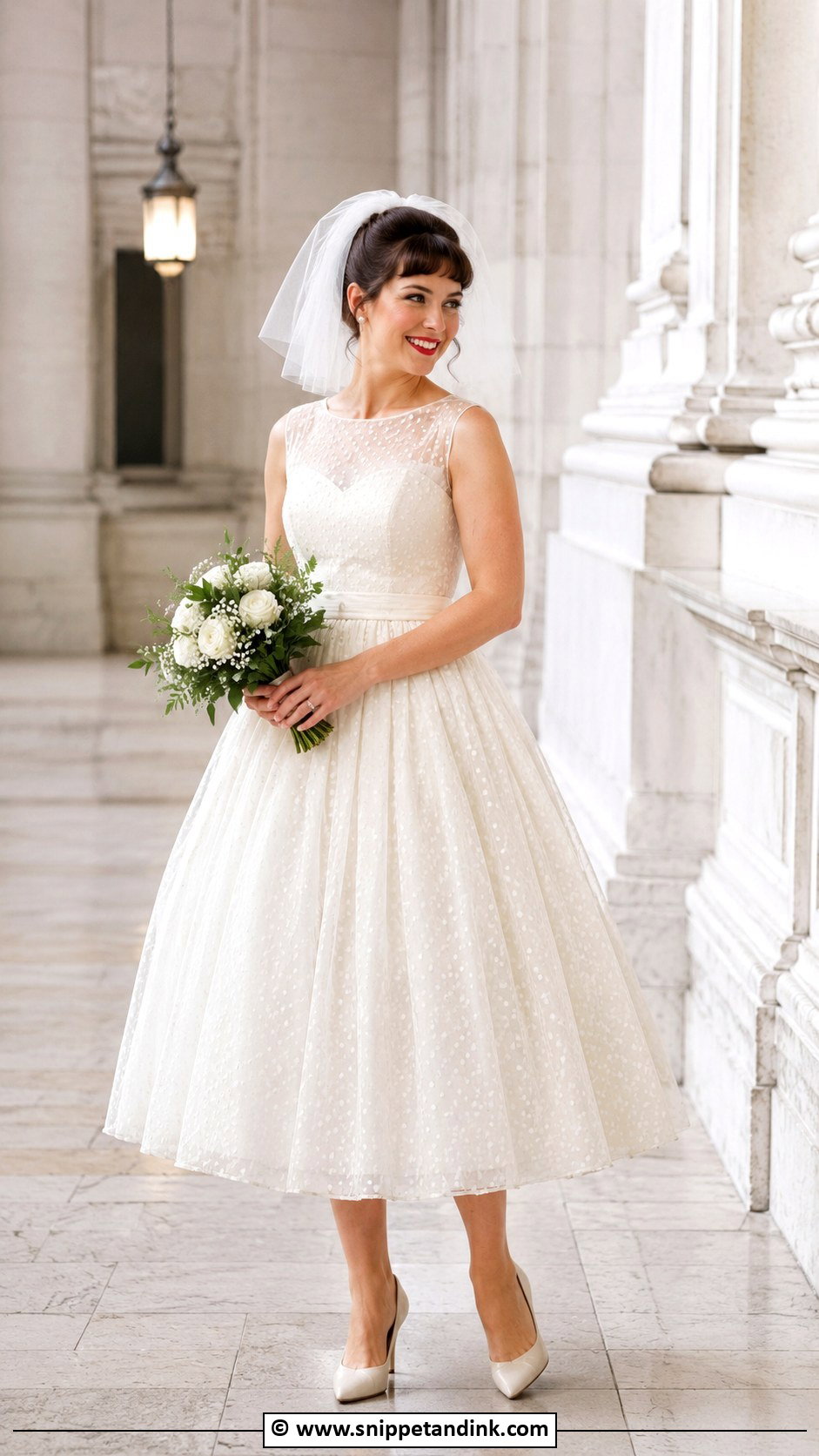
Tiny polka dots bring play to the shape, and the size of the dot decides whether it reads bridal or costume. Look for dotted tulle or dotted organza with small ivory dots; large black dots belong on a rehearsal dinner dress. Keep the bodice, neckline and accessories simple: white or ivory pumps, pearl studs and a short veil. It suits courthouse weddings and smaller receptions, and guests tend to remember it.

15. 1950S Floral Applique Tea Length Wedding Dress
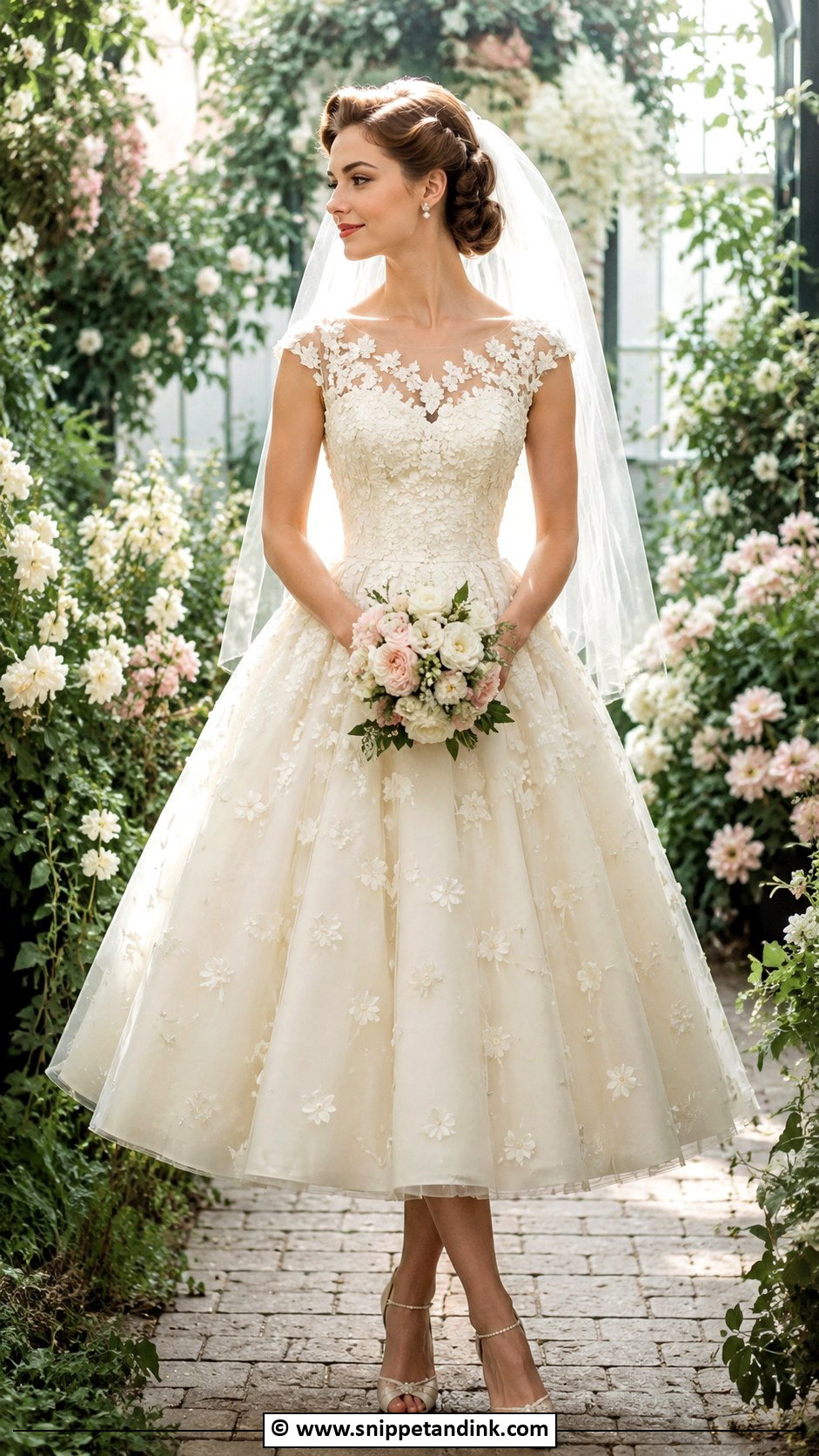
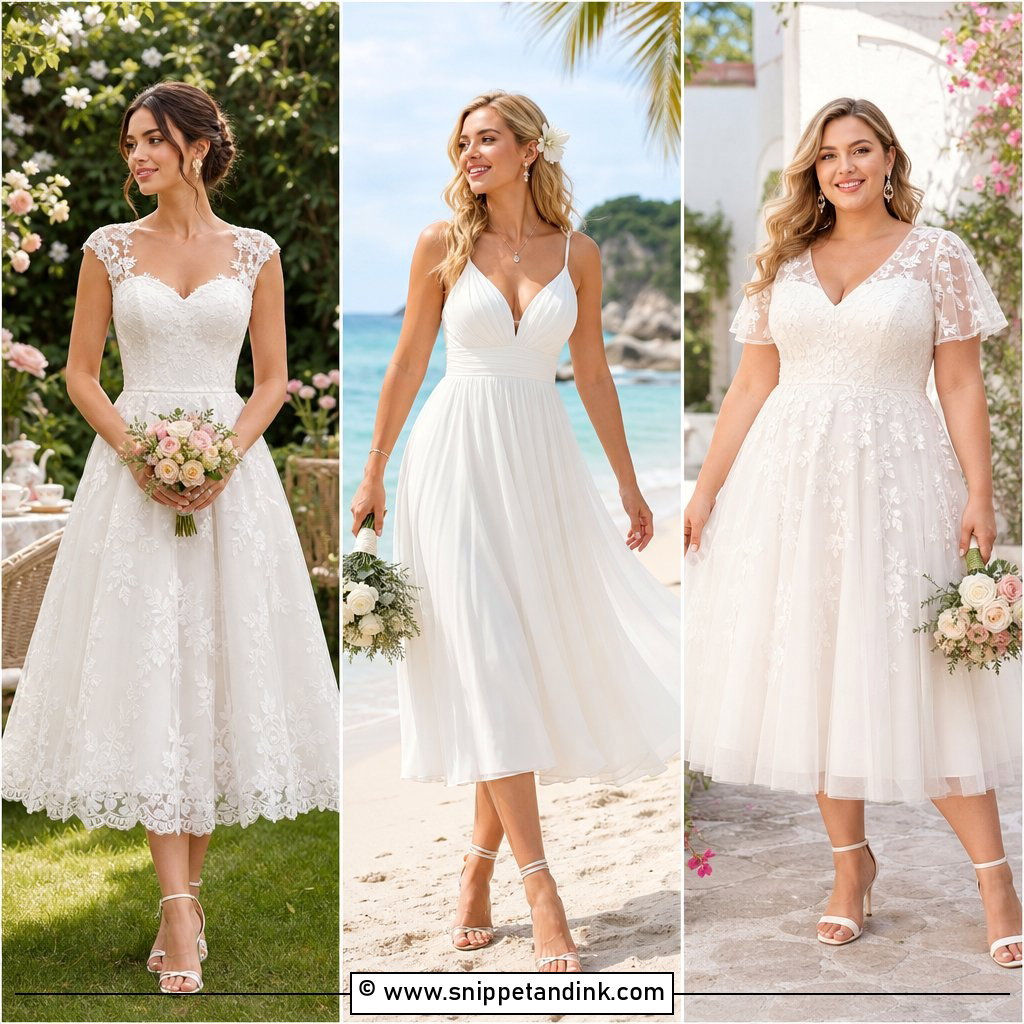
Floral appliqué can cover the bodice, trail onto the skirt or sit on sheer sleeves. The placement matters more than the amount. Appliqués stitched across the waist seam break the line you’re trying to define, so I prefer them scattered above and below it. Keep the shoes simple and the jewelry delicate; ivory heels, pearl earrings and a soft veil are plenty. Close-up photos pick up the raised texture, and it sits naturally at spring and summer garden venues.
16. 1950S Bow Waist Tea Length Wedding Dress
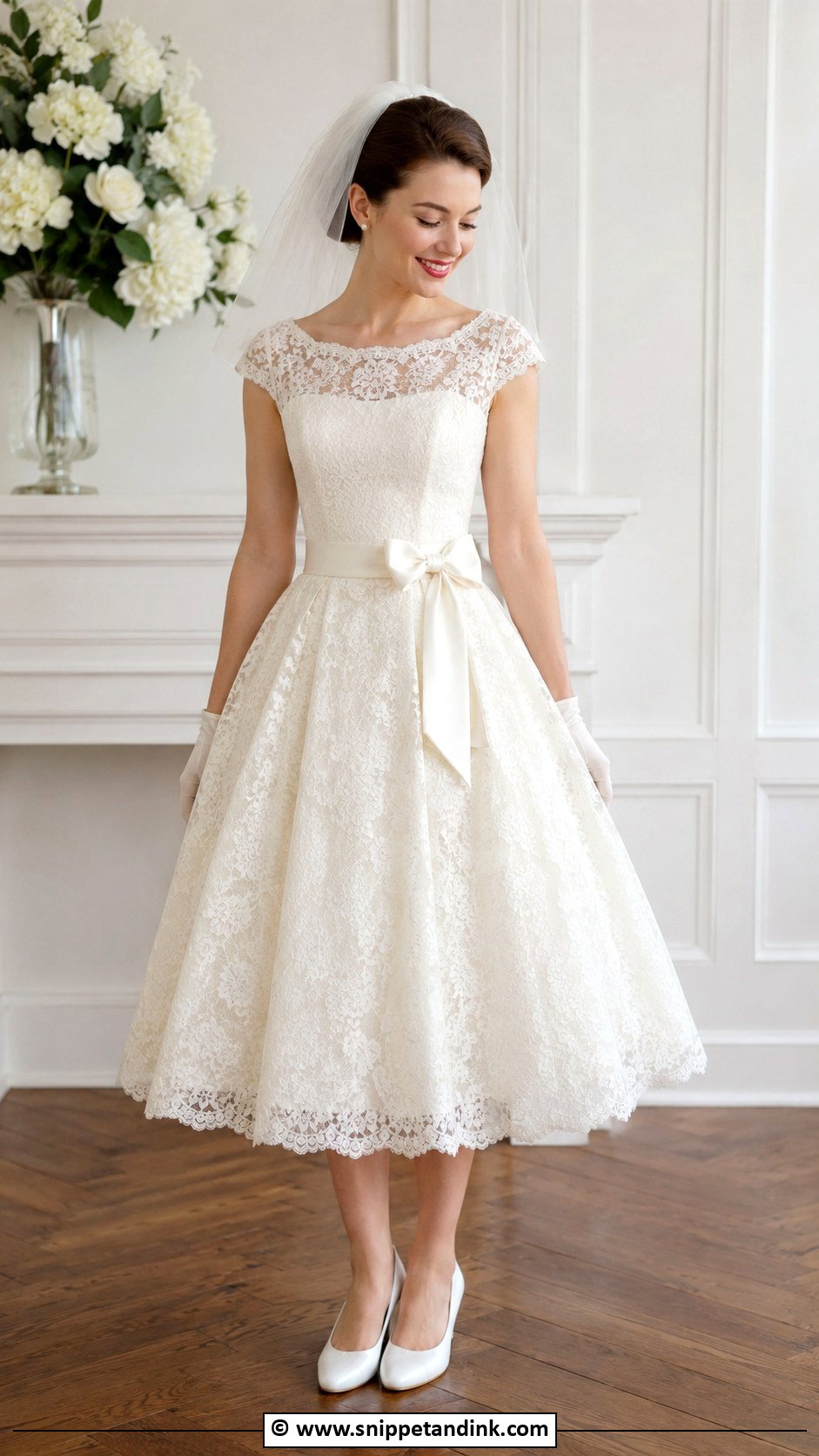
A bow at the waist is pure 1950s, and where you put it changes the mood. A front bow is sweet, a side bow is a little flirtier, and a back bow shows when you walk down the aisle. A satin sash over lace, tulle or organza is the classic way to do it. If the bow is large, strip everything else back: classic pumps, pearl studs and a short veil. Ask for the sash to be tacked at the side seams so it doesn’t creep up as you move.
17. 1950S Petticoat Tea Length Wedding Dress
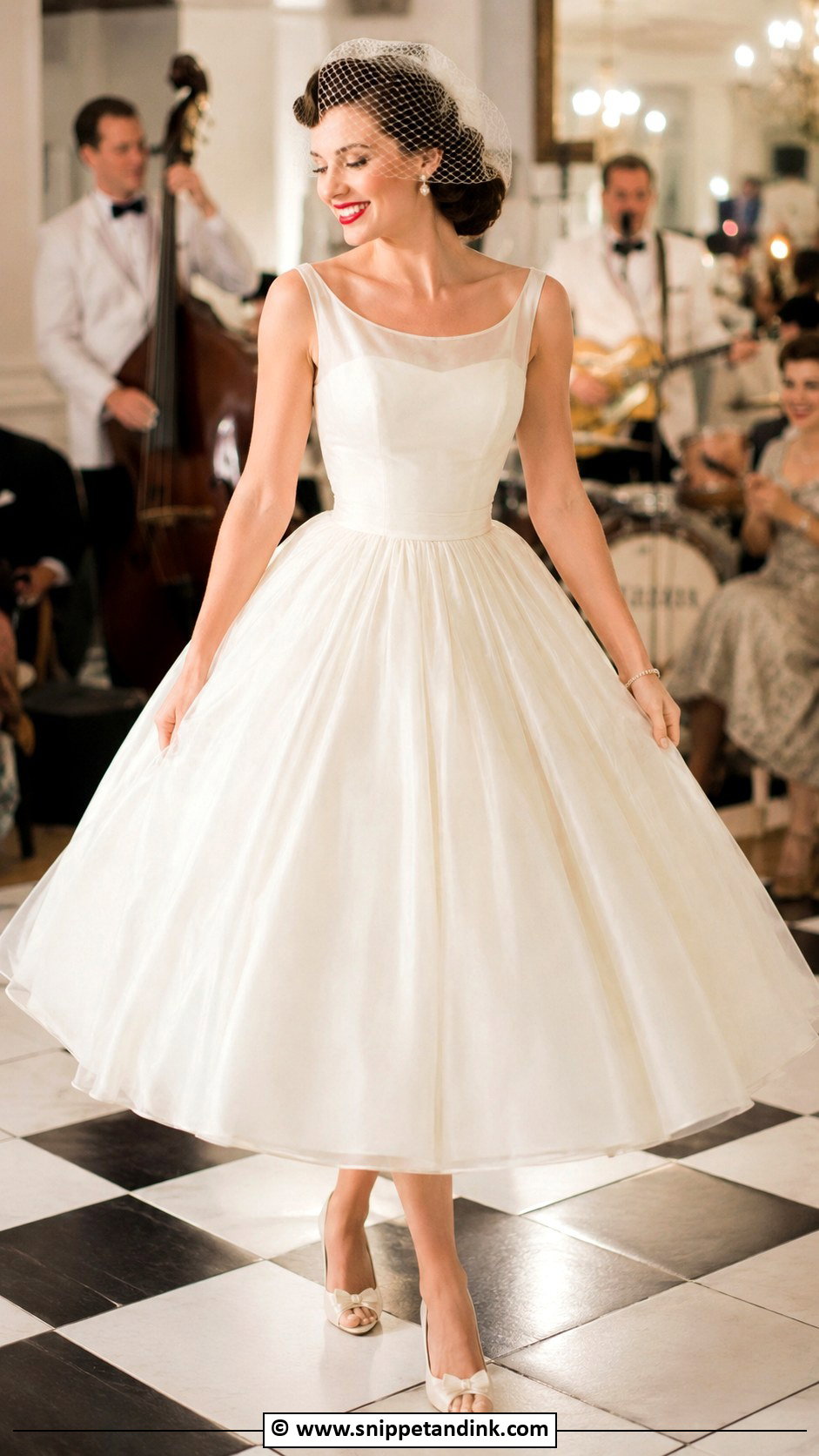
The petticoat is what turns a full skirt into a true swing shape. It adds volume, makes the waist look smaller by contrast and gives the skirt bounce when you dance. A soft tulle petticoat gives a gentle bell; a stiffer crinoline gives the full rockabilly circle. Buy it before the hem is set, because the volume lifts the skirt and changes the length, and keep it about an inch shorter than the dress so it never peeks out. A simple bodice, visible ivory heels and a birdcage veil finish it.
18. 1950S Courthouse Tea Length Wedding Dress
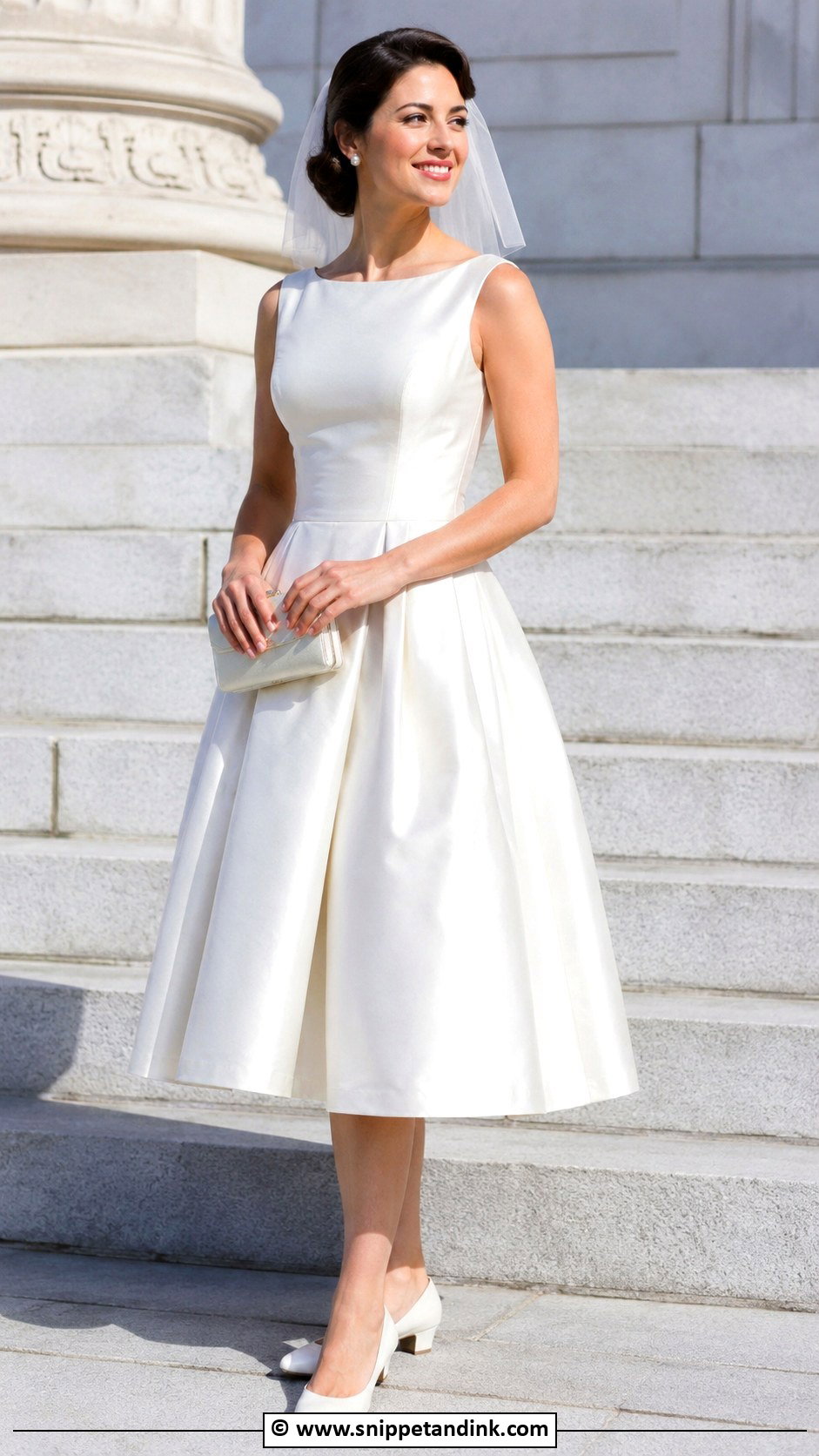
For a courthouse wedding, I’d keep the dress simple and spend the personality on the accessories. A satin or crepe dress with a fitted waist and clean neckline is enough. Low block heels manage city steps and sidewalks, pearl earrings and a small bouquet complete it, and a short veil or pillbox hat brings in the decade. Ceremonies are short and you’ll be standing in a small room, so choose a skirt that doesn’t need a petticoat wider than a doorway.
19. 1950S Garden Tea Length Wedding Dress
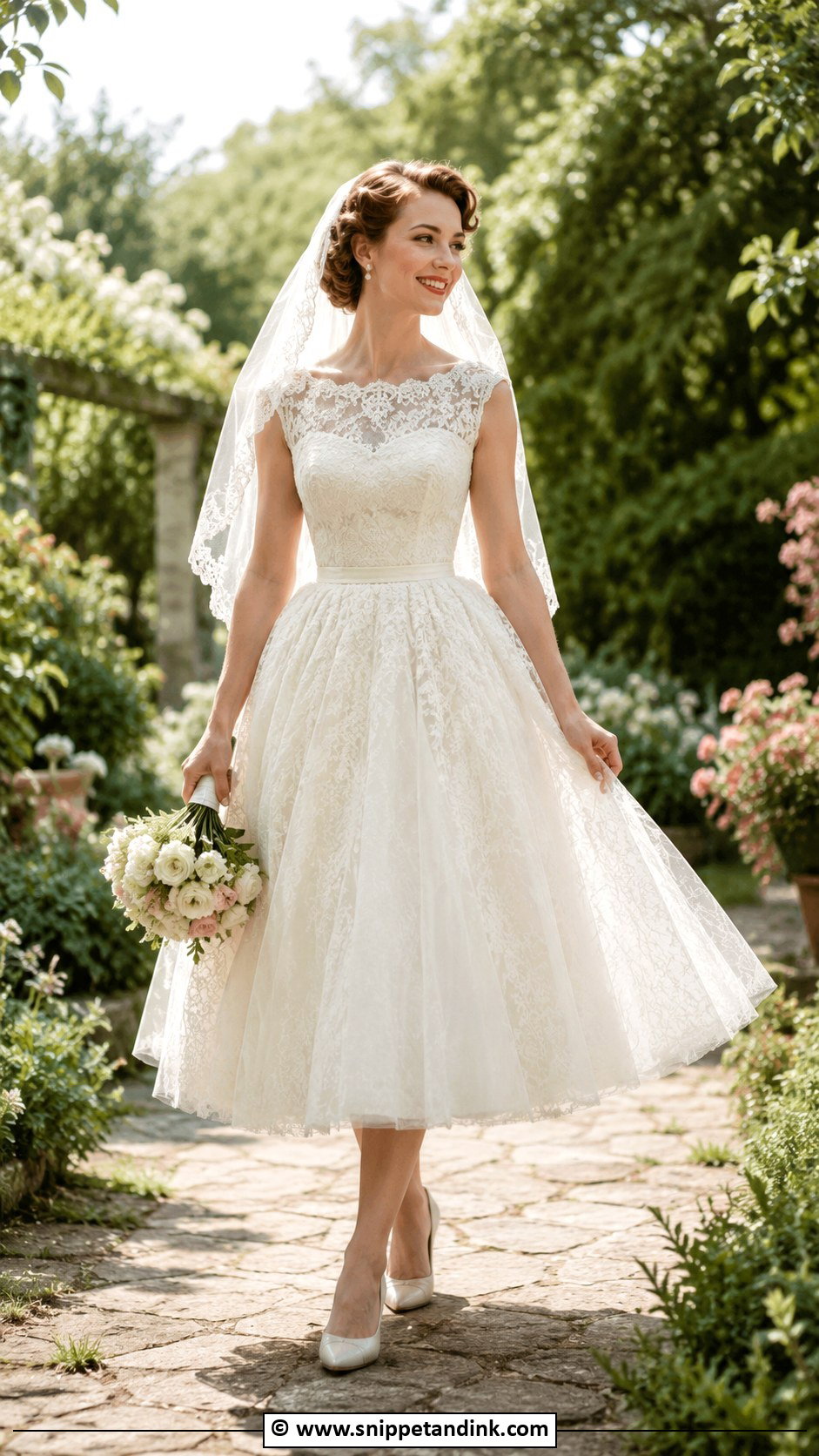
Outdoors, the dress has to cope with grass, wind and sun. Lace, chiffon, tulle and organza are the comfortable fabrics here, cut with a fitted bodice and full skirt. Thin heels sink into a lawn, so wear block heels or flats. A veil that moves in the wind is lovely in photos, but it needs to be anchored with a comb and a couple of bobby pins crossed underneath. Floral details settle naturally into a garden setting.

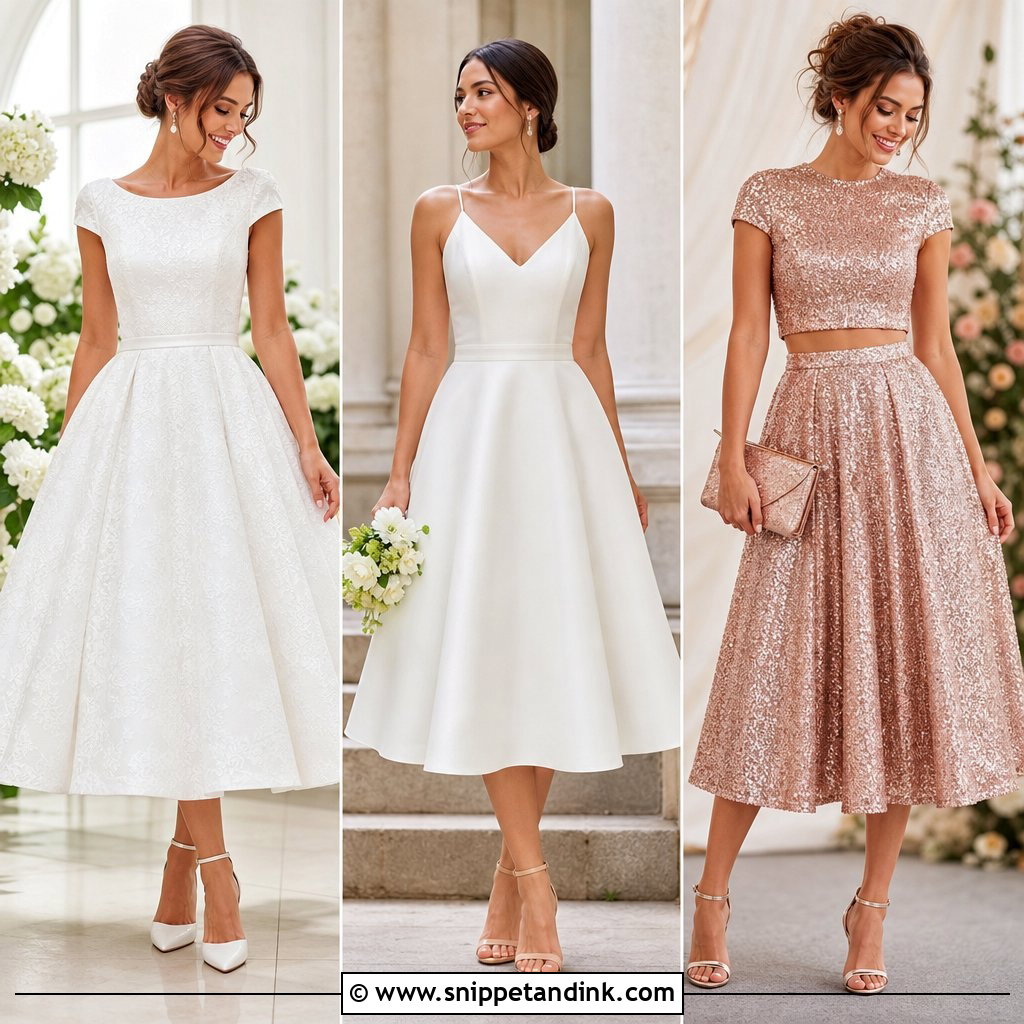
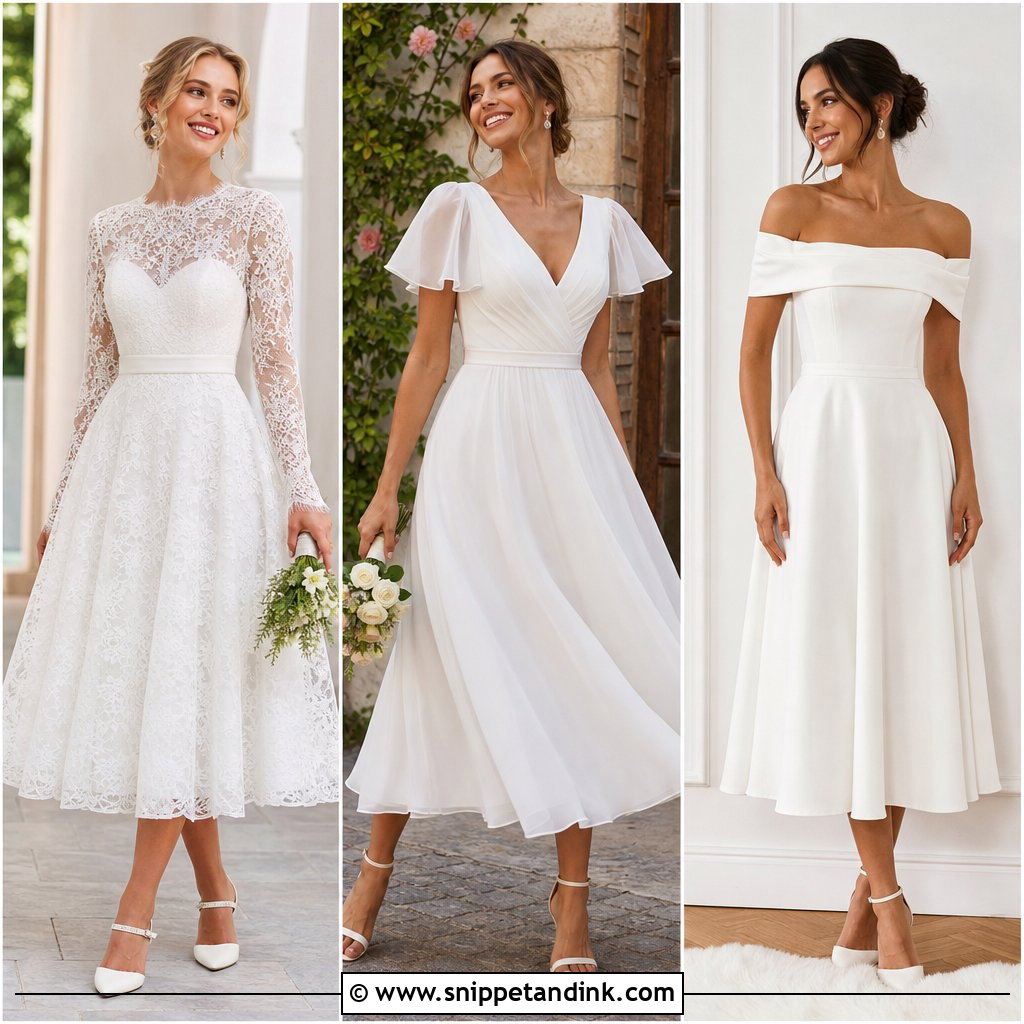
20. 1950S Beach Tea Length Wedding Dress
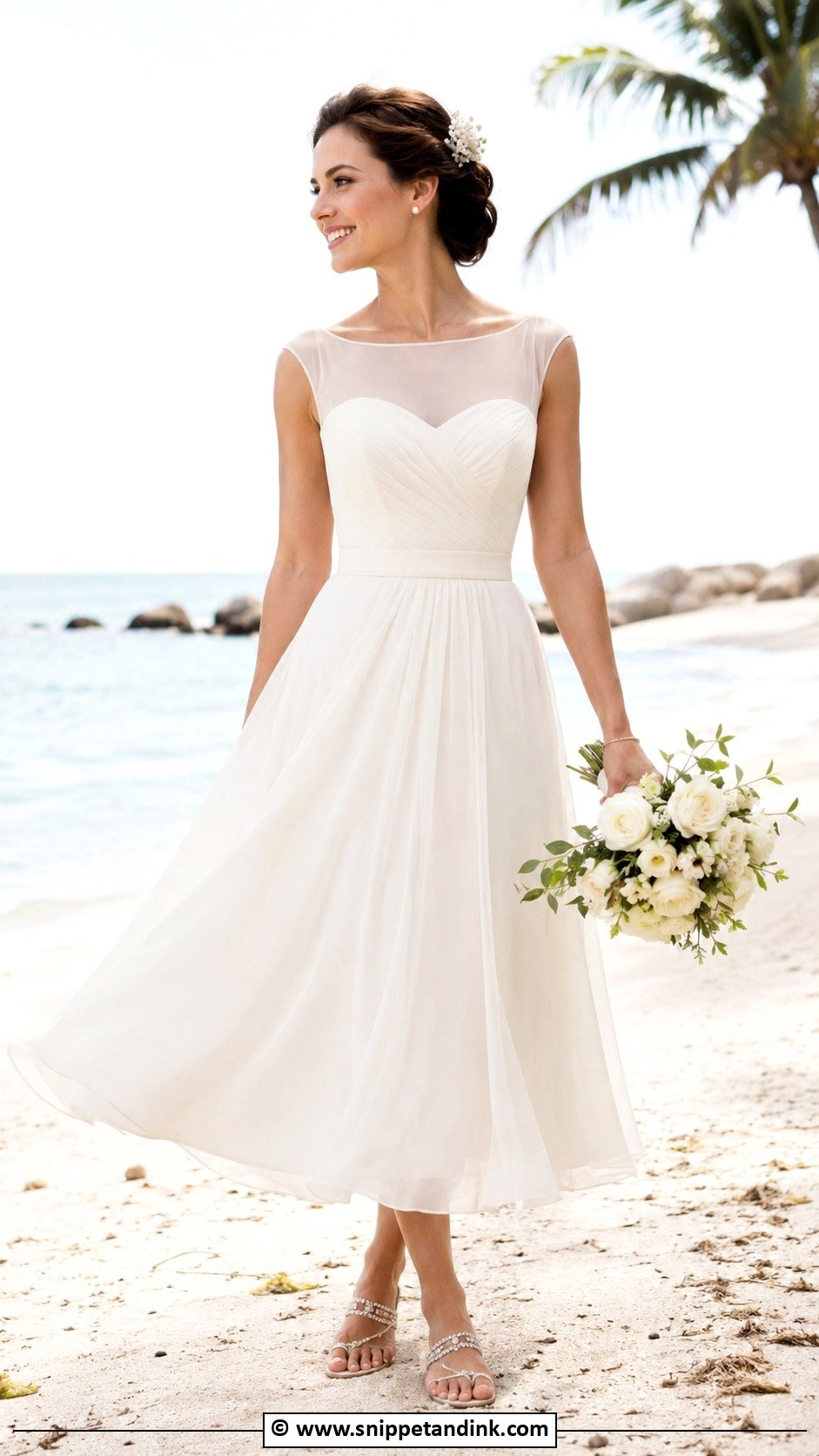
On sand, I’d swap structure for ease. Chiffon, cotton lace or soft tulle breathe better than heavy satin, and a gentle skirt without a crinoline won’t fill up with wind. Tea length is a practical length here because the hem stays above wet sand. Flat sandals, pearl studs and a hair accessory that is pinned securely are all you need. A short veil or none at all keeps it relaxed, and the vintage outline survives through the fitted waist alone.
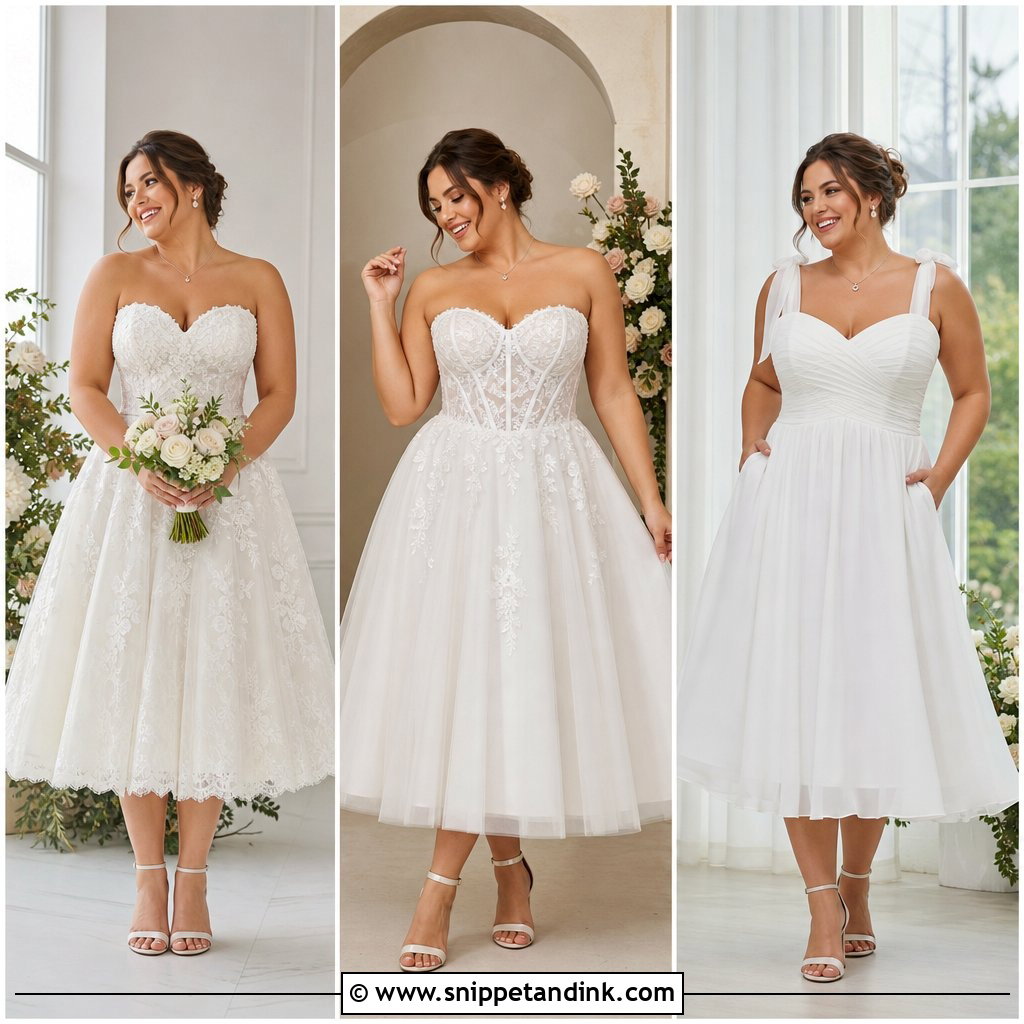
21. 1950S Plus Size Tea Length Wedding Dress
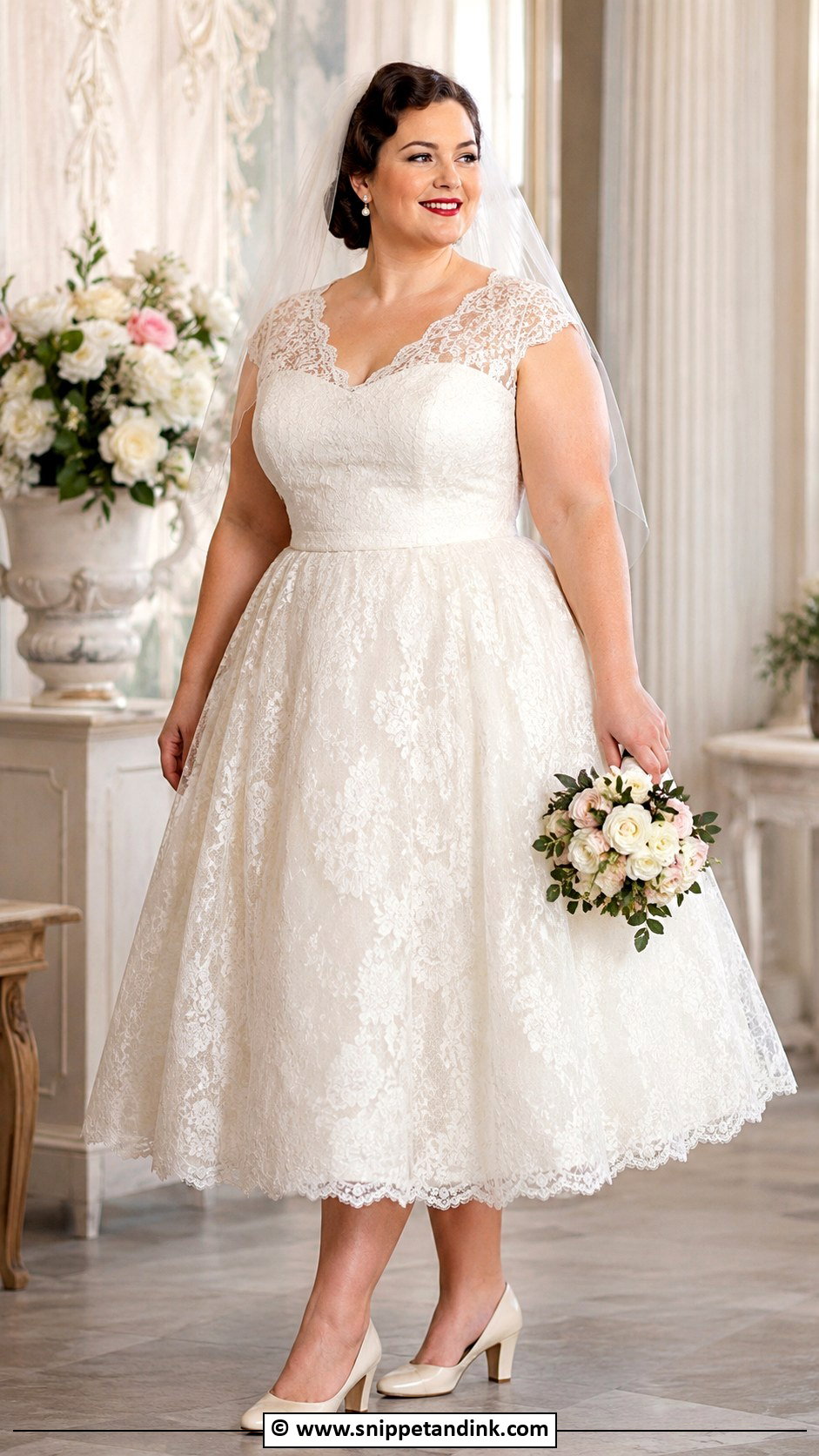
A plus size tea length wedding dress works when the proportions are right, and that starts with a properly supportive bodice. I look for internal boning and a built-in cup or a structured lining before I look at anything else. A skirt that falls away from the hips without bulky gathering at the waist keeps the line clean, and lace, mikado, satin and structured tulle all manage that. V, sweetheart and bateau necklines balance the top. A wide sash can mark the waist. Choose shoes you can stand in for hours, because comfort shows on your face in every photo.
22. 1950S Petite Tea Length Wedding Dress
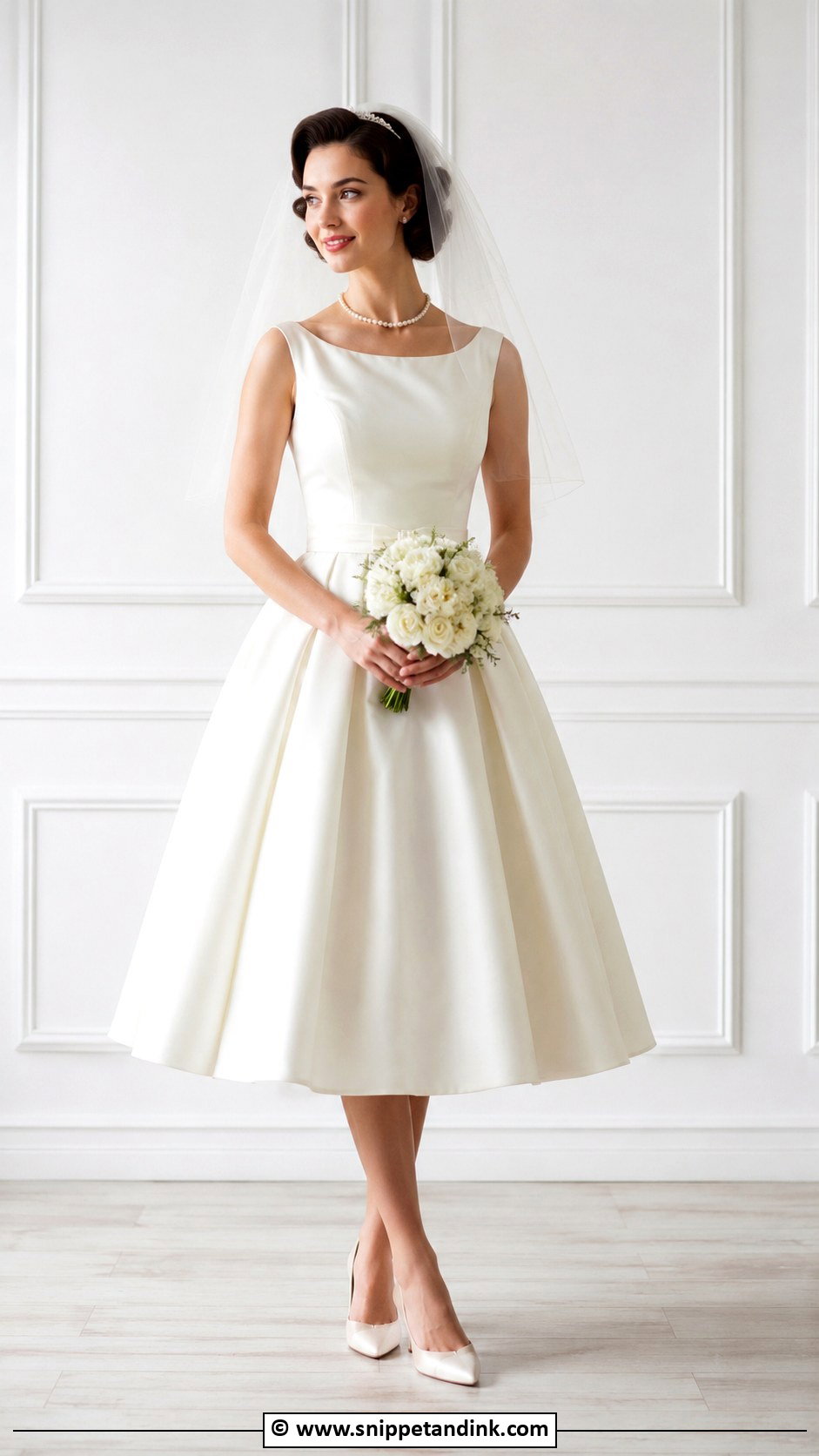
For petite brides, tea length has to be measured, not guessed. A hem just below the knee or at the narrowest point of the calf usually lengthens the leg; a hem that stops at the widest part of the calf cuts it. Keep the skirt volume moderate, since a big crinoline swallows a small frame. A defined waist, pointed heels, a simple veil and delicate jewelry keep the outline sleek. Vertical lace patterns or a clean V-neck also draw the eye up.
23. 1950S Modest Tea Length Wedding Dress
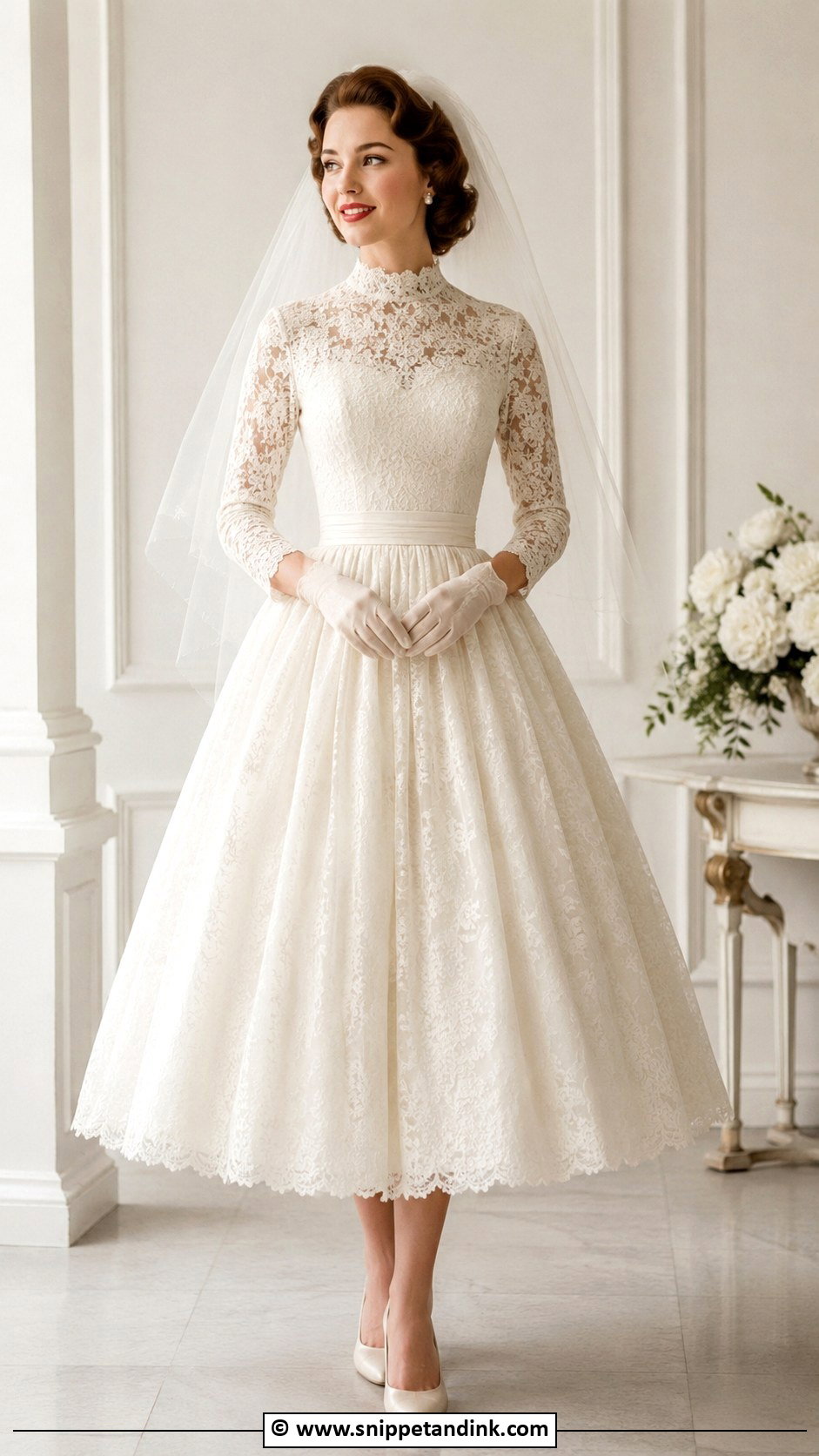
Coverage and the 1950s go together naturally, as plenty of original dresses had sleeves and high necks. Look for lace sleeves, a bateau neckline or a high illusion neckline, all with a defined waist so the shape stays visible. The shorter skirt keeps a covered dress from feeling heavy. Brides who want more coverage should still check the illusion mesh color against their skin in daylight, since it can look grey outdoors. Lightweight fabrics feel softer; structured satin feels formal. Closed-toe heels, pearl earrings and a soft veil finish it.
24. 1950S Reception Tea Length Wedding Dress
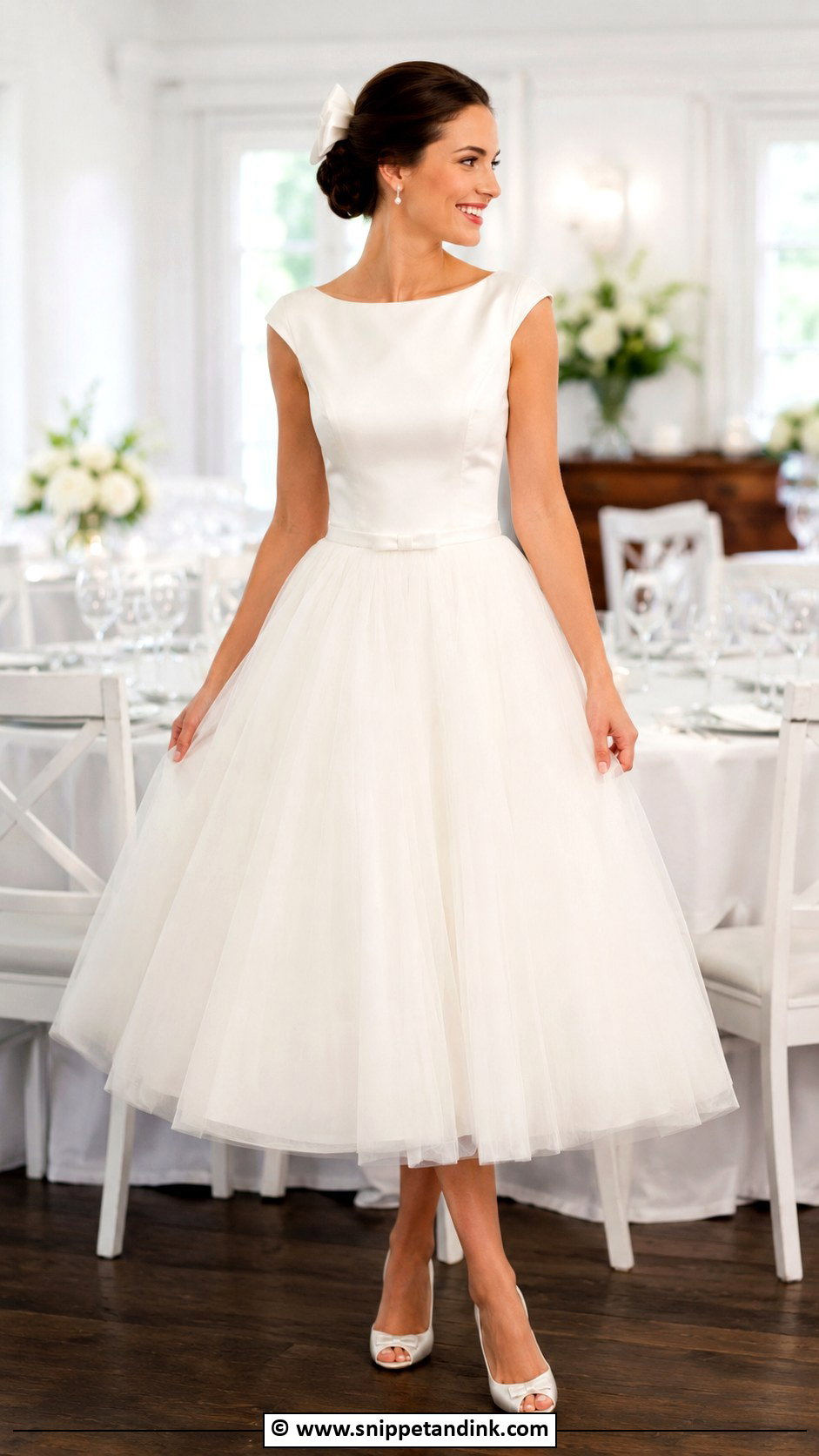
As a second outfit, tea length is hard to beat: you can dance without holding your skirt, and the change takes minutes. It can be simpler than the ceremony dress or serve as the only bridal outfit. A tulle skirt, satin bodice or lace overlay all work. Before you commit, do a full spin and a few dance steps in the fitting room to make sure the bodice stays put. Wear shoes you can actually dance in, since the hem shows them, and add pearl earrings and a small hair bow.

25. 1950S Elopement Tea Length Wedding Dress
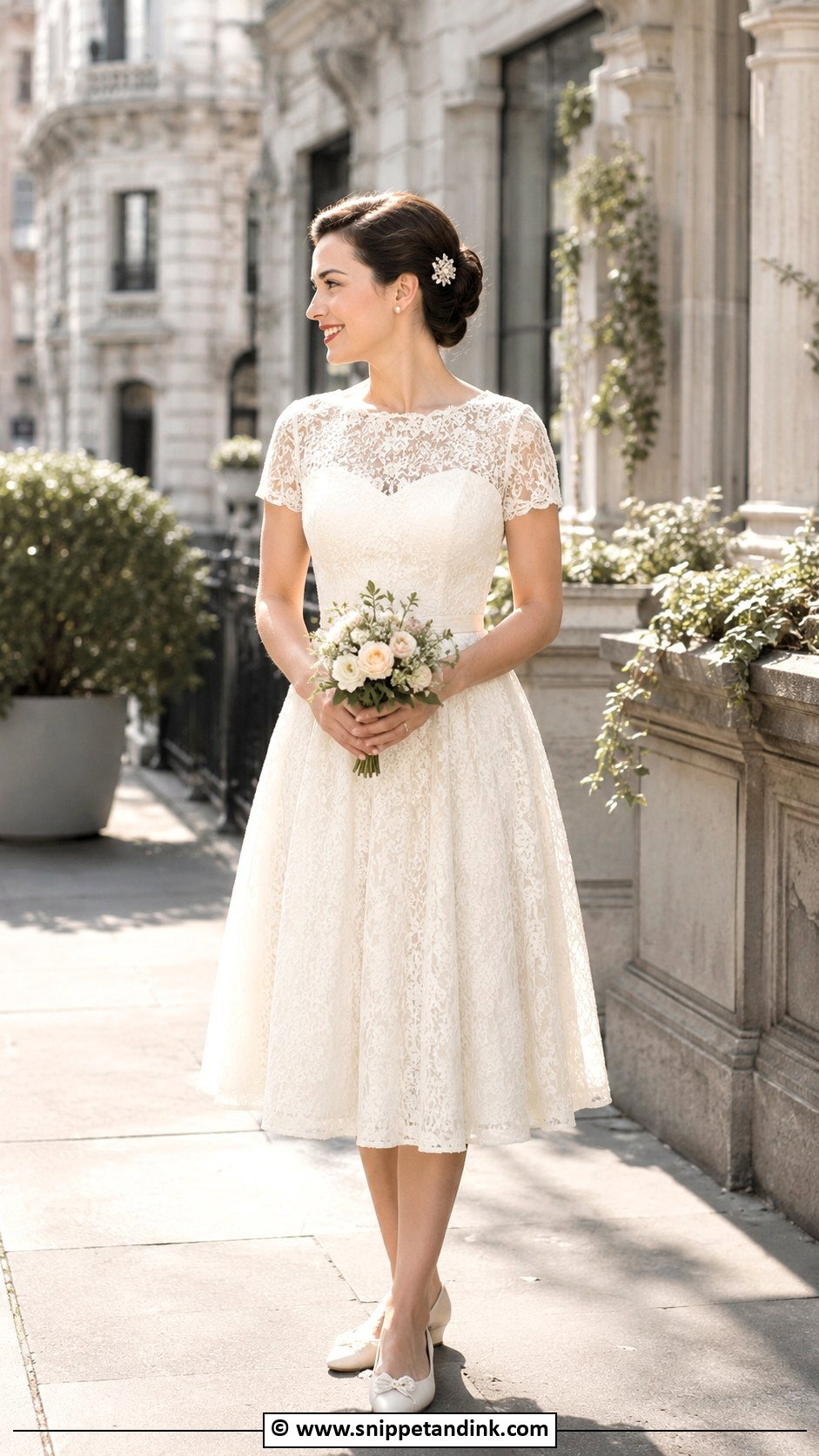
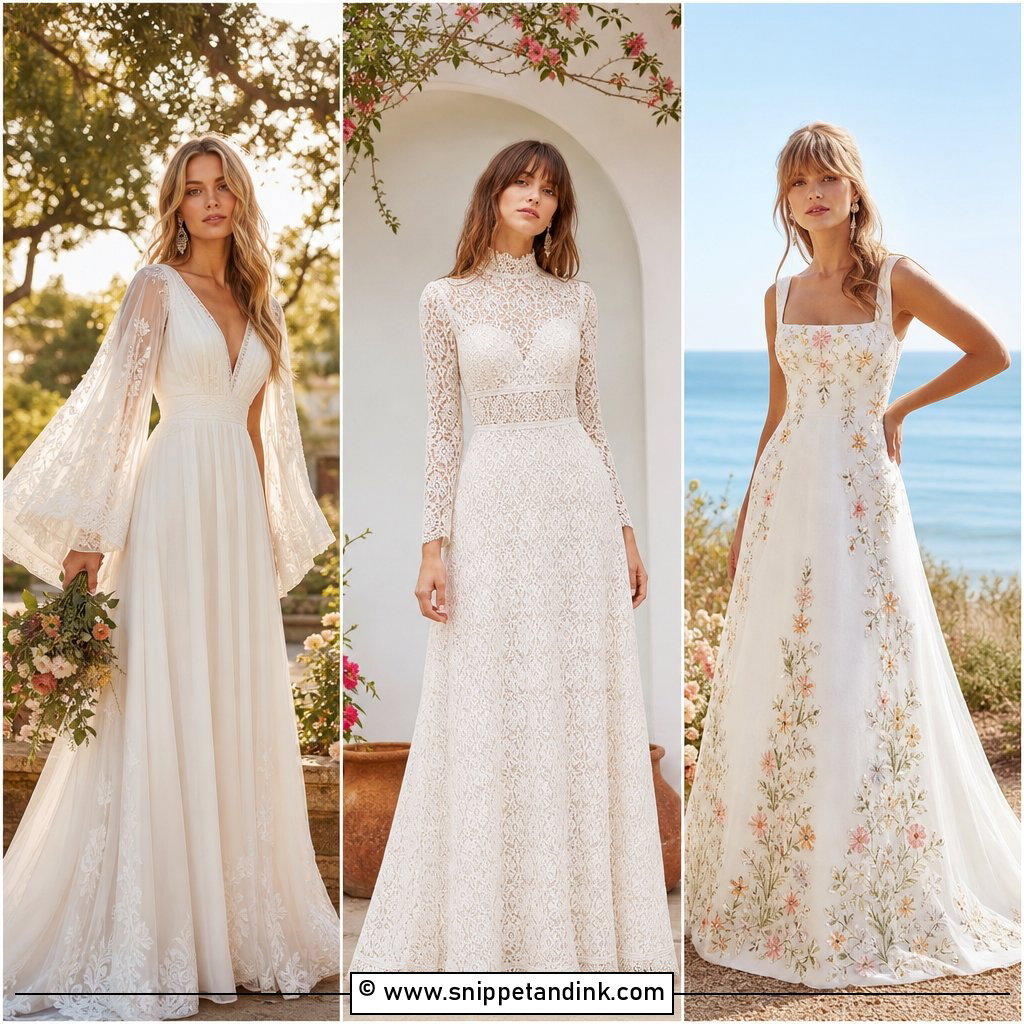
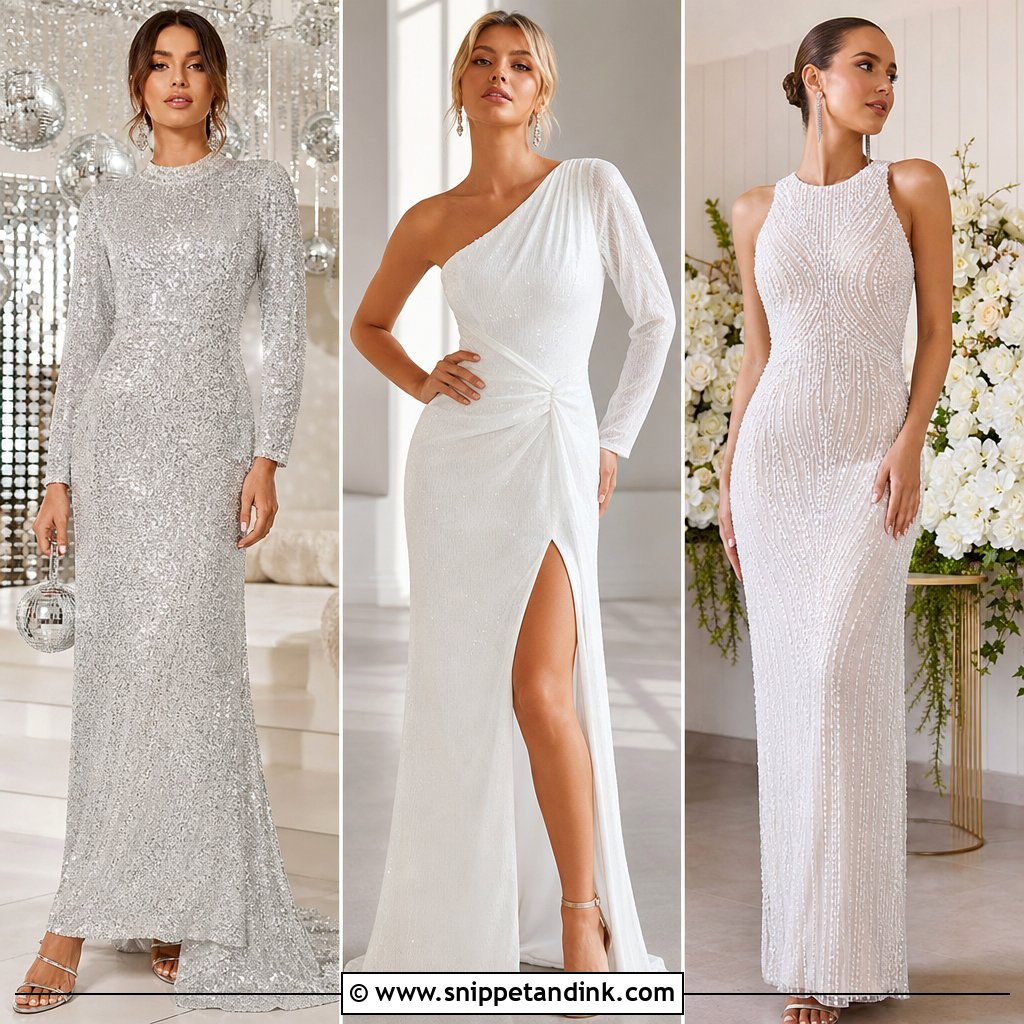
For an elopement, the dress has to travel. Lace and crepe pack better than satin, which creases in a suitcase and needs steaming on arrival. A defined waist gives the 1950s shape without bulk. Pair it with comfortable heels or flats, pearl earrings and a small bouquet. A birdcage veil or hair comb adds vintage detail and fits in a handbag. Sit, walk and climb a few stairs in it before you go, because you’ll be doing all three for photos.
Buying a Real 1950s Dress Instead of a Reproduction
An original dress from the decade can be wonderful, but it comes with limits that a new reproduction doesn’t. Vintage sizing ran much smaller than today’s labels, so ignore the tag and go by measurements: bust, waist and the back length from neck to waist, which is often shorter on old dresses.
What I check before a bride falls in love
- Underarms and the waist seam for yellowing or sweat marks that won’t lift.
- Old silk satin held to the light; fine splits along the grain mean the fabric is shattering and can’t be saved.
- The seam allowances inside, to see whether there’s any fabric to let out at all.
- The zip, which is often metal and may need replacing by a careful seamstress.
Take it to a seamstress who works with vintage before you buy if you can. Taking a dress in is usually possible; letting it out often isn’t. If the fit or condition is doubtful, a modern reproduction gives you the same silhouette with fabric you can actually clean and alter.
A Hem That Shows Your Shoes and Lets You Dance
What makes tea length bridal work is the balance of structure and lightness. The fabric, the petticoat underneath and the exact spot where the hem lands decide whether it looks fresh or like fancy dress. Lace and chiffon keep it soft, satin and mikado keep it formal, and a bow or polka dot gives it personality. Fit the waist precisely, choose shoes worth seeing, and you’ll have a dress that moves with you all day.
You'll Like These Ideas:








Leave a Reply