
Aso Ebi (you’ll sometimes see it typed as Ask Ebi) is the coordinated fabric that family, friends and social groups buy and wear to show they stand with the couple, and it is what turns guests at Nigerian weddings into a sea of matching colour. Lace is the favourite because it can be cut into almost anything: fitted gowns, iro and buba, trouser sets, wide kaftans. Everyone gets the same fabric, so the design is where you show your own taste. When I help a guest plan her style, I start with three things before any sketch: how heavy the lace is, how many hours she will be wearing it, and how much she plans to dance. Lining, neckline security and hem length then do more for the final look than any amount of extra stones.
Briefing Your Tailor the Week the Fabric Arrives
Aso Ebi lace is usually bought through the celebrant’s family, and once a whole group of guests collects their fabric, the good tailors fill up quickly. I tell guests to book a tailor before the lace is even in their hands, and to hand it over with a clear brief rather than a screenshot alone.
- Check how much fabric you have. Lace is often sold in pieces of around five yards, which covers most gowns but can run short for long sleeves plus a cape or a wide bubu. Ask the tailor before you choose the style, not after.
- Bring two reference pictures at most, and say which detail you want from each. Six inspiration photos usually produce a dress with six ideas in it.
- Agree the lining colour. Skin-tone, matching shade or contrast changes the whole look of open lace.
- Ask how the tailor will place the motifs. Good lace has a pattern direction and scalloped edges that should be used on hems and sleeves, not cut off.
- Book two fittings and give the date of the event clearly. In busy wedding months, leave several weeks of margin, since timings vary a lot between tailors.
1. Aso Ebi Lace Mermaid Gown
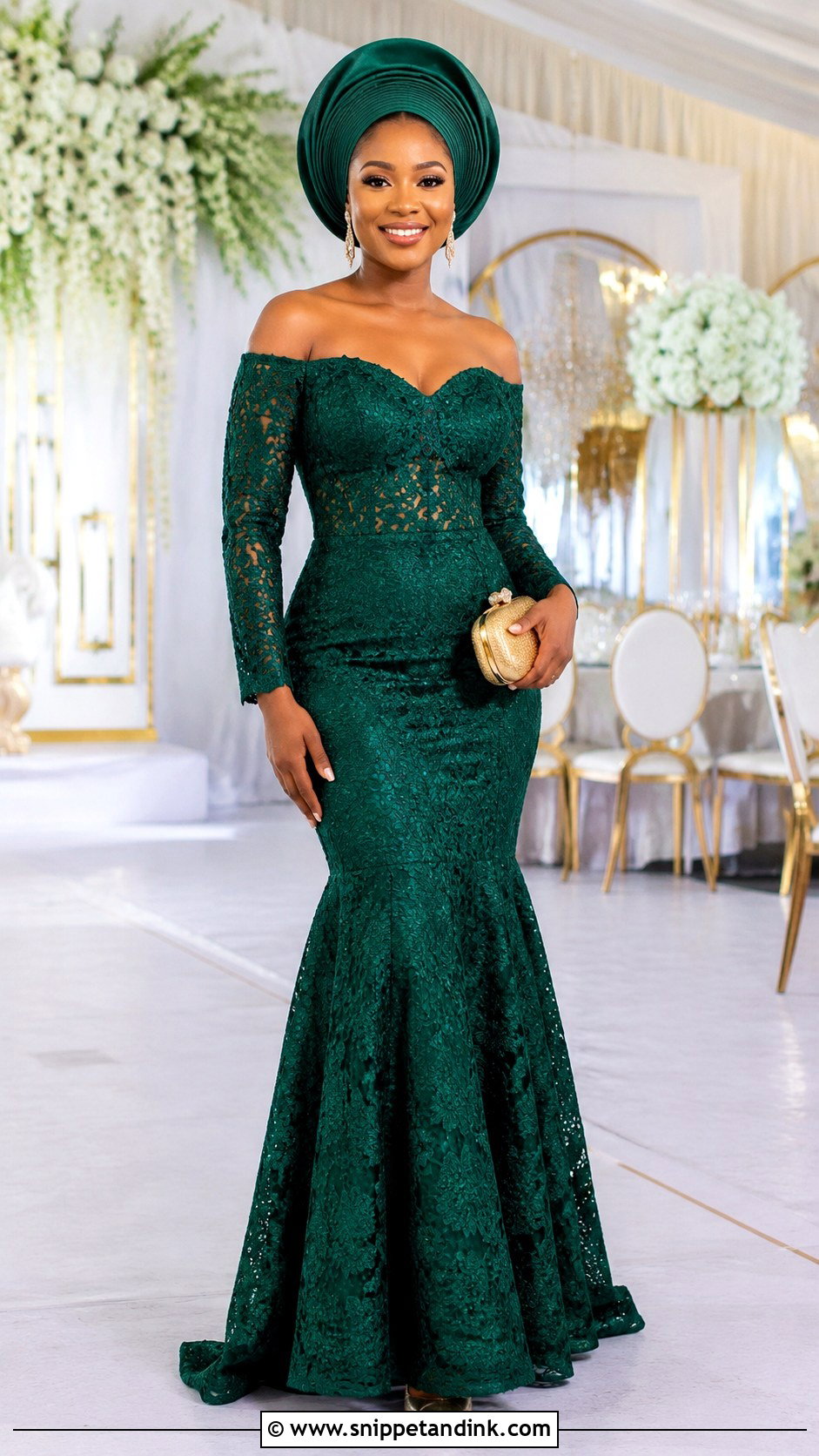
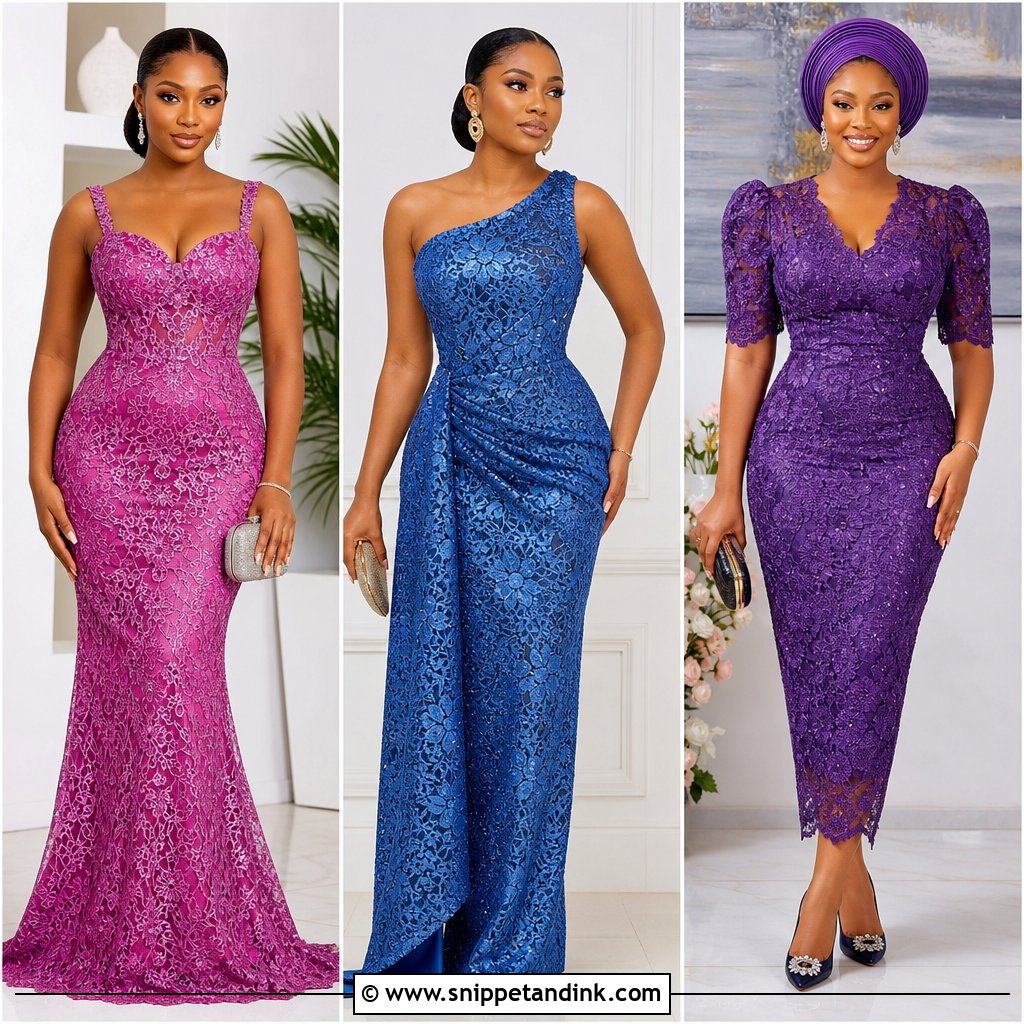
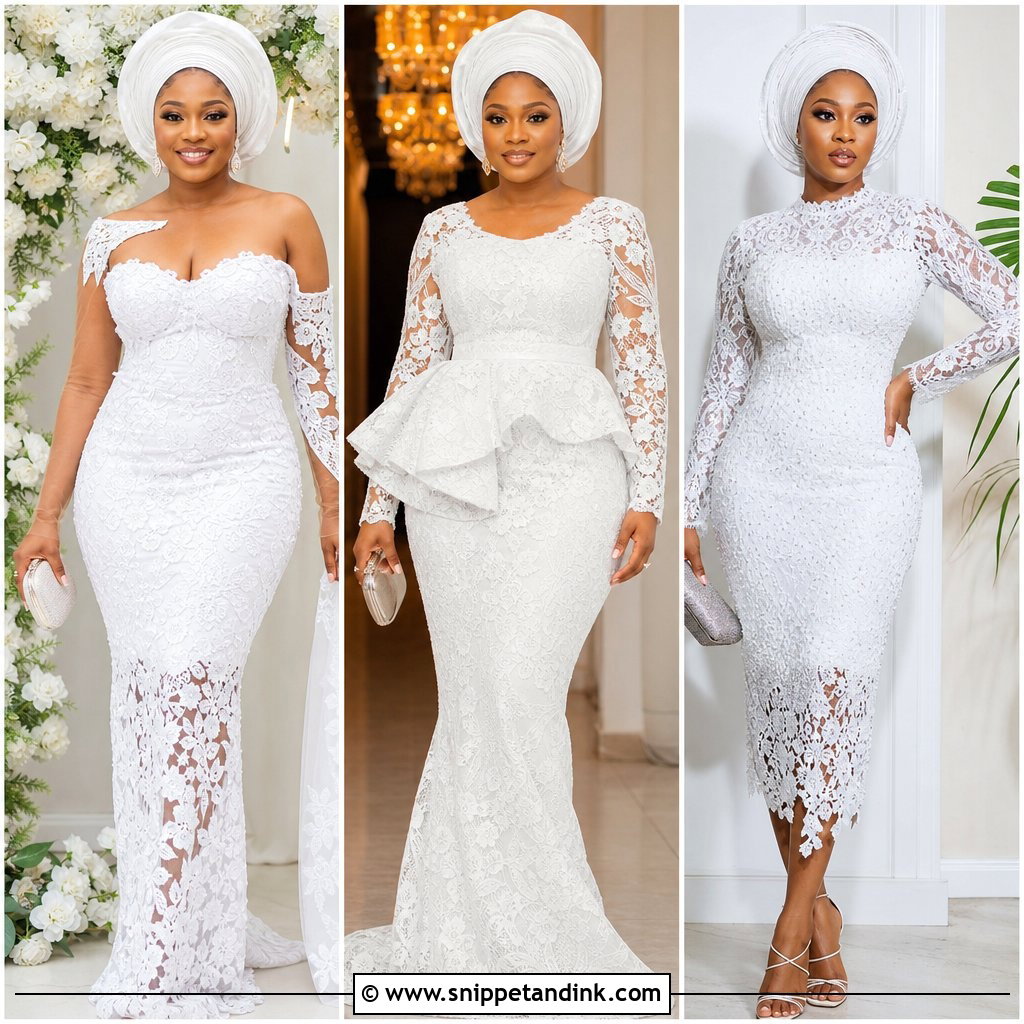
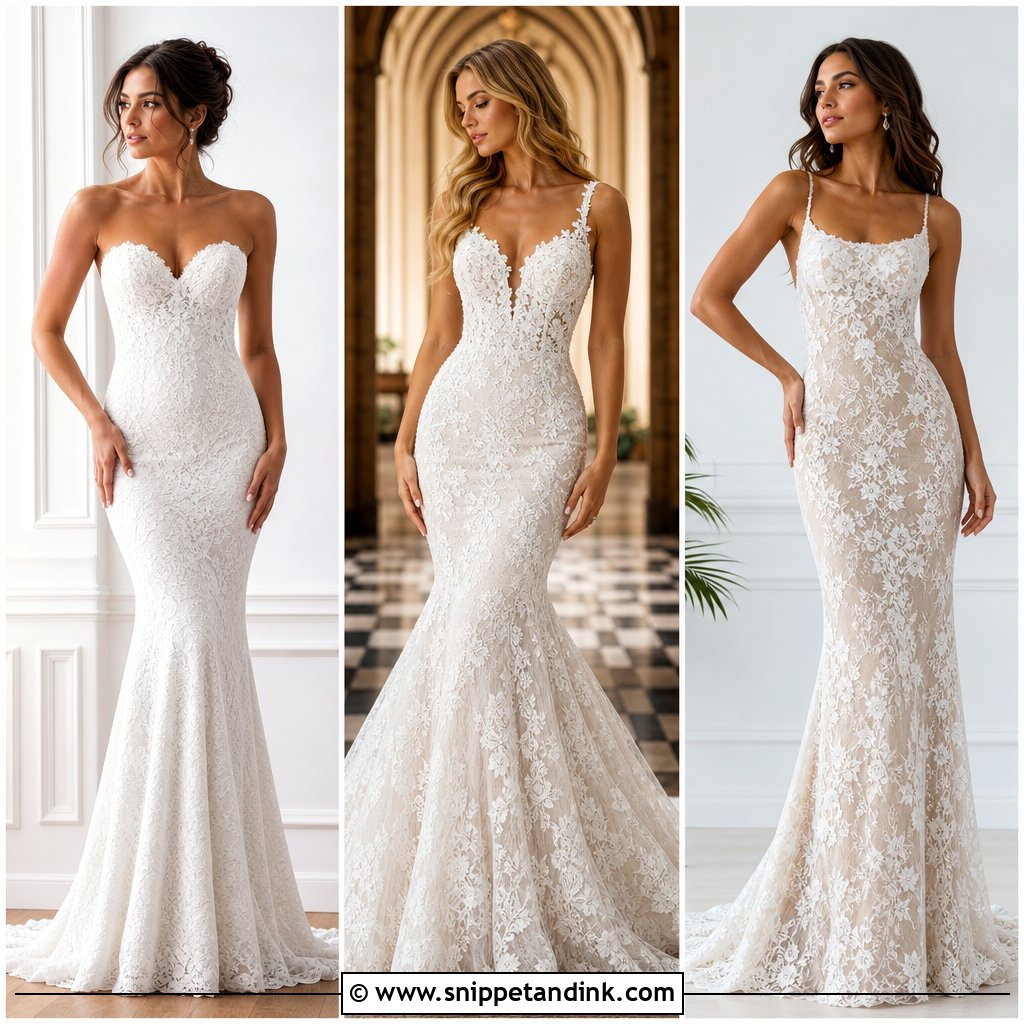
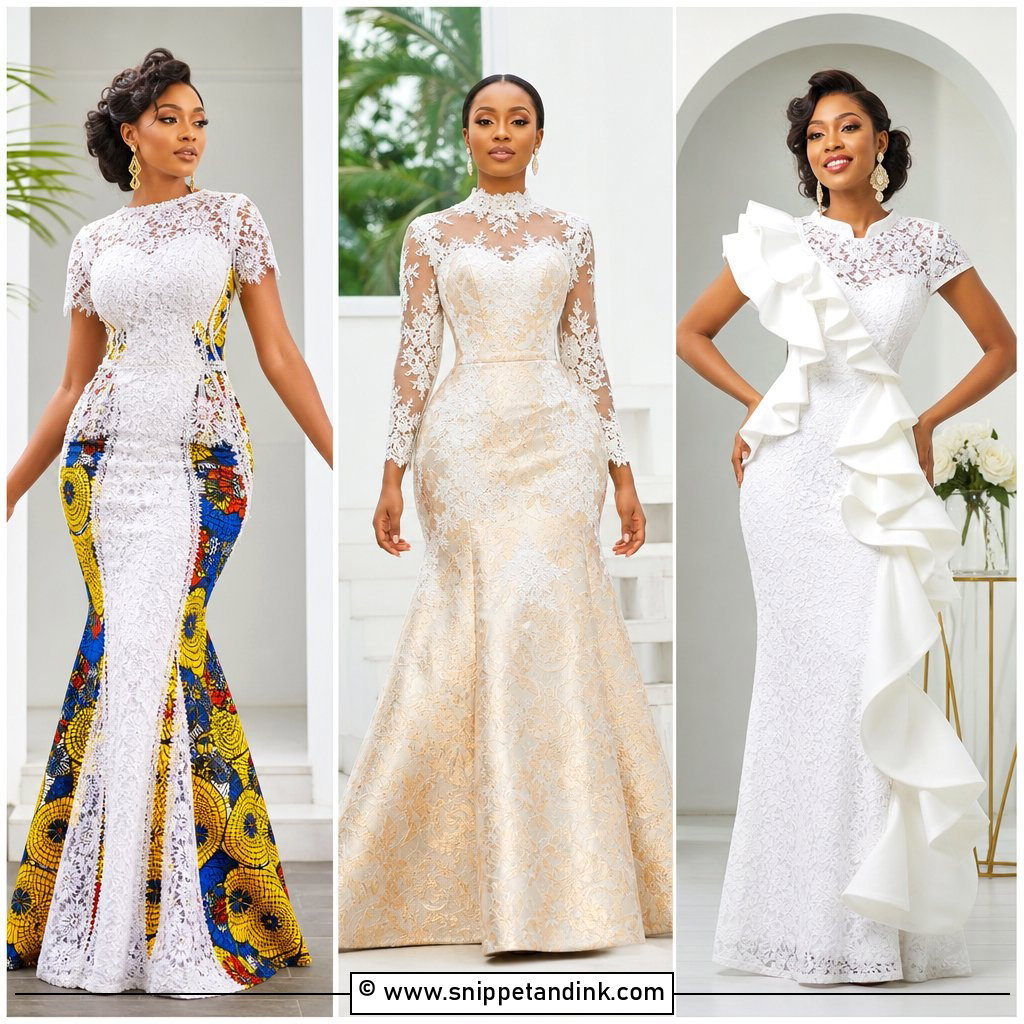
The mermaid is the most requested Aso Ebi shape, and the one tailors most often get wrong at the knee. The bodice follows the figure and the skirt flares below the knee; set that flare point too low and you will shuffle all evening. I ask for a test walk and a sit-down before the hem is finished. Pick a sweetheart, square or soft curved neckline based on the bust support you need, with light boning for a smooth line. Heavily beaded lace needs very little jewellery: simple drops, metallic pumps, a compact clutch and the matching gele. Emerald, burgundy, royal blue and champagne all suit this cut.
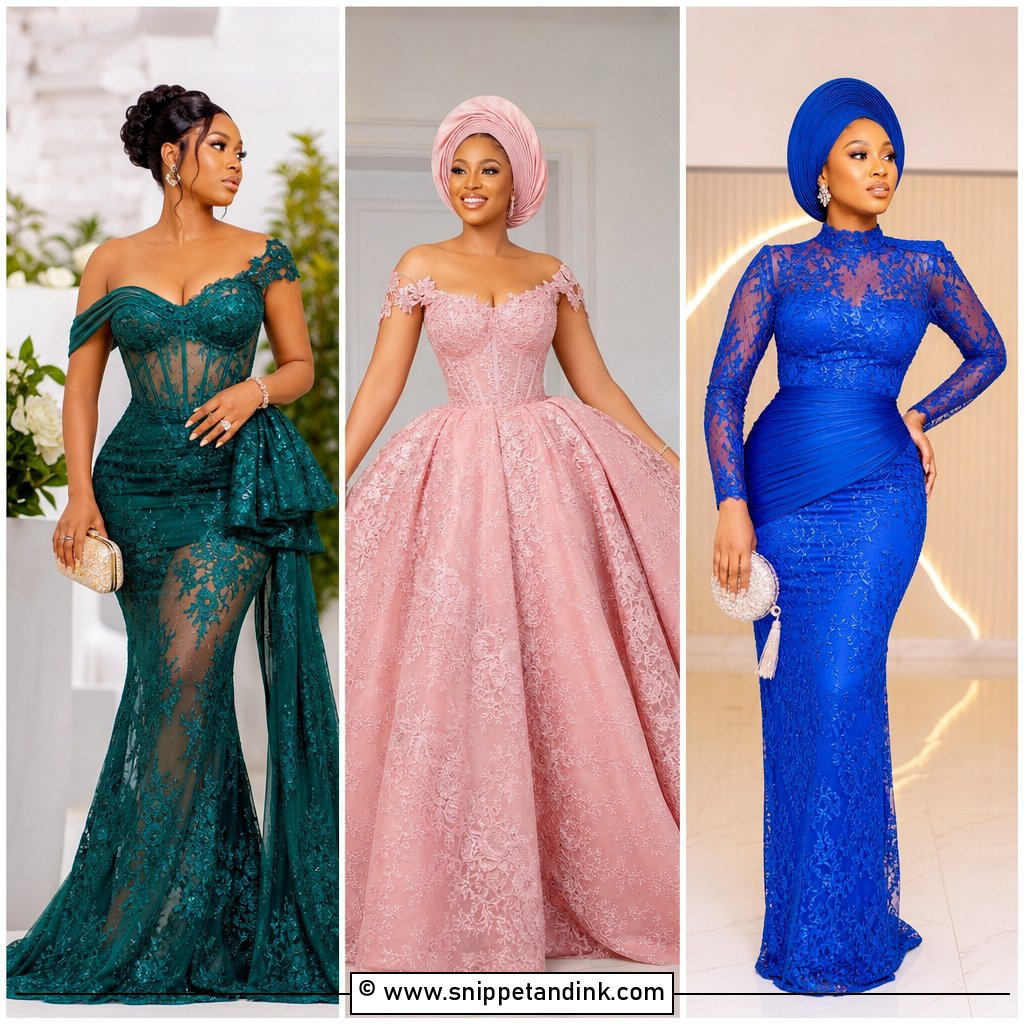
2. Aso Ebi Lace Corset Gown
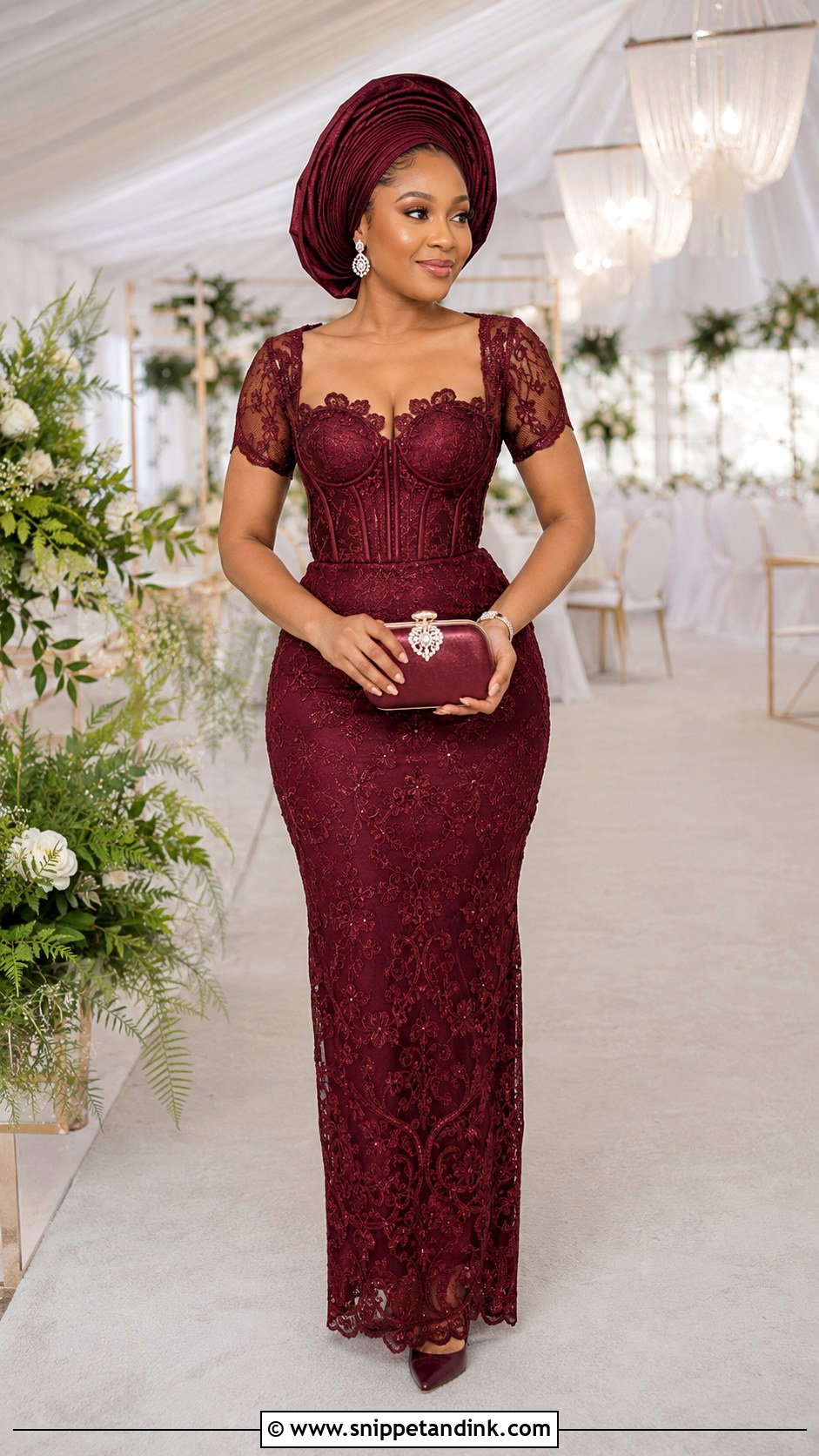
A corset gown gives the clearest structure of anything here. A well-built corset holds the waist and supports the bust so the skirt, straight or gently flared, can stay simple. Appliqué lace over a skin-tone lining is popular, but think about the room you’ll be in; a church service and a late reception call for different coverage. Short sleeves, detachable straps or sheer long sleeves help with both modesty and support. I always ask the tailor for spiral steel or flexible boning rather than rigid plastic, which bends and pokes after a few hours of sitting. A back lace-up also gives more room after the meal than a zip. Finish with a pleated gele, crystal earrings, pointed heels and a structured mini bag.
3. Aso Ebi Lace Peplum Gown
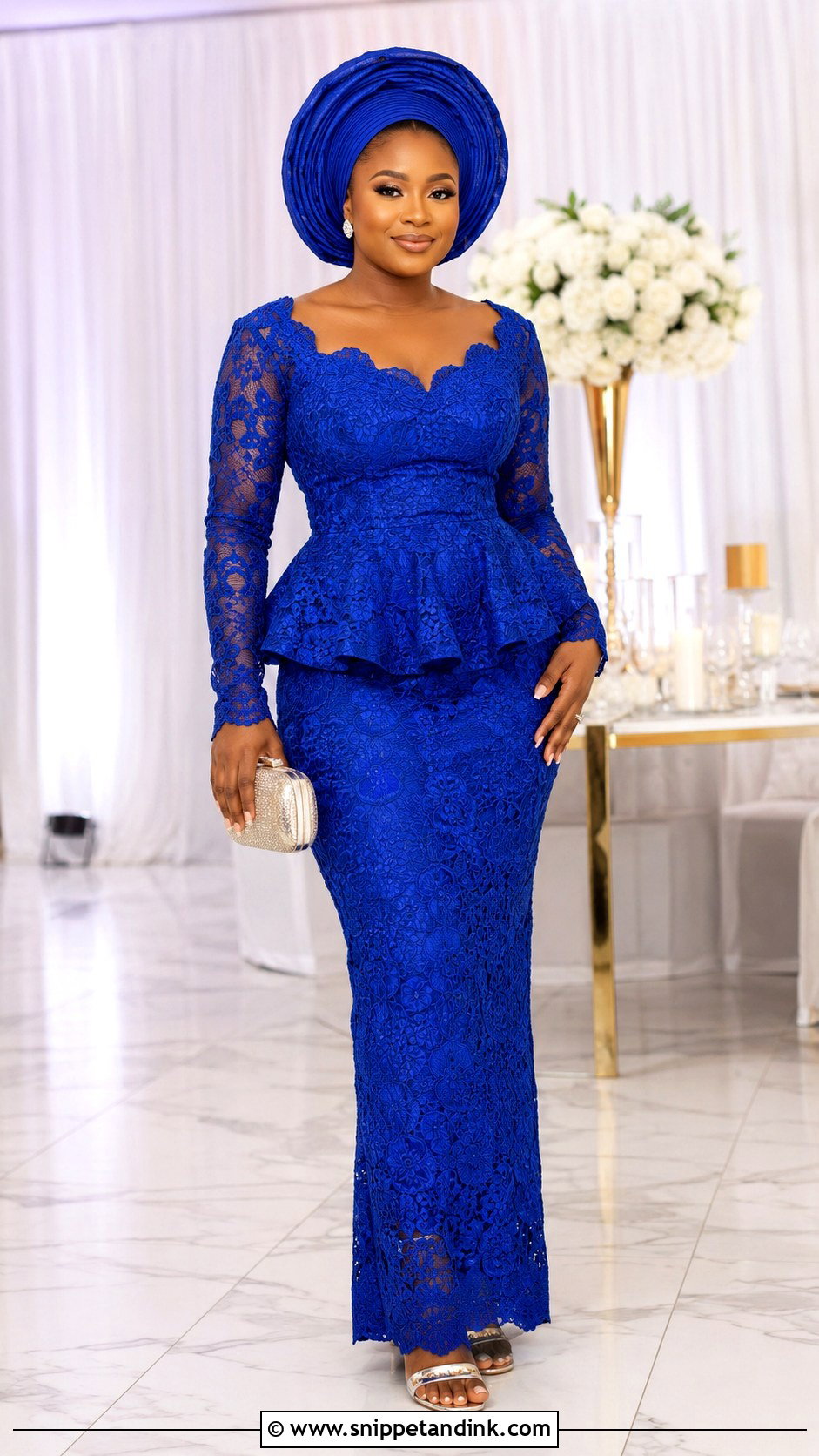
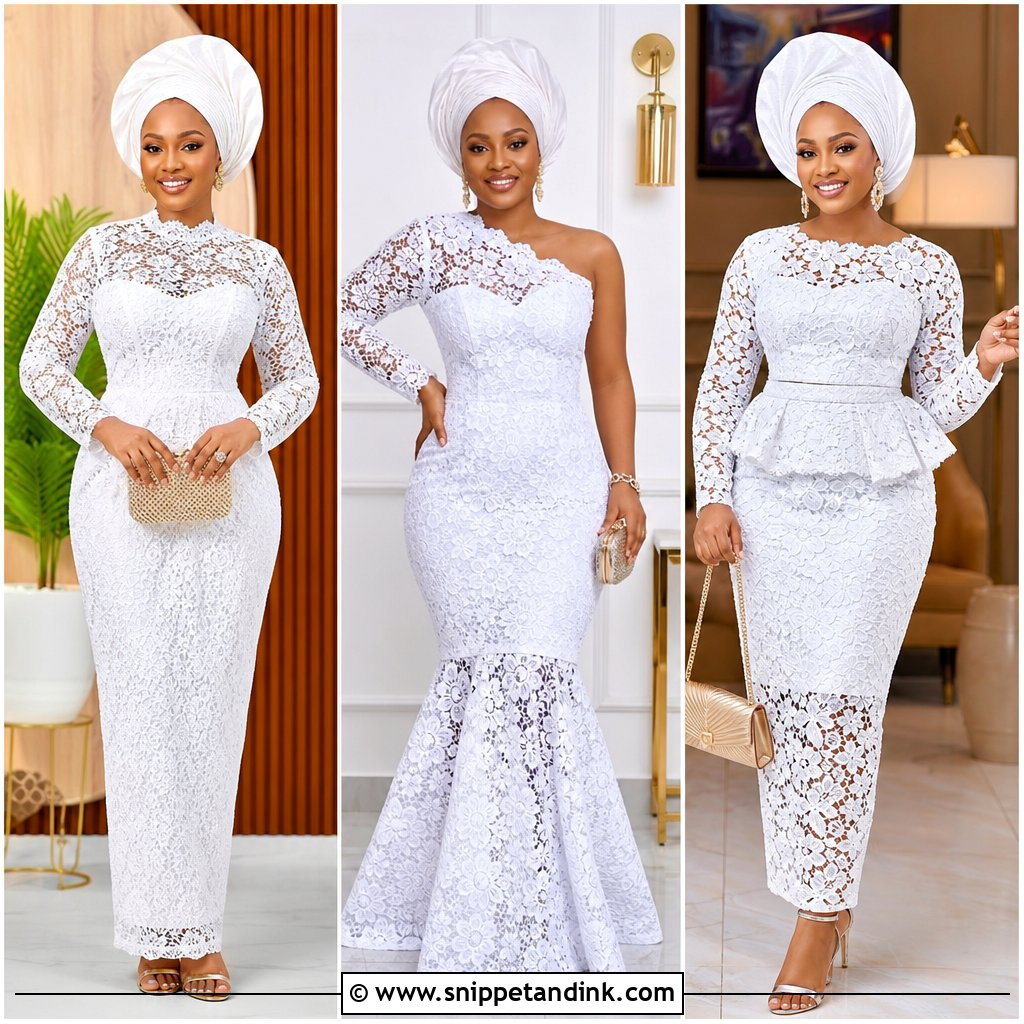
Peplums suit guests who want waist definition without a skin-tight midsection. The peplum itself can be soft and curved, pleated or asymmetrical, and the lace decides which: stiff beaded lace holds a crisp pleat, while soft cord lace just drapes. Place it exactly at the natural waist. Too high and it reads as maternity, too low and it shortens the legs. Pair it with a straight floor-length skirt or a subtle mermaid hem. Leave large appliqués out of the area directly below it, since that stacks volume. A matching gele, medium-height sandals, a gold clutch and studs are plenty.
4. Aso Ebi Lace Off-Shoulder Gown
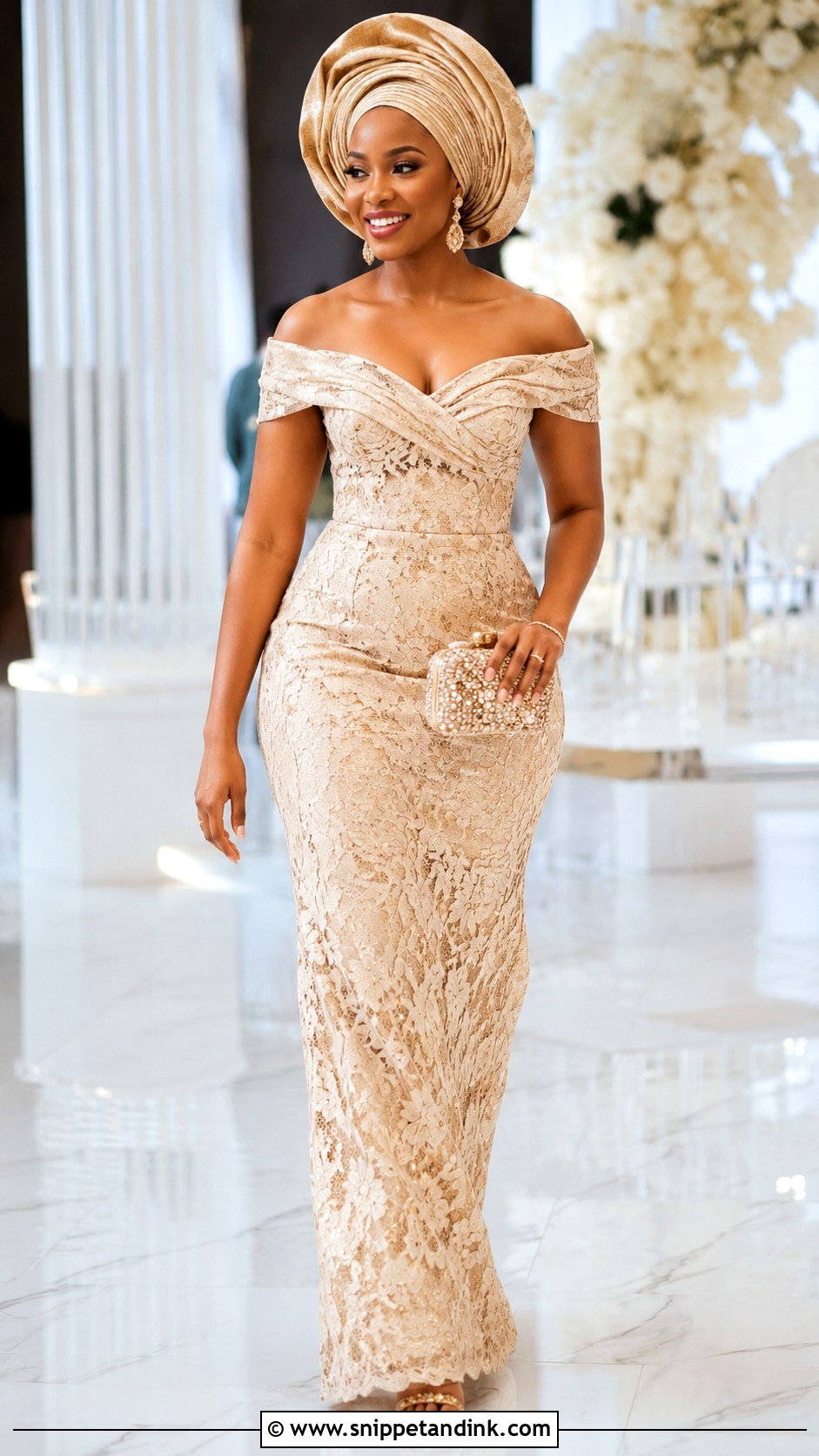
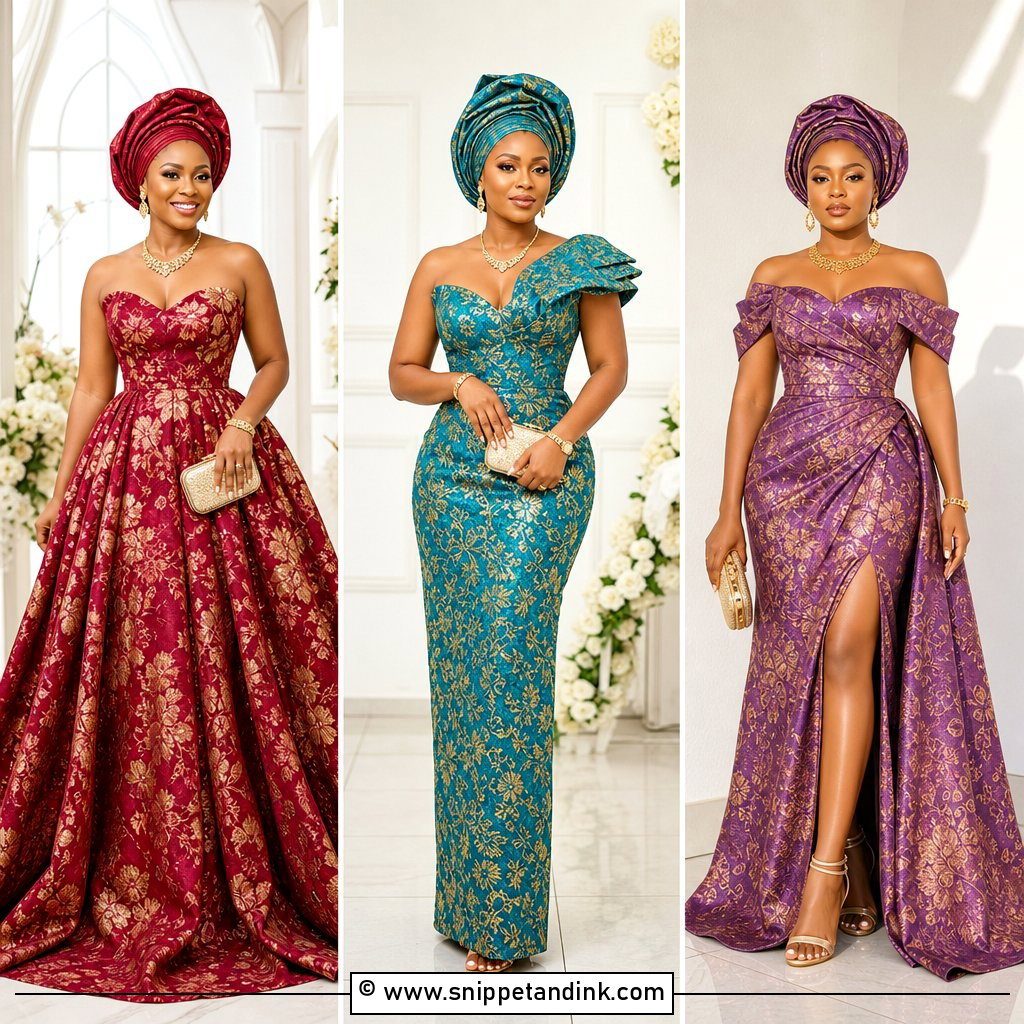
Off-shoulder lace frames the collarbones and neck, which is why it photographs so well under a tall gele. The difficulty is staying up. Request secure silicone-backed elastic, proper boning and a neckline cut so you can raise your arms to dance without hitching the dress back up every few minutes. I’d pair it with a modest mermaid or a straight column to balance the bare shoulders. Folded, softly draped or appliquéd necklines all work; just avoid adding big ruffles to lace that is already heavily beaded. A sculpted gele, delicate necklace, small earrings, metallic heels and a beaded clutch complete the outfit.
5. Aso Ebi Lace One-Shoulder Gown
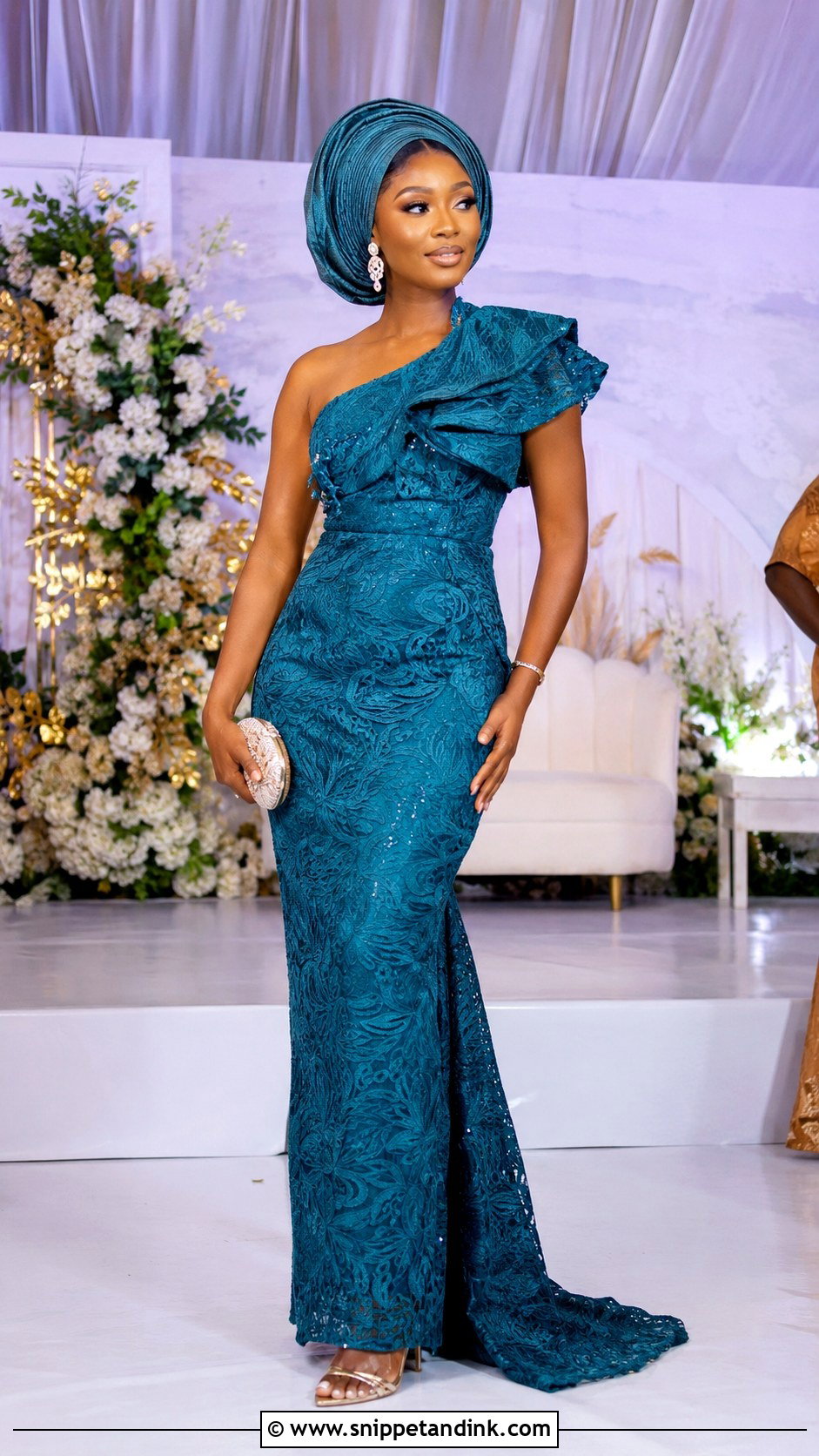
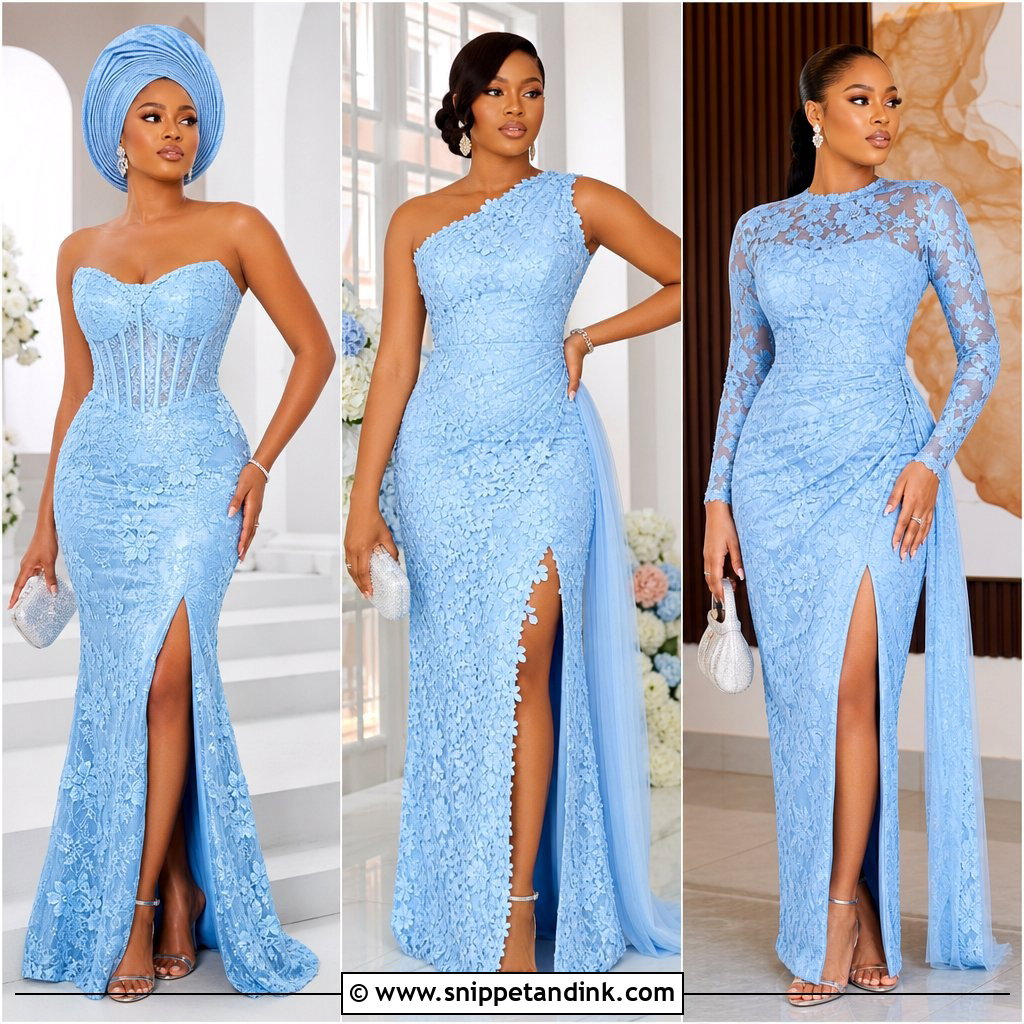
One shoulder covered and one bare gives a clean, modern line. The covered side can be a lace strap, a structured bow or a controlled ruffle over the upper arm, but keep it light: a heavy bow slowly drags the neckline sideways over the evening. A built-in inner corset anchors it. Balance the asymmetry with a fitted column or a gentle mermaid skirt. This is one style where a single statement earring on the bare side looks deliberate, with a slim bracelet, strappy heels, a compact clutch and a low gele or neat updo. Teal, plum, sapphire and deep red carry it well.
6. Aso Ebi Lace Long Sleeve Gown
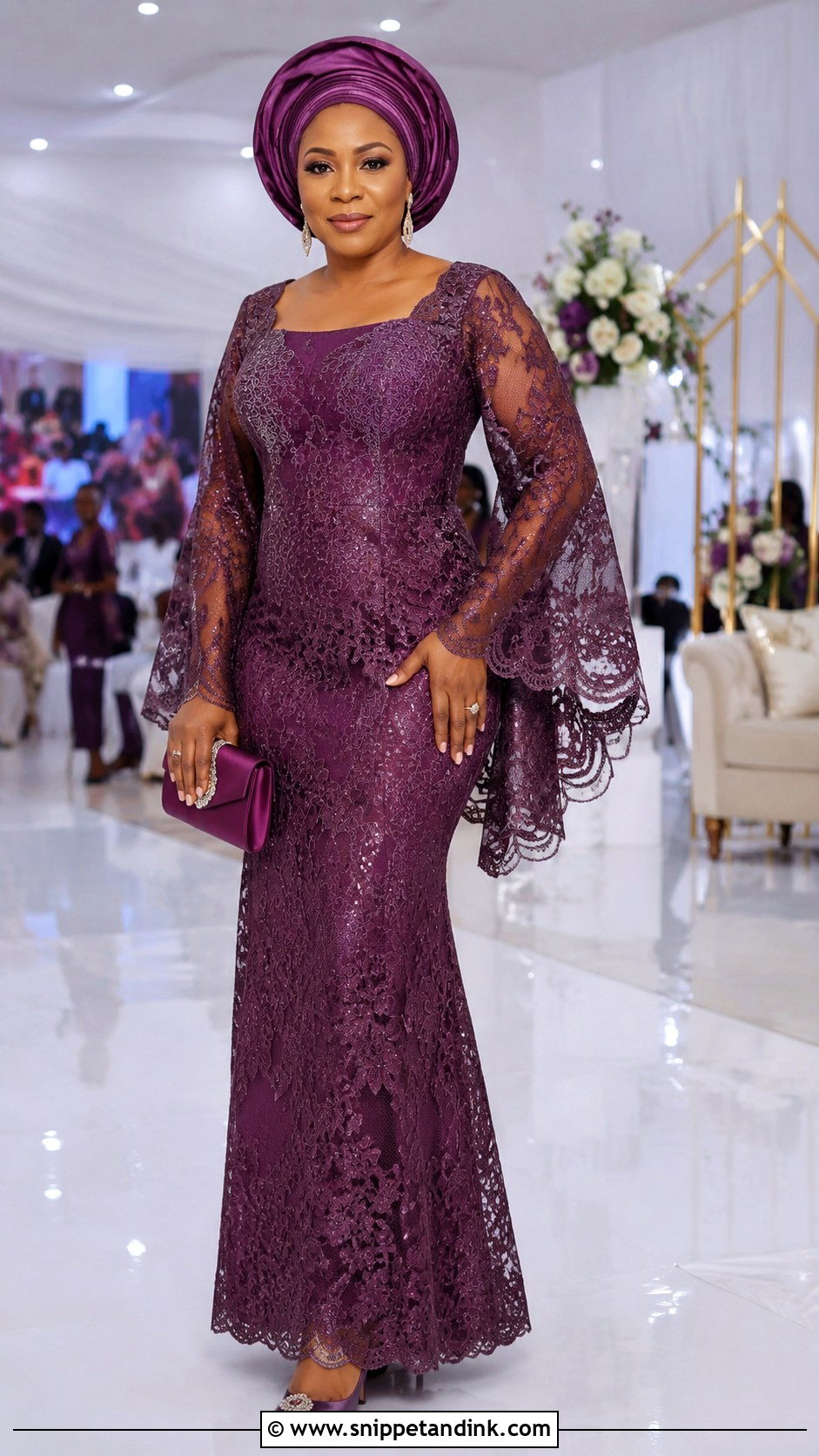
Long sleeves give real coverage and a smooth line from shoulder to hem, which is why they are a favourite for church ceremonies. The fit I fuss over is the armhole. Cut it too low and tight and you cannot lift your arm to eat, hug or wave; a slightly higher, roomier armhole moves far better. Choose breathable lace, then decide between fully lined, partly sheer or scalloped-cuff sleeves. With that much texture on the arms, keep the neckline simple; a square, boat or modest V stops the gown looking buttoned up. Lace sleeves get warm in an outdoor tent, so weigh the venue and season before committing. Add a matching gele, pointed pumps, a satin clutch and polished earrings.
7. Aso Ebi Lace Cape Gown
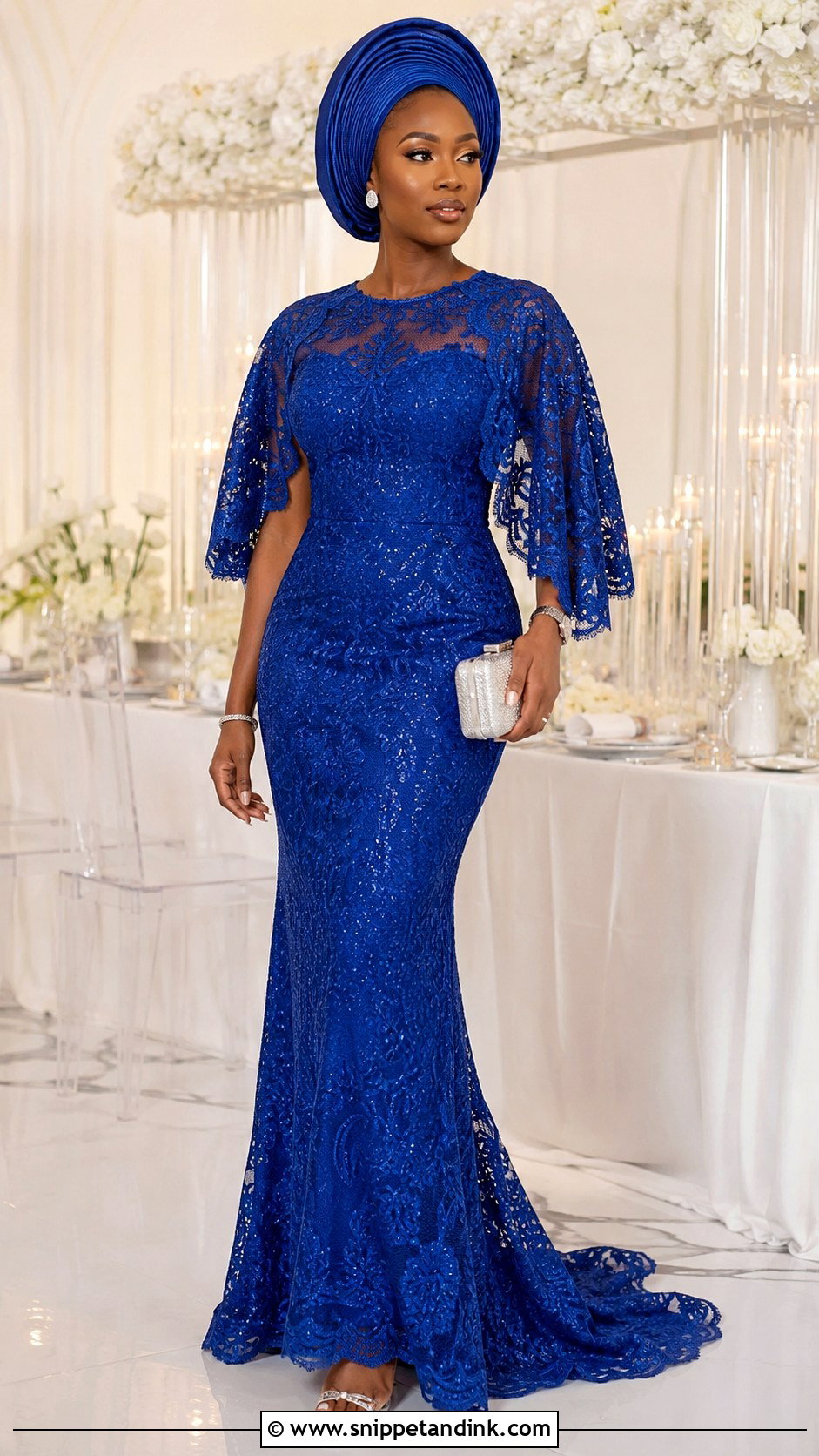
A cape brings drama without a huge skirt or complicated sleeves. It can fall from one shoulder, both shoulders or from the neckline, over a fitted lace column with a back slit or a soft mermaid hem. Fabric choice matters more than shape. Chiffon, tulle or soft lace move when you walk; a stiff, heavily beaded cape just hangs like a board. I keep cape length a few inches off the floor, because guests step on trailing fabric in a crowded hall. If your lace is already boldly embroidered, give the cape a plain border. A moderate gele, crystal studs, a small box clutch and sleek heels finish it.
8. Aso Ebi Lace Puff Sleeve Gown
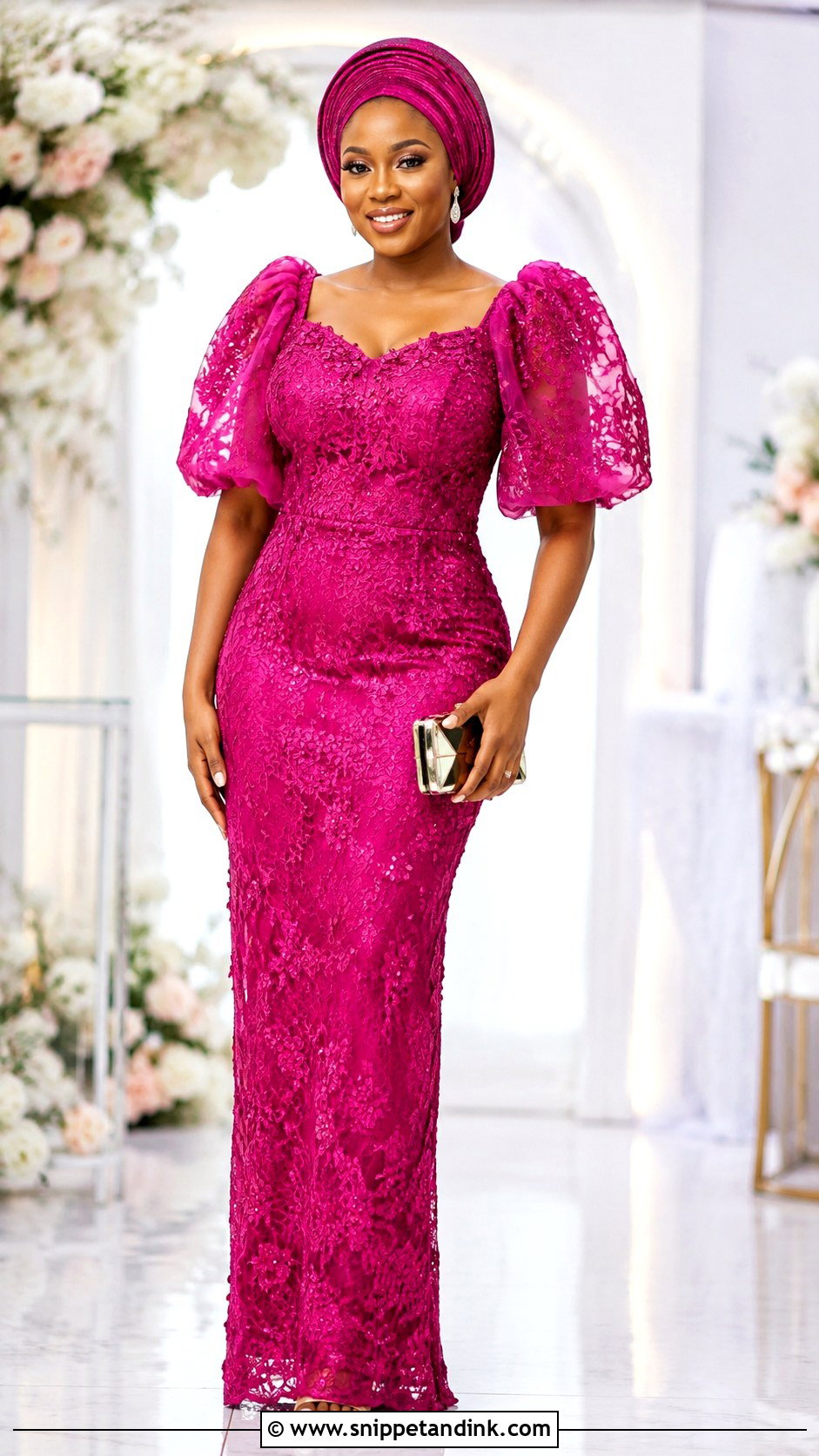
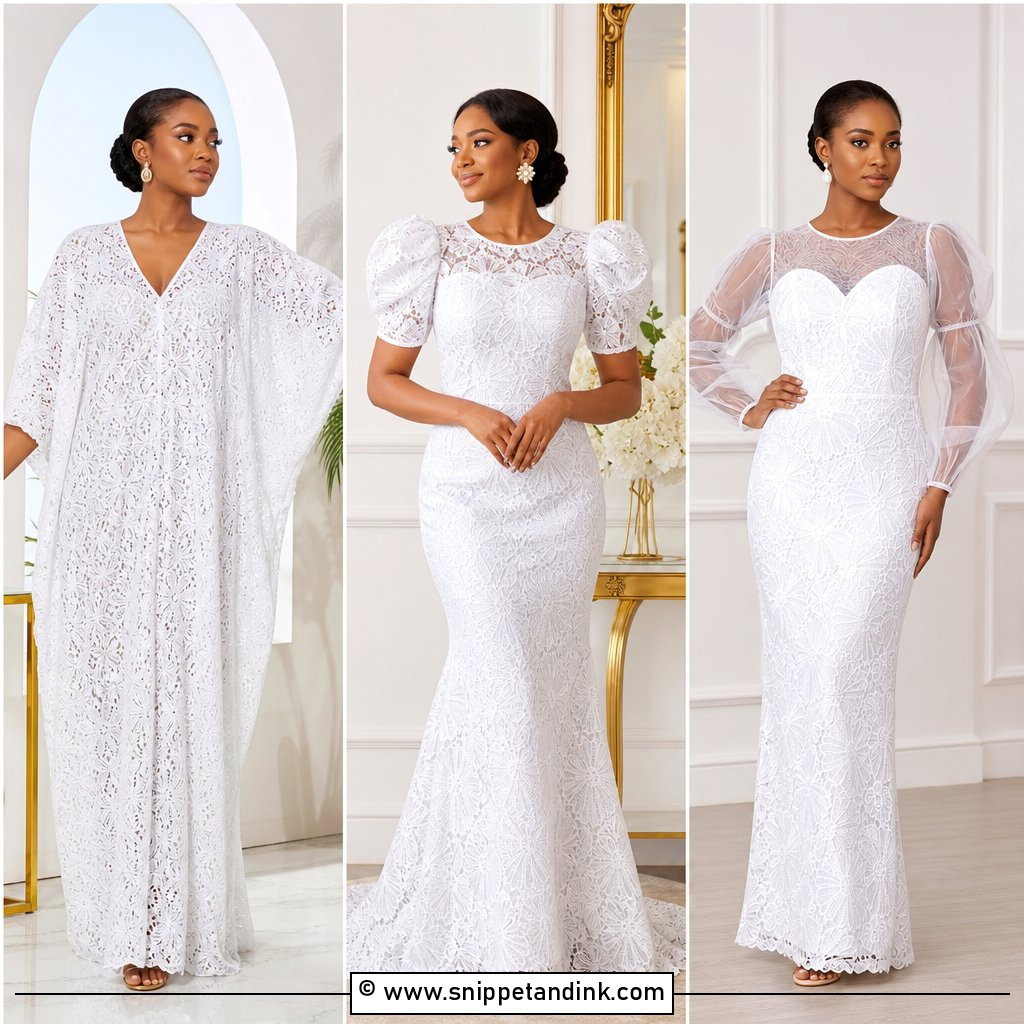
Puff sleeves change a plain lace gown fast. Short rounded puffs feel playful; elbow-length structured puffs feel formal. Organza underneath gives the shape, and a lace overlay ties the sleeve to the gown. The usual mistake is stacking: big sleeves, a big peplum and a dramatic skirt all in one design. One focal point is enough. Scale the volume to your shoulders, check the arm opening is roomy, and keep the bodice fitted with a straight or gently flared skirt. A small gele, drop earrings, slim heels and a neat clutch complete it.
9. Aso Ebi Lace Bell Sleeve Gown
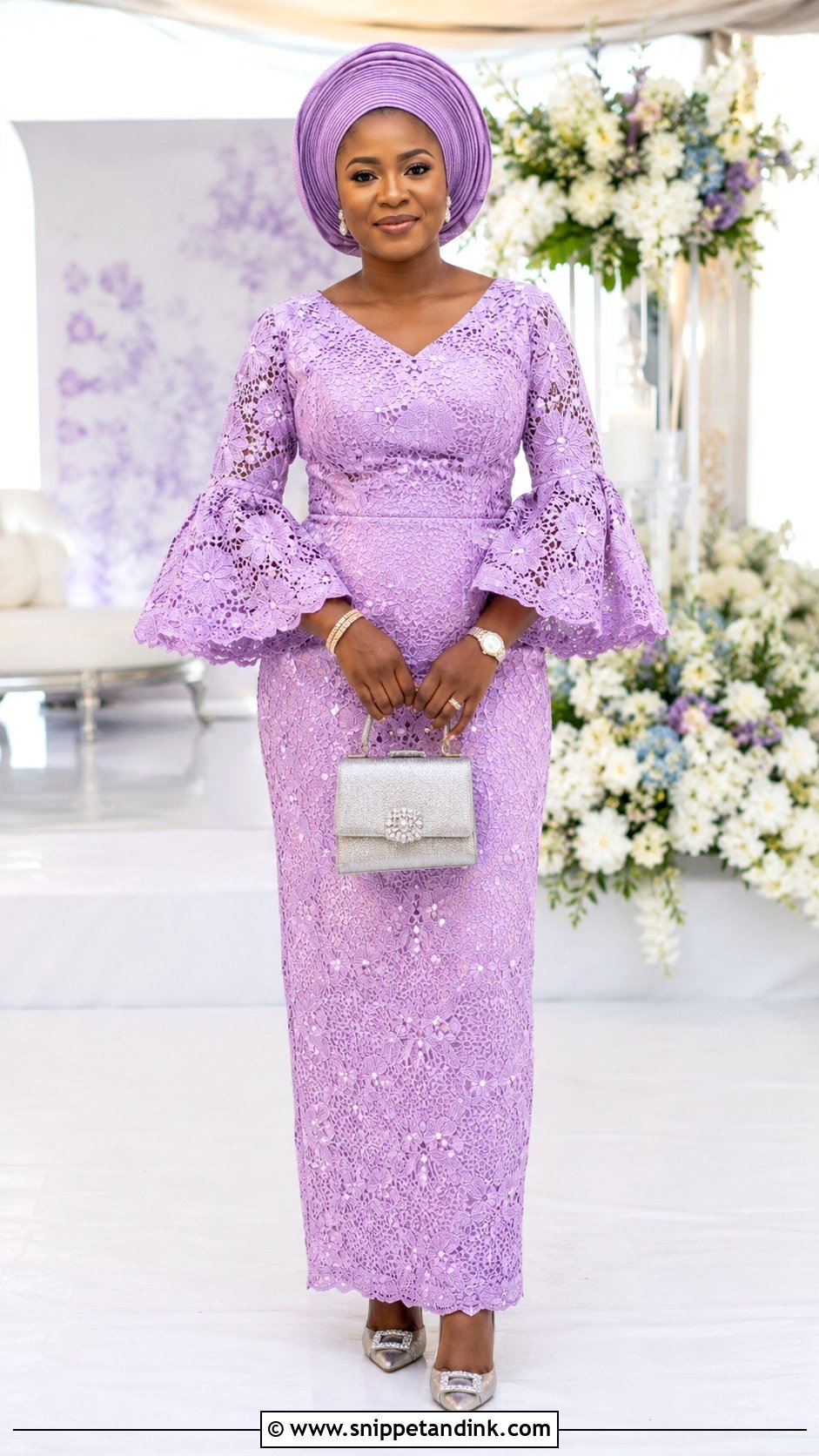
Flowing bell sleeves are the softer answer to structured puffs. They can open from the elbow or widen gradually from the shoulder, depending on how much drama you want. The practical test I give every guest is the plate test: hold a plate and reach for a glass. If the sleeve hem falls past your fingers or dips into food, shorten it. Pair bell sleeves with a fitted gown, clean neckline and straight skirt with a manageable back slit, and skip a wide floor-length train. Scalloped lace edges finish the hem nicely. A coordinated gele, short earrings, closed-toe heels and a structured handbag complete the outfit.
10. Aso Ebi Lace High Neck Gown
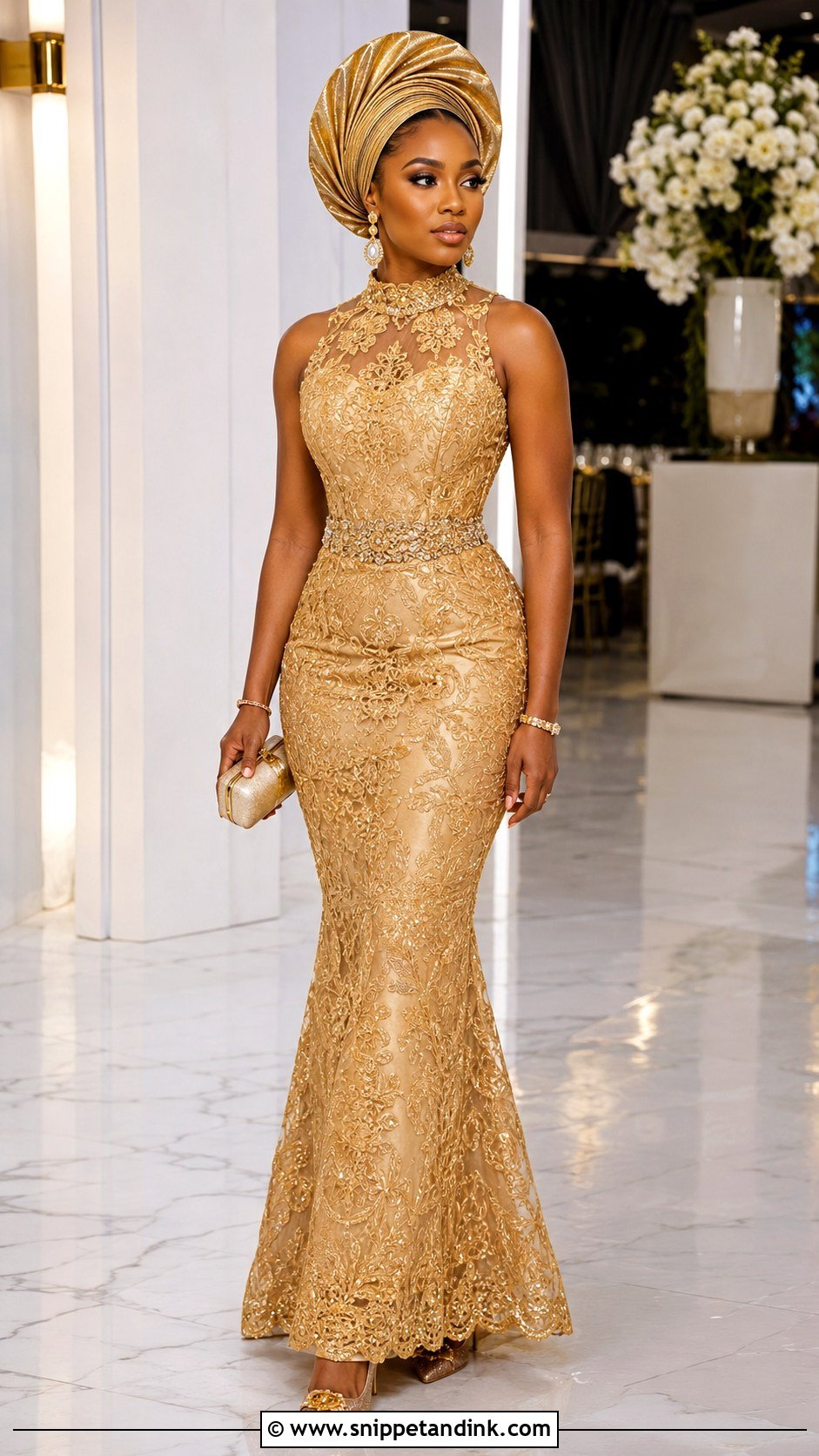
High necklines look polished only when the bodice fits precisely, since any looseness shows right under the chin. The collar can be fully lined or sheer lace over a secure inner bodice. I run my finger inside the collar at the fitting; beaded lace edges scratch after an hour, so ask for a soft facing. Skip the necklace and put the effort into earrings. Going sleeveless or cap-sleeved keeps the design from feeling heavy, and tonal beading at the waist adds definition. Pair with a floor-length pencil skirt, subtle mermaid or side drape, plus a matching gele, pointed pumps and a small metallic clutch.
11. Aso Ebi Lace Wrap Gown
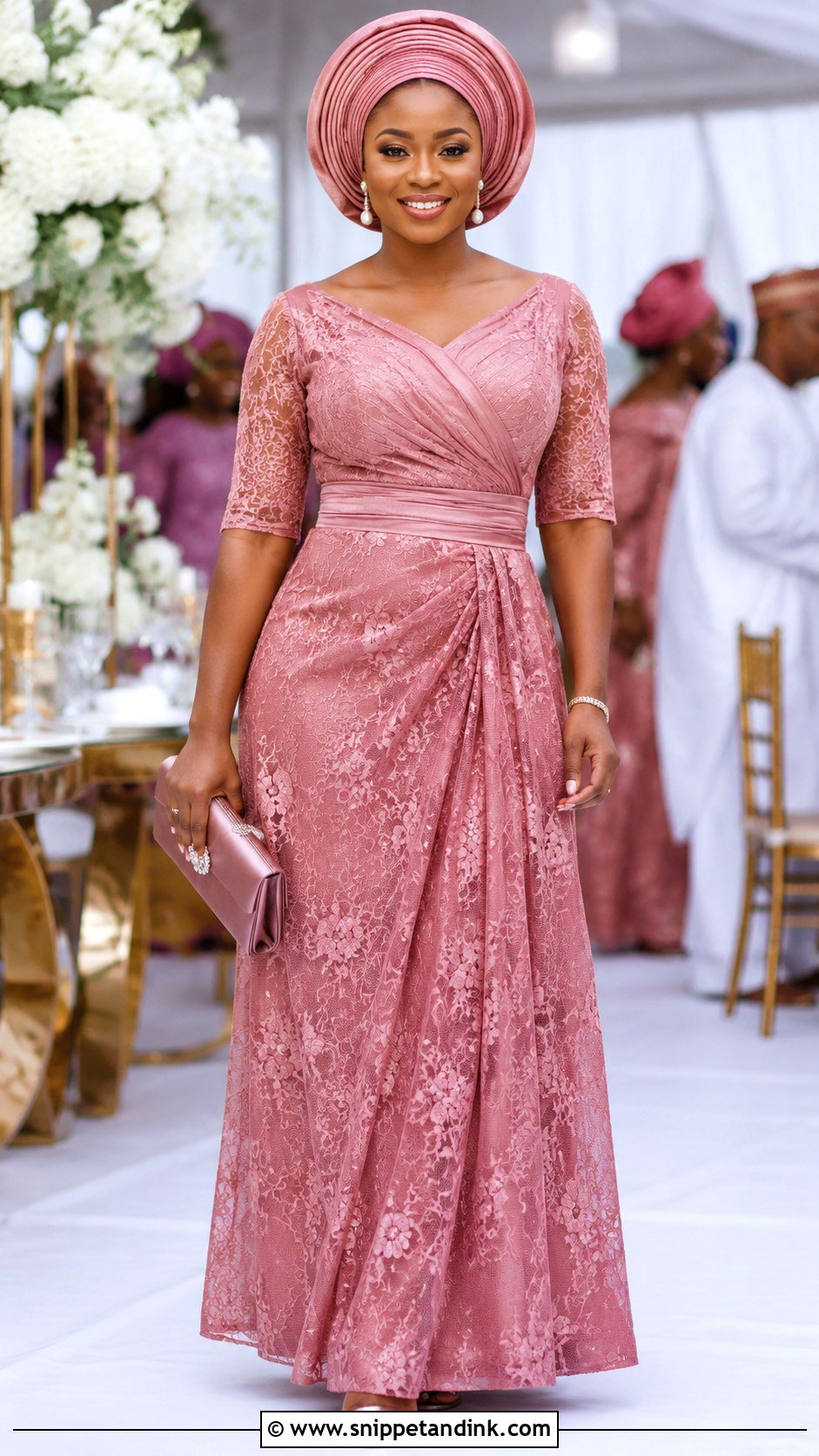
A wrap gown gives a flattering crossover neckline and adjustable-looking waist, but for an all-day party the wrap must be sewn into the garment, not left to loose ties that slip open on the dance floor. Ask for generous overlap across the bust and skirt, then sit down in it at the fitting to check nothing opens. Soft cord lace and embroidered tulle drape well; heavier lace needs carefully placed seams. Elbow sleeves and a gently flared skirt suit it. This style also allows a little for body changes in the weeks before the event. Finish with a pleated gele, heeled sandals, pearl earrings and a satin clutch.
12. Aso Ebi Lace Bubu Gown
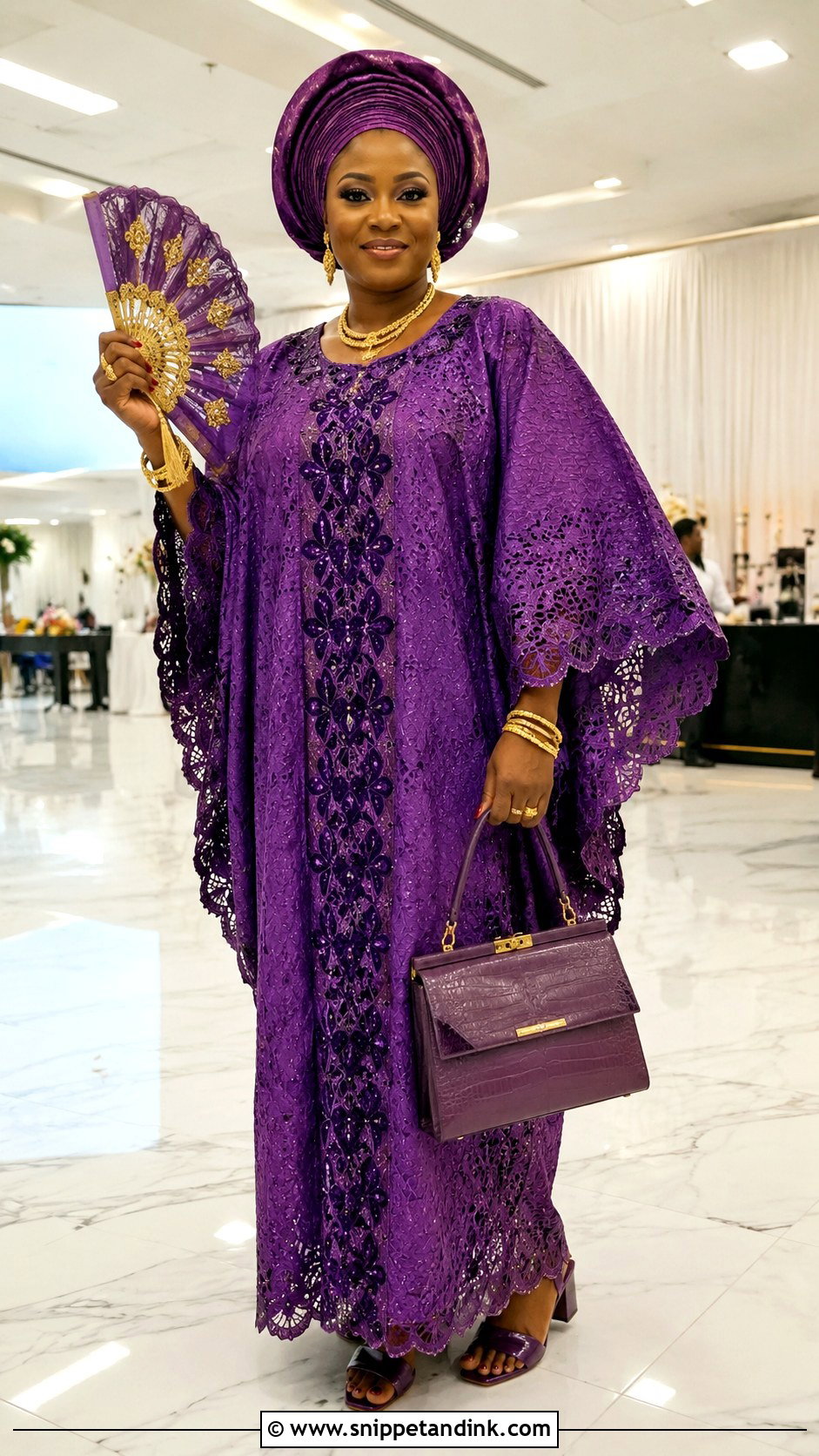
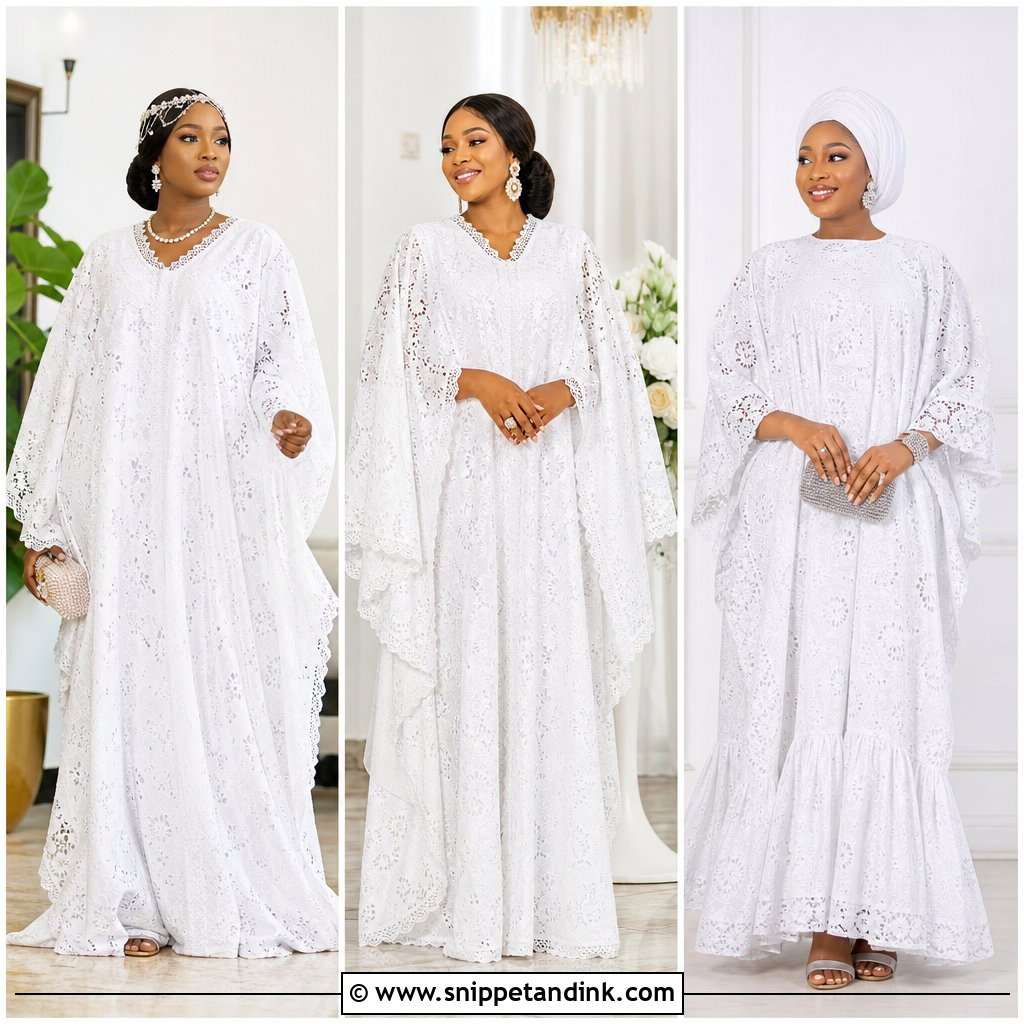
The bubu is pure comfort for a long celebration, and with the right details it never looks lazy. Without shaping, a wide lace bubu can swallow the wearer, so I look for a defined neckline, a centre panel or a little embroidery at the waist to give it a line. Scalloped sleeve edges and side panels show off the lace without bulk. The lining should follow the loose shape rather than fight it. Keep the hem just off the floor so you don’t catch it on stairs. A bold gele, block-heel sandals, a structured handbag and layered bracelets suit the scale, and rich colour with contrasting appliqué makes it feel luxurious.
13. Aso Ebi Lace Kaftan Gown
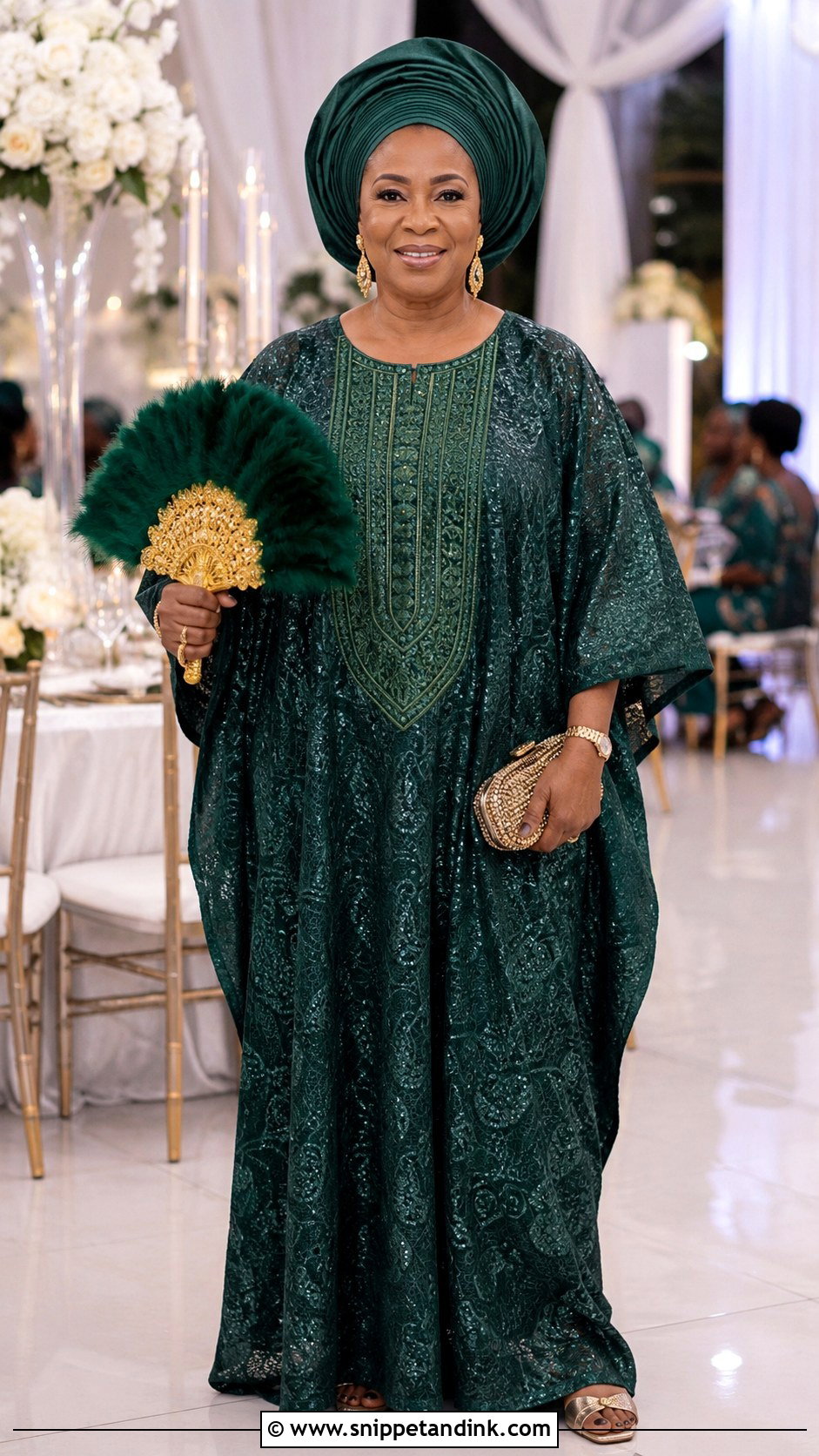
A lace kaftan gown sits between the fitted gown and the bubu: straighter side seams, defined shoulders and sometimes a lightly shaped waist. Mothers and aunties of the couple often favour it, and for good reason, since it looks stately all day. If the lace is see-through, match the lining shade closely; a contrasting slip breaks the line in photographs. Keep side slits modest so they don’t open high when you sit. A V-neck, jewel neck or embroidered front panel all suit. Low block heels, a beaded clutch, a hand fan, a matching gele and understated jewellery complete it.
14. Aso Ebi Lace Iro And Buba
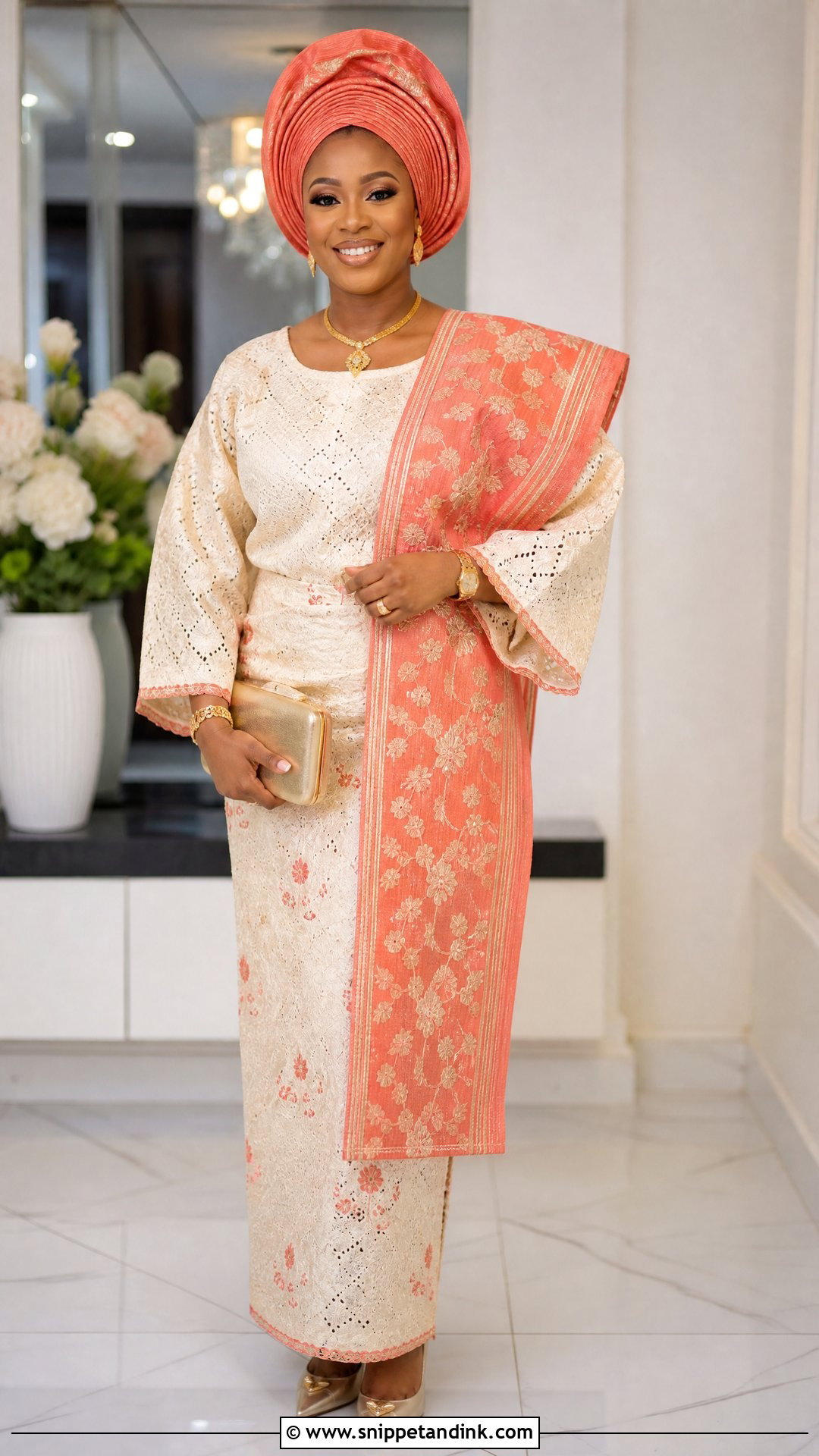
Iro and buba is the classic Yoruba pairing: a blouse, a wrapped skirt and usually an ipele draped over the shoulder or tied at the waist. In lace it looks rich and properly traditional. The blouse can have three-quarter sleeves, a round neck or a modest V. My only real worry is the wrapper loosening, so I always suggest an inner tie or a hidden hook so you’re not retying it in the bathroom all afternoon. Keep the ipele in proportion so it frames the outfit rather than hiding it. Aso Ebi lets every guest interpret the same fabric through her own design, and this pairing shows that tradition at its clearest. Add a coordinated gele, comfortable pumps, a small handbag and classic earrings.
15. Aso Ebi Lace Blouse And Wrapper
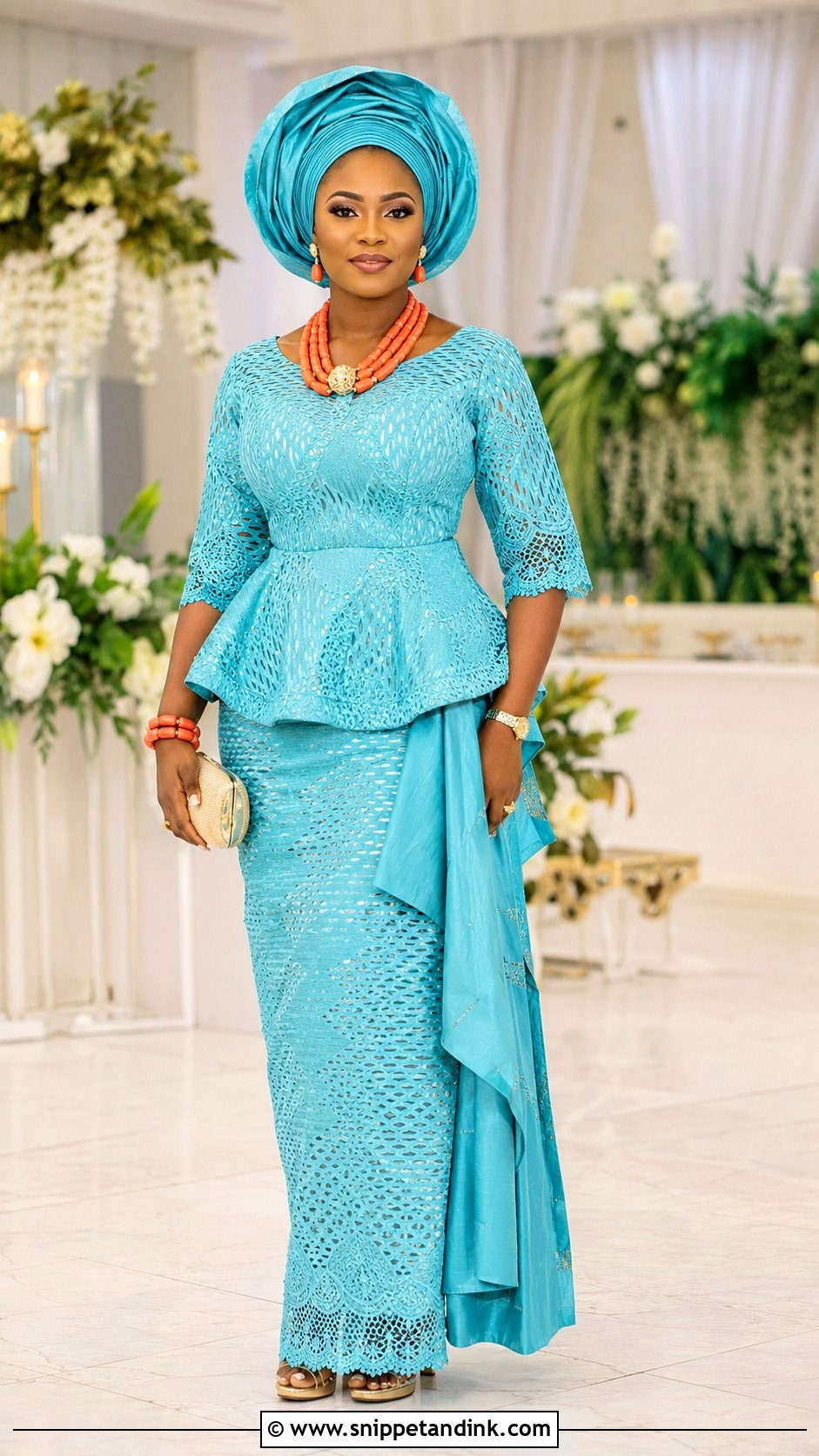
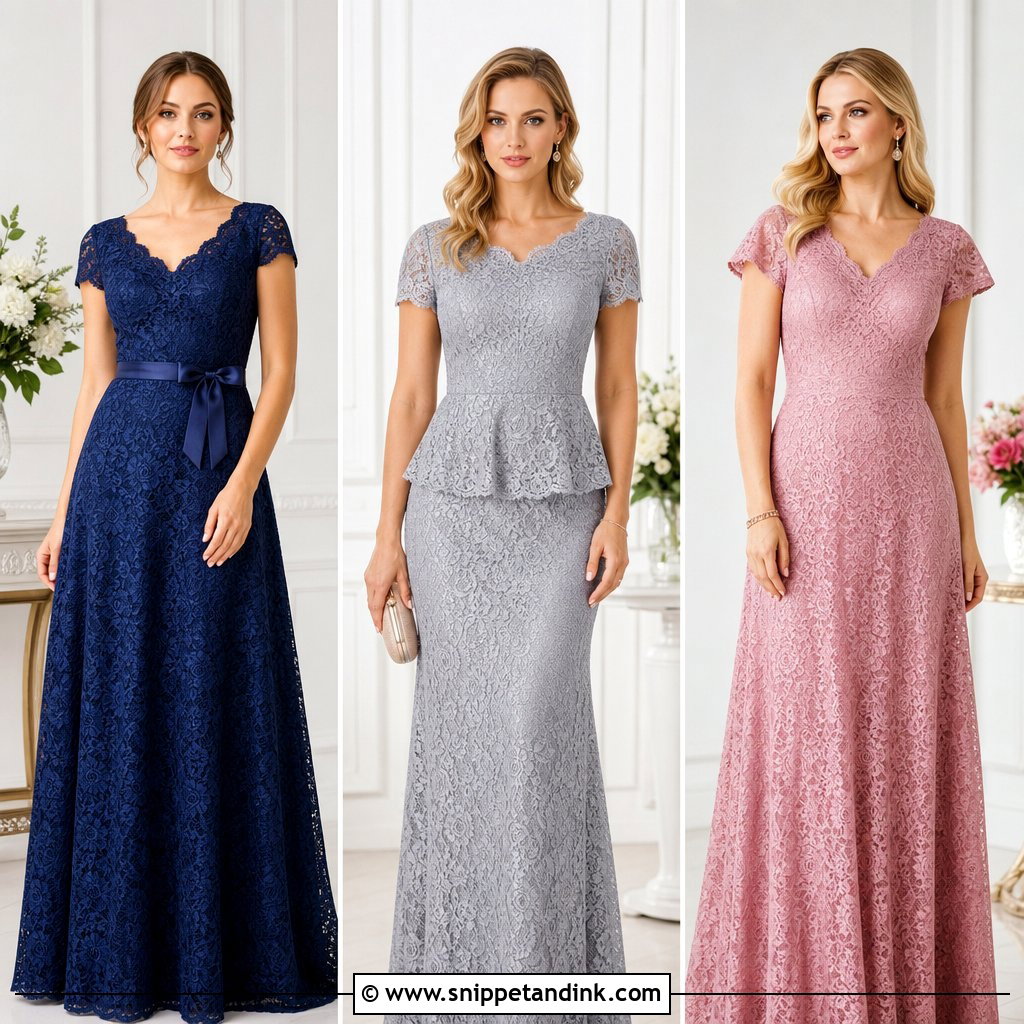
A fitted lace blouse with a matching wrapper is the tailored version of iro and buba. Peplum blouses, princess seams or a gently corseted top with elbow sleeves all work. Where the blouse ends matters: I like it finishing at the natural waist so the wrapper can sit securely without a lump where the two meet. Match the lining closely to the lace. If the blouse has heavy appliqué, keep the wrapper plain, otherwise the two pieces argue. A slim ipele, tall gele, coral-style beads, metallic shoes and a structured clutch complete it.
16. Aso Ebi Lace Skirt And Peplum Top
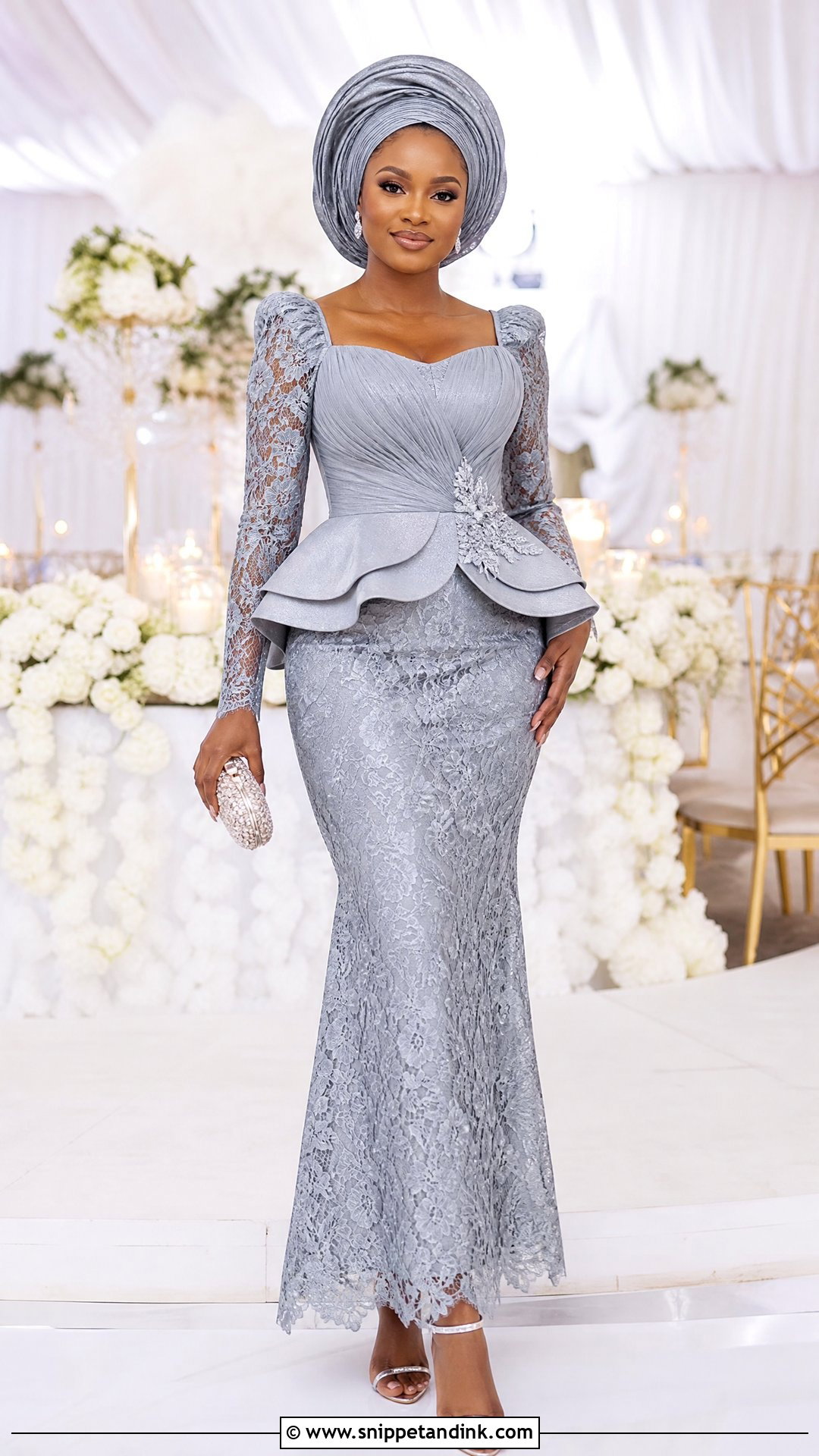
Separates give the look of a gown with far more use afterwards, since a lace skirt and peplum top can be worn apart at other events or altered more easily later. Choose a structured top and a long pencil or mermaid skirt from the same fabric. The peplum should lie flat over the skirt waistband; if it flips up when you sit, it needs interfacing. I also ask the tailor to line up the lace motifs across the major seams, which is the difference between a home-sewn look and a tailored one. Request a strong zip, secure waistband and a walking slit. Keep the top and skirt linings the same shade. Finish with a medium gele, ankle-strap heels, a small clutch and simple jewellery.
17. Aso Ebi Lace Trouser Set
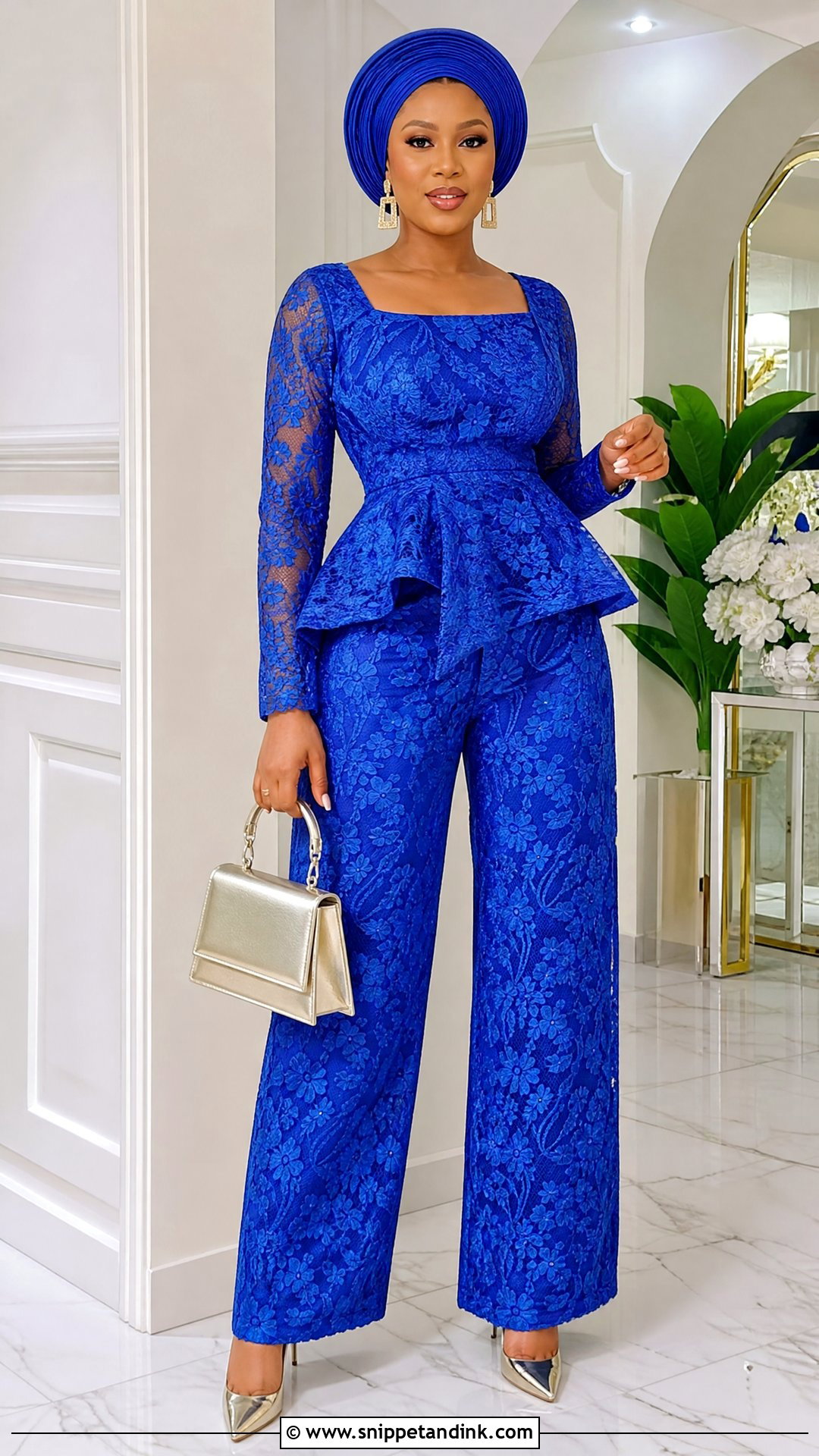
A lace trouser set is my suggestion for guests who simply don’t enjoy skirts. High-waisted wide-leg trousers with a fitted corset, peplum blouse or structured tunic still read as formal Aso Ebi because the fabric does the ceremonial work. Line the trousers fully, since lace legs cling and catch without it. Hem them in the shoes you’ll wear, almost touching the floor with the toe showing. Balance proportions: wide trousers with a close top, straighter trousers under a dramatic peplum. A compact gele, pointed heels, geometric earrings and a top-handle bag complete it.
18. Aso Ebi Lace Jumpsuit
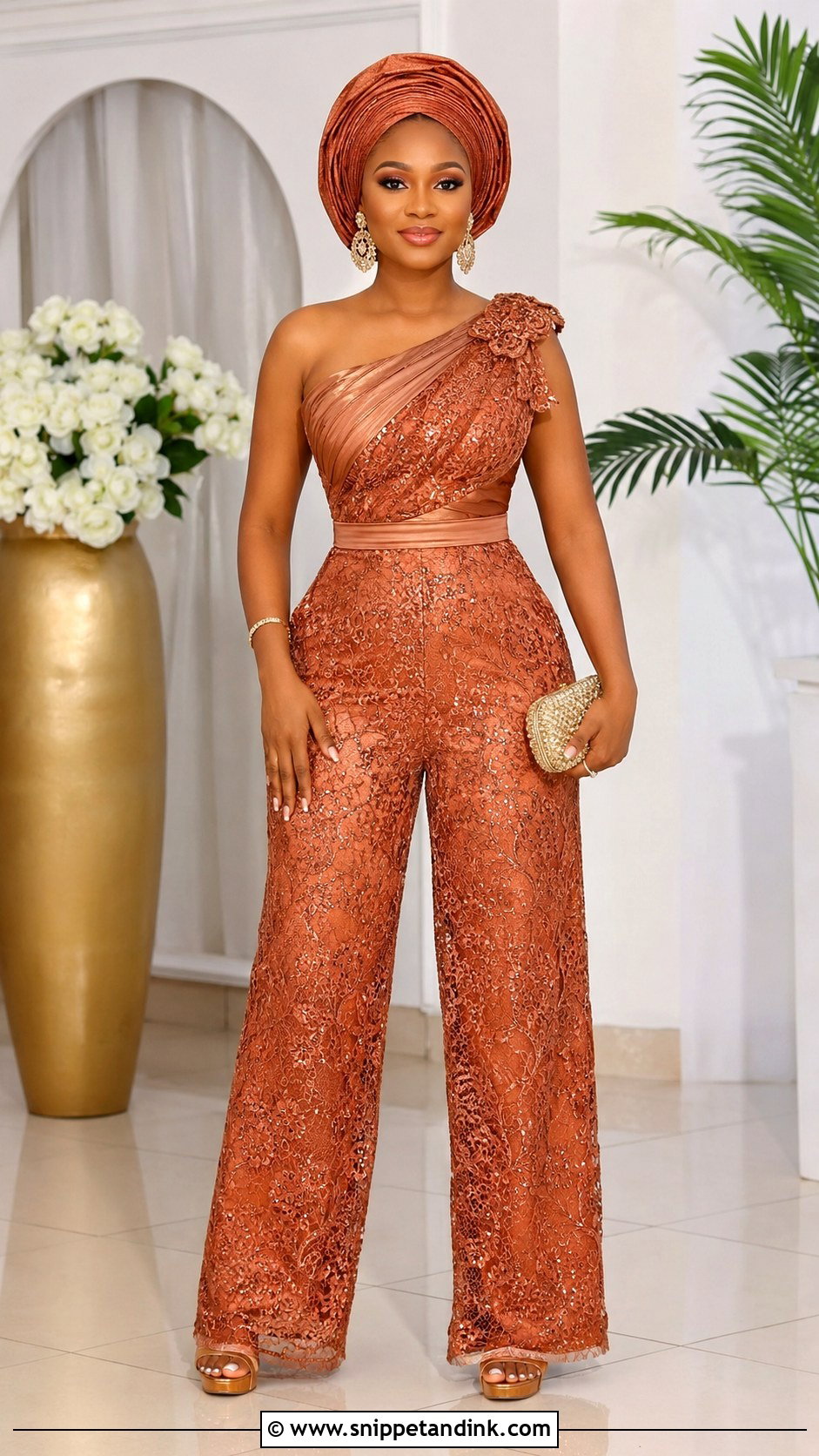
A lace jumpsuit stands out among the gowns while staying in the agreed colour. Fitted bodice and wide leg is the most balanced version, with short sleeves, an asymmetric neckline or a controlled peplum for interest. Torso length is the fit point people miss: too short and it pulls every time you sit. I’d also think honestly about the restroom, since a back zip you can’t reach alone is a problem at a ten-hour party; a side zip or a two-piece look-alike is kinder. Breathable lining and a defined waistband keep it from looking loose. Deep green, cobalt, plum and copper feel formal. Pair with a matching gele, statement earrings, platform sandals and a structured clutch.
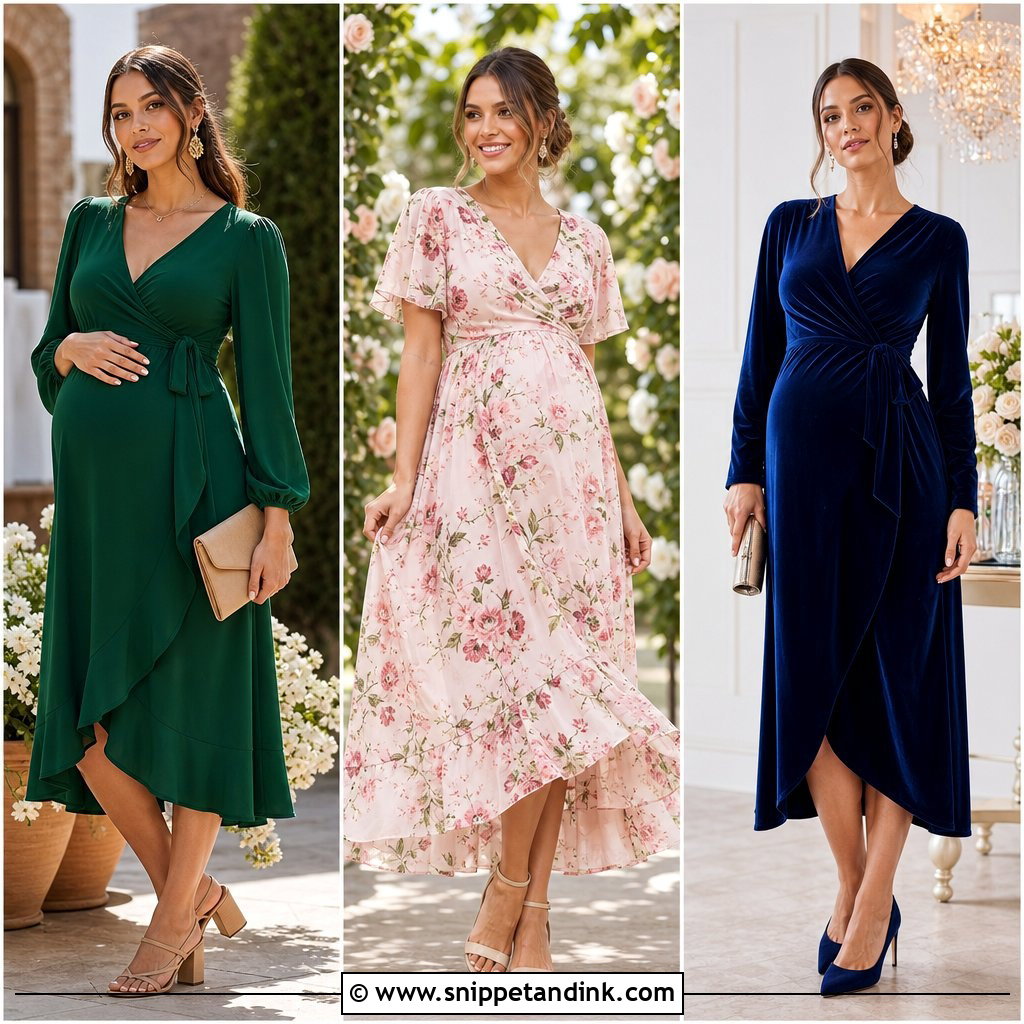
19. Aso Ebi Lace Maternity Gown
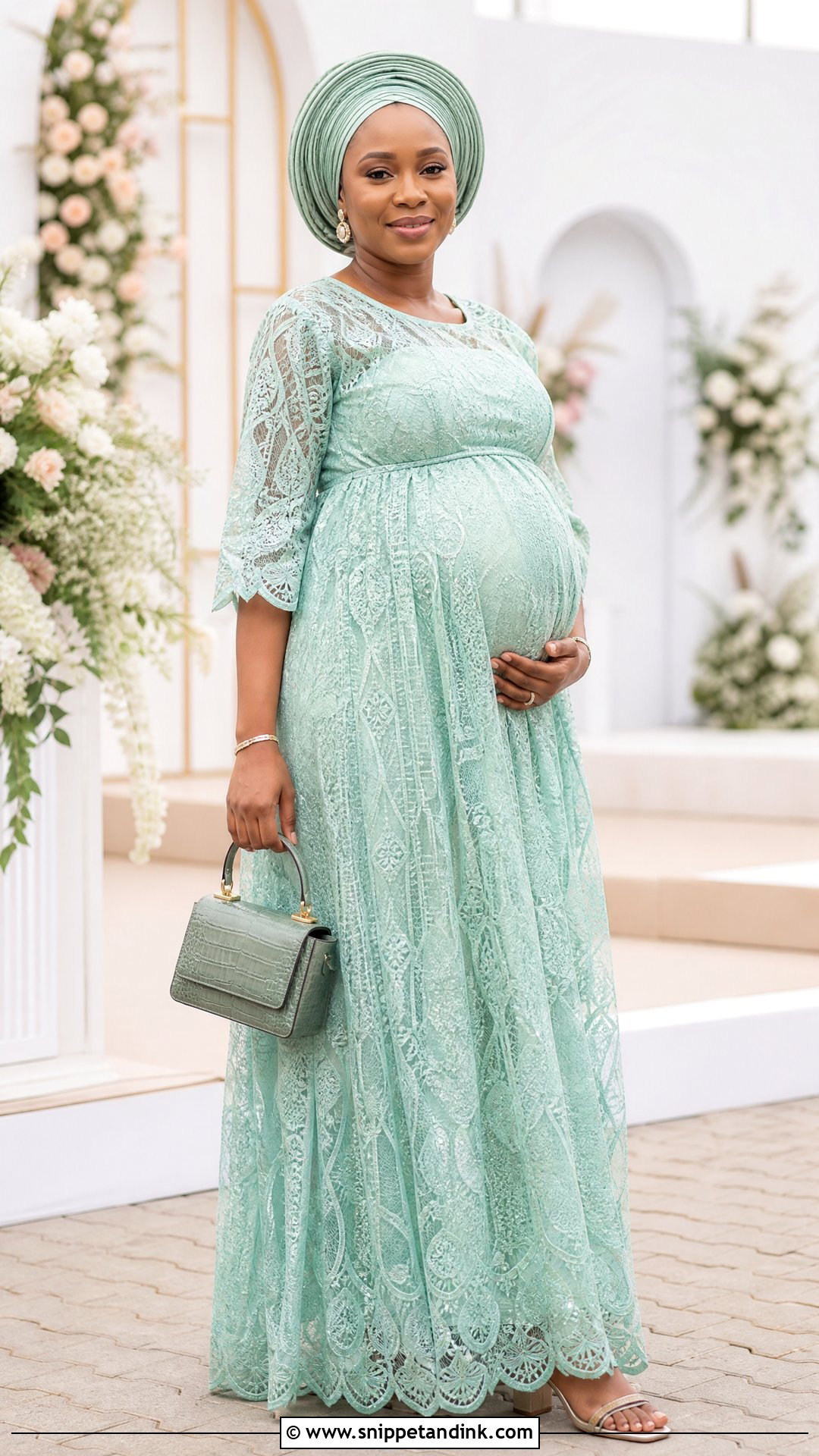
A maternity Aso Ebi lace gown needs room and support without pressure across the waist. An empire seam above the bump with a softly flowing skirt and short or three-quarter sleeves is the most comfortable cut. Bodies change fast in pregnancy, so I always ask for extra seam allowance at the side seams and bust, and a final fitting as close to the event as the tailor allows. A slightly raised front hem keeps the skirt level over the bump. Lightweight lace and breathable lining matter more now than ever; avoid heavy appliqué over the stomach. Finish with a secure gele, low block heels, a small bag and simple earrings.
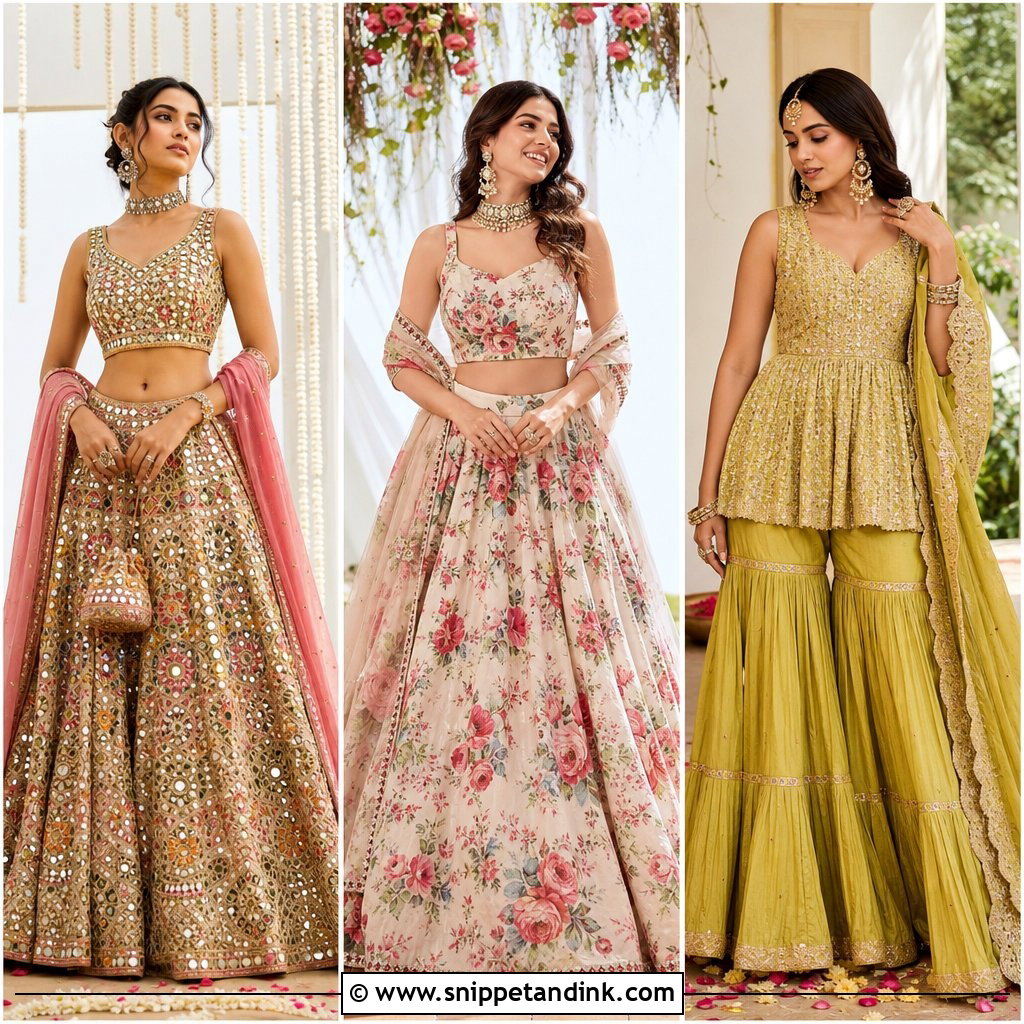
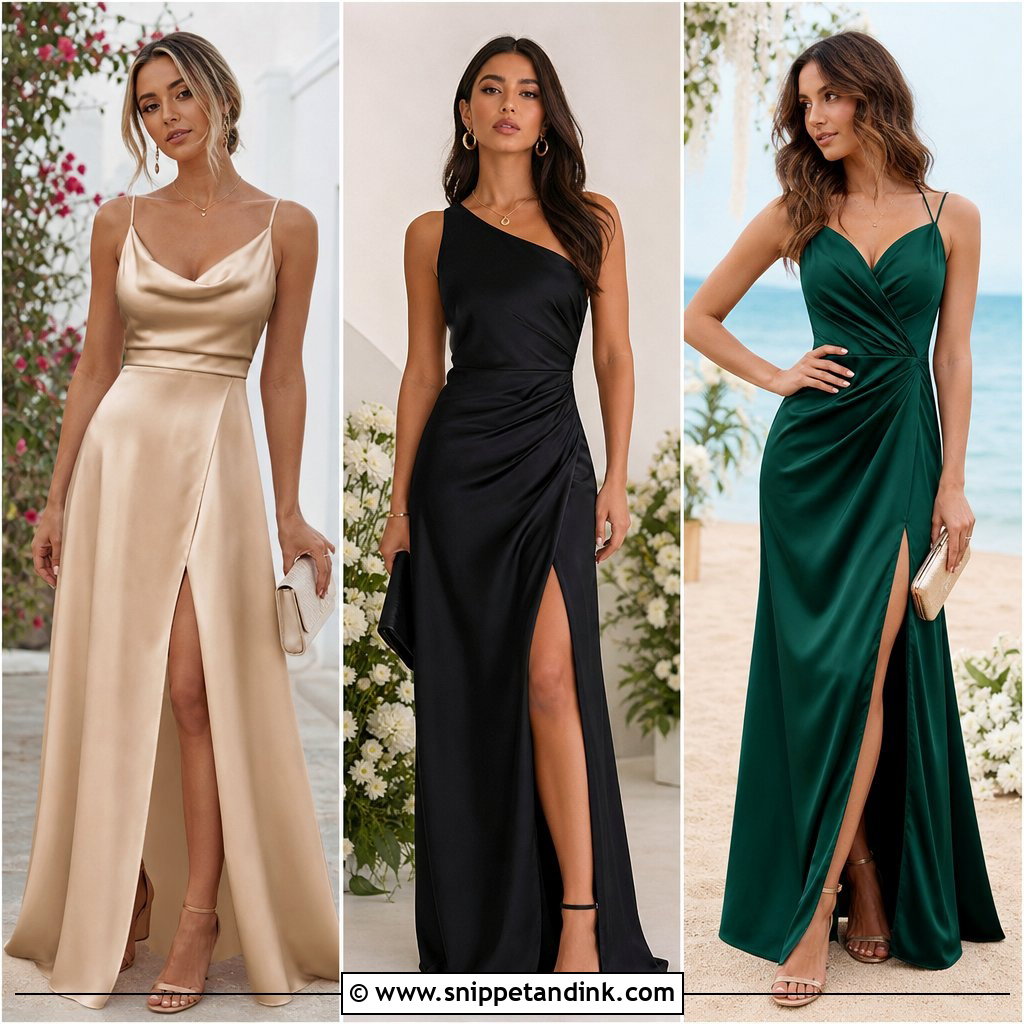
20. Plus Size Aso Ebi Lace Gown
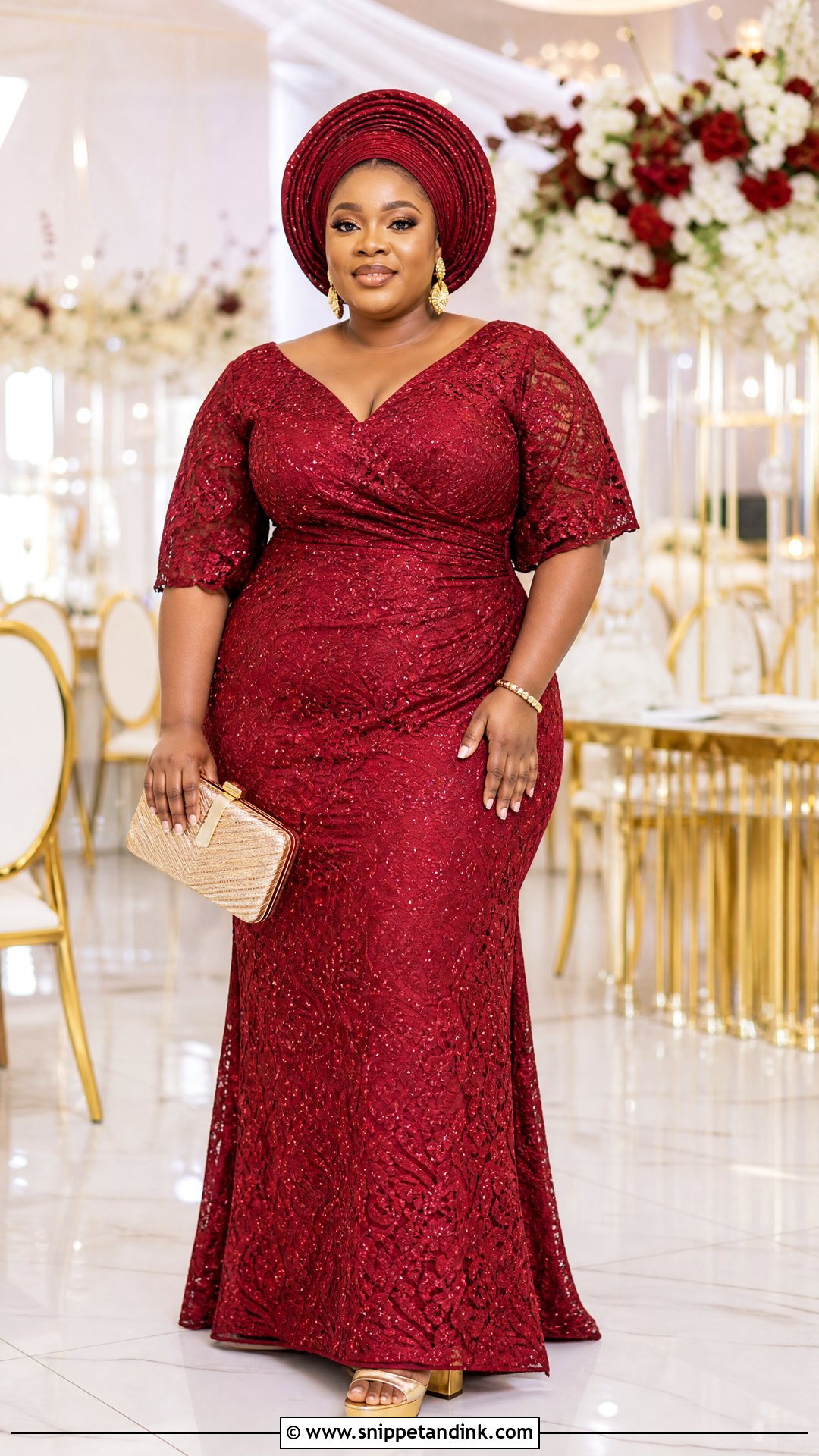
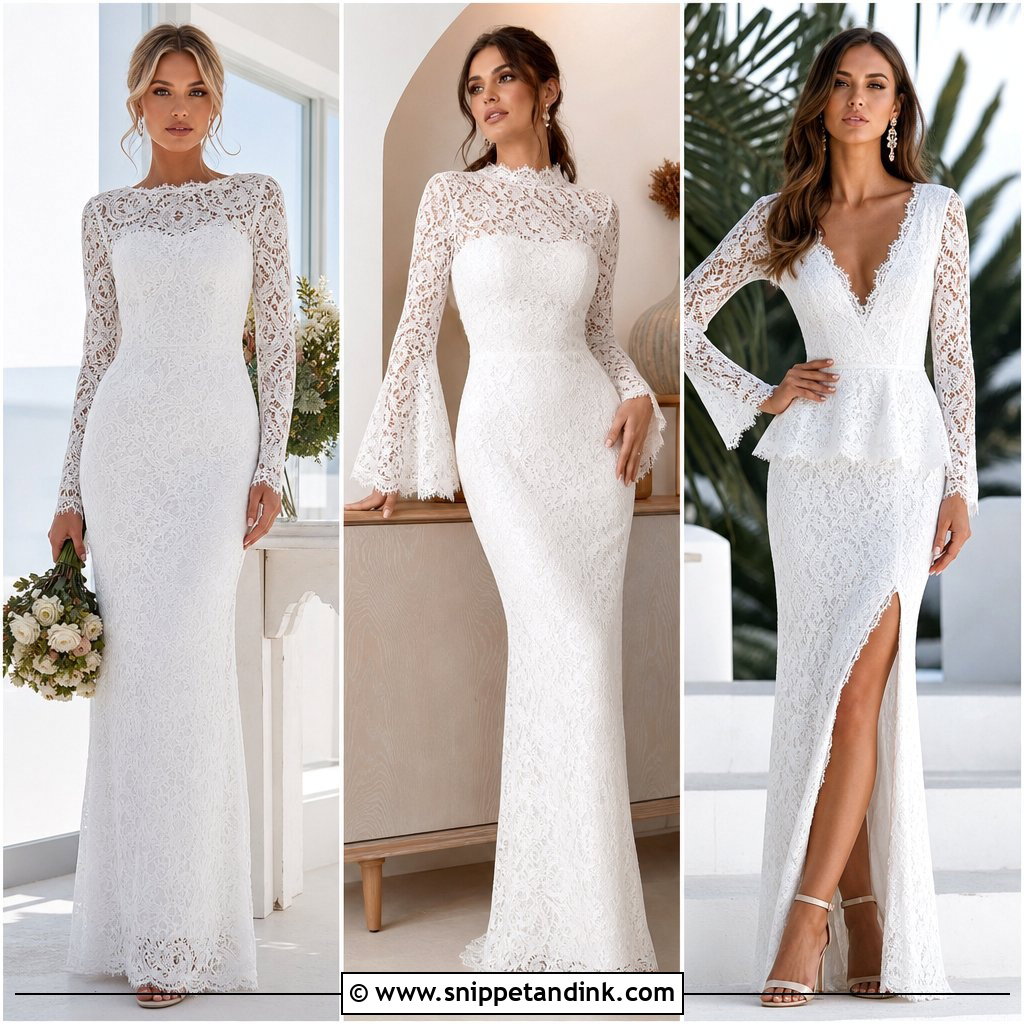
Plus-size Aso Ebi looks best when the gown is built for the body rather than cut a size small or left loose to hide it. Accurate measurements are everything. A structured V-neck bodice, defined waist and gently flared skirt create a smooth outline, and elbow-length sleeves, a soft peplum or vertical lace placement add coverage and length. Ask for strong lining, comfortable boning and real ease through the hips and upper arms; tight armholes are the most common complaint I hear. Spread appliqué and beading around rather than piling it in one place. A coordinated gele, stable block heels, a structured clutch and medium-scale earrings complete the outfit.
Lace, Sun and a Twelve-Hour Party
Nigerian celebrations run long, and the outfit has to last through the church or traditional ceremony, the reception and the dancing. Different laces behave very differently over that stretch.
Heavy beaded and stoned lace
It looks rich in photographs but adds real weight and gets hot. I keep it for structured gowns with a breathable cotton or soft satin lining, and I warn guests that loose stones can catch on other people’s lace when hugging. Ask the tailor to secure stones near seams and underarms.
Cord lace and soft French lace
These breathe better and drape well, which suits bubu, wrap and kaftan styles in outdoor venues. They can look flat in very bright sun, so a contrast lining or a little tonal embroidery helps them read in pictures.
Getting the gele right
A stiff gele pressed into place by a professional tier can hold all day, but it is heavy on the head. If you are tying it yourself, practise at least once with the actual gele before the morning. Pin it to a firm base, not loose hair, and keep spare pins and a small mirror in your bag.
Lace Only Looks Expensive When the Tailoring Underneath Is Right
A mermaid gown, an iro and buba, a flowing kaftan, a trouser set or a maternity design can all look polished in the same lace. What separates them on the day is construction you never see: lining, boning, closures and a hem cut for the shoes. Before you approve a sketch, think about the lace weight, the venue, the dress code and how much you will move. Choose a tailor who will explain how each of those pieces works on your body, then let the gele, shoes, jewellery and bag support the fabric instead of competing with it.
You'll Like These Ideas:


Leave a Reply