
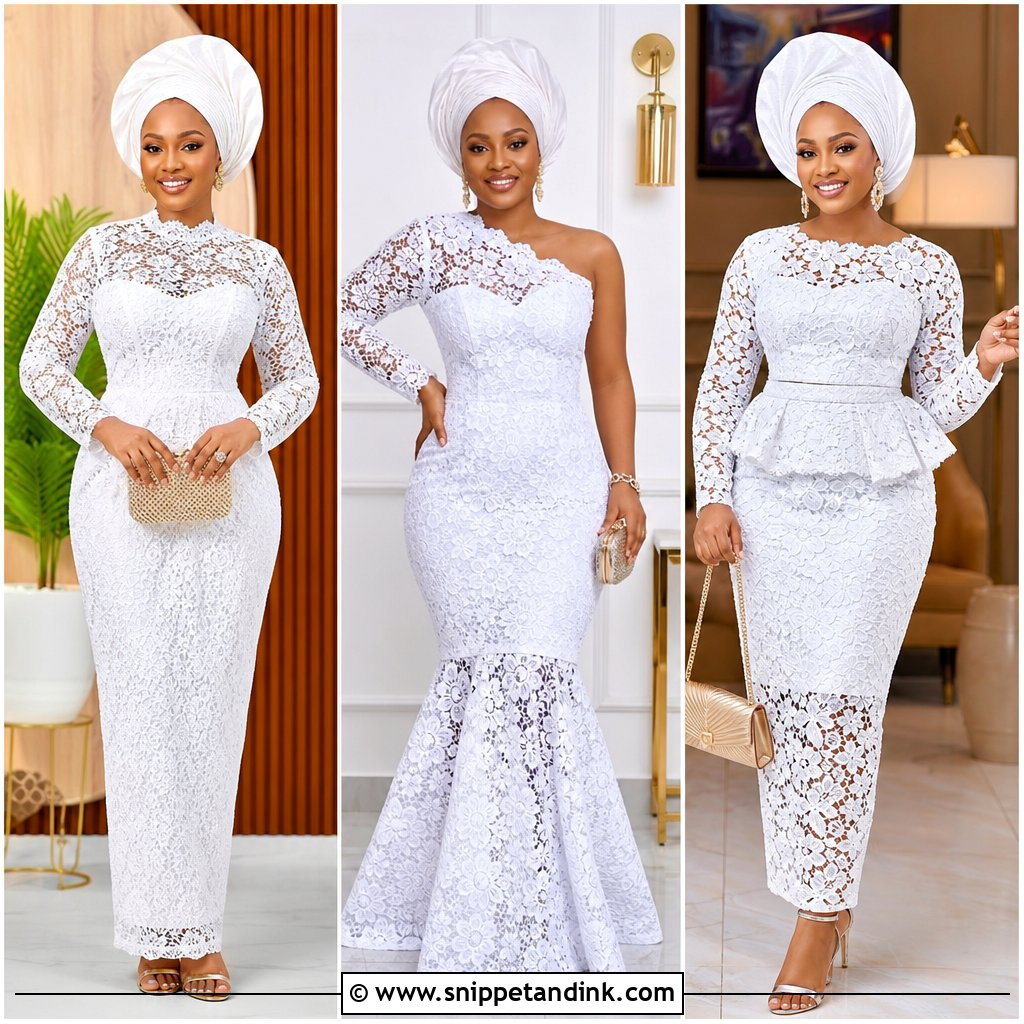
White cord lace has a raised outline stitched around every motif, and that ridge of cord is what gives it weight and shadow even in a single color. It’s a fabric that rewards good tailoring and punishes rushed work, because every seam either follows the pattern or cuts straight through it. Nigerian lace fashion now runs from fitted mermaid and corset gowns to relaxed bubus, A-lines and gowns with detachable pieces. For an owambe, a traditional ceremony, an engagement, a birthday or a formal family event, I start every client with four questions: how sheer can the lining be, how much sleeve do you want, which neckline suits the motif, and will you be sitting for hours? The 25 styles below are built around those answers.

What I Check Before Handing Cord Lace to a Tailor
Most Nigerian lace is sold in five-yard pieces, and that covers a fitted gown for most women. Ball gowns, full bubus, capes and detachable trains often need more, so settle the style before you buy, not after. Running short halfway through cutting usually means a second piece from a different batch, and white from two batches is rarely the same white.
Look at the cord before the price
Hold the lace to daylight and run a thumb along the cords. They should be stitched down firmly, with no loose loops on the reverse. Check the scalloped edges too, because a good tailor will use those finished borders for the hem, neckline and sleeve ends instead of cutting raw edges and hiding them.
Decide the lining with the fabric in hand
- White lining keeps the gown bright and the pattern calm.
- Nude or skin-tone lining makes the motifs stand out and the dress look sheerer.
- Silver or champagne lining adds glow under evening lights.
- Lay each option under the lace and photograph it with flash before you decide; flash exaggerates sheerness.
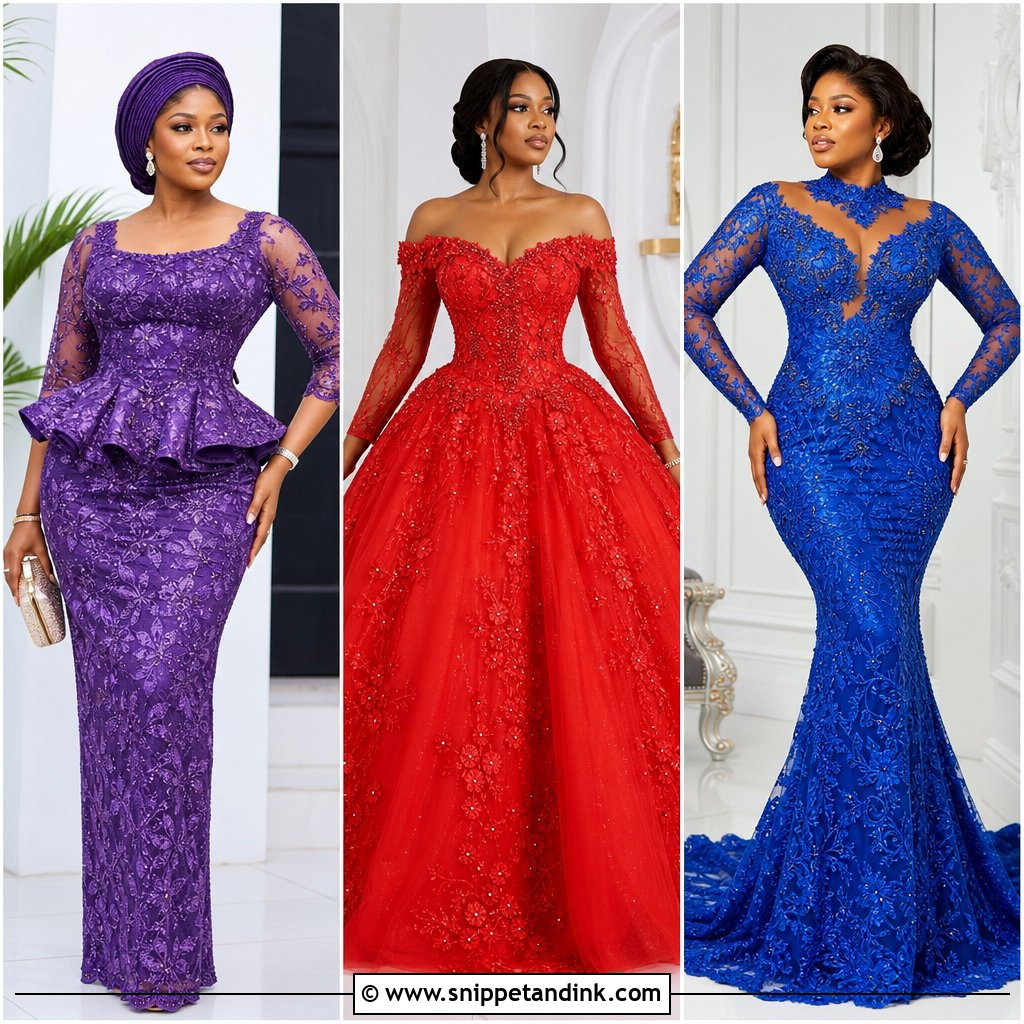
1. White Cord Lace Mermaid Gown
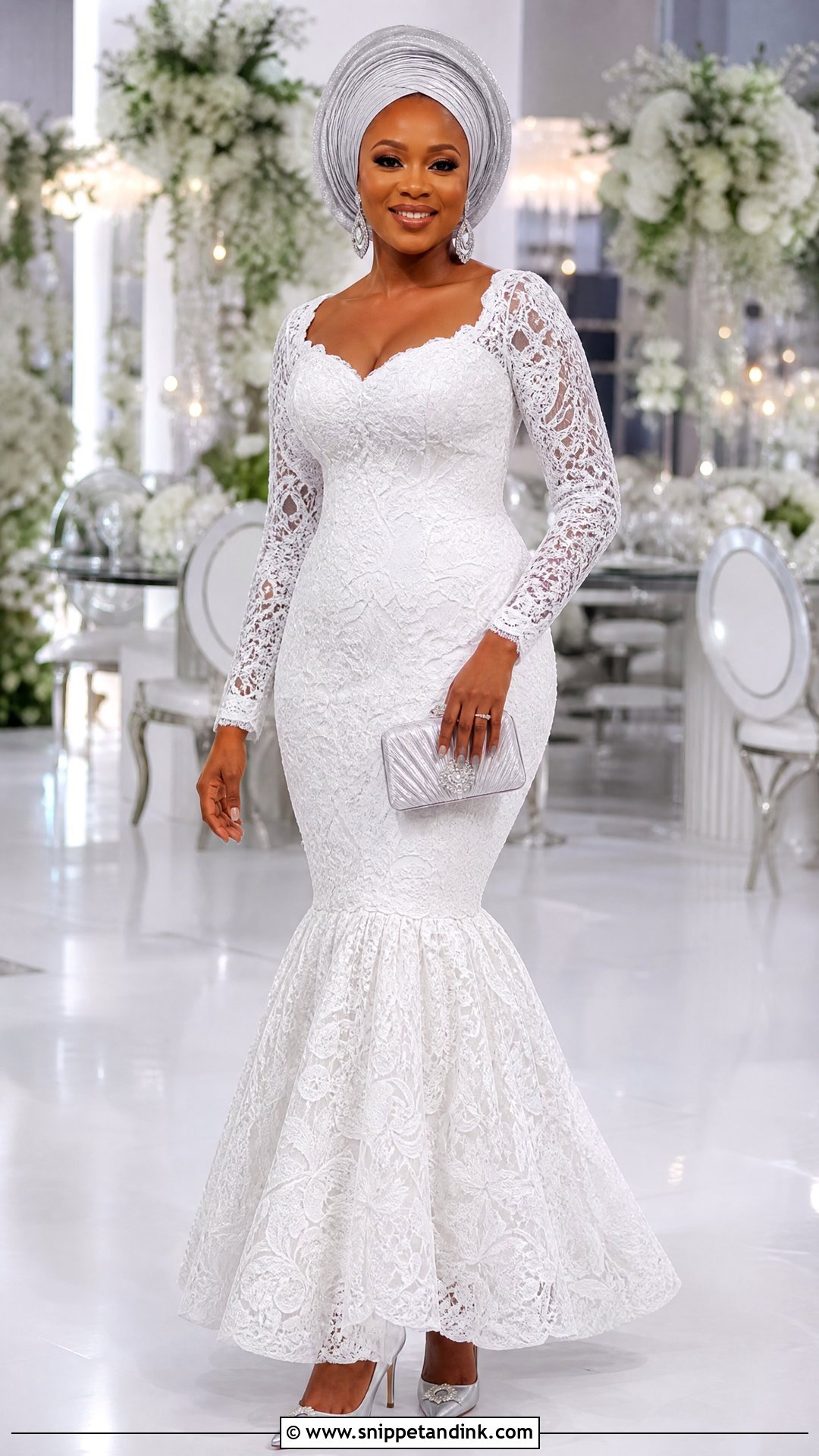
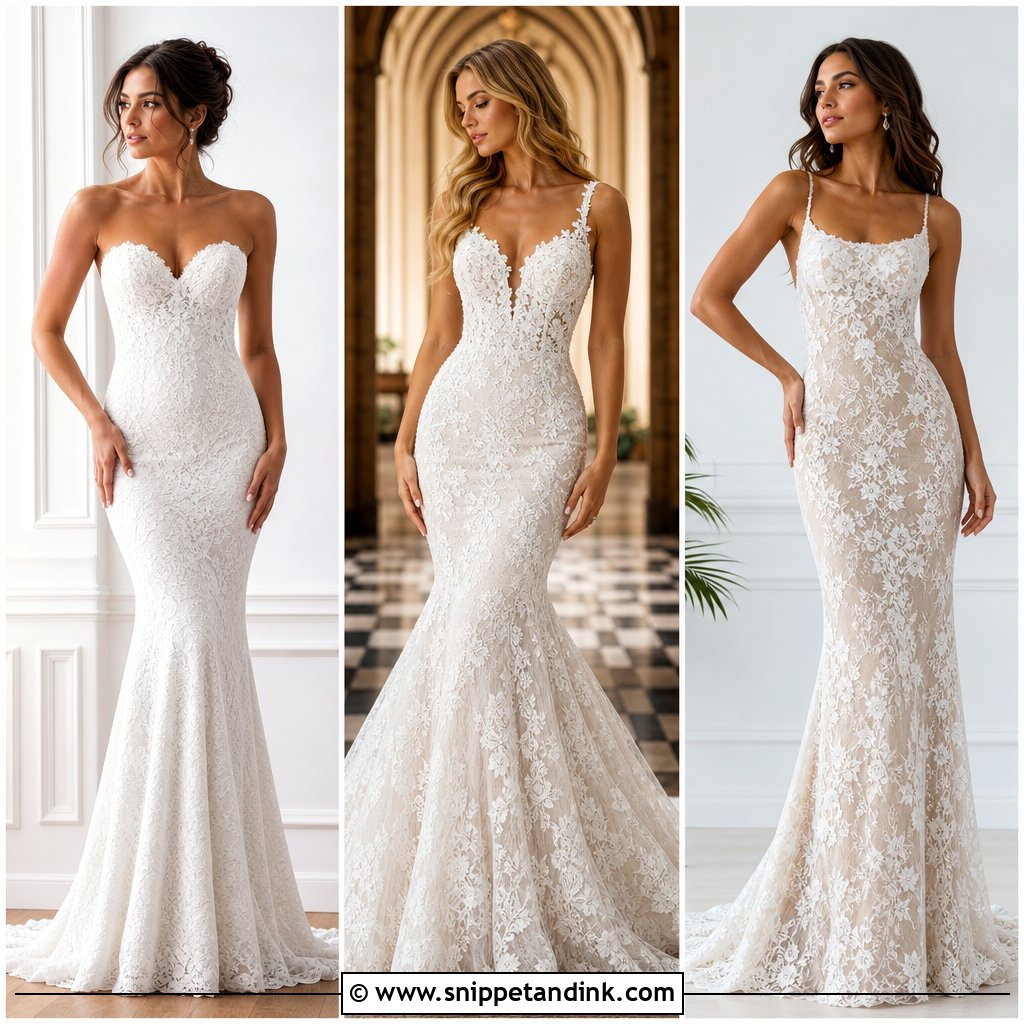
Mermaids show off cord lace better than almost any cut, because the fitted body keeps the motifs flat and readable. The bodice should run smoothly through the waist and hips, then open into a controlled flare at the knee. Lining color decides how much pattern shows: white makes the cords sit quietly, while soft nude pushes them forward. Long fitted sleeves balance the shape, and a sweetheart or gently curved neckline keeps it soft. Silver pointed pumps, a structured white clutch, crystal drops and a neatly tied silver gele finish it. The usual mistake is a flare set too tight; ask your tailor for room around the knees so you can still dance.
2. White Cord Lace Corset Gown
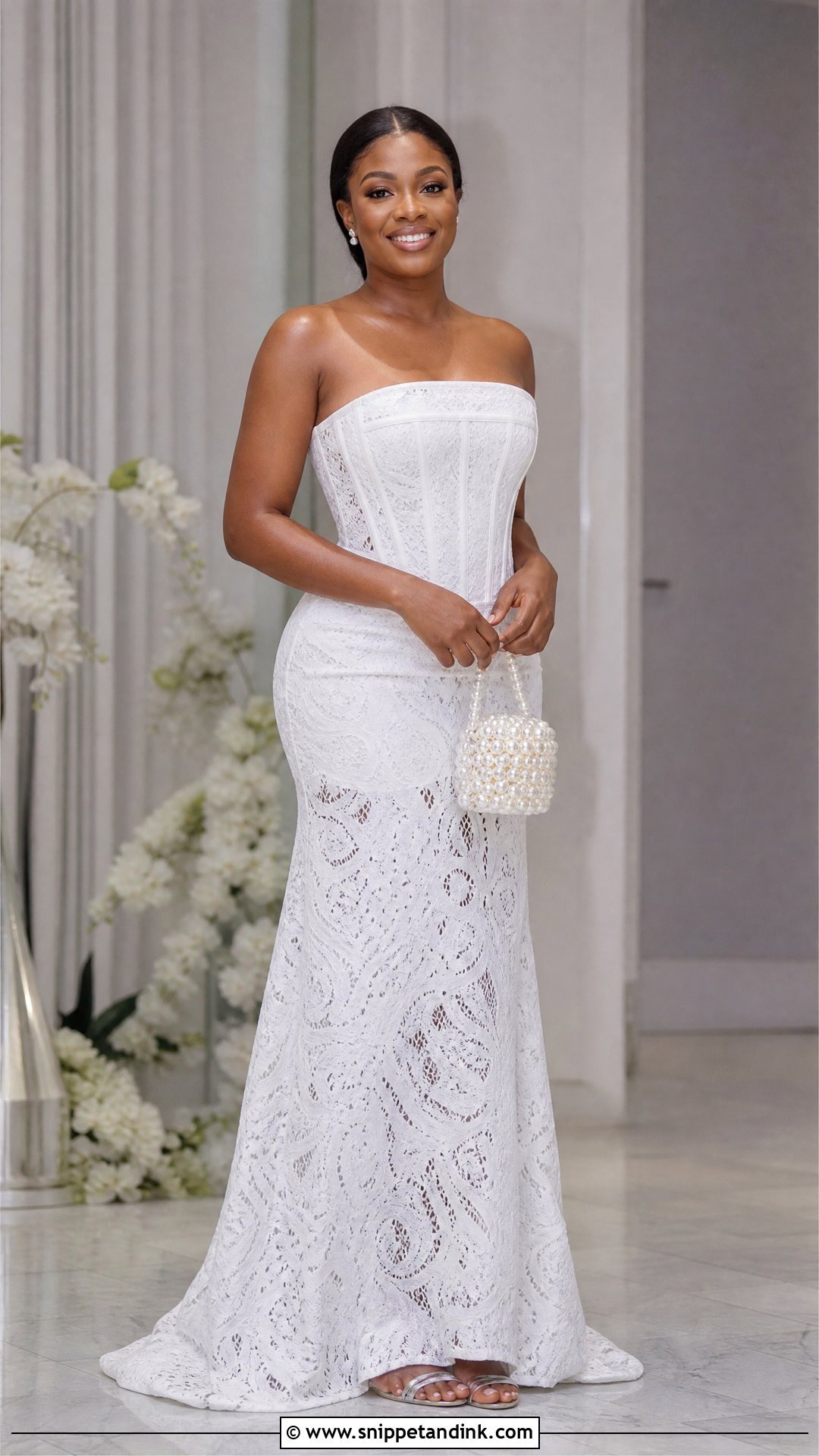
A corset gown gives the sharpest waist here, and it depends entirely on fit. Insist on proper measurements and at least two fittings, because the boning should support the bust without biting under it. A straight neckline is clean; a lace-up back allows more adjustment on the day than a concealed zip. Pair the bodice with a floor-length skirt that widens gently from the hip, then add metallic sandals, a pearl mini bag, studs and a smooth low bun. For a long owambe with hours of sitting, request flexible boning and a soft inner layer. Cord lace over rigid boning can also crack along the cords if the fit is too tight, so this is one to leave a little breathing room.
3. White Cord Lace A-Line Gown
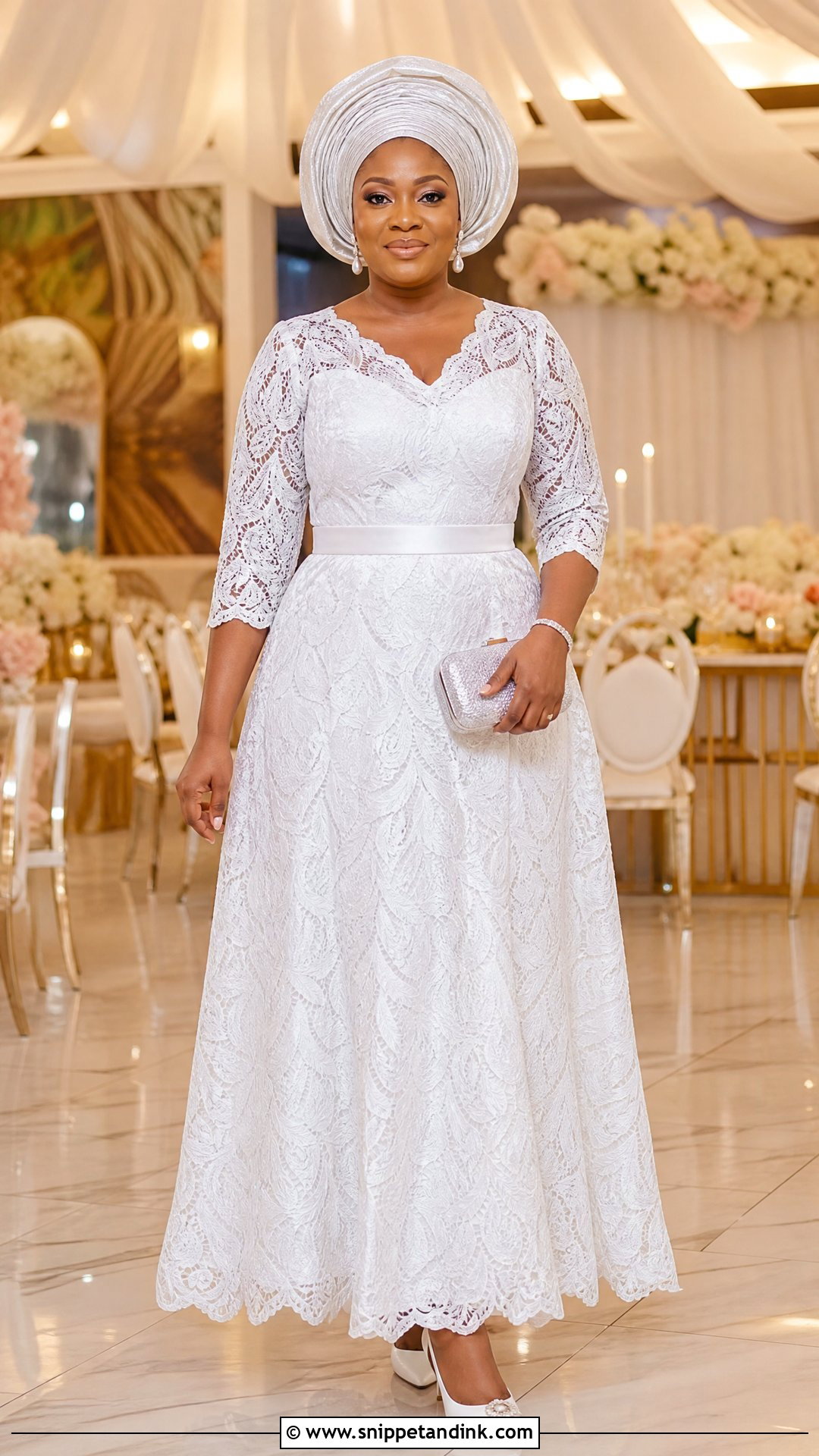
The A-line is my answer for clients who want shape but hate anything tight across the hips. A fitted top, a defined natural waist and a skirt that widens gradually to the floor work for day and evening. Three-quarter sleeves and a modest V keep it balanced. When the lace pattern is busy, a satin waistband gives the eye a resting place. White slingbacks, a silver box clutch, medium pearl earrings and a matching gele or sculpted fascinator complete it. Hem it with your actual shoes on so it just clears the floor; cord lace drags and frays fast once it touches pavement.
4. White Cord Lace Off-Shoulder Gown
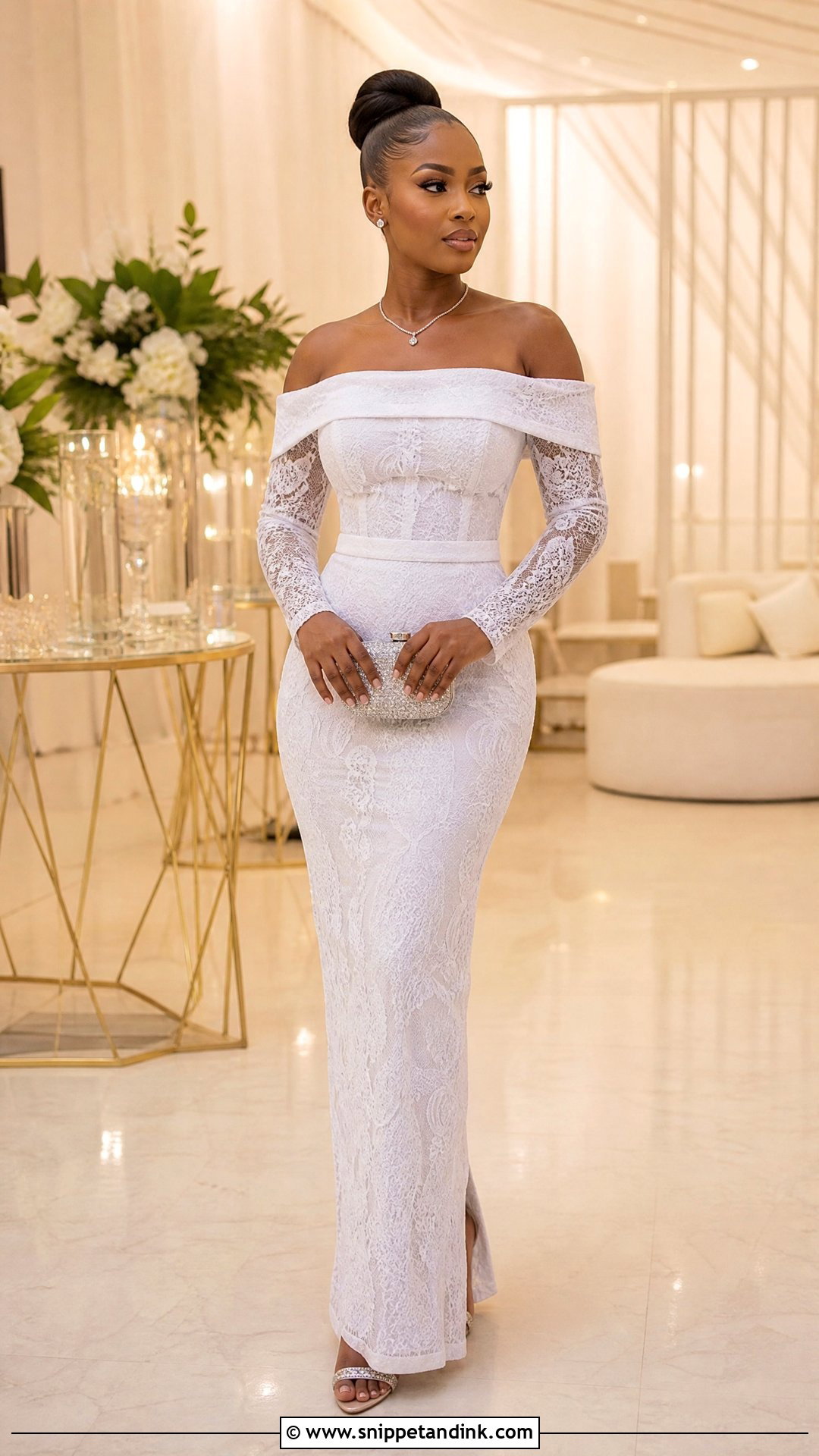
Off-shoulder necklines look celebratory in cord lace, but only with a structured fold-over band that sits firmly above the bust. A loose neckline means you’ll be hitching it up all night. A fitted column skirt with a modest back slit keeps the lower half sleek. Wear crystal-embellished heels, a compact silver clutch, a fine collar necklace, and a side-swept updo or high bun to keep the shoulders clear. Sheer lace sleeves can start below the band if you want more coverage. Before the final fitting, raise your arms, sit and dance; a good band with silicone grip inside should barely move.
5. White Cord Lace Long Sleeve Gown
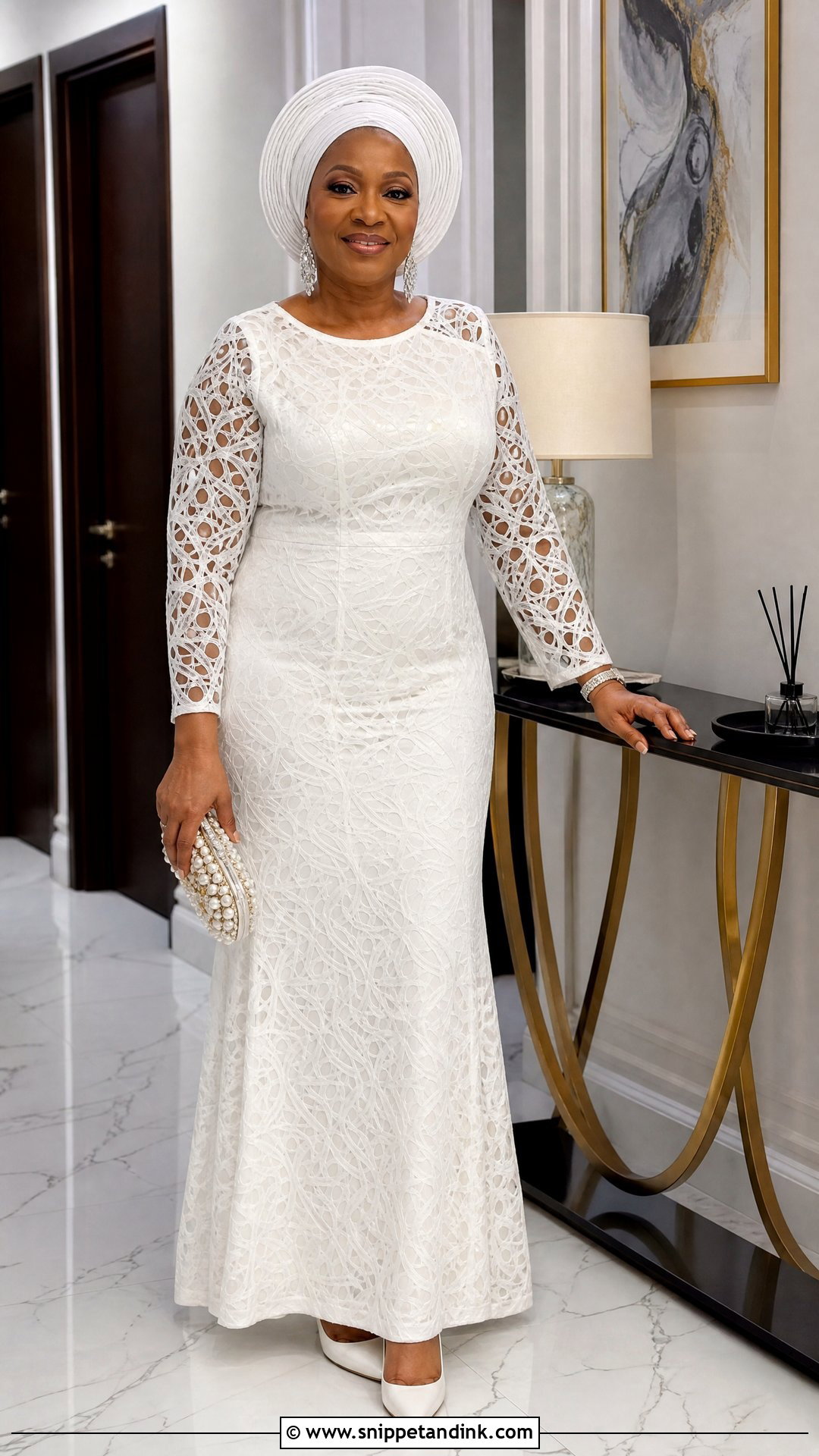
Long sleeves in cord lace need a pattern with clear motifs, otherwise the sleeves read as plain texture from a distance. The body can be fully lined while the sleeves stay sheer or get a light mesh lining. A fitted waist and gently flared skirt stop the covered design from looking heavy. White pumps, a pearl-trimmed clutch, silver chandelier earrings and a neat white gele or sleek bun suit it. Cord lace has very little stretch, so I always ask for a small zip or button opening at the wrist and a properly cut armhole. Too high an armhole and the bodice rides up every time you wave.
6. White Cord Lace One-Shoulder Gown
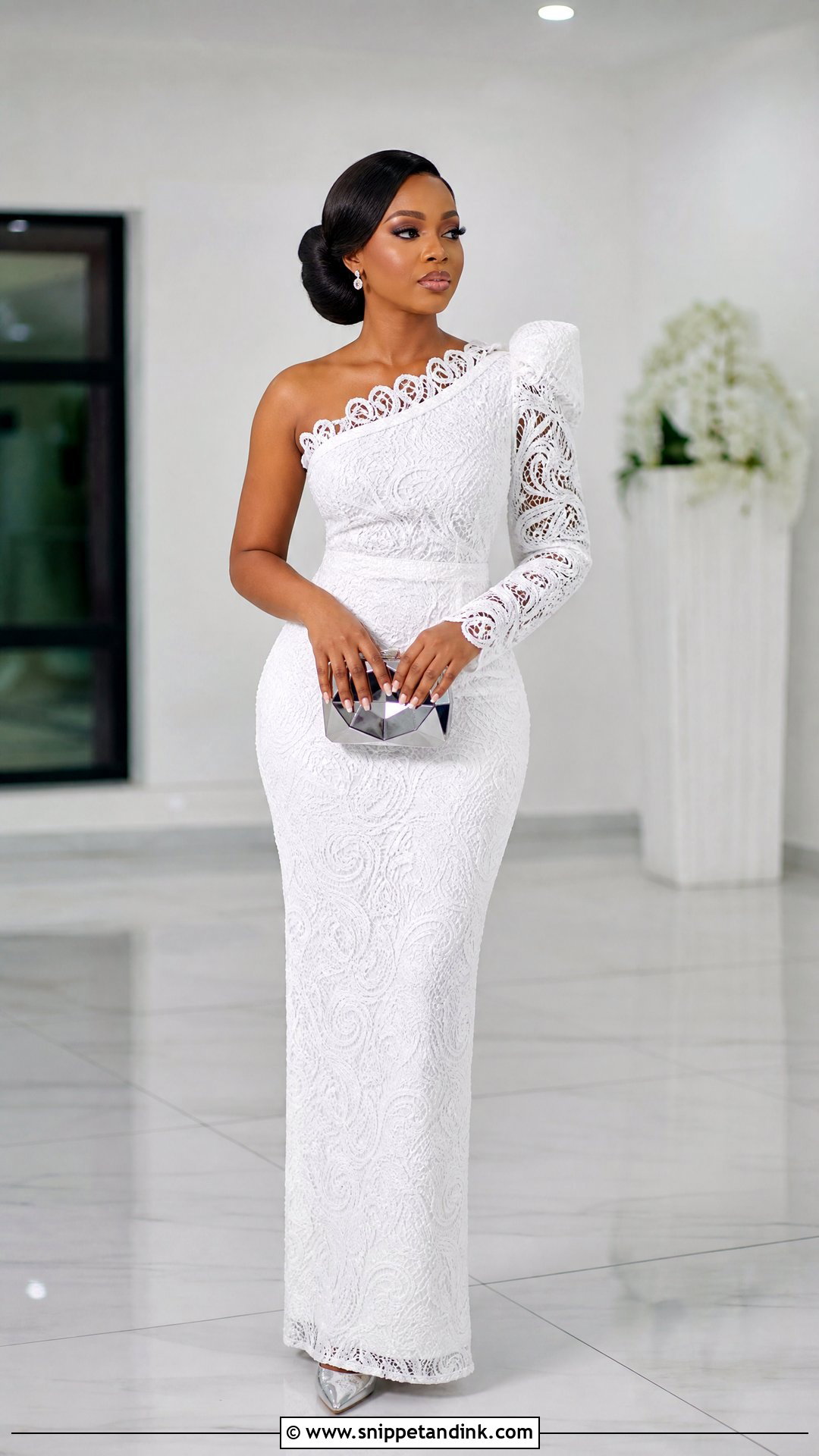
An asymmetric neckline feels current and suits a client who wants one bold line rather than lots of detail. The single shoulder can carry a sculpted lace panel, a short sleeve or a longer drape; keep the other side clean. A fitted waist and straight floor-length skirt give a strong vertical line with pointed silver heels. Add a small mirrored clutch and either one statement earring on the bare side or quiet matching studs, with a low side bun set away from the covered shoulder. Internal support matters, since one shoulder carries the whole bodice. Move your arms at the fitting to check nothing shifts.
7. White Cord Lace Cape Gown
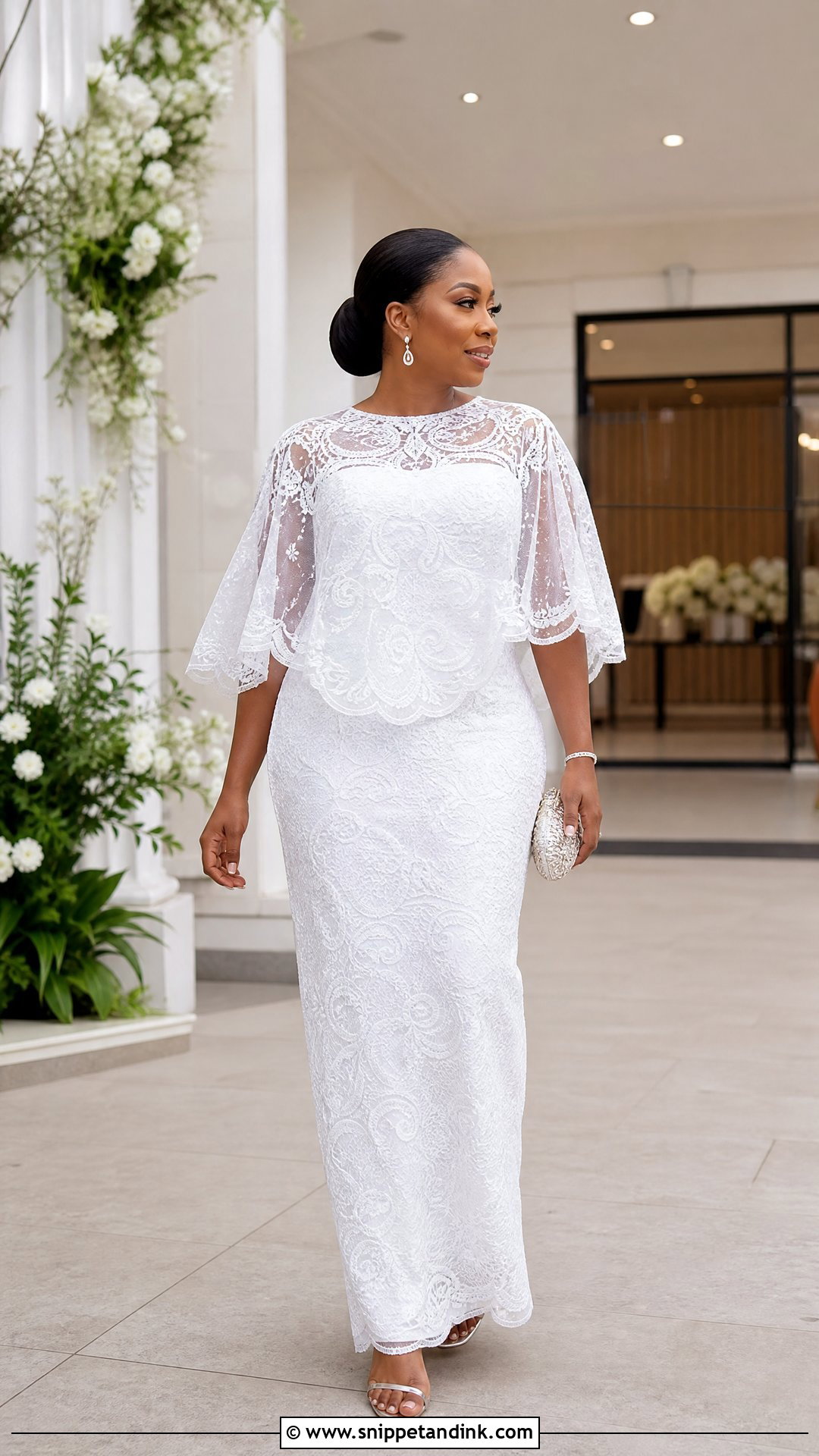
A cape turns a plain fitted column into a formal outfit. Attach it at the shoulders or upper back in matching lace, soft chiffon or both. Elbow length is easier to live in; floor length makes the bigger entrance. Because the cape already carries the drama, keep accessories light: silver sandals, a crystal clutch, understated earrings and a smooth low bun. Ask for it to be detachable with secure hooks or snaps. Cord lace capes are heavier than they look, and by the second hour of greeting guests most clients are glad to take theirs off.
8. White Cord Lace Peplum Gown
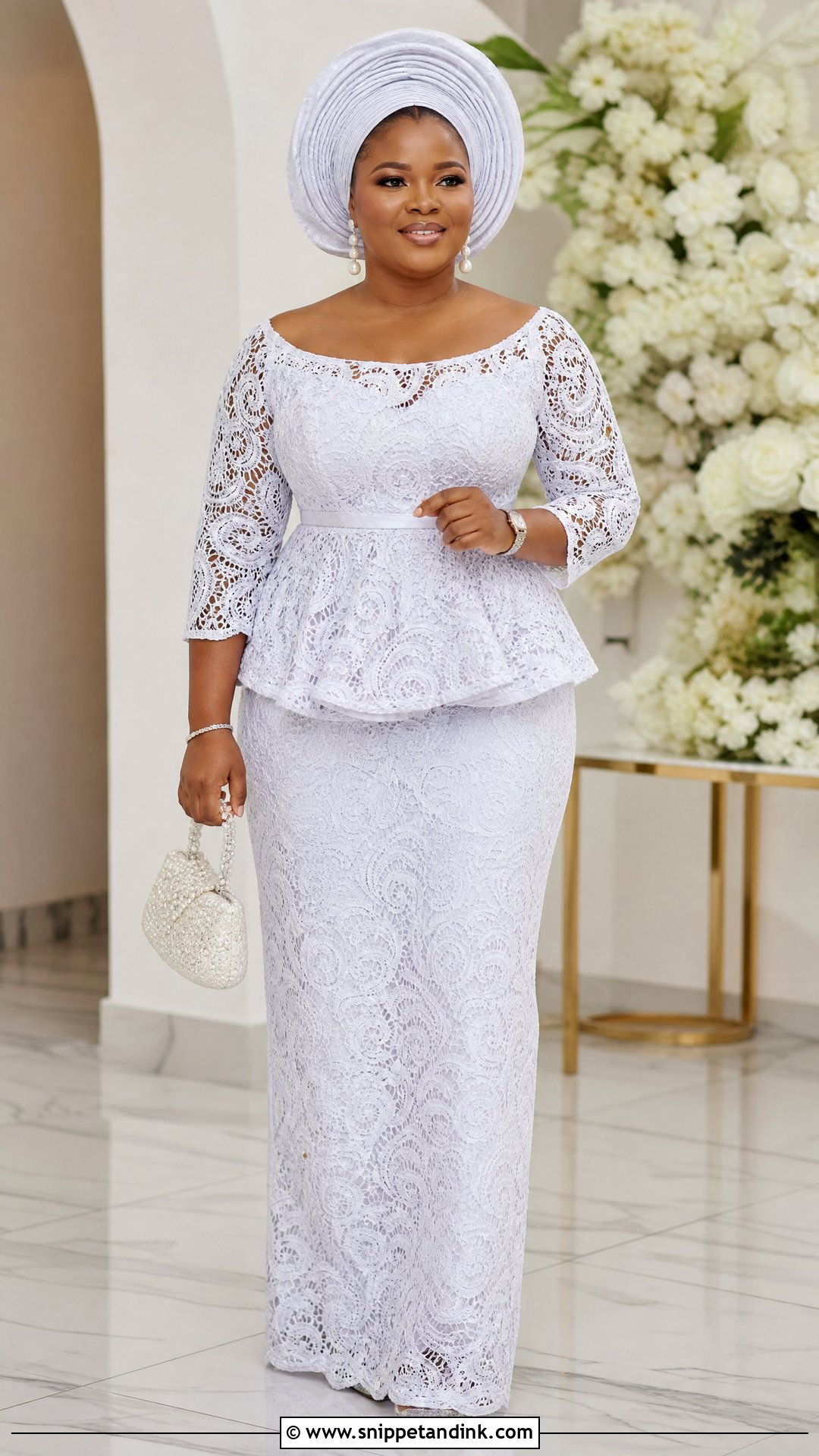
A peplum defines the waist and balances wider hips when it’s placed precisely. Choose a softly structured peplum that starts at the natural waist and falls smoothly instead of sticking out. The skirt below can be straight with a back slit or lightly flared. Silver pumps, a white beaded purse, pearl drops and a medium-height gele keep the outfit in proportion. If you prefer less volume, ask for a narrow asymmetric peplum or a short layered panel. Look at it from the front, side and back at the fitting. An inch too high or too low and the whole gown’s proportions shift.
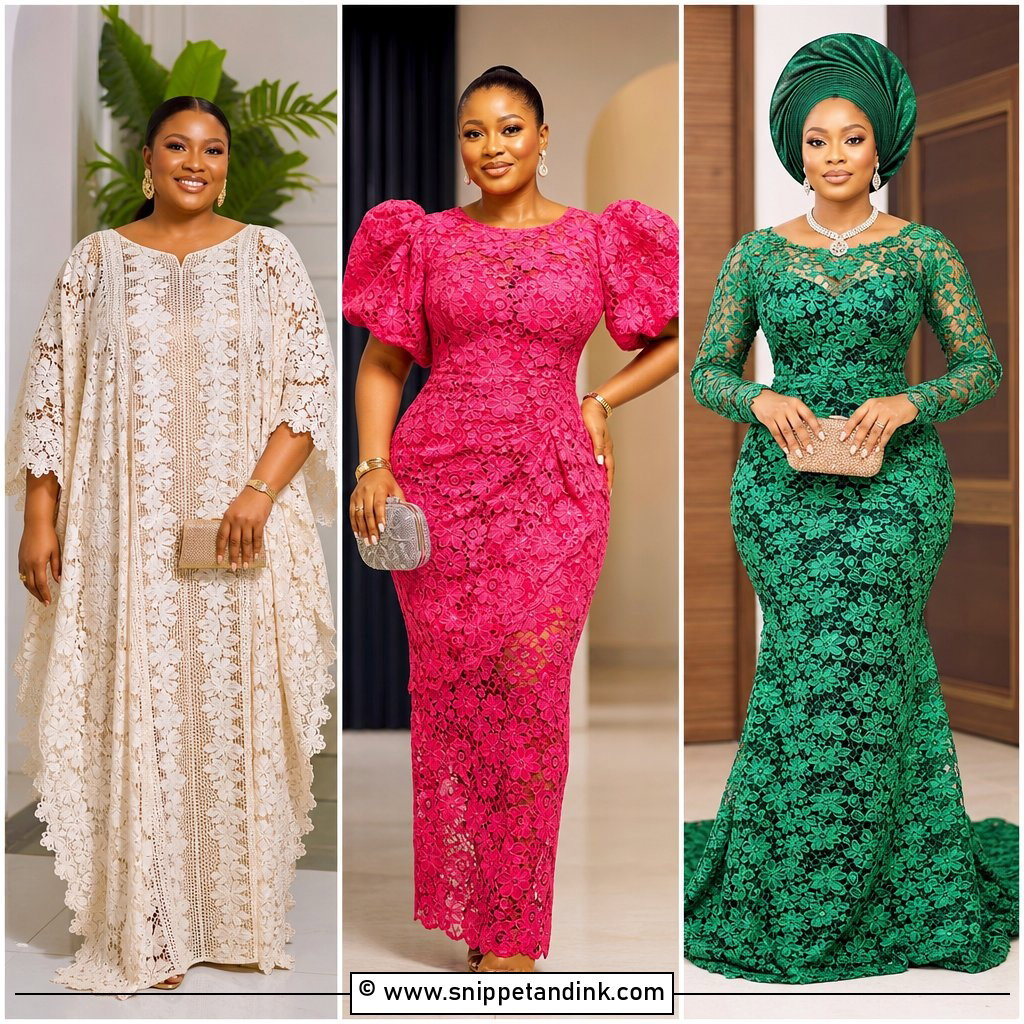
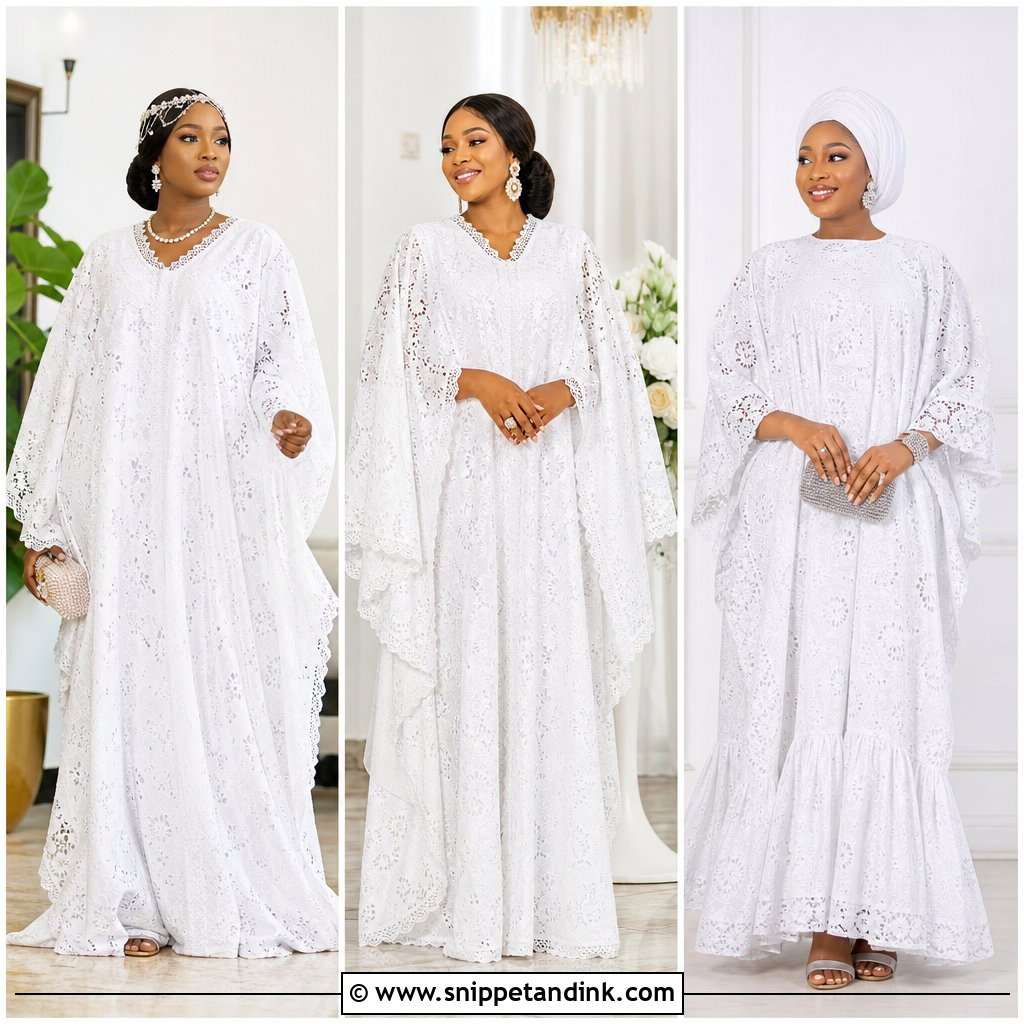
9. White Cord Lace Bubu Gown
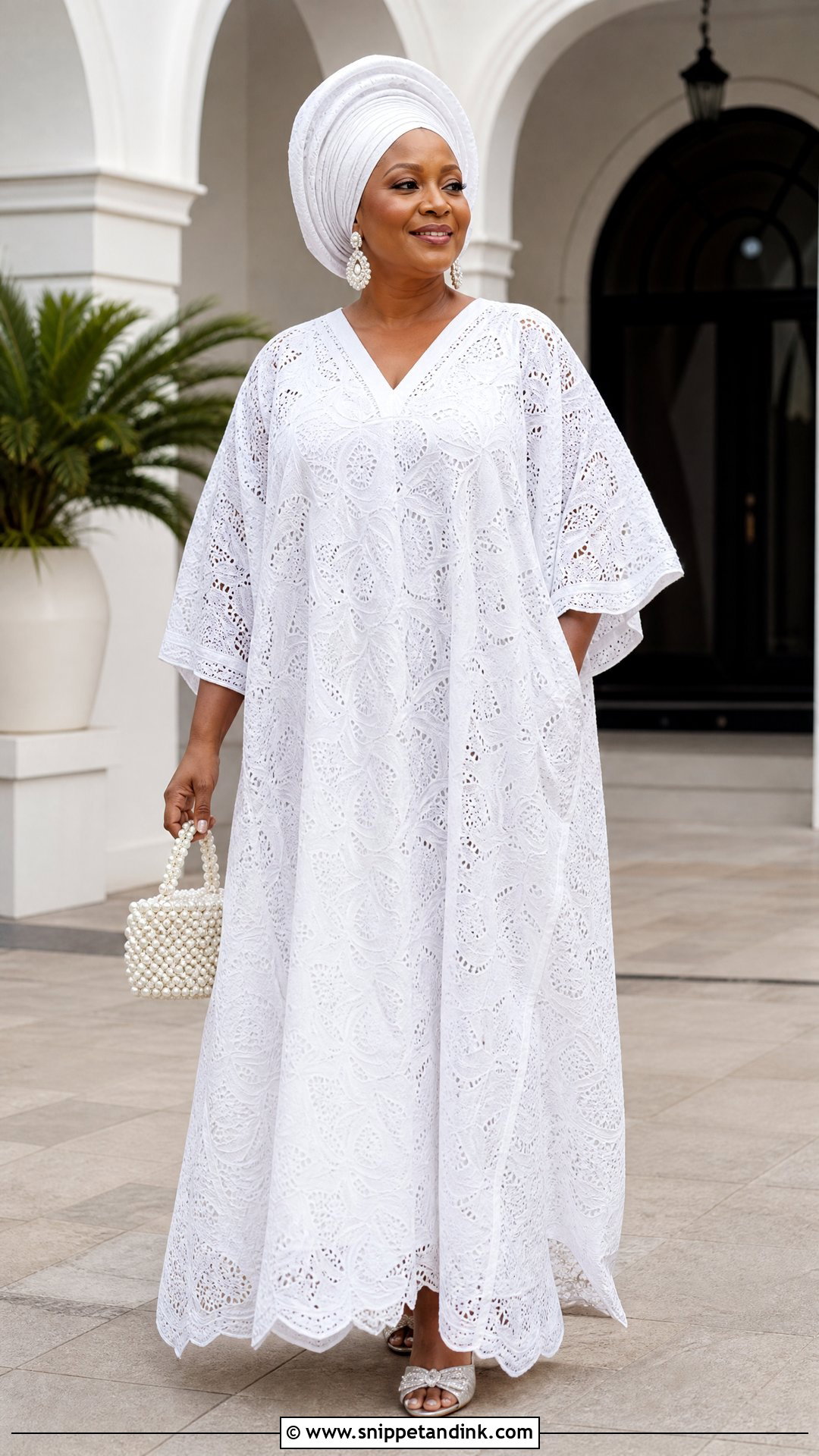
Soft movement makes a white cord lace bubu gown the comfortable choice for a long celebration. The wide cut should fall from the shoulders without swallowing you, and a V-neck, round neck or short front opening adds definition at the top. Use a breathable white lining and keep the sleeves loose. Low silver mules, a structured pearl handbag and bold earrings that stand out against the volume suit it, with a matching gele or a simpler turban-style wrap. Hidden side pockets are worth asking for. Measure the hem in your shoes; a sweeping bubu is easy to step on when climbing to a high table.
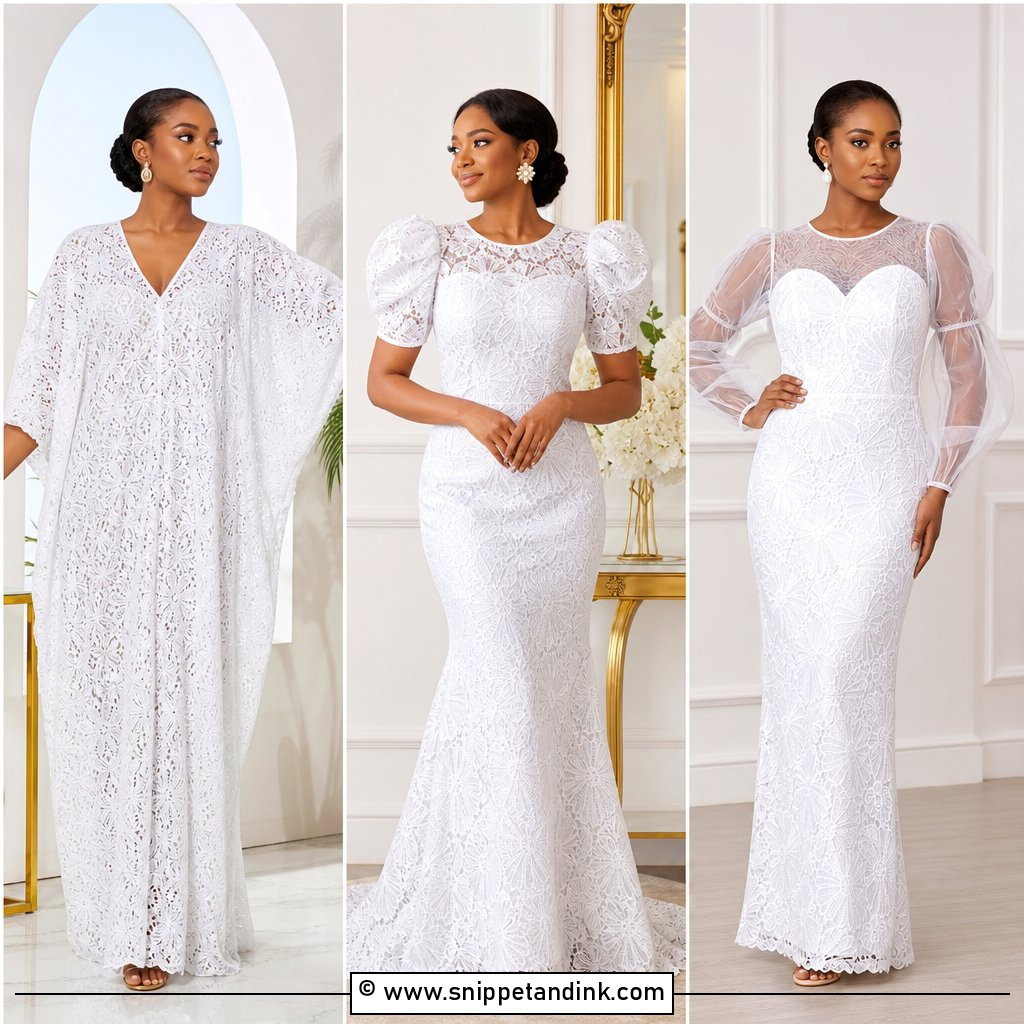
10. White Cord Lace Kaftan Gown
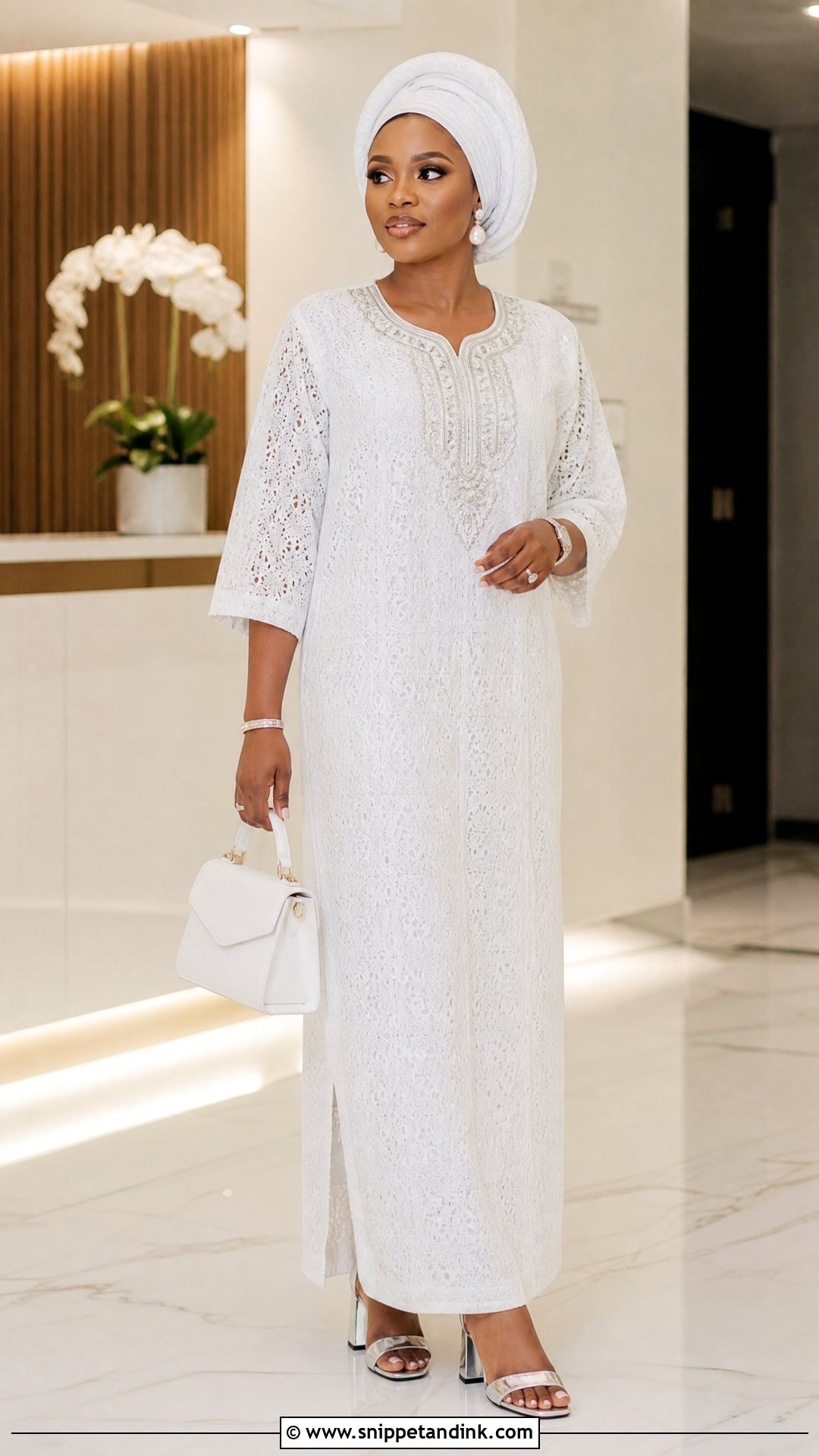
A kaftan sits between a bubu and a fitted gown, straight or gently tapered with embroidery around the neckline and centre front. Three-quarter sleeves keep the proportions right, and side slits help you move. A slim inner belt gives a hint of waist without changing the loose look. Pair it with silver block heels, a white top-handle bag, polished pearl earrings and a simple gele or sleek shoulder-length hair. Cord lace is substantial, so use a light lining and nothing extra underneath. With a cut this simple, matched motifs across the centre front are what make it look expensive.
11. White Cord Lace High-Low Gown
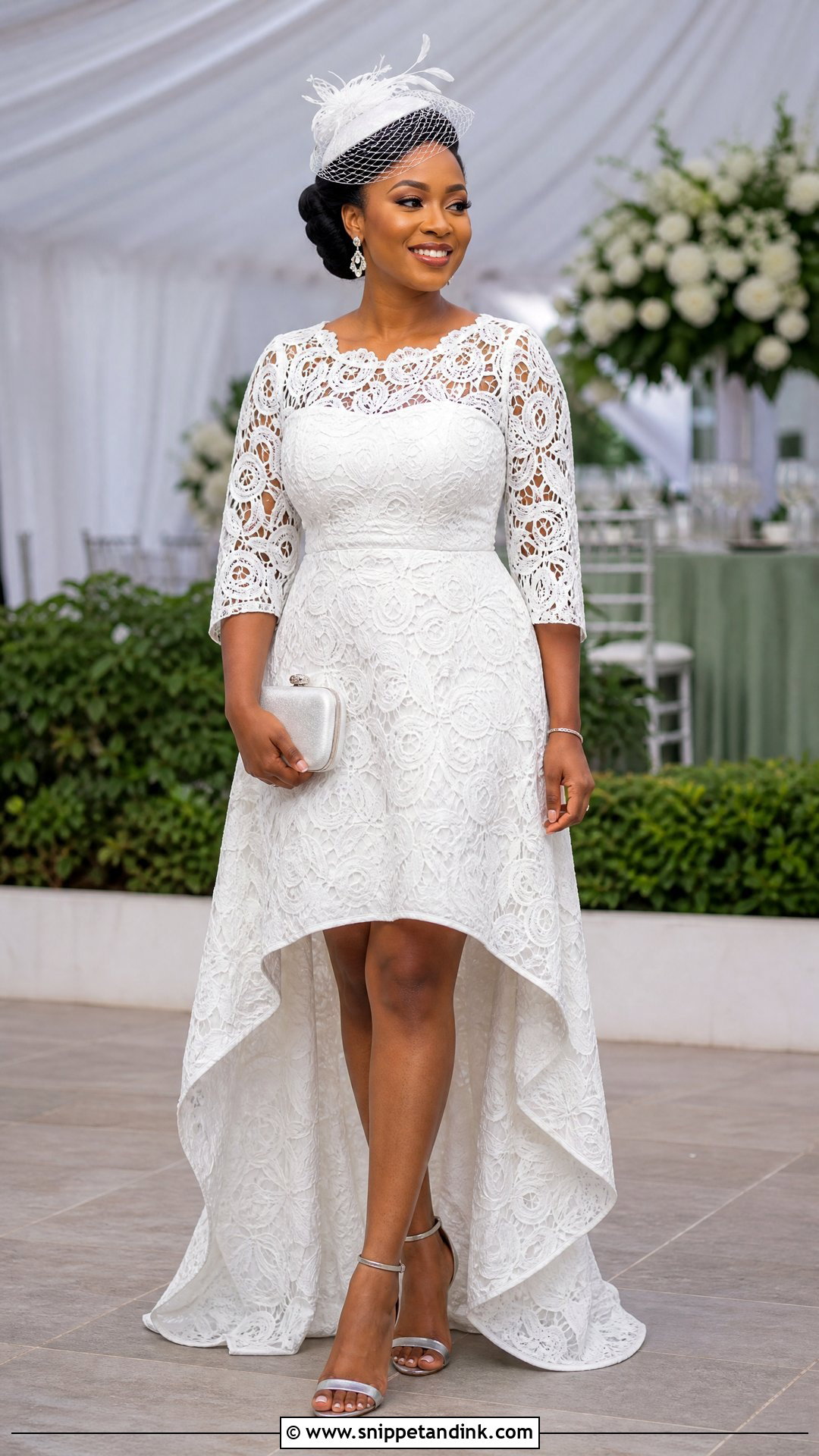
High-low hems show your shoes while keeping the drama of a long back. The front can sit at the knee or mid-calf, falling to the ankle or floor behind. A fitted bodice and defined waist hold the shape together. Silver ankle-strap heels, a compact white clutch, crystal earrings and a small fascinator suit it. The thing I watch at fittings is the curve between front and back: it should sweep gradually, not drop like a step, and the lining has to follow exactly the same line or it peeks out at the sides.
12. White Cord Lace Ball Gown
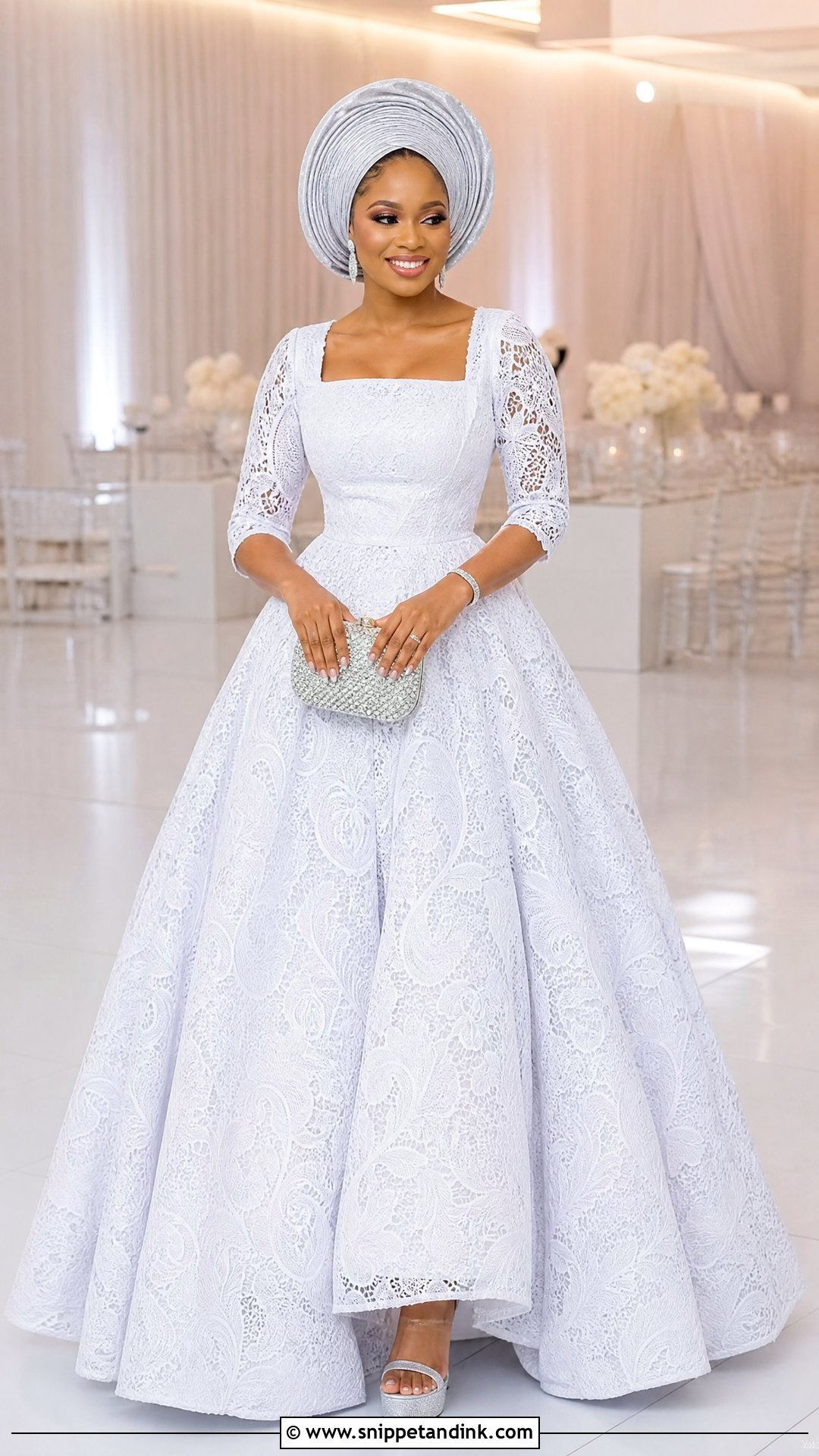
Nothing in cord lace makes an entrance like a ball gown. The fitted bodice can take a square, sweetheart or illusion neckline, and the skirt needs only lightweight tulle or a modest petticoat beneath; too many underskirts become impossible in crowded seating. Silver platform sandals, a crystal minaudière, refined drop earrings, a neat updo and a medium gele frame the face. Ask for gathers distributed evenly around the waist. One etiquette point I always raise: a full white ball gown can look bridal, so confirm the color guidance before wearing it as a guest to a wedding-related event.
13. White Cord Lace Straight Gown
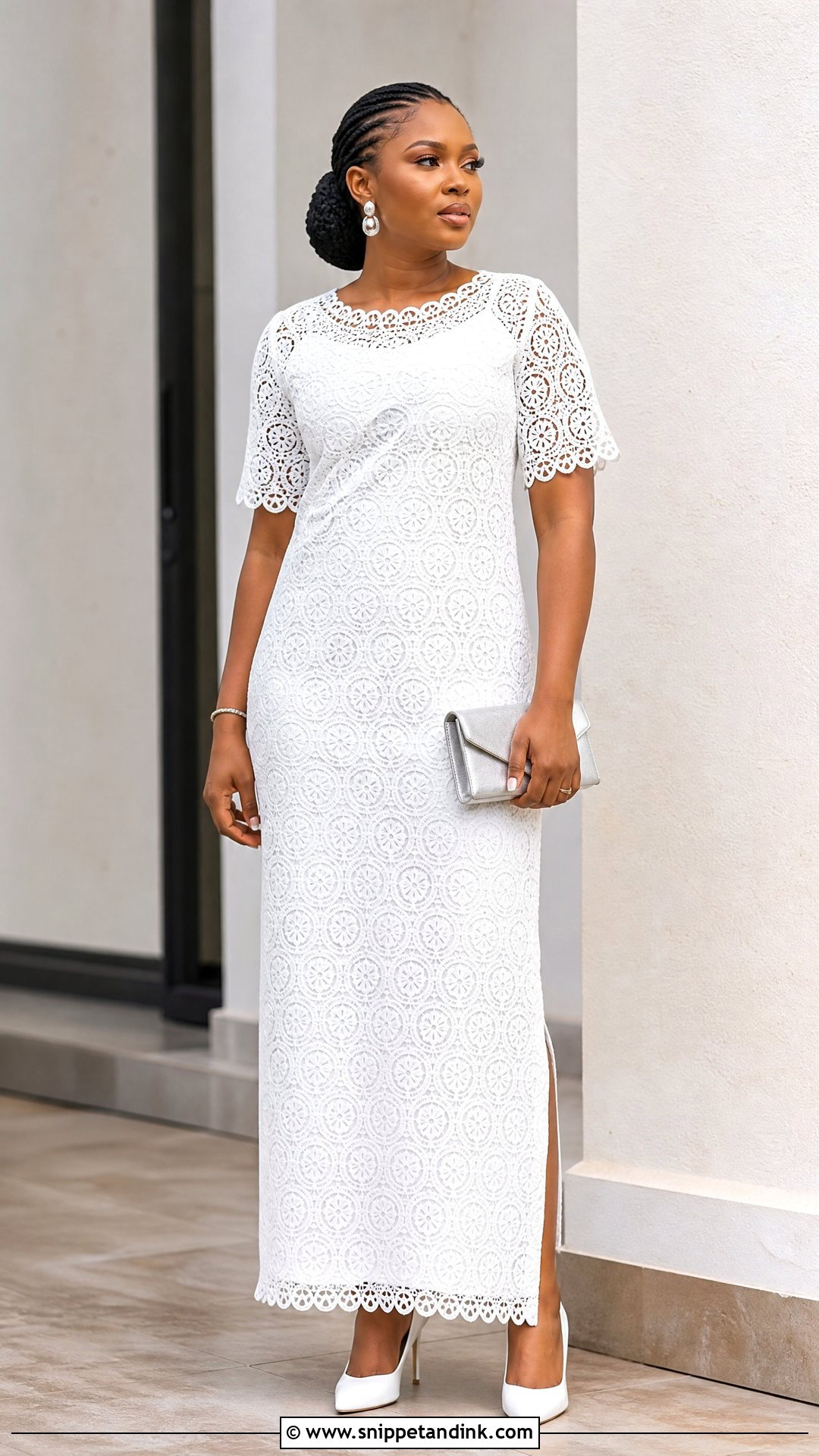
Straight gowns are for clients who want the lace to do all the talking. The dress should skim without clinging, with room at the hips and knees to walk. A round neck, short sleeves and an ankle-length hem give a simple base, with a narrow back or side slit if needed. Pointed white pumps, a silver envelope clutch, sculptural pearl earrings and a low braided bun or neat head wrap keep it streamlined. A nude lining emphasizes the motifs, but check it under bright light first, because it can read as bare skin in flash photos. Shoulders and bust need precise tailoring here; there’s nowhere for pulling to hide.
14. White Cord Lace Wrap Gown
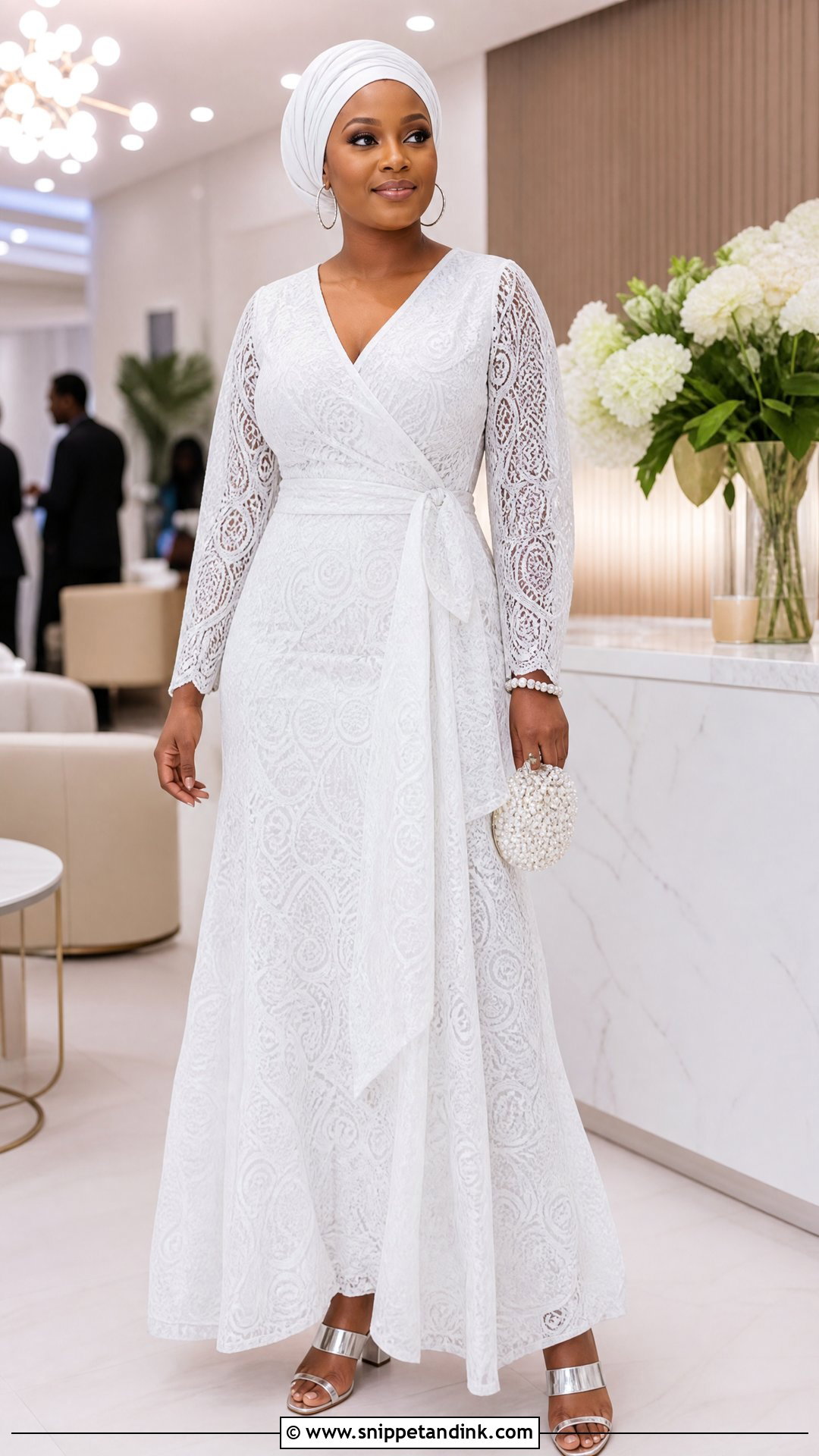
Wrap styles draw a flattering diagonal across the bodice. I’d always choose a fixed faux wrap over one held together only by ties, which loosen through the evening. A modest V and shaped waistband define the top, while a gently flared skirt moves easily. Metallic block heels, a pearl wristlet, silver hoops and a soft turban or high bun keep the neckline visible. Heavily corded lace gets bulky where it overlaps, so a smooth satin panel under the top layer helps. Sit and walk at the fitting; hidden snaps and an attached lining stop the skirt opening.
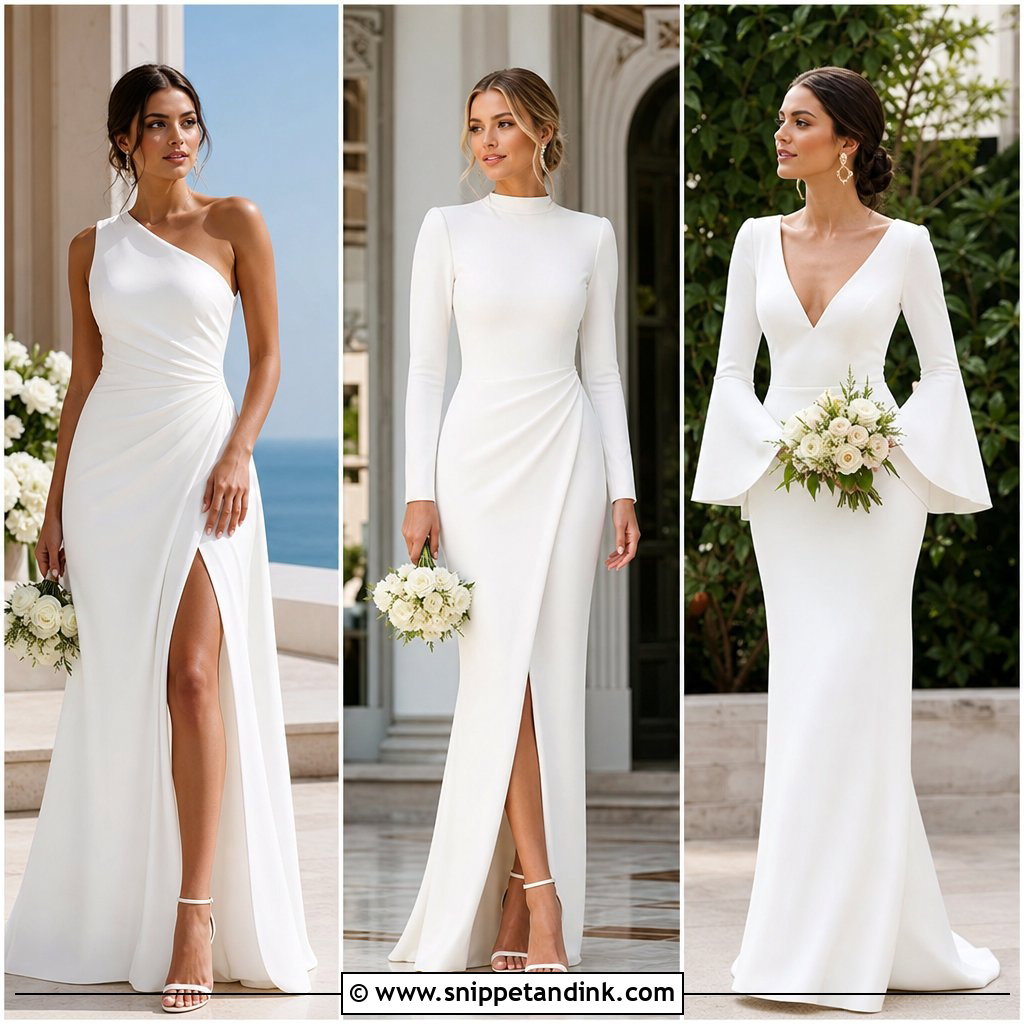
15. White Cord Lace Tiered Gown
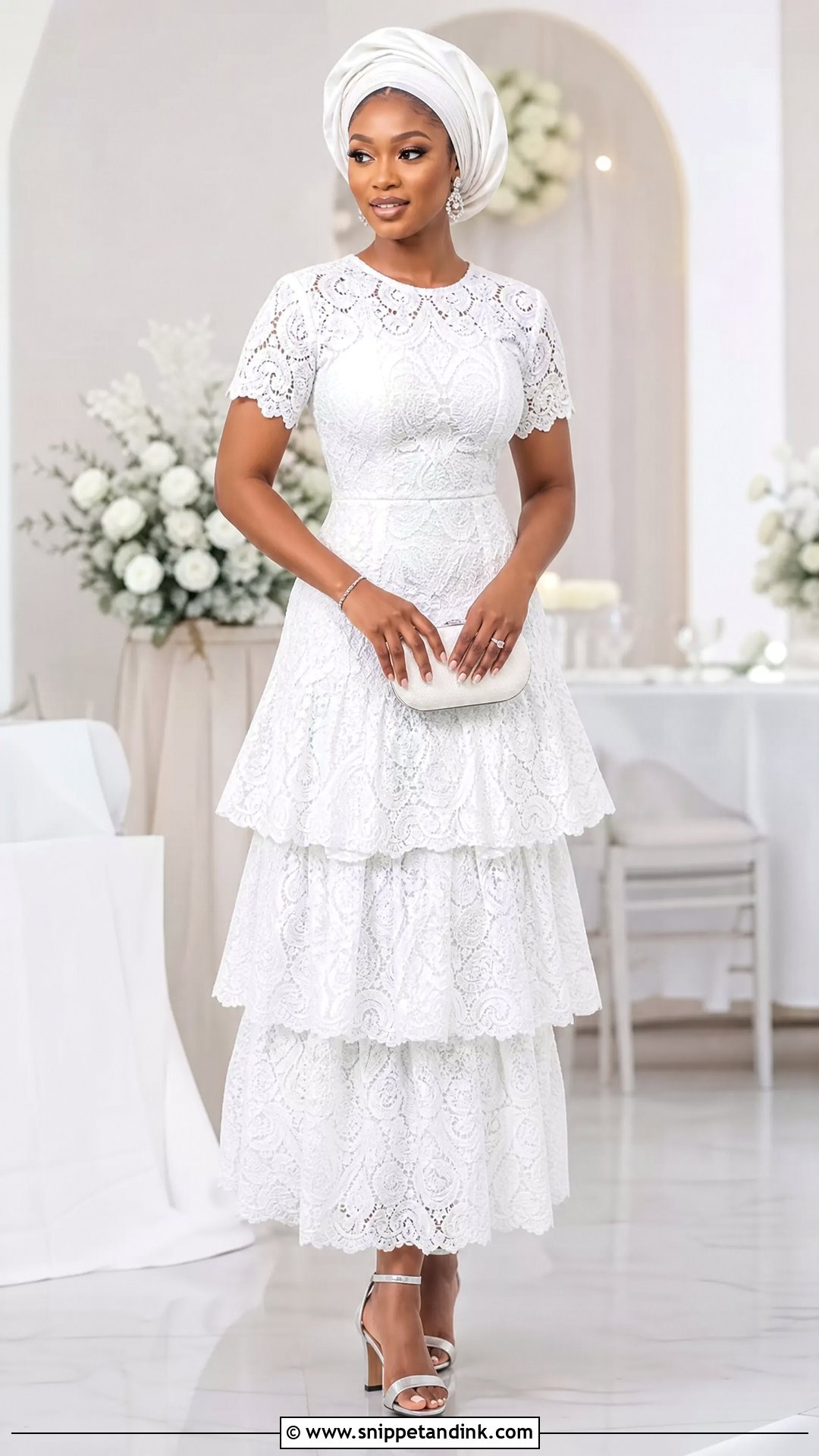
Tiers give cord lace movement. Keep the bodice fitted and simple, then add two or three graduated tiers below the hip or knee; narrow tiers look polished, wider ones look fuller. Weight builds quickly with every tier, so pick a lighter lace and lining. Silver heeled sandals, a smooth white clutch, delicate crystal earrings and a plain gele or minimalist bun balance the skirt. Leave ruffles off the neckline and sleeves. During alterations, check that every tier hangs level and the motifs line up where they can.
16. White Cord Lace Ruffle Sleeve Gown
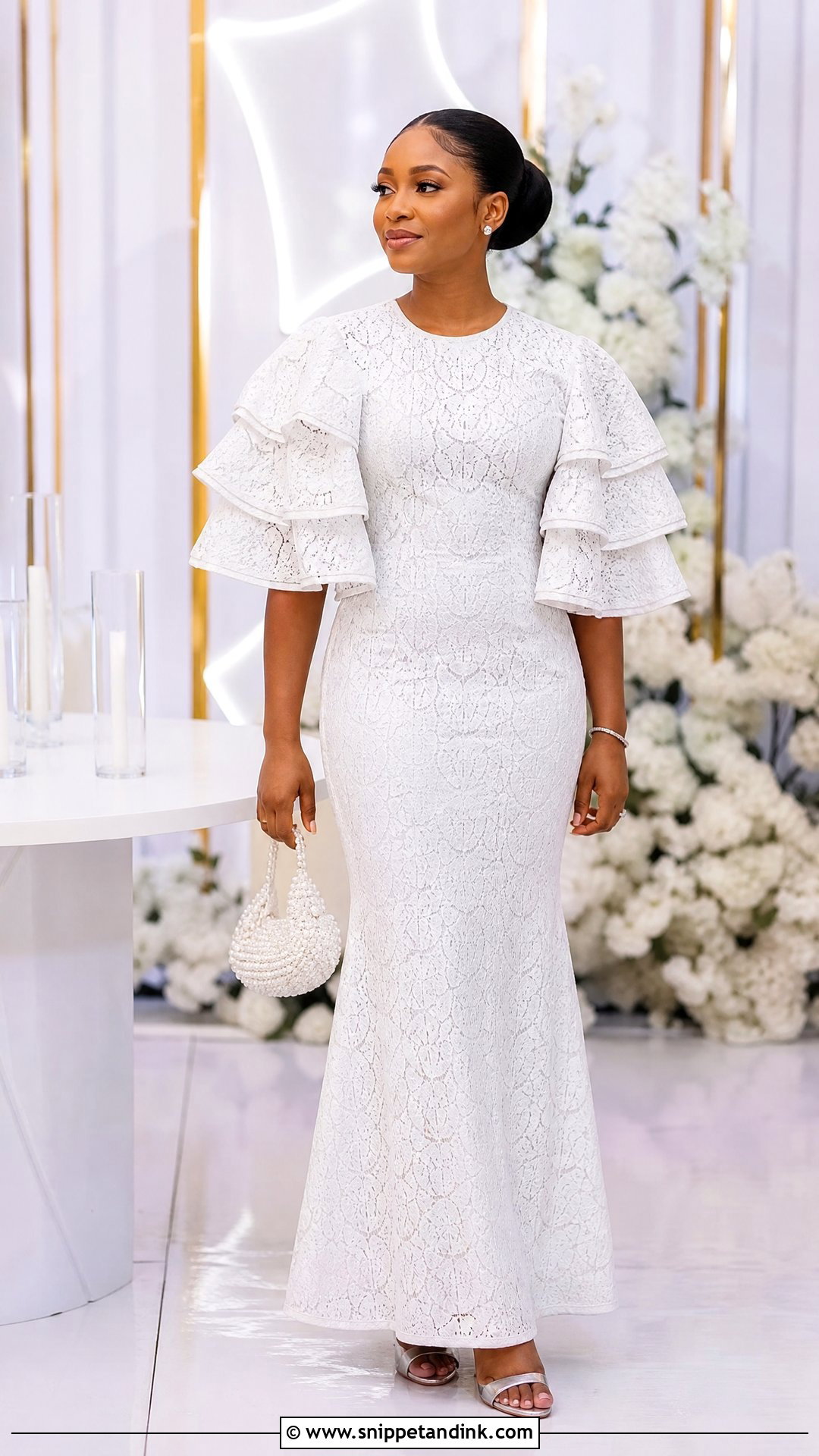
Ruffled sleeves make a simple gown memorable, at the elbow, wrist or shoulder depending on how much volume you can live with. Balance them with a fitted bodice, a straight or lightly flared skirt and a round neck or soft V. Silver slingbacks, a petite pearl bag, studs and a sleek bun keep hair from catching. Test the sleeves while eating, greeting people and carrying your bag, because wrist ruffles end up in the stew at a buffet. Stiff cord lace ruffles can look boxy; fewer layers, or softer organza mixed in, keeps them lively.
17. White Cord Lace Puff Sleeve Gown
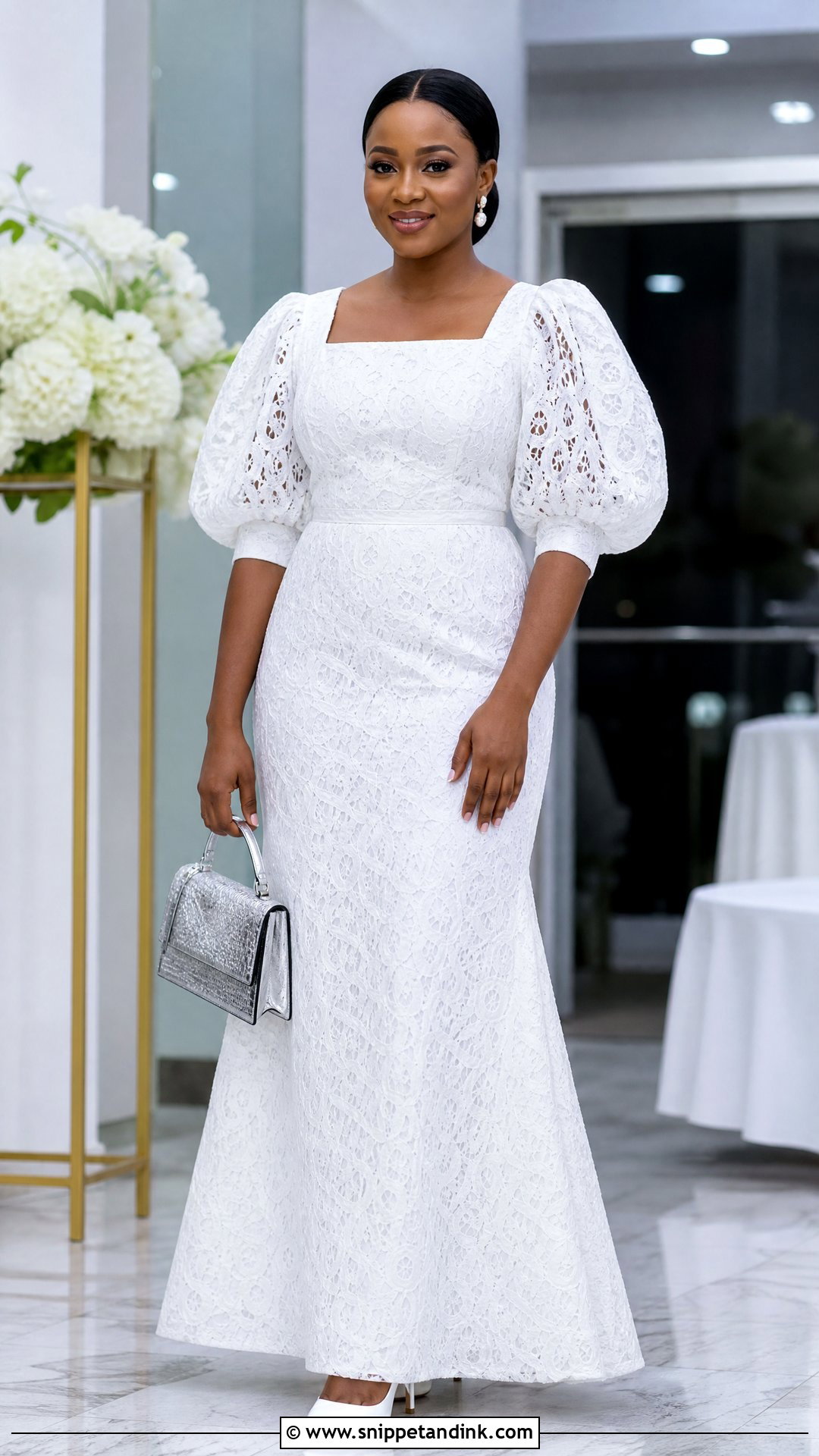
Puff sleeves add a bold, feminine shape to the upper body. Keep them short and rounded, or extend them to the elbow with a fitted cuff, and keep the volume moderate so they frame rather than swamp the shoulders. A square neckline and fitted waist suit this best. White pointed heels, a silver top-handle bag, small pearls and a centre-parted low bun or simple wrap keep lines clean. Lightweight organza under the lace holds the puff without much weight. At the fitting, check the sleeve heads sit squarely on the shoulder; badly set puffs collapse by evening or pin your arms.
18. White Cord Lace Detachable Train Gown
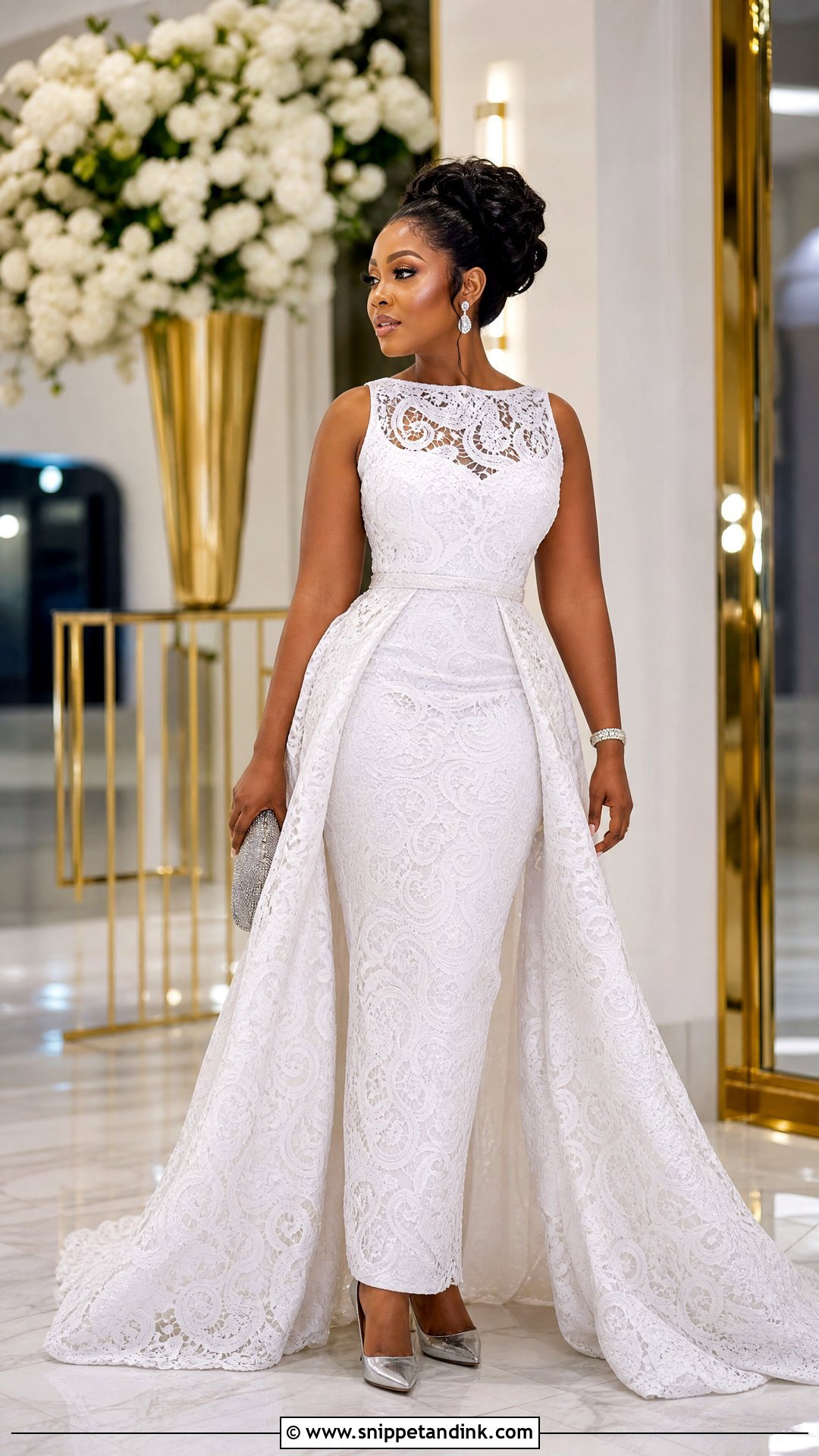
A detachable train gives you two outfits in one day. Start with a mermaid, column or ankle-length base, then attach a flowing overskirt or train at the waist with hidden hooks, snaps or a narrow belt. Silver pumps, a crystal clutch, drop earrings and a sleek updo keep the train the focus. Matching lace gives one continuous look; white satin gives a quiet contrast. After the entrance and formal photos, take it off for dancing. Test the fastening repeatedly at fittings while walking, turning and sitting, since a train that drops halfway down an aisle is hard to recover from gracefully.
19. White Cord Lace Illusion Neck Gown
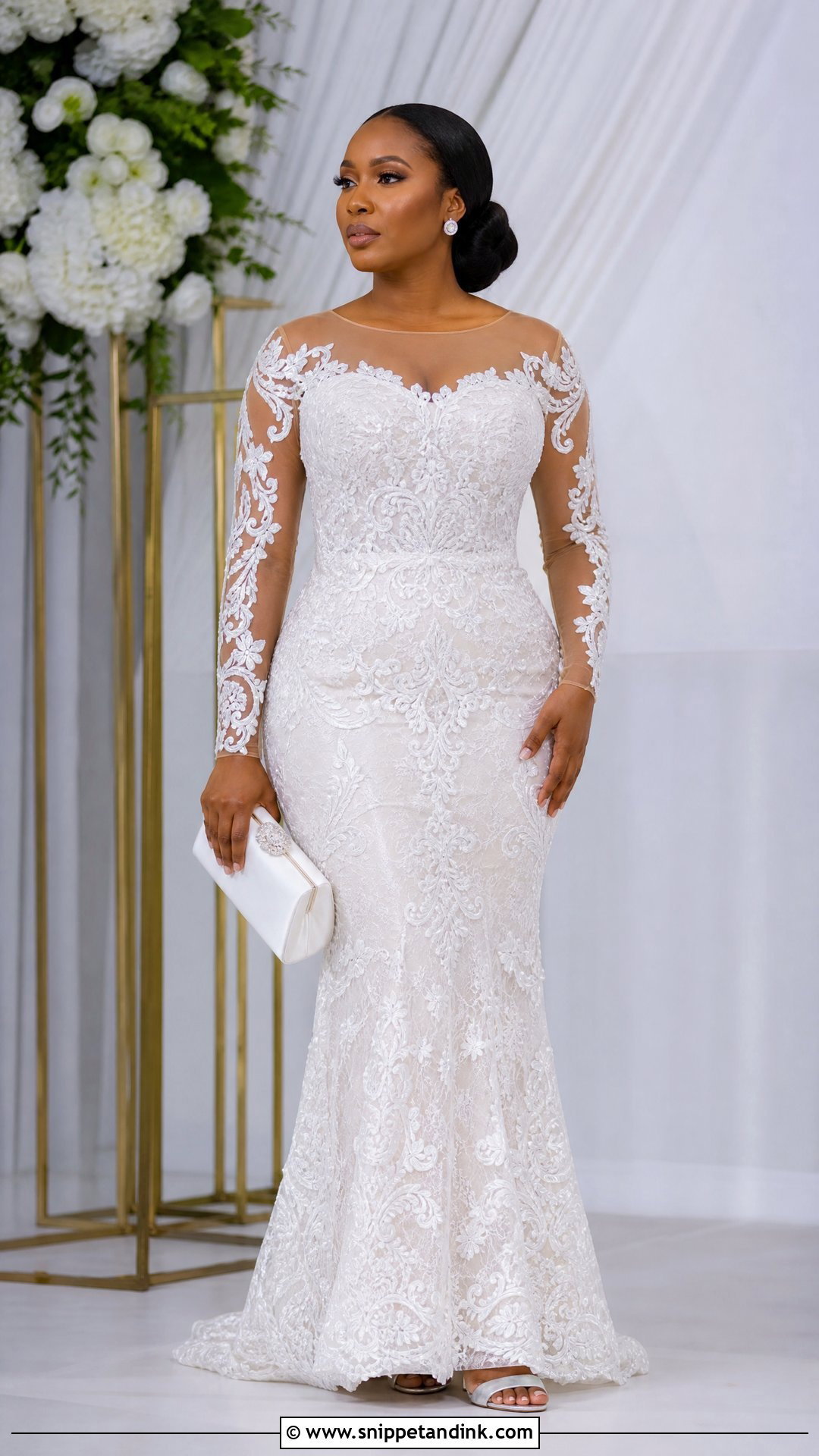
Illusion necklines give coverage while the cord motifs appear to sit directly on the skin. The mesh should closely match your complexion, with appliqués placed carefully around the neckline, shoulders and chest. Below, a fitted waist with a straight or flared skirt. Silver peep-toes, a white satin clutch, crystal studs and a low chignon suit it. Fit the mesh exactly: loose mesh wrinkles, tight mesh pinches, and both show in close-ups. Ask for clean interior finishing at the armholes, as raw cord edges scratch over a long event.
20. White Cord Lace Square Neck Gown
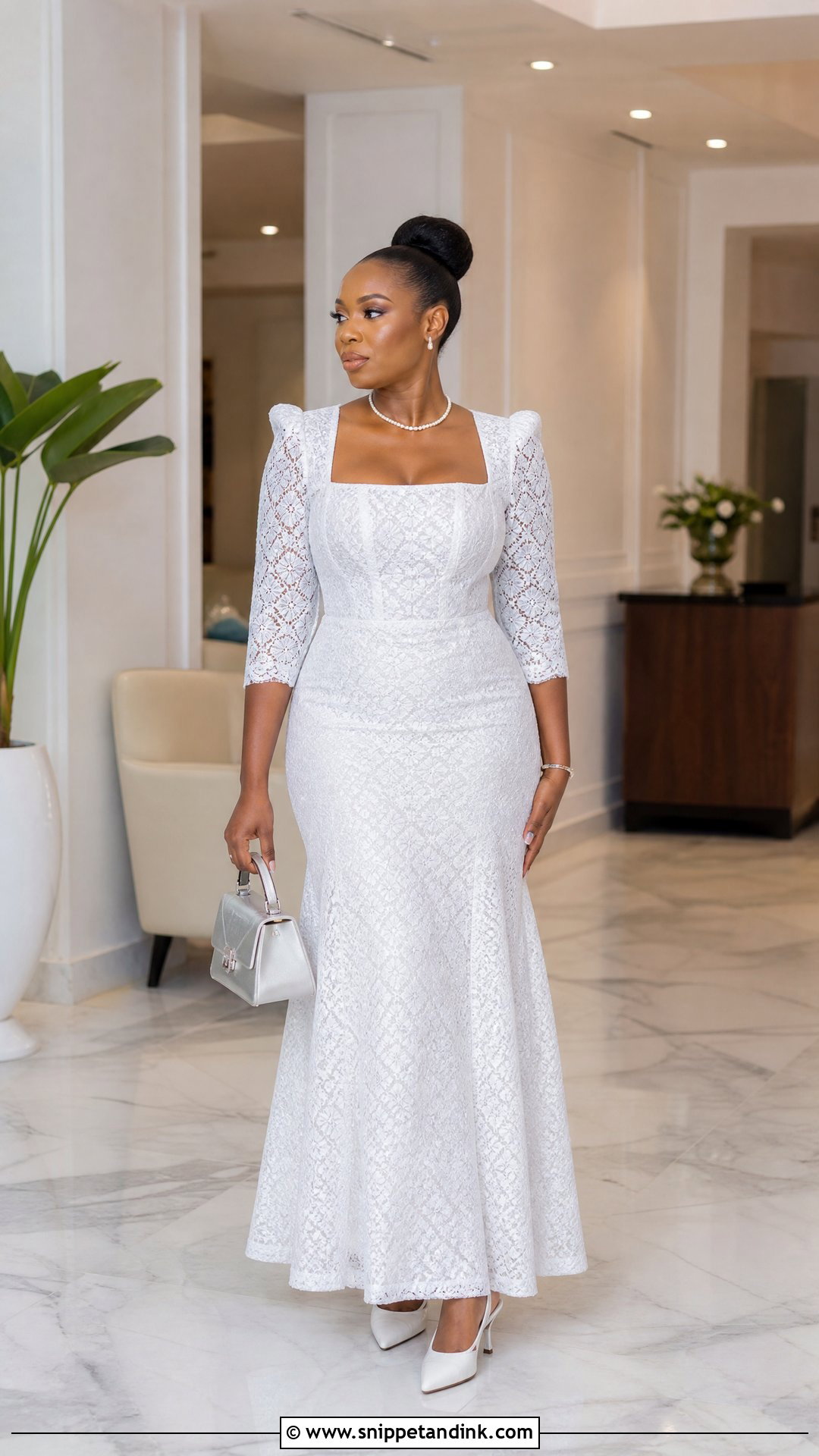
A square neckline adds structure and adapts to short sleeves, long fitted sleeves or wide straps. Pair it with a defined waist and a gently flared floor-length skirt. White slingbacks, a structured silver handbag, a short pearl necklace that echoes the neckline, and a smooth high bun or low braids finish it. The corners must be flat and symmetrical, and that’s harder in cord lace because a motif can pull the corner out of line. The straps should also cover your bra completely.
21. White Cord Lace Asymmetric Peplum Gown
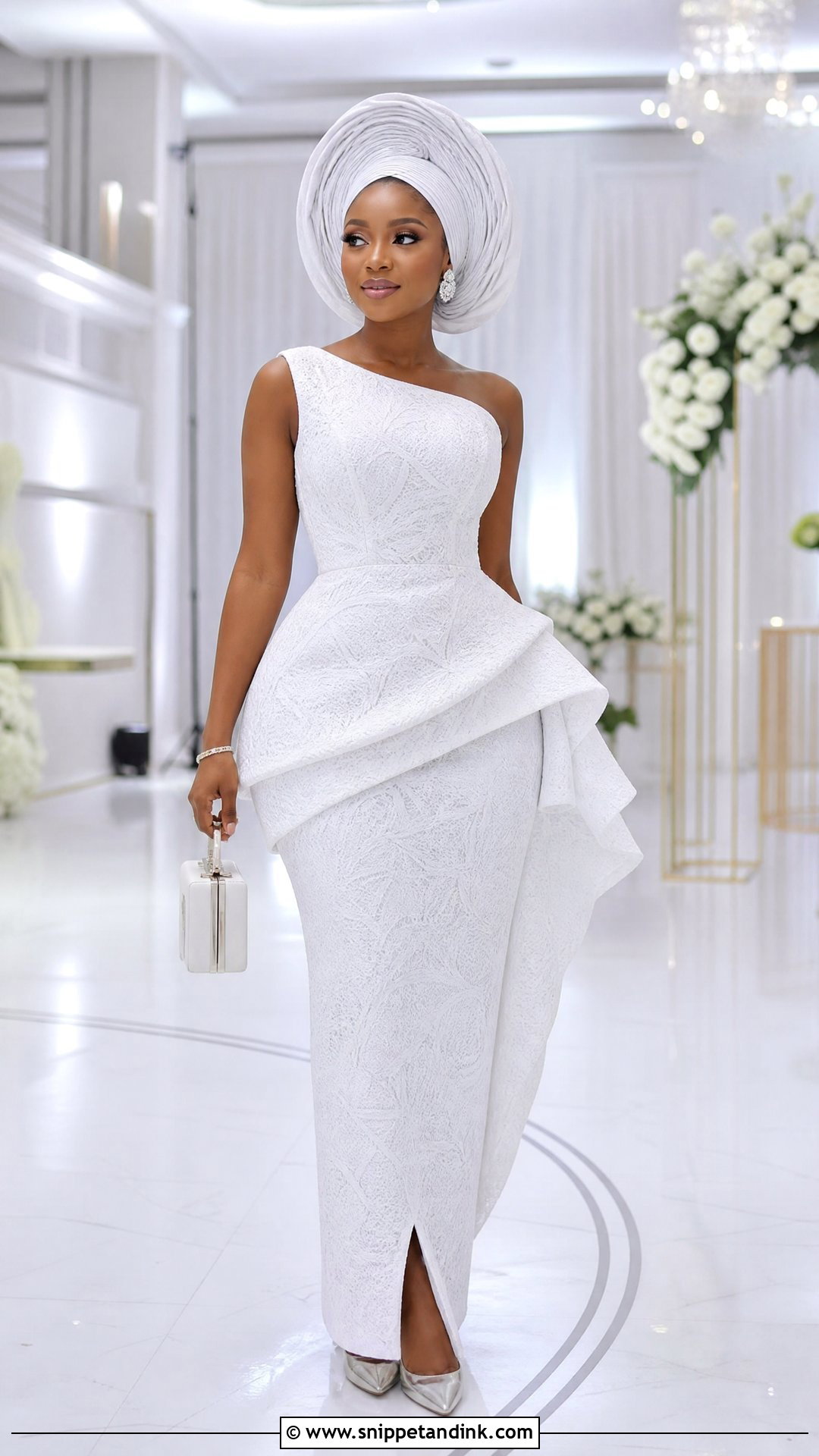
One-sided drape gives movement without adding volume all the way round the waist. The panel can start at one hip and sweep diagonally across a fitted gown, over a straight skirt with a back slit. Silver pointed pumps, a white box bag, simple crystal earrings and a sculpted gele that echoes the angle work well, or a sleek ponytail for a cleaner look. Satin or organza beneath the peplum helps it hold its shape. Have it fitted standing and sitting so it lies flat in both, and keep everything else simple so the angle looks deliberate.
22. White Cord Lace Tea-Length Gown
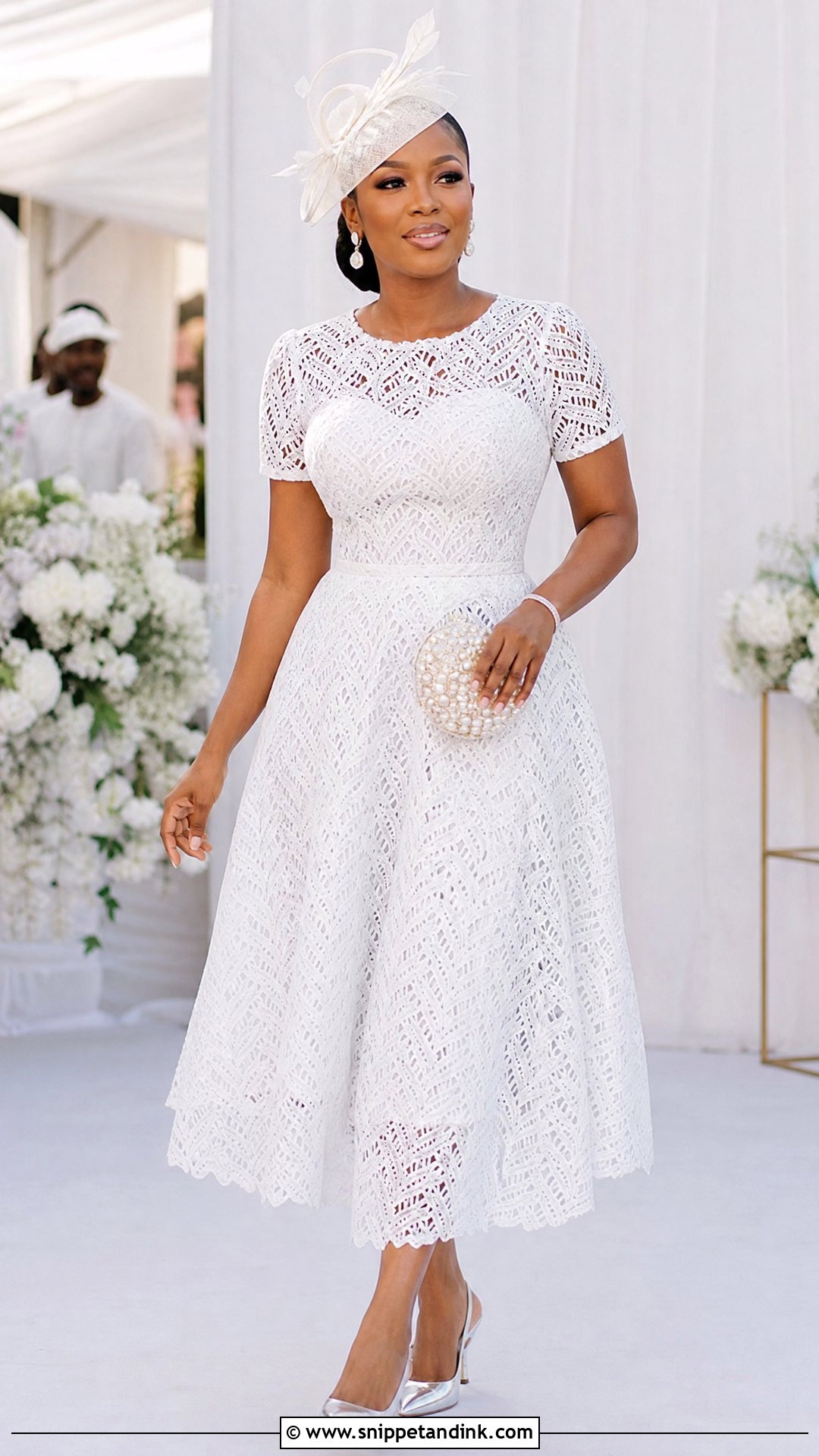
Tea length is lighter than a floor-sweeping gown and puts your shoes on show. The hem falls between knee and ankle, with a fitted bodice and soft flare. Silver slingbacks, a pearl clutch, medium drop earrings and a small fascinator, neat turban or polished bun suit the shorter line. A little trick tailors use is cutting the lining slightly shorter than the lace so the scalloped cord edge shows at the hem. It suits daytime receptions, family celebrations and birthdays. Check the length in your exact shoes at the final fitting.
23. White Cord Lace Cold Shoulder Gown
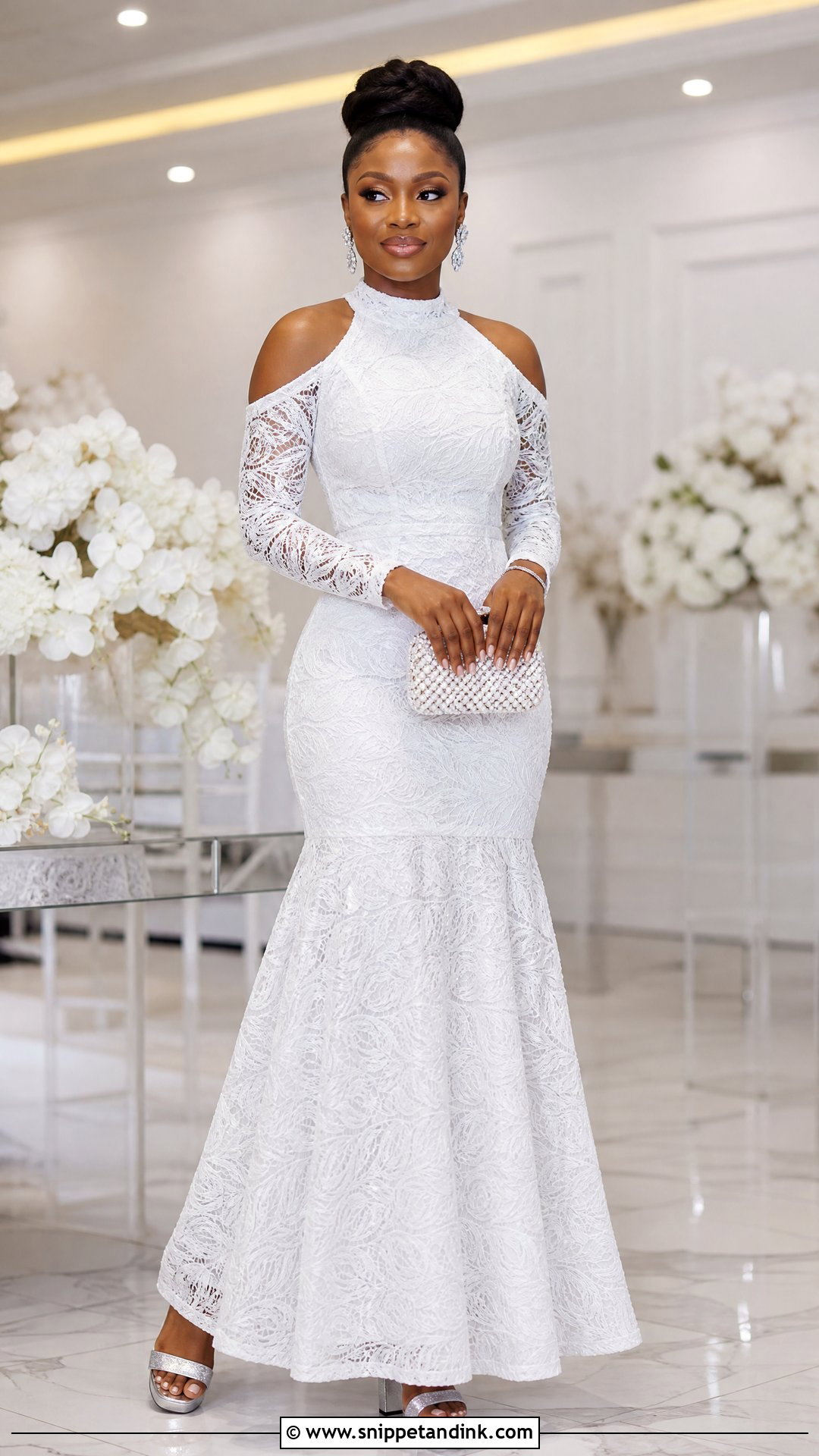
A cold shoulder design adds a modern cutout while keeping most of the arm covered. A high round neck, fitted sleeves and neatly shaped openings at the shoulder are the classic version. Keep the cutouts moderate and reinforce their edges, since unsupported cord lace sags and gapes at an opening. A fitted waist and flared skirt balance the exposed area. Silver block heels, a beaded white clutch, crystal earrings and a high bun or simple gele finish it. Bra straps must stay hidden, so lift and rotate your arms at the fitting to check the openings lie flat.
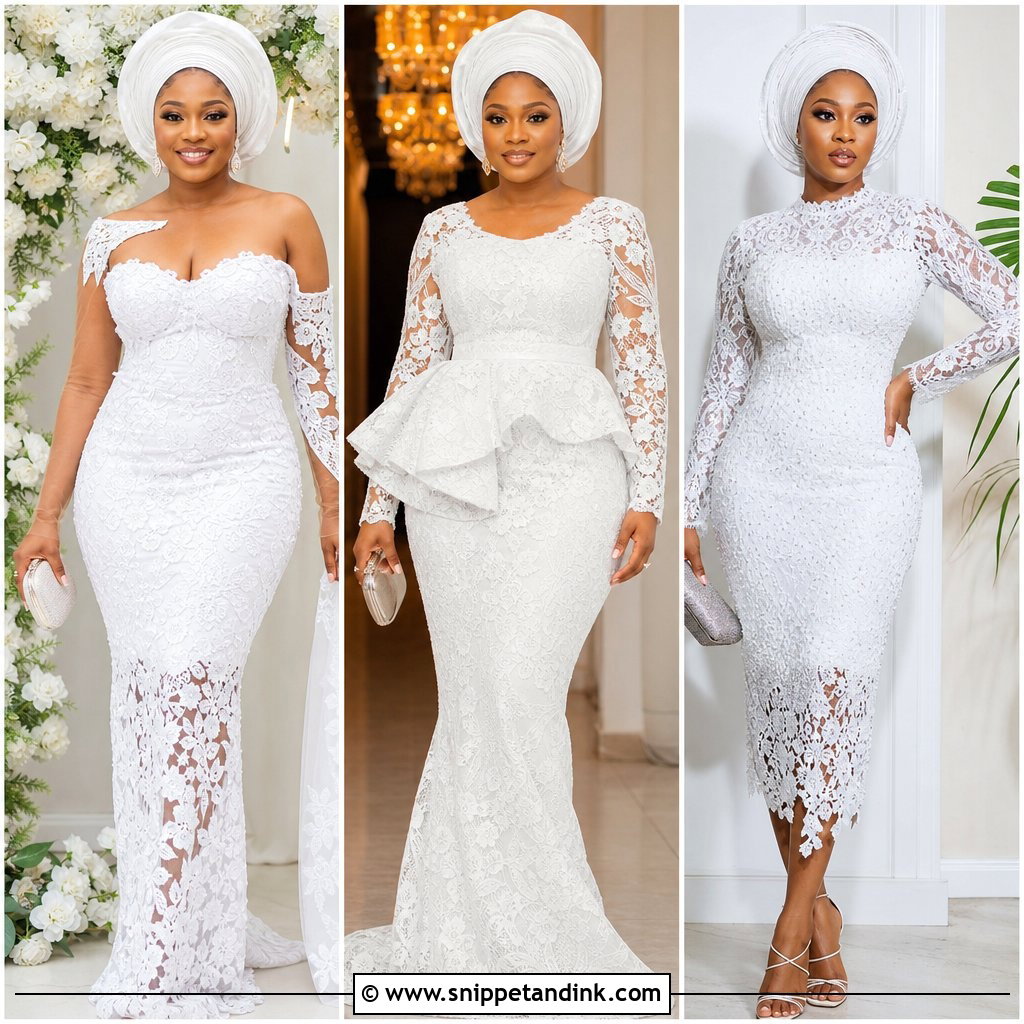
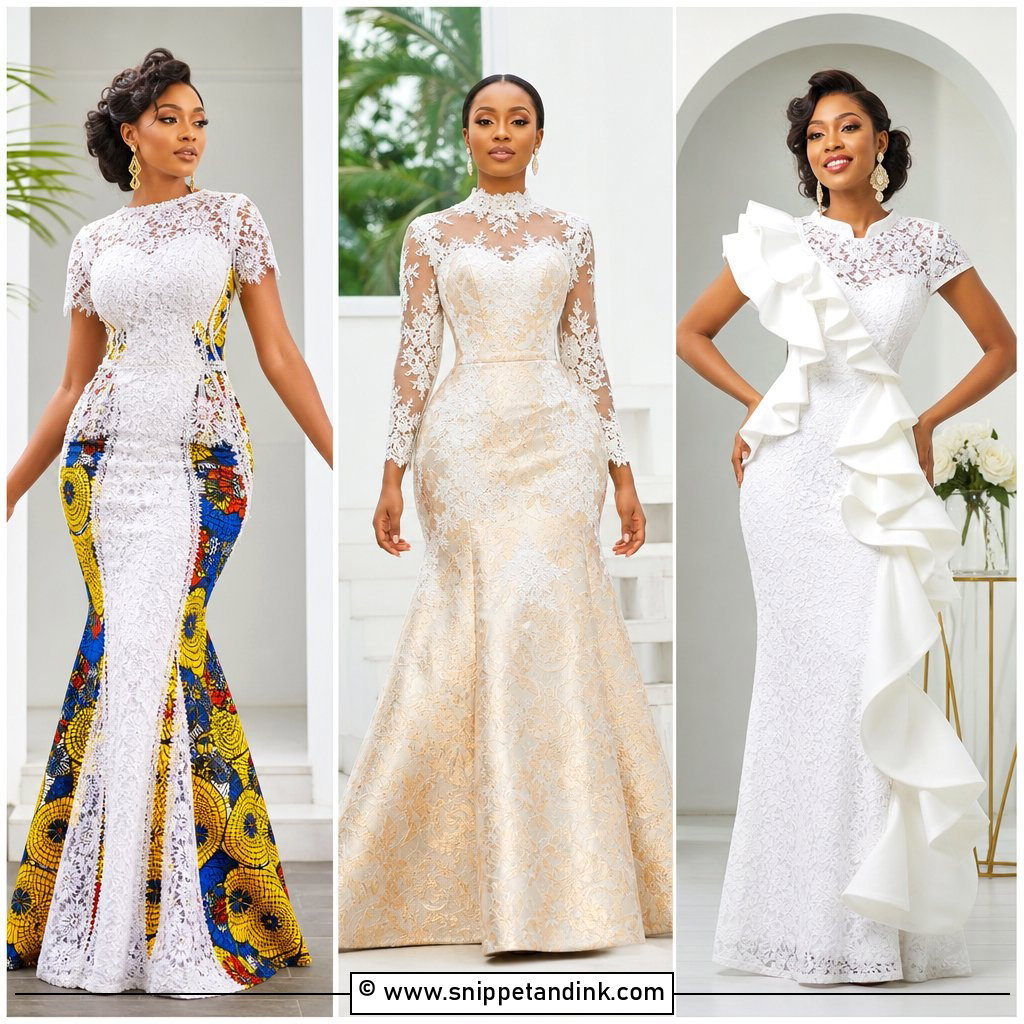
24. White Cord Lace Gown With Aso Oke Detail
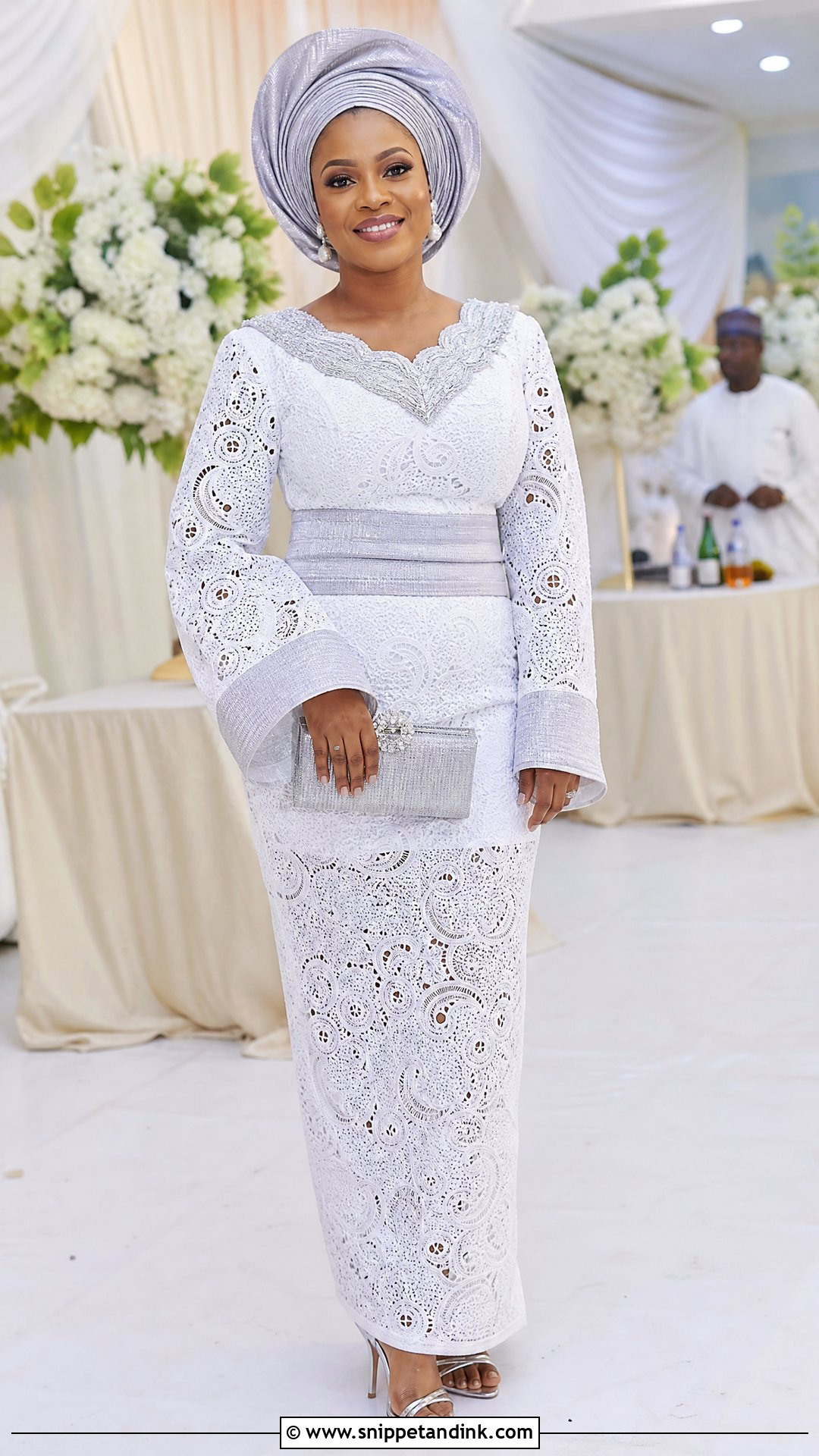
Mixing in aso oke gives white cord lace a distinctly Nigerian finish. Use the woven fabric in a few places, as a waistband, neckline border, sleeve cuff or structured peplum, rather than over the whole gown, and keep it white, silver or softly metallic. A fitted floor-length gown with a gentle flare balances the two textures. Silver heels, a matching aso oke clutch, pearl earrings and a gele tied from the same fabric pull it together. Aso oke is much heavier than lace, so your tailor should stabilize it with interfacing before stitching it on, or the lace will sag beneath it.
25. White Cord Lace Gown With Feather Trim
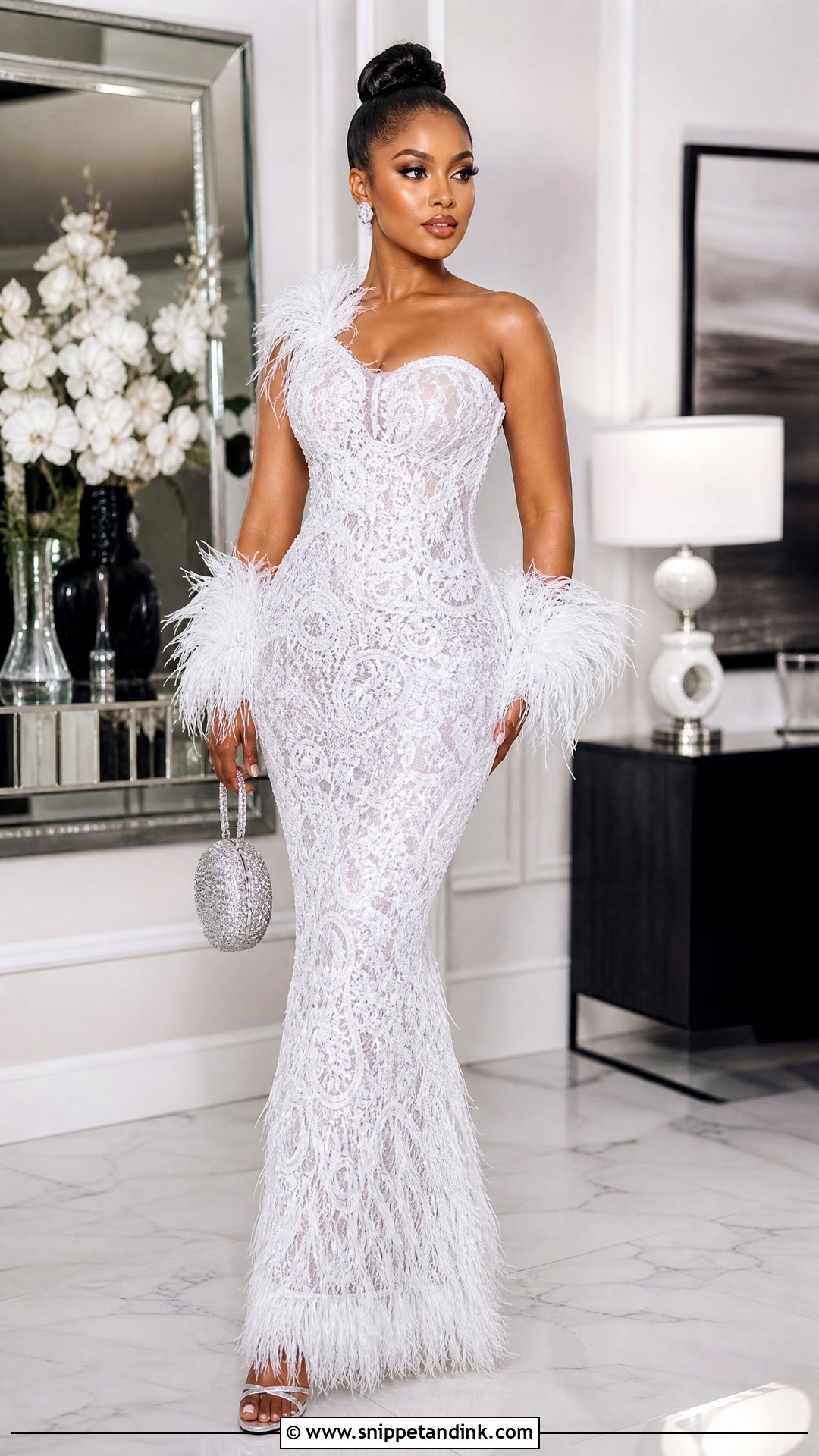
Feathers and cord lace both demand attention, so use feather trim in one place only: detachable cuffs, one shoulder or the edge of a structured peplum. A fitted column or mermaid gives the cleanest background. Silver sandals, a crystal mini bag, small studs and a smooth bun keep everything quiet around the trim. Choose quality feathers that are hand-sewn and easy to remove before cleaning, since most cleaners won’t process them attached. Keep them away from the floor and the food table, because feathers that get wet or sticky rarely recover.
Is White Right for This Owambe?
White cord lace is popular for thanksgiving services, birthdays, naming ceremonies and engagement parties where the family has chosen white as the aso ebi. If the celebrants have picked an aso ebi color and white isn’t it, wear theirs. At a church wedding where the bride is in white, skip a full white gown unless the couple has asked guests to wear it. A quick message to the family is far better than standing out for the wrong reason.
Pressing and storing it afterward
Many cord laces are made from synthetic thread, and a hot iron can flatten or even melt the cords. Press only from the wrong side, on low heat, with a cotton cloth in between, or use a steamer held a little away from the fabric. For cleaning, a dry cleaner who knows embellished lace is the safest route; if you hand-wash, use cool water and mild soap and never wring it. Store the gown folded in acid-free tissue inside a cotton bag, away from plastic and light, since white lace yellows when it can’t breathe.
Let the Cord Pattern Lead the Cut
One white fabric can carry very different occasion looks. The right one depends on your comfort, how much coverage you want, your proportions and how formal the event is. Mermaid and corset gowns define the body, while A-line, kaftan, and bubu silhouettes leave room to move. Sleeves, capes, peplums, trains and a little embellishment personalize a design without hiding the lace. Choose your lining deliberately, wear the event shoes to every fitting, and test the gown sitting and walking. Above all, work with a tailor who has handled cord lace before and finishes the inside as neatly as the outside.
You'll Like These Ideas:


Leave a Reply