
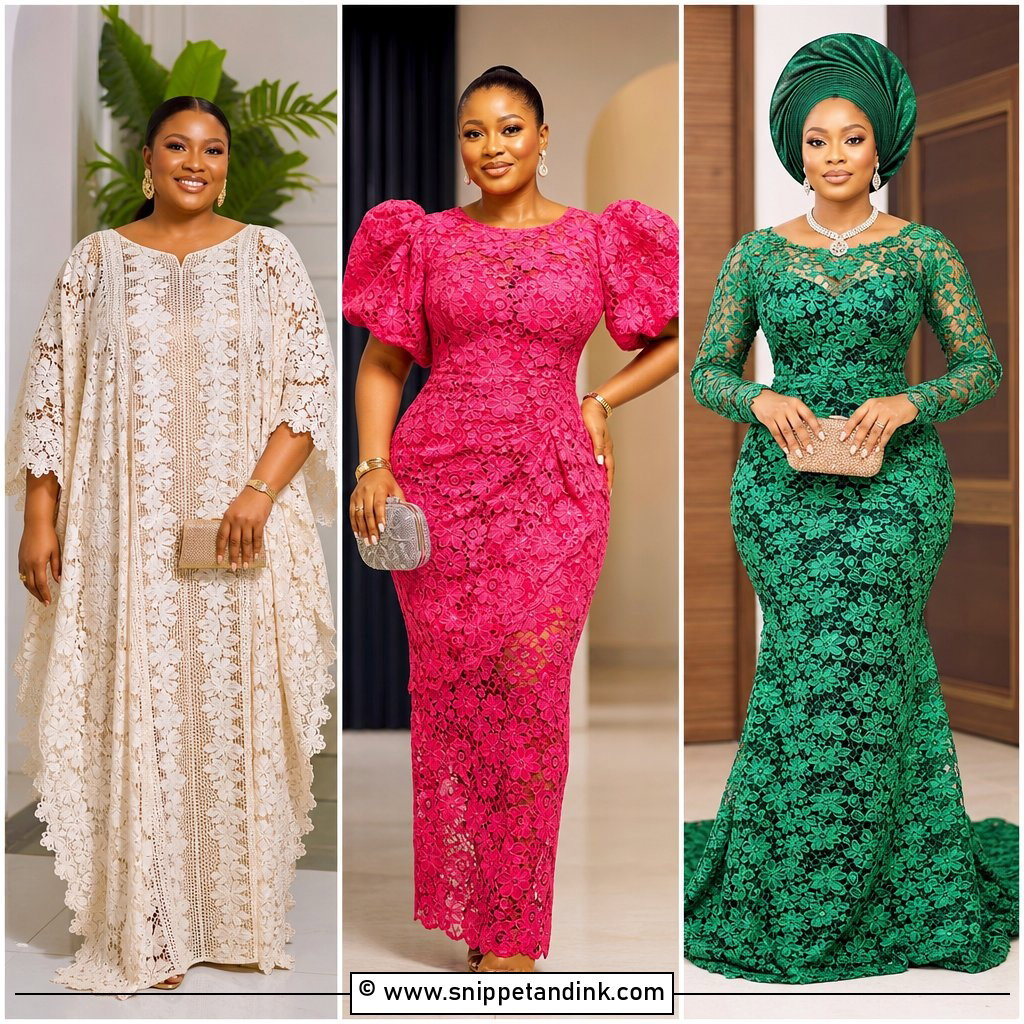
Lace is still the fabric I see most at Nigerian weddings, naming ceremonies and every other Owanbe party, and the straight cut is the shape I recommend most often to guests who want to look dressed up and still eat, dance and sit through long speeches. A straight gown has very little to hide behind, so the decisions that matter are small ones: the neckline, the sleeve, how the lining is cut and where the slit sits. Get those right and a plain column of lace becomes a proper party outfit. The gele, the shoes and the bag then finish it rather than rescue it. Below are twenty versions I’d happily send a guest to her tailor with, from very modest to very dramatic, each with notes on what to ask for and what to watch.
Lace Yardage, Lining and Slit Height Come Before Any Style
Most of the trouble I see with straight lace gowns starts before a single seam is sewn. The style picture is the easy part. The tailor needs answers to a few practical questions first, and if you don’t give them, they’ll guess.
- How much lace you actually have. Nigerian lace is commonly sold in five-yard pieces. That usually covers a straight gown with sleeves, but trains, ruffles, tiers and capes all need extra, so confirm with your tailor before you buy, not after.
- Which way the motifs run. Lace with a border or a large flower needs to be laid out so the scallop sits at the hem or neckline and the motifs line up down the front. That uses more fabric than a plain cut.
- What the lining is. A breathable lining in a matching or skin-close shade decides how comfortable you’ll be at an outdoor party. Satin linings look smooth but trap heat.
- Where the slit goes and how high. Decide this sitting down, not standing up. A straight gown with no slit is very hard to walk in.
I’d also bring the shoes you plan to wear to every fitting. The hem length of a straight gown is set for one heel height, and swapping to flats on the day means a hem that drags.
1. Off Shoulder Lace Straight Gown
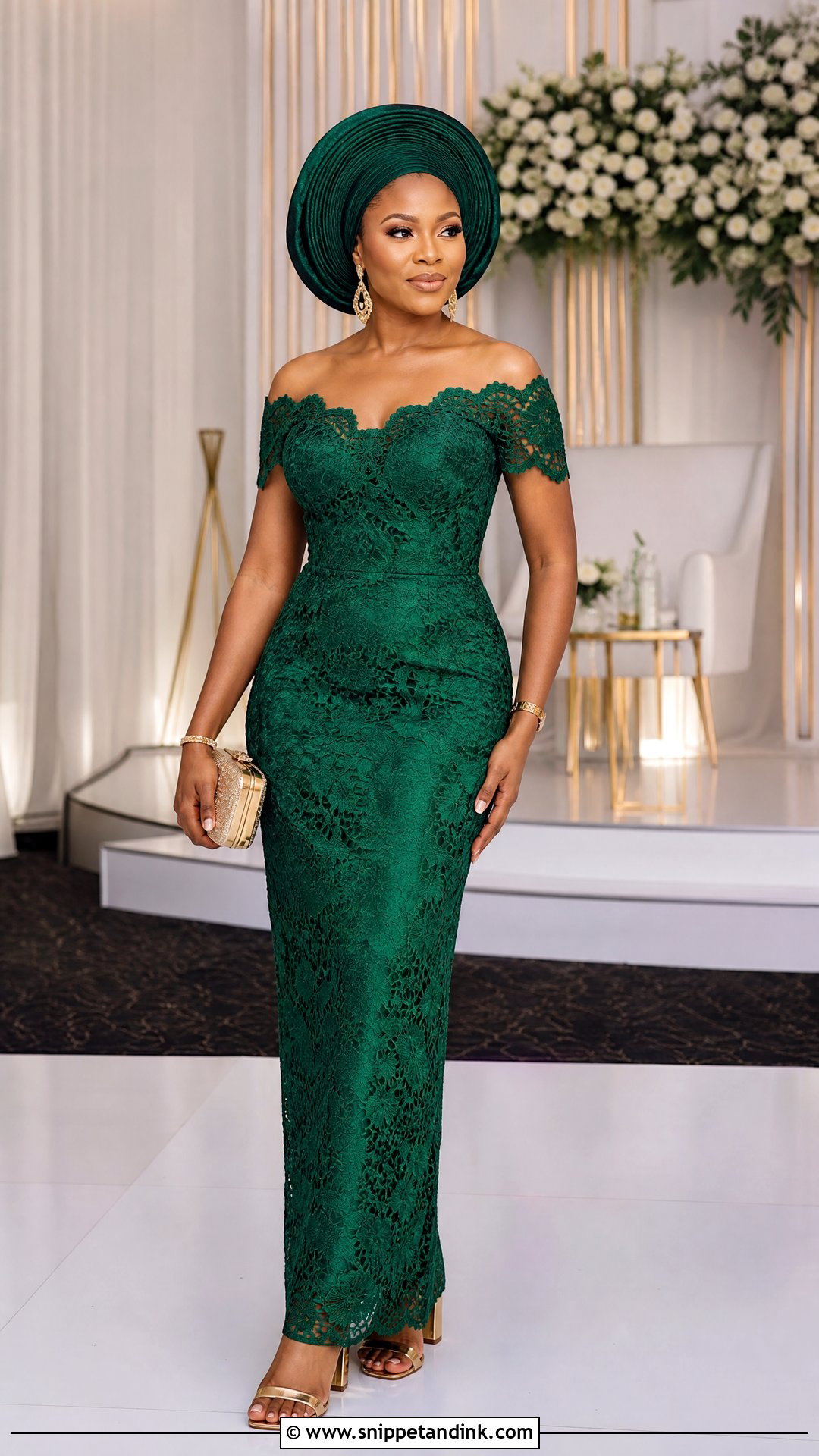
Off-shoulder is the cut I fit most carefully, because the whole bodice has to stay up without straps. That means boning sewn into the lining and a waist that grips gently, otherwise you’ll spend the reception hitching it. A scalloped lace edge along the shoulder line is all the decoration it needs. In emerald, wine or royal blue, I pair it with a matching gele, metallic block heels and drop earrings, and I leave the neck bare since the neckline is already doing the work. Ask for a short back slit so you can climb steps without lifting the hem.
2. Corset Lace Straight Gown
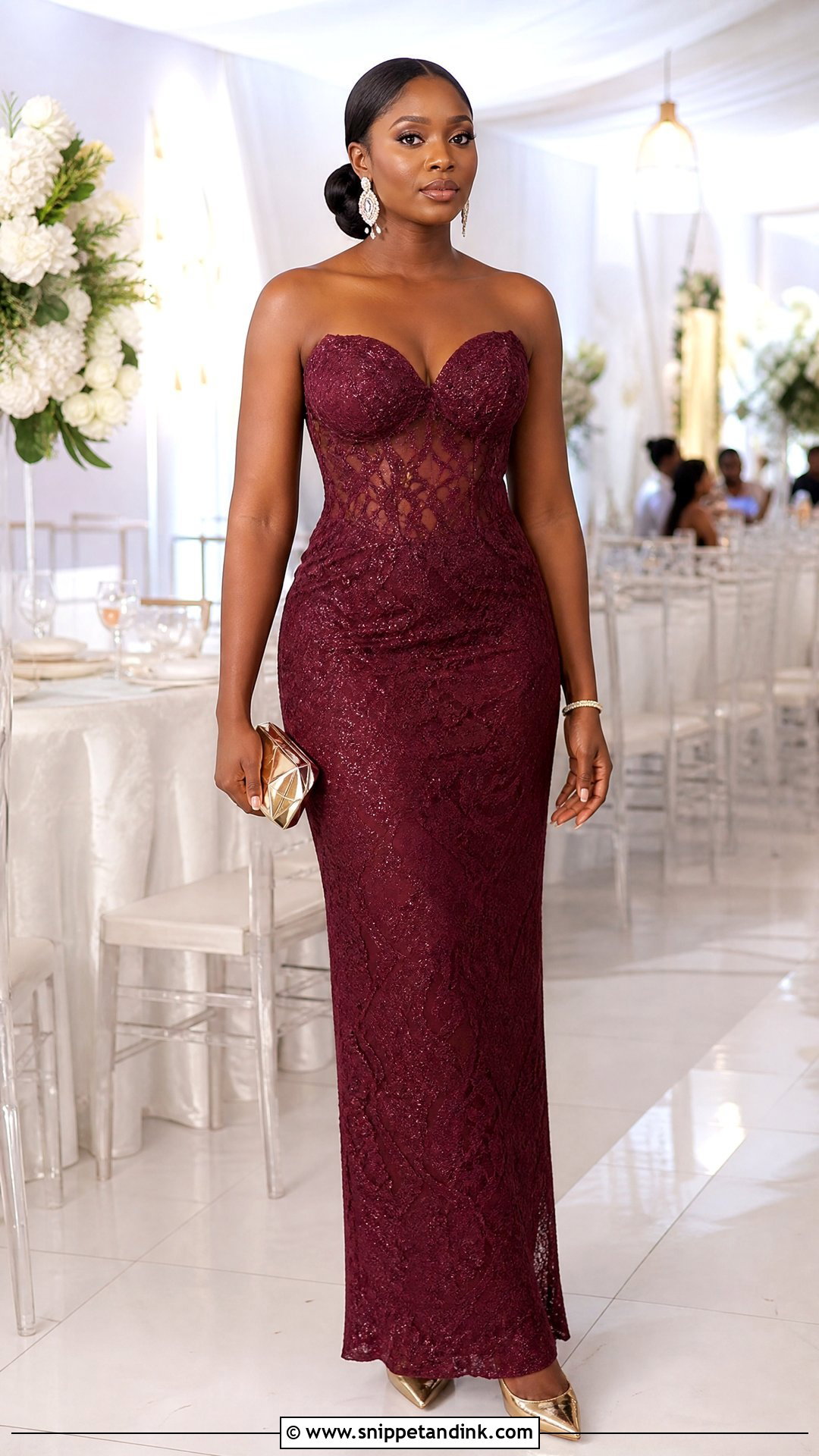
A corset bodice gives you waist shape without committing to a mermaid flare, which is why I suggest it to guests who find fishtails hard to walk in. The corset should be cut to your measurements, not laced to the limit; if it’s pulling at the hip seam by the second hour, it was too tight. A sweetheart or straight neckline gives support, and lace appliqué laid over the boning hides the channels. Burgundy, navy and plum all suit this cut with pointed metallic pumps. A low bun shows off the shape better than a tall gele, though both work. Insist on a soft lining and a concealed slit at the back.
3. Long Sleeve Lace Straight Gown
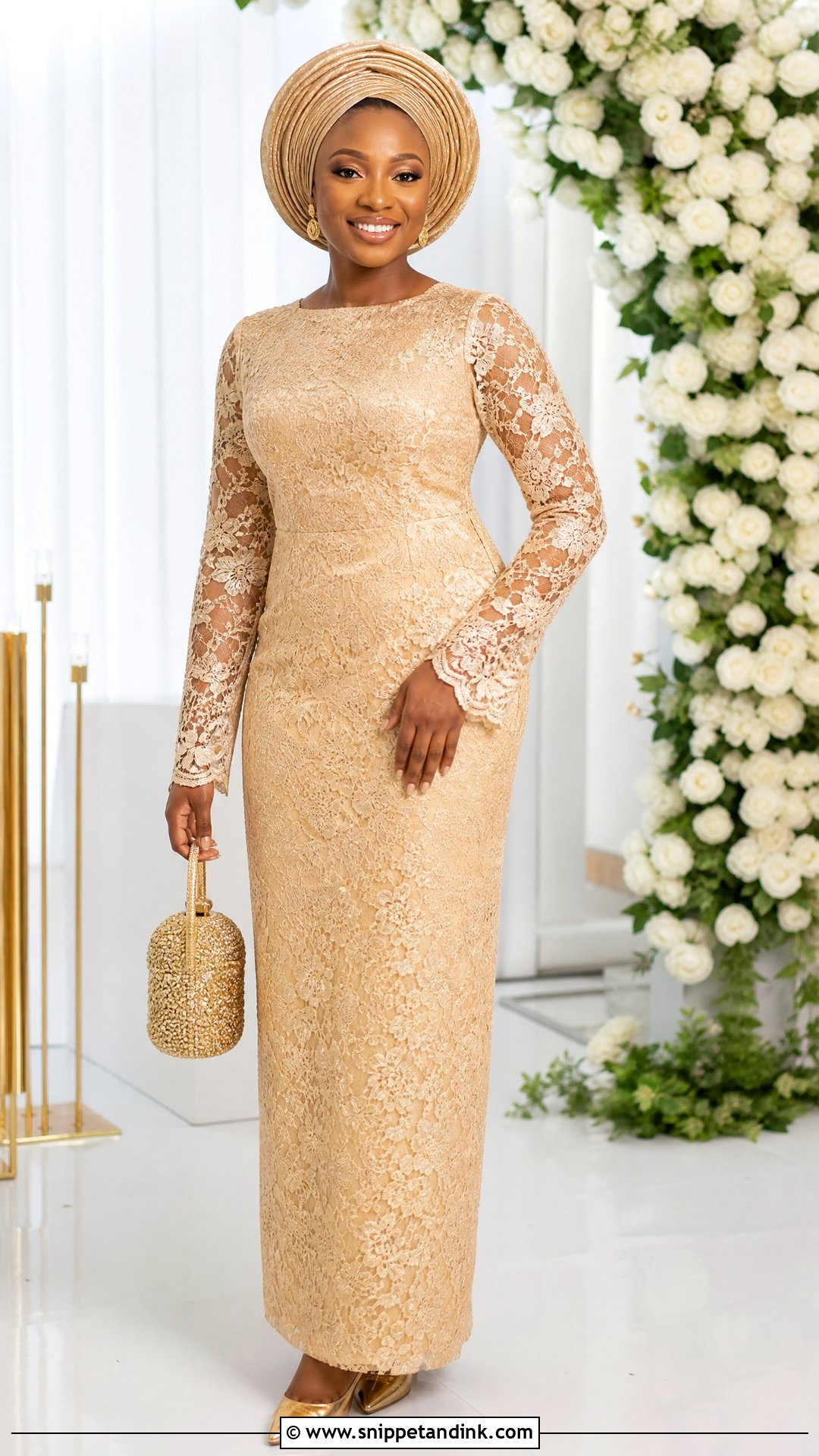
Long sleeves in lace rarely look heavy if the sleeve itself is sheer and only the body is lined. The thing I check at the fitting is the elbow: lace with no stretch can stop you raising a glass, so bend your arm before the tailor closes the seam. Scalloped cuffs keep the sleeve neat; a slight flare at the wrist adds movement. With a high round neck, boat neck or shallow V, deep green or champagne looks rich beside a coordinated gele, closed heels and a small beaded bag. One slim bracelet over the cuff is plenty. A breathable lining matters here more than anywhere, because covered arms get warm at a packed afternoon party.
4. One Shoulder Lace Straight Gown
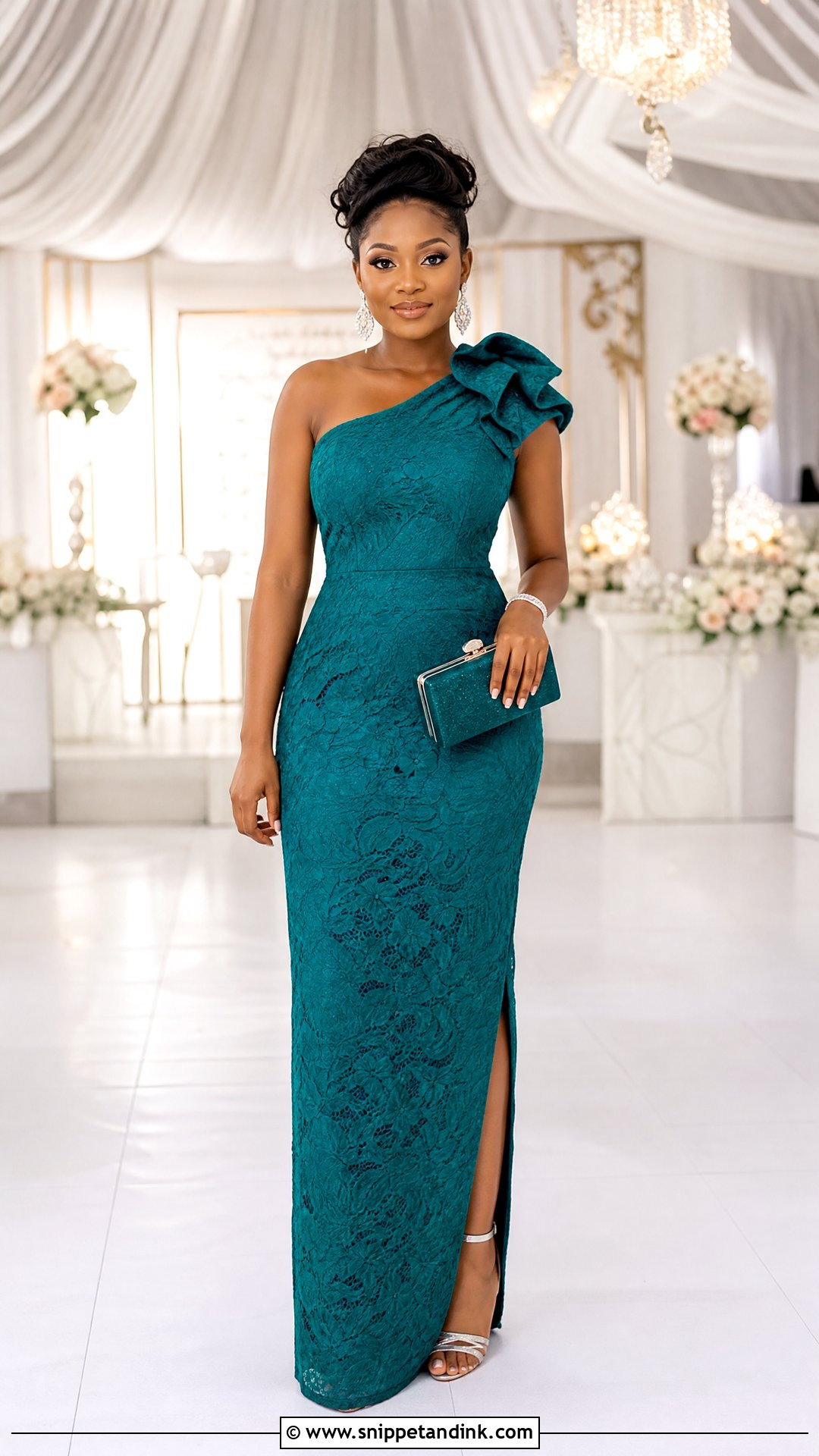
One shoulder reads modern straight away, and it’s the cut where construction shows most. The bare side needs its own boning or a firm underlayer, or the neckline slides down towards the strap as you dance. Keep the single shoulder simple, a fitted strap or a few soft pleats, and let the colour carry it: coral, teal and purple are all good. Earrings instead of a necklace, always, so the line stays clean. A sculpted gele that sweeps to one side echoes the asymmetry nicely. Keep the slit at walking height rather than thigh height; with an asymmetric top, a high slit makes the whole outfit look busy.
5. High Neck Lace Straight Gown
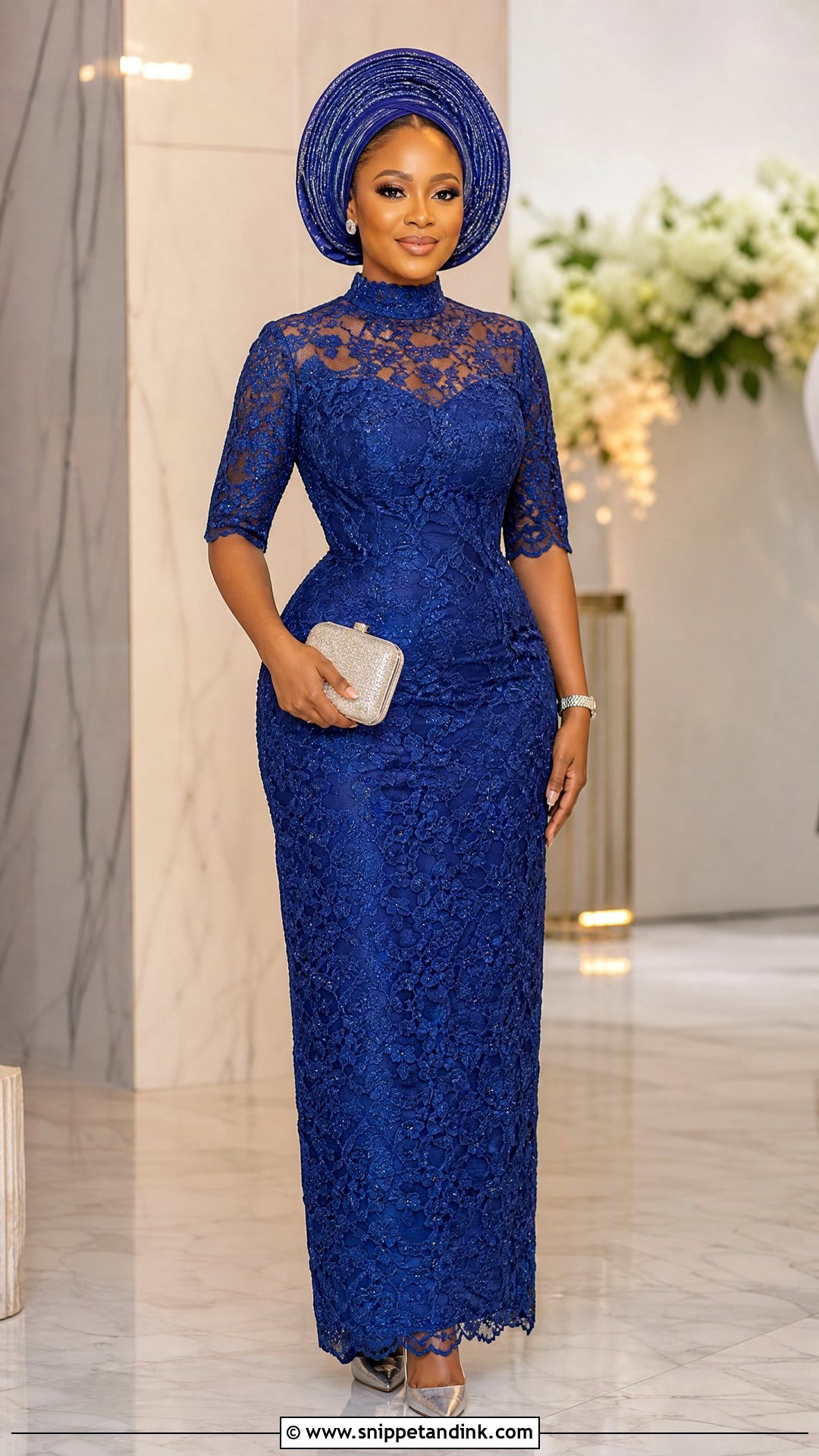
I steer modest guests to the high neck more than any other style here, because it looks regal rather than covered up. The trick is sheer lace over the collarbones with an opaque lining shaped underneath, so you get depth without exposure. Short, elbow or long sleeves all suit it. Sapphire, plum and forest green carry the formality well, with pointed pumps and a structured metallic clutch. Skip the necklace and wear studs or small drops instead. Do check that the neck opening has a proper button or zip finish at the back; a tight neckband is the one thing that will make you miserable by evening.
6. Cape Sleeve Lace Straight Gown
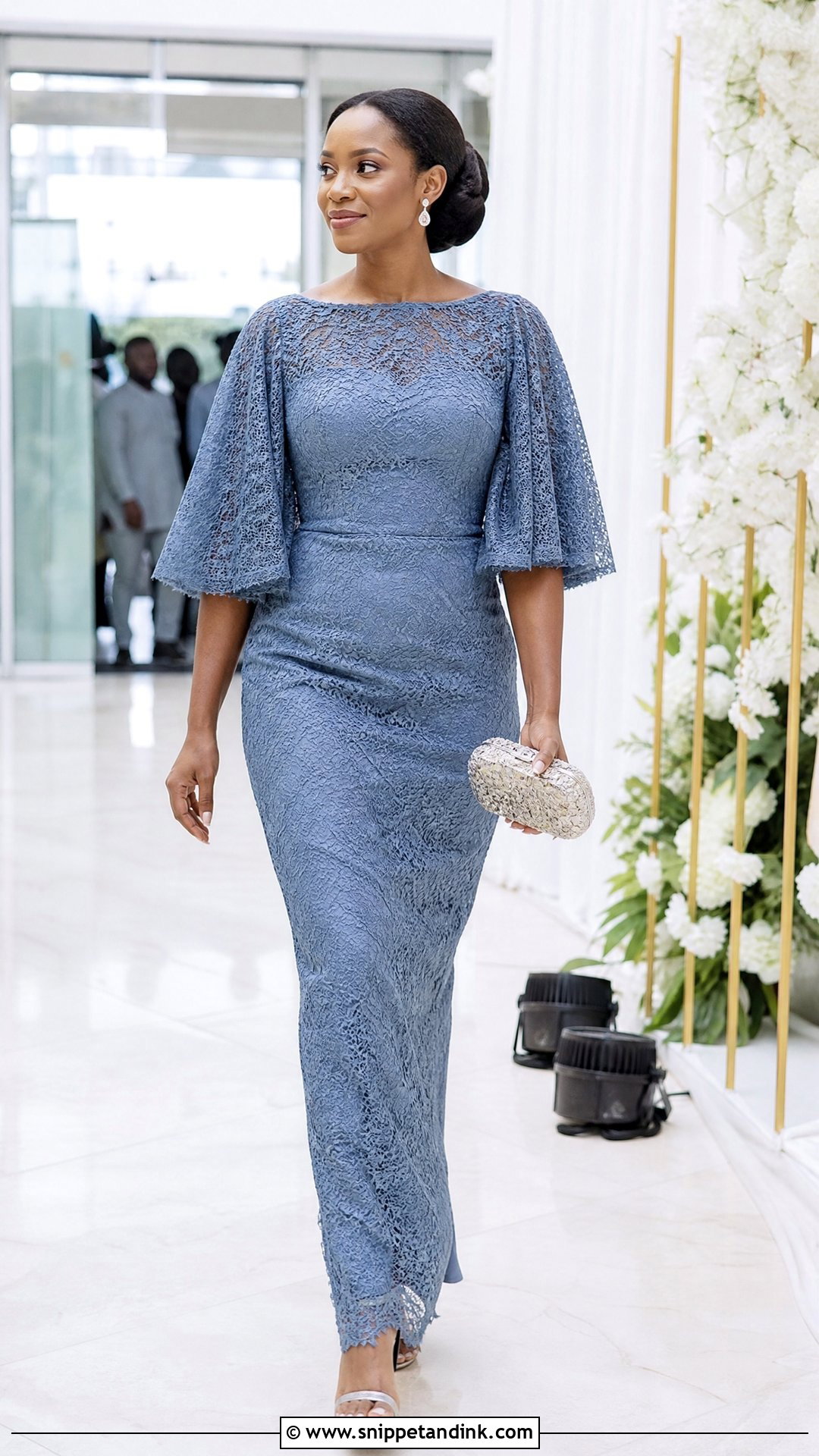
A cape sleeve gives movement without width at the hips, which suits a straight gown well. Let it fall to the elbow, or a little lower if you want more arm coverage, and keep the cape fabric light so it floats instead of hanging. Underneath, the bodice still needs to be fitted and structured, since the cape hides nothing at the back when you lift your arms. Dusty blue, mauve and soft gold sit nicely with satin heels and a jeweled clutch. Leave the big bracelets at home because they catch on the cape edge. This is one of the easier cuts across body shapes, as the cape breaks the line at the shoulder.
7. Puff Sleeve Lace Straight Gown
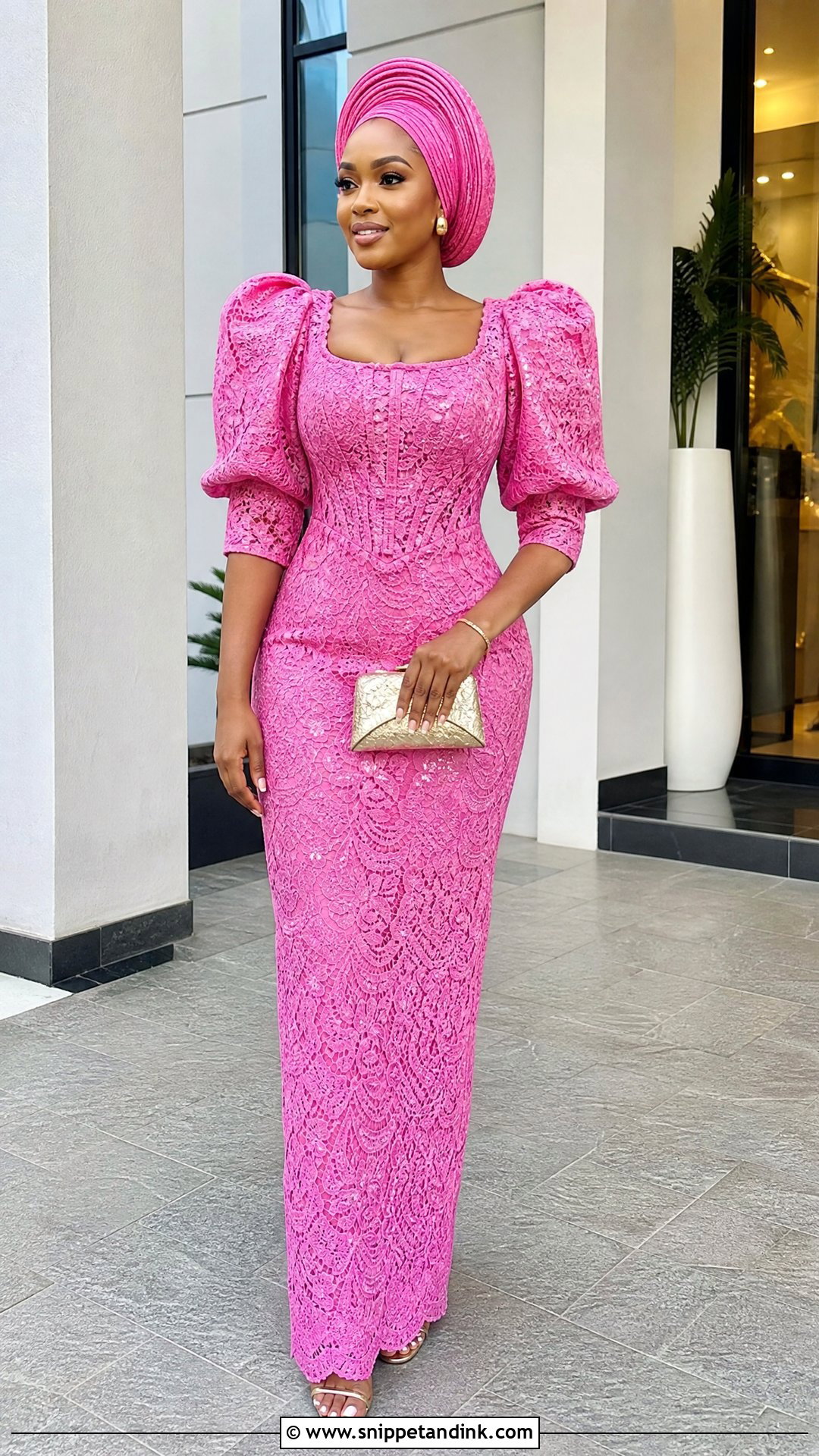
Puff sleeves add volume where most of us can carry it, at the shoulder, while the skirt stays sleek. I keep the puffs medium when the lace already has a large floral pattern, because two big statements fight each other. Ending the sleeve above the elbow or tapering into a fitted cuff both work. What separates a good puff from a sad one is the support inside it: a layer of stiff net or organza keeps the shape through a long day, and without it the sleeve collapses by the time the couple arrives. Bright pink, orange or turquoise with neutral metallic sandals, and keep the gele moderate.
8. Bell Sleeve Lace Straight Gown
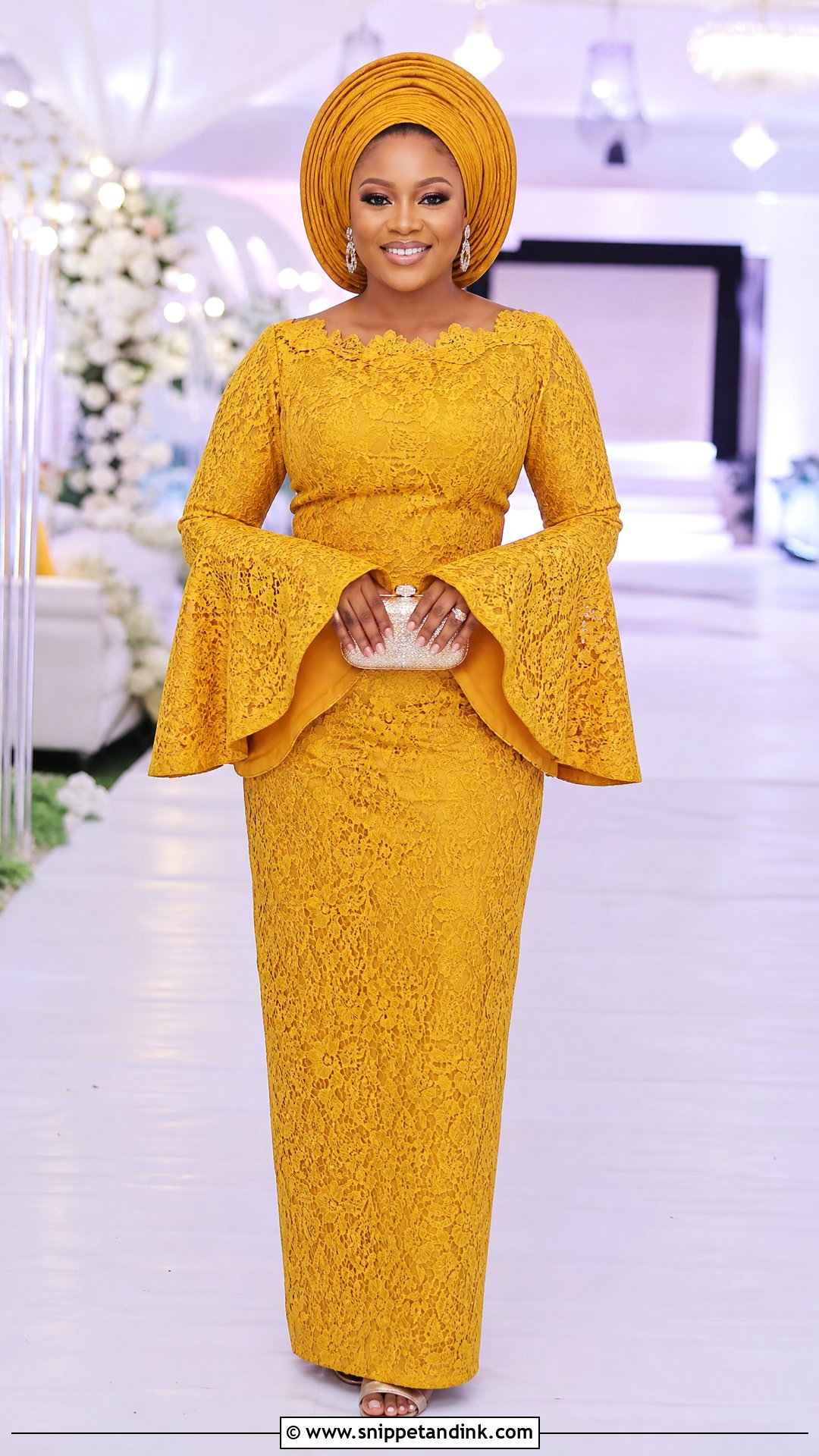
Bell sleeves look best starting from the elbow, not the shoulder, so the upper arm stays neat and only the cuff swings. Cord lace or embroidered lace over a plain lining shows the motif clearly at the flare. Mustard, olive and deep red are good colours for this, with gold heels and medium hoops. Before the tailor finishes the hem of the sleeve, sit at a table and reach for a plate. If the cuff lands in your food, it’s too long. Keep the gele simple; a wide flaring cuff and a dramatic headtie compete for the same attention.
9. Peplum Lace Straight Gown
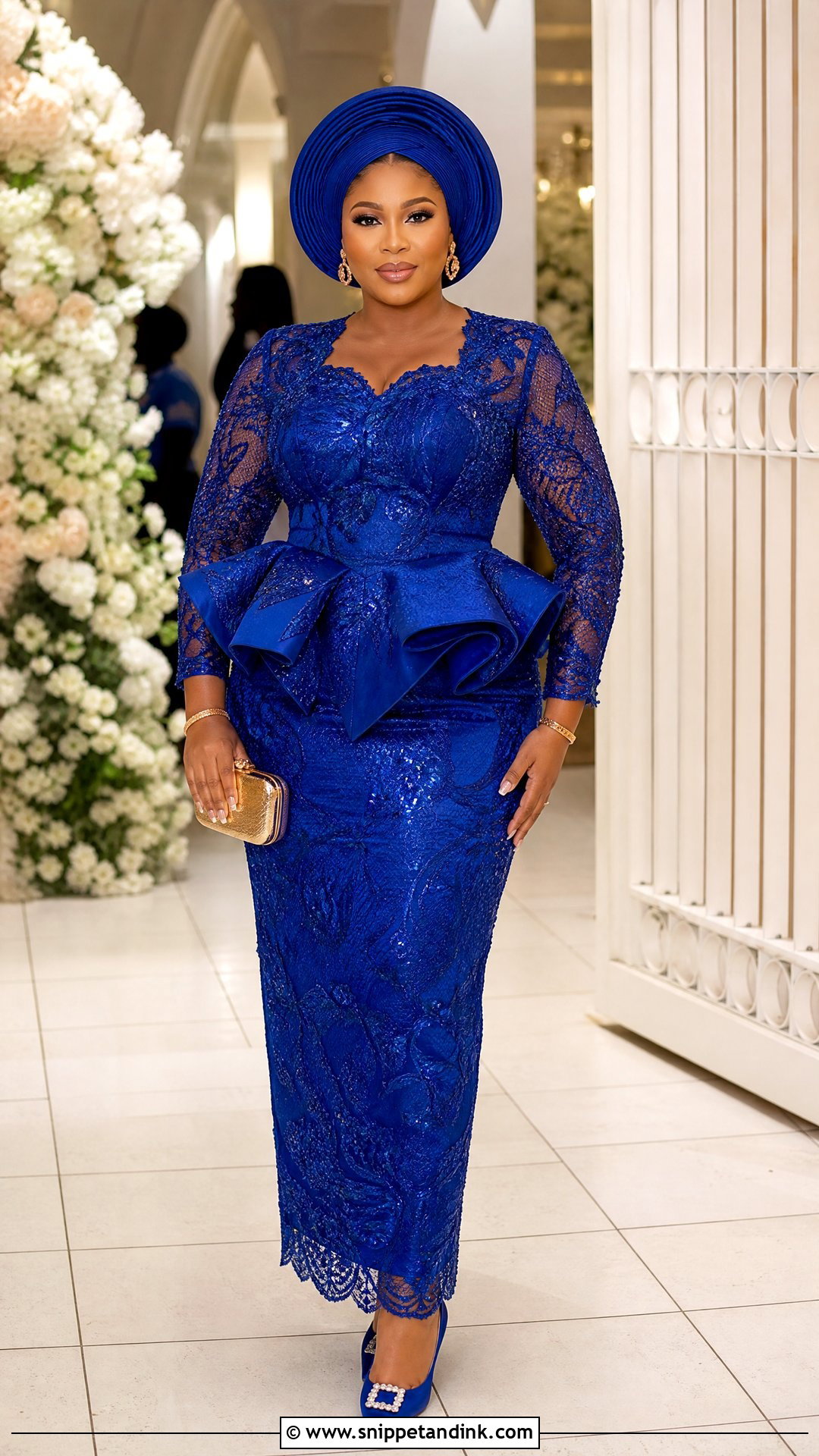
A peplum gives soft cover over the tummy while keeping the gown straight underneath. The size is everything: a neatly shaped peplum that ends above the widest part of the hips flatters; one that ends on the widest part adds width exactly where you don’t want it. That’s why I always ask for a fitting before the peplum is stitched down, so its length can be pinned on you. Asymmetric or layered versions add interest without changing the column shape. Cobalt, magenta or wine with matching pumps and a structured gele keep it formal.
10. Beaded Lace Straight Gown
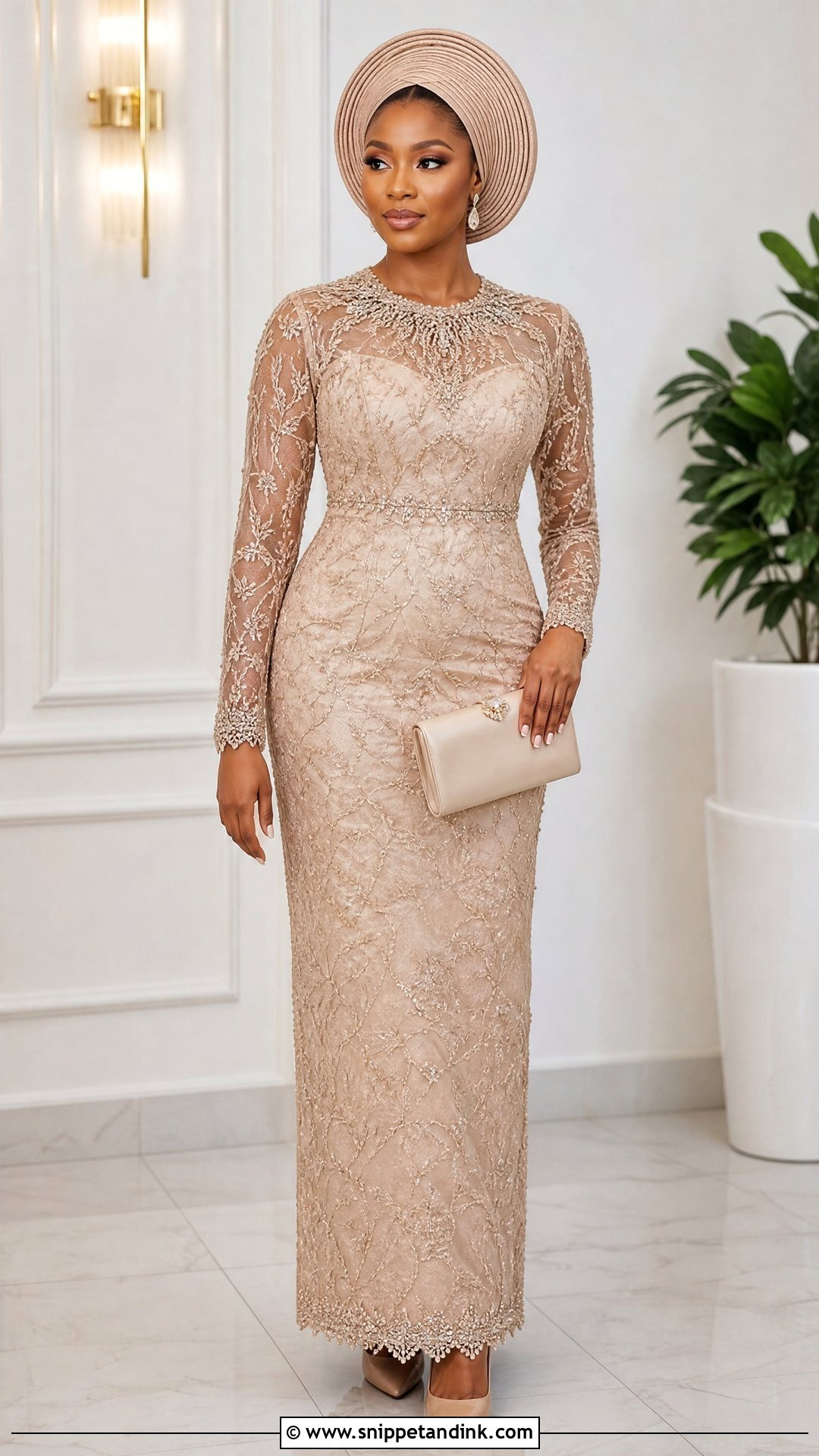
Placement is the whole skill with a beaded lace straight gown. I ask for beads at the neckline, the waist, the cuffs or on chosen motifs, never all over, because full beading adds real weight and drags a straight cut out of shape. Champagne, soft grey, blush and navy show beadwork clearly without fighting it. Plain satin pumps and a smooth clutch keep the focus on the dress, and a gele without stones does the same. Hand-finished beading lasts far better than glued stones at the underarm and waist, where the fabric rubs every time you move.
11. Sequin Lace Straight Gown
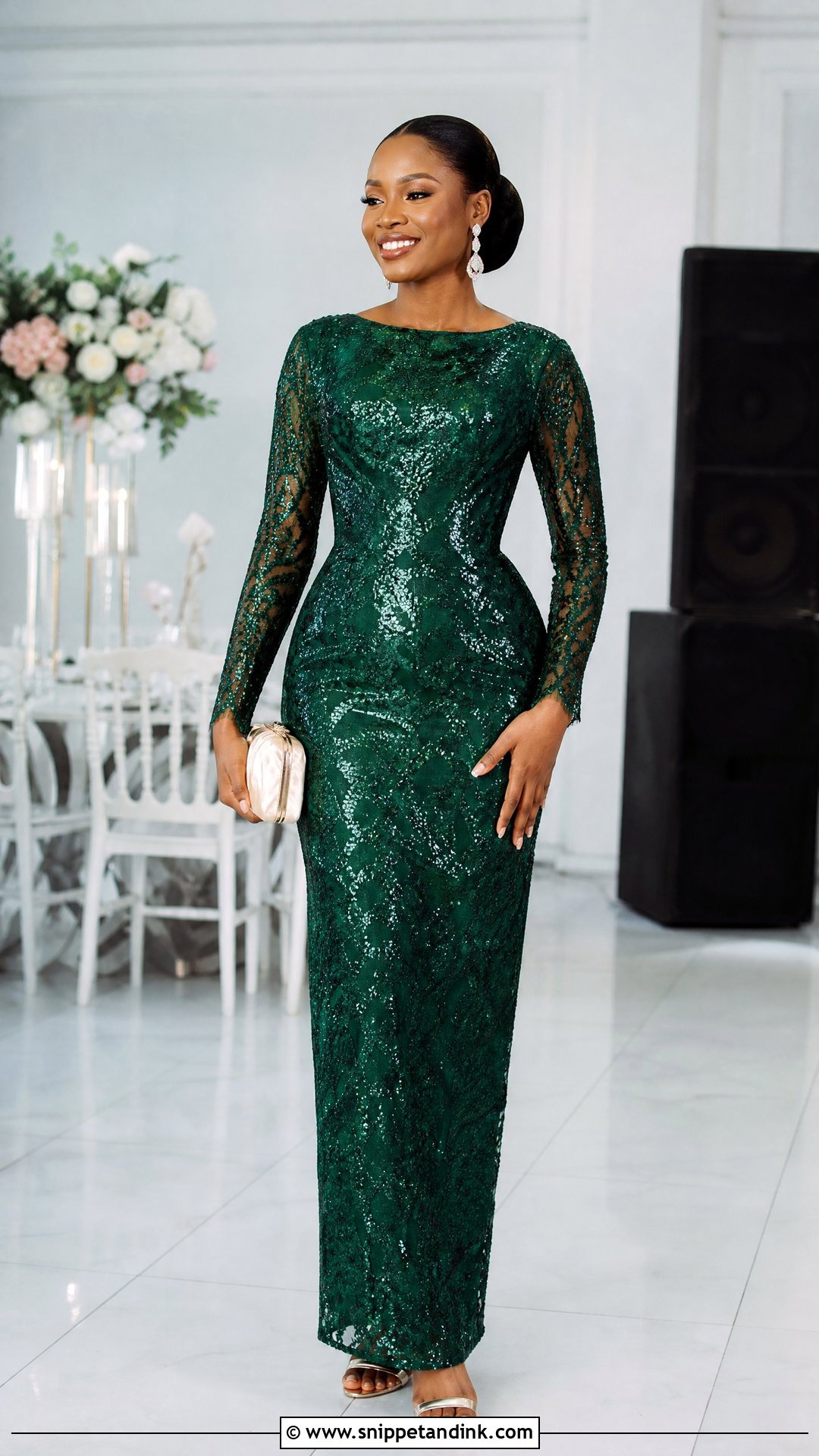
Sequin lace catches every light at an evening party, so the dress needs nothing else. Choose lace with evenly spaced sequins rather than mixing sequins, stones and beads. A straight neckline, fitted sleeves and a clean skirt keep it calm. Jewel tones suit it best: emerald, ruby, amethyst, midnight blue. One practical point I always raise is the lining, because sequins scratch, especially under the arms and at the inner elbow, so ask for a soft lining that covers every sequin seam. Simple metallic heels, a plain satin clutch and small crystal earrings are enough.
12. Fringe Lace Straight Gown
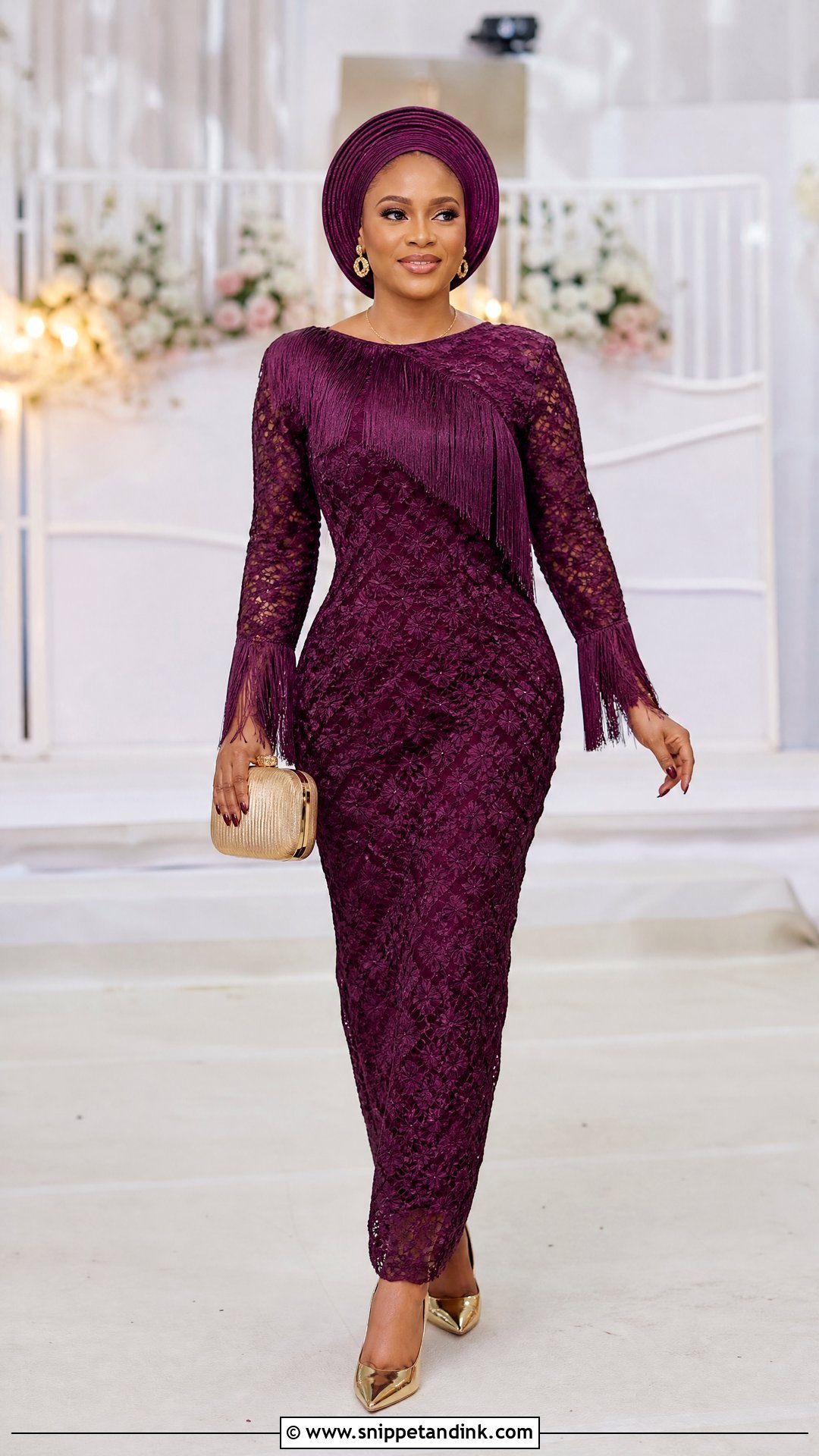
Fringe moves even when you’re standing still, and it looks best in one place only: the shoulder, the sleeves, the waist or the hem. Fringe at knee to ankle is striking but can tangle around heels, so walk in the gown at your fitting with the shoes you’ll actually wear. Black and gold, plum and emerald all look good with sleek pumps and sculptural earrings. Check the fringe is stitched through the lace, not glued, and that it hangs evenly when you stand. Keep the gele or bun simple, because this one is all about movement on the dance floor.
13. Ruffle Shoulder Lace Straight Gown
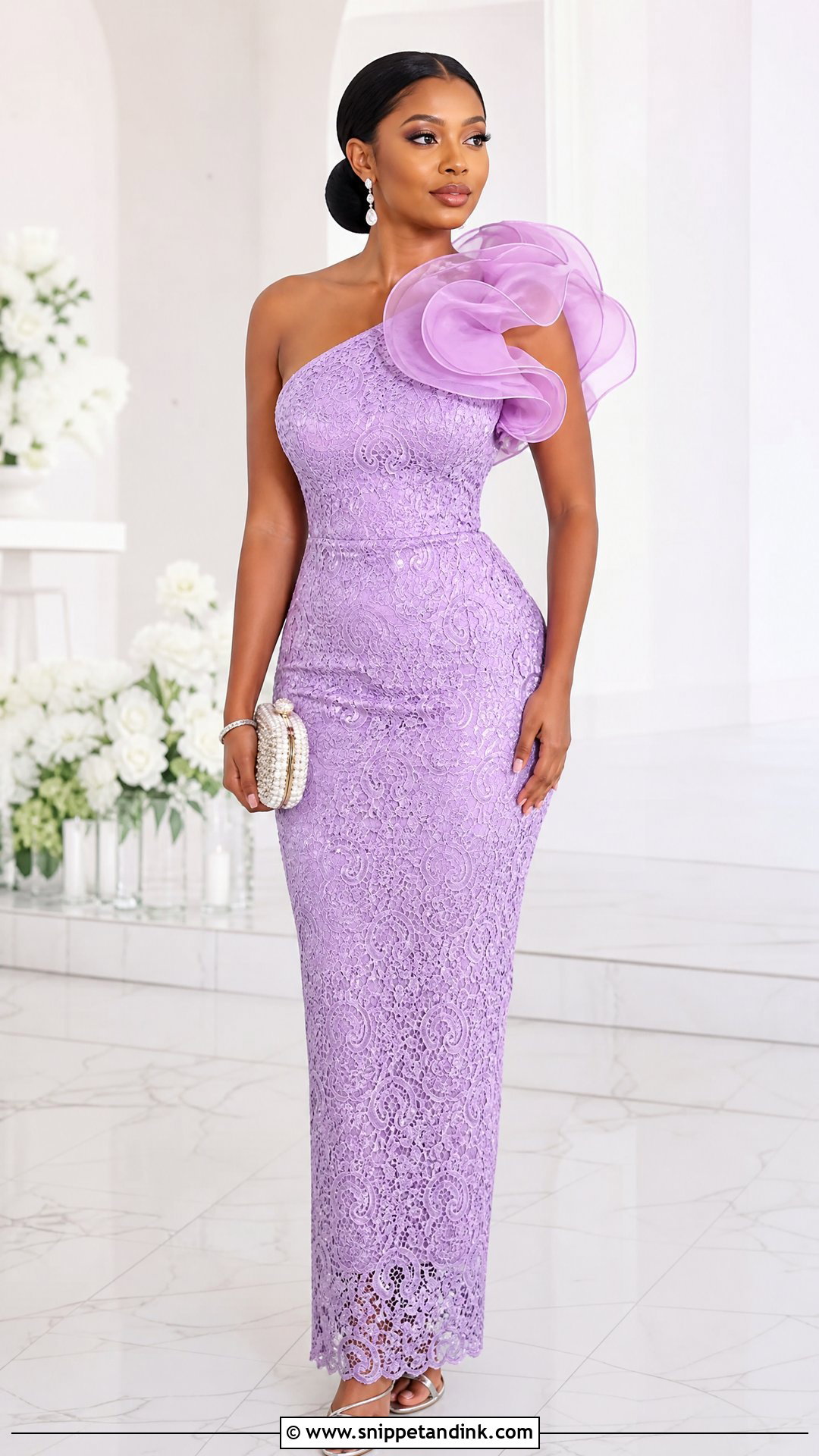
Ruffles at the shoulder frame the face and leave the rest of the gown clean. One sculpted ruffle gives an asymmetric look; two smaller ones balance it. Matching lace, organza or structured tulle all hold a ruffle, but the lighter the material, the better it survives hours of sitting. A heavy ruffle starts to droop forward by evening. Lilac, peach or sea green with silver sandals and neat drops keep it fresh. I’d choose a low bun or a modest gele here so the shoulder detail isn’t hidden under a wide headtie.
14. Layered Hem Lace Straight Gown
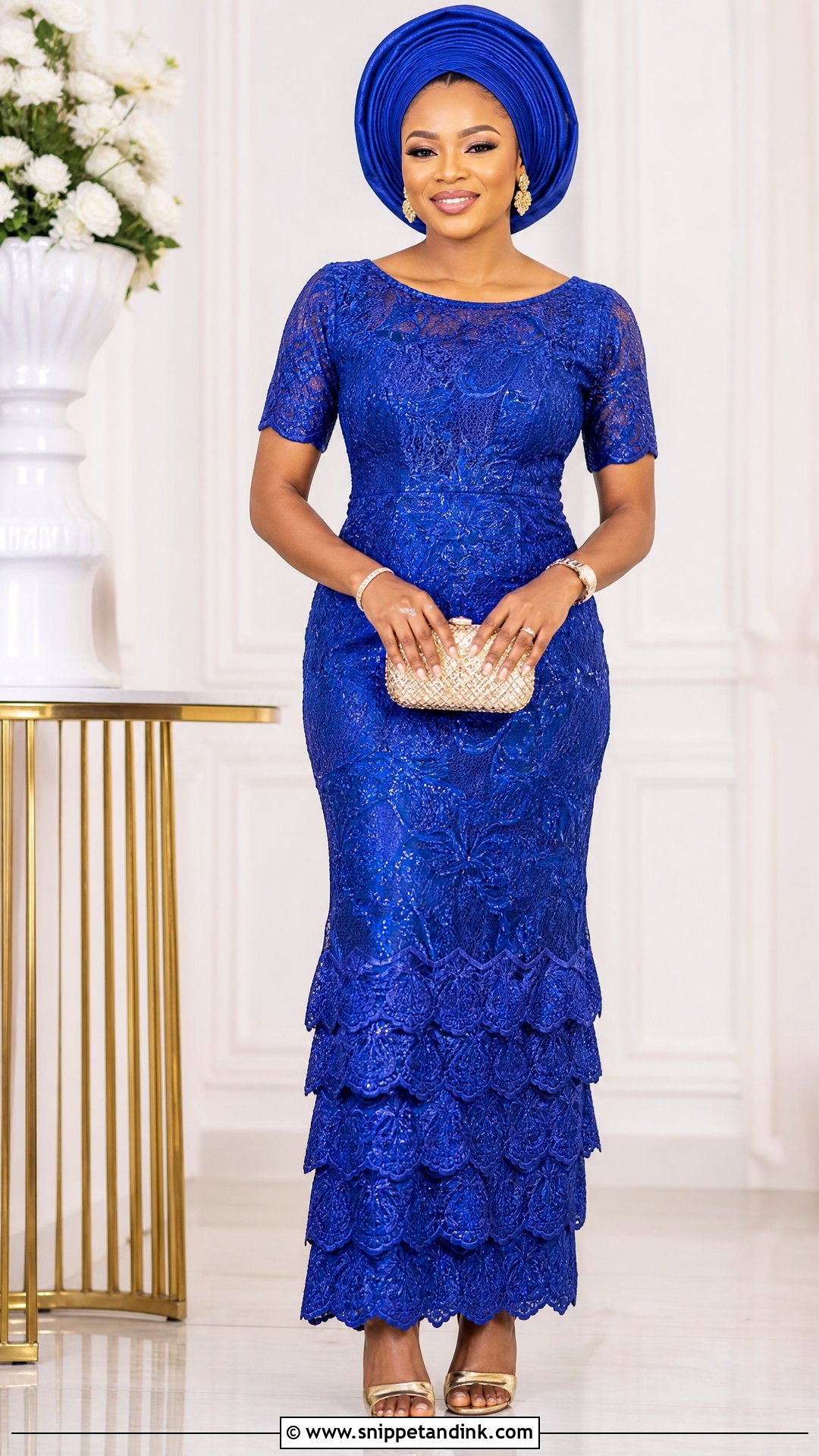
Two or three lace tiers at the ankle give a straight gown a finish without turning it into a flare. The top of the dress stays smooth, and scalloped borders on each tier make the layers look deliberate. A fitted short-sleeve or sleeveless bodice balances the detail at the bottom. In rust, royal blue or deep purple, I’d wear platform sandals or block heels, since tiers swing and a thin heel can catch. Have the lowest tier hemmed with your shoes on so it clears the floor; a tiered hem that drags gets stepped on and torn within the first hour.
15. Front Slit Lace Straight Gown
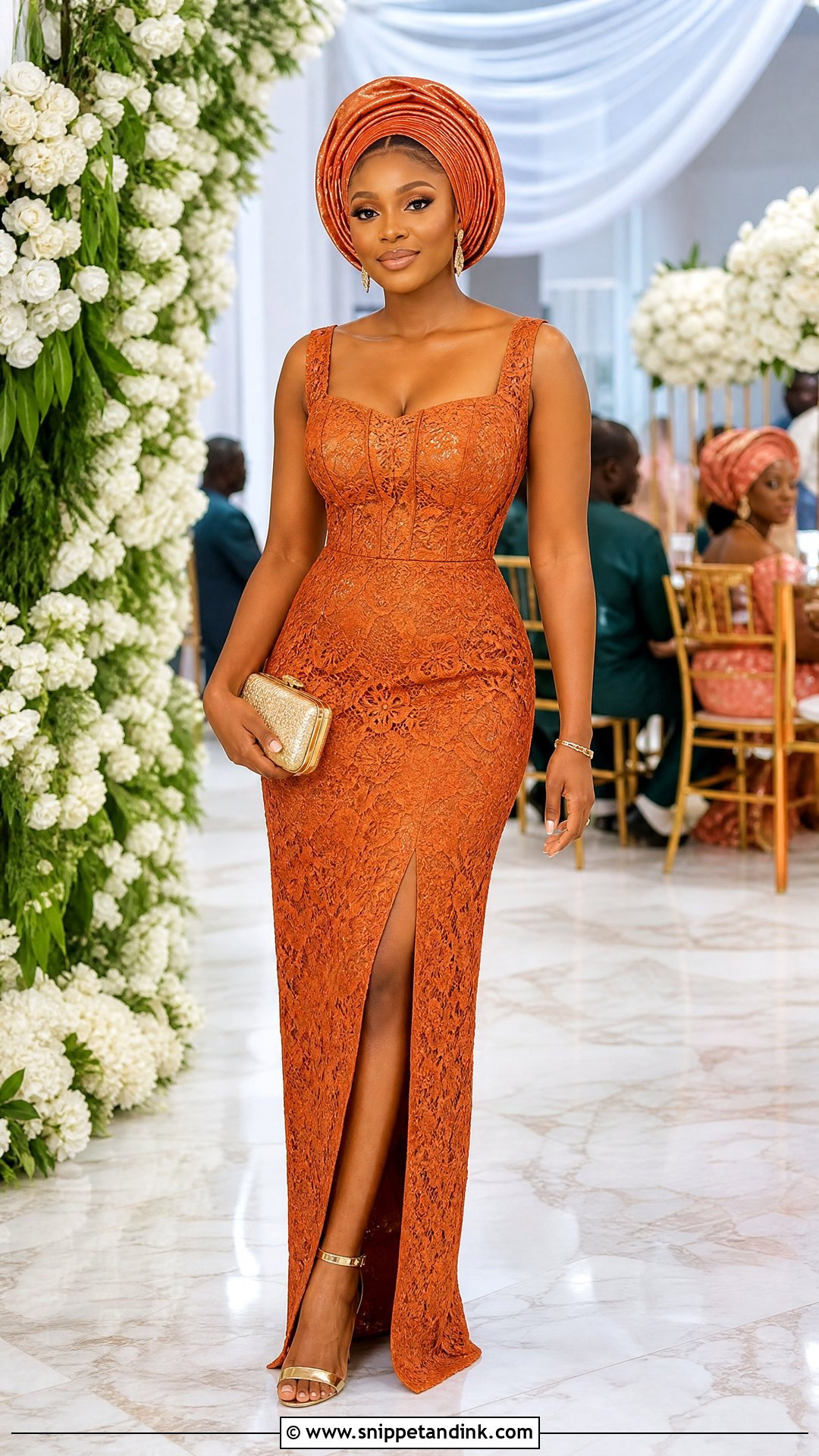
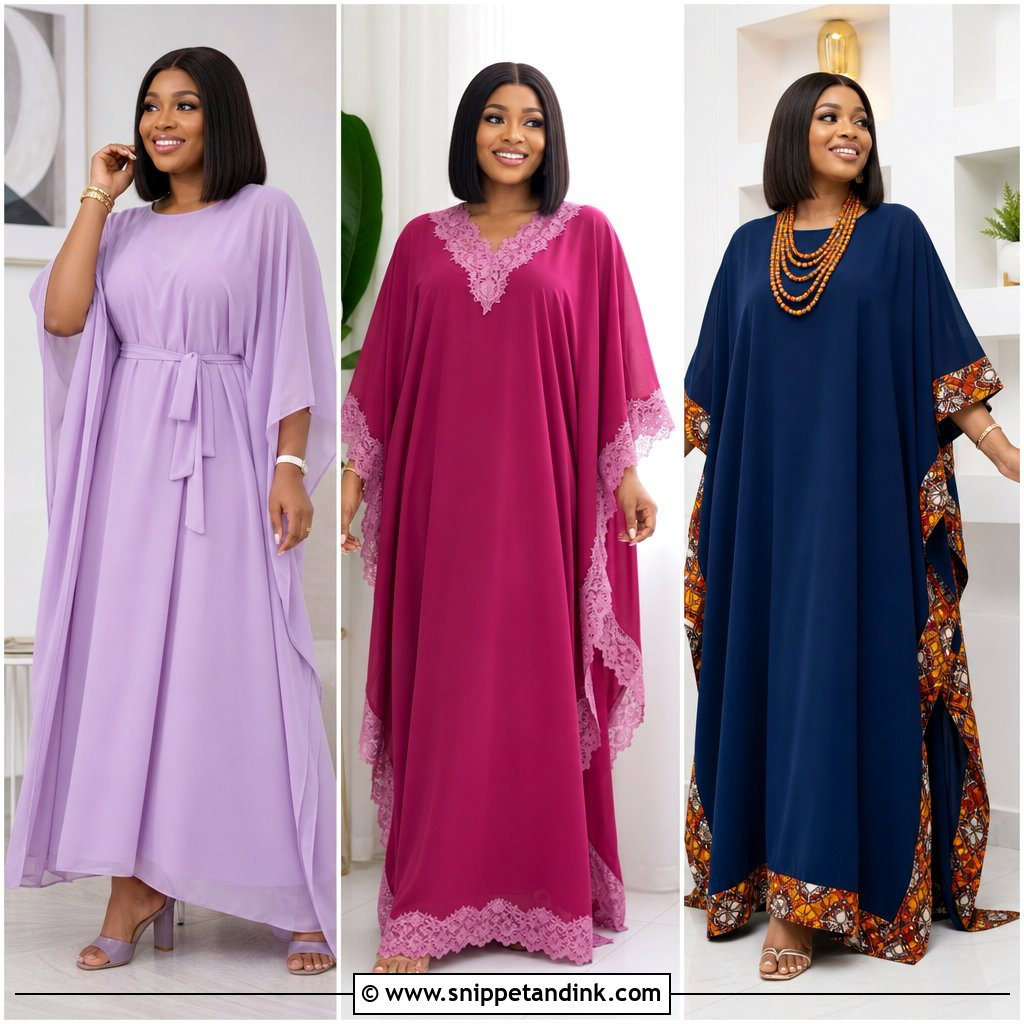
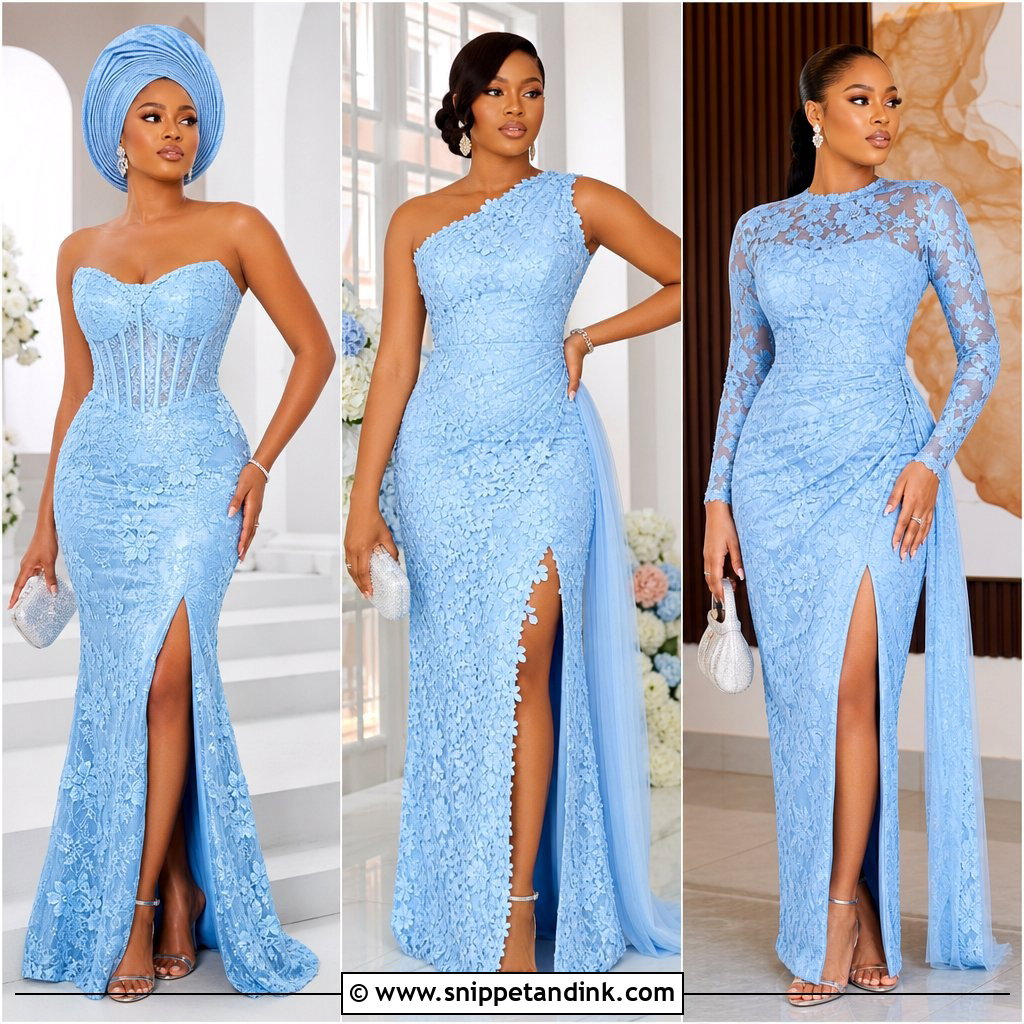
A front slit makes walking easy and shows off your shoes, which is why I like it for guests who plan to dance. Height is the real decision: sit down in the fitting and see where the slit opens to, then lower it if you’re adjusting it every time you cross your legs. A centred slit looks symmetrical; slightly off-centre lengthens the leg. Square, V or modest sweetheart necklines all suit it. Burnt orange, navy or emerald with ankle-strap heels is a good combination. Ask for the lining to be stabilised around the slit so the lace doesn’t stretch and gape.
16. Side Slit Lace Straight Gown
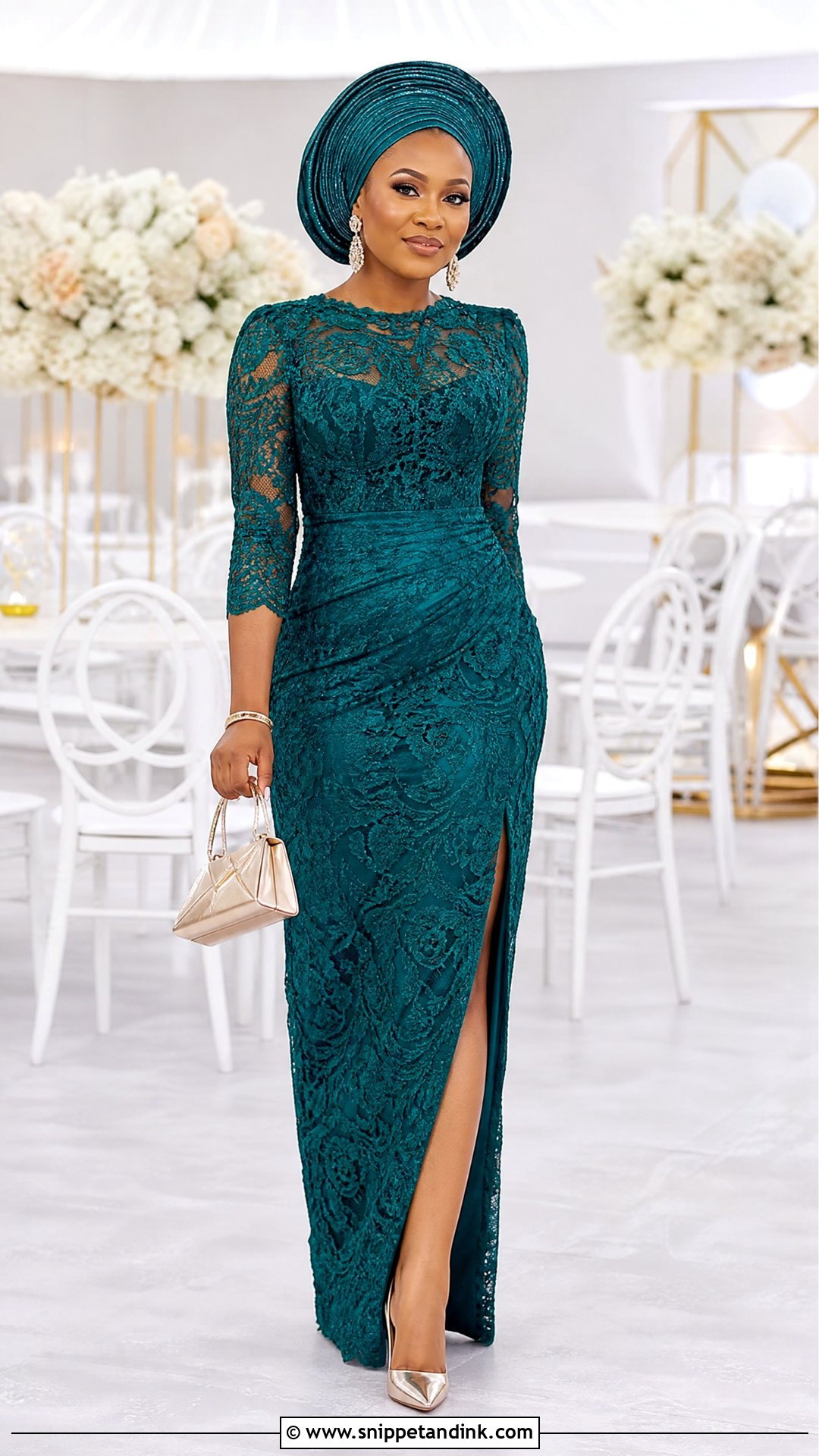
A side slit is subtler than a front one and gives just a glimpse of your shoe as you walk. Put it on the side you naturally step out with, so it opens when you move and stays closed when you stand. Cap or three-quarter sleeves on a fitted bodice balance the opening below. Teal, burgundy, gold and violet all work, with pointed pumps and statement earrings. The top of a side slit is where lace tears first, so I always ask the tailor to reinforce it with a small bar tack and to leave enough room across the hips that sitting doesn’t pull the slit wide.
17. Detachable Train Lace Straight Gown
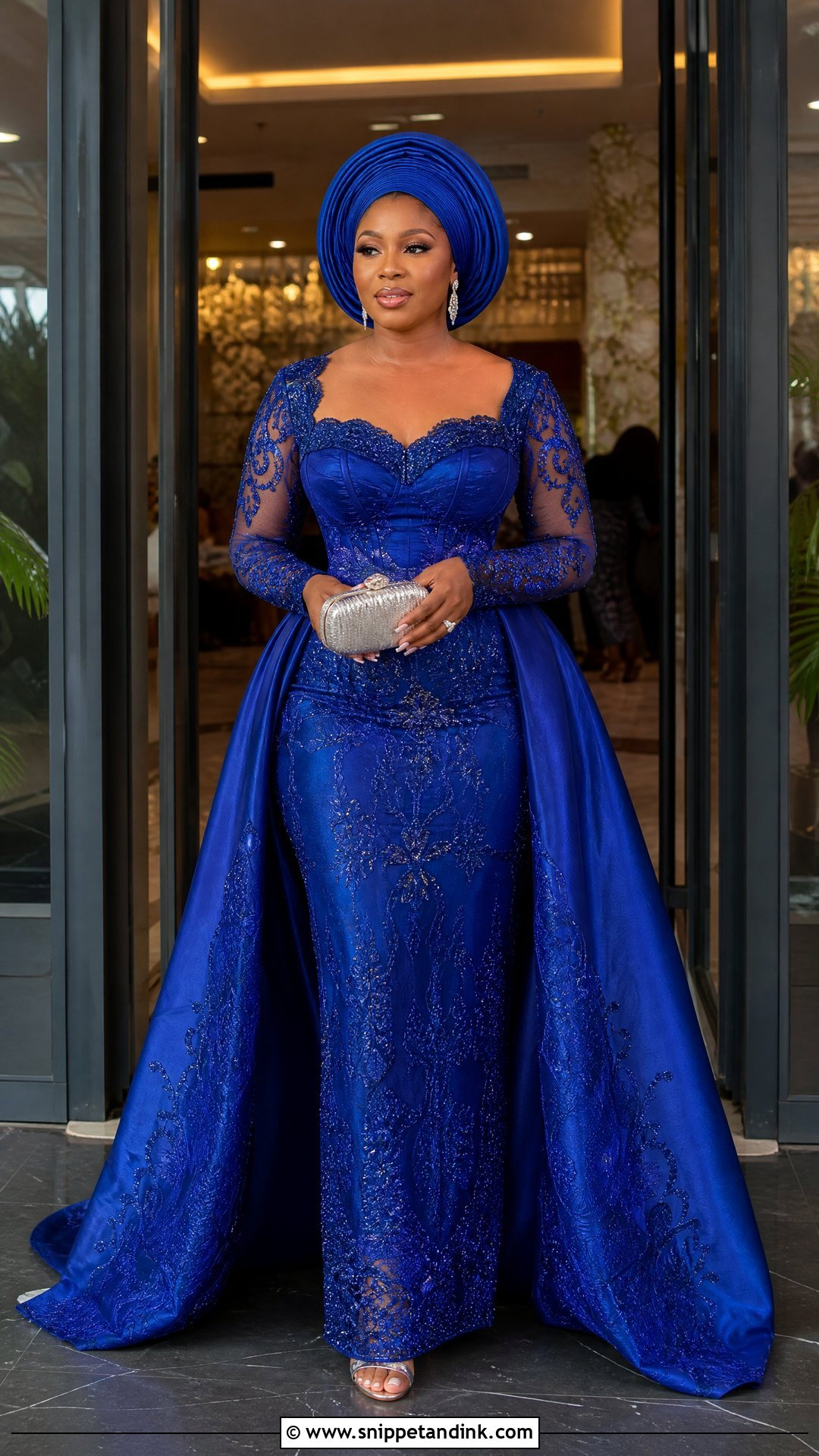
A detachable train gives you the grand entrance and the photographs, then lets you dance without dragging metres of fabric behind you. Start with a well-fitted straight gown and attach the train at the waist, side or back, hiding the join under a belt, a peplum or a lace panel. The test I always do: can one person unhook it in under a minute without help? Hooks and loops are easier than buttons. Red, gold, royal blue and green carry this kind of drama, and a bold gele suits the scale. You end up with two looks from one outfit.
18. Two Tone Lace Straight Gown
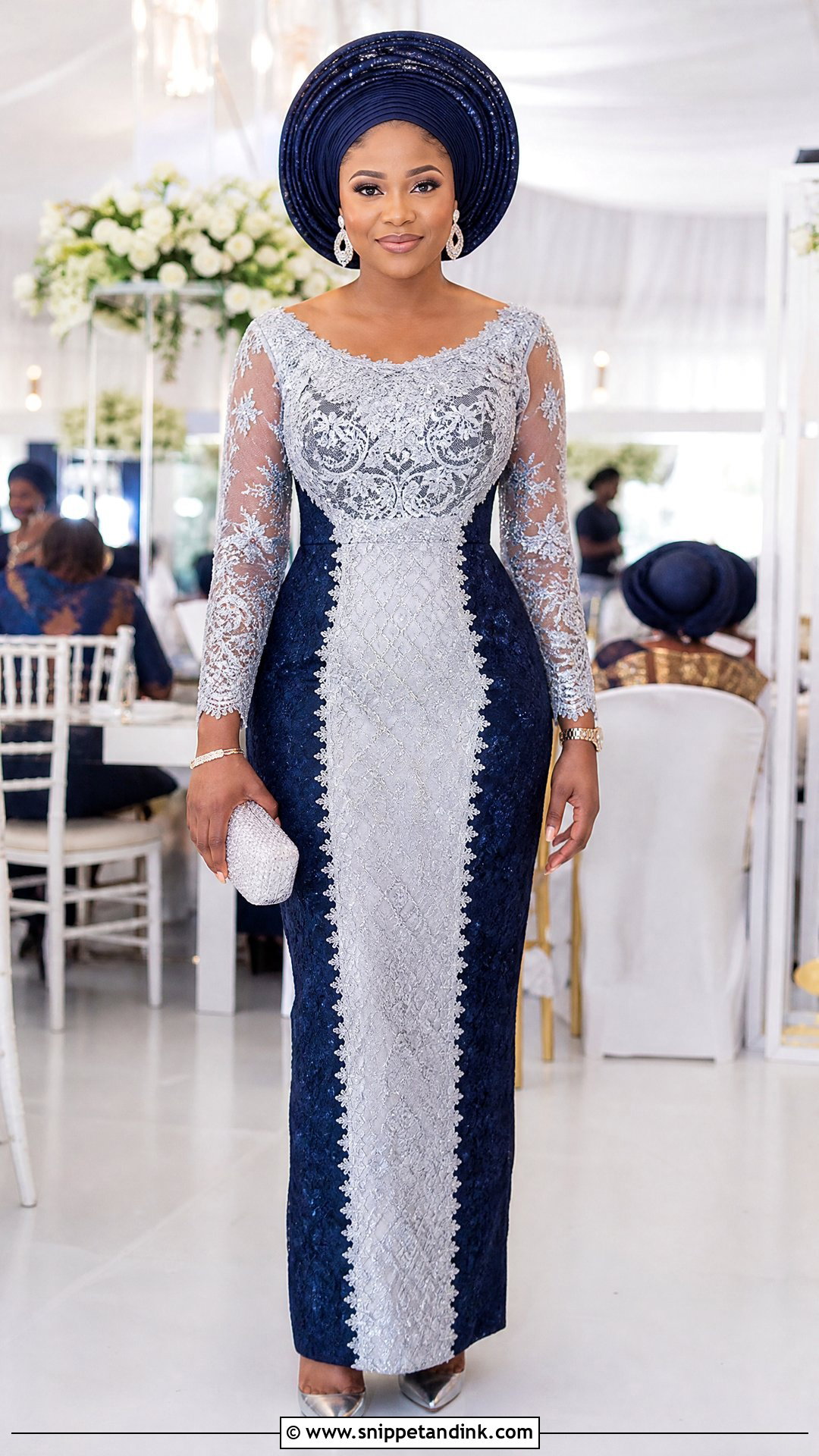
Two tones give a straight gown depth, and colour placement does the shaping for you. A darker shade down the side panels slims the line; a contrast on the sleeves, bodice and hem frames it. Navy with silver, burgundy with blush and emerald with gold are reliable pairs. Keep the construction simple so the colour blocking looks intentional. The detail I check is where the two laces meet: the motifs should be matched along the seam, or the join looks like a repair. Pick shoes and a clutch in one of the two shades.
19. Monochrome Lace Straight Gown
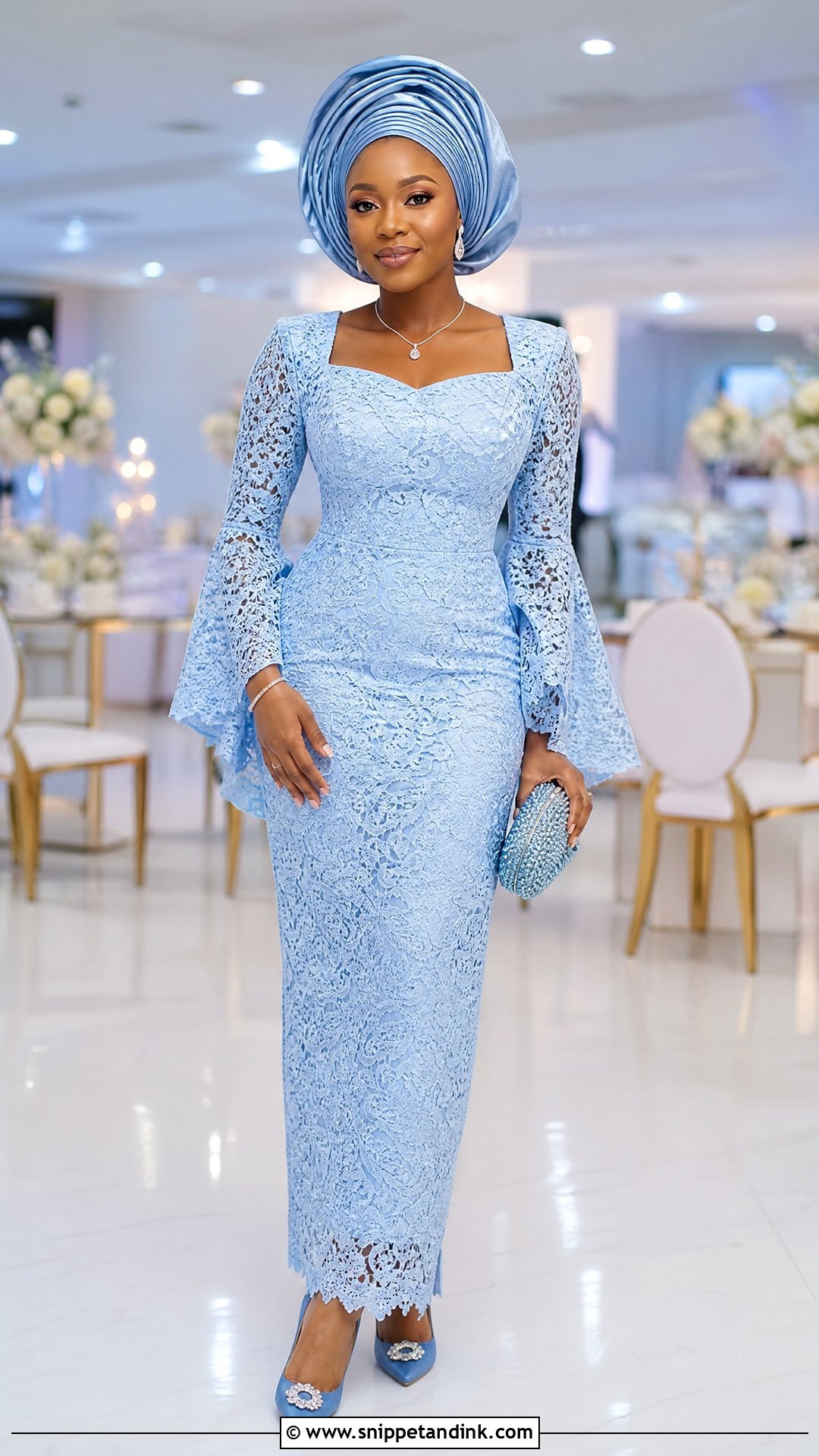
Monochrome works best when the textures change even though the colour doesn’t. A powder-blue lace gown with a satin gele, suede pumps and a beaded clutch in close blue tones looks considered; four items in exactly the same flat shade looks like a uniform. Coral, lilac, champagne, emerald and burgundy also take this approach well. Add gold or silver jewellery as a small break. I’d still give the gown one memorable feature, a scalloped sleeve or a square neckline, so the outfit doesn’t read as a block of colour from across the hall.
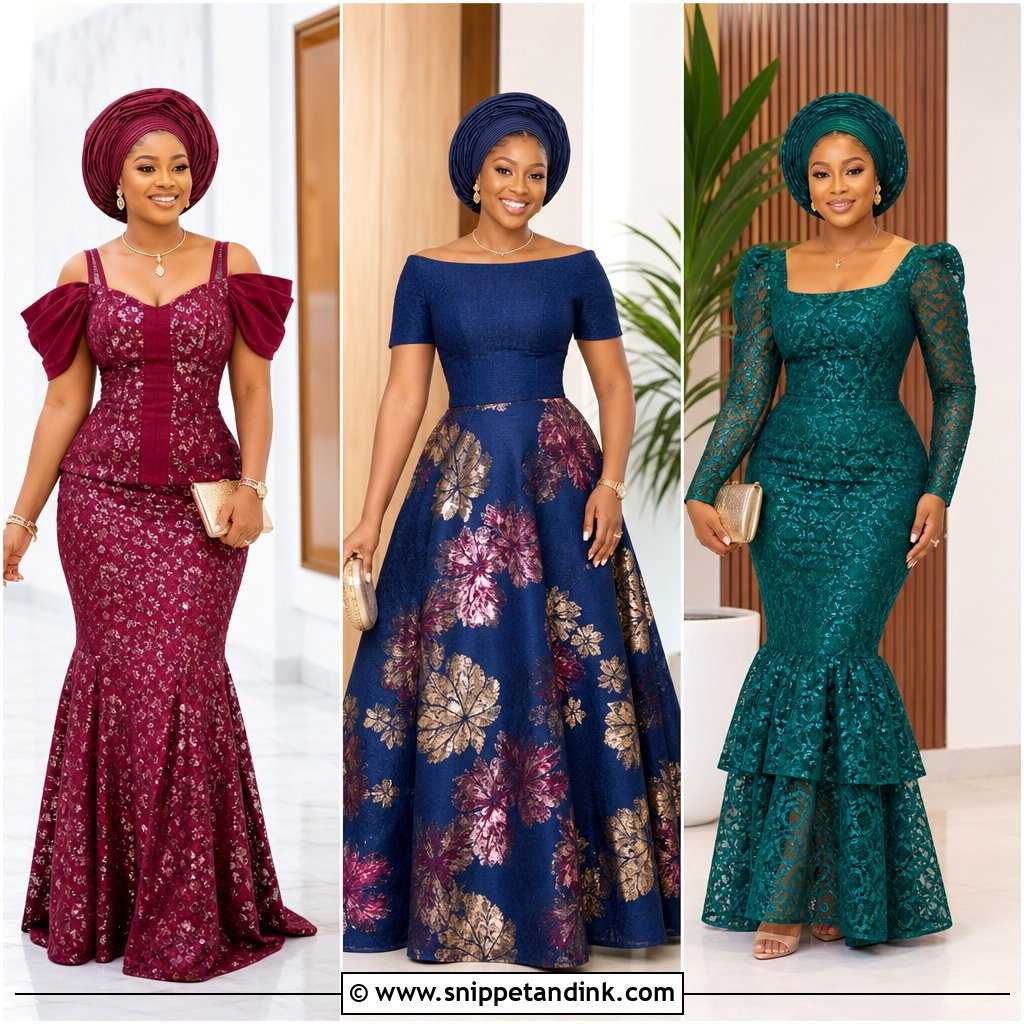
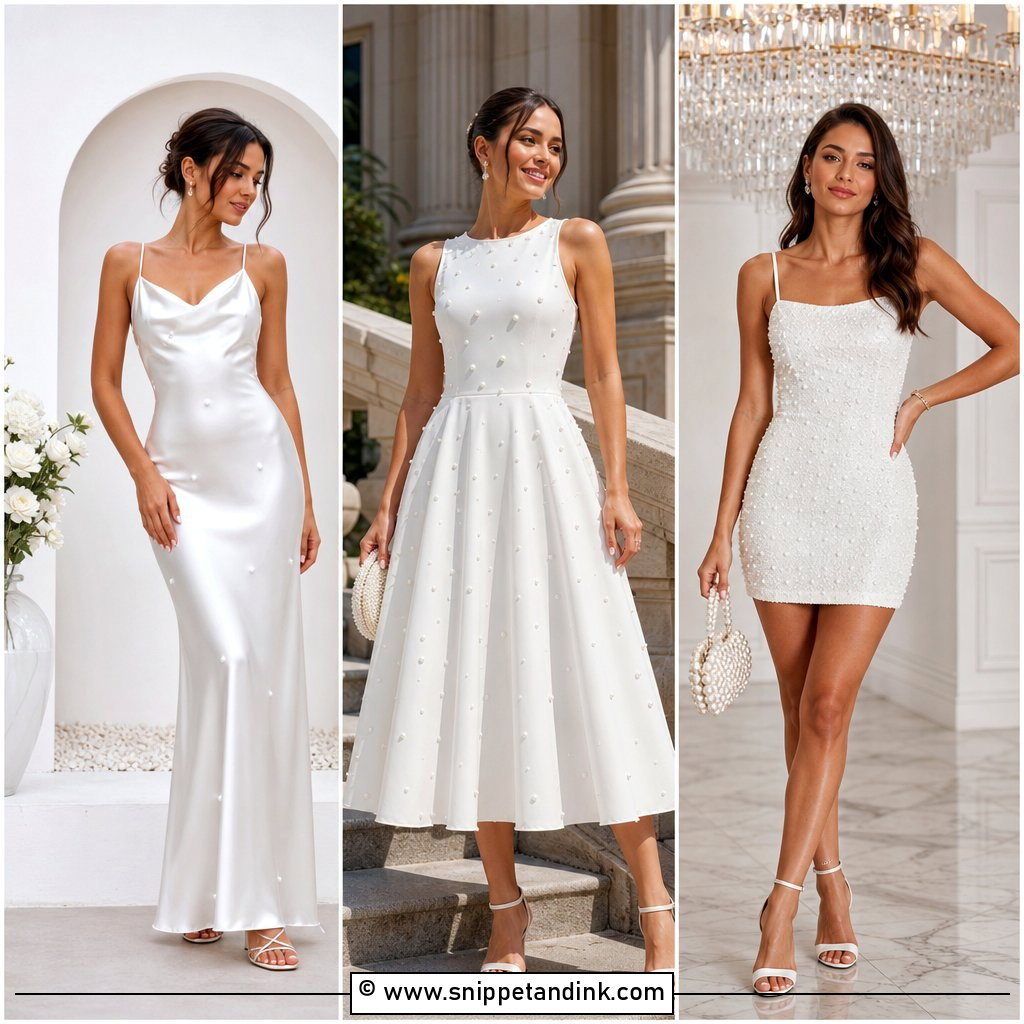
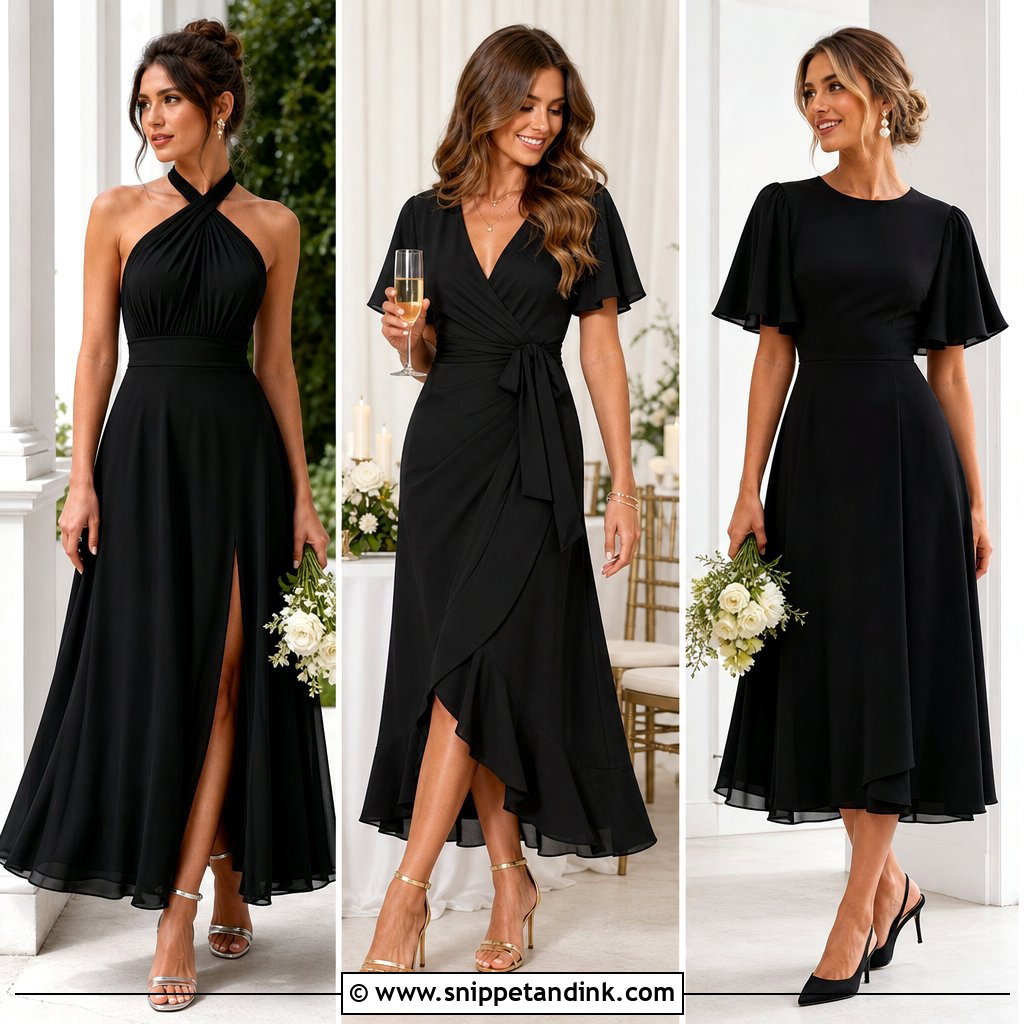
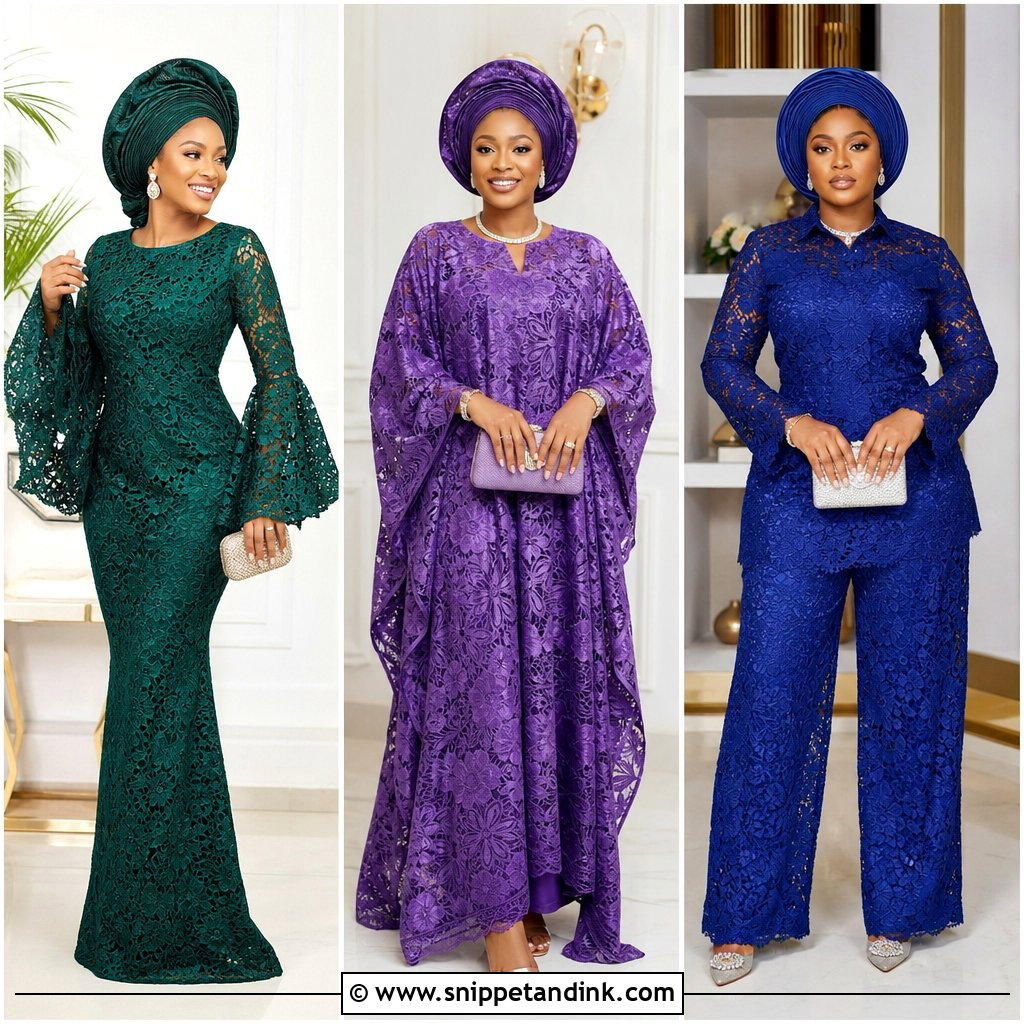
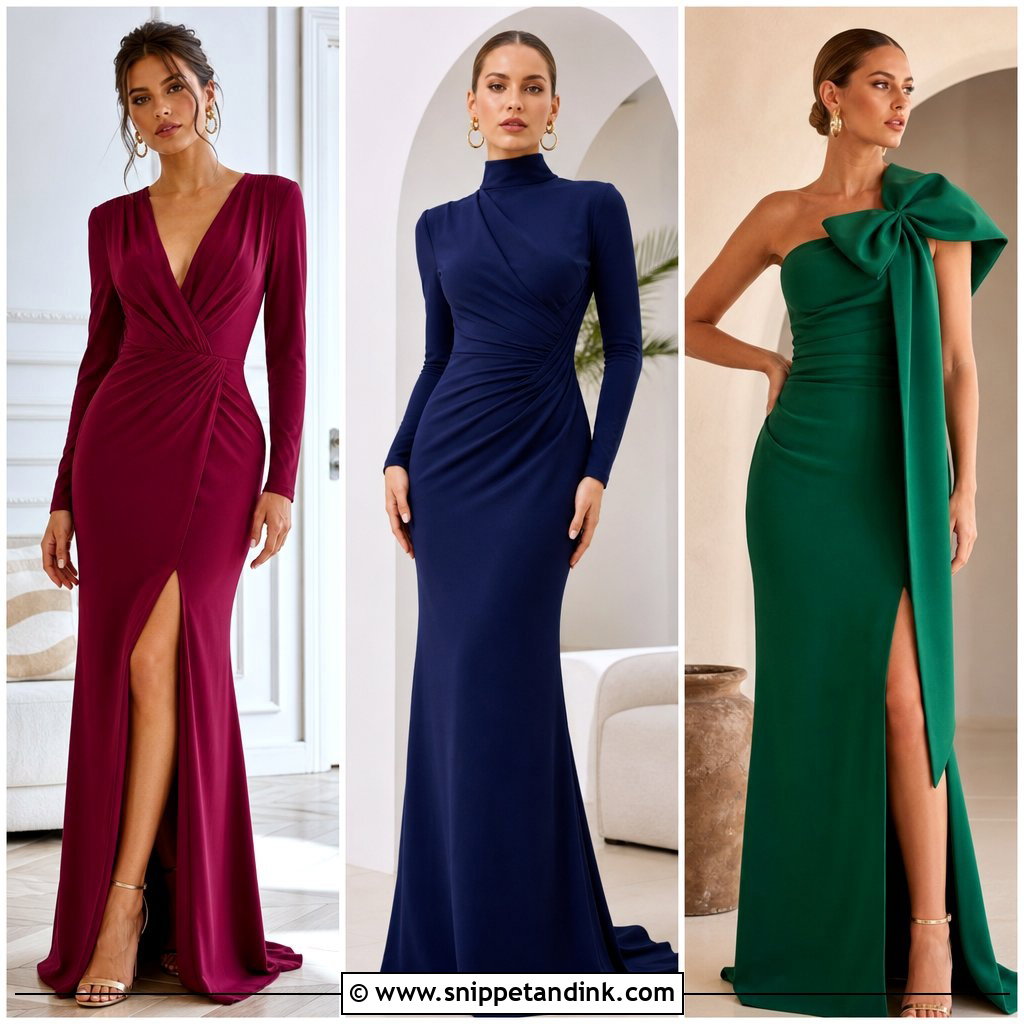
20. Plus Size Lace Straight Gown
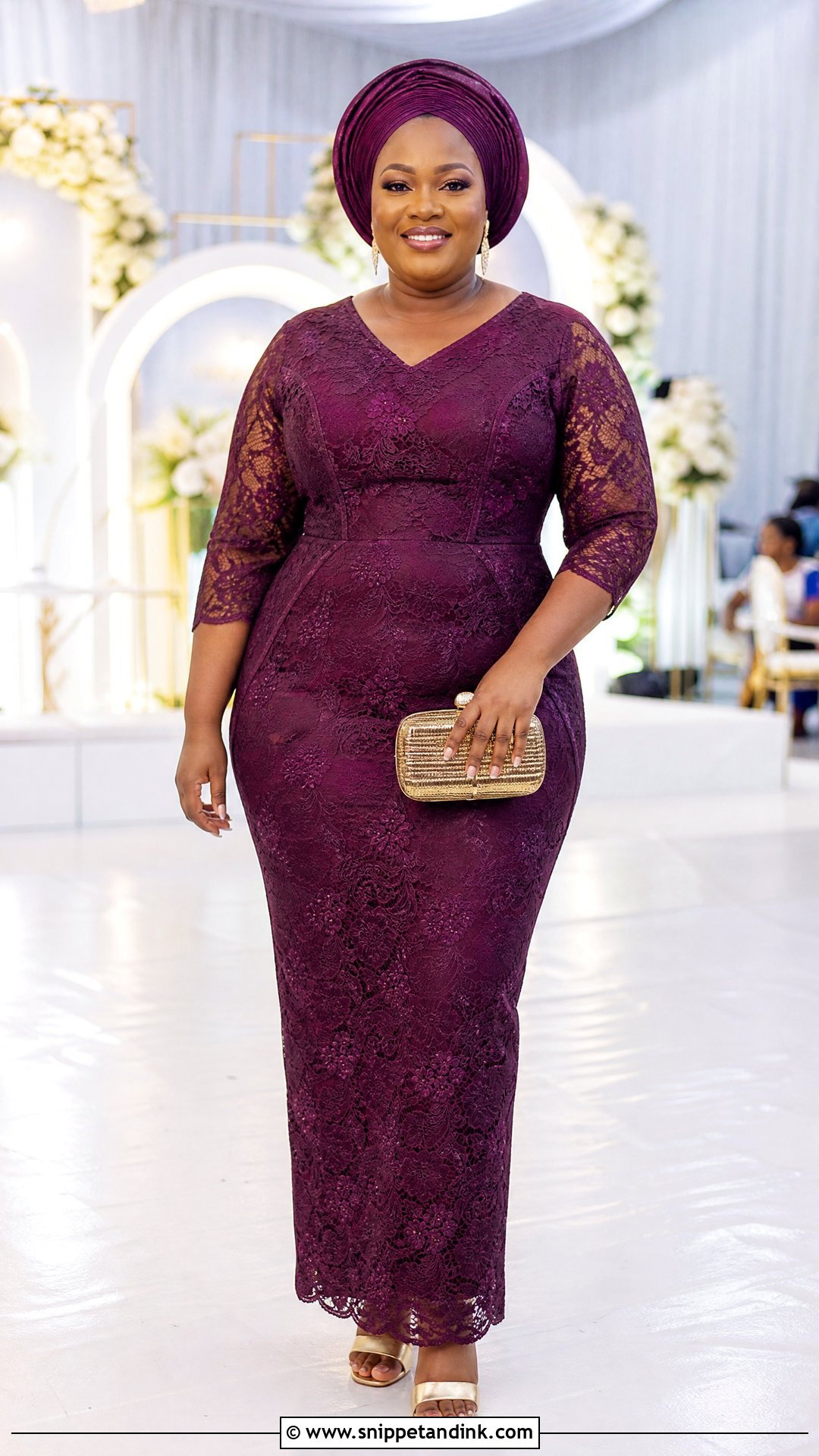
For a plus-size straight gown, the lace should skim the body, not cling to it. Medium-weight lace on a supportive lining holds its shape without stiffness, and princess seams, vertical appliqué and a gently defined waist draw the eye down in one long line. For coverage without bulk, try three-quarter sleeves, a soft V or an illusion neckline. Plum, teal, navy and bronze look rich with stable block heels. The mistake I see most is a gown cut too tight: lace pulled across the hips stretches the pattern out of shape and every seam shows. Ask for a little ease and a practical back slit.
Aso Ebi Lace Needs a Head Start on the Tailor
When a couple announces aso ebi, the lace usually arrives weeks before the wedding, and so does everyone else’s. Tailors fill up fast, particularly in the December wedding season. I tell guests to drop the fabric off as soon as it’s in their hands and to ask for two fittings: one when the gown is tacked together, and one when it’s nearly done. The first fitting is when slit height, sleeve length and peplum position can still change easily. By the second, you’re only adjusting the hem and the closure.
If the gele is part of the aso ebi, book the person tying it too, or practise a simple style at home a few times. A gele tied in a rush on the morning of the party is the most common reason an otherwise polished outfit looks off in the photos.
Wearing It Through a Full Owanbe Day
An Owanbe party is long, loud and warm, and a fitted gown has to cope with all of it. Sit down several times at your last fitting, raise both arms as if you’re dancing, and bend forward as if picking up money sprayed on the floor. If anything pulls, gapes or rides up, have it fixed then. A small safety pin, a spare hook and a strip of fashion tape in your clutch cover most emergencies.
Afterwards, hang beaded or sequinned lace only briefly; the weight stretches the shoulders over time. Fold it with tissue between the layers and store it flat. Spot-clean marks gently and take heavily embellished pieces to a cleaner who handles beadwork, rather than washing at home.
The Fitting Is Where a Straight Lace Gown Is Won
A good straight lace gown comes down to the lace, the tailoring, a comfortable lining and accessories that support it. The corset, the high neck, the slit, the cape or the detachable train can all be built on the same clean column. Before you commit, think about your measurements, how much coverage you want, the event colours and how easily you’ll walk, sit and dance in it. Take your favourite from the list above to your tailor, try it on with your real shoes at the fitting, and let the gele and jewellery be the last decisions, not the first.
You'll Like These Ideas:


Leave a Reply