
Nigerian weddings ask more of an outfit than most celebrations do. You’ll sit through a long ceremony, dance in heat, greet a hundred relatives and pose for group photos, often in fabric the couple chose for you. Bride, friend in a coordinated aso-ebi look or guest in your own dress, the job is the same. Confirm the colours with the couple, check cultural details with the family and leave your tailor real time. Below are complete outfits, from lace gowns and wrappers to kaftans and jumpsuits, with the fitting notes I give clients for each.
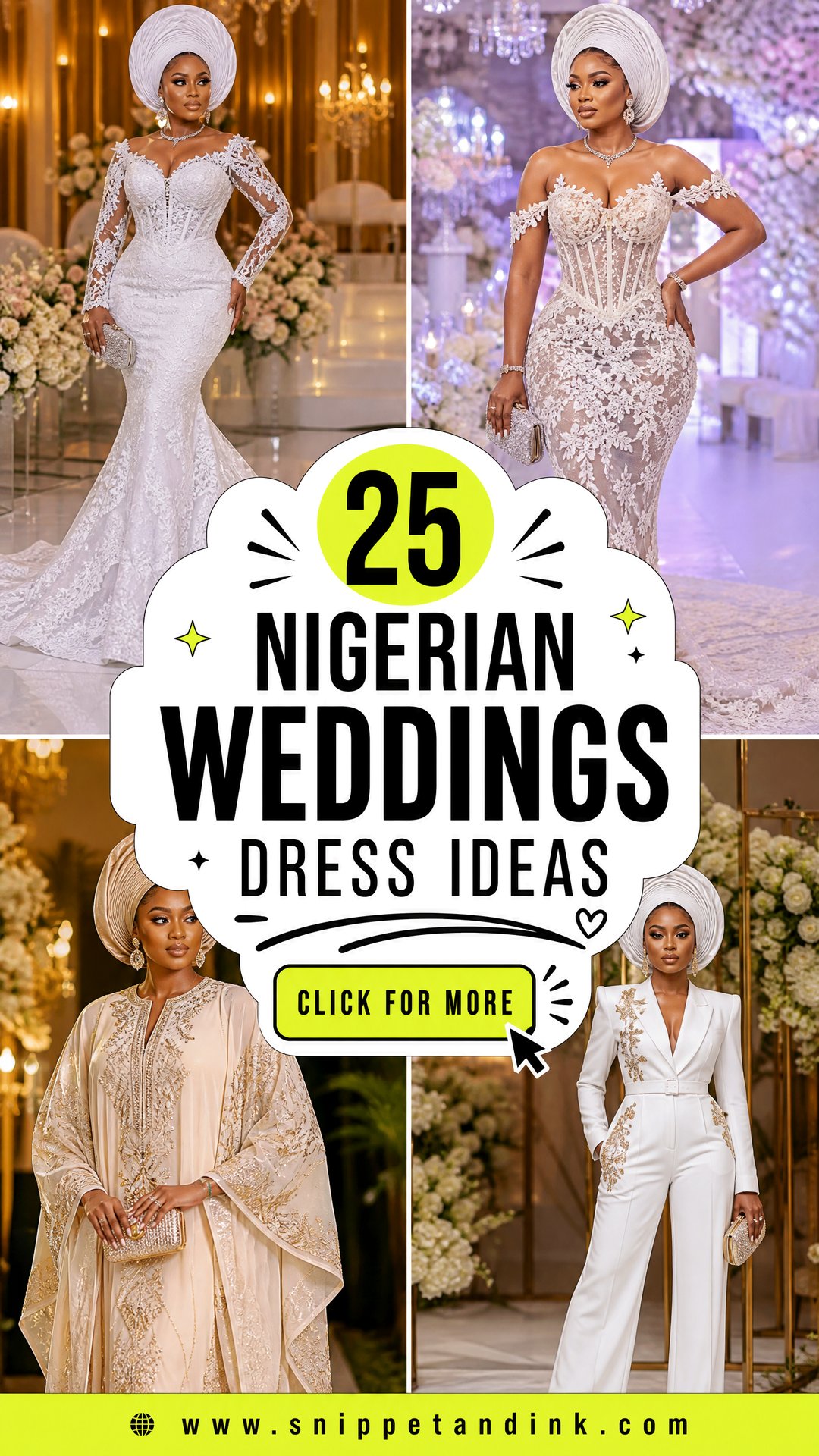
Reading an Aso Ebi Invitation Before You Buy Fabric
Most guests’ first decision isn’t the dress at all. It’s whether to buy the aso ebi. Couples usually sell their chosen fabric through a coordinator, often with a deadline well before the wedding, and some offer different colours for family, friends and the bride’s or groom’s side.
- Confirm which group you belong to before paying, since the colours differ.
- Ask whether the package includes a gele or cap, so you don’t buy a clashing one separately.
- If you miss the deadline, wear the colour family but a different fabric; copying the exact cloth from a market is bad form.
- At many weddings, aso ebi wearers are seated together or receive a special souvenir, so ask if that applies.
Once the fabric is in your hands, photograph the full length before cutting. Tailors occasionally return less offcut than expected, and a photo settles any question about how much cloth you gave them.
1. Nigerian Wedding Lace Mermaid Dress
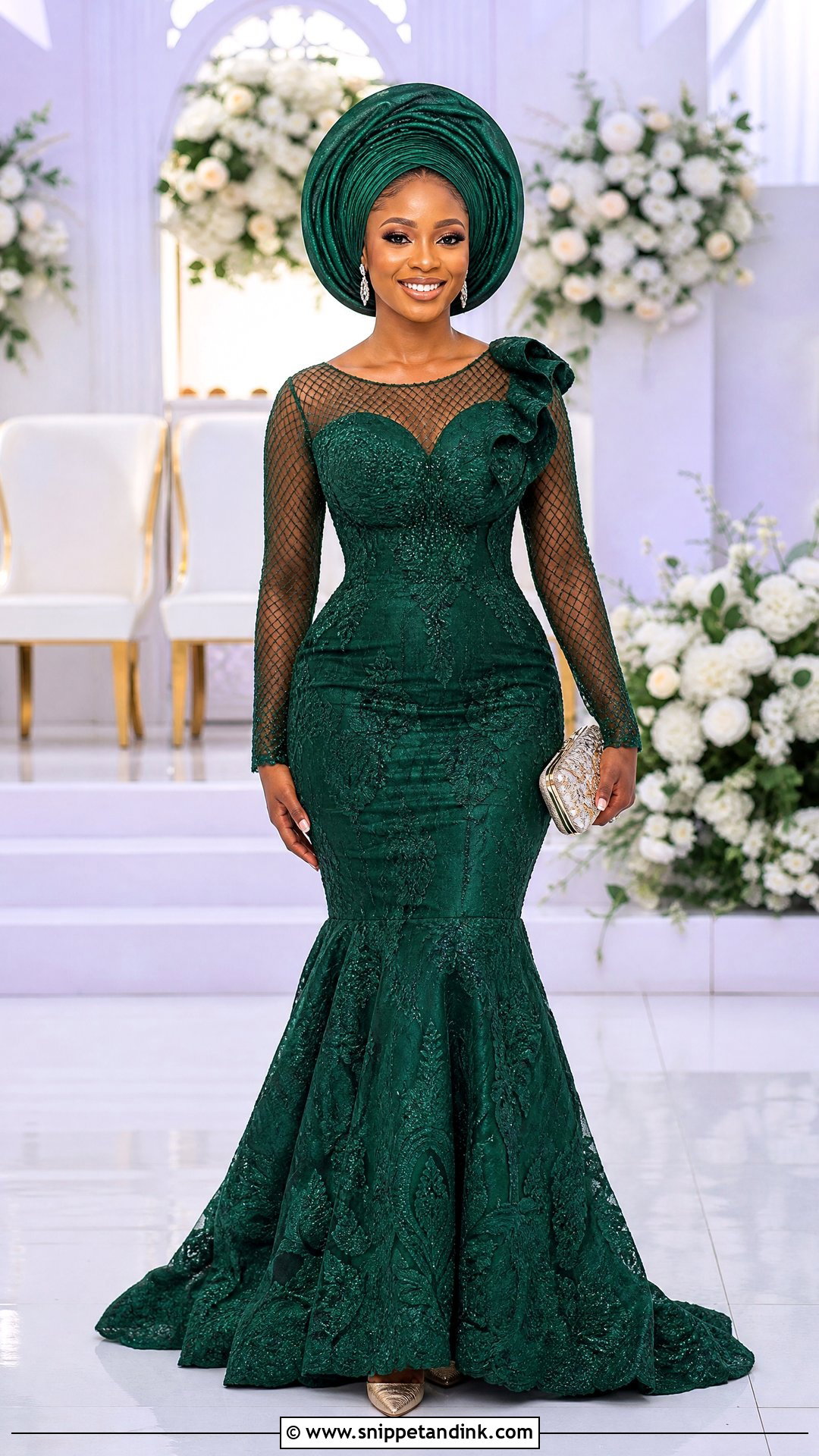
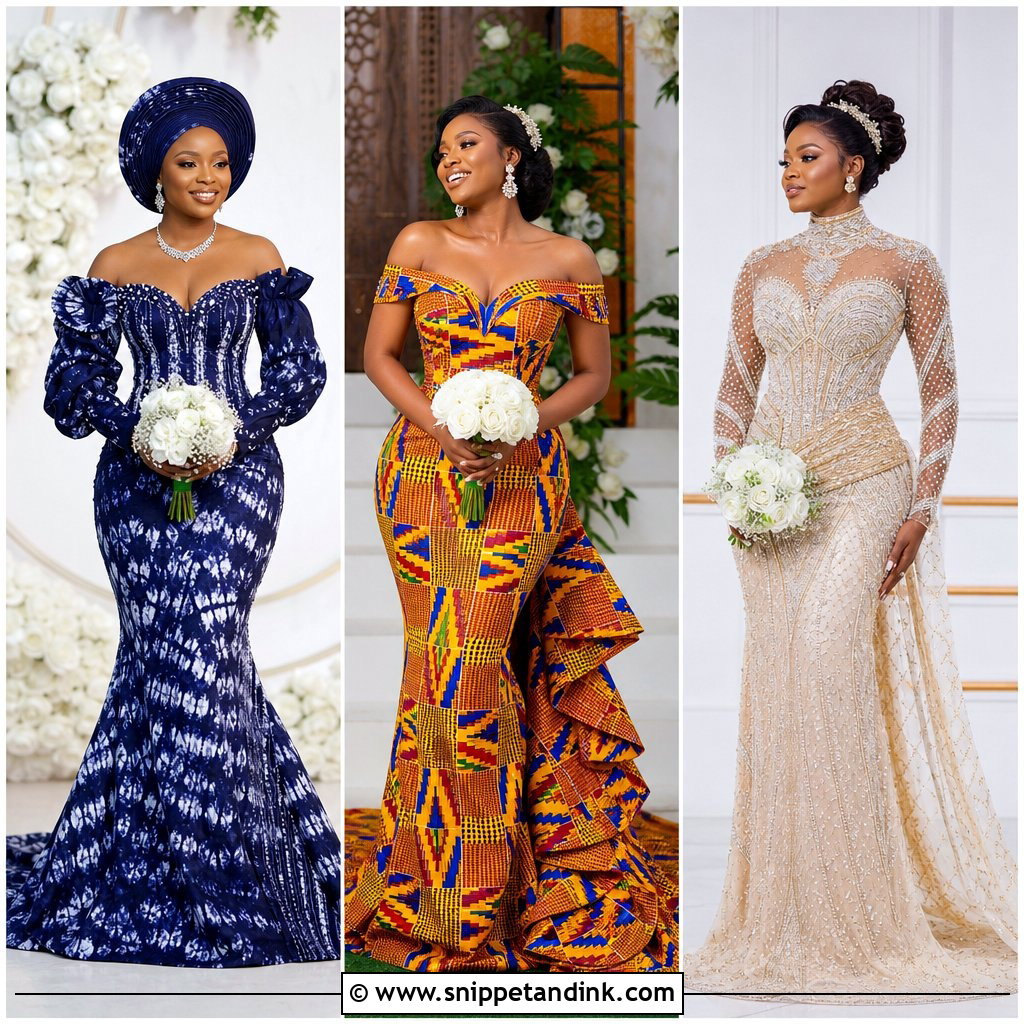
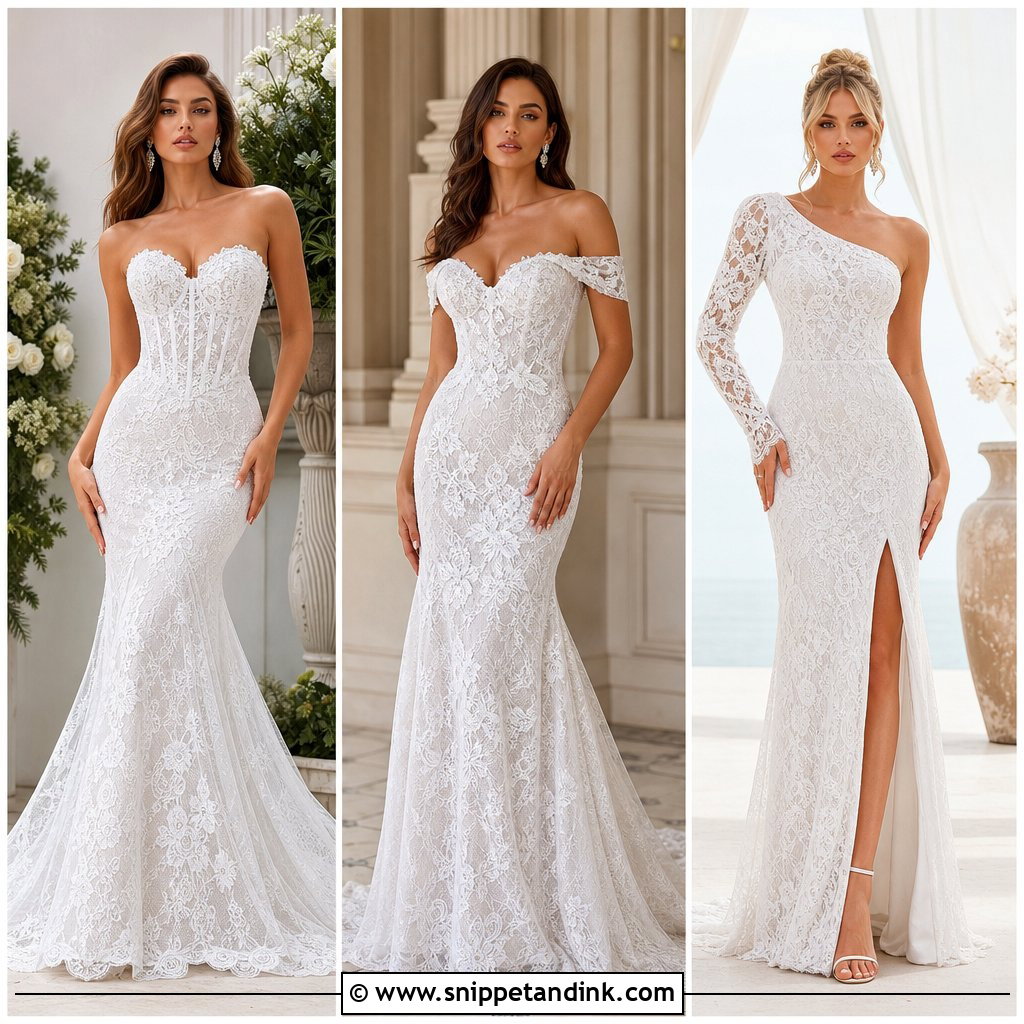
With a lace mermaid, the knee is where it all goes right or wrong. If the flare starts above the knee you get a soft trumpet that’s easy to walk in; below the knee you get drama and a shuffling stride. I usually set it at the knee or just under. Corded and beaded lace hold the shape best, and a lining matched to your skin tone makes the lace look richer. Petite women look better in a softer flare; curvier women benefit from boning placed at the waist and hip. Keep the hem just off the floor and finish with a neat gele, crystal drops and pointed pumps.
2. Nigerian Wedding Aso Oke Iro And Buba
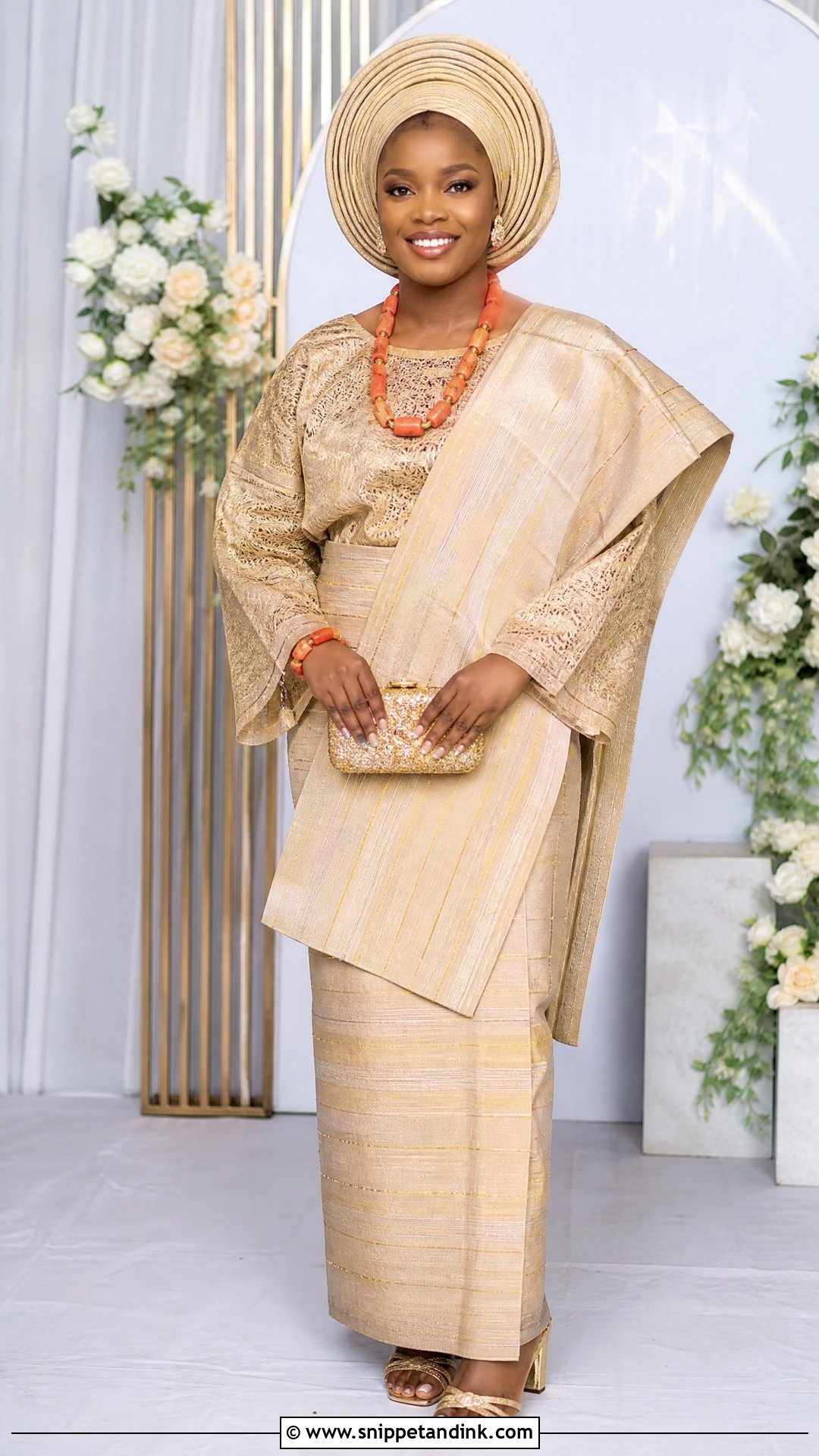
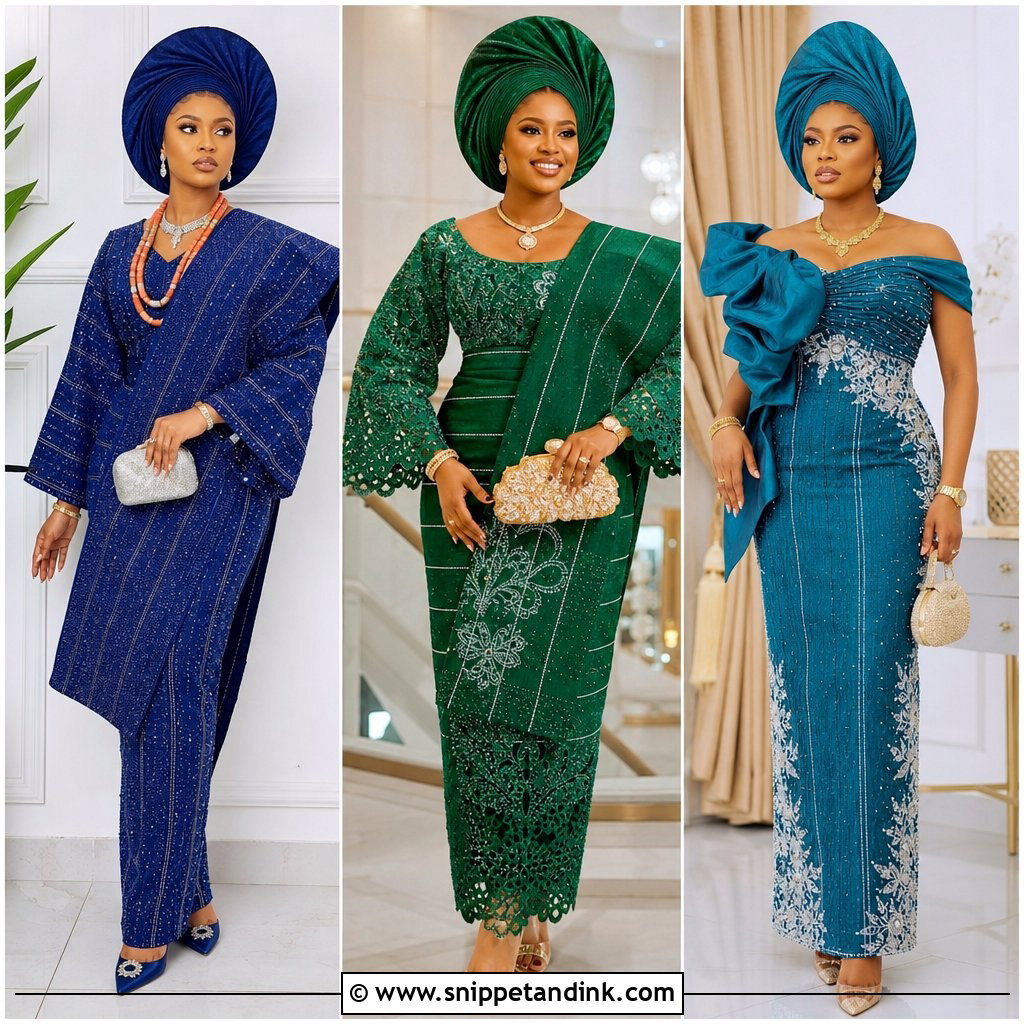
The wrapper is the part of iro and buba that fails first, usually during the second hour of dancing. I ask tailors to add a discreet hook or a hidden tie inside the waist so it stays put. Build the look around the woven aso oke wrapper and a buba with comfortable sleeves, then add the ipele over one shoulder and a gele sized to your face. For a Yoruba traditional wedding, check weave and colour choices with the family, since some patterns carry meaning. Block-heel sandals and coral-style beads finish it.
3. Nigerian Wedding Corset Lace Gown
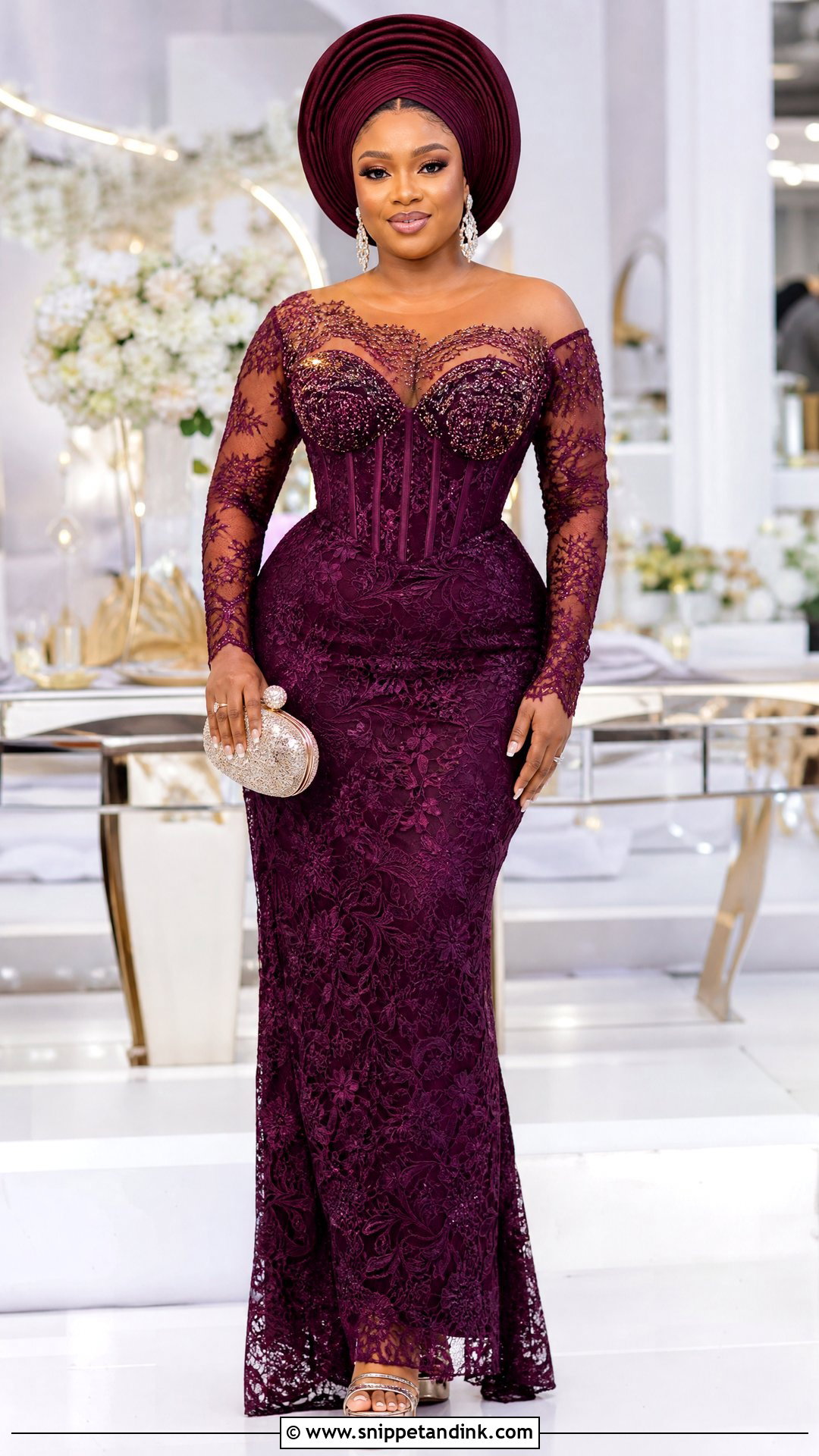
Corset gowns in lace give a sculpted waist with a lot of Nigerian richness, but the corset has to let you sit and breathe through a long programme. I test both at the first fitting. A straight or gently flared floor-length skirt keeps the line clean, and beading only at the neckline defines the corset without overloading it. A medium gele balances chandelier earrings. If you need more coverage, ask for illusion mesh or detachable sleeves; it’s easier to build in at the cutting stage than add later.
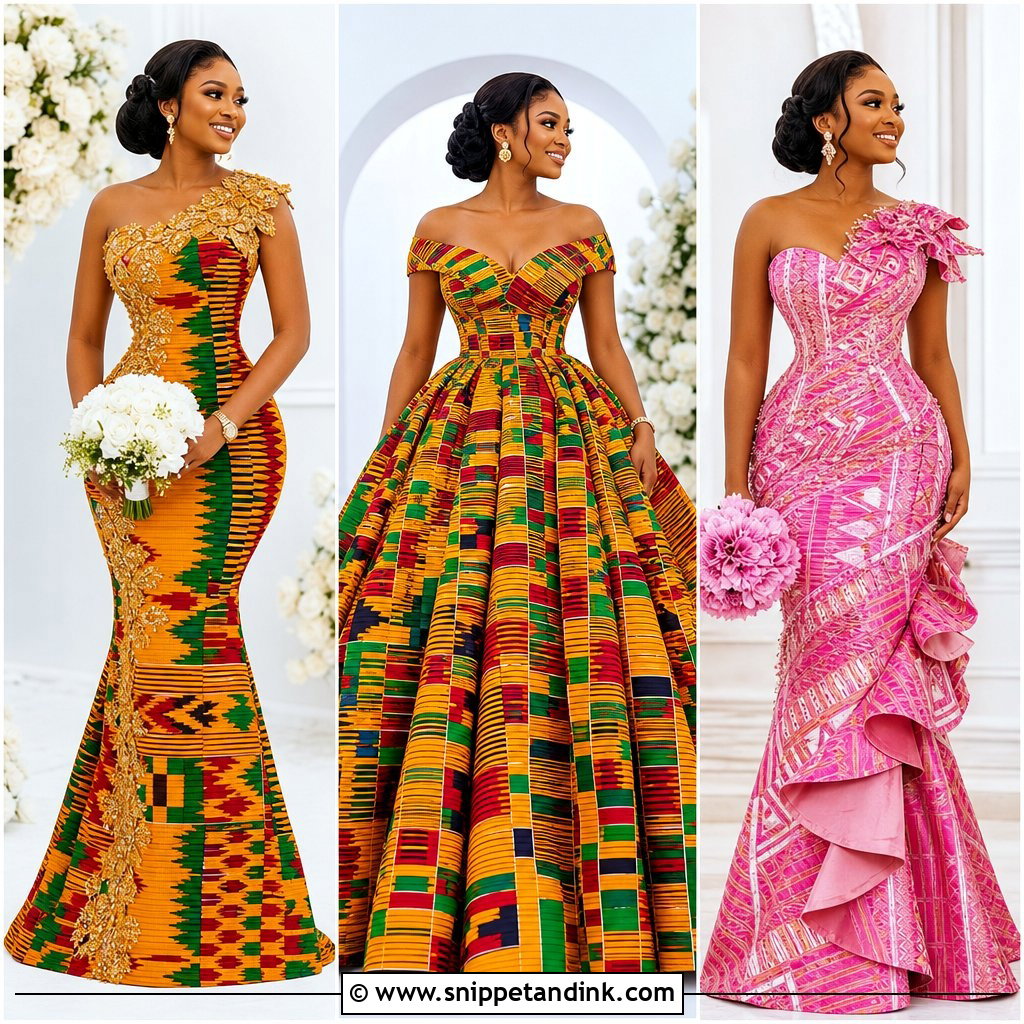
4. Nigerian Wedding Off Shoulder Ball Gown
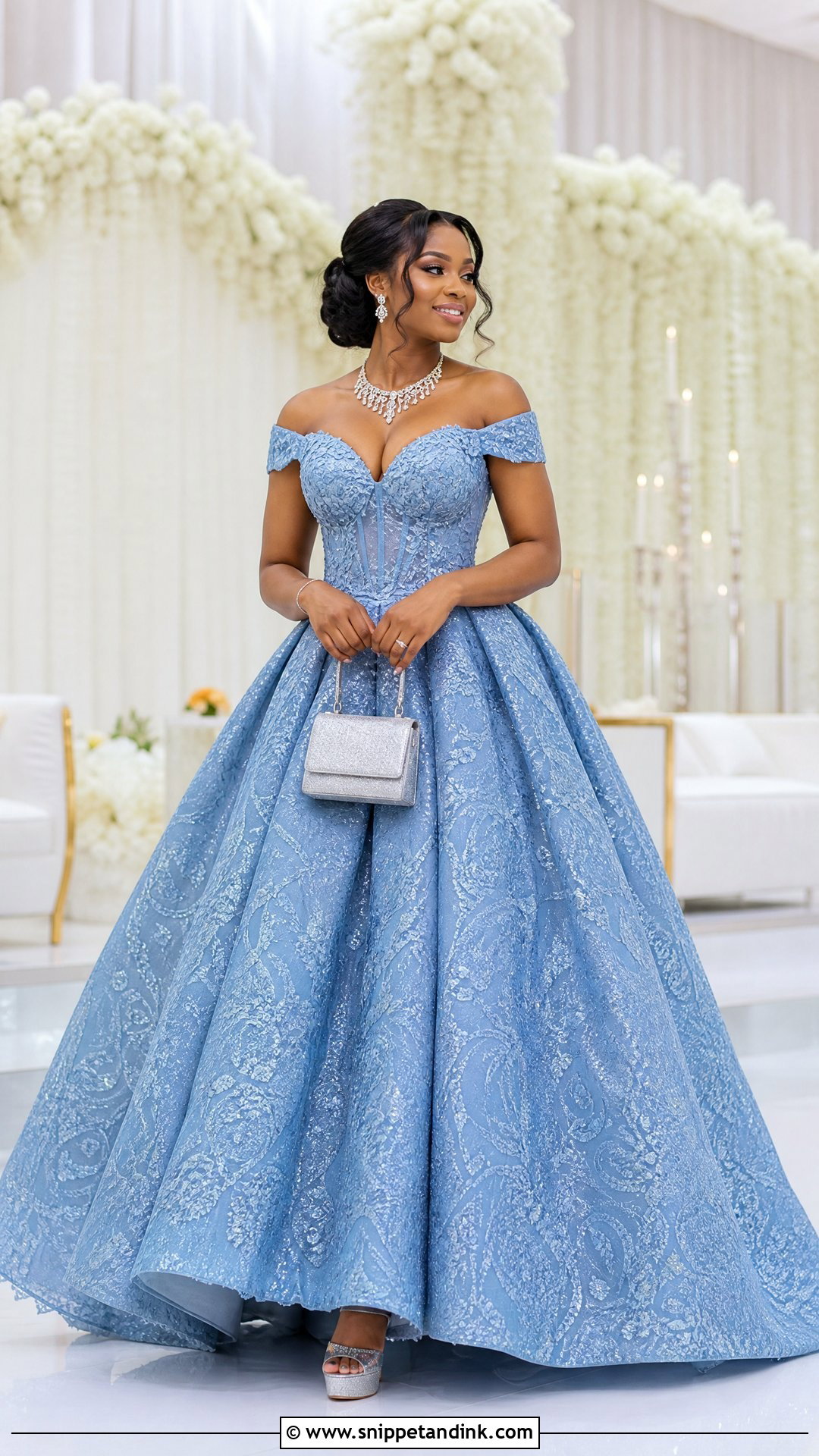
Off-shoulder ball gowns are for a grand entrance, which usually means the bride, a celebrant or a very close relative. The skirt should have controlled volume; too many layers and you can’t get through a reception hall’s narrow aisles between tables. Lace, jacquard and embellished tulle hold the structure. Internal support keeps the neckline from creeping down. Where bare shoulders aren’t suitable for the ceremony, removable lace straps or a sheer cape solve it.
5. Nigerian Wedding Cape Sleeve Dress
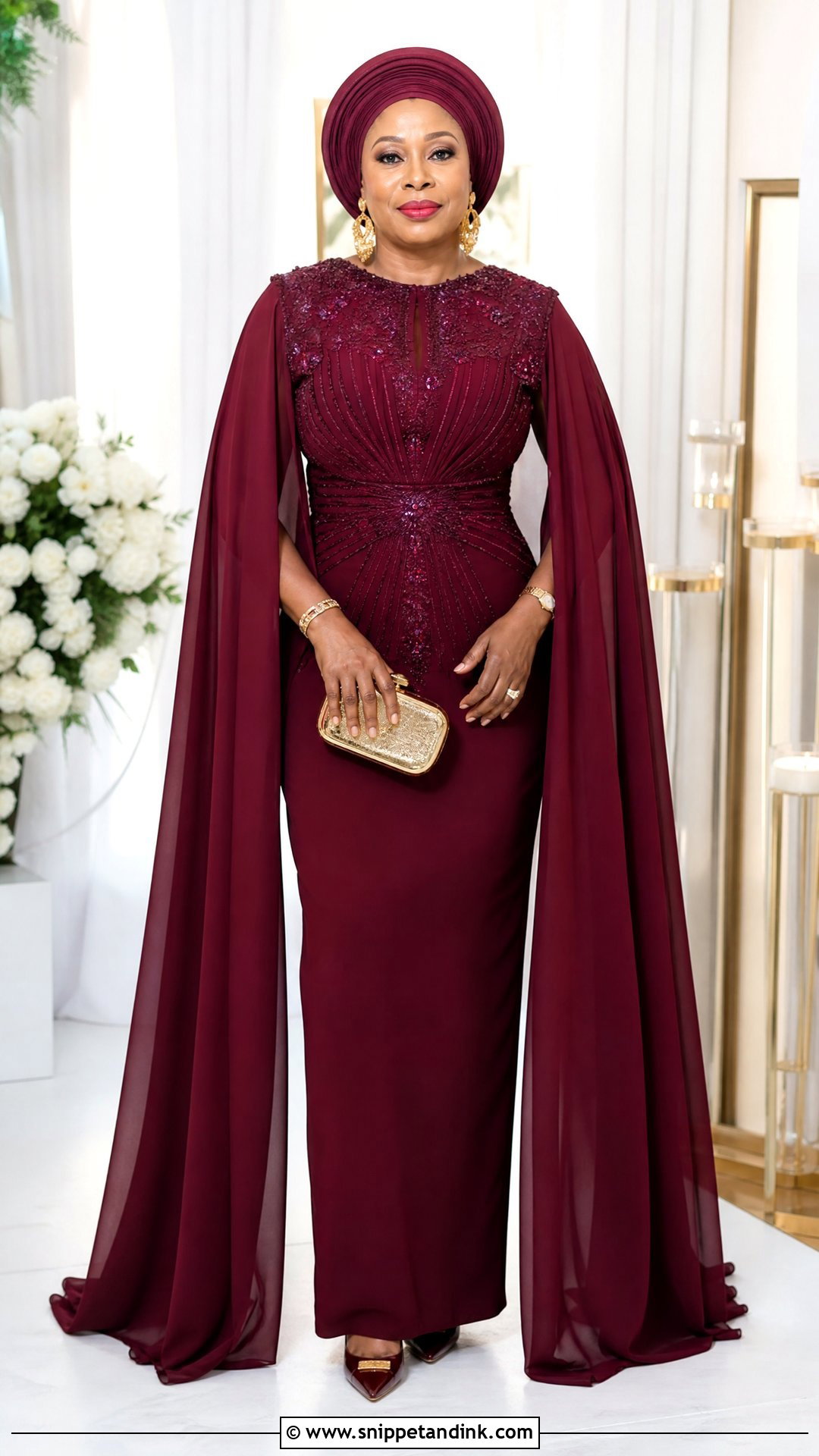
Cape sleeves give arm coverage without the tightness of a fitted sleeve, which is why I suggest them to women who dislike sleeves but want to stay covered. Lace capes add texture; chiffon and crepe move more freely. The tricky part is the arm opening, which must be cut so you can eat, hug and dance without lifting the whole cape. Keep necklaces minimal, use a streamlined gele, and choose a cape length to match the event’s formality, elbow for day, floor for evening.
6. Nigerian Wedding Peplum Wrapper Outfit
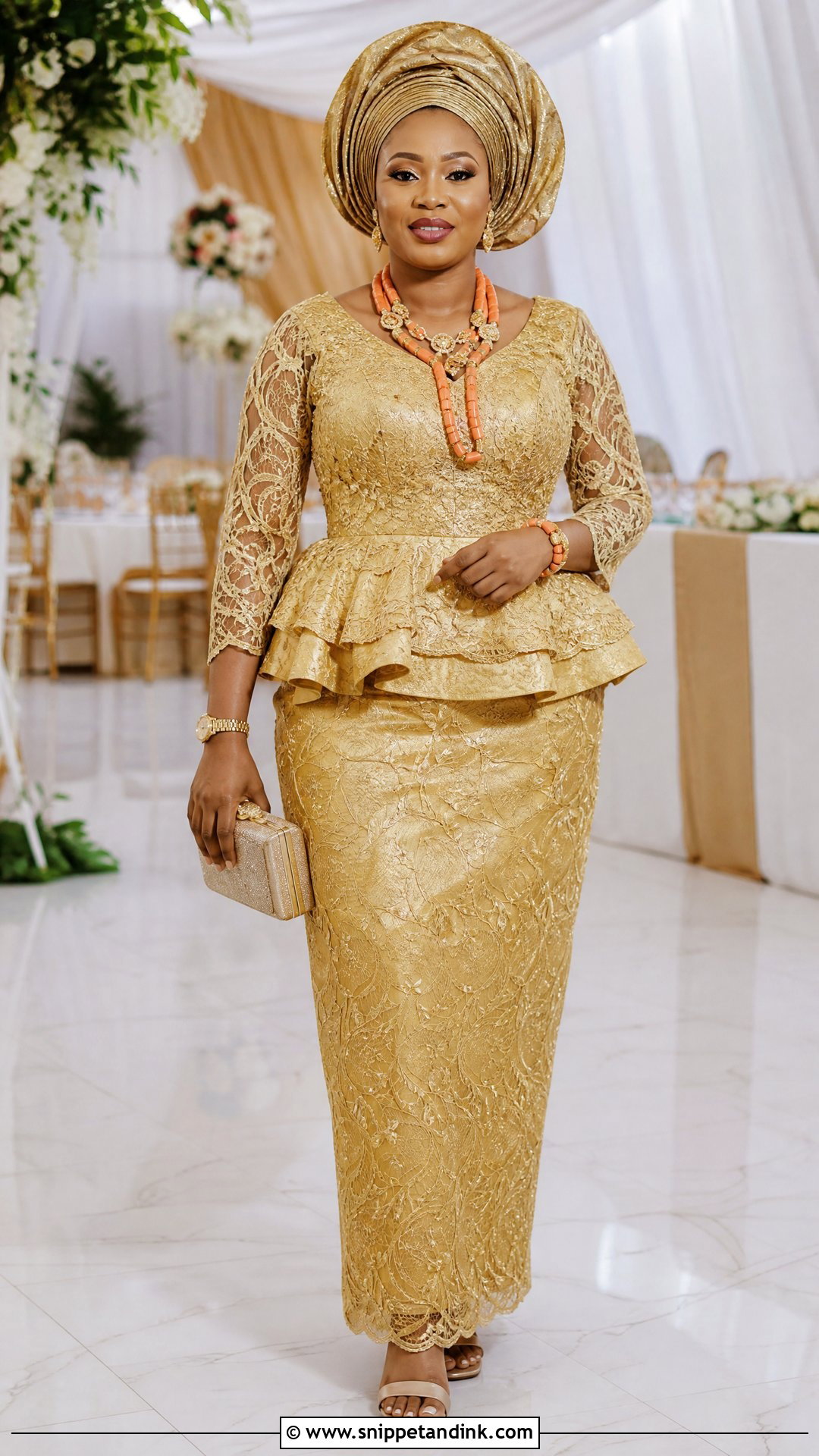
Peplum blouses with wrappers work across generations, from aunties to young cousins. The trick is proportion. Women with fuller hips look better in a shorter, softer peplum; straighter figures can carry a structured flare. Don’t put volume at both the sleeve and the waist, or the blouse looks boxy. Lace, brocade or George in the approved colours all work, and a floor-length wrapper should still let you take a normal step.
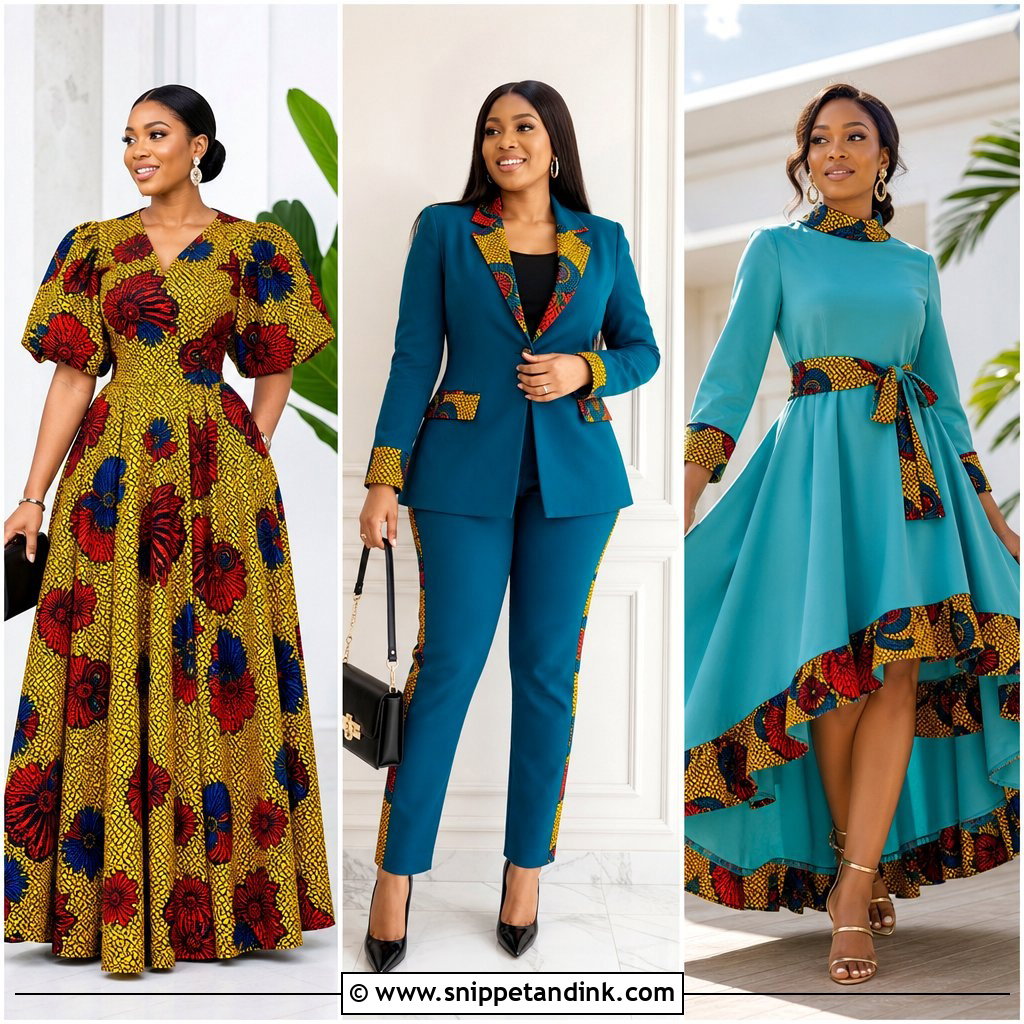
7. Nigerian Wedding Ankara High Low Dress
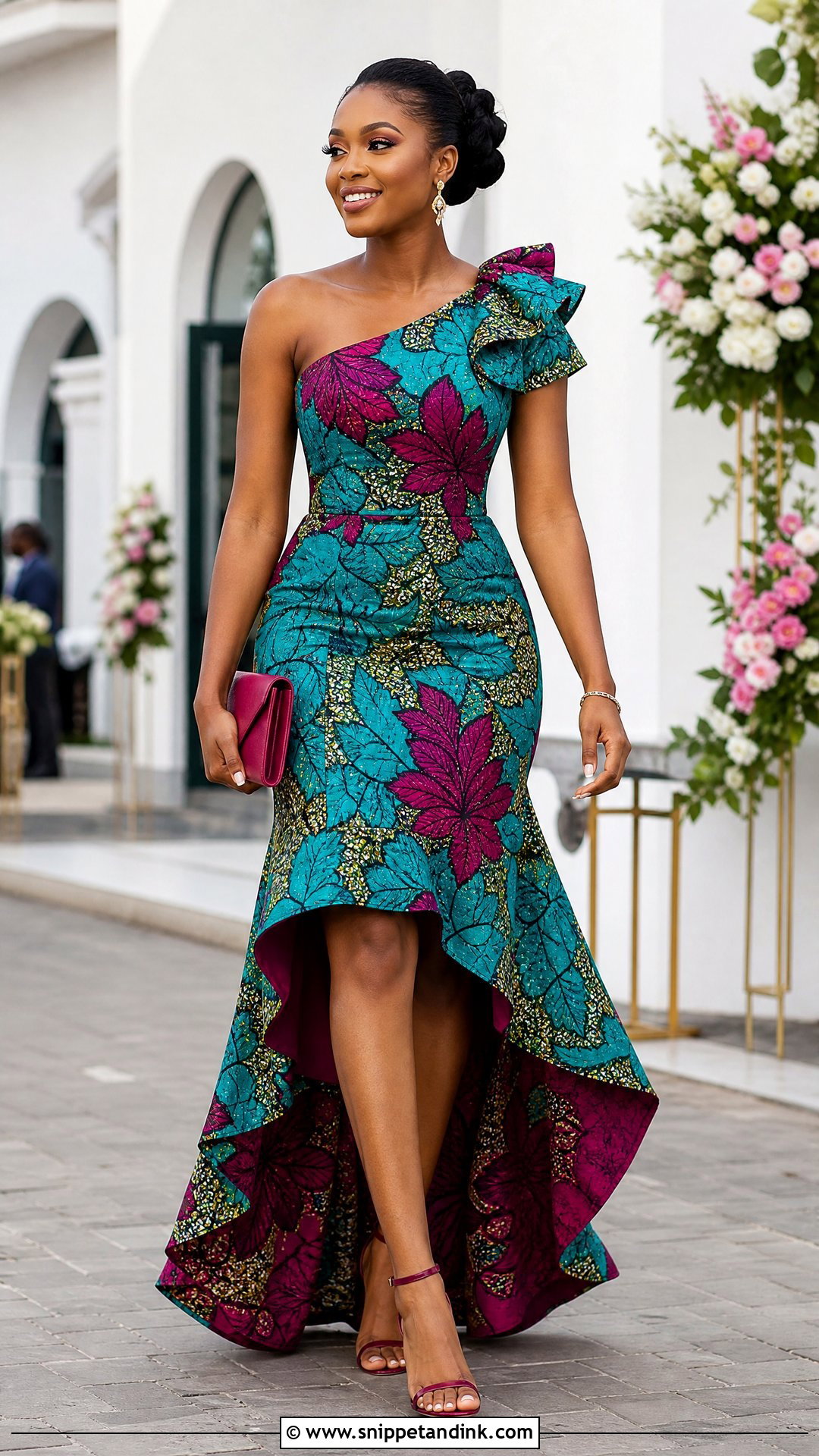
A high-low hem shows off Bright Ankara prints as they move, and it’s cooler in daytime heat. Make sure your print doesn’t copy the couple’s reserved aso-ebi fabric. The front should land around the knee and the back at the ankle or floor, but check the short side is appropriate for a traditional ceremony. Pull one shade from the print for your earrings and keep the clutch solid. Enough fullness lets the hem swing; too much and it becomes hard to control on stairs.
8. Nigerian Wedding Sequined Column Dress
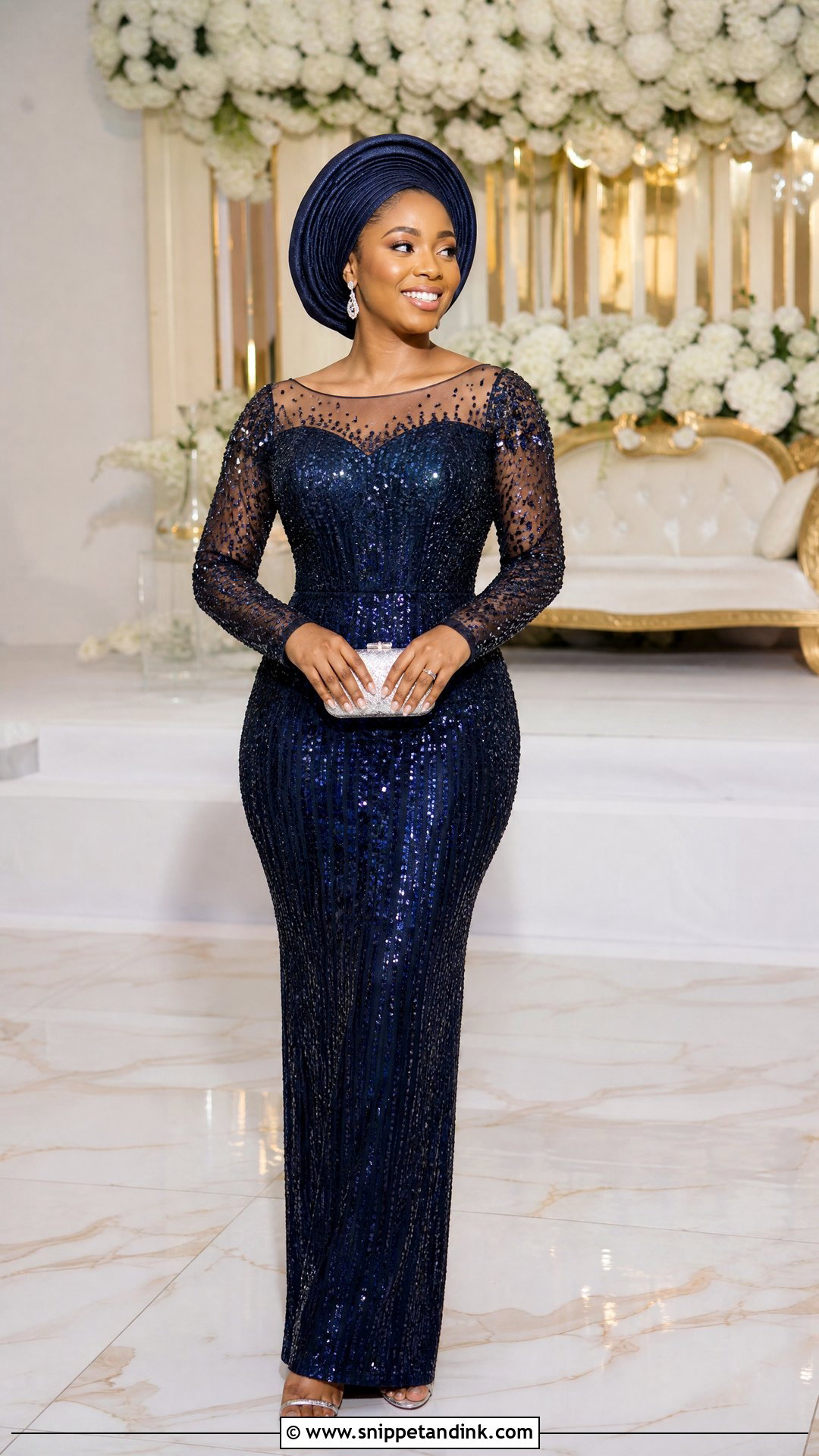
Sequins on a column need two things: room to sit and secure stitching. I ask for stretch lining, a back vent and carefully shaped seams. Rich shades look best under evening lighting, but follow the couple’s dress code first. One statement element is enough, so the gele and earrings stay simple. Run your hand down the fabric before buying; loose sequins catch on jewellery and on other guests’ lace when you hug.
9. Nigerian Wedding Embroidered Kaftan Dress
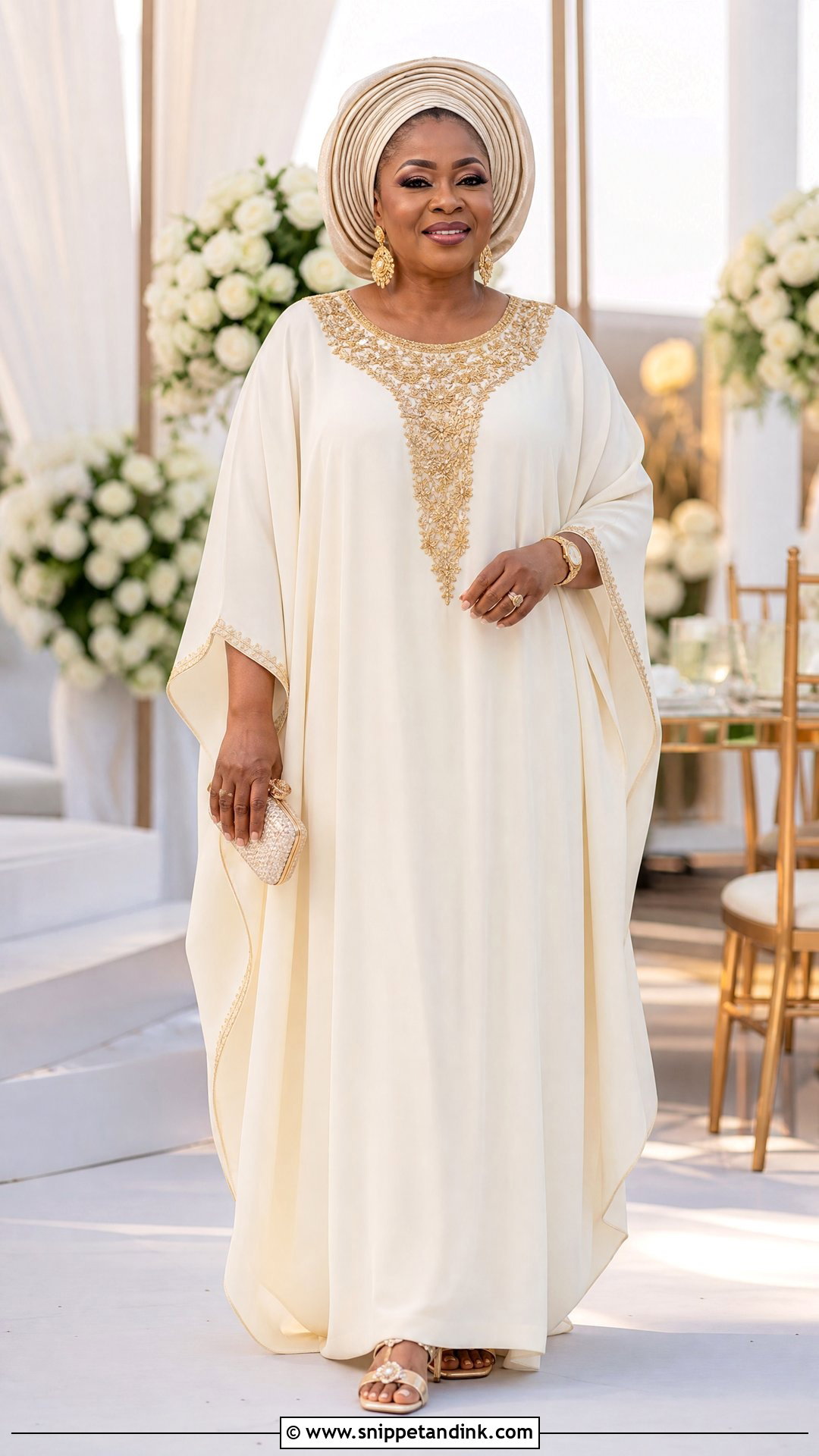
Kaftans are the outfit I recommend for comfort through a very long day, and for expectant mothers or older guests they’re often the best choice in the room. Silk, crepe, brocade or light jacquard with embroidery at the neckline, sleeves and centre front keeps it formal. It should skim, not swamp; a soft inner tie at the waist adds shape. Check the sleeve width at the buffet, because wide kaftan sleeves have a habit of dipping into food.
10. Nigerian Wedding Boubou Gown
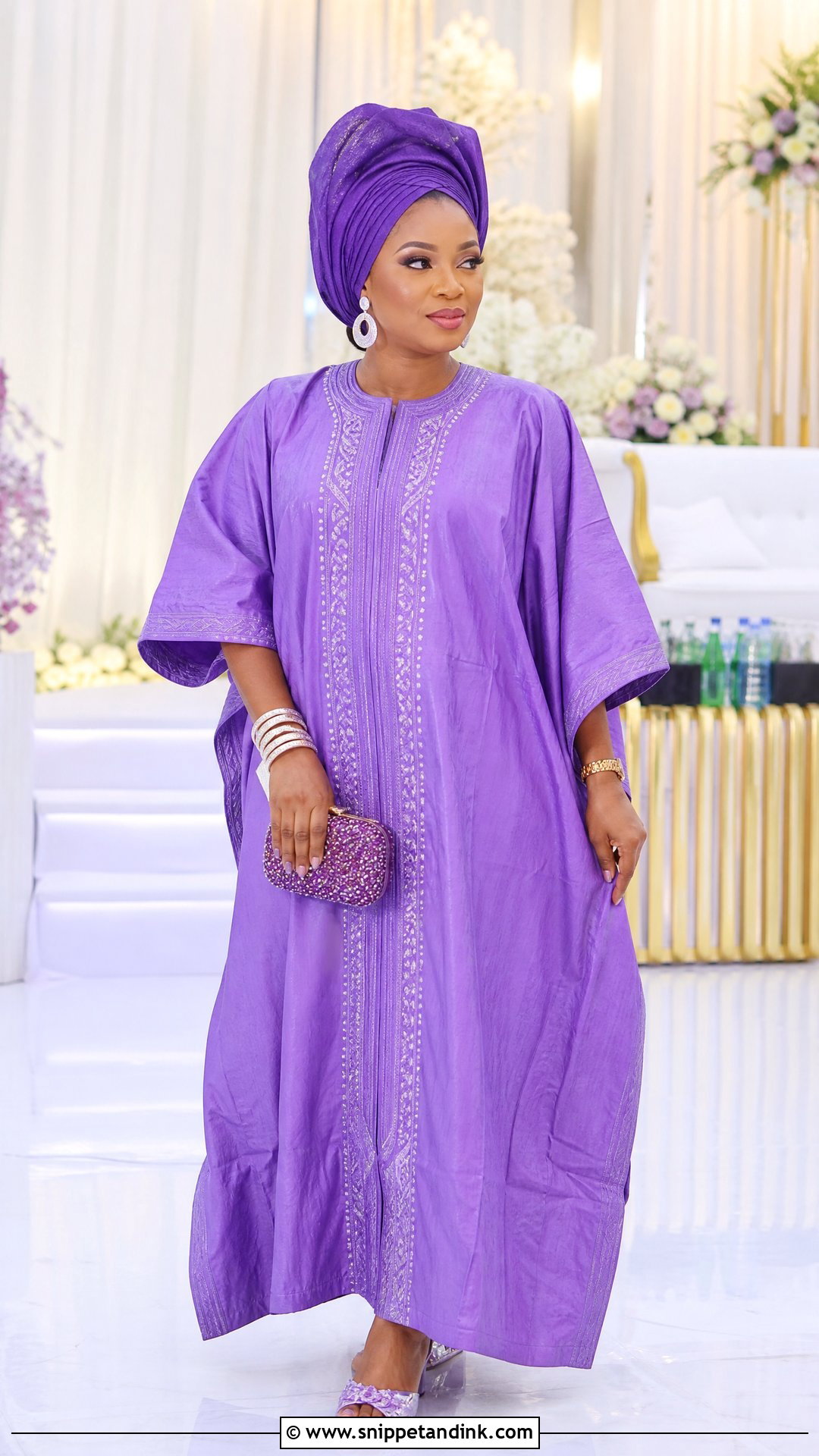
A boubou depends on draping and on the inner slip. Without a fitted slip the wide outer layer can turn sheer under hall lights. Crepe, silk blends and jacquard fall smoothly while keeping shape, and embroidery around the face gives it presence. A tall head wrap and stacked bangles suit the scale; an oversized bag doesn’t. Shorter women should ask for a slightly narrower cut and a hem that shows the front of the shoe, otherwise the fabric swallows them.
11. Nigerian Wedding Two Piece Corset And Skirt
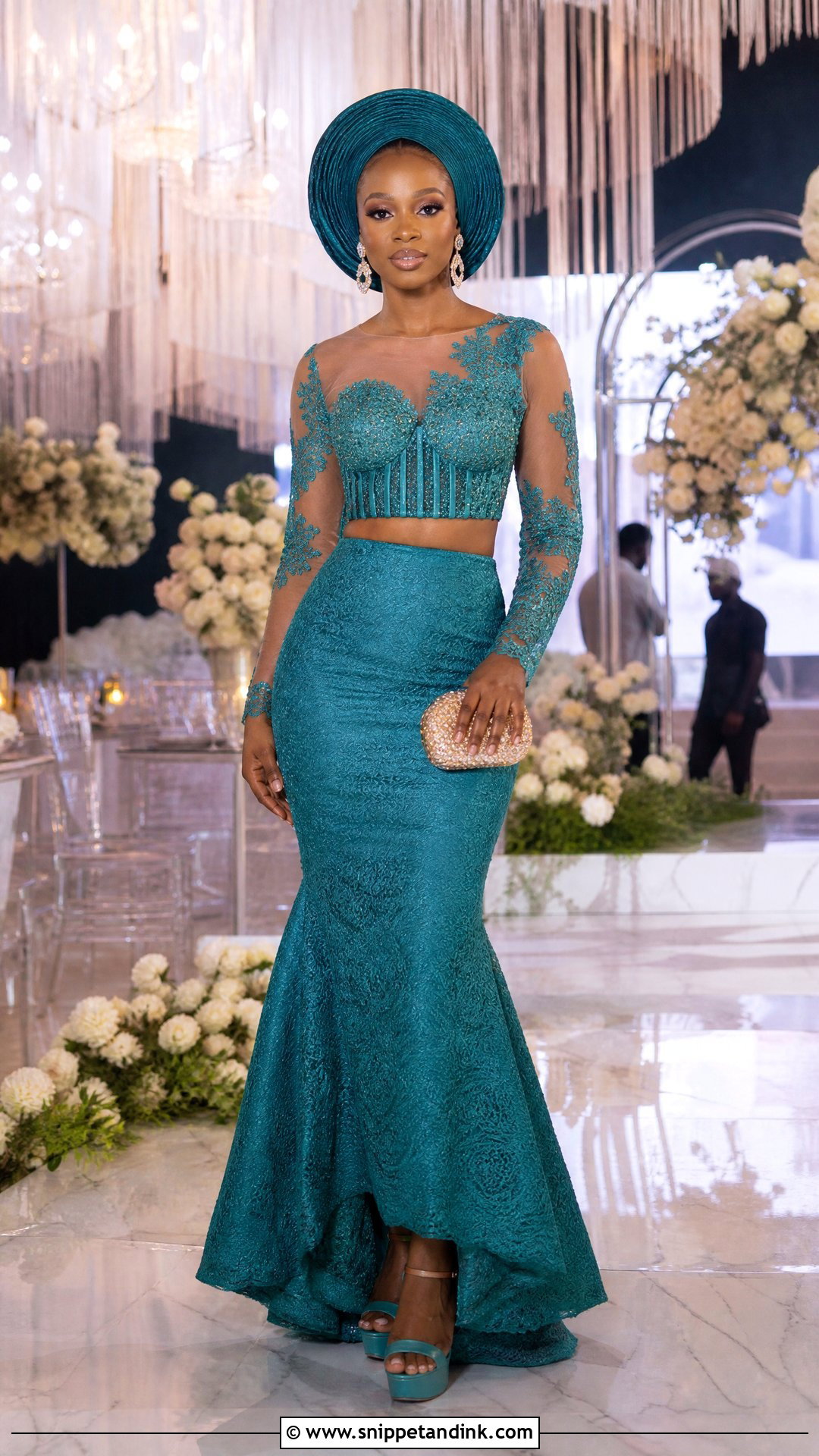
Two-piece sets make aso-ebi fabric feel younger. The corset top must reach the skirt’s waistband; a gap that shows when you sit is the most common complaint I hear. A high-waisted mermaid or A-line skirt works, and illusion mesh adds coverage at the neckline and midriff. Repeat one embellishment on both pieces so they look like a set. A detachable overskirt can turn it into a fuller ceremony look, then come off for dancing.
12. Nigerian Wedding One Shoulder Lace Dress
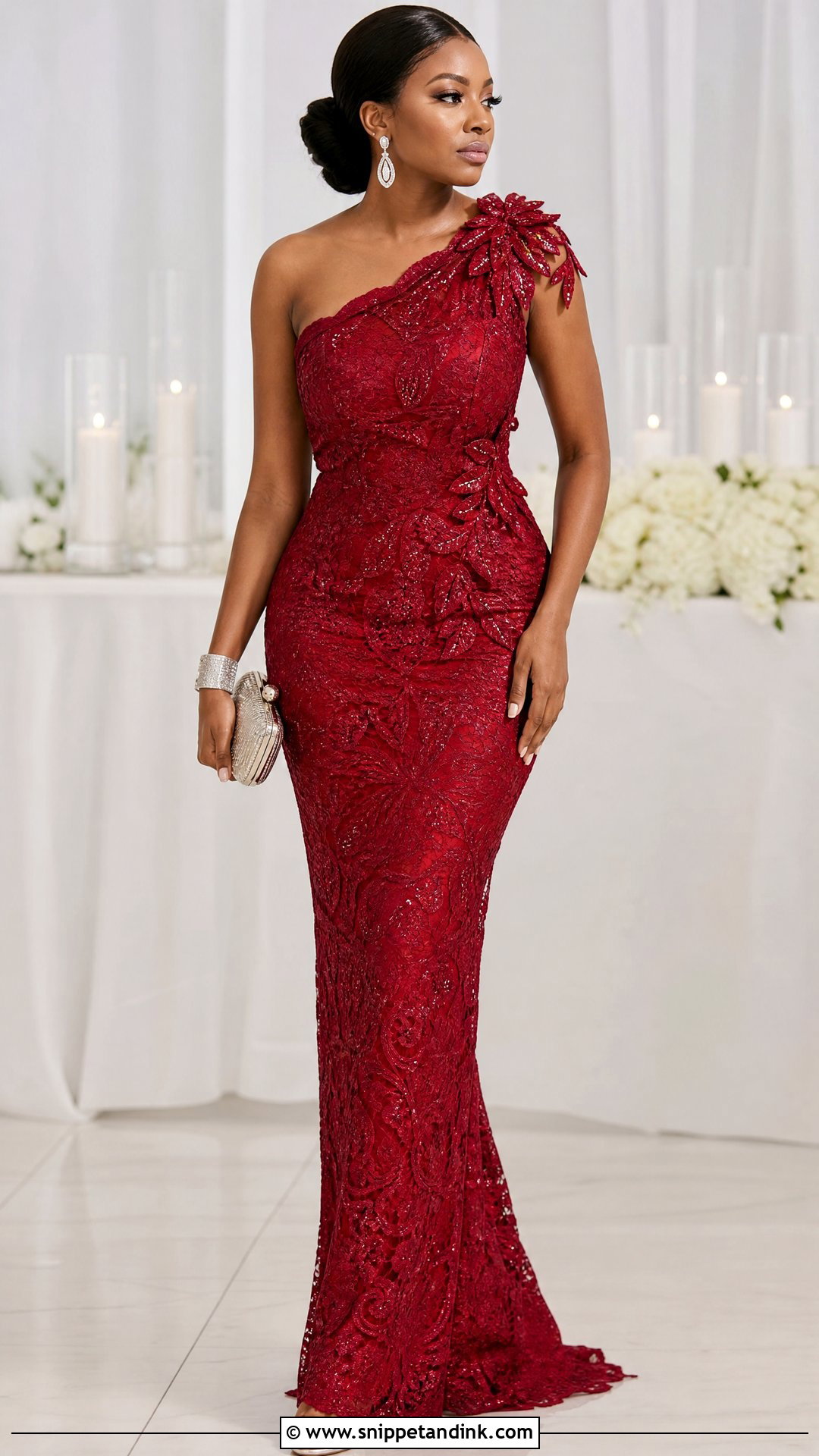
One-shoulder necklines slip when you raise the bare arm, so I check that at every fitting. An internal corset or a discreet strap under the lace fixes it, and careful tailoring at the underarm stops gaping. Because the neckline already gives the drama, keep the skirt balanced and skip a necklace. A low side bun or a gele that leaves the shoulder visible, plus a single cuff bracelet, finishes the look.
13. Nigerian Wedding Long Sleeve Lace Gown
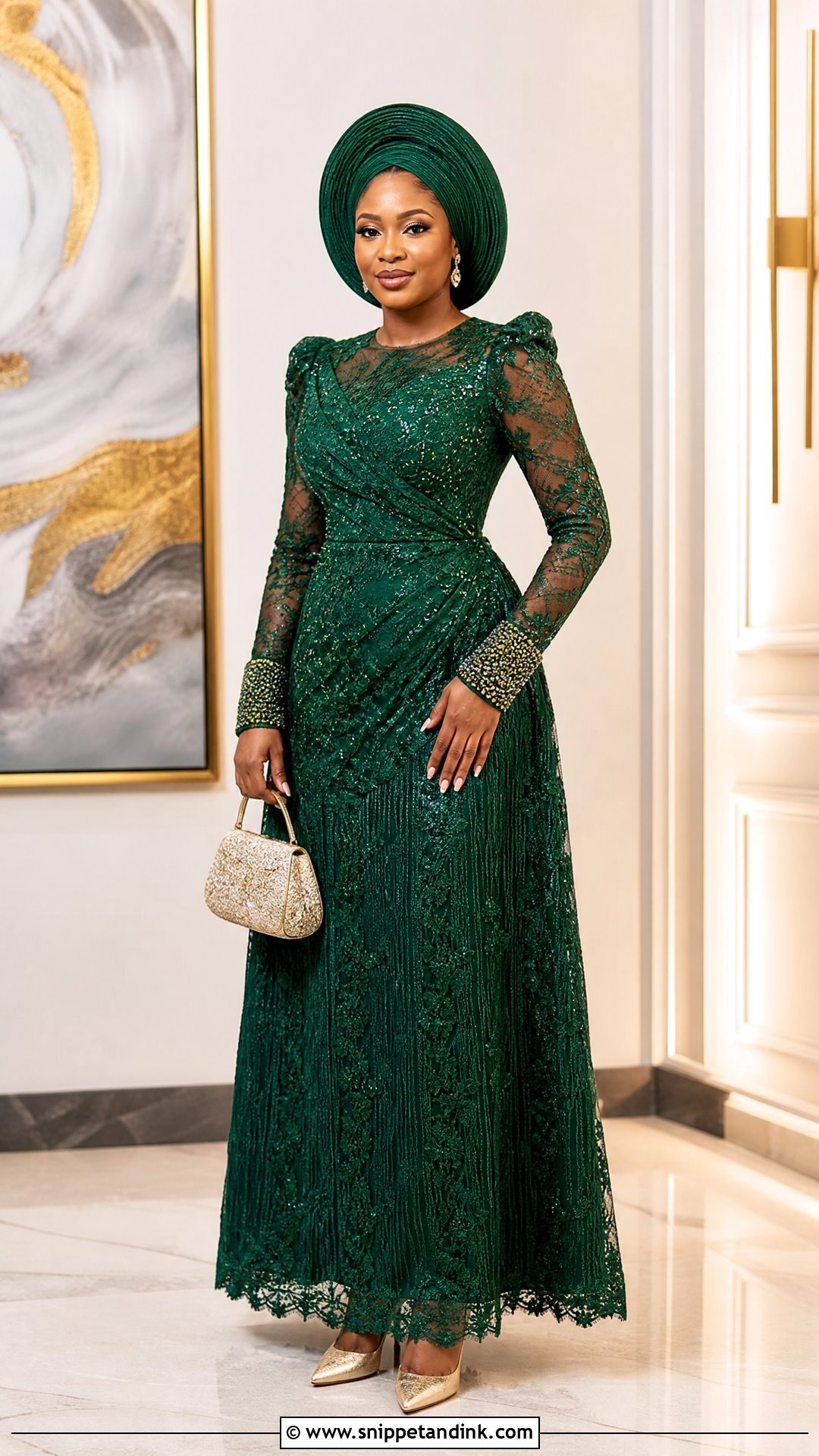
For long-sleeve lace in warm weather, line the body and leave the sleeves lightly sheer. That one choice makes the gown far cooler. An A-line or trumpet skirt with a fitted waist gives shape without restriction. Embellished cuffs should close firmly and not dig into the wrist. Balance the covered arms with a V or softly squared neckline, and keep dense beadwork to the bodice so the gown stays light for hours.
14. Nigerian Wedding Organza Sleeve Dress
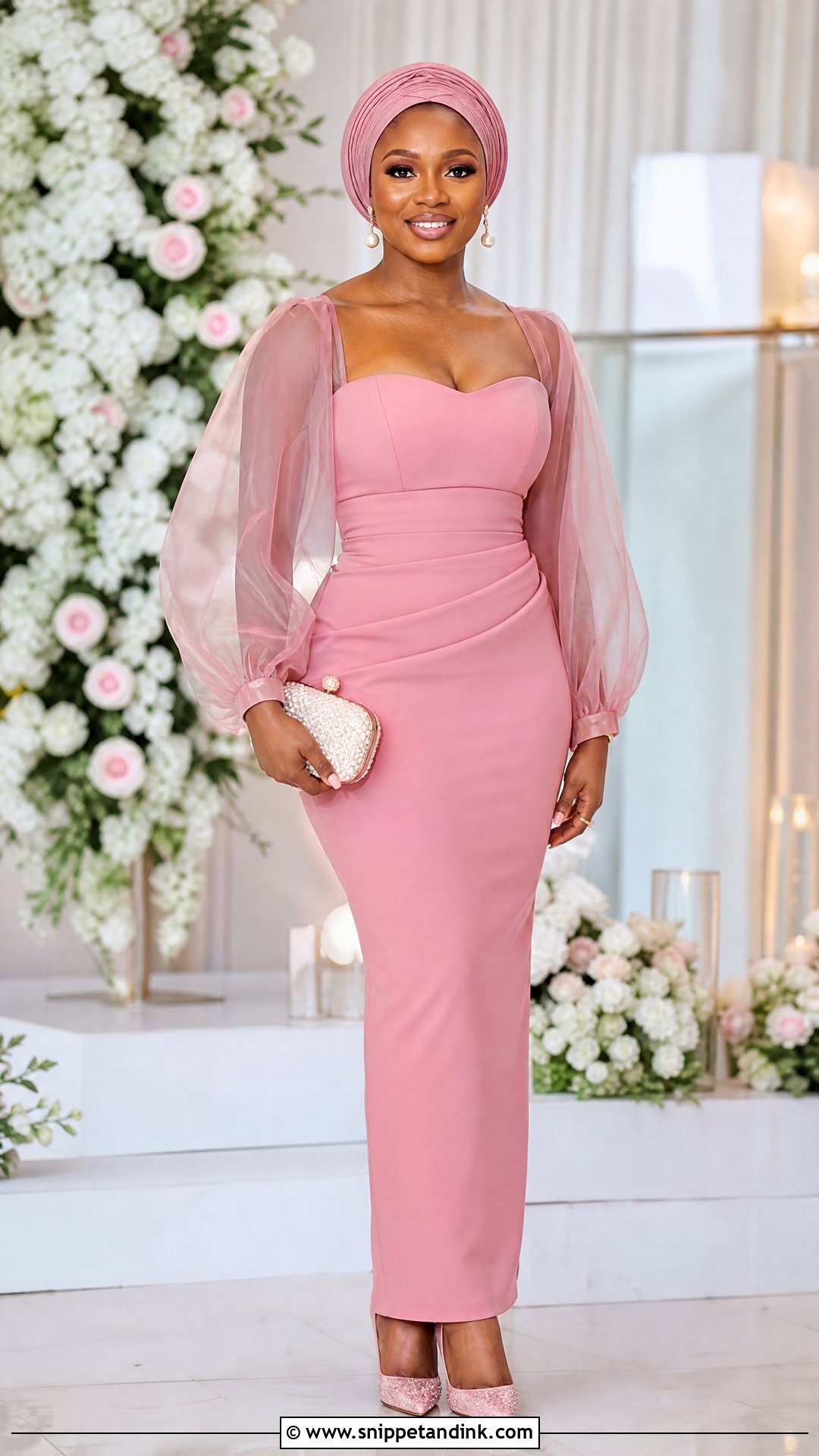
Organza is crisp, so a sheer sleeve in it holds a puff or bishop shape that softer fabrics can’t. That stiffness is also the problem: the armhole must be cut generously or you’ll feel the sleeve every time you reach. A solid crepe or lace bodice gives the organza a base. Petite women suit shorter, moderate sleeves; taller women can carry longer, fuller ones. Skip big bracelets, which snag the fabric.
15. Nigerian Wedding Satin Draped Dress
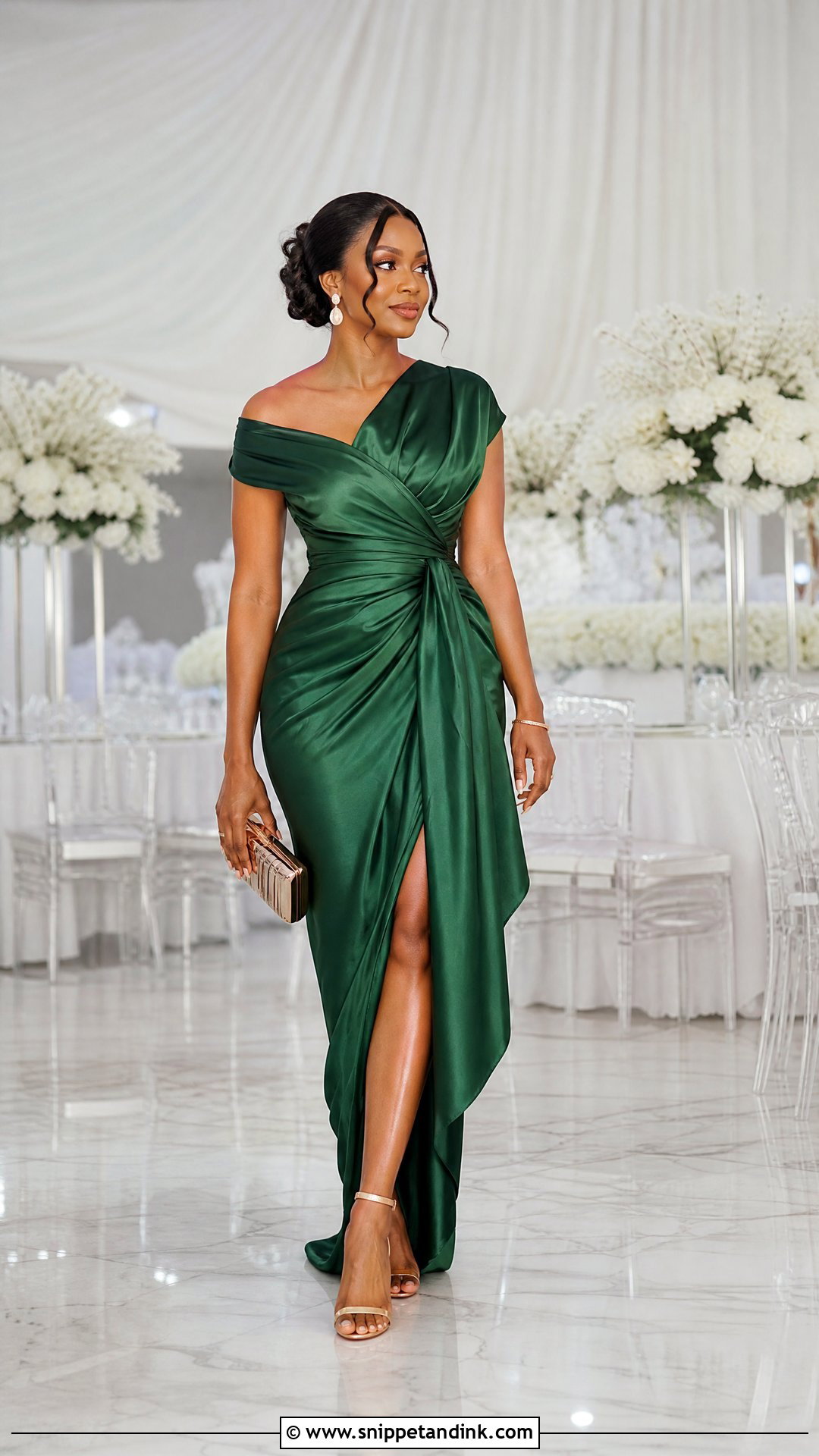
Satin shows everything, including sweat marks and creases from sitting. I choose lined, bias-cut or softly gathered designs that follow the body without clinging, in jewel tones or deep neutrals. Smooth no-line underwear is essential. A fascinator, updo or simple head wrap works depending on the dress code. Avoid bridal white unless the couple has asked guests to wear it.
16. Nigerian Wedding Tailored Jumpsuit
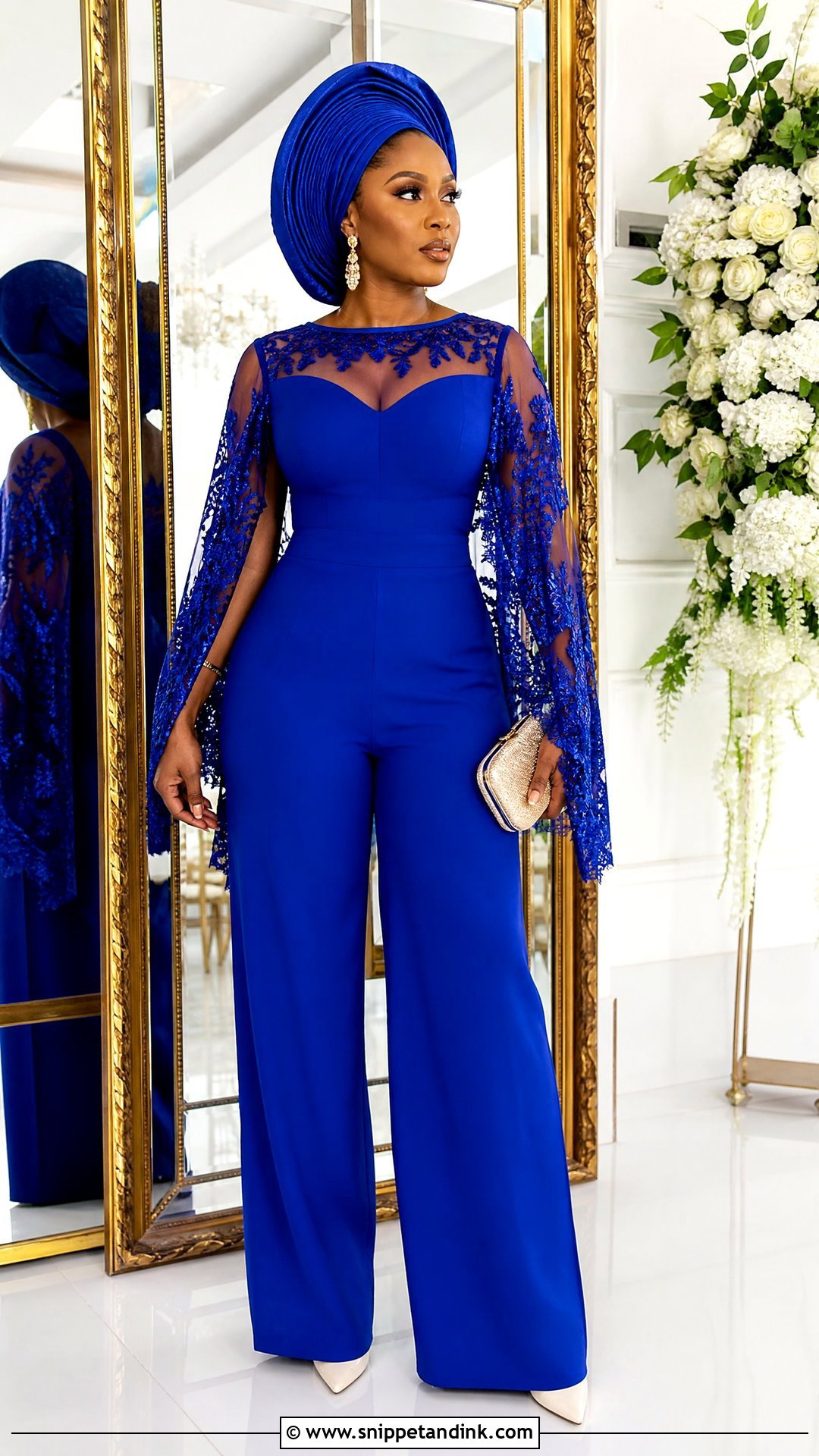
A jumpsuit reads formal when the bodice is structured and the hem nearly covers the shoe. Wide legs look more dressed-up than slim ones on tall women; petite women do better with a narrower leg. Lace sleeves, a cape or light beading tie it to the occasion. Practical checks: the torso length must allow sitting, and the zip must be manageable in a crowded restroom. One colour head to toe looks more formal than several.
17. Nigerian Wedding Aso Ebi Midi Dress
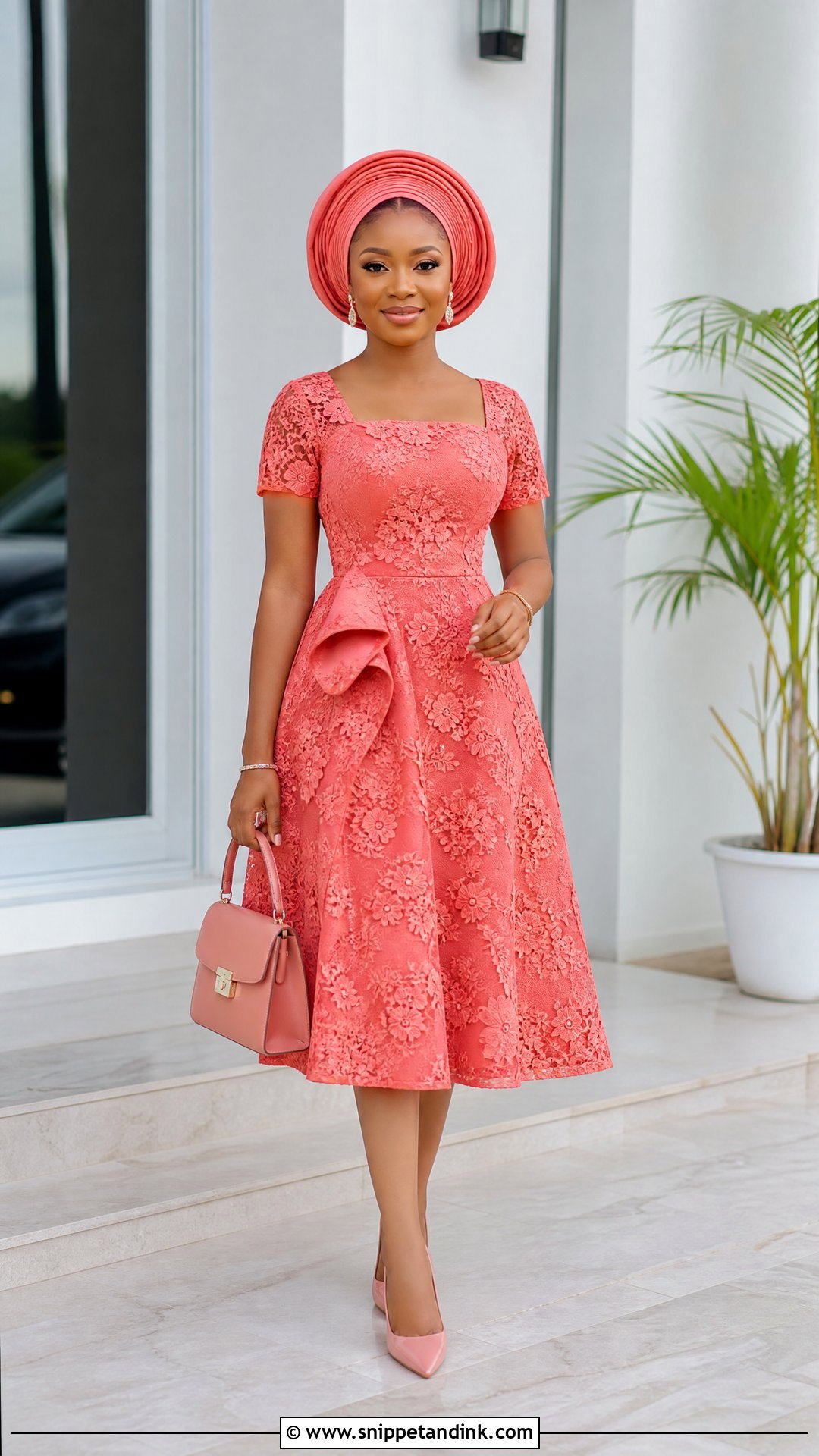
Midi aso-ebi is my pick for registry ceremonies and daytime events. A fitted bodice with an A-line skirt is classic, and a wrap shape adjusts if you eat a lot. The shorter length puts your shoes on display, so choose a pair that matches closely. If the official fabric is sheer, line it fully in a colour close to the lace. A padded headband or small gele suits the scale better than a towering one.
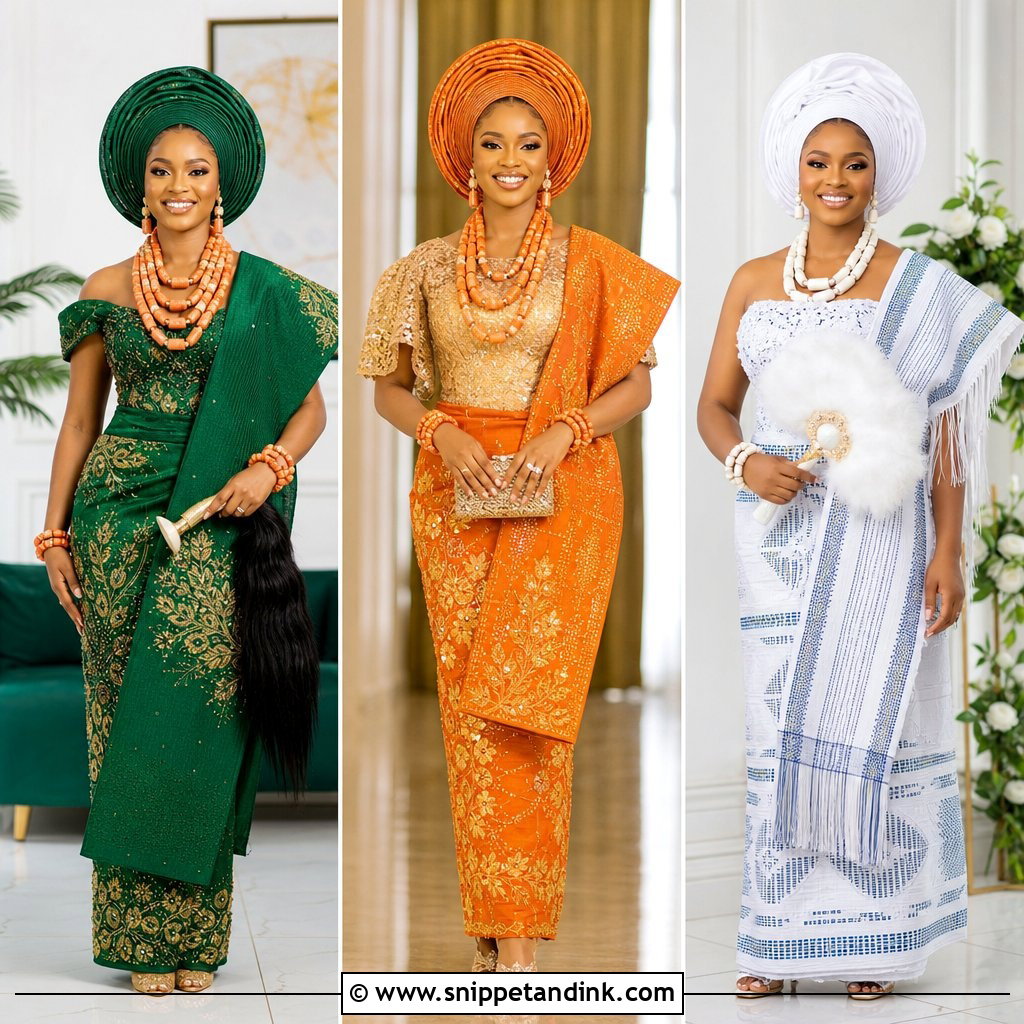
18. Nigerian Wedding Igbo George Wrapper Outfit
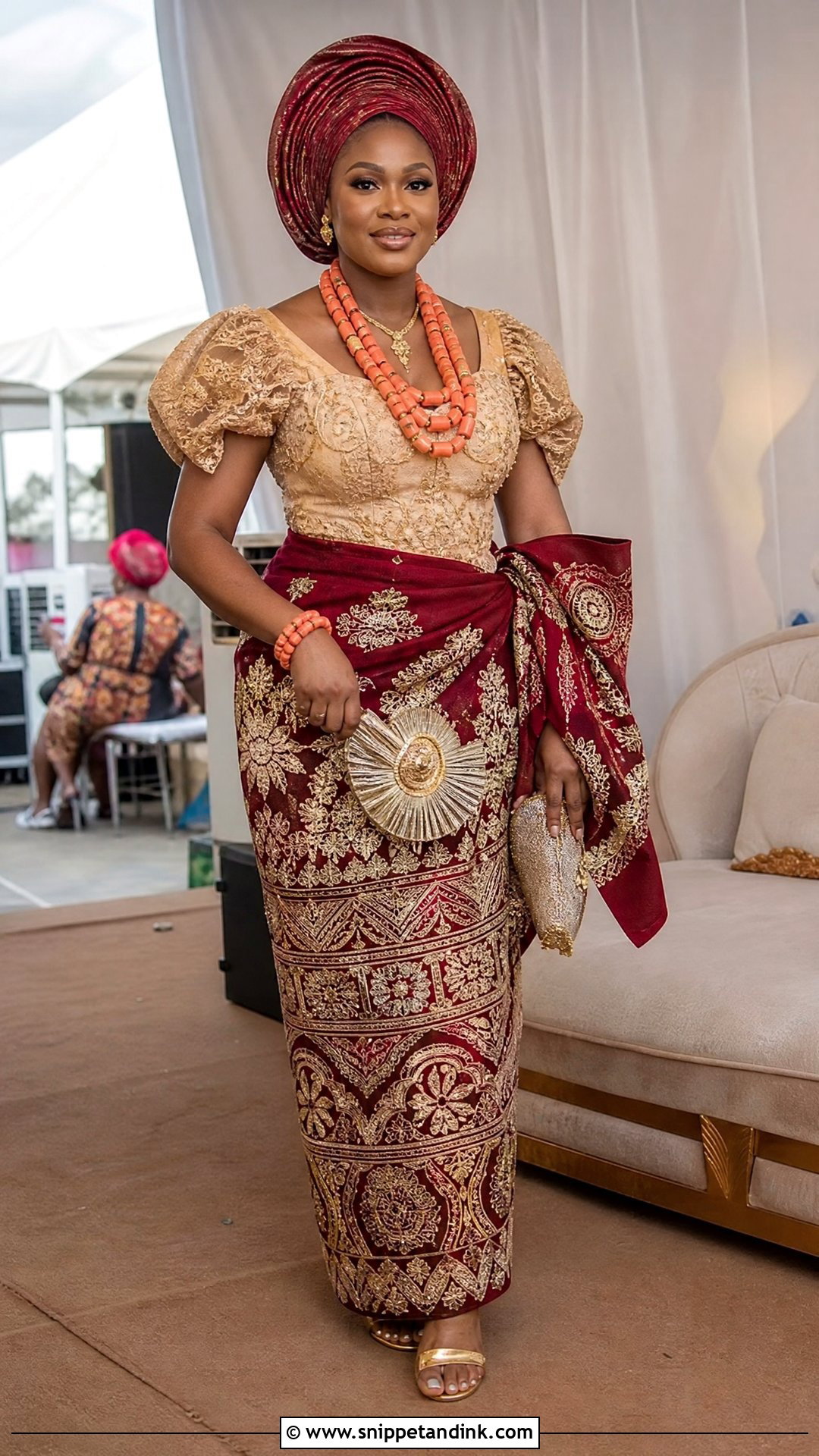
George wrappers carry a lot of colour, so the blouse should sit in proportion; big puff sleeves and a deep peplum together overwhelm the cloth. An Igbo-inspired George wrapper outfit may include one or more wrappers depending on the family, plus a head tie and coral. Have the layers tied by someone experienced and practise walking in them. Customs differ between communities, so the bride should plan details with her relatives rather than copy a generic look.
19. Nigerian Wedding Edo Velvet And Coral Outfit
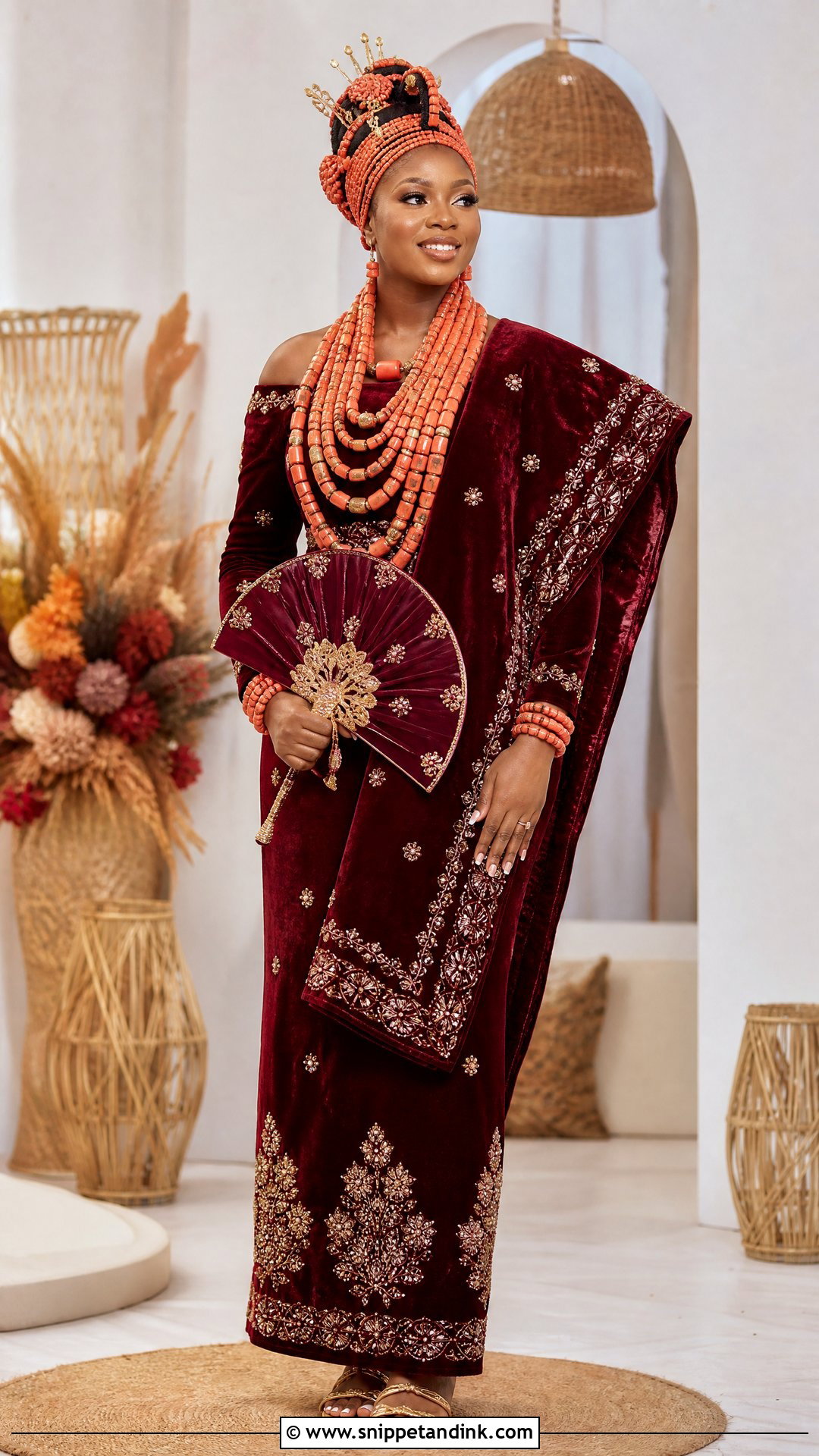
The jewellery leads in Edo bridal celebrations, and the velvet underneath is the backdrop. A fitted velvet blouse or gown, layered coral necklaces, bracelets and a constructed beaded headpiece make up the ceremonial effect. Keep the shoes low and simple. Test the weight of the headpiece and beads before the day; wearing them for an hour at home shows where they press. Consult family members and skilled cultural dressers, because components and proportions vary.
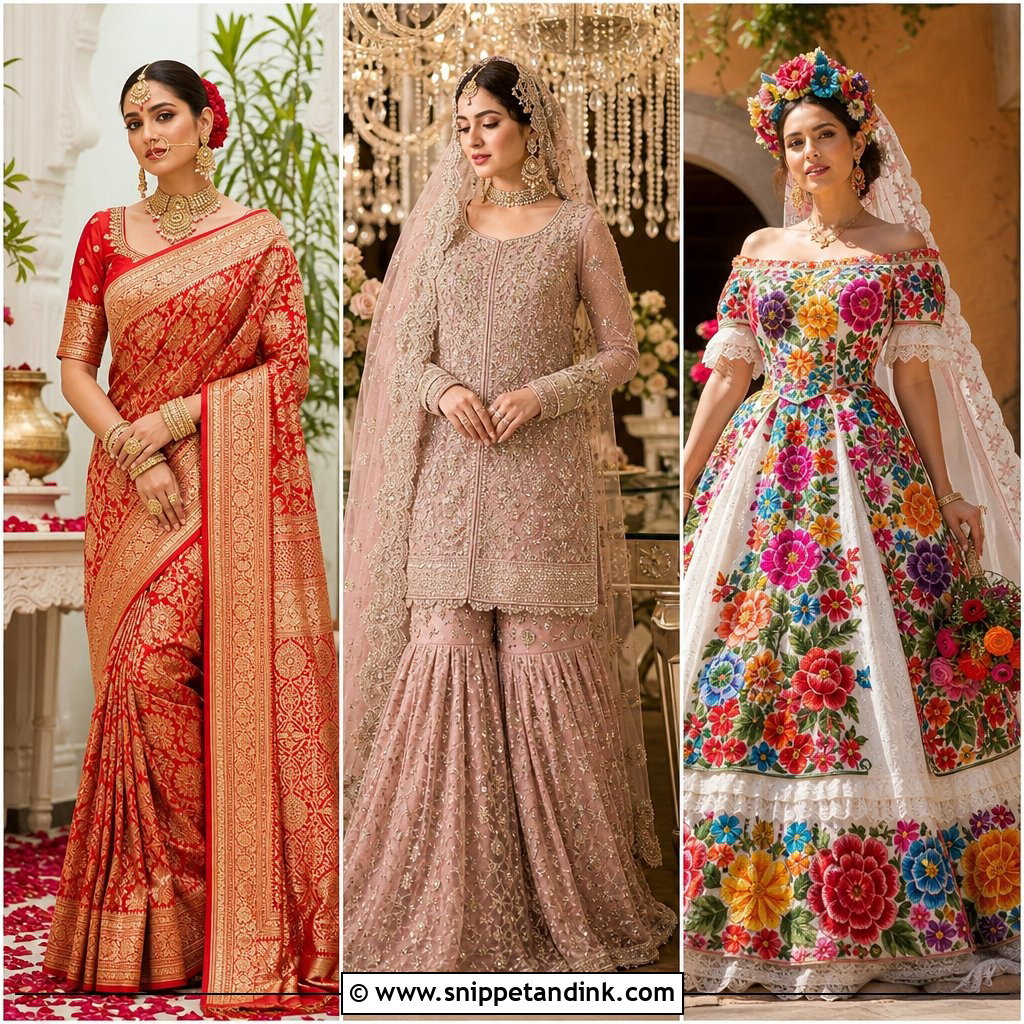

20. Nigerian Wedding Hausa Modest Lace Gown
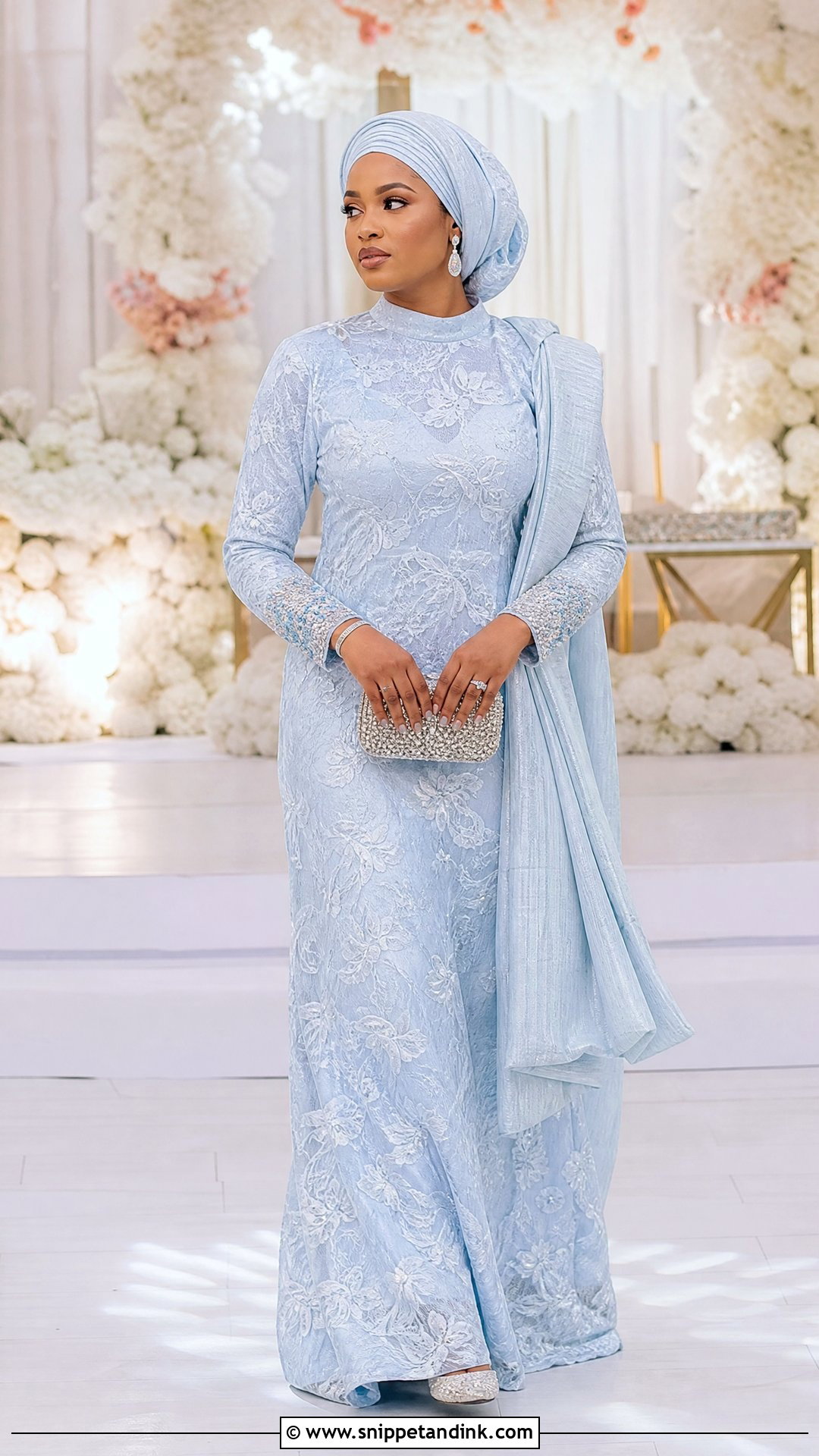
For a Hausa wedding or any ceremony with conservative expectations, the first test is opacity. Hold the fabric up to bright light, since lace that looks solid indoors can show through in sun. A long-sleeved, high-necked gown in soft lace, lined embroidered tulle or crepe works, with embroidery at the cuffs and hem for definition. Low pointed shoes help with long skirts. If you’re a guest, confirm with the family how much coverage and what head covering they expect.
21. Nigerian Wedding Efik Onyonyo Outfit
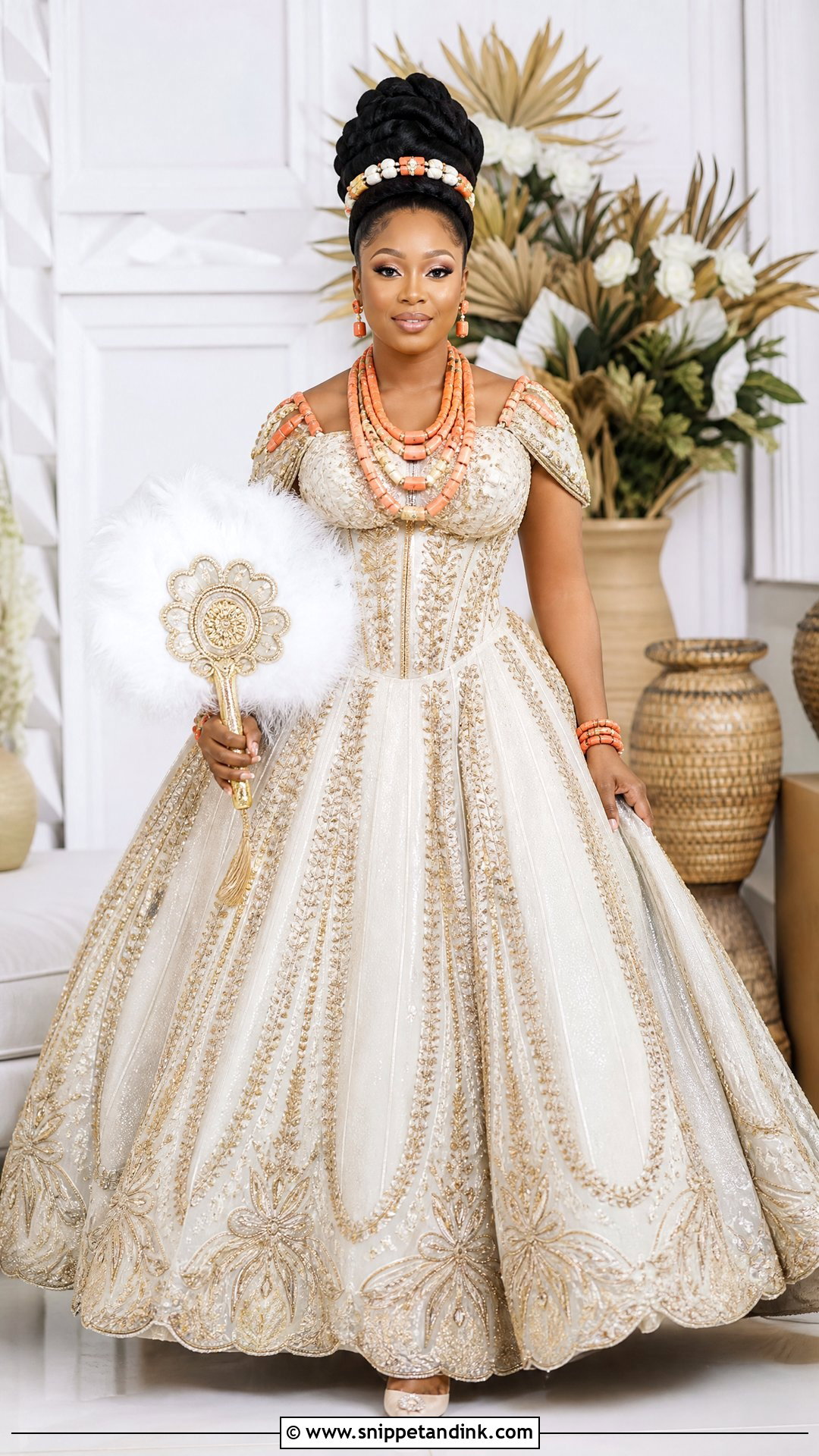
The onyonyo’s sweeping skirt is its signature. A fitted upper section above a voluminous skirt needs fabric that holds shape without becoming too heavy to wear for hours. Because the skirt is so large, keep the bodice neatly fitted and avoid unrelated accessories. Beads, a fan or a staff may be added where culturally appropriate. Get guidance from family or dressers who know Efik traditions, as construction and ceremonial additions are specific.
22. Nigerian Wedding Ankara Peplum Dress
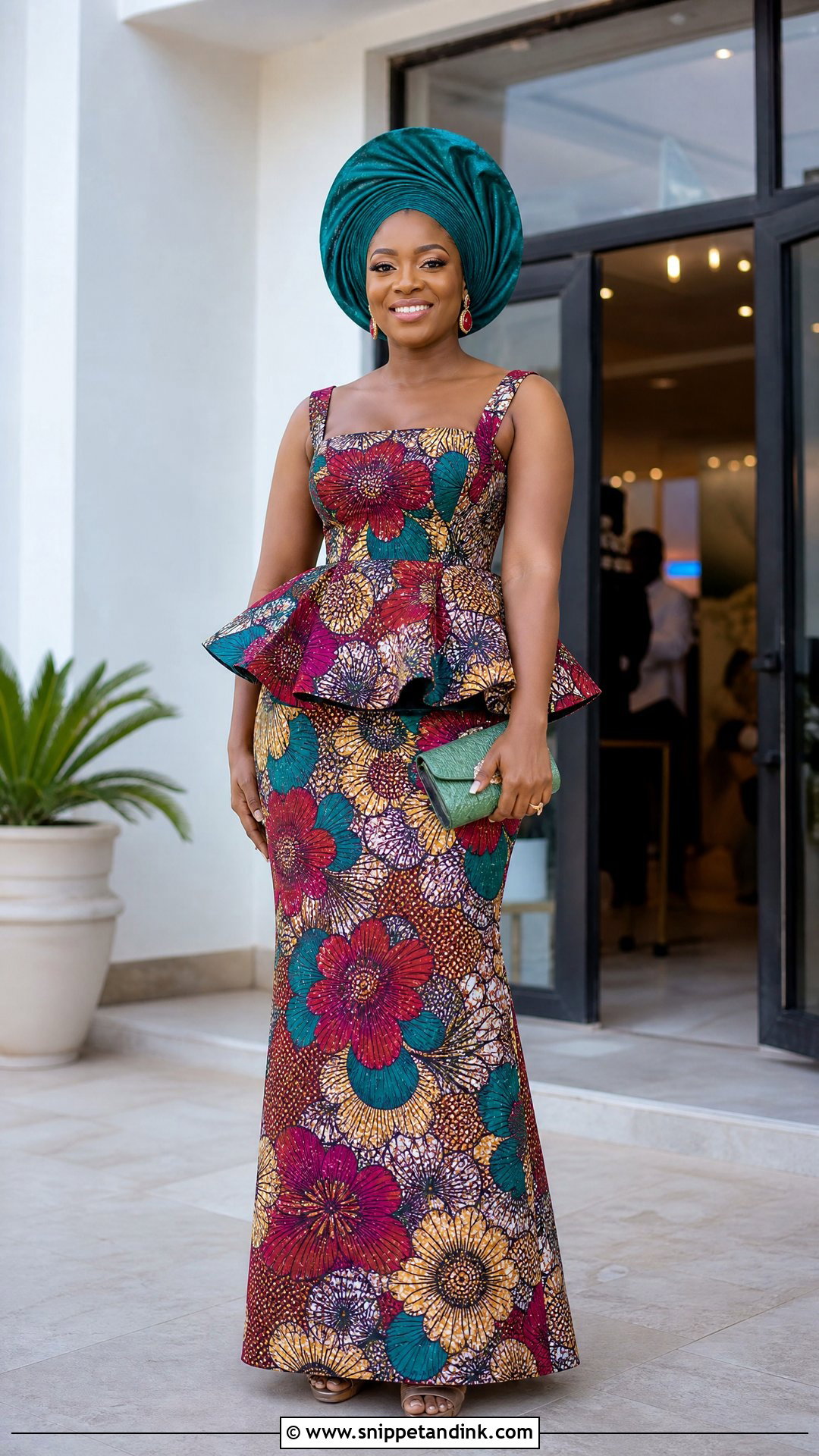
Pattern placement makes or breaks Ankara peplum dresses. Ask your tailor to centre the print on the bodice and match it across seams, or the dress looks home-sewn. Place the peplum at the natural waist and balance fuller sleeves with a V or square neck. Pick your gele and earrings from a secondary shade in the print rather than the dominant one. And check that your Ankara doesn’t resemble the fabric reserved for the wedding party.
23. Nigerian Wedding Brocade A Line Dress
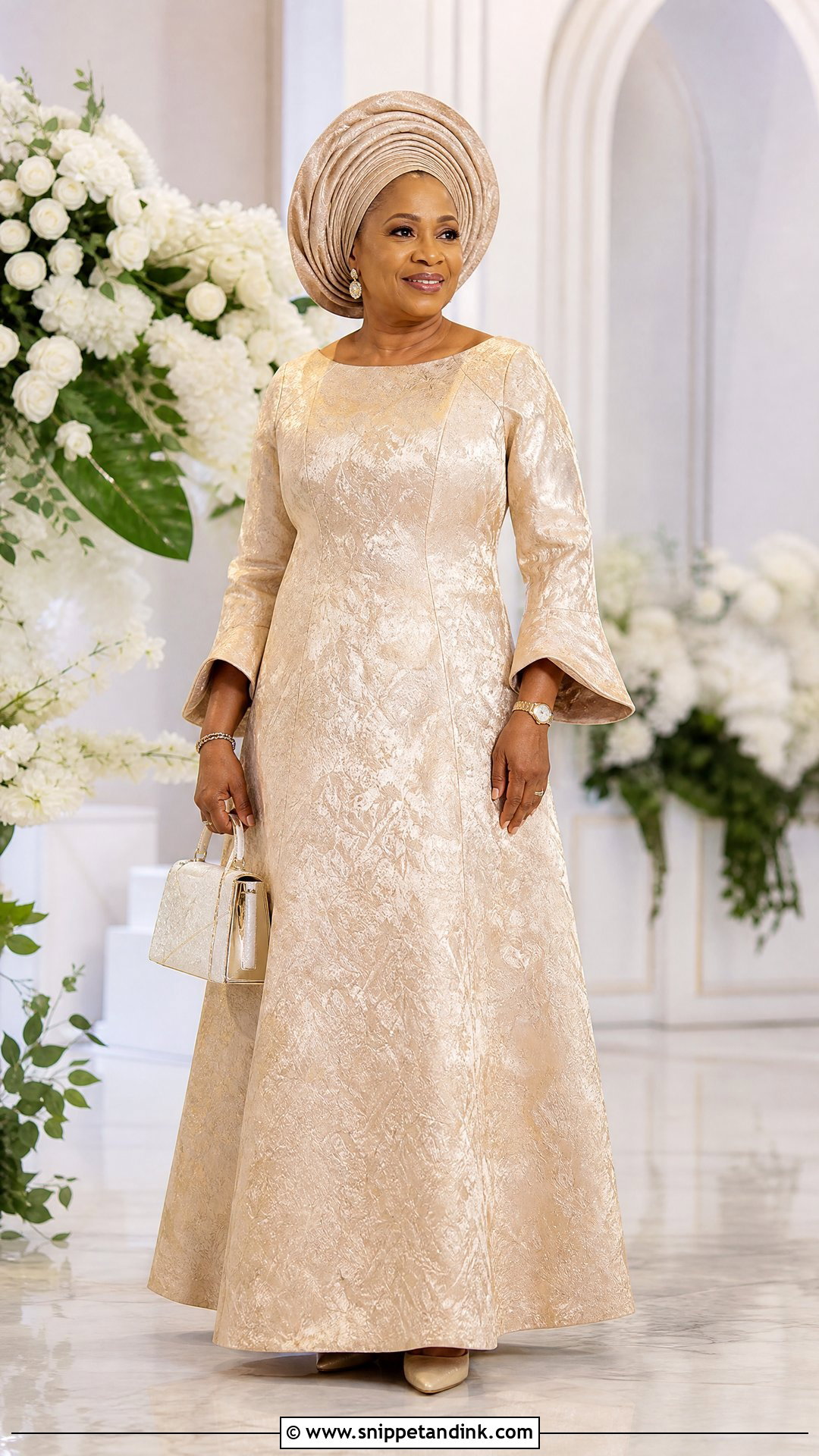
Brocade has body, so it takes a shaped bodice and an A-line skirt without help from boning. Its firmness also means it doesn’t stretch, so ask for a little extra room at the sleeves, waist and hips. A soft lining prevents scratching. Tea length suits a daytime ceremony; floor length feels more formal. Older guests often prefer it because it gives dignified coverage and rich texture.
24. Nigerian Wedding Tulle Overskirt Dress
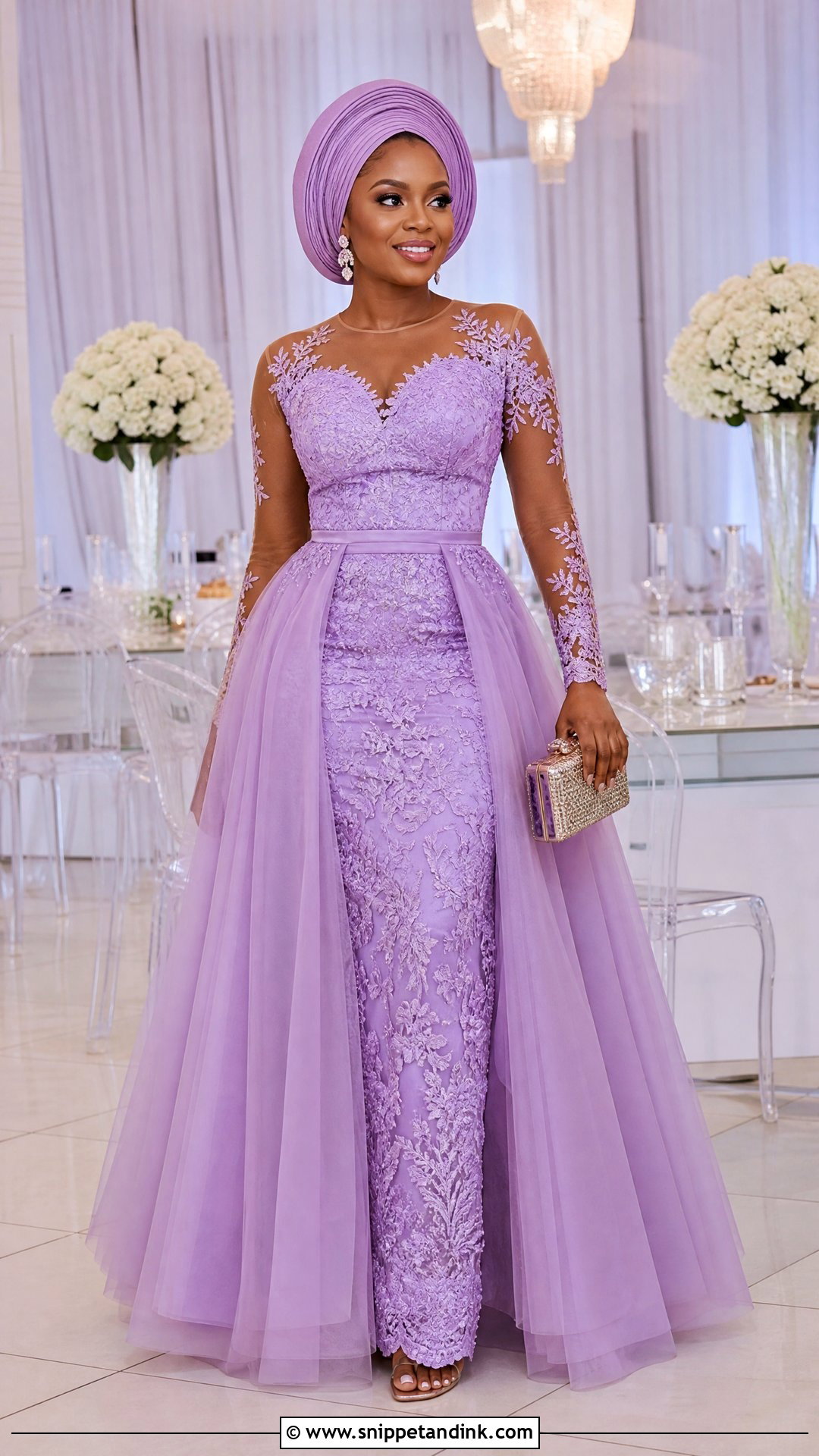
A detachable tulle overskirt gives two looks from one dress. Over a lace or crepe column, it adds ceremony volume; removed, the column is easy to dance in. Match the tulle closely to the base and hide the waistband under beadwork or a slim belt. Test the attachment while walking and sitting, because hooks that look fine standing can pop when you bend. It’s particularly useful for brides and close family attending several parts of the celebration.
25. Nigerian Wedding Monochrome Lace Dress
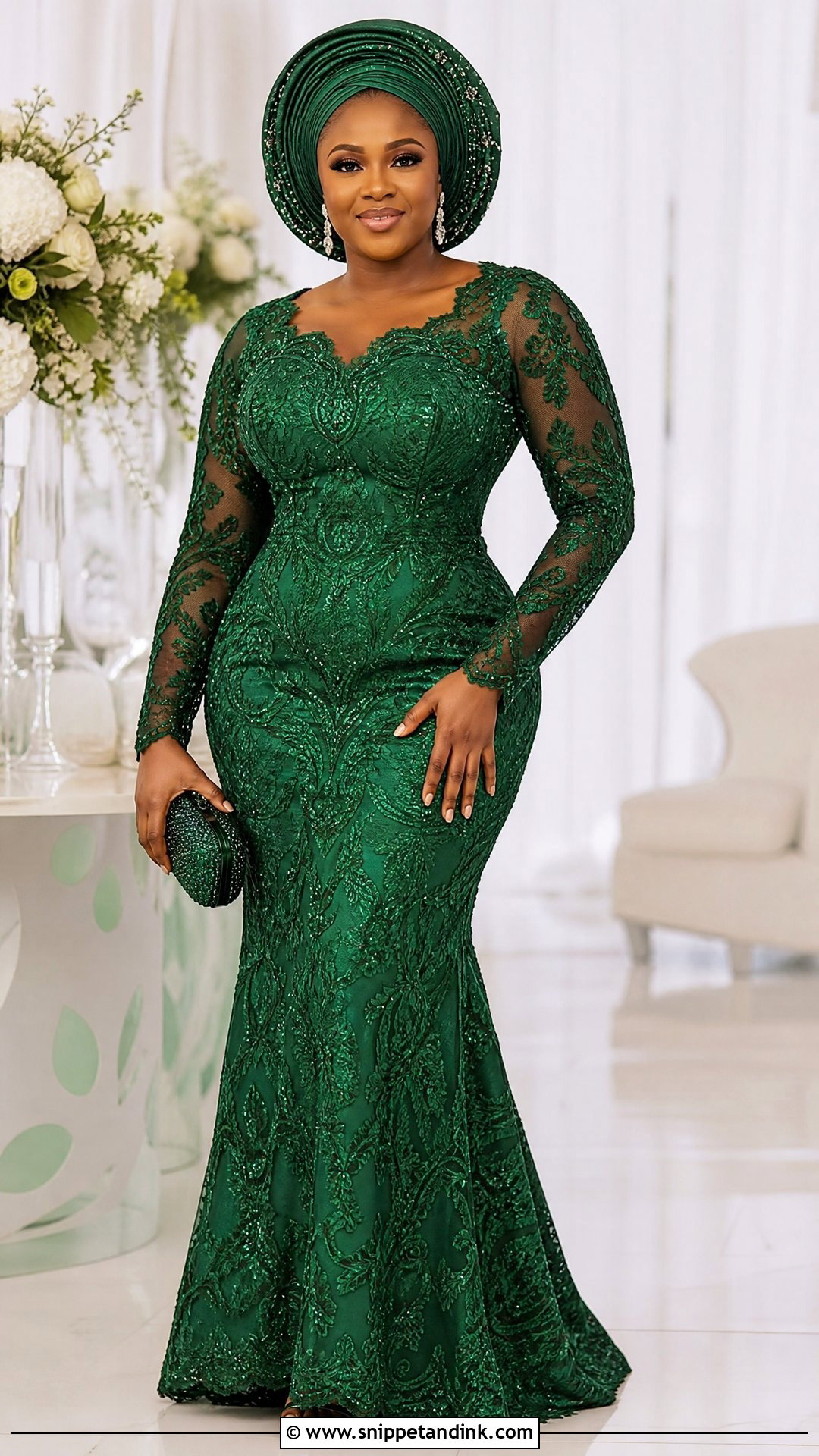
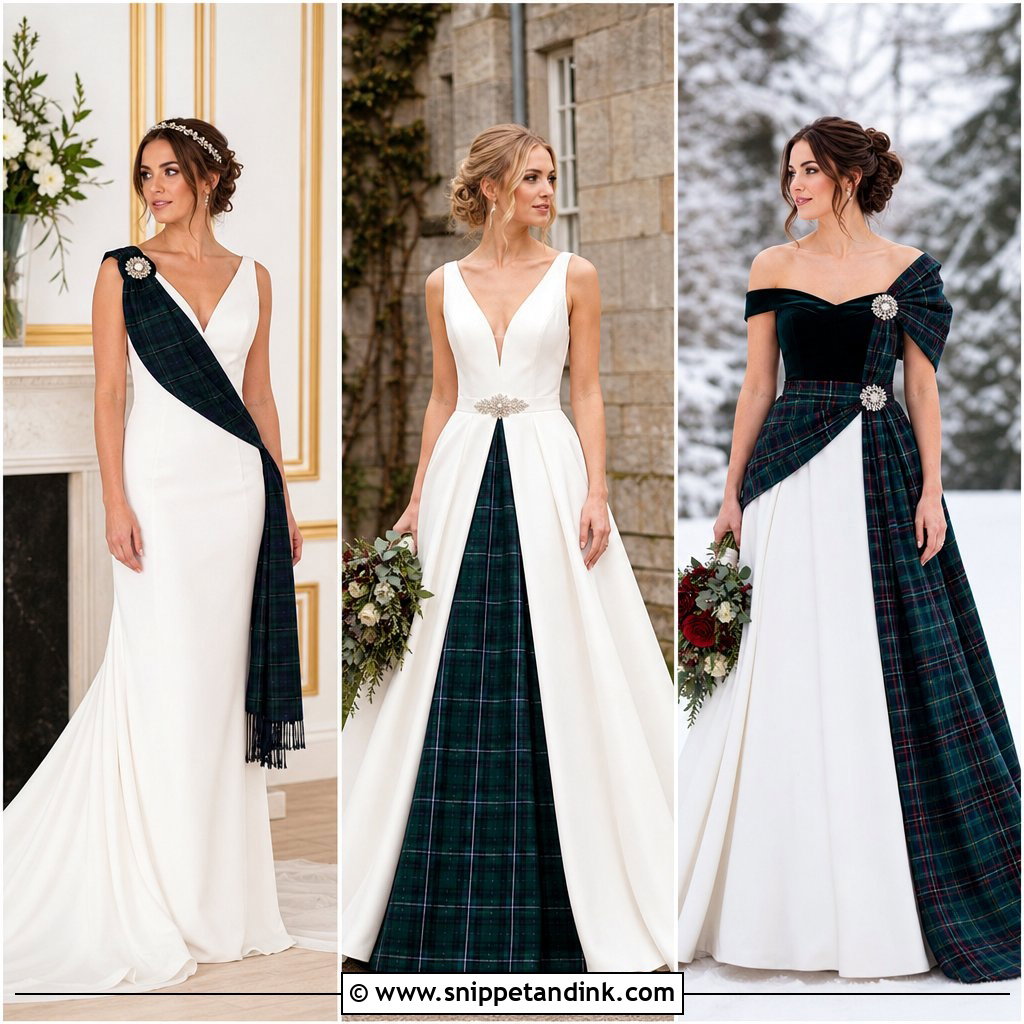
Monochrome dressing needs texture, otherwise one colour from head to toe looks flat. Pair a lace gown in a rich shade like cobalt or rust with a gele in the same family, then vary the surface with satin shoes, crystals and a beaded clutch. Keep the lining close to the lace colour. View every piece together in daylight before approving it; dyes that match indoors often drift apart outside.
Restyling a Lace Gown for the Next Owambe
Aso ebi season comes round again, and good lace is too expensive to wear once. I encourage clients to plan a second life for the outfit while it’s still being sewn, because some changes are simple only if the tailor knows in advance.
Changes that work after the wedding
- Ask for generous seam allowances at the waist and sides, so the gown can be let out or taken in later.
- Choose detachable sleeves or a separate cape, which lets the same gown change its formality.
- Swap the gele for a different colour or a padded headband, which changes the whole impression in photos.
- Turn a long mermaid into a midi by shortening the hem, keeping the cut-off lace for a matching clutch or headpiece.
Between wears, store lace folded in tissue in a breathable cotton bag rather than plastic, which traps moisture. Beaded panels should lie flat so the weight doesn’t stretch the seams. Let a gown air out after a hot reception before putting it away, and have any make-up or food marks dealt with by a cleaner experienced with beaded fabric.
Your Colour Card, Your Tailor and One Good Pair of Shoes
A good Nigerian wedding outfit comes down to three things: the couple’s colour guidance, an early tailor booking and shoes you’ve already walked in. Everything else, from lace mermaids and wrappers to kaftans, boubous and jumpsuits, is a matter of which silhouette lets you sit, dance and greet family comfortably. Avoid fabrics reserved for close family and ask relatives about culturally specific details. Then personalise the look with accessories and the right amount of coverage for the ceremony.
You'll Like These Ideas:


Leave a Reply