
Lace is the fabric of a Nigerian traditional wedding. It turns up on the bride, the mothers, the bridesmaids and half the guest list, and no two women wear it the same way. That’s the part I enjoy most as a stylist: the same five yards can become a fitted mermaid on one person and a relaxed iro and buba on another. Aso ebi fabric ties a group together in colour, while the cut is where each woman shows her own taste. Before anything is cut, I check the dress code, the venue, how heavy the lace is and how long the day will run. The twenty looks below cover brides, family and guests, each with the gele, jewellery and shoes I’d pair with it.
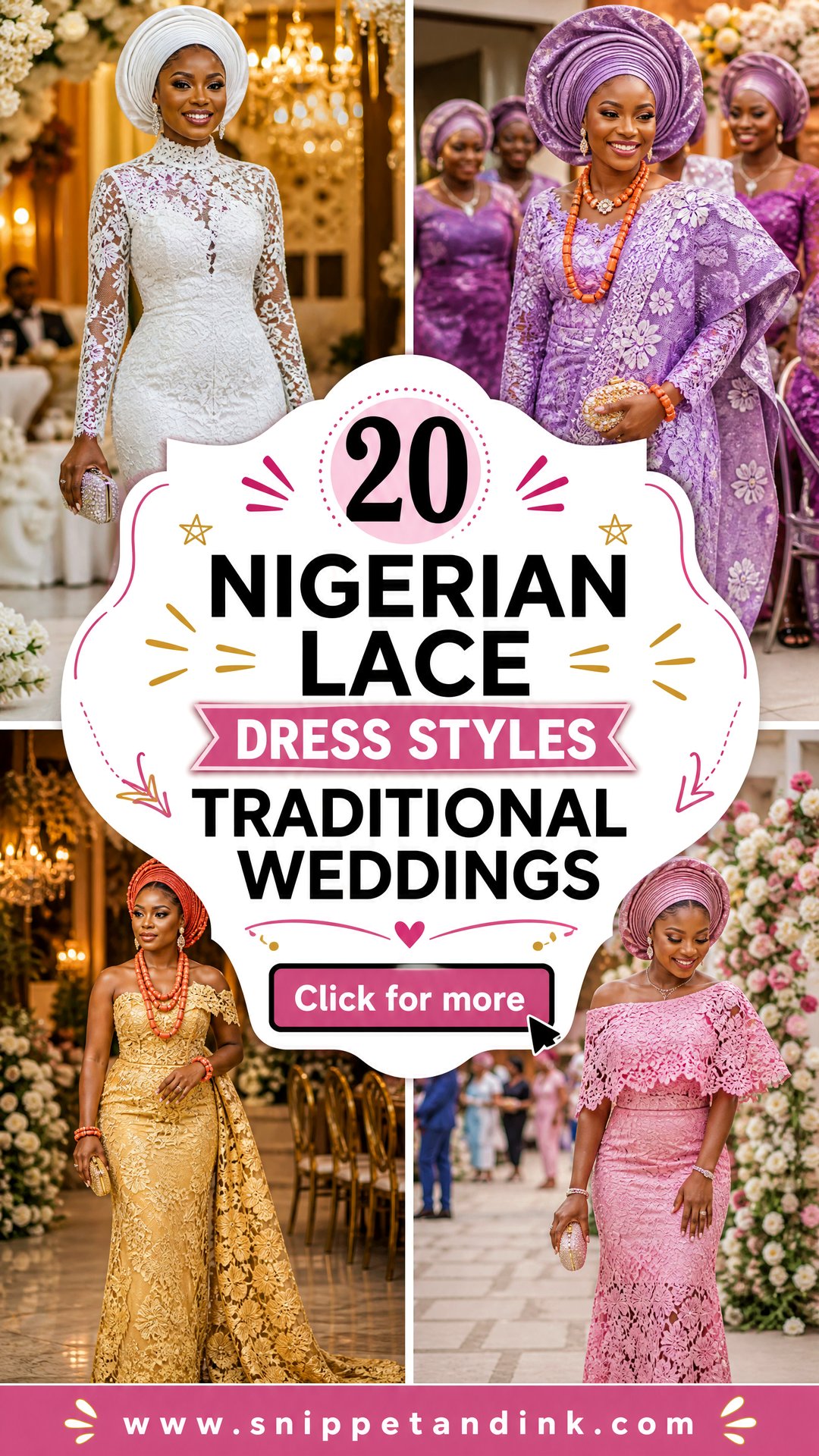
Reading the Lace Before It Reaches the Tailor
The cut you can have depends on the lace you’ve bought. I look at a piece by holding it up, scrunching a corner and draping it over my hand, because each type behaves differently once it’s sewn.
Cord lace
Raised cord outlines give it body and a clear pattern. It holds a mermaid or corset shape well and is forgiving to sew, which is why it’s so popular for aso ebi.
French and net lace
Soft, light and breathable, often with small sequins. It drapes beautifully for iro and buba, kaftans and empire waists, but collapses on structured shapes unless it’s mounted on a firmer lining.
Guipure
Heavy and bold, with motifs joined by bars instead of a net. It’s stiff, so it suits A-lines, peplums and columns. Seams are tricky because there’s no net to hide them, so the tailor has to cut around the motifs.
Beaded and stoned lace
Hand beading adds weight and catches light, and it also means the tailor has to remove beads along seam lines and restitch them after sewing. Allow extra time and expect to pay more for the labour.
1. Nigerian Lace Mermaid Gown With Gele
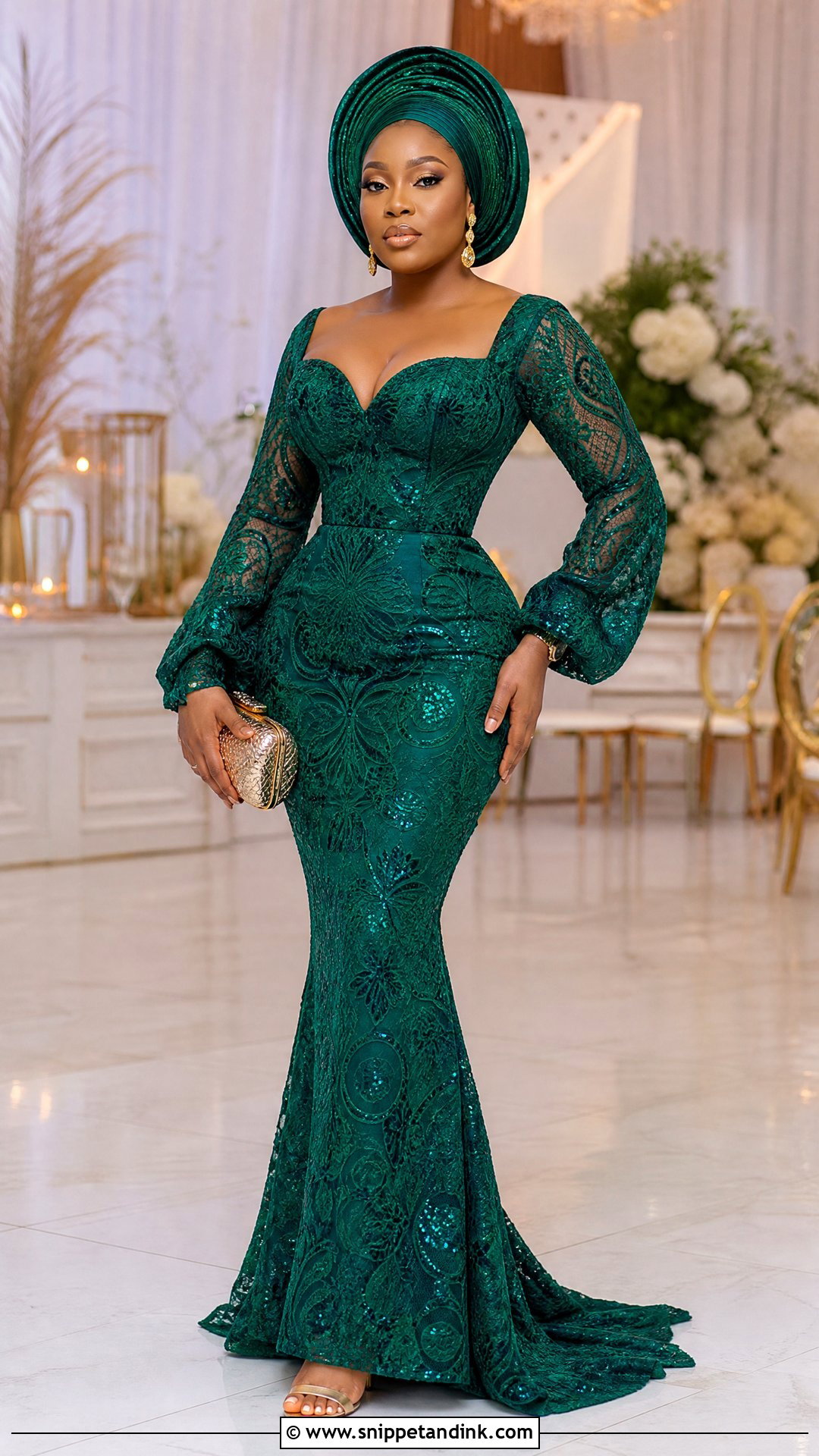
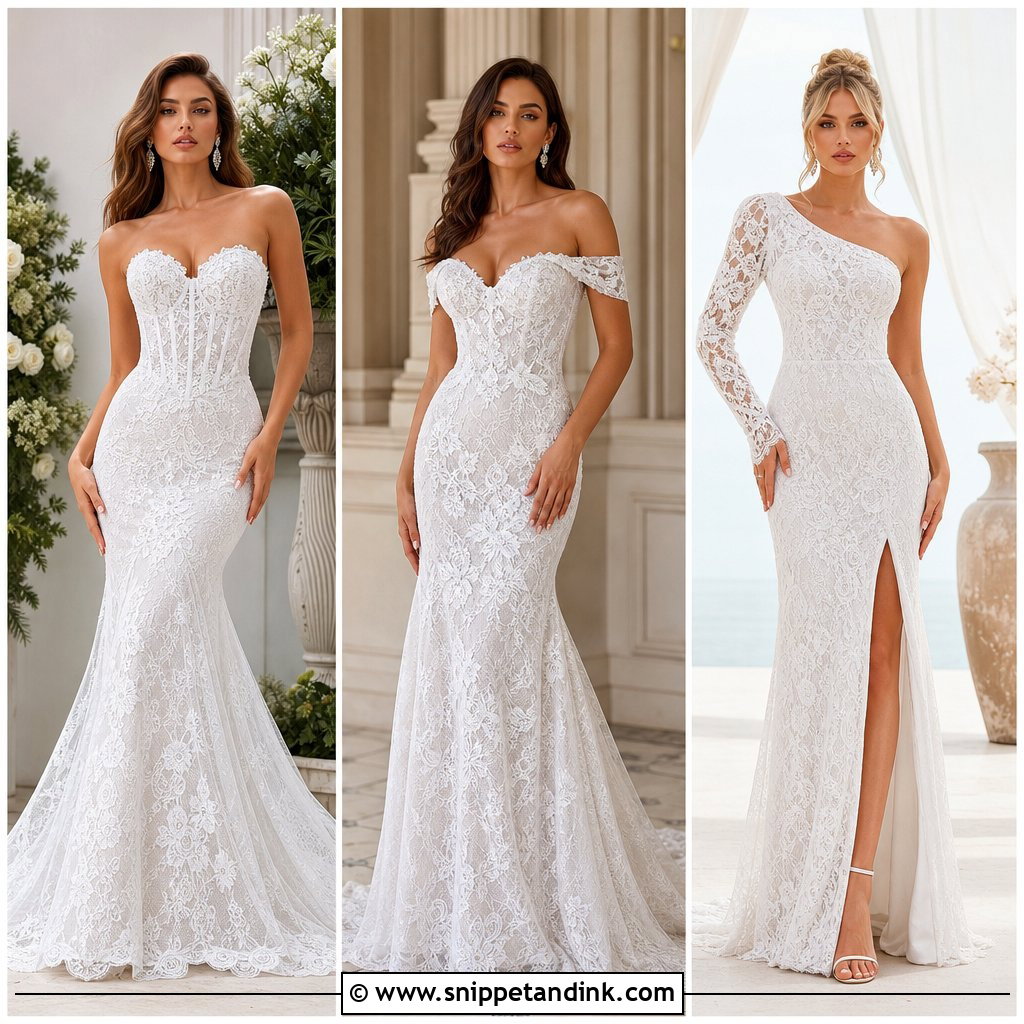
A Nigerian lace mermaid gown needs lace with body. Soft French net lace collapses on a fitted silhouette, so I steer people toward cord, beaded or sequinned lace that holds its own shape at the hip. Fitted bodice and hip, flare from the knee, and a modest sweetheart or gently curved neckline. Neat gele, drop earrings, a small metallic clutch and block-heel sandals. Brides can add a detachable train; guests are better with a clean hem they can dance in. I always have the tailor leave a little ease at the knee. Without it, you’ll be taking stairs sideways all evening.
2. Nigerian Lace A-Line Gown With Beaded Accessories
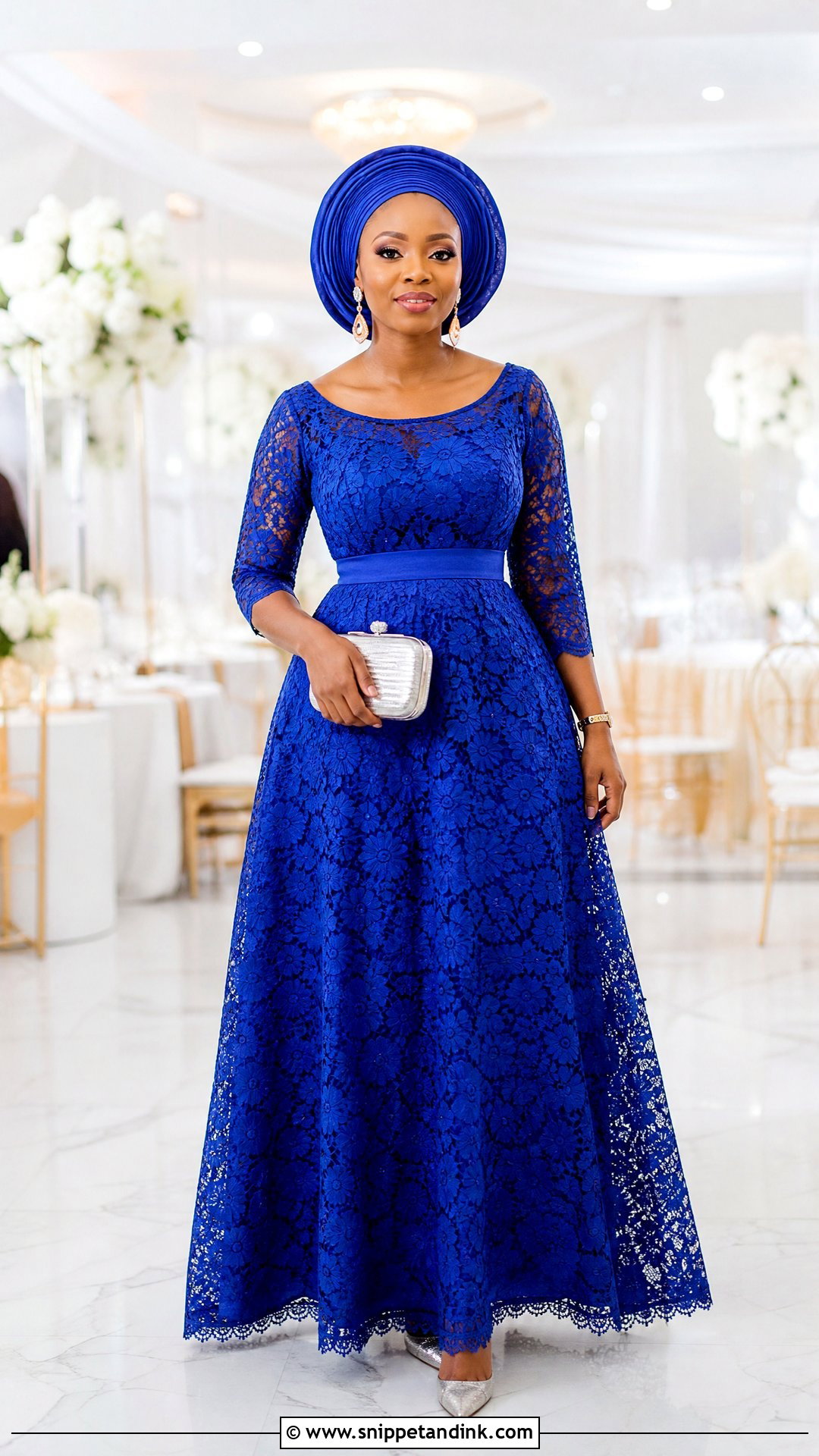
An A-line is the gown I suggest when someone tells me the celebration will run from late morning into the night. It’s lightly fitted at the bodice and flows from the waist, so nothing pinches after the meal. Floral lace, guipure and lightly beaded lace all suit it. Round, square or V neckline, depending on coverage. Coordinated gele, beaded earrings, a structured clutch, and pointed pumps or low block heels. A belt adds shape if it’s cut from the same lace; a contrasting belt usually cheapens it. My favourite trick here is lining in a shade that contrasts slightly with the lace, so the pattern reads clearly in photos instead of melting into the skin.
3. Nigerian Lace Corset Gown With Detachable Train
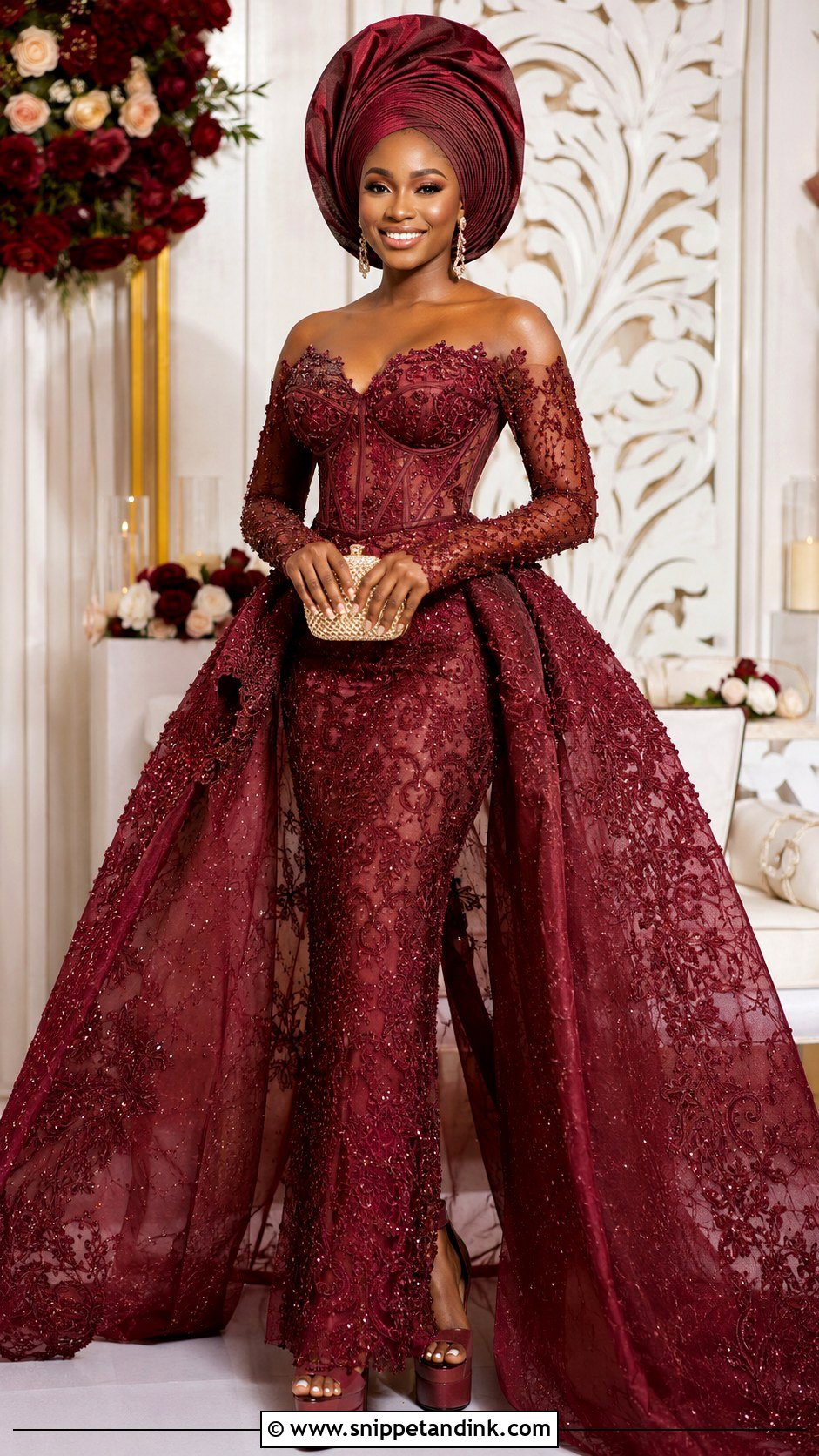
Corset gowns and detachable trains are made for a grand entrance. The bodice has to be built on proper boning with real bust support, and that means precise measurements and more than one fitting; one fitting is never enough for a corset. When the tailor places the lace, I ask for the motifs to mirror each other across the centre front. Symmetry is what makes lace look expensive. Wear the train for the formal photographs, then unhook it before the dancing. Sculpted gele, crystal earrings, compact clutch and stable platforms. If the neckline is heavily worked, skip the necklace. Line close to your skin tone or the lace colour for coverage that lets the texture show.
4. Nigerian Lace Off-Shoulder Gown With Metallic Heels
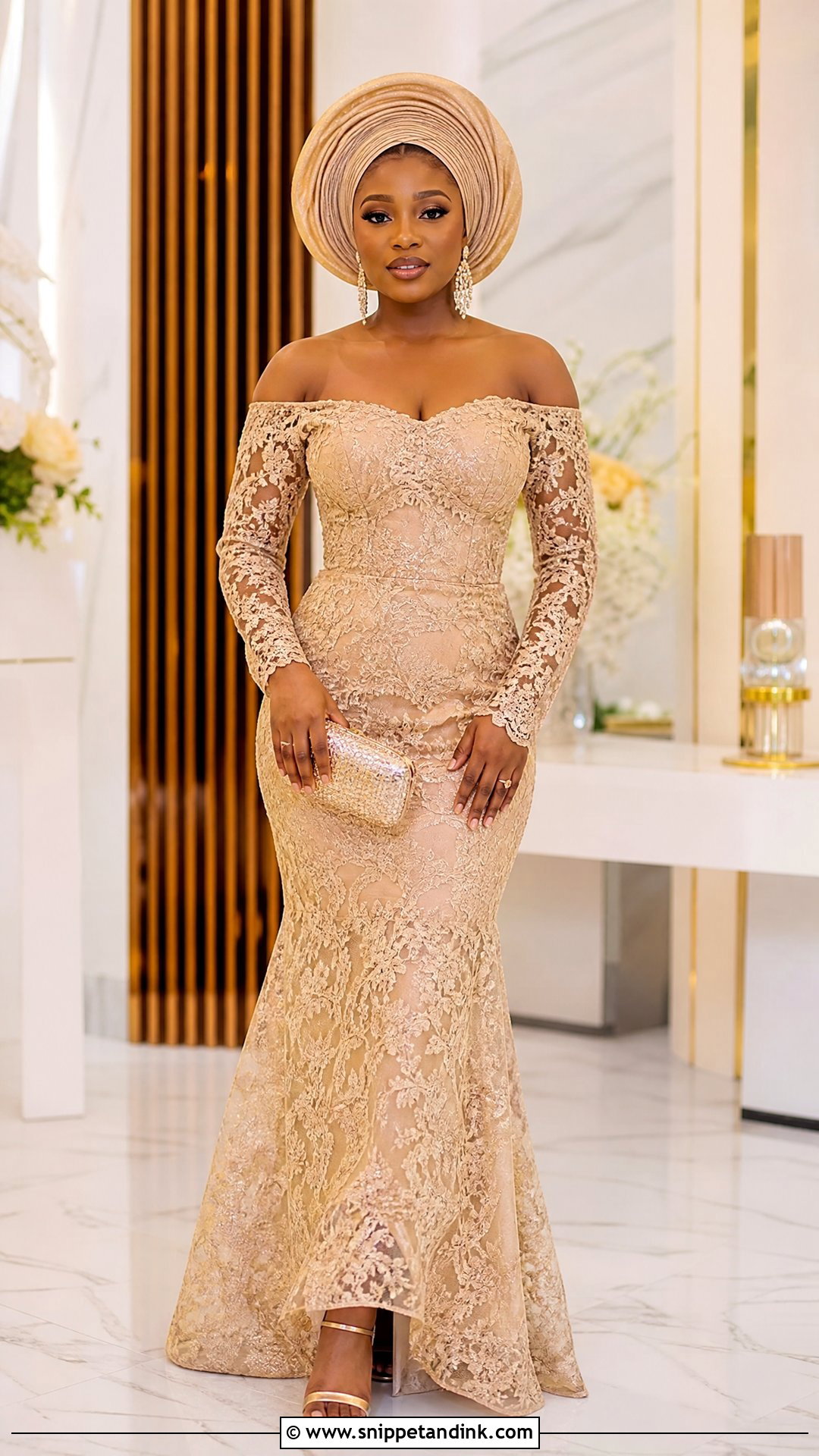
Off-shoulder lace looks graceful until it starts slipping halfway down the arm during greetings. The fix is firm lace and hidden support: a boned bodice, inner elastic or grip tape along the neckline. Fitted or lightly flared sleeves keep some arm coverage. A full-length skirt with a gentle trumpet hem gives presence without a big train. Metallic heels, chandelier earrings, a hard-case clutch and a matching gele. Bridesmaids and guests often go softer in colour, while a bride may choose a richer shade with heavier beading. Hug a friend at the fitting. If the neckline moves, it needs more support.
5. Nigerian Lace One-Shoulder Gown With Statement Earrings
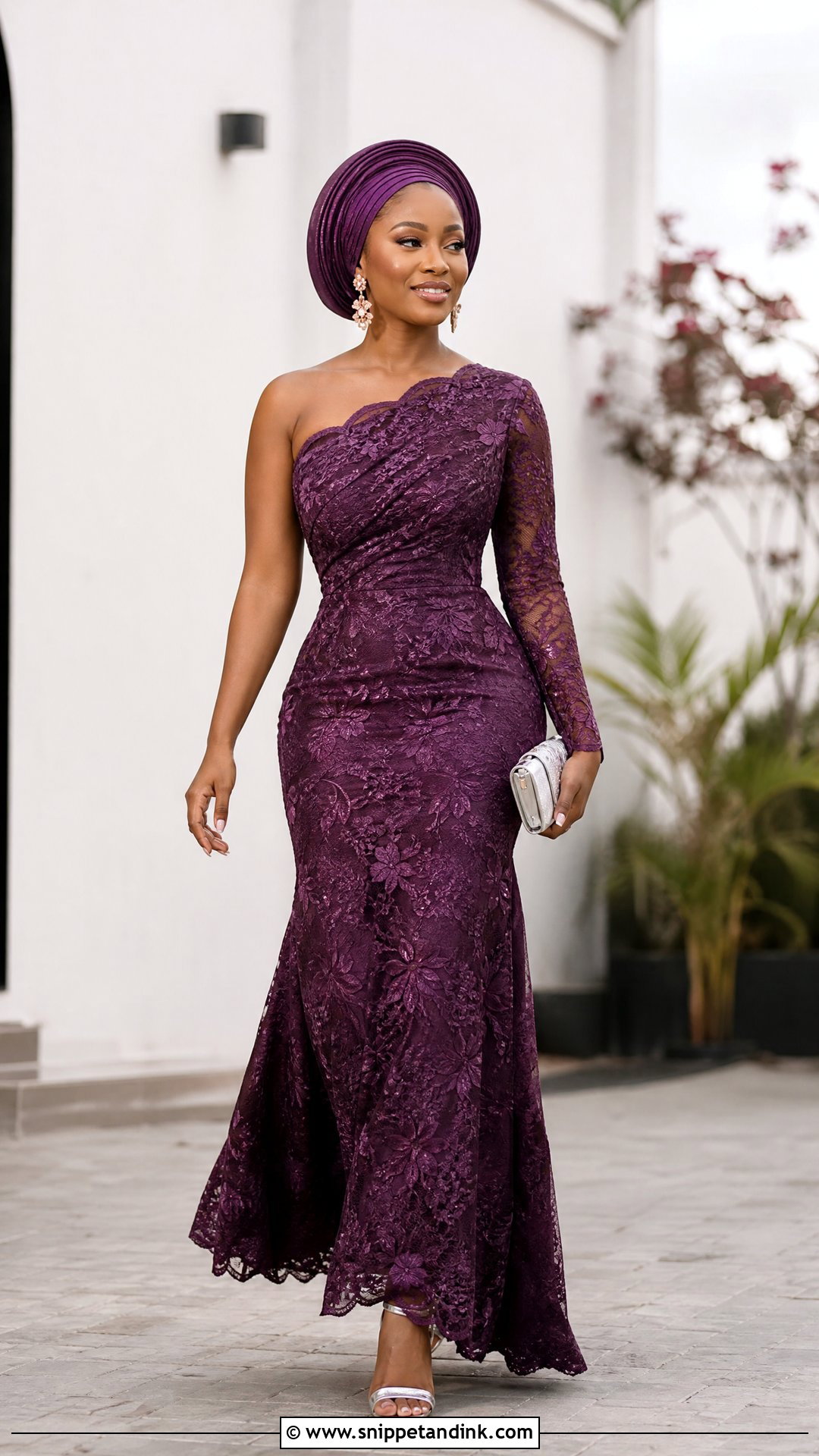
One open shoulder reads instantly modern. The covered side might have a fitted sleeve, a draped panel or a small sculptural detail, and the skirt can be straight, A-line or mermaid depending on how much drama you want. With the neckline doing the work, wear statement earrings rather than a necklace. Compact clutch, ankle-strap heels, and either a modest gele or sleek hair; a towering gele crowds the asymmetric line. Keep beading at the shoulder or waist for balance. Emerald, royal blue, plum and champagne lace all suit it, though if the couple has named a colour palette, that comes first.
6. Nigerian Lace High-Neck Gown With Long Sleeves
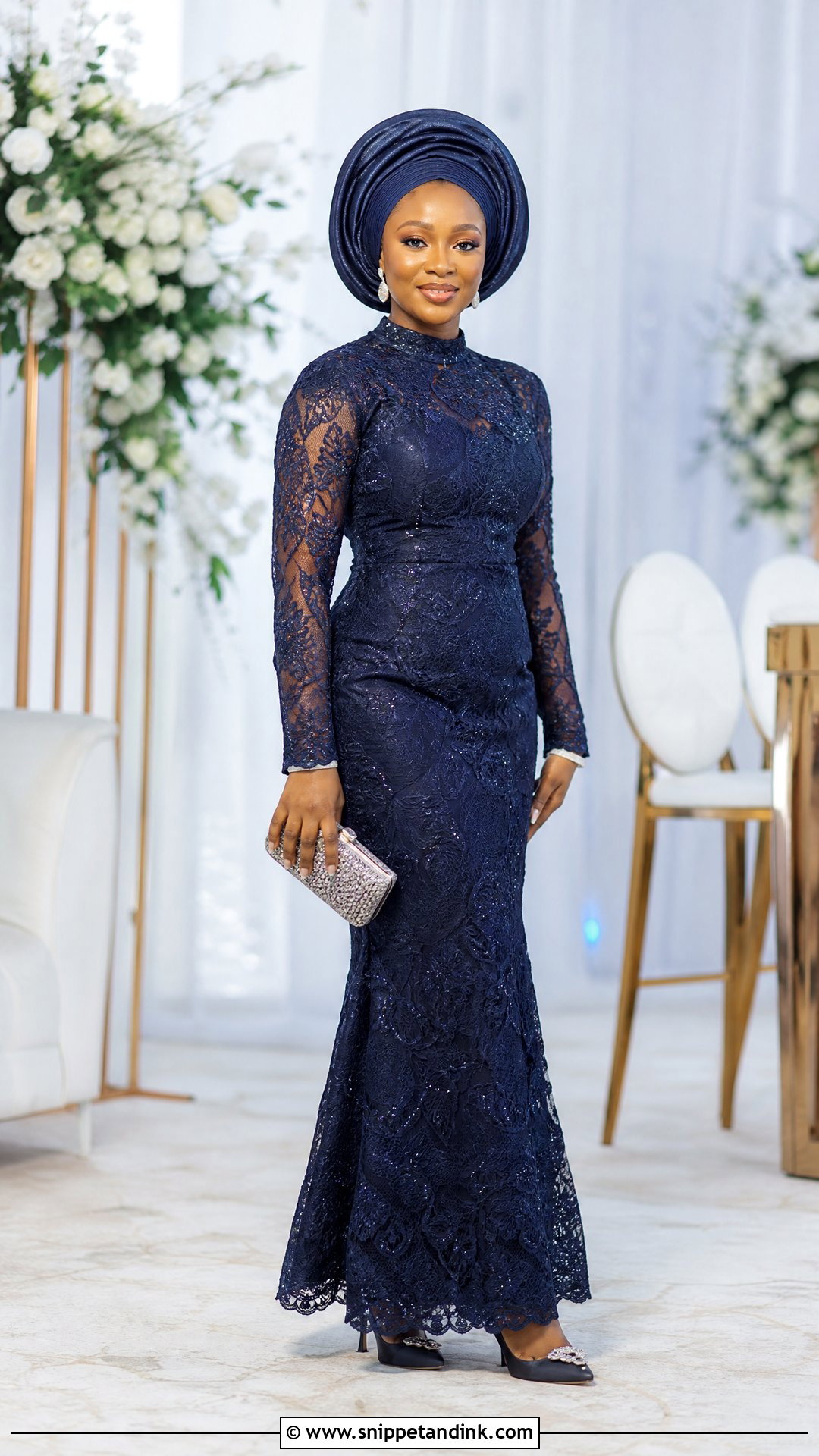
Wanting more coverage doesn’t mean giving up on drama. A high-neck lace gown with long sleeves feels sophisticated at formal family events, but lace edges against the neck can itch badly after a few hours. I ask tailors to finish the collar and cuffs with soft lace or a narrow silk binding. Fully line the bodice; the sleeves can stay sheer if the edges are cleanly finished. A straight or lightly flared floor-length skirt balances the closed top. Medium-height gele, studs or drops, a box clutch and pointed closed-toe heels. No heavy necklace. Covered buttons at the cuffs or a little beadwork add interest without crowding.
7. Nigerian Lace Peplum Blouse And Wrapper
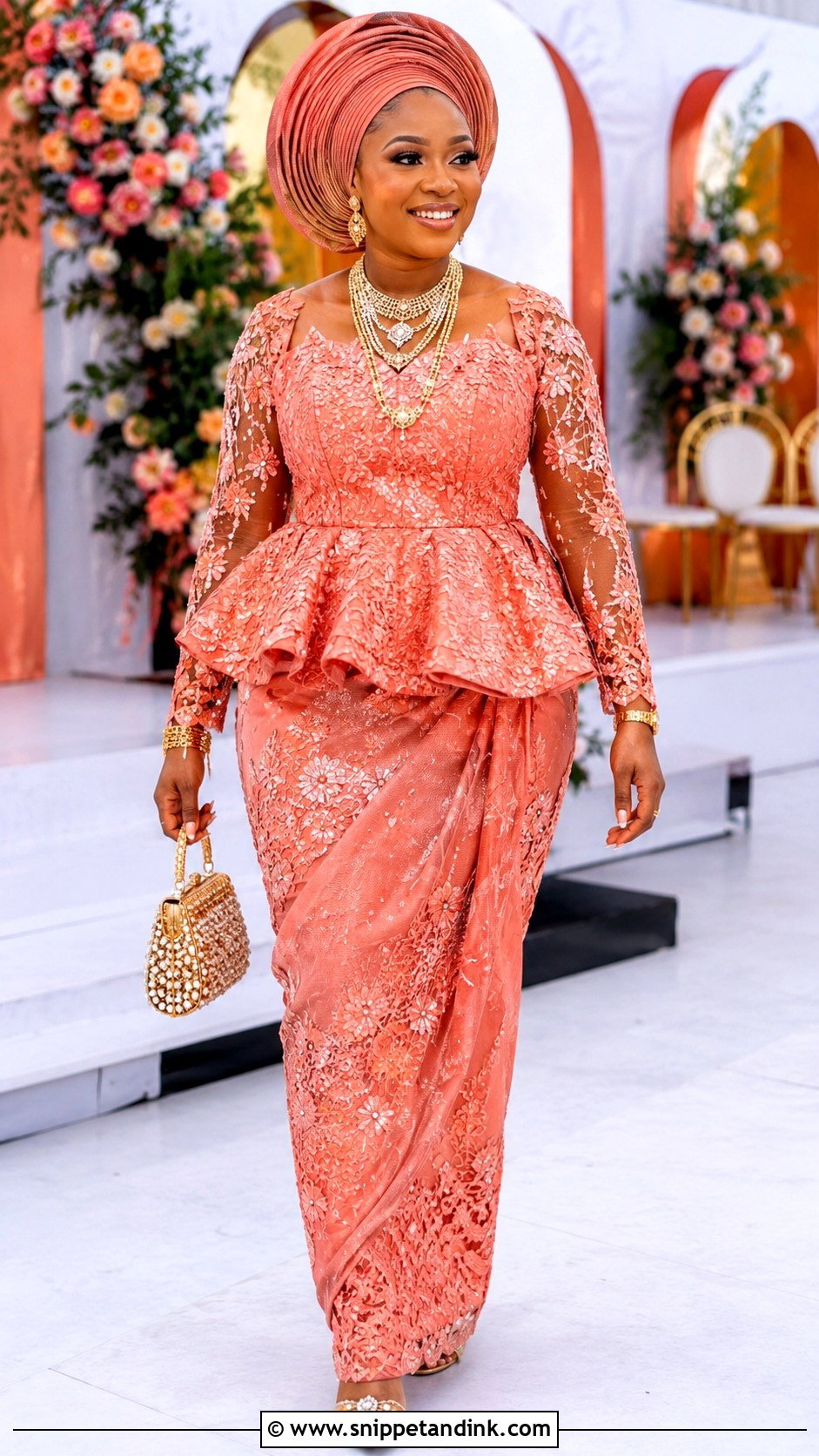
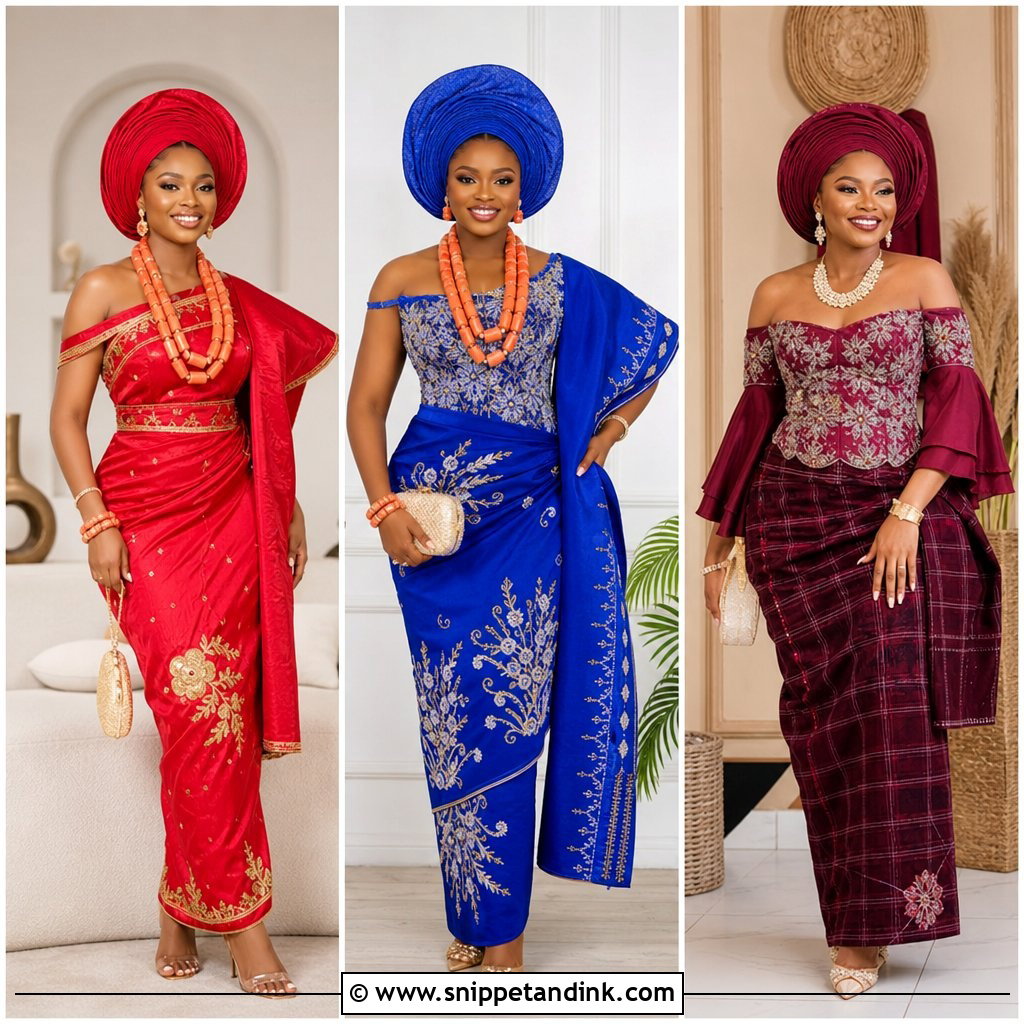
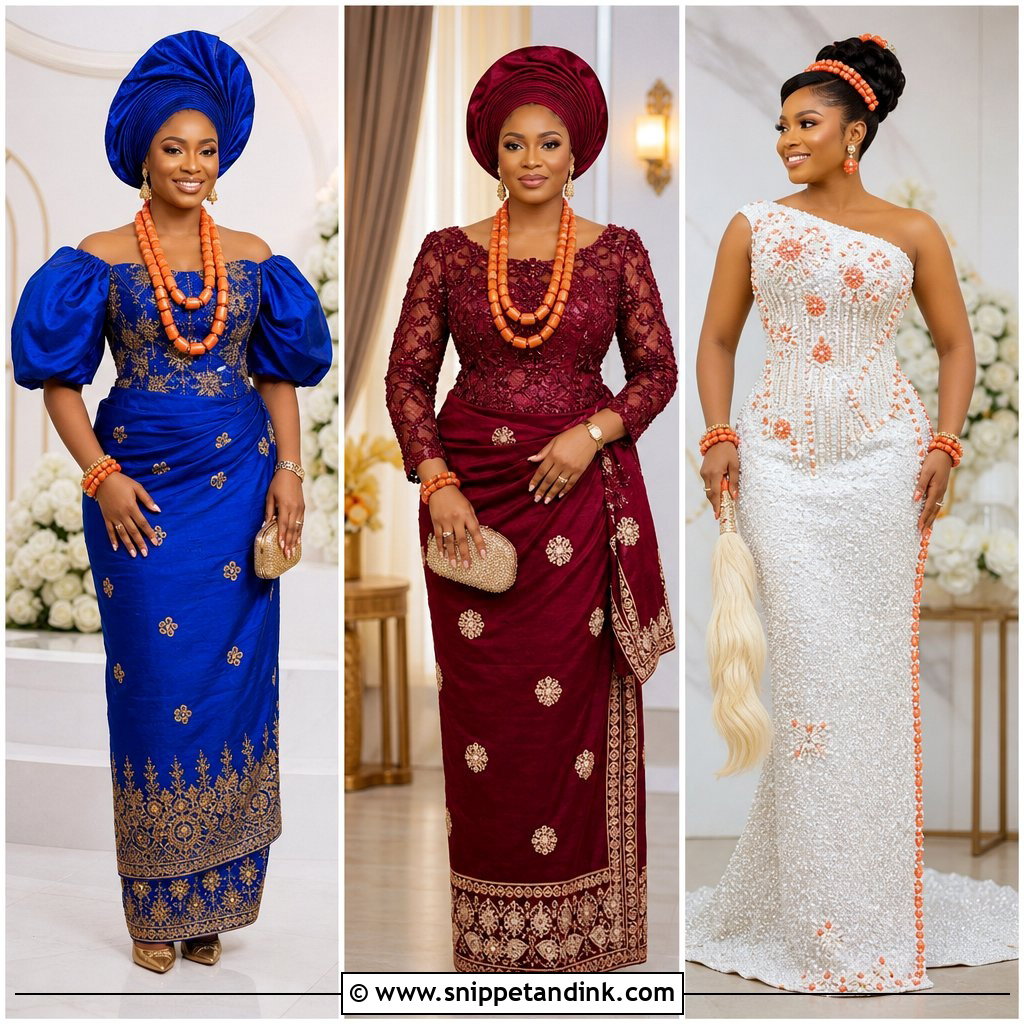
Pairing a lace peplum blouse with a long wrapper gives the traditional coordinated set a younger shape. The peplum defines the waist; the wrapper keeps the cultural character and lets you move freely. It’s a smart option for family members and wedding parties in aso ebi, since everyone shares the fabric but can choose their own cut. Square, sweetheart or modest V neckline, with sleeves ending just above or below the elbow. Full gele, traditional beads or gold, a structured handbag and embellished heels. Tie the wrapper properly and wear an underskirt. A wrapper tied over bare legs loosens and creeps open far sooner than one tied over a slip.
8. Nigerian Lace Iro And Buba With Gele
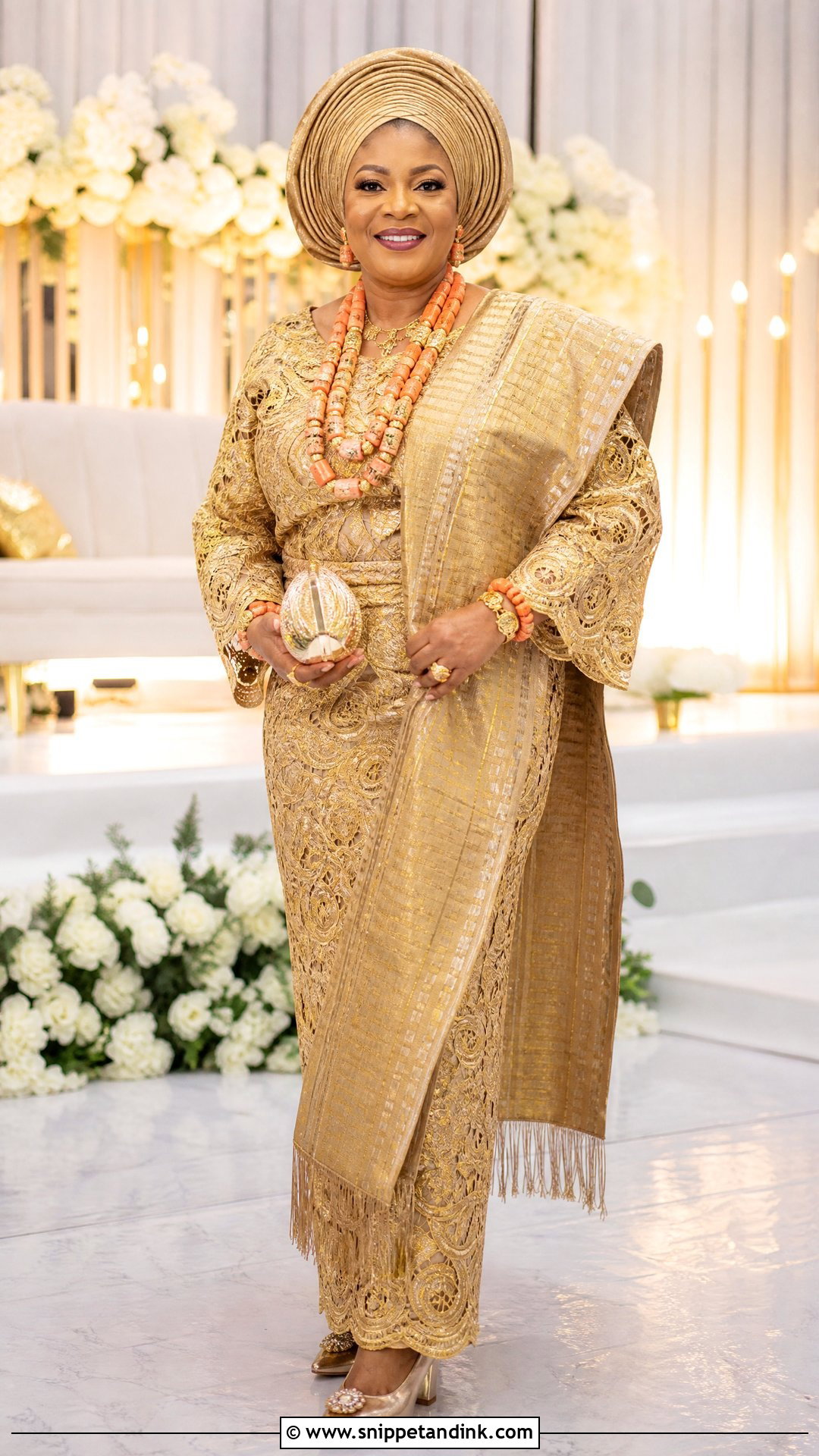
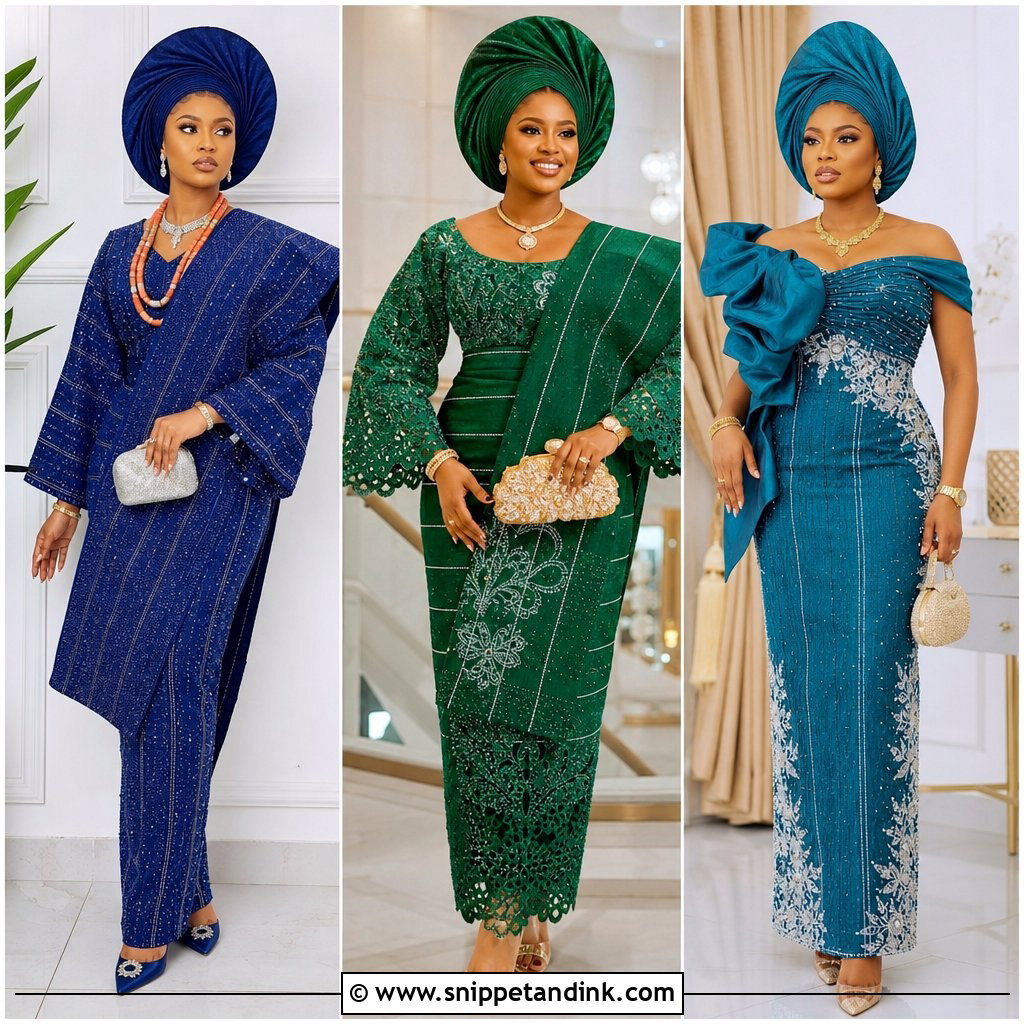
Iro and buba is the outfit I recommend most to mothers and senior relatives who want grace without a tight bodice. The loose buba is comfortable; the wrapped iro gives the traditional line. Yoruba bridal attire usually adds a shoulder cloth, the ipele, though customs vary between families, so ask what’s expected before buying extra fabric. Structured gele, layered beads, low metallic heels and a polished clutch. Choose lace with a defined border. A good tailor will place that border along the buba hem and the iro edge, which makes the set look finished. You should be able to sit, stand and dance without retying.
9. Nigerian Lace Cape Gown With Pointed Pumps
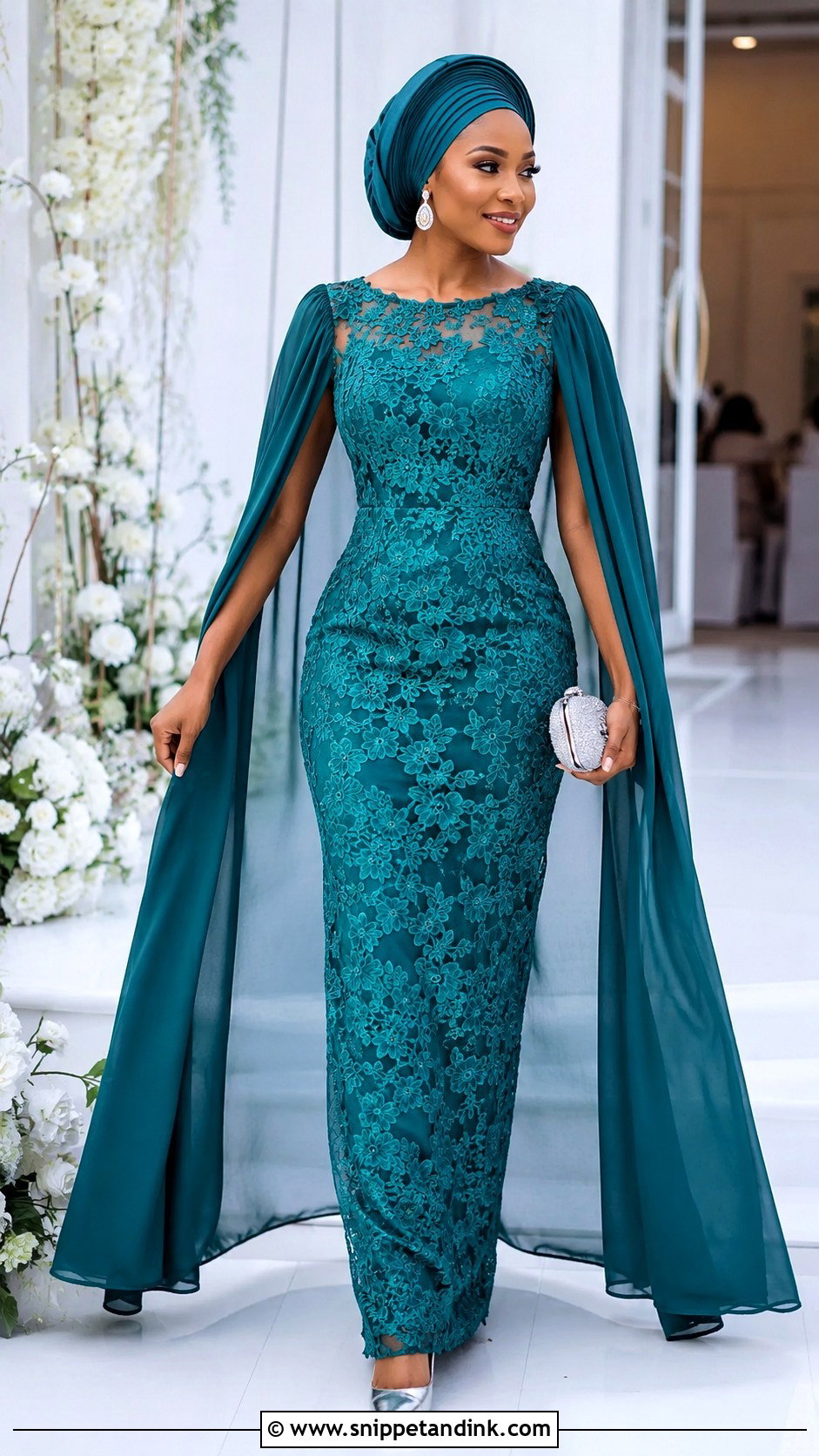
Start with a plain base: fitted, column or lightly flared. Then let the cape carry the outfit, falling from one shoulder, both shoulders or the upper back. Heavy lace makes a cape drag, so I’d cut it from lighter lace, chiffon or organza. Pointed pumps, a sleek clutch, drop earrings and a small gele. Big shoulder embellishment would only compete. Brides can extend the cape into a train; guests do better with one ending at the elbow or calf, which won’t catch on chairs as you squeeze between tables.
10. Nigerian Lace Bell-Sleeve Gown With Gold Accessories
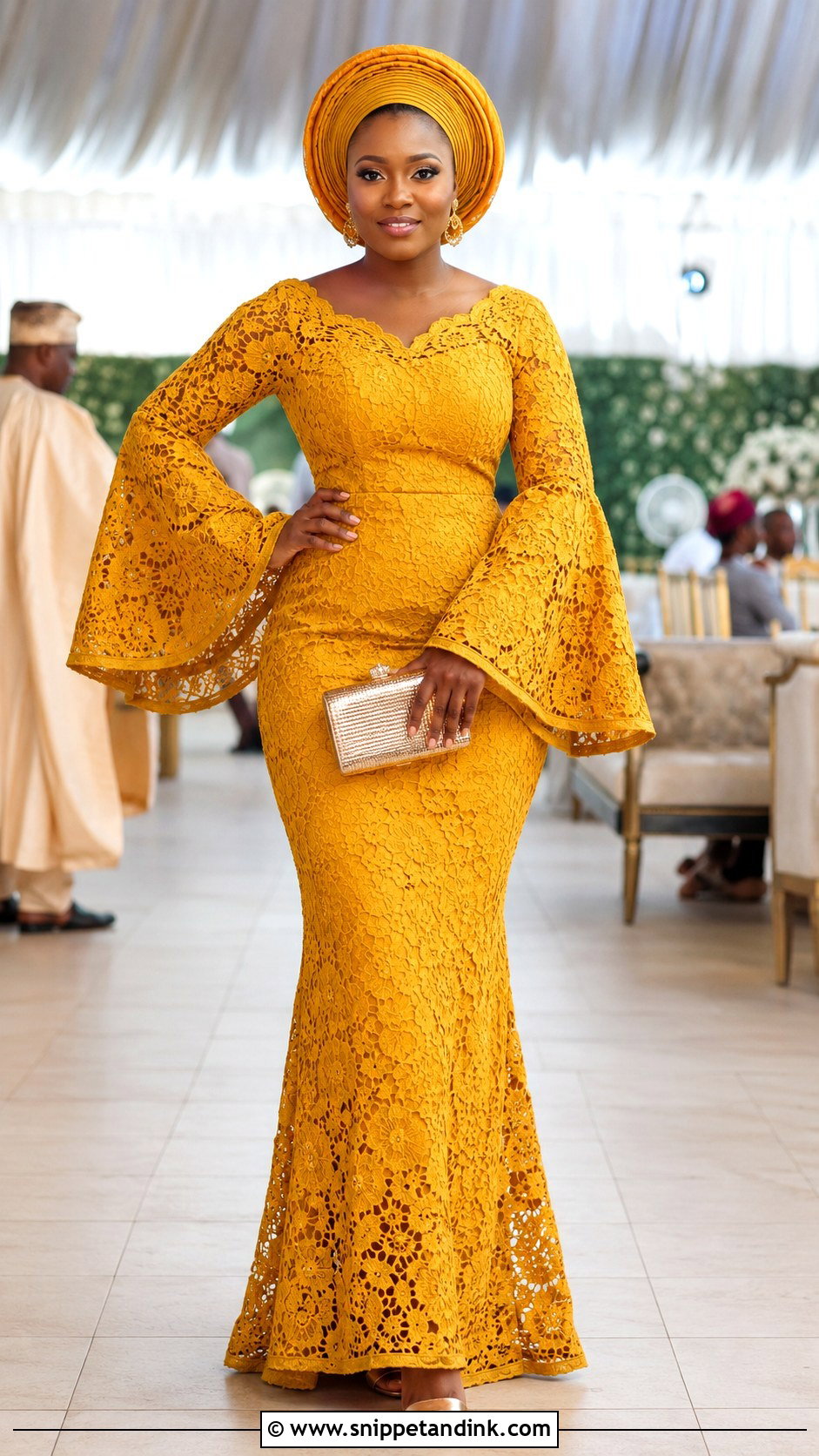
Bell sleeves are lovely right up until one dips into the soup. I keep them at a practical length, flaring from the elbow or opening near the wrist but not past it. Pair them with a fitted bodice and a straight or trumpet skirt so the arms aren’t the widest part of the outfit, and make sure there’s a clear waist seam. Gold earrings, a metallic clutch, heeled sandals and a matching gele. With heavy embroidery on the lace, keep the lining plain and the jewellery small. Bell sleeves move with every gesture, which gives them life on the dance floor.
11. Nigerian Lace Puff-Sleeve Gown With Mini Handbag
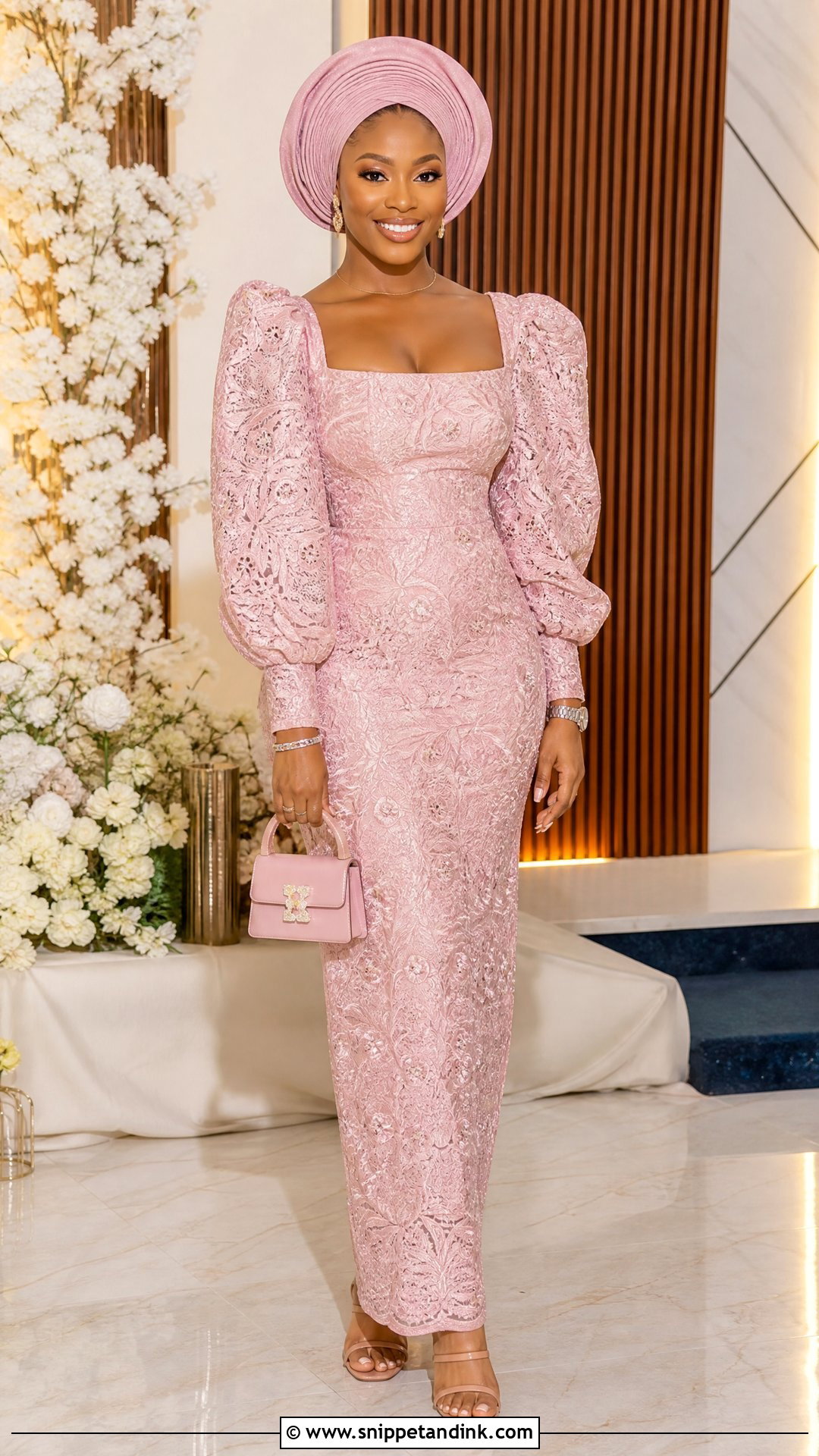
Puff sleeves give volume on top, so the rest of the gown should stay quiet: a fitted column, a subtle mermaid or a simple A-line. The sleeve should rise gently at the shoulder and taper toward the elbow or wrist. A square neckline gives the bodice clean structure under that volume. Small structured bag, delicate earrings, coordinated gele and narrow-strap block heels. Broad shoulders usually look better with a smaller puff; narrow shoulders can carry a fuller one. Lace puffs need a stiffer net inside, or they droop within an hour. Plan the lining carefully so it shows only as much skin as you want.
12. Nigerian Lace Column Gown With Coral Beads
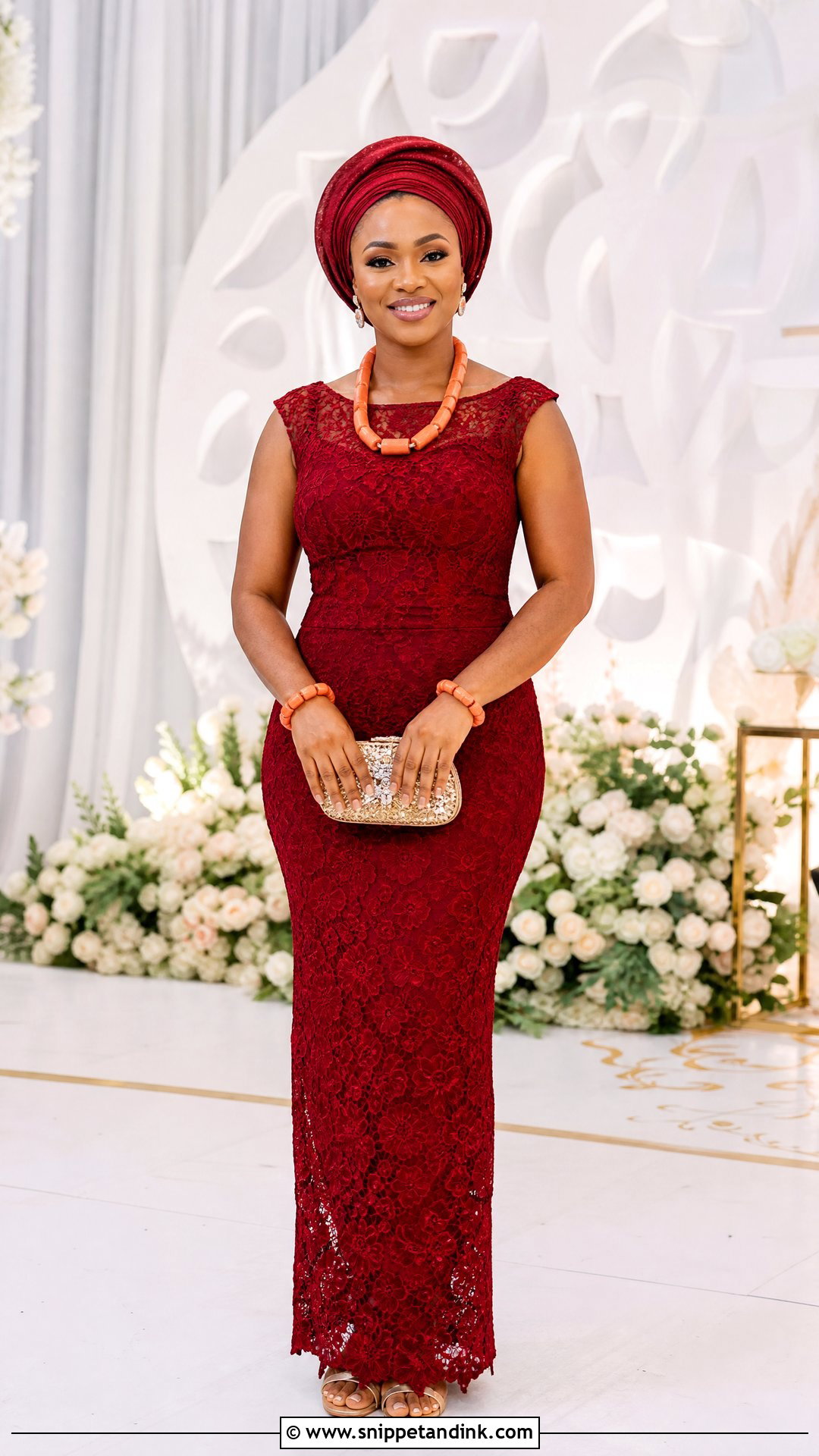
A lace column gown sits close to the body without the flare of a mermaid. Understated, but only if it’s walkable, so add a back slit or a small kick pleat. Coral beads give it rich traditional character. Bead customs differ between Nigerian communities, and in some families coral carries real meaning, so I always suggest checking with an elder before wearing a full traditional set to someone else’s wedding. A compact headwrap, beaded bracelet, embellished clutch and medium sandals. Keep the neckline plain so the beads have room. A defined waist and careful pattern placement keep the straight shape from looking plain.
13. Nigerian Lace High-Low Gown With Ankle-Strap Heels
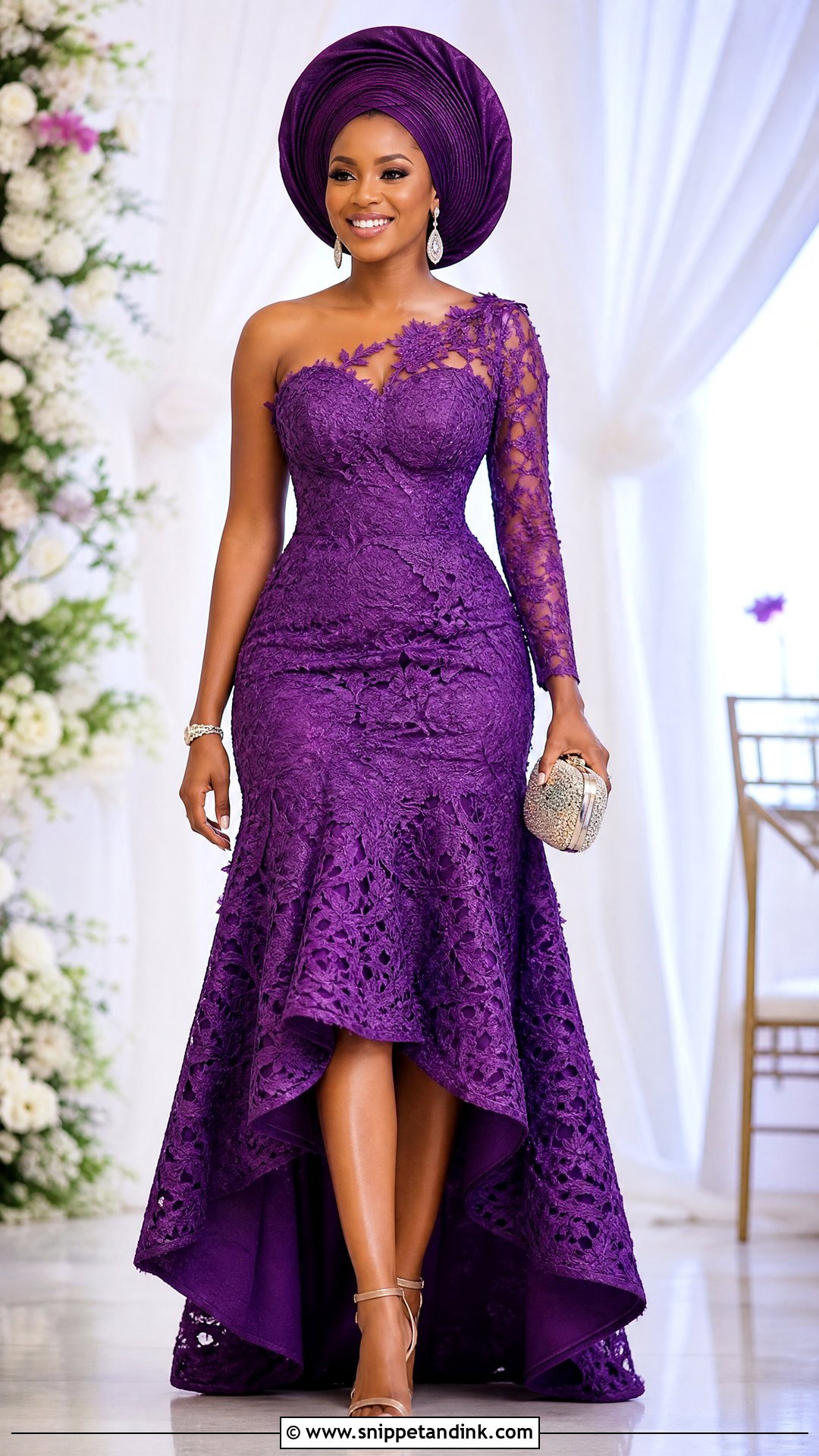
With a high-low hem, the shoes become part of the outfit. The shorter front shows ankle and shoe; the longer back keeps the formality a traditional wedding expects. Make the drop between front and back gradual. A sharp, steep curve is hard to line neatly and tends to flip outward. Decorative ankle-strap heels, a small clutch, drop earrings and a neatly shaped gele. Round neck, one shoulder or a lightly structured corset on top. Skip ruffles elsewhere; the hem already moves enough. It’s a practical choice if you like a long gown but hate fabric under your toes.
14. Nigerian Lace Midi Gown With Block Heels
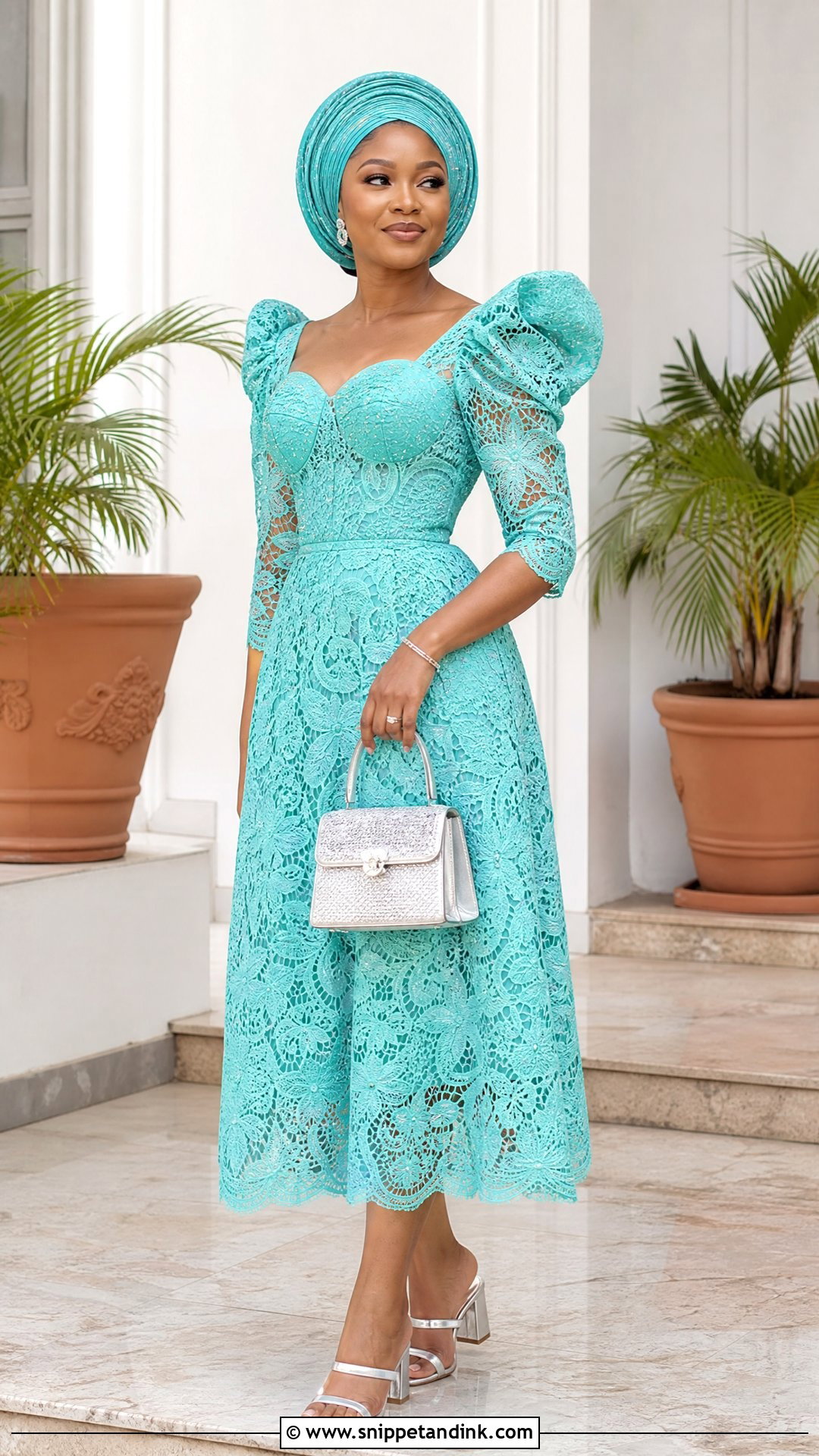
Midi lengths can look every bit as formal as a floor-length gown if the lace, fit and accessories are right. End the hem below the knee or at the lower calf. A fitted bodice and A-line skirt are classic; a pencil skirt is sharper. Well-proportioned gele, block heels, a structured top-handle bag and polished earrings. Very casual flats undermine it, unless comfort or mobility needs them. Rich lace, full lining and a defined waist keep it looking dressed up. A shorter hem also stays cleaner at outdoor venues, where floor-length lace collects grass and dust.
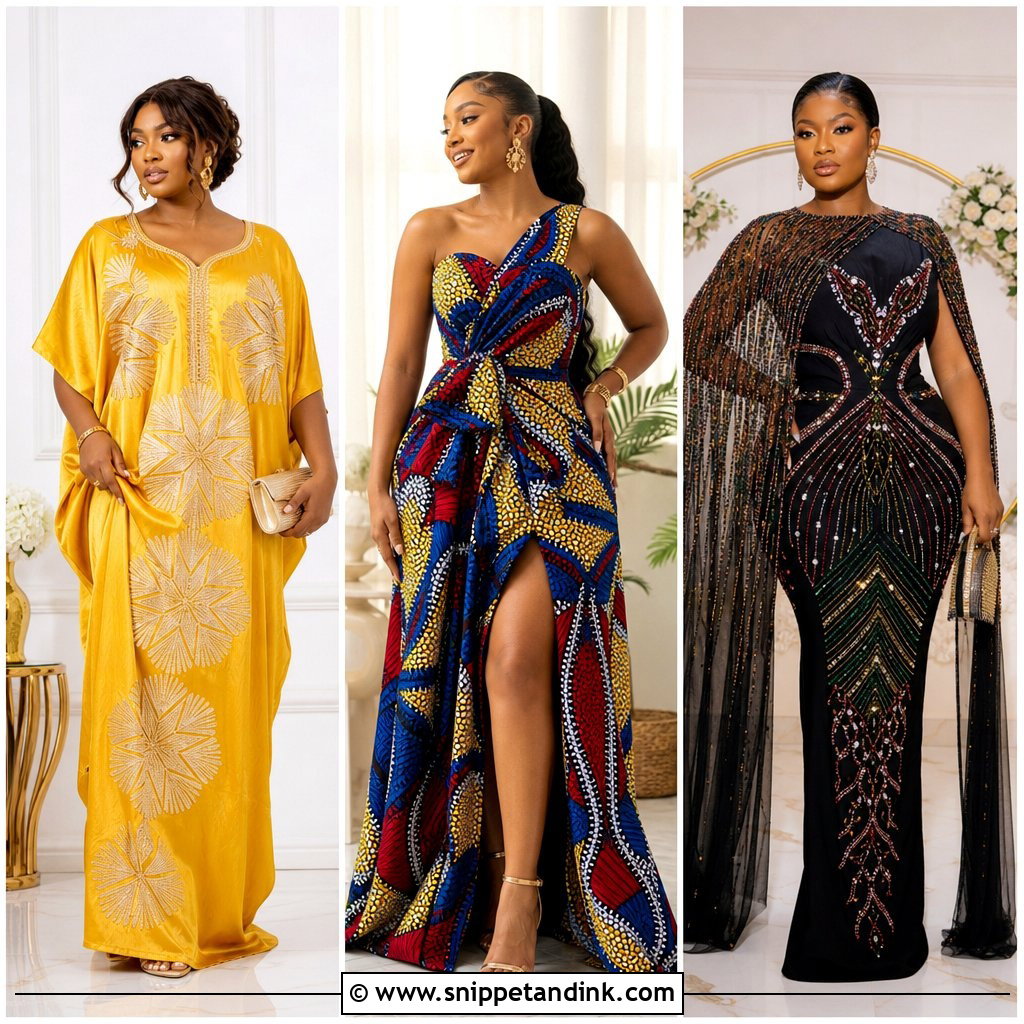
15. Nigerian Lace Flared Gown With Matching Headwrap
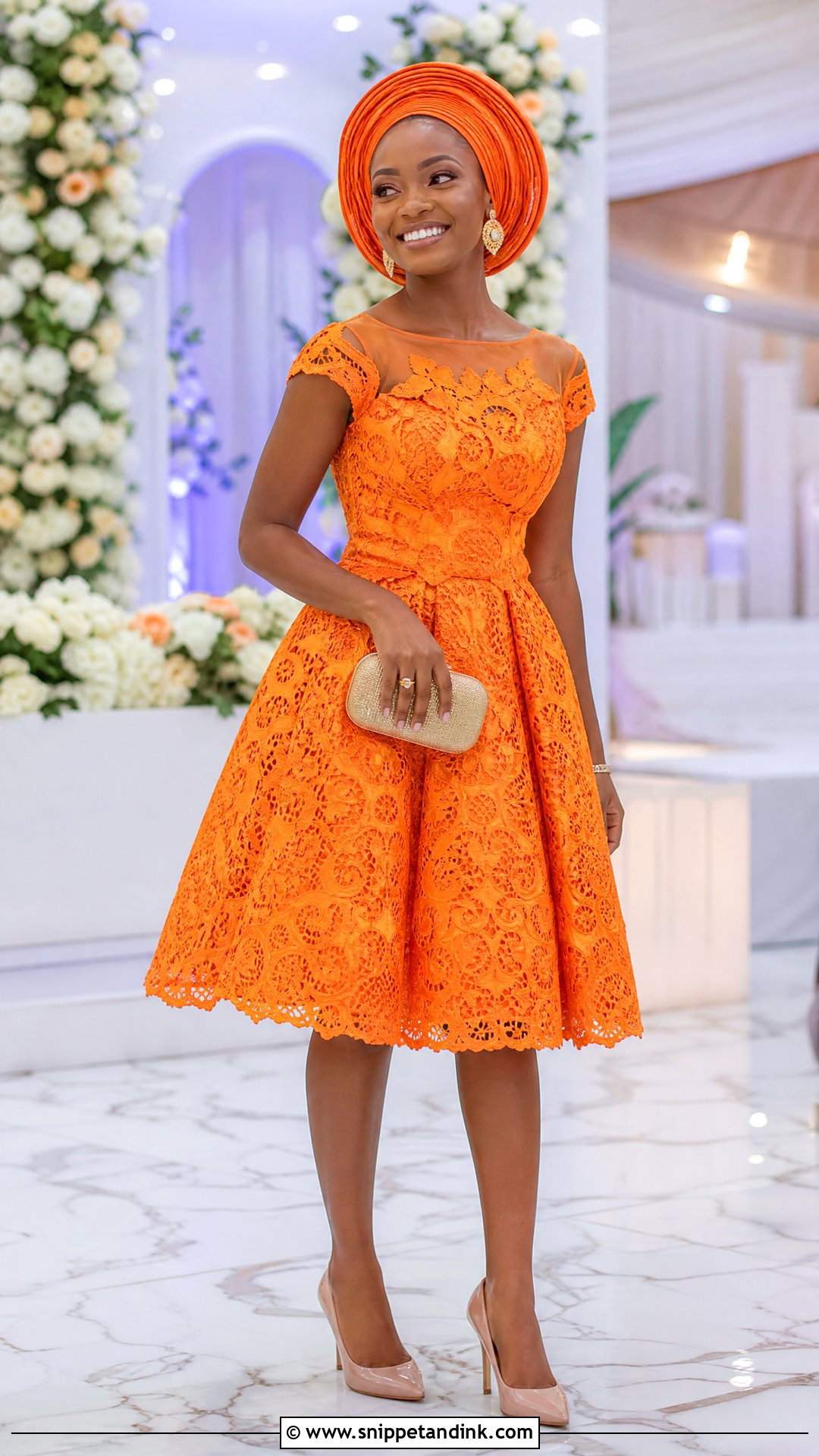
Keep a short flared gown at the knee for a traditional wedding. Anything much shorter feels out of place among aunties in full iro and buba. A fitted bodice and a structured skirt give a balanced shape. Matching headwrap, medium earrings, a mini clutch, and closed pumps or block-heel sandals. If the skirt is already full, choose neat fitted sleeves rather than more ruffles. Ask the tailor to use the lace border at the neckline, cuffs and hem so every edge looks finished. Younger guests and bridesmaids wear this well, but stay within the dress code and the aso ebi colour.
16. Nigerian Lace Two-Piece Skirt And Blouse
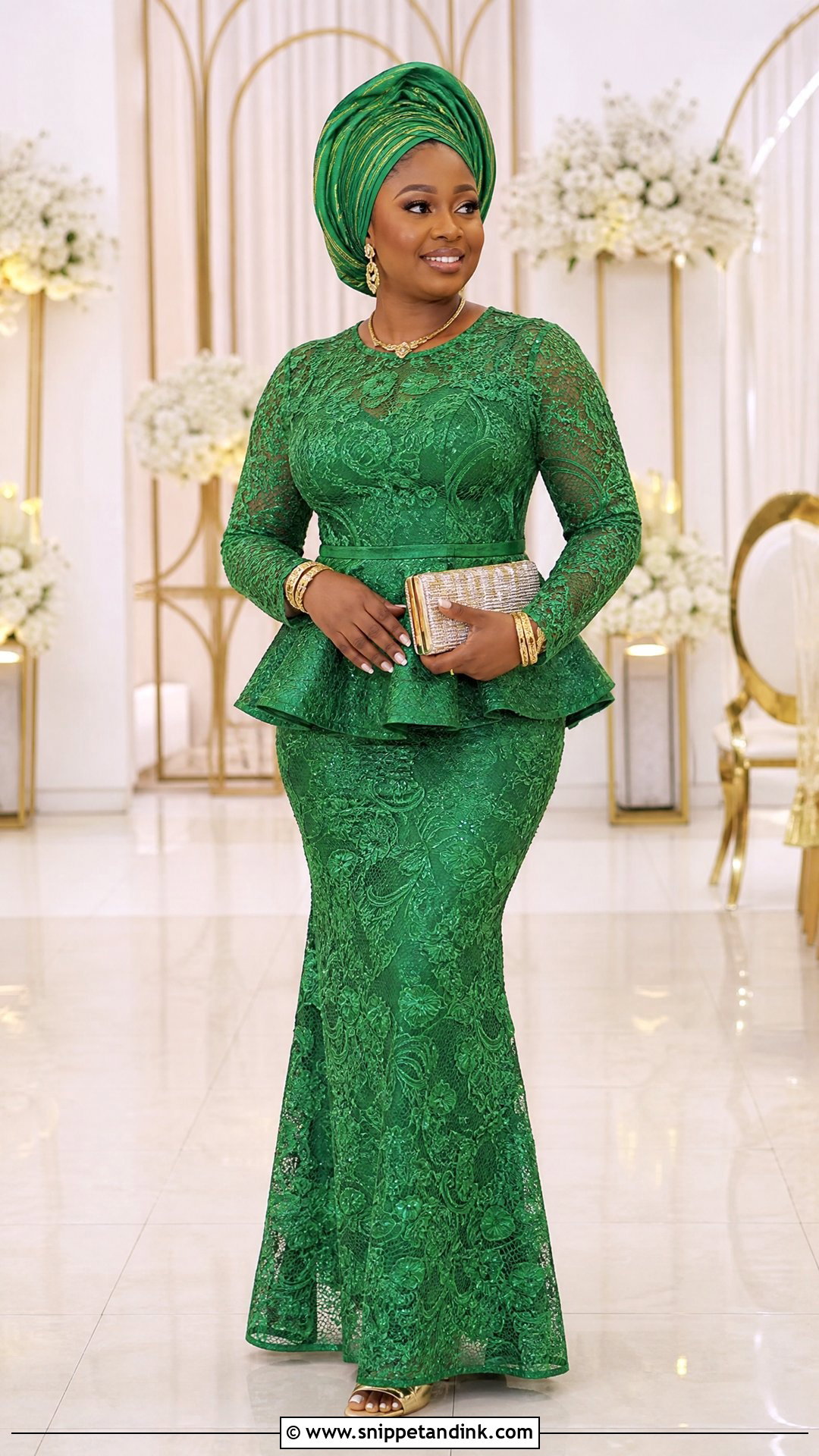
Separates are underrated. A two-piece lace skirt and blouse looks like a dress but can be fitted to a top and bottom that are different sizes, which a one-piece gown can’t. The blouse can have a peplum, a fitted hem or a slight crop that meets the skirt without showing the midriff. Straight, trumpet or soft flared floor-length skirt. Coordinated gele, layered bracelets, a metallic clutch and stable heels. Same lace and lining on both pieces looks continuous; contrasting textures look more designed. Secure waist hooks and room to sit are non-negotiable. Afterwards, the pieces restyle separately with other outfits.
17. Nigerian Lace Gown With Detachable Overskirt
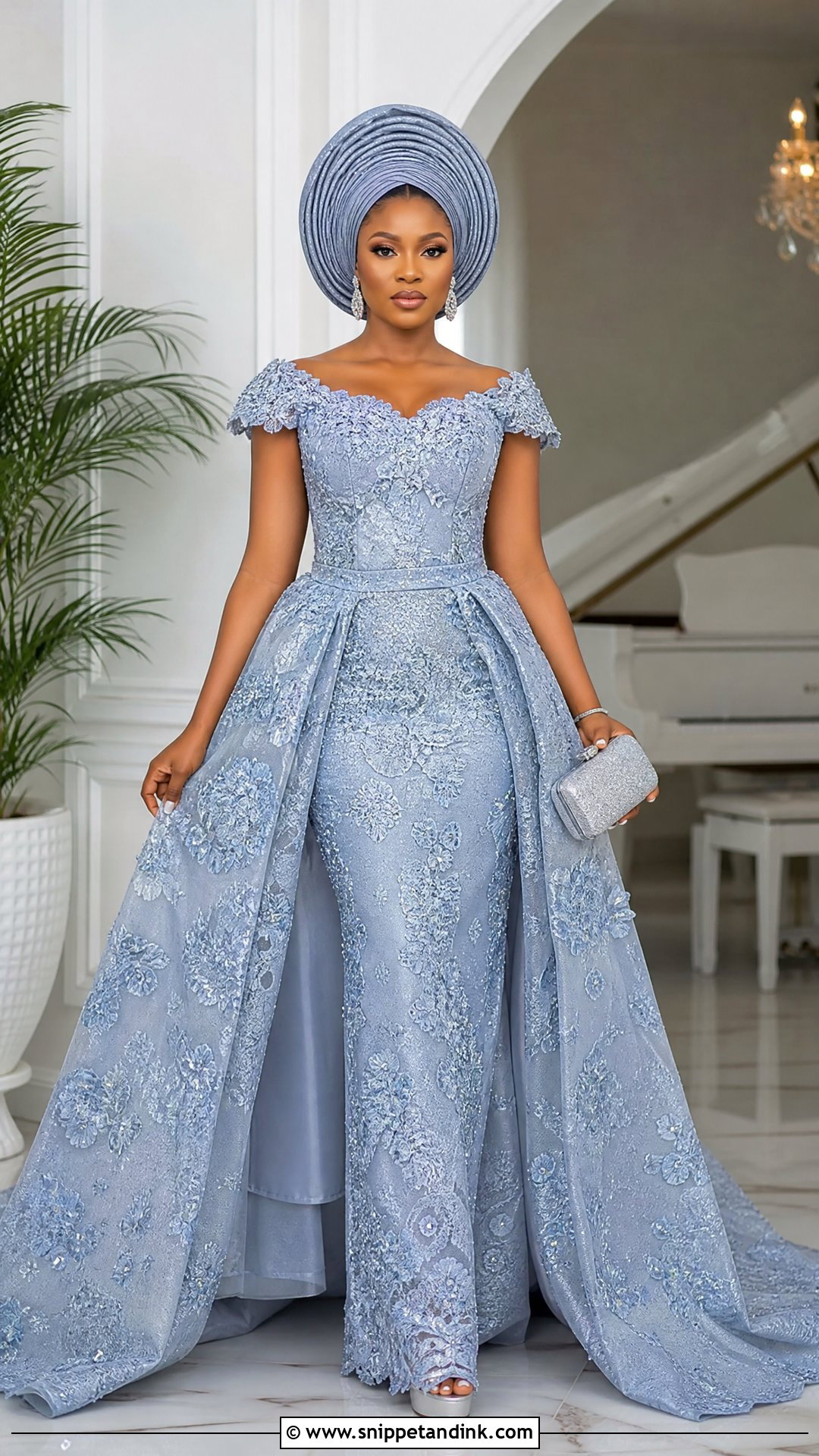
Long celebrations reward two looks. Start with a fitted lace column or mermaid, then fasten a detachable overskirt at the natural waist with concealed hooks, snaps or a decorative belt for the ceremony and formal photos. Take it off, and the slimmer gown is easy for dancing. Sculpted gele, crystal earrings, box clutch and supportive heels. Use lighter fabric under the lace overskirt to keep weight down. Important: the base gown has to look complete without the overskirt, with a finished waist and balanced beading. I check that by putting the bride in the base gown alone at the second fitting.
18. Nigerian Lace Tiered Gown With Simple Jewelry
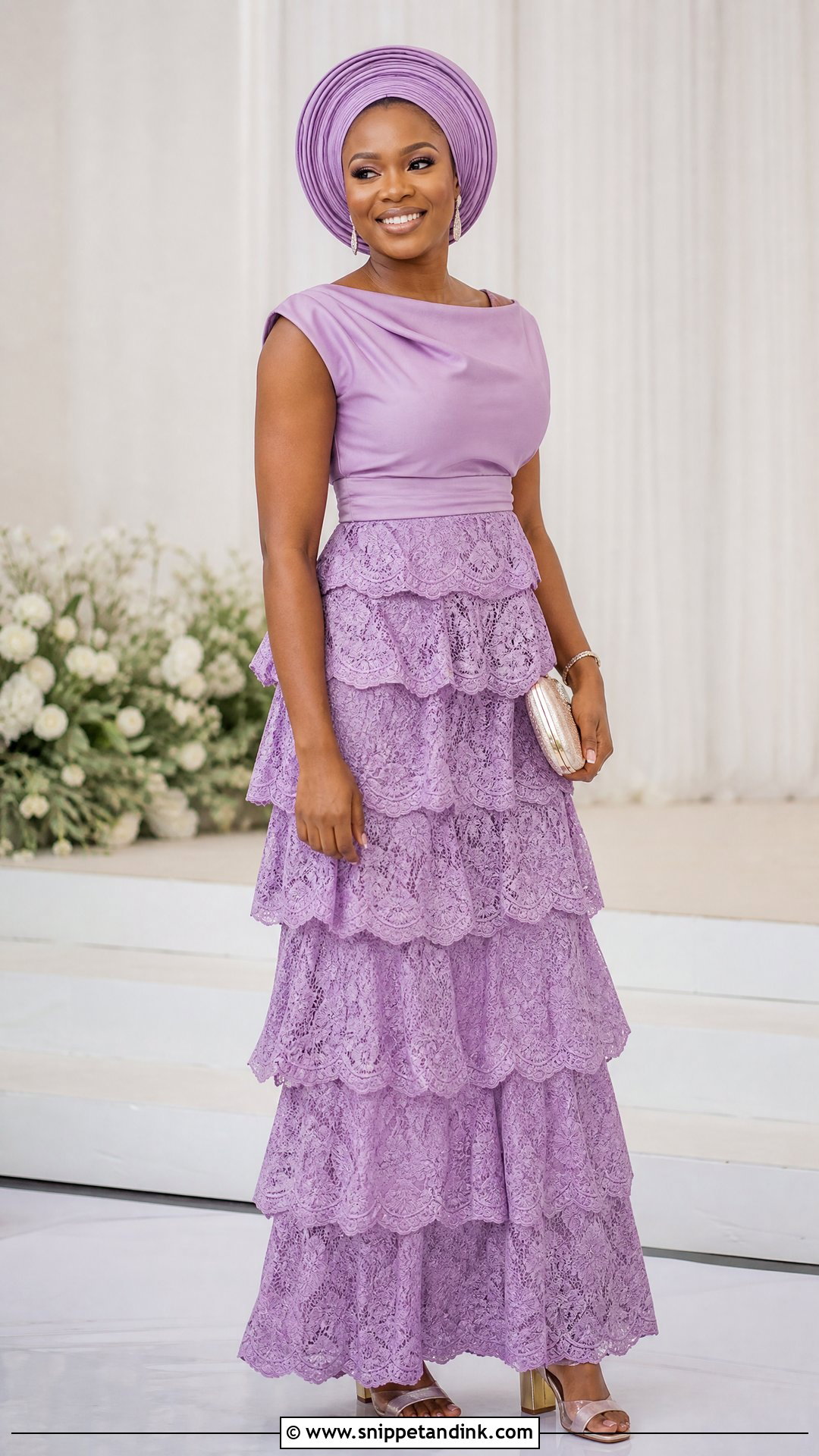
Tiers add soft volume and swing. They can start below the hip for a fitted top or at the waist for a fuller shape, and each tier needs to be proportioned carefully, usually getting slightly deeper toward the hem, or the skirt looks stacked rather than flowing. A plain fitted bodice balances an embroidered or scalloped skirt. Simple earrings, a small clutch, a moderate gele and block-heel sandals. No big necklace or busy bag. Lightweight lining keeps it cool in a crowded hall. Have the tailor check the length while you’re wearing the actual shoes.
19. Nigerian Lace Empire-Waist Gown With Low Heels
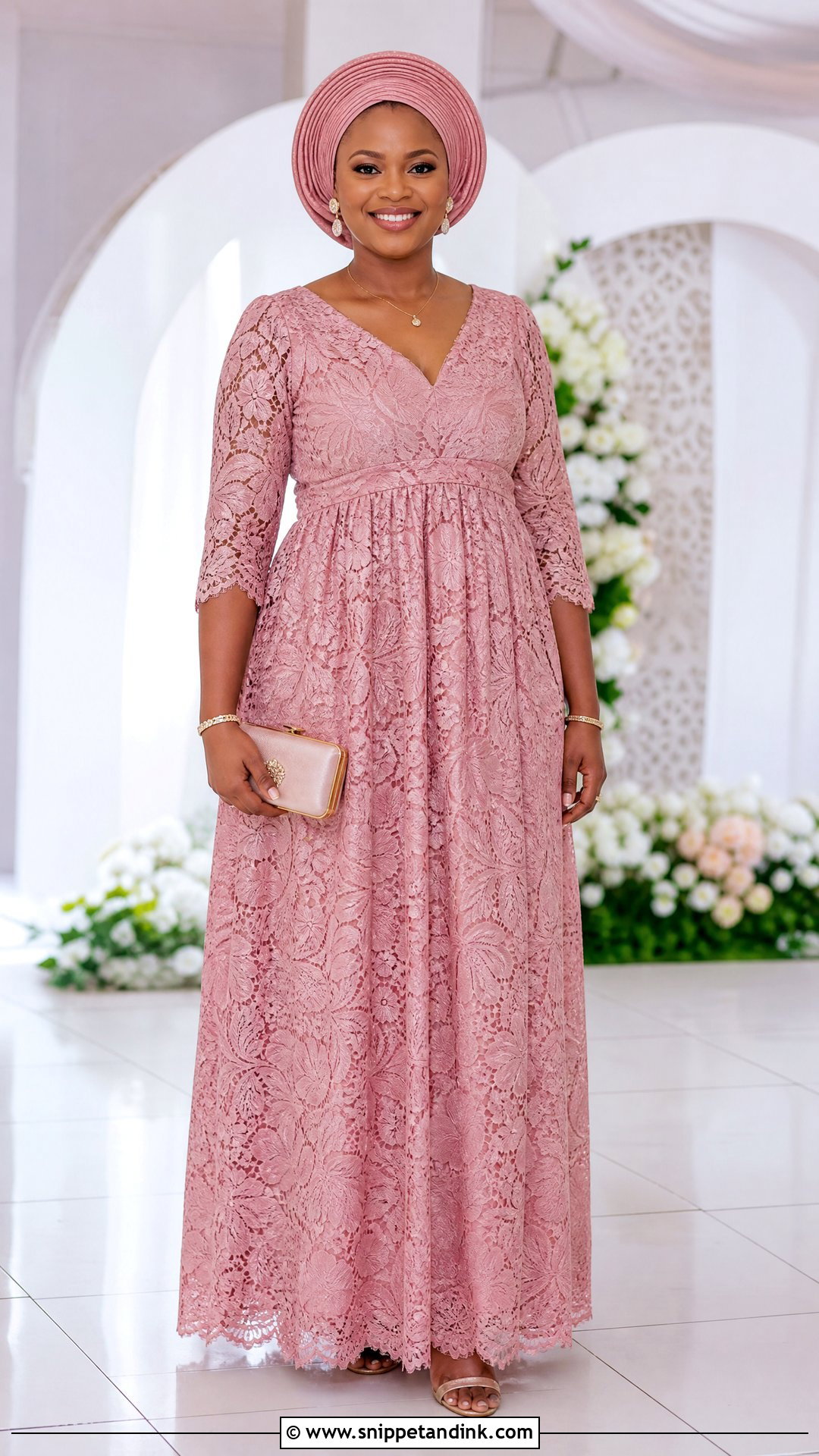
I often suggest the empire waist to pregnant guests, and it’s just as good for anyone who’d rather nothing sits at the natural waist. The seam sits just below the bust and the skirt falls smoothly over the stomach and hips. Soft, draping lace matters here; stiff lace stands out like a bell and adds bulk. Three-quarter sleeves and a modest V balance the upper body. Low block heels, a polished clutch, delicate earrings and a medium gele. Vertical motifs lengthen the line, and a slight flare at the hem gives walking room. Bust support and seam placement define the whole shape, so fit those first.

20. Nigerian Lace Kaftan Gown With Embellished Sandals
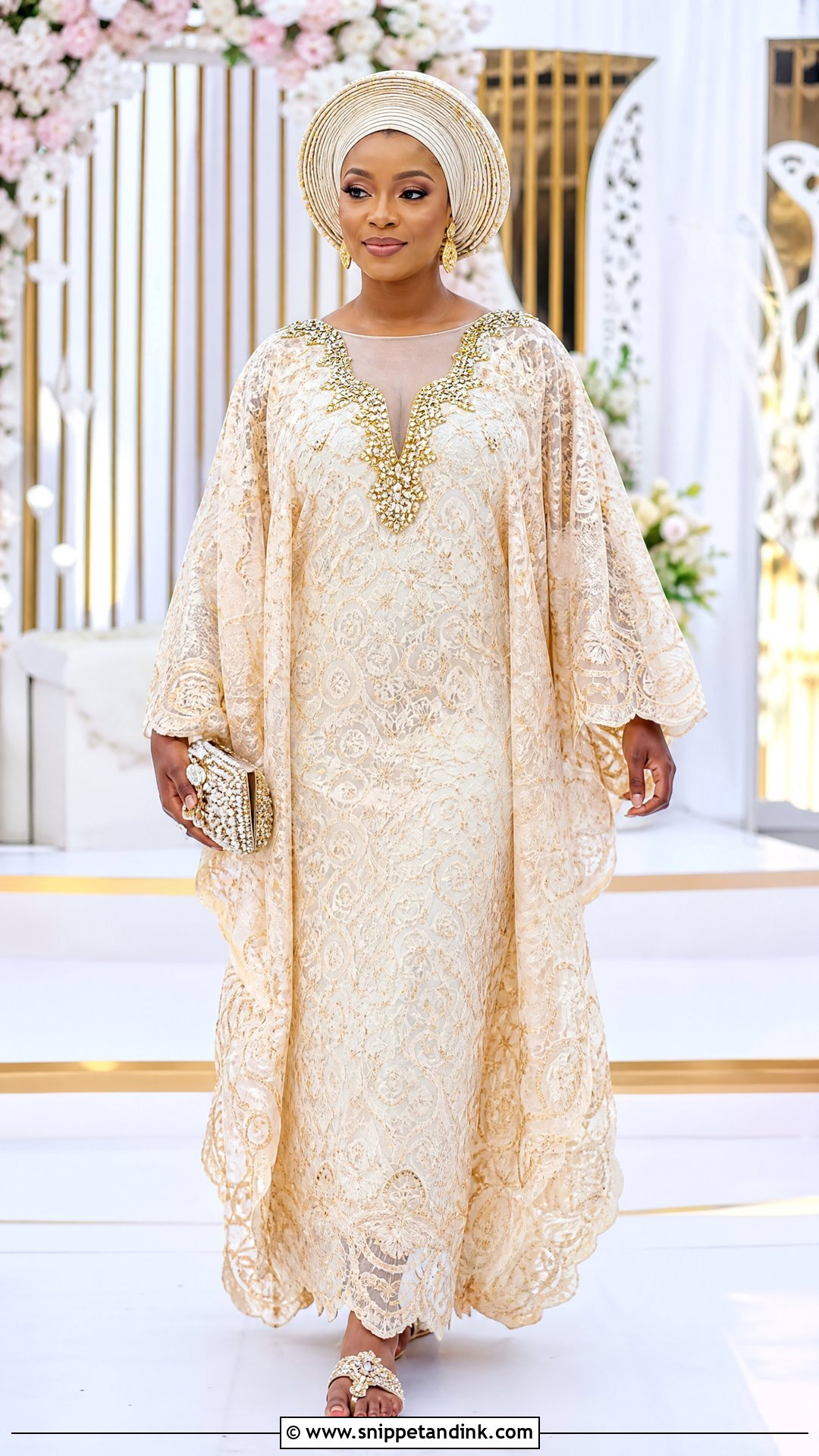
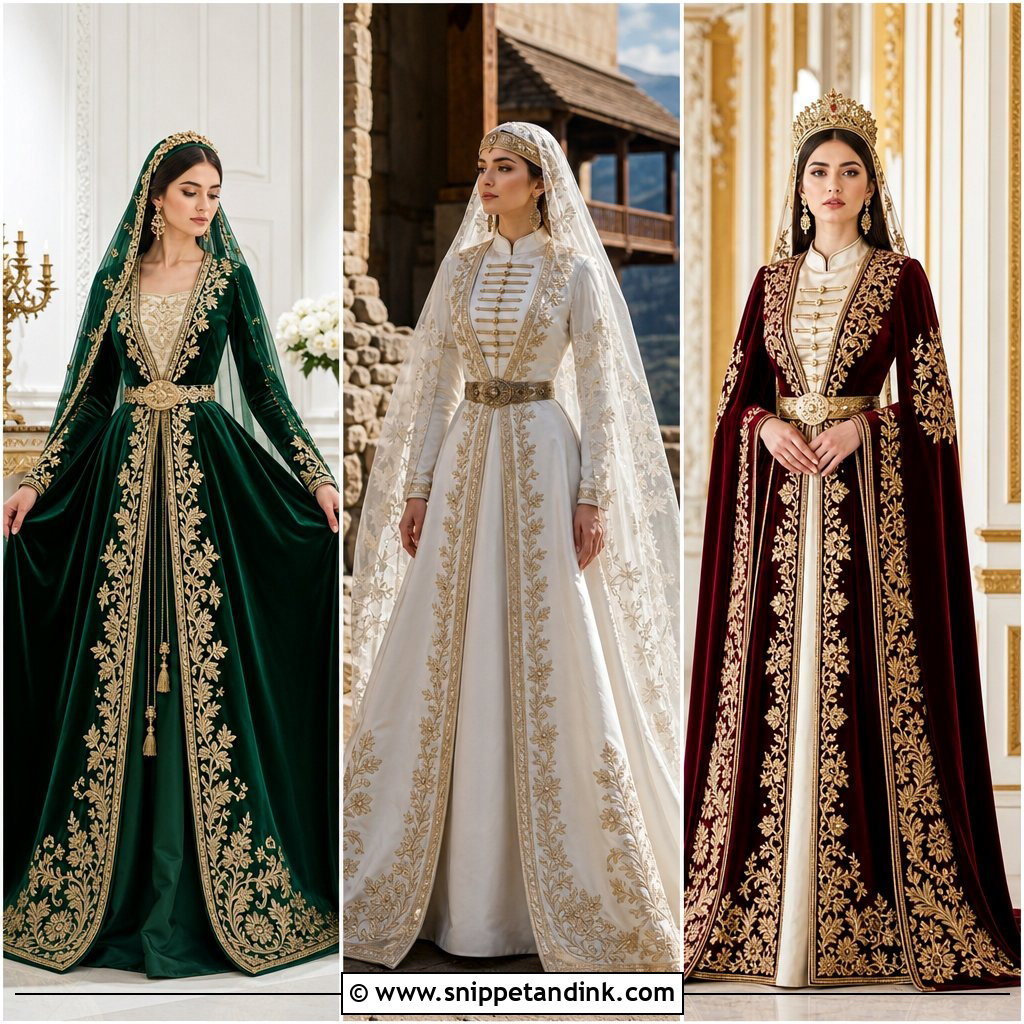
For a regal, relaxed guest look, a lace kaftan is hard to beat. It flows, so long ceremonies and busy receptions stay comfortable. Look for lace with a strong border to frame the neckline, sleeves and hem. A shaped inner lining or a little waist definition stops it from looking oversized. Embellished sandals, a beaded clutch, statement earrings and an elegant gele or wrap. With a wide silhouette, a big handbag adds bulk, so carry something small. Brides and close relatives can go heavier on beading; other guests usually keep it restrained. Set the hem just clear of the floor so you don’t trip on steps.
After the Party: Storing Lace So It Comes Out Again
Good lace is expensive, and most women wear the same piece more than once, sometimes restyled. How you treat it in the week after the wedding decides whether that’s possible.
- Air it out before putting it away. Sweat and perfume left in the fabric discolour lace over months.
- Spot clean gently with cool water, or send it to a dry cleaner who handles beaded garments. Never wring lace or put beaded pieces in a machine.
- Fold heavy beaded gowns flat with tissue paper between the folds. Hanging lets the weight stretch the shoulders.
- Store in a cotton garment bag, not plastic, which traps moisture and can cause mould in humid weather.
- Ask your tailor to leave generous seam allowances when it’s first sewn. That spare fabric is what lets a gown be let out or restyled later.
If you plan to turn a gown into a skirt and blouse later, keep any offcuts. Matching lace is almost impossible to find a year on.
Settle the Colour, Then Argue About the Cut
The right Nigerian lace outfit has to look good and let you move all day. Mermaids, A-lines, wrapper sets, capes and kaftans cover different figures, ages and tastes. Before sewing, confirm the dress code, the approved colour and whether aso ebi fabric is being provided. Go through lining, measurements, shoes, closures and how much you’ll need to move with your tailor. Add a well-tied gele, suitable jewellery, a good clutch and shoes you can stand in for hours. Respect the celebration, but don’t hide your own taste. Any of these twenty can be adapted to do both.
You'll Like These Ideas:




Leave a Reply