
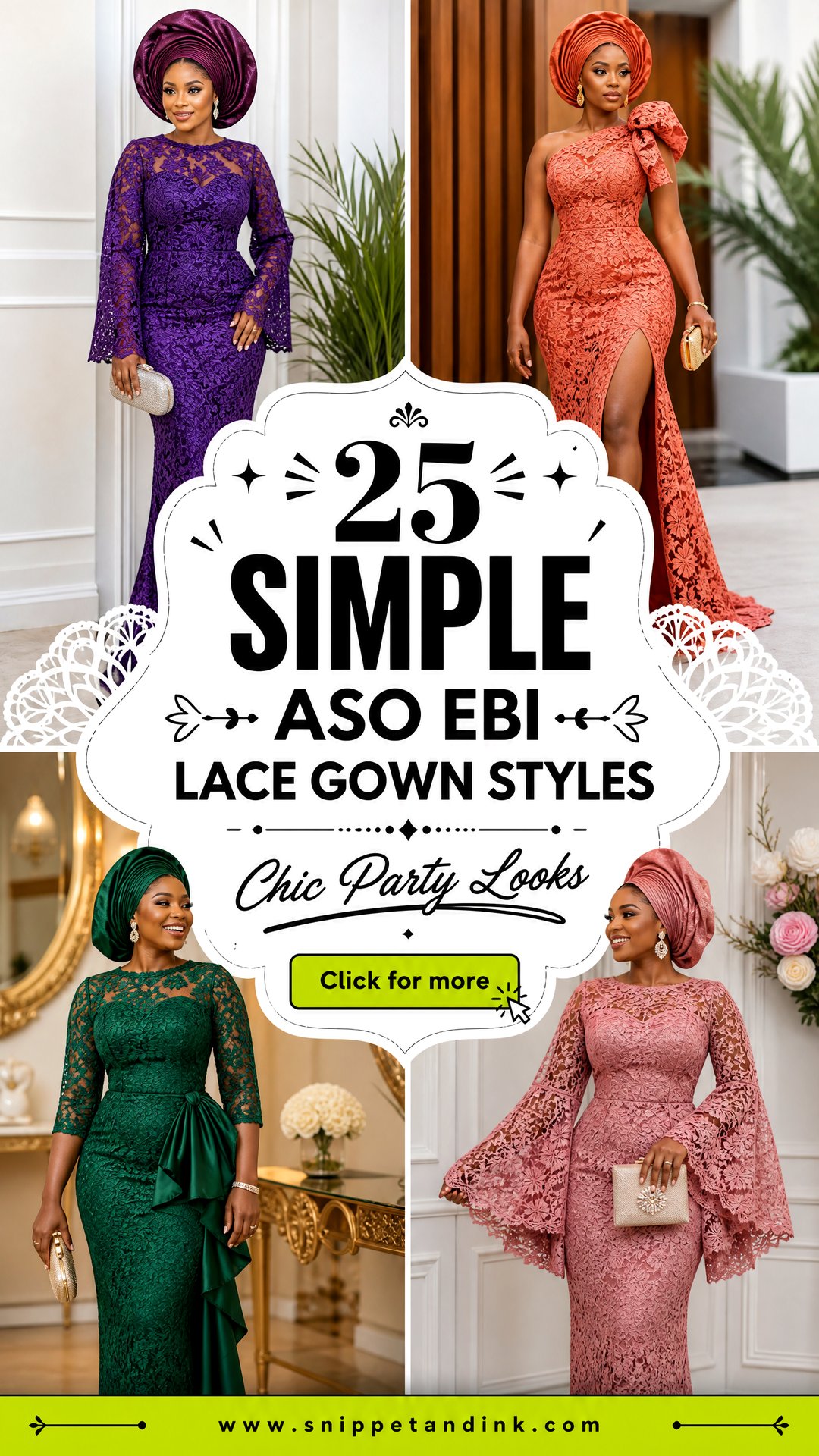
Lace does most of the work in an Aso Ebi outfit before a tailor even cuts it. The fabric arrives with its own texture, cording and sometimes beads, so the gowns I like best on guests are the ones that stop adding things: a clean corset line, a mermaid flare that starts low enough to walk in, a cap sleeve, a slit placed where the leg actually moves. Those cuts suit Nigerian weddings, engagement ceremonies and big family owambe parties alike, because you will be sitting, queuing for food and dancing for hours, and a simple gown lets you do all of that without tugging at it. Below are twenty-five shapes I would happily sew from a five-yard lace piece, with notes on what each one needs from your tailor.
Taking Your Lace to the Tailor Without Losing a Yard
Most Aso Ebi lace is sold in five-yard pieces, and that is usually just enough for a full-length gown. A wide mermaid flare, long sleeves and a matching peplum together can eat through it fast. Before I agree on a style, I lay the lace out and look at where the main motifs fall, because the best part of the pattern should land on the bodice, not get lost in a back seam.
- Bring the lace, your lining and the shoes you’ll wear to the first appointment, not just a photo.
- Ask the tailor to show you how the pattern will be placed before any cutting starts.
- Agree on at least two fittings, one with the bodice tacked and one finished, and sit down in both.
- Keep every offcut. Scalloped edges can trim a sleeve, and spare lace is how you repair a snag later.
Timing matters as much as cut. Tailors get very busy in the weeks before big wedding weekends, so I tell guests to deliver their lace at least a month ahead. A gown rushed through in the last few days is where crooked slits and puckered zips come from.
Which Lace Suits Which Cut
Not every lace takes every shape. Dry lace and cord lace hold structure, so they suit straight, pencil and A-line gowns. Soft beaded or sequin lace drapes and clings, which flatters a mermaid but can wrinkle in a pencil skirt. Lightweight French-style lace works for wraps and bell sleeves, where thick layers would bunch. If your family has already bought the lace, choose the cut to match it rather than forcing the fabric into a shape it fights.
1. Simple Mermaid Aso Ebi Lace Gown
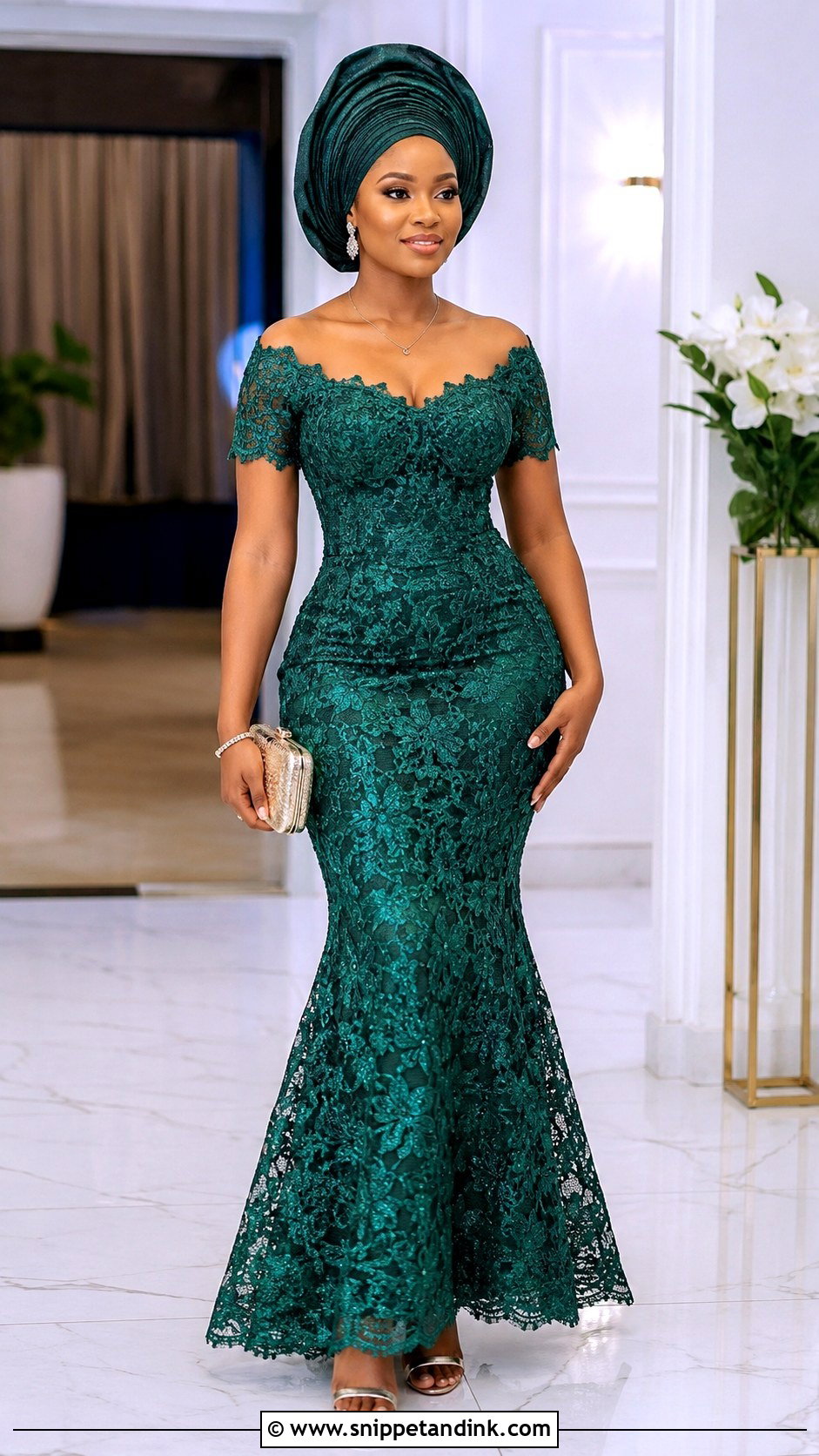
Most mermaid gowns go wrong at the knee, not the waist. If the flare starts too high, the lace bunches when you sit; too low, and you shuffle through the reception. I ask for the flare to begin just above the knee with a little ease through the thigh, then keep the neckline plain (round, square or a soft V) so the eye follows the shape down. A floral or corded lace holds that silhouette better than a very soft beaded one. Add a matching gele and metallic heels and nothing else is needed.
2. Straight Aso Ebi Lace Gown
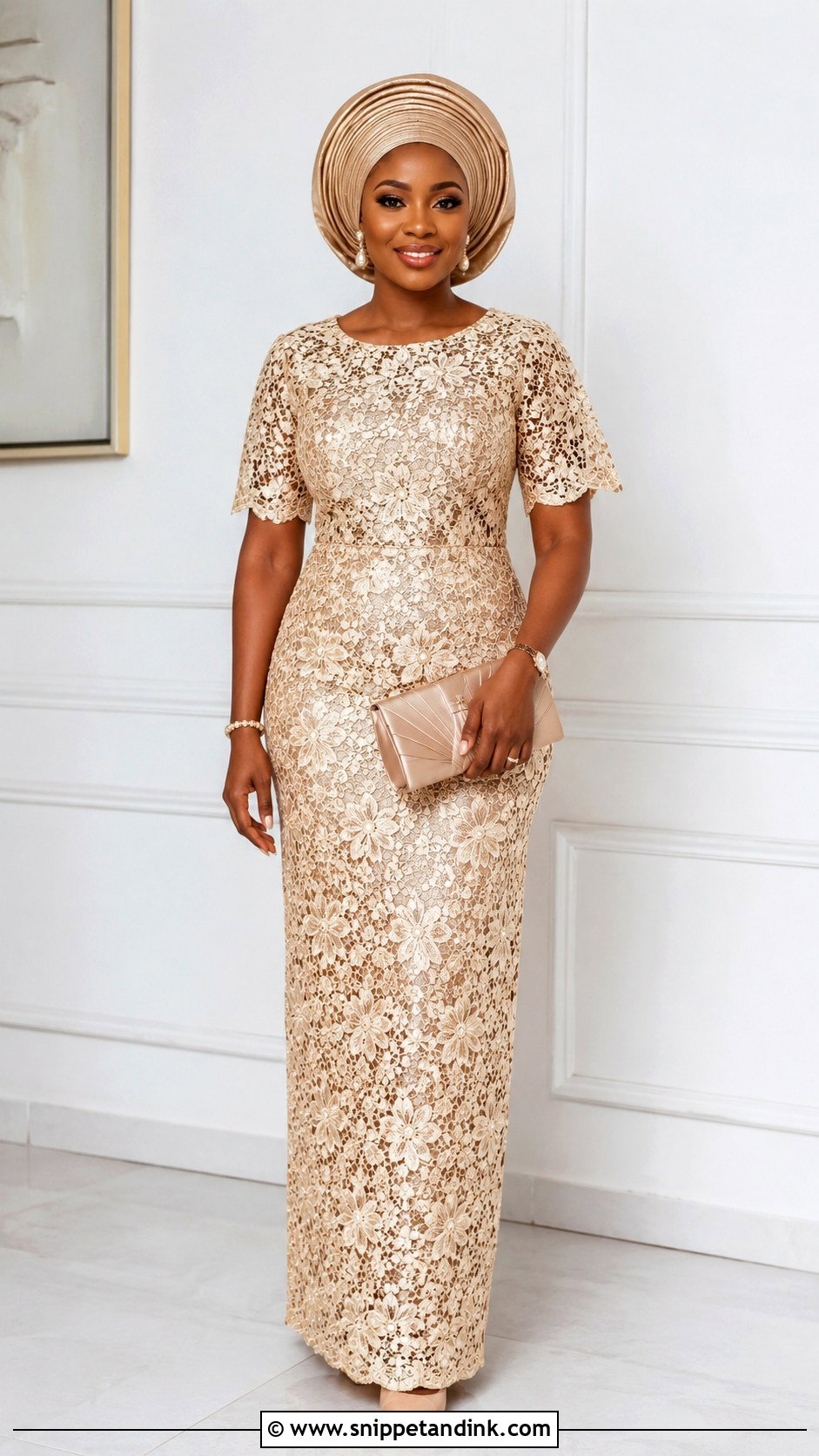
I recommend the straight gown to guests who will be on their feet serving, greeting or chasing children all day. It drops from the shoulder in one column, so the fit lives almost entirely in two places: light darts at the waist and a back slit long enough for stairs. Dry lace and cord lace keep this shape crisp; a very soft sequin lace tends to cling at the hips instead of hanging. A structured clutch and mid-height heels are all it wants. If you dislike tight silhouettes, start here.
3. Off Shoulder Aso Ebi Lace Gown
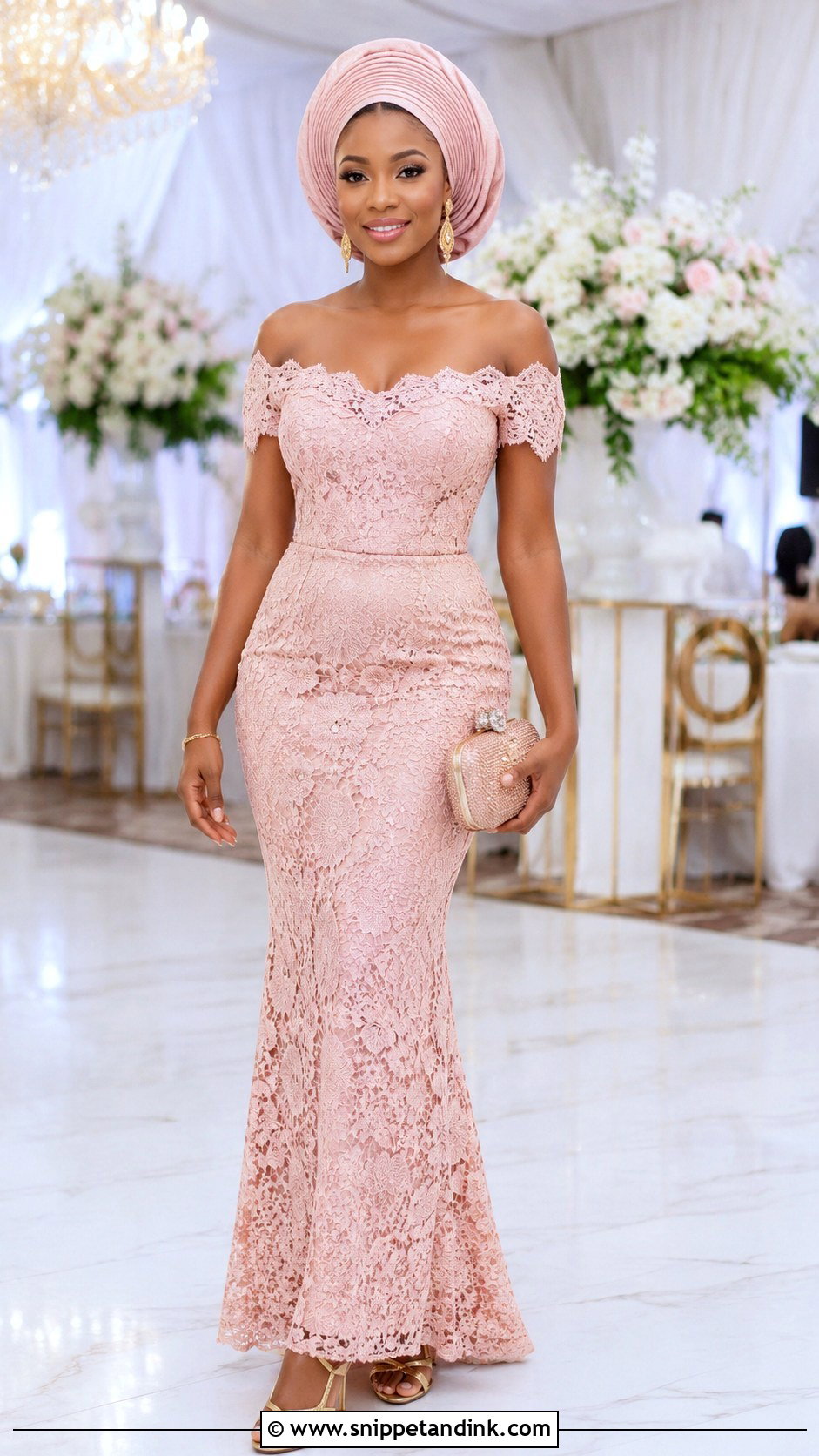
The thing I check first on an off shoulder bodice is whether it stays up when you lift your arms to adjust a gele. That needs a firm band with boning or silicone grip at the top edge, not just a snug fit. Once it’s secure, the bare shoulder frames a tall gele well because there’s no collar competing with the headtie. For more coverage, a fold-over neckline or sheer lace sleeves resting on the upper arm both work. Drop earrings are enough jewelry here.
4. One Shoulder Aso Ebi Lace Gown

One shoulder cuts need a lace with a pattern that can be placed. When I lay out the pieces, I put a motif right on the shoulder strap so the asymmetry looks intentional rather than accidental. Keep the bodice smooth and the skirt plain, whether straight, pencil or with a slight flare, and resist adding a bow or ruffle at the shoulder, which softens the line you paid for. The single sleeve can be fitted or sheer. Pointed heels and a neat gele finish it for a guest or a family celebrant.
5. Long Sleeve Aso Ebi Lace Gown
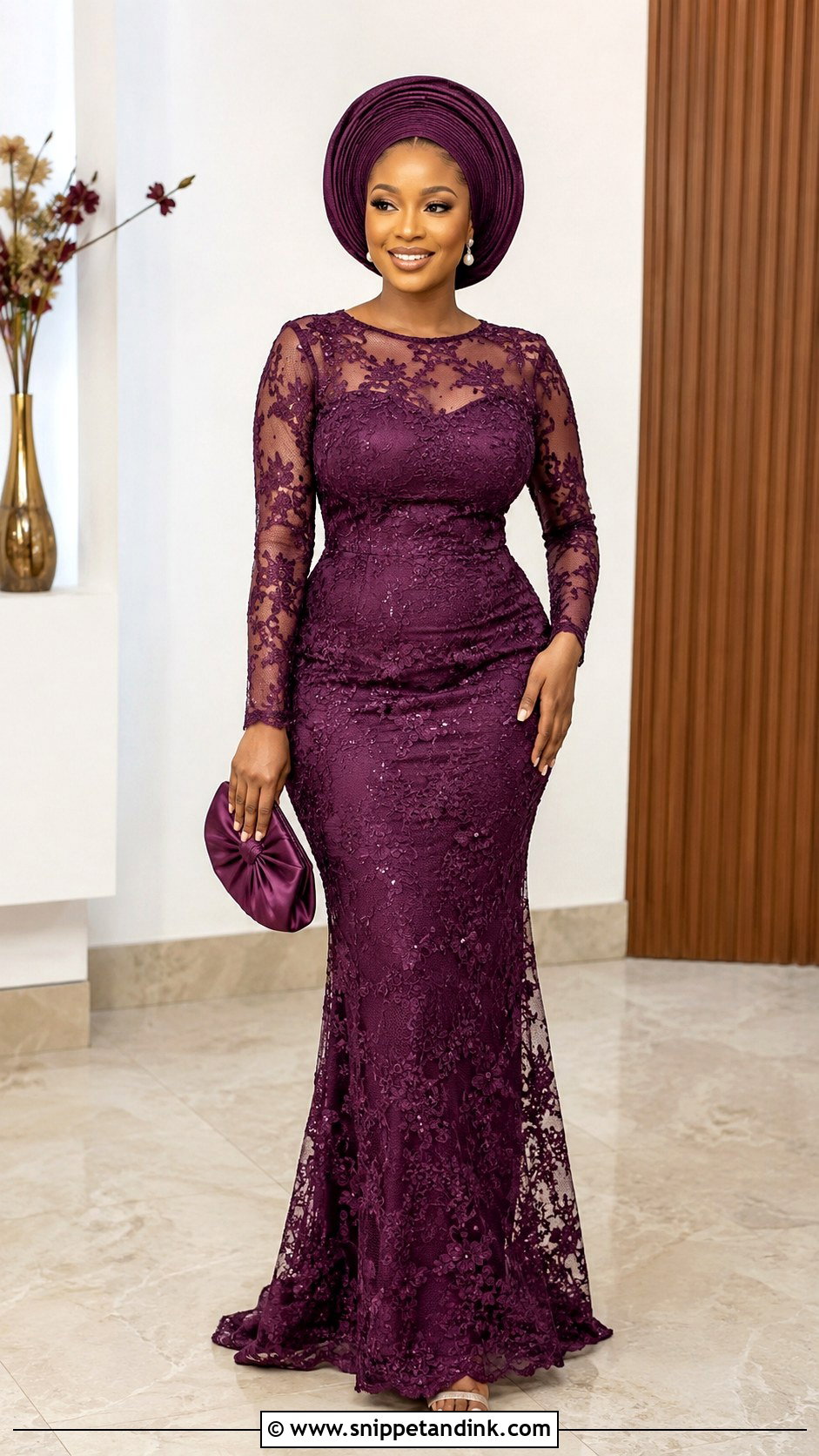
Sheer lace sleeves give coverage without weight, which is why I suggest them for church ceremonies and air-conditioned halls. Line the body fully but leave the sleeves unlined so the pattern shows against the skin. The one fitting detail people forget is the elbow: sleeves cut straight from shoulder to wrist pull when you bend your arm to eat or hold a phone, so ask for a little shaping there. A straight or soft mermaid skirt balances the arm detail, and pearl earrings with a satin clutch keep the rest quiet.
6. Cap Sleeve Aso Ebi Lace Gown
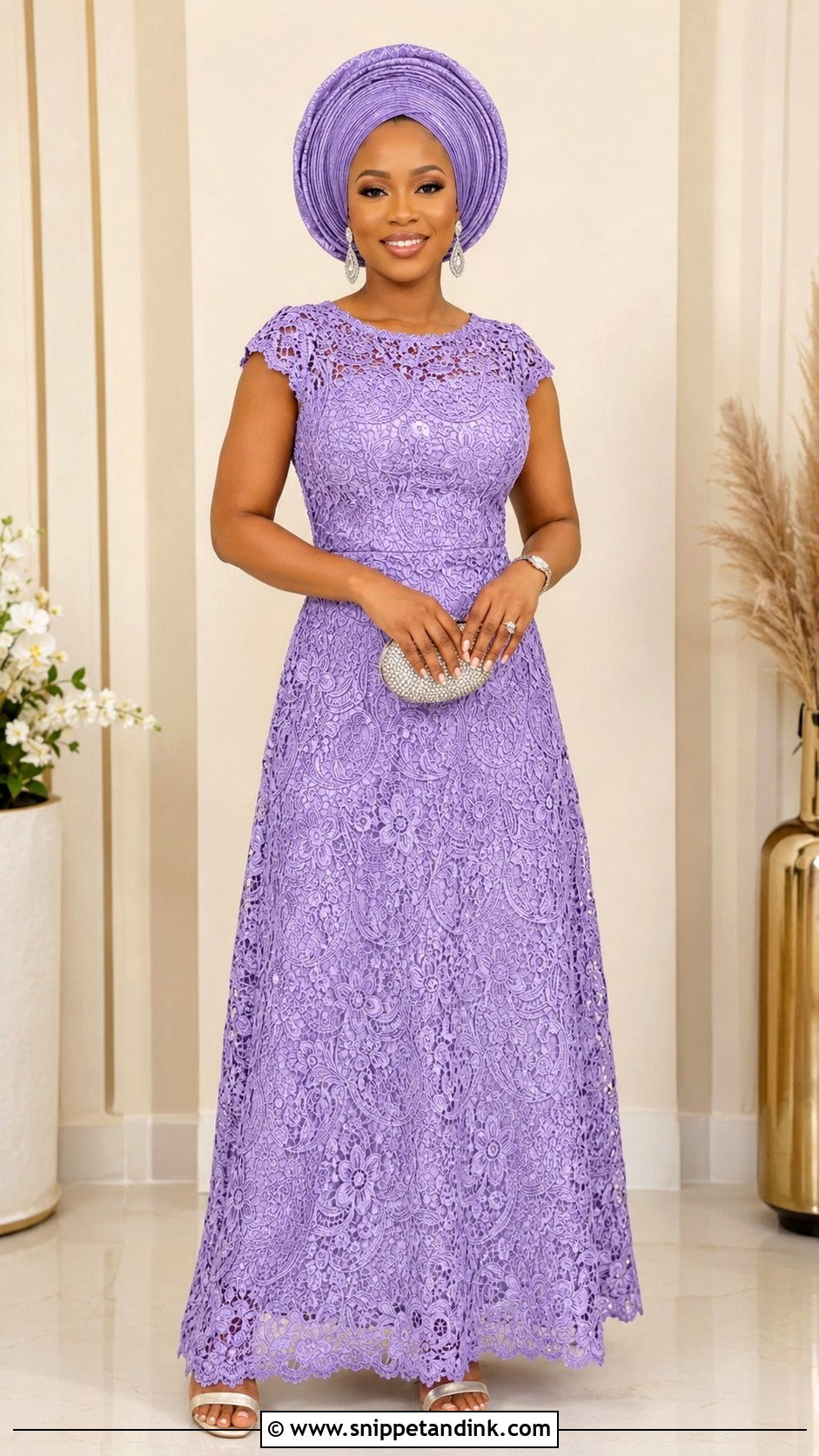
A cap sleeve Aso Ebi lace gown is my usual answer for the guest who wants arms partly covered but hates long sleeves in the heat. The cap should sit on the shoulder bone, not past it, or it cuts across the widest part of the arm. Pair a fitted bodice with a pencil or A-line skirt, and if you want a waist detail, a narrow satin belt is plenty. Champagne, sage and powder blue lace suit this cut because the soft colour lets the sleeve edge read clearly. Open-toe heels and a small clutch complete it.
7. V Neck Aso Ebi Lace Gown
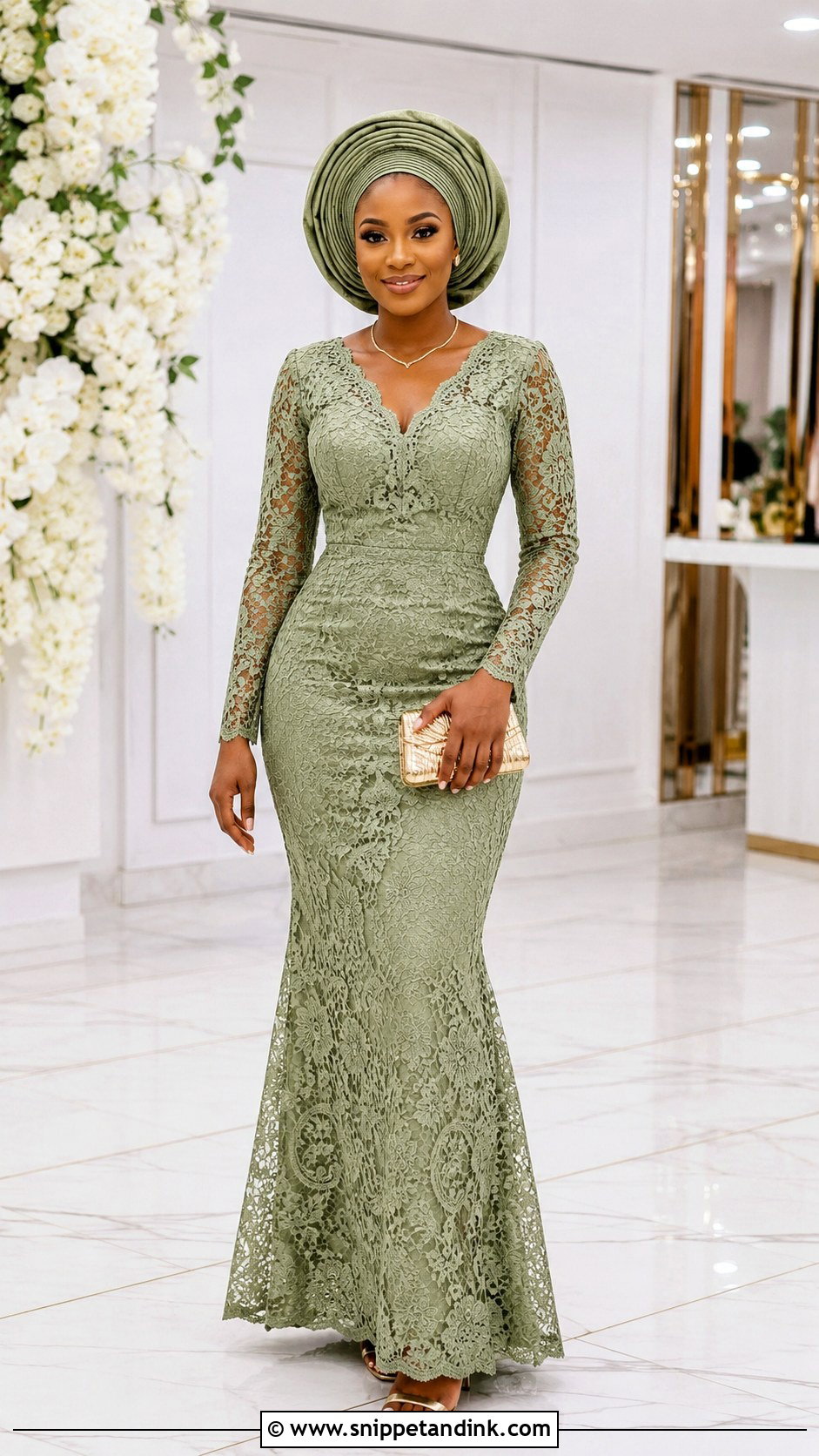
Depth is the real decision with a V neck. A modest V lengthens the neck and gives you room for a slim necklace; a deep one needs illusion net set inside to keep it from gaping when you lean forward to hug relatives. I’d skip extra appliqués if the lace is already beaded, since stones crowding a V make the neckline look busy in photos. It sits happily on both straight and mermaid skirts. Choose heeled sandals and a gele that matches the lace.
8. High Neck Aso Ebi Lace Gown
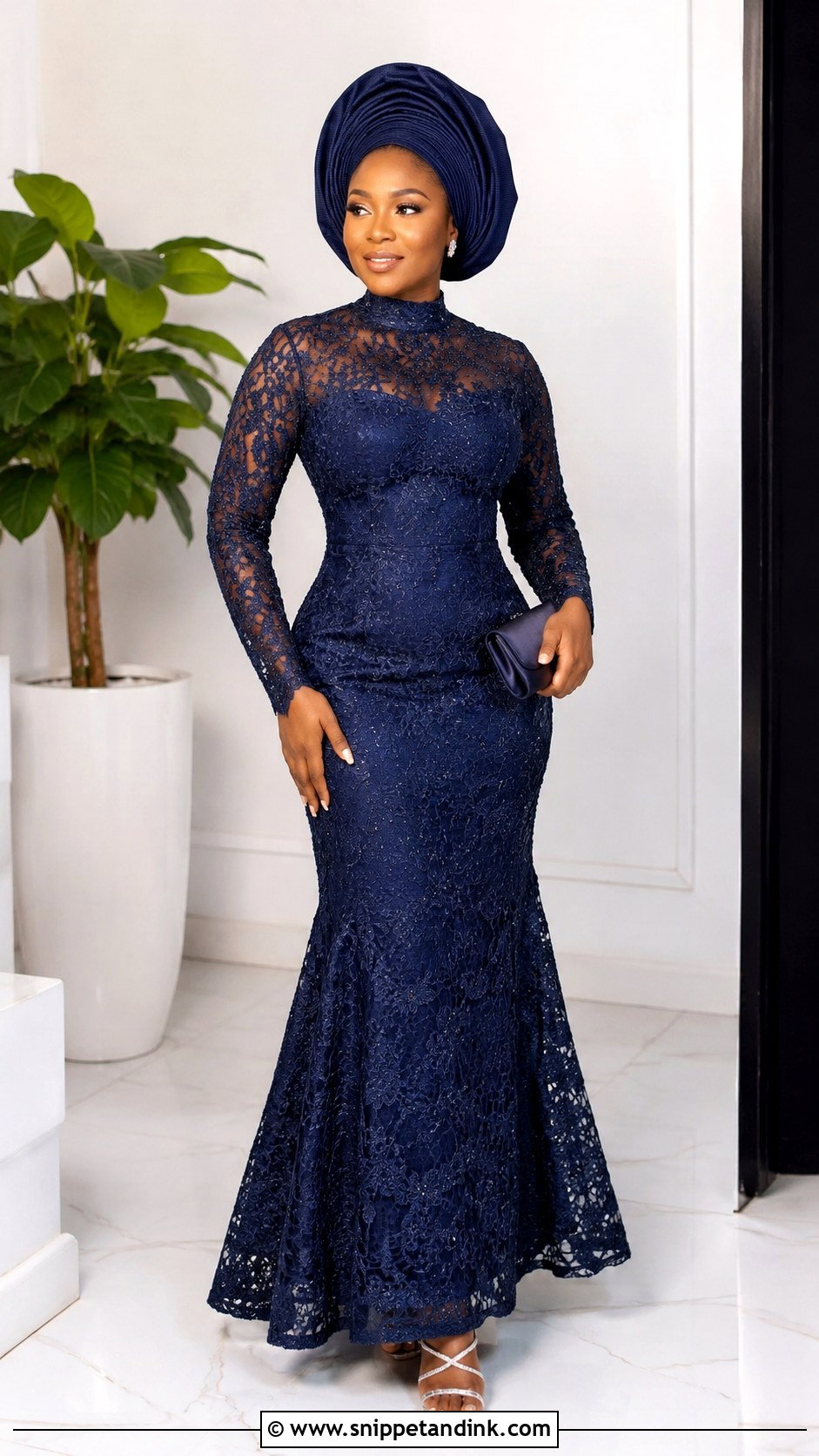
A high neck reads regal on its own, so I keep jewelry to small studs and a bracelet. The structure question is breathing room: a closed collar on a fitted bodice can feel tight by evening, so I cut a little ease at the base of the neck and often use sheer lace across the upper chest while the main body stays lined. A rich, dense pattern suits this cut best because the fabric becomes the focus. Pair it with a straight or trumpet skirt, a structured gele and simple heels.
9. Corset Aso Ebi Lace Gown
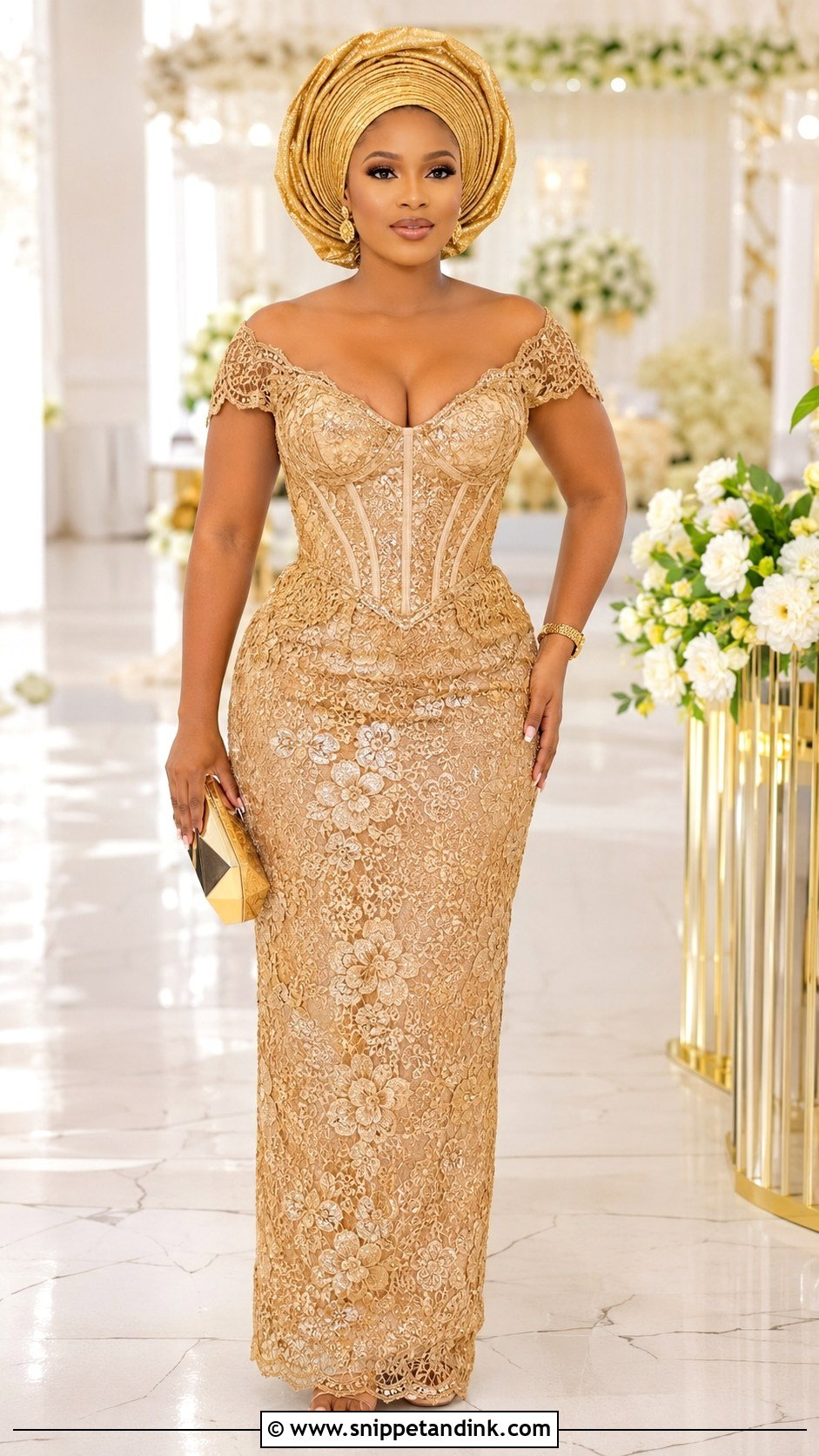
A corset Aso Ebi lace gown stands or falls on measurement. I’d rather see a client in for two fittings than one, because a corset that is fine standing can dig into the ribs once you sit for a three-hour reception. Ask for clean boning channels sewn under the lace so the bones don’t show through as ridges. Lace with small beads or light embroidery adds interest without bulk on top of the structure. Keep the skirt straight, mermaid or A-line to suit your shape, and stick to minimal jewelry.
10. A Line Aso Ebi Lace Gown
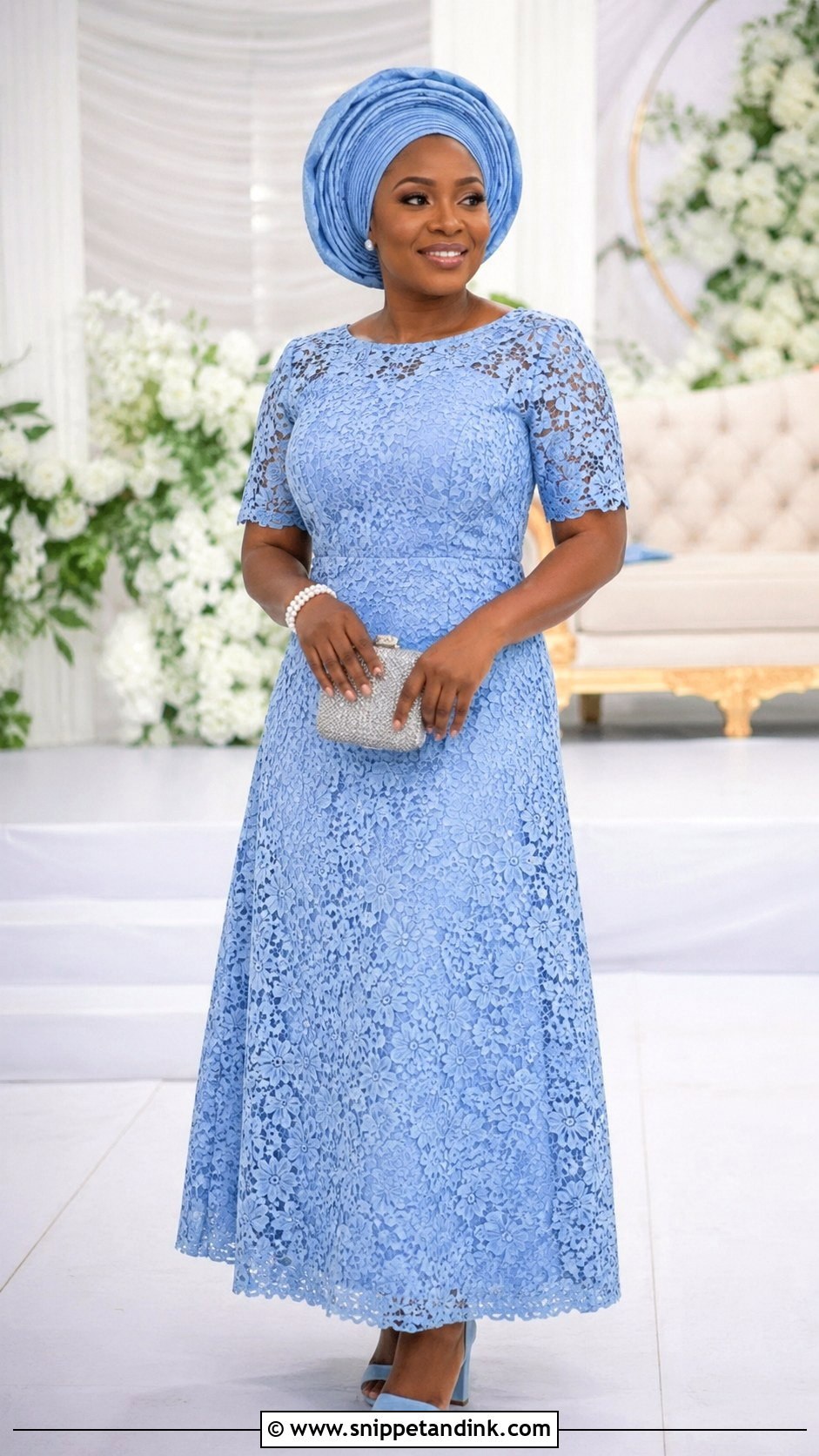
Comfort is where the A-line wins. It fits through the bodice and opens from the waist, so hips and legs are free for dancing, and you can sit cross-legged at a crowded table without strain. That ease also makes it the shape I suggest when mothers, aunties and younger cousins are all sewing from the same lace and want to look coordinated without wearing identical cuts. Short, cap or long sheer sleeves all suit it. Block heels make sense here if you plan to stay on the dance floor.
11. Pencil Aso Ebi Lace Gown
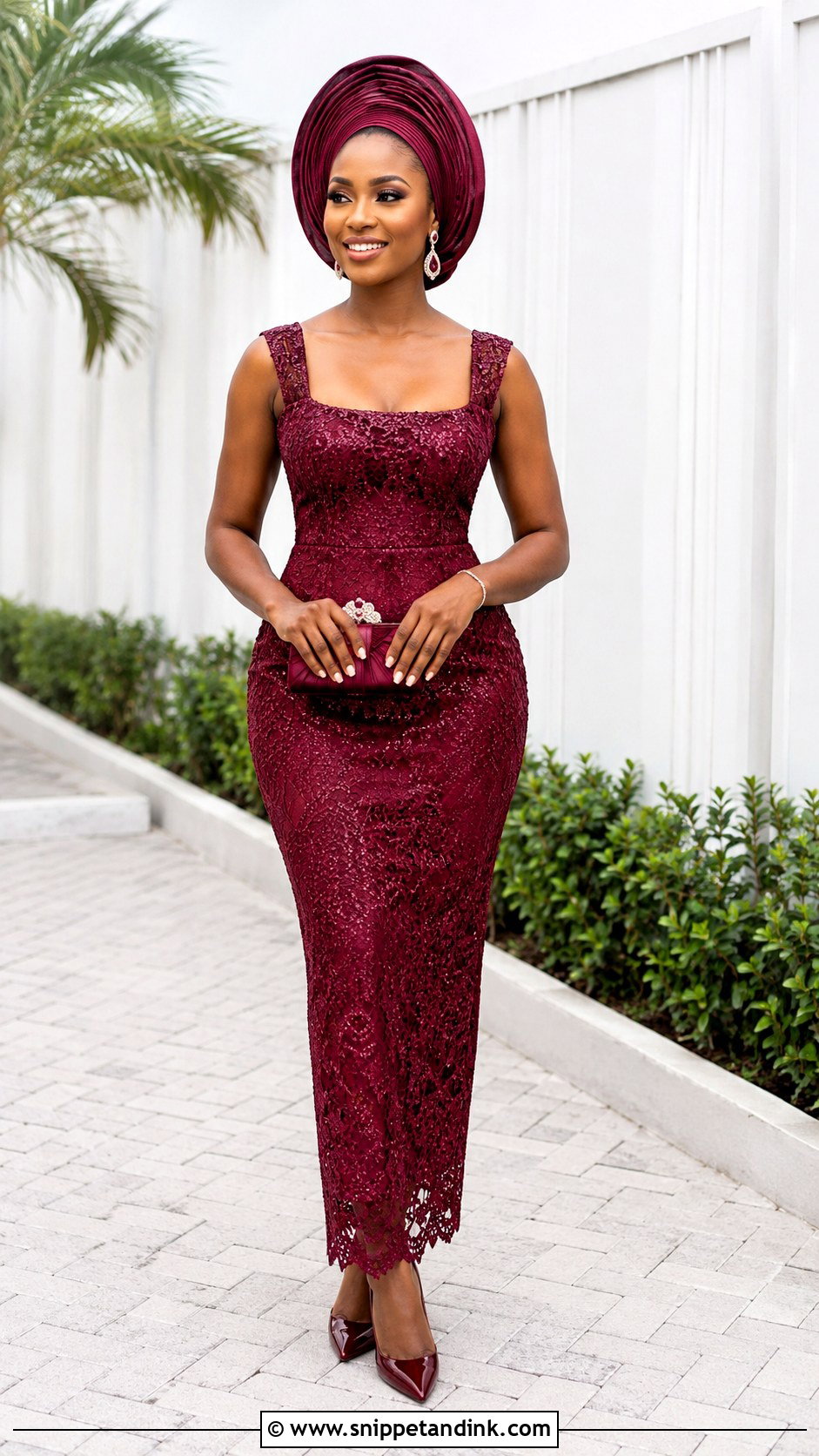
Pencil gowns punish a weak lining. The skirt follows the body closely, so if the lining is thin or cut on the wrong grain, the lace wrinkles across the thighs the first time you sit. I use a firm lining, keep the fit smooth rather than tight, and always add a back or side slit so walking doesn’t turn into small steps. A square, round or illusion neckline balances the narrow skirt. Pointed heels and a structured clutch suit someone who likes a tailored, close-fitting outfit.
12. Side Slit Aso Ebi Lace Gown
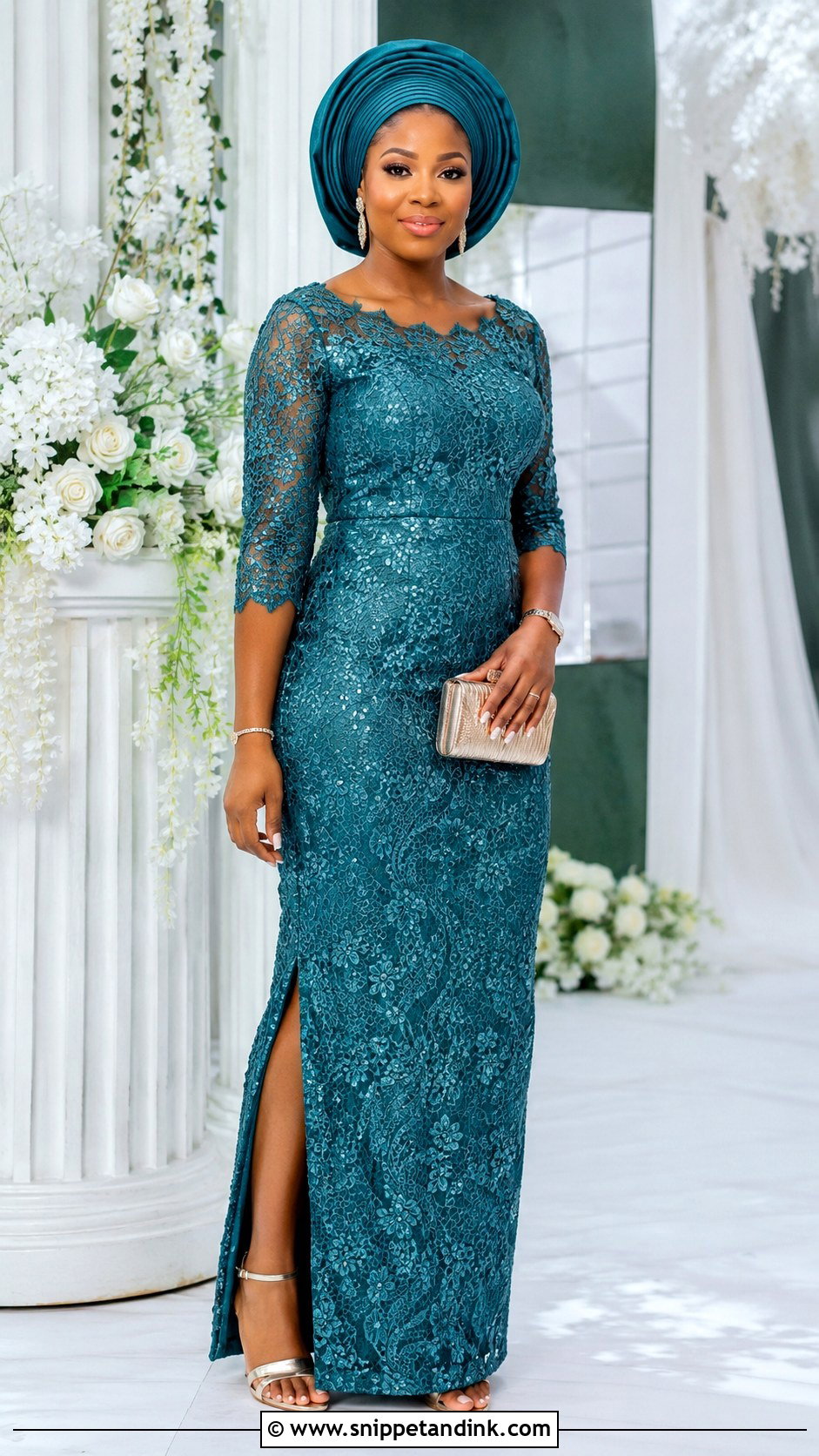
Placement matters more than length on a slit. I mark it standing and then again with the client walking, because a slit that looks modest in the mirror can open well past the knee on a stride. Once it is in the right place, keep sleeves and neckline quiet so the slit stays the single feature. Reinforce the top of the opening with a bar tack, or the lace will tear there by the end of the night. Heeled sandals show nicely through the opening, and a matching gele finishes the look.
13. Peplum Aso Ebi Lace Gown
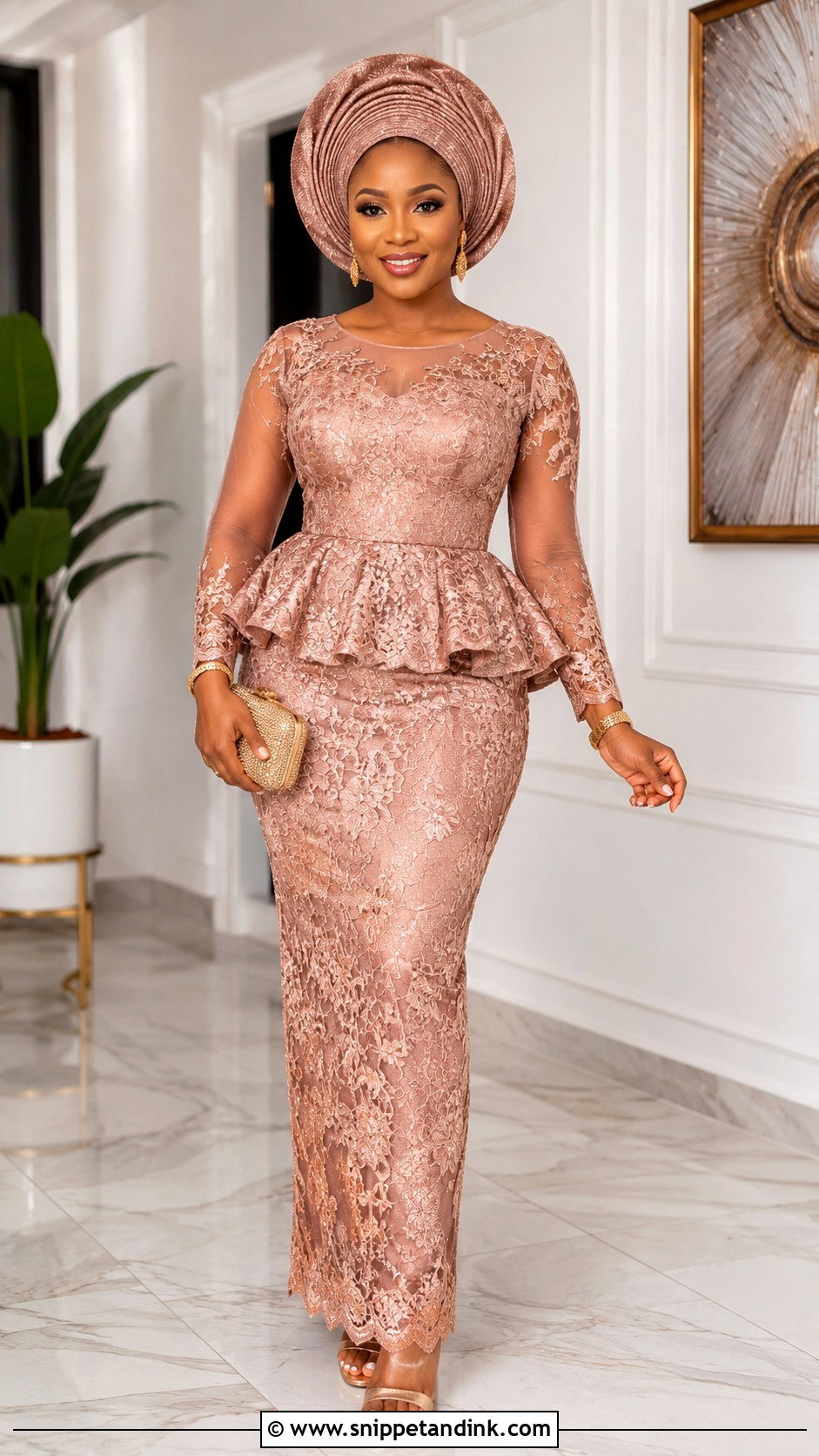
A peplum Aso Ebi lace gown is the cut I reach for when someone wants softness over the midsection without a loose dress. The trick is keeping the peplum short and lined so it flips out slightly rather than collapsing against the hip; an unlined lace peplum goes limp within an hour. It sits over a pencil or straight skirt, and pairs well with a round neckline, cap sleeve or three-quarter sleeve. Choose a gele in the lace colour or one shade deeper.
14. Three Quarter Sleeve Aso Ebi Lace Gown
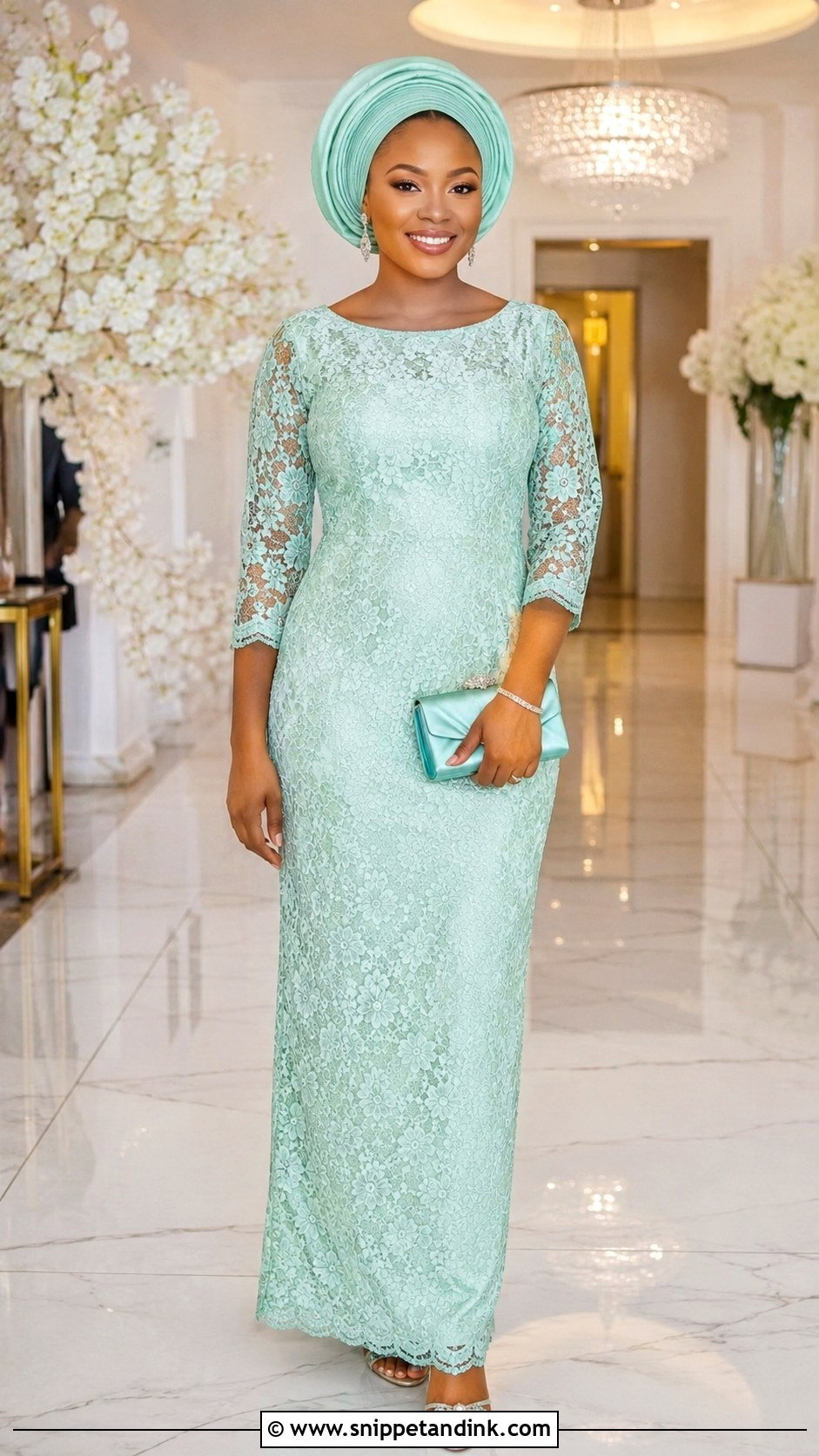
Three-quarter sleeves end where bangles start, which is exactly why I like them for owambe guests who wear stacked gold. They give coverage without the heat of a full sleeve and don’t drag across plates at the buffet. On a busy lace, keep the neckline plain and let the sleeve pattern show; sheer sleeves over a lined body give the nicest contrast. This sleeve suits straight, pencil, A-line and soft mermaid gowns, and it won’t look dated in a few years.
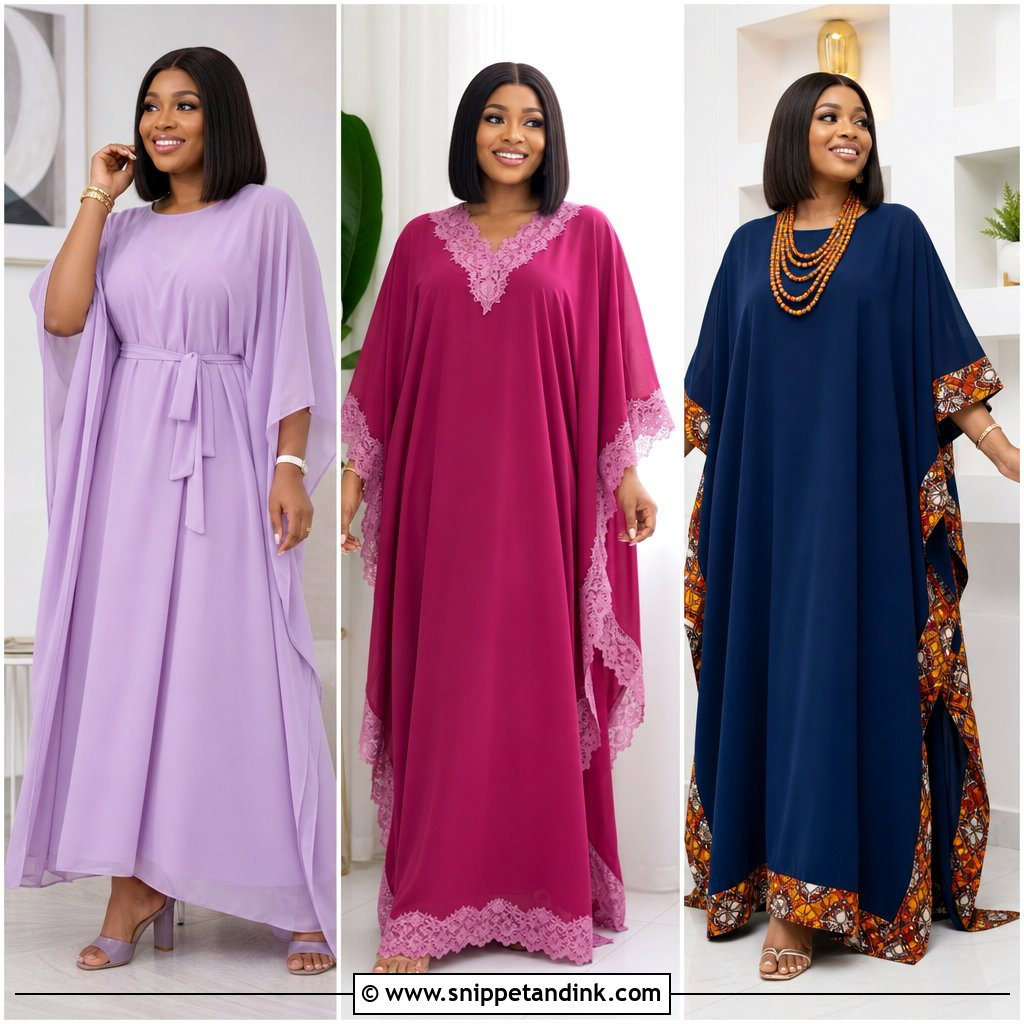
15. Square Neck Aso Ebi Lace Gown

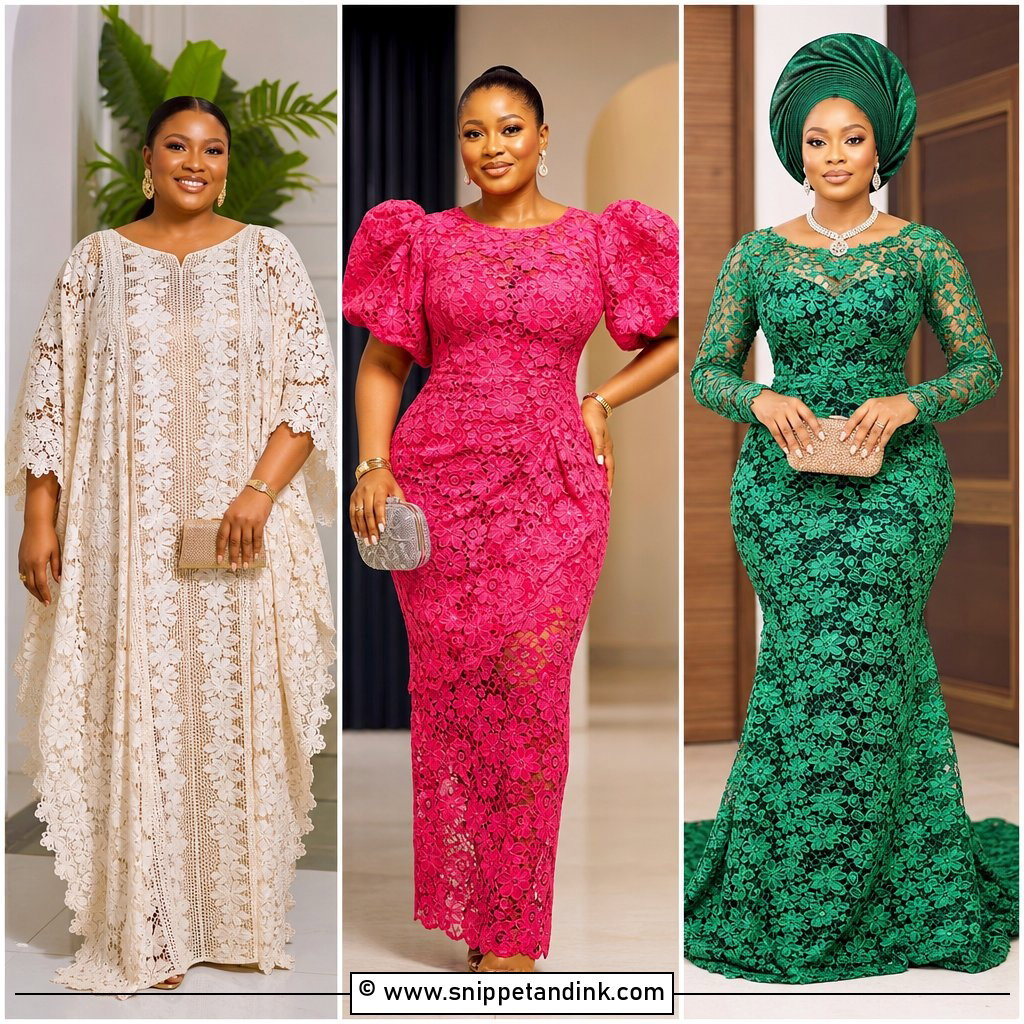
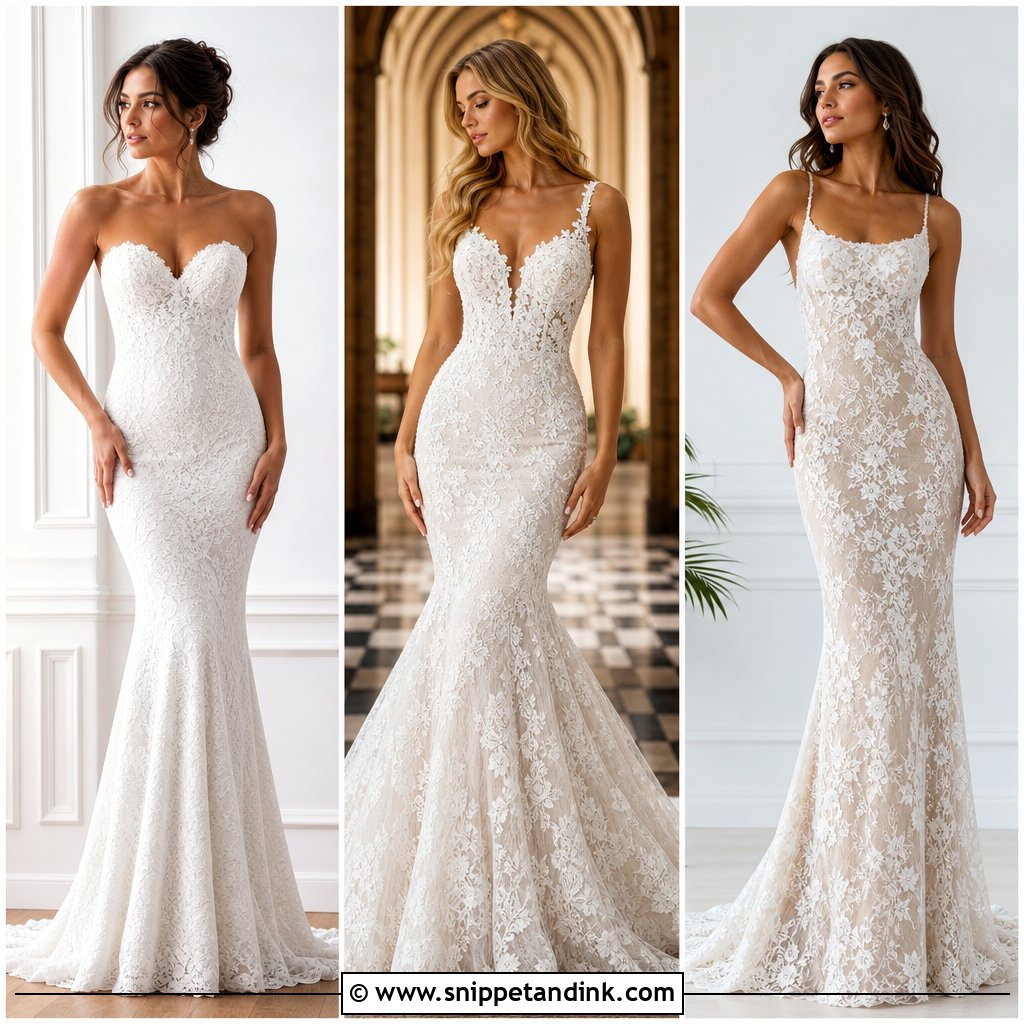
Collarbones carry the square neck, so I set the corners right at their width. Too narrow and the neckline looks pinched; too wide and straps slip off the shoulder. With a fitted bodice and a straight or mermaid skirt it looks polished, and a structured inner corset helps if you want more support. Because the line is horizontal, a tall gele balances it well. Drop earrings and a satin clutch are enough.
16. Wrap Aso Ebi Lace Gown
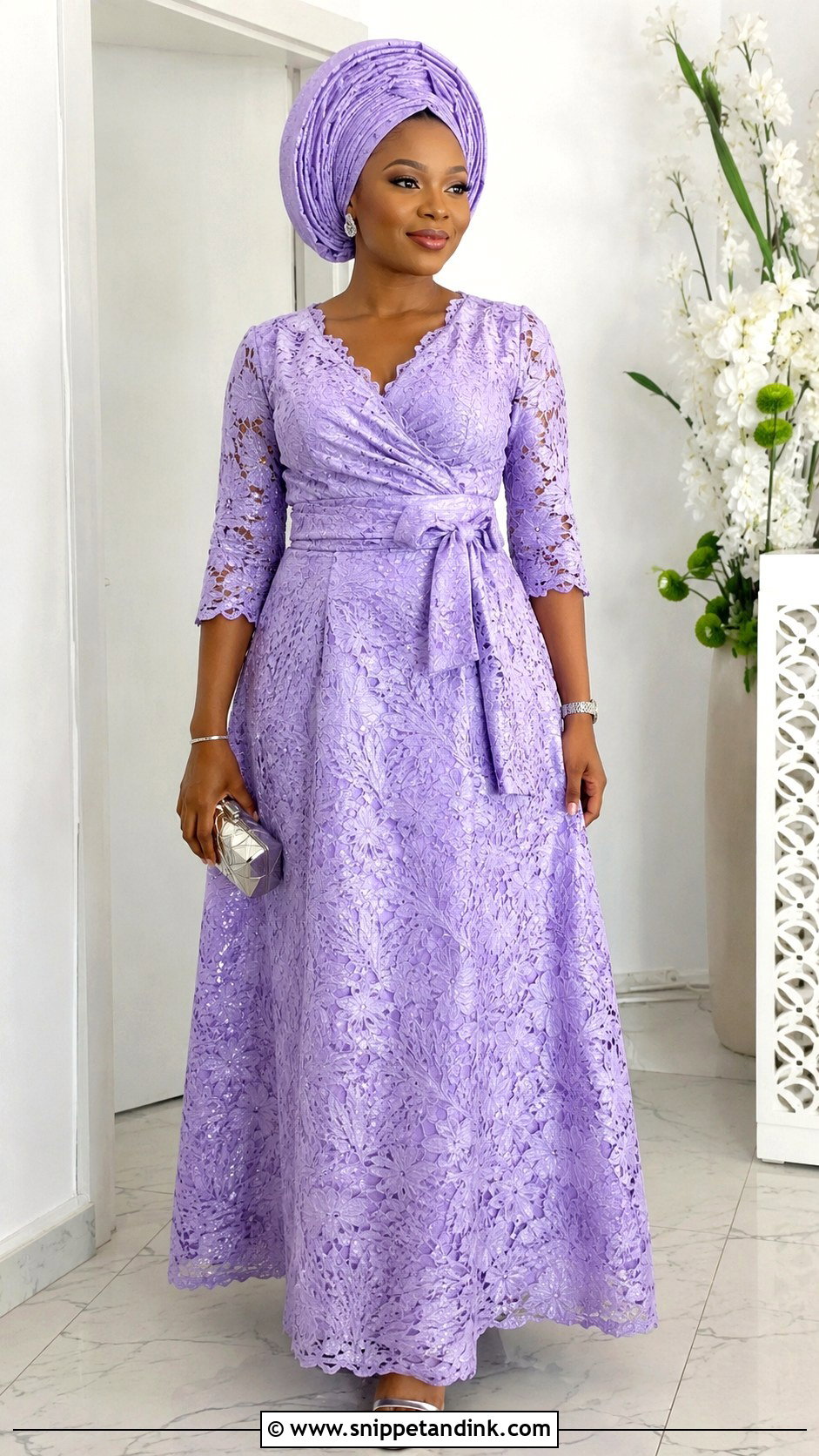
Wrap bodices flatter a lot of figures, but lace is not the easiest fabric to wrap. Heavily corded lace gets too thick where the layers cross, so I either choose a lighter lace for this style or build the wrap from a single layer over a lined base. Keep the cross smooth with few gathers and let it fall into a straight or A-line skirt. It is a good alternative if a corset feels too rigid. Heels in gold, silver or a shade pulled from the lace work best.
17. Bell Sleeve Aso Ebi Lace Gown
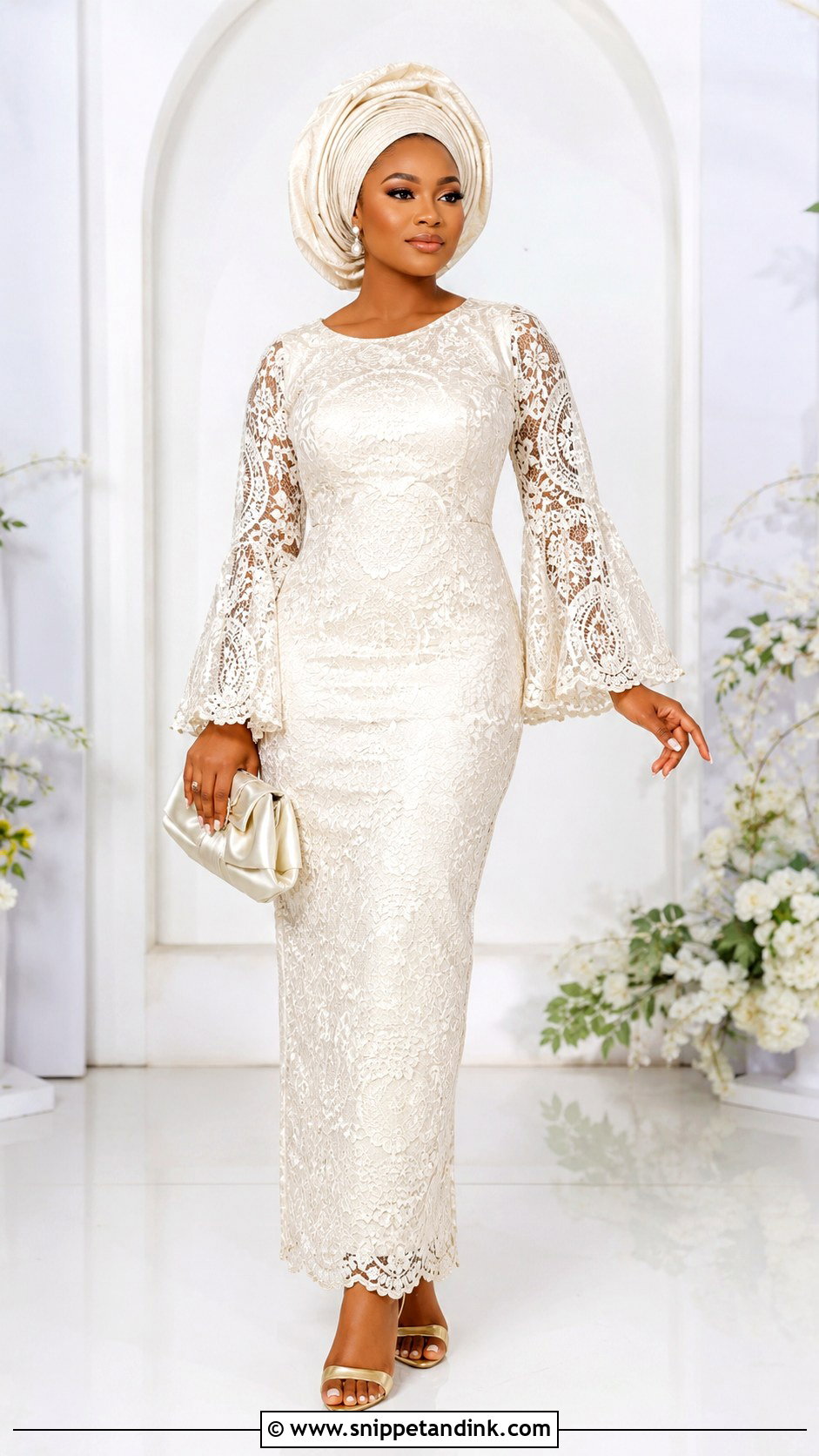
Bell sleeves are a detail, so the rest of the gown has to stay plain: fitted bodice, straight or mermaid skirt. I keep the flare moderate, because a very wide bell dips into soup bowls and catches on chair backs during a long reception. Sheer lace suits the sleeve well since the pattern looks delicate as it moves. Skip bracelets entirely; they fight the sleeve. Heeled sandals and a matching gele are enough for anyone who likes a little drama at the wrist.
18. Short Sleeve Aso Ebi Lace Gown
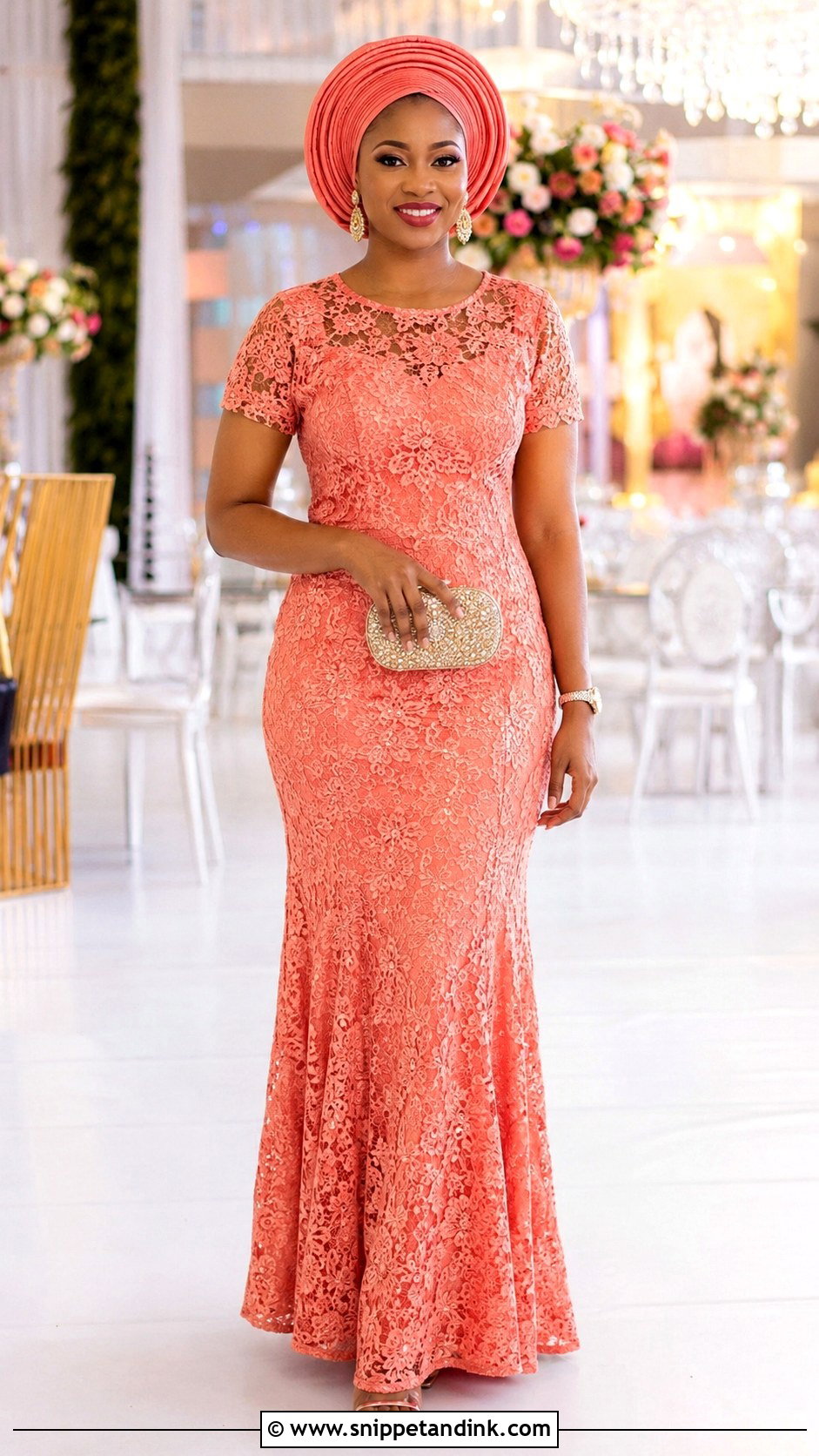
Heavy embroidered lace can weigh more than you expect once a gown is lined, and short sleeves are my quiet fix for that. They take bulk off the arms, keep you cooler, and still give some coverage. The skirt can be straight, pencil, A-line or slightly flared, with a round neck or modest V to keep it classic. A bold gele and statement earrings make it festive. Wear shoes you can stand in for six hours.
19. Illusion Sleeve Aso Ebi Lace Gown
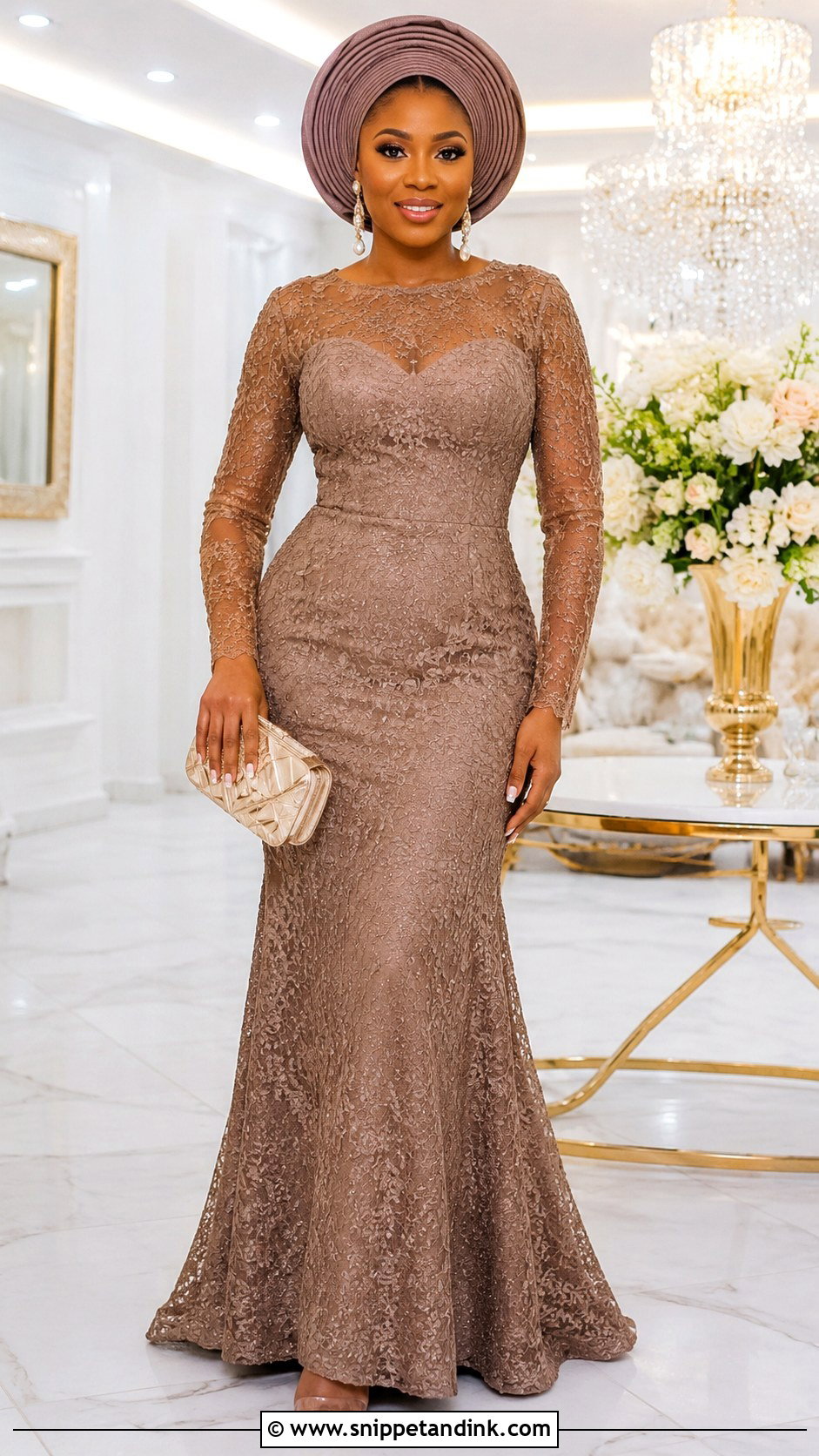
An illusion sleeve Aso Ebi lace gown only works if the net disappears. I hold swatches of mesh against the inside of the client’s wrist in daylight before cutting, because a net even a shade off reads grey or pink in flash photography. Line the body fully for structure and let the lace motifs float on the sleeve. High neck, round neck and sweetheart necklines all suit it, with a simple mermaid or straight skirt. Metallic heels and a gele finish it.
20. Sweetheart Neck Aso Ebi Lace Gown
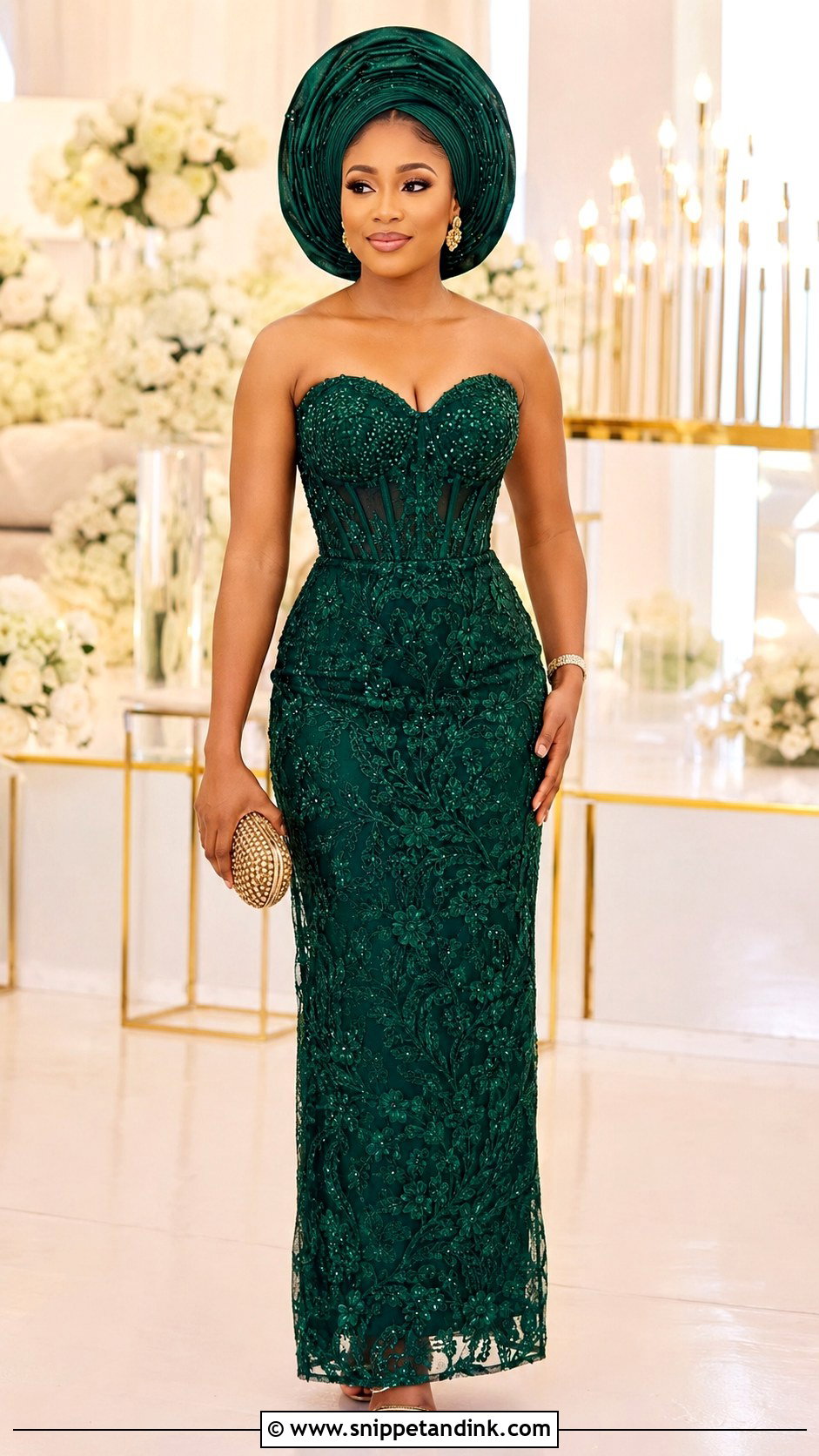
Sweetheart necklines need structure underneath, or the curve flattens out by the afternoon. I build them on a corset bodice and keep beading away from the edge, since stones along that curve scratch the skin and pull the lace down. Want more coverage? Lay sheer lace over the sweetheart shape for an illusion effect. A fitted waist with a straight or mermaid skirt keeps it balanced, and the open neckline leaves room for a gele. Delicate earrings and heeled sandals complete it.
21. Floor Length Aso Ebi Lace Gown
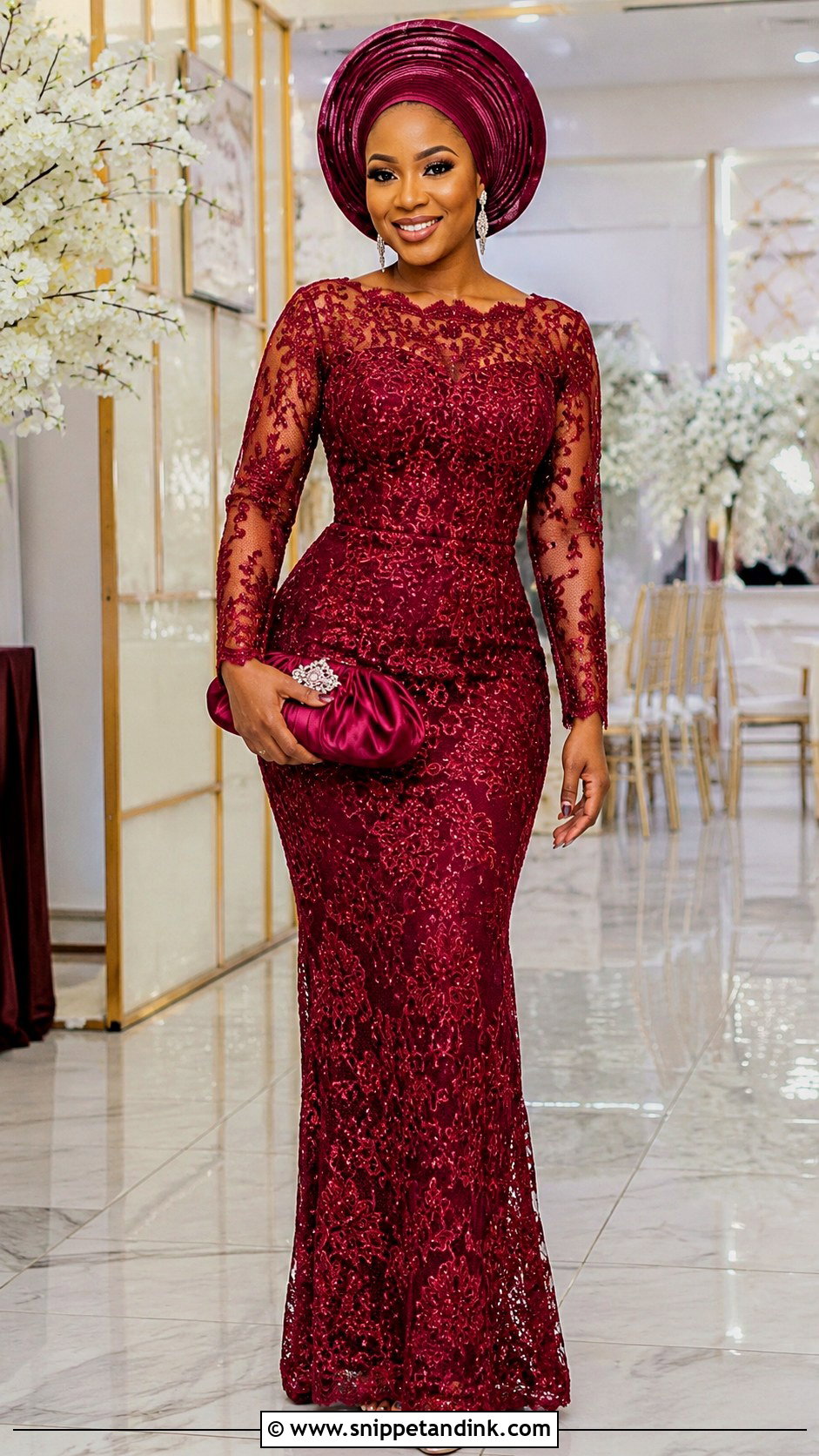
Hem length is decided by your shoes, so bring the exact pair to every fitting. I aim for the hem to just kiss the floor in those heels; any longer and it frays from being stepped on, any shorter and it looks borrowed. Full length suits straight, A-line and mermaid shapes, and deep lace colours such as emerald, wine and navy look rich at this length. Keep sleeves and neckline simple so the gown doesn’t feel heavy, and let a well-tied gele add the height.
22. Sequin Lace Aso Ebi Gown
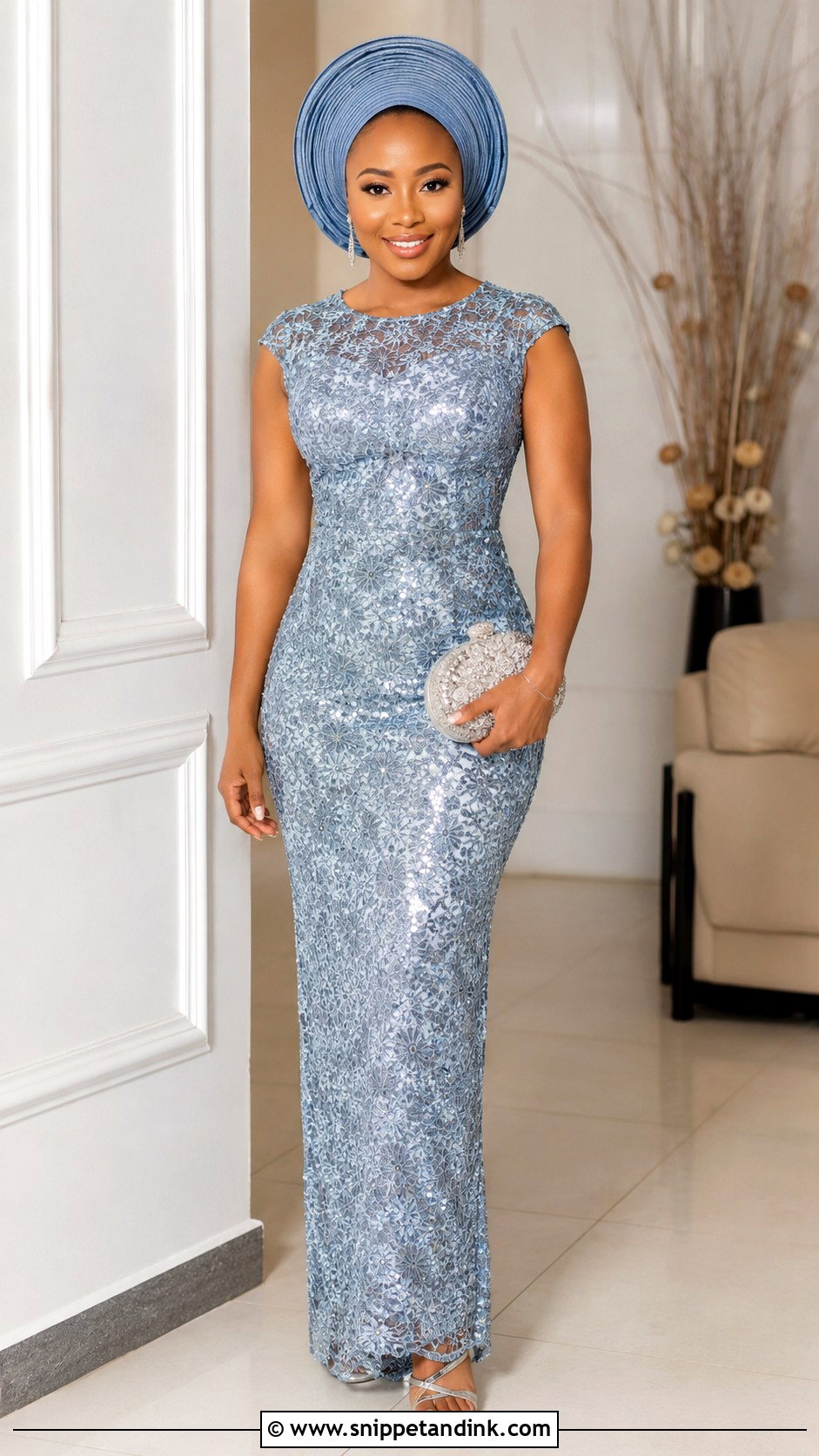
Sequin lace already shines, so I give it the plainest cut I can: straight, pencil or a soft mermaid, with a round neckline or cap sleeve. Sequins also have a practical quirk. They scratch the inner arm where it rubs the bodice, so I line the sleeve area or keep sleeves sheer and sequin-free underneath. Leave out ruffles, bows and extra stones. Neutral accessories and a gele in the same colour family stop the sparkle from looking overdone.
23. Dry Lace Aso Ebi Gown
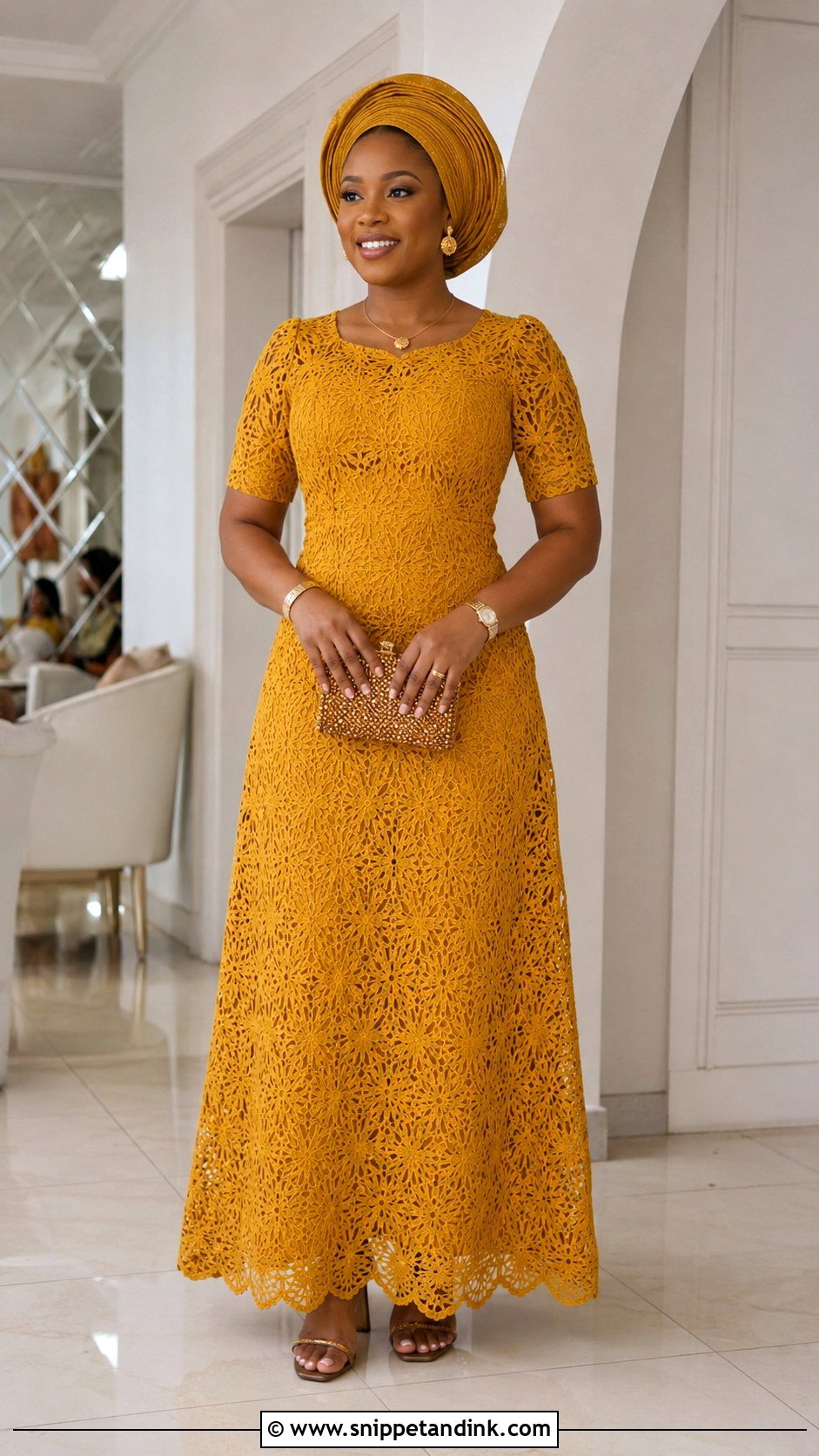
Dry lace has body, which is why it holds a crisp straight, A-line or pencil shape with very little help. The trade-off is stiffness. I add comfort room at the hips, upper arms and knees, because dry lace doesn’t give the way softer lace does when you sit. A modest neckline and a smooth skirt are enough; heavy embellishment hides the pattern. It is also the lace I’d suggest if you want to repeat the same simple pattern in a second colour for another event.
24. Cord Lace Aso Ebi Gown
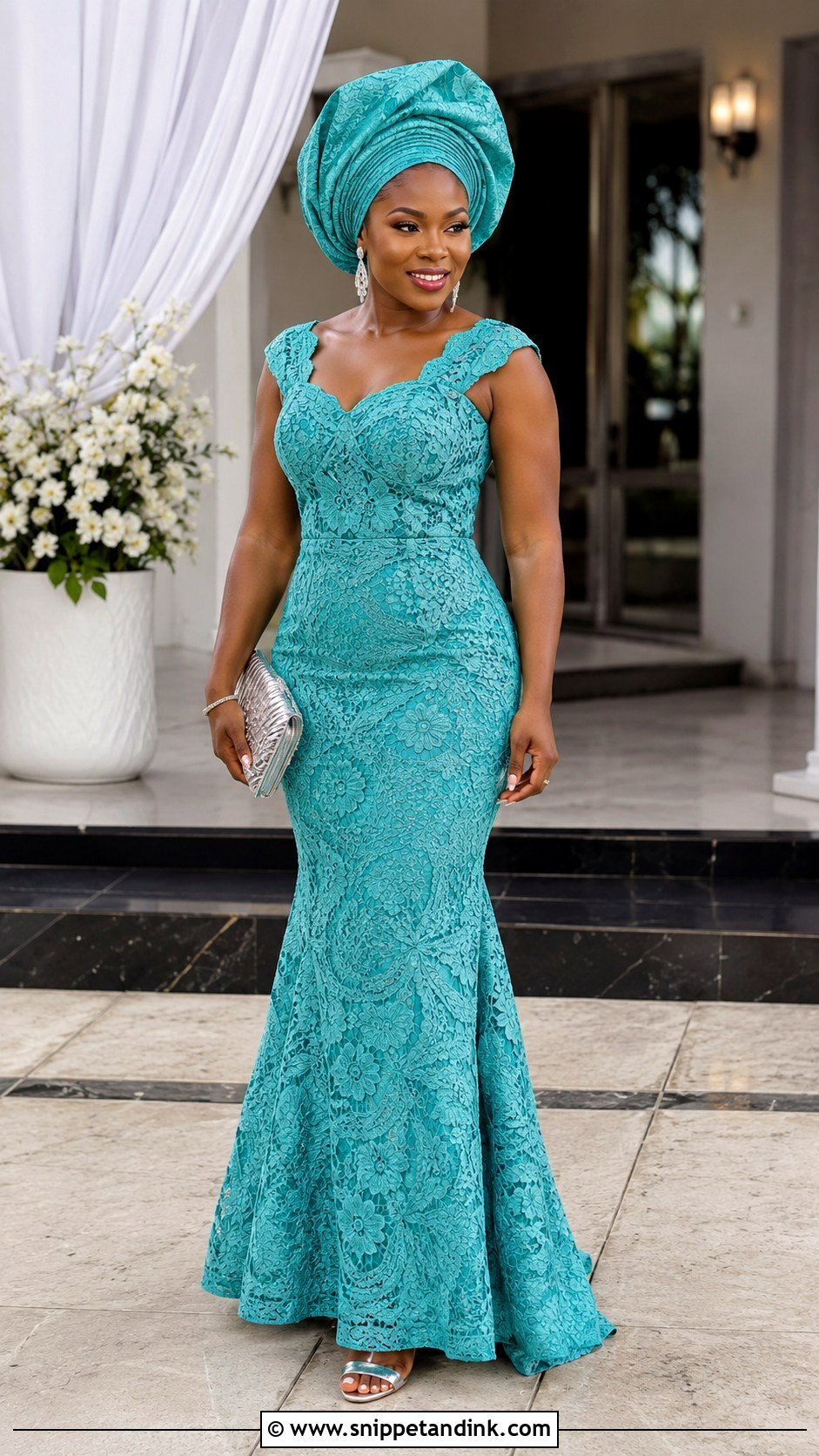
A cord lace Aso Ebi gown makes a simple cut look expensive because the raised cording catches light along its edges. The care point is pressing: never iron cord lace flat on its face, or the cord crushes. I press from the back over a thick towel. Straight, mermaid and peplum gowns all suit it. A gele in aso oke or satin works well against the texture, with heels in a soft metallic, and that is all it needs.
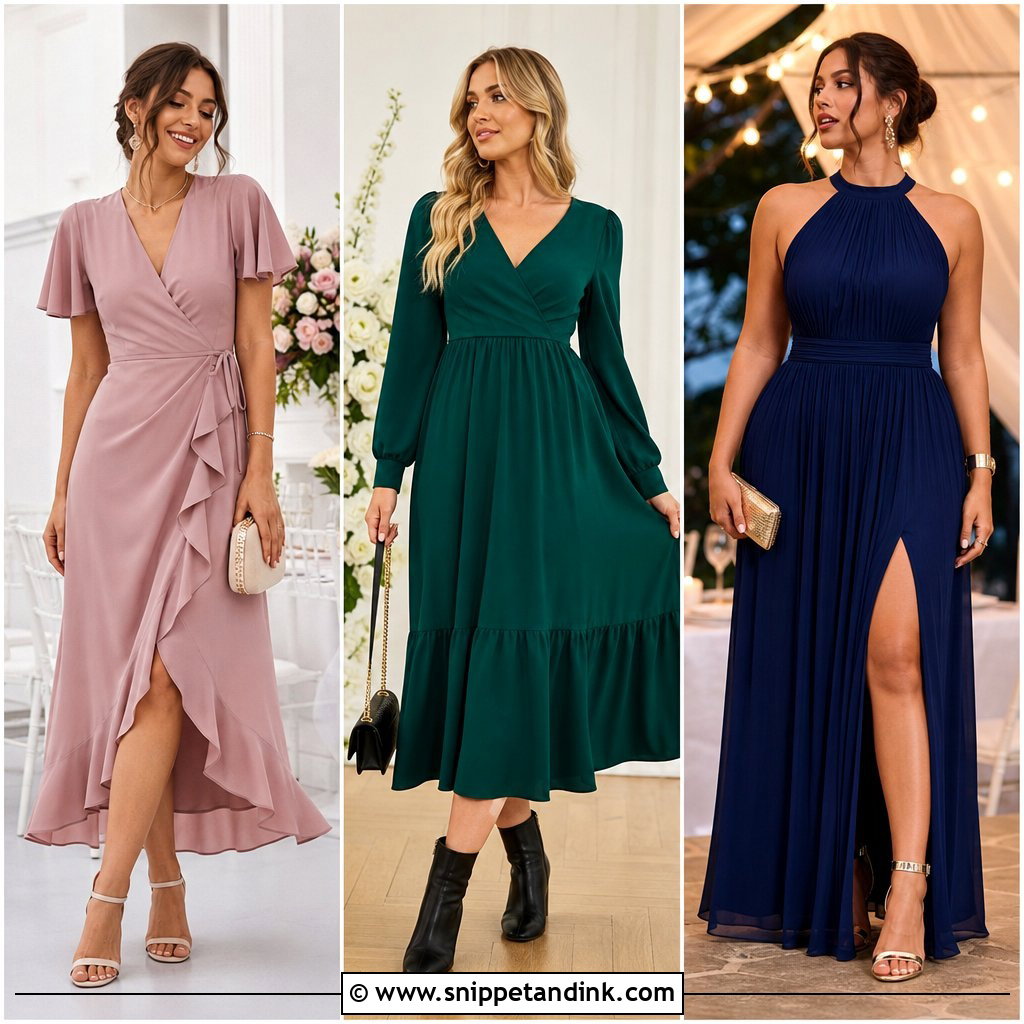
25. Simple Aso Ebi Lace Gown With Gele
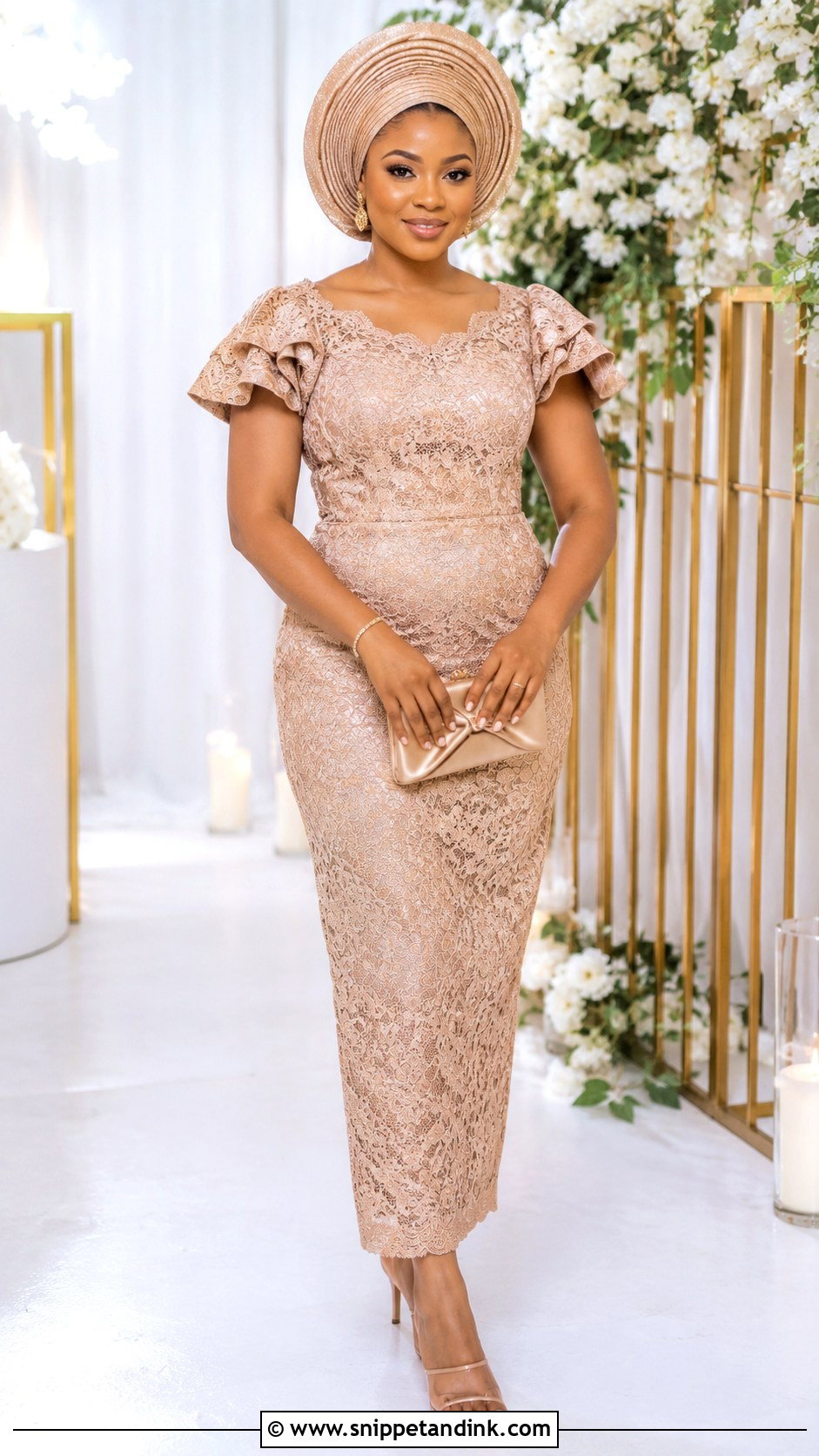
The gele pulls the whole outfit together, so I treat it as part of the gown, not an accessory. Match it to the lace or pick a soft contrast: champagne lace with a gold gele, emerald with mint, navy with silver. The bigger and more structured the gele, the plainer the gown should be, whether straight, mermaid, A-line or pencil. Let the clutch, earrings and heels repeat one colour from that pairing rather than introducing a third.
How a Lace Gown Survives a Long Owambe
Parties like these run for hours, and lace takes a beating. The weak points are always the same: the top of the slit, the zip, sleeve seams at the underarm, and any loose bead thread. Before the day, I run a hand over every beaded area and tie off threads that have started to unravel, because one loose strand can drop a row of beads on the dance floor.
What to carry in your clutch
- A few safety pins in a shade close to your lace, for a slipped strap or popped hook.
- A small needle already threaded in the lace colour.
- Blotting papers, since heat and dancing will shine the face long before the gown fails.
After the party
Don’t put a beaded or cord lace gown in a washing machine. Spot clean food marks gently from the back, then take it to a dry cleaner who handles embellished fabrics. Store it folded with tissue between the layers rather than hanging, as the weight of the beads stretches lace on a hanger over the months. That way the gown is ready for the next family celebration, maybe with a new gele.
Fit Before Frills, Every Time
If I had to give one rule for simple lace gowns, it is that fit carries the look. A clean neckline, a proper lining and a comfortable seat at the reception matter more than any extra appliqué. Pick the cut that matches how you’ll spend the day, from a mermaid to a long sleeve, and leave the lace to supply the texture. Then let the gele, shoes and clutch agree on one colour story, and you will be comfortable from the first photo to the last dance.
You'll Like These Ideas:




Leave a Reply