
A good gown can still look wrong if the shoes are the wrong height, the bag is too big or the hem drags. When I style women for black-tie weddings and galas, I build the outfit as one piece, starting with the silhouette and fabric and then working out to shoes, jewelry and a layer for the walk to the car. The looks below cover satin, chiffon, tulle, velvet, sequins and clean crepe, with modest options and cuts for petite and plus-size figures. Each one comes with notes on what to pair it with and what I check at the fitting, so you can put together an outfit that suits the occasion rather than a dress with accessories added at the last minute.
How Each Fabric Behaves Four Hours Into an Event
Most gowns look right in the fitting room. The difference shows after a car ride, a seated dinner and a few hours on the dance floor. I steer clients by how the fabric will hold up, not just how it looks on the hanger.
- Satin creases across the lap the first time you sit; heavier duchess satin recovers better than thin polyester satin.
- Crepe barely creases and drapes close to the body, which makes it the safest choice for a long day.
- Chiffon breathes in heat but snags on jewelry and Velcro; it is light enough that wind lifts it.
- Velvet keeps you warm and crushes where you sit, so it suits winter and shorter seated events.
- Sequins and metallics hide creases completely but can scratch under the arms and trap heat.
Match the fabric to the venue too. An outdoor summer wedding in velvet is uncomfortable, and silk chiffon in a cold stone church needs a proper layer.
1. Black Satin Gown Outfit
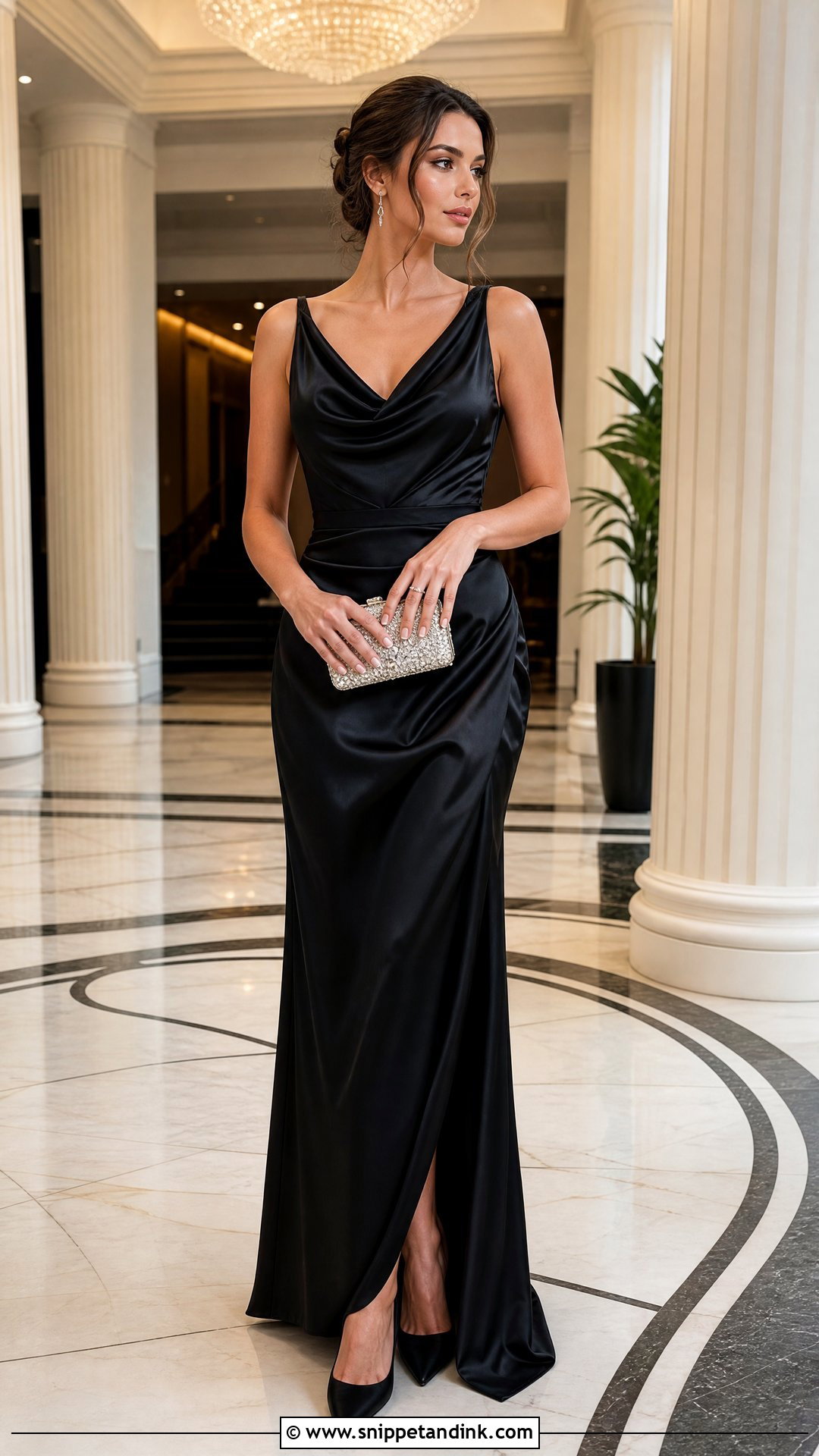
Black satin looks expensive with almost no styling, because the fabric does the work: its sheen picks up every fold, so even a plain floor-length gown has depth in photos. That sheen also shows creases from sitting, so a draped neckline and fluid skirt hide wear better than a stiff, flat front. Pointed black pumps or fine strappy heels keep the line long. A silver crystal clutch and small drop earrings add enough light. Wear your hair in a low bun or side-parted waves, and bring a fitted black coat or wrap for cold evenings, as satin gives almost no warmth.
2. Red Off-Shoulder Gown Outfit
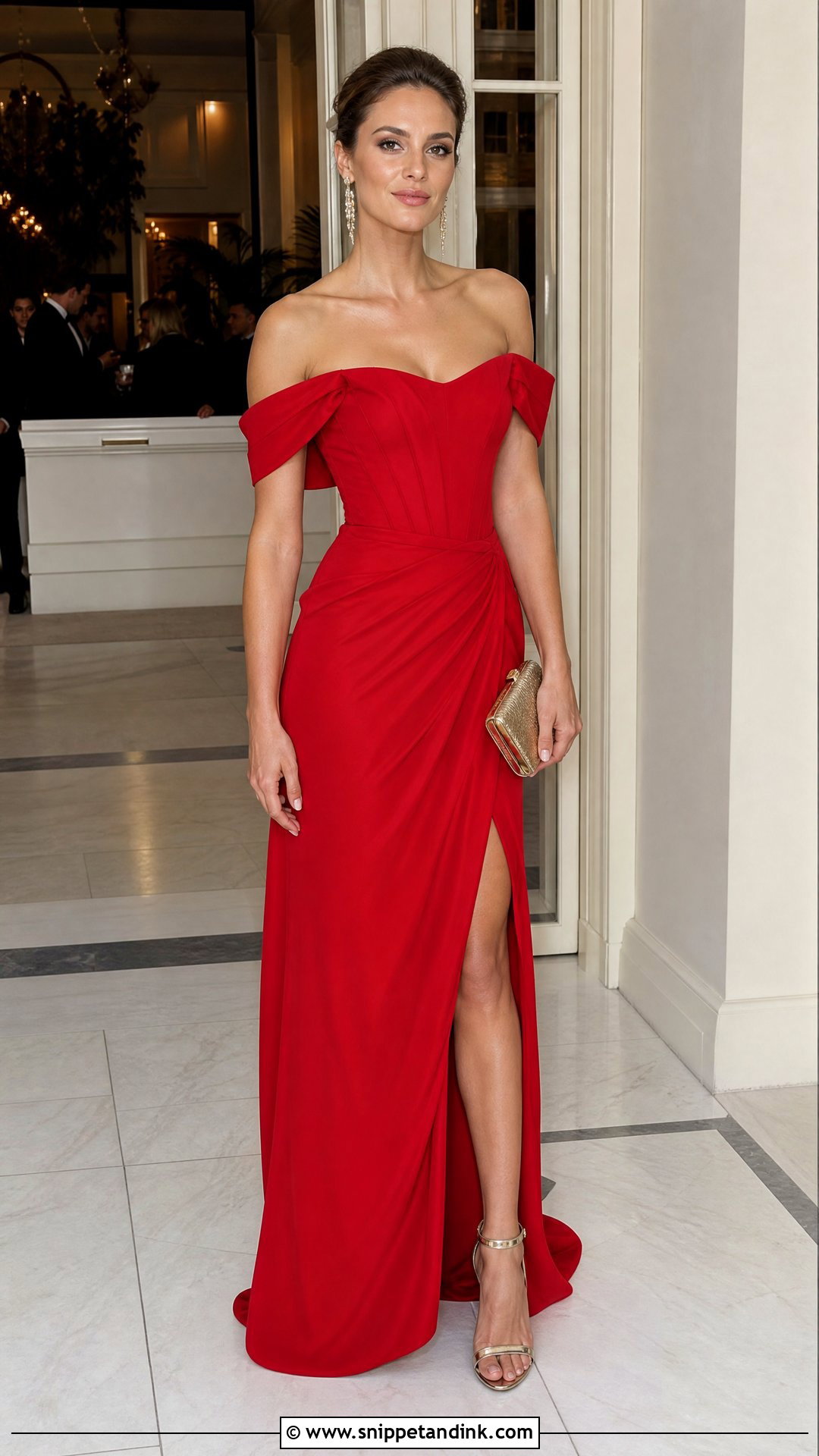
Off-shoulder gowns live or die on the bodice. If it is not boned or fitted with a silicone grip strip along the top edge, you will spend the night pulling it up. I always have clients raise their arms and hug someone at the fitting to test it. A slightly higher line across the chest gives coverage while keeping the shape. With red, choose nude, red or metallic heels depending on how bold you want to go, wear statement earrings rather than a necklace, and keep the bag to a compact gold clutch. Swept-back hair shows the shoulders.
3. Navy Blue A-Line Gown Outfit
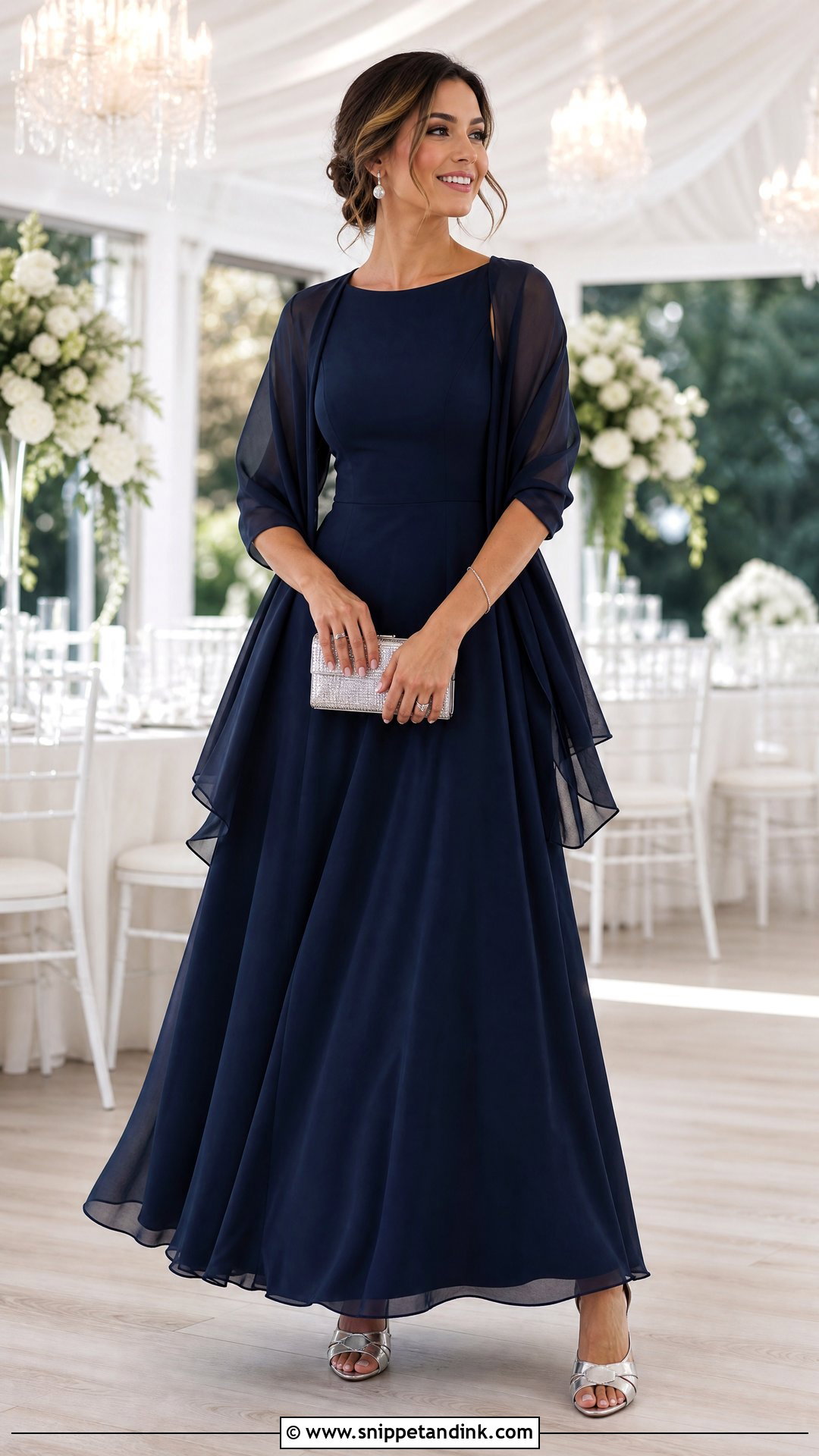
Want one gown that works for almost any formal invitation? I reach for a navy A-line. It fits through the bodice, then widens gently from the waist, which skims the hips and lets you walk and sit without thinking about it. Chiffon, crepe or matte satin all suit it; navy chiffon has a slight shimmer under flash that black lacks. Silver sandals, pearl drops and a structured clutch finish it, and a sheer matching wrap adds coverage without bulk. Soft curls or a chignon both work.
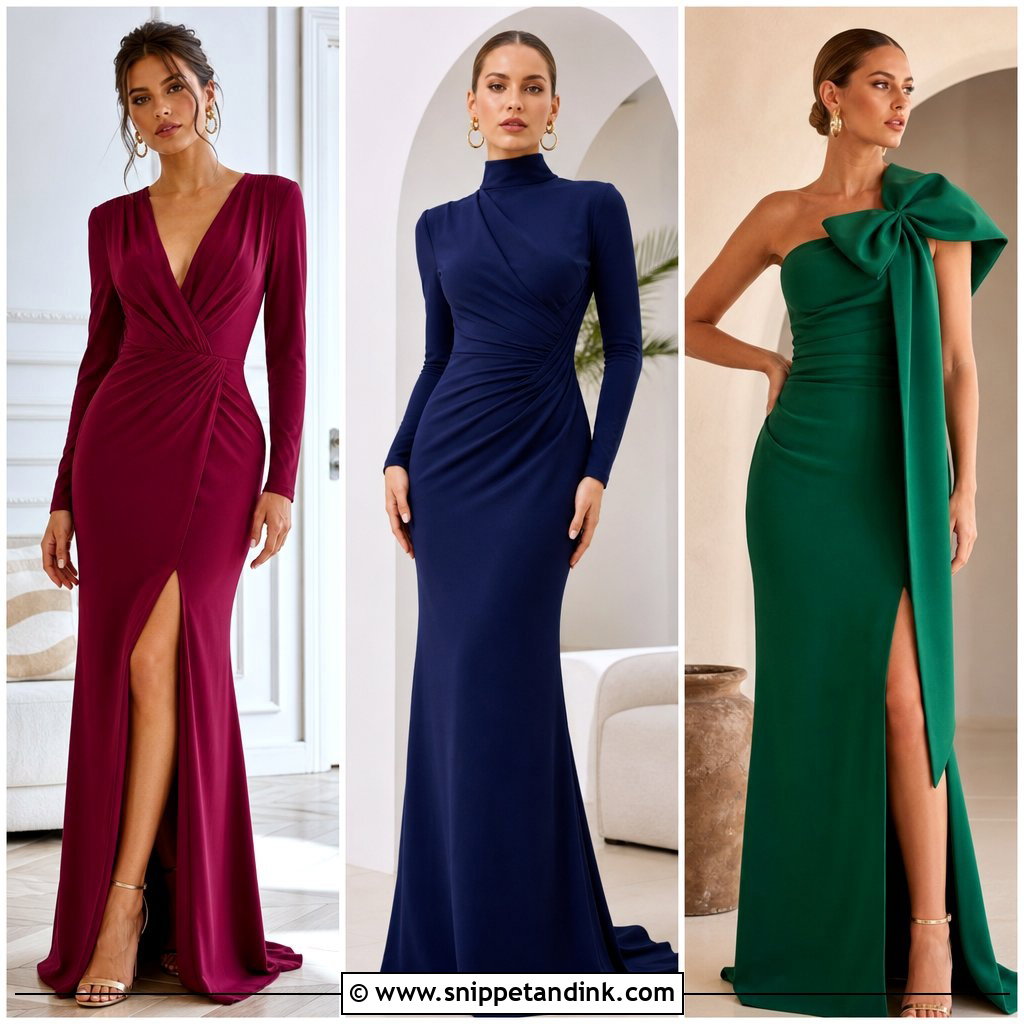
4. Emerald Green Mermaid Gown Outfit
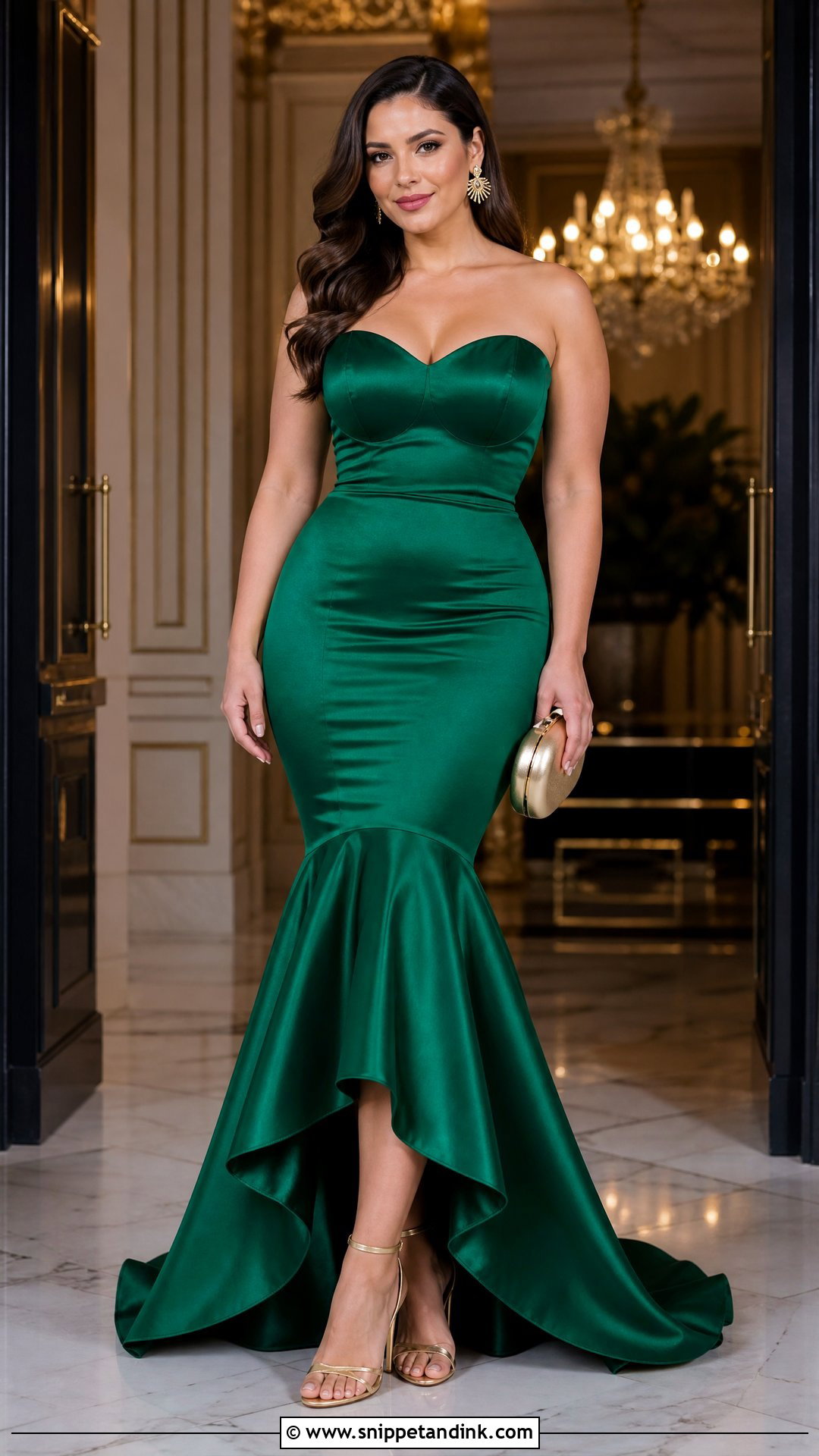
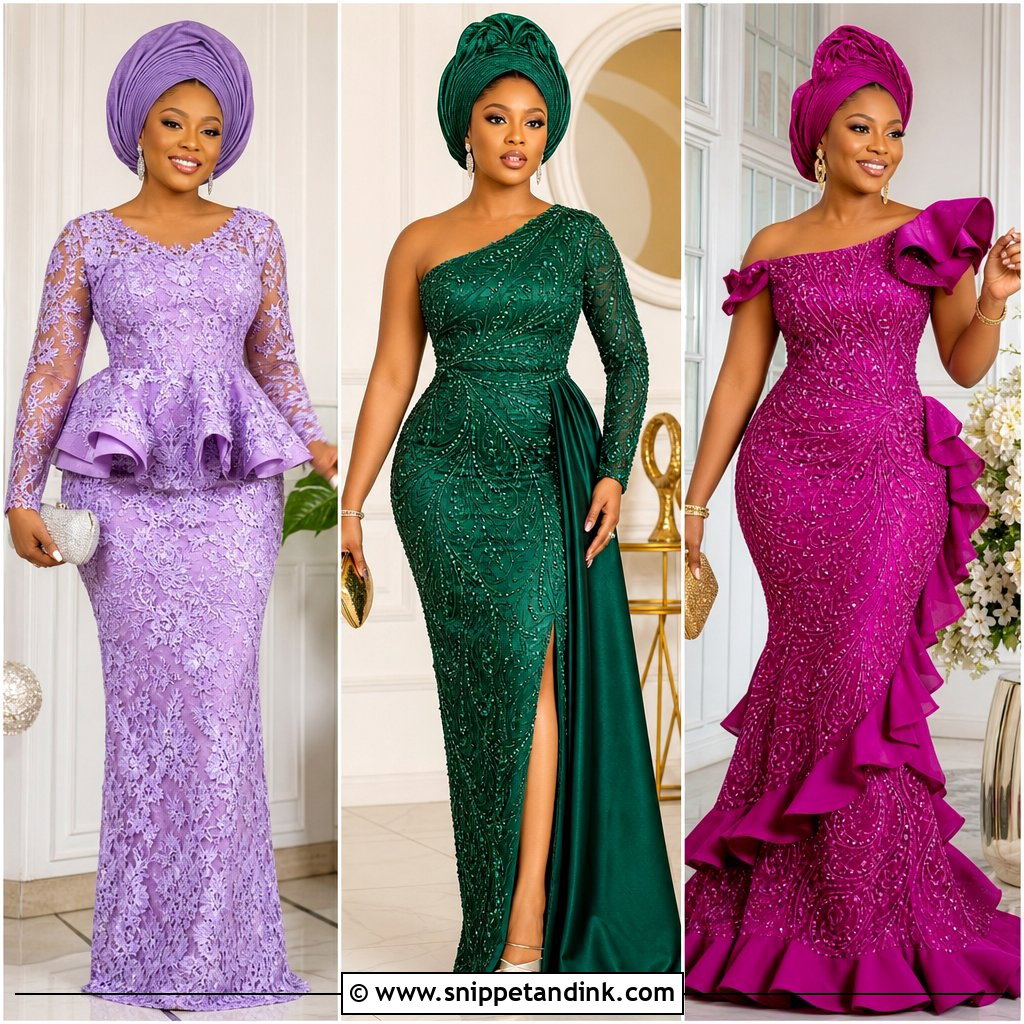
The single measurement I care about on a mermaid gown is where the flare begins. A flare that starts at the knee lets you walk, climb steps and sit at dinner; one that starts lower turns every step into a shuffle. Emerald is forgiving under warm reception lighting and rich in daylight. Gold ankle-strap heels hold your foot steady in a narrow skirt, and sculptural gold earrings are plenty if the neckline has detail. A smooth updo shows the shoulders. Long sheer sleeves add coverage without breaking the fitted line.
5. Blush Pink Chiffon Gown Outfit
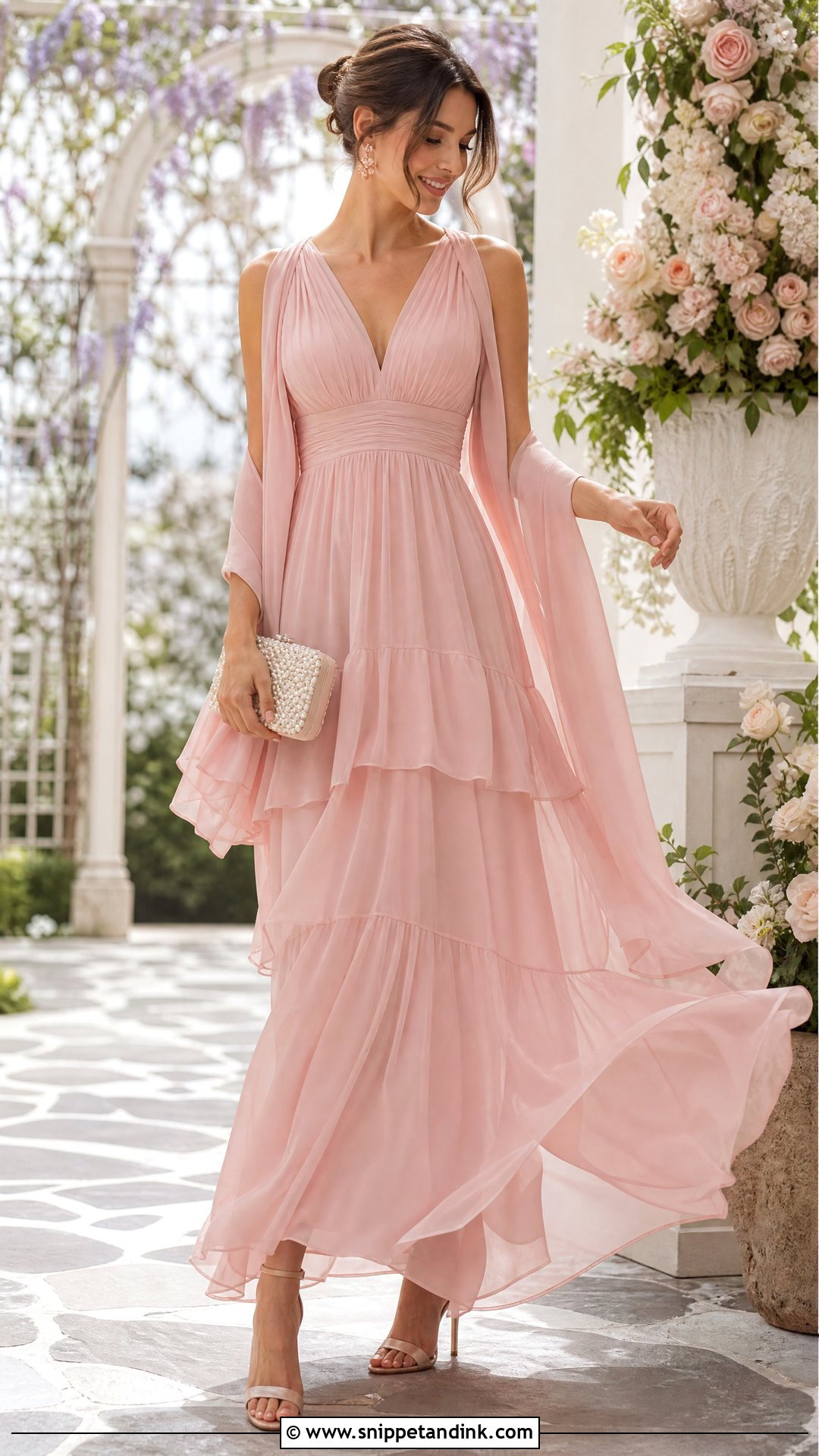
Chiffon in blush floats, but cheap chiffon can be sheer, so I look for a lined bodice and at least two layers in the skirt. An empire-waist or A-line silhouette suits the fabric because it drapes rather than clings. Adjustable straps matter more than people expect with light fabric, since the weight of the skirt pulls them down over the evening. Champagne heels, a pearl-trimmed clutch and rose-gold jewelry keep the palette soft. A loose bun, curls or a half-up style suit it, and a taupe or grey wrap is more flattering against blush than white for an outdoor spring wedding.
6. Silver Sequin Gown Outfit
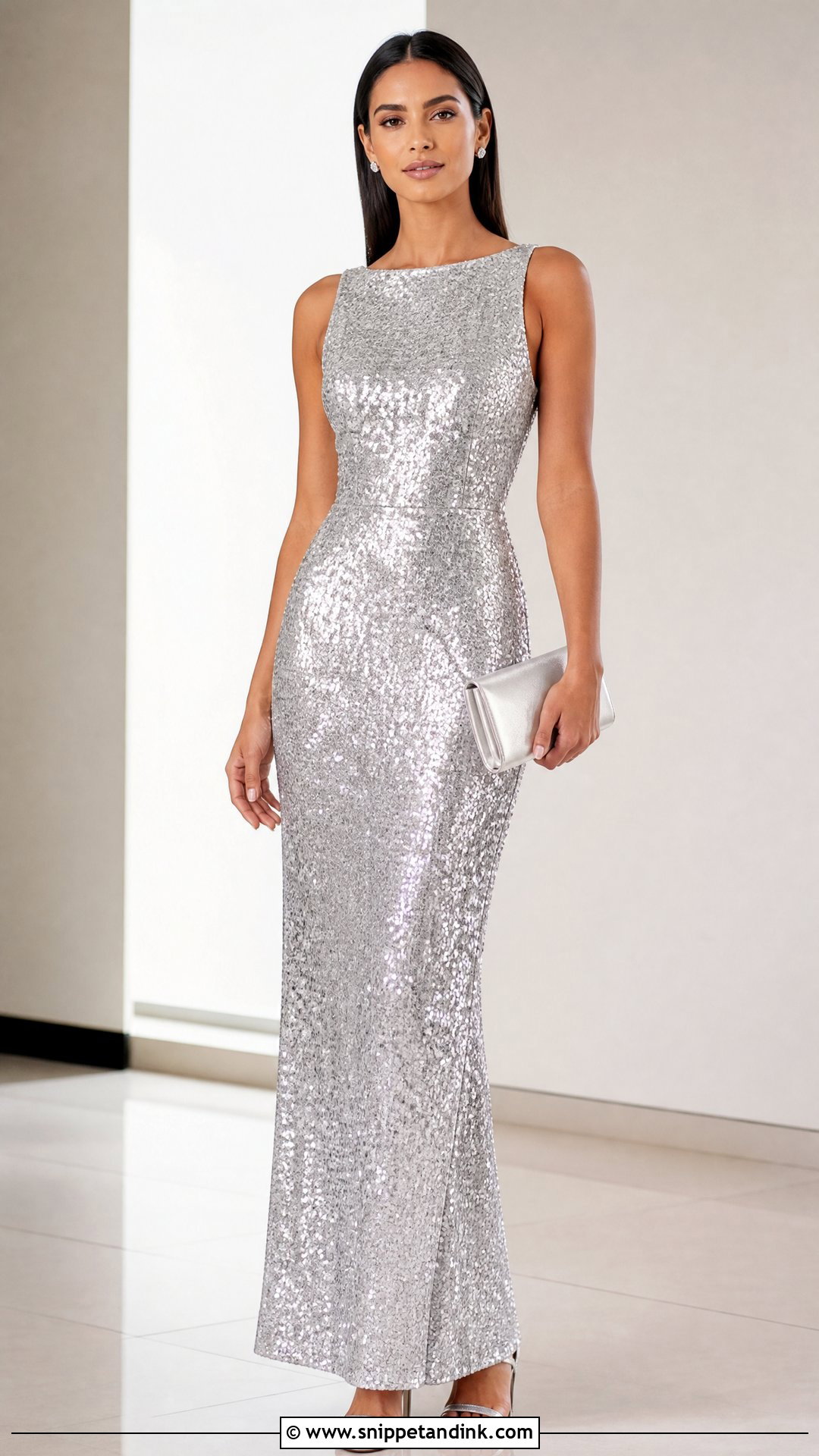
Sequins are hard on the inner arms. Before anyone commits to a sequin gown, I have them swing their arms for a minute; if the side seams scratch, the dress will be unbearable by dessert. A smooth lining and stretch base solve most of that. Keep the shape simple, a column or A-line, because sequins already carry a lot. A plain satin clutch, silver or neutral heels, crystal studs and one slim ring are all it needs. Sleek straight hair or a low ponytail balances the shine.
7. Burgundy Long-Sleeve Gown Outfit
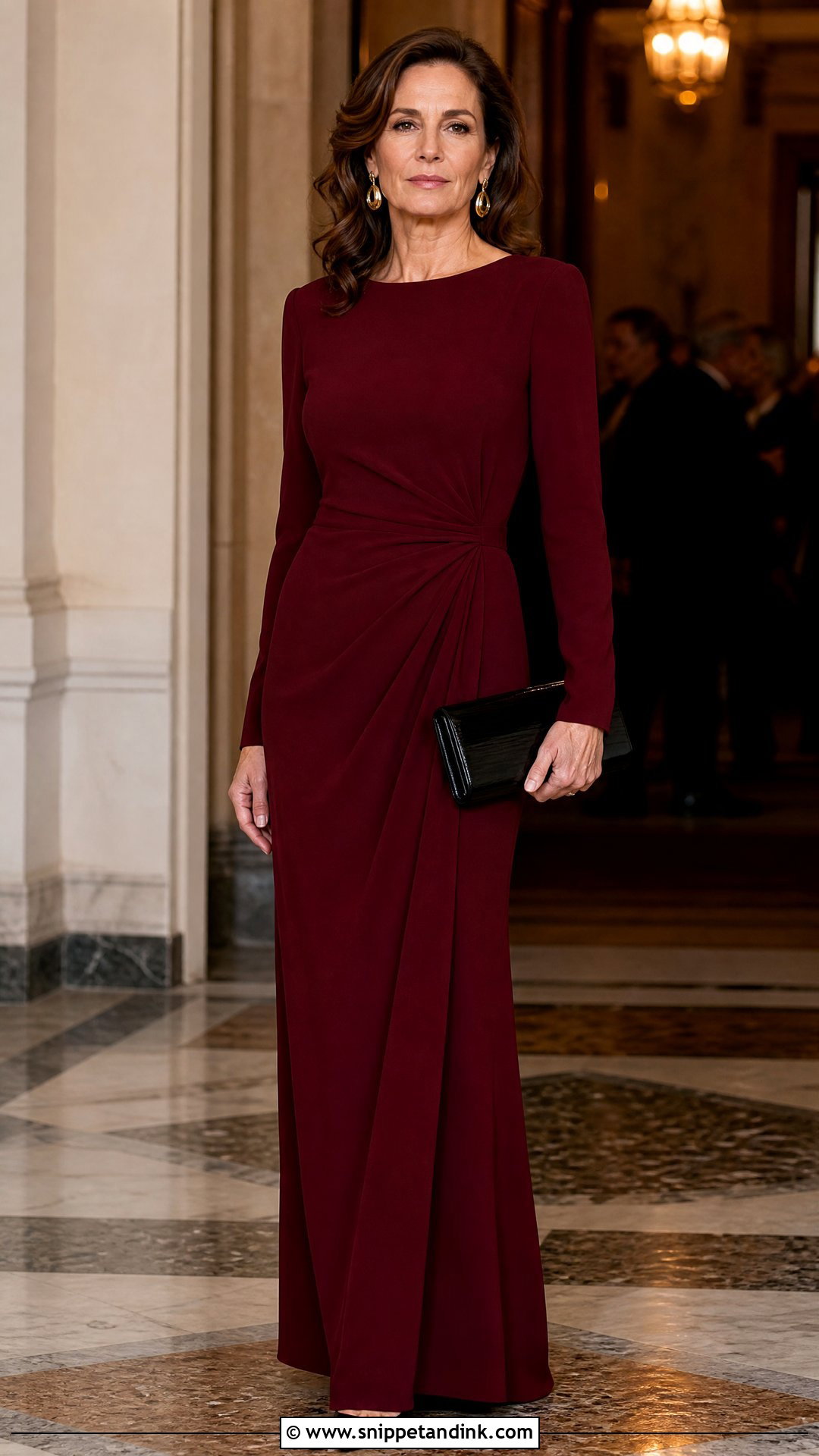
Long sleeves change how a gown moves, so I check the armhole first. Set too low, it lifts the whole bodice when you raise your hand to wave. In burgundy crepe, velvet or soft jersey, a defined waist and floor-skimming skirt keep the long sleeves in proportion. Black pointed pumps or dark metallic heels suit the depth of the color. If the sleeves carry lace, beading or sheer panels, let them be the detail and stick to small gold earrings, a structured black clutch and one statement ring. Autumn and winter weddings are where this gown makes most sense.
8. Champagne One-Shoulder Gown Outfit
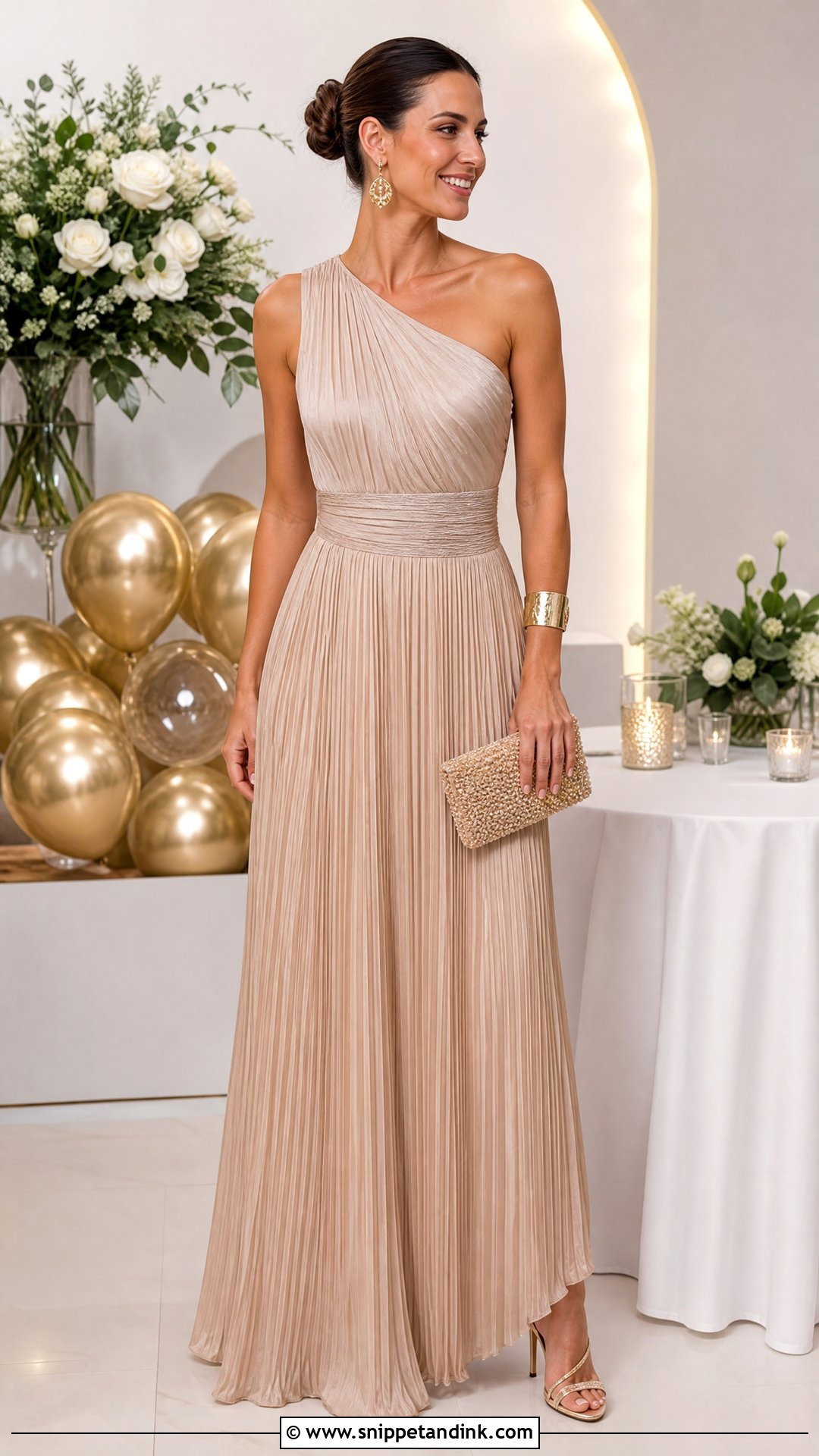
A champagne one-shoulder gown draws the eye diagonally across the eye-catching asymmetrical neckline, so I keep jewelry off the neck entirely and put a cuff on the bare-arm side to balance it. Internal support matters: a good one-shoulder bodice has boning or a silicone strip so the single strap is not carrying all the weight. Matching champagne heels lengthen the line, and a pleated or draped skirt adds movement. Style hair in a side-swept updo away from the strap, or a polished low bun.
9. Royal Blue Cape Gown Outfit
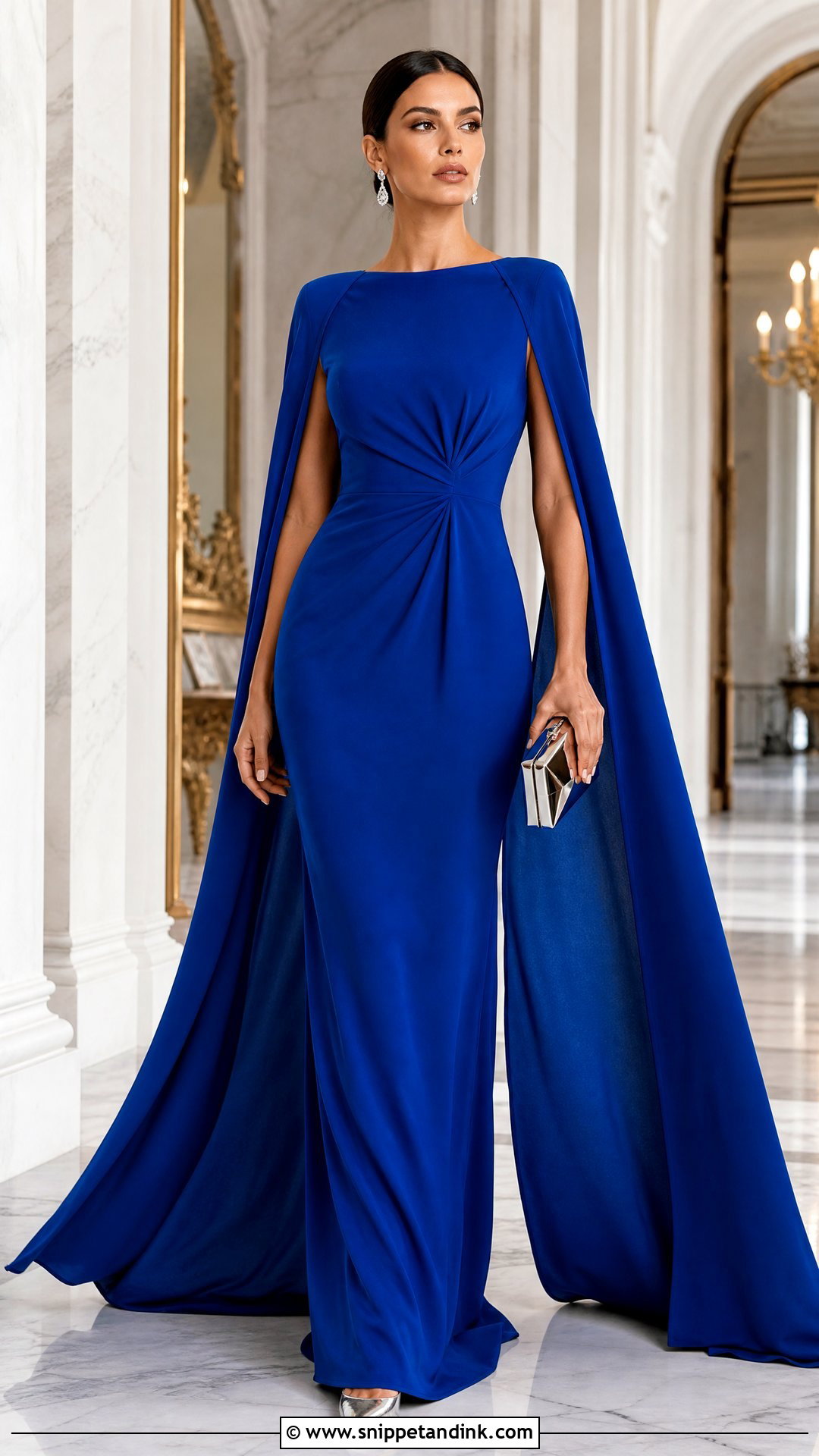
A cape gives shoulder and arm coverage without sleeves, but it is fabric that hangs free, so it catches on things. Bracelets with prongs, chair backs and car doors are the usual culprits. Royal blue in a clean column or soft flare lets the cape be the feature. Silver pointed heels, a mirrored clutch and simple crystal earrings complete it. A neat updo keeps the hair out of the cape and the neckline visible. Check how the cape behaves when you sit; some longer ones need gathering over the lap at dinner.
10. Floral Formal Gown Outfit
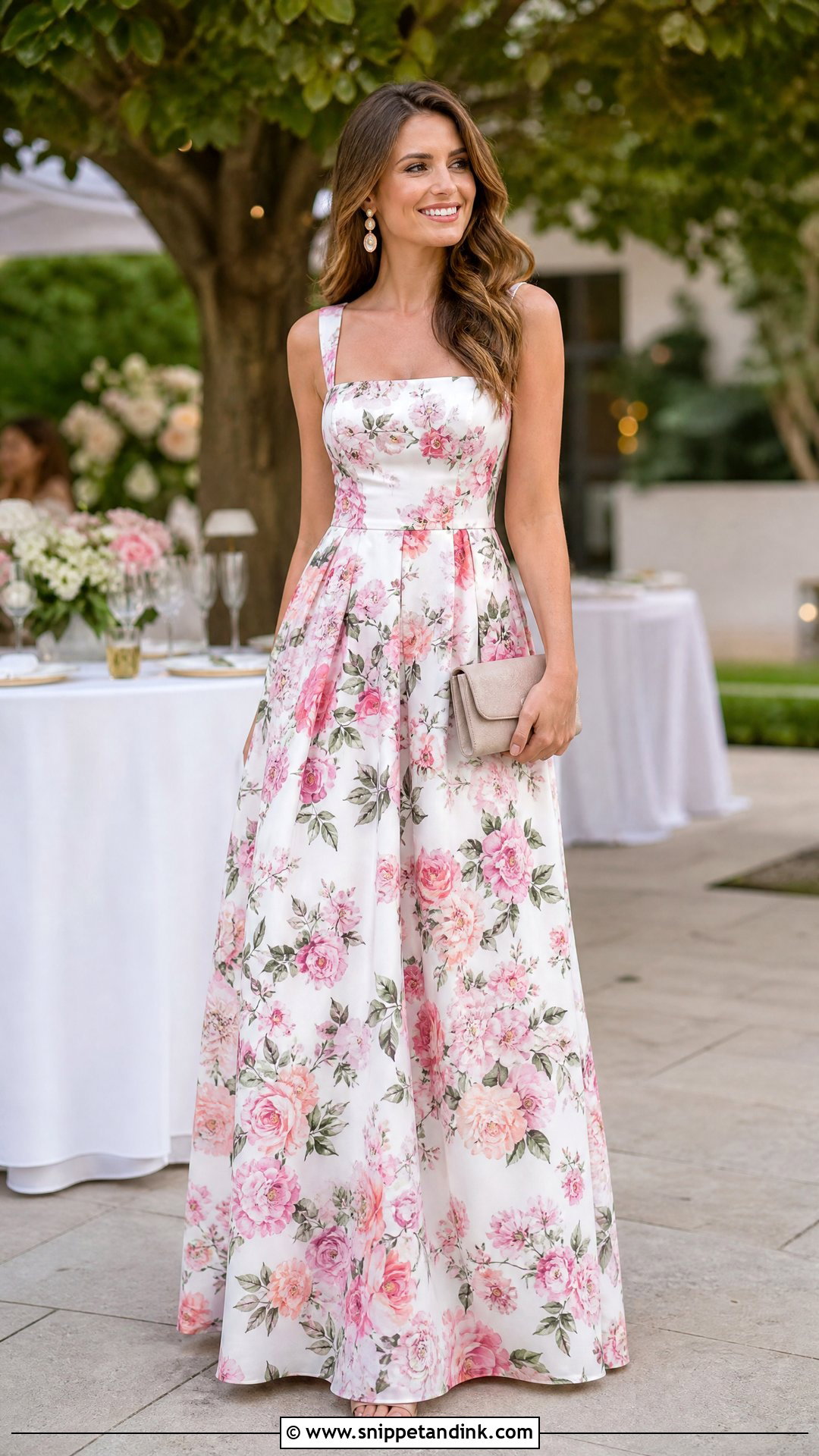
Floral gowns fail when the print is too busy for the length. A floor-length dress covered edge to edge in large flowers reads like a curtain, so I look for a refined background color with some open space between motifs. A fitted bodice and A-line or pleated skirt give the print room. Pull one shade from the flowers for the shoes or clutch, or keep both neutral. Small earrings, a delicate bracelet and soft waves or a relaxed bun suit daytime weddings and garden receptions best.
11. Black Tulle Ball Gown Outfit
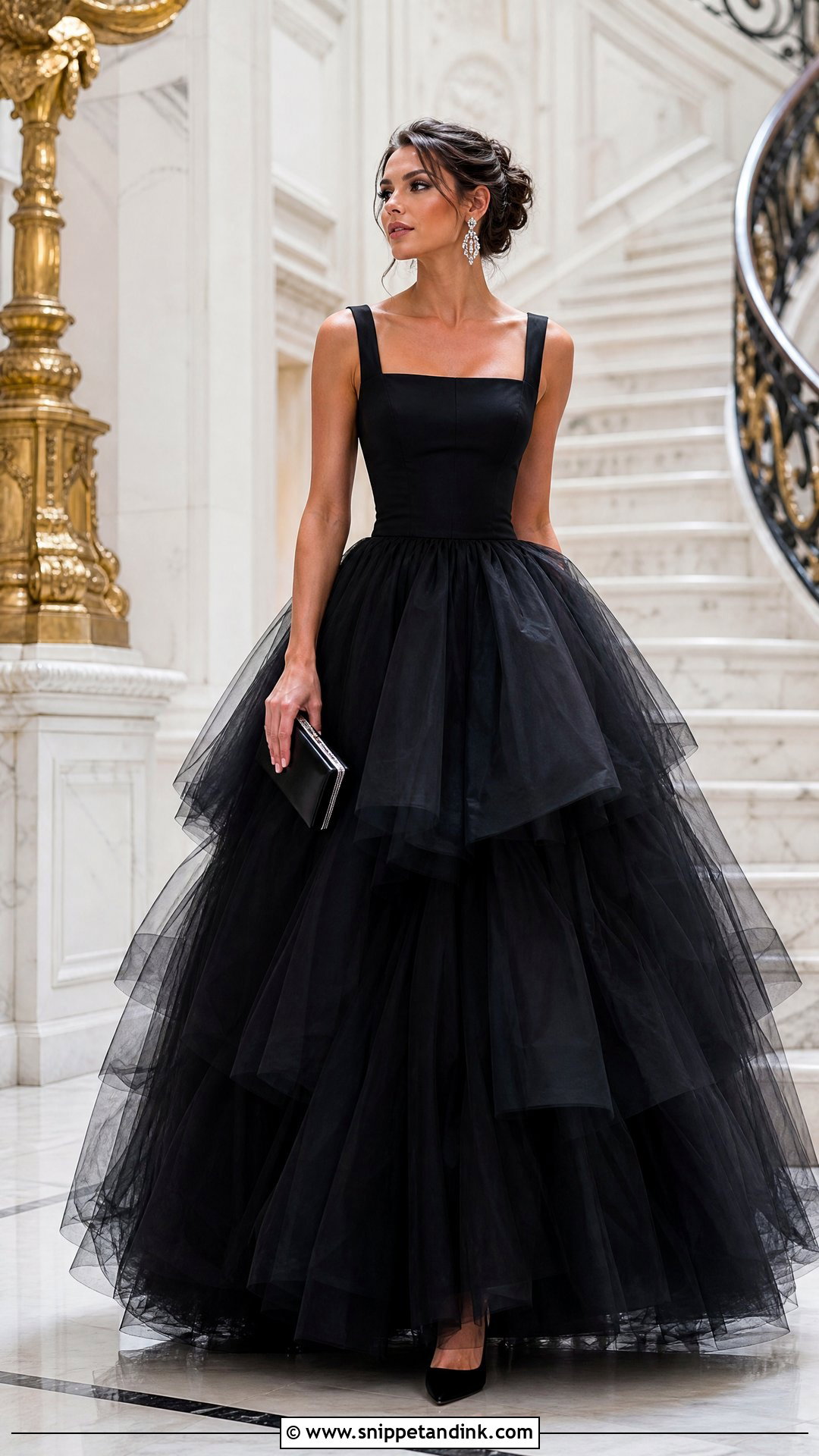
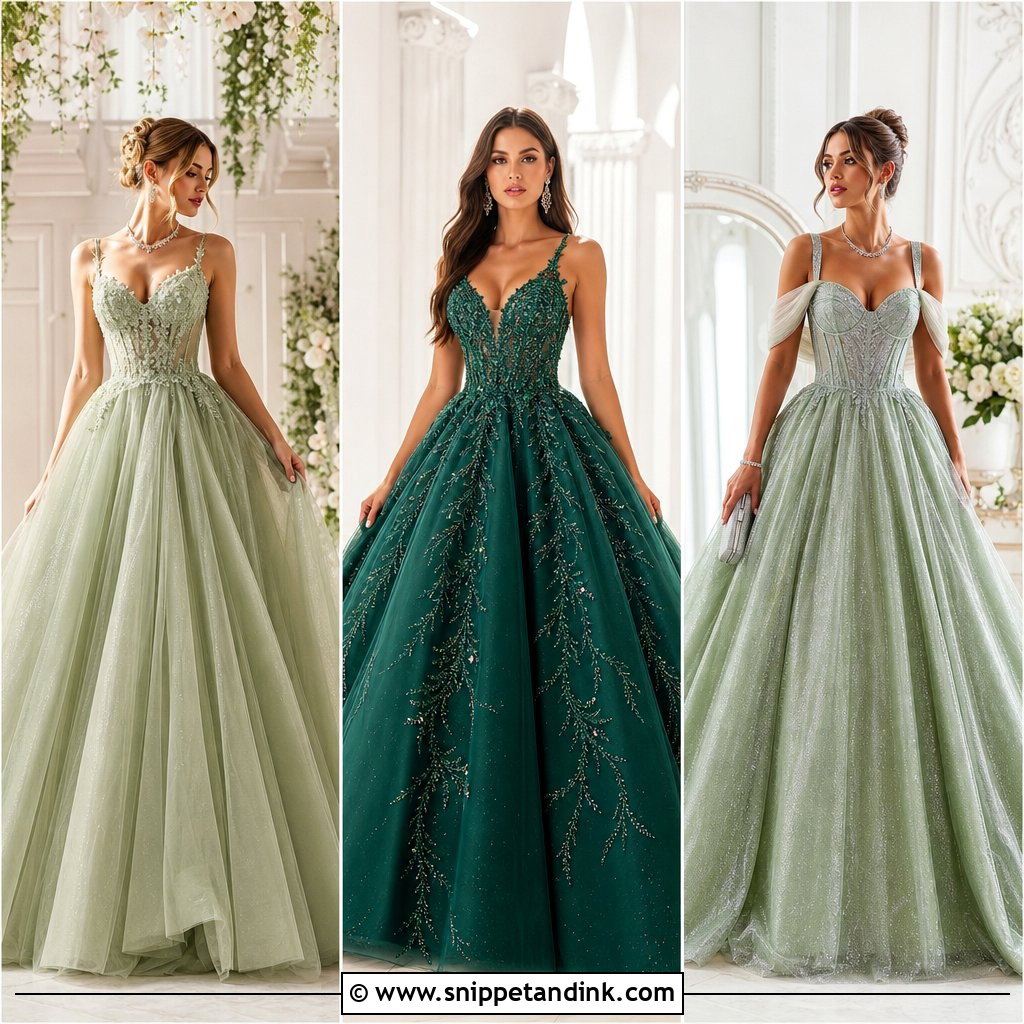
Black tulle reads dramatic, but stiff tulle is miserable to sit in and doubles your width through doorways. I prefer soft, layered tulle over a fitted bodice with a square, sweetheart or strapless neckline to balance the volume. Black pointed heels, a satin box clutch and crystal drops finish it, and a thin belt can define a plain bodice. Hem the skirt to the exact heel you will wear; a full skirt that is even a little too long catches under the toe on stairs. Hair up keeps the shape clean.
12. Gold Metallic Gown Outfit
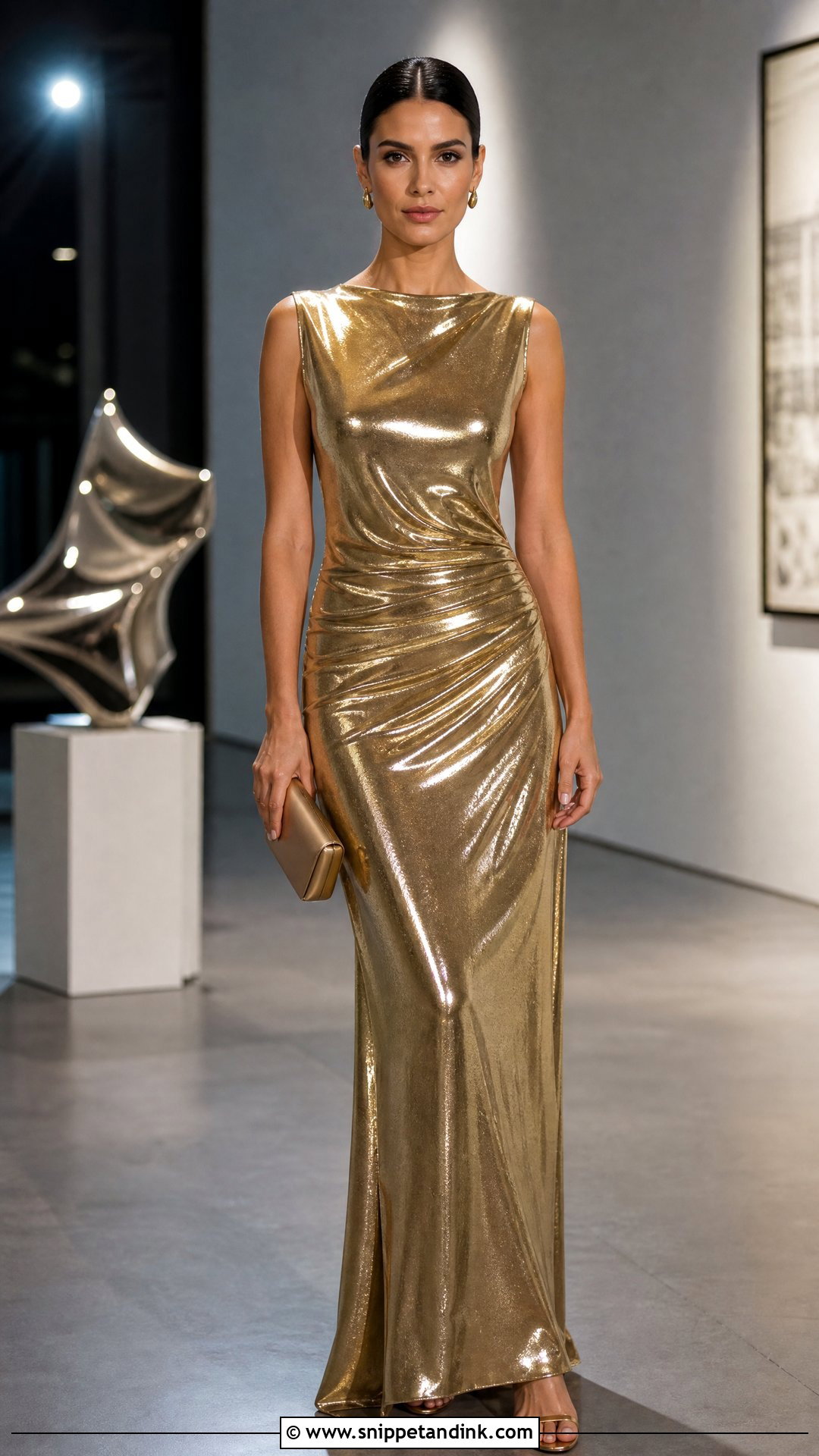
Gold lamé and metallic knits reflect everything, including every bump and seam beneath them. That is why I keep the silhouette simple and insist on a full lining and smooth underwear. A long column, soft drape or a fitted shape with a gentle flare all work. Pair it with gold sandals and a matte clutch, since a shiny bag against a shiny dress looks cluttered. One pair of earrings in the same metal is enough. Sleek hair and clean makeup let the dress stand out.
13. Purple Velvet Gown Outfit
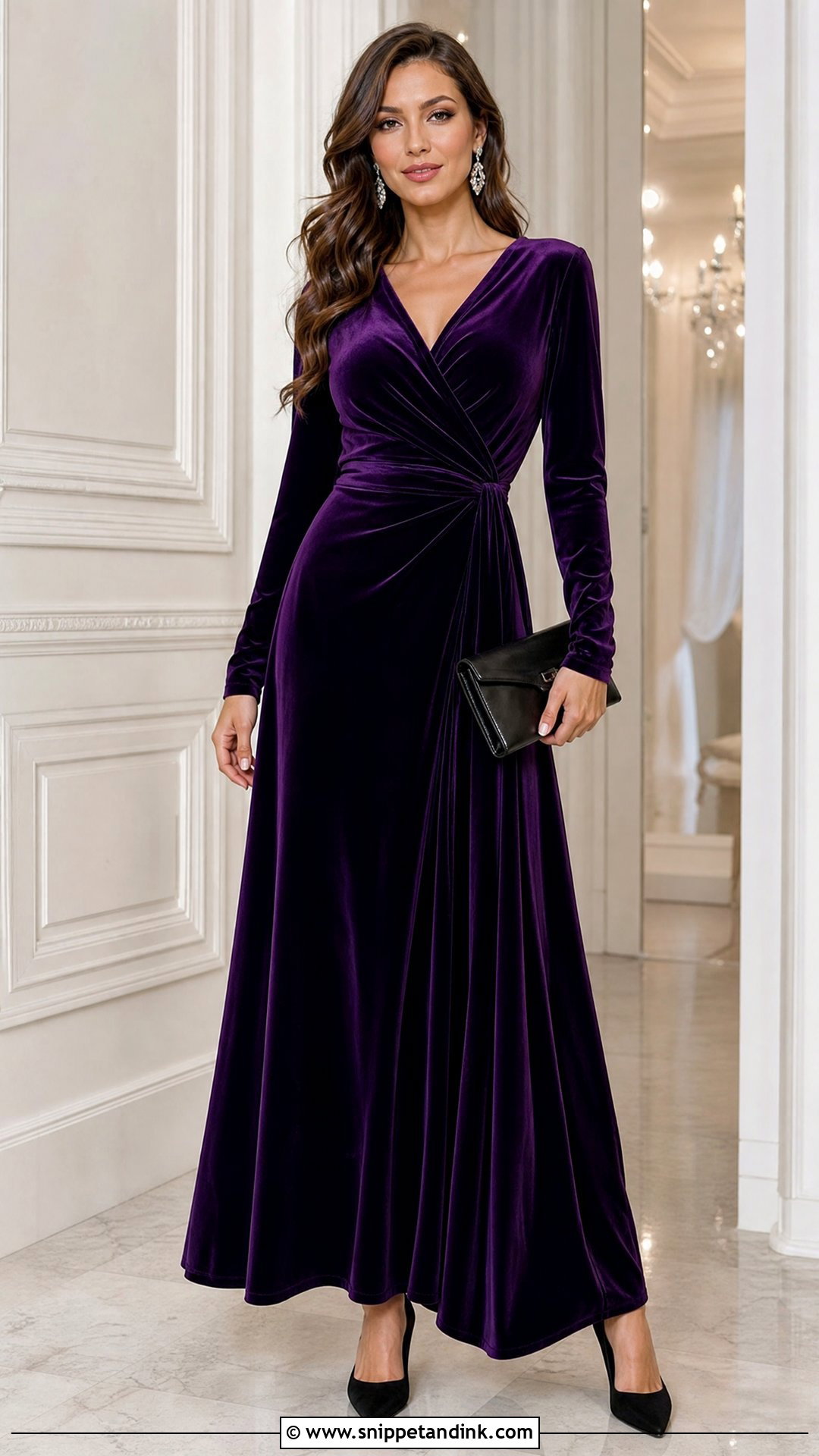
Velvet is heavy and crushes where you sit, so the cut has to account for it. A wrap bodice, V-neck or ruched waist shapes the fabric, and the skirt needs real room through the hips and knees. Steam velvet from the back and never press it, or you flatten the pile permanently. Black suede pumps, a small satin clutch and silver or crystal jewelry suit purple’s depth. With long sleeves, keep the neckline open or curved. A low bun or side-parted waves finish it for winter galas and evening weddings.
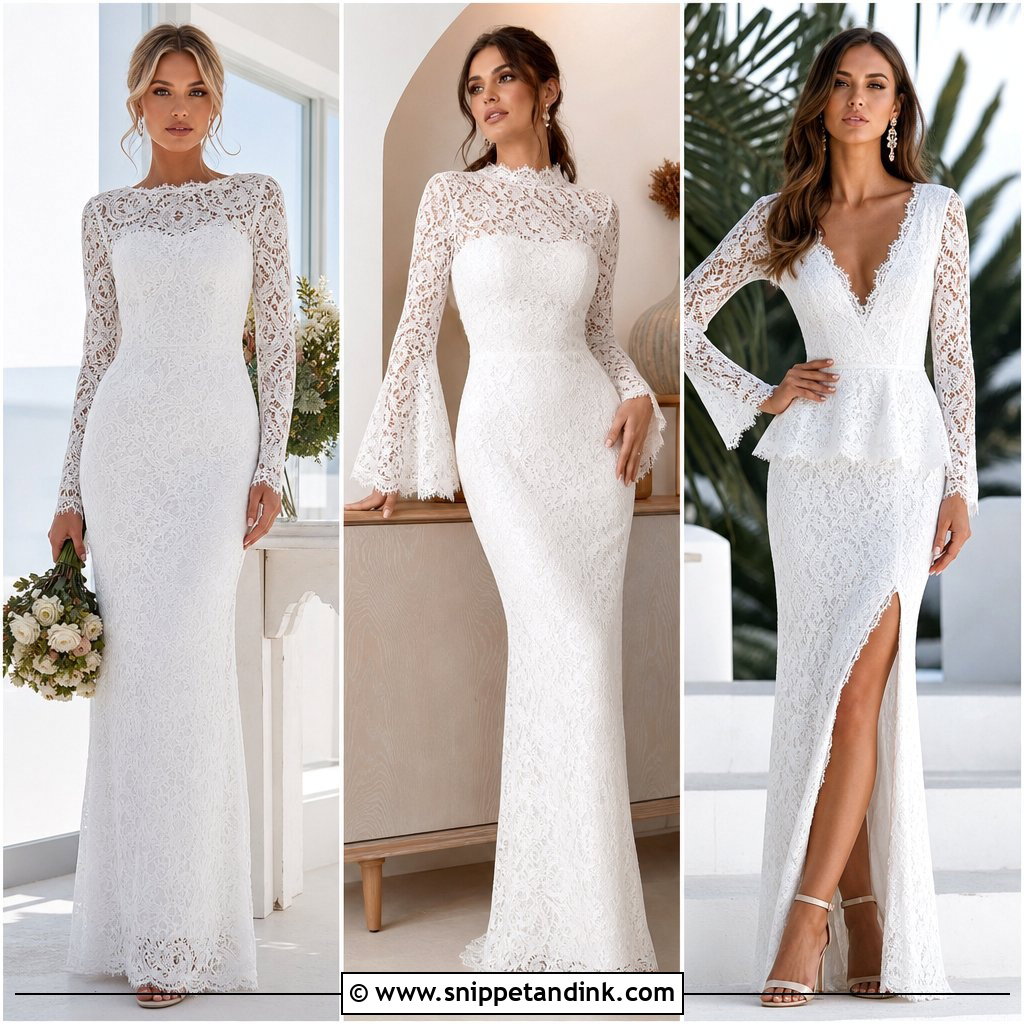
14. White Minimalist Gown Outfit
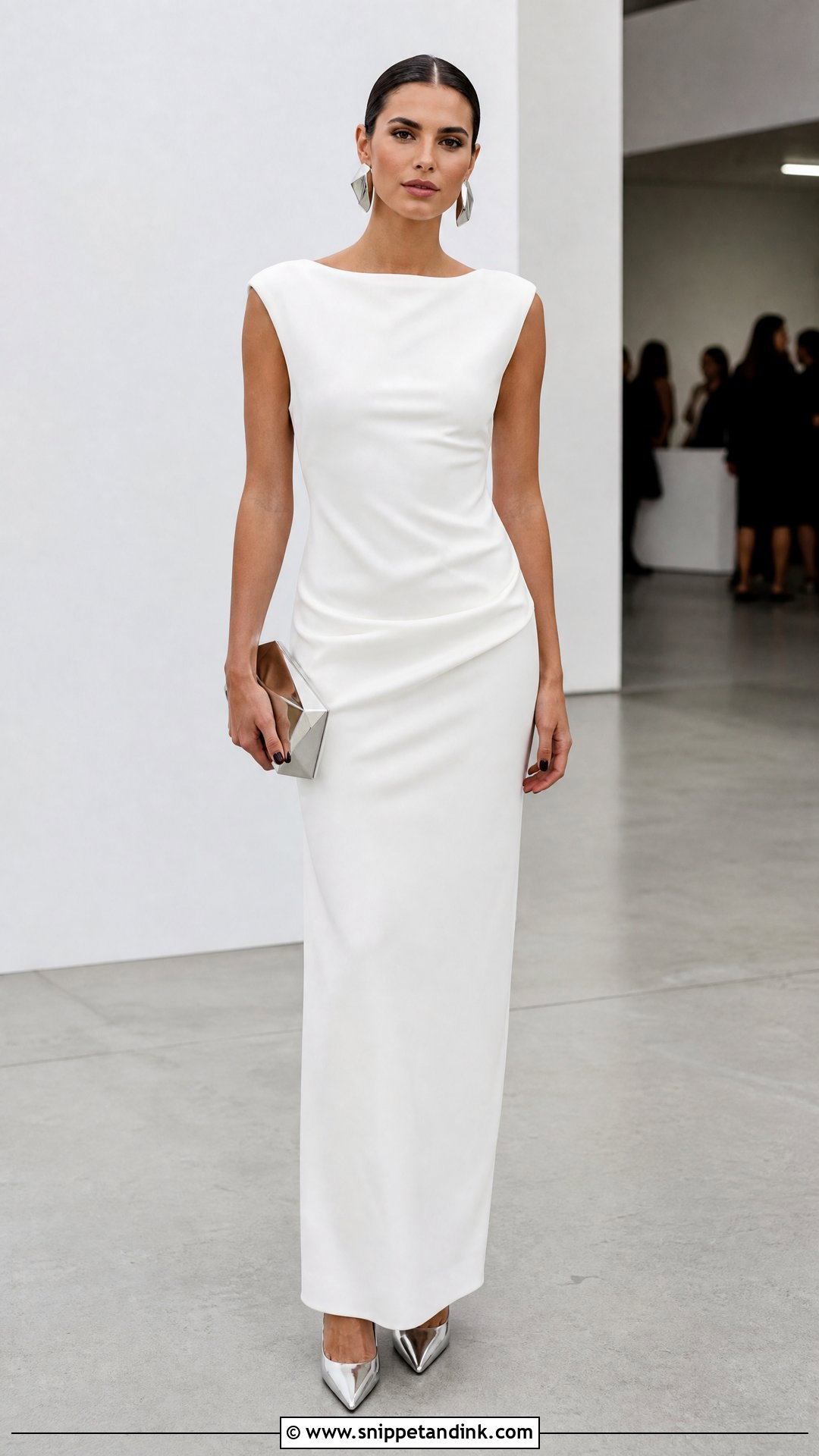
Pale, unembellished fabric shows everything underneath, so a white minimalist gown needs precise tailoring and smooth, no-line underwear in your skin tone, not white. Choose a structured column, slip or simple A-line in good crepe or satin. White belongs to the bride at a wedding, so keep this one for galas, gallery events and all-white parties unless the couple explicitly asks for it. Metallic heels, a sculptural clutch and bold earrings in gold or silver keep it modern; sleek hair keeps it minimal.
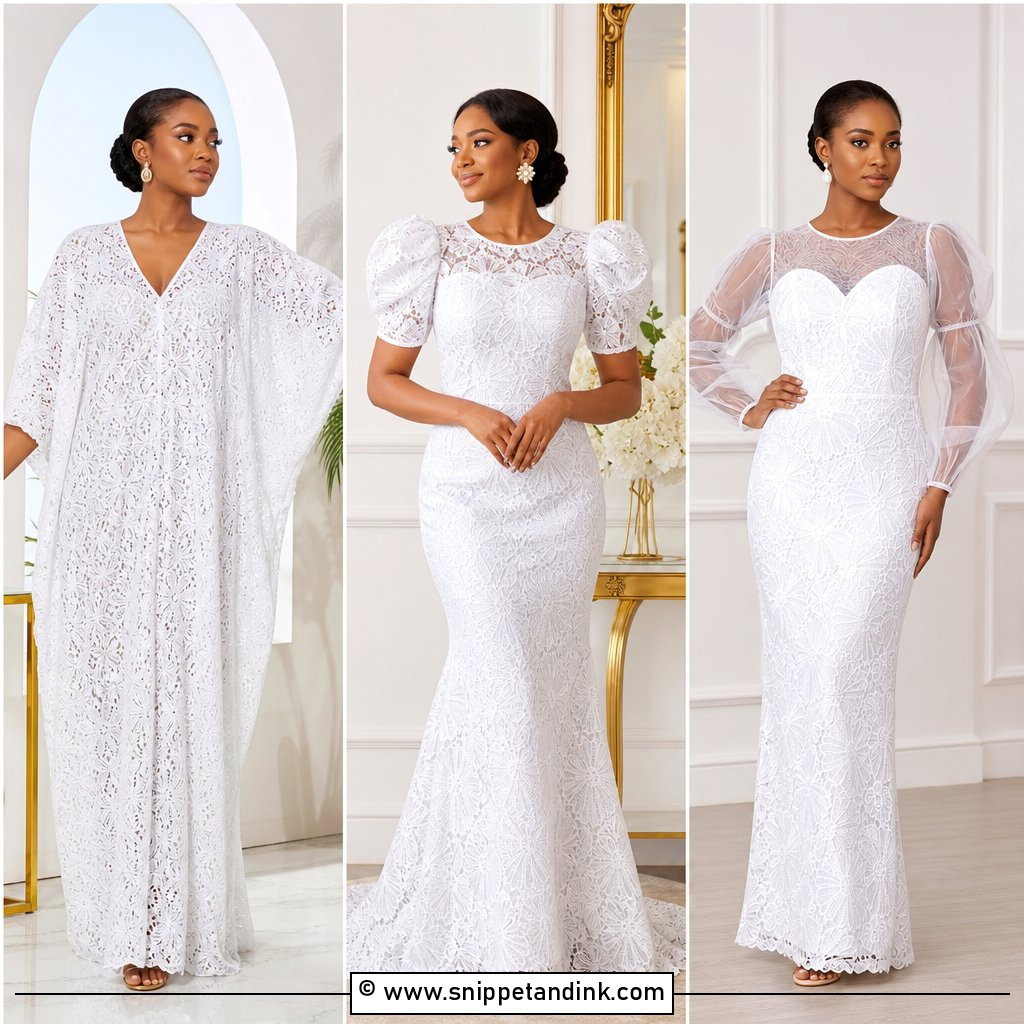
15. Plus Size Wrap Gown Outfit
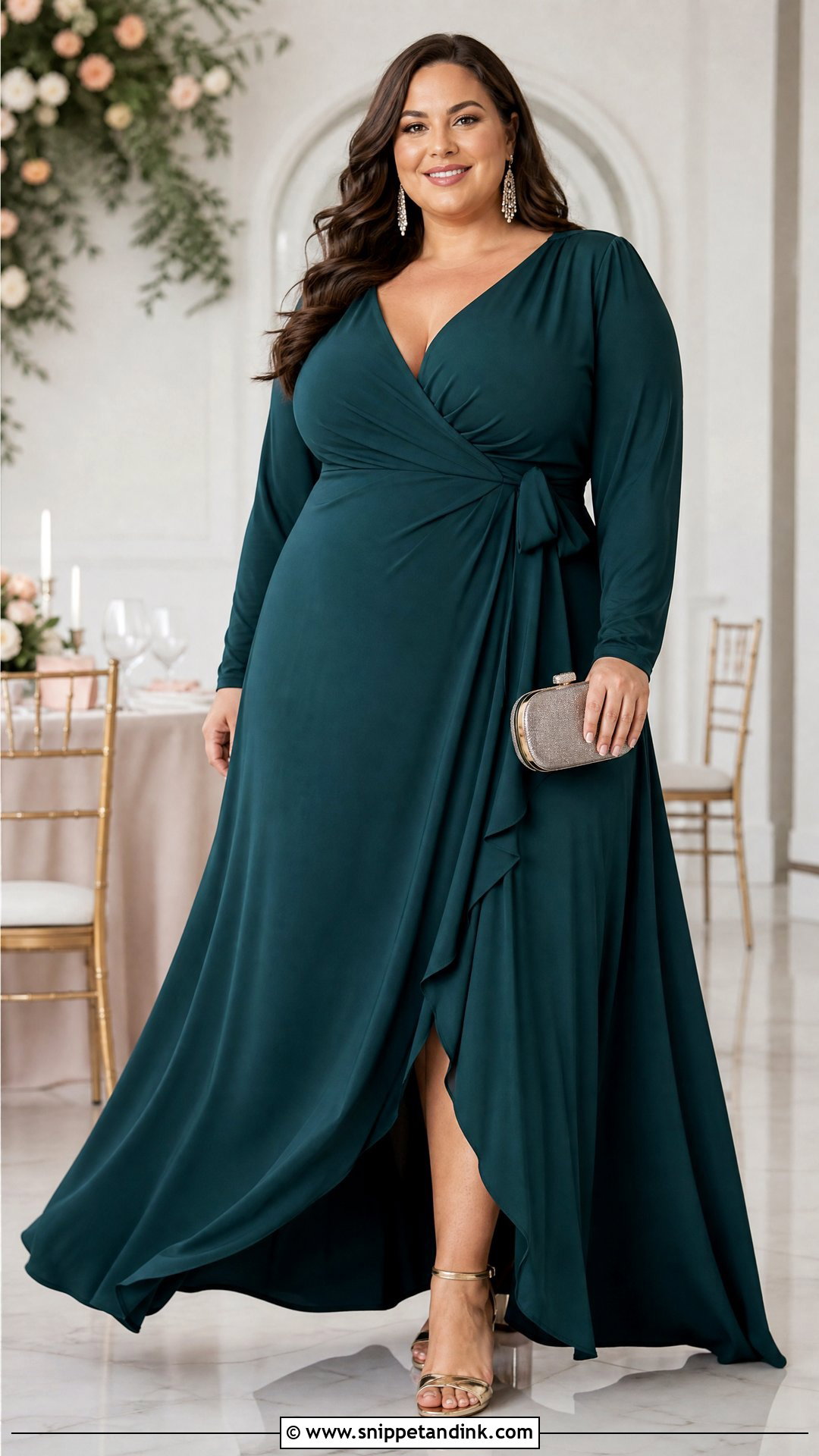
A wrap gown adjusts as you tie it, which is why I recommend it to so many plus-size clients. The gap at the crossover is the weak point, so look for an inner snap or hook that holds the bodice closed when you lean forward. A flowing A-line skirt gives room through the hips and thighs. Jersey, matte satin or lined chiffon drape without clinging. Block-heel sandals are kinder on a long night, and medium statement earrings or a delicate pendant fill the V-neck. Bring a matching wrap for cooler rooms.
16. Modest High-Neck Gown Outfit
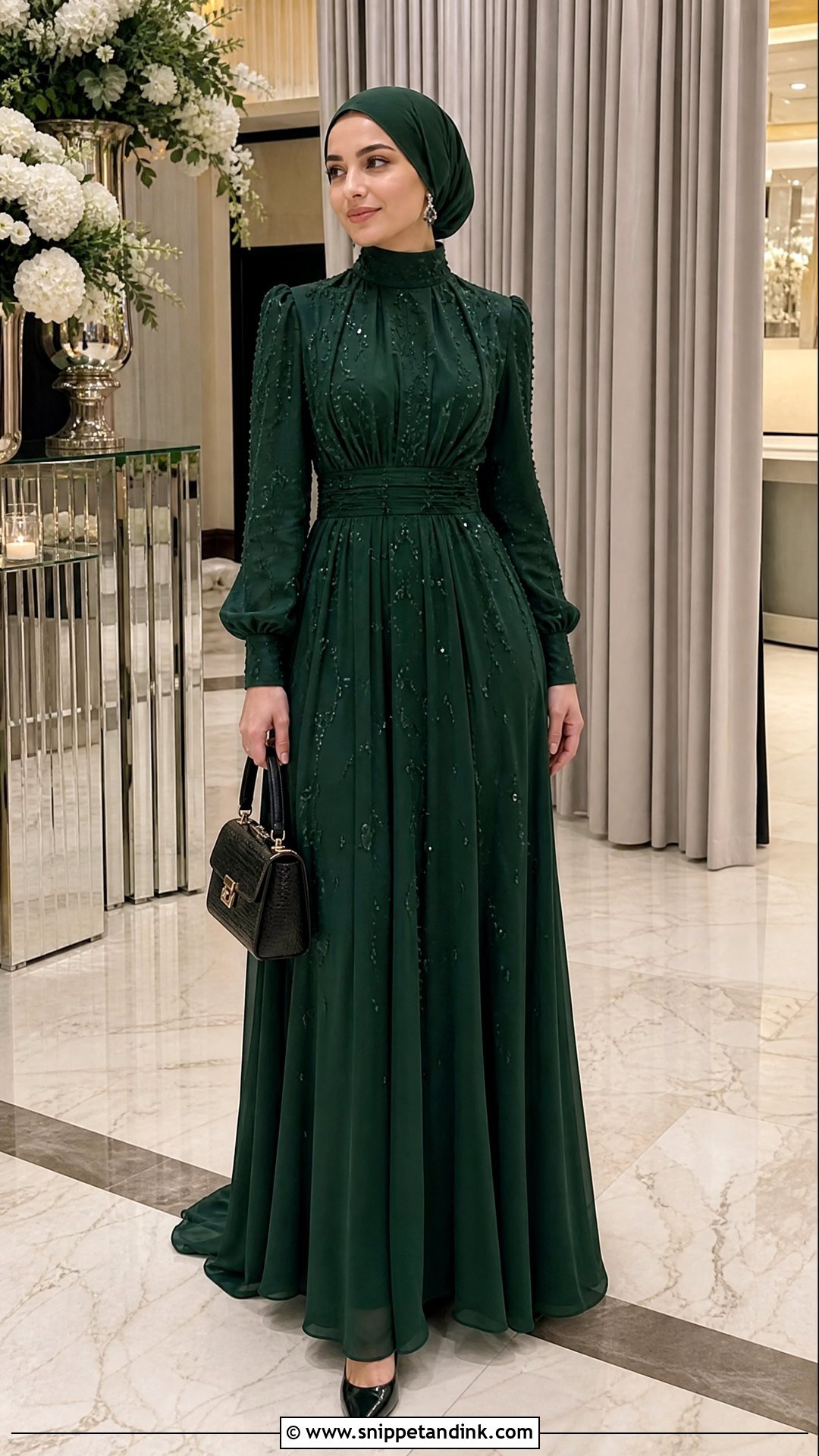
Coverage does not have to mean plain. A high-neck gown with long sleeves and a natural waist can carry lace panels, subtle beading, pleats or covered buttons. Because the neckline is closed, earrings do the jewelry work; skip the necklace and add one bracelet or ring. A smooth updo or low bun keeps the upper half uncluttered. Navy, forest green, burgundy and plum suit the silhouette, and pointed pumps with a small structured bag keep the outfit sharp for formal family celebrations and religious ceremonies.
17. Petite Column Gown Outfit
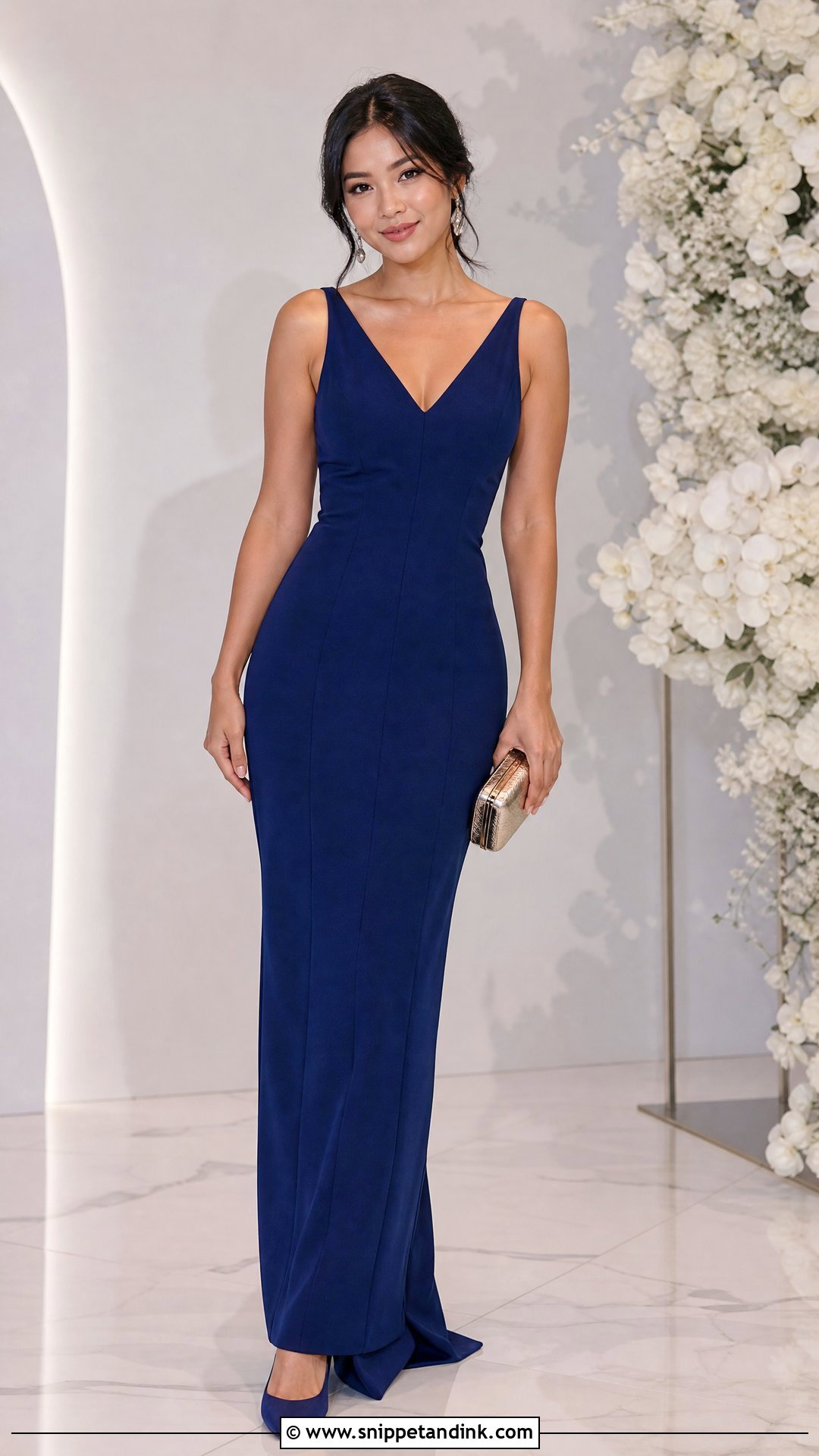
On petite clients, I keep the eye moving vertically. A column gown with a fitted waist, vertical seams and limited skirt volume does that, and a V-neck, one-shoulder or narrow halter neckline adds more length. Have the hem tailored to just clear the floor in your heels. Shoes close to the gown color continue the line. Avoid oversized bags and wide belts, which cut the body in half. Scale jewelry to your frame and carry a small clutch.
18. Strapless Corset Gown Outfit
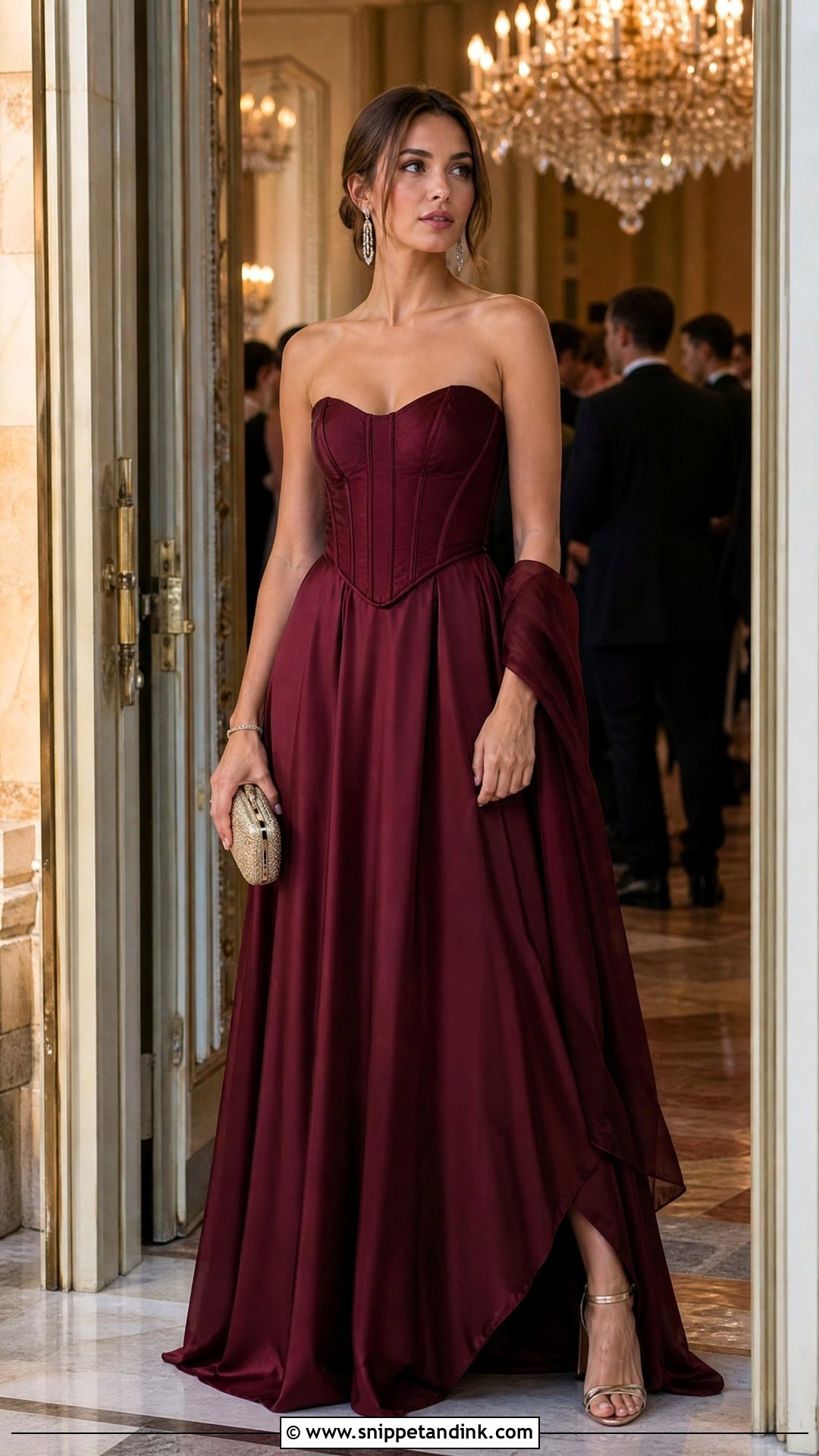
A corset bodice should stay up on its own. If you are tugging at it at the fitting, boning or a gripper strip is missing, and it will only get worse after dinner. Look for real boning and a secure back closure, then choose an A-line, ball-gown or fitted skirt beneath it. Drop earrings, a slim bracelet and a compact clutch suit it. A short necklace works on a plain neckline but not with a beaded bodice. Strappy heels and a light wrap for arrival or cold air-conditioning finish the look.
19. High-Low Gown Outfit
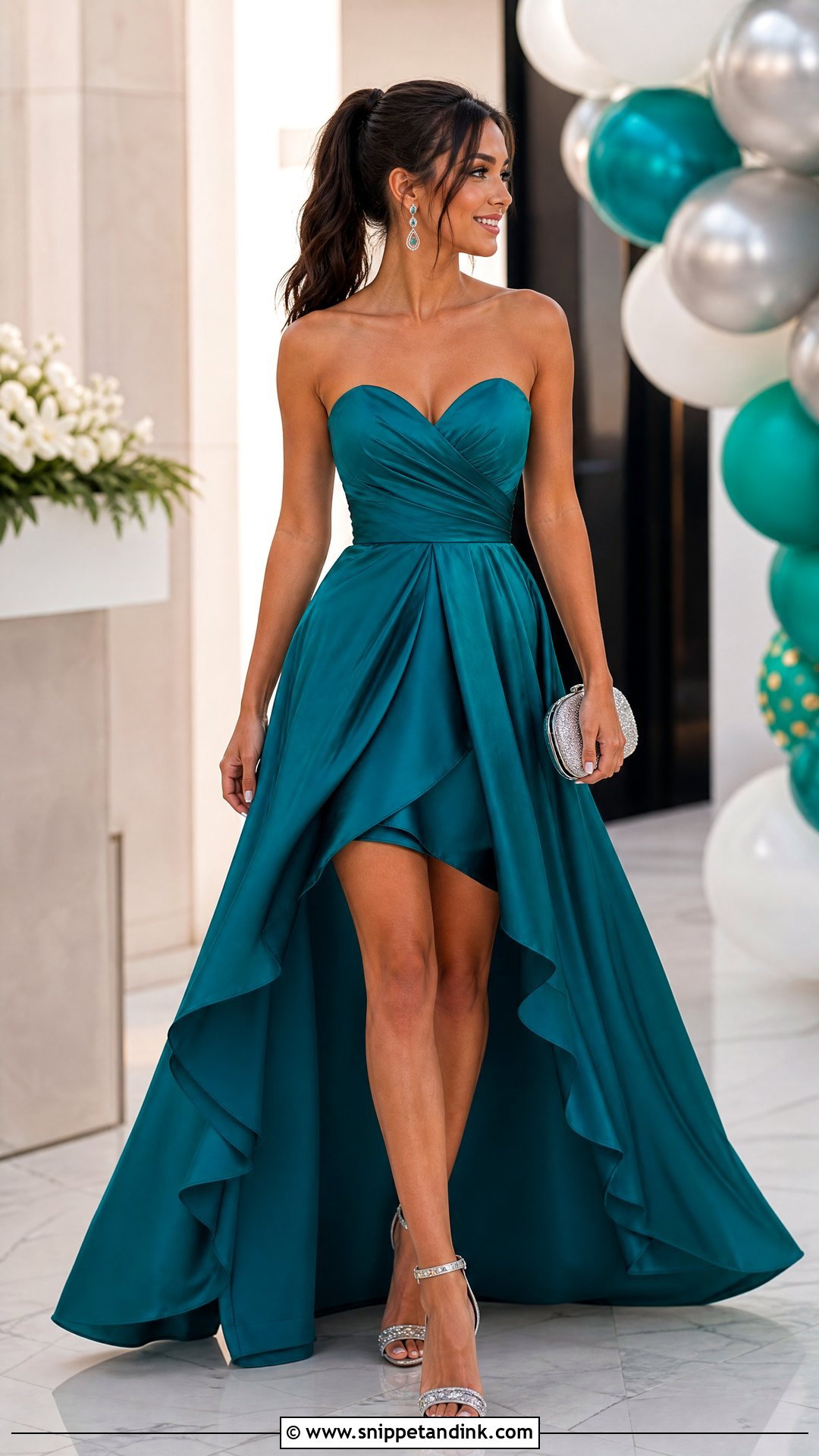
With a high-low hem, shoes become half the outfit, so I usually choose them first and the gown second. Polished ankle-strap sandals, embellished pumps or sleek pointed heels all work. A simple fitted bodice balances the uneven hem. Coordinate the clutch and earrings with the shoe hardware. Check the back hem in your heels; it should clear the ground so it does not drag on outdoor paths. A ponytail, smooth bun or soft curls suit it, and it is one of the easiest long dresses to dance in.
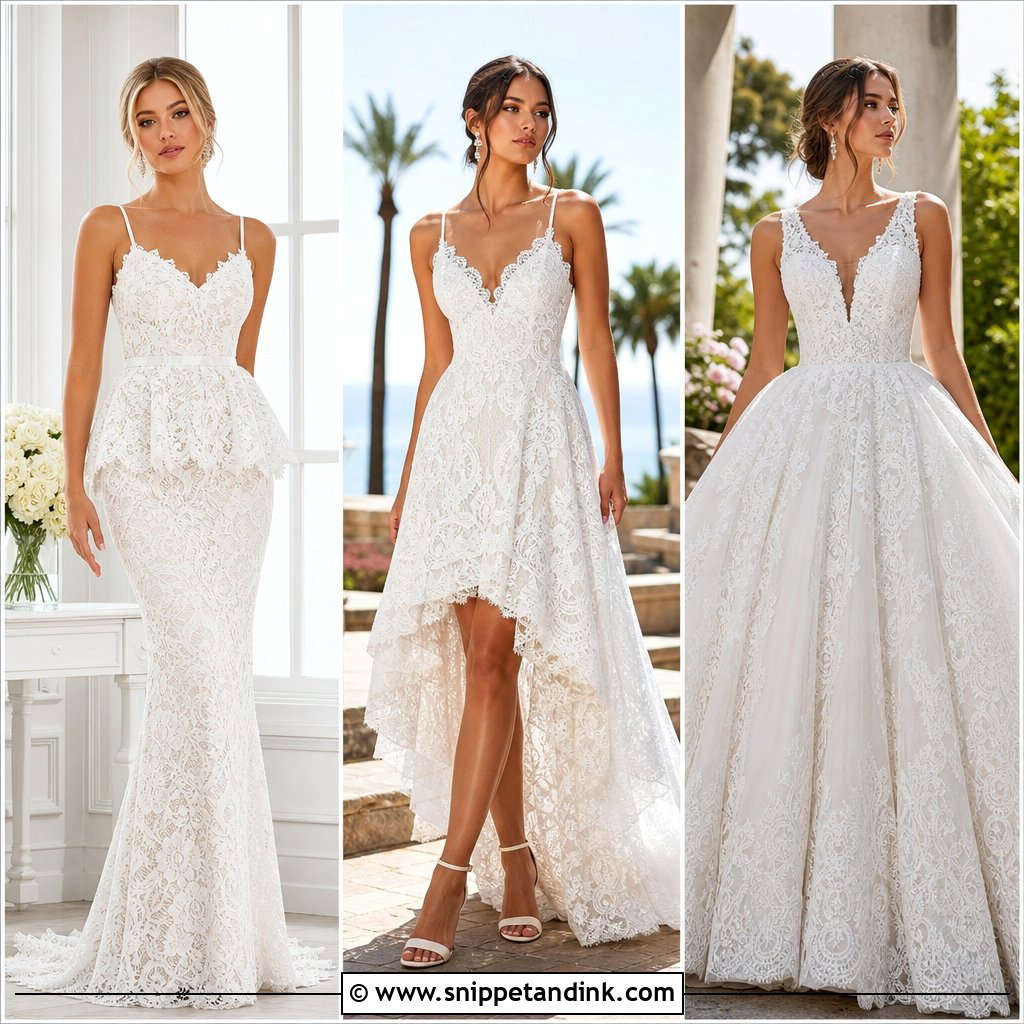
20. Pastel Pleated Gown Outfit
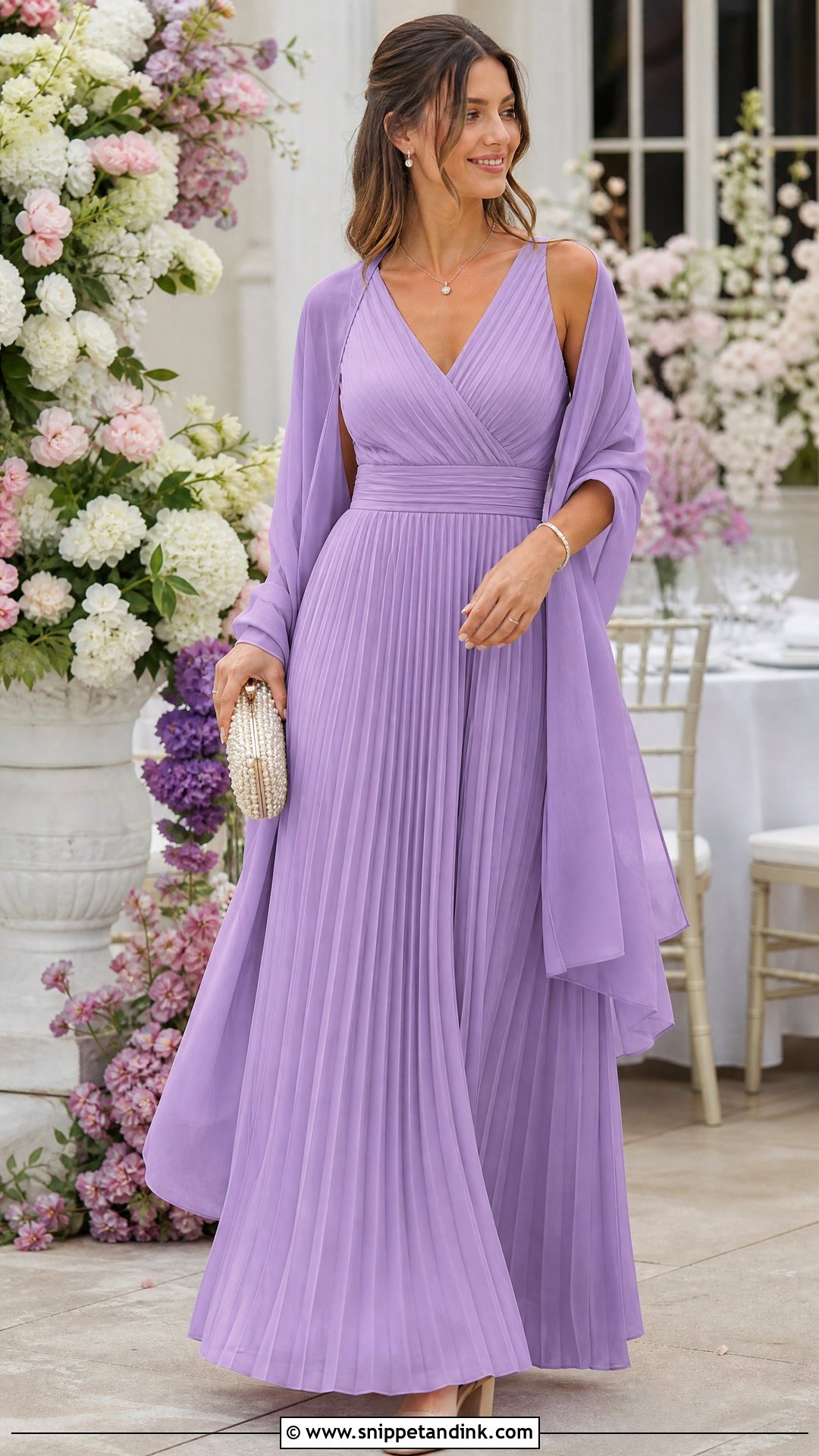
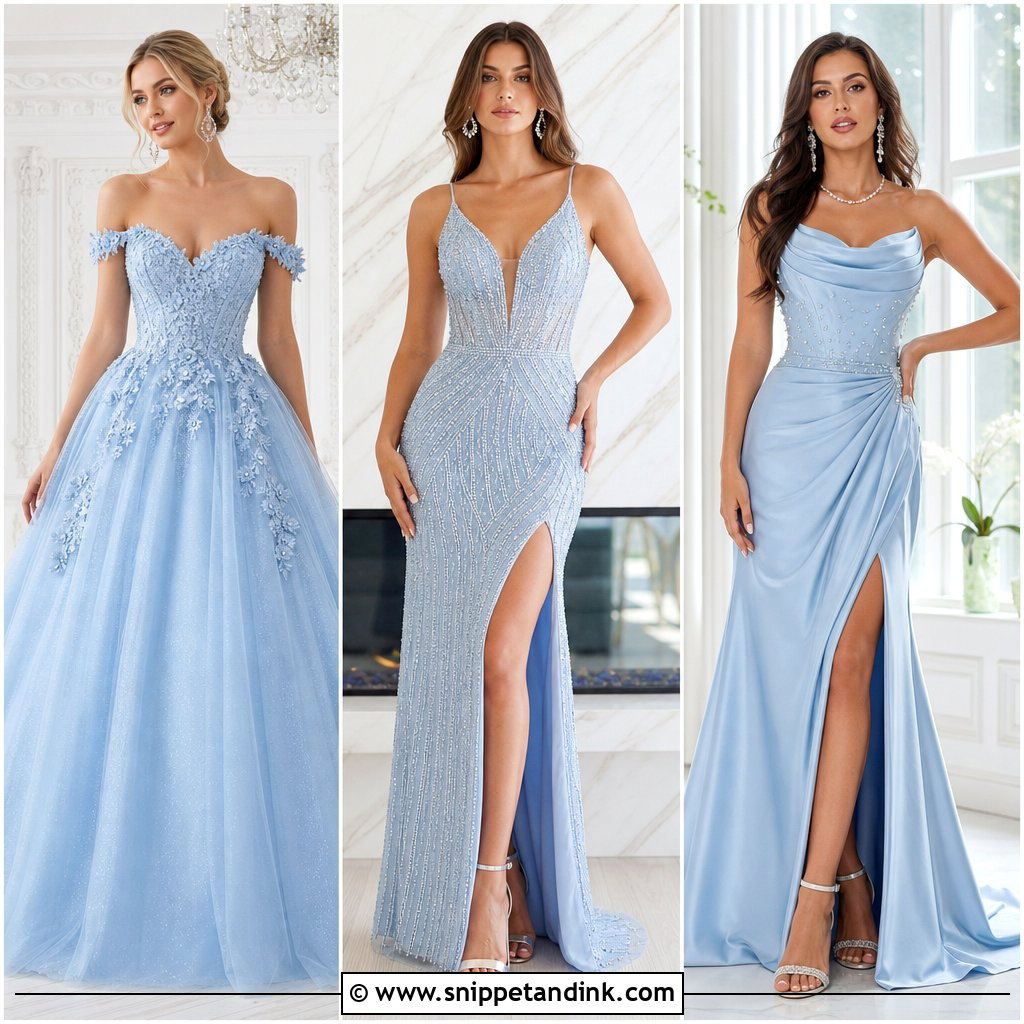
Soft pleats bring texture without beading, but they spring open across the hips if the waist is not fitted, so that is where I tailor first. Lavender, powder blue, sage, peach or dusty pink suit warm-season events. A lined skirt keeps pleated chiffon from turning see-through in sunlight. Neutral block heels sink less into grass at outdoor receptions. Add a pearl or satin clutch and delicate metallic jewelry, then loose waves, a low twisted bun or a half-up style. A light matching wrap covers you once the sun goes down.
What a Tailor Can Change on a Gown, and What They Can’t
Almost every formal gown bought off the rack needs some alteration. Taking in the side seams, shortening straps and adjusting a hem are routine. Letting a gown out is much harder, because most have little spare seam allowance, so buy for your largest measurement and take it in.
Hems are where costs vary most. A plain crepe hem is quick, while a hem with beading, lace or horsehair braid has to be unpicked and rebuilt, and layered tulle means shortening every layer. Ask for a quote before you buy if the gown needs a lot taken up.
Plan for at least two fittings and leave several weeks before the event, more in spring and early summer when tailors are busiest. Bring the exact shoes and underwear you will wear to every fitting, since even a small change in heel height alters where the hem should fall.
Fixes worth carrying in your clutch
Pack a few safety pins, double-sided fashion tape for a slipping neckline, a stain wipe and a clear nail polish for a snag. They fit in most clutches and handle nearly every wardrobe problem that comes up at a formal event.
Sit, Walk and Climb Stairs Before the Night
A gown should feel as good at the last dance as it did in the mirror at home. Start with a silhouette that suits your proportions and lets you move, then plan the shoes, bag, jewelry, hair and outer layer around it so they work together. Season, dress code and body shape all narrow the choice, and a simple design with precise tailoring will almost always look more expensive than an elaborate one that does not fit. Before the event, sit, walk and climb a few stairs in the full outfit. If you can do all three without adjusting anything, it is ready.
You'll Like These Ideas:


Leave a Reply