
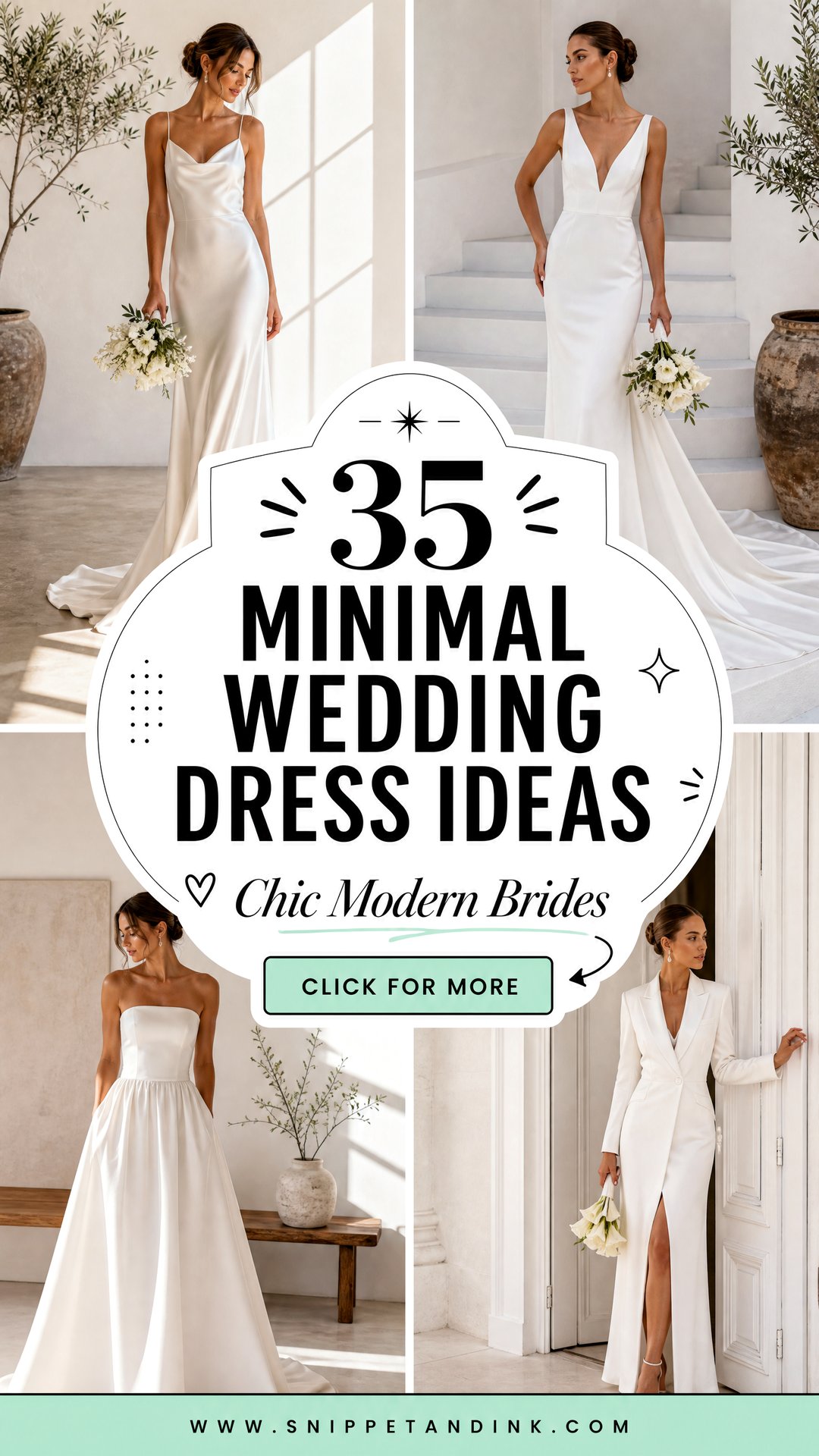
A plain gown is the hardest kind of dress to fake. With no lace or beading to pull the eye away, everyone sees the fabric, the seams and the fit, so the dresses below depend on cut far more than decoration: satin slips, crepe columns, clean A-lines, a sculptural bow, a soft sleeve. I’ve seen the same simple dress read as courthouse-casual on one bride and ballroom-formal on another, and the difference was nearly always tailoring plus one deliberate accessory. Here are 35 pared-back gowns, with what I’d look at in each one when you try it on.
What a Plain Gown Shows That Lace Would Hide
Lace, beading and ruching are forgiving. They break up the surface, so a slightly loose seam or a bra band disappears into the pattern. Take them away and the dress becomes an honest record of how well it fits. That’s why I treat a minimal gown as a tailoring project first and a style choice second.
Four tests I run at every fitting
- Sit in a chair for a full minute, then stand and look at your lap. Satin will hold crease lines; good crepe should recover within a few minutes.
- Raise both arms as if hugging someone taller. A strapless or off-shoulder bodice that slips here will slip at the reception.
- Walk across the room and up two steps in your actual wedding shoes. Hems are set to an exact heel height, so a different pair later changes everything.
- Turn your back to a mirror under bright light. Underwear edges and shapewear seams show through thin satin long before they show in a shop’s soft lighting.
Buy your underwear before the first fitting, not after. The dress is fitted over whatever you wear that day, and switching later can throw a close bodice off by enough to matter. Smooth, unpadded pieces matched to your skin tone, rather than to the dress, are the safest choice under white or ivory.
Even a simple gown usually needs two or three alteration appointments. Most seamstresses like to start around two to three months before the wedding and finish with a last check a couple of weeks out, though busy seasons push that earlier, so ask about timing when you order.
1. Minimal Satin Slip Wedding Dress
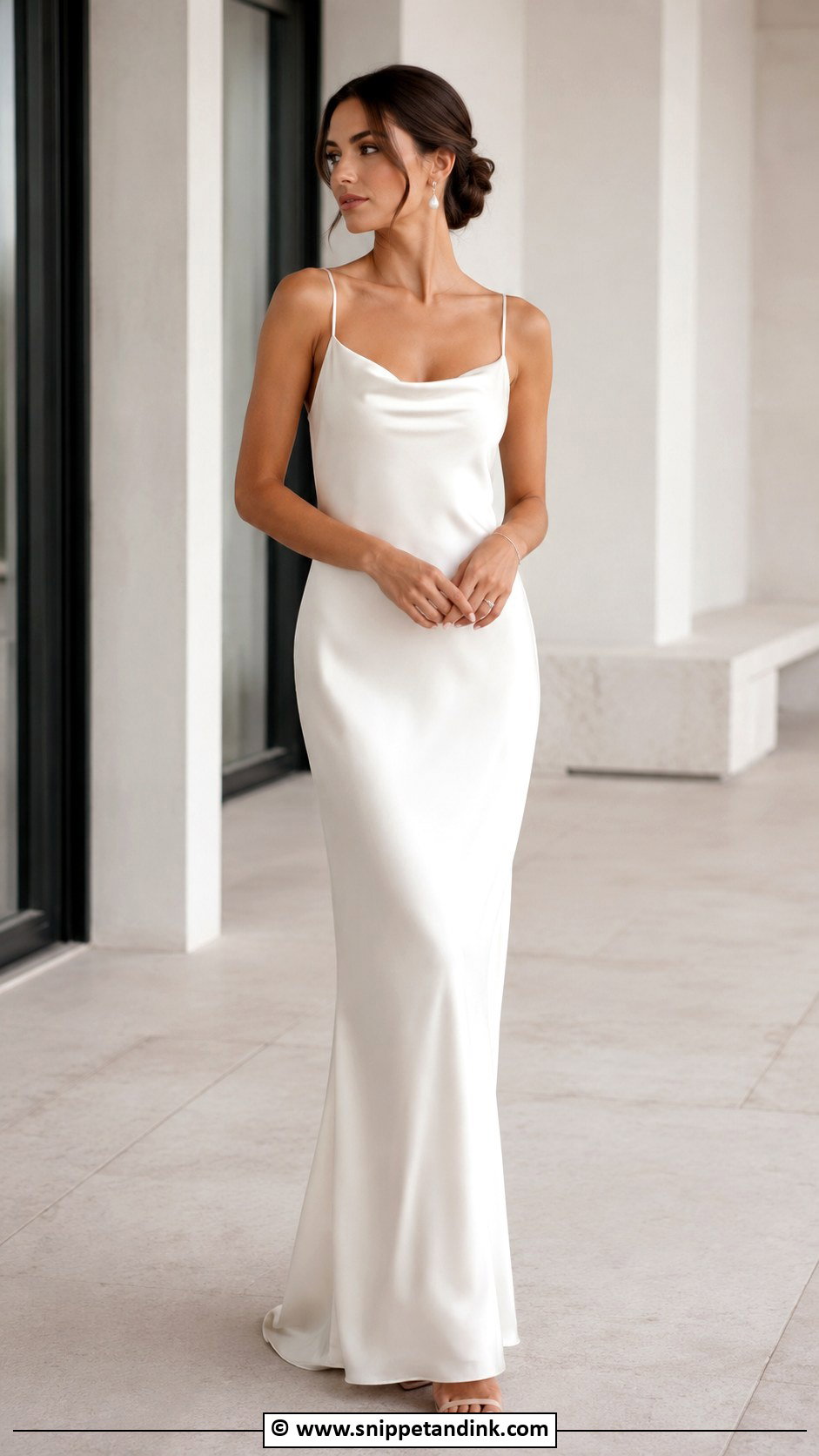
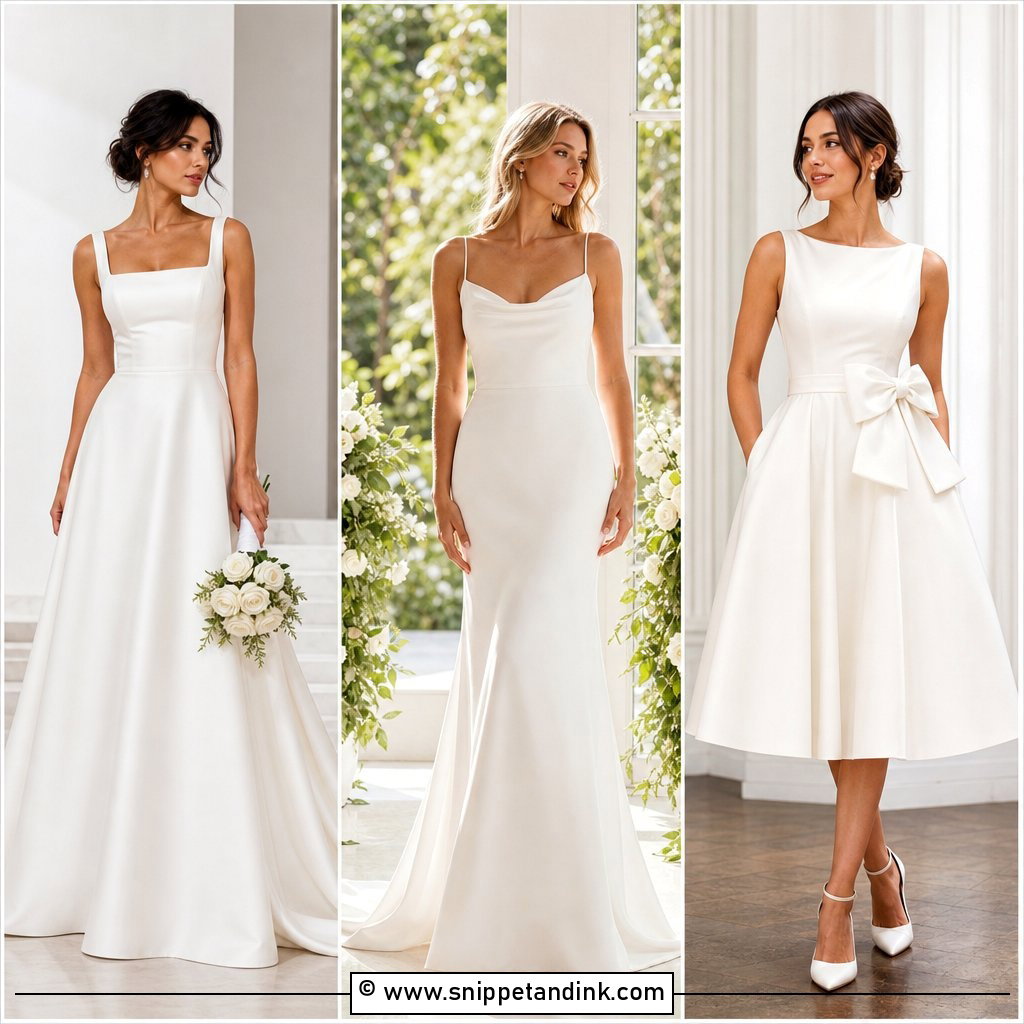
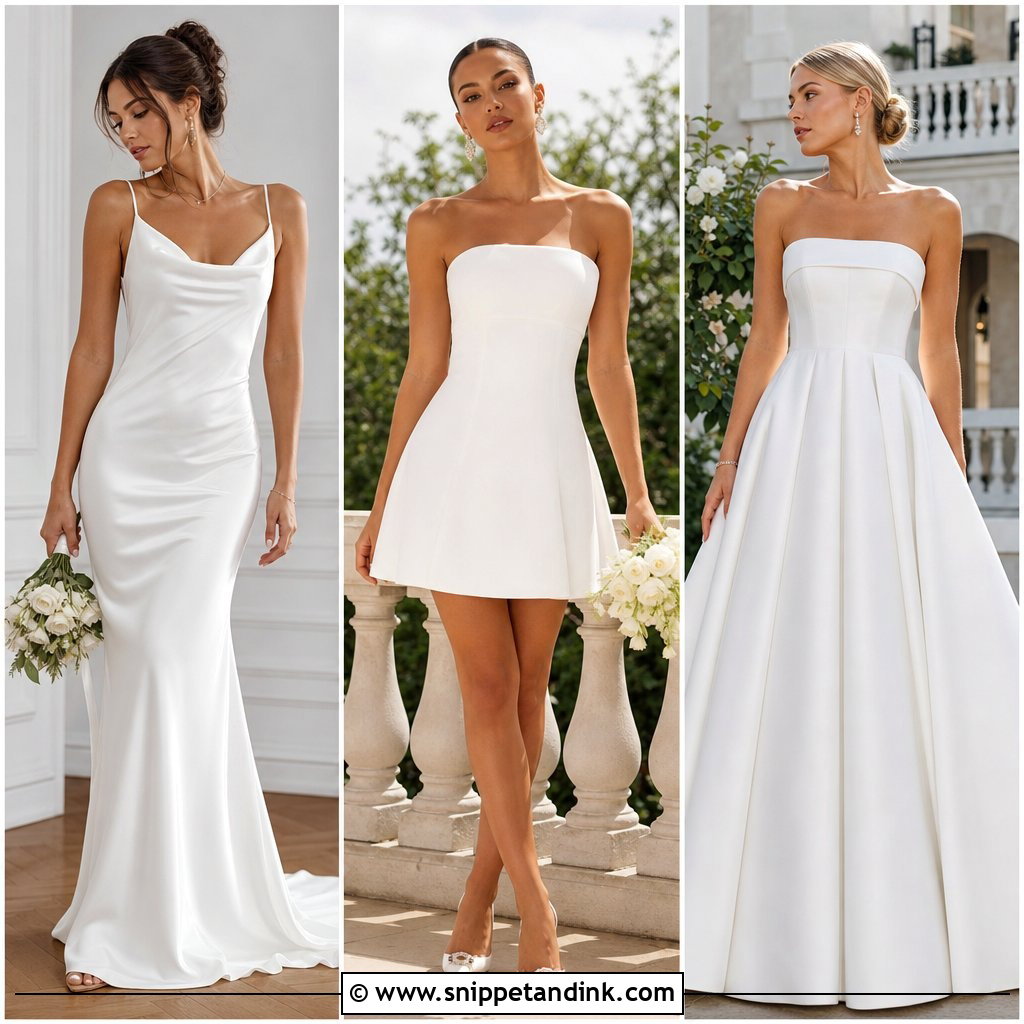
Bias-cut satin is the most honest fabric in bridal. Because it’s cut on the diagonal it stretches and skims, which is exactly why it drapes so well and also why it shows every seam line and underwear edge. I ask brides to bring their actual wedding underwear to the very first slip fitting. Ivory and pearl tones tend to be kinder to most skin than stark white. Keep the rest quiet: thin straps or a soft cowl, pearl drops, a low bun, a sheer veil. It suits city weddings, destination ceremonies and modern receptions, as long as you accept that satin creases the minute you sit.
2. Minimal Crepe Column Wedding Dress
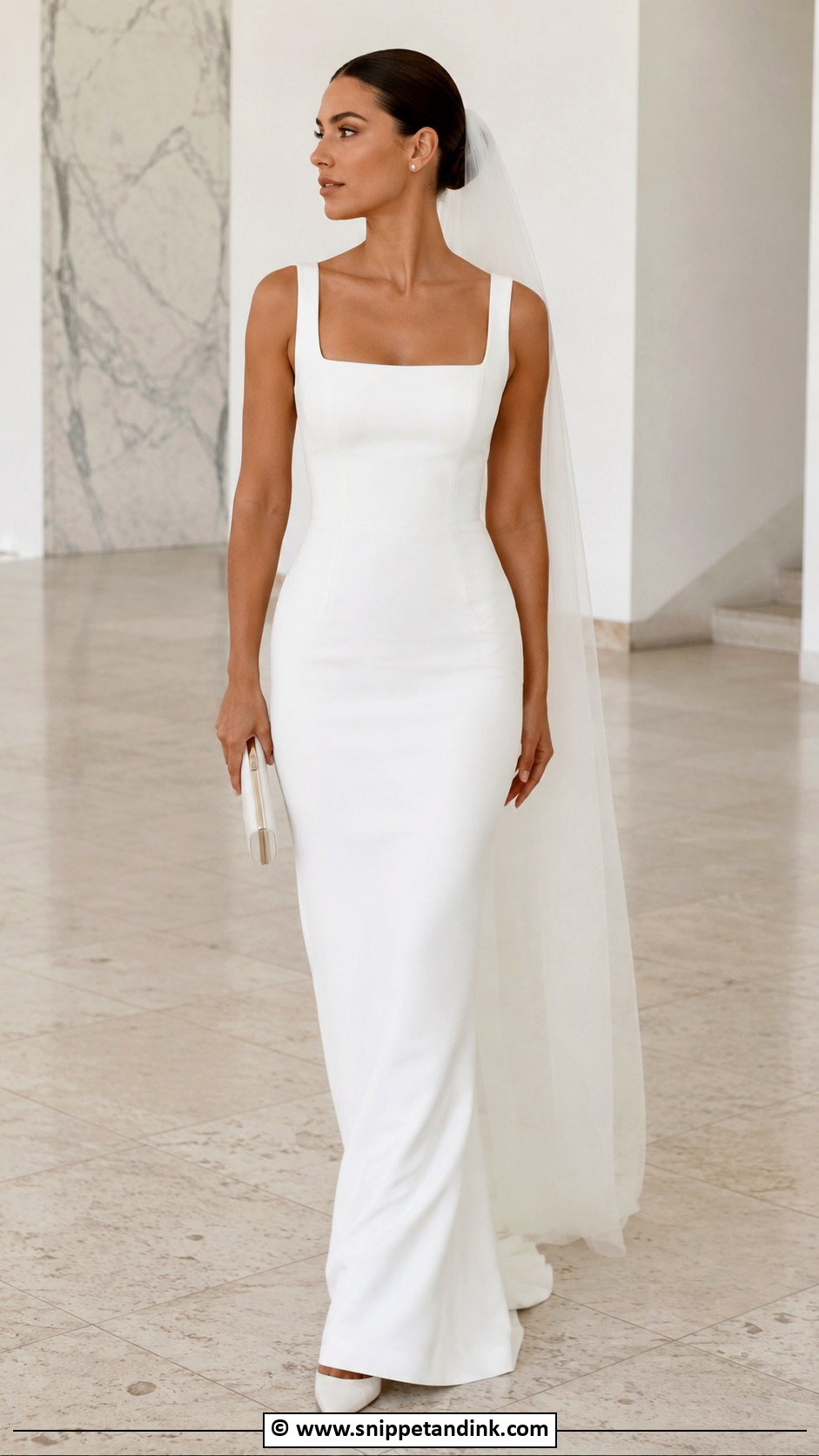
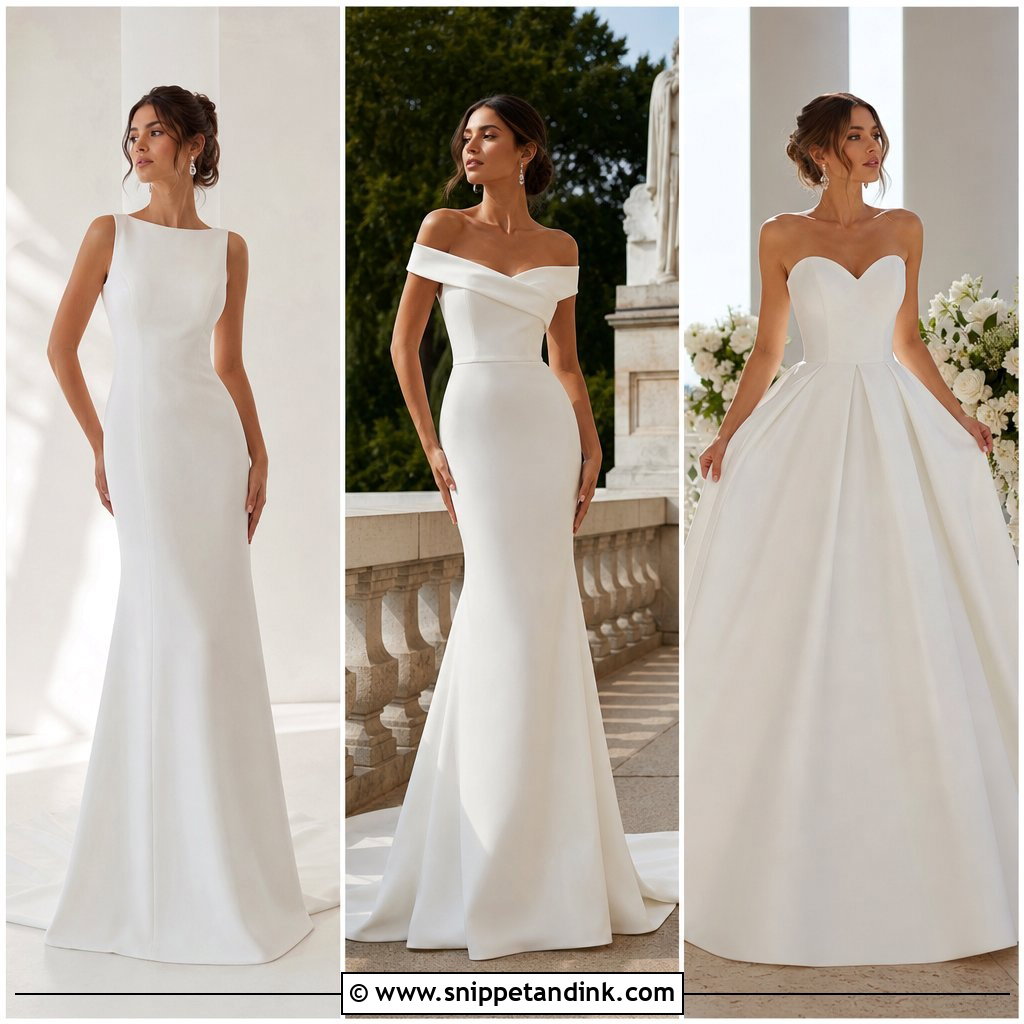
Crepe is my go-to when someone wants a clean line without the cling of satin. It has enough weight to fall straight from shoulder to hem, and the matte surface forgives a little more. Look for subtle seams and a square or bateau neckline, then add pointed heels, a sleek clutch and small diamond or pearl studs. A long plain veil or polished gloves bring drama if you want it. The first thing I check is hem length in the real shoes, because a column that pools on the floor loses its whole point. Gallery weddings, hotel venues and civil ceremonies suit it.
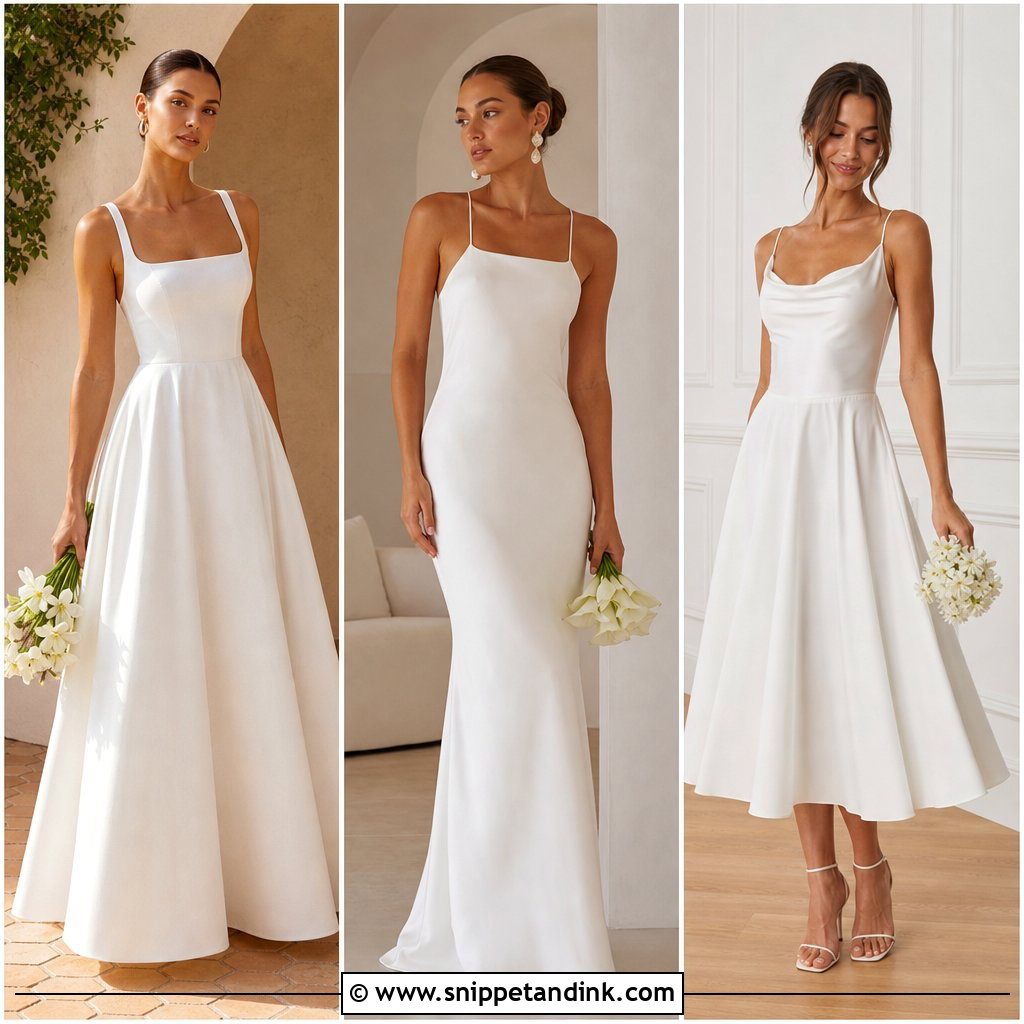
3. Minimal Square Neck Wedding Dress
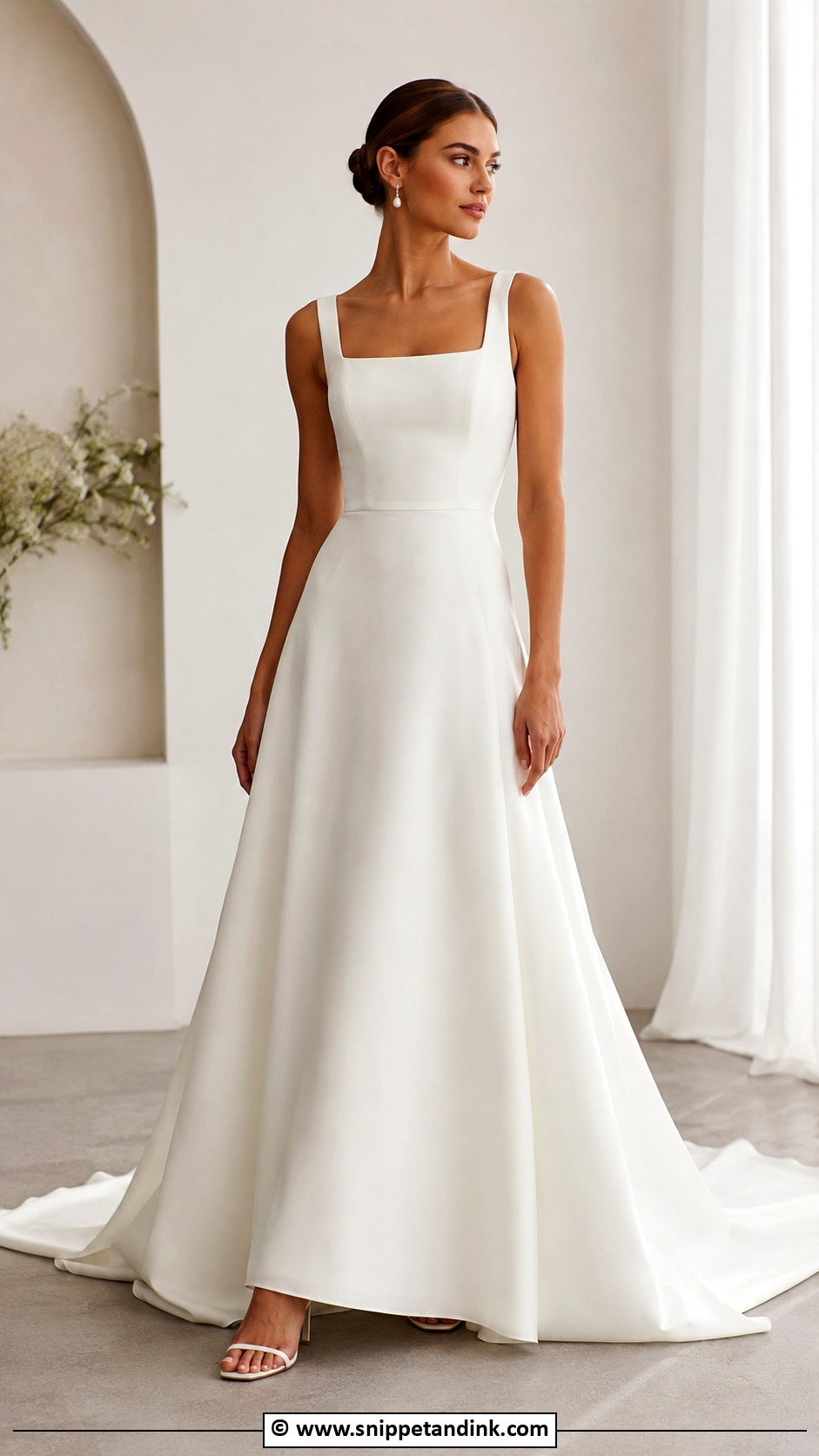
A square neckline frames the collarbone and stays modest, so it’s one of the easiest necklines to live in for a long day. What I watch at fittings is the corners. If the bodice is even slightly loose, they gape forward every time you lean and the clean geometry disappears. Pair it with whichever skirt you’re comfortable in, column, straight or a soft A-line, plus a slick bun, delicate earrings and pointed pumps or strappy block heels. Leave the neck bare or wear one small pendant; anything more crowds the shape.
4. Minimal Strapless Wedding Dress
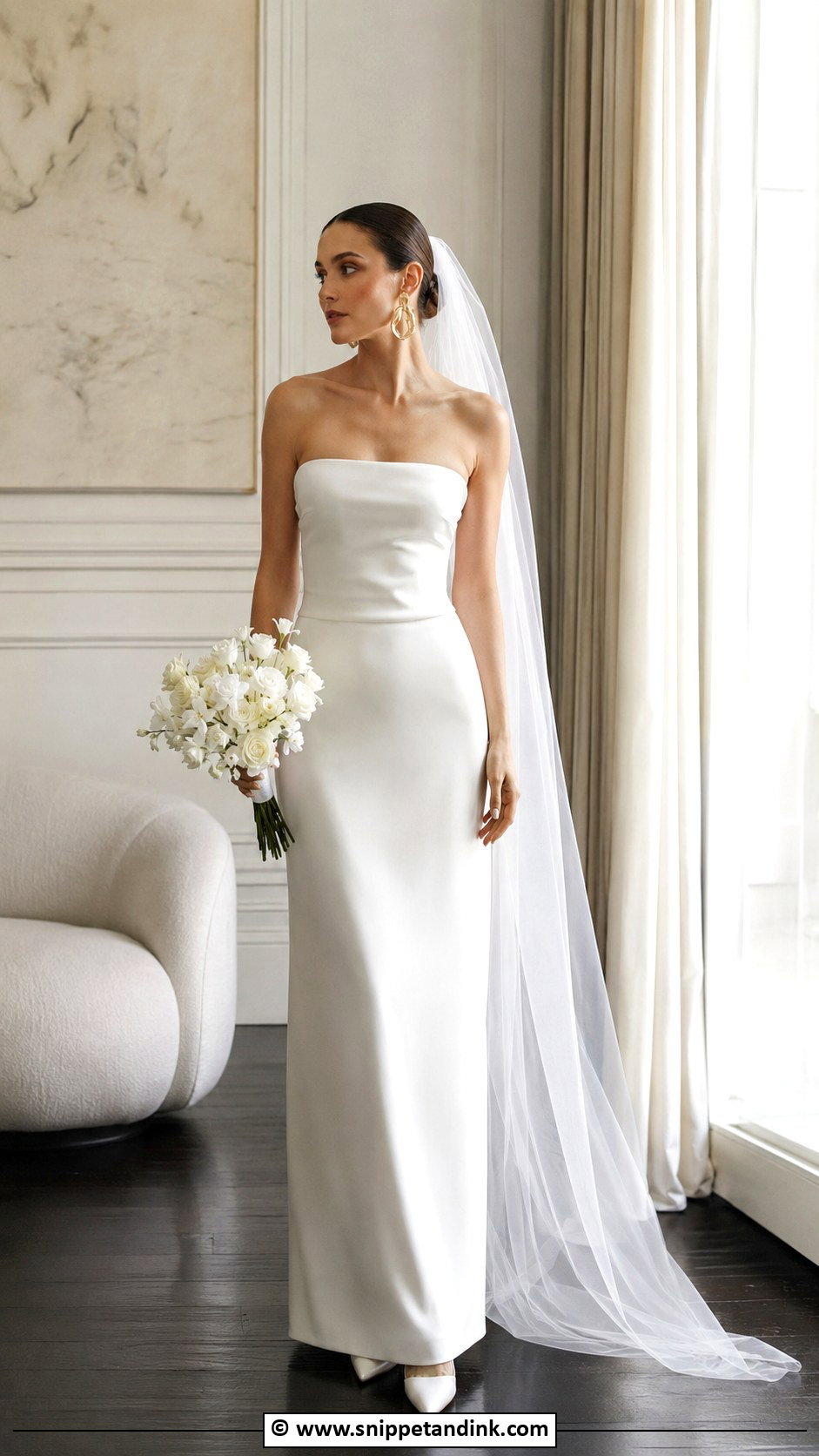
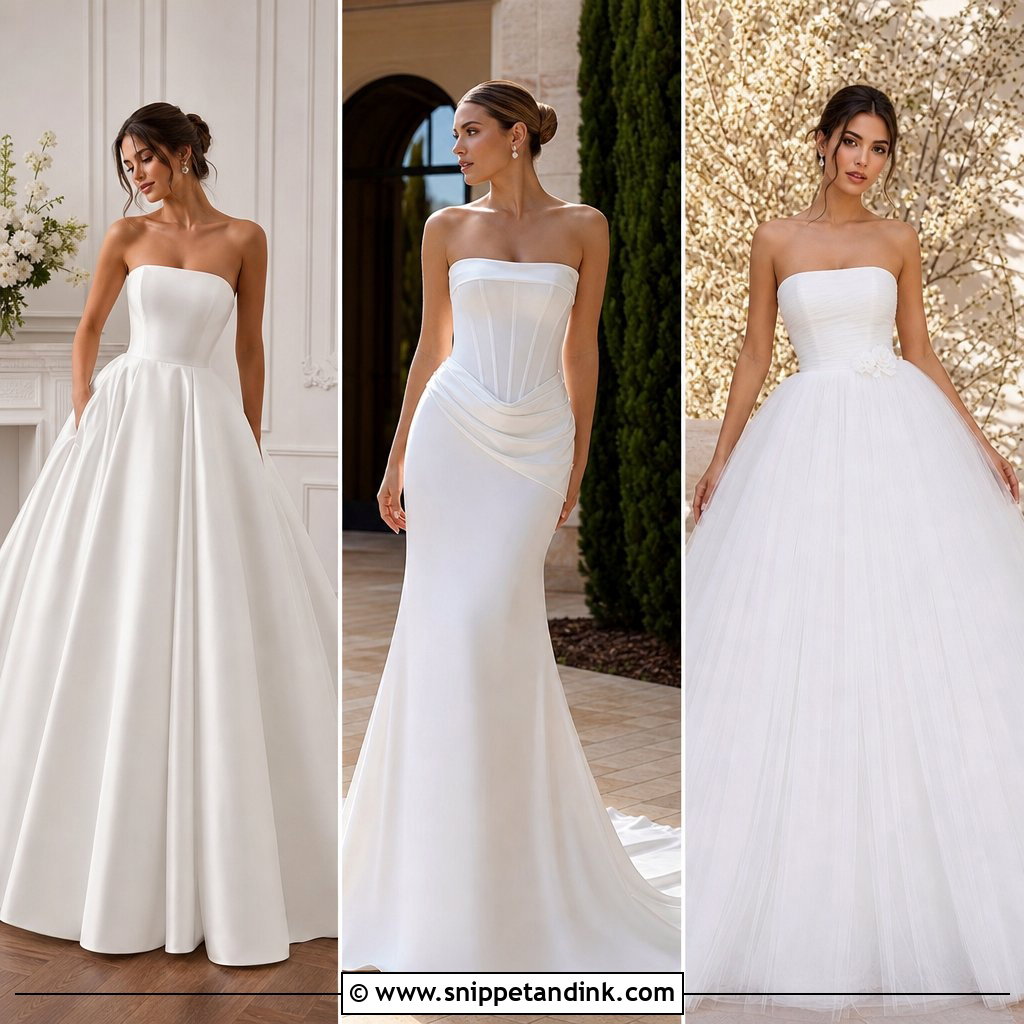
Strapless is where construction matters most, since nothing holds the dress up except the bodice. A well-made one has internal boning and often a waist stay, a grosgrain band inside that anchors the gown so you aren’t hitching it up all night. A straight-across neckline looks architectural; a soft curve is gentler. Satin, mikado and crepe give a smooth surface, and a long veil, sculptural earrings and sleek heels finish it. At the fitting, hug someone and lift both arms. If the bodice slips, it needs taking in before the day, not a roll of tape.
5. Minimal Long Sleeve Wedding Dress
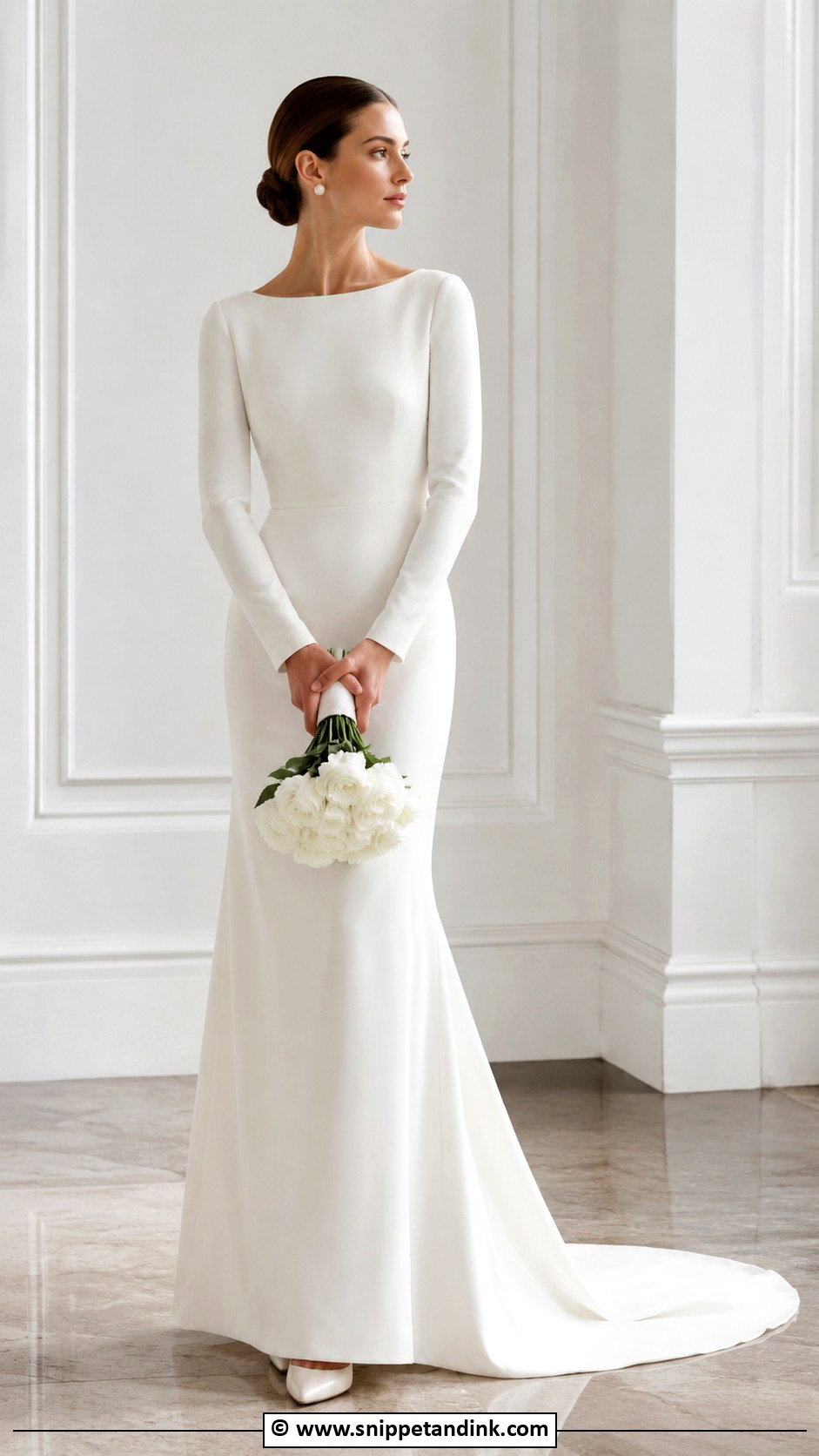
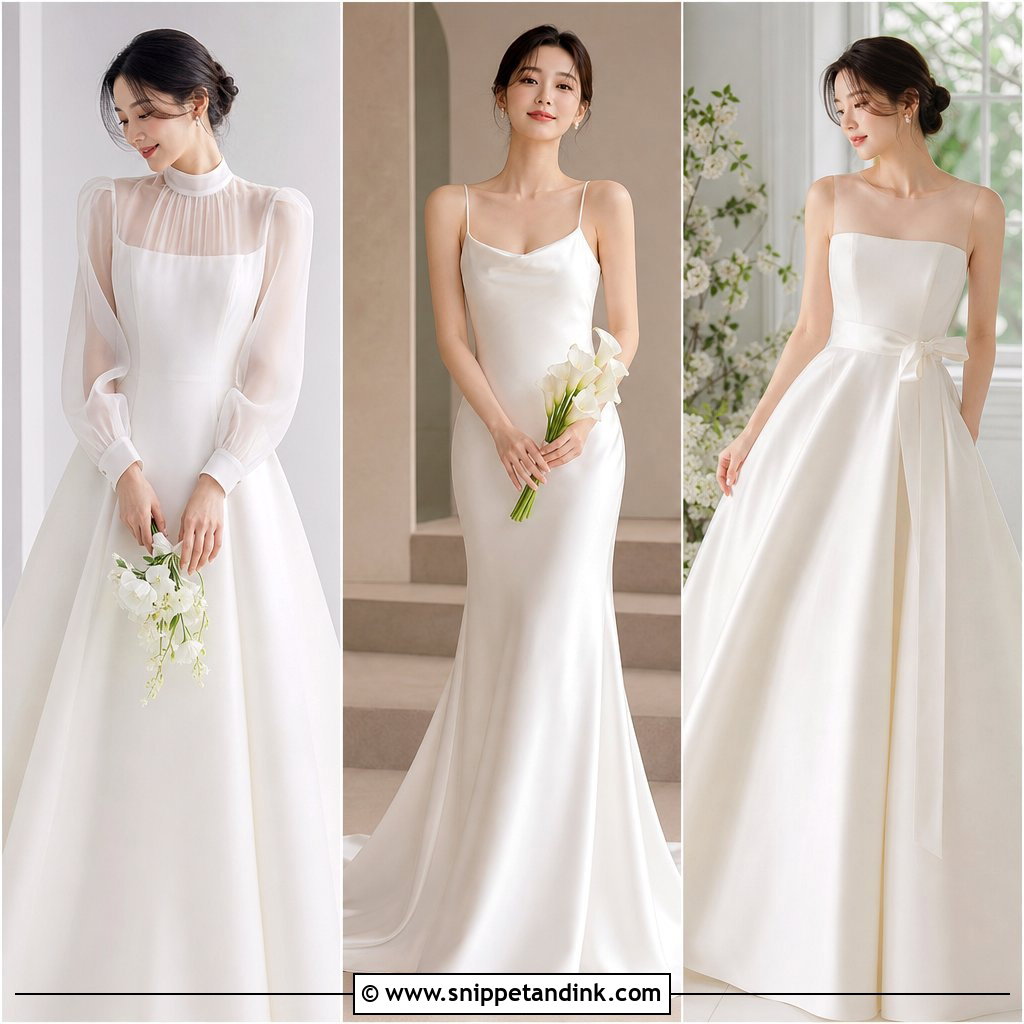
Long sleeves give coverage, but in a plain gown they also expose fit at the shoulder and elbow more than any other detail. Smooth crepe, satin or a fabric with a little stretch is kindest, because fully rigid sleeves limit how high you can lift your arms, and that matters for hugs and the first dance. High, bateau and square necklines all sit well with them. I’d style it with a low chignon, pearl studs and pointed pumps. Fitted sleeves belong with a column or sheath; relaxed sleeves with a simple A-line. Cooler months and formal venues are where it makes the most sense.
6. Minimal High Neck Wedding Dress
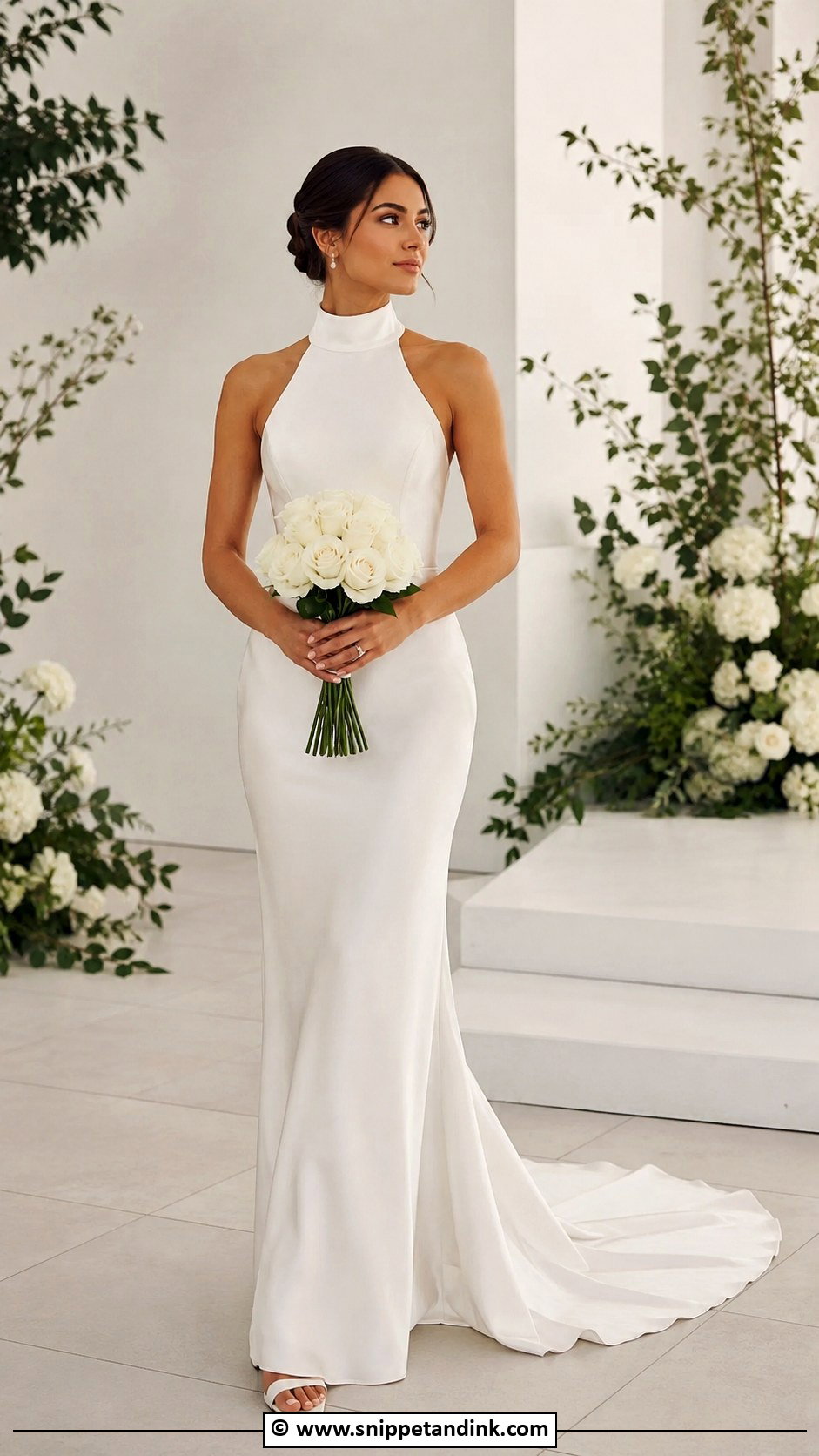
A high neck reads almost editorial. It lengthens the upper body and looks sharpest in crepe, satin or matte silk, and because the neckline carries the whole design, the rest of the gown has to stay quiet: a column skirt, a low back or a subtle train. Keep earrings small and hair up, ideally a sleek updo with a clean veil tucked under the bun. One honest caveat. On a hot afternoon a lined crepe high neck gets warm by the speeches, so I’d think twice for a summer ceremony outdoors.
7. Minimal Off Shoulder Wedding Dress
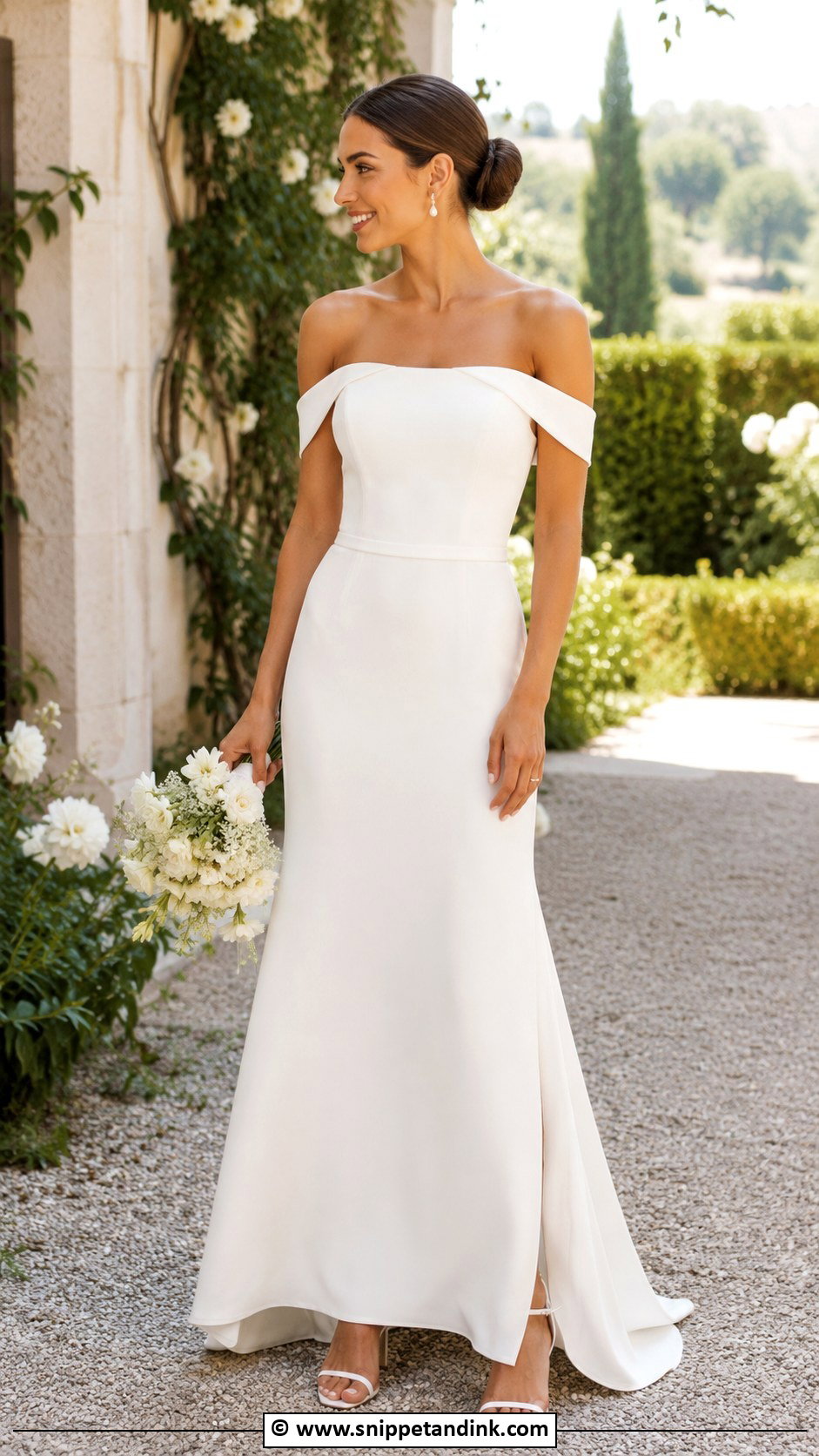
Off-shoulder necklines feel romantic without needing decoration, and satin or crepe holds the line well. My warning is practical: the neckline sits across your upper arms, so how far you can lift them is limited. At the fitting, give someone a full hug and reach up as if catching a bouquet. A fitted bodice with a smooth skirt looks refined, a soft A-line gentler. Finish with a neat bun, pearl earrings and simple heeled sandals, and skip the necklace because the neckline is already doing the work.
8. Minimal One Shoulder Wedding Dress
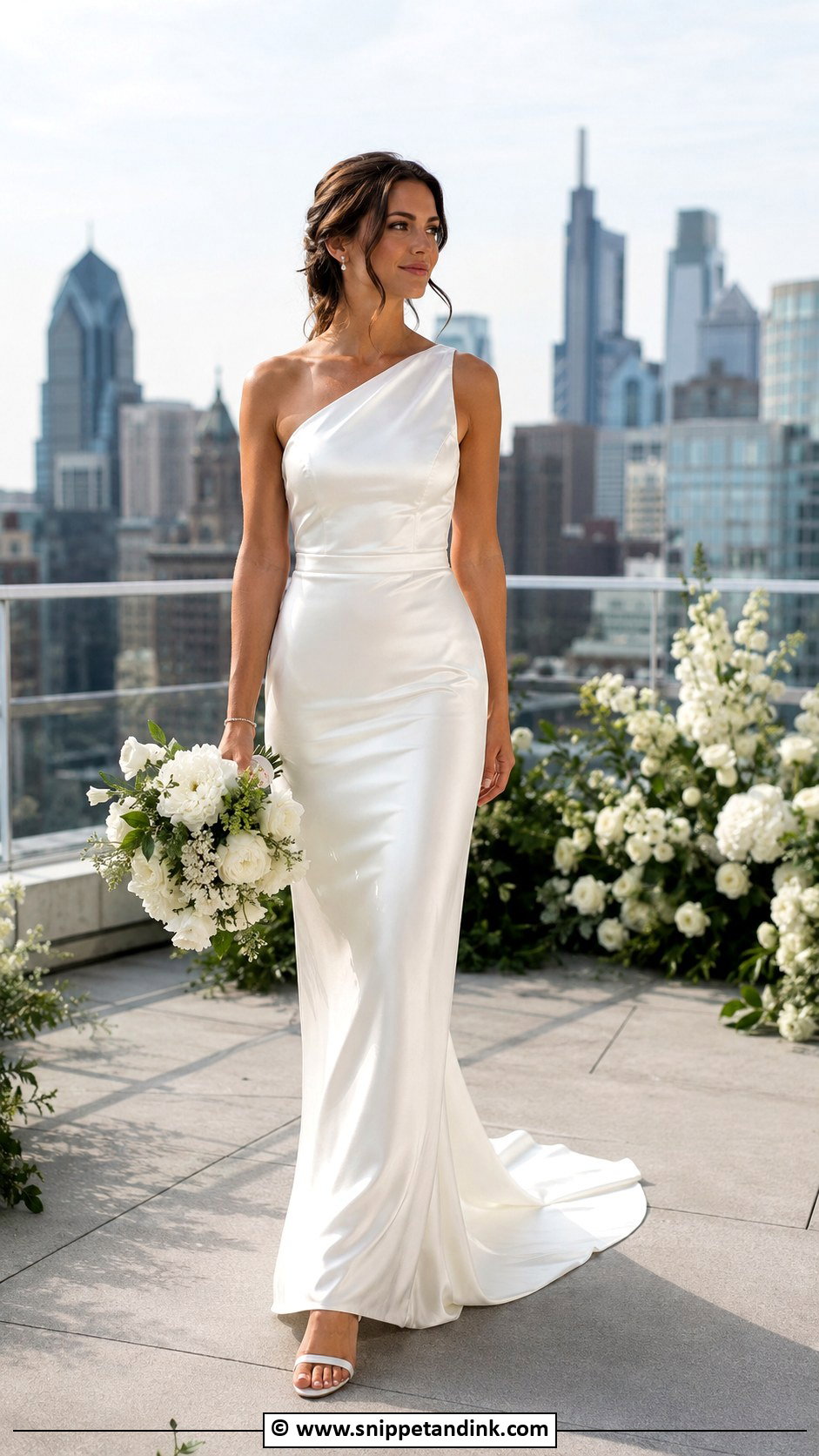
One shoulder adds asymmetry and still looks controlled. A smooth column, fitted sheath or soft drape in satin or crepe is enough on its own. Because the neckline is off-centre, I balance it with hair pulled back or swept toward the bare shoulder, never the covered one. One bracelet, small earrings, clean heels; veil or no veil depending on the venue. If you have a fuller bust, ask how the single strap is supported inside. A well-built one has a hidden band or boning so the strap isn’t dragging on your shoulder for ten hours.
9. Minimal A Line Wedding Dress
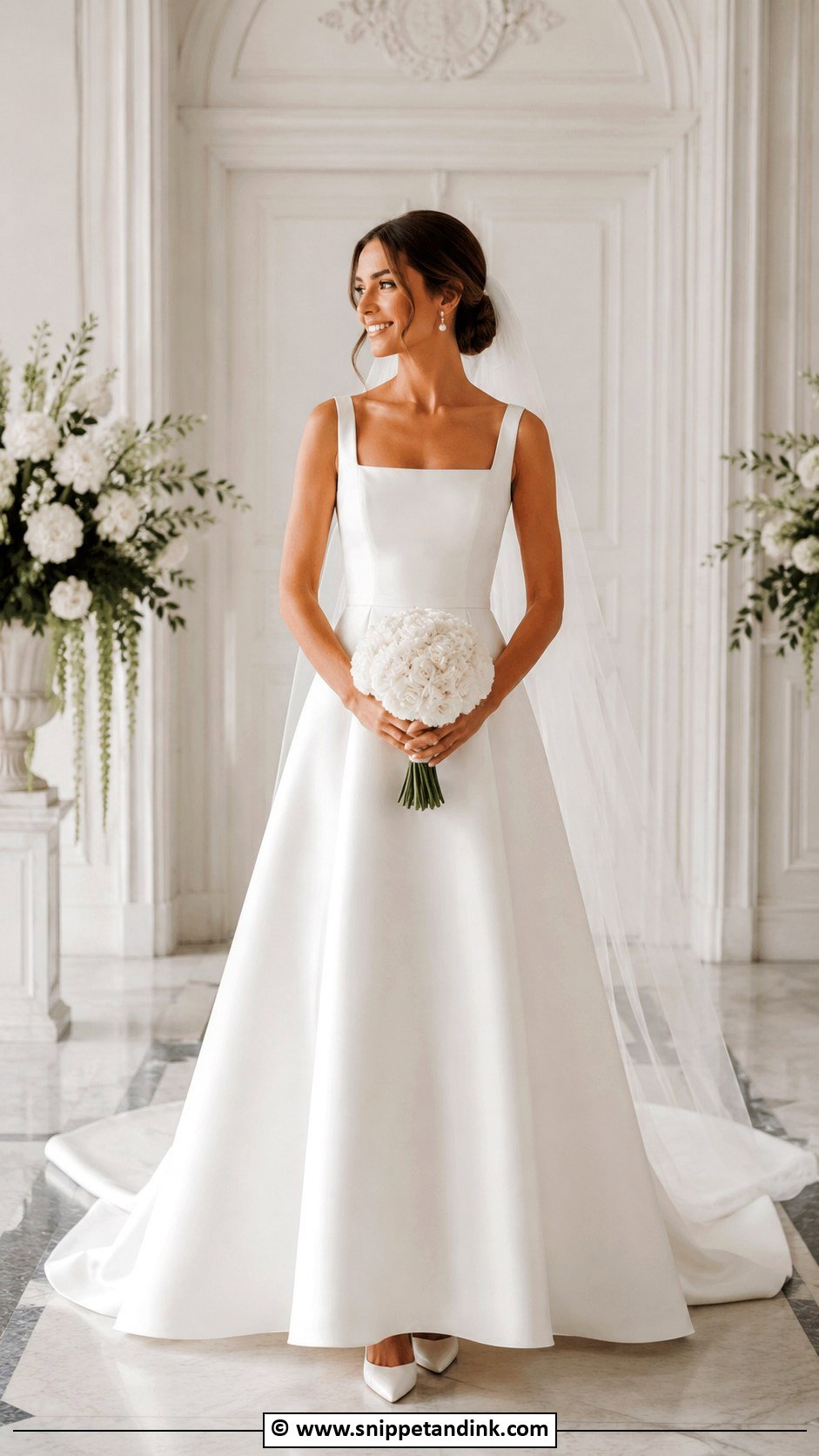
The A-line is the silhouette I see brides relax into fastest, because a fitted bodice and flared skirt give shape without clinging. Mikado, satin or a clean organza hold the flare, while softer fabrics let it collapse. A square, scoop or strapless neckline keeps it simple, with classic pumps, a soft veil and small pearl earrings. You get a traditional wedding shape with no lace, beading or heavy layers, and it moves easily from an outdoor ceremony to a formal reception. Ask whether the skirt lining has some body to it; that’s what stops the shape going limp by evening.
10. Minimal Ball Gown Wedding Dress
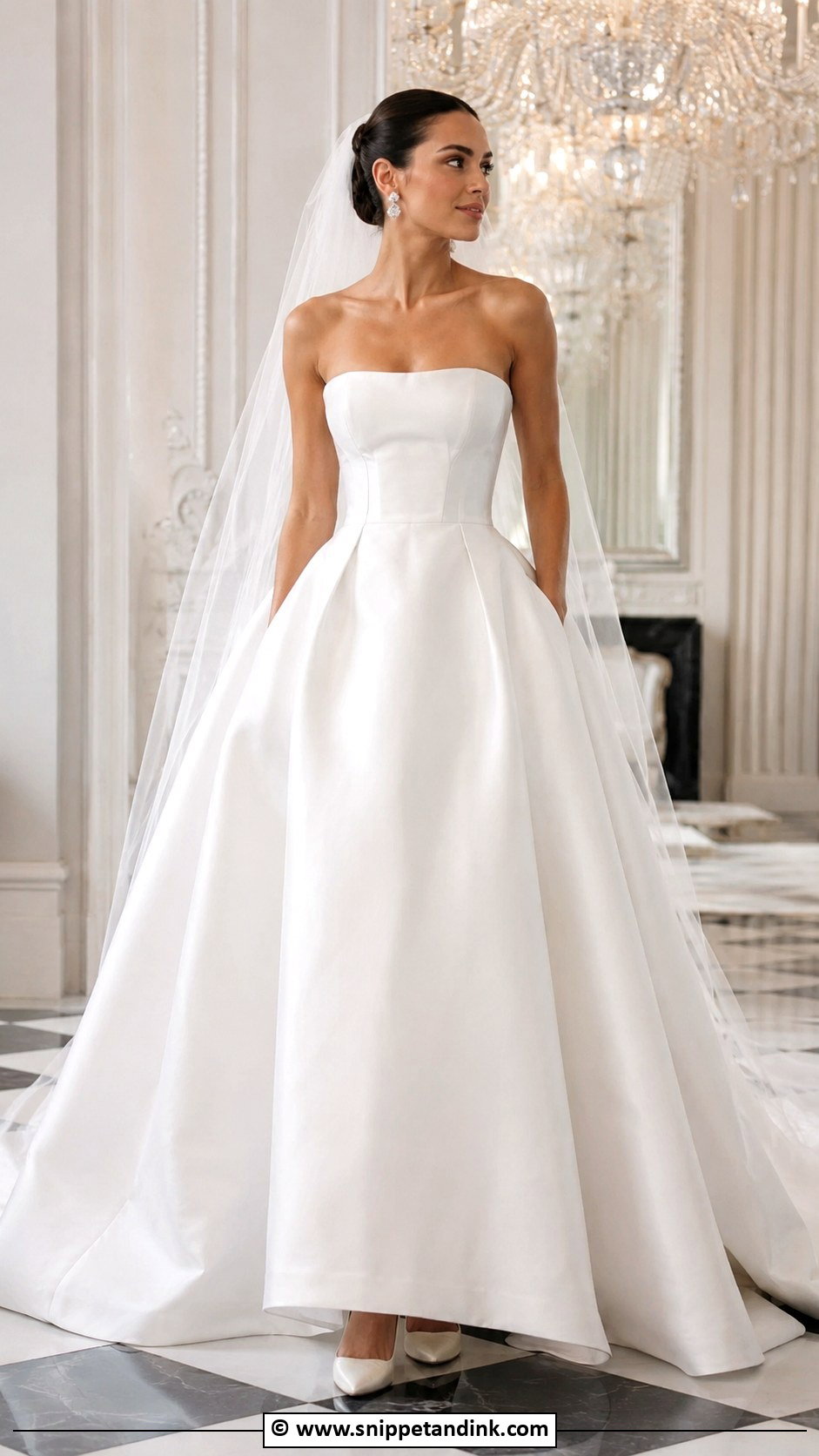
Simple can still be grand. A pared-back ball gown leans on a clean bodice and a full skirt in crisp mikado, satin or structured taffeta, and most of that volume comes from tulle layers or a petticoat underneath, so ask what’s in there and how much it weighs. A strapless or square neckline keeps it modern. Pointed pumps, a smooth veil and classic earrings are plenty. Keep the bouquet compact too, since a big round arrangement fights the skirt. The only time I’d steer someone away is a venue with narrow aisles or tight stairs.
11. Minimal Mermaid Wedding Dress
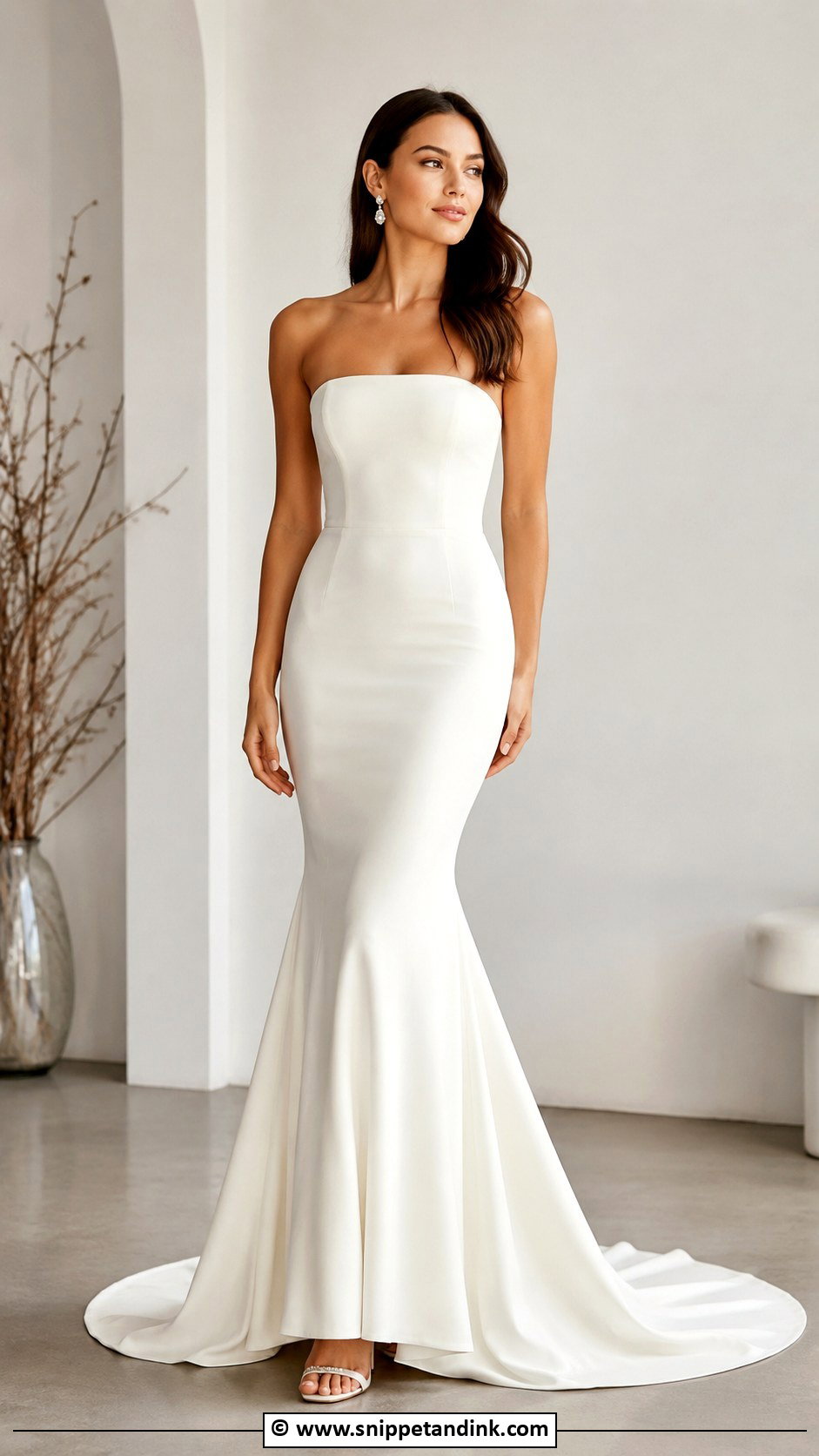
I fit a mermaid more carefully than any other shape, because the flare point decides whether you can walk. Set too high, you shuffle; too low, you can’t sit. Crepe follows the body with a clean surface, and simple straps, off-shoulder or strapless all suit it. Sleek waves, drop earrings, elegant heels and a plain cathedral veil bring ceremony impact without busyness. Try a staircase and a dining chair at your fitting. If both feel easy, it’s ready for an evening reception.
12. Minimal Tea Length Wedding Dress
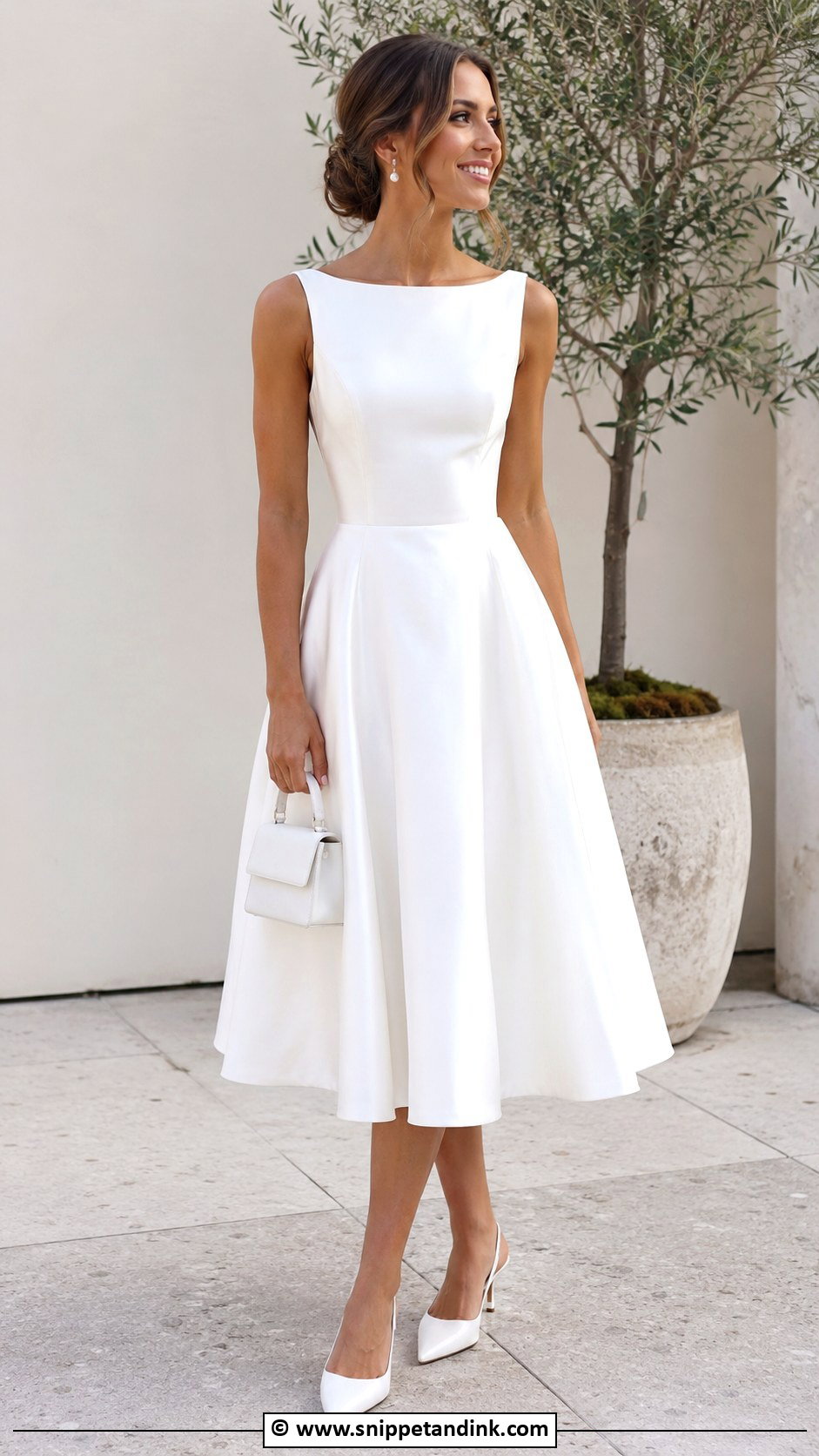
Tea length lands between knee and ankle, and it’s the most practical hem here: no bustle, nothing to step on. Clean satin, crepe or a cotton blend with a fitted bodice and softly flared skirt suits courthouse weddings, gardens and relaxed receptions. Since your shoes are on show, make them count. Pointed slingbacks are my usual pick, with pearl earrings and a small structured bag, and a short veil or bow clip keeps it bridal. Get the hem level right, though. Tea length only looks deliberate when it stops at the narrowest part of the calf.
13. Minimal Mini Wedding Dress
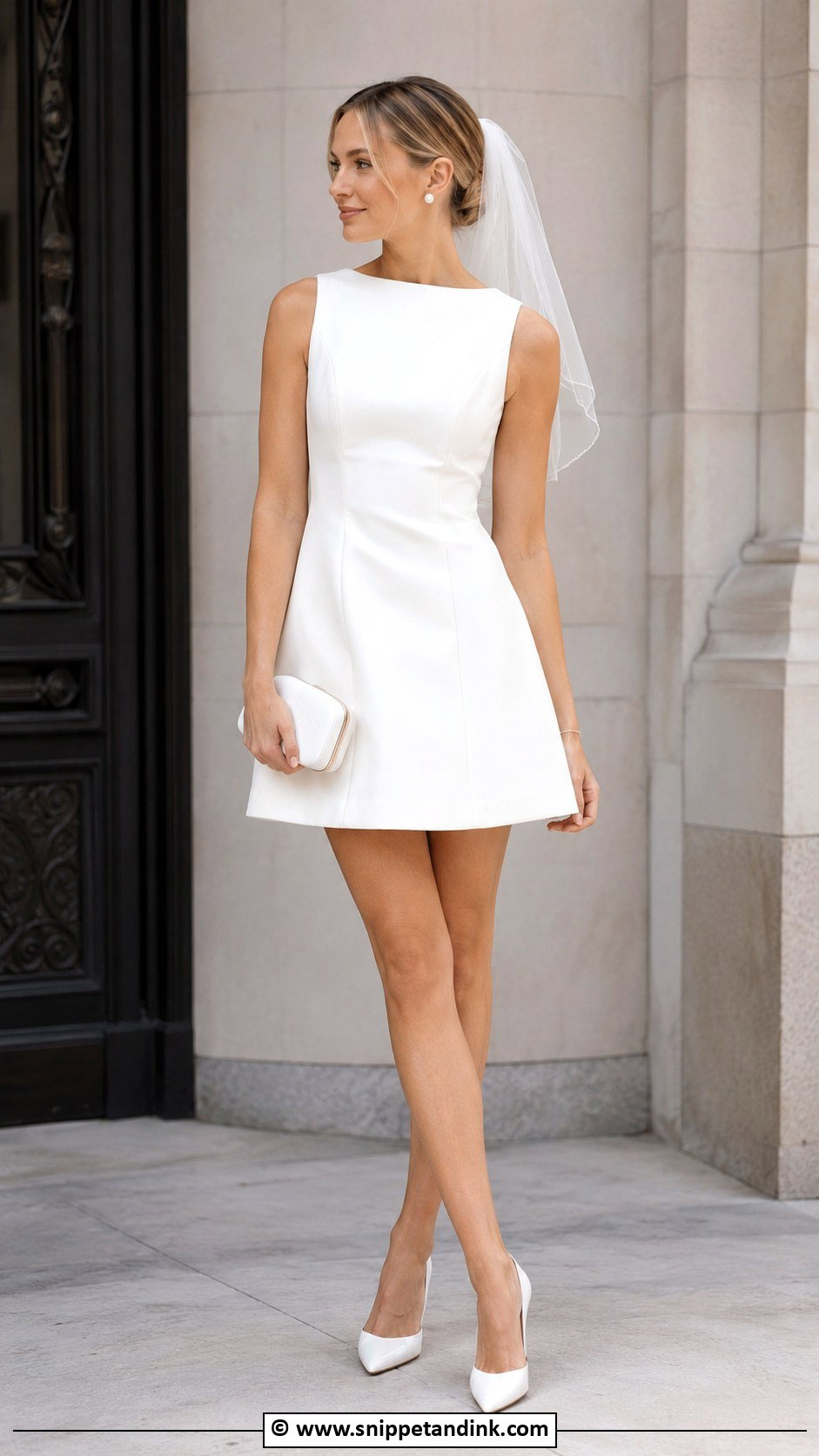
A mini suits a civil ceremony, a reception change or a city wedding. A shift, a tailored blazer dress, a strapless mini or a small A-line in ivory or white can all work, and what makes it look like a wedding dress rather than a party dress is fabric weight. Thin polyester reads casual; heavy crepe or duchess satin reads bridal. Add pointed pumps, slingbacks or platforms, pearl studs, a small clutch and a short veil. Sit down in front of a mirror before you buy, because a mini rides up more than you expect.
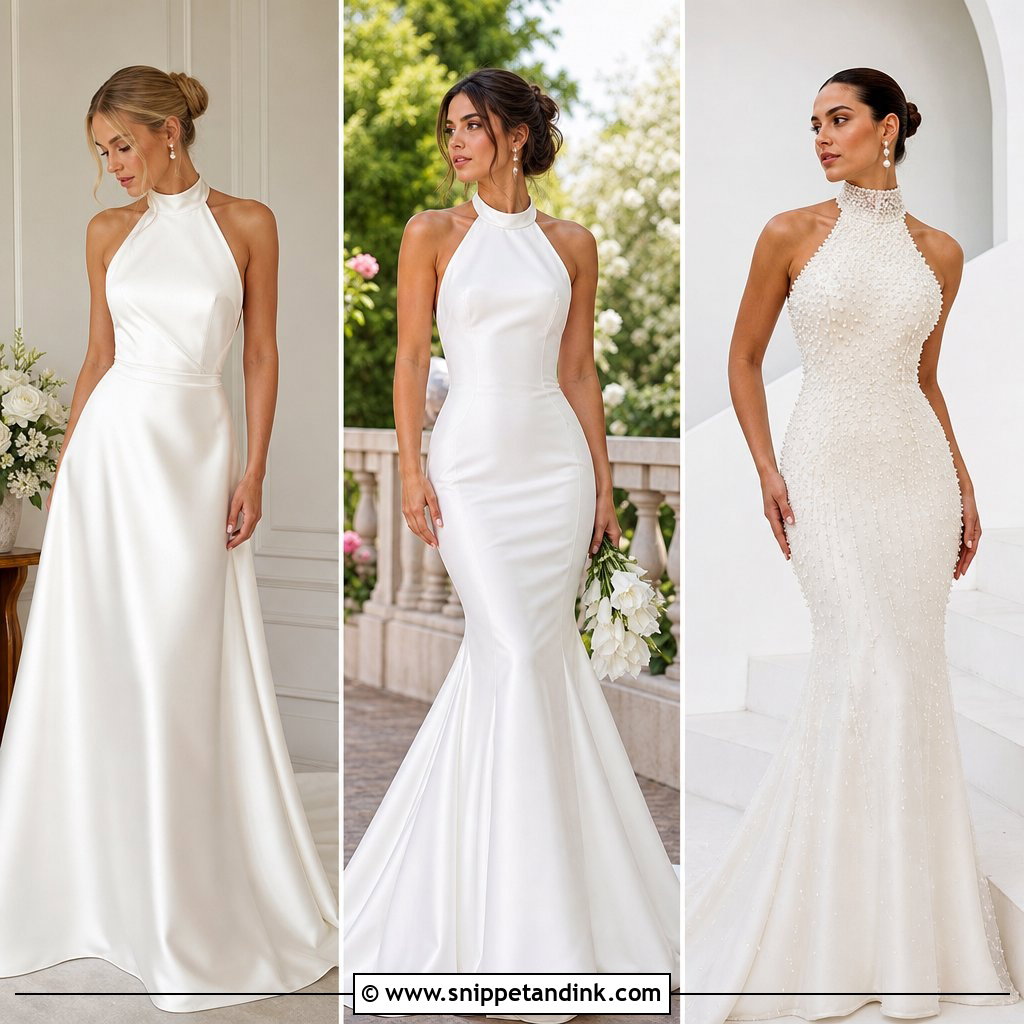
14. Minimal Halter Wedding Dress
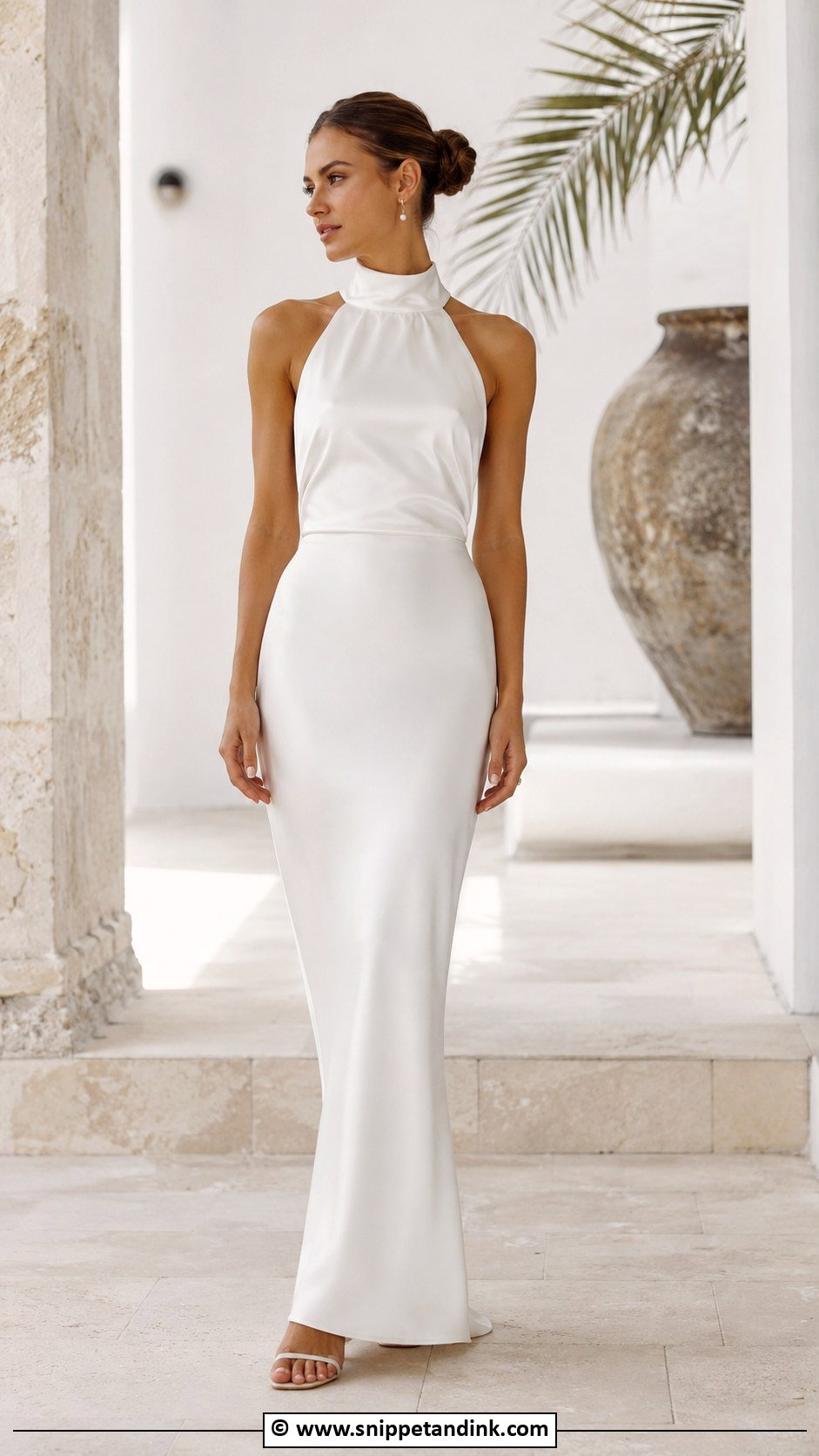
A halter draws the eye to the shoulders and upper back, so clean fabric and little decoration are all it needs. Satin, crepe and matte silk all work; a column skirt keeps it sharp and a soft A-line adds movement. A polished bun shows off the back, with simple earrings and narrow heeled sandals, and no necklace. The strap around your neck carries real weight on heavier fabrics, so I check whether it fastens with a hook or button and whether it can be adjusted. A halter pulling on the neck gets uncomfortable well before the cake is cut. Warm weather, resorts and rooftops are its natural setting.
15. Minimal Cowl Neck Wedding Dress
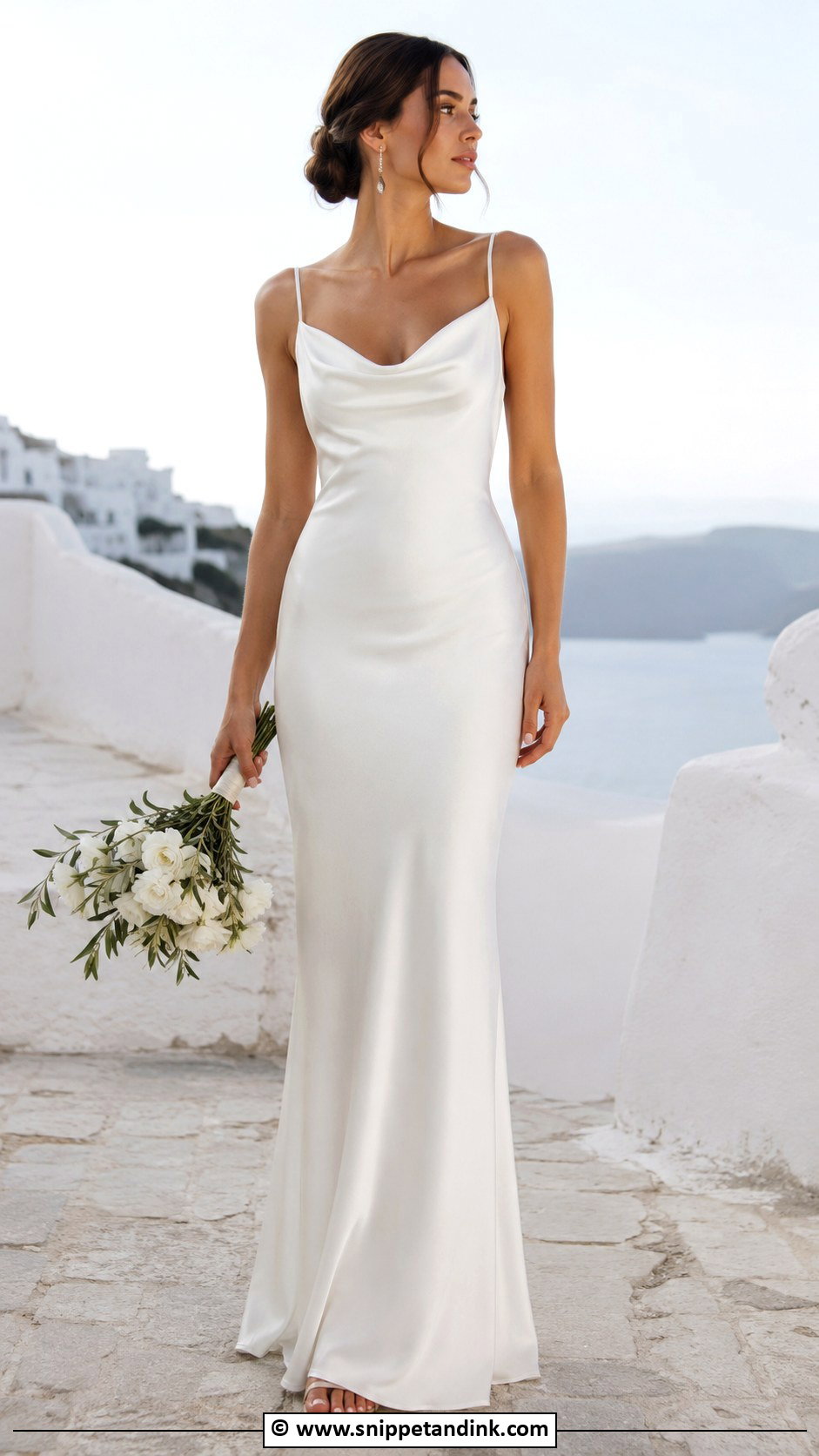
A minimal cowl neck wedding dress depends entirely on fluid fabric. The drape only falls into soft folds in satin or silk cut on the bias; in a stiffer fabric it just looks like a gaping neckline. Thin straps, a bias-cut skirt and a smooth back keep it simple, with delicate earrings, a low bun, barely-there heels and a sheer veil if you like. A cowl moves when you lean forward, so I check it from the side and from above, and sometimes add a small hidden tack to keep it settled. Destination weddings and small ceremonies suit it best.
16. Minimal Bateau Neck Wedding Dress
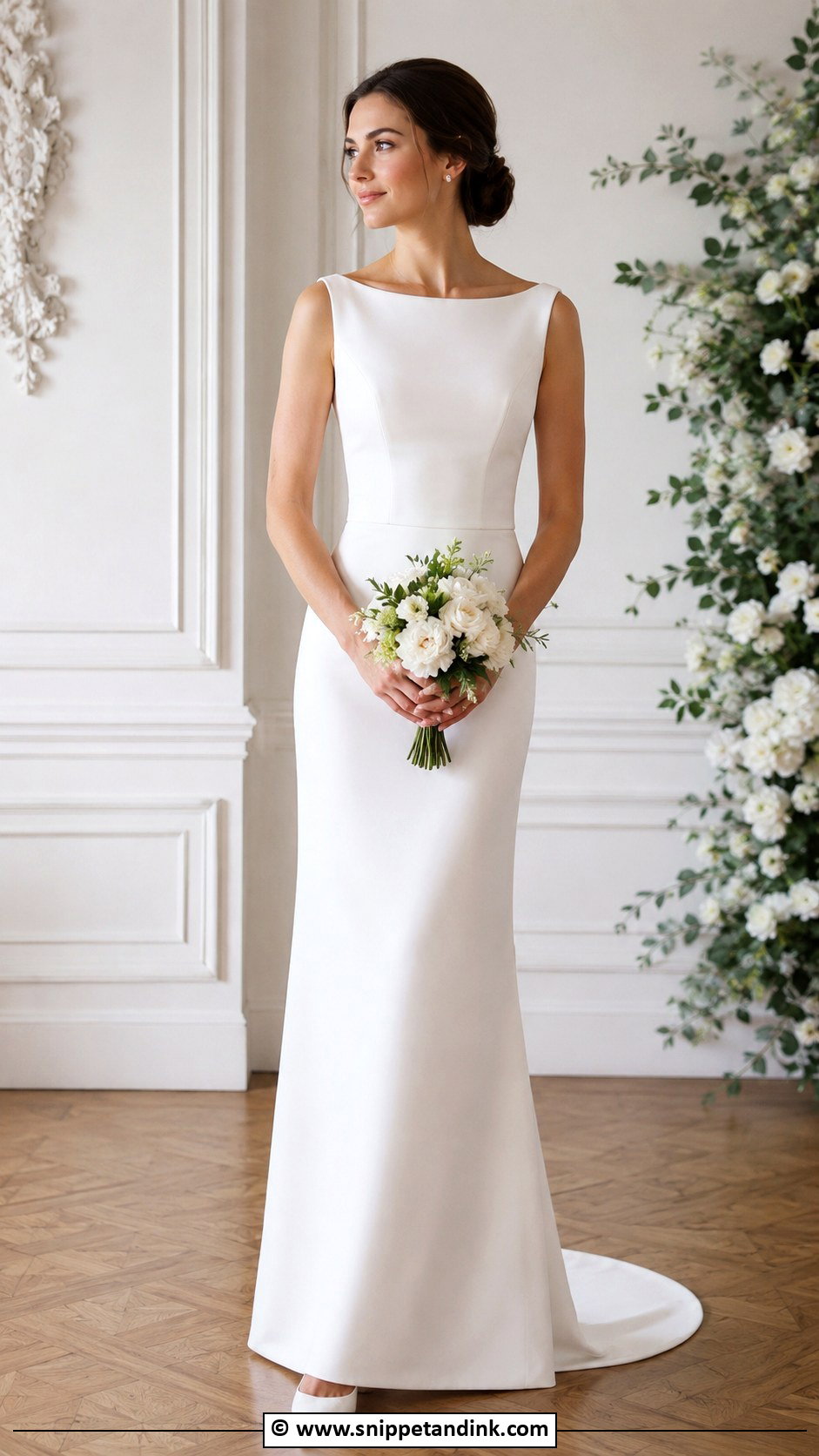
A bateau neckline runs almost shoulder to shoulder across the collarbone, framing you without showing much skin. Crepe, satin and structured silk show it off best, with a fitted waist and a straight or A-line skirt. Pearl studs, a low chignon, classic pumps and a simple veil tucked at the back of the head complete it. I reach for this one for narrow-shouldered brides, because the horizontal line widens the shoulders slightly. On very broad shoulders I’d usually try a V first.
17. Minimal V Neck Wedding Dress
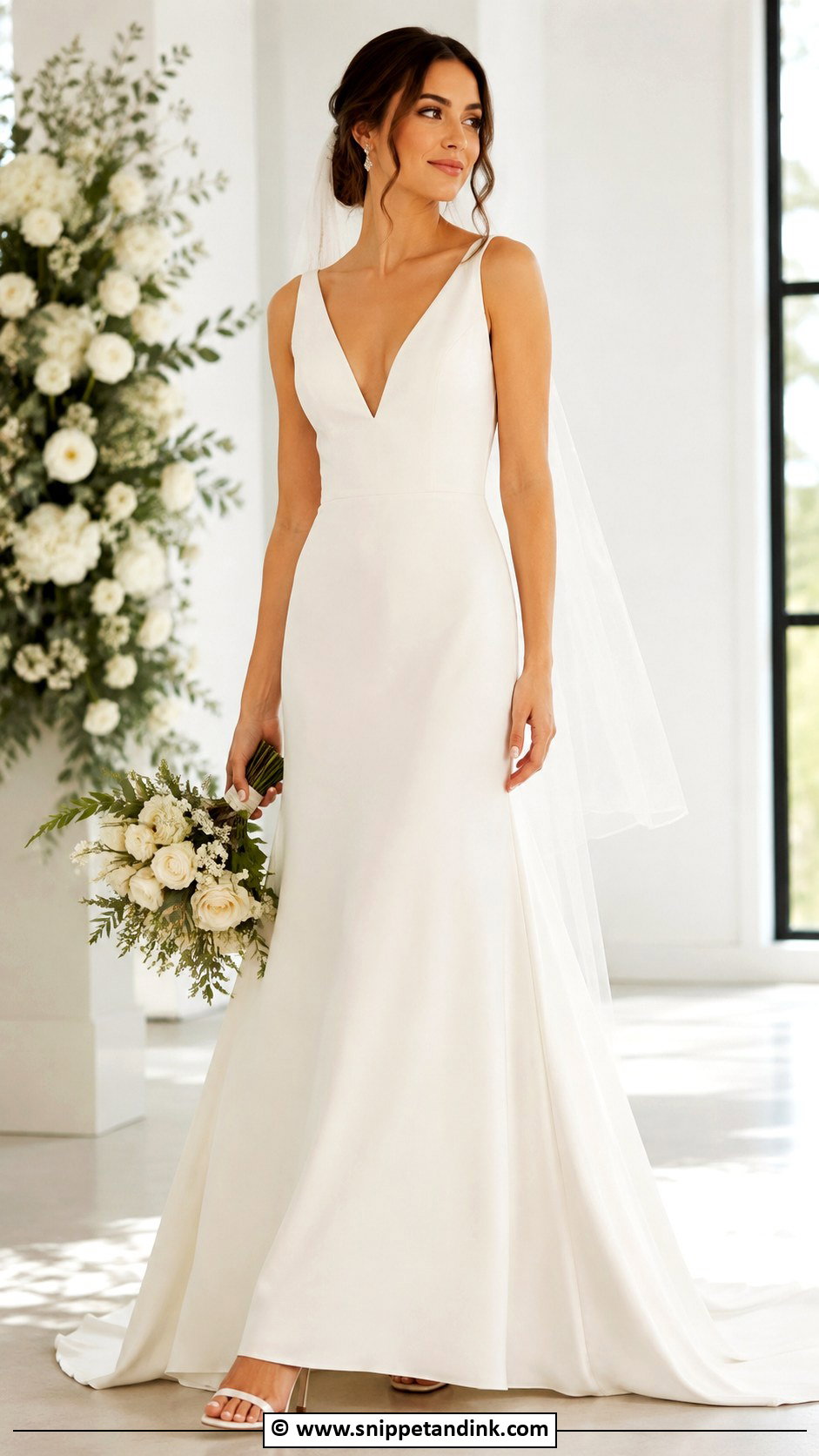
A V lengthens the torso and neck. Its depth can be modest or deeper depending on your comfort and your ceremony setting; if you’re marrying in a place of worship, check its dress expectations before falling for a plunge. A crepe sheath, a satin slip or a simple A-line make the cleanest base, with slim heels, delicate earrings and a soft veil. The deeper the V, the lighter the jewelry. On deeper cuts I ask the seamstress to add a mesh panel or a couple of tape points, because a neckline that shifts during the first dance is the one thing guests notice.
18. Minimal Scoop Neck Wedding Dress
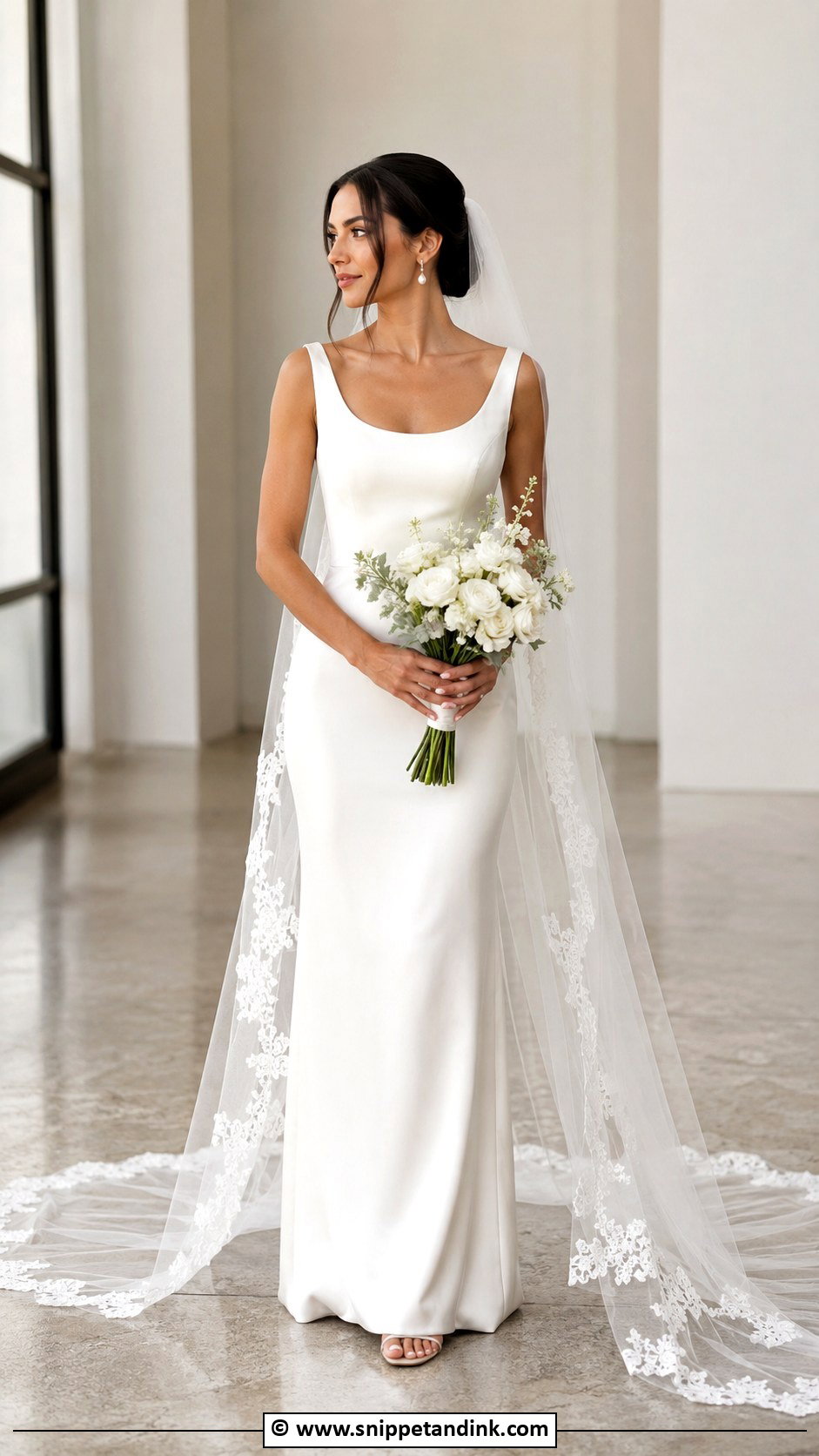
The scoop is a middle ground, softer than a square and less formal than a high neck. A fitted bodice with a column, sheath or soft A-line skirt in crepe or satin is all it needs, plus a smooth bun, pearl earrings, plain sandals or pumps and a chapel veil. It’s the neckline I suggest when a bride tells me she just wants to be comfortable all day, since there’s nothing to adjust or hold in place. The risk is looking plain, so the fit and fabric quality have to carry it.
19. Minimal Spaghetti Strap Wedding Dress
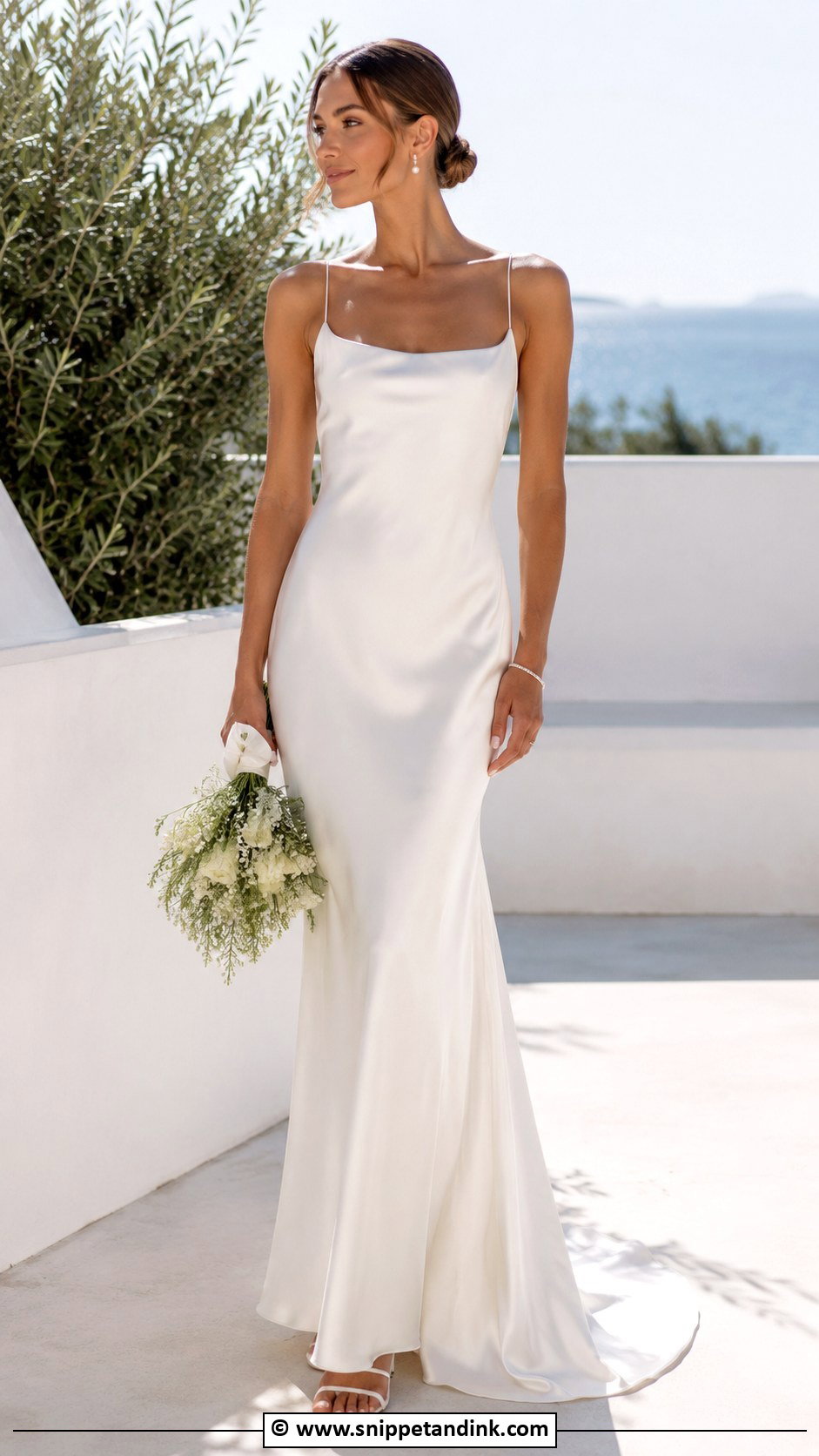
A minimal spaghetti strap wedding dress lets fabric and silhouette do the talking. Satin slips, crepe columns and soft A-lines all work. Thin straps hold up very little, though, so if you need support, ask about built-in cups or a corset back before you buy rather than after. Small pearl earrings, a dainty bracelet and sleek heels; hair in a low bun or soft waves. A sheer wrap or simple veil covers the shoulders for the ceremony. Warm weather and destination settings are its home.
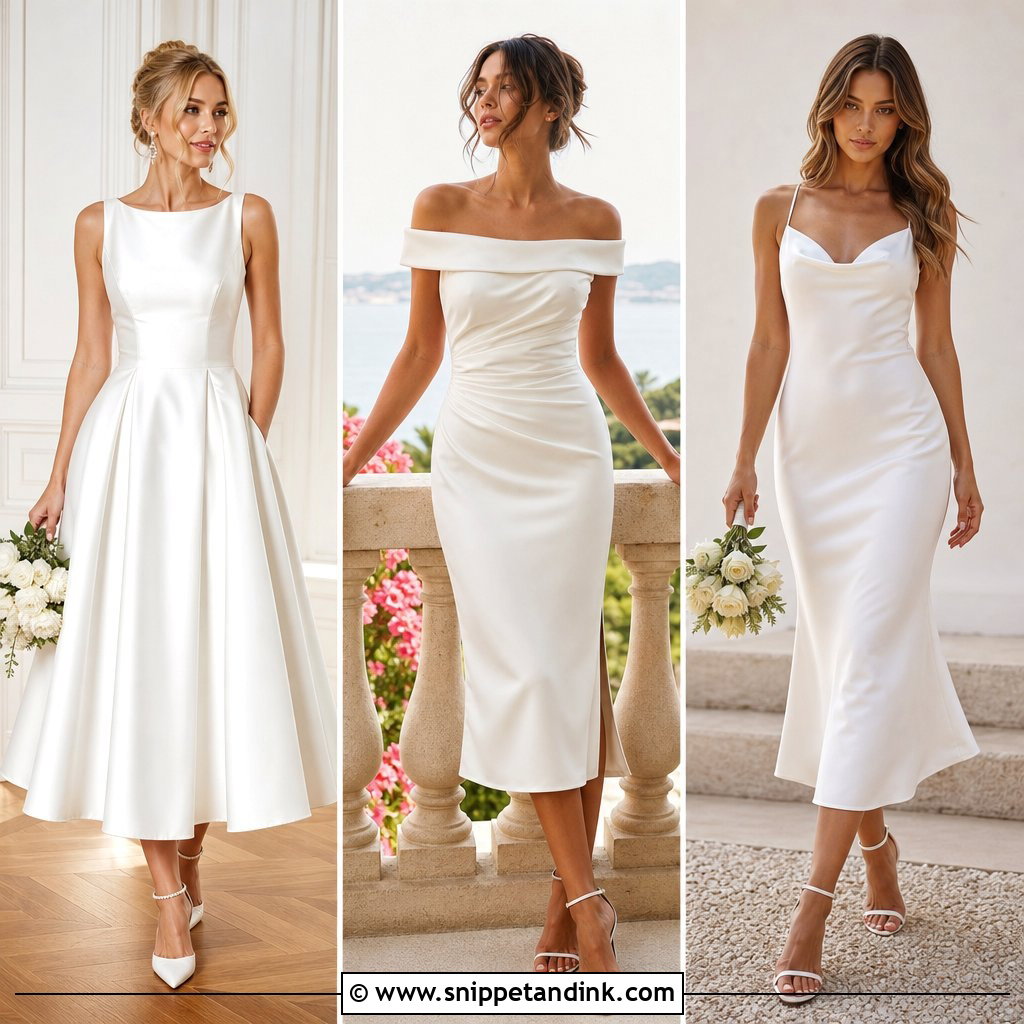

20. Minimal Corset Wedding Dress
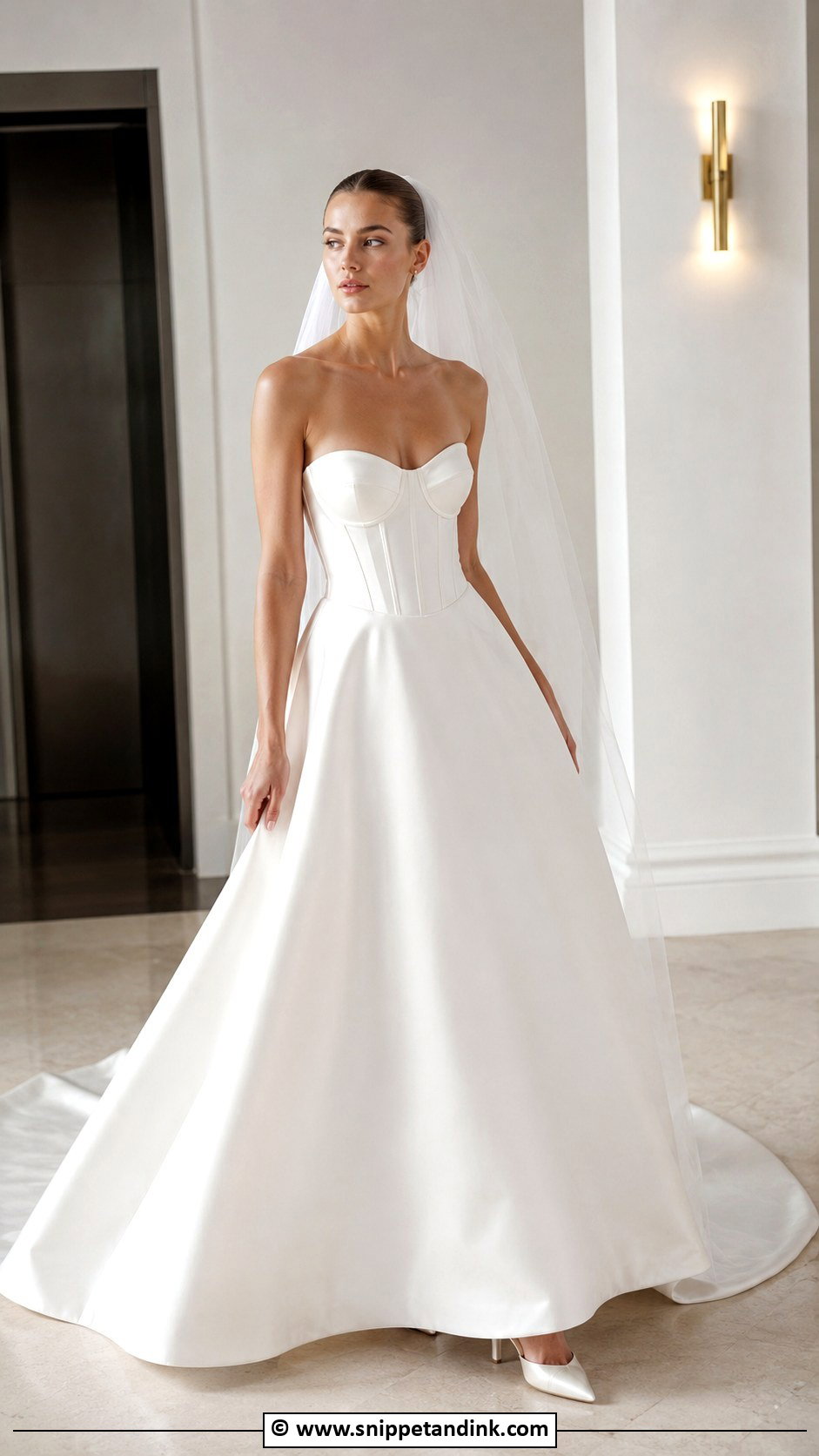
Structure without embellishment is the appeal here. The boning, usually spiral steel or flexible plastic, shapes and supports while a smooth skirt keeps everything clean. Subtle boning channels and a straight neckline in satin or crepe look modern; a column skirt is sleek, an A-line softer. Simple earrings, pointed heels and a plain veil are enough. Corsets get fitted tighter than they feel in the shop, so at the final fitting I have brides eat something first and sit for twenty minutes. If you can still breathe comfortably after a meal, it’s right.
21. Minimal Drop Waist Wedding Dress
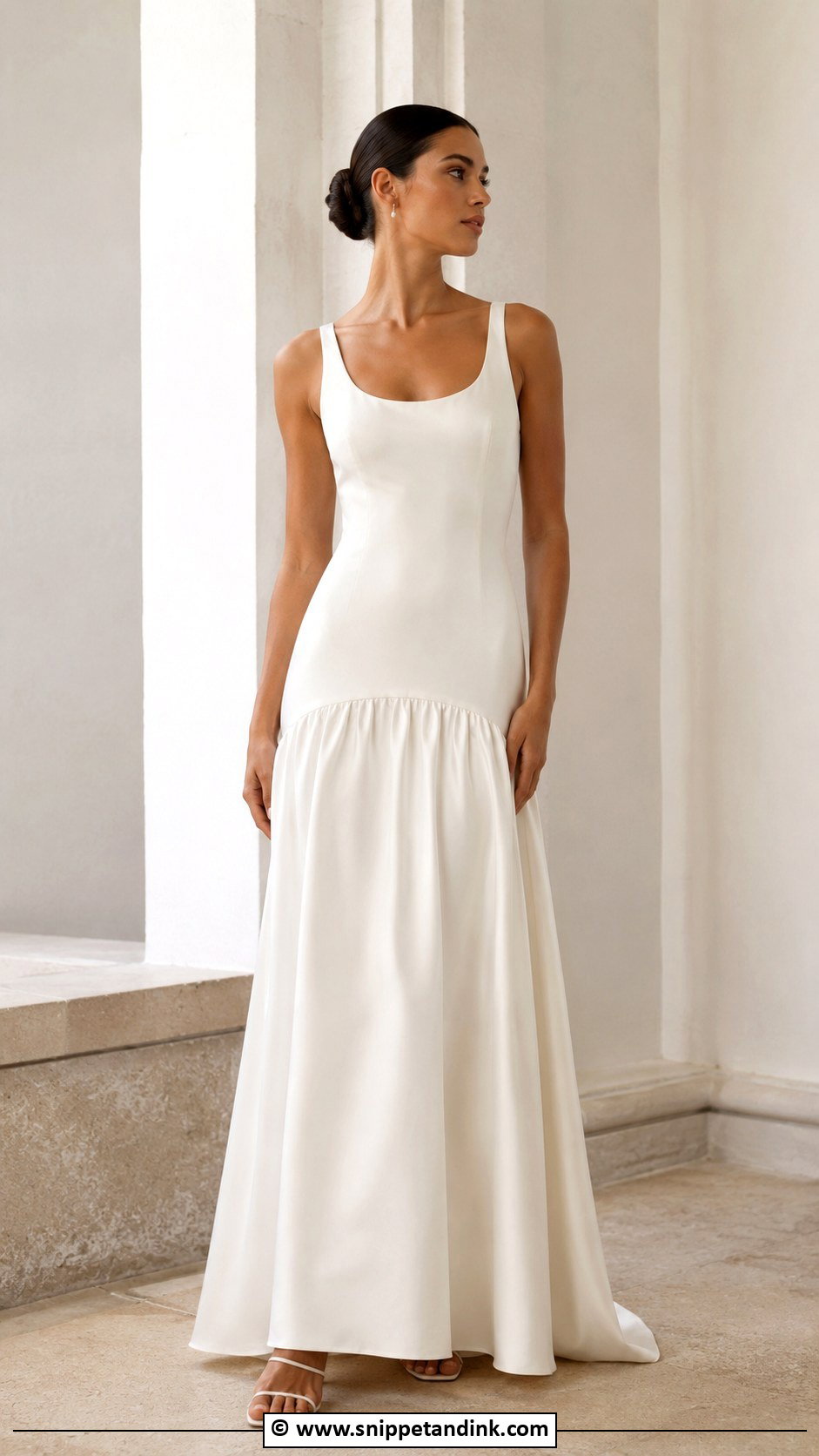
A drop waist moves the seam down toward the hip, lengthening the torso before the skirt begins. In clean fabric it reads modern with a vintage nod rather than costume. Pair a fitted bodice with a soft flared skirt, simple straps or strapless, then delicate heels, a low bun, small earrings and a plain veil if you want more detail. Be honest about proportion. This cut flatters a longer torso and straighter hips; on a short-waisted bride it can shorten the legs, so I’d try it beside a regular A-line before deciding.
22. Minimal Basque Waist Wedding Dress
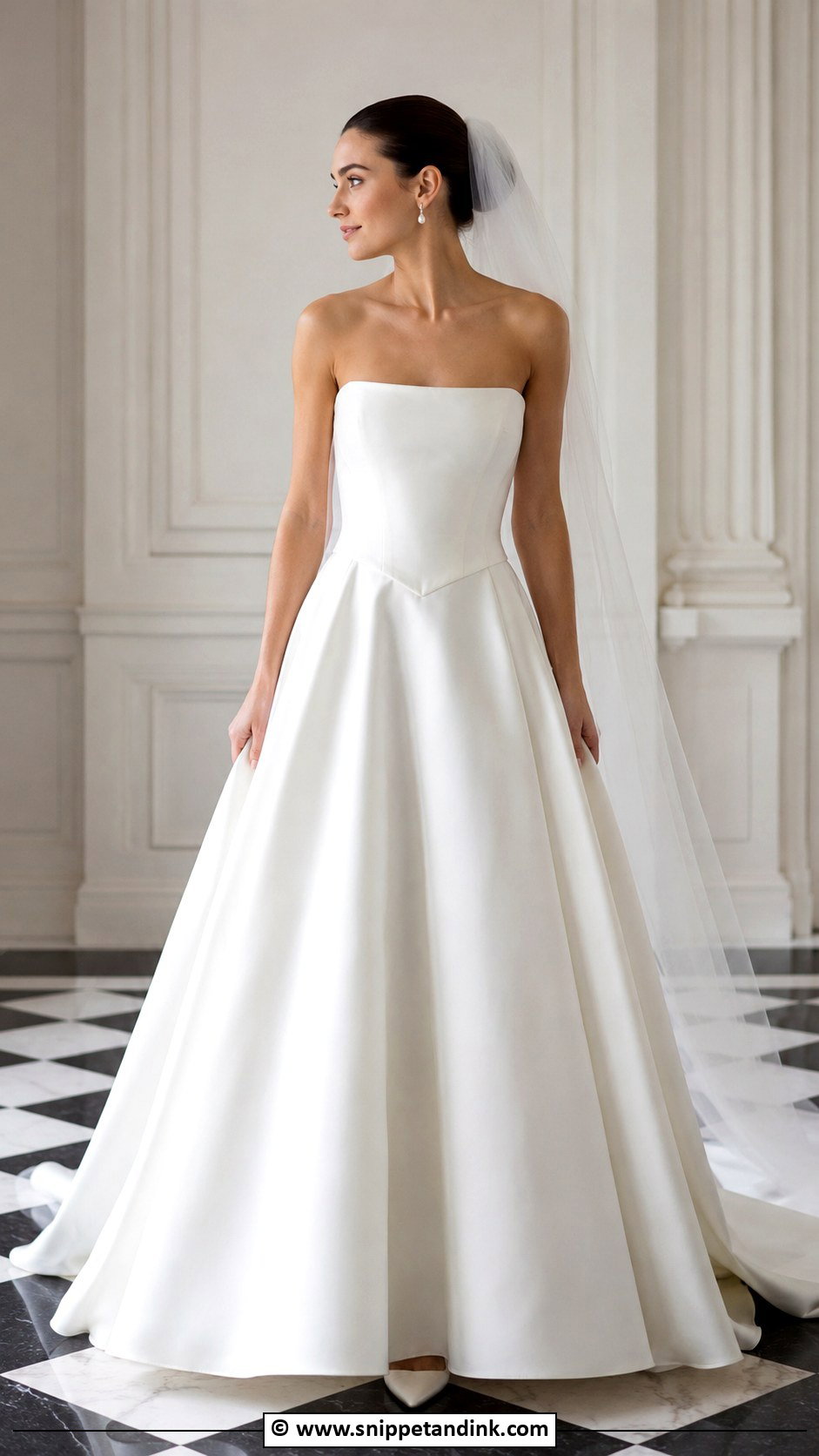
The basque waist dips to a soft point at centre front, which draws the eye downward and makes the waist look narrower. Without heavy detail it feels fresh and quietly romantic. Choose smooth satin or mikado with a clean bodice and a full or softly flared skirt; strapless is classic, though simple straps work too. Classic pumps, pearl earrings and a long plain veil finish it. That point has to sit exactly centred and lie flat, so I check it in a three-way mirror with the bride standing naturally, not posing. The waistline is the detail. Keep everything else calm.
23. Minimal Bow Back Wedding Dress
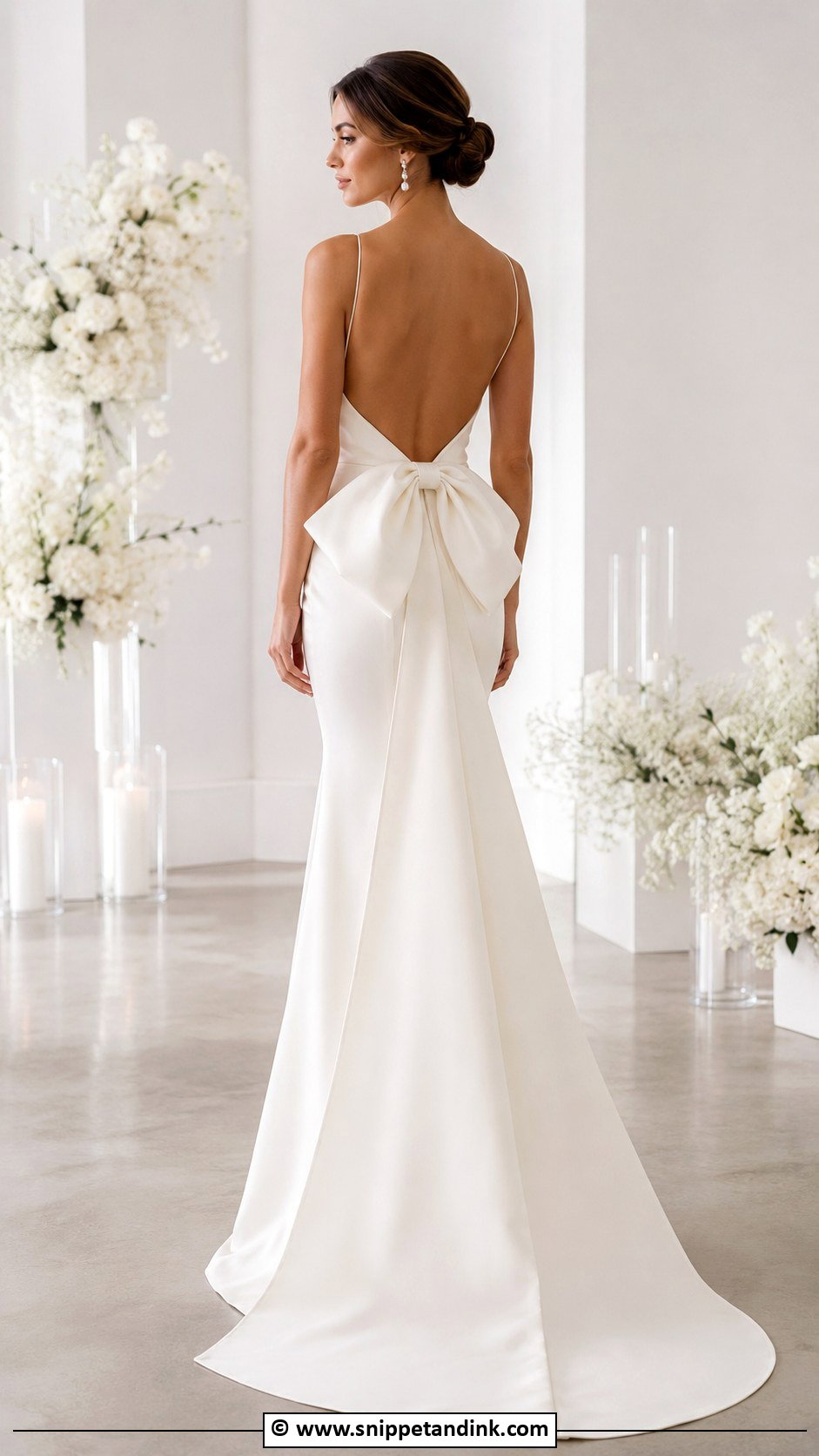
From the front this gown is clean and plain; the bow at the back becomes the one thing people remember. It can be small and soft or large and sculptural, but it needs plain satin or crepe behind it to stand out. What I’d ask about is sitting. A large structured bow at the small of your back gets crushed against a chair through dinner, and some designers make them detachable for exactly that reason. Simple earrings, an updo and clean heels. Wear the veil above the bow, or skip it so the back shows as you walk down the aisle.
24. Minimal Open Back Wedding Dress
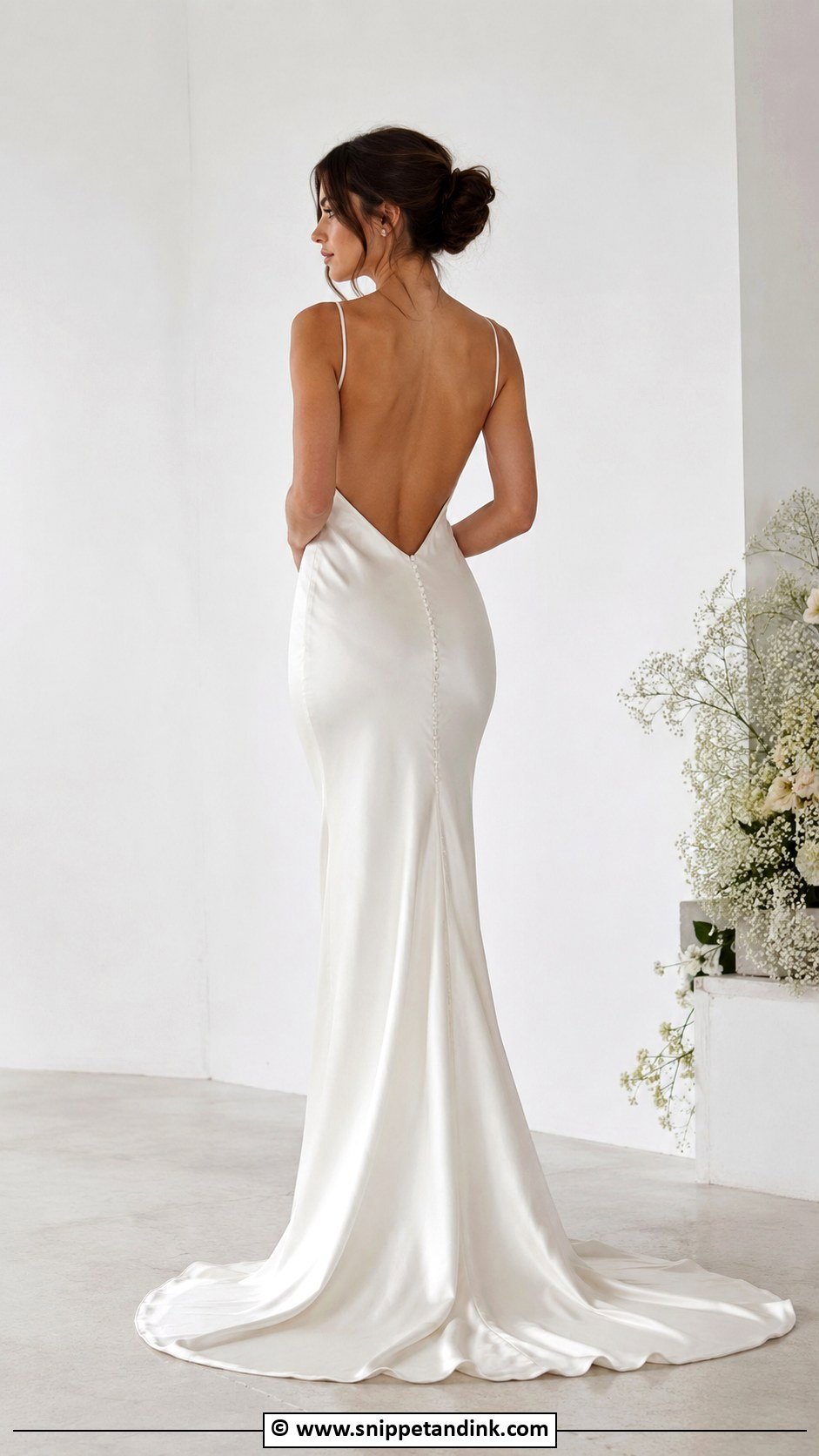
With an open back the front can stay very simple, a high neck, a cowl or slim straps, while the back carries the drama. Fluid satin, crepe or silk gives a smooth finish. Delicate earrings, a bracelet, sleek heels and an updo or softly pinned hair keep the back visible, and a sheer veil won’t hide it. Sort two things early. First, support: most open backs need built-in or stick-on cups. Second, skin: I’d look after your back for a few weeks beforehand the way you look after your face, because it will be in a lot of photos.
25. Minimal Side Slit Wedding Dress
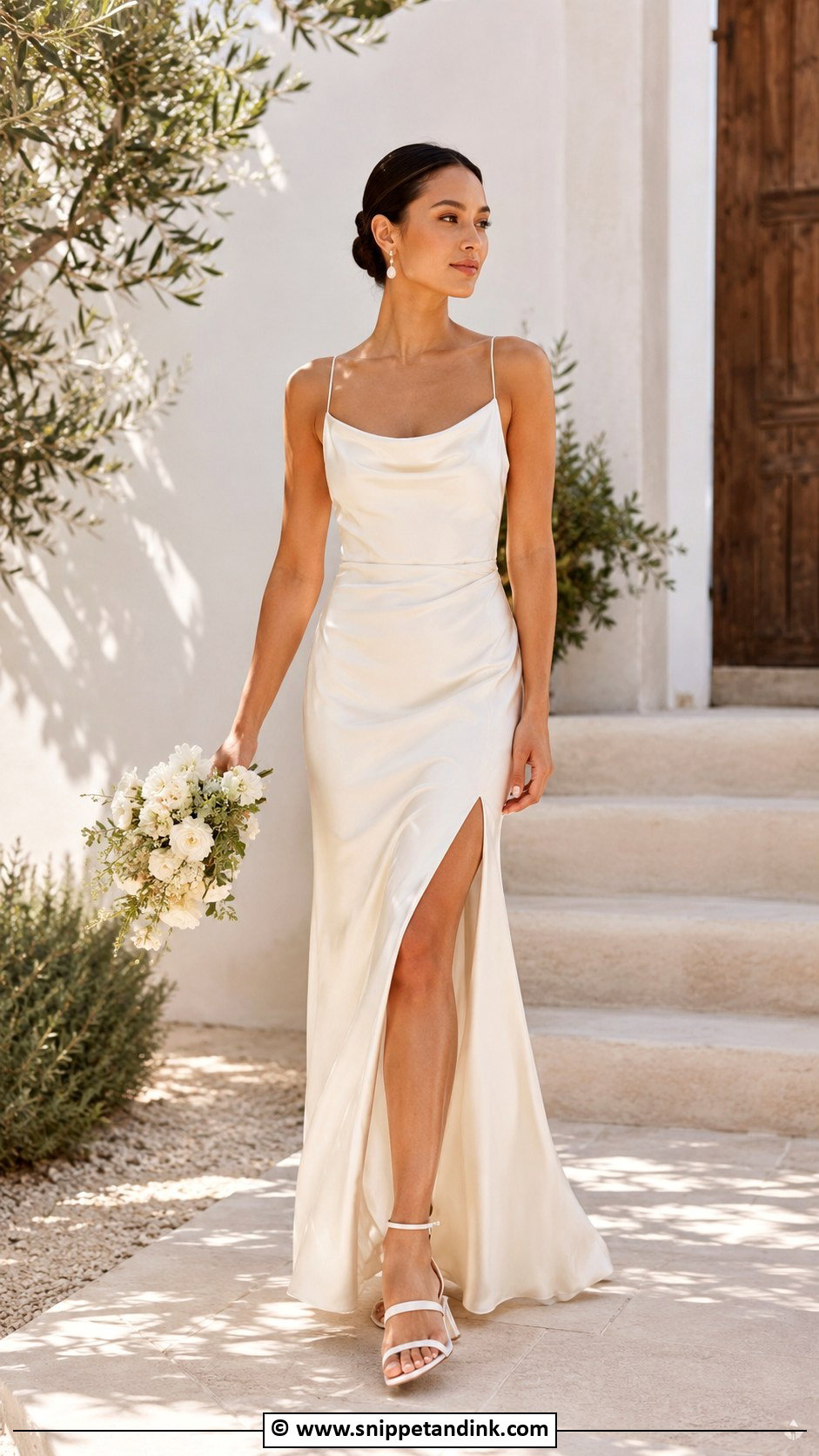
A side slit adds movement and shows your shoes without making the gown bold. It works best on clean satin, crepe or silk with a simple neckline, finished with slim sandals, pointed pumps or satin heels, quiet jewelry and a soft veil or sleek clip. Check where the slit falls when you sit and when you climb a step. An inch too high becomes a real problem getting in and out of the car, and a seamstress can close it slightly with a few hidden stitches. Outdoor venues and receptions with lots of dancing suit it.
26. Minimal Wrap Wedding Dress
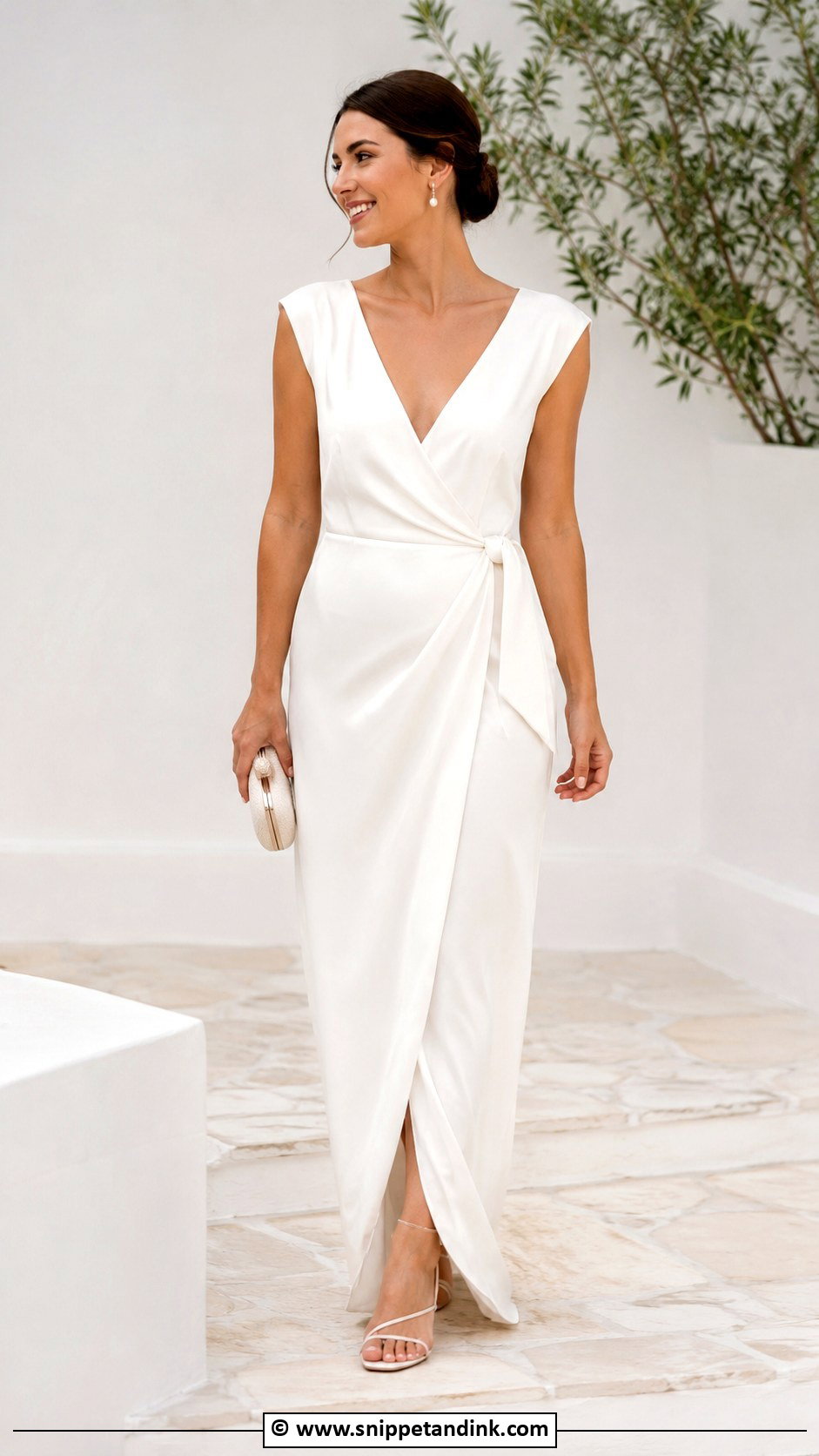
A wrap defines the waist and creates a gentle V, and because the tie is adjustable you can fine-tune the fit on the day, handy if your size shifts in the final weeks. Crepe, satin or soft silk works, full length for a formal ceremony and tea length for something relaxed. Heeled sandals, pearl earrings, a simple clutch, and keep the tie itself plain. I’d always ask for a hidden snap at the crossover point. Without one, a wrap bodice opens a little more every time you hug someone.
27. Minimal Blazer Wedding Dress
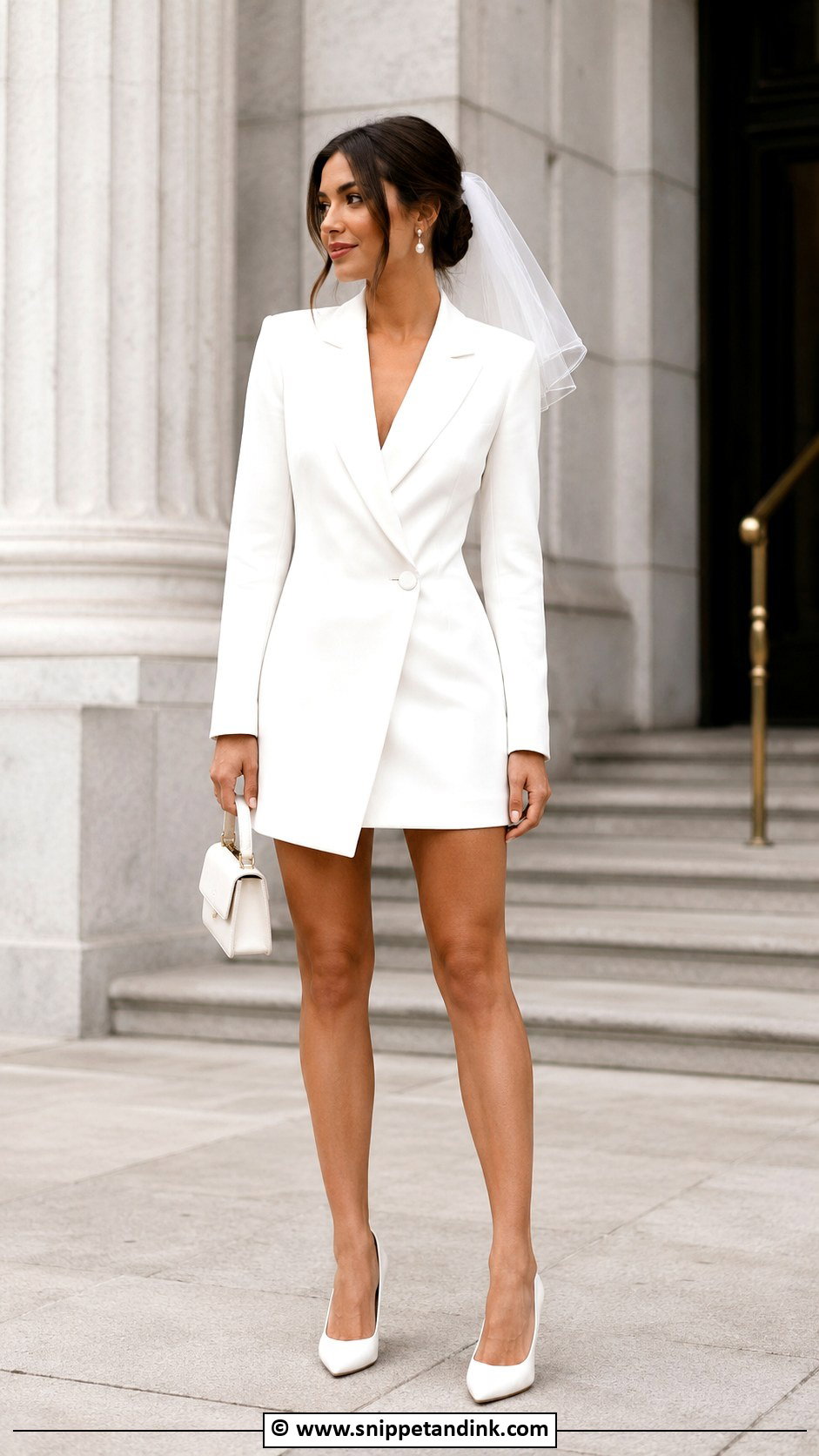
A blazer dress is a sharp choice for a courthouse wedding, a city ceremony or a reception change. In white or ivory the tailoring looks powerful and still bridal. A double-breasted mini, a longline blazer dress or a structured midi all work, with pointed pumps, pearl earrings and a small top-handle bag; a short veil or sleek headband makes it read as wedding rather than office. Shoulder fit is non-negotiable. It’s the one area a tailor can’t easily change on a structured jacket, so if it doesn’t fit there off the rail, keep looking.
28. Minimal Wedding Dress With Cape
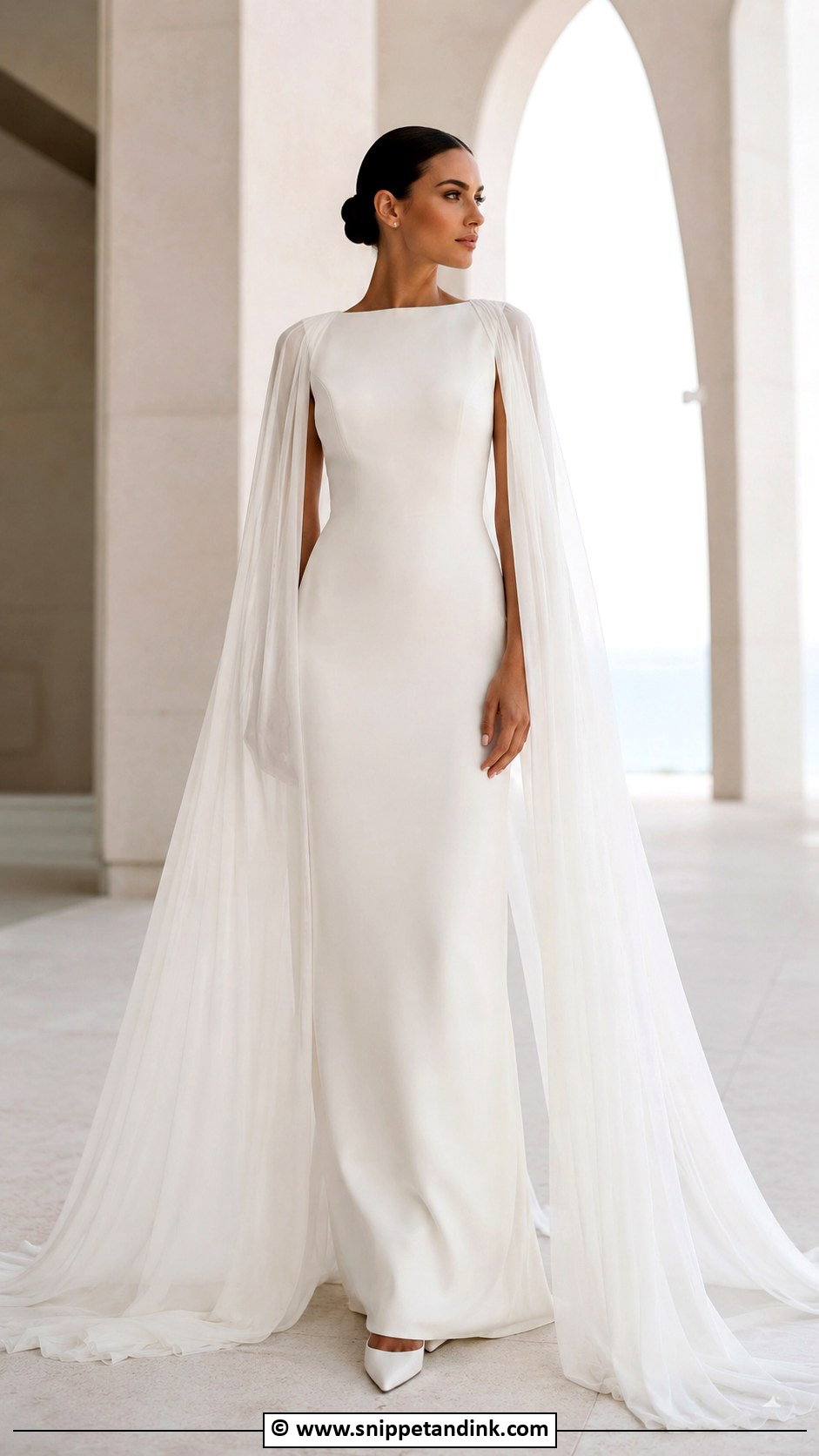
A minimal wedding dress with cape brings drama without clutter. Underneath you can wear a simple column, sheath or slip, and the cape adds movement for the entrance. Sheer capes soften; crepe capes look structured. Strapless, square neck and high neck gowns pair well, with simple heels, stud earrings and a sleek bun. Ask how the cape attaches. Long capes fastened at the throat pull backward on your neck, while ones fixed at the shoulder seams sit more comfortably, and most brides take them off for dinner anyway.
29. Minimal Wedding Dress With Detachable Skirt
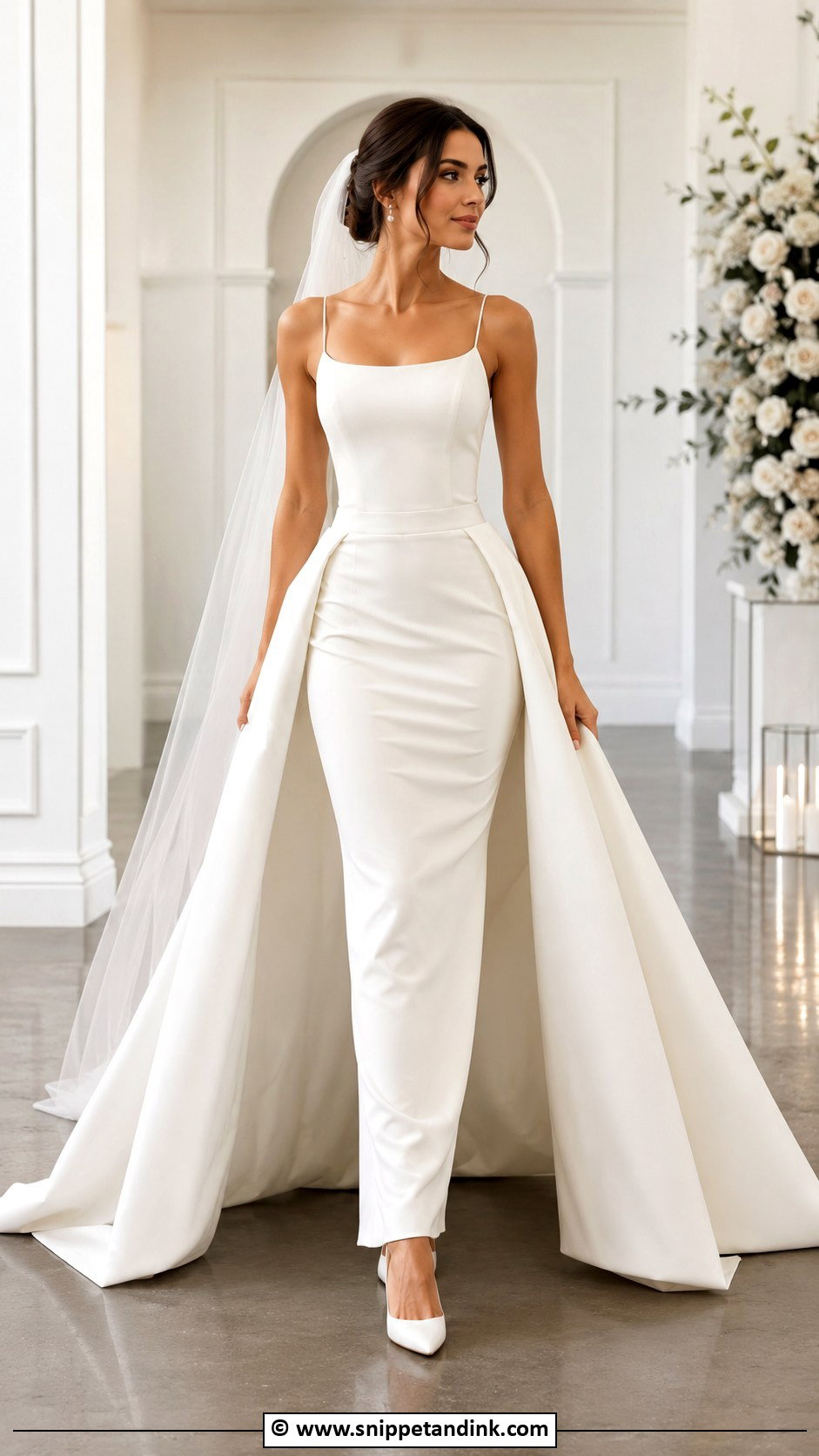
Two looks in one dress: an overskirt for ceremony volume, then a sleeker column, sheath or mini underneath for dancing. Smooth satin, mikado or crepe keeps both versions cohesive. Wear classic heels, small earrings and a simple veil for the ceremony, then switch to a smaller hair accessory later. Practise the removal once with the person who will help you. Most overskirts fasten with hidden hooks or snaps around the waist, and fumbling with those in a cramped bathroom is exactly how they get torn.
30. Minimal Wedding Dress With Gloves
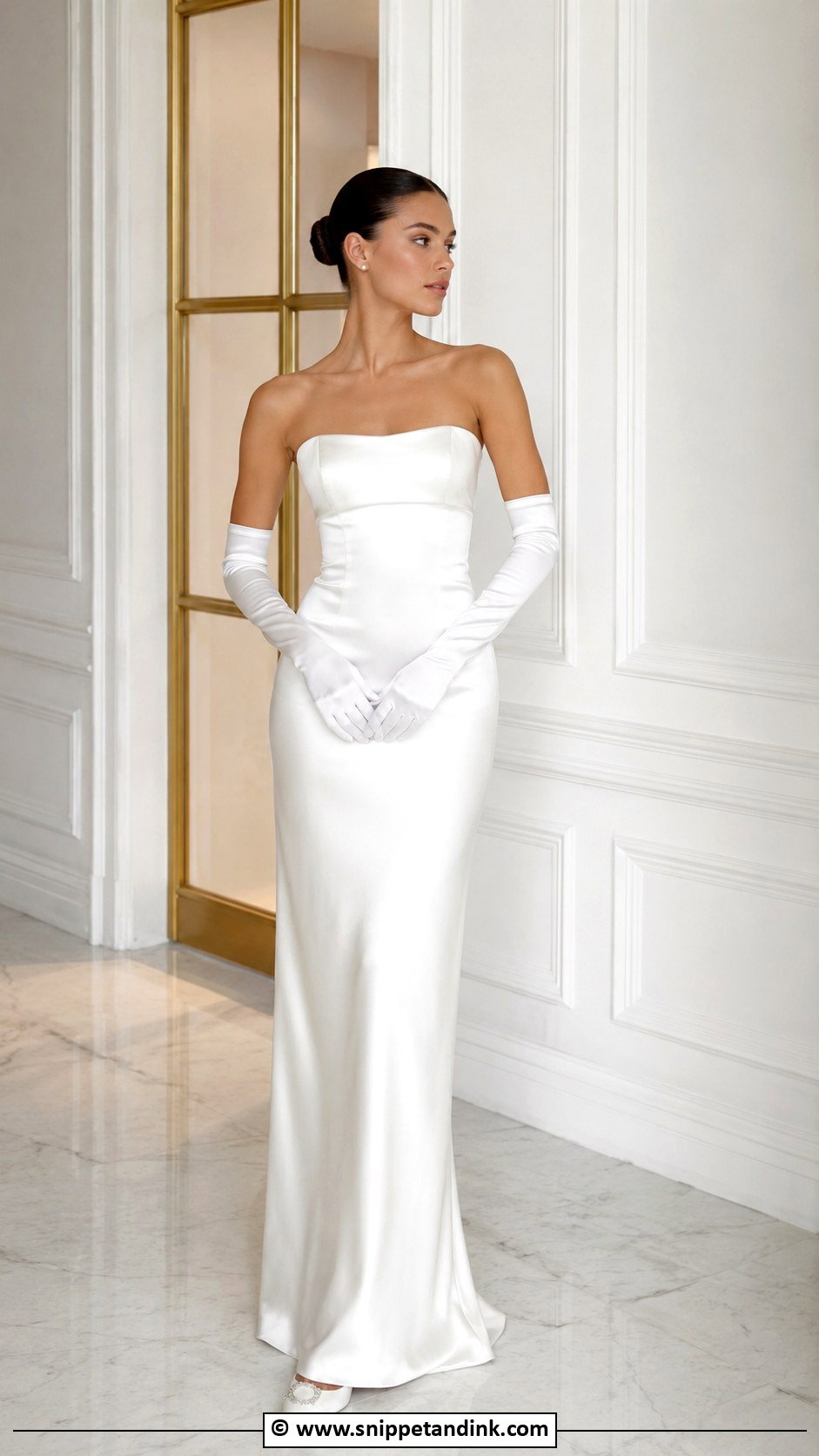
A minimal wedding dress with gloves only looks intentional when the dress itself stays simple. A strapless satin gown, a crepe column or a clean off-shoulder shape works well. Opera gloves read formal; wrist-length ones feel softer. Pointed heels, small earrings, a sleek bun and a plain veil keep the focus where it should be. Plan the ring exchange before the day: either slip off the left glove before the vows or choose a pair with a ring-finger opening. And decide in advance who holds that glove.
31. Minimal Wedding Dress With Veil
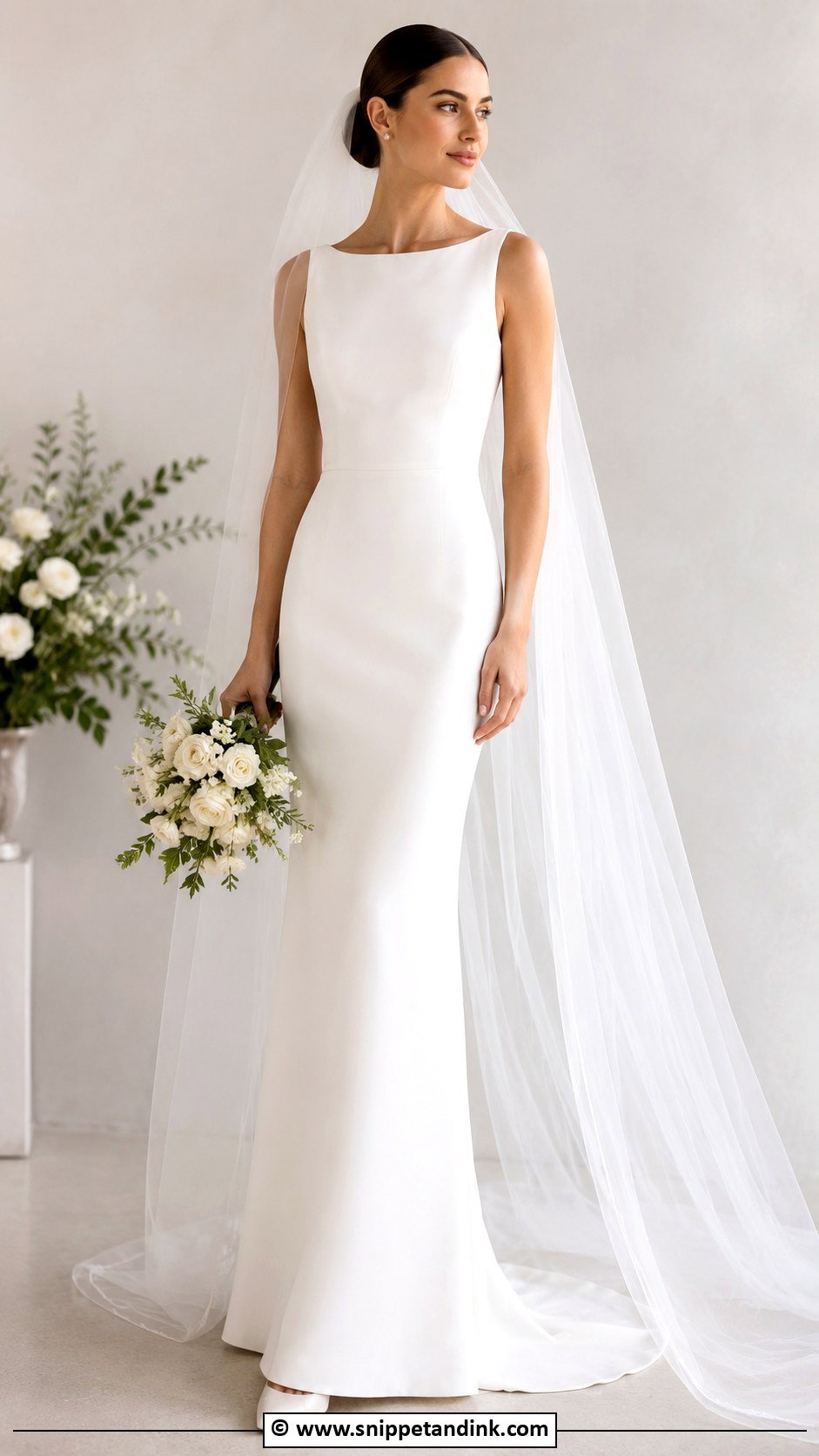
One accessory can change a simple gown completely. A plain veil adds softness and movement without touching the clean design. Start with a satin slip, crepe column or simple A-line, then pick the length: fingertip for most settings, chapel or cathedral for formal venues with a long aisle. Pearl studs or tiny diamonds, clean heels, smooth hair. Plain-hemmed tulle suits a minimal dress better than a lace border. I always bring a fabric swatch when matching a veil, because bright white tulle against an ivory gown can look slightly grey in photos.
32. Minimal Wedding Dress With Pearl Accessories
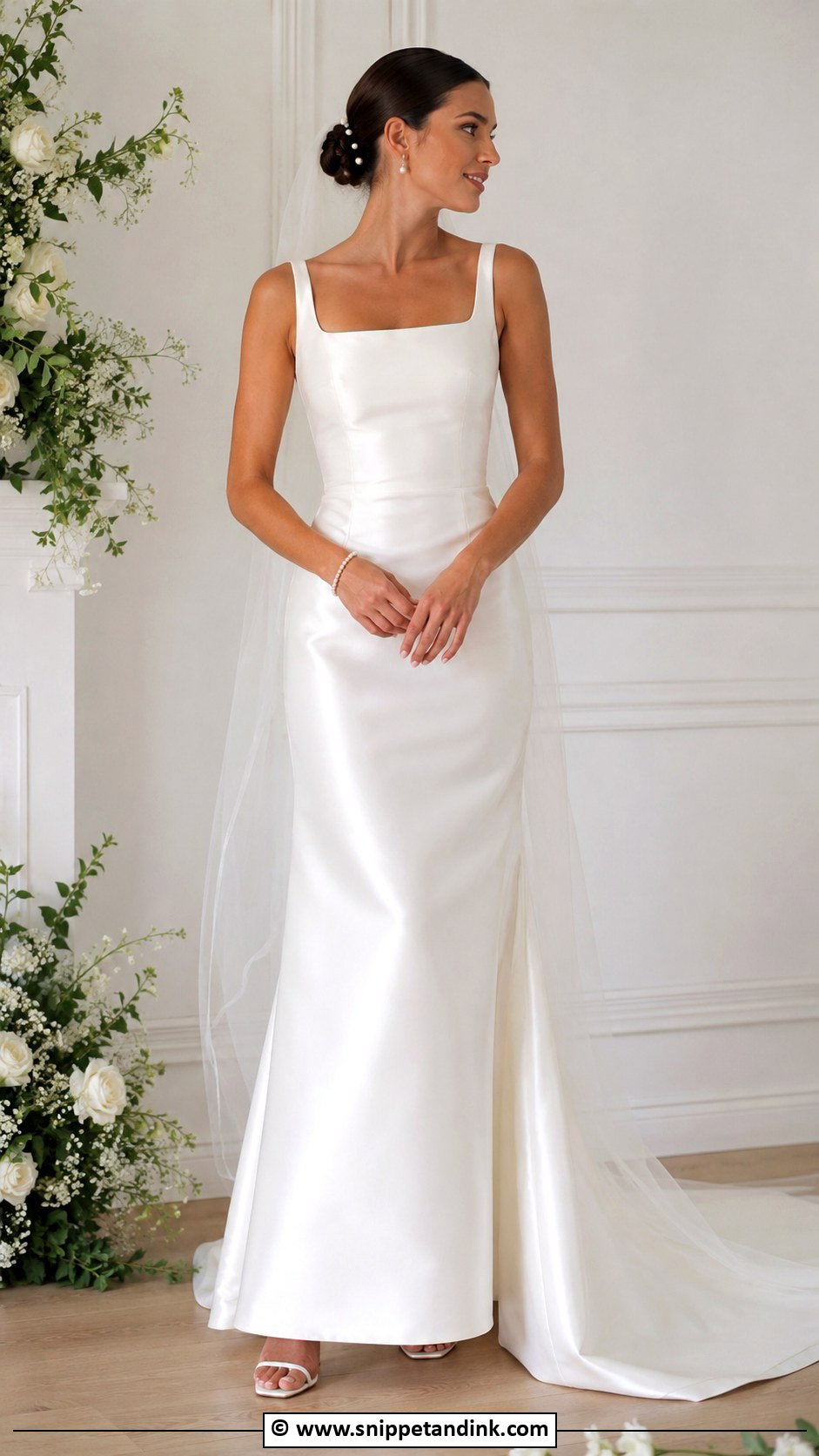
Pearls give a classic bridal note without ornament. Start with a clean gown in satin, crepe or silk and add one or two pearl details, earrings, a bracelet, a hair pin or pearl-trimmed shoes, rather than all of them at once. Square neck, slip and bateau neck gowns suit pearls especially well, with hair in a low bun or soft waves. Match the pearl tone to the fabric. Cream pearls against a stark white gown can look yellowed, and bright white pearls can make ivory look dingy.
33. Minimal Courthouse Wedding Dress
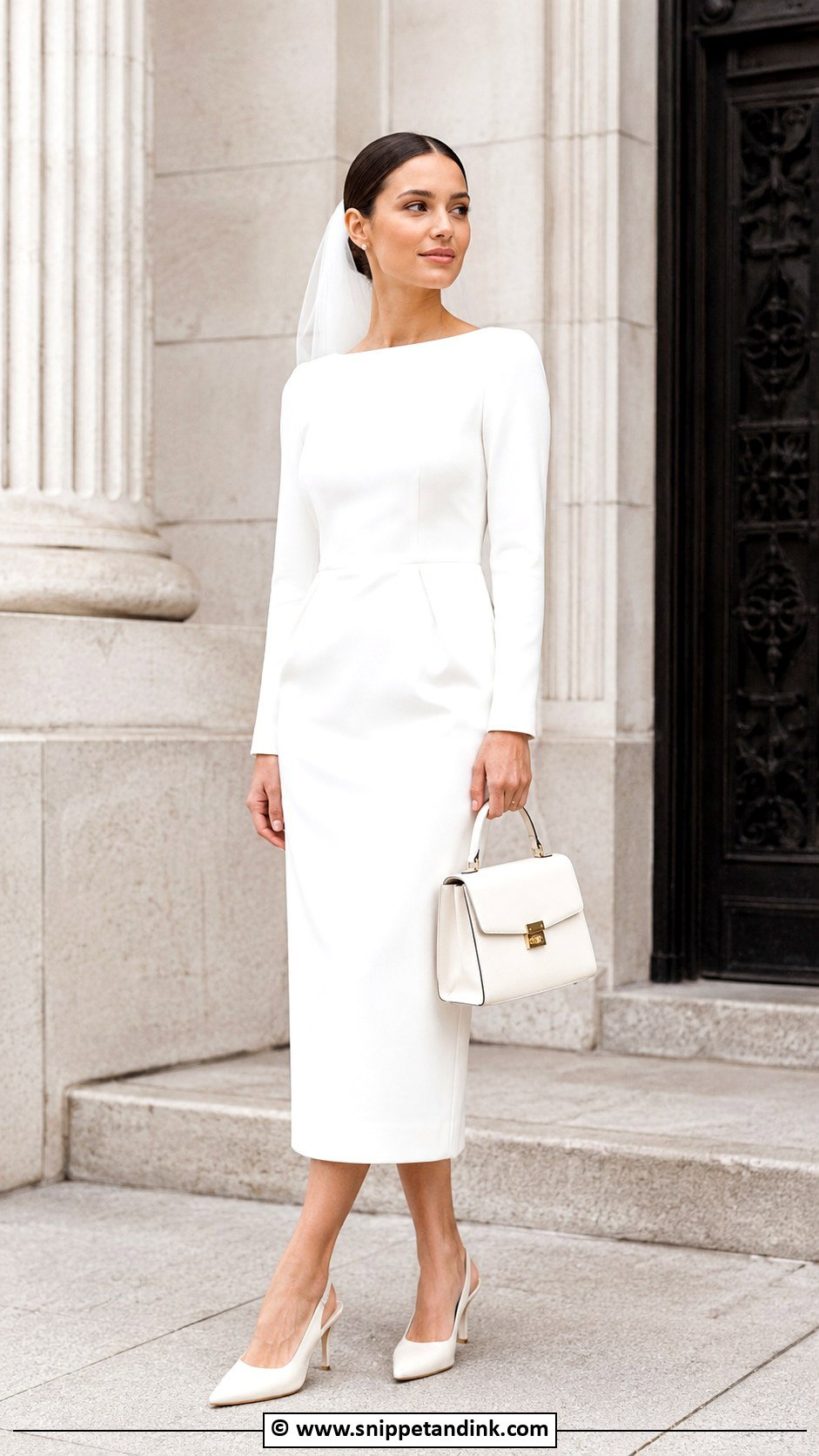
Courthouse outfits have to look finished up close, because the room is small and guests stand near you. A tailored midi, satin slip, blazer dress, simple mini or clean sheath in white, ivory or soft cream all work, with slingback heels, a structured handbag, small earrings and a short veil, headband or hair bow. Check the venue’s rules early. Some courthouses and register offices limit guest numbers or photography, which changes how dressed-up you’ll want to be. If the front steps are your photo spot, bring a coat that suits the dress.
34. Minimal Beach Wedding Dress
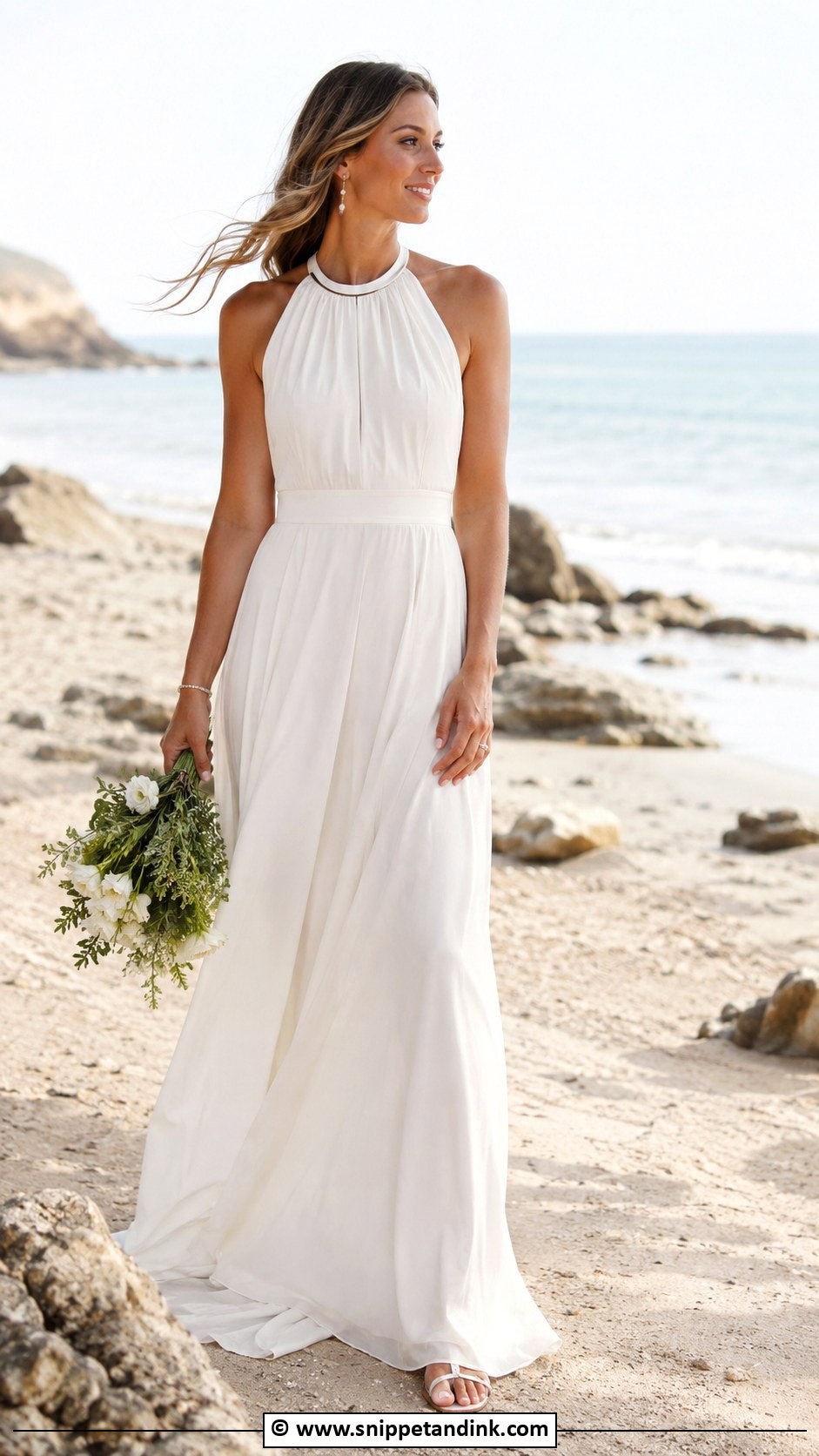
A minimal beach wedding dress should be light and move easily. Fluid satin, chiffon, silk or lightweight crepe in a slip, halter, simple A-line or spaghetti strap shape works well. Flat sandals or low block heels are wiser than stilettos, which sink in sand. Keep jewelry delicate, hair in a soft updo or loose waves. Wind is the real problem: a long veil on a beach whips around, so I usually suggest a hair pin or a short veil anchored with plenty of pins. I also hem beach dresses a little shorter, since wet sand stains a trailing hem fast.
35. Minimal Plus Size Wedding Dress
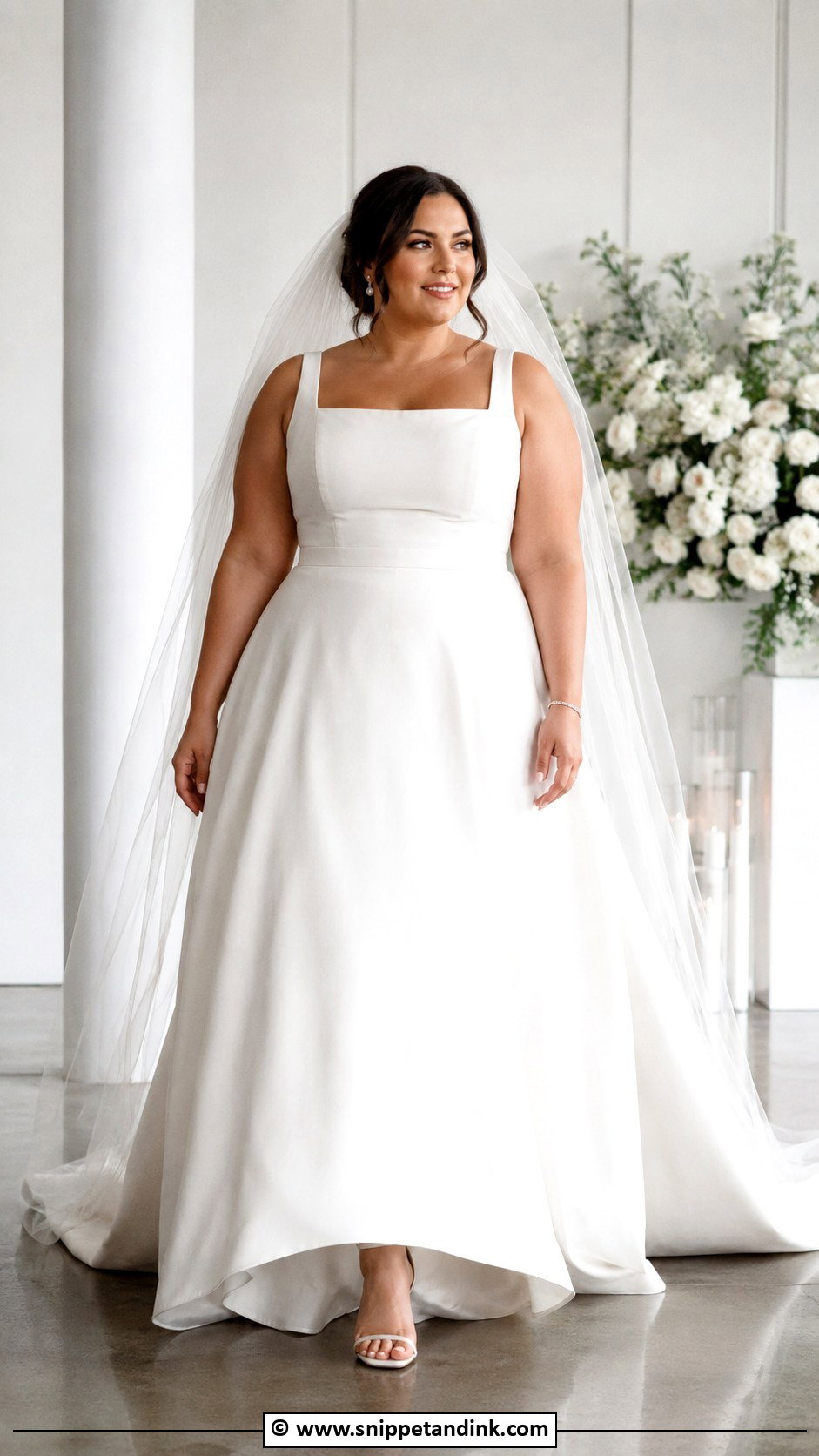
With a plus size minimal gown, fit and support matter more than anything, because there’s no embellishment to break up the line. A structured A-line, crepe column, wrap gown, square neck or off-shoulder style can all be comfortable. Look for internal corsetry or a built-in bra, smooth lining, and seams placed where they flatter you. Heavier crepe and structured satin skim over shapewear lines far better than thin slippery fabric. Comfortable heels, pearl earrings and a veil suited to the venue finish it. Don’t pick a gown just because it is “simple”; pick the one you feel secure in.
Creases, Shine and the Car Ride to the Ceremony
The journey is where plain fabric suffers most. Satin and silk crease wherever you sit and wherever a seatbelt crosses, while crepe is more forgiving but turns shiny if anyone presses it with a hot iron. I ask brides to gather the back of the skirt and sit with it spread behind them rather than underneath, and I keep a handheld steamer at the getting-ready location for the last few minutes.
- Fill the steamer with distilled water so mineral spots don’t spit onto the fabric.
- Hold it a few inches away and keep it moving. Never press the plate onto satin or silk.
- Pack fashion tape and a few small safety pins for straps, slits and wrap fronts.
Afterward, the plainer the gown, the more any mark shows. Champagne and cake sugar dry invisible and then yellow over the following months, so a dress that looks clean the next morning still needs a cleaner who handles bridal fabrics, ideally within a few weeks. Store it folded in acid-free tissue inside a breathable box, never in the plastic bag it came home in.
Restraint Is Really a Tailoring Decision
A simple gown can feel as formal and emotional as any beaded one when the fabric, fit and styling are right. Satin slip, crepe column, structured A-line, mini or strapless, the strongest looks I see share a single focal point. Pick one, a neckline, a veil, a bow, a cape or gloves, and keep everything else quiet. Then spend your budget and your fitting appointments on tailoring. Minimal isn’t plain. It’s a dress where every seam has been thought about.
You'll Like These Ideas:








Leave a Reply