
An outdoor ceremony asks more of a dress than a ballroom ever does. Grass grabs a train, sand creeps into tulle, wind lifts a veil sideways and the sun shows every crease. The gowns below are built for gardens, beaches, vineyards, forests, mountains, backyards and rustic venues, and each one comes with the shoes, veil, jewelry and hair I’d put with it. When I dress a bride for an open-air wedding, I start with the ground and the forecast, then fall in love with the lace, never the other way round.
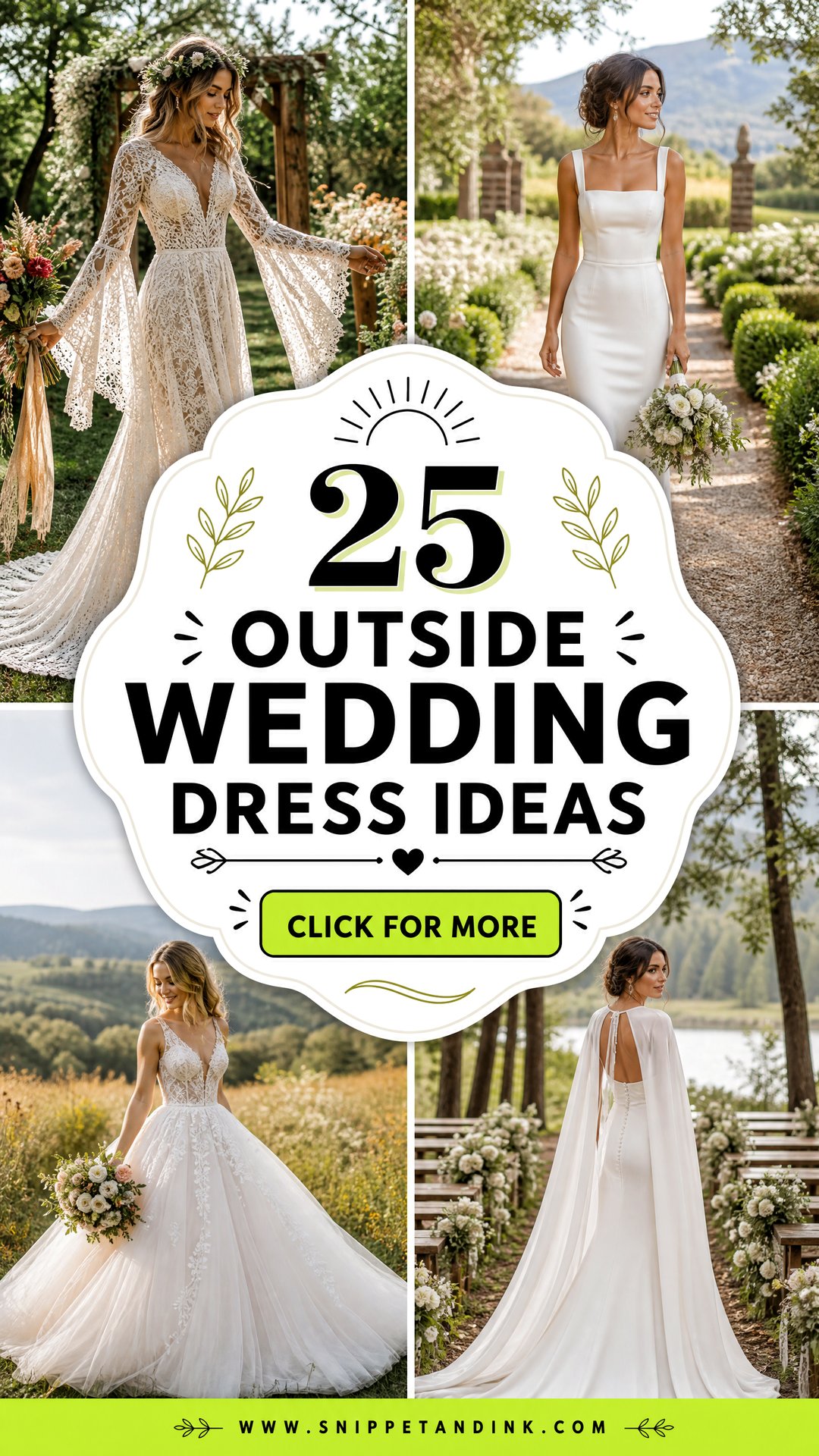
Reading the Ground and the Forecast Before the Fabric
When a bride tells me her ceremony is outside, my first questions have nothing to do with lace. What is underfoot at the altar? How far is the walk from the car? What time does the sun drop behind the trees? Those answers decide the fabric, the hem and the shoes long before we talk about necklines.
Ground
Lawn soaks a hem with dew before noon and stains it green by the evening. Sand works into every layer of tulle. Gravel and decking catch stilettos and fragile lace. On soft ground, I’d keep the train to a sweep or chapel length and plan a bustle; on paved terraces you can afford more length.
Heat and wind
Chiffon, georgette, crepe and light organza breathe in heat. Heavy satin and thick beading trap it, and satin shows sweat marks in strong sun. Wind is the bigger worry for veils: a fingertip or elbow length set under the hair stays far calmer than a cathedral veil, which needs an attendant holding it the whole time.
Light
Midday sun bleaches bright white and makes shiny fabric glare. Ivory, soft white and matte finishes hold their texture better in direct light. If your portraits fall in the hour before sunset, almost anything looks warm, but it will also be cooler, so have a layer ready.
1. Outdoor Wedding Lace A-Line Dress
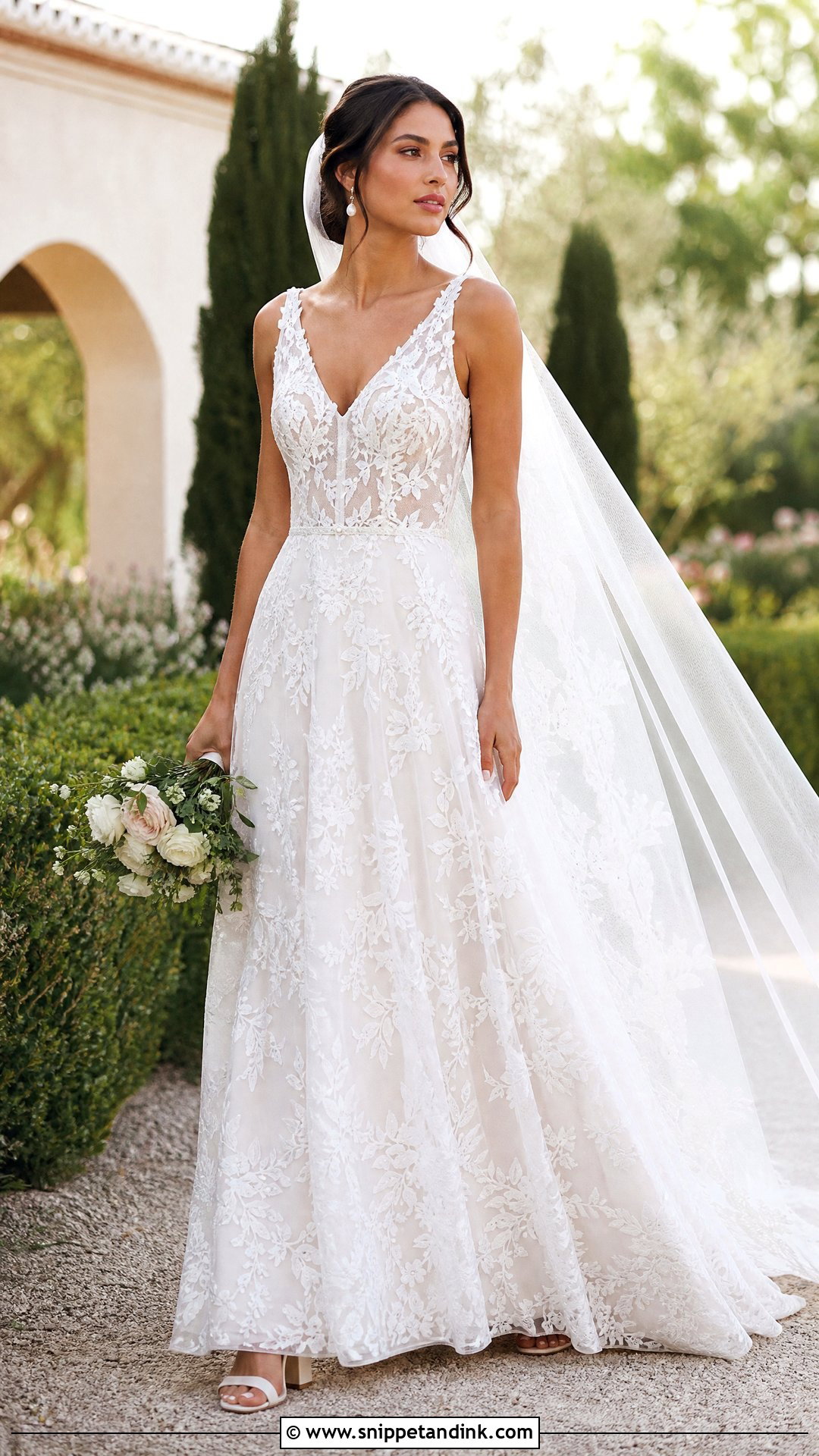
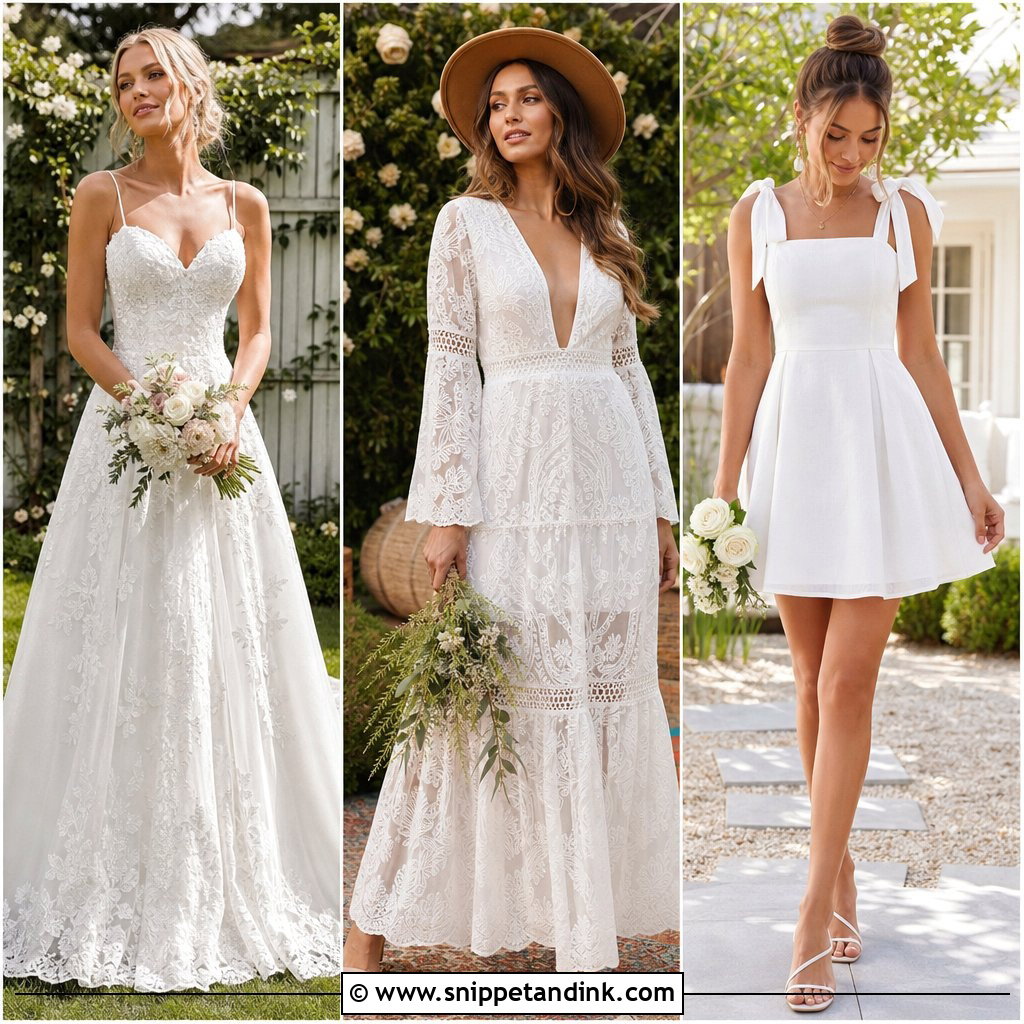
Lace over a light lining is the safest outdoor fabric I know, because a textured surface hides grass marks and small creases far better than smooth satin. Pick a soft botanical lace and keep the skirt a gentle A-line so you can stride across lawn or stone. I’d pair it with low block-heel sandals, pearl drops and a fingertip veil, which behaves in a breeze where a cathedral length would sail off. A loose low bun keeps hair out of the lace. Ask for a secure bustle and a short train if both the ceremony and reception are outside.
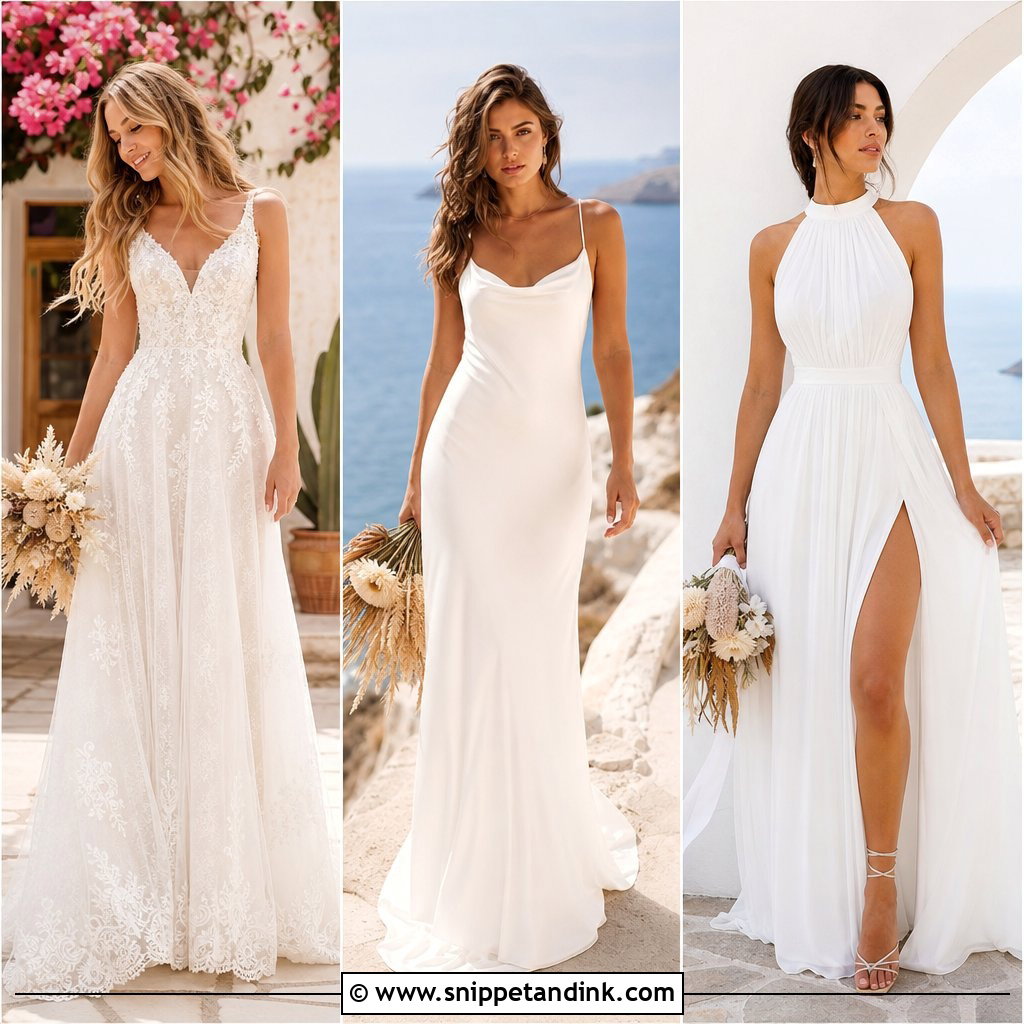
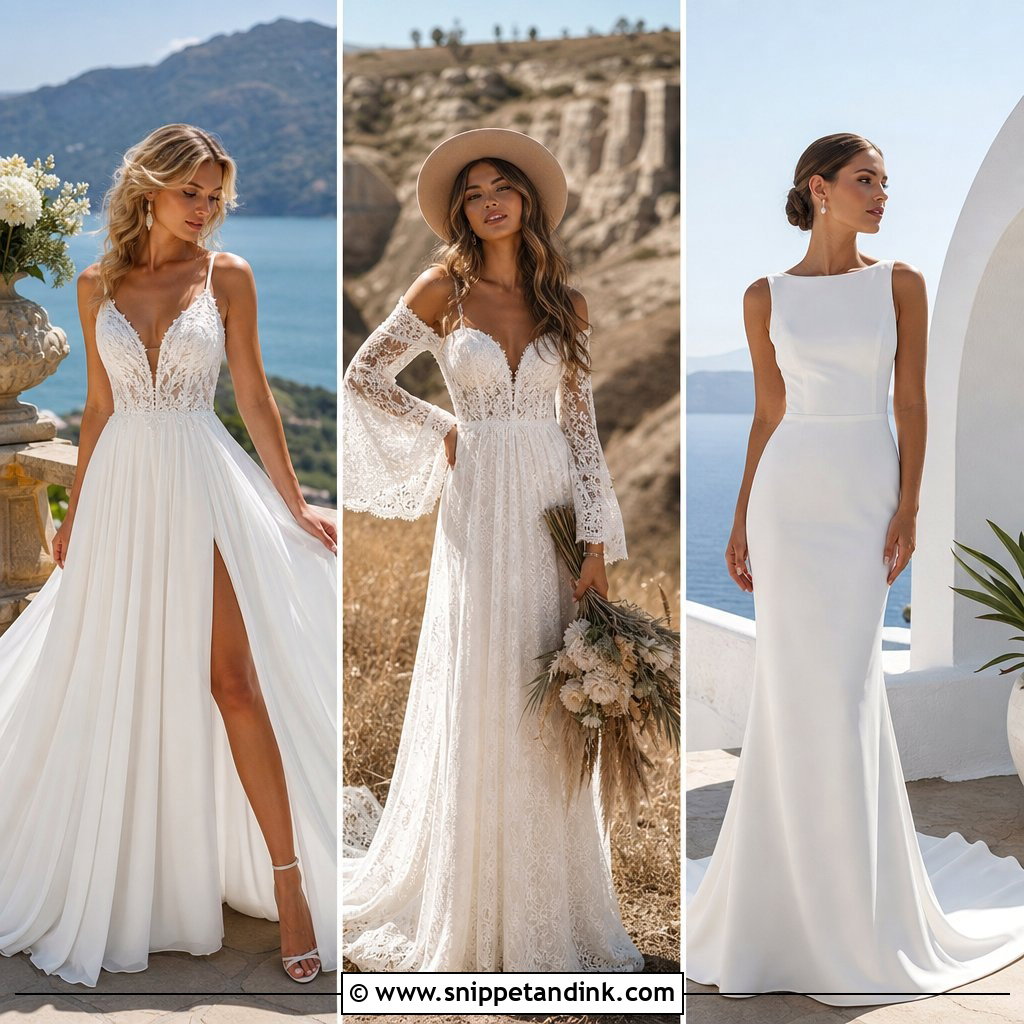
2. Outdoor Wedding Chiffon Beach Dress
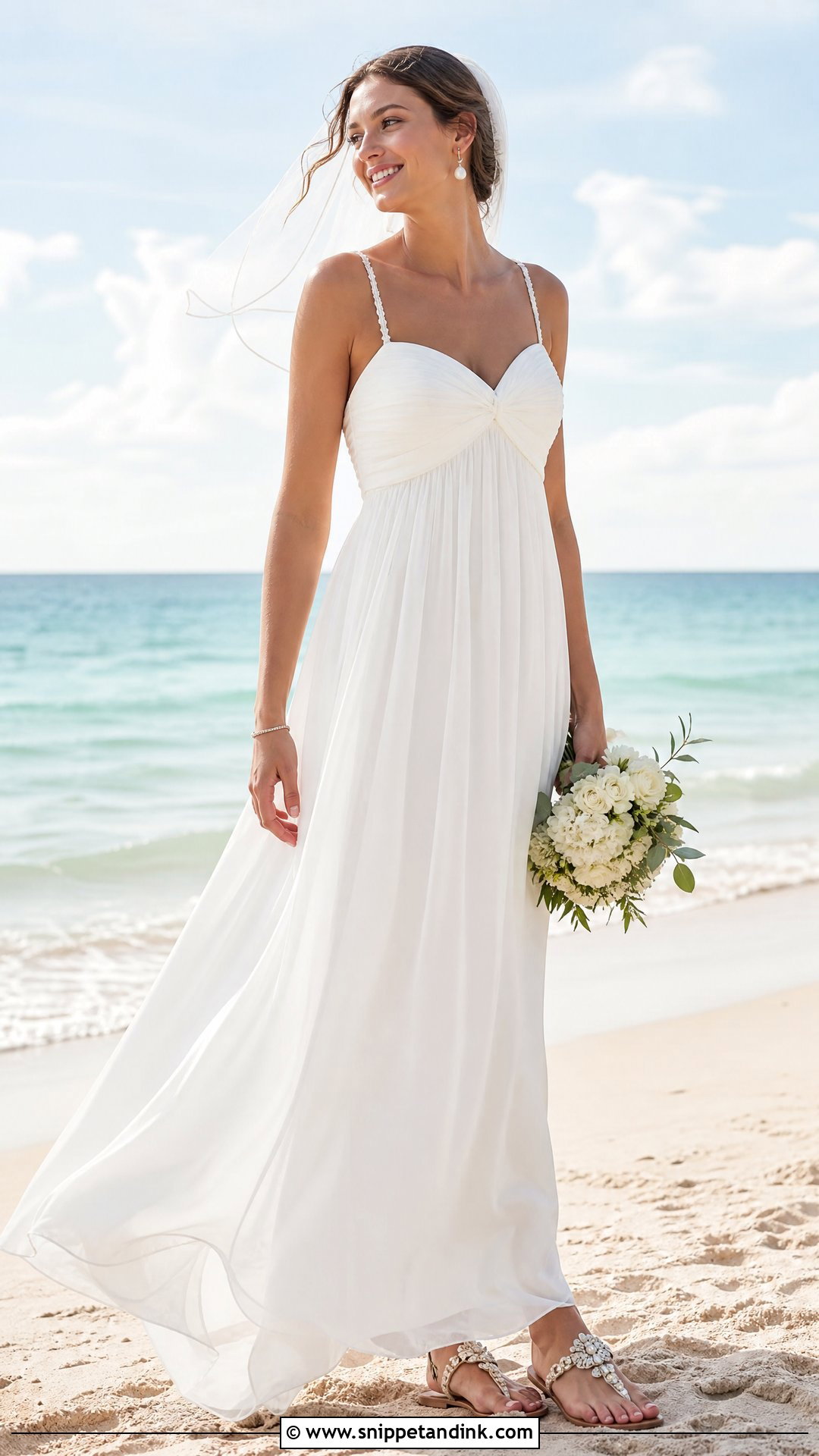
Chiffon is the beach fabric because it dries fast and moves with wind instead of fighting it. Look for an A-line or empire waist with a supportive bodice and only a sweep train, since anything longer collects wet sand like a mop. I’d keep jewelry tiny here: pearl studs, an anklet, one comb, because statement pieces look heavy against a warm coastal setting. Embellished flat sandals or bare feet both work if the venue allows it. Choose a veil that stops above the ground and a braided updo that won’t unravel in sea air.
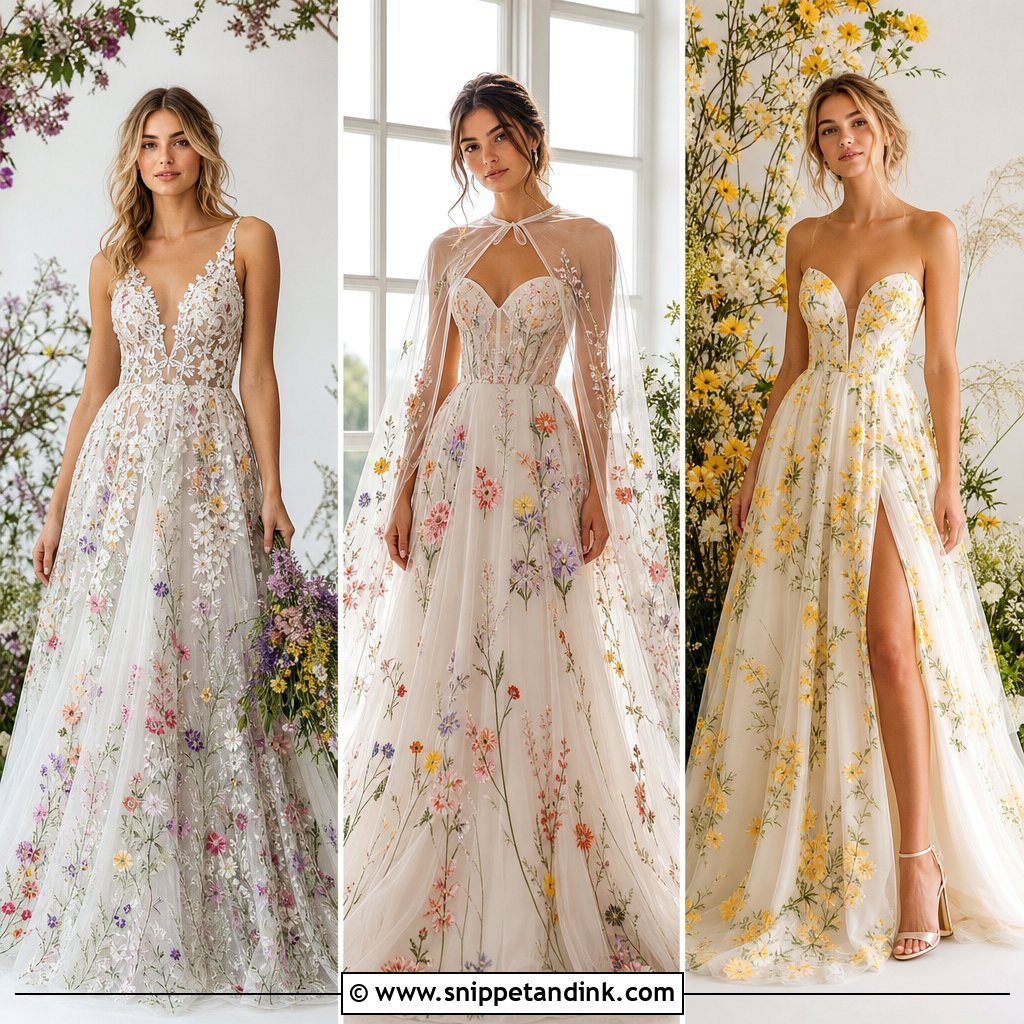
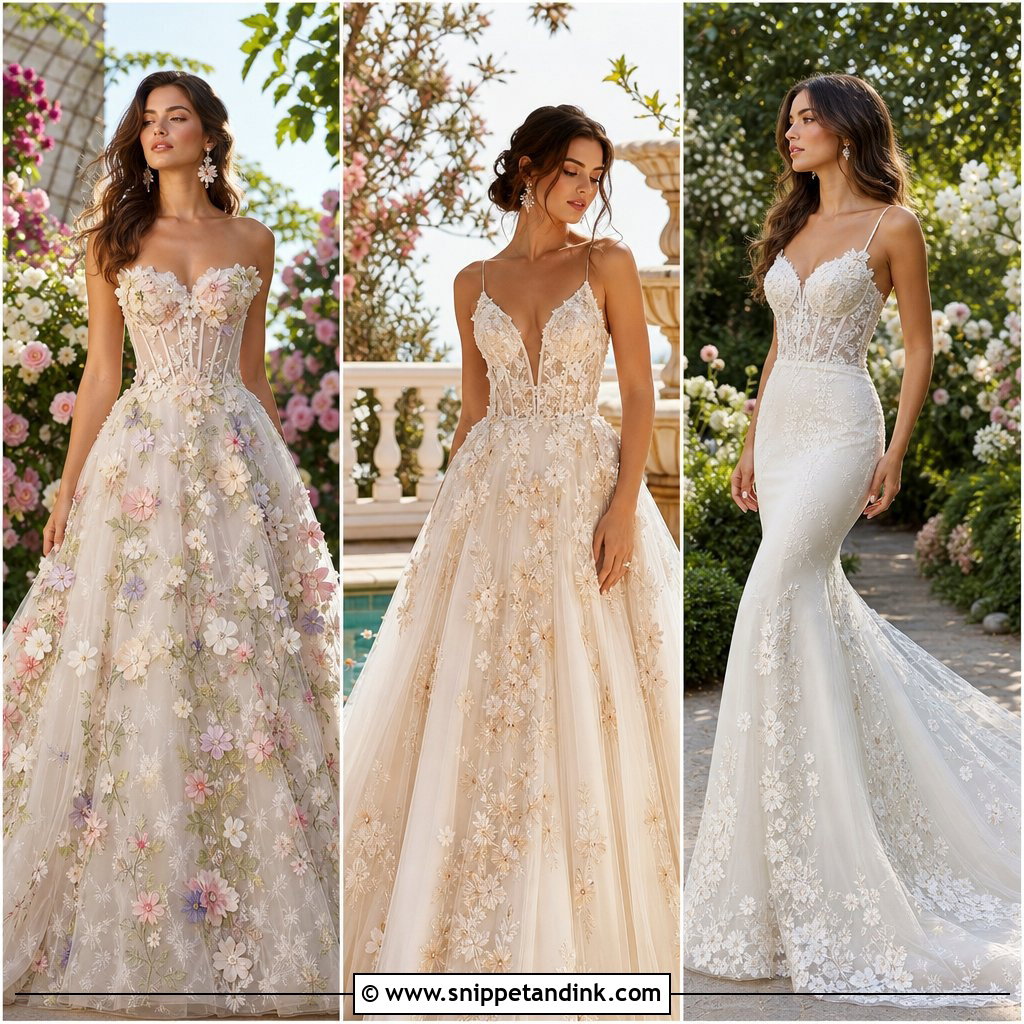
3. Outdoor Wedding Floral Applique Dress
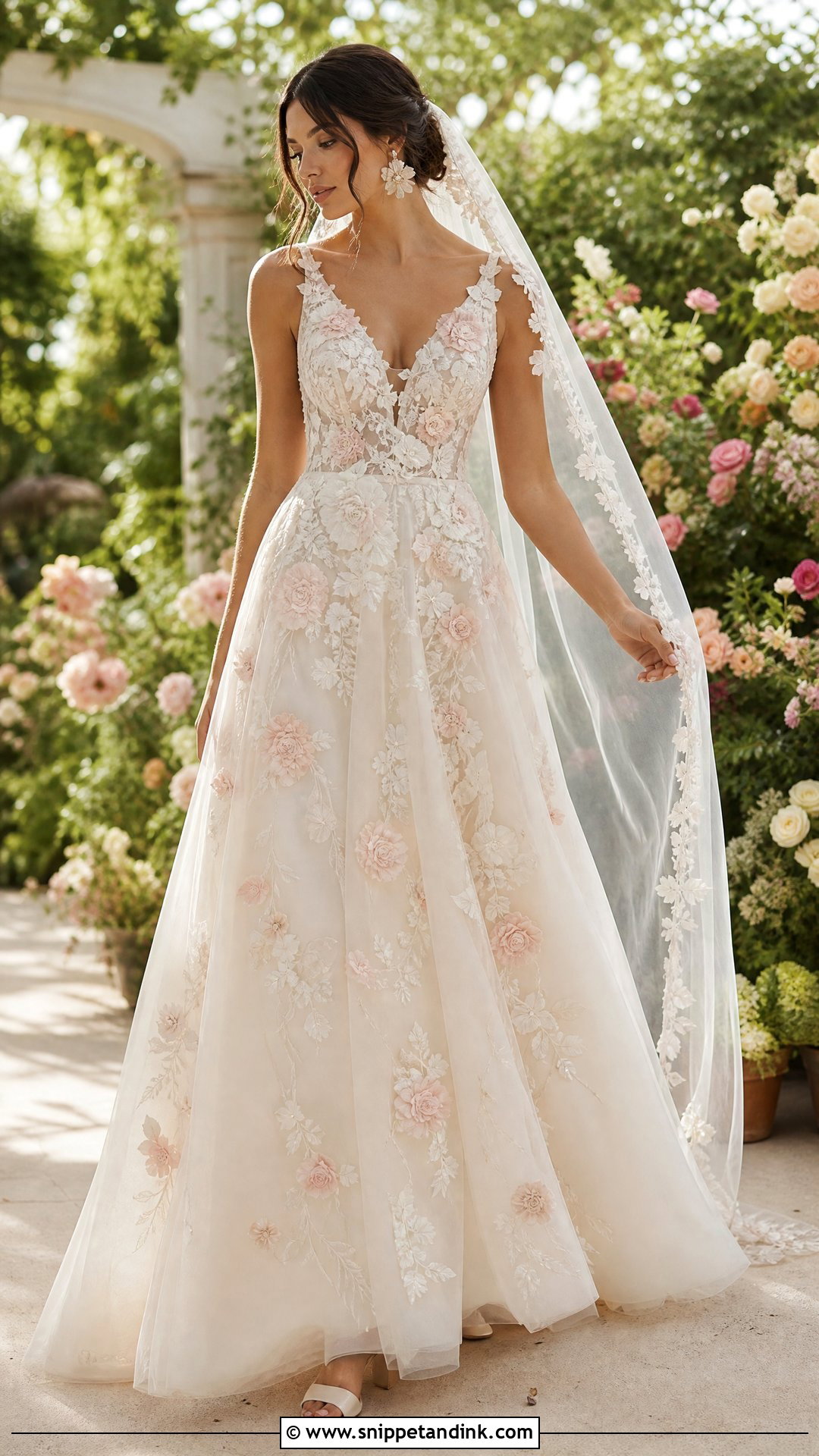
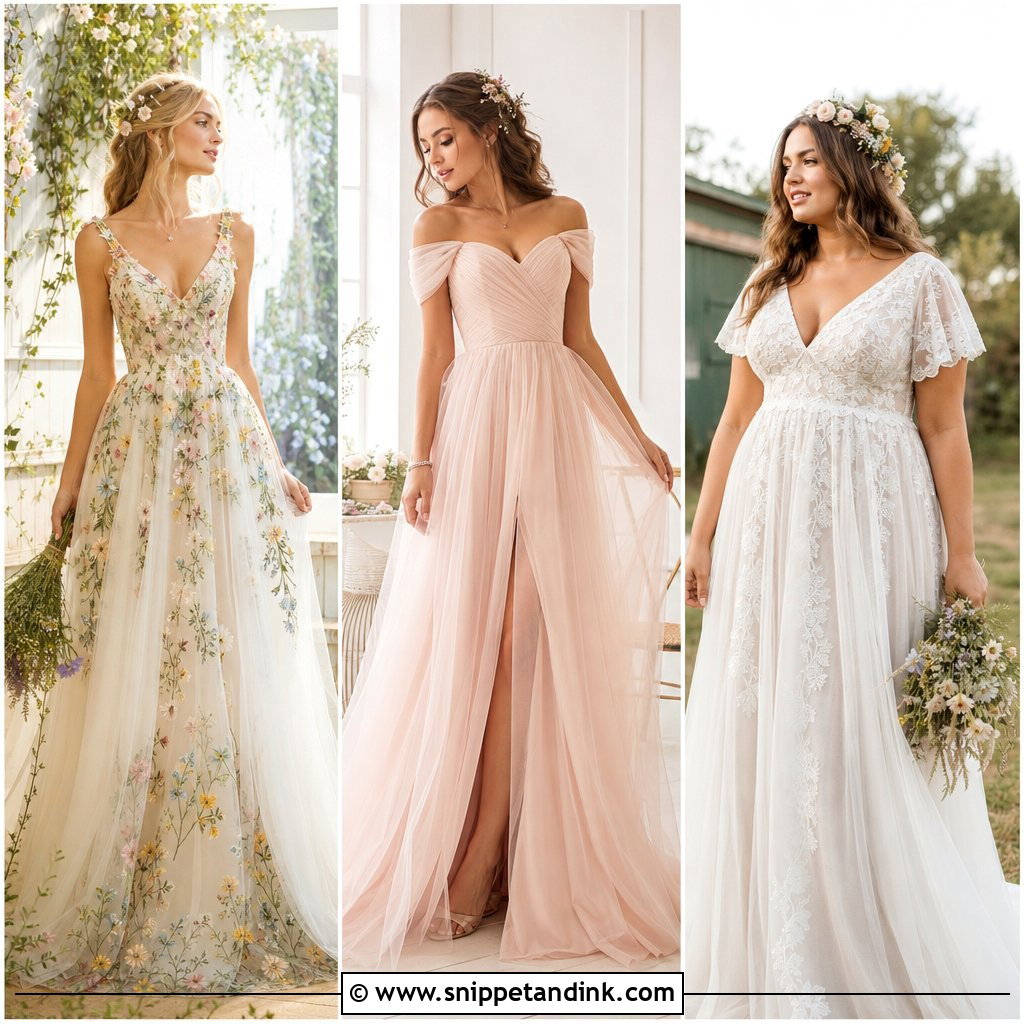
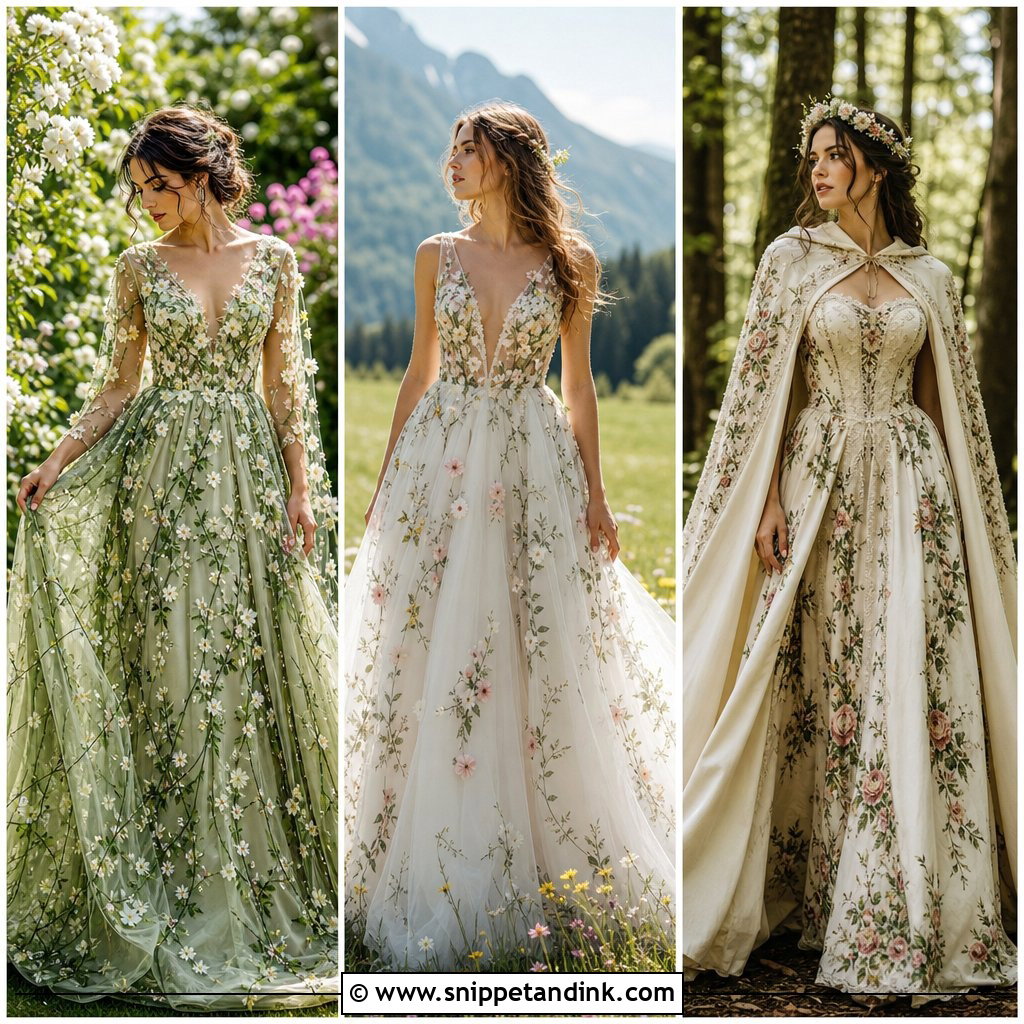
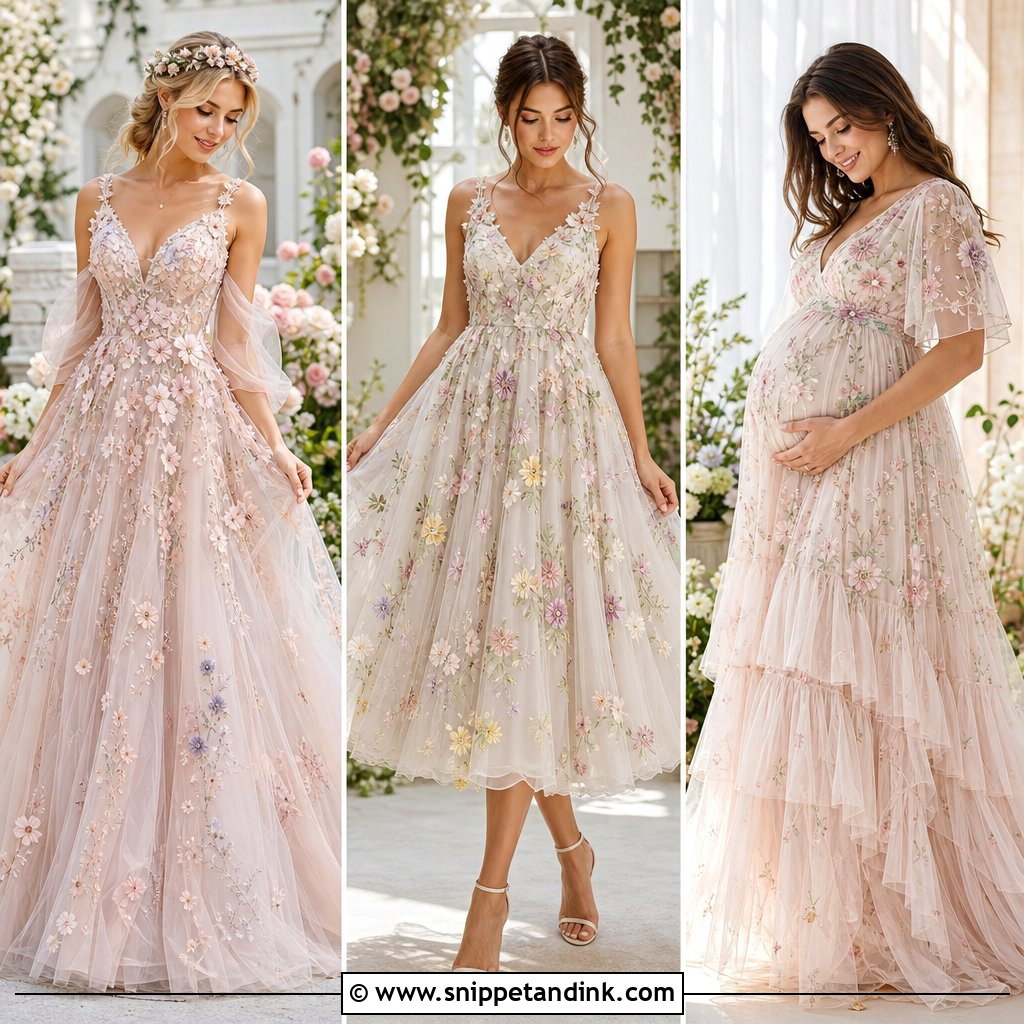
Three-dimensional appliqués look their best in daylight, where the petals cast tiny shadows. An ivory tulle A-line with flowers scattered over the bodice and skirt can stay monochrome or pick up faint blush and sage threads. The one thing I check at a fitting is how the appliqués sit at the hip, because raised flowers there catch on chair backs and bouquet ribbon. Wear ivory block heels, floral studs and a sheer fingertip veil edged in matching motifs, and let a softly curled half-up style leave the bodice clear. Keep the bouquet simpler than the gown; two busy textures cancel each other out in a garden or conservatory courtyard.
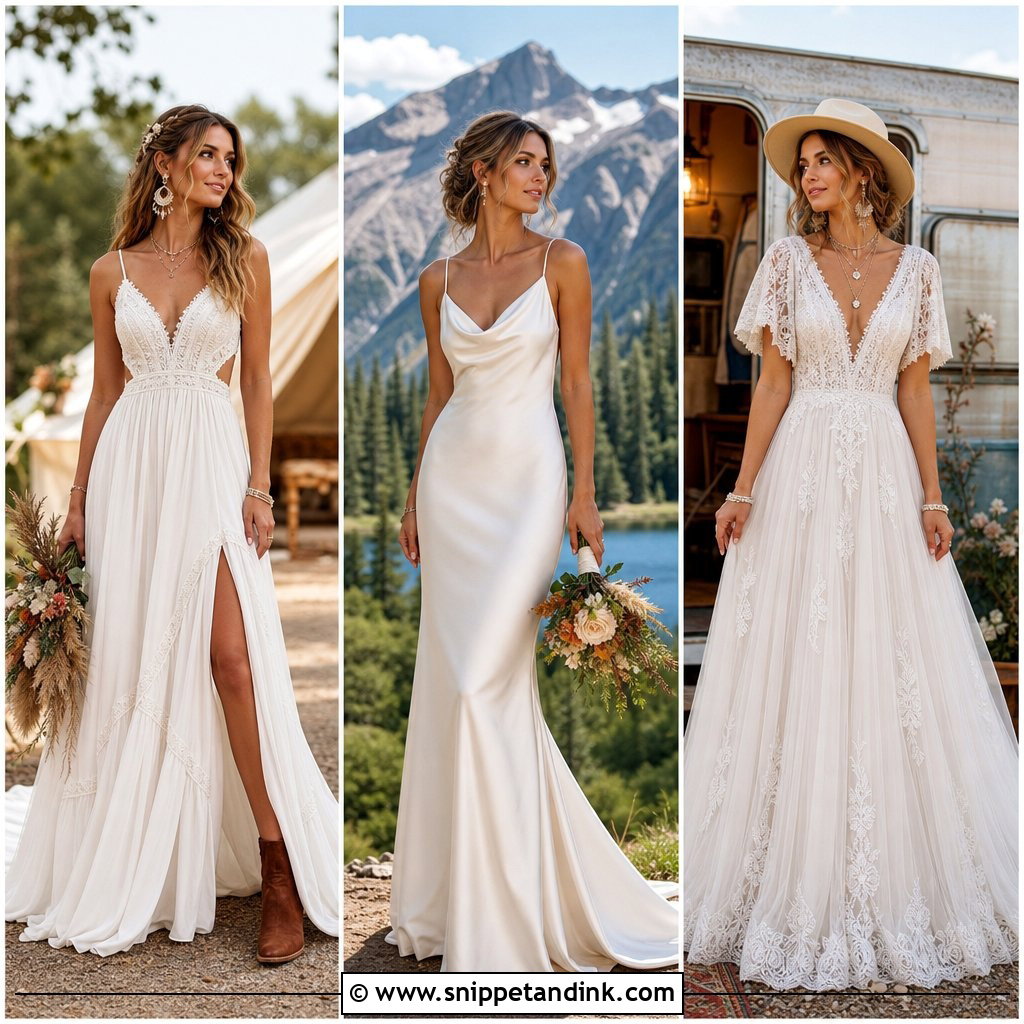
4. Outdoor Wedding Boho Bell Sleeve Dress
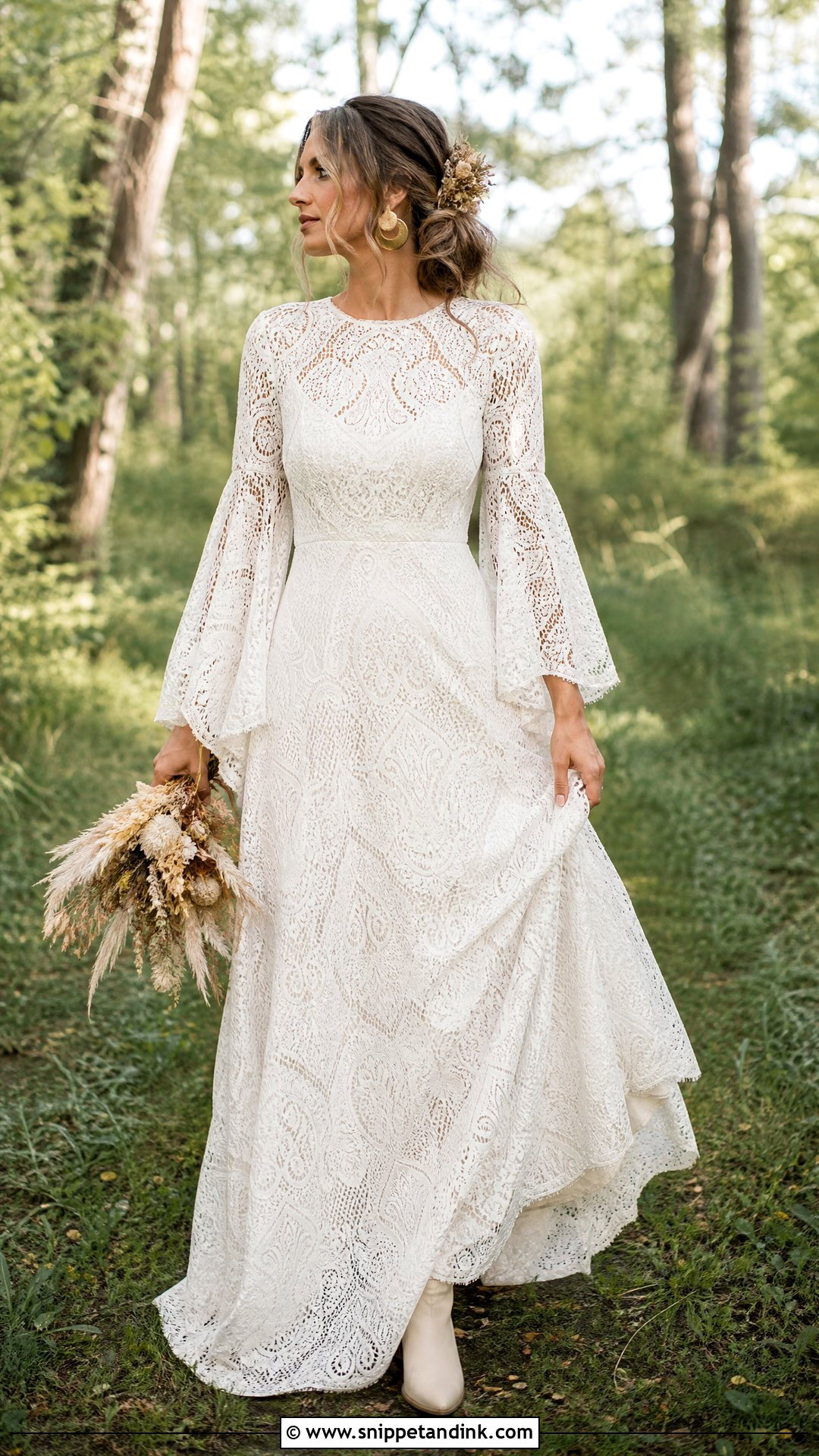
Bell sleeves give you coverage and movement at a woodland or meadow ceremony, but only if the lace is open and light. Heavy guipure sleeves drag the shoulders down by mid-afternoon. I’d look for a fitted lining under the lace, a defined waist and a flowing skirt for mild spring or early fall weather. Leather or ivory ankle boots handle soft ground, and hammered gold earrings with a dried-flower comb suit the mood. Skip the long veil; a short tulle one, a lace capelet or bare hair all look more at home among trees.
5. Outdoor Wedding Satin Slip Dress
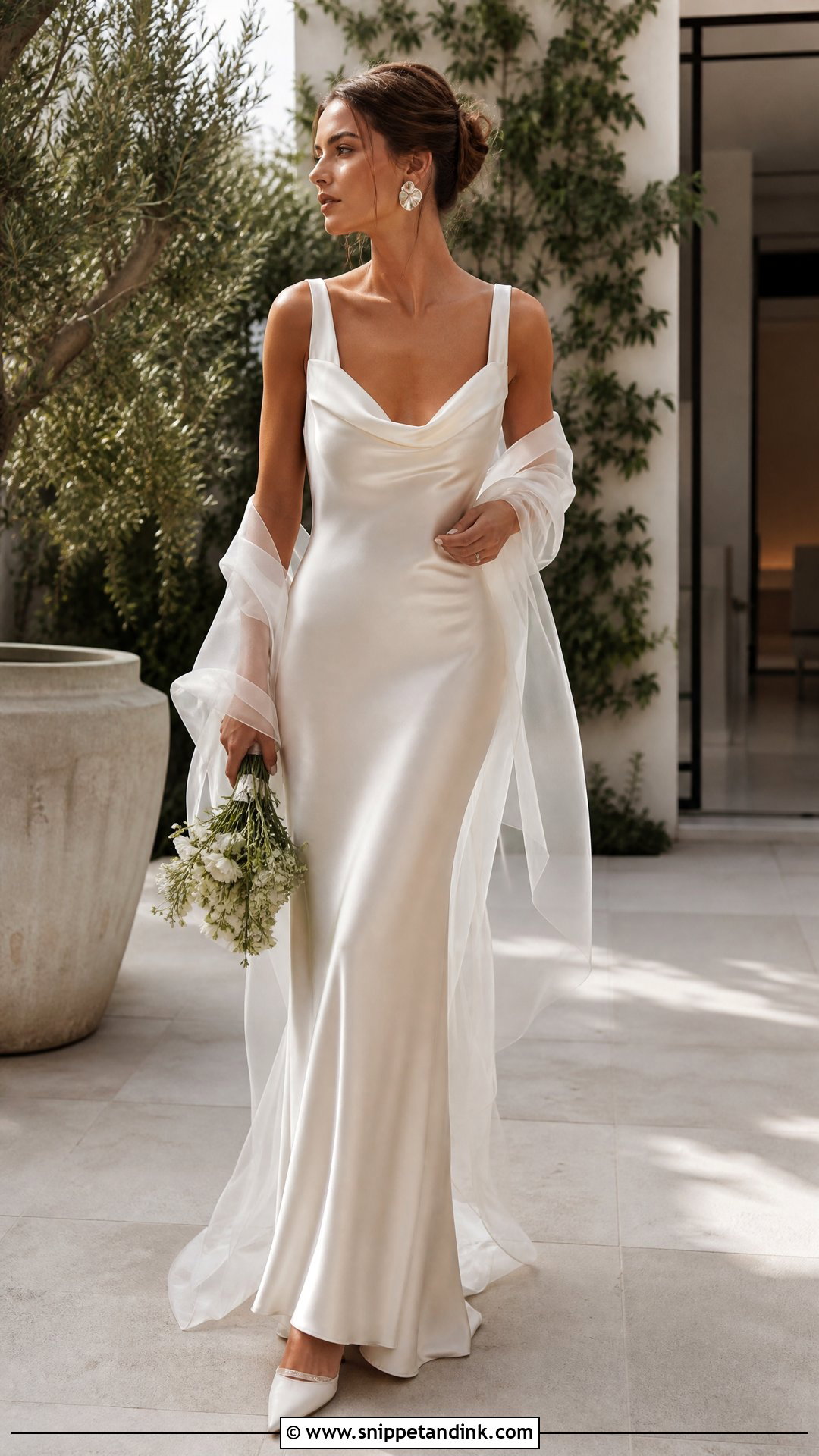
Satin slip gowns are honest about everything: bra lines, sweat and every crease from the car ride. That’s why I only suggest bias-cut satin outdoors with wider straps, a draped neckline and real structure through the bodice. A floor-skimming hem with a short train is easy on patios and clipped lawns. Pointed flats or low block heels, sculptural earrings and a low bun keep it modern. Plan shaded portraits, have the gown steamed at the venue rather than at home, and keep an organza wrap or cropped jacket ready for the temperature drop after sunset.
6. Outdoor Wedding Crepe Column Dress
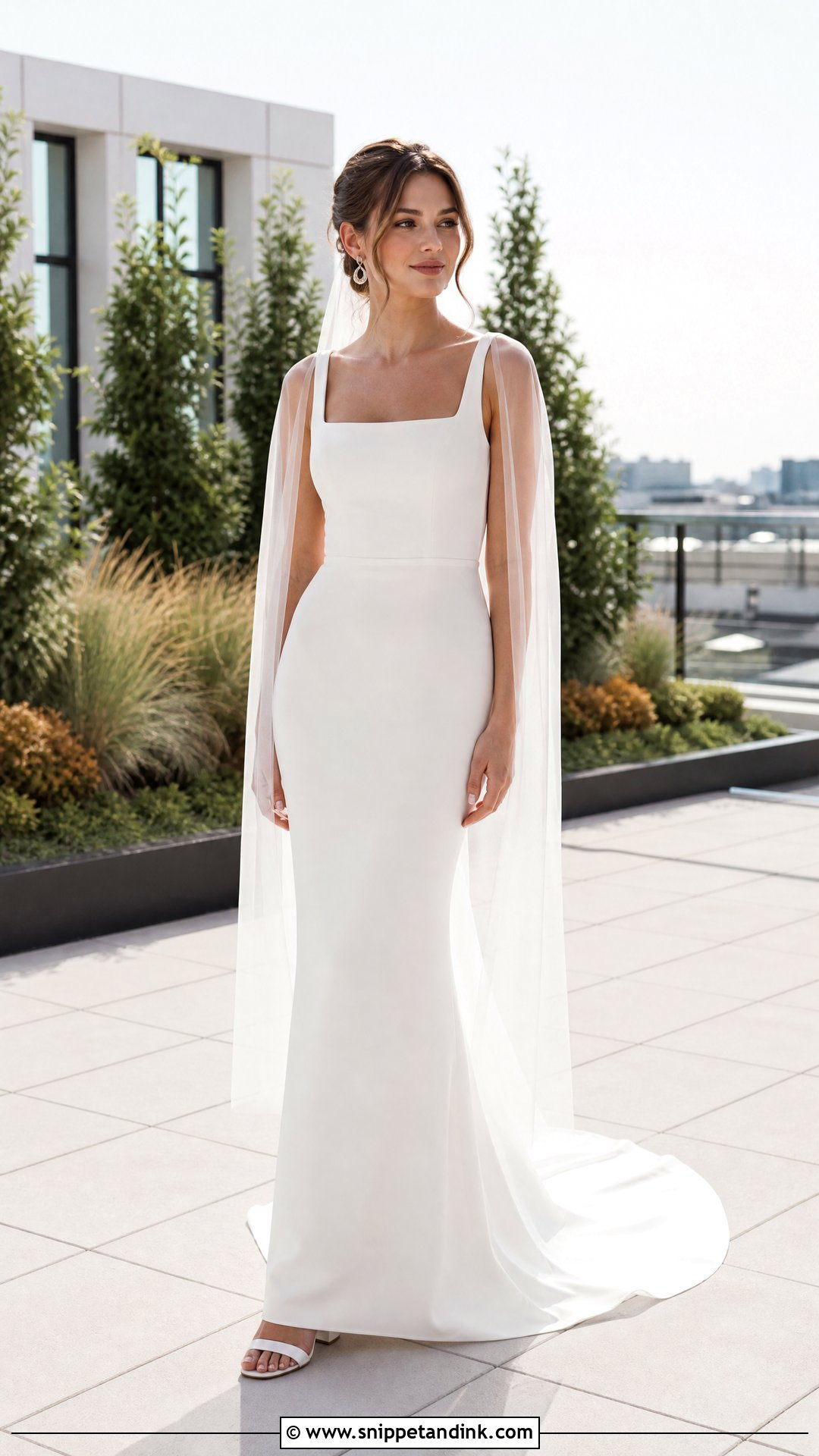
Medium-weight crepe is the fabric I reach for when a bride wants a column that doesn’t cling. It skims rather than grips, and a small back slit makes the difference between gliding and shuffling. A square neckline with supportive straps suits terraces, rooftop gardens and paved estates far better than soft ground, where a narrow hem has nowhere to go. Finish with minimal block-heel sandals, a structured bag and polished metal earrings. A detachable shoulder veil or light cape adds ceremony, and a wrist loop keeps the short train off the path between spaces.
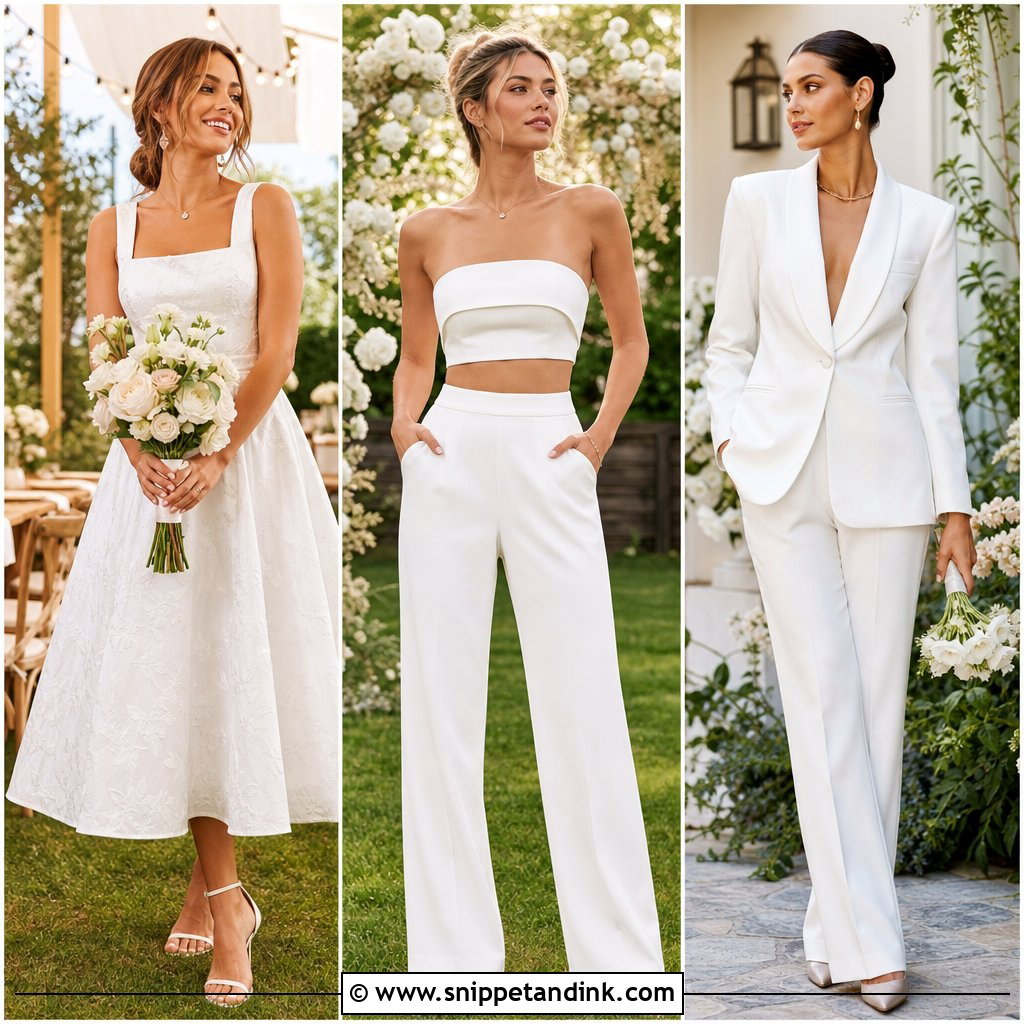
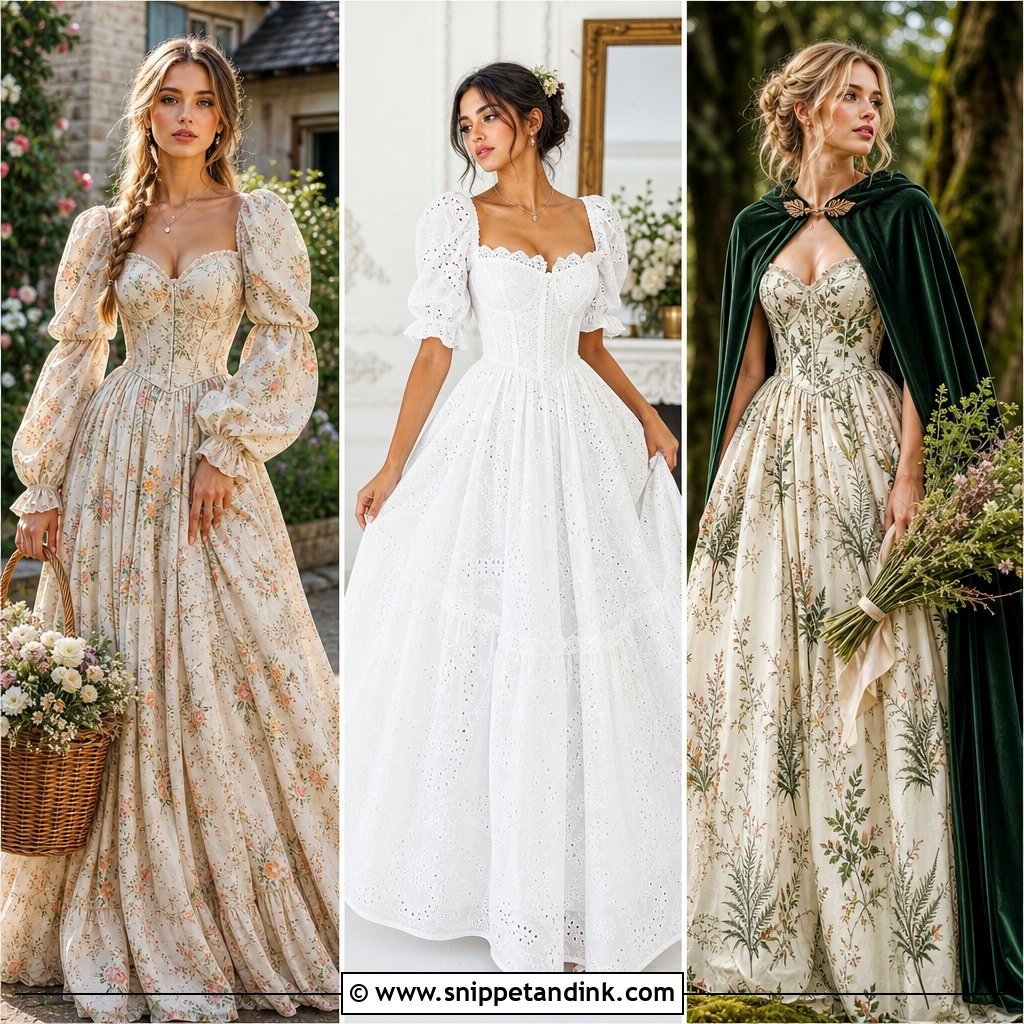
7. Outdoor Wedding Tea Length Dress
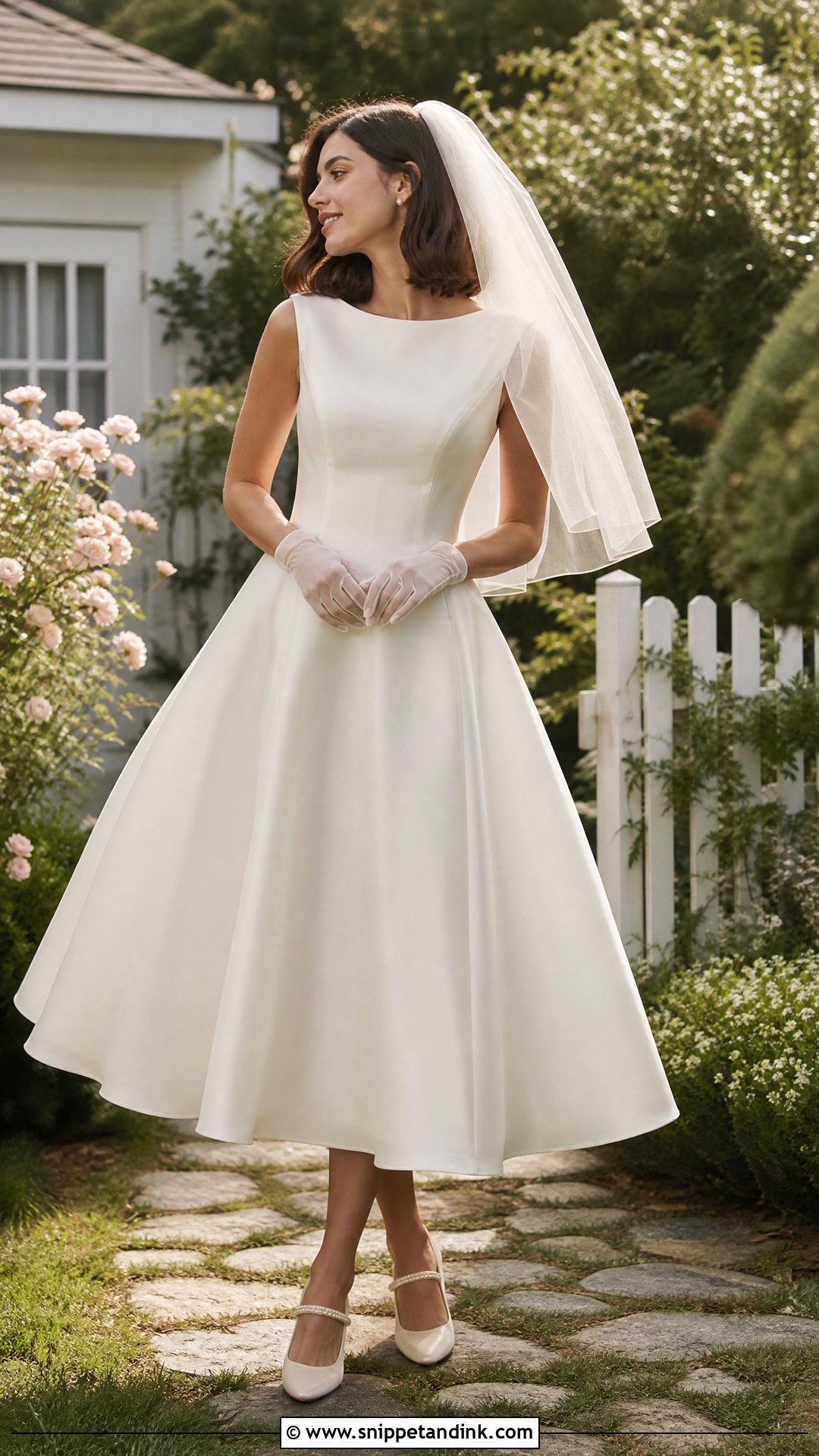
Tea length solves the outdoor hem problem outright, and it lets your shoes do some of the talking. I’d look for a fitted bodice with a square or bateau neck and a skirt ending between knee and ankle, in cotton lace, light mikado or layered organza that holds a gentle bell. Pearl-trimmed block heels or bridal Mary Janes come into view, so choose them early and break them in. Short gloves, pearl studs and a birdcage or shoulder-length veil nod to vintage, and a polished chignon balances the shorter line. You’ll greet guests and dance far more freely than in a floor-length skirt.
8. Outdoor Wedding Long Sleeve Lace Dress
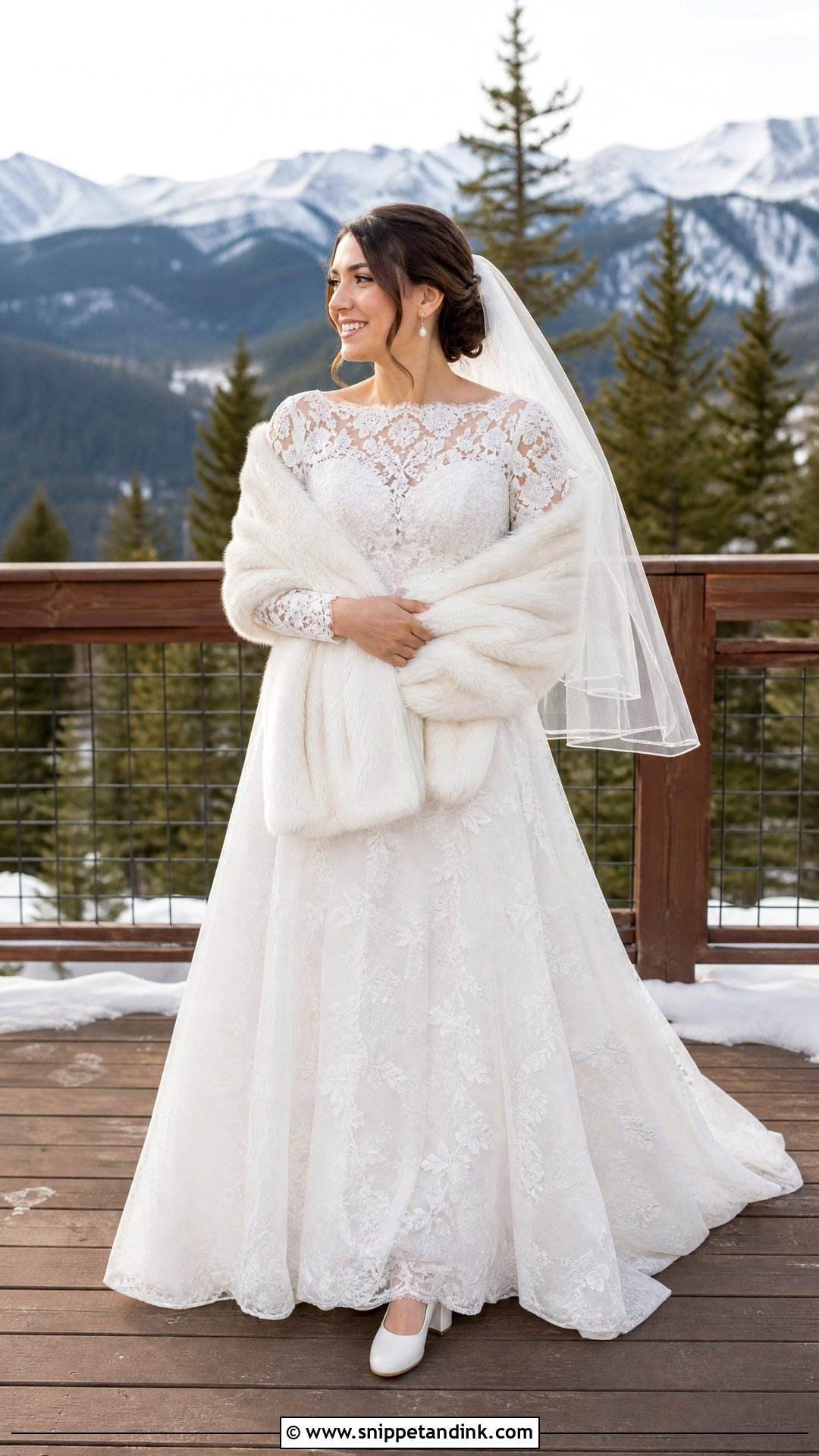
For a late-fall forest or mountain ceremony, long lace sleeves keep you warm without hiding the shape of the dress. The detail I check first is the sleeve lining: unlined lace sleeves itch at the wrist after a few hours, while a soft mesh lining or placed appliqués solve it. Closed block heels or ankle boots suit the terrain, and pearl earrings, a fine hair vine and a chapel veil carry the romance. Keep hair in a low bun so it doesn’t snag on the lace. A tailored cape or soft wool coat covers outdoor portraits and comes off once guests head inside.
9. Outdoor Wedding Off Shoulder Dress
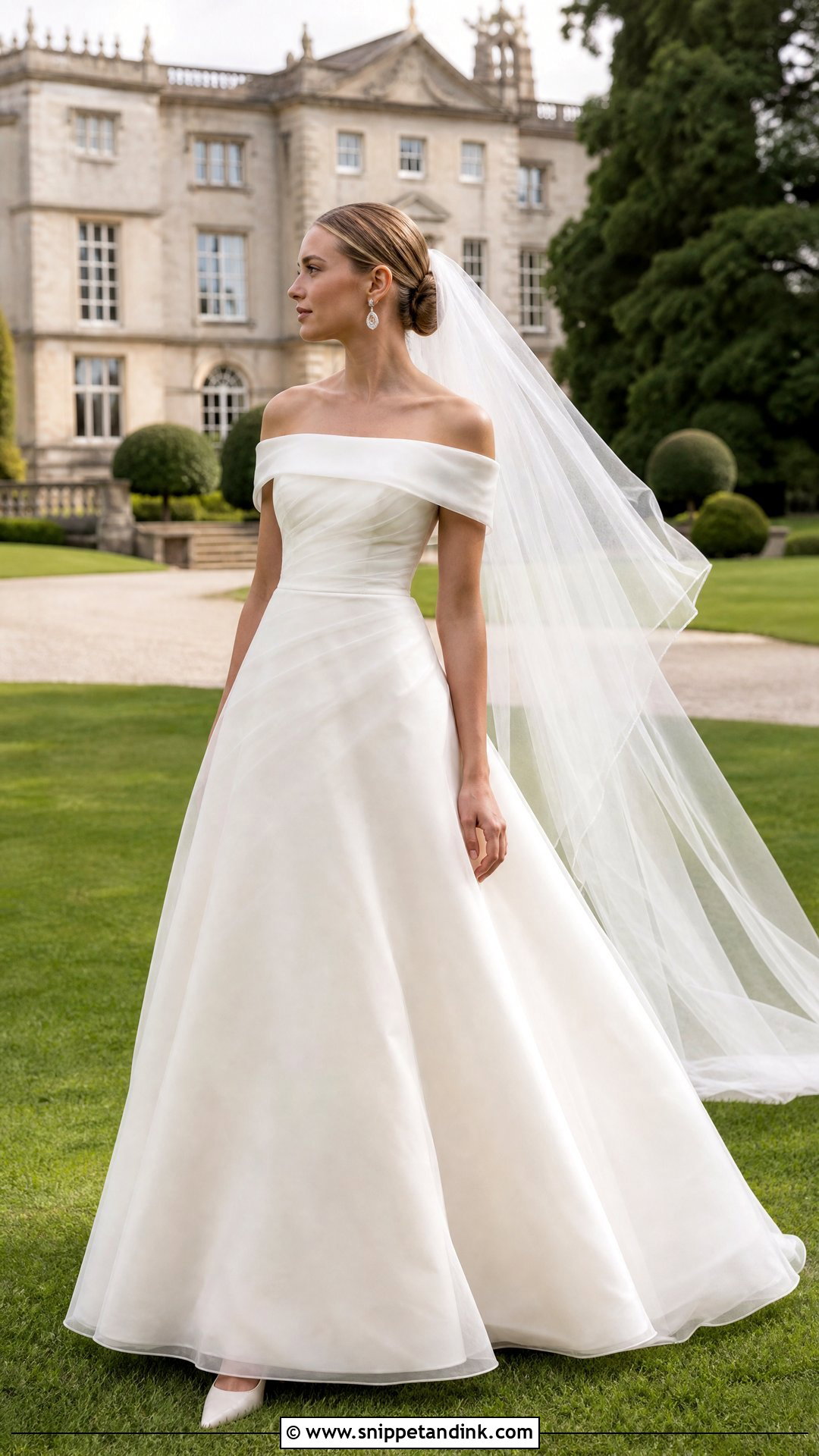
Off-the-shoulder necklines live or die by their internal corset. Without proper boning and a grippy waist stay, the neckline slides and you spend the ceremony hitching it up, which shows in every photo. A structured A-line in light organza or matte satin gives volume without weight. Crystal or pearl drops, low block heels and a clean fingertip veil keep the shoulders as the focus, and a smooth low bun leaves them uncovered. Avoid a long train on a grass aisle, and if evenings turn cool, choose a fitted cape that sits above the neckline instead of crushing it.
10. Outdoor Wedding Square Neck Dress
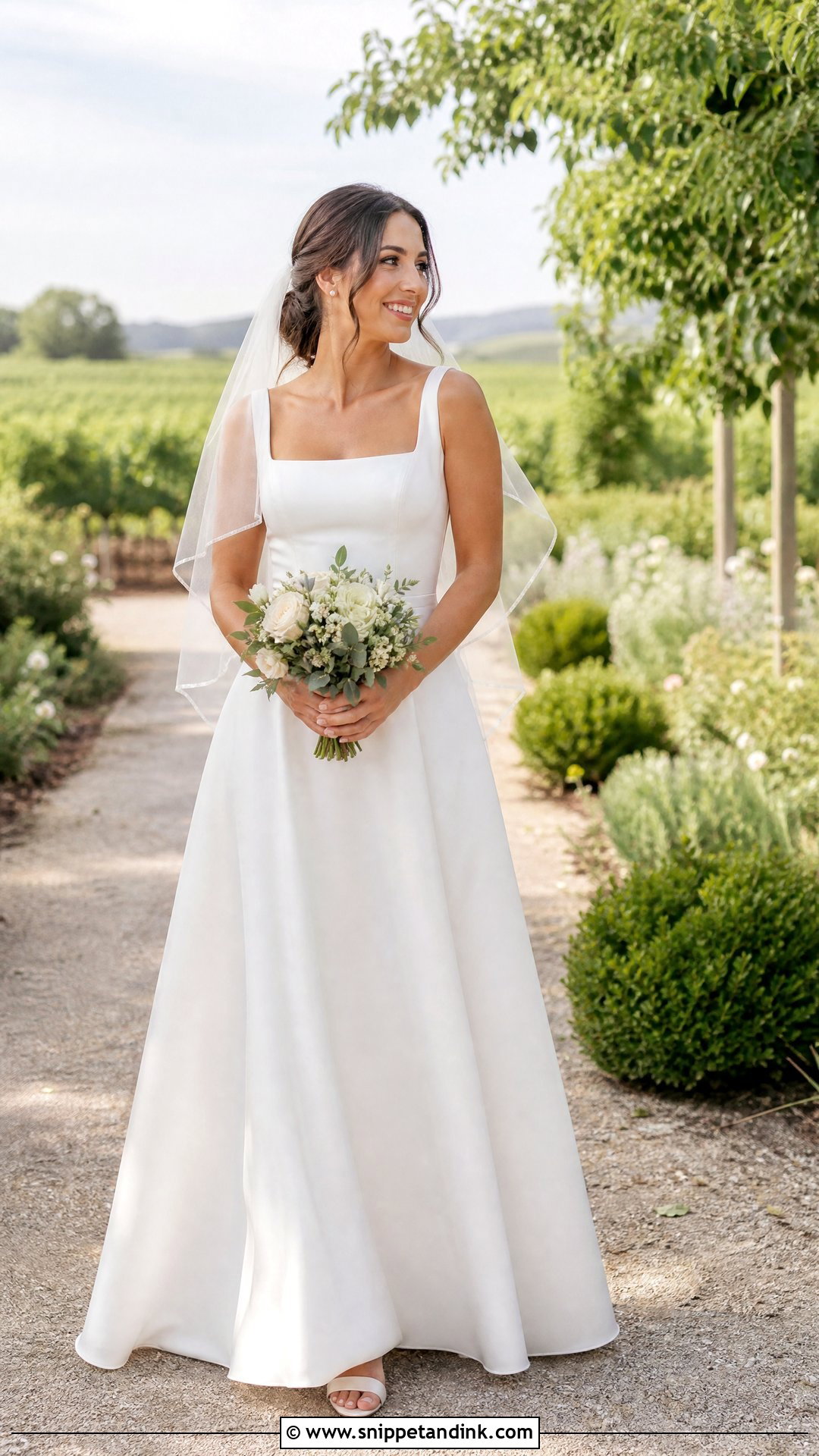
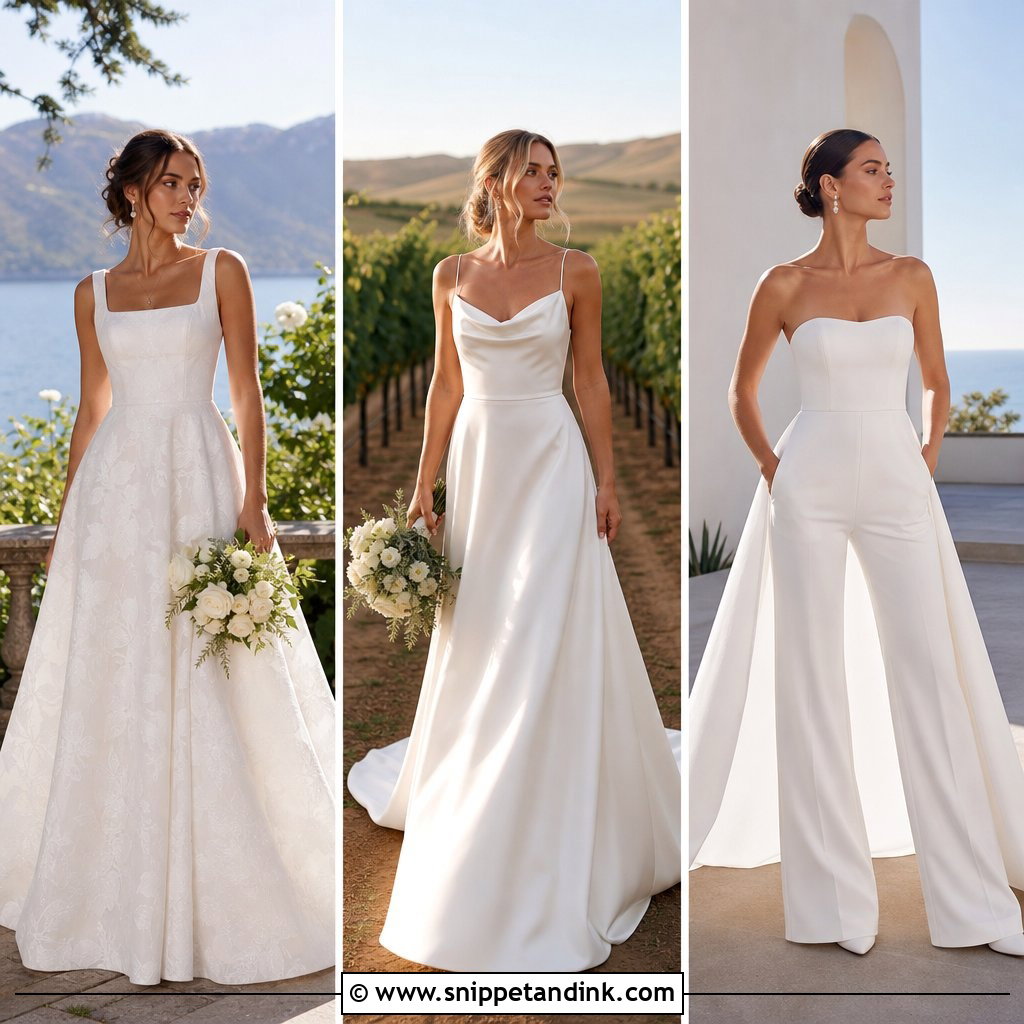
Square necks are one of the most forgiving shapes I fit, because the straight line leaves room for real support across a range of bust sizes. A fitted bodice with wide straps and an A-line skirt in crepe, satin or light mikado keeps the look clean. I’d add a fine pendant, pearl studs and low heels with wide bases for lawn. A long veil is fine on a paved aisle; on grass or garden paths, a fingertip length saves you constant tugging. Soft waves or a low chignon, plus a compact bouquet of seasonal flowers, round it out for a modern garden, vineyard or backyard.
11. Outdoor Wedding Puff Sleeve Dress
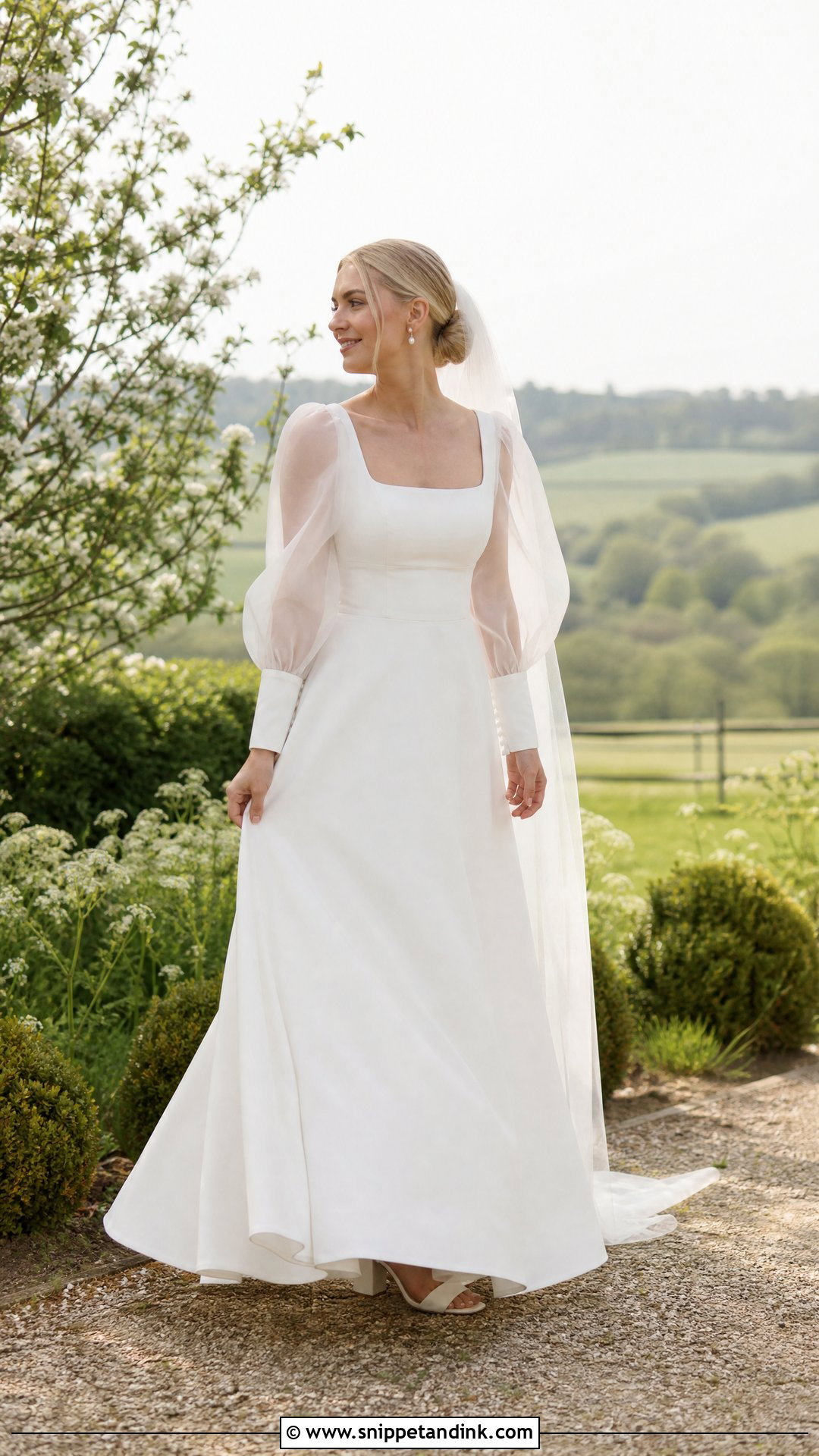
Sheer organza puff sleeves with fitted cuffs give you all the romance you need, so the rest of the gown should stay plain. A clean crepe or satin A-line lets the sleeves read clearly against a spring garden or countryside estate. Ask whether the sleeves can be made detachable; most good seamstresses can do it with hidden snaps, and you’ll want that option if the afternoon turns hot. Simple pearl earrings, ivory block heels and a neat low bun or ponytail stop the shoulders from looking crowded. A minimal veil keeps the focus where it belongs.
12. Outdoor Wedding Empire Waist Dress
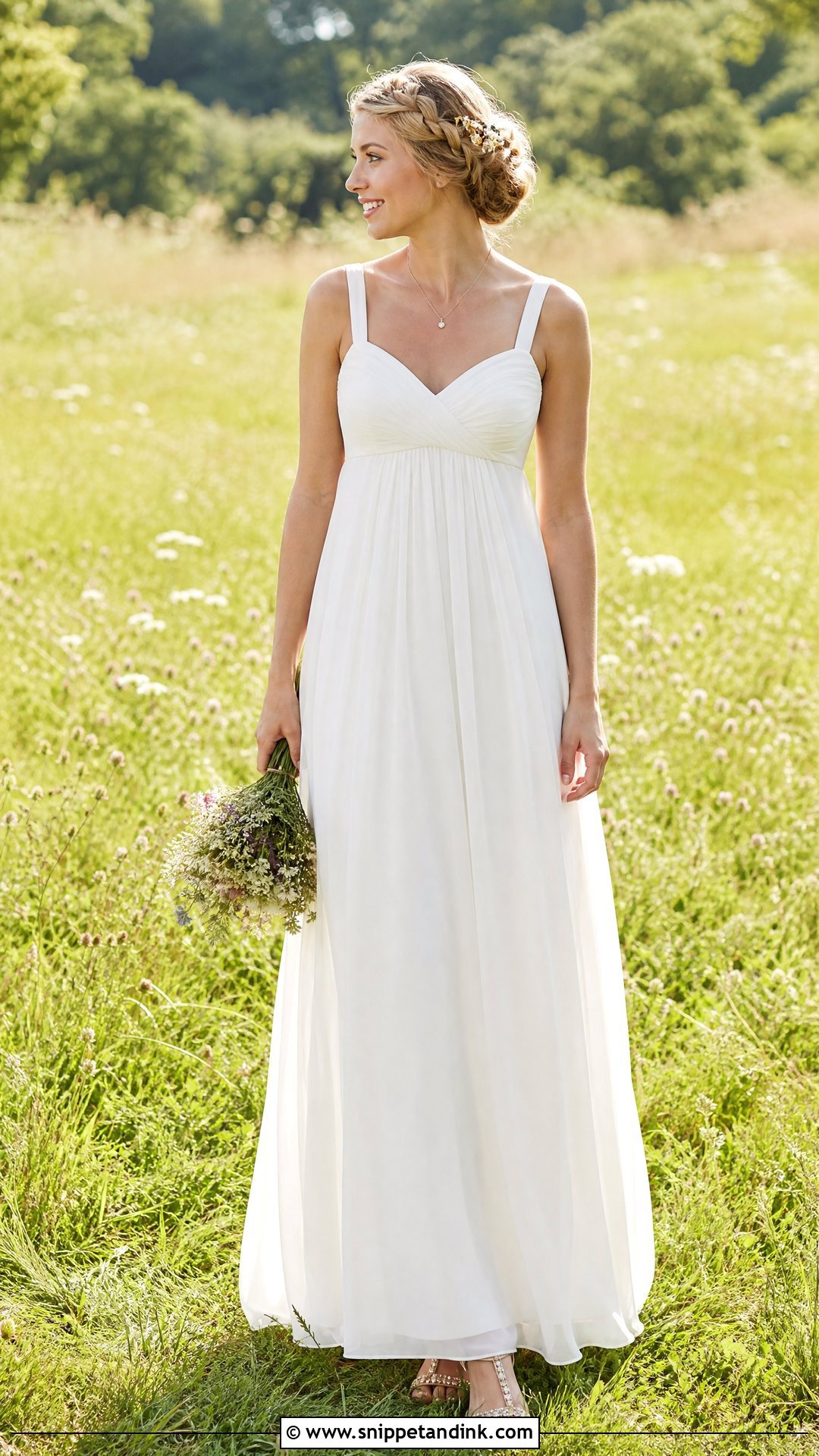
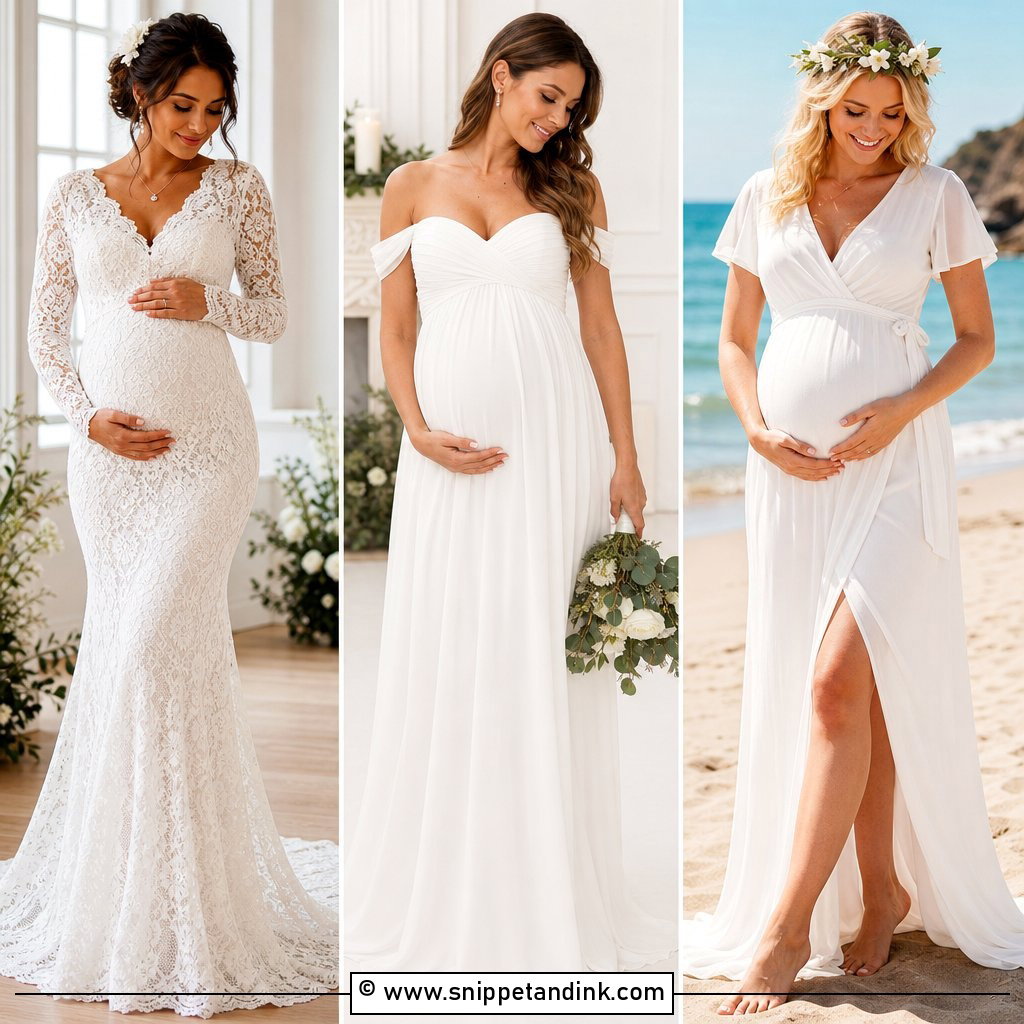
An empire waist floats away from the body, which matters more than people expect on a hot afternoon. The bodice ends just under the bust and chiffon or georgette falls loosely over the waist and hips. I’d choose the neckline by support needs first: a V-neck or draped bodice can hide a proper bra structure, a scoop needs it built in. Jeweled flat sandals, a delicate pendant and a small floral comb keep it light, and a braided updo stays put in heat. Keep the hem at the floor without pooling. It’s also a comfortable shape for pregnant brides or anyone who dislikes a close fit through the middle.
13. Outdoor Wedding Tulle Ball Gown
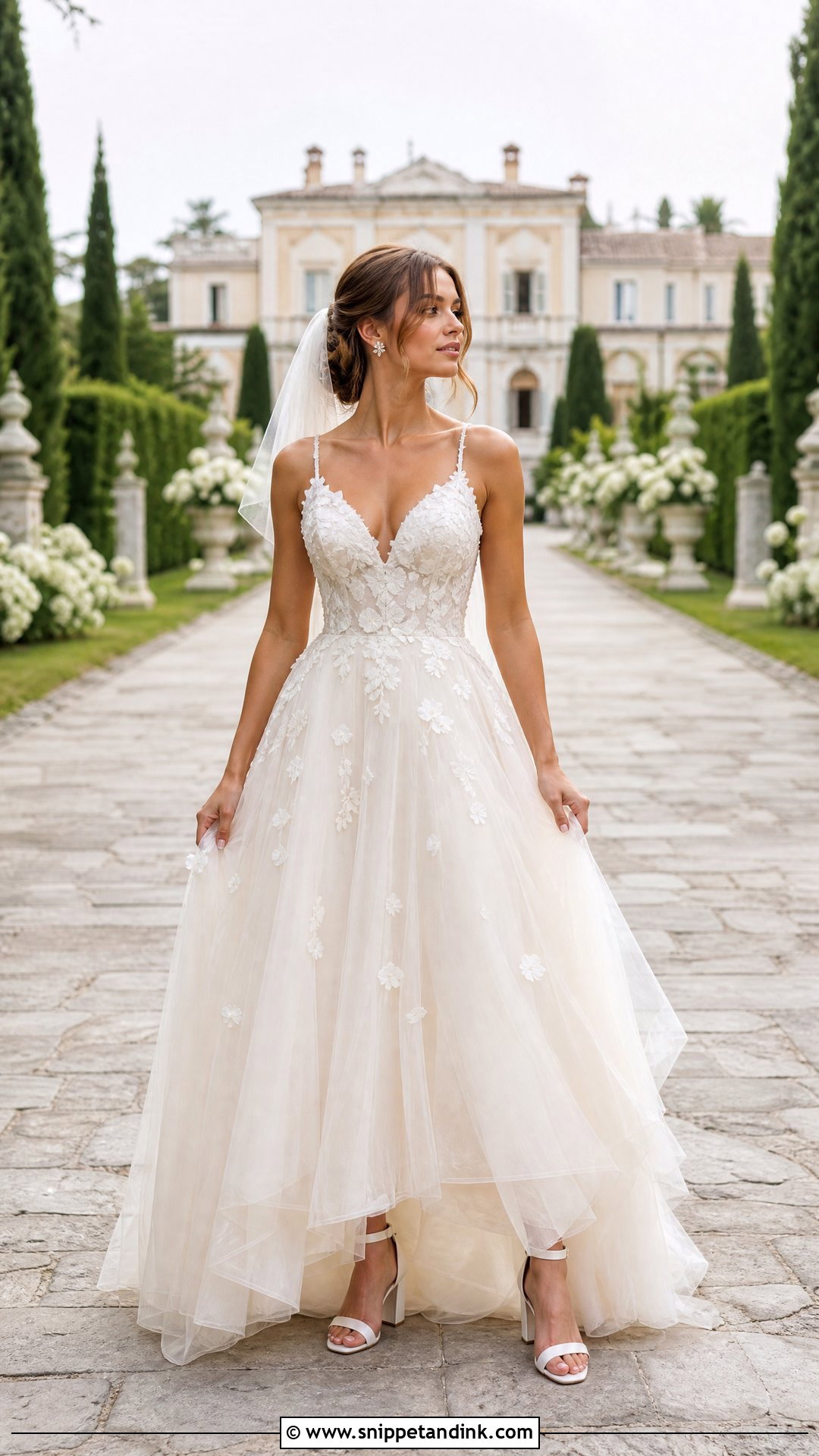
A ball gown can go outside, but only on the right ground. Heavy satin and dense beading turn a full skirt into a weight you drag; airy tulle layers over a comfortable lining stay manageable. A supportive bodice and scattered floral appliqués connect the volume to the setting. Wear sturdy block heels, crystal studs and a plain veil, with a polished updo to keep the silhouette controlled. Insist on a multi-point bustle and have someone practice it before the day. I’d steer you away from this shape for sand, rough woodland or uneven fields; it belongs on estate lawns and paved garden terraces.
14. Outdoor Wedding Halter Neck Dress
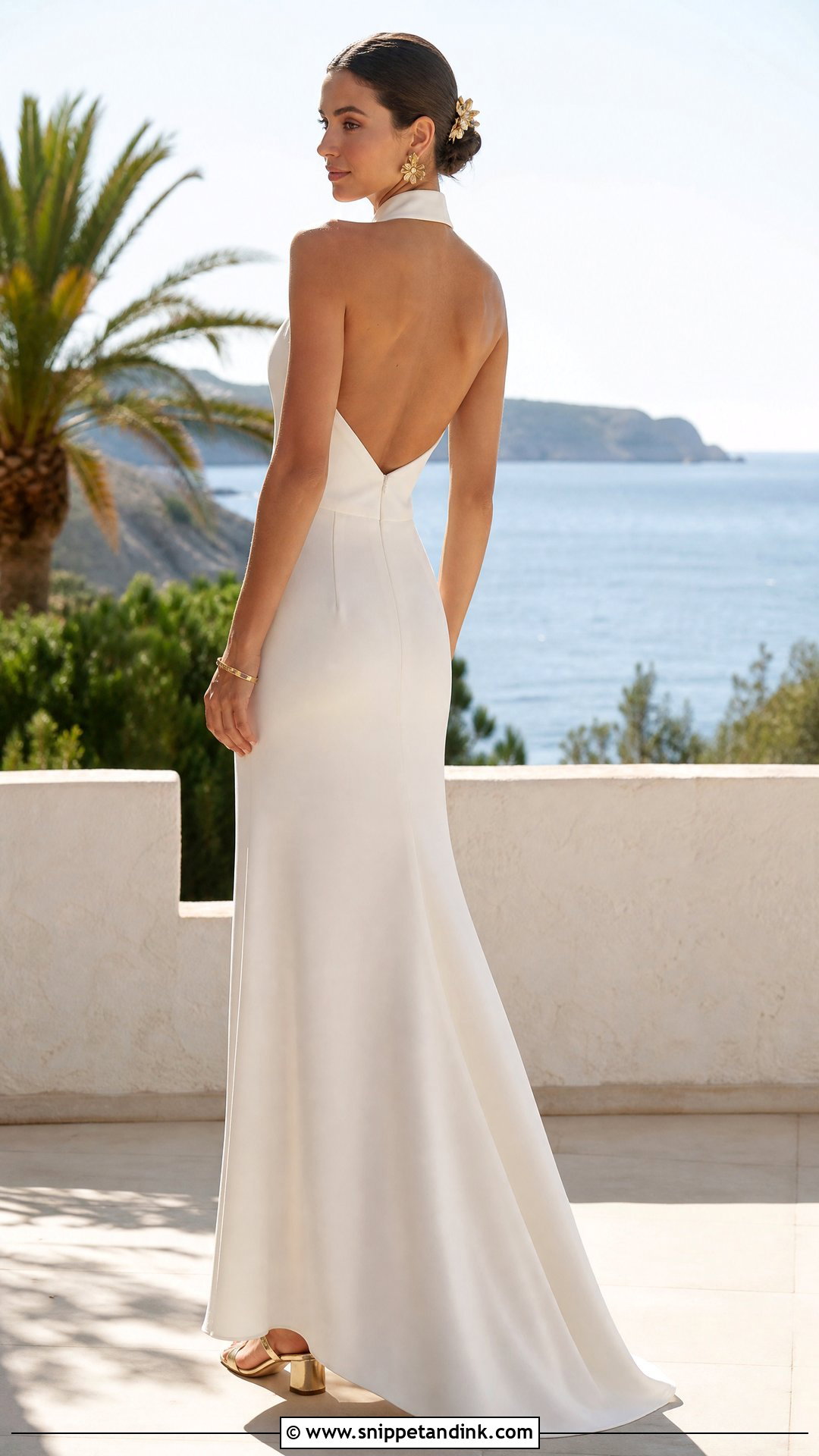
Halters hold up better than spaghetti straps outdoors because the weight hangs from the neck rather than two thin points. Choose light crepe or satin with a fitted bodice, open back and softly flared skirt. The neckline is already the focal point, so skip the necklace and wear small statement earrings with low metallic block heels and a narrow bracelet. Tailoring around the neck is the step people rush: if the halter pulls even slightly at the first fitting, it will ache by the speeches. A fingertip veil under a smooth bun, or a sculptural comb instead, suits coastal terraces and modern desert resorts.
15. Outdoor Wedding High Low Dress
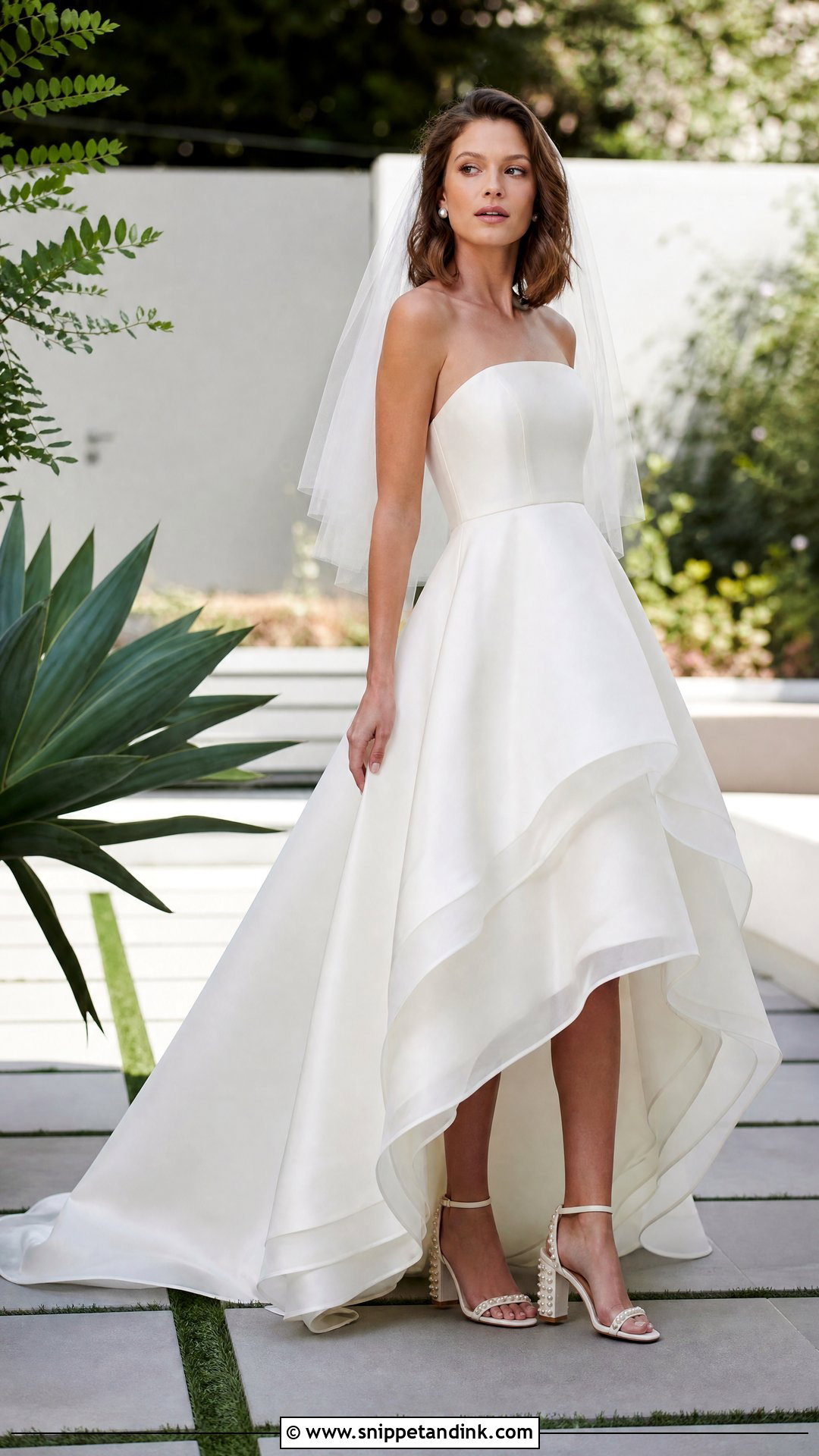
High-low hems keep the front clear of grass, soil and sand while the back still gives you a train for the processional. An organza or mikado skirt that falls near the ankle in front and sweeps to a modest train behind is easy on steps and uneven paths. Your shoes will be seen constantly, so pick ones worth showing: pearl block heels or embellished bridal sandals. Small earrings, a shoulder-length veil and a sleek updo let the asymmetric hem lead. It suits patios, destination venues and stylish backyard ceremonies.
16. Outdoor Wedding Rustic Lace Dress
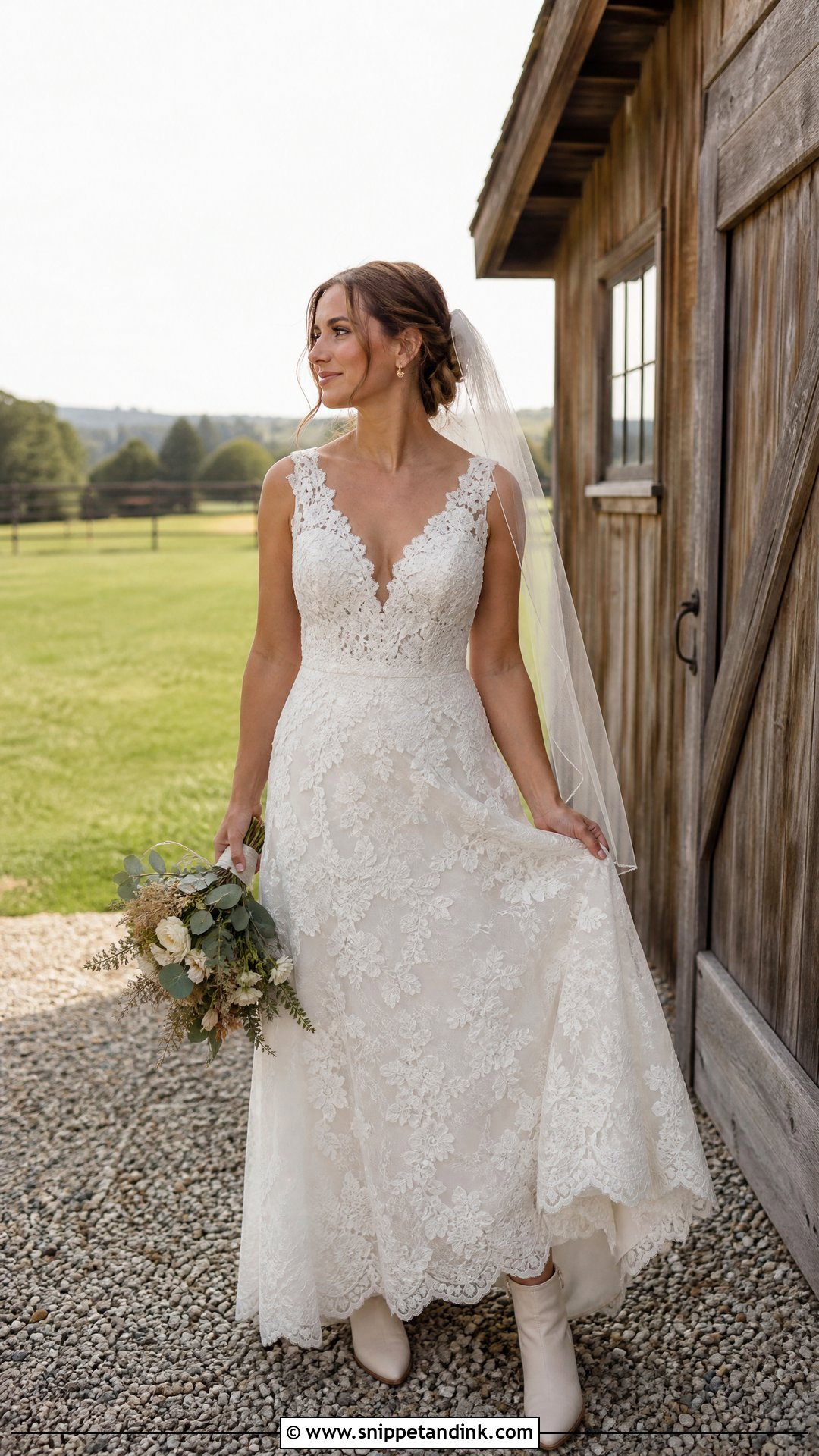
Rustic venues are hard on fabric. Hay, rough wood and gravel snag fine lace, so I’d choose a sturdier botanical or crochet-style lace with scalloped edges and a short sweep train. An A-line or fit-and-flare on a comfortable lining keeps it relaxed without tipping into casual. Ivory ankle boots or low block heels, small gold earrings and a fingertip veil fit barns, farms and ranches. A textured low bun or loose braid stays practical in the open. A denim jacket is fun for a few informal frames; for anything polished, use a tailored ivory wrap.
17. Outdoor Wedding Minimalist A-Line Dress
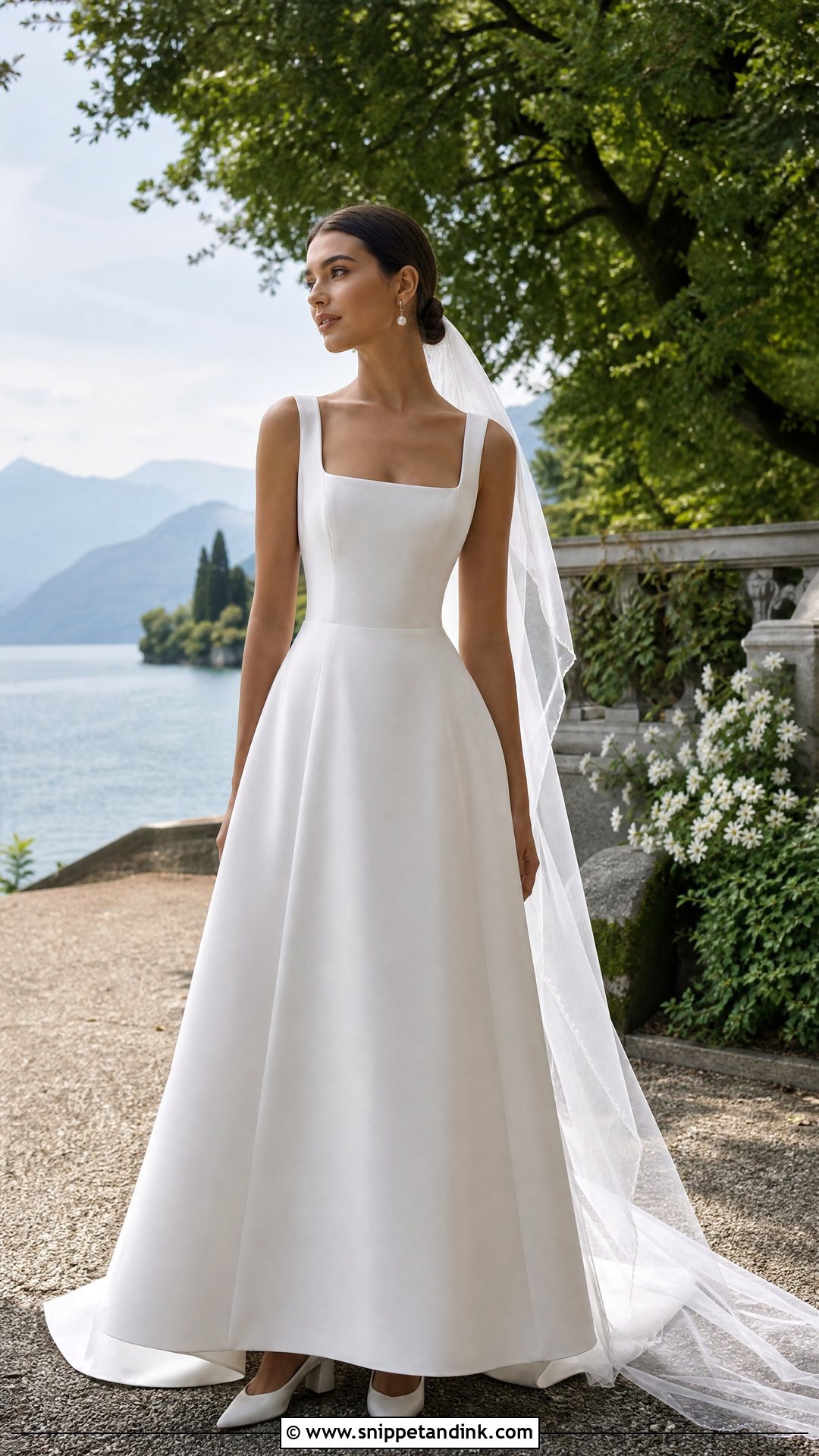
Against a busy backdrop of vines, trees or water, a plain gown often reads strongest. A minimalist A-line in matte satin, crepe or light mikado, with an unembellished skirt, puts the attention on your face. Matte matters here: shiny satin bounces strong sun straight back at the camera. Pearl earrings, pointed block heels and a raw-edge veil keep things quiet, and a low chignon or polished ponytail matches. If it feels too bare, add exactly one detail, such as a back bow, covered buttons or a detachable train.
18. Outdoor Wedding Detachable Overskirt Dress
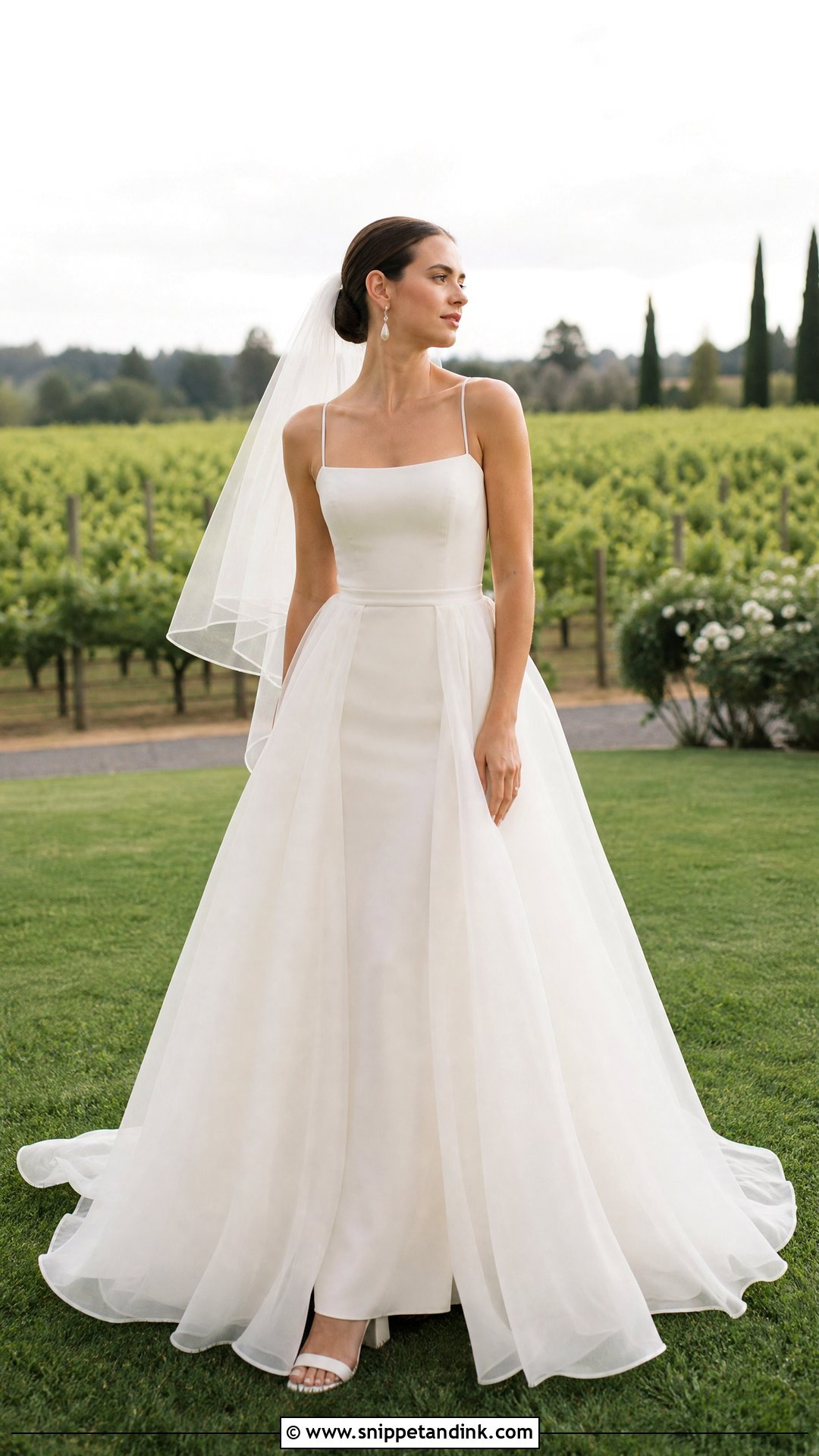
This is the gown I recommend most for long outdoor days. A fitted crepe column or sheath underneath lets you dance; a lightweight organza or tulle overskirt on top gives the processional its volume. The attachment point is what I test hardest: it should sit flat at the waist with no ridge, and your attendant should be able to unfasten it in under a minute. Pair it with low block heels, drop earrings and a fingertip veil, then swap the veil for a decorative comb after portraits. A sleek bun ties both versions together.
19. Outdoor Wedding Cape Dress
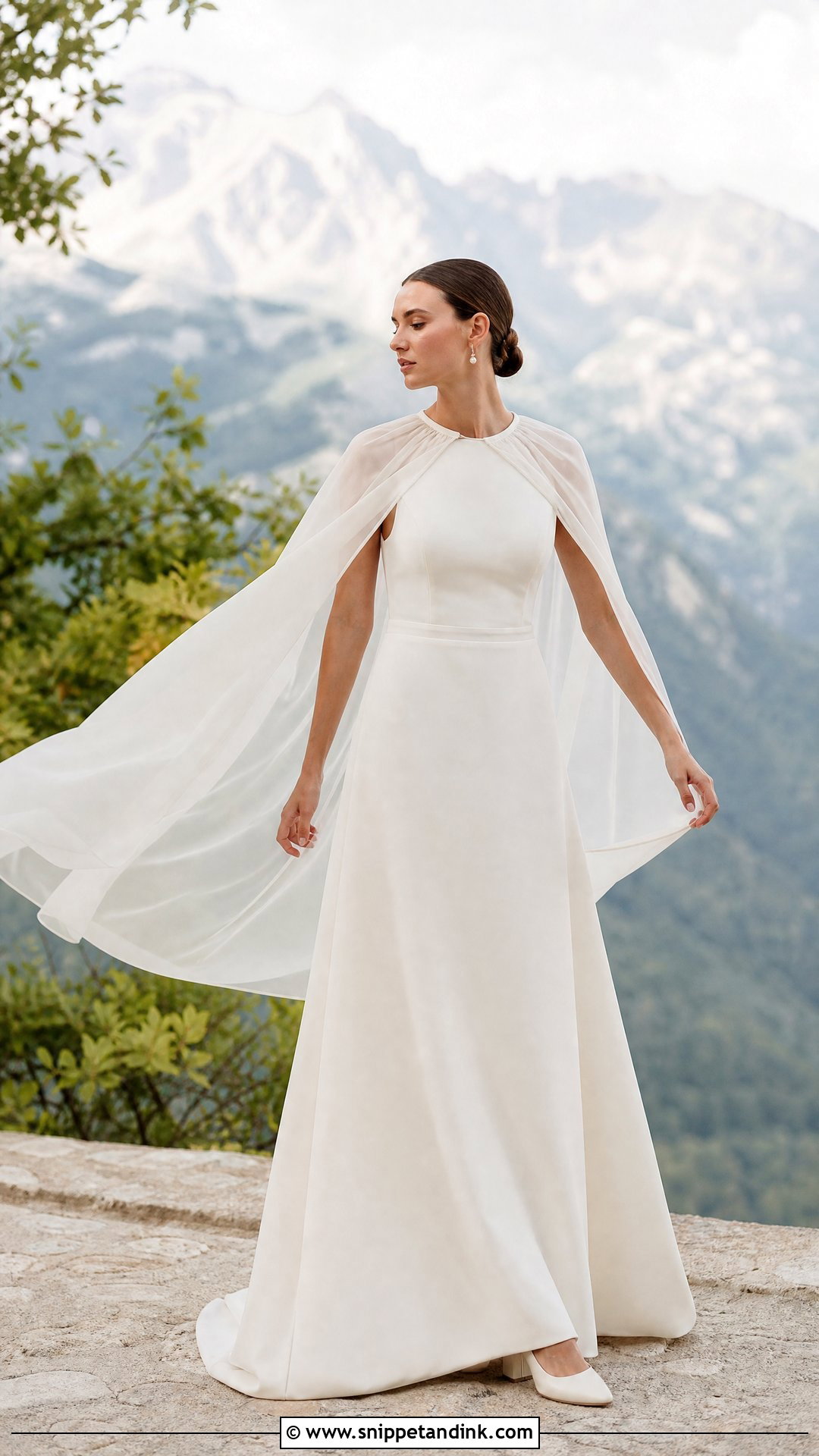
A cape gives coverage and movement and can replace the veil entirely. Over a simple crepe column or A-line, a light chiffon cape attached at the shoulders floats nicely; in cool weather, a structured satin or wool capelet is warmer. Never combine a long cape with a long veil outdoors, because two sheer layers in wind wrap around each other and around you. Closed block heels, pearl earrings and a sleek low bun keep it clean. A hidden wrist loop lets you gather the cape between photos on a mountain overlook or breezy terrace.
20. Outdoor Wedding Colored Floral Dress
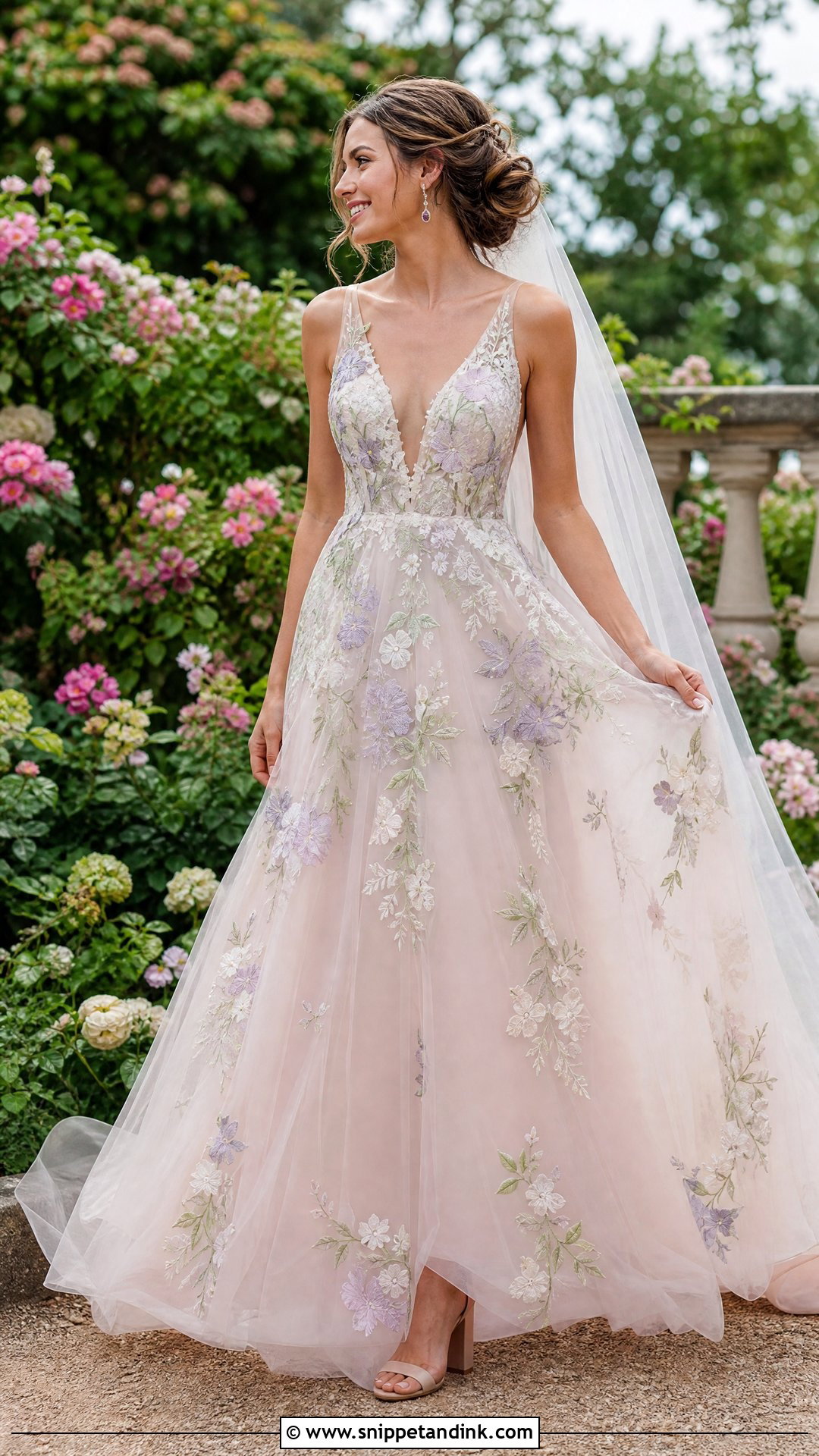
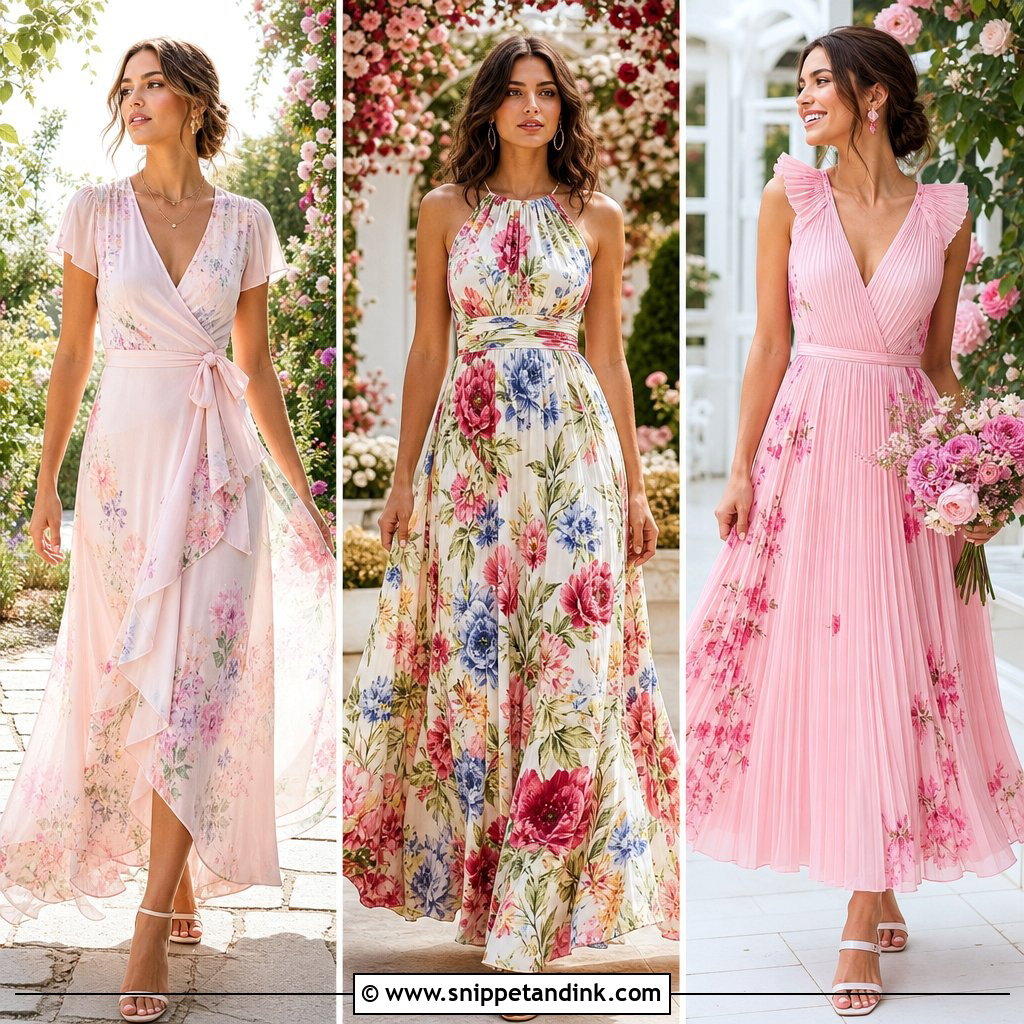
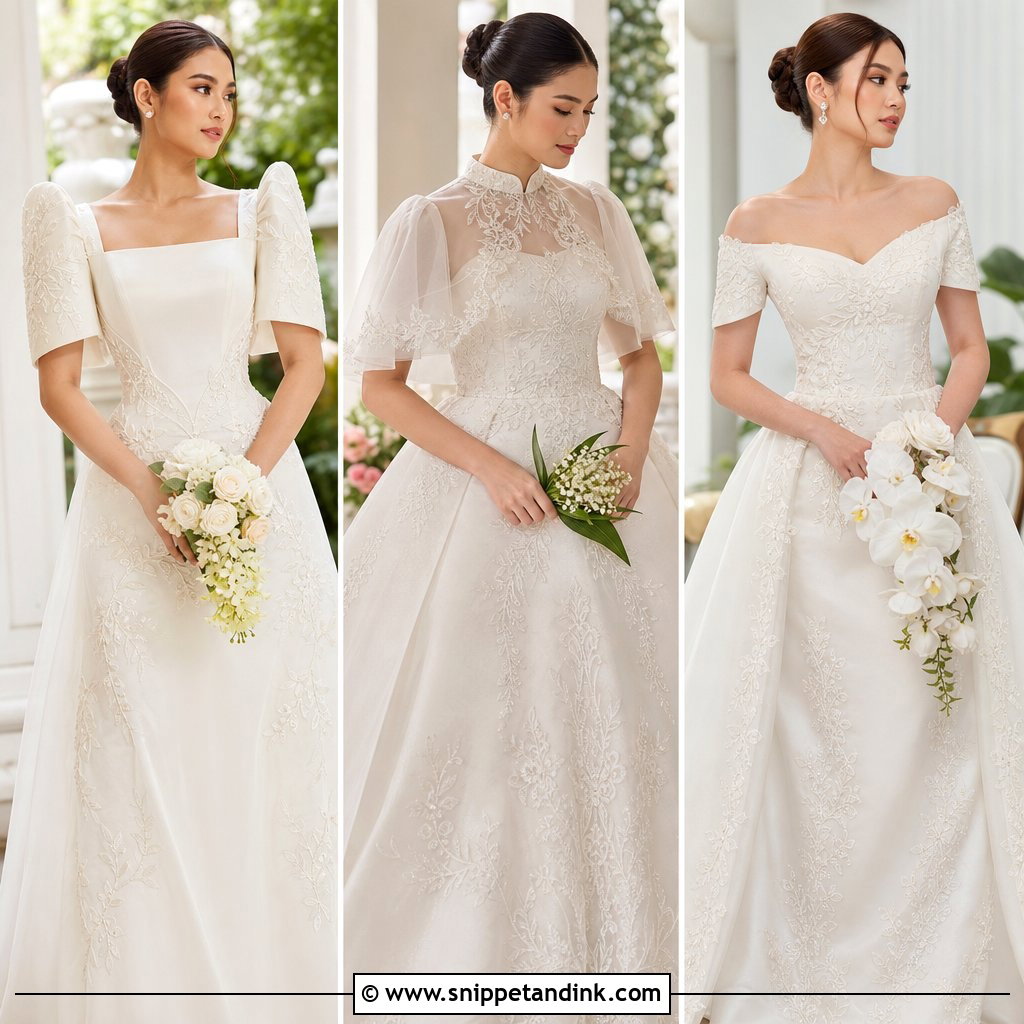
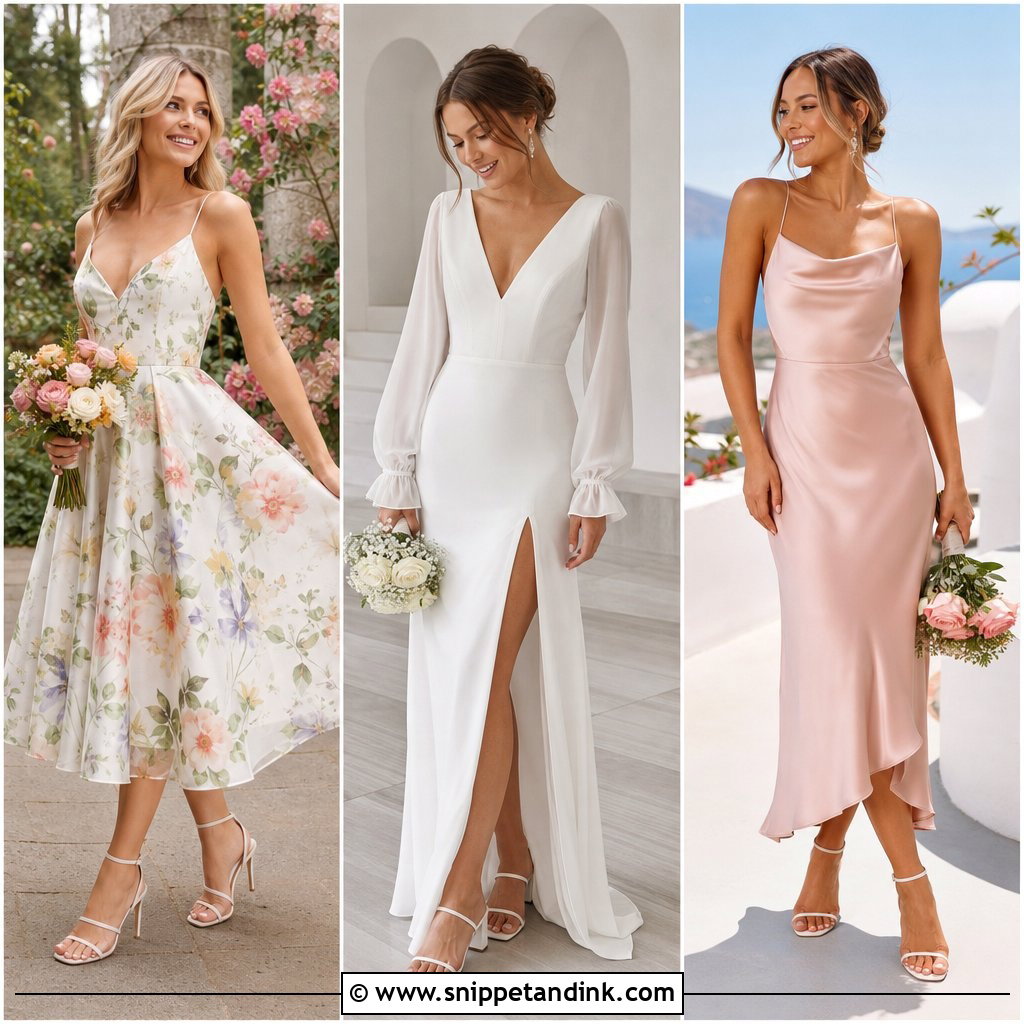
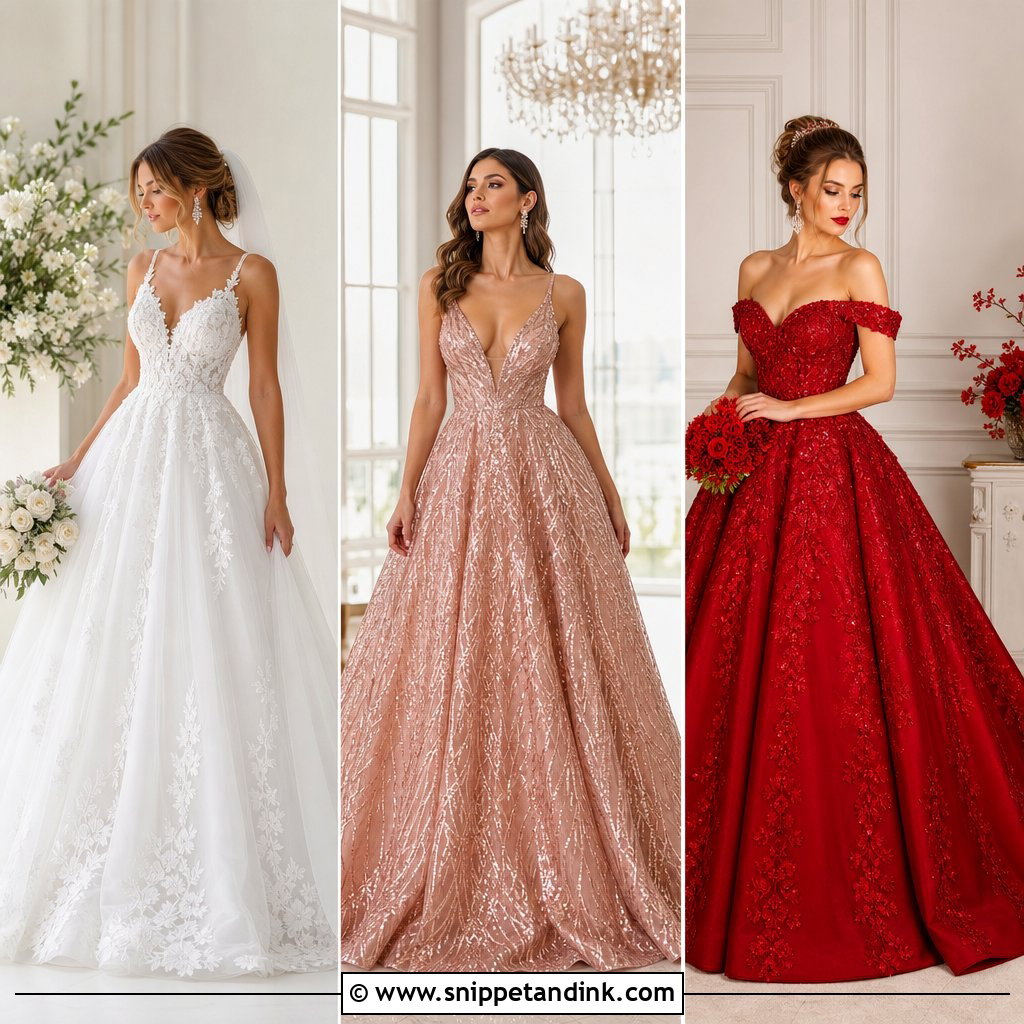
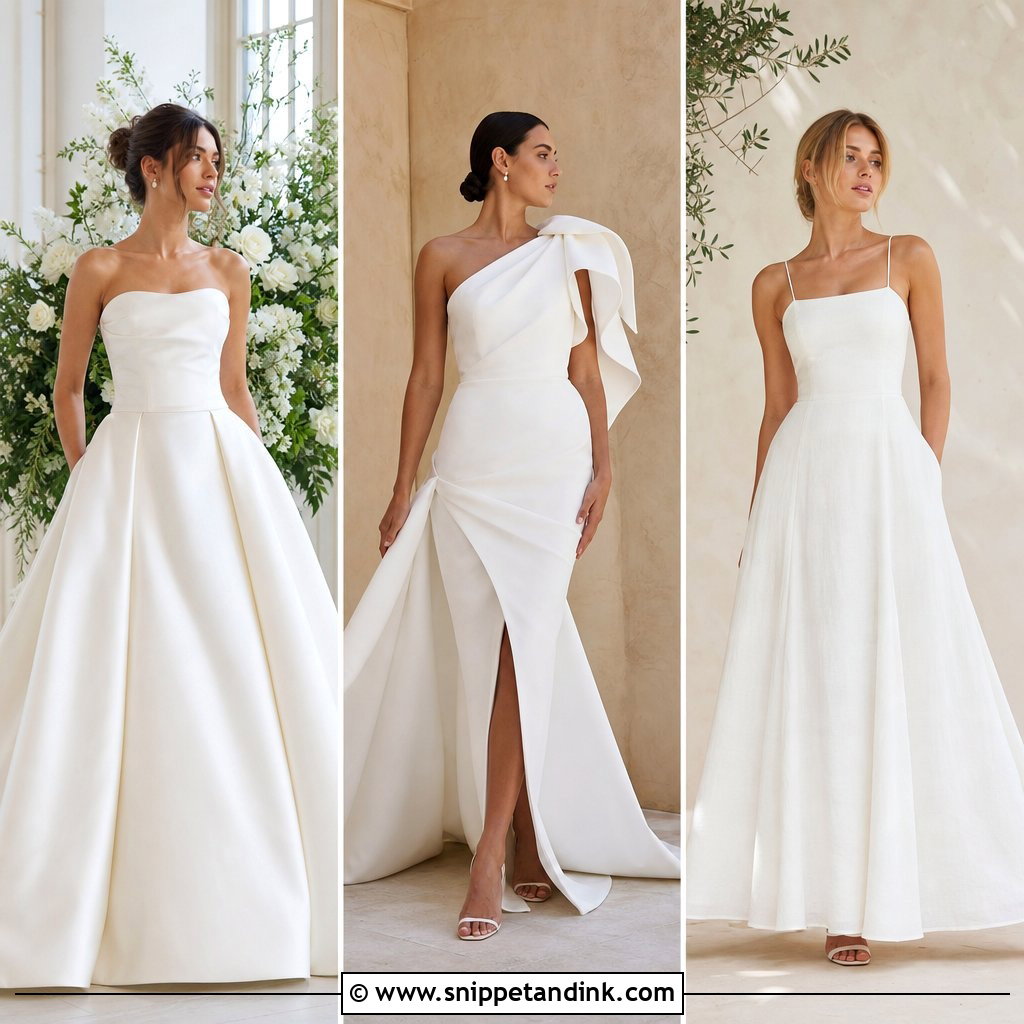
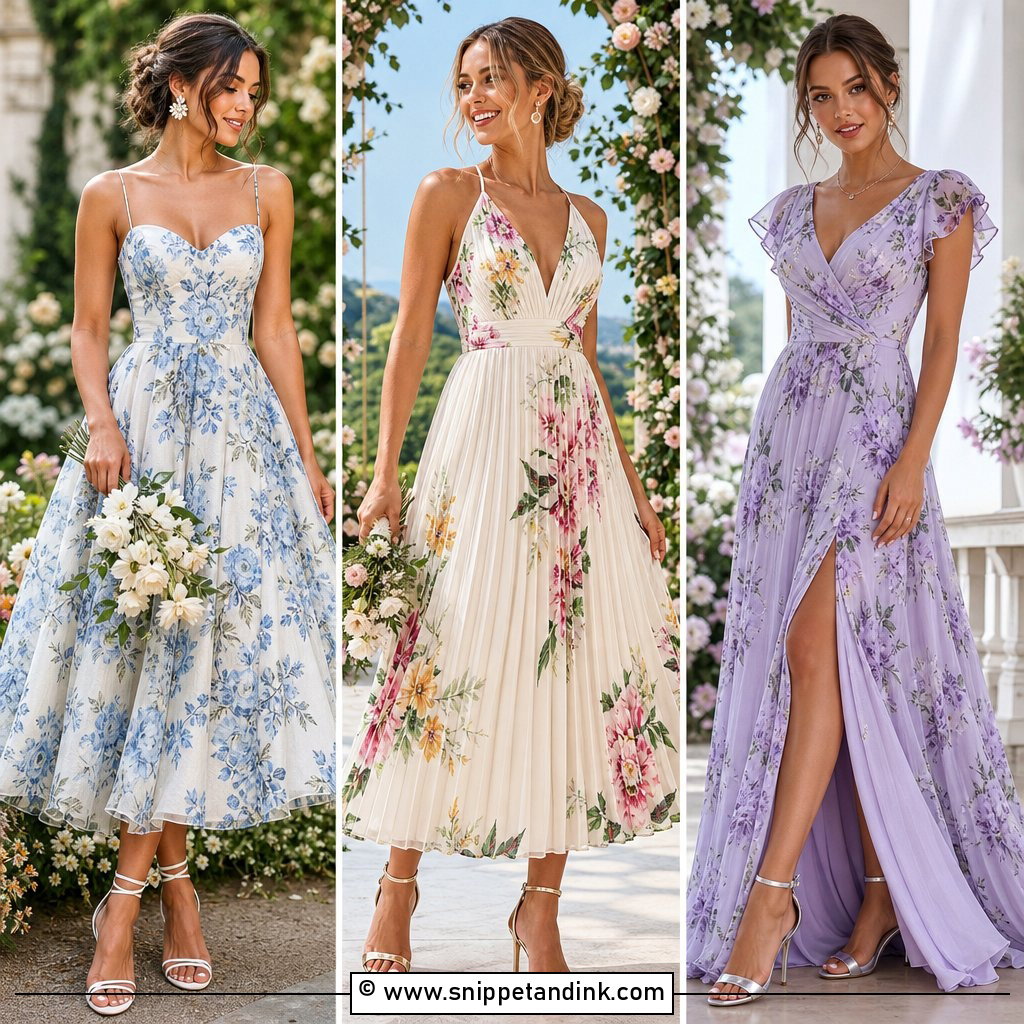
Colored gowns are where I see brides get happiest, and where bouquets most often go wrong. A blush, pale blue, lavender or champagne base with embroidered flowers needs an A-line so the motifs have room. Pick bouquet flowers that repeat one or two shades from the embroidery, not all of them; matching everything flattens the gown in photos. Neutral block heels, small gemstone earrings and a plain sheer veil let the colour show through, and a relaxed updo with one floral pin is enough. Daylight in a flower-filled garden shows these colours truer than any indoor light.
21. Outdoor Wedding Short Dress
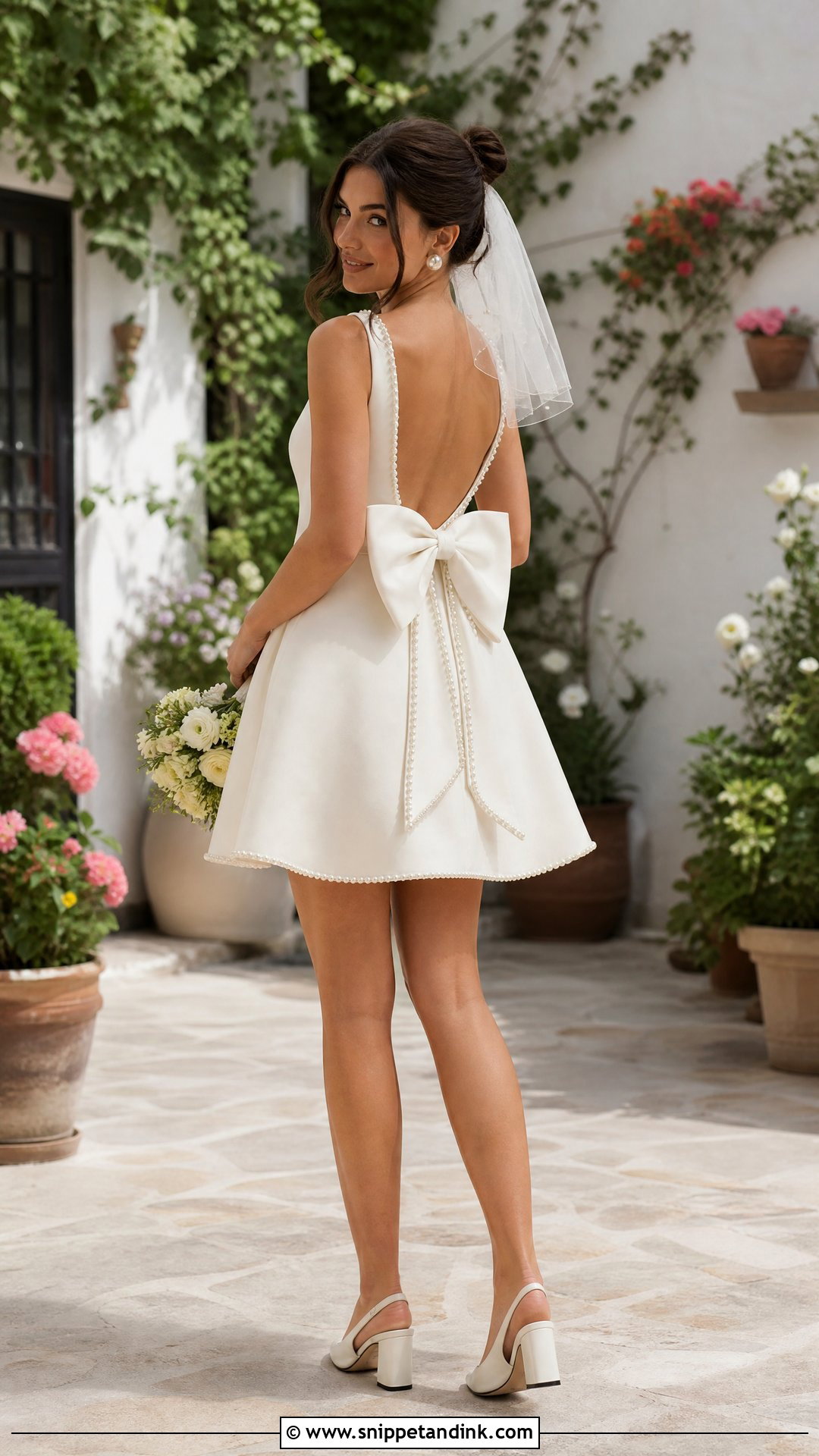
Short wedding dresses need one strong bridal detail or they read as a party frock. A knee-length or mini A-line with a structured bodice, pearl trim, appliqués or a bold bow fixes that. Low slingbacks, embellished flats or bridal ankle boots all suit a courthouse garden or intimate destination ceremony. Add pearl earrings and a short veil, and wear a smooth ponytail, bun or waved bob. For a very short skirt outdoors, I always suggest fitted shorts underneath; one gust on a hillside is enough reason. It doubles as a reception or farewell outfit too.
22. Outdoor Wedding Fit And Flare Dress
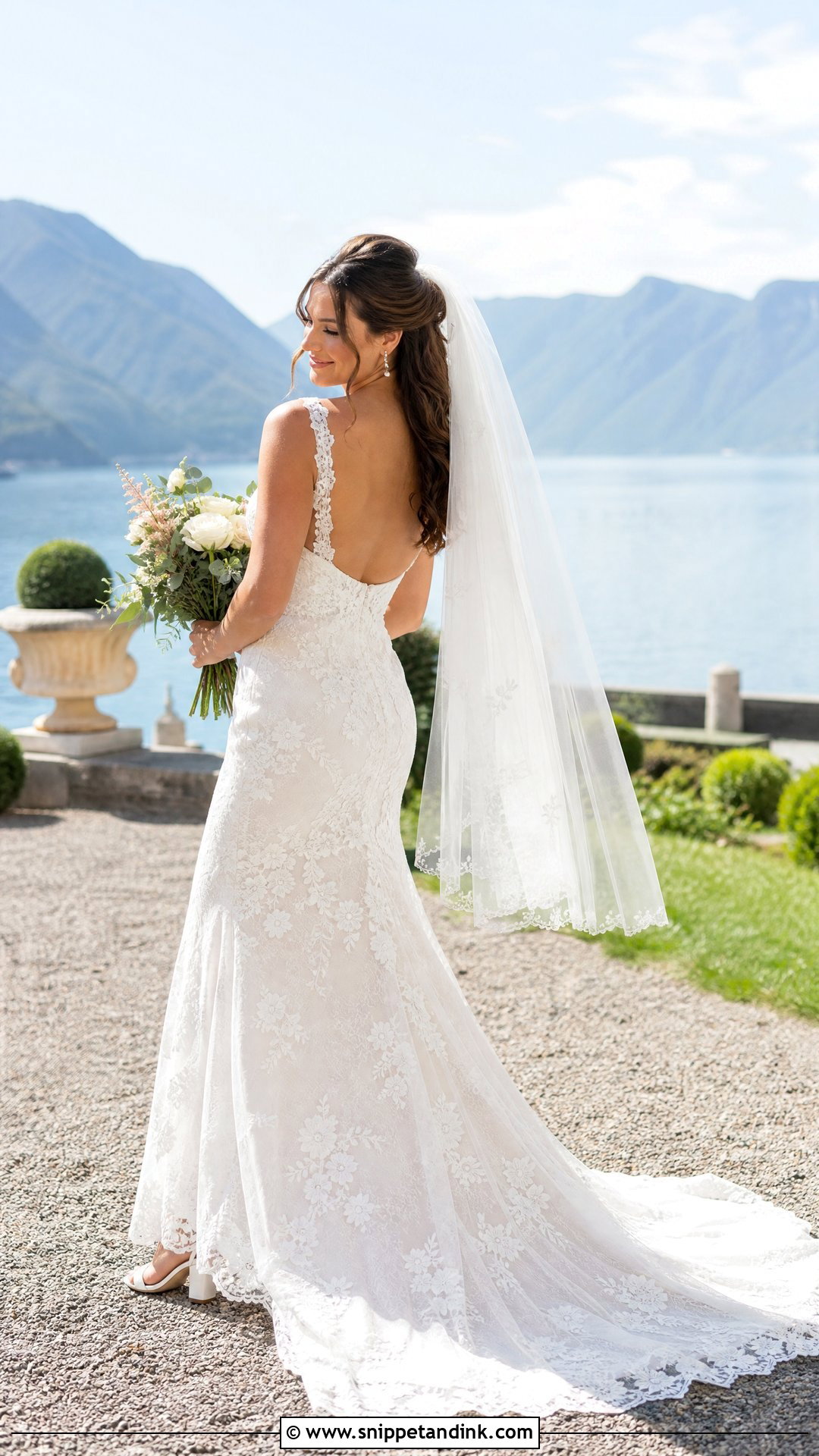
Fit-and-flare shapes the waist and hips, then opens wider and earlier than a mermaid, so you can actually walk. Flexible crepe, stretch lace or light tulle over a comfortable lining with a small train keeps it wearable outside. At fittings, I make brides sit, climb a step and take long strides; if the flare starts too low, you’ll know in seconds. Sturdy block heels, drop earrings and a veil set below a half-up style complete it. A defined bustle is essential when the reception sits on grass or stone, at a vineyard or lakeside estate.
23. Outdoor Wedding One Shoulder Dress
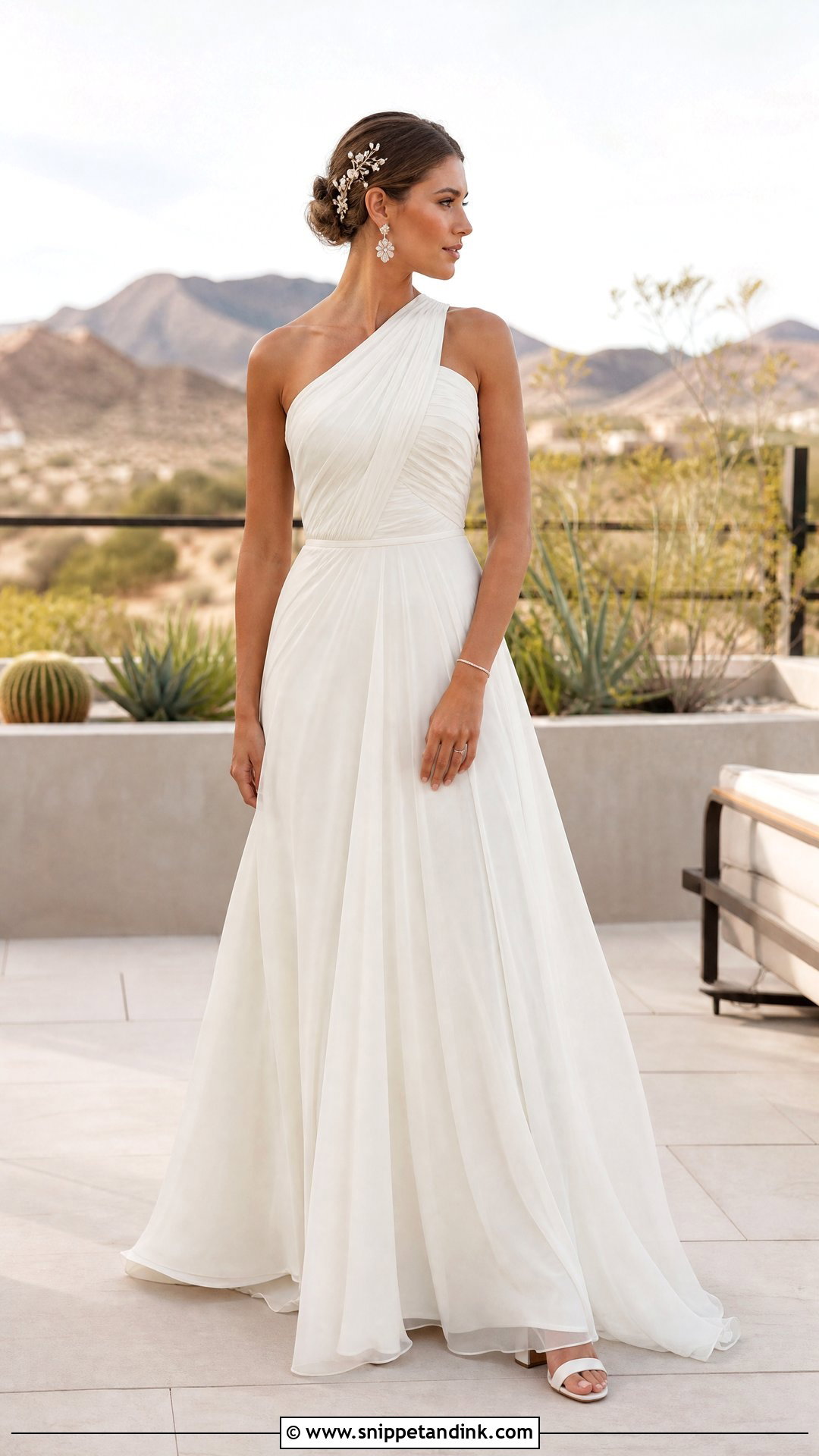
One-shoulder gowns need the internal bodice to do all the holding, so check that the strap isn’t carrying weight on its own. A draped chiffon or crepe design with a softly flowing A-line skirt keeps the asymmetry graceful. I’d wear one statement earring on the bare side, a slim bracelet and low block-heel sandals, with a side-swept bun or low chignon to keep the shoulder clear. A veil can sit under the style, though a decorative comb often balances the line better. Keep the train short for beach terraces, garden resorts and relaxed destination weddings.
24. Outdoor Wedding Bridal Jumpsuit
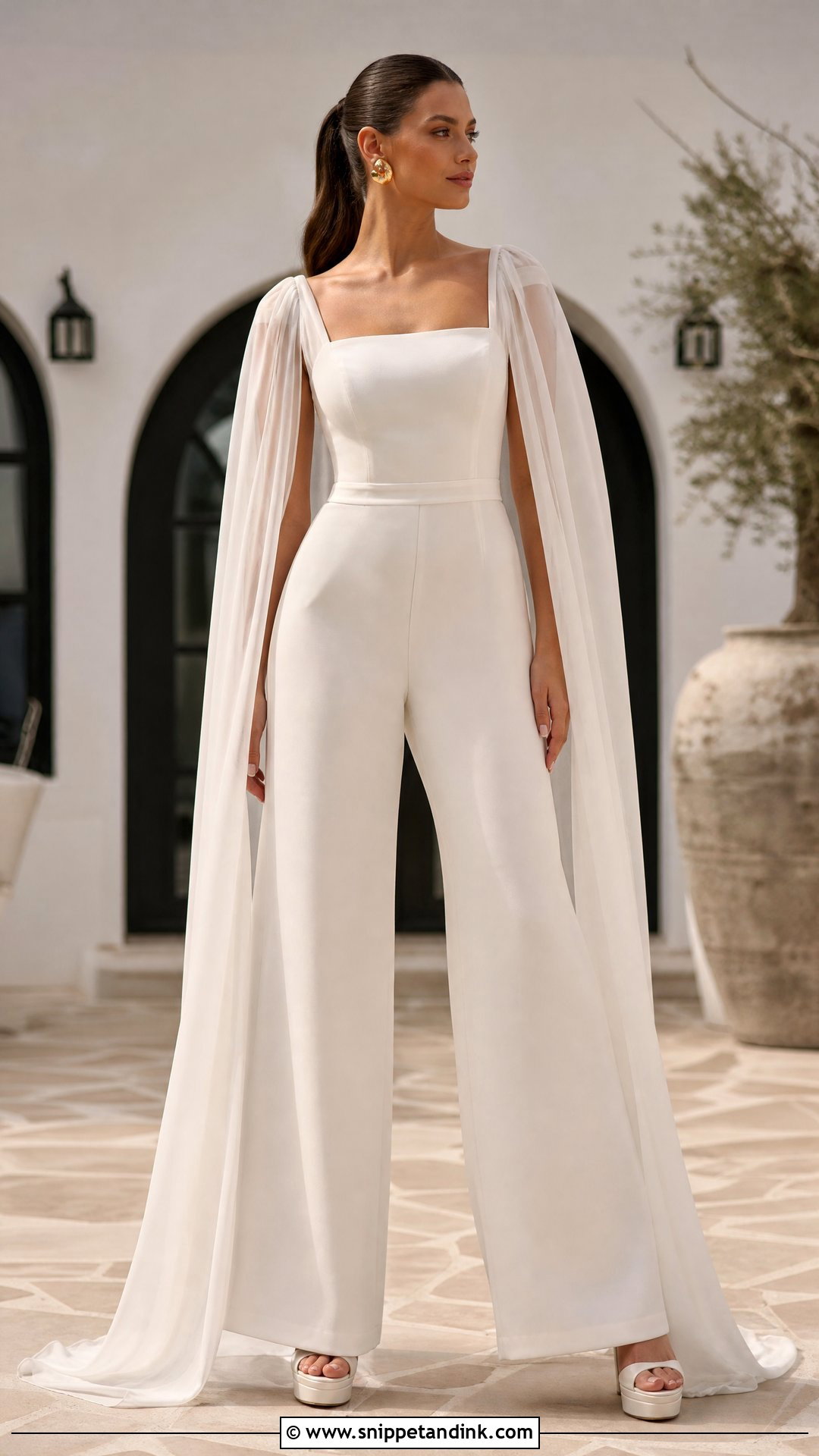
A jumpsuit gives you freedom that no skirt can match on a casual outdoor day. Look for a tailored ivory design with a defined waist, wide-leg pants and a structured square, V or halter bodice. Crepe is smooth and moves better than stiff suiting. Hem length is the fitting detail people underestimate: hem it to the exact shoes, and on grass, a fraction shorter so the legs don’t drag. Platform sandals or block heels, sculptural earrings and a compact bouquet finish it, and a detachable overskirt, cape or shoulder veil adds ceremony before you strip it back for dancing.
25. Outdoor Wedding Two Piece Dress
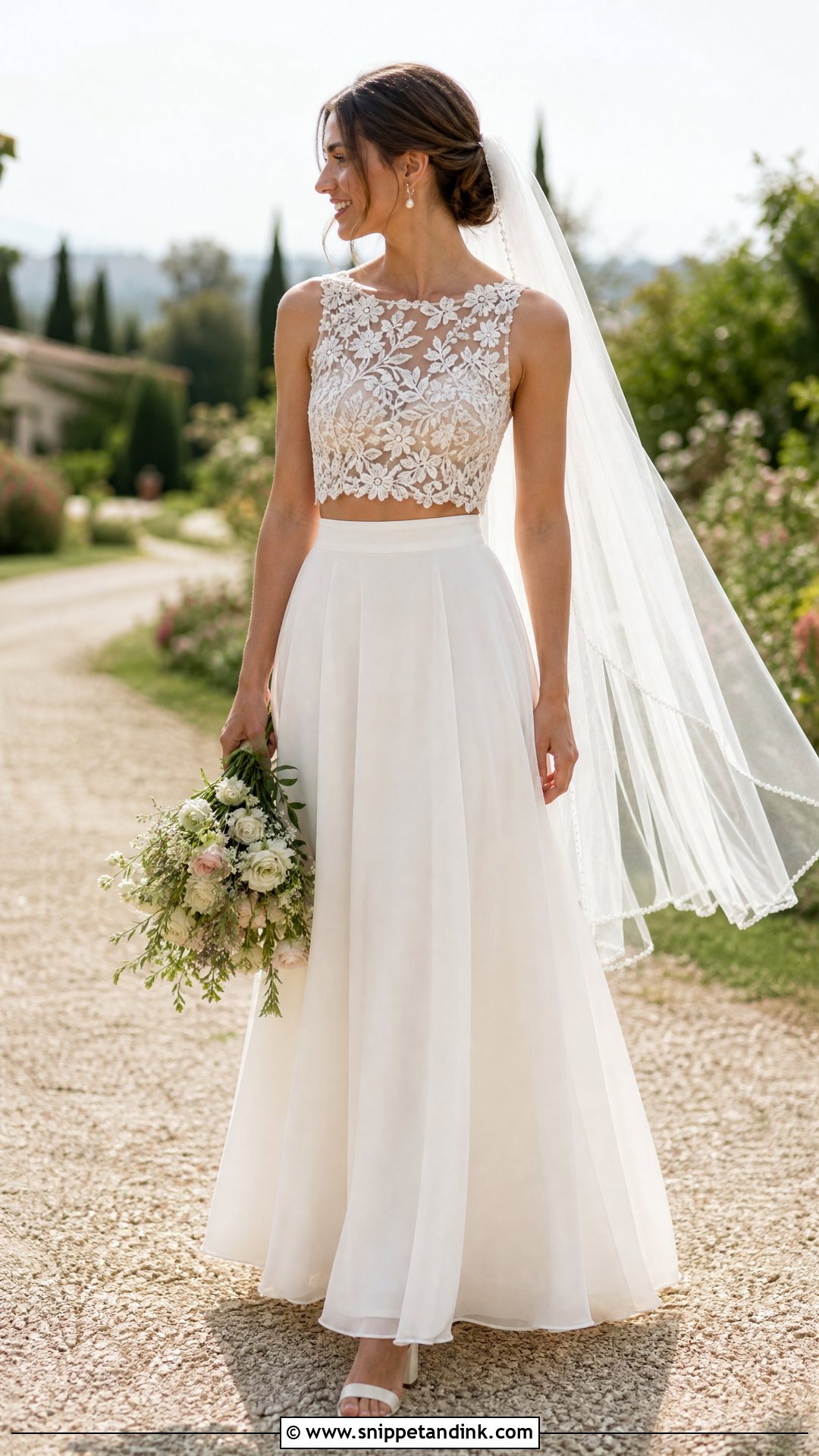
Separates let a seamstress fit top and skirt to different sizes, which a one-piece gown can’t always manage. A fitted lace top with a flowing chiffon or crepe skirt suits a garden; a smooth cropped bodice over a high-waisted satin skirt reads cleaner. Keep the midriff mostly covered for a formal ceremony. My standing test for two-pieces is to raise both arms and sit down: if the waistband gaps or the top rides up, the closures need work. Block heels, pearl earrings, a fingertip veil and a soft updo pull the pieces together for backyard, beach or vineyard weddings.
Grass Stains, Wet Sand and a Hem That Has Walked All Day
Every outdoor gown comes back marked at the hem, and that’s fine. What matters is how you handle it on the day and in the week after.
- Pack a small kit for your attendant: white chalk for light marks on matte fabric, a lint roller, safety pins, fashion tape and a clean white cloth. Skip stain pens on silk or satin; they often leave a ring.
- Blot, never rub. Rubbing pushes grass and mud deeper into the weave and roughs up the surface of satin.
- Shake sand out of tulle and chiffon outdoors before the gown goes into its bag, then hang it rather than folding it.
- Get the dress to a specialist bridal cleaner within a few weeks. Grass, soil and invisible sugar from drinks oxidize over time and turn into yellow-brown marks that are much harder to lift later.
- Store it in a breathable cotton bag or acid-free box, away from plastic and damp attics.
Bring Your Real Shoes to Every Fitting
Hem length is set to the shoes you wear at the fitting, so if you switch from heels to flats for a lawn, the gown will suddenly drag. I ask brides to choose outdoor footwear before the first alteration appointment. Block heels, wedges and flat sandals are kind to grass; heel protectors that slip over a stiletto help on lawns too.
At the final fitting, walk on something uneven if you can, even a doormat or a step. Sit, stand, lift your arms and turn quickly. Then have whoever will bustle the gown practice it twice while you watch. Bustles fail on the day because the person doing them has never seen the loops before, not because the stitching is weak.
An Outdoor Gown Is Only as Good as Its Hem
A dress that suits an outdoor wedding lets you move, sit, walk on whatever ground the venue has and stay comfortable through a temperature swing. The gowns above range from romantic lace and bohemian sleeves to minimalist crepe, colour and a jumpsuit, so there is something for most bodies and settings. Before you commit, check the likely temperature, the ground, the wind and how far apart the ceremony and reception sit. Then wear the entire outfit together at a final fitting, veil, jewelry, layer and shoes included. If it works in a fitting room with the window open, it will work on the lawn.
You'll Like These Ideas:



Leave a Reply