
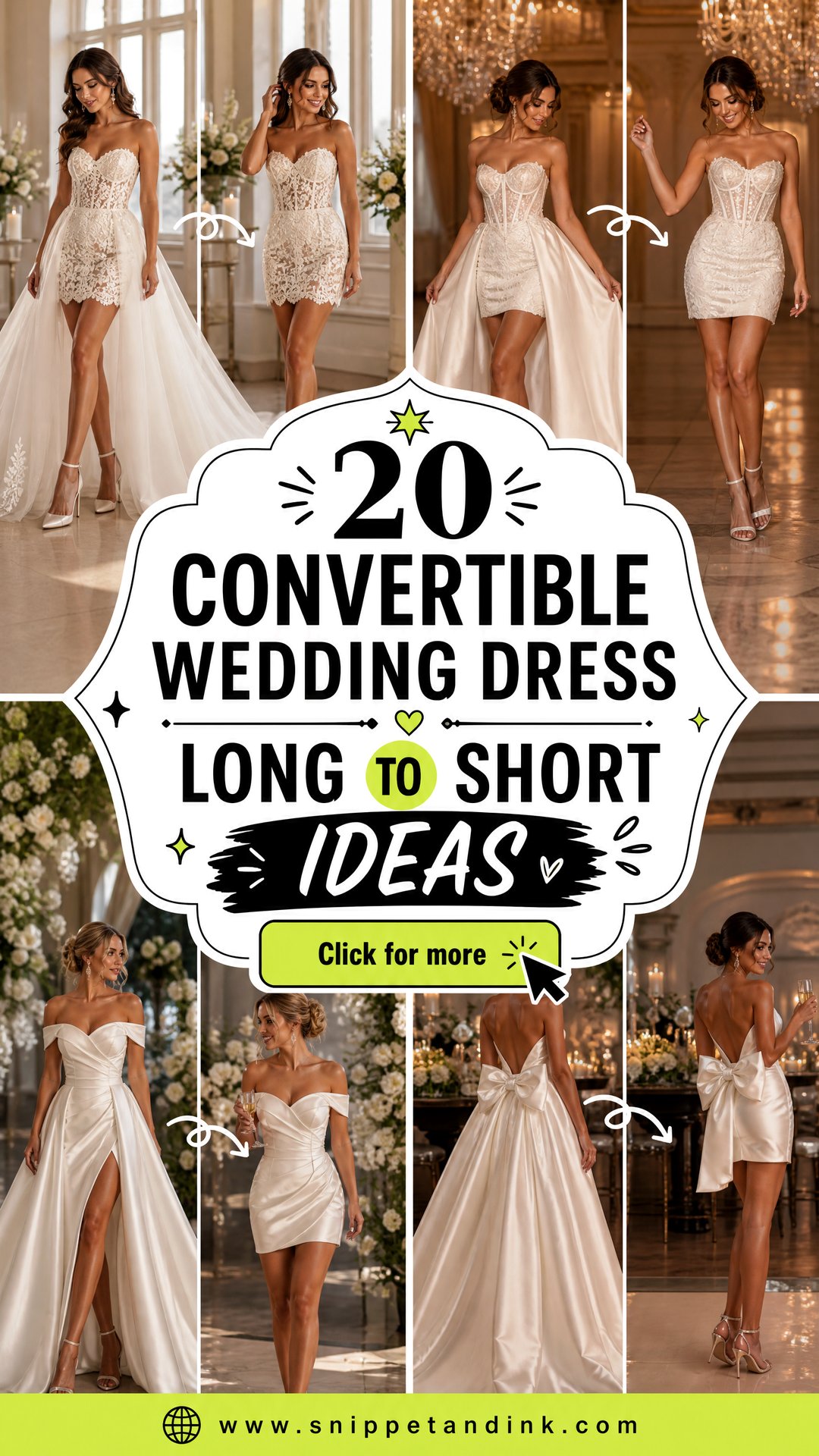
Convertible dresses let you walk down the aisle in a long skirt and dance in a short one, without a full change. The short dress, whether mini, midi or tea length, sits underneath a removable overskirt, train, or layered gown, and detachable sleeves and capes add further options. In my fittings, the brides who end up happiest are the ones who chose the short dress first. That’s the version you’ll wear longest, so it has to look finished on its own and fit securely enough to dance in. Shoes matter more than usual too, since they’re on show after the change. The designs below cover clean satin, lace and beaded versions.
Hooks, Snaps or a Zip Under the Waistband?
The fastening system decides how quickly and quietly your change happens, and it’s worth asking about before you buy. Each method behaves differently, and I’d talk it through with the seamstress at the first fitting.
- Hooks and bars: the most common choice. Secure and flat, but a row of small hooks takes a minute or two to undo, and someone else has to do it.
- Snaps: fast to release, but they can pop open under the weight of a heavy satin skirt. Better on chiffon and tulle overskirts.
- Buttons and loops: can be a decorative feature, though slow to undo. Good when the fastening sits under a bow or drape.
- Concealed zips: used for zip-away skirts. Smooth when done well, but they need expert fitting so they don’t rub or show a ridge.
Whichever you choose, the overskirt’s waistband should be slightly larger than the base dress waist so it doesn’t squeeze. I also ask for a small tab or loop at the opening so a helper can find it quickly without fumbling at the back of the dress.
1. Satin Mini Convertible Wedding Dress With Ball Gown Overskirt
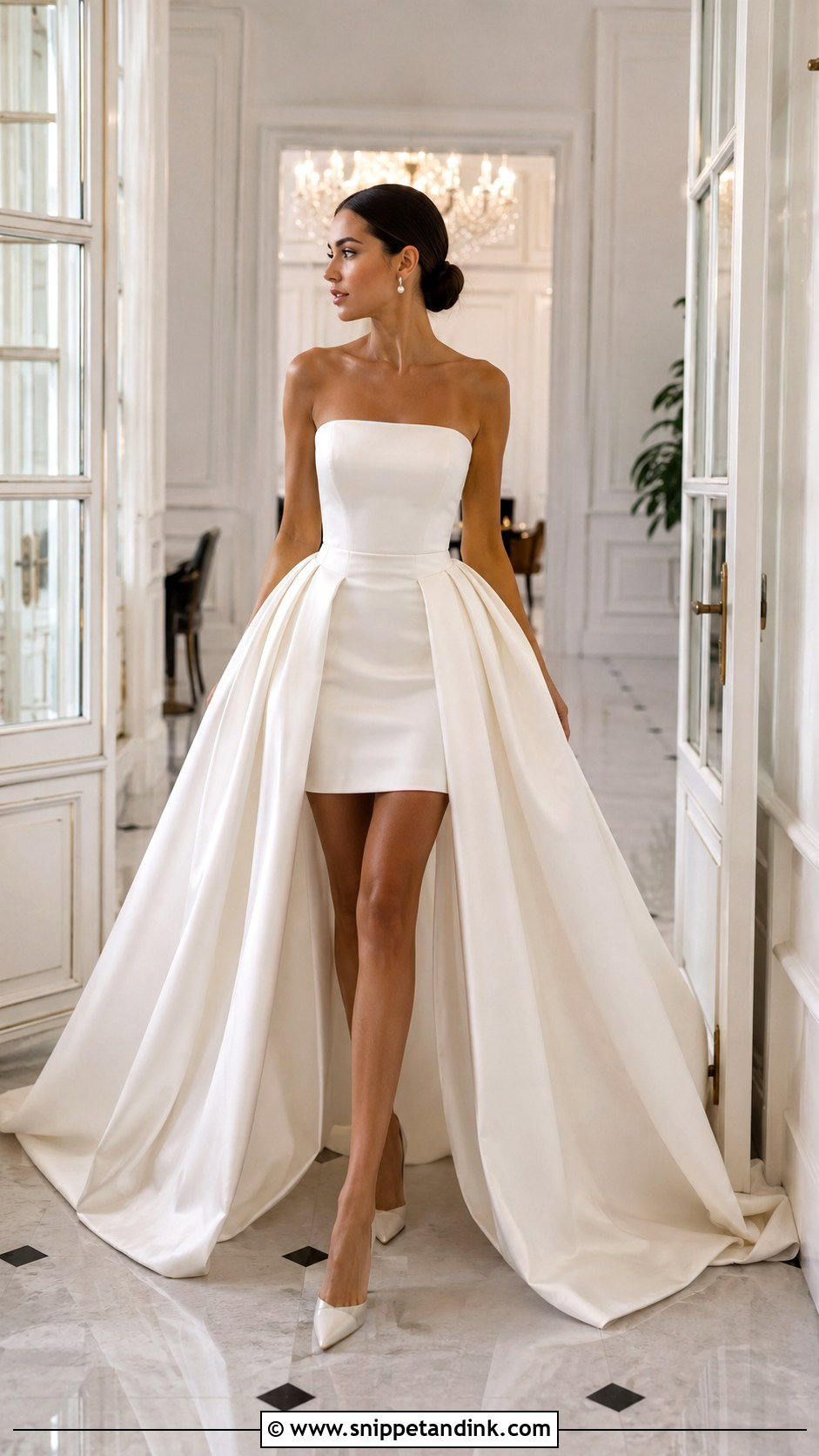
Structured satin is the most reliable base for a big reveal because it holds its shape when the weight of a skirt comes off. A strapless mini with a fitted bodice and defined waist sits under a full ball gown overskirt, often box-pleated with a sweeping train. The waistband is where these go wrong. If the overskirt band sits on top of the mini’s waist seam, you get a thick ridge, so I ask for the overskirt to sit fractionally above or below it. Hidden hooks should release easily for whoever helps you. Pointed ivory pumps, pearl drops and a sleek low bun keep both versions sharp in a ballroom or hotel.
2. Lace Mini Convertible Wedding Dress With Tulle Overskirt
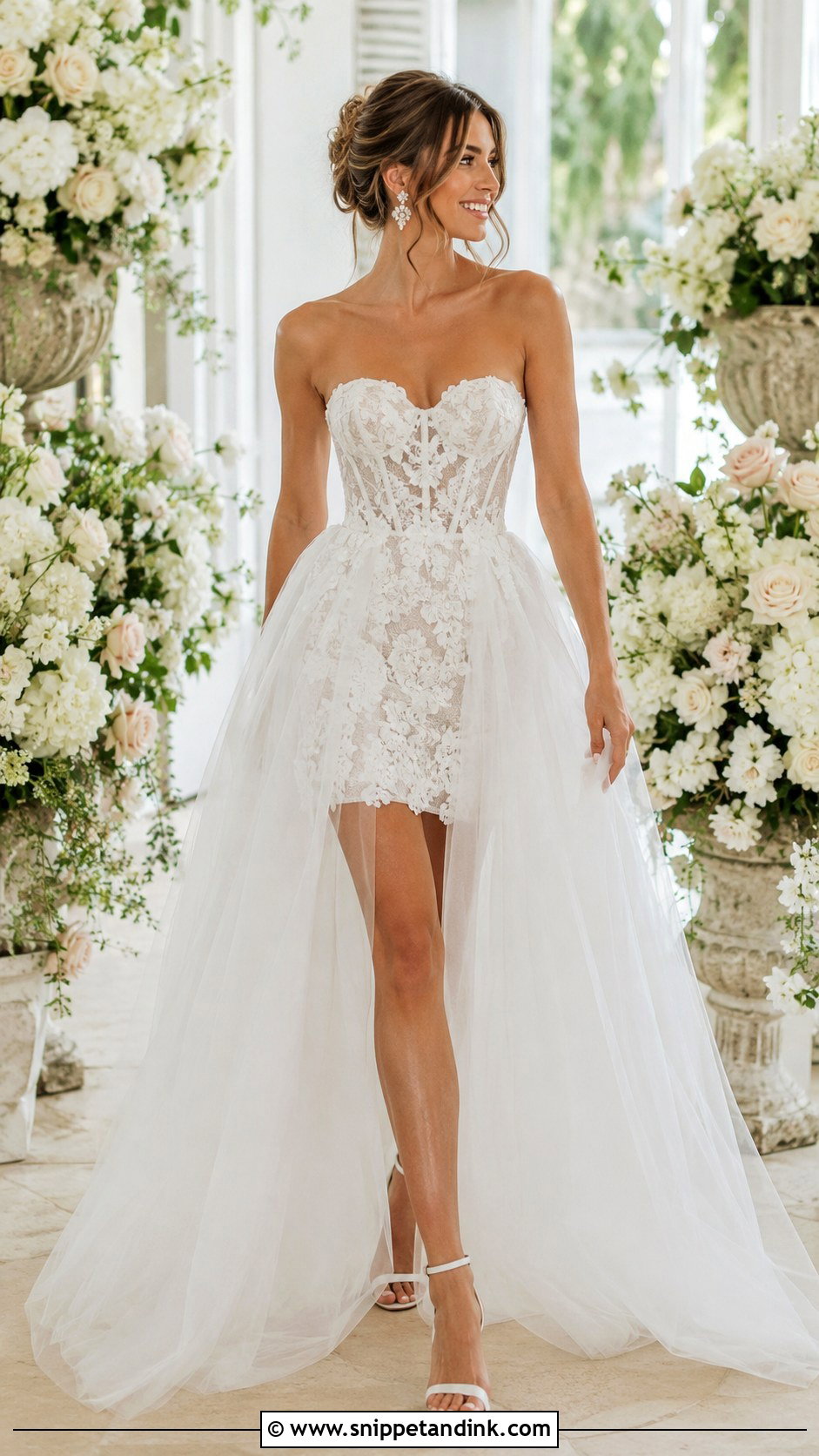
Lace and tulle carry the same romance from ceremony to reception. A fitted lace mini with a sweetheart neckline and supportive boned bodice sits under a floor-length tulle overskirt edged at the waist and hem with matching appliqués. The detail I fuss over is motif alignment: if the lace flowers on the skirt don’t line up with those on the bodice, the join is obvious. A lightly structured tulle skirt is far easier to remove and pack than a very full one with many heavy layers. Ankle-strap heels, small crystal earrings and a loose updo suit it.
3. Corset Mini Convertible Wedding Dress With Detachable Train
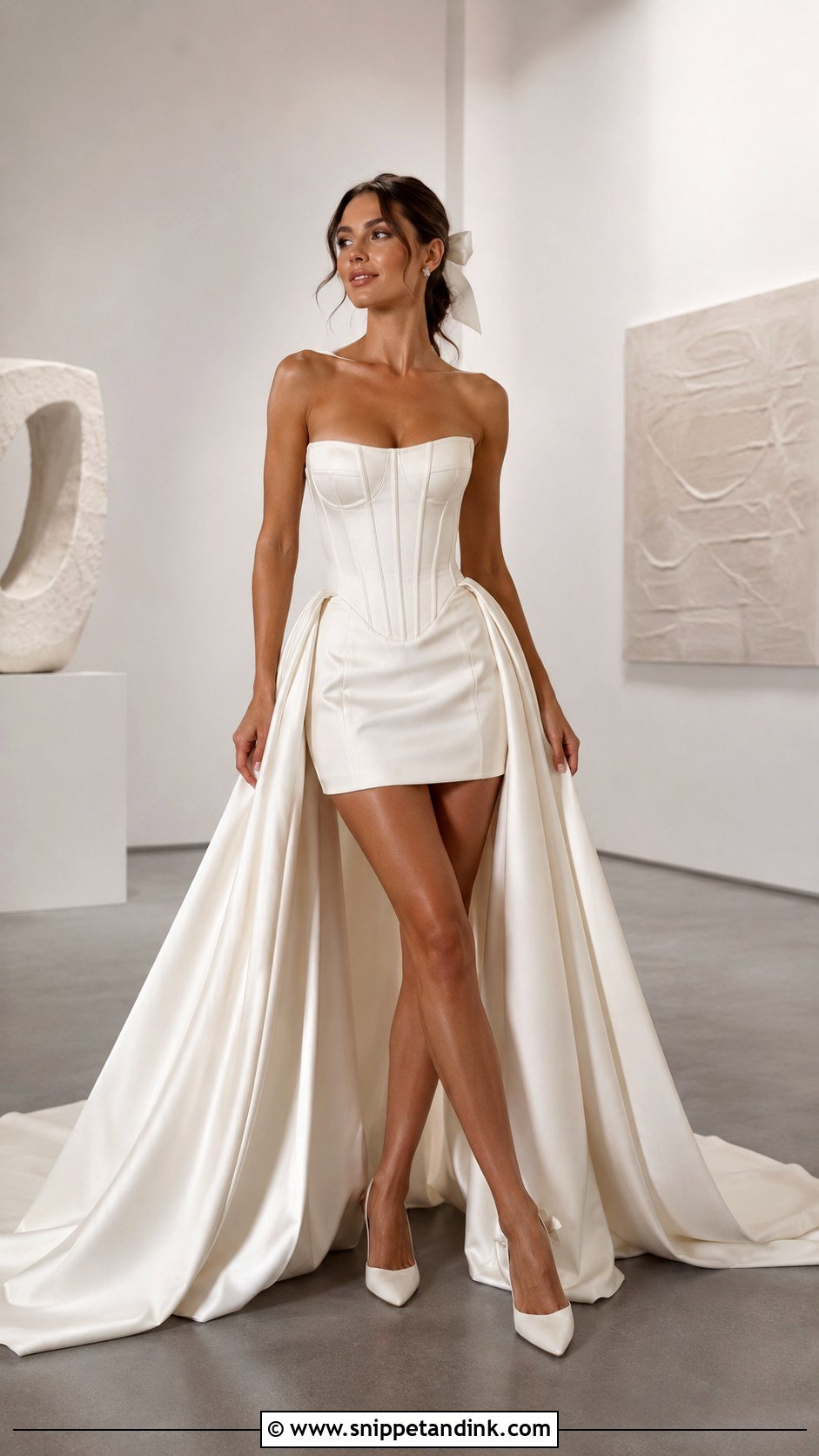
A wraparound train over a corset mini gives you a dramatic back view for the ceremony and a sharp short silhouette afterward. Look for a bodice with well-placed boning, a slightly dropped waist and a straight or softly curved neckline. The wrap should extend into a cathedral train while leaving the corset smooth underneath. A plain veil, pointed slingbacks and small studs suit the ceremony; swap in bold earrings or a satin bow later. Corsets fitted for a short dress are sometimes laced tighter than gowns, so make sure you can breathe deeply and sit comfortably. Ask for attachments hidden under seams or fabric-covered buttons.
4. Long Sleeve Convertible Wedding Dress With Sheer Overskirt
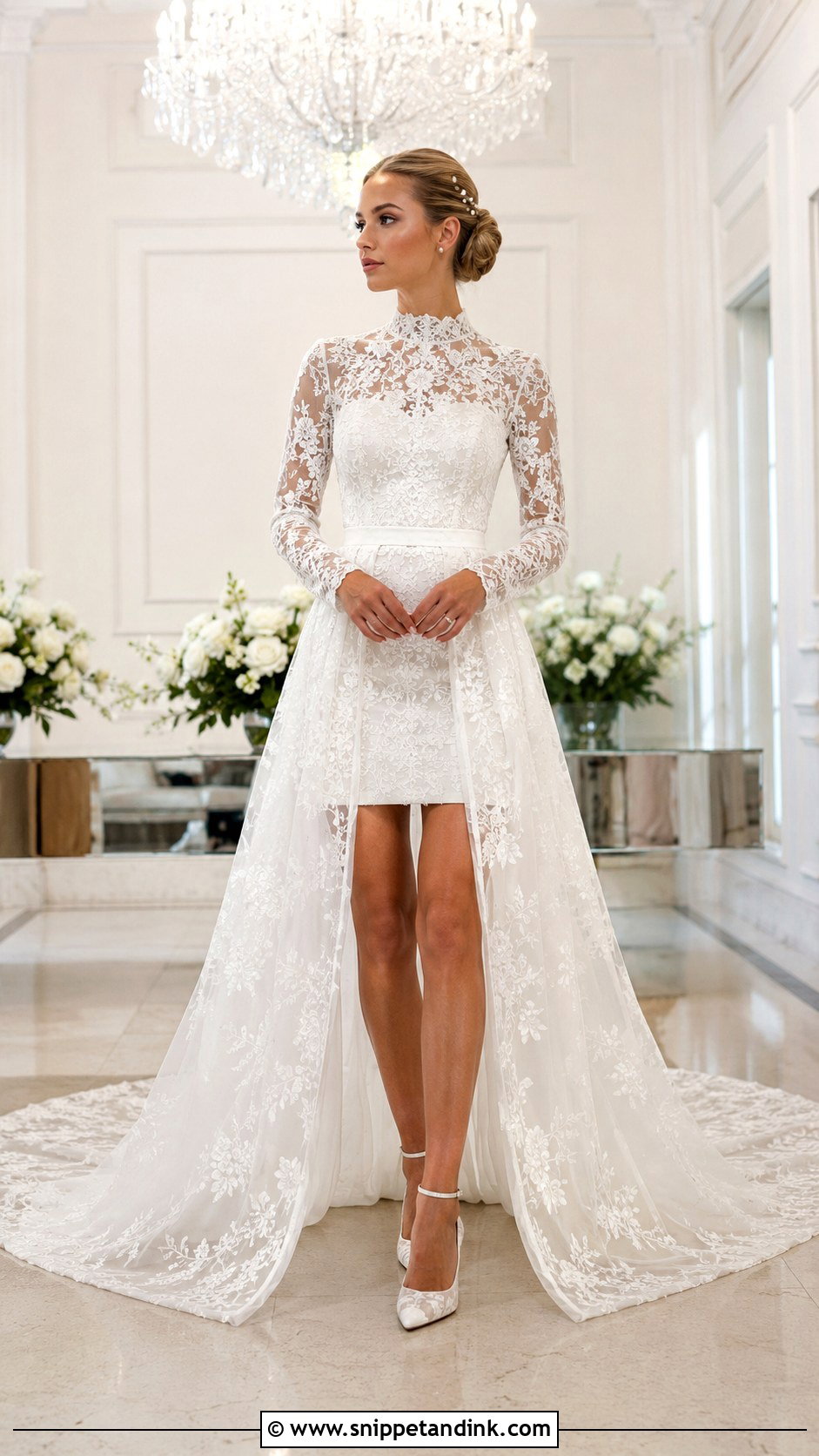
A sheer overskirt lets guests glimpse the short hem underneath, which makes the change feel planned rather than surprising. The base is a long-sleeve mini in lined lace, embroidered mesh or stretch crepe; the overskirt is a sheer layer with a manageable chapel train. Closed-toe heels, pearl pins and a neat chignon balance it. Sleeves keep the mini polished once the skirt is off. Sheer fabrics show every gather, so I check how the overskirt sits at the attachment points in a photo, not only the mirror. A narrow waistband faced in matching lace helps the two layers read as one.
5. Off Shoulder Convertible Wedding Dress With Satin Overskirt
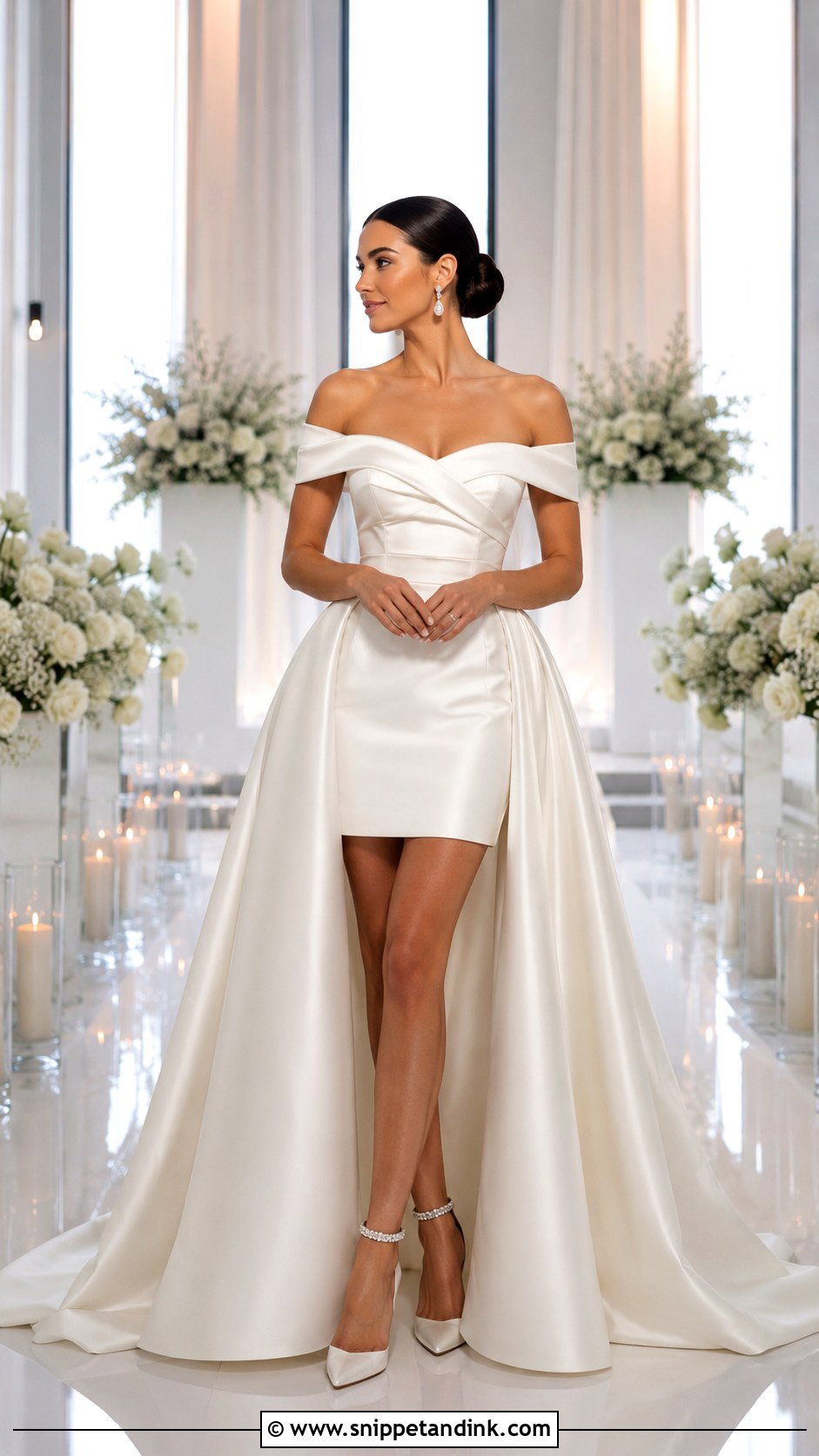
Off-shoulder bodices are the hardest to keep steady when you remove a heavy skirt, because the skirt’s weight has been helping hold everything down. The short base can have a folded neckline and a lightly sculpted bodice, with a full satin overskirt opening at the waist into a rounded train. Crystal drops and a smooth bun keep the shoulders clear. Choose dressy ankle-strap pumps, since they become part of the reception look. During alterations, I test the bodice twice: with the skirt on and with it off, lifting your arms and hugging each time. If it shifts without the skirt, it needs more internal support.
6. Square Neck Convertible Wedding Dress With A-Line Overskirt
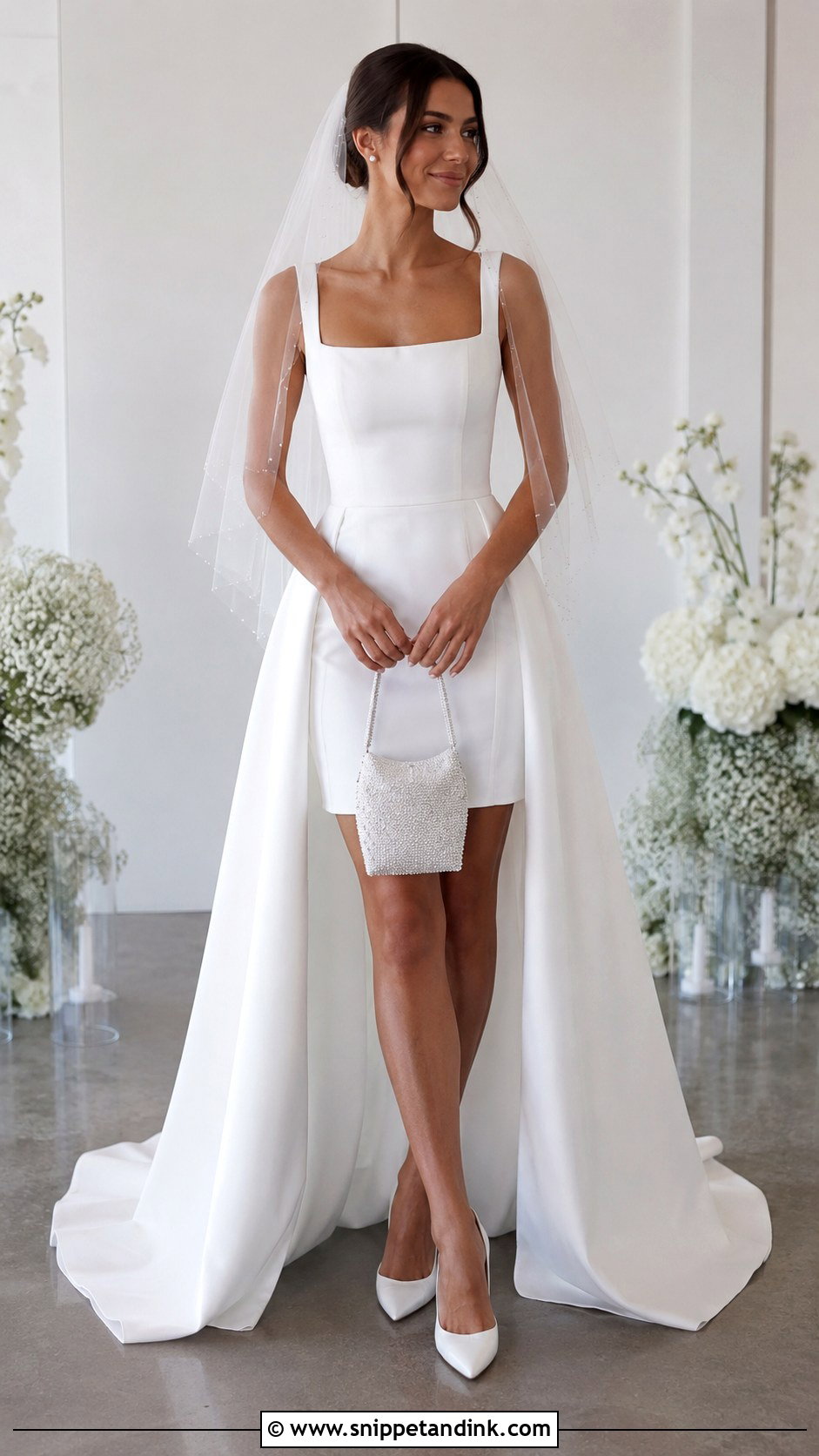
Square necks with wide straps are a safe, supportive base, and they suit a wide range of bust sizes. A structured mini with a fitted waist sits under a detachable A-line overskirt in mikado or matte satin, which falls smoothly from the natural waist without overwhelming the bodice. A fingertip veil, pearl studs and block-heel pumps suit the ceremony; take off the veil and add a small beaded bag for the reception. The simpler the base skirt, the more comfortable the long version, so I’d avoid a mini with its own petticoat underneath the overskirt.
7. Halter Convertible Wedding Dress With Chiffon Overskirt
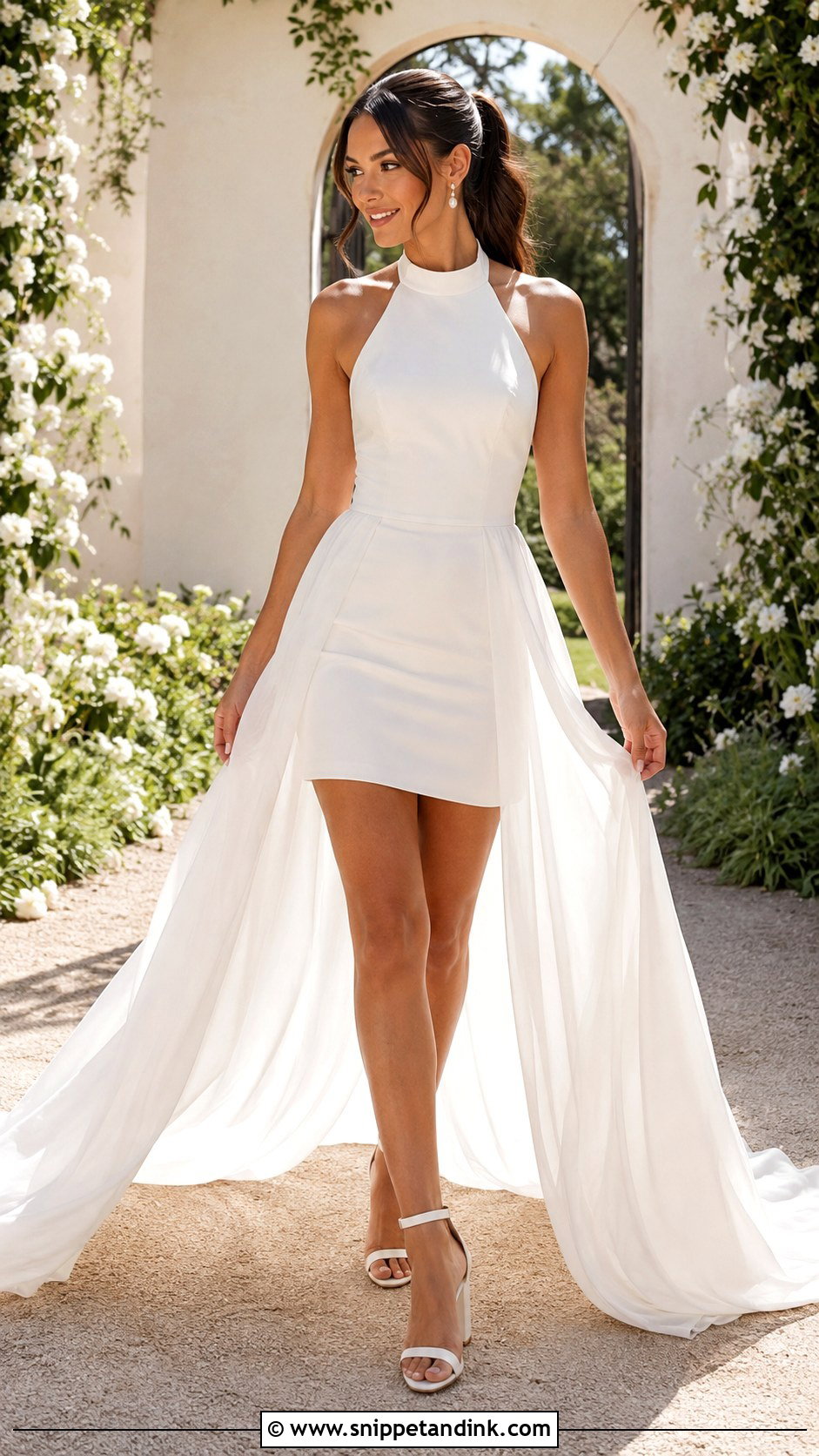
Chiffon is the lightest overskirt fabric and the best choice outdoors. A halter mini, high-neck or softly draped, sits under a flowing chiffon overskirt with a narrow band, light pleats and a soft train. The issue with chiffon is transparency: in bright sun, even several layers can show the legs, so a lining or an underlayer in the overskirt helps. Delicate earrings, a sleek ponytail and block heels suit grass and paths. Walk outside in it before the day to check the fastenings hold and the train doesn’t catch.
8. One Shoulder Convertible Wedding Dress With Draped Overskirt
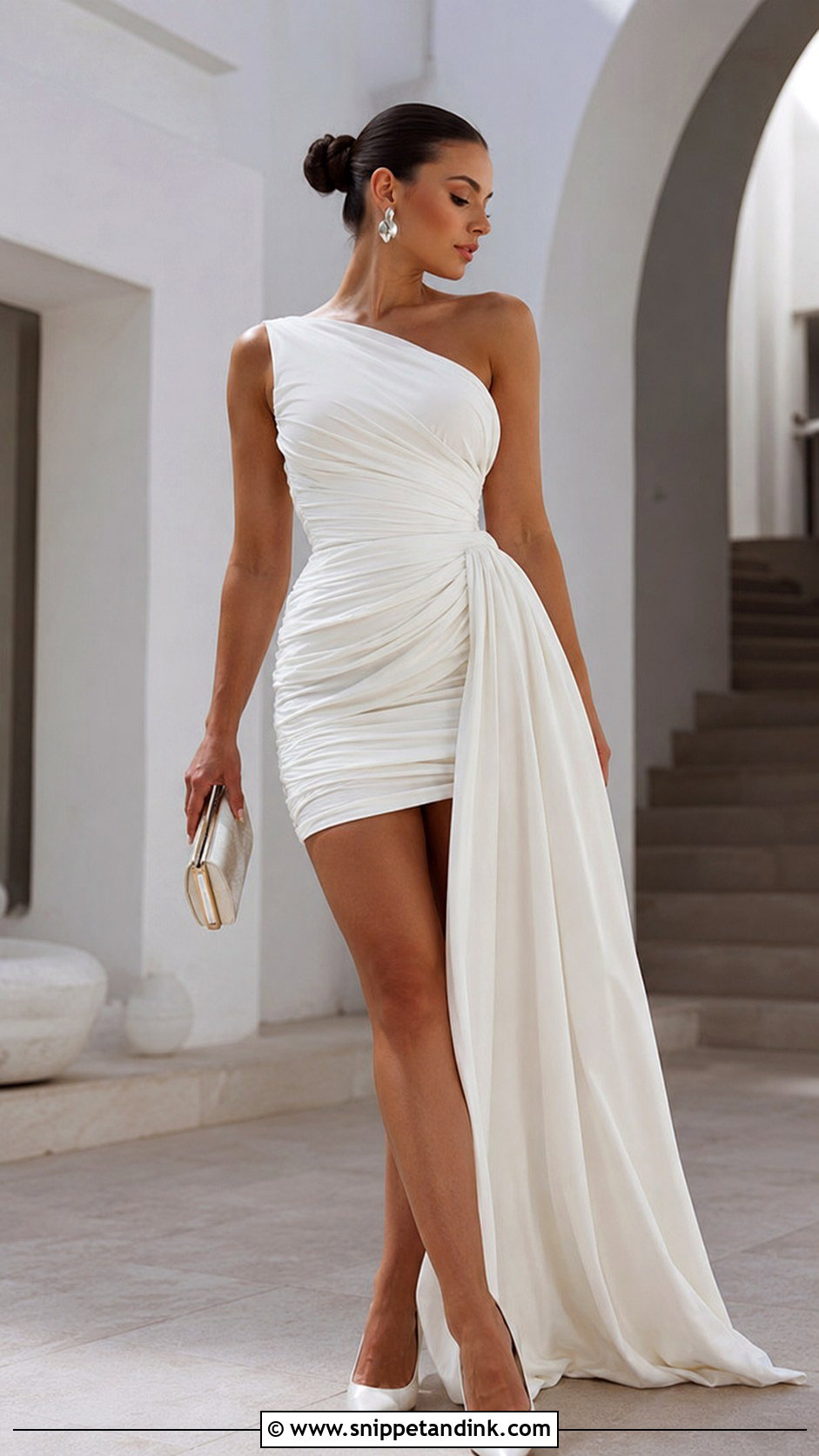
Asymmetry gives the long and short versions a strong identity. A fitted one-shoulder mini with light ruching pairs with a draped overskirt that gathers at one hip and falls to the floor. Because the skirt is gathered, the attachment can be hidden inside the drape, which makes hooks much easier to conceal than on a smooth waistband. Sculptural earrings, a sleek bun and pointed heels suit the ceremony; a metallic clutch or bracelet takes over later. I’d check the shoulder fit while seated and with arms raised, since a single strap often twists slightly when the skirt weight shifts to one side.
9. Strapless Midi Convertible Wedding Dress With Full Overskirt
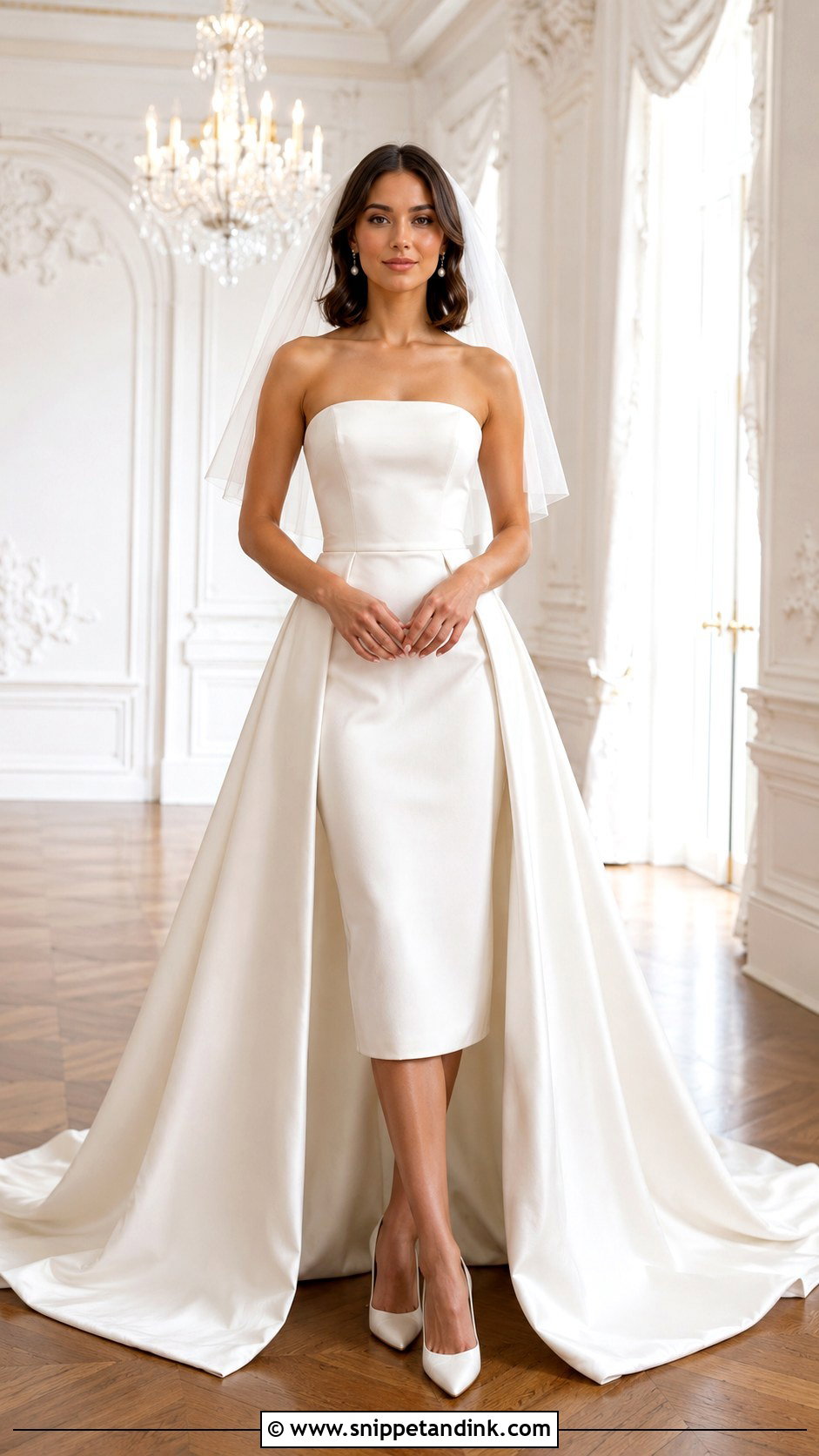
Not every bride wants a mini, and a strapless midi base is a comfortable, more covered alternative. The base falls below the knee with a centre-back slit for walking; a floor-length satin or organza overskirt creates an A-line ceremony shape on top. Pearl earrings, a shoulder-length veil and pointed pumps suit both. Height matters with this hem: a mid-calf length that ends at the widest part of the calf can shorten the leg, so I mark the hem a little higher or lower depending on your proportions and heel.
10. Pearl Mini Convertible Wedding Dress With Organza Overskirt
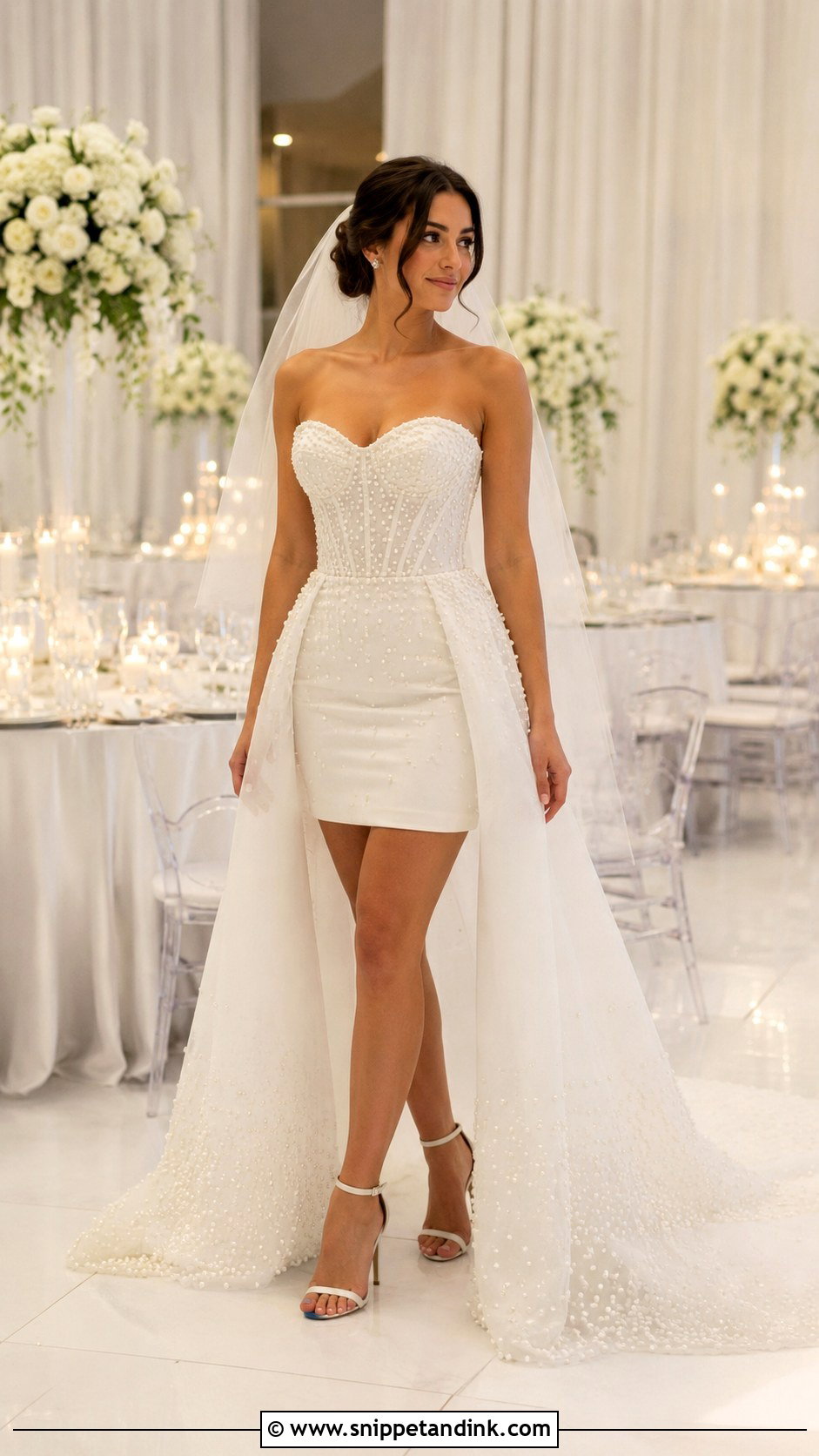
Pearls add texture without much sparkle. A clean mini scattered with pearls across the bodice and upper skirt sits under a silk organza overskirt, where matching pearls cluster at the waist and fade toward the hem. Organza holds a shape well, giving a light but clear ceremony outline. Pearl earrings, satin heels and a simple veil echo the detail. The problem I see with beaded bases is snagging: hand-sewn pearls can catch on the overskirt lining every time you move. A smooth inner layer on the overskirt stops that and protects your legs from the knots behind the embellishment.
11. Floral Appliqué Convertible Wedding Dress With Tulle Skirt
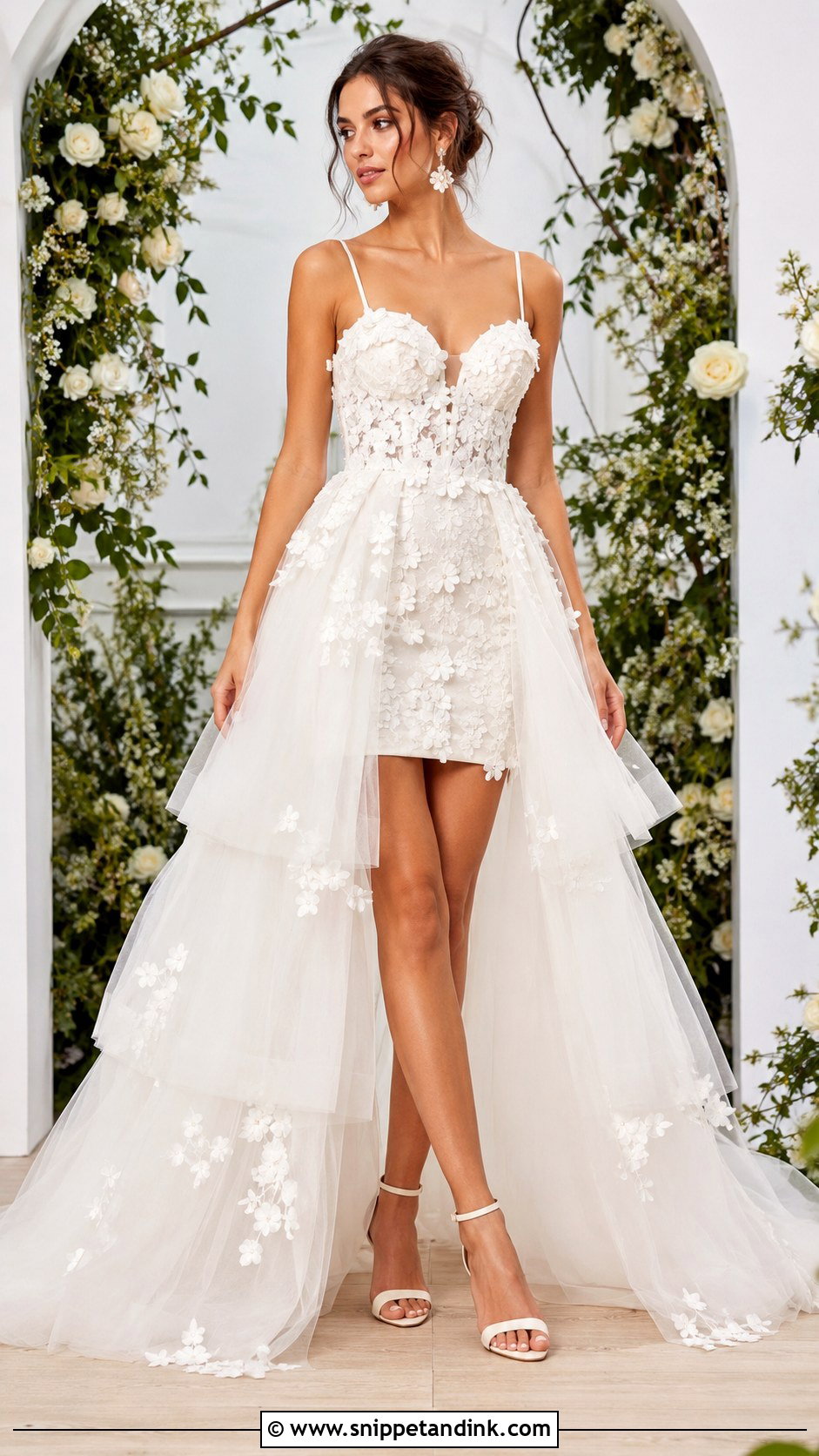
Matching appliqués tie the two looks together. A mini with flowers across the bodice, waist and hem sits under a tulle overskirt with the same motifs, heavier near the band and train. Floral earrings, slim-strap heels and a textured updo suit it. Placement around the waist is the trap: bulky three-dimensional flowers right under the overskirt band make it sit unevenly. I’d use flatter embroidery at the waist and save the larger blooms for the bodice and lower skirt, where they’re actually seen.
12. Beaded Convertible Wedding Dress With Sparkle Overskirt
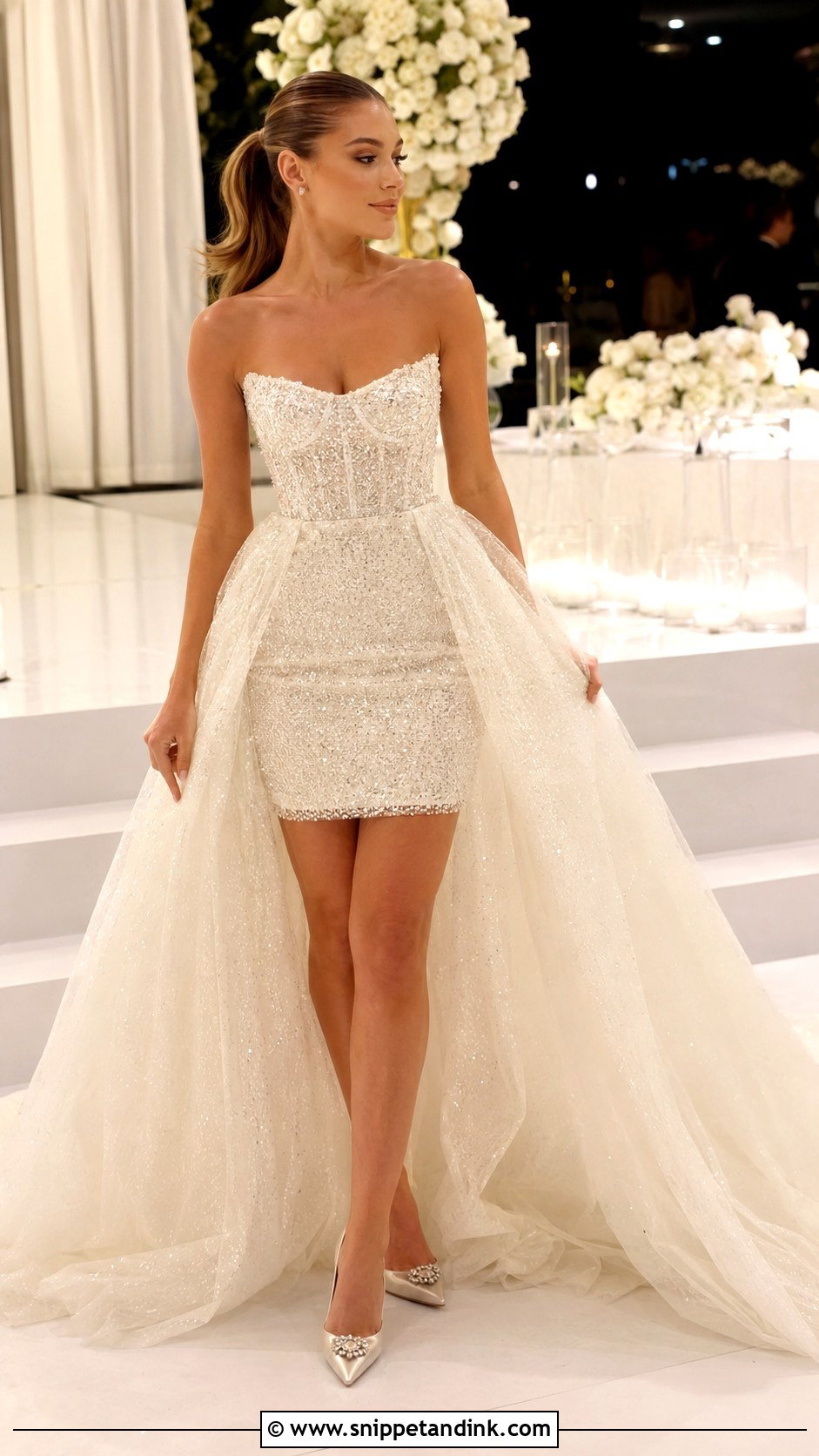
Beading sparkles in candlelight, and it’s heavy. A fitted mini with sequins, crystals or beaded lines that follow the body sits under a floor-length glitter tulle or lightly embellished mesh skirt. Keep the overskirt a step less detailed than the dress so the ceremony look stays balanced. Simple crystal studs, metallic ivory heels and a ponytail or bun finish it. The weight is the thing to plan for: a heavily beaded base plus an embellished overskirt pulls hard at the waist. Ask for lightweight overskirt materials and reinforced attachment points spread evenly around the band.
13. Crepe Blazer Convertible Wedding Dress With Detachable Skirt
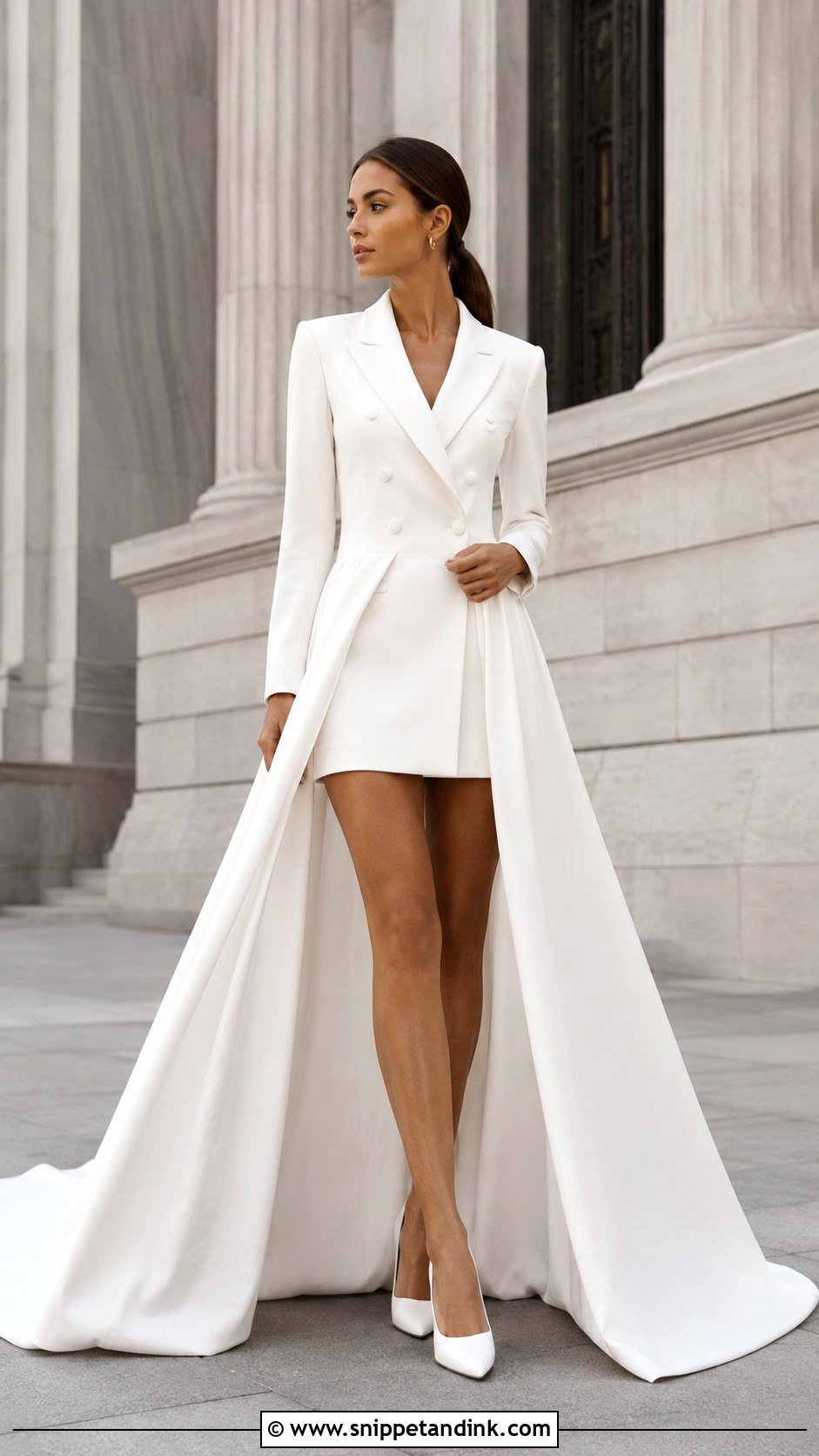
A blazer mini is a tailored alternative to a bridal bodice. Structured white crepe with a fitted waist, covered buttons and a secure wrap or double-breasted front sits under a detachable long skirt that fastens beneath a slim belt or peplum. The skirt flares softly for the ceremony and comes off to reveal the crisp blazer. Pointed pumps, small hoops and a low ponytail suit it. Blazer fronts can open when you lean, so I’d add hidden snaps between buttons, and check the hem lets you step freely without straining across the hips.
14. Bow Back Convertible Wedding Dress With Satin Overskirt
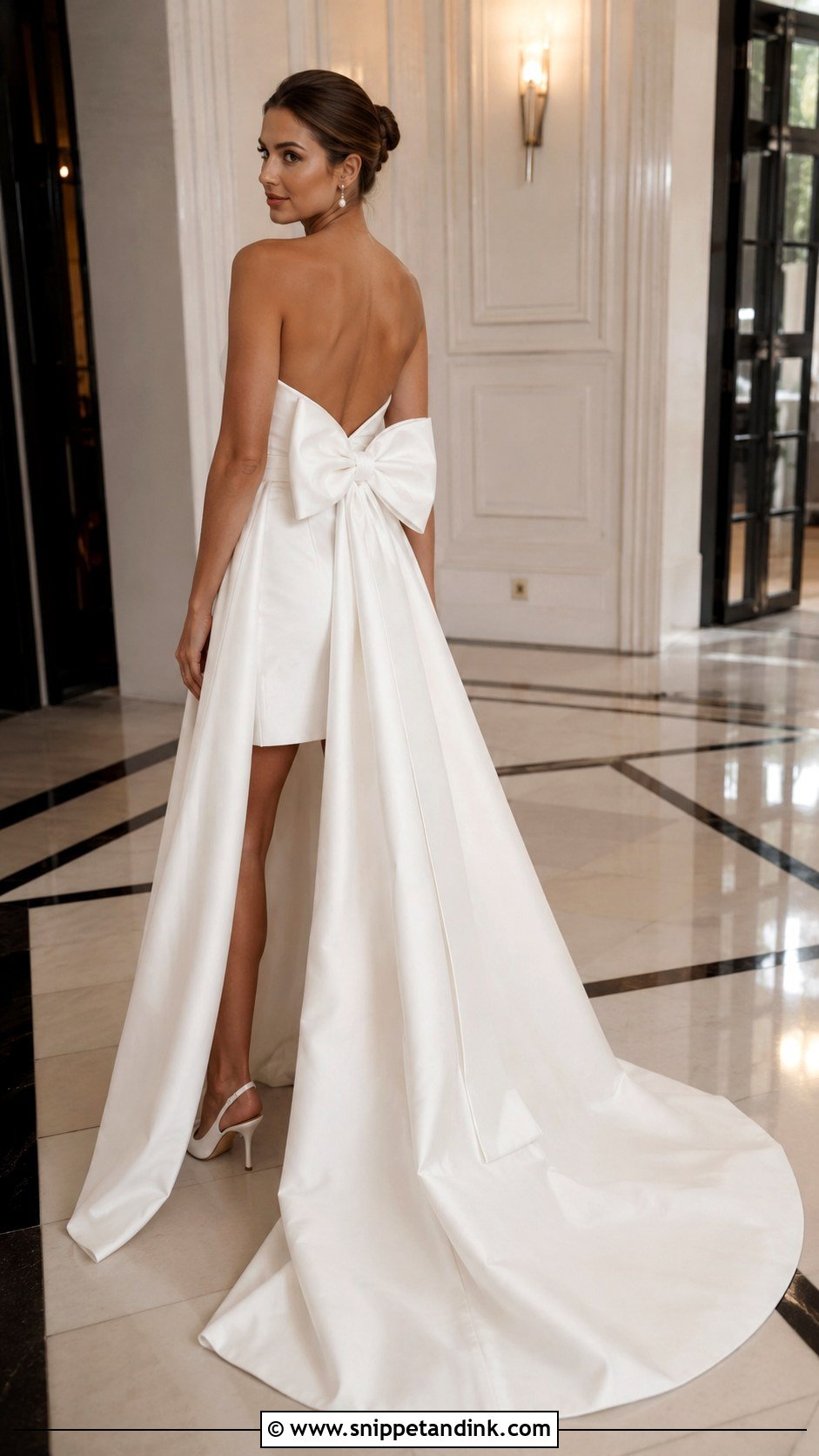
A big bow is a smart way to hide the fastening system. A simple strapless or square-neck satin mini sits under a full overskirt that fastens at the back beneath a structured bow with long tails. After the reveal, keep a smaller detachable bow on the mini or remove it entirely. Pearl earrings, a smooth updo and slingbacks suit it. Scale and weight are the two checks: the bow should suit your frame and venue, and it needs to be light, since a heavy bow drags the waistband down and creases the back of the dress.
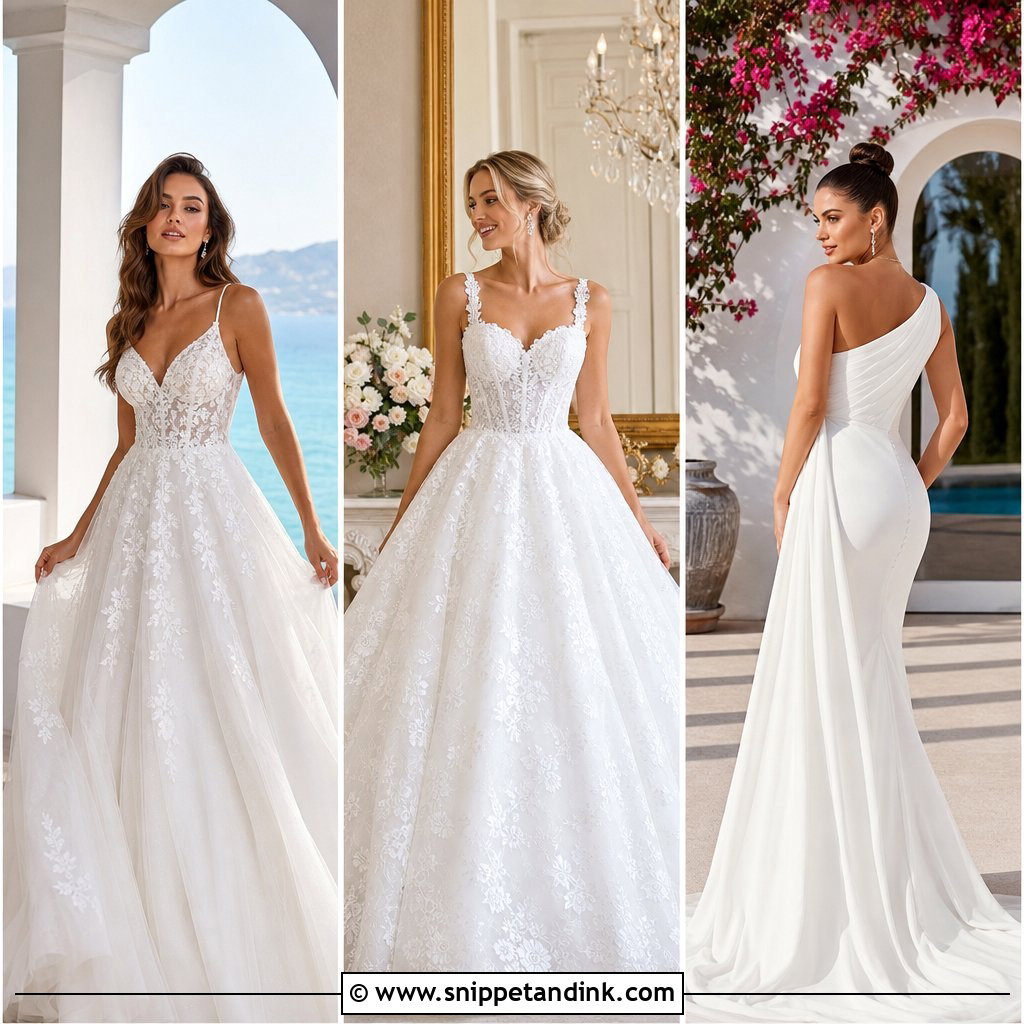
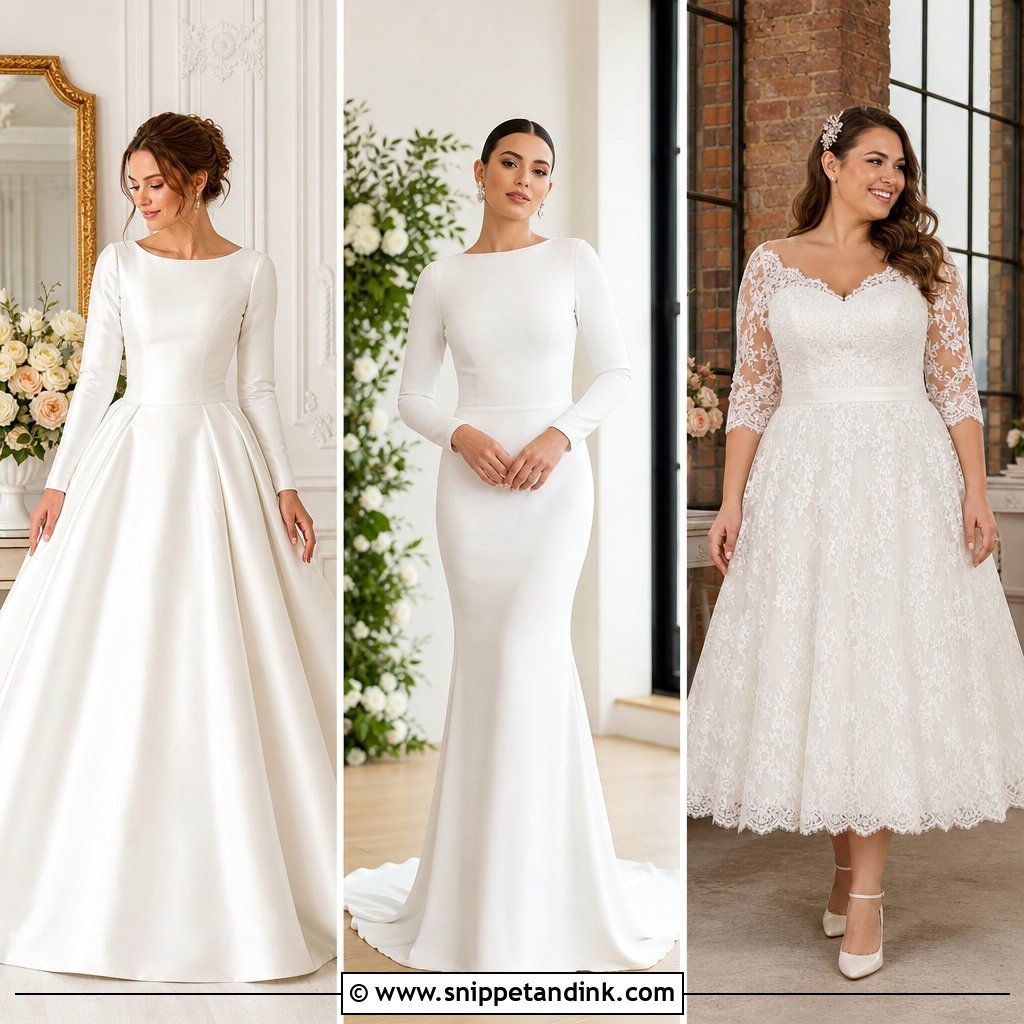

15. High Low Convertible Wedding Dress With Detachable Overskirt
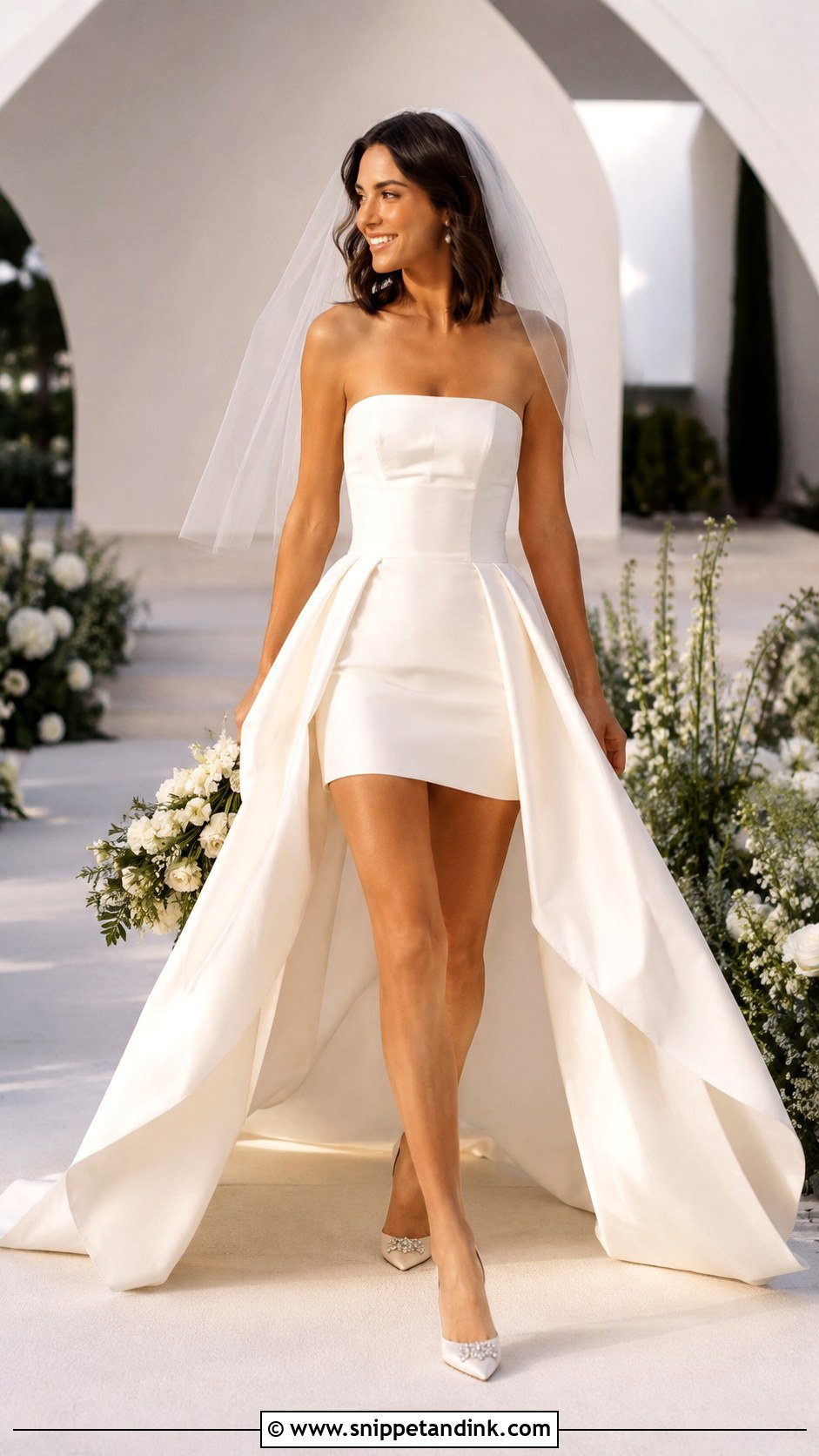
A high-low overskirt offers a gradual transformation rather than hiding the short dress until the reveal. A fitted mini or knee-length base sits under an open-front overskirt that flows into a long back train, so your shoes show throughout. Embellished pumps or sleek ankle straps become central. A structured bodice, simple earrings and a shoulder-length veil keep it balanced. Walk in front of a mirror to check the front opening falls evenly rather than twisting to one side, and add a discreet loop or bustle for moving around before the overskirt comes off.
16. Mini Convertible Wedding Dress With Removable Cape Train
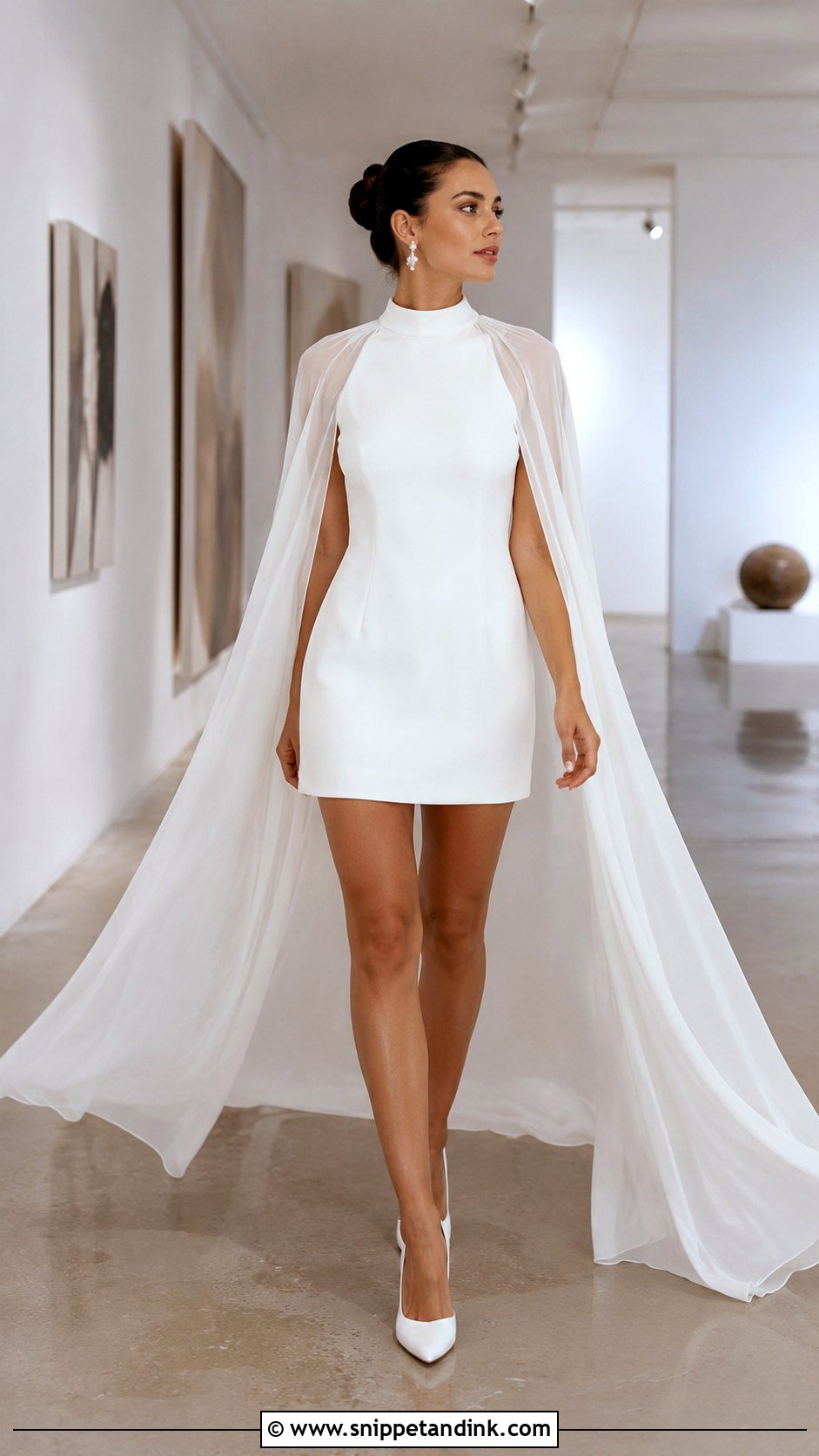
A cape train changes the silhouette without a waistband at all, which suits brides who dislike anything around the middle. A fitted satin or crepe mini with a high, bateau or strapless neckline gets a floor-length cape fixed at the shoulders or upper back. It comes off in seconds. Statement earrings, a sleek updo and pointed ivory heels finish it. Cape fastenings can drag the neckline backward, so I check for pressure at the throat. Chiffon, tulle or organza move far better than heavy satin. If you add a veil, keep it simple so it doesn’t tangle with the cape.
17. Mermaid Convertible Wedding Dress With Zip Away Skirt
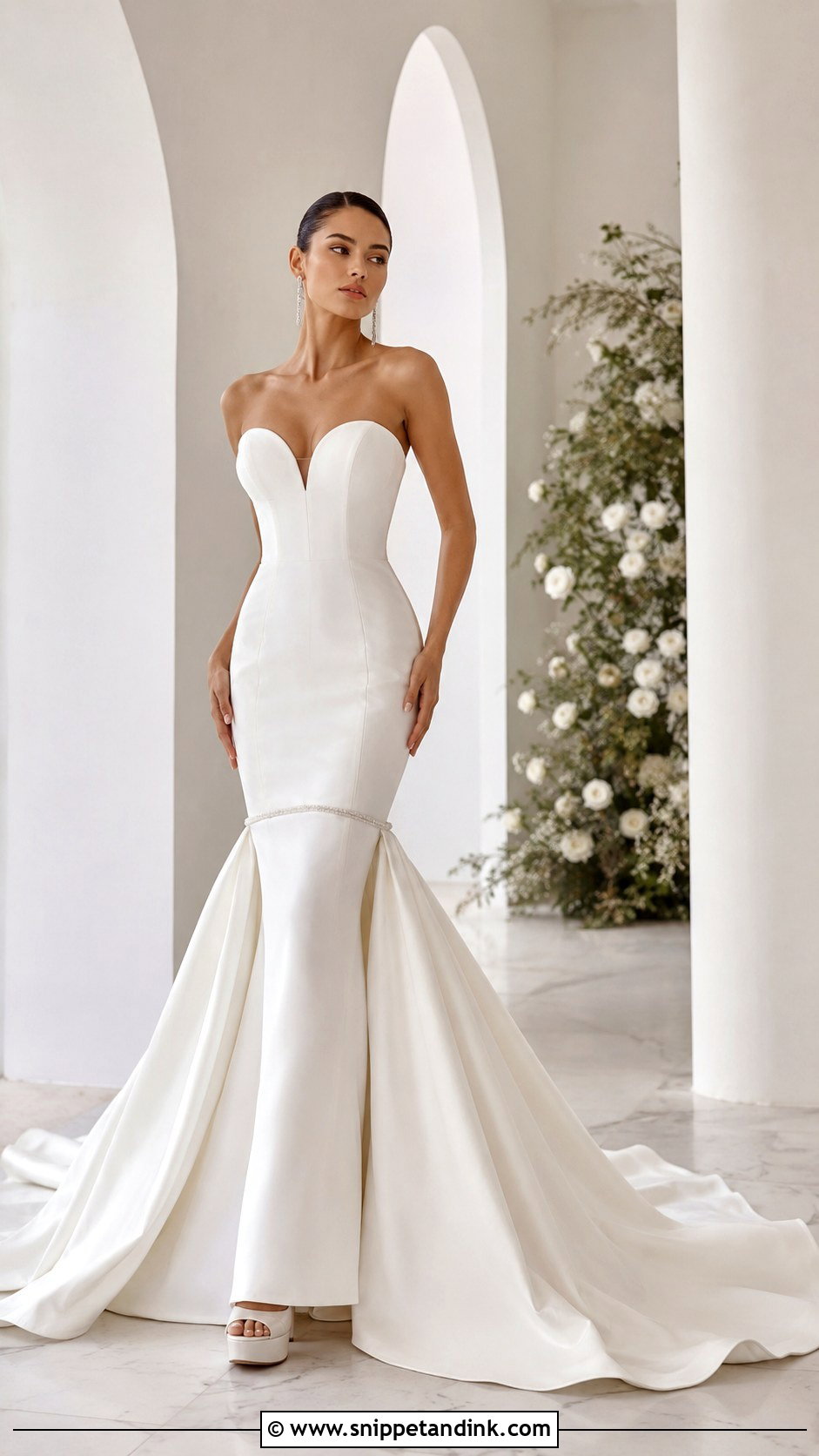
A zip-away mermaid is the most technical design here. A hidden horizontal zip or concealed fastening near the upper thigh separates the flared lower skirt, leaving a fitted mini with the same bodice and fabric. The separation line has to look clean in both versions, which takes skilled alterations. Sit, walk and dance at every fitting to check the zip doesn’t rub the thighs or shift. A lace band or beaded seam disguises the construction around the short hem. Long earrings, a sleek hairstyle and platform heels suit both lengths.
18. Tea Length Convertible Wedding Dress With Lace Overskirt
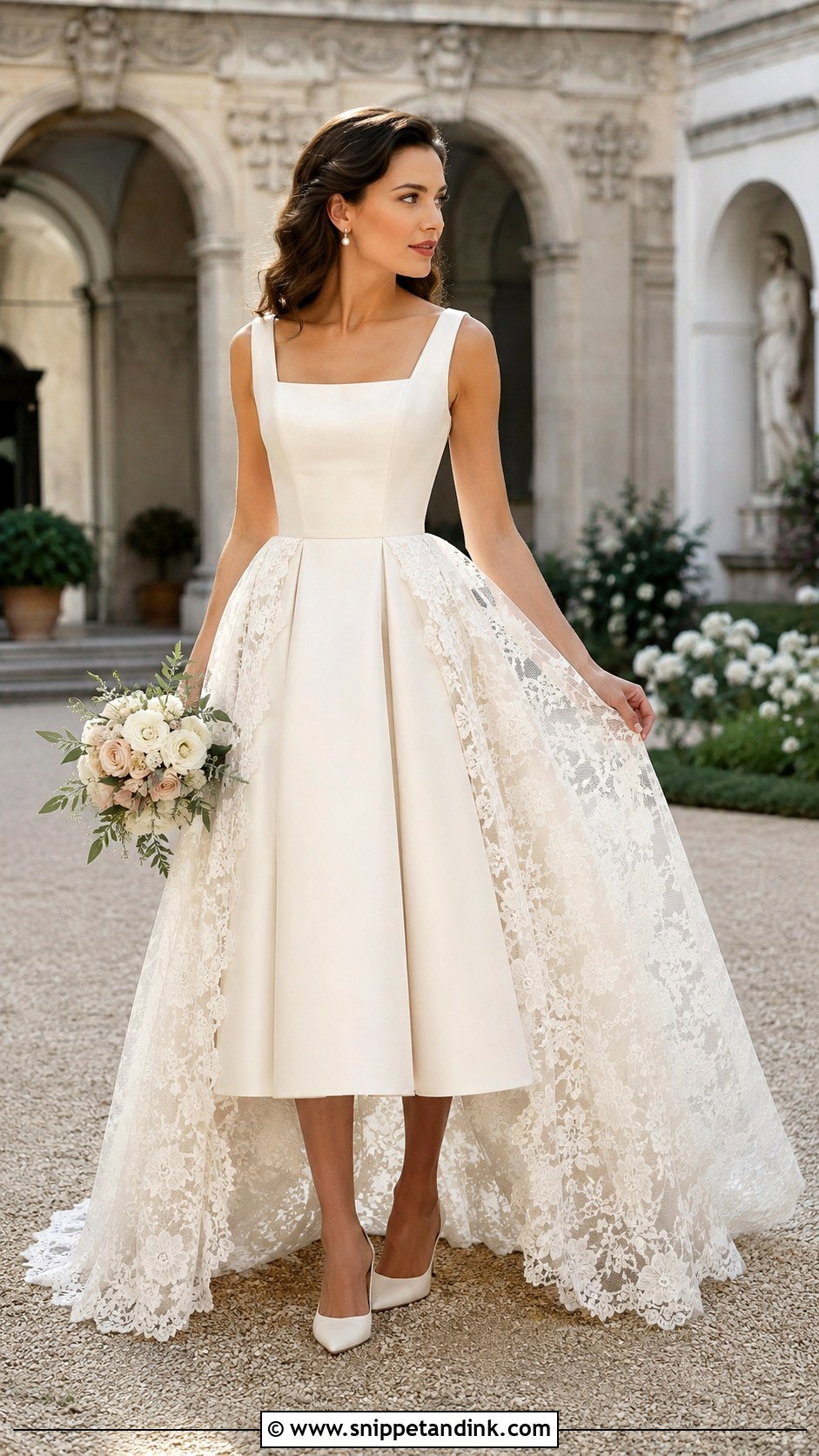
A tea-length base suits brides who love vintage shapes more than minis. A structured dress ending between knee and ankle, with a defined waist and soft flare, sits under a removable floor-length lace overskirt that lets the shorter shape show faintly. Pointed pumps, pearl earrings and soft waves suit it. The overskirt needs enough fullness to fall over the base hem without catching, and a smooth lining or light petticoat on the base keeps the shape under control. Garden venues, historic houses and daytime parties suit this combination.
19. Minimalist Convertible Wedding Dress With Column Overskirt
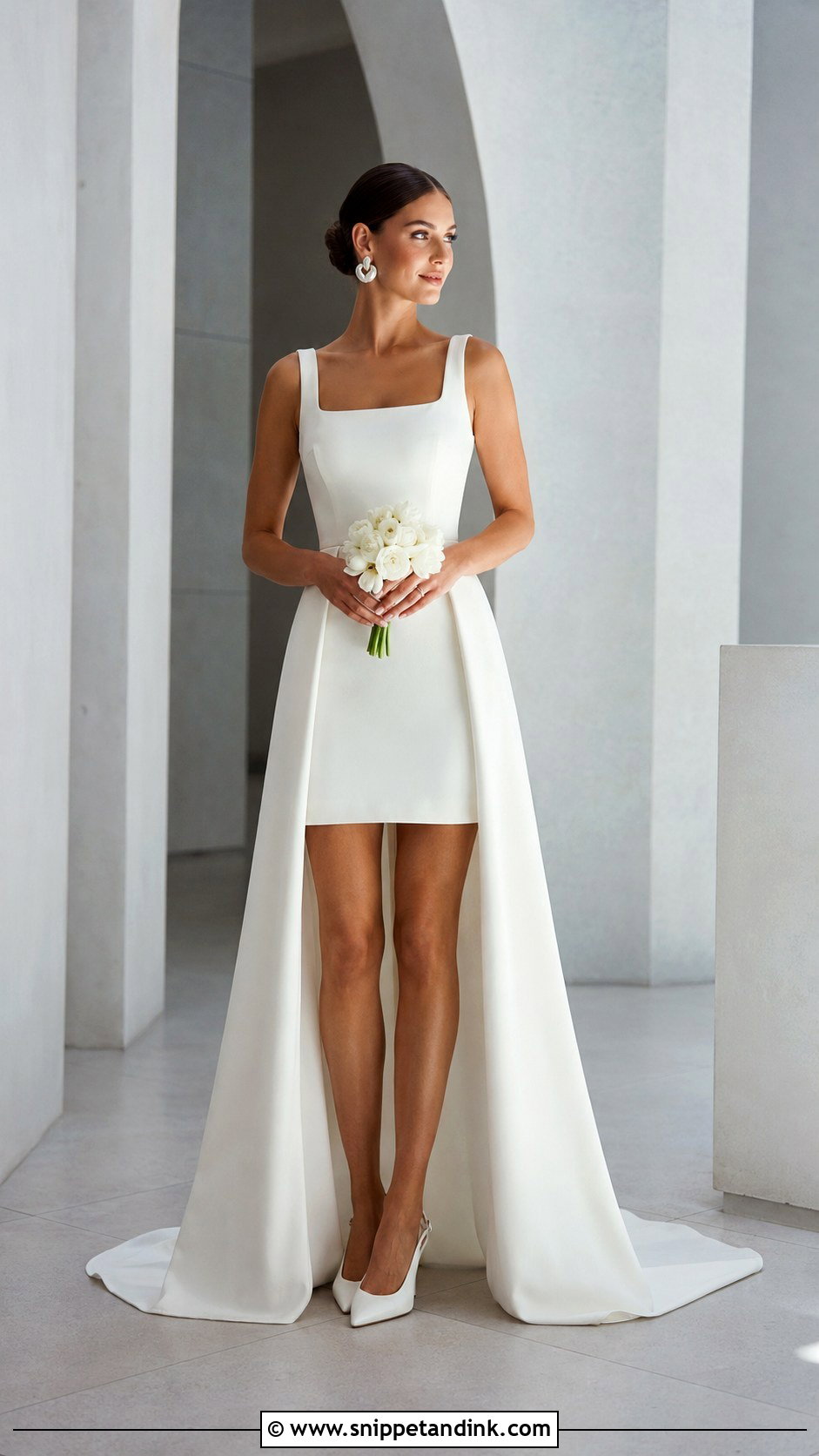
Here the change itself is the interesting part. A square-neck or strapless matte crepe mini sits under a column overskirt that falls straight from the waist into a short train, which keeps the ceremony look narrow and understated. Sculptural earrings, a small bouquet, pointed slingbacks and a smooth bun suit it. A straight overskirt needs a back slit or enough width to walk in. The colour match is the detail I’d insist on: ask for both pieces from the same dye lot, because slight differences between ivories show clearly in daylight photos.
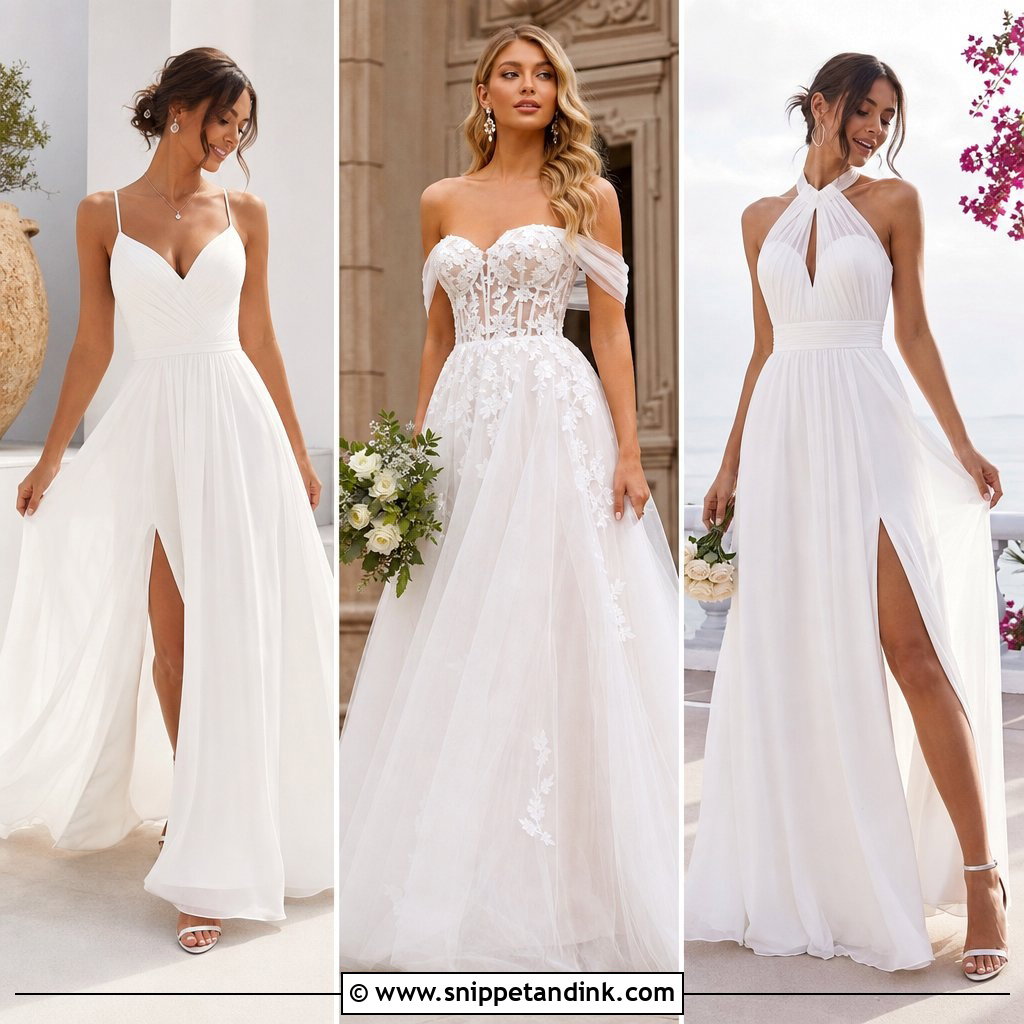
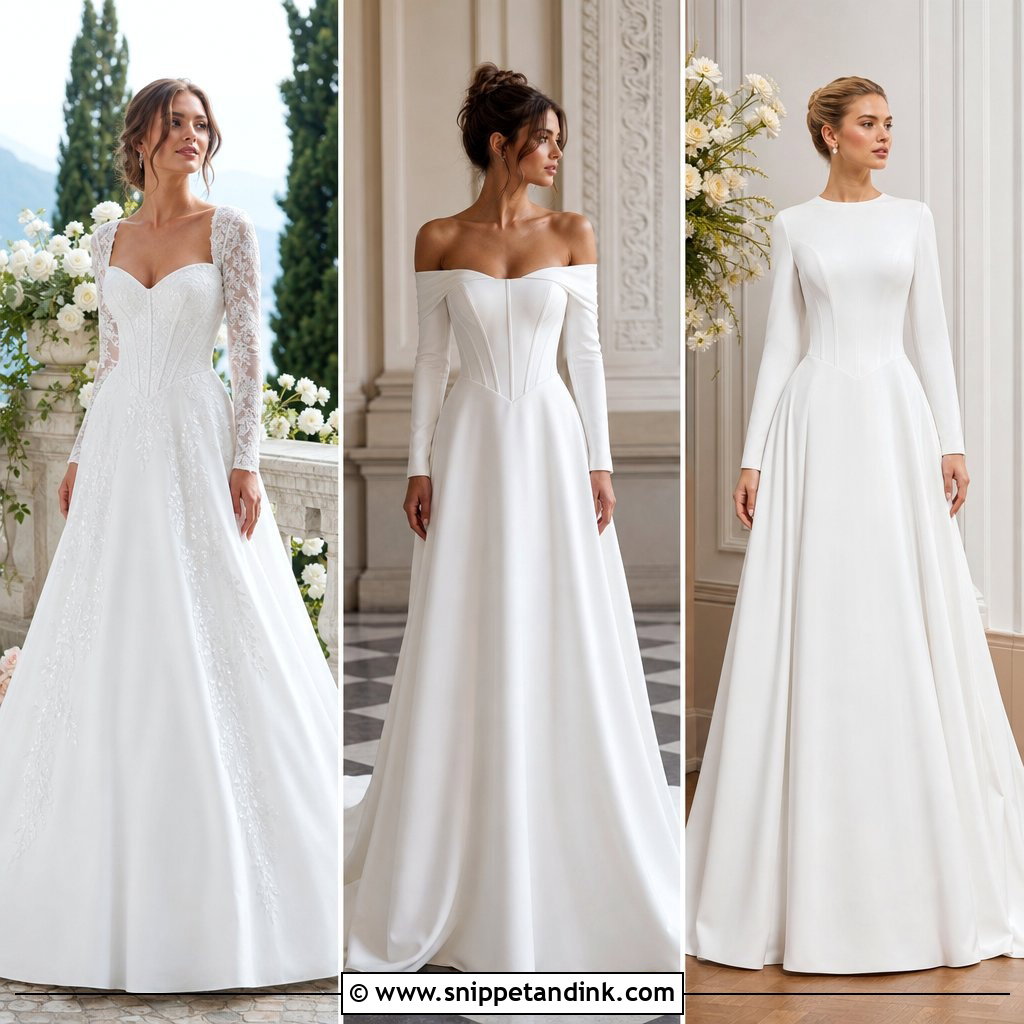
20. Three In One Convertible Wedding Dress With Sleeves And Overskirt
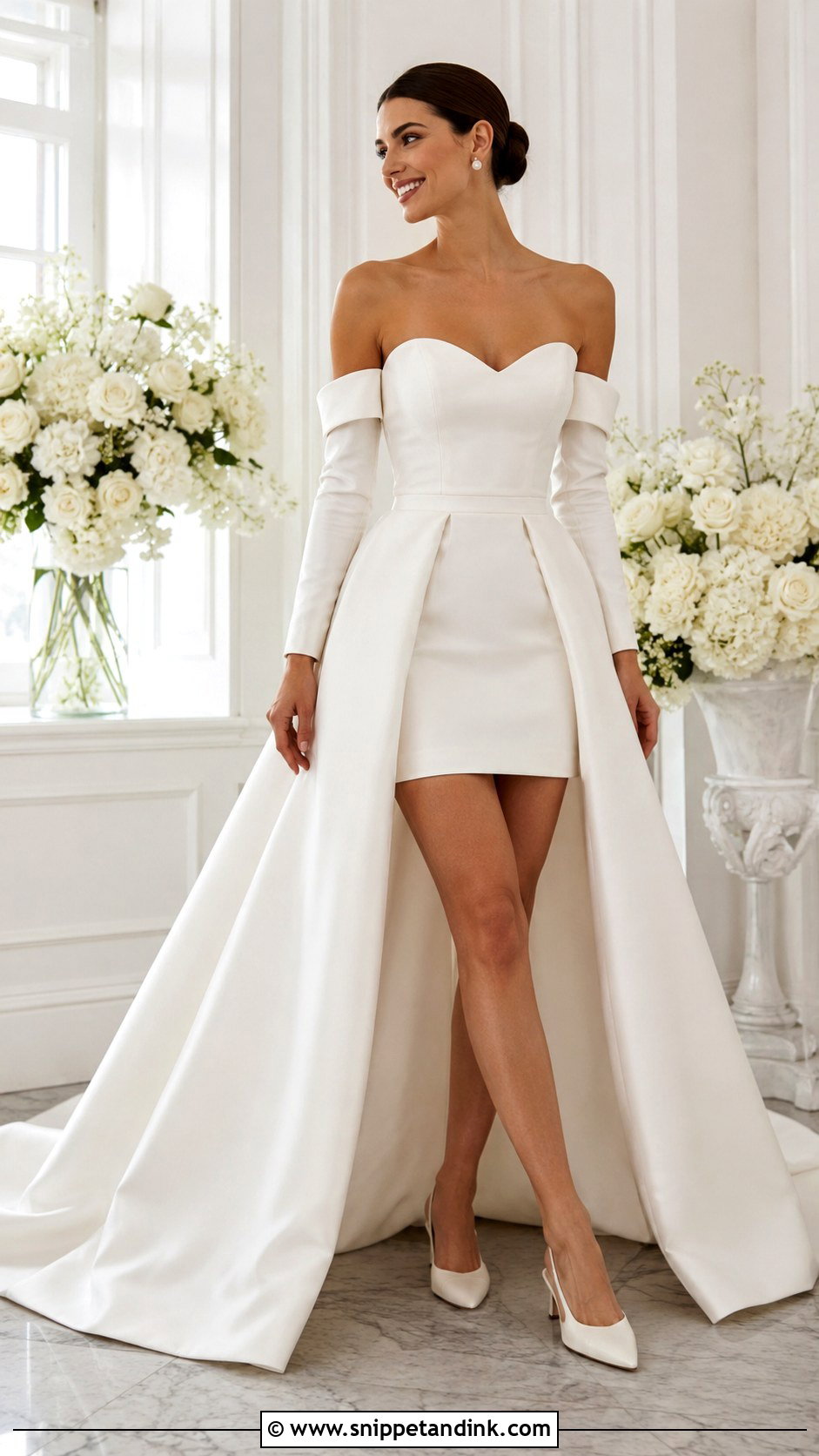
Detachable sleeves plus an overskirt give you three looks. A strapless mini with a structured bodice is the base. For the ceremony, add fitted sleeves or off-shoulder drapes and a full-length detachable overskirt. Remove the skirt for dinner while keeping the sleeves, then take the sleeves off for dancing. Pearl earrings, comfortable heels and a neat updo work with every version. Ask the seamstress to label each attachment point so helpers can manage each change quickly, and try every combination at the final fitting for gaps or pulling around the waist and arms.
The Reveal Moment, Planned to the Minute
Brides tend to picture a dramatic on-the-floor reveal, then realise on the day that hooks in a crowded room aren’t glamorous. Most choose one of two approaches: a quick private change between the end of portraits and dinner, or a planned moment just before the first dance. Either works if it’s on the schedule.
If you want guests to see it
Rehearse with the person removing the skirt so it takes under a minute. Tell the photographer and DJ when it’s happening. Stand on a clear part of the floor away from candles and drinks, since a long tulle skirt sweeps everything around you.
Where the overskirt goes next
Decide in advance who takes it and where. A loose overskirt left on a chair gets sat on, stepped on or splashed. I’d hang it in a garment bag in a locked room or the bridal suite, and ask a bridesmaid to take charge of it at the end of the night along with your veil.
Two Finished Dresses, One Fitting Schedule
A convertible outfit should feel like two finished dresses, not a gown with a bonus layer. Start with the base, since that’s what you’ll dance, greet guests and eat in. Then choose the overskirt, train, cape or zip-away layer that gives you the ceremony shape you want. Secure fastenings, matching fabric shades and careful alterations make the change smooth. Test every version with your real shoes, underwear, veil and jewellery before the day. Lace, satin, tailoring or sparkle can all work; what makes the reveal memorable is that both halves fit you properly.
You'll Like These Ideas:





Leave a Reply