
Cottagecore gowns are built for ceremonies held on grass, under trees or beside a kitchen garden, and that setting shapes every choice I make when I style one. The look leans on botanical embroidery, puff sleeves, soft corset bodices and light A-line skirts, but what matters most on the day is practical: how the hem handles a damp lawn, whether the sleeves let you hug people, and which shoes keep you upright on soft ground. Some brides want plain linen, others want fairy-tale volume, and both work outdoors if the fabric and fit are chosen with the venue in mind. Below are twenty complete looks, each with the notes I’d give a bride at her fitting.

Grass, Gravel and Morning Dew: What an Outdoor Hem Has to Survive
Most cottagecore weddings happen outside, and the ground is the part brides forget. Before I talk silhouettes at a first appointment, I ask where the ceremony is, what’s underfoot and what time of day it starts, because those three answers rule out more dresses than any style preference.
Matching hem length to the surface
- Mown lawn: a floor-length hem is fine if it’s hemmed to your actual shoes with a little clearance. Early-morning dew will still darken tulle by the end of the aisle.
- Meadow or long grass: tea or ankle length, or a skirt with a bustle you can lift before portraits. Seeds and burrs cling to tulle and open lace.
- Gravel paths: avoid anything that drags. Gravel pulls threads and grinds dust into chiffon, and thin heels sink between the stones, so wear block heels or flats.
- Woodland floor: boots or flats with some grip, and a hem that clears roots and wet leaves.
Fabric that copes with wind and weather
Chiffon and light tulle stay comfortable in heat but lift in a breeze, so on an exposed hillside I add small hem weights or a slightly heavier lining. Cotton-look lace breathes well. Heavy satin is warm and marks easily if it gets wet. If rain is a real possibility, I’d choose a shorter hem over a delicate train every time, because a damp train gets heavier and dirtier as the evening goes on.
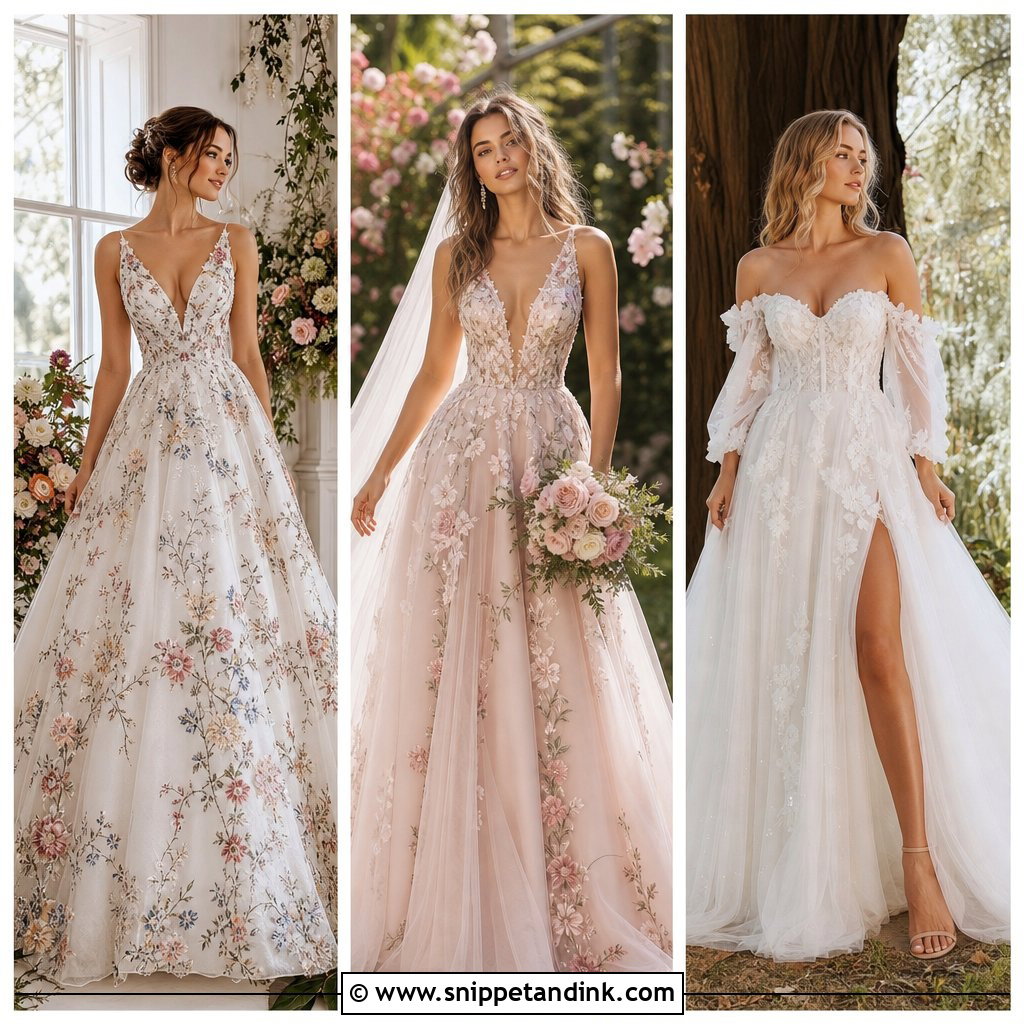
1. Floral Embroidered Cottagecore Wedding Dress
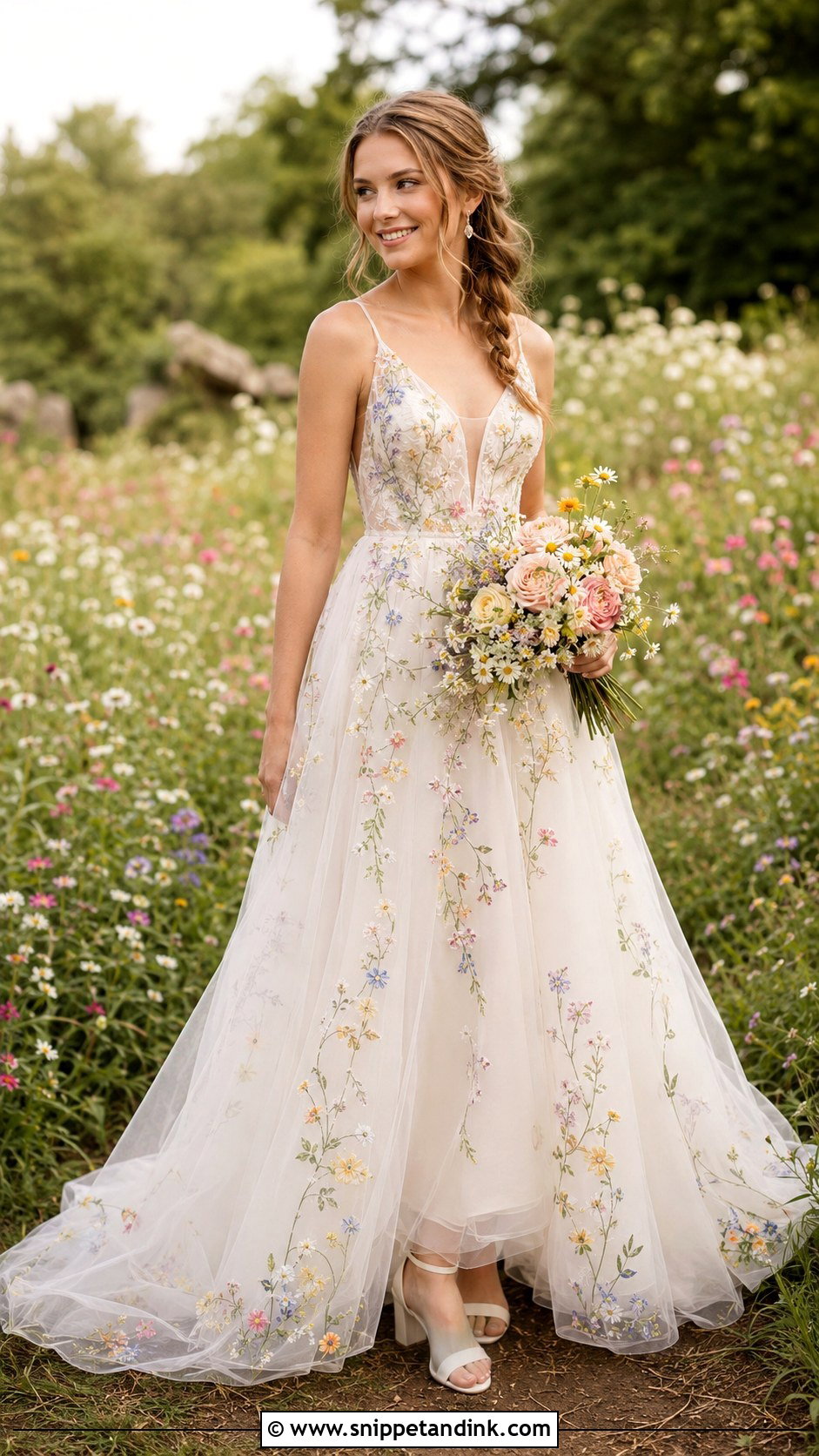
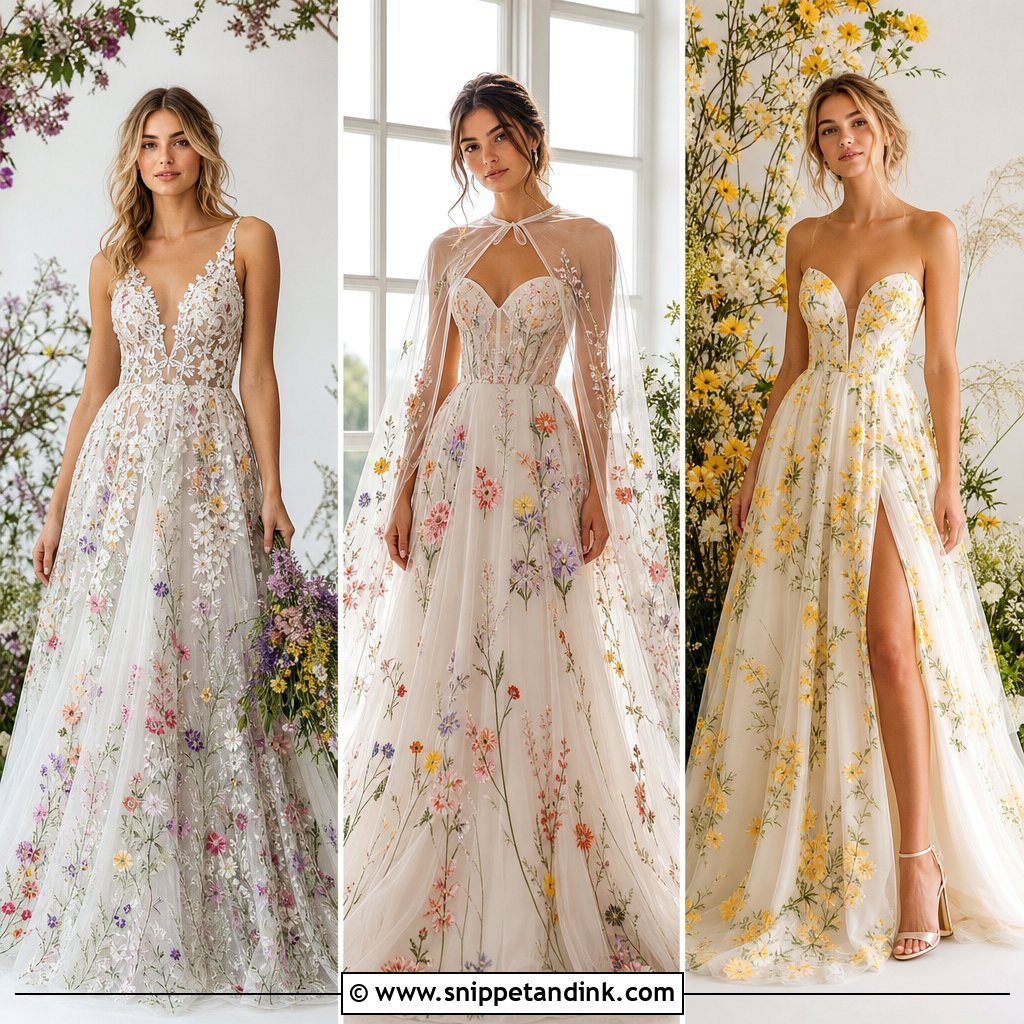
Colored embroidery says cottagecore without a single extra prop, and an ivory A-line covered in small wildflowers in pink, blue, yellow and green does it on its own. Because the dress carries so much pattern, I keep everything else quiet: a loose braid with a few tiny flower pins, pearl drops, and either a plain fingertip veil or none at all. A lace-edged veil over colored threadwork just turns to noise in photos. One thing I check at the fitting is how the embroidery sits on the tulle skirt, since heavy threadwork on fine net can drag and pucker; the lighter the motifs get toward the hem, the better the skirt floats. Ivory block-heel sandals or embroidered flats handle grass, and garden roses with chamomile and trailing ribbon suit a meadow or greenhouse.
2. Puff Sleeve Cottagecore Wedding Dress
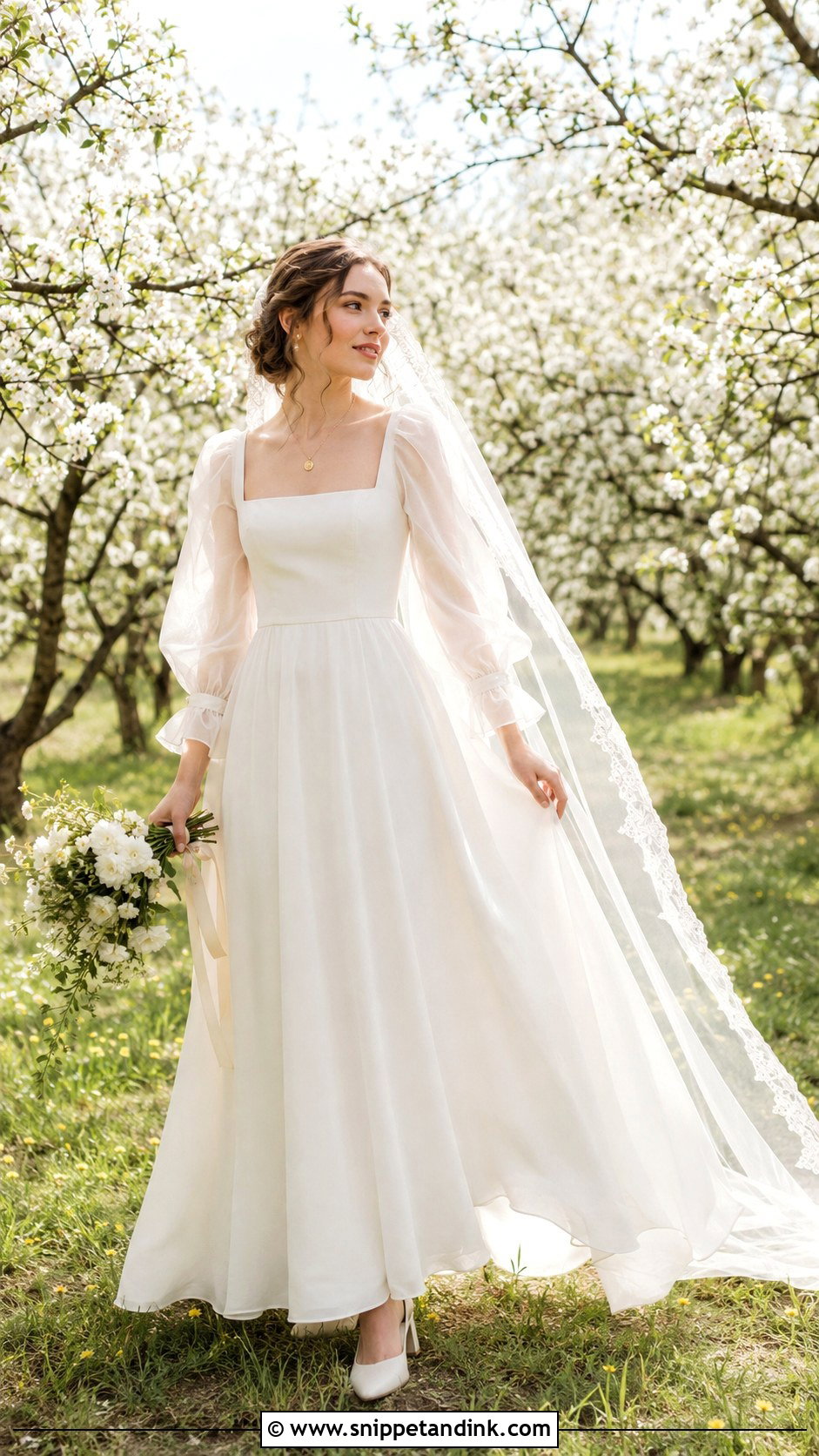
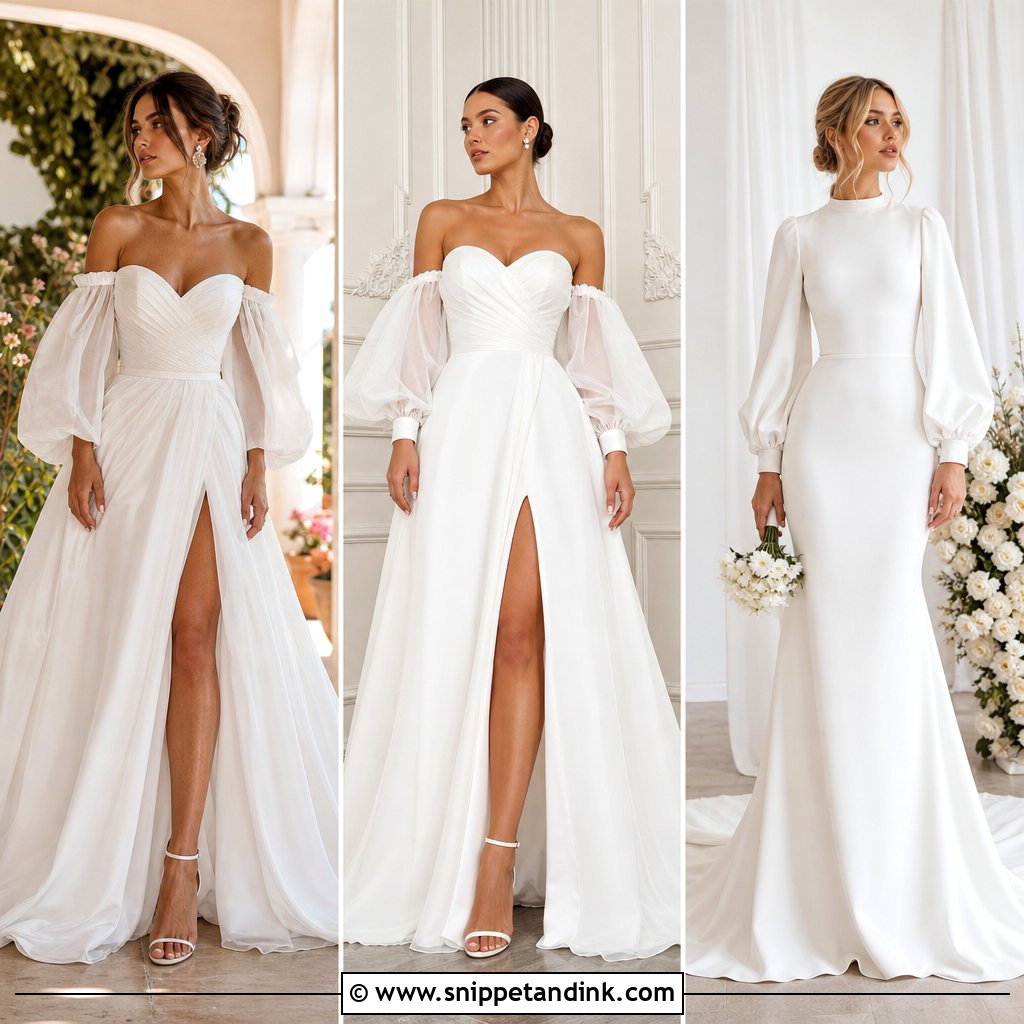
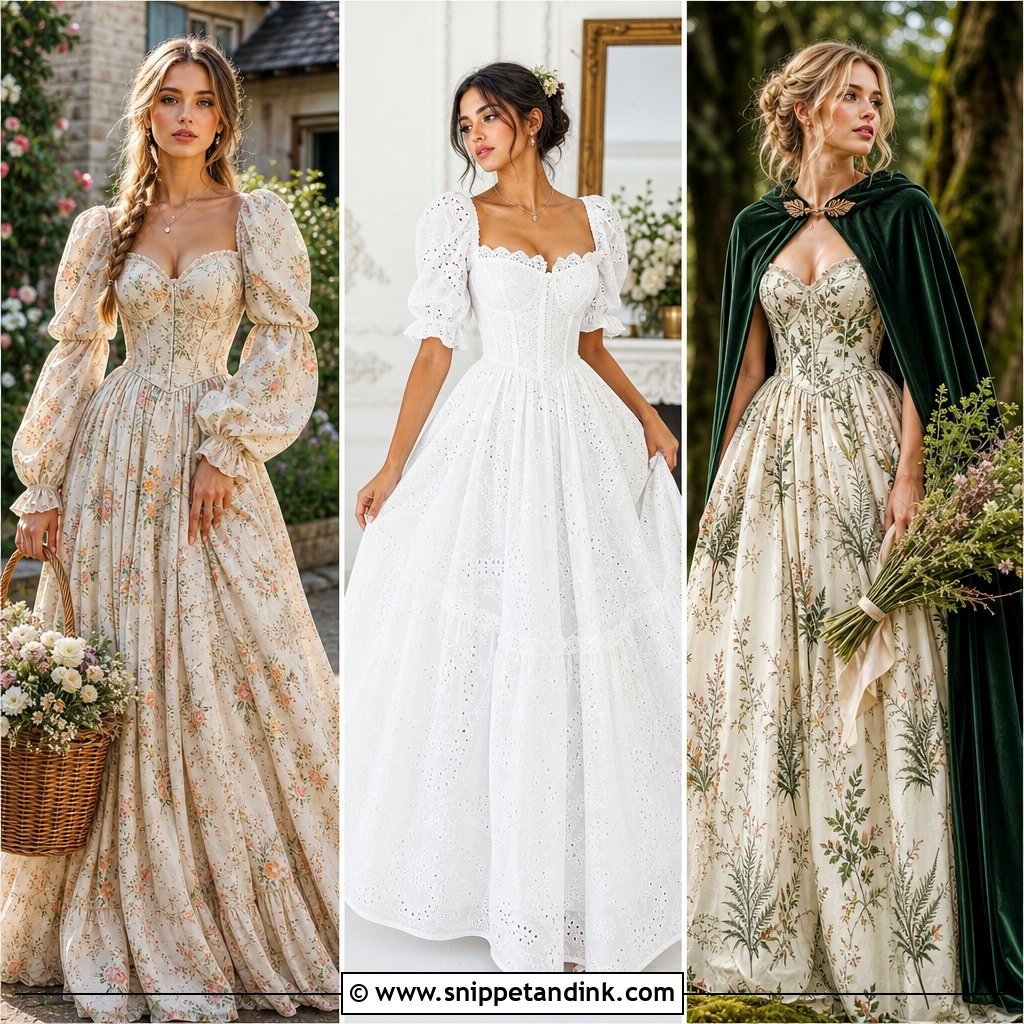
Organza puff sleeves hold their shape far longer than chiffon ones, which collapse after an hour of hugs. Pair them with a square neck and a fitted bodice; the straight neckline balances the round sleeve and leaves room for a small pendant or vintage locket. I always ask a bride to cross her arms and reach forward at the fitting, because elastic sleeve cuffs that feel fine standing still can dig in once you’re holding a bouquet. Low ivory heels, a woven bag and a short veil with narrow lace trim keep the rest simple, with hair in a loose low bun. White cosmos, sweet peas and fern match the airy texture, and the outfit sits comfortably at an orchard or rustic estate without tipping into formal.
3. Long Sleeve Lace Cottagecore Wedding Dress
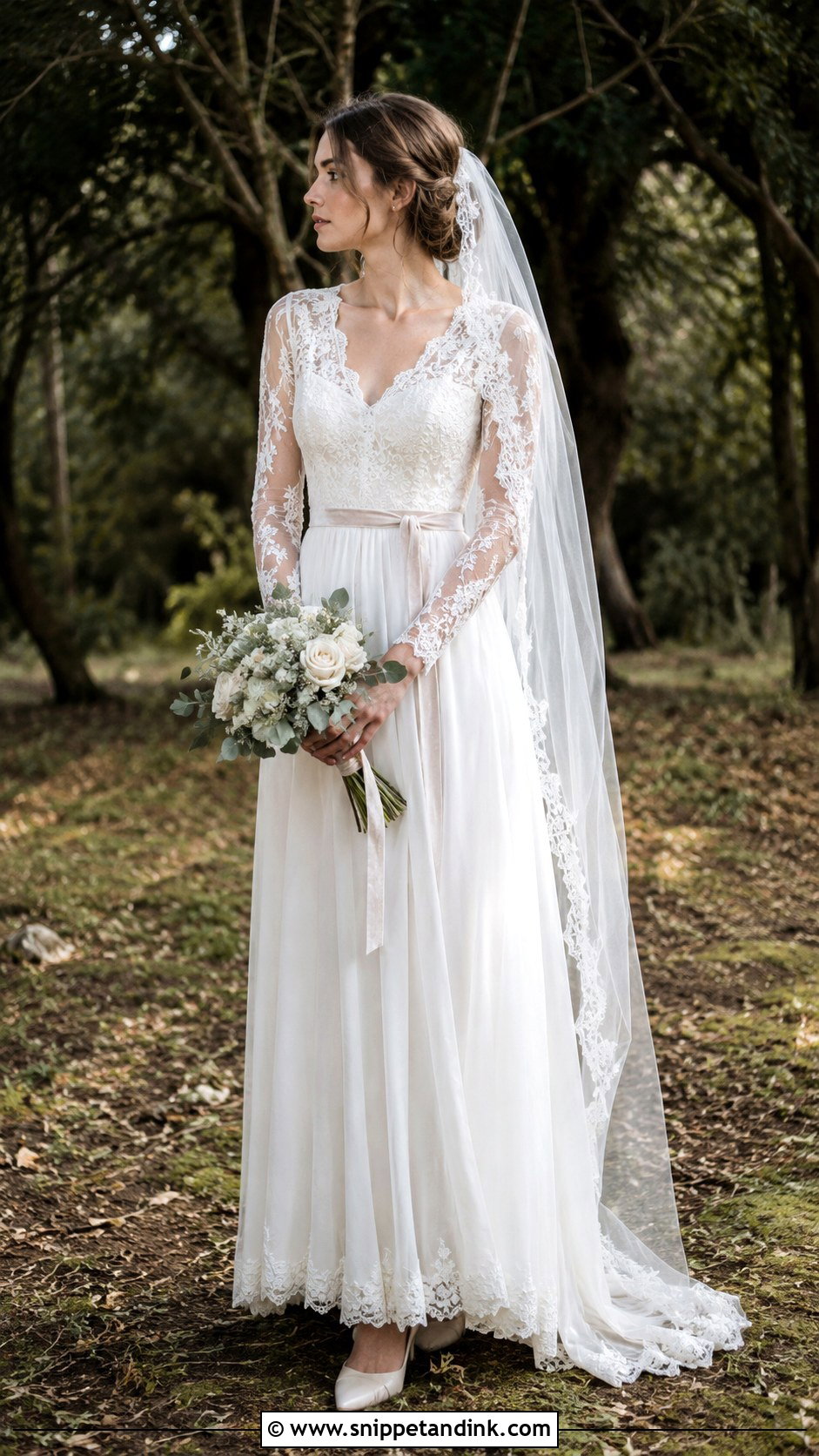
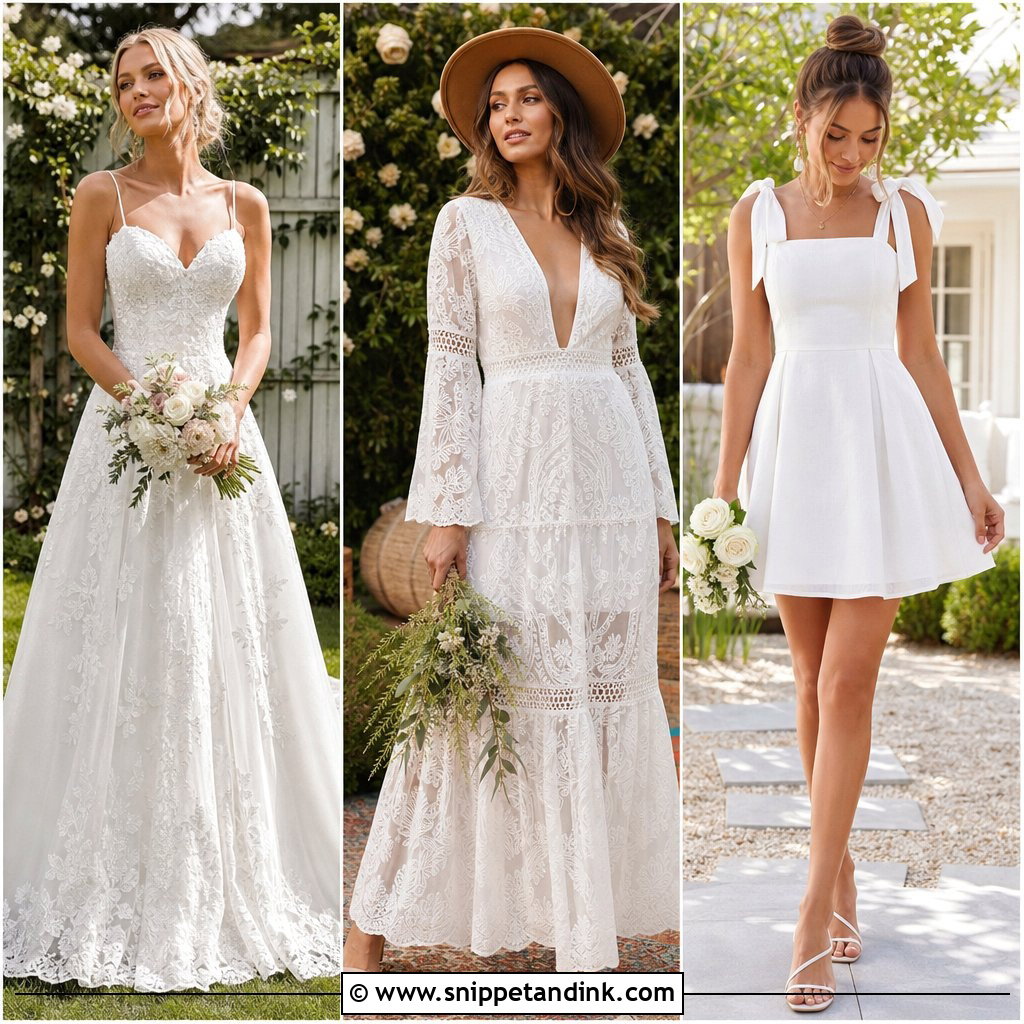
Long lace sleeves on an illusion base are my first suggestion for a spring morning or early fall ceremony under trees, where the shade can feel noticeably cooler than the sunny lawn. The mesh lets the floral pattern sit on the skin, and a modest V-neck with a chiffon-lined skirt keeps the coverage from looking heavy. Fitted lace sleeves need room at the elbow, so have your seamstress pin them while your arm is bent, not straight. Pointed ivory flats, a velvet ribbon at the waist and a small posy of cream roses, herbs and eucalyptus finish it. A half-up style shows the neckline, and a narrow veil that stops just below the shoulders won’t hide the sleeve detail.
4. Bell Sleeve Cottagecore Wedding Dress
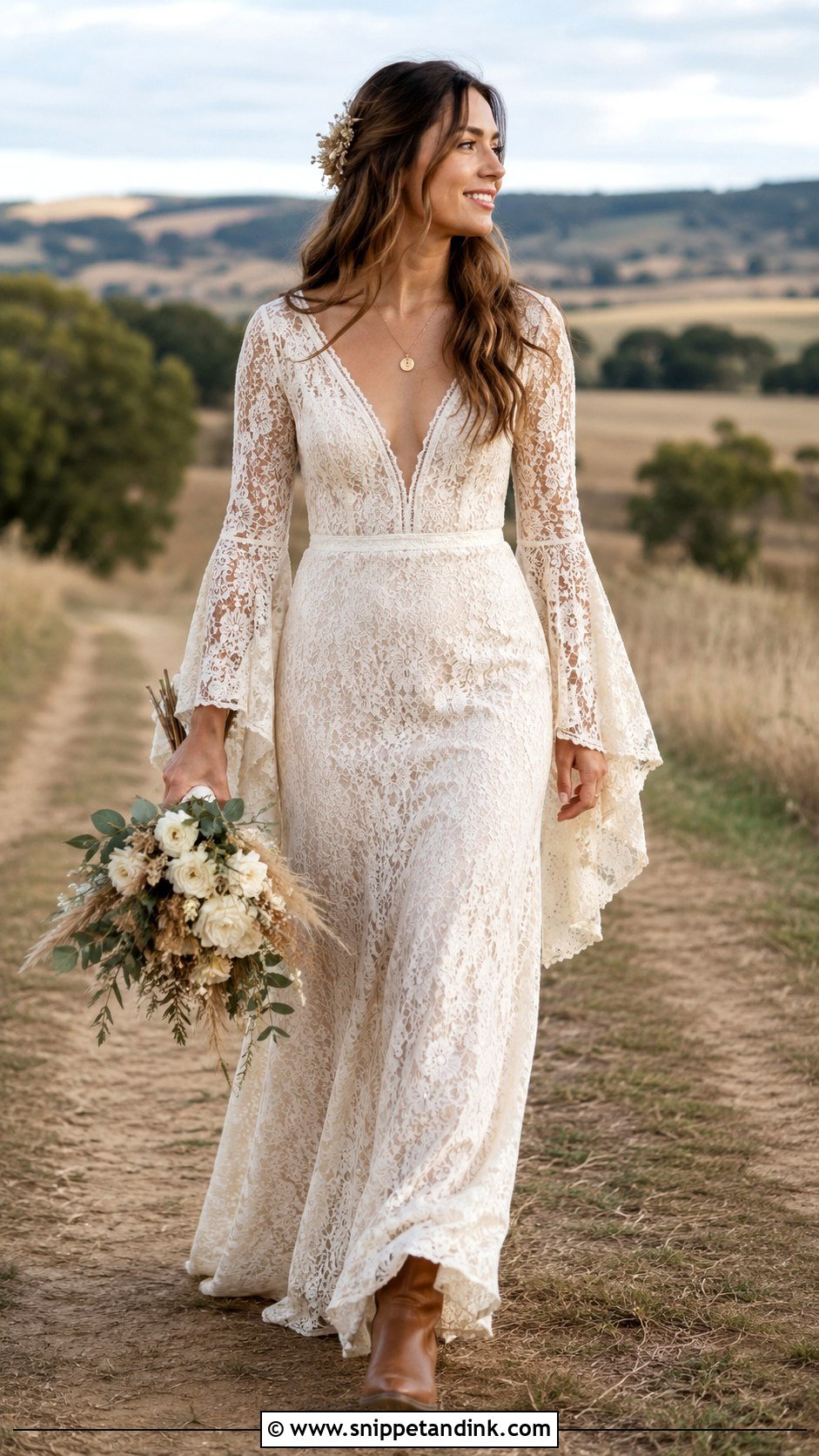
Bell sleeves give a 1970s note, but I steer brides toward a version that stays close to the arm until the elbow and only then flares. Full-length bells trail through cake, catch on chair backs and tangle with the bouquet. Balance the flare with a defined waist and a fluid floor-length skirt. Tan or ivory leather ankle boots grip uneven ground better than any heel and suit a woodland clearing or restored barn. Keep jewelry to small gold hoops and a thin pendant, and leave bracelets off entirely, since they snag lace cuffs. Loose waves, a floral comb and dried grasses mixed with fresh white blooms complete it.
5. Corset Cottagecore Wedding Dress

A corset reads softer when the boning is light and the skirt carries the romance. I’d look for a lightly boned bodice with a sweetheart neckline, visible seams and small floral appliqués, over tulle or organza that moves. Ask for supportive cups and adjustable lacing during alterations. Lacing matters more than people expect: a bodice pulled tight in the morning can feel very different after lunch and an afternoon in warm air, and a lace-up back lets someone loosen it slightly before dinner. Satin ballet flats, pearl earrings and a fine gold bracelet are enough. A loose low bun shows the neckline, a chapel-length veil adds movement behind you, and ivory roses with jasmine suit the unstructured shape.
6. Off Shoulder Cottagecore Wedding Dress
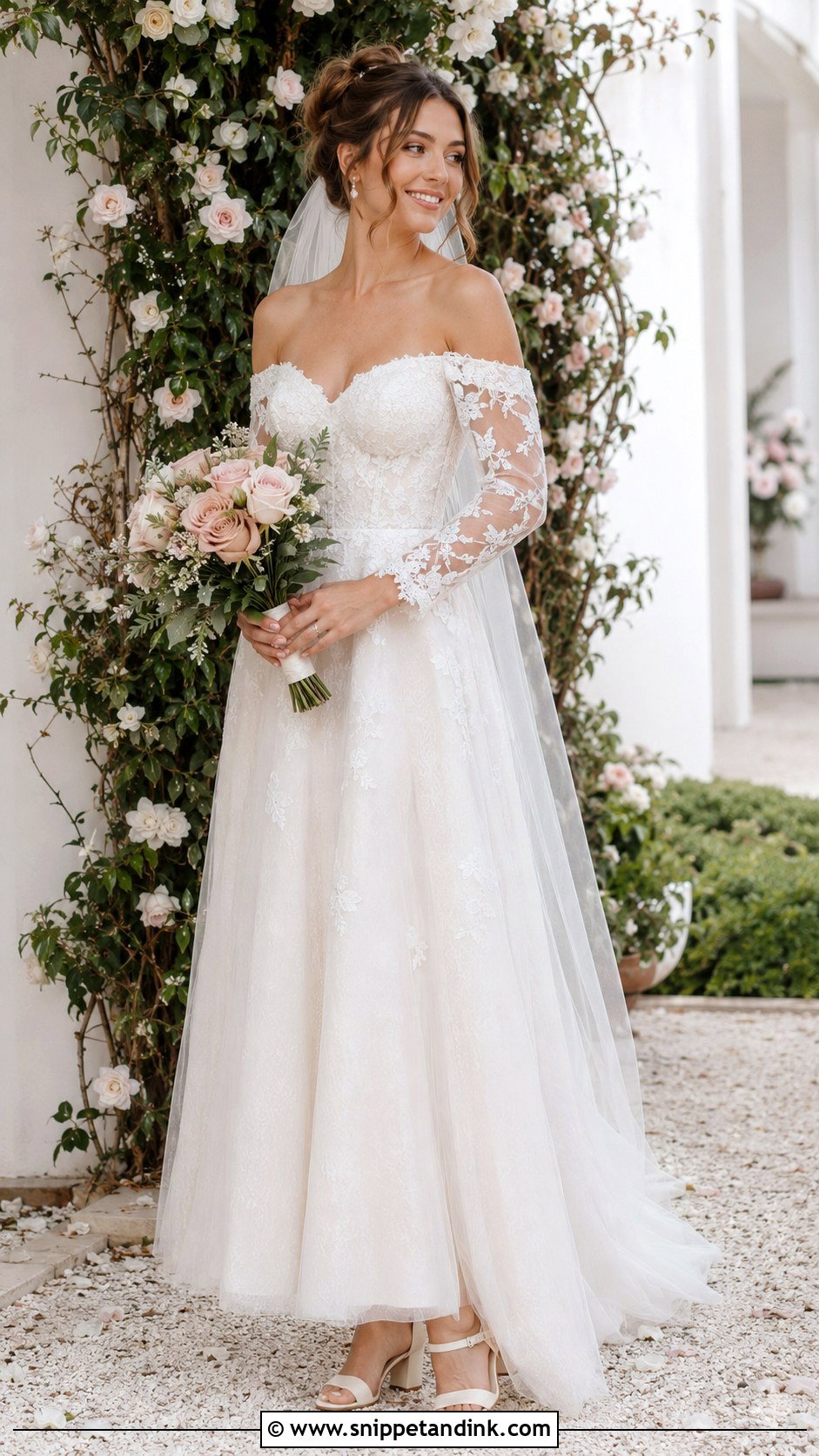
Off-shoulder lace is the neckline I test hardest. I ask a bride to raise both arms as if hugging someone taller, and a badly fitted band will either pin her elbows to her sides or slide down. A supportive bodice with lace draped across the shoulders fixes most of that, provided the band is fitted to your real arm movement before final alterations. Pearl studs, a delicate choker and ivory block heels suit it. A textured updo shows the neckline and keeps strands from blowing across your shoulders outdoors, and a sheer veil anchored beneath the updo won’t pull. Blush roses, white ranunculus and trailing silk ribbon add a hint of color for a garden ceremony that moves indoors later.
7. Tea Length Cottagecore Wedding Dress
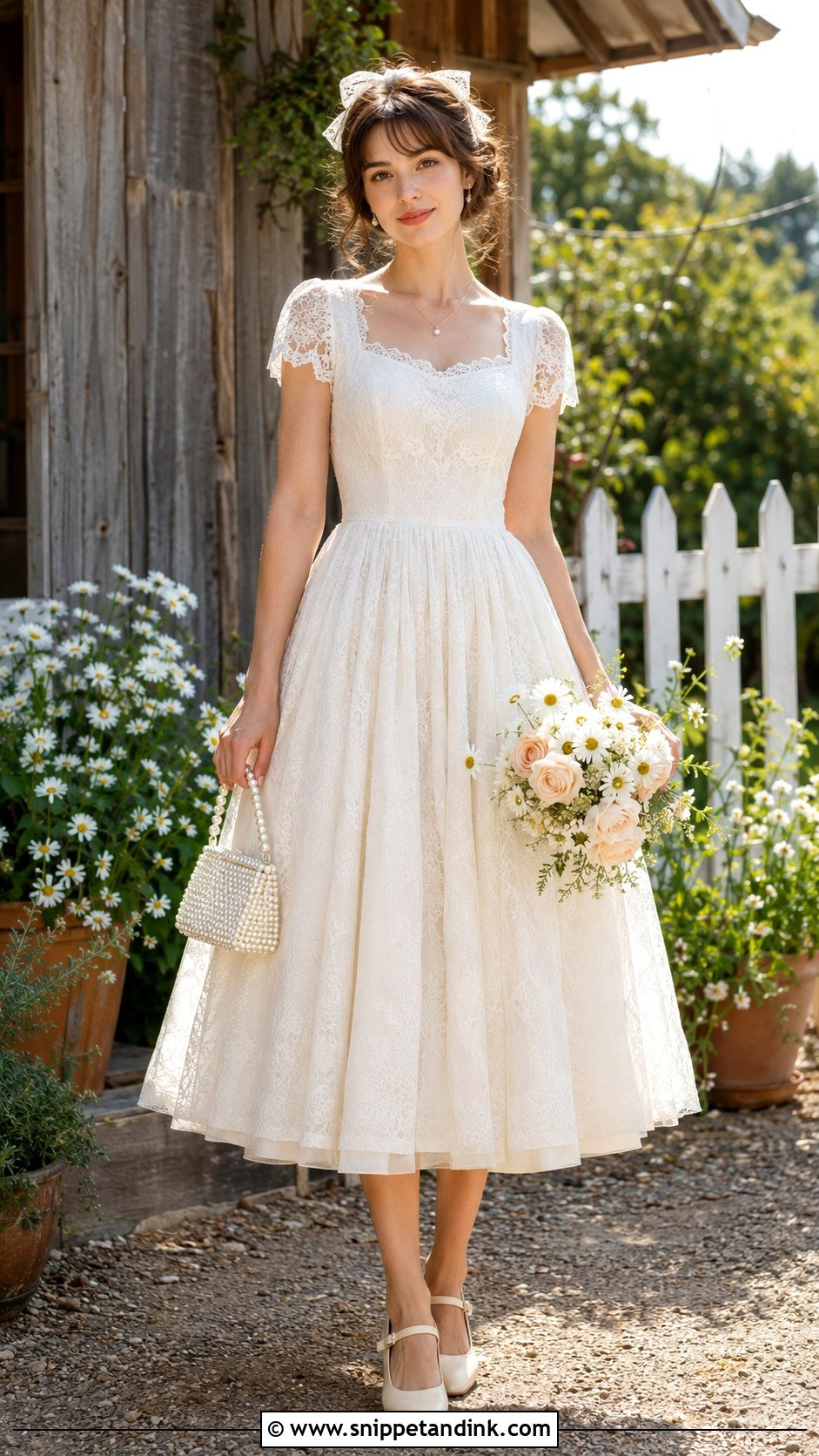
Tea length is the most practical hem on this list for grass, gravel and garden paths, because nothing touches the ground. The trade-off is that your shoes are now on show. With a fitted lace bodice, short sleeves and a full skirt landing between knee and ankle, I like ivory Mary Jane heels, since the strap stops a heel slipping out on soft lawn; embroidered flats work too. Add a small pearl bag, simple studs and a birdcage veil or lace hair bow so the proportions stay short and neat. A compact bunch of daisies and roses tied with cotton ribbon suits a daytime ceremony and a small reception.
8. Empire Waist Cottagecore Wedding Dress
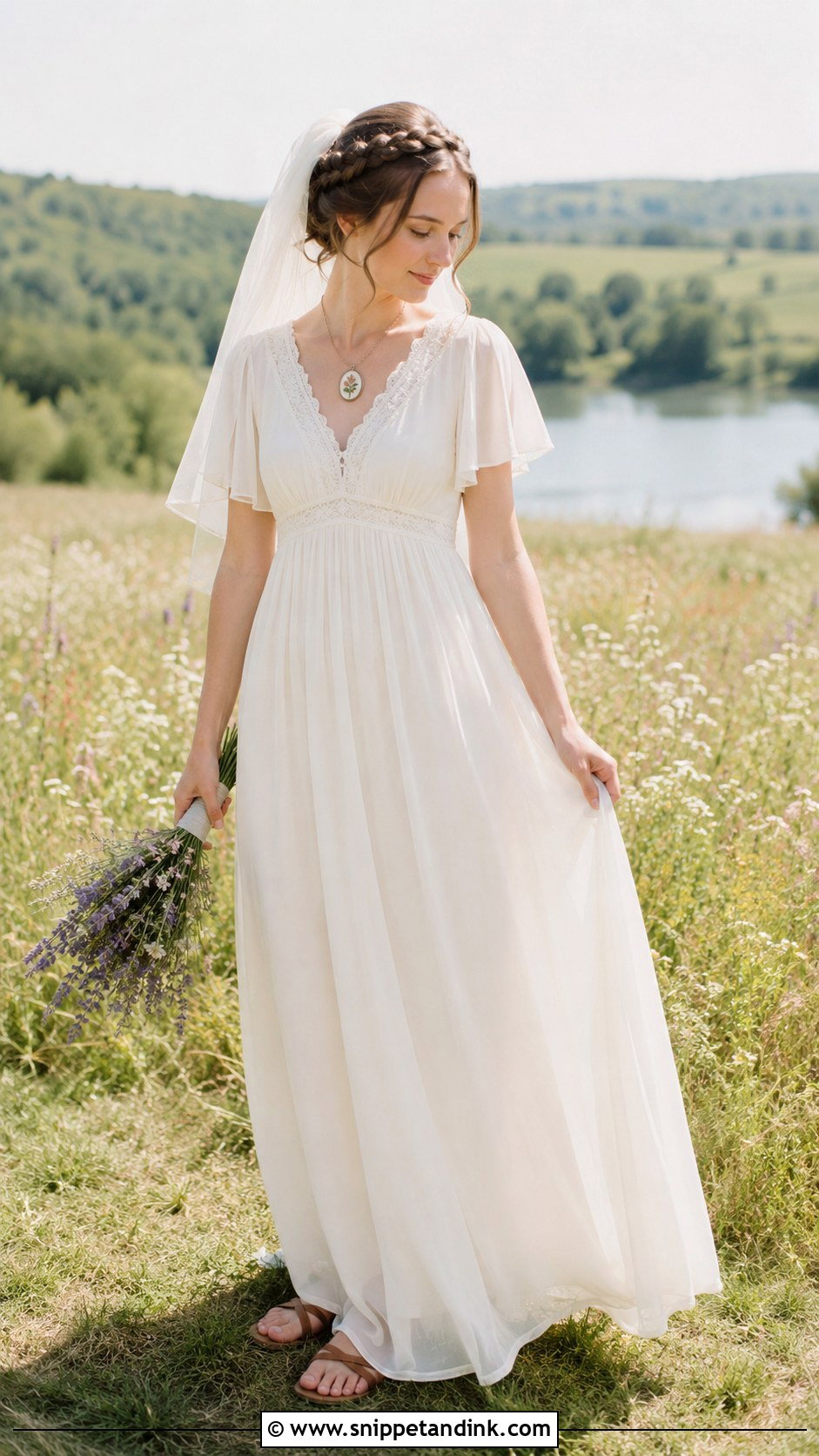
Empire waists depend on drape. In ivory chiffon, the skirt falls from just under the bust and moves with you; in stiff satin, the same cut can stand away from the body like a tent, so I have a bride walk the length of the shop before deciding. Delicate lace at the neckline and flutter sleeves keep the top soft. Simple leather sandals, a pressed-flower pendant and a shoulder-length veil suit it, with loose waves or a crown braid. It’s also one of the easiest shapes to sit in through a long dinner. Lavender, white roses and chamomile fit a summer meadow or lakeside gathering.
9. Blush Cottagecore Wedding Dress
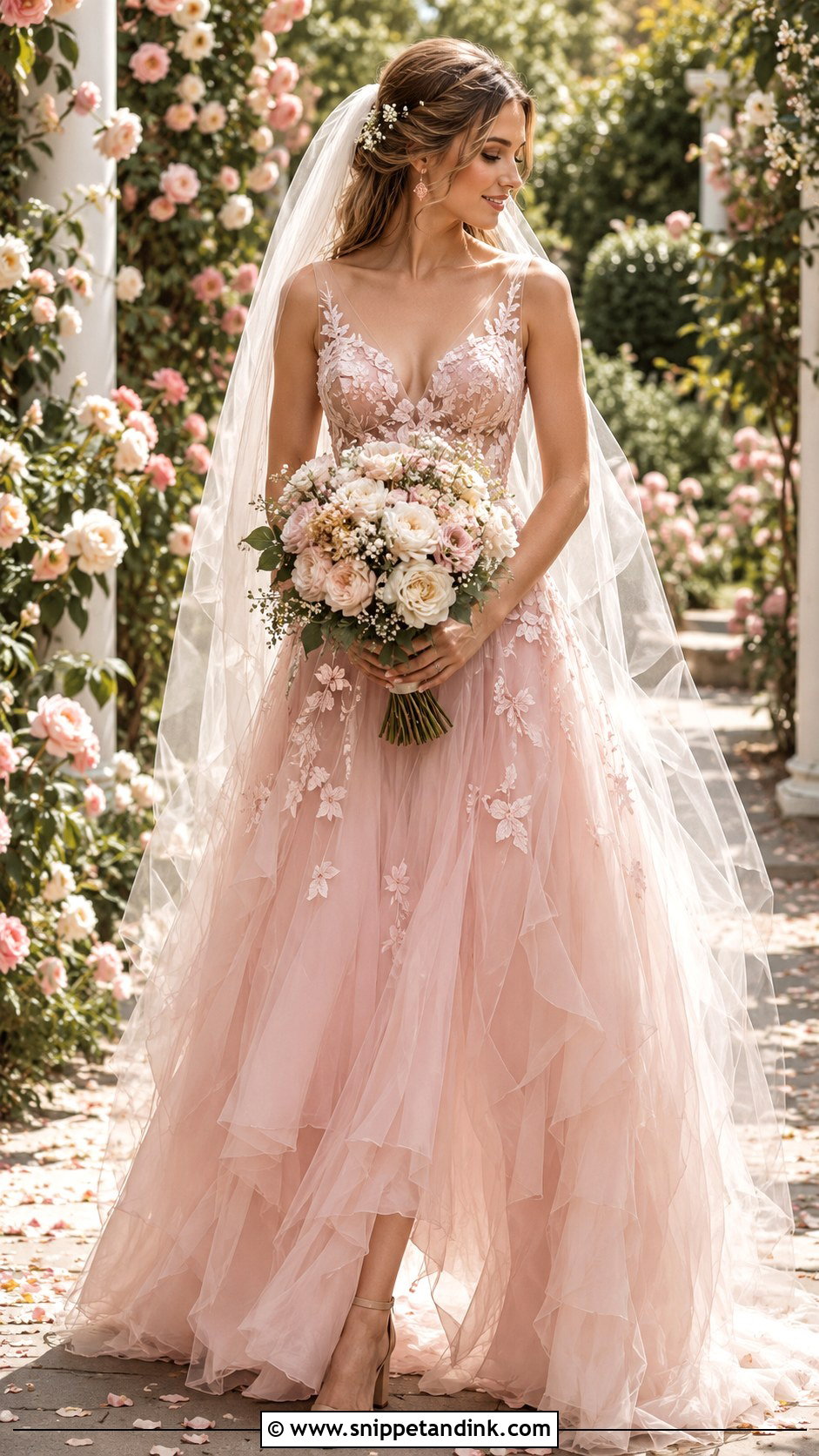
Blush is unpredictable on camera. A pale pink tulle that looks rosy in the shop can photograph almost white in midday sun and turn peachy at golden hour, so I take swatches outside and snap them on a phone before a bride commits. Choose a barely pink gown with tonal floral appliqués, a fitted waist and a flowing A-line skirt. Nude block heels, rose-gold earrings and a sheer ivory veil keep the rest soft, and the ivory veil actually helps the pink read as intentional. A half-up style with fresh baby’s breath adds texture, and cream roses with blush peonies tie the dress to a rose garden in spring.
10. Sage Green Cottagecore Wedding Dress
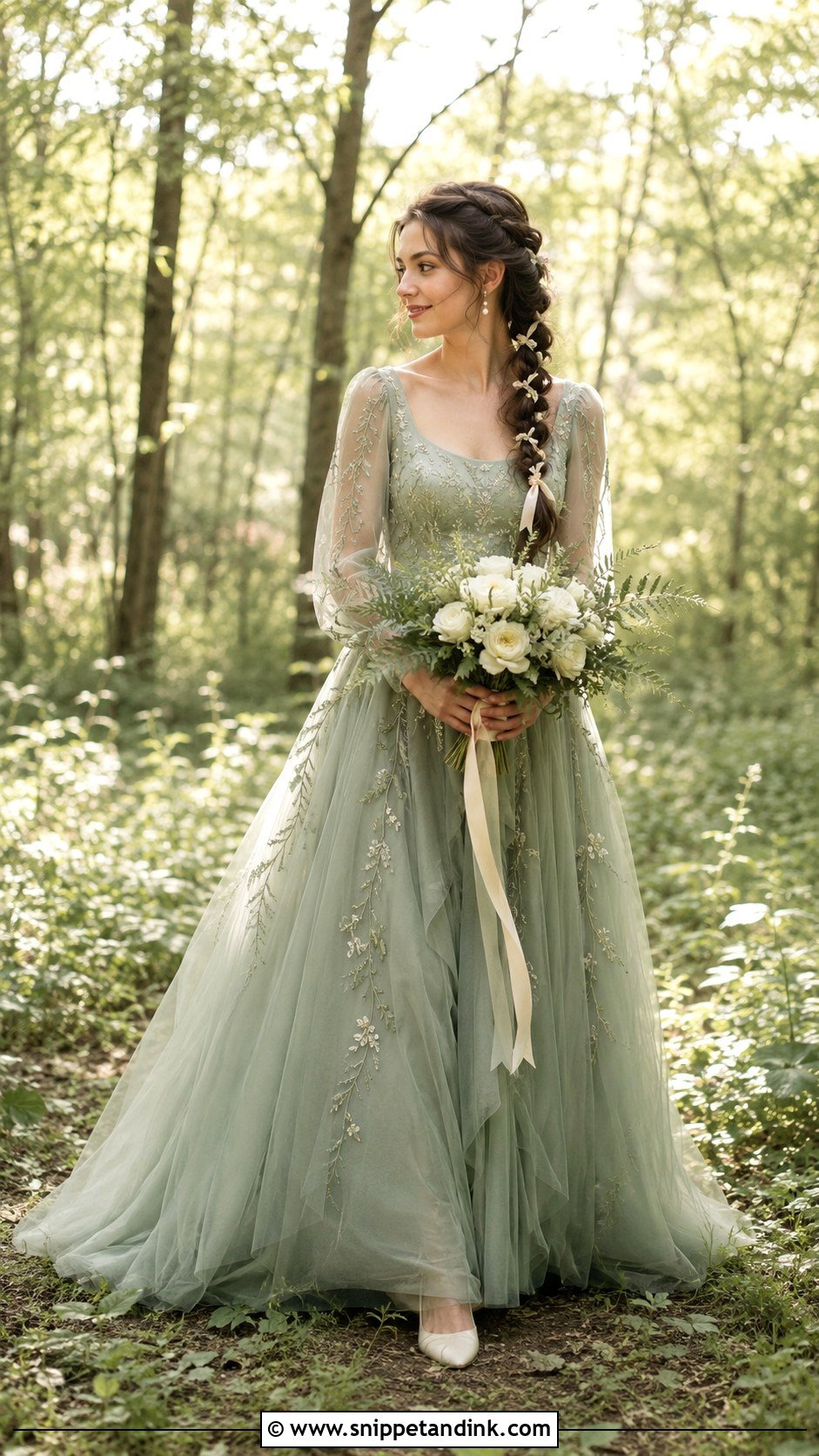
Sage only works when the shade is dusty. A muted floor-length gown with embroidered vines, sheer sleeves and a layered tulle skirt gives a distinctive woodland look, but a saturated green tends to blend into the trees, and the bride disappears into the background of her own photos. Keep accessories clearly bridal: ivory shoes, pearl drops, a cream ribbon through a loose braid and a light ivory veil for contrast. A tonal bouquet of white garden roses, ferns and small green berries won’t compete with the embroidery in a forest clearing or botanical garden.
11. High Neck Cottagecore Wedding Dress
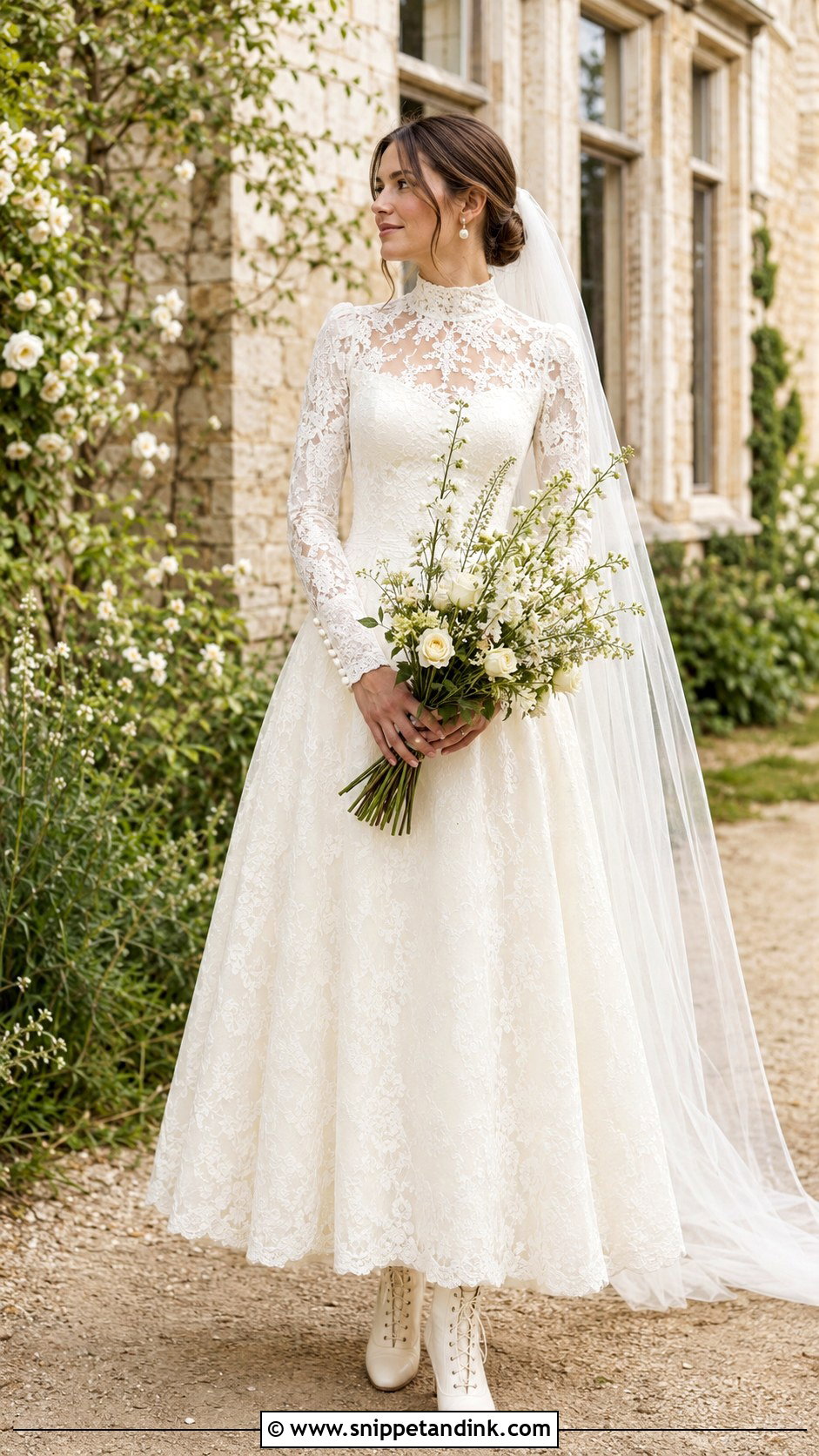
Before a bride buys a high-neck lace gown, I have her turn her head side to side and look down at her bouquet. A collar that’s even slightly snug will rub all day, and lace yokes scratch if the edges aren’t finished softly. When it fits, the sheer yoke, small covered buttons and fitted sleeves have real vintage character, and an A-line or lightly gathered skirt keeps it from looking severe. Skip the necklace; small pearl or opal earrings are enough. Ivory lace-up boots, a structured mini bag and a veil set beneath a smooth low bun suit cooler weather and a historic home, with white roses, foxglove and fern for height.
12. Linen Cottagecore Wedding Dress
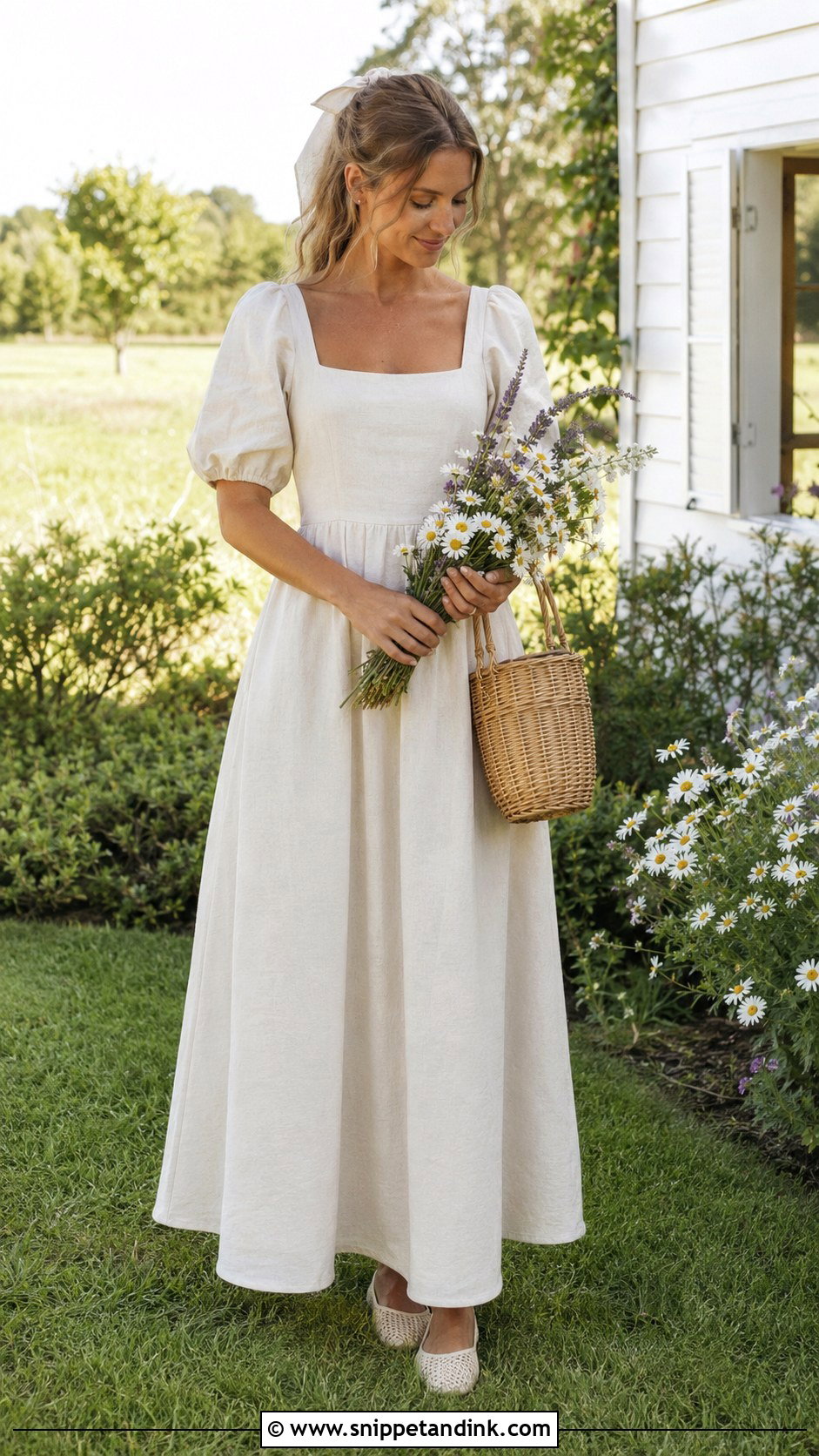
Linen wrinkles the moment you sit in a car, and no steamer will stop that, so this is a dress for brides who are happy with texture. A soft ivory linen blend creases less than pure linen and makes a relaxed cottagecore wedding dress for a small outdoor ceremony. Insist on a lining, because light unlined linen can turn see-through in direct sun. A square neckline, fitted waist, short puff sleeves and an ankle-length skirt keep it simple. Woven flats, a small basket-style bag and a loose bun wrapped with cream ribbon match the farmhouse mood, and daisies with cosmos and lavender suit a picnic reception.
13. Tiered Tulle Cottagecore Wedding Dress
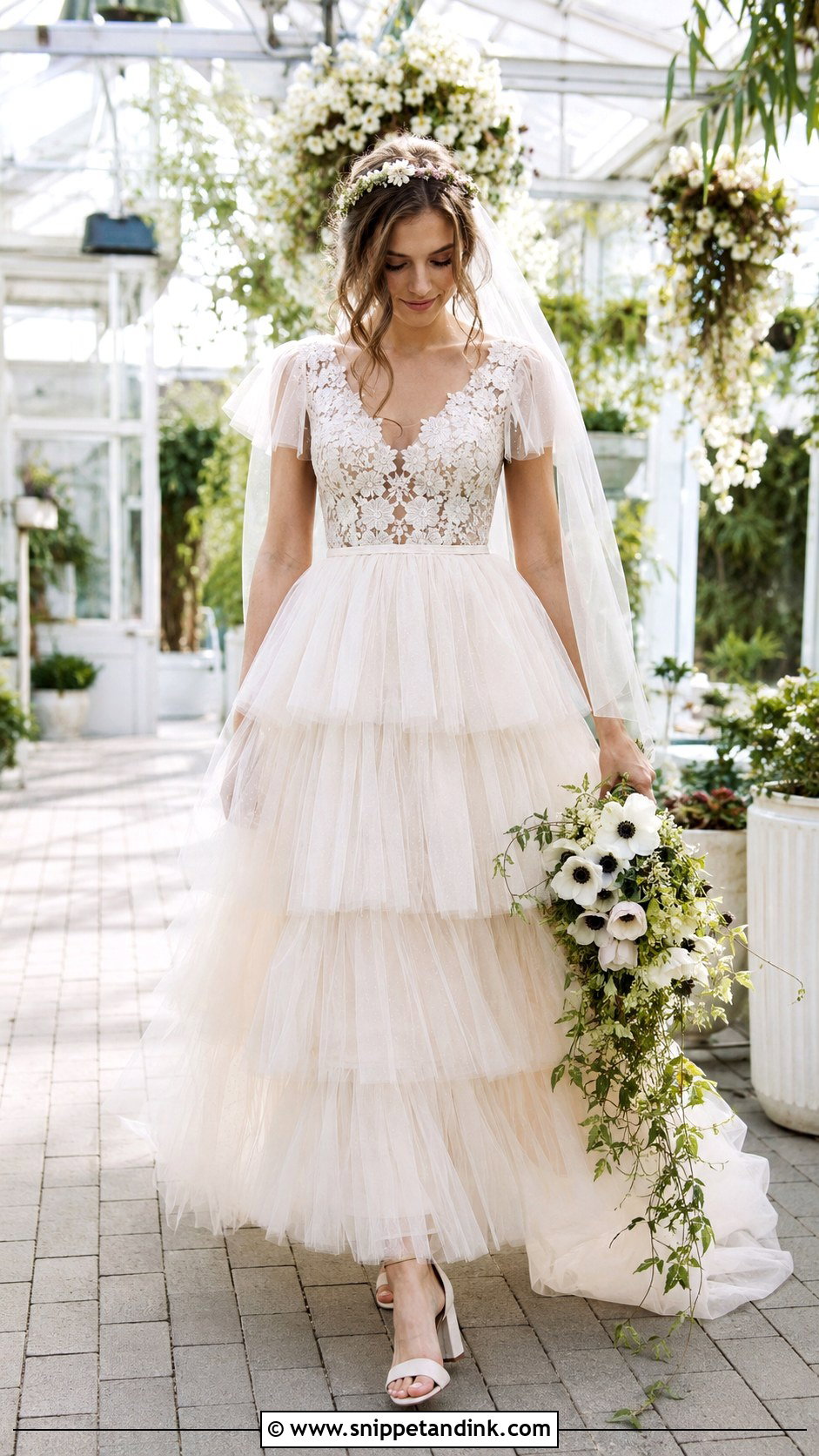
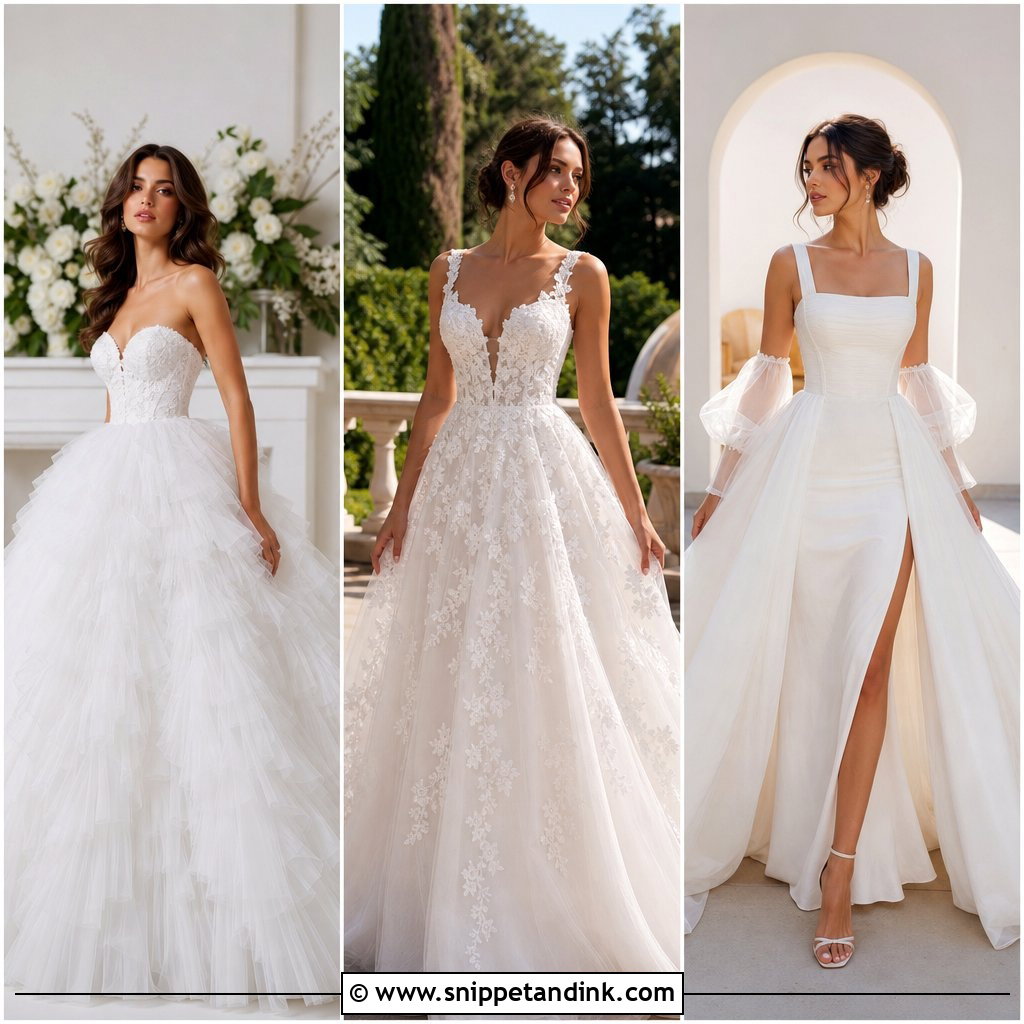
Tiered tulle gives volume without weight, which makes it far easier outdoors than a ball gown. The detail I watch is the bottom tier. Tulle picks up grass seed and damp at the hem, and once it’s wet it clings, so the lowest layer should either clear the ground or bustle securely for the reception. A floral lace bodice with narrow straps or flutter sleeves and a clearly defined waist stops the layers from swamping you. Ivory block heels, a delicate floral headband and tiny crystal earrings keep it light, and a fingertip veil blends into the skirt. White anemones and sweet peas suit a greenhouse ceremony without looking like costume.
14. Cap Sleeve Cottagecore Wedding Dress
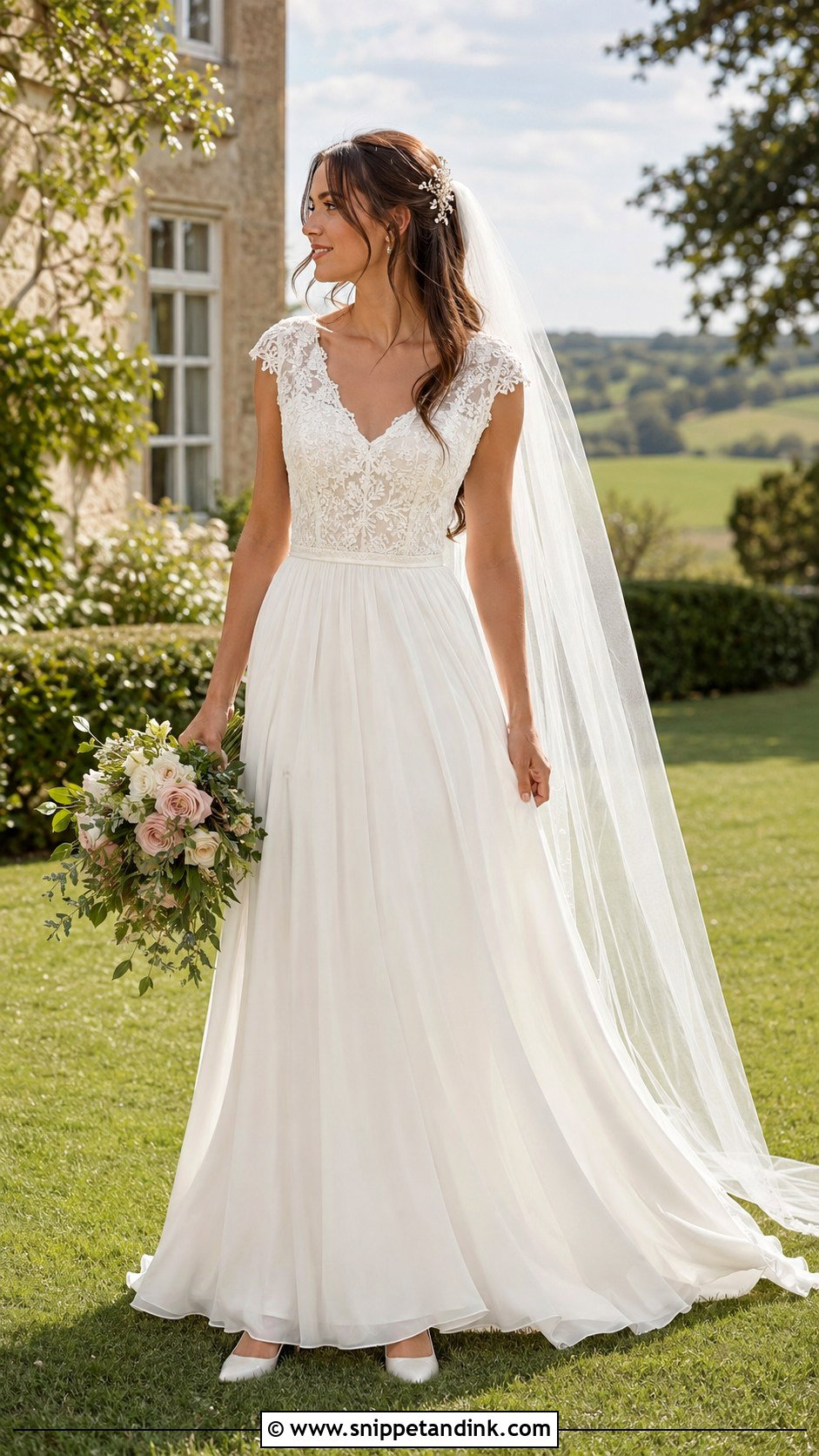
Cap sleeves are a quiet shape, and I suggest them to brides who want some shoulder coverage but run warm. An ivory A-line with lace on the bodice, a gentle V-neck and a light chiffon skirt pairs well with an open or illusion back. Check that the sleeve edge sits on the shoulder rather than cutting across the top of the arm, which is what makes some cap sleeves look tight in side photos. Low pointed heels, a pearl hair comb and a slim bracelet are plenty, with loose curls swept to one side and a waist-length veil. Garden roses, white lilac and leafy branches suit a garden, vineyard, country estate, or an indoor room with botanical decor.

15. Detachable Sleeve Cottagecore Wedding Dress
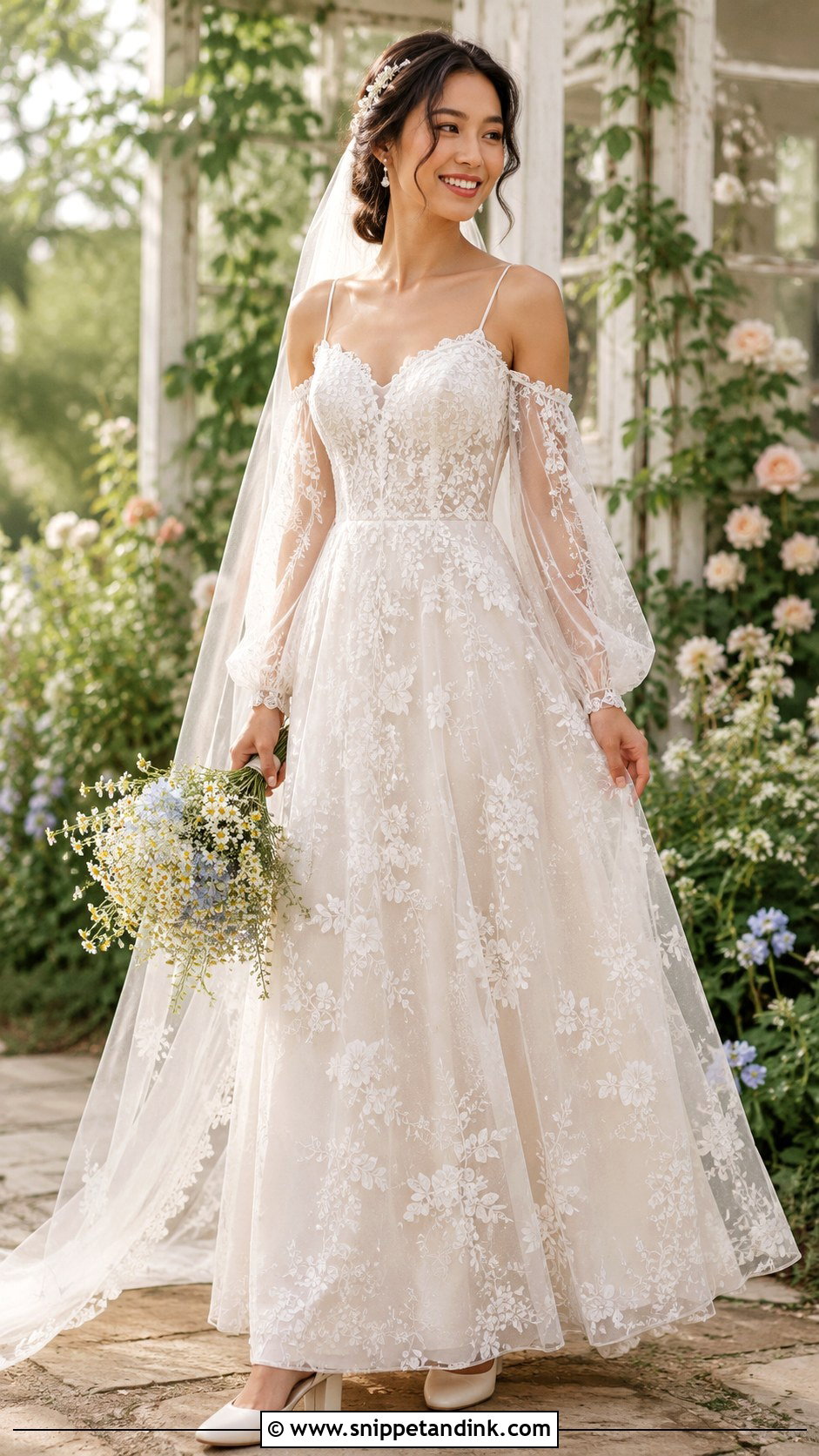
Removable sheer sleeves make sense when a ceremony starts cool and the reception warms up: wear them on the floral lace A-line for the vows, then take them off for dancing. The weak point is the attachment. Snaps hidden under a strap can press into the shoulder after a few hours, and elastic bands can leave red marks that show once the sleeves come off. Try both versions at your fitting and ask how the fastenings are finished. Ivory block heels, pearl drops and a vine-shaped hairpiece suit both looks, and a half-up style gives a secure base for a fingertip veil. White roses, pale blue flowers and chamomile keep the color gentle.
16. Open Back Cottagecore Wedding Dress
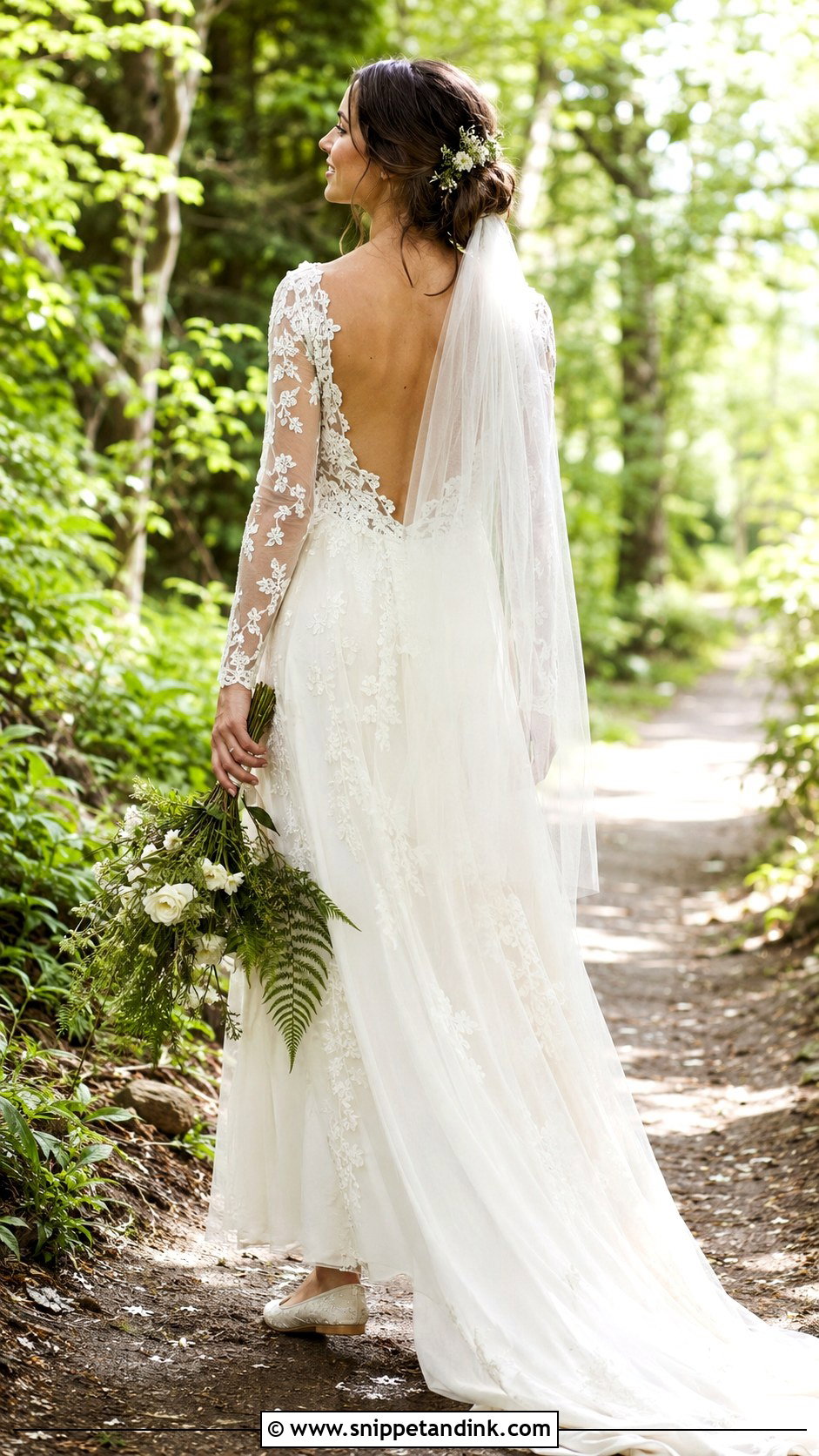
Pair an open back with long lace sleeves and a modest front, and the surprise comes when you turn at the altar. Small covered buttons or a thin ribbon tie along the edge add vintage character. Support is the real question: a low back rules out a standard bra, so built-in cups or a stick-on option should be settled at the first fitting, not the last. Place the veil comb beneath a loose low bun so the tulle falls below the back detail instead of covering it. Ivory flats, delicate drops and a botanical comb finish the look, with a narrow bouquet of white flowers and trailing fern.
17. Basque Waist Cottagecore Wedding Dress
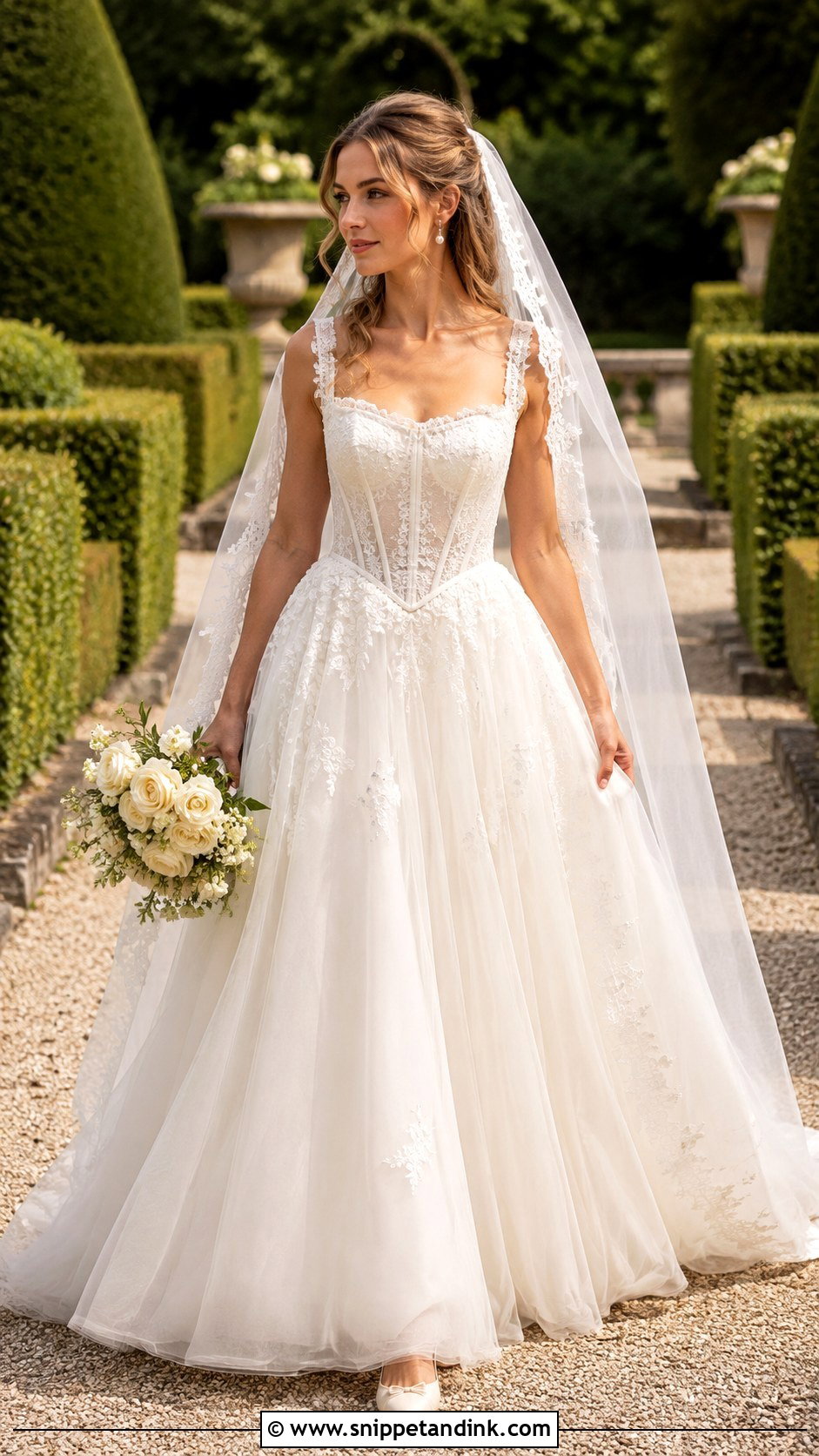
A basque waist dips to a soft point at the front and lengthens the torso, which flatters a lot of figures. The point has to sit dead center and lie flat; if the bodice is even slightly long, it folds when you sit, and that crease shows in every seated photo. Pair a lace corset bodice with a square or sweetheart neckline and a full tulle skirt, ideally with appliqués that continue lightly past the waist. Low satin heels, pearl earrings and a ribbon choker suit it. Soft waves pinned back beneath a lace-edged veil, with cream roses and pale delphinium, fit a formal garden.
18. Plus Size Cottagecore Wedding Dress
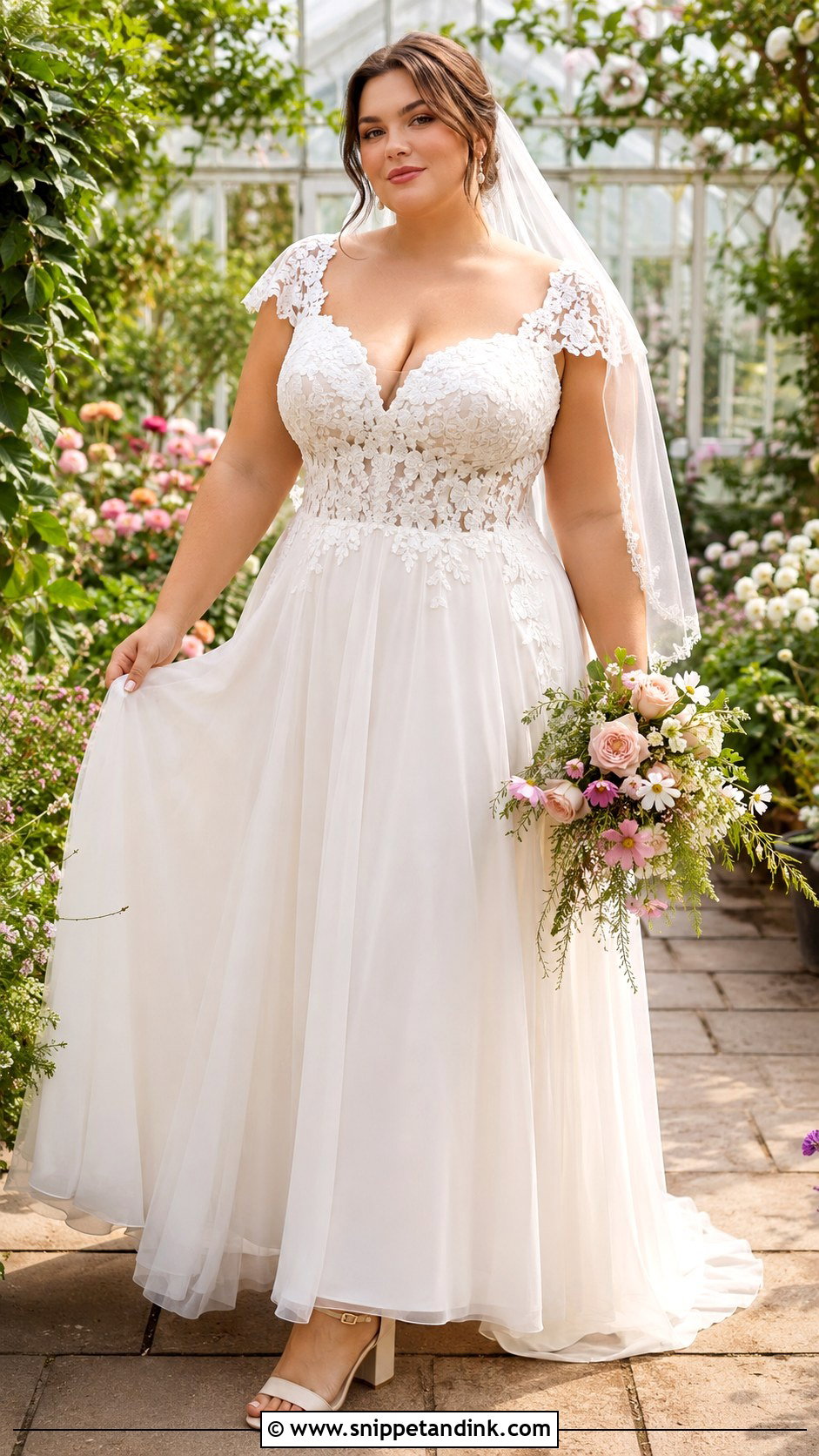
In plus sizes, I want structure doing the work, not fabric hiding the body. A lace bodice with wide straps or soft sleeves and an adjustable corset back gives real support and lets the fit be tweaked on the day. Ask for botanical appliqués spread across the whole gown, because motifs bunched on the torso pull the eye there and leave the skirt looking plain. During fittings, sit, walk, raise your arms and test the bustle. Cushioned block heels, pearl earrings and a light veil on a secure low updo suit it, with a medium bouquet of roses, cosmos and trailing ribbon. The goal is a gown that supports your shape and still looks like you.
19. Maternity Cottagecore Wedding Dress
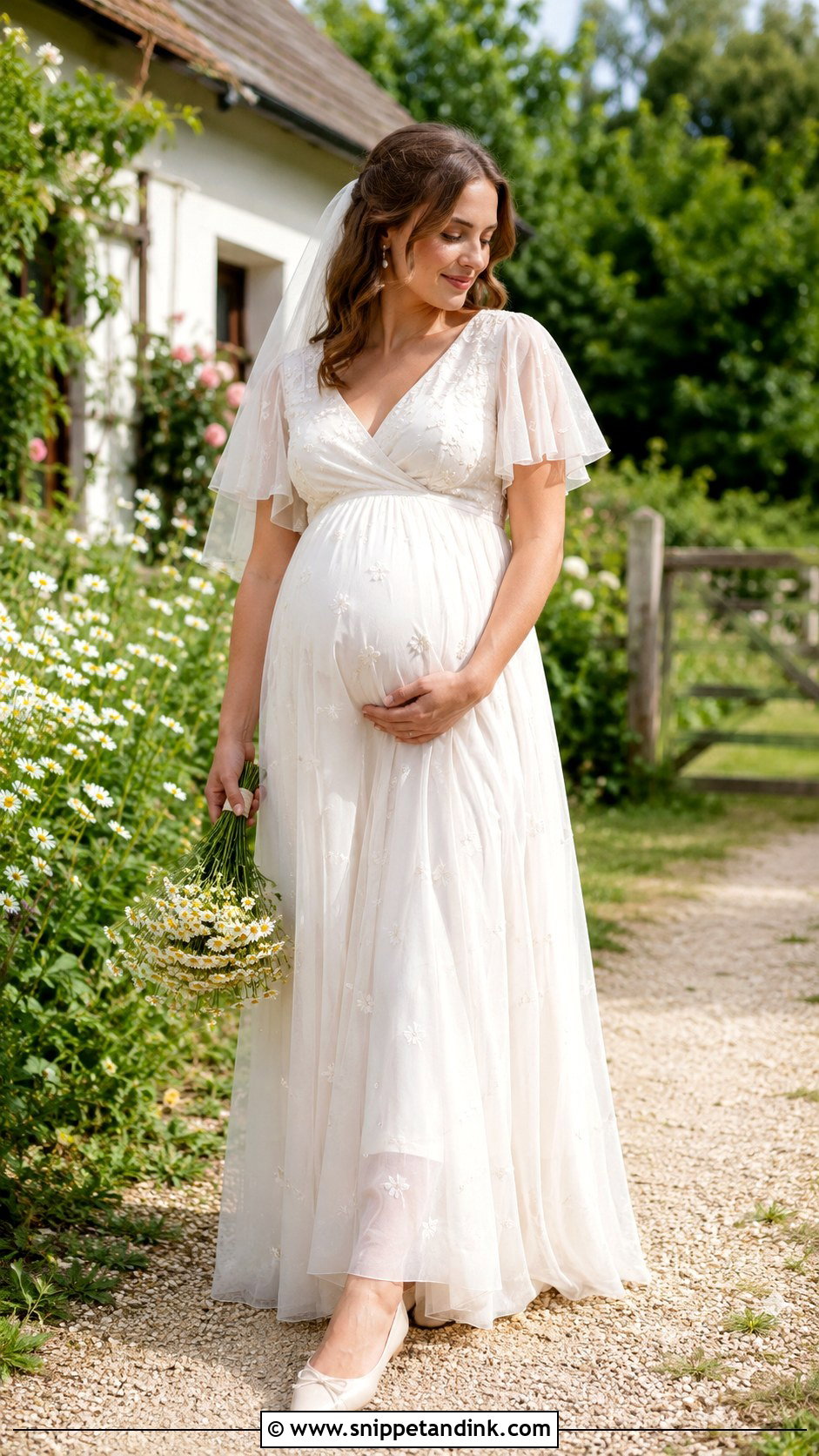
For a pregnant bride, I plan everything around one fact: the body keeps changing until the week of the wedding. Choose a gown that fits securely under the bust and then falls into chiffon or tulle, with flutter sleeves or a wrap neckline that can be adjusted. Book final alterations as close to the date as your seamstress allows, and ask for lacing or a stretch panel in the back. Breathable lining matters more than usual, since many pregnant brides feel the heat sooner outdoors. Supportive ivory flats, small pearl earrings and a floral comb in loose waves keep things easy, and a short light veil is far simpler to manage than a cathedral length.

20. Simple Silk Cottagecore Wedding Dress
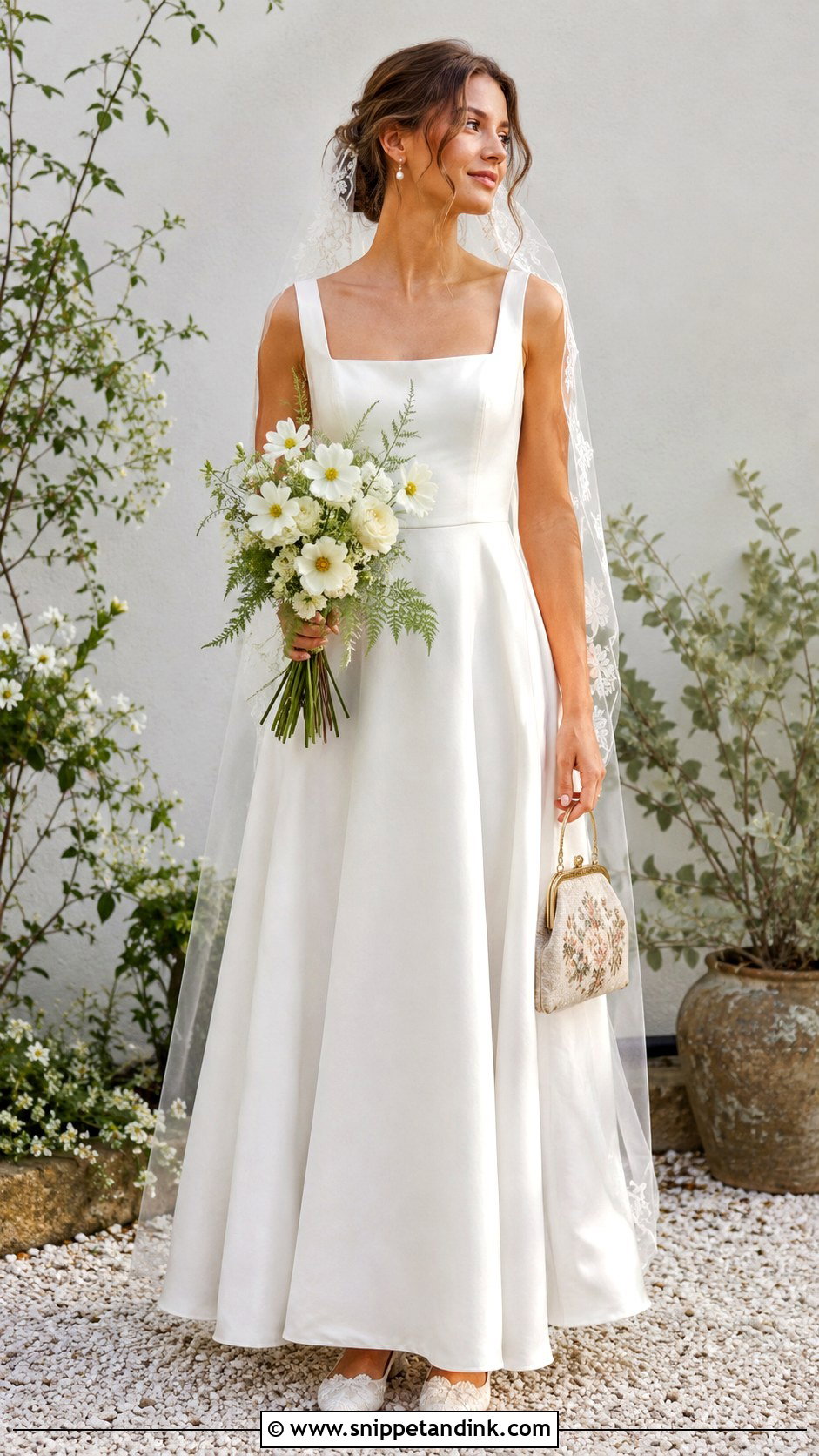
Not every cottagecore bride wants lace. A plain ivory silk or satin A-line with a square neckline and wide straps becomes cottagecore through what you add: embroidered flats, a floral lace veil, pearl earrings and a small vintage-style handbag. A low twisted bun with a few flowers tucked to one side and a loose bouquet of white cosmos, garden roses and fern carry the countryside feel. Know before you buy that silk shows water spots and grass marks more readily than tulle, so keep a clean cloth in your kit and don’t kneel on the lawn for portraits. For a minimalist bride, this is the version that still feels personal.
Getting Grass Stains and Pollen Out Before the Gown Goes Into Storage
A dress worn outdoors comes home with more than a few scuffs. Hems collect grass, mud and pollen, and lily pollen especially can leave a stubborn orange mark on ivory if someone rubs it.
- Don’t scrub anything on the night. Let mud dry, then brush it off gently. Lift pollen with sticky tape or a soft brush; never wipe it.
- Get the gown to a specialist cleaner within a few weeks. Spilled champagne or cake sugar is invisible at first but can turn yellow-brown over time.
- Tell the cleaner the fabric content and point out every mark, including perspiration at the underarms of fitted sleeves and the inside of a corset.
- Store it in a breathable cotton bag or an acid-free box, away from plastic, damp and daylight. Plastic traps moisture, which is one of the main reasons ivory yellows in a wardrobe.
Simple linen or cotton gowns can sometimes be hand-washed if the care label allows it. Anything with beading, embroidery or boning should go to a professional, and I’d never put a structured bodice anywhere near a washing machine.
Lace, Linen and the Lawn Underfoot
Floral embroidery, puff sleeves, vintage lace, earthy color and loose skirts all express this style differently, and the right one depends on your venue, your season and how you like to move. Before deciding, think about the ground you’ll stand on, the temperature at ceremony time and how long you’ll sit at dinner. A cottagecore gown should still let you cross a field, hug your grandmother and dance without holding your skirt up. Get the fabric and hem right for your setting first, then let flowers, shoes and small vintage touches make it yours.
You'll Like These Ideas:





Leave a Reply