
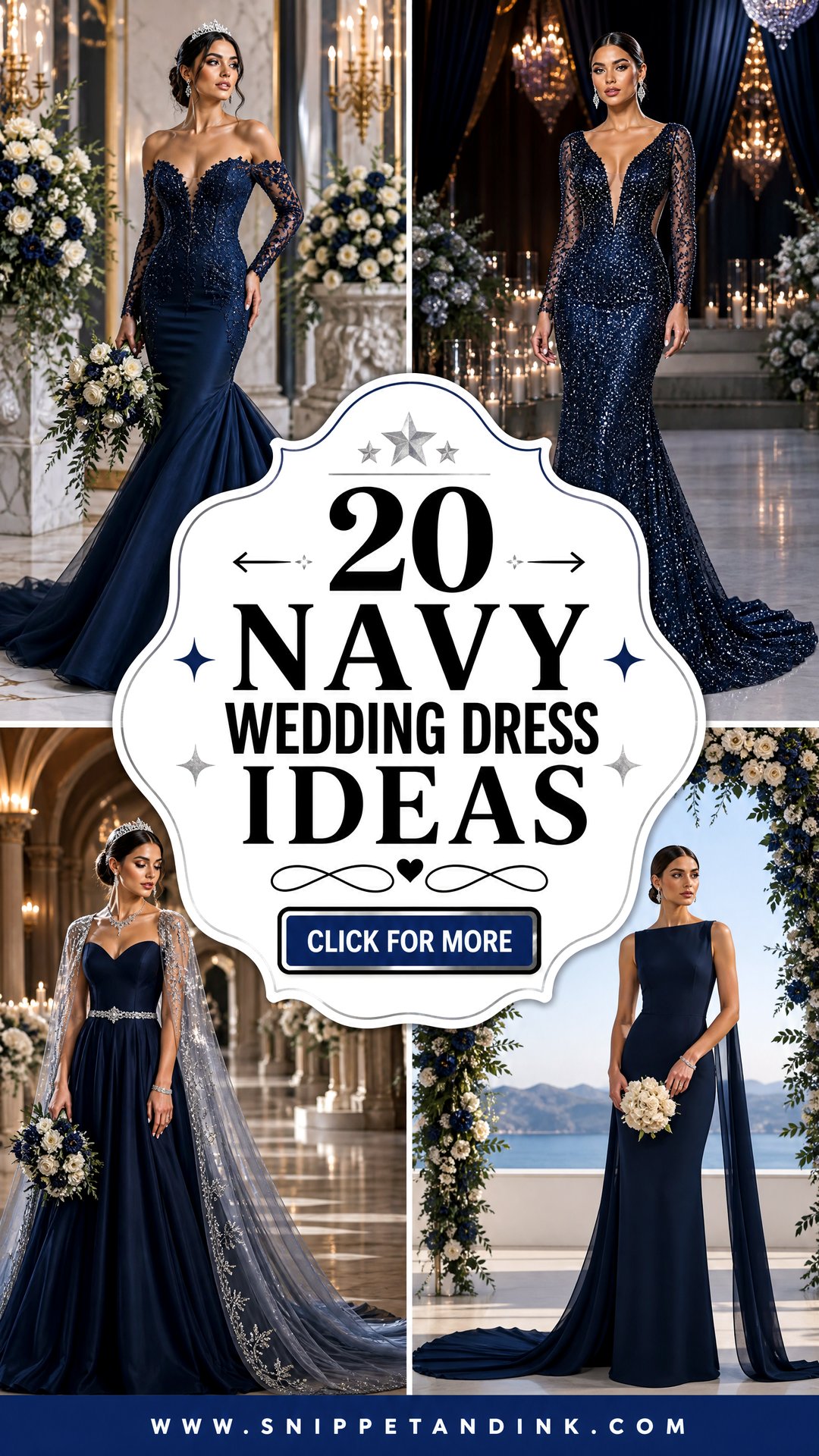
Navy is the color I see brides choose when white simply doesn’t feel like them. It holds up in every season, sits well with silver, gold, pearl and crystal, and bridal designers now make plenty of room for color, volume, visible corsetry, basque waists, bows and floral work. The real task with any dark gown is making sure guests read it as a wedding dress and not a gala dress. A veil, considered jewelry, formal shoes and a pale bouquet do most of that work. The gowns below run from ball gowns to tea length, with notes on venue, season and figure for each.
Ordering a Gown in a Color the Shop Sample Isn’t
Most bridal boutiques keep their samples in ivory, so you’ll often try a dress on in white and order it in navy from a small swatch. That takes some imagination and a few direct questions. The first is whether the designer makes the gown in navy fabric from the start or dyes it after construction. Gowns cut from navy cloth tend to keep lace, lining and thread consistent. Dyed gowns can show slight shade differences between fabrics that took the dye differently.
Color orders are usually final sale, and many designers add time to the normal production schedule for them. Wedding gowns already take several months to arrive, with alterations after that, so I’d order earlier than a friend buying ivory would.
Questions to ask before the order goes in
- Can I see the navy swatch in daylight, not only under the shop lights?
- Is the lining the same navy, or a lighter blue that will change how the lace looks?
- Can the veil tulle come from the same supplier so the shades match?
- What thread will the seamstress use for alterations, and will it show on satin?
- Is a color order returnable or changeable once production starts?
1. Navy Satin Ball Gown Wedding Dress
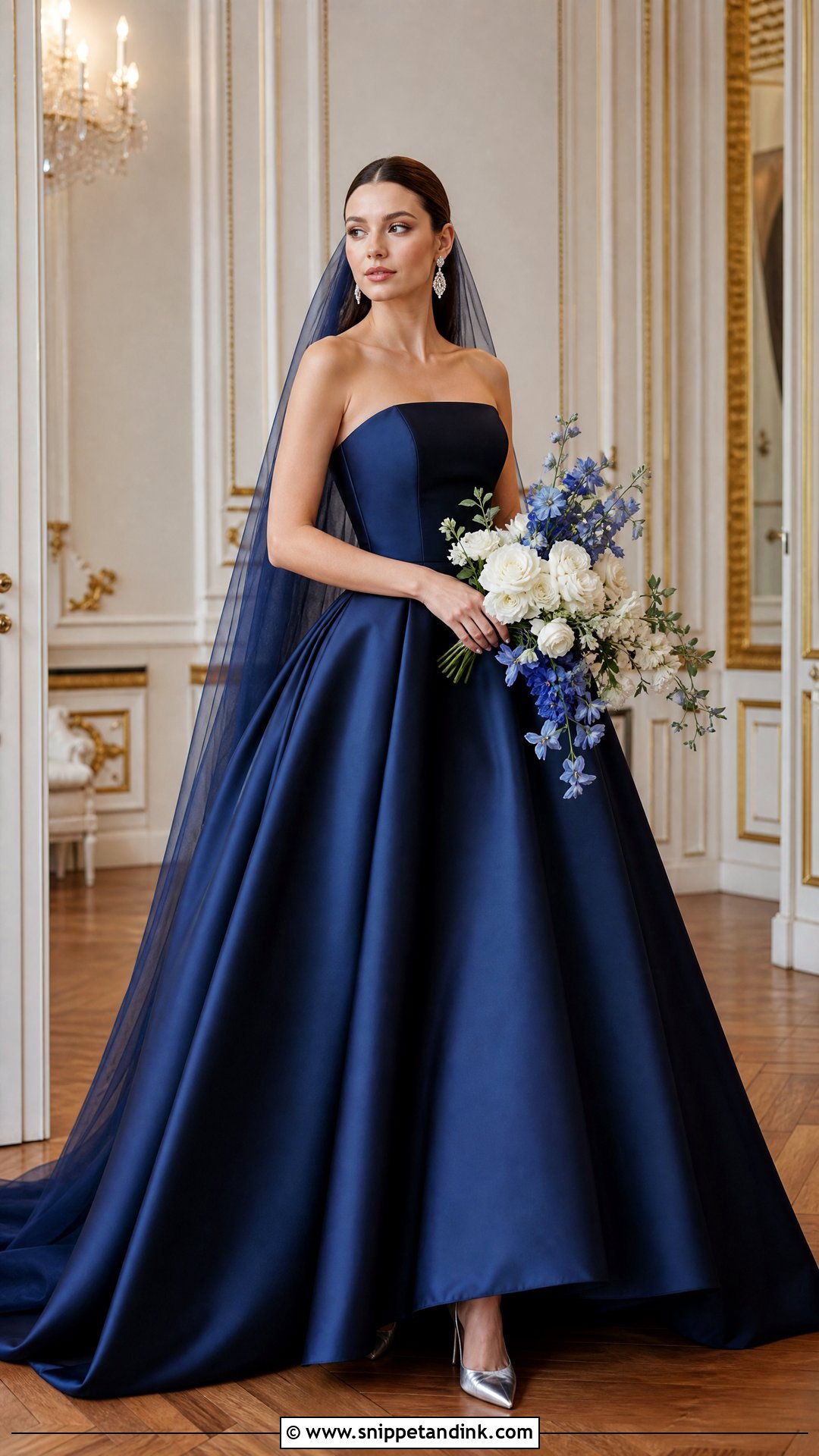
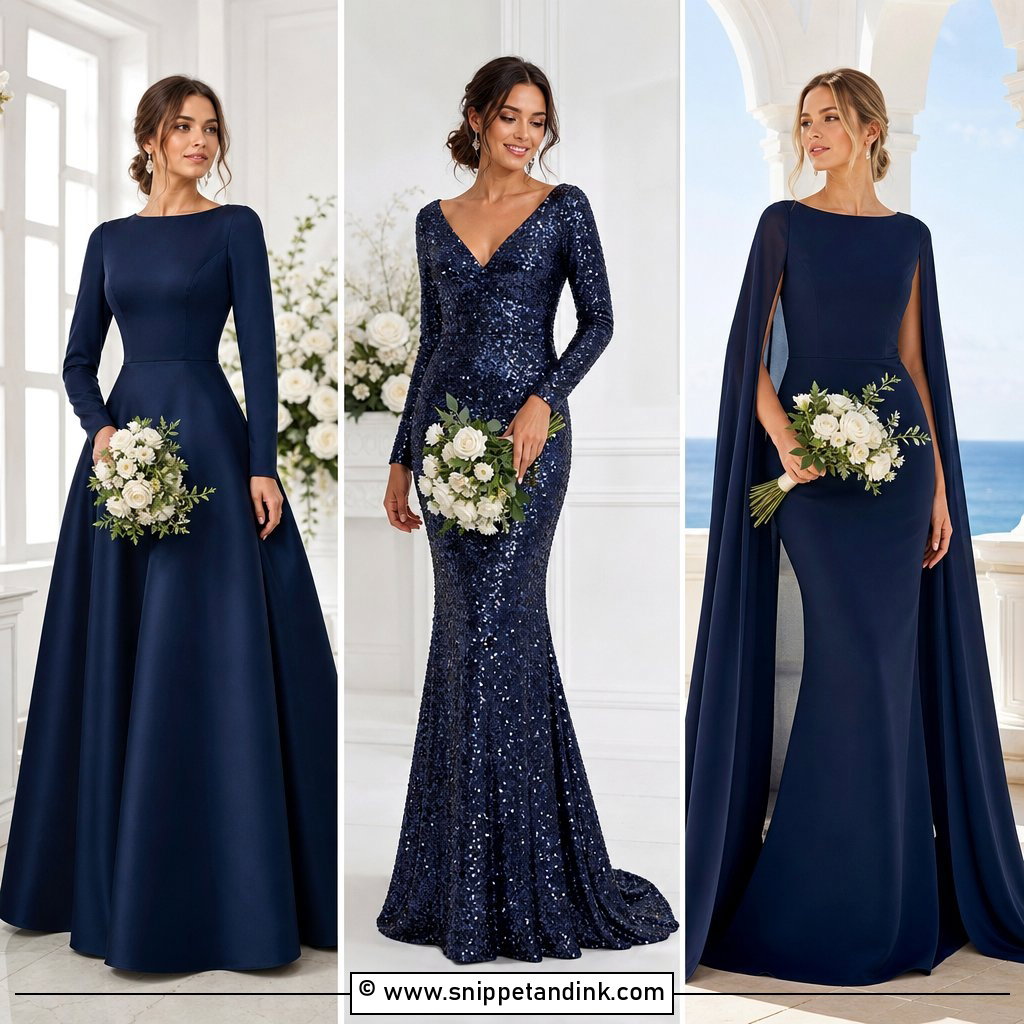
Satin is where I’d start a navy ball gown, because its sheen breaks up a dark skirt that would otherwise photograph as one flat shape. A navy satin ball gown with a structured bodice and defined waist gives you the full traditional silhouette in a new color. Silver pointed pumps, crystal drops and a cathedral veil in navy or soft gray complete it, and white roses, blue delphiniums and silvery greenery keep the bouquet bright. Scale the skirt to your height: petite brides look best in a moderately full skirt, while taller brides can carry a long train. Keep the neckline clean for a ballroom or estate.
2. Navy Lace A-Line Wedding Dress
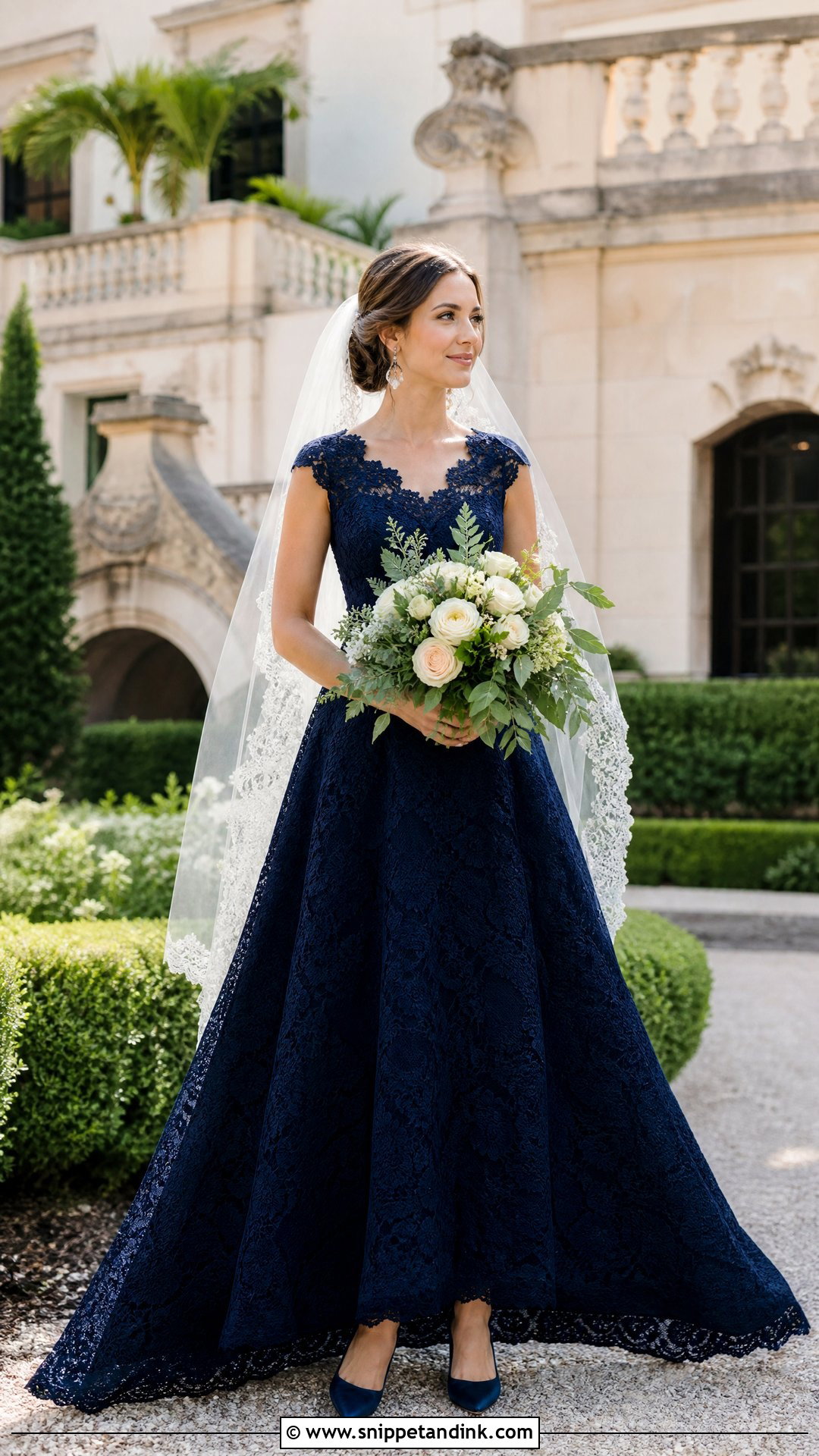
Navy lace only works if you can see it. Over a matching navy lining the pattern sinks; over a slightly lighter blue it lifts out, and that comparison is the first thing I do at a fitting. A fitted bodice and gently flared skirt keep the shape relaxed. Navy satin heels, pearl earrings and a fingertip veil edged in narrow lace finish it, with a loose bouquet of ivory garden roses and pale blue flowers. Garden, country club and historic venues suit it. Illusion sleeves or a higher neck add coverage, and for heat, sleeveless lace with a low back keeps the romance without the warmth.
3. Navy Mermaid Wedding Dress
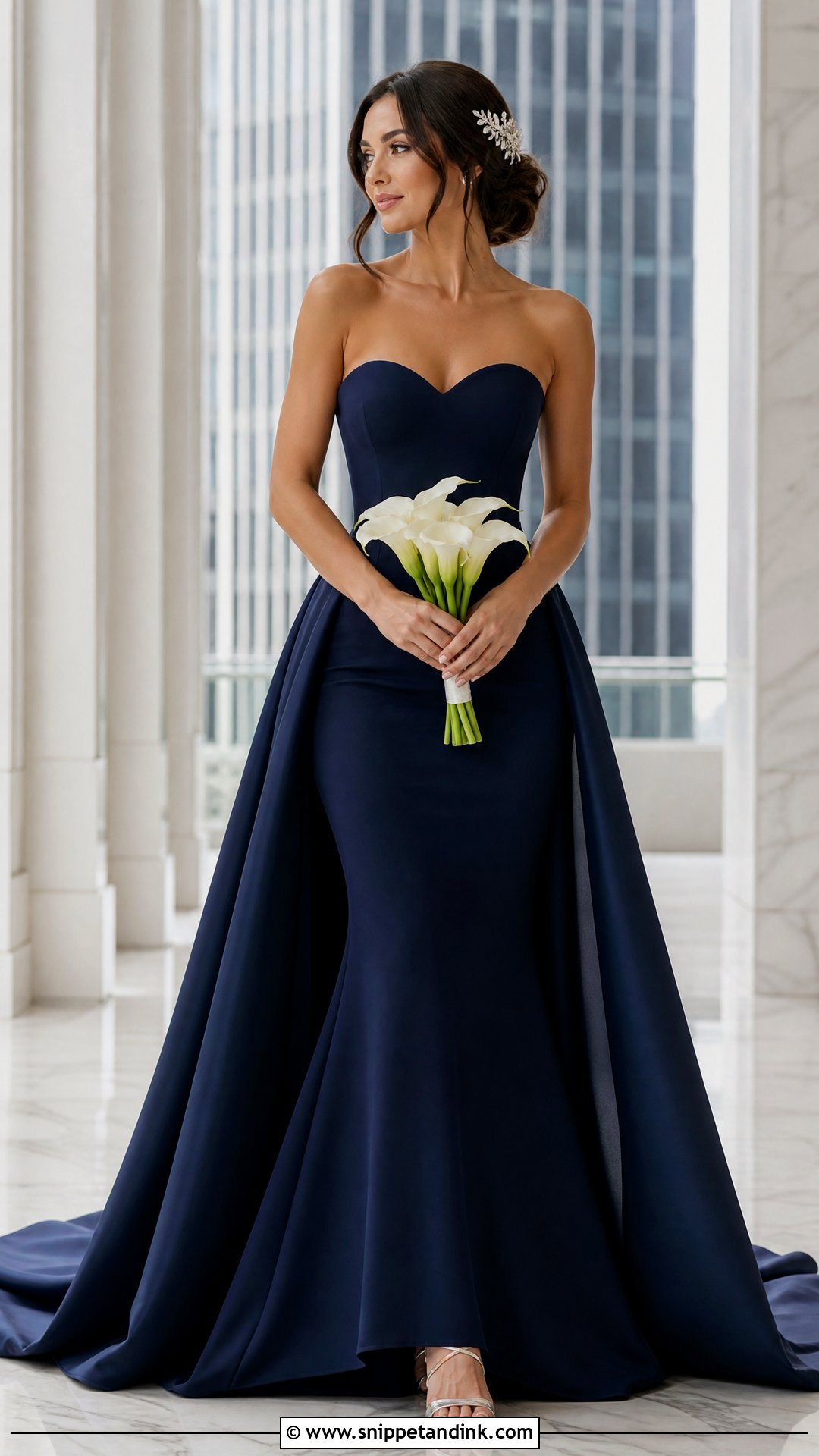
Get the flare point right and a navy mermaid looks sculpted. Get it wrong and you look like you’re wading. It should start near the knee at a height that suits your proportions, which is a tailoring job rather than a size choice. Stretch crepe, mikado or lined lace define the shape while still letting you walk. A sweetheart or off-shoulder neckline draws the eye up. Silver sandals, a crystal comb and slim drop earrings beat a heavy necklace. A detachable navy overskirt adds volume for the ceremony and comes off for the reception. White calla lilies or roses in a structured bouquet suit black-tie and city venues.
4. Navy Long Sleeve Wedding Dress
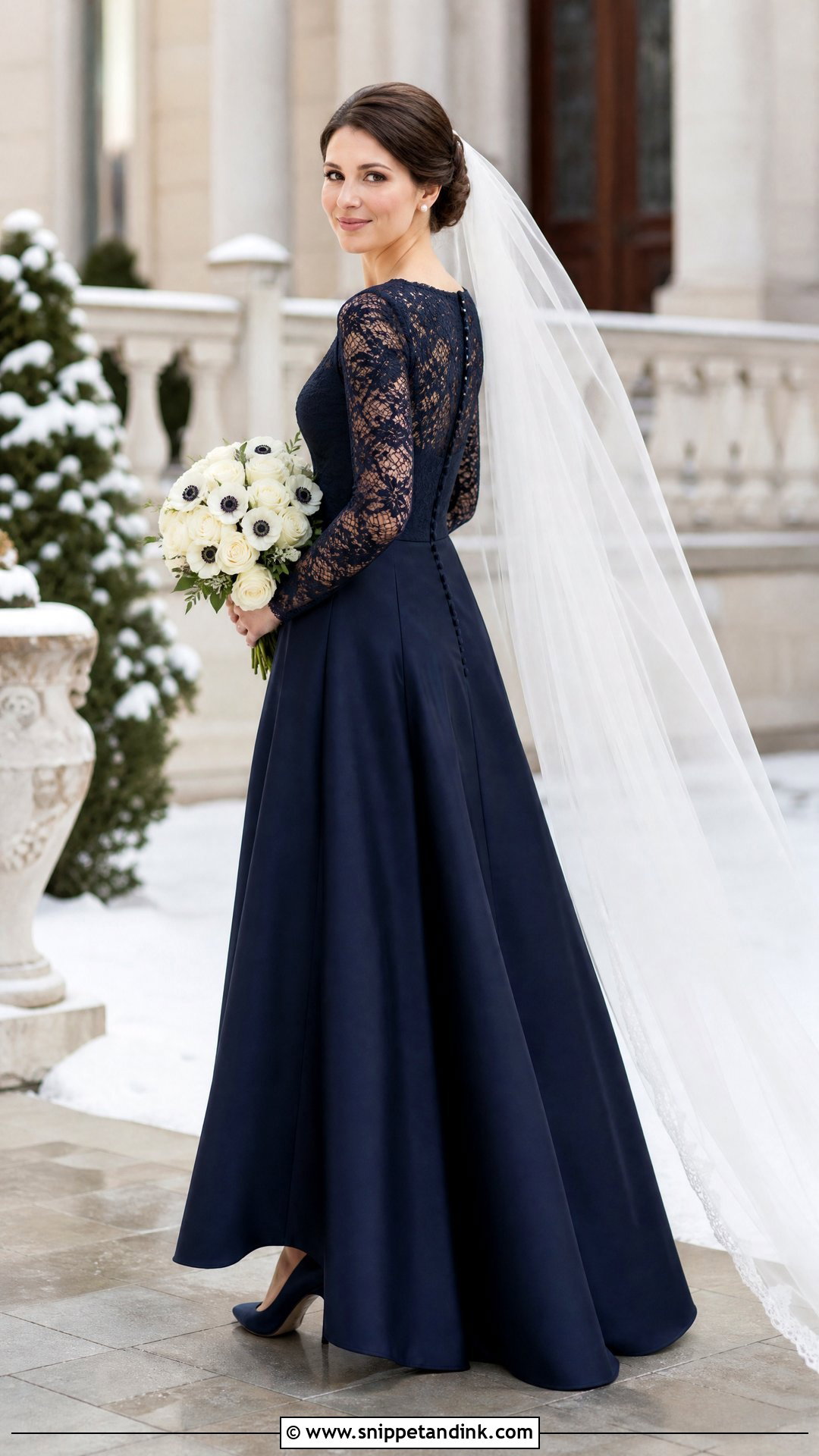
Long sleeves on navy go two ways. Sheer lace looks delicate; fitted crepe or satin looks modern and clean. Either way I keep a defined waist and an A-line or column skirt so the dark color doesn’t swallow the frame. Pearl or diamond studs, closed-toe navy pumps and a chapel veil tucked under a low bun suit it, and white anemones, ivory roses and eucalyptus show up sharply against the fabric. For modest dressing, add an illusion neckline or covered back. A row of fabric-covered buttons down the back is a lovely traditional touch, though it adds real minutes to getting dressed, so assign someone patient.
5. Navy Off-The-Shoulder Wedding Dress
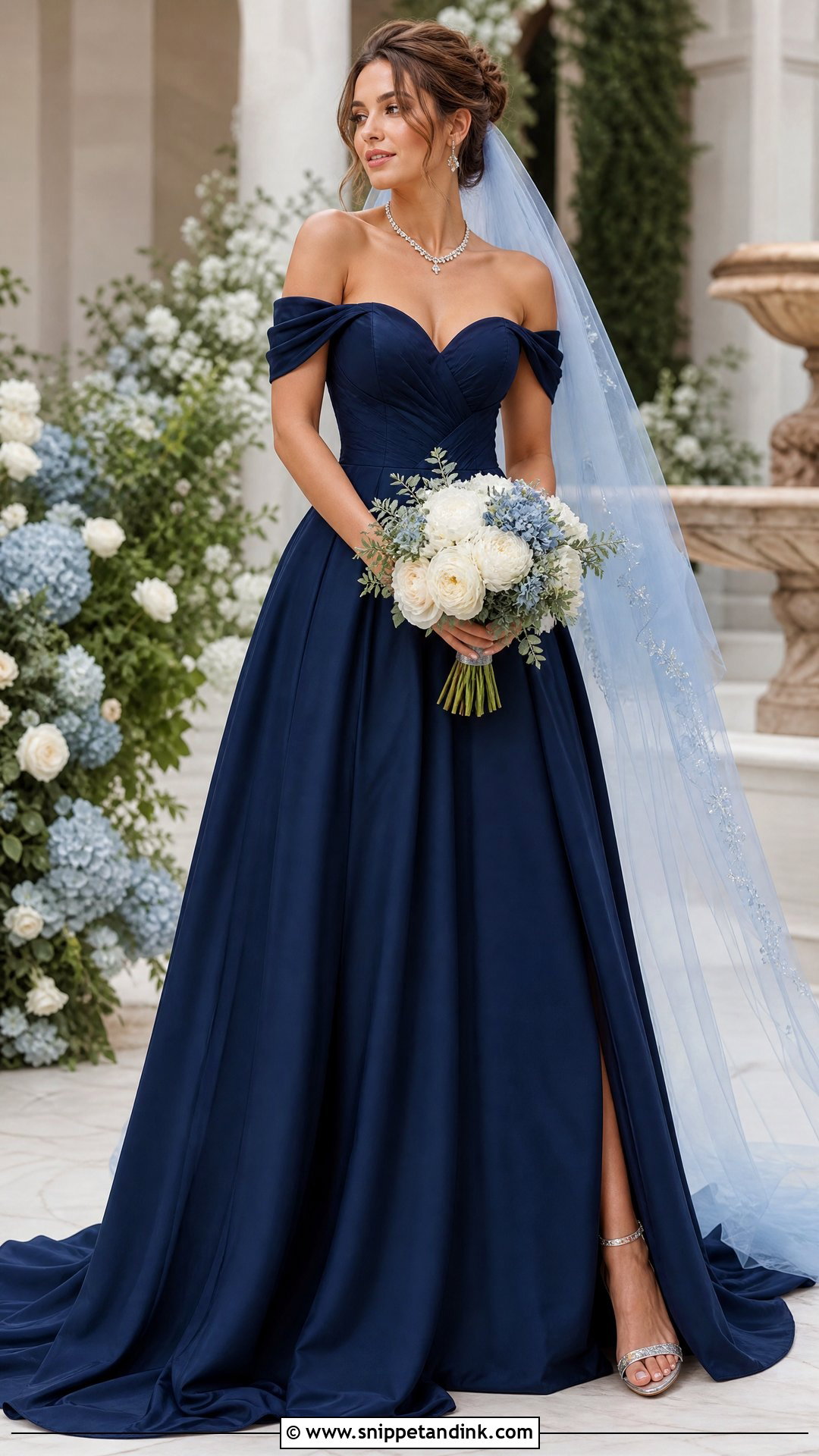
The off-shoulder line is the softening move on a dark gown. It puts skin and collarbone between the navy and your face. Pair it with a fitted bodice and full A-line skirt; mikado or satin reads formal, chiffon feels lighter outdoors. A short crystal necklace, matching earrings and pointed silver or navy heels finish it. A navy veil disappears into the dress, while a pale blue one gives quiet tonal contrast. Ivory peonies, white roses and dusty blue accents make a rounded bouquet. The construction detail I insist on is internal support, boning or a grip strip, so you aren’t hitching the neckline up after every hug.
6. Navy Basque Waist Wedding Dress
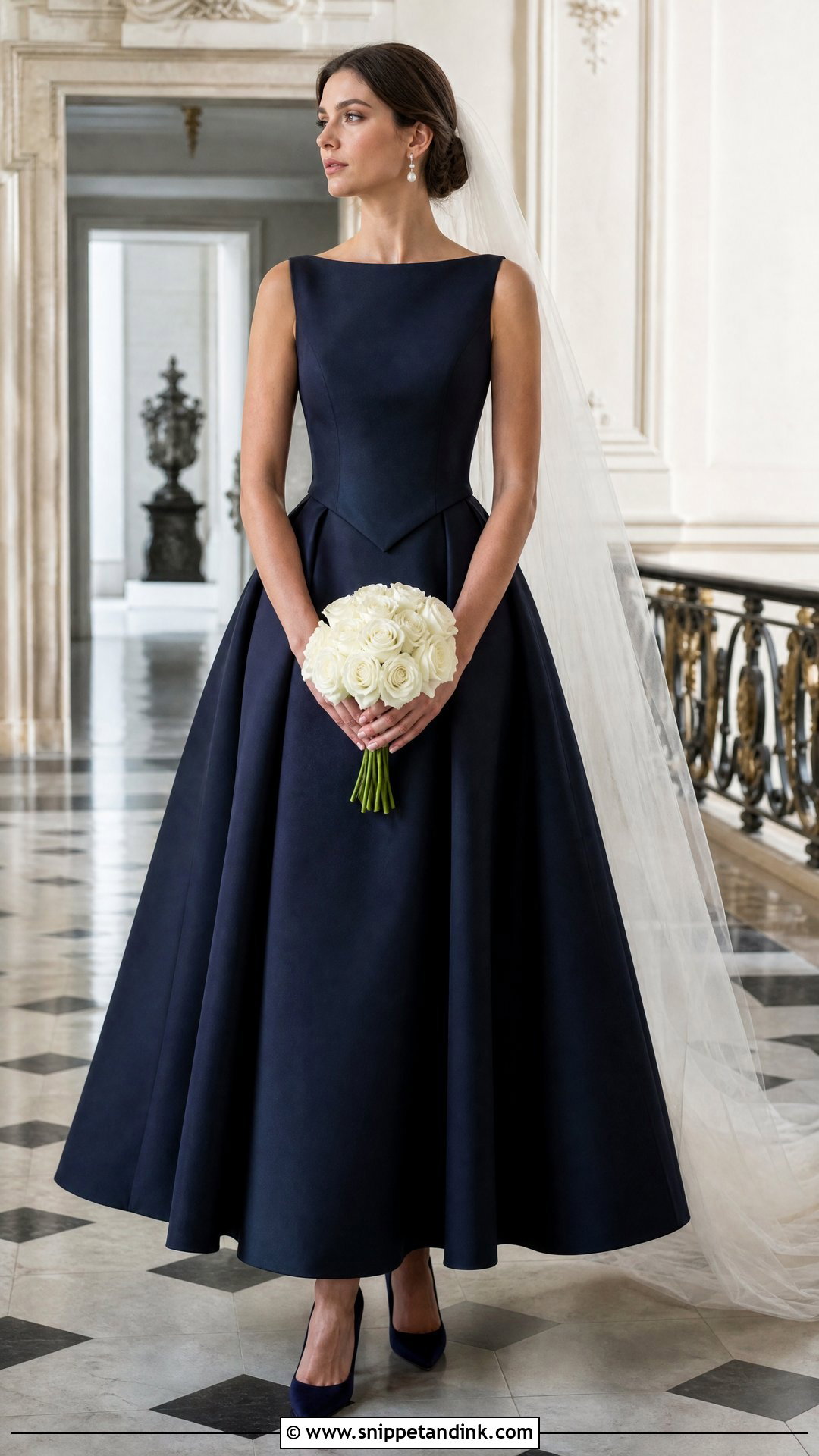
A basque waist dips into a V below the natural waistline before the skirt flares out. It’s a historical shape that has come back strongly in bridal design, and it needs a stiff fabric, mikado or structured satin, or the point simply collapses. Pearl drops, navy pointed pumps and a long veil set behind a sleek bun keep the styling clean, with a simple white bouquet. The elongated bodice suits many figures once the point is placed correctly. That means alterations, because a V sitting too low digs into your hips every time you sit. Ballrooms, historic mansions and architectural spaces give its regal shape room.
7. Navy Strapless Wedding Dress
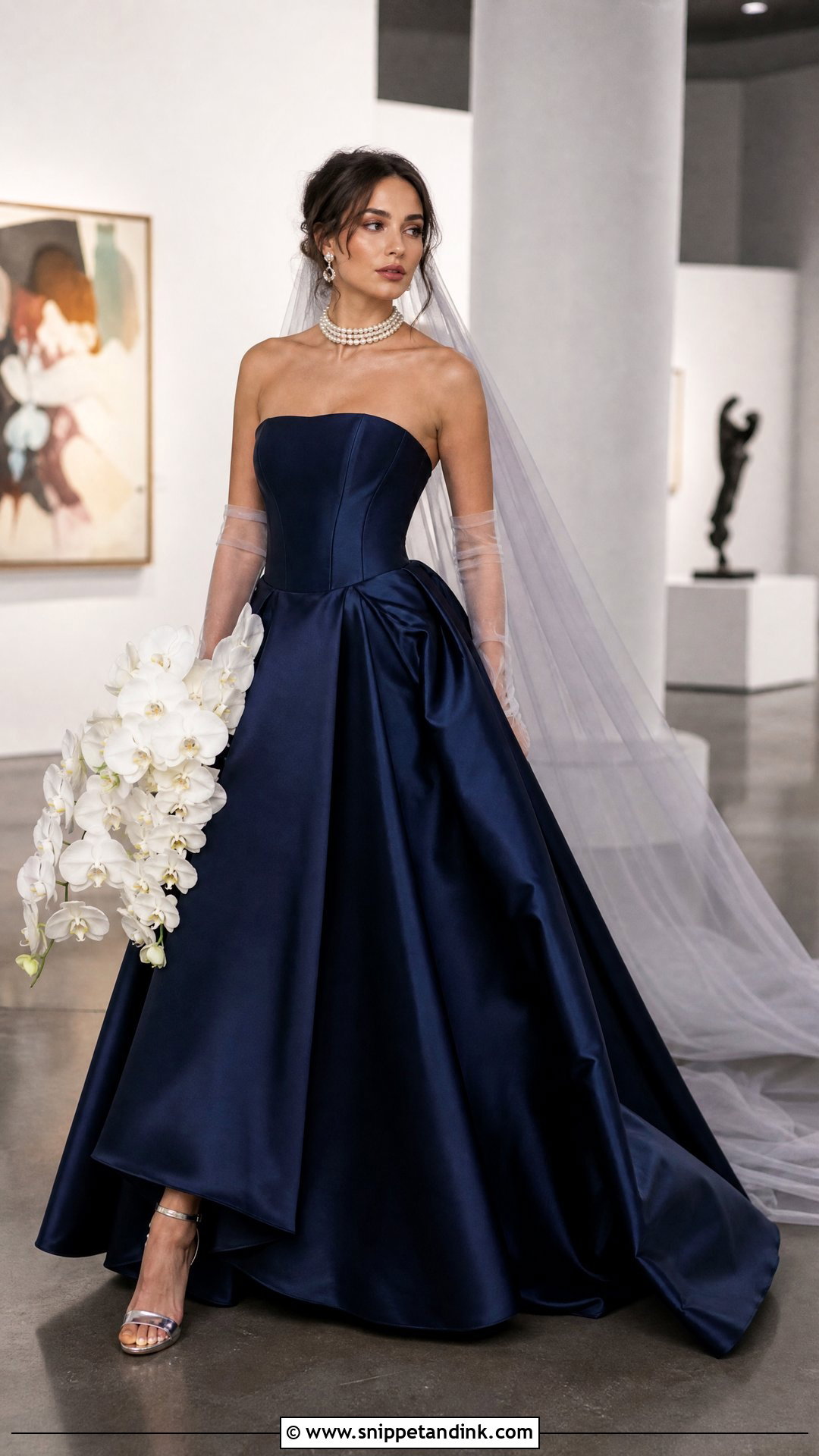
Strapless navy is a blank canvas for accessories, provided the corset bodice is built to hold itself up. Supportive boning and a sweetheart or straight neckline are what you’re paying for. A full satin skirt feels bridal; a narrow column is the minimal option. A pearl choker, crystal earrings and navy satin pumps finish it, and a sheer white, silver or navy veil is what separates it from eveningwear. White orchids or long-stem roses add contrast without covering the bodice. For portraits, I like detachable opera gloves. Have the neckline fitted closely, since a strapless bodice that’s even slightly loose slips by the first dance.
8. Navy Tulle Princess Wedding Dress
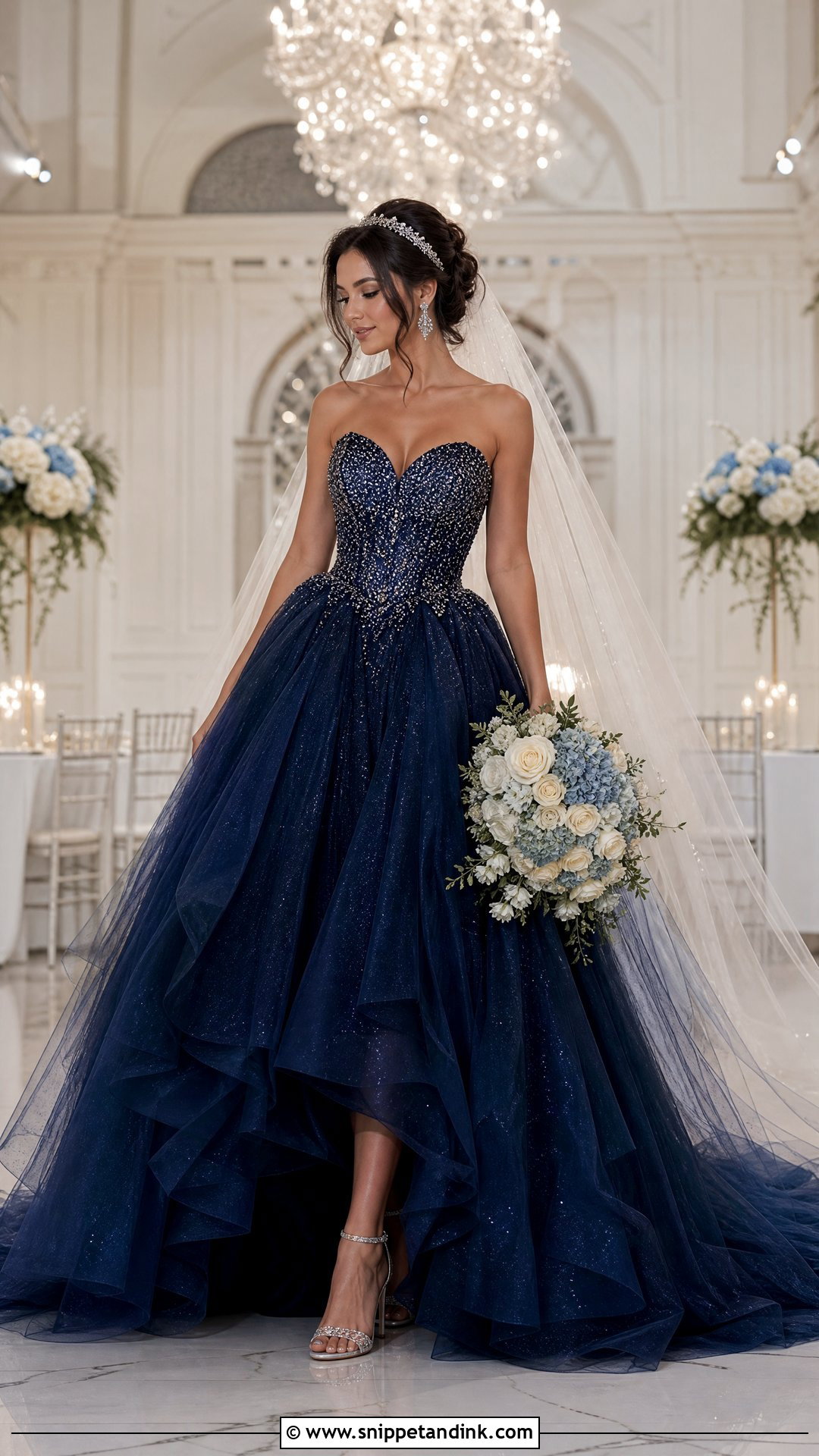
Navy tulle looks softer than you’d expect from such a dark color. Light passes through the layers, so the skirt turns slightly bluer at its edges. A fitted bodice with light beading, embroidery or scattered crystals adds sparkle. Silver heels, a small tiara or jeweled band and a long sheer veil complete it; keep the jewelry restrained. Ivory roses, white ranunculus and blue hydrangeas suit the mood, and ballroom or castle-style venues give it space. Tulle volume can feel enormous, so I’d choose fewer, lighter layers over a supportive underskirt. You keep the shape and can still sit down and get through a doorway.
9. Navy Chiffon Wedding Dress
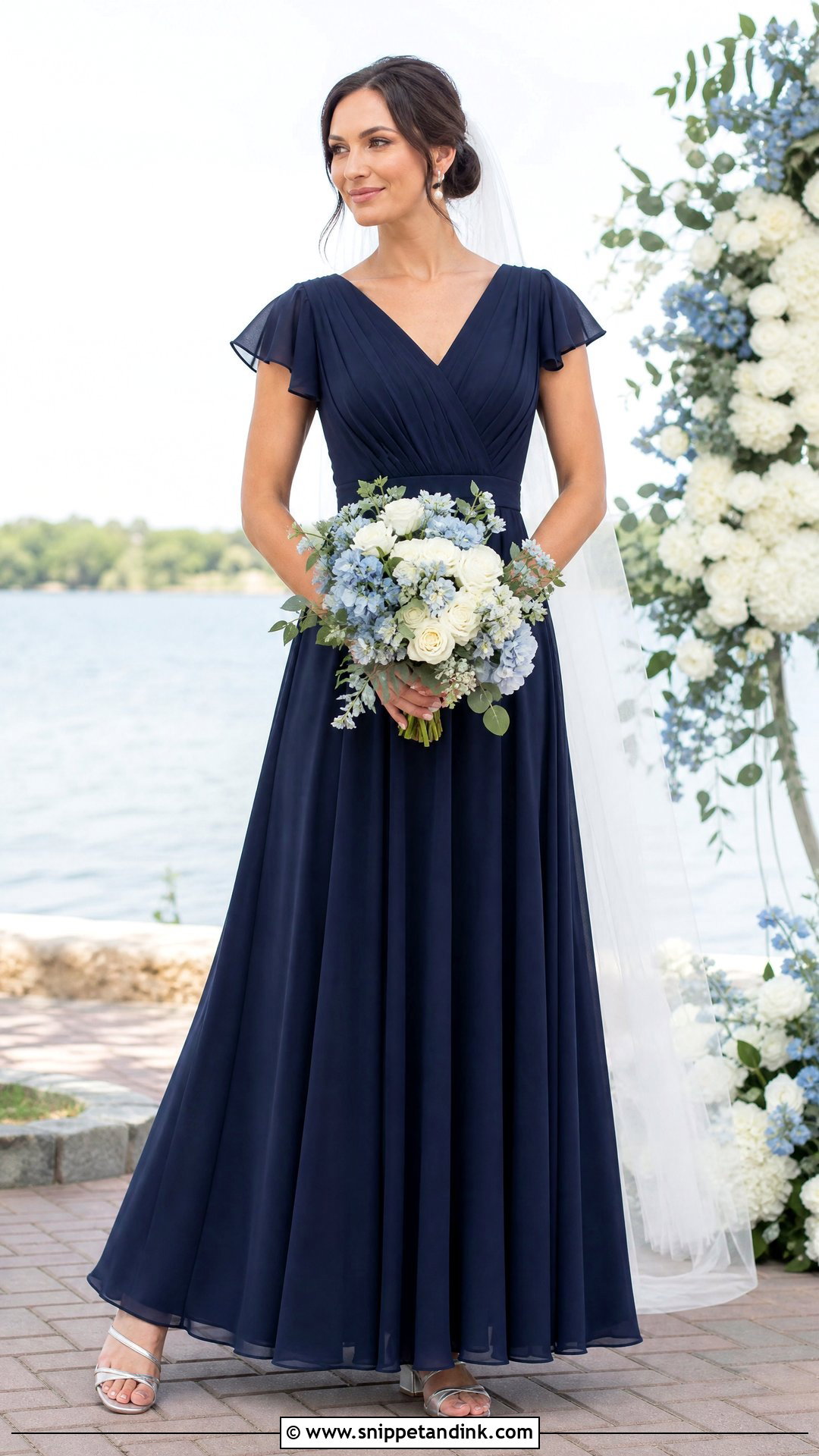
Chiffon is the navy I’d hand a summer bride. It’s light, it moves, and an empire or natural waist over a flowing A-line lets it catch any breeze. A pleated bodice, flutter sleeves or draped neckline add texture. Silver low sandals, pearl earrings and a fingertip veil keep it airy, with white cosmos, pale blue delphiniums and greenery in hand. Hold it up to a window before buying, since chiffon can be sheerer than shop lighting suggests. It also shows a wobbly hem more than heavier fabrics, so a precise hem and tailored waist keep it from looking casual. A subtle crystal belt adds bridal definition.
10. Navy Velvet Winter Wedding Dress
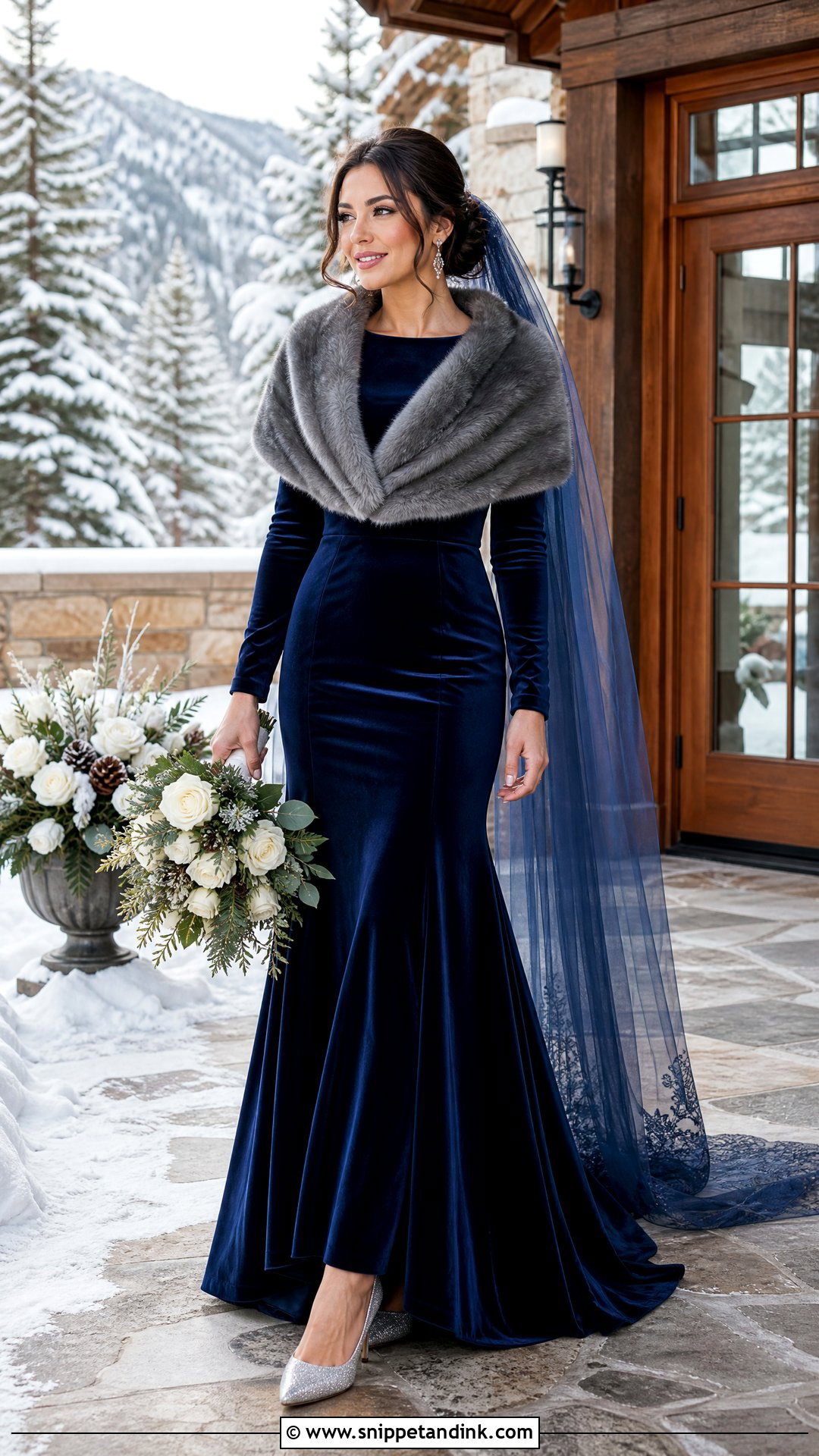
Velvet absorbs light. That gives navy real depth in a candlelit room, but in a flat, overcast photo it can read almost black, so let the fabric carry the look and keep embellishment minimal. A long-sleeve column, fitted A-line or draped wrap with a defined waist all work. Crystal earrings, closed-toe silver pumps and a faux-fur wrap in soft gray or ivory for outdoor portraits finish it. A silver veil gives contrast; a navy one adds drama. White roses, hellebores and winter greenery tied in blue ribbon suit the season. Velvet gets warm indoors, so a breathable lining matters more than most brides think.
11. Navy Sequin Wedding Dress
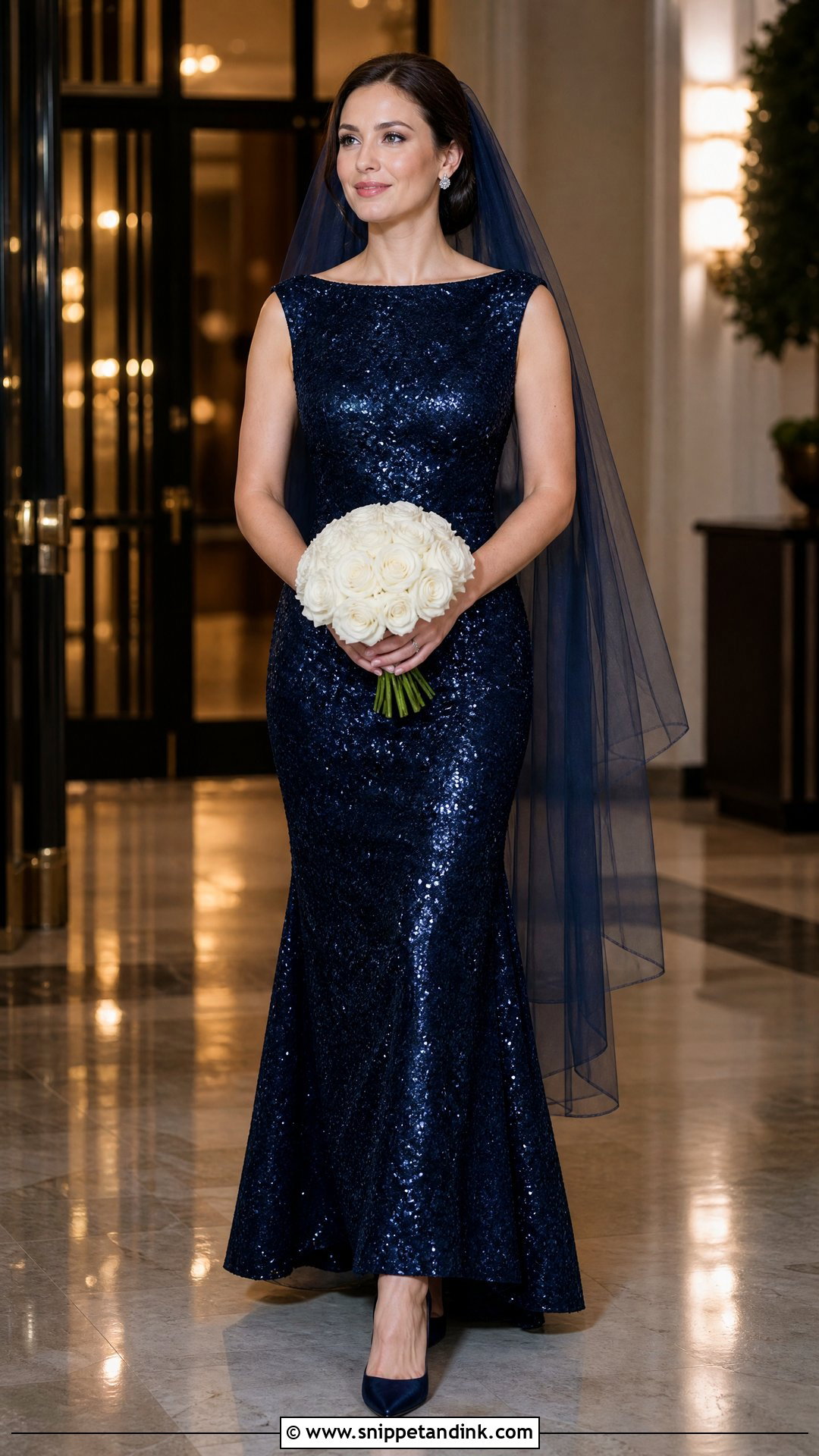
Sequins are the evening option, and their size decides everything. Fine, closely set sequins look refined; large paillettes look like costume and snag on a partner’s jacket during the first dance. A long column or gentle flare keeps the shimmer elegant, with a low back or bateau neck for interest. Navy or silver heels, small diamond studs and a sleek clutch are all it needs. Go plain on the veil, navy tulle or a short birdcage. A compact white bouquet calms the reflective fabric. Check that the lining lies smooth, because any wrinkle underneath shows through. Black-tie, New Year’s Eve and rooftop weddings suit it.
12. Navy Floral Appliqué Wedding Dress
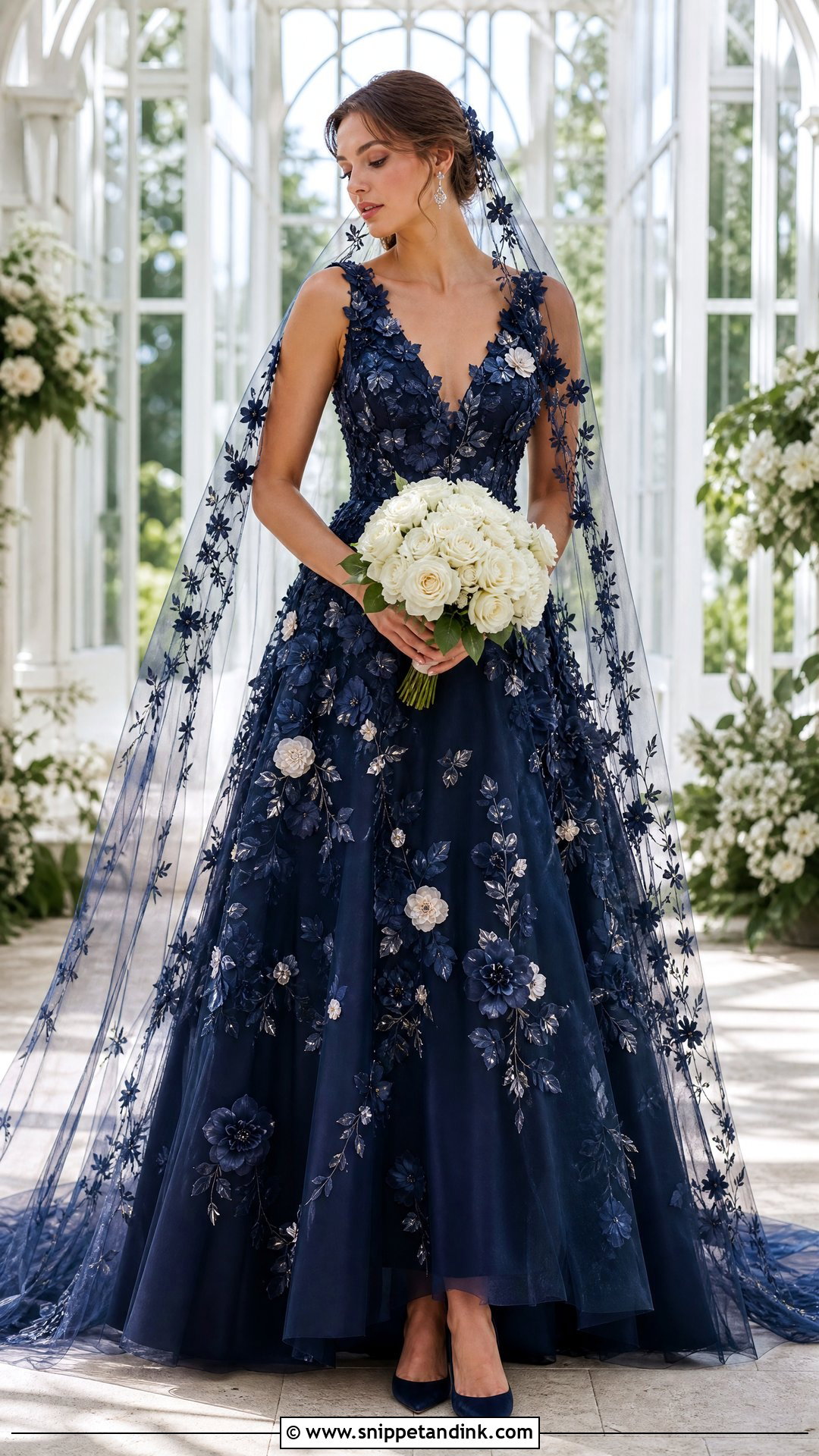
Appliqué gives a navy gown dimension. Tonal navy flowers are subtle and show mostly as texture, while blue-and-ivory ones read clearly from the back row. Concentrate them at the bodice, waist or hem instead of everywhere, and choose an A-line so they have space. Pearl drops, navy pumps and a sheer veil carrying a few matching flowers complete it, with ivory garden roses and pale blue flowers loosely gathered. Raised flowers on dark fabric throw small shadows, and that’s what makes them visible in photographs. Keep every other accessory simple. Gardens, conservatories and spring weddings are the natural fit.
13. Navy Wedding Dress With White Lace
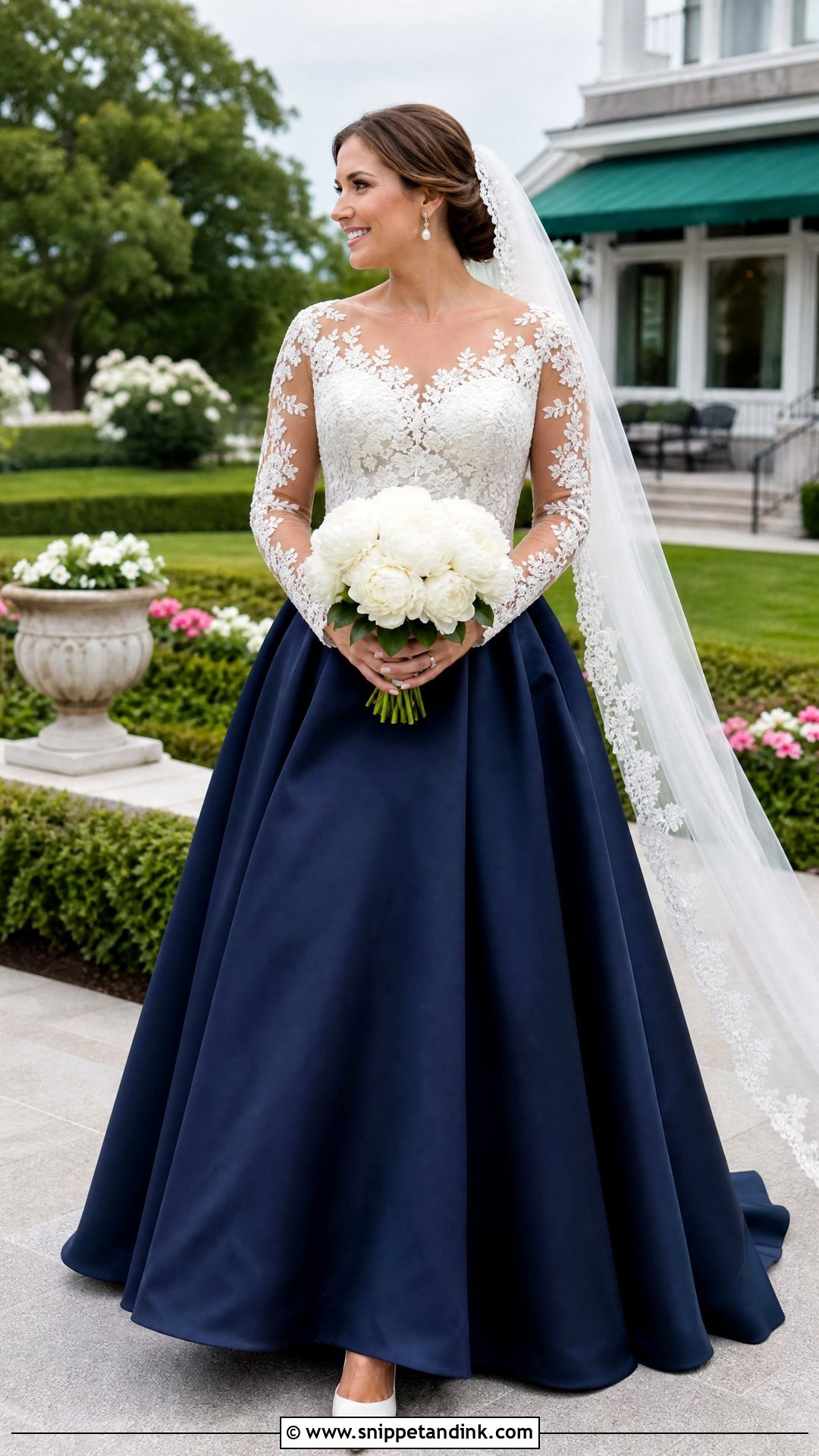
Navy with white lace is the most traditional-looking way to wear color, because the lace does the bridal signaling for you. Put it on the bodice, sleeves, back or upper skirt, and make the placement look deliberate rather than scattered. White satin pumps, pearls and a white veil edged in the same lace tie it together, with white peonies and roses. Navy near the face is dramatic; white lace across the neck and shoulders brightens portraits, so think about which suits your coloring. Bring swatches when you shop for accessories. Bright white, ivory and soft white look very different beside navy, and a lace that doesn’t match the veil is obvious.
14. Navy Wedding Dress With Gold Accessories
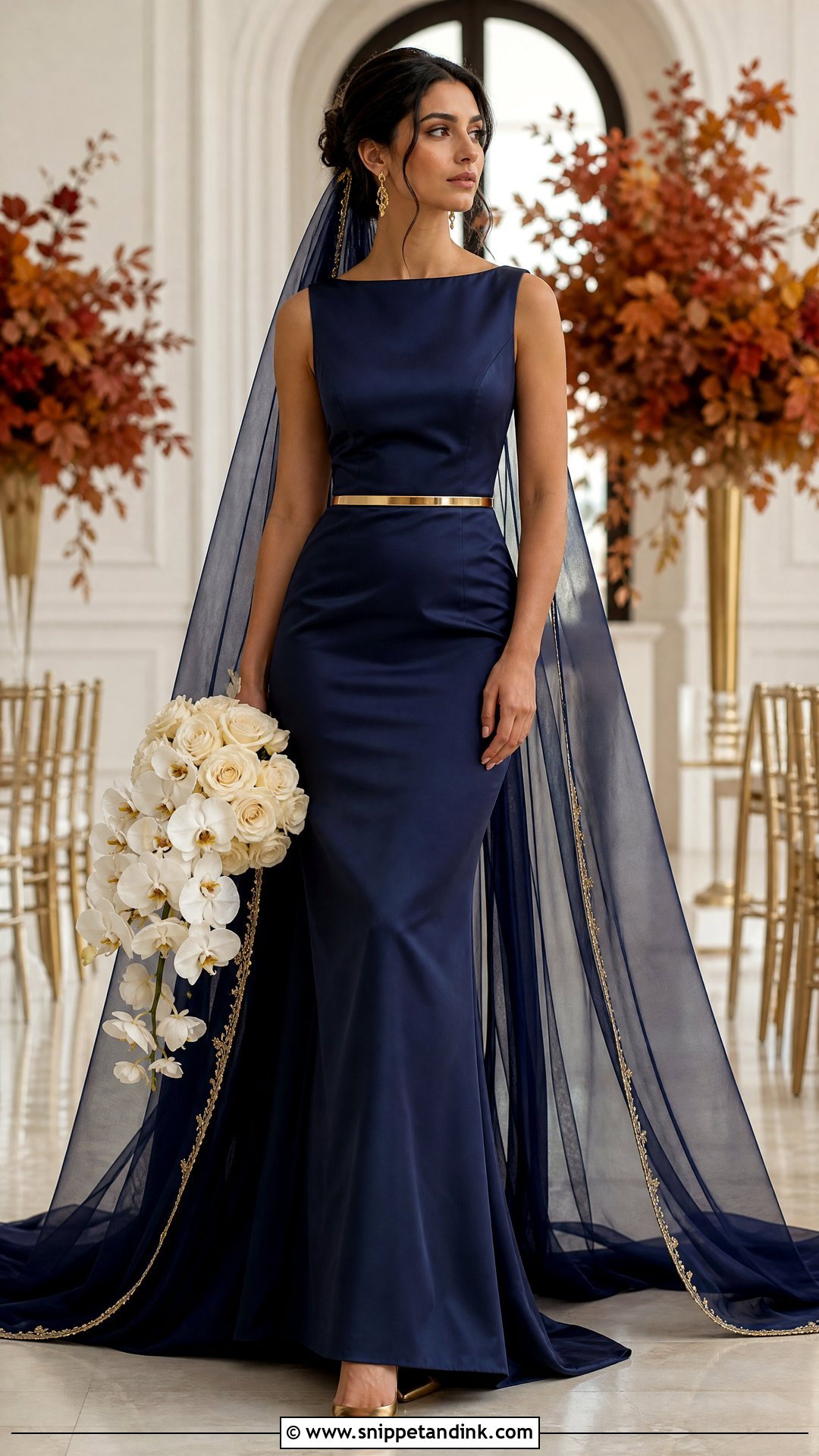
Gold makes navy feel rich and formal, especially for an evening or fall wedding. Start with a simple navy satin, crepe or chiffon so the metal stands out. Brushed-gold heels, small statement earrings and a slim gold belt or comb give it focus; choose one or two pieces rather than gold everywhere. A plain navy veil keeps things cohesive, or fine gold edging adds a ceremonial finish. Ivory roses, cream orchids and greenery tied with champagne ribbon suit it. Antique gold feels softer, polished yellow gold more contrasting. Ask the seamstress to confirm where the belt sits, since a belt slightly off the designed waist looks wrong in every photo.

15. Navy Wedding Dress With Silver Accessories
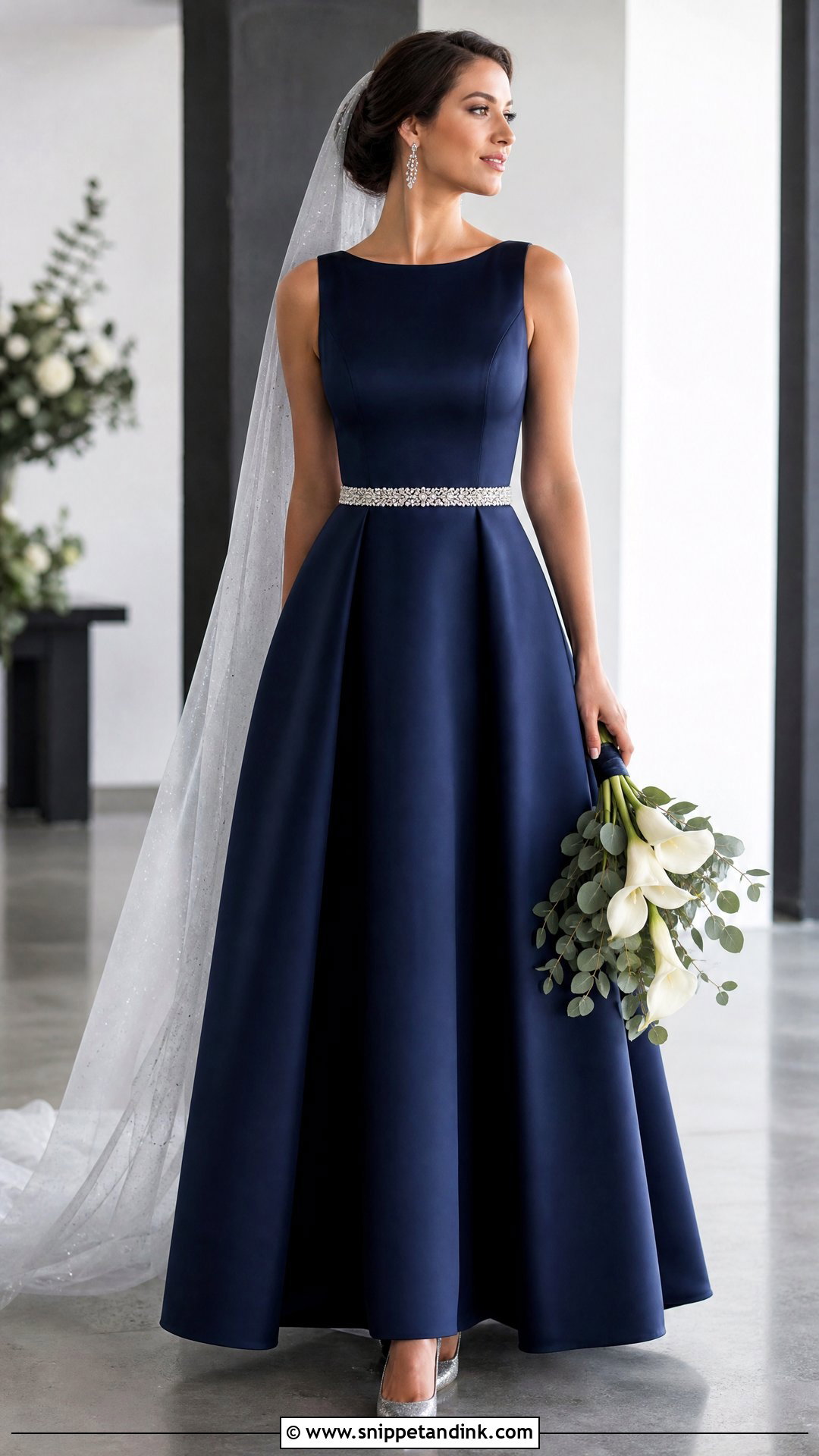
Silver makes navy look crisp and cool. Choose a sleek column, structured A-line or minimal ball gown, then add silver pointed pumps, crystal drops and a fine bracelet. A narrow crystal belt defines the waist without busying the gown. For the ceremony, a pale gray or navy veil with a little sparkle at the edge works well. White calla lilies, roses and silvery eucalyptus suit the palette, which looks strongest in winter and in the city. Don’t mix crystal shapes and finishes. One silver tone repeated across shoes, jewelry and hairpiece looks deliberate; three different ones look borrowed.
16. Navy High Neck Wedding Dress
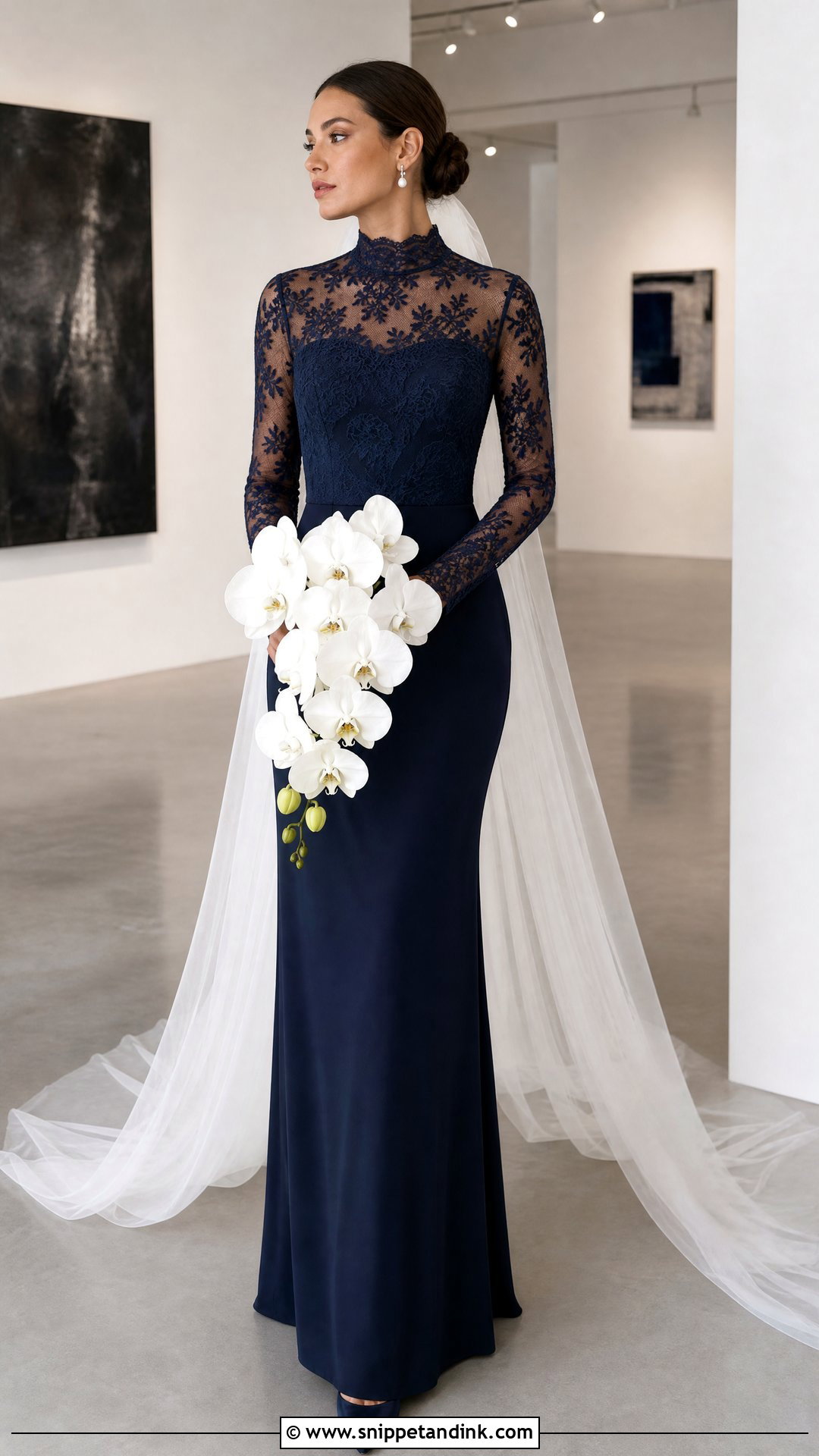
A high neck reads modern and confident in navy. Illusion lace is romantic, smooth crepe is minimal. Long sleeves with a column skirt look refined, and a sleeveless high neck over an A-line feels lighter. Small diamond or pearl earrings, a low bun and pointed navy shoes finish it. Skip the necklace, which only crowds the neckline, and wear a bracelet or decorative hairpin instead. Pin a long veil under the bun so the front stays clear and the drama happens behind you. A vertical bouquet of white orchids or calla lilies echoes the line, ideal for galleries, city halls and formal hotels.
17. Navy One-Shoulder Wedding Dress
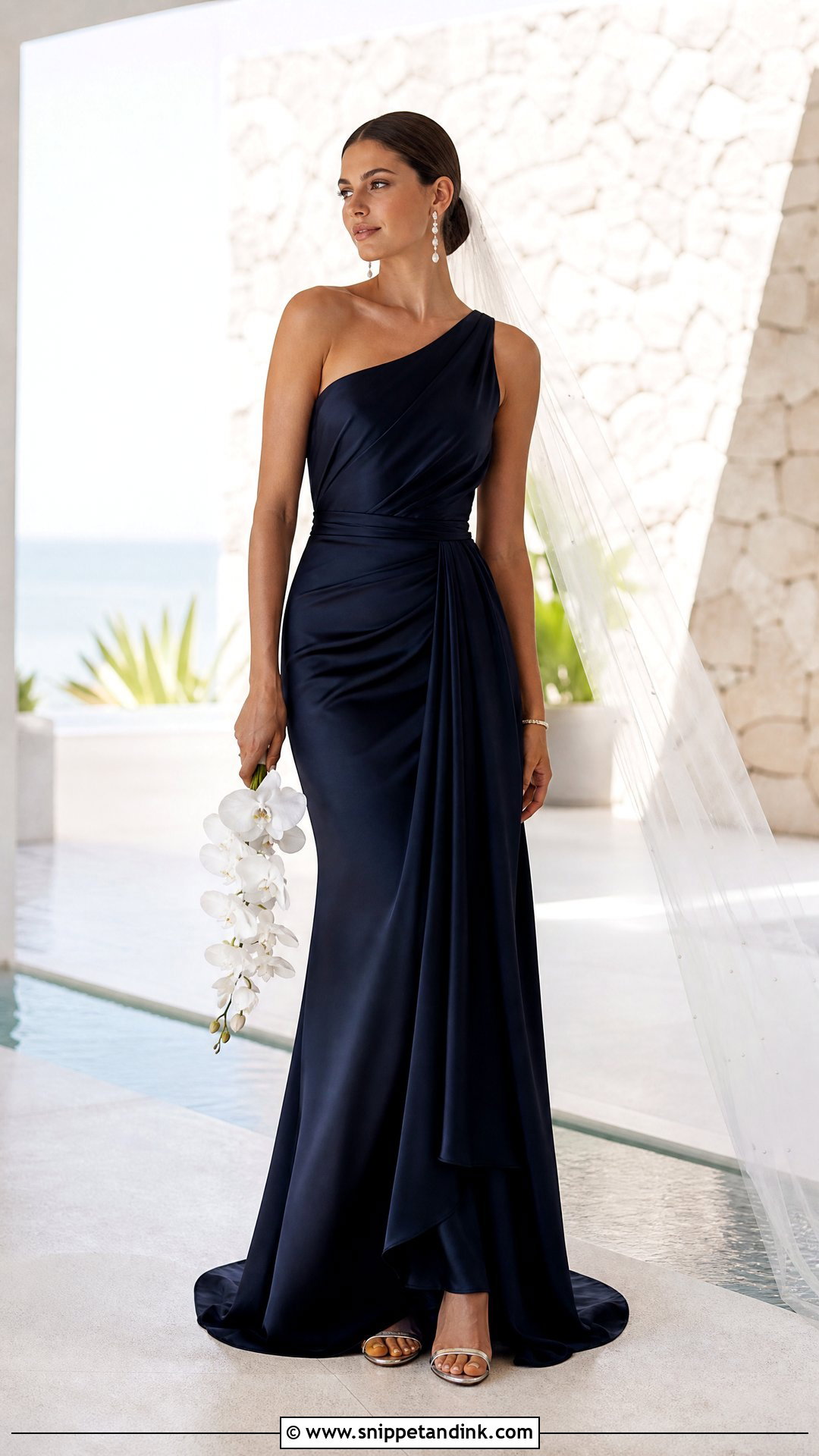
One-shoulder bodices are the ones I test hardest, because a single strap carries the whole top. Sit, raise both arms, then hug someone; if the panel shifts, it needs internal support before the wedding. Draped satin or chiffon with a fitted waist and flowing skirt is the classic version, and a structured shoulder looks more editorial. Balance it with sleek hair, one statement earring or a pair of small drops, and a simple bracelet. Silver sandals and a plain fingertip veil set low at the back suit it, with a white orchid bouquet. Destination and contemporary evening weddings are where I see it most.
18. Navy Tea Length Wedding Dress
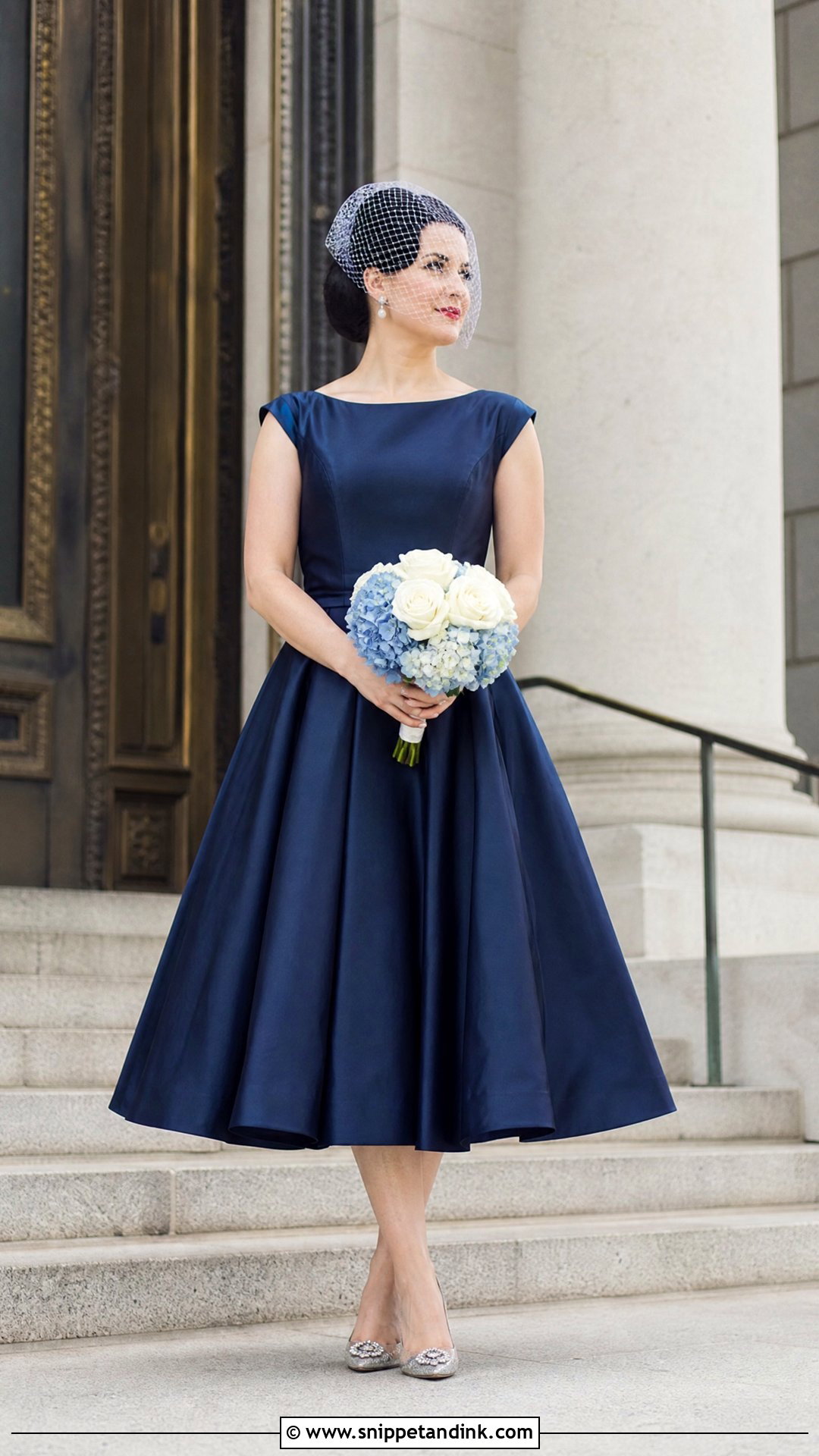
Tea length gives navy a vintage feel and lets you dance without lifting a hem. A fitted bodice and full skirt ending between knee and ankle work in satin, mikado, lace or layered tulle. Embellished silver pumps, pearl earrings and a birdcage or shoulder-length veil complete it. Your shoes are on show all day, so break them in on carpet at home first. A compact bouquet of white roses and blue hydrangeas fits the proportions. Courthouse ceremonies, brunch weddings and restaurant receptions suit it, and a cropped jacket adds coverage. It also makes a smart reception change if you wear something longer for the vows.
19. Navy Minimalist Column Wedding Dress
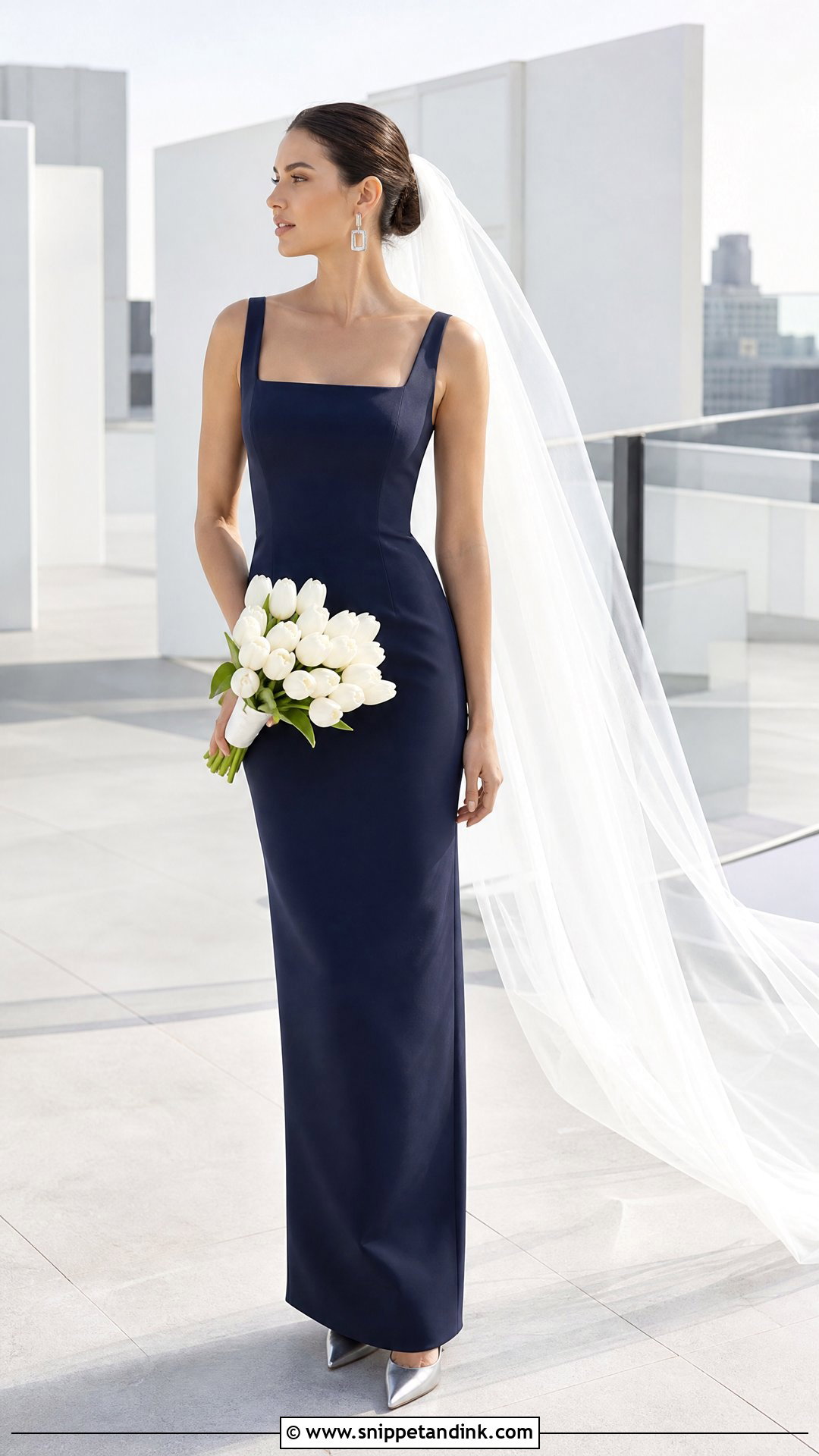
Minimal navy columns are unforgiving, and I tell brides that up front. Smooth crepe, heavy satin or silk with precise seams shows every pull and every uneven hem, so fit is the whole dress. A square, bateau or soft scoop neck suits the narrow line. Pointed metallic pumps, geometric earrings and a structured bouquet of white tulips or calla lilies finish it, with a long plain veil for bridal impact. Hair goes into a low bun, smooth ponytail or tucked waves. Galleries, rooftops and courthouse ceremonies suit it. Budget properly for alterations that let the fabric skim rather than cling.



20. Navy Bow Back Wedding Dress
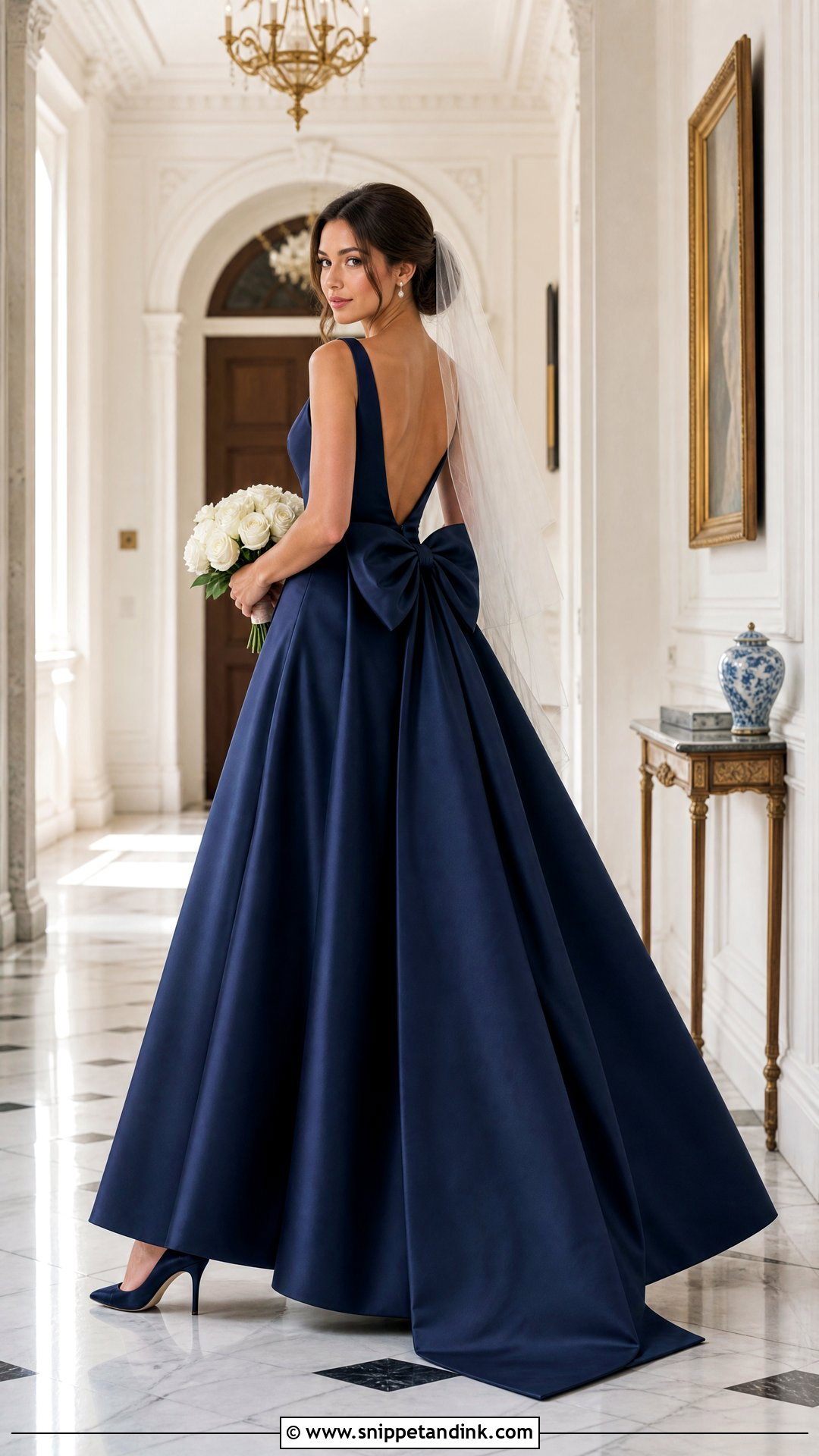
Guests spend most of the ceremony looking at your back, which is exactly why a bow there earns its place. A structured satin gown with an oversized detachable bow at the waist or upper back is the statement version; a slimmer bow suits a column. Navy heels, pearl studs and a veil that falls above or below the bow, never over it, complete the look. A clean bouquet of white roses keeps attention behind you. Make sure the bow is light, firmly attached and removable, because a large bow is uncomfortable to lean against through a three-course dinner.
Keeping Navy From Going Black in Your Photographs
Dark fabric is tricky for a camera in one particular way. In bright sun or a backlit shot, your photographer will expose for your face, and a navy skirt can drop to a shapeless near-black. Fabrics with sheen or relief, like satin, lace, beading and appliqué, hold detail better because they catch small highlights. Matte crepe and velvet need softer light to show their color.
Tell your photographer the dress is navy before the day, not on arrival. Open shade, window light and the hour before sunset all keep the blue reading as blue. Indoors under warm bulbs, navy can lean toward charcoal, which a photographer can correct more easily when they know what color it should be.
One more check belongs at your makeup trial. Wear a navy top or hold the swatch near your face, because a dark neckline makes a foundation that’s a shade too light look obvious in a way an ivory gown never would.
Does Navy Read as Bridal? It Does When the Details Agree
A deep blue gown can be romantic lace, glossy satin, light chiffon, sparkling sequins or warm velvet, and almost every silhouette from ball gown to column works in it. What makes it read as a wedding dress is the finishing: formal shoes, considered jewelry, a veil, polished hair and a pale bouquet. Weigh season, venue, dress code and comfort before you decide. Then book alterations early and look at the full outfit in daylight and in indoor light, because navy changes far more between the two than ivory ever does.
You'll Like These Ideas:



Leave a Reply