
A second outfit is how you go from the ceremony to the dance floor without feeling like you’re still in costume. The best ones still read as bridal from across the room, but they let you sit, eat and lift your arms. You’ve got more to pick from than ever: satin minis, jumpsuits, convertible gowns, color and sharp tailoring. Before you fall for a dress, ask two practical questions. How long will the change take, and can you fasten it with one helper and no buttonhook? Then plan the shoes, jewelry, hair piece and bag as part of the outfit, not afterthoughts. Here are twenty second looks I’d put a bride in, with what I’d check on each.

The Twenty Minutes You Disappear From Your Own Reception
The outfit is the fun part, but the timing decides whether the change goes smoothly. Most brides I dress change after dinner and before the dancing opens, or straight after the first dance, when guests are busy and nobody needs you for photos. Give it twenty to thirty minutes. Getting out of a bustled gown with buttons and loops takes longer than putting it on, and you’ll want a minute to touch up your lipstick and eat something.
Tell your planner and photographer when you’re going, so the band doesn’t start the opening song without you. Pick one person to help, ideally someone who has practiced the buttons or the laces at your final fitting.
Pack a small change bag that morning
- The second outfit on a padded hanger, already steamed, with its own underwear if the neckline differs.
- Shoes for the second look, and plasters for your heels.
- Bobby pins and a few hair ties if your stylist is changing your hair.
- Fashion tape, a mini sewing kit and safety pins.
- Your lipstick and blotting papers.
1. Bridal Satin Mini Dress
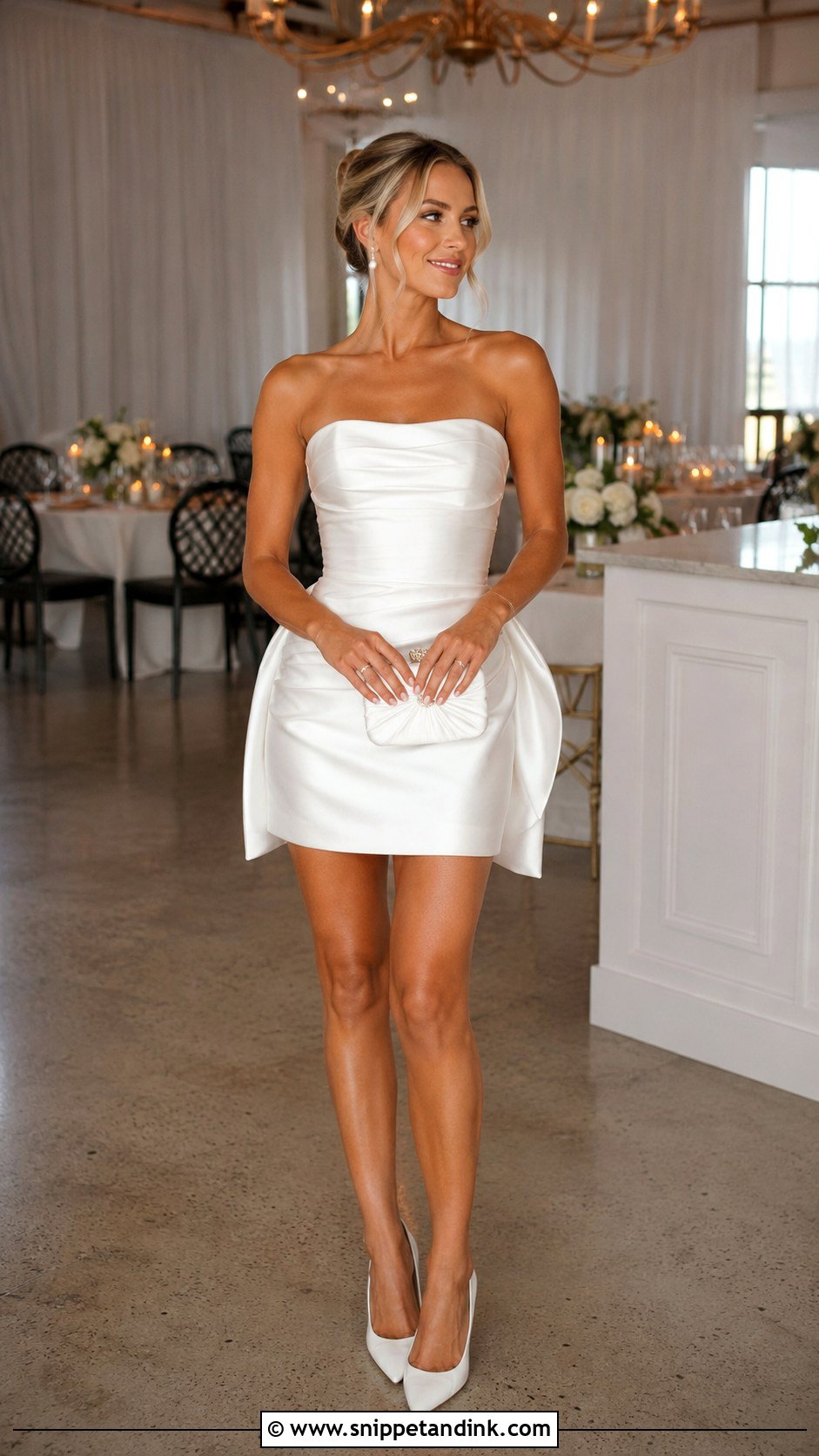
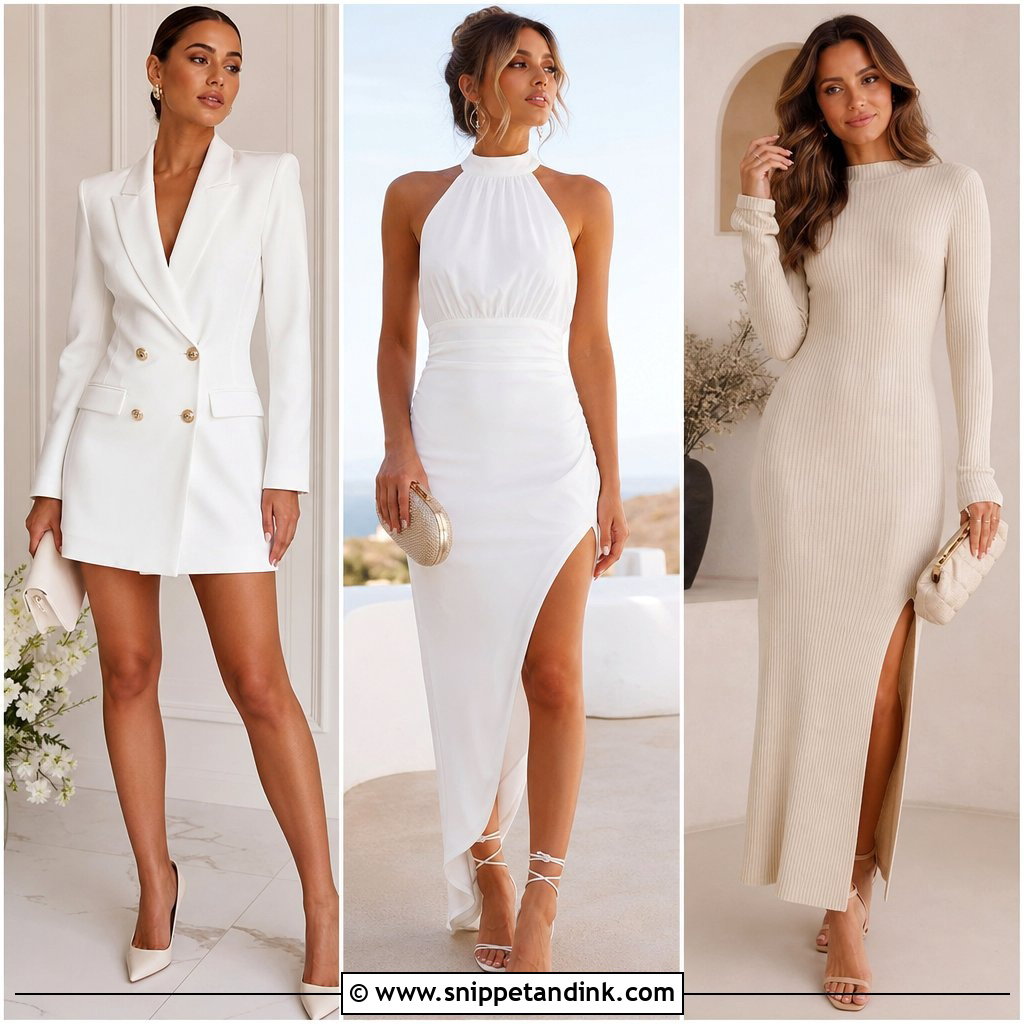
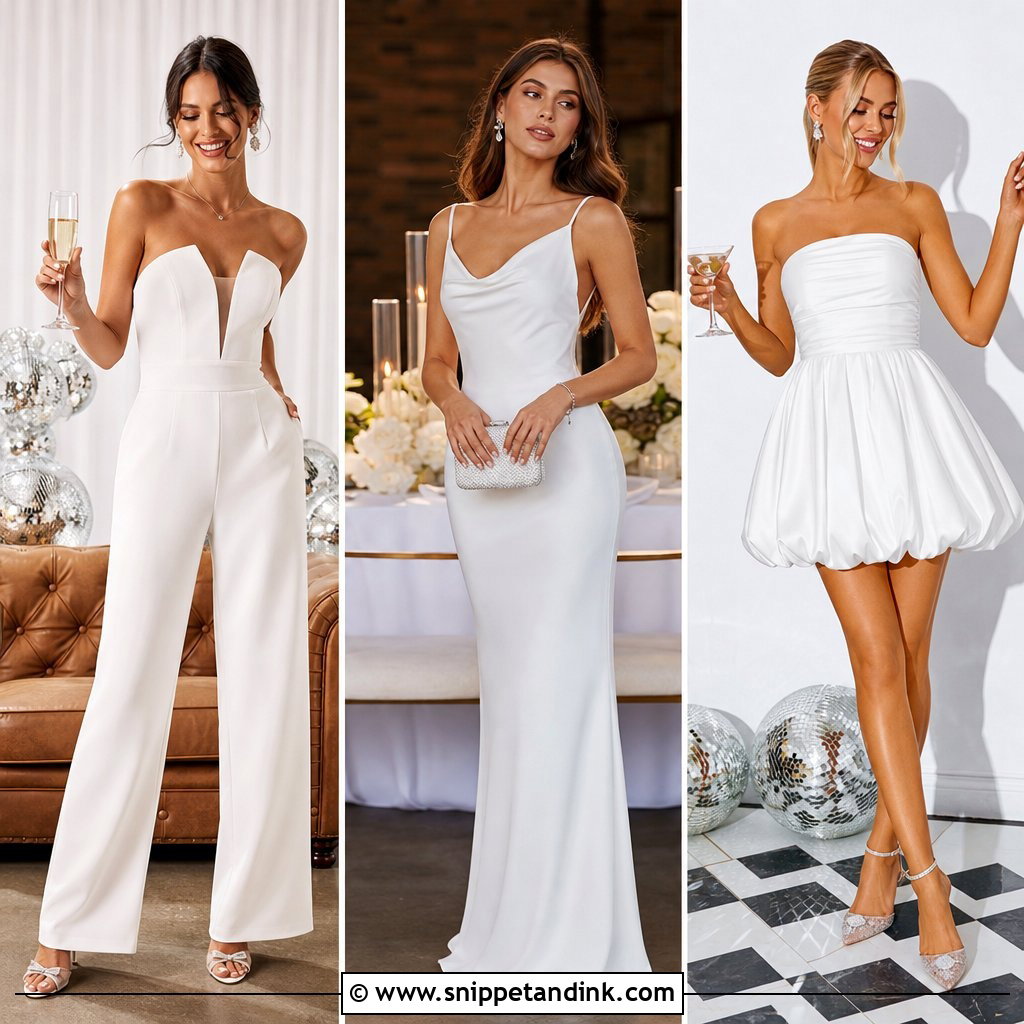
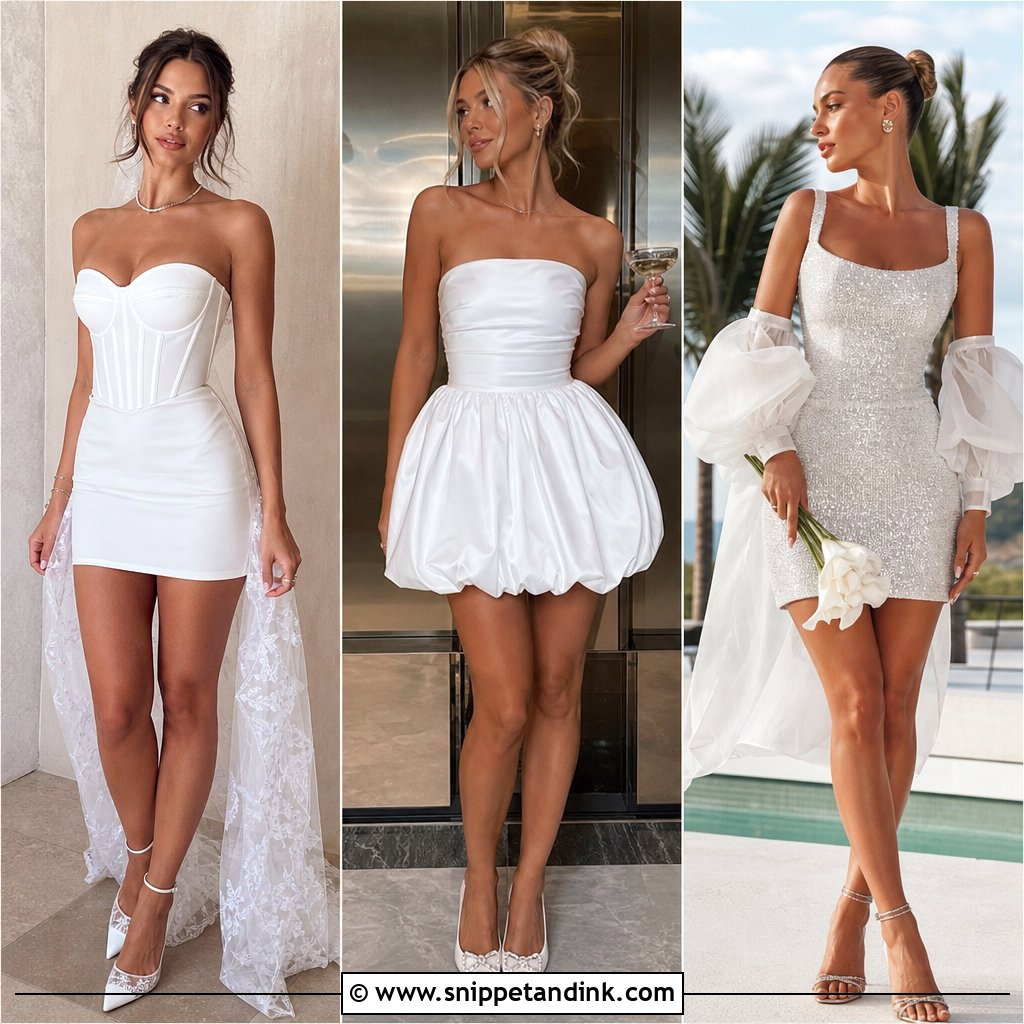
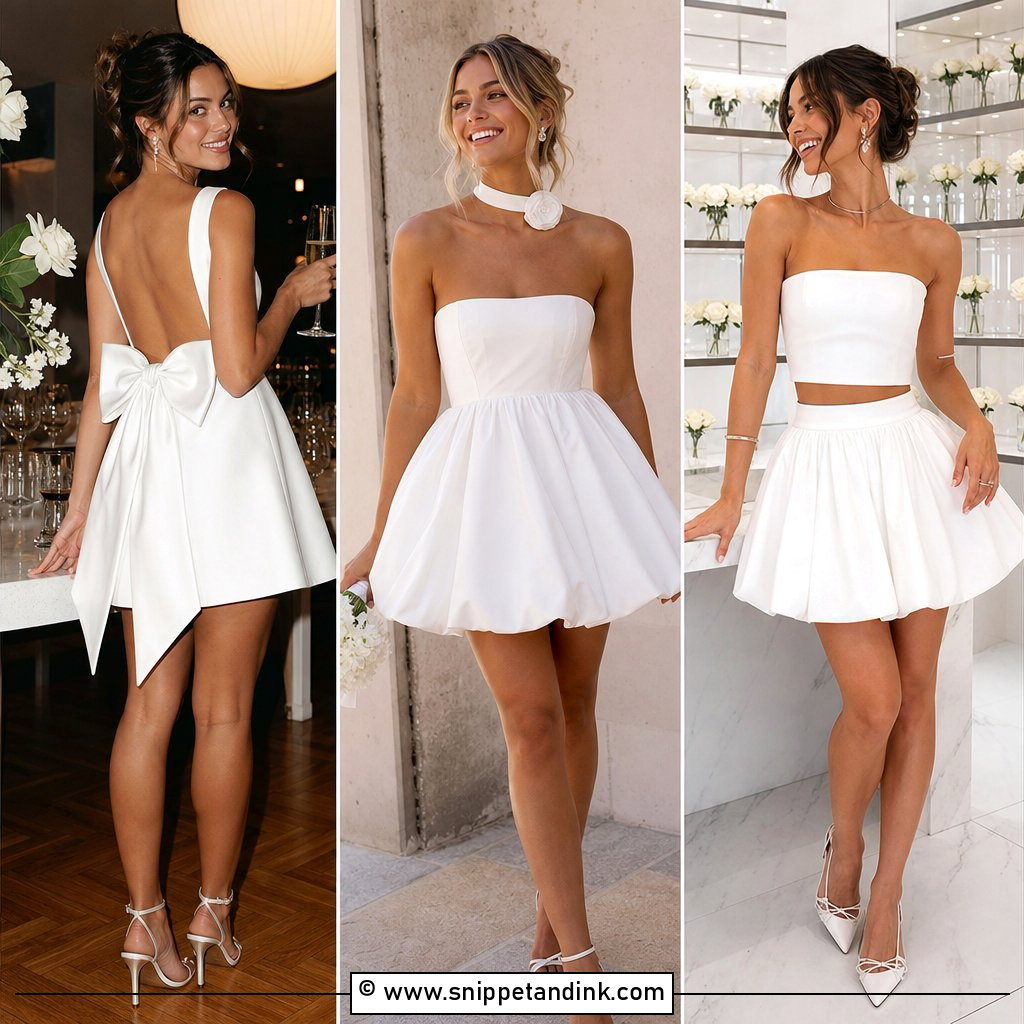
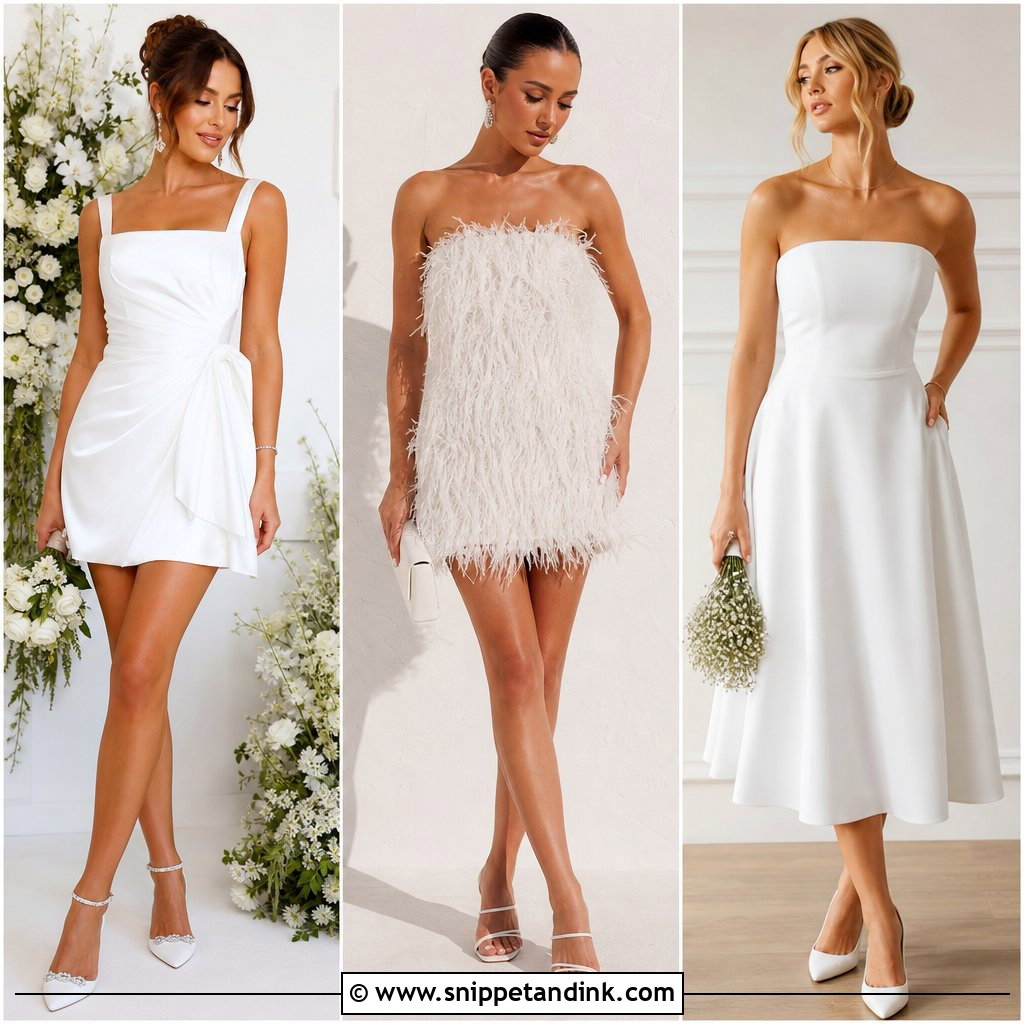
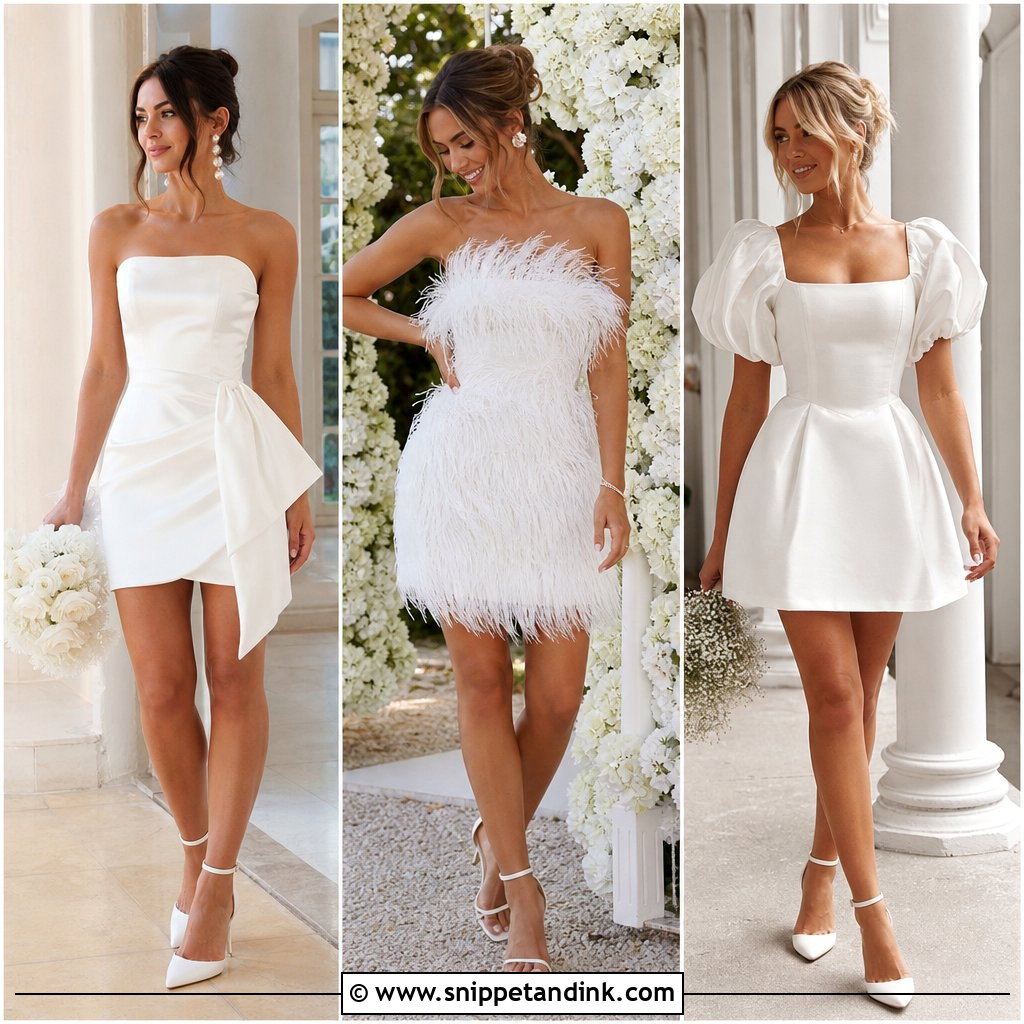
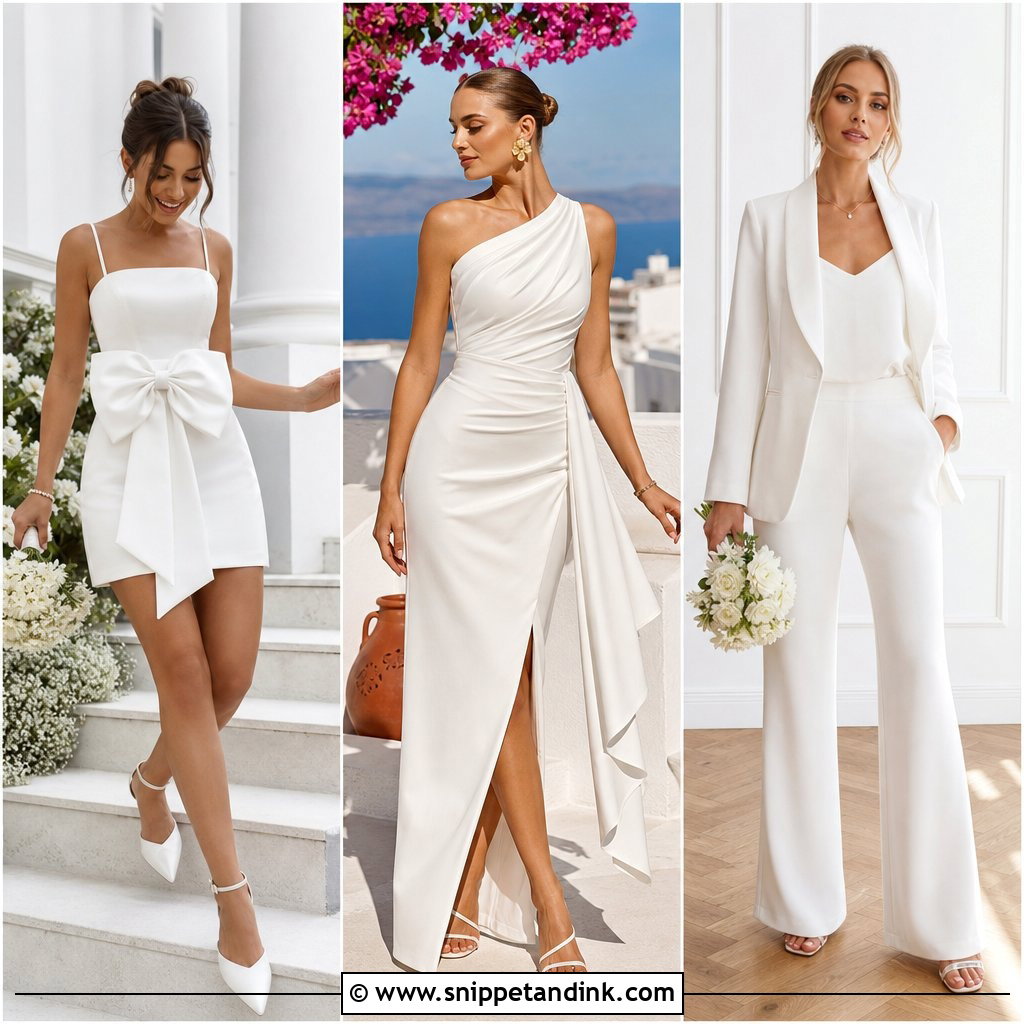
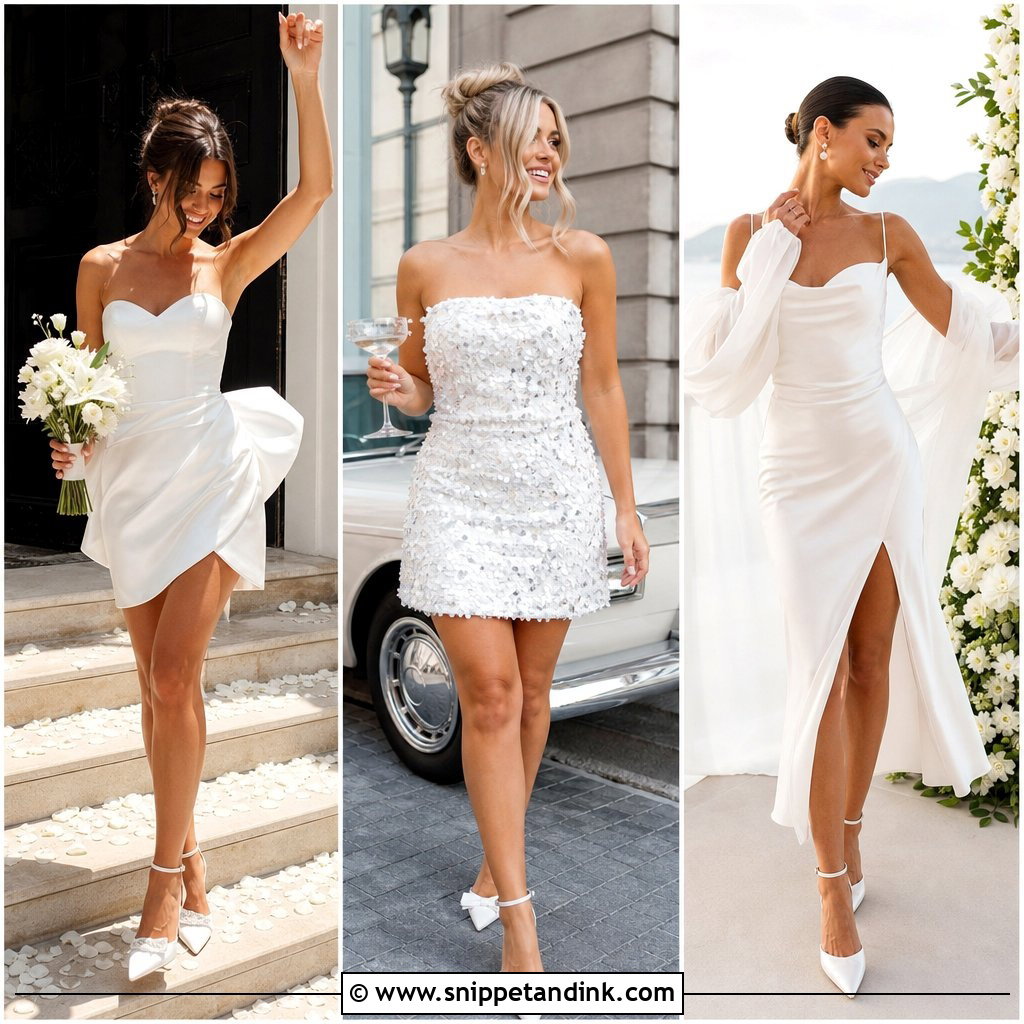
A white satin mini with a structured neckline, fitted waist and a little flare in the skirt is the cleanest contrast to a big ball gown. Satin holds its shape, so a square, strapless or off-shoulder neckline stays where it should without constant hitching. I always tell brides to sit down in front of a mirror in a mini before buying; satin rides up more than crepe. Pointed slingbacks, pearl drops and a satin clutch keep it bridal, with embellished flats waiting under the table. A sleek bun or high ponytail suits the shorter line.
2. Bridal Feather Trim Mini Dress
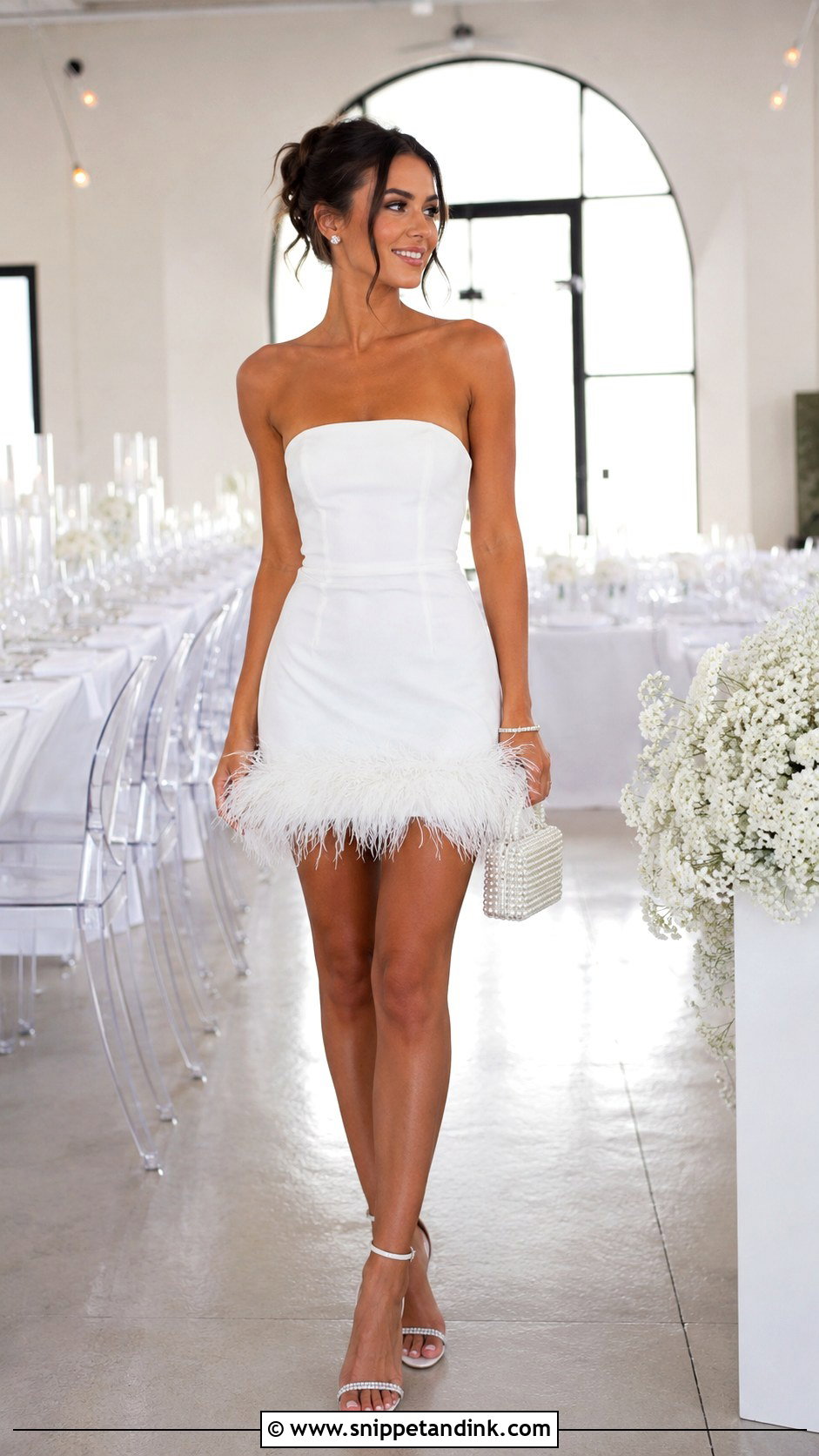
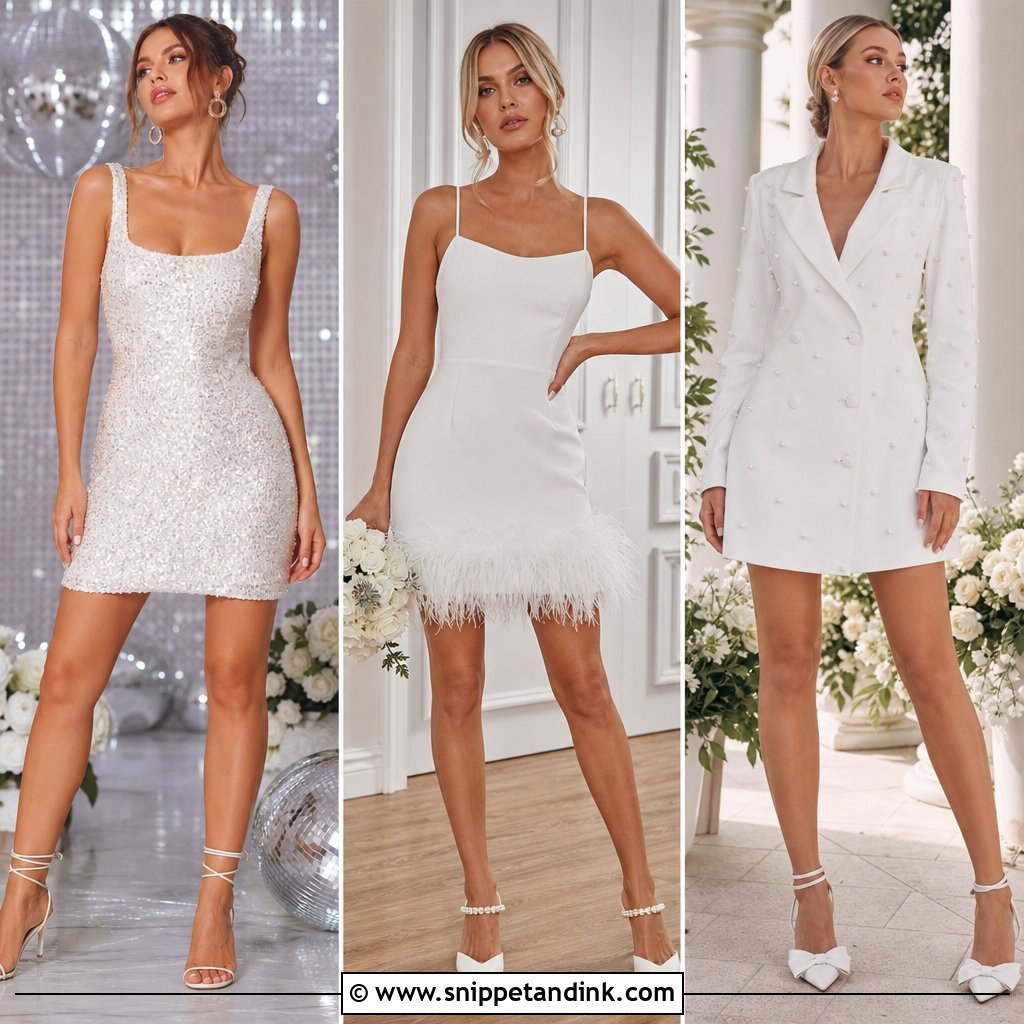
Feathers move every time you do, which is why they’re fun on a dance floor. I keep them to the neckline, cuffs or hem; a dress covered in feathers sheds onto the cake table and sticks to your lipstick. Let the trim be the only texture, with plain strappy heels, crystal studs and a structured mini bag. A fitted bodice balances a feathered skirt. In cooler weather, sheer tights add coverage without hiding the hem. Choose your hair by the neckline: if feathers sit at the collar, a smooth ponytail keeps them from tangling.
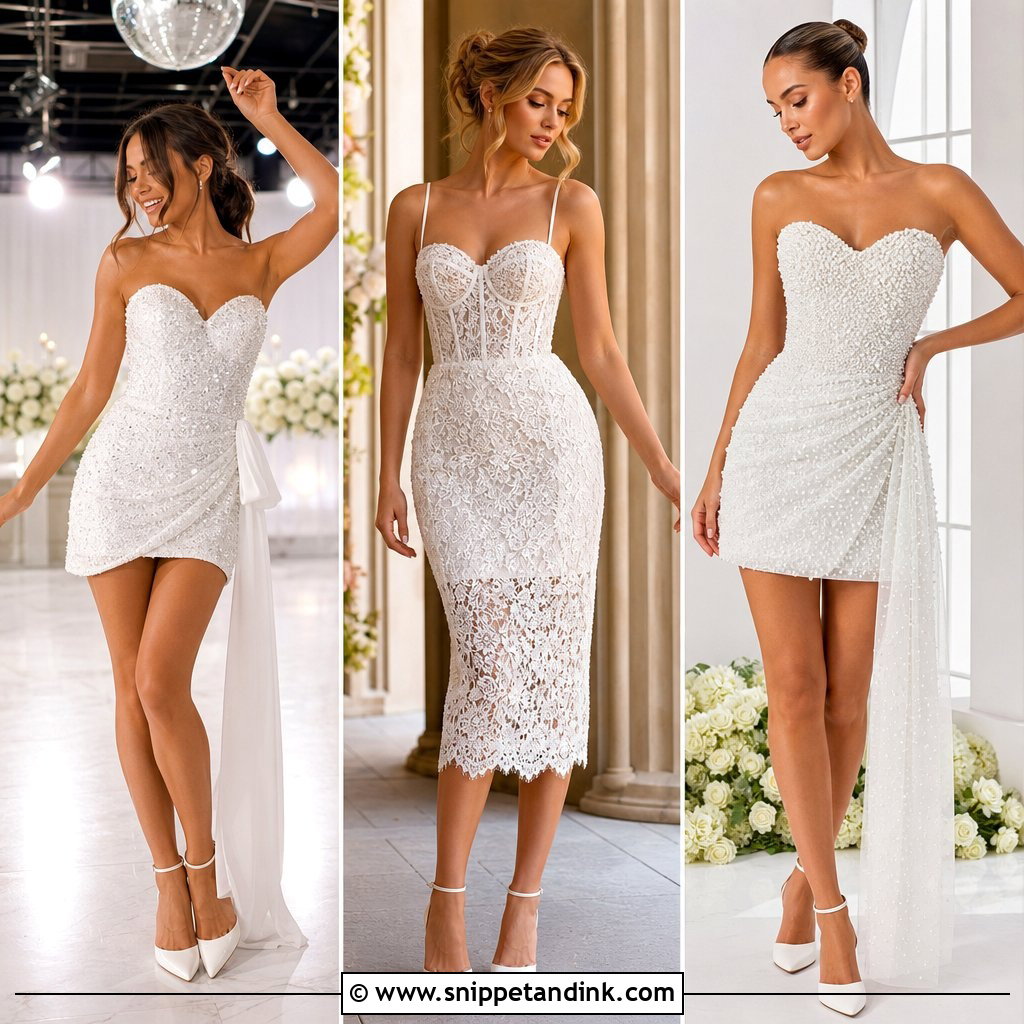
3. Bridal Sequin Mini Dress
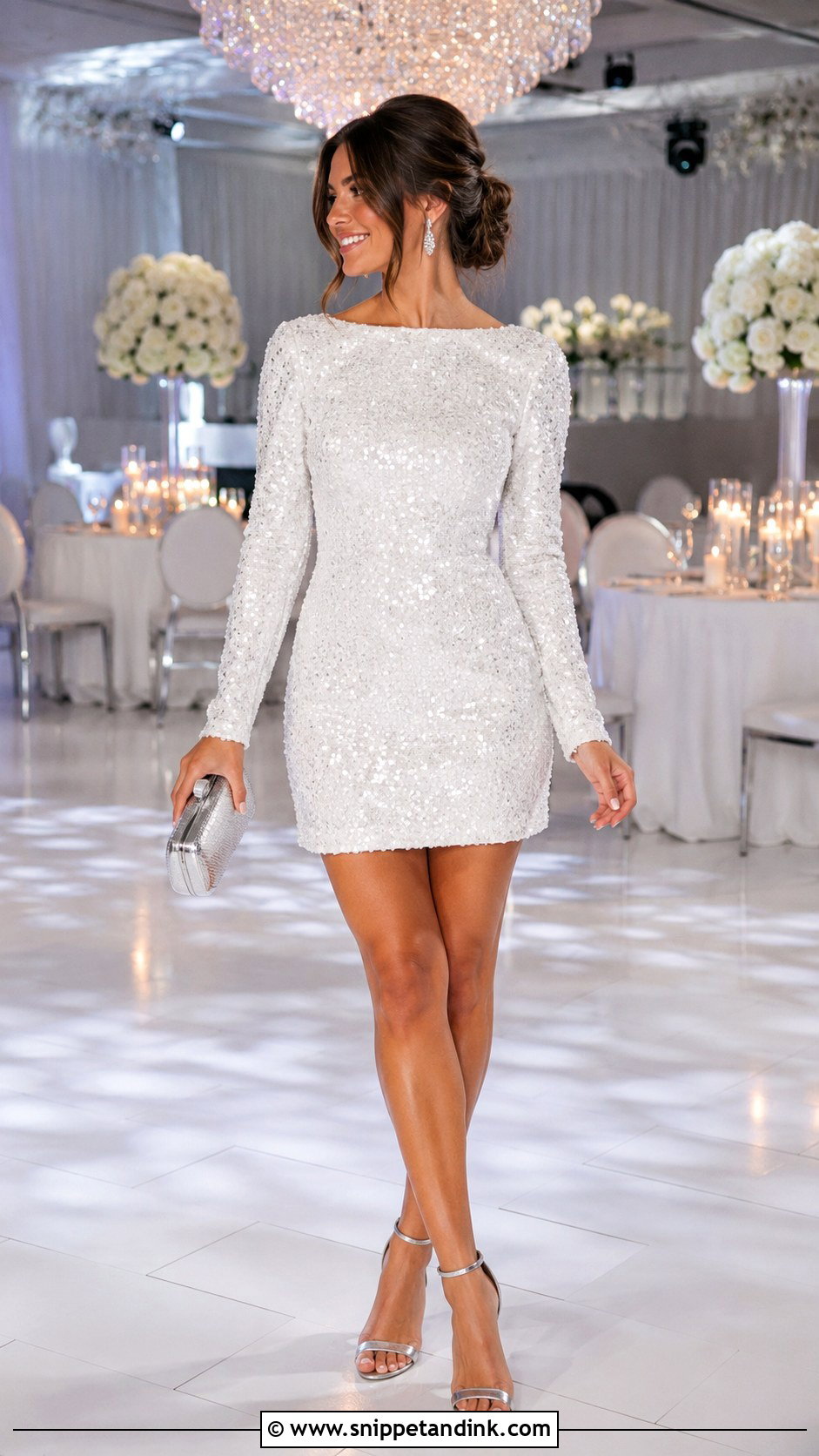
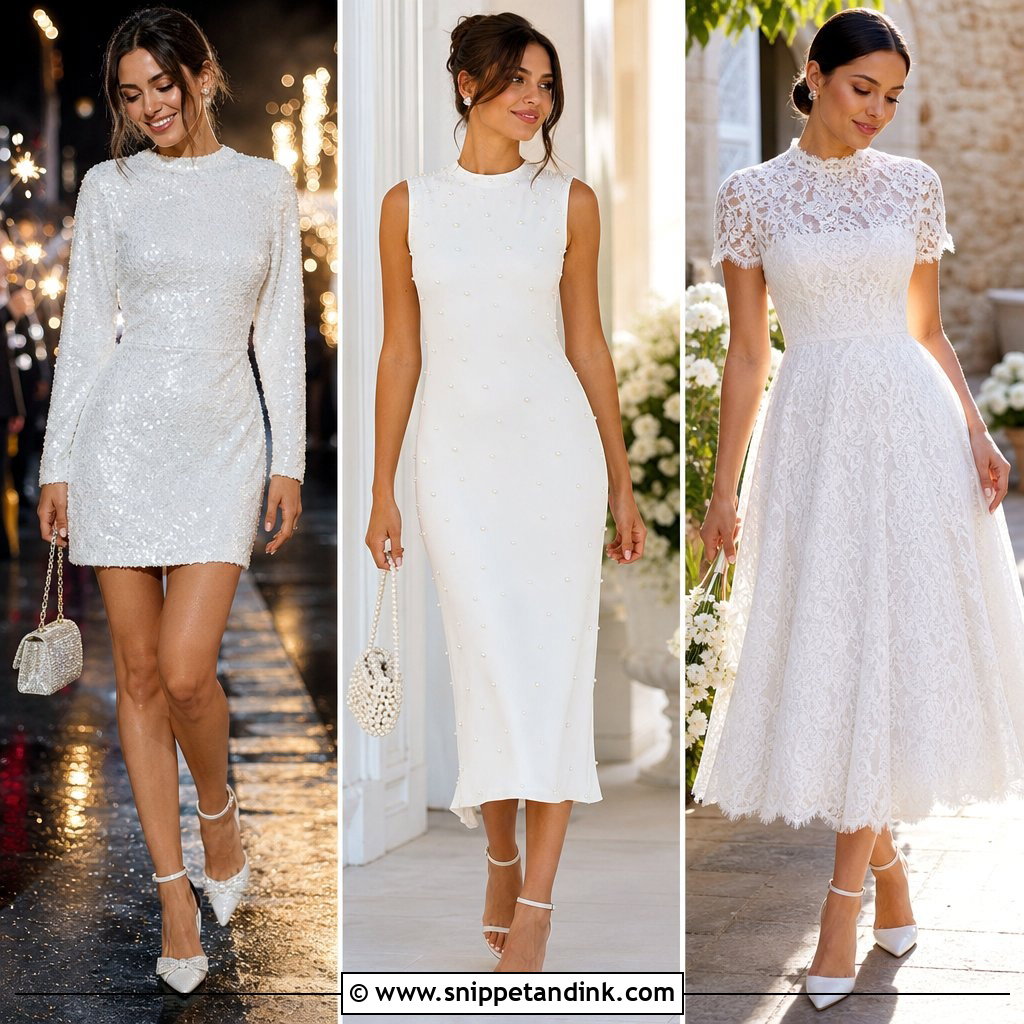
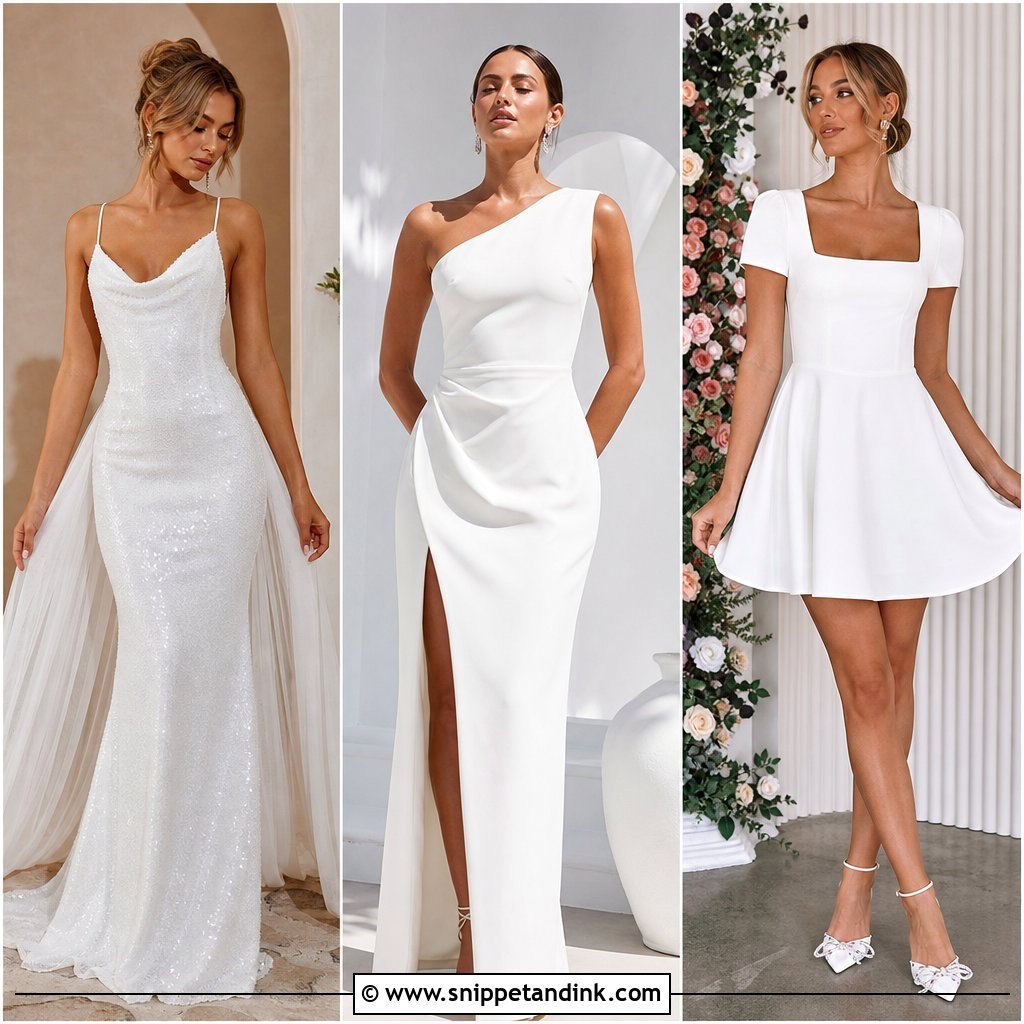
Under reception lighting, a white sequin mini dress throws light around the room. Small sequins give a fine shimmer; large paillettes look bolder and swing as you move. Turn the dress inside out before you buy it. Cheap sequin dresses have scratchy seams and stitched backs that rub your underarms raw by midnight, so look for a smooth full lining. Long sleeves suit a winter party; strapless is cooler in July. Silver heels and minimal crystal jewelry are enough, since the fabric already sparkles.
4. Bridal Corset And Tulle Midi Dress
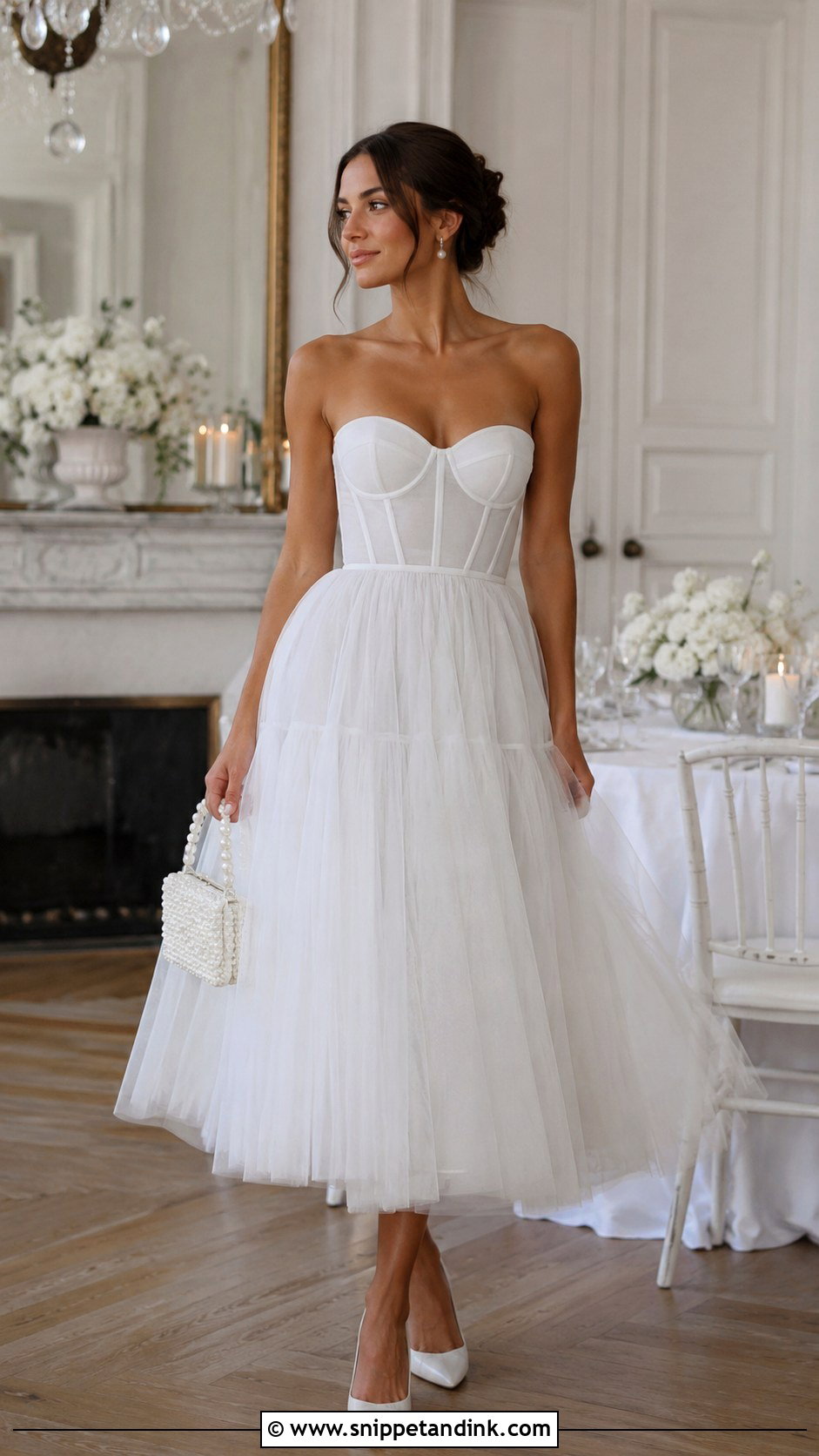
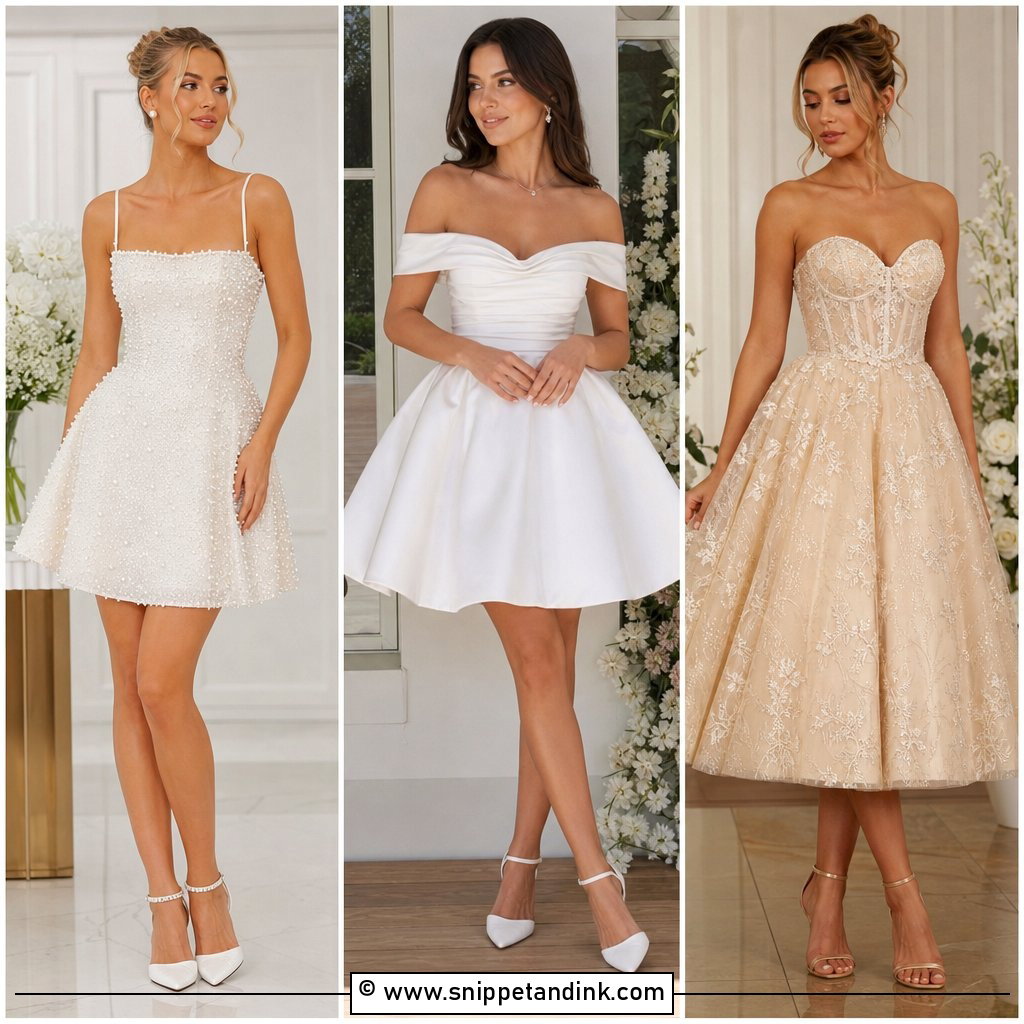
A corset bodice over a tulle midi skirt gives you the princess shape without the weight. Tulle at tea length or mid-calf still moves when you spin, and it shows off your shoes. My caution is the corset itself. If it’s boned and laced, you’ll need someone who knows how to lace it evenly, and you’ll want it fitted with you seated as well as standing, because you’re about to eat dinner in it. Satin pumps, pearl earrings and a little top-handle bag finish it. Half-up hair suits the soft skirt.
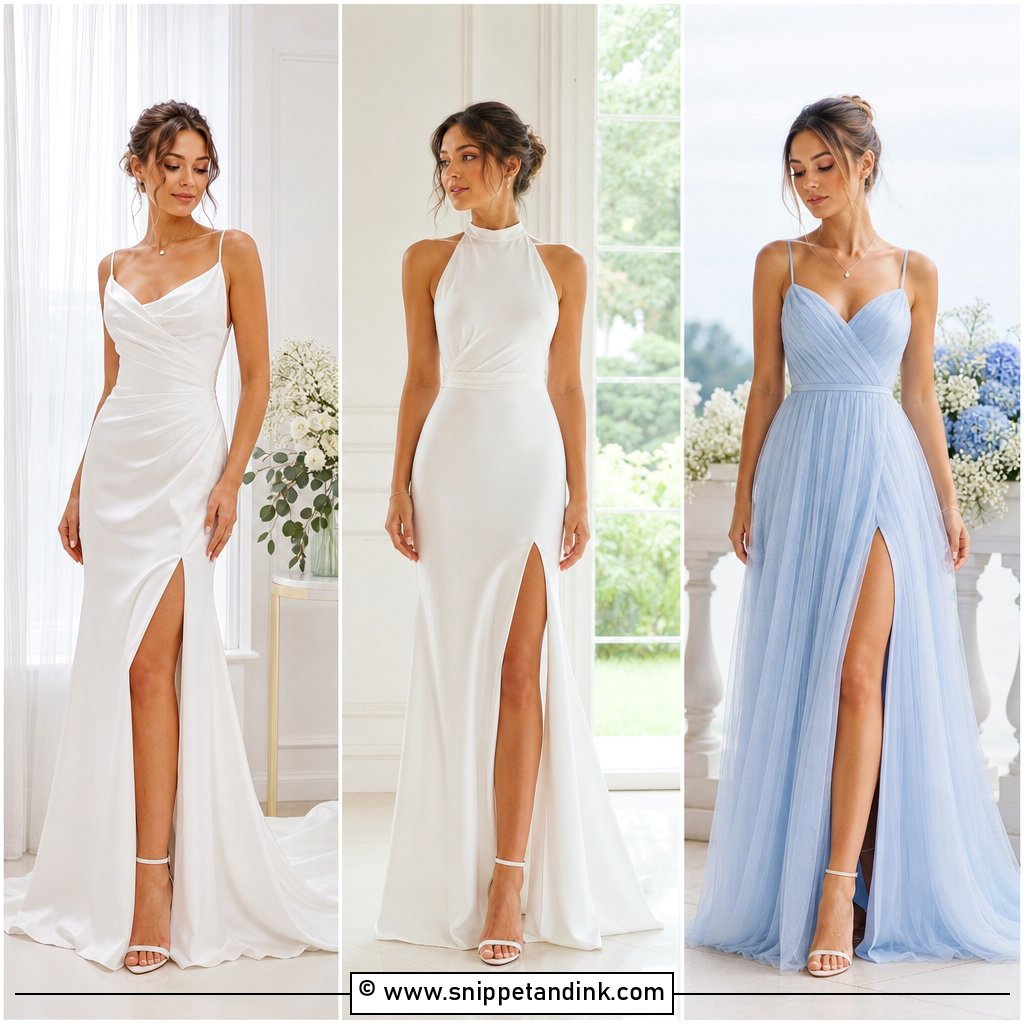
5. Bridal Silk Slip Dress
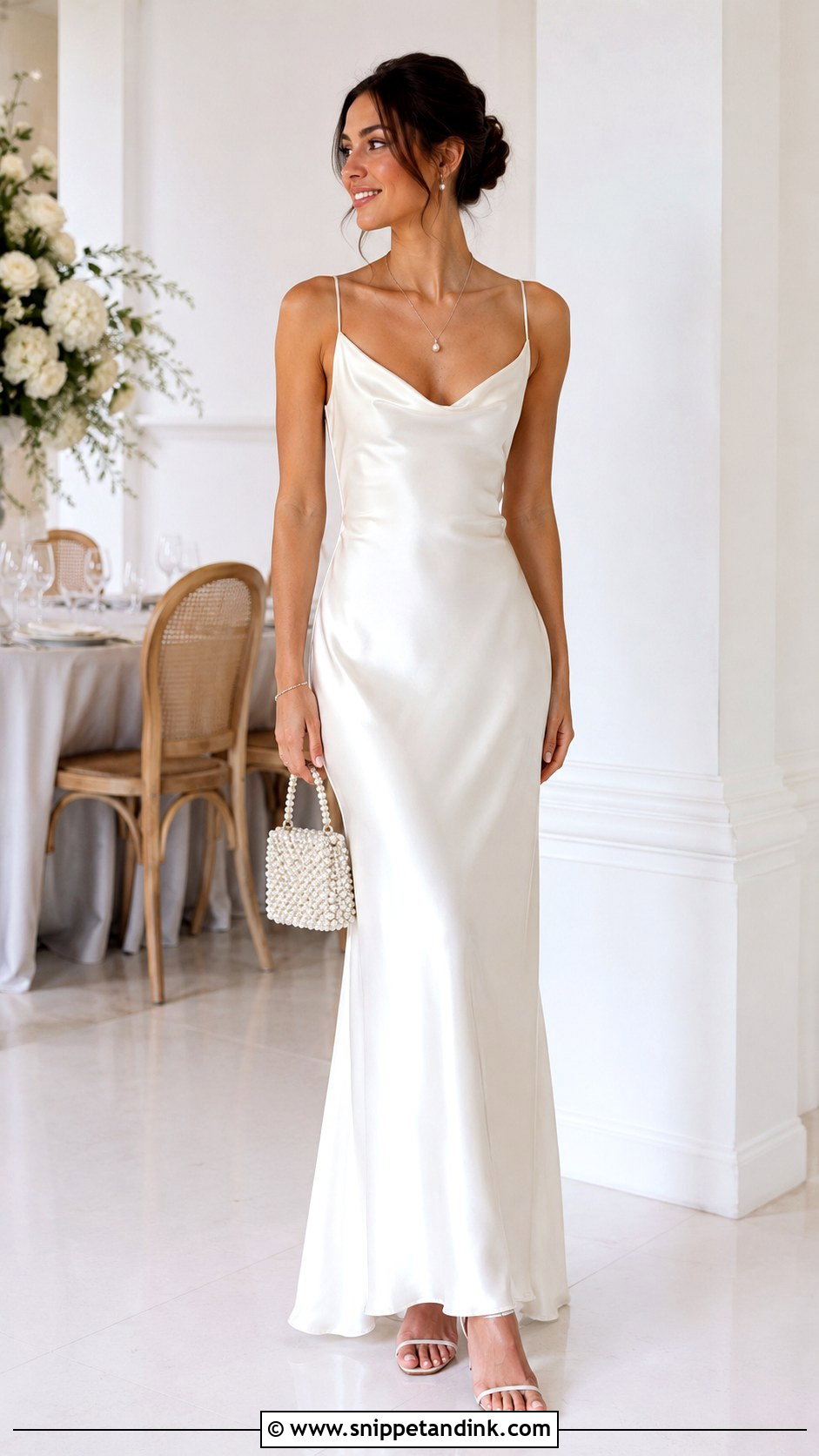
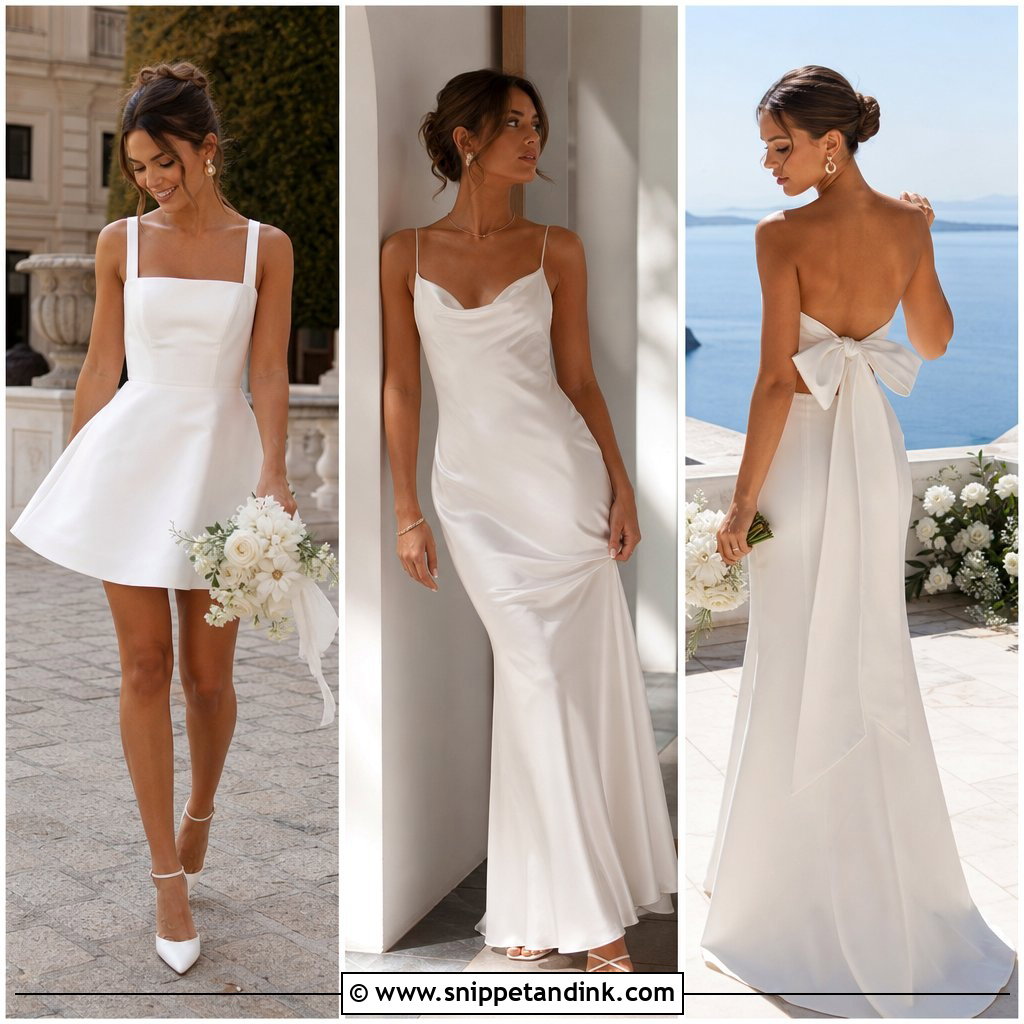
A silk slip is the quiet option: no beading, no volume, just a bias cut that skims your body. Bias-cut silk shows everything, every seam and every crease, so I fit the dress with the exact underwear you’ll wear and steam it on the day. A cowl or square neckline gives shape without decoration. Ankle-strap heels and a pearl or crystal pendant are enough. If the room cools down, a cropped tailored jacket looks more deliberate than a shawl. It suits a modern venue or a summer night.
6. Bridal Wide Leg Jumpsuit
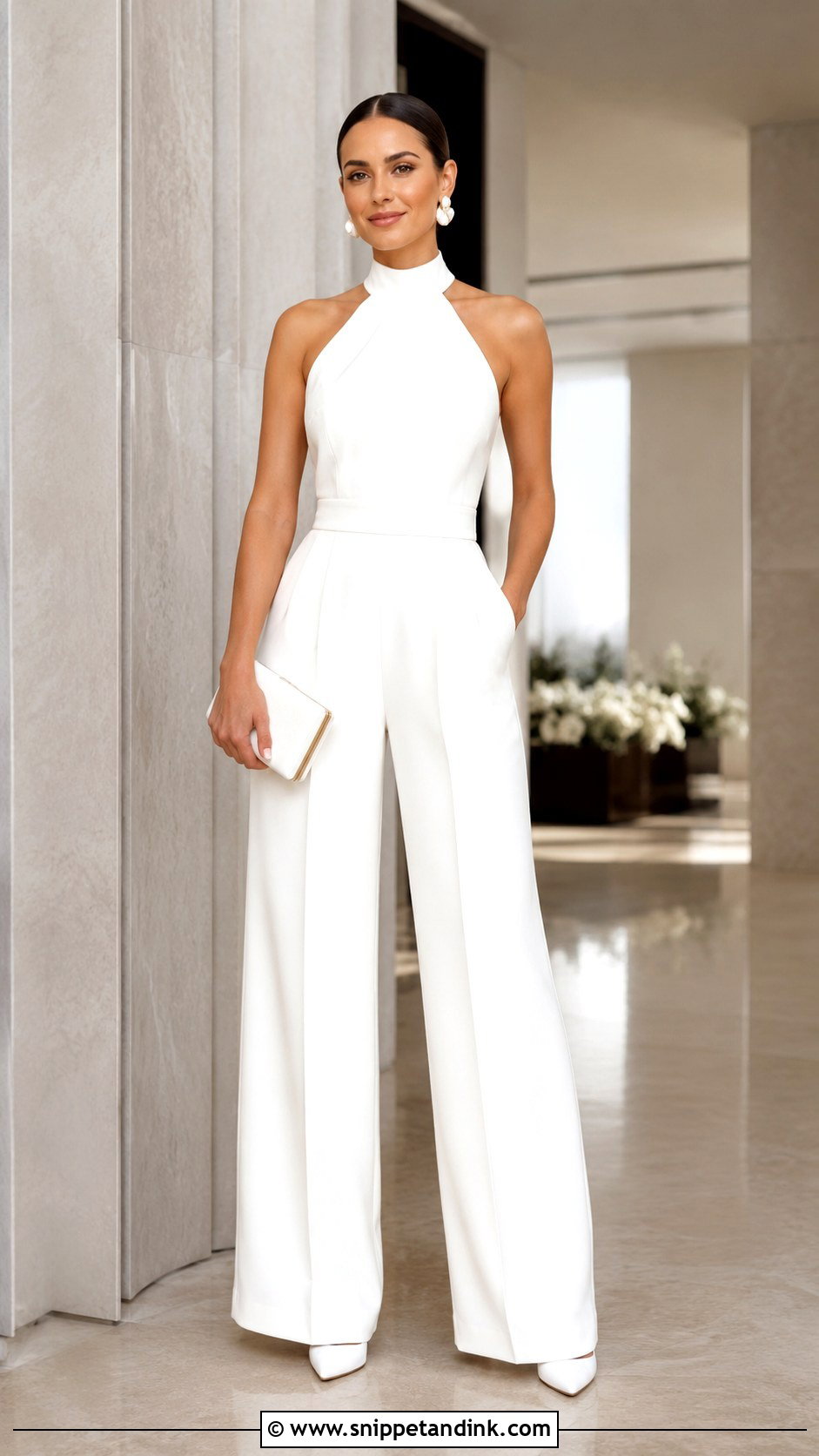
A white wide-leg jumpsuit is a sharp contrast to a traditional ceremony gown, and you can dance in it all night. The two things that make or break it are the bodice support and the hem. Hem it for the exact shoes you’ll wear, because a wide leg that touches the floor gets stepped on. Also check how it fastens. A long back zip on a one-piece is hard to do alone, and you’ll need the bathroom at some point. Halter, one-shoulder or V-neck tops all work; pointed pumps and sculptural earrings finish it.
7. Bridal White Pantsuit
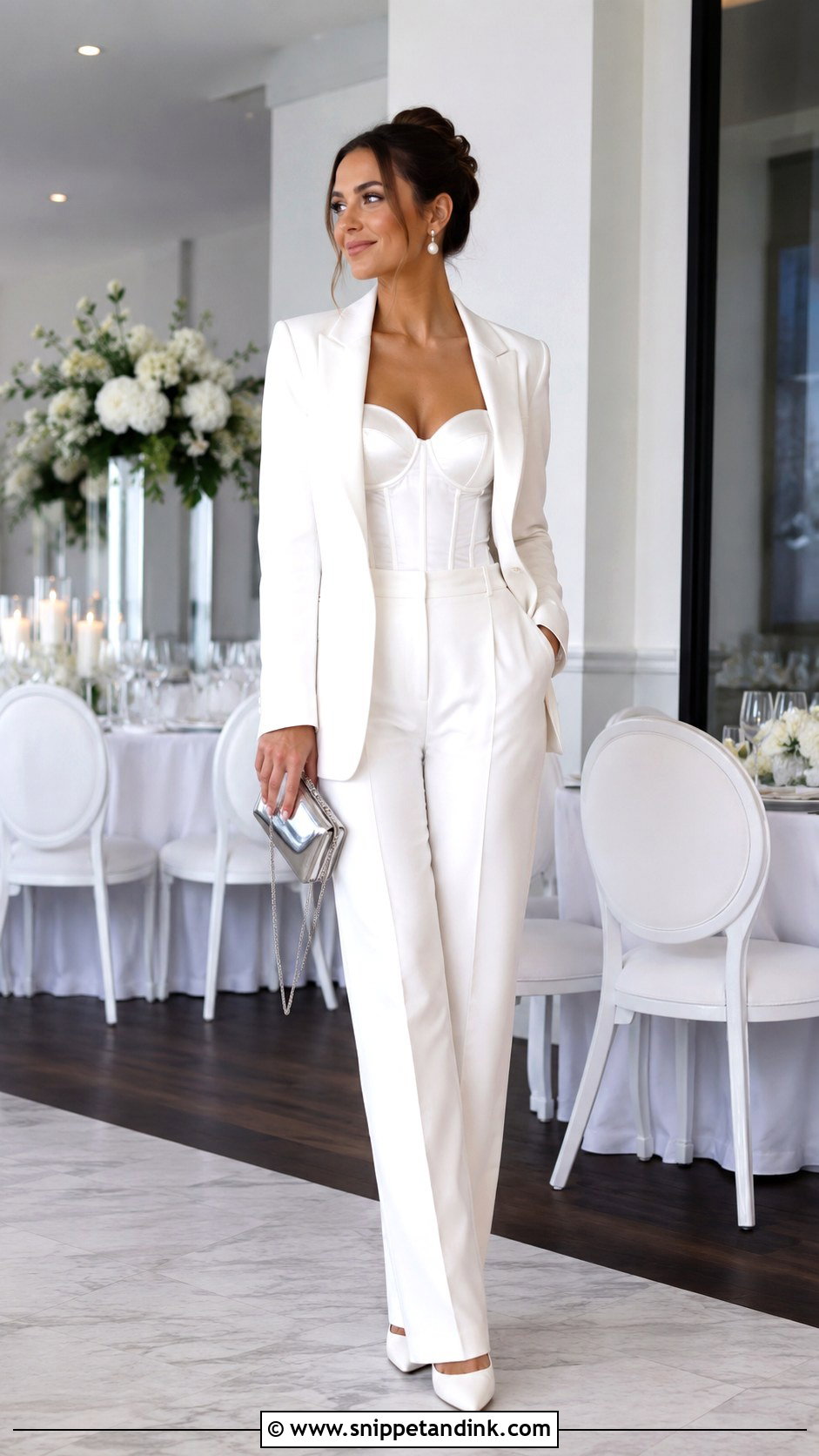
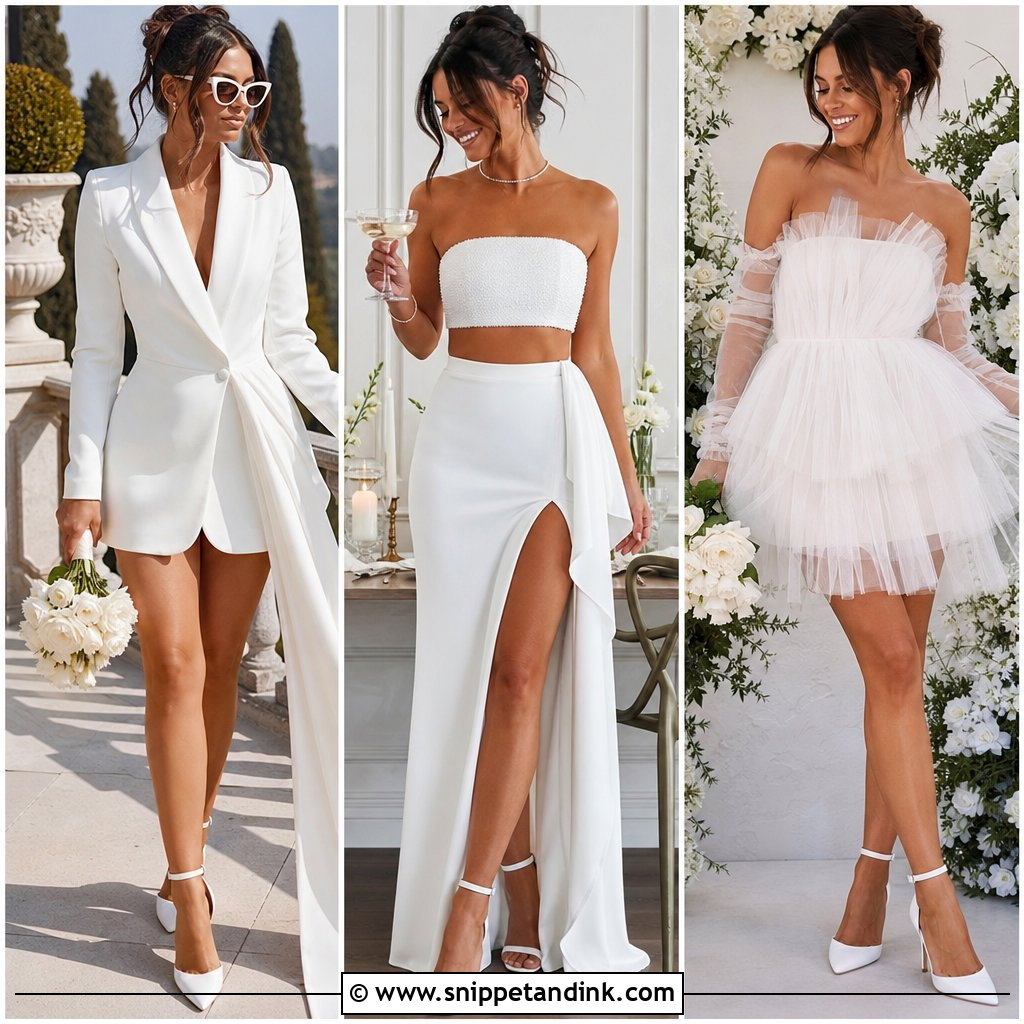
Crisp tailoring can make a white pantsuit feel as celebratory as any dress. A fitted or softly oversized blazer with matching high-waisted trousers and a satin camisole or corset top underneath is my usual starting point. Fashion tape along the blazer lapel keeps a deep V from gaping while you dance. Pointed heels make the trousers look longer, though polished loafers or platform sneakers are fine for a relaxed party. A slicked-back bun gives it edge, and loose waves soften it.
8. Bridal Romper With Detachable Skirt
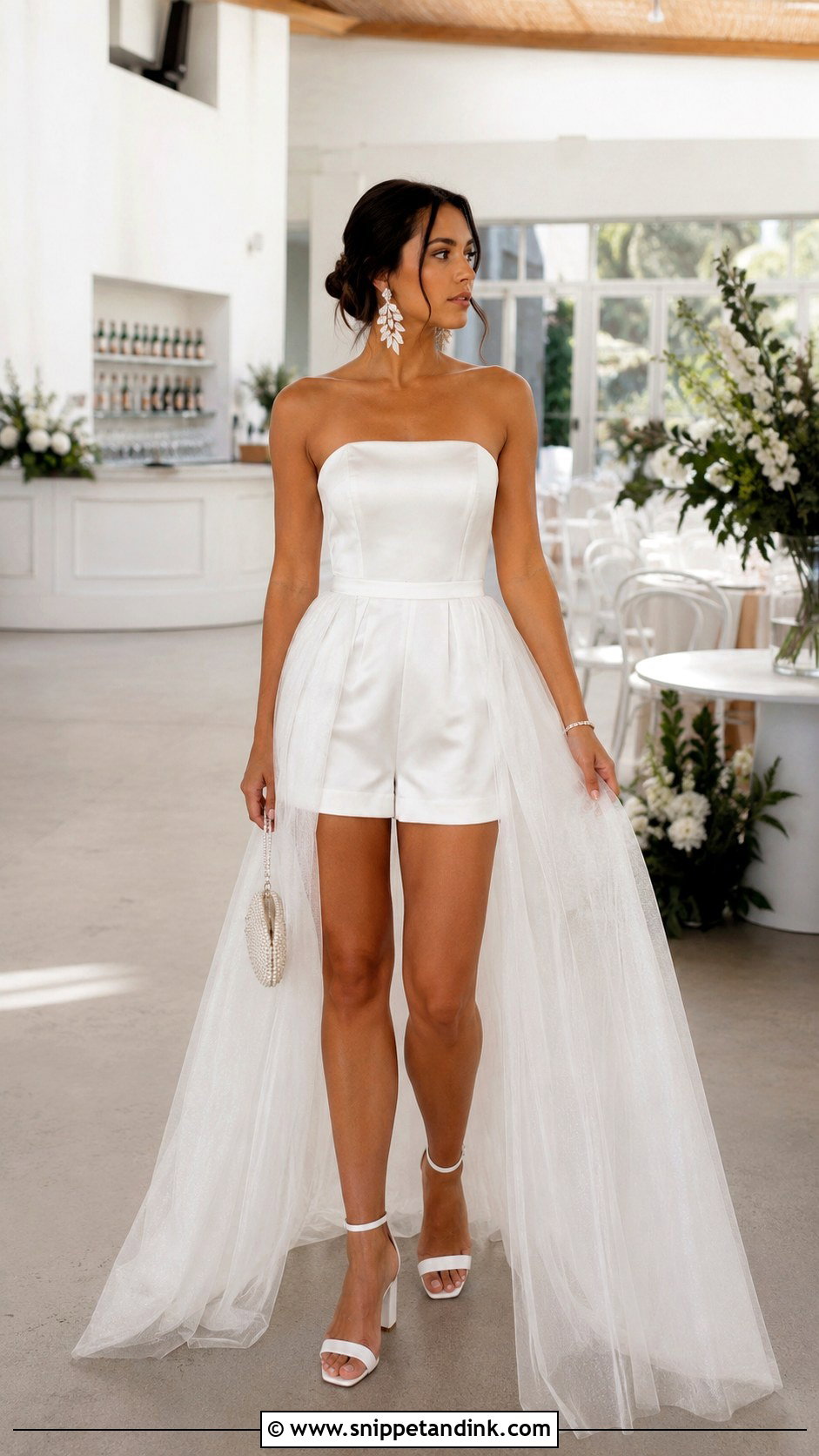
A romper with a detachable skirt gives you two looks without leaving the room. The overskirt makes it read like a short gown for the entrance, then comes off to show a fitted romper for dancing. Satin or crepe keeps both versions looking finished. Test the fastenings at home, and decide in advance who will undo them on the night. Hidden hooks behind a waistband are fiddly with nervous fingers. Block heels and a small wristlet stay out of the way on the dance floor.
9. Bridal Dress With Detachable Overskirt
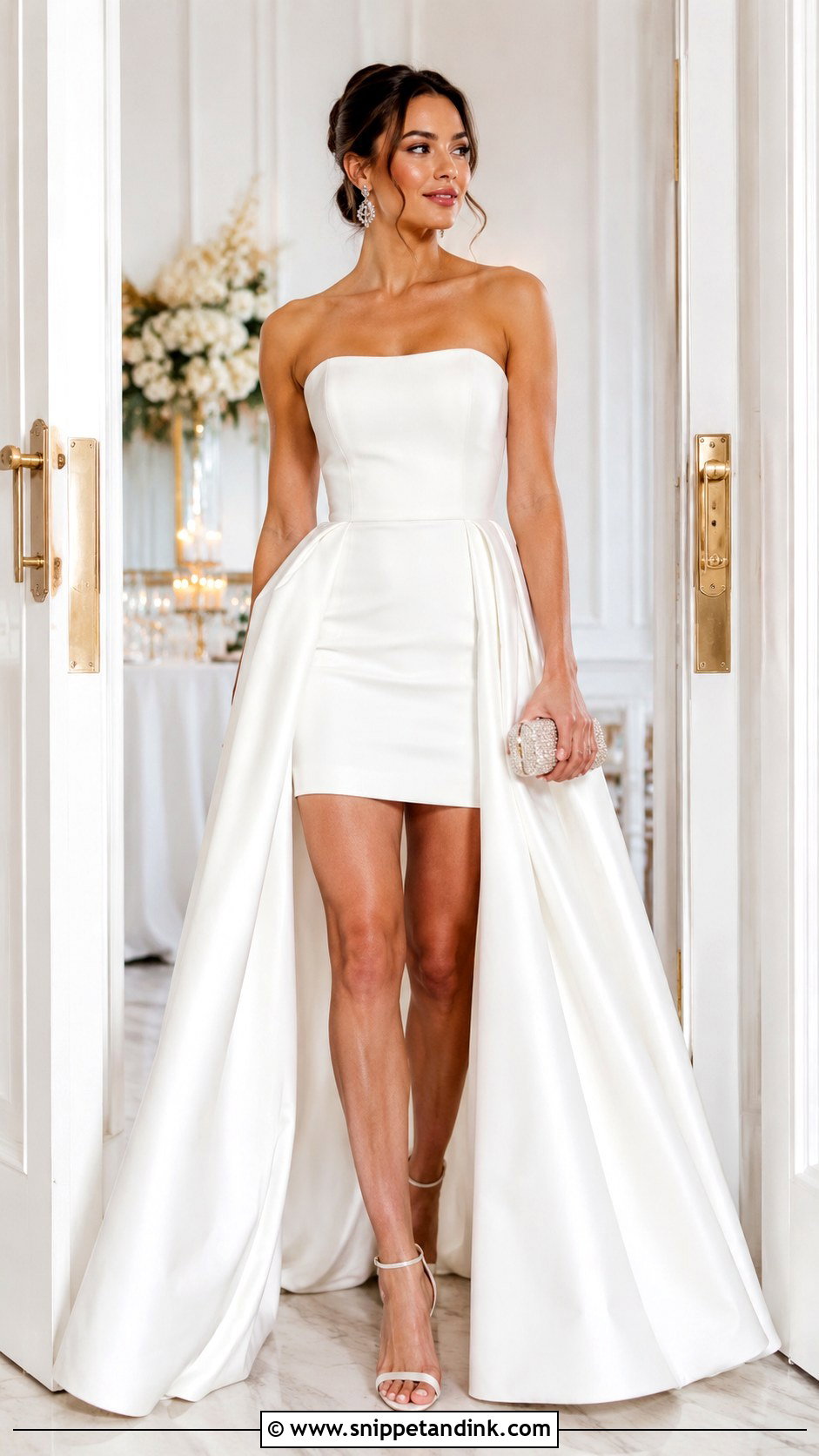
A detachable overskirt changes your silhouette without a full outfit change. Underneath sits a fitted mini, midi or slim column; on top goes a tulle or satin overskirt for the ceremony. The base dress has to look finished from the back once the skirt comes off, so check that the attachment points don’t leave visible hooks or snaps. I’d ask your seamstress to make it secure enough for the aisle but quick to release. Swap to smaller earrings and lower heels, and let a structured updo come down into a ponytail.
10. Bridal Pearl Embellished Midi Dress
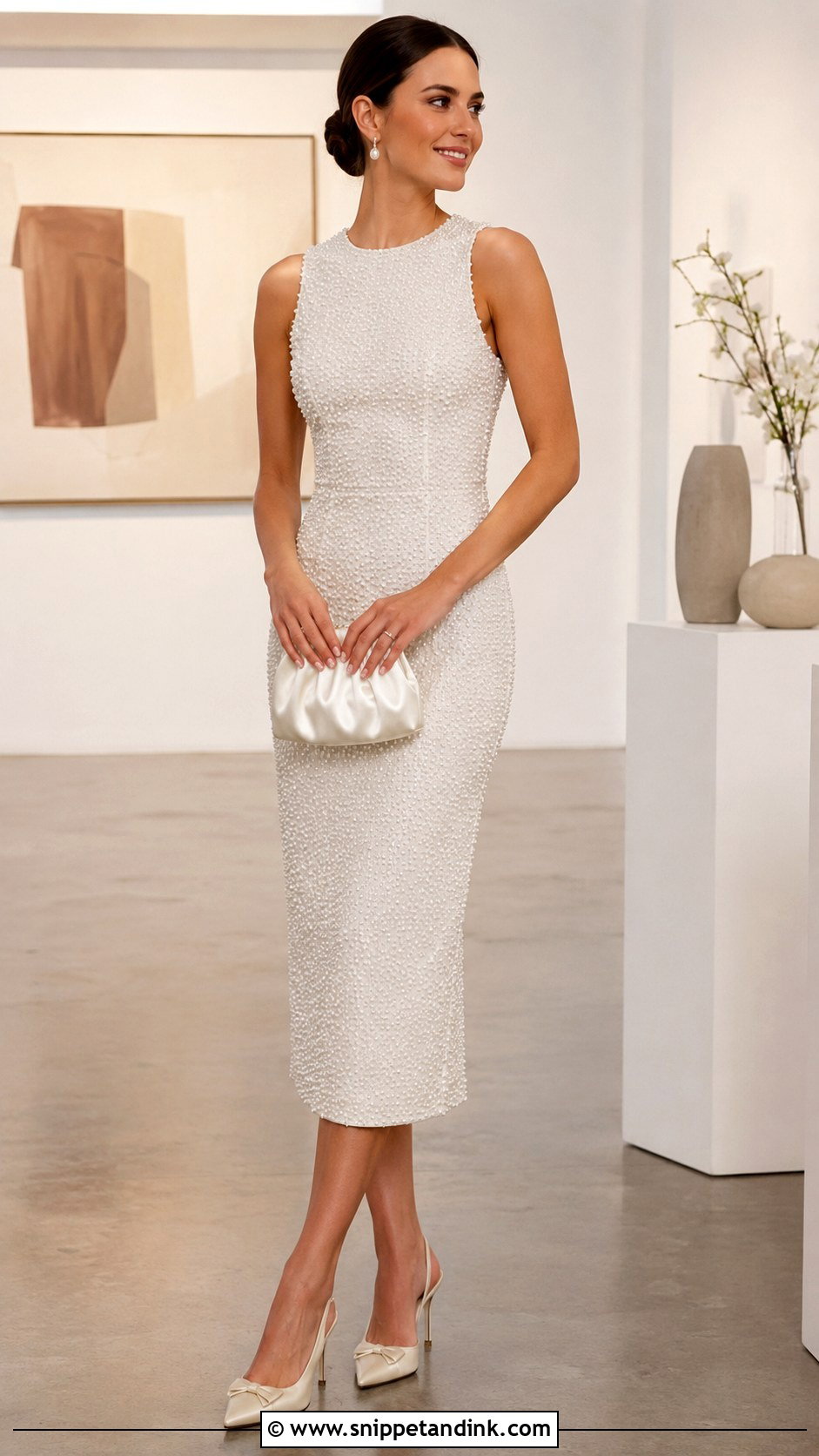
Pearl-studded midi dresses give you texture without glitter. Look for pearls concentrated on the bodice, sleeves or neckline, because a skirt covered in them gets heavy and clacks against chairs. Before buying, run a strand of your hair across the trim. Loose curls catch on pearl clusters near the shoulders more often than brides expect. Ivory slingbacks, pearl drops and a smooth satin clutch are enough; skip decorated shoes. A polished bun or shoulder-length waves keeps the focus on the dress.
11. Bridal Lace Tea Length Dress
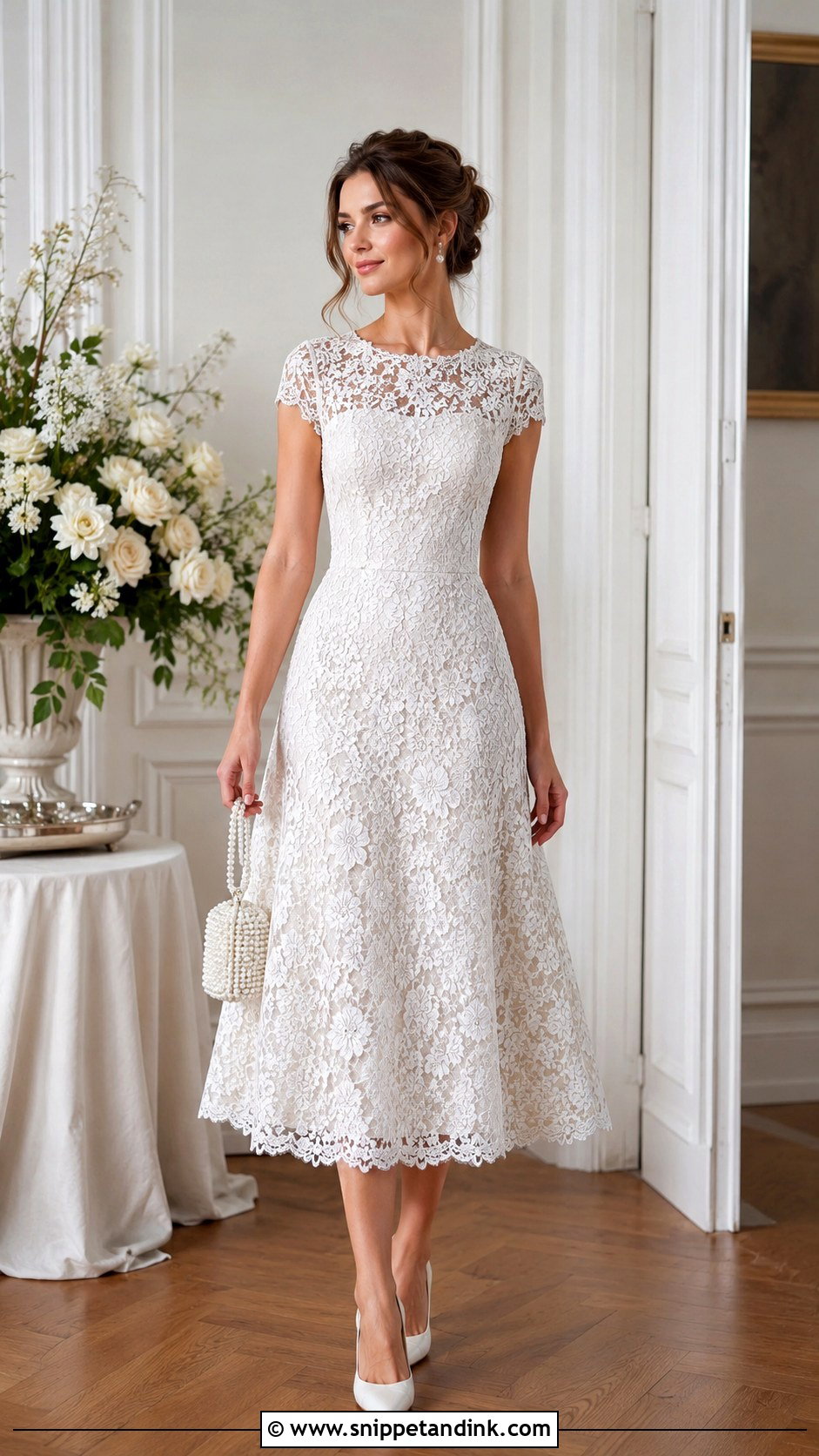
A lace tea-length dress feels vintage and is easy to move in, since the hem falls between knee and ankle. Floral lace reads soft, geometric lace reads modern, and corded lace has more definition in photos. Lace sits next to your skin all evening, so check the lining for scratchy seams at the underarm. A fitted waist with a lightly structured skirt gives shape without volume. Pointed pumps and a small pearl bag work, with short gloves if you want to lean into the vintage feel.
12. Bridal Fringe Reception Dress
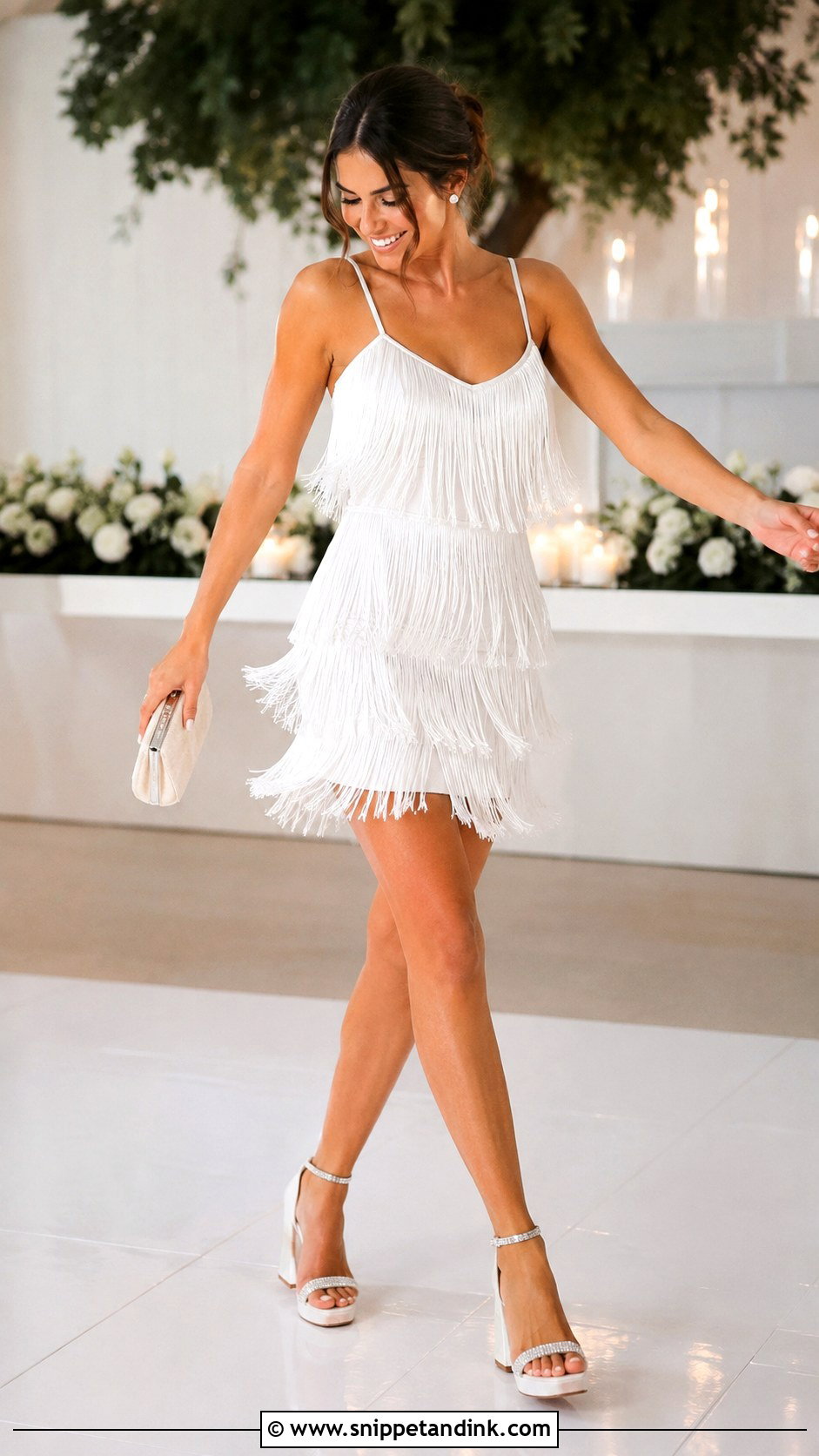
Fringe turns every step into movement, which is why it’s the outfit that tells guests the dancing has started. Choose a mini or midi dress with securely attached fringe on a fitted base layer that holds the shape. The thing I check is how the fringe is attached. Tug a few strands; loose ones fall out on the dance floor and tangle around heel straps. Supportive block heels and crystal studs keep it practical. A high ponytail keeps your hair out of the strands.
13. Bridal Crop Top And Midi Skirt
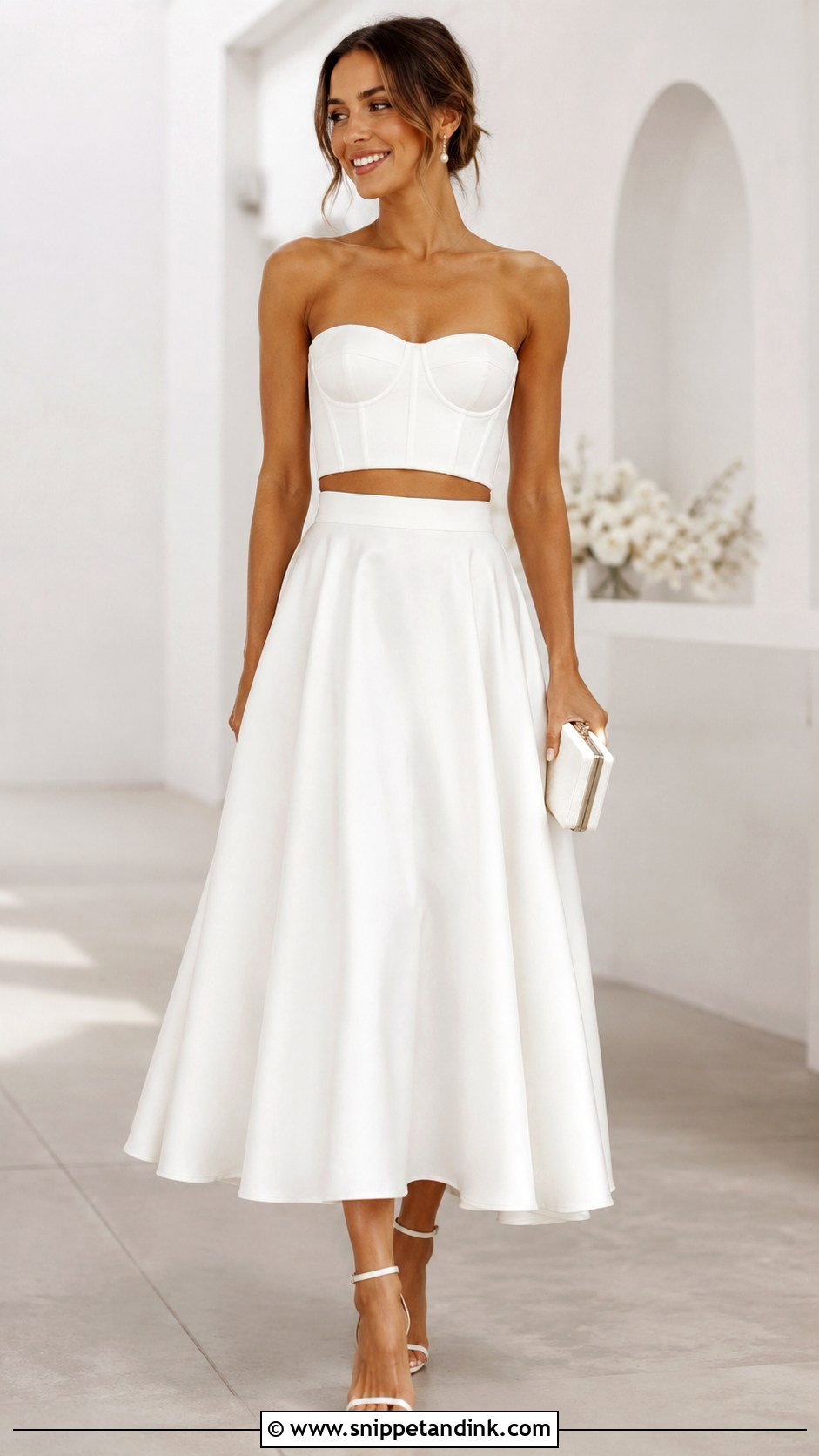
Separates give you options a single dress can’t. A structured corset or satin bandeau with a high-waisted midi skirt shows a narrow strip of skin at the waist. Sit down in it before deciding, since the gap often grows when you’re seated. An A-line skirt is easier to dance in than a fitted one. Ankle-strap heels and a box clutch suit both. You can also rewear the skirt and top separately after the wedding.
14. Bridal Column Dress With Neck Scarf
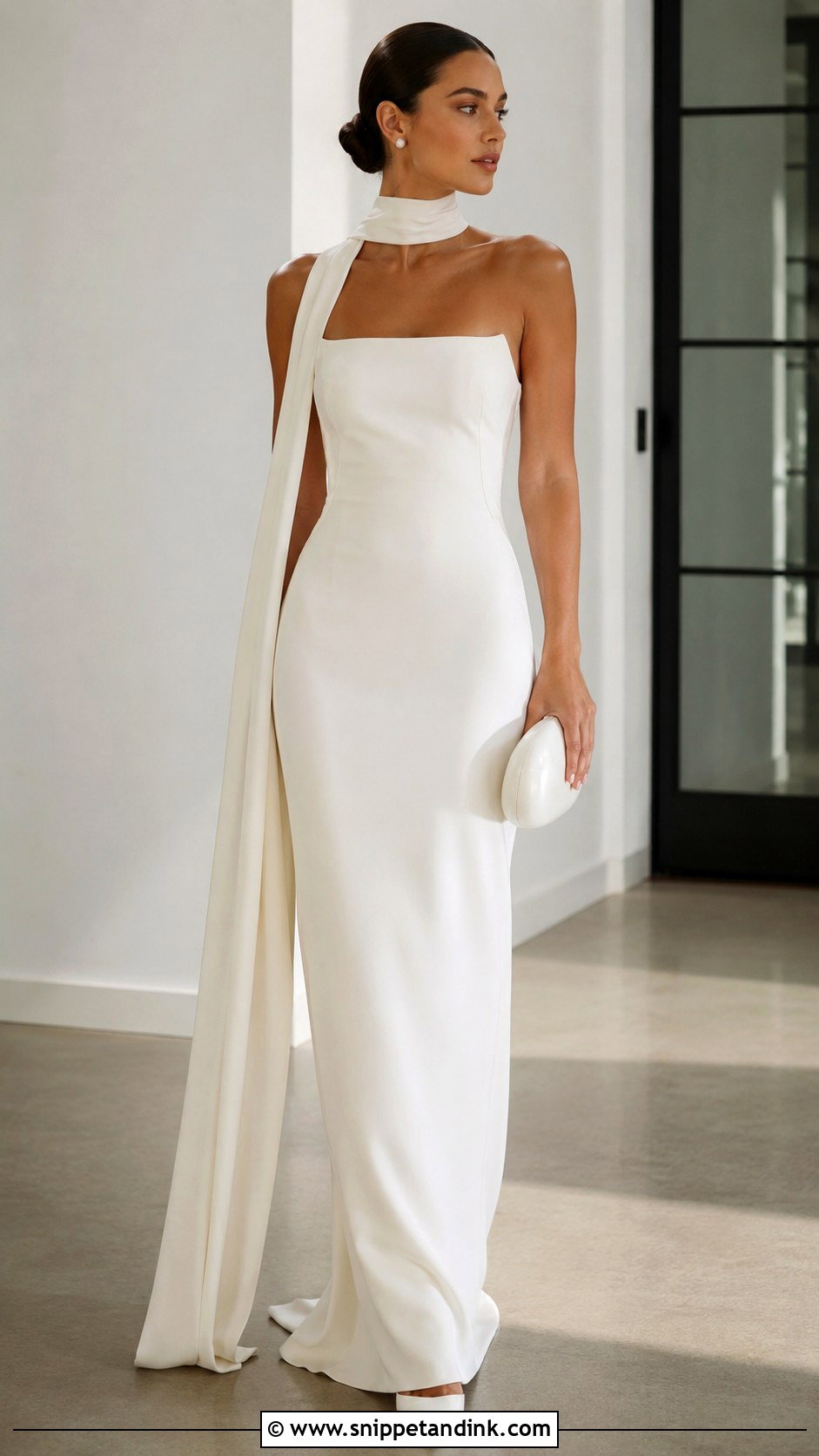
A plain column dress in crepe, satin or silk with a matching neck scarf is about the simplest second look there is. The scarf does all the work, draped down the back, looped at the neck or tied in a soft bow. Practice the tie at home; a scarf that needs redoing every ten minutes gets annoying fast. Keep the column short enough to walk and dance safely, as narrow hems trip people. Pointed pumps, modern studs and a sculptural clutch suit a formal reception.
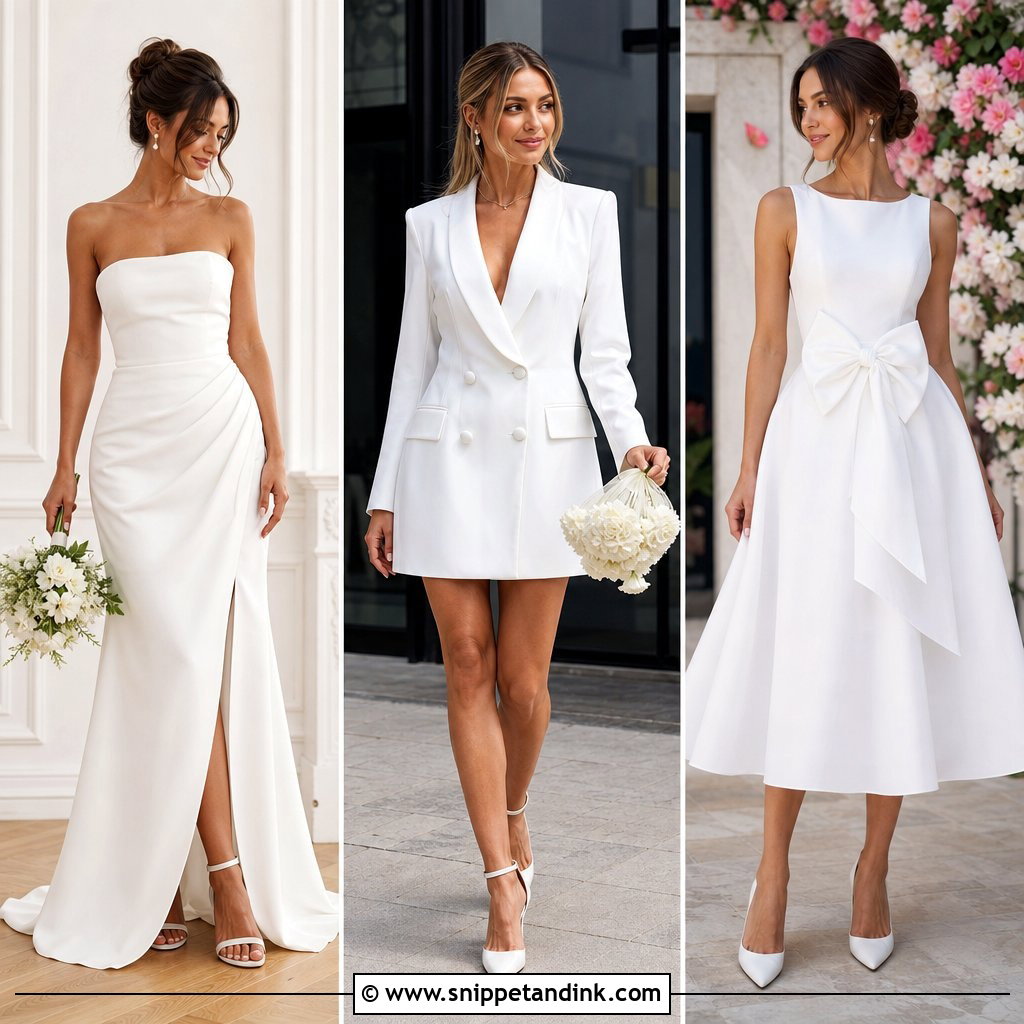
15. Bridal Cape Mini Dress
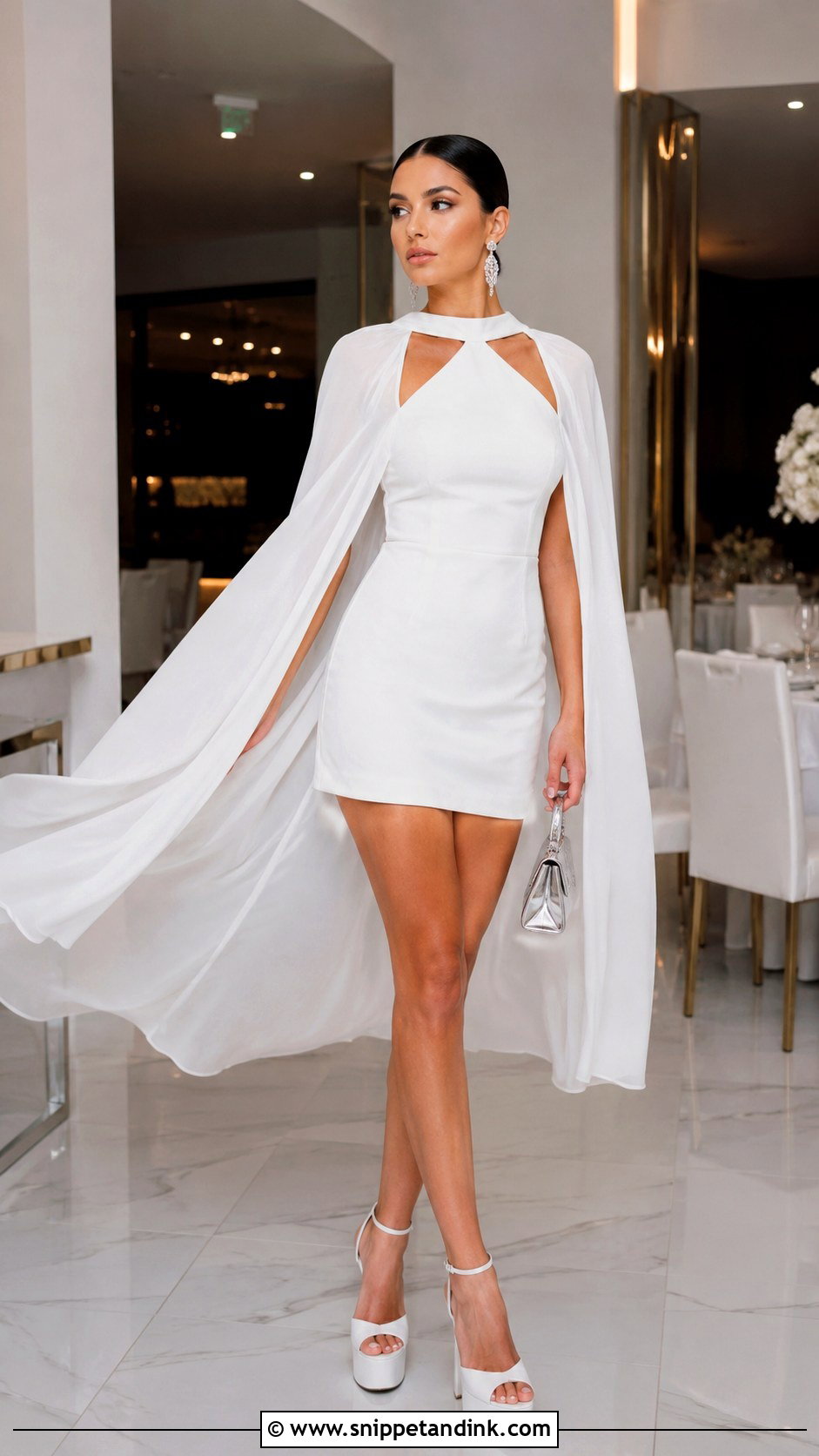
A cape attached at the shoulders turns a simple mini into an entrance. Sheer capes look soft; structured crepe makes a bolder line. I check the length first. A cape that reaches the floor gets stepped on by guests, so I’d keep it calf length on a crowded floor, or choose a detachable one you can take off once the dancing starts. Pin your hair up or sweep it behind your shoulders so the cape hangs cleanly. Platform heels and crystal earrings work.
16. Bridal Colorful Reception Dress
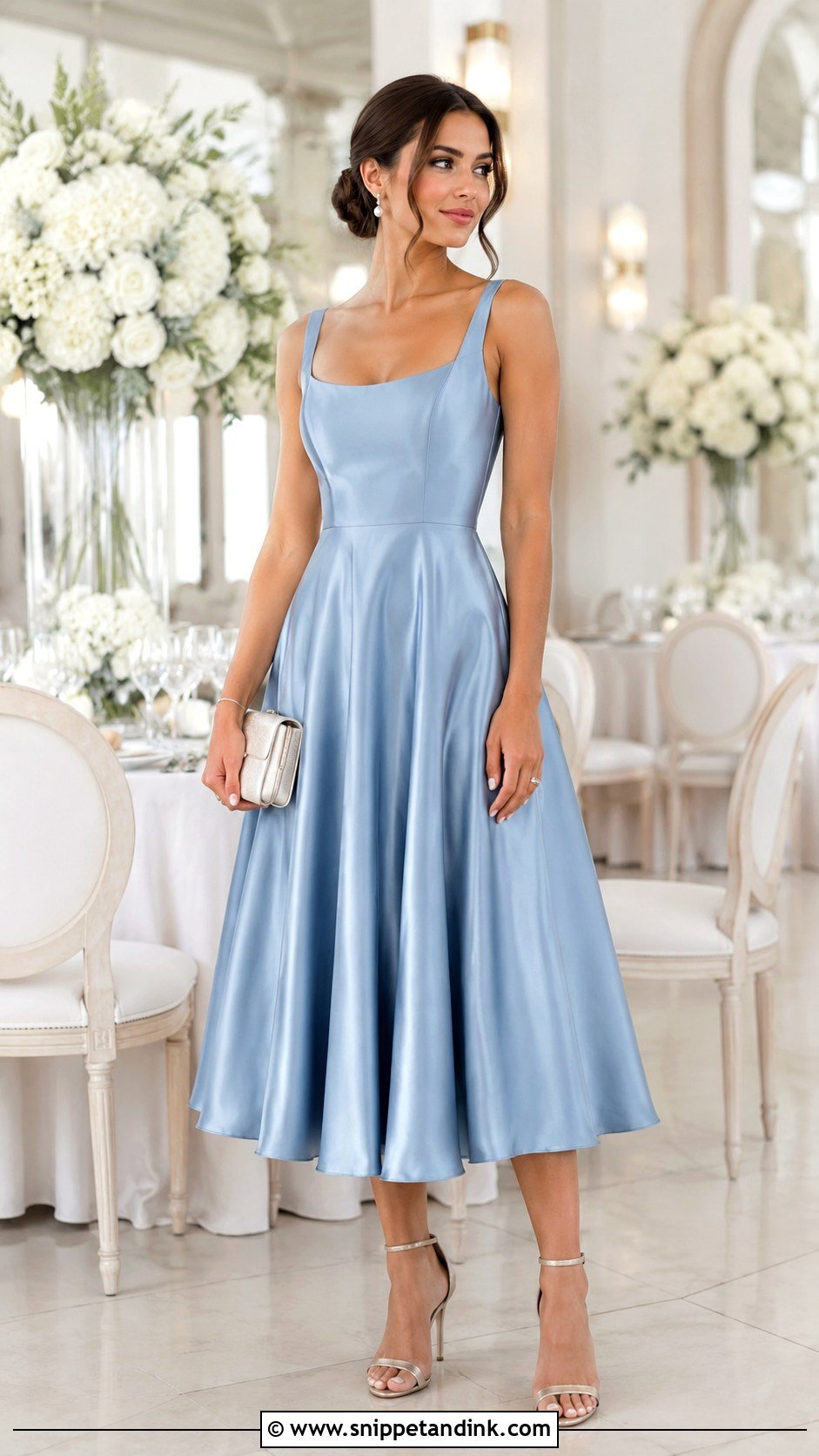
Switching into color gives the bride a clear second moment. Blush, pale blue, champagne or butter yellow are a gentle step away from white; red or emerald are a bolder break, often chosen because the color means something to you or your family. Check it under the venue’s evening lighting if you can. Warm uplighting can turn pale blue grey and blush almost beige in photos. Keep one element from the ceremony, such as pearls or a hair clip, to connect the two looks. Metallic heels and a neutral clutch keep the color the focus.
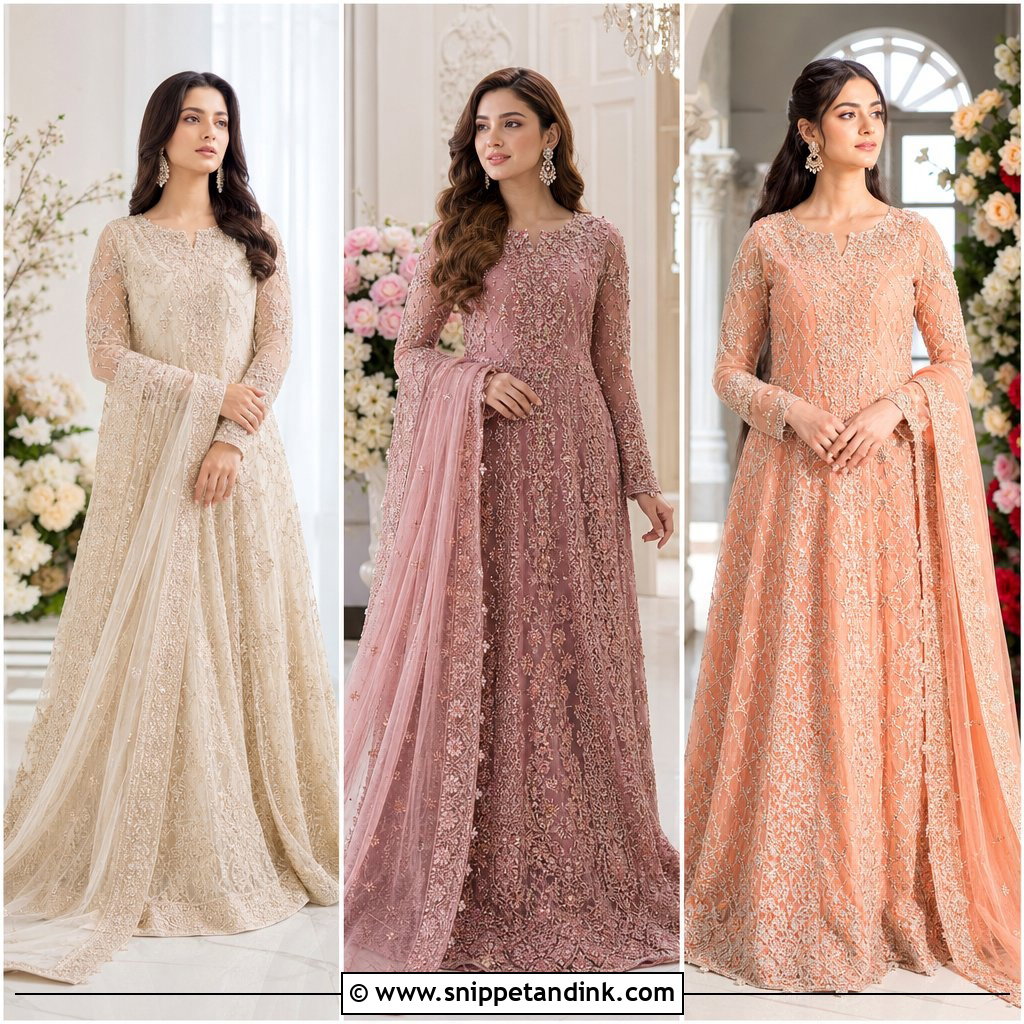
17. Bridal Lehenga Reception Outfit
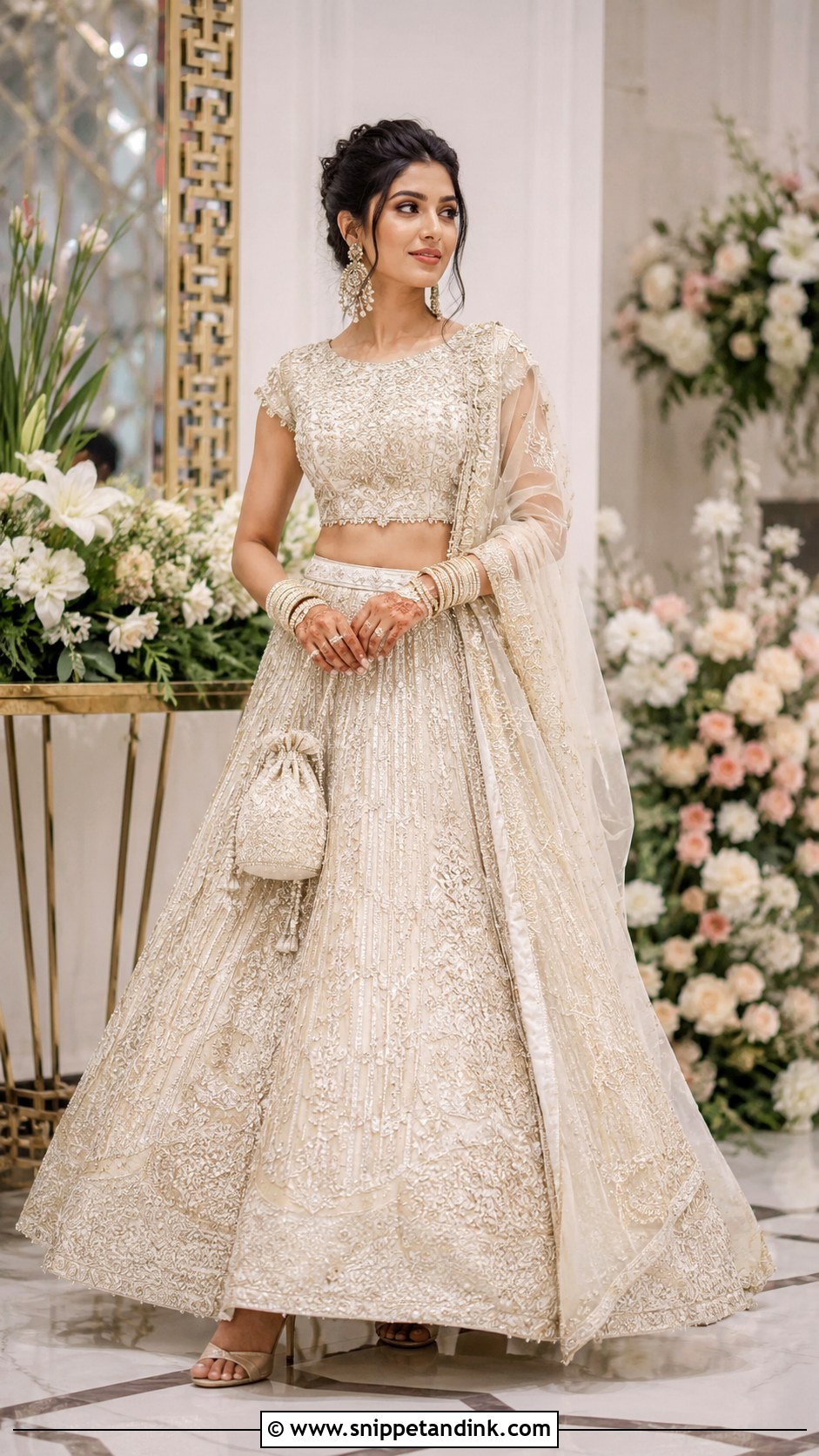
A bridal lehenga makes a rich reception change, especially if it reflects your heritage. Choose a blouse, skirt and dupatta in ivory, blush, champagne or a family color. Heavy zardozi or bead work can weigh several kilos, so for dancing I’d go lighter on the skirt and keep the detail on the blouse and border. Pin the dupatta across one shoulder so both arms stay free. Block heels, bangles and statement earrings finish it, and the waist and shoulders need proper tailoring.
18. Bridal Saree Reception Outfit
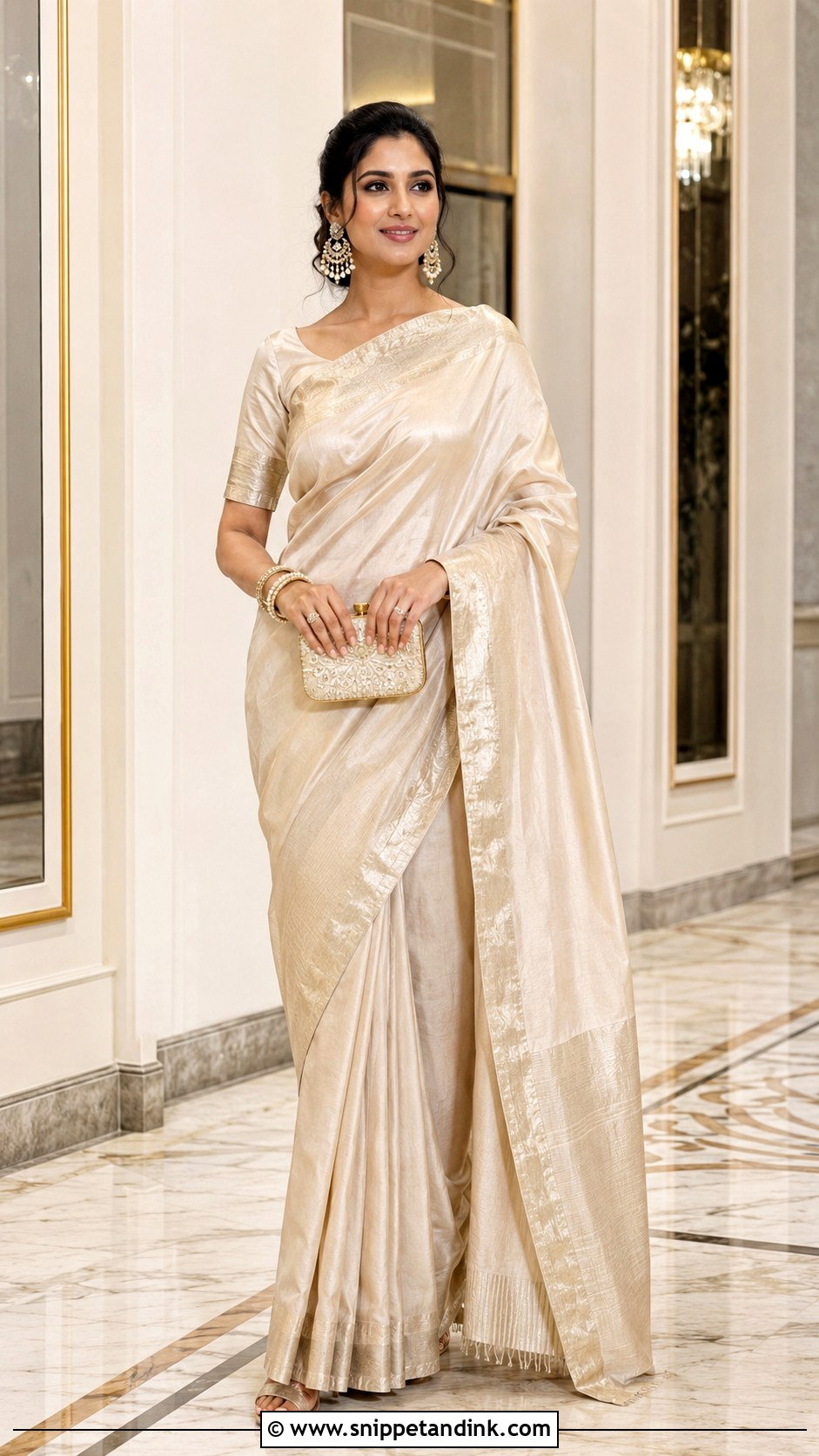
A saree moves well and drapes gracefully, and it looks very different from a white gown. Silk, organza, satin or georgette all work; georgette is lighter and easier for dancing. A well-fitted blouse and a securely tied petticoat matter as much as the saree itself. Pleats that aren’t pinned properly can slip loose during dinner, so an experienced draper is worth booking. Ivory with metallic borders looks classic, and jewel tones mark the change more clearly. A bun with decorative pins or side-parted waves complements the drape.
19. Bridal Mini Dress With Sneakers
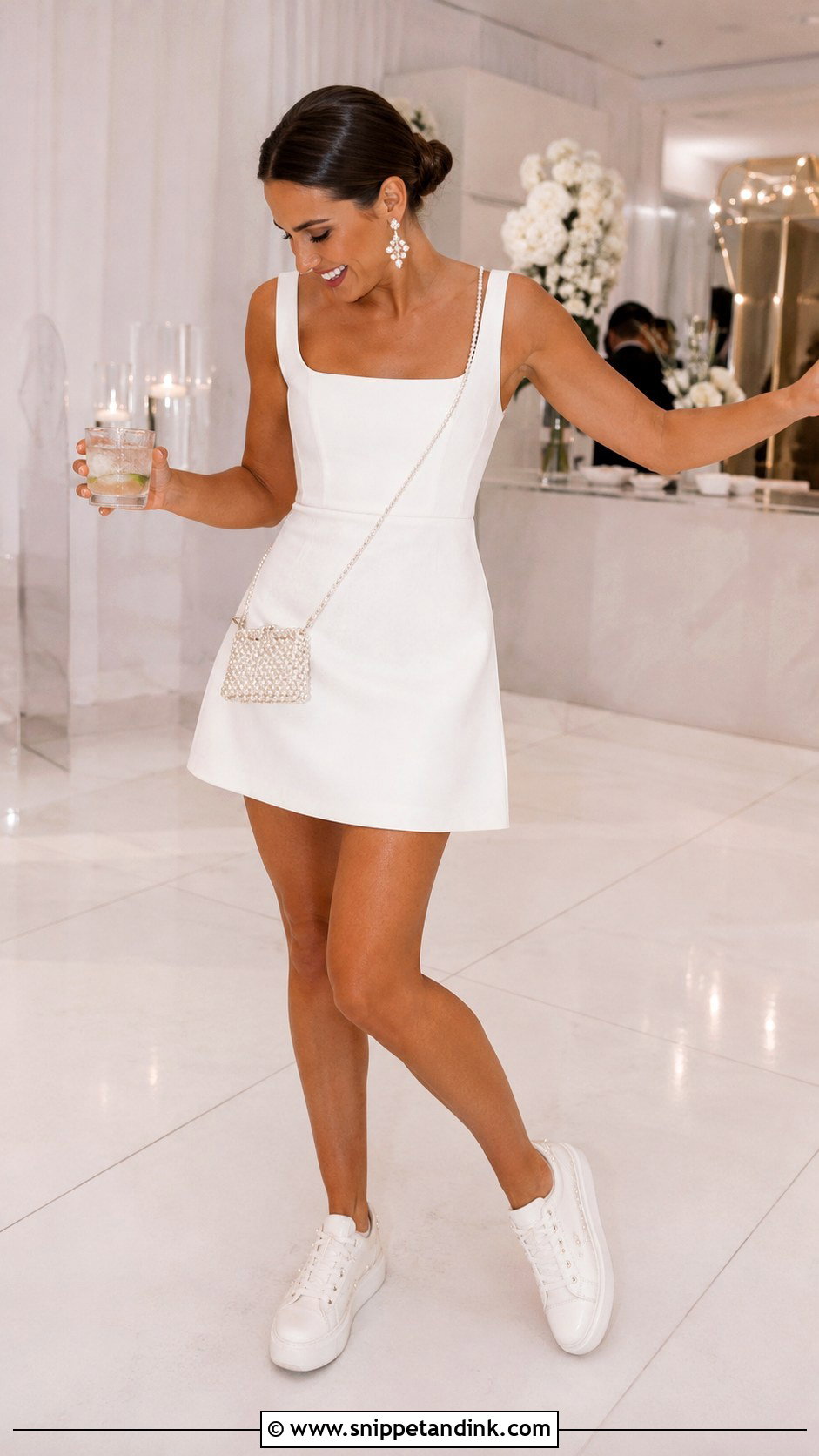
A structured satin, crepe or lace mini with sneakers is the late-night change I suggest when you plan to dance until the lights come on. Avoid a casual cotton dress, which can look like you’ve gone home. Pair it with clean white leather sneakers or pearl-trimmed pairs. Break them in weeks before, wearing the socks you’ll actually use, because new sneakers give blisters as reliably as new heels. Statement earrings, a hands-free bag and a high ponytail finish it.
20. Bridal Embellished Pants Set
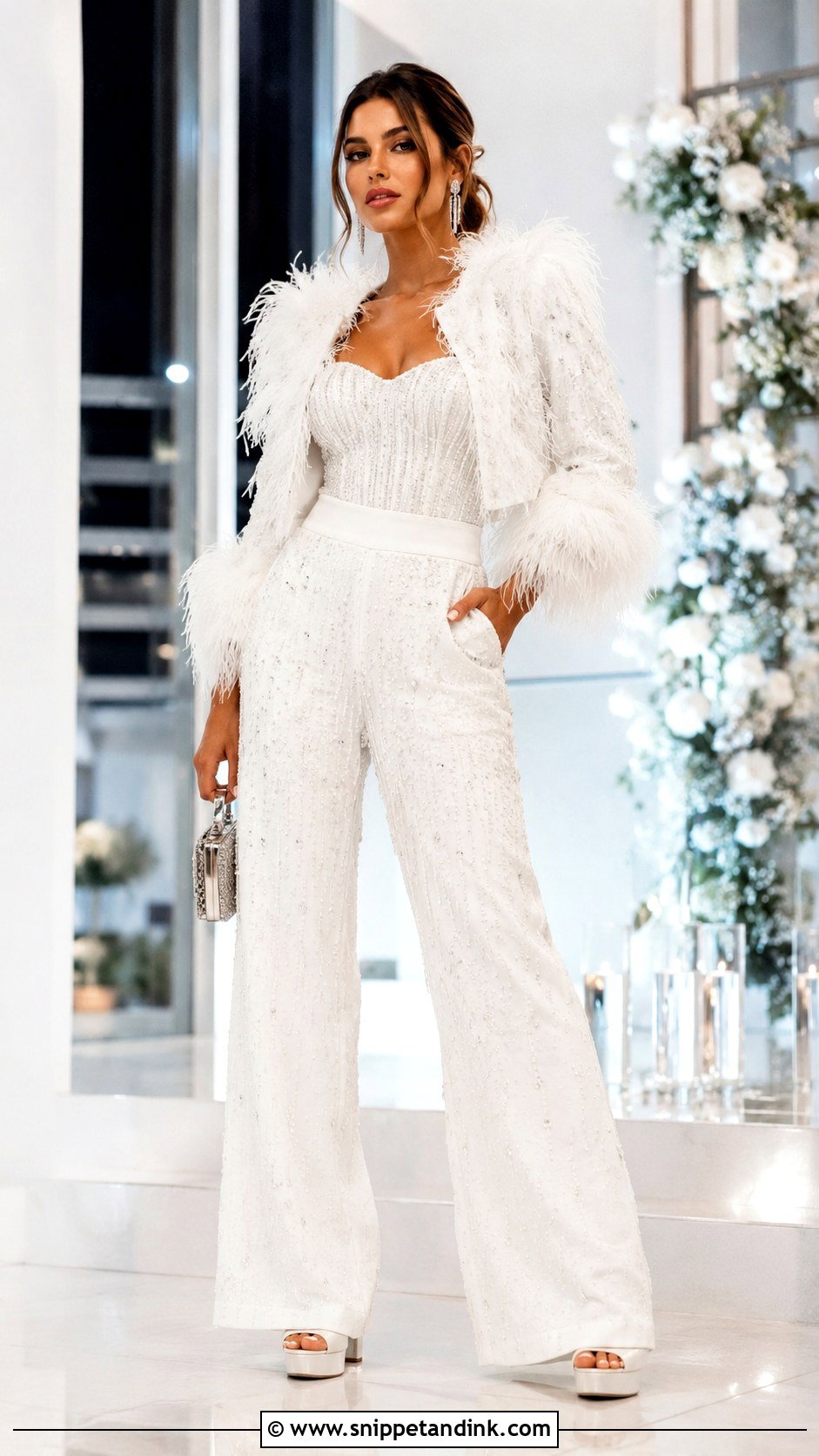
An embellished trouser set with a beaded top, sequined bustier or cropped jacket over high-waisted trousers feels more festive than a plain suit. Balance the proportions: wide trousers with a fitted top, slim trousers with a bigger top layer. Beaded pieces shed if a thread is loose, so I go over every seam before the day and secure anything wobbly. Hem the trousers for your exact shoe height. Platform heels and metallic earrings finish it, and a low ponytail softens the tailored line.
Someone Needs to Be in Charge of the First Dress
Once you’re out of the ceremony gown, it is at the most risk it will face all day. It gets dropped on a hotel bed, folded into a car boot or left in a room the caterers are using. Choose a person you trust before the wedding, often your mother or maid of honor, and make the gown their job.
- Hang it by its inner hanger loops, never by the shoulders, so the weight of the skirt doesn’t stretch the straps or neckline.
- Use a breathable cotton garment bag if you have one; plastic traps moisture and can yellow fabric if the dress sits in it for weeks.
- Don’t let anyone rub at a spot with water or club soda on the night. Wine and makeup marks come out better when a specialist cleaner treats them, and scrubbing spreads them.
- Book professional cleaning within a few weeks. Sugar from champagne and cake can be invisible at first and then turn brown as it oxidizes.
If you plan to change back into the gown for a send-off, tell your helper so it goes on a hanger in the changing room rather than into the car.
Does the Second Look Pass the Dance Floor Test?
A good second outfit should feel like you, just looser and ready for the party. You’ve seen romantic dresses, short party looks, sharp tailoring, convertible pieces and lehengas and sarees here. Whichever one you pick, test it the same way: put on everything, from underwear to earrings, then walk, sit, dance and use the bathroom. Anything that pinches or needs constant fixing will bother you more as the night goes on. The best change is the one you forget you’re wearing.
You'll Like These Ideas:


Leave a Reply