
An Indian wedding can mean four or five changes over three days, and I dress brides, sisters, mothers and guests for all of them. There are outfits for haldi, mehndi, sangeet, the ceremony, the reception and the family lunches in between. What’s changed lately is how much people want to move: sit cross-legged for rituals, dance at the sangeet, greet a hundred relatives without tugging at a dupatta. So below you’ll find lehengas, sarees, shararas, Anarkalis, capes, jacket sets and Indo-western pieces, each with my notes on fabric, color, jewelry, shoes and which function it suits. There are options for the bride, the bridal party, family and guests, and for summer, winter and destination weddings.
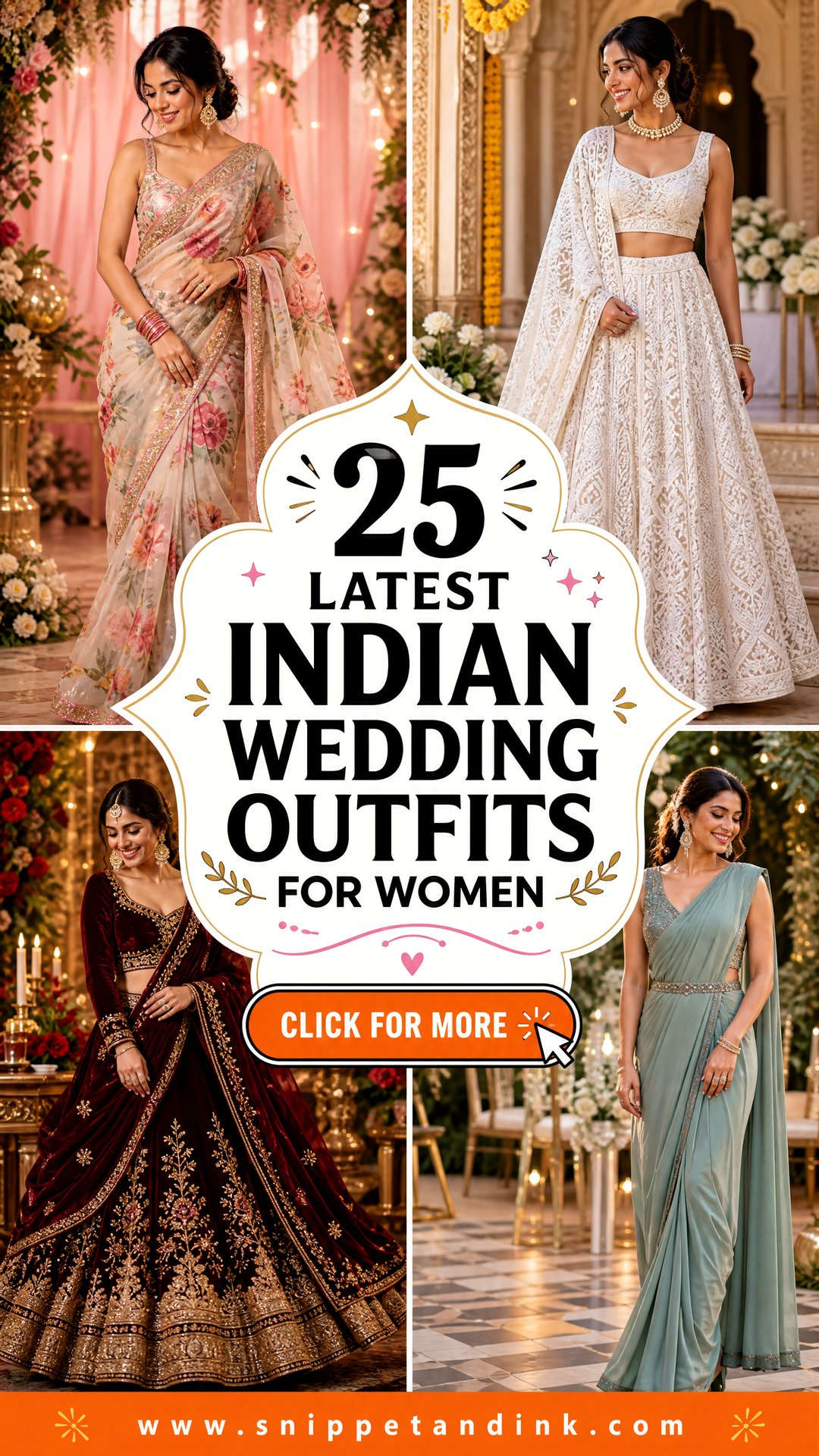
Turmeric Stains, Henna Hands and Temple Floors
Each function treats your clothes differently, and I plan outfits around that before color or trend.
- Haldi: the paste is made with turmeric, and it stains. Wear yellow, or something inexpensive you don’t mind losing. Skip silk and pale chikankari.
- Mehndi: the bride’s hands and feet will be wet for hours, and guests often get henna too. Short sleeves or easily rolled ones, and a dupatta you can pin away from your hands.
- Ceremony: many rituals involve sitting on the floor or a low platform for a long time, sometimes barefoot. A skirt or saree you can fold your legs under matters more than anything at the neckline.
- Sangeet: you’ll dance. Shararas, Anarkalis and pre-draped sarees all handle it better than a heavy lehenga.
- Reception: the most formal and the most photographed. This is the night for sequins, velvet or a gown.
As a guest, I’d avoid bridal red for the main ceremony, and check with the family about black or all white, since some families avoid them at weddings and others don’t mind. Temples and religious venues usually expect covered shoulders, so a jacket or dupatta in your bag solves that.
1. Red Bridal Lehenga Outfit
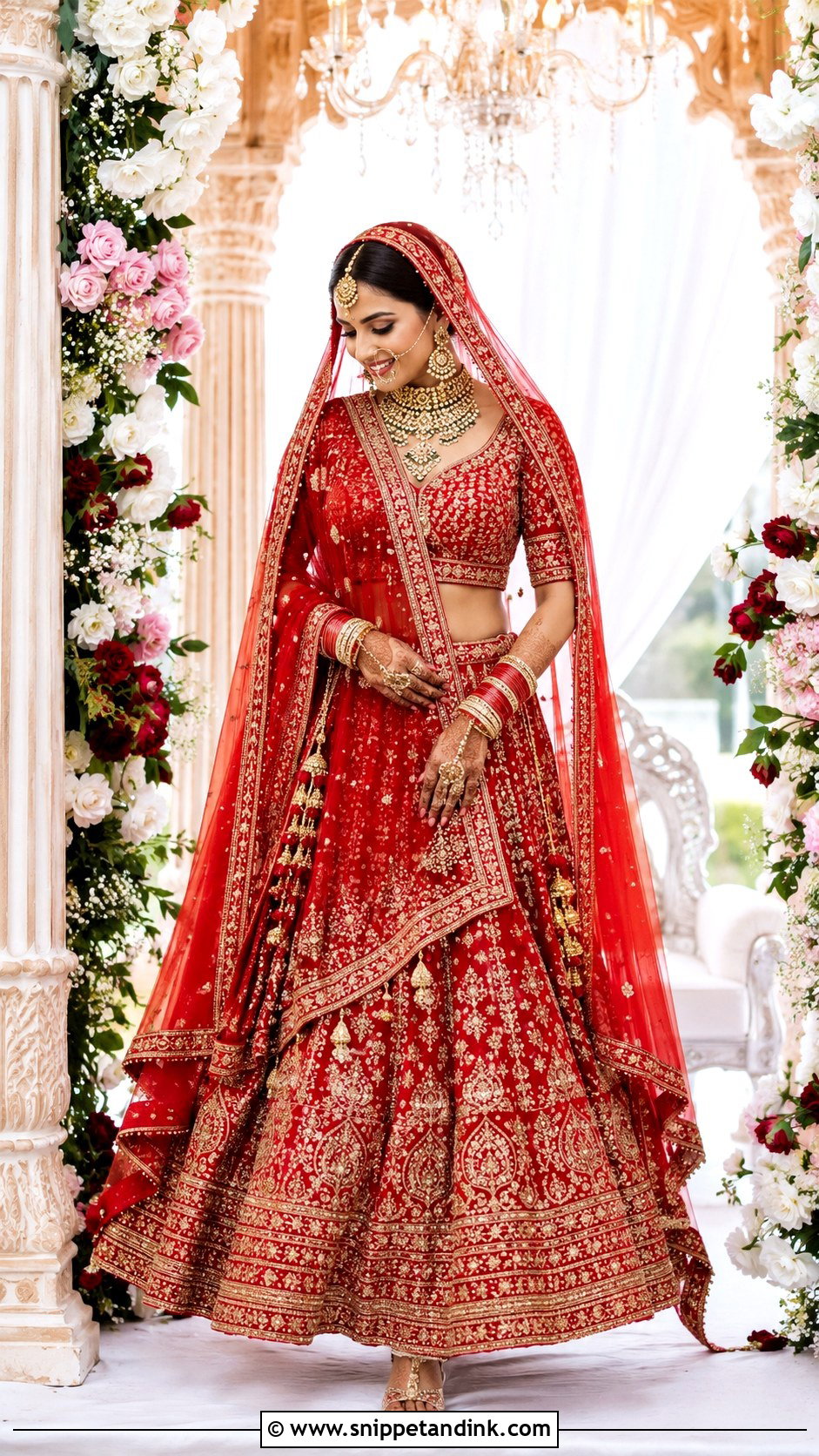
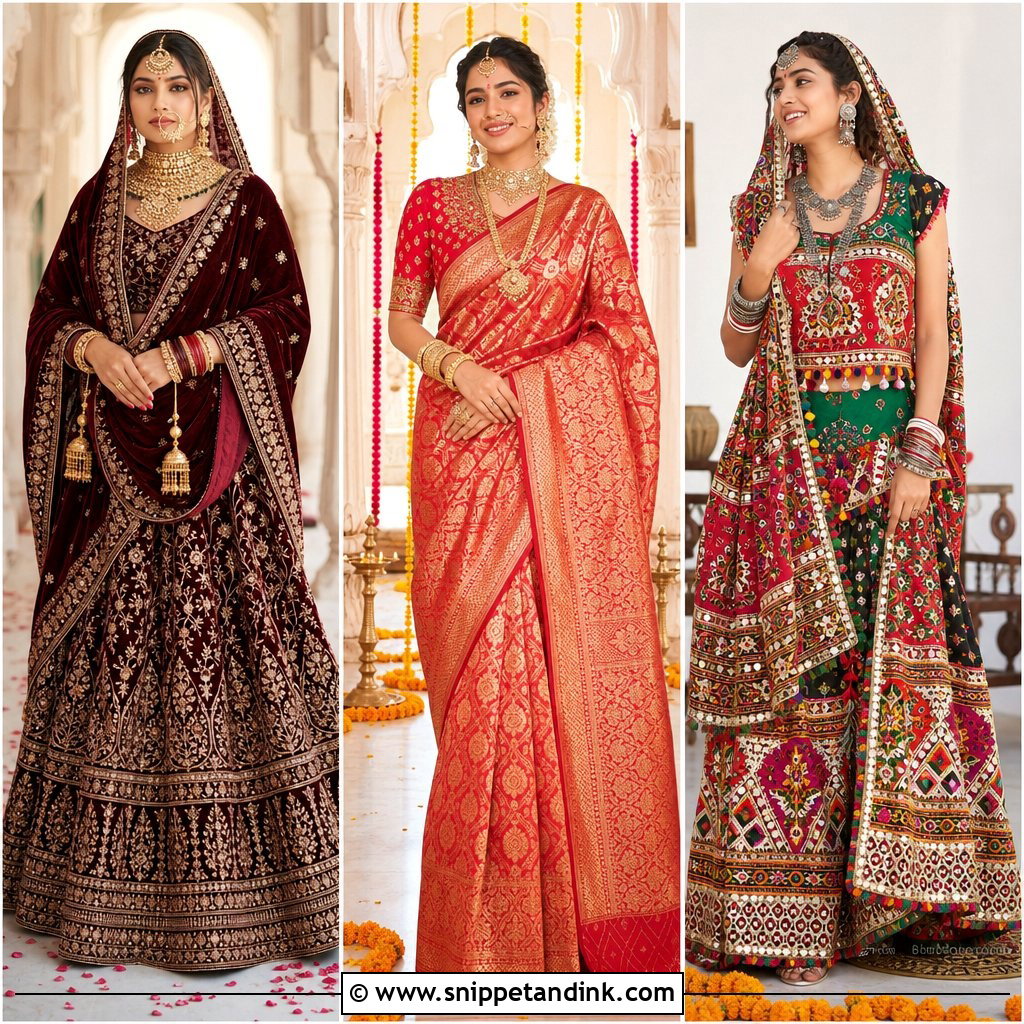
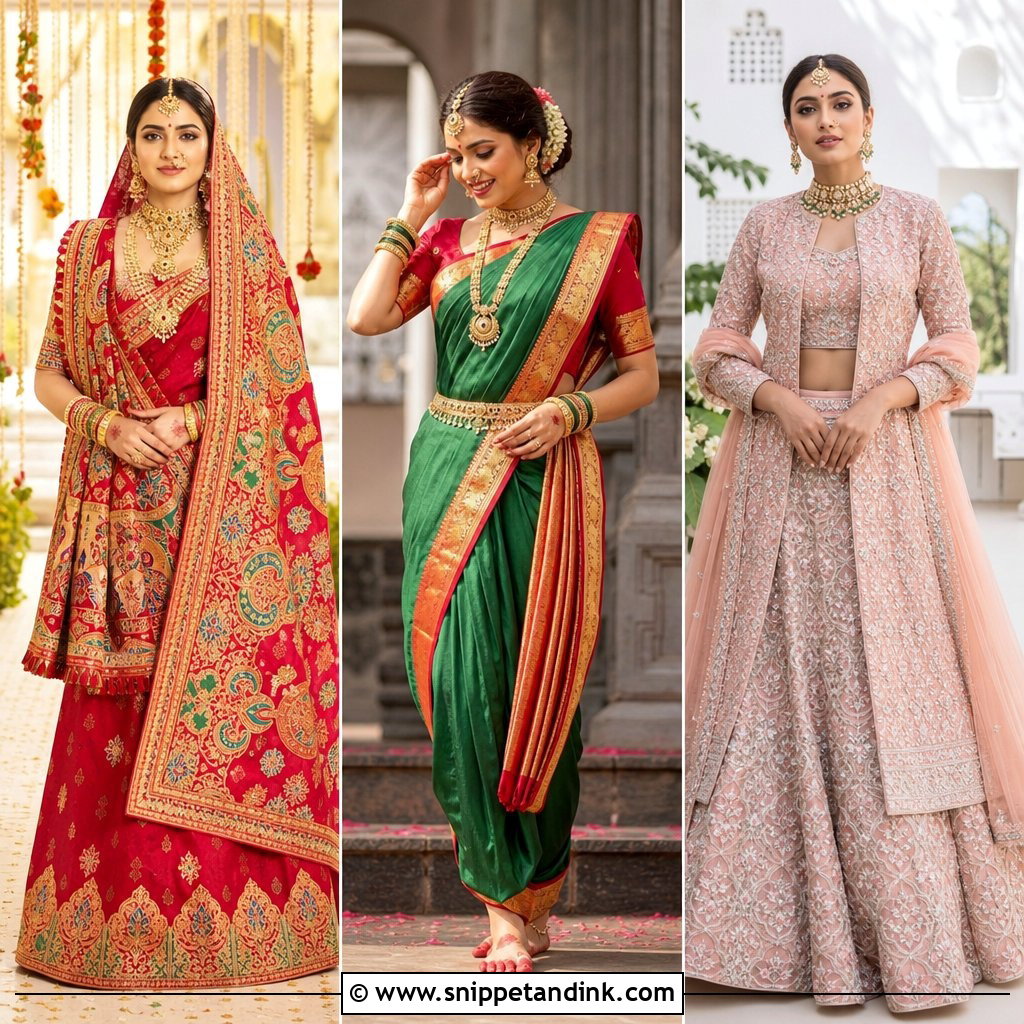
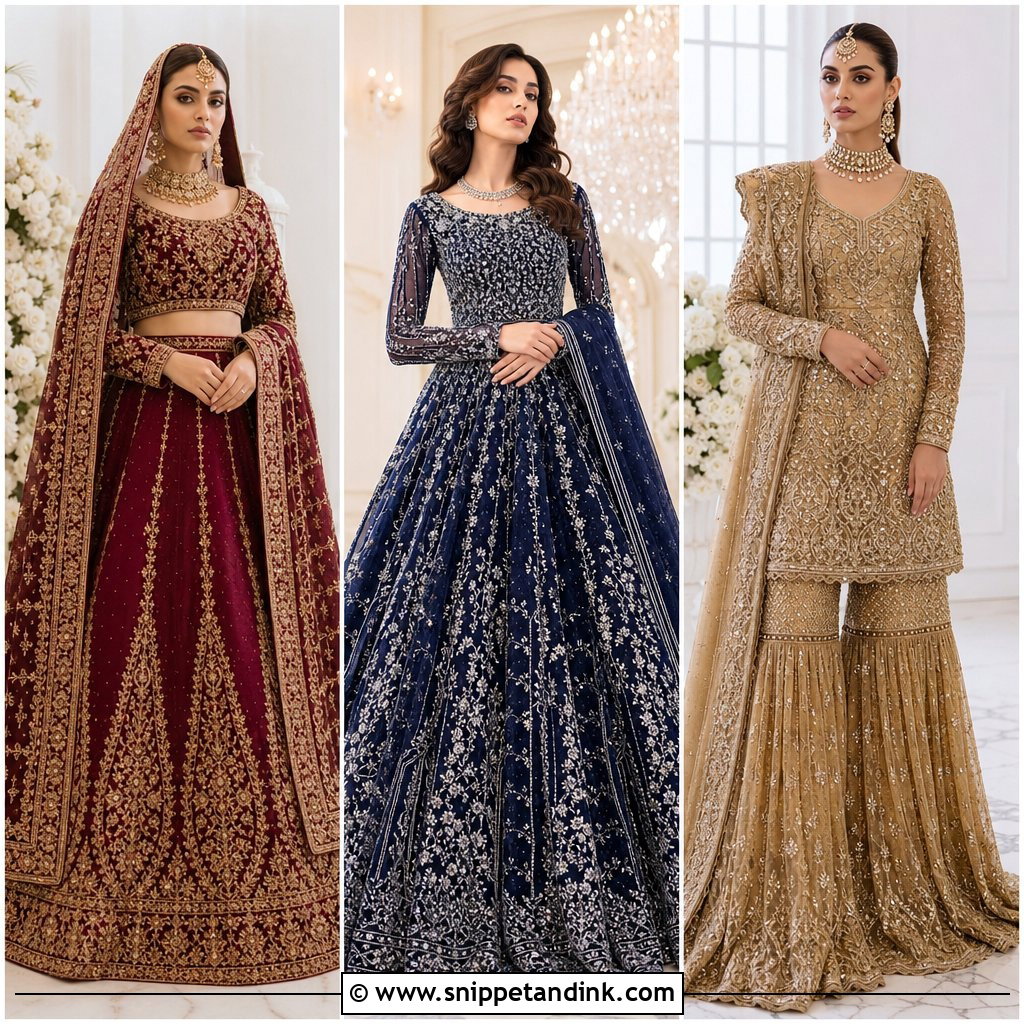
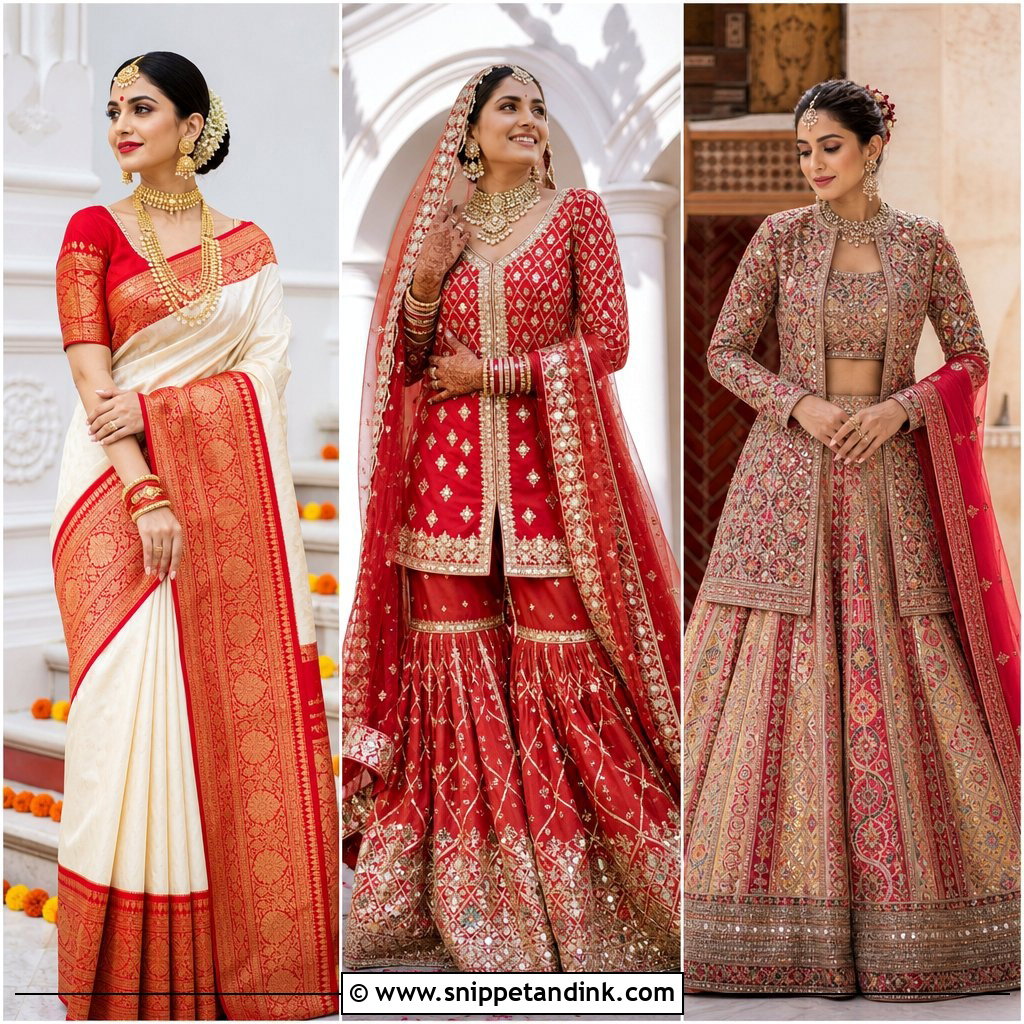
Red is still the color I’m asked for most for the main ceremony, and silk, velvet or raw silk with zari, zardozi, dabka or thread work carries it best. I pick the choli neckline last, after the jewelry, because a heavy choker needs a sweetheart or square neck to sit against, while a long rani haar wants a modest round one. One dupatta goes over the head; a second, lighter one across the shoulder fills out the look. Choker, layered necklace, maang tikka, bangles, embroidered heels. Keep makeup glowing rather than heavy, since bright red already draws every eye.
2. Pastel Lehenga Outfit
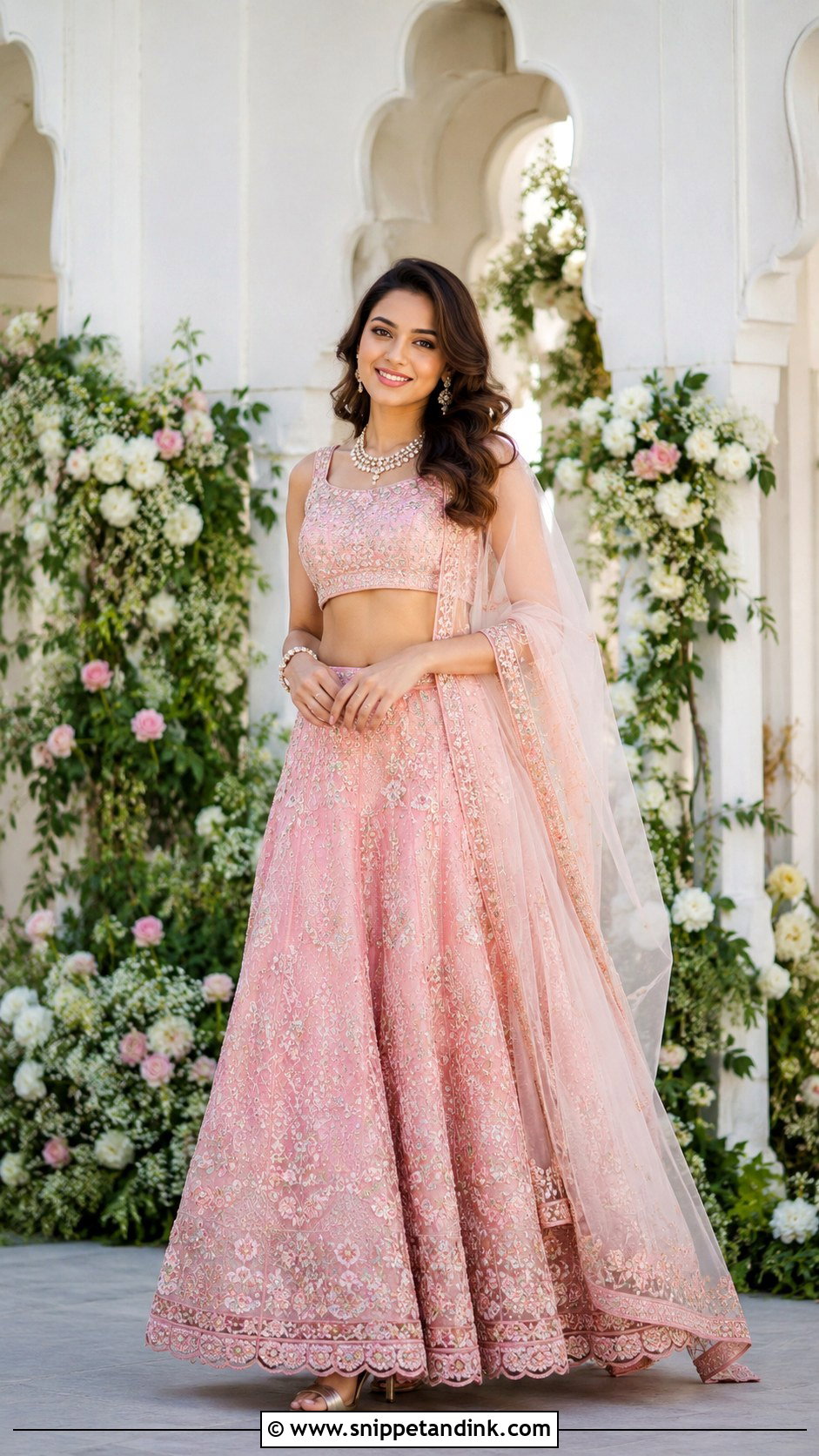
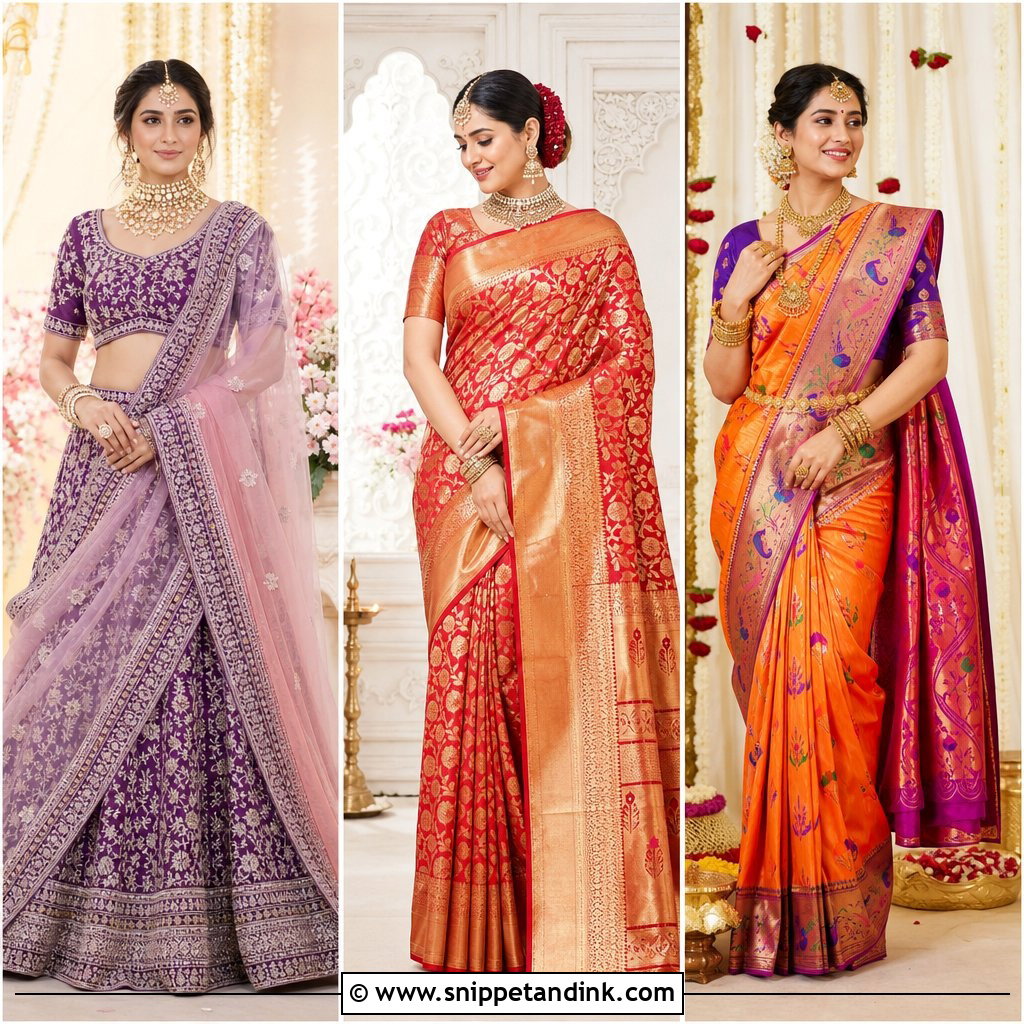
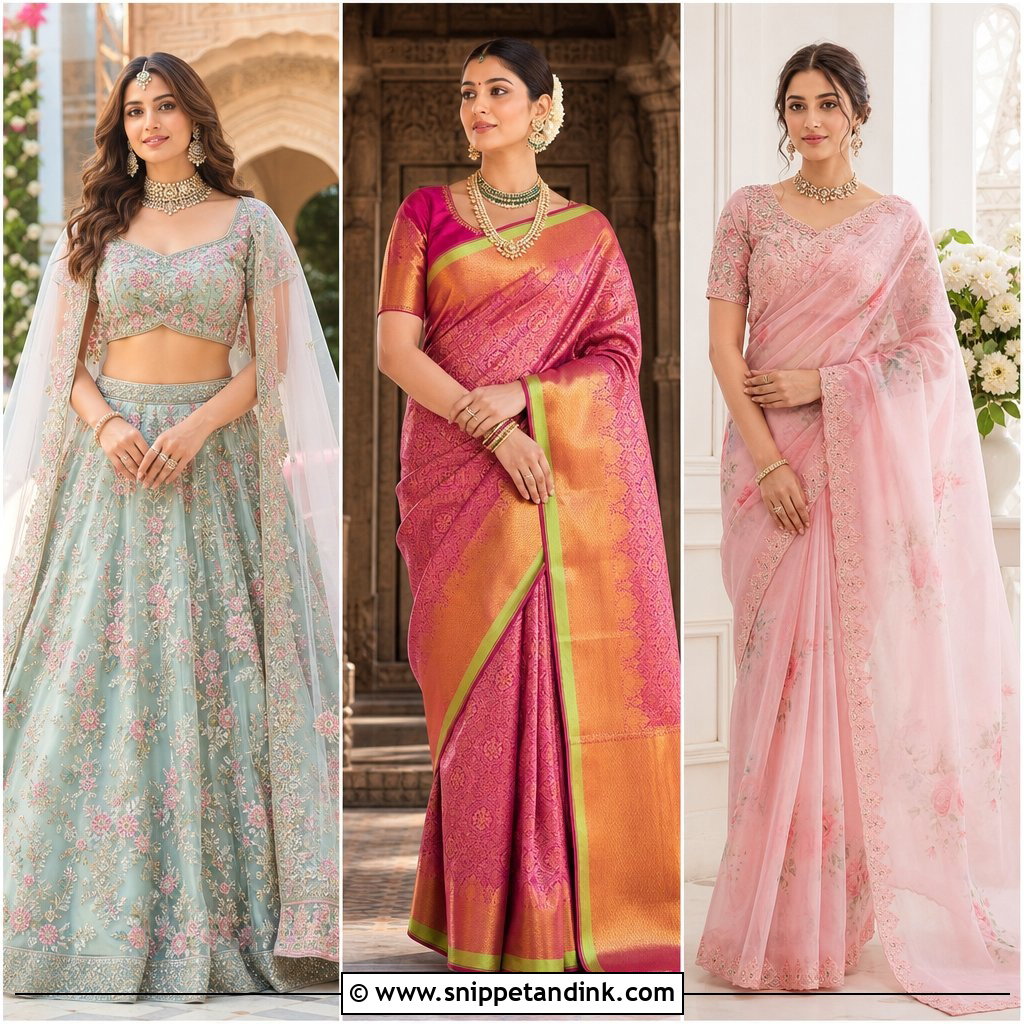
Pastel lehengas suit daytime ceremonies and outdoor weddings, and they work on brides, bridesmaids, sisters and guests alike. Blush, powder blue, mint, champagne, lavender and peach in organza, net, georgette or tissue, with pearl, sequin or tone-on-tone work. A cropped blouse and an airy dupatta keep it light. Kundan or pearls, soft curls and metallic heels finish it. The one caution: very pale pastels can wash out deeper skin tones in direct midday sun, so I’d hold the fabric to your face outdoors before ordering and go a shade richer if needed.
3. Banarasi Silk Saree Outfit
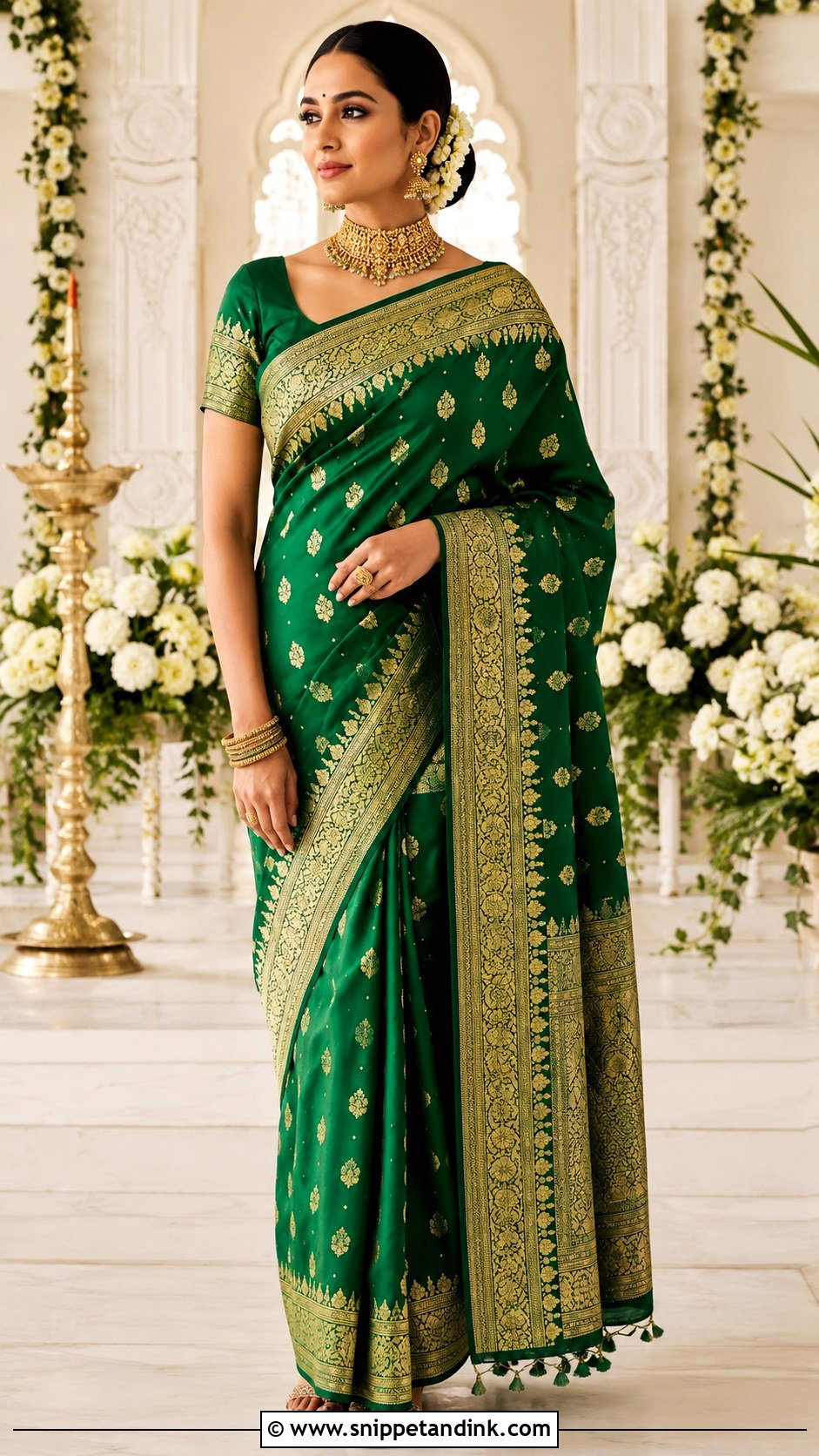
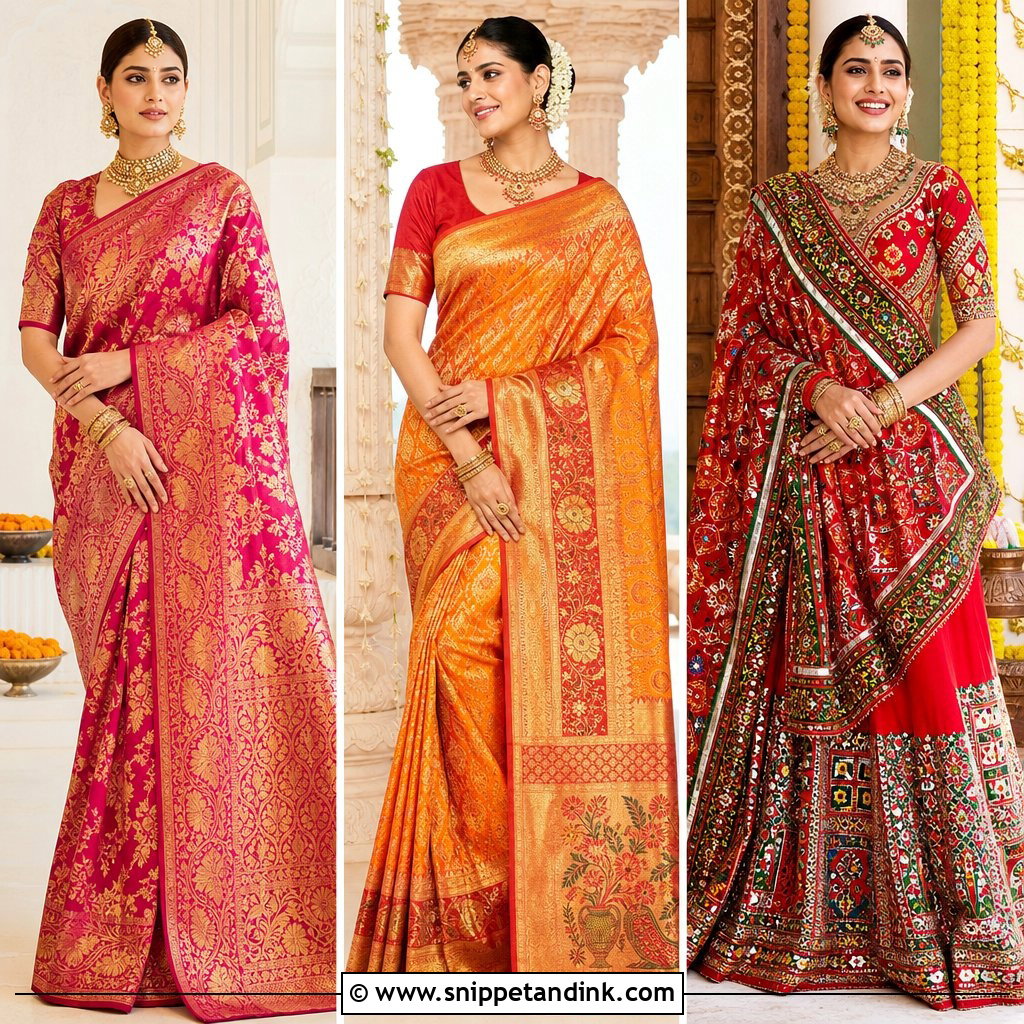
A Banarasi silk saree works for ceremonies, rituals and receptions, and it lasts for decades if stored well. Emerald, rani pink, royal blue, deep purple and maroon feel classic; ivory-gold, pastel pink or sage with zari borders feel softer. A fitted blouse in silk, brocade or velvet adds depth. Temple jewelry, gold bangles, a sleek bun and embellished sandals. Banarasi silk is heavier than it looks and the zari makes the pallu stiff, so I’d pin the pleats at the waist and the pallu at the shoulder before you leave the room. It’s a piece you’ll wear again, which justifies the spend.
4. Floral Organza Saree Outfit
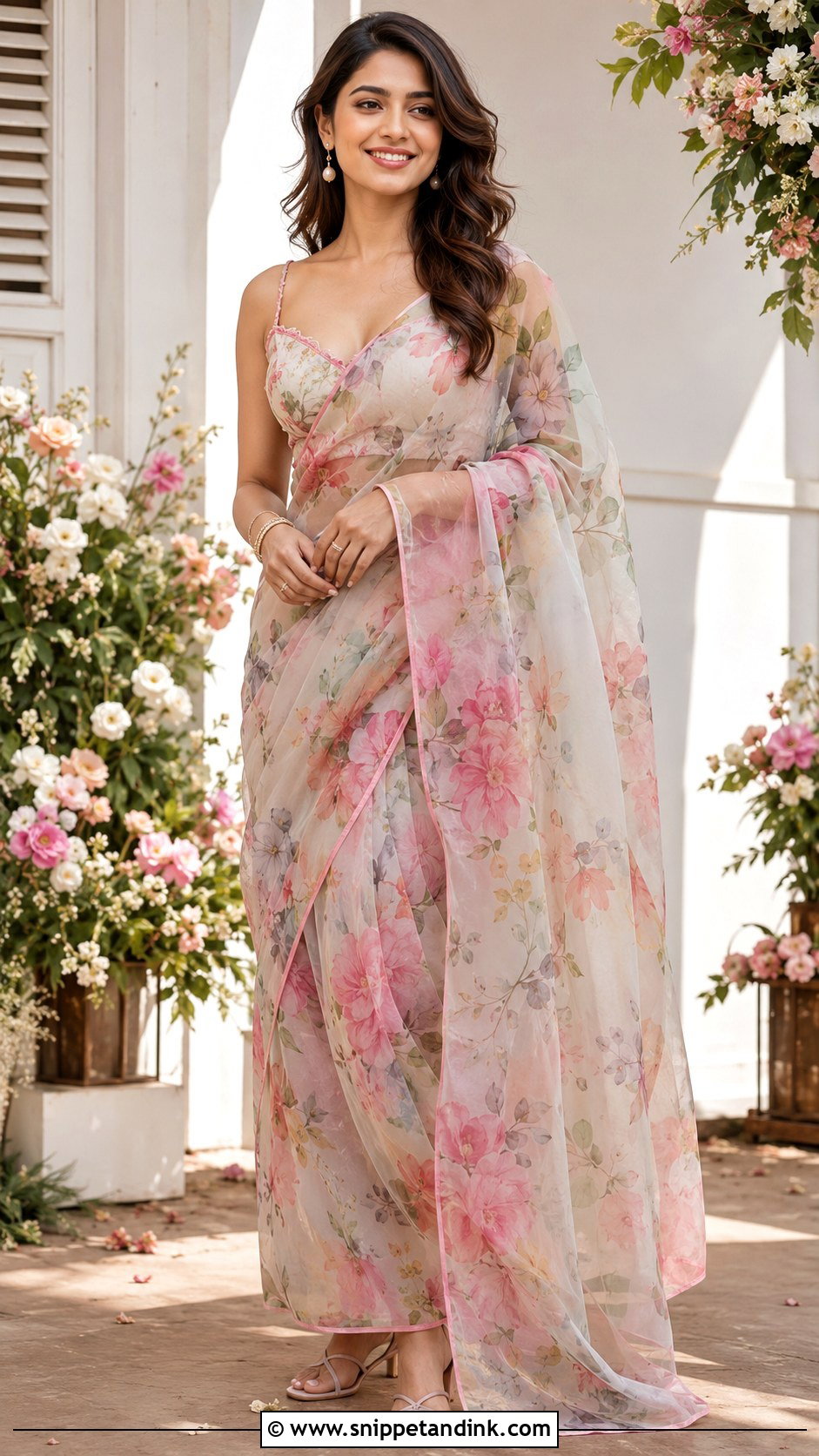
Organza sarees are light, sheer and very easy to wear in the heat, which is why I reach for them for mehndi, haldi, brunch engagements and garden ceremonies. Soft florals, fine embroidery or small sequins keep it festive. A sleeveless, puff-sleeve or boat-neck blouse depending on your comfort. Pearl studs, floral earrings, soft bangles and strappy heels. Organza is crisp, so it holds a neat drape but can stand away from the body if you over-layer it. Fewer pleats, pressed flat, look best.
5. Sharara Suit Outfit
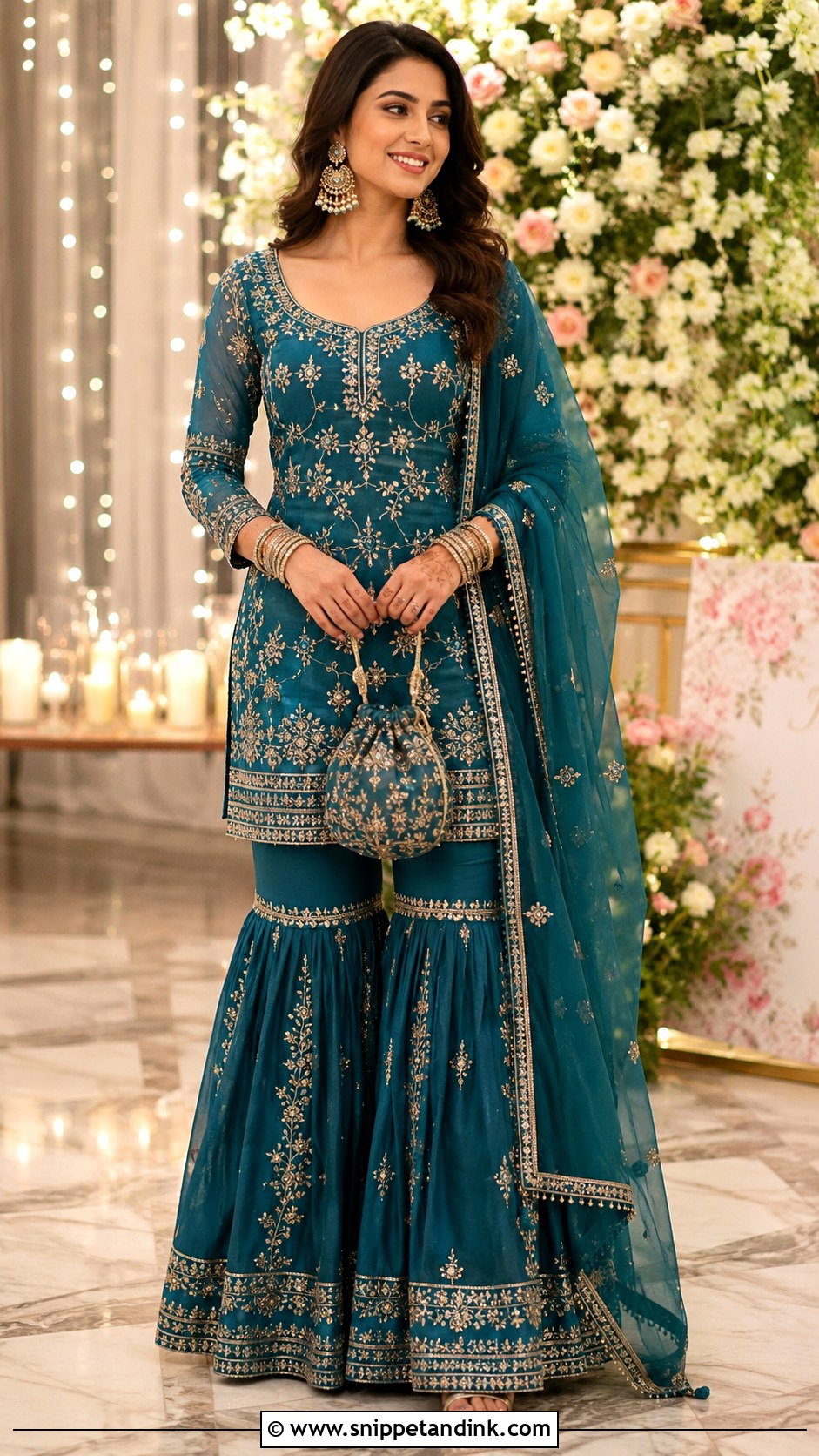
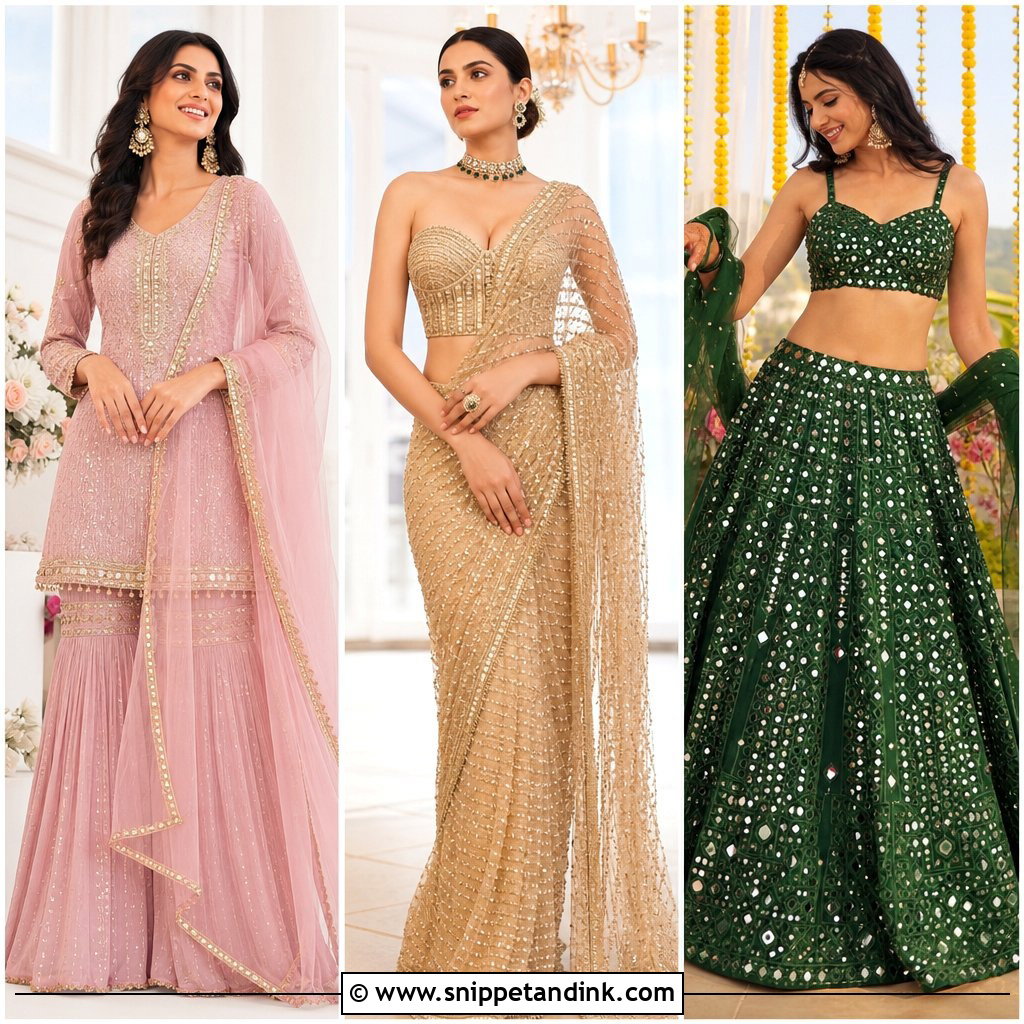
Shararas are what I suggest for anyone who plans to dance. The flared legs move, and there’s no skirt hem to step on. They suit sangeet, mehndi, and family wedding events. A short or mid-length kurta keeps the proportion right. Mirror work, gota patti, thread embroidery or sequins depending on the function. Yellow, fuchsia, teal and green feel playful for pre-wedding events; ivory, navy and deep berry read more formal. Jhumkas, bangles, a potli and block heels or wedges. Pin a light dupatta to one shoulder so it stays put mid-dance.
6. Gharara Suit Outfit
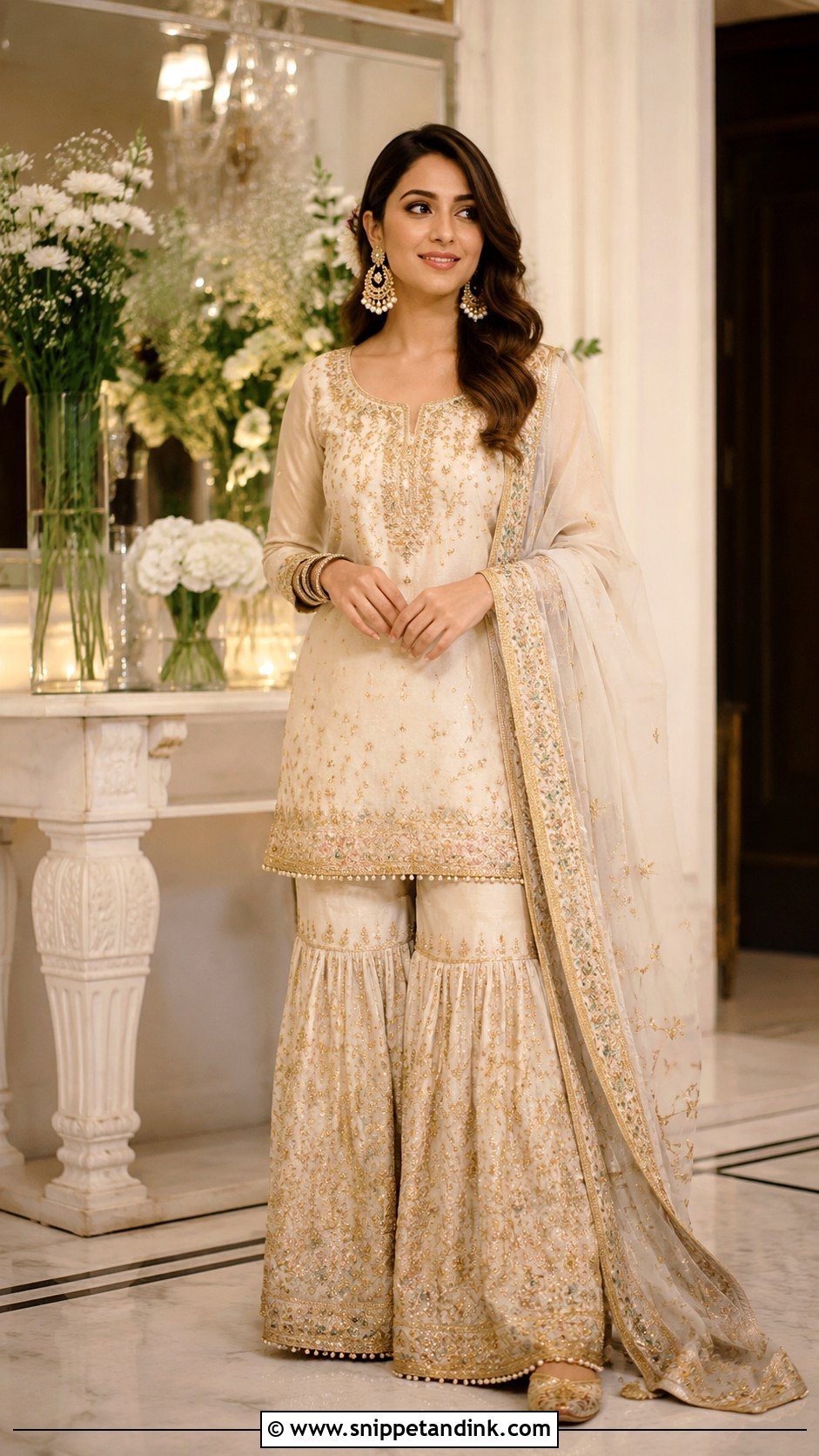
A gharara differs from a sharara in one place: it’s fitted through the thigh and joined at the knee, then flares dramatically. That knee joint, often covered with a band of gota or lace, is the signature, so a short kurti that shows it is essential. Silk, brocade, georgette or tissue all work. It’s a natural fit for nikah-style functions, engagements and evening gatherings. Chandbalis, a passa if it suits your family’s tradition, bangles and embellished juttis. You get the drama of a lehenga without the weight around your waist.
7. Anarkali Suit Outfit
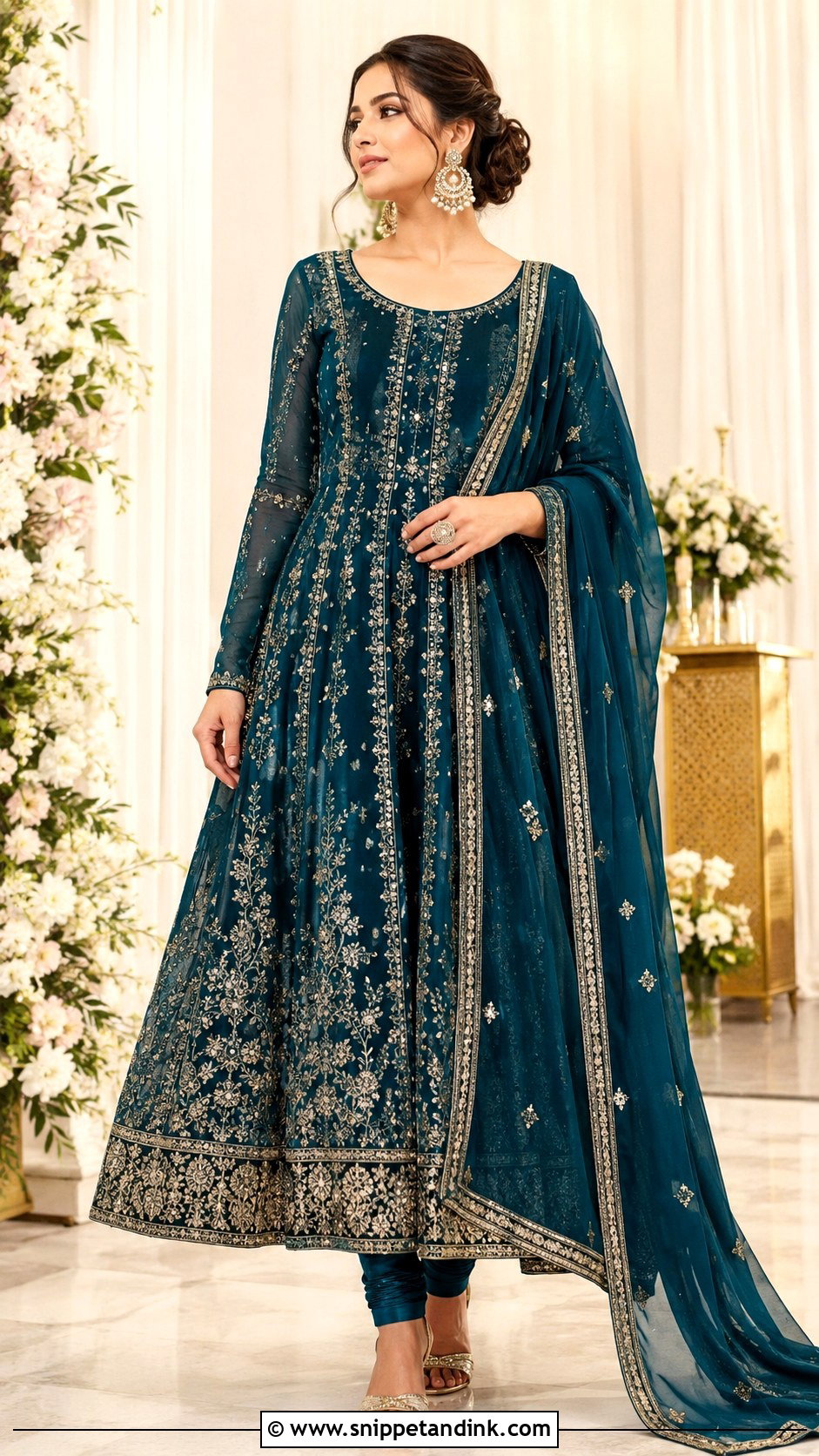
An Anarkali is the outfit I hand someone who wants to look dressed up and not think about it again all evening. The long flare moves well and suits most bodies. For a ceremony, silk, georgette or net with work at the neck, sleeves and hem; for a sangeet or reception, a floor-length Anarkali with a little shimmer. Churidar, a flowing dupatta, statement earrings and heels. Full or sheer embroidered sleeves add coverage. The detail I check is the bodice seam; it should sit exactly at your natural waist or slightly above, or the flare starts in the wrong place.
8. Anarkali Gown Outfit
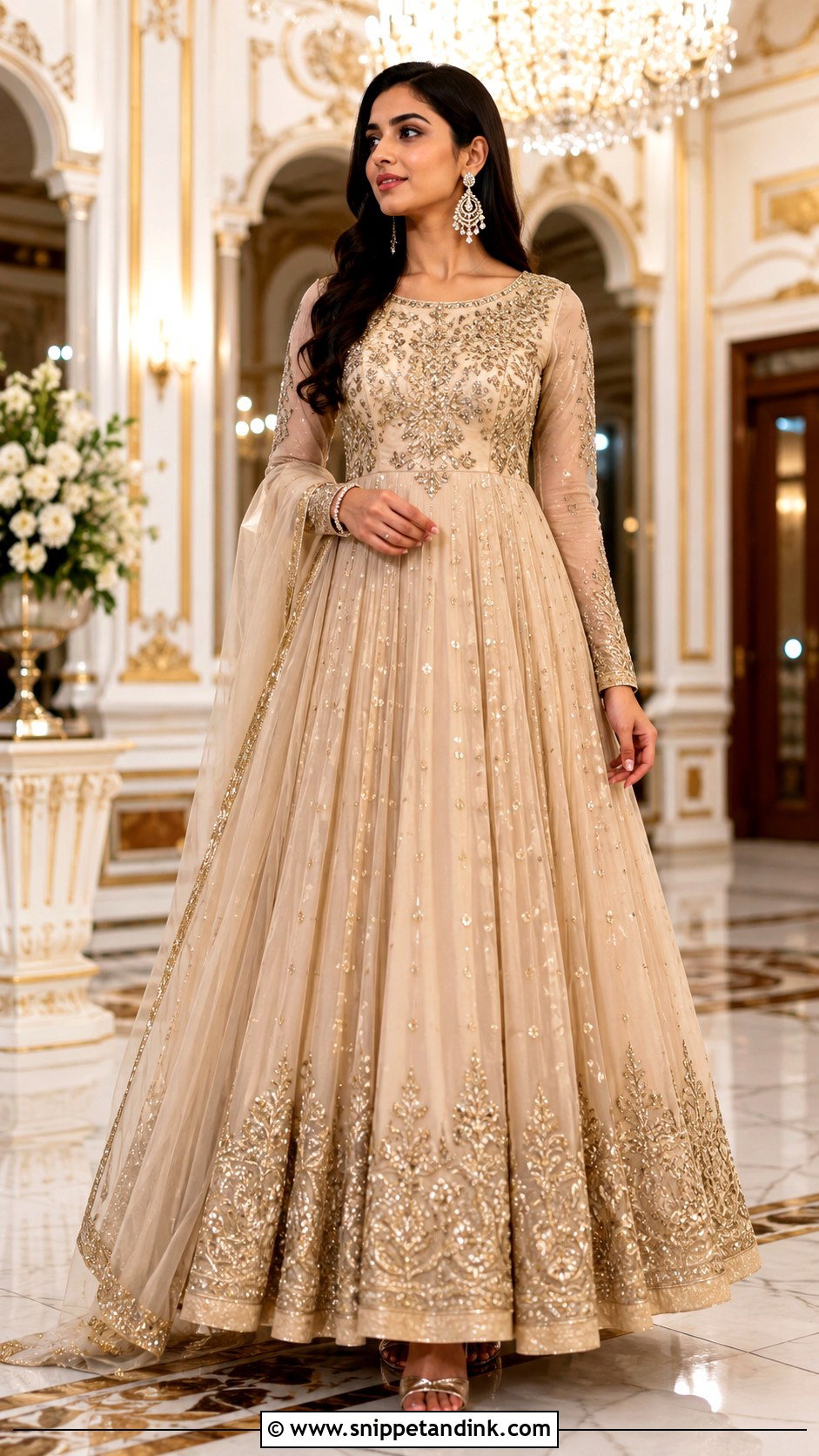
An Anarkali gown outfit is the reception-ready version: more streamlined, with a fitted bodice and a full skirt, decorated with zari, mirror work, chikankari or sequins. Jewel tones, metallic pastels and deep greens look rich at night. Chandelier earrings, a bracelet and sleek heels. A dupatta is optional. Gowns like this suit women who’d rather wear something stitched than drape a saree, and they photograph with clean movement when you turn.
9. Saree Gown Outfit
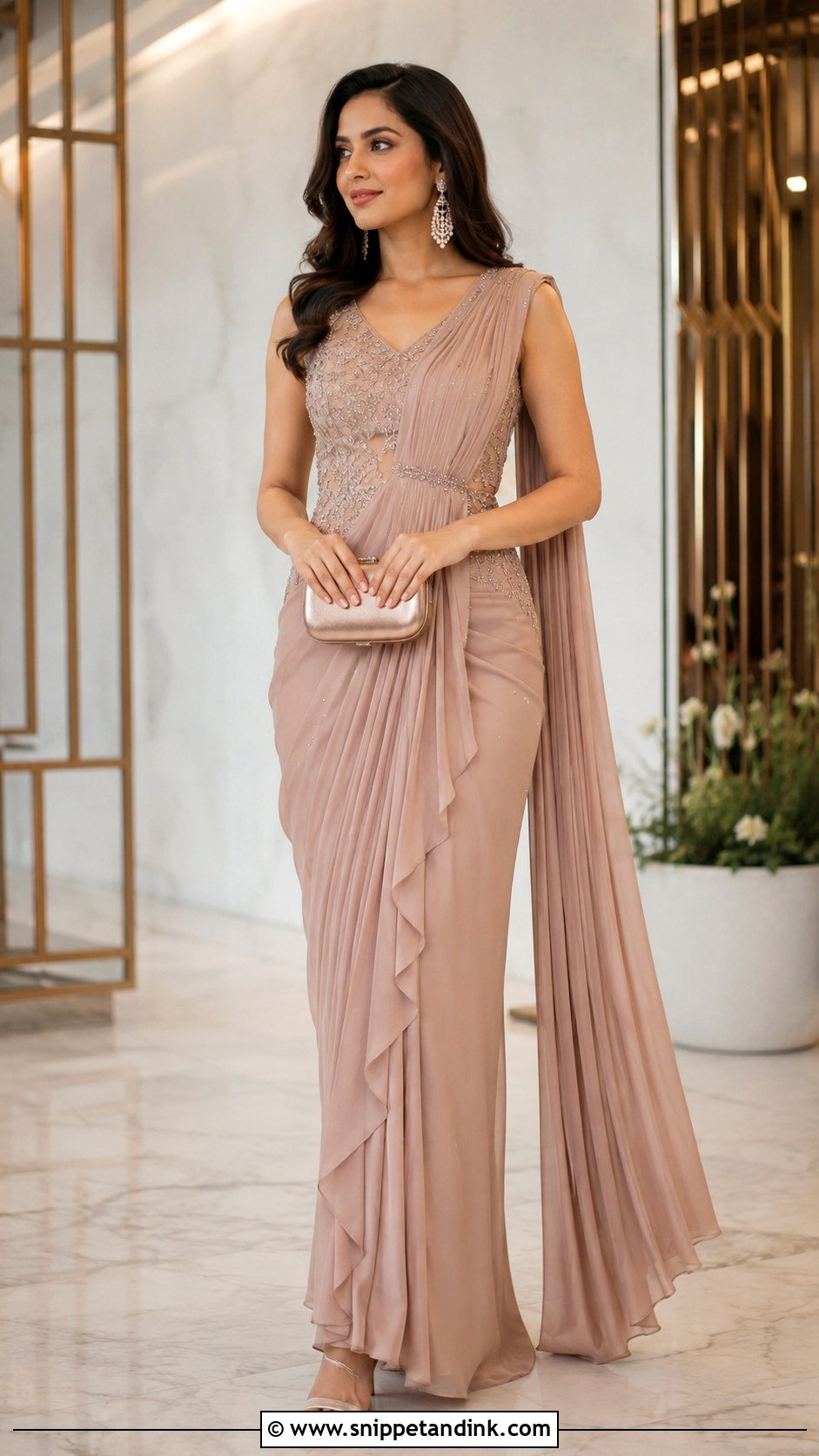
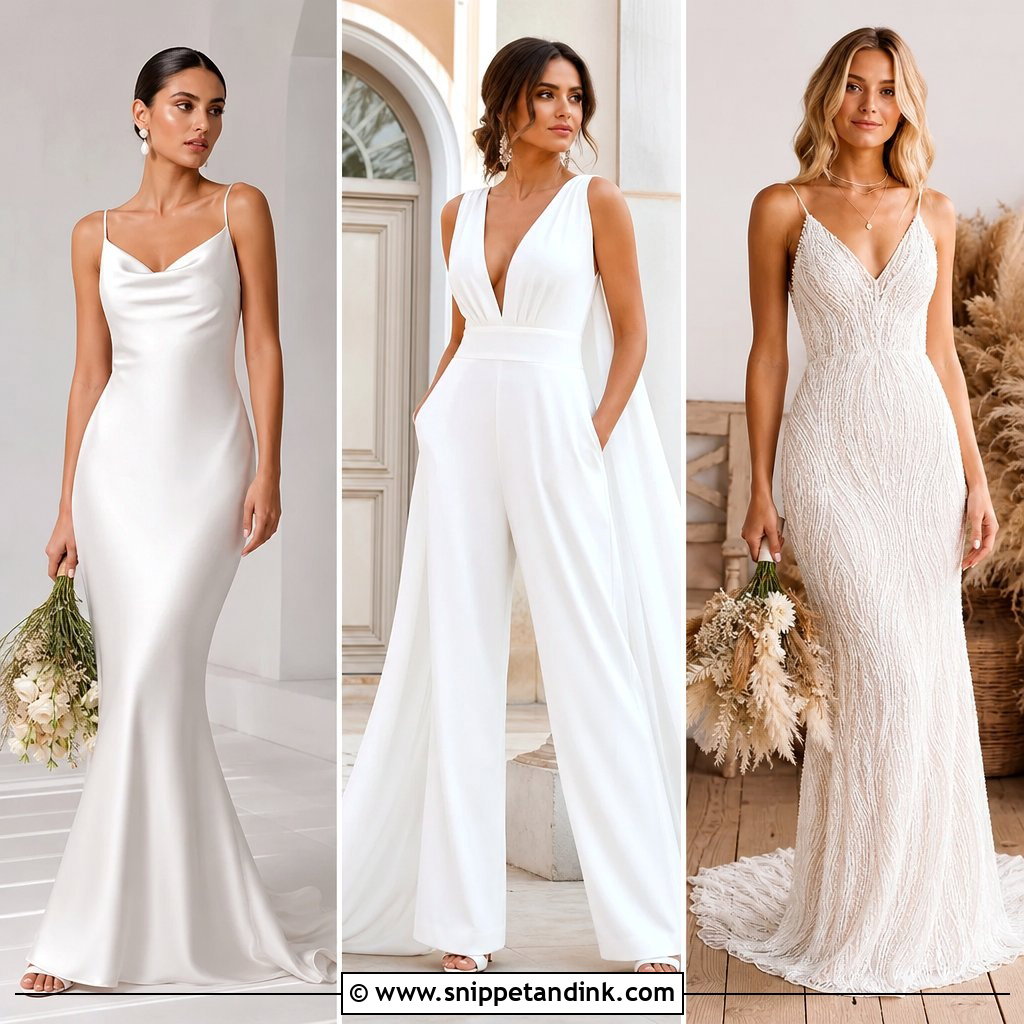
A saree gown gives you the drape without the risk. The pleats and pallu are sewn in, so nothing slips while you dance or walk. Look for pleated detailing, an attached pallu and embroidery around the waist or blouse. Metallics, blush, ivory, emerald and midnight blue all suit evening events. Statement earrings, a sleek clutch and heels. The trade-off is fit: it has to be tailored closely at the waist and hip, since it can’t be adjusted with pins the way a real saree can. I’d order it with alteration time built in.
10. Cape Lehenga Outfit
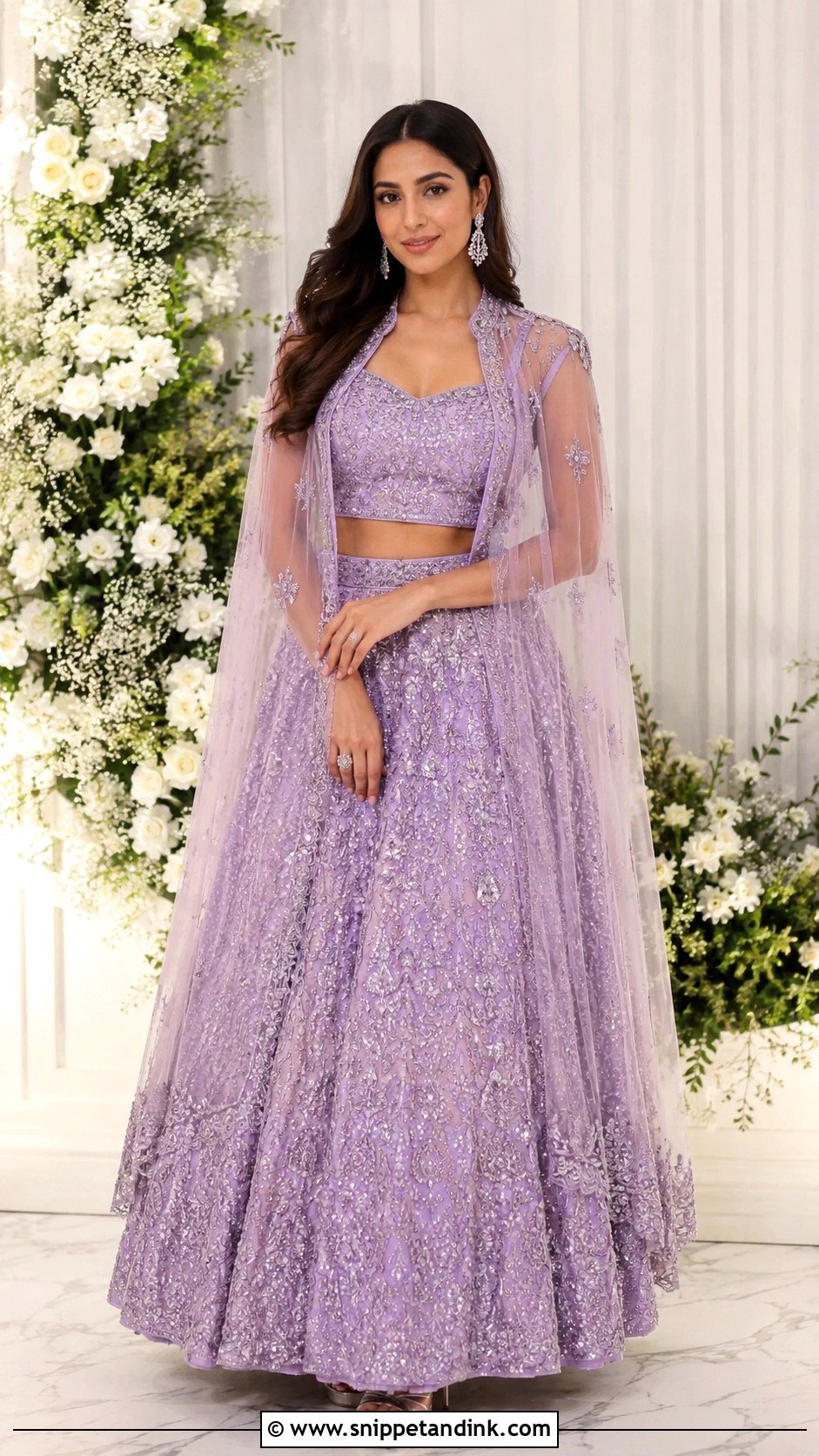
A cape lehenga replaces the dupatta with a sheer or embroidered cape over a fitted blouse, which keeps your hands free and still gives coverage. It suits sangeet, reception, engagement and destination events. Pastel capes read soft; jewel-toned ones read grand. Drop earrings, a sleek ring and comfortable heels. Skip heavy necklaces if the cape has work at the shoulders, because they catch on each other. Make sure the cape’s armholes are big enough to lift your arms for photos.
11. Jacket Lehenga Outfit
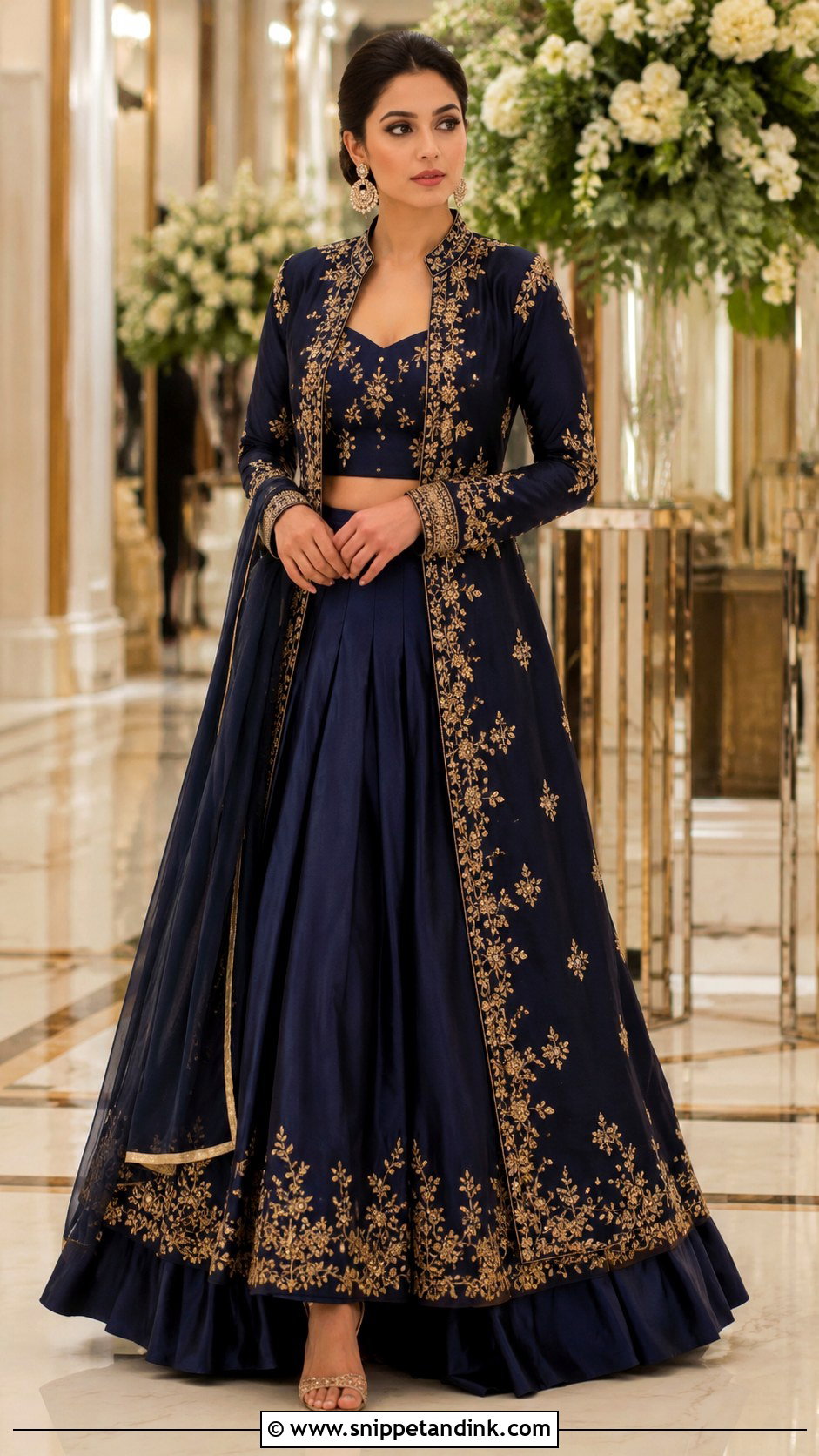
Jacket lehengas are my go-to for winter evenings and anyone who wants arm coverage without a full-sleeve blouse. The jacket can be long, cropped, sheer, embroidered or structured. A long worked jacket over a simple lehenga looks regal; a short one looks younger. Velvet, silk, brocade or organza depending on the season. A fitted blouse, a minimal dupatta, statement earrings and heels. In cold weather, velvet in emerald, navy, maroon or plum keeps you warm through outdoor pheras. I’d keep the dupatta very light or skip it, since three layers get bulky.
12. Mirror Work Lehenga Outfit
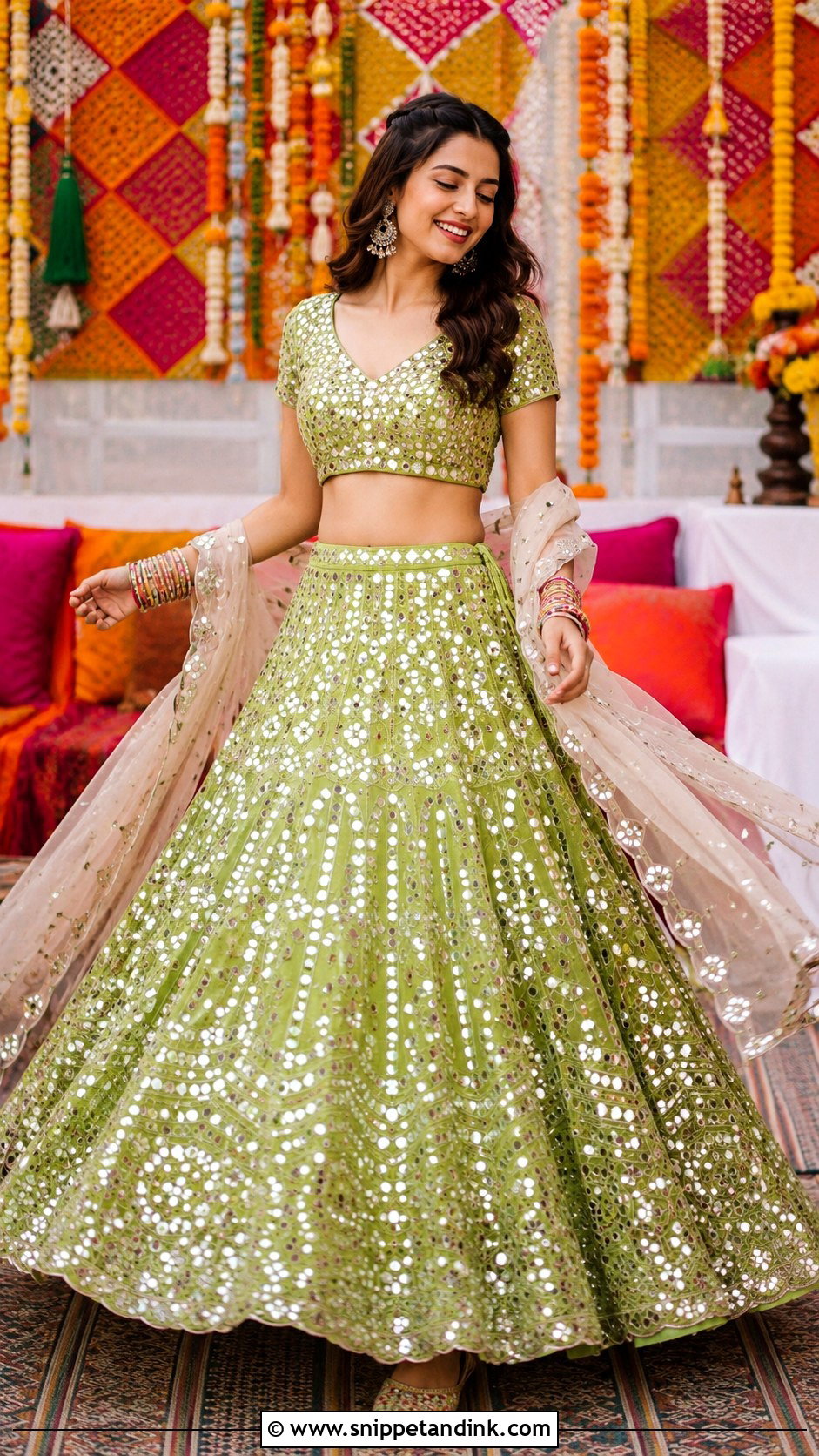
Mirror work catches every light at a mehndi or sangeet, and it moves with you when you dance. A mirror work lehenga outfit in lime, turmeric yellow, hot pink, orange, aqua or cobalt with a short blouse, flared skirt and light dupatta works well. Oxidized jewelry, colorful bangles and juttis or block heels. Fresh skin and a defined eye. Mirrors are heavy and their edges can scratch the inner arm, so I check that blouse sleeves are lined. Keep accessories light.
13. Sequin Saree Outfit
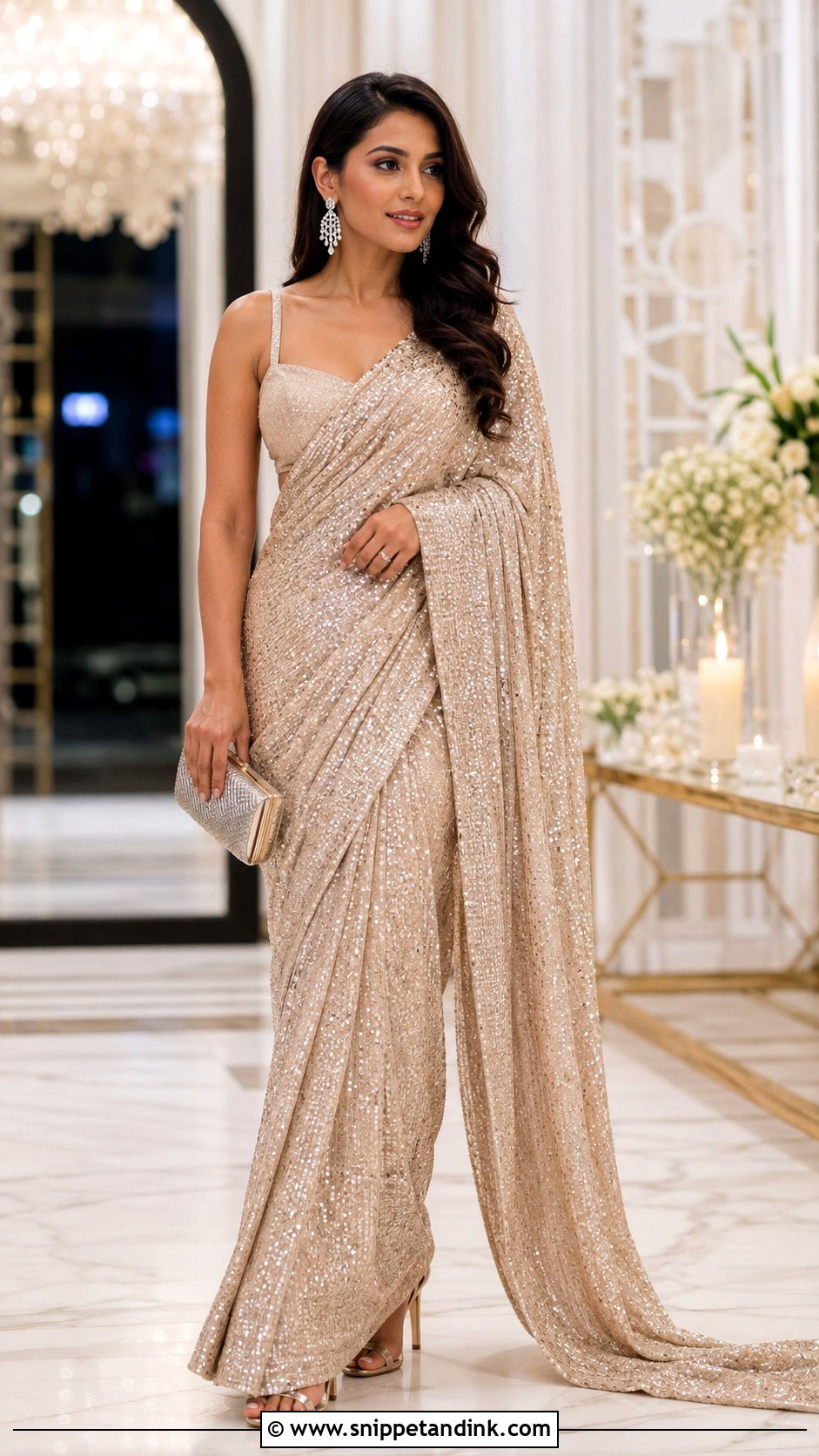
A sequin saree brings evening sparkle while keeping the saree’s shape. Champagne, silver, rose gold, blush, navy or emerald look refined. Choose a simple blouse, since the sequins already do the talking. Diamond-style earrings, a sleek clutch and heels. Drape it close and clean. Sequined fabric is slippery, so I use more pins than usual at the pleats and shoulder. A soft bun, side waves or sleek straight hair. Good for receptions, engagements and sangeets if you want shine without a heavy skirt.
14. Chikankari Lehenga Outfit
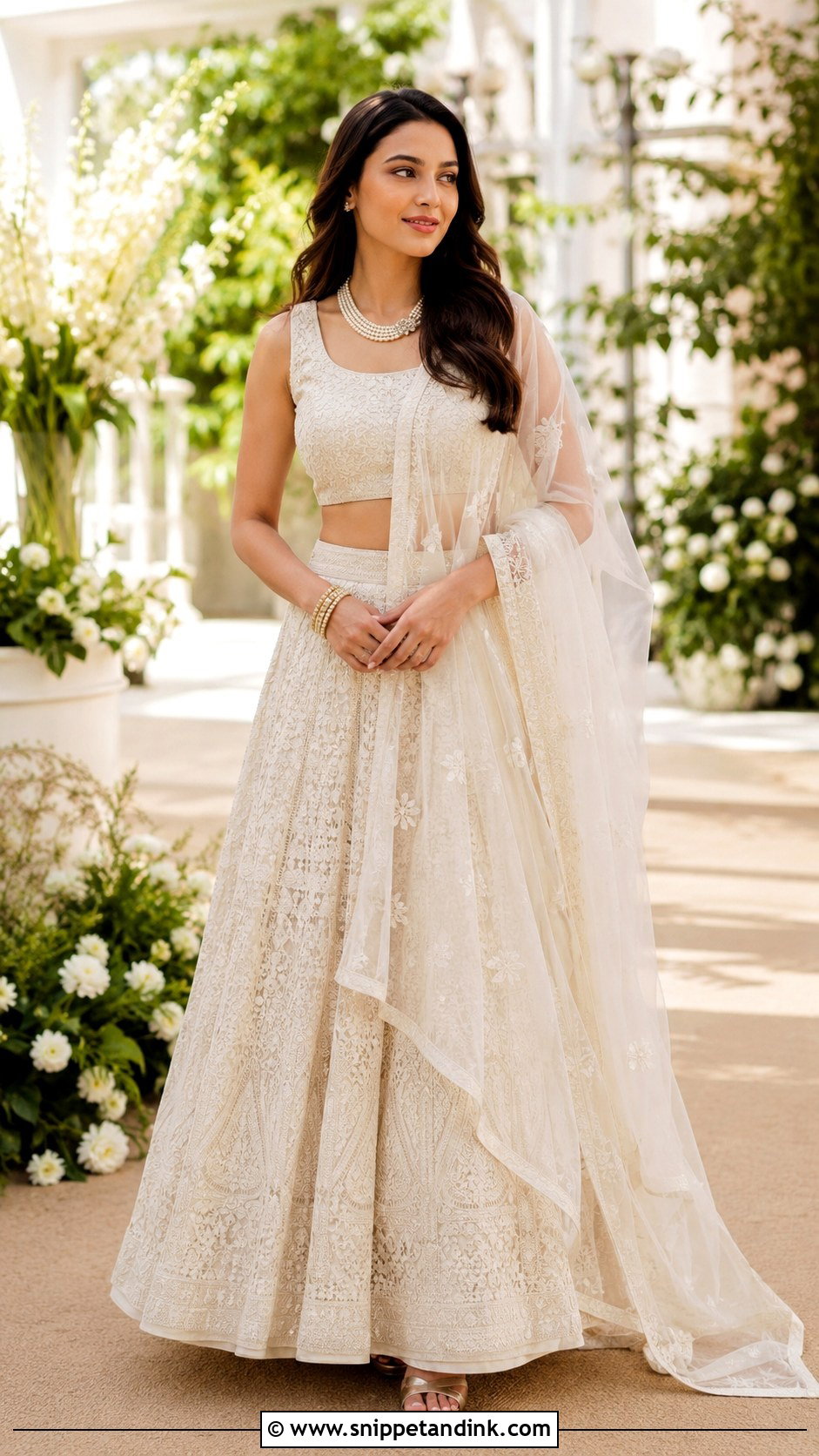
Chikankari is hand embroidery from Lucknow, done in fine white or tonal thread on light fabric, and it’s one of the most comfortable things you can wear to a daytime function. Ivory, pastel pink, mint, powder blue or soft yellow, with a matching blouse and an organza or georgette dupatta. Pearls, kundan earrings or delicate bangles. I’d wear it to a mehndi, a brunch engagement or an intimate ceremony, and as a lighter pre-wedding look for the bride. If you do wear it near a haldi, stand well back; turmeric stains on white thread are very hard to get out.

15. Velvet Lehenga Outfit
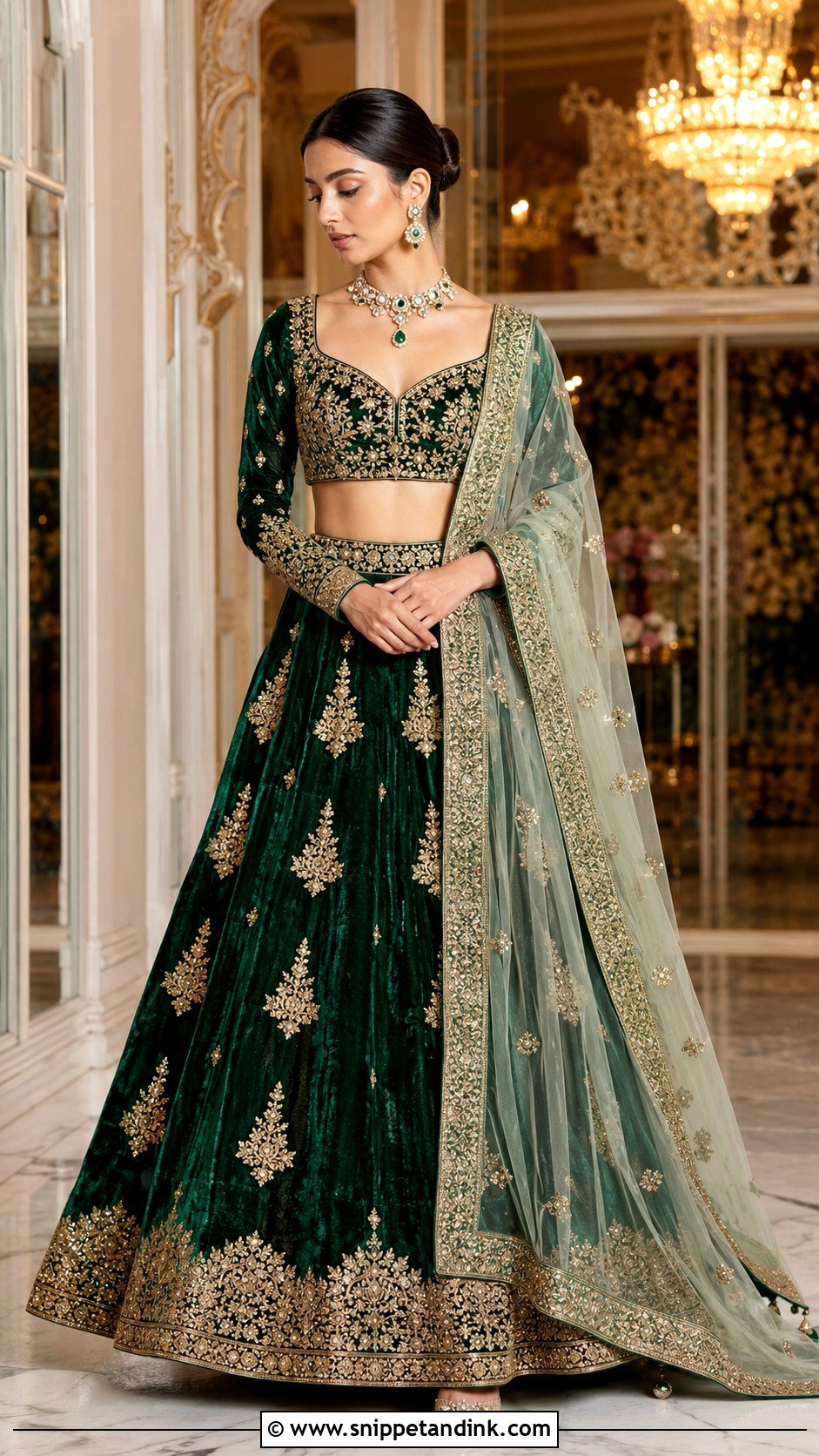
Velvet is the fabric I steer people toward for winter weddings. It holds warmth, and deep emerald, navy, ruby, plum or dark teal look rich at night. Gold embroidery, antique zari or fine thread work keeps it regal. A fitted velvet blouse and flared skirt give a strong shape; a light net or organza dupatta stops it from looking heavy. Kundan jewelry, a sleek bun and embellished heels. Velvet is warm, so I’d never put someone in it for an outdoor summer function. Keep accessories edited, since the fabric already has depth.
16. Silk Lehenga Outfit
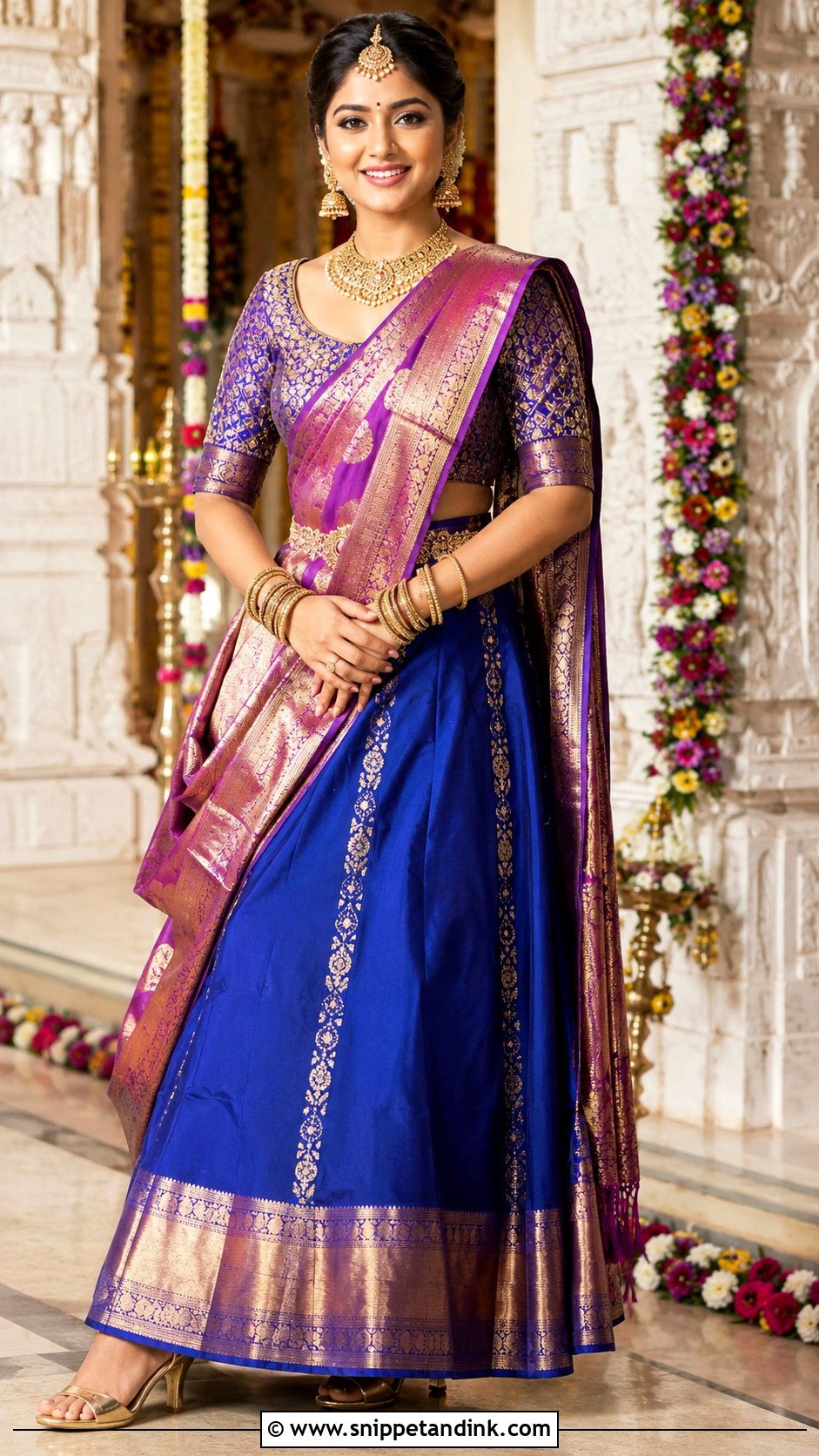
A silk lehenga gives you a classic look without the weight of a fully worked bridal one. Raw silk, Banarasi, Kanjeevaram-style silk or brocade all work for bridesmaids, sisters, mothers and guests. Jewel tones look traditional; muted gold, blush and sage feel current. A brocade blouse, a zari-bordered dupatta, temple jewelry, bangles and heels or embellished flats. Silk holds its shape, so the skirt looks structured in photos. Each piece can be restyled on its own later, which is why I call it the most reusable outfit in this list.
17. Indo Western Dhoti Set Outfit
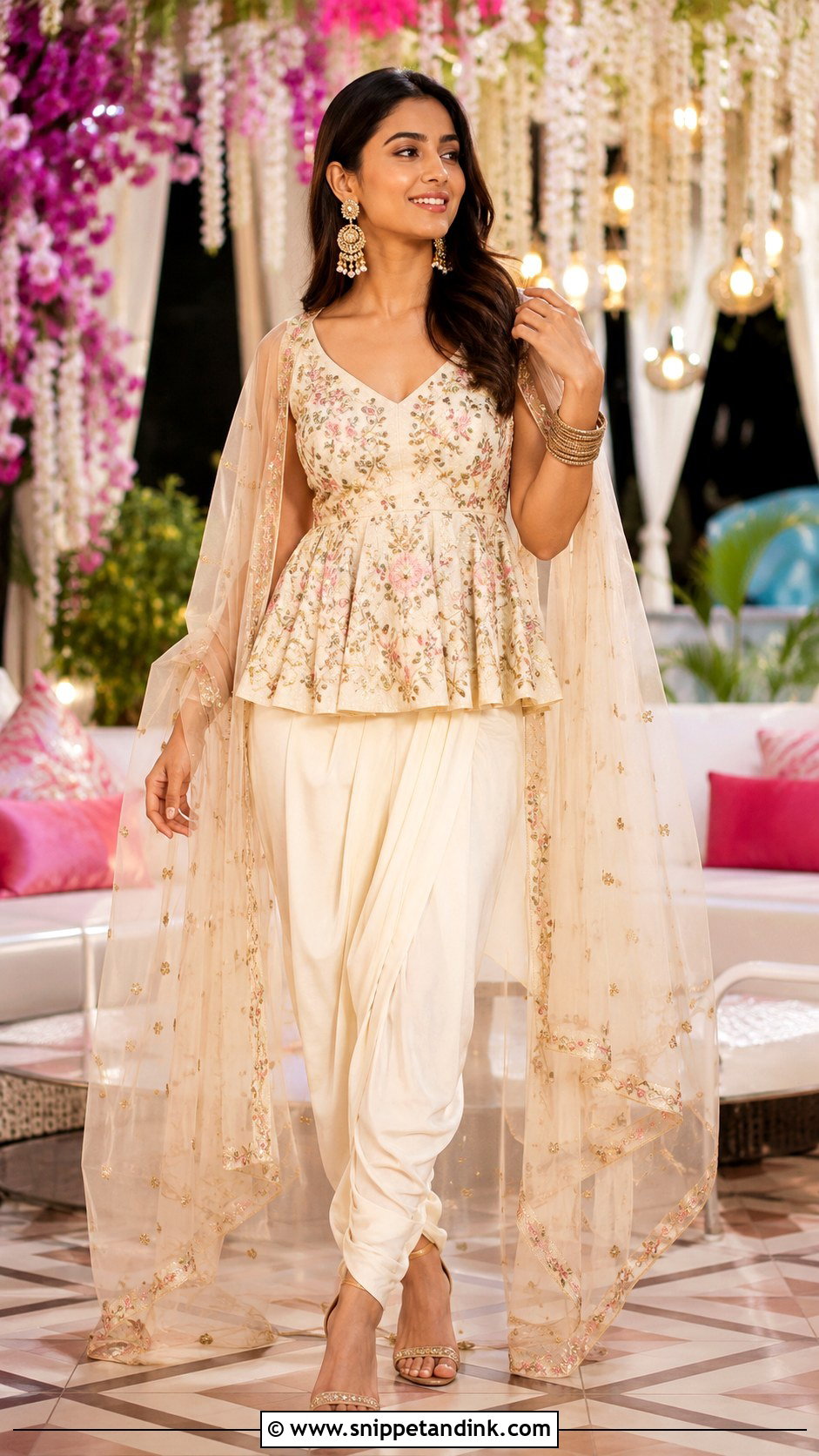
For women who’d rather wear trousers, an Indo western dhoti set outfit is comfortable and current. The draped dhoti bottom pairs with an embroidered top, peplum kurti or crop blouse, and a cape, jacket or dupatta for drama. Mirror work, thread embroidery or metallic accents keep it festive. Statement earrings, stacked bangles and comfortable heels. It’s strong for mehndi, sangeet and destination events. Check the dhoti’s drop crotch in a sitting position; a low drop can feel awkward on floor seating.
18. Peplum Sharara Outfit
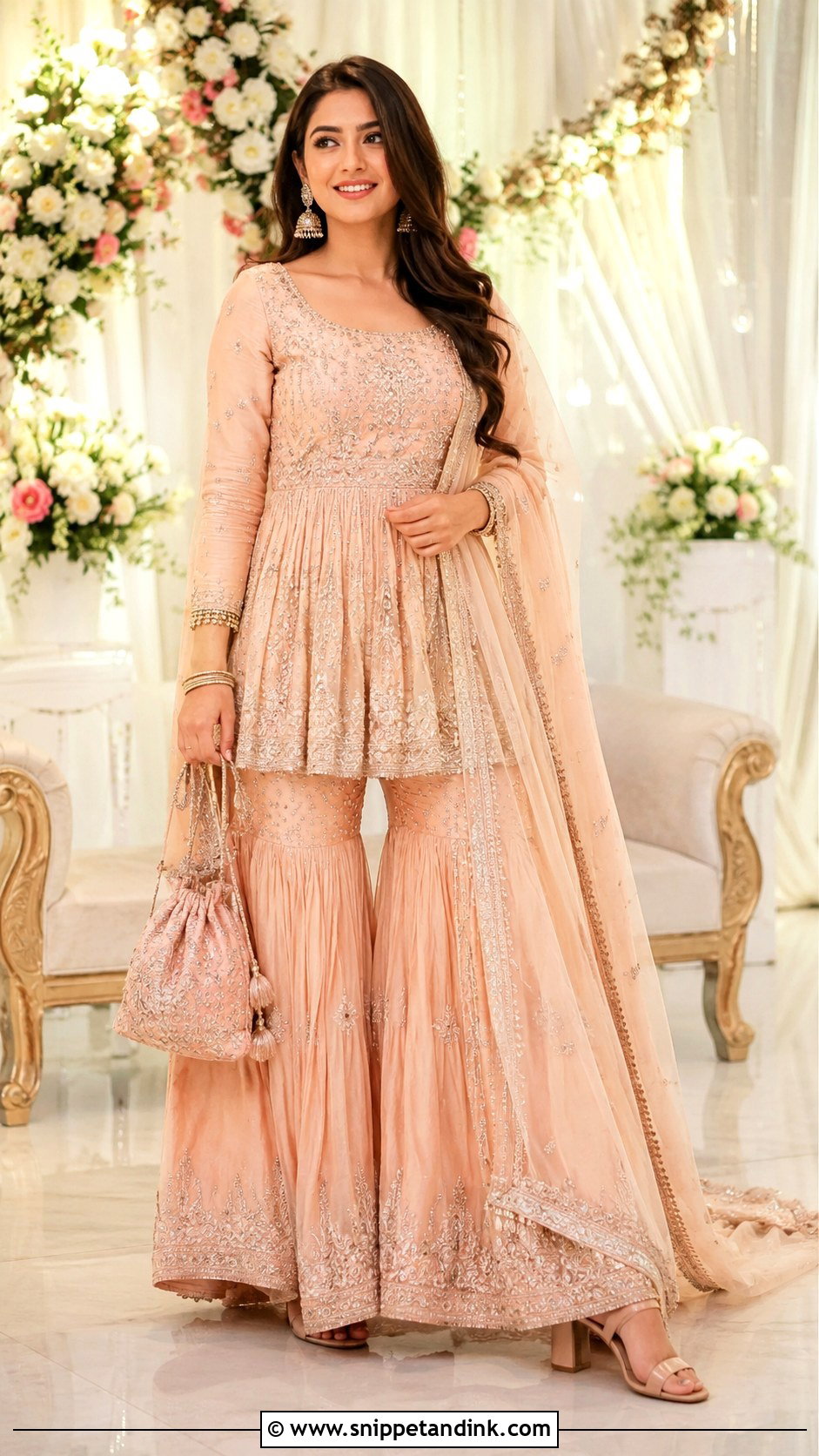
A peplum top over a wide sharara defines the waist and adds coverage at the midsection, which is why so many bridesmaids I dress choose it. Embroidered georgette, silk, organza or crepe for polish. Pastels look modern; brights look festive. Jhumkas, a potli, bangles and block heels. The peplum should flare from your natural waist, not lower, or the top looks dropped. It’s comfortable for long celebrations and easy to dance in.
19. Kurta Palazzo Dupatta Outfit
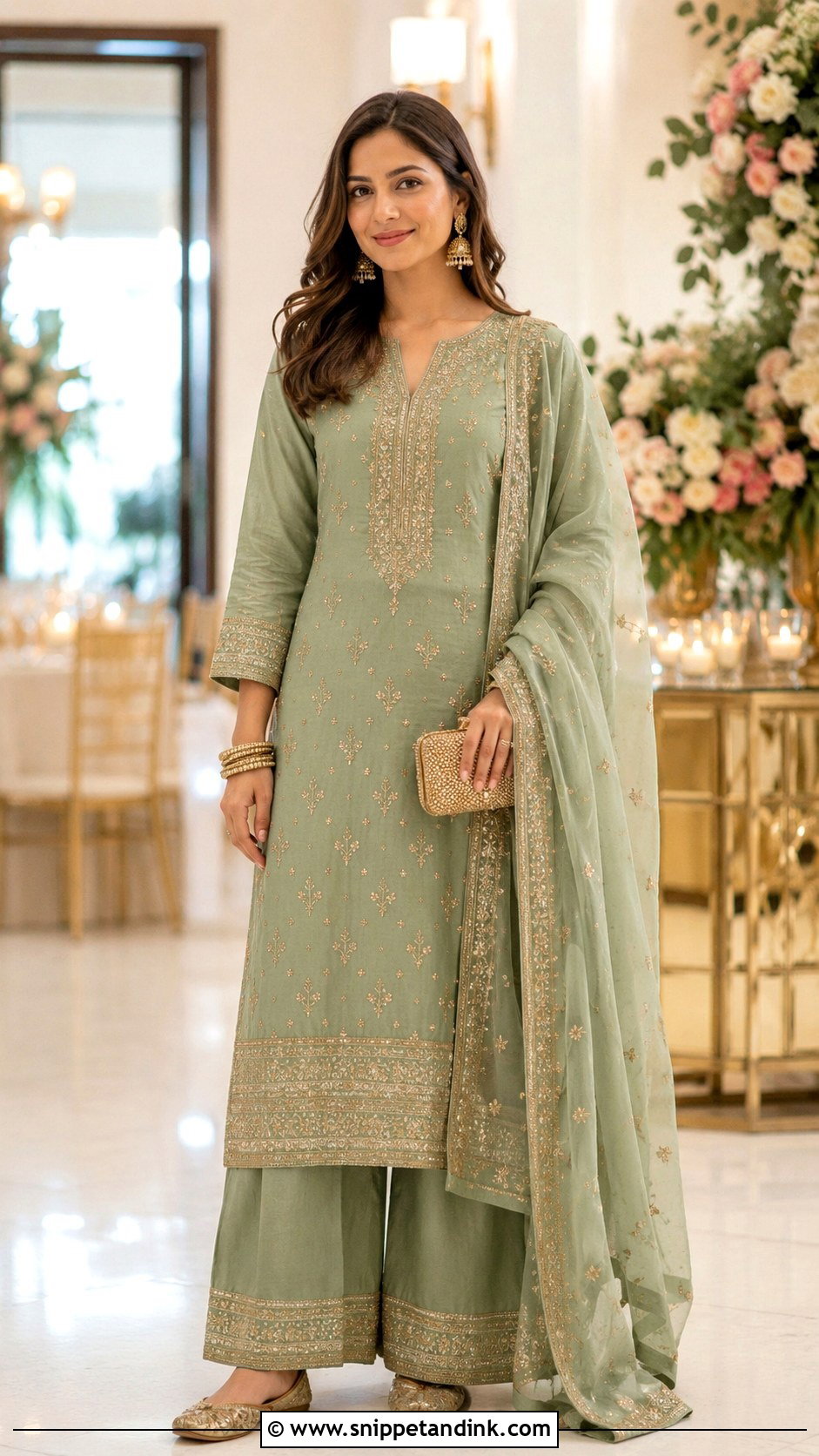
A kurta, palazzo and dupatta is the most comfortable formal set I know, and I suggest it for haldi, mehndi, welcome dinners and family lunches. A long embroidered kurta with wide palazzos and a coordinated dupatta in silk, georgette, cotton silk, chanderi or crepe. Jhumkas, bangles, embellished flats and a small clutch. Zari borders, mirror work or sequins dress it up for an evening function. It suits women who want to move freely and stay cool, at any age or size.

20. Co Ord Lehenga Skirt Outfit
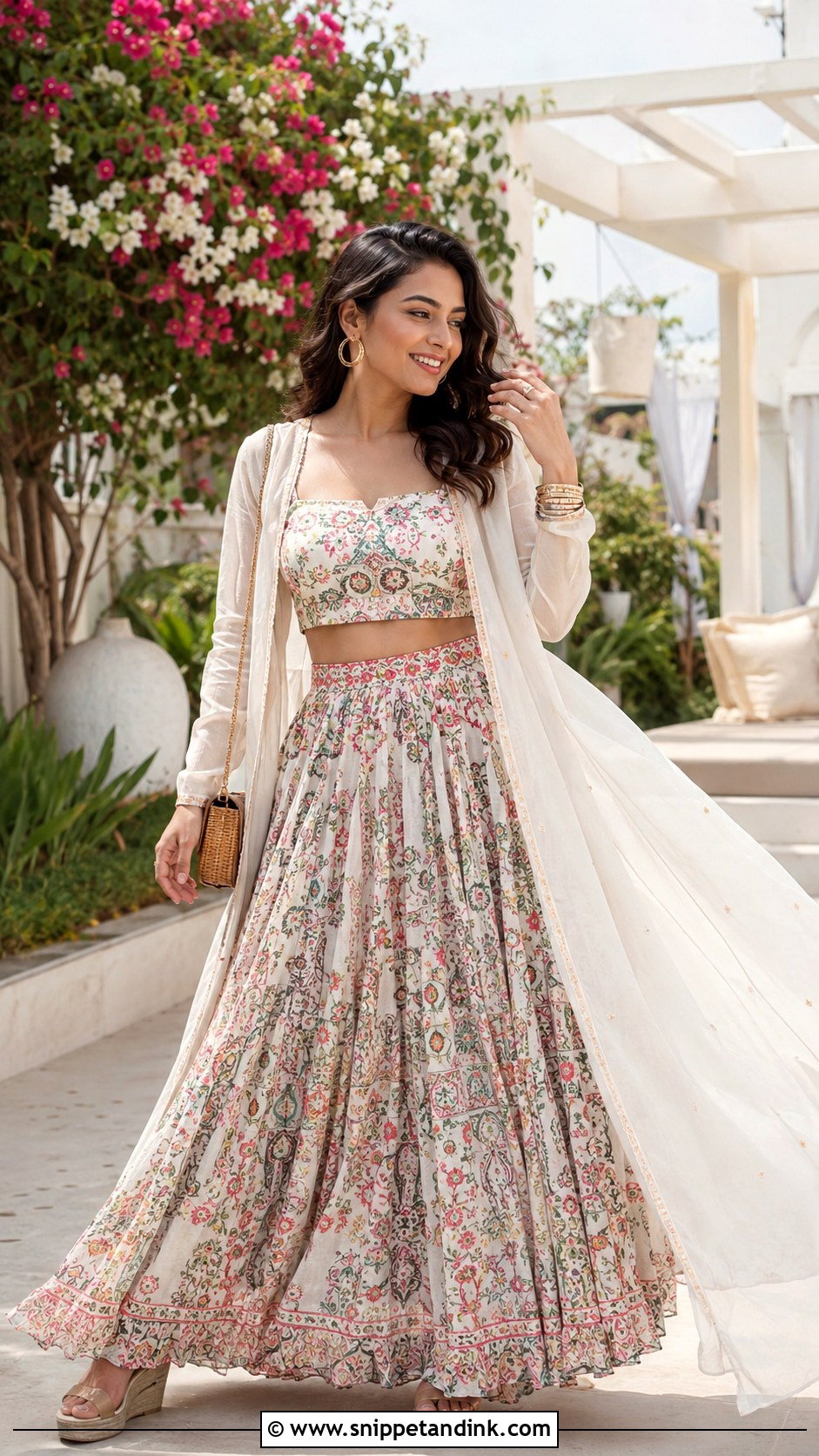
A co-ord lehenga set, usually a matching crop top and skirt with an optional cape or light dupatta, looks polished but relaxed. Prints, light embroidery, mirror detailing or tonal textures keep it clean. It suits destination weddings, mehndi, haldi and daytime functions. Hoops, bangles, wedges and a small shoulder bag. The real advantage: you can wear the top and skirt separately afterward, so it earns its place in your wardrobe long after the wedding.
21. Printed Lehenga Outfit
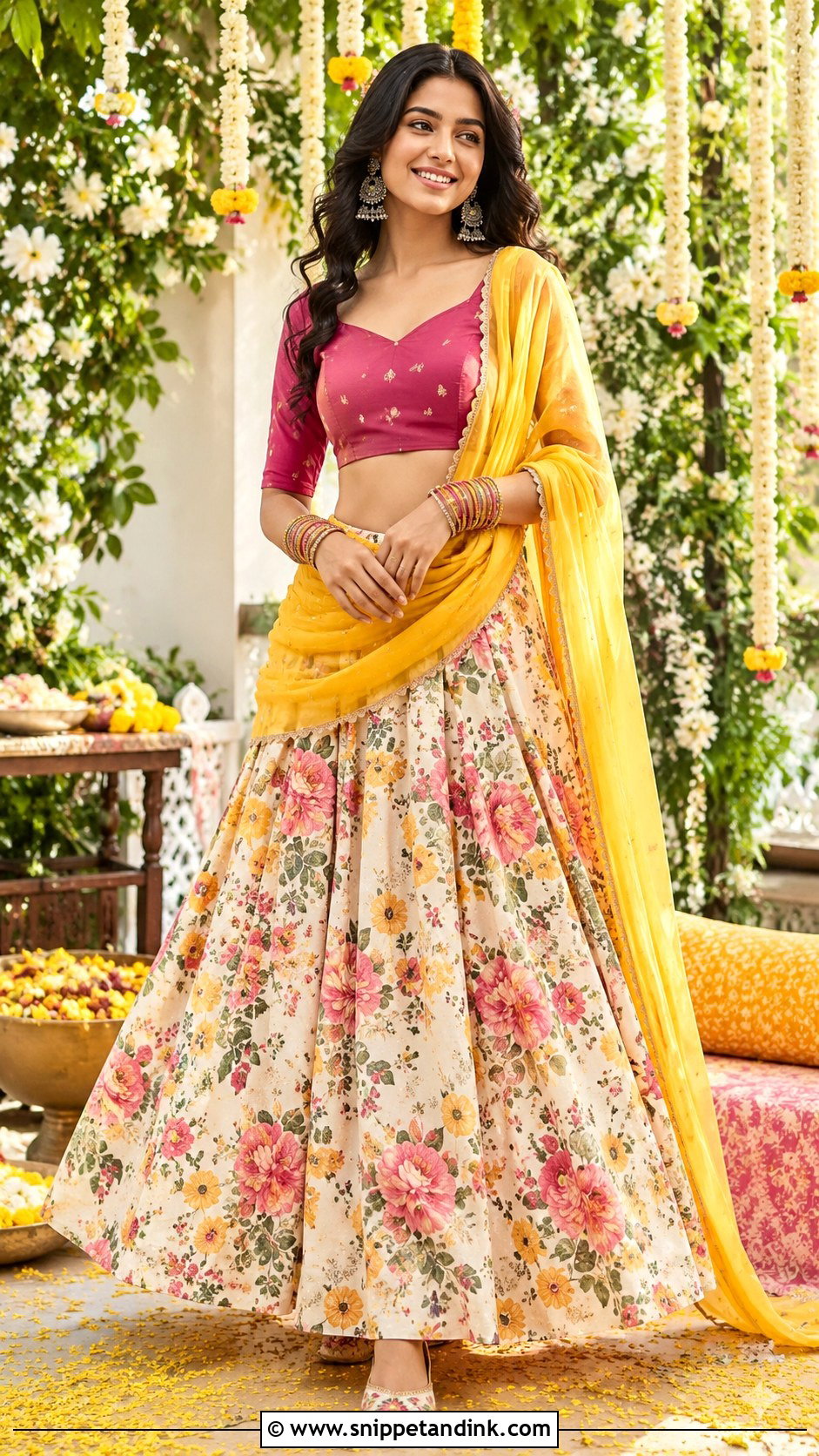
A printed lehenga outfit is the easiest thing to wear to a hot daytime function. Florals, block prints, paisley and digital prints look fresh at mehndi, haldi and outdoor events. A light skirt with a matching or contrasting blouse and a simple dupatta in organza, cotton silk, georgette or chanderi. Oxidized earrings, colorful bangles, juttis or wedges. With a bold print, I keep jewelry minimal. Cotton silk and chanderi breathe best if the venue has no shade.
22. Ruffle Saree Outfit
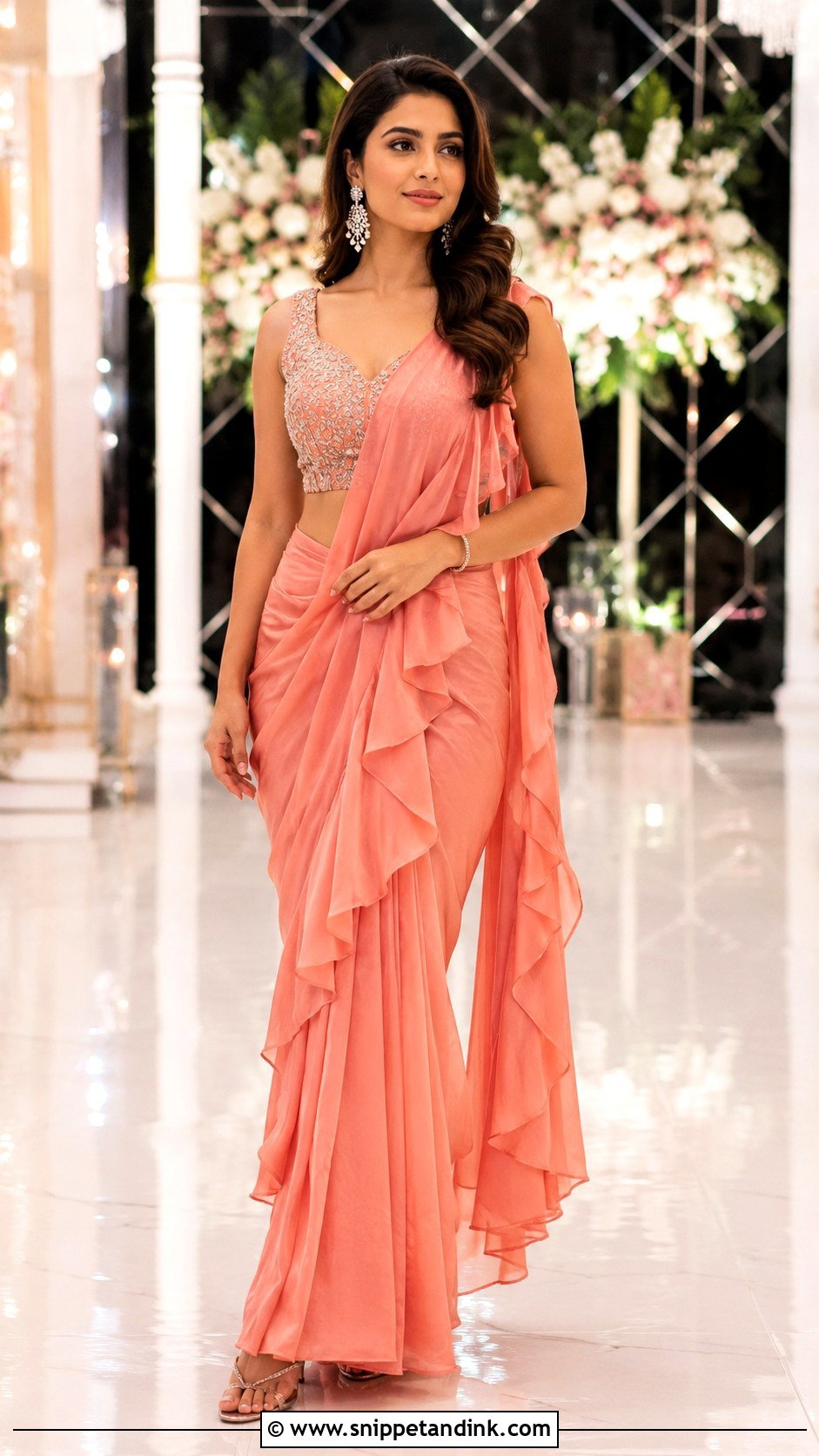
Ruffle sarees are fun for sangeets, engagements and receptions because the ruffles move every time you turn. Georgette, chiffon or a pre-draped ruffle saree keeps the layers light. Pair it with an embroidered, corset-style or structured crop blouse so the top half has some shape against the volume. Statement earrings, a sleek bracelet and heels; skip anything else. Pre-draped versions are also far easier to get into quickly than a traditional saree.
23. Kanjeevaram Saree Outfit
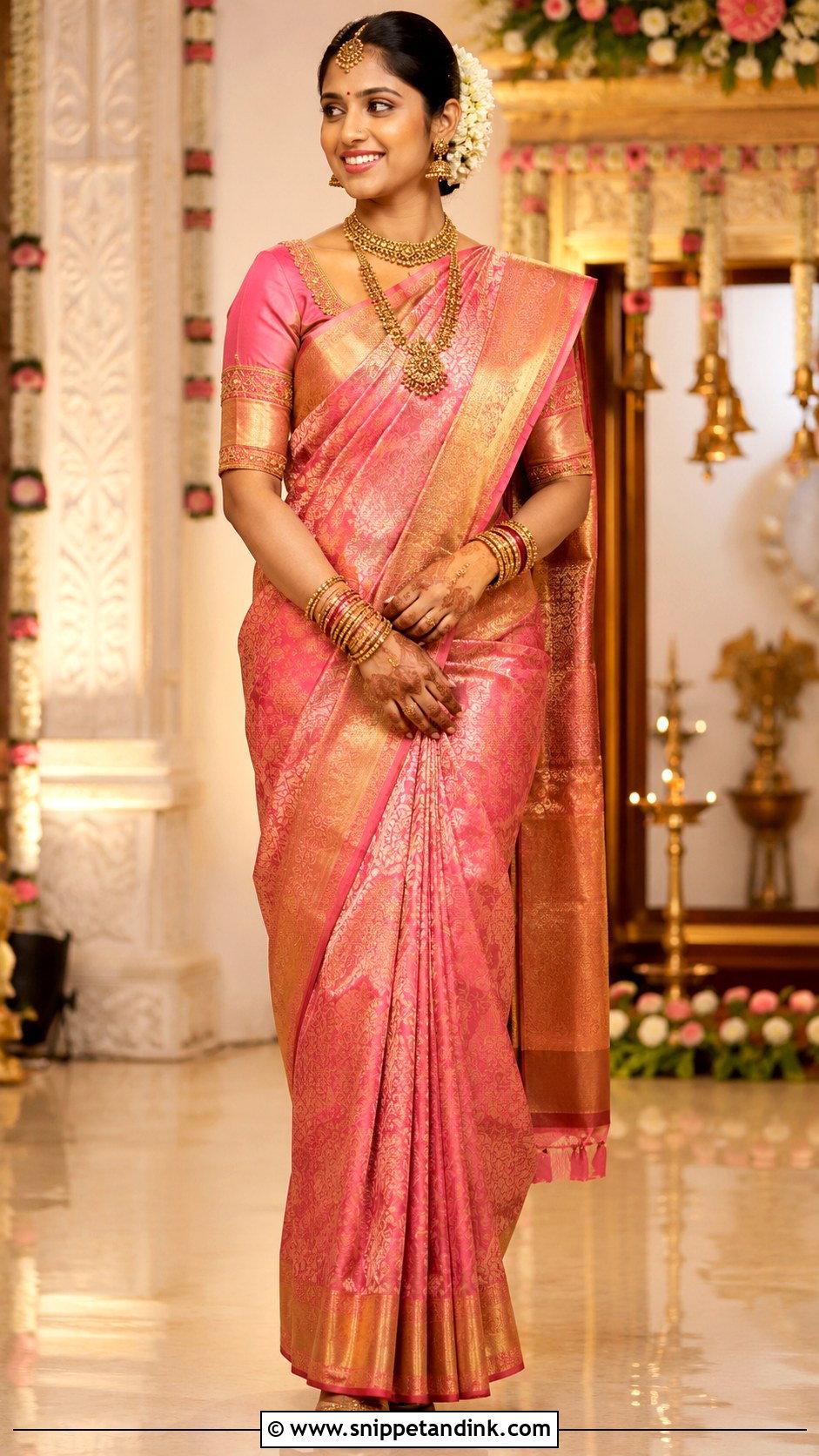
Kanjeevaram silk is woven heavy, with a body that makes pleats stand crisp and grand. It’s central to South Indian weddings and family rituals and is often what brides and close family wear. Red, gold, green, purple, orange or pink with contrast borders; a fitted silk blouse and traditional gold or temple jewelry. A bun with gajra, bangles, bindi and embellished sandals. These sarees are heavy, so I’d do a test drape and sit in it for a while. Store it wrapped in soft cotton and refold it now and then so the zari doesn’t crack along the folds.
24. Palazzo Saree Outfit
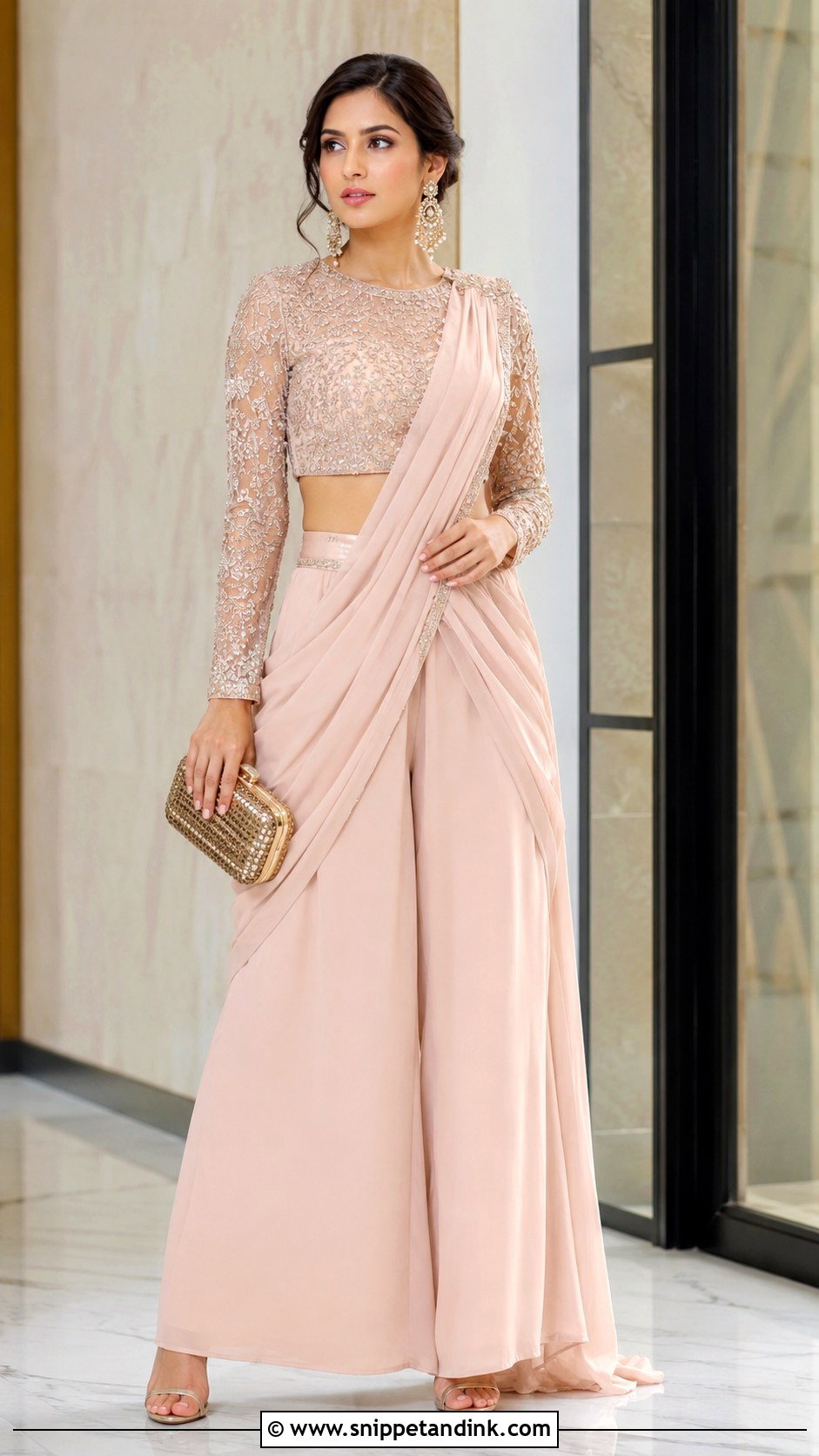
A palazzo saree pairs wide-leg palazzos with a blouse and a draped pallu or attached panel, so you get the saree line with trouser comfort. Embroidered crepe, georgette, silk blend or satin-finish fabric. Metallics, jewel tones or pastels depending on the event. Statement earrings, heels and a structured clutch. It’s practical at destination weddings and evening receptions where you’ll be on your feet, and it reads modern without breaking with the mood of the event.
25. Long Jacket Saree Outfit
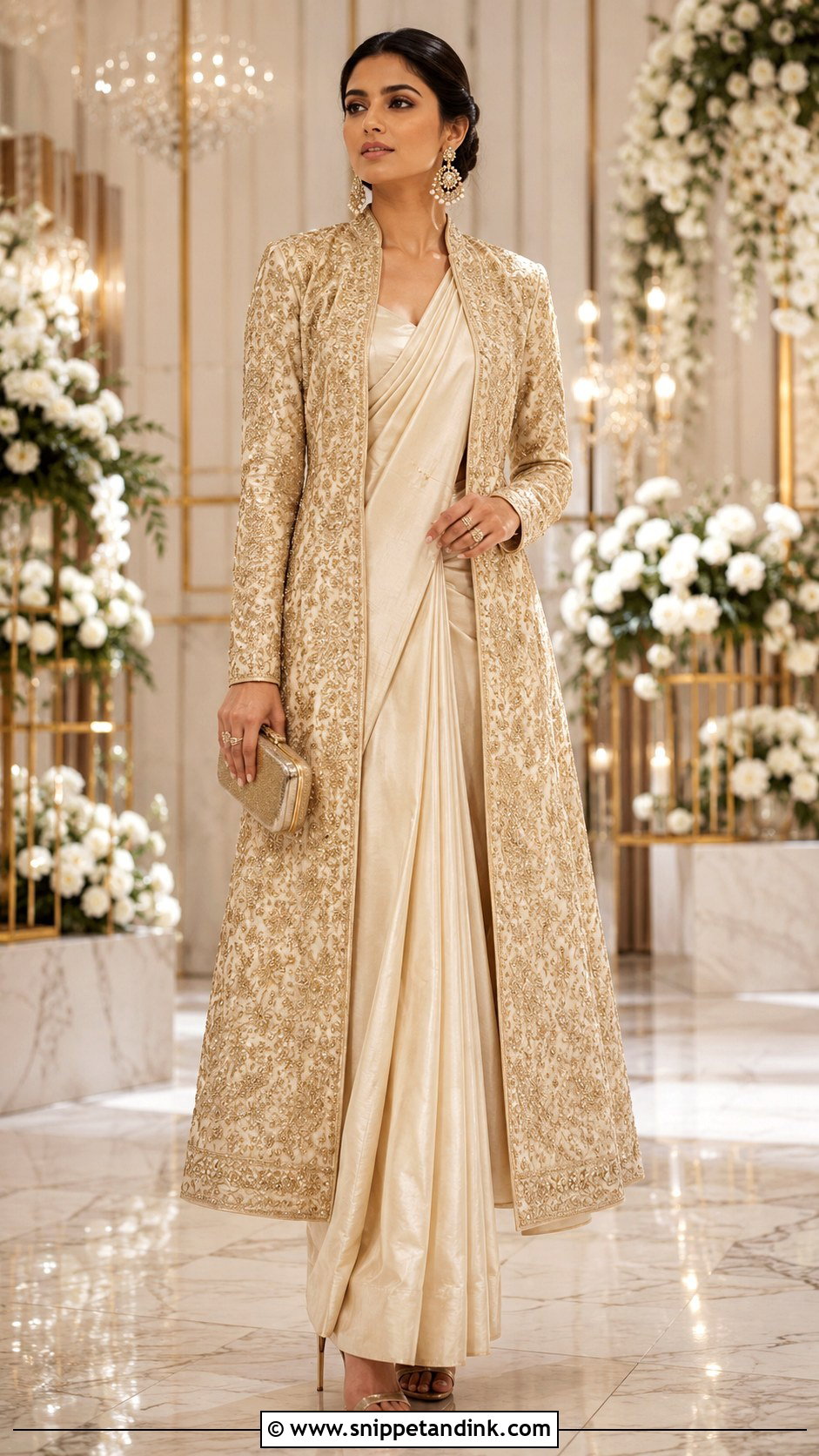
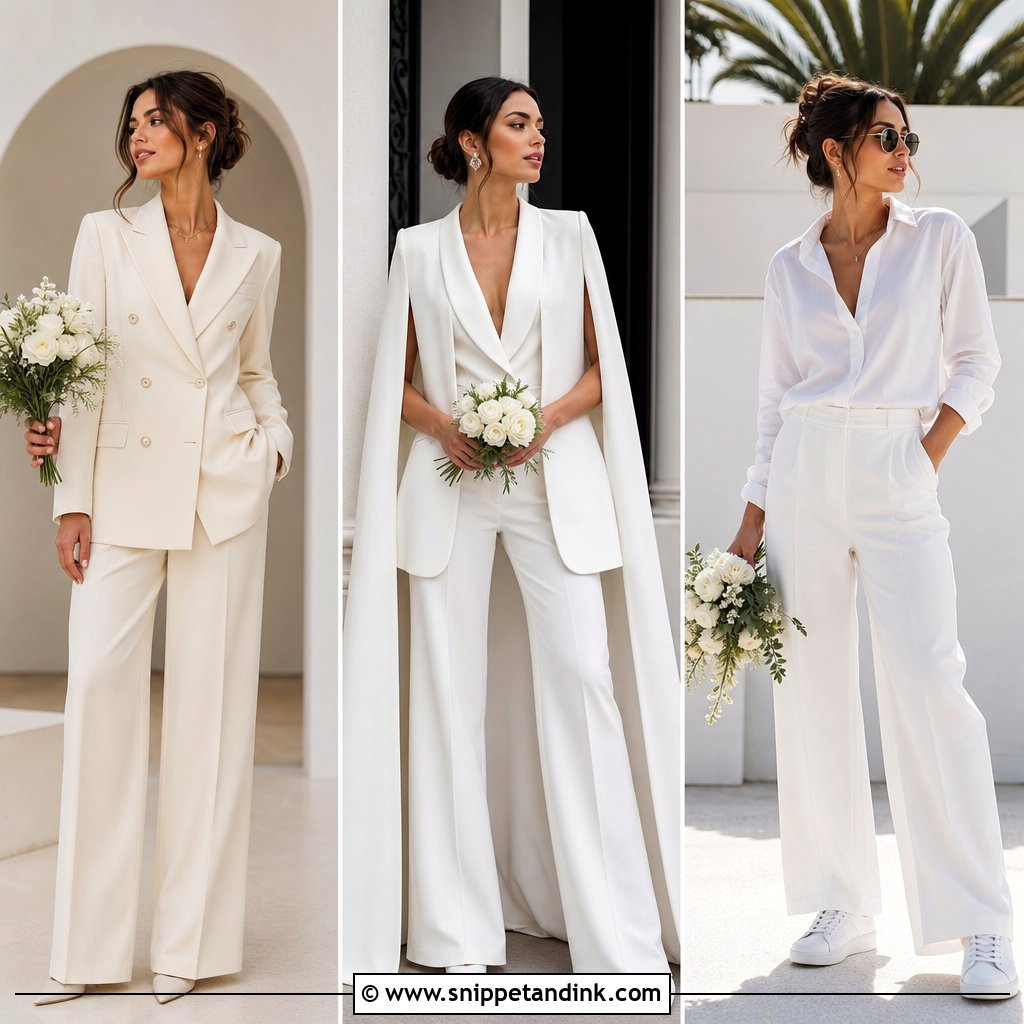
A long jacket over a saree adds structure, coverage and warmth, which makes it a good winter or formal reception look. A silk, georgette or satin saree with a matching or contrast jacket in velvet, brocade, net or organza. Keep the blouse plain, since the jacket is the focus. Earrings, rings, heels and a sleek clutch. I’d leave the jacket open at the front so the saree’s pleats still show. It suits mothers, bridesmaids, guests, and anyone who prefers a more tailored way of dressing.
Twenty Minutes to Change Between Mehndi and Sangeet
On multi-function days, the gap between events is often short, and a traditional saree drape alone can take a while if you’re not used to it. I plan the order of outfits around that.
How I set it up
- Get blouses stitched early. A tailor can easily need two to four weeks, longer in wedding season, and you’ll want a trial fitting.
- Match petticoats to each saree in color, and use a drawstring petticoat, not an elastic one, so the pleats can be tucked tightly.
- Lay each outfit out the night before on its own hanger or tray, with its jewelry, pins and shoes in a labeled pouch.
- Choose a pre-draped saree or a stitched set for whichever function follows the tightest gap.
- Pack a small kit: safety pins in two sizes, bobby pins, fashion tape, a sewing kit and a stain pen.
If someone in your family drapes sarees well, ask them to help on the day. If not, many stylists and makeup teams offer draping; book it at the same time you book hair and makeup.
Dress for the Longest Function You’ll Attend
The outfit that works is the one that fits the function, feels comfortable after hours of standing and sitting, and still looks like you. Lehengas feel grand, sarees last, shararas move, and Anarkalis are easy to wear. Saree gowns, dhoti sets, cape lehengas and palazzo sarees give a current option when you want something practical. Think through fabric, season, color, jewelry and shoes together. If you’re attending every function, plan the outfits as a set, so the heaviest look lands on the event that needs it and the lightest on the one where you’ll dance.
You'll Like These Ideas:








Leave a Reply