
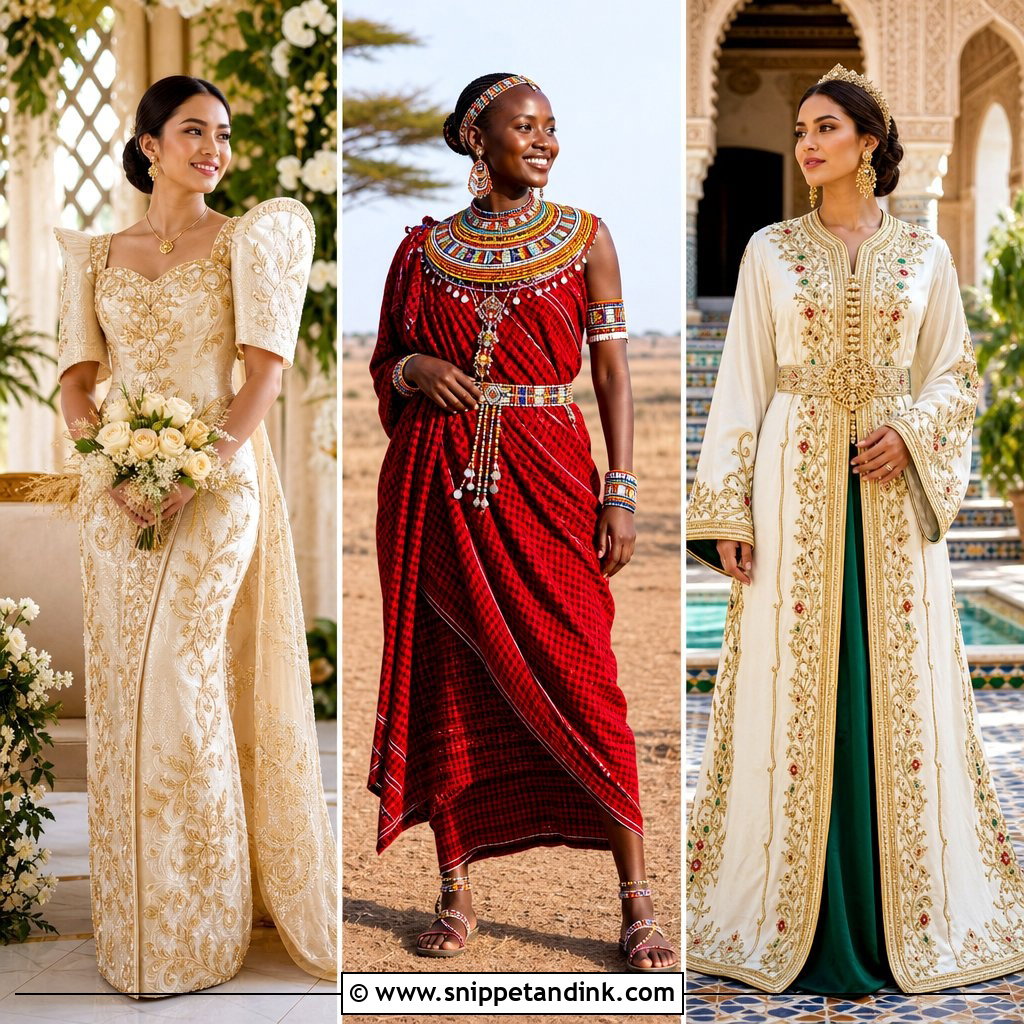
Shopping for a wedding dress gets easier once you stop thinking of it as one traditional shape. The brides I work with now try satin columns, lace gowns, corsets, minis, trouser suits, soft colour, pearl detailing, detachable skirts and a second outfit for the party. Which one suits you depends on practical things first: the venue, the weather, how many hours you’ll be in it and how much you want to move. Chiffon makes sense on a beach; mikado holds its shape in a ballroom. Below are 25 shapes and styles, with what I’d check at a fitting for each.
Three Questions I Ask Before a Bride Tries Anything On
Twenty-five silhouettes is a lot to take into a fitting room. I narrow it with three questions before a single dress comes off the rail, and they save most brides hours.
How many hours will you wear it?
A dress you wear for a forty-minute registry ceremony can be tighter and heavier than one you wear from a morning service to a midnight dance floor. Long days favour breathable fabric, a waist you can eat in and a skirt you can bustle or remove.
What will you be standing on?
Grass, sand, cobbles and church steps each rule things out. Long trains and narrow mermaid hems struggle on uneven ground, and heavy satin gets dragged dirty on gravel. I want to know the surface before I suggest a hem length.
What have you hated wearing before?
This tells me more than a mood board. If strapless tops have always slipped on you, or tight waists make you miserable at dinners, those feelings won’t change on the wedding day. I’d rather rule a silhouette out now than fit it three times and watch you tug at it.
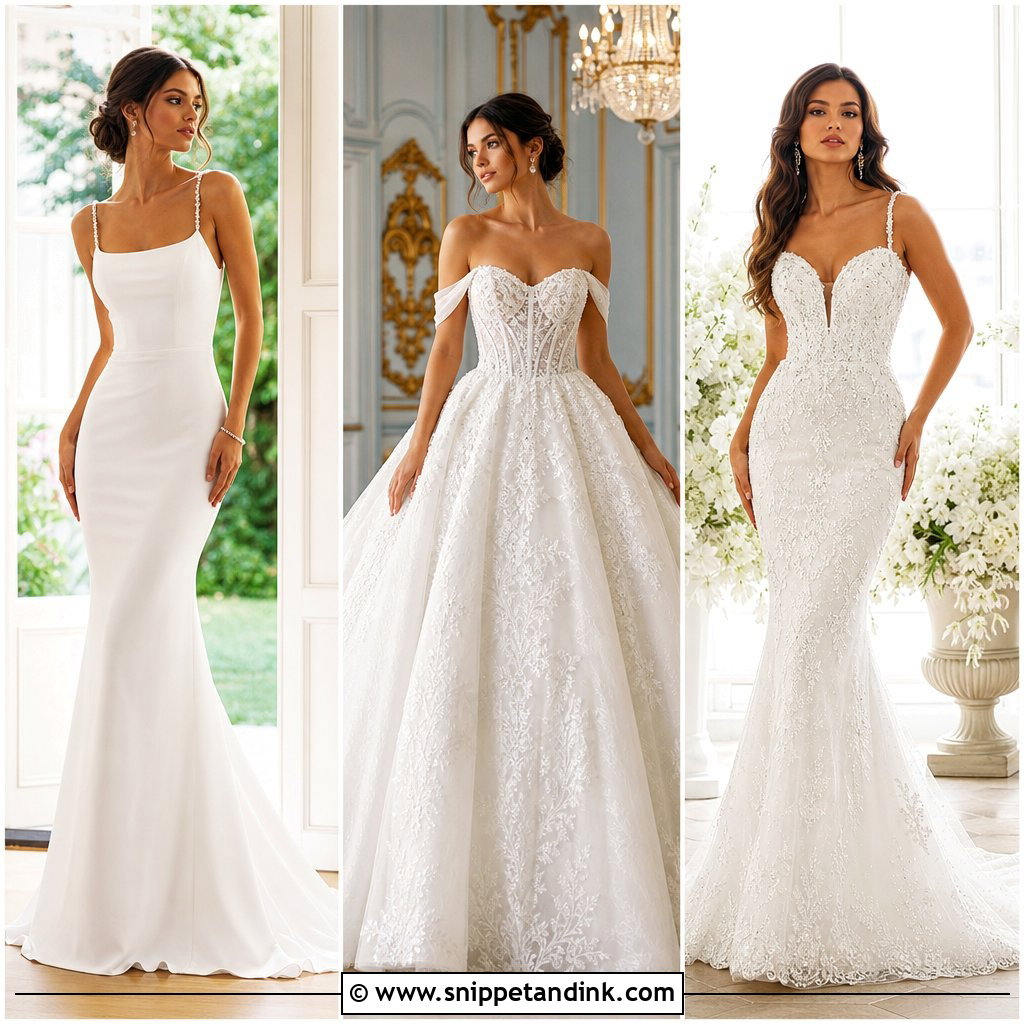
1. Satin Wedding Dress
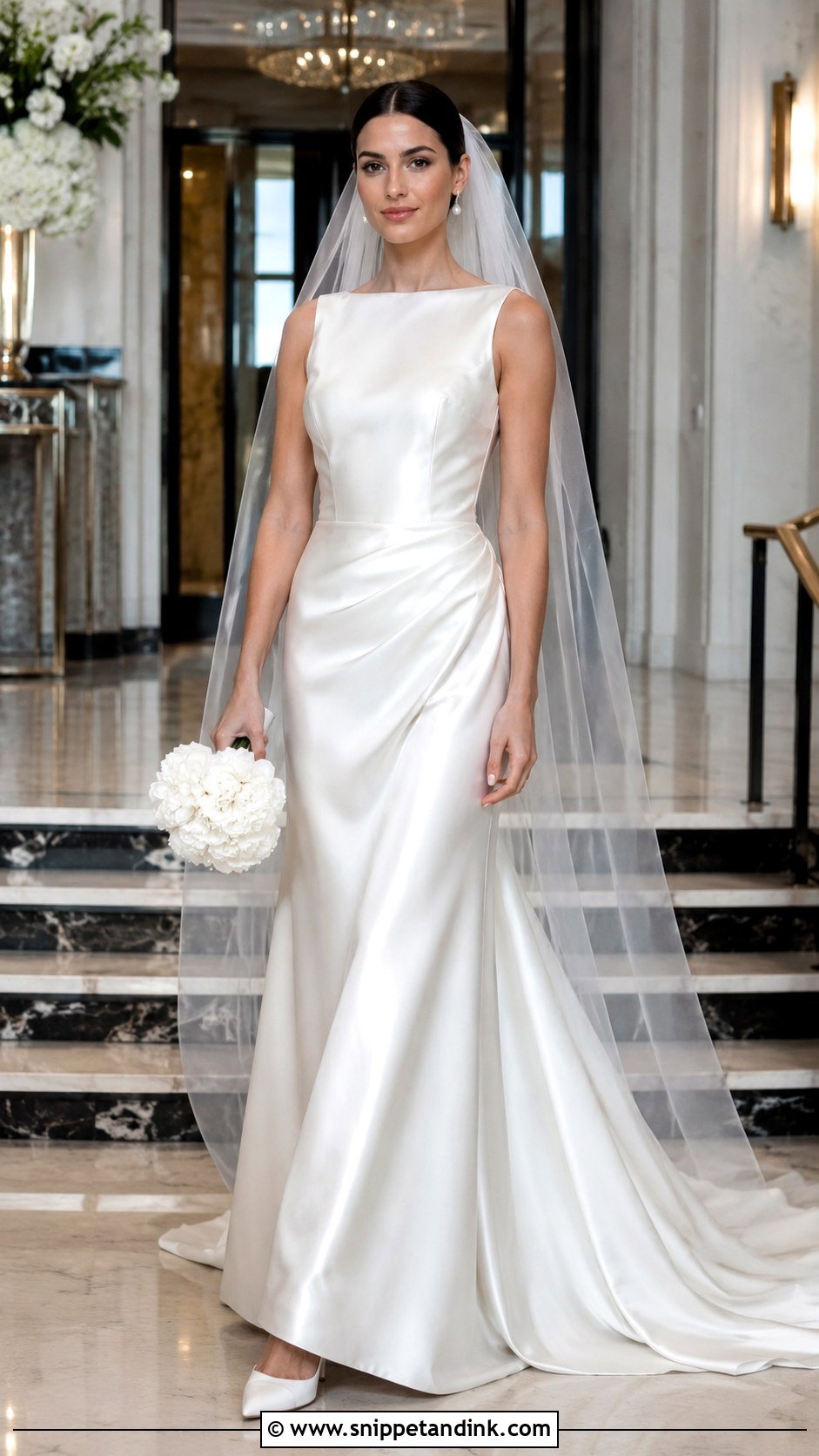
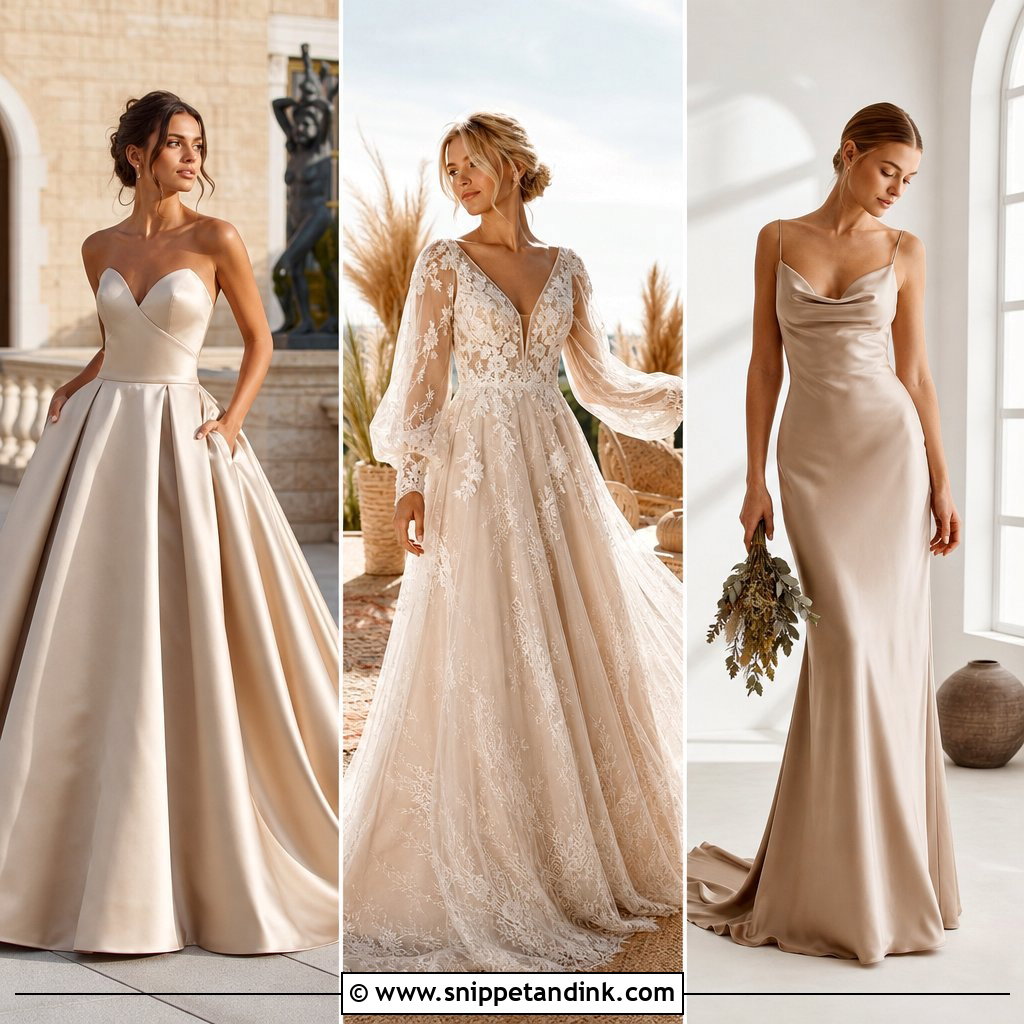
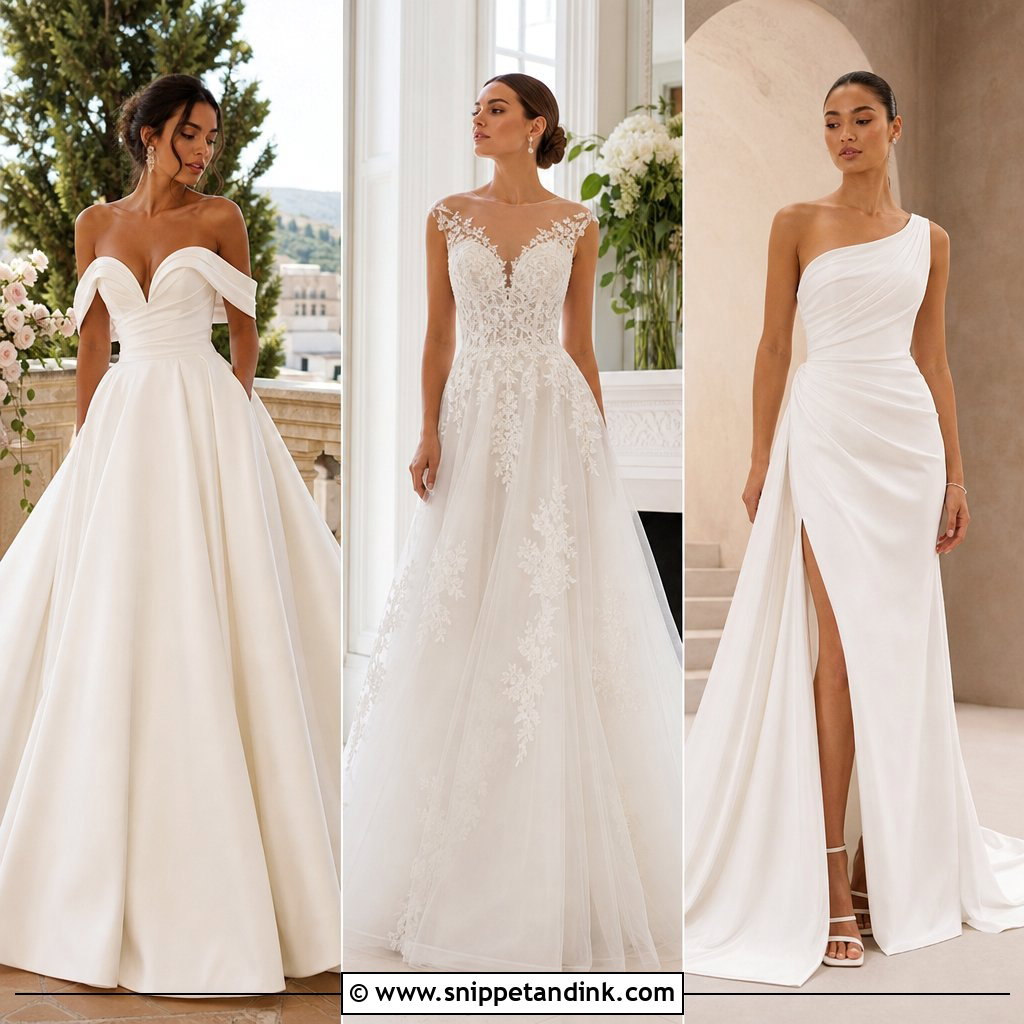
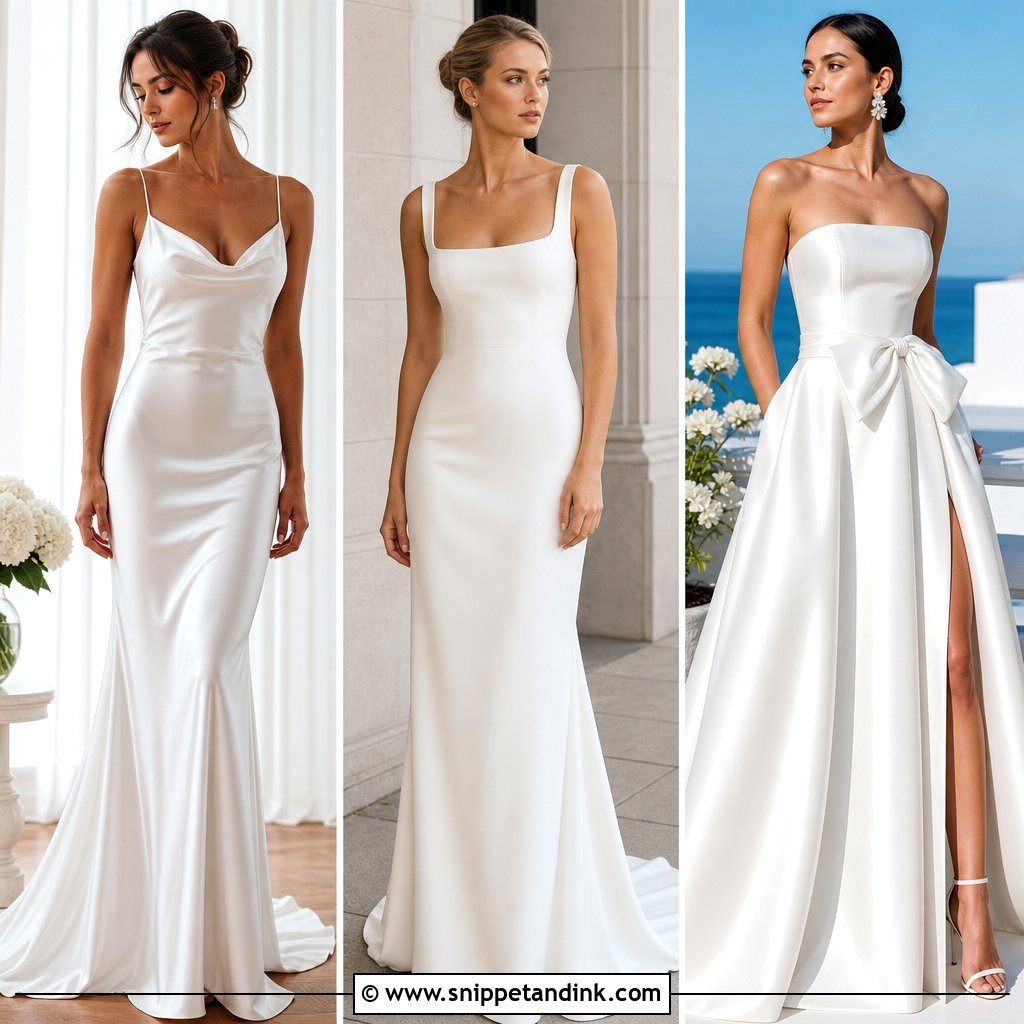
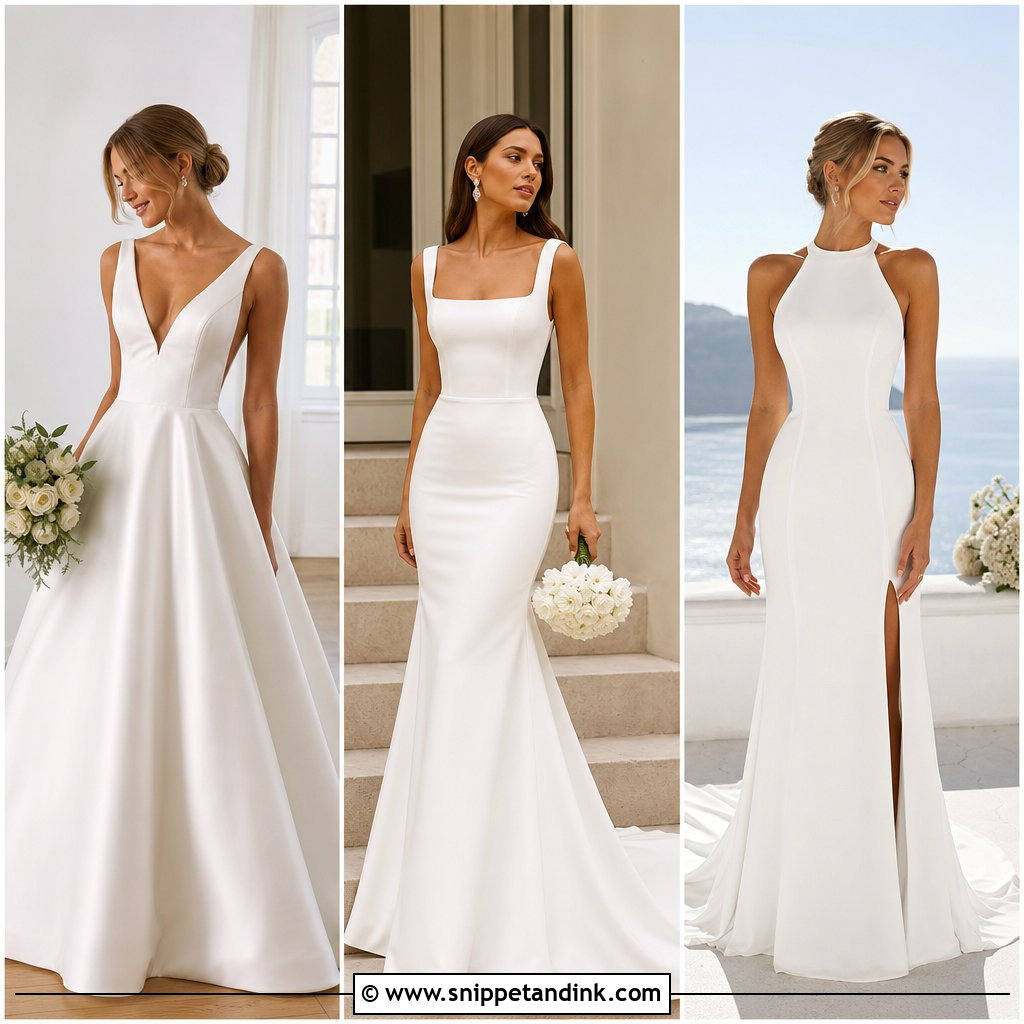
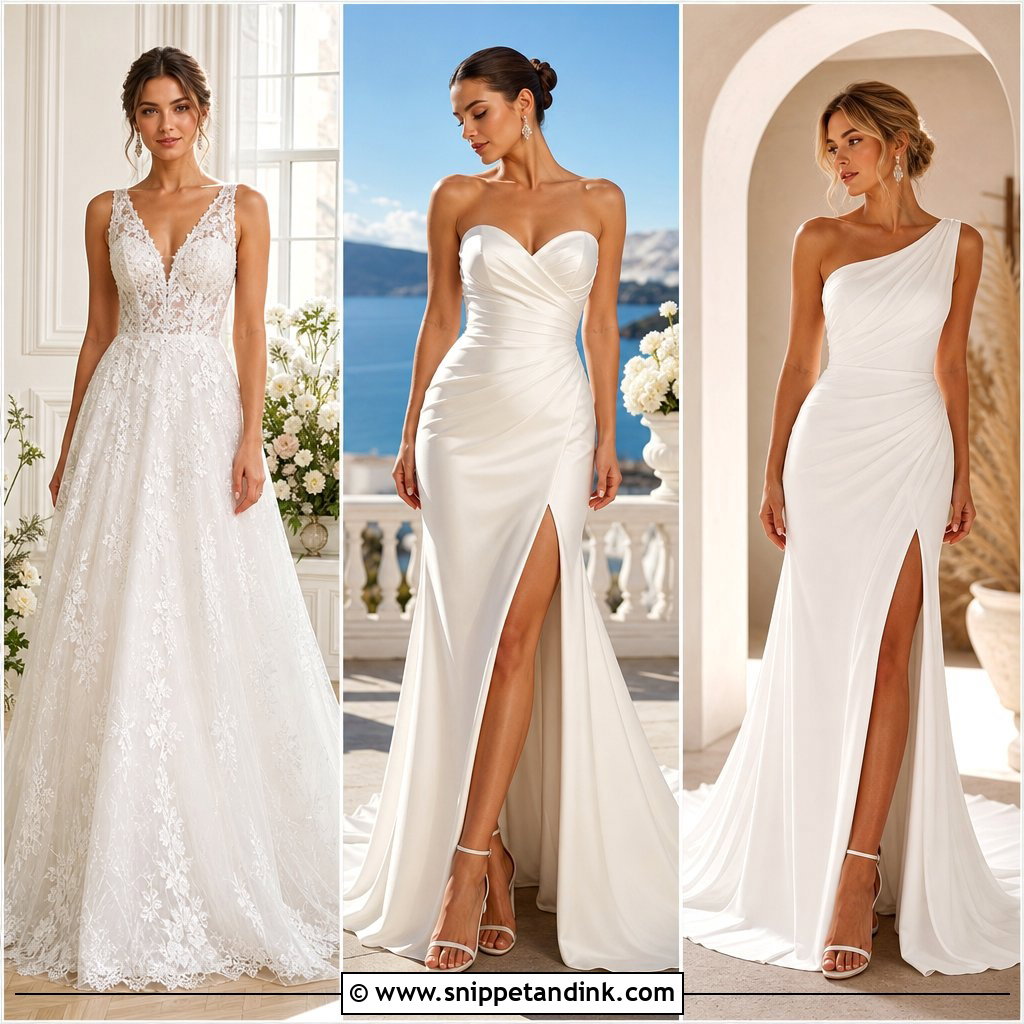
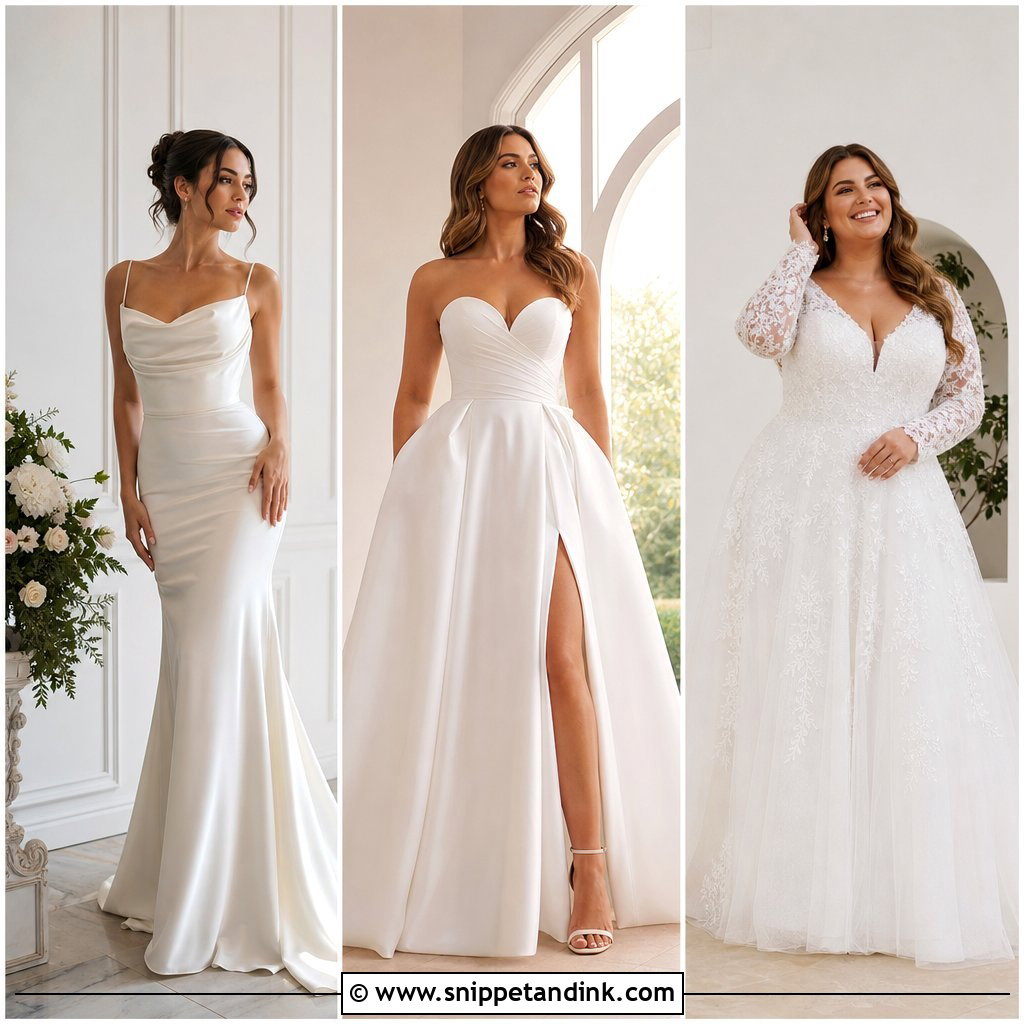
Satin gives a soft sheen without any sparkle, and it’s the fabric I’d pick for a city hotel or an evening ceremony. The weight decides the shape: bias-cut satin pours over the body and shows everything underneath, while heavy duchess satin holds a structured ball gown skirt on its own. A square neck, strapless bodice or cowl neck keeps it simple. Satin creases where you sit, so I always pack a steamer for the car journey. Pearl earrings, a clean veil, pointed heels and a low bun are all it needs.
2. Lace Wedding Dress
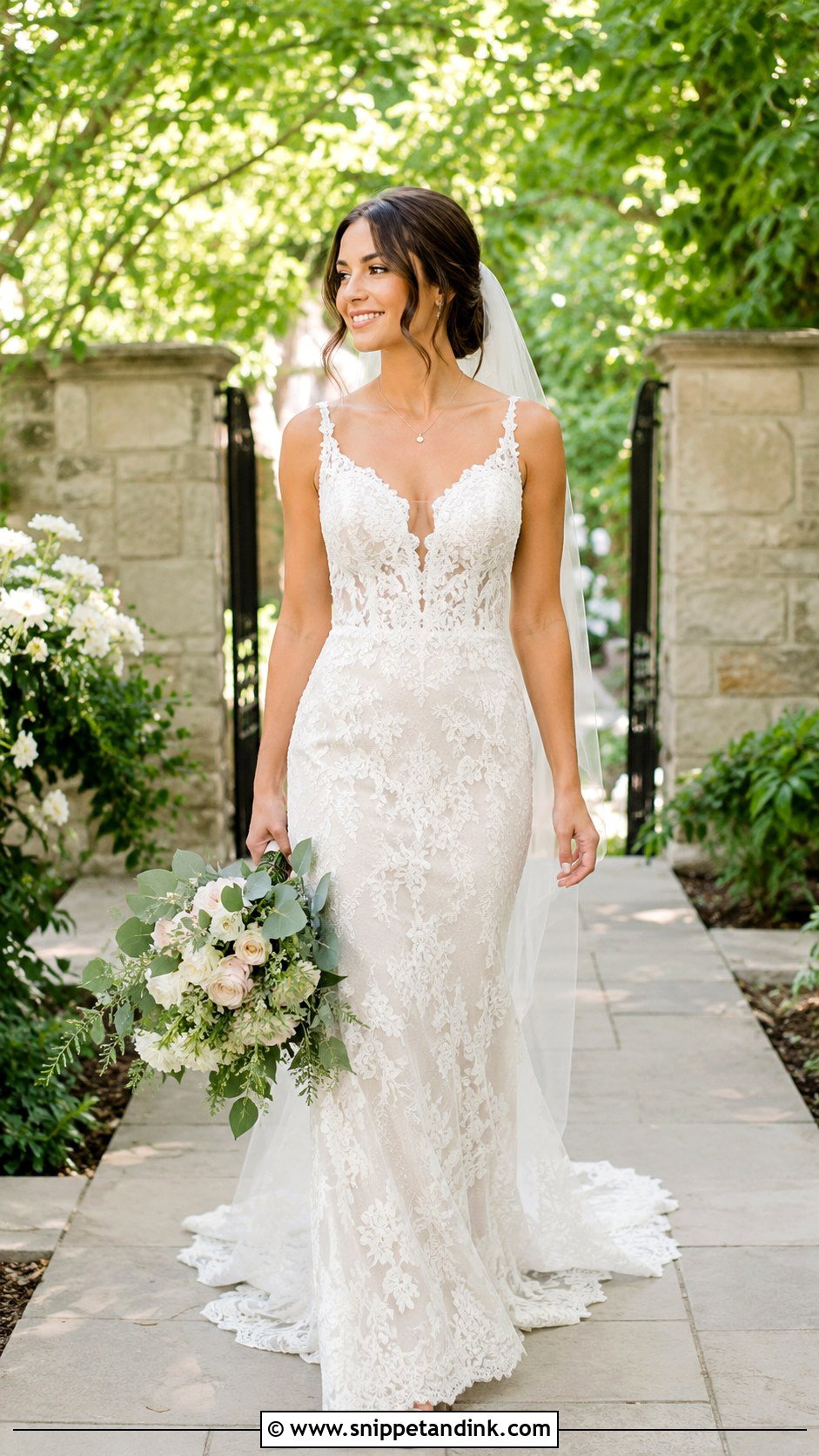
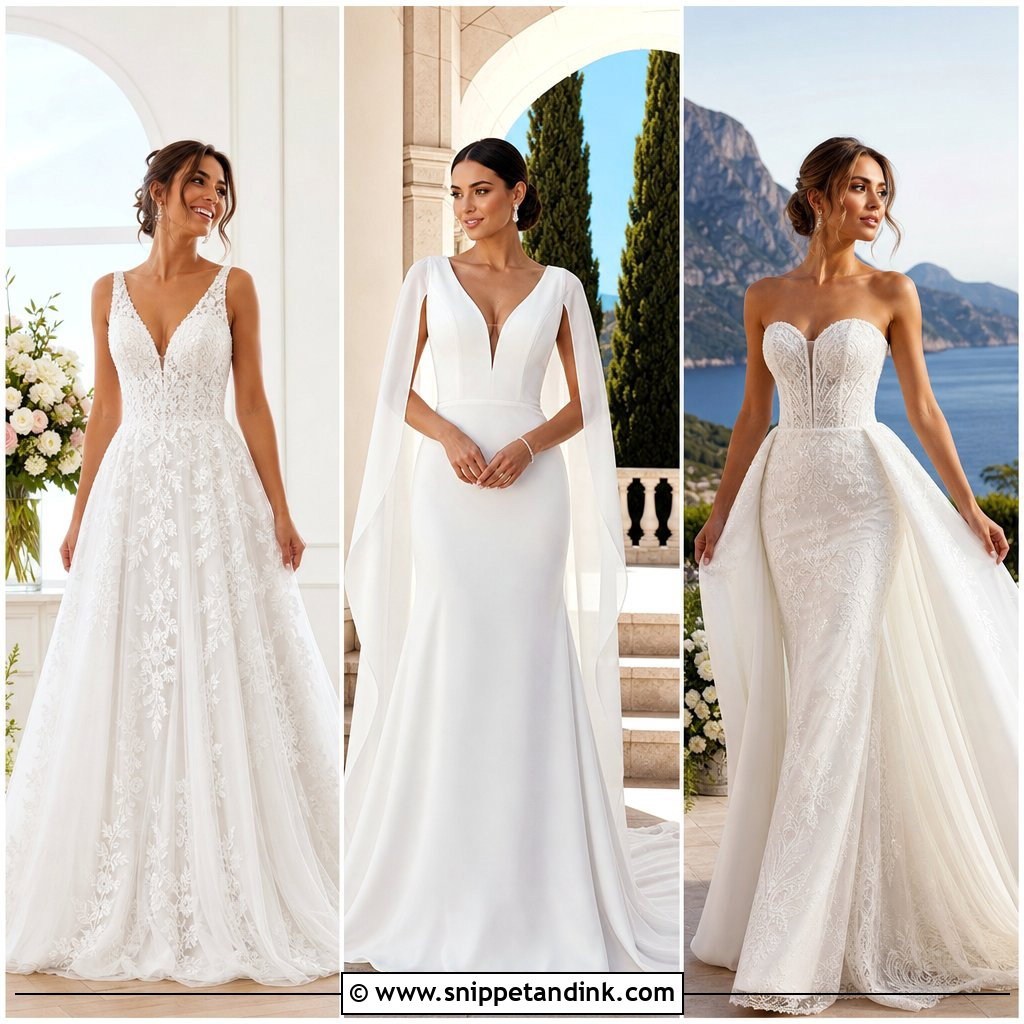
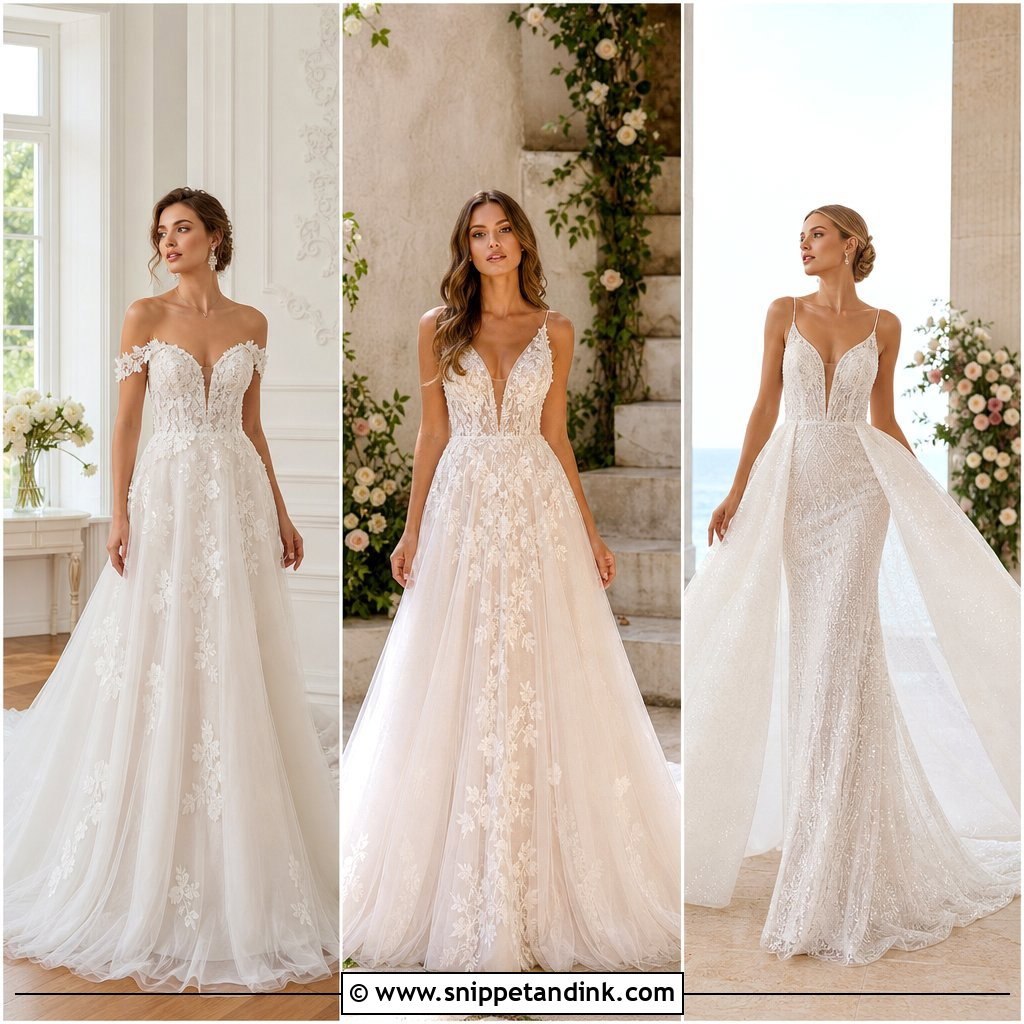
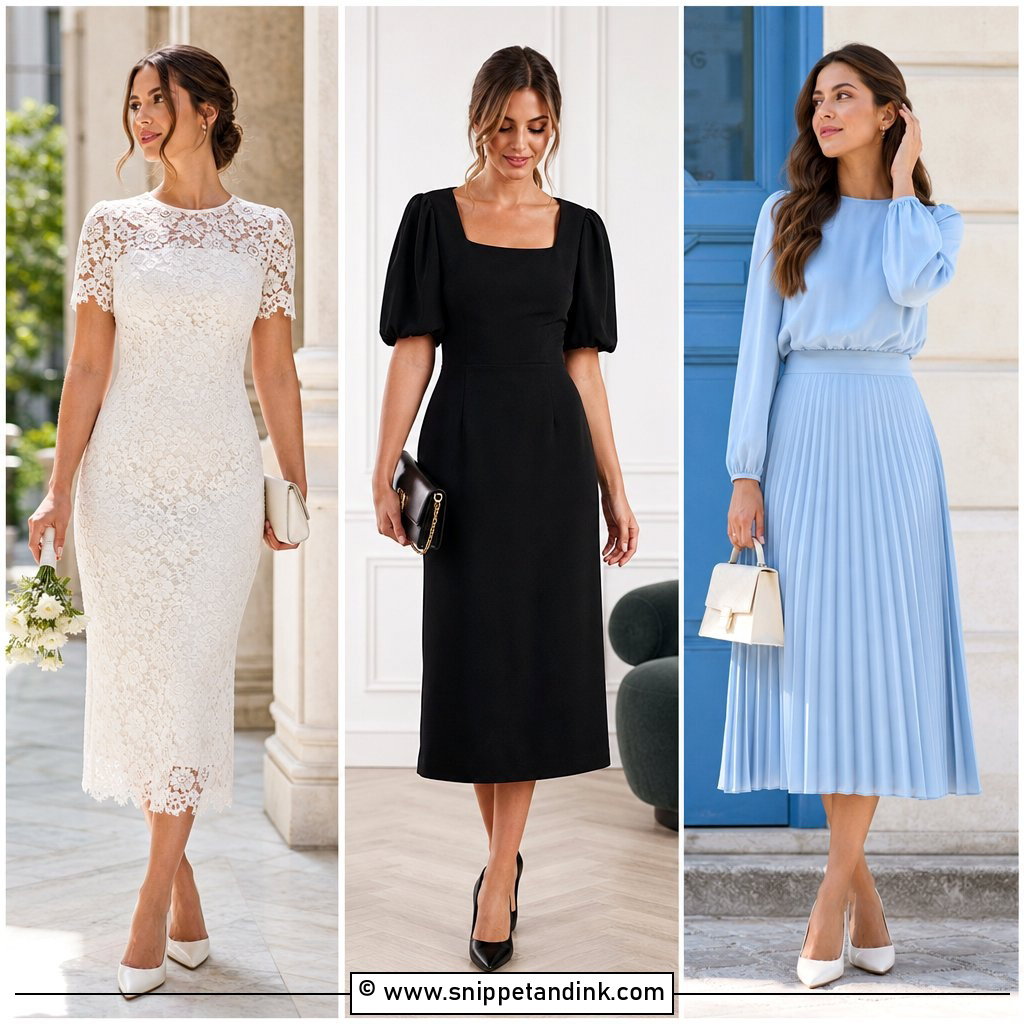
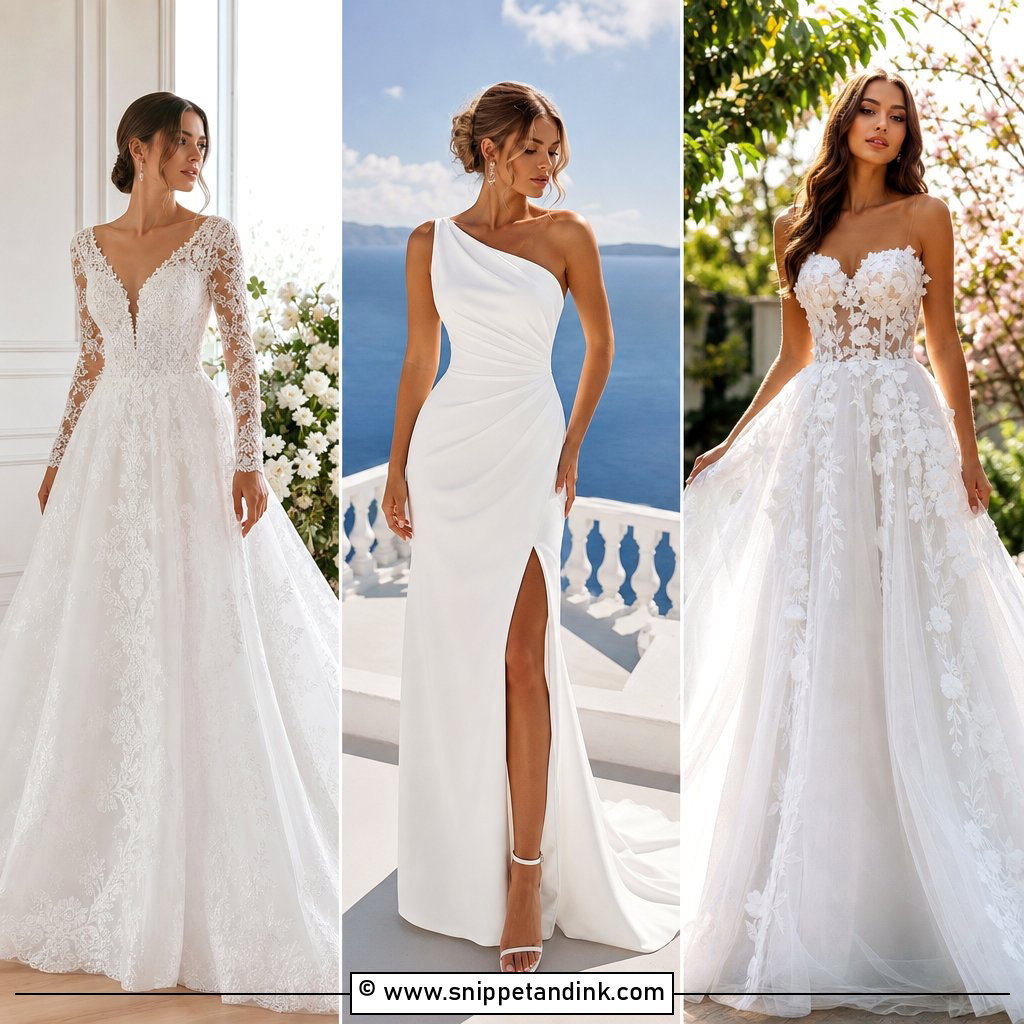
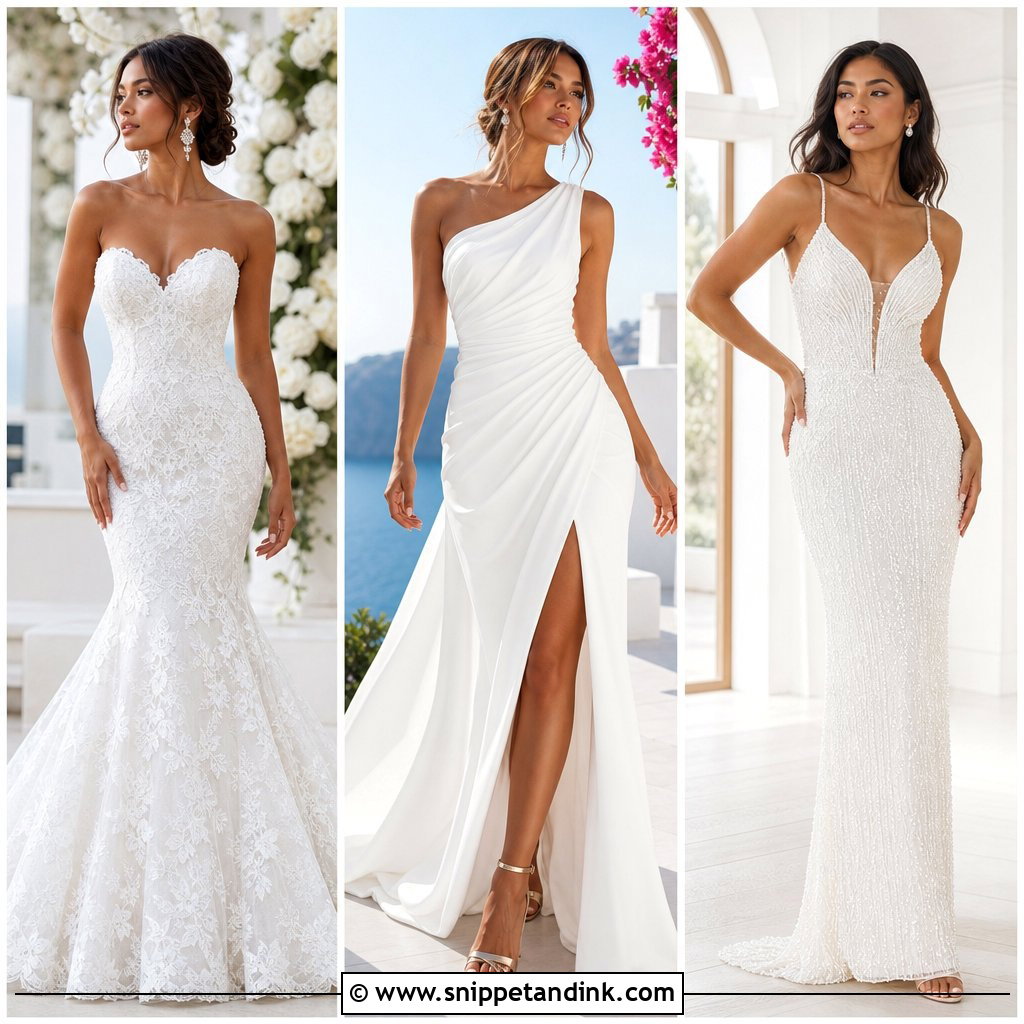
Lace weights vary far more than most brides expect. Fine Chantilly lace is light and floaty, corded Alençon lace has raised outlines and more body, and modern graphic lace looks almost architectural. A fitted lace gown feels classic, while an A-line lace skirt moves more freely. For outdoor weddings I’d choose lighter lace over a nude or ivory lining so it breathes; for a formal room, long lace sleeves with a cathedral veil feel regal. Delicate earrings, barely-there heels and soft greenery in the bouquet keep the lace in charge.
3. A Line Wedding Dress
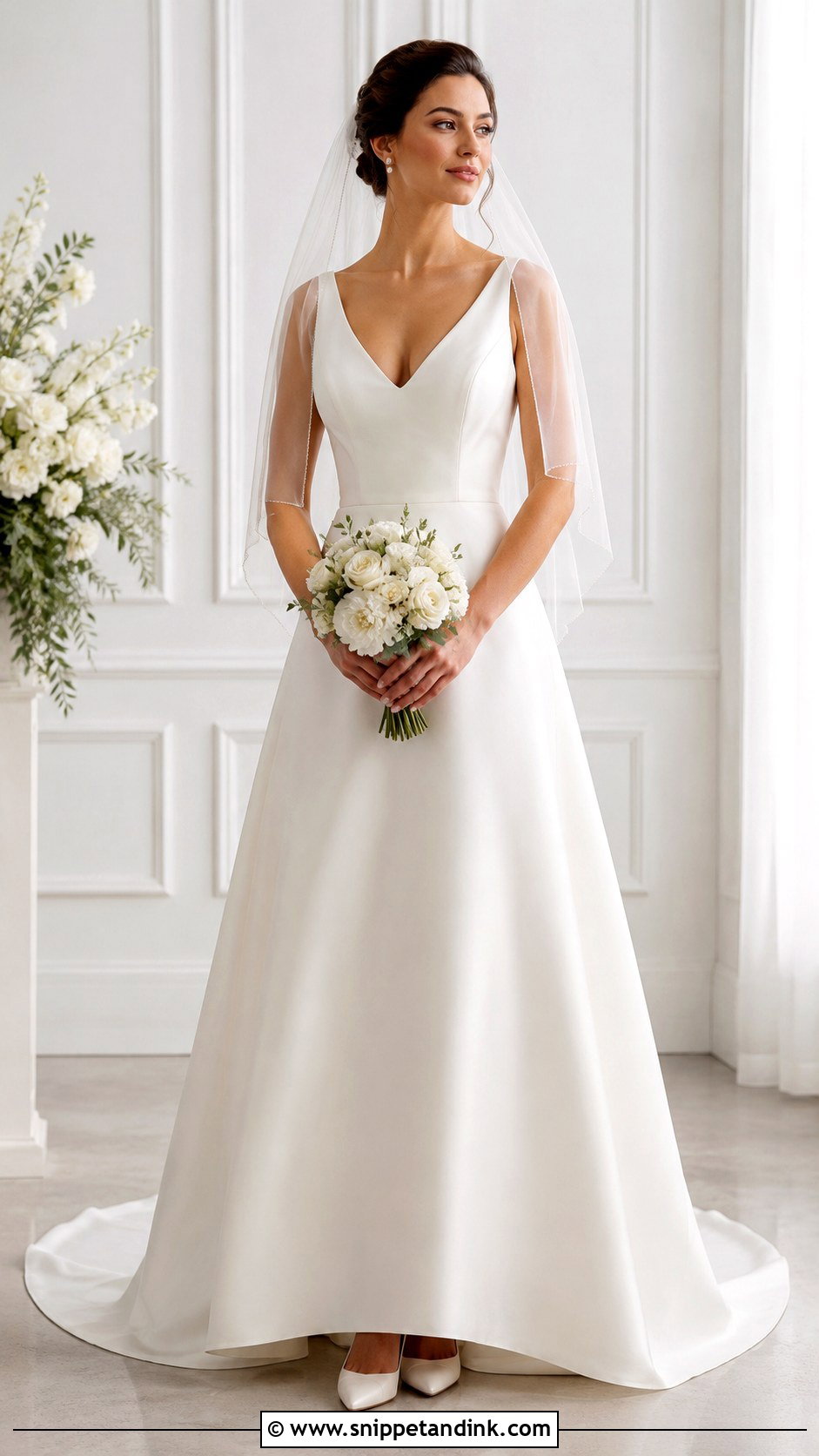
If a bride arrives unsure, I usually pull an A-line first. It shapes the waist and falls away from the hips, so it suits a wide range of figures and lets you walk, sit and dance without thinking about it. A plain satin A-line looks clean; lace and tulle versions feel more romantic. Straps, sleeves or a higher neck add coverage, and a sweetheart neckline with a light veil softens it. Classic pumps, a waist-length veil and simple jewelry let the shape do the work.
4. Ball Gown Wedding Dress
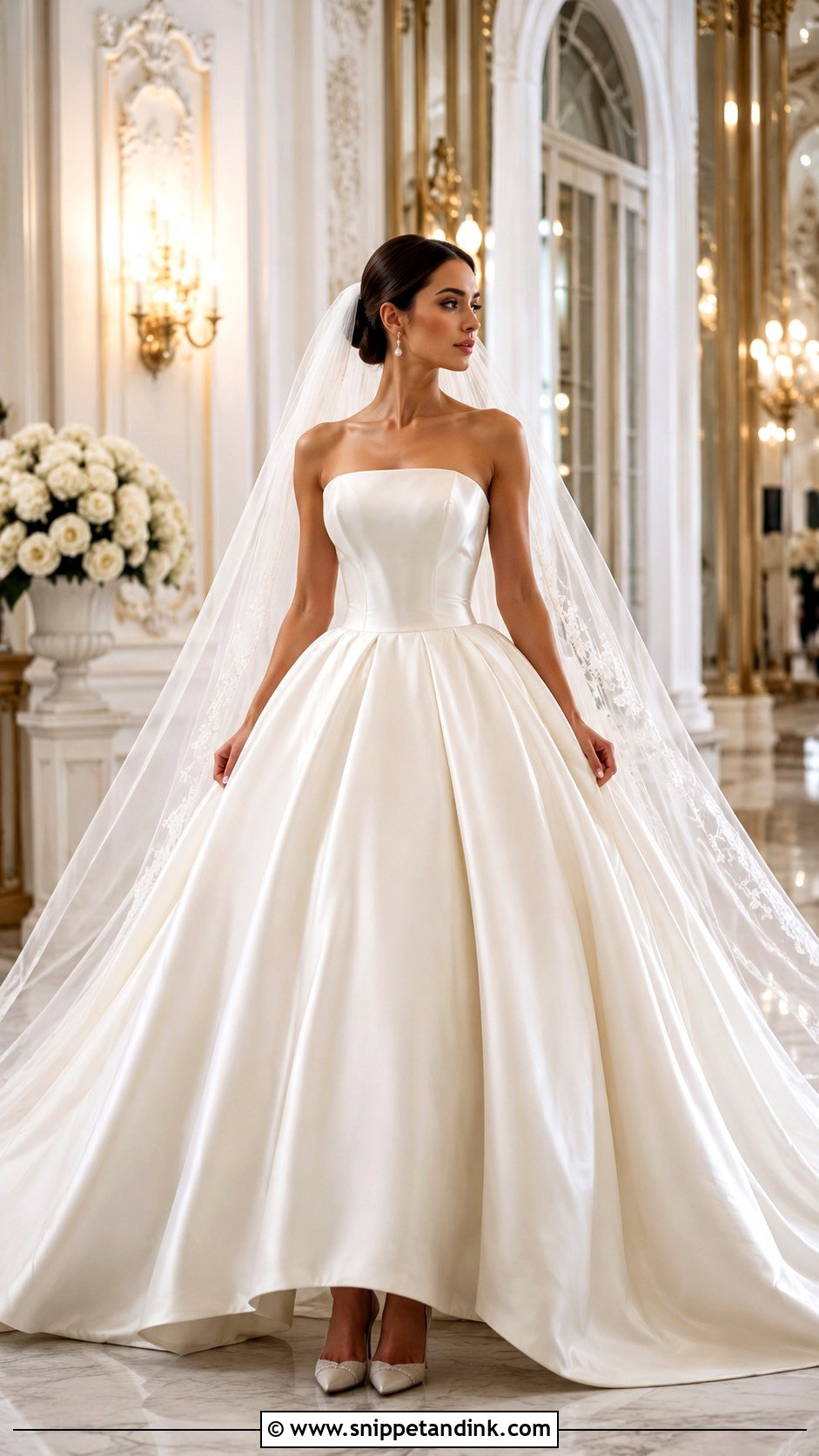
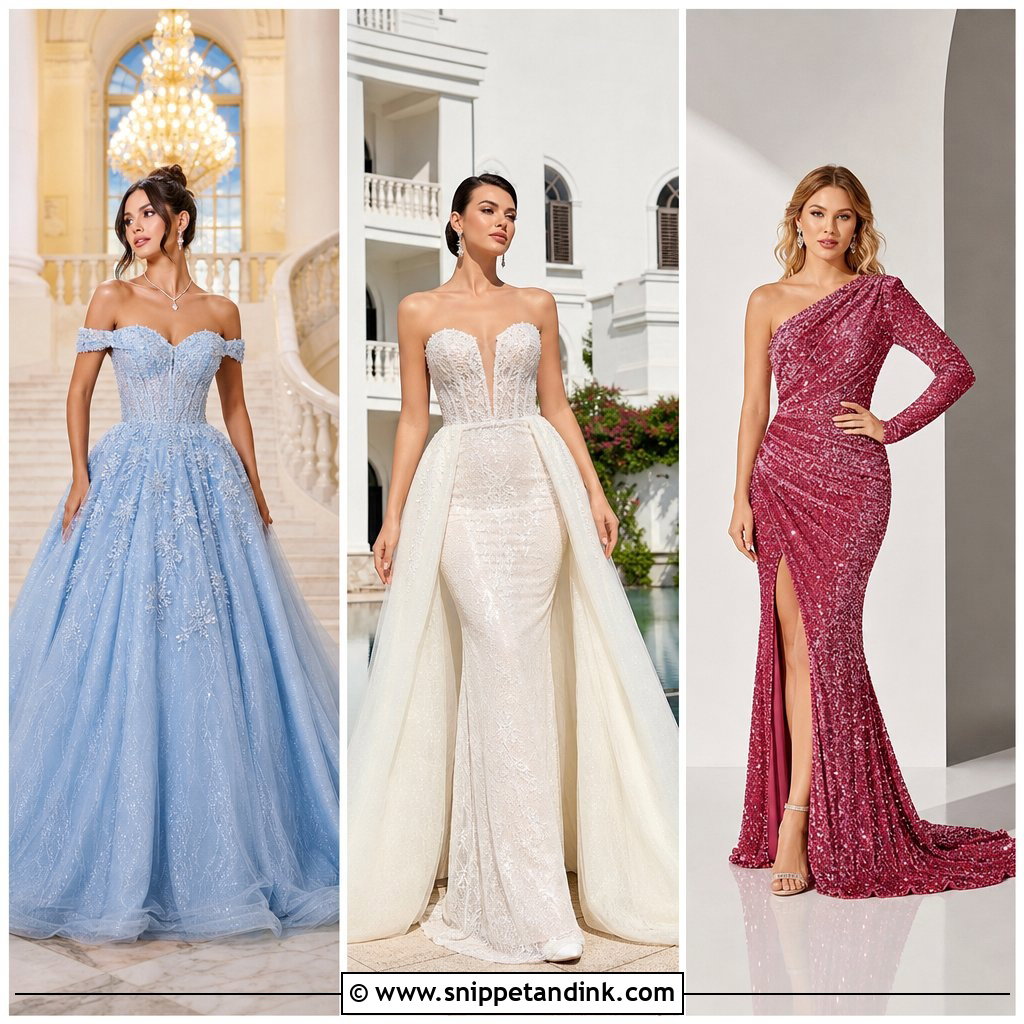
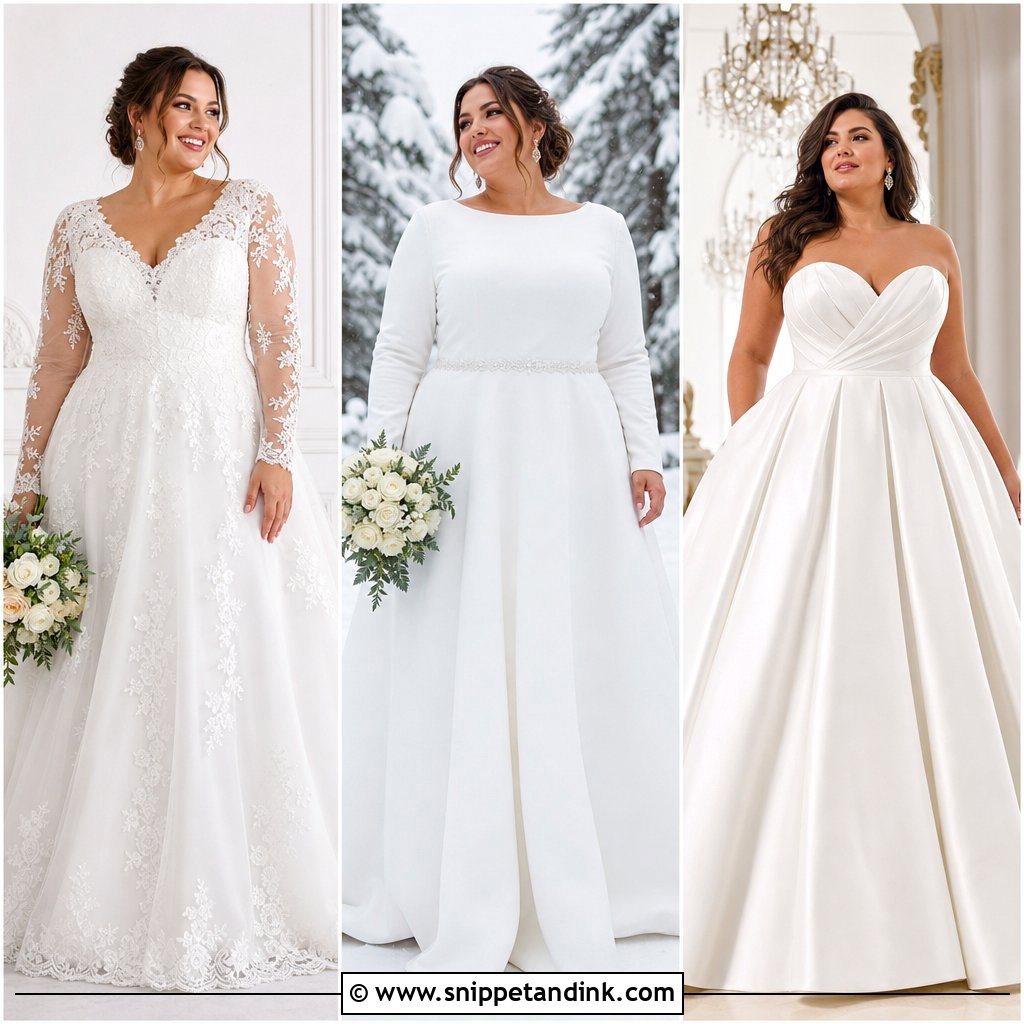
A ball gown gives the grandest entrance, and it needs a grand room to match. The fitted bodice and full skirt suit large venues, garden estates and formal ceremonies, but they take up space in the car, the aisle and the bathroom stall. Mikado and satin hold a structured skirt; organza and tulle make it lighter. A strapless bodice feels classic and long sleeves feel regal. I tell brides to wear a necklace or statement earrings, never both, then add a long veil, elegant heels and a polished updo.
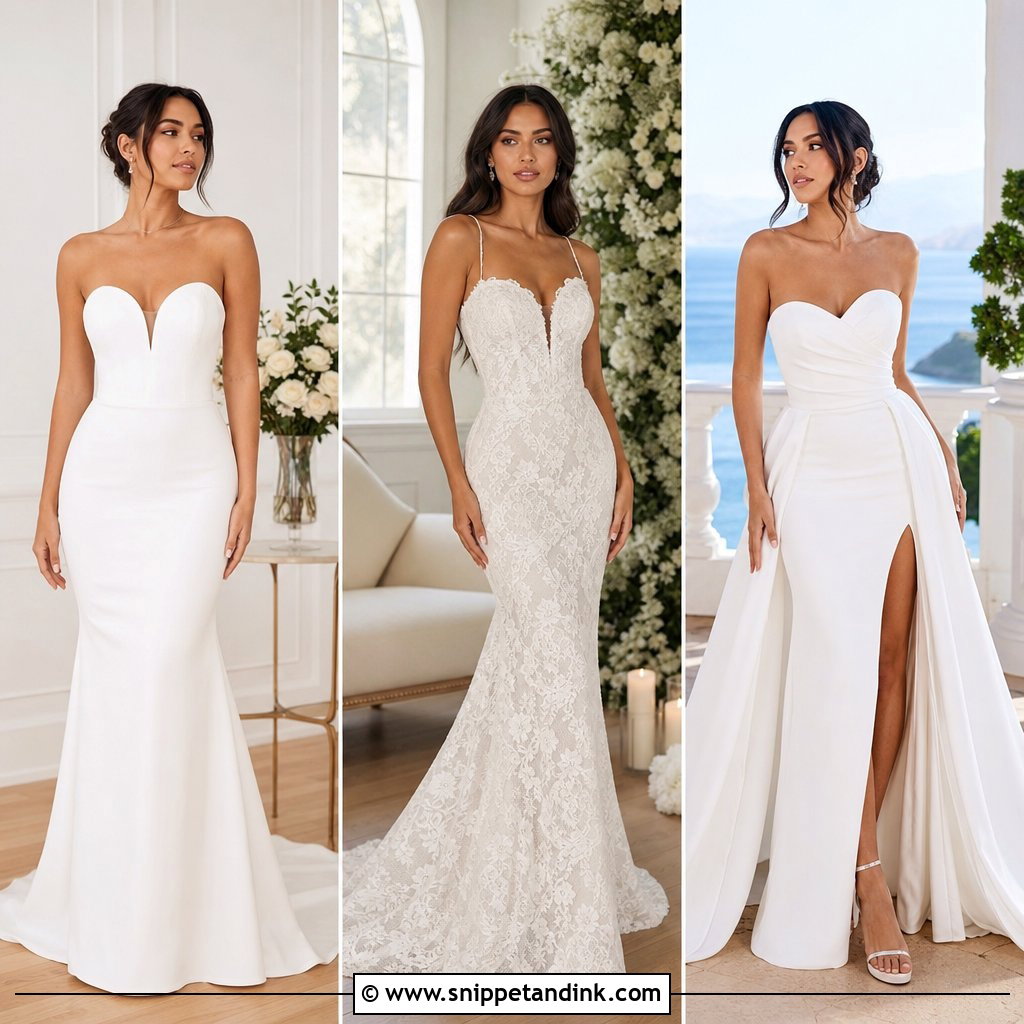
5. Mermaid Wedding Dress
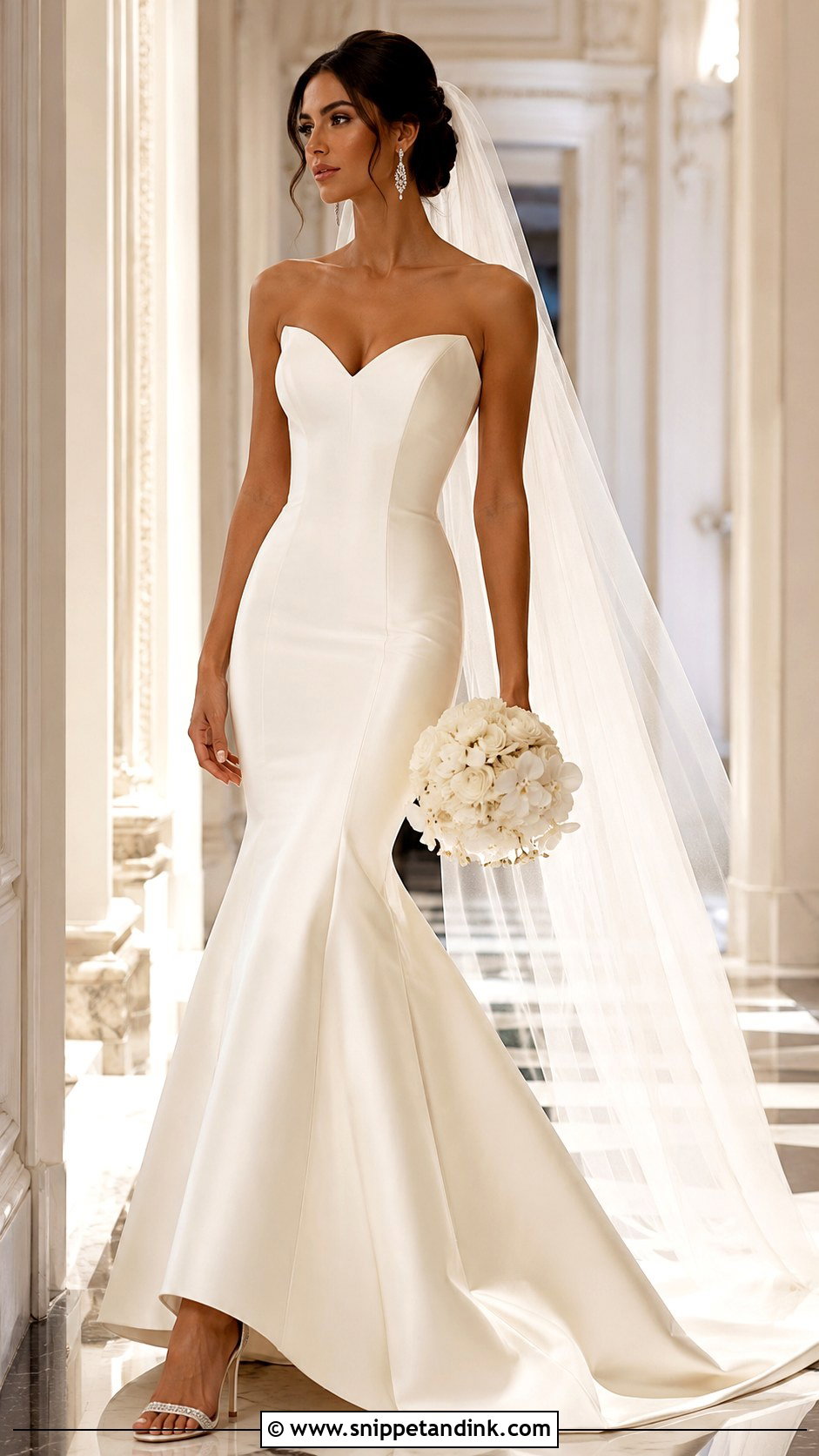
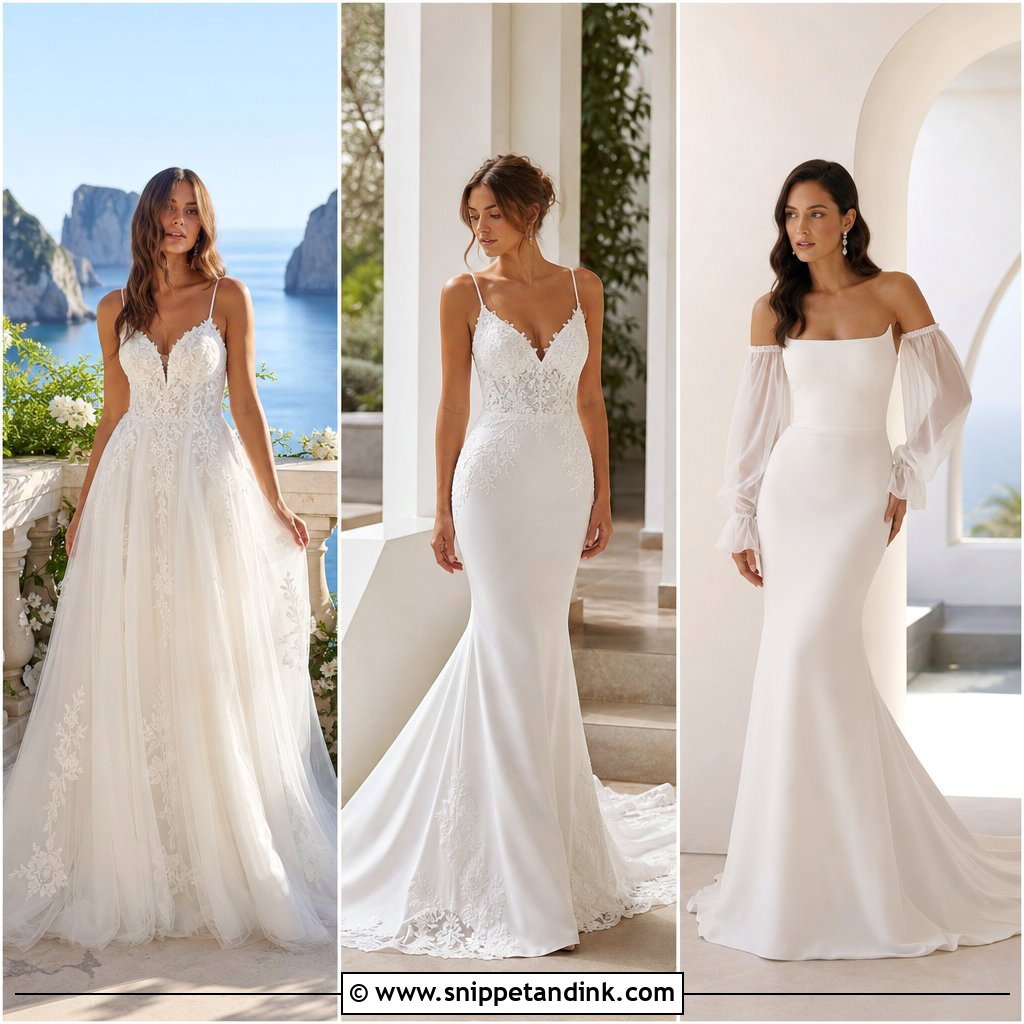
Mermaid gowns hug the body through the bodice, waist and hips and then flare at or below the knee. That flare point is the most important alteration: set too low, it turns your walk into a shuffle, and I adjust it with the bride wearing her actual shoes. Satin, crepe, lace and beaded fabric all hold the shape. Since the silhouette is already strong, keep styling refined with drop earrings, a smooth veil and heels that give balance. A slight stretch in the lining makes a big difference by the end of the night.
6. Sheath Wedding Dress
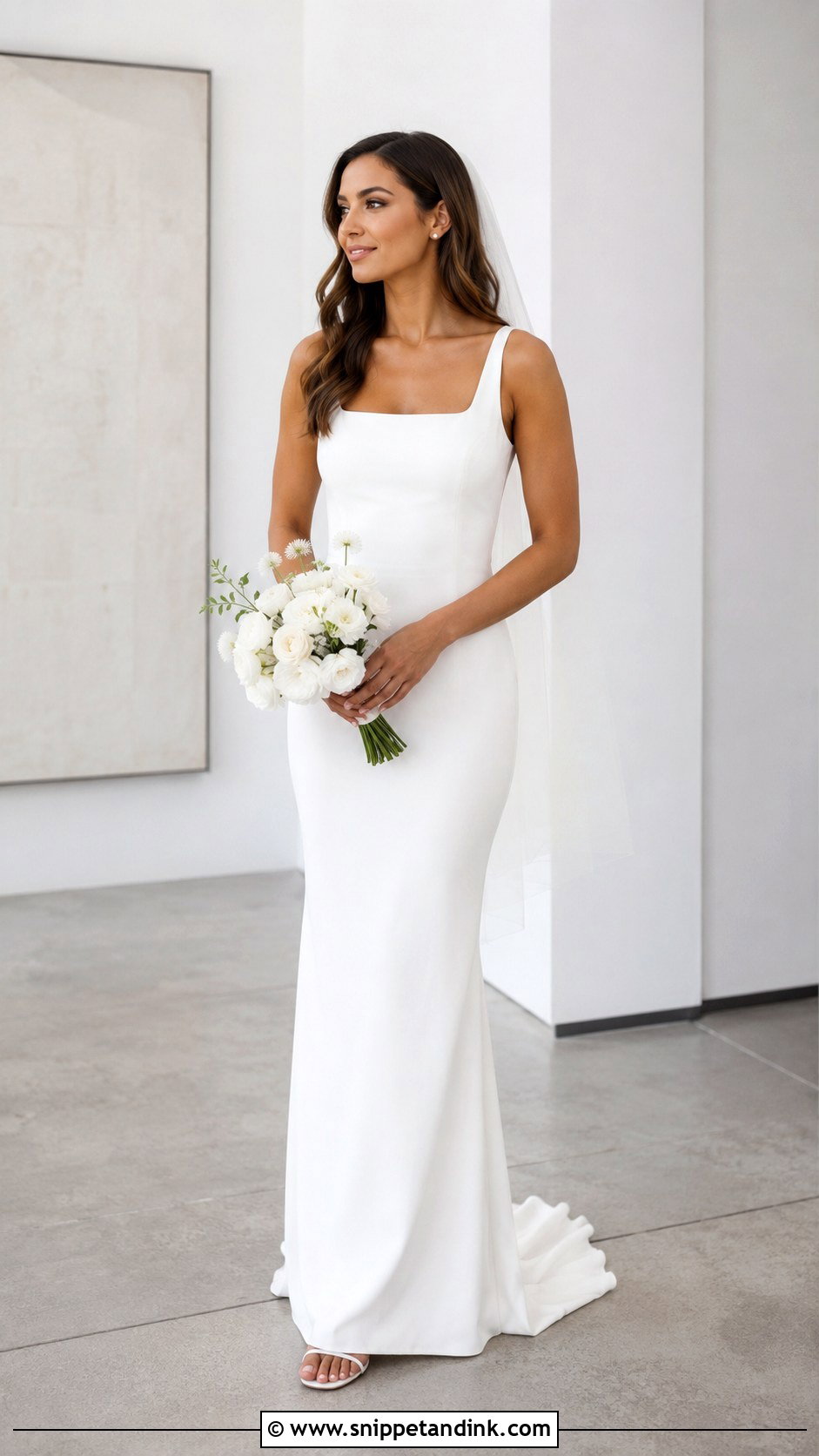
A sheath skims the body in one slim line, with none of the volume of a ball gown or A-line. Minimalist brides, beach ceremonies, courthouse weddings and modern venues suit it. Crepe and silk show every line beneath them, so I check underwear choices at the very first fitting. Plain sandals, pearl studs and soft waves keep it relaxed; a long veil or an overskirt for the ceremony makes it formal. Petite brides often like a sheath because it doesn’t swamp their frame. The tailoring has to be exact so the fabric skims without pulling.
7. Off Shoulder Wedding Dress
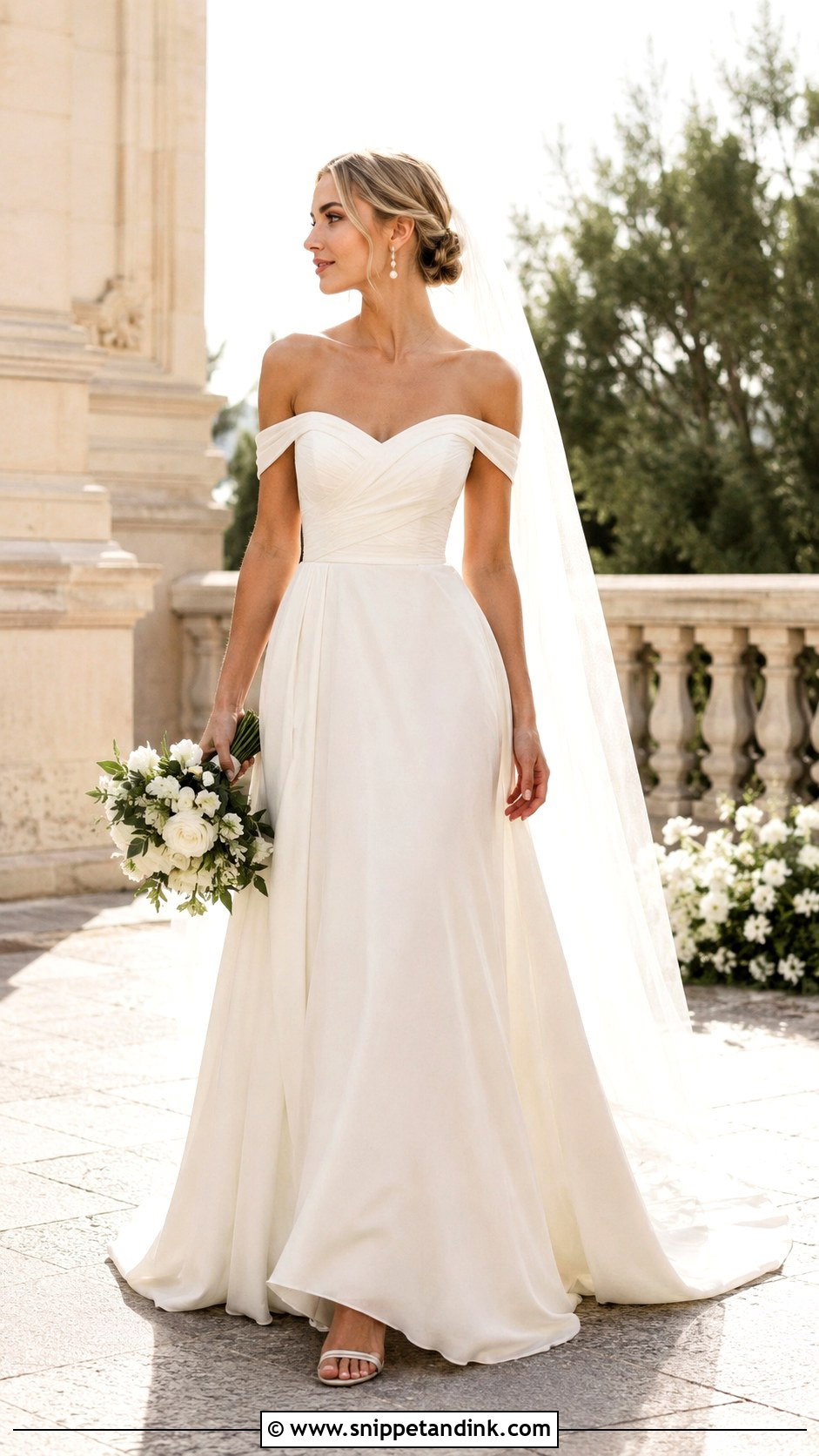
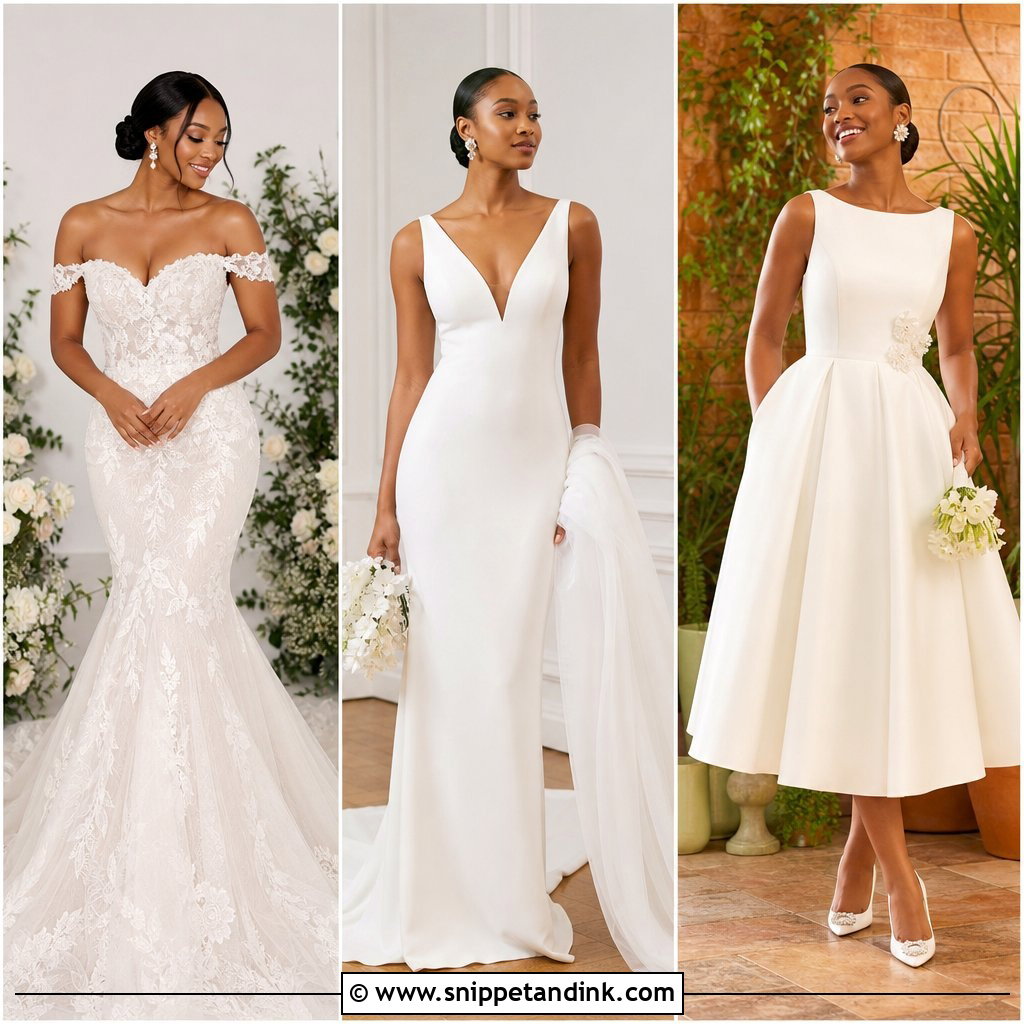
Off the shoulder frames the collarbones and shoulders while giving a little more coverage than strapless. Lace, satin, mikado, tulle and crepe all suit it, fitted for a formal room or A-line for a garden. What I check at fittings is whether the band stays put without you tugging at it; a strip of silicone gripper sewn inside usually solves that. Small drop earrings, a slim bracelet and a veil set low on the head keep the neckline clear. Hair up or half-up shows it best.
8. Long Sleeve Wedding Dress
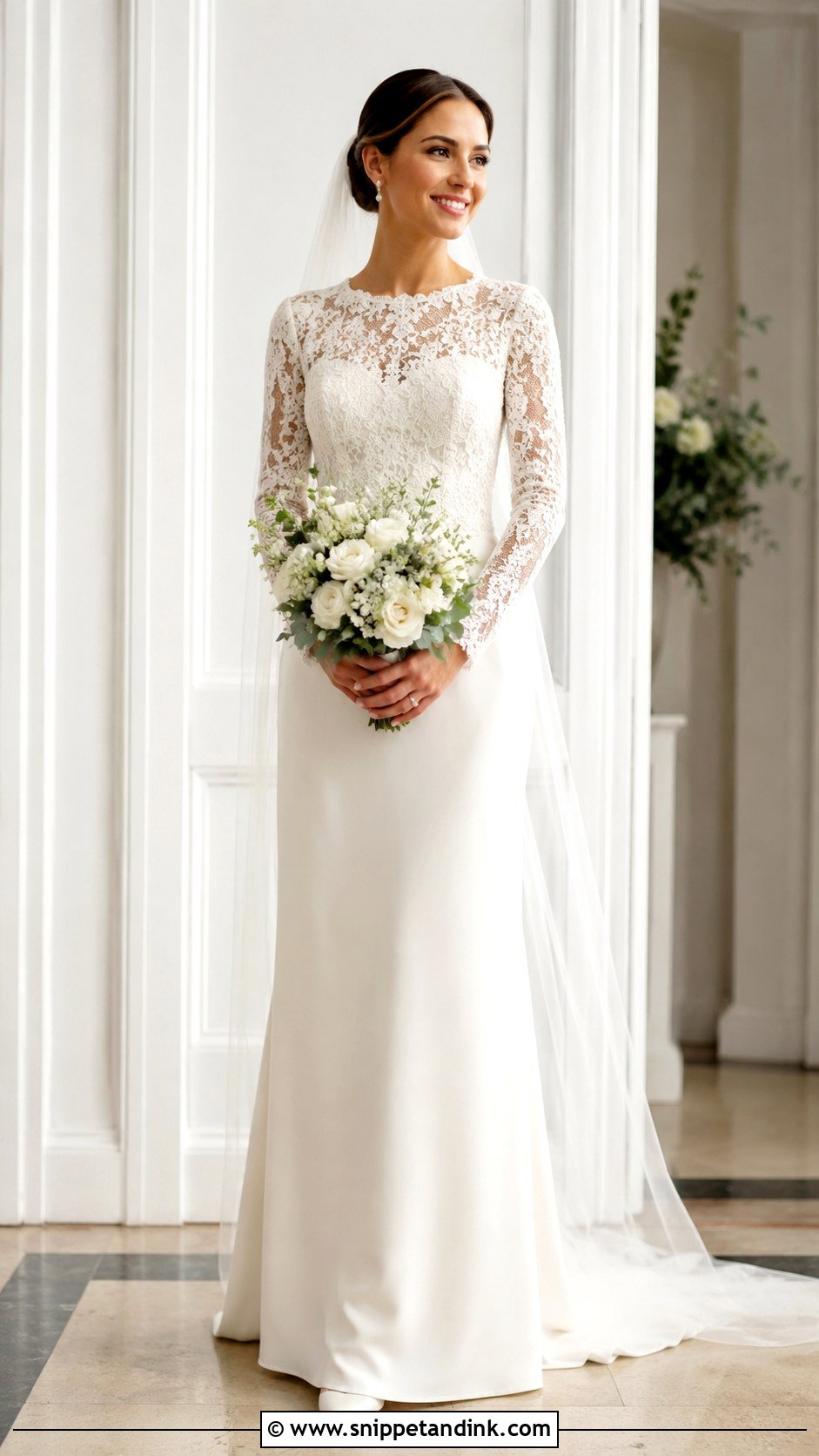
Long sleeves change completely with the fabric: lace sleeves are soft, sheer ones are delicate, fitted crepe sleeves look sleek and modern. They suit autumn, winter, formal and religious ceremonies, and pair with a high neck, V-neck, square neck or open back. One warning from fittings: sleeves need a little ease at the elbow, or you won’t be able to lift your arms to hug anyone. With this much detail at the arms, jewelry can be minimal. Closed-toe heels for cooler weather, a clean veil and a structured bouquet complete it.
9. Strapless Wedding Dress
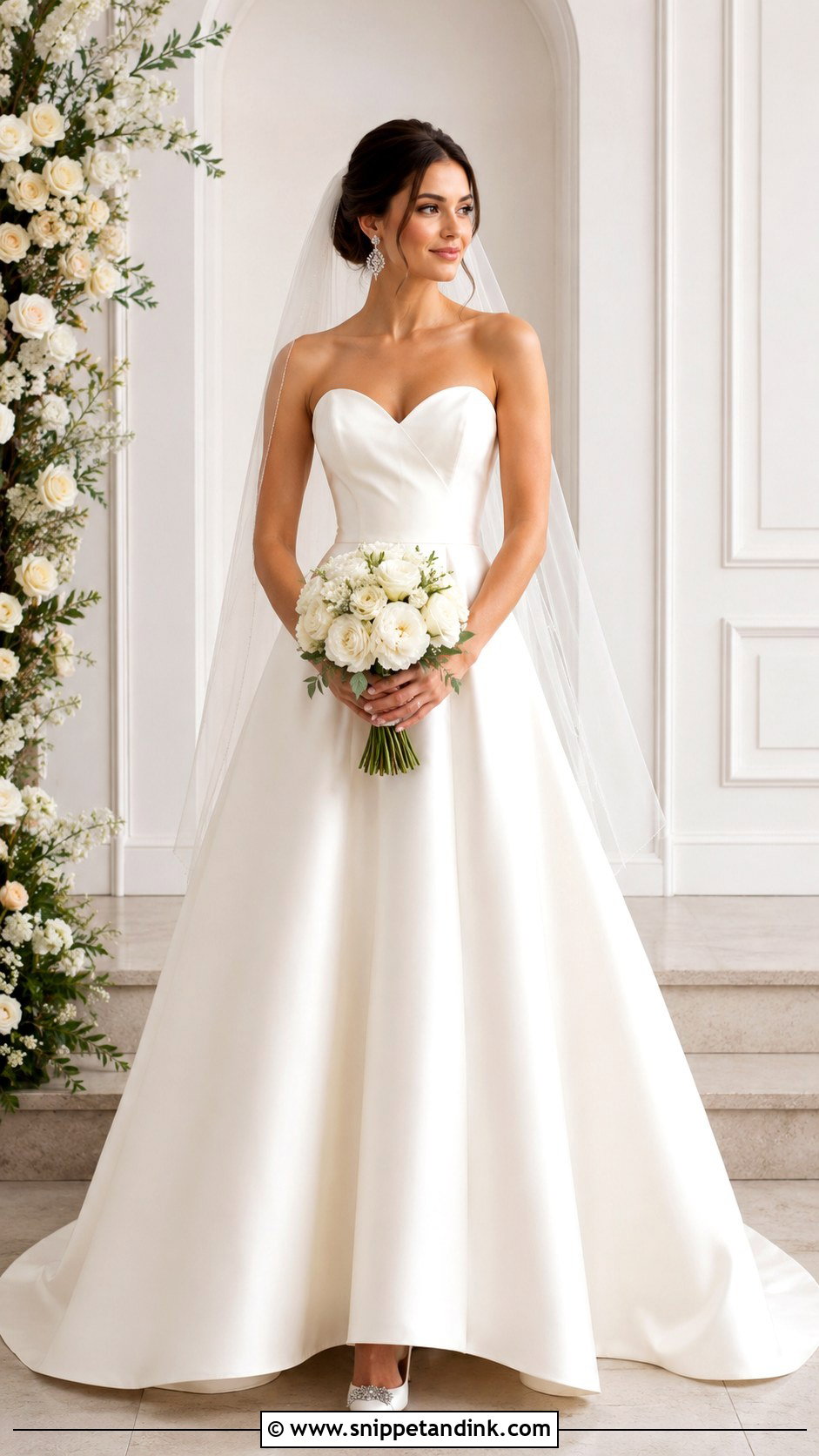
Strapless bodices come in almost every silhouette, from ball gowns to satin columns, and the whole dress depends on support. A good one is fitted at the ribs, not just the bust, so it stays up through dancing without constant hitching. A straight neckline reads modern, while a sweetheart neckline softens it. Wear a necklace if the bodice is plain, or skip it and choose statement earrings. If you find yourself pulling at the top during a fitting, ask for the bodice to be taken in before anything else.
10. Square Neck Wedding Dress
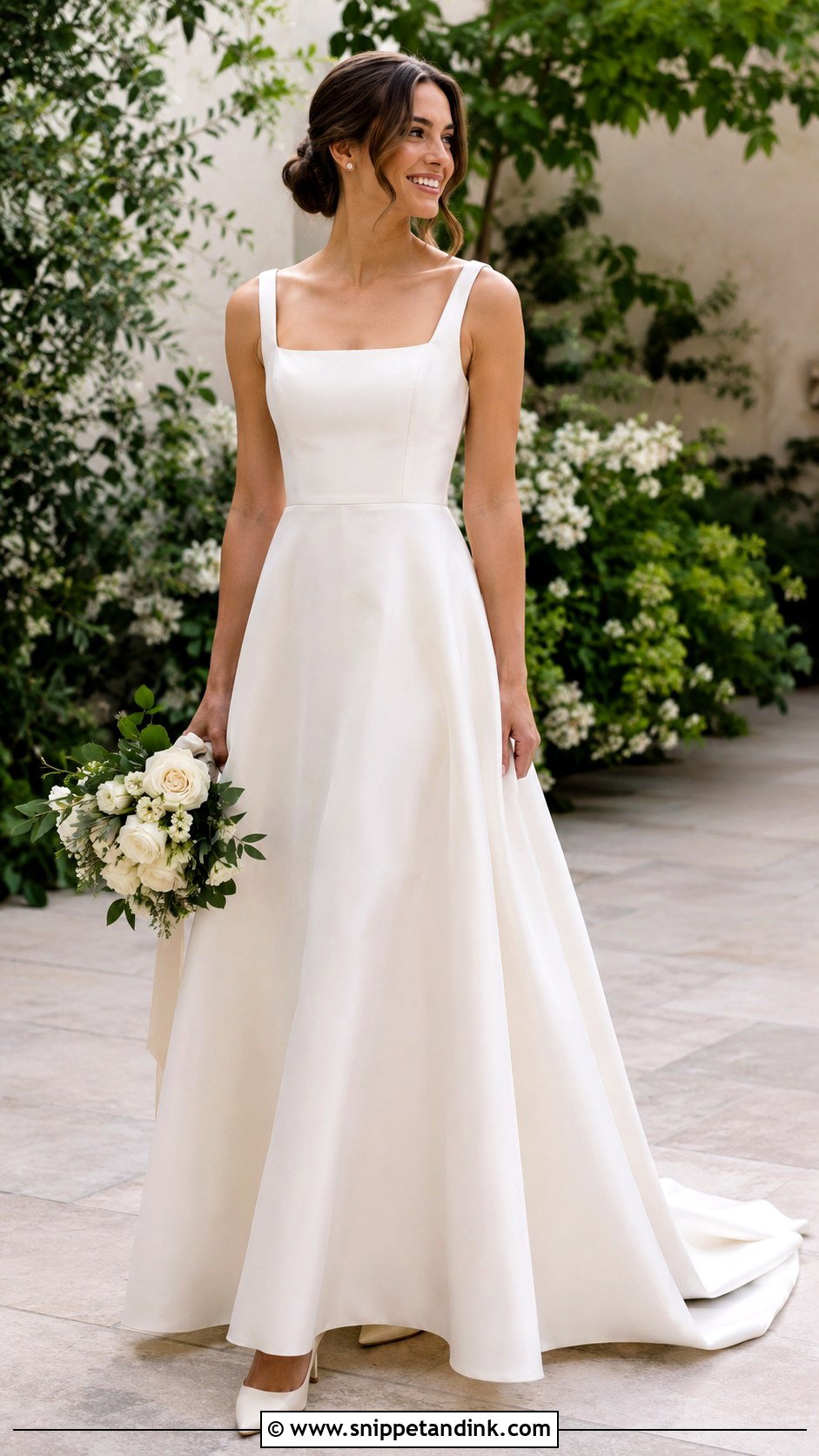
Square necklines give the upper body structure, and they’re one of the easiest shapes to wear a normal bra under when paired with wide straps. A square neck in satin looks understated; in lace it turns romantic while still feeling current. It sits well with fitted bodices and A-line or sheath skirts. Pearl studs, a fine bracelet and a low bun keep it neat, and a fingertip veil softens a plain neckline. Garden weddings, city ceremonies and classic indoor rooms all suit it.
11. Corset Wedding Dress
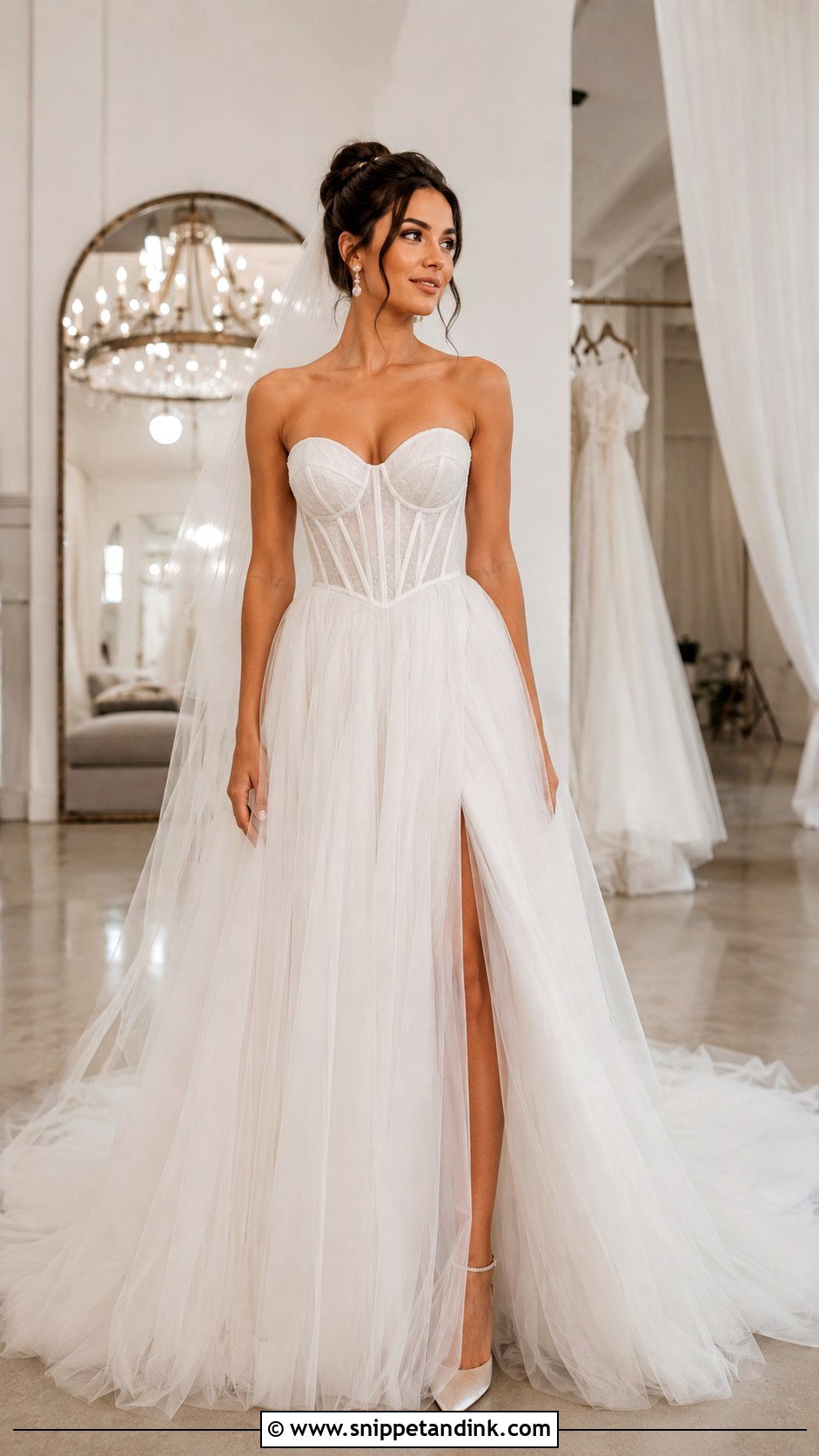
A corset bodice gives shape and support, often enough that you won’t need separate shapewear. Ask what the boning is made of. Spiral steel bends with you and holds its line all day; cheap plastic boning can warp in heat and leave dents in the bodice by evening. Visible boning, lace-up backs or sculpted bodices pair well with tulle, satin, lace or organza skirts. With an A-line skirt it leans fairytale; with a mermaid skirt, glamorous. Dainty earrings, a soft veil and elegant heels are enough.
12. Pearl Wedding Dress
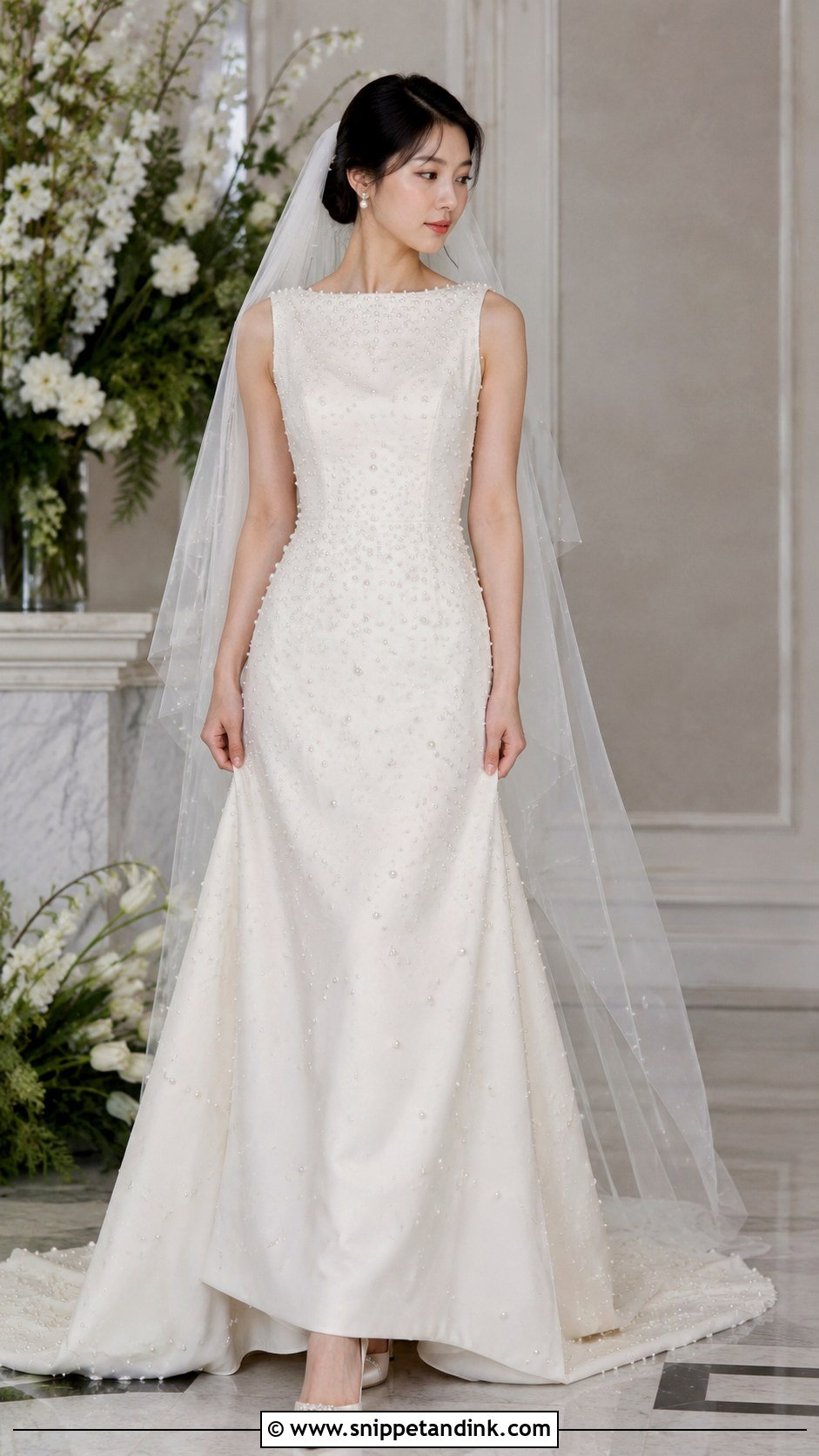
Pearls add texture and a soft shine without glitter. They can sit across the bodice, sleeves, straps, veil or the whole gown, with small scattered pearls reading delicate and large beading reading fashion-led. Check whether the pearls are hand-sewn or glued: glued pearls tend to pop off during hugging and dancing, and sewn ones can be repaired by your seamstress. Simple pearl earrings, satin heels and a smooth veil are enough. Formal venues and winter weddings suit it especially well.
13. Floral Wedding Dress
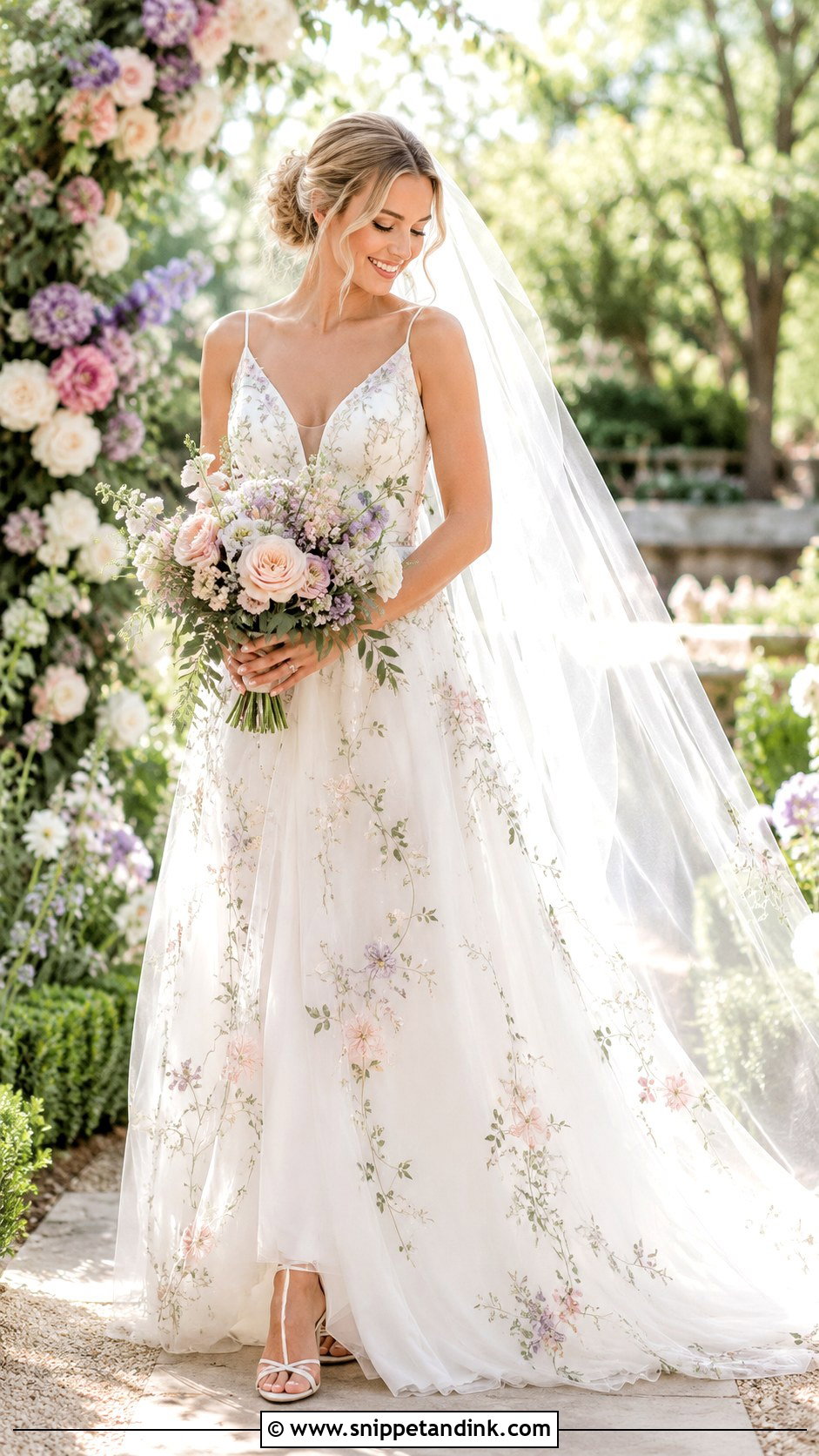
Floral detailing can come through lace, embroidery, appliqué, beading or a soft printed fabric. White-on-white flowers are subtle; pastel embroidery adds personality. Raised 3D flowers are lovely but they crush when you sit or get hugged, so I tend to keep them on the skirt and sleeves rather than the front of the bodice. Garden weddings, spring ceremonies and destination celebrations suit this dress. Soft makeup, loose waves and a bouquet that echoes the motif tie it together, with plain shoes so nothing competes.
14. Minimalist Wedding Dress
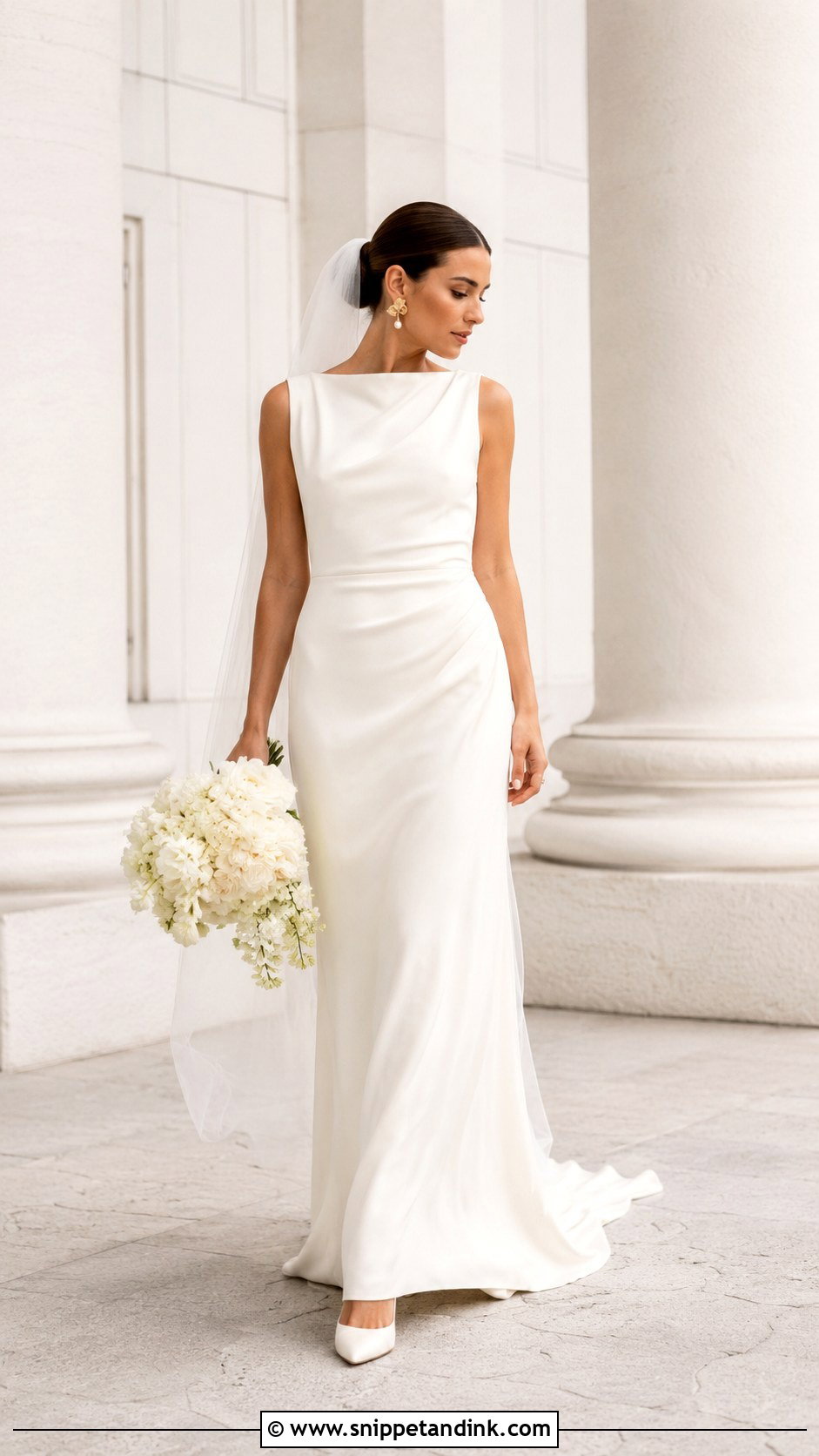
With no lace or sparkle to hide behind, a minimalist gown relies entirely on fabric, cut and tailoring. Satin, crepe, silk and mikado carry it well, in a column, square neck or long sleeve shape. This is the style where I spend the most time at fittings, because a single pull across the hips shows from across the room, and smooth no-line underwear isn’t optional. Sculptural earrings, a sleek bun, pointed heels and a smooth veil finish it. Modern city venues, galleries and intimate receptions suit it best.
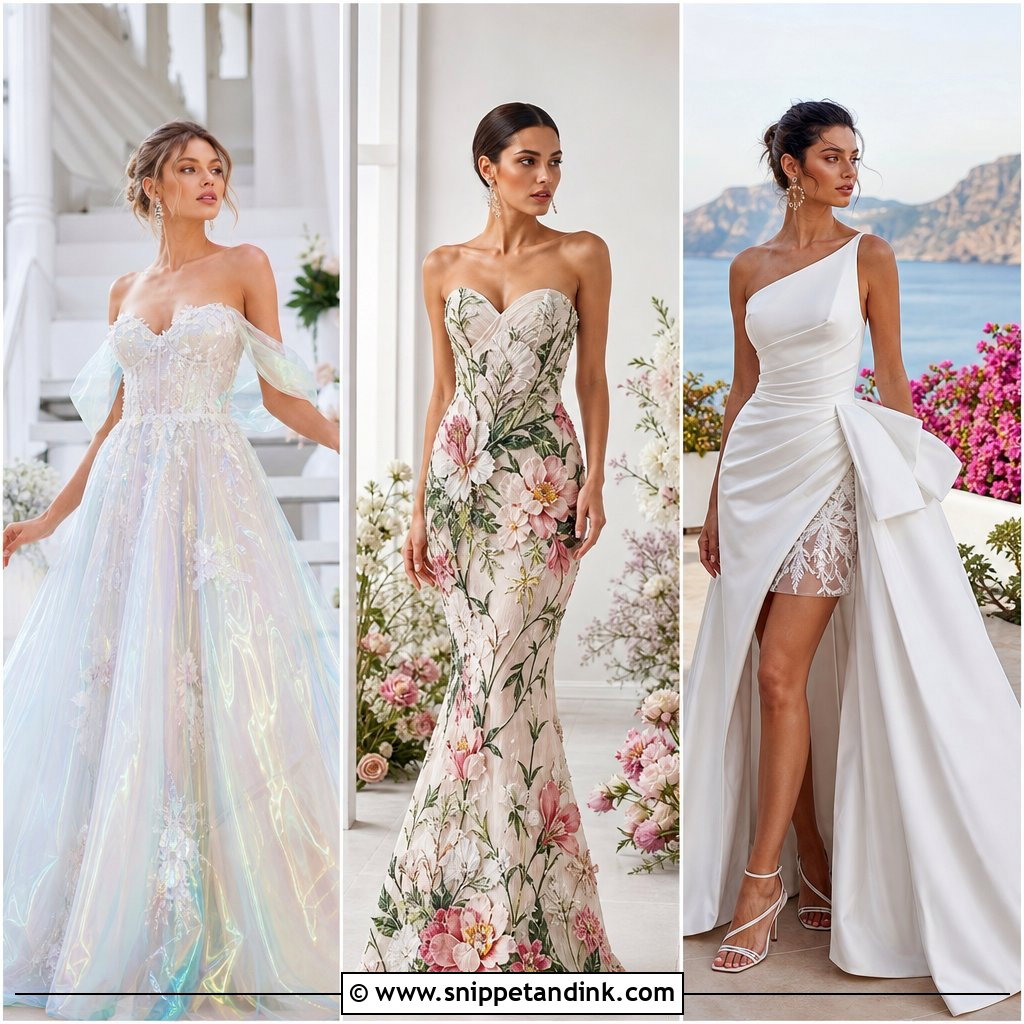
15. Boho Wedding Dress
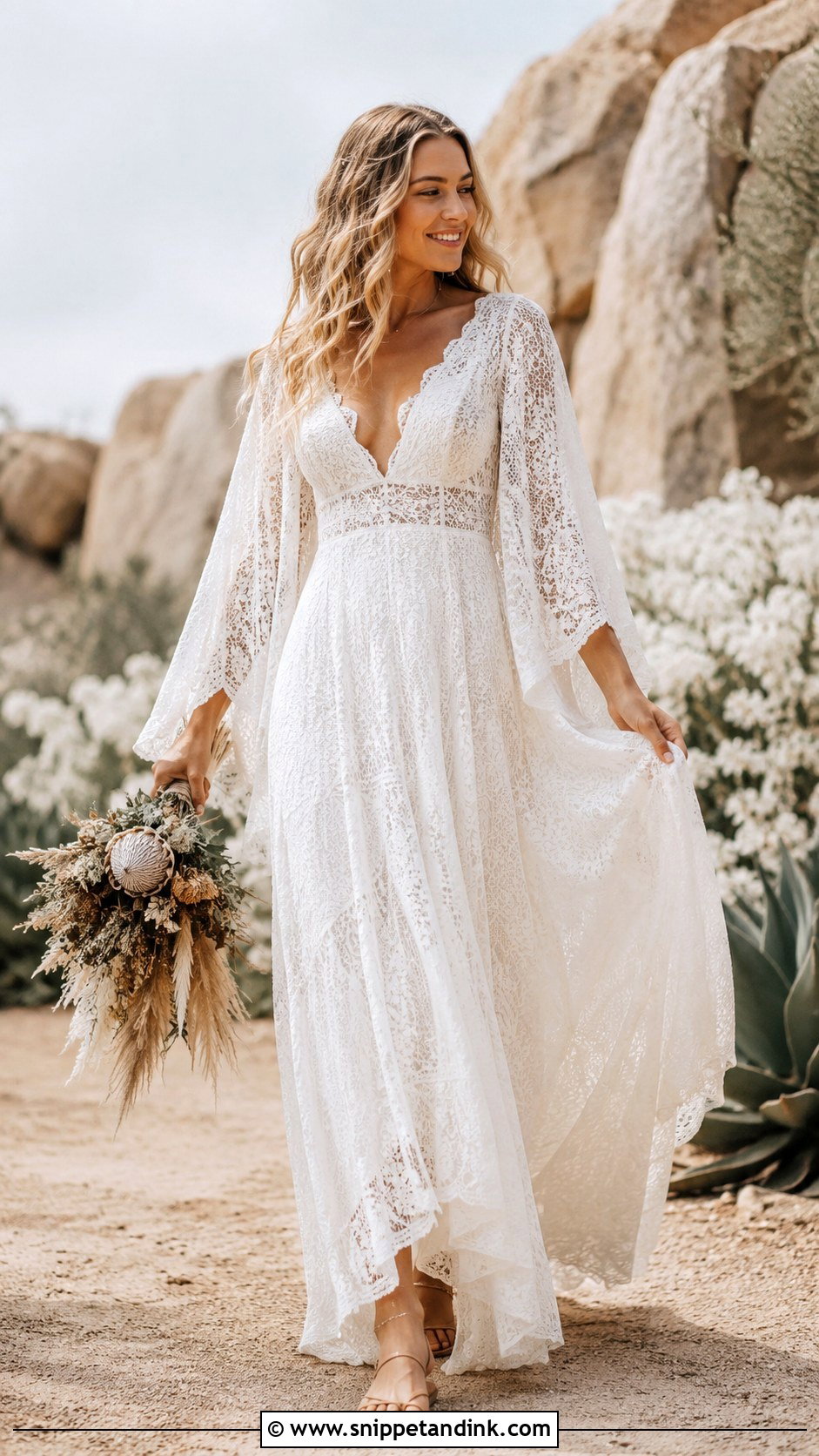
Boho dresses are relaxed and easy to move in, with soft lace, flowing sleeves, open backs, light skirts or delicate embroidery. Beaches, deserts, gardens and outdoor celebrations suit them. Shoes depend on the ground: block heels or flat sandals for grass and sand, embroidered boots for a rougher setting. Loose waves, natural makeup and a wildflower bouquet complete it. Cheap boho lace can look like a costume quickly, so this is where I’d spend on fabric. Want more shape? Choose a fitted bodice over a flowing skirt.
16. Beach Wedding Dress
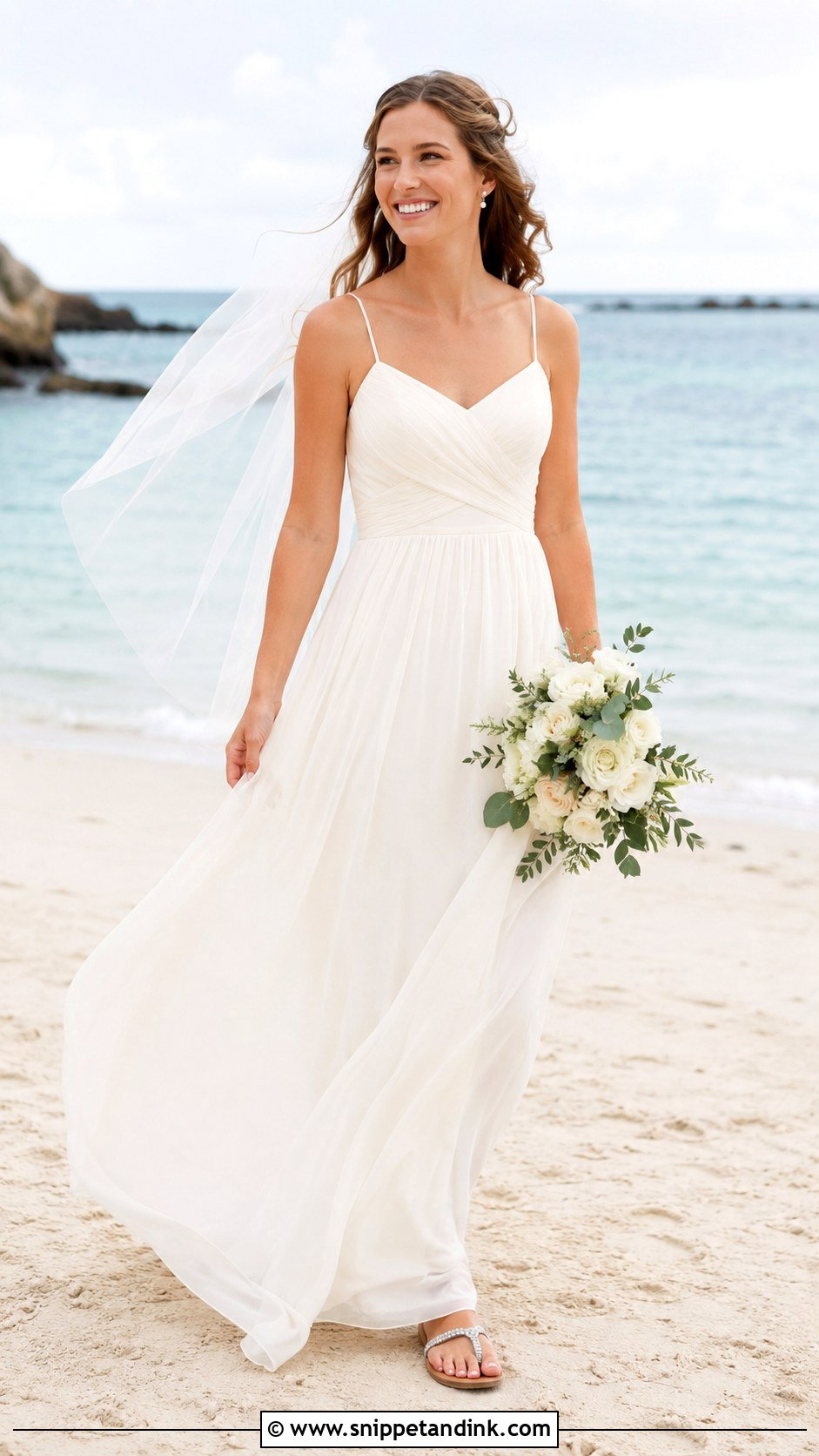
Sand is hard on any dress. Long trains drag it everywhere and heavy fabrics turn exhausting in heat, so I steer beach brides towards chiffon, silk, crepe, lightweight lace or soft tulle. A sheath, slip dress, soft A-line or halter all move well near water. Flat sandals, pearl studs, soft waves and a short veil won’t fight the breeze; a long veil on a windy beach usually ends up wrapped around your face. Choose a short train or none, and expect the hem to need a gentle clean afterwards.
17. Courthouse Wedding Dress
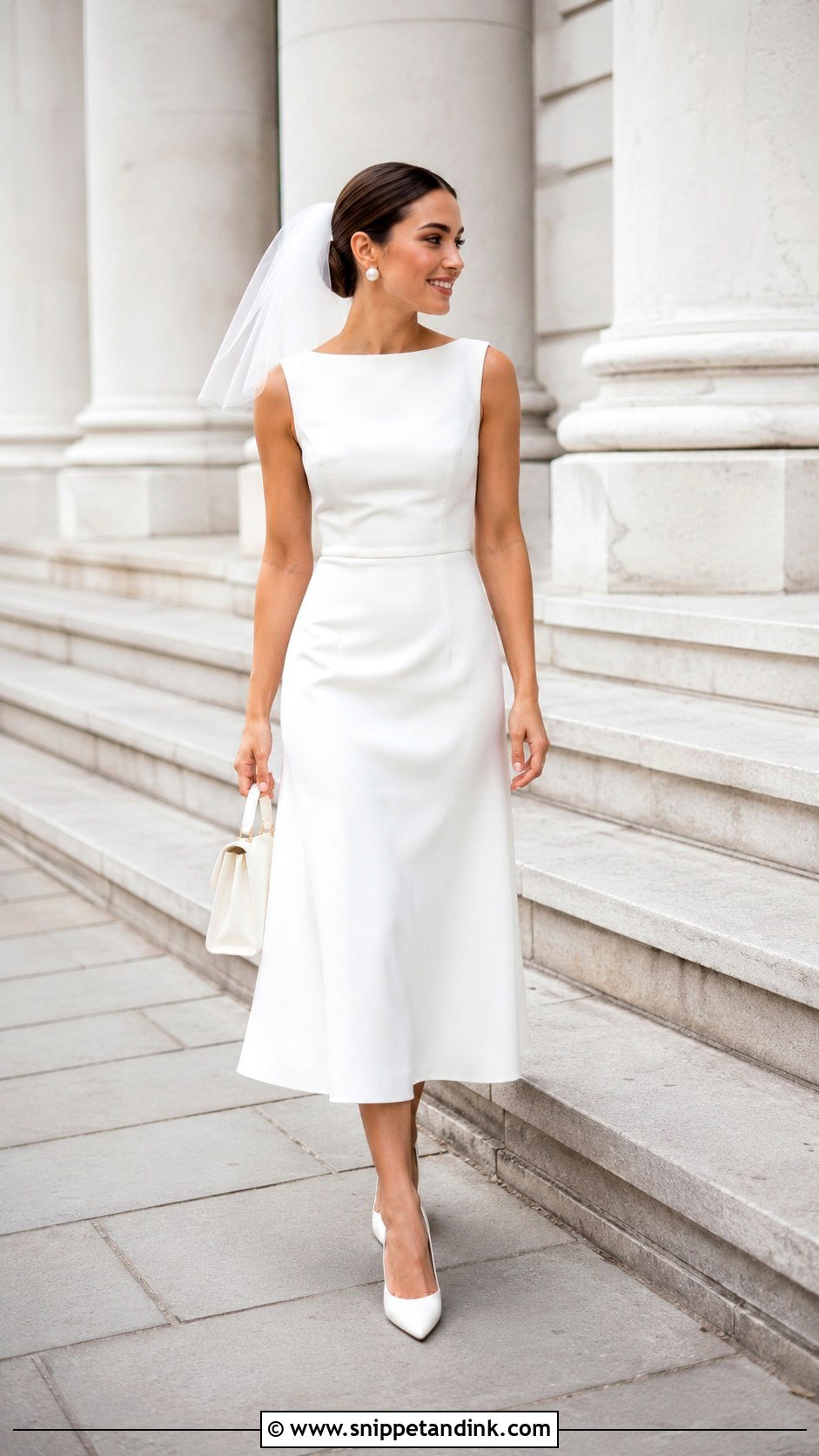
For a courthouse ceremony, I look for something polished but scaled to the room: a midi, mini, blazer dress, satin slip, tailored suit or clean column. White pumps, a small bouquet, pearl earrings and a structured bag pull it together, and a short veil or bow adds the bridal signal without overwhelming a small office. It’s also the outfit you’re most likely to wear again, so fabric quality is worth paying for. Fit is everything at this length.
18. Short Wedding Dress
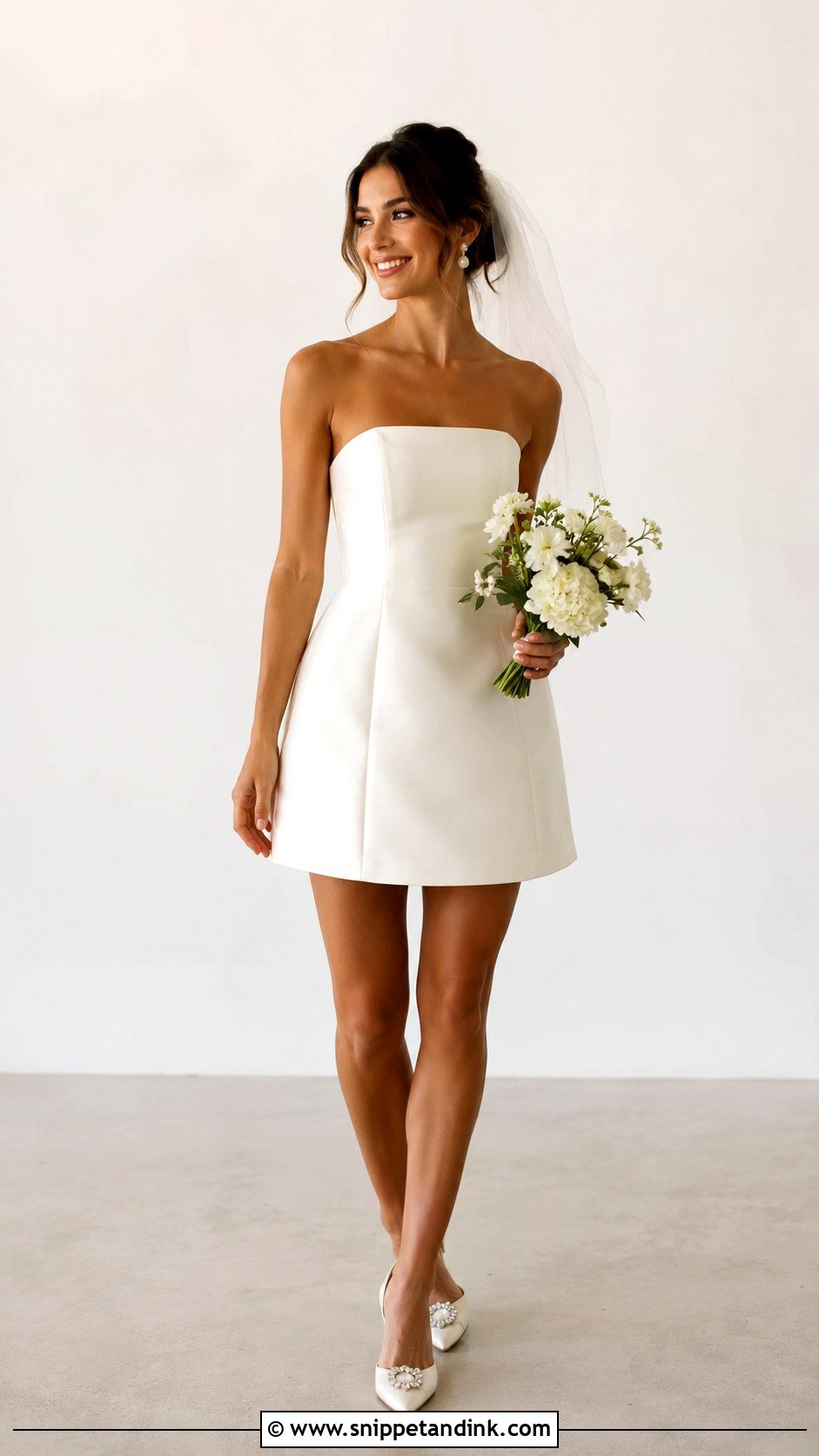
Short dresses let you move, and they put your shoes front and centre. They suit civil ceremonies, elopements, receptions and after-parties, in sleek minis, lace tea-lengths, structured satin or bubble hems. I usually ask brides to choose the shoes first, whether heels, slingbacks or embellished flats, and fit the hem around them. A short veil, pearl earrings and a small bouquet make it read as bridal. For balance, keep structure on top and a clean hemline below.
19. Tea Length Wedding Dress
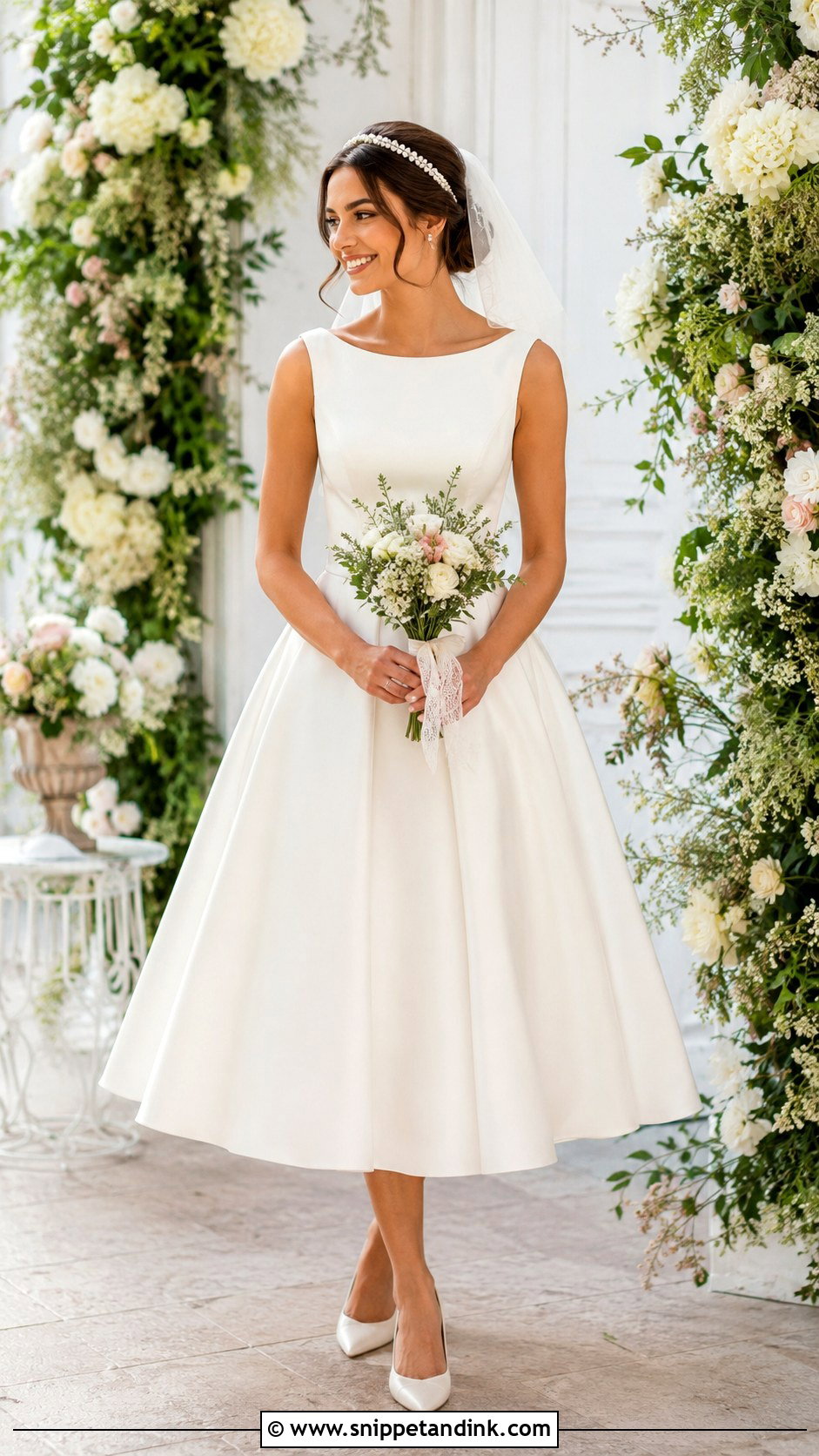
Tea length sits between knee and ankle, which gives a vintage feel while staying easy to wear. A full skirt looks retro; a slim one looks polished. The hem point is the critical alteration: I aim for where the calf starts to narrow, because a hem cutting across the widest part of the leg makes it look heavier. Pointed pumps, slingbacks or ballet flats all work, with a birdcage veil, bow or pearl headband. Courthouse weddings, garden ceremonies and brunch receptions suit it, and dancing is easy.
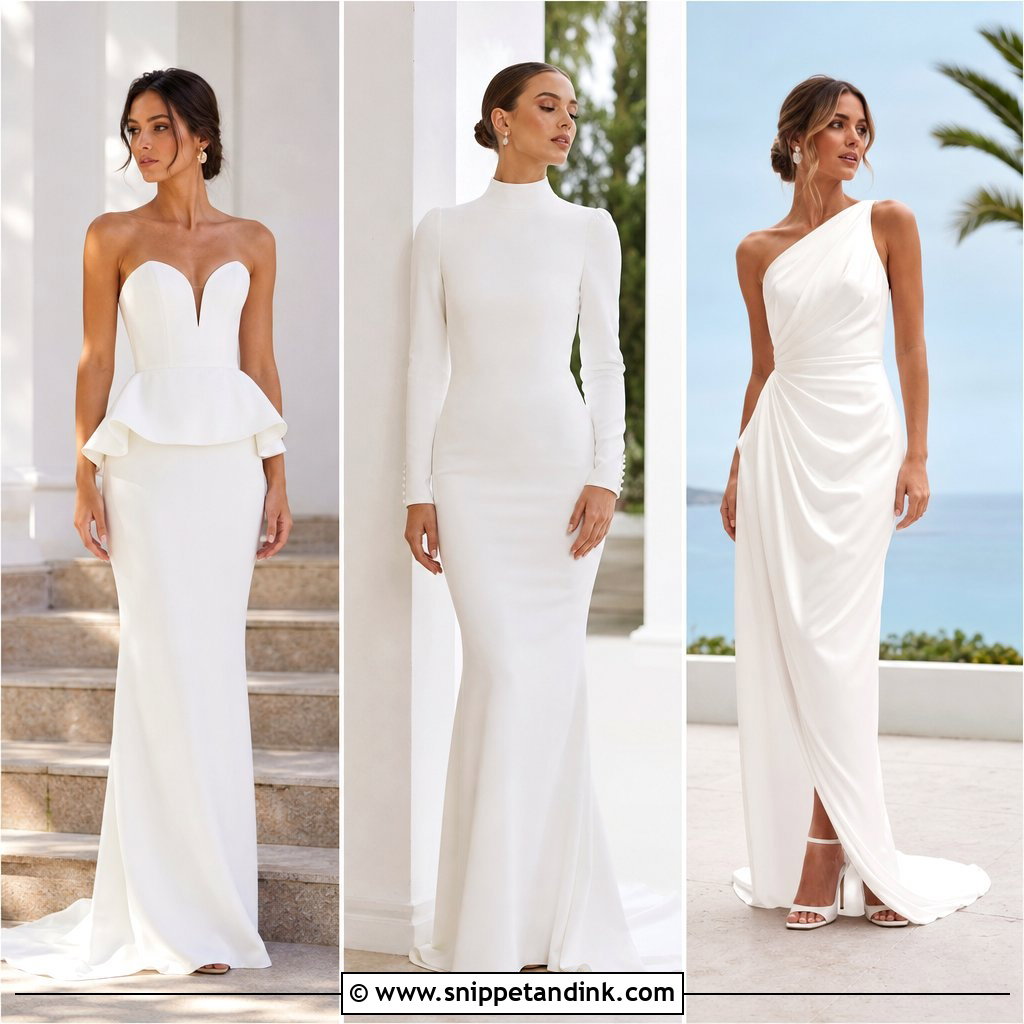

20. Two Piece Wedding Dress
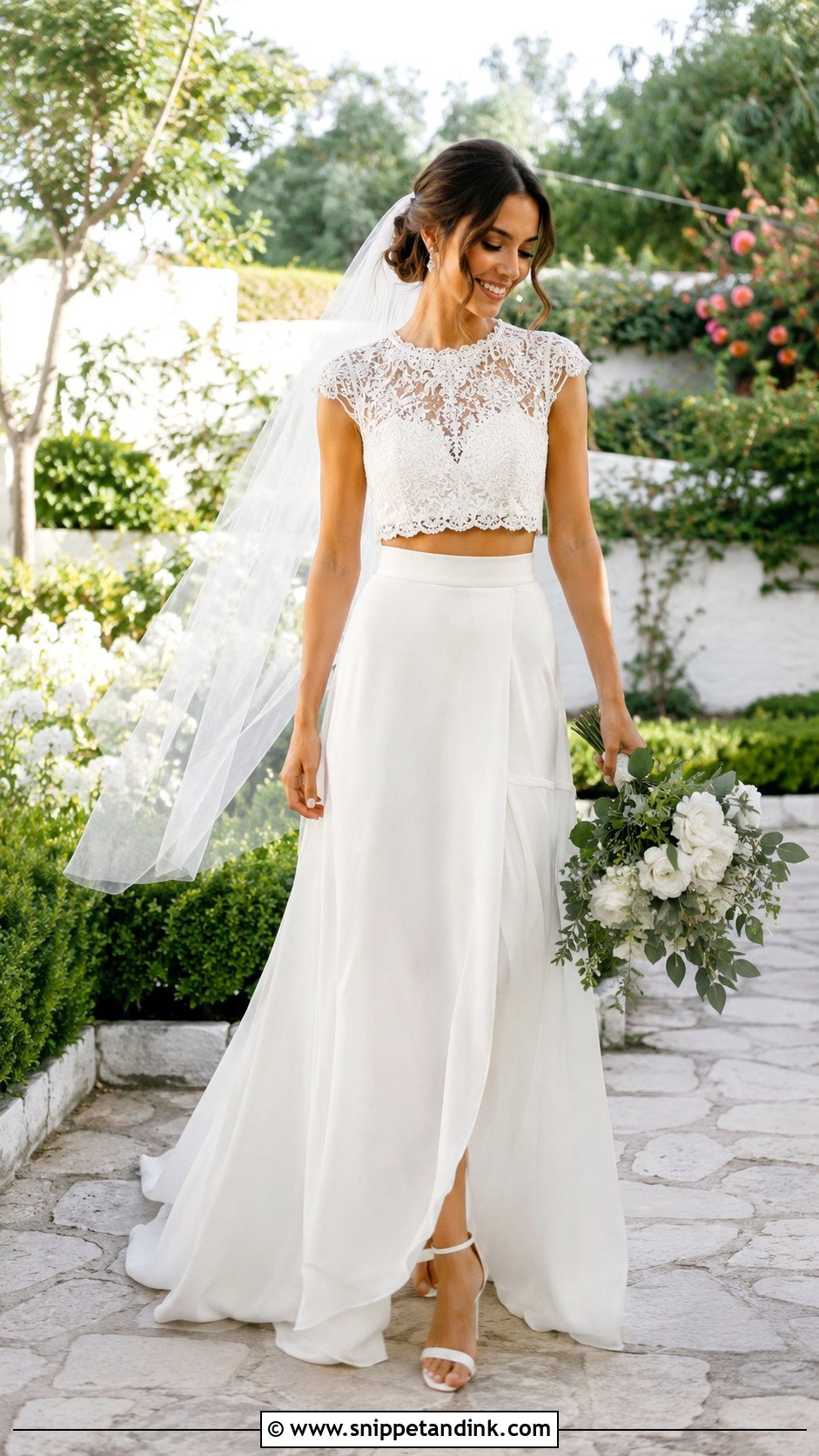
Two-piece outfits give the most flexibility: a lace crop top with a flowing skirt, a corset with satin, or a modest blouse with a high-waisted skirt. Proportion is the rule I come back to. A detailed top needs a cleaner skirt; a dramatic skirt needs a simpler top. Raise your arms at the fitting to see how much midriff shows, since crop tops ride up more than you’d think. Heels, a veil and coordinated jewelry make it read as one bridal outfit rather than separates.
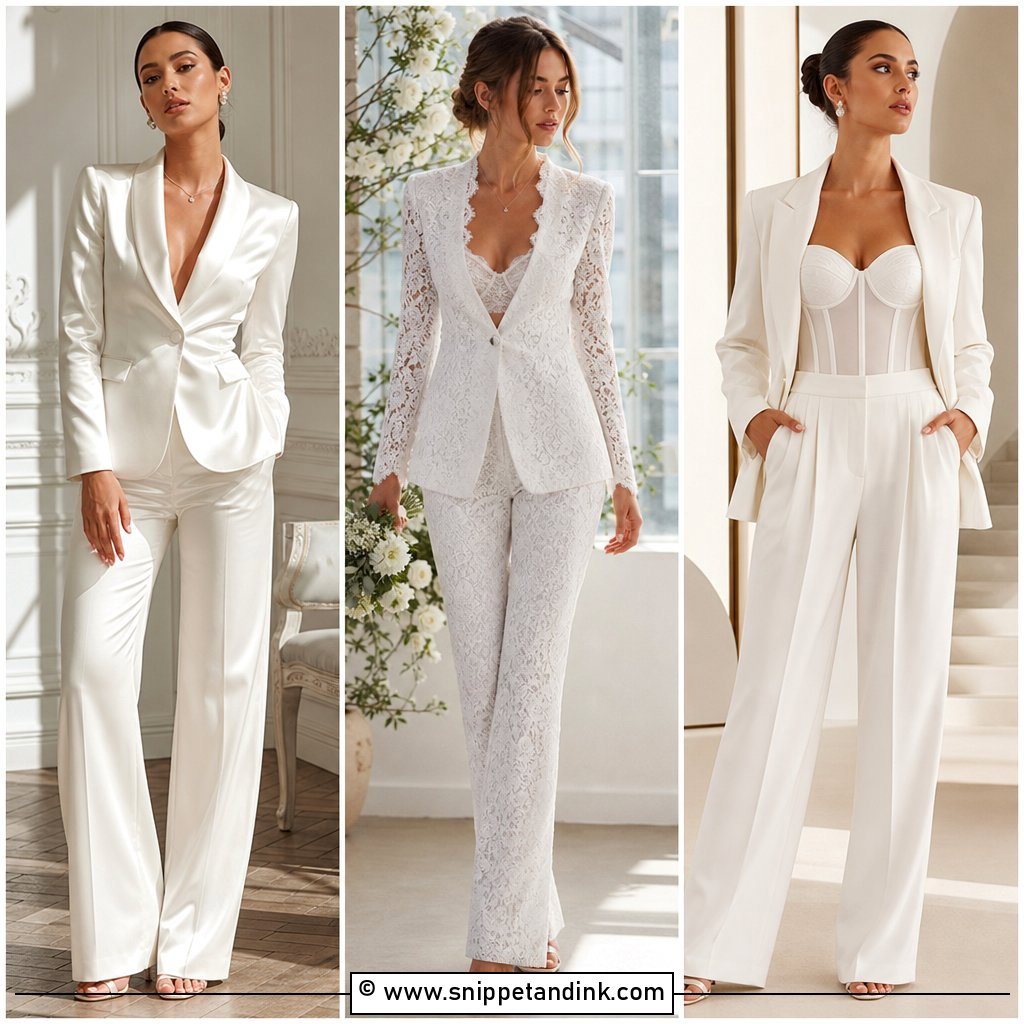
21. Wedding Jumpsuit
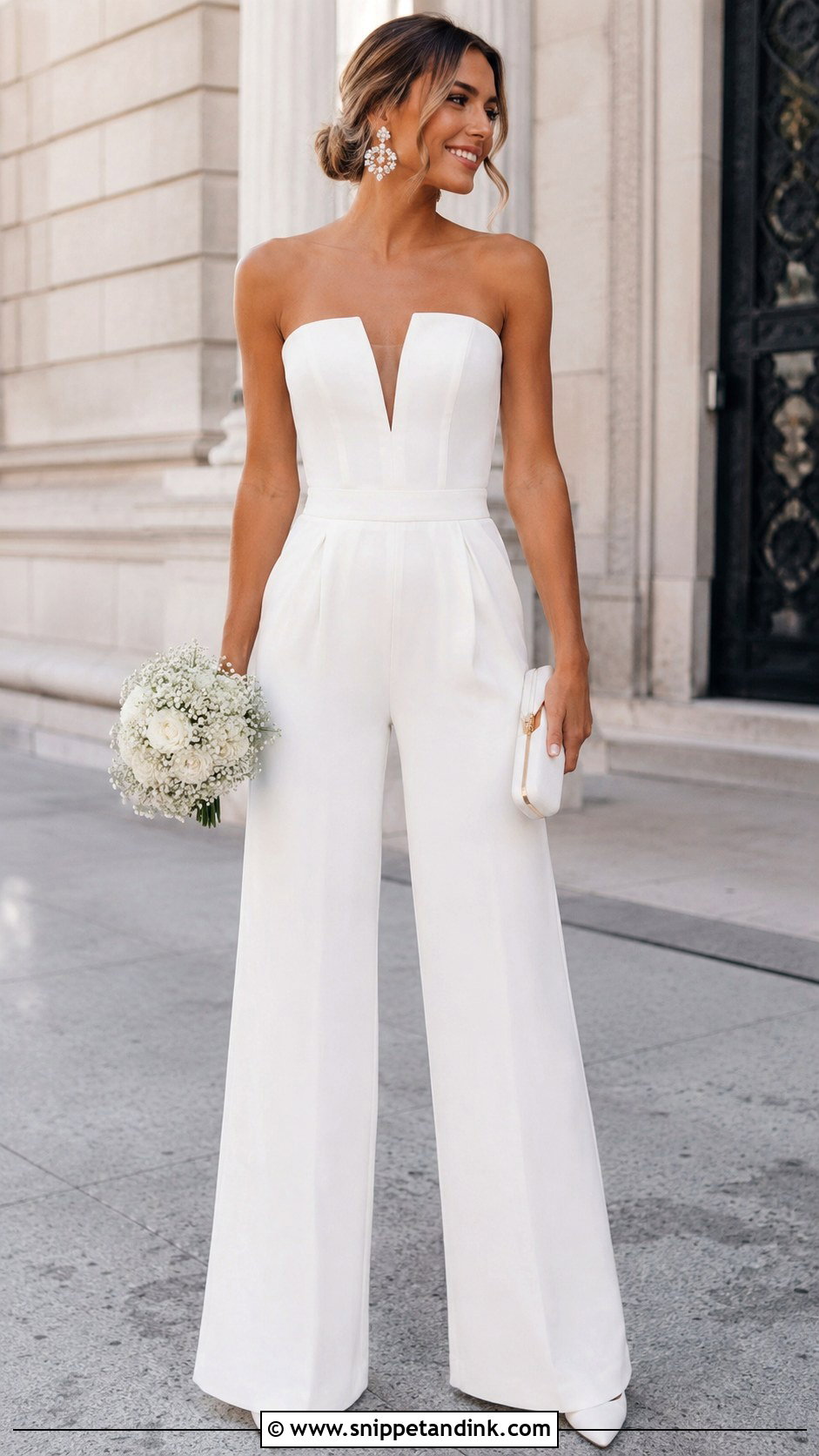
A jumpsuit gives total freedom of movement, and it suits courthouse weddings, elopements, rehearsal dinners and receptions. A wide-leg white style lengthens the figure, while a tailored crepe jumpsuit feels sharp. Bridal details like a bow, cape, lace overlay, pearl buttons or a structured bodice keep it from looking like eveningwear. The honest drawback: most jumpsuits fasten at the back, so you’ll need help every time you use the bathroom. Pointed heels, statement earrings, a clean clutch and a short or cape veil finish it.
22. Bridal Suit
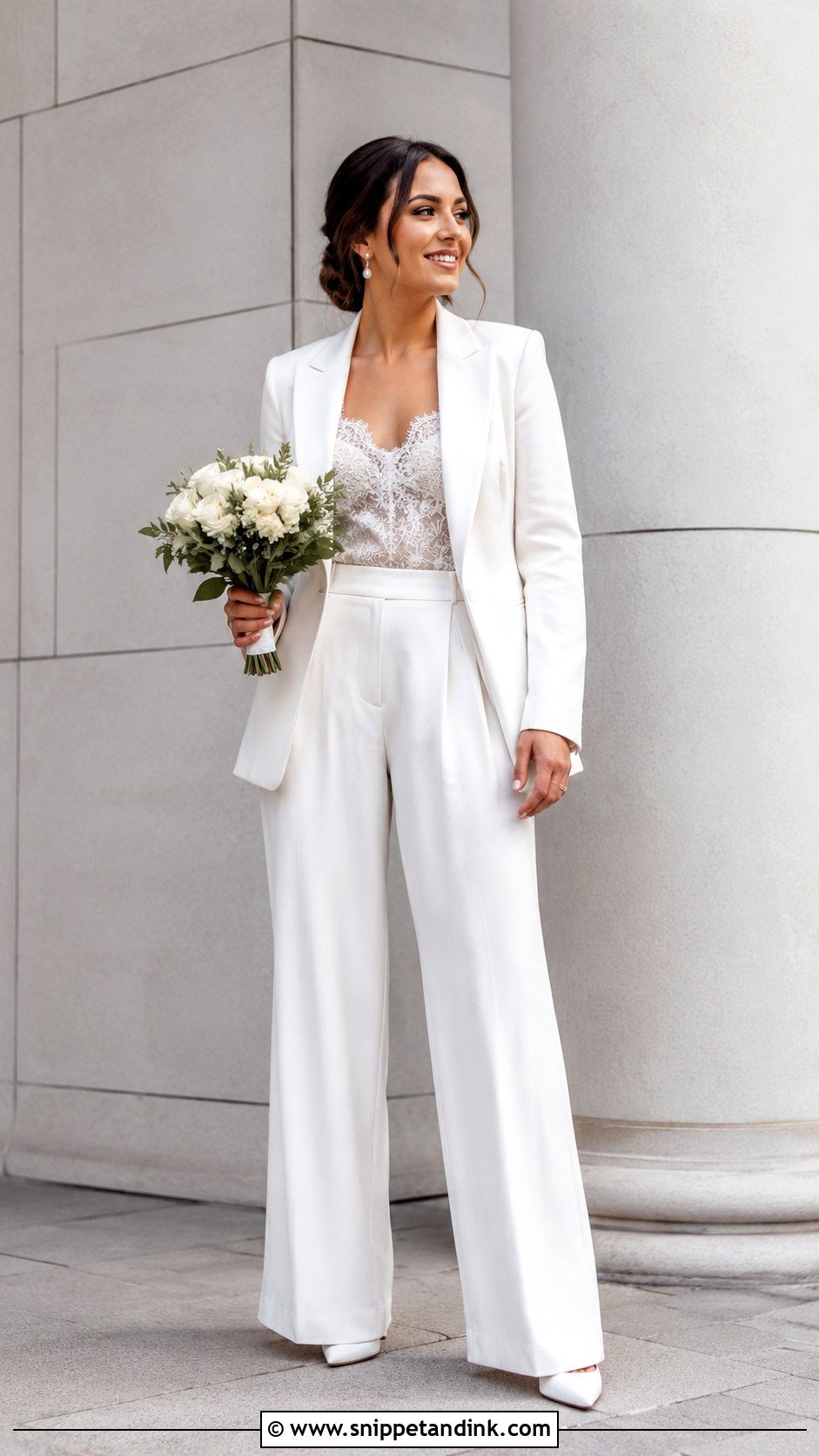
Tailoring makes or breaks a bridal suit, whether it’s a white tuxedo, wide-leg trousers, a double-breasted set or a soft ivory pantsuit. Good fabric is what separates bridal from office, and I always have sleeves and trouser hems taken up with the wedding shoes on. A lace camisole, satin bustier or silk blouse underneath softens the structure. Pointed heels, pearl earrings, a sleek clutch and a small bouquet complete it. A veil worn with a suit is an unexpected contrast that photographs well.
23. Colored Wedding Dress
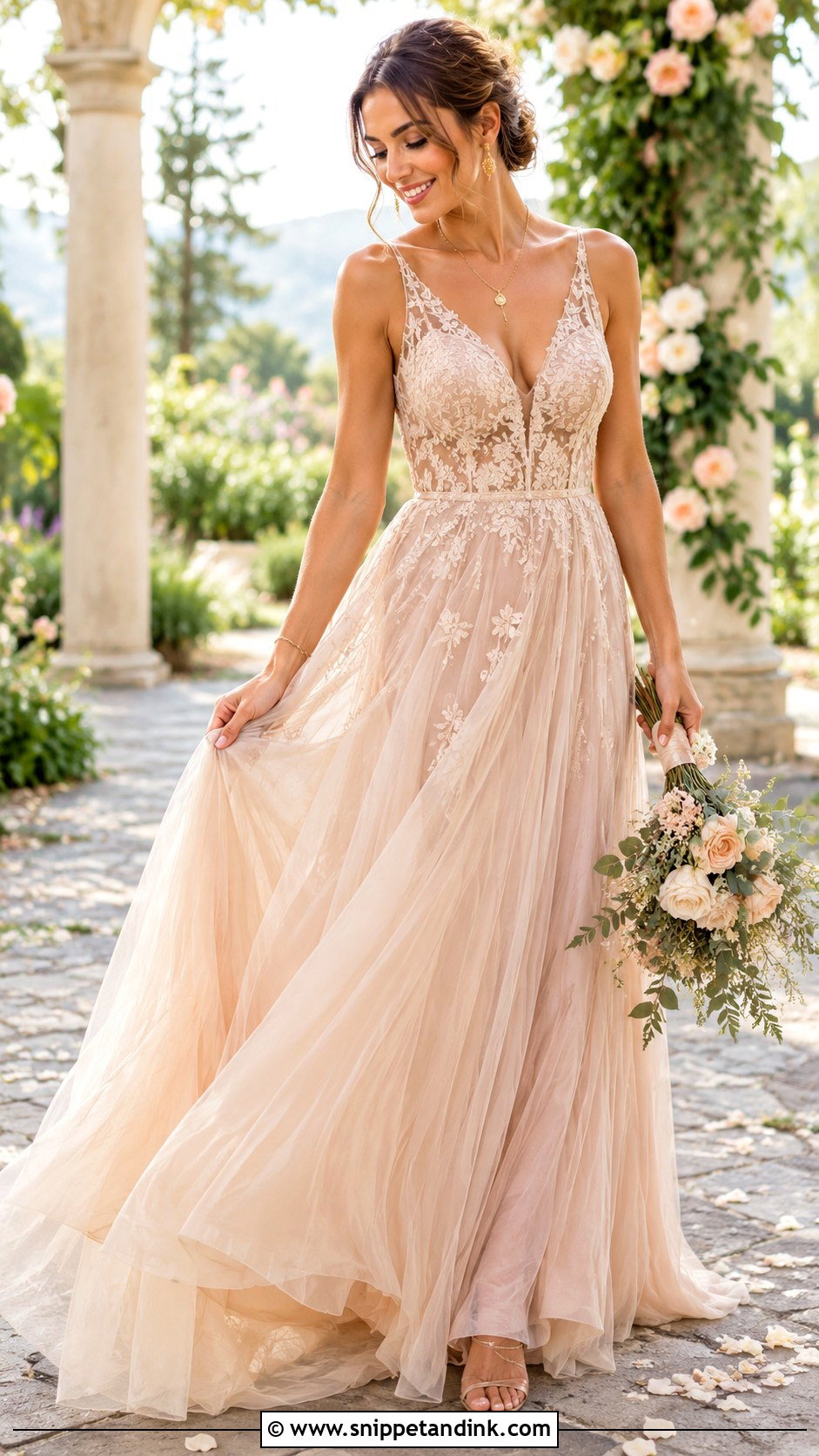
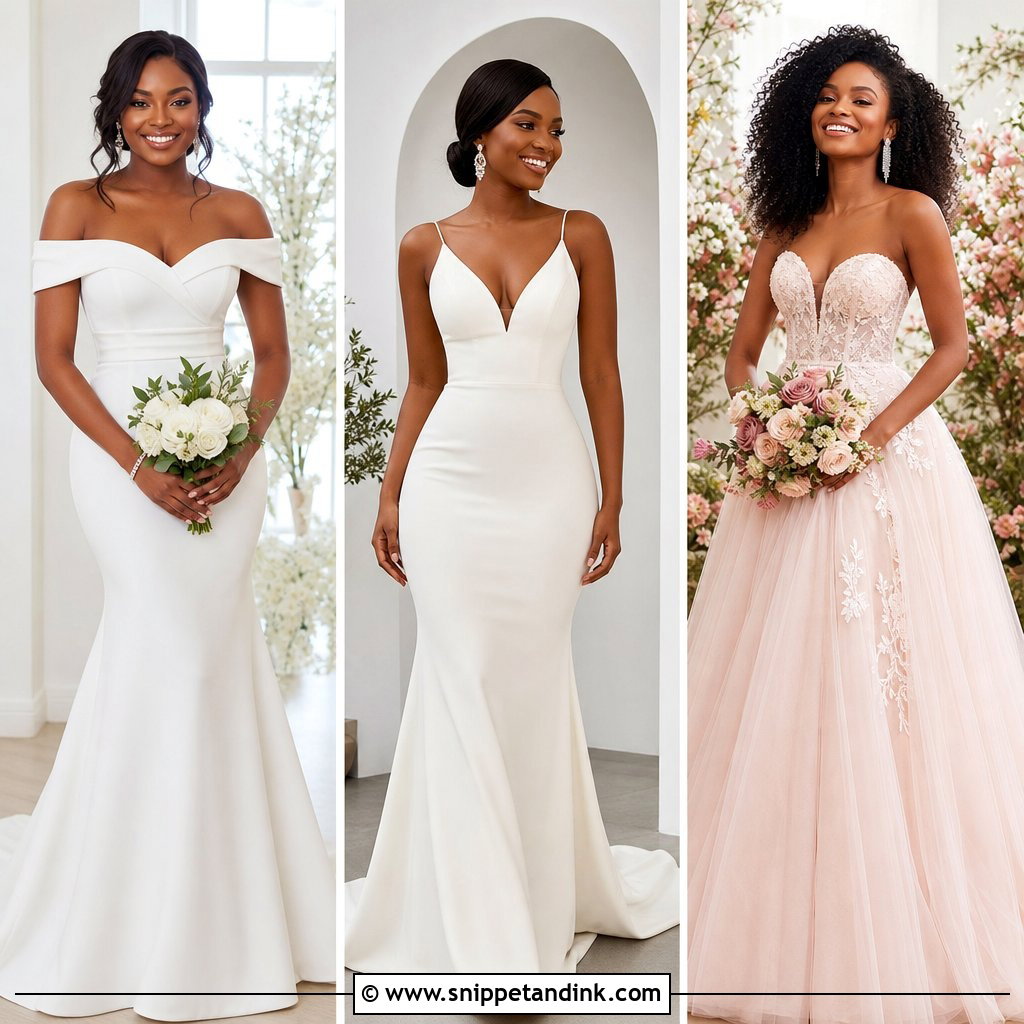
Soft colour suits brides who don’t feel like themselves in bright white. Blush, champagne, pale blue, silver, nude and light gold all photograph gently. Pastels can look different in every light, so I ask brides to view the fabric outdoors and under warm indoor bulbs before ordering; some blush shades turn almost white in sun. Keep accessories in the same soft family: champagne heels, gold jewelry and a neutral bouquet. If the colour is strong, a simple veil or no veil looks more modern. Second weddings and destination ceremonies often suit colour well.
24. Detachable Skirt Wedding Dress
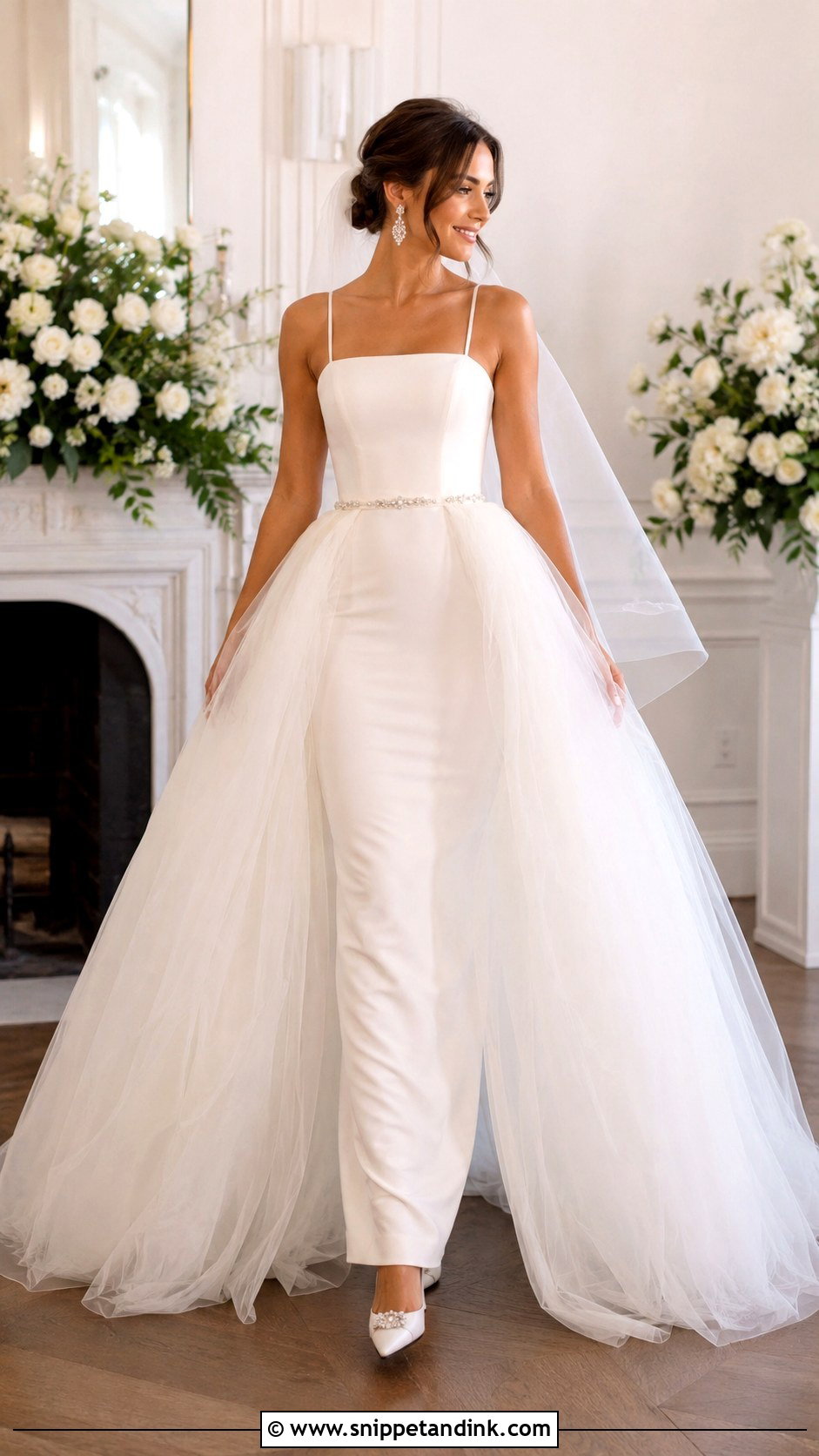
A detachable skirt gives you two outfits from one dress: volume and drama for the ceremony, then a slimmer dress for dancing. A fitted crepe base with a tulle overskirt looks modern; lace with a satin overskirt feels more formal. The attachment is where I’m fussy. Practise taking it off with the person who’ll help you on the day, and check the snaps or hooks hold when you walk fast. Wear a veil and classic heels for the ceremony, then change to statement earrings or bold shoes later.

25. Reception Wedding Dress
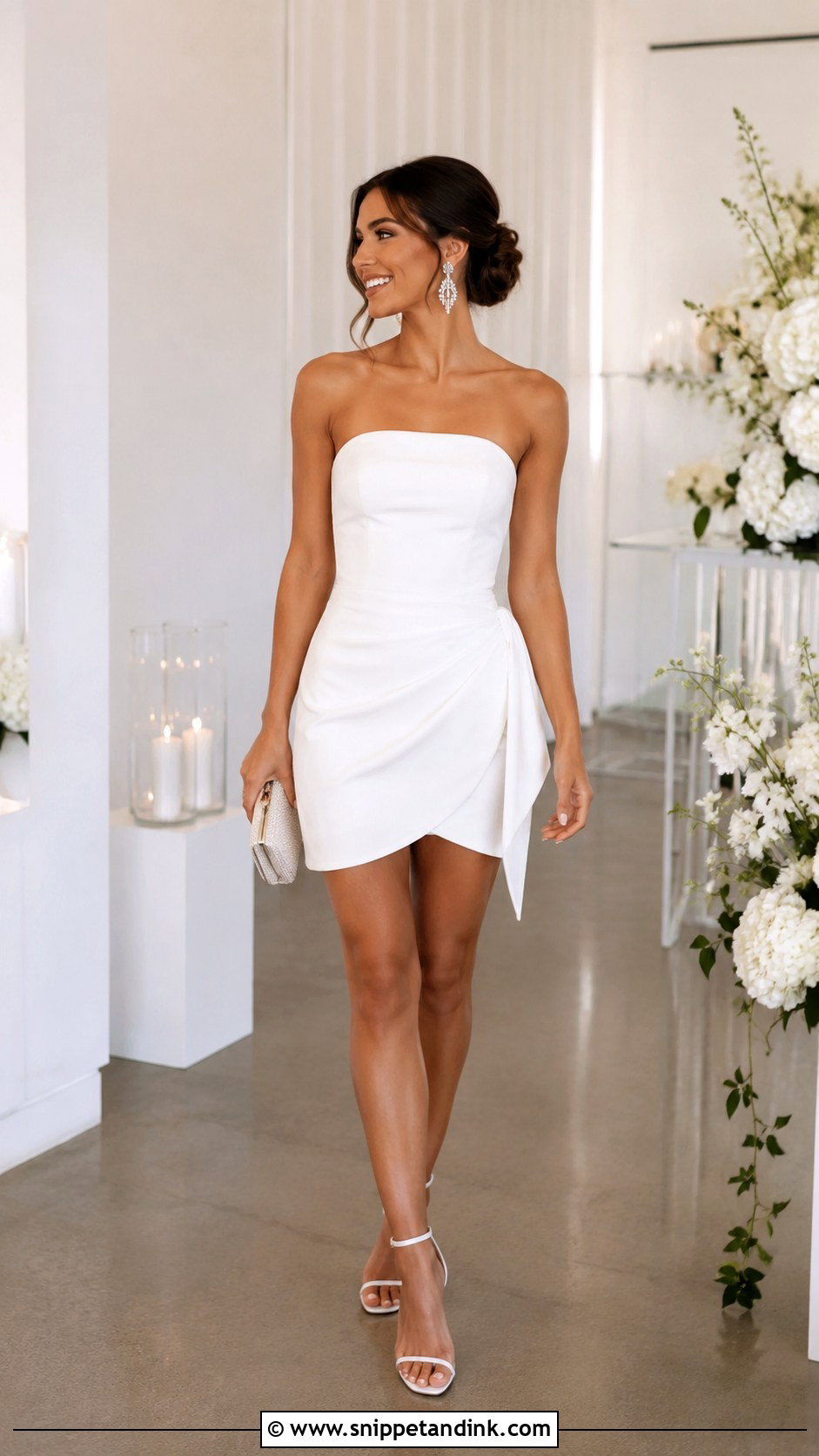
A reception dress earns its place when the ceremony gown has a long train or heavy skirt. Brides usually choose something shorter or lighter: a silky slip, feather-trim mini, beaded midi or a sleek second gown. It can be more playful than the ceremony look while still reading as bridal. I’d allow about twenty minutes for the change, more if hair needs adjusting. Choose fabric you can move in and shoes you’ll actually stand in for hours, then add sparkly earrings, a hair bow or a small clutch to shift the mood.
From Saying Yes to the Final Fitting
The timeline catches more brides out than the choice of dress. Most made-to-order gowns take several months to arrive after you place the order, and some designers quote longer for colour or custom changes. I suggest ordering around eight to ten months before the wedding where possible; rush orders exist but usually cost extra and limit your options.
- First fitting, roughly two to three months out: bring the exact shoes and underwear you’ll wear, because a heel change alters the hem by inches.
- Second fitting: check the bodice after any changes in weight or training, and try sitting, kneeling and raising your arms.
- Final fitting, about two weeks before: learn the bustle and the fastenings with the person who’ll dress you, and take the gown home pressed.
Alteration costs vary widely with the fabric and how much work is involved, and lace, beading and multi-layer skirts take longest. Ask for a quote at the first fitting rather than at collection. I also ask brides to plan the bustle style early: an over-bustle lifts the train with hooks on the outside, while a French bustle tucks it underneath, and each changes how the back looks in dancing photos.
Try the Shape You Think You’ll Hate
The dress you end up loving should feel comfortable and like you, hour after hour. This list runs from classic gowns and suits to short dresses, lace, colour, beach styles, courthouse looks and party outfits, and most brides try three or four of these before something clicks. Think about the venue, weather, movement and how long you’ll wear it, then try at least one shape you were sure wouldn’t suit you. A neckline or fabric you dismissed on a hanger often surprises people once it’s on. Keep the veil and shoes in mind from the start so the whole outfit comes together.
You'll Like These Ideas:



Leave a Reply