
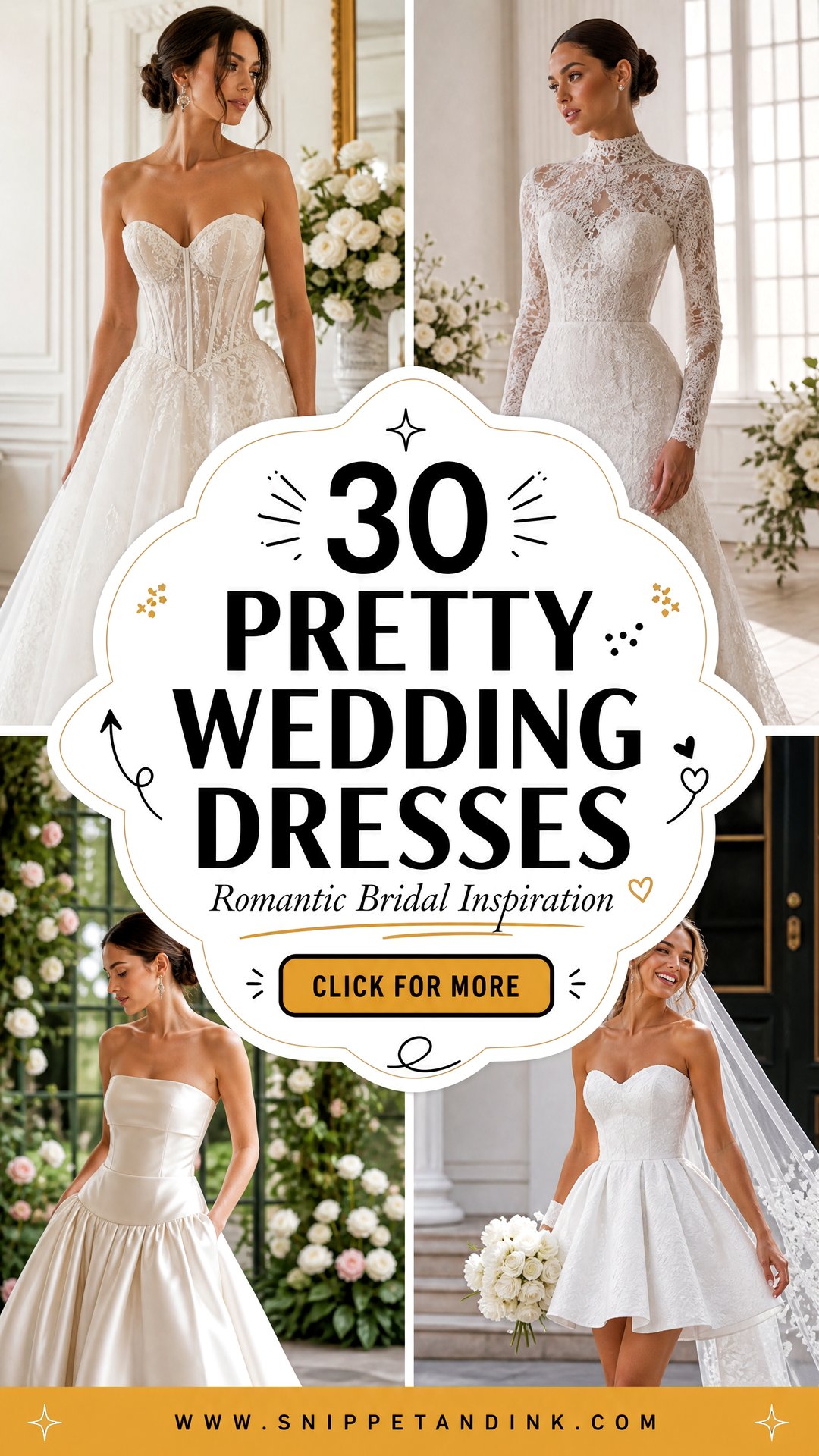
Most brides walk into their first appointment with a screenshot and leave in a completely different shape. That’s normal. A dress on a hanger tells you very little, while fabric weight, how the bodice is built and what the skirt does when you sit tell you almost everything. I’ve grouped these thirty gowns around the details I actually talk through at fittings: silhouette, neckline, fabric and finish, so you can see which ones suit your venue, your season and the way you plan to move through the day.
Sitting, Bending and Hugging in a Gown Before You Say Yes
A salon mirror shows you standing still under flattering lights. Your wedding will mostly be walking, sitting, hugging and dancing. When I take a bride through a try-on, I ask her to do all of those things in every serious contender, because that’s where the real differences between gowns show up.
- Sit on a hard chair for a full minute. Boning that pokes the hip or a bodice that buckles at the waist will do the same at dinner.
- Raise both arms as if hugging someone taller. Off the shoulder necklines, strapless bodices and fitted lace sleeves are the usual troublemakers.
- Bend to pick something off the floor. A plunging V or a loose sweetheart tells you straight away whether it needs tape or another fitting.
- Walk ten steps and turn. Mermaids and narrow sheaths show here whether the hem lets you move.
- Stand by a window in daylight, not only under the salon spotlights. Ivory, champagne and blush all shift.
Fabric Weight Against Your Season
A satin ball gown with a full underskirt can weigh several kilos, which is fine in an air-conditioned ballroom and tiring at an August garden party. Chiffon, crepe and light tulle breathe; heavy satin, mikado and dense lace hold heat. For summer outdoors I’d steer you toward the lighter fabrics, and for winter I’d happily put you in sleeves and structure.
1. A Line Lace Wedding Dress
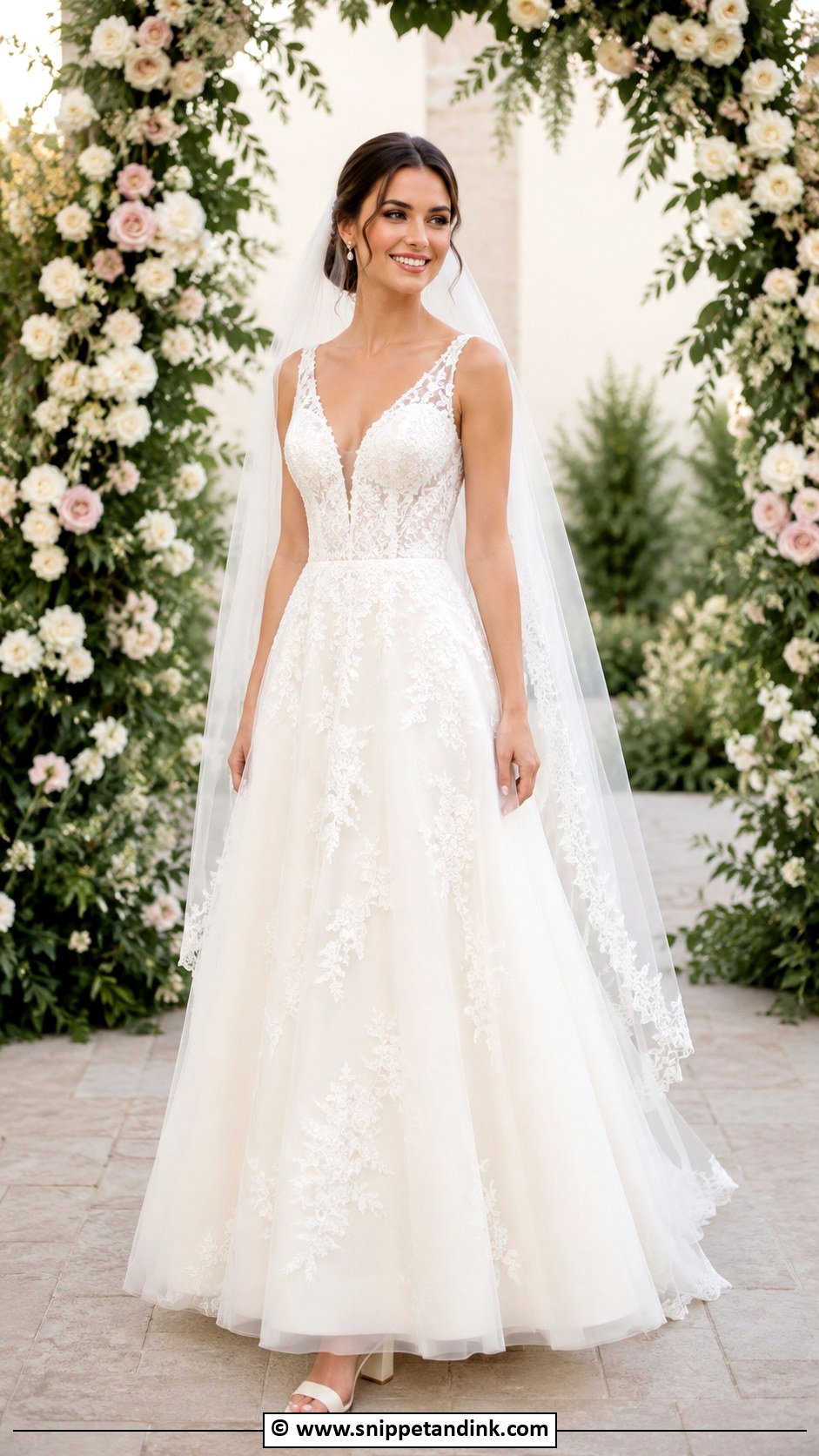
The A-line is the shape I reach for first when a bride isn’t sure, because the fitted bodice defines the waist and the skirt falls away from the hips without clinging. In lace it stays romantic without getting heavy. The lace choice matters more than people think: soft floral lace sits naturally in a garden, while corded lace, where a thread outlines each motif, holds its shape and reads from the back pews of a formal venue. At alterations I check where the motifs land at the hip seam, since a flower cut in half there is hard to hide. A fingertip veil, pearl earrings and ivory block heels are plenty, and if the neckline is detailed, skip the necklace.
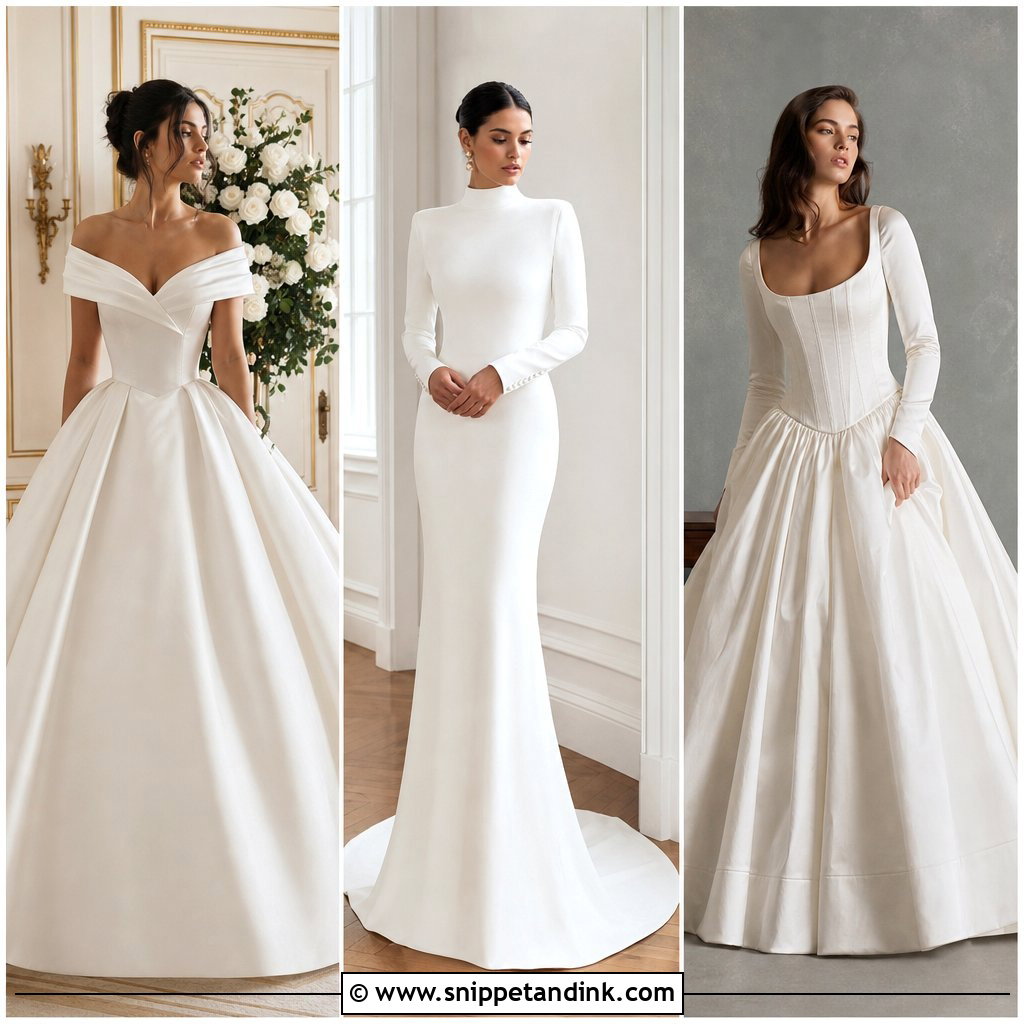
2. Satin Ball Gown Wedding Dress
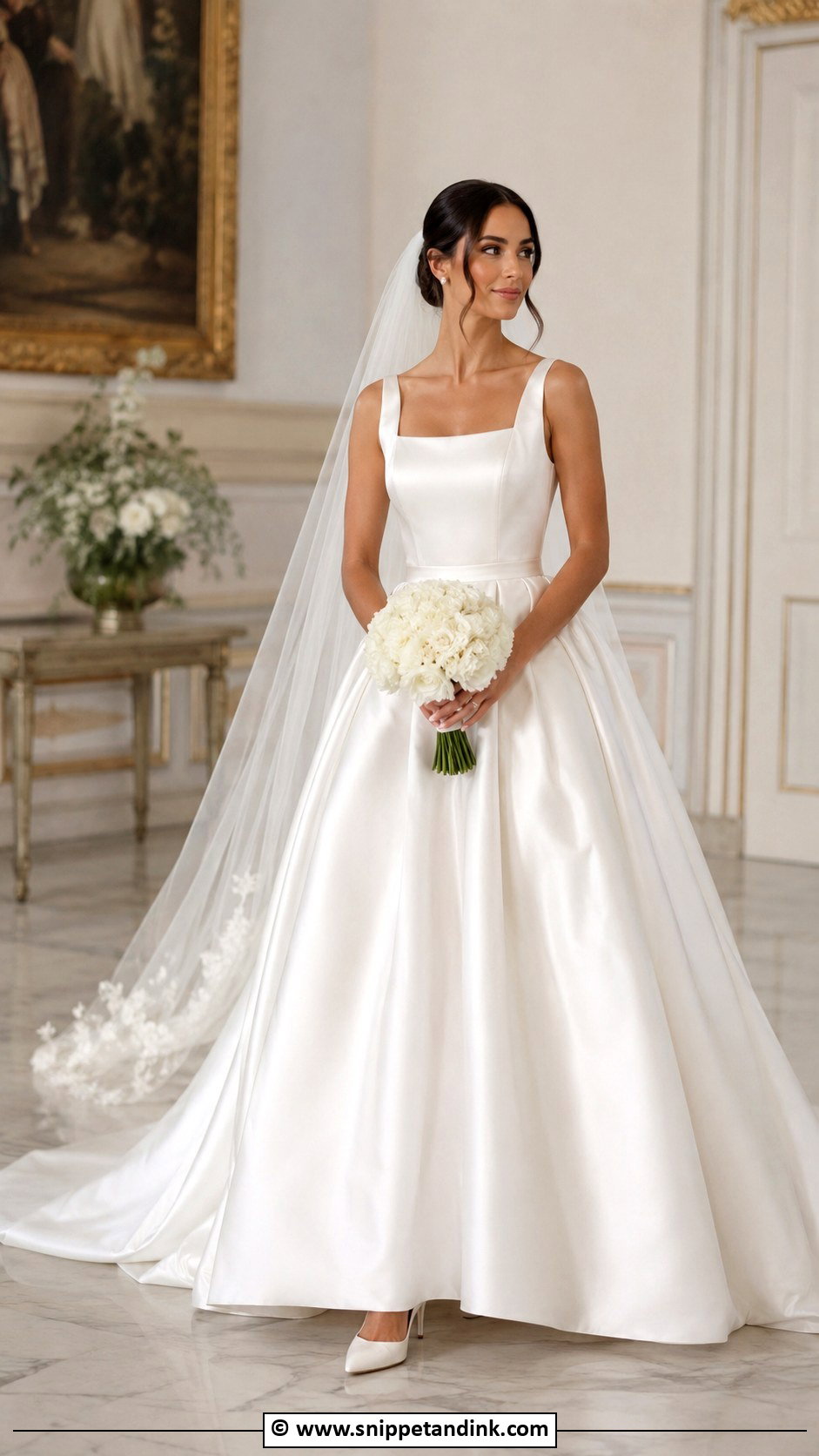
Satin is the fabric I warn people about first. It shows every seam, every pull at the zip and every crease from the car ride, which is exactly why a well-cut satin ball gown looks so grand under the lighting of a hotel ballroom or an estate. To keep it modern, look for a clean bodice, subtle pleating or a soft scoop neckline. Ask how the skirt is supported: a built-in layered underskirt gives the volume without a separate hoop knocking into chair legs. A cathedral veil adds drama, and simple diamond or pearl studs with a structured bouquet are all it needs beyond that.
3. Strapless Corset Wedding Dress
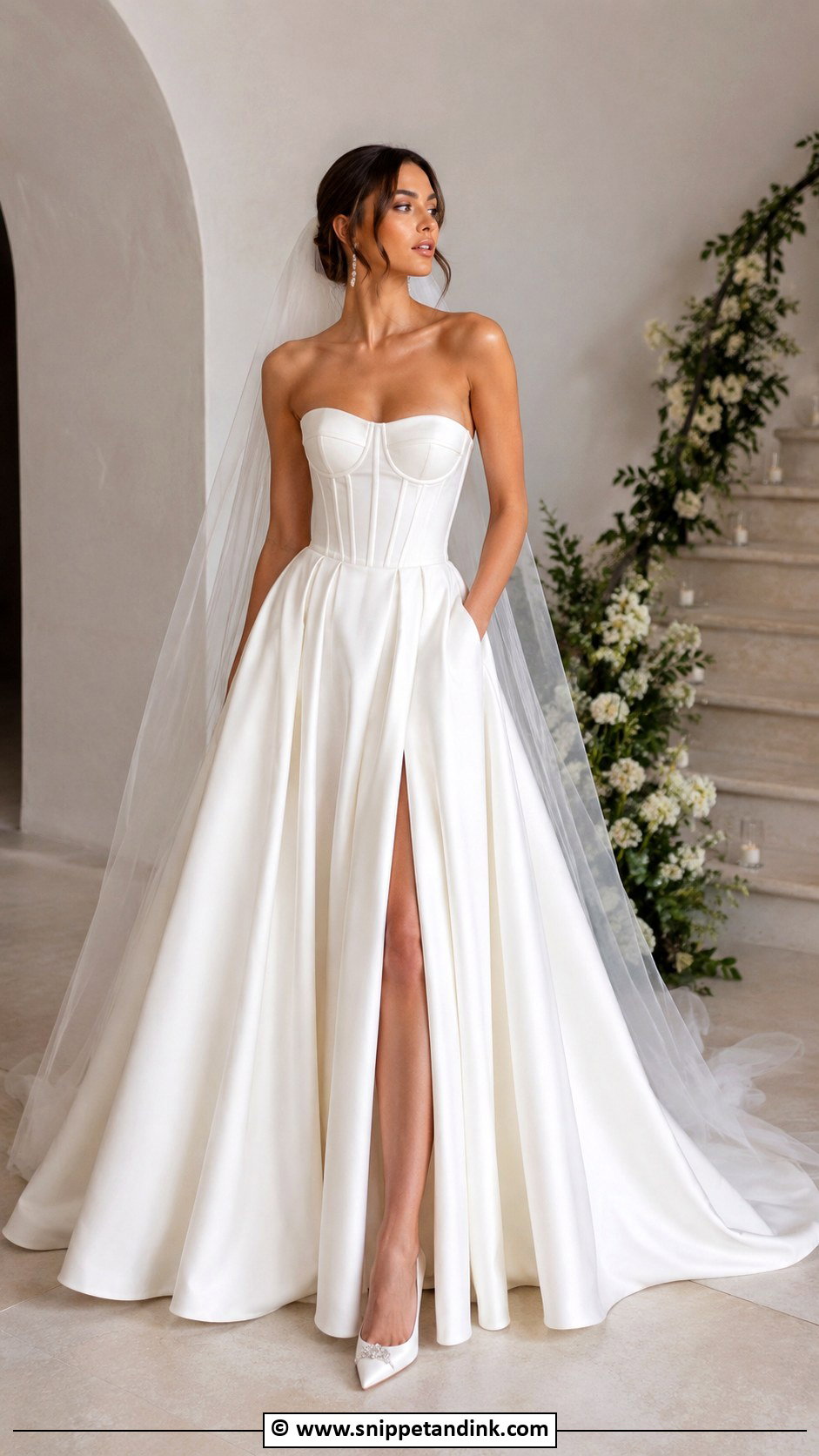
A strapless corset wedding dress does its work through boning, not tightness. When I fit one, I want two fingers to slide in at the top edge while you breathe out, and I watch you sit, because a corset that digs into the hip when seated will be miserable by the speeches. Smooth satin makes it modern; lace or organza softens it. Style it with a soft veil, drop earrings and pointed ivory heels. A detachable sleeve or scarf gives you a second look for the evening without a second dress.
4. Off The Shoulder Wedding Dress
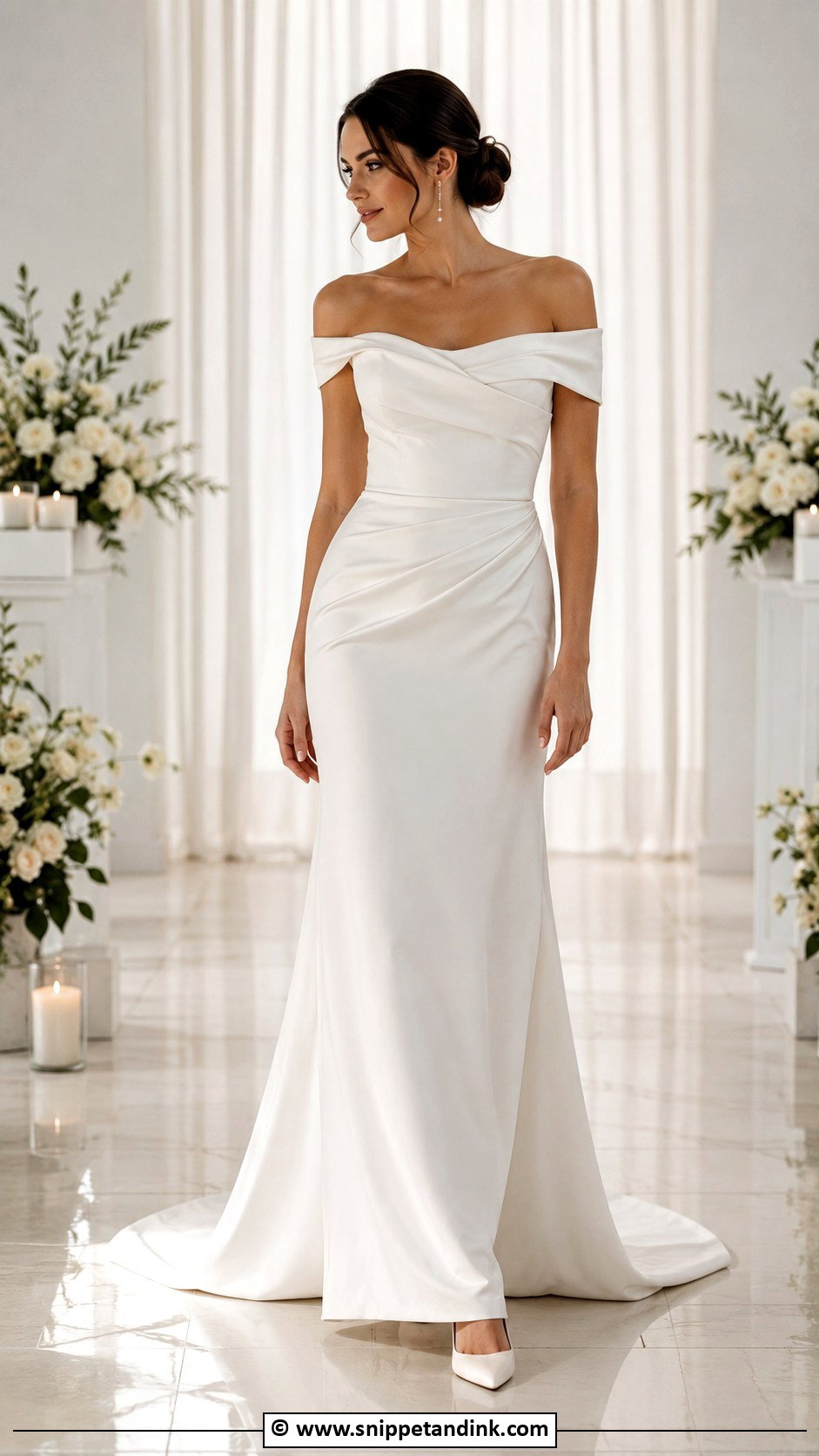
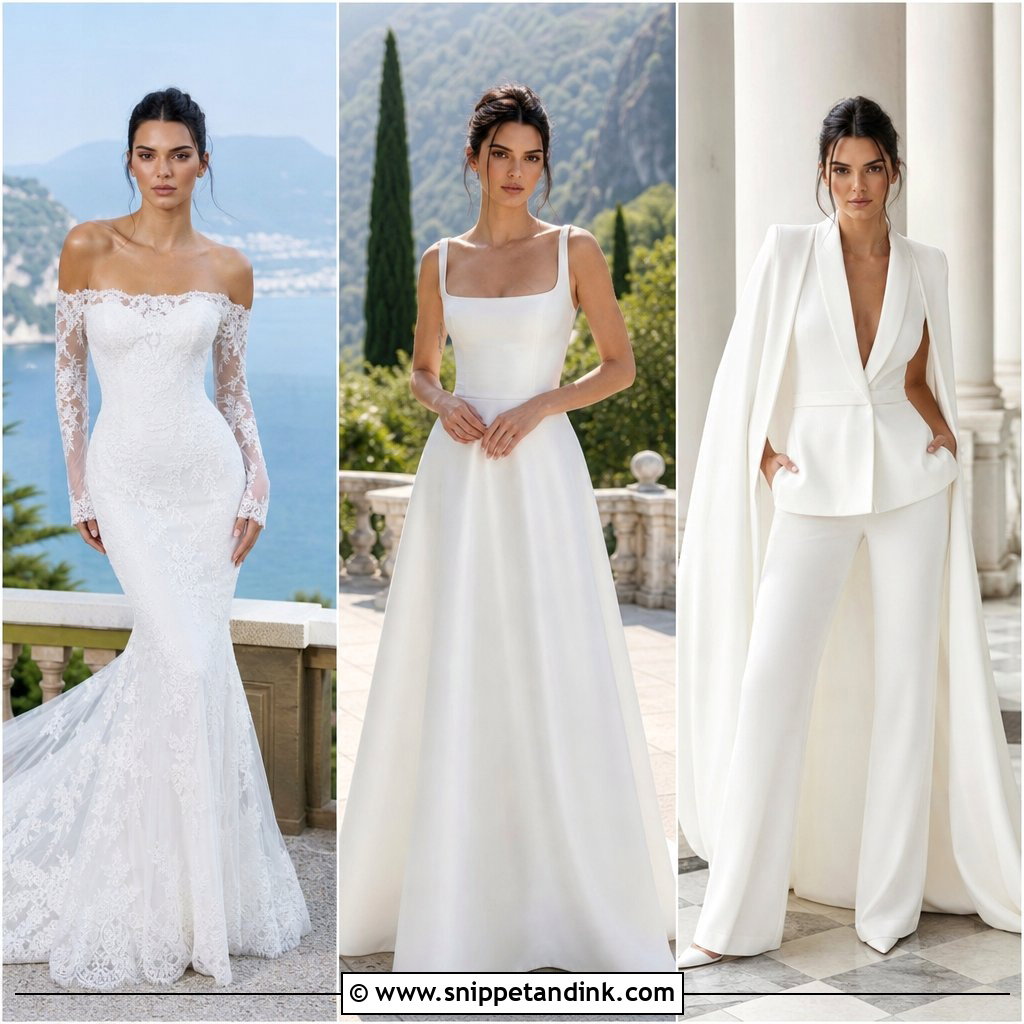
This neckline has one practical catch I always mention: you can’t lift your arms very high. Hugging, tossing a bouquet and dancing with your hands up all pull against that band, so I test range of motion at the first fitting and sometimes add a silicone grip strip inside. The shape itself frames the shoulders while still feeling covered enough for most ceremonies, and it works on fitted crepe, lace mermaids, satin A-lines and ball gowns. Because it pulls the eye upward, a low bun and delicate earrings usually finish it, with ivory pumps or block heels below.
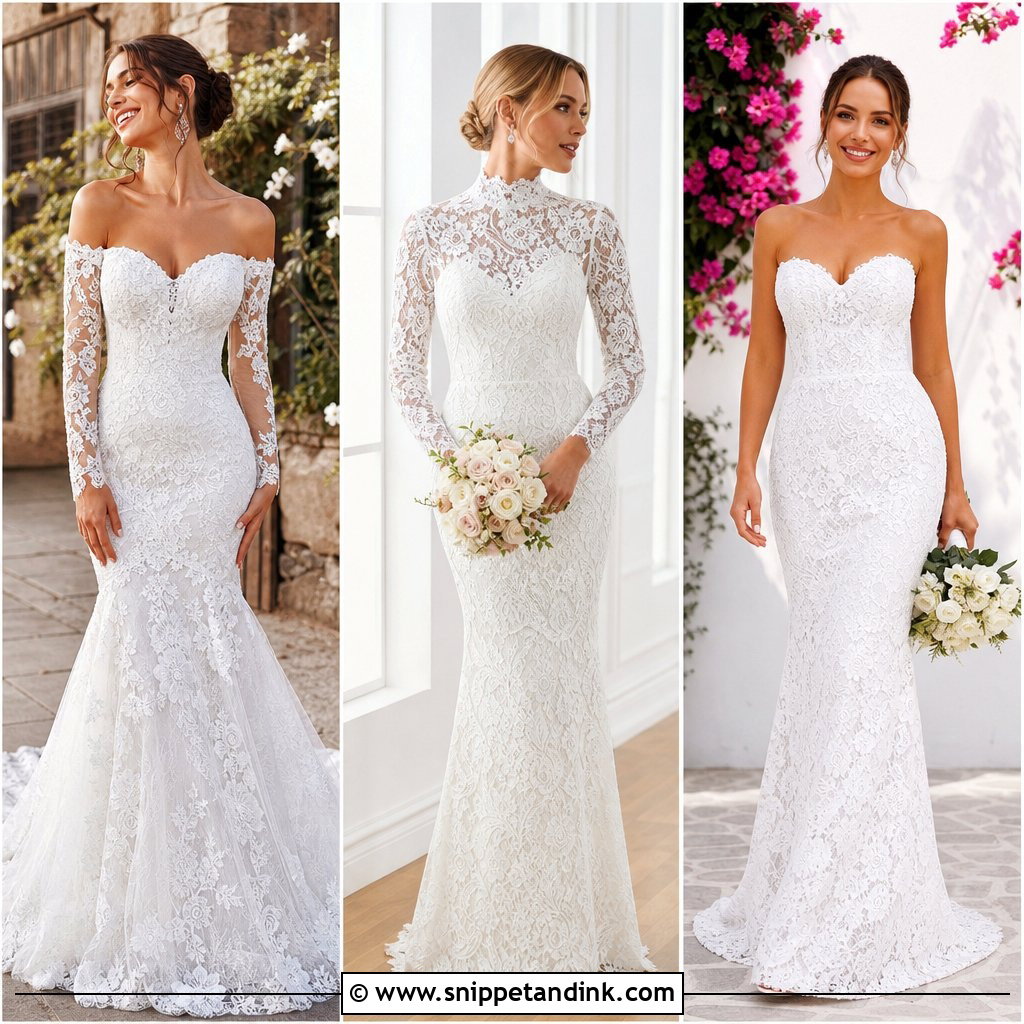
5. Long Sleeve Lace Wedding Dress
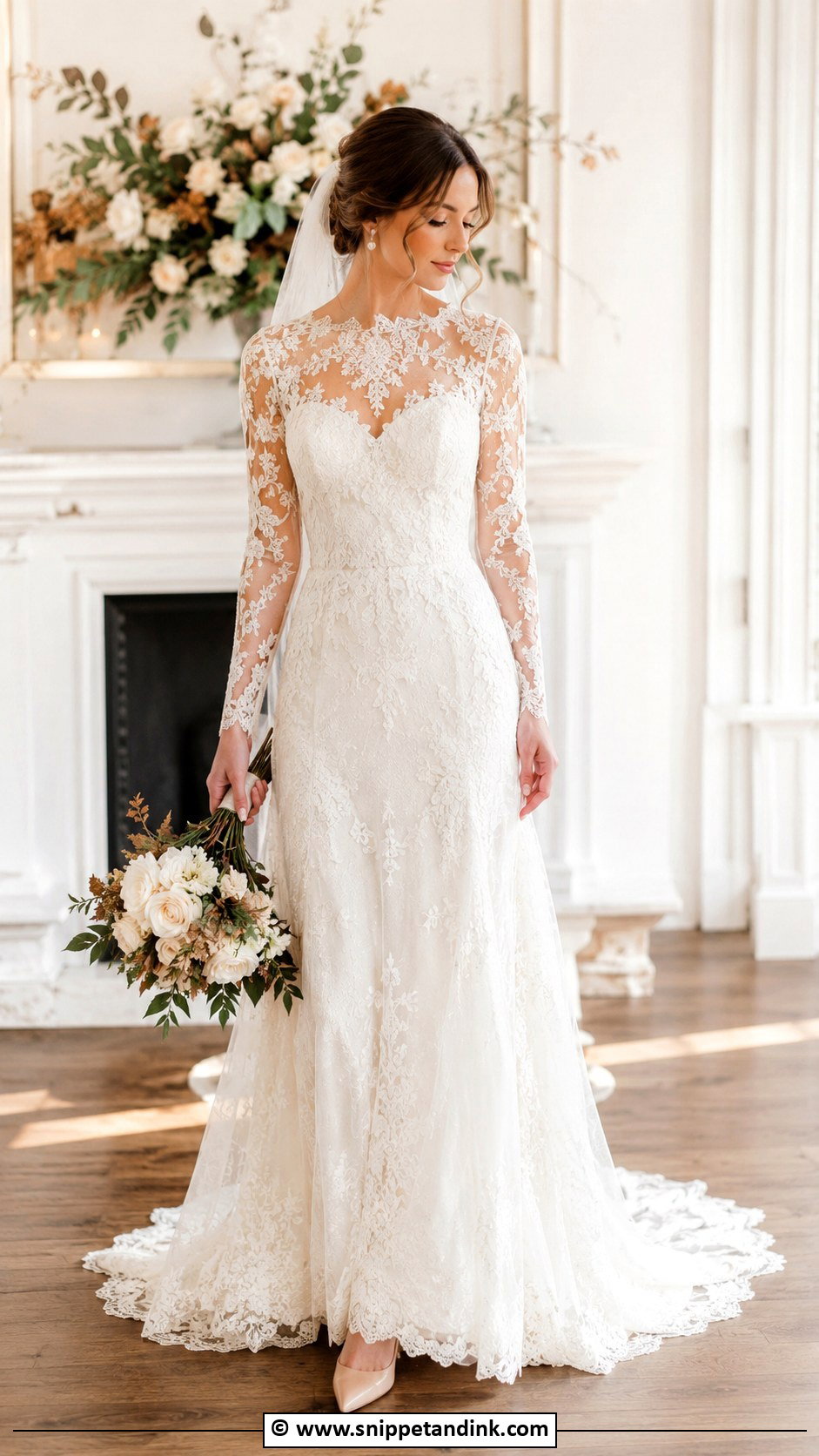
Sleeves are where alterations get fiddly. Lace sleeves usually end in a scalloped edge at the wrist, and shortening them means unpicking and re-placing that scallop by hand, so I’d order the closest sleeve length you can rather than plan on a big change. The sheer lace adds coverage while staying light, which is why this gown suits fall, winter and formal indoor ceremonies, and still works in spring with airier lace. A fitted bodice over an A-line skirt is the classic cut; a slim column feels newer. Pearl studs, a narrow bracelet and a soft veil are enough, and nude or ivory heels lengthen the line.
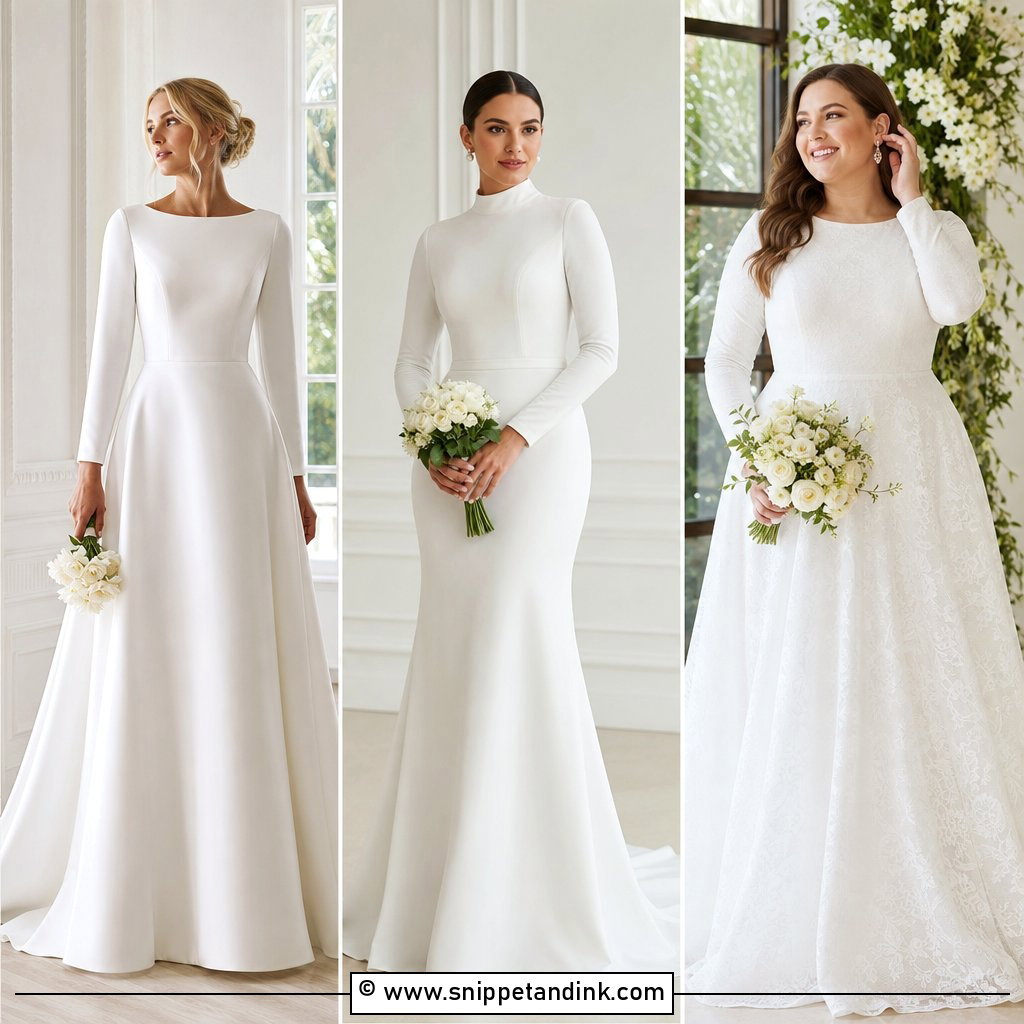
6. Simple Crepe Wedding Dress
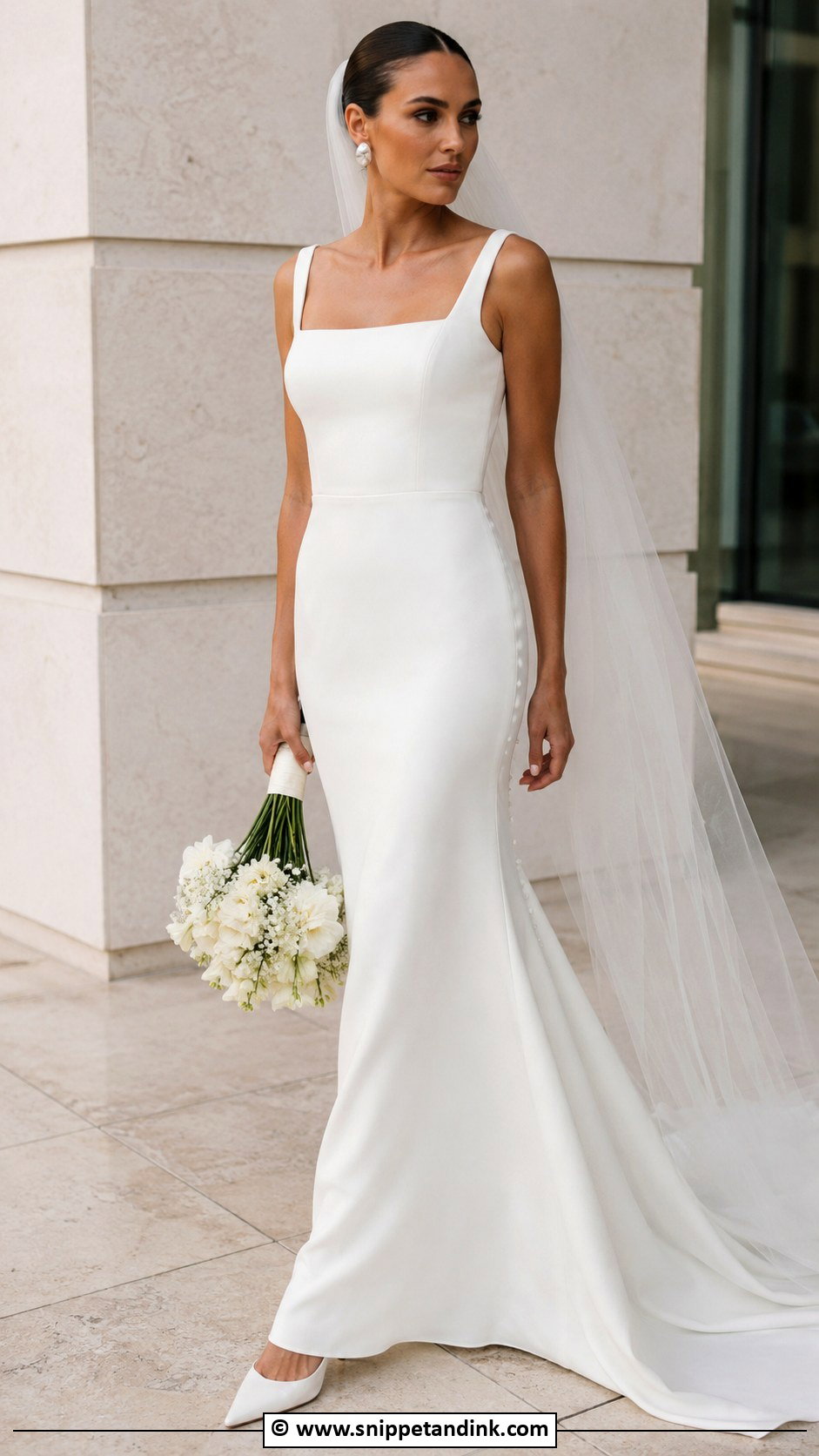
Crepe hides nothing, and that’s why I love it and why I’m strict about it. Its smooth, slightly weighted surface skims the body, so a seam that’s a few millimetres off or a visible underwear line shows straight away. Bring your actual shapewear to every fitting. In return you get a quiet, clean dress for city weddings and minimal venues, where a square neckline, covered buttons, a low back or a soft train does all the talking. Add a sleek veil, sculptural earrings and pointed heels. A well-tailored crepe gown looks expensive precisely because there’s nothing to distract from the cut.
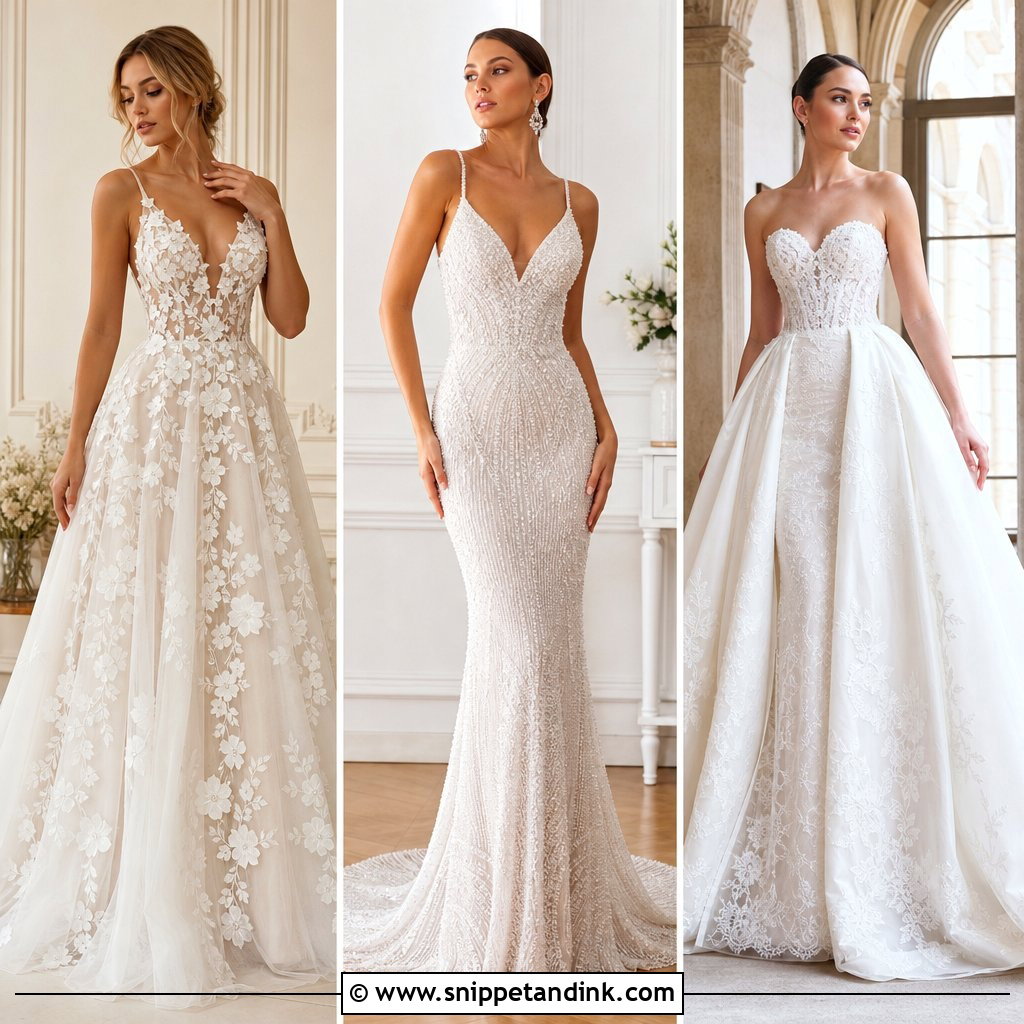
7. Floral Embroidered Wedding Dress
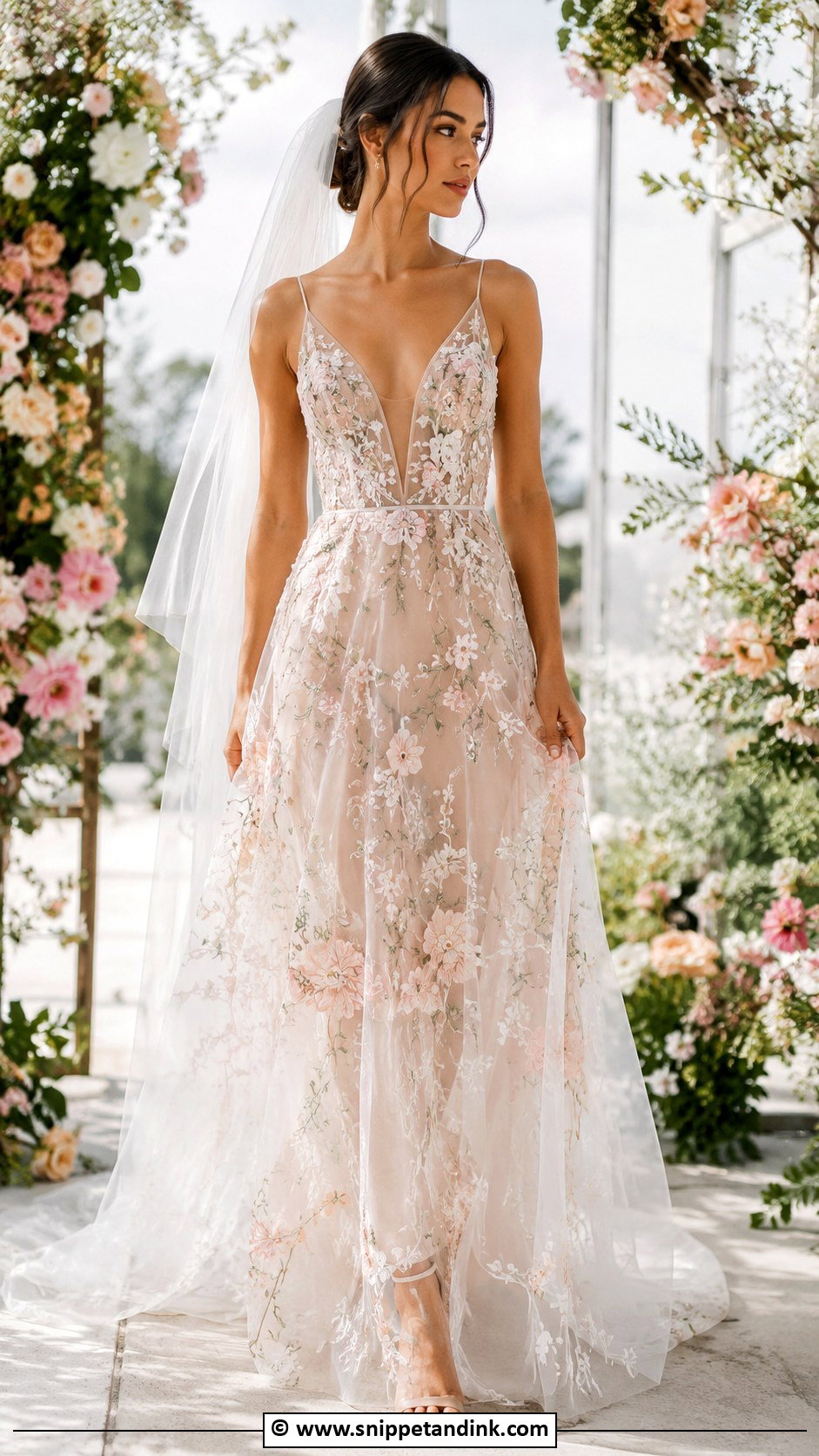
A floral embroidered wedding dress brings texture and a little colour, either in all-white thread or tinted with blush, pale blue or champagne. Embroidery weighs more than it looks. A skirt covered in it can drag a sheer overlay down at the seams, so I check how the panels are lined and whether the stitching runs through to a support layer. On a sheer overlay with floral appliqué, the dress stays light enough for a spring garden ceremony. Keep the veil plain so its edge doesn’t fight the embroidery, and let soft waves, small earrings and barely there heels do the rest.
8. Tulle Princess Wedding Dress
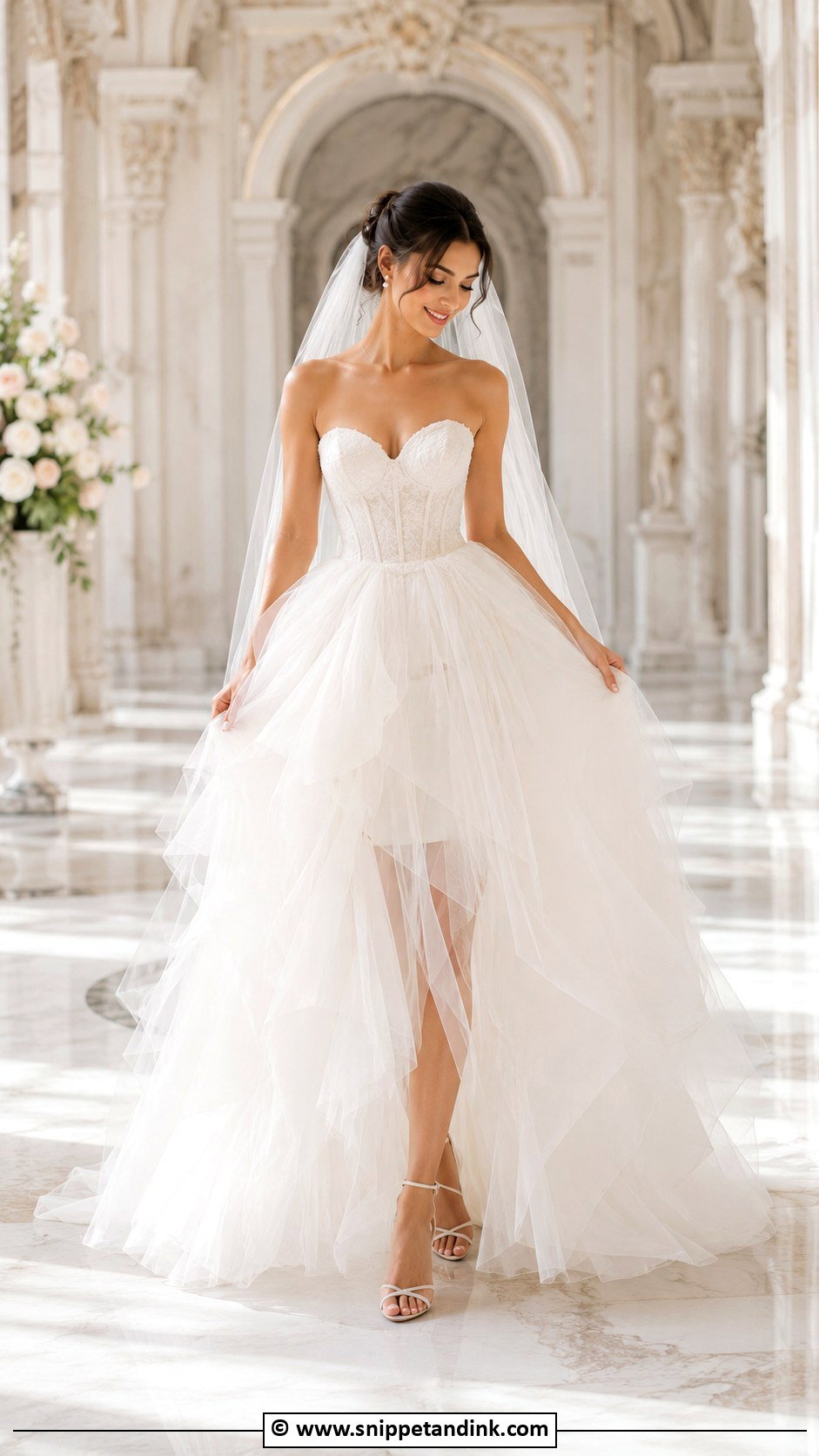
Tulle gives volume without weight: a skirt that looks huge but walks lightly. The downside is that it snags. Chunky bracelets, rough venue floors and the hook-and-loop strap on a camera bag all catch it, so I’d keep jewelry smooth or skip the bracelet. Sweetheart necklines, corset bodices, appliqué and fine sparkle all sit well on top. With a very full skirt, keep the veil simple and the earrings small. The bodice fit is what makes all that volume look intentional; if it gapes, the skirt starts to overwhelm you.
9. Mermaid Lace Wedding Dress
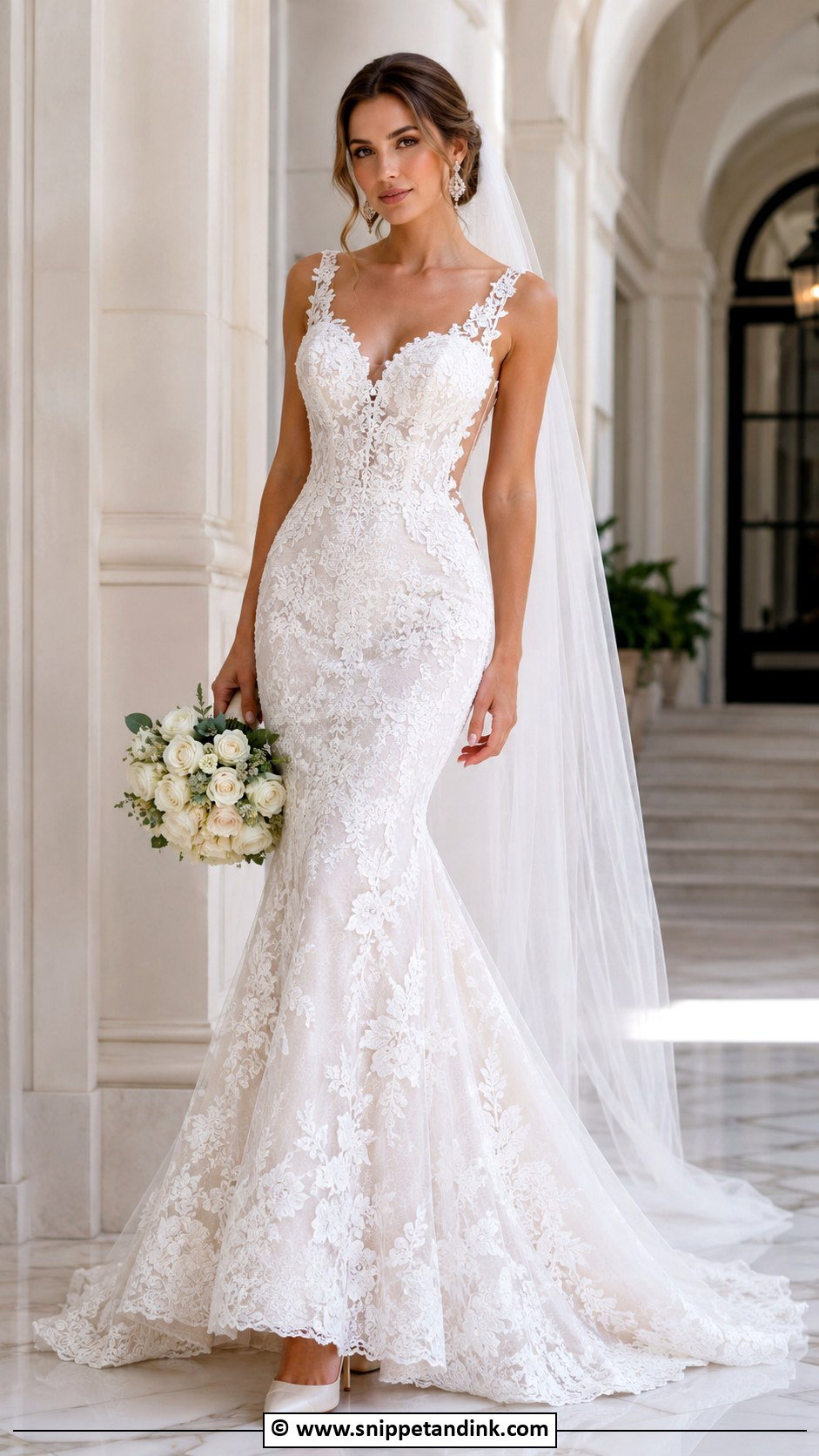
With a mermaid, where the flare starts decides everything. The dress follows the body through the bodice and hips and opens near the knee or lower thigh. Set it too low and stairs and dancing get hard, so at the fitting I have you walk, climb a step and sit before we pin anything. Lace keeps the shape romantic rather than sharp, and it suits formal venues and evening receptions. A long veil, drop earrings and slim heels work here, with a low bun or side-parted waves to show the neckline. Plan for a bustle that tucks under the skirt so the flare isn’t flattened.
10. Sheath Wedding Dress
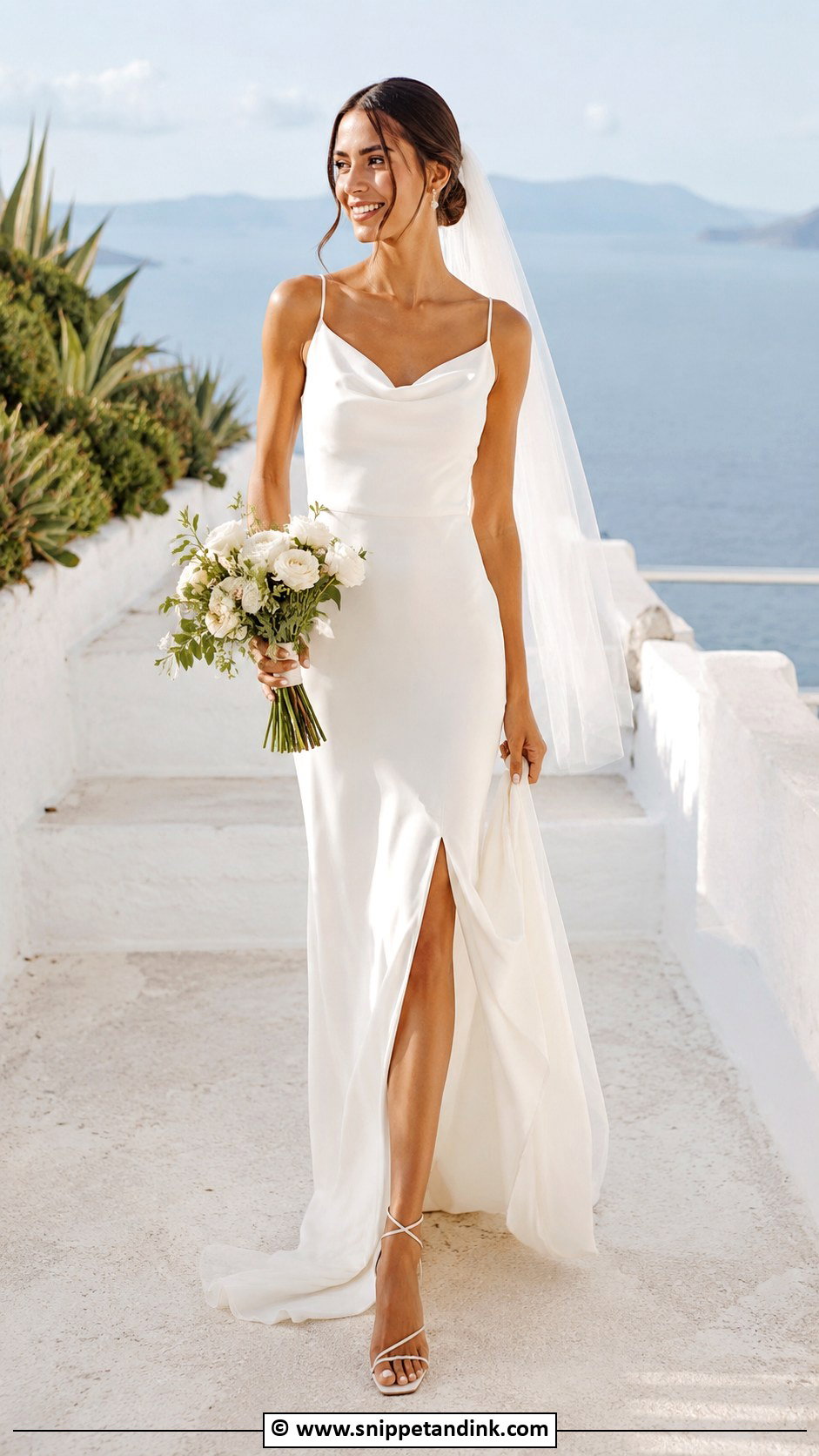
A sheath wedding dress falls close to the body without a mermaid’s flare or a ball gown’s volume, so you can walk on sand, climb into a car and dance without managing anything. That’s why I steer destination and small-ceremony brides toward it. It comes in crepe, satin, lace, chiffon or silk, though thin silk shows every ridge in the lining, so I check it in daylight. Strappy heels, a soft veil and minimal jewelry keep it relaxed. If you want more shape, a defined waist or a subtle side slit adds it without losing the ease.
11. Square Neck Wedding Dress
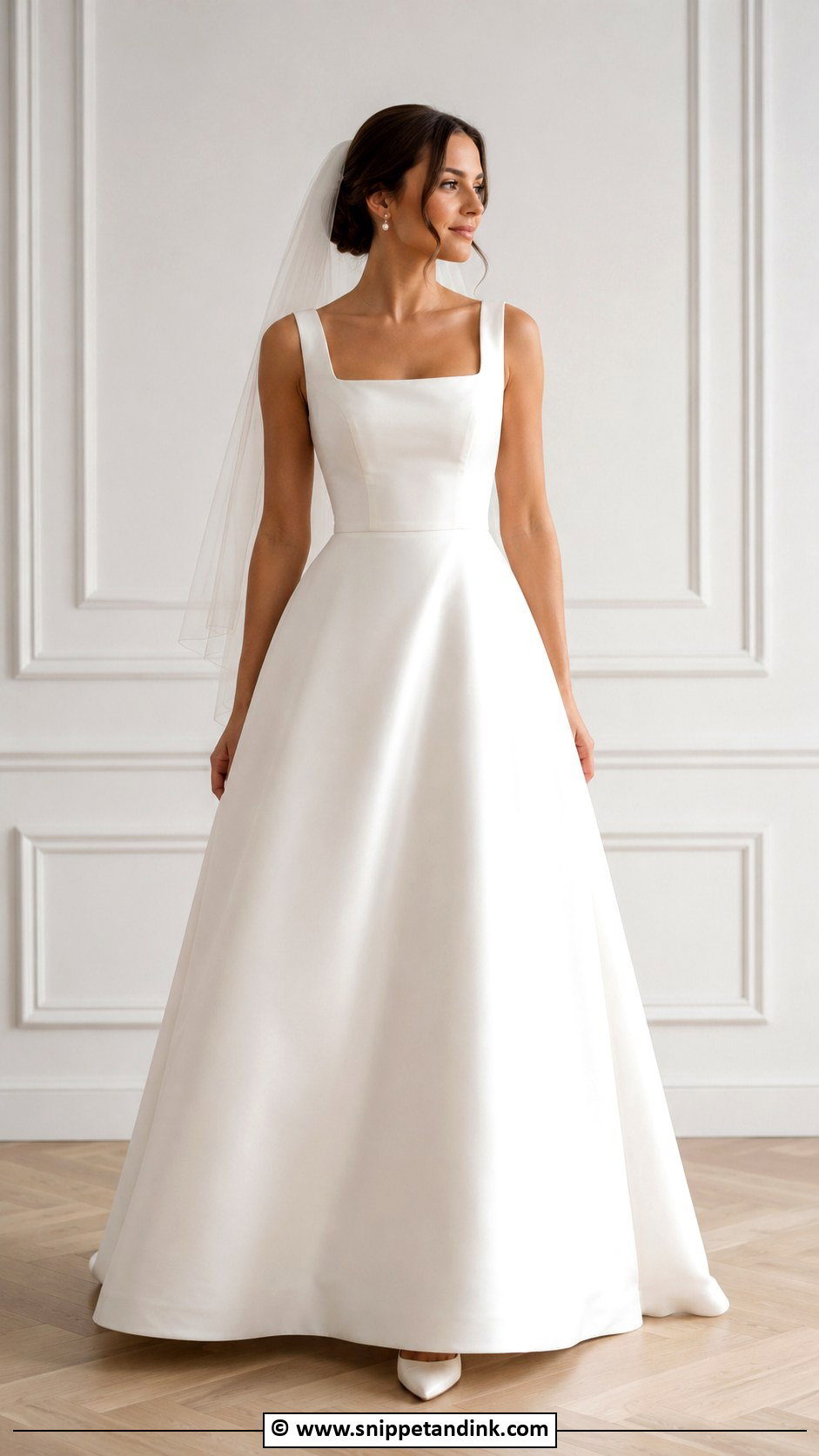
I recommend the square neck to brides who want support without a high neckline. The straight edges frame the collarbone, and the strap placement often allows a proper bra. The fitting detail I watch is the corners: if they gape when you lean forward, a dressmaker can take them in at the side seams. It sits well on A-line, sheath, ball gown and fitted crepe styles. A small pendant, a few pearls or nothing at all is right here, and the hair can go up or half-up. Satin makes it polished, lace makes it romantic.
12. High Neck Wedding Dress
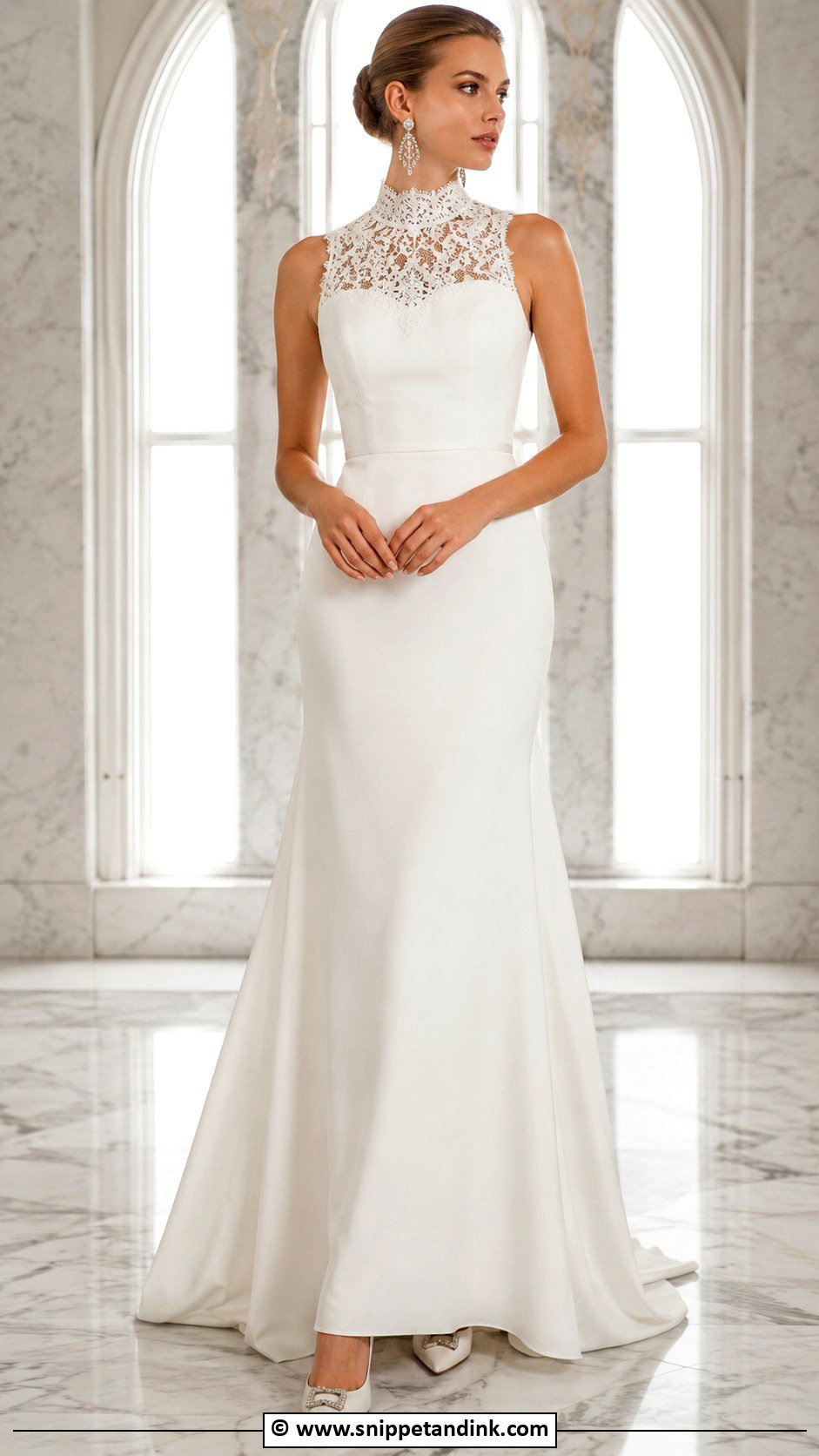
High necks are warmer than people expect, so for summer I’d look at a sleeveless version in crepe or chiffon rather than long lace sleeves. The neckline does the job of a necklace, which means heavy necklaces only crowd it; put the attention on earrings. Sleeveless reads sleek, long lace sleeves read romantic. A clean bun or ponytail shows the shape best, because hair falling forward breaks the line at the throat. Pointed heels and a simple veil finish it, and it gives you coverage with some quiet drama.
13. V Neck Wedding Dress
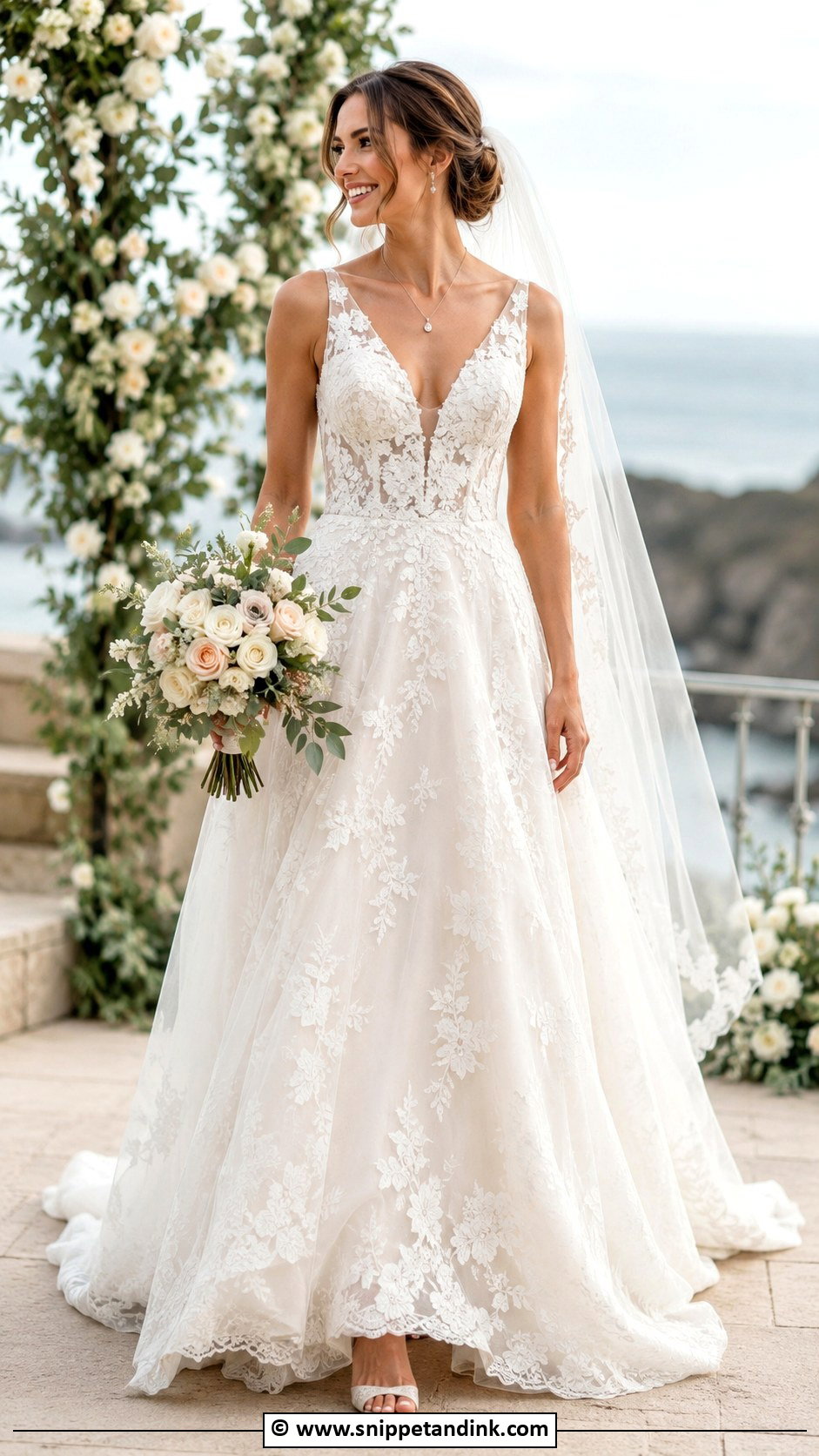
Depth is the whole conversation with a V neck. A shallow V stays put and feels classic; a deep plunge needs mesh or fashion tape, and I ask you to bend and pick something off the floor before we sign off on it. The neckline lengthens the upper body and suits lace A-lines, satin gowns, chiffon beach dresses and fitted crepe. On a plain bodice a fine necklace can sit in the V. If the bodice is beaded or lace, earrings only. A veil with a clean cut edge keeps it from looking busy.
14. Sweetheart Neckline Wedding Dress
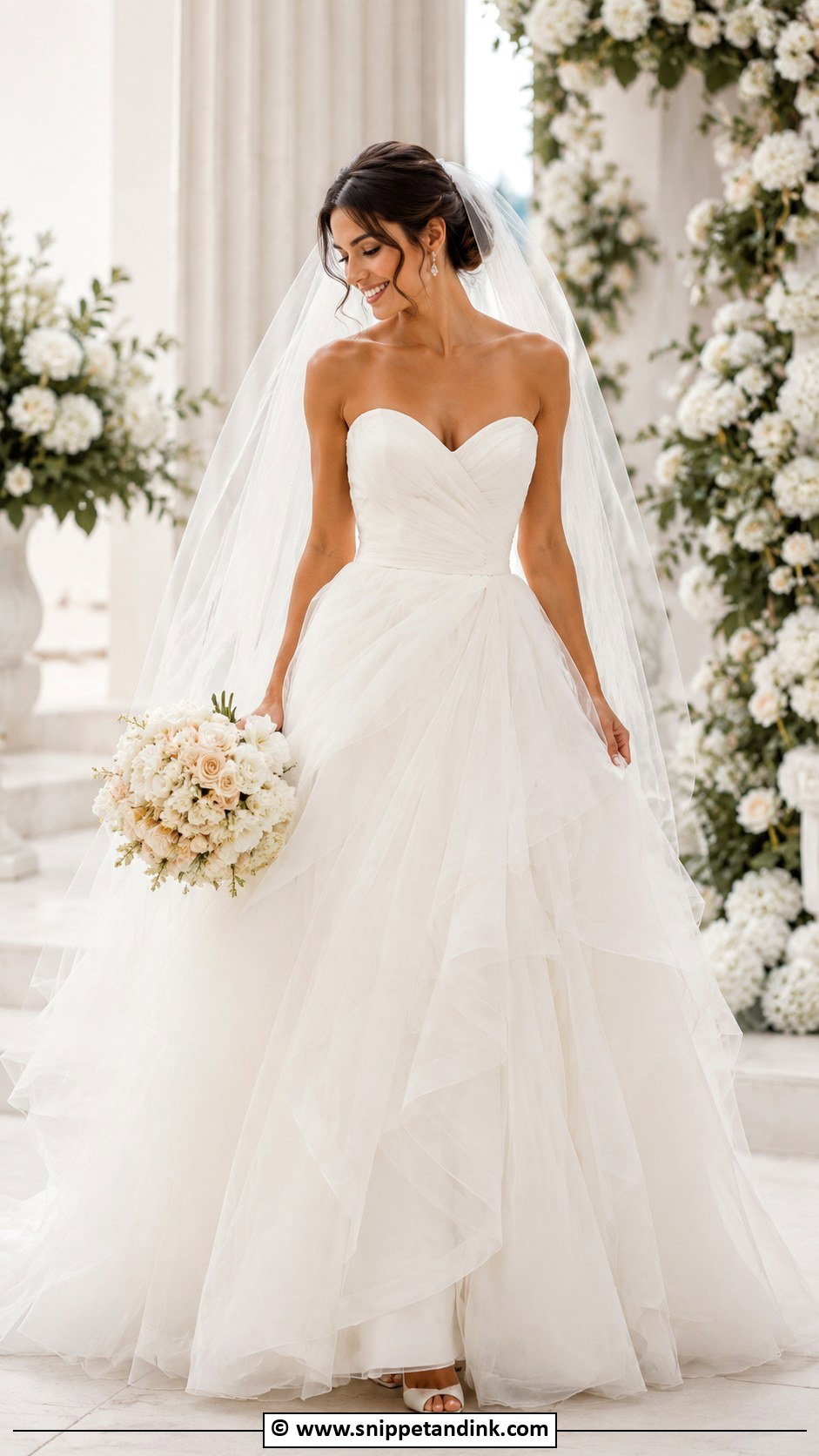
A sweetheart neckline wedding dress curves over the bust, and that curve only stays put if the dress is built properly inside. I look for boning and a waist stay, a band inside the bodice that hooks closed and takes the weight off the neckline. Without it, the top edge creeps down every time you hug someone. The shape sits naturally on strapless gowns, corset bodices, tulle skirts and satin ball gowns. Small drop earrings, a delicate veil and ivory heels are enough, with either a soft updo or loose waves.

15. Basque Waist Wedding Dress
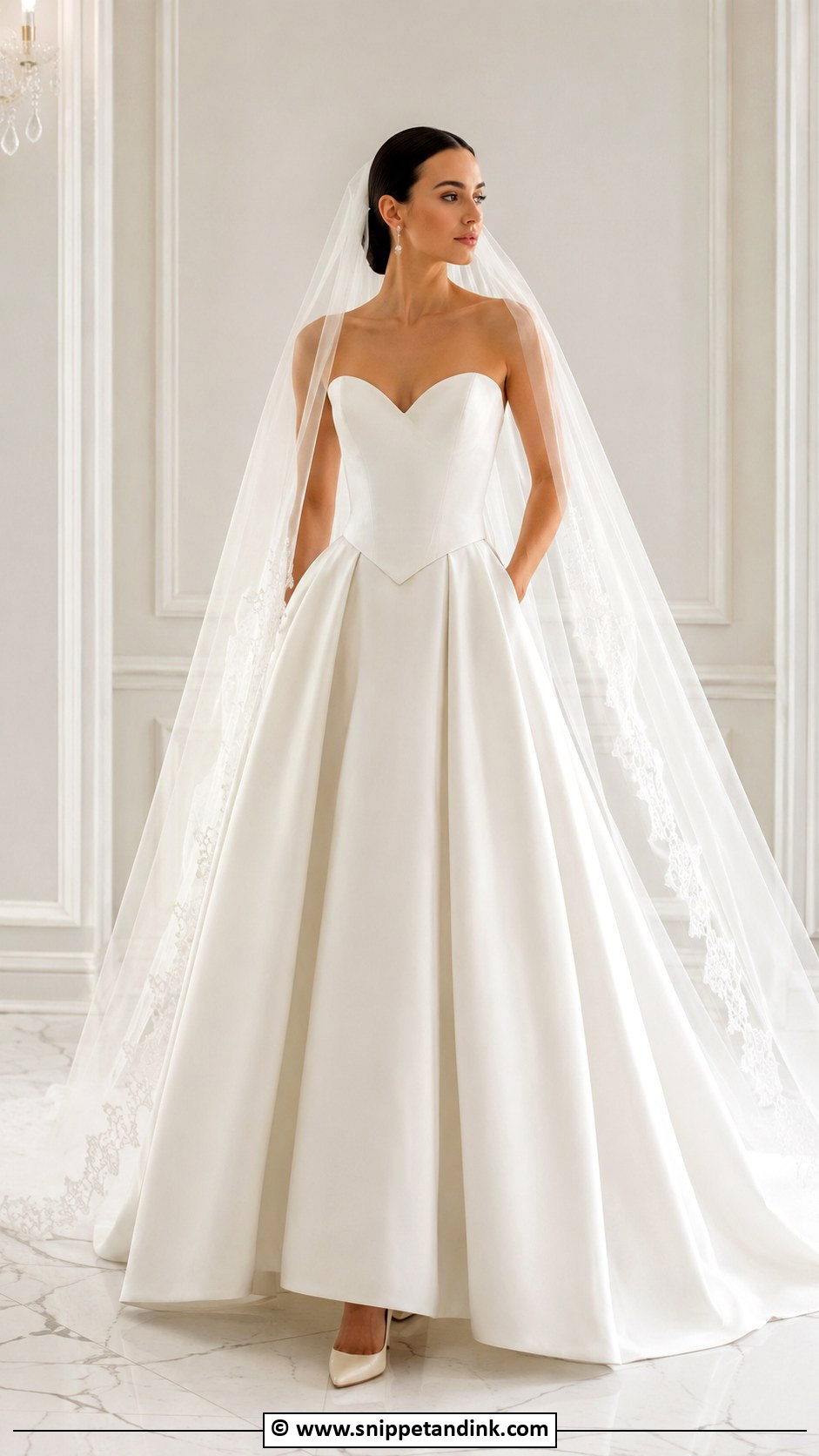
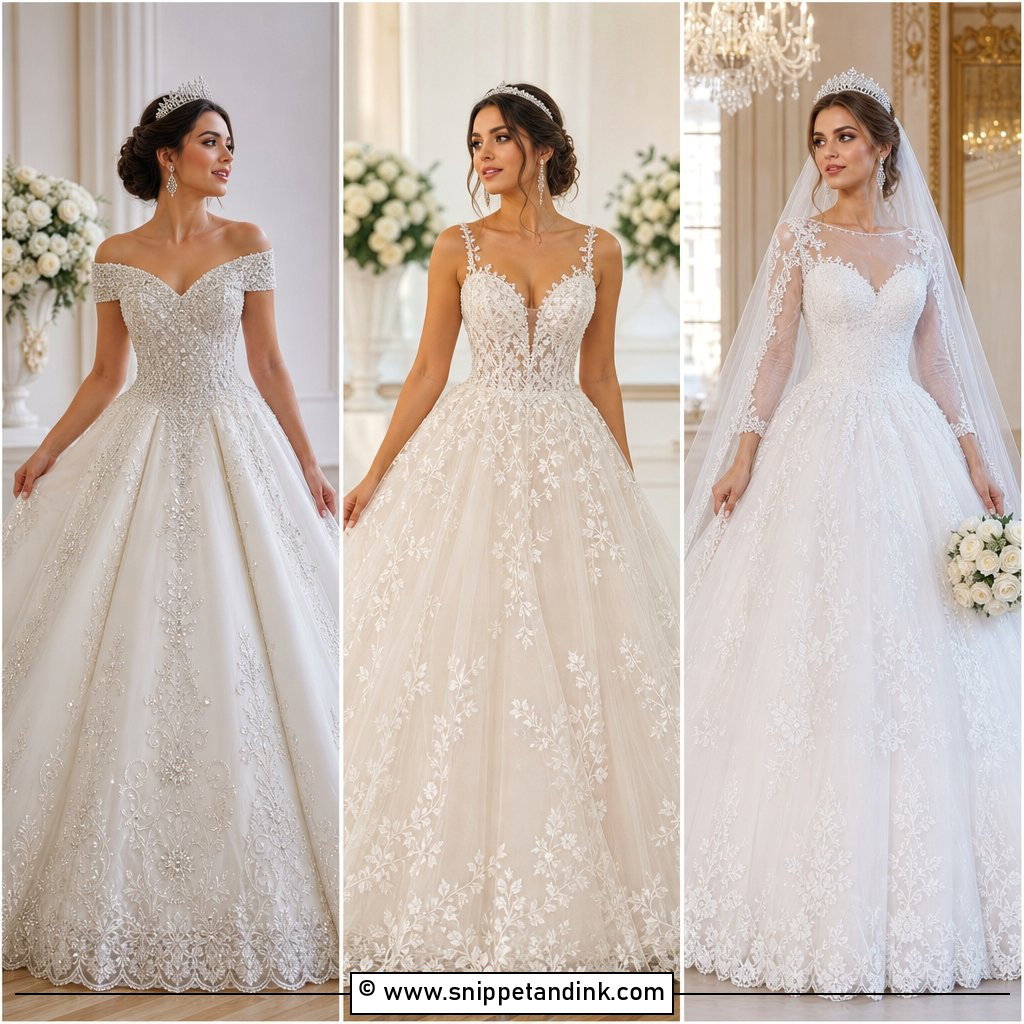
A basque waist wedding dress dips into a point below the natural waist, lengthening the torso and giving a sculpted bridal shape. You’ll see it on ball gowns and full A-lines, though clean satin or organza makes it feel current. The point has to sit centred and flat. If the bodice is even slightly long for you, it buckles when you sit, and I’d shorten it at the shoulder or the waist seam rather than move the point. Balanced skirt volume matters too. A long veil, pearl earrings and classic pumps keep it composed.
16. Drop Waist Wedding Dress
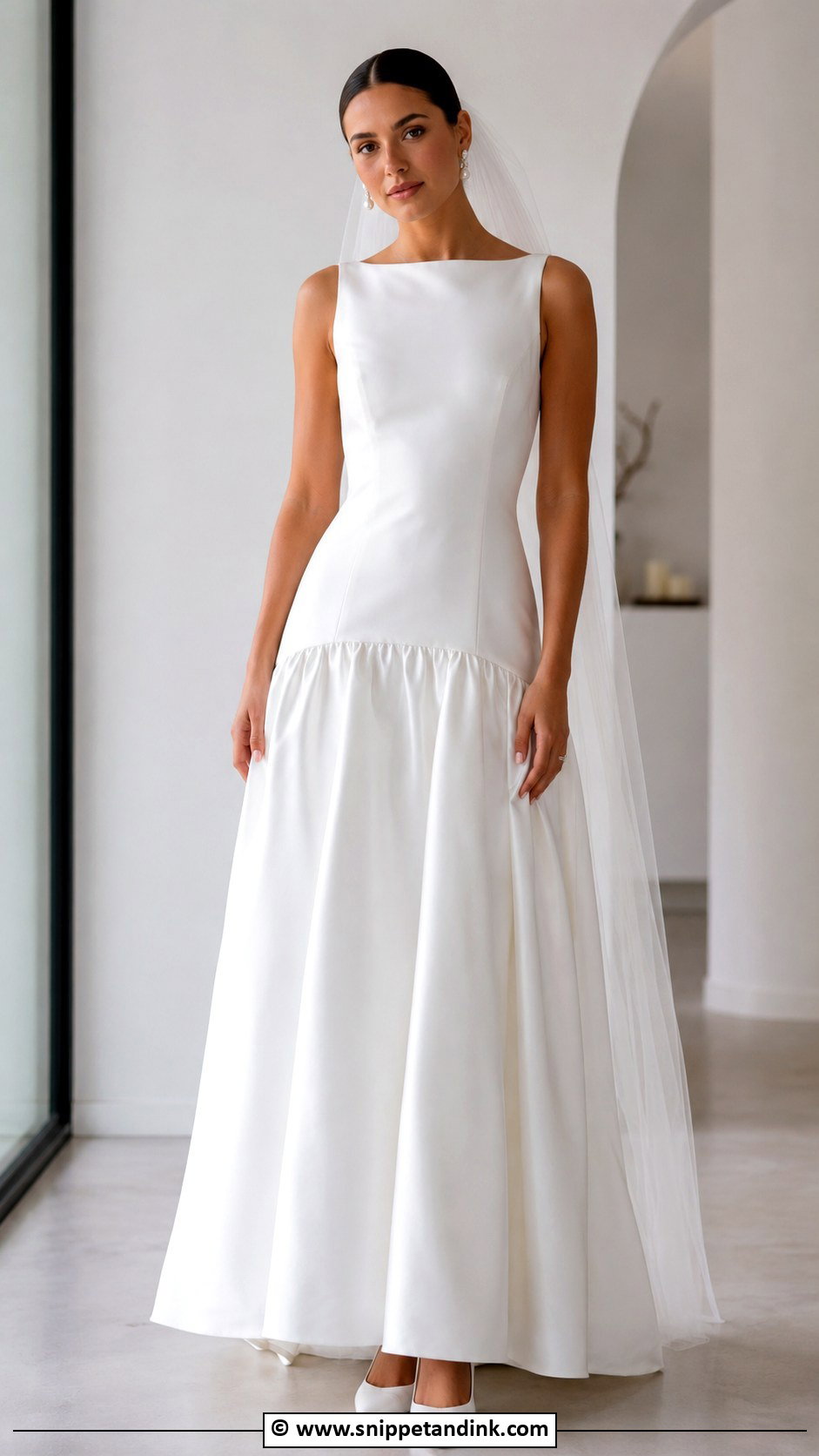
A drop waist wedding dress extends the bodice below the natural waist before the skirt starts, giving a long line with a slightly vintage feel. Honestly, it’s a harder shape if you’re short in the torso or curvy through the hip, because the seam can land at the widest point, so try it on before ordering rather than buying from a photo. Satin makes it polished; lace or tulle makes it softer. The silhouette already stands out, so a simple veil, pointed heels and refined earrings are all it needs.
17. Tea Length Wedding Dress
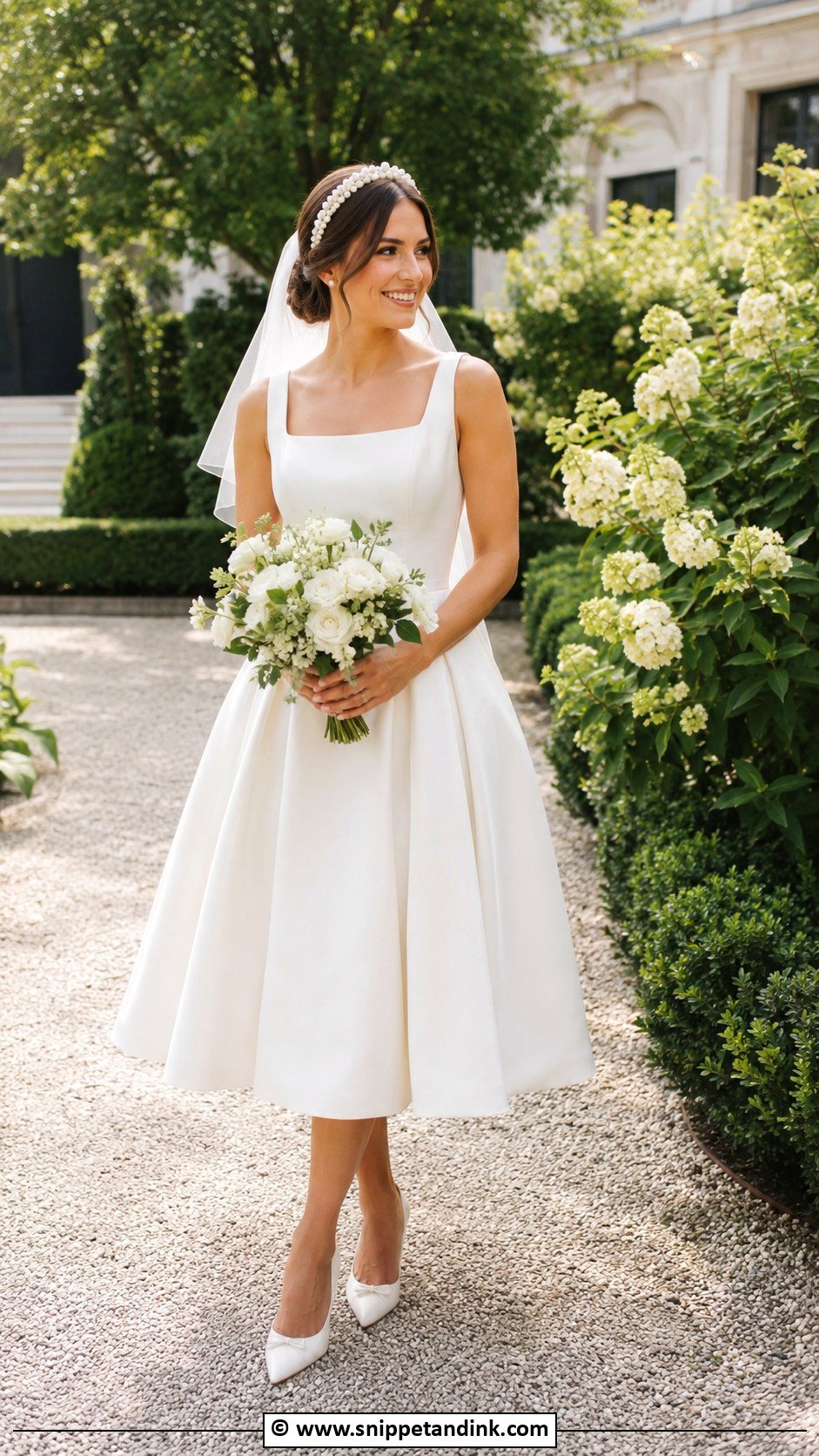
Tea length means the hem lands between knee and ankle, so your shoes are part of the outfit, not hidden. I measure the hem with the actual shoes on; a couple of centimetres either way changes whether it reads fifties or simply short. It suits courthouse ceremonies, garden weddings, brunch receptions and smaller celebrations. A full skirt with a petticoat leans vintage, clean satin leans modern. Pointed pumps, slingbacks or embellished flats all work, topped with a birdcage veil, a short veil or a pearl headband.
18. Short Wedding Dress
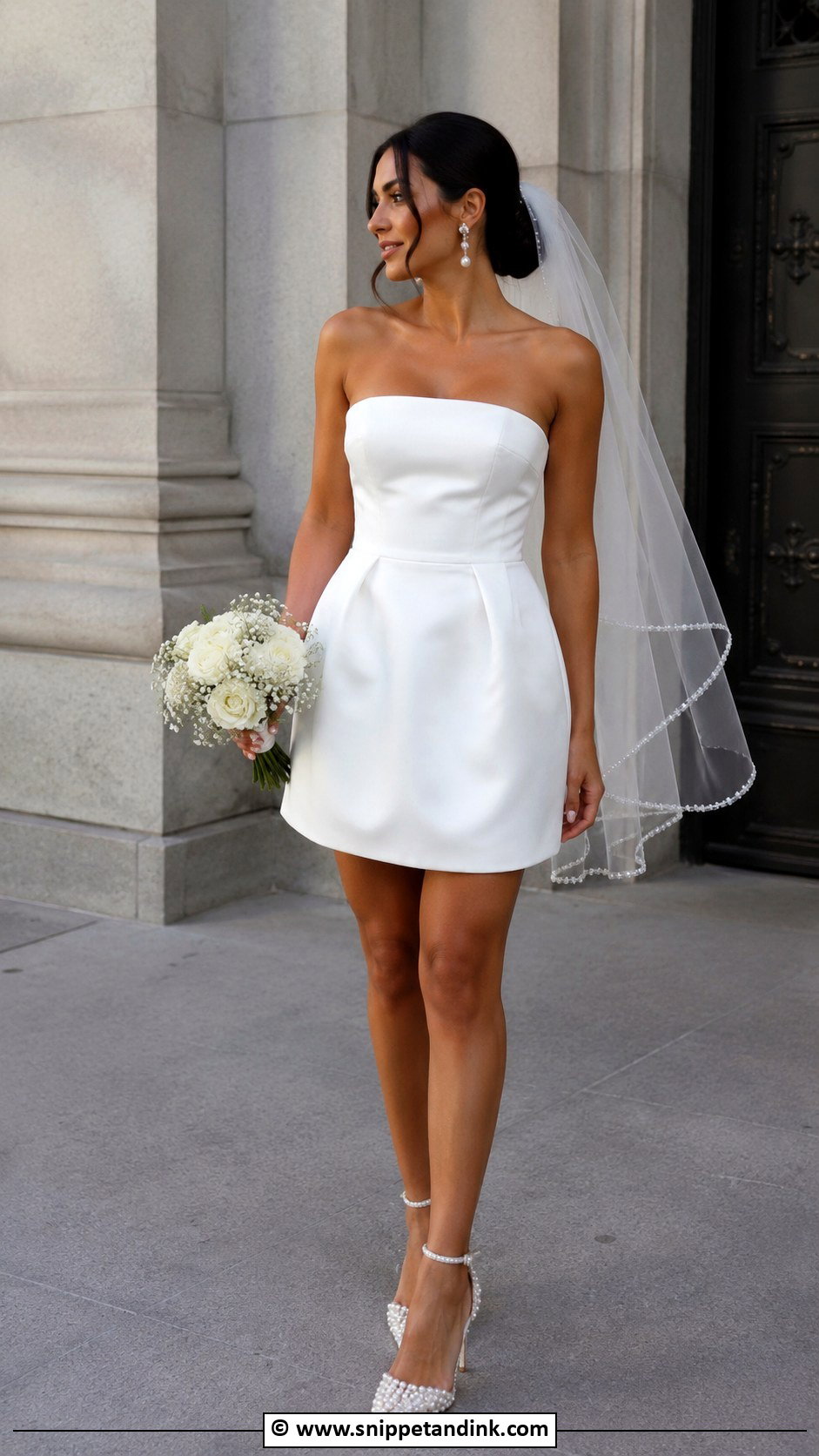
A short dress puts the legs and shoes on display, so fabric quality has to be high. Thin satin on a mini looks cheap in a way a long skirt can sometimes hide. Look for structured satin, lace sleeves, a bow, feather trim or a tailored mini shape. I like it for courthouse weddings, elopements and as a reception change. Pointed pumps, pearl heels or sleek slingbacks suit it, and a veil, gloves or statement earrings make it unmistakably bridal. Do a sit test in front of a mirror; minis ride up more on a chair than they do on a hanger.
19. Slip Wedding Dress
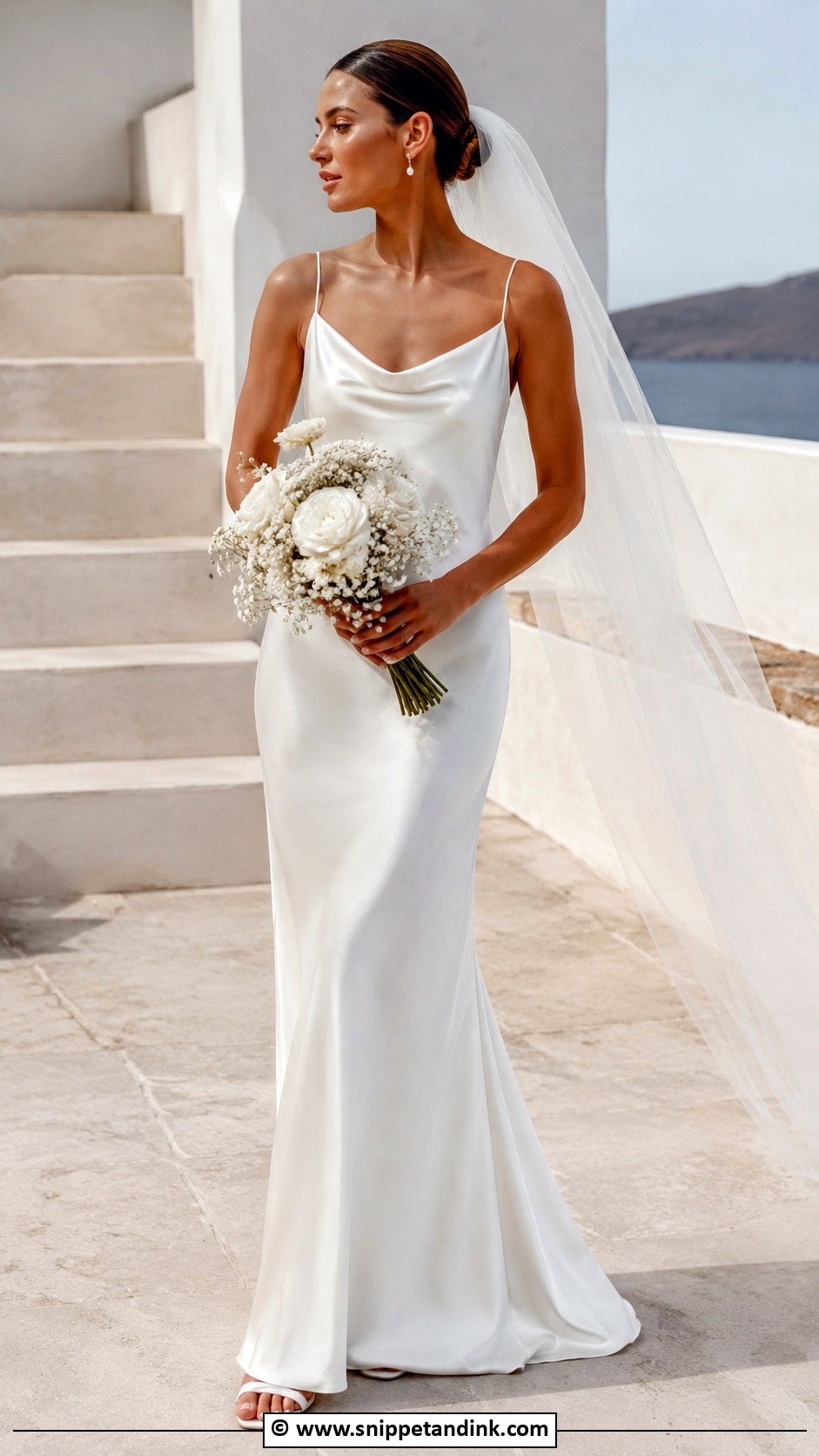
The slip is the least forgiving gown here. Bias-cut silk or charmeuse drapes like water, which is the appeal and the reason every line underneath shows. I fit slips with the exact underwear the bride will wear and check them by a window in daylight. The slim shape and delicate straps suit beach ceremonies, city weddings and modern venues. Add a sheer veil, strappy sandals, pearl earrings and a soft bouquet, or layer a sheer cape or tailored bridal blazer for coverage. One more thing: silk can water-spot, so a dry microfiber cloth belongs in your emergency kit.
20. Bow Detail Wedding Dress
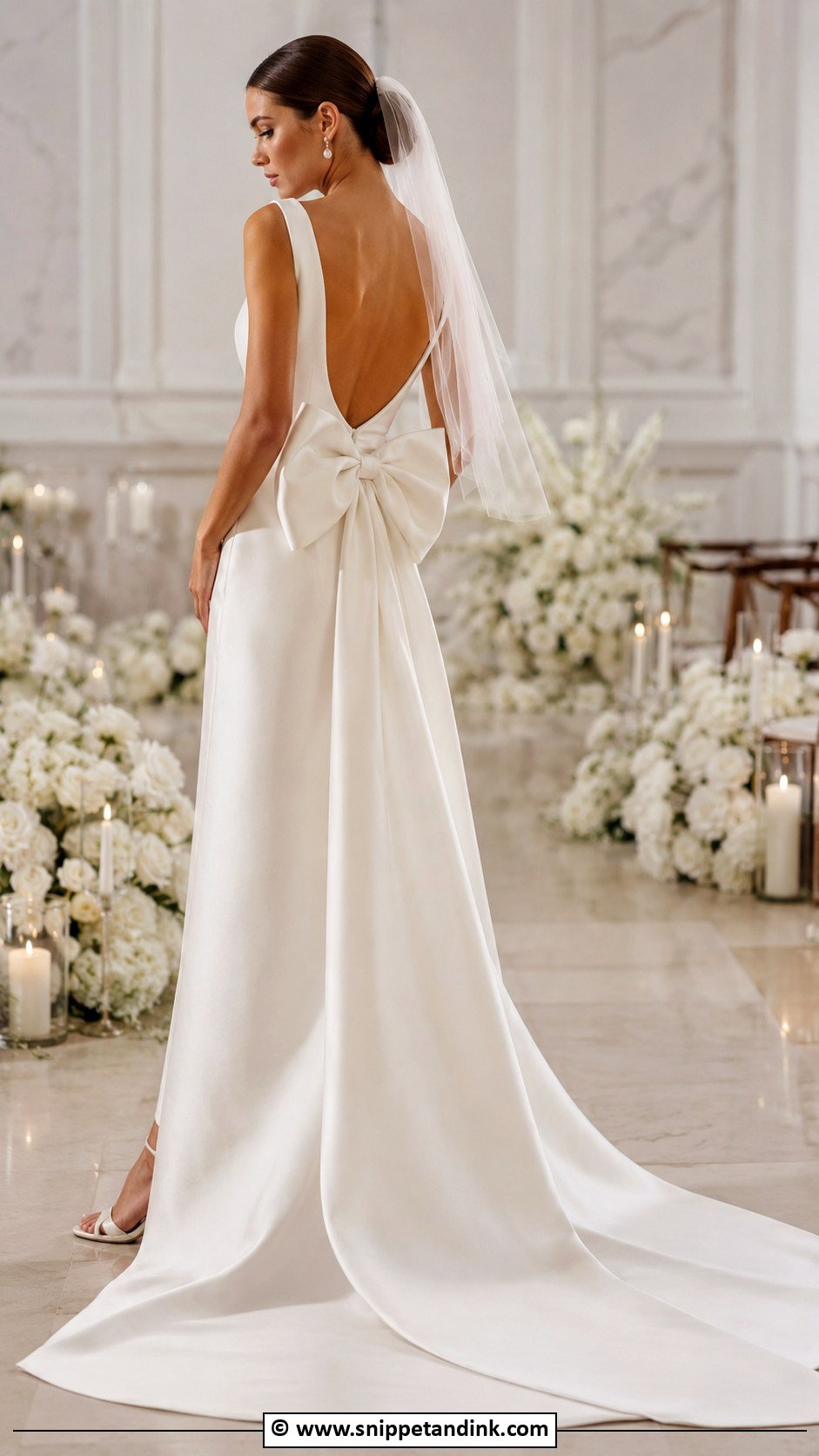
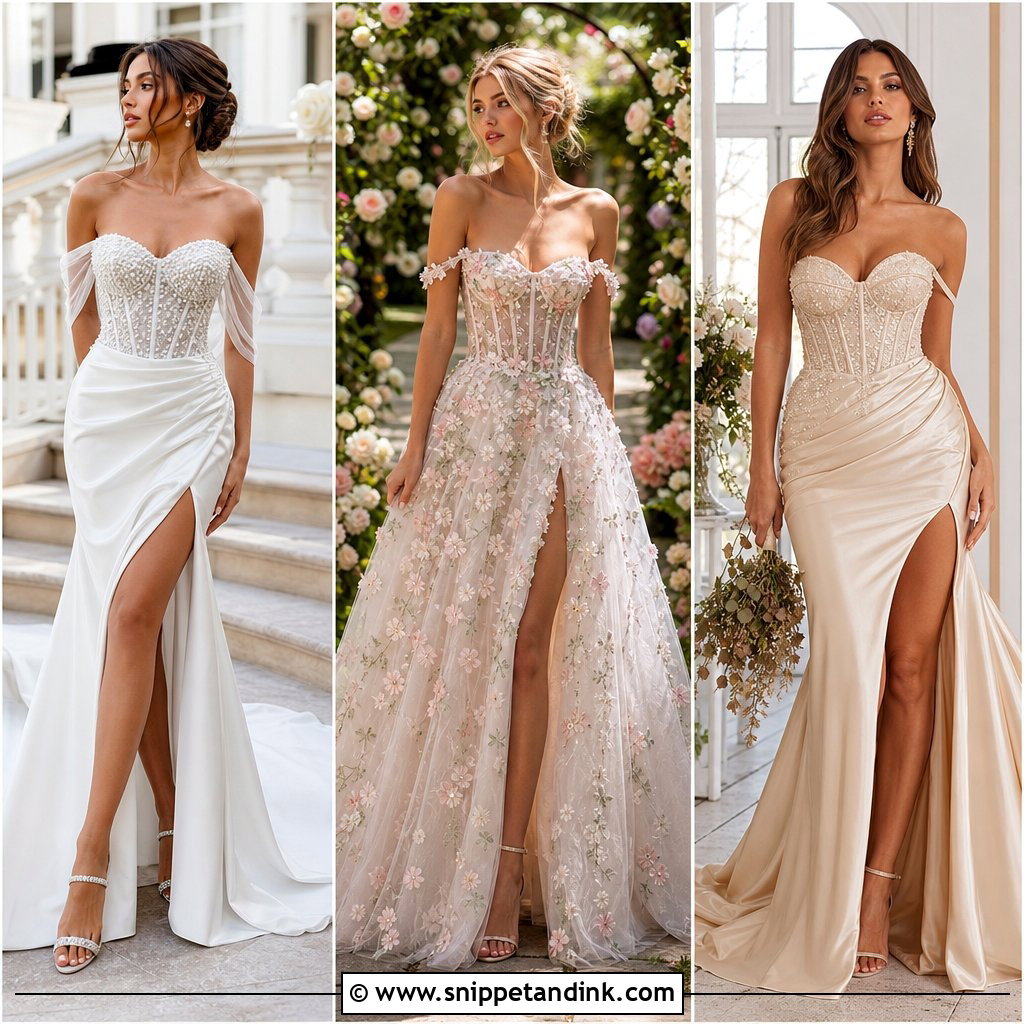
Where the bow sits changes the dress. At the back waist it’s sweet, on one shoulder it’s fashion-led, and on the train it’s mostly seen from behind, which is how guests see you during the ceremony. Satin and mikado hold a bow’s shape because they’re stiff; organza gives a floppier, softer finish. A big bow needs a cleaner gown underneath it. Test it in a chair with a back, because a large back bow gets crushed at dinner, and ask whether it detaches for the reception. Simple heels, pearl earrings and a clean veil are enough.
21. Pearl Beaded Wedding Dress
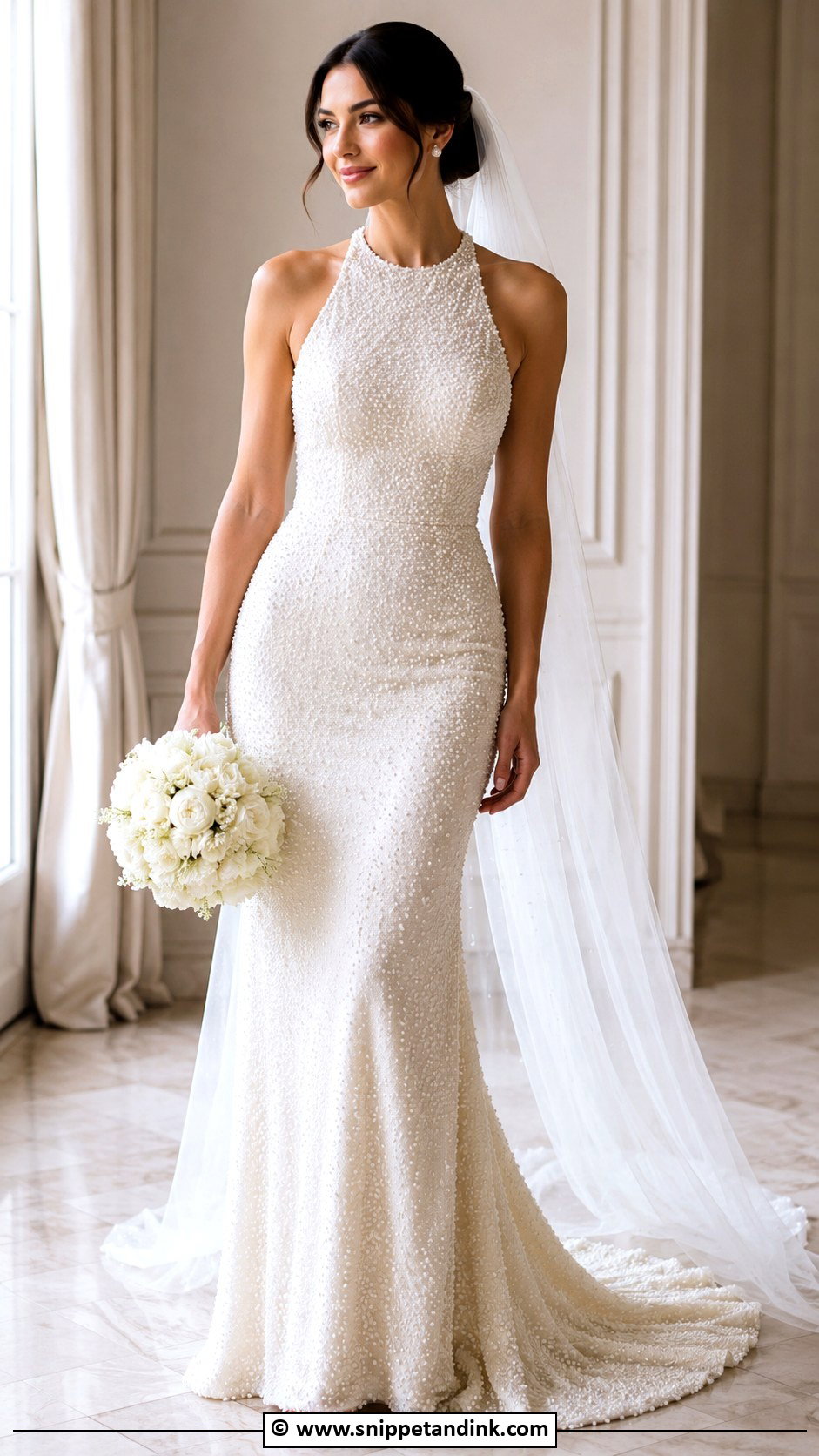
Pearls glow rather than sparkle; they diffuse light instead of flashing it. They can cover the whole gown, trace the bodice, decorate sleeves or edge the veil. I always turn the fabric over to check the stitching. Pearls sewn on individually stay put, while pearls on a chain-stitched strand can unravel in a line if one thread breaks. The look suits formal indoor weddings and brides who want texture without heavy shine. A slim silhouette feels modern, an A-line classic. Keep jewelry to pearl studs, since the dress is already wearing your accessories.
22. Sequin Wedding Dress
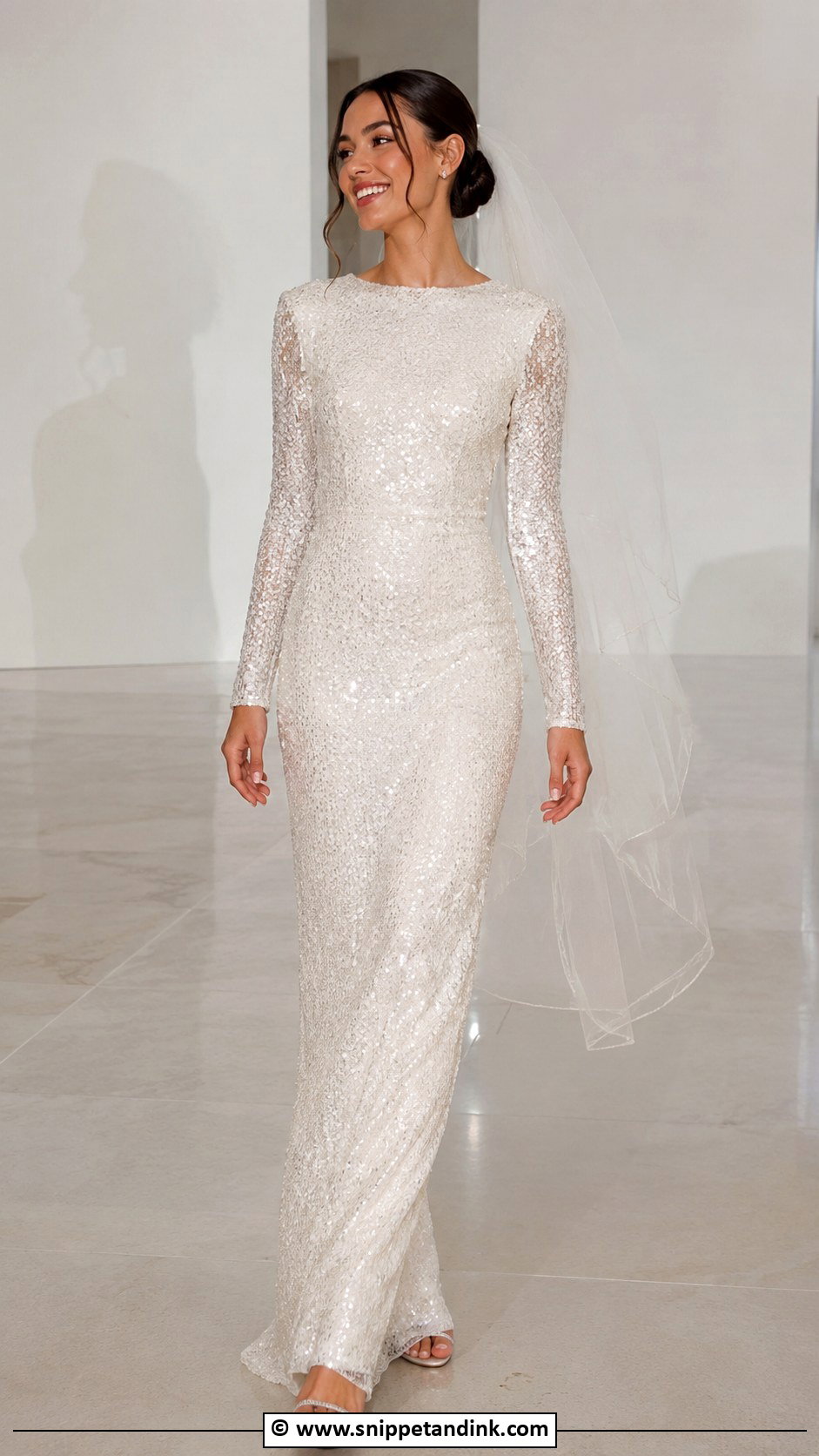
Sequins bring light and movement, but the real risk is a gown that looks like a costume. White, ivory, champagne or pearl sequins on a simple column, a long sleeve gown or a fitted sheath keep it bridal. I check the inside seams and underarms, because sequin edges scratch skin over a long evening and a well-made gown has them cleared from the seam allowances or lined. It belongs at an evening reception or a rooftop party. Sleek heels, small earrings and a clean veil, or no veil at all.
23. Blush Wedding Dress
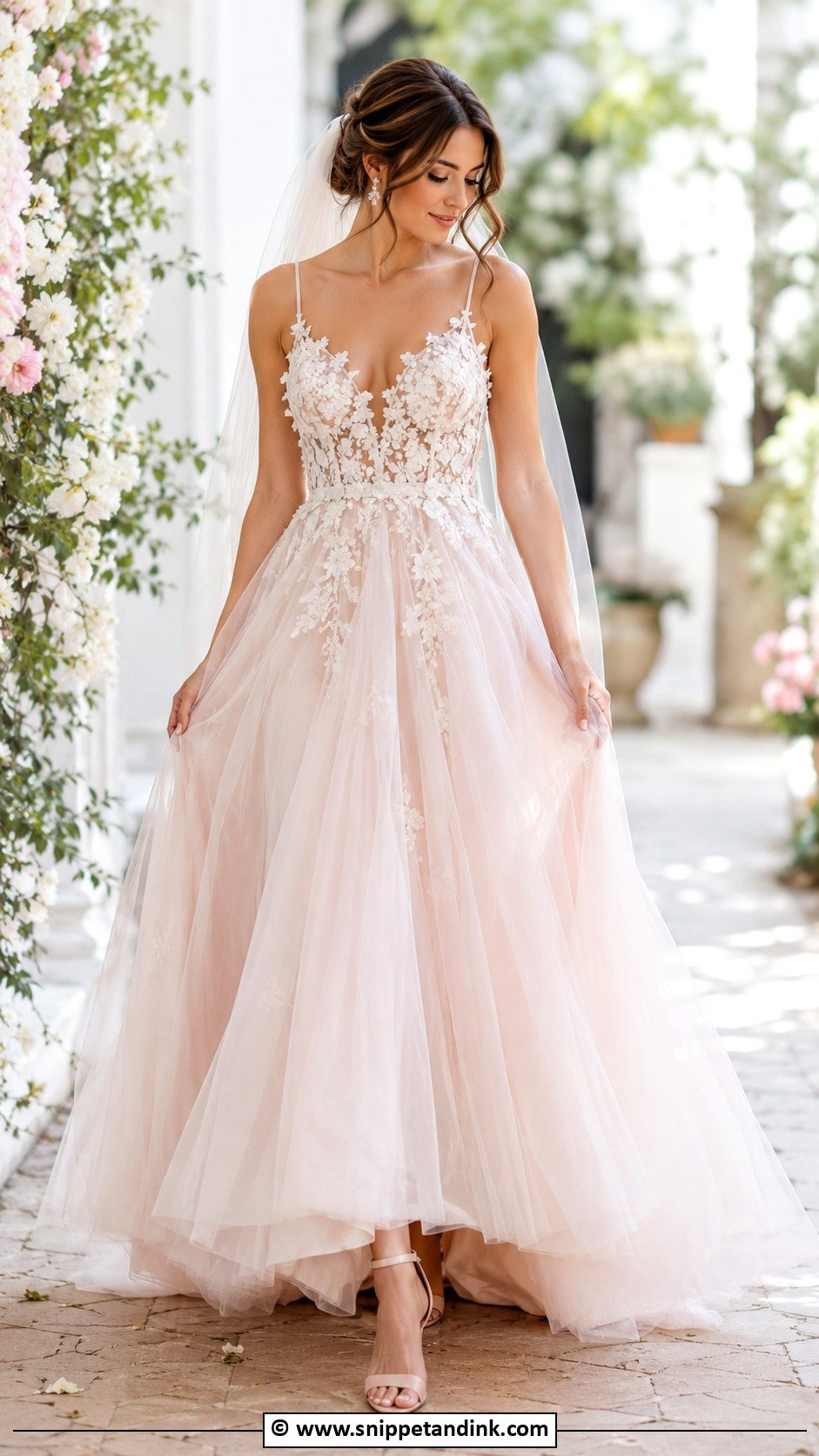
Blush isn’t one colour. Some versions read nearly white, others clearly pink, and the shade shifts with the nude lining underneath. I hold a blush gown against the bride’s skin in daylight, because a cool pink can make warm skin look sallow. Tulle makes it romantic, satin refined, floral appliqué a little whimsical. Spring, gardens and outdoor ceremonies suit it best, though a good fabric carries it into formal rooms. Ivory heels, rose-gold jewelry and a blush or soft ivory veil, with fresh makeup so the dress keeps the colour.
24. Champagne Wedding Dress
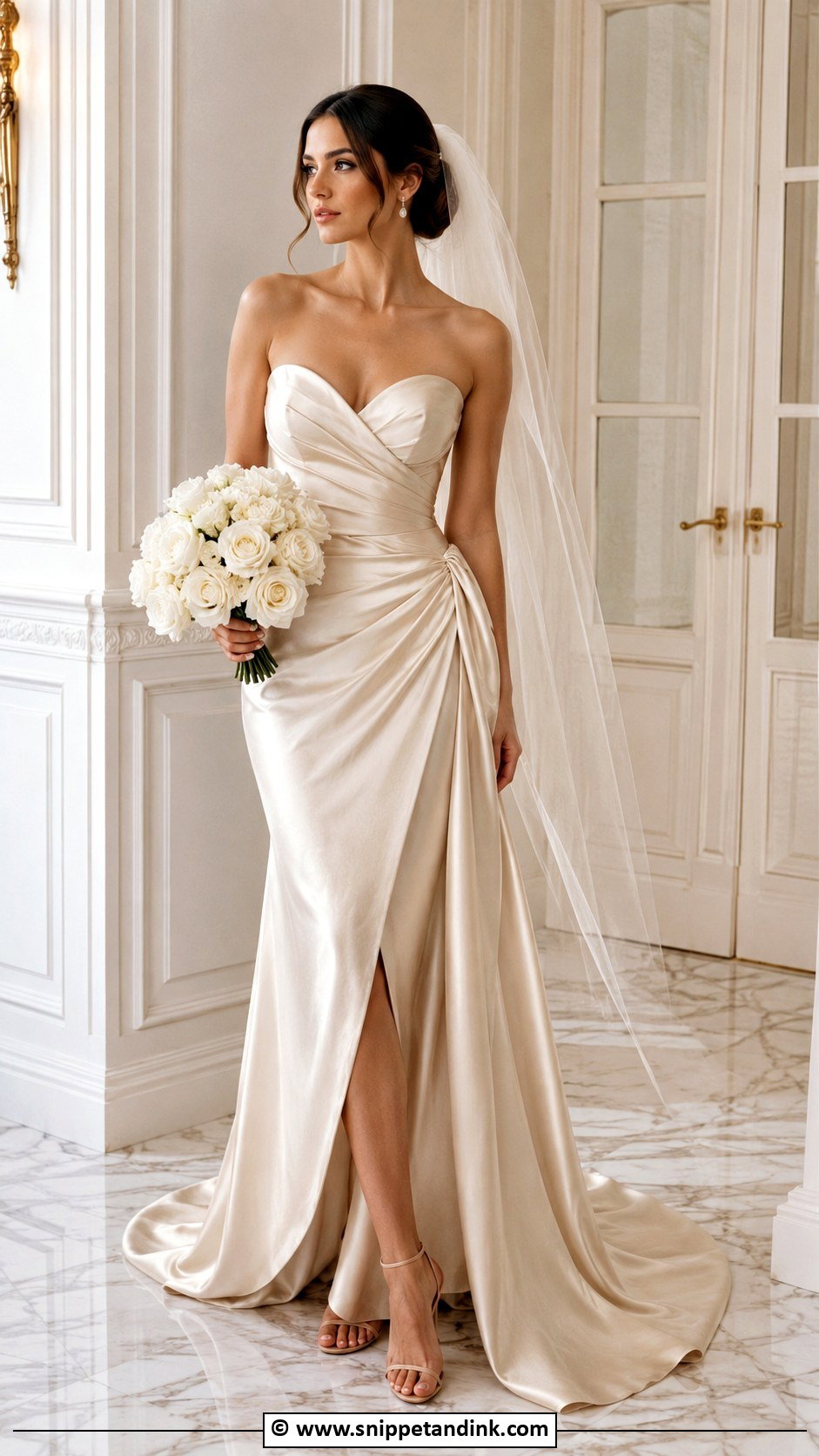
A champagne wedding dress sits between ivory, nude and soft gold. Usually it’s an ivory outer layer over a warmer lining, so it looks richest in satin, tulle, lace and beading. Warm afternoon light makes it glow, while cold LED reception lighting can flatten it toward beige, so I always ask what the evening lighting will be. Pearl, gold and crystal accessories all suit it. Nude heels keep the line unbroken; ivory shoes feel more traditional. A simple veil softens the warmth.
25. Floral Applique Wedding Dress
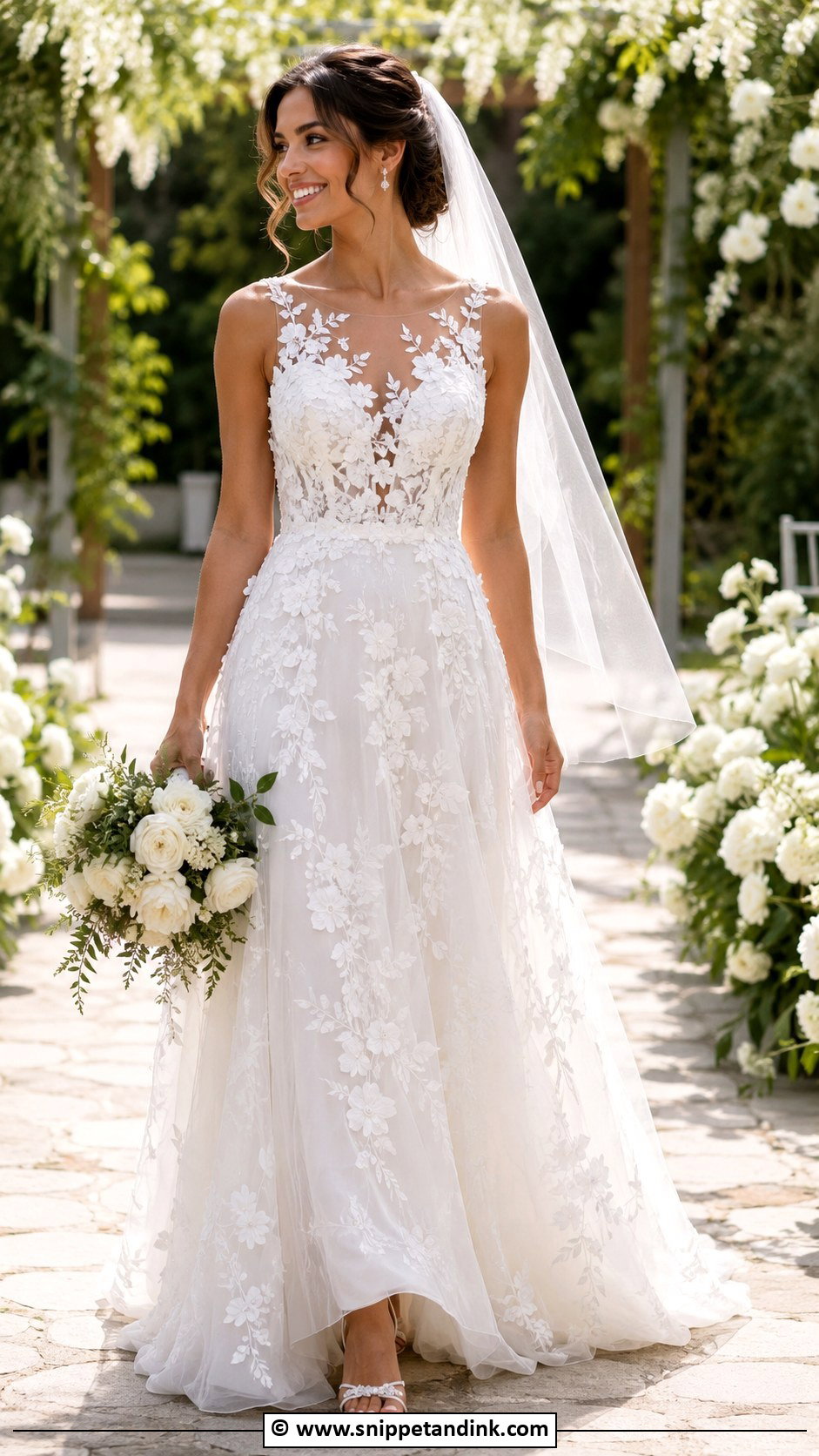
Appliqué flowers are cut out and stitched onto the base fabric, so they sit slightly raised and give a depth flat lace can’t. That raised edge is also what catches on bouquet wire and hair pins, so I check how securely each piece is attached, especially at the hip where your arms rest. It looks good on bodices, sleeves, skirts and illusion necklines, and suits garden venues in spring or summer. Bold appliqué calls for a plain veil; subtle appliqué can take a matching floral one. Delicate heels and small earrings finish it.
26. Detachable Sleeve Wedding Dress
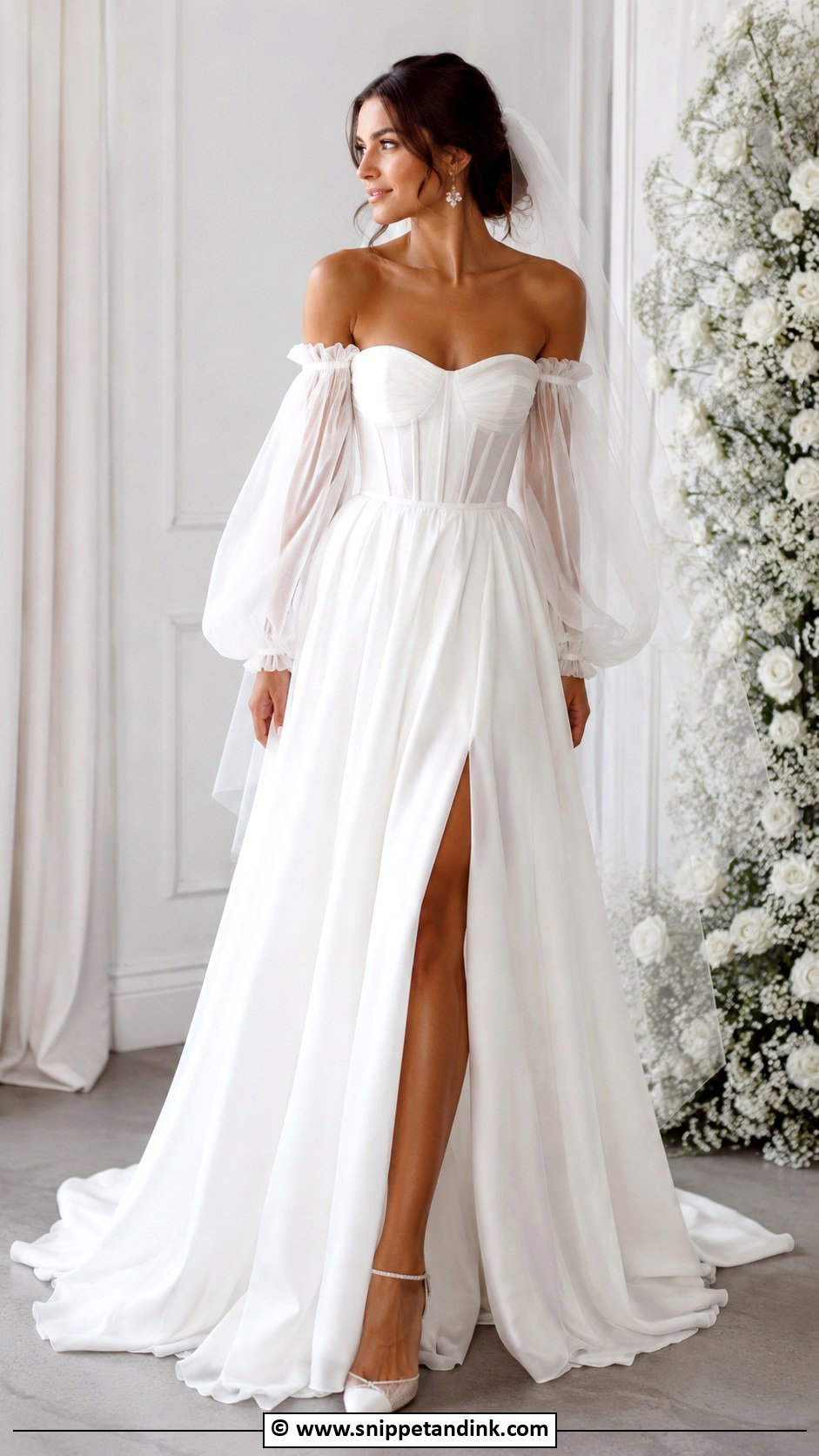
Detachable sleeves give you two looks from one gown: sleeves for the ceremony, bare shoulders for the party. The question I ask is how they attach. Hooks, snaps or small buttons hold; sleeves tied at the shoulder tend to slide. Have whoever is helping you practise taking them off at the final fitting. Sheer, lace, puffed and draped versions all sit best on strapless, sweetheart and corset dresses. Keep the base gown clean so the sleeves look deliberate, and pick a veil that suits both versions.
27. Cape Wedding Dress
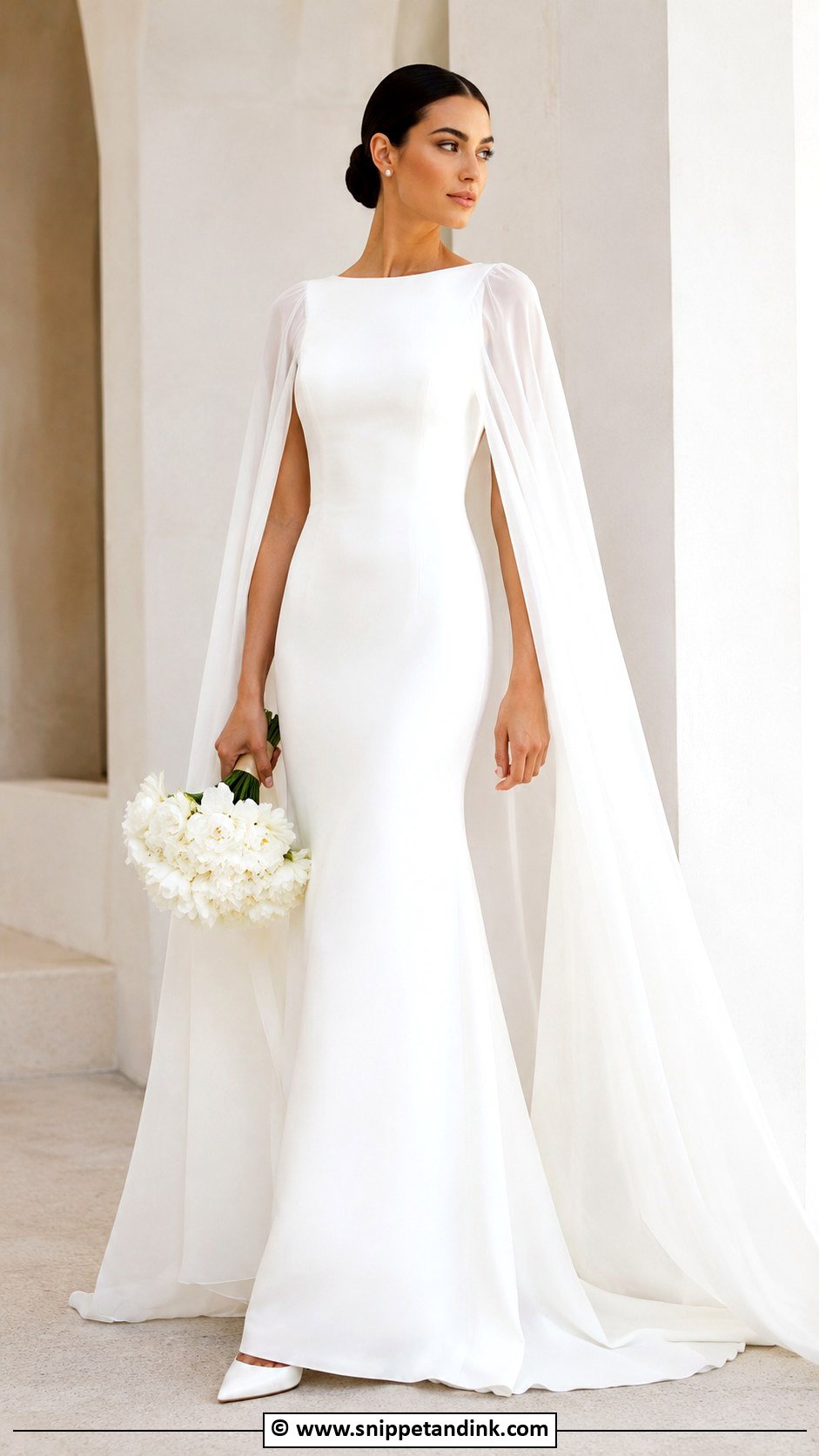
A cape can replace a veil or layer over a plain gown. Sheer tulle reads soft, crepe or satin looks sleek and strong. It suits minimal sheaths, fitted gowns and clean A-lines, and it’s a good answer for shoulder coverage in a church without adding sleeves. The practical issue is the attachment: a cape fixed at the shoulder seams moves with you, one pinned at the back can pull the neckline. Outdoors, a long tulle cape behaves like a sail in wind, so I’d go shorter. Simple jewelry, pointed heels and a neat hairstyle finish it.
28. Halter Wedding Dress
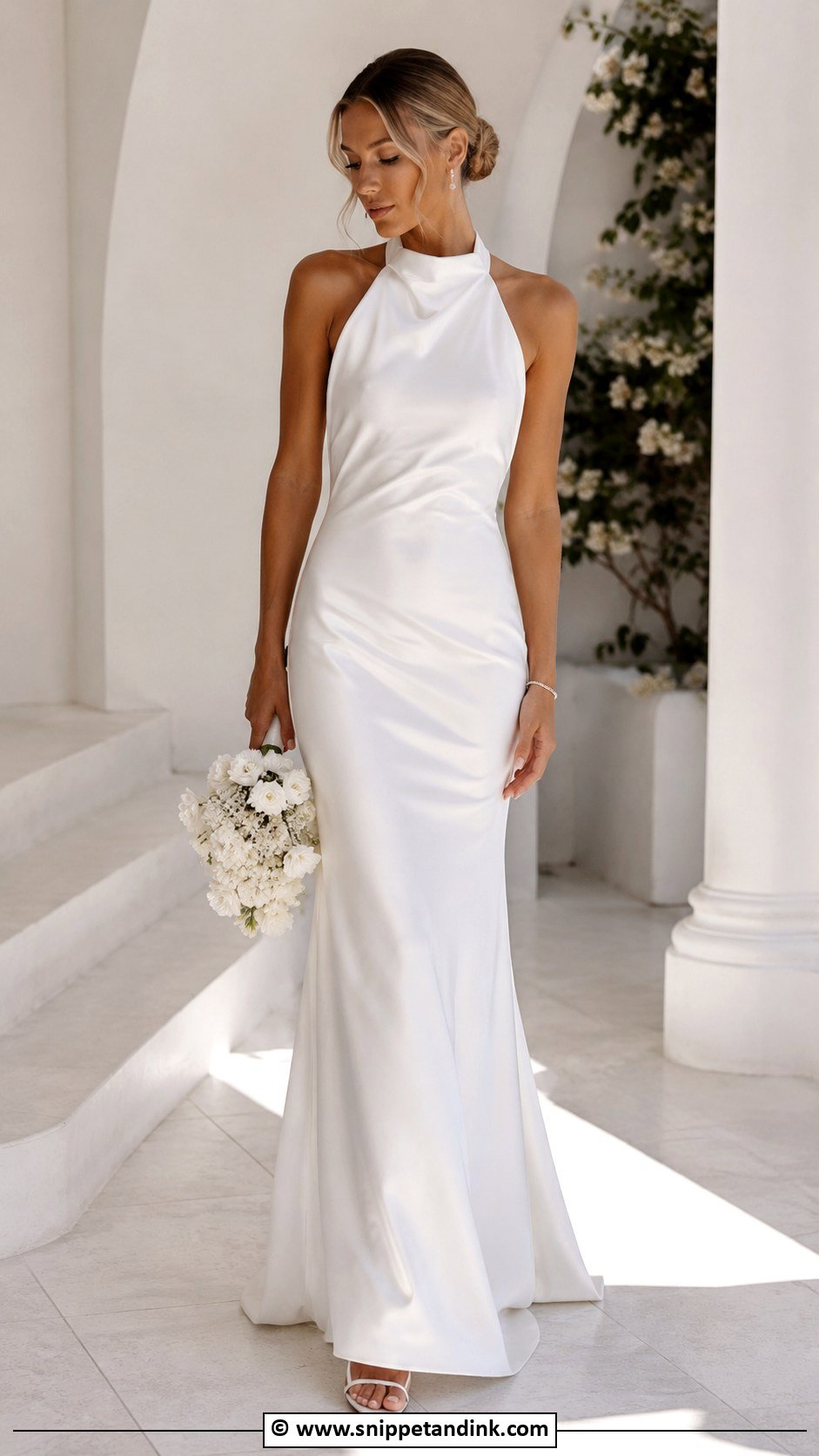
Halters hang the weight of the bodice from the back of your neck, and over a long day that can ache. I make sure the neck strap closes with a hook rather than a tied knot and that the bodice carries its own support. The shape shows off the shoulders and upper back; a high halter looks clean in crepe or satin, while lace feels softer. A low bun keeps hair off the strap. Delicate earrings and a simple bracelet are enough, with no necklace, and a slim veil or a clean cape completes it.
29. Boho Chiffon Wedding Dress
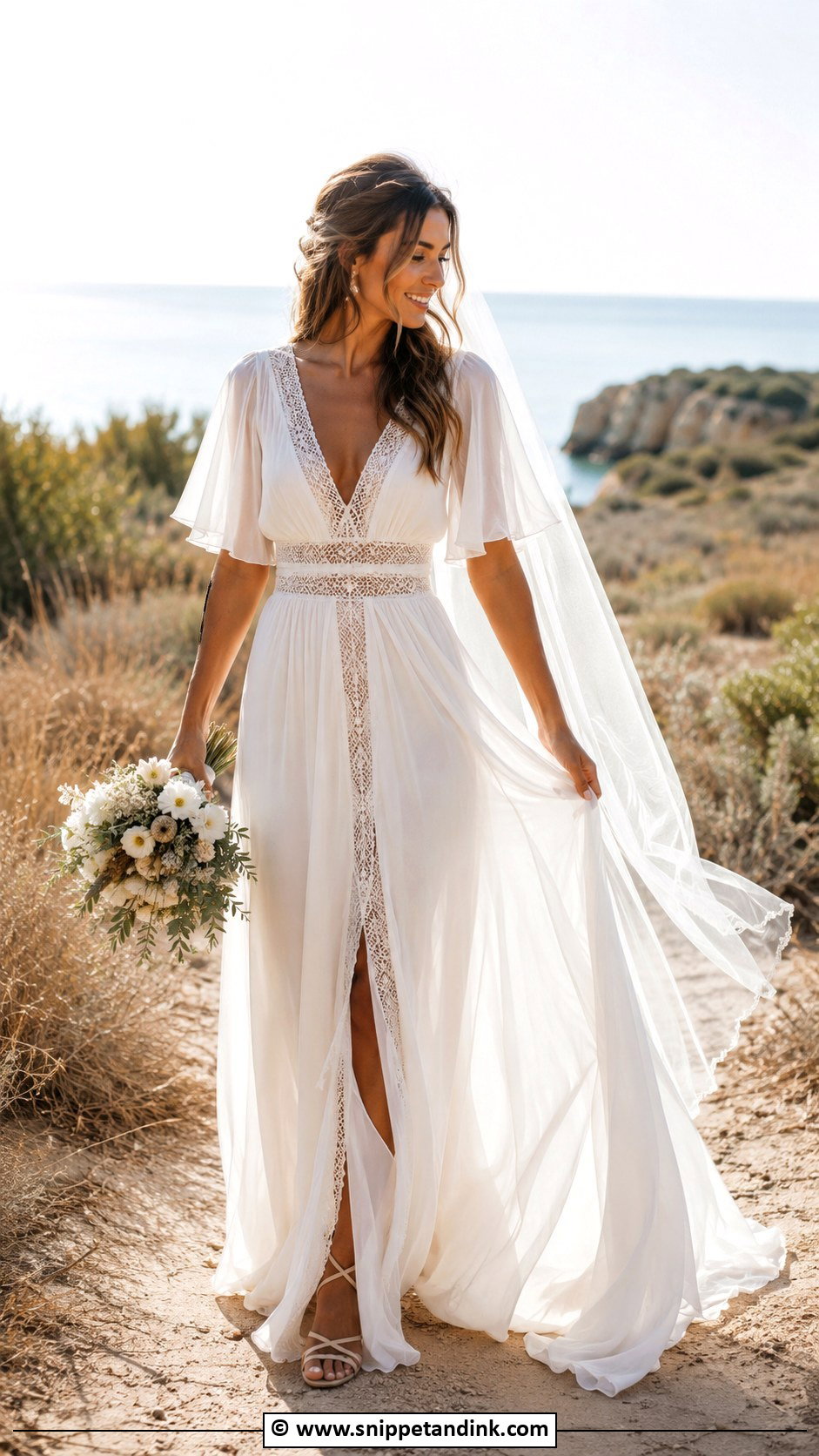
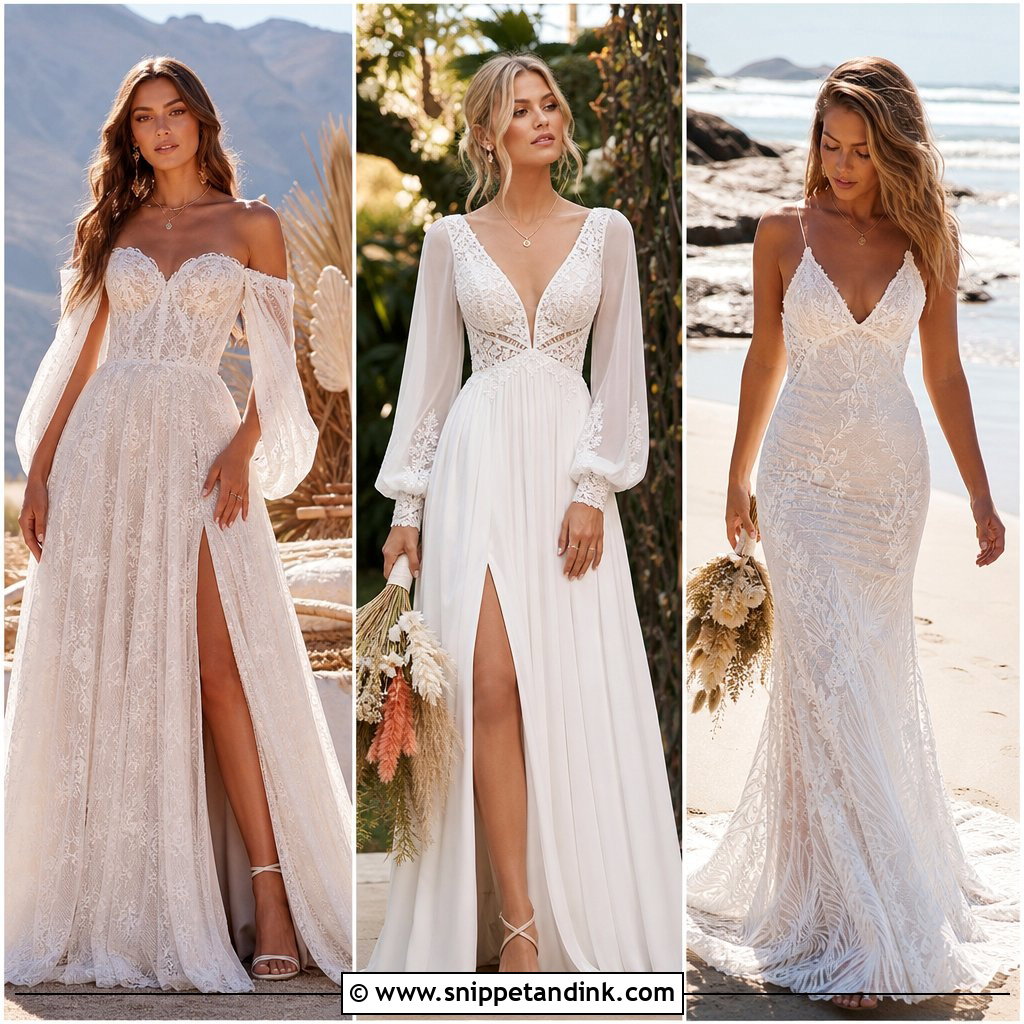
A boho chiffon wedding dress moves with the air, which is why it’s the dress I’d put on a beach, desert, garden or countryside venue. Chiffon frays and snags easily, though, so a hem that drags on rough ground should be taken up to just skim the floor. Flutter sleeves, lace panels, an empire waist or an open back add interest without structure. Delicate sandals, loose waves, small earrings and a simple veil or floral hairpiece suit it, along with a loose garden-style bouquet rather than a tight round one.
30. Vintage Inspired Wedding Dress
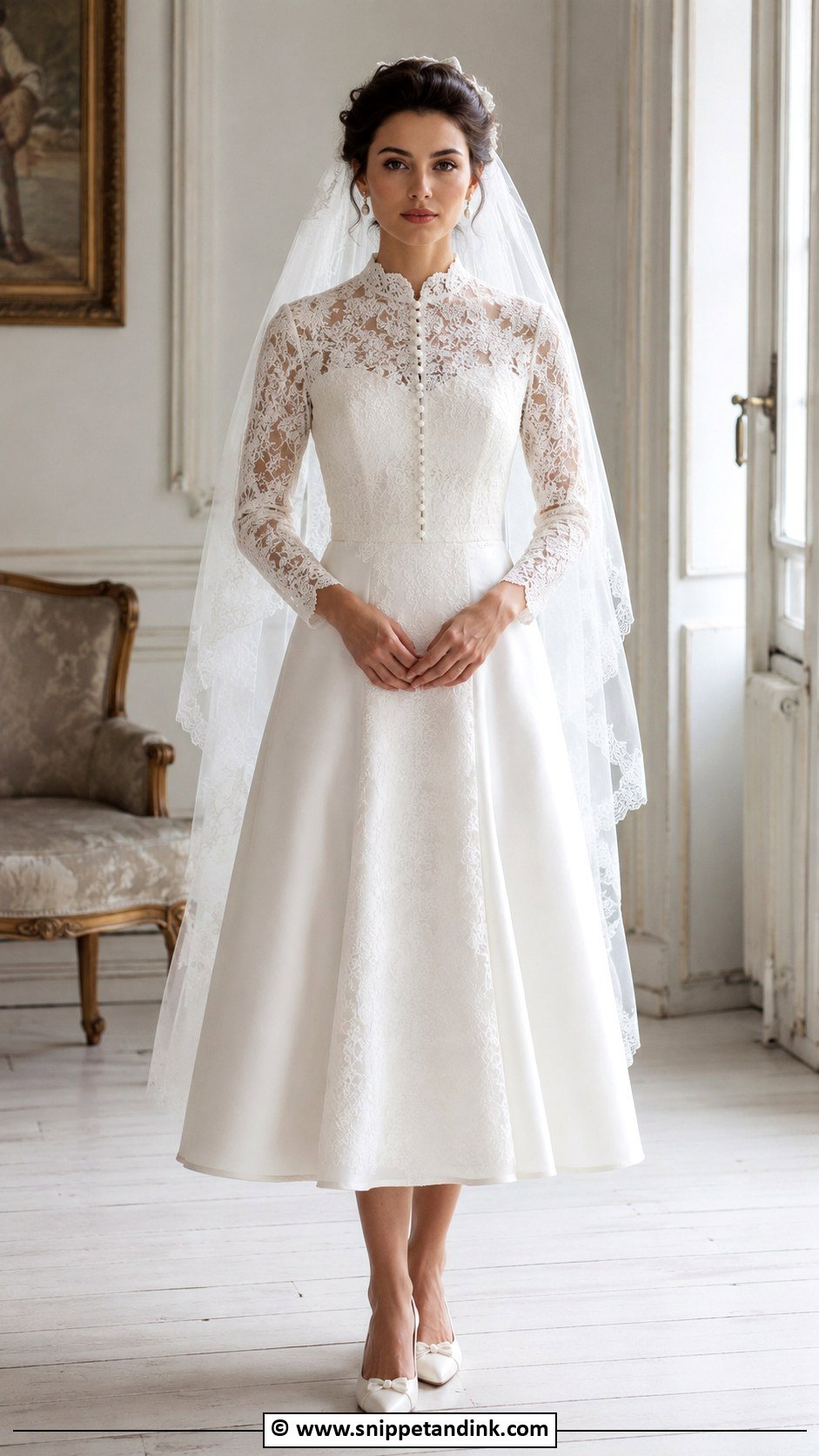
With vintage inspired gowns, I’d pick one era and stay in it. Lace sleeves, high necks, dropped waists, tea length skirts, satin buttons and beading come from different decades, and mixing three of them looks like dressing up. A 1950s tea length gown feels playful; a 1930s bias-cut satin dress is sleek. Hair and makeup should nod to the era without copying it. Pearl earrings, classic heels and a veil cut to the dress shape tie it together. If you’re wearing a true vintage dress, have the seams checked, because old thread can be brittle.
The Ordering Calendar Most Brides Underestimate
Most bridal gowns are made to order after you choose them, not taken off a rack, and production commonly runs several months. Add shipping and alterations, and the dress needs far more lead time than people expect. Timings vary a lot by designer and salon, so I always tell brides to get the expected ship date in writing.
- Nine to twelve months out: shop and place the order. That leaves room for a factory delay without panic.
- Three to four months out: the dress usually arrives. Try it on to confirm it matches what you ordered.
- Two to three months out: first alteration fitting, with the shoes and undergarments you’ll actually wear.
- Two to four weeks out: final fitting, a bustle lesson for your helper, and pickup.
Short on time? Ask about sample gowns or ready-to-wear lines. I’d rather alter a sample that’s close than pay a rush fee on a gown that may still arrive late.
Bustles, Stains and the Box the Gown Lives in Afterwards
A train looks wonderful down the aisle and becomes a trip hazard on the dance floor, so almost every train I fit gets a bustle. An over bustle lifts the train onto hooks at the back of the skirt; a French or under bustle tucks it beneath with ribbon ties. Lace and heavy trains often need several points, and whoever is helping you should practise at the final fitting, not discover it at the reception.
After the wedding, have the gown cleaned within a few weeks. Sugary spills like champagne and white wine dry invisibly, then turn yellow-brown months later as they oxidise, and they’re far harder to lift once set. A bridal specialist will also deal with the hem, which carries most of the dirt.
For storage, skip plastic garment bags, which trap moisture. Wrap the gown in acid-free tissue inside an acid-free box or a breathable cotton bag, and keep it somewhere cool, dark and dry, so not the attic or the basement. Heavy beaded gowns and ball gowns are better folded with tissue in each fold than hung, because hanging slowly stretches the shoulders.
Fit First, Fabric Second, Everything Else Last
None of these thirty dresses will feel right if it doesn’t fit you on the day. Before you fall for a neckline or a fabric, picture the whole day: the venue, the season, the shoes, the veil, the hair and how much you’ll sit, walk and dance. Then judge each gown on fit, fabric and comfort first. Trends move quickly. A dress that lets you breathe, move and forget about it is the one you’ll be glad you wore.
You'll Like These Ideas:






Leave a Reply