
Braids are the most reliable thing I can put on a bride’s head. A curl drops, a sleek pony frizzes, but a braid is locked structure, so it still looks intentional at midnight. That reliability is why I suggest them for long days, outdoor ceremonies and brides who plan to dance hard. What changes from style to style is how much length and thickness you need, how long it takes in the chair, and whether it suits your texture. Below are 20 braided bridal looks, from soft fishtails to sculpted cornrows, with what I’d want you to know about each before you book a trial.
Is There Enough Hair for the Braid You Picked?
Braid photos online are often done on thick hair or with extensions added, and nobody mentions it. A plait uses up length fast. As a rough guide from what I see in the chair, a crown braid needs hair well past the shoulders, a full side braid or fishtail needs at least mid-back length to look generous, and a waterfall or accent braid can work on a lob.
If your hair is fine or shoulder length, clip-in extensions are the easiest fix. Buy them in your exact shade, or a blend of two shades if your hair has highlights, and bring them to the trial so your stylist can blend and trim them. Thicker wefts at the back and thinner ones near the face look most natural.
- Fine, slippery hair: arrive with second-day hair or ask for texture spray before braiding, so the sections grip.
- Layered cuts: short layers poke out of braids; a light wax on the fingers while braiding keeps them in.
- Very curly hair: braids can be done on stretched or blown-out hair for definition, or on natural texture for a fuller, softer plait.
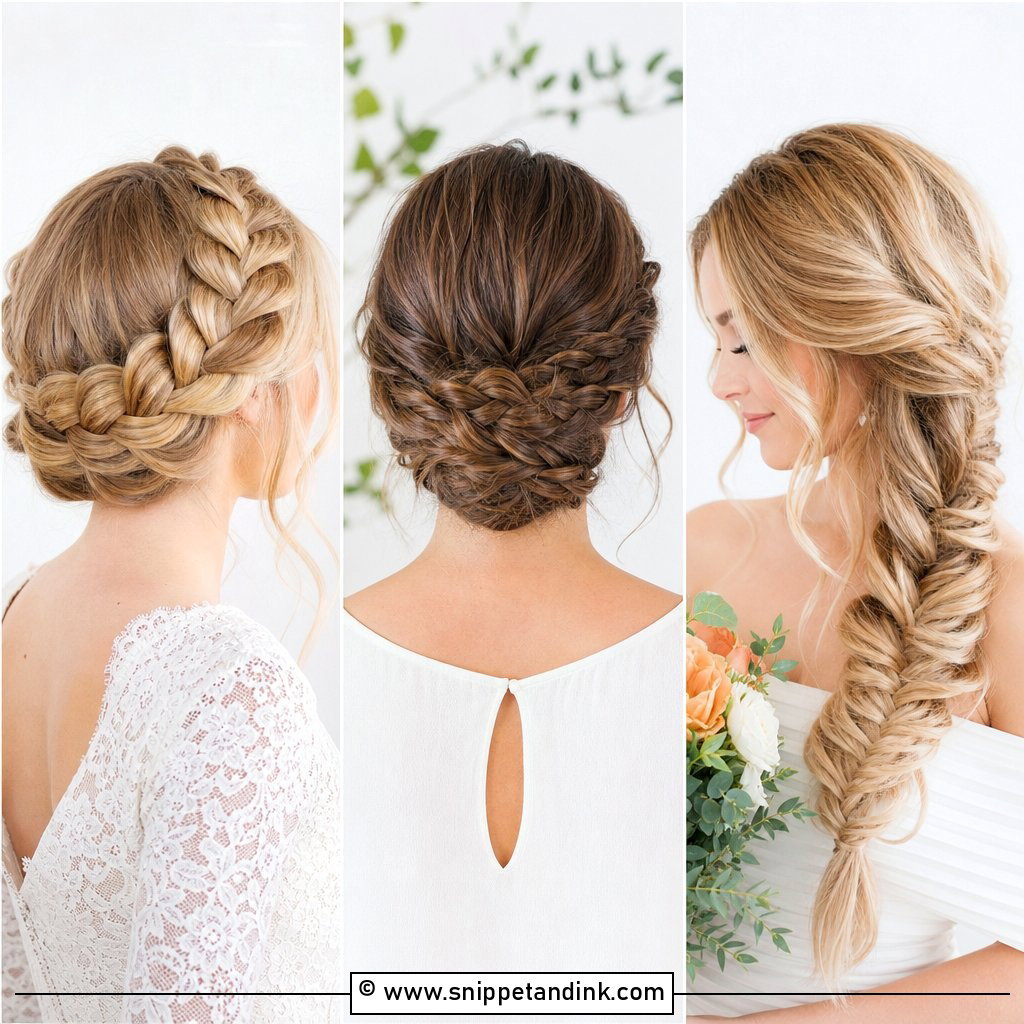
1. Crown Braid Updo for Brides
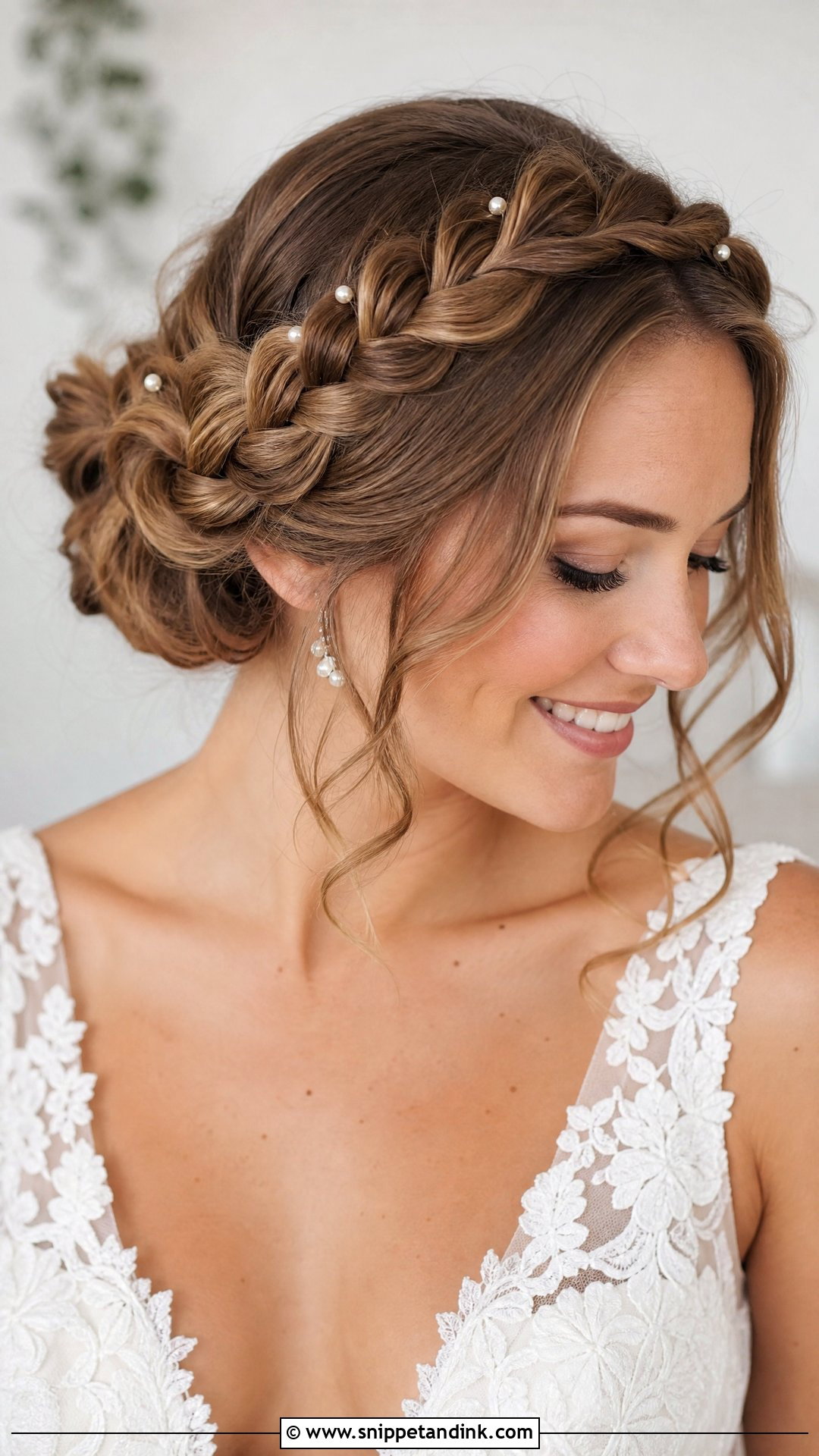
A crown braid replaces a headpiece entirely, which is why brides on a tight accessories budget like it. It needs hair at least past the shoulders to wrap all the way around; shorter hair can be done as two braids meeting at the back. I start the braid low behind one ear so the band sits like a tiara rather than a headband. A cathedral veil tucks underneath at the back, or you can add sparkling pins along the plait. Leave a couple of face-framing pieces loose, otherwise the shape can look severe on a long face.
2. Fishtail Braid for Long Hair
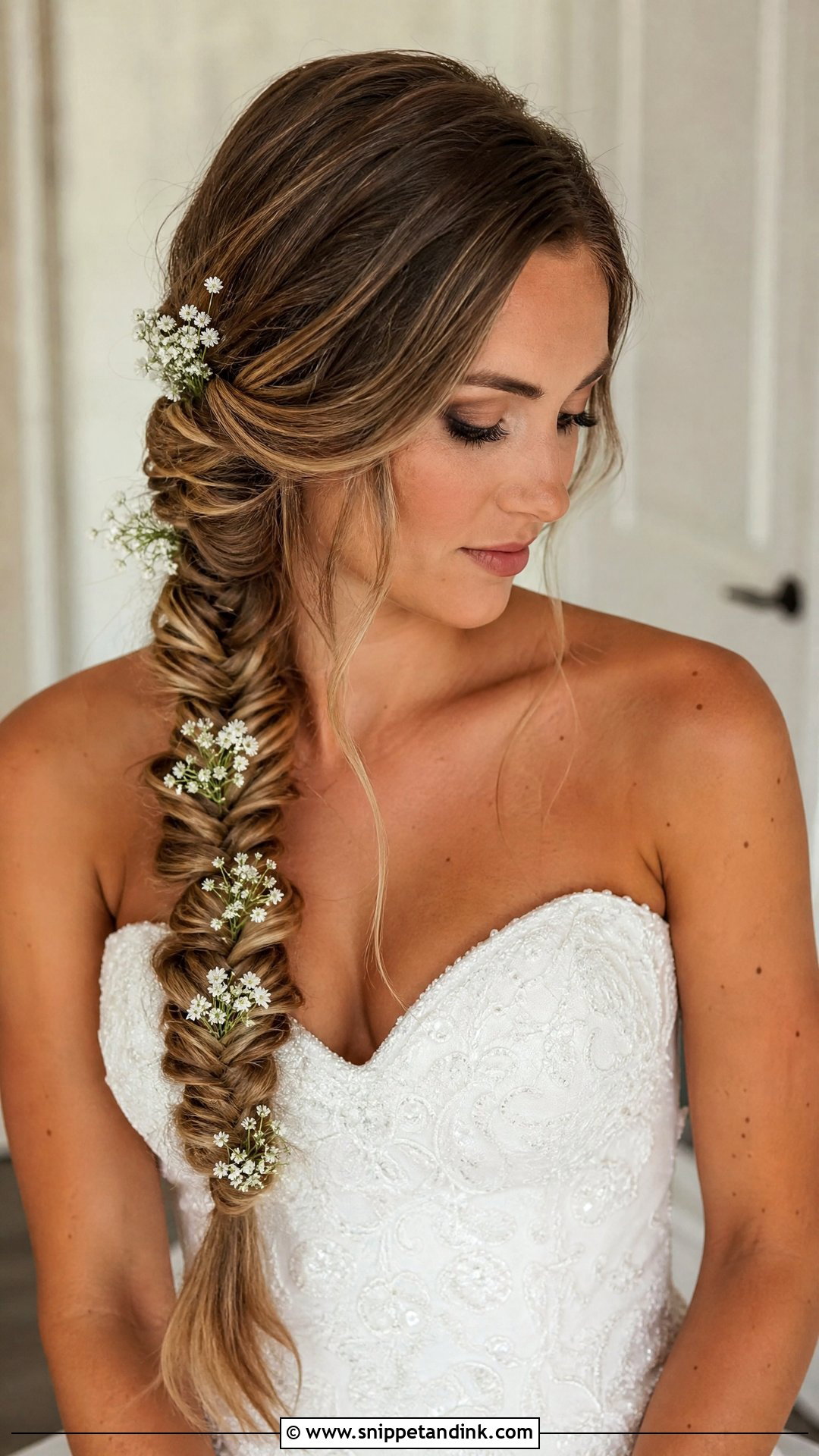
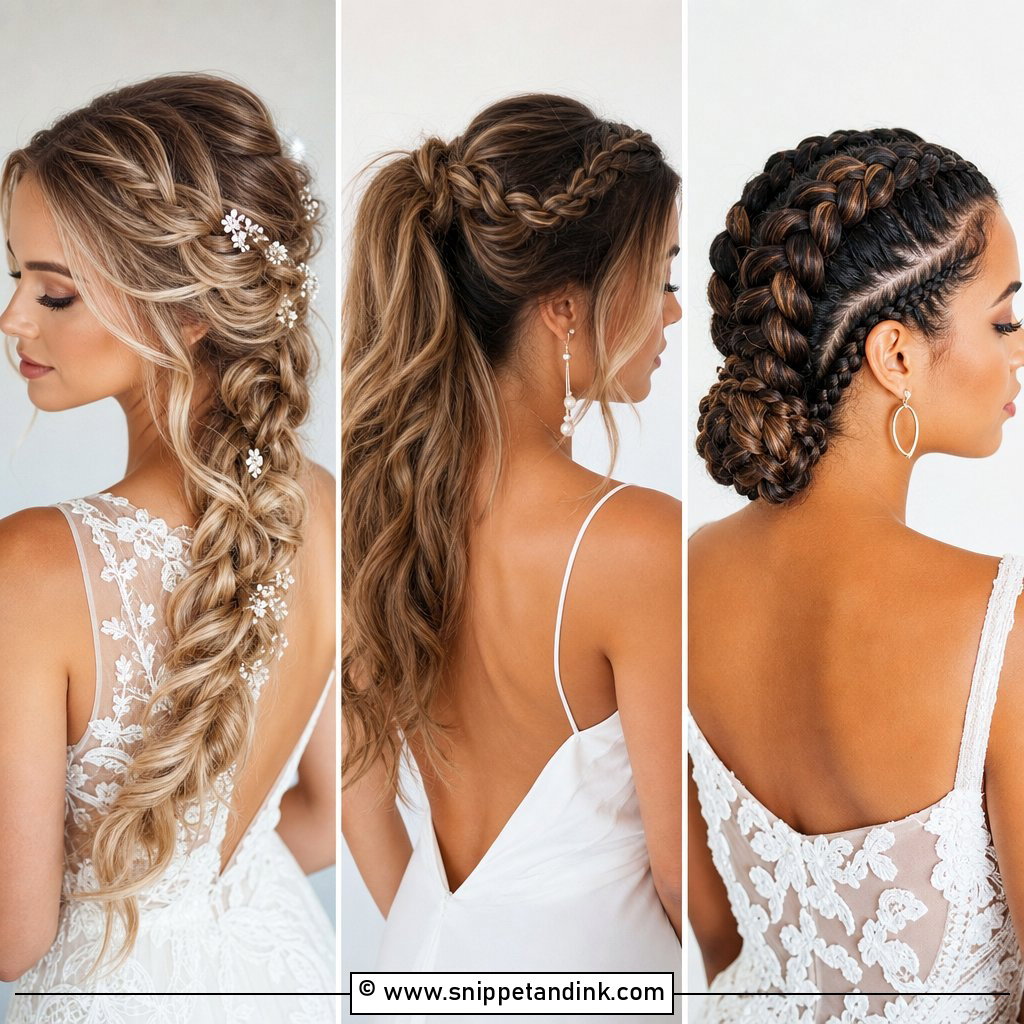
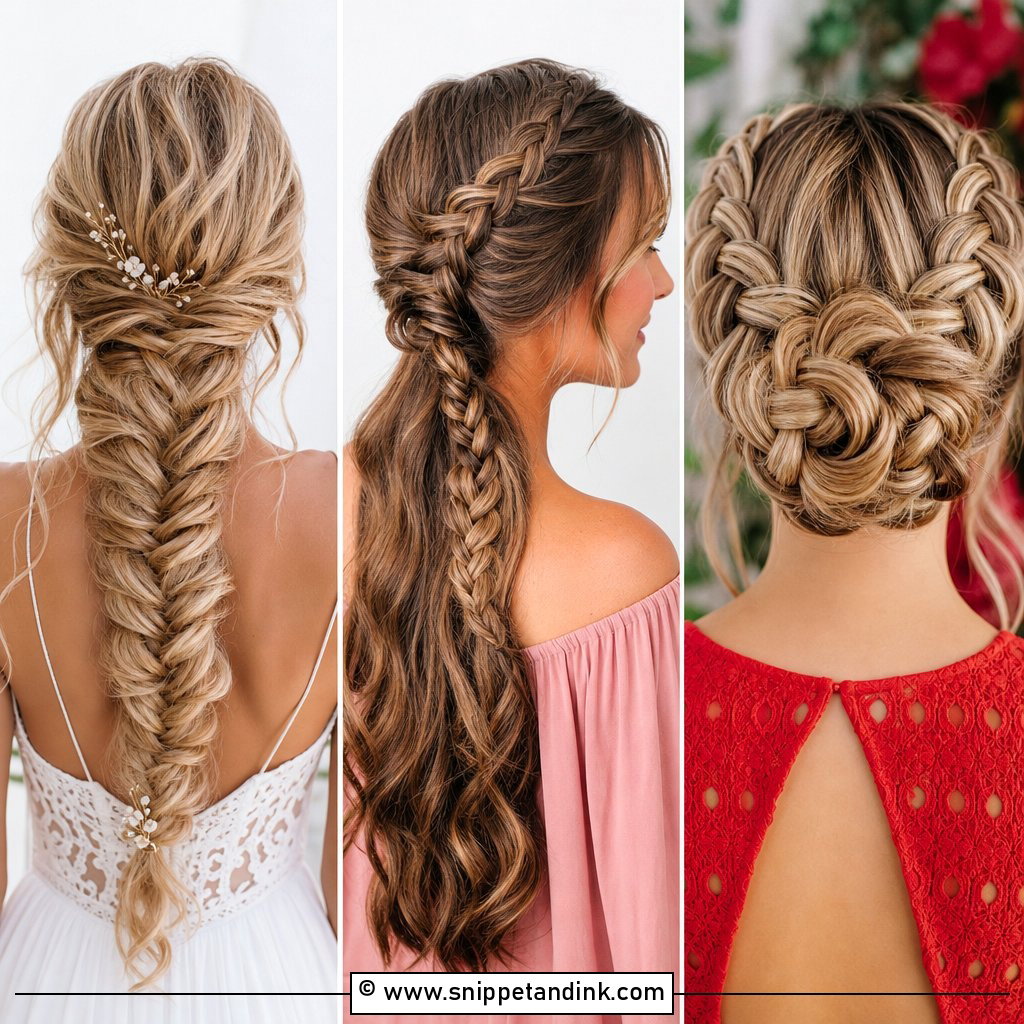
A fishtail draped over one shoulder looks intricate but is quick to do, since it’s only two sections crossing small pieces back and forth. Long, thick hair shows it off best; fine hair gets a thin, wispy tail unless I add a clip-in weft first. Once it’s tied, I pancake the edges outward with my fingertips for width. Pearls or baby’s breath can be tucked in. Be aware it falls over one side of the neckline, so it suits a sweetheart or strapless gown more than a high neck with detail at the shoulder.
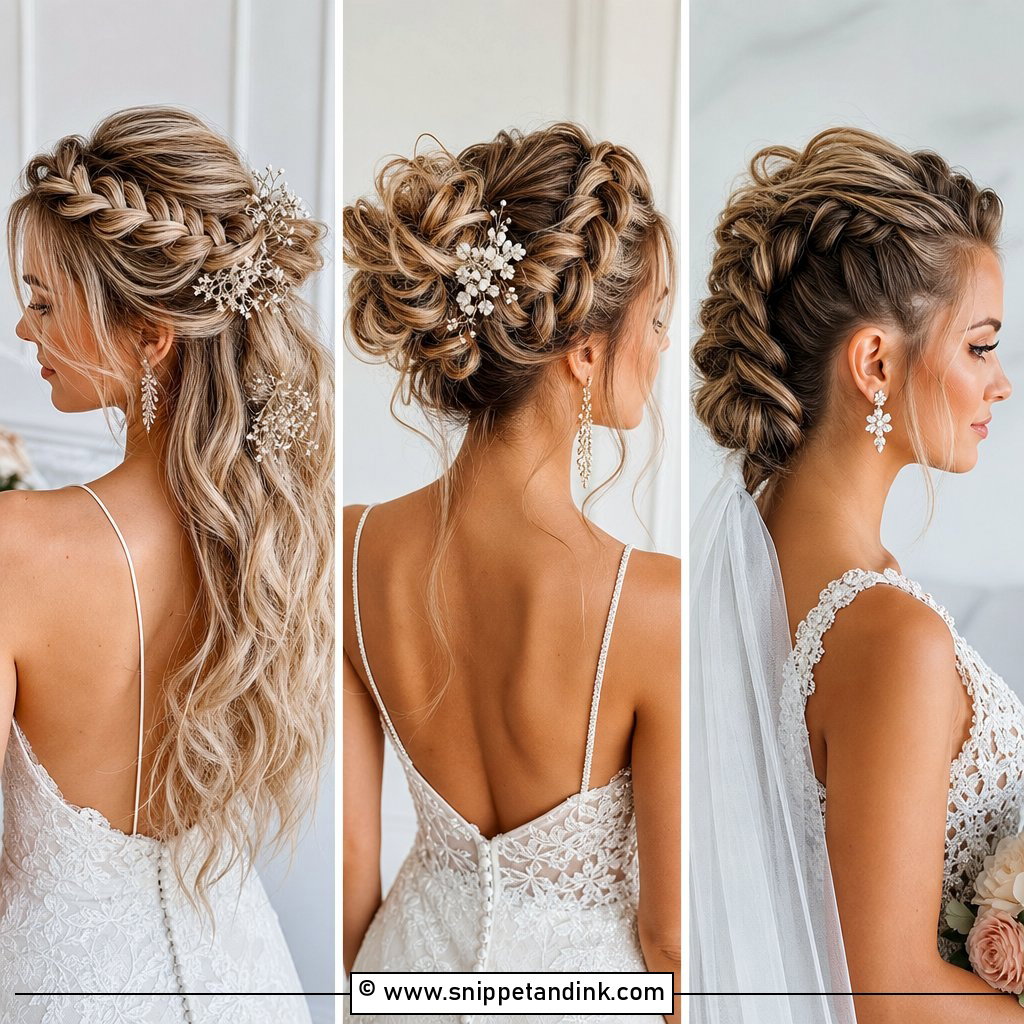
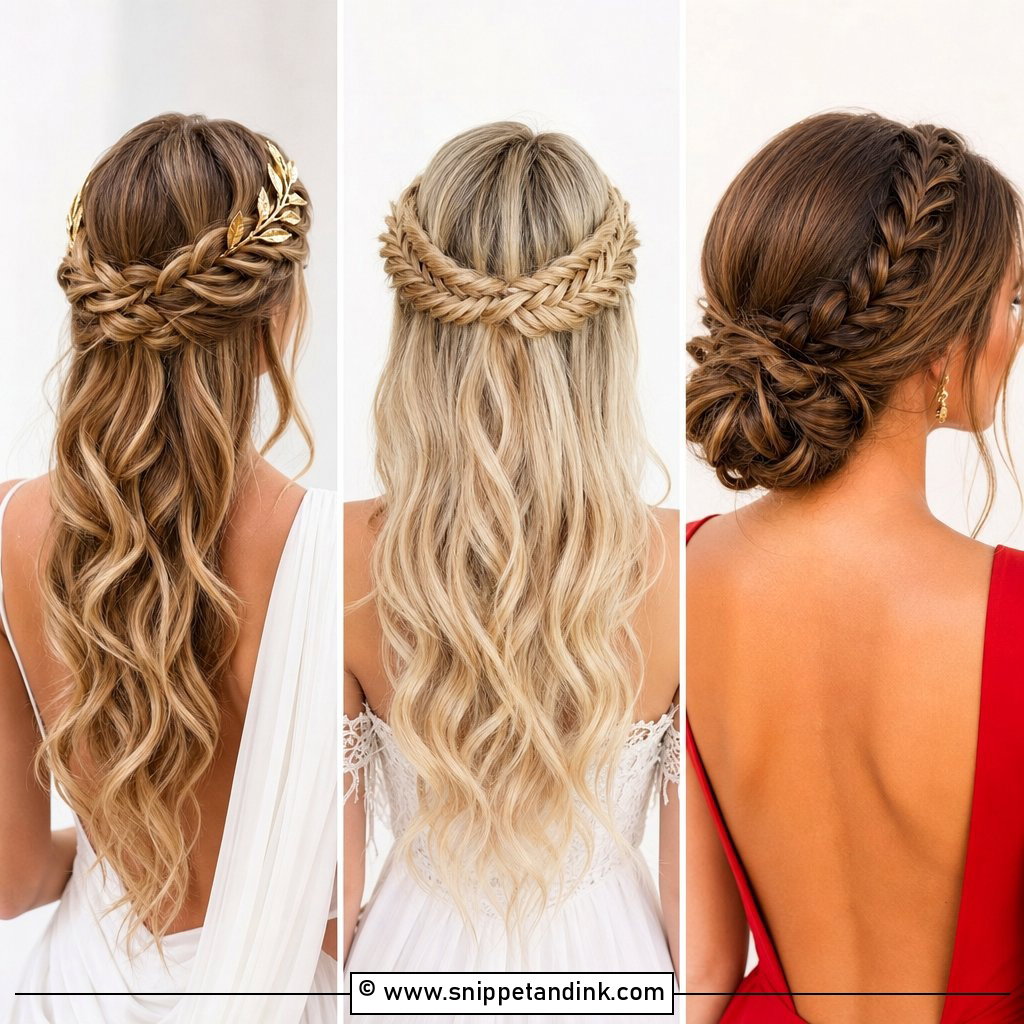
3. Boho Braided Half Up Half Down
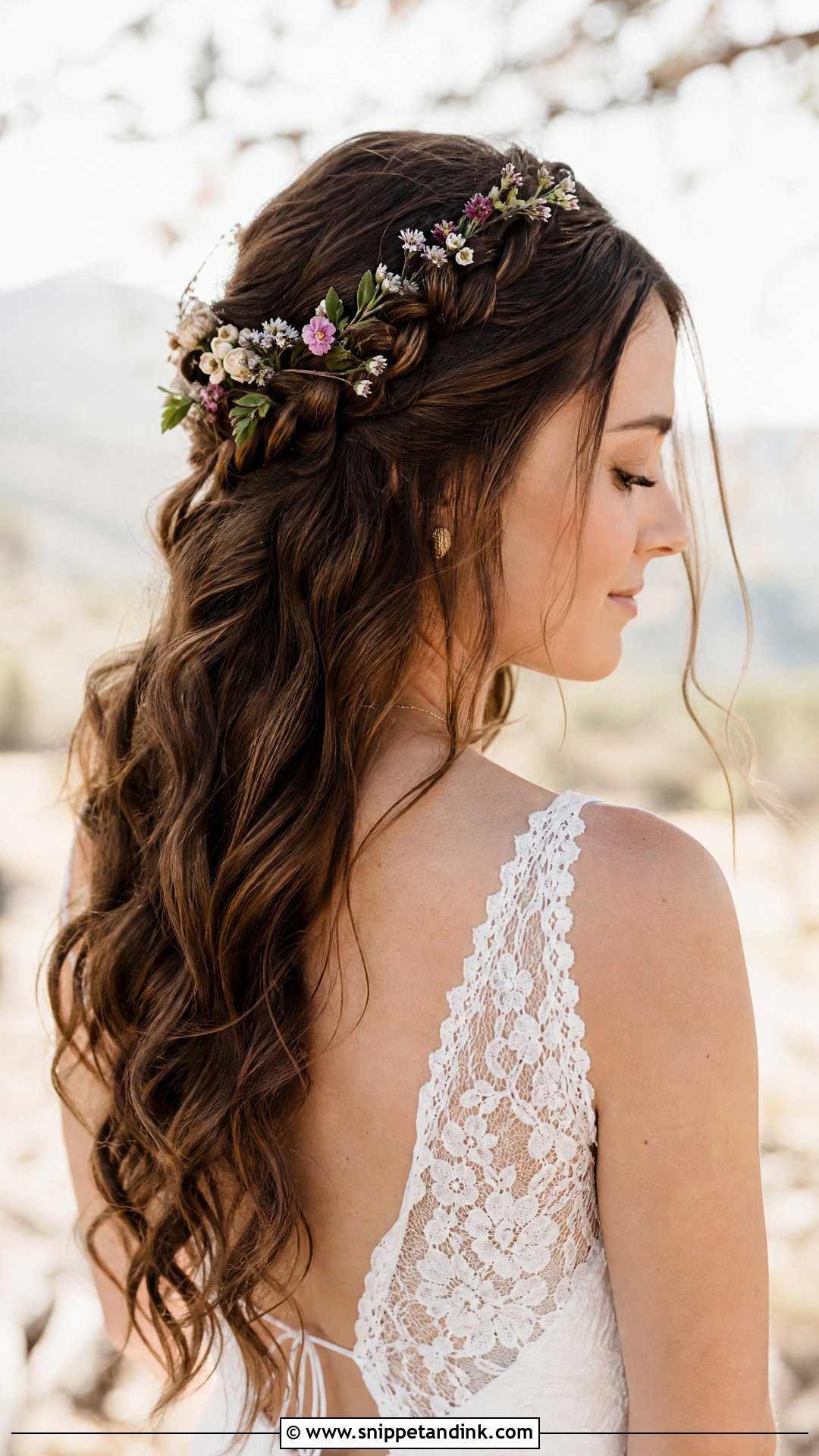
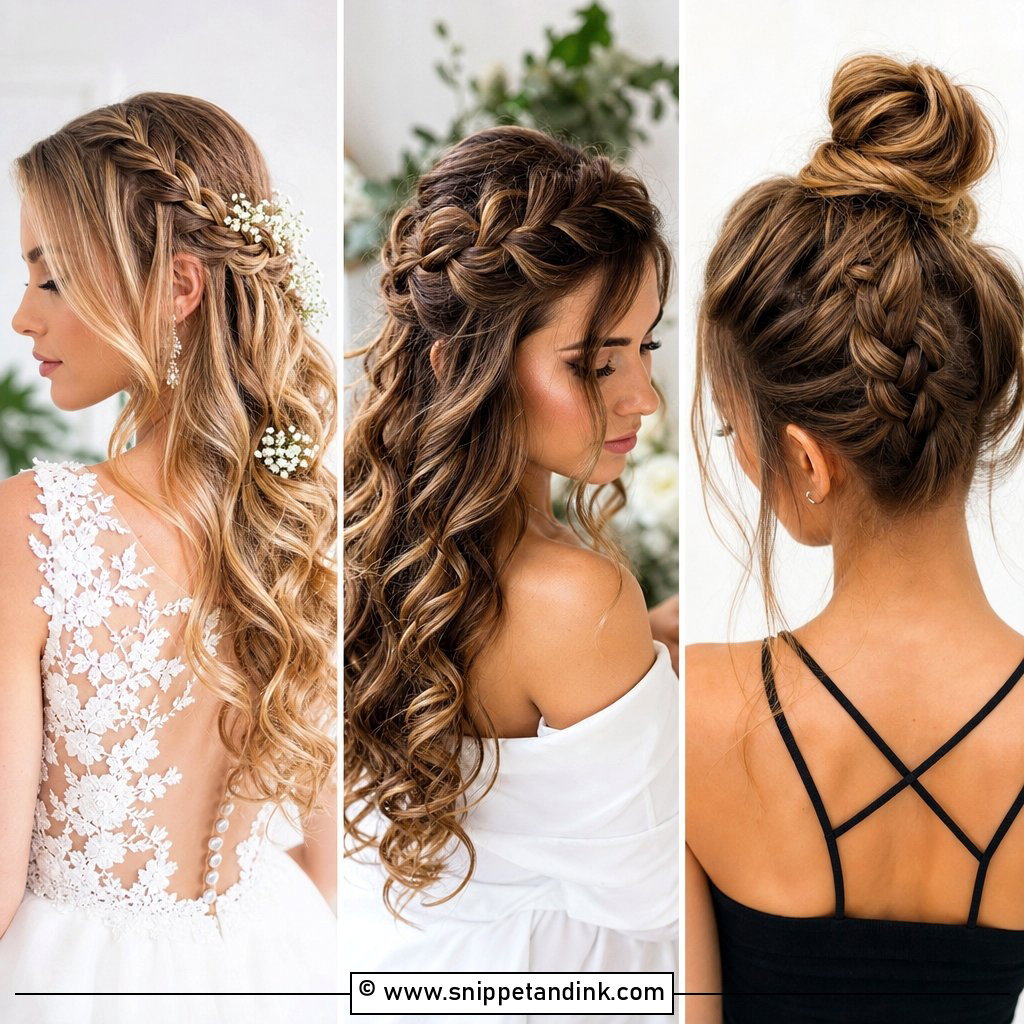
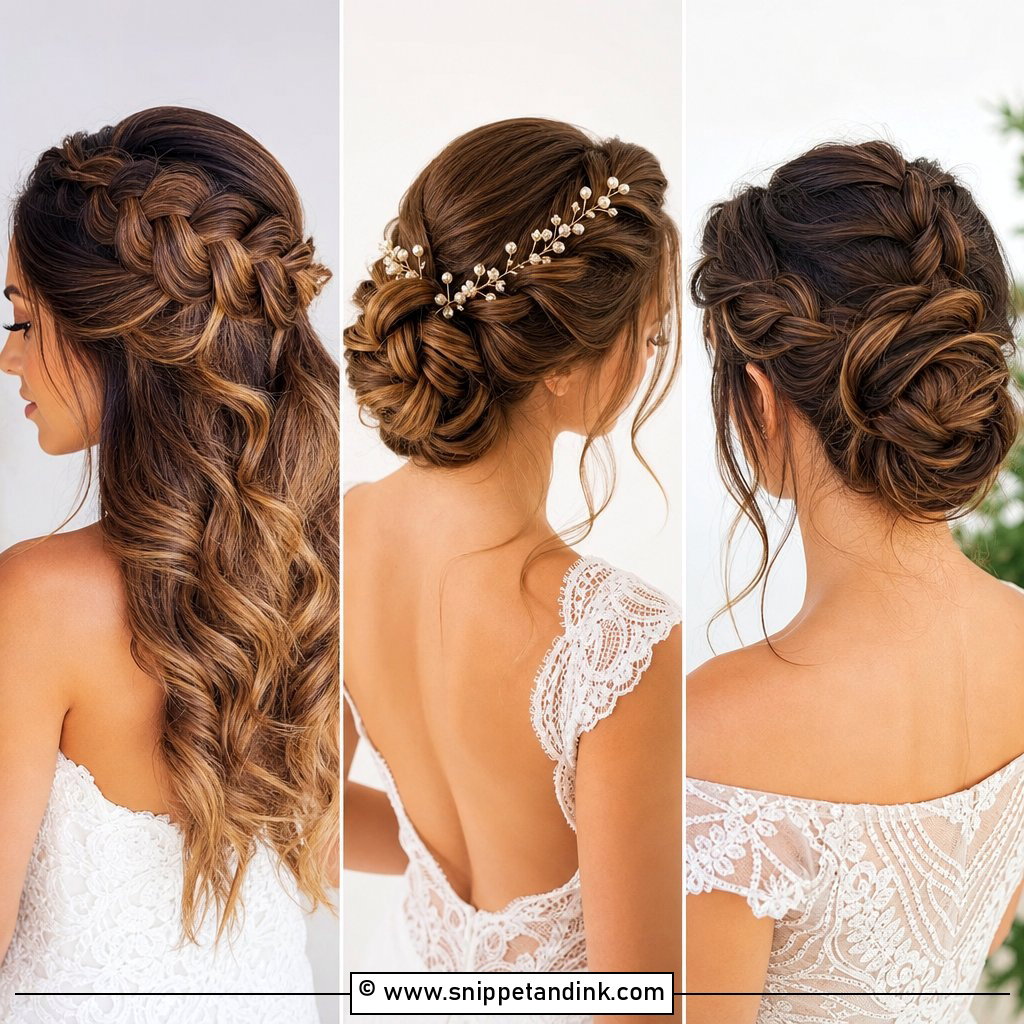
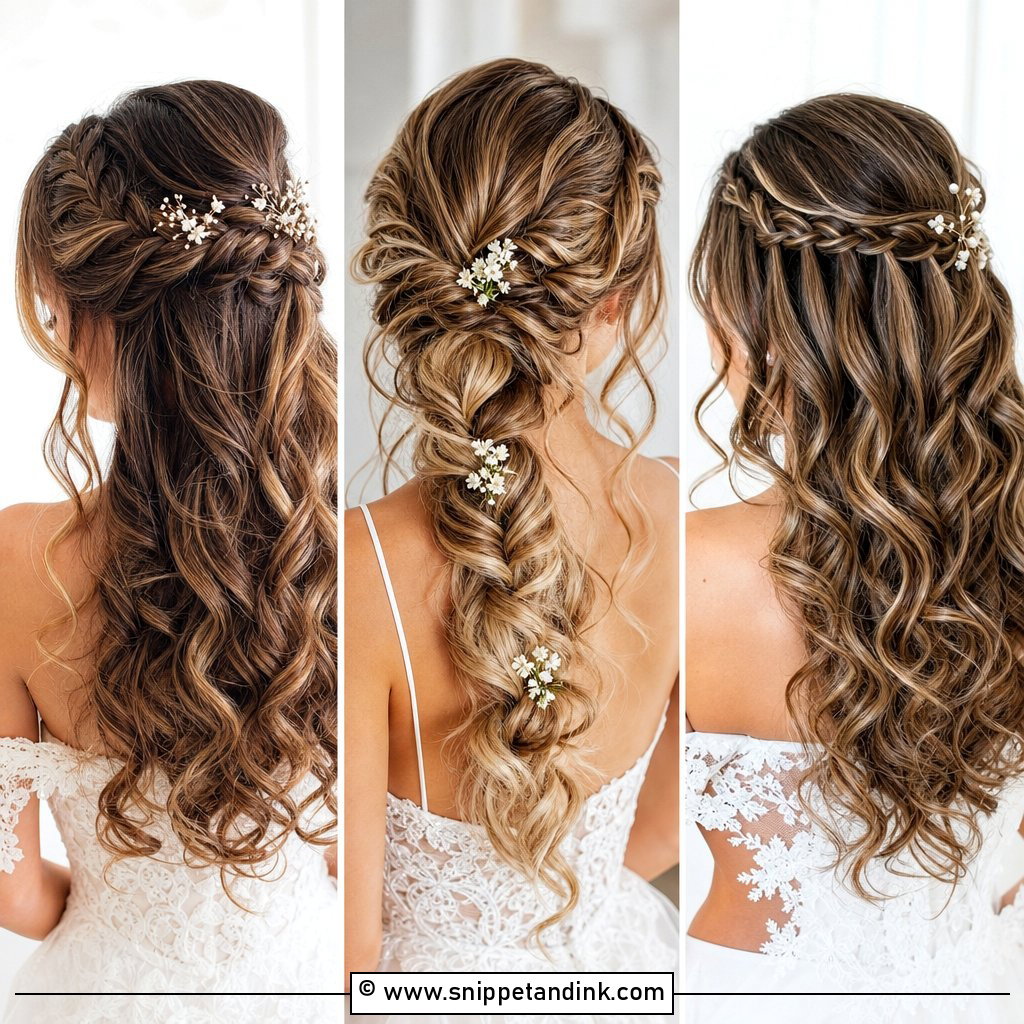
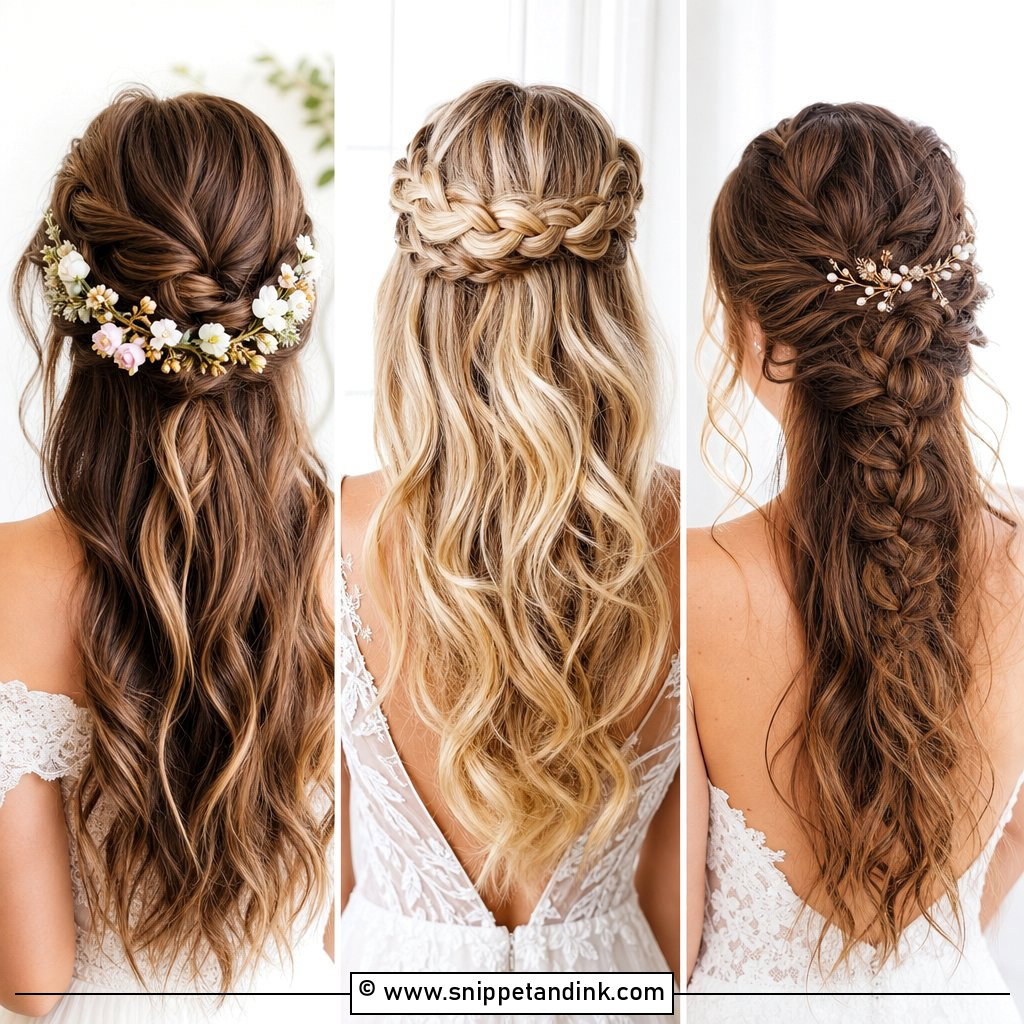
The half-up braid is my go-to when a bride wants her hair down but also wants to stop pushing it out of her eyes. Two thin braids run back from the temples and meet at the crown, with waves below. The weak point is weight: very long, heavy hair will drag the meeting point down, so I anchor it with crossed bobby pins under a small elastic. Wildflowers or dried florals suit an outdoor, bohemian setting. It works across most textures, though very silky hair needs texture spray or the braids will slide.
4. Dutch Braid Bridal Updo
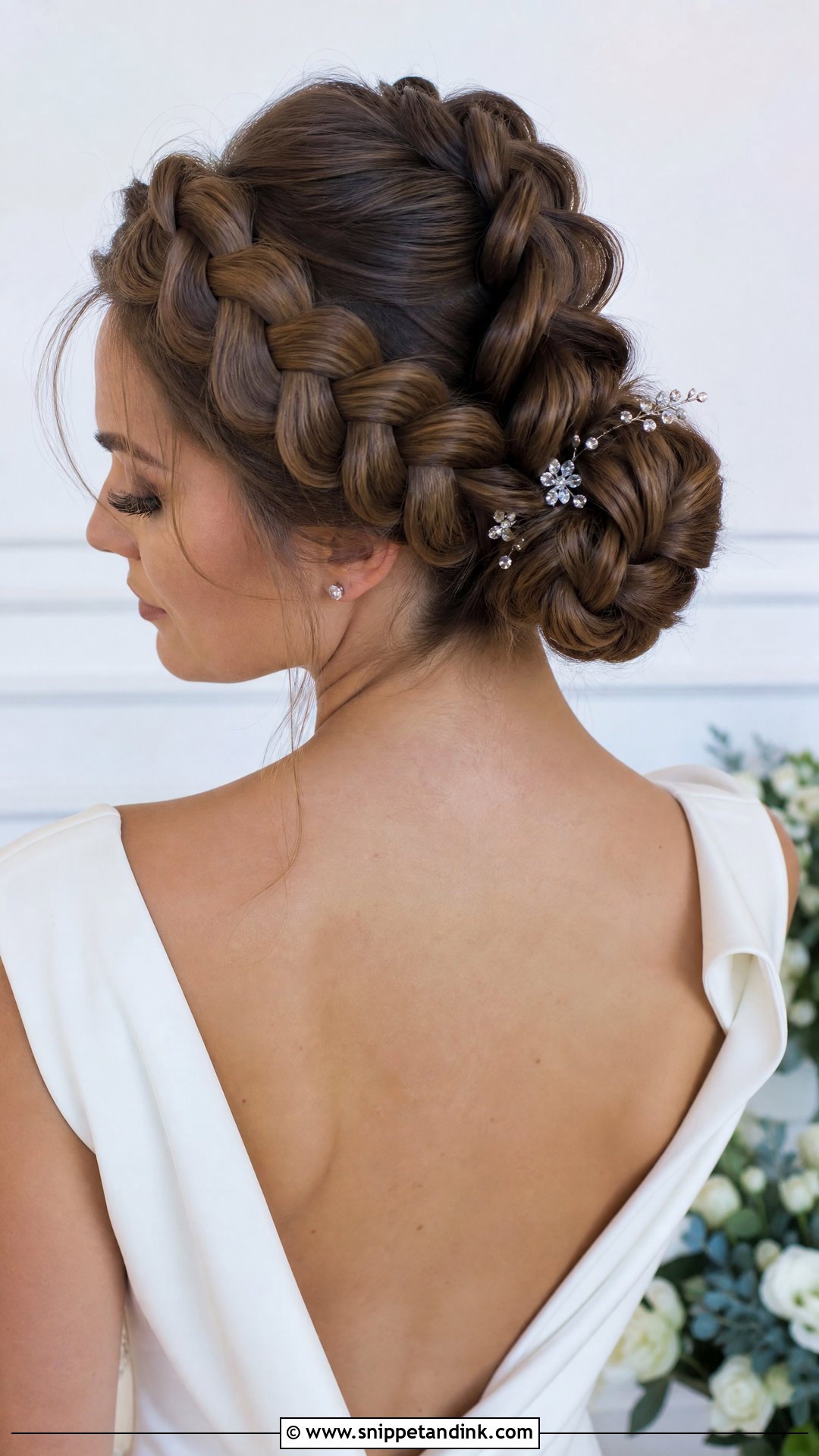
In a Dutch braid the strands cross under, so the plait sits on top of the head instead of lying flat into it. That raised shape is what gives definition in photos. I like two Dutch braids swept into a low bun, or a single thick one down the back. It holds through a long reception better than nearly anything here. Thick hair is easiest; with fine hair I pull the edges wider to fake volume. Jeweled pins pushed along the raised section catch the light.
5. Waterfall Braid for a Romantic Look
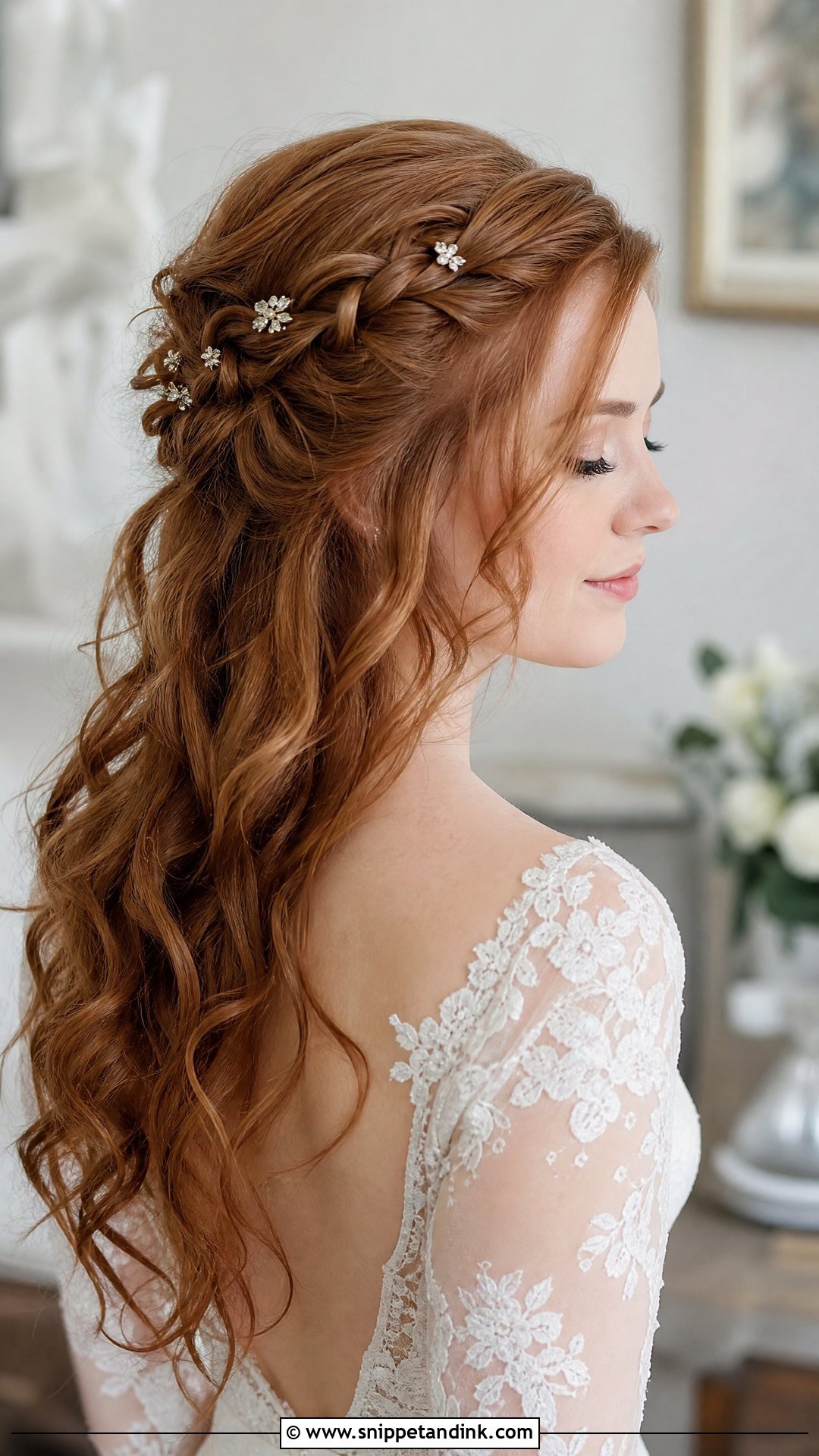
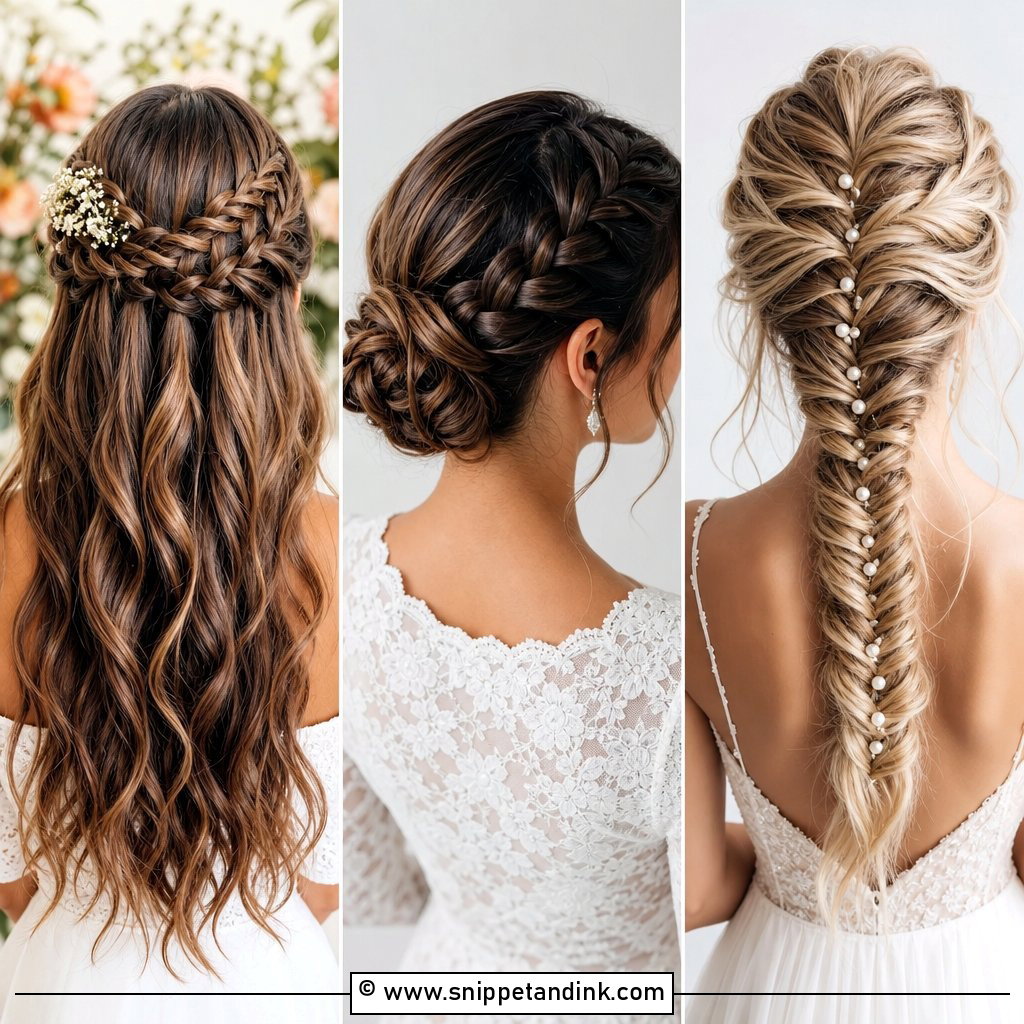
A waterfall braid drops one strand on every pass, so pieces fall loose through the braid like water. It needs medium to long hair with some bend in it, because straight hair makes the dropped pieces look accidental. I curl the lengths first and braid across the crown afterward. It’s softer and less secure than a full braid, so I’d suggest a few hidden pins along the line if you’ll be outdoors in wind. Tiny crystal pins along it add sparkle.
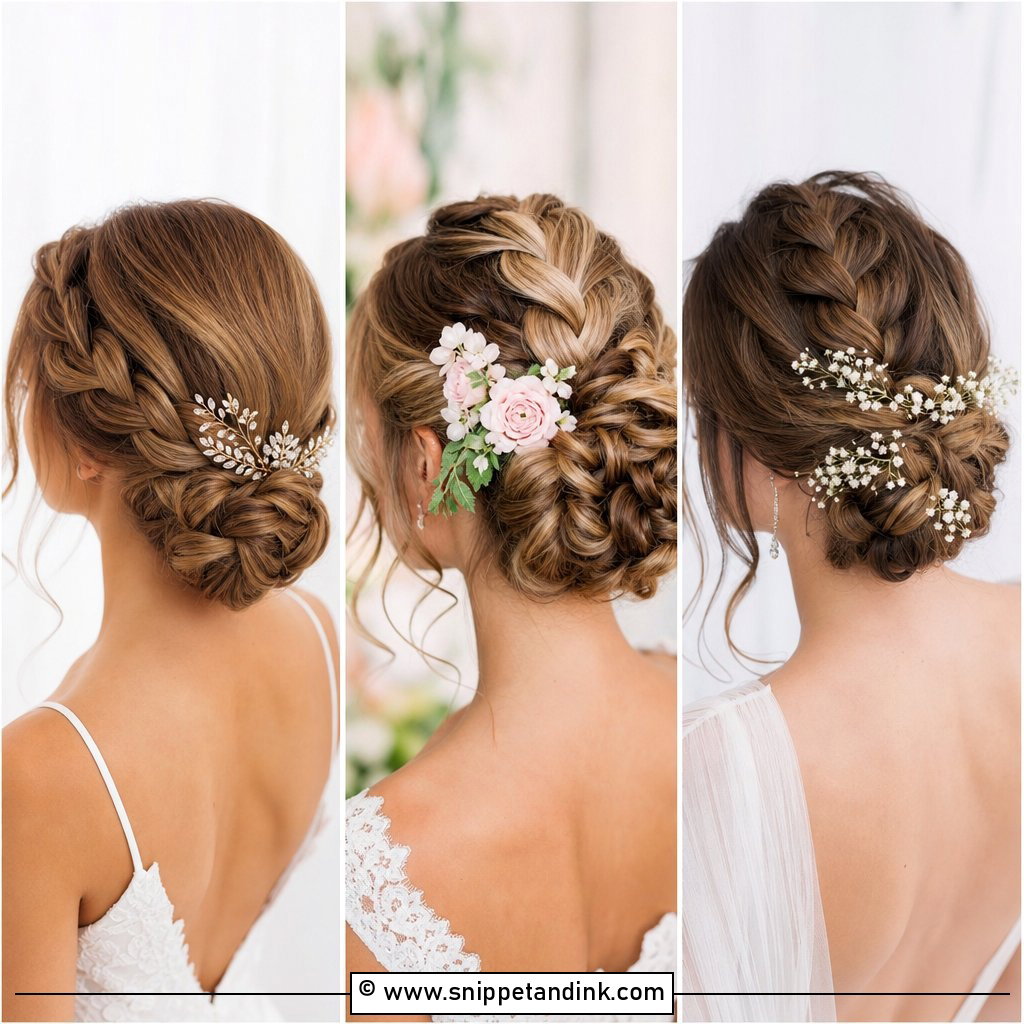
6. Braided Low Bun for Elegant Weddings
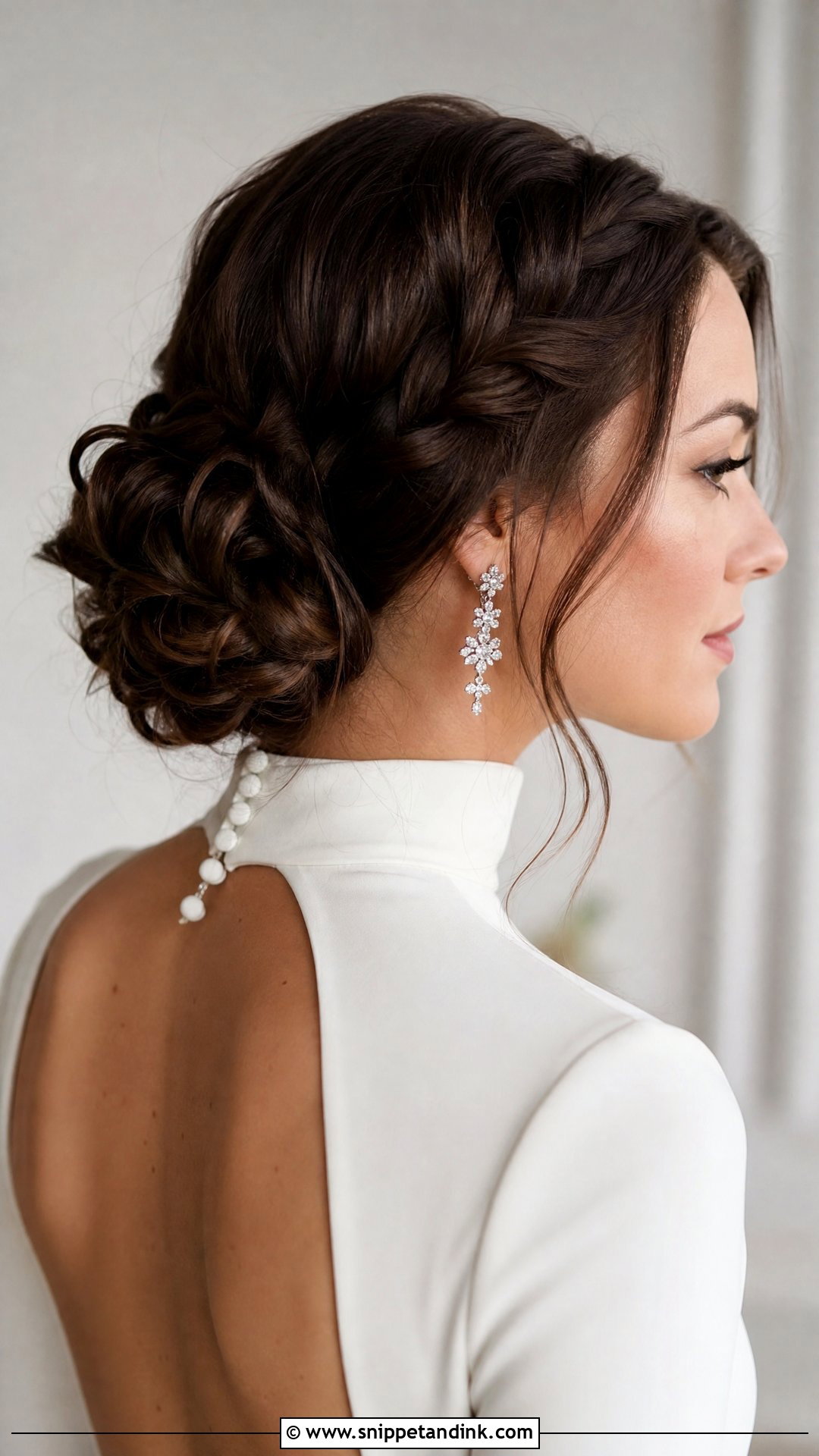
The braided low bun is the one I’d steer a bride toward if she wants a grown-up, classic look that won’t budge. Braids are woven through and pinned into a soft, twisted knot at the nape, and the braids actually help the bun hold its shape. A veil comb slides in just above it. It suits high necklines and statement earrings. Fine hair can do it too: I braid first, then pancake the braids before pinning so they cover more surface.
7. Side Braid With Loose Curls
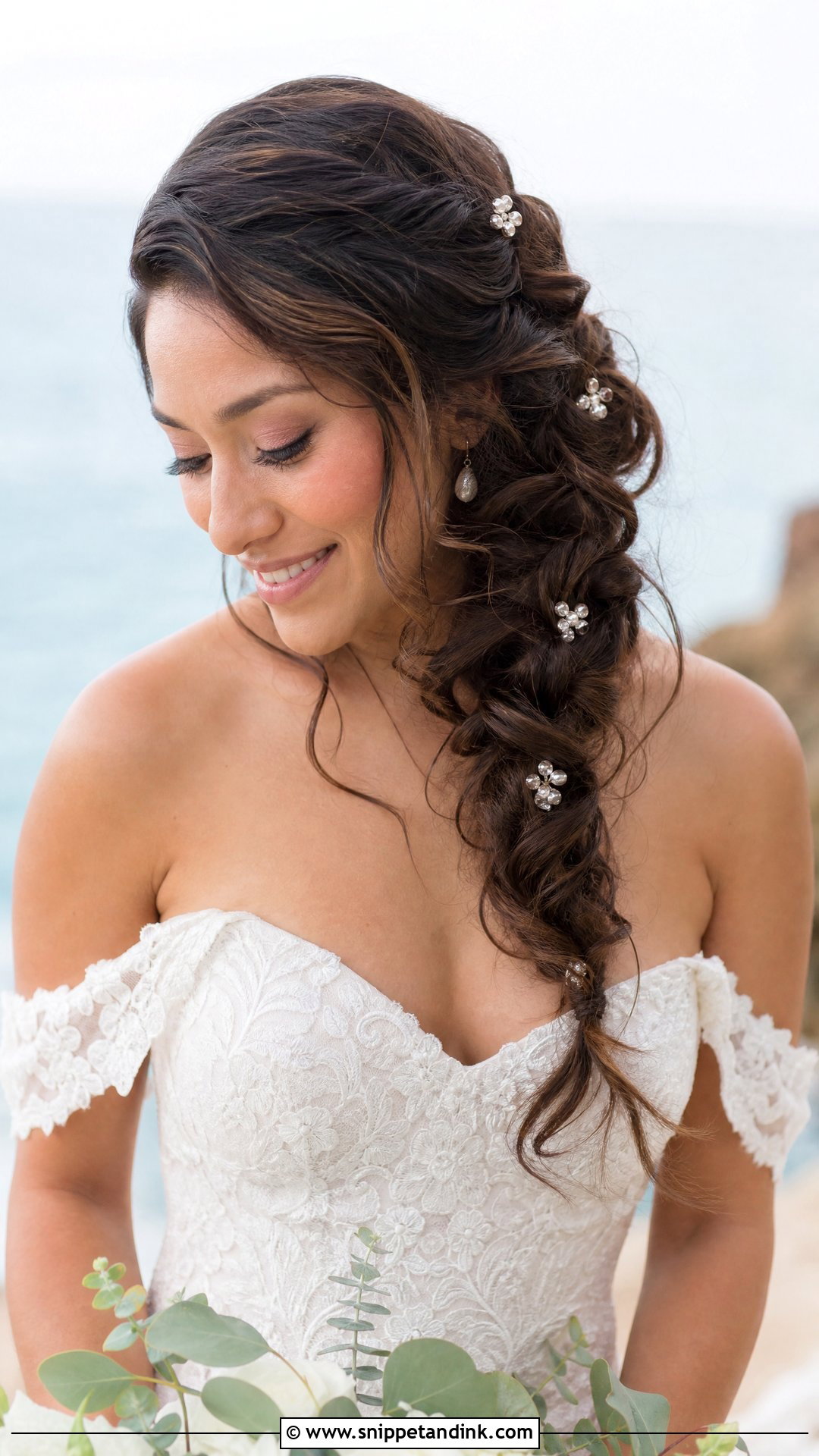
A side braid with loose curls shows off the neck and one shoulder. I start the braid just behind one ear and let it fall forward, curls escaping below the tie. Loosening it slightly keeps it from looking like a school plait. It does pull weight to one side, so if you have a cowlick at the nape on the opposite side, the hair may lift there. Off-shoulder gowns and beach ceremonies suit it.
8. French Braid Crown for Brides
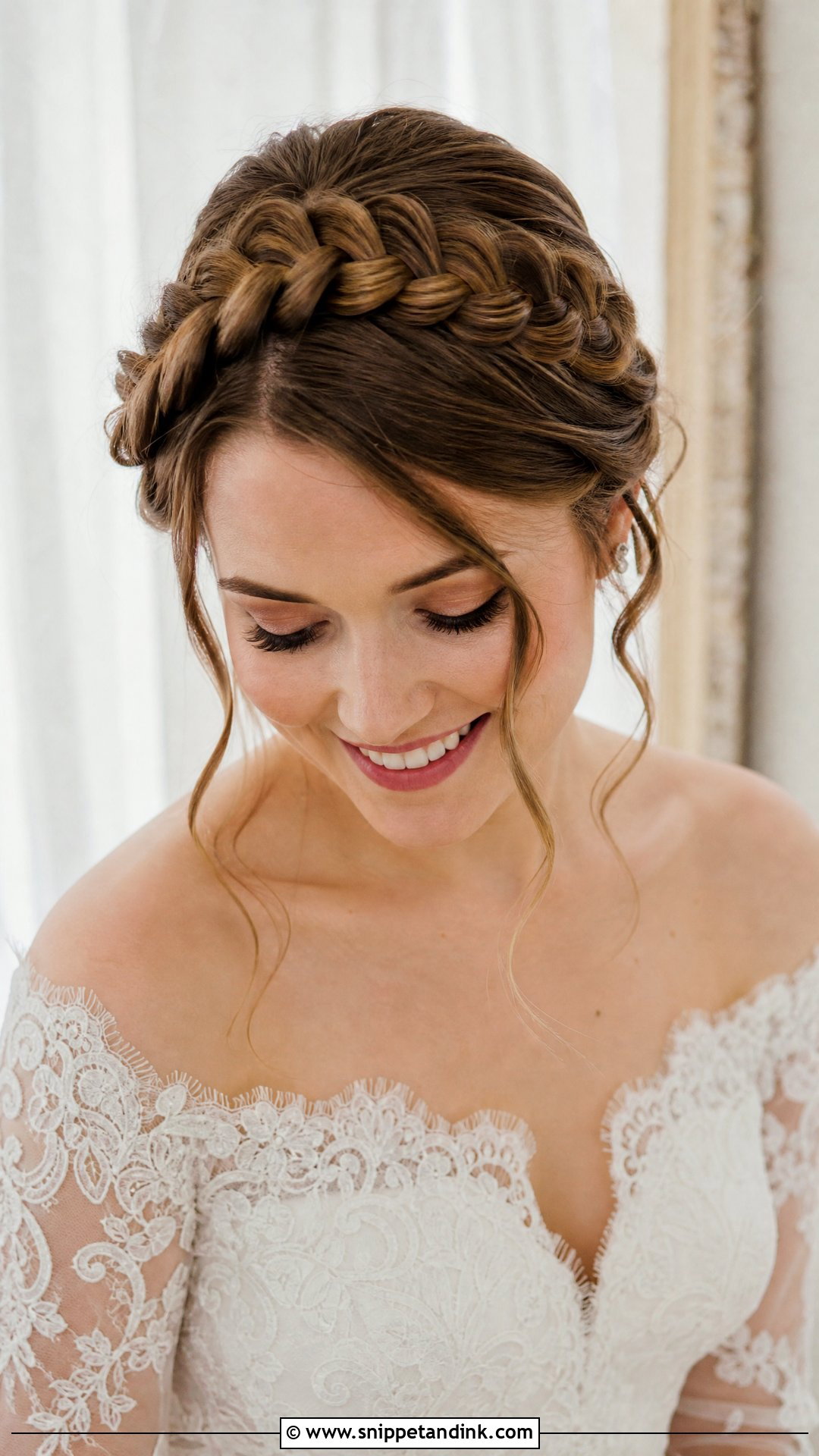
A French braid crown lies flatter than the Dutch version, because the strands cross over the top rather than under. That flatness reads as neat and traditional. I tuck the ends into a small bun at the back or let them blend into loose waves below. Leave a few strands around the temples, or the band can look tight. Vintage-inspired weddings and simple gowns are where I’d put this one.
9. Braided Updo With Fresh Flowers
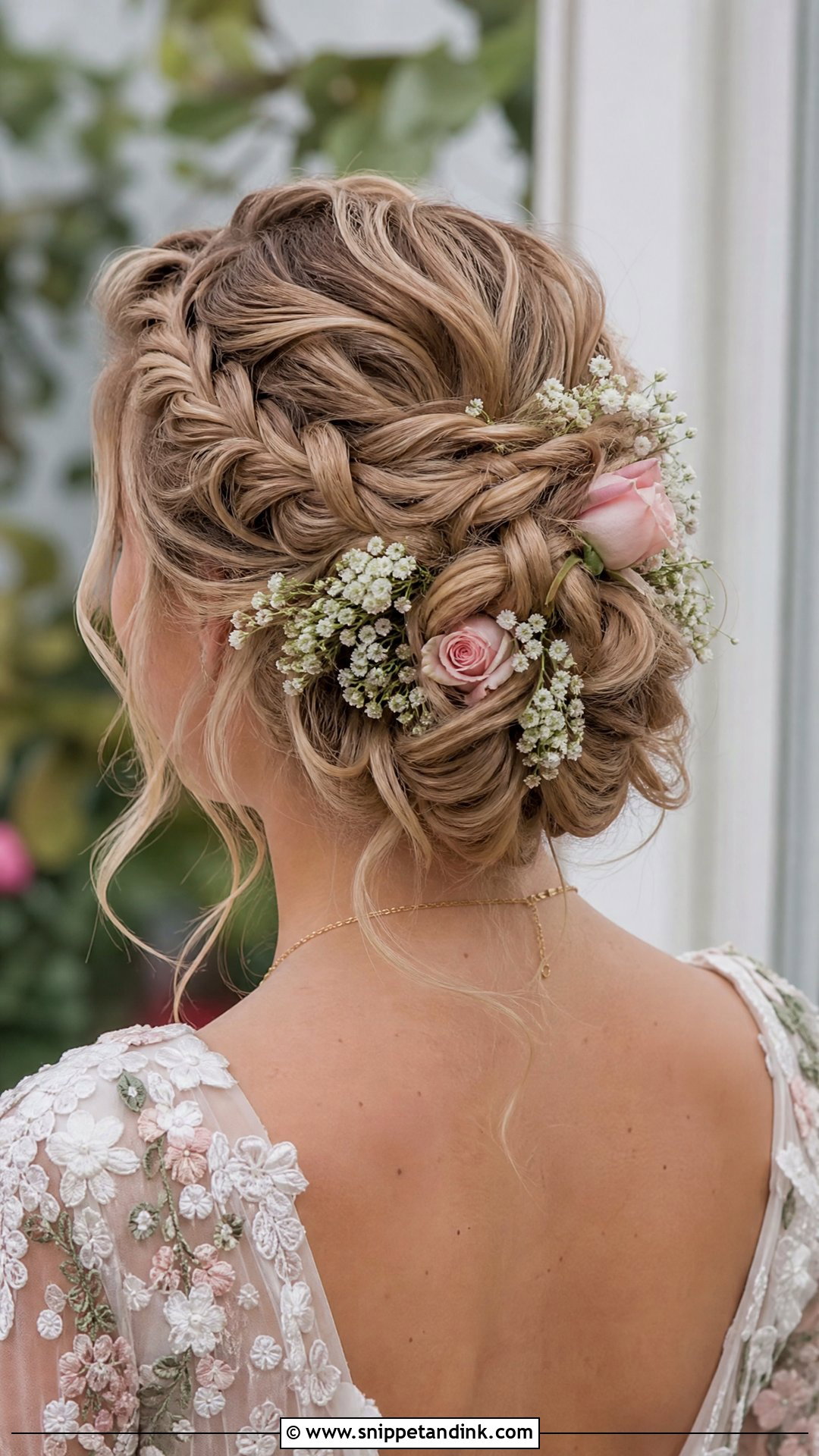
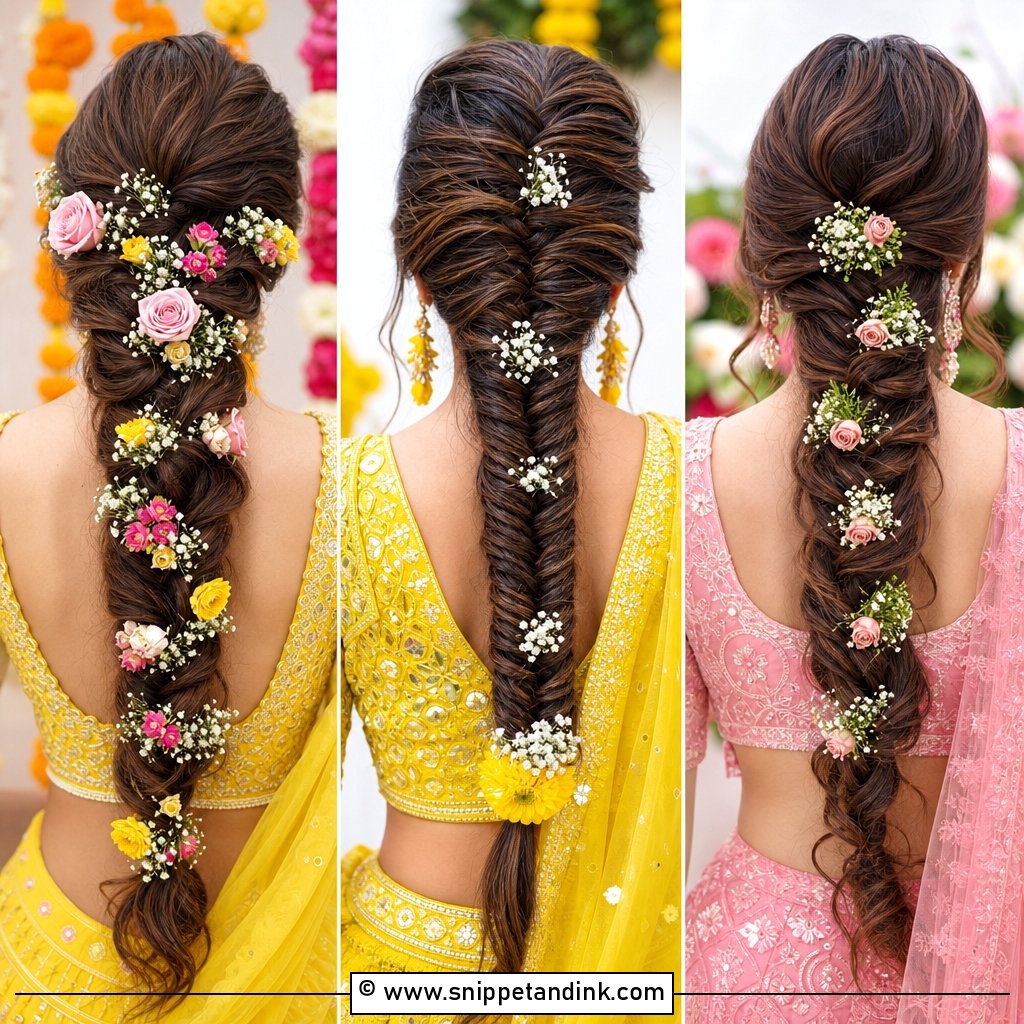
Braids hold real blooms better than loose hair because the stems can be threaded through the woven sections. Spray roses, small ranunculus and baby’s breath are sturdy; gardenias and sweet peas bruise and brown quickly on warm skin. I ask the florist for a small box of wired or stem-trimmed blooms rather than cutting them from the bouquet on the day. Coordinate with the bouquet so the colours connect, and add them as the last step, after hairspray.
10. Cornrow Bridal Updo for Natural Hair
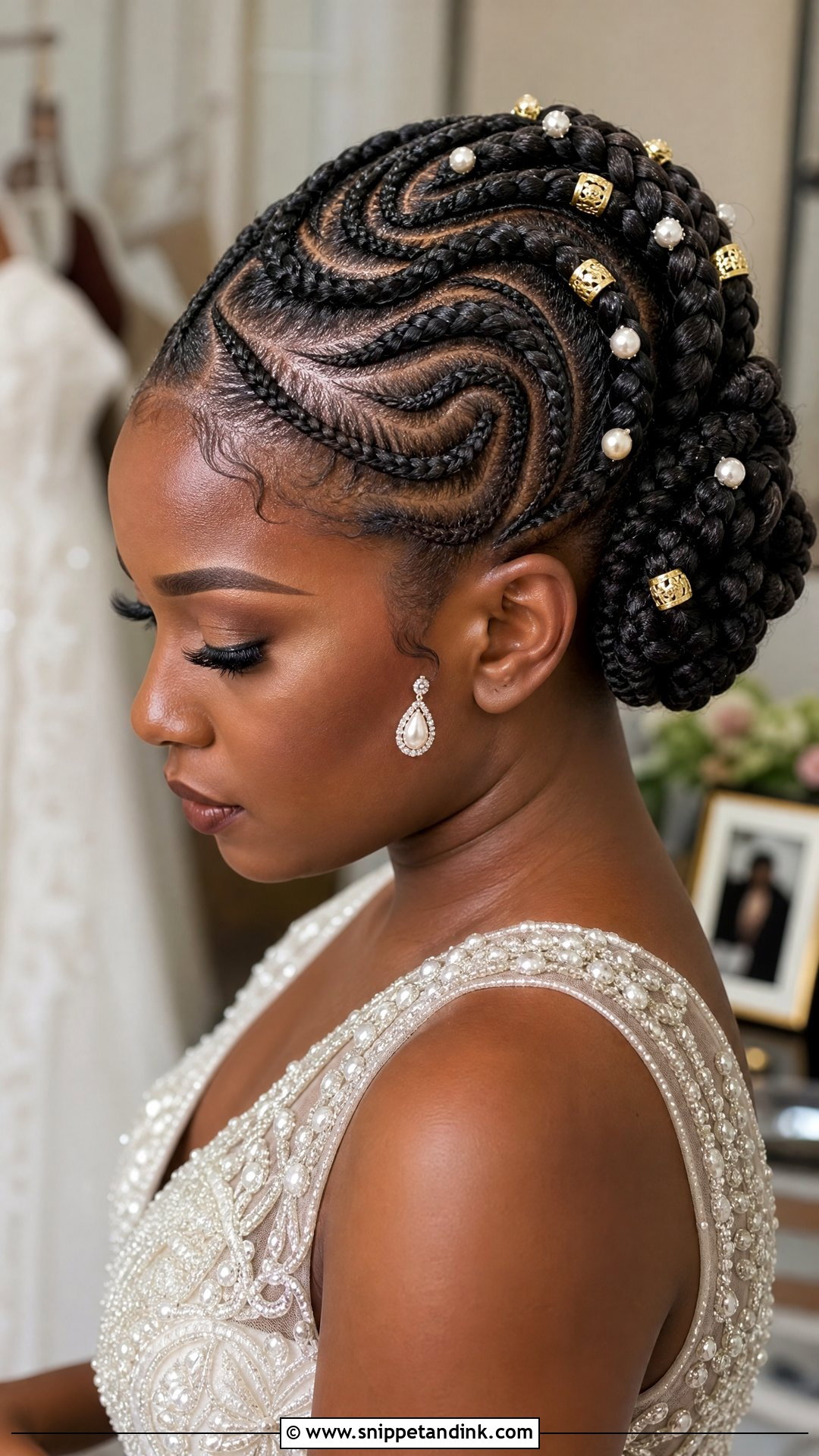
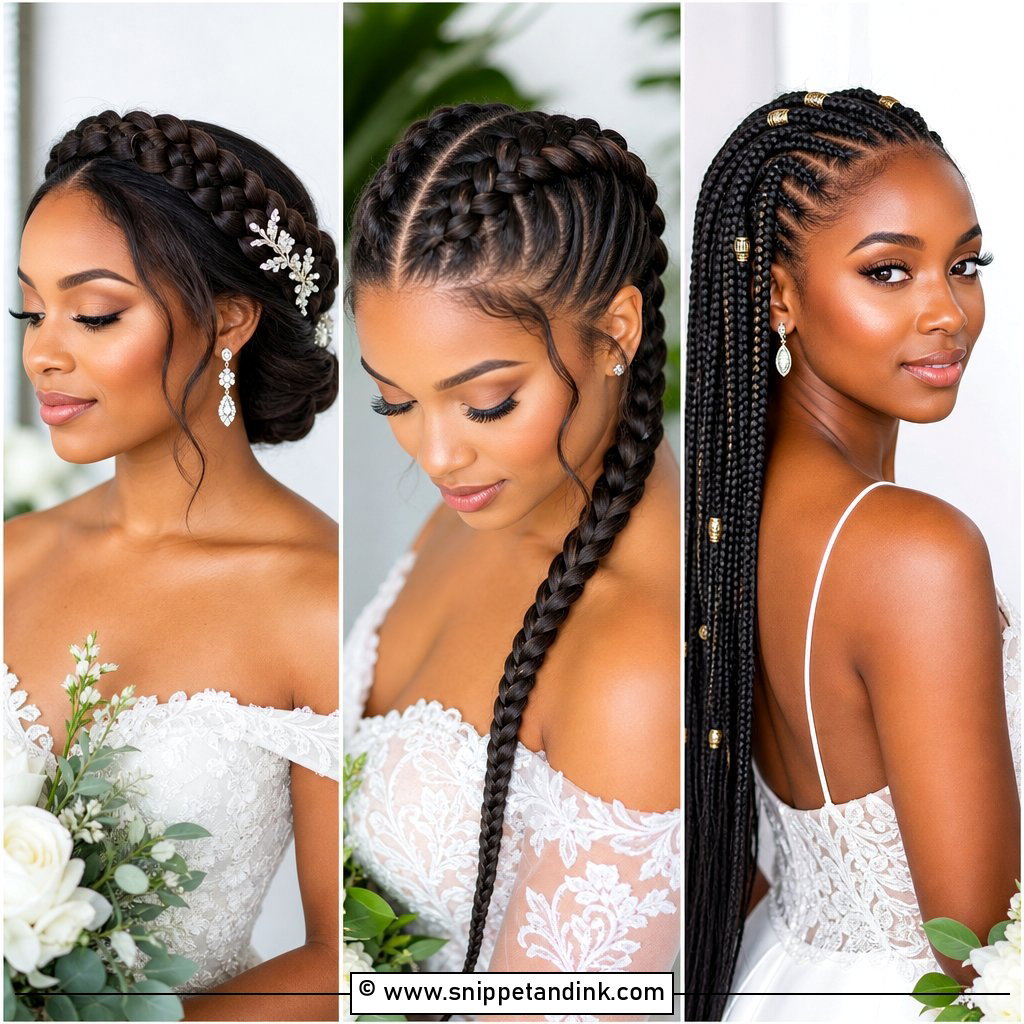
A cornrow updo has sculpted patterns that a stylist designs around the head shape, and the braids can be swept into a bun, crown or shaped piece at the back. Done well, it stays neat for the wedding and well past it. The one thing I’m strict about is tension: braids should not be pulled tight at the hairline, because tight edges cause pain on the day and can damage hair over time. Gold cuffs, beads or pearls dress it up. Most braiders install it a few days ahead, so the scalp has time to settle before the wedding.
11. Messy Braided Bun for a Relaxed Bride
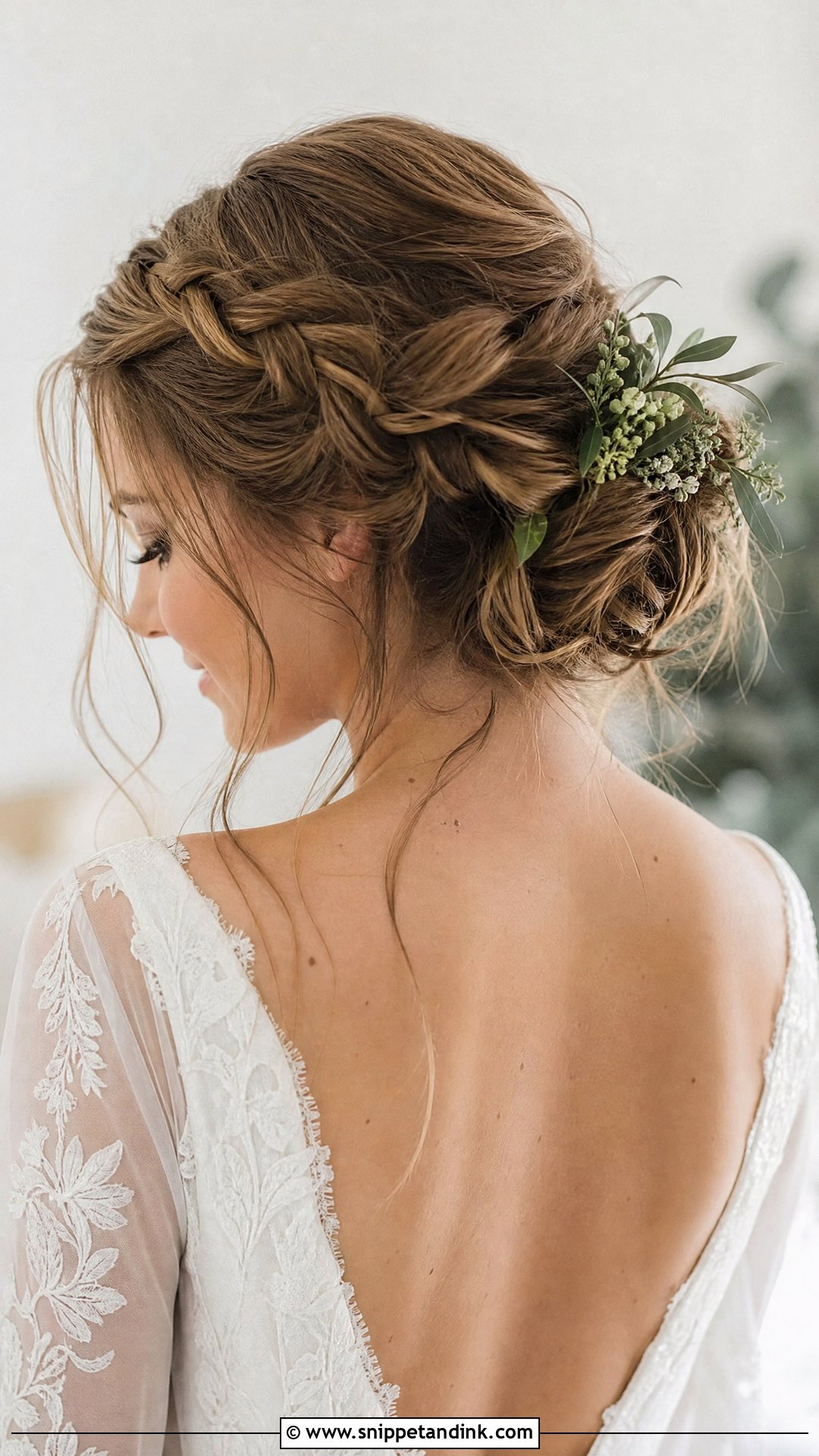
A messy braided bun looks loose, but under it is a firm base: I braid first, pin the braids into a low knot, and only then pull them apart to soften the shape. Skip that base and the bun slides down by the first dance. Wispy pieces around the face finish it. Greenery or tiny flowers suit it, and so do boho gowns and natural makeup. It’s the right choice for a bride who hates feeling stiff, as long as she accepts a few strands will escape over the day.
12. Halo Braid With Veil
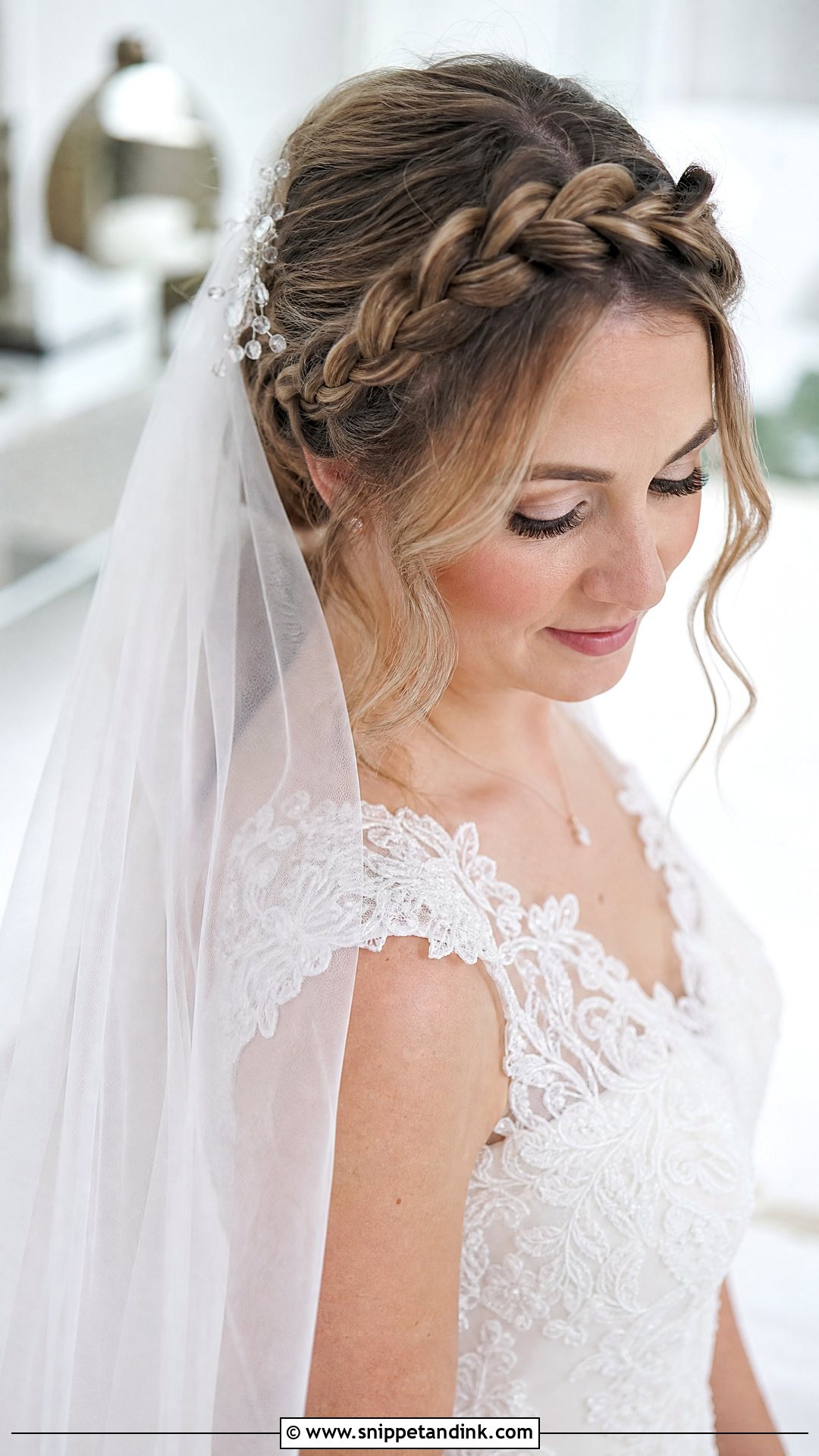
A halo braid is the best veil anchor I know. The comb slides under the braid at the back, and the braid holds it so firmly that it won’t drag at the crown during the ceremony. After the veil comes off, the halo stands on its own for the reception without any reworking. I add small crystals or pearls along the braid only on the sides, since the back gets covered by tulle. Formal weddings with a long veil are where it shines.
13. Double Braided Pigtails for Boho Brides
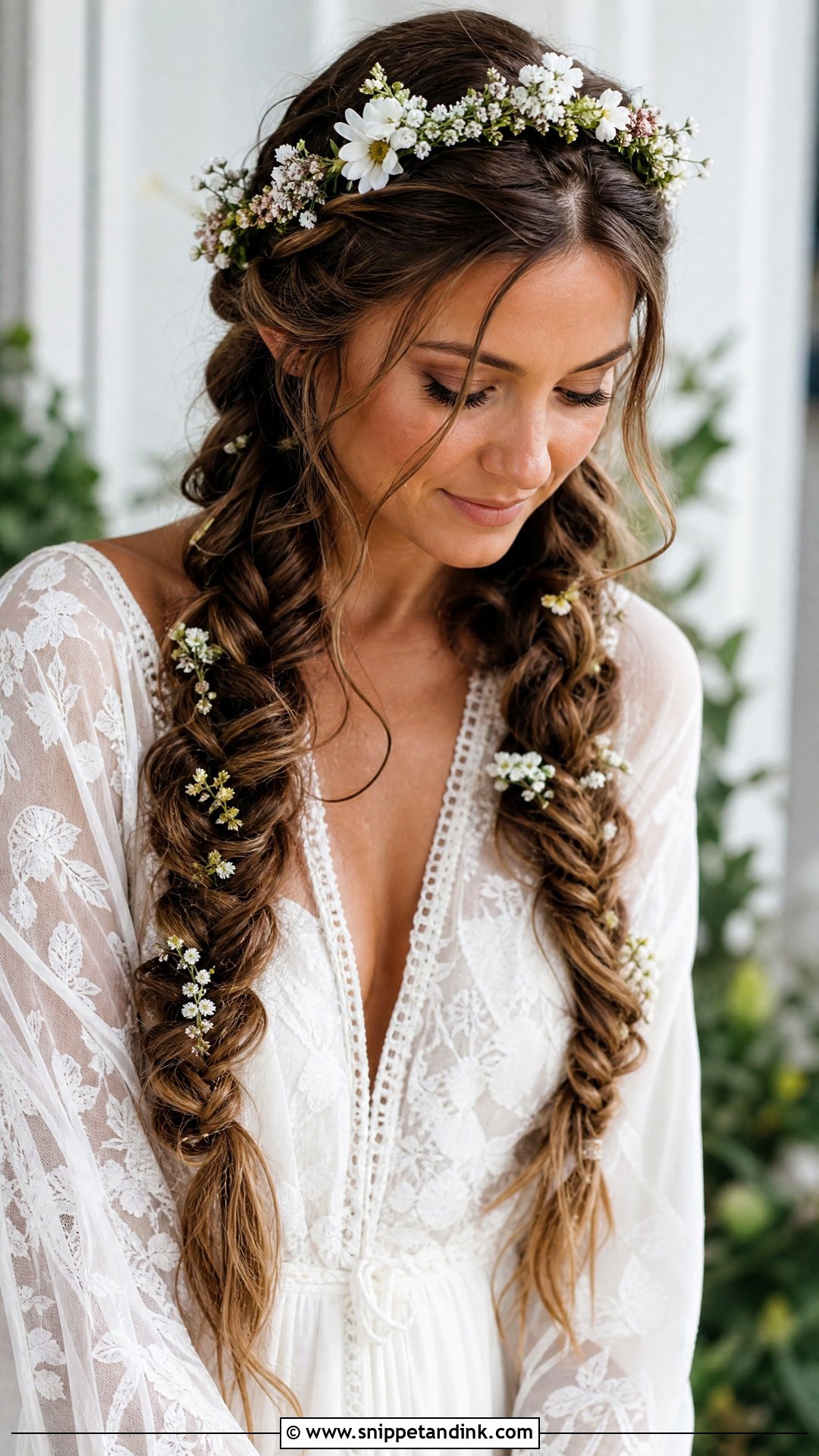
Double braids trailing over each shoulder are playful, and they suit festival-style and outdoor weddings. I loosen them generously so they look full rather than neat. Long hair gets the best result; shorter lengths can use clip-in wefts braided in. Ribbon woven through each braid is a sweet detail. These dreamy double braids do read young, so I talk through the overall look with the bride first; with a flower crown and a flowing gown they work, with a structured gown they can look out of place.
14. Braided Chignon for Classic Weddings
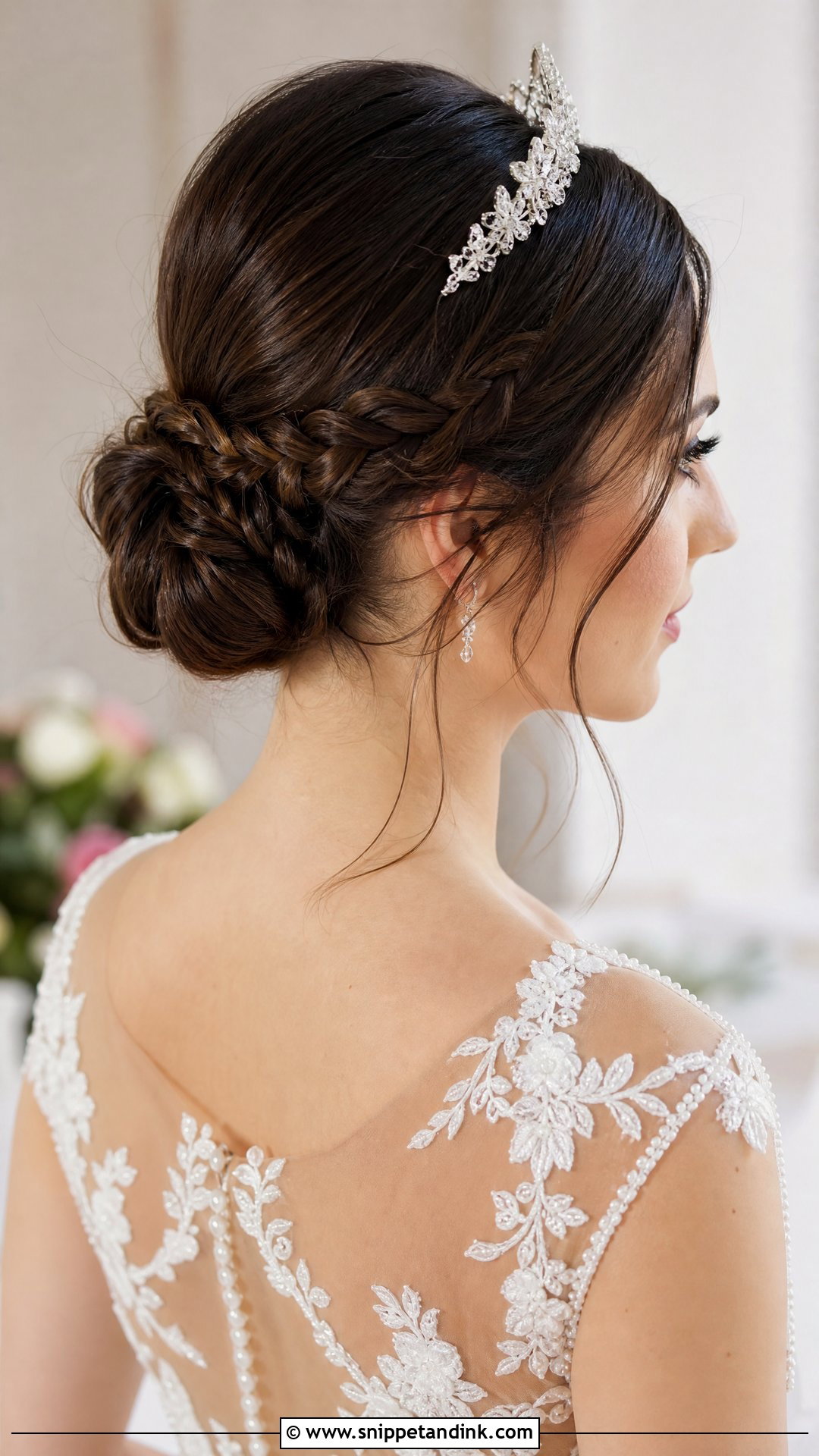
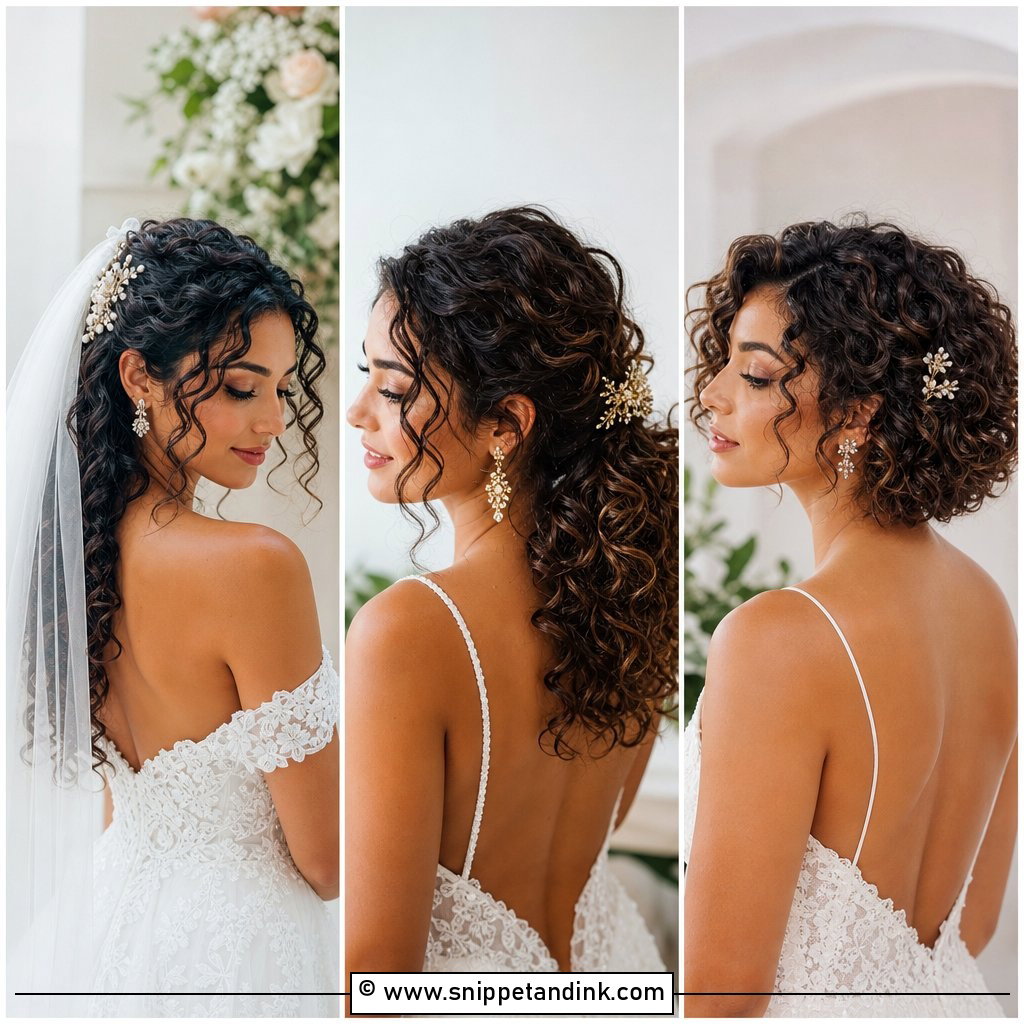
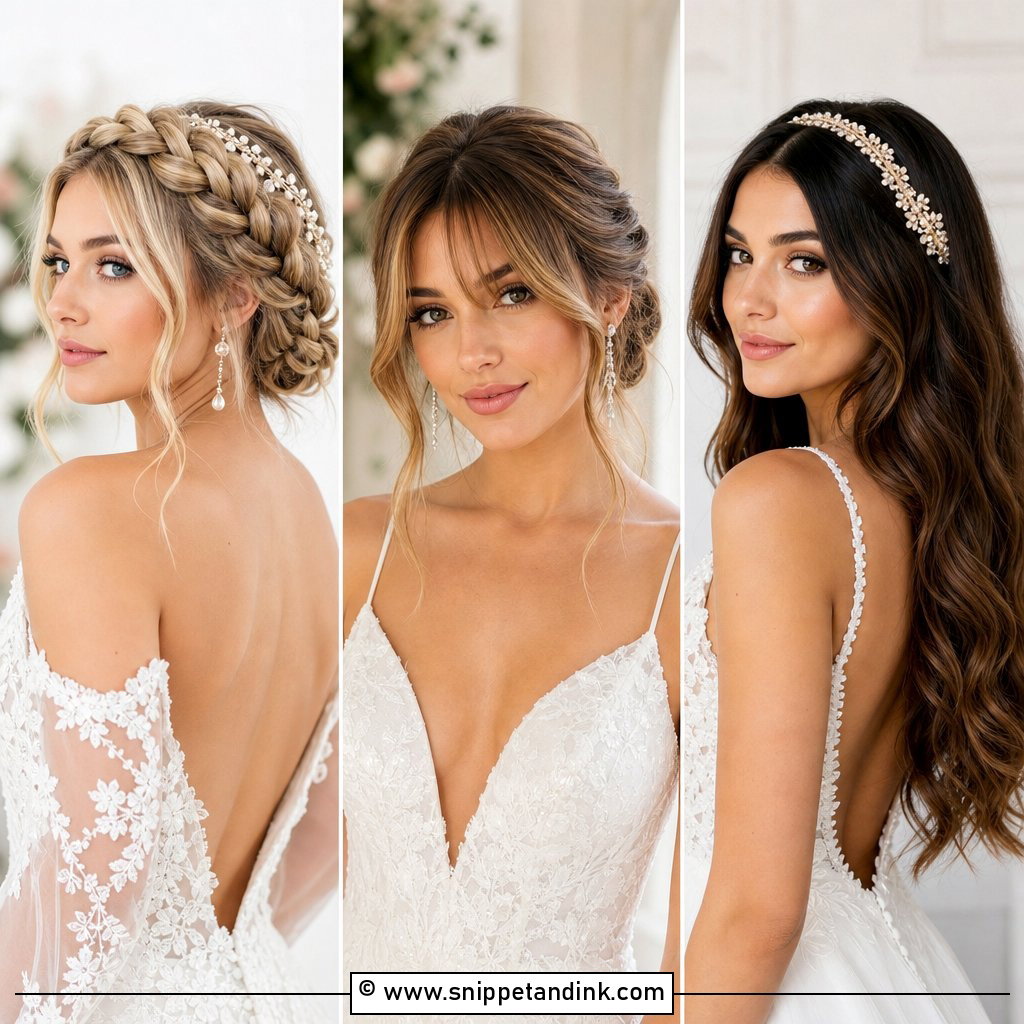
The braided chignon is a smooth low knot with a braid or two wrapped through it for texture. It’s compact, which makes it easy to pair with a veil, tiara or heavy earrings. I set the chignon slightly off center if the bride has a strong profile side she likes in photos. Leave a few tendrils at the face. Ballrooms, churches and classic gowns suit it.
15. Goddess Braids for a Regal Bride
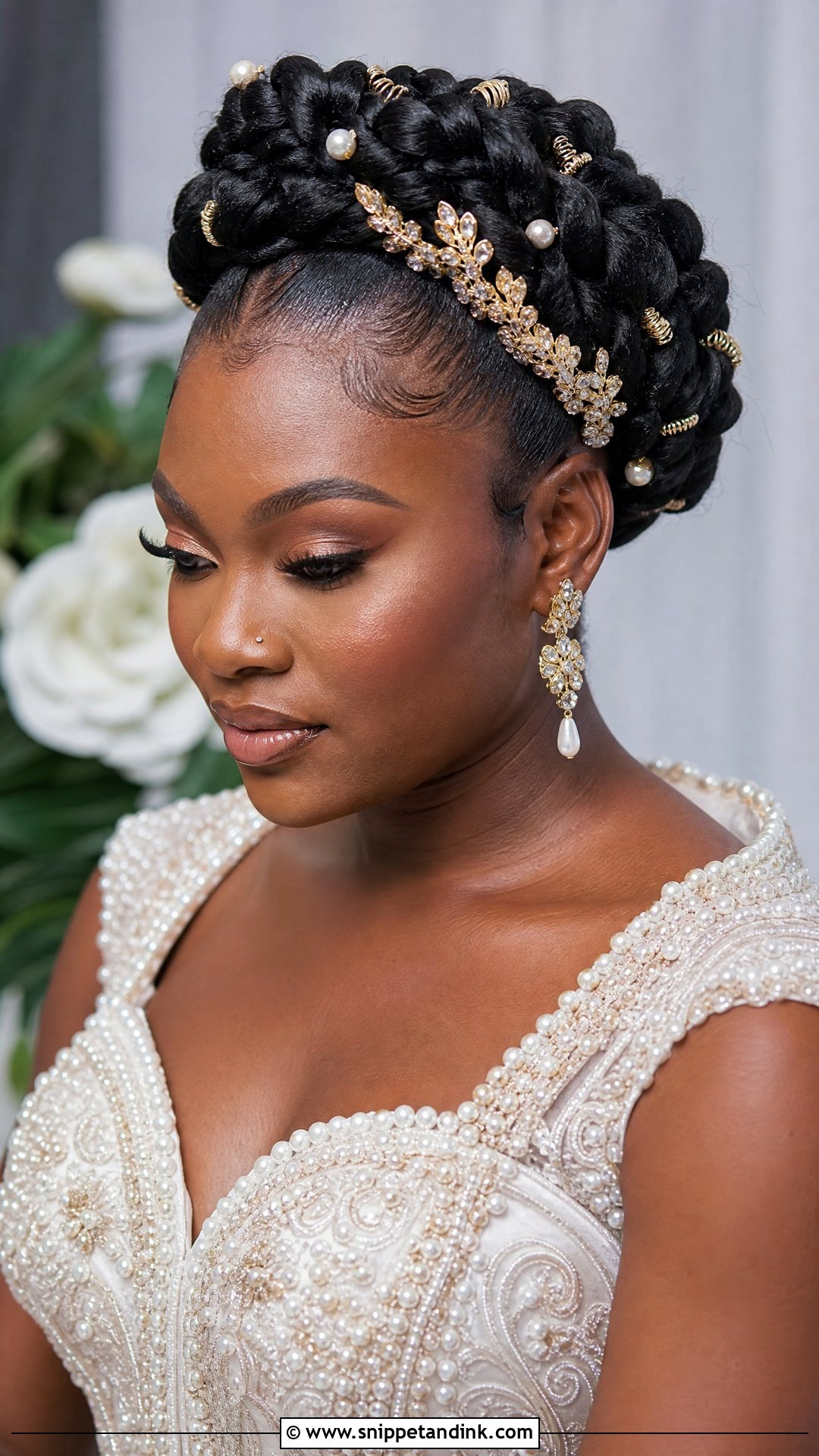
Goddess braids are larger, raised braids that make bold patterns across the head. They can be arranged into a crown, a bun or left down the back, and they hold for a long wedding day with almost no maintenance. They’re also a protective style, which matters for brides with natural hair who don’t want heat on their hair for the wedding. Gold accessories, beads or pearl pins finish them. Like cornrows, they’re best installed a few days ahead with moderate tension at the edges.
16. Loose Braid With Pearls
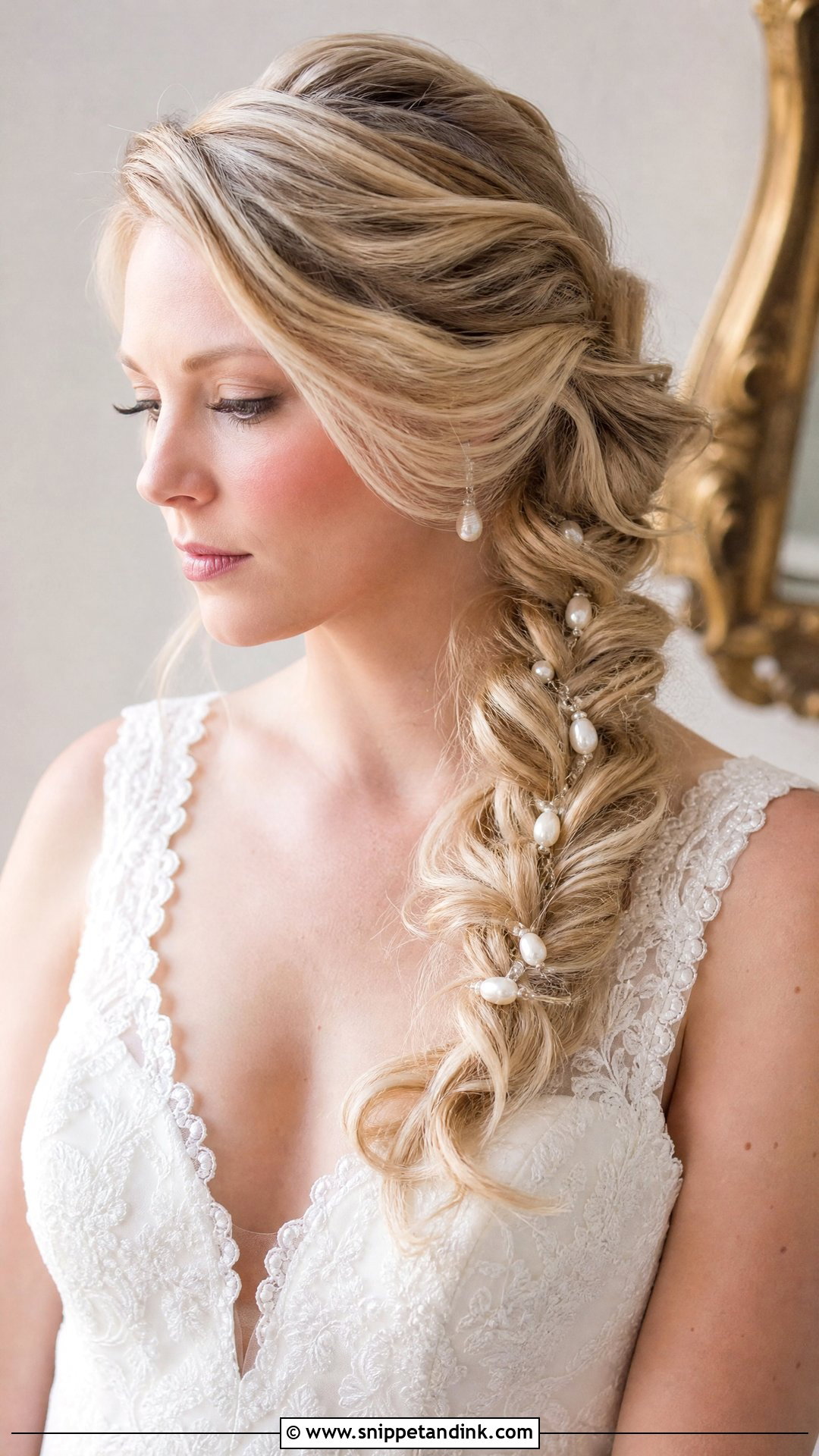
Threading pearls into a loose braid is quieter than adding a big comb or crown. I use pearl pins slipped into the braid crosses, or a pearl strand woven in as one of the sections. The braid needs to be loosened gently afterward so the pearls sit inside full texture rather than on a tight rope. Drape it over a shoulder or down the back. Whether your hair is straight or wavy, pearl-adorned braids suit classic gowns without fighting the jewelry.
17. Twisted Rope Braid Updo
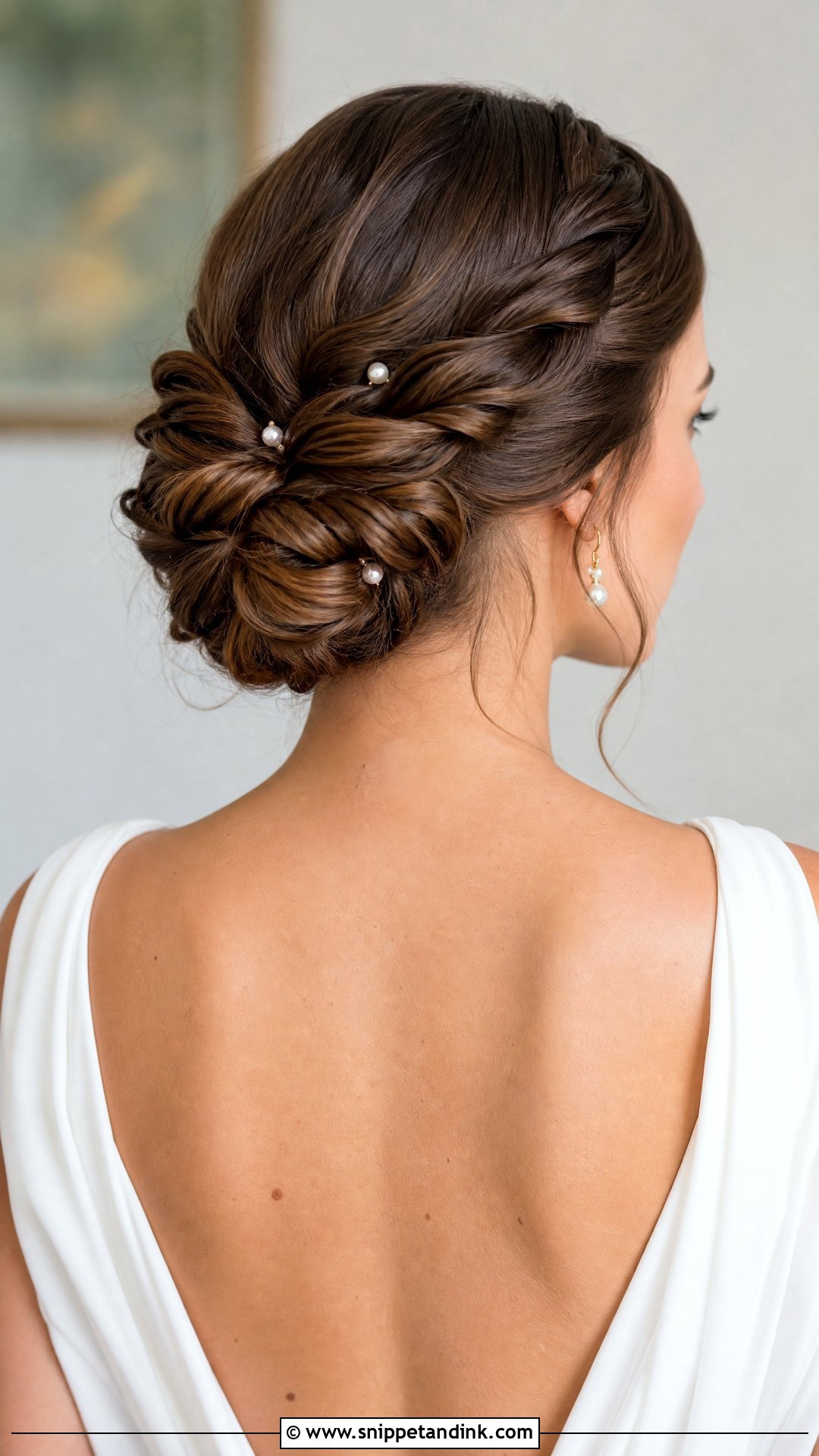
A rope braid is two twisted sections wound around each other, not a three-strand braid at all. Twist each section in one direction and wrap them in the other, or it unravels within the hour. Gathered into an updo it looks sculpted and contemporary. I coil it into a low bun or pin it at the back with small flowers. It’s quick to do, which makes it a good bridesmaid style too.
18. Braided Ponytail for Modern Brides
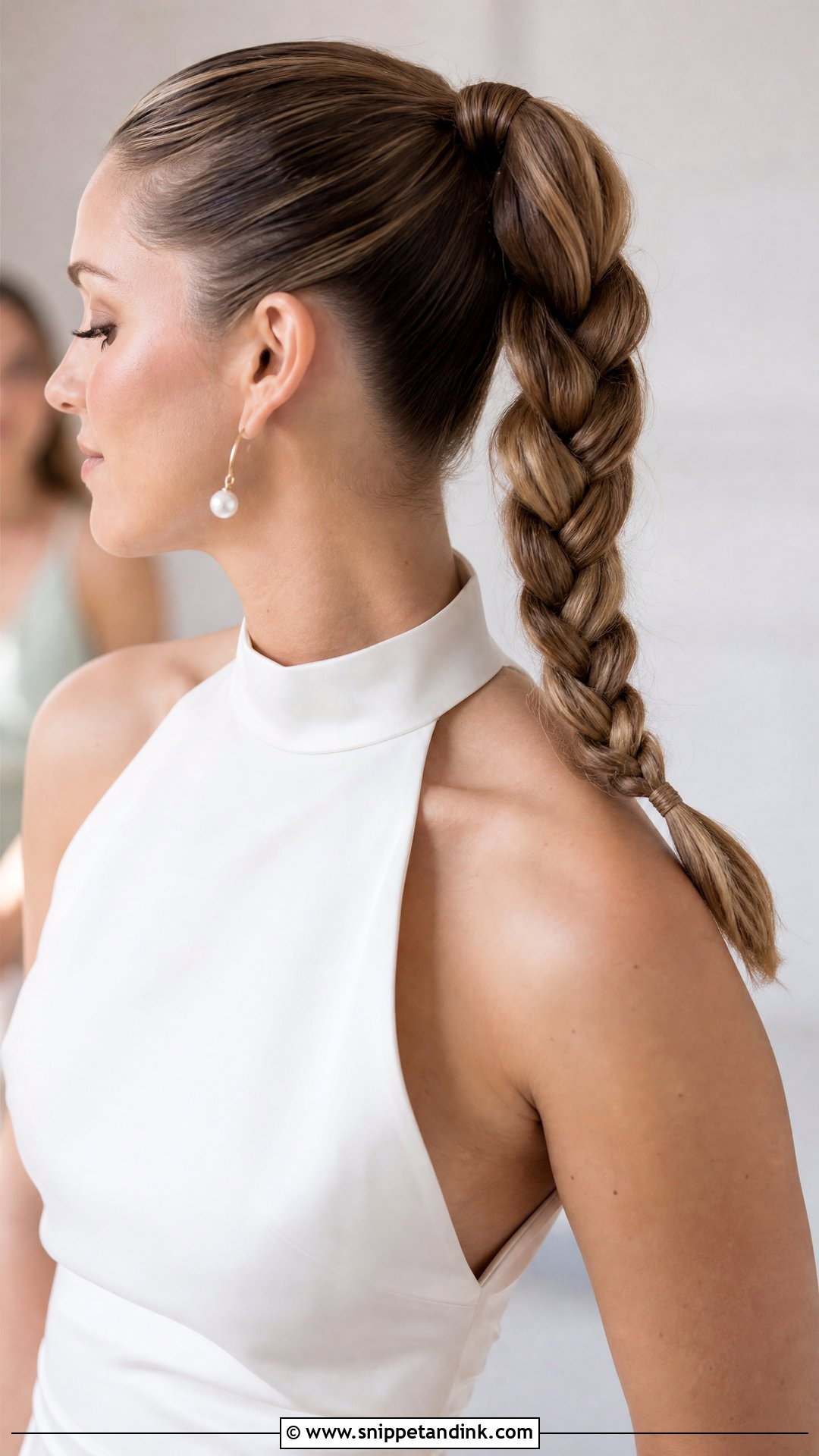
A braided ponytail is clean and modern, and it keeps every strand off the face for dancing. It can sit high for energy or low for a softer line. I tie the pony with a clear elastic, wrap a strand around the base to hide it, and then braid. Long, thick hair gives the strongest result; fine hair benefits from a clip-in ponytail piece. Loosen the braid slightly if the rest of the look is soft. Sleek gowns and city weddings suit it.
19. Accent Braid With Soft Waves
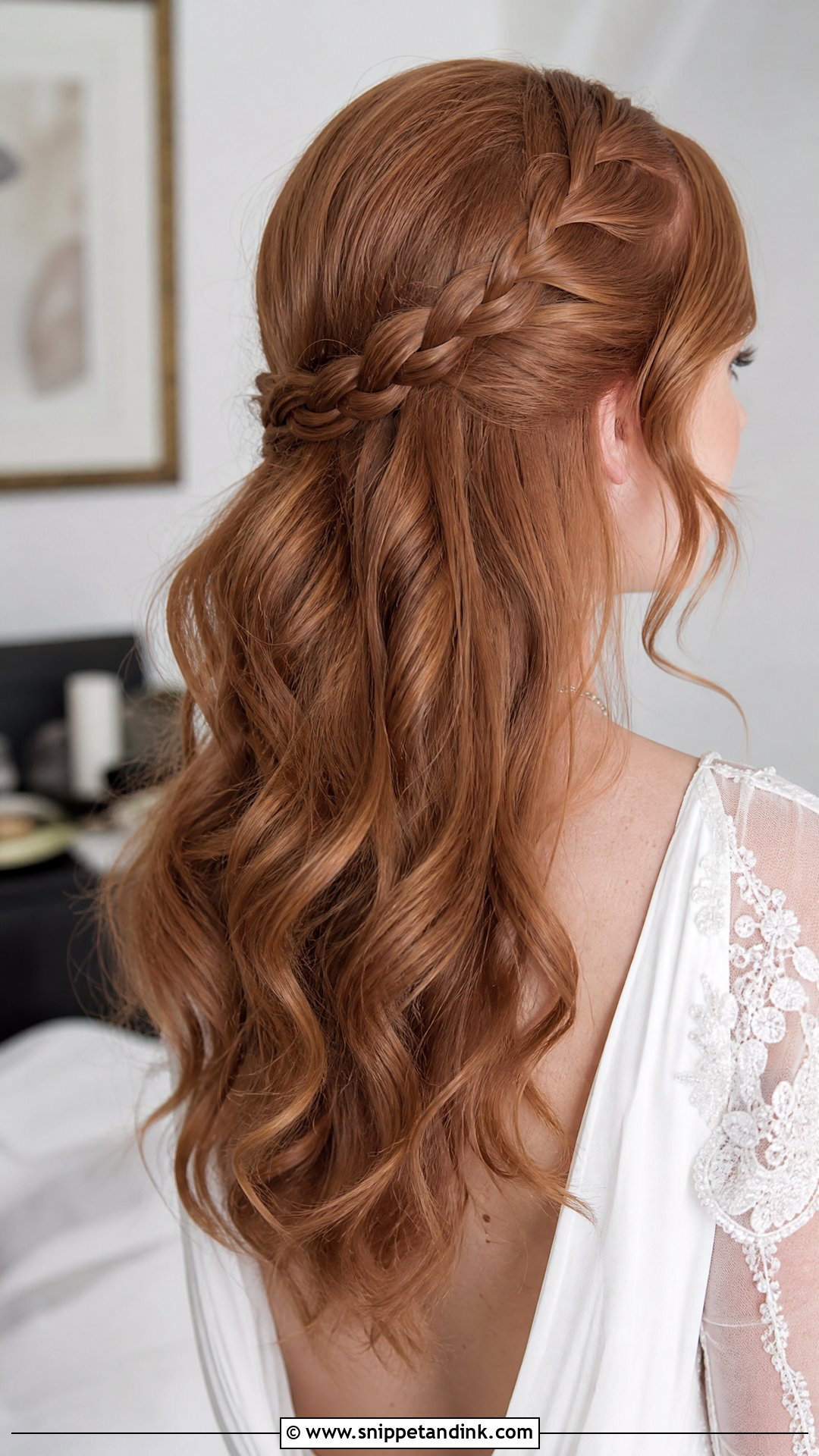
Sometimes one small braid is enough. An accent braid running along one side or across the crown keeps the front pieces out of your face while the waves stay loose below. I’d pick this for a bride who loves her hair down but finds it annoying when it falls forward in photos. It works on nearly every length and doesn’t add time in the chair.
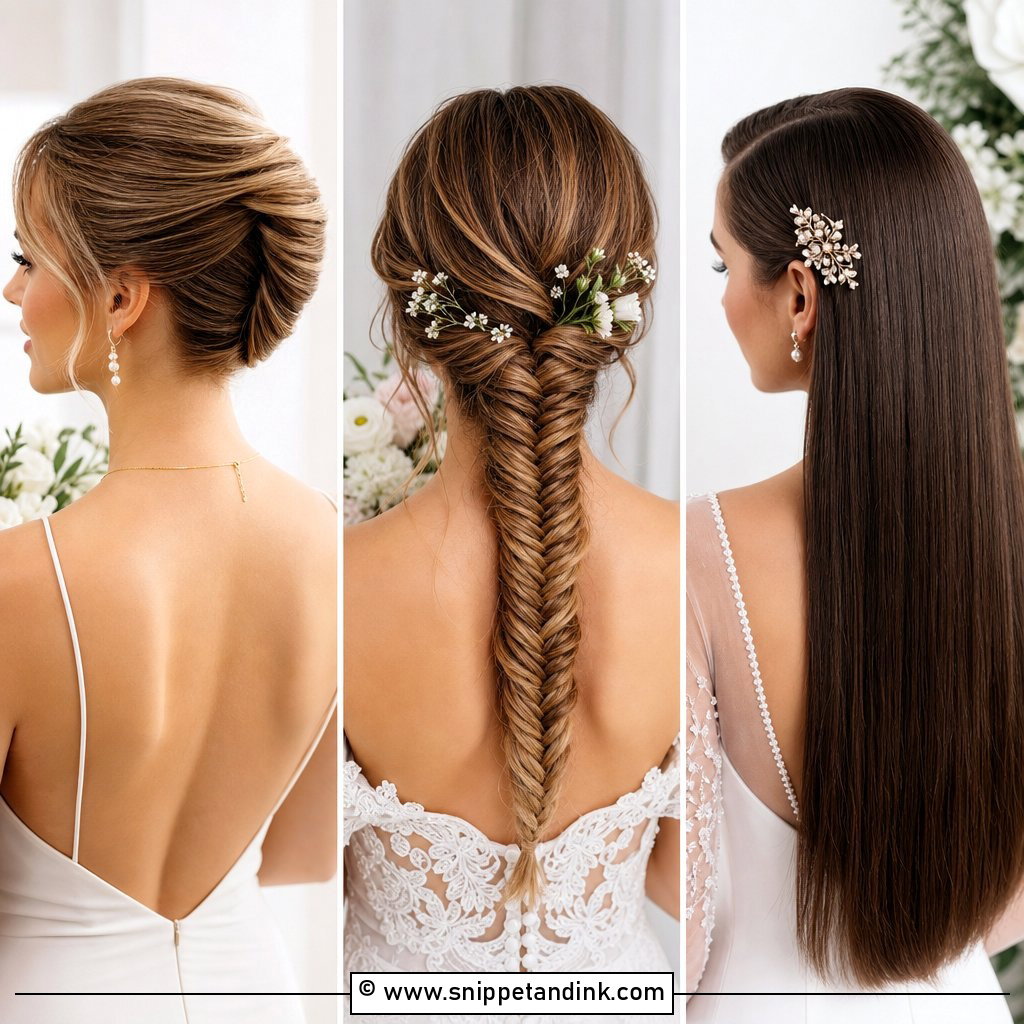
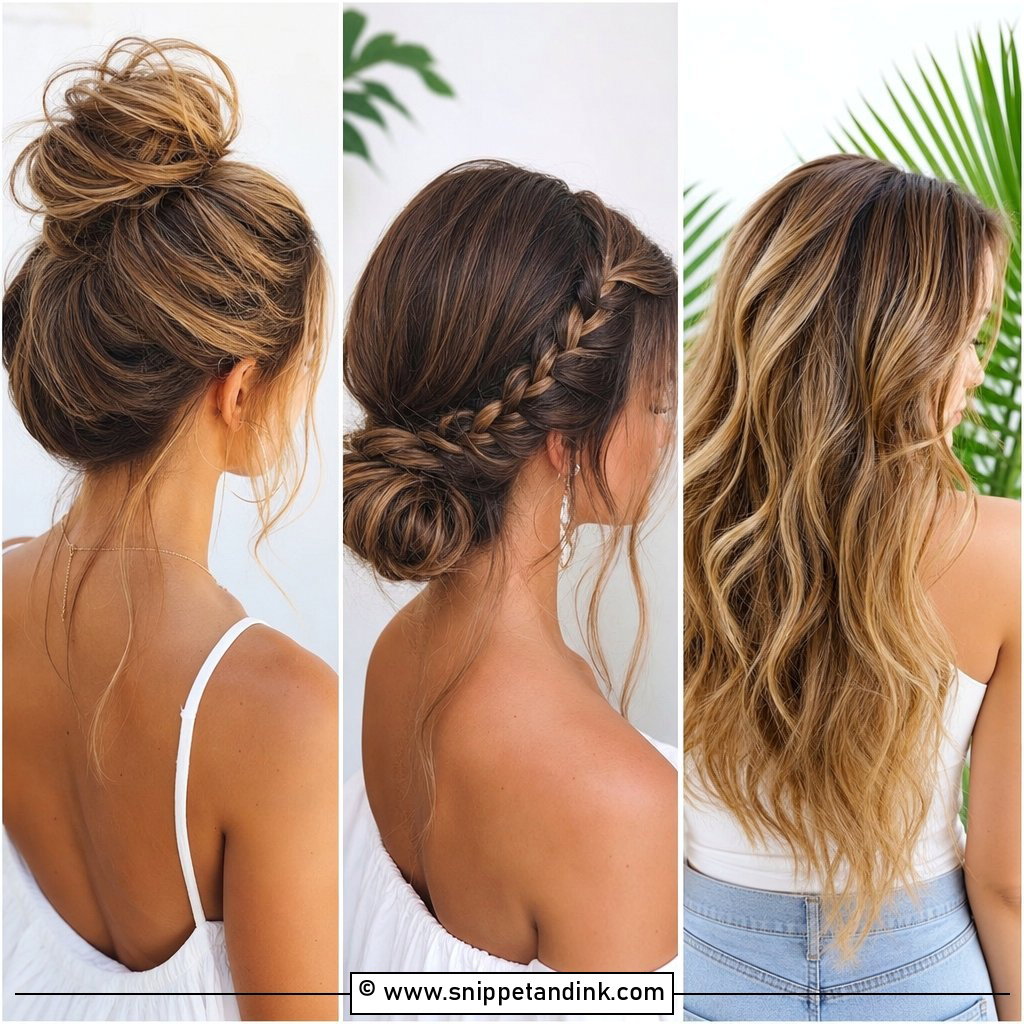
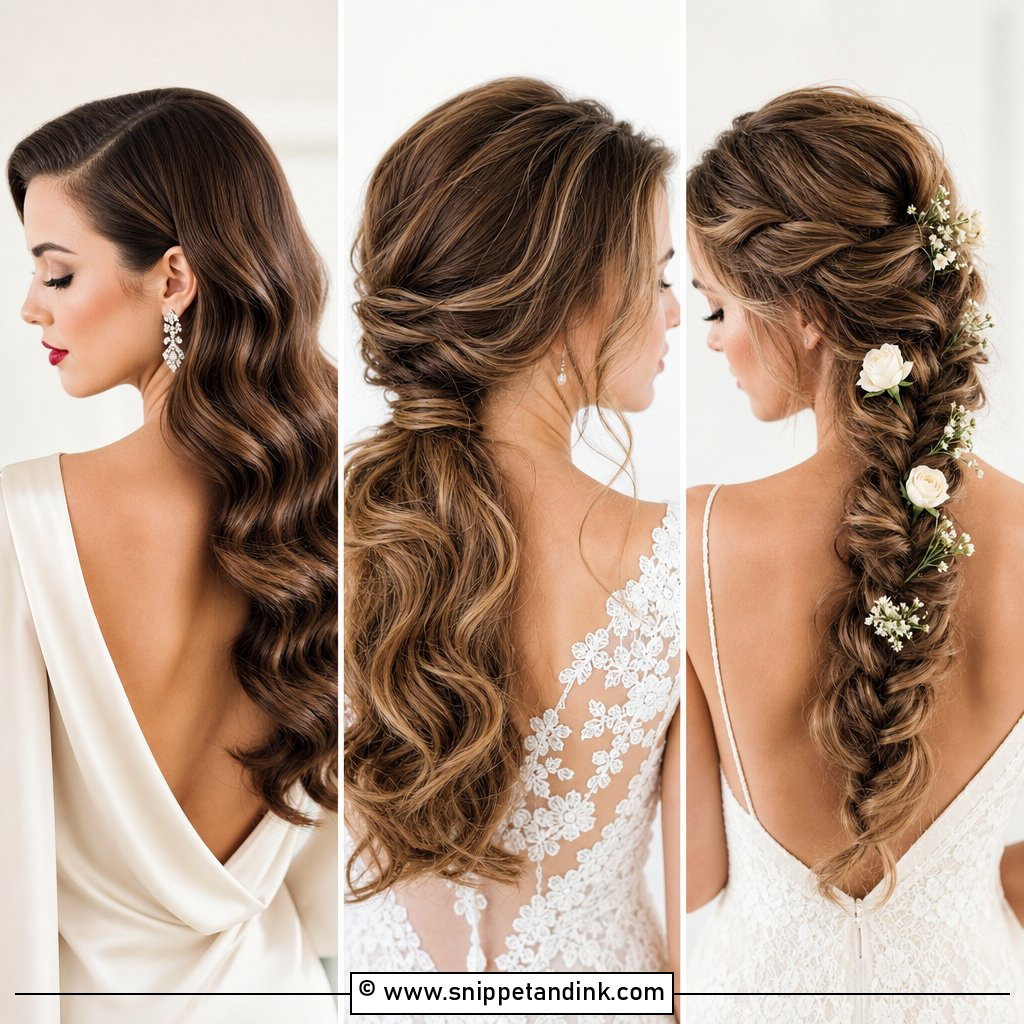
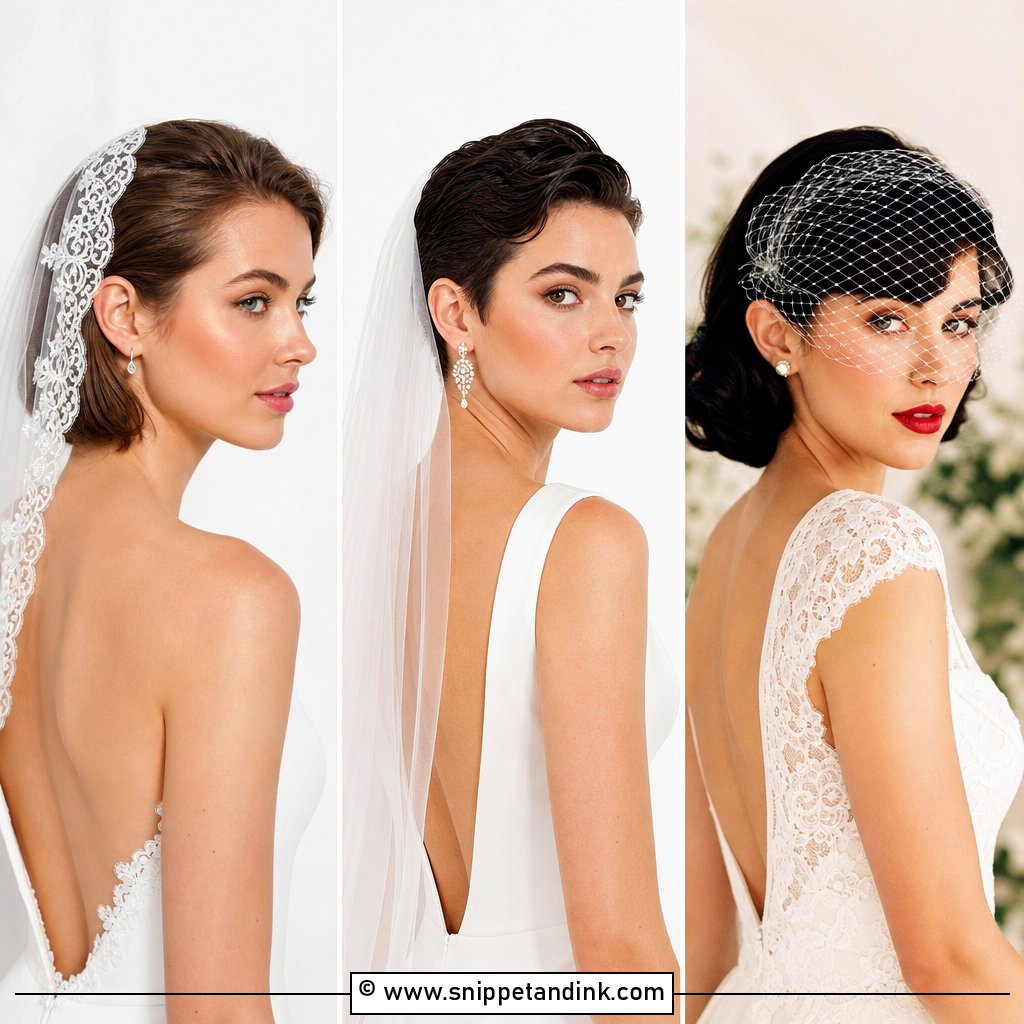
20. Braided Bun With Face Framing Pieces
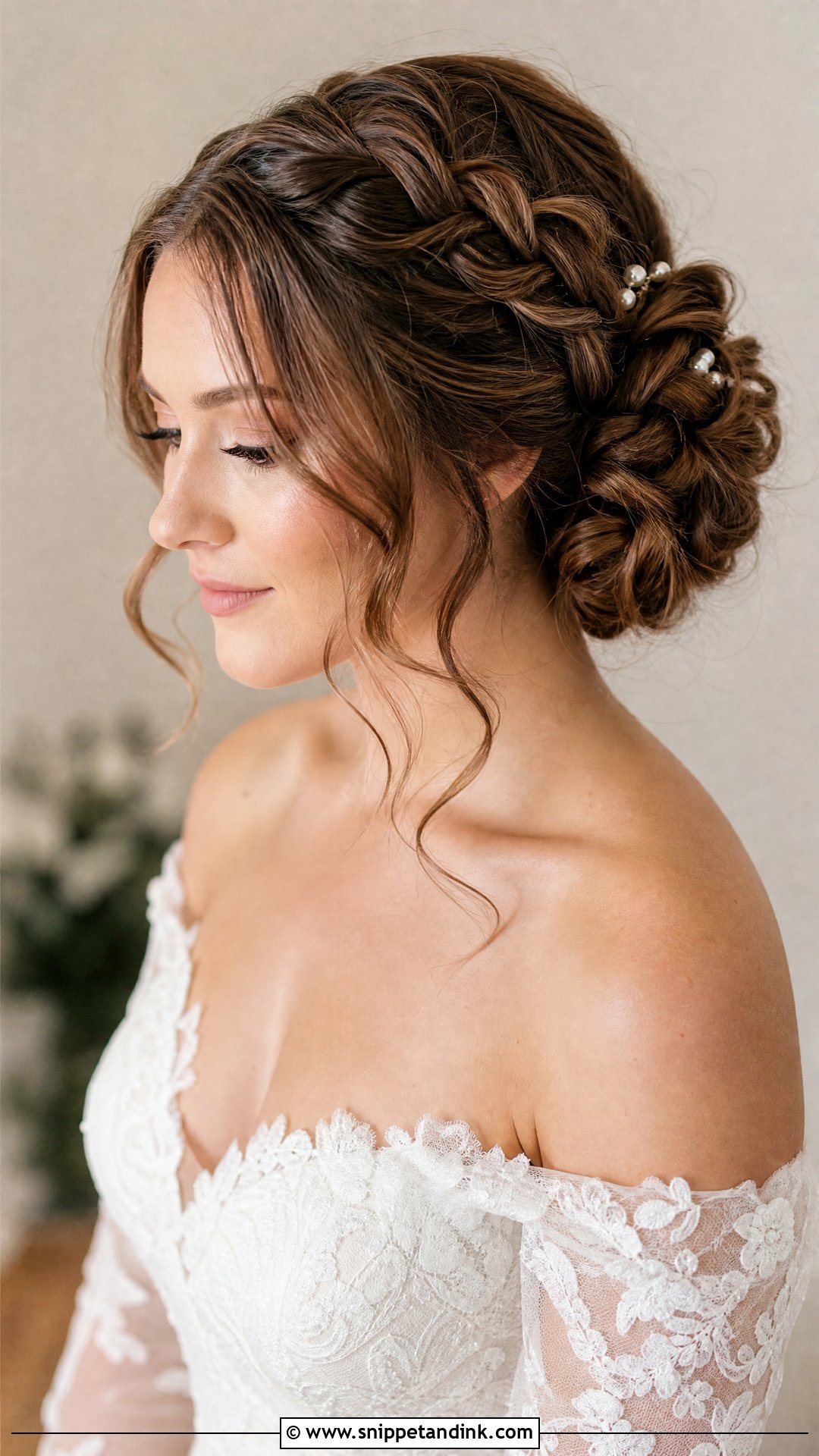
The braided bun with face-framing pieces is a good everyday wedding look, and I mean that as praise. The braids give the bun grip and texture, and the front pieces soften the shape around the cheekbones. I curl the face pieces away from the face so they don’t fall into the eyes or stick to lip gloss. Pearl pins or tiny flowers on the bun finish it. It suits nearly every theme and lasts well from morning to midnight.
Cornrows and Goddess Braids Go In Days Ahead
Installed braids are different from styled braids. They usually take several hours, so they are almost always done a few days before the wedding, never the same morning. That gap is useful: any tenderness from fresh braids eases, and the hair settles into the pattern.
- Book the braider well ahead and ask to see photos of bridal work.
- Wash, deep condition and fully dry your hair before the appointment.
- Ask for gentle tension at the edges; braids that hurt are braids that are too tight.
- Sleep in a satin scarf or bonnet every night until the wedding to stop frizz.
- Keep the scalp comfortable with a light oil along the parts, not heavy grease.
Accessories like cuffs, beads and pearl pins can be added on the morning itself, and a stylist can tuck the braids into an updo on the day if you want to switch shape for the ceremony.
Unpicking a Braided Style the Morning After
A pinned braided updo can hold dozens of pins and a lot of hairspray. Pulling at it the night of the wedding is how hair gets snapped. Find the pins first, working from the bottom up, and drop them into a cup so you don’t miss any. Then undo the braids from the ends, not the top.
Before you brush, work a generous amount of conditioner or a detangling oil through the dry hair. Brush from the ends upward with a wide-tooth comb, then shampoo. Expect a fair amount of shed hair in the brush; that is hair that would have fallen out anyway over the day and was simply held in the braid.
Matching a Braid to Your Gown, Veil and Hair Texture
A braid’s real strength is structure: it holds, it carries flowers and veils, and it suits nearly every texture. Look at your gown’s neckline, your veil placement and your venue together. A crown braid or halo frees the neck; a side braid sits on one shoulder; cornrows and goddess braids carry heritage and last for days. Book a trial with the veil and any flowers you plan to wear, take photos from the back, and pick the braid that still feels like you at the end of the night.
You'll Like These Ideas:


Leave a Reply