
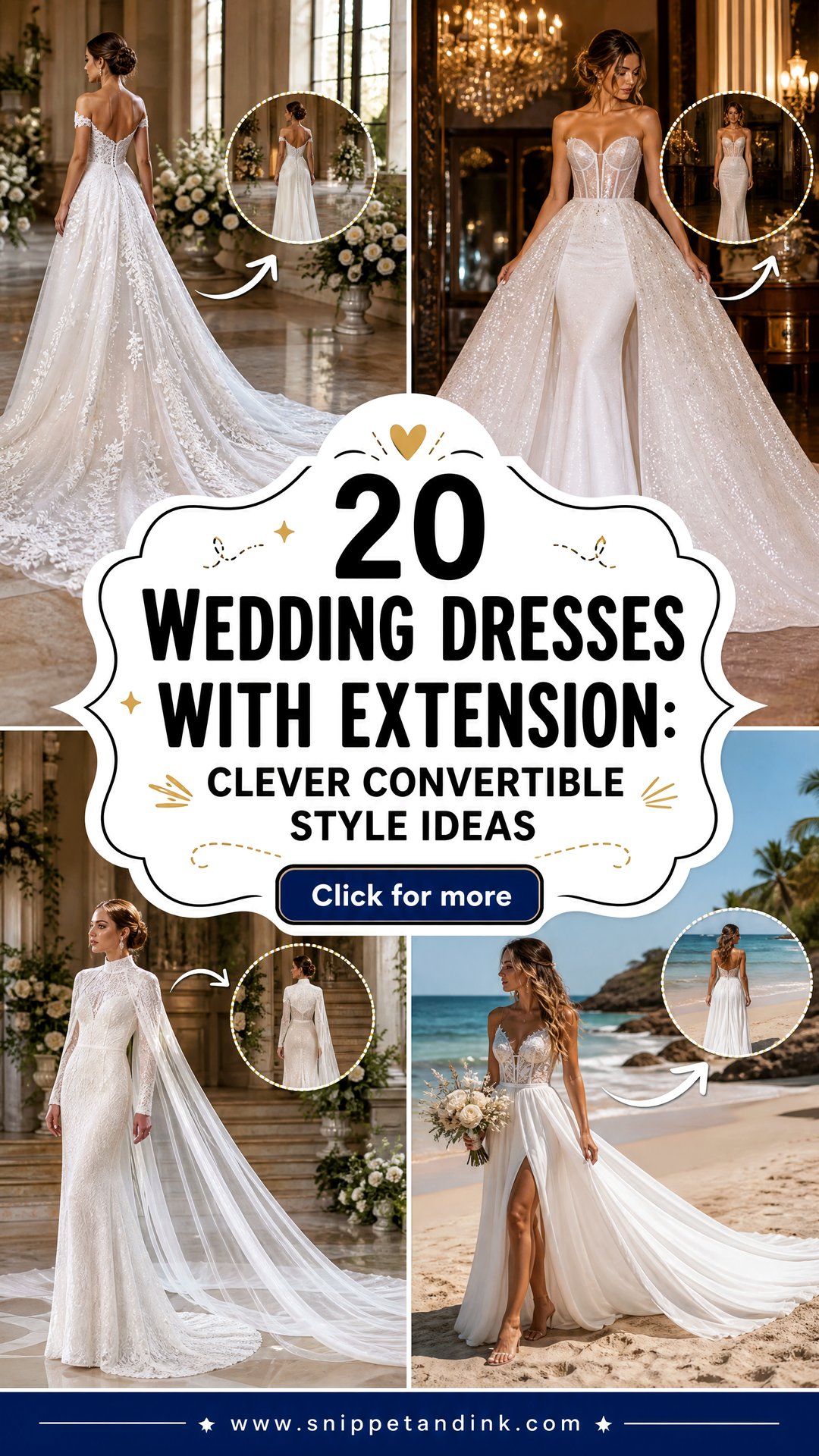
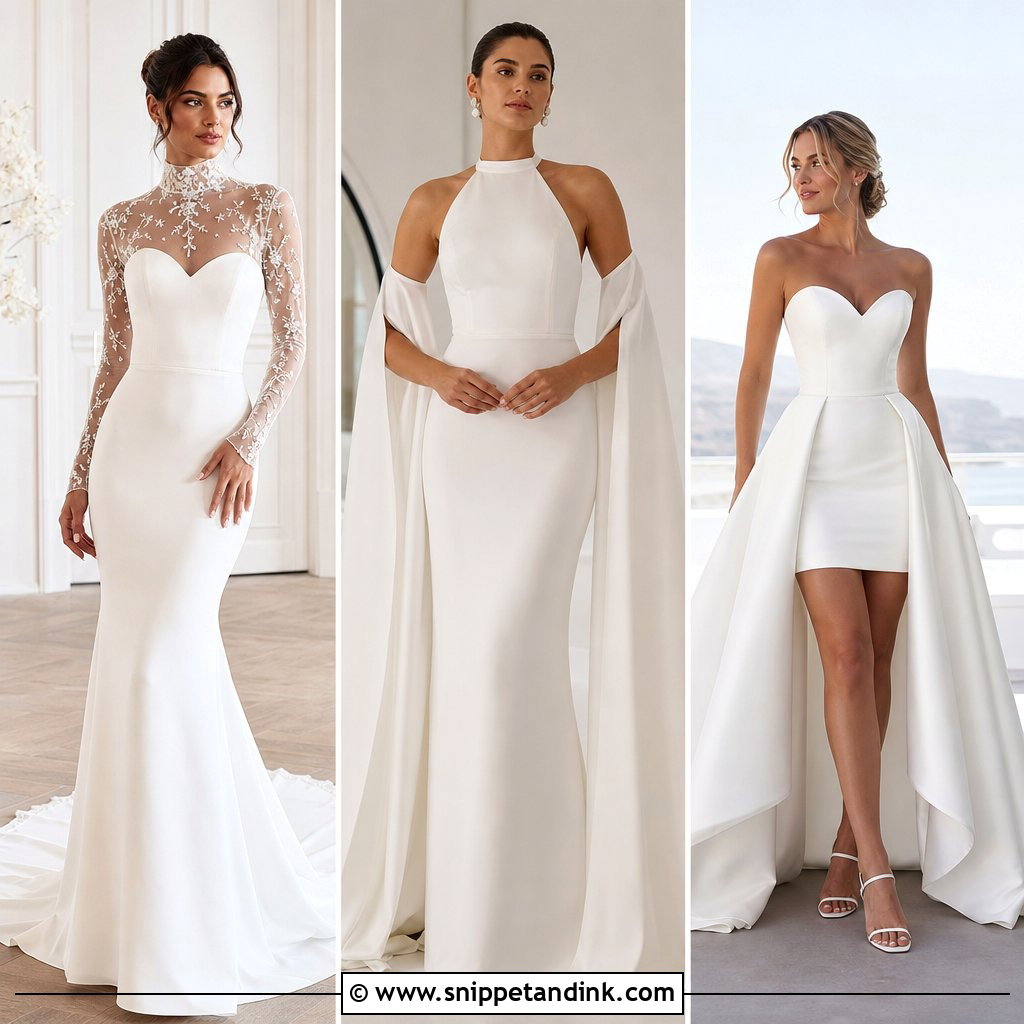
Most brides I dress want two things that pull against each other: a big moment walking down the aisle and a dress they can actually dance in. A detachable extension solves that. Removable trains, overskirts, capes and long skirts turn a streamlined gown into a grand ceremony look, then come off for dinner and the dance floor, with no second dress to buy or change into. The extension has to suit the gown’s fabric, waistline, colour and construction, otherwise it looks borrowed. Below are twenty convertible looks, from classic satin and romantic lace to a bridal mini hiding under a full skirt, with notes on how each attaches and what to check.
Detachable Train or Bustle? What Each Costs You on the Day
A bustle lifts a sewn-on train with hooks, buttons or ribbon ties so you can walk and dance, but the fabric is still there, hanging off the back of your skirt all night. A detachable extension removes it entirely. I suggest detachable when the train is long, heavy or very full, and a bustle when the train is modest or cut as part of the skirt pattern.
- A bustle keeps the gown’s original line but adds weight at the back and takes a few minutes with several points to hook.
- A detachable piece leaves a lighter dress, but the base gown must look finished on its own, including at the waist where the extension joins.
- Some extensions add to the price of the gown, and custom ones need extra fitting time, so ask early how many fittings it adds.
- If your reception is in the same room straight after the ceremony, think about when there will actually be a quiet five minutes to make the change.
1. Satin Wedding Dress With Detachable Train
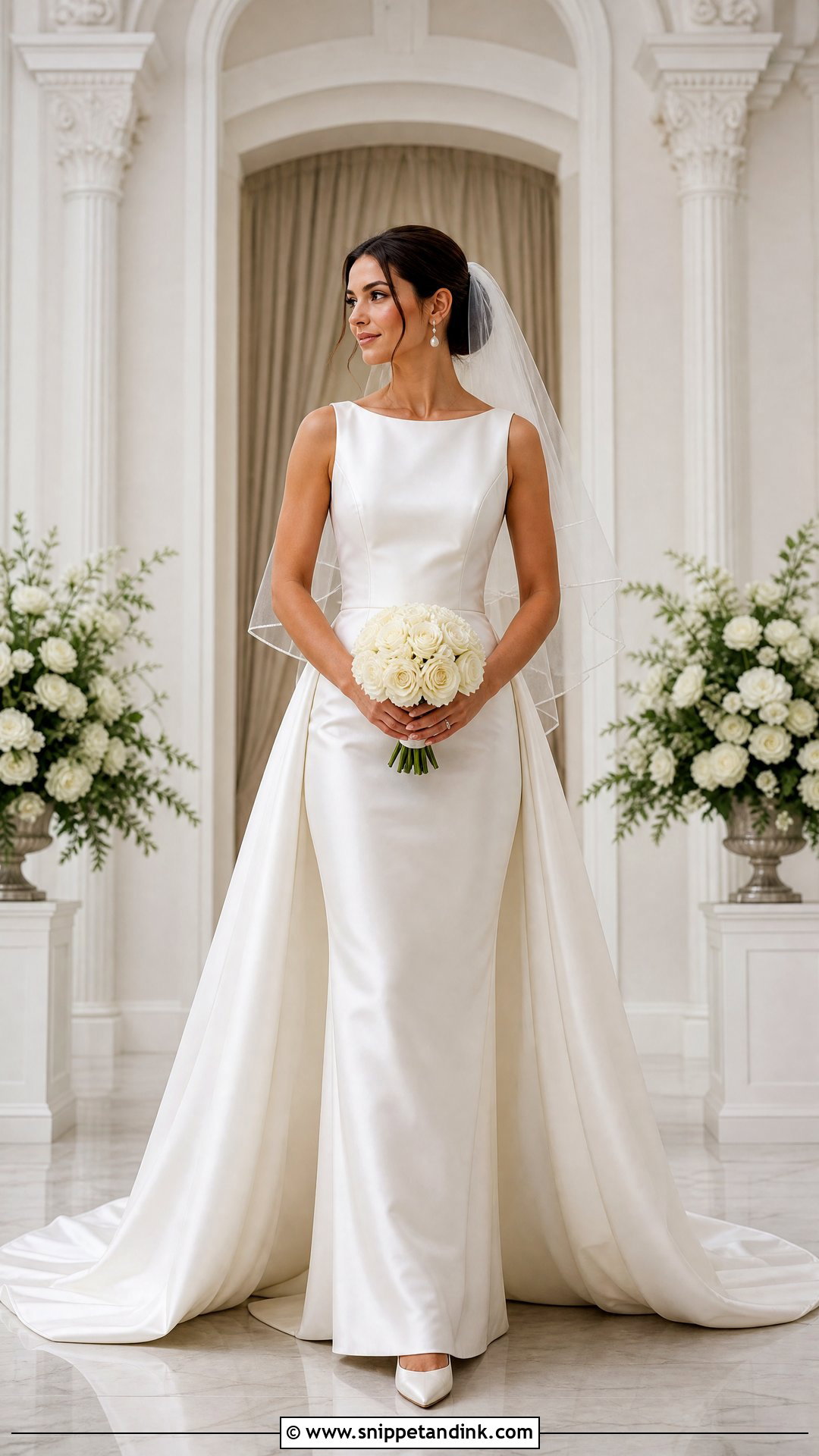
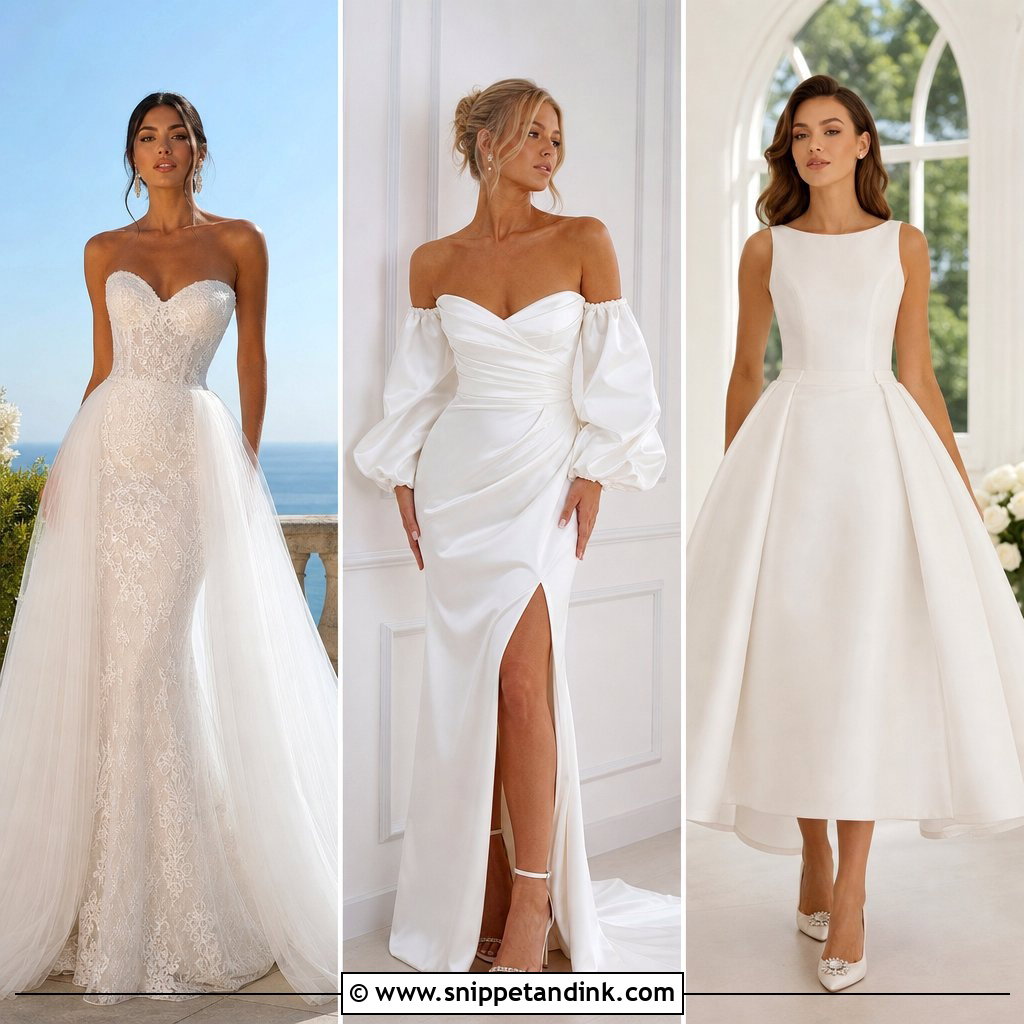
Plain satin and a removable chapel train is the simplest convertible look, and often the most polished. The train hooks on at the back waist of a fitted sheath or soft A-line, so the extension is the only real feature. Pearl drops, a low bun, a fingertip veil, pointed ivory pumps and a few white roses are enough. One thing I check: satin from different bolts can differ slightly in sheen, so the train should be cut from the same roll as the dress. Off it comes after the ceremony, and the gown underneath is light enough for dinner and dancing.
2. Lace Wedding Dress With Detachable Overskirt
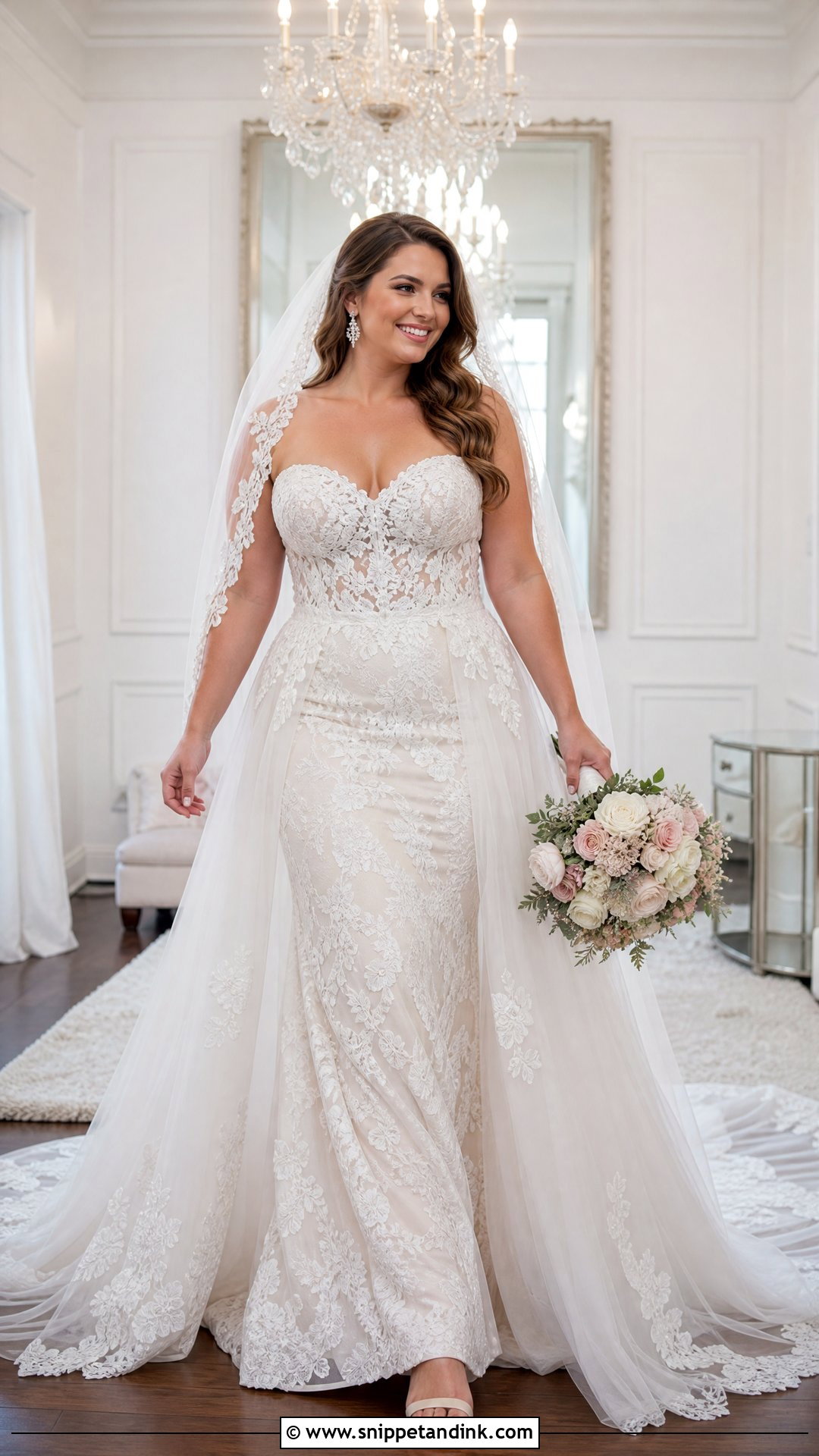
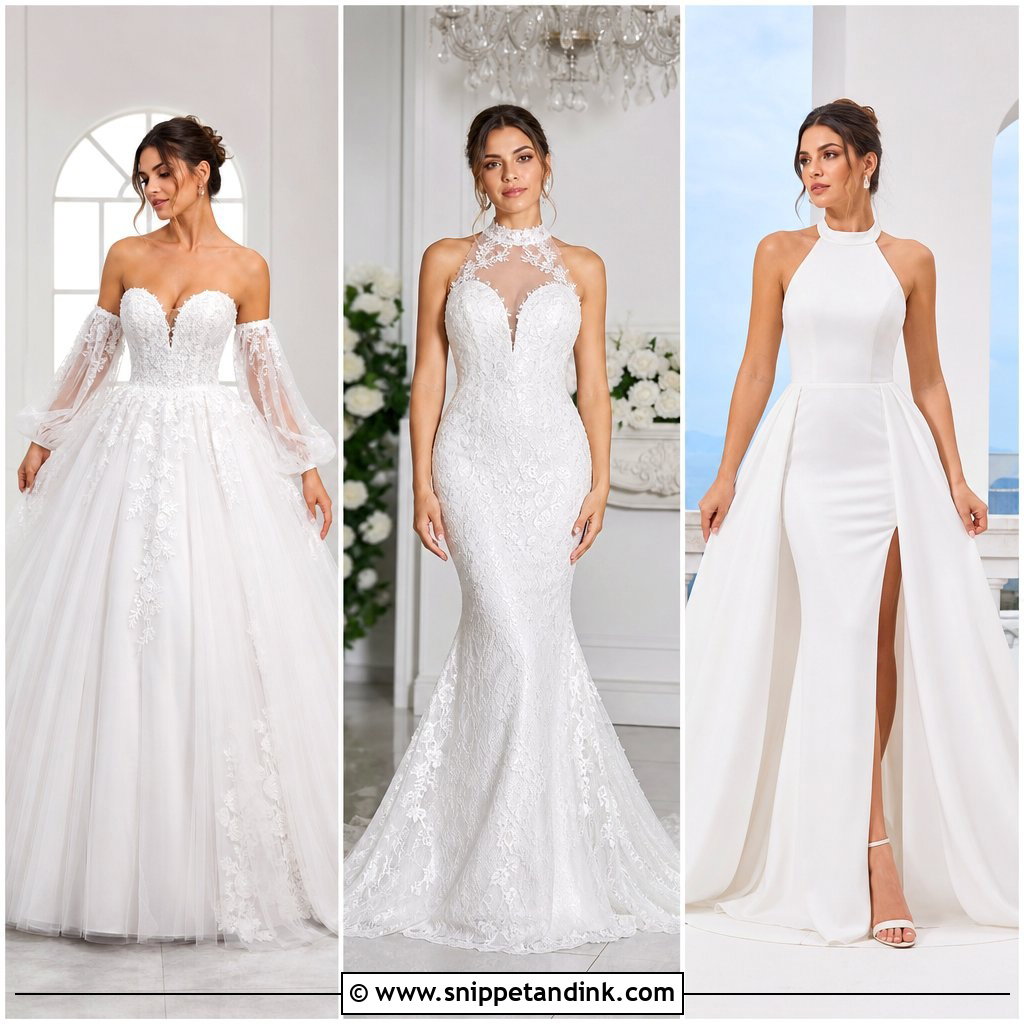
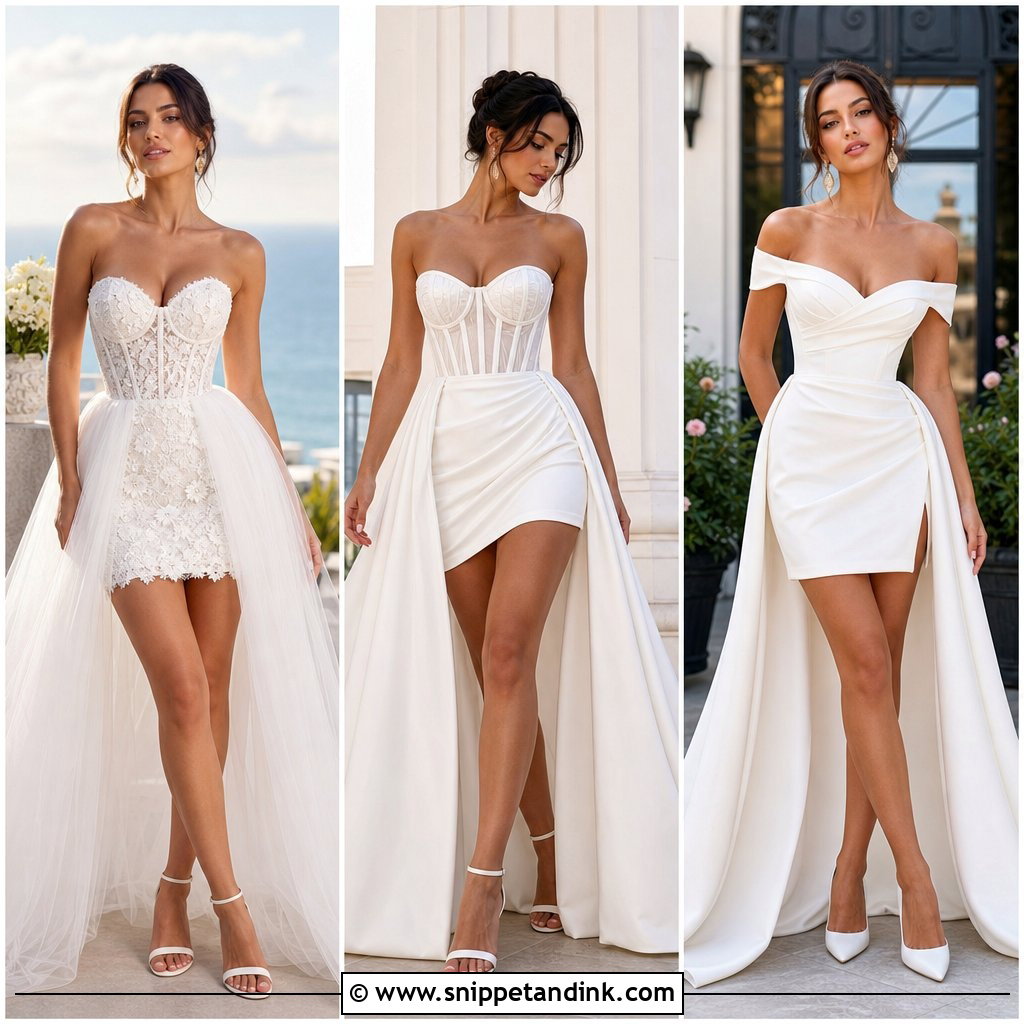
Lace sheath underneath, tulle volume on top. A fitted lace gown with a sweetheart neck, corset construction and a gentle flare carries a sheer tulle overskirt scattered with matching appliqués. The narrow waistband is what makes it look like one design, so I want it sitting exactly on the dress waist seam, not a centimetre above. Crystal earrings, a lace-trimmed veil, ivory heels and loose garden roses suit it. When the overskirt comes off after portraits, the figure-skimming lace dress takes over. Match the lace motifs and the ivory shade, or the two layers look bought separately.
3. Mermaid Wedding Dress With Cathedral Train Extension
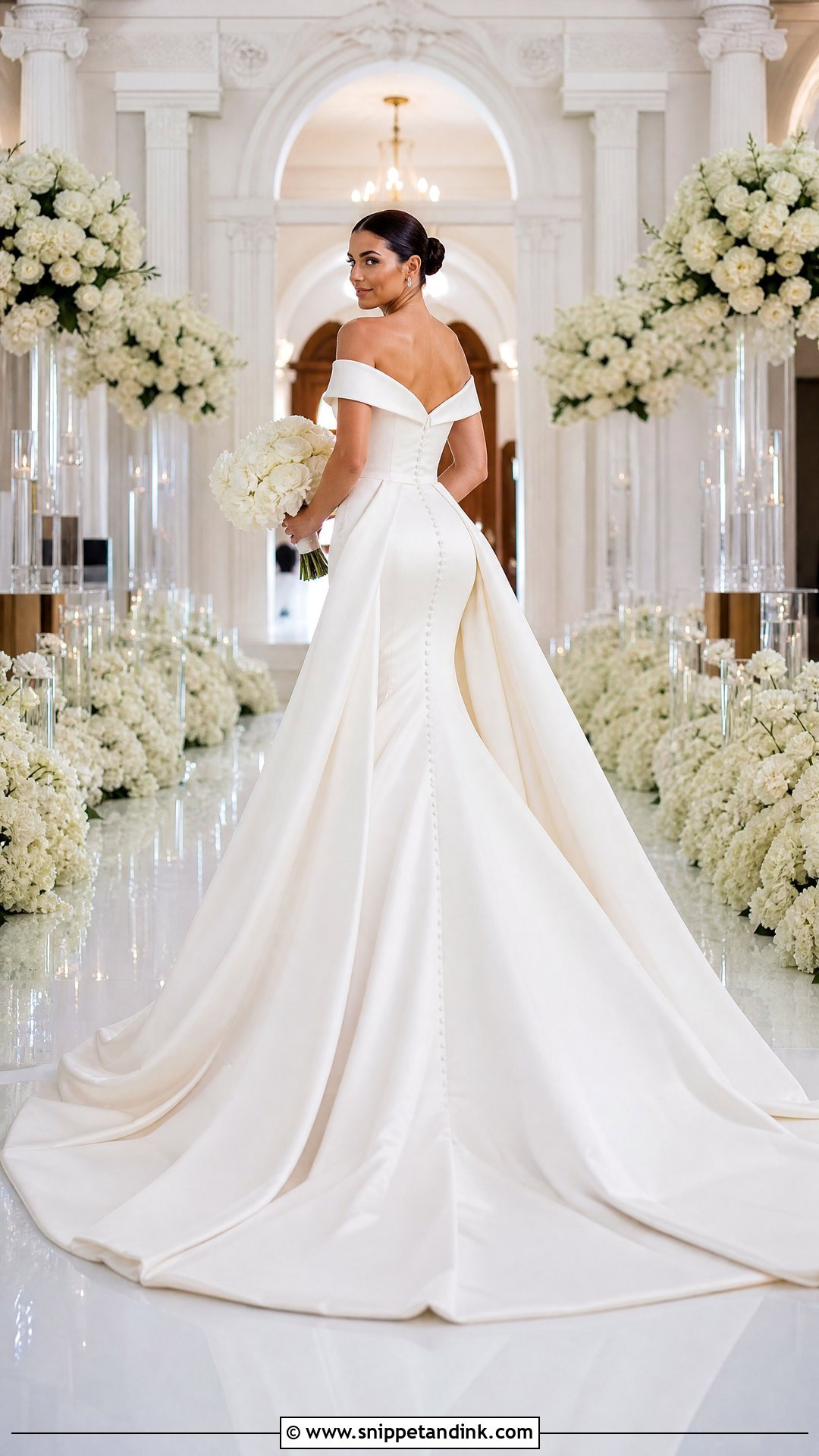
A sculpted mermaid with a cathedral train attached behind gives you a long, sweeping entrance without losing the fitted shape. Crepe, satin or lace in a strapless or off-the-shoulder cut works. The attachment point is the tricky part on a mermaid: it should sit at the natural waist or lower back and spread over the flare smoothly, because if it hangs from the hips it drags the fitted skirt down. A sleek updo, sparkling studs, a fine bracelet, pointed pumps and a structured bouquet. Without the train, the mermaid is much easier to move in.
4. A-Line Wedding Dress With Chapel Train Extension
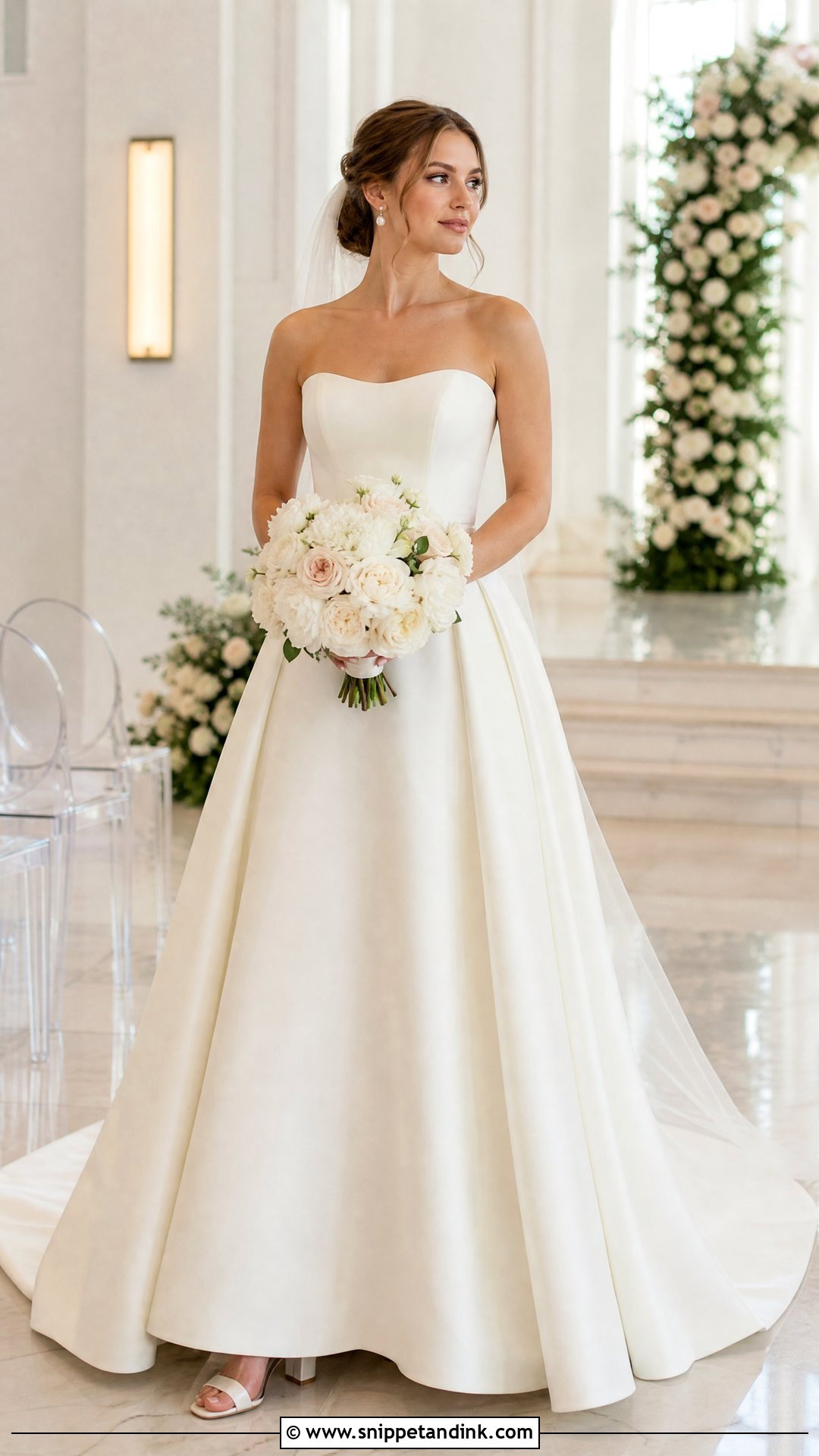
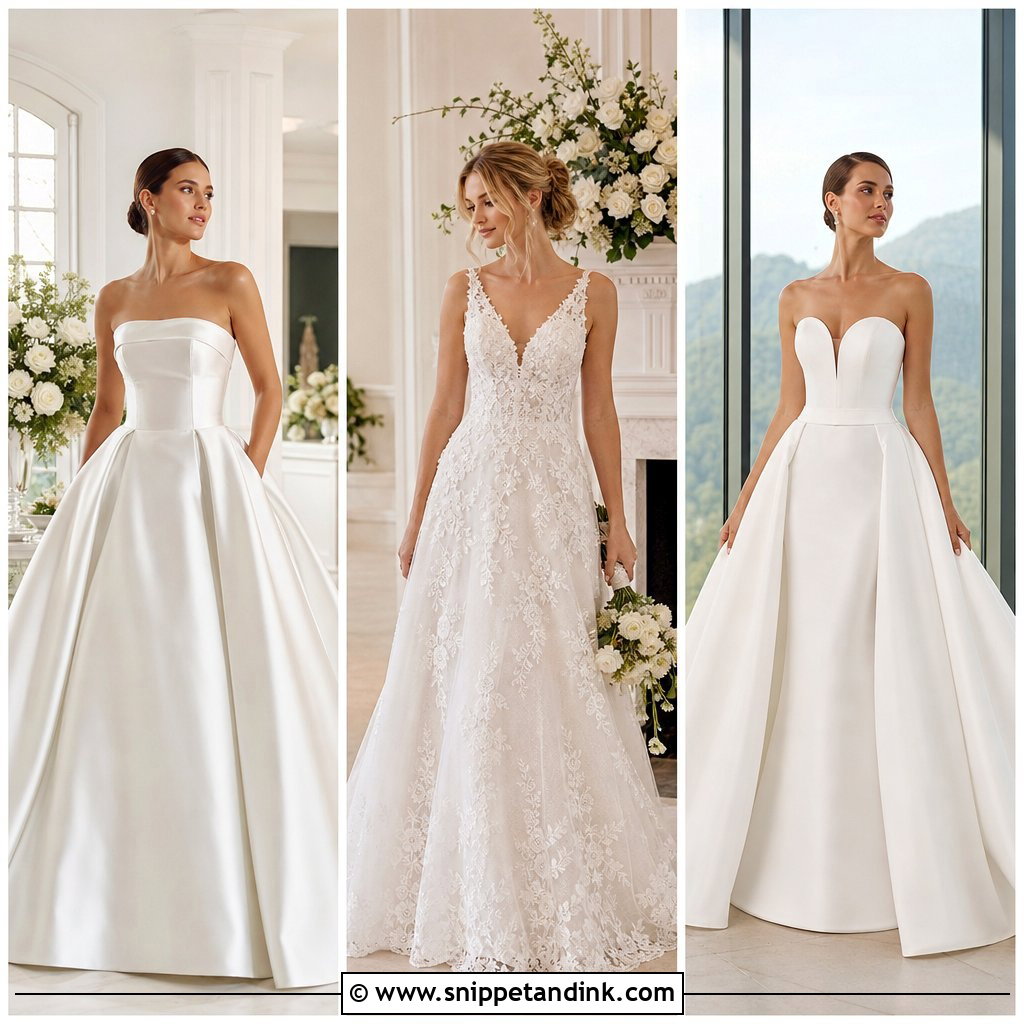
A chapel train on an A-line is the extension I suggest when a bride is unsure about drama: noticeable, but manageable at most venues indoors or out. The fitted bodice defines the waist and the skirt falls gently over the hips. The train should be the same satin, Mikado, tulle or organza as the dress, attached with a flat, discreet join so it reads as part of the skirt. A soft veil, pearl studs, comfortable block heels and a round ivory bouquet suit it. Take it off and you still have a formal floor-length gown.
5. Ball Gown Wedding Dress With Royal Train Extension
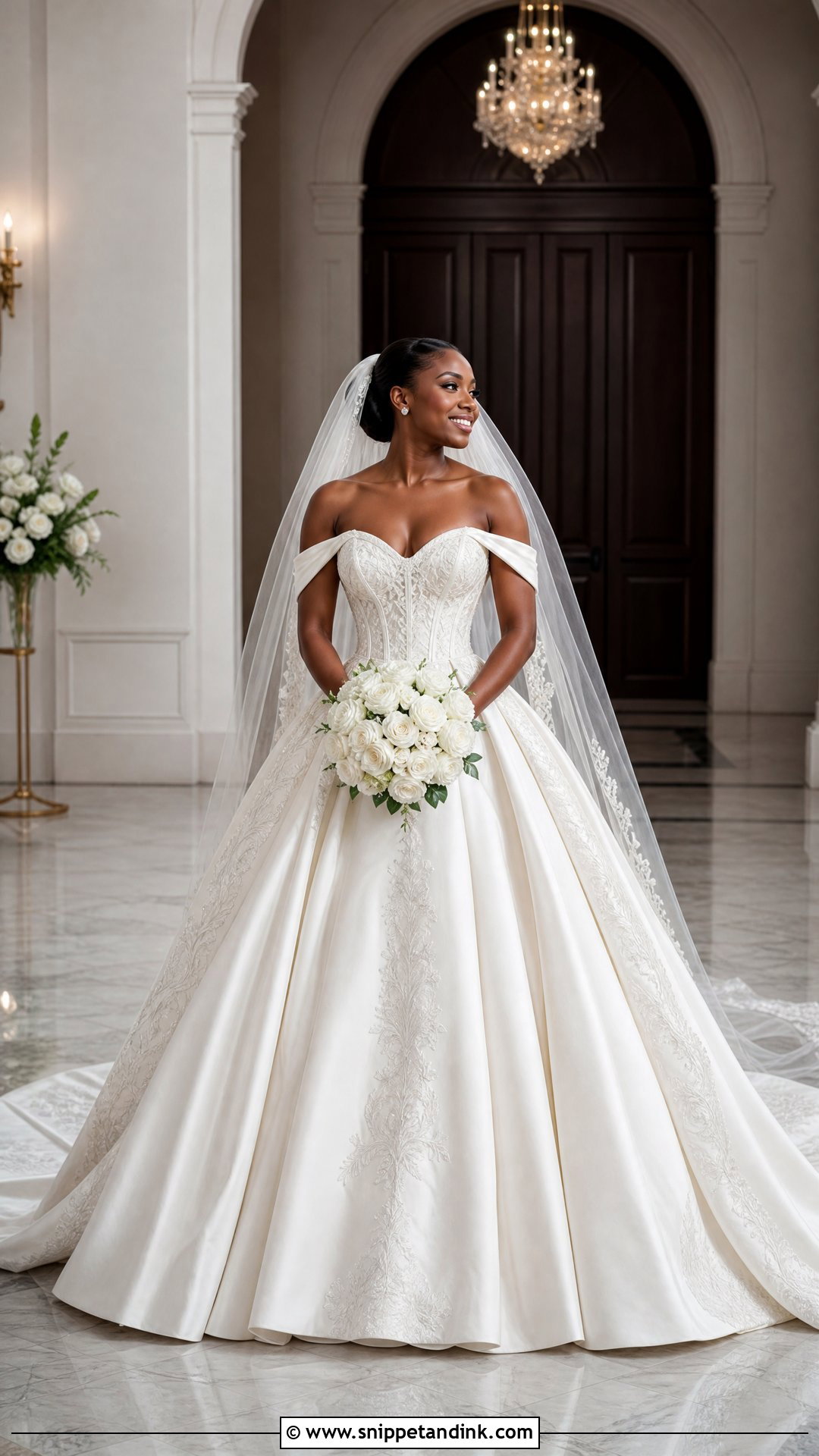
Royal-length trains are for big spaces, a cathedral, a grand hall, a long aisle, and they create an unforgettable head-to-toe look. A structured corset bodice and a full satin or Mikado skirt carry a wide detachable train that continues the gown’s volume. That much fabric is heavy, so I want the train hooked to the internal waist stay rather than the outer skirt alone. Keep everything else classic: a cathedral veil, crystal studs, closed-toe pumps, a neat bouquet and a polished bun. Removing the longest layer afterwards leaves a ball gown you can still steer between tables.
6. Crepe Wedding Dress With Bow Train Extension
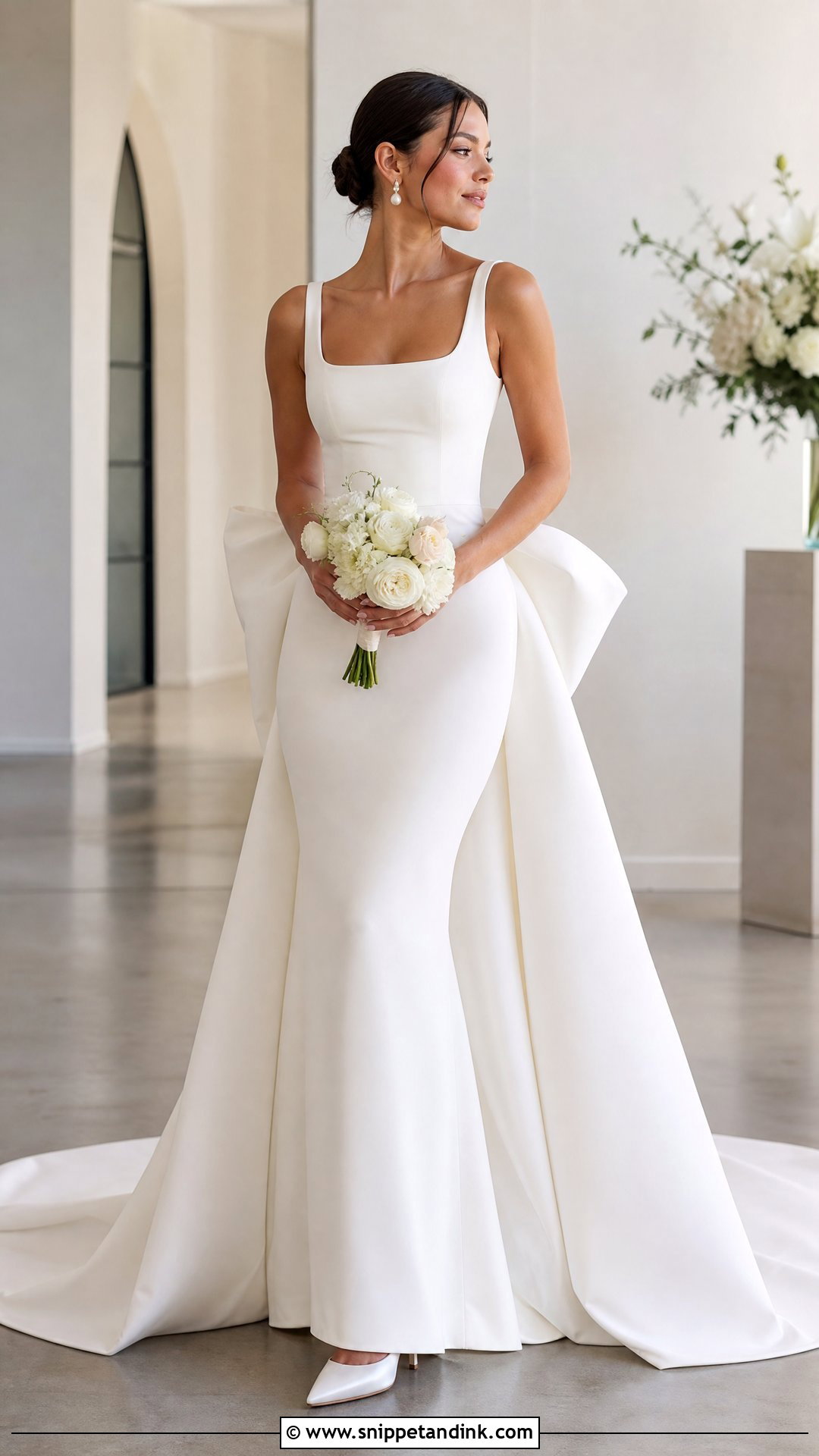
On plain crepe, a detachable bow train adds the personality the dress itself leaves out. A clean column or fit-and-flare with wide straps, a square neck or strapless bodice, and at the back an oversized structured bow flowing into two long panels. The bow needs interfacing to keep its shape, and the fabric should match the dress in both weight and shade; a lighter bow droops. Pearl earrings, a neat chignon, pointed heels, a compact bouquet and an unembellished veil so the bow shows. Without it, the crepe gown is modern and easy for greeting guests.
7. Strapless Wedding Dress With Tulle Train Extension
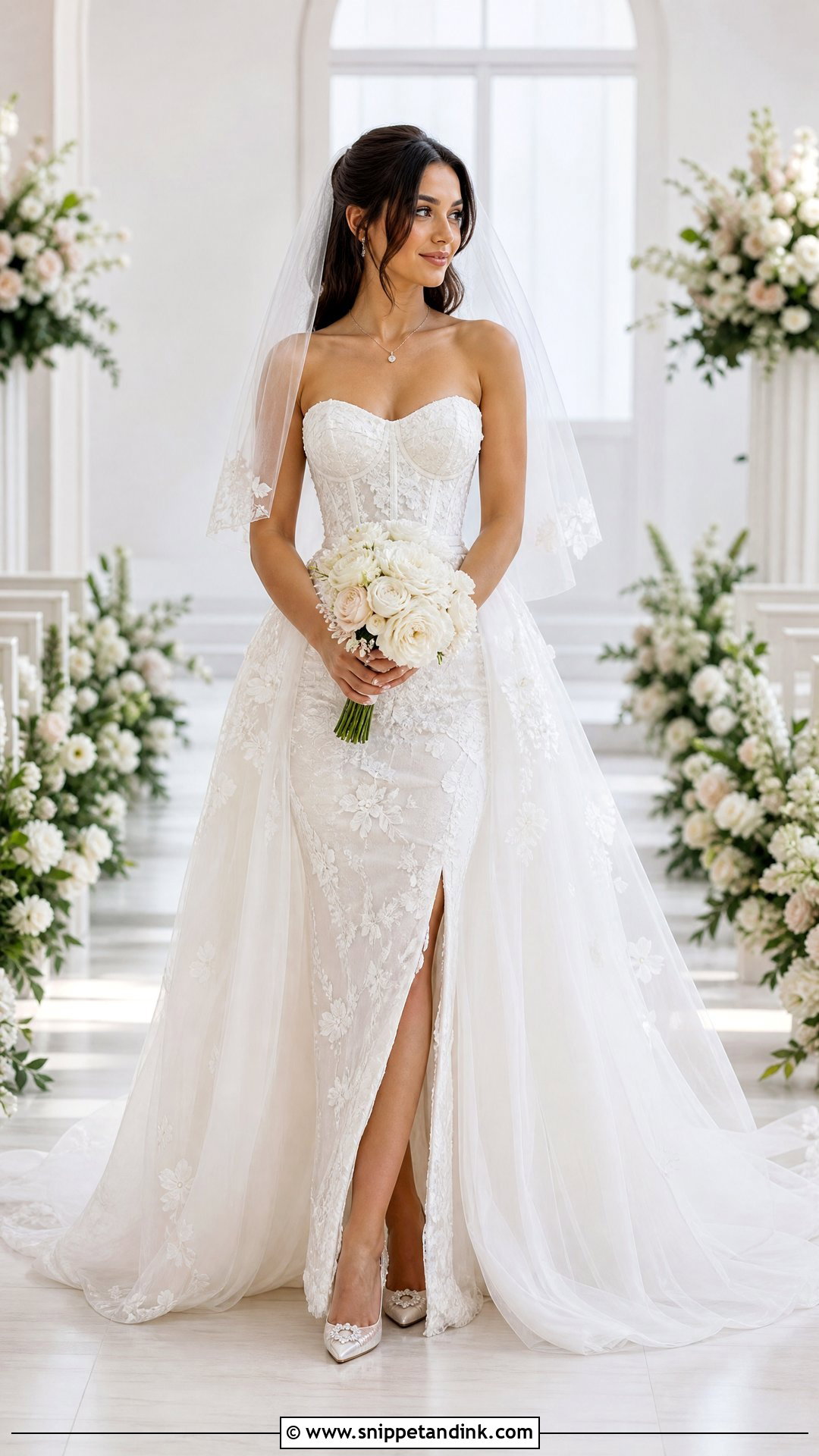
Tulle trains add airy volume to a simple strapless dress, and they weigh very little, which makes them one of the easiest extensions to wear. A fitted gown with a secure corset bodice and a straight or sweetheart neck takes a tulle layer at the waist that floats over the skirt and trails behind. Scattered appliqués or light beading tie it to the bodice. A fine pendant, small earrings, an elbow-length veil and embellished low heels, with a loose updo. For the reception, swap the tulle for a delicate wrap or detachable straps if you want coverage.
8. Long Sleeve Wedding Dress With Lace Train Extension
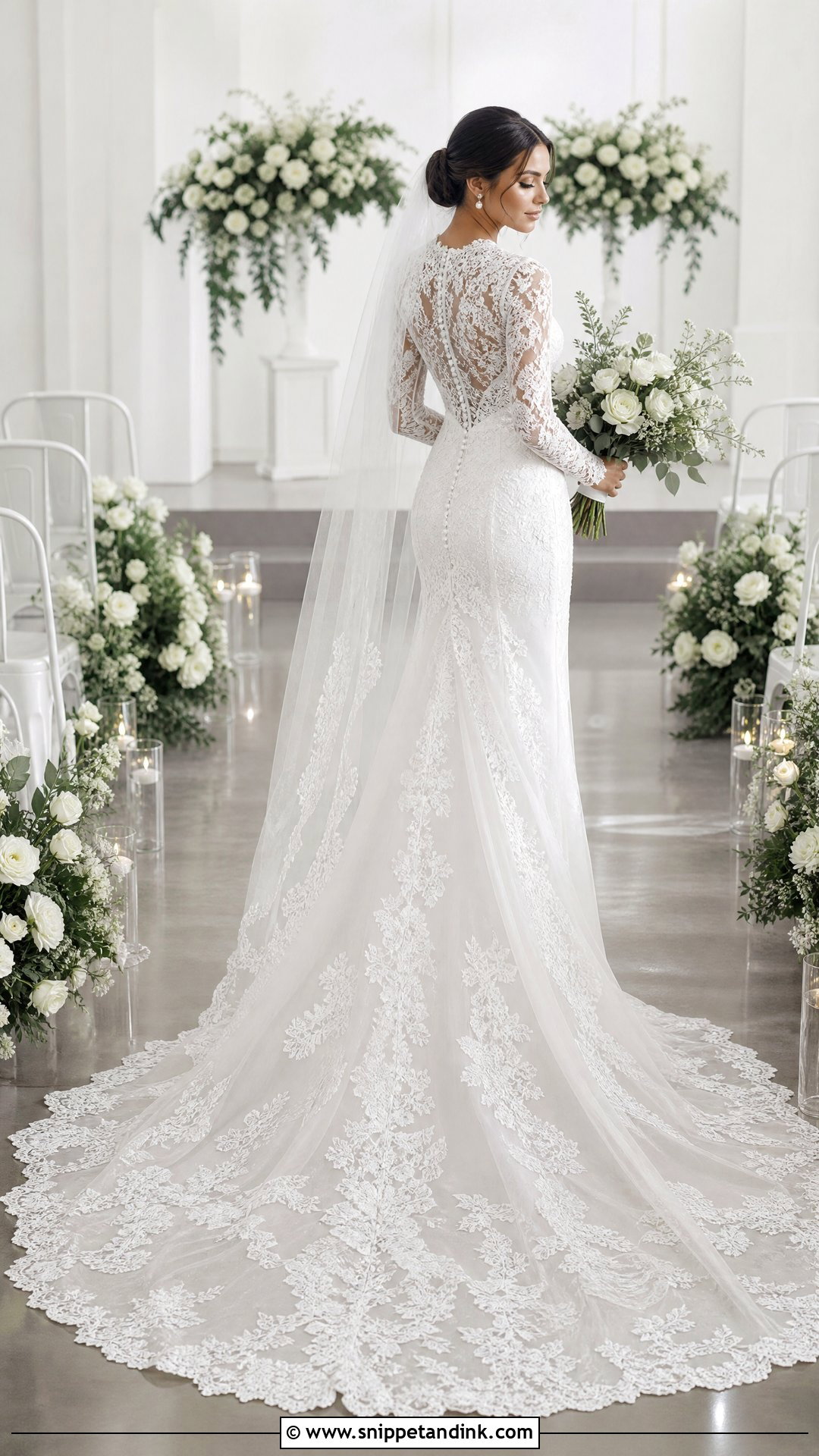
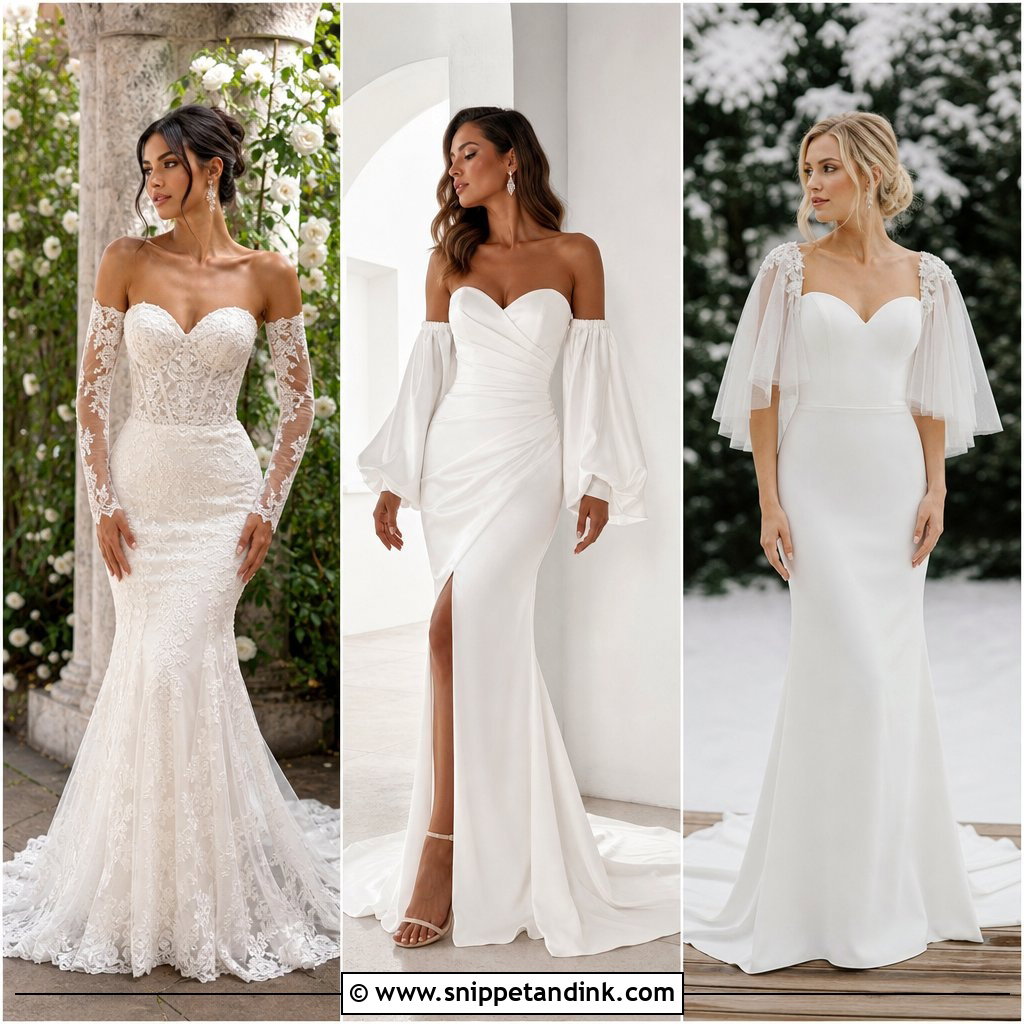
For cool-weather ceremonies, a fitted long-sleeve gown with a lace train is warm, covered and still romantic. Illusion sleeves, covered buttons and a lace pattern that carries straight across the detachable layer make it look like one piece. A soft chapel or cathedral length suits the covered silhouette without feeling heavy. Pearl earrings, a low twisted bun, closed-toe heels and white flowers with seasonal greenery; a simple veil can sit above the bun. I’d ask the seamstress to align the lace at the join, since mismatched motifs right at the waist are noticeable from behind.
9. Off-Shoulder Wedding Dress With Organza Overskirt
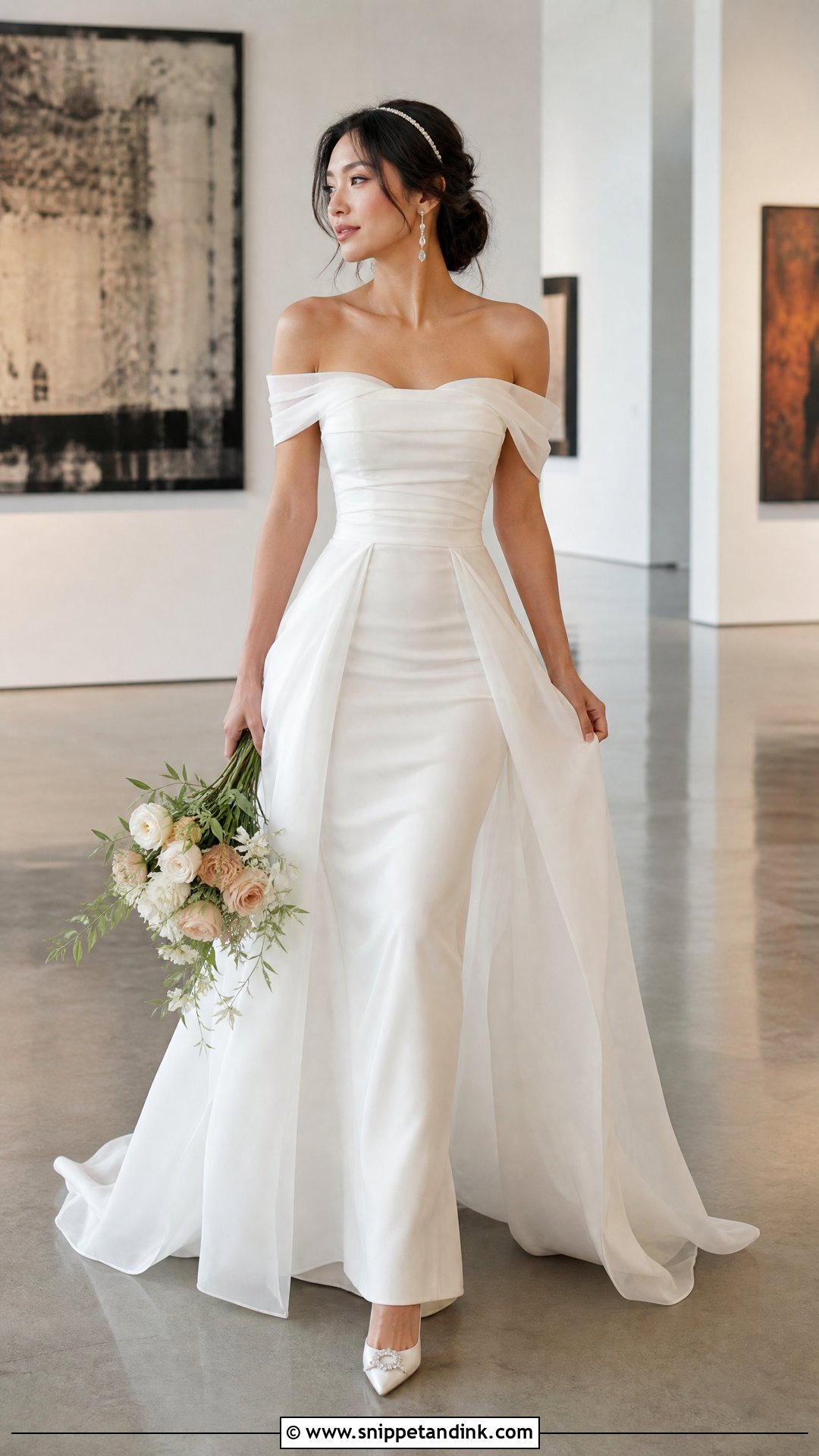
Organza gives shape without satin’s weight, so a translucent overskirt over a fitted off-shoulder gown stays light. The base needs good internal support, with soft sleeves resting below the shoulders. The removable overskirt starts at the natural waist and opens slightly at the front, so the fitted dress shows through. Crystal drops, a smooth bun, pointed heels, a loose bouquet and a narrow headband in place of a veil. Organza creases, so I keep the overskirt hanging, not folded, until it goes on.
10. Square Neck Wedding Dress With Watteau Train
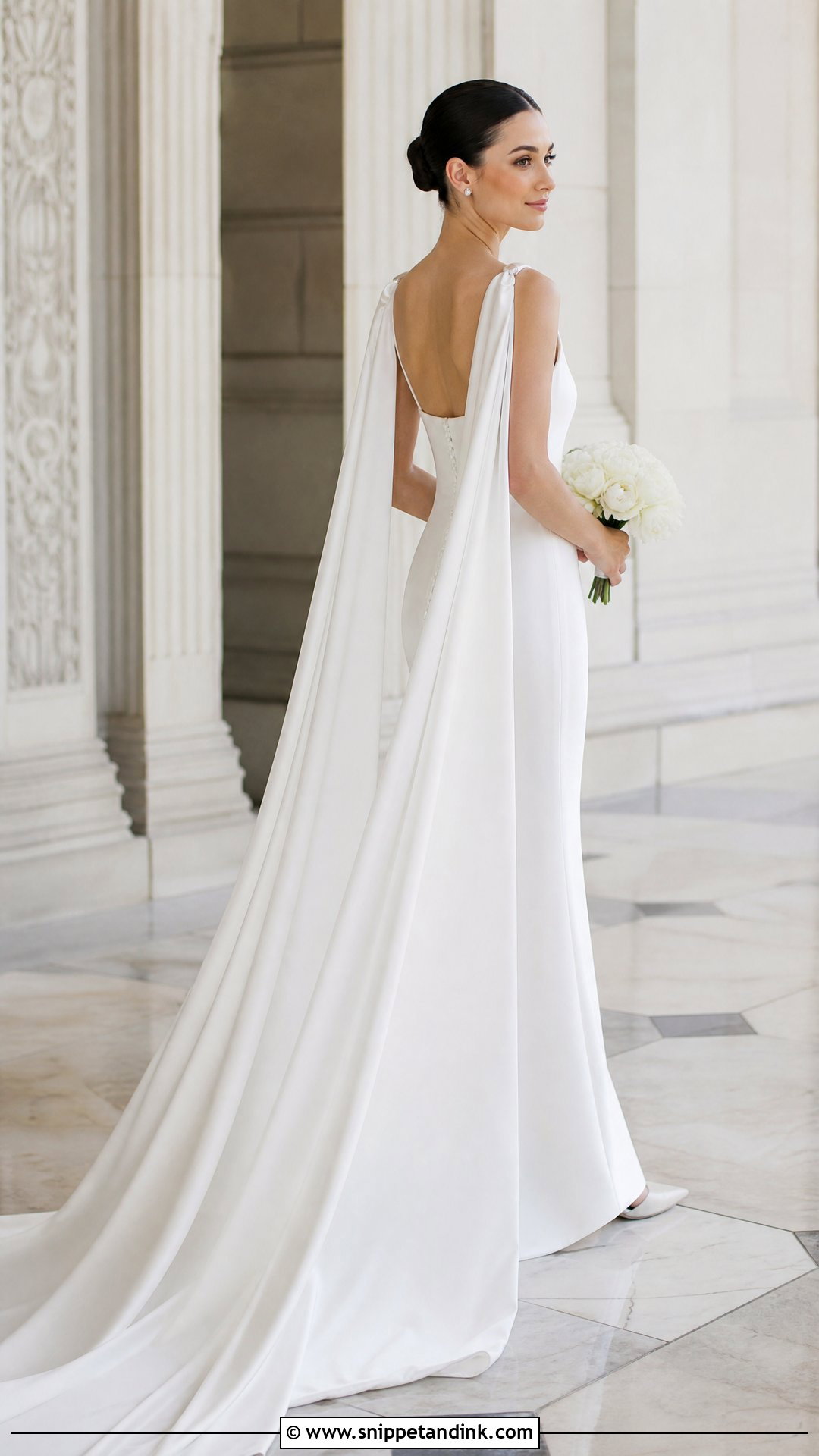
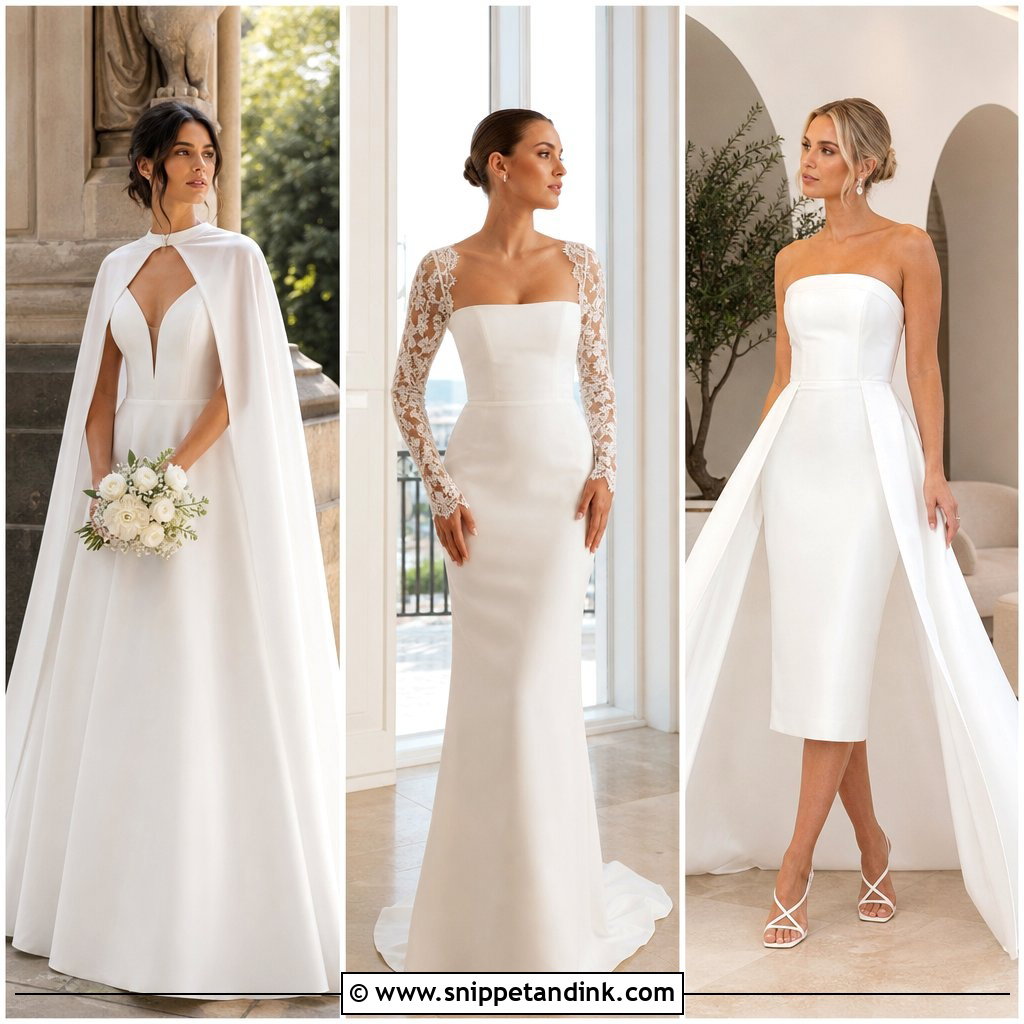
A Watteau train falls from the shoulders or upper back, not the waist, which makes it feel like a cape that turns into a train. On a fitted satin or crepe square-neck gown with broad straps, the panel attaches at the back of the straps and leaves the waist fully visible. The straps need to be strong enough to carry it; thin straps will be pulled backwards and the neckline lifts. Pearl studs, a sleek low bun, minimal pumps and a compact white bouquet. Skip a long veil, which competes with the shoulder line. Detached, the clean back and architectural neckline take over.
11. Corset Wedding Dress With Sparkle Overskirt
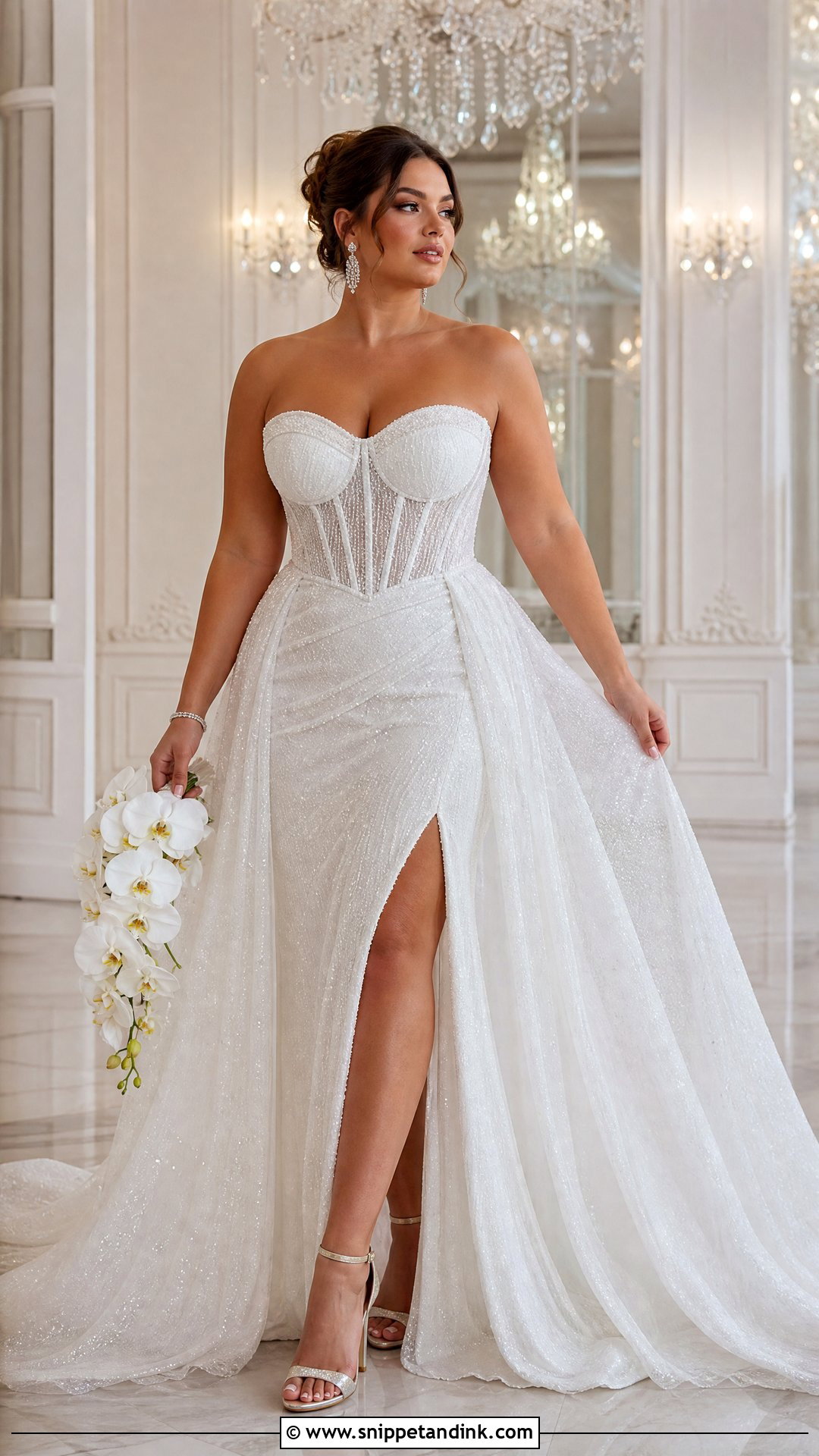
Glitter belongs to evening and indoor lights. A corset gown with visible boning, a defined waist and a soft curved neckline takes a detachable tulle overskirt with subtle sequins, crystals or shimmer. Keep the sparkle light; heavy beading on a big tulle skirt adds real weight to the waistband. Crystal earrings, a slim bracelet, metallic ivory heels and white orchids, with a smooth ponytail or polished bun. After formal photos, remove the overskirt to reveal the fitted gown, which still has its own sparkle at the bodice.
12. High Neck Wedding Dress With Detachable Cape Train
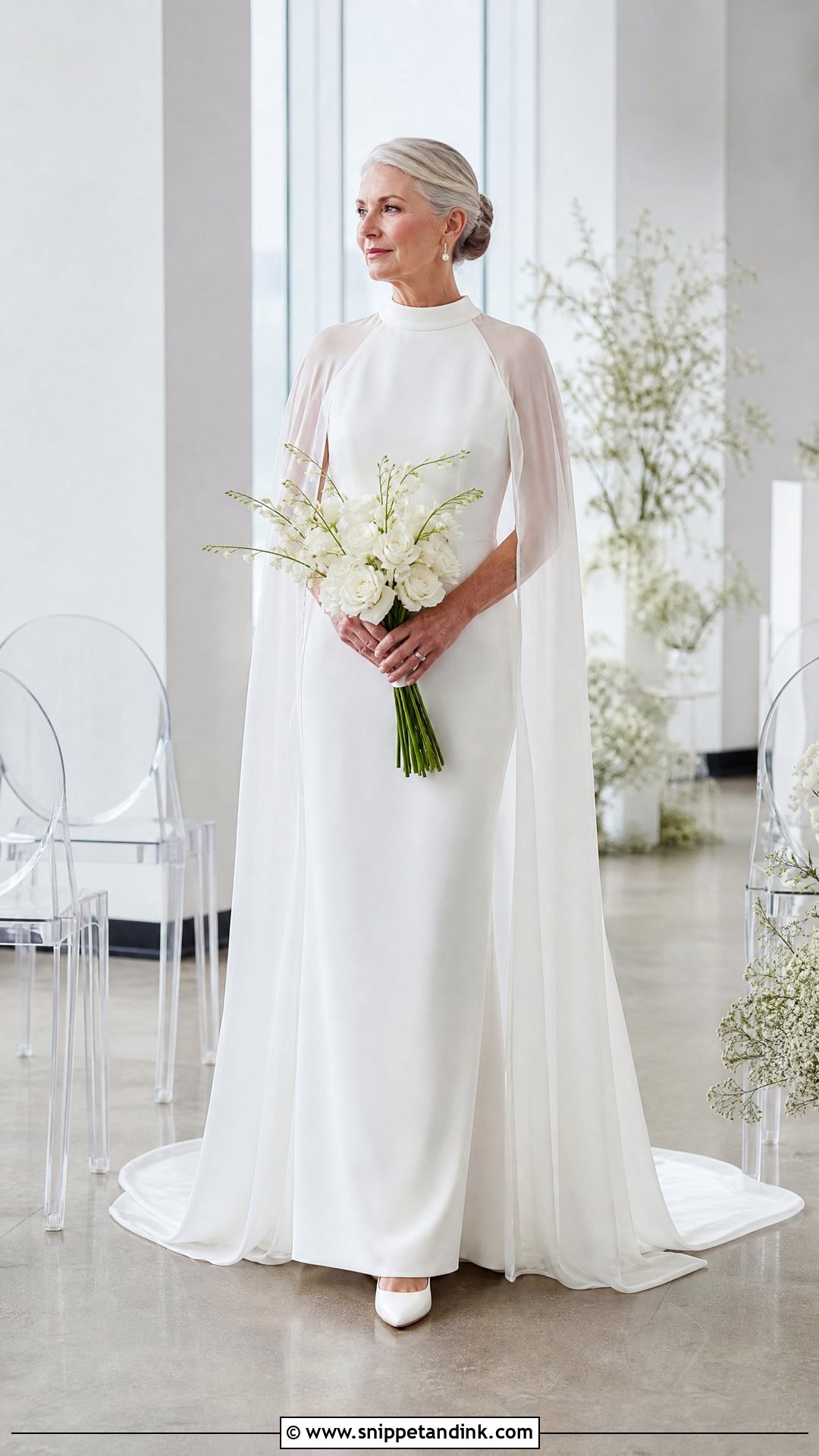
High necks and capes suit each other because the cape fastens at the shoulders and moves without adding any volume at the waist. A streamlined crepe, satin or lace sheath is the base. Sheer tulle feels light; satin is more architectural. I’d ask for the fastenings to sit on the shoulder seam with small hidden snaps, so the cape lies flat and doesn’t tug the high neckline backwards. Small pearl earrings, a low bun, closed-toe pumps and a long-stemmed bouquet, no necklace. Remove the cape, and there’s no skirt layering or bustle to manage at all.
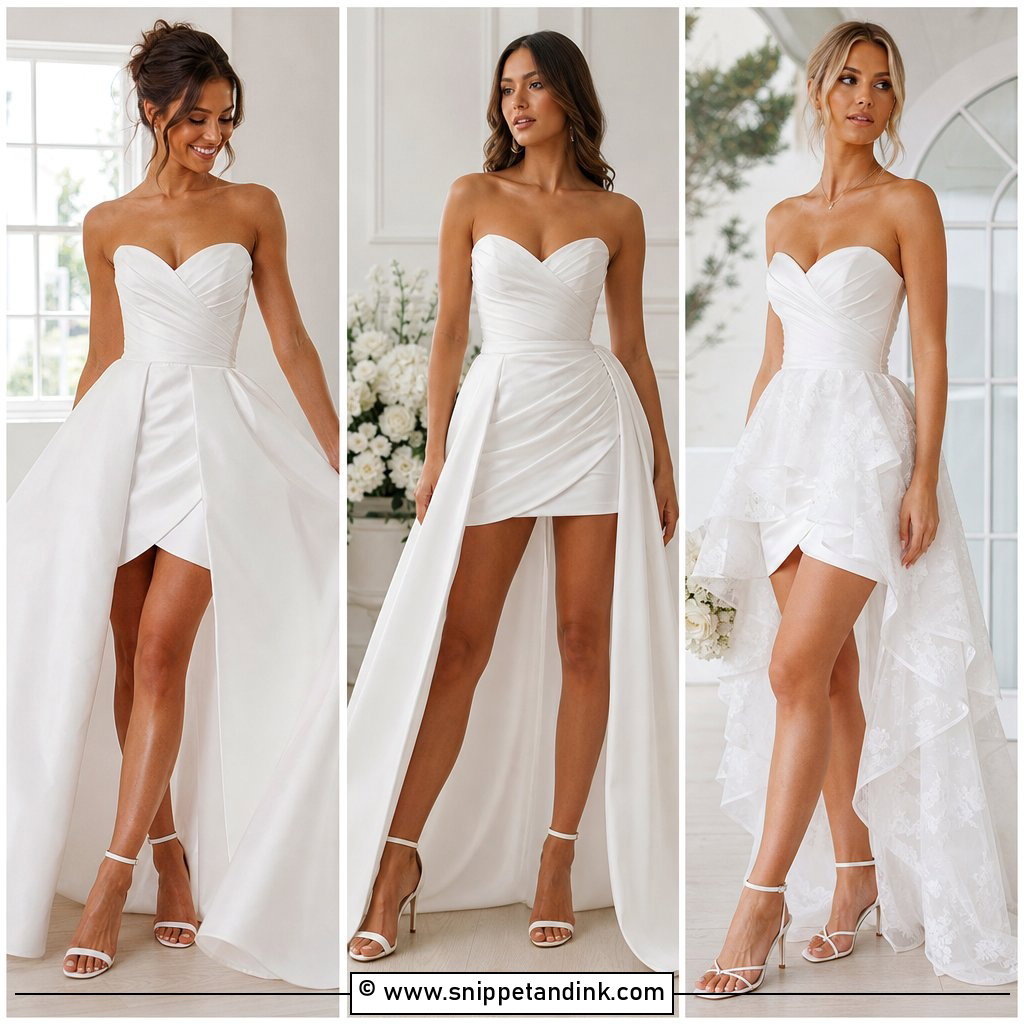
13. Short Wedding Dress With Detachable Long Skirt
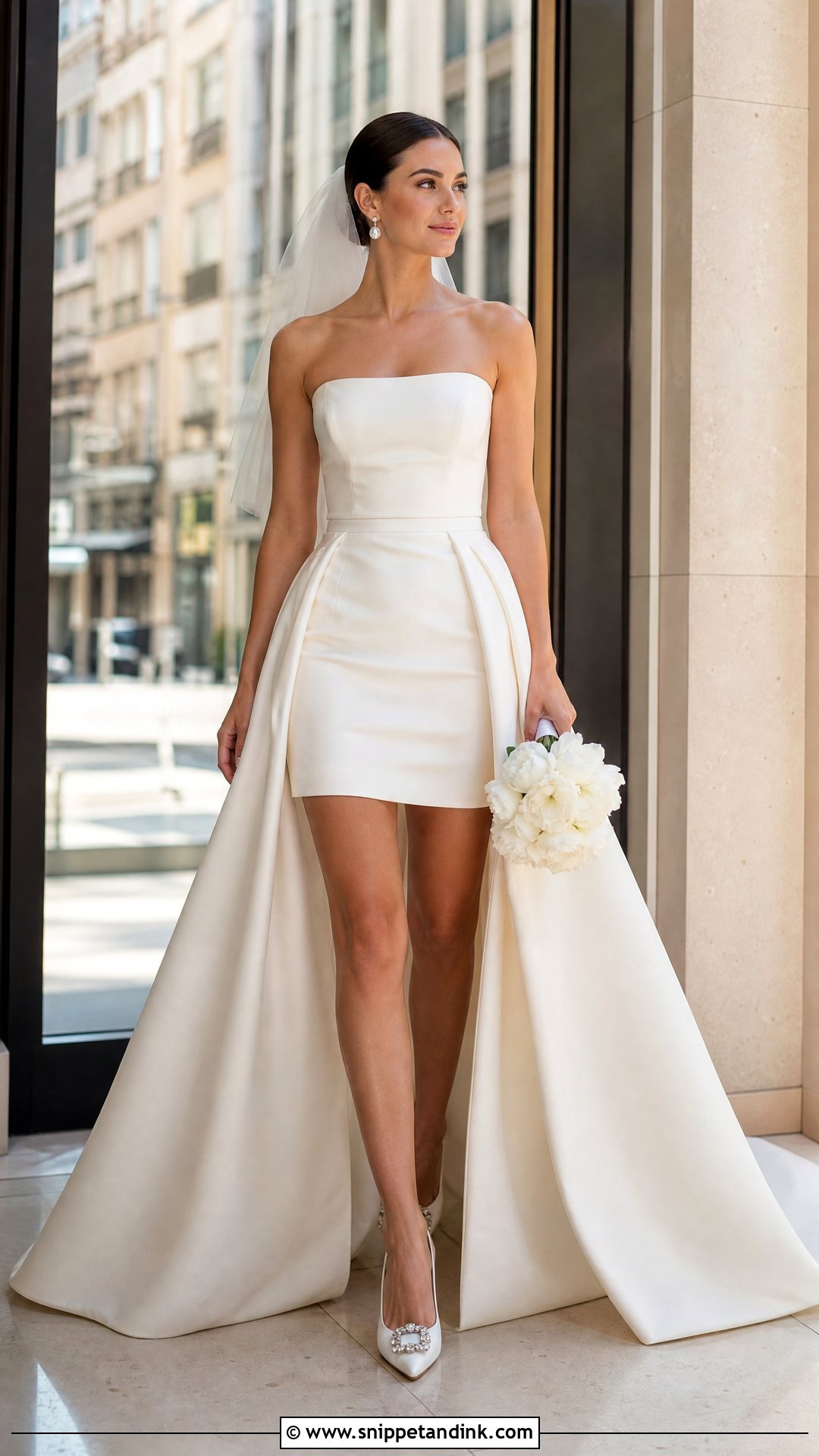
Why choose between a short party dress and a traditional long gown? A structured mini or knee-length dress with a fitted bodice and tailored hem goes under a full detachable skirt that closes at the waist and reaches the floor, ideally with a soft chapel train. Satin, Mikado or layered tulle gives the ceremony volume. Pearl earrings, a short veil, pointed pumps and a small structured bouquet. Once the long skirt comes off, your shoes are on display, so choose them for the reception, not just the ceremony, and make sure you can dance in them.
14. Tea Length Wedding Dress With Detachable Train
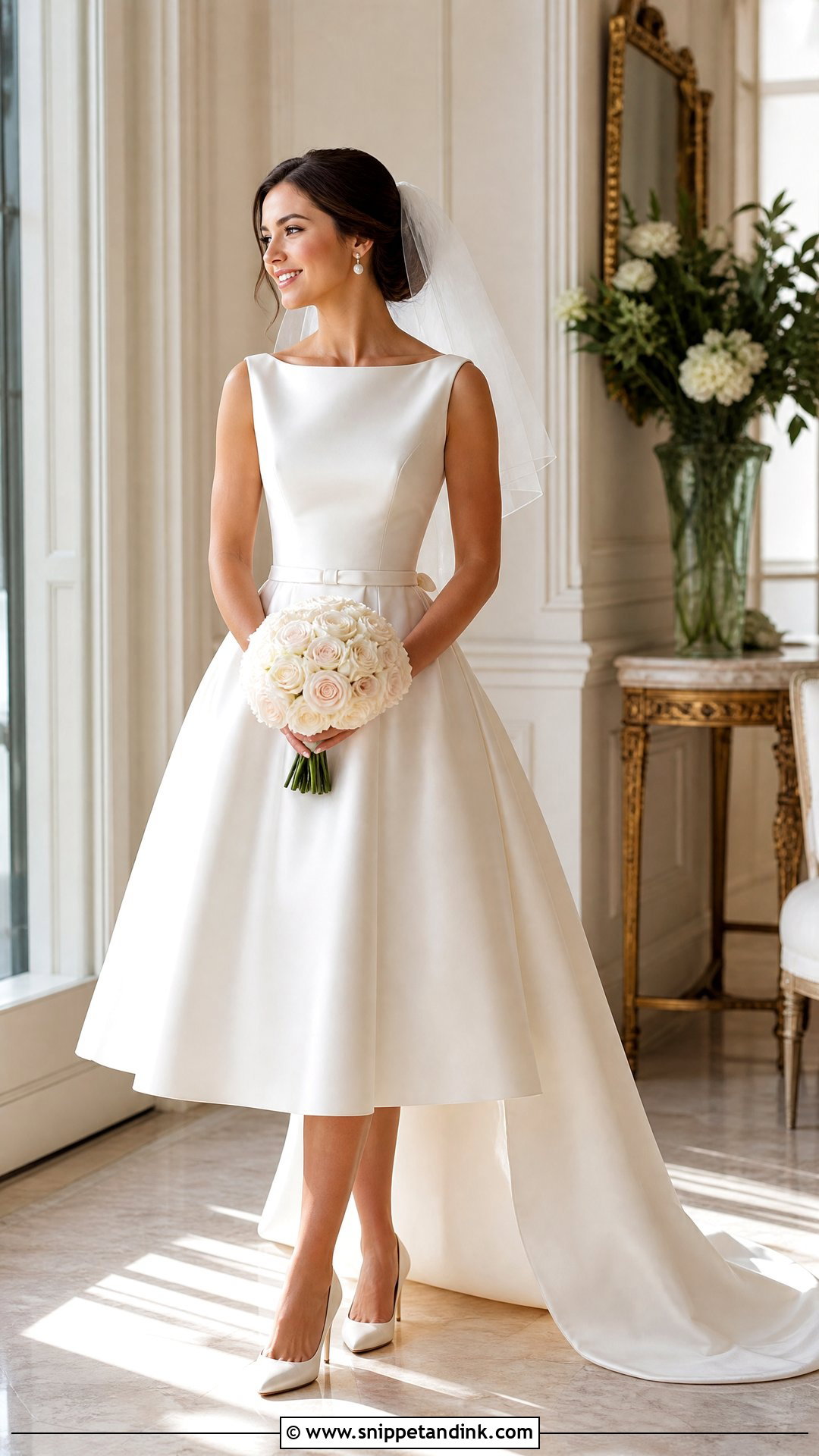
Tea length with a back train gives a vintage shape and lets the front stay short. A defined waist, fitted bodice and skirt ending between knee and ankle carry a removable train at the back only, never wrapped around the whole skirt, so shoes stay visible from the front. Satin is crisp; lace is softer. Pearl earrings, a birdcage or short tulle veil, classic pumps and a rounded bouquet. This is a good option for a city hall ceremony followed by a lively party, as the tea-length dress on its own is easy to walk in.


15. Basque Waist Wedding Dress With Detachable Skirt
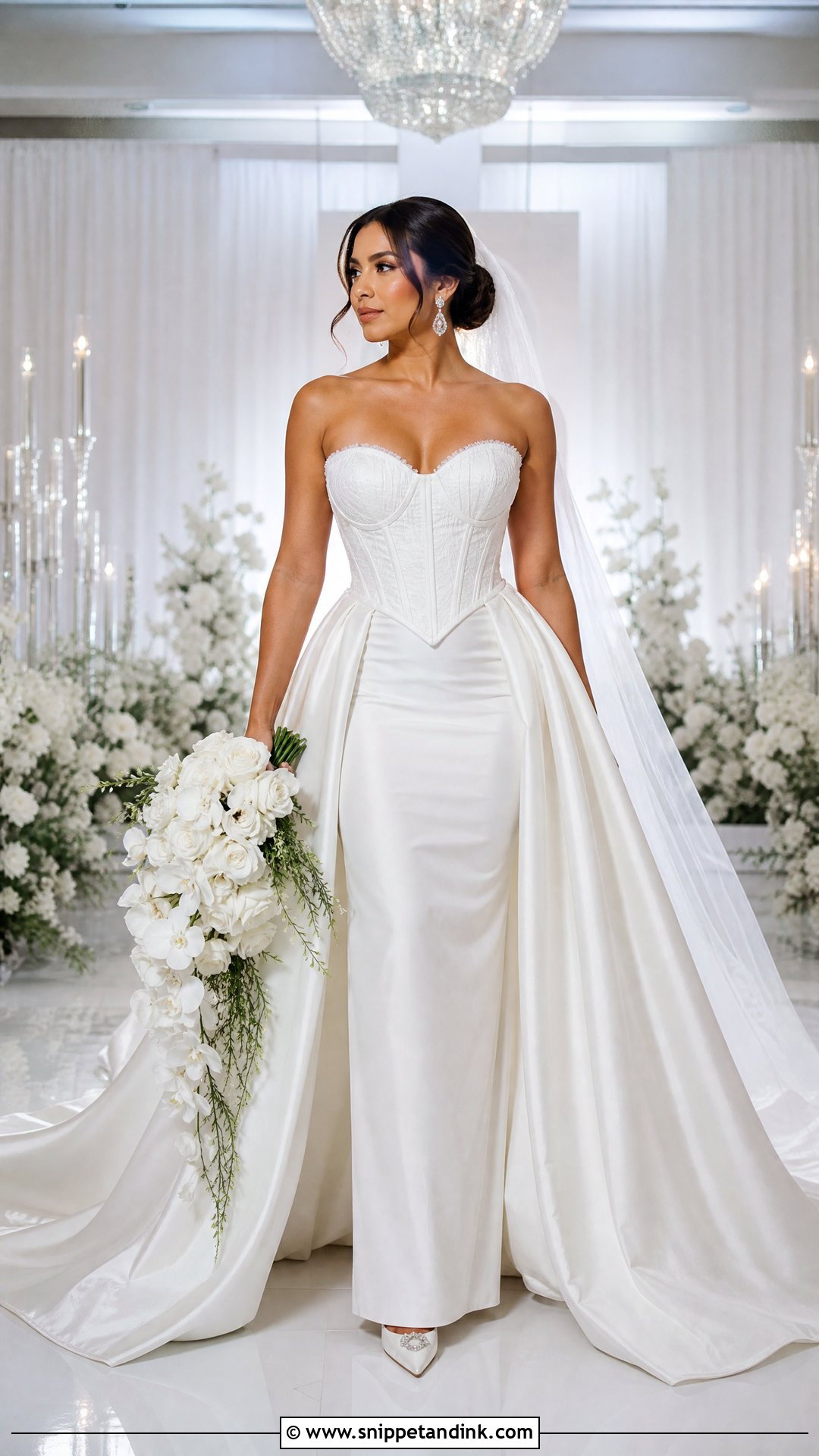
Detachable skirts tend to hide the waistline, which is a waste on a basque waist. The overskirt has to follow the pointed V rather than cut straight across it, which usually means a shaped waistband made to the dress. Underneath, a corseted dress with a narrow column or flared skirt; on top, full satin for a ball gown effect or layered tulle for softer movement. Drop earrings, a low veil, pointed heels and a cascading bouquet. Keep the closure invisible from the front and sides. Without the overskirt, the proportions change completely.
16. Floral Wedding Dress With Sheer Train Extension
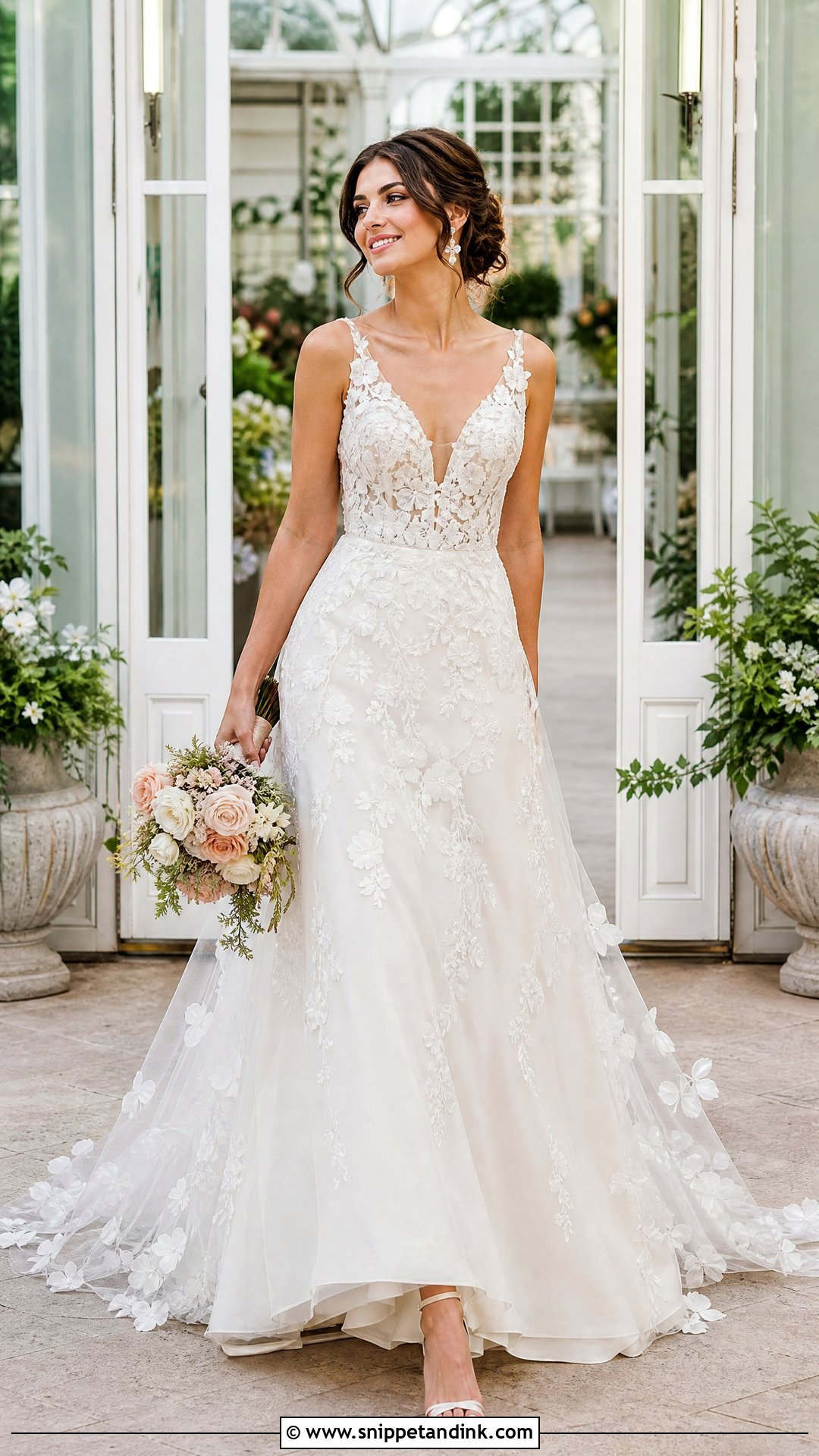
Blossoms on a sheer train make the back of the dress the focus. A fitted or A-line gown with floral lace across the bodice takes a removable tulle train scattered with matching flowers that spread further apart toward the hem, which keeps it from looking crowded. Delicate earrings, softly pinned hair, comfortable heels and a garden-style bouquet; no veil, or a plain one, so the train stays visible. Raised flowers catch on each other, so I’d store this train hanging rather than folded. Detached, the gown still carries the botanical feel.
17. Plus Size Wedding Dress With Detachable Overskirt
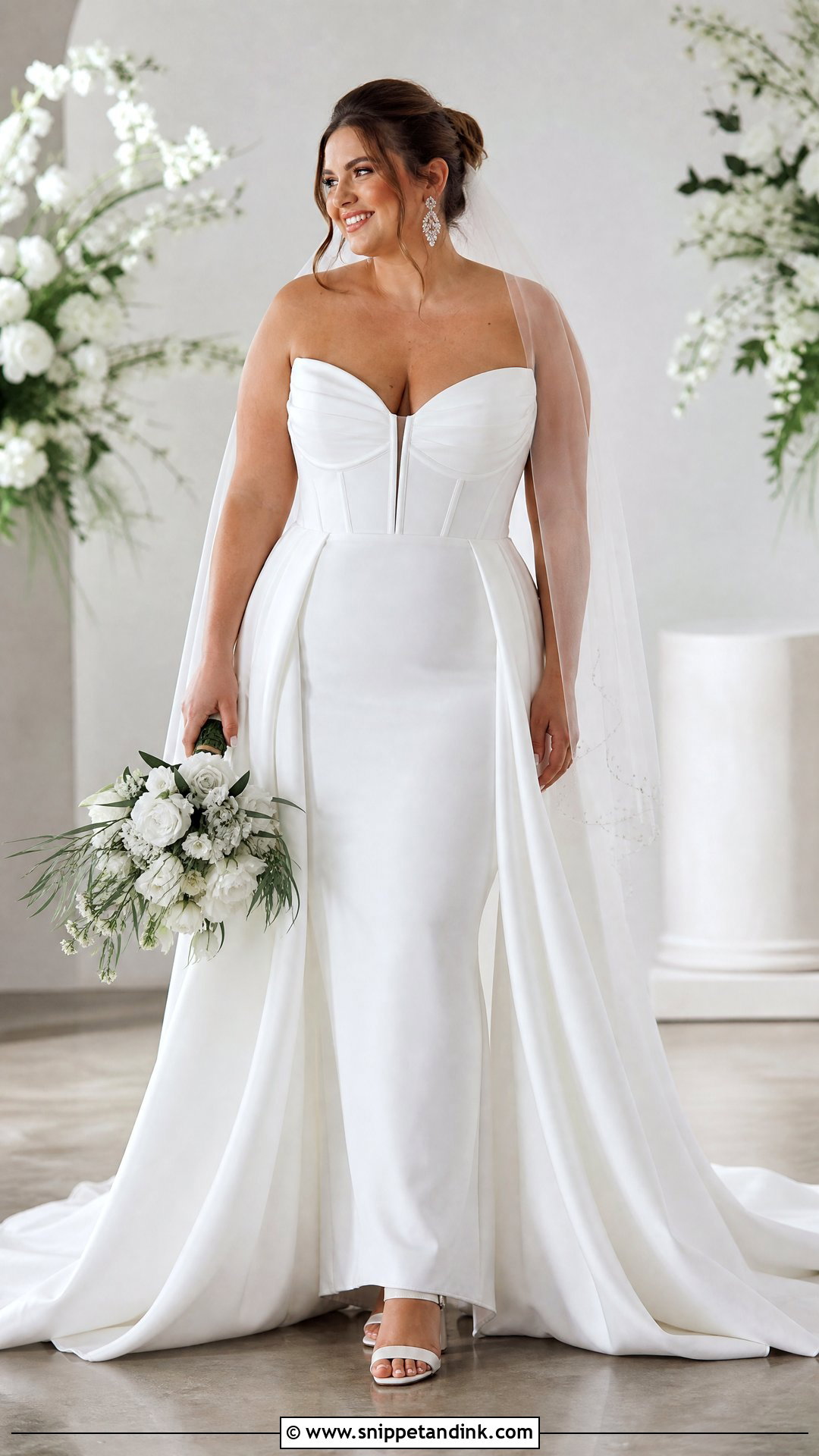
The base gown has to work on its own. On a plus-size bride, a detachable overskirt should add ceremony volume, not disguise a dress that doesn’t fit, so the underlying gown must already sit comfortably through bust, waist and hips. A corseted A-line, fitted crepe or lace sheath can work. Set the overskirt at the natural waist, with a front opening if you want the dress’s shape visible. Statement earrings, stable block heels, a fingertip veil and a bouquet in proportion. Sit and walk in it at the fitting to see whether the waistband rolls; a wider, boned band usually fixes that.
18. Modest Wedding Dress With Detachable Train
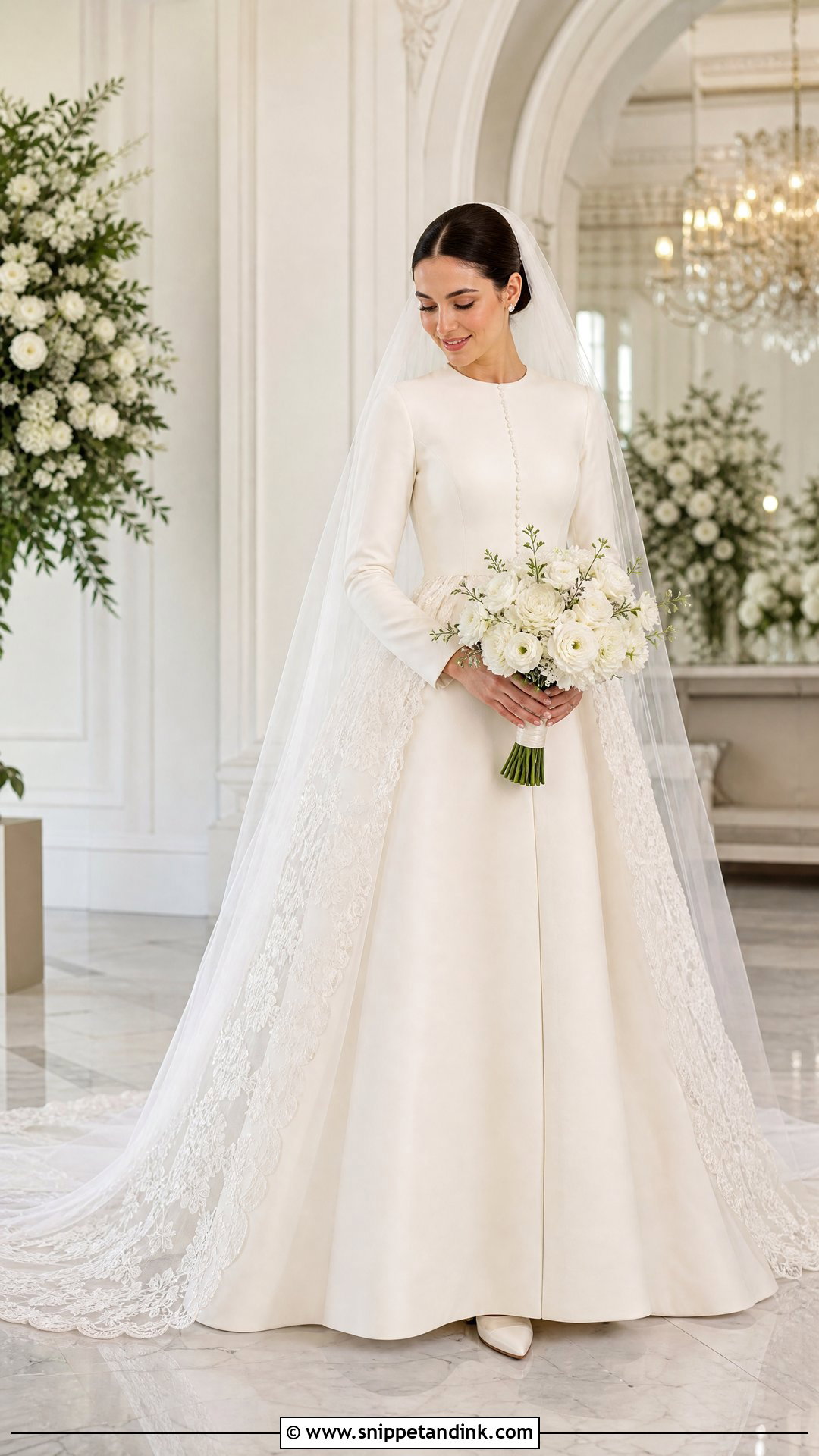
Coverage and drama aren’t opposites. A gown with long sleeves, an opaque bodice, a higher neck and a softly structured A-line skirt can take a removable chapel-length train in the same lace, satin or crepe. Covered buttons and matching edging help the train blend. Pearl studs, a neat updo, closed-toe shoes and a classic bouquet; a light veil won’t overload it. Once the train is off, the gown stays fully covered and is far easier to sit in and walk between reception rooms.
19. Beach Wedding Dress With Lightweight Train Extension
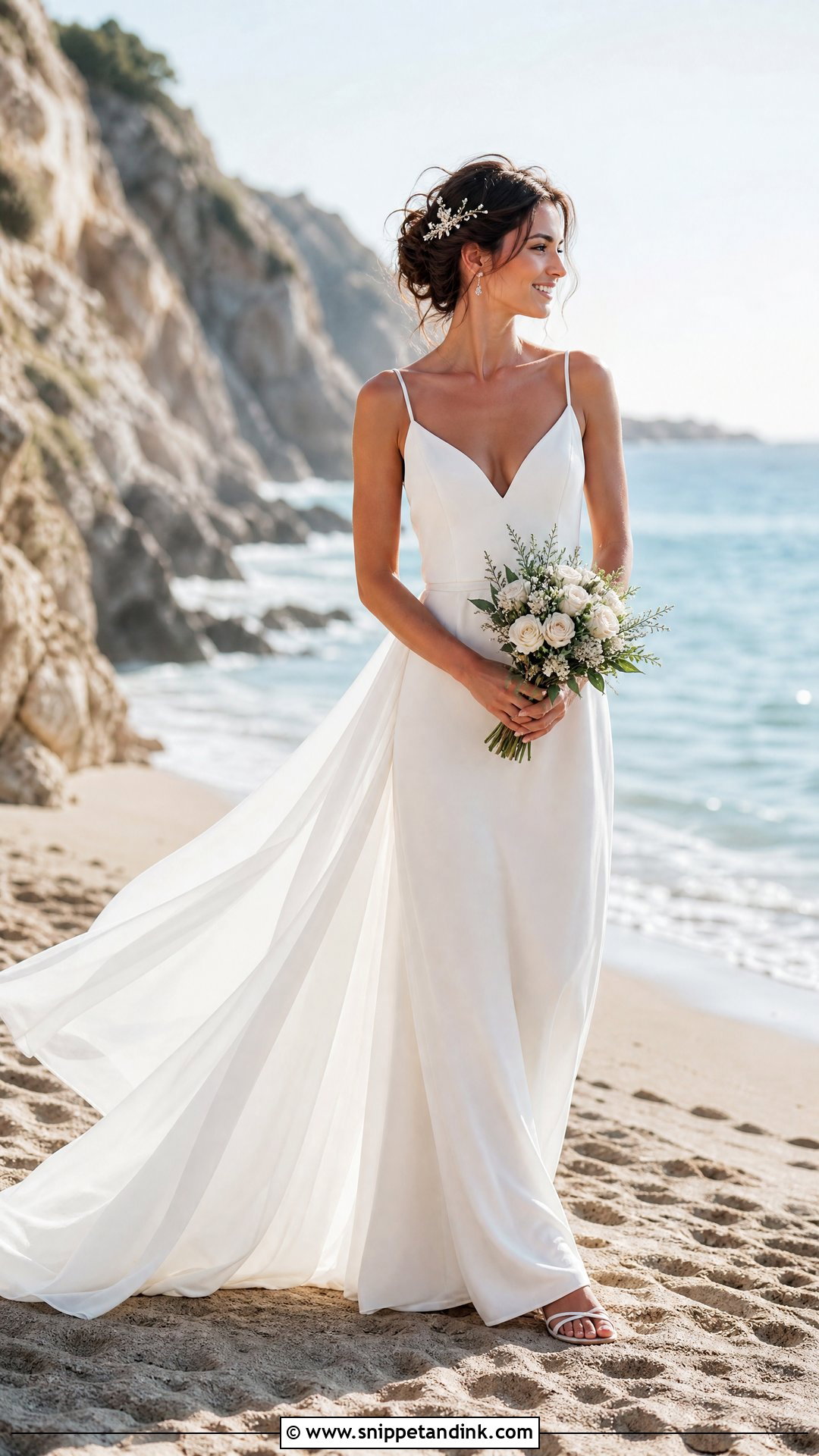
Wind is the enemy of a beach train. For a breezy seaside setting, I’d choose a narrow train from the back waist over a wide overskirt, which catches gusts like a sail. Light chiffon, soft tulle or crepe with a simple fitted bodice and relaxed skirt keeps the base comfortable. Small earrings, a loose updo, flat bridal sandals and a compact bouquet; a short veil or small hair accessory copes better outdoors. Take the train off after shoreline photos so it doesn’t collect sand all evening.
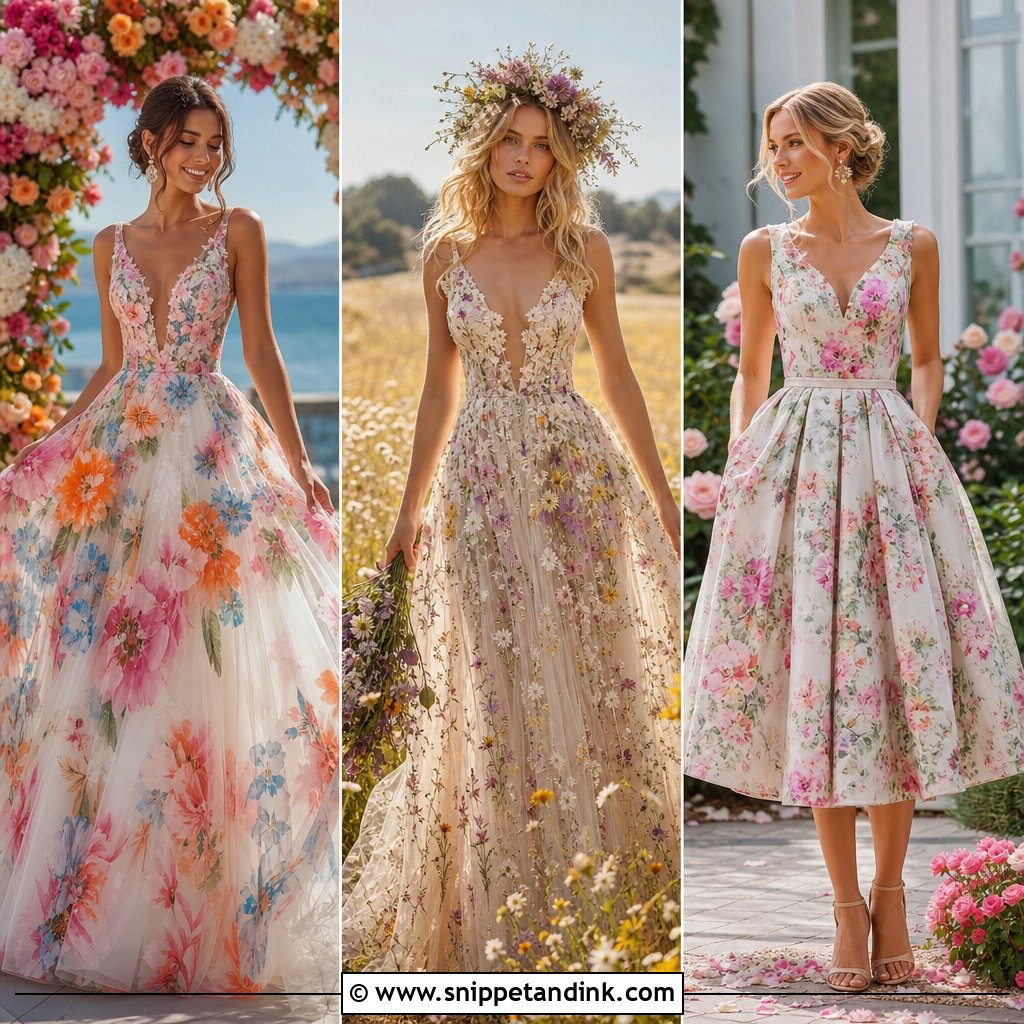

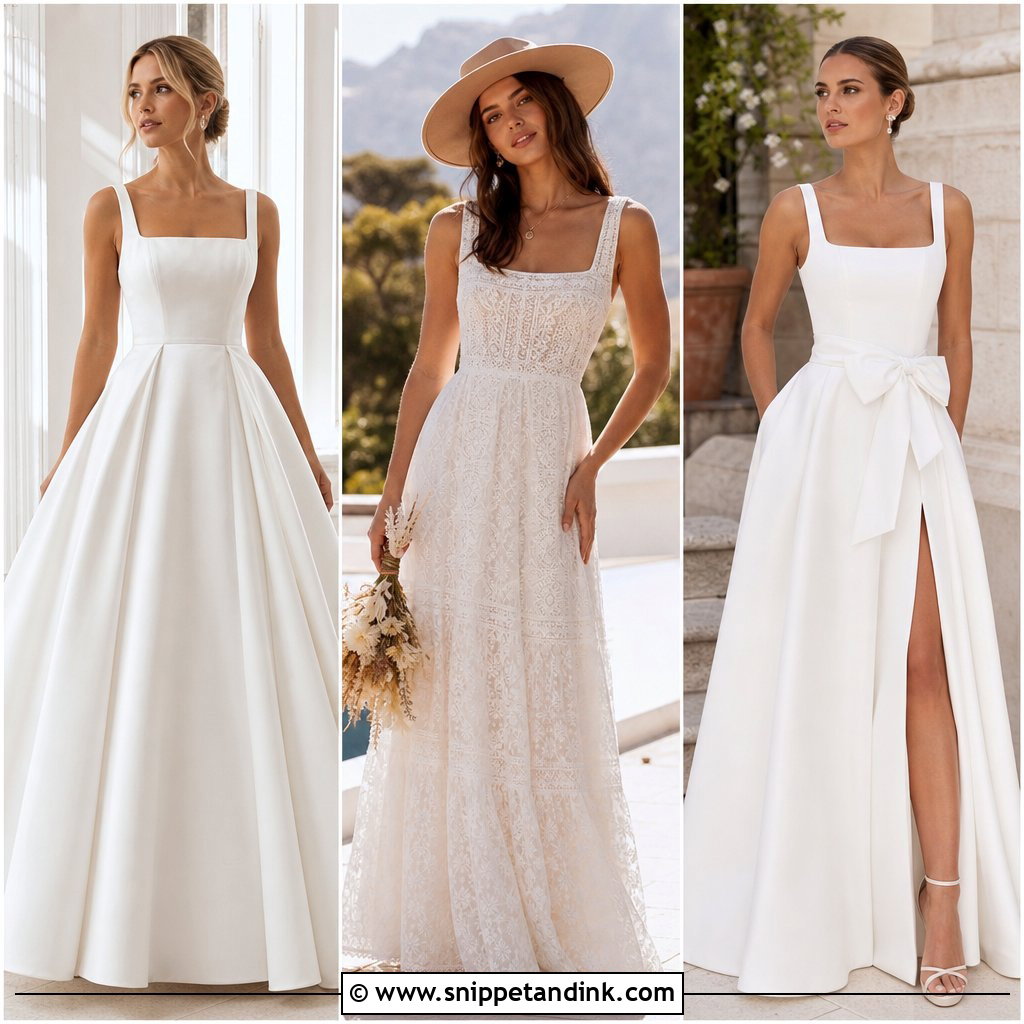
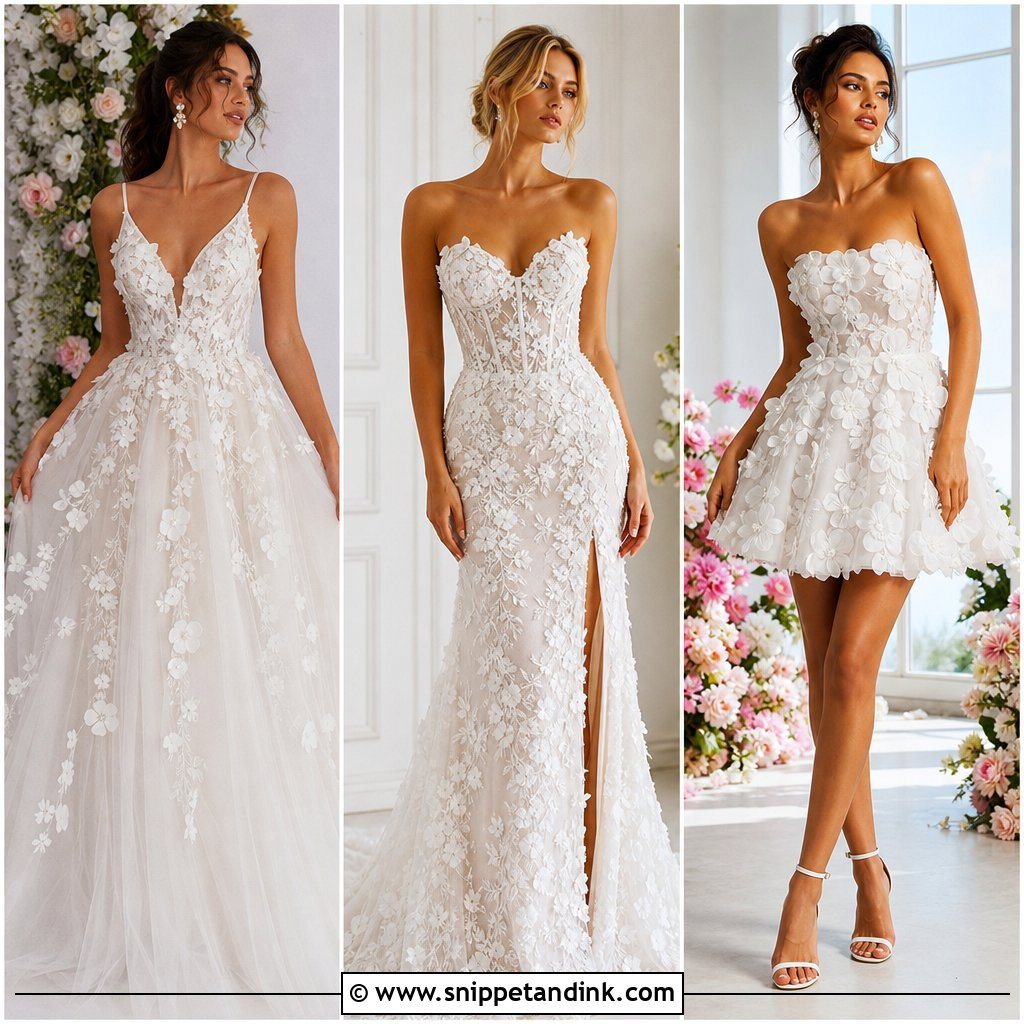
20. Modern Wedding Dress With Asymmetrical Train Extension
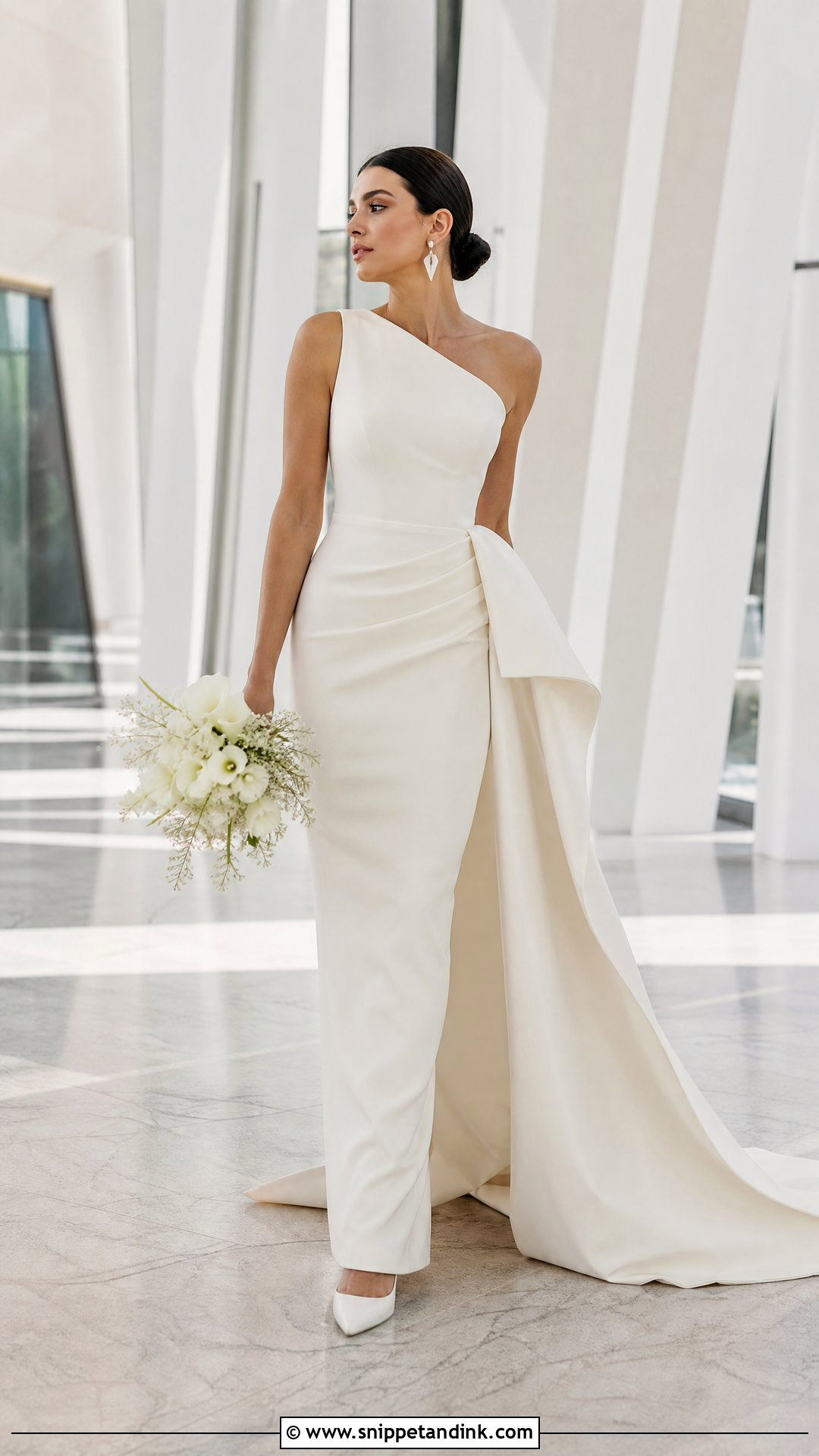
An asymmetric train attaches at one side of the waist or runs diagonally across the back, falling into a long sculptural line. On a one-shoulder, strapless or square-neck column in satin or structured crepe, it looks contemporary. The diagonal must look deliberate; if the weight isn’t balanced, the dress twists toward the train side as you walk, so I check it in motion, not just standing. Geometric earrings, a sleek bun, pointed pumps and a minimal bouquet. Detached, you’re left with a sharp, clean reception dress.
The Five-Minute Swap, and Getting the Extension Home Intact
Most extensions attach in one of three ways: hooks and eyes, sewn-in snaps, or buttons hidden inside a waistband. Each has its quirks. Hooks hold heavy fabric well but are fiddly; snaps are quick but can pop open under a heavy train; buttons are secure but slow. Ask your seamstress which yours uses, and have her show the person who will take it off.
Timing it on the day
I plan the swap right after formal portraits and before the grand entrance, in a private room with a mirror. Give it ten minutes in the timeline even if it takes five. One helper should know the routine; three helpers make it slower.
Storing and cleaning it
Bring a padded hanger and a breathable garment bag for the removed piece, and give it to someone responsible, not left on a chair in the venue. Afterwards, send the extension to the cleaner together with the dress. Ivory fabrics yellow slowly over the years, and two pieces cleaned and stored separately can age to slightly different shades.
One Gown, Two Entrances
A good convertible gown gives you two looks from one dress. A detachable train, overskirt, cape or long skirt adds impact for the ceremony and leaves a practical dress for the party. The extension should match the gown’s colour, texture, weight and waist construction, feel secure as you walk, and be easy for a helper to remove. Wear your ceremony shoes and accessories to fittings so you see the whole outfit. Above all, love the base dress before anything is added, because the removable layer should frame a gown that already fits you well.
You'll Like These Ideas:



Leave a Reply