
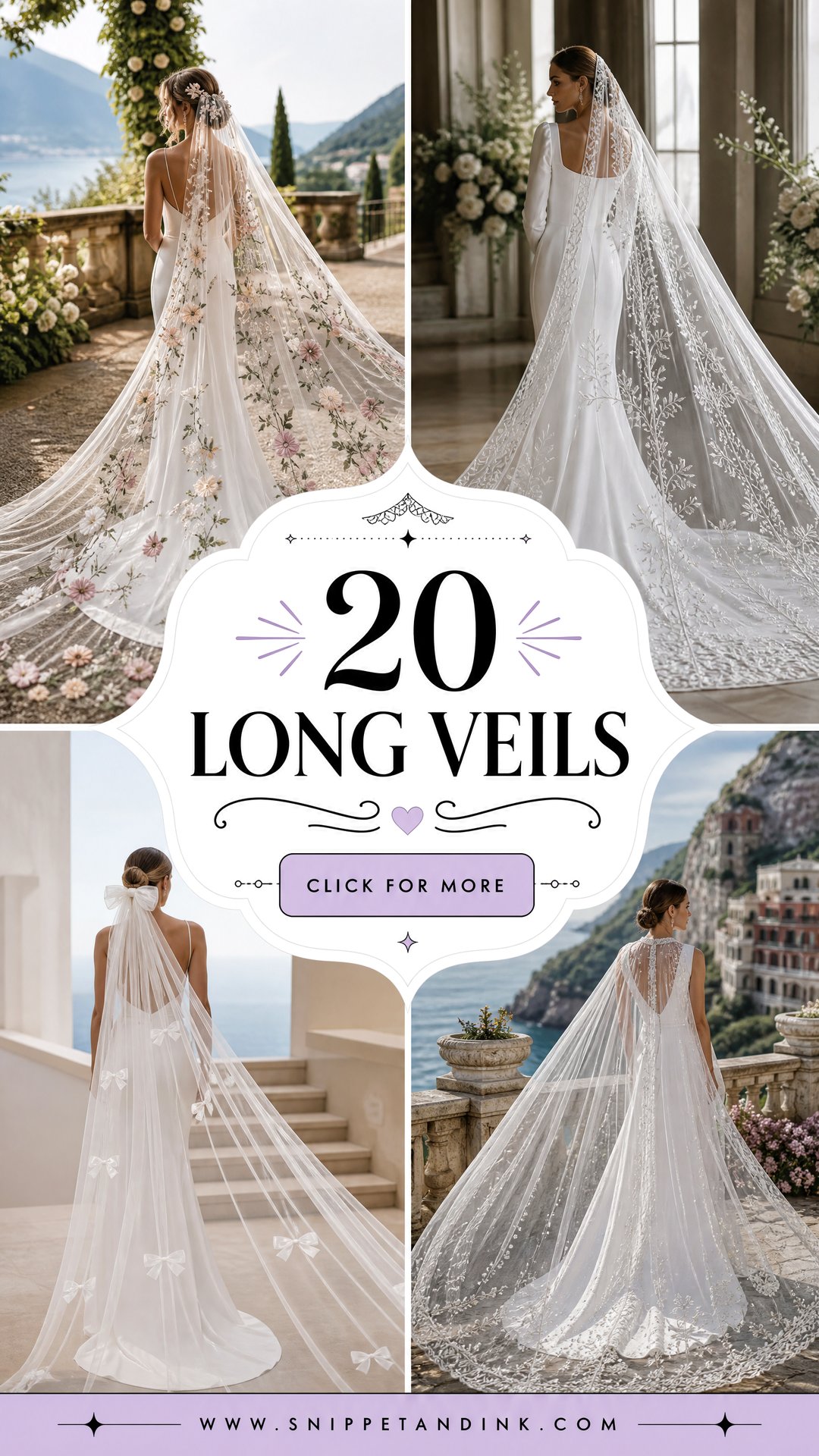
Comb Placement Decides How a Long Veil Falls
The same veil looks completely different depending on where I set the comb. High at the crown, the tulle lifts away from your back and creates a fuller, more traditional shape. Tucked under a low bun, it falls closer to the body and shows more of the dress, which is why I default to that position for open backs and detailed bodices.
A long veil pulls backward with every step, so the comb can’t just sit in loose hair. I build a small foundation first: a tight pinned section, a hidden braid or a pair of crossed bobby pins for the comb’s teeth to slide behind. Very silky or freshly washed hair needs a little texture spray beforehand, or the comb will creep out by the first dance.
Length is measured from the comb, not the floor
Veil lengths are listed from the comb down, so the same chapel veil lands differently on a tall bride than on a petite one, and differently again once heels are in. Measure from where your comb will sit to the floor in your wedding shoes before you order, and ask the maker to cut to that.
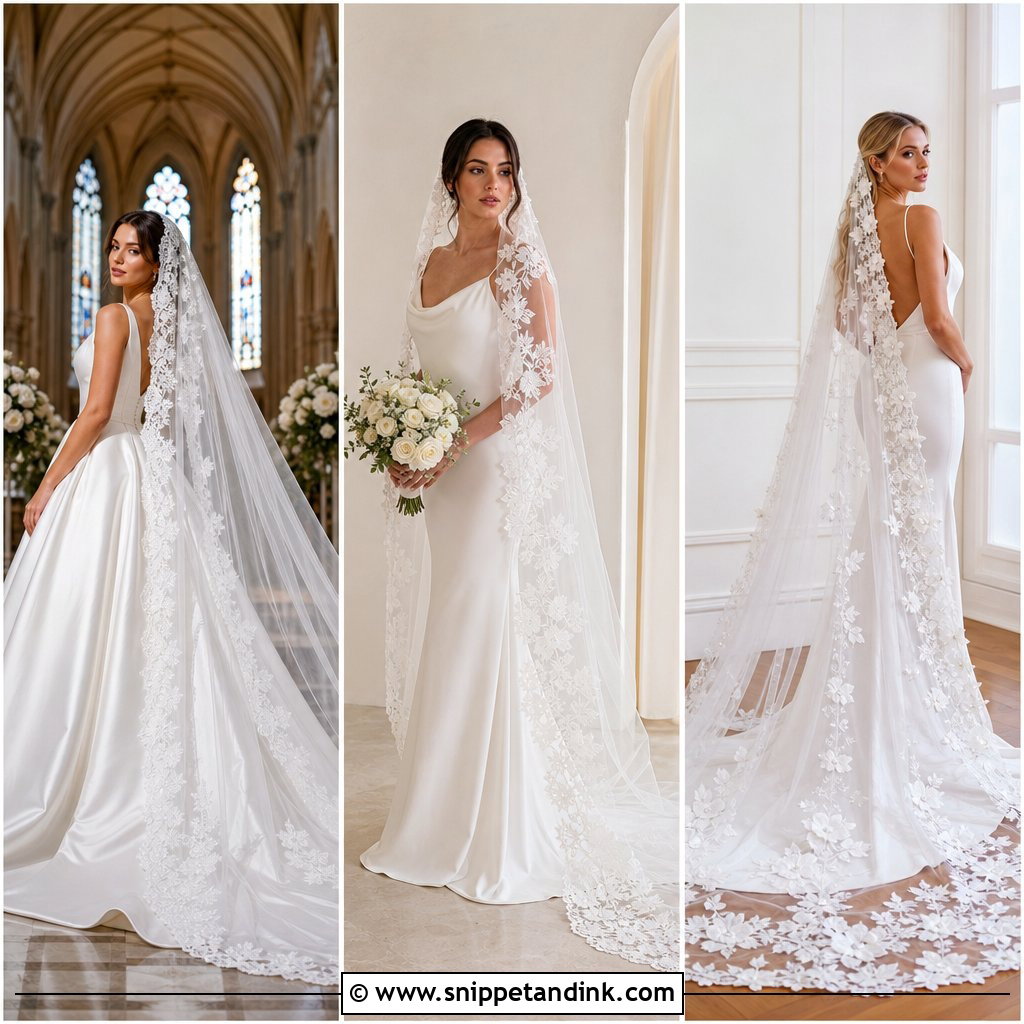
1. Cathedral Veil With Satin Ball Gown
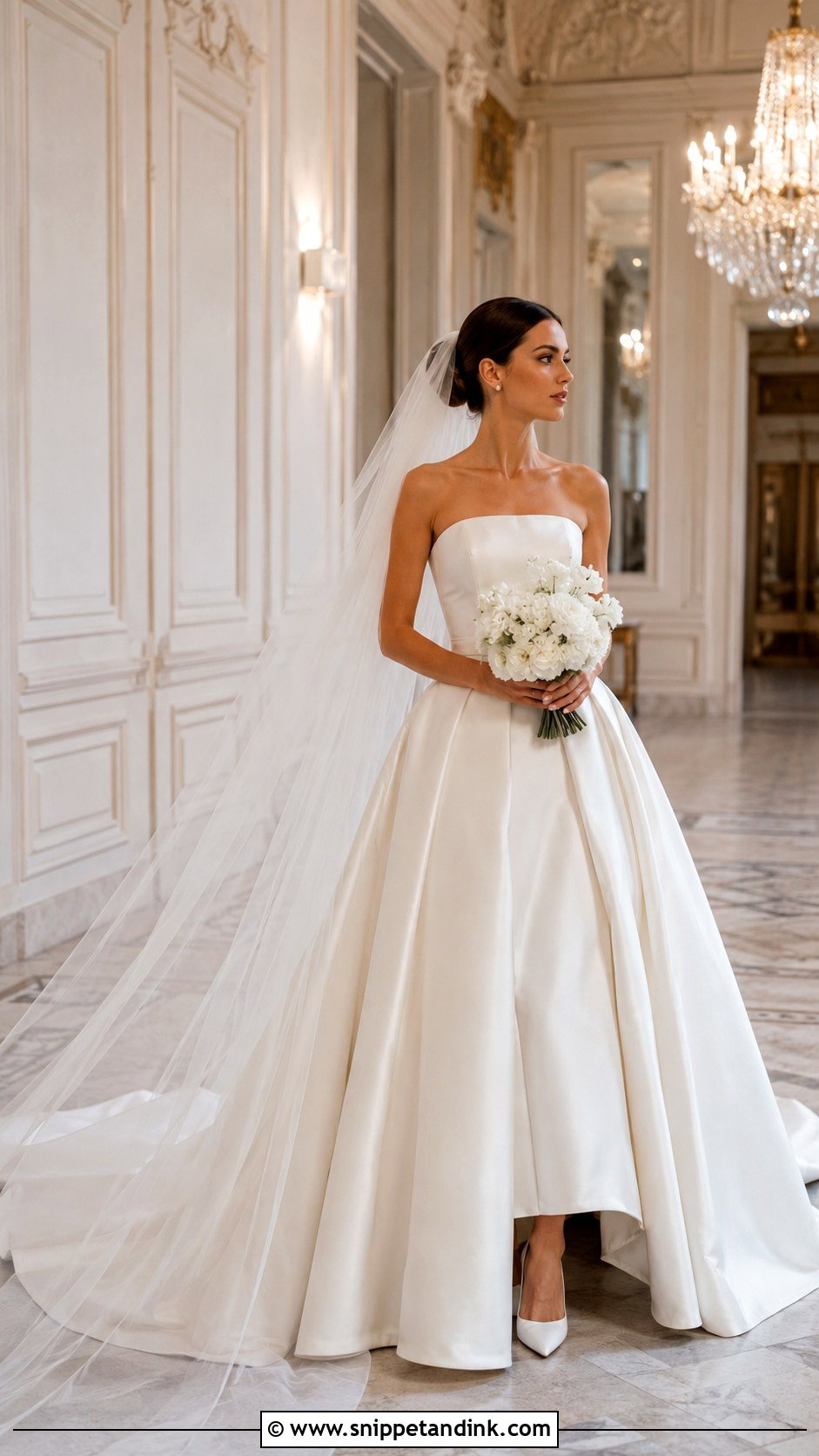
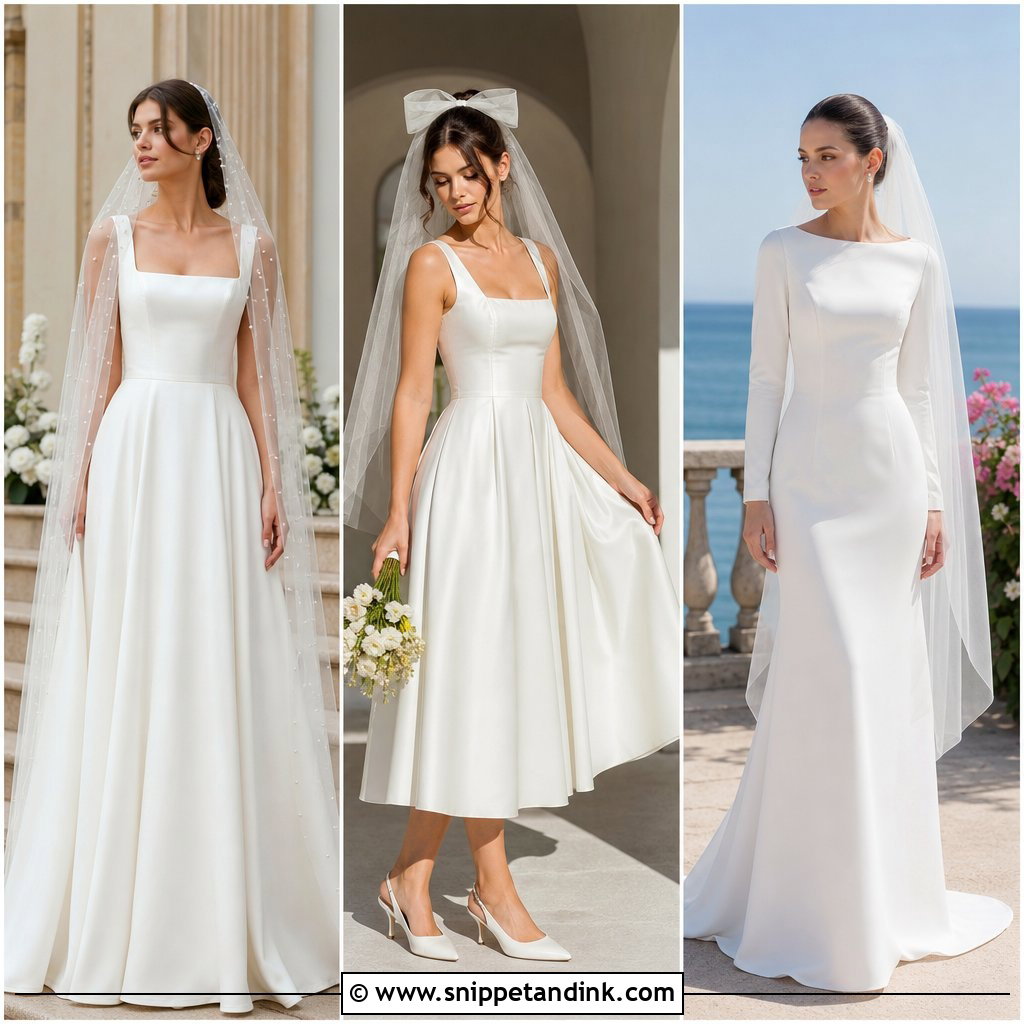
Satin and a cathedral veil make the most formal pairing on this list, so the gown needs a fitted bodice, a structured waist and a sweeping skirt that can carry the veil’s proportions. I’d keep the tulle raw-edged here. Satin already has a sheen, and a trimmed veil on top of it can tip into fussy. Pointed ivory pumps, pearl studs and a compact bouquet of white flowers are plenty. For hair, I build a smooth low bun with a solid pinned base so the comb has something to grip, since a cathedral length pulls backward the whole time you walk. At the fitting, stand with your back to the mirror and look over your shoulder: the veil and train should overlap into one shape, not two.
2. Chapel Veil With A-Line Wedding Dress
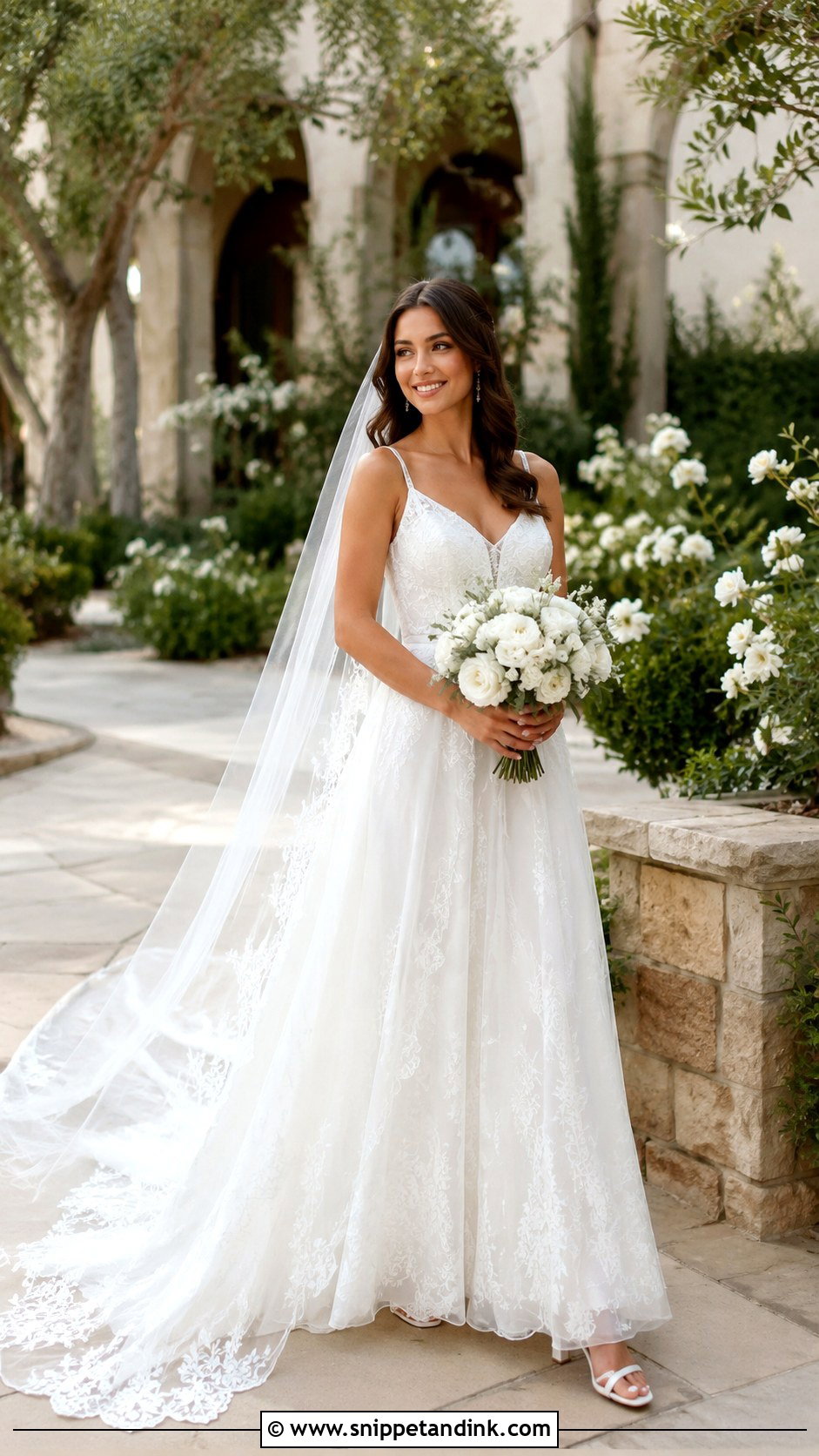
A chapel veil that just touches the floor gives you length without the management a cathedral needs, and an A-line dress is the easiest shape to put it with. If the gown has lace, beading or a detailed train, go for a narrow cut in lightweight tulle so you’re not stacking volume on volume. Block-heel sandals, small drop earrings and a structured bouquet keep the outfit grounded. Loose waves look relaxed, but on fine hair I’d add a hidden braid or a small pinned section under the comb, otherwise the weight drags the waves flat by the reception. Get the veil measured against your finished hem, not the sample, because alterations move where the layers meet.
3. Pearl Veil With Minimalist Wedding Dress
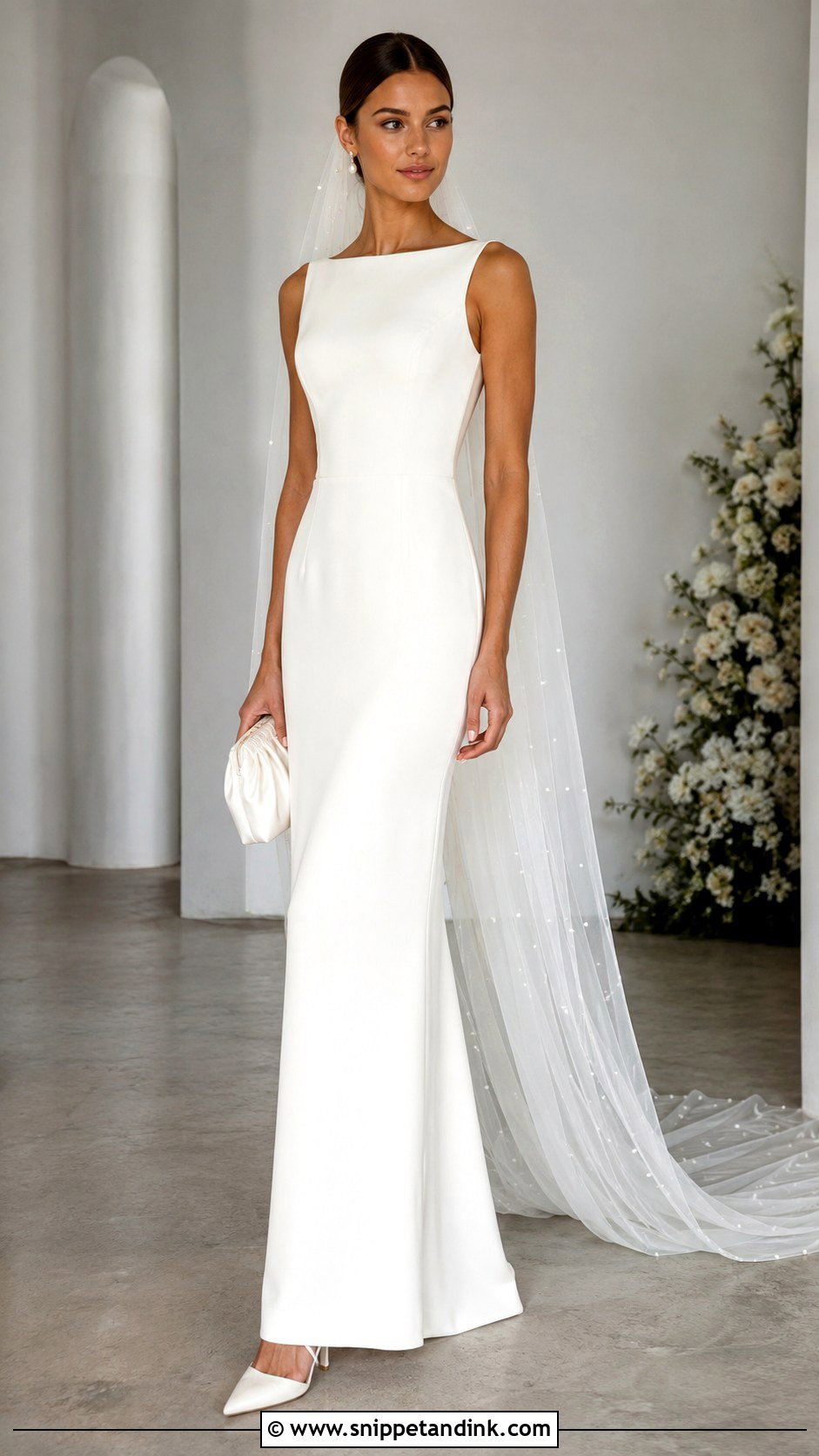
Scattered pearls give a crepe column gown some texture without breaking its clean line. I like this veil with a square neckline and a subtle train, since the plain fabric lets each pearl register in photos. Pearl earrings, pointed slingbacks and a satin clutch for the reception are all you need. A center-parted bun is my choice for hair: it reads modern, and it lets me anchor the comb into a dense, pinned base rather than loose hair. Lift the veil before buying it. Pearls sewn densely add more weight than you’d guess, and widely spaced ones look softer anyway.
4. Lace Edge Veil With Strapless Wedding Dress
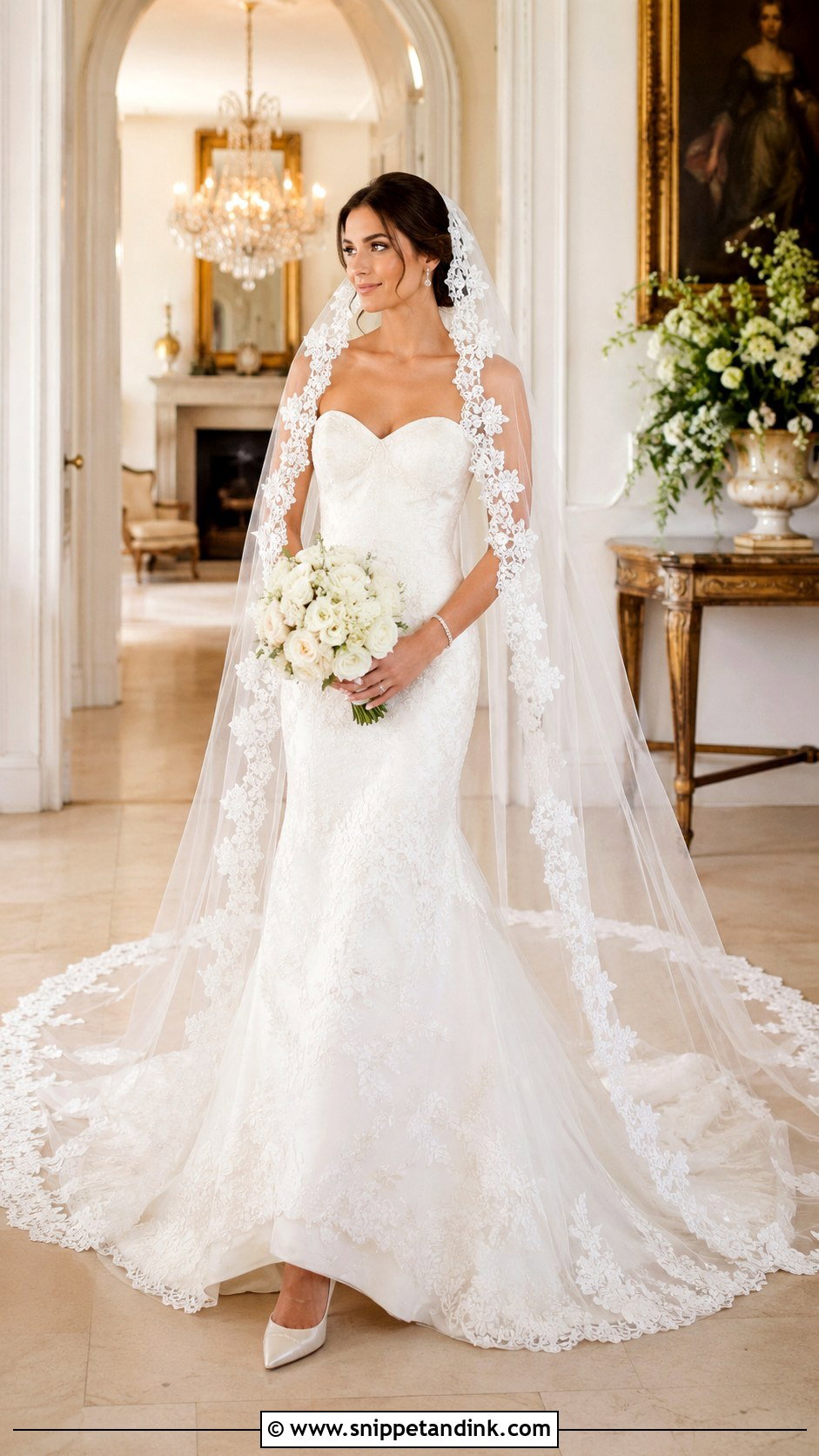
Strapless gowns leave a lot of bare skin, and a lace edge gives the veil a defined border that frames the shoulders and train. If the dress is plain, a wider floral lace edge can carry the whole look; if it’s embellished, a narrow trim keeps the two from arguing. Repeat one small element from the gown in the veil rather than matching it exactly. Ivory pumps, a fine tennis bracelet and quiet earrings finish it. I set the comb lower for this one, under a twisted low bun, so the lace falls behind the arms instead of across the bodice. We check that placement at the trial with the dress on, never just a robe.
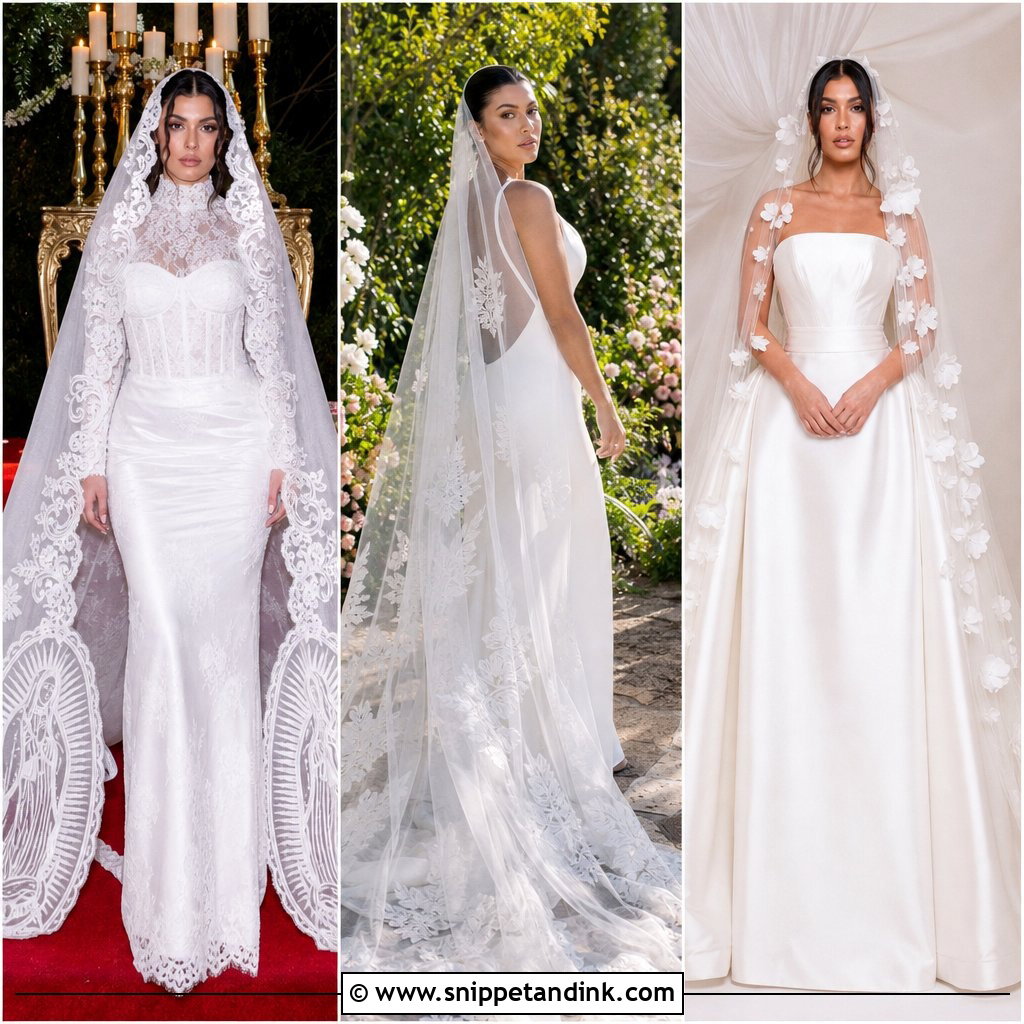
5. Mantilla Veil With Mermaid Wedding Dress
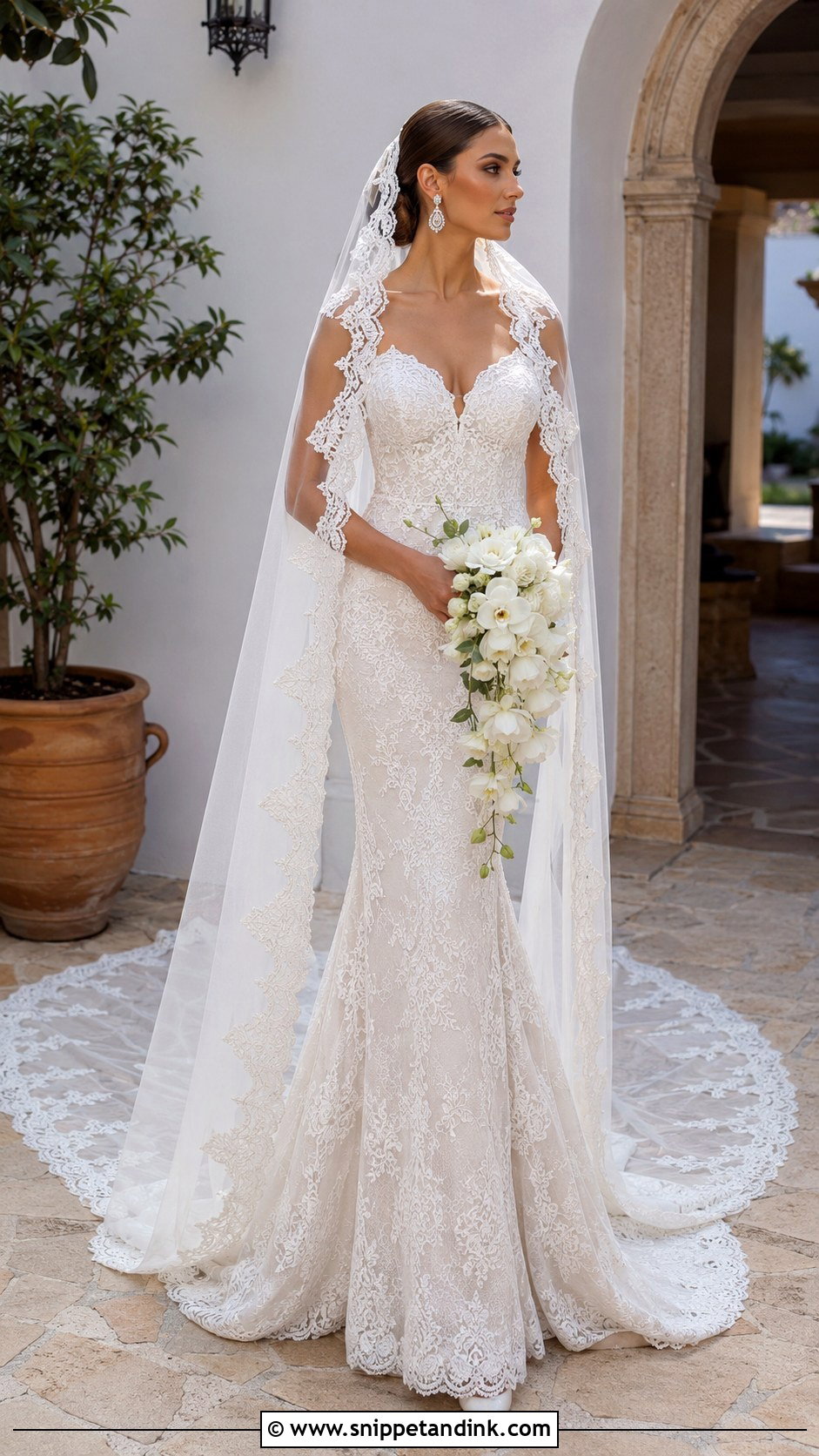
A long mantilla veil sits much further forward than other veils, close to the hairline, so its scalloped border can follow your face and shoulders before trailing across the floor. With a fitted mermaid gown, keep the dress smooth so the lace has room. Pointed heels, small gemstone earrings and a narrow cascading bouquet suit the long lines. Hair is the tricky part. A mantilla has no gathers to hide pins, so I anchor it with a flat comb into a smooth low bun or a heavily pinned section under side-parted waves. Sit, walk and turn in the full outfit before the day, since mantilla lace loves to catch on beading.
6. Floral Veil With Simple Wedding Gown
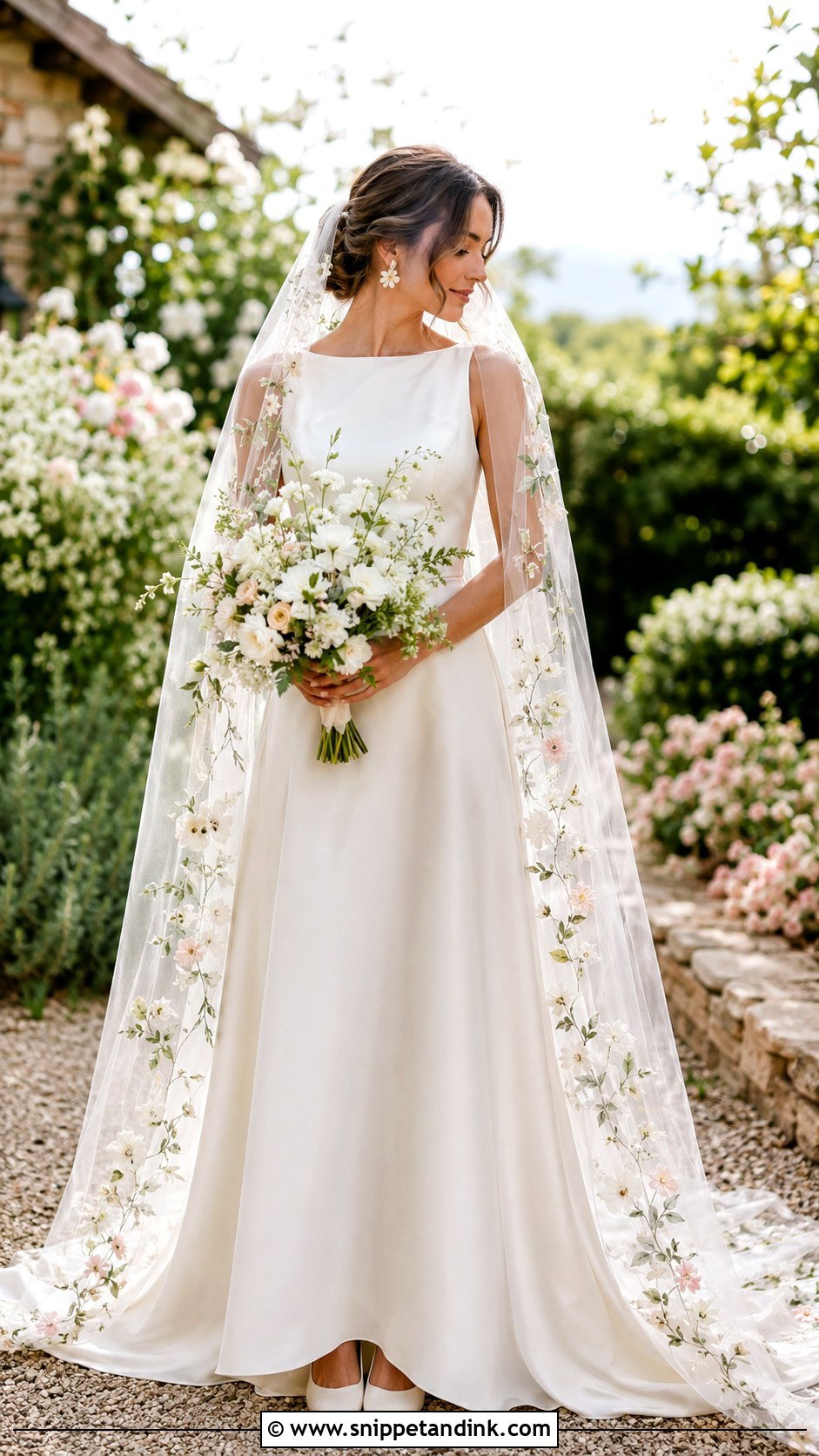
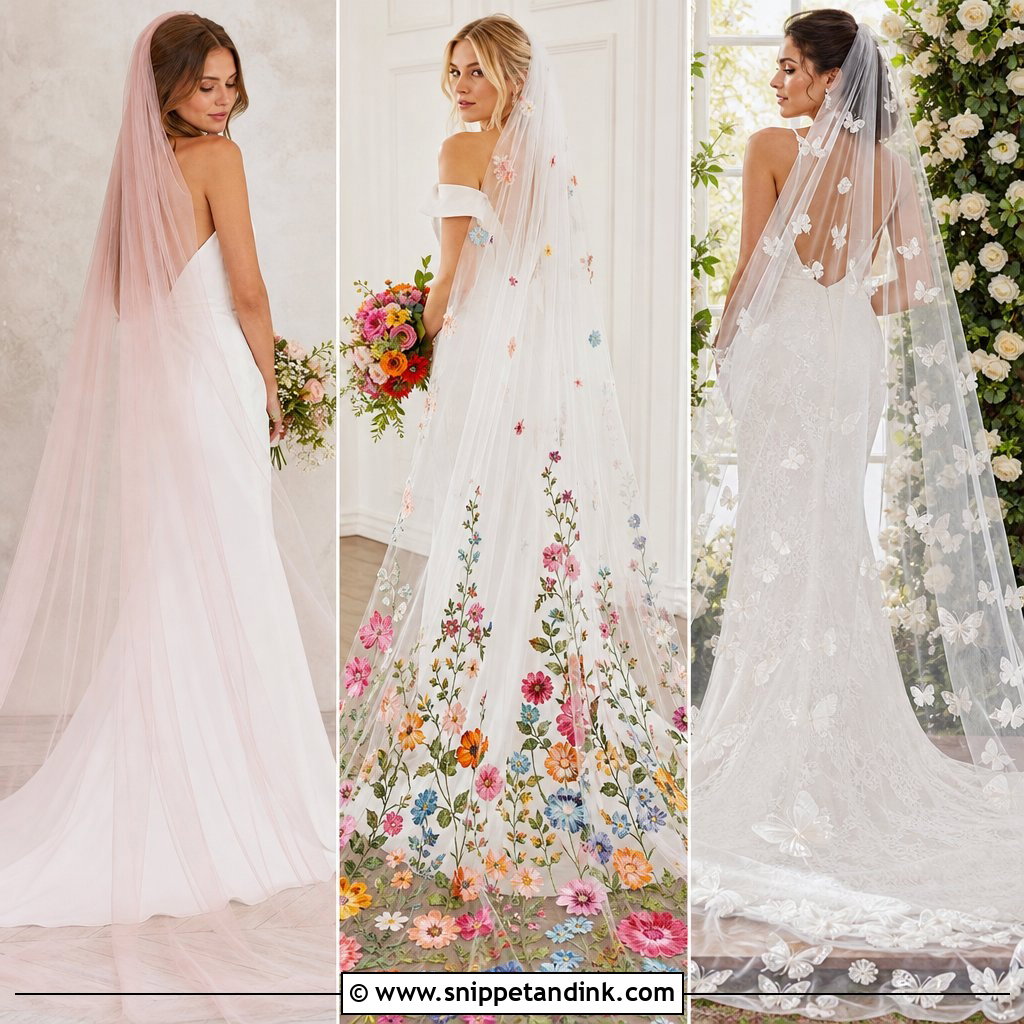
Embroidered vines or spaced floral appliqués turn a plain silk, crepe or mikado dress into something personal, and the effect suits outdoor ceremonies especially. A clean A-line or column lets the botanical detail show. Closed-toe heels, small floral earrings and a bouquet that picks up one or two flowers from the embroidery tie it together, but don’t match every bloom and color, because a looser link looks more considered. A relaxed low bun holds the comb well. If you’d rather keep your face and bodice clear, ask for the embroidery to gather toward the bottom of the veil, where it lands across the train in photos.
7. Royal Veil With Long Sleeve Ball Gown
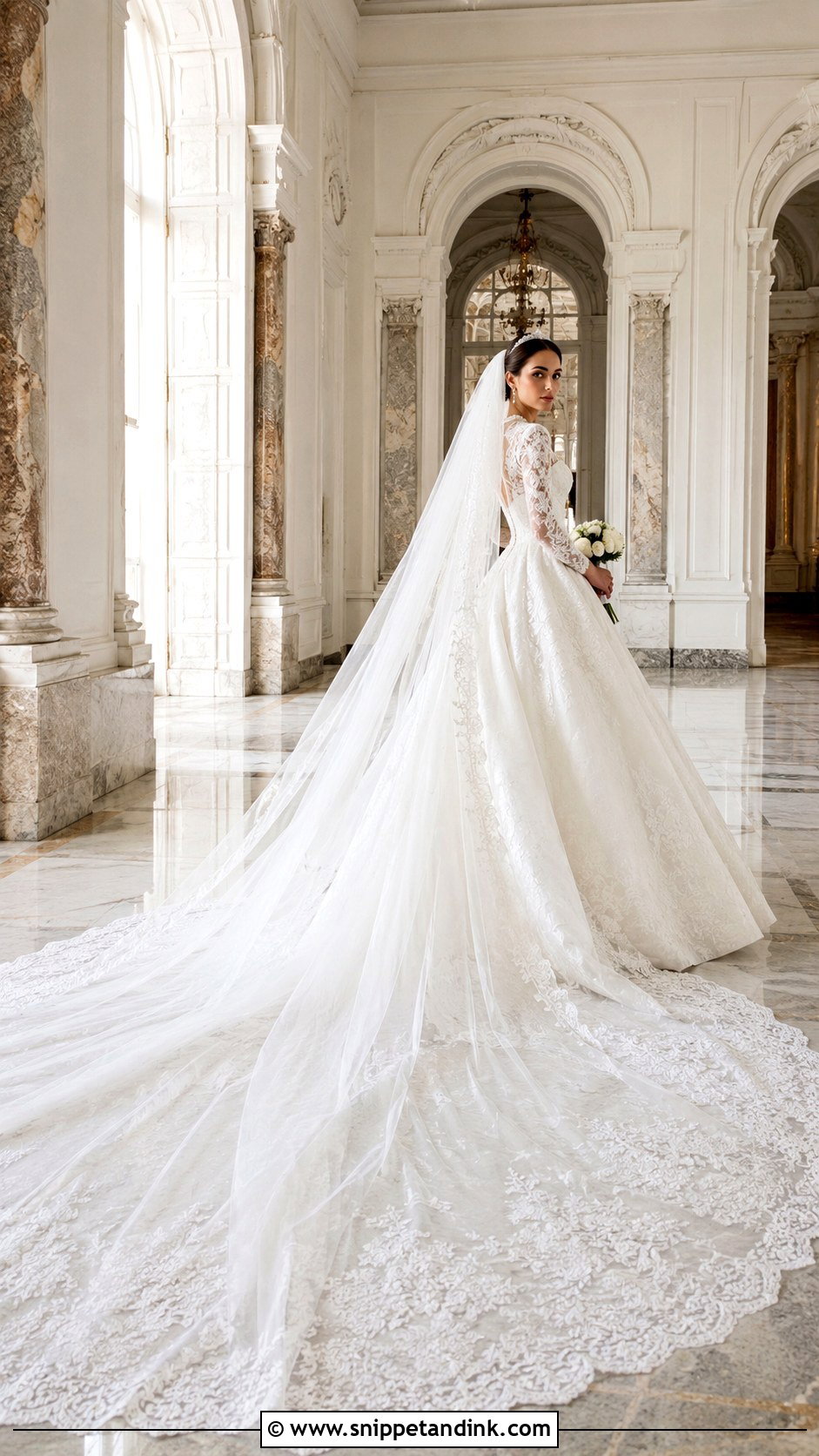
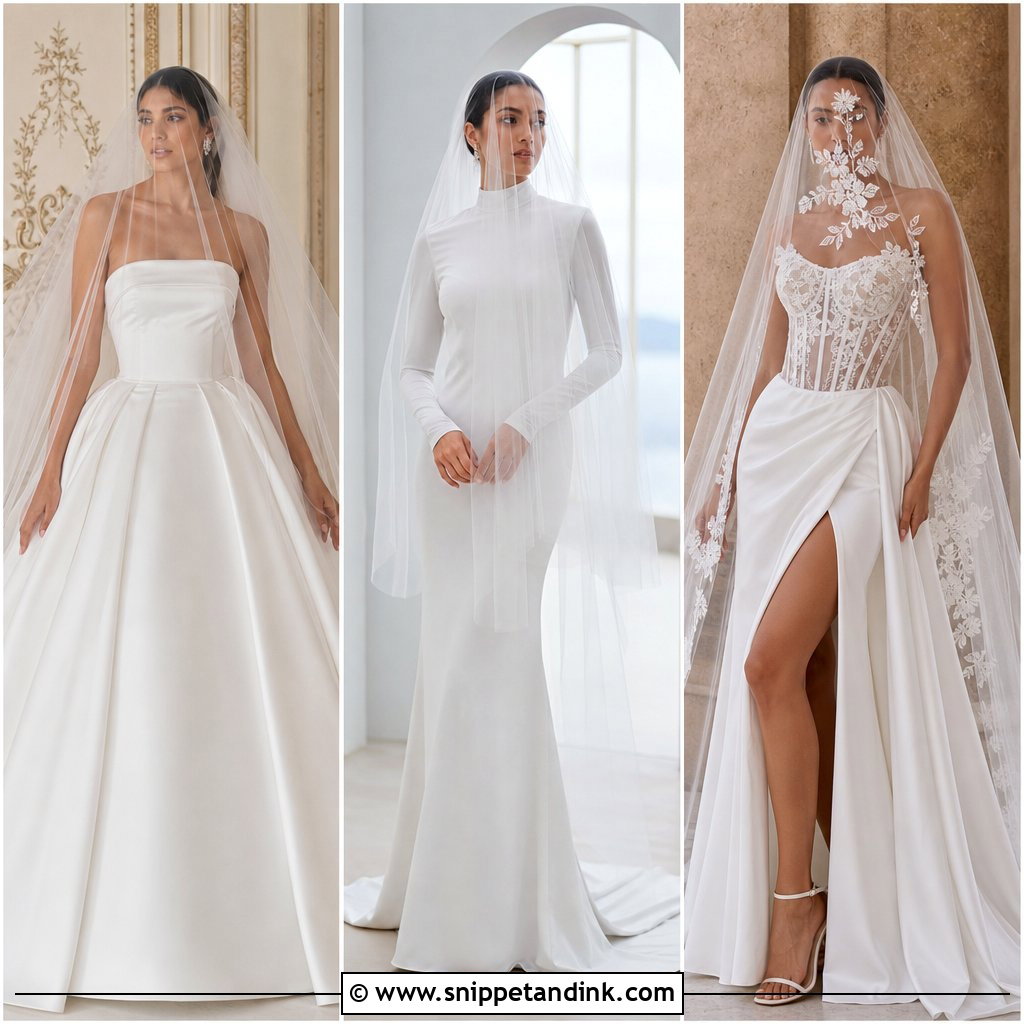
A royal veil over a long-sleeve ball gown is as much ceremony as a wedding outfit gets. The gown wants a defined waist, a full skirt and fitted sleeves in smooth fabric or fine lace, and the veil should run past the train while staying light enough to move. Keep the rest restrained: classic pumps, studs and a modest bouquet. A neat chignon is the only hairstyle I’d trust under this much tulle, as loose pieces get pulled into the veil and tangle. You’ll need a wide aisle and someone assigned to arrange the fabric before you walk and again for portraits. Practice pausing at the top of the aisle, too, so the veil settles before you move.
8. Raw Edge Veil With Lace Wedding Dress
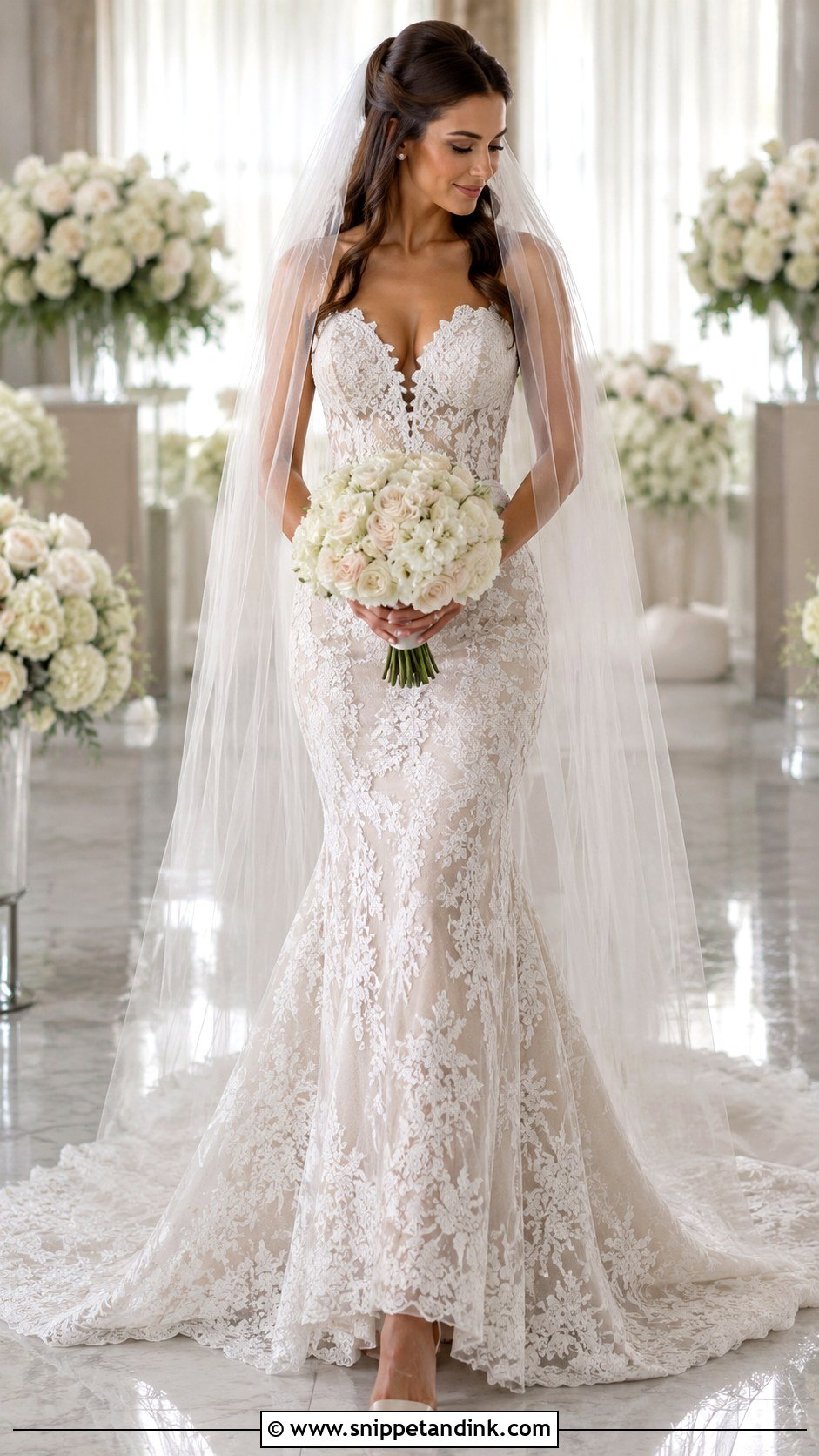
Intricate lace on the gown is the clearest reason to choose a raw-edge veil. A sheer cathedral or chapel length over a lace fit-and-flare with nude lining lets the dress do the talking while still giving you that long flowing outline. Simple ivory heels, diamond or crystal studs and a rounded bouquet finish it. Half-up hair works here if I anchor the comb beneath the lifted section, where pins can lock it to a firm base. Match the veil to the gown’s lining, not to bright white by default. Ivory, soft white and champagne tulle look surprisingly different once layered, and flash makes the mismatch more obvious.
9. Embroidered Veil With Square Neck Wedding Dress
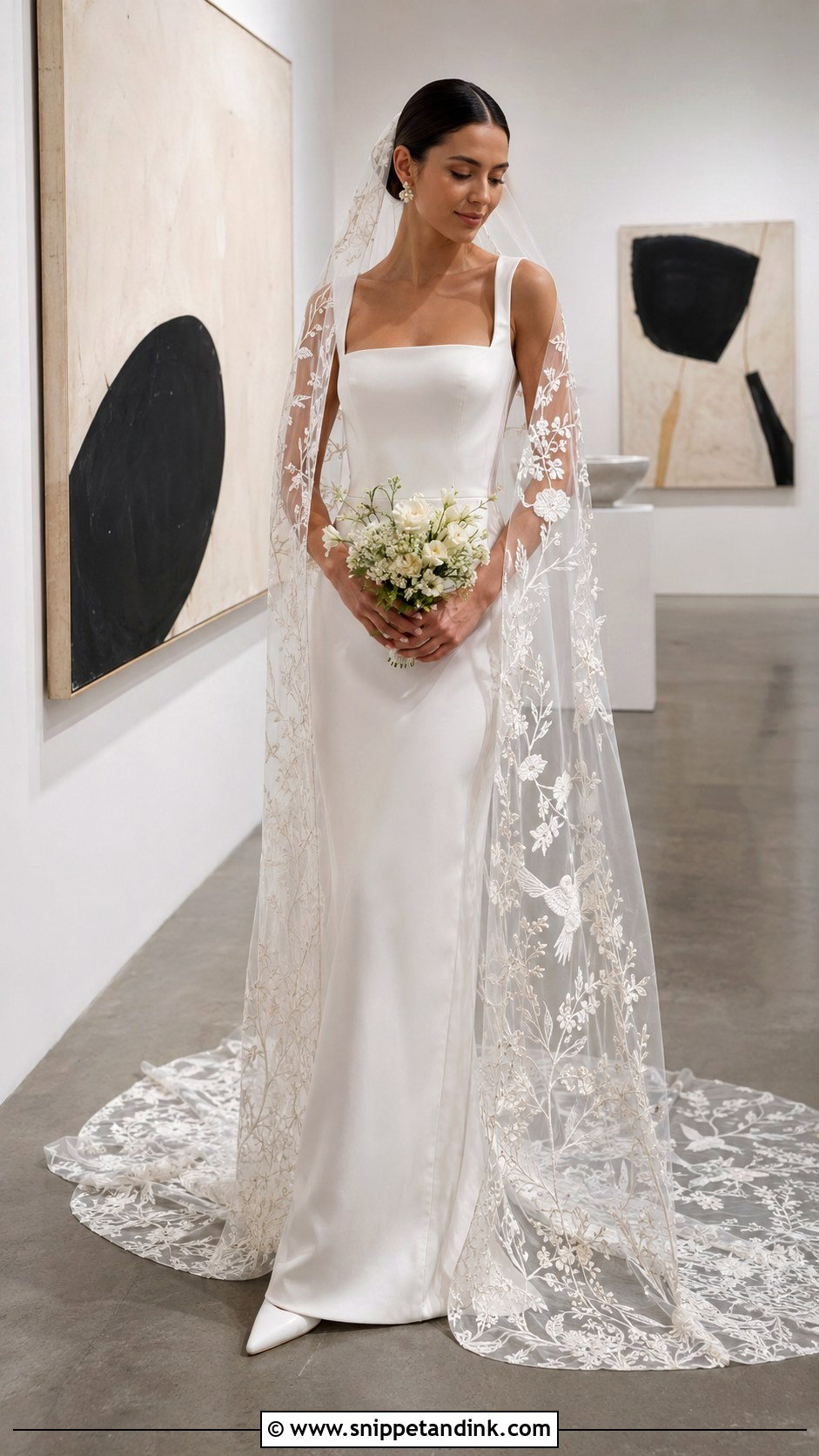
An embroidered veil makes a square-neck gown feel made for you. Keep the dress sleek, with wide straps, a defined waist and a simple skirt, and let the veil carry the detail: botanical motifs, initials, a date or just a fine border. Tonal thread looks subtle; pale color brings more personality. Low pointed heels, sculptural earrings and a compact bouquet suit it. I’d put the hair into a center-parted bun so the comb sits squarely and the embroidery hangs straight. Plan placement before ordering, since motifs can vanish under the train or bunch on the shoulders, and ask for a full-length mock-up if the maker offers one.
10. Two Tier Veil With Classic Wedding Dress
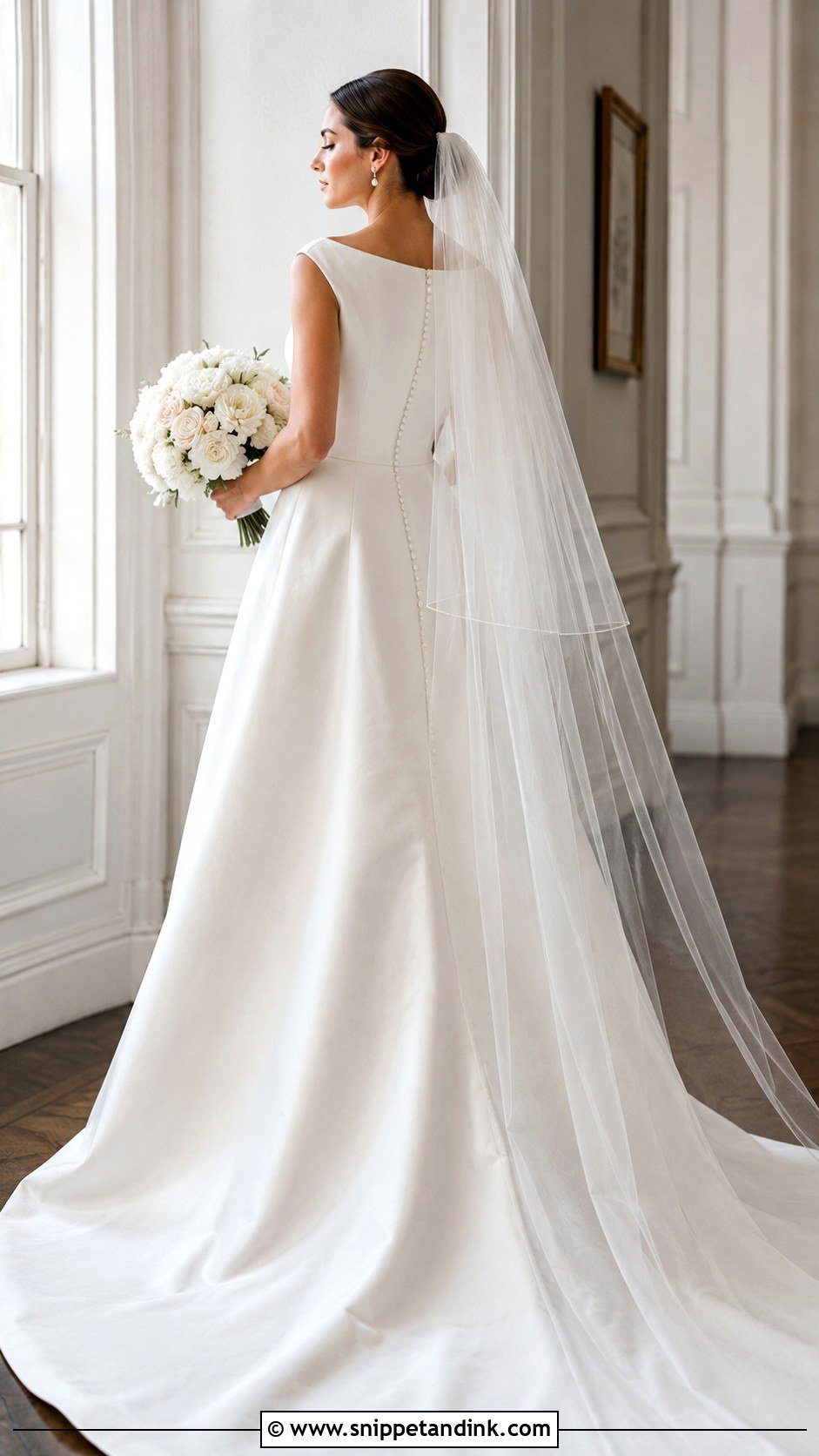
A two tier veil gives you a blusher for the walk in and a long back layer behind a classic gown. I picture it with a structured A-line, a bateau neckline and covered buttons down the back. Fine tulle keeps both layers airy and stops the gathers from building a bulky lump at the crown. Almond-toe pumps, pearl drops and a rounded bouquet tied with a narrow ribbon suit the traditional mood. A smooth low bun lets the front layer fall evenly. At the trial we practice the lift: the blusher should flip back in one motion without loosening the comb or smudging lipstick, which means it needs enough length to fall behind on its own.
11. Cathedral Veil With Off Shoulder Wedding Dress
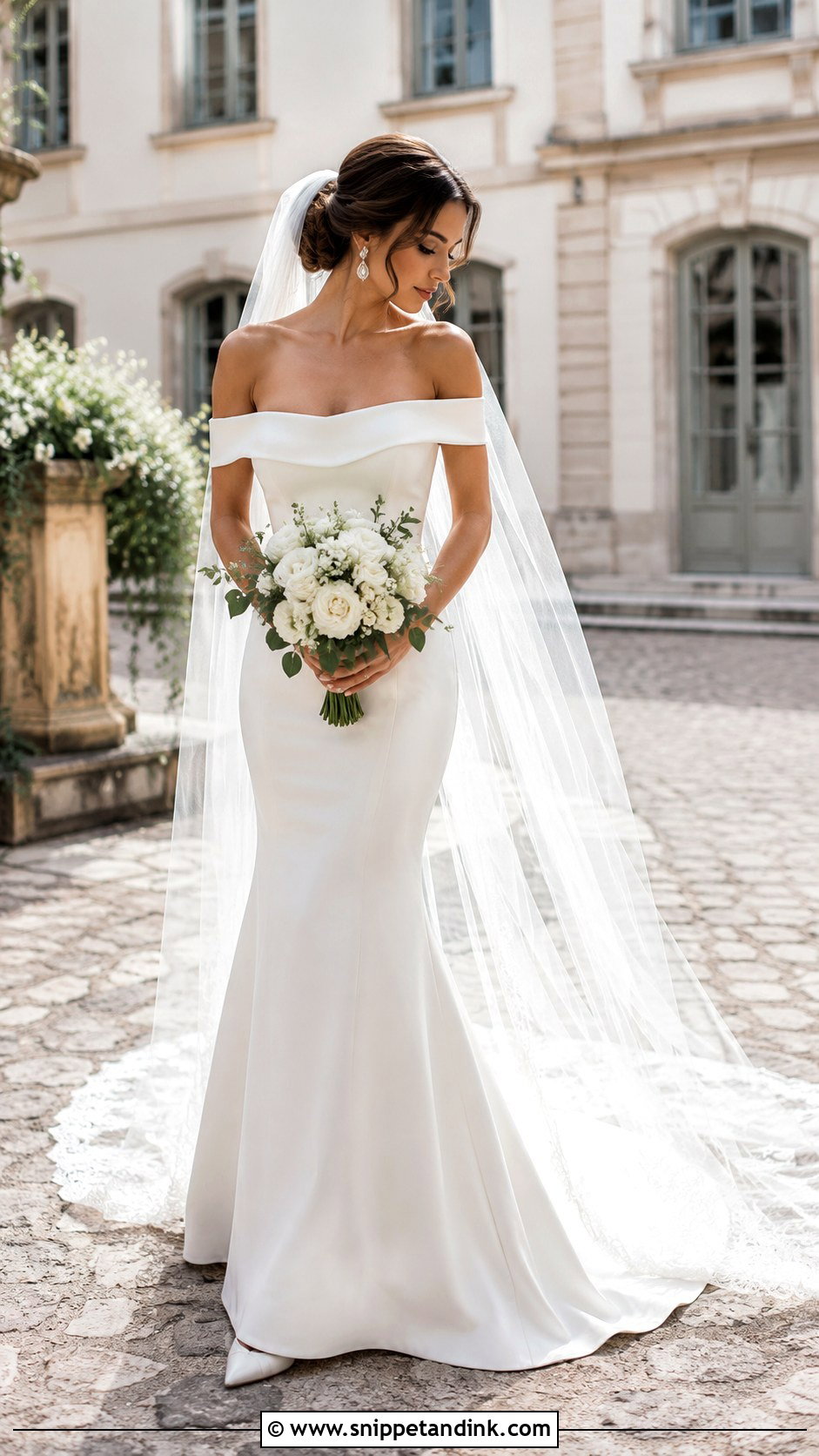
Off-shoulder necklines need a veil that floats behind them, not one that slumps against the fold. A sheer cathedral over a gown with a folded neckline, fitted waist and A-line or fit-and-flare skirt does that well; keep it plain, or add a narrow lace edge if the dress has subtle detail. Drop earrings, pointed pumps and a bouquet carried slightly low keep the shoulders in view. I’d style an updo or low bun to show the shoulders and give the comb a stable base. Check the tulle around your arms, especially with detachable sleeves, since a veil caught between sleeve and skin pulls at the comb every time you lift a hand.
12. Beaded Veil With Simple Satin Dress
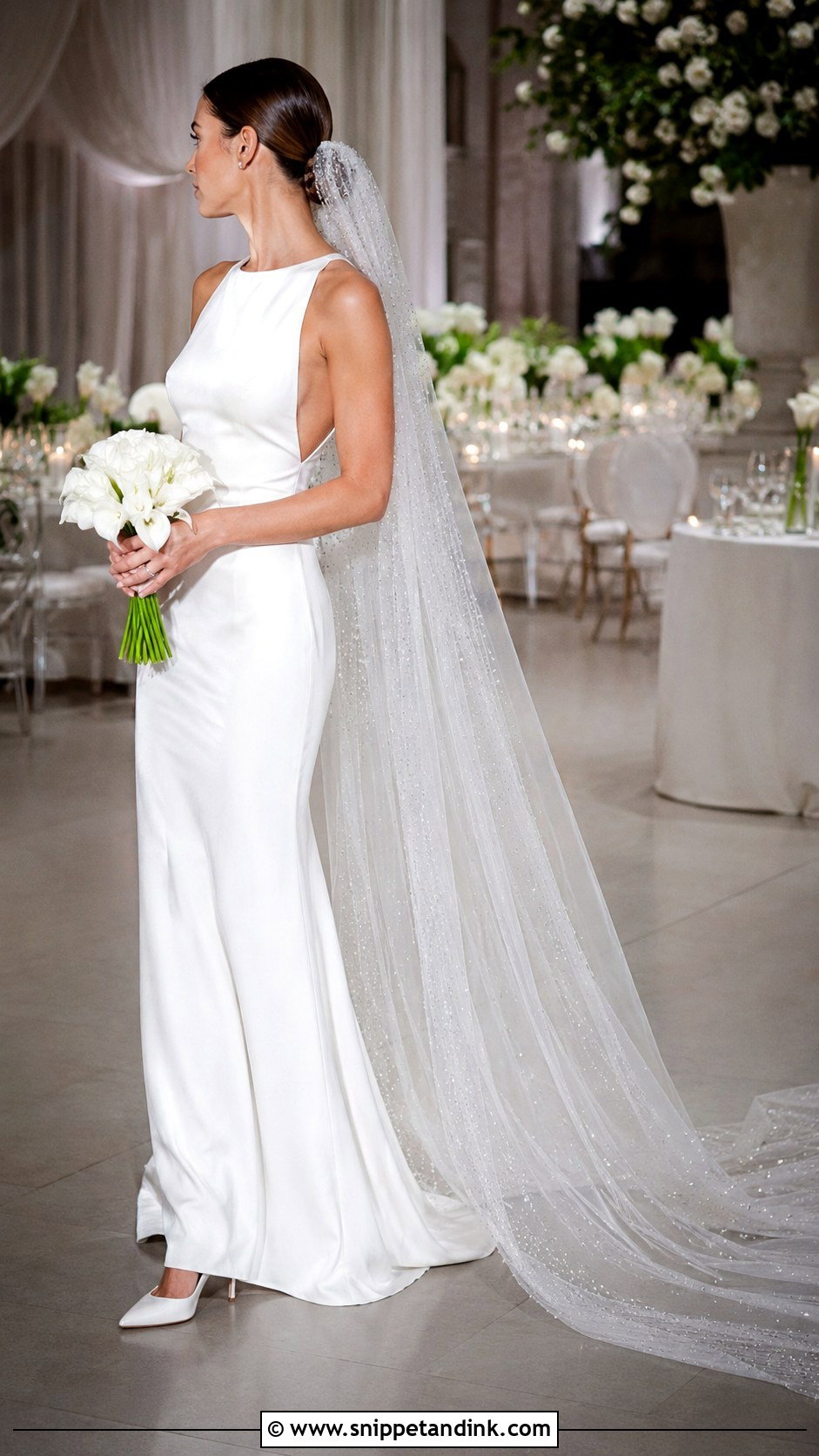
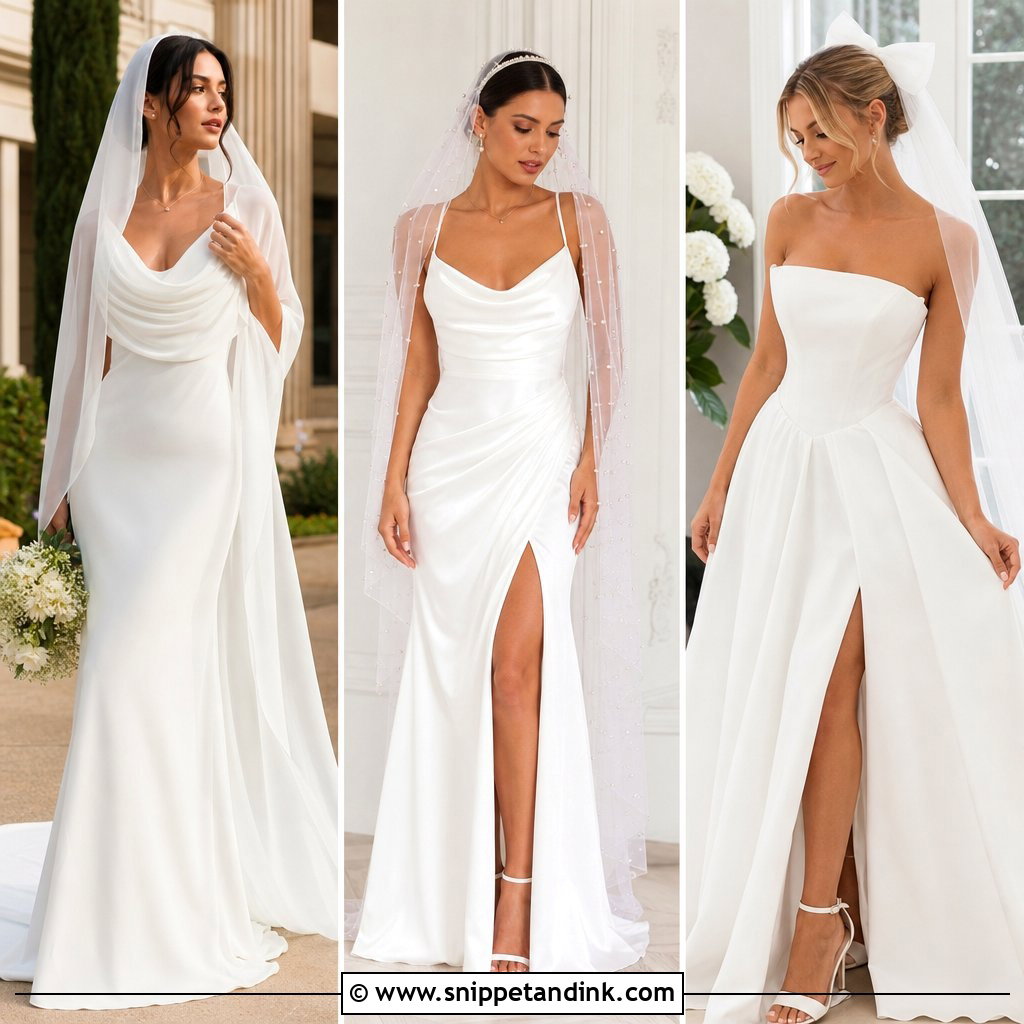
Crystal or seed-bead tulle gives evening sparkle without asking the dress to do anything. Pair it with a plain satin gown in a cowl, scoop or straight neckline, and add satin pumps, small studs and a clean-lined bouquet. Hair should be sleek, a low knot or softly waved bun, with no extra hair accessories. Weight is my concern. Dense beading drags on the comb, and over a few hours it will pull a bun loose unless I’ve built a firm pinned anchor first. A scattered pattern moves more freely and looks finer across a long cathedral train than a solid beaded border.
13. Blusher Veil With Strapless Ball Gown
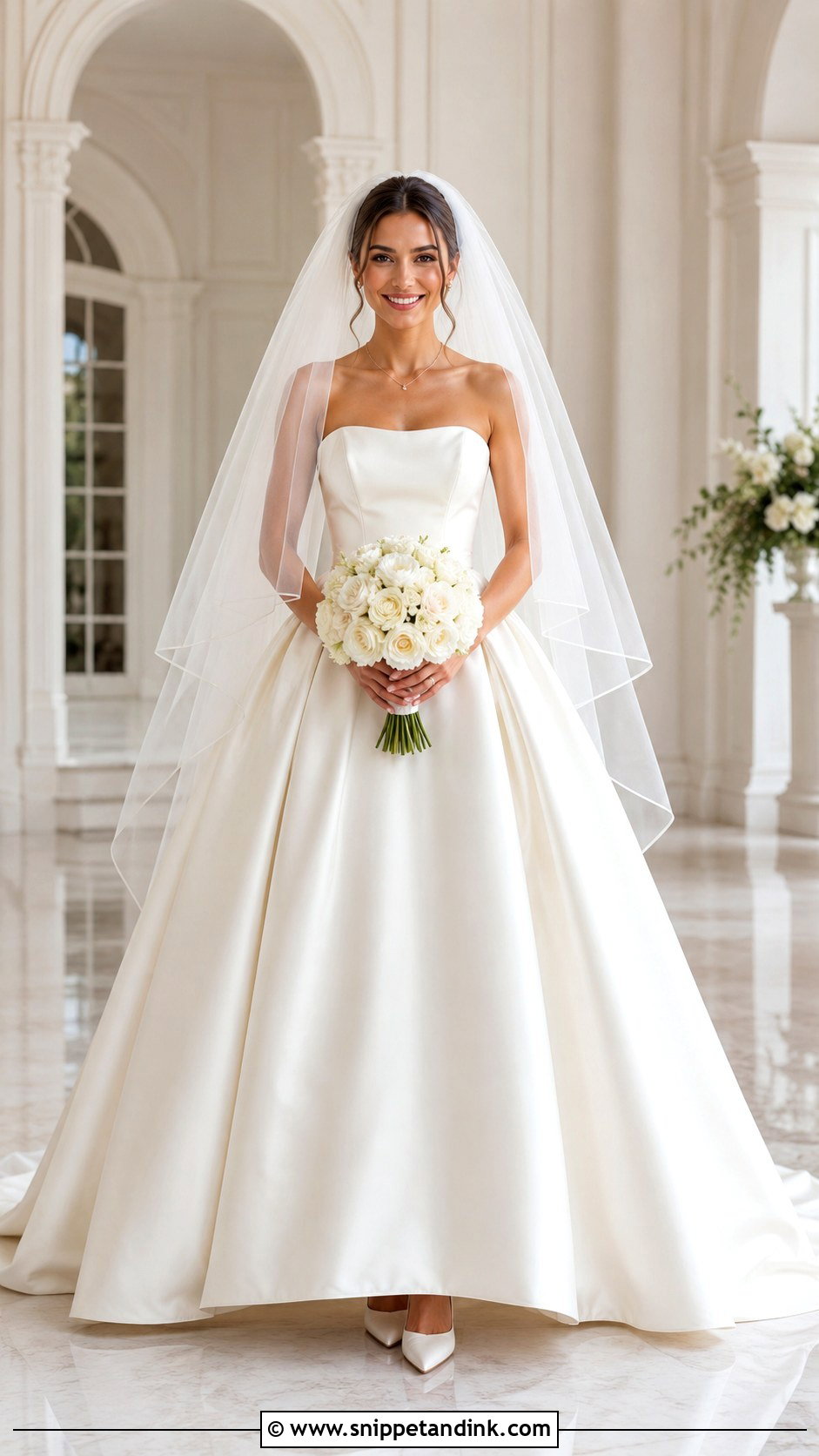
A long blusher veil layered over a strapless ball gown should stay transparent enough to show your face and neckline through it. Choose fine tulle, and let the back layer run to chapel or cathedral length. Classic pumps, a fine necklace, studs and a balanced round bouquet suit the full skirt. A firm low bun matters more than people think, because the comb takes a tug each time the front layer is moved. Hold your bouquet when checking the blusher length; too long and it gets trapped between flowers and bodice. Steam the tulle beforehand so it falls smooth and feels softer near your face.
14. Drop Veil With Sheath Wedding Dress
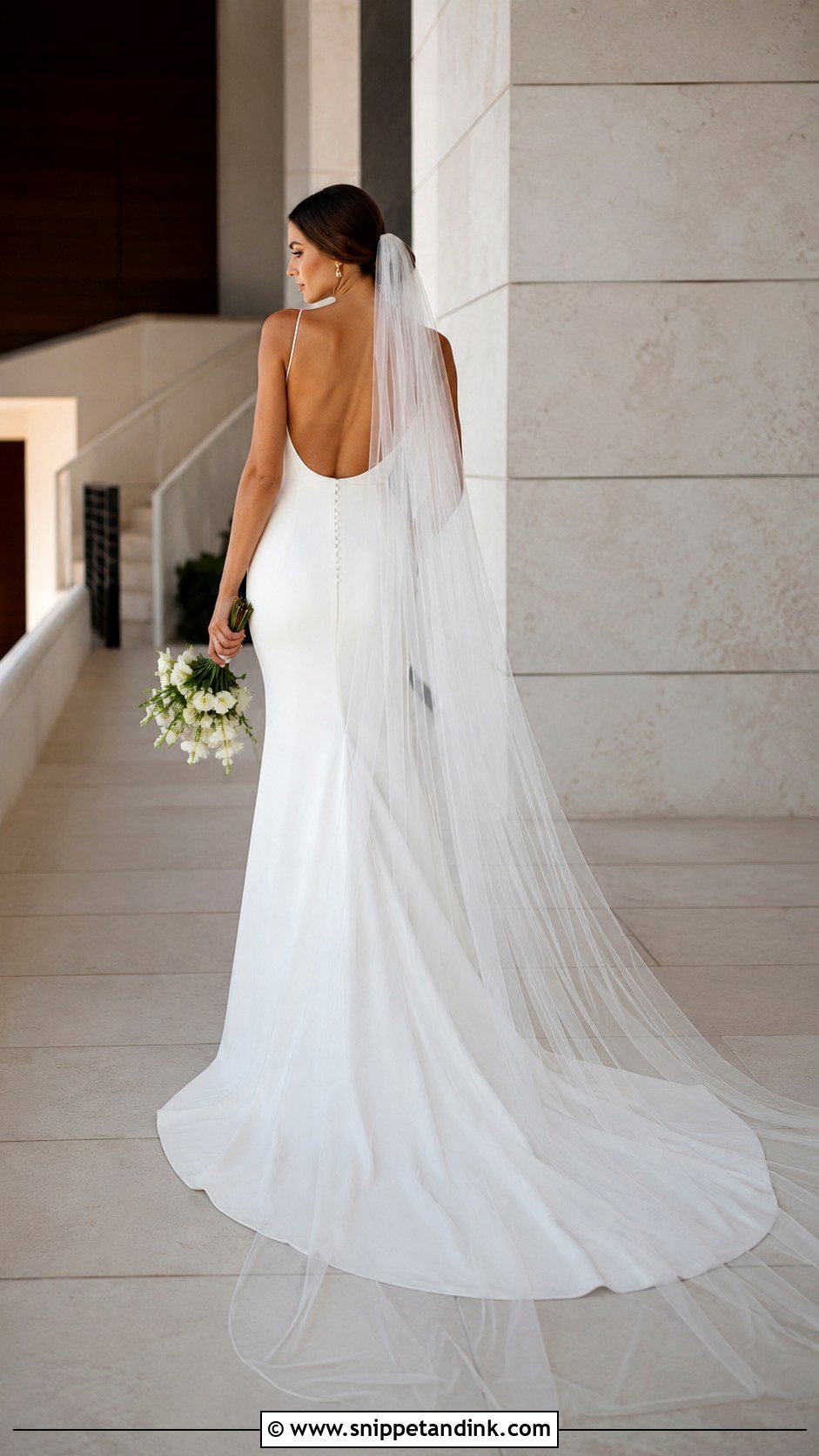
Barely there is the point of a drop veil. It’s draped without heavy gathering, so the tulle sits close to the head and falls straight down the body, which flatters the clean lines of a sheath. Try a long version over a silk crepe sheath with an open back and a narrow train, plus slingbacks, fine earrings and a slim bouquet. Attachment is where I spend time with this style. Without a gathered comb, drop veils often rely on discreet pins or a slim clear comb, and those hold best in a low bun or in waves with a pinned base underneath. Keep the tulle very sheer so the dress construction stays visible.
15. Juliet Cap Veil With Vintage Wedding Dress
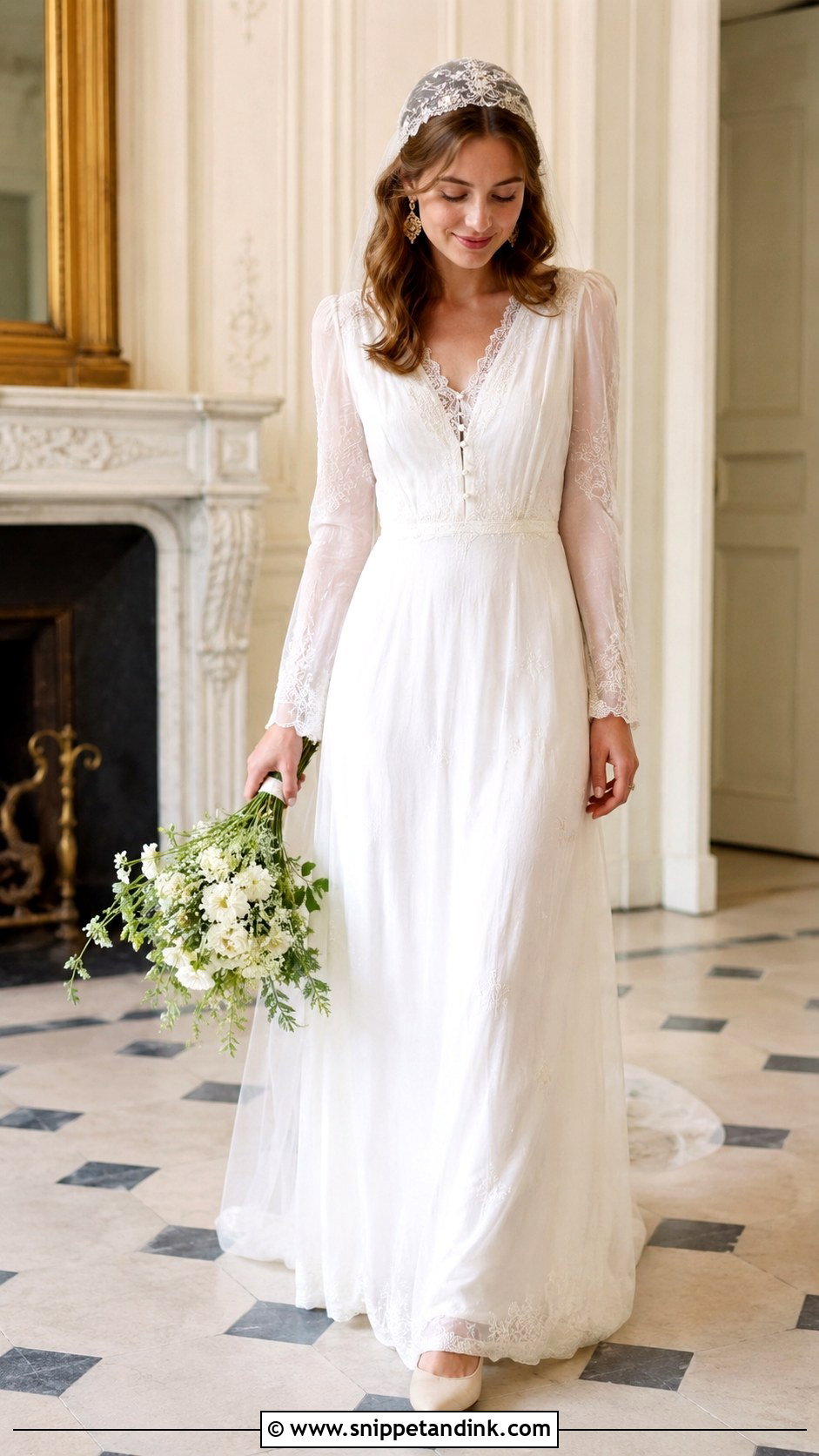
A Juliet cap veil brings vintage character to a long-sleeve gown without tipping into a theme. Pick a fluid dress with a modest neckline and lace or chiffon sleeves, and let the cap sit close to the crown with small beaded, floral or lace detail before the fabric falls down the back. Low heels, antique-style earrings and a loose bouquet finish it. Underneath, I prefer soft waves or a low braided bun, since a high updo pushes the cap off level. Resist piling on other vintage accessories. At the trial, check from behind that the cap sits evenly and the long tail lands centered on the train.
16. Bow Veil With Modern Column Dress
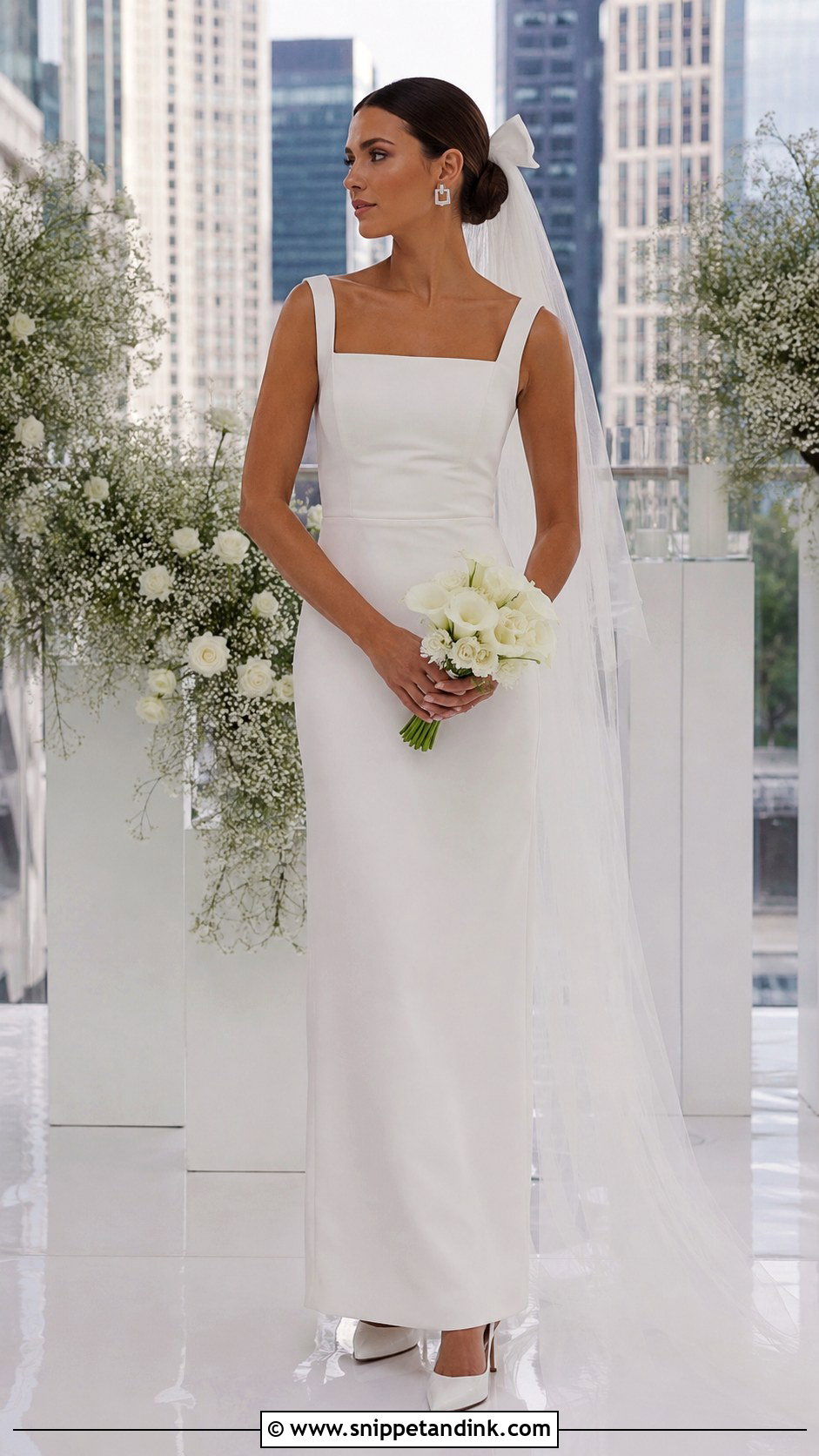
A bow adds some wit to a streamlined column dress. The long, narrow veil attaches beneath a structured bow in satin, organza or another crisp fabric, worn with a square-neck or one-shoulder crepe gown and no heavy embellishment. Pointed slingbacks, small geometric earrings and a compact bouquet keep it modern. A polished ponytail or low bun gives a flat, neat base, and that matters, because a bow sitting on loose hair tilts and disappears. I check it from every angle at the trial. A medium bow balances a long veil better than an oversized one with trailing loops.
17. Colored Veil With Minimal Wedding Dress
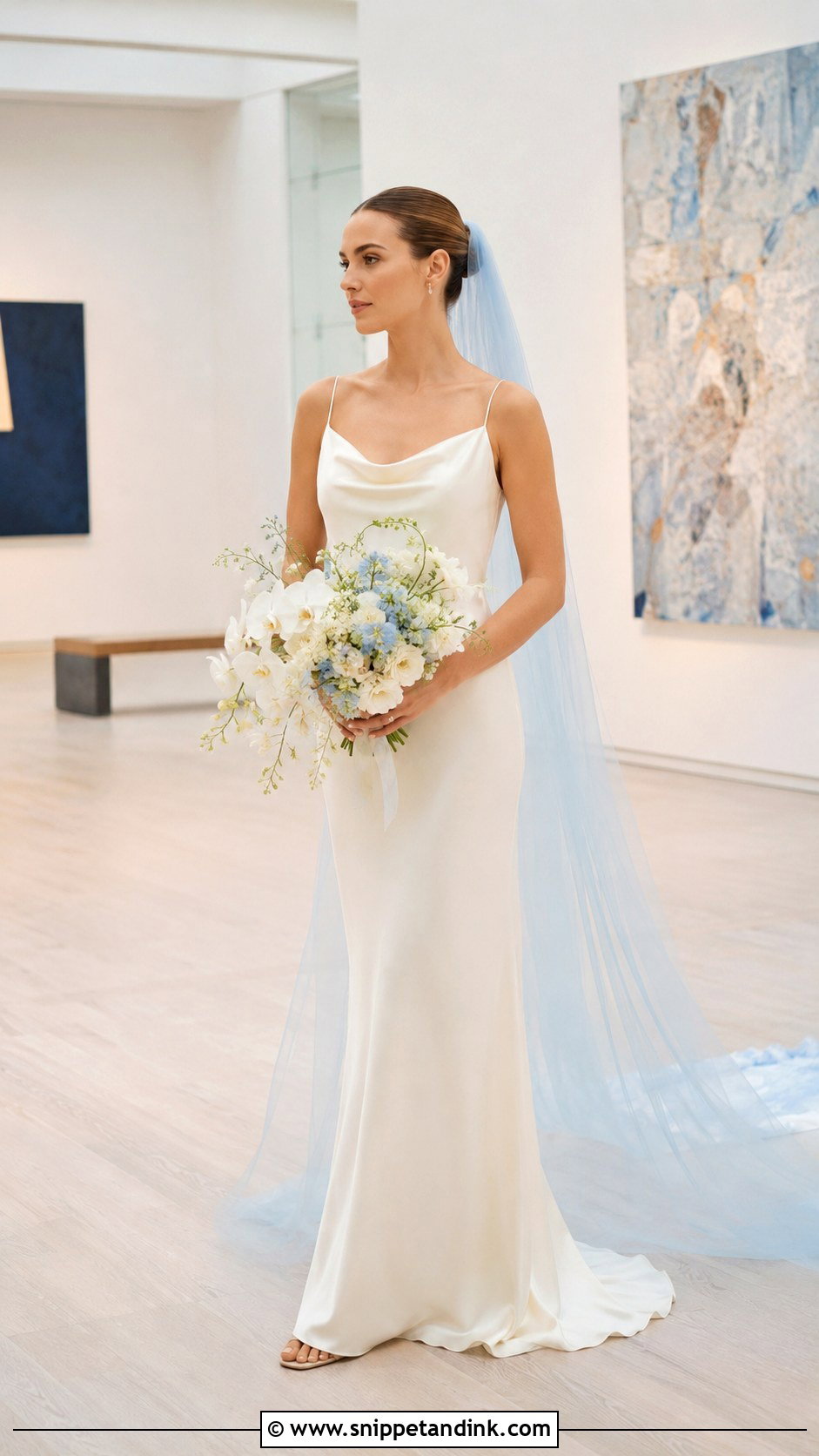
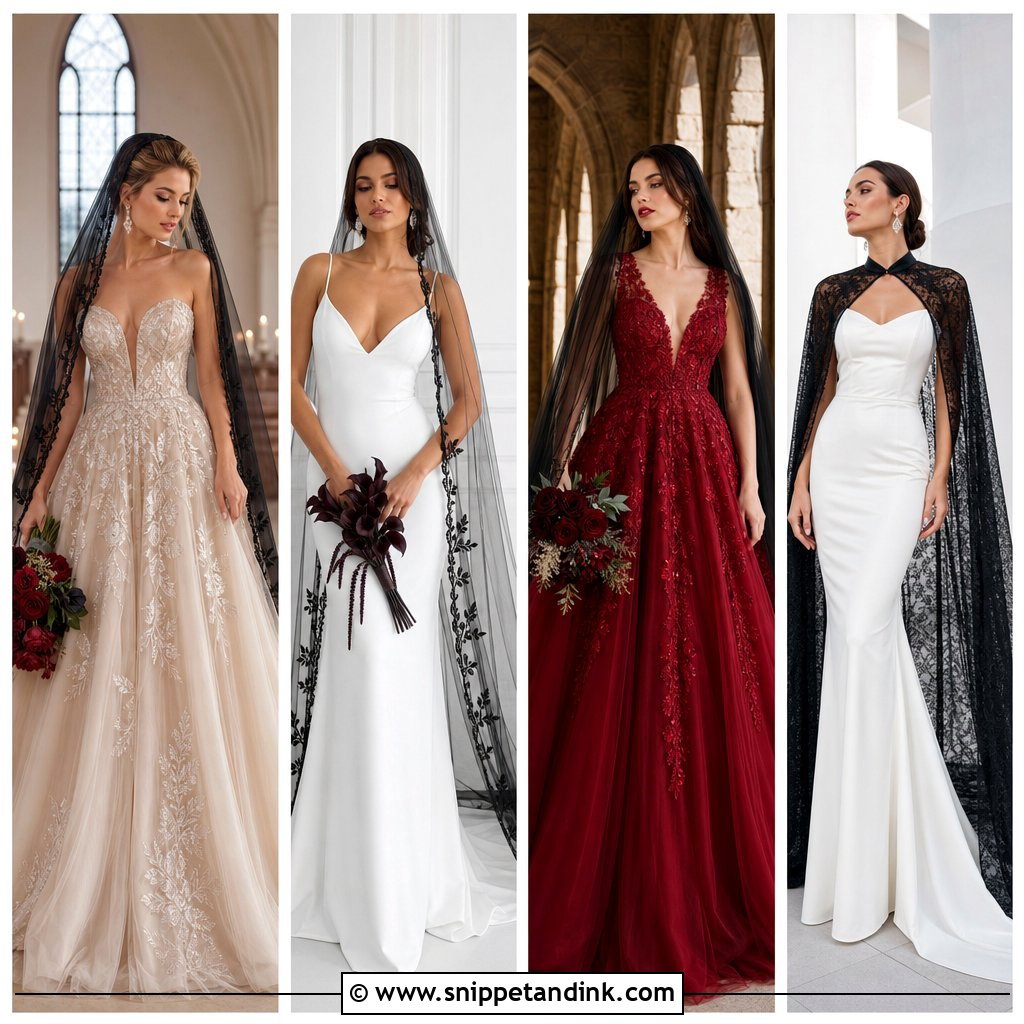
A tinted veil is the gentlest way to bring color into a minimal bridal look. Pale blue, blush, lavender or a faint floral tint at chapel or cathedral length works over an unembellished white or ivory slip, crepe column or simple A-line. Neutral heels, small earrings and a bouquet with a touch of the veil shade keep it coherent, and clean, simple hair lets the color stay the feature. Look at the fabric in daylight before ordering. Several layers of pale tulle deepen the color noticeably, so a swatch that looks barely there can read much stronger once it’s gathered at the comb.
18. Cape Veil With Sleeveless Wedding Dress
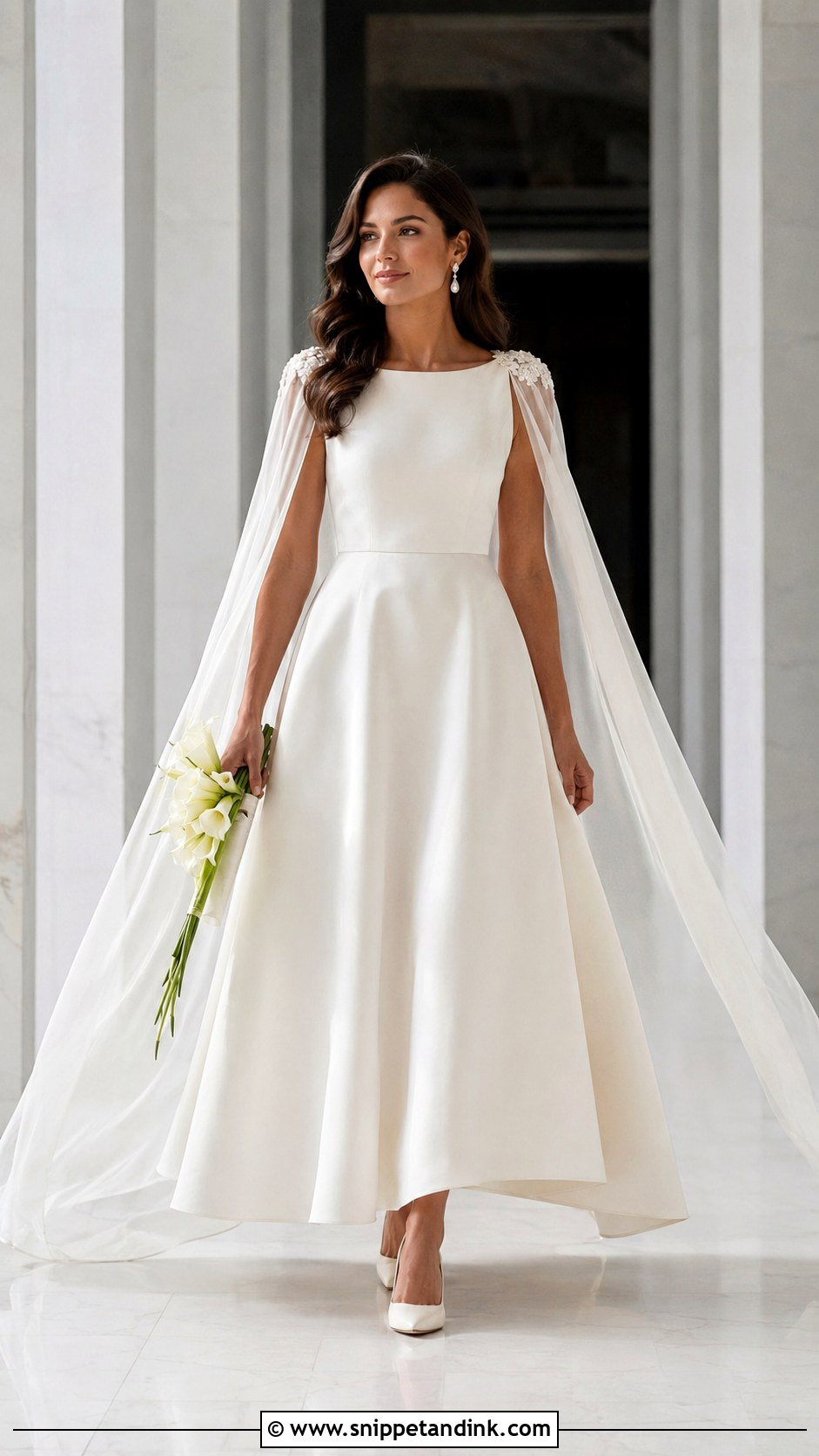
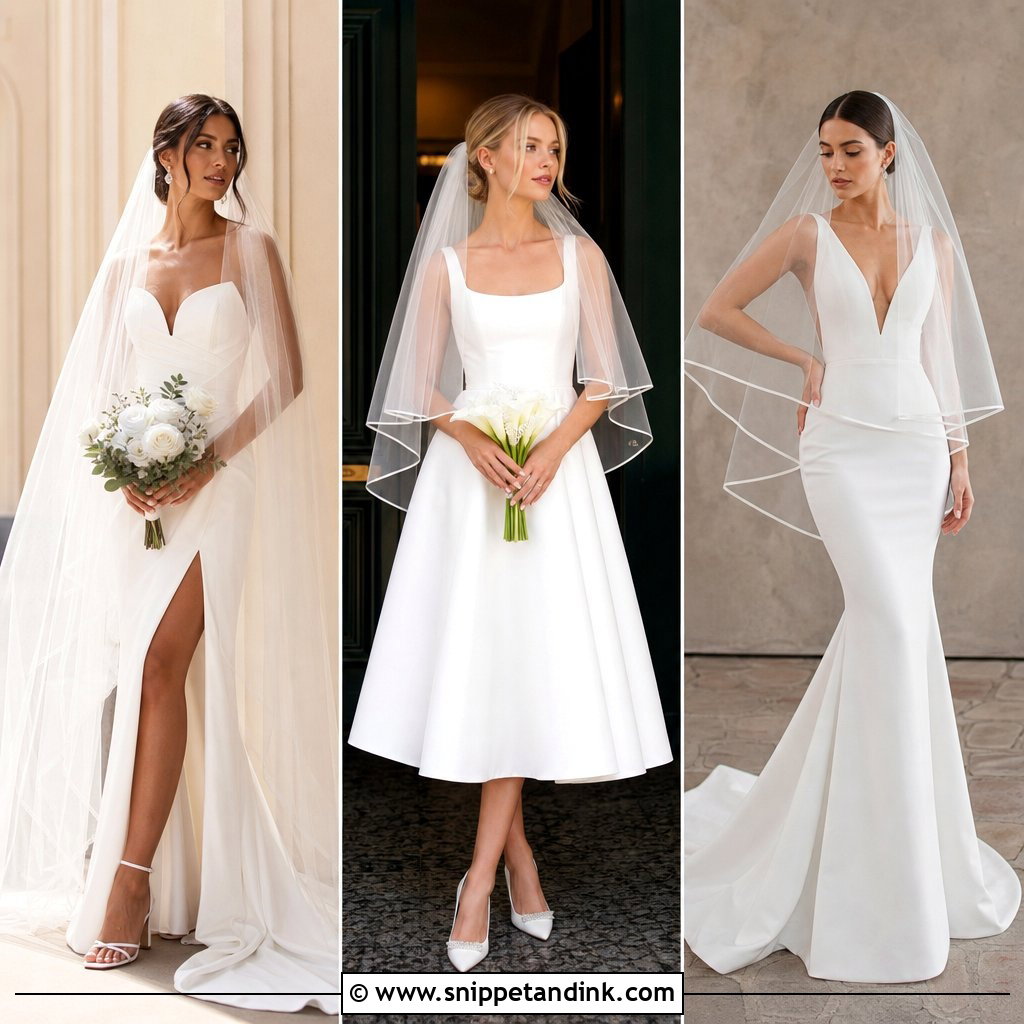
Nothing touches the hair with a cape veil, so your hairstyle stays fully on show, and that is exactly why I suggest it when the hair itself is the feature. The sheer panels attach at the shoulders of a sleeveless column, A-line or fitted dress, framing the back and offering a little arm coverage. Choose plain tulle for an embellished gown or a light pearl and floral finish for a simple one, and add sleek pumps, drop earrings and a narrow bouquet. Polished waves, a bun or a ponytail all work since the veil isn’t relying on them. Test the shoulder fastenings by raising your arms, hugging someone and turning for a portrait.
19. Horsehair Veil With Fit And Flare Dress
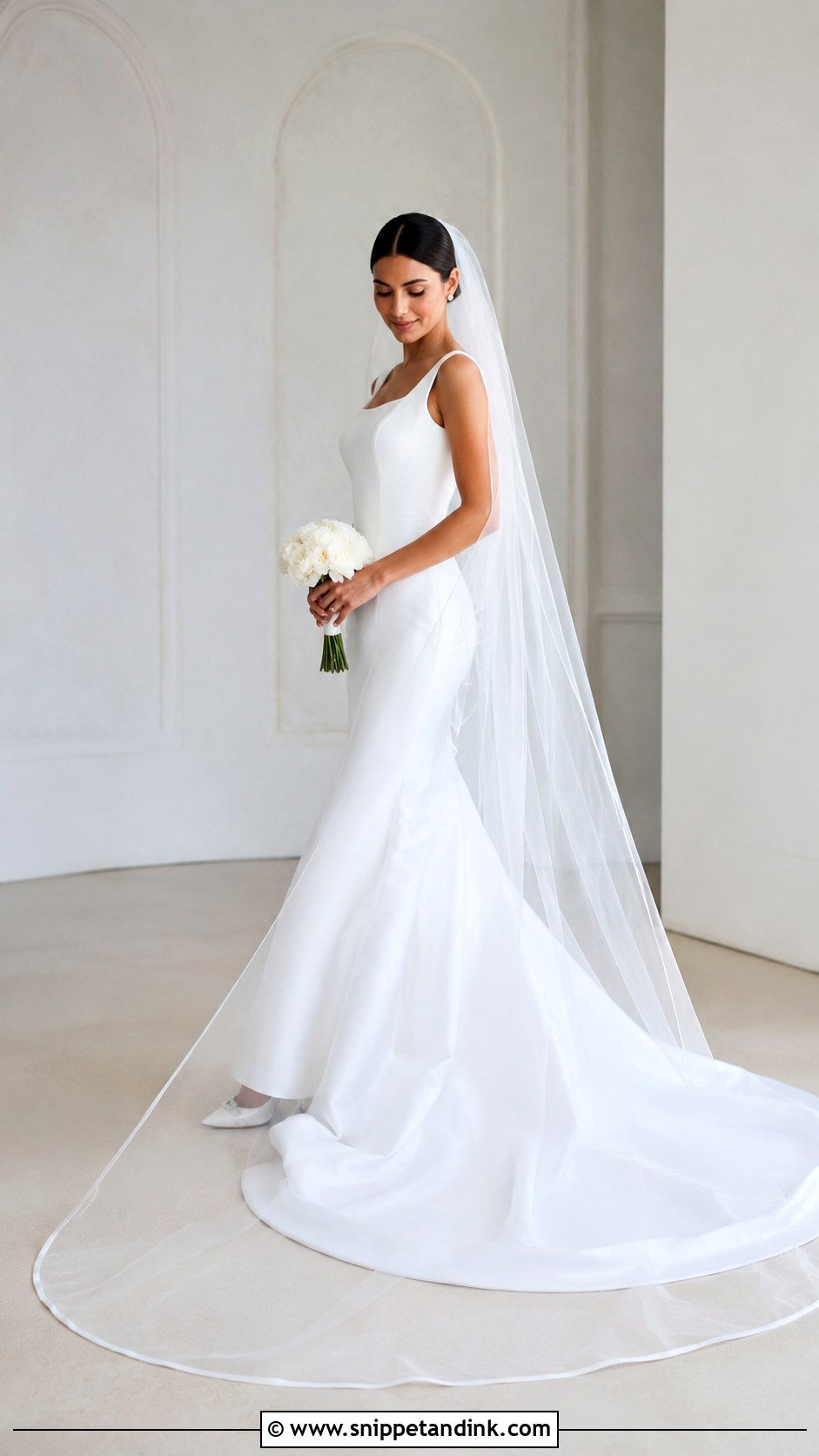
A horsehair trim gives a long veil a soft, sculpted wave along its edge, echoing the flare of a fit-and-flare gown without lace or heavy decoration. The dress should have a clean bodice, fitted hips and a defined flare. Pointed heels, crystal studs and a compact bouquet suit it, and a sleek low bun keeps the overall look sharp. A narrow horsehair border moves subtly; a wider one adds noticeable volume. Because that edge is stiffer than tulle, walk across a couple of different floors during fittings. On carpet it can catch around the train or your heels in a way it won’t on polished stone.
20. Scalloped Veil With Lace A-Line Dress
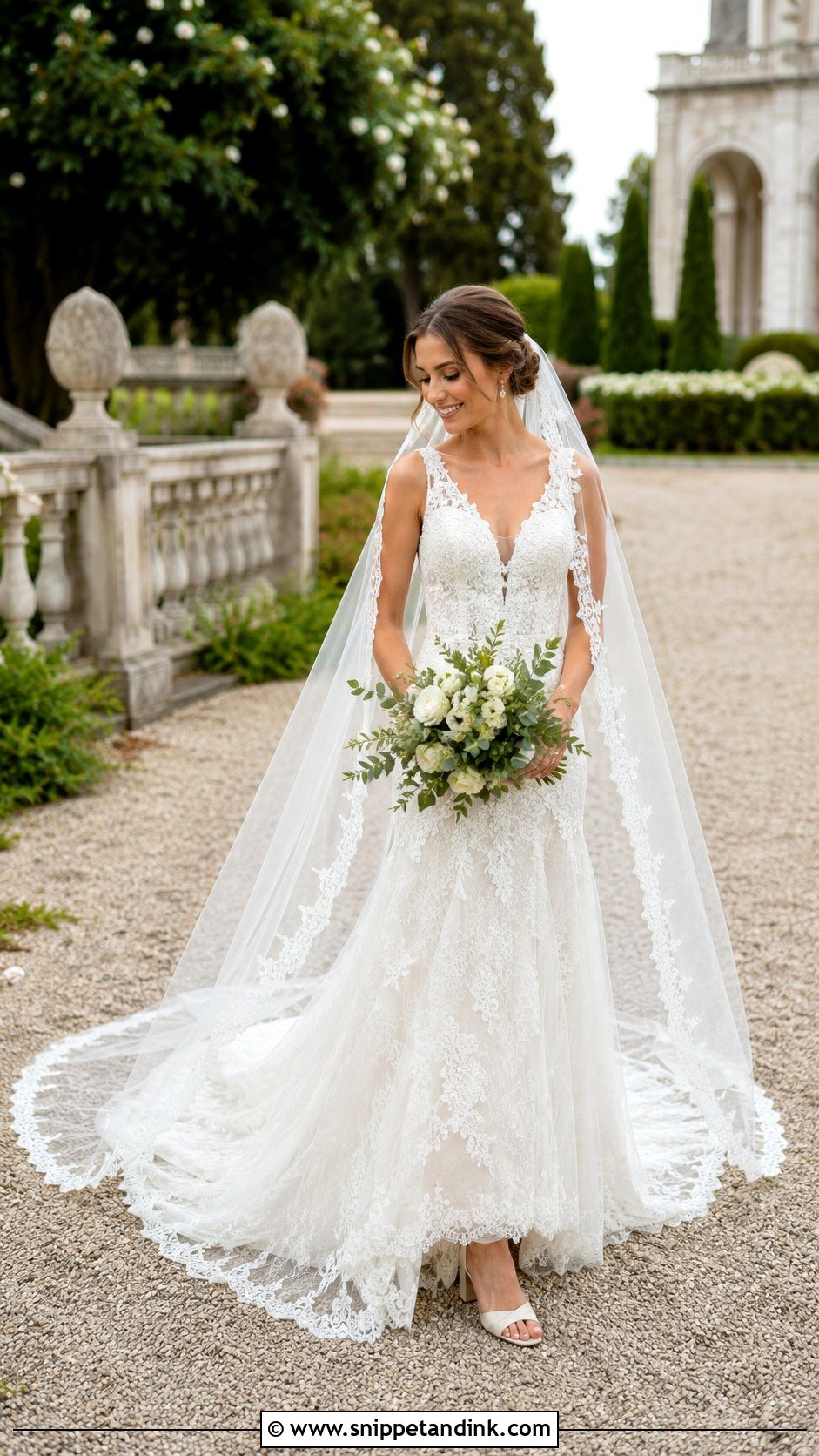
A scalloped veil with a lace A-line coordinates head to toe, as long as the veil echoes the general shape of the gown’s lace rather than copying every motif. A cathedral length frames the skirt and runs past the train, while sheer tulle keeps the dress visible underneath. Ivory block heels, small drop earrings and a loose white and green bouquet finish the look. A low textured bun is my anchor of choice here, because texture grips the comb better than a polished surface. Check where the scallops land on the shoulders and train; uneven spacing is very obvious in photos taken from behind.
Wind, Steam and Taking the Veil Out
Outdoor ceremonies are hard on long veils. A light breeze is lovely in photos, but a steady wind turns several yards of tulle into a sail and pulls hard on the comb. If the forecast is gusty, ask your photographer to time the veil shots for sheltered spots, and have a bridesmaid gather the veil over her arm between them.
- Steam tulle on a low setting from a distance and never press an iron to it; synthetic tulle can melt or pucker.
- Hang the veil full length the night before, away from pets and makeup.
- Keep two spare bobby pins and a small comb in the emergency kit for a quick re-anchor.
Most brides take the veil out after the formal portraits. Slide the comb out in the same direction it went in, toward the back, while someone supports the tulle so its weight doesn’t yank the hair. I usually show a bridesmaid how during the trial, so she isn’t guessing in a dim corridor. Your bun will hold without it if the base was pinned properly.
Try the Veil With the Dress, Hair and Bouquet Together
A long veil works when it’s planned with the rest of the outfit, not added at the end. Think about the gown’s silhouette, train, fabric and neckline first, then decide between plain tulle, lace, pearls, embroidery, color or a structured edge. Bring the veil to your hair trial and, if you can, to a dress fitting. Walk, turn, sit, hold your bouquet and take the veil out once yourself. Ask someone to photograph you from the front, back and side, because a camera shows proportion problems a mirror won’t. Any of the twenty looks above can be a starting point once you’ve tested it on your own hair and your own dress.
You'll Like These Ideas:


Leave a Reply