
Picking a standout outfit for your sister’s wedding sounds like fun until you try it. The sister’s clothes have to hold up in family photos and through long rituals, and they have to look special without ever pulling focus from the bride. When I style a bride’s sister, I plan around the function first and the trend second. Below are twenty complete looks, from traditional Indian ensembles to fusion sets, for daytime rituals, formal ceremonies, dance nights and receptions, each with jewellery, shoes, a bag and hair ideas. Adjust fabric, coverage and silhouette to your age, your build and the family’s dress code.
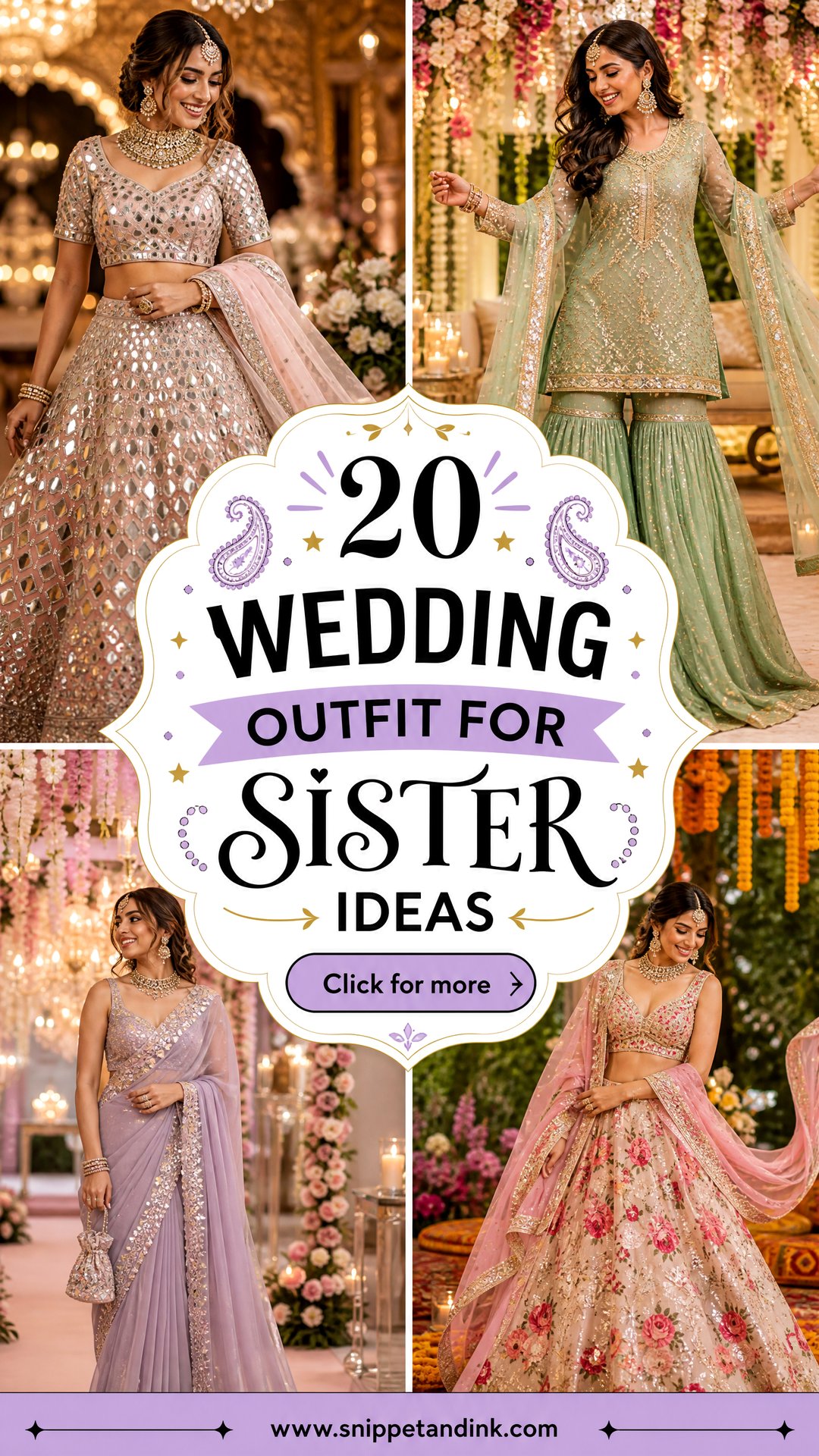
Dressing for Five Functions on One Budget
A South Asian wedding can mean a haldi, a mehndi, a sangeet, the ceremony and a reception, and the sister is photographed at all of them. Buying five new outfits is rarely necessary. I start by ranking the events: the main ceremony gets the best piece, the reception gets the second, and the rest are built from pieces you can restyle.
- One lehenga skirt can serve two functions. Change the blouse and dupatta, and it reads as a new outfit in photographs.
- For the haldi, wear something you don’t mind staining. Turmeric marks pale fabric quickly and can be hard to remove completely.
- Save floor-length, heavy pieces for events with chairs. Floor seating at a mehndi calls for shararas, ghararas or dhoti pants.
- Match the weight of the fabric to the venue. Velvet and brocade suit winter halls, while organza and cotton silk suit daytime and outdoor events.
Blouse stitching is where timelines go wrong. Tailors get very busy in wedding season, so I’d hand over fabric well in advance and book a trial fitting. Wear the padding or bra you’ll actually use on the day to that fitting, or the fit will change.
1. Pastel Lehenga Wedding Outfit
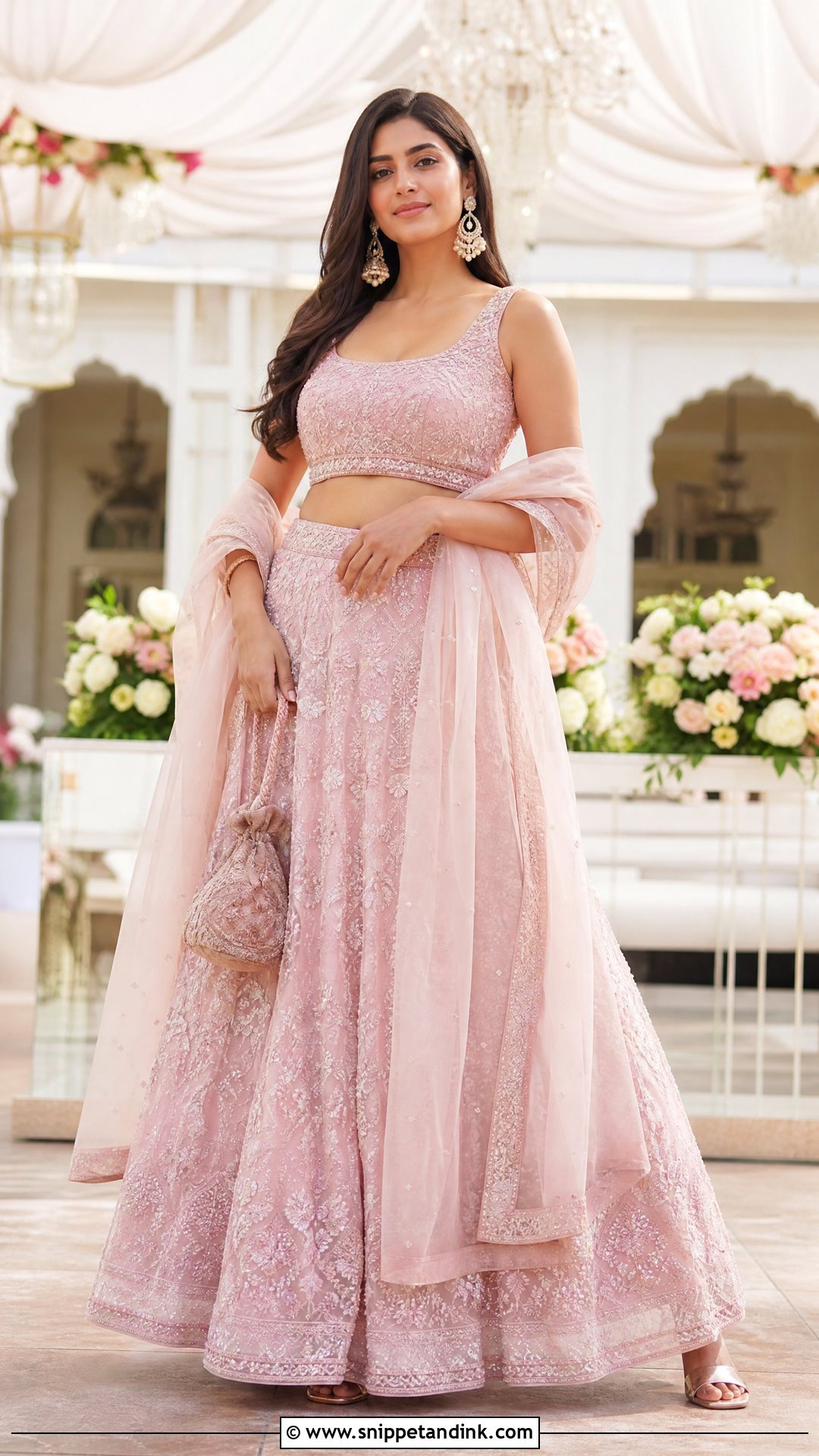
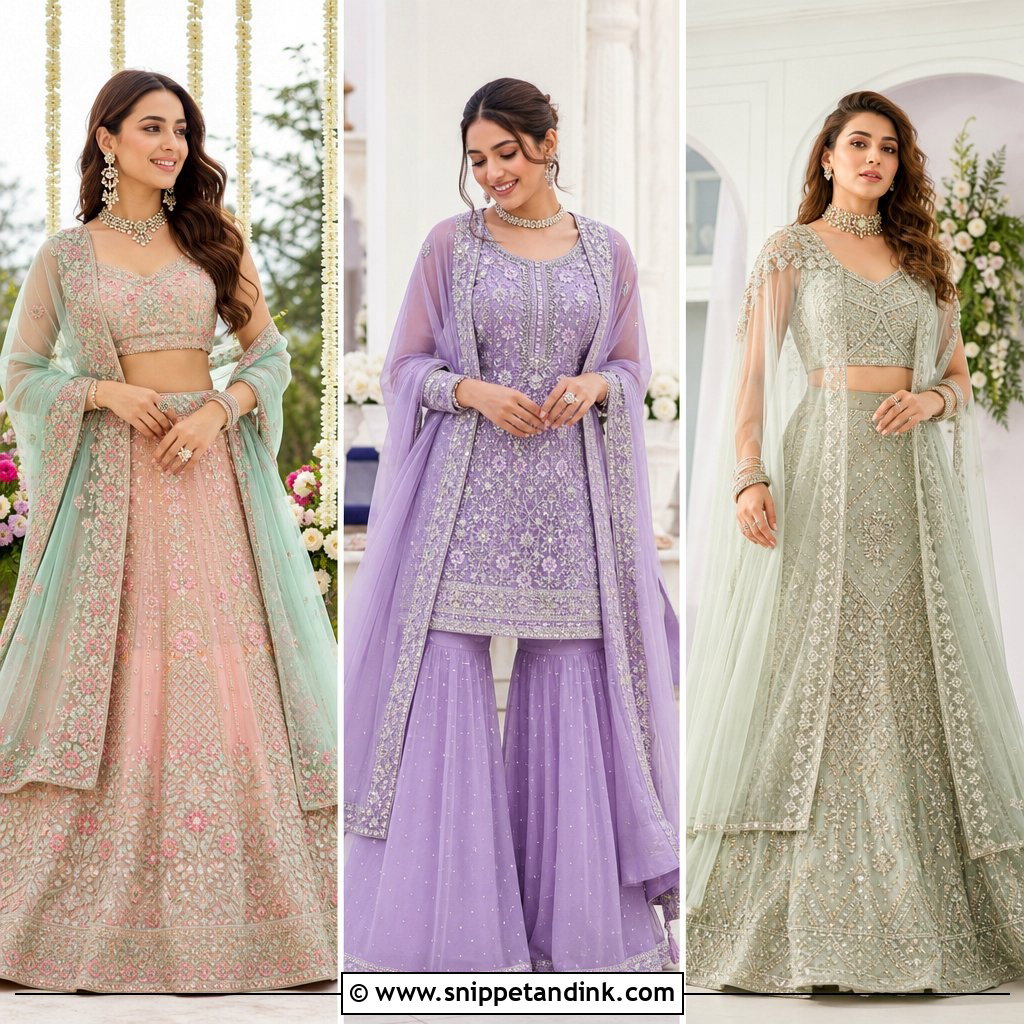
Pastel lehengas suit daytime: a wedding morning, an engagement or a garden function, where soft colour reads well in natural light. I’d choose a flowing skirt in blush, powder blue, mint or lavender with delicate threadwork, pearls or tonal sequins, so it feels festive without drifting into bridal territory. A fitted blouse and a light organza dupatta over one shoulder keep it easy to wear. Pearl chandbalis, slim bangles, an embroidered potli and metallic block heels finish it, with a low bun, soft curls or a braided ponytail. Check the bride’s palette before you commit. Pastels are exactly where an accidental match happens, and you want to complement her, not twin with her.
2. Silk Saree Wedding Outfit
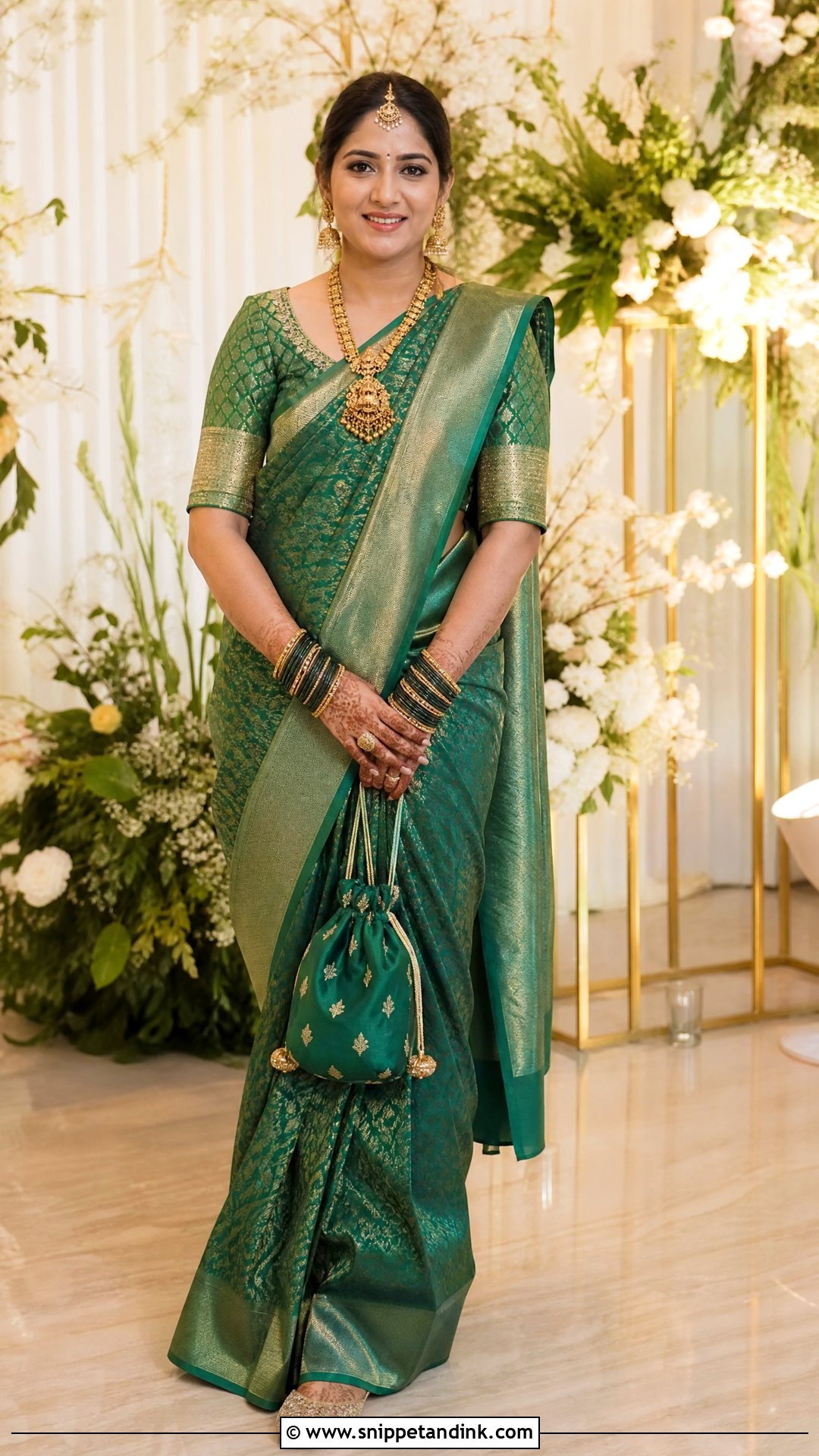
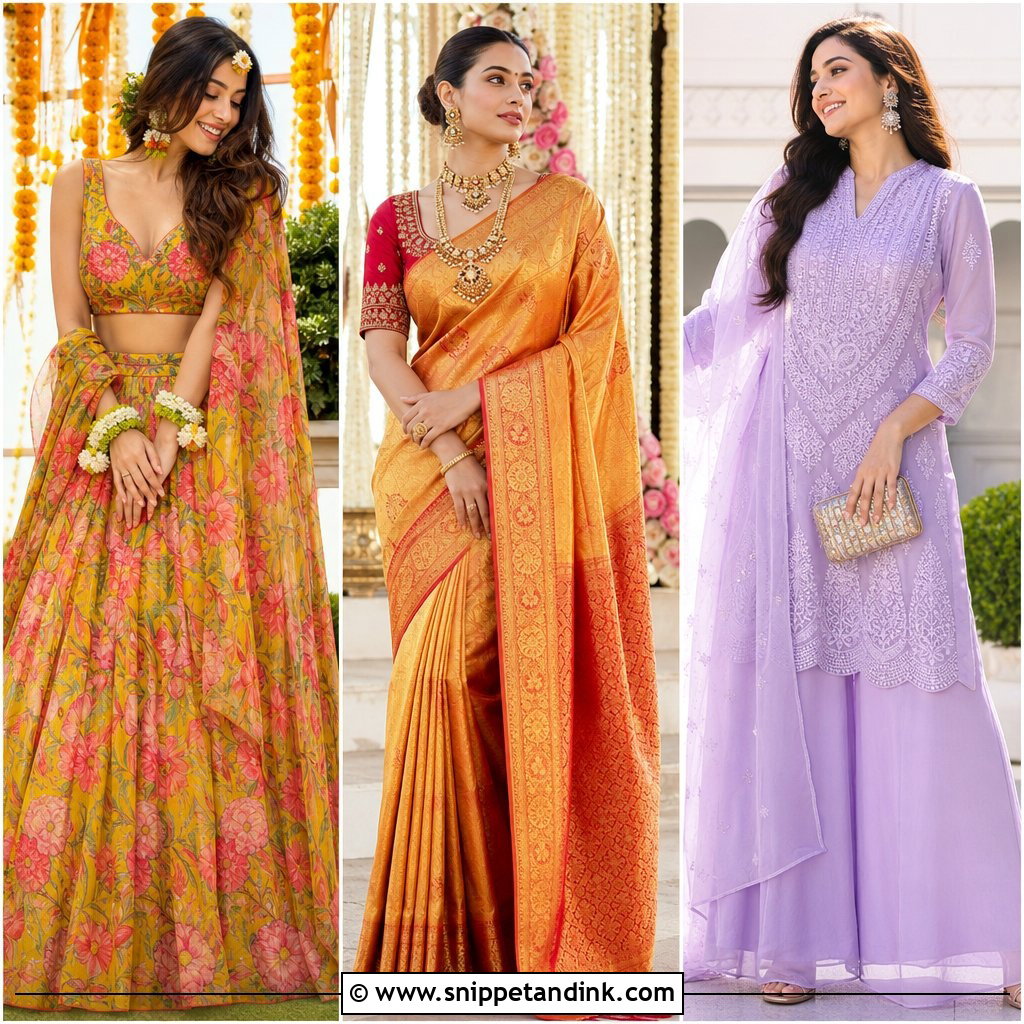
For a traditional ceremony, I still reach for a silk saree first. A jewel tone like emerald, royal blue, deep magenta or burnt orange with a rich woven border carries the formality on its own. The blouse is where the effort goes: a structured cut with elbow-length sleeves balances the drape and keeps you covered as you bend for rituals, and a well-cut blouse makes even a modest saree look expensive. Add a temple necklace with matching earrings, bangles and a small bindi. Embellished juttis or low block heels handle long standing, with a structured potli or small metallic clutch. A sleek bun with fresh flowers suits it, though soft waves work too.
3. Embroidered Anarkali Wedding Outfit
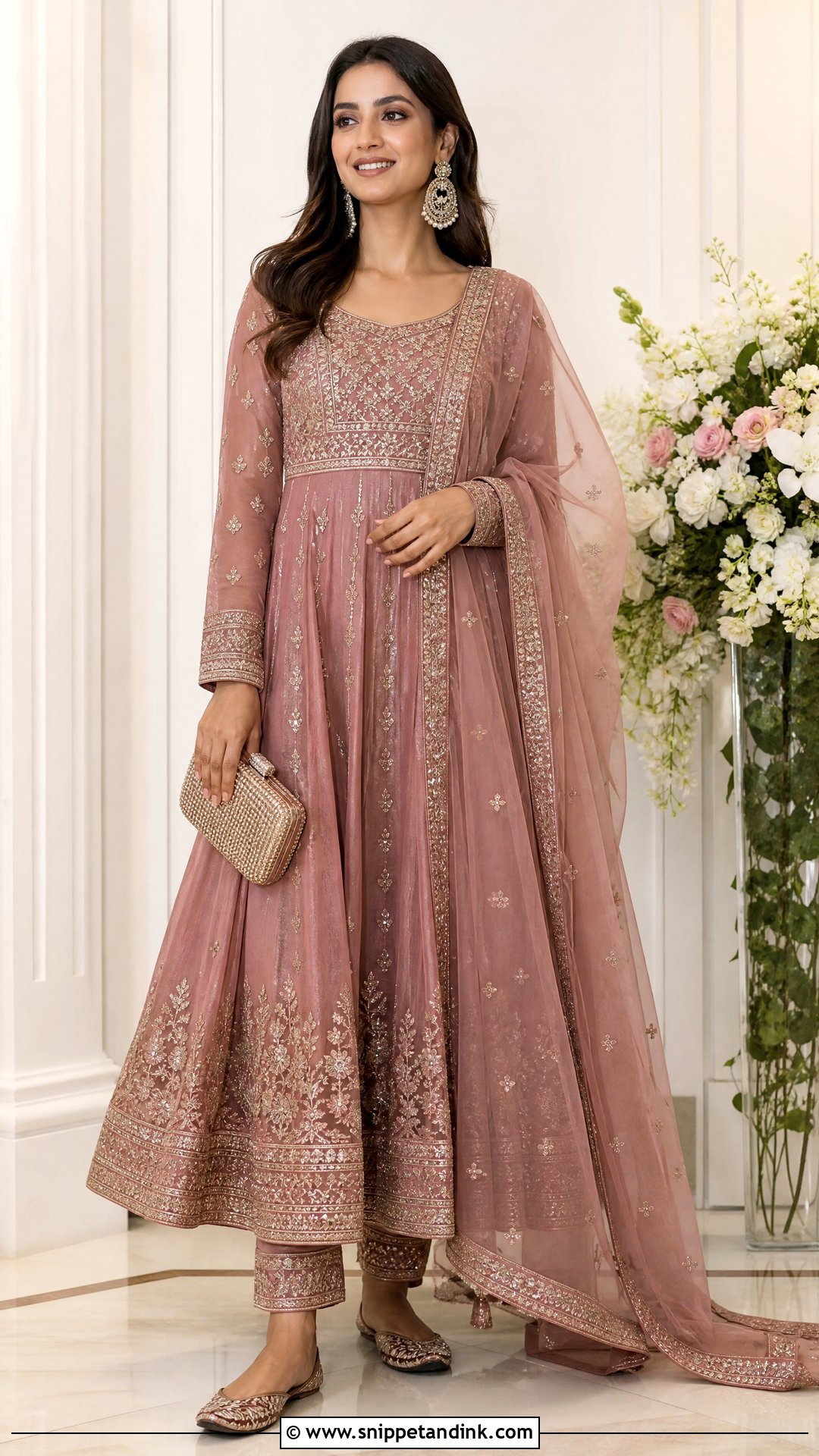
The Anarkali is my answer for the sister who expects to be on her feet all day. A floor-length design in teal, berry, mustard or dusty rose, with embroidery concentrated at the neckline and hem, flatters most builds because the fitted top and flared skirt balance each other. Wear it with slim pants and a sheer dupatta over one shoulder or across both arms. Statement earrings, one cocktail ring and a fine bracelet are plenty, with pointed juttis and a beaded box clutch. A centre-parted bun or half-up style keeps attention on the neckline. Watch the hem weight, though. Heavy kalis swing and drag when you’re walking constantly or joining a family dance, so I look for a breathable lining and moderate work at the base.
4. Mirror Work Lehenga Wedding Outfit
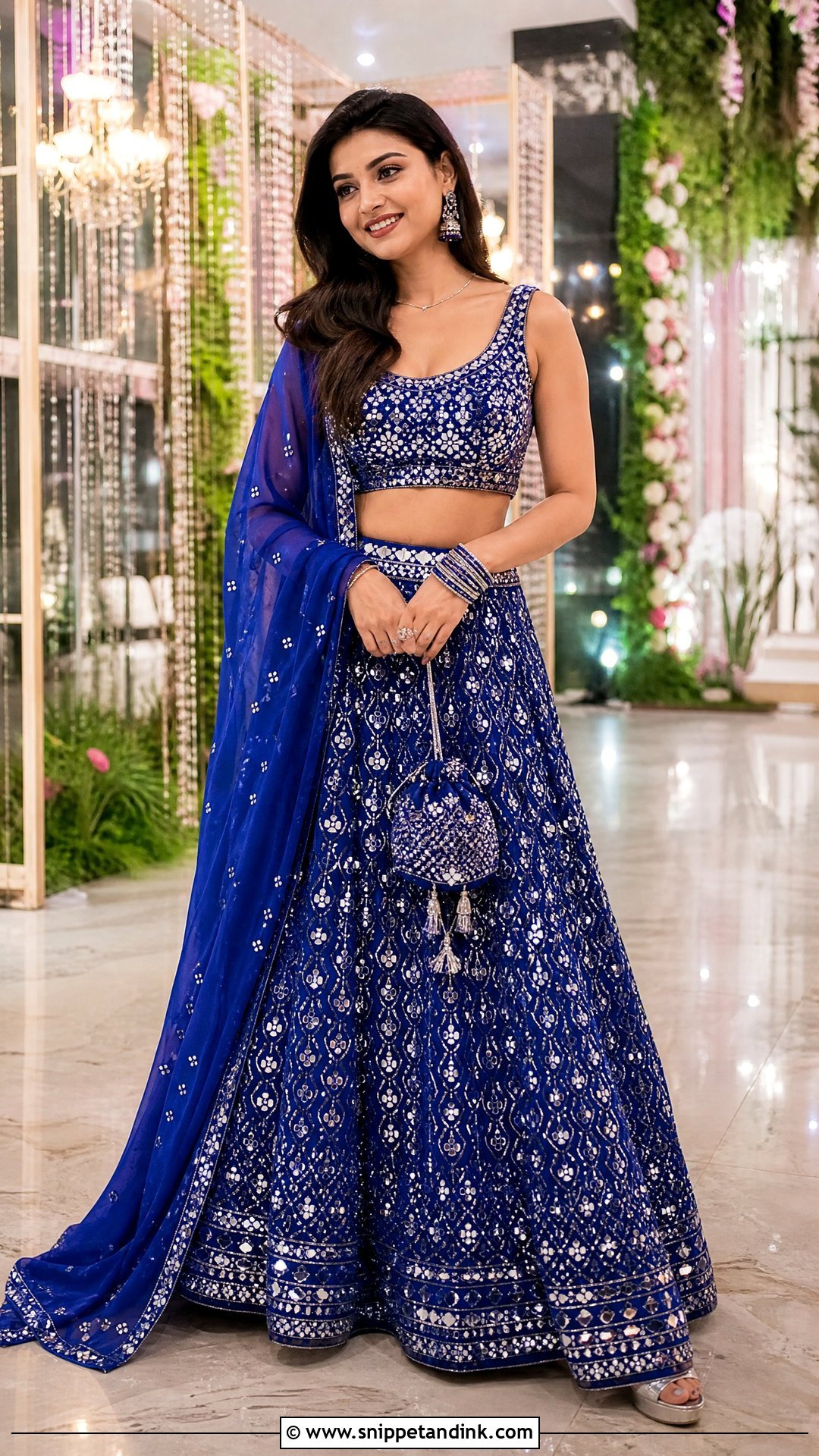
A mirror work lehenga comes alive at a sangeet, because the mirrors pick up stage lights and every turn on the dance floor. Rich grounds like cobalt, plum, emerald or deep pink make the reflective work stand out clearly; on a pale base it can look washed out. Balance a heavy skirt with a simpler blouse, or choose a set with the mirrors spread evenly. Pin the dupatta across one shoulder before you dance, at the shoulder and the waist, or it will slide off on the first spin. Medium earrings, stacked bangles and a compact potli are better than layered necklaces here. Cushioned block heels or wedges, a high ponytail or braid and soft, luminous makeup finish it.
5. Organza Saree Wedding Outfit
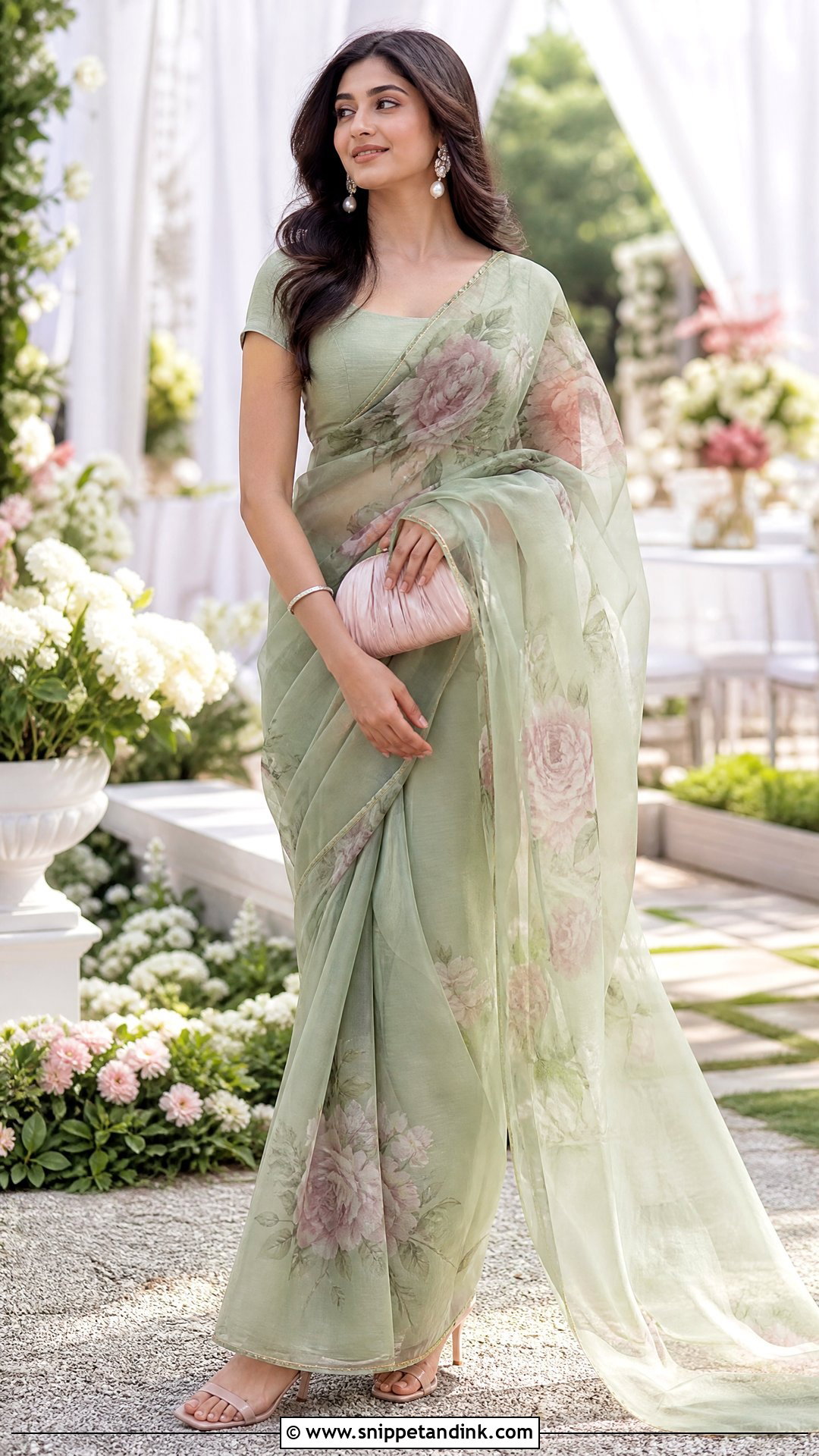
Organza is lighter than it looks, which makes it a good daytime saree. A floral print, embroidered border or subtle metallic motif in peach, sage, lilac or sky blue suits the setting. The fabric is crisp and holds whatever shape you give it, so a clean drape and a properly fitted blouse matter more than with soft silk. Sleeve length depends on your preferred coverage. Pearl drops, a slim bracelet and a structured pastel clutch are enough, and kitten heels keep the hem off the floor more safely than stilettos. I use as few pins as possible along the pleats, since organza shows every pin puckering it, but I secure the pallu firmly at the shoulder for greeting guests and posing.
6. Sharara Suit Wedding Outfit
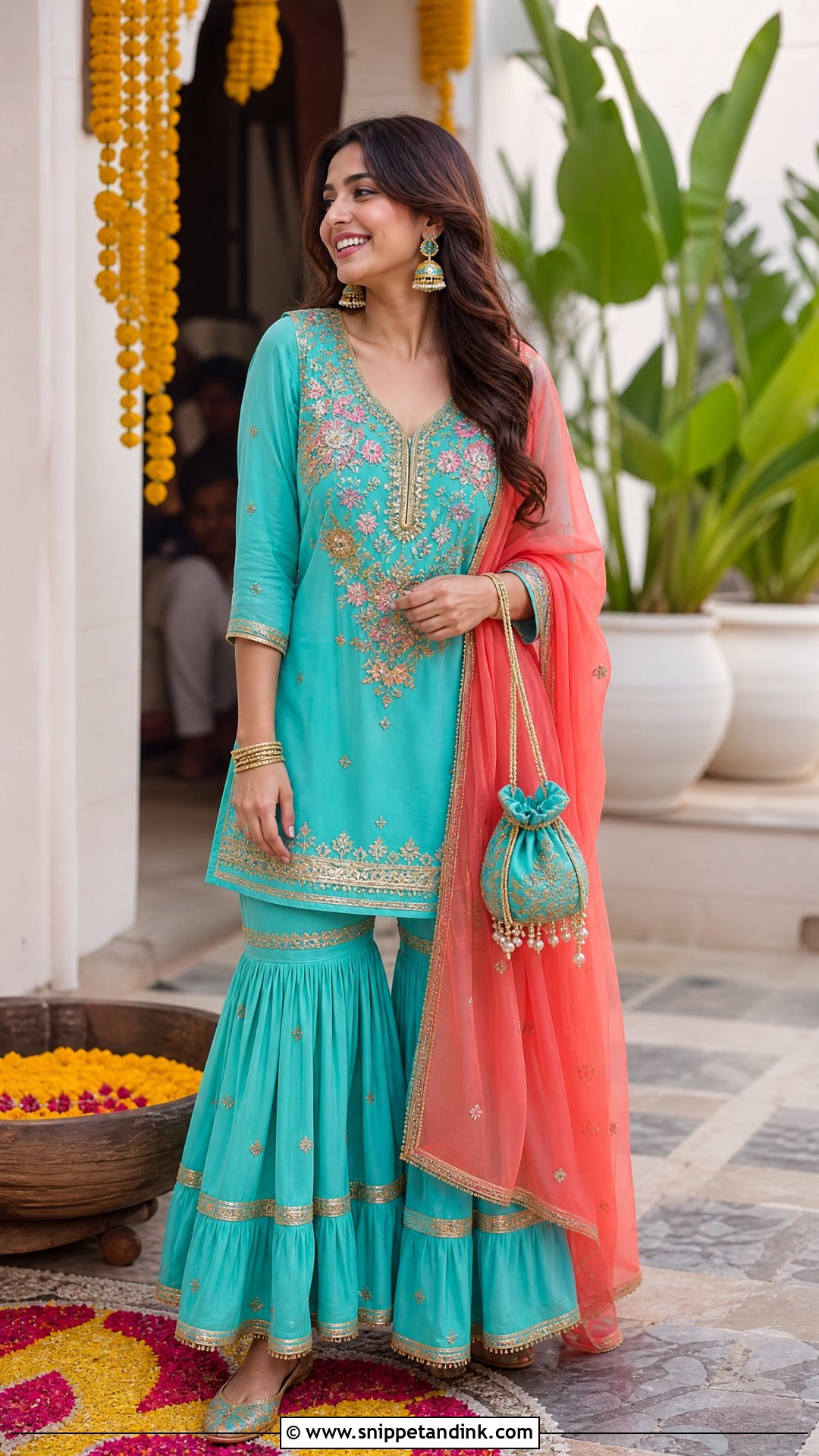
The sharara is made for a mehndi. Wide, tiered pants under a short embroidered kurta let you sit cross-legged on the floor, dance and carry trays without managing a skirt. Choose coral, lime green, marigold, turquoise or fuchsia for a cheerful palette, and a contrasting dupatta can bring in a second colour without clashing. Jhumkas, several slim bangles and an embroidered potli complete it. Flat juttis are the only footwear I’d suggest if there’s floor seating. A side braid or relaxed ponytail suits the shape. Have the kurta fitted snugly through the shoulders; with that much volume below, a loose top makes the whole outfit look bigger than you are.
7. Pre-Draped Saree Wedding Outfit
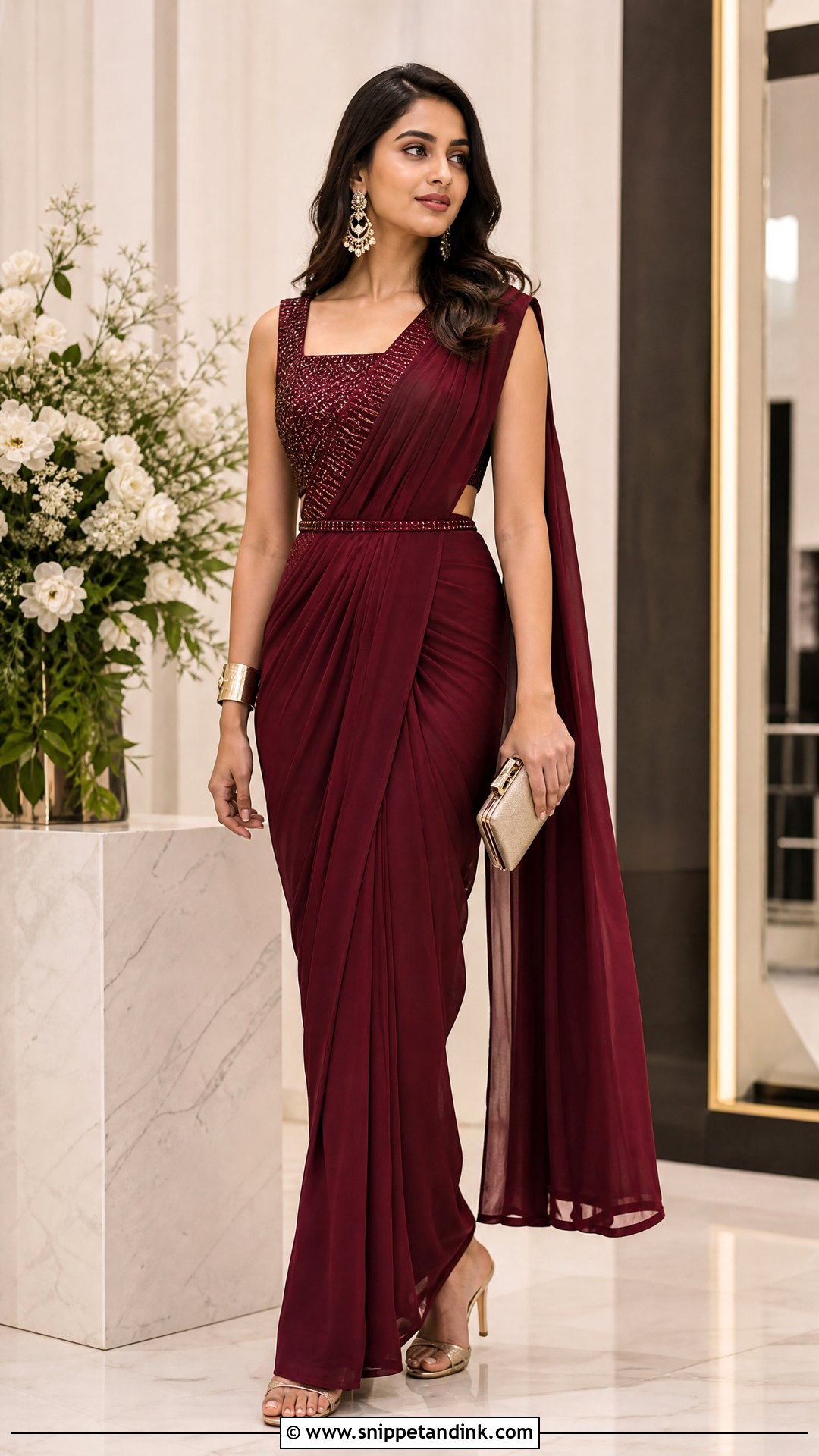
Love the saree but dread fixing pleats all day? A pre-draped saree has the pleats and pallu stitched in place, so it goes on in minutes and stays put. Wine, navy, mauve or forest green with controlled sequins or a decorated border suits an evening function. Pair it with a fitted blouse with an interesting neckline, a modest back detail or textured sleeves. Long earrings and a slim cuff are enough, plus a sleek clutch and comfortable slingbacks. A smooth ponytail or side-parted bun keeps it modern. The one thing to check: pre-stitched pleats are a fixed length, so try it in the heels you’ll wear. Too short looks cropped, and too long trips you on the stairs.
8. Velvet Lehenga Wedding Outfit
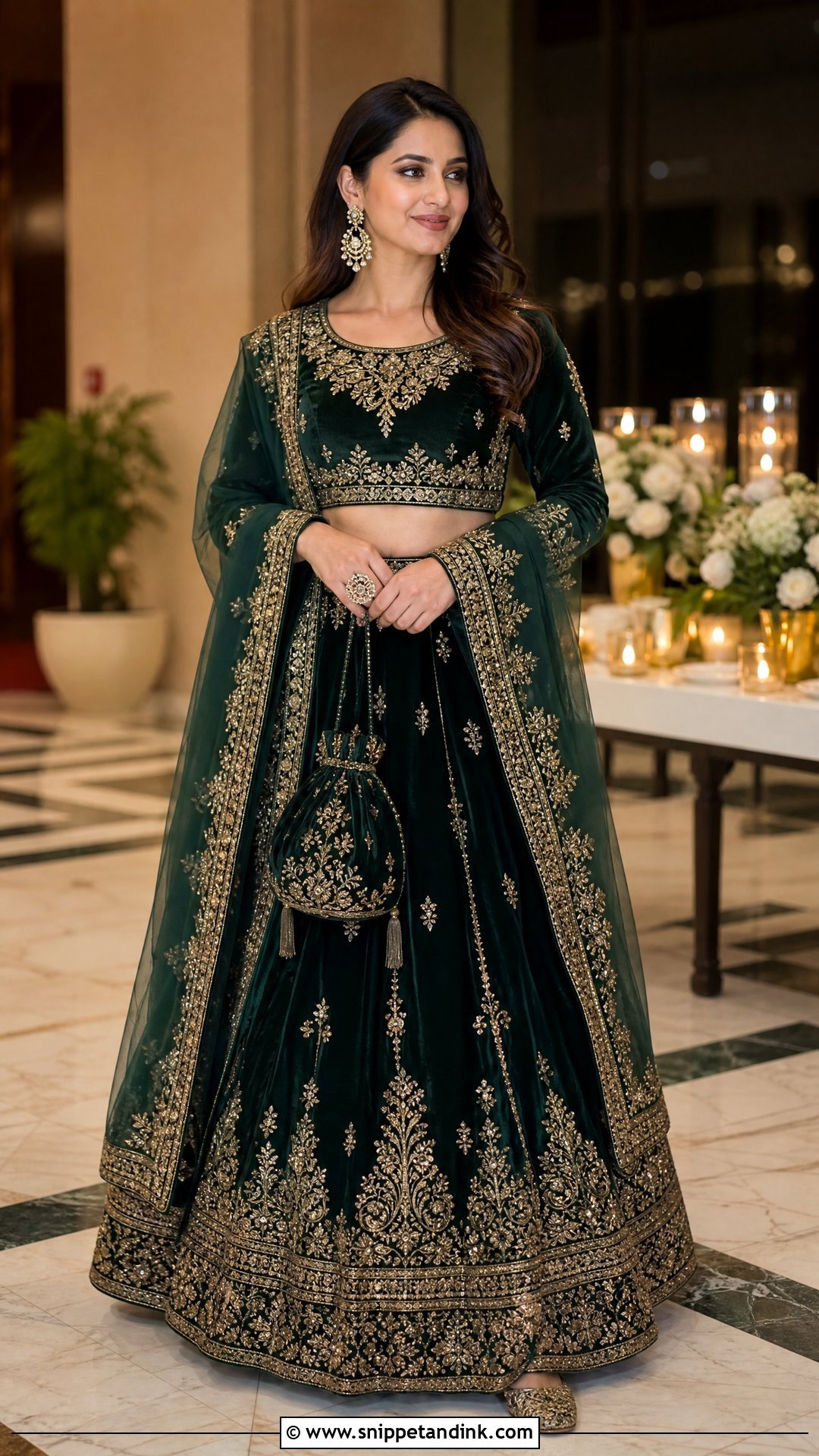
Velvet belongs to winter weddings, and it’s one of the few fabrics that looks richer in deep colour: burgundy, bottle green, midnight blue or aubergine. Because velvet already looks substantial, I keep embroidery refined rather than covering every inch. A coordinated blouse with a lighter net or organza dupatta stops the look feeling heavy. Antique gold earrings, one statement ring and a traditional potli tie it together, with closed-toe block heels or embroidered juttis. A sleek bun keeps it formal. Pick it up before you buy. Full velvet lehengas can weigh a lot once lined and embroidered, and a lighter velvet blend is far kinder through a long ceremony.
9. Palazzo Suit Wedding Outfit
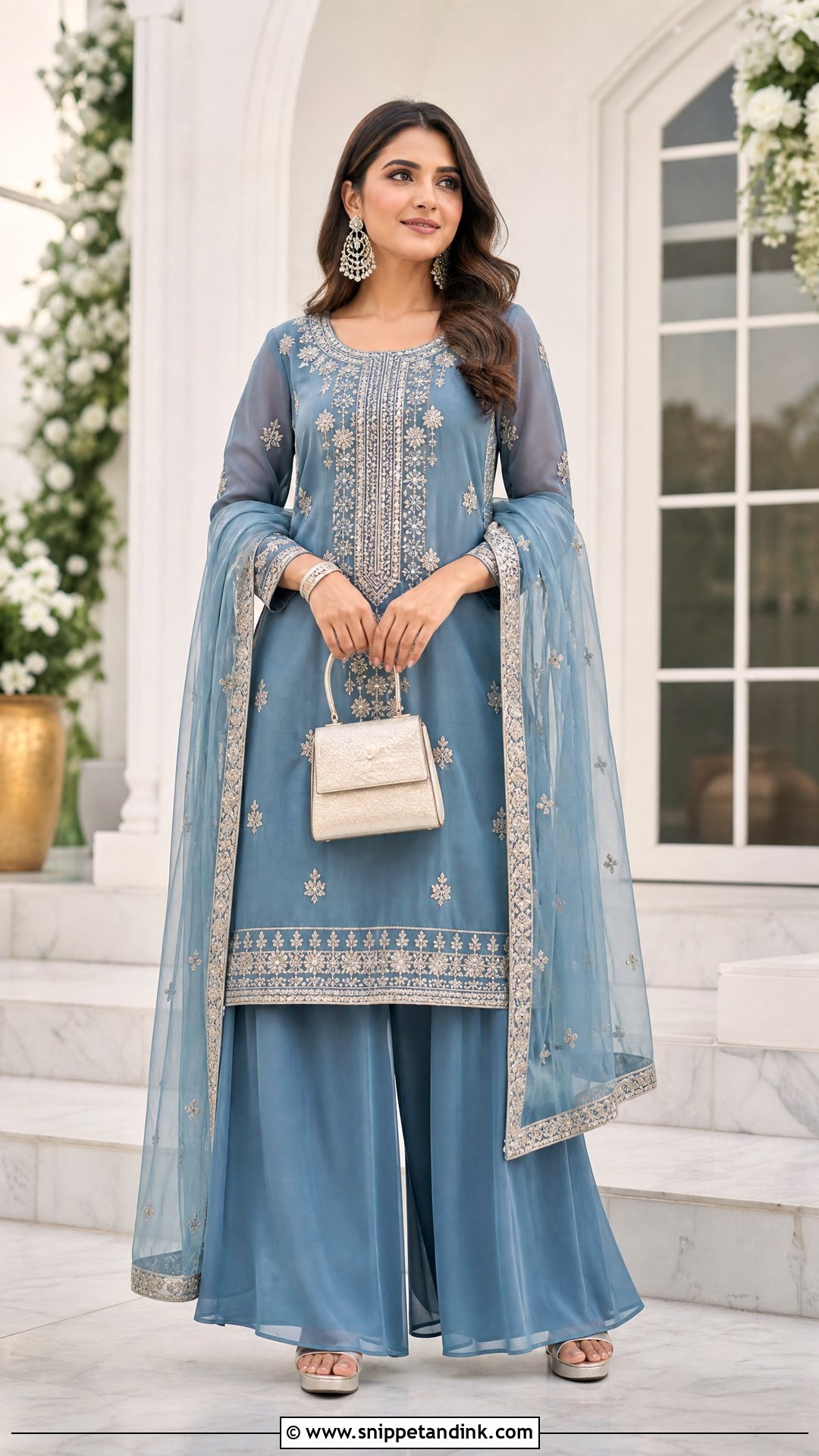
A palazzo suit suits an intimate function, a small nikah or a family lunch, where a lehenga would feel like too much. Wide palazzos go under a knee-length embroidered kurta in powder blue, rose pink, deep teal or ivory with colourful accents. A light dupatta with a detailed border brings ceremony polish. Chandelier earrings, a few bangles and a small top-handle bag finish it, and low platforms give height and stability under wide pants. Hair depends on the neckline: curls for a high neck, a neat bun for a deep one. This is the outfit I find easiest to fit across ages and builds. Ask the tailor for a smooth waistband, not a gathered one, and a length that almost covers the shoes without dragging.
10. Dhoti Pant Wedding Outfit
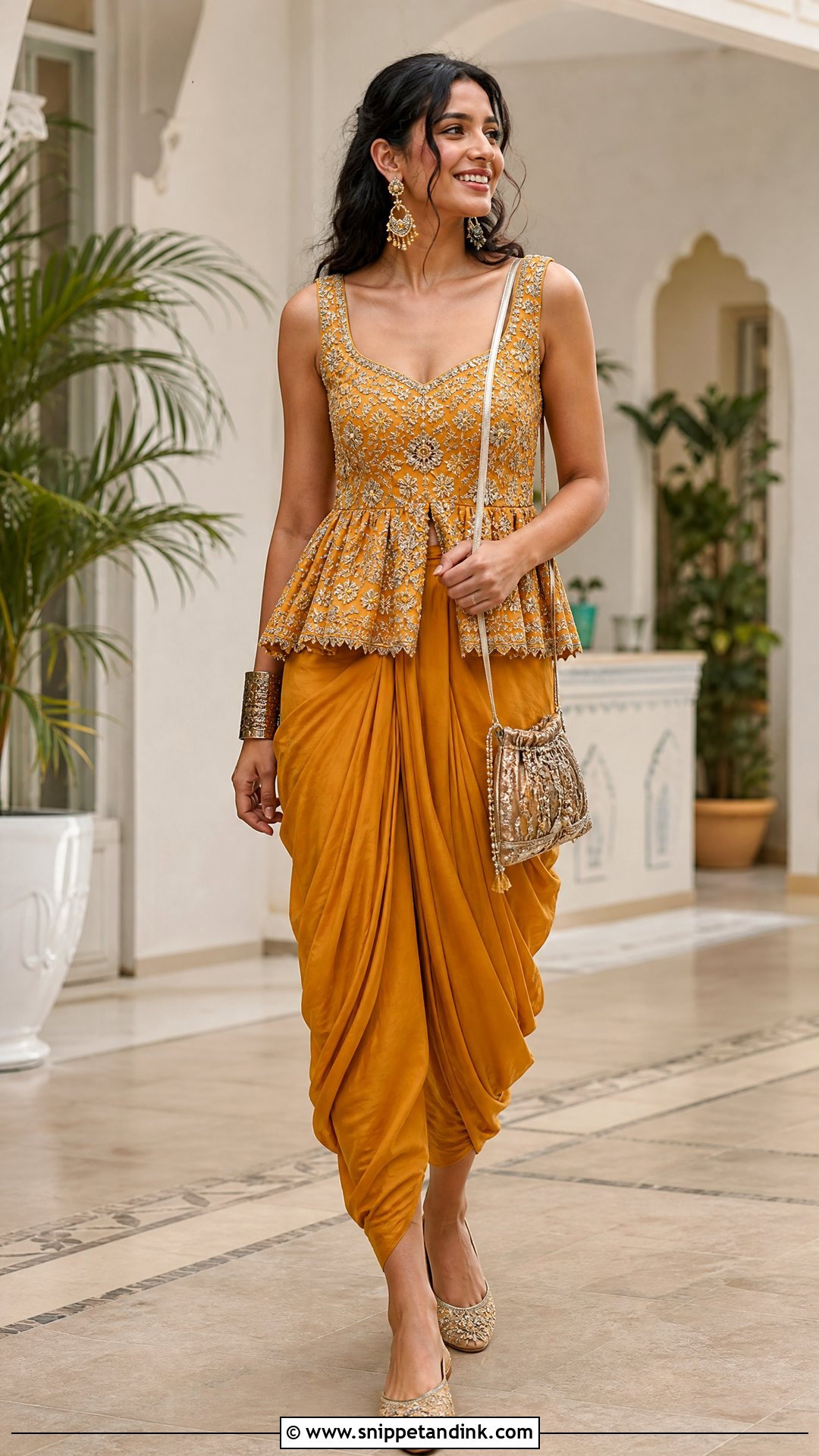
Dhoti pants are for the sister who wants to dance all night at a pre-wedding function. Pair softly draped dhoti pants with a structured peplum top, short embroidered kurta or asymmetric tunic, in saffron, hot pink, emerald or turquoise. If the top is heavily worked, keep the pants and dupatta plain. Statement earrings, a cuff and a crossbody potli leave your hands free. Embellished flats or low wedges suit the shorter hem. A braided ponytail keeps hair under control. Proportion decides this look, so the top should end near the waist or upper hip. Cover the drape with a long tunic and you lose the point of wearing dhoti pants.
11. Jacket Lehenga Wedding Outfit
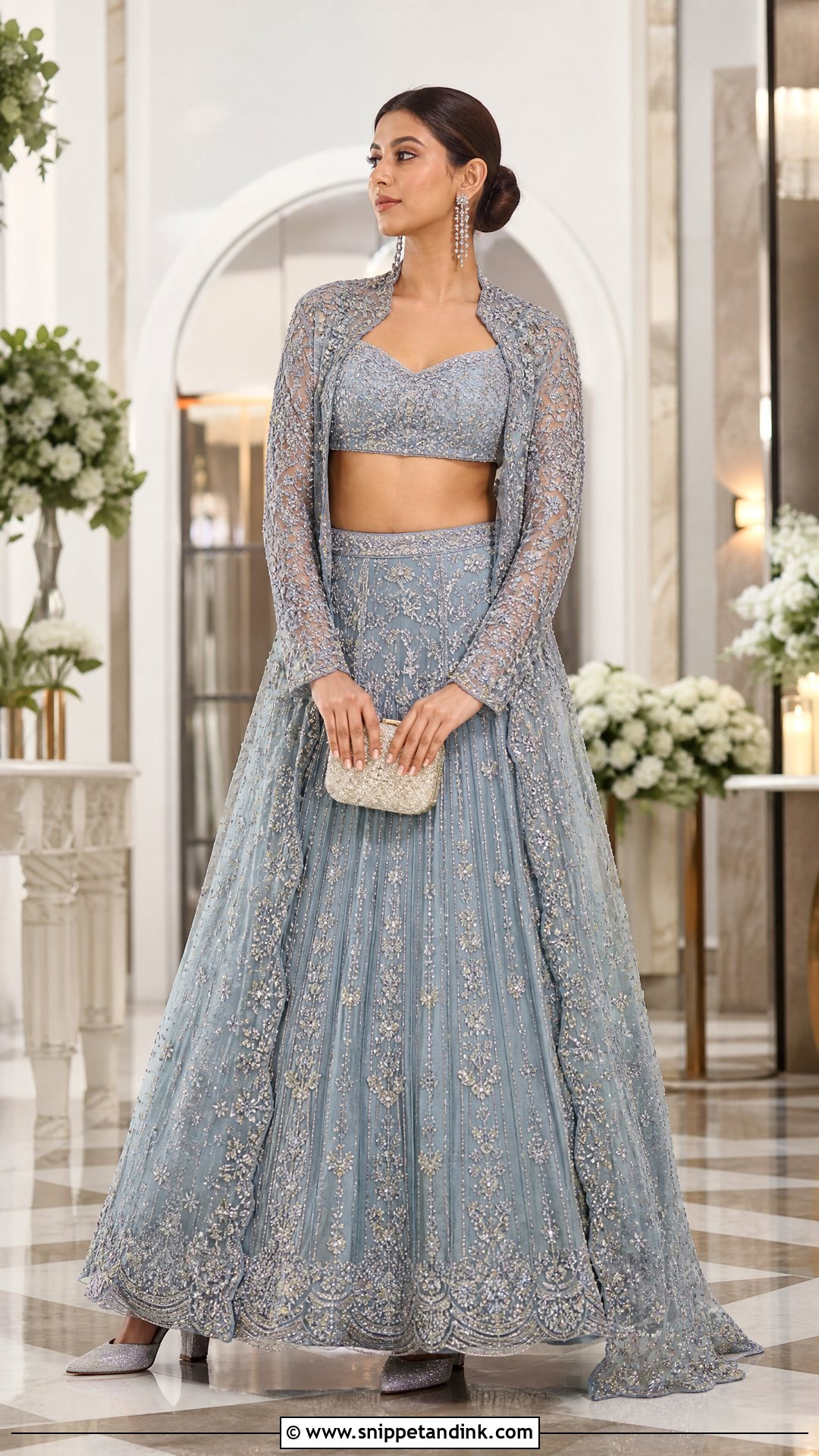
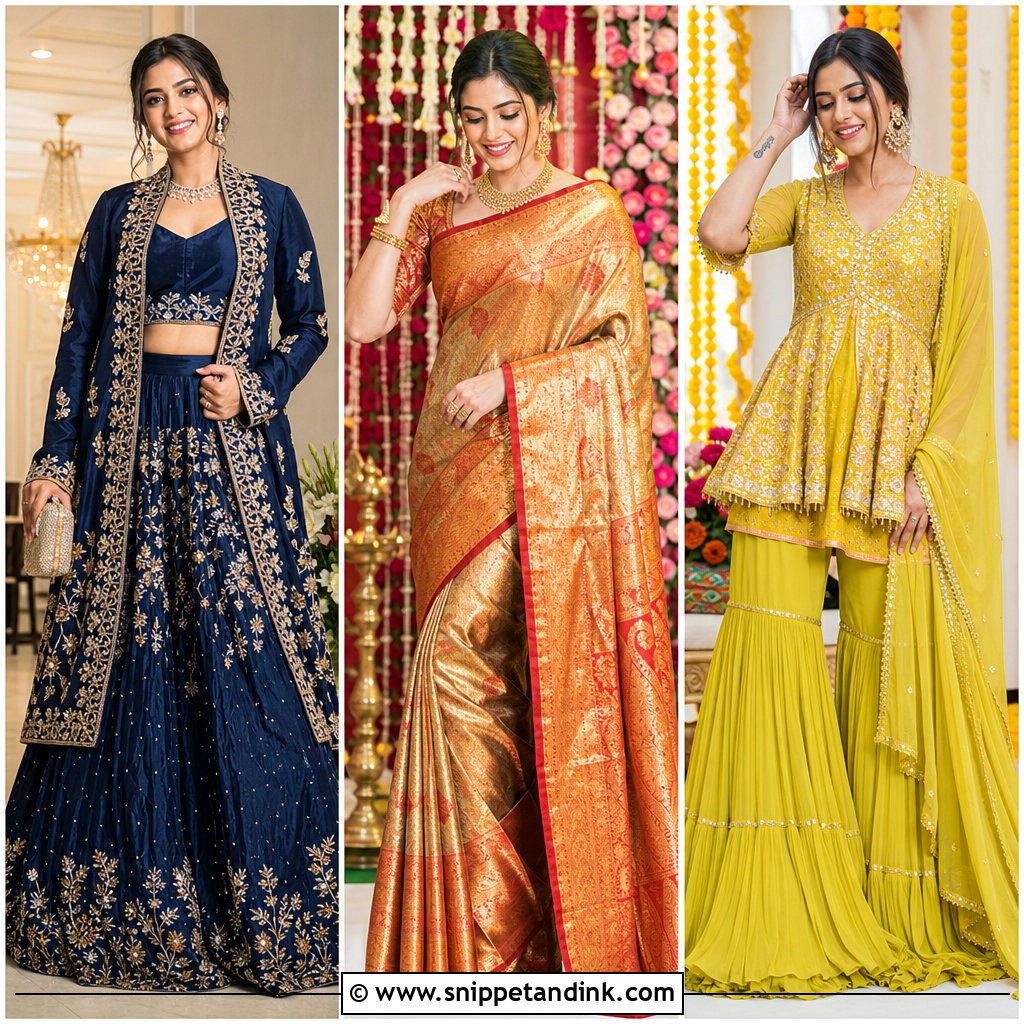
I suggest a jacket lehenga to sisters who want coverage without the fuss of a dupatta. A lightly embellished skirt and cropped blouse go under a sheer embroidered jacket that falls below the knee, in champagne, dusty blue, ruby, mauve or sage. With no dupatta to hold, you’re free to greet guests, carry the bride’s things and hug relatives. Drop earrings, a delicate ring and a beaded clutch are enough, and pointed block heels lengthen the line under the open jacket. A polished ponytail or sleek low bun keeps the top half calm. Fit the jacket across the shoulders and check it closes over the bust without pulling at the upper arms, because that’s where a stiff embroidered jacket strains first.
12. Indo-Western Gown Wedding Outfit
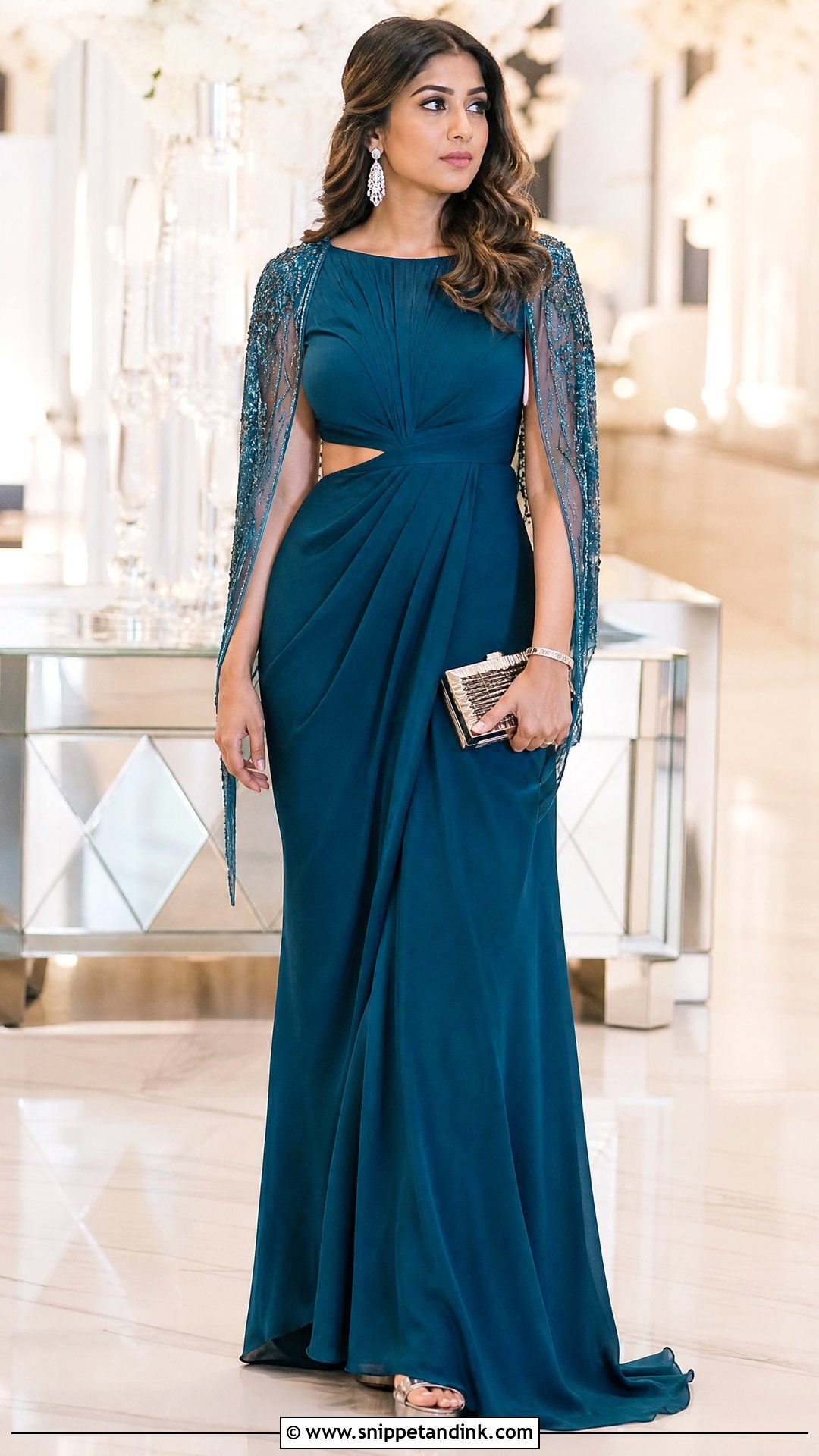
An Indo-Western gown is the easy choice for a reception when you’d rather not drape anything. Look for a floor-length shape with Indian embroidery and one feature, a draped skirt, cape sleeves or a shoulder panel, in deep teal, berry, navy or metallic rose. It should define the waist but leave enough room to sit through a long dinner. Crystal earrings, a slim bracelet and a metallic box clutch finish it. Under a long hem, platform sandals or stable block heels are safer than thin stilettos. Glossy waves or a side-parted bun suit it, and skip oversized jewellery since the gown makes the statement. Hem it in your shoes so the skirt floats just above the floor.
13. Gharara Suit Wedding Outfit
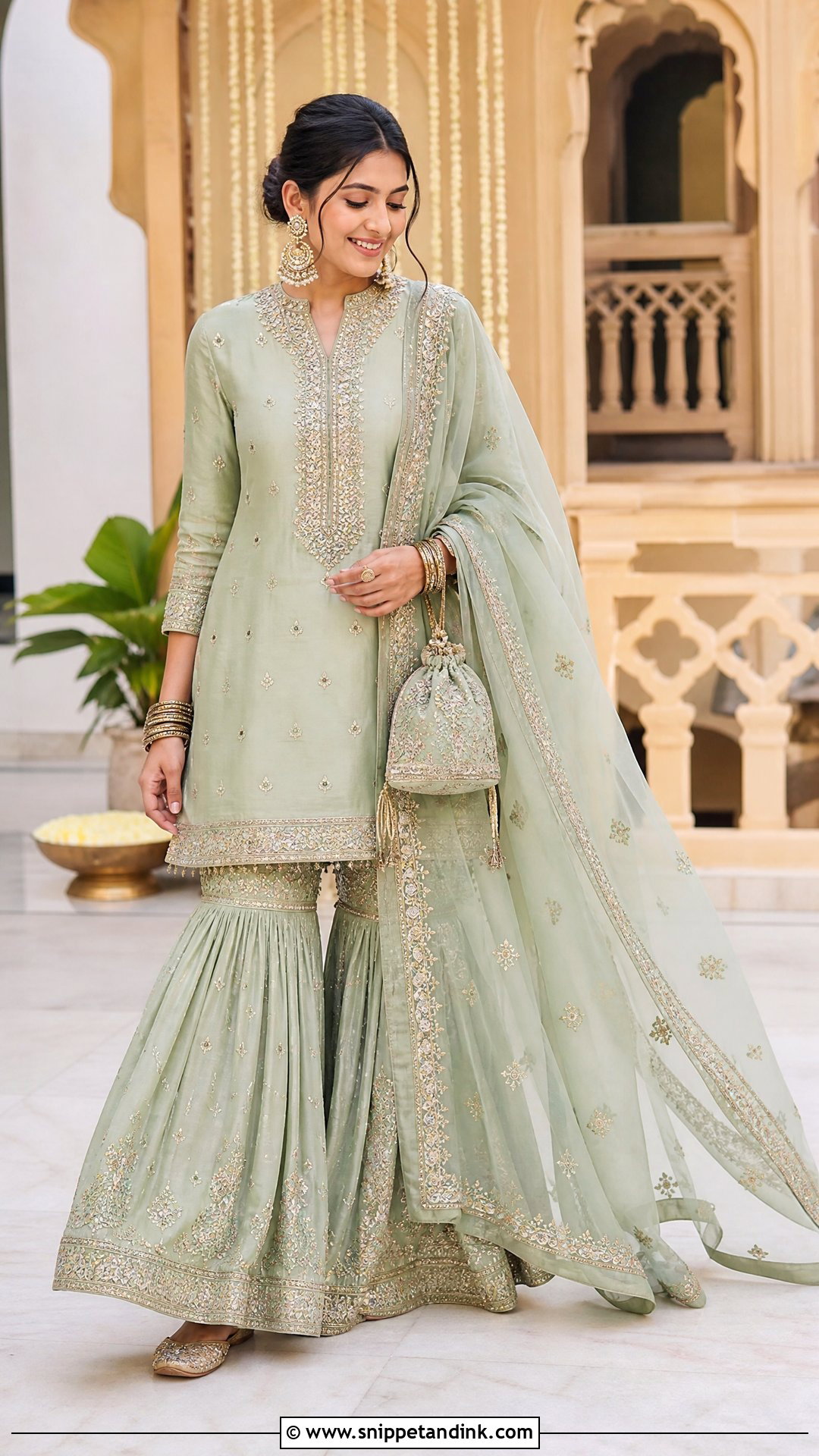
Knee panels and dramatic flared hems give a gharara suit its traditional character. Wear it with a short kurta so the construction shows, and a sheer dupatta with a complementary border. Soft gold, pistachio, coral, plum and powder blue all suit family functions, with gota, zari or fine thread embroidery for a festive finish. Chandbalis, stacked bangles and a traditional potli complete it, and embellished flats are best because so much of the shoe shows under the flare. A low braid or centre-parted bun keeps it classic. The fitting point I always check is the knee seam. If it sits too high or low, it restricts your stride and spoils the shape.
14. Brocade Kurta Wedding Outfit
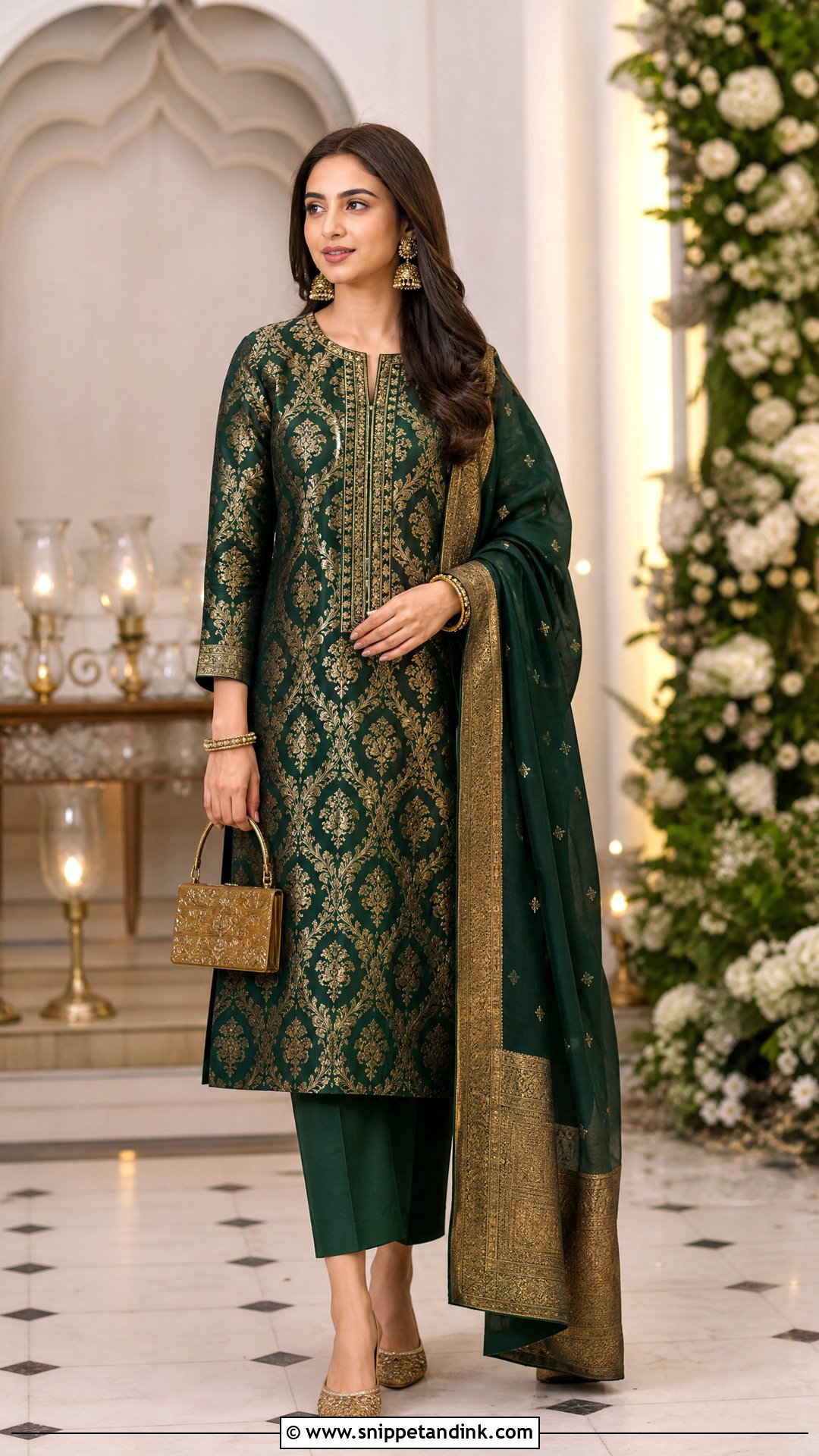
Brocade is woven with its pattern, so a simple kurta set in it can stand up to the main ceremony. A straight or gently flared brocade kurta goes with solid silk pants and a light dupatta; emerald with gold, magenta with antique gold or navy with silver all look polished. The fabric already carries pattern and shine, so keep the cut clean and skip extra embroidery. Classic jhumkas, one bangle stack and a small structured bag finish it, with pointed juttis. Choose straight pants for a sleek line or narrow palazzos for movement. Insist on a breathable lining. Brocade’s metallic threads are rough on the inside, and you’ll feel them by the third hour.
15. Floral Lehenga Wedding Outfit
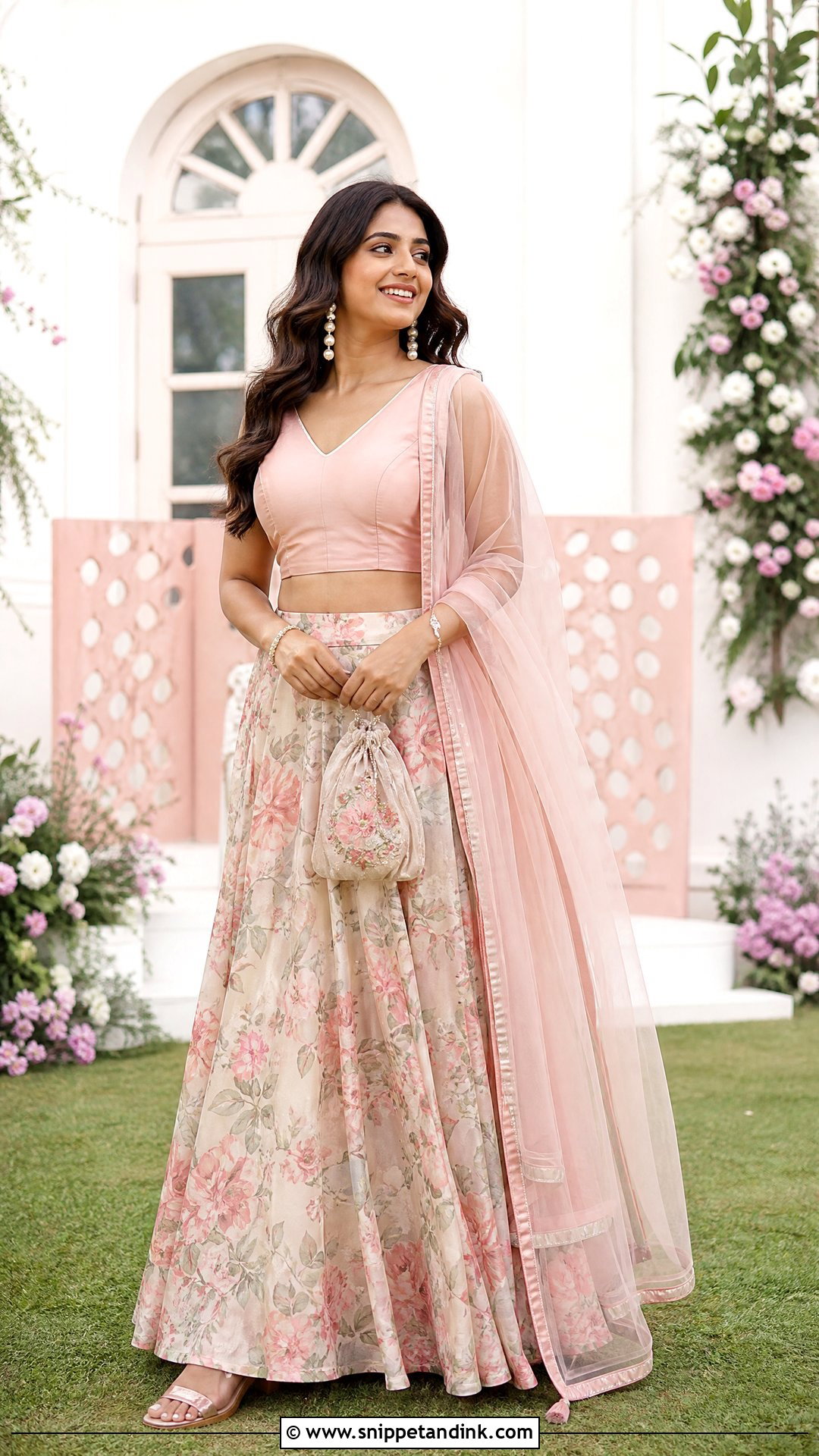
A floral lehenga is for daytime and the outdoors, where the print shows in natural light. I pair a printed skirt with a solid blouse that picks up one colour from the pattern, and a sheer dupatta with a narrow border so the print isn’t hidden. Blush, mint, yellow, lavender and soft blue combinations come up well in bright settings. Pearl or kundan earrings, a fine bracelet and a pastel potli are enough. On a lawn, low wedges are the shoe I’d choose, since narrow heels sink into grass. Loose curls or a soft braid suit the relaxed mood. Heavy jewellery fights a large print, so let the skirt lead.
16. Ruffle Saree Wedding Outfit
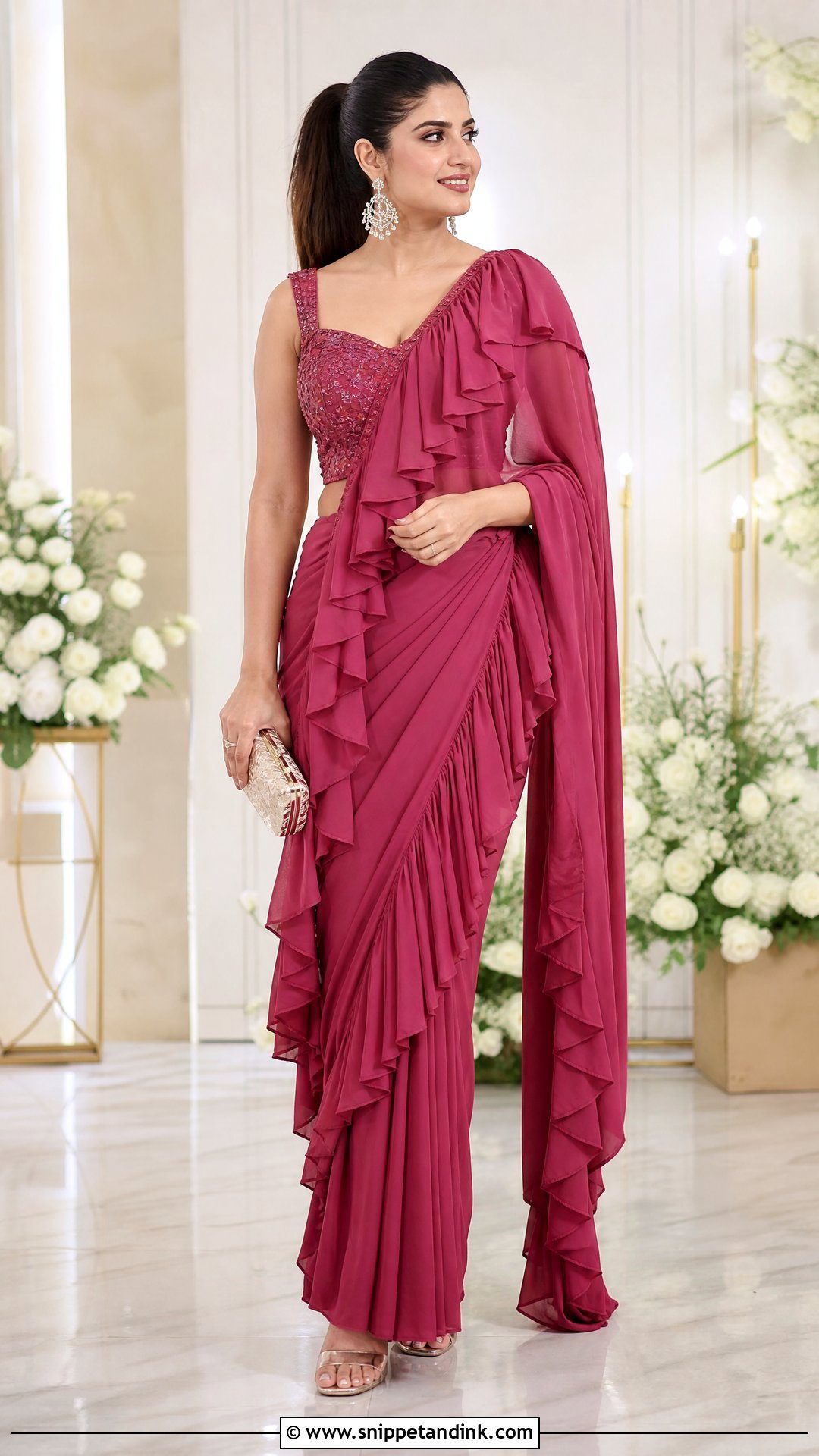
Ruffle sarees give the familiar drape a playful edge, which suits an engagement, a music night or a modern reception better than a temple ceremony. I keep the ruffles along the border rather than all over, in a solid jewel tone or muted pastel. A structured embroidered blouse gives the soft layers some definition. Statement earrings, a slim ring and a clean metallic clutch are plenty; more volume at the ears or wrists makes the whole silhouette look crowded. Wear secure heeled sandals or pointed pumps. A high ponytail sharpens it, while soft waves soften it. Keep the waist pleats tight and arrange the shoulder ruffles neatly before photographs, because ruffles crush easily when you sit.
17. Peplum Sharara Wedding Outfit
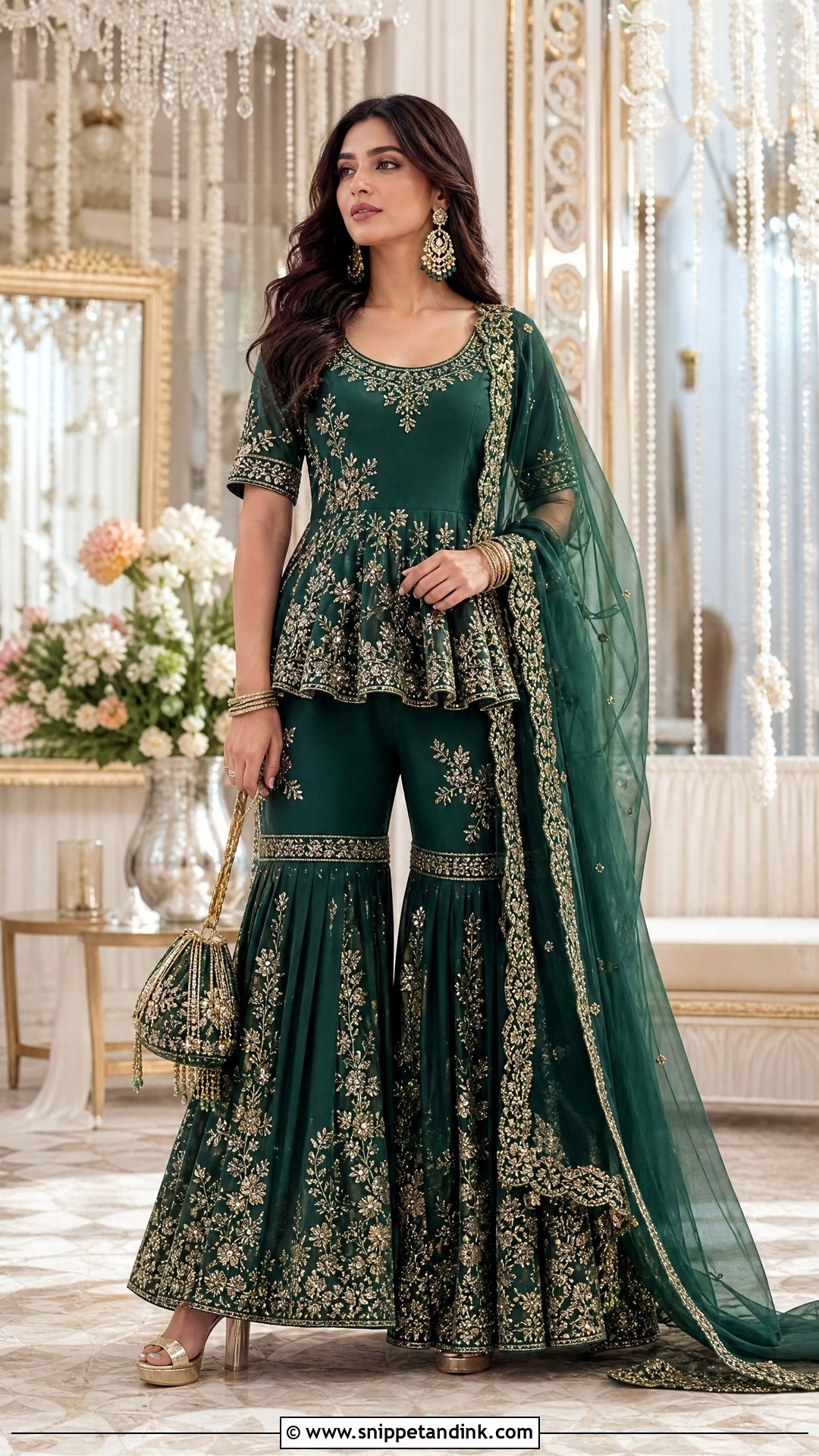
A peplum sharara defines the waist and balances the flare of the pants. I’d choose a fitted peplum top with embroidery at the neckline, waist or sleeve edges, over coordinated wide-leg shararas. Jewel green, raspberry, royal blue or marigold feel festive; dusty pink and lavender soften it. Only add a dupatta if it helps, since the structured top can stand alone. Drop earrings, a few bangles and a compact embellished bag finish it, with block heels for height under the full pants. A half-up style or smooth ponytail keeps the neckline visible. The peplum seam must sit at your natural waist. A centimetre too low and it adds width at the hips instead of shaping you.
18. Cape Set Wedding Outfit
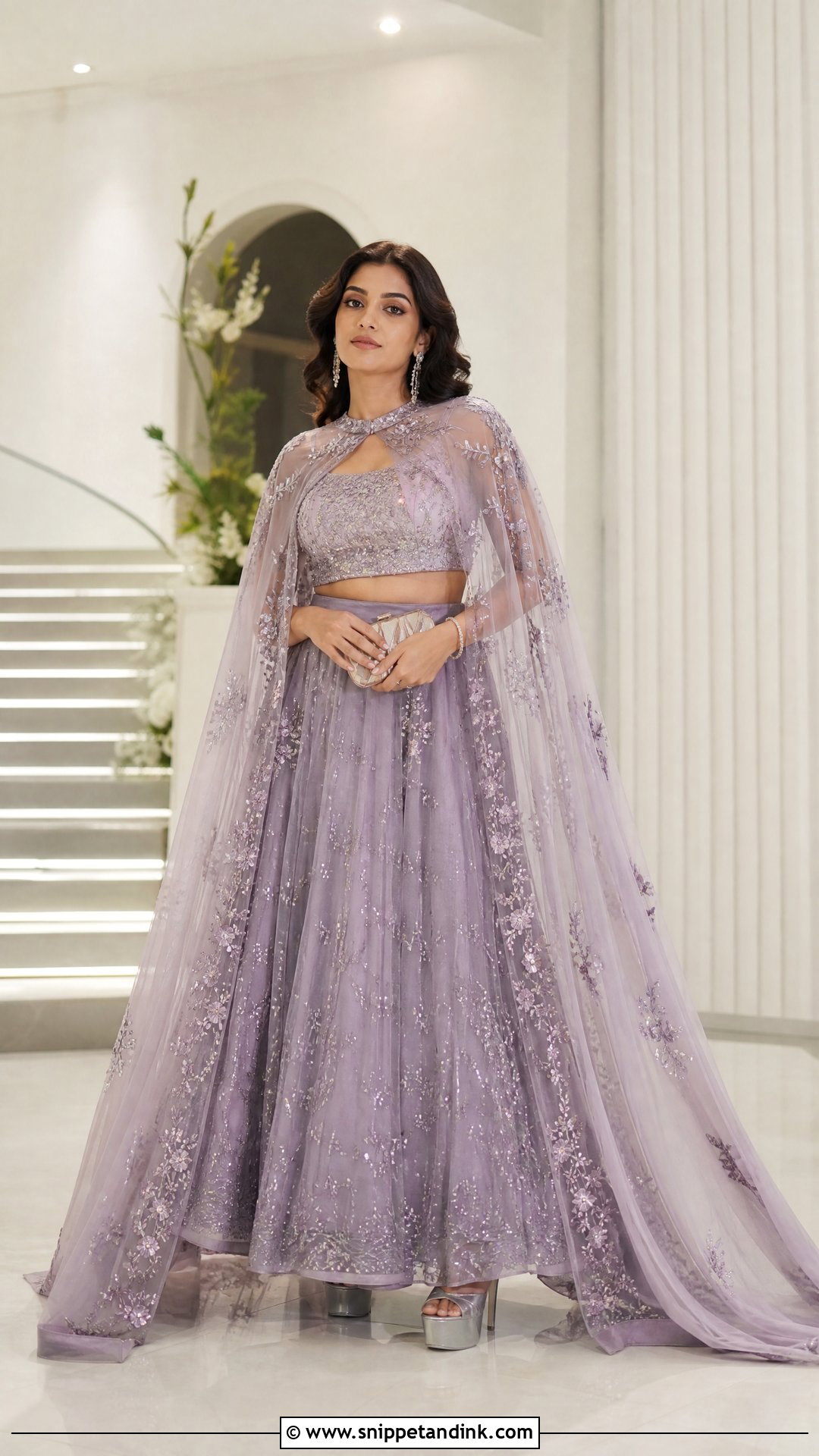
A cape set gives arm coverage and movement without a dupatta, which is why I like it for an evening function. Wear an embellished cape over a fitted blouse and a flowing skirt or wide-leg pants, in navy, smoky lavender, emerald, champagne or deep rose. If the cape is sequinned or embroidered, keep the base outfit plain in the same colour family. Long earrings, a delicate bracelet and a structured clutch complete it, with platform heels under a skirt or pointed pumps with pants. Tuck the hair back or wear a low ponytail so the cape neckline isn’t crowded. Then lift your arms and hug someone. As the sister, you’ll be helping the bride, greeting relatives and perhaps performing, and some capes restrict the arms more than you’d expect.
19. Banarasi Saree Wedding Outfit
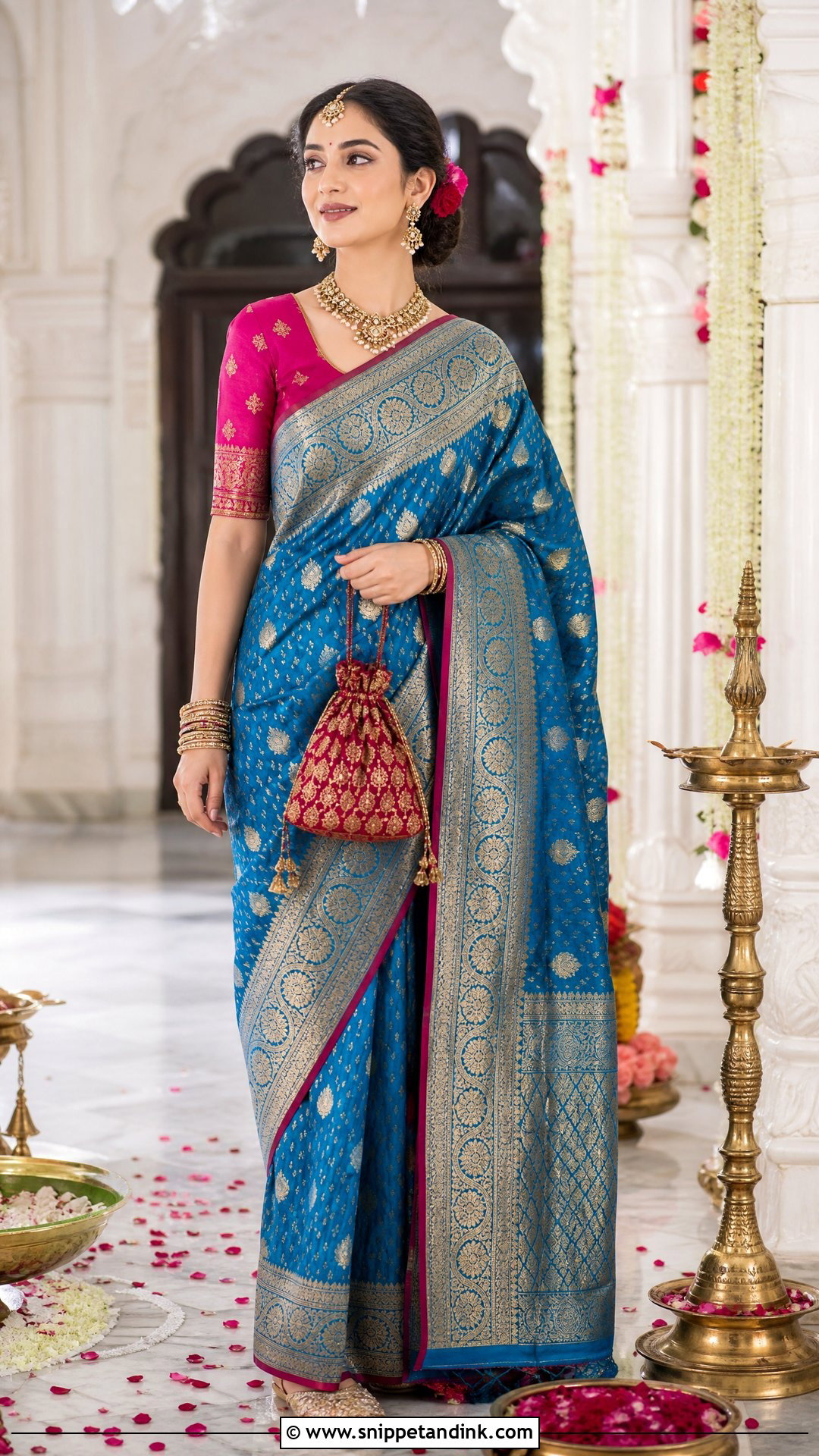
Few outfits feel as celebratory as a richly woven Banarasi saree. Ruby, royal purple, peacock blue and emerald all work, as long as yours doesn’t sit close to the bride’s main colour. A contrasting silk blouse, green with magenta or blue with antique gold, adds depth. Traditional earrings, a medium necklace, bangles and a small bindi complete the look, with a brocade potli and padded juttis or stable block heels. A centre-parted bun with a small flower arrangement suits its formality. Keep the pleats sharp and pin the pallu discreetly. Banarasi silk is heavier than it looks on a hanger, so do a full rehearsal at home: sit, stand, climb stairs and bend as you would at the mandap.
20. Pant Saree Wedding Outfit
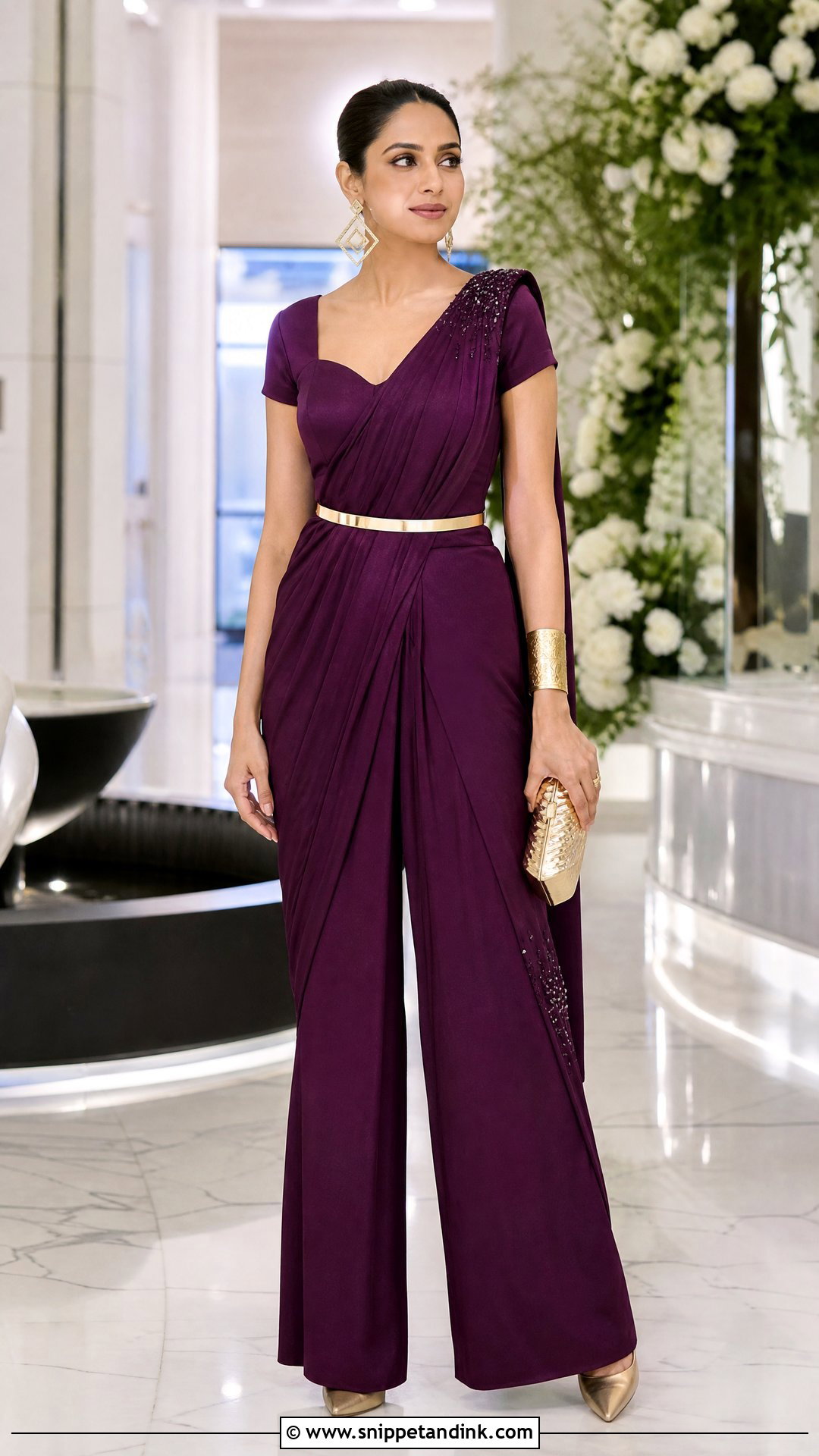
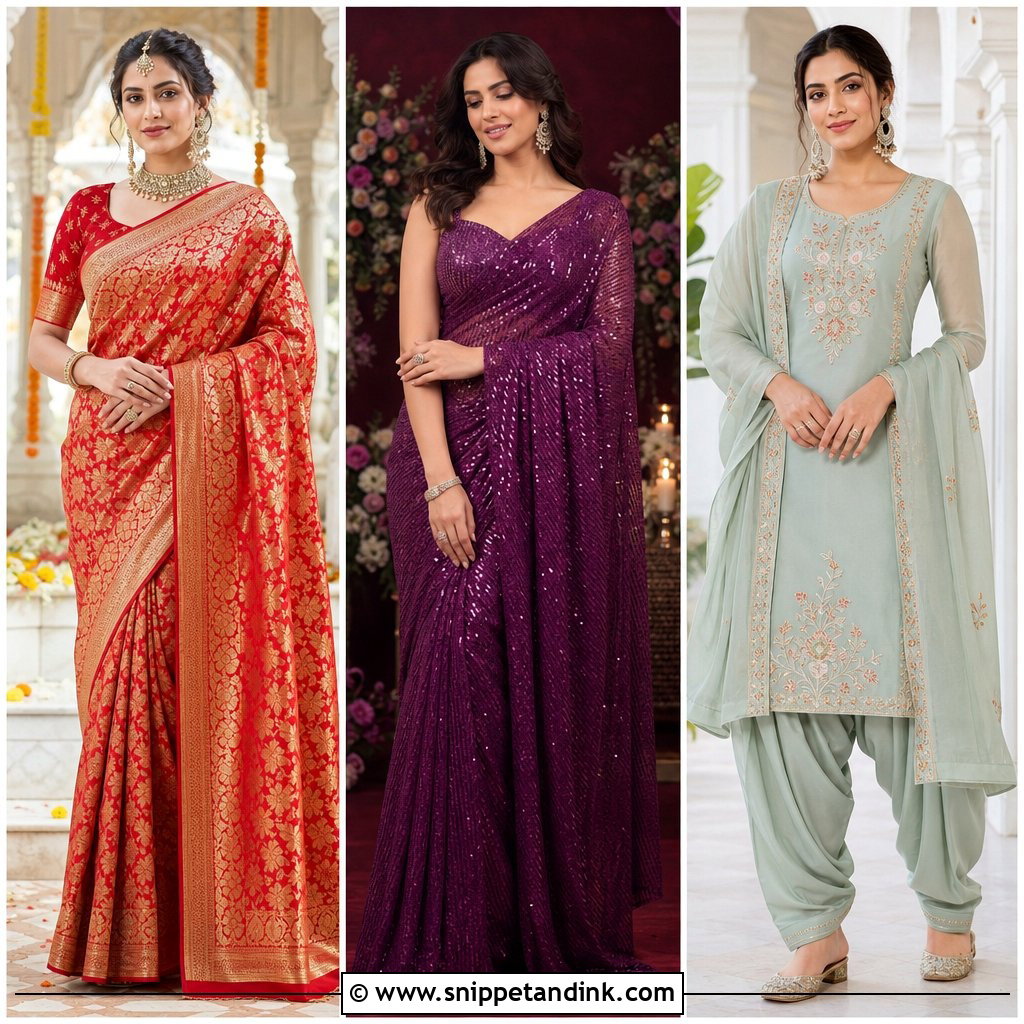
A pant saree is for the sister who prefers tailoring to a petticoat. Slim or wide-leg pants go with a blouse and a pre-arranged drape, often with a belt at the waist to define the shape and hold the pallu. Black only if the family is comfortable with it; otherwise plum, teal, navy, rust or metallic blue. Geometric earrings, a sleek cuff and a structured clutch keep it modern. Pointed heels or heeled mules suit the pants, though I’d pick something more secure if you’ll be on the move. A slick ponytail or neat low bun finishes it. Keep the drape long enough to read as a saree, but check it can’t slip under your shoe on the stairs.
The Sister’s Job Is Physical, So Dress for It
You’ll be fixing the bride’s dupatta, holding her phone, bending for rituals, perhaps hiding the groom’s shoes and dancing at every function. Before you settle on an outfit, picture yourself doing all of it.
Small changes I ask tailors for
- A hidden side-seam pocket in a lehenga or sharara for a phone, lipstick and safety pins.
- Hooks or an extra loop inside the blouse so the dupatta can be pinned without piercing embroidery.
- A slightly higher hem at the front of a long skirt so you can climb stage steps without lifting it.
Carry a small pouch with safety pins, double-sided tape, a needle threaded in the bride’s colour and blotting papers. You’ll likely use most of it on the bride before you need any of it yourself. And keep a pair of flat juttis or soft slippers in the car. By the time the reception dancing starts, swapping out of heels is what lets you stay on the floor with her until the end.
Is Your Outfit Ready for a Week of Functions?
A sister’s outfit should feel festive, comfortable and like you. Treat these looks as starting points and adjust colour, coverage, fabric and accessories to each ceremony and the family’s traditions. Talk to the bride before you finalise anything, so you sit inside her palette without copying her. Put your budget into tailoring, supportive shoes and secure draping, because you’ll spend hours standing, helping, dancing and posing. Silk saree, colourful lehenga, comfortable sharara or fusion set, the right one is the outfit you forget you’re wearing while you’re busy celebrating your sister.
You'll Like These Ideas:


Leave a Reply