
As the bride’s brother you’ll stand in the family portraits, greet guests at the door, take part in the rituals and stay within reach of your sister for most of the day. Your clothes have to look like they belong to that role without pulling attention from the groom. The outfits below run from traditional Indian dress through fusion cuts to Western tailoring, so each function is covered. Before you settle on anything, I look at four things with a client: the venue, the weather, the dress code and the colors the family has agreed on. Then think about your feet and your shoulders. You’ll spend hours standing, dancing and running errands, and a jacket that binds when you lift your arms shows up in every candid.
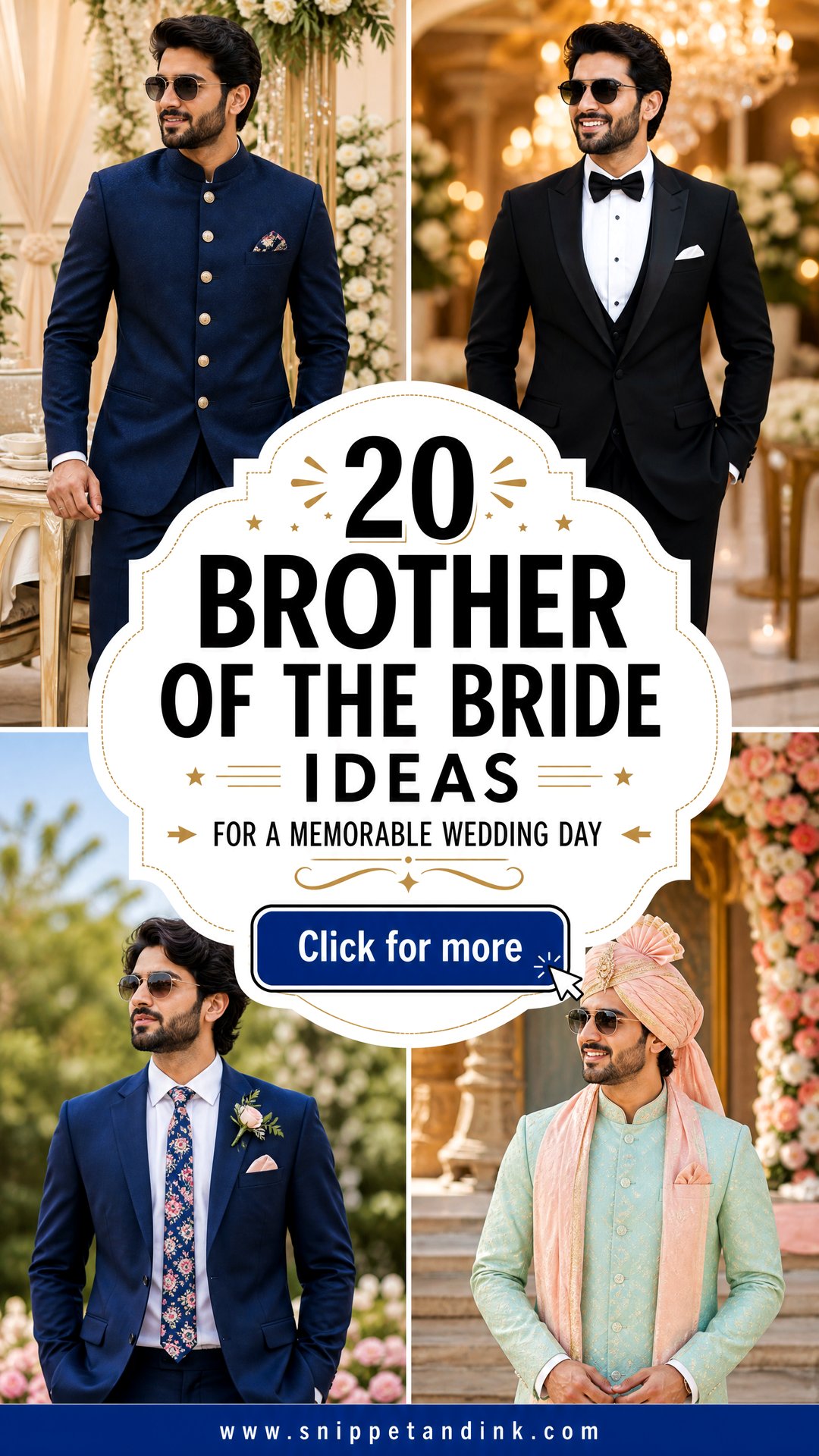
Planning a Brother’s Wardrobe Across Four or Five Functions
Most brothers I dress aren’t buying one outfit. They’re buying for a haldi, a mehndi, a sangeet, the ceremony and a reception, sometimes over three days. The easiest way to keep that sane is to plan by formality, not by favorite color. I start with the main ceremony, because that’s the outfit that lands in the framed family portrait, and build the rest around it.
- Ask your sister for her outfit colors for every event, ideally a photo of the actual fabric in daylight. Screens lie about reds and golds.
- Find out what the groom and his brothers are wearing to the ceremony, so you don’t arrive in the same ivory sherwani.
- Put your best tailoring into the ceremony and reception pieces. The haldi outfit can be simple and replaceable.
- Look for pieces that do double duty. One good kurta can go under a Nehru jacket for the mehndi and a brocade waistcoat for a lunch.
- Lay each complete outfit out, shoes and accessories included, and photograph it. You’ll spot the clash before your mother does.
1. Ivory Sherwani With Gold Accessories
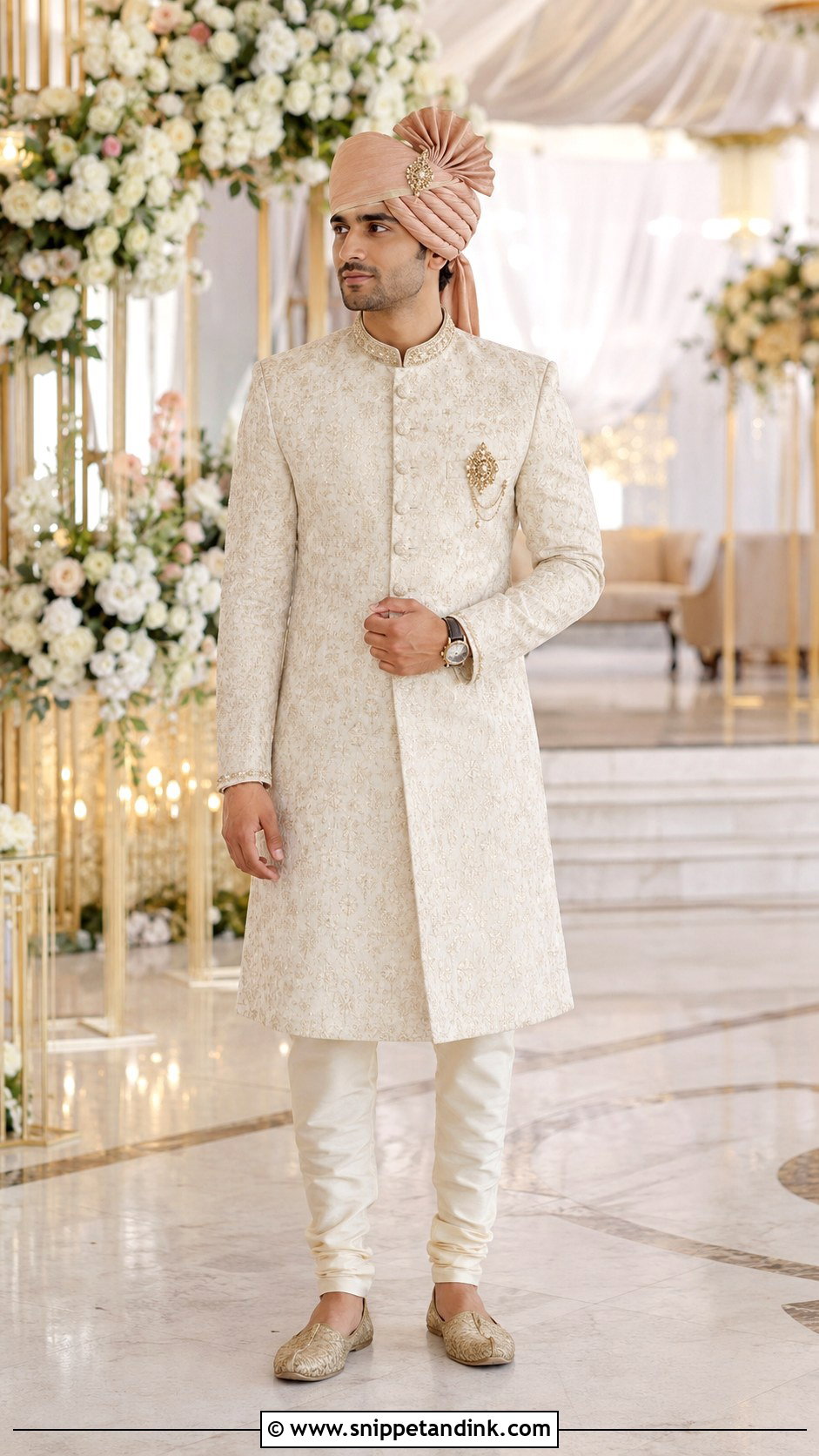
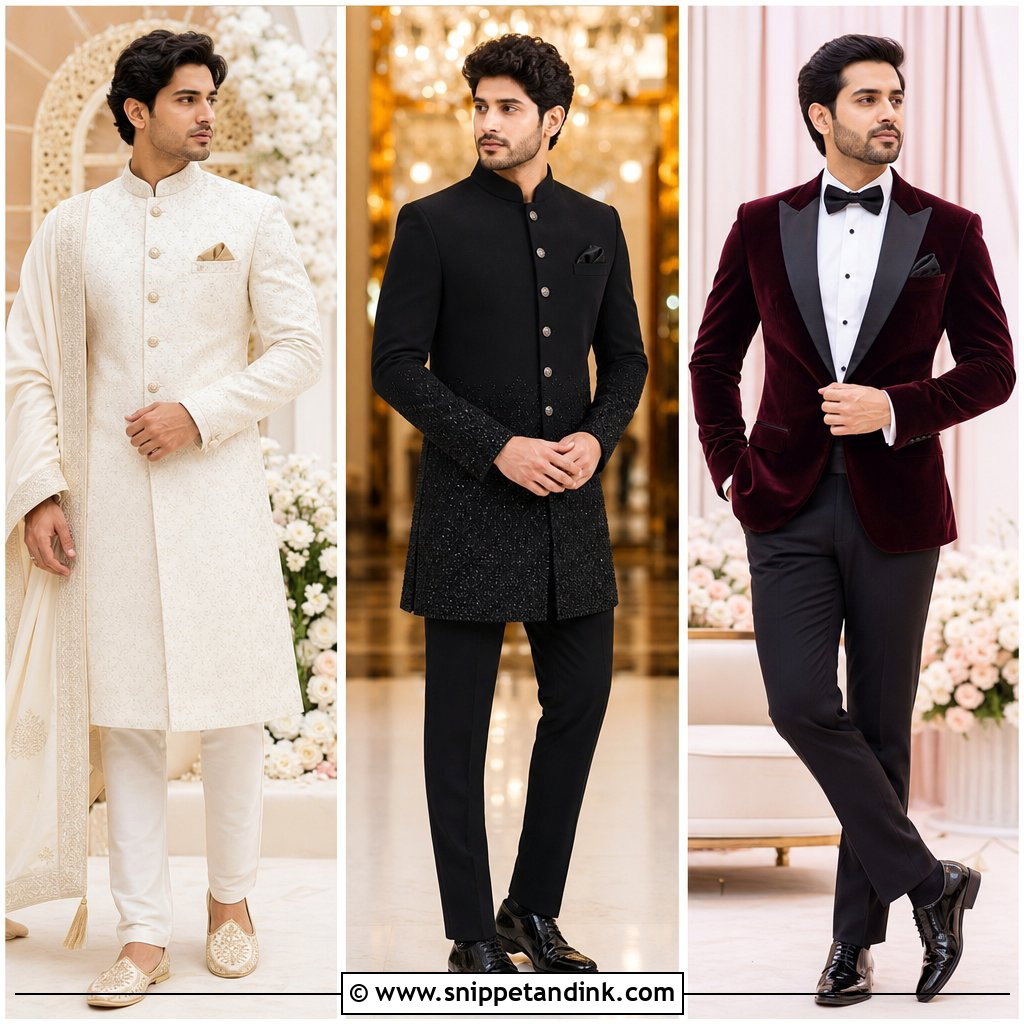
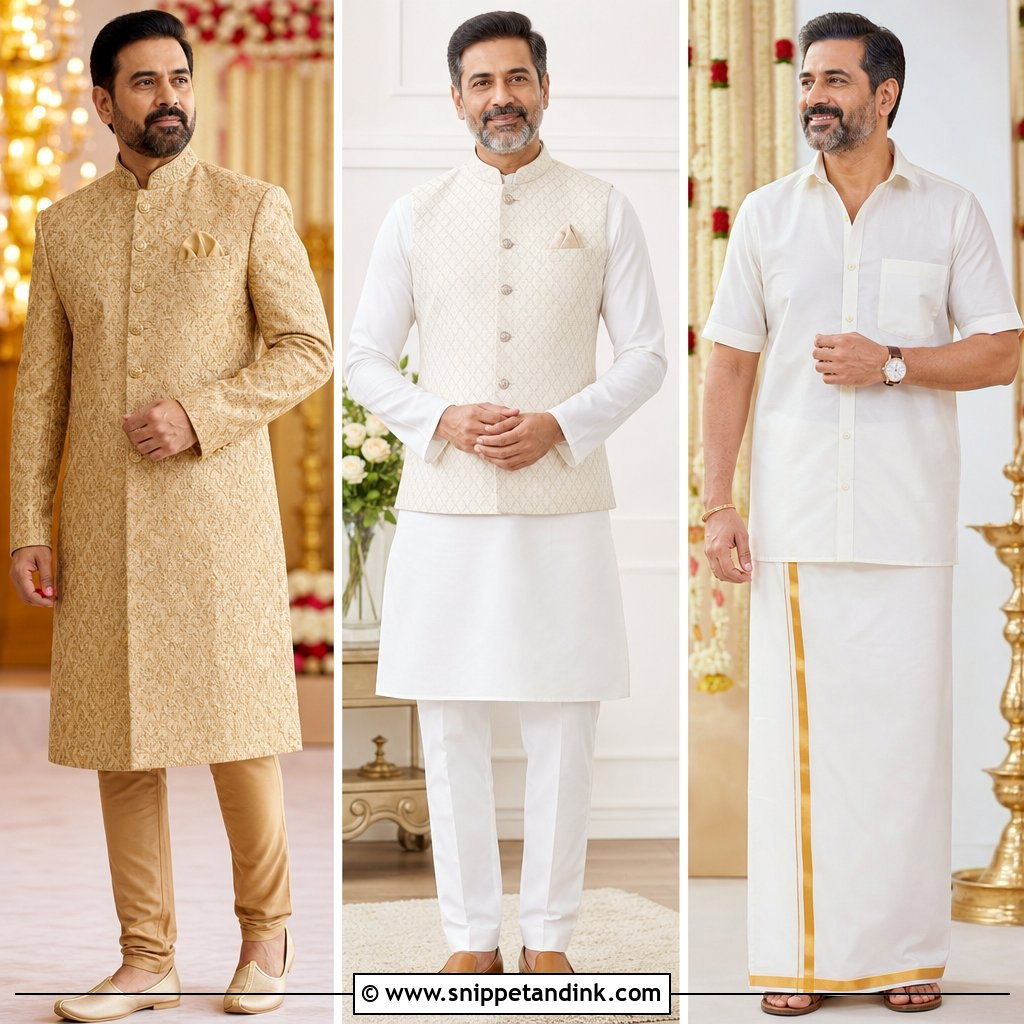
Ivory is the safest sherwani color against a red, pink, maroon or gold bridal outfit, because it sits back in the frame instead of fighting her. I steer brothers toward embroidery that stays on the collar, cuffs and button placket; heavy all-over work starts to read as groom. Fitted ivory churidar and tan or gold mojaris keep the line long, and a soft gold pocket square, a classic watch and one small brooch are plenty. If the men in the family are wearing matching turbans, a muted gold or dusty rose one sits well with ivory. At the fitting, sit down in it. Churidar gathers need room at the knee or they pull hard through a long seated ceremony.
2. Pastel Kurta With Nehru Jacket
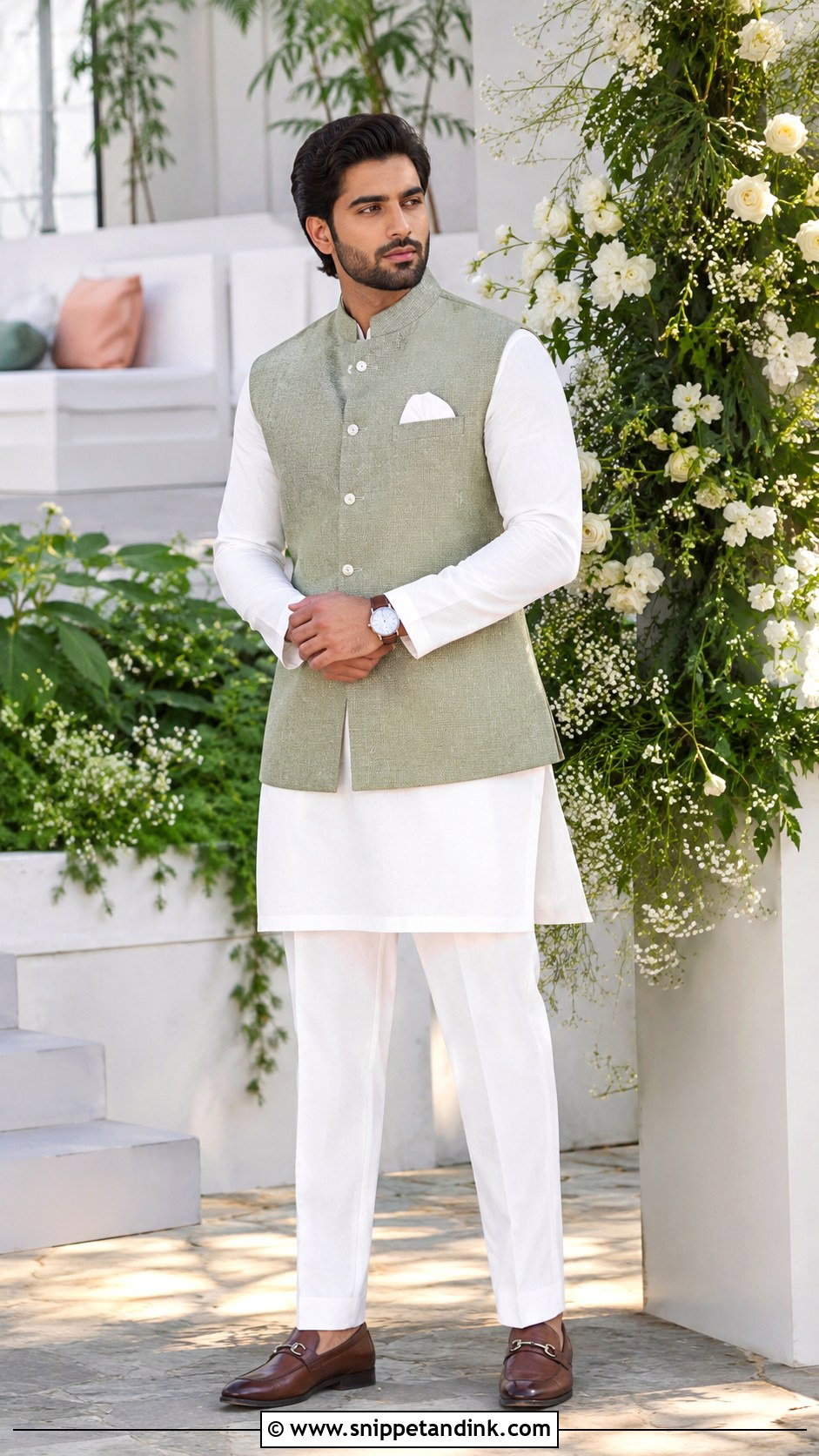
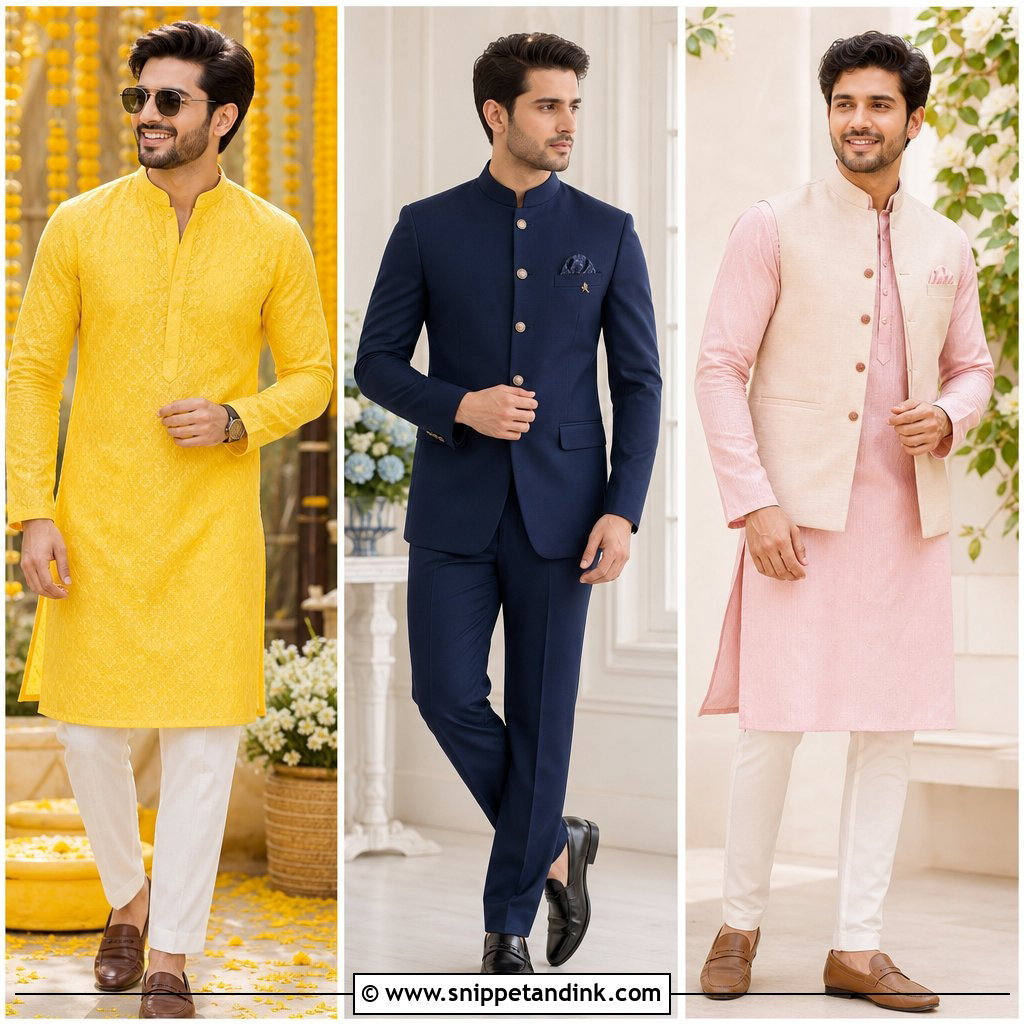
Pastels read fresh in natural light, which is why they suit a daytime ceremony, a garden wedding or a family brunch. Start with a straight white or cream kurta and fitted pajama pants, then add a textured Nehru jacket in sage, powder blue, blush or lavender. Texture matters more than the exact shade here. A flat pastel can wash out next to ivory, while a slub weave or fine threadwork catches enough light to hold its own. Brown leather loafers or neutral juttis, a slim watch and a matching pocket square finish it. Because the jacket is sleeveless, you can carry trays, fix a garland and hug half your relatives without anything riding up.
3. Floral Achkan With Slim Trousers
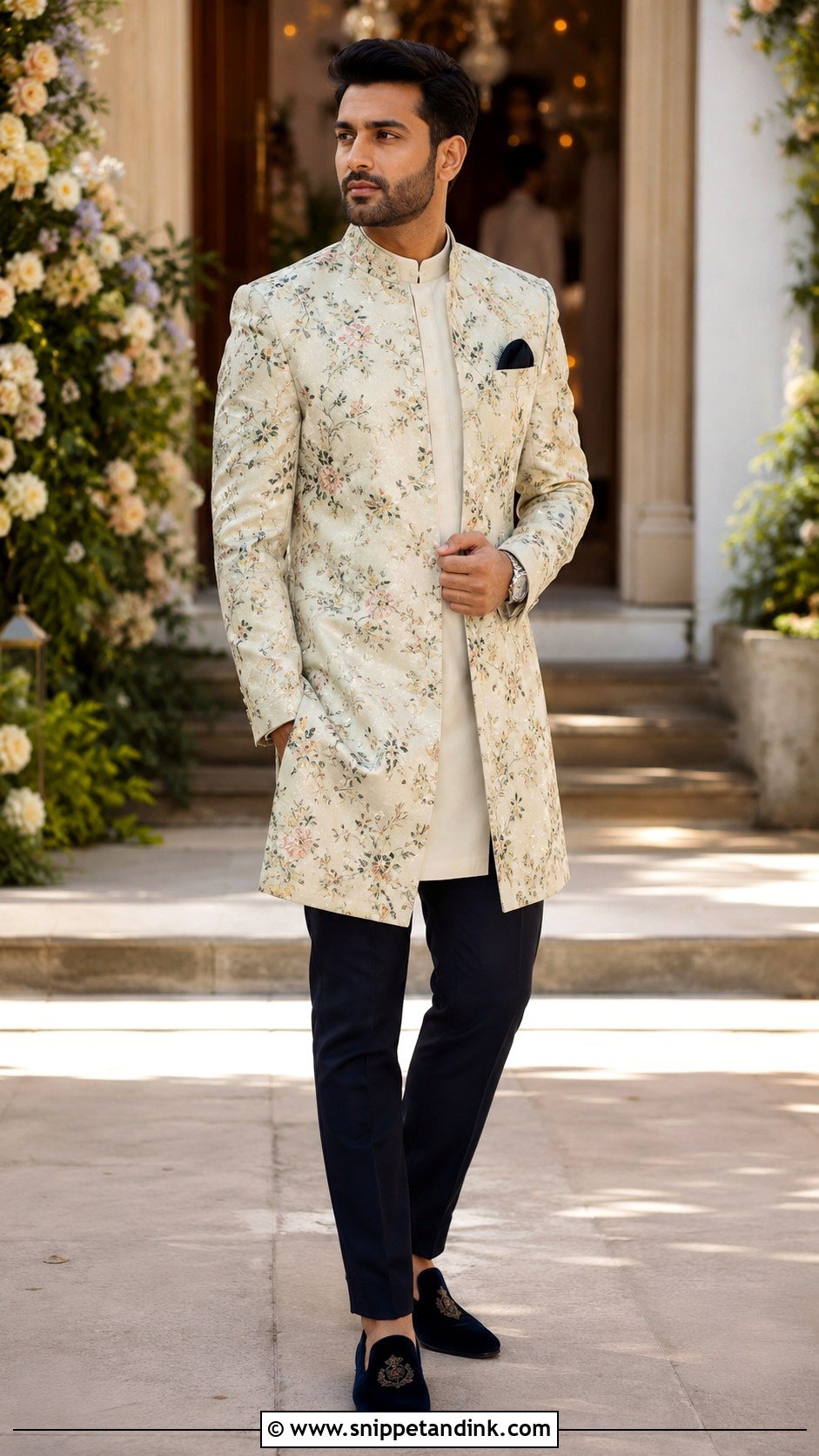
A floral achkan is the confident option in a room full of solid colors, but the print has to be controlled. I look for two or three colors at most on an ivory, beige, navy or pastel base. Anything busier flickers on camera and swallows your face in group shots. Wear it over a plain kurta or a fitted high-neck shirt with slim neutral trousers: cream in daylight, black or navy once the sun goes down. Velvet loafers, juttis or leather monk straps all work underneath. Let the print carry the outfit and keep the rest quiet, just a watch, a plain pocket square and a tidy haircut.
4. Navy Bandhgala With Tailored Pants
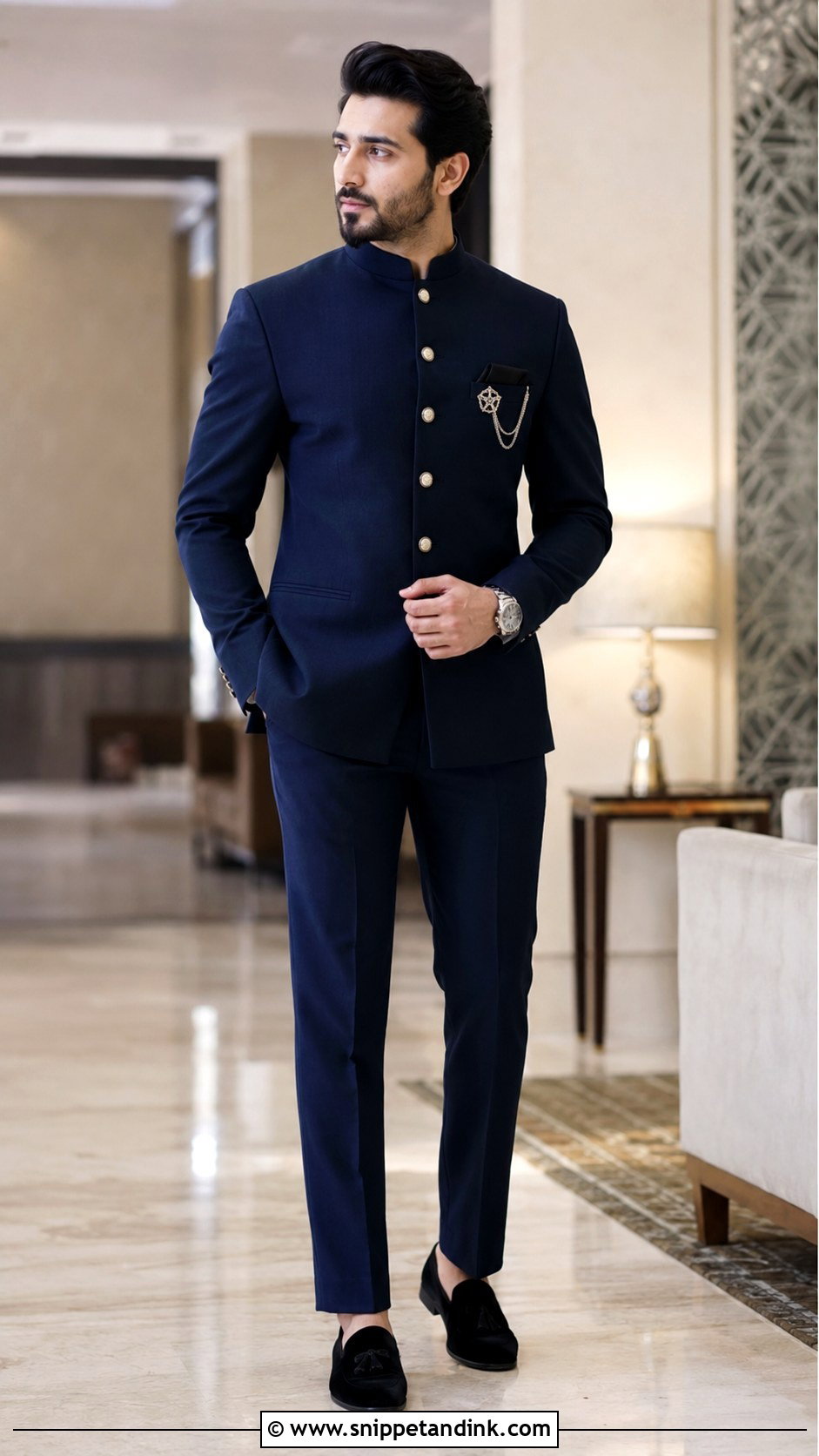
Navy is the color I reach for most when a brother needs one jacket to cover several events. It reads formal in photographs and sits comfortably in both traditional and contemporary settings. Look for a clean mandarin collar and minimal metal buttons, then wear navy trousers for a monochrome line or black for quiet contrast. Black velvet loafers, a silver watch and a small lapel pin are enough. Wool blend or textured jacquard suits winter; cotton-silk breathes far better in warm months. Shoulder fit is the thing to get right. A bandhgala closes to the neck, so if the shoulders are too narrow the whole front pulls into creases the moment you reach forward. It carries a sangeet, a formal dinner or an evening ceremony equally well.
5. Embroidered Kurta With Churidar Pants
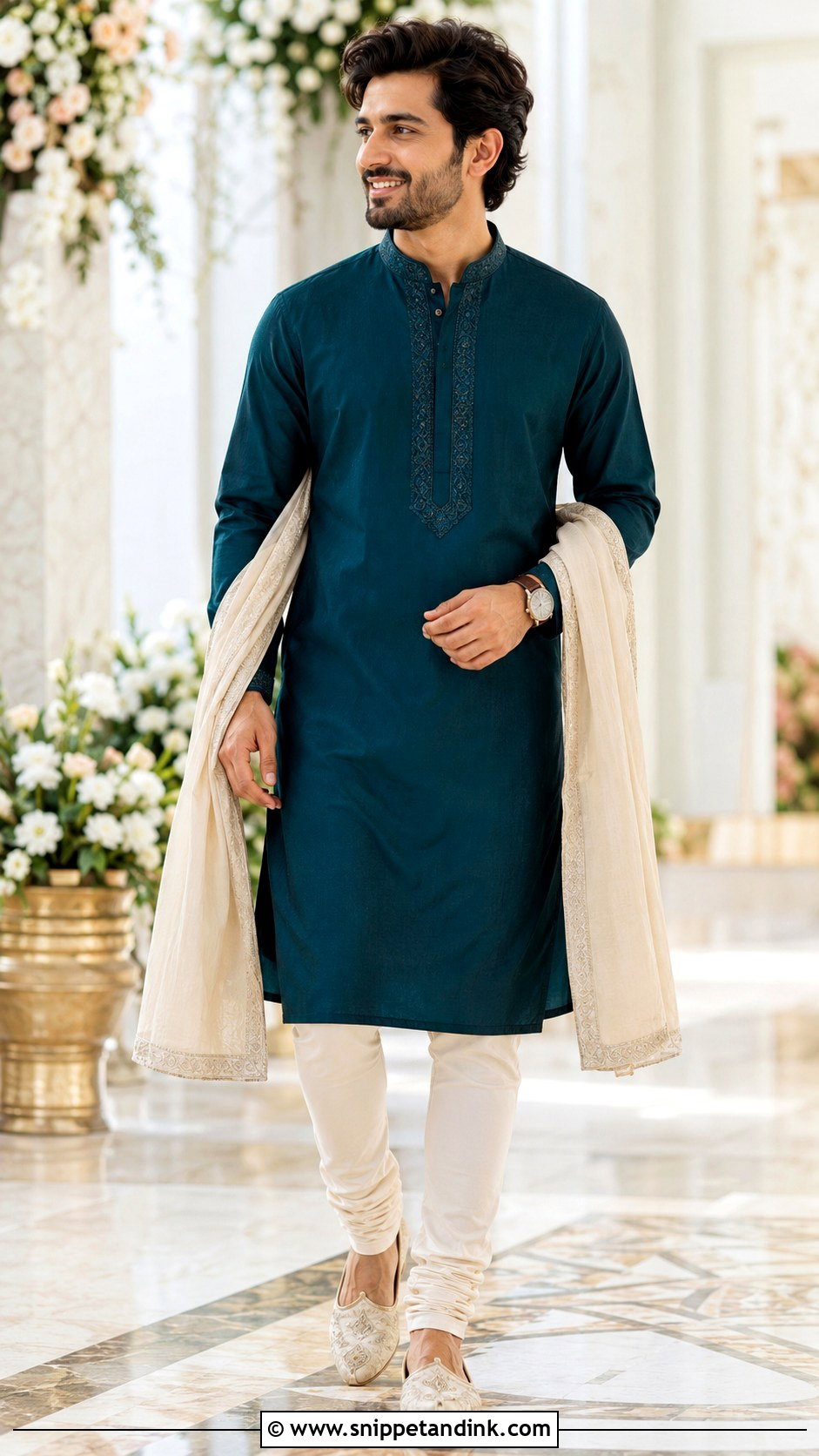
Embroidery turns a plain kurta into something you can wear to a function, as long as it’s placed with restraint. I prefer work around the neckline, shoulders or cuffs rather than over every inch, partly for looks and partly because dense embroidery makes cotton stiff and hot. Jewel-adjacent shades like teal, rust or plum carry richness without shouting. Cream or matching churidar keeps the silhouette clean, with neutral embroidered juttis and a leather or metal watch. A light stole over one shoulder looks right during the ceremony; take it off before you dance or start moving chairs. For smaller functions, this is usually where I’d start.
6. Asymmetric Indo-Western Suit With Loafers
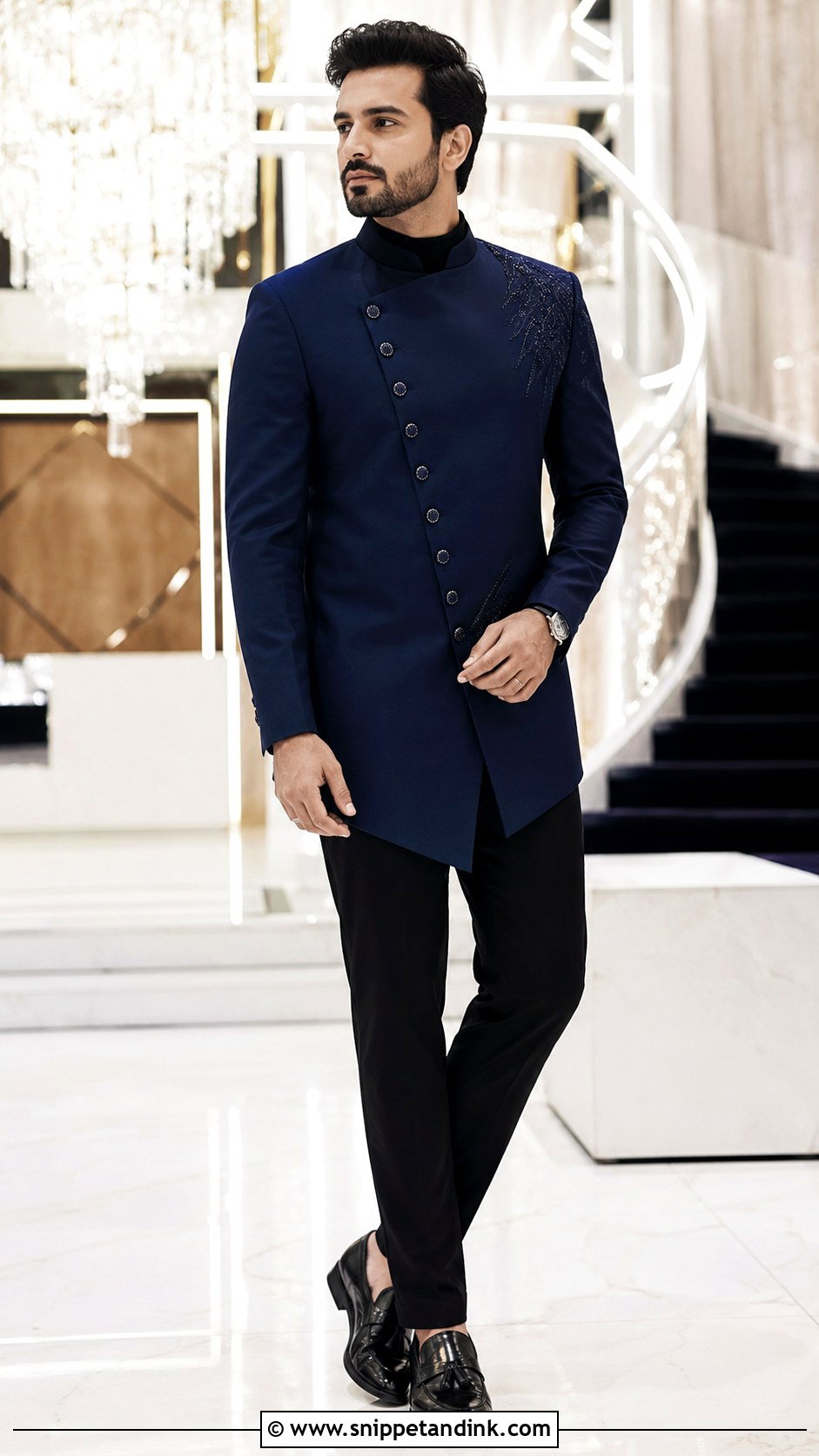
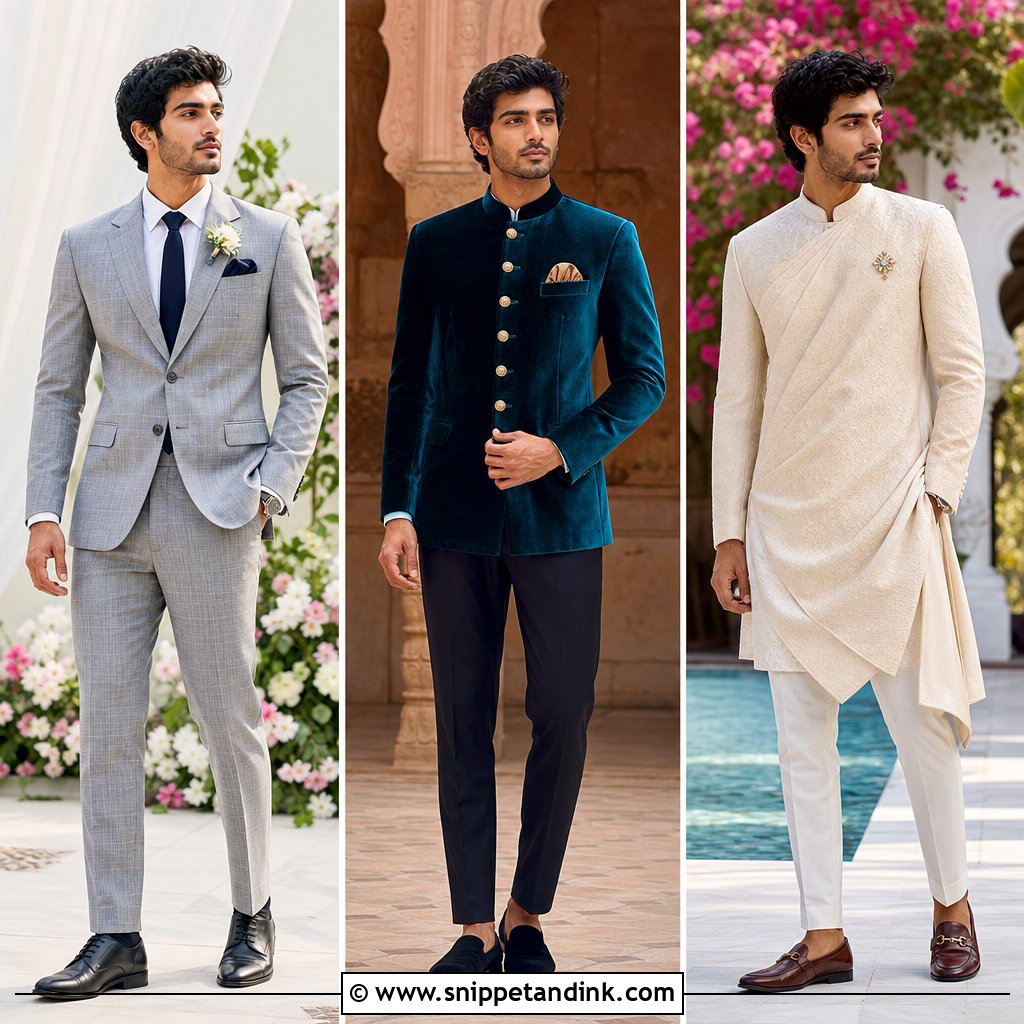
An asymmetric Indo-Western suit belongs at a modern wedding with an upscale dress code. What makes it work is a long jacket with a diagonal hem, concealed fastening or a layered front, worn over a fitted kurta-style shirt and tapered trousers in the same color family. Charcoal, midnight blue, deep green and burgundy hold up best under evening lights. Add black leather or velvet loafers and a streamlined watch, then stop. The mistake I see most is stacking an unusual cut with heavy embroidery, a bold print and several accessories. One strong design feature is plenty; past that it tips into costume. Check the diagonal hem while seated too, since the long side can bunch awkwardly on a banquet chair.
7. Velvet Bandhgala With Black Trousers
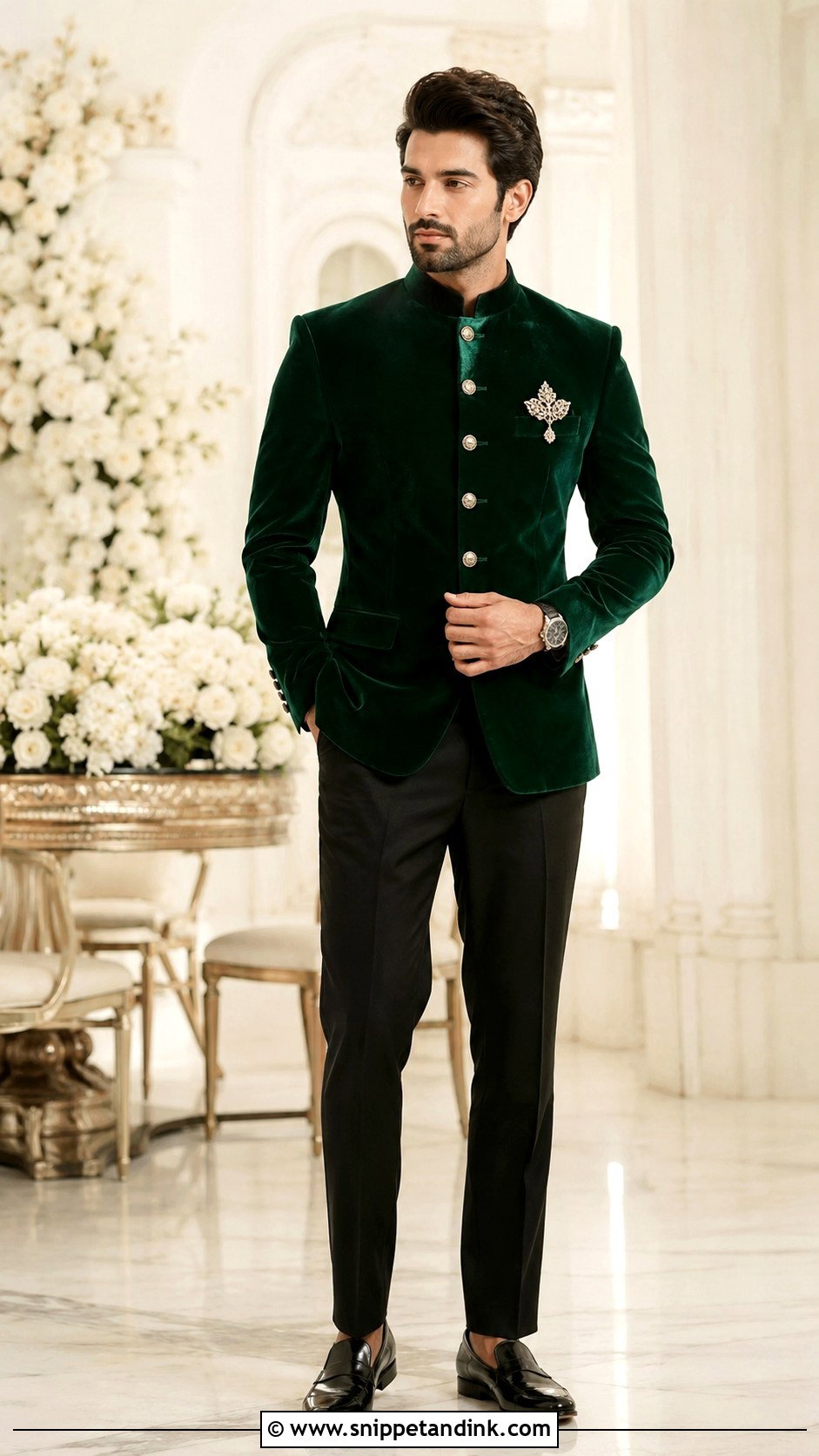
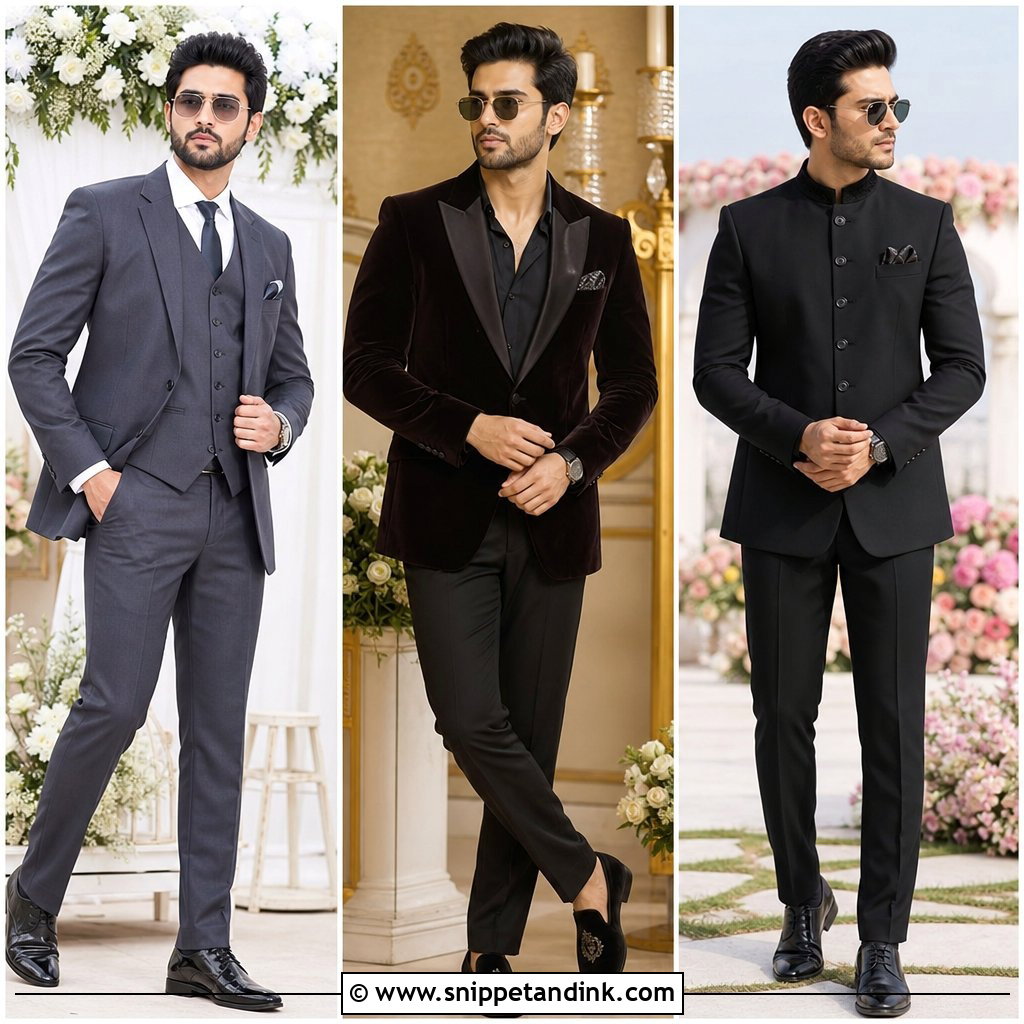
Velvet belongs to cool-weather celebrations. In a hot marquee it’s miserable. Emerald, burgundy, navy or deep plum glow under venue lighting, and the pile gives a depth flat fabric can’t. Balance the jacket with plain black tailored trousers and a black shirt or high-neck base, then polished loafers or formal shoes. One accessory is enough: a metal brooch, a pocket square or a fine chain. Skip all-over embroidery, because the fabric already looks rich. Two practical points from fittings. Velvet crushes wherever you sit and lean, so keep it on a hanger until you leave the house. And the chest should be close without pulling at the buttons, since strain marks on velvet show as pale, shiny patches in photos.
8. Black Tuxedo With Bow Tie
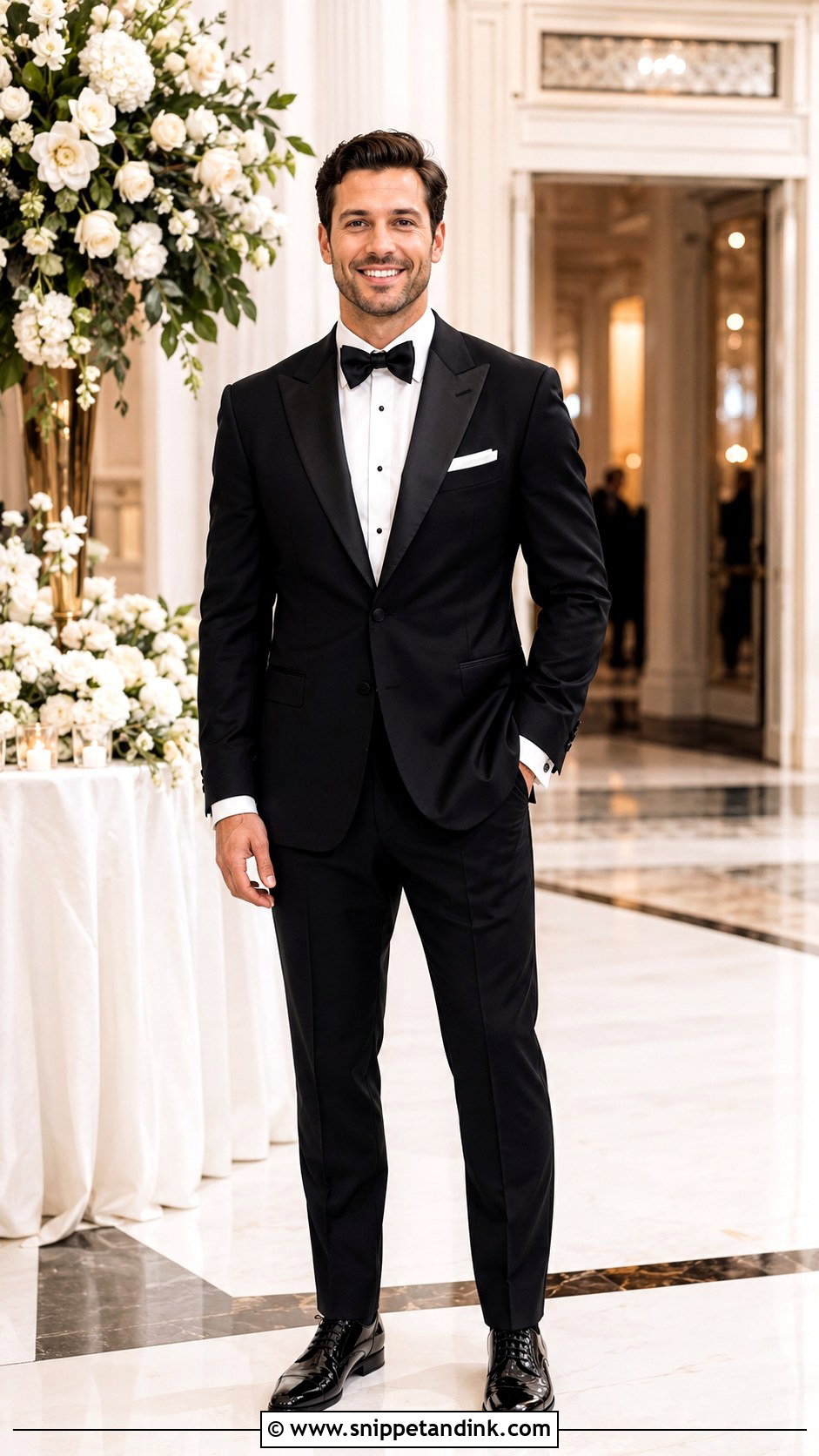
For a black-tie wedding or a formal evening reception, the black tuxedo is still the dependable answer. Single-breasted, satin peak or shawl lapels, matching trousers, a crisp white dress shirt and a black bow tie you’ve actually tied yourself. A pre-tied one looks flat next to the groom’s in close-ups. Polished black Oxfords, black dress socks, cufflinks and a simple watch complete it. Tailoring decides whether a tux looks rented or owned, so I check sleeve length, trouser break and the jacket shoulders well before the day; you want a sliver of shirt cuff showing below the sleeve. A boutonniere or pocket square in the family colors ties you to the bride’s side. Leave casual belts, colorful sneakers and oversized accessories at home.
9. Navy Suit With Floral Tie
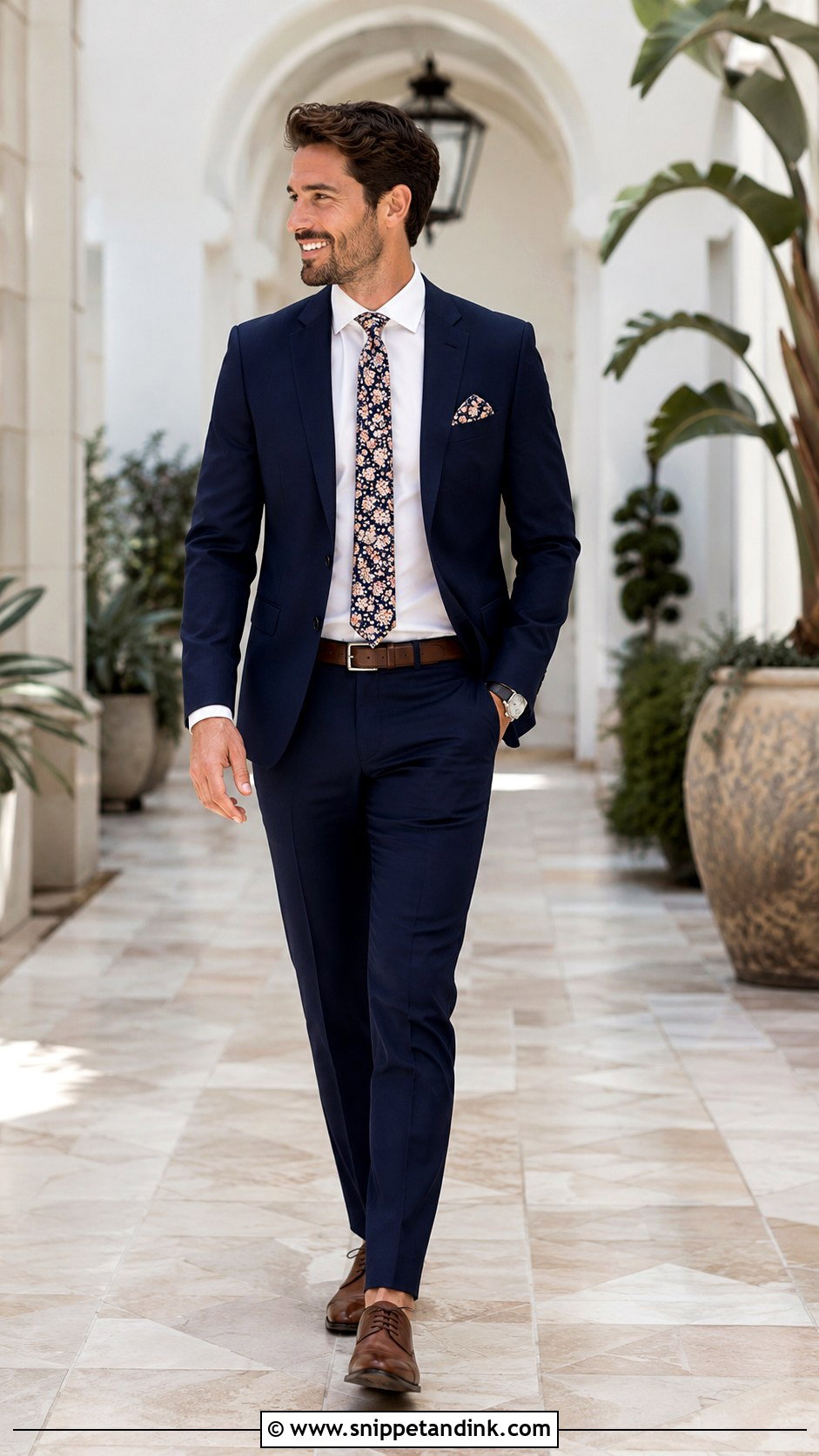
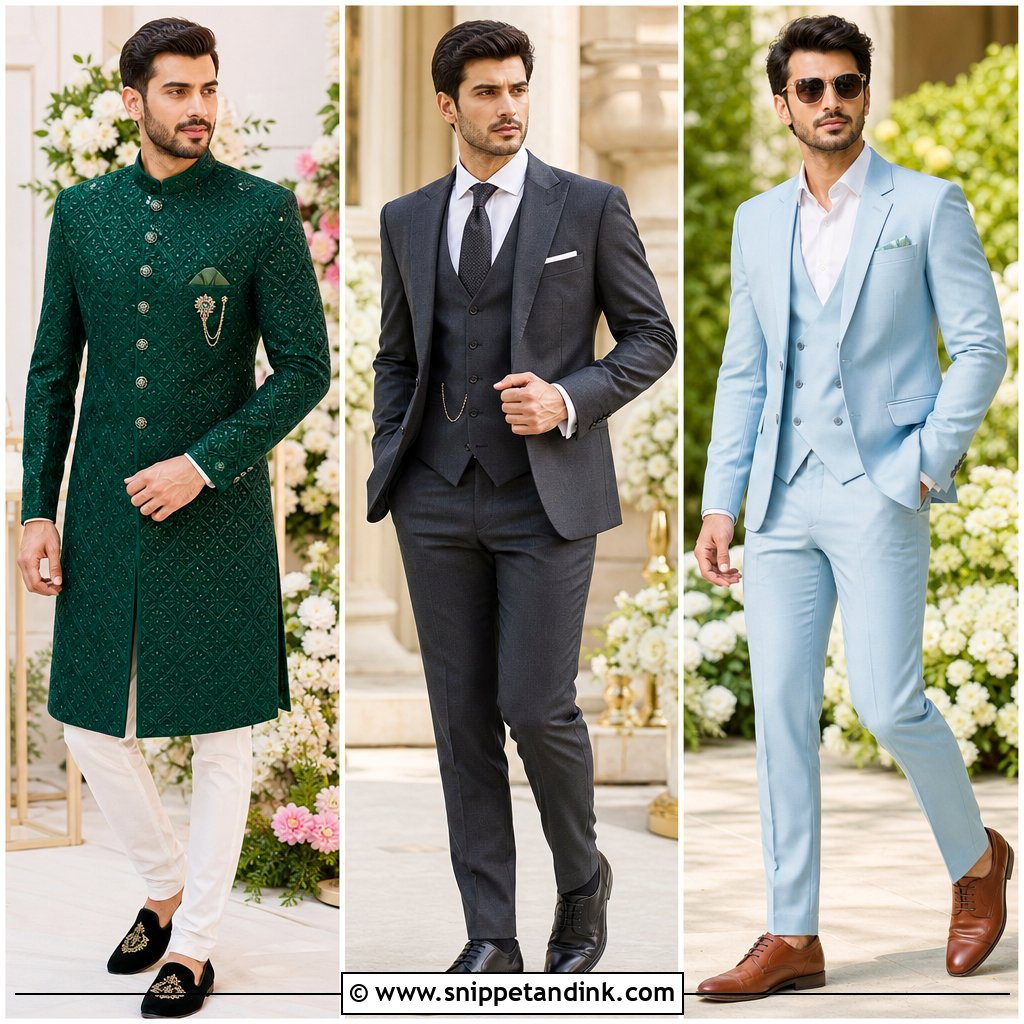
Not every wedding calls for a tuxedo or traditional dress. A well-fitted navy suit covers semi-formal ceremonies, hotel weddings and daytime receptions with a white or pale blue shirt and a floral tie that picks up the wedding palette. Keep the florals small and tightly spaced. A large print reads as a novelty tie from across the room. Brown Oxfords soften the suit for daytime, black shoes push it more formal, and the belt should match whichever you pick. In warm weather, a lightweight tropical wool breathes better than most men expect. It takes you from ceremony to dinner, speeches and dancing without a change.
10. Beige Linen Suit With Brown Loafers
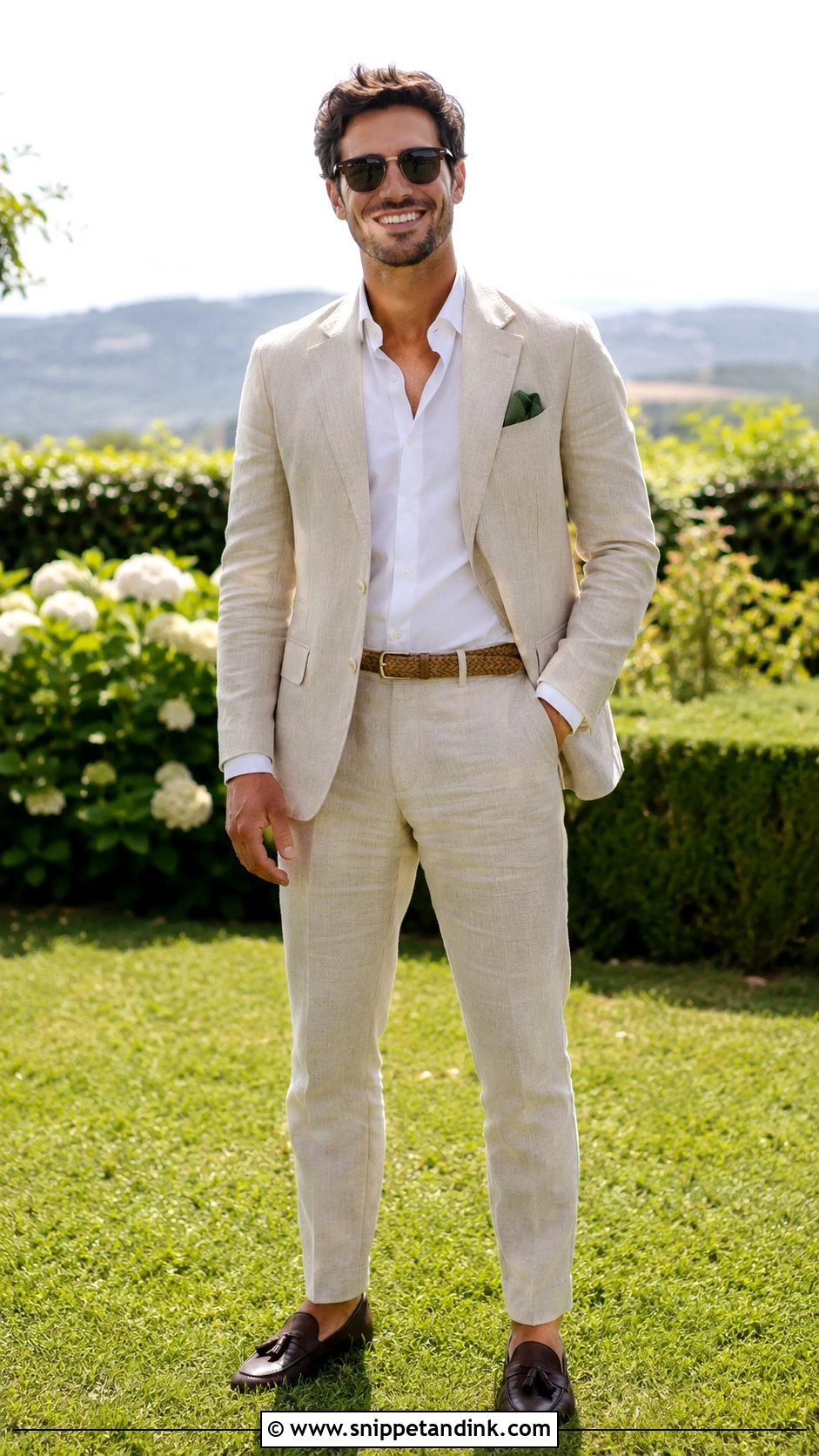
Outdoor summer weddings are where linen earns its place, and also where it misbehaves. Pure linen creases the minute you sit. A linen blend with some wool or cotton in it holds its shape noticeably better, and that’s what I point a brother toward when he’ll be photographed all day. Beige with a white dress shirt, a woven tan belt and dark brown loafers is the classic pairing. At a coastal or garden celebration the tie can go if the dress code allows; otherwise choose something muted in green, blue or terracotta, with a patterned pocket square for personality. Have the trousers tailored rather than left loose, because spare fabric makes linen look slept-in. Beige sits easily beside pastel bridesmaid dresses and natural flowers.
11. Yellow Kurta With White Pajama Pants
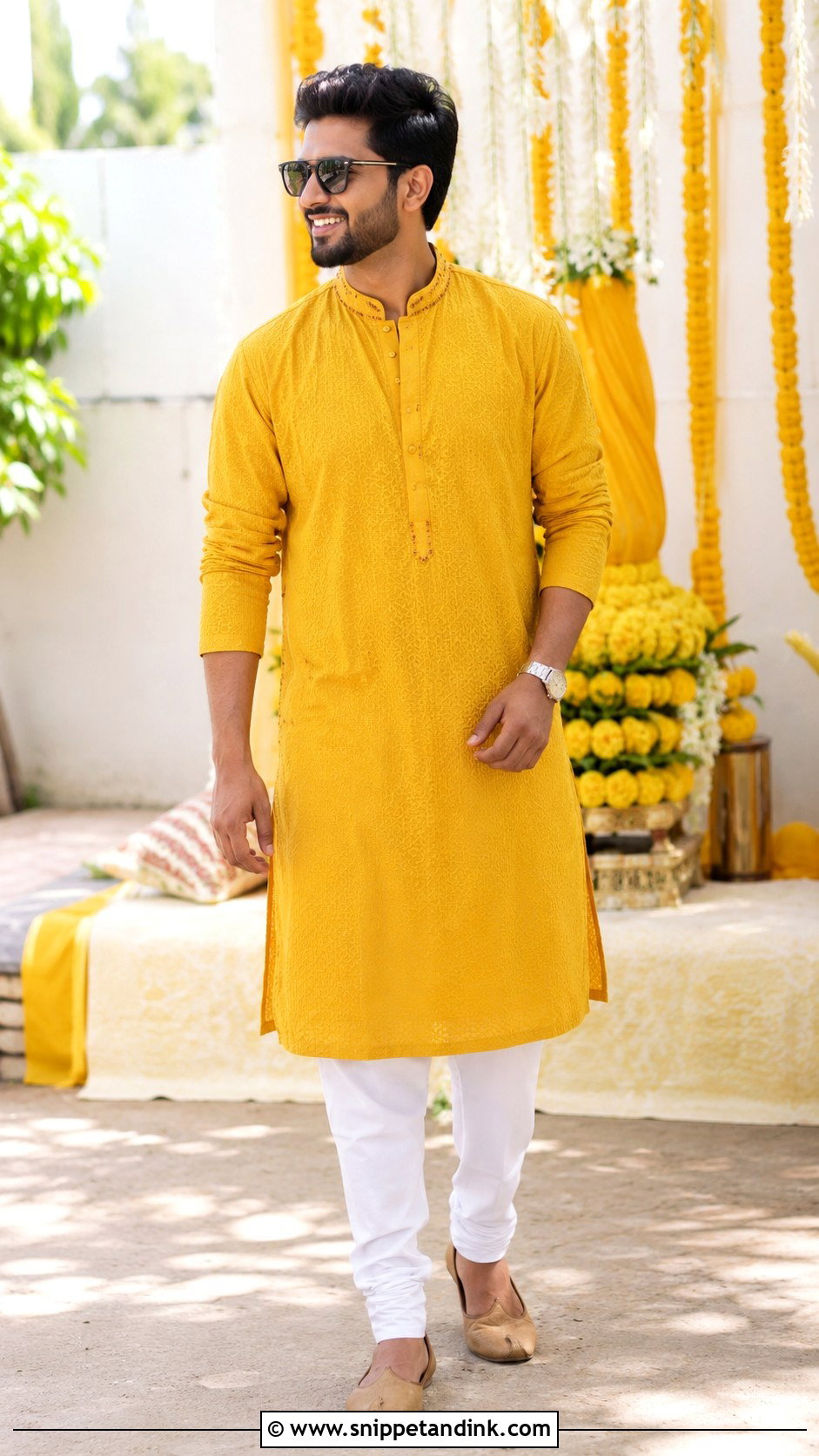
A yellow kurta is the natural choice for a haldi ceremony or any colorful daytime gathering. Go for breathable cotton, linen or a light silk blend, with crisp white pajama pants or tapered trousers. Here’s the honest part: turmeric paste stains, and on white fabric it rarely washes out completely. Treat this as an outfit you’re happy to sacrifice, and save delicate shoes and expensive fabric for later functions. Tan juttis or brown sandals cope with a wet floor. A simple watch, and sunglasses if it’s outdoors, are all the accessories you need while you join in the rituals and help the family.
12. Green Kurta With Printed Waistcoat
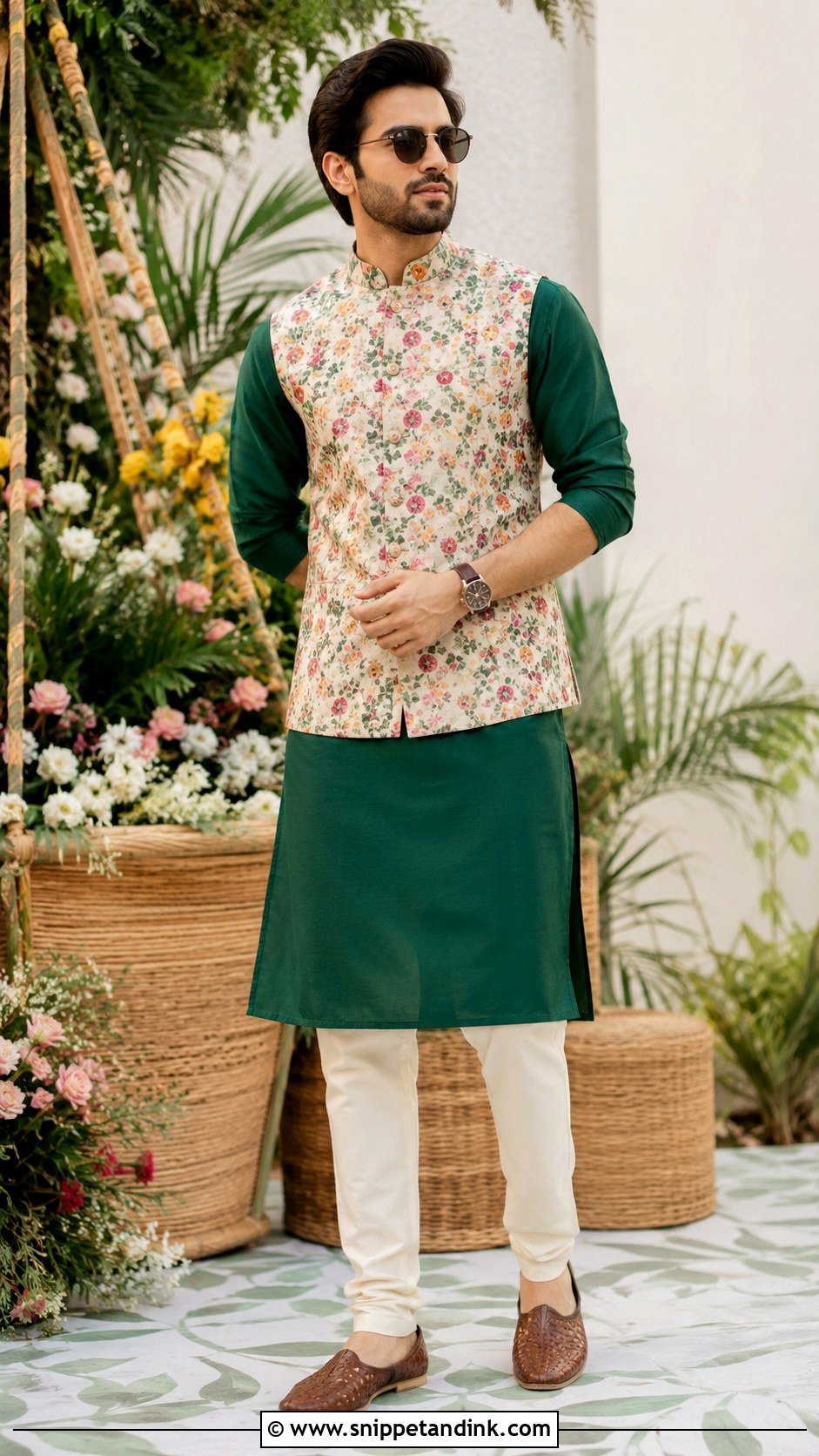
Greens feel right at a mehndi. Start with an olive, mint, sage or emerald kurta, add a printed waistcoat with complementary floral or geometric details, and keep the trousers plain cream so it doesn’t get busy. Brown juttis or loafers and a leather-strap watch finish it. If the waistcoat is bright, repeat one of its shades in a pocket square instead of adding more pieces. At the fitting I always ask a brother to lift both arms over his head; a kurta cut tight under the arm rides up the first time he dances. Wet henna is everywhere at a mehndi as well, so keep your sleeves clear of anyone whose hands are still drying.
13. Jewel-Tone Jacket With Black Kurta
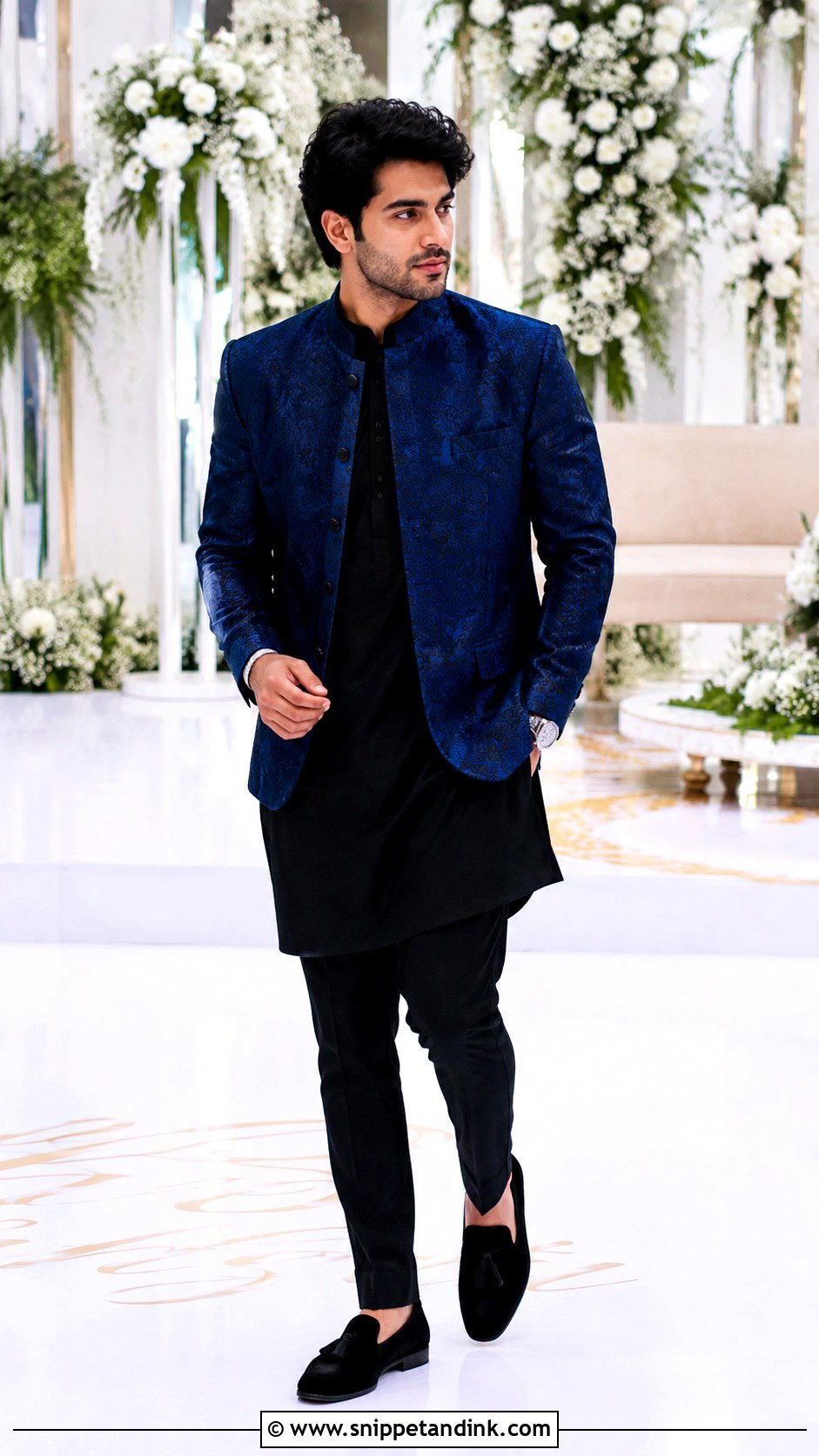
Music, dancing and colored stage lights make the sangeet the one night a jewel-tone jacket really works. Build on a black kurta and slim black trousers, then put the color into a structured jacket in sapphire, emerald, ruby or deep purple. Subtle embroidery, jacquard or metal buttons pick up the lights. Black velvet loafers and a sleek watch are enough. Skip the stole; it will slide off mid-performance. If you’re in a family dance number, rehearse in the real jacket at least once. Plenty of jackets that look sharp closed pull across the back when the arms go up, so make sure yours also looks finished worn open.
14. Monochrome Kurta With Contrast Stole
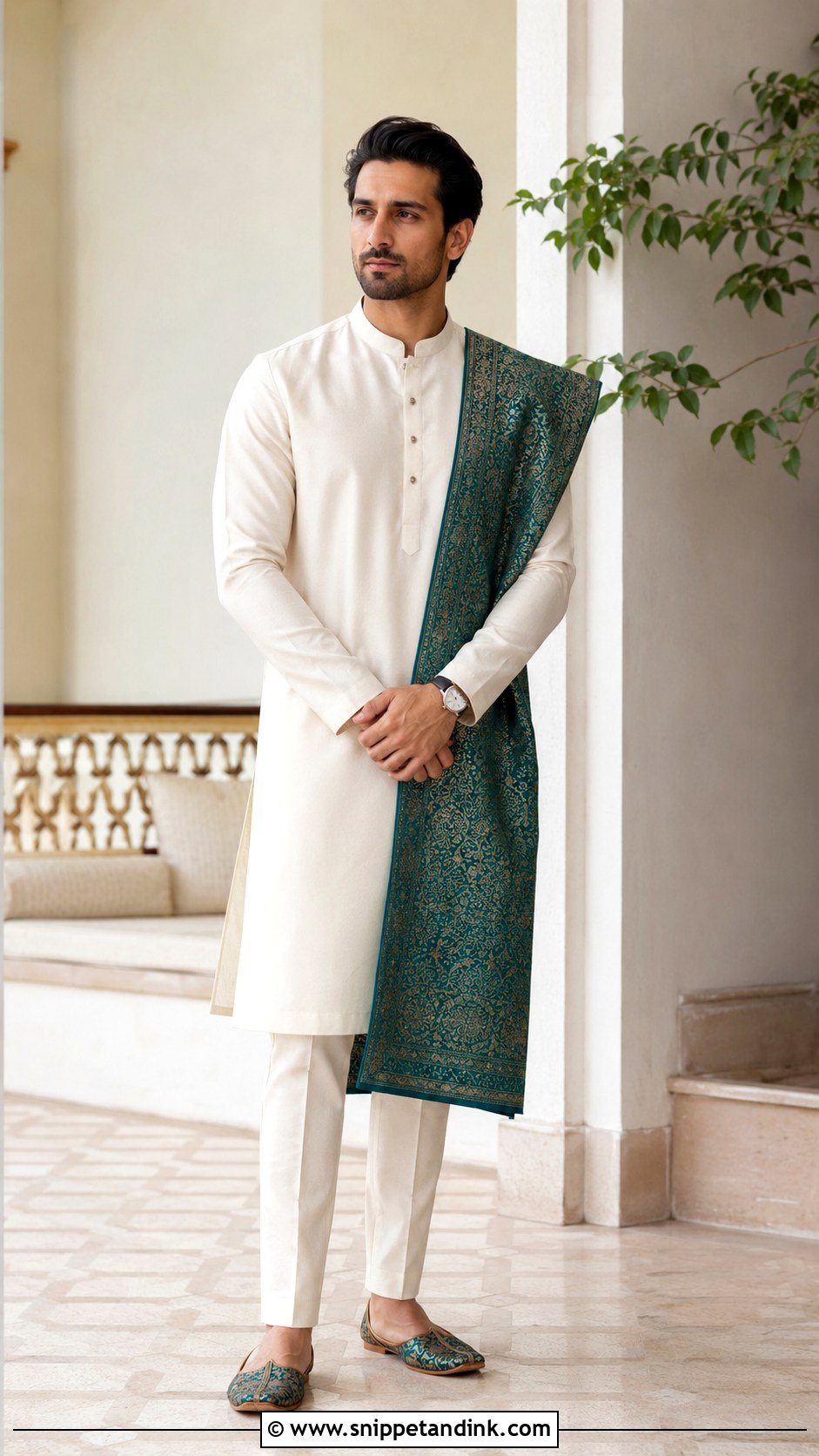
A monochrome kurta set is a clean base that one accessory can personalize. Go all-white, beige, gray, navy or black for kurta and trousers, then add a light stole in a color borrowed from the bride’s outfit. Drape it over one shoulder and pin it on the inside of the shoulder seam with a small safety pin. Left loose, a stole slides off within the hour; wrapped around the neck, it looks heavy. If the stole has embroidery or a woven border, keep the kurta completely plain so there’s one focal point. Coordinating juttis and a minimalist watch finish it. It suits intimate ceremonies and daytime family events where traditional dress is expected but a full sherwani would be too much.
15. Jodhpuri Suit With Dress Shoes
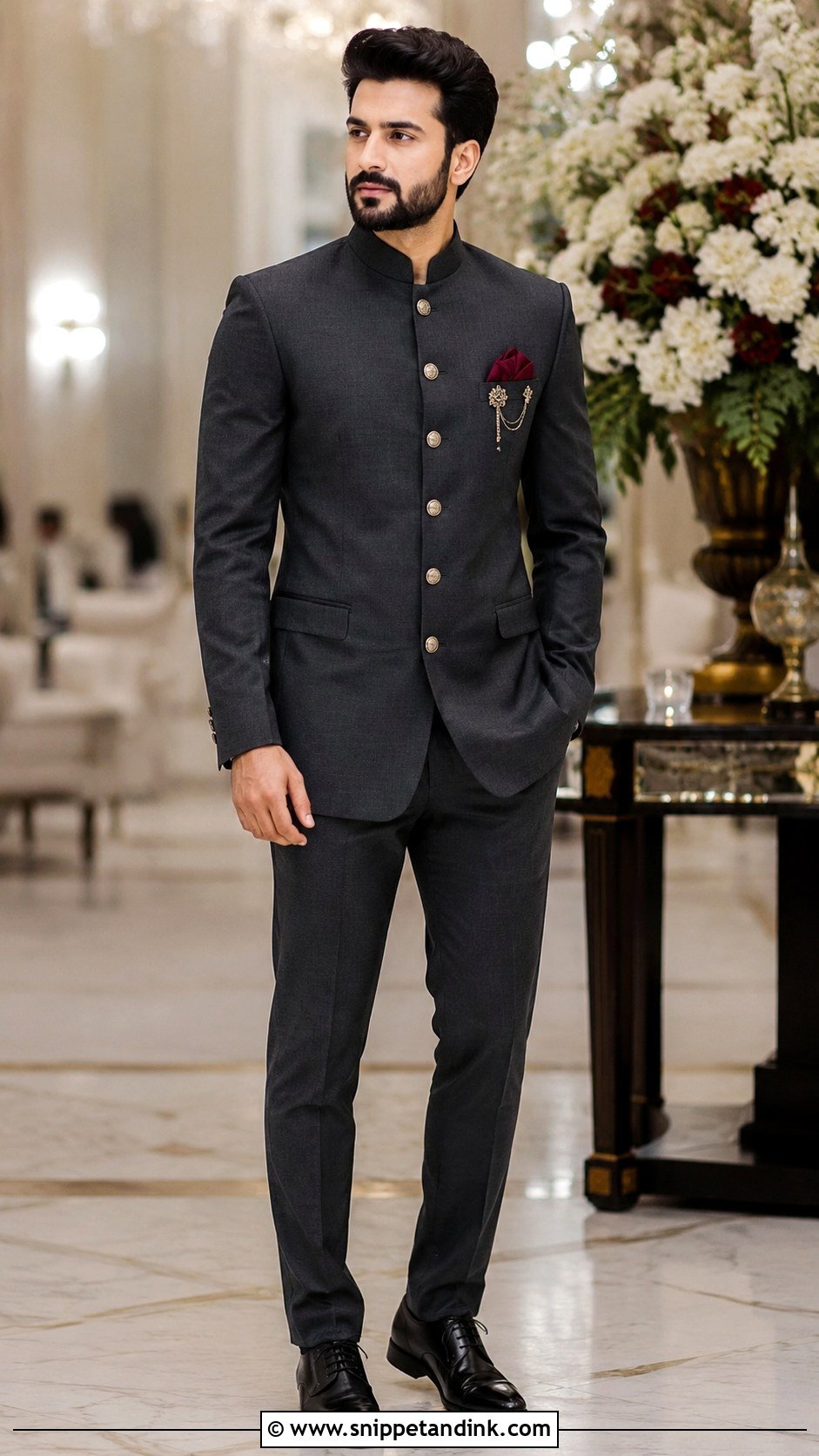
A Jodhpuri suit puts a traditional high-collar jacket over formal trousers, which is why it handles a grand reception so well. Charcoal, navy, black or deep wine all work, with matching trousers. Decorative metal buttons or one restrained brooch show off the structure, and a plain shirt or high-neck base underneath keeps the neckline clean. Black Oxfords and matching dress socks finish it. The collar is where fit goes wrong. I check it with two fingers slipped inside, because a collar that feels snug at the fitting feels worse after a long dinner. Get the shoulders, sleeves and waist right as well, and the suit gives you real presence without copying the groom. If there’s a pocket square, take its color from the family’s palette.
16. Silk Kurta With Brocade Waistcoat
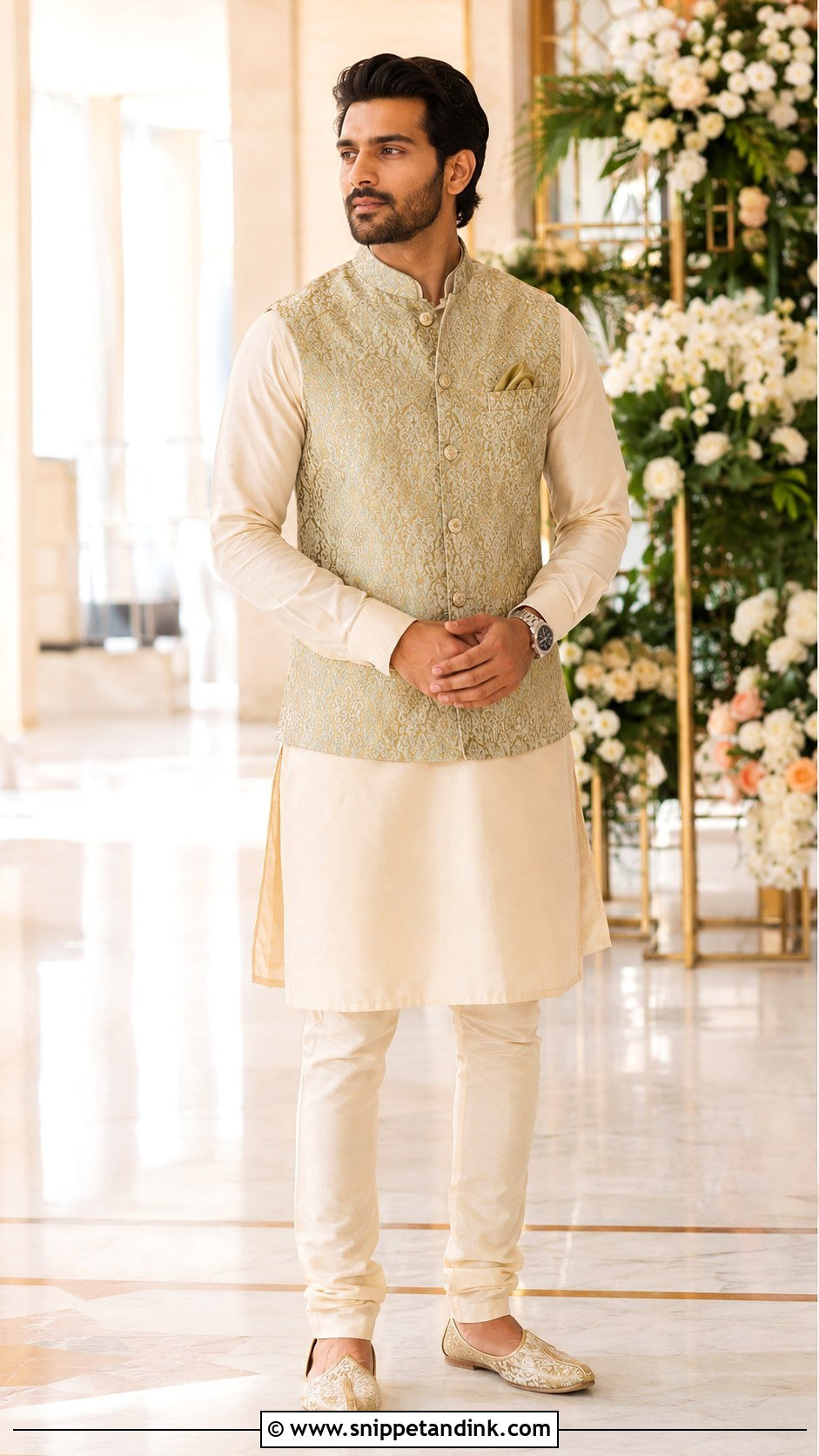
A silk kurta and brocade waistcoat give you texture at the ceremony without the weight of a full sherwani, which matters in a warm hall. Start with a solid kurta in cream, gold, navy, maroon or sage, then a fitted waistcoat whose woven motifs complement the base color rather than match it exactly. Straight trousers look modern; churidar is more traditional. Embroidered juttis and a metal watch complete it. Brocade doesn’t stretch, so have the waistcoat fitted over the actual kurta you’ll wear. One fitted over a thin shirt will gape once the silk goes underneath. Button it for formal portraits and open it while you move around the venue.
17. Dhoti Kurta With Embroidered Jacket
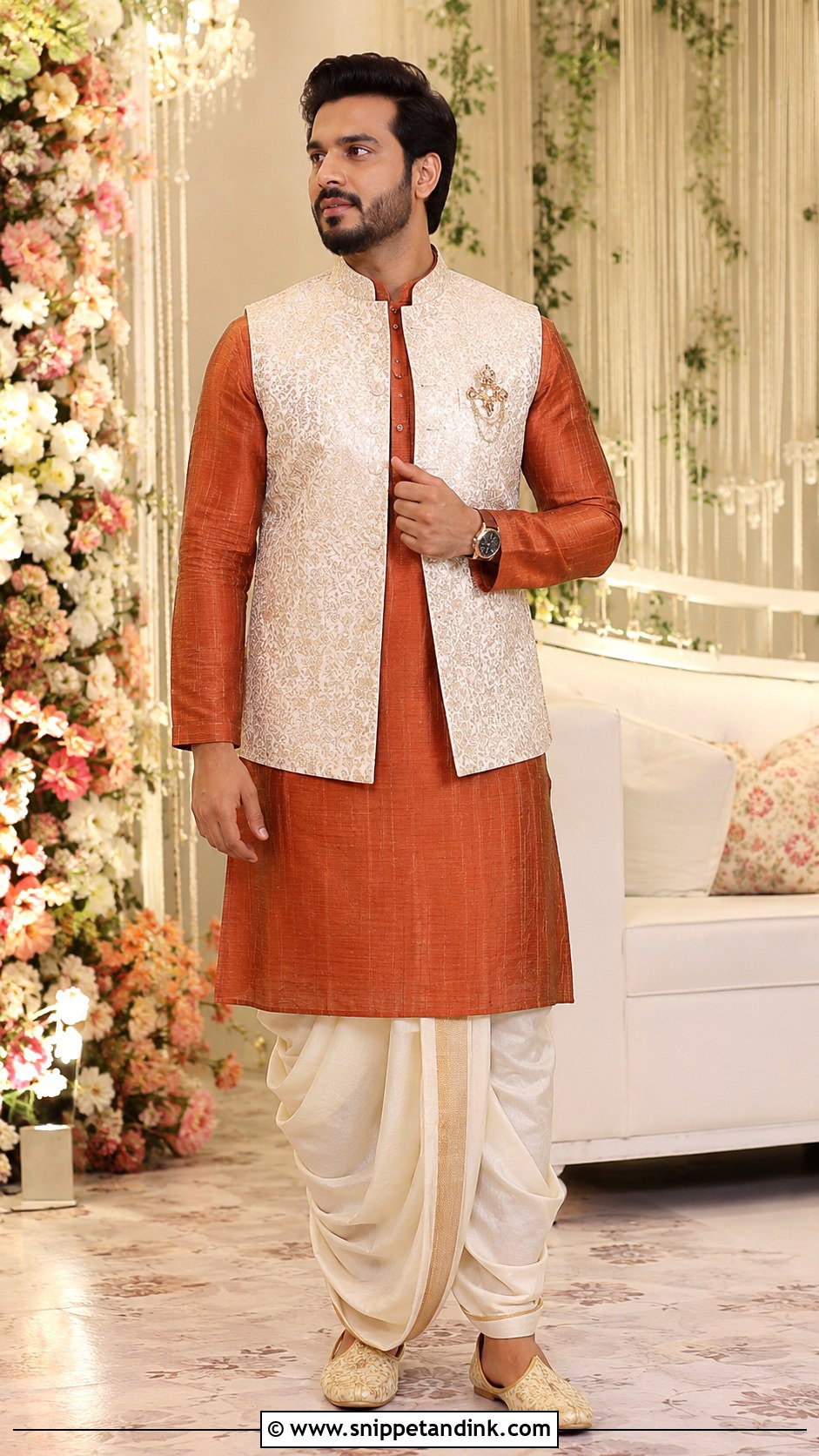
A dhoti kurta gives a graceful traditional line for cultural ceremonies and festive daytime events. Unless you’ve tied one many times, buy it pre-draped. A hand-tied dhoti done in a hurry on the wedding morning tends to loosen by lunch, while a pre-draped one stays secure through walking and dancing. Pair it with a fitted knee-length kurta and a short embroidered jacket; ivory with mustard, or rust with deep green, are combinations I like. Traditional juttis, a simple watch and a small brooch are enough. Leave out the long stole, since it fights the drape. Watch the proportions too: a kurta or jacket that’s too long buries the pleats you chose the dhoti for.
18. Long Prince Coat With Tapered Trousers
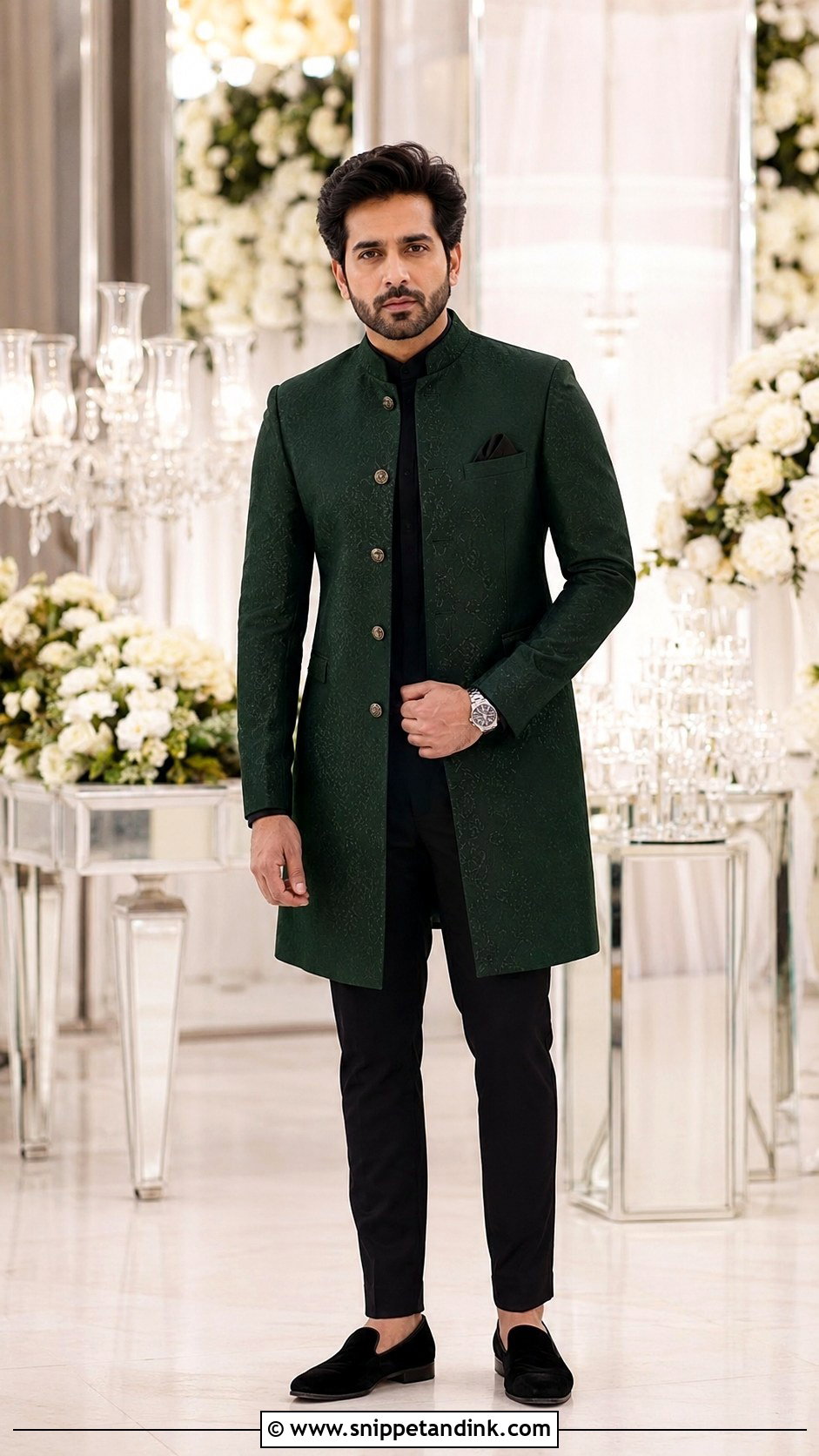
A long prince coat brings formal drama while keeping a structured, masculine shape. Go knee-length in navy, charcoal, bottle green or maroon, with subtle embroidery or statement buttons down the front. Wear it over a plain high-neck shirt or light kurta with tapered black or matching trousers, velvet loafers or polished shoes, and a neat pocket square. Before you commit, climb a flight of stairs in it. The hem and vents should let you take steps freely, especially at venues spread over several levels, and the coat should fall straight when you sit rather than bunch at the hips. Keep everything else quiet; the length is already the focal point. Evening receptions and ballroom entrances with the family are where it shines.
19. Coordinated Pastel Kurta With Turban
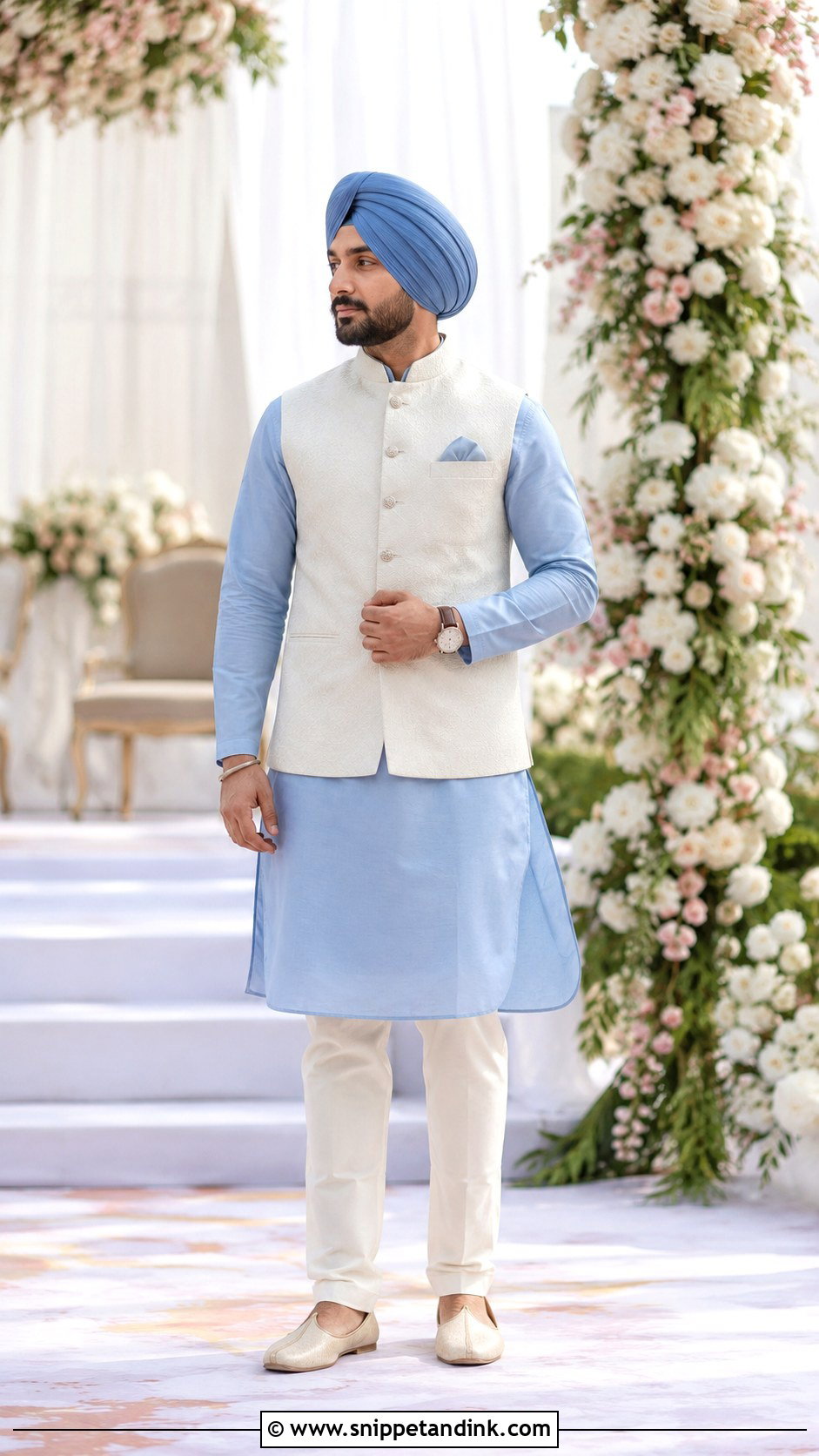
Coordinated color links the bride’s brother to the rest of the close family in pictures. Pick a pastel kurta set in powder blue, peach, mint, lilac or soft yellow, then a turban in a deeper version of that color or one taken from the wedding palette. A plain cream Nehru jacket adds structure without competing with the headwear, and neutral juttis and a traditional watch finish it. Two things I’d insist on. Confirm the turban color with the couple before ordering, in case that shade is reserved for the wedding party. And plan who ties it: a pre-tied safa is simplest, but if they’re tied on the morning, build real time for each man into the schedule and finish before the photographer arrives.
20. Charcoal Reception Suit With Open-Collar Shirt
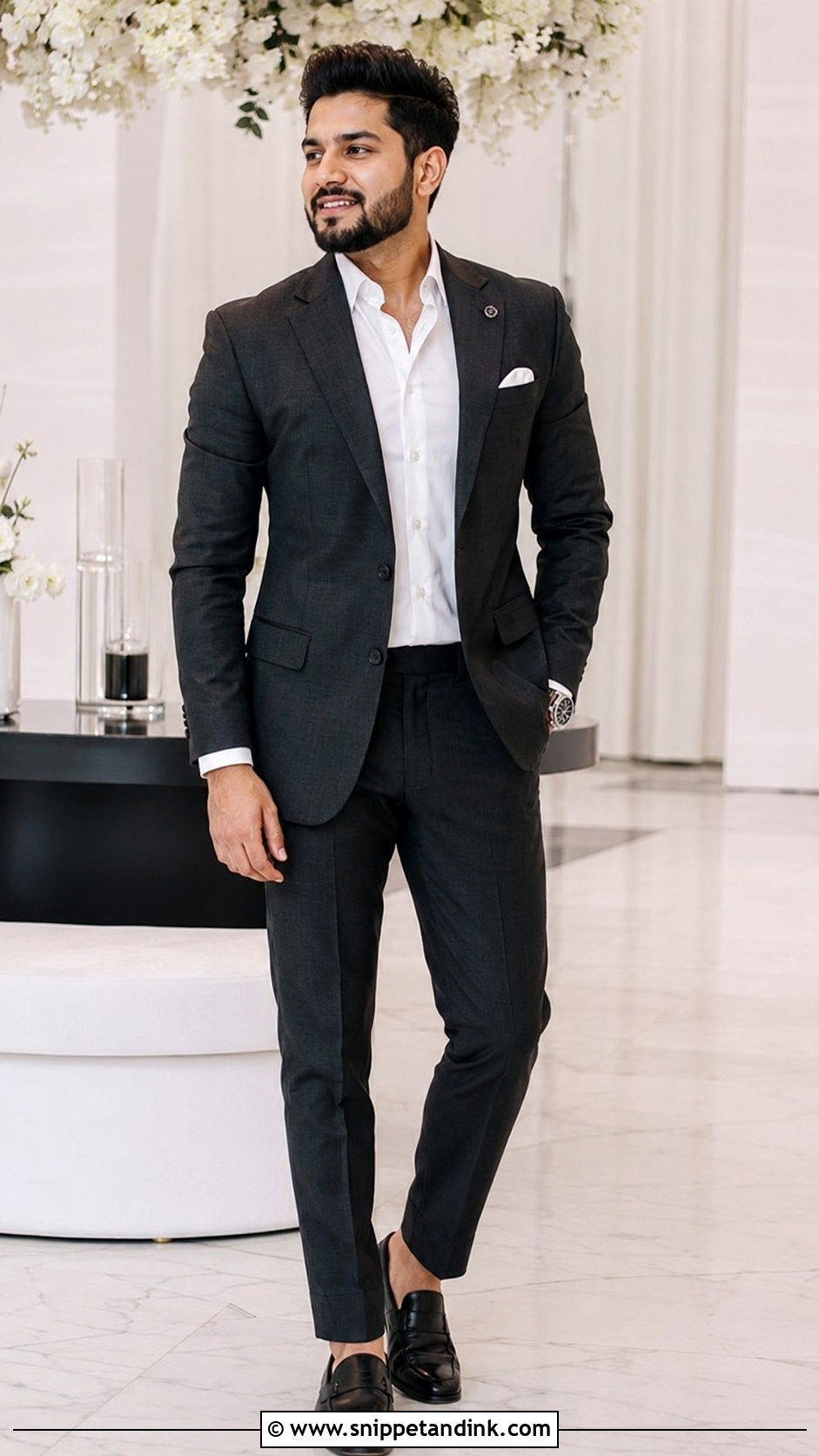
For a reception that’s formal but not black tie, I like a charcoal suit with an open collar. It looks current without looking underdressed. Choose a sharply tailored two-piece and a white, black or muted jewel-tone shirt with the top button undone. The collar is the detail most men miss: a soft collar worn open collapses under the lapel, so pick a shirt with a firmer collar or one cut to be worn without a tie. Black loafers or lace-ups, a pocket square, a metal watch and a discreet lapel pin complete it. You can move between speeches, photographs and dancing in comfort. A haircut a few days before and a freshly pressed shirt are what make it look intentional.
How Much Time Tailoring Really Needs
Lead times vary a lot by tailor and by season, and wedding season is when everyone is busy. As a rough guide, a made-to-order sherwani or bandhgala with embroidery can take several weeks before the first fitting, and a custom Western suit is similar. Off-the-rack pieces still need alterations, usually a week or two. I like a final fitting about a week before the first function, with the shoes you’ll actually wear, because trouser length is set by the heel.
Leave space for a second round. Weight shifts in the months before a wedding, and a jacket that fit perfectly in spring can pull in winter. If you’re flying in, ask the tailor to finish everything before you travel rather than counting on a last-minute fix at the venue.
Pockets, Safety Pins and Everything Else the Day Throws at You
A sherwani or kurta often has no usable pockets, yet the bride’s brother is the one handed envelopes, a phone, the car keys and sometimes ritual items. Sort that out early. A small inner pocket can be added during alterations, or a trusted cousin can carry a pouch for you.
Many ceremonies also have you sitting on the floor, bending to touch elders’ feet or lifting things during a ritual, so test those movements in the full outfit. I pack a tiny kit for every brother I dress: a few safety pins, a stain pen, a spare pocket square, deodorant and blister plasters. You won’t need most of it, and the one item you do need will save a photo.
Dressing the Part Without Upstaging the Groom
The right outfit is the one that respects the wedding’s style and still lets you work all day. A sherwani, a bandhgala, a relaxed kurta and a tailored suit can each be correct when they’re matched to the right event. Coordinate colors with the couple, but never copy the groom’s clothing or his signature accessories. Book alterations early, break your shoes in, and test how you move in every outfit before the week begins. Then add one personal touch, a family brooch or a turban in the wedding colors, and you’ll look like you belong in every portrait.
You'll Like These Ideas:


Leave a Reply