
When a bride with a fuller bust tells me nothing fits, the problem is almost never the neckline she picked. It is the construction underneath. Firm lining, cups placed at the right height, wide straps, boning and a true inner corset do the real work, and which of those you need depends on your breast shape, torso length and what your seamstress can alter. No single cut suits every full-busted bride. That is why I’ve noted what to look for inside each dress below, not just what it looks like. Bring the bra or shapewear you plan to wear to every try-on, and move in each gown as you would at the reception.
Your Underbust Number Matters More Than the Size on the Tag
Bridal sizing usually runs smaller than high-street sizing, and the chart is based on bust, waist and hip. For a full bust, the bust measurement alone often pushes you up two sizes, leaving the waist and back far too big. That is normal and fixable, but it helps to know your numbers first.
- Measure your full bust over the bra you’ll wear, at the fullest point, tape level all round.
- Measure your underbust directly under the breast, snug but not tight.
- Note the difference. A large gap means standard cups will likely be too shallow, and built-in or custom cups matter more than the dress size.
- Measure your torso from shoulder to natural waist. Short torsos often need the waist seam raised, long ones need a longer bodice.
Salon samples are usually a single size, often smaller than you, and are clipped onto your body. That makes judging support in a sample very hard. I ask the consultant whether the gown can be ordered with added cups, extra boning or a custom bust measurement, since some designers offer this for a fee.
1. Square Neck A-Line Wedding Dress
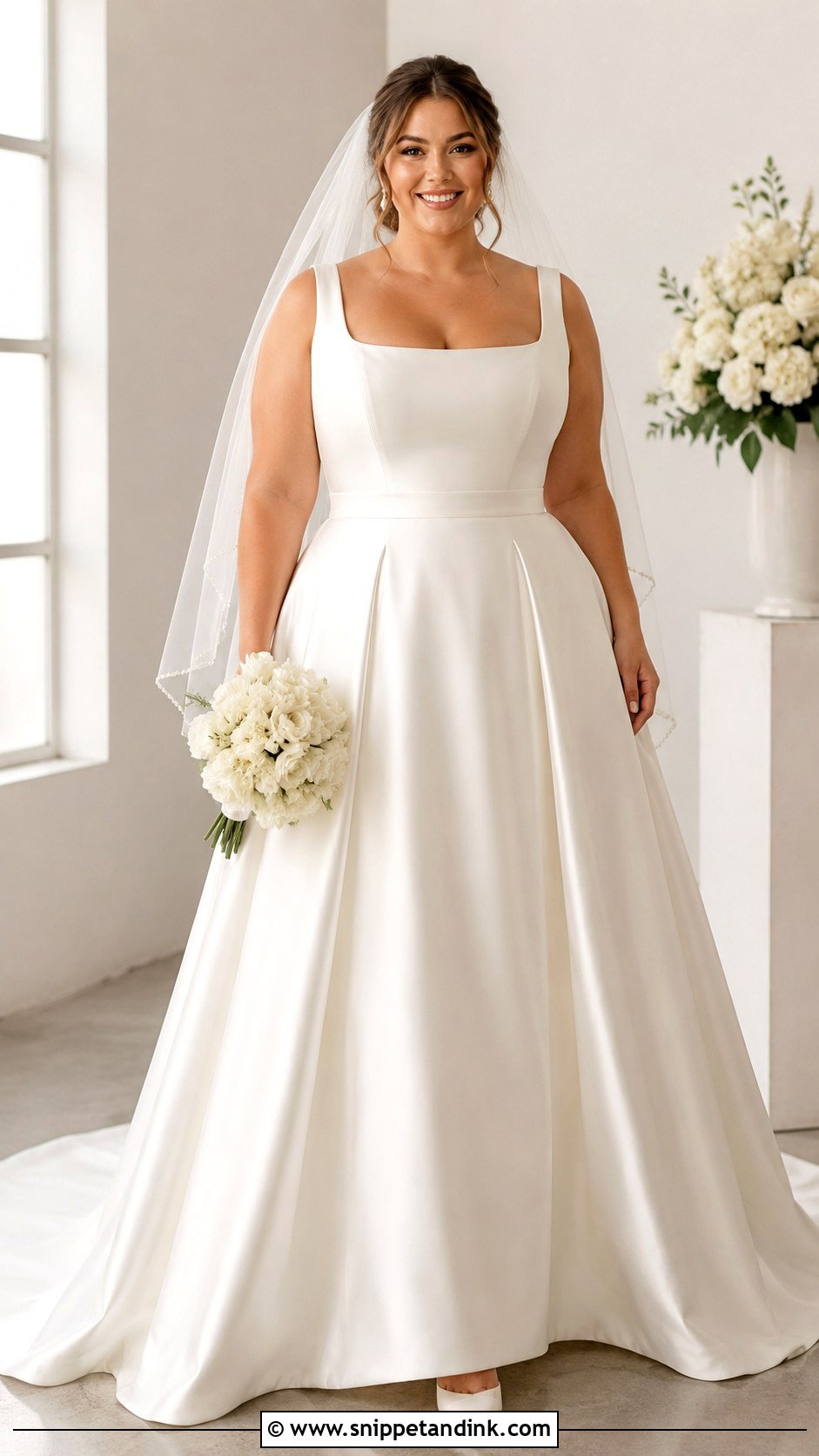
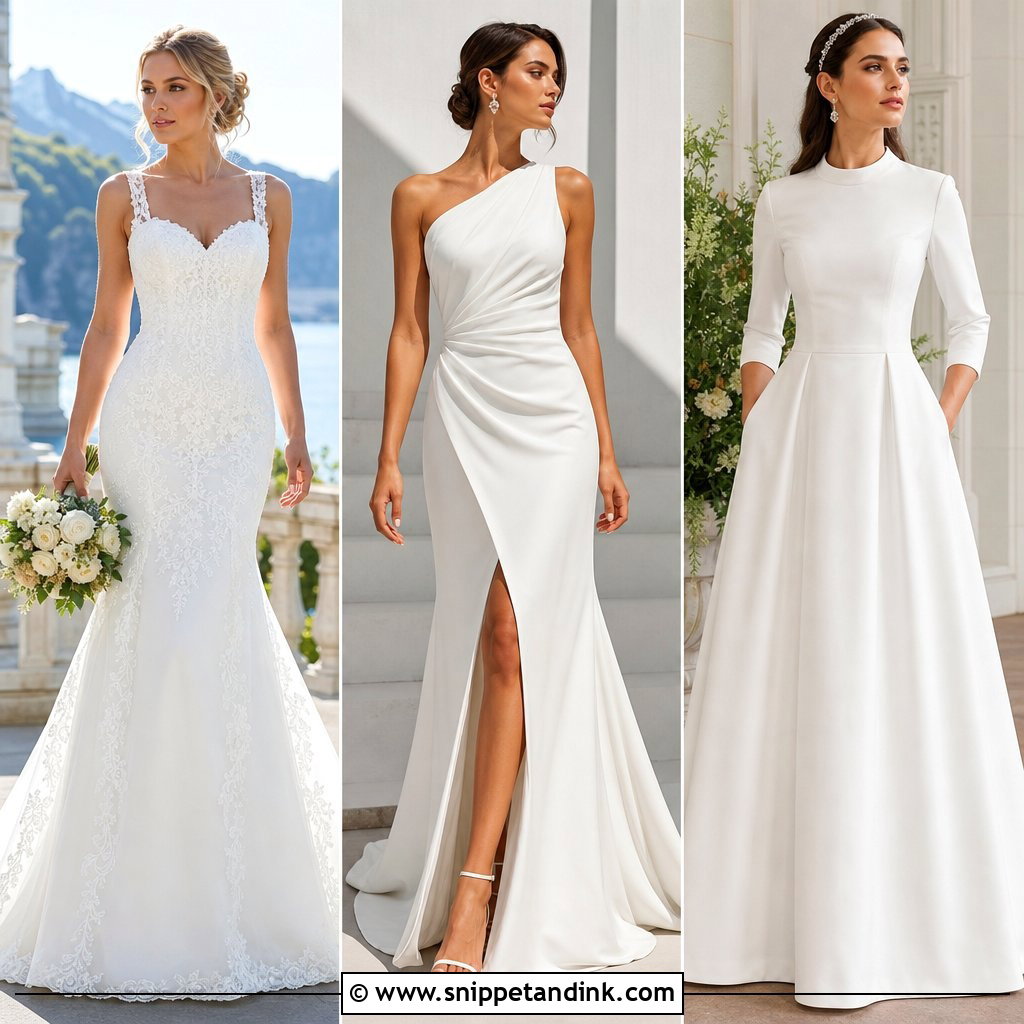
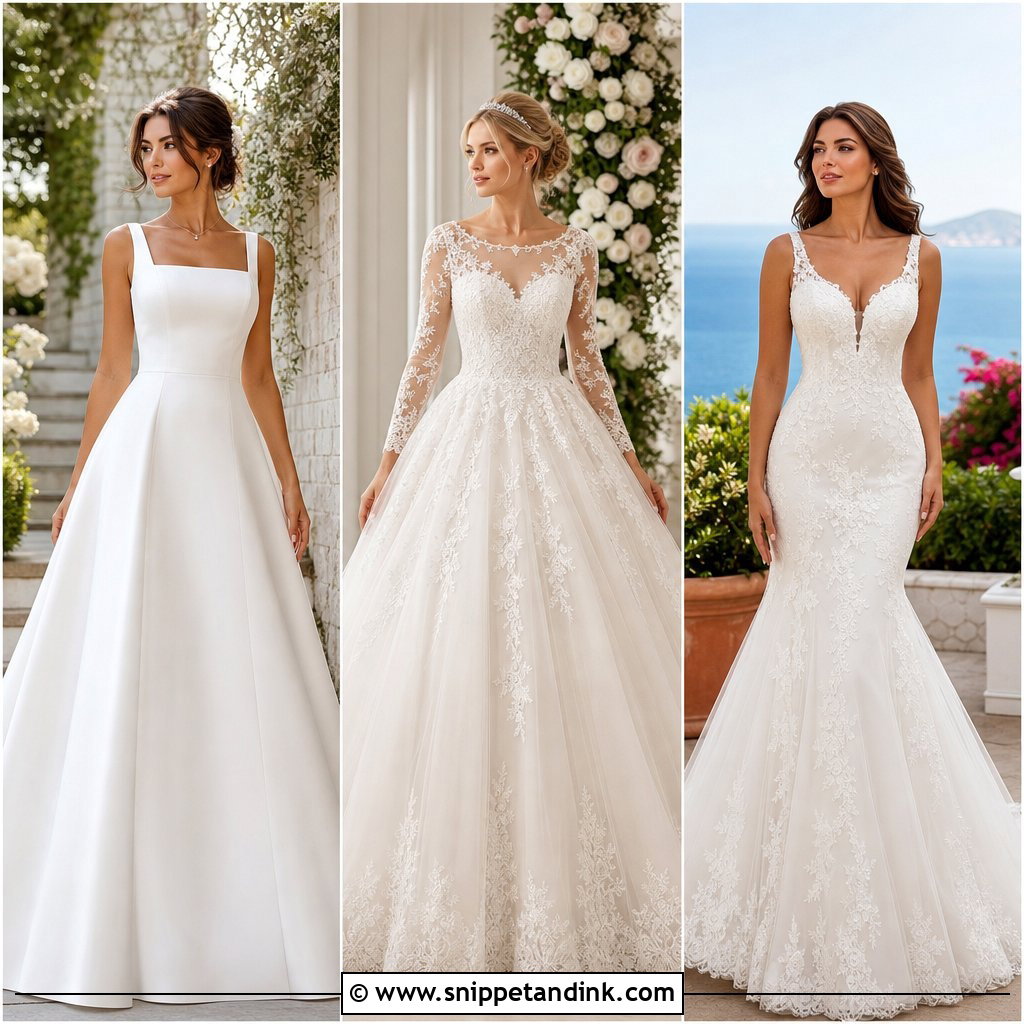
Square necks are one of my first suggestions for a large bust, because the straight edge sits above the fullest point and contains everything without a plunge. Look inside the bodice for wide straps, high side panels, firm lining and cups deep enough to hold all the breast tissue, not just the front of it. A lightly structured waistband separates bust from skirt without squeezing the ribs. Matte satin, mikado or layered crepe keep the surface smooth. Pearl drops, a fingertip veil, pointed pumps and a compact bouquet finish it. Watch for straps set too close to the neck. Ask the seamstress to adjust each strap and cup separately, since few women are perfectly symmetrical.
2. Sweetheart Corset Ball Gown Wedding Dress
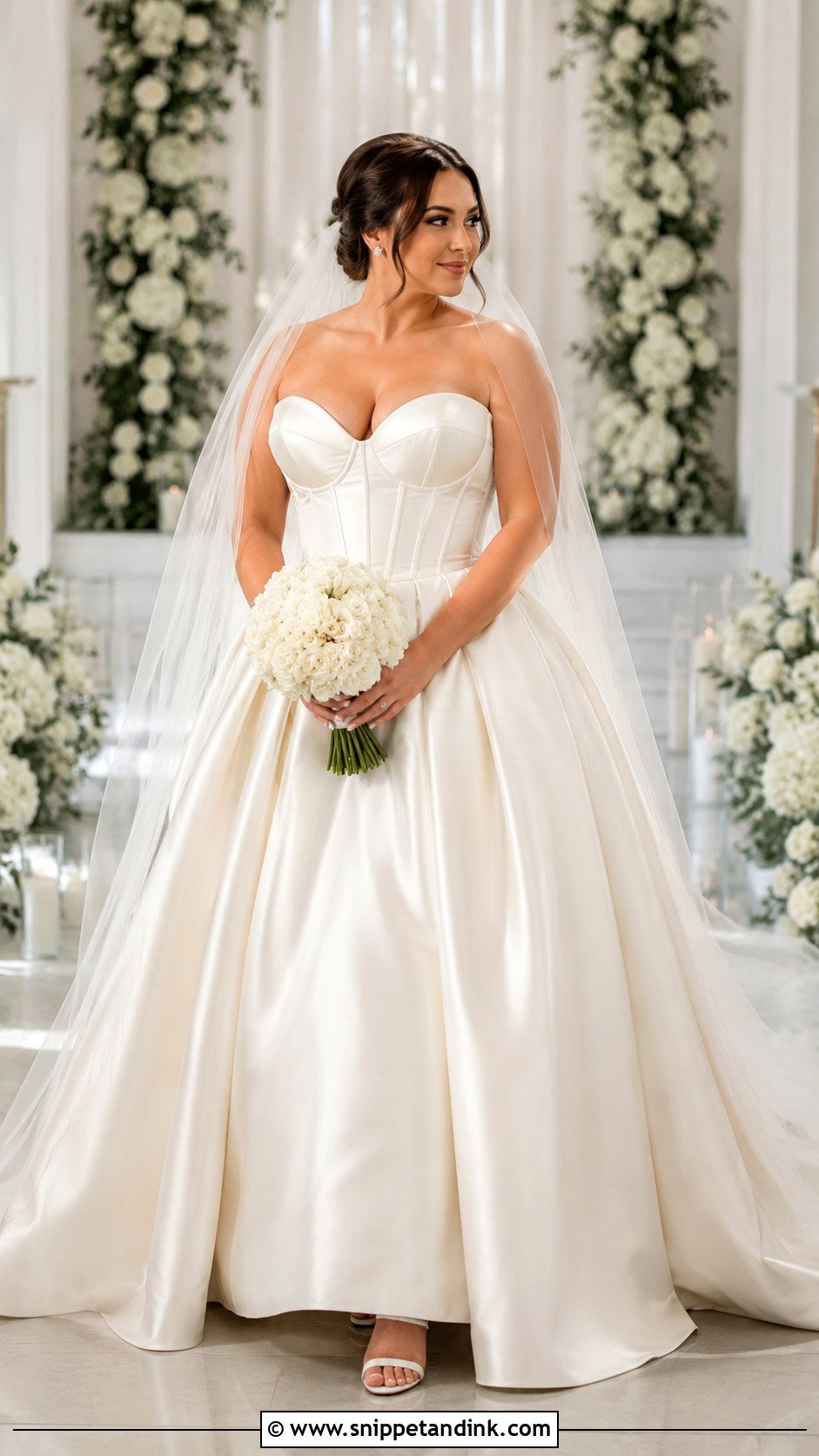
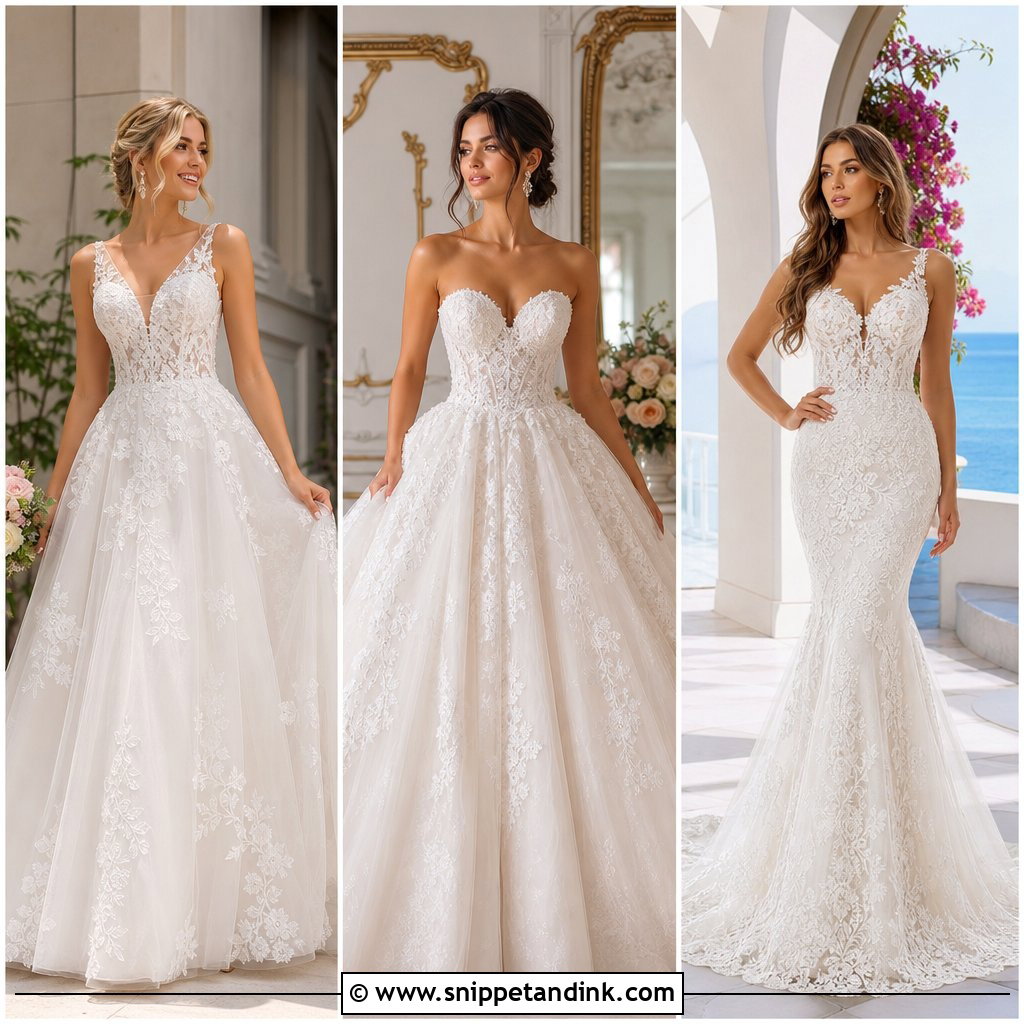
A sweetheart corset ball gown is about as bridal as a dress gets, and it can carry a full bust well if the corset is doing its job. That means support from the waist and torso, not from the neckline edge. I check for substantial boning, a firm waist stay, enclosed cups and a lace-up or precisely fitted back. The sweetheart curve should follow your chest without dipping so low that you worry every time you lean forward. A full skirt balances the top half when the waist seam sits at your natural waist. A simple cathedral veil, crystal studs and satin block heels suit it, with little or no necklace.
3. V-Neck Wedding Dress With Wide Straps
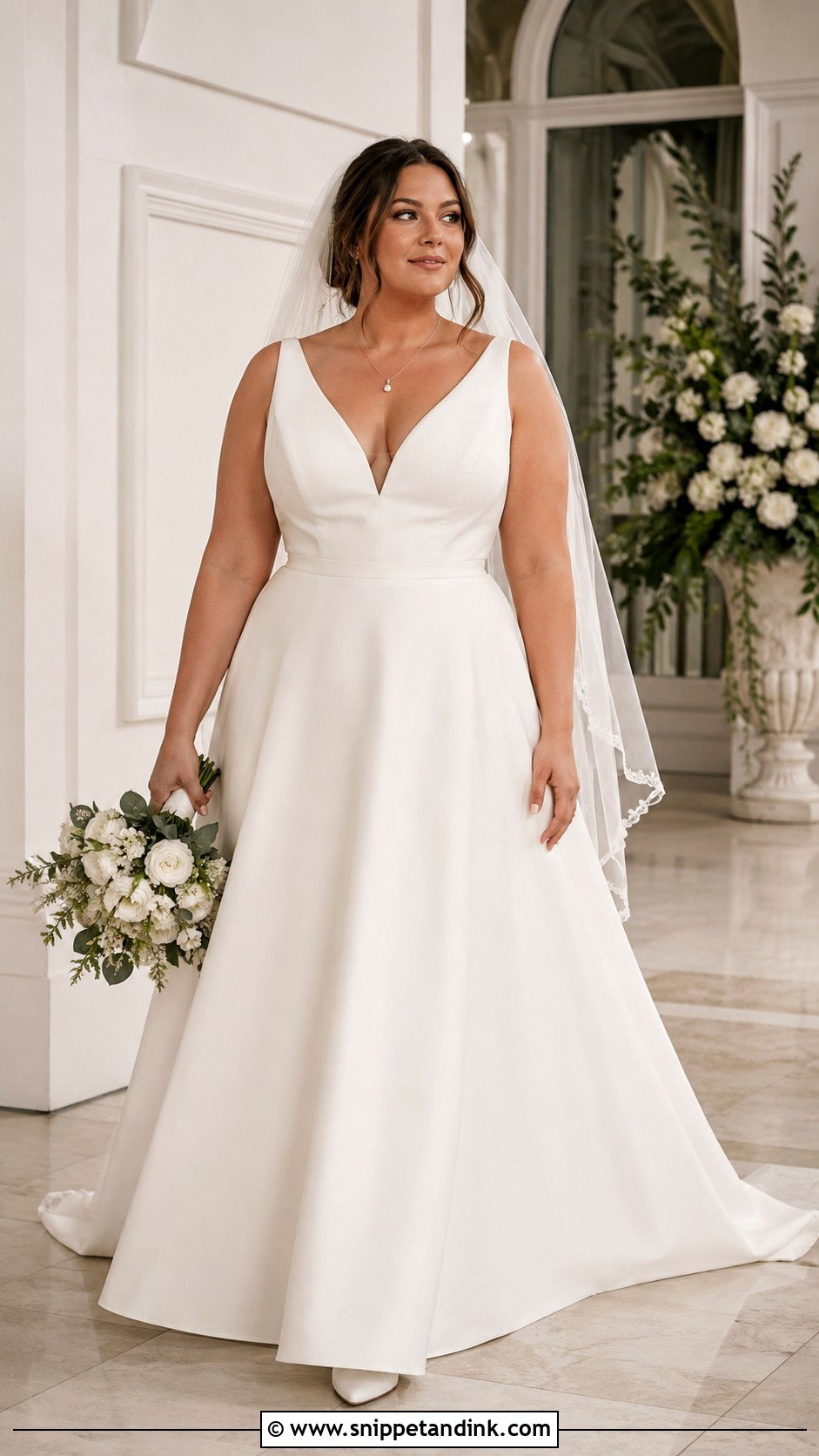
Can a large bust wear a V-neck? Yes, if the V is wide enough. A narrow plunge squeezes the bust toward the centre and often causes spillage at the sides, while a slightly wider V gives each cup room. I look for wide straps, full side coverage and a reinforced centre panel, over an A-line or softly fitted skirt. Boning helps, but the cups still need to match your shape and sit at the right height. A fine pendant, low bun, chapel veil, closed heels and a loose white and green bouquet finish it. At the fitting, bend forward and swing your arms. If the neckline shifts or gaps, it needs reshaping. Tape is a backup, not a fix.
4. Scoop Neck Mikado Wedding Dress
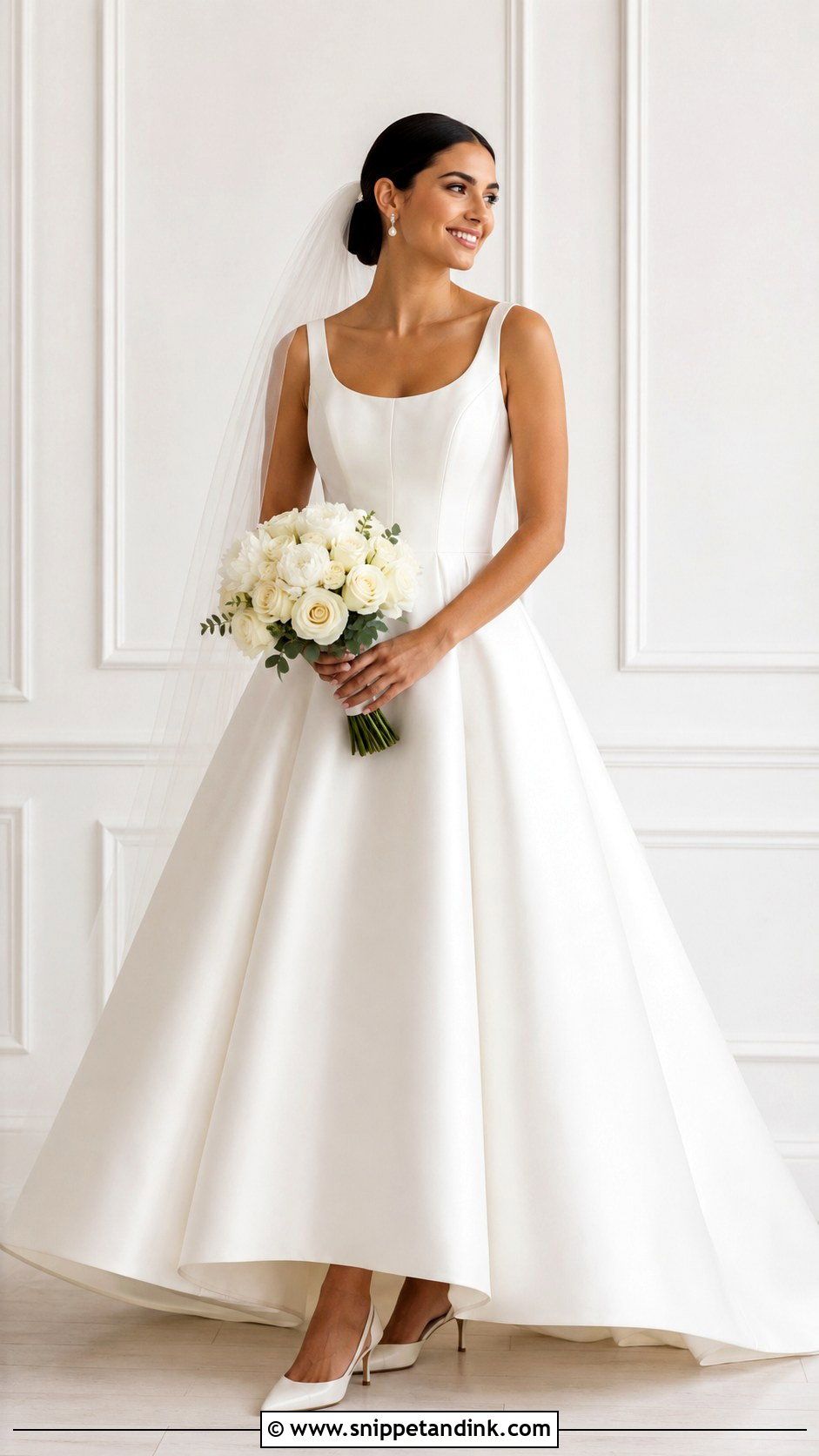
Mikado gives a scoop neck wedding dress a crisp, expensive finish, and its weight helps a bodice keep its shape. The scoop should sit above the fullest part of the bust and run into medium or wide straps. Princess seams are what I look for here: they curve over the bust and let a tailor shape the fit far more precisely than a bodice with only side seams. A full A-line skirt balances the structured top. Pearl earrings, a sleek chignon, a plain tulle veil and ivory slingbacks suit it. Skip padded embellishment across the chest. The finished bodice should lie flat to the skin with no loose fabric near the armholes.
5. Off-Shoulder Fit-And-Flare Wedding Dress
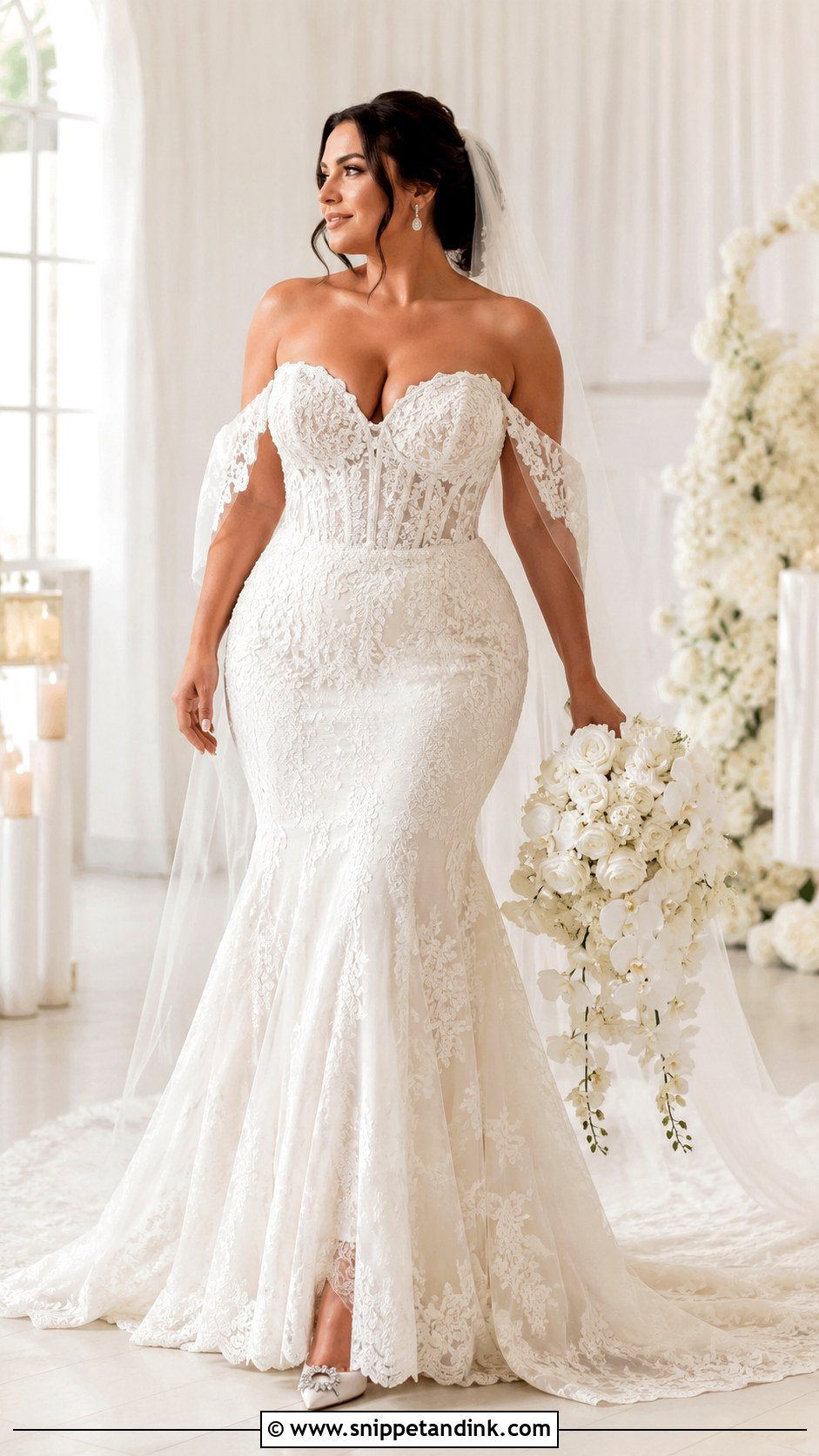
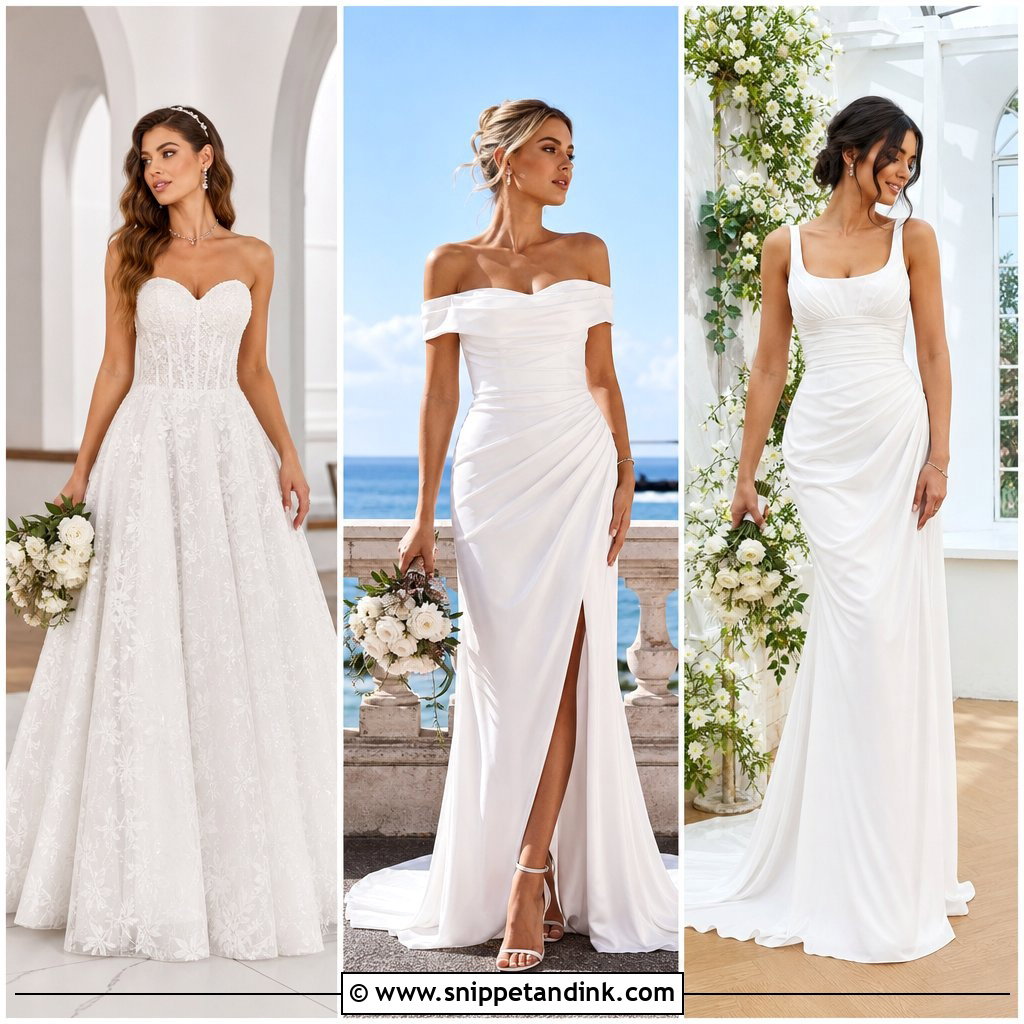
Off-shoulder sleeves on a fit-and-flare are decoration, and I say that bluntly to every full-busted bride who loves them. The support must come from an inner corset, secure side panels and a firm waist. A higher off-shoulder line or a curved fold-over band gives more coverage. The skirt follows the body before opening at the thigh or knee, which balances the neckline. A low updo, teardrop earrings, a chapel veil, pointed heels and a cascading bouquet complete it. Lift your arms, hug someone and sit down in the sample. Detachable sleeves let you keep the same supportive bodice for a cleaner reception look.
6. Illusion Neckline Lace Wedding Dress
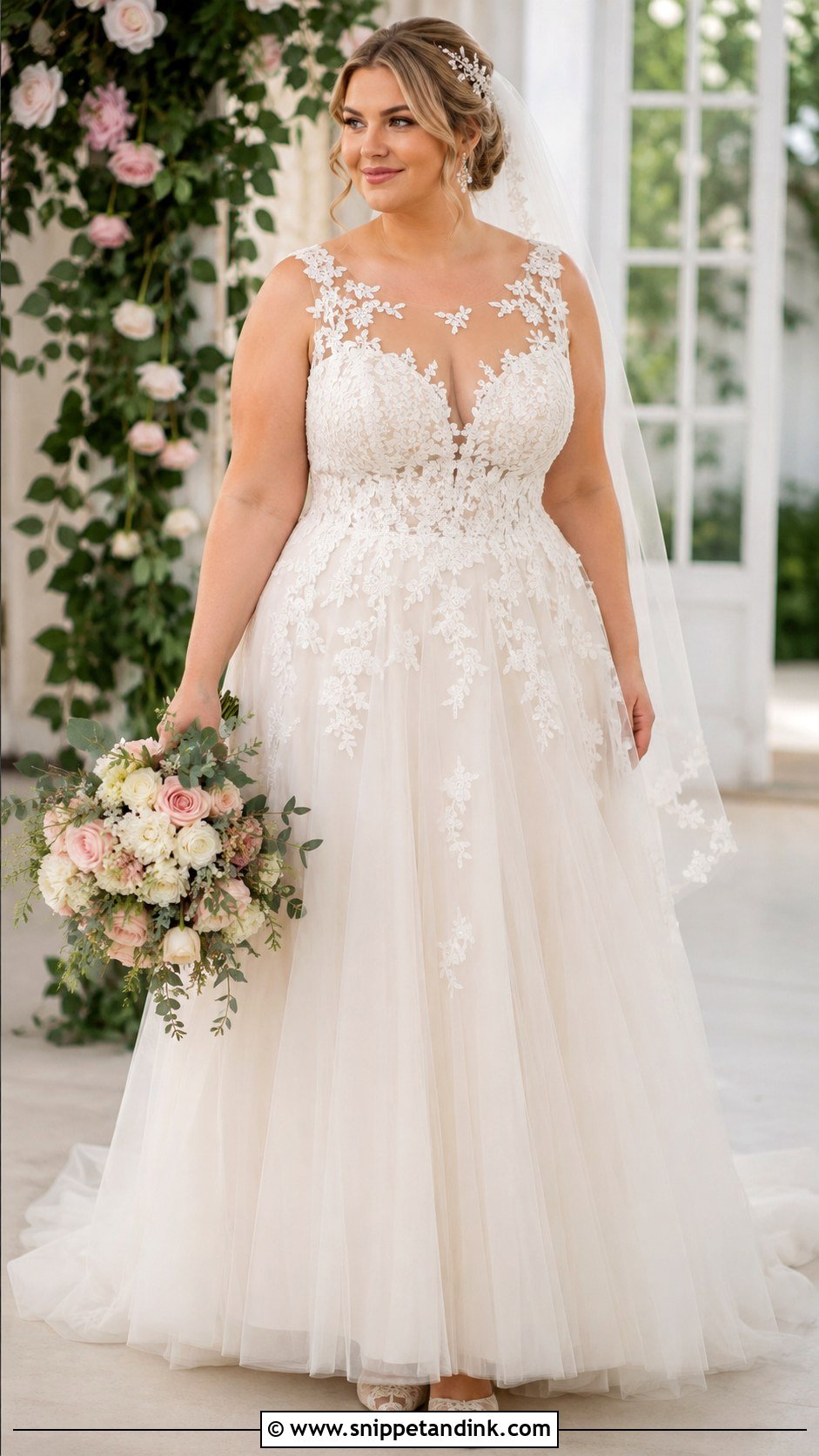
An illusion neckline gives you the look of a plunge or strapless bodice with mesh doing some of the holding. For a fuller bust, that extra stability is often the difference between enjoying the dress and adjusting it all day. The mesh has to be strong and lie flat; thin net that pulls across the chest shows every strain. Ask for mesh close to your skin tone, and ask whether appliqué can be moved to cover exactly where you want. An A-line skirt suits it, with a floral comb, small crystal earrings, a sheer fingertip veil and lace-covered pumps.
7. High-Neck Keyhole Wedding Dress
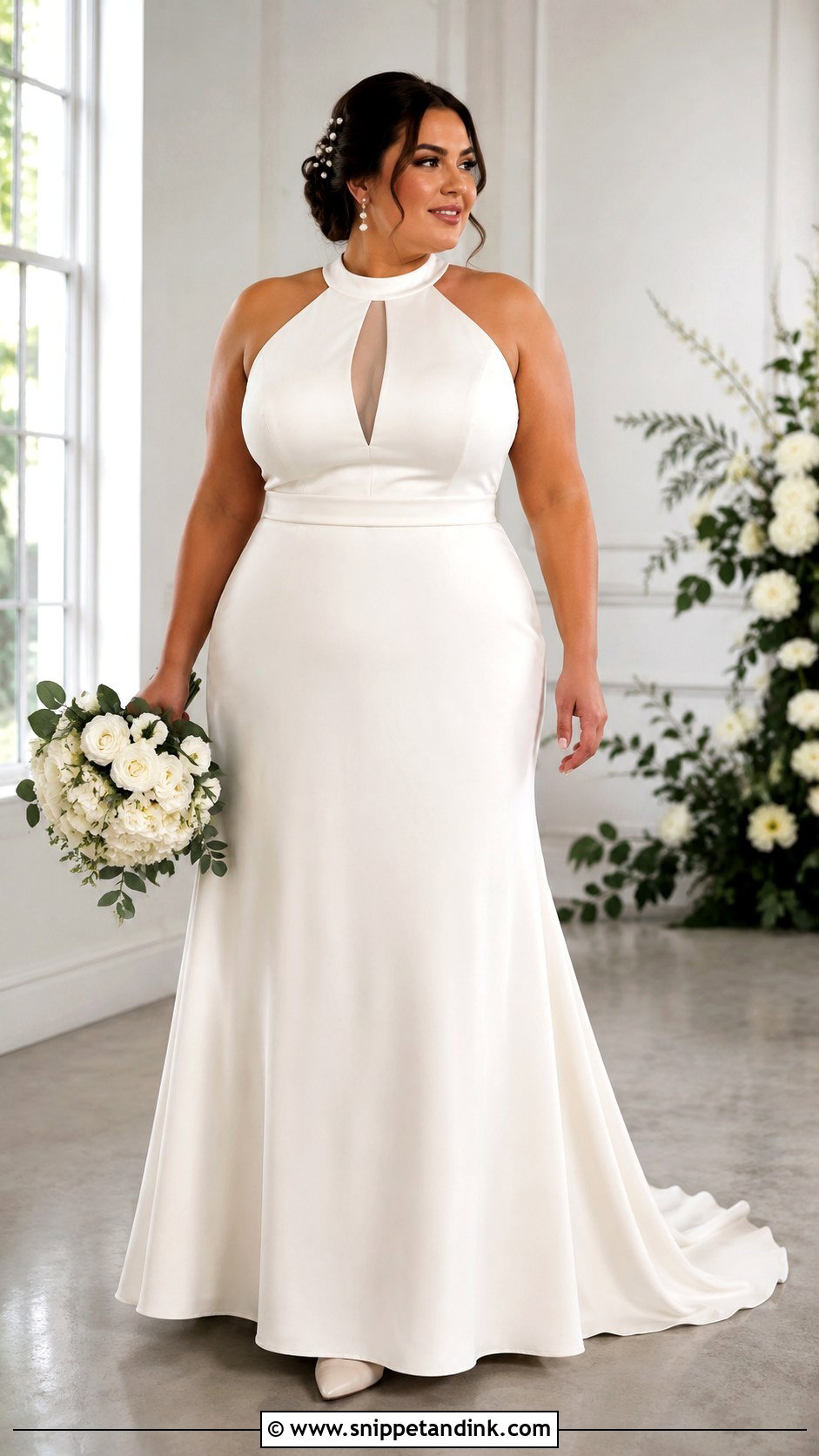
Would you like coverage without hiding your shape? A high neck with a keyhole does that. Keep the keyhole modest and above the fullest part of the bust, backed with illusion mesh. The risk with high necks on a large bust is a tent effect, with fabric falling straight down from the chest. Princess seams, side boning and a fitted waistband prevent it. A chiffon or crepe A-line skirt keeps it light. I’d wear a neat bun with pearl pins, drop earrings and closed pumps, with no necklace. Ask your tailor to remove excess at the shoulders, which is where high necks usually need taking in.
8. Basque Waist Corset Wedding Dress
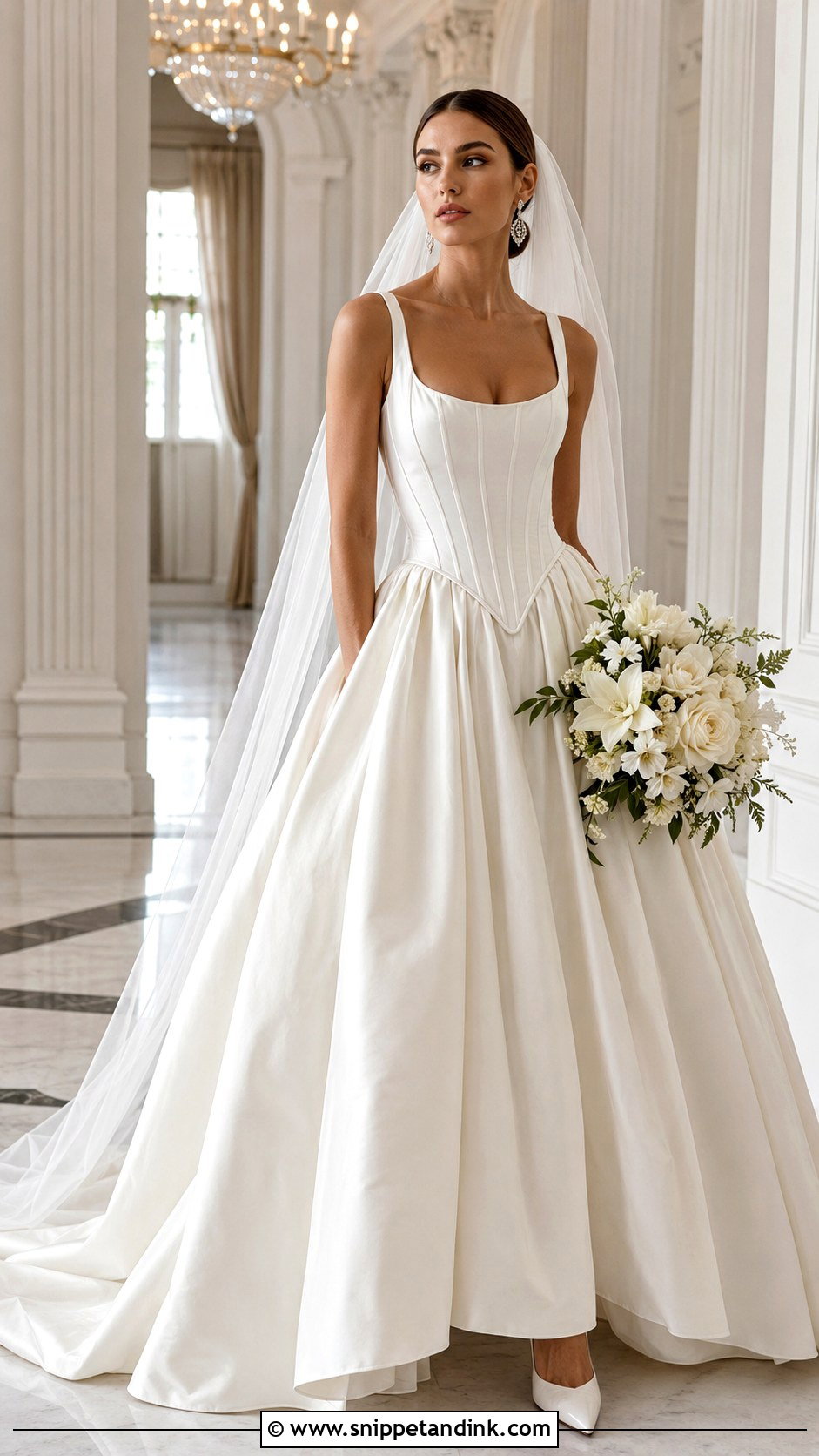
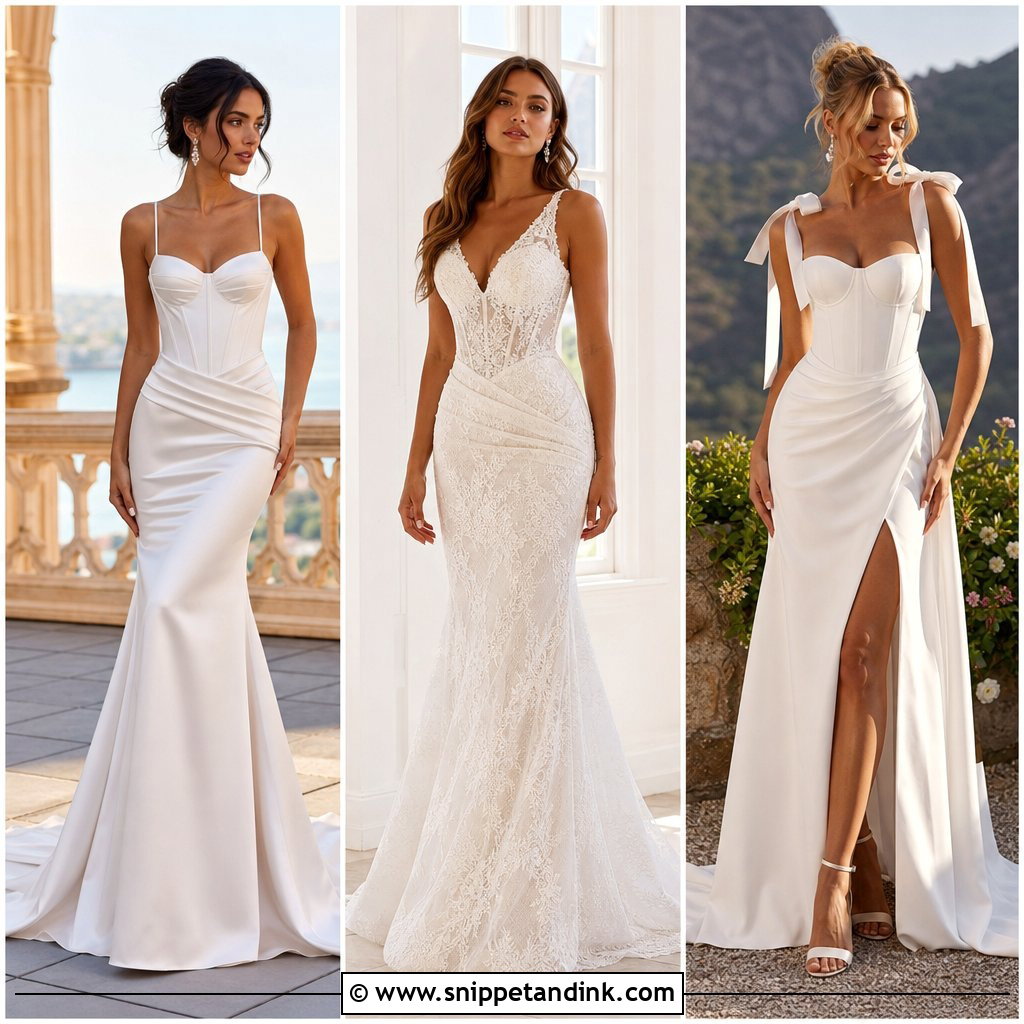
A basque waist points down at centre front, drawing the eye to the middle of the body and away from the bust. The corset behind it can spread support across the whole torso. I check for correctly sized cups, plenty of boning, firm lining and a back that closes securely without being cinched hard. A full satin or taffeta skirt gives a formal balance. Keep jewellery minimal with a long plain veil, crystal earrings, pointed pumps and a structured bouquet. Sit down in it: the basque point should not fold or dig in, and the bust should be supported, not pushed up toward your chin.
9. Empire Waist Chiffon Wedding Dress
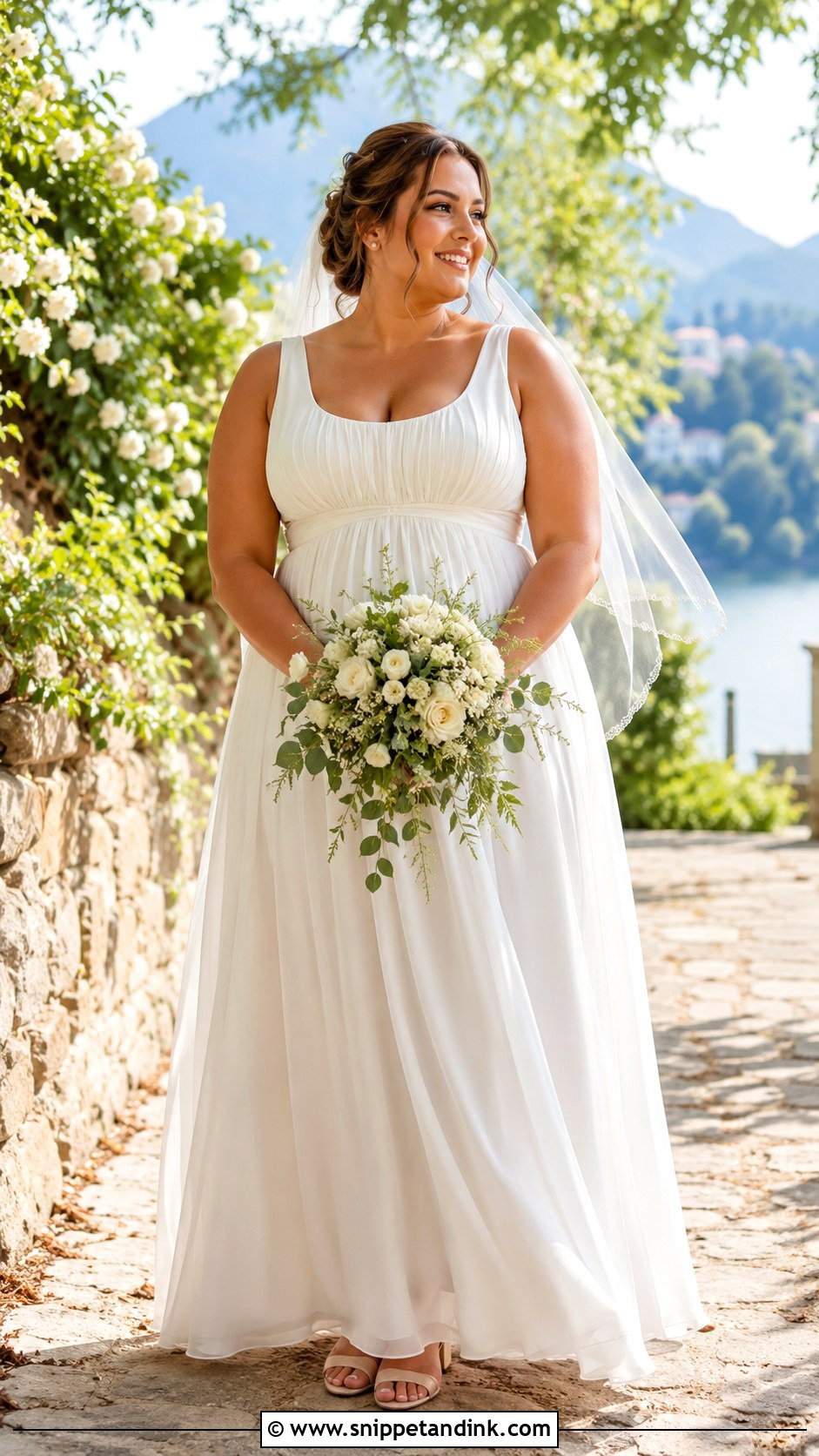
An empire waist chiffon wedding dress is comfortable and light, but on a large bust it lives or dies by one seam. It must sit fully beneath the breast, not across it. A seam cutting across the bust is the most common problem I see with this style. Wide straps, shaped cups, a lined bodice and a soft V or scoop neckline help. The chiffon skirt should fall straight from under the bust without extra gathers. Pearl studs, a soft updo, a light veil, block-heel sandals and a garden bouquet suit outdoor and destination weddings. Avoid thin elastic seams and triangle cups. Buy for your bust measurement and let the tailor adjust the waist and skirt.
10. Wrap-Style A-Line Wedding Dress
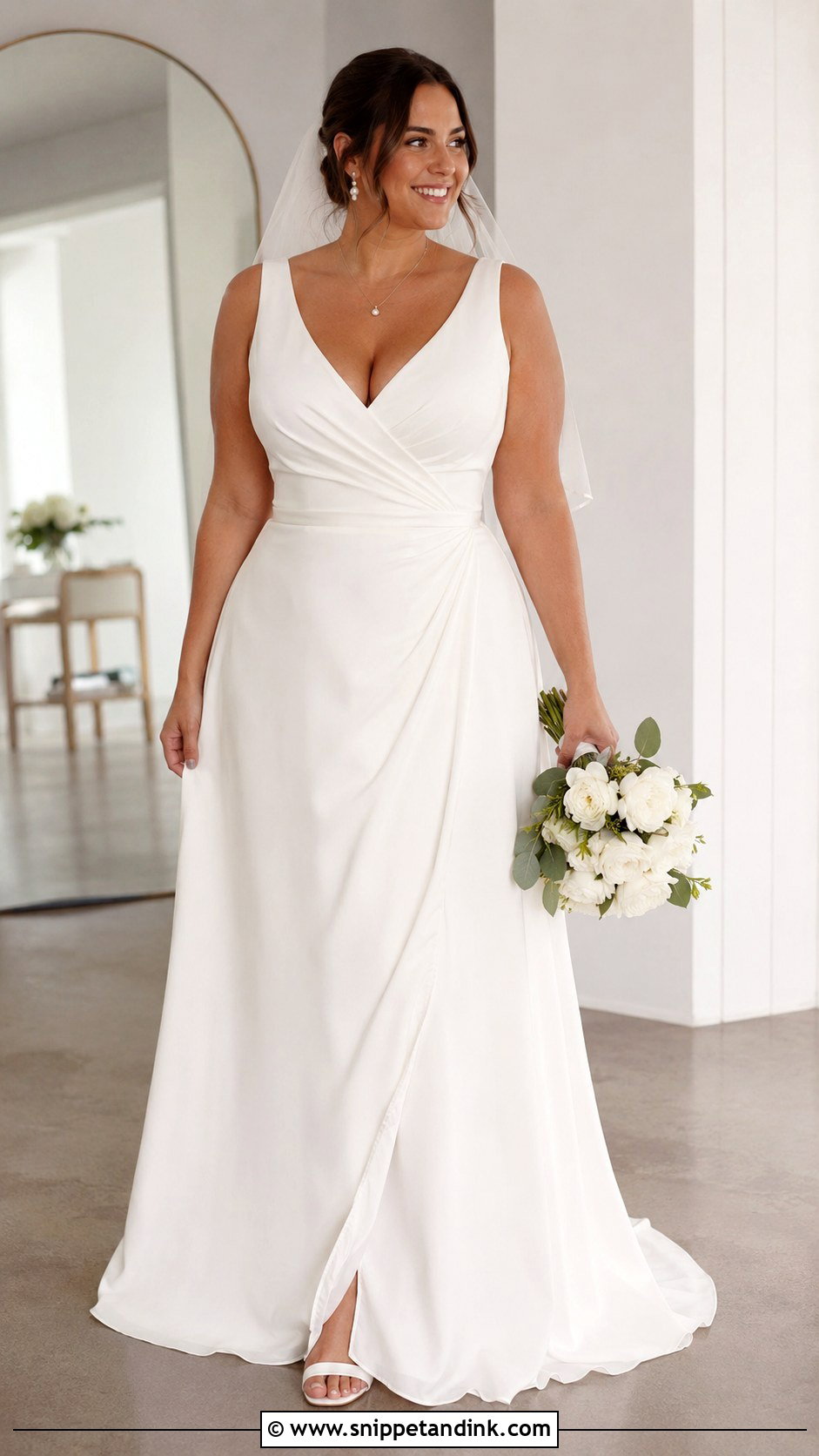
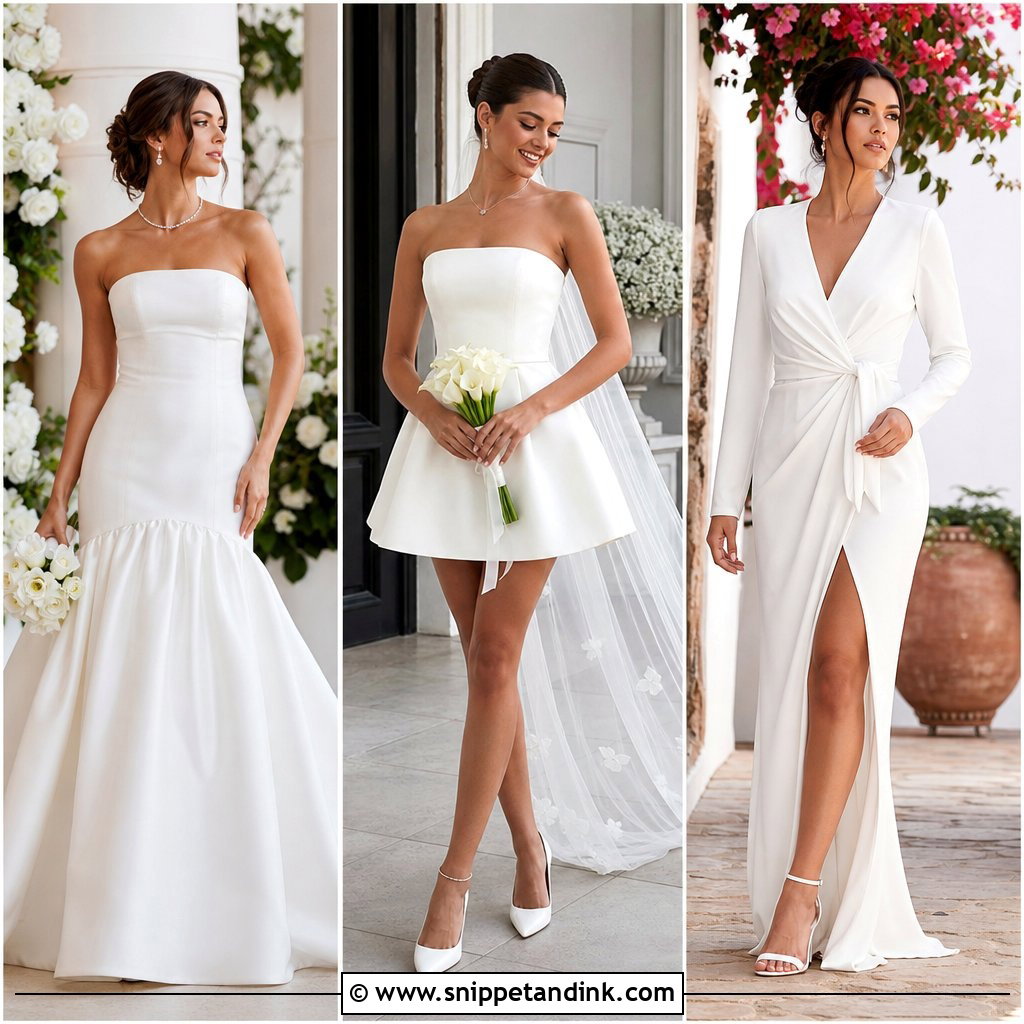
Wrap bodices suit a fuller bust because the diagonal line flatters and the overlap adjusts a little. For a wedding dress, though, I only recommend fixed wraps. A real tie wrap can loosen by the evening. Look for an overlap secured at the waist, hidden snaps, wide straps and a lined neckline in crepe or satin that drapes without bulk. The A-line skirt continues the diagonal. A fine pendant, pearl earrings, combed-back hair, low heels and a medium veil finish it. Ask your tailor to tack the neckline at the coverage you want, and to add a small modesty panel inside so it doesn’t open when you lean forward.
11. Long-Sleeve Square Neck Wedding Dress
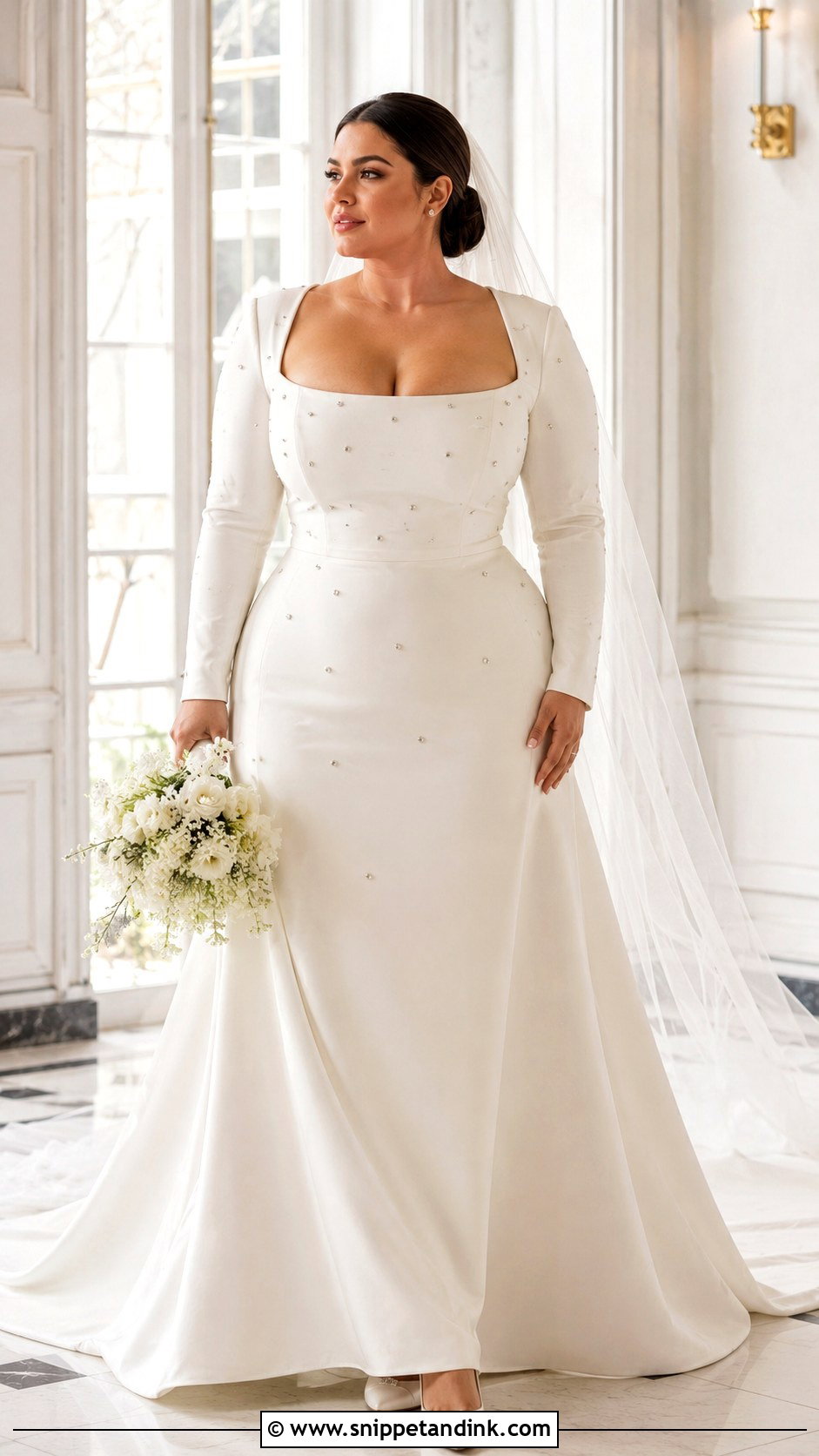
A long-sleeve square neck suits colder weddings well. The open neckline shows the collarbones and the sleeves give balance and warmth. Inside, I look for shoulders set slightly wide, supportive cups, high side panels and boning down to the waist. Stretch crepe sleeves move far more easily than stiff lace; lace looks more romantic. Choose a column, fit-and-flare or modest A-line skirt. Crystal studs, a low bun, a chapel veil, closed pumps and a white seasonal bouquet suit it. Lift your arms at the fitting. Sleeves that are too tight pull the neckline outward, so your tailor should adjust shoulders, sleeves, bust and armholes together.
12. Cap-Sleeve A-Line Wedding Dress
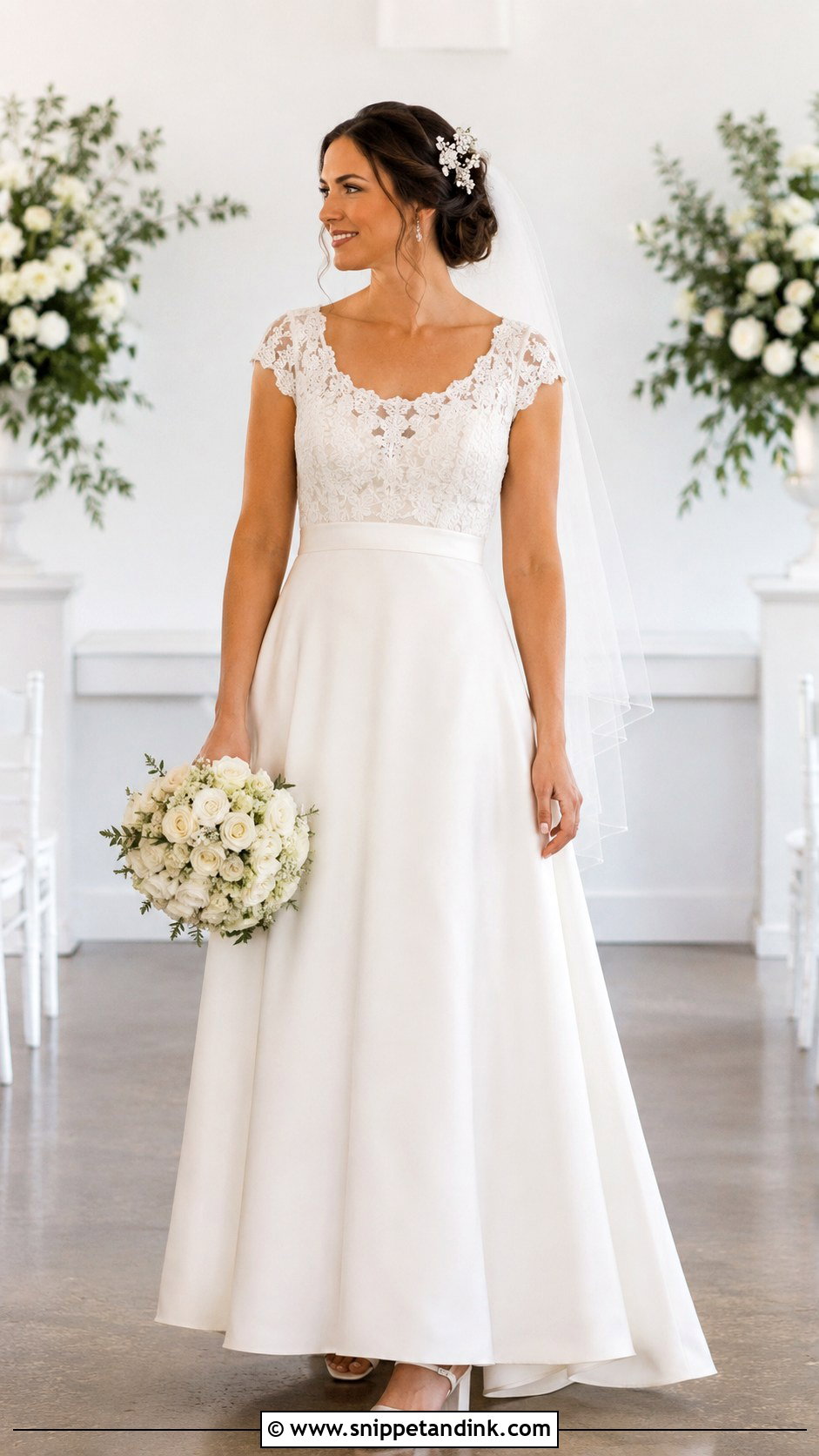
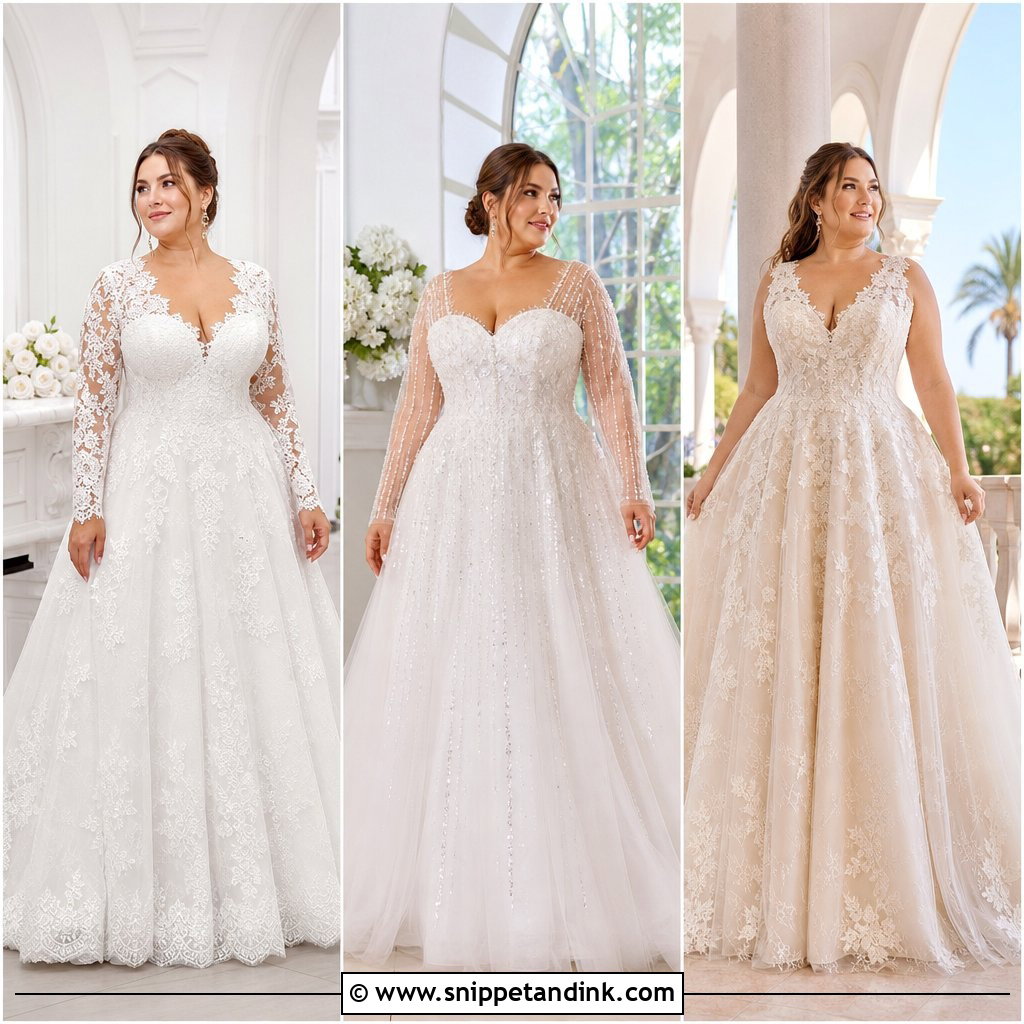
Cap sleeves give light coverage without weight, but on a full bust they need a structured A-line bodice underneath, not a thin unlined top. A moderate scoop or V, firm side panels and cups that wrap far enough around the side are what I check. The sleeve should sit over the shoulder without biting into the arm or lifting the neckline. A lace bodice with a plain chiffon or satin skirt looks fresh. Add a floral comb, tiny drops, a fingertip veil, block heels and a round bouquet. If you plan to wear a bra, make sure the sleeves and neckline hide its straps, or ask for built-in support at the first fitting.
13. Strapless Corset A-Line Wedding Dress
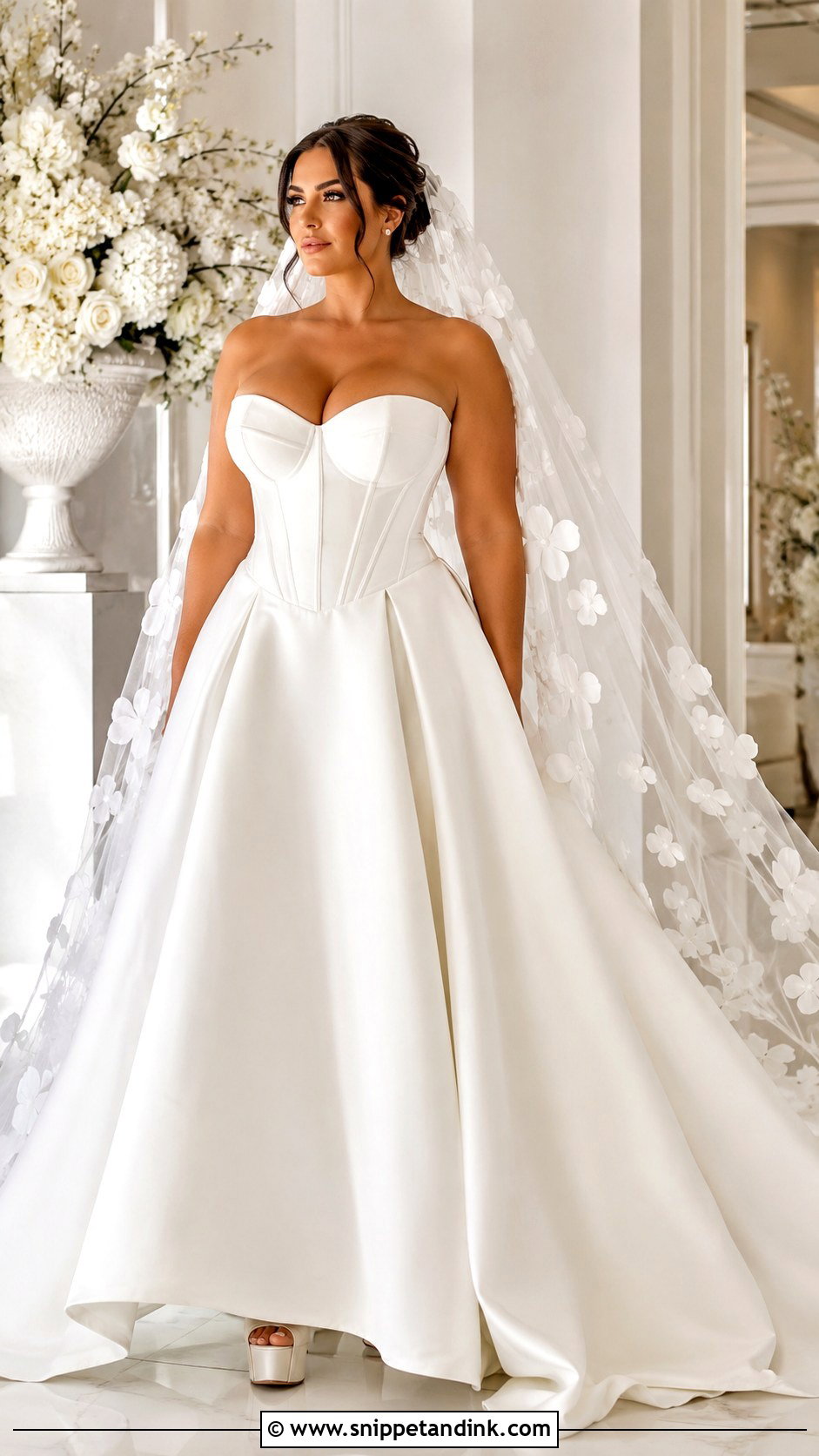
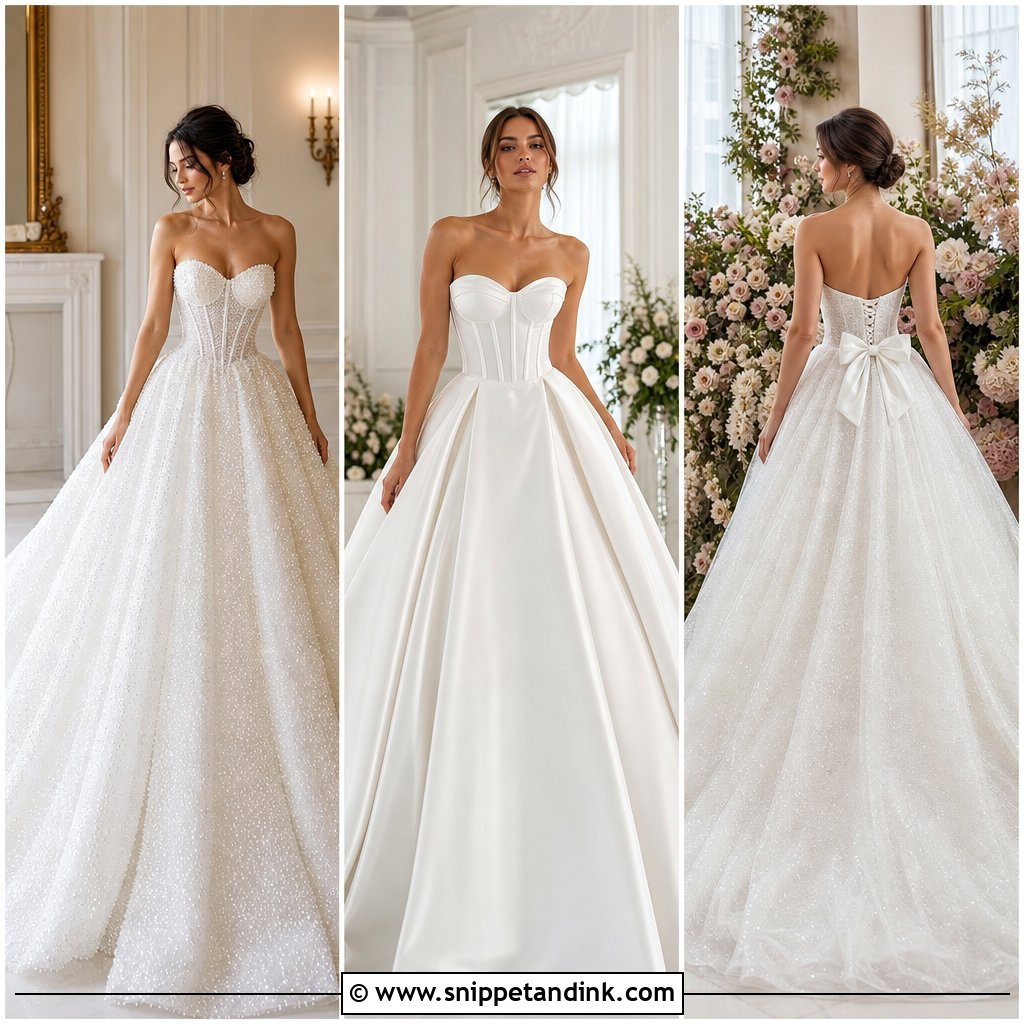
Strapless is possible on a full bust. It just needs an inner structure fitted to your waist, ribcage and cups, with an upper edge that sits flat. Corset boning, moulded cups and a secure waist stay keep it from sliding. An A-line skirt in mikado or satin suits the clean neckline, with a statement veil, small earrings, a polished updo, platform heels and a sculptural bouquet. My firmest advice: don’t buy a bodice a size small for extra lift. Squeezing is not support. In fittings, walk fast, sit, raise your arms and dance, and watch whether the top edge stays put.
14. One-Shoulder Draped Wedding Dress
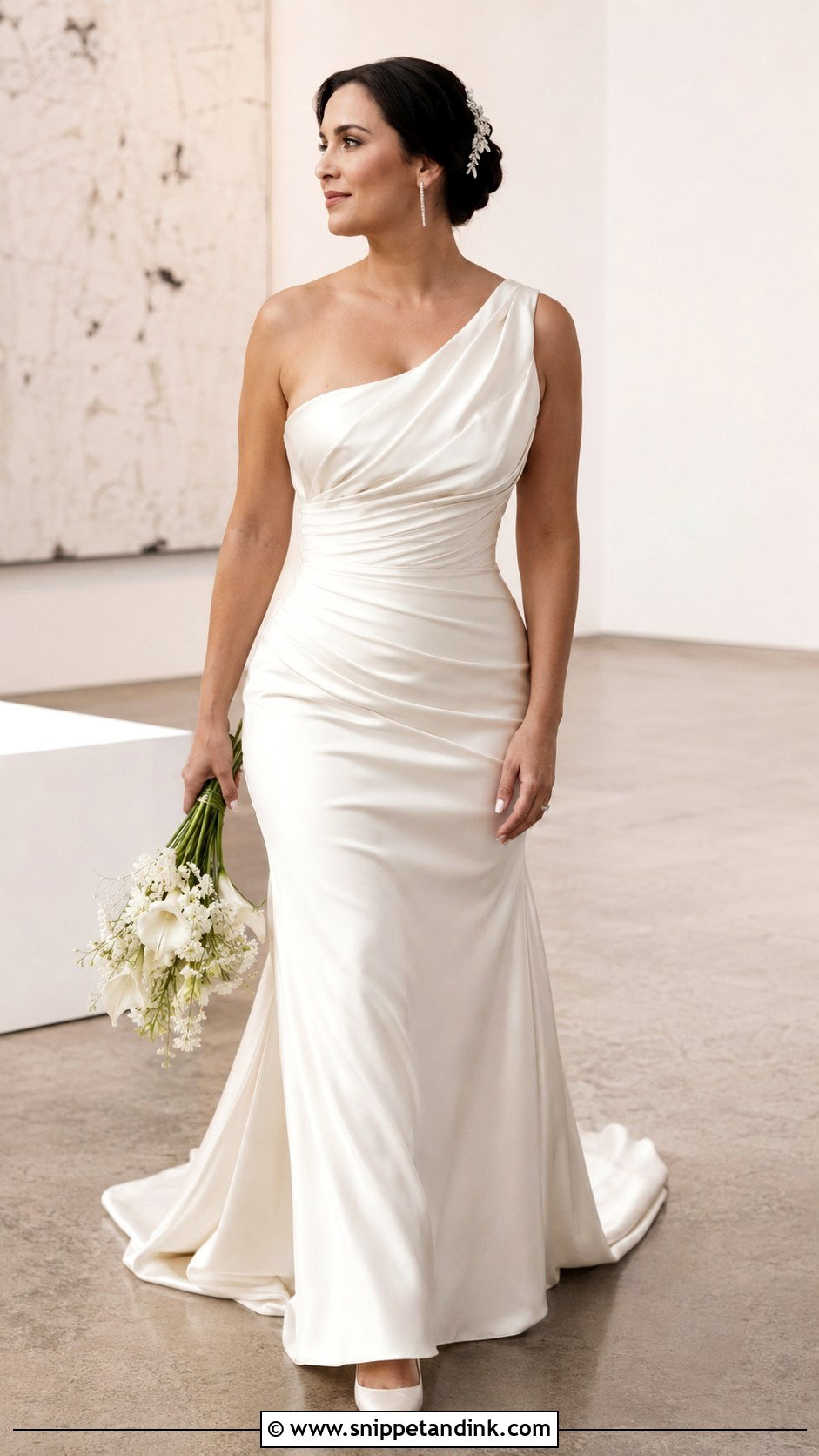
A one-shoulder drape looks modern, and asymmetry draws the eye diagonally across the body, which many full-busted brides like. The single shoulder panel should work with an inner corset rather than carry the weight alone, or it will pull at your neck and twist. Heavy crepe or satin with controlled ruching suits it best, over a fitted waist and gentle flare. Sleek earrings, an architectural comb, a smooth updo and pointed heels are enough. No necklace. Check the strap from front and back. For extra security, ask for a grip strip and small inner loops that attach to your bra.
15. Tea-Length Square Neck Wedding Dress
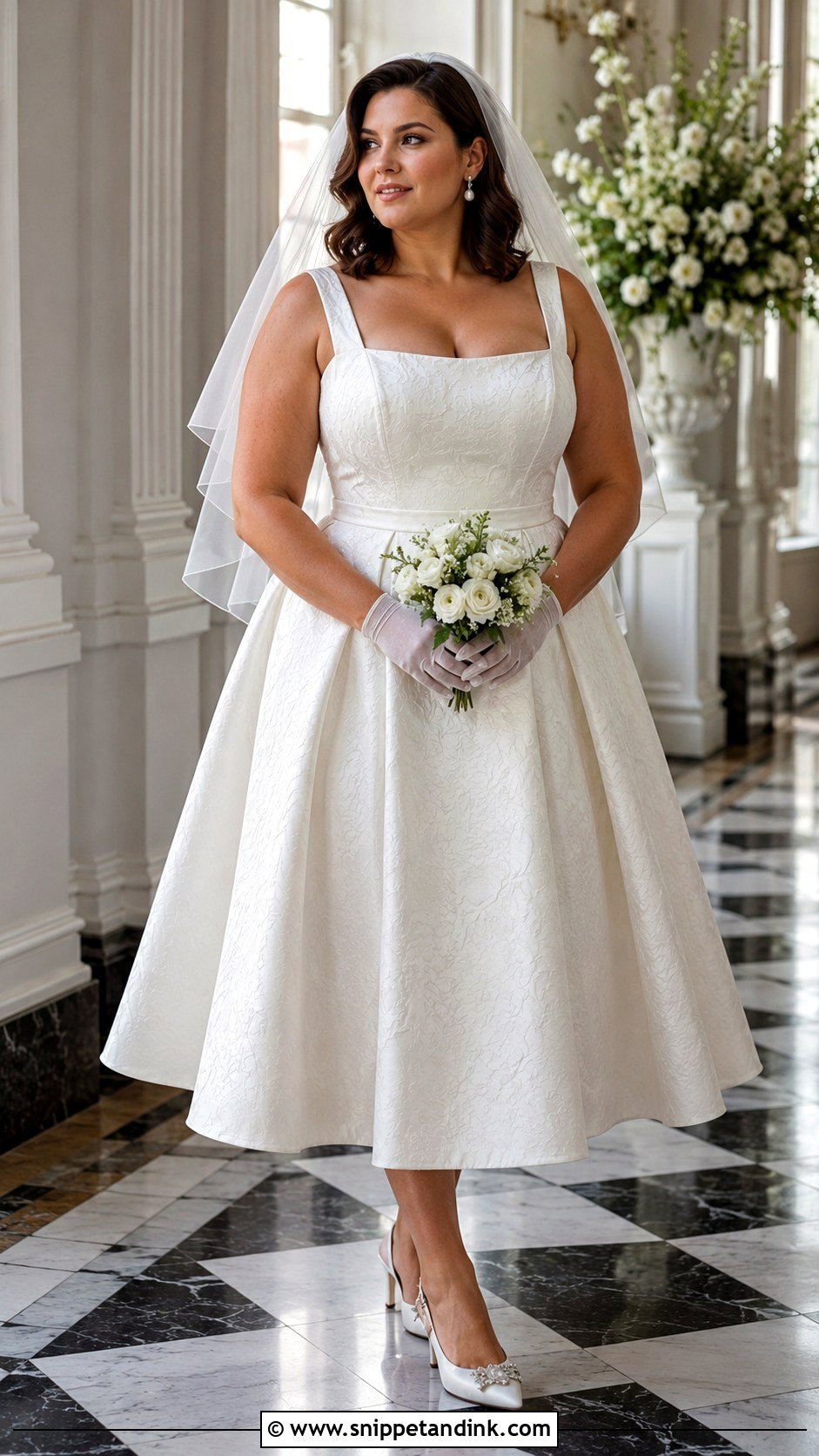
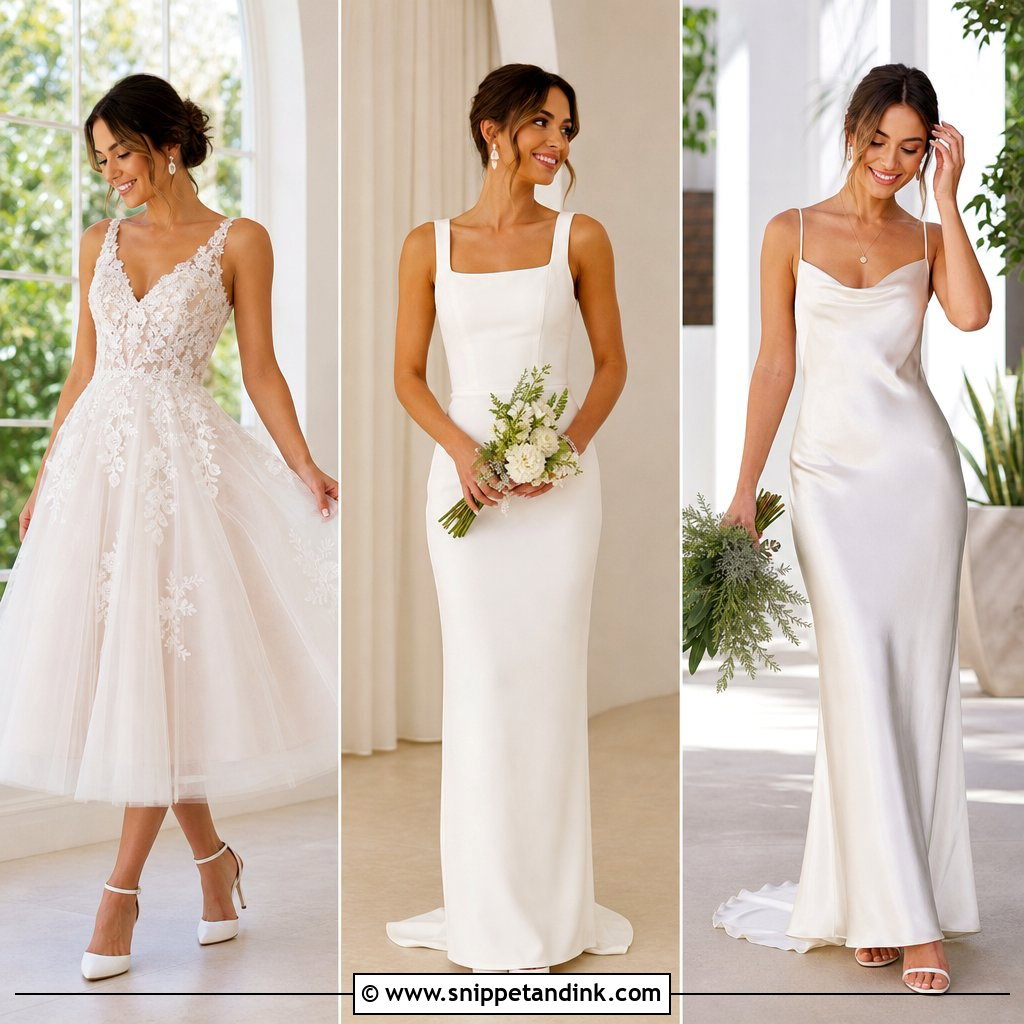
Tea length is cheerful and easy to move in, and with a square neck and wide straps the bust stays well contained. Crisp satin, mikado or floral jacquard keep the shape. The waist seam needs care: on a full bust, a short bodice can be pulled upward by the chest, so make sure it lands at your natural waist. Pointed slingbacks or embellished block heels, pearl earrings, short gloves and a birdcage or shoulder-length veil suit it, with a small structured bouquet. Bring your wedding shoes to every fitting, as the hem point on the calf is visible and changes with heel height.
16. Mermaid Wedding Dress With Wide Straps
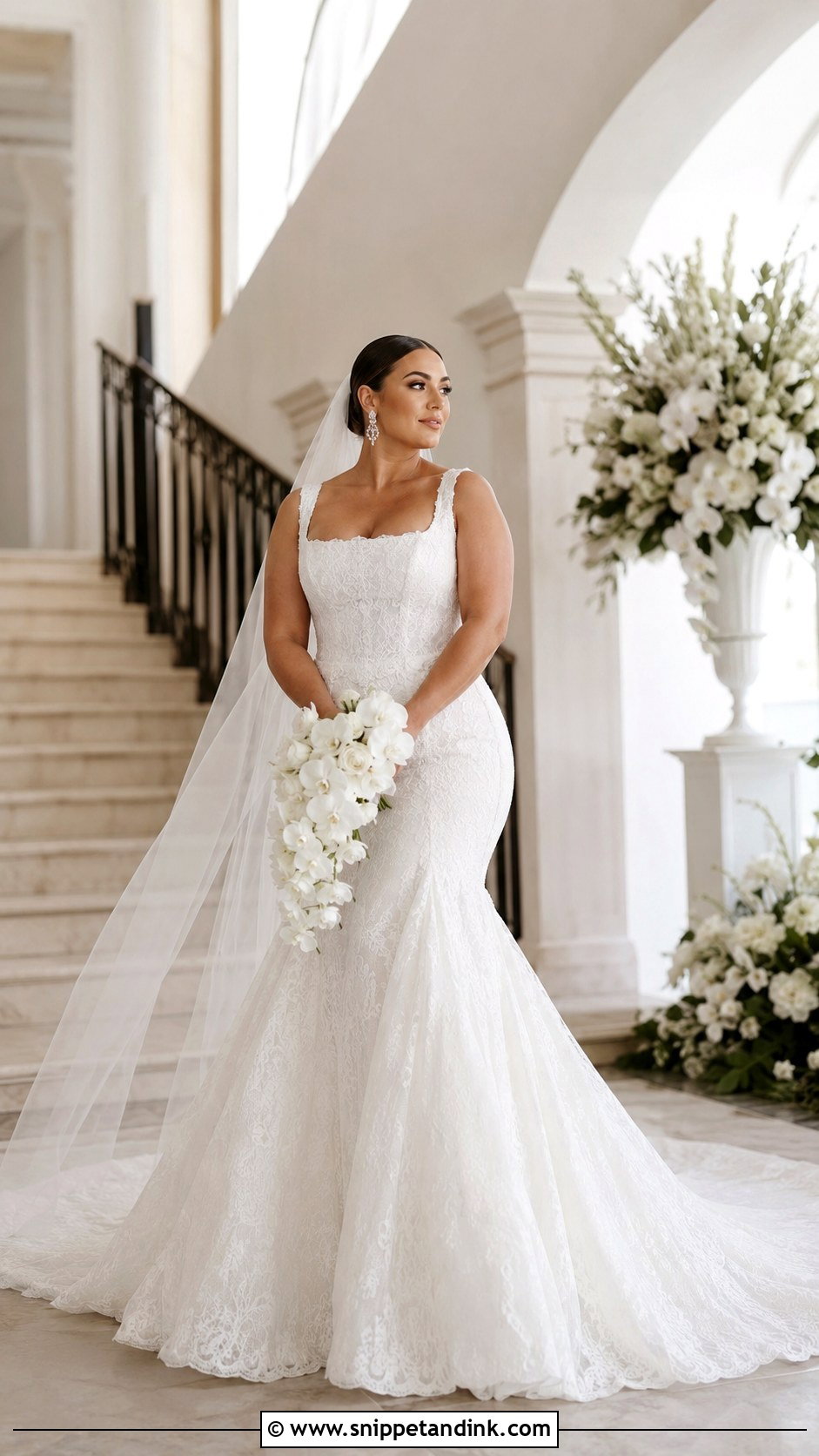
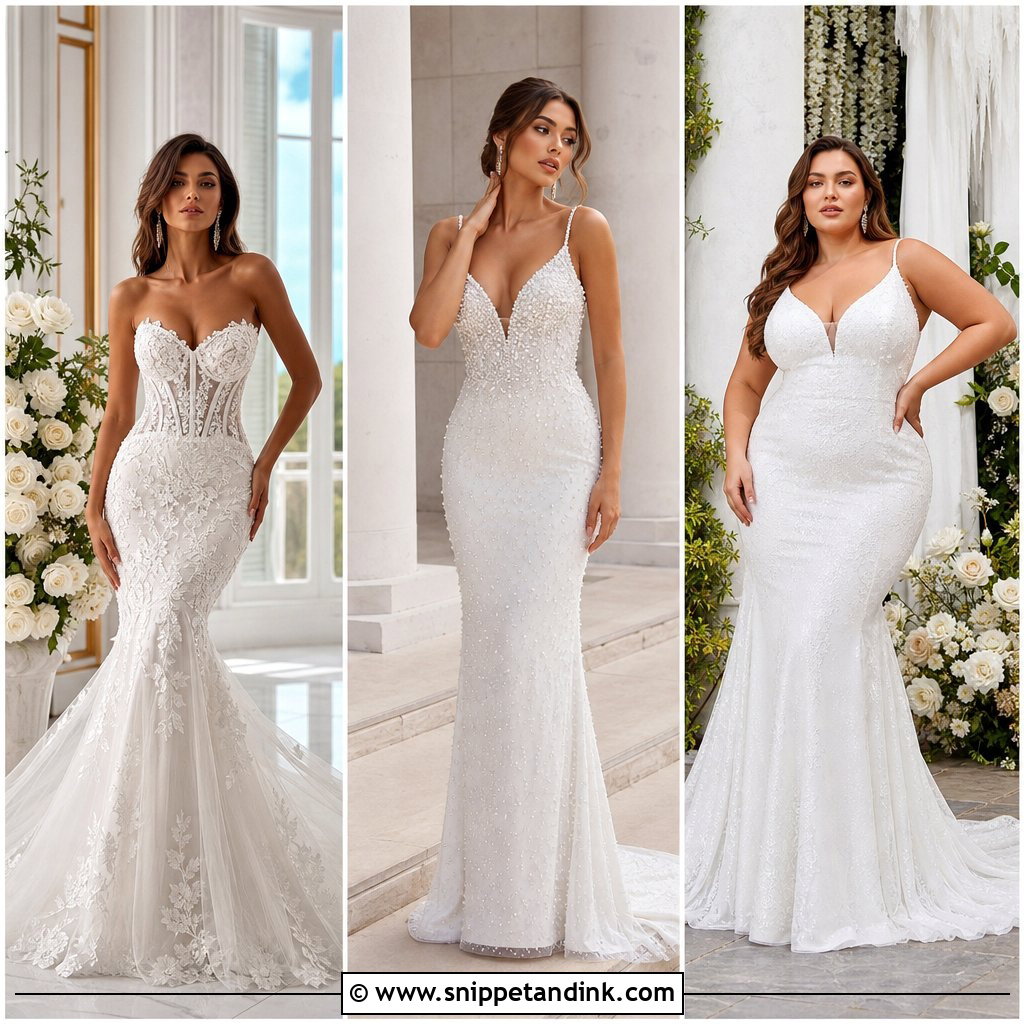
Mermaid gowns can look secure and defined on a full bust when the straps are wide and the inner bodice is long. Square, scoop and soft V necklines all work over strong cups. Wide straps hide supportive construction and can be adjusted much more precisely than delicate spaghetti straps. Stretch crepe or lined lace follows the body while still letting you move. A long veil, drop earrings, sleek hair, pointed pumps and a long bouquet finish it. The bodice should lift from beneath, not hang from your shoulders. Check that you can sit and walk normally, and ask for a simple bustle.
17. Boho Puff-Sleeve Wedding Dress
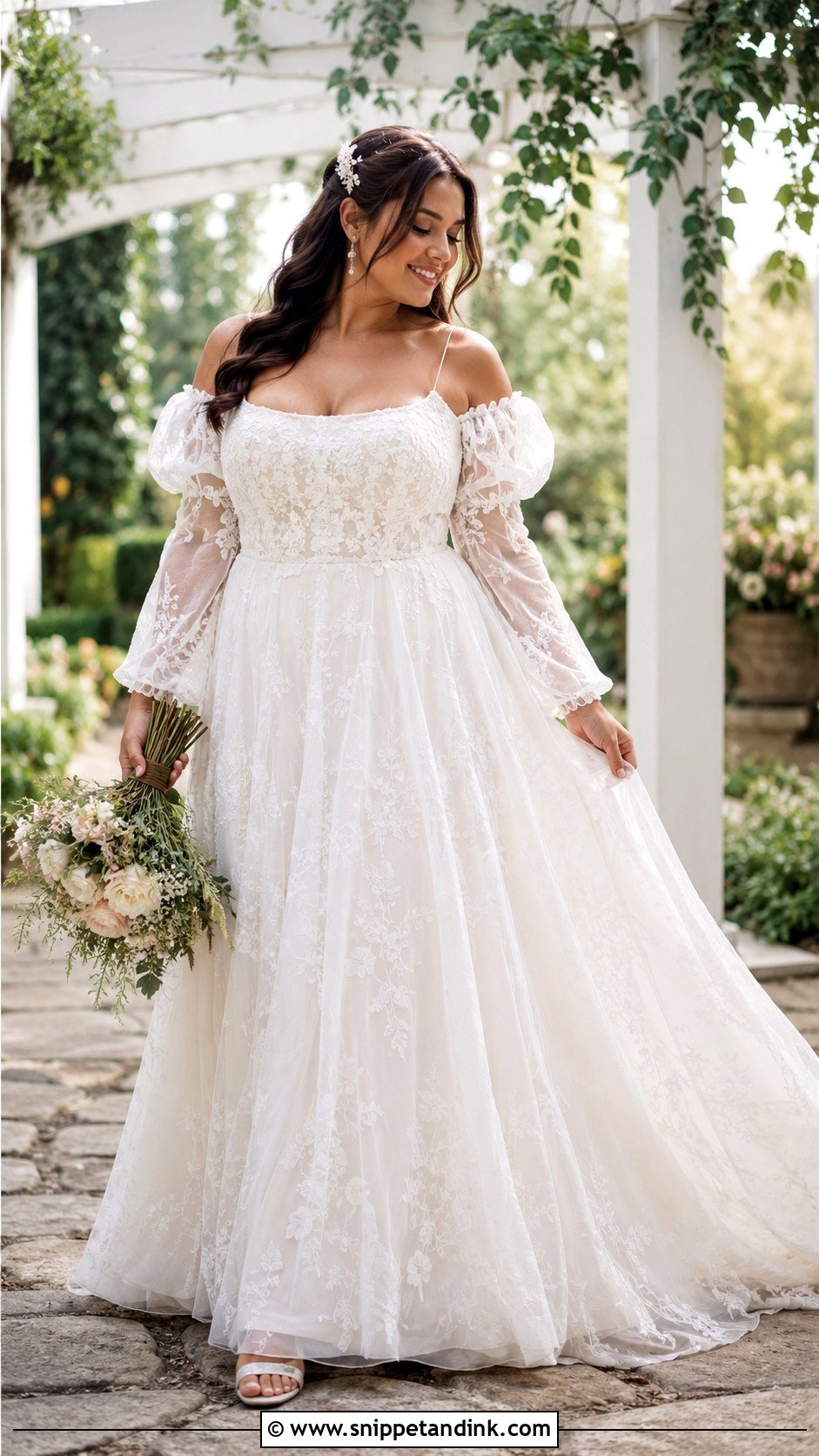
Boho dresses are often the least supportive in a salon, because they’re built from soft lace with little structure. Puff sleeves can still work on a full bust if the bodice underneath has firm lining, shaped cups and a defined waist with a square or moderate V neckline. Tulle, chiffon or embroidered lace make a soft A-line skirt. Avoid very thin fabric over the bust, since it shows every seam and alteration. Loose waves, a flower comb, simple earrings, block-heel sandals and a hand-tied bouquet suit it. Detachable sleeves let you reveal supportive straps for the reception.
18. Minimal Crepe Column Wedding Dress
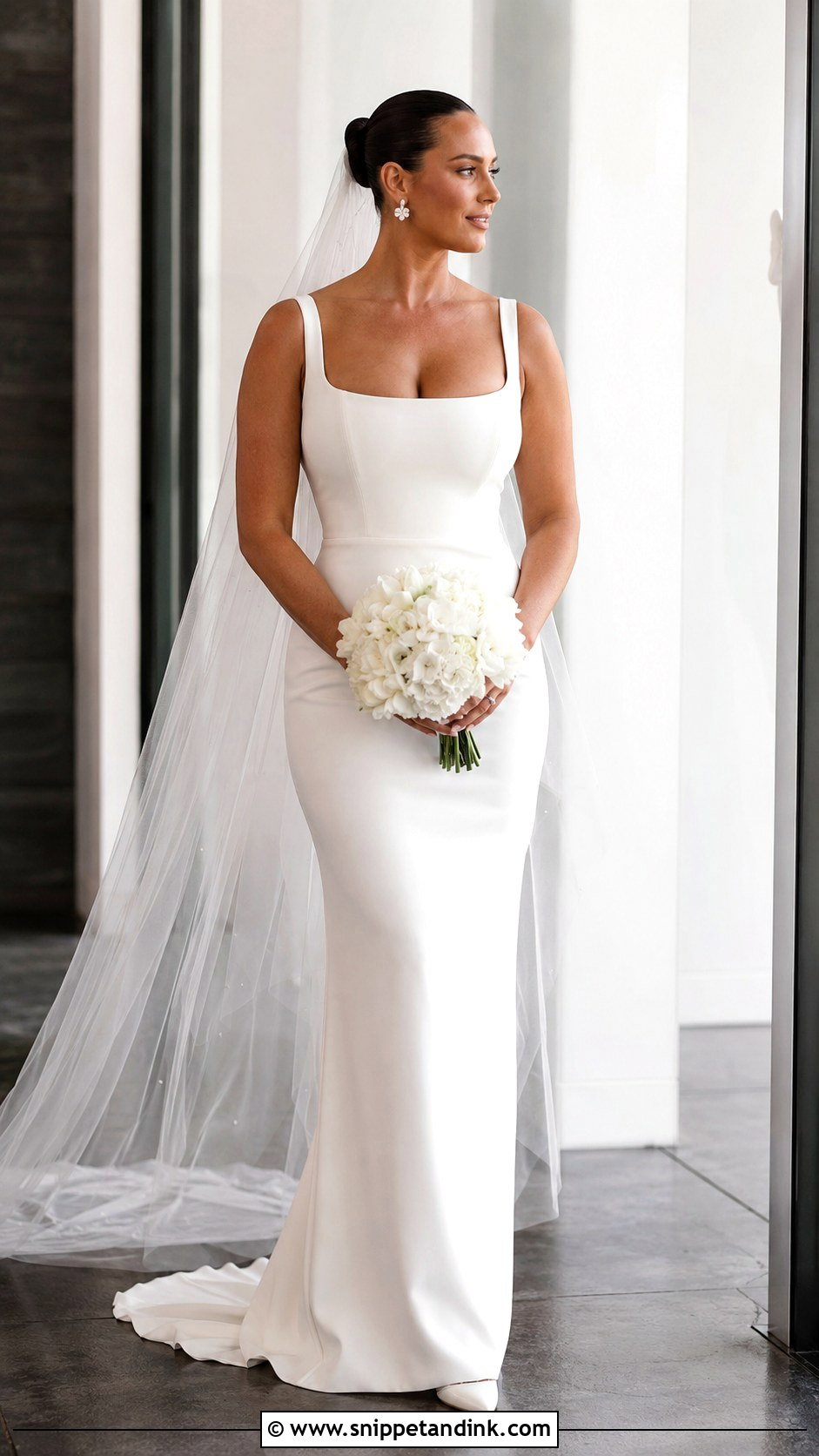
Crepe columns are honest dresses. They show every fit issue, which is exactly why they can look so sharp on a full bust when cut well. A square or shallow scoop neck, wider straps, princess seams and a smooth inner foundation are essential. A slightly defined waist stops the fabric falling straight from the bust, and a back slit makes walking easier. Keep it modern with sculptural earrings, a sleek bun, pointed heels, a plain cathedral veil and a compact white bouquet. Wear smooth, flat-edged underwear to fittings, and check that the edges of any built-in cups don’t show through the fabric.
19. Detachable-Sleeve Corset Wedding Dress
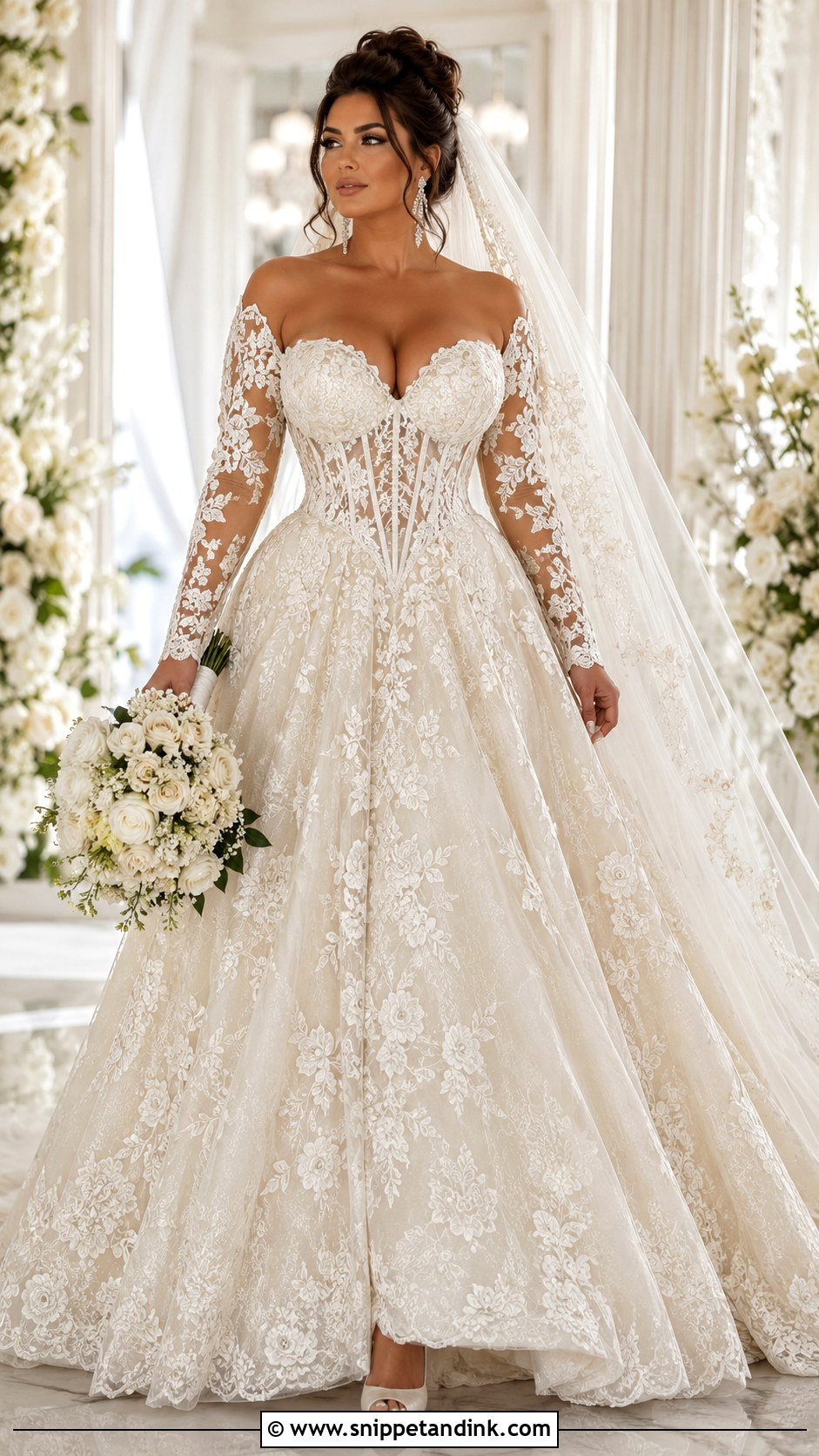
A corset with detachable sleeves gives you two looks on the same supportive base. Choose a sweetheart or gently curved bodice with substantial boning, a firm waist stay and cups made for your size. Lace, draped off-shoulder or puff sleeves go on for the ceremony and come off for the reception. An A-line or ball gown skirt, cathedral veil, crystal earrings and platform heels suit it. The attachment matters: hooks and snaps should not drag the neckline down, and elastic loops should be soft against skin. Try both versions at the final fitting and practise removing the sleeves without disturbing your hair.
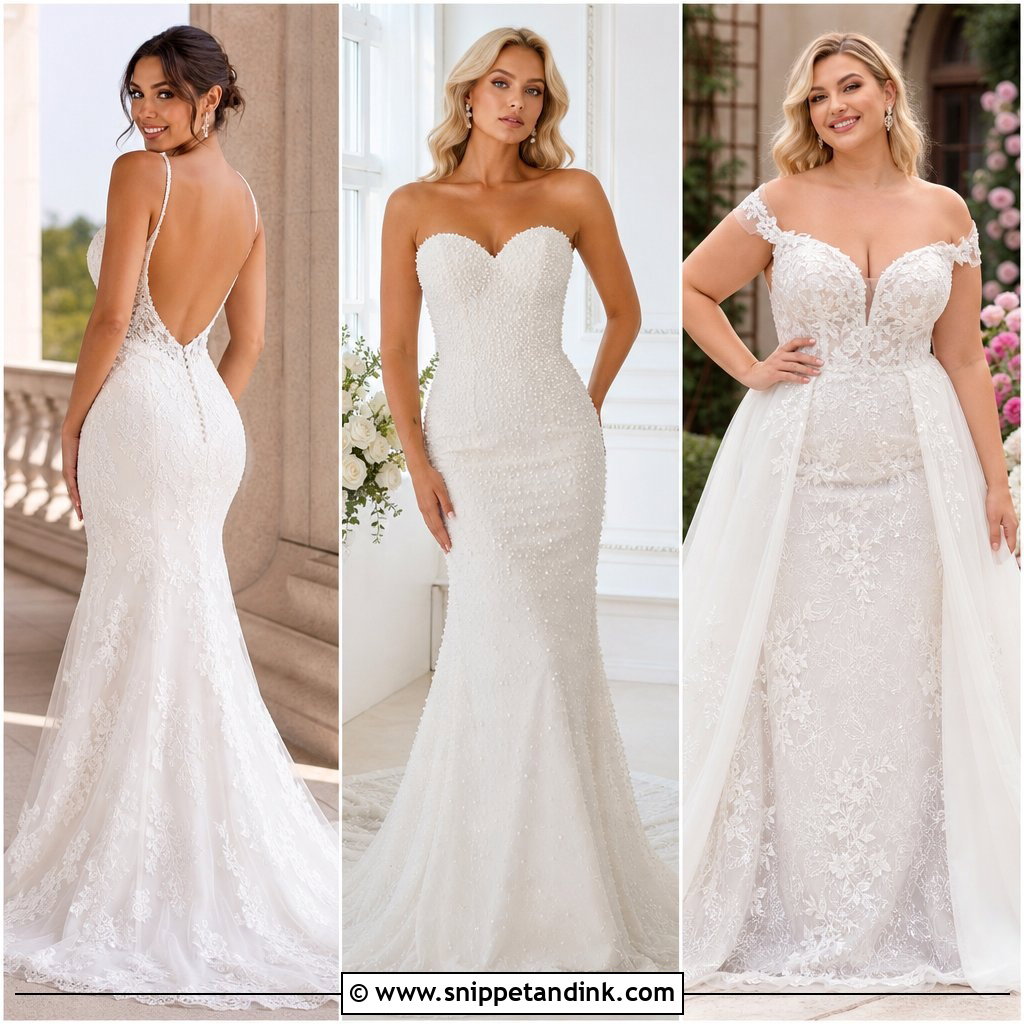
20. Drop-Waist Satin Wedding Dress
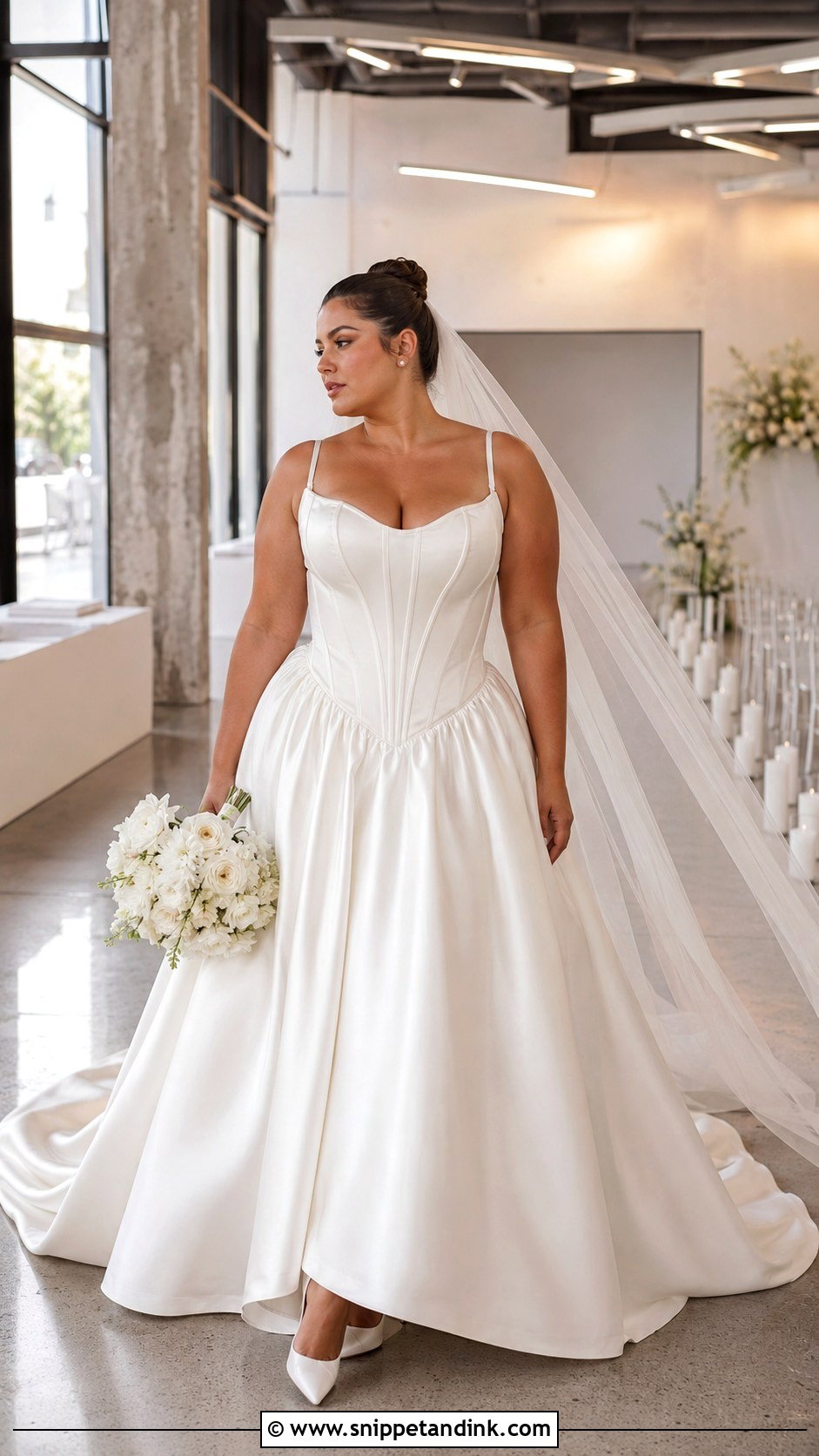
Drop waists are tricky on a full bust, but they can work when the bodice is a proper corset with cups in the right place and enough length for your torso. The long sculpted line then gives a smooth shape before the fuller skirt starts. A square or curved strapless neckline keeps it clean, and optional straps add security. A smooth veil, pearl studs, a polished bun, pointed pumps and a structured bouquet suit it. Sit in it: the long bodice can wrinkle or press into the hips. Bust, waist and hip are all on one piece of fabric here, so alterations need an experienced bridal tailor.
Bra, Sewn-In Cups or a Longline Under the Gown?
Brides ask me this at nearly every first fitting. The answer depends on the back and neckline of the dress.
- Your own bra: works with straps, high backs and sleeves. It is the most familiar support, but the band must hide under the bodice at the back.
- Sewn-in cups: a tailor stitches bra cups, sometimes from a bra you already trust, into the bodice lining. Ideal for open backs and strapless designs.
- Longline bridal bra or bustier: spreads the weight down to the waist. Good for strapless gowns, though low backs rule it out.
Adhesive bras rarely give enough lift for a full bust over a long day, and they loosen with heat. I treat them as a last resort.
Hidden Support a Tailor Can Build Into Almost Any Bodice
If you love a gown that feels flimsy at the bust, it may still be rescued. An experienced bridal tailor can add extra boning along the side seams, a waist stay (a firm band inside that anchors the bodice at the waist so it doesn’t slide), power mesh lining, or a grip strip along the top edge. Ask at your first fitting, since these changes are done early, before the final hem and shaping.
Support First, Then Neckline
No neckline or silhouette is off-limits for a full bust. Square necks, plunges, strapless corsets, mermaids and A-lines can all work when the inside of the dress fits. Prioritise cups that suit your shape, secure side coverage, firm lining, the right straps and alterations made for your body. Take your planned underwear and shoes to fittings and move naturally in every sample. If you feel restricted, it’s the wrong dress or the wrong fit. Start with these ideas, then work with an experienced consultant and tailor to build support that lasts the whole day.
You'll Like These Ideas:



Leave a Reply