
Picking a bridal fabric is the decision that quietly controls all the others. It sets how the gown drapes, whether the skirt holds its shape, how it reads in photos and how you’ll feel in it at eleven at night. Below are twenty complete looks, each built around one material, from airy chiffon to sculptural mikado, with the veil, shoes and jewelry I’d pair with it. Before you go shopping, decide how much structure, shine and coverage you want. And read the label: many fabric names describe a weave, not a fiber, so satin can be silk or polyester.
Silk or Polyester? What the Label Really Says
Satin, crepe, chiffon, georgette, organza and taffeta are weaves or finishes. Each can be made from silk, polyester or a blend, and the fiber changes how the gown behaves far more than the name does. Silk breathes better and takes dye in deeper, softer ivories. Polyester holds its shape, resists creasing, costs less and is far more common in bridal wear than most people realize. Neither is wrong. Just know which one you’re paying for.
If you can, ask the boutique for a small swatch and take it home. These are the checks I run on one:
- Crush it in your fist for thirty seconds, then let go. How fast the creases drop out tells you how you’ll look after the car ride and the dinner.
- Hold it next to your face in daylight and then under a warm indoor bulb. Ivory, champagne and white shift a lot between the two.
- Pin it to your clothes for an afternoon. Scratchy lace or stiff mikado announces itself within an hour.
- Photograph it with flash on your phone. Some sheens bounce light into a white glare, while matte fabrics keep their detail.
1. Satin Ball Gown Wedding Dress
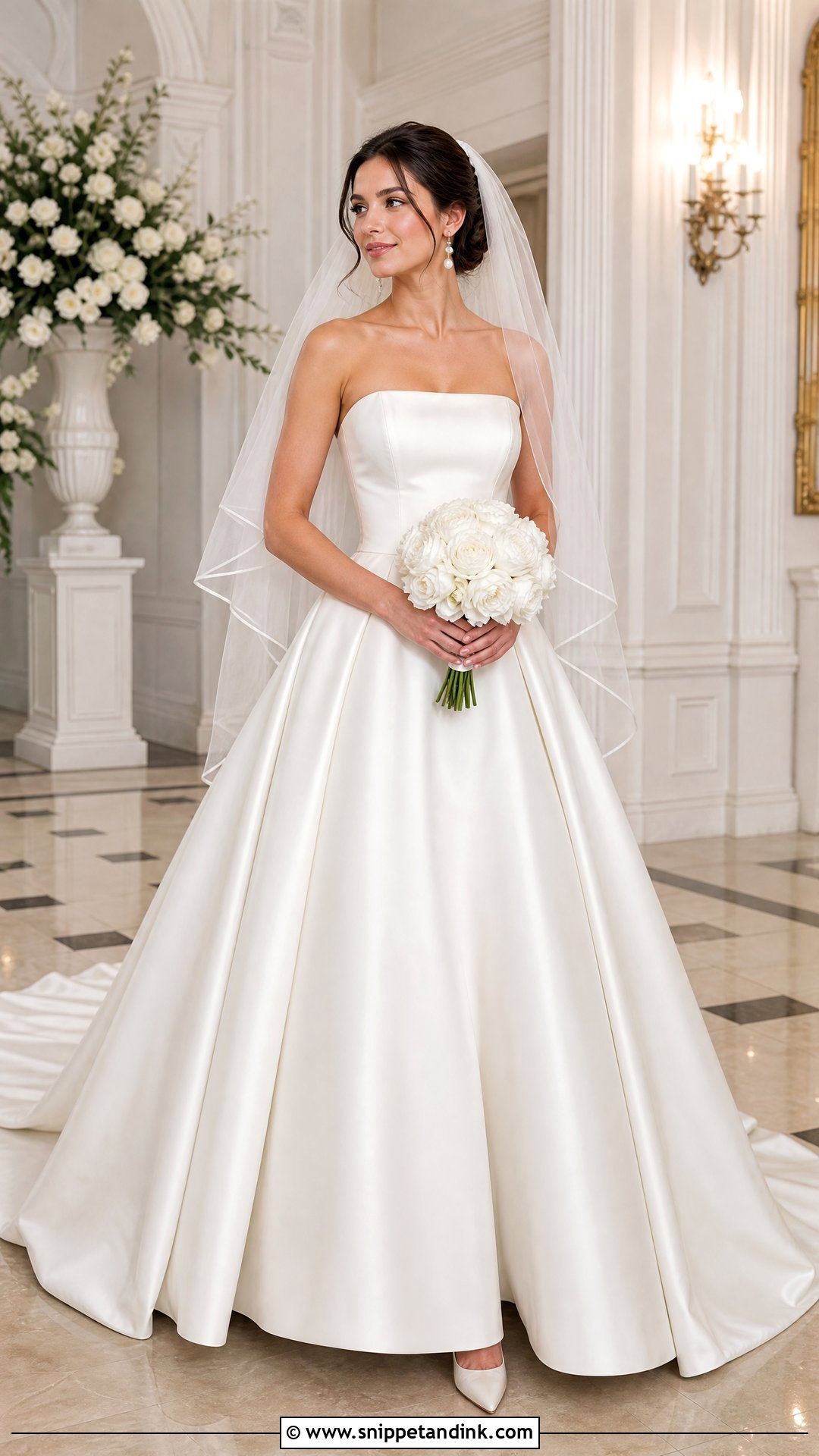
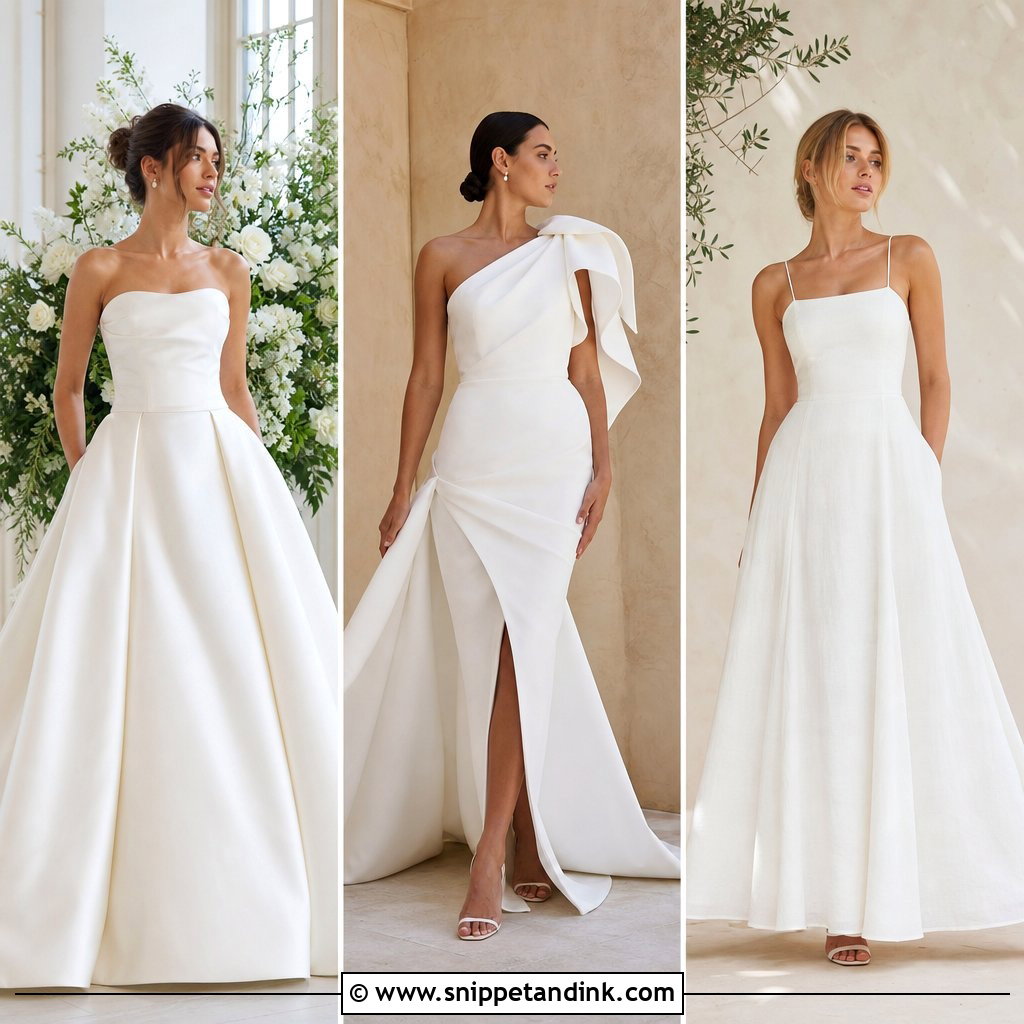
Satin comes in a wide range of weights, and for a ball gown you want the heavy end. A substantial satin holds a full skirt and a chapel train without collapsing, over a fitted bodice with a square or strapless neckline and a defined waist. Light satin on the same shape just hangs. A fingertip veil, pearl drops, ivory pointed pumps and a compact bouquet, with a crystal comb for a little detail. Formal indoor venues and cooler months suit it. I always crumple a corner of the skirt in my hand before a bride buys, and look at the sheen in daylight, since it photographs differently from each angle.
2. Duchess Satin A-Line Wedding Dress
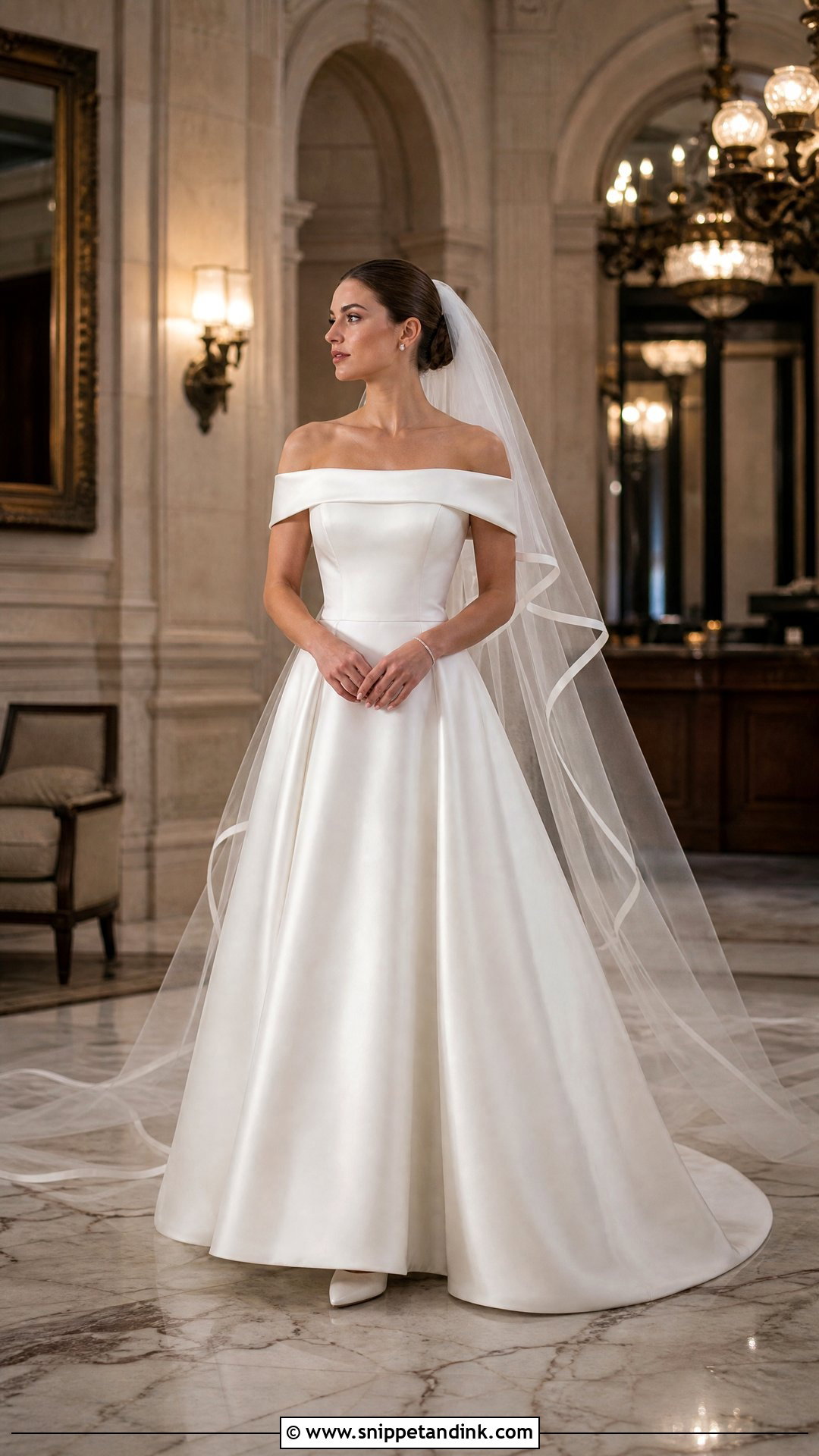
Duchess satin is the heaviest, most structured satin, which is why it can hold a crisp A-line with no petticoat doing the work. A sculpted off-the-shoulder bodice and a sweeping skirt give volume short of a full ball gown. The surface is rich enough that clean seams can be the only decoration. A cathedral veil edged in narrow satin ribbon, crystal studs, a slim bracelet and closed-toe ivory heels. It’s warm, so check the lining breathes and that the armholes and waist stay comfortable sitting down. Ballrooms, historic hotels and autumn ceremonies are a natural match.
3. Silk Satin Slip Wedding Dress
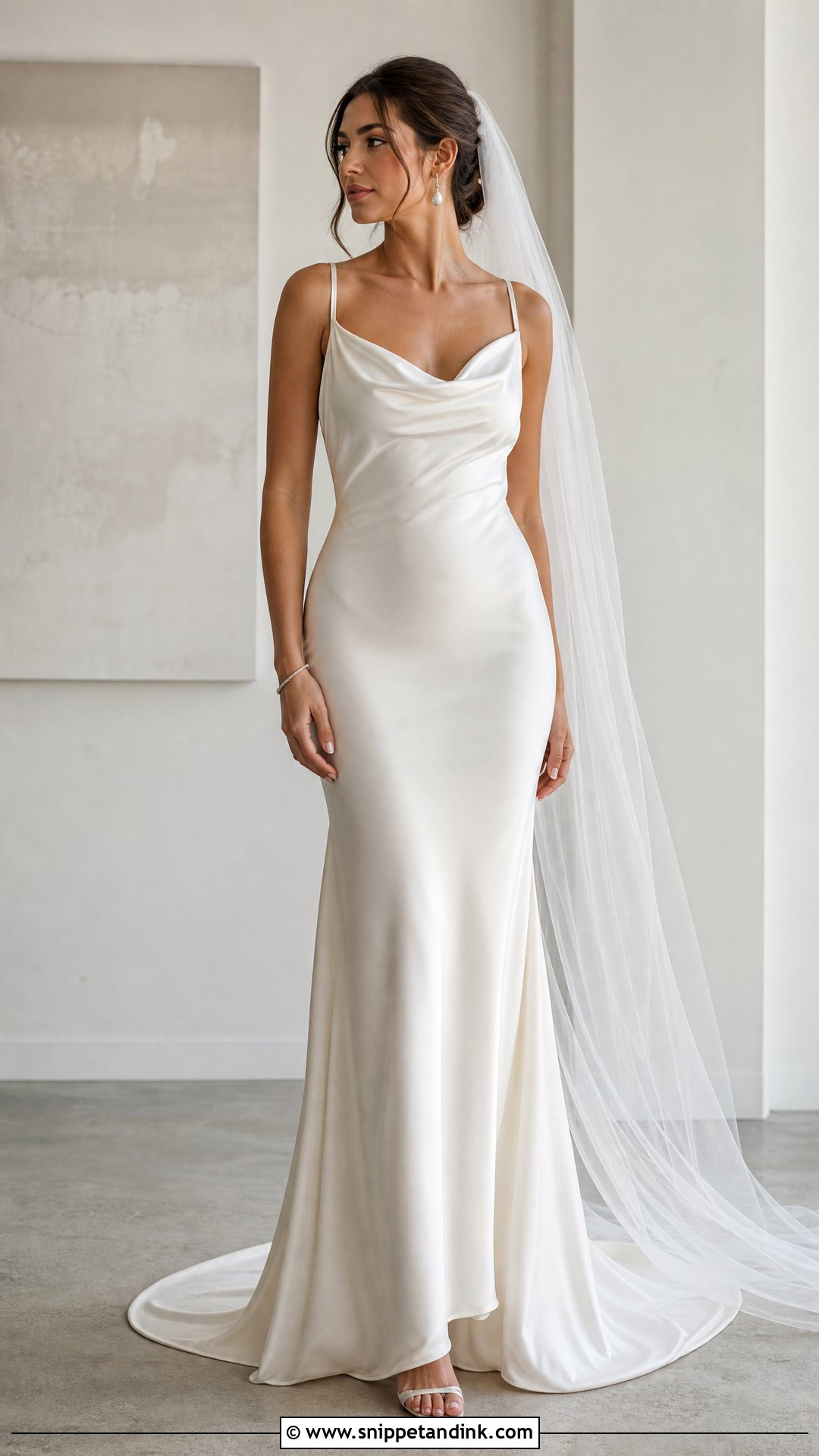
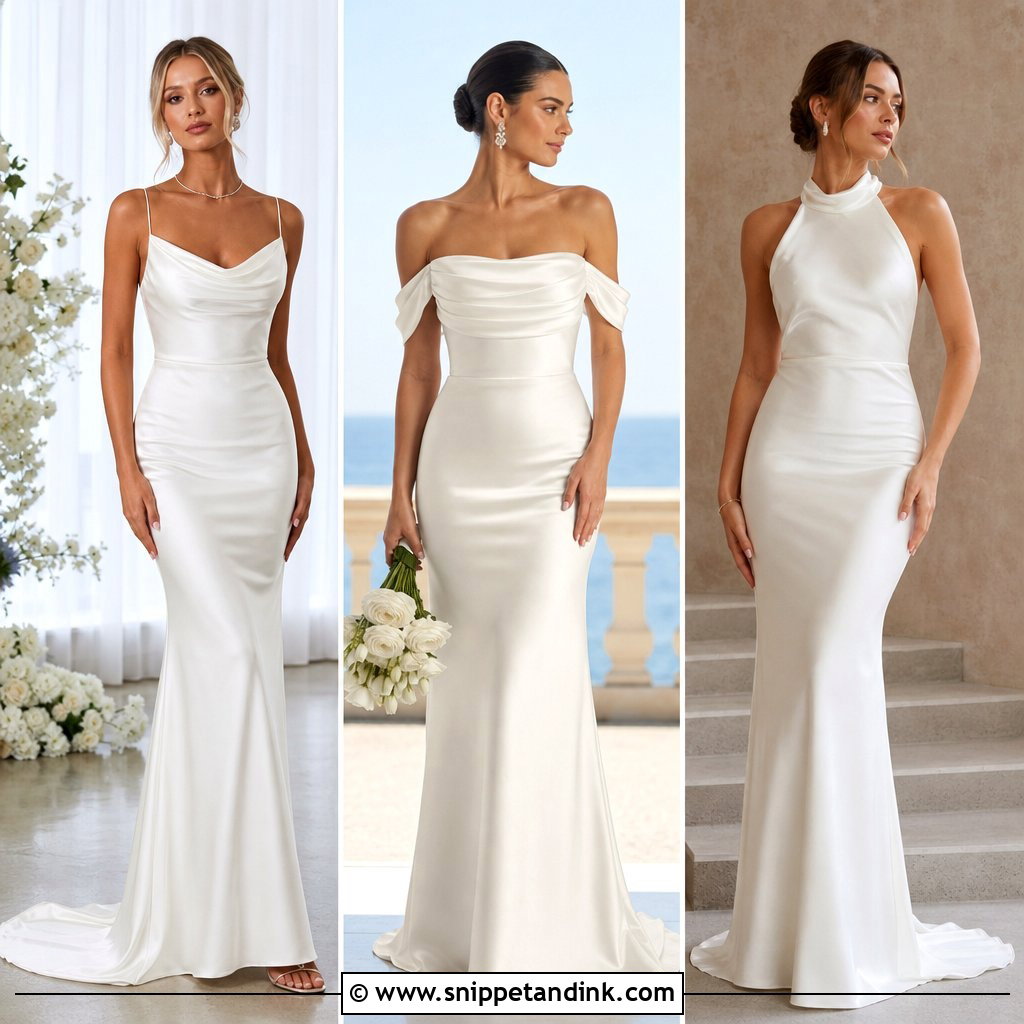
Silk satin cut on the bias is about the most revealing fabric a bride can wear. It follows the body closely, so alterations have to be expert and underwear must be smooth and edge-free. Look for a softly draped neckline, slender straps and a low back balanced by a gentle train. It shows creases, sweat and pulling more than heavier fabrics, so I’d ask the salon exactly how to steam, transport and store it. Barely-there ivory sandals, pearl earrings, a fine chain bracelet and a sheer chapel veil under a low bun. Small city venues and warm-weather weddings suit it.
4. Charmeuse Cowl Neck Wedding Dress
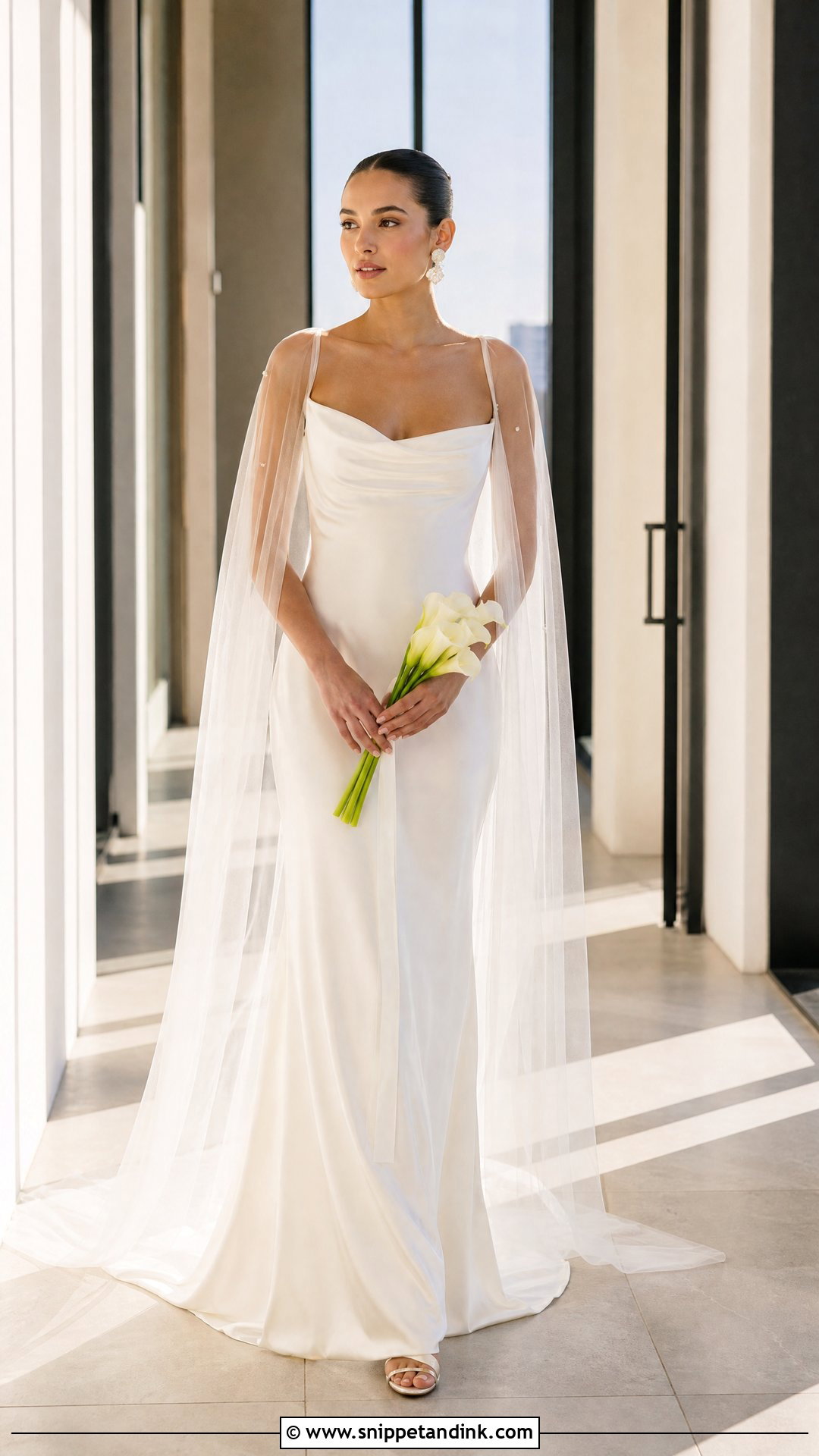
Charmeuse has a glossy face and a dull back, and it drapes like liquid, which is why it suits a cowl neck. The fabric falls into soft folds at the neckline on a column silhouette with delicate straps and a gentle train. It can be silk or a synthetic, and the two differ a lot in breathability, price and care, so compare them side by side. Inspect it from front, side and back in bright light; good seam placement and a quality lining make a visible difference on a fabric this clingy. Metallic ivory sandals, sculptural pearls and a sleek bun, with a detachable cape for the ceremony.
5. Crepe Fit And Flare Wedding Dress
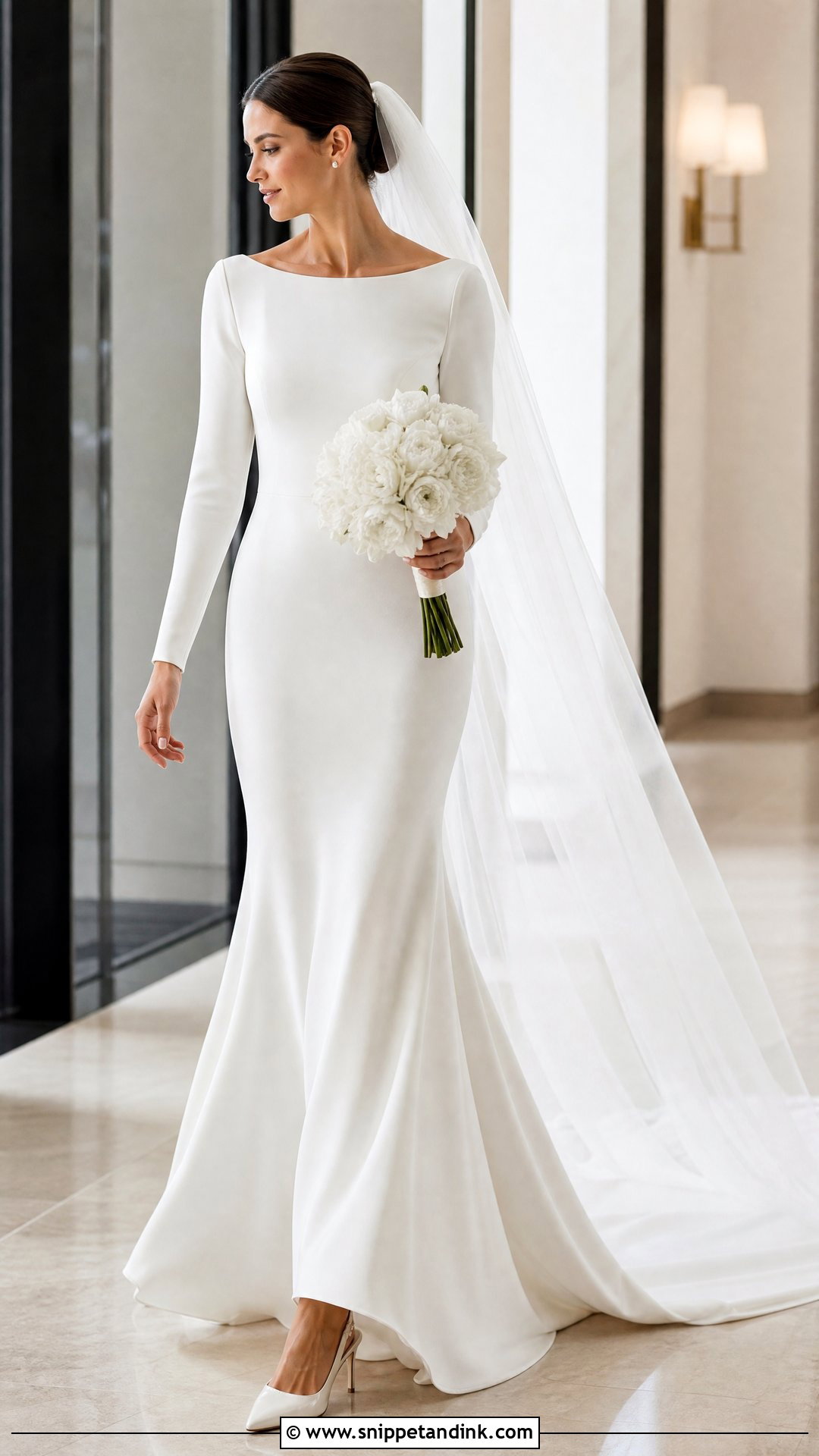
Crepe is my go-to for clean lines with a little texture. It drapes well and doesn’t shine, on a fit-and-flare with a bateau neck, long sleeves, a defined waist and a skirt opening below the hips into a manageable train. Thickness varies a lot: a heavy, lined crepe gives shape, a light one falls softer and shows more of what’s underneath. Move around in each sample before deciding. A long plain veil, pearl or diamond studs, pointed slingbacks and a structured white bouquet. A low chignon keeps the focus on the neckline. Lofts, modern hotels and formal outdoor settings suit it.
6. Chiffon Empire Waist Wedding Dress
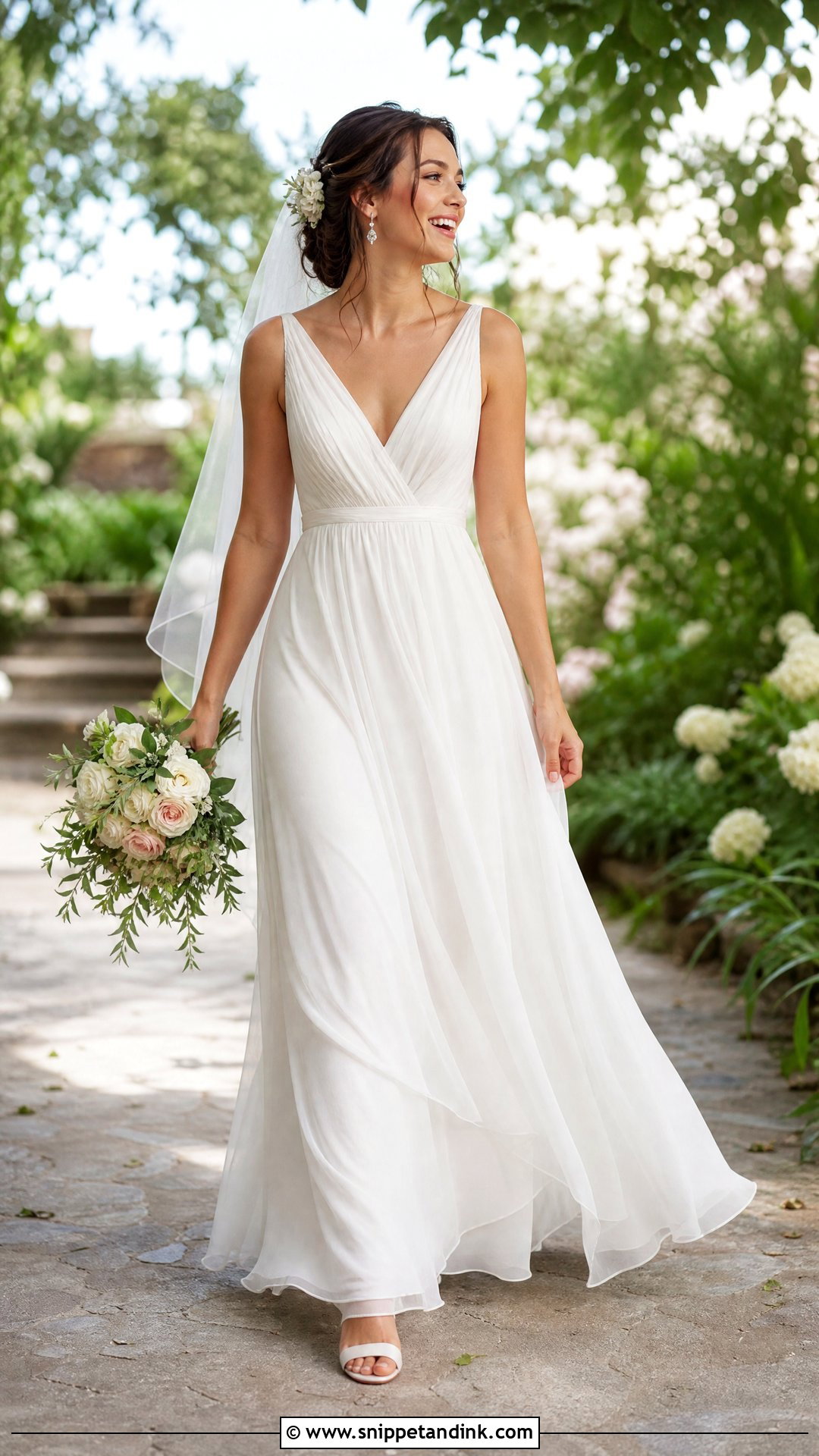
Picture a light skirt moving in an outdoor breeze. That’s what chiffon is for, and an empire waist gives it a long, soft line falling from just under the bust. A wrapped or gathered bodice with supportive straps and several layers of chiffon. Because the fabric is sheer, the lining decides your comfort and coverage, so stand in direct sunlight at the shop and have someone check what shows. Make sure the hem clears your shoes when you walk. A narrow floral hairpiece, simple drops, block-heel sandals or flats for grass and sand, and a lightweight fingertip veil. Spring, summer and destination weddings.
7. Tulle Princess Wedding Dress
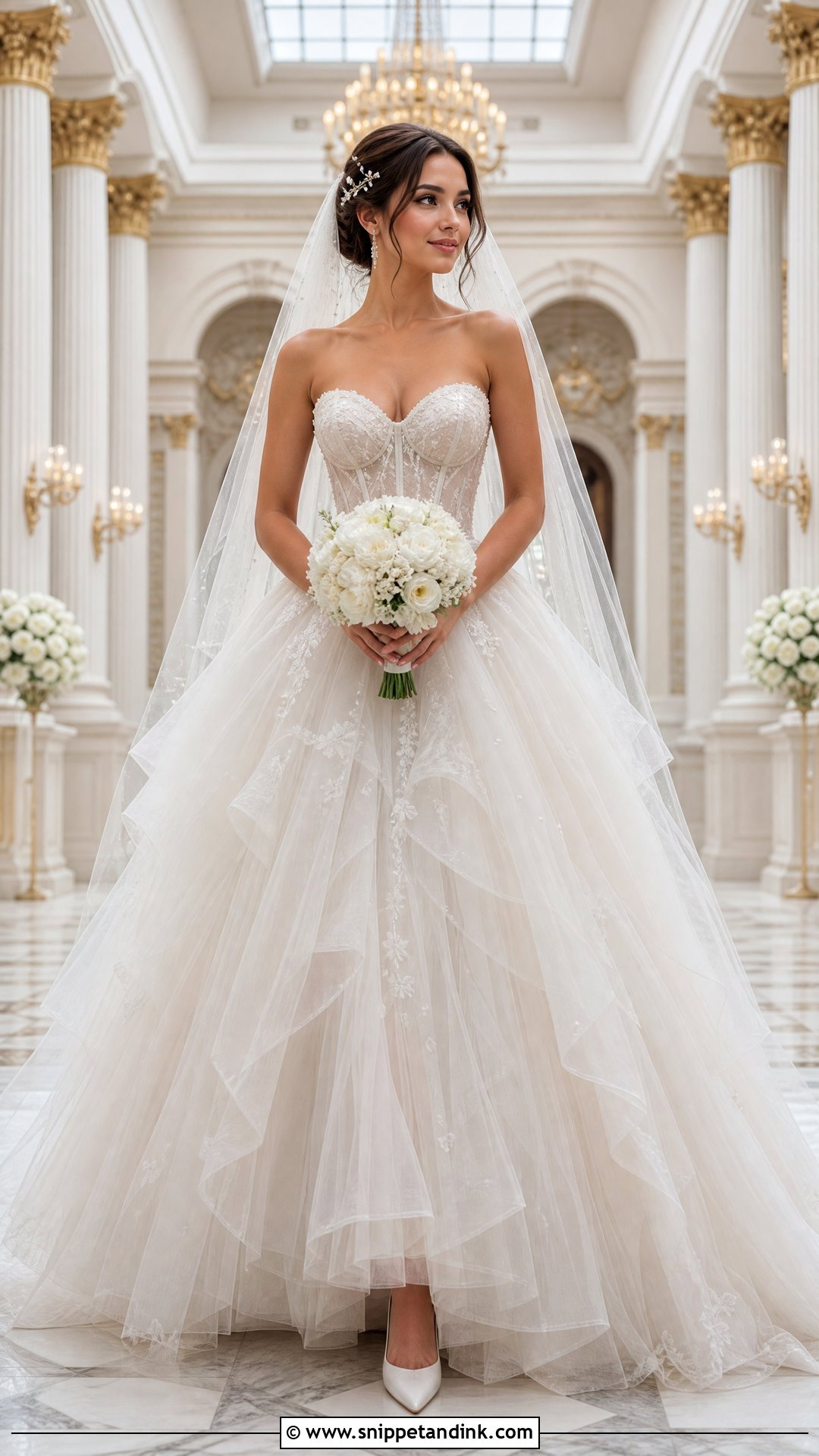
Tulle builds volume through layers, so the number of layers sets both fullness and coverage. Fine tulle moves lightly; more layers give a fuller skirt over a supportive corset bodice with a defined waist and a sweeping train. Watch out for catching: tulle snags on rough surfaces, bracelet clasps and beaded shoes, so I keep my brides in smooth jewelry with this one. A scattered pearl veil, crystal pins, drop earrings and closed-toe pumps hidden under the skirt. A bouquet of rounded flowers suits the shape. Ask whether the train has a secure bustle. Formal gardens and grand halls suit it.
8. Organza A-Line Wedding Dress
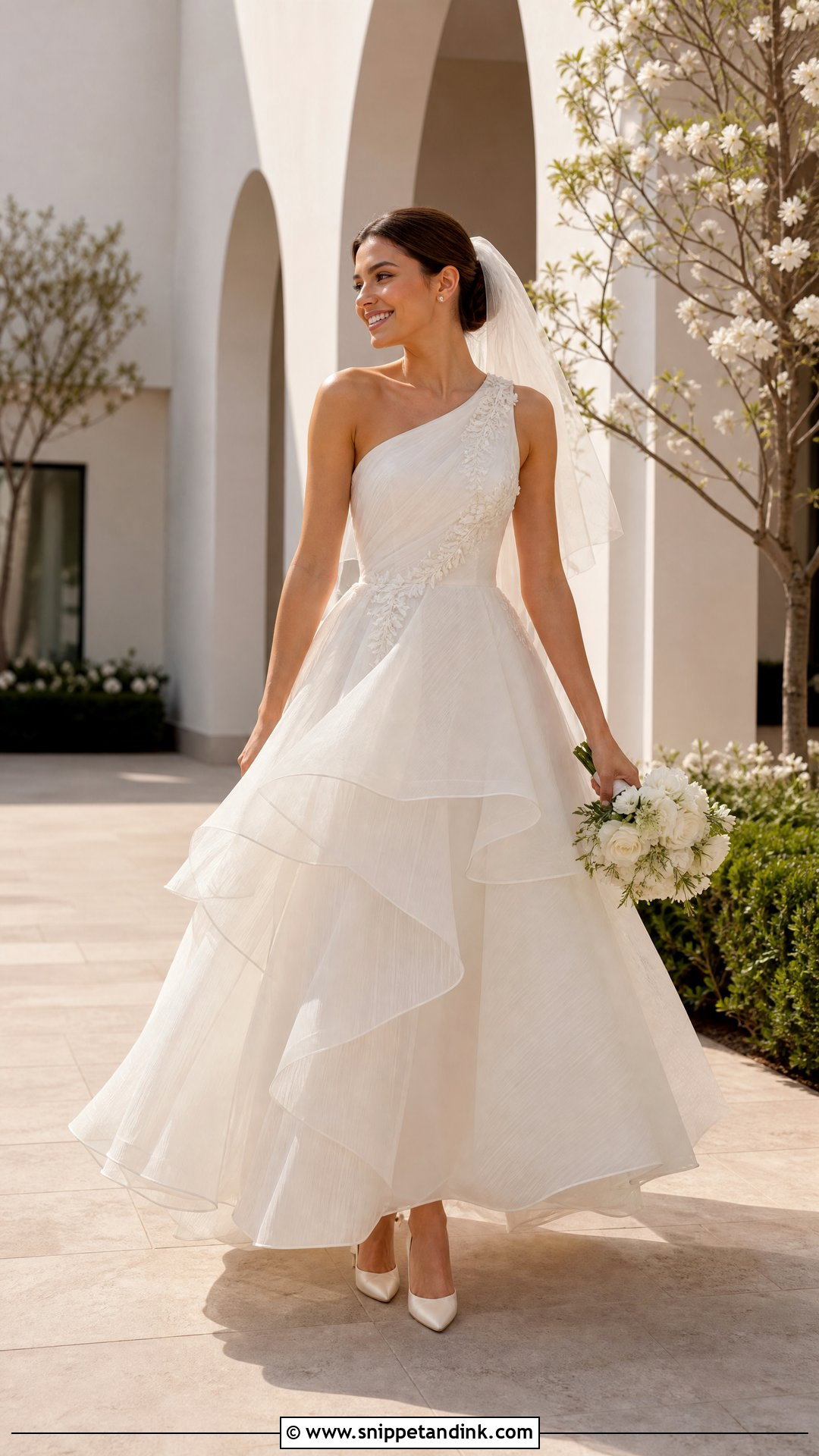
Organza is sheer like chiffon but crisp, so it holds a shape that chiffon can’t. On a structured A-line with a strapless or one-shoulder bodice, layered organza gives visible volume with soft pleats, floral appliqués or a slight high-low hem, all without much weight. It’s a strong choice for spring and summer brides who want fullness without heat. Because you can see through it, check every skirt layer for neat seams and hems. It creases, so ask how to pack and steam it. A plain shoulder-length veil, luminous studs, pointed pumps and a tidy bouquet that doesn’t hide the bodice.
9. Chantilly Lace Sheath Wedding Dress
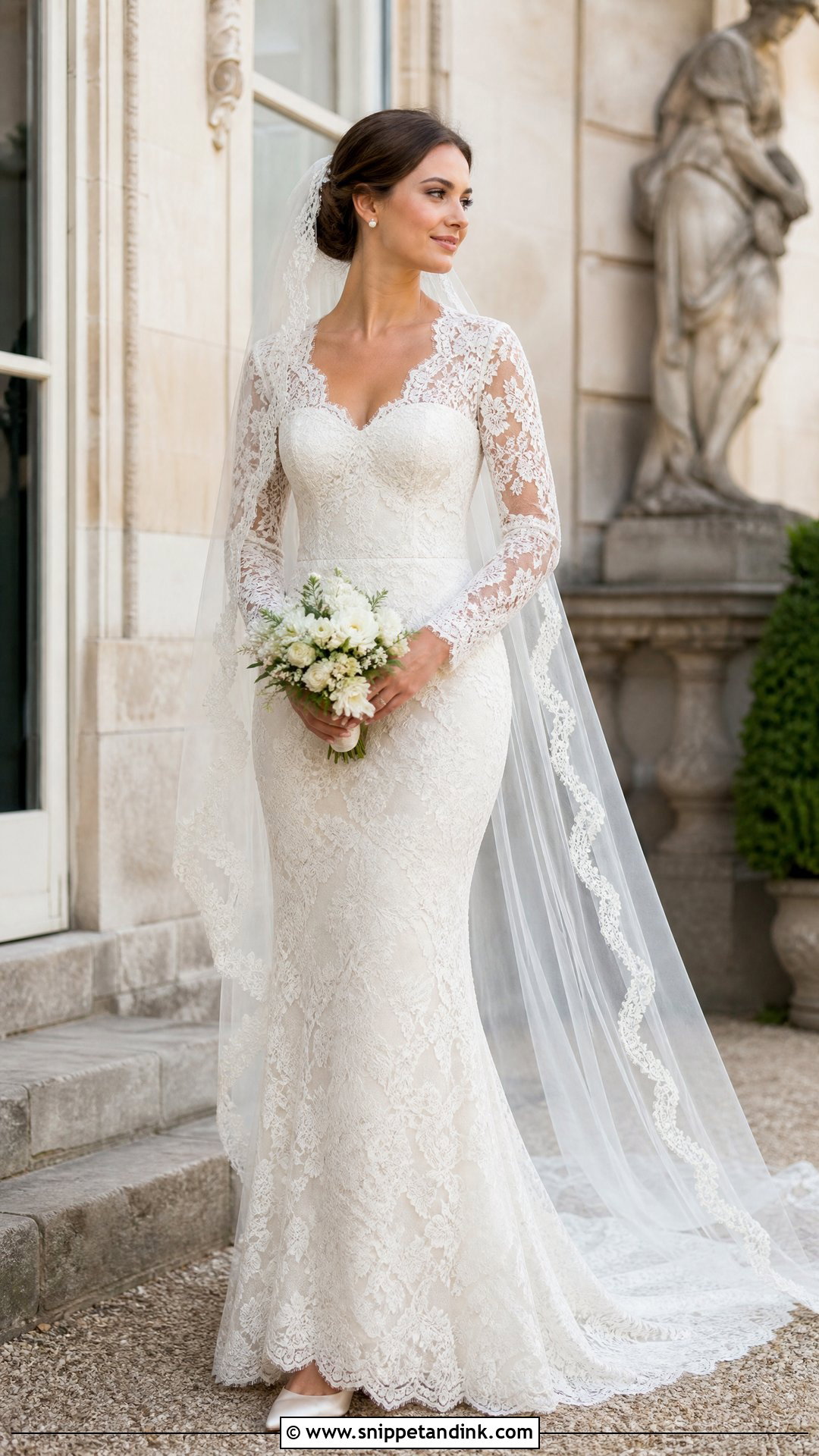
Chantilly is a fine, flat lace with delicate pattern, which suits a slim sheath wedding dress. A lined sweetheart or V-neck, sheer lace sleeves, a gently defined waist and a narrow train. Lining color changes the look: tonal ivory is traditional, nude or blush makes the pattern pop. Because it’s so fine, the bodice needs internal support so the lace isn’t carrying tension, and check for loose threads where jewelry might catch. A lace-edged chapel veil, pearl studs, satin pumps and a small garden bouquet. Historic houses and daytime garden ceremonies suit it.
10. Alençon Lace A-Line Wedding Dress
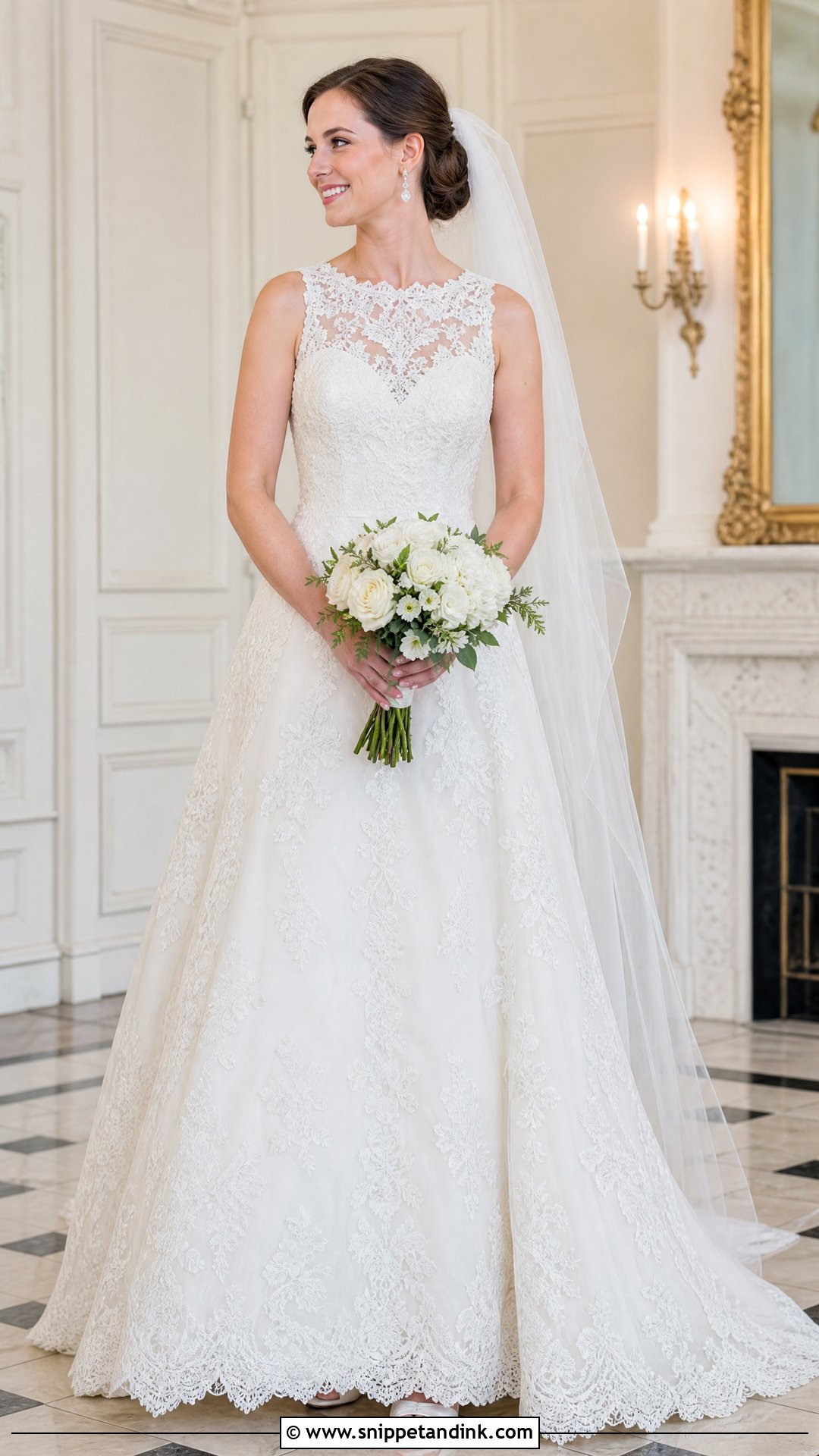
Alençon lace has its motifs outlined in a raised cord, so it looks more defined than flat lace from a distance. A fitted lace bodice with a portrait neckline flowing into a soft A-line finished with appliqués at the hem. Covered buttons down the back. Look closely at where the motifs meet at the side seams, neckline and center back; on a well-made gown they’re placed to look continuous. The cording can feel scratchy on sensitive skin, so test the armholes and sleeves. A plain cathedral veil, pearl-and-crystal earrings, ivory block heels and a hand-tied bouquet.
11. Guipure Lace Column Wedding Dress
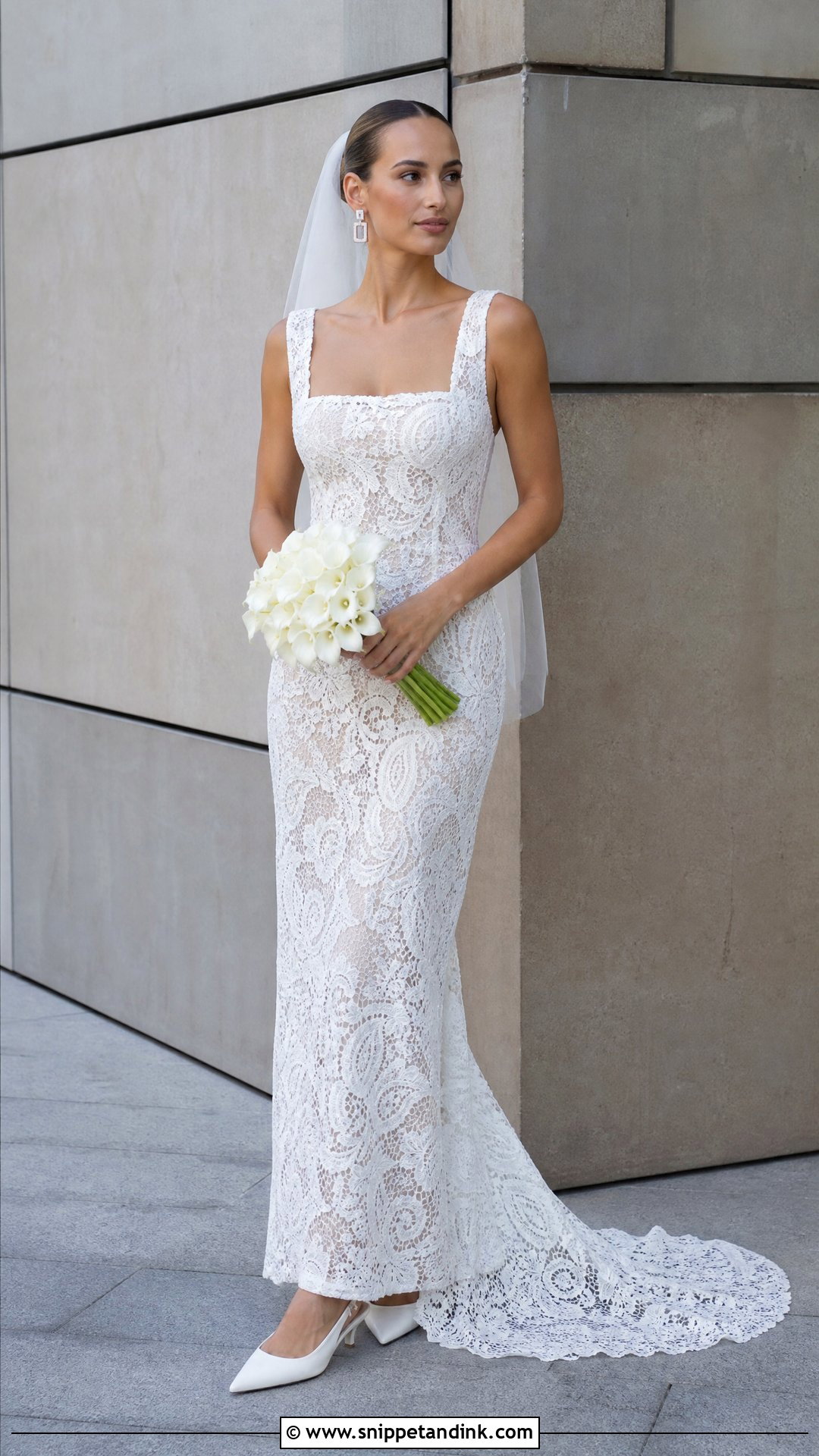
Guipure is lace without a net background, so the motifs are joined to each other and the openwork is bold and firm. That body means it can shape a column gown on its own. A high or square neck, a fitted lining, clean waist shaping and a small train. Ivory lining is classic; a slightly contrasting tone shows off the pattern. It’s heavier and firmer than fine lace, so move your arms, sit and walk at fittings, and check that motif edges lie flat at neck and hem. A simple tulle veil, geometric earrings, closed-toe slingbacks and a sleek bouquet with little greenery. Architectural venues suit it.
12. Mikado Basque Waist Wedding Dress
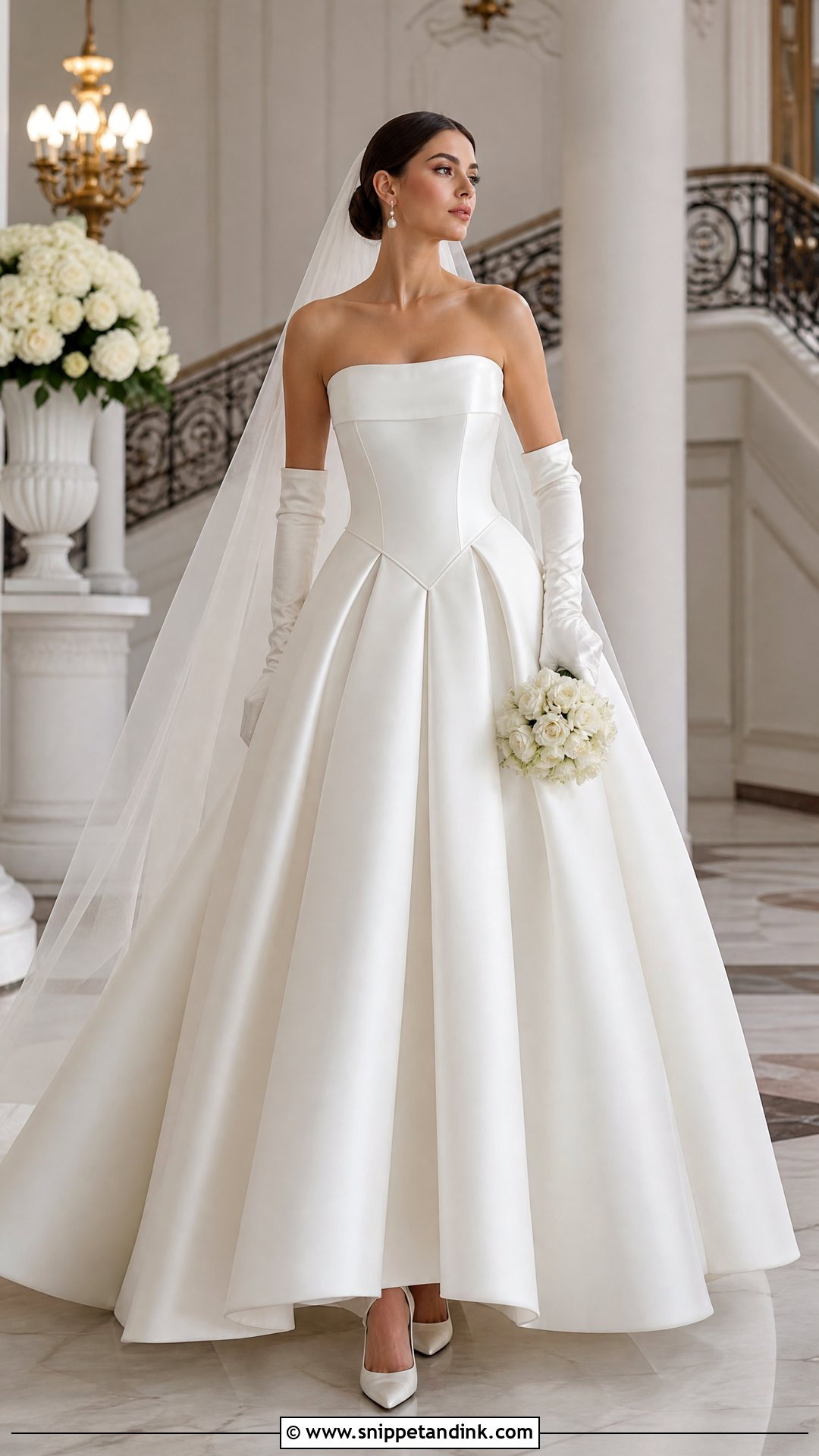
Mikado is dense, with a crisp hand and a soft luster, and that’s exactly why it suits a Mikado gown with a basque waist. The V-shaped waist on a strapless corset bodice, then a full pleated skirt, holds clean architectural lines that softer fabrics can’t. It may be silk or a blend. A long plain veil, pearl drops, satin pumps and a compact bouquet, with optional opera gloves for the ceremony. During alterations, make sure the basque point follows your own proportions and that you can sit, breathe and dance. Formal autumn and winter settings suit it best.
13. Taffeta Drop Waist Wedding Dress
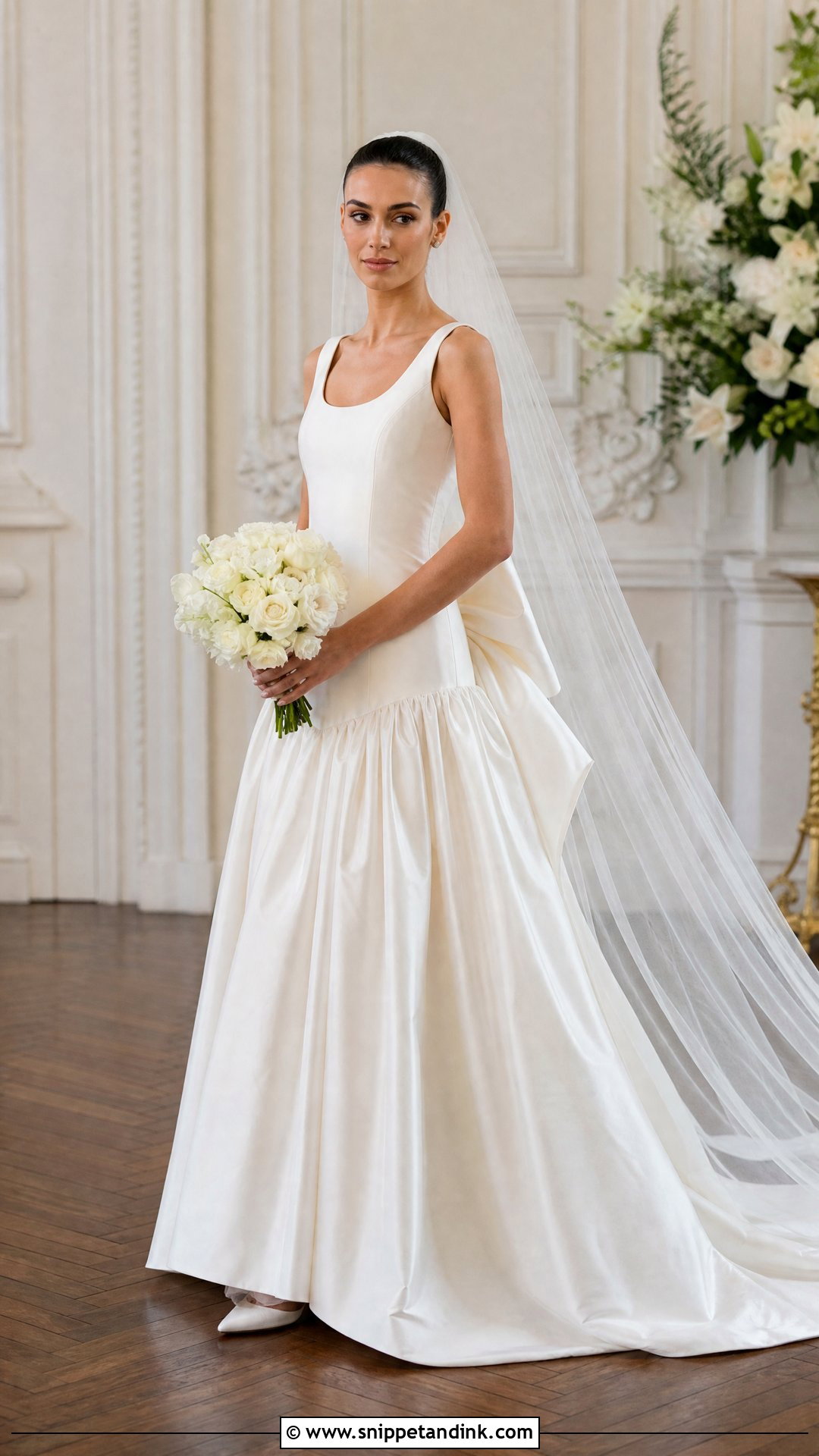
Taffeta rustles, and some brides love that and some can’t stand it, so I send brides to walk in it somewhere quiet before they decide. Its crispness holds dramatic folds on a gathered skirt below a lengthened waist seam, with a fitted scoop-neck bodice. It also supports a bow, rosette or overskirt without going limp. Keep everything else restrained: a narrow cathedral veil, crystal studs, ivory pointed pumps and a structured bouquet. Taffeta creases visibly, so talk through transport and steaming with the salon. Grand indoor spaces in cooler months suit it.
14. Silk Faille Minimalist Wedding Dress
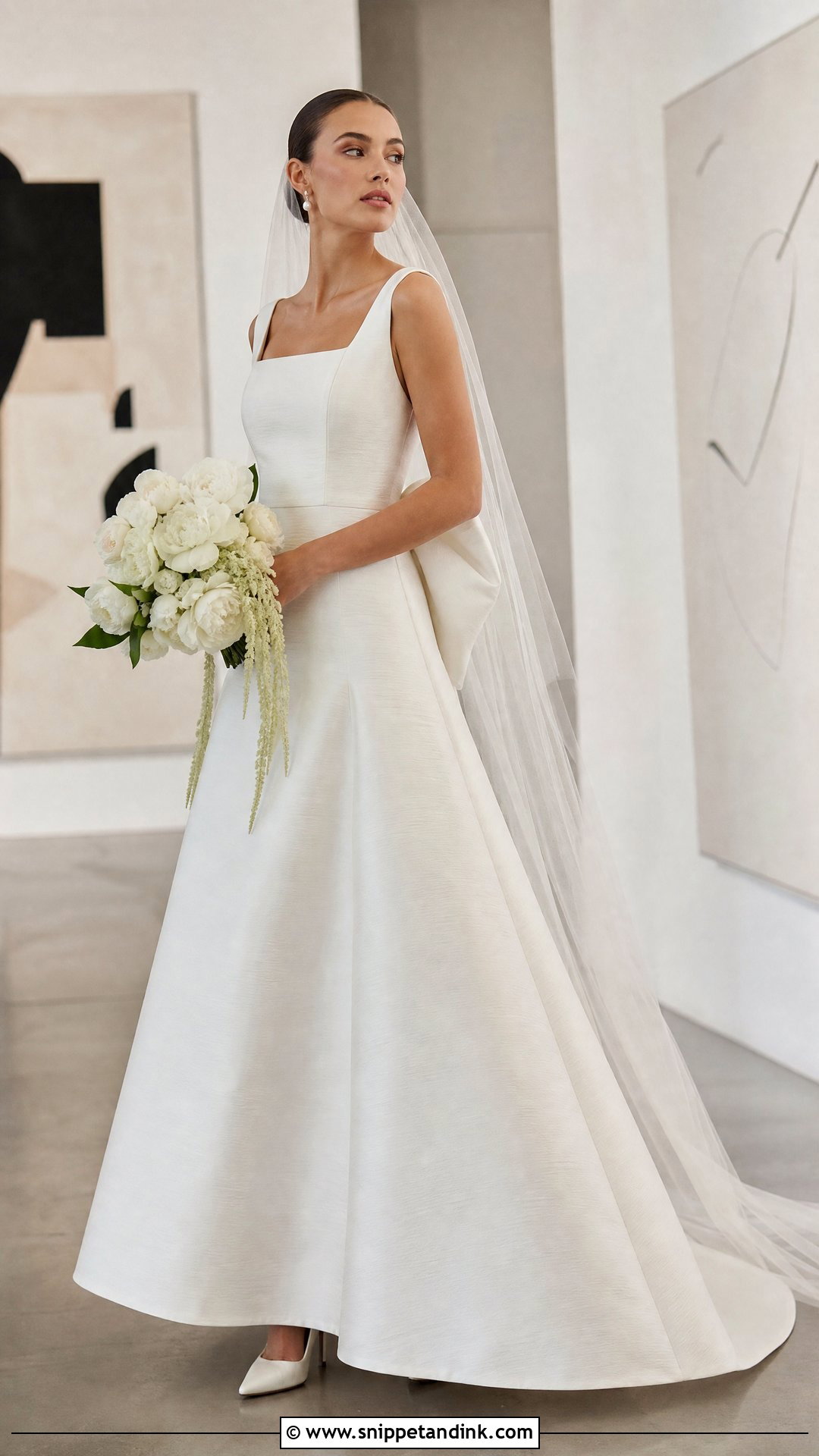
Silk faille has a fine ribbed surface you can feel under your fingertips, and enough body to hold structured seams and folds. A square-neck gown with wide straps, a fitted waist and a gently flared skirt shows that texture without decoration. A detachable back bow or overskirt adds drama for the ceremony. Tailoring has to be careful, and the grain and hem must hang straight. Ask about pressing, too; too much heat leaves shiny marks on the ribs. A sheer chapel veil, small pearl earrings, low ivory pumps and a modern white bouquet. Galleries and hotels suit it.



15. Jacquard Floral Wedding Dress
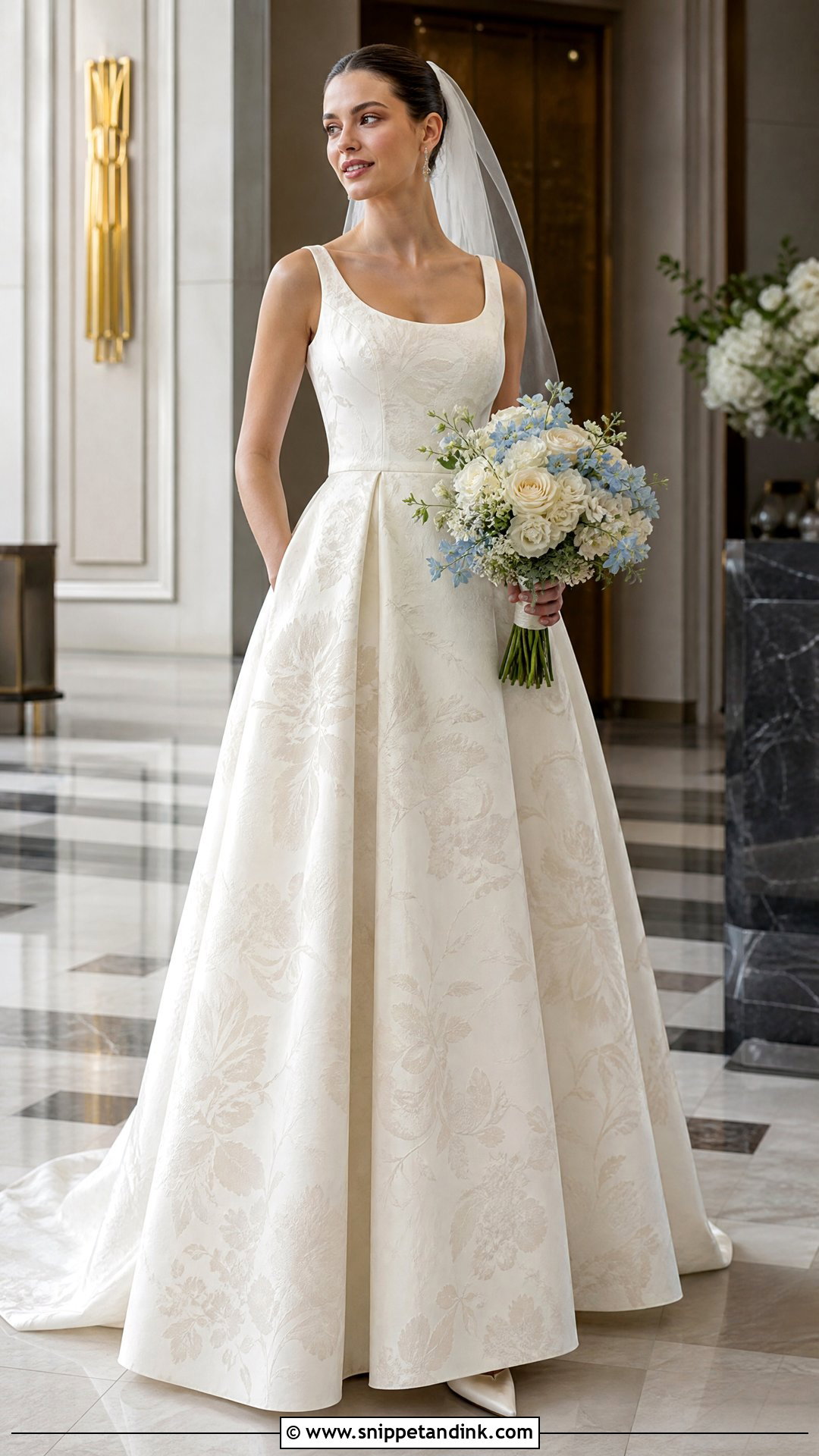
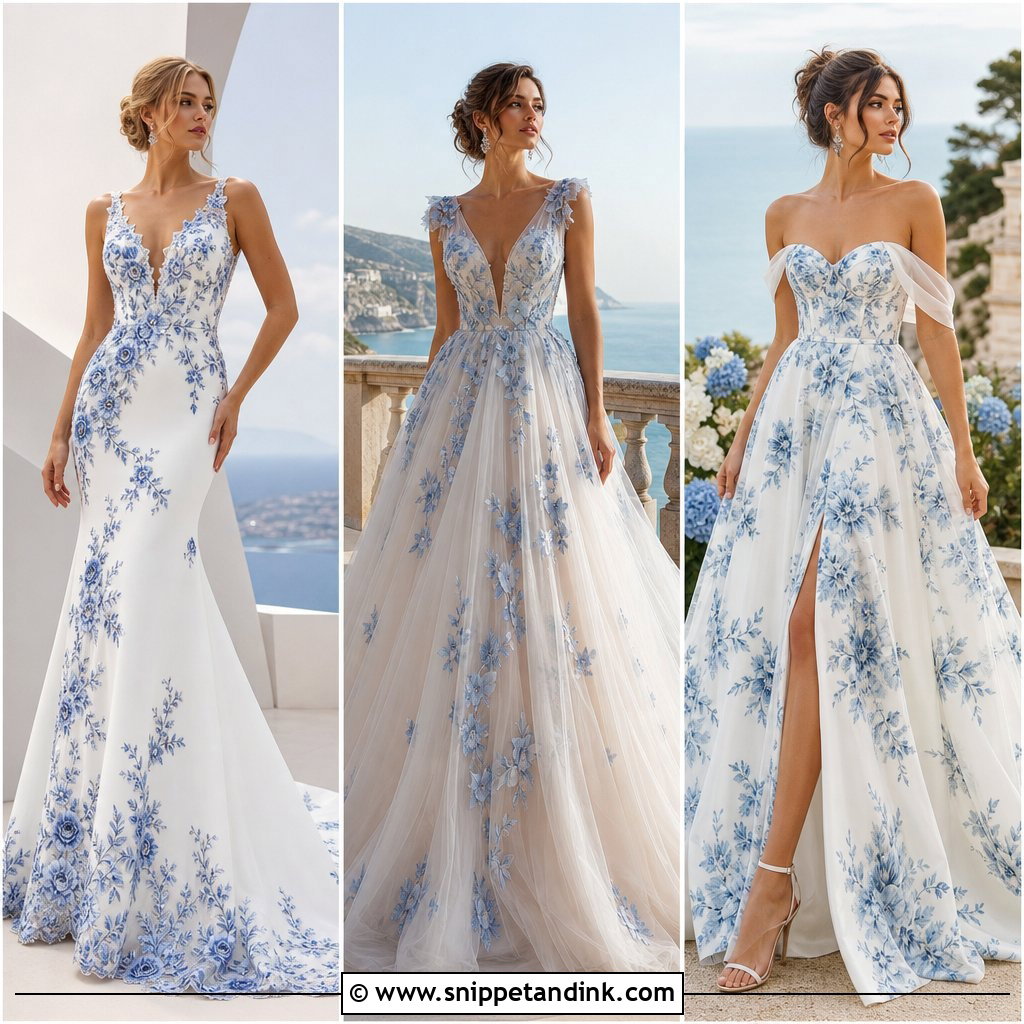
A floral jacquard wedding dress gets its pattern from the weave itself, not appliqués sitting on top. A fitted bodice with a straight or scoop neckline and an A-line skirt gives the pattern room. Ivory-on-ivory is traditional; a subtle silver or pale blue motif is more fashion-led. Jacquards vary widely in stiffness, so try several rather than judging by name. Big motifs should match across seams and pleats. A plain veil, crystal earrings, ivory pumps and a bouquet echoing one color from the fabric. Formal indoor ceremonies suit it.
16. Brocade Ball Gown Wedding Dress
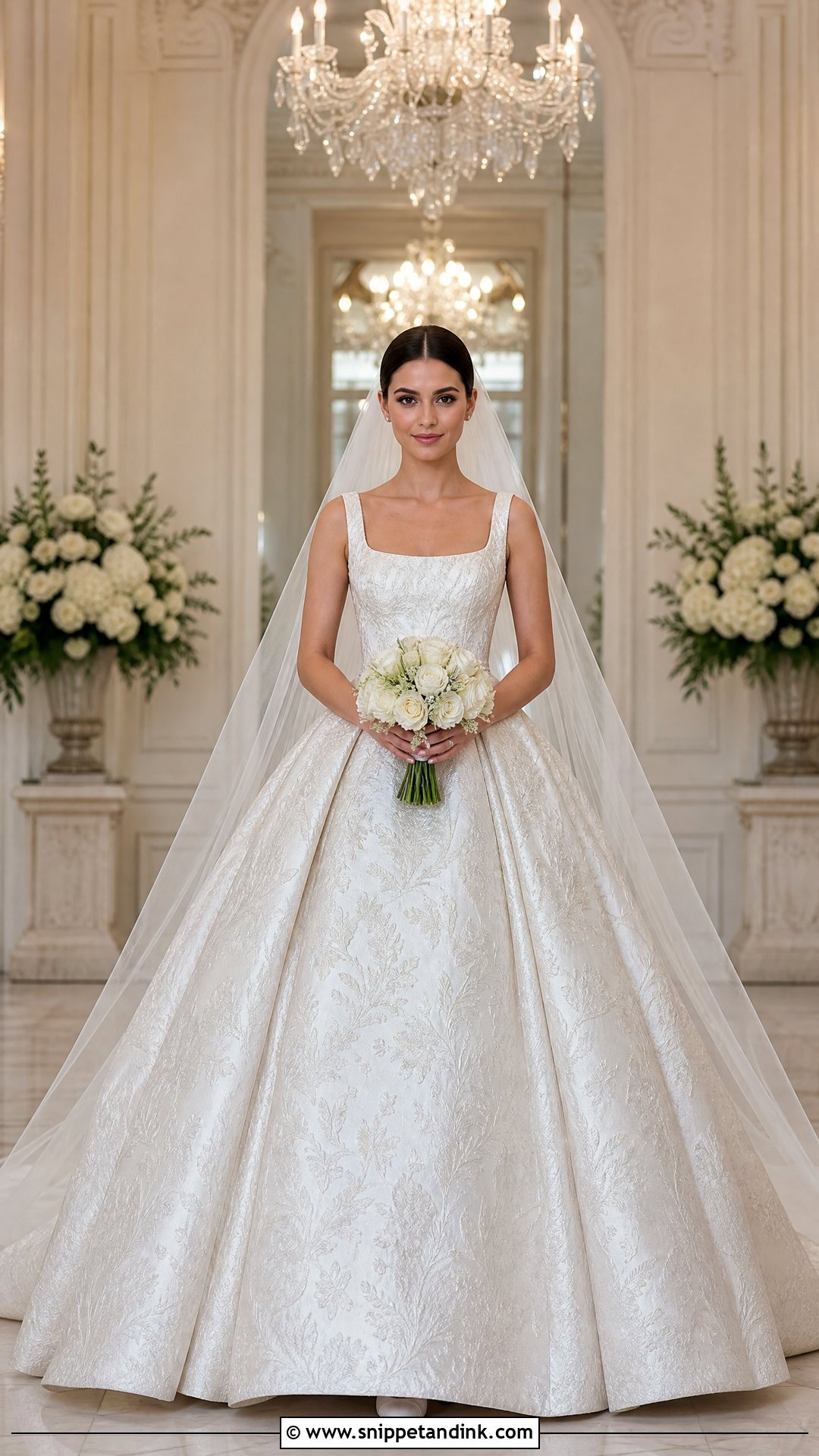
Brocade has a raised woven pattern and real weight, which makes it a cold-weather fabric. A corseted bodice, natural waist and full skirt let the pattern cover the whole silhouette. Keep the neckline simple, a clean strapless curve or a modest square. Poorly placed seams in thick brocade add bulk, so the fitting matters, and the pattern should line up at center front, back and train. I turn every brocade gown inside out, because the floats on the reverse can scratch, so the lining needs to cover them fully. A plain cathedral veil, classic studs, closed-toe heels and a structured bouquet.
17. Georgette Boho Wedding Dress
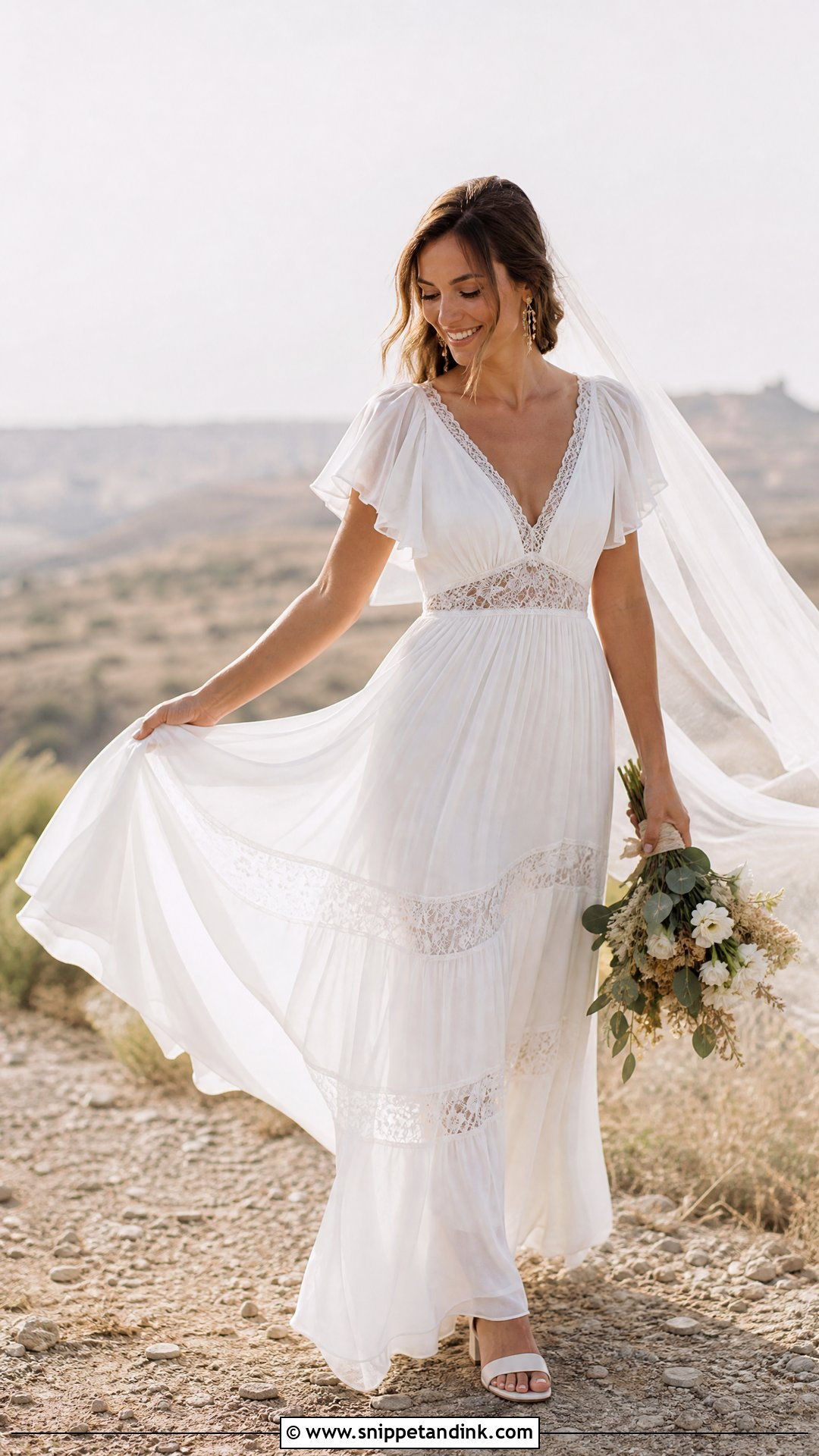
Georgette is chiffon’s slightly grainier cousin. It has a crinkled texture and moves well, with a little more substance in the hand. A soft V-neck, flutter sleeves, a defined or empire waist and a flowing skirt with a modest train make a good boho shape, with lace inserts for detail. Silk and synthetic georgette differ in feel, price and care. Many are semi-sheer, so check the lining in daylight. A light veil, delicate gold earrings, block-heel sandals and a loose garden bouquet. A low braided bun or softly pinned waves. Gardens and destination venues suit it.
18. Linen Blend Summer Wedding Dress
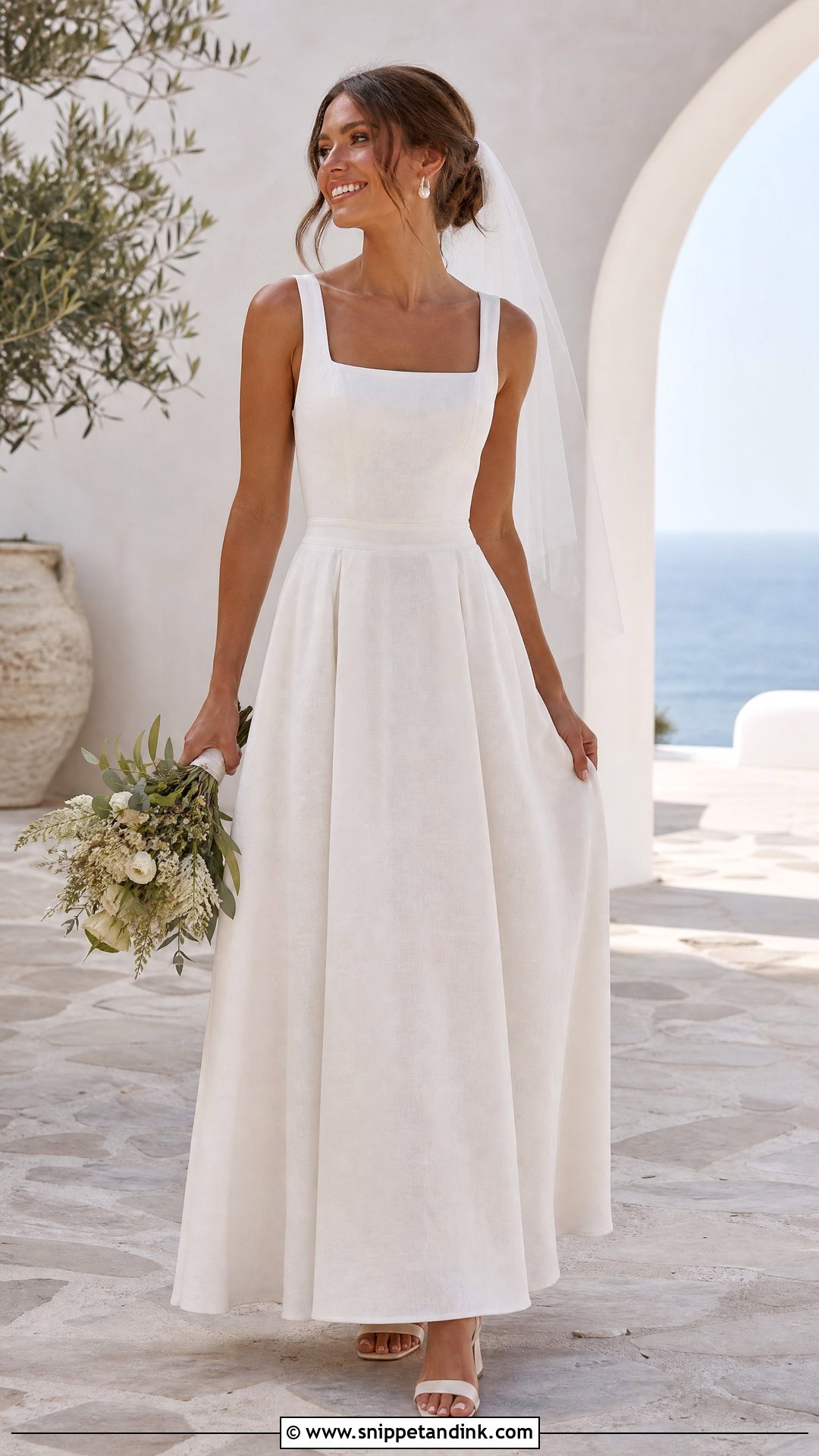
Could a structured gown still feel comfortable at a warm-weather celebration? Linen blends are the answer I give brides marrying in summer heat. A square-neck A-line with wide straps, a fitted waist and a softly pleated skirt. Pure linen creases fast; a cotton or viscose blend takes some of that stiffness and wrinkling away. Ask for a swatch, fold it in your hand for a minute and see how it recovers. Plan steaming close to the ceremony. A short sheer veil, pearl hoops, low block-heel sandals and a simple seasonal bouquet. Courtyards and coastal venues suit it.
19. Velvet Winter Wedding Dress
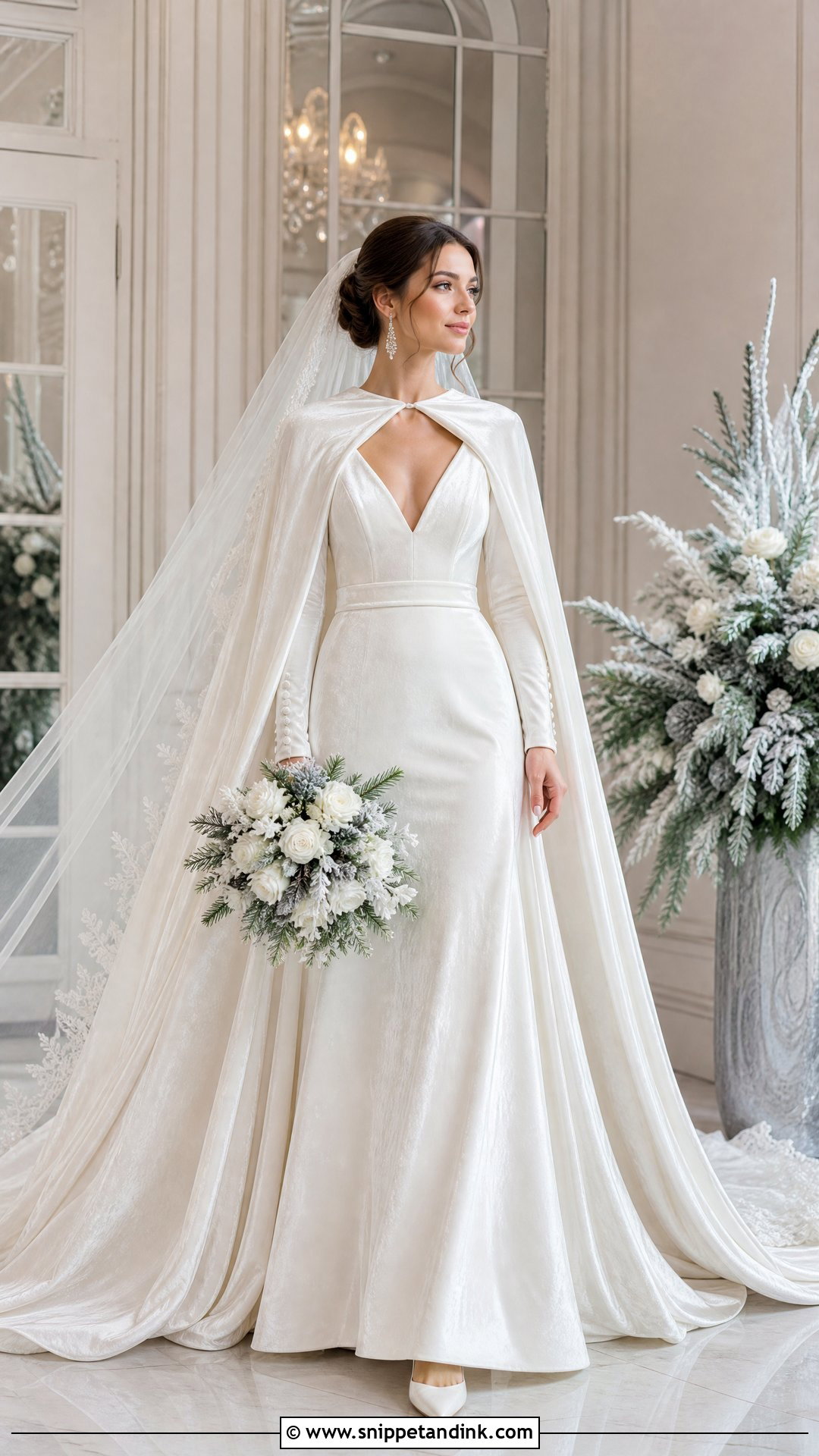
Velvet has a pile that catches light differently depending on which way it’s brushed, so view the gown under the venue’s actual lighting. A long-sleeved column or softly flared gown with a V-neck, defined waist and covered buttons in ivory or winter white. It’s heavy and warm, so check you’ll be comfortable once you’re indoors with a crowd. A detachable velvet cape helps for outdoor portraits. A cathedral veil, crystal drops, closed-toe satin pumps and white seasonal flowers. Hang it properly and have it pressed professionally, because crushed pile is hard to bring back.

20. Embroidered Tulle Wedding Dress
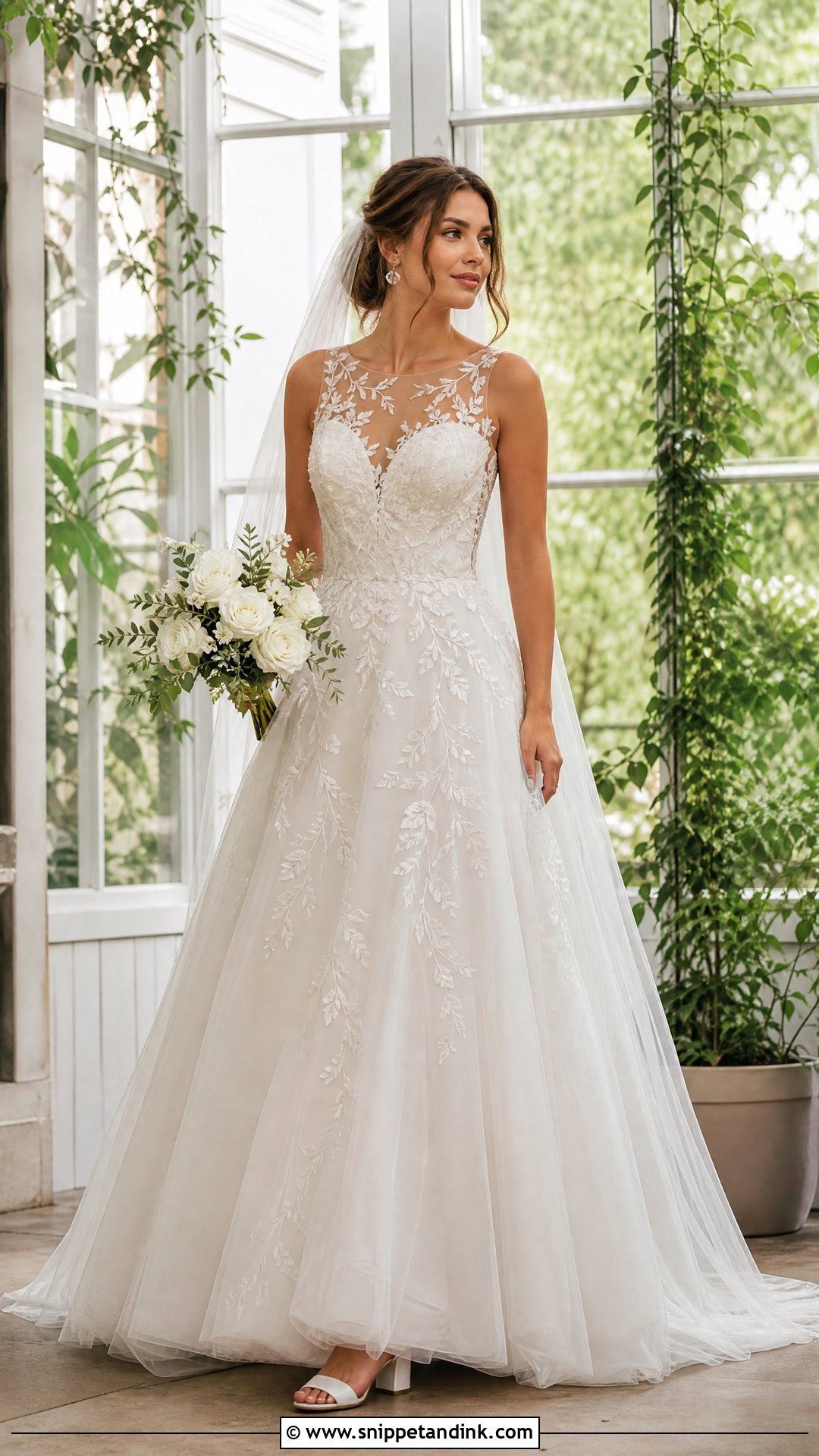
Embroidered tulle pairs airy volume with surface detail. An illusion-neck bodice covered in botanical embroidery, a defined waist and a layered A-line carrying the pattern toward the hem. Pearls or sequins add dimension, but too many weigh the tulle down and it stops moving. Avoid embellished shoes and bracelets that snag the net. A plain veil, small crystal earrings, satin block heels and a bouquet with simple shapes. I check the embroidery from every side for balance and secure stitching. And ask whether the hem can be altered without cutting into the design.
How Each Fabric Looks by Hour Eight
Every gown looks crisp at nine in the morning. The fabric shows its character after a car journey, a long dinner and some dancing, so plan for the evening version of your dress, not just the photo version.
- Satin and silk faille: sitting creases settle across the lap and the back of the skirt. They mostly relax as you stand and move.
- Chiffon, georgette and charmeuse: the most forgiving for creases, but damp shows on silk in heat.
- Tulle: holds up well, though cheaper tulle flattens a little in humidity and catches on rough surfaces.
- Linen and taffeta: crease the most. Accept some as part of the fabric’s character.
- Velvet: sitting can flatten the pile, so it helps to stand for the formal portraits early in the day.
- Lace: barely creases at all, but snags on jewelry and Velcro on shoes.
Hang the dress at the venue as soon as you arrive and give a bridesmaid a small handheld steamer. Steam from a few inches away and never press an iron directly onto silk, lace or velvet. A clean white cloth and a bottle of plain water fix most small marks, but dab rather than rub, and leave silk to a professional.
Run Your Hand Over It Before You Say Yes
Fabric should suit your silhouette, season, venue and comfort before anything else. Structured materials such as mikado, duchess satin, brocade and taffeta build defined shapes; chiffon, georgette, charmeuse and soft tulle move more freely. Lace, jacquard and embroidery bring pattern so the accessories can stay simple. When you compare, look at every gown in daylight and indoor light, then walk, sit, raise your arms and test the train. Ask about fiber content, lining, creasing, steaming, alterations and storage before you commit.
You'll Like These Ideas:









Leave a Reply