
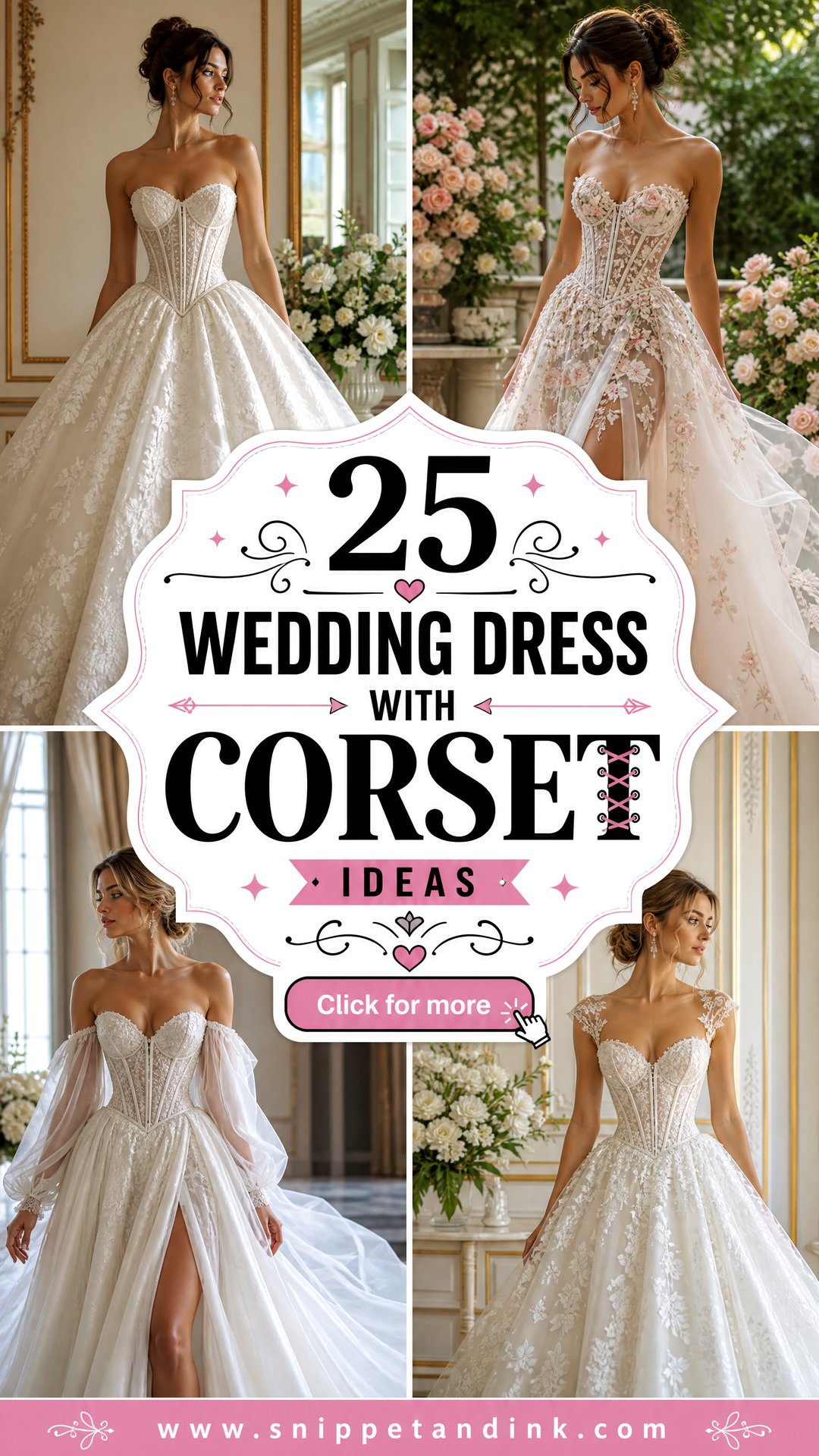
Reading a Corset Bodice in the Fitting Room
Most wedding gowns sold as corsets are boned bodices, not true lace-up corsets, and the difference shows after a few hours. When a bride steps into one, I’m not looking at the mirror first. I’m feeling the inside of the bodice and asking her to sit down.
What the boning is made of
Plastic boning is light and cheap, but it can warp with body heat and leave ridges across the front by the end of the night. Spiral steel bends with you while keeping its shape, and flat steel is usually reserved for the centre front and back. If you can press a bone and it stays kinked, that bodice will crease by dessert.
Four tests before you say yes
- Sit on a hard chair for a full minute. The top edge shouldn’t dig in under your arms or ride up at the bust.
- Take a deep breath and laugh. If you can’t, it’s a size or a fit problem, not something to tough out.
- Raise both arms as if you’re hugging someone taller. The bodice should stay where it is.
- Turn sideways and check the top edge. A gap there means it needs taking in at the side seams.
Never size down hoping the corset will pull you in. A structured bodice is built around a set waist and bust measurement, and squeezing into a smaller one pushes flesh over the top edge and strains the zip or lacing.
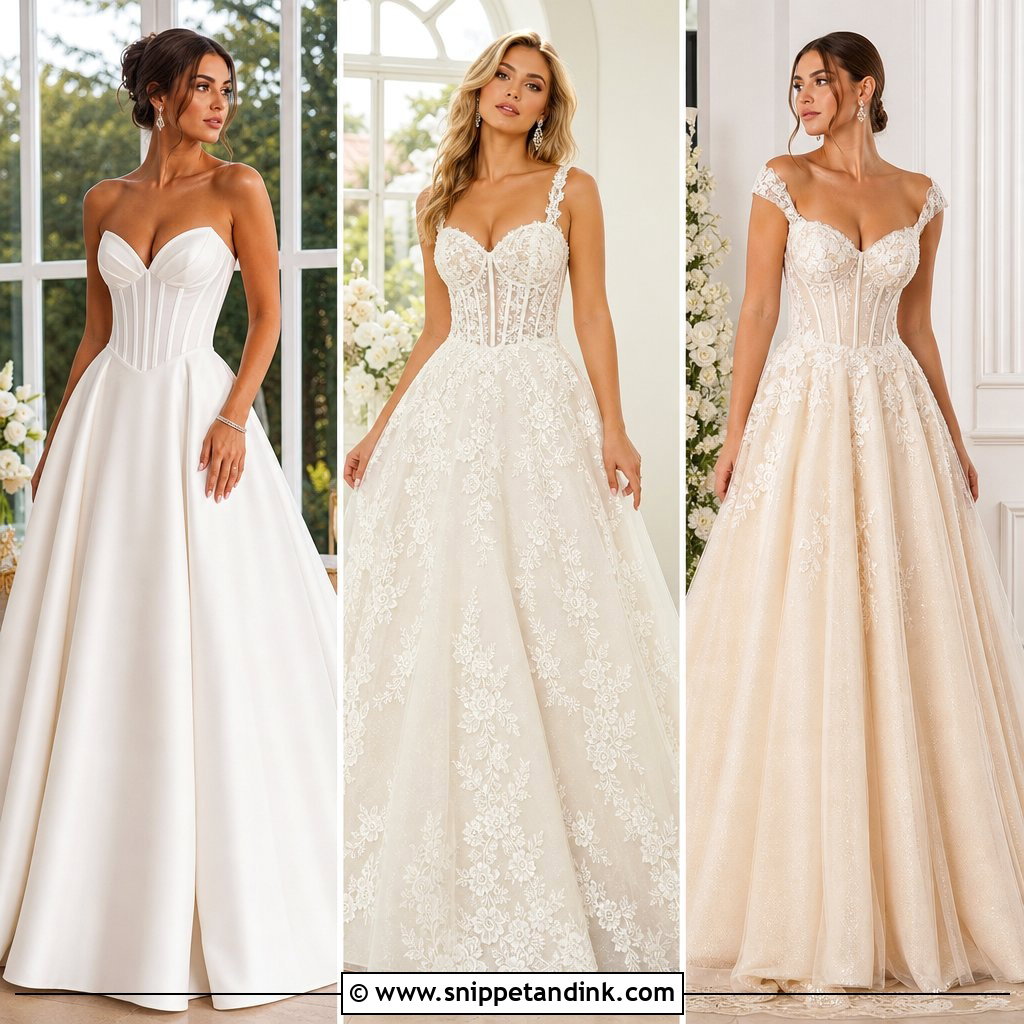
1. Satin Corset Wedding Dress With A-Line Skirt
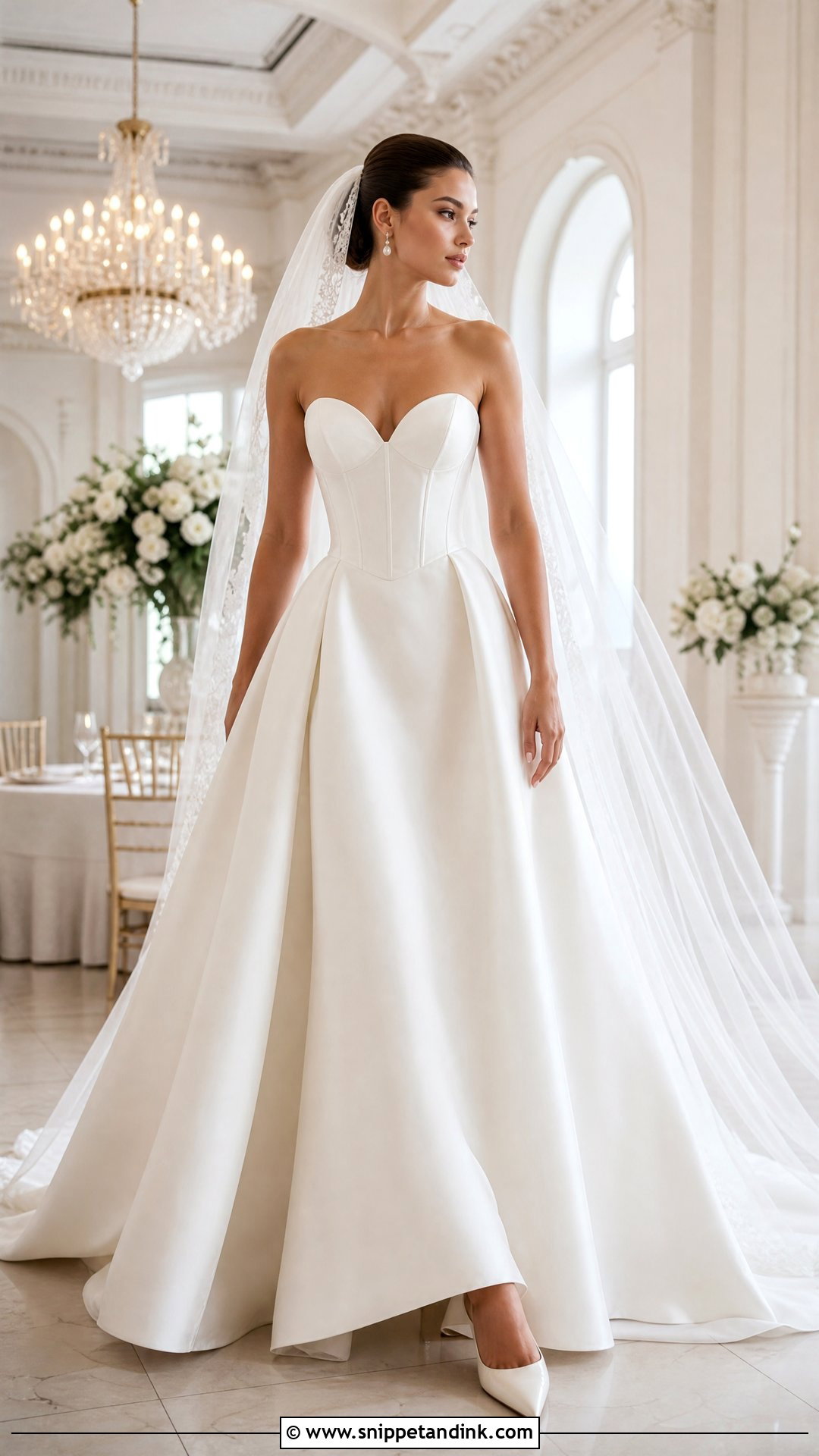
Satin over a corset bodice with an A-line skirt is the gown I pull first when a bride says she wants polish but no fuss. The boning does the shaping at the waist, and the skirt leaves the hip at an easy angle, so nothing clings when you sit. Satin is honest, though: it shows every ripple, so I check the bodice seams under bright light before anything else. Pearl earrings, a cathedral veil and pointed ivory heels are all it needs. Keep the hair to a smooth low bun or soft waves and the neckline stays the main event.
2. Lace Corset Wedding Dress With Long Sleeves
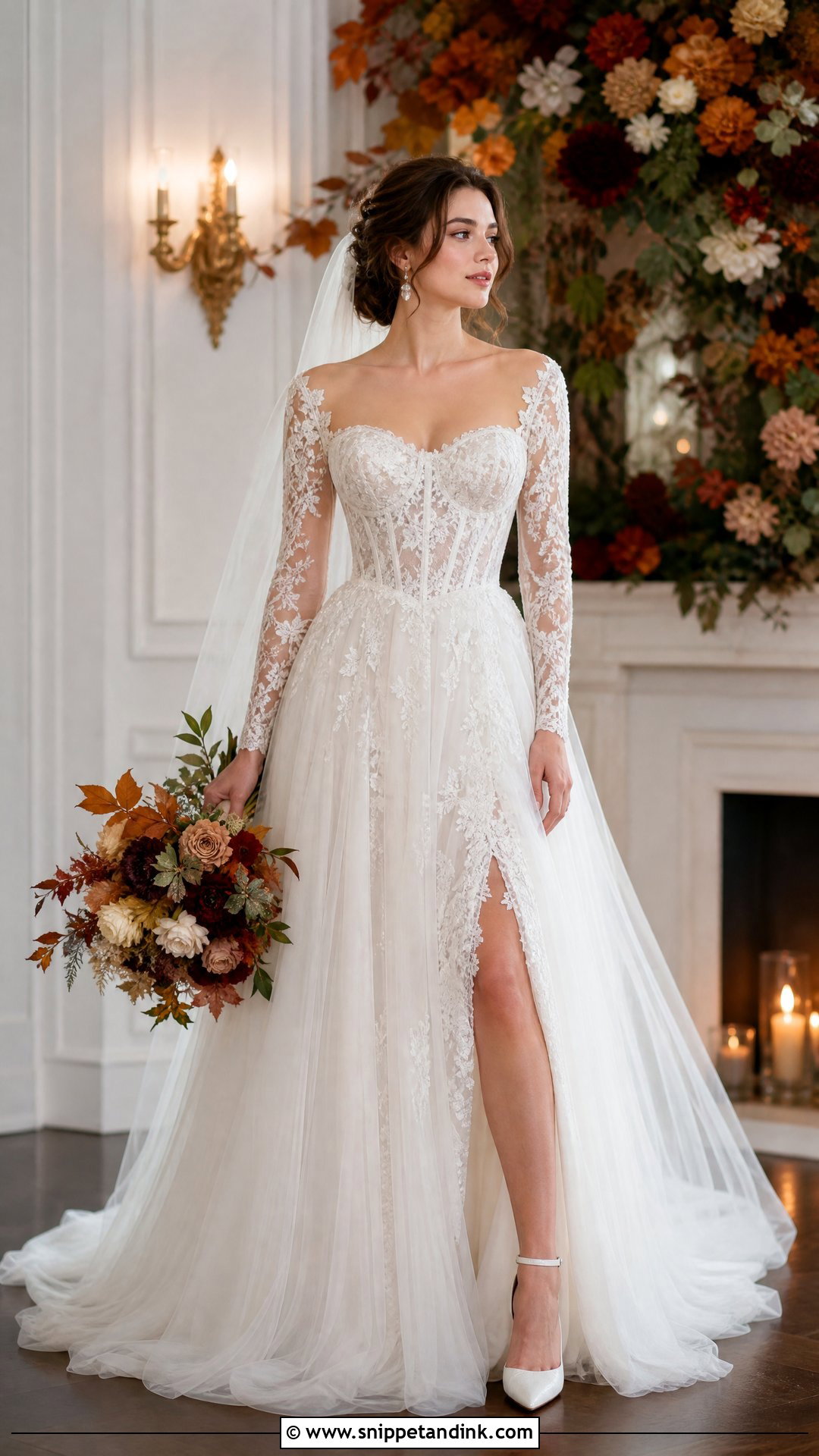
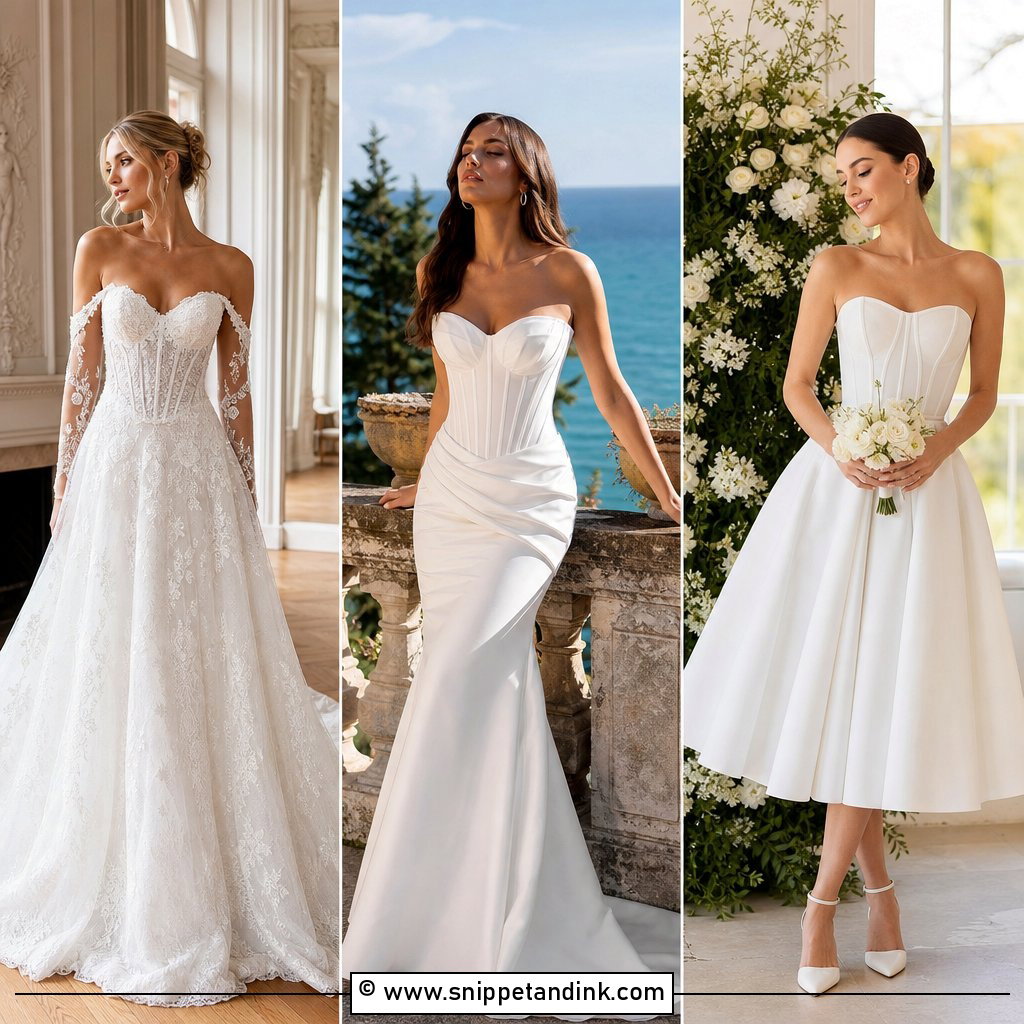
Long lace sleeves on a corset bodice give you coverage with the shape still visible underneath. The sleeves are where I look hardest in a fitting. Lace sewn too tight at the upper arm pulls the whole bodice forward when you lift your arms for a hug, so I always ask brides to reach up and wrap their arms round someone before we sign off. Scalloped cuffs and floral appliqué read best from a few feet away. Fall, winter and evening ceremonies suit it, and a soft veil with pearl drops is enough jewelry.
3. Strapless Corset Wedding Dress With Ball Gown Skirt
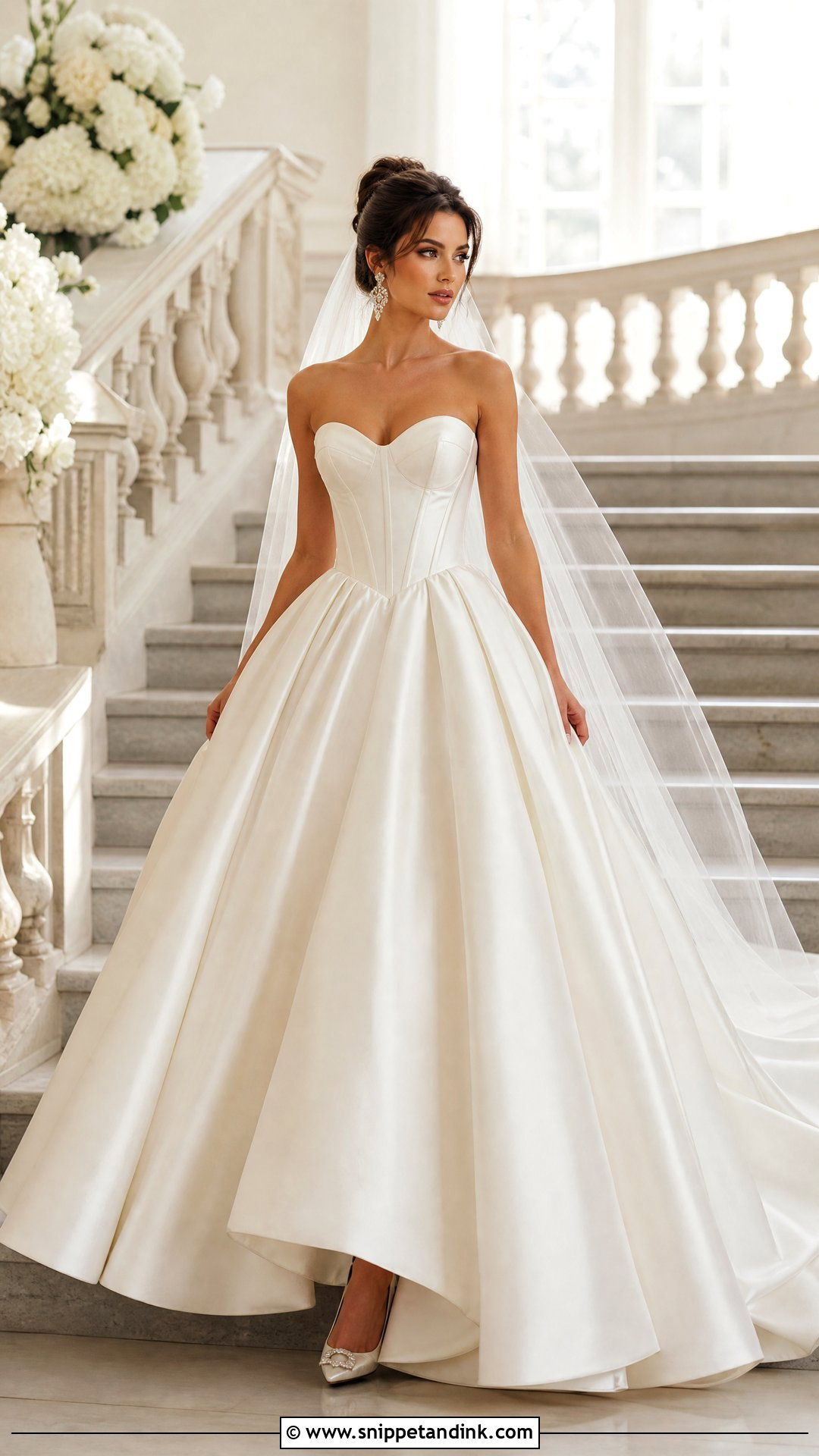
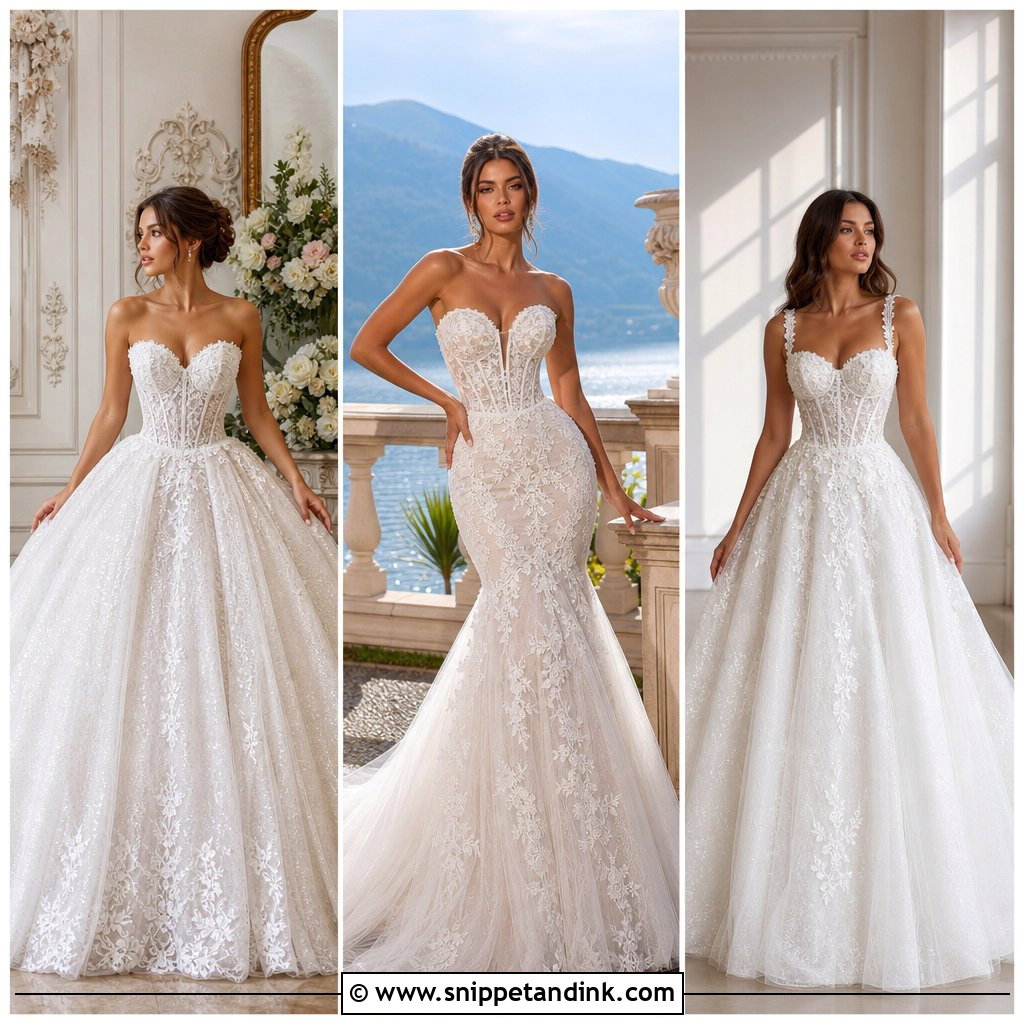
Strapless bodice, full ball gown skirt: this is the shape most people picture when they hear the word bride, and it creates a princess-inspired shape without trying. The catch is weight. A heavy satin or layered tulle skirt hangs from the waistline, so the corset has to grip there, not at the bust, or you’ll spend the night hitching it up. I ask for a waist stay inside these gowns as standard. Organza gives volume with less load. Go necklace-free unless the bodice is plain, and let a long veil handle the drama on a staircase or in a grand reception room.
4. Off Shoulder Corset Wedding Dress With Tulle Skirt
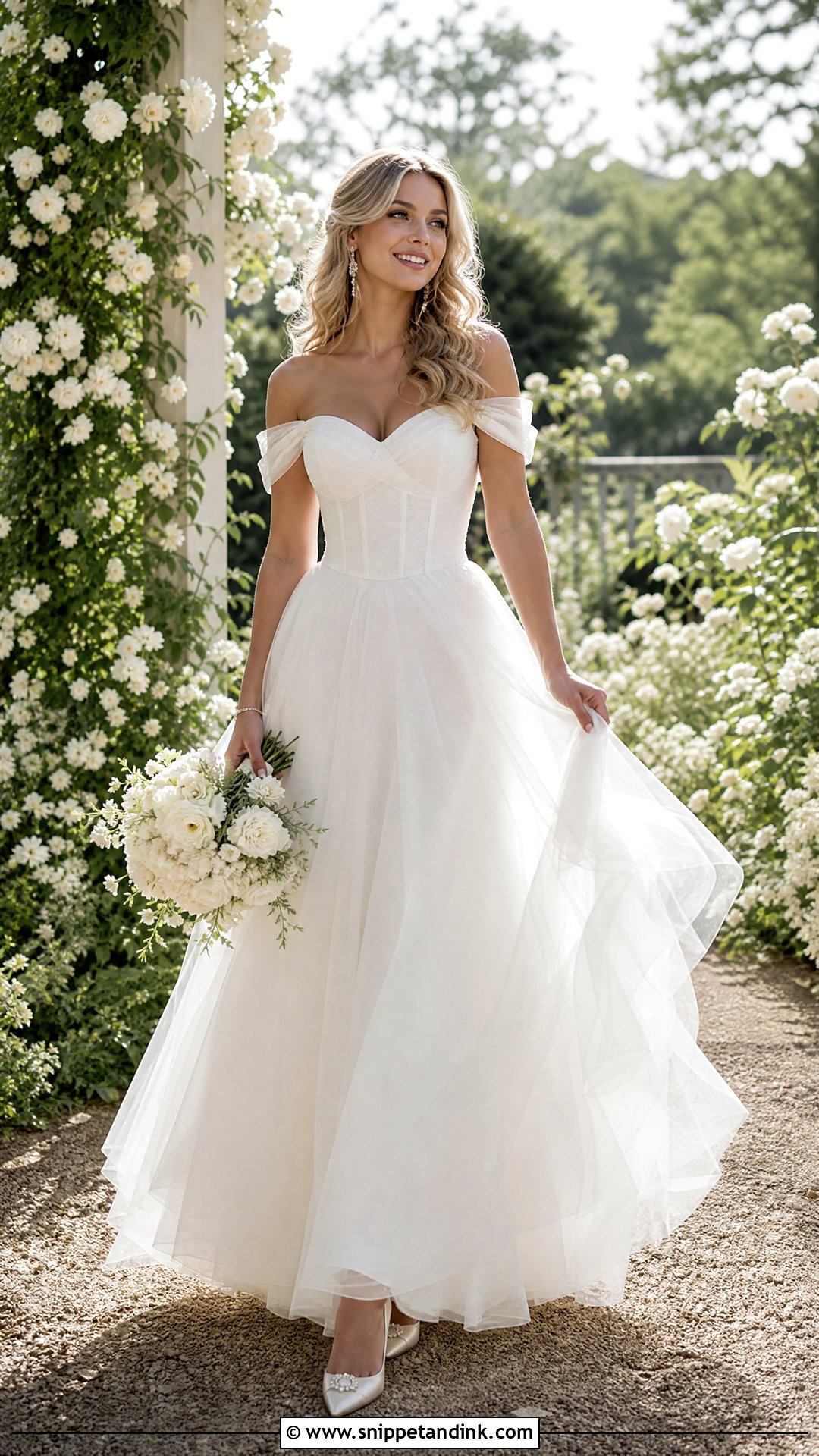
Off-shoulder necklines need the corset more than any other style here, because the bodice is the only thing holding the dress up. When I fit one, I watch the band across the upper arm: if it’s tight, you can’t raise your arms past your shoulders, which matters for the first dance. A layered tulle skirt moves well walking down the aisle and outdoors. Plain tulle feels lighter and more current, appliqué adds a storybook quality. Loose curls and delicate jewelry let the collarbone stay the focus.
5. Basque Waist Corset Wedding Dress With Full Skirt
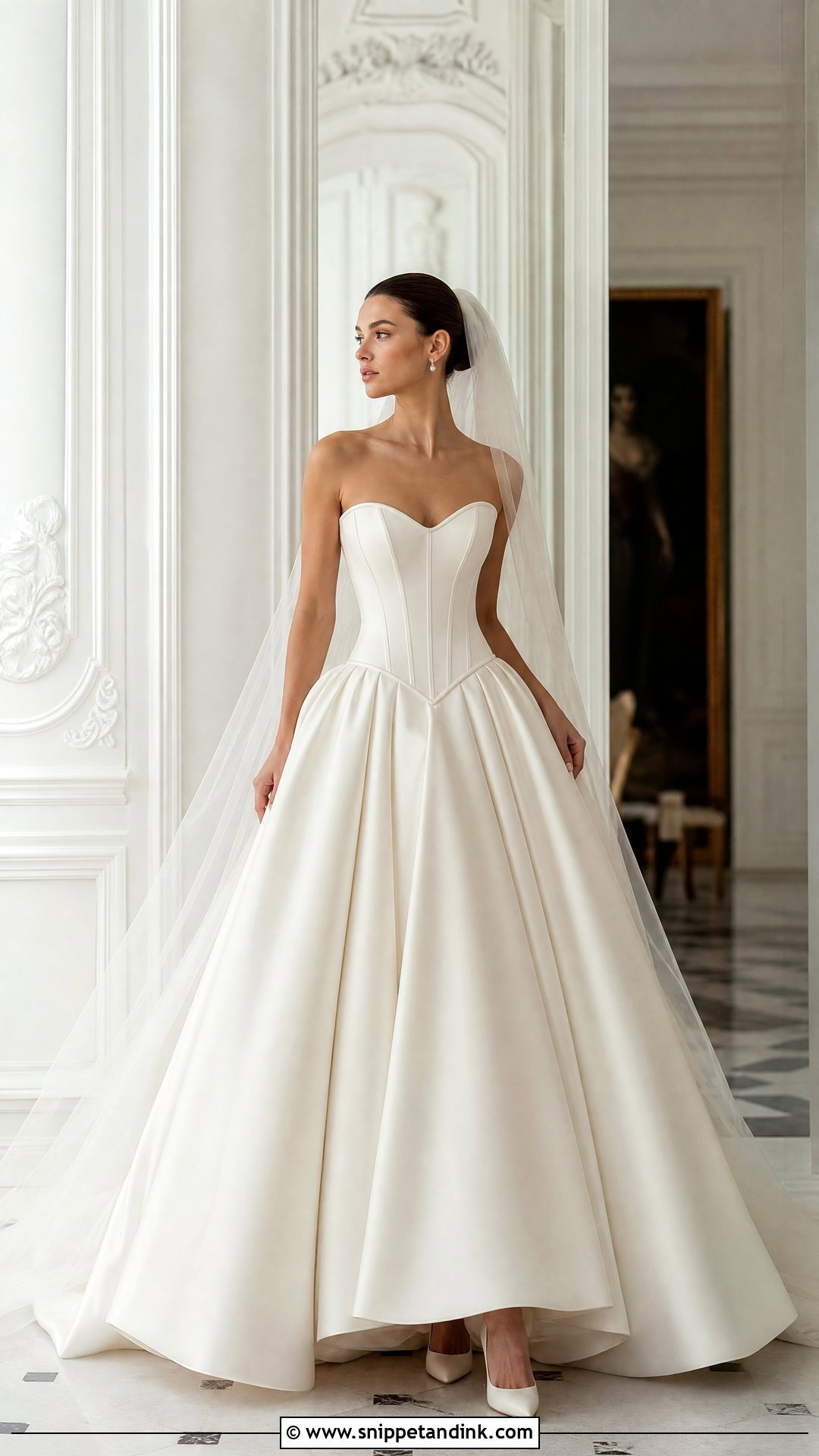
The basque waist dips into a V below the natural waistline, and it is the most torso-dependent shape in this list. On a long torso it looks sculpted; on a short one the point can land near the hip and shorten your legs, so I mark where your natural waist sits before you fall for it. Satin, lace and brocade all hold the line well, since the bodice structure is the feature. Keep accessories quiet: a long veil, classic earrings and simple heels. It suits historical references while still reading as a current gown.
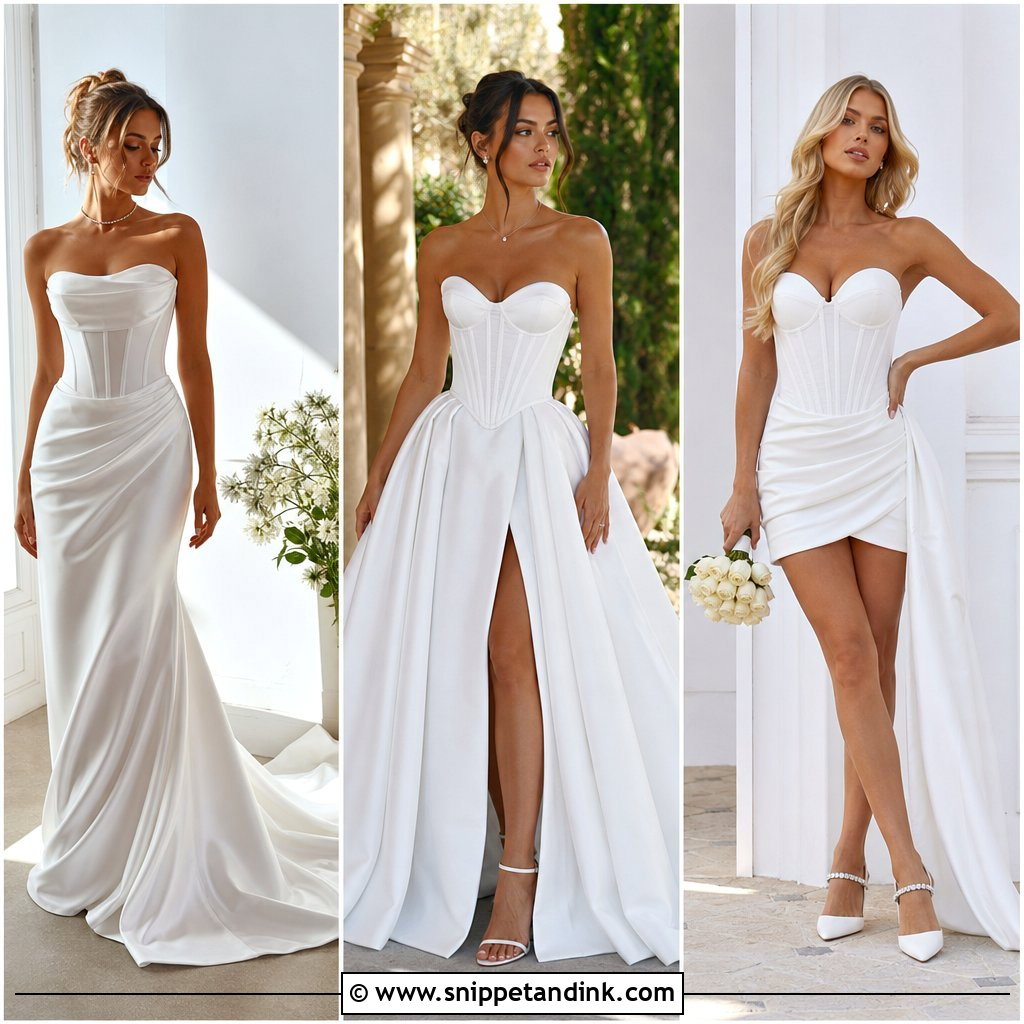
6. Sweetheart Corset Wedding Dress With Chapel Train
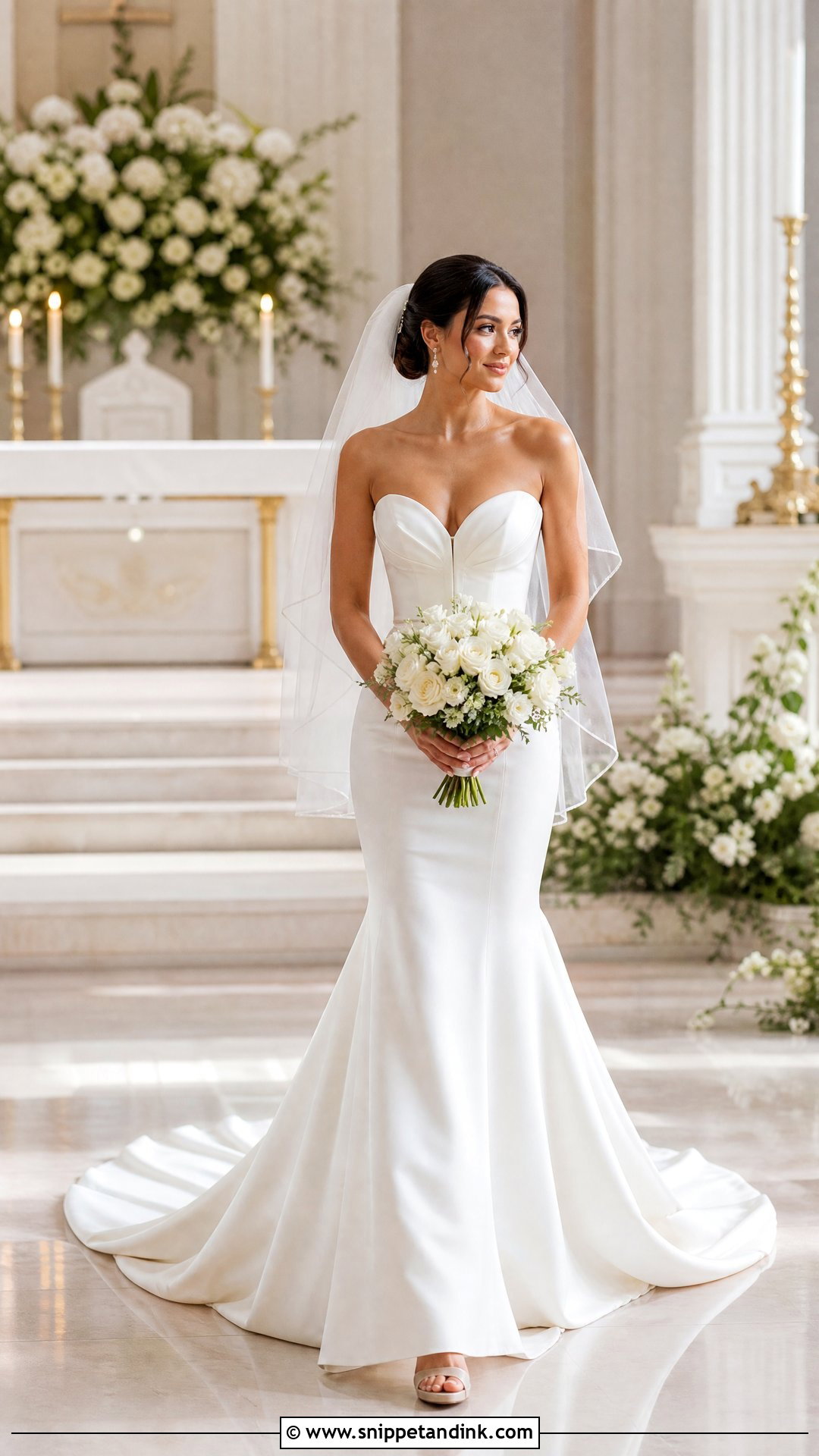
A sweetheart corset wedding dress with a chapel train is the safe, flattering classic, and I mean that as praise. The curved neckline softens all that structure, and a chapel train gives you a proper back view without the bustle headaches of a cathedral length. Mikado and crepe show seam lines, so pick smooth panels if you want it clean; lace appliqué or beading along the bodice hides small fit adjustments. A medium-length veil, crystal earrings and heels you can actually stand in will finish it.
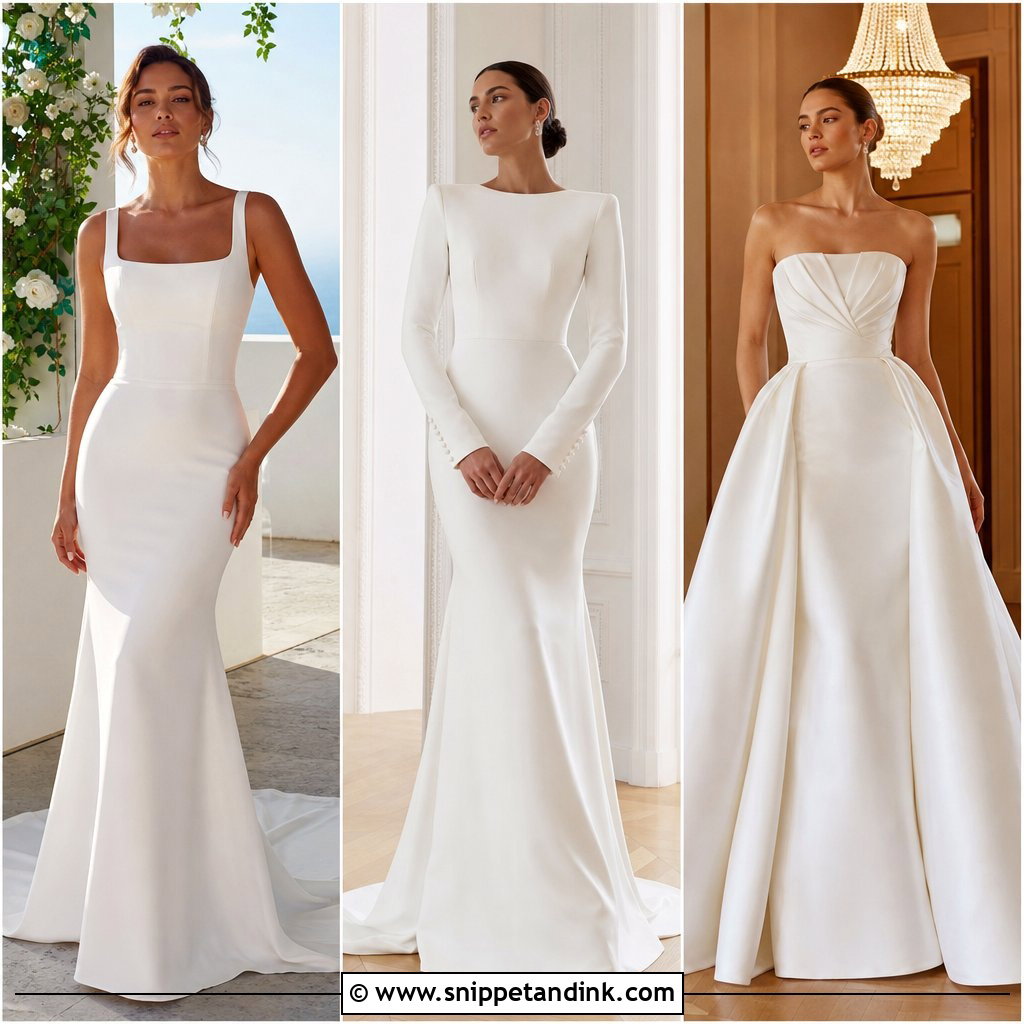
7. Minimal Corset Wedding Dress With Crepe Skirt
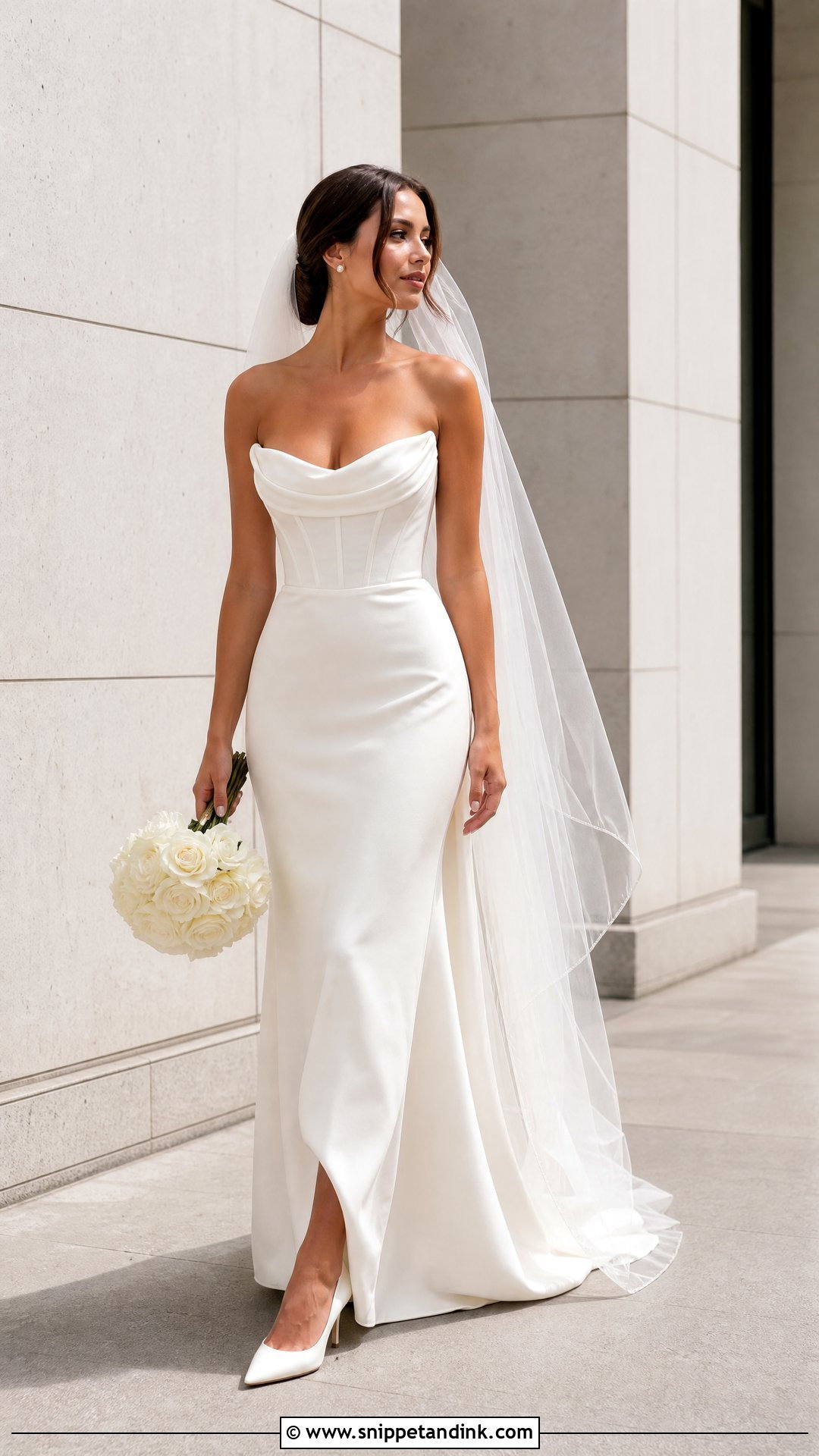
Crepe is the least forgiving fabric on this list and the most rewarding. Paired with a minimal corset, it shows exactly where every bone sits, so I look for bodices with boning channels sewn inside the lining rather than visible through the face fabric. A straight neckline and a small train keep it sleek for city ceremonies, rooftops and gallery venues. Pearl studs, a sleek bun and plain pumps. If it feels too bare in the mirror, add a long sheer veil before you add jewelry.
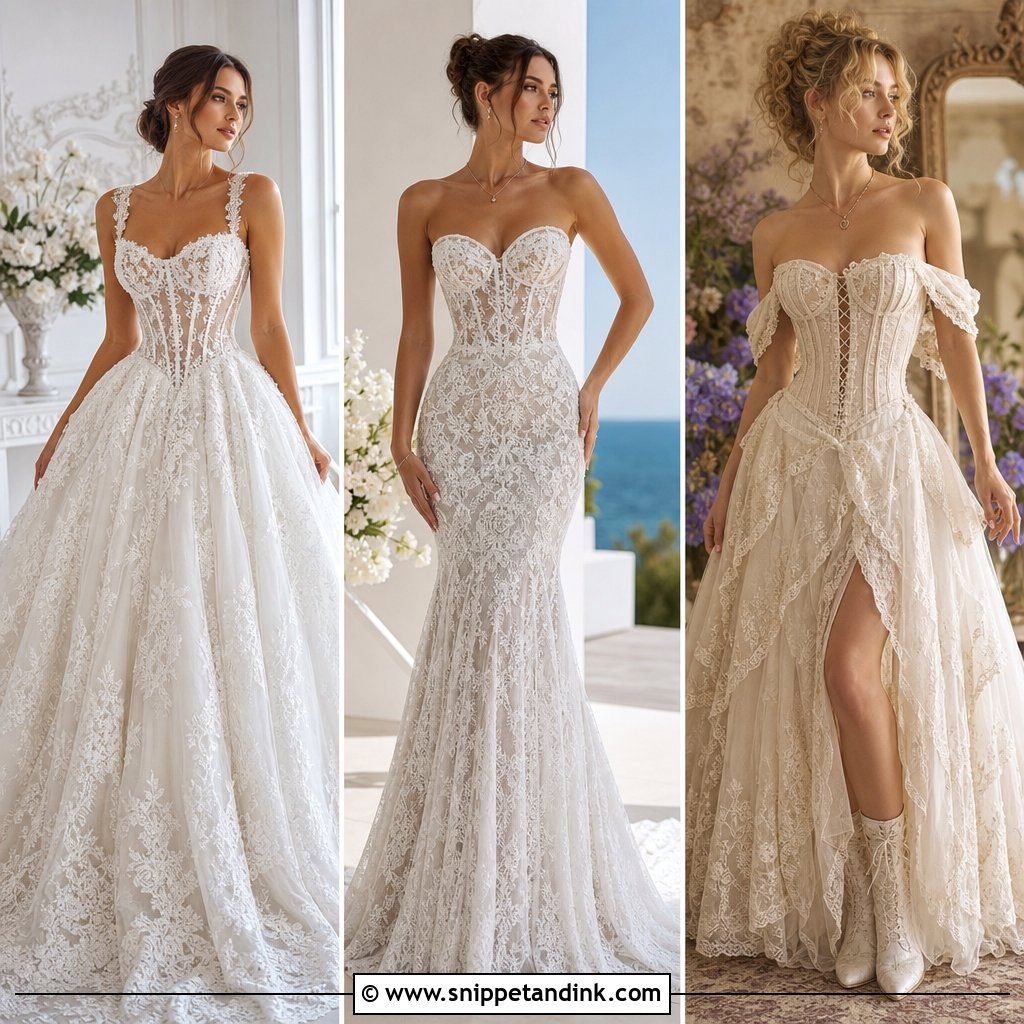
8. Beaded Corset Wedding Dress With Mermaid Skirt
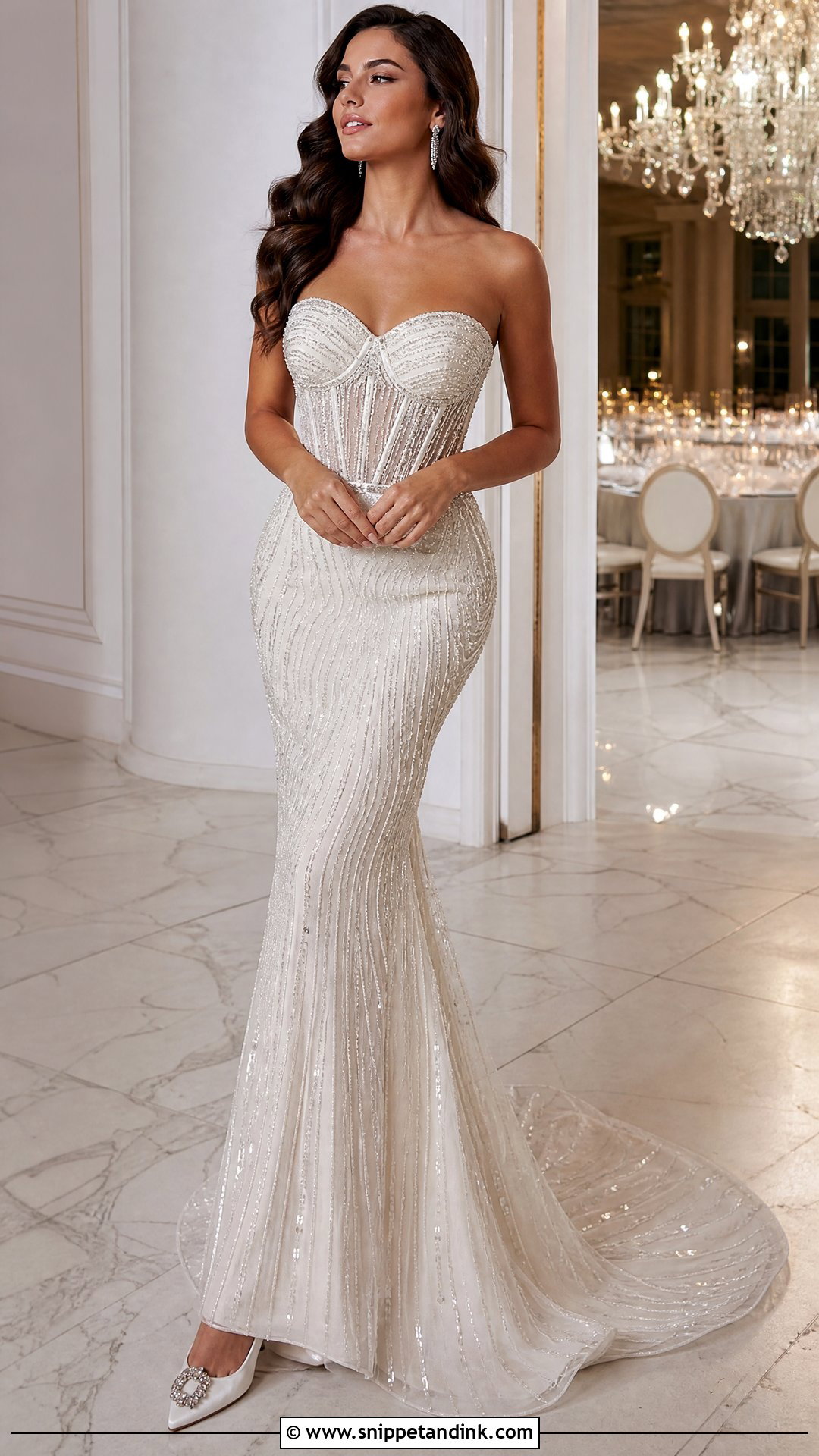
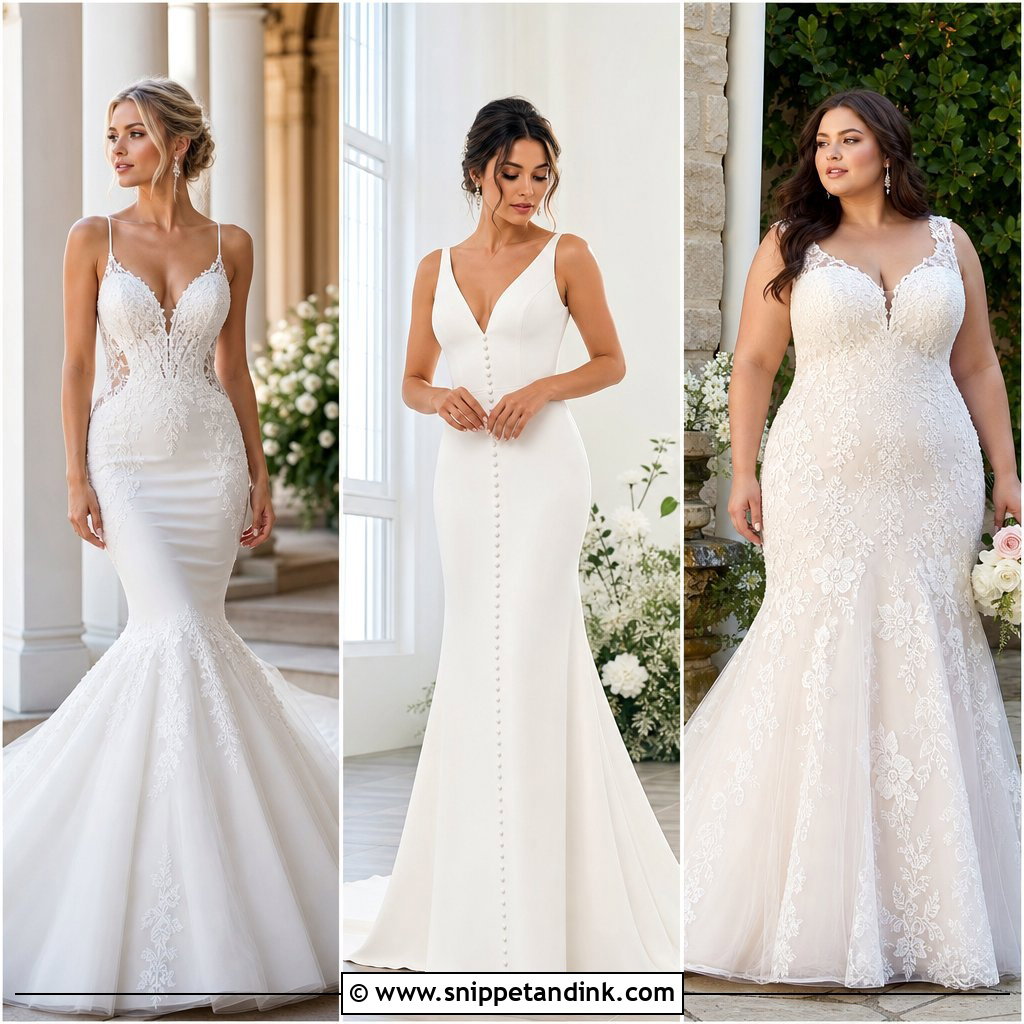
Beading plus a mermaid skirt gives you shimmer under reception lights and a close-fitting line to the knee before the flare. Sit down in it at every fitting. Mermaid gowns are fitted through the thigh, and a corset bodice can’t bend at the hip, so a too-low flare means perching on the edge of your chair all night. Beaded bodices are also heavy, which changes how the corset settles after an hour. Soft waves, crystal studs and a plain veil, because the gown already carries plenty of texture.
9. Floral Corset Wedding Dress With Organza Skirt
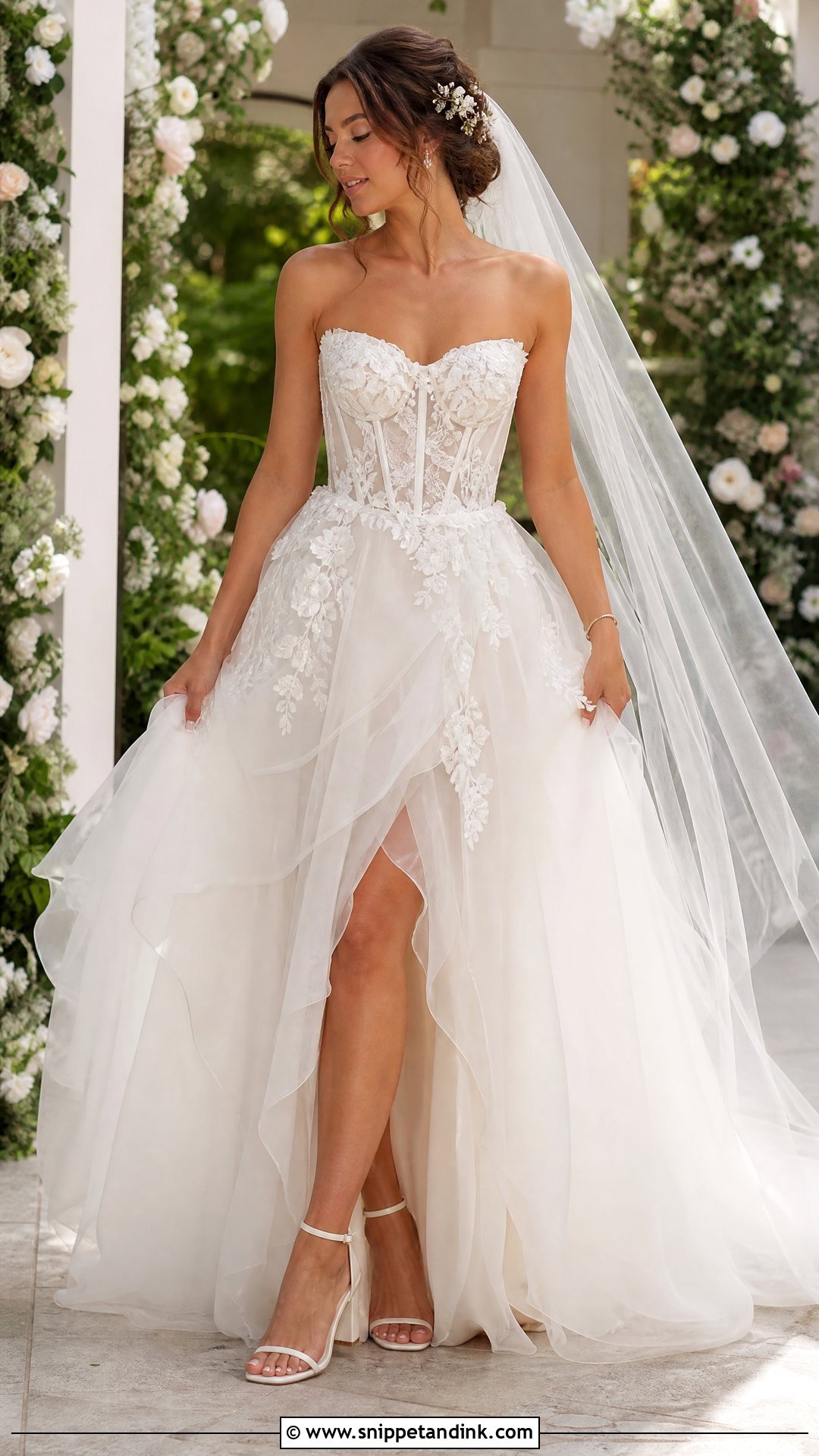
Organza holds volume while still looking airy, which is why it pairs so well with floral appliqué on a structured bodice. I’d steer you toward flat embroidered flowers for an outdoor spring wedding and save the large 3D blooms for indoor or covered venues, since raised petals snag on bark, wicker chairs and bouquet wire. Garden and estate settings suit it best. Floral hair pins, barely-there earrings and delicate heels keep everything in proportion.
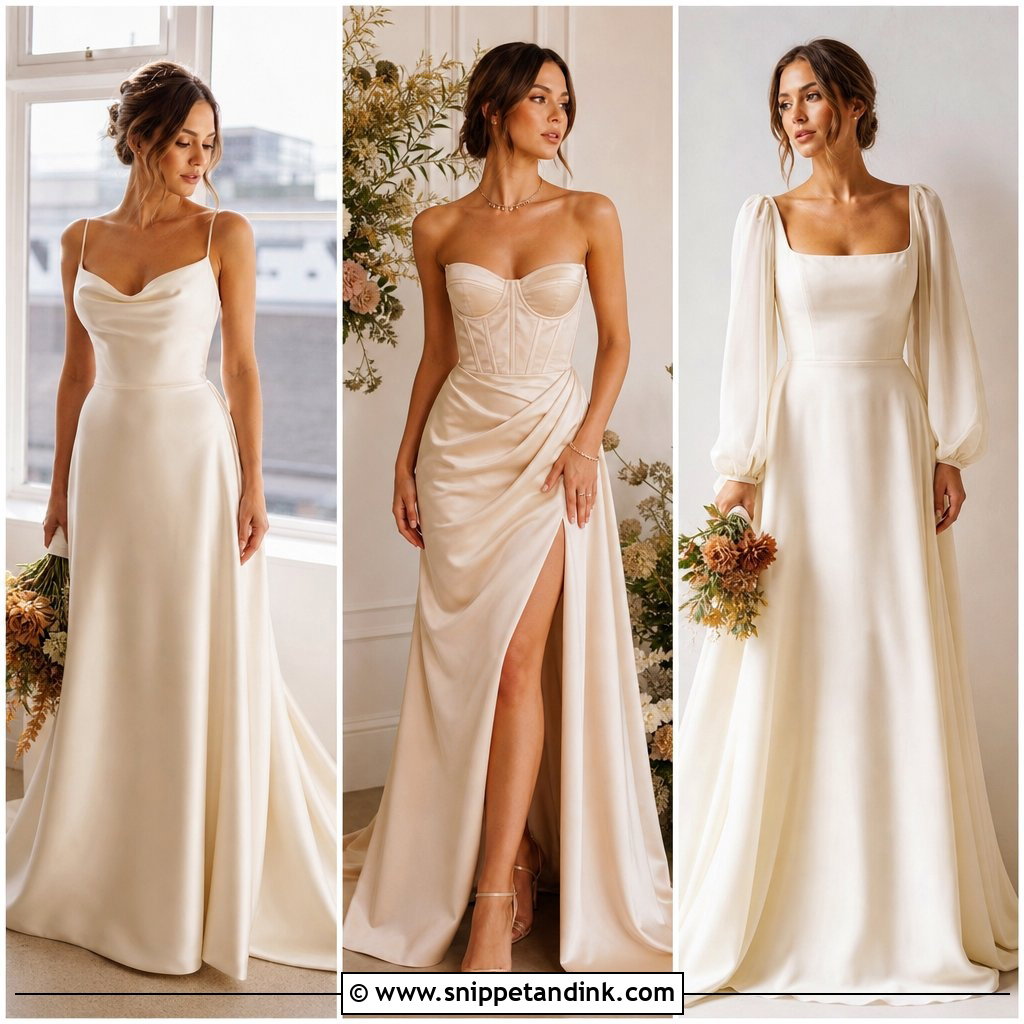
10. Corset Wedding Dress With Detachable Sleeves
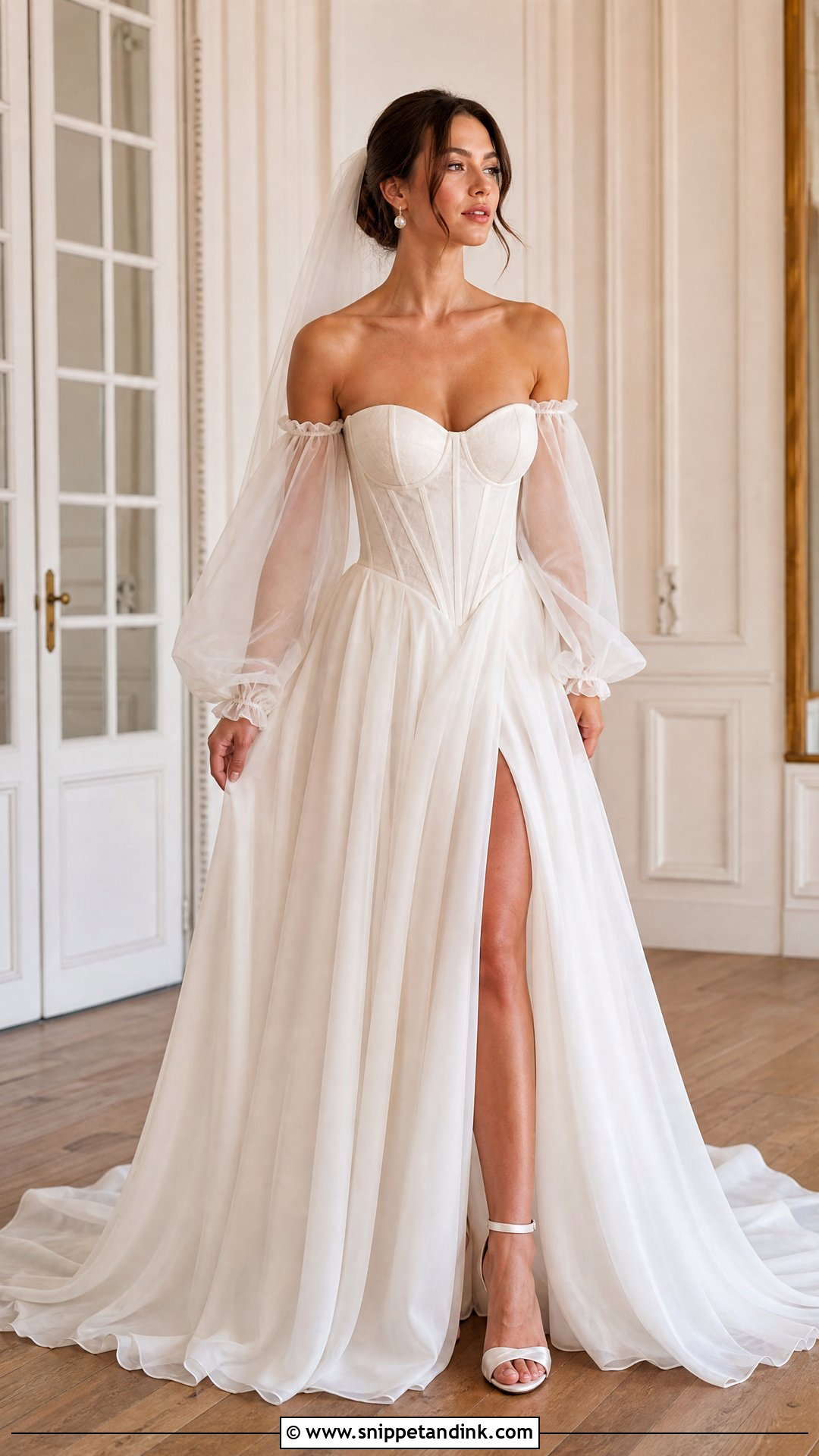
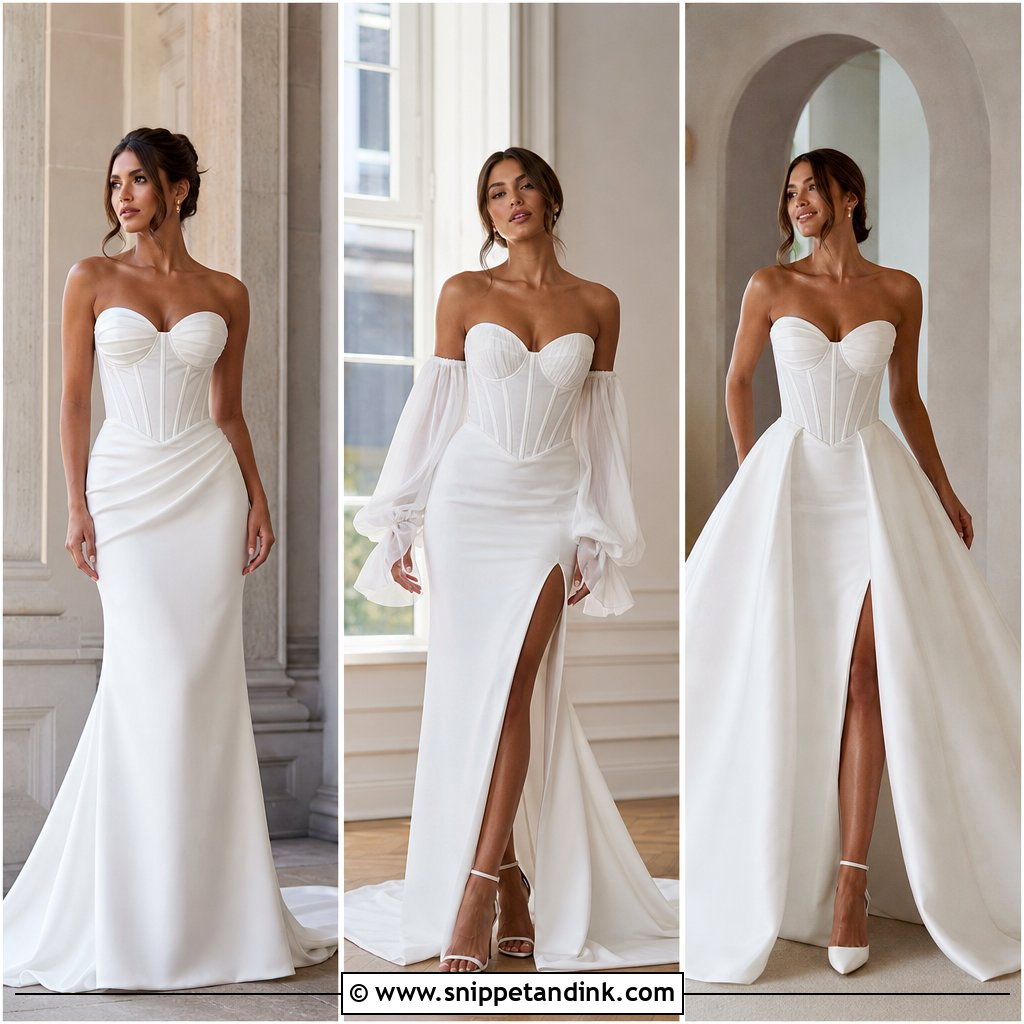
Detachable sleeves give you a covered ceremony look and a bare-shouldered reception without buying a second dress. Practice the switch. Sleeves usually attach with tiny hooks, snaps or elastic loops, and fiddly fastenings are hard to undo alone in a bathroom, so I show a bridesmaid how they come off at the last fitting. The bodice must stay put with or without them, which a properly boned corset will. After dinner, swap in bolder earrings or a sleeker hairstyle to mark the change.
11. Corset Wedding Dress With Square Neckline
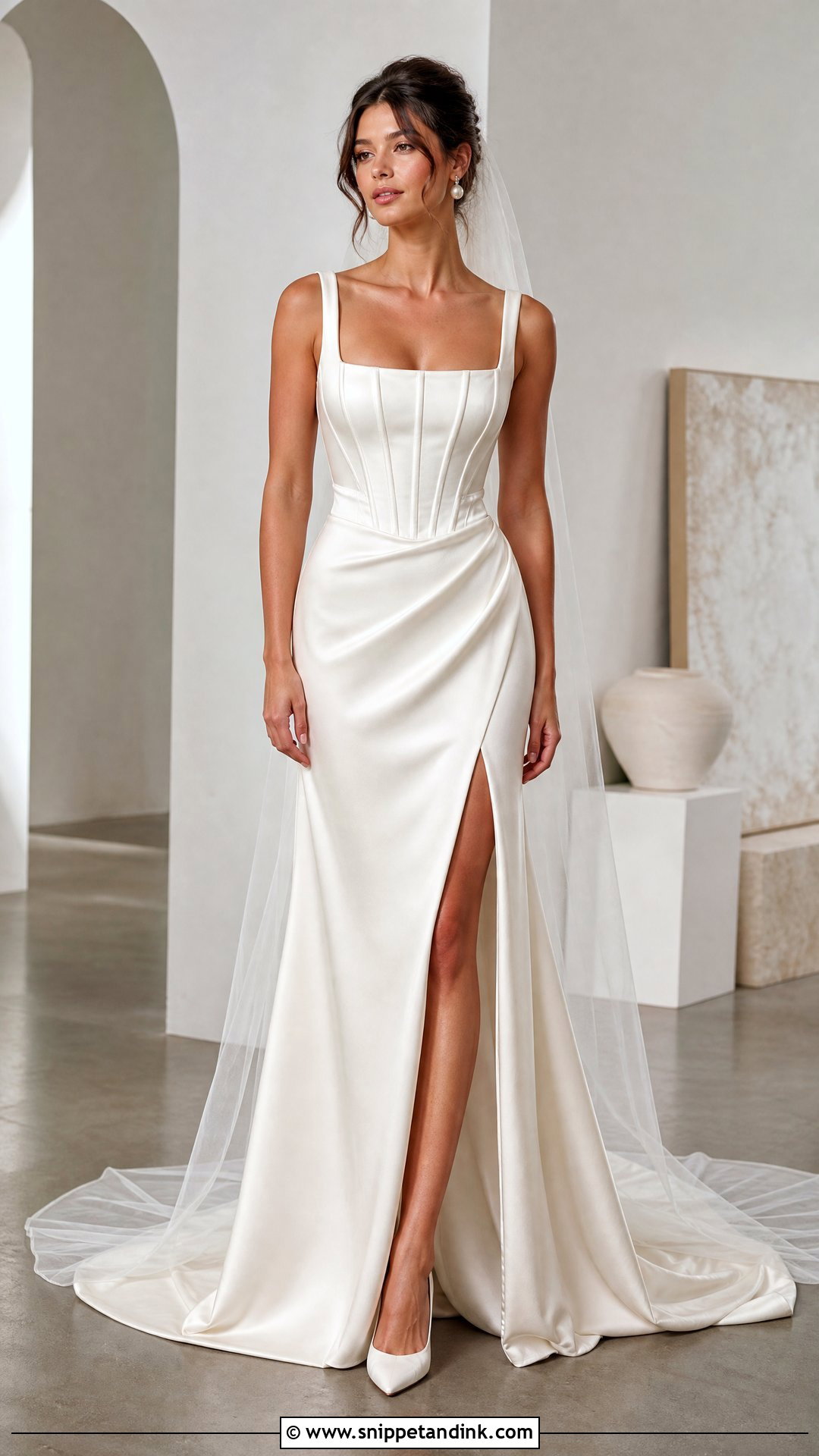
The square neckline makes a corset look architectural rather than sweet. It’s a quieter alternative to the sweetheart and reads slightly regal in satin, crepe, lace or mikado. Fit is the issue: the top edge has to sit flat across the chest, and if it gapes when you lean forward, it needs taking in at the side seams, not the straps. Wider straps give more support, thin ones look finer. Pair it with a neat bun, pearl earrings and a simple veil.
12. Corset Wedding Dress With Drop Waist Skirt
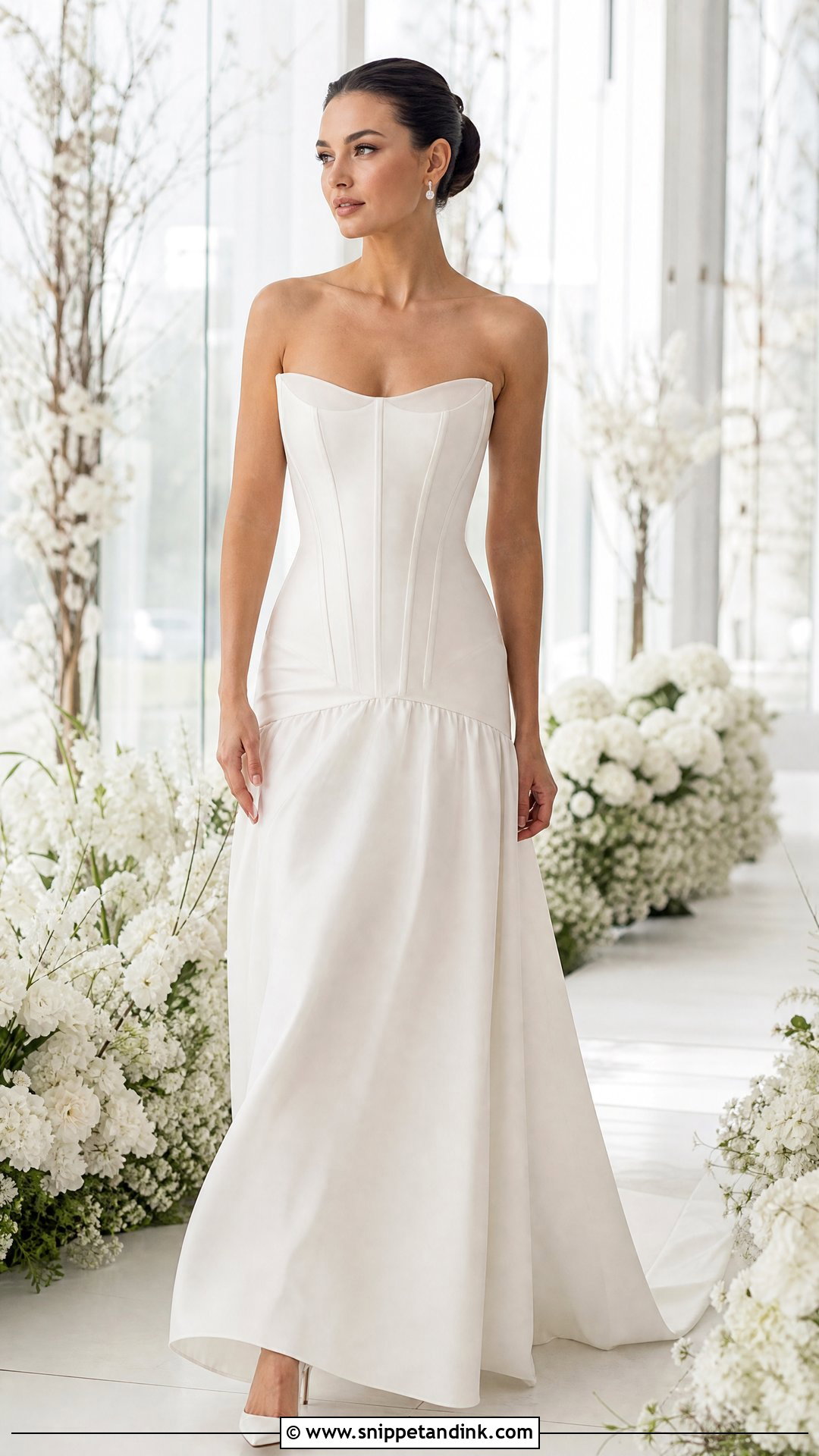
A drop waist moves the seam below your natural waist, giving one long line before the skirt opens. It’s striking, but fit is everything: if the bodice is even slightly long, it wrinkles across the tummy when you sit. Plan on careful alterations. Satin reads architectural here, lace softer, and depending on the fabric the same cut can lean vintage or editorial. Refined earrings and a clean veil are plenty for a gown this distinct.
13. Corset Wedding Dress With Pearl Detail
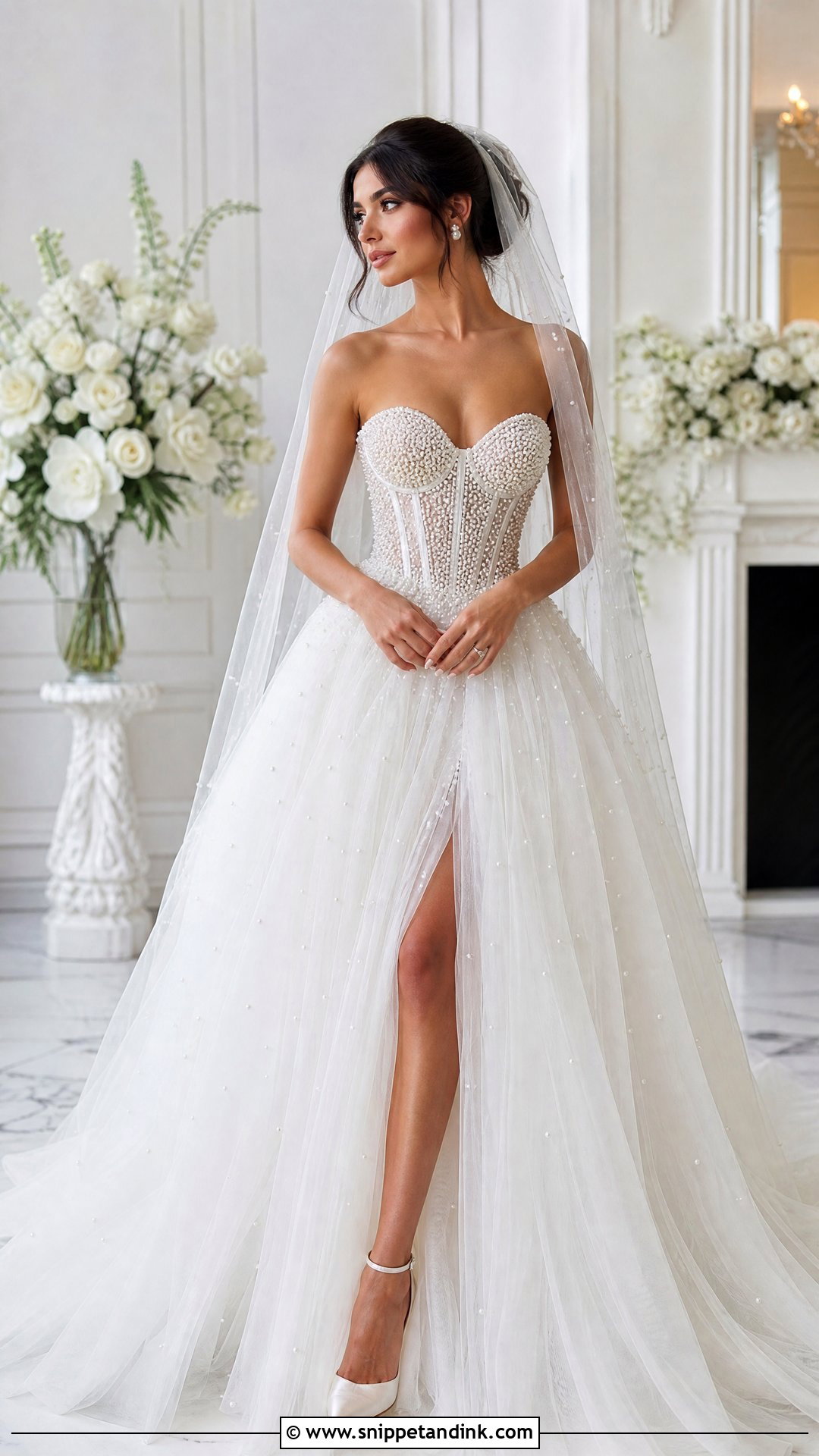
Pearls give a soft glow rather than sparkle, and they turn up on bodices, straps, necklines, skirts and veils. Hand-sewn pearl work adds real weight, so I check that the bodice still sits level after you’ve worn it for twenty minutes; heavy embellishment on one side can tip a strapless bodice. When the bodice is busy with pearls, wear studs or small drops, nothing more. A satin or tulle skirt balances the texture for traditional ceremonies, coastal receptions and formal indoor venues.
14. Corset Wedding Dress With Lace-Up Back
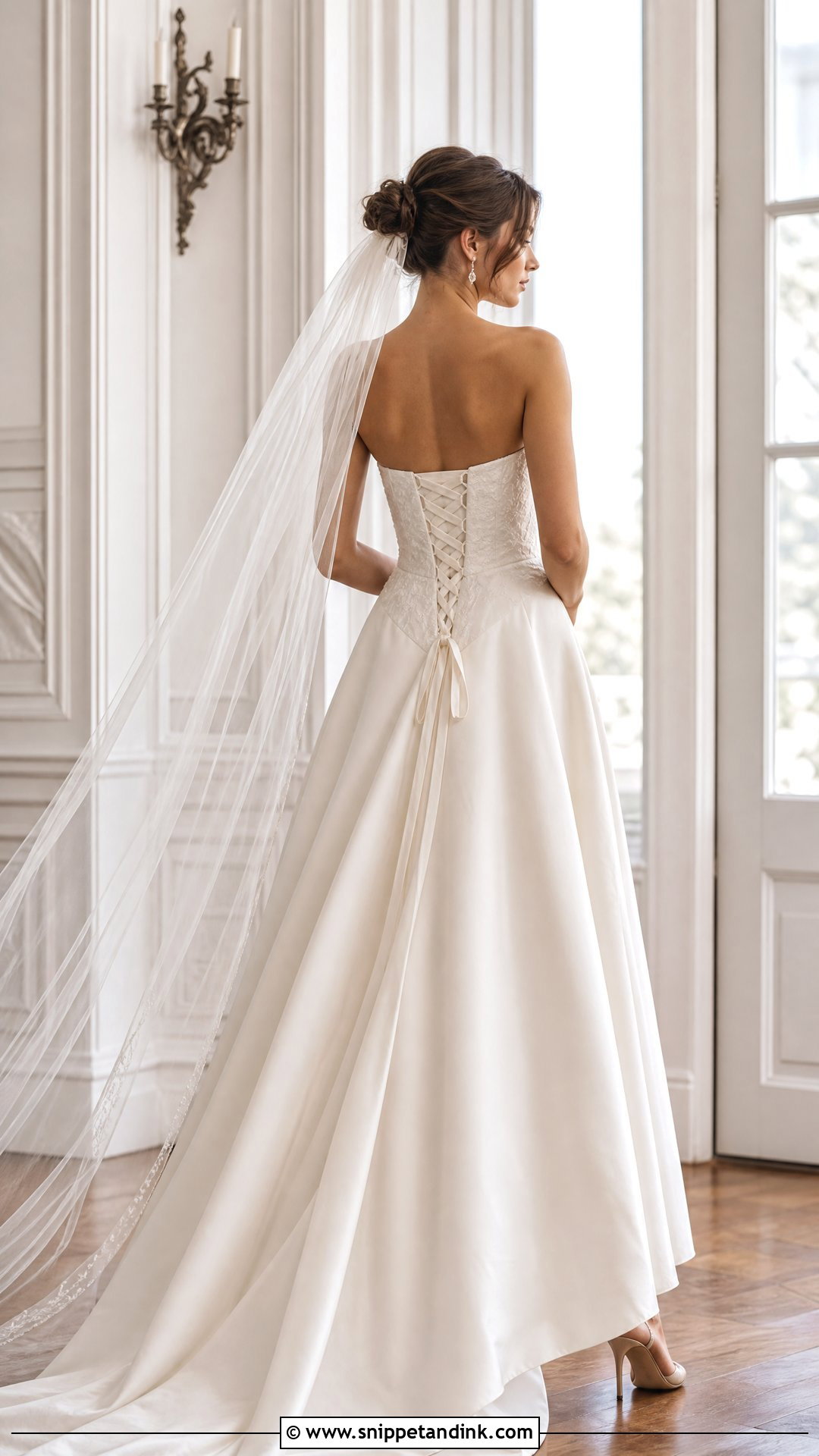
From behind, a lace-up back is pure romance, and it’s also the most forgiving closure a bride can have. Lacing adjusts by an inch or two in either direction, so small weight changes in the final weeks don’t send you back to alterations. Check for a modesty panel under the lacing; without one, skin shows between the ribbons. Satin ribbon looks crisp, matching fabric ties look softer. Keep the veil sheer so the back still reads in aisle photos. Have someone learn to lace it at the final fitting, starting from the middle and working out.

15. Corset Wedding Dress With High Slit Skirt
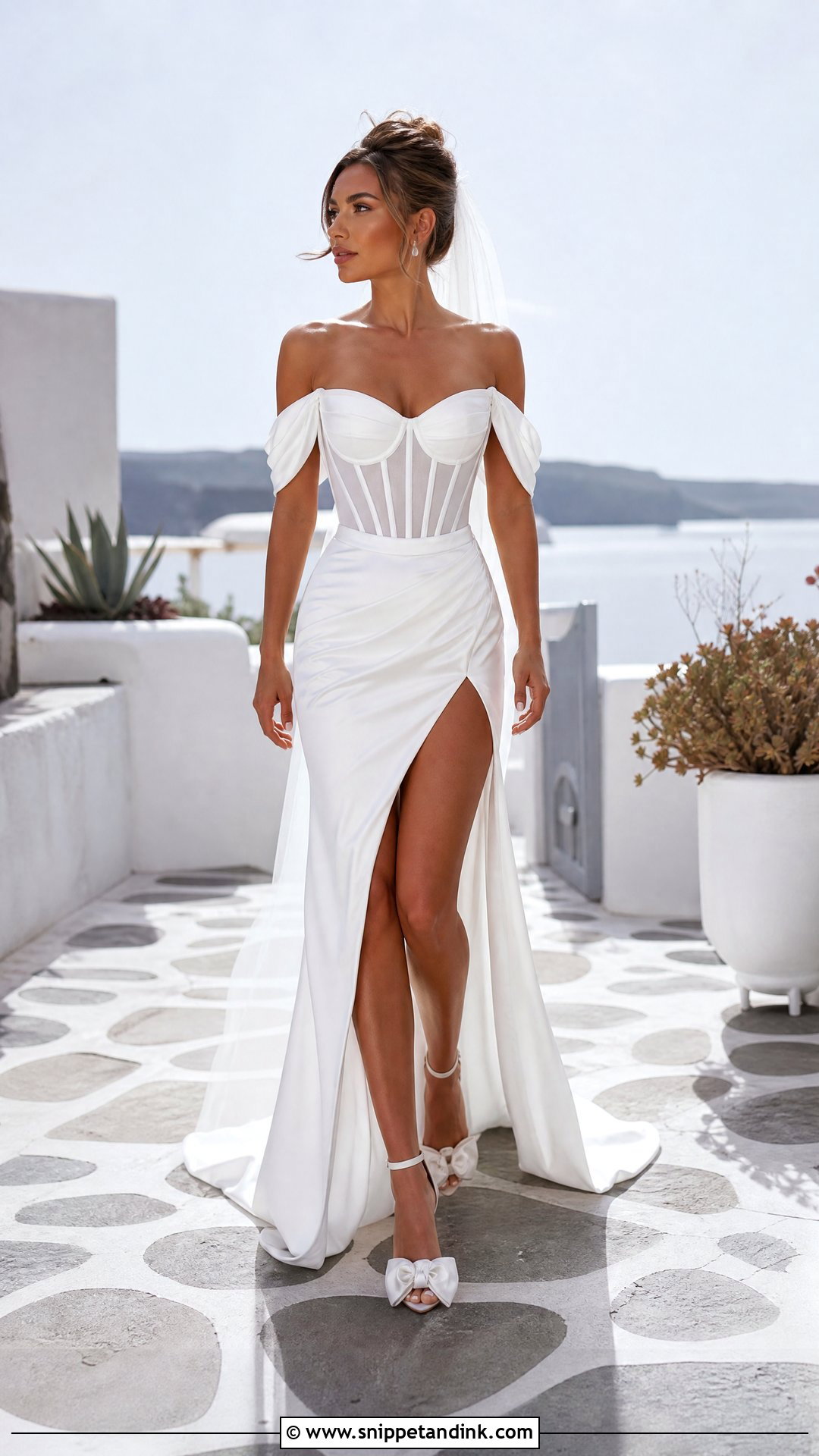
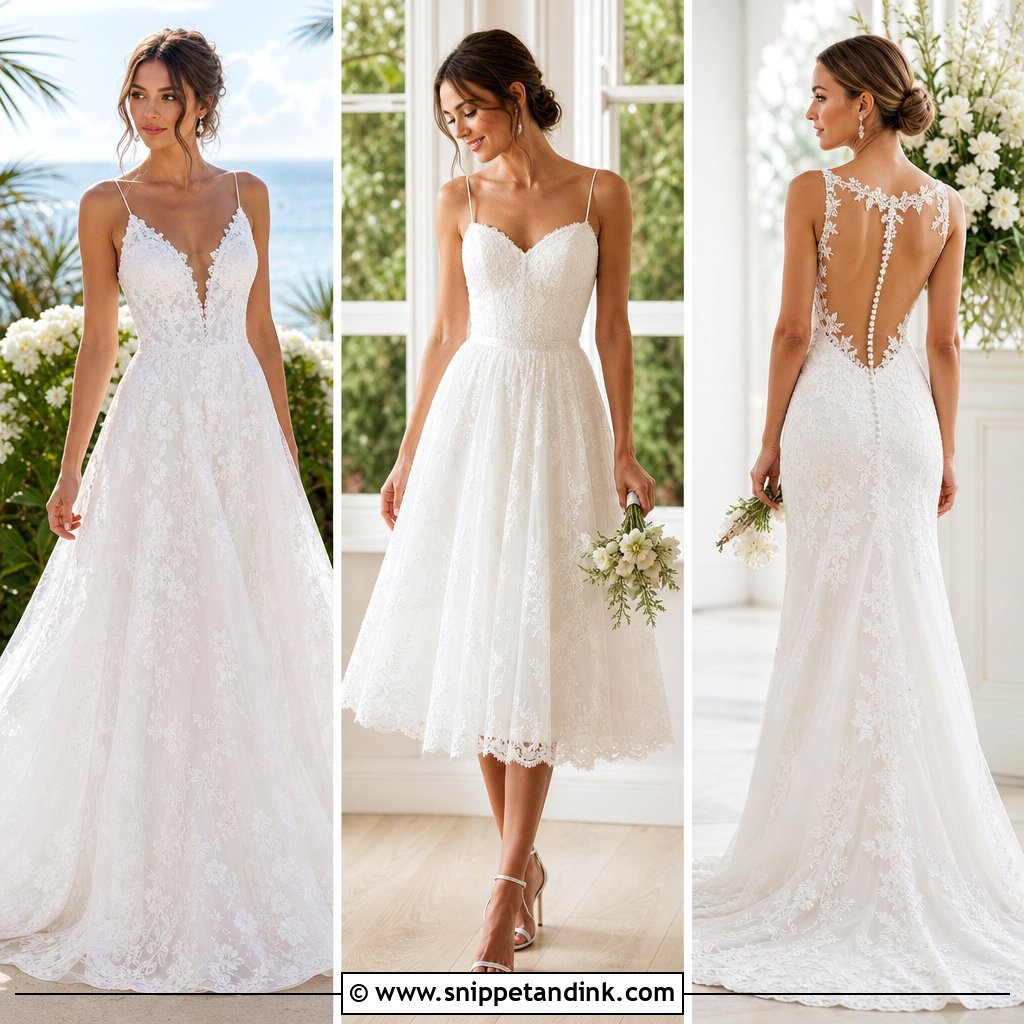
A high slit makes a structured corset feel lighter and gives you a full stride for walking on sand or stairs. Do a sitting and a stair test in the dress, because a slit that looks modest standing can open far higher once you sit down. Satin or crepe keeps it sleek, chiffon adds flow for beach and destination weddings. Your shoes will be on show with every step, so choose them with the gown in mind. Keep the neckline simple and let the silhouette carry the look.
16. Corset Wedding Dress With Sheer Bodice
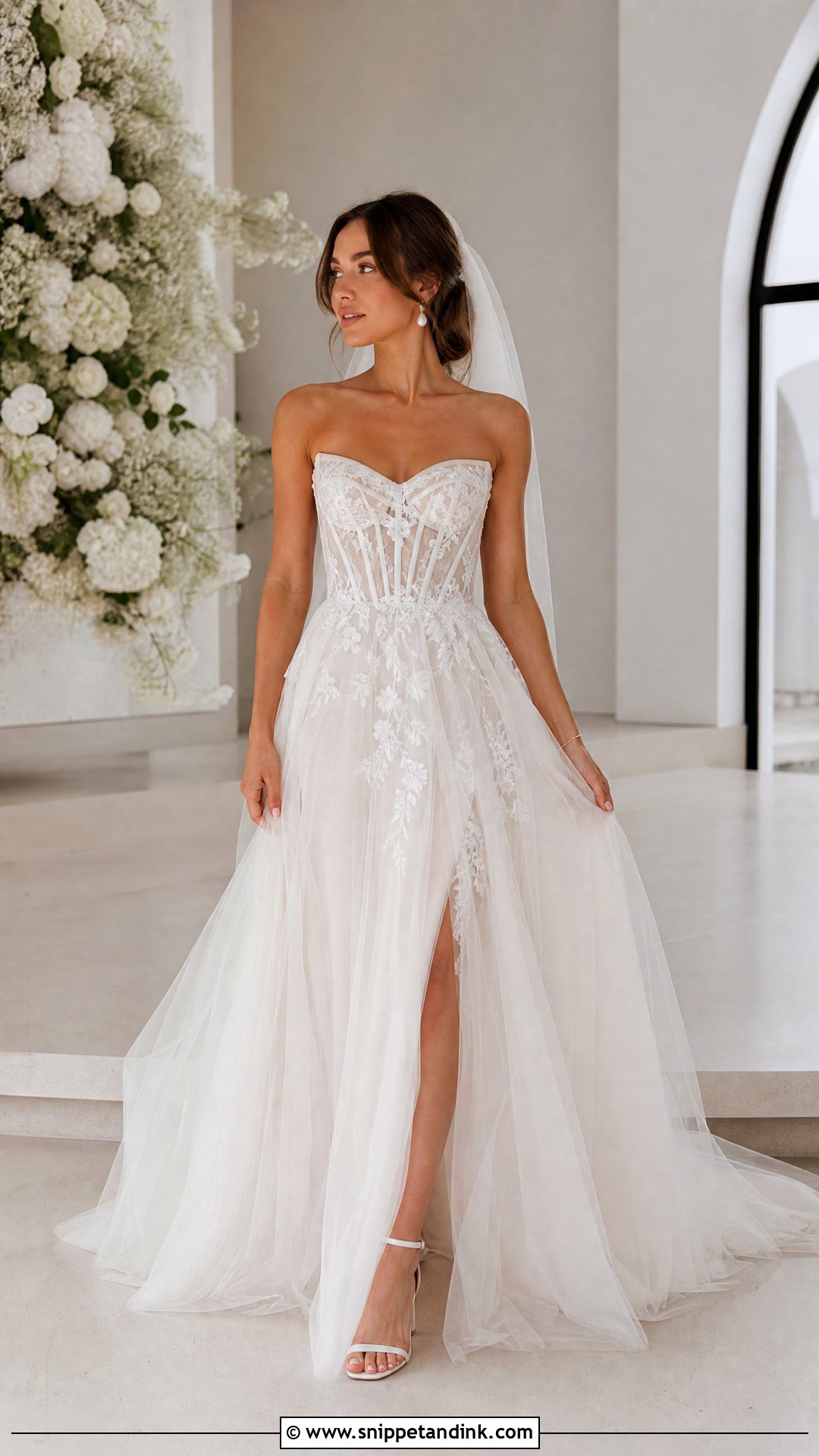
Sheer bodices put the boning on display, which is the whole point, so the channels need to be neat and evenly spaced. Lining colour changes everything here. A nude lining matched to your skin tone gives the illusion of bare skin; ivory looks softer and more covered. Bring your undergarments to the fitting, since a sheer panel shows straps and seams instantly. Tulle, lace or fitted crepe skirts all suit it, with a plain veil, soft waves and small earrings.
17. Corset Wedding Dress With Puff Sleeves
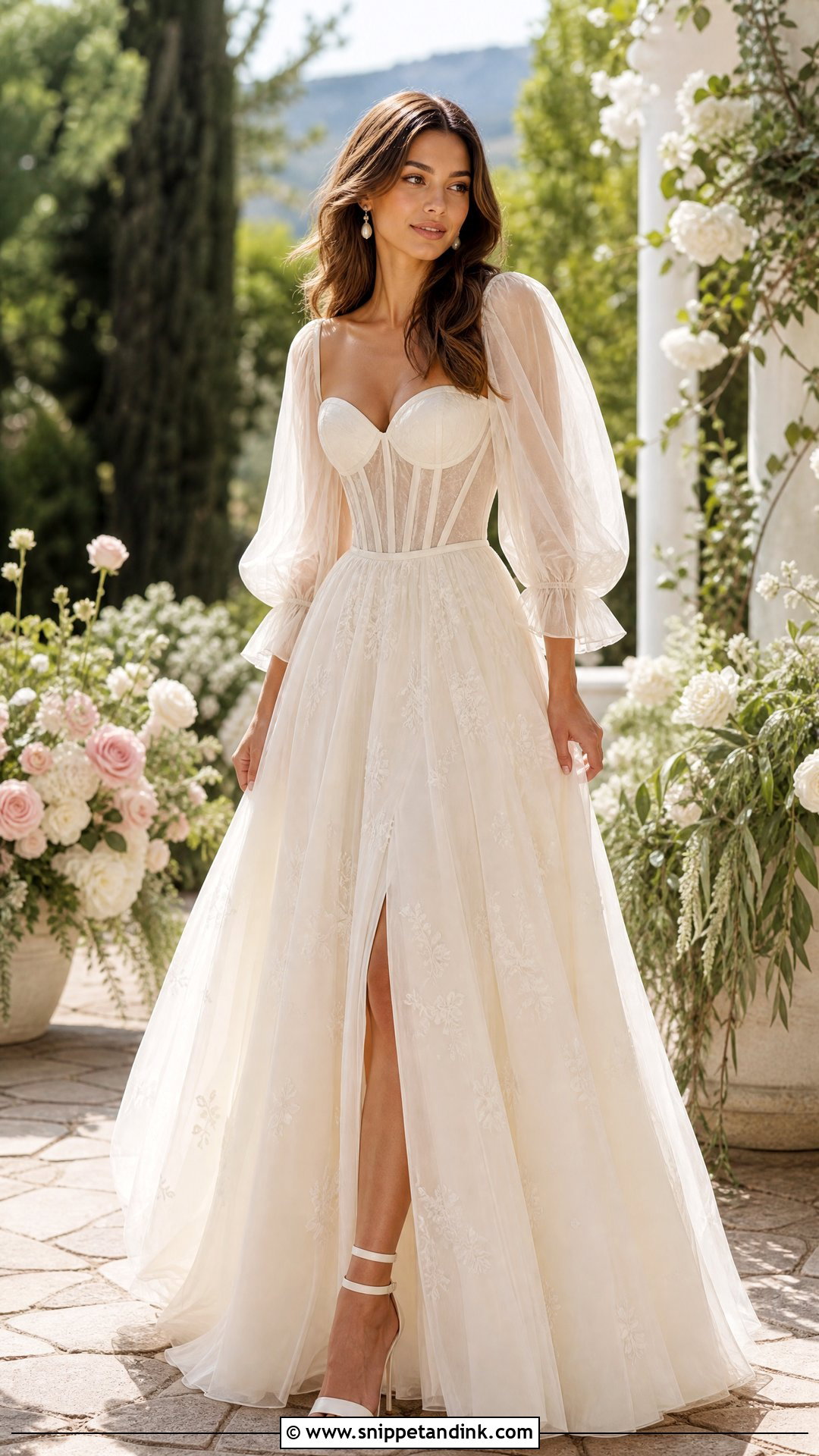
A corset wedding dress with puff sleeves works because the structured bodice anchors all that sleeve volume. Without the corset, big sleeves overwhelm a frame. Proportion is the thing I’d watch: if you’re petite, keep the puff above the elbow and the skirt simple, otherwise the top half takes over. Detachable, sheer, short or long sleeves suit different seasons. Garden and countryside weddings fit it well, with soft natural hair, pearl earrings and satin heels.
18. Corset Wedding Dress With Overskirt
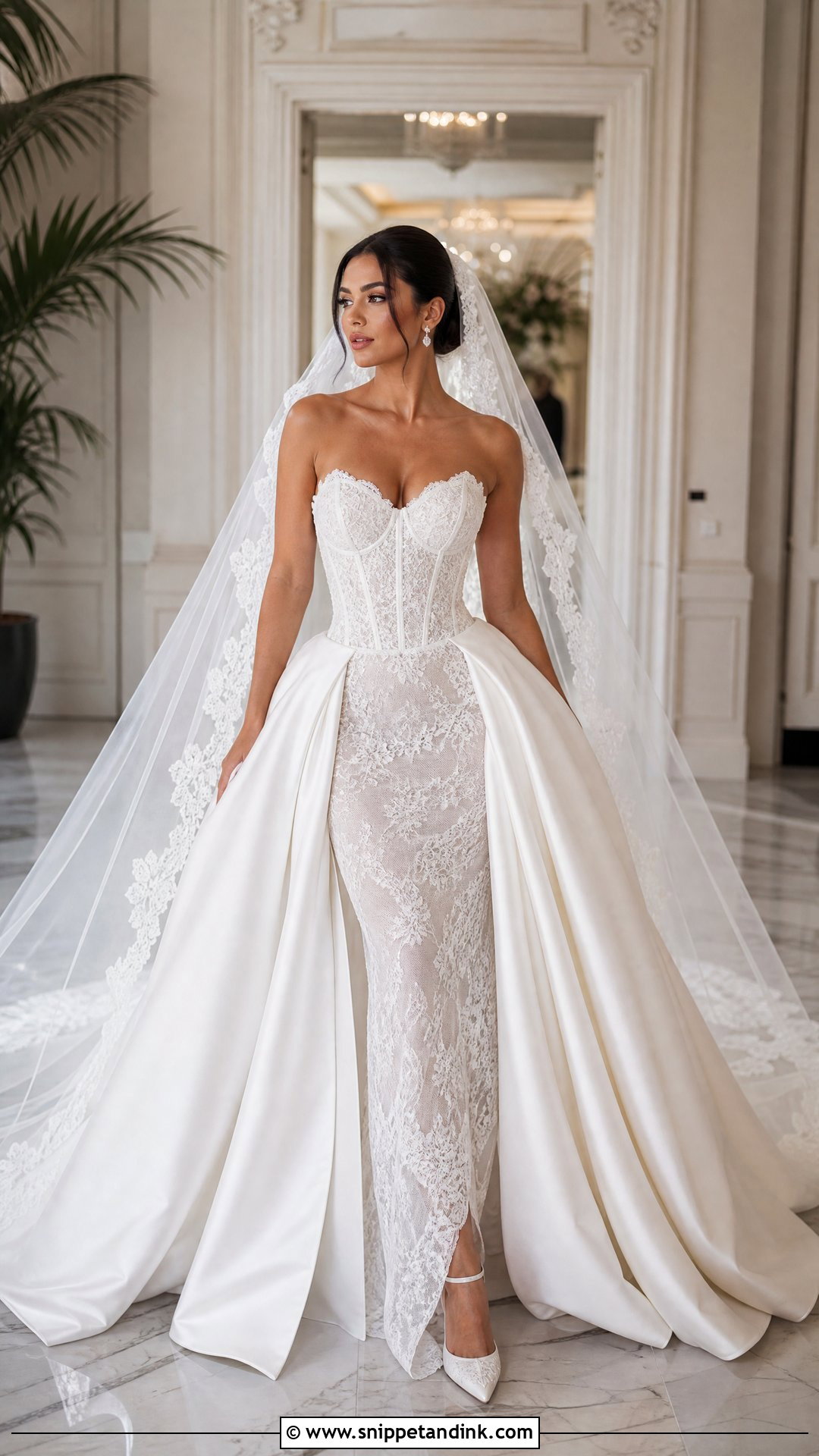
A corset wedding dress with an overskirt gives you a grand ceremony entrance and a slim dance-floor dress underneath. Overskirts attach with hooks, snaps or a hidden waistband, and they’re heavy to hold while someone unhooks them, so I always time the removal during a fitting so nobody discovers the clasps at 9pm. Strapless corset bodices, fitted lace, crepe and beaded gowns all suit it. Wear a long veil and classic earrings for the ceremony, then switch to a smaller hair piece once the skirt comes off.
19. Corset Wedding Dress With Bows
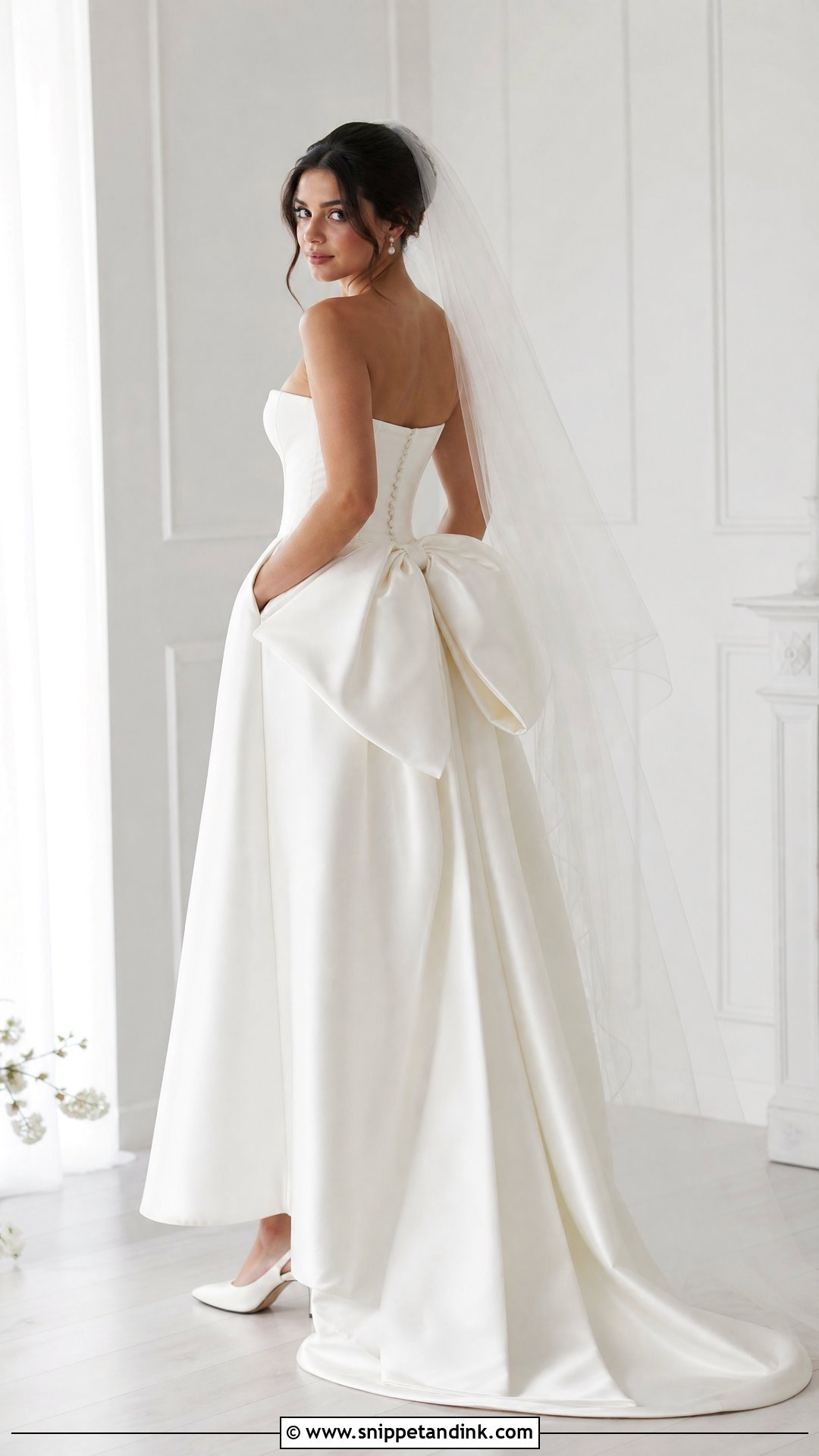
Bows can sit at the back waist, on the straps, at the neckline or as a detachable train. A single oversized bow reads editorial; small shoulder bows read sweet. Large bows need body to hold their shape, so I’d go for mikado, structured satin or a stiffened organza and avoid soft charmeuse, which flops by the reception. Tulle works for small bows only. Keep jewelry light, add a smooth veil and pointed heels, and the bow does the talking.
20. Corset Wedding Dress With Short Skirt
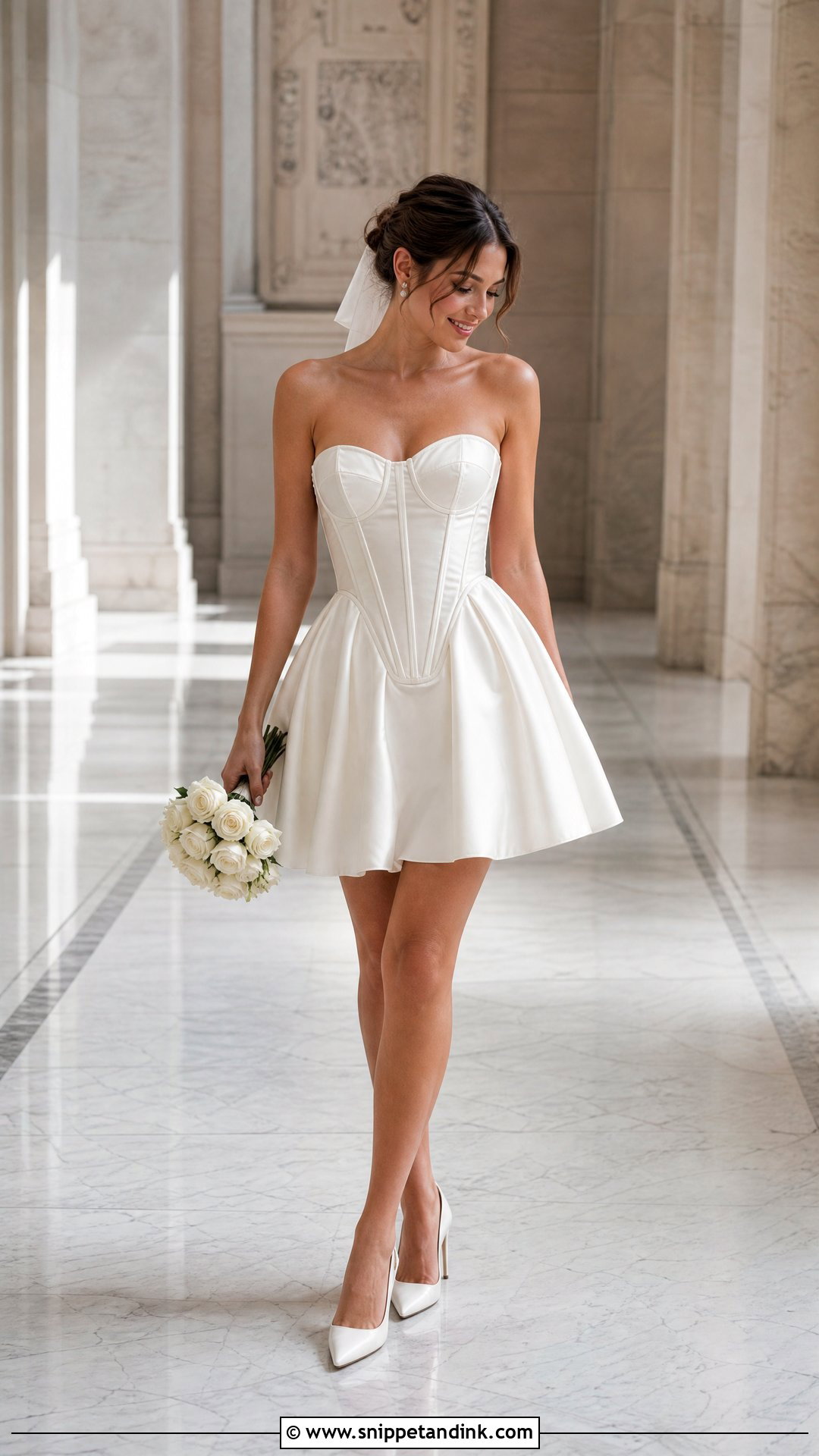
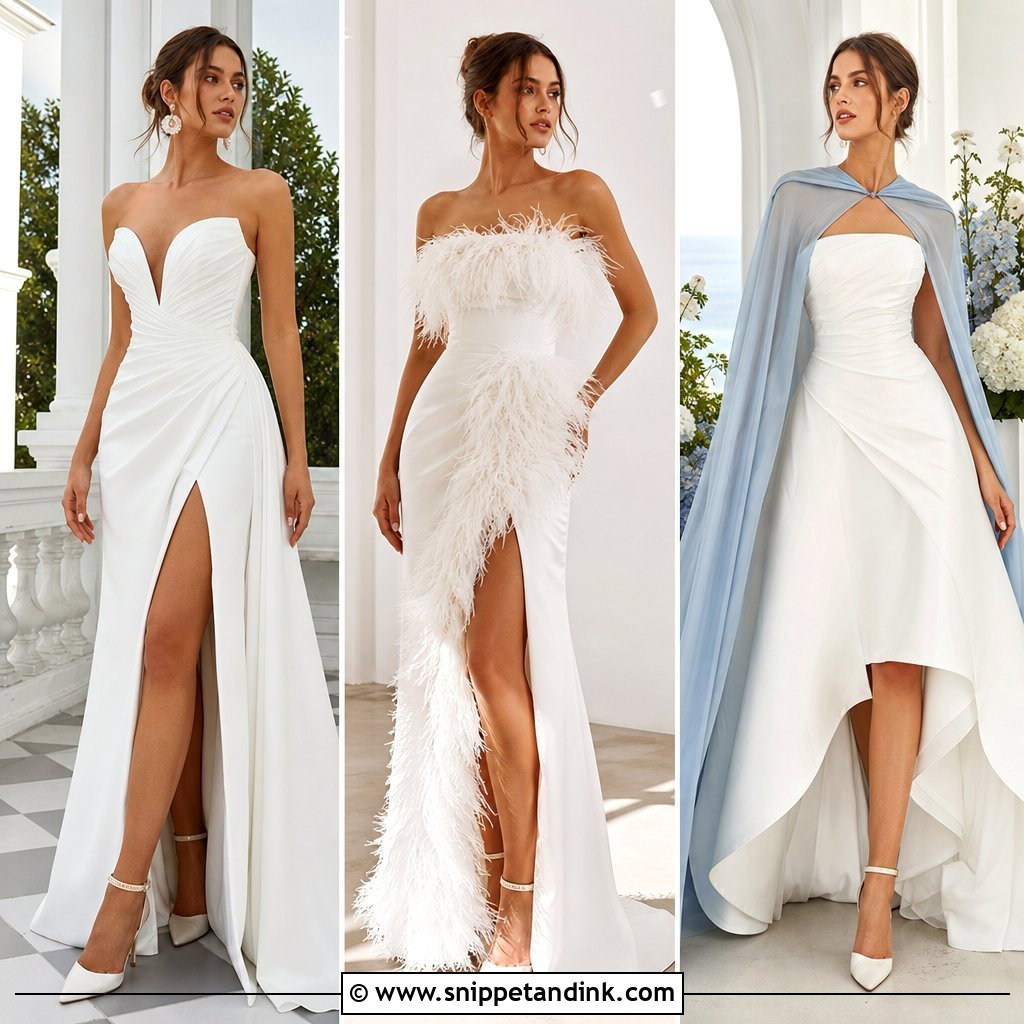
Short corset dresses are my favourite answer for civil ceremonies, rehearsal dinners, elopements and reception changes. The boning keeps it bridal, while the hemline frees you to walk, dance and show off your shoes. Mini lengths feel like a party, knee length more classic. With so much leg on view, the bodice length matters: too long and the proportions go boxy, so get it hemmed and fitted as one job. Satin, lace or mikado, plus pearl earrings, white heels and a small veil or bow.
21. Corset Wedding Dress With Tiered Skirt
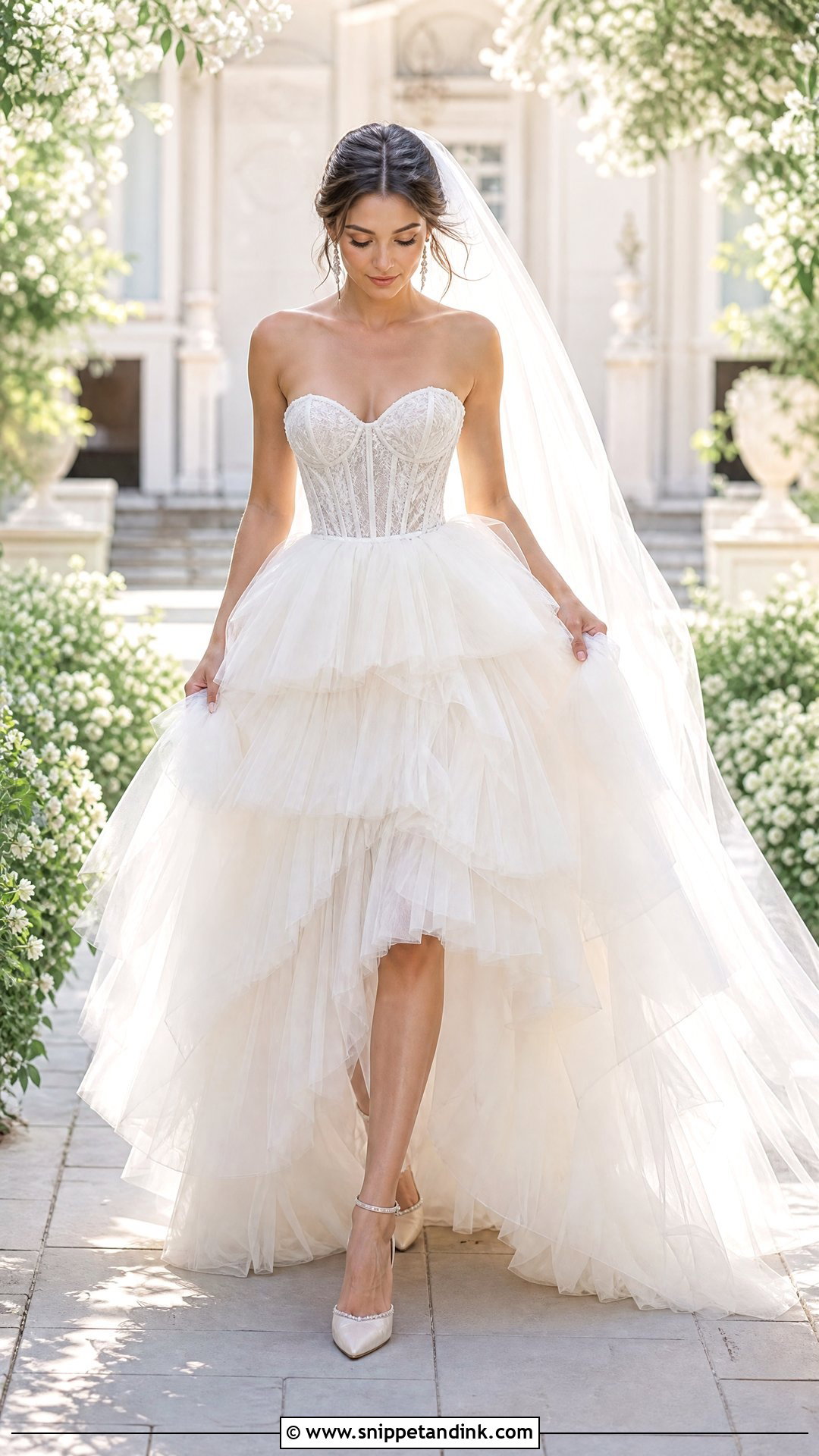
Tiered skirts move in layers, so you get texture and swing without stiffness. Soft tulle tiers go airy and bohemian, organza tiers hold a crisper, more fashion-led shape. Tiers do add bulk at the hip, which I’d balance with a clean, closely fitted bodice and no extra embellishment up top. Outdoor ceremonies and estate weddings suit it, and it shows its best in motion. A long veil, delicate earrings and soft curls keep it in proportion.
22. Corset Wedding Dress With Halter Neck
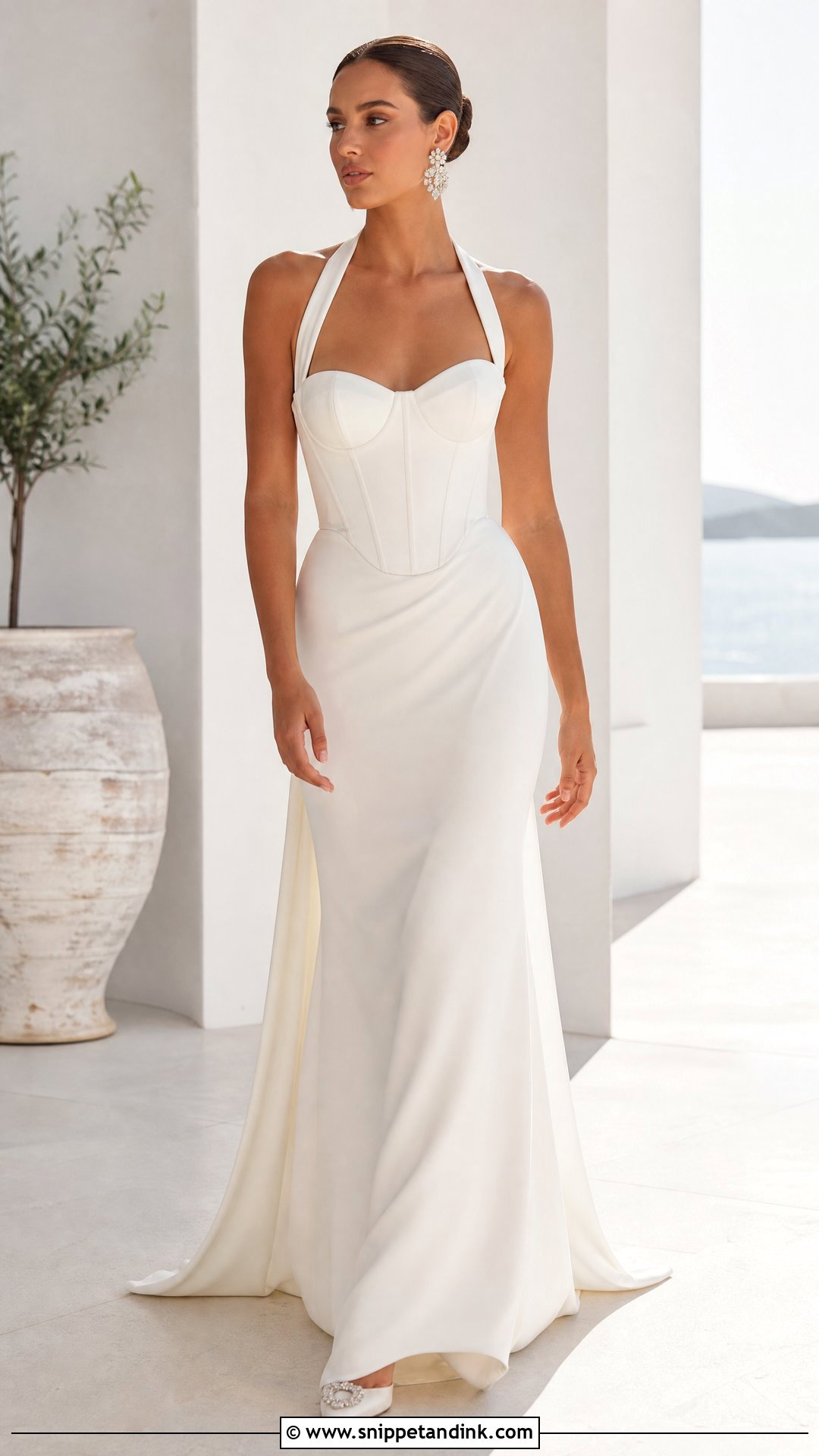
Halter necks add support from the neck, which brides with a fuller bust often find more secure than strapless. Pay attention to the strap at the back of your neck. A halter tied or cut too short drags on the neck by evening, so I check it after you’ve been standing for a while, not just at first try-on. Fitted crepe, sleek satin or soft A-line skirts all work, especially for modern and destination venues. Skip the necklace, choose earrings, and wear a sleek bun or ponytail to show the shape.
23. Corset Wedding Dress With Cap Sleeves
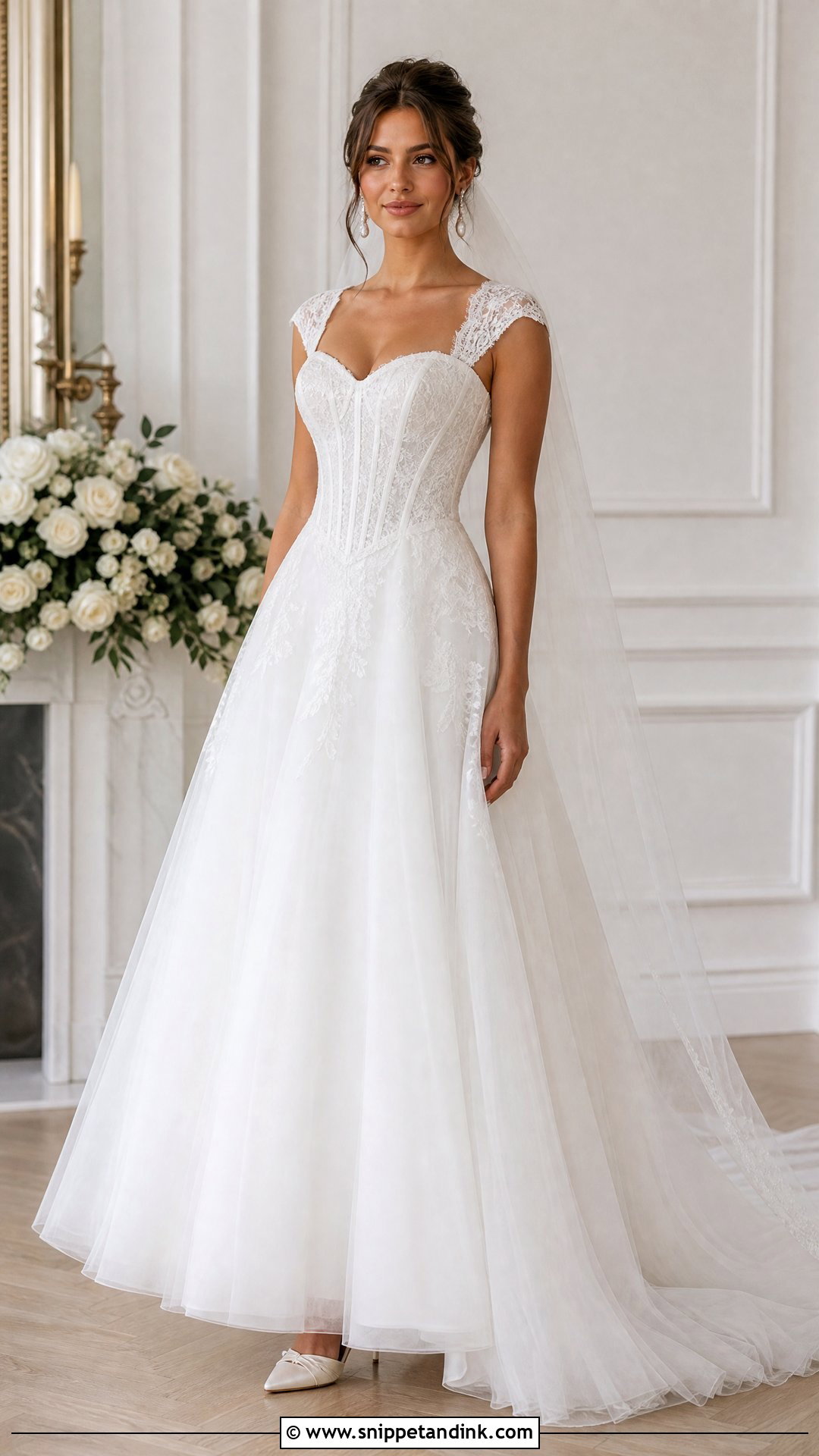
Cap sleeves sit between strapless and long sleeves, offering a little shoulder coverage and a light feel. Lace cap sleeves are romantic, while satin or crepe looks more tailored. A cap sleeve that ends at the widest part of the arm can make arms look broader, so I’d ask for it to stop a touch higher or lower. An A-line or fit-and-flare skirt suits the defined waist. Finish with a fingertip veil, pearl earrings and soft makeup for traditional ceremonies and portraits.
24. Corset Wedding Dress With Colored Embroidery
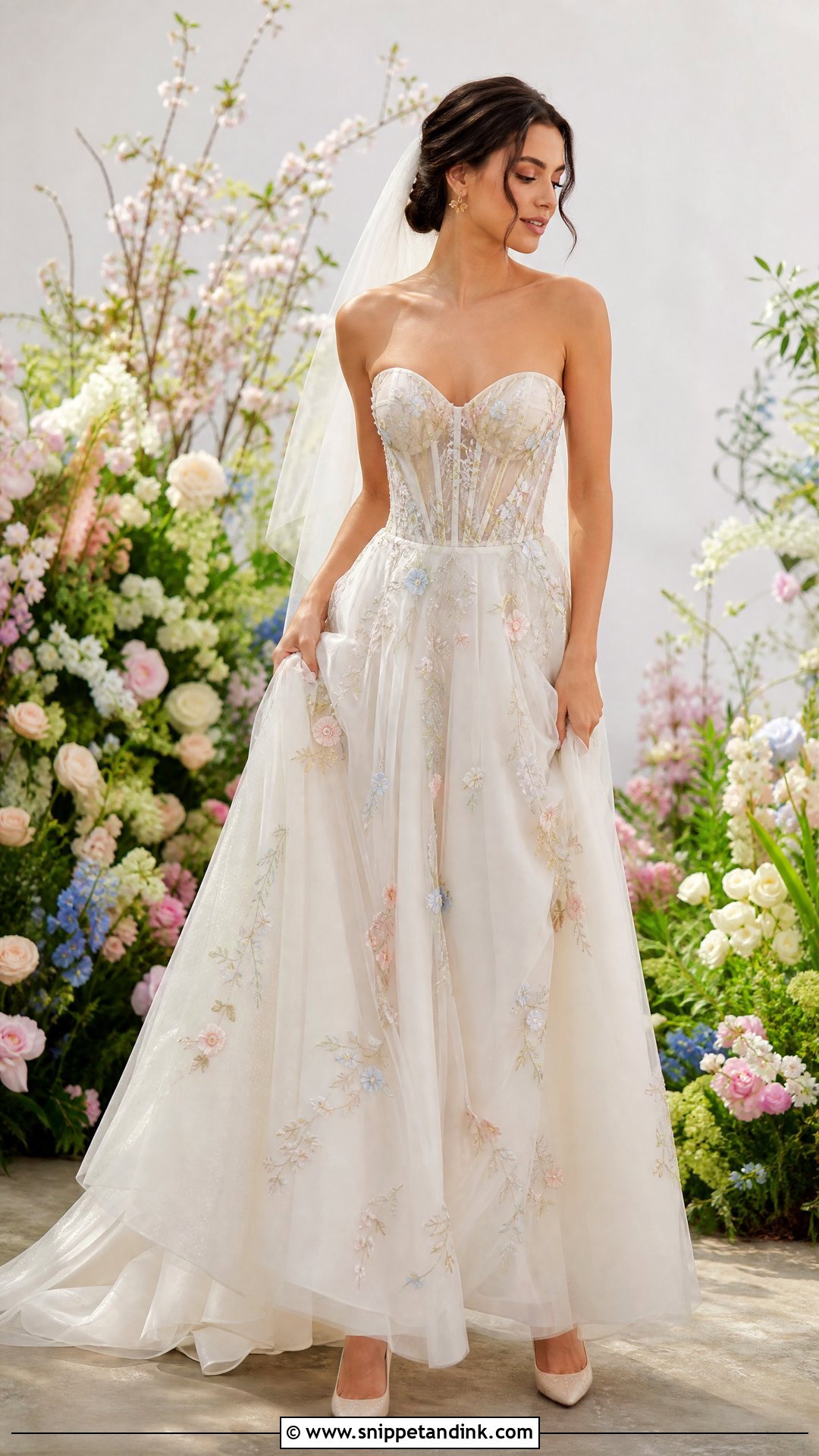
Colour embroidery on a corset gown is how I’d add something personal without leaving bridal territory. A corset wedding dress with colored embroidery in blush, pale blue, champagne or sage adds depth that reads clearly in photos. Ask to see the thread colour in daylight before you commit; pastels that look obvious under shop lighting can almost vanish outdoors. Garden weddings, spring ceremonies and creative venues suit it. Nude or ivory heels, small earrings and a sheer veil are enough.

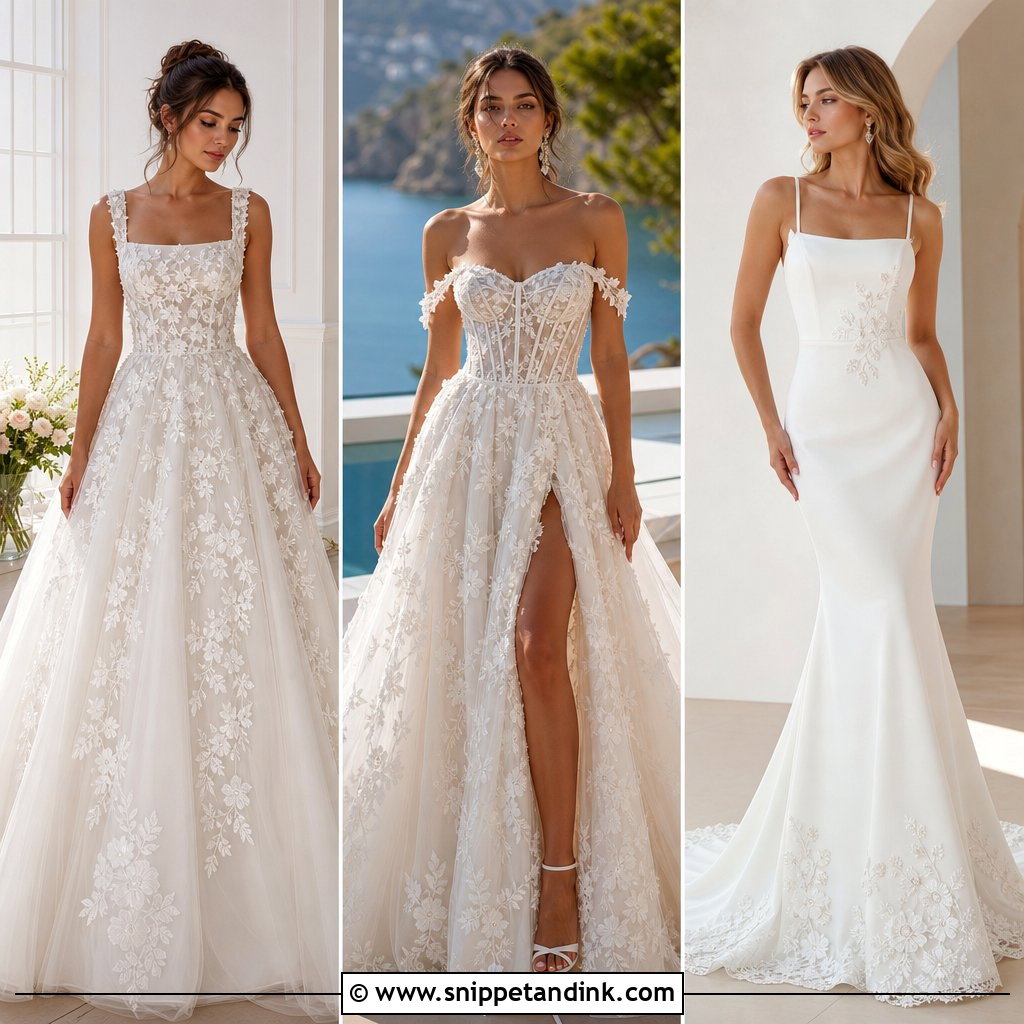
25. Corset Wedding Dress With Matching Bridal Gloves
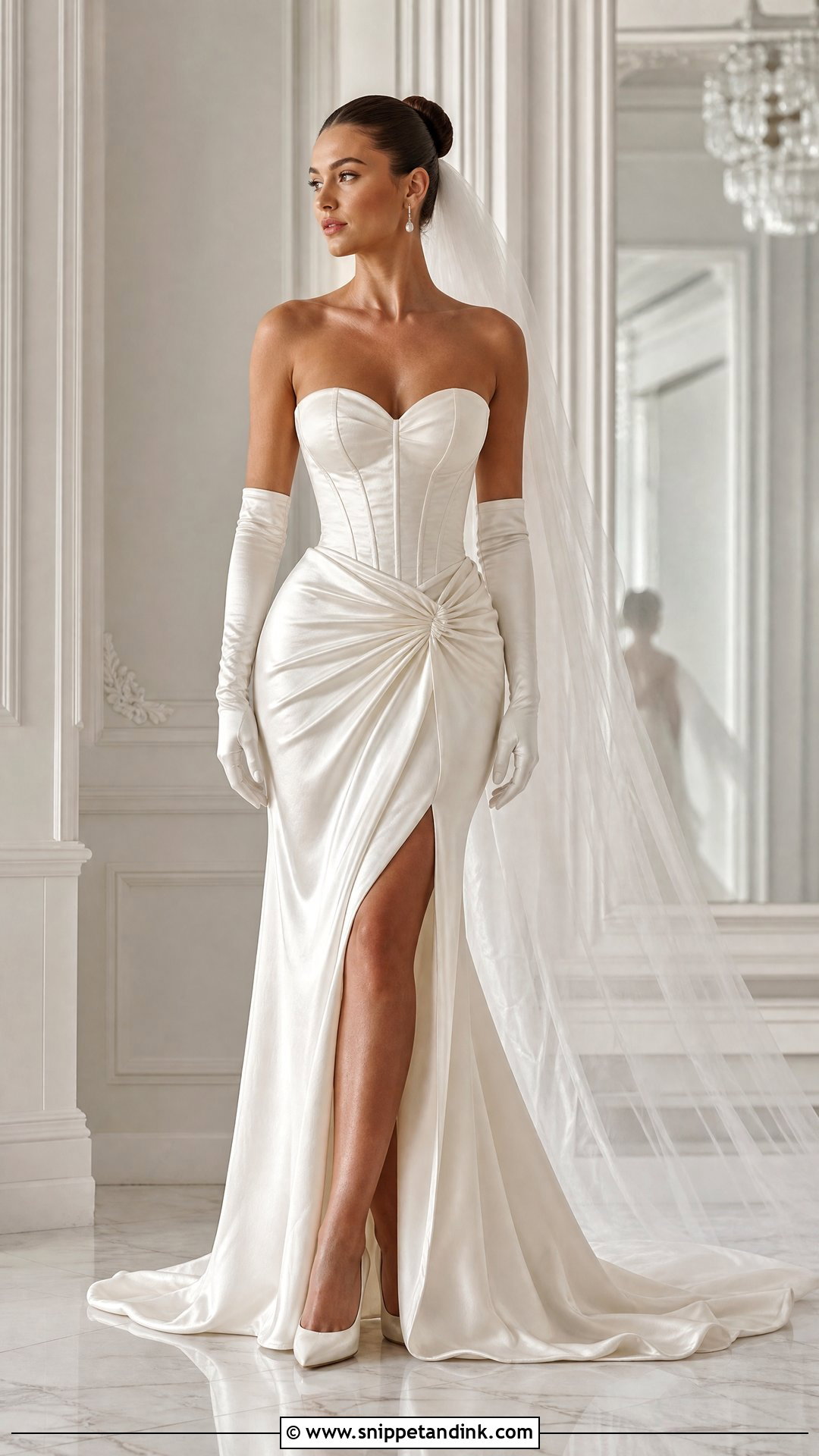
Gloves turn a corset gown editorial in one move, especially with strapless, off-shoulder, satin or minimalist silhouettes. Sheer gloves read soft, satin gloves read formal. Plan the ring: you’ll either need gloves with a slit or opening at the ring finger, or someone to hold a glove during the exchange, and I sort that before the rehearsal. Keep jewelry minimal, add a clean updo, a simple veil and pointed heels, and the classic gown takes on a modern finish.
Alterations, Lacing Up and Twelve Hours in Boning
Structured gowns need more fitting time than soft ones because every adjustment affects the boning channels. I’d start alterations roughly two to three months out, with a final fitting about two weeks before the wedding. Wear your actual shoes and undergarments every time, since a change of heel height alters the hem and a new bra changes the bodice.
Getting dressed on the morning
Give yourself twenty minutes to get into a lace-up corset, not five. Whoever laces you should pull from the middle loops out toward the top and bottom, then tighten again after you’ve been standing for ten minutes, because the fabric relaxes with body warmth. A zipped bodice needs a hook-and-eye at the top checked before you leave the room.
Living in it all day
- Eat little and often. A big plated meal feels much tighter in a corset than it would in a soft dress.
- Learn the bustle at the final fitting. French and American bustles hook differently, and someone other than you will be doing it.
- Bring a small kit with safety pins, double-sided tape and a spare length of ribbon for a lace-up back.
- Sit on the edge of the seat with a straight back. Slouching folds the boning and leaves marks in satin.
After the wedding, store the gown flat or on padded hanger straps, never by its shoulders, and have it professionally cleaned soon so sweat doesn’t yellow the lining around the boning.
A Corset Is the Frame, Not the Whole Picture
Fabric, neckline and skirt decide whether a corset gown reads soft or bold, classic or modern. What doesn’t change is the fitting-room test: sit, reach, breathe and walk in it before you commit. A well-made corset should hold you without you having to hold your breath. Satin A-lines, lace sleeves, basque waists, overskirts, bows and pearl work all start from that same supportive bodice. Choose the version that still feels right after you’ve worn it for an hour.
You'll Like These Ideas:






Leave a Reply