
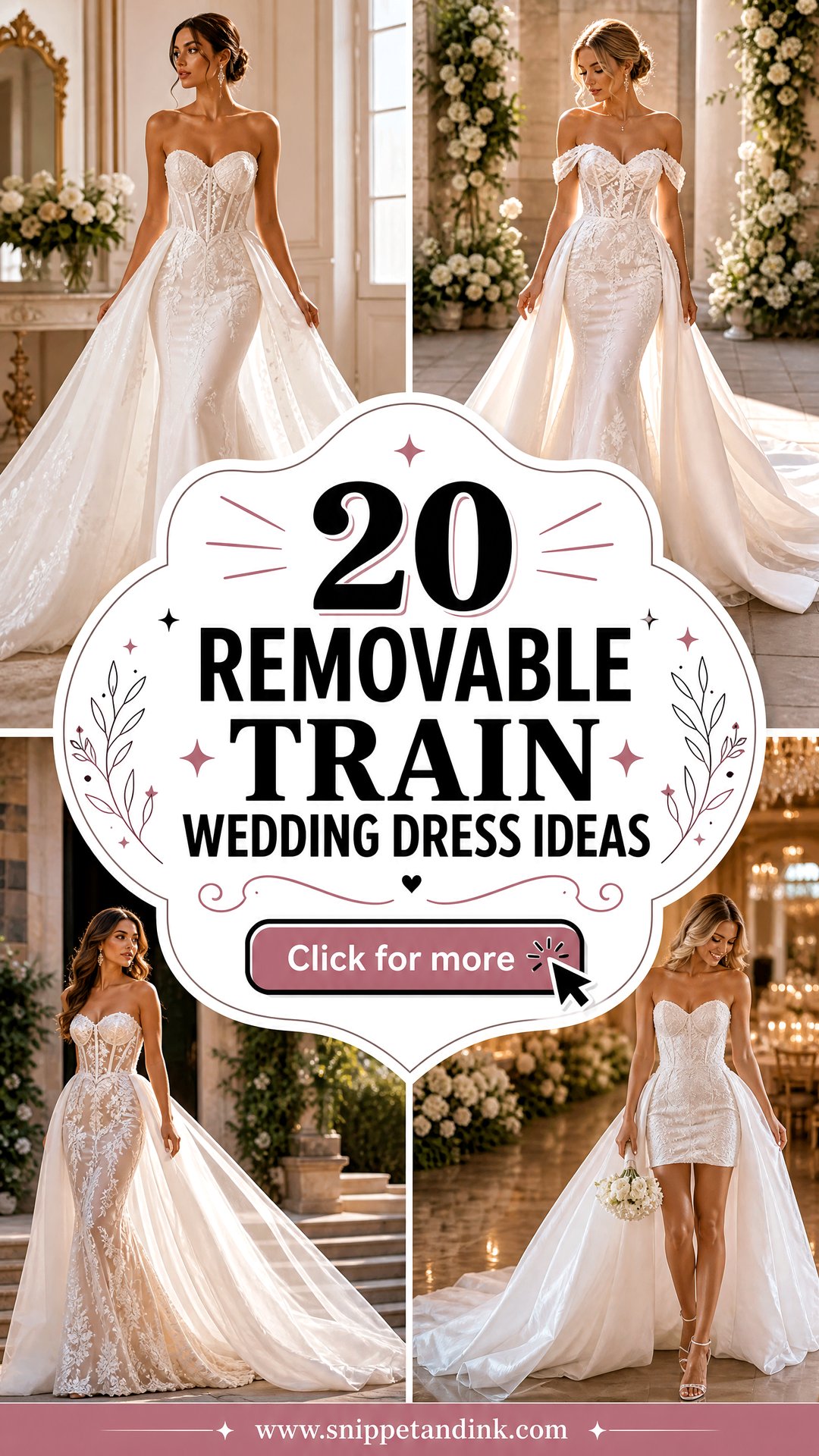
Most brides I dress want two things that pull against each other: a ceremony entrance with real length behind them, and a reception where they can dance without a bustle digging into their back. A train that comes off solves both, and it is now offered on a lot of current bridal silhouettes, from basque waists and corsetry to clean strapless columns. The twenty convertible bridal looks below run from sleek crepe to lace mermaid shapes, and each comes with the shoes, jewellery and veil I’d put with it. Before you fall for one, think about where the train attaches, how heavy it is, what floor you’ll be walking on and whether you like the dress underneath on its own. That last question matters most, because it’s the dress you’ll wear for most of the day.
Hooks, Snaps or Buttons: How These Trains Actually Fasten
The fastening decides how secure the train feels, how fast it comes off and whether it marks the gown. Ask your shop or seamstress which one your dress uses before you order, because changing it later means unpicking the waistband.
- Hooks and eyes or thread loops: the most common and the most secure. They sit flat and hidden, but there may be a dozen of them, so removal takes a few minutes and a calm helper.
- Snaps: quicker to undo, and fine for light tulle or chiffon trains. On a heavy satin train they can pop open when someone steps on the hem.
- Buttons with elastic loops: decorative as well as practical, often used on overskirts. They look charming, but the loops stretch over time.
- Wrap overskirts with a waistband: fastened with a hook-and-bar or hidden zip. These are the simplest to remove, but the band adds a layer at your waist, which matters on a fitted gown.
I’d avoid hook-and-loop tape on any bridal fabric. It grabs tulle and lace and pulls threads every time it’s opened.
Ordering the Train With the Dress, Not After
If the train comes from the same designer, order it with the gown so the fabric comes from the same dye lot. A train added later by a seamstress is possible and sometimes the only option, but finding a perfect match for ivory satin or lace is hard. Allow at least one extra fitting purely for the train, with your shoes on, and try walking backward a few steps. You’ll need to on the day, at the altar and in photos.
1. Satin A-Line Removable Train Wedding Dress
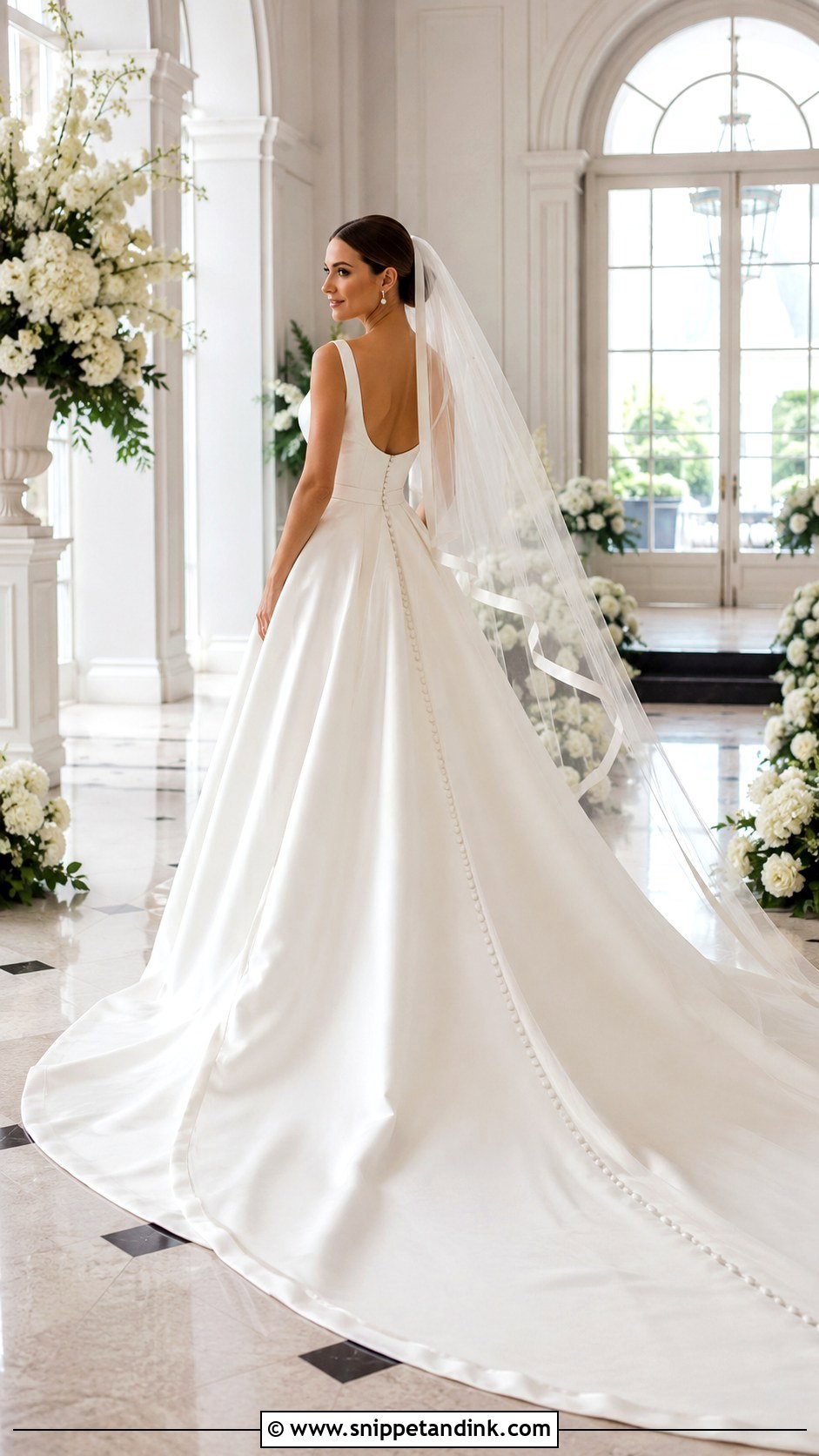
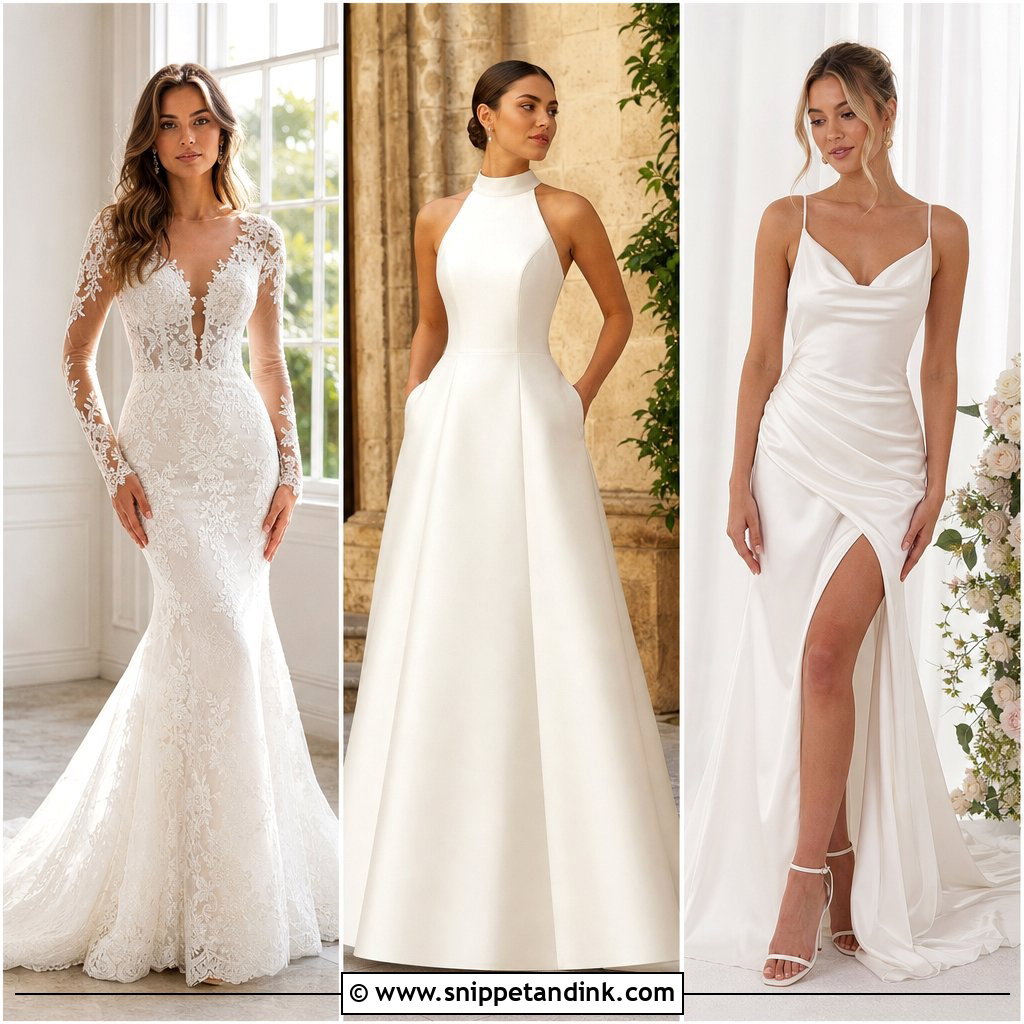
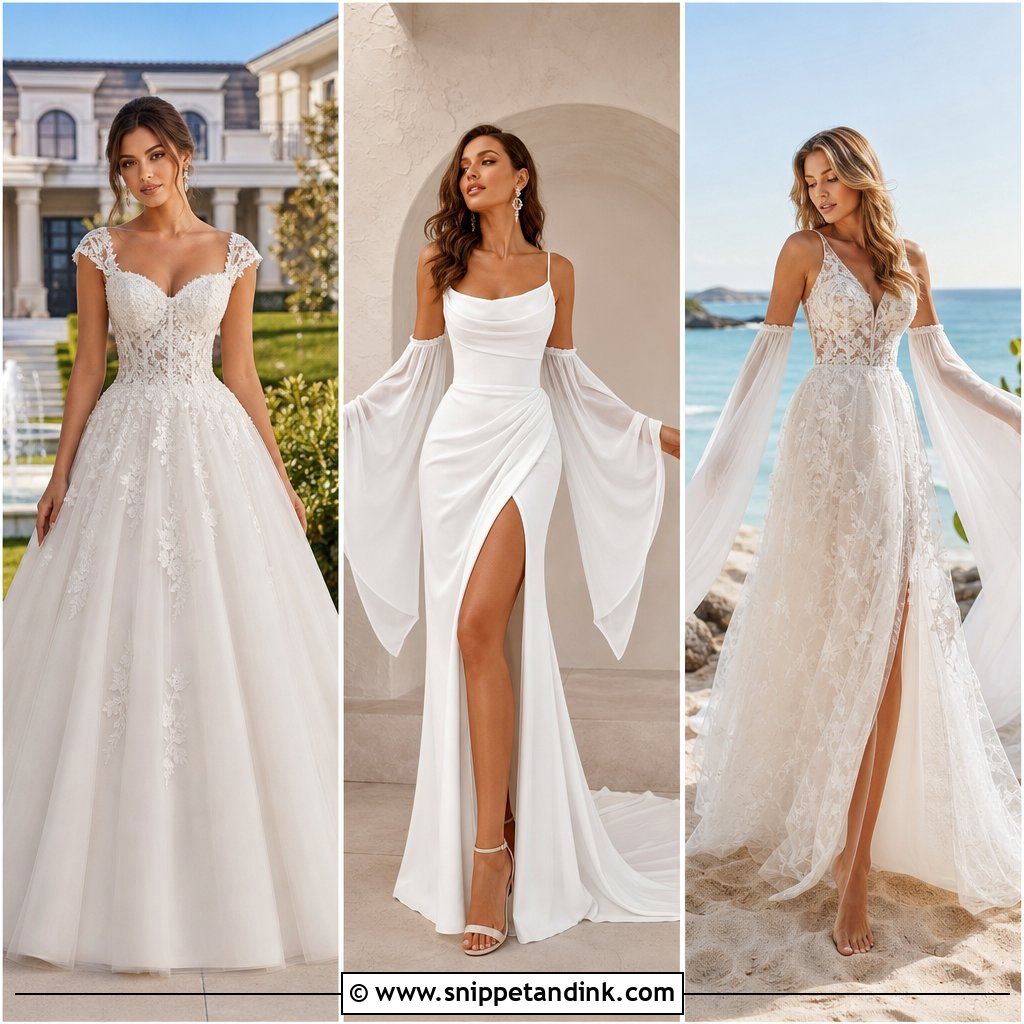
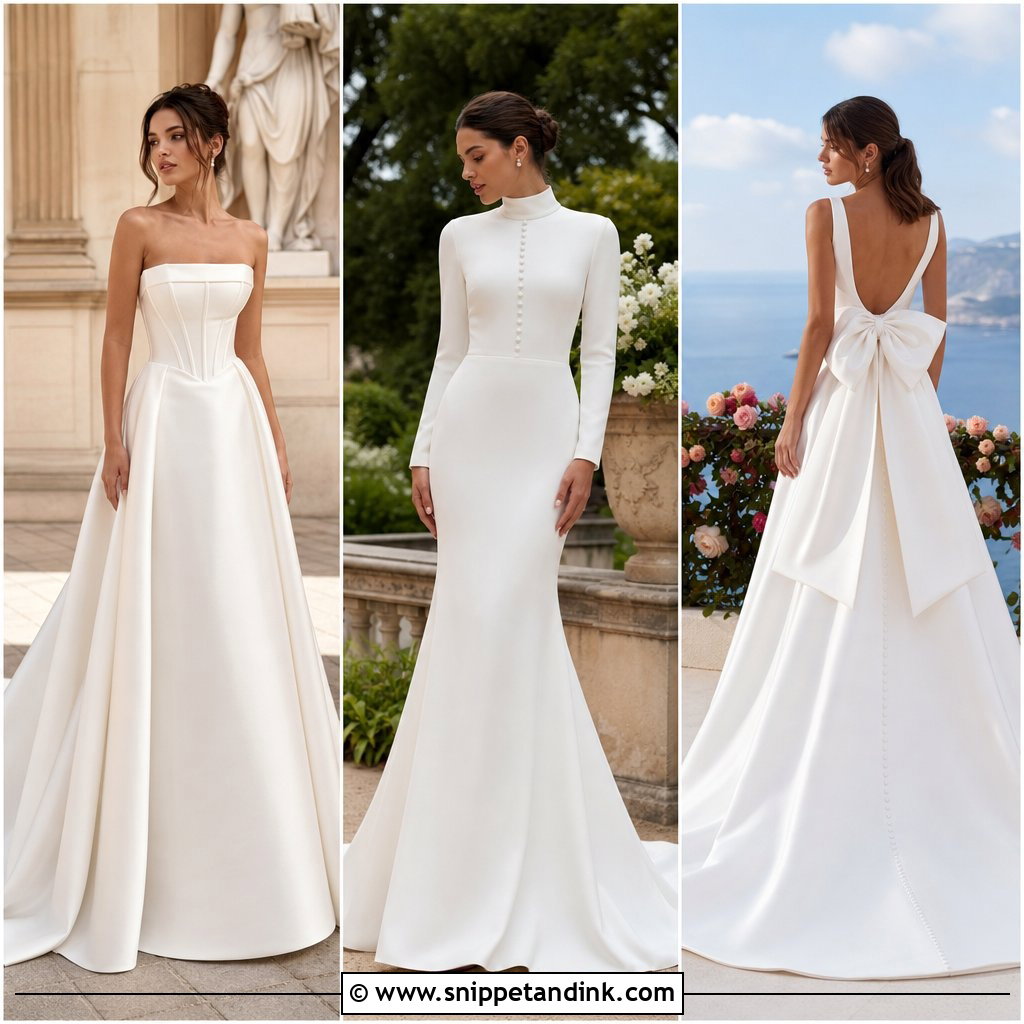
Satin A-lines are where I’d start a bride who is unsure, because the base gown is already a complete, comfortable dress. A structured bodice and gently defined waist carry a chapel-length satin train attached across the back, which fills out the skirt for the ceremony; take it off and the A-line underneath walks and dances easily. The detail I’d watch is sheen. Two cuts of the same satin can catch light differently if the grain runs in different directions, so ask your seamstress to cut the train on the same grain as the skirt. Pointed ivory pumps, pearl drops, a satin-edged veil and a small top-handle bag complete it.
2. Lace Mermaid Removable Train Wedding Dress
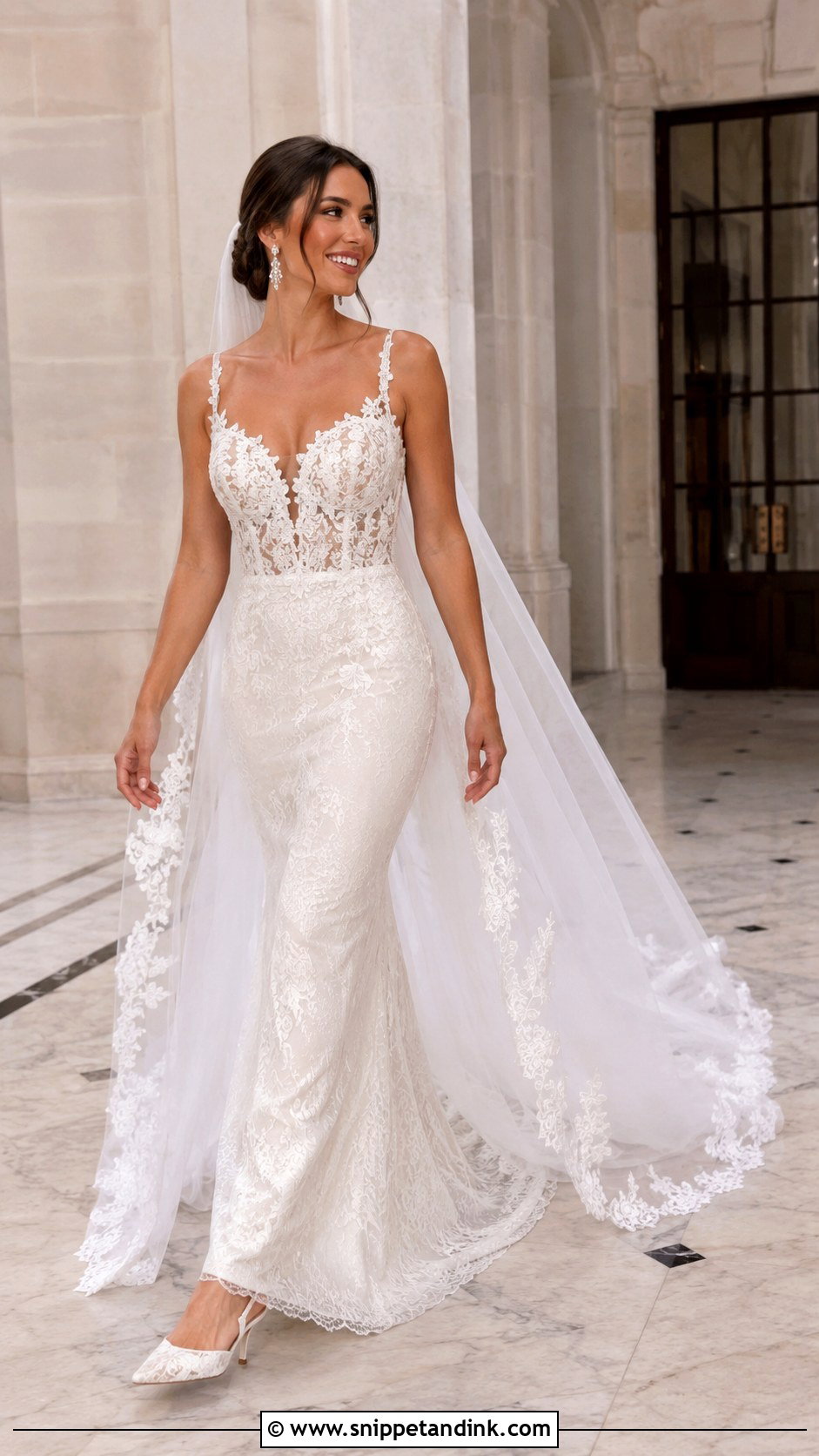
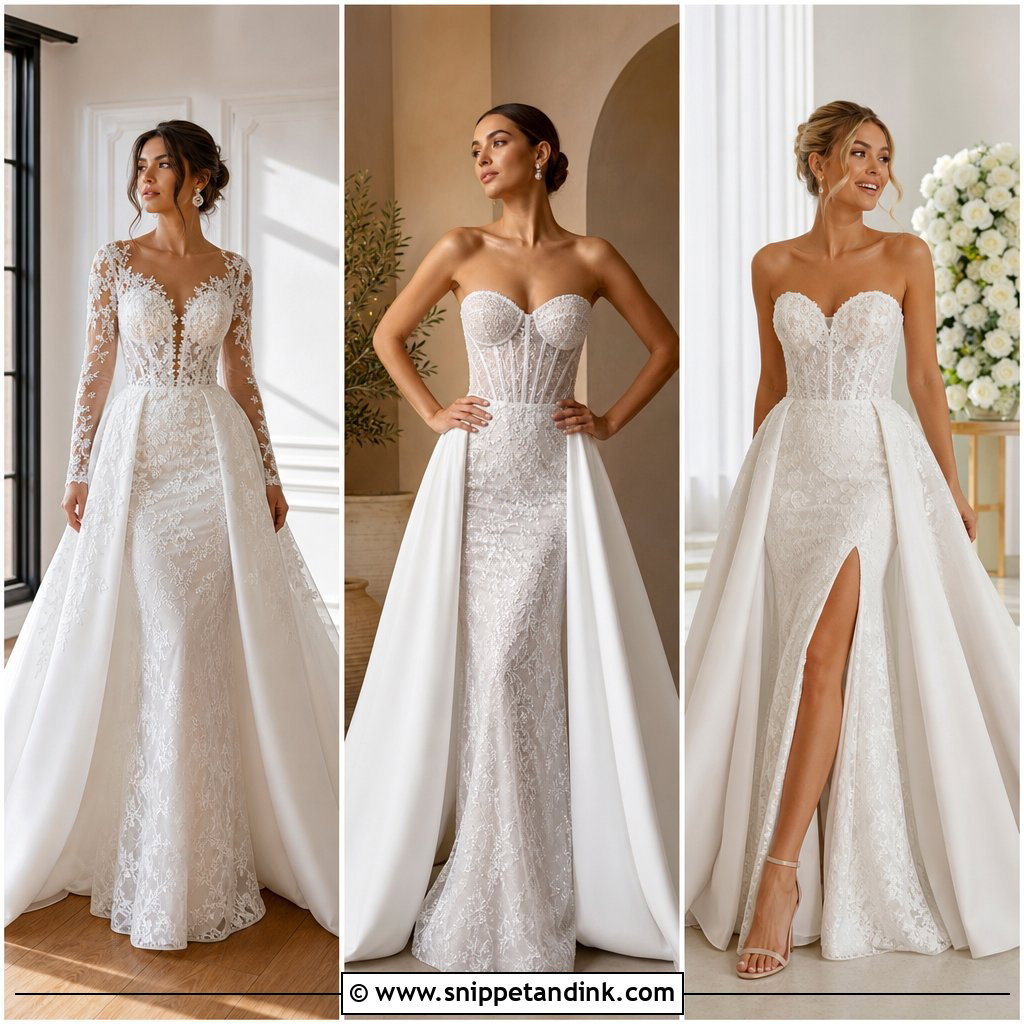
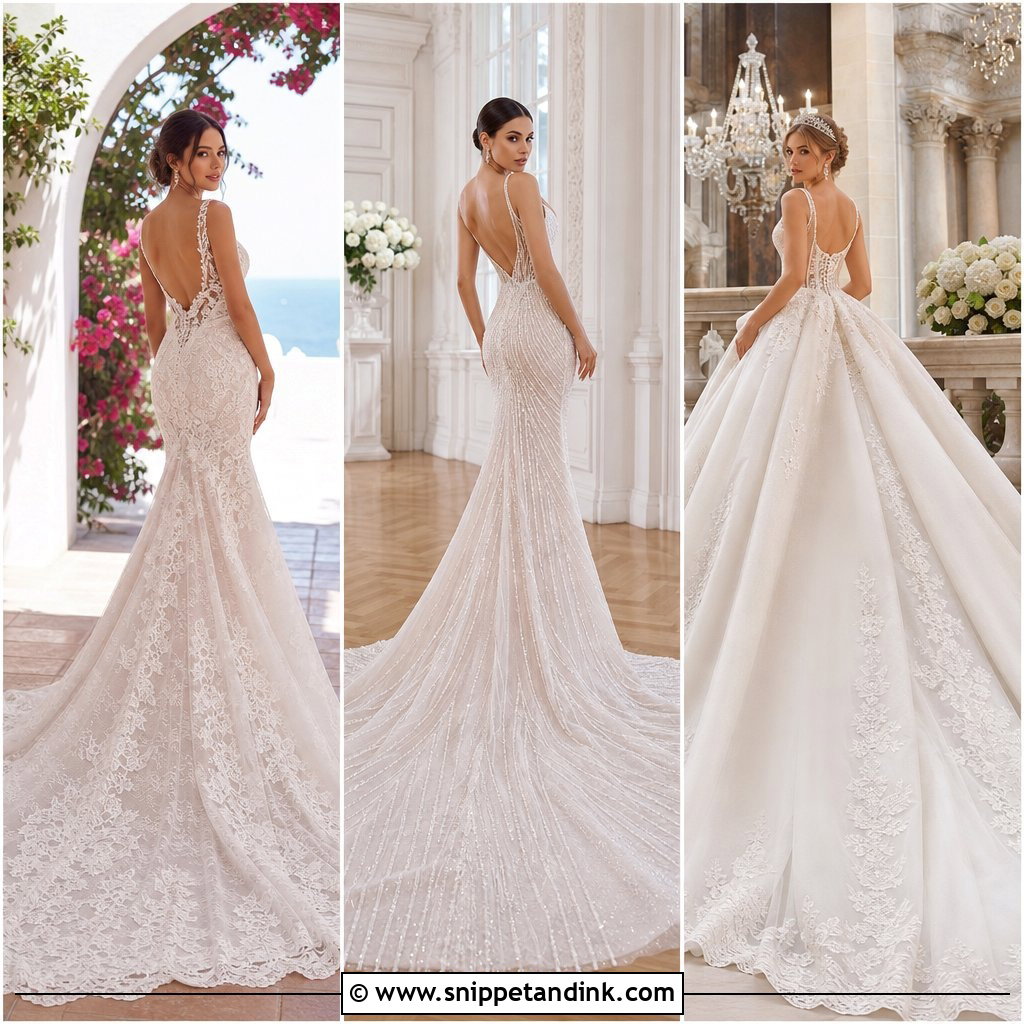
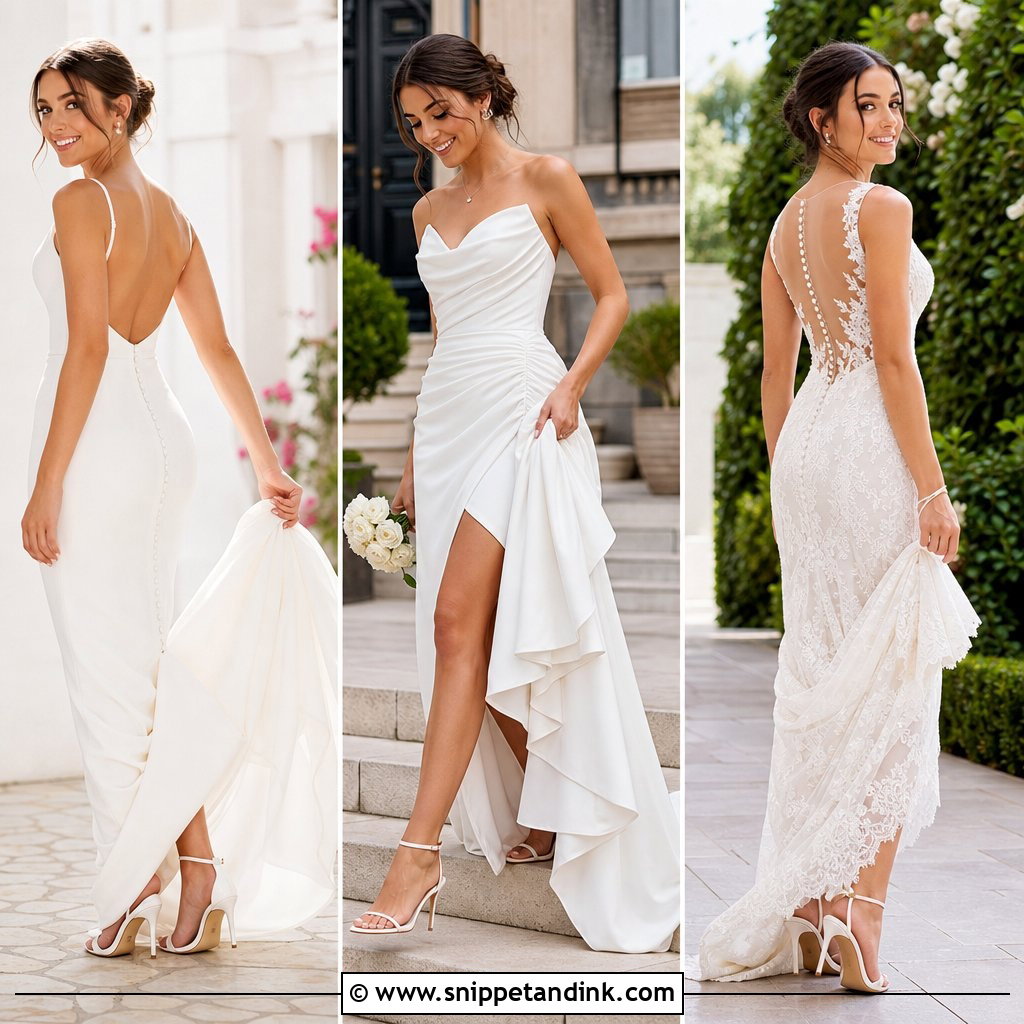
On a mermaid, the train usually attaches low, around where the flare begins, and that is the hard part. Too high and it pulls the fitted skirt backward when you walk; too low and it looks like an afterthought. Look for lace motifs that run across the bodice, the fitted skirt and the train, ideally placed by hand so they hide the join. A sheer tulle base keeps the train airy and lets the lace show. With the train off, the sculpted shape takes over. Crystal earrings, a narrow lace-trimmed veil and pointed slingbacks suit it; skip the necklace if the bodice is appliquéd. At your fitting, walk, turn and sit with the train on before anything is finalised.
3. Strapless Ball Gown Removable Train Wedding Dress
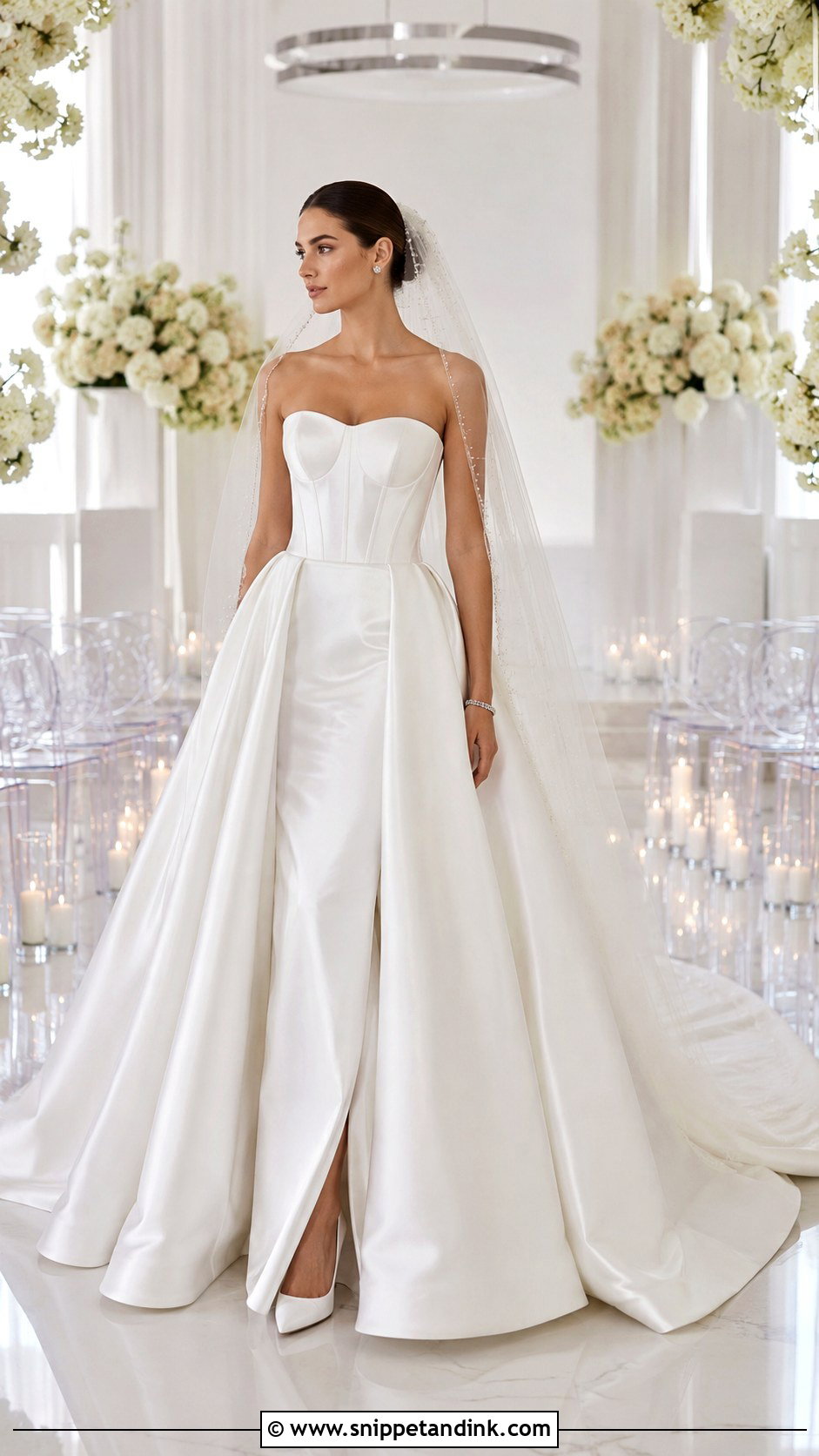
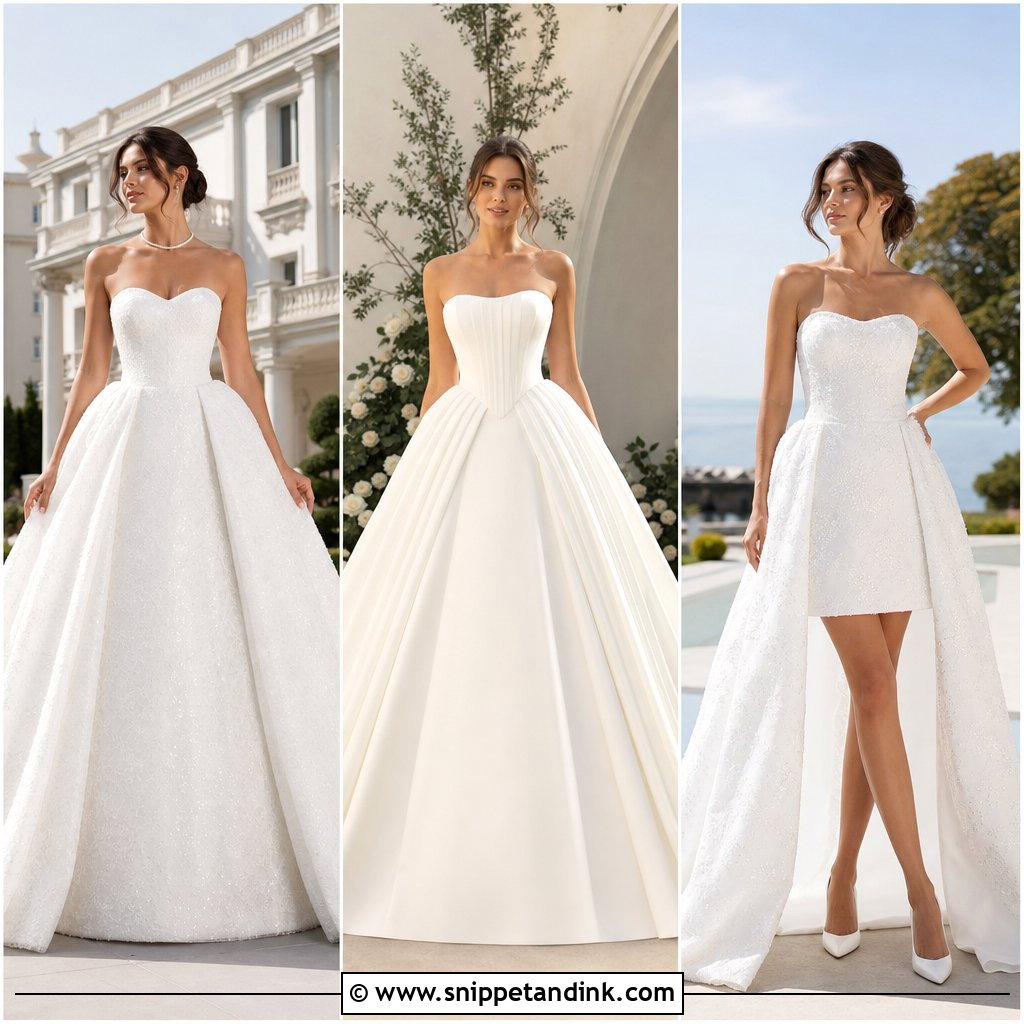
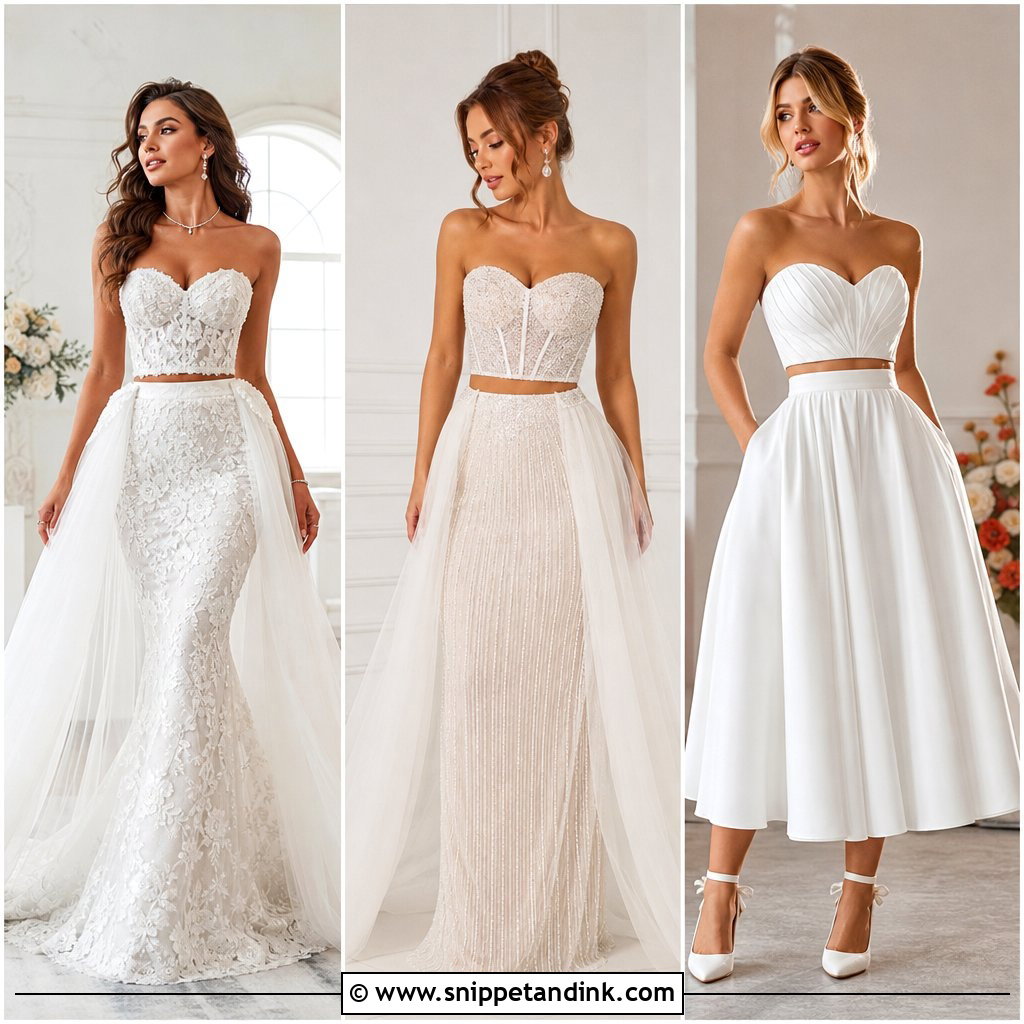
For a classic entrance, a strapless ball gown with a detachable overskirt is hard to beat. The corset bodice carries everything, so its boning and waist tape need to be solid before any overskirt is added. Mikado gives a sculptural outline; layered tulle moves more softly. My test is simple: with the outer layer off, does the gown underneath still have a finished waistline and a skirt that stands up by itself? If the base skirt collapses, you’ll look like you’ve lost half your dress. A fingertip veil, crystal studs, closed-toe satin pumps and a fine tennis bracelet keep it classic. The overskirt’s waistband should follow the bodice seams and lie flat, or it looks bulky from the side.
4. Crepe Column Removable Train Wedding Dress
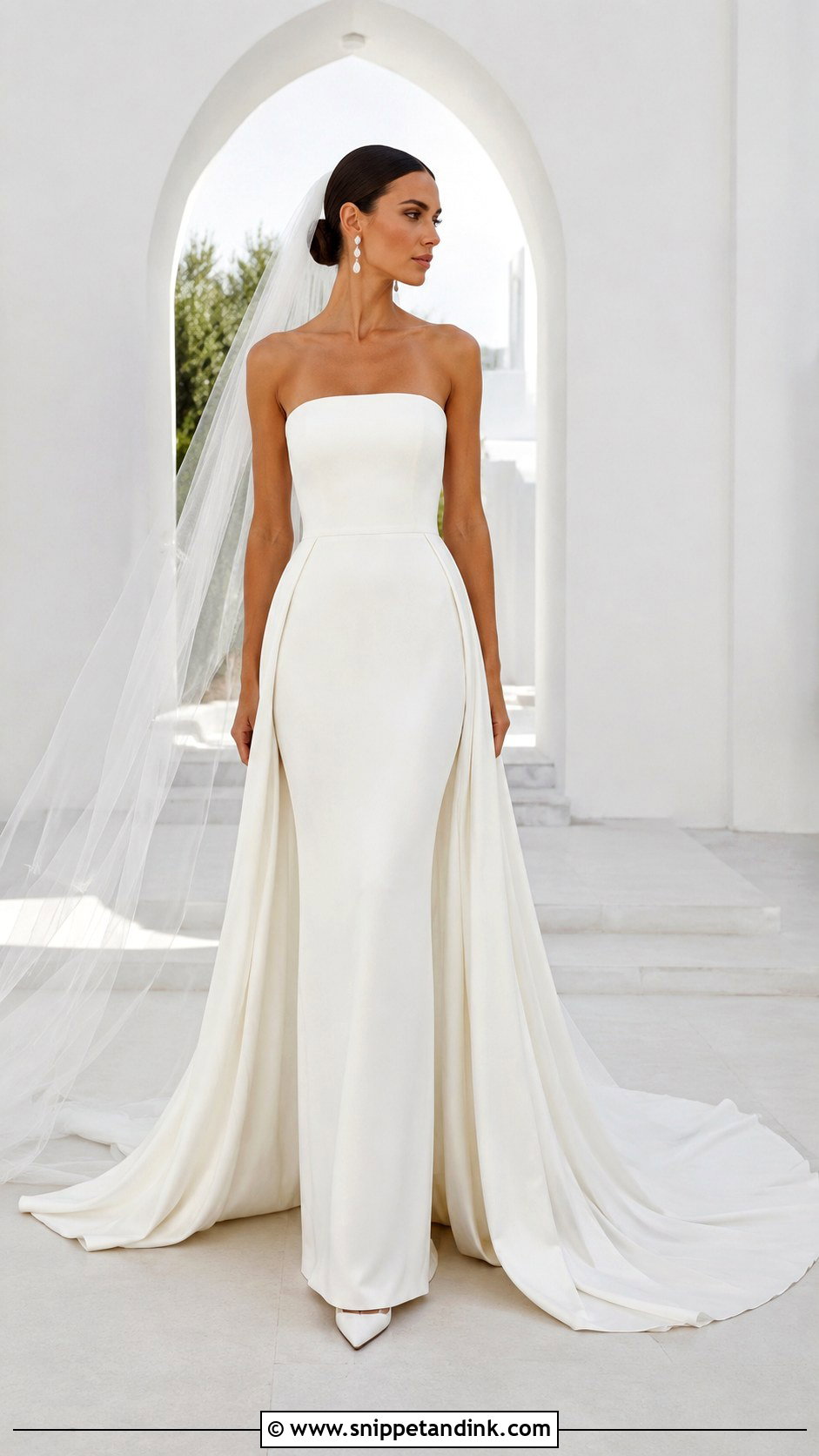
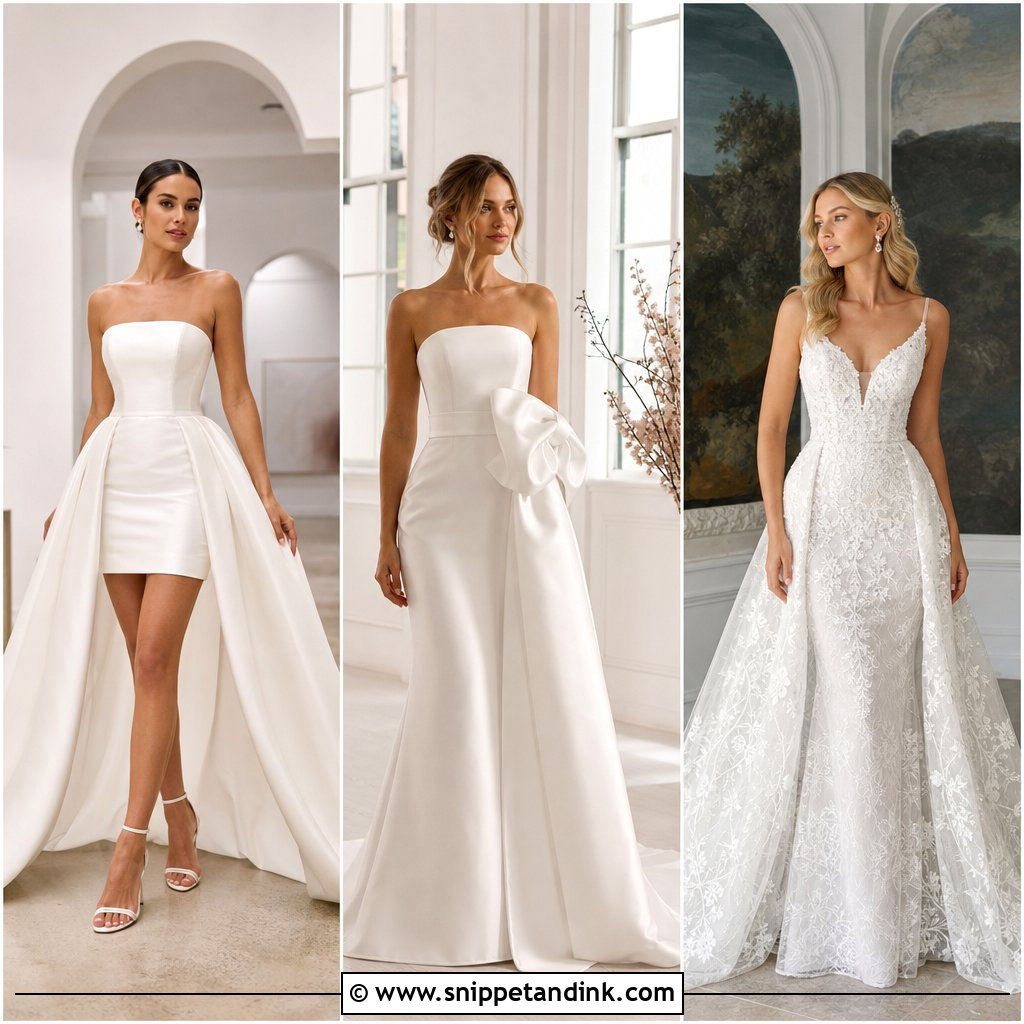
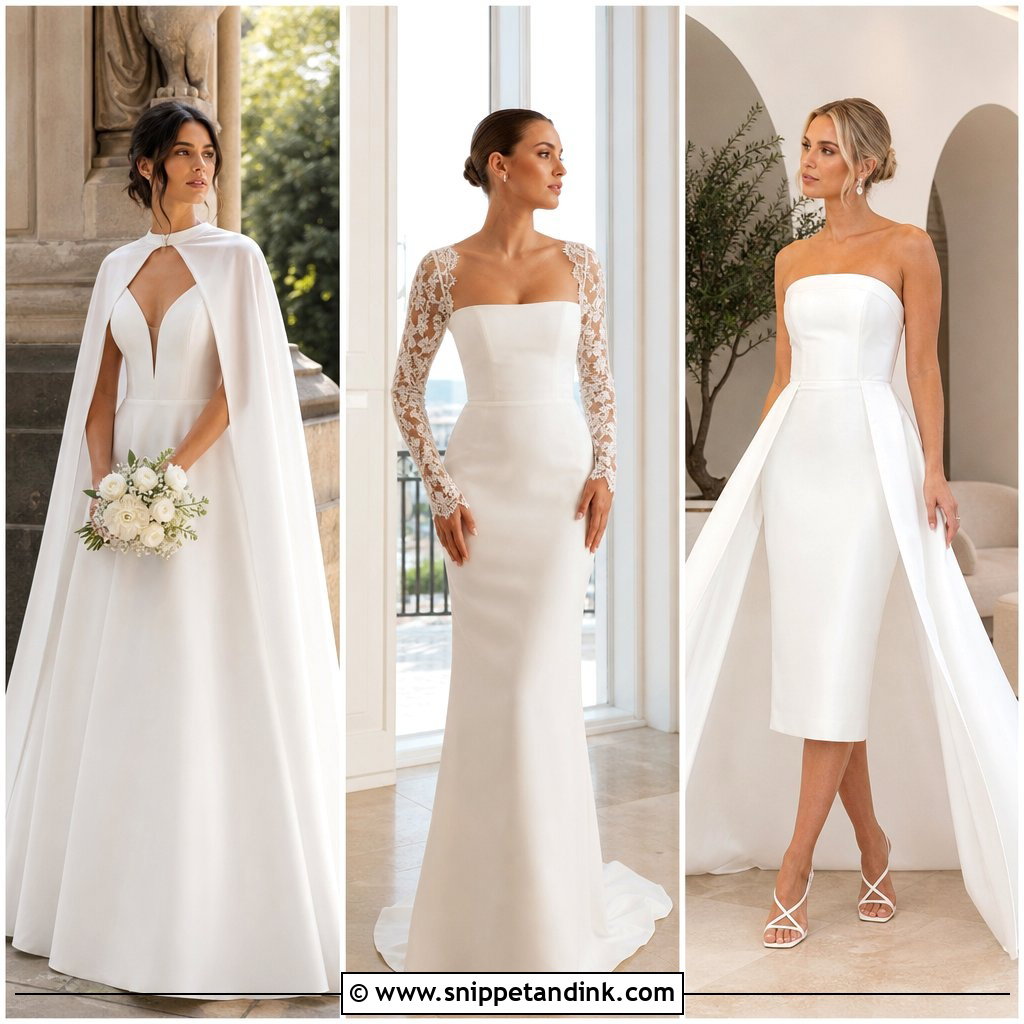
A crepe column is the plainest base on this list, which is why a train looks so dramatic on it. Pick the top you’re comfortable with, a straight neckline, slim straps or one shoulder, and add a crepe train with soft folds from the waist. Lining matters more than people expect here. A heavy, unlined crepe train drags at the attachment point and pulls the column off-centre, so ask for a light lining that helps it drape. After removal, sculptural earrings, pointed heels and a smooth low bun suit the clean line. A cathedral veil adds length for the ceremony; a short one keeps things minimal.
5. Basque Waist Removable Train Wedding Dress
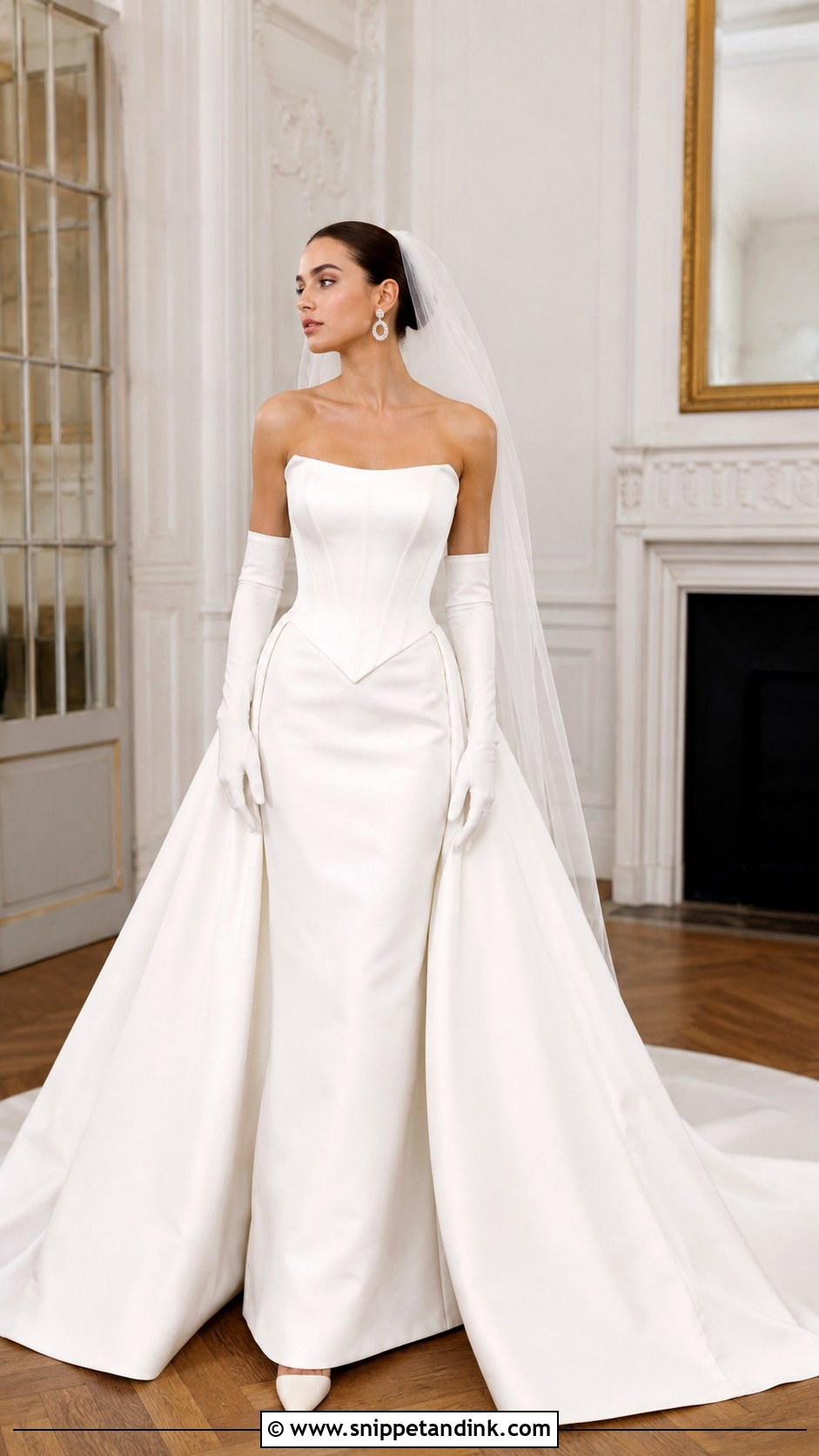
The pointed front of a basque-waist gown is its whole personality, so I’d never let a removable train cut straight across it. The train’s waistband should follow the V at the front and back, which takes a custom pattern and an extra fitting but makes the two pieces look like one dress. Structured satin or mikado shows off the shape; a tulle layer softens it. Oval crystal earrings, pointed pumps and a sheer veil under a polished bun suit it, and long gloves only if they’re plain. Ask to see the gown with the train off at a fitting, from the back especially, so the closure and waist seams look finished.
6. Off-Shoulder Removable Train Wedding Dress
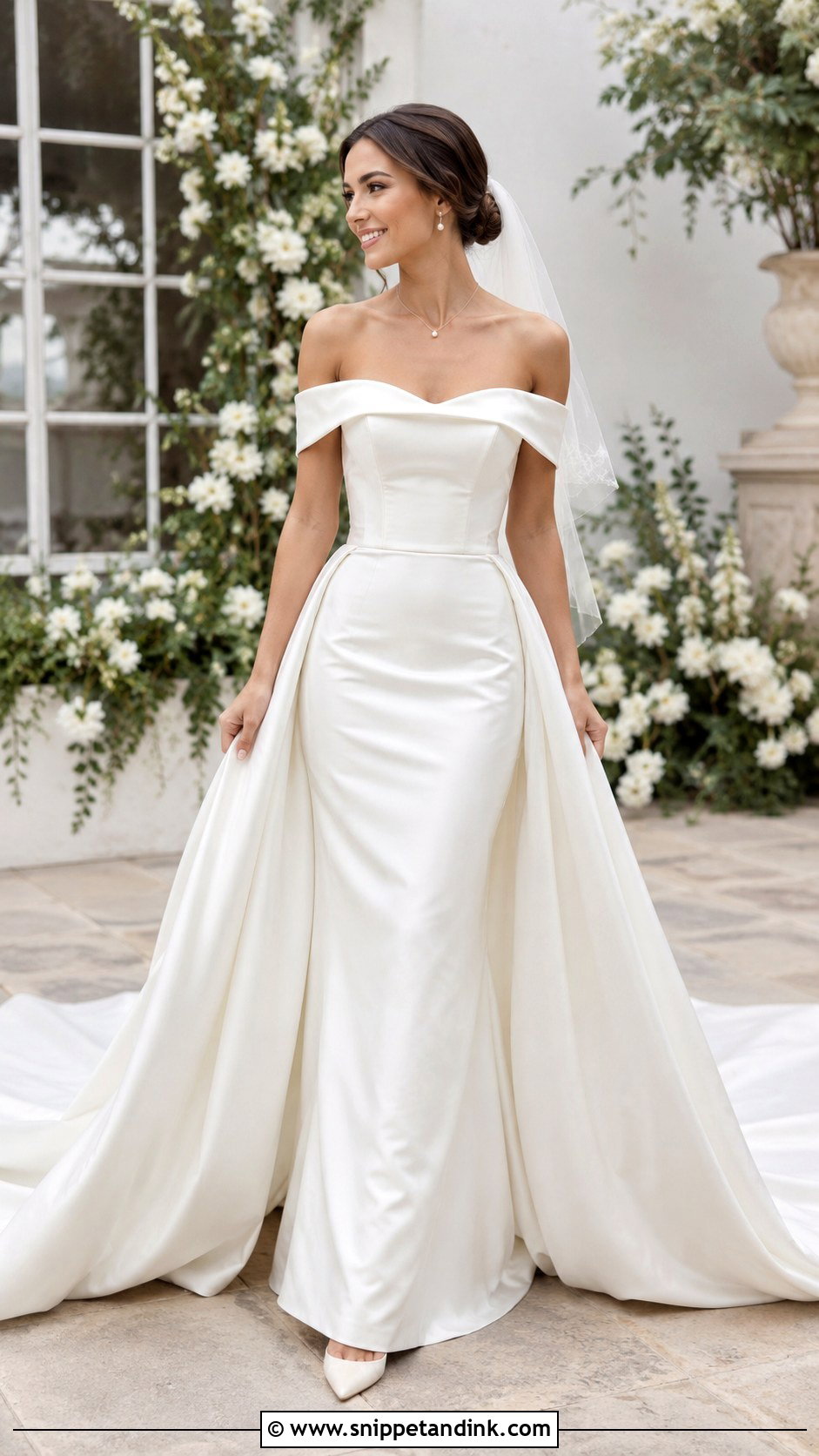
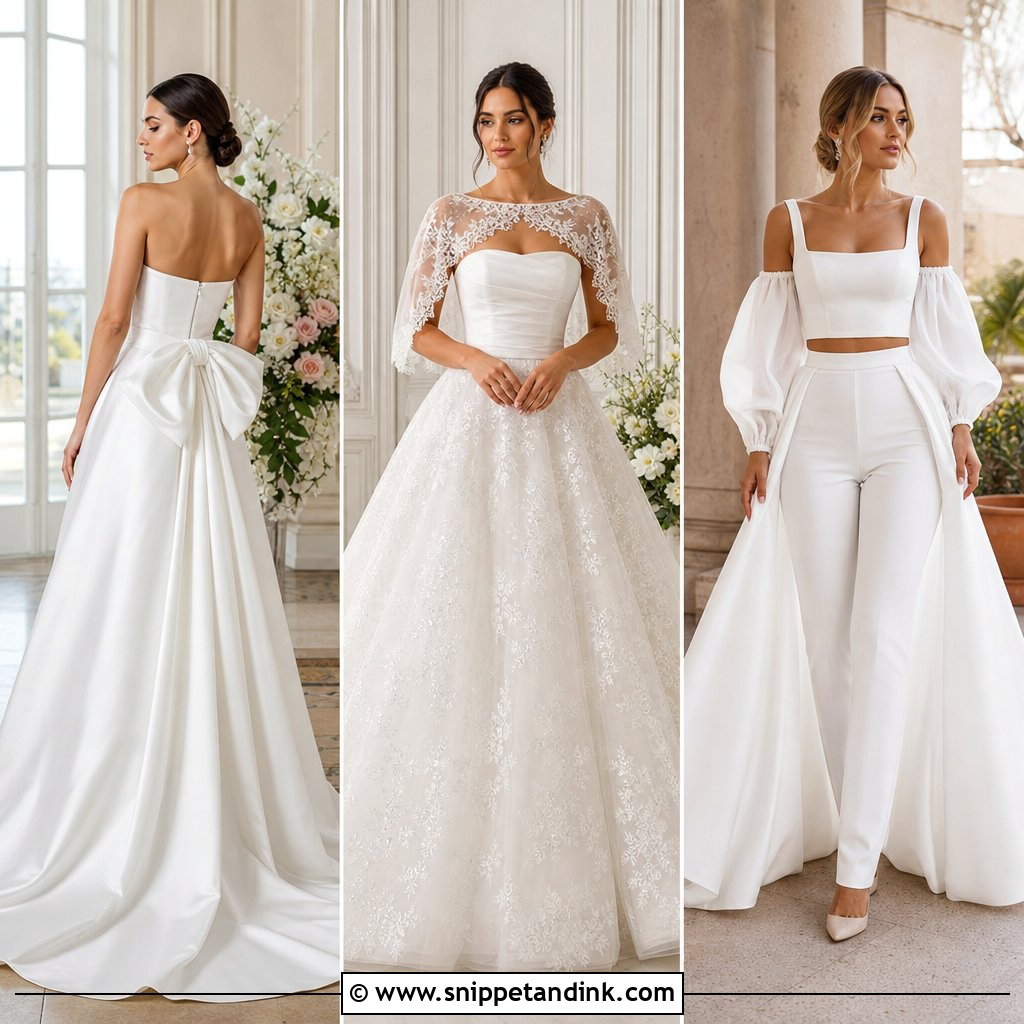
Off-shoulder necklines are pretty and quietly demanding. Folded satin bands or lace sleeves resting on the upper arm need a firm inner bodice, or they’ll slide every time you raise your arms. Here the overskirt can start at the side seams and sweep back into a chapel or cathedral train, framing the gown underneath. Take it off and the romantic neckline stays. A short pendant, pearl earrings, ivory pumps and a low chignon are enough, with a plainly edged veil so the shoulders aren’t crowded. During the fitting, hug someone, lift your arms and sit down. If either the neckline or the train shifts, it needs adjusting.
7. Long Sleeve Lace Removable Train Wedding Dress
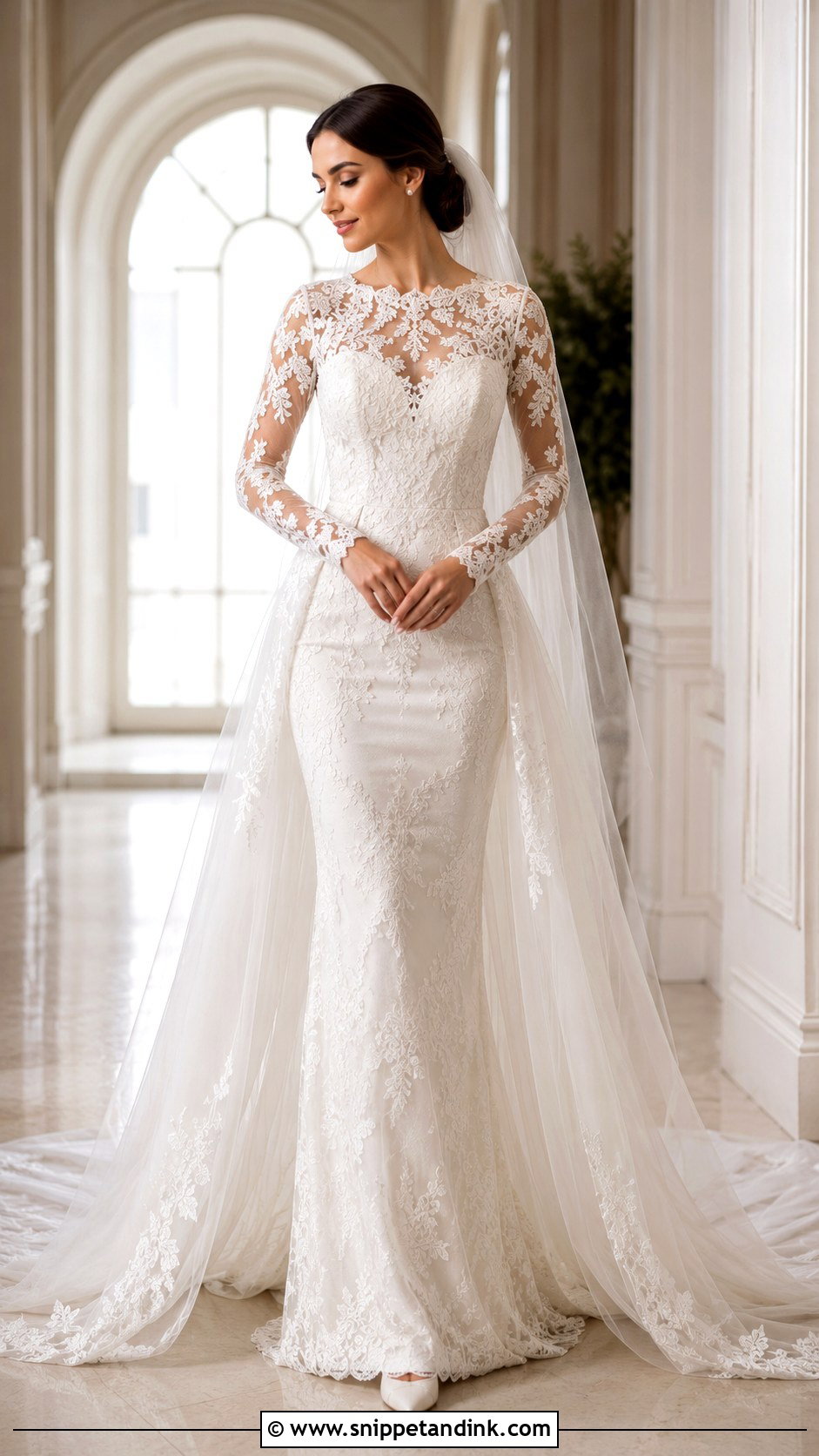
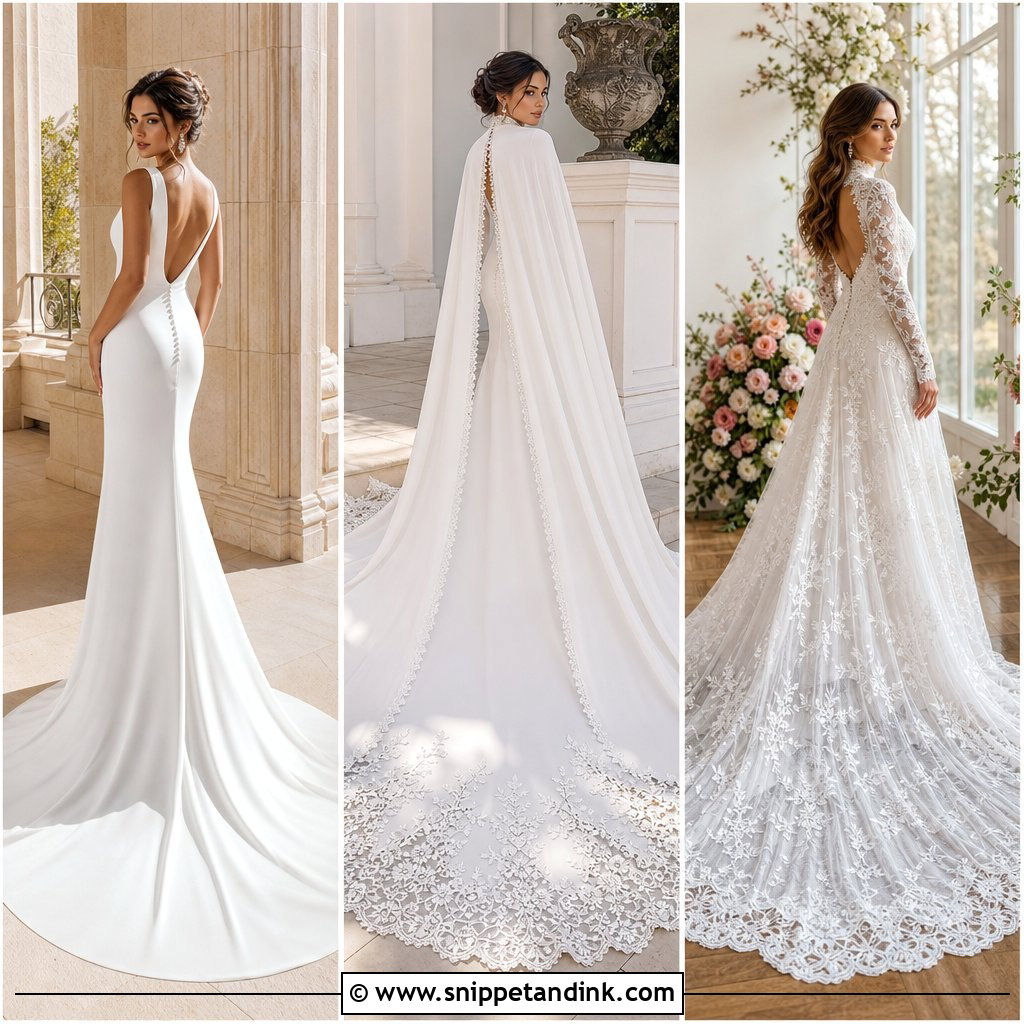
Lace sleeves give coverage without weight, especially on a sheath or fitted A-line where the lace runs unbroken from neckline to cuff. The train can carry matching appliqué at the hem and around the attachment points, so the pattern reads front to back. Here is the trap: ivory lace and ivory tulle from different suppliers rarely match exactly. Compare swatches in daylight and under warm indoor light before you order, because a slight yellow-versus-pink mismatch shows clearly once the layers sit together. Pearl studs, closed-toe heels, a plain veil and a neat low bun keep attention on the sleeves.
8. Square Neck Removable Train Wedding Dress
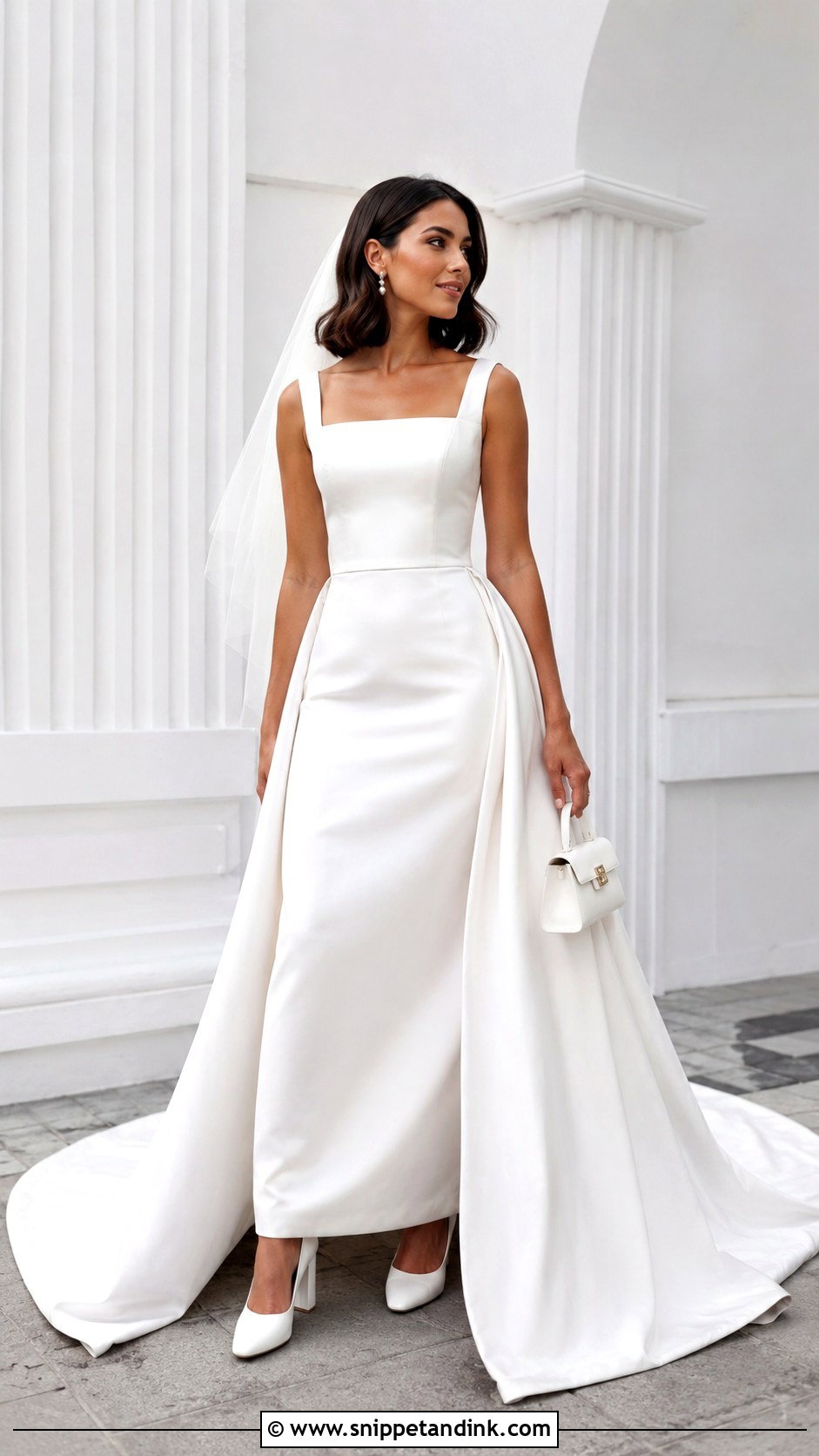
A square neckline looks sharp only if the bodice fits precisely; any gaping shows immediately along that straight edge, so this is where I’d spend fitting time. Wide straps, a fitted waist and a gently flared skirt make a balanced base. A matching satin train at the back waist can open into symmetrical pleats, adding volume behind you without touching the front. After it comes off, the neckline carries the reception look on its own. Pearl and crystal earrings, block-heel pumps, a shoulder-length veil and a structured mini bag for portraits work well.
9. Halter Neck Removable Train Wedding Dress
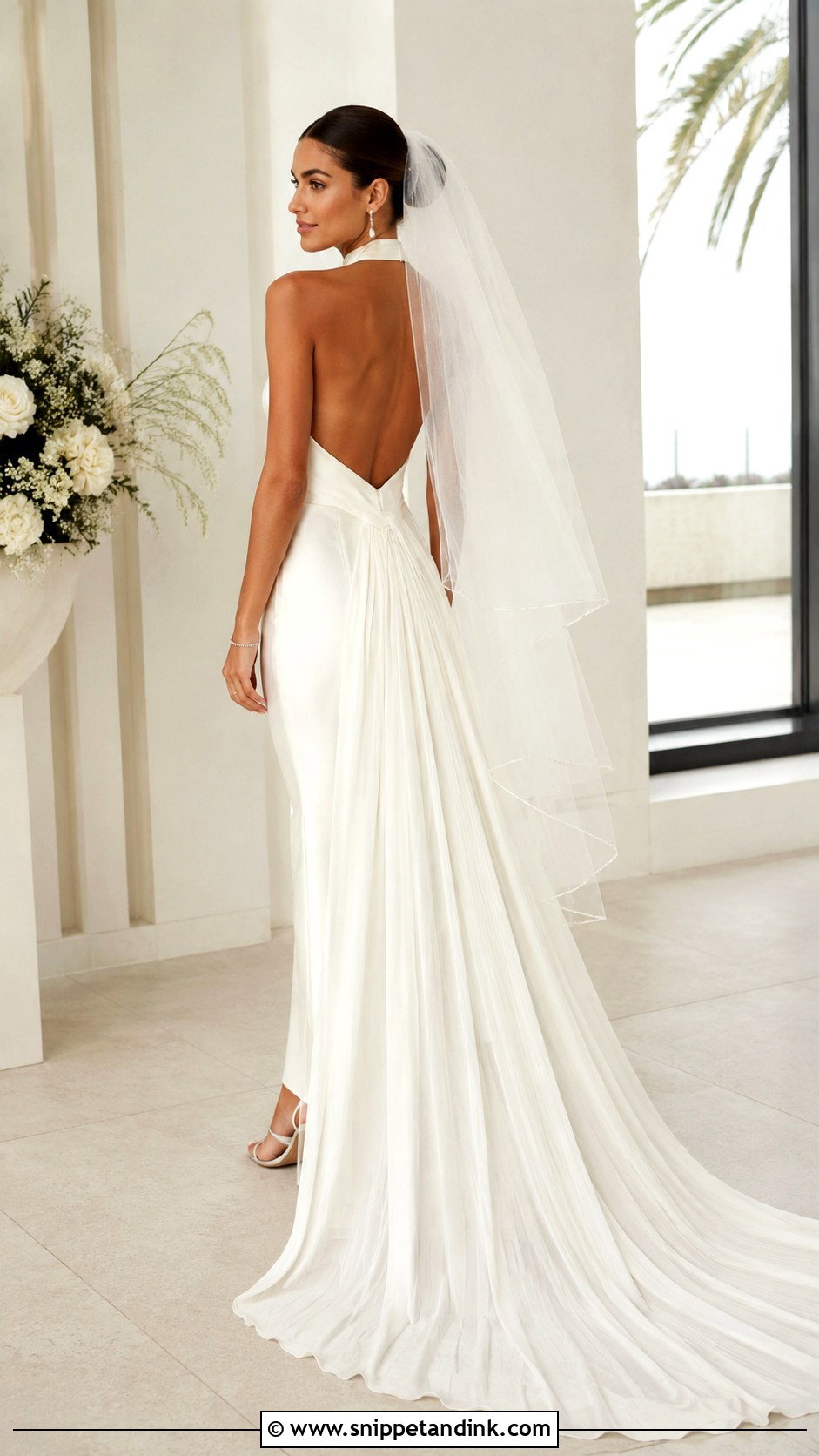
Halters pull the eye up, and they usually come with an open back, which changes where the train can go. Attach it at the lower back or waist so it falls beneath the opening rather than covering it. A lightweight satin or crepe train with controlled pleats keeps the modern line. My main worry with this one is skin: hooks and eyes on an open back sit right against you all evening, so ask for them to be backed with a strip of fabric. Drop earrings, metallic ivory sandals and a smooth bracelet suit it, with no necklace. Wear a long veil for the ceremony and keep a small comb in your hair once both come off.
10. Pearl Removable Train Wedding Dress
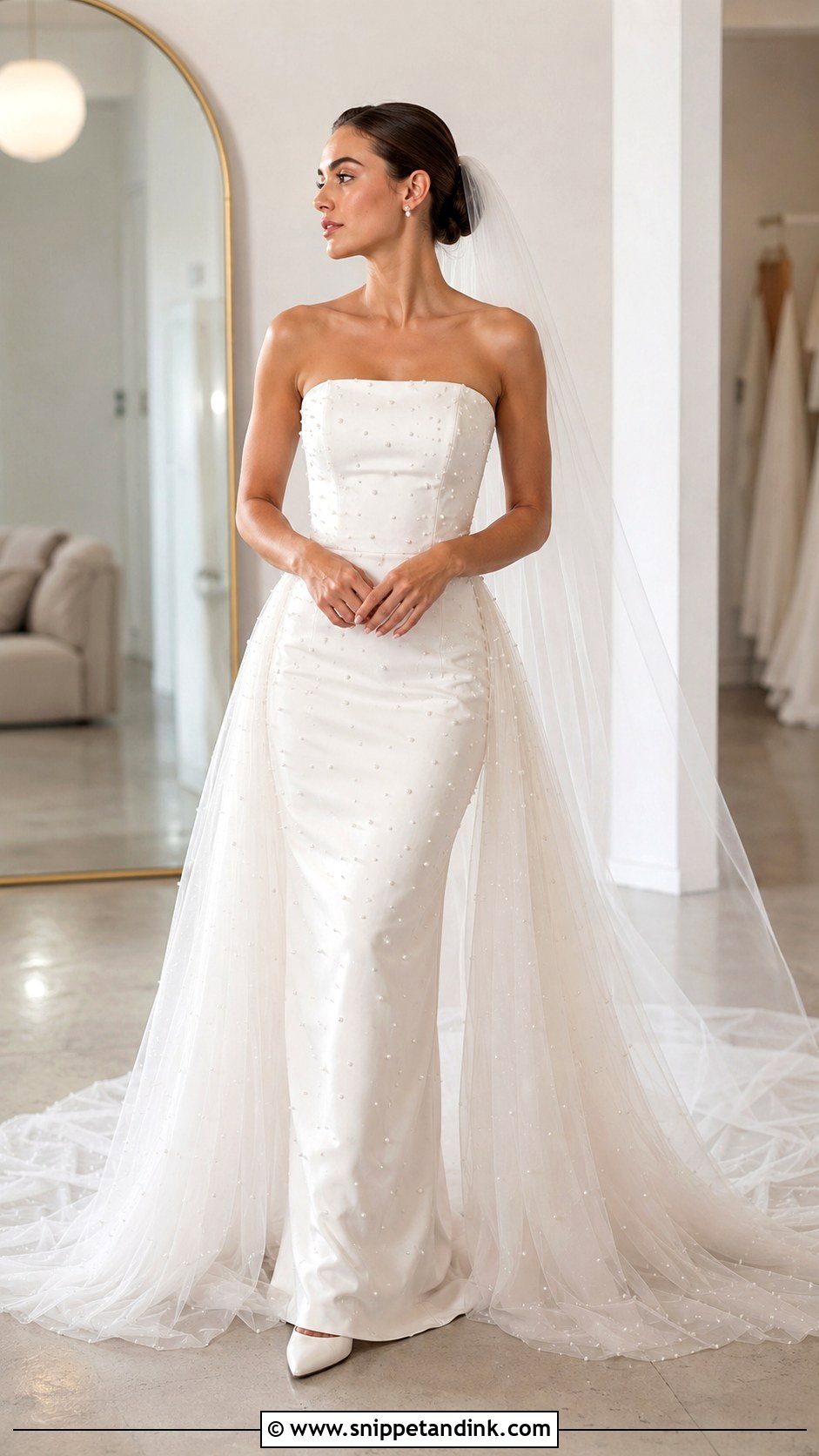
Scattered pearls catch light gently, and spacing them farther apart toward the hem keeps a tulle train light enough to attach without strain. Start with a fitted strapless or sleeveless gown with a little pearl work on the bodice, then let the train continue it. With the train off, the base still feels special. Check the sewing: each pearl should be stitched and knotted individually, not strung on one long thread that unravels if a single bead catches. Pearl studs, satin pumps and a plain raw-edge veil avoid competing textures, and a sleek bun or soft waves both suit it.
11. 3D Floral Removable Train Wedding Dress
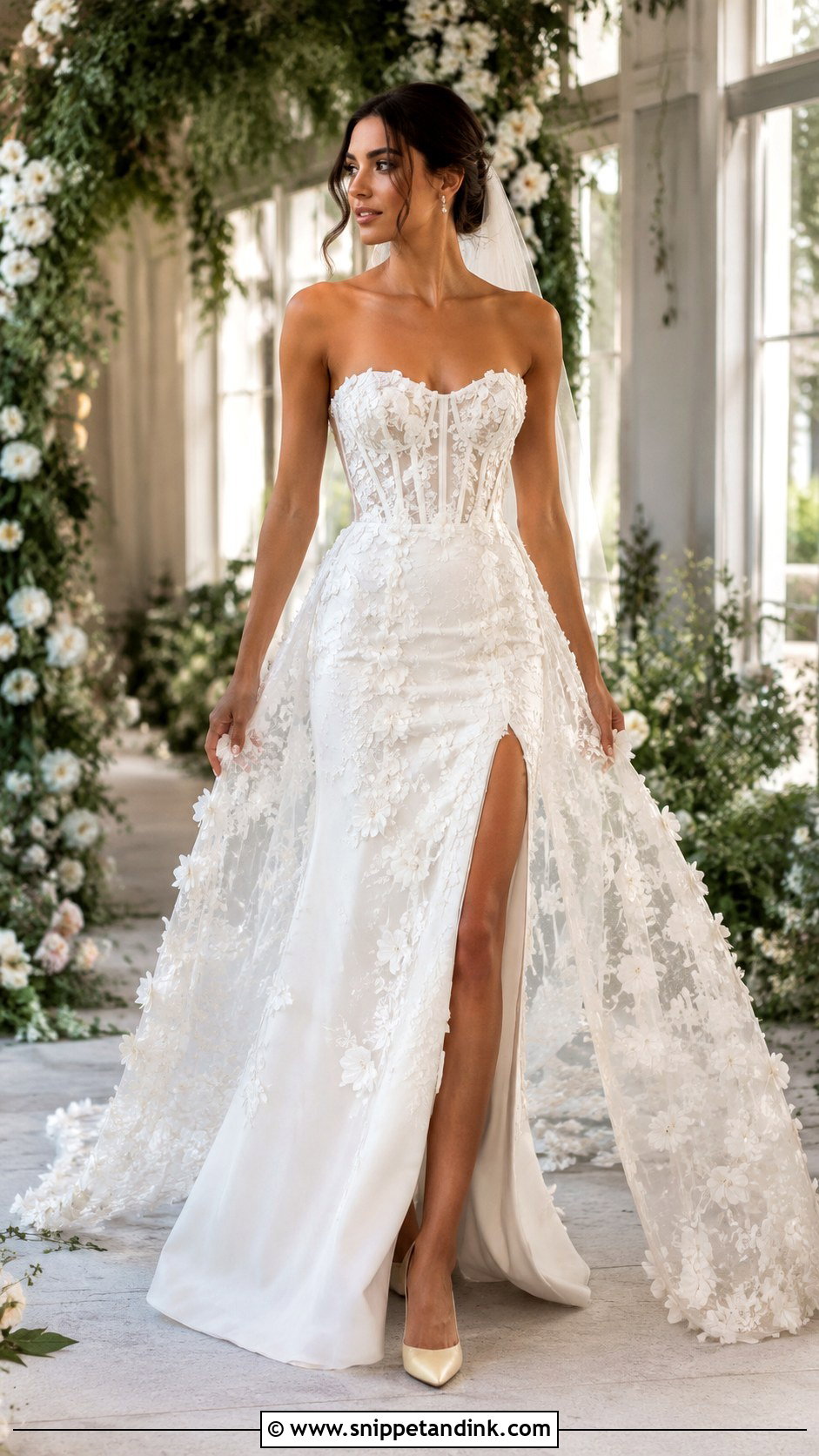
Dimensional flowers on a sheer train look lovely and need more care than any other option here. I’d keep them concentrated at the waist and hem, with the middle of the train left lighter so the fabric still moves, and repeat a few on the bodice so the two pieces look planned together. A clean corset or fitted A-line is the right base. Ask how each flower is attached and whether it can be steamed; raised petals crush in a garment bag and sometimes need reshaping by hand on the morning. Simple studs, pointed pumps and a barely-there veil let the flowers lead, and plain shoes avoid a second focal point.
12. Bow Removable Train Wedding Dress
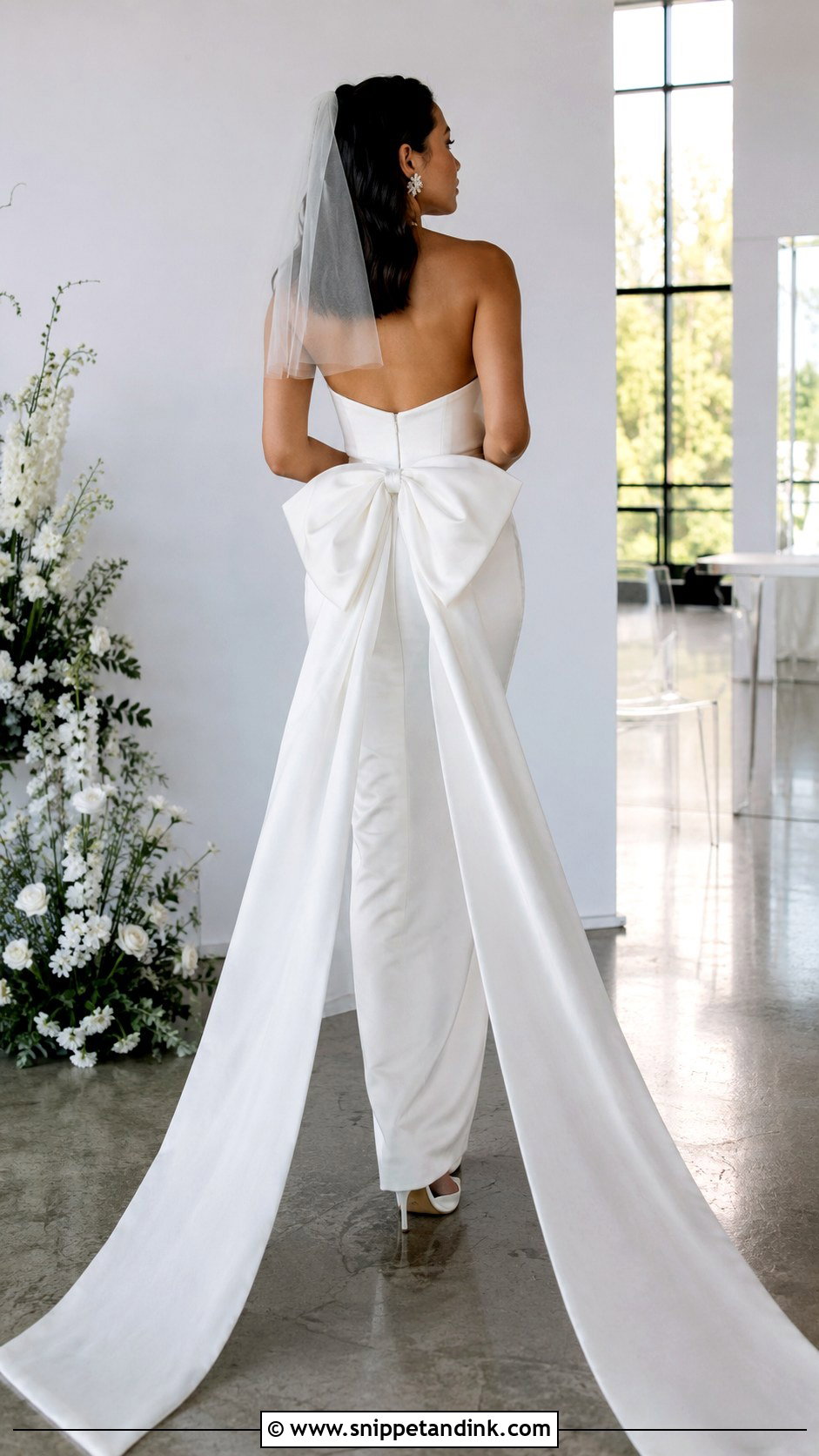
A removable bow train puts all the drama on your back and leaves the rest of the gown simple. Start with a strapless satin column or fit-and-flare, then attach an oversized bow at the waist with long tails forming the train. A big bow is heavier than it looks, especially in double-faced satin, so ask for strong concealed fasteners spread across the waist, not a single hook. From the side it should lie flat against you. Statement earrings, pointed satin shoes and a clean shoulder-length veil suit it; skip any belt or waist jewellery. Have the loops and tails steamed shortly before dressing so they stay crisp.
13. Ruffled Tulle Removable Train Wedding Dress
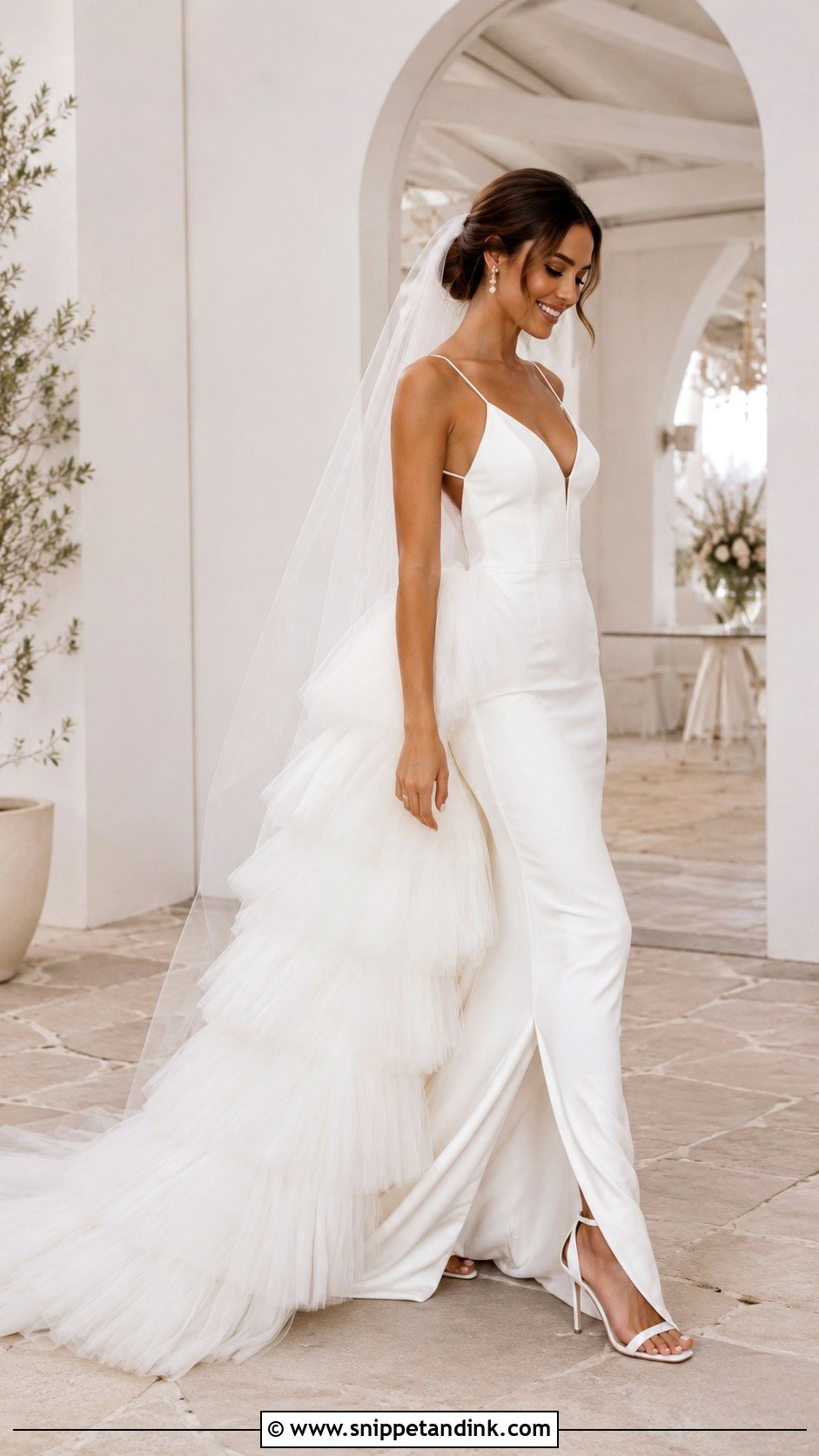
Ruffled tulle adds movement without weight, which makes it one of the easier trains to wear. Over a simple crepe or lace fitted base, a train of soft cascading ruffles works best with the volume kept to the sides and back so your waist stays defined. Delicate earrings, slim-strap heels, a plain veil and a smooth or softly pinned hairstyle stop it from getting busy. At your fittings, walk on carpet and on a hard floor if you can. Tulle ruffles catch on carpet pile and fold under on polished stone, and the lowest tier needs to clear your shoes.
14. Sheer Organza Removable Train Wedding Dress
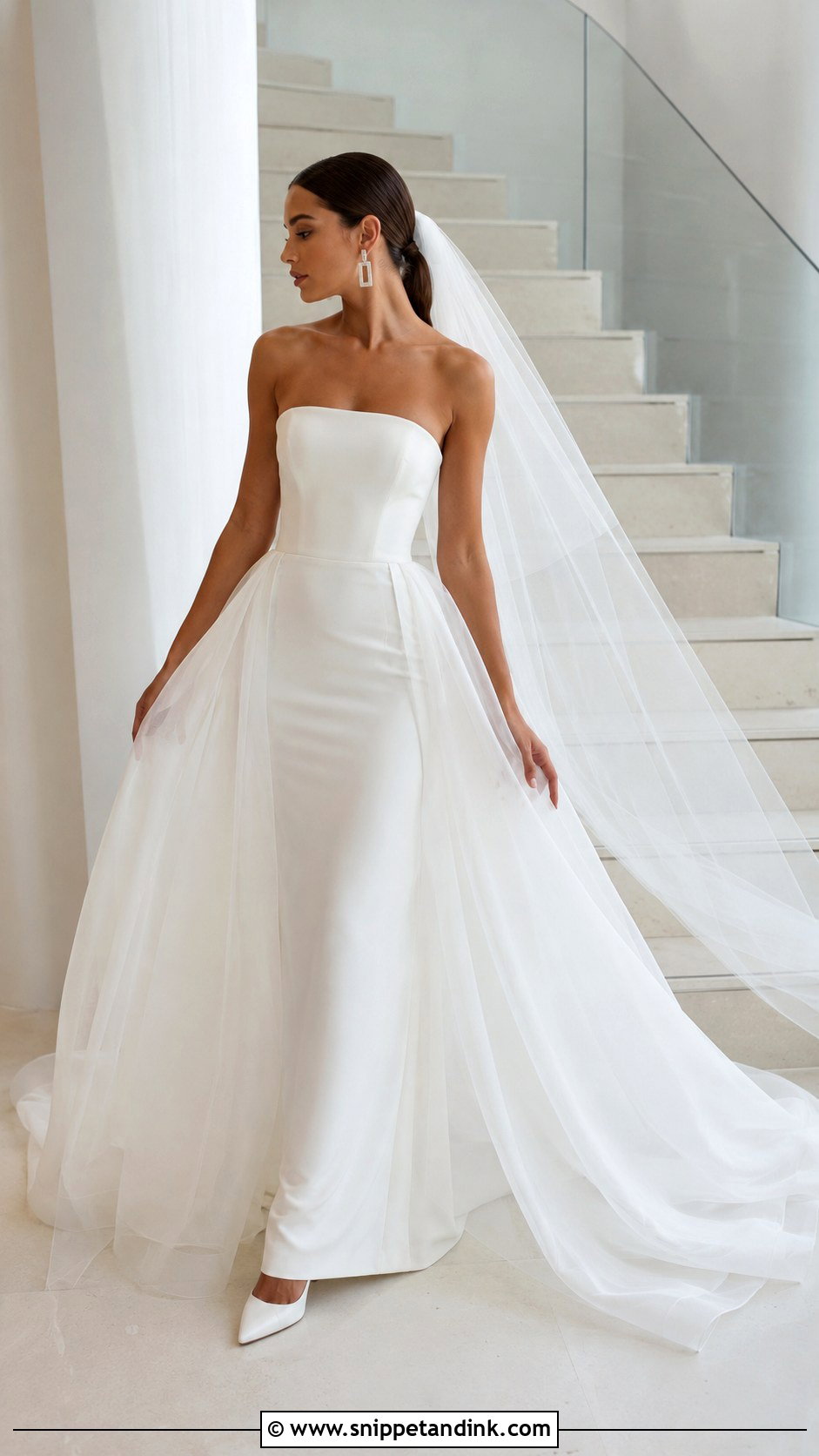
Organza holds its shape on its own, so a few layers create a big outline without the weight of a tulle train. On a fitted satin gown, an organza train in wide pleats or a soft gather looks crisp and modern, and a narrow satin waistband ties the two together. Match the undertone, not just the colour name: an ivory organza with a grey cast looks dirty next to a warm ivory satin. Organza also creases sharply and shows every wrinkle in bright light, so it needs careful steaming on the morning. Geometric earrings, pointed pumps, a clean tulle veil and a polished ponytail or low bun suit it.

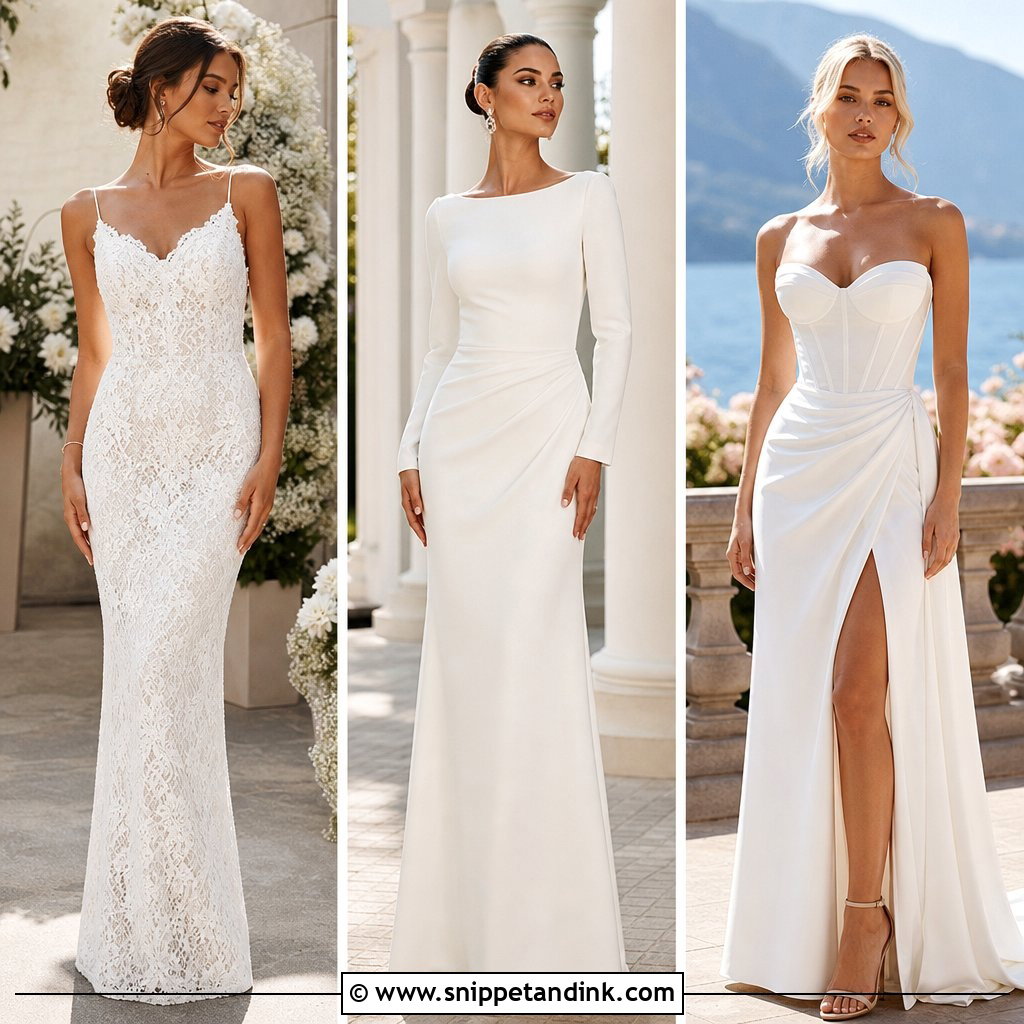
15. Mini Removable Train Wedding Dress
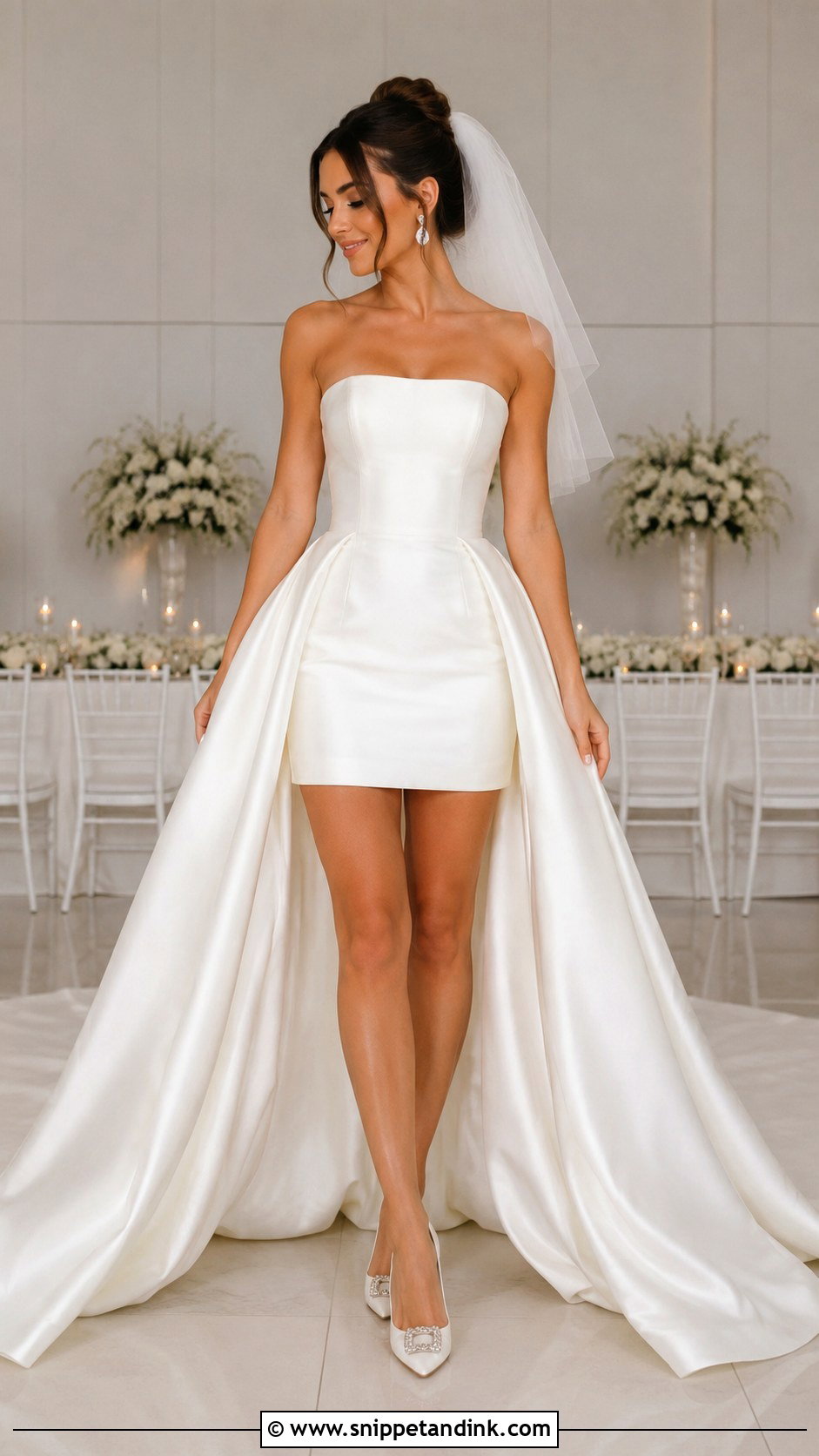
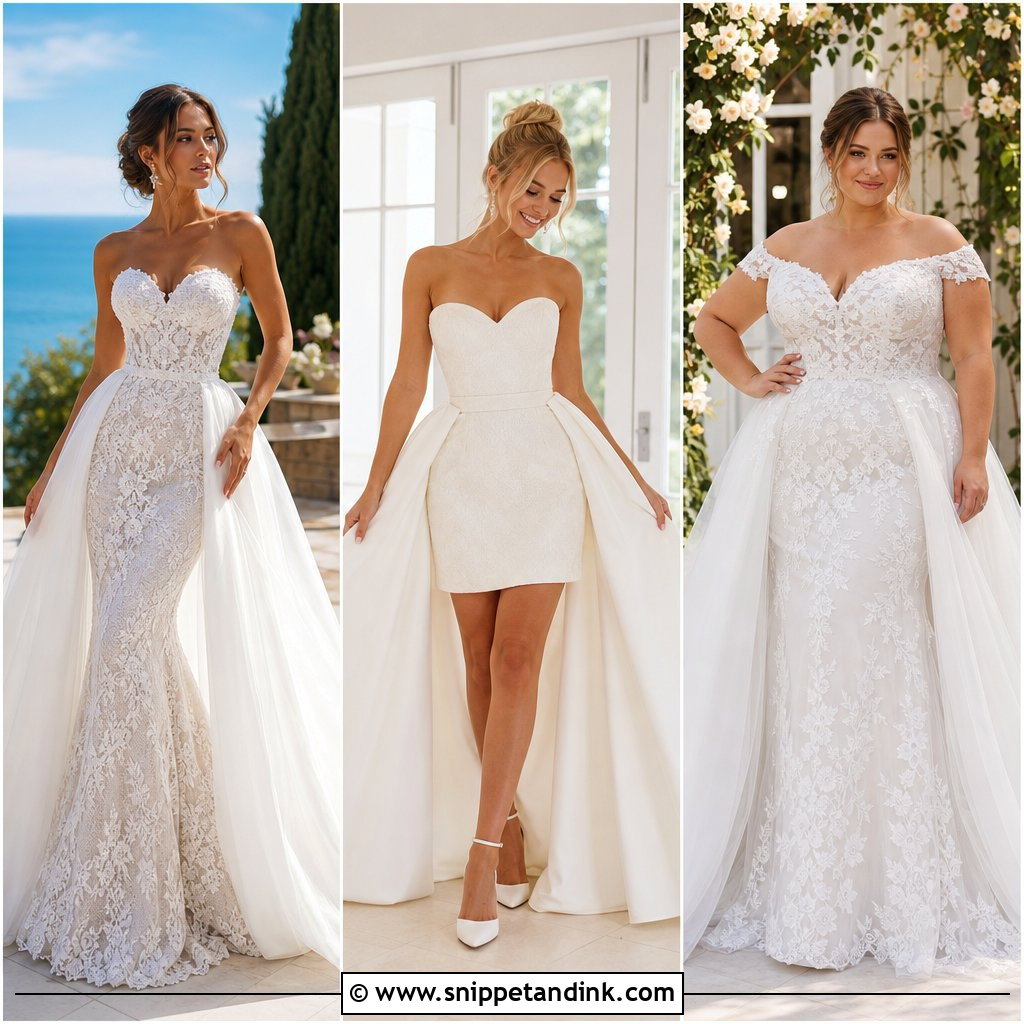
A mini with a full overskirt gives you the most dramatic change of anything here: a ball gown for the vows, a party dress afterward. The overskirt closes around the natural waist, in satin for tailoring or tulle for movement. I’d be strict about two things. The overskirt must hide the short hem from every angle, including when you sit, and the mini must look finished on its own, not like a lining. Because your shoes will be fully on show for half the day, choose them with that in mind; embellished pumps or closed-toe styles work. Small drop earrings and a short veil suit both versions.
16. One-Shoulder Removable Train Wedding Dress
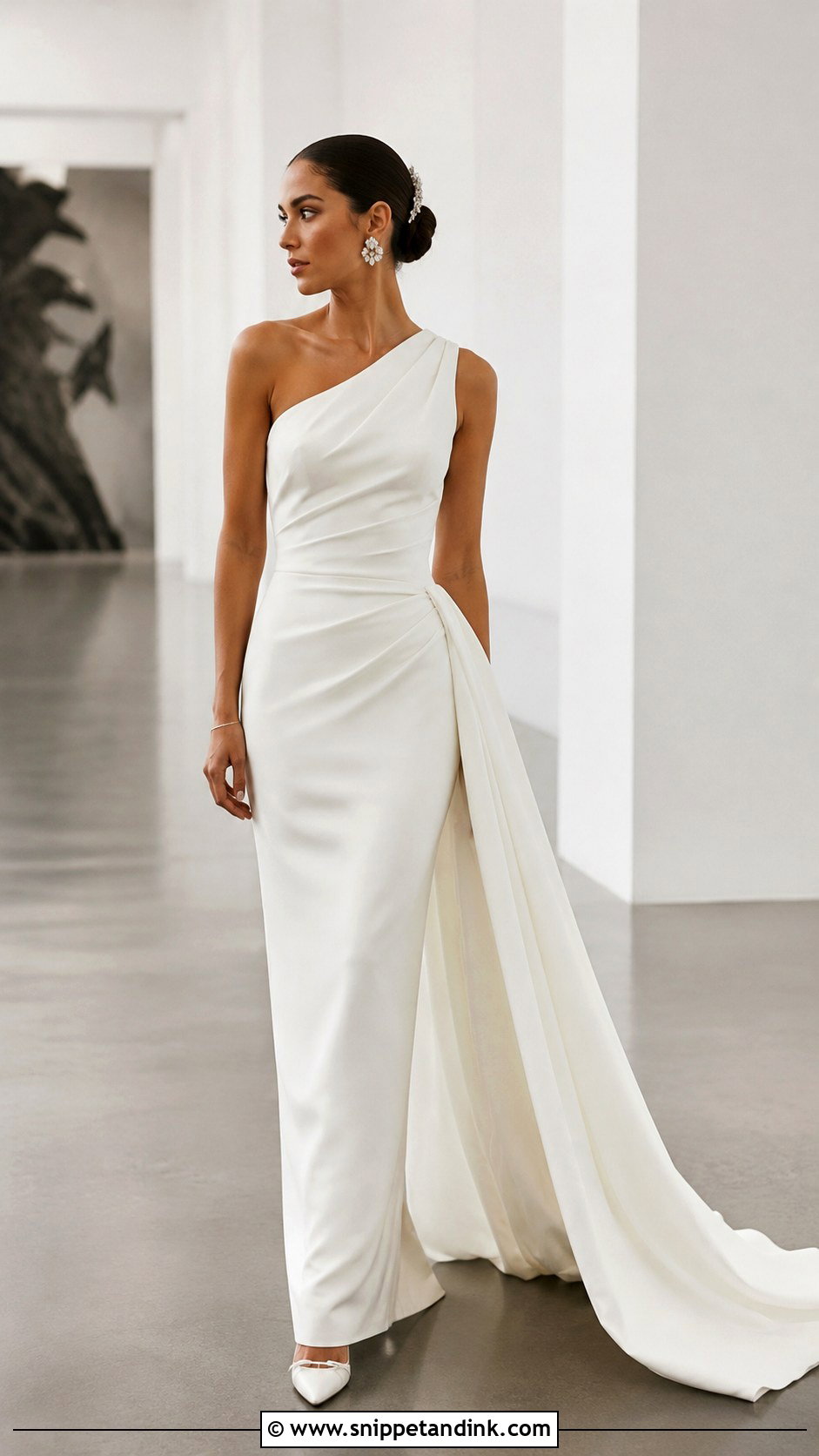
One-shoulder gowns already lean in one direction, and the train can either balance that or exaggerate it. I usually attach it from the opposite hip, or wrap it neatly around the back waist, so the diagonal neckline and the train counter each other. Matte crepe or smooth satin with an unembellished train keeps the construction clear. Check the dress from both sides in a mirror at fittings; a train set a little off-centre makes an asymmetrical gown look twisted. One statement earring or small studs, pointed heels and a sleek bracelet finish it, and a minimal comb can stand in for a veil.
17. Plus Size Corset Removable Train Wedding Dress
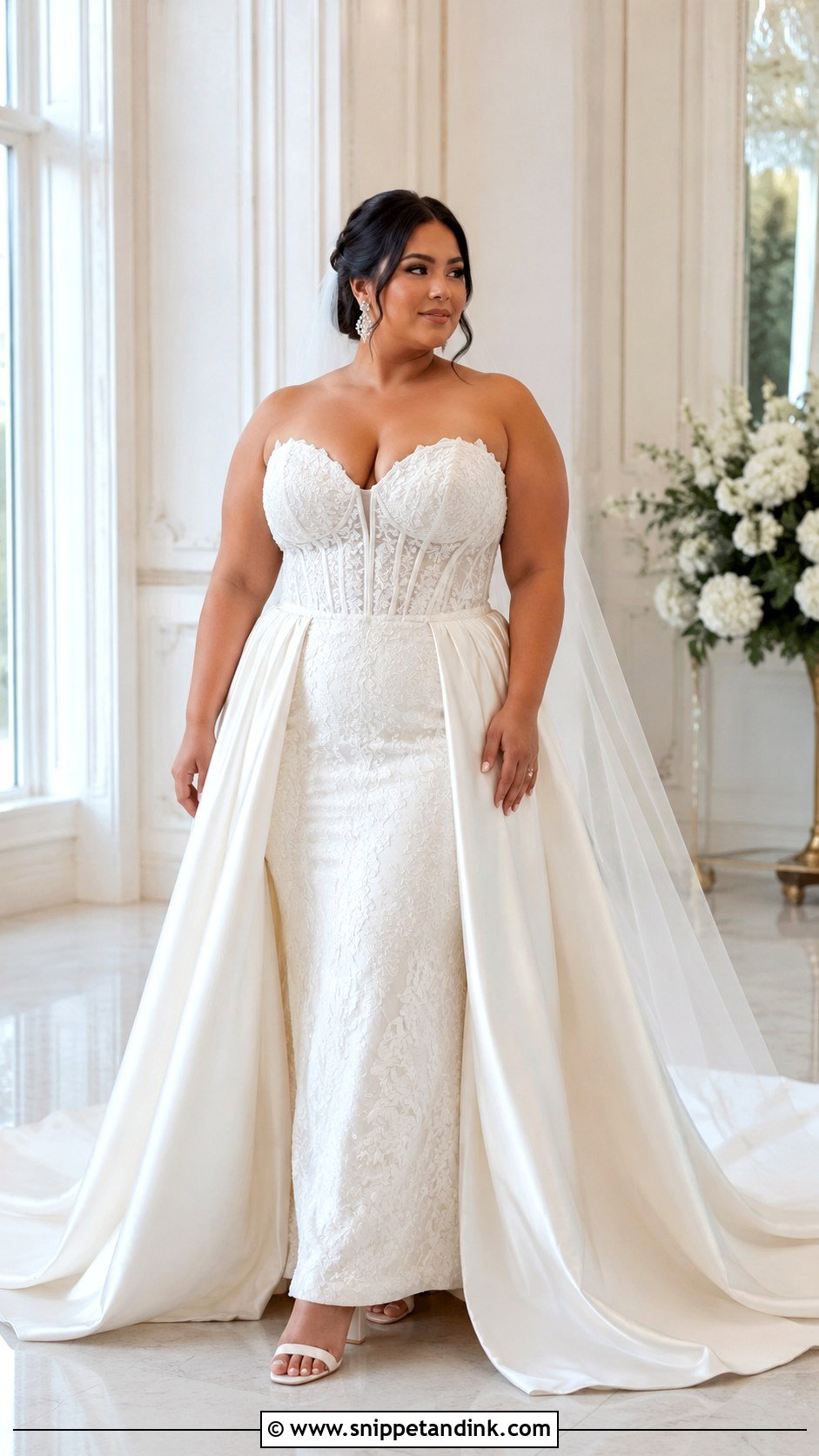
A corset base gives the structure a train needs, and that matters more as the attached fabric gets heavier. Look for comfortable boning, solid internal support and a back closure strong enough to carry the overskirt. Over an A-line or fit-and-flare, a detachable satin overskirt that opens at the front keeps the original silhouette on view and keeps your waist defined. My rule is that the train’s weight should sit evenly across the whole waist, never hanging from one small hook or loaded entirely on the corset closure. Supportive block heels, crystal earrings and a light veil complete it, and accessories should follow your taste, not body-type rules.
18. High Neck Removable Train Wedding Dress
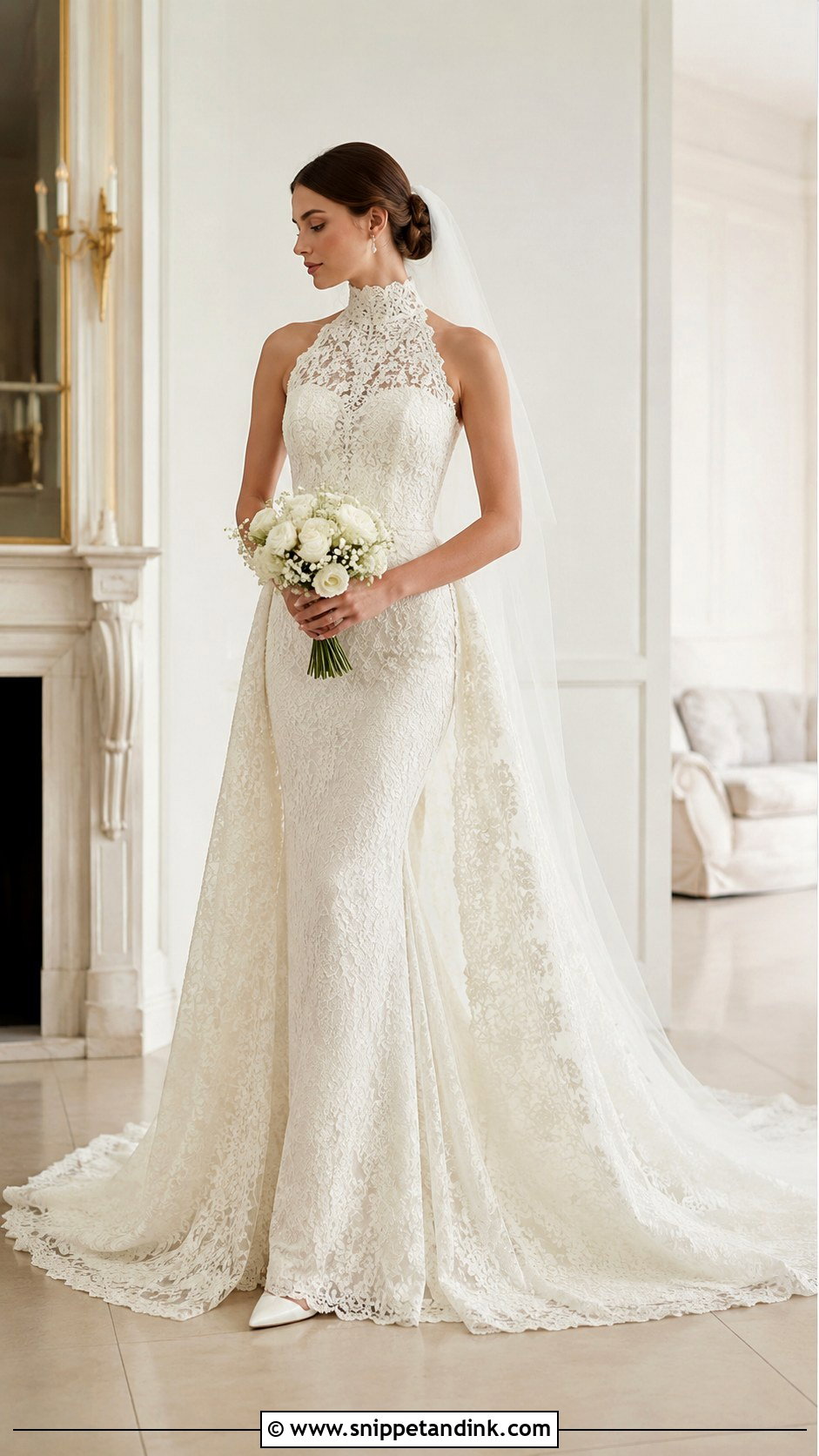
High necks frame whatever is on the bodice, lace, beading or plain crepe. Sleeveless versions with a fitted skirt carry a train attached just below the natural waist. Match the train to the bodice: sheer lace with an embellished top, plain satin with a clean crepe one. Many high-neck gowns close with a long row of covered buttons down the back, and that is the part to check, because the train’s fixings must not sit across those buttons, the zip or the lace motifs. Small earrings, closed-toe pumps and a low bun suit it, with no necklace and the veil pinned beneath the bun.
19. Chiffon Beach Removable Train Wedding Dress
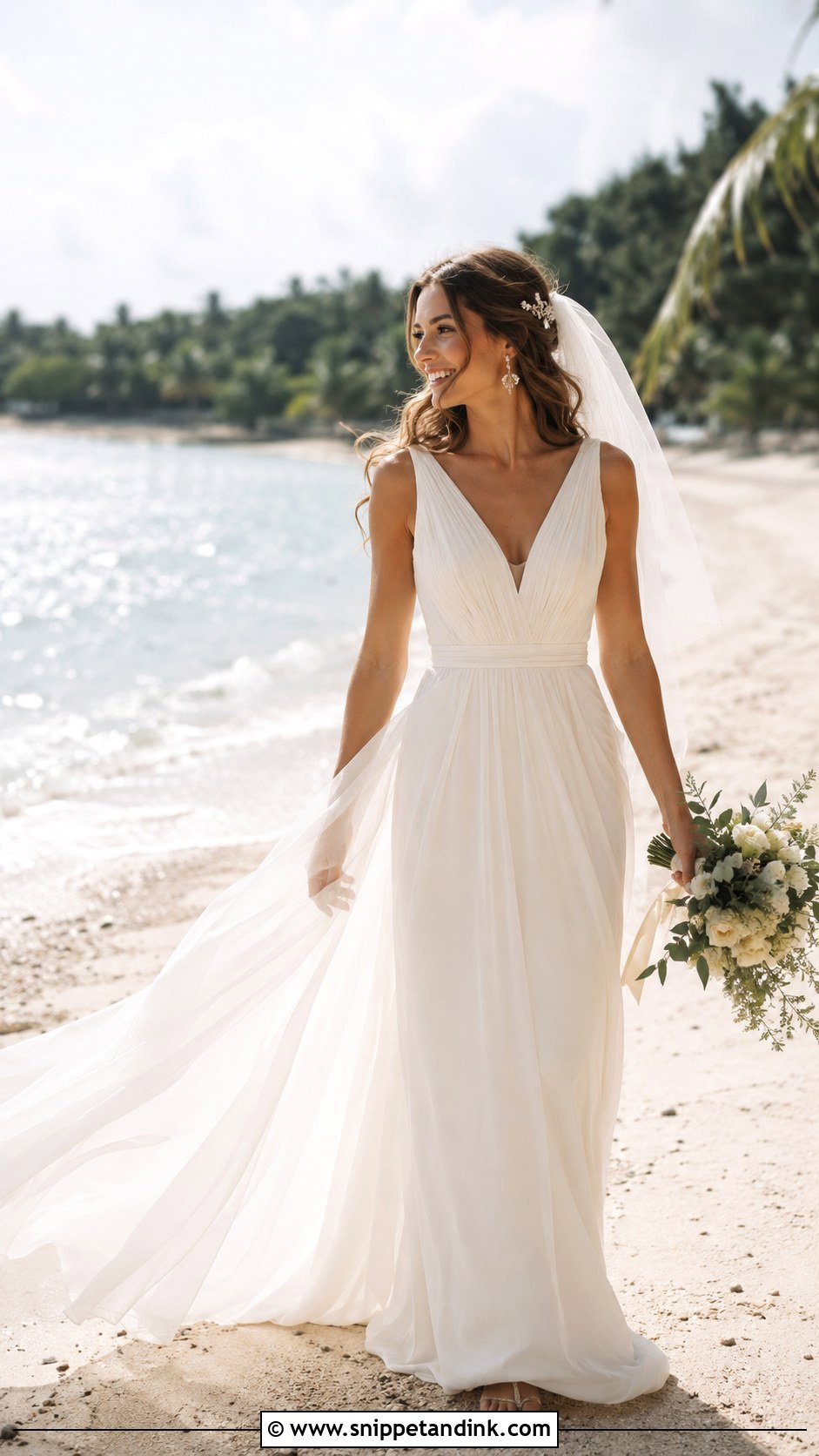
On a beach, the train comes off earlier than anywhere else, often before you step off the aisle runner onto sand. That makes chiffon the right choice: a flowing A-line with slim straps, a soft V-neck and a proper lining, plus a lightly gathered chiffon train that moves in the breeze. Ask for a wrist loop on the train so someone can carry it cleanly once it’s off. Sea wind and bright sun bring two problems: thin chiffon goes see-through in strong light, so check the lining outdoors, and a long veil will fly, so a short light one is safer. Flat embellished sandals, delicate earrings and a small floral comb complete it.
20. Blush Removable Train Wedding Dress
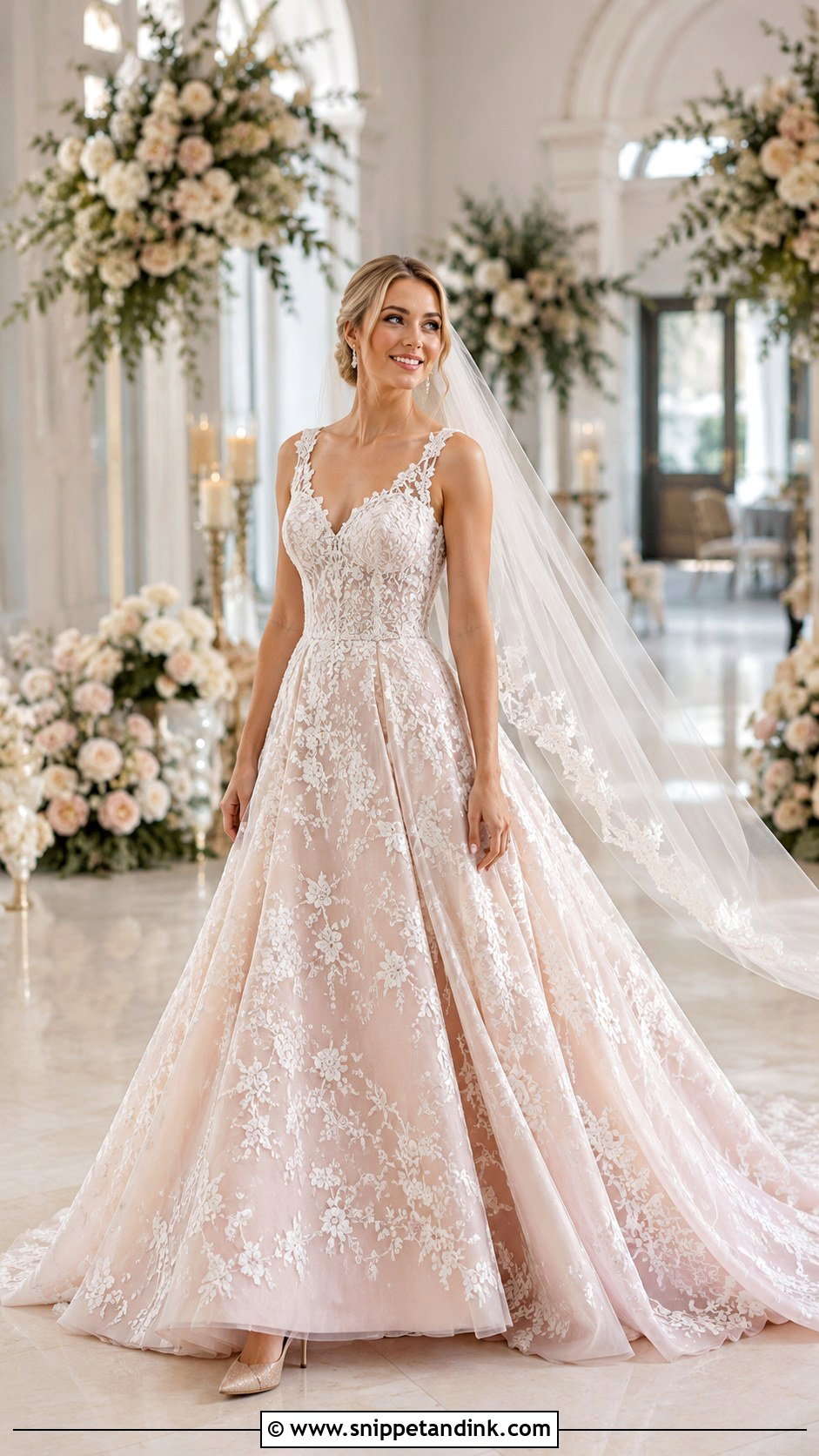
Blush under ivory lace is subtle in person and shows the lace pattern clearly in photographs. Use a champagne or pale blush base with an ivory overlay, then make the train from the same pairing. The problem is that blush shifts: under warm lighting it can look peach, under cool light almost beige. Bring a fabric sample when you shop for shoes and jewellery, and confirm the train matches both the lace and the colour underneath before alterations begin. A fitted bodice and A-line skirt keep it easy to accessorize. Champagne pumps, rose-toned crystal earrings and an ivory veil suit it; stick to one metal tone.
The Five-Minute Change Between Ceremony and Dancing
The removal itself needs planning. Decide who does it: one attendant, ideally the person who came to your last fitting and practised. Decide where: a quiet room or the back of the venue, not the middle of the cocktail hour where every guest wants a hug. And decide when, usually straight after the formal portraits, so the photographer has the full train before it goes.
Have a small kit ready: a padded hanger or a clean sheet for the train, a few safety pins and a mini steamer if the venue has a socket. Once it’s off, the train needs a home for the evening. Hang it in a garment bag in the bridal suite or give it to a trusted family member to take home that night. Left over a chair, it gets sat on, spilled on or forgotten.
Finally, check the back of the gown once the train is removed. Thread loops and eyes left exposed can catch on the base skirt or your partner’s cufflinks while dancing, so a quick look in a mirror before you go back out is worth the minute it takes.
Does the Dress Still Work With the Train Off?
Every gown here should pass one test: you’d be happy wearing the base dress on its own. The range is wide, from crepe columns and satin ball gowns to floral tulle, lace mermaids and short party dresses, and a removable layer can suit any of them. What separates a good one from a bad one is practical: how the train attaches, how well the fabrics match, how much it weighs and how the back of the gown looks once it’s gone. Bring your ceremony shoes and jewellery to alterations, and rehearse taking the train off with the attendant who’ll be doing it. Then you get the entrance and the dance floor without a second dress.
You'll Like These Ideas:



Leave a Reply