
I dress a lot of brides who arrive at a first appointment asking for something out of a storybook, then panic the moment a skirt starts to look like a costume. The difference is almost always fabric and fit, not the amount of tulle. Fairytale gowns work when the bodice is properly built, the skirt moves when you walk, and the color suits your skin in daylight as well as under ballroom lights. Below are 25 looks I’d happily put on a bride, a bridesmaid or a formal guest, each with the shoes, jewelry and hair I’d pair with it, plus what I watch for at the fitting.
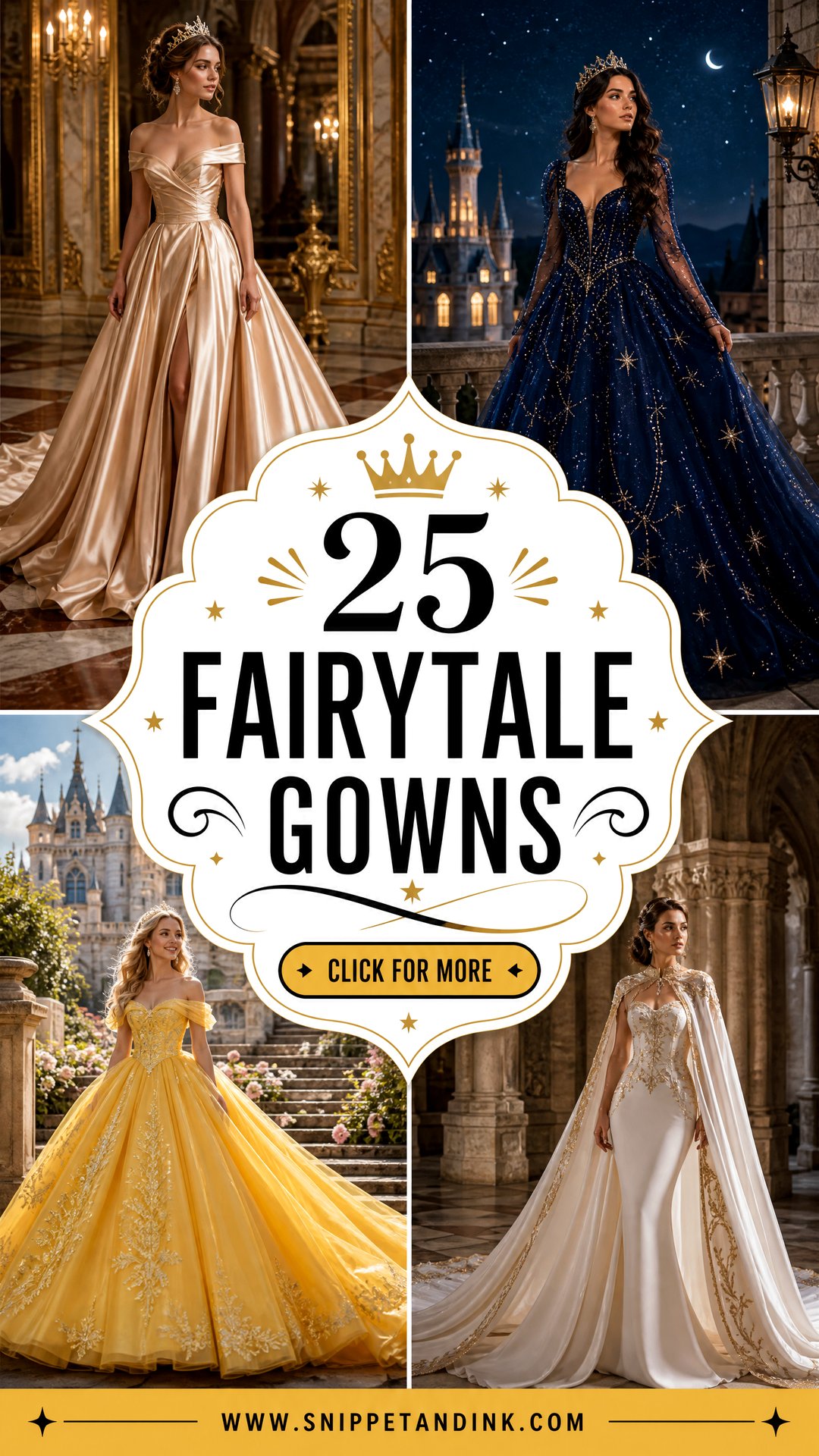
Tulle, Satin, Velvet and Organza Each Behave Differently
Most of the gowns below come down to one of four fabrics, and I’d decide on fabric before color. Each one moves, creases and photographs in its own way, and the wrong one for your venue or season is the most common reason a fairytale dress disappoints on the day.
- Tulle is light and floaty, hides small fit issues and photographs softly. It snags on jewelry clasps, stone steps and shoe buckles, and cheap tulle can look flat and stiff in daylight.
- Satin gives a smooth, regal surface but shows every line underneath and creases when you sit. Heavier satins hold structure; thinner ones cling.
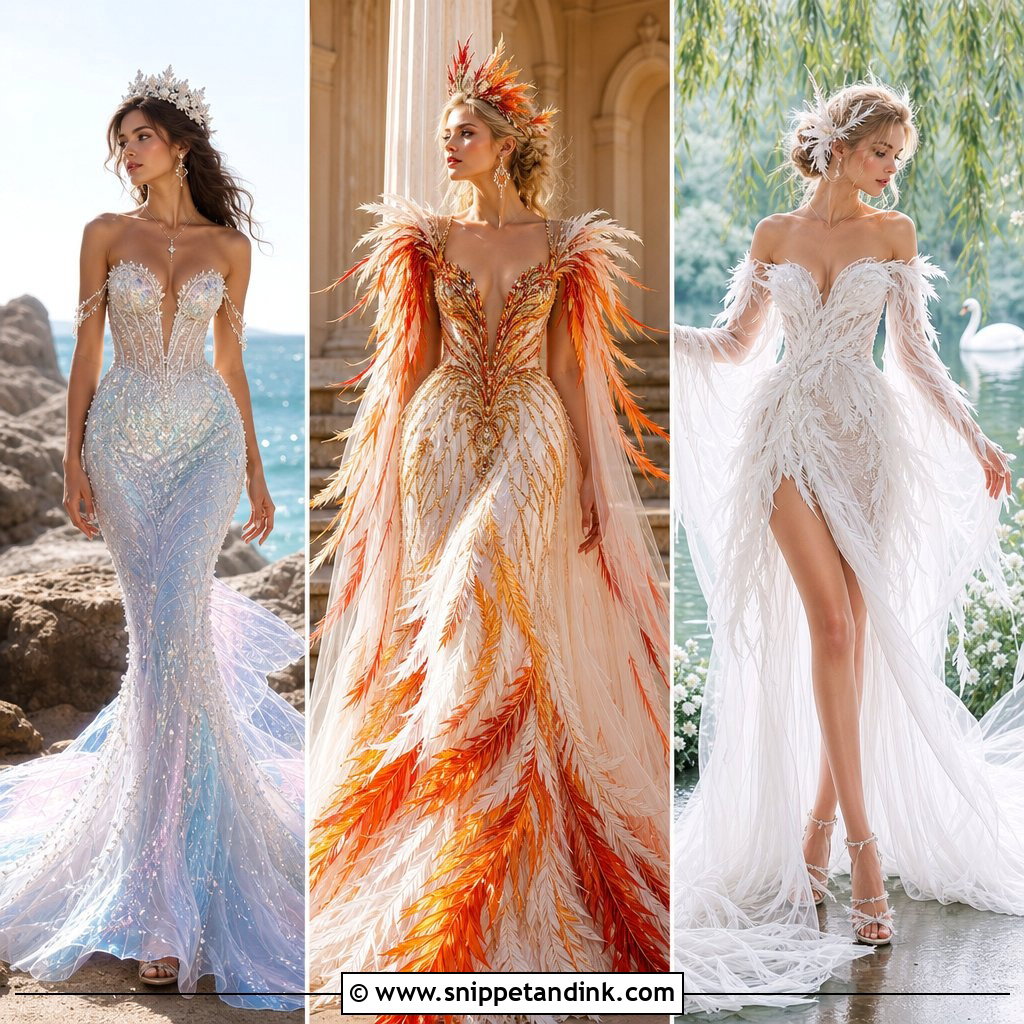
- Velvet is rich and warm, ideal for autumn and winter, but too hot for a summer marquee. Steam it, never iron it.
- Organza is crisp and holds volume with little weight, which suits warm weather. It creases sharply and those creases don’t drop out on their own.
My own test at any appointment is simple: sit down for a full minute, stand up, and look at the skirt in a mirror. What you see then is what your photos will show after dinner.
1. Blue Tulle Ball Gown
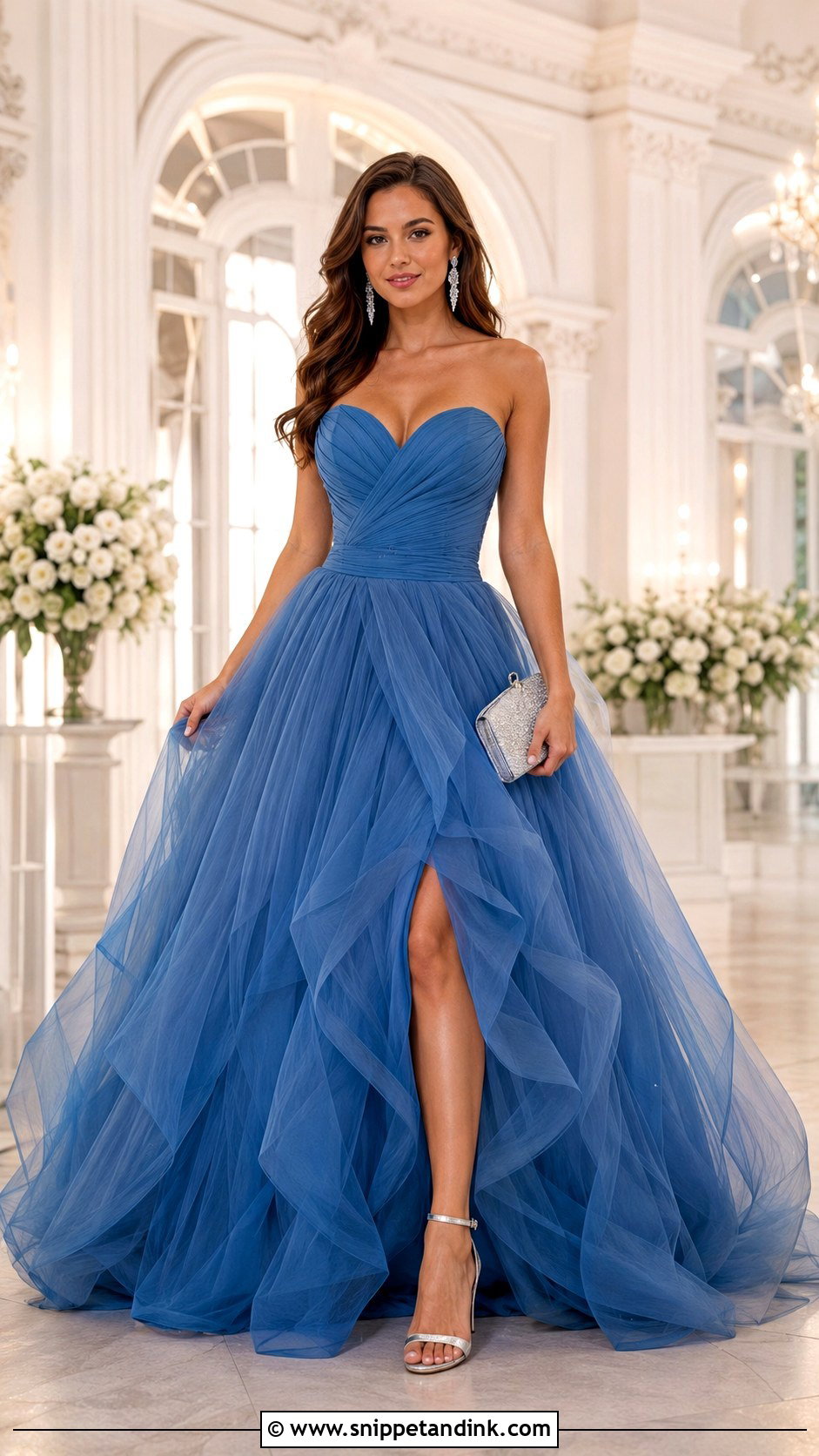
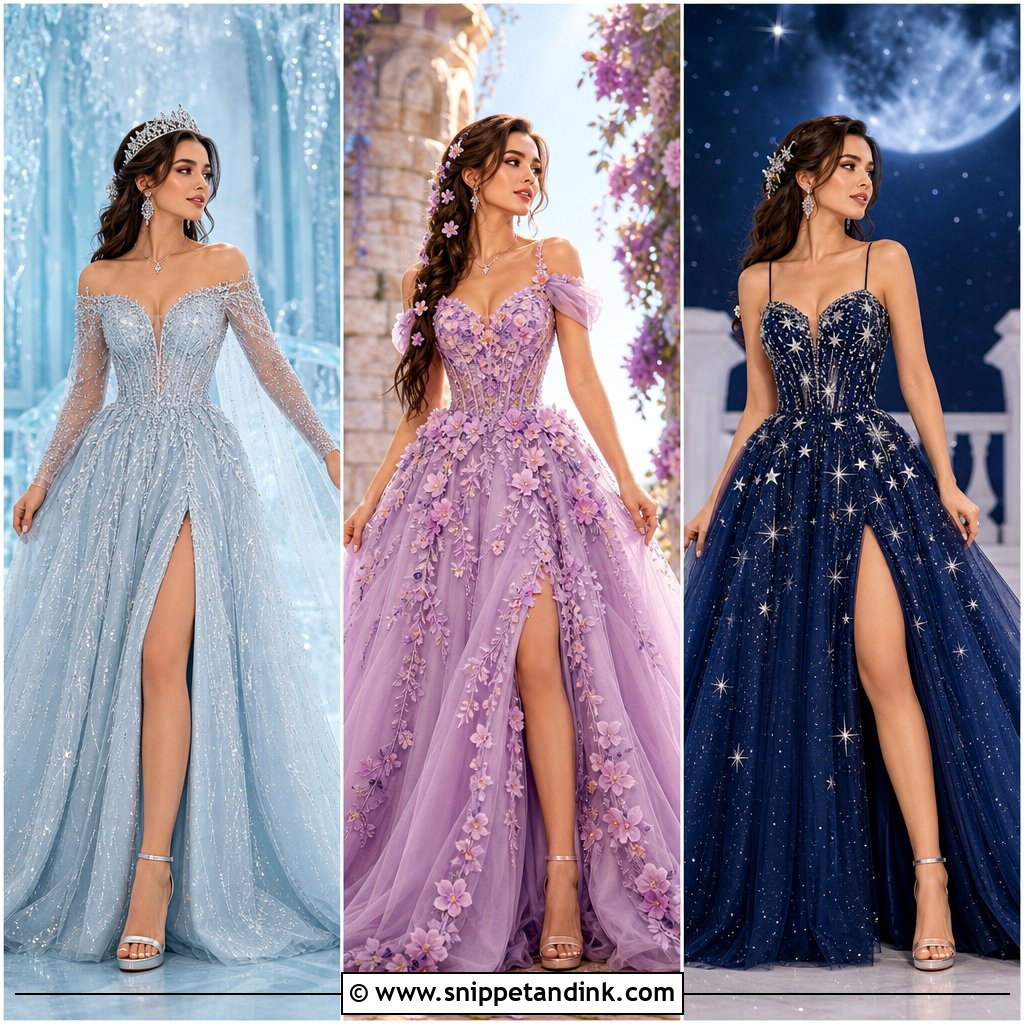
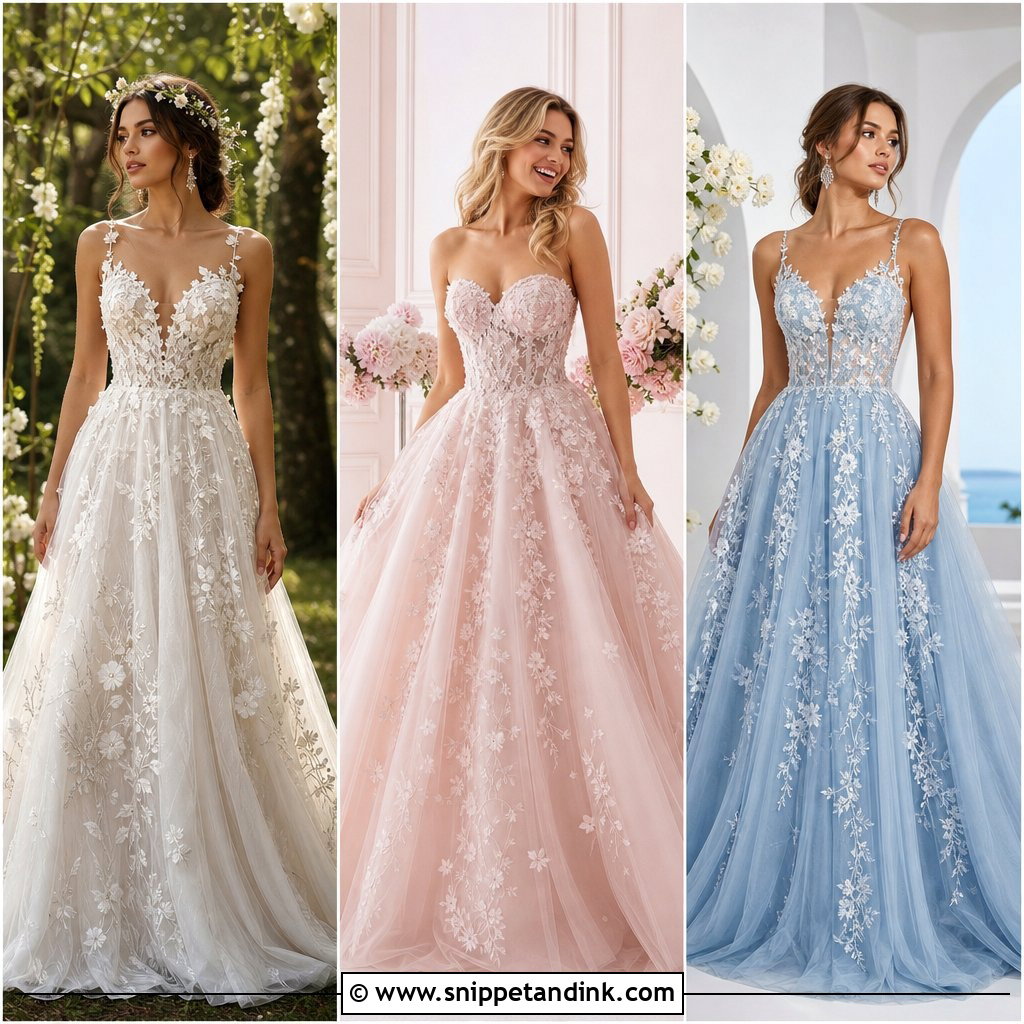
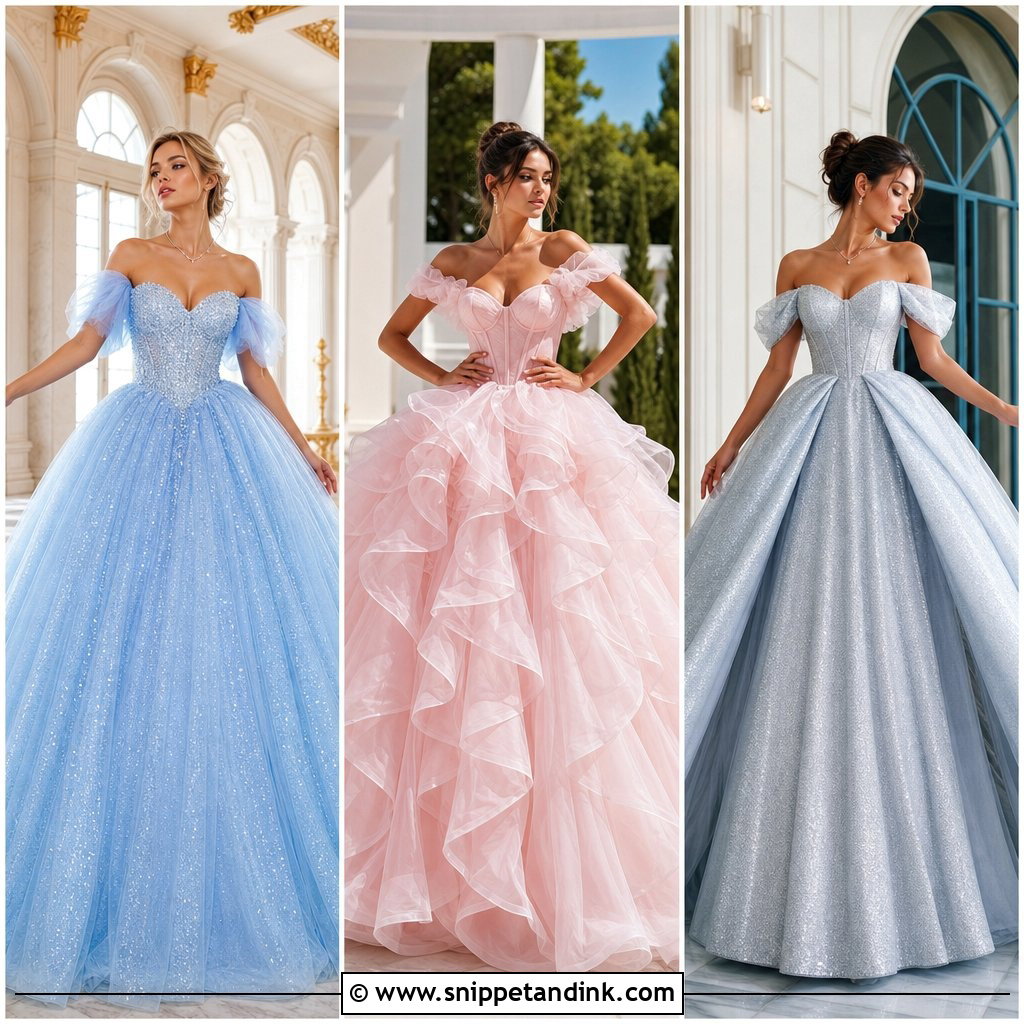
Cool blue tulle is forgiving because the layers diffuse light, so the skirt reads soft rather than shiny in photos. What I check first is the waist seam: a full tulle skirt needs a boned bodice and a waist stay, or the weight drags the neckline down by the second hour. A sweetheart neckline with sheer straps holds better than a true off-shoulder if you plan to dance. Silver heels brighten the blue, and crystal drops with a small silver clutch are plenty. Soft waves or a low curled bun keep the neck clear.
2. Pink Floral Applique Gown
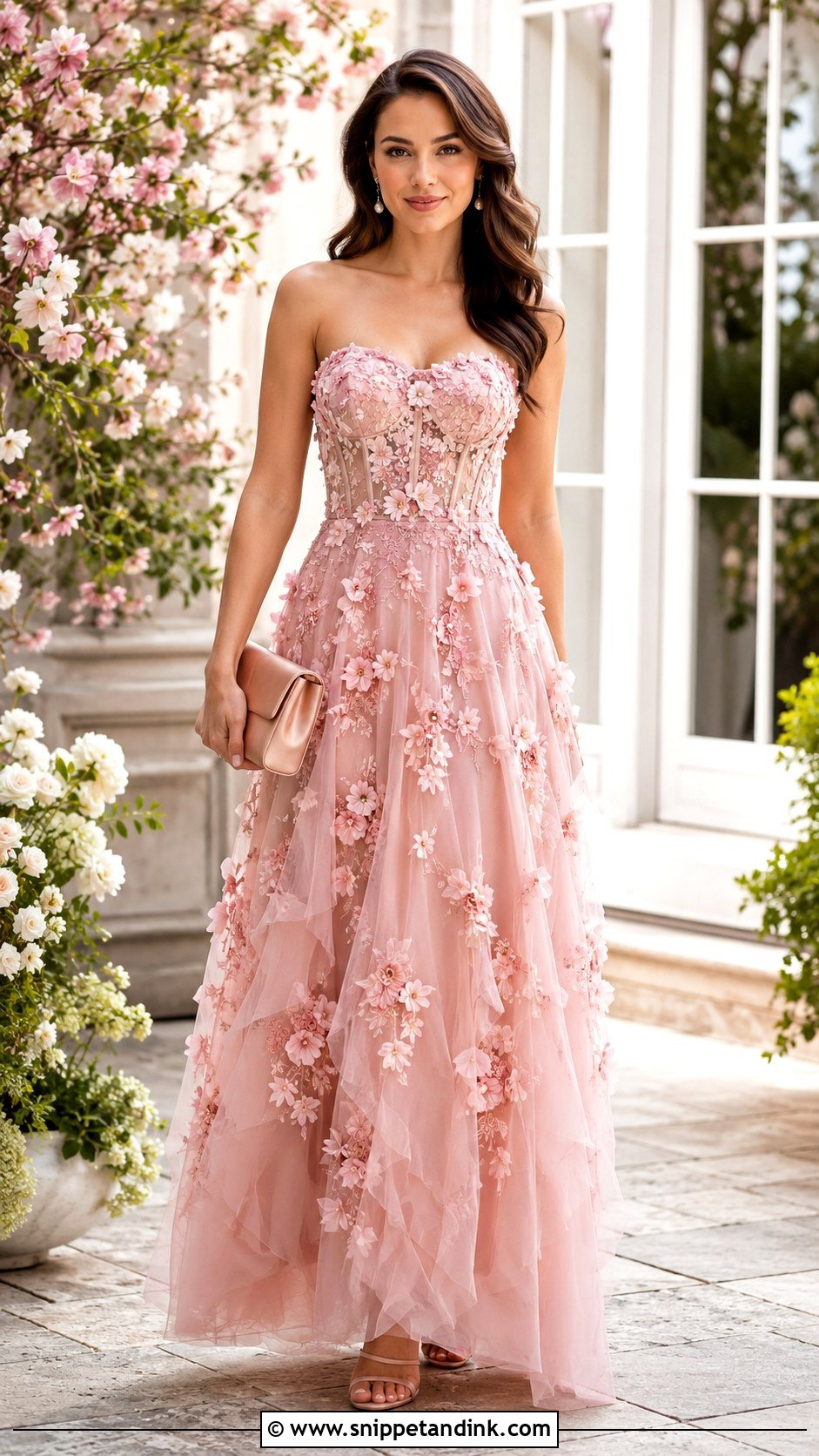
Appliqué placement decides whether this gown flatters you, so I look at where the 3D flowers cluster before I even think about the shade. Flowers concentrated on the bodice pull the eye up; a scatter that thickens at the hip widens it. On a sheer overlay they seem to float, which is the whole charm, but each flower is tacked on by hand, so check the backs for loose threads that catch on bracelets. Blush or petal pink with nude or champagne heels, pearl earrings and an ivory satin mini clutch keeps attention on the dress. Rosy cheeks and a glossy lip finish it.
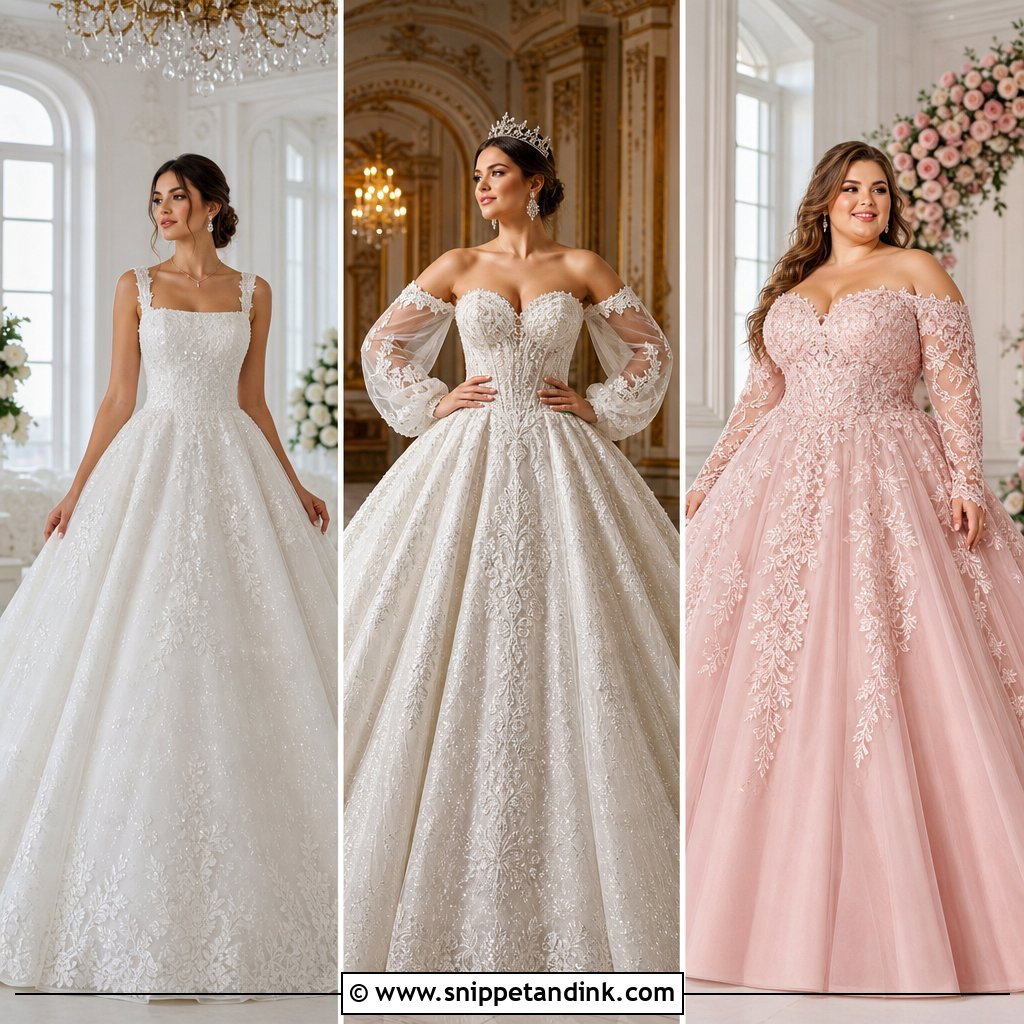
3. White Off Shoulder Princess Gown
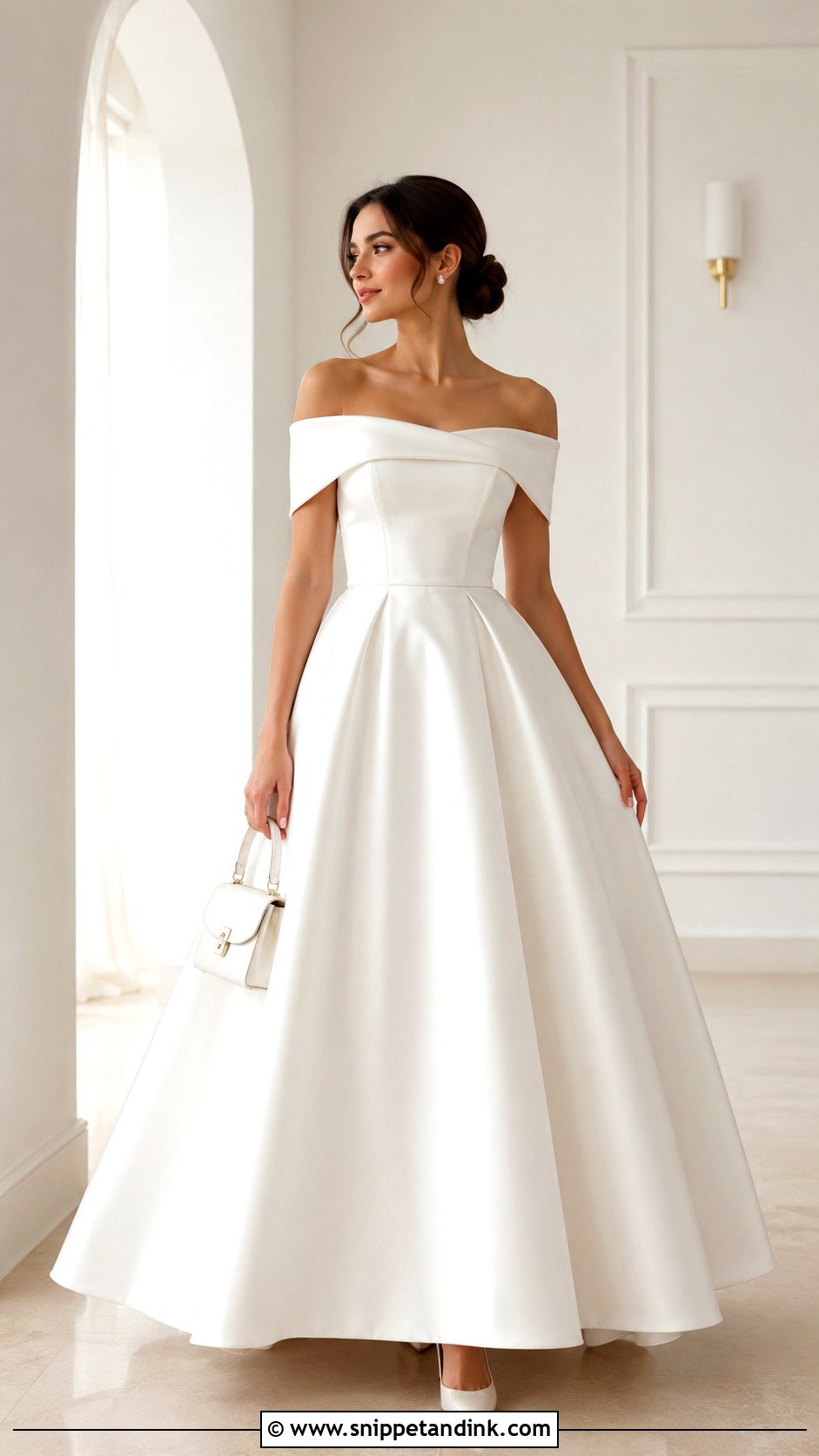
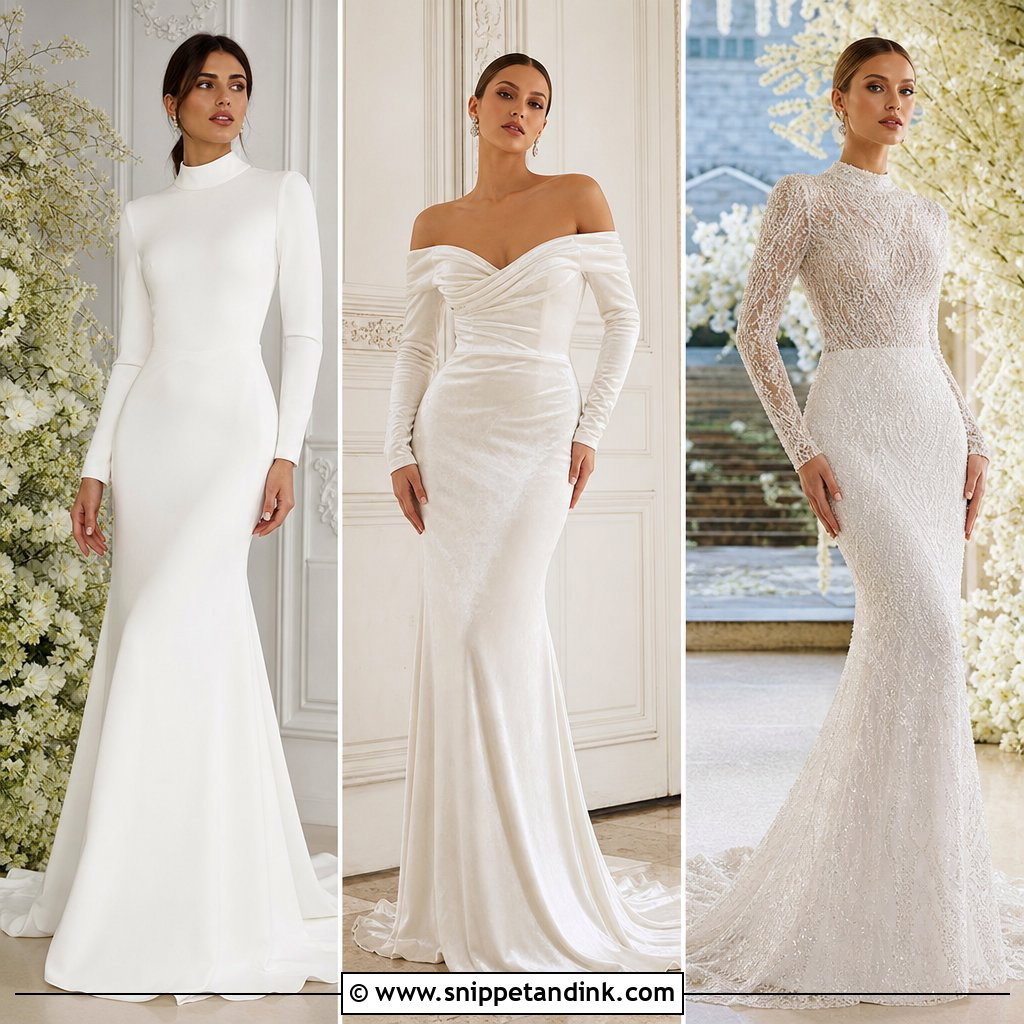
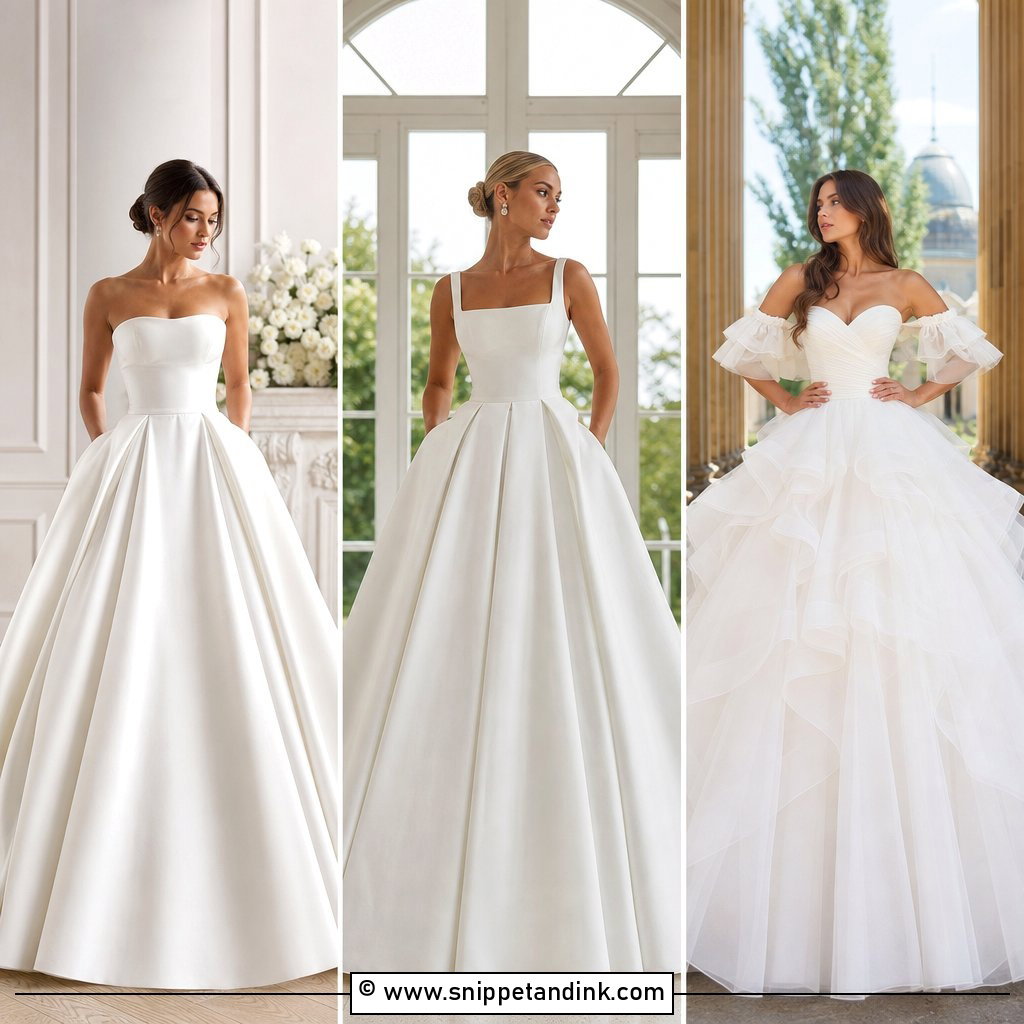
A white off shoulder princess gown lives or dies on the neckline fit. If the band sits even slightly loose, you’ll spend the night hitching it up, so I ask for silicone gripper tape inside the band and test it by having the bride raise both arms as if hugging someone. Satin, organza and tulle all suit the full skirt; satin is the most regal but shows every crease. White already reads formal, so pearl studs, a slim bracelet, ivory heels and a small top-handle bag are enough. A smooth bun or half-up style shows off the collarbone. Save this one for bridal events and portraits where white is clearly welcome.
4. Lavender Corset Gown
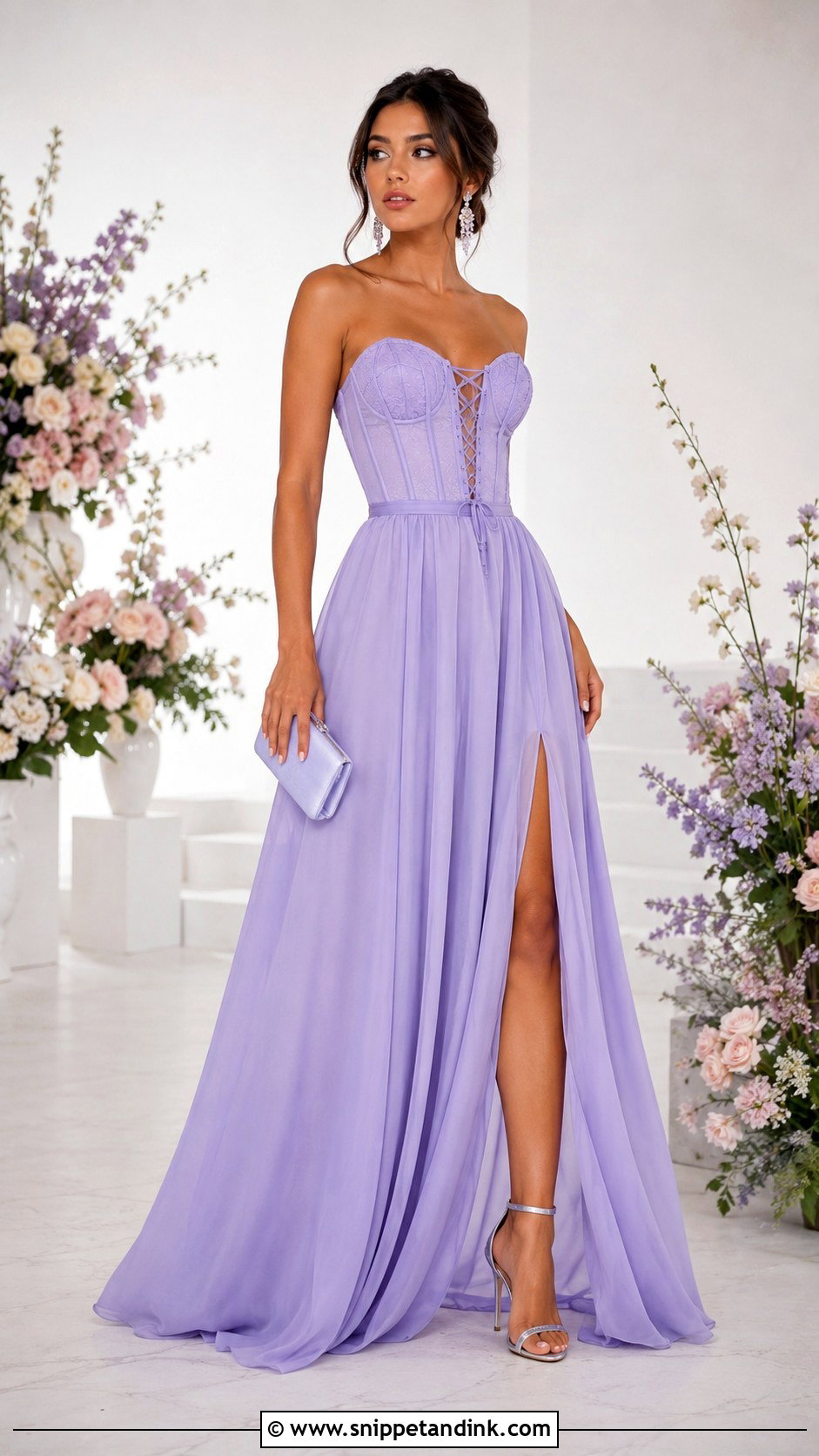
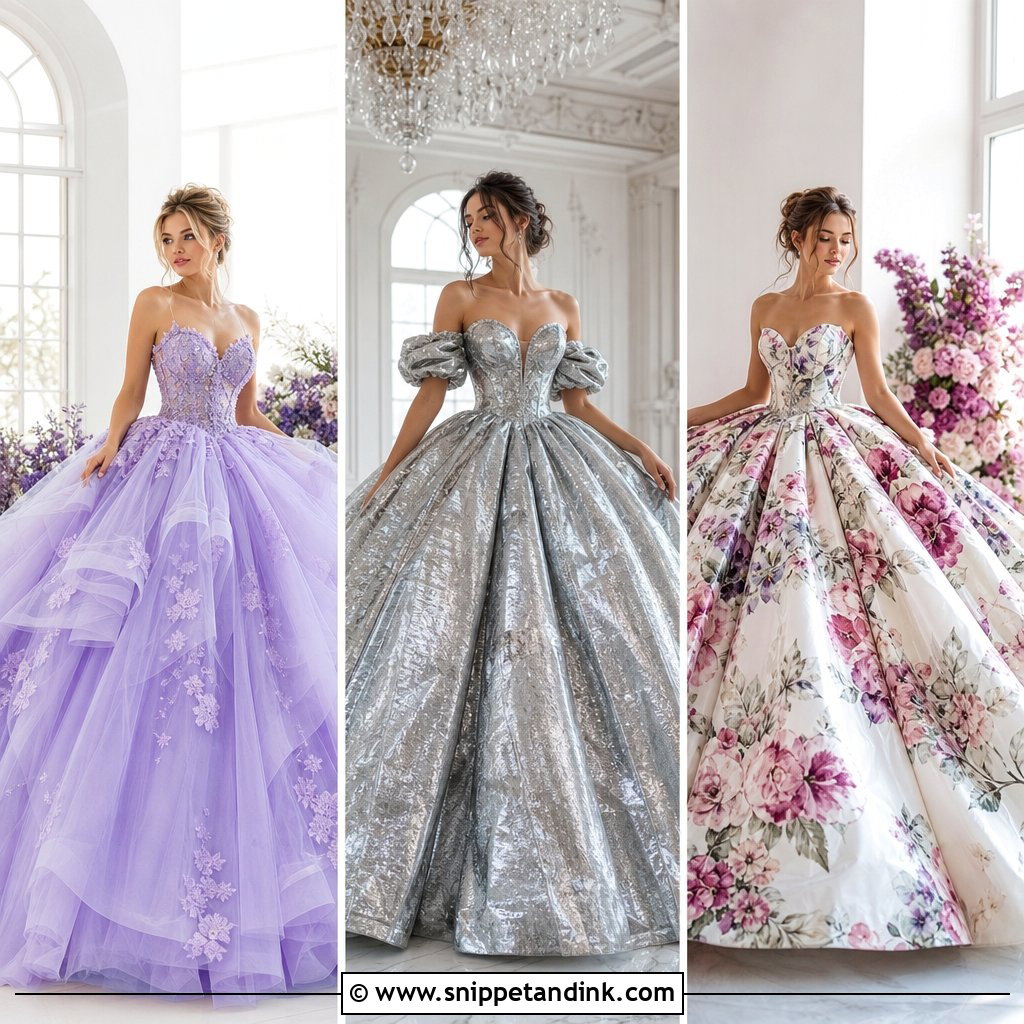
Lavender sits more kindly on most skin tones than a cold lilac, and a corset bodice gives it the structure pastels often lack. I always push for a lace-up back here, because it can be loosened or tightened a little on the day, which matters when nerves mean you’ve barely eaten. An A-line skirt suits a garden; a full ball skirt suits a ballroom. Silver sandals, crystal earrings and a pale lilac clutch tie it together, with loose curls and a touch of shimmer on the lid.
5. Gold Embellished Gown
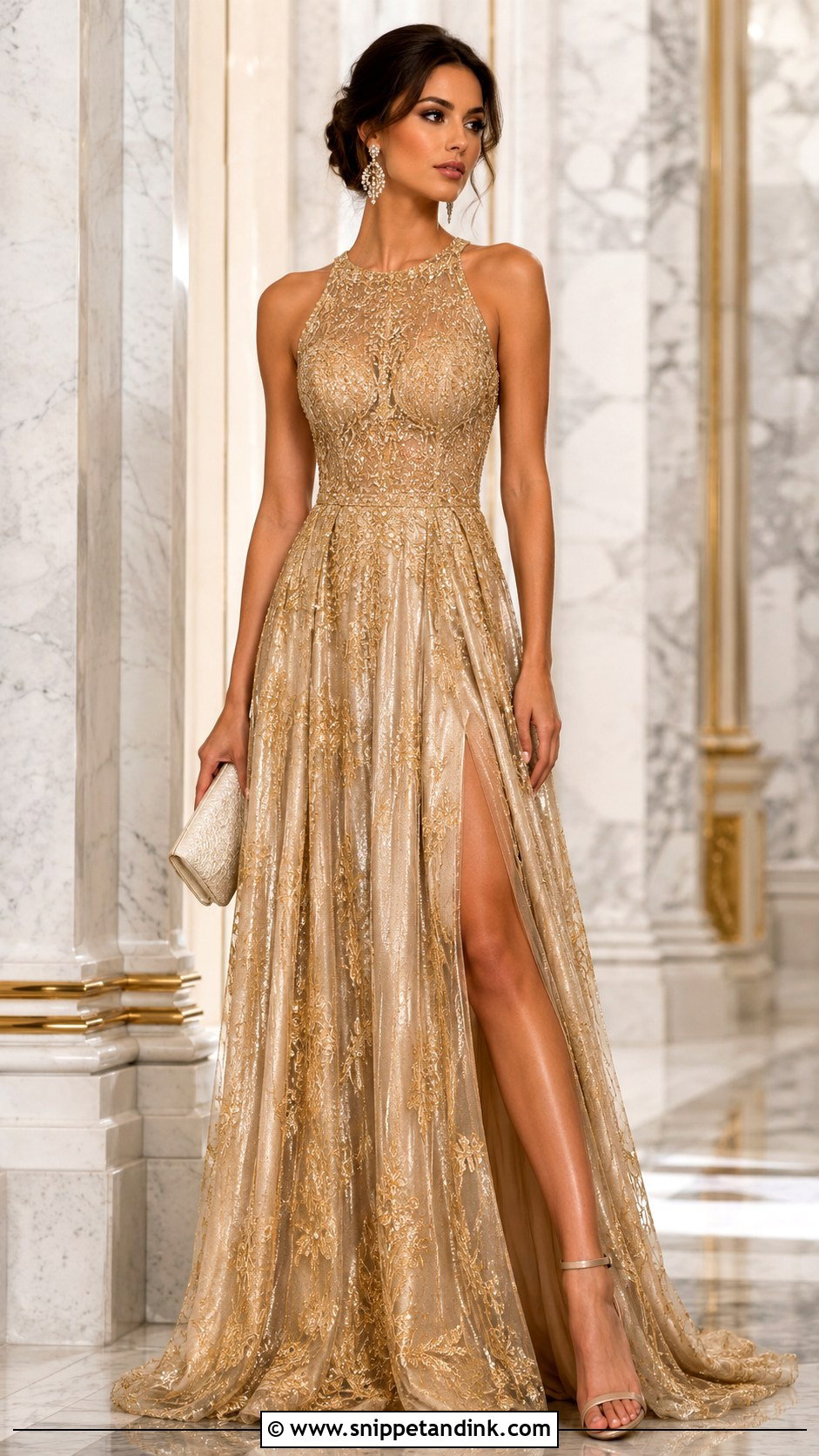
Gold beadwork is heavy, and that weight is the first thing I think about. Embellishment concentrated around the waist or neckline photographs best and keeps the skirt light enough to move, while beading over an entire full skirt adds real weight and pulls at the seams. Run your hand down the fabric: sequins sewn on individually survive a night of hugs far better than glued ones. Gold heels blend into the gown and nude heels soften it. One pair of small crystal earrings or a single cuff, a champagne clutch, and stop there. This is the ballroom version of the fairytale, glamorous rather than sweet.
6. Green Velvet Gown
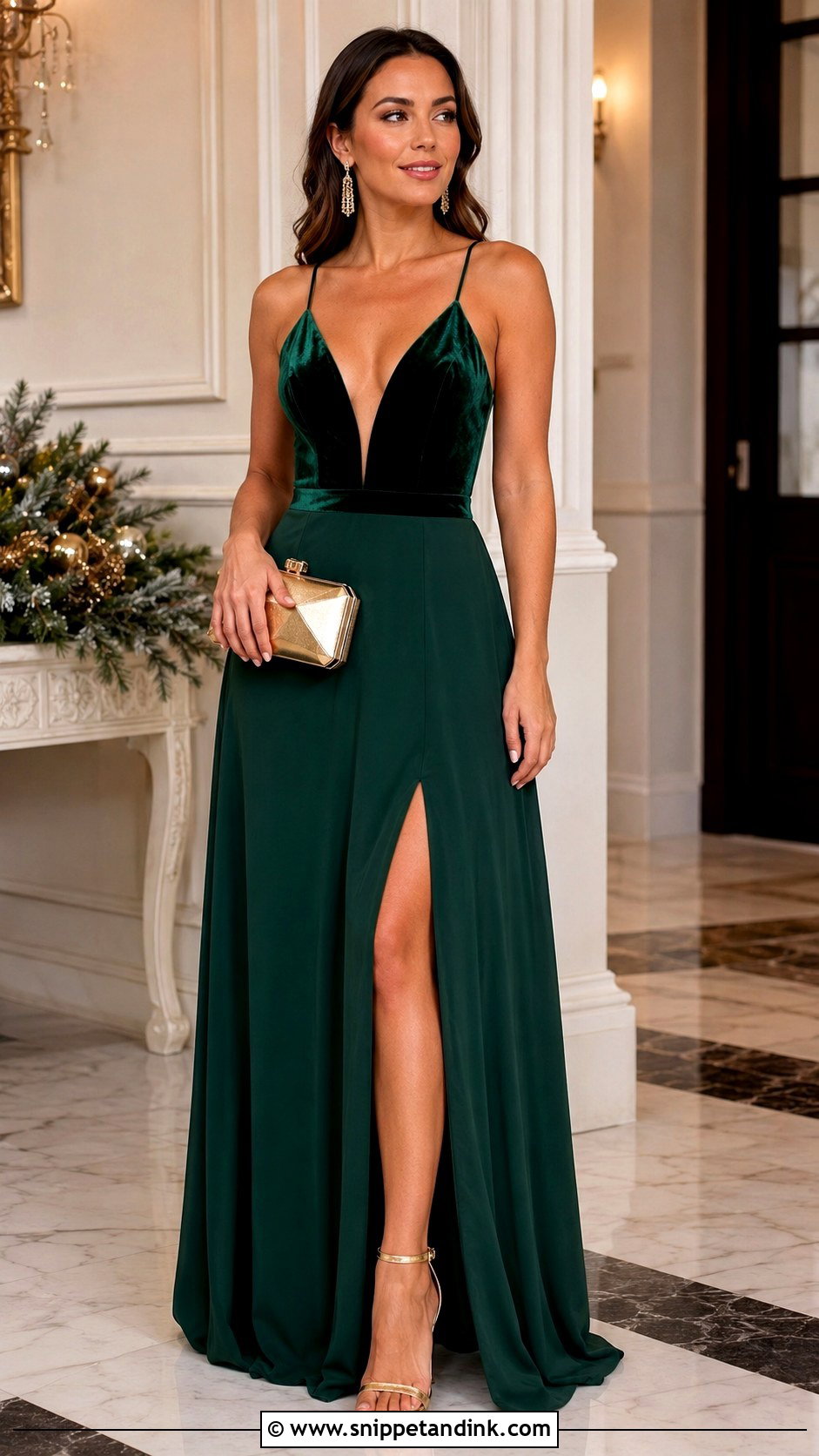
Velvet is my favorite fabric for a cold-weather fairytale, but it has rules. The pile changes shade with the direction of the light, so emerald, forest or moss green velvet looks darker head-on and lighter where it catches a lamp, which is exactly what gives it depth in photos. It also crushes. If the gown travels folded, hang it in a steamy bathroom rather than ironing it, because an iron flattens the pile for good. A fitted bodice into a flowing or soft mermaid skirt suits it, with gold heels, a structured gold clutch and small earrings. A side-parted wave or sleek bun keeps the mood grown-up and a little mysterious.
7. Silver Sparkle Gown
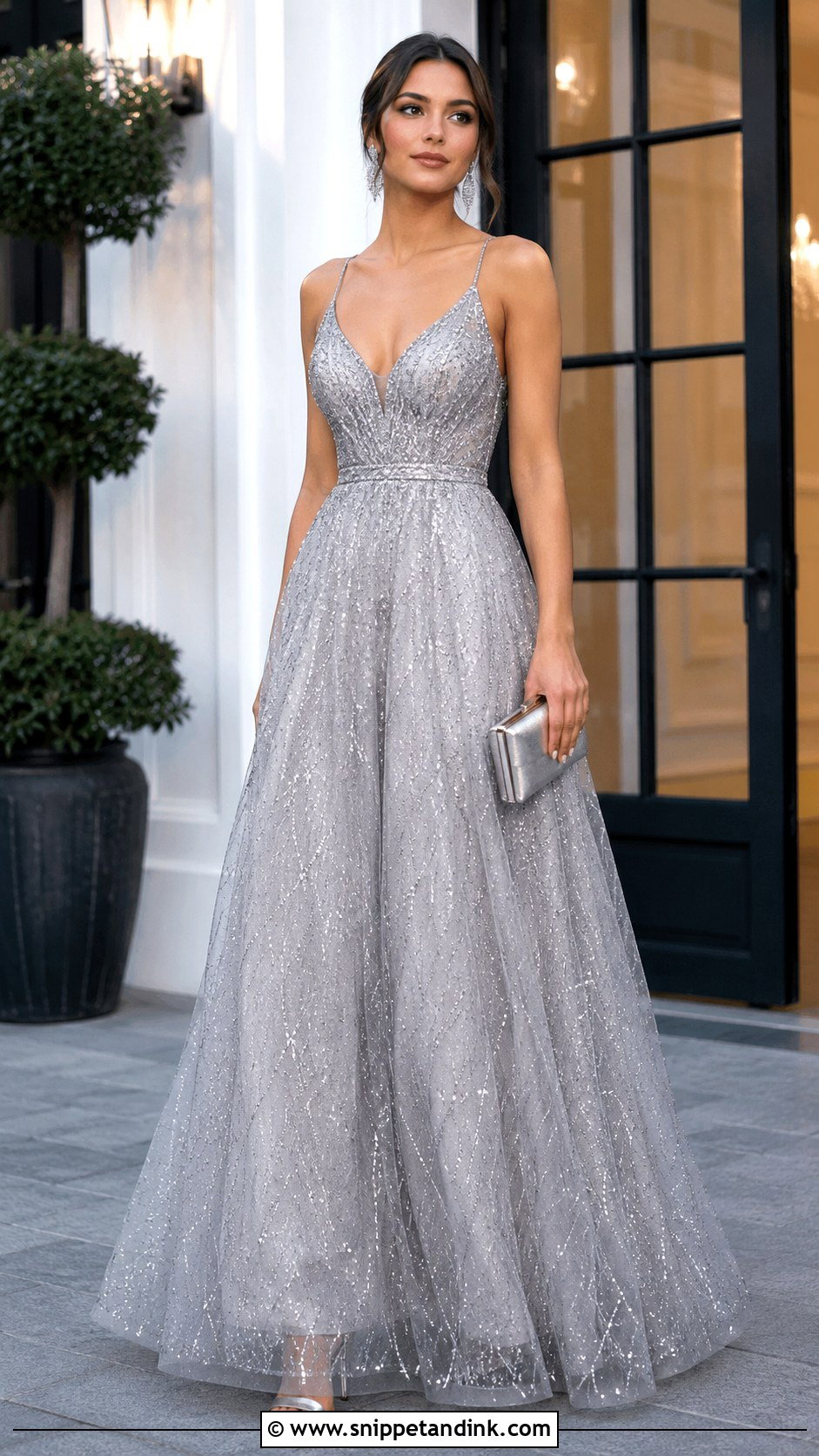
Fine glitter tulle and small sequins catch the flash as pinpoints of light; big chunky paillettes can throw it back as bright hot spots. That’s why I steer people toward fine sparkle when they want a starlit effect. Glitter tulle sheds, so expect a little on your shoes, your partner’s jacket and the car seat. A soft A-line with a fitted waist keeps it wearable. With this much shine, keep the neckline plain and the jewelry small: silver heels, a metallic clutch, crystal studs. Soft waves, glowing skin and a neutral lip stop it tipping into costume.
8. Champagne Satin Gown
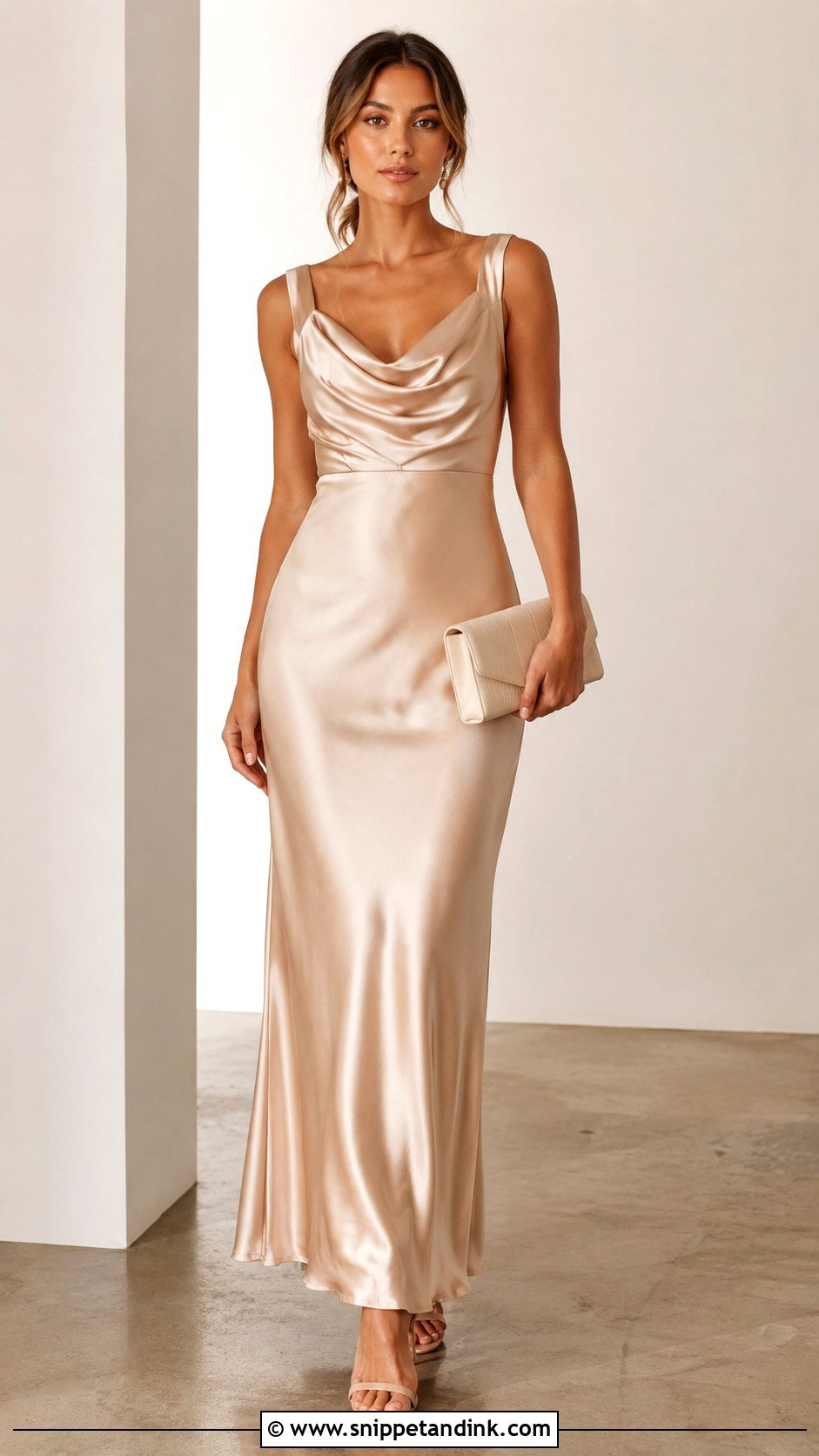
Satin is unforgiving, and I say that with affection. It shows the shape of whatever is underneath, so smooth no-line underwear and a fit that skims rather than pulls are non-negotiable. It also creases at the hip the first time you sit, which is normal; a heavier duchess satin creases less than a thin charmeuse. Champagne flatters a wider range of skin tones than stark ivory, which is why I suggest it so often for bridesmaids and engagement dinners. A draped bodice or pleated waist adds movement without bulk. Nude heels, pearl earrings, a cream clutch and a low bun.
9. Black Fairytale Ball Gown
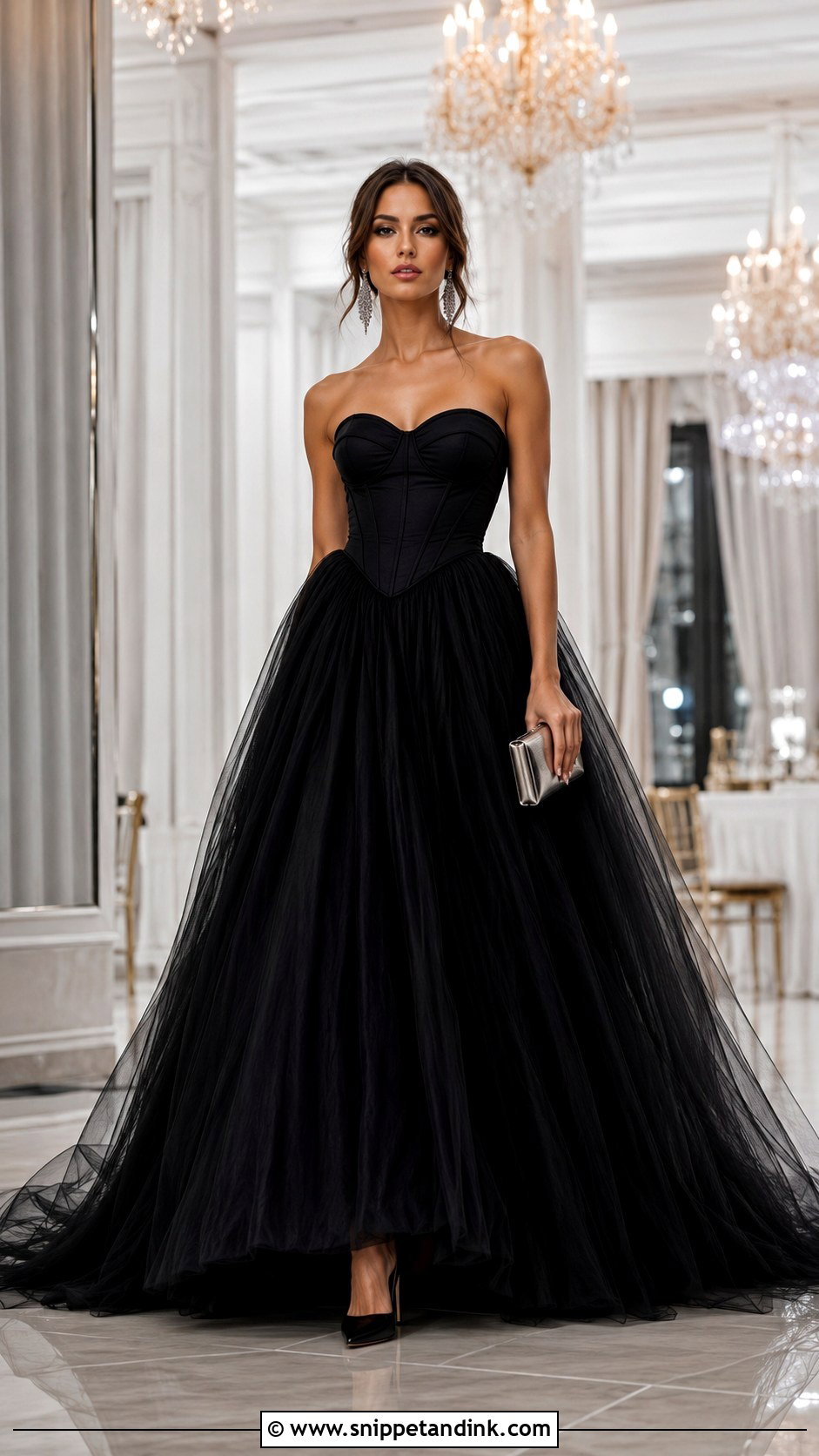
Black tulle in a full princess shape is one of the few ways to get the storybook silhouette with no sweetness at all. The thing I watch is texture. A flat black skirt can photograph as one dark mass, so sheer sleeves, a little sparkle or lace on the bodice give the camera something to find. Black heels, crystal earrings and a small metallic clutch. A red lip is the obvious move; soft nude makeup is the surprising one and often looks better in daylight photos. If you’re a guest, make sure the couple and the dress code are comfortable with black before you commit. Black-tie events and editorial shoots are its natural home.
10. Red Ruffle Gown
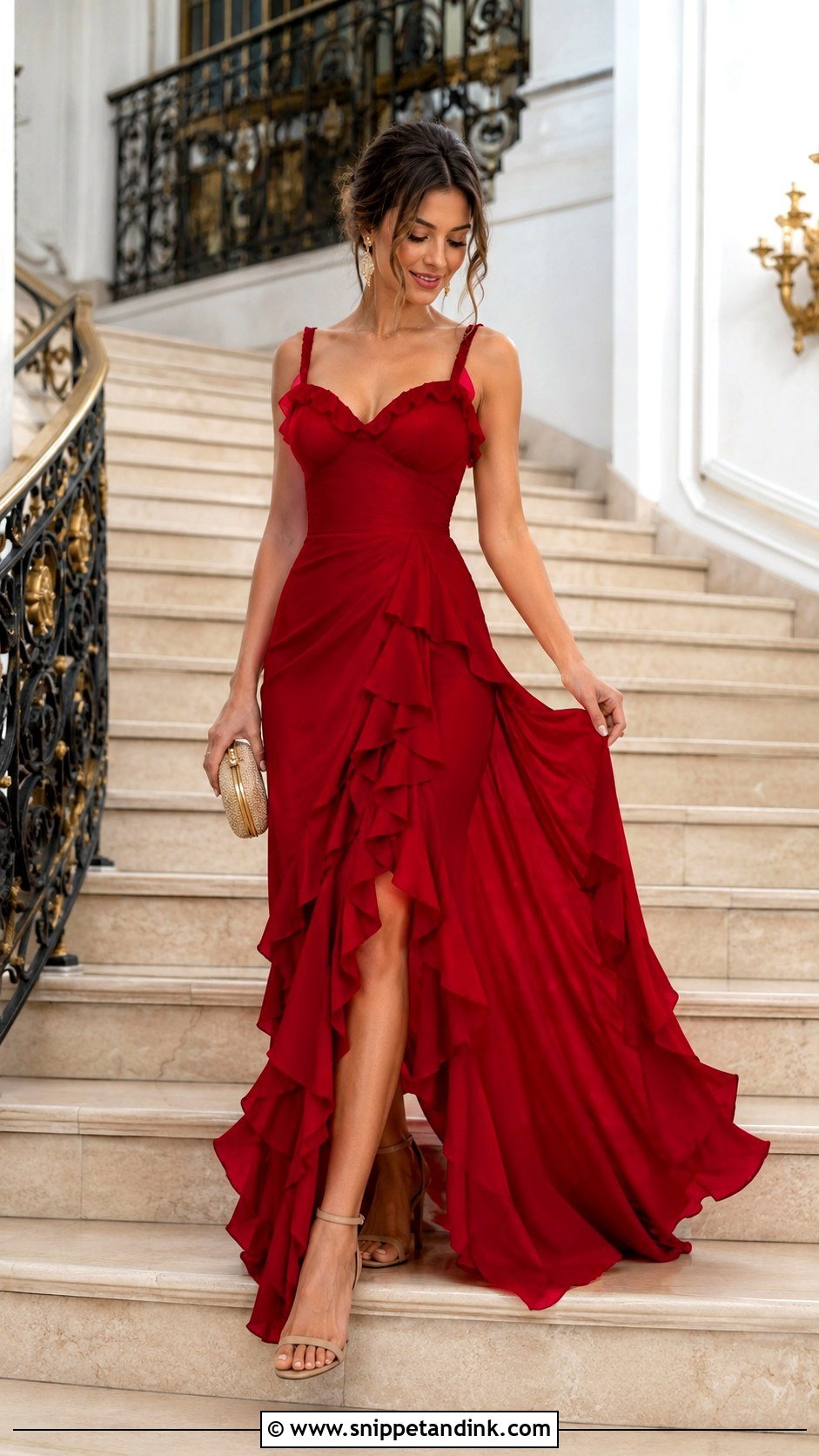
Ruffles add volume exactly where they sit, so placement matters more than the shade. Ruffles cascading down the skirt with a fitted bodice give movement without widening the top half; ruffles at the neckline suit narrow shoulders and can overwhelm a fuller bust. Ruby, cherry and deep rose all work. Red is the loudest color in any room, so as a wedding guest I’d check with the couple first. Nude, gold or matching red heels, a small clutch, delicate earrings, and soft waves. Nothing more is needed.
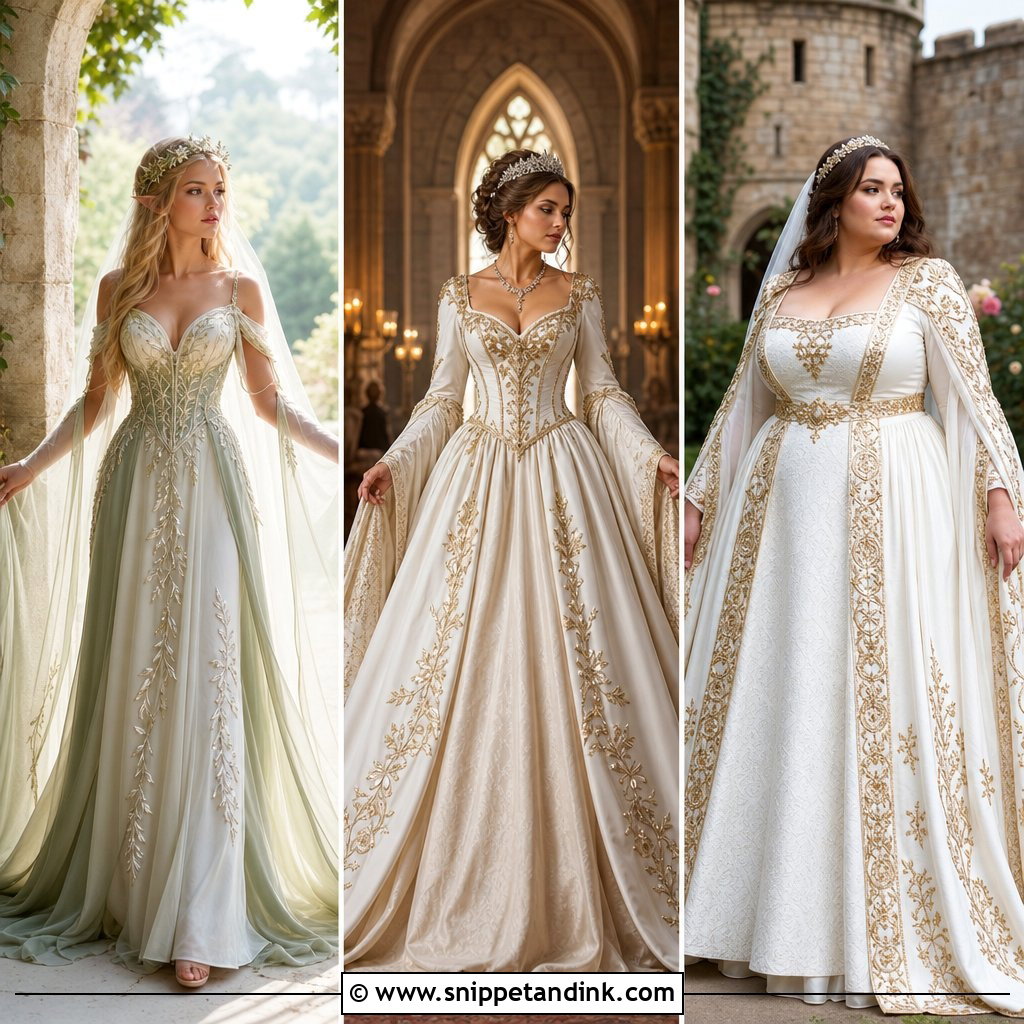
11. Ivory Lace Gown
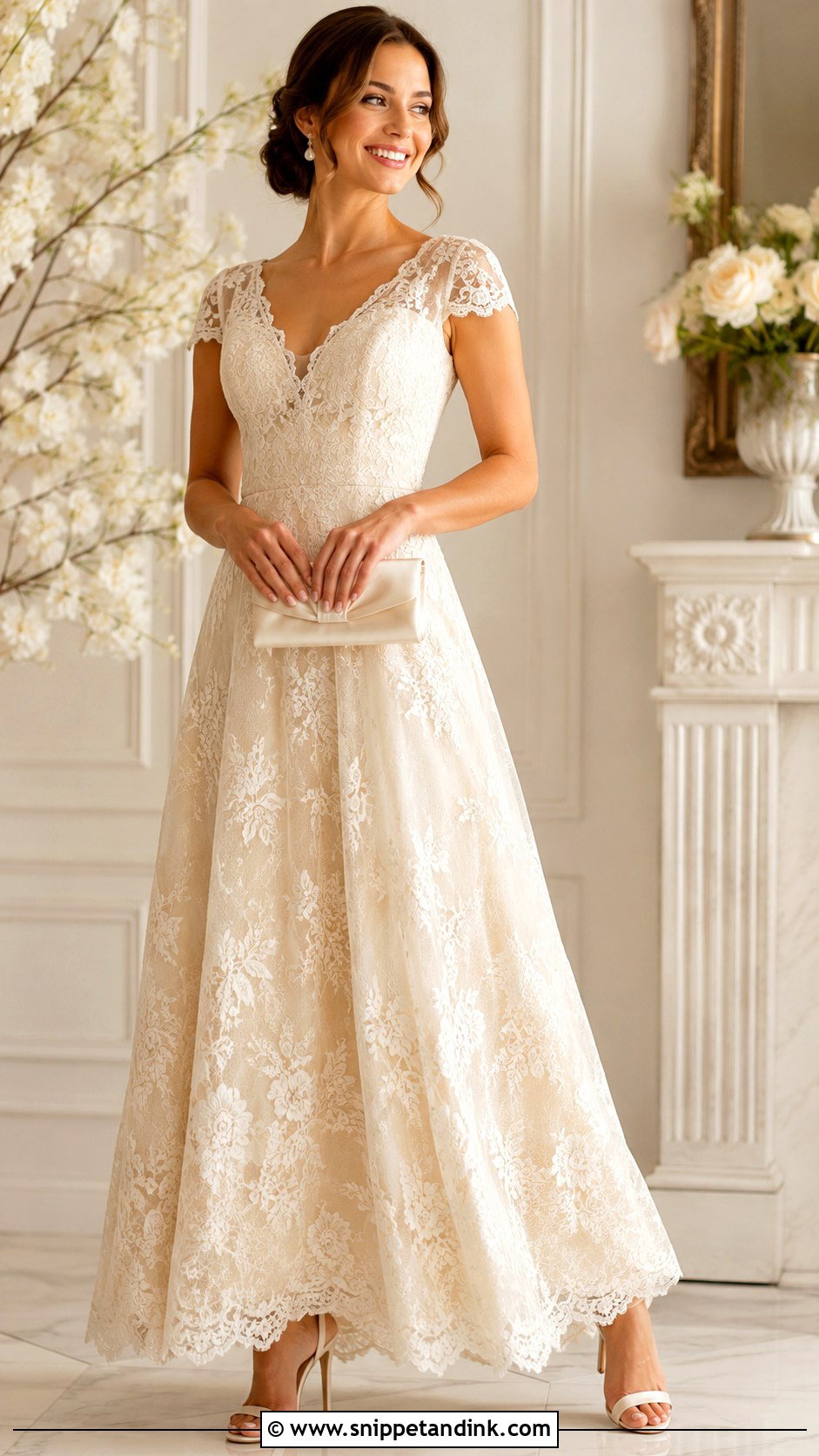
Lace varies enormously, and I can usually judge a good one by how its edges are finished. Corded or re-embroidered lace has a raised outline that reads clearly in photos, while flat machine lace can look like a print from a few feet away. Long lace sleeves feel regal; thin straps feel lighter and more modern. Lace snags on bracelet and watch clasps, so I keep jewelry to pearl earrings, with ivory heels and a small satin bag. A loose updo or soft half-up lets the neckline show at a garden celebration or daytime event.
12. Mint Green Tulle Gown
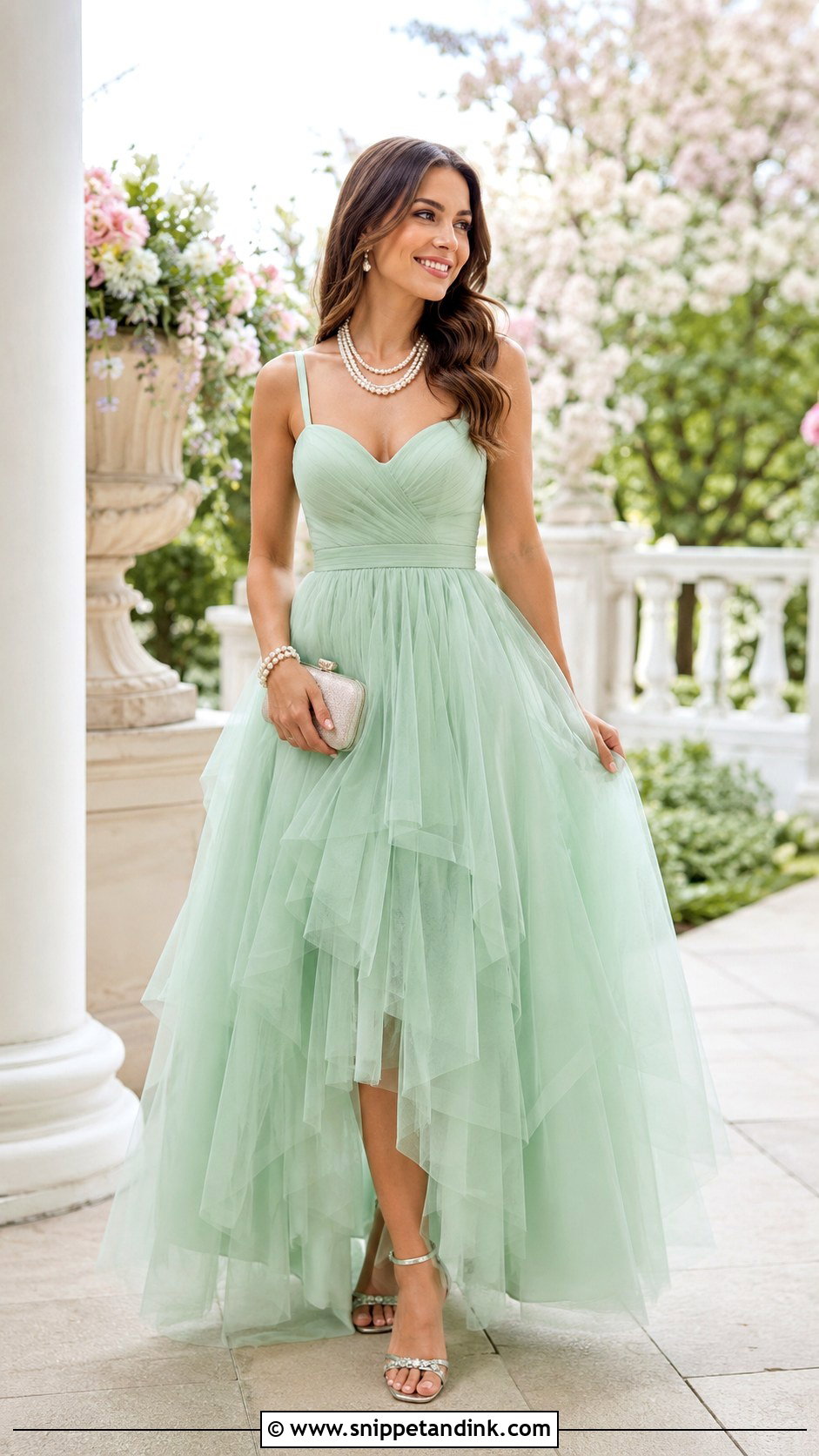
Mint is trickier than it looks on a hanger. On cooler, pinker skin it can wash you out, so I hold the fabric under the chin in daylight before anyone commits. A clean bodice with a layered skirt keeps the shade from turning saccharine, and subtle shimmer, floral embroidery or a sheer overlay add depth. Silver or pearl accessories keep it light, where gold can fight the color. Strappy heels, a small clutch, delicate earrings. Loose curls or a relaxed low bun suit a spring formal or garden party.
13. Navy Starry Gown
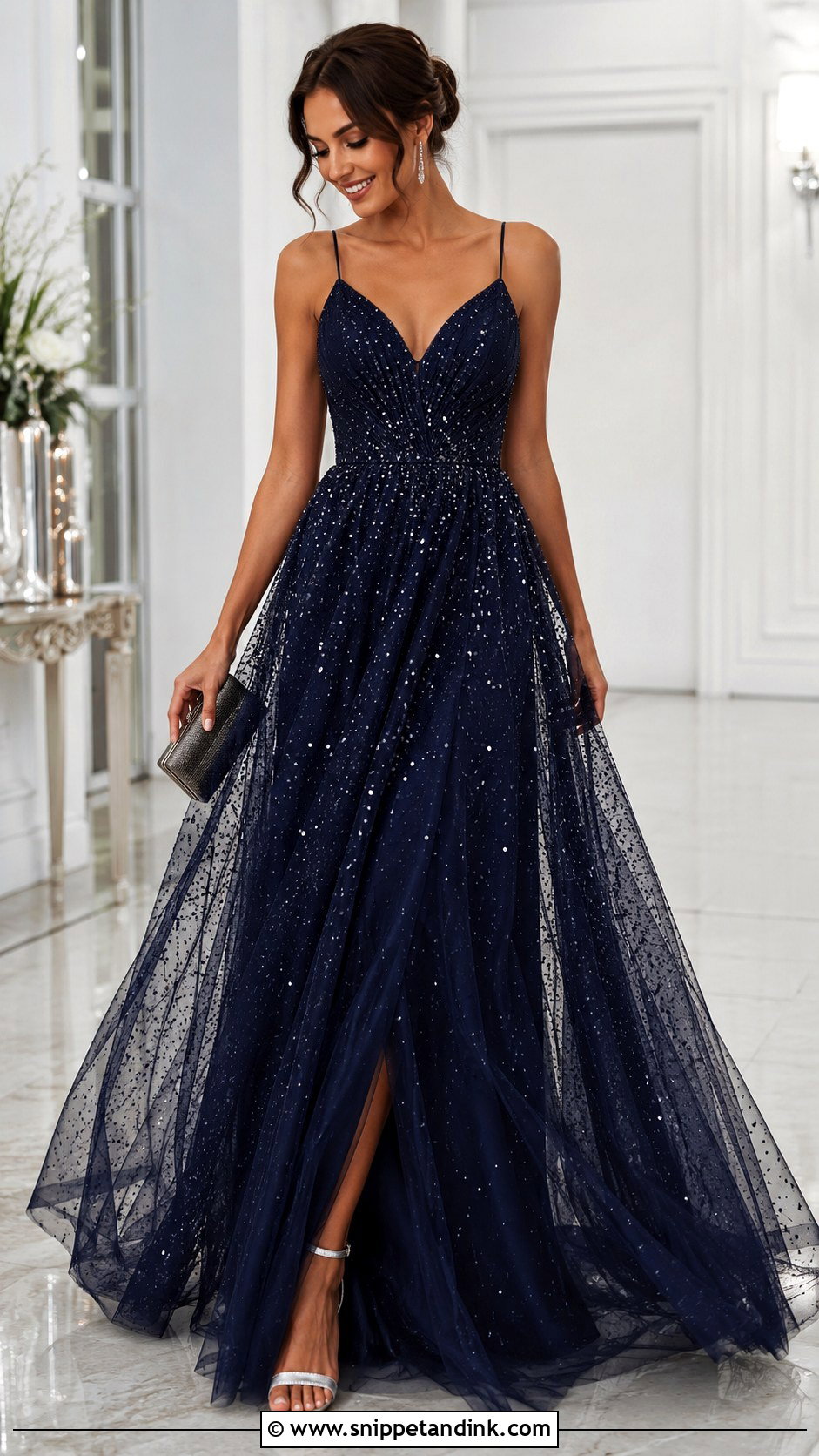
For a night-sky effect, the beading has to be sparse. A navy starry gown with tiny silver beads or sequins spaced well apart reads as stars; packed tightly, it just reads as glitter. Navy is my usual suggestion for anyone who wants the formality of black with less severity, and it keeps its depth under evening lighting. A fitted bodice and A-line skirt give shape without extreme volume. Silver heels, a dark metallic clutch, delicate jewelry, glossy waves and a little shimmer on the eyes.
14. Peach Organza Gown
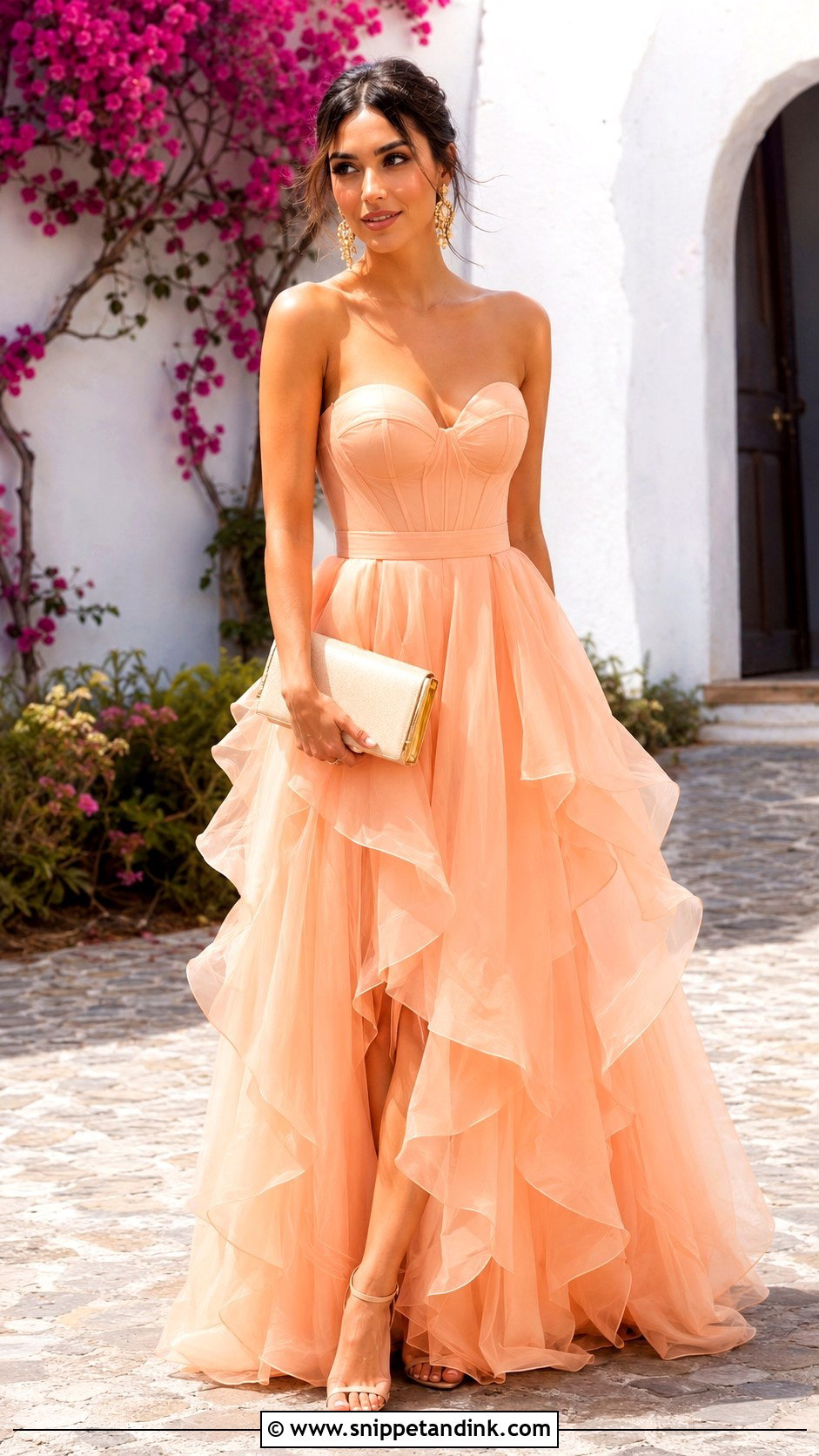
Organza is crisp, so it holds a full skirt or a puff sleeve without the weight of satin, which makes it my go-to for summer events. The catch: it creases sharply and doesn’t relax the way tulle does, so steam it on the hanger and avoid sitting on the skirt in the car. Match the peach to your coloring; a soft apricot tends to suit fair or cool skin, coral-peach warmer and deeper skin. Nude heels lengthen the leg, gold jewelry adds warmth, and a cream or peach clutch finishes it. Peach blush, soft highlighter, and a curled ponytail or loose waves.
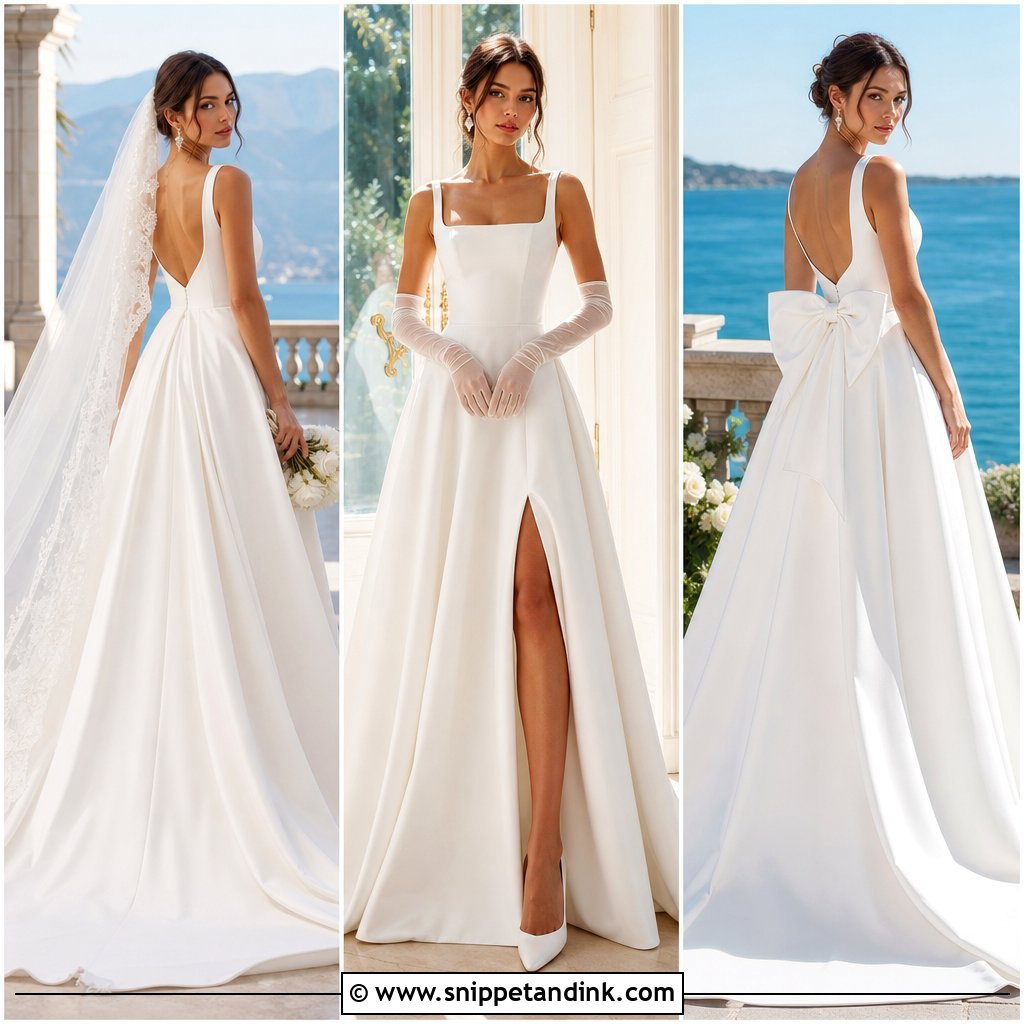
15. Burgundy Velvet Gown
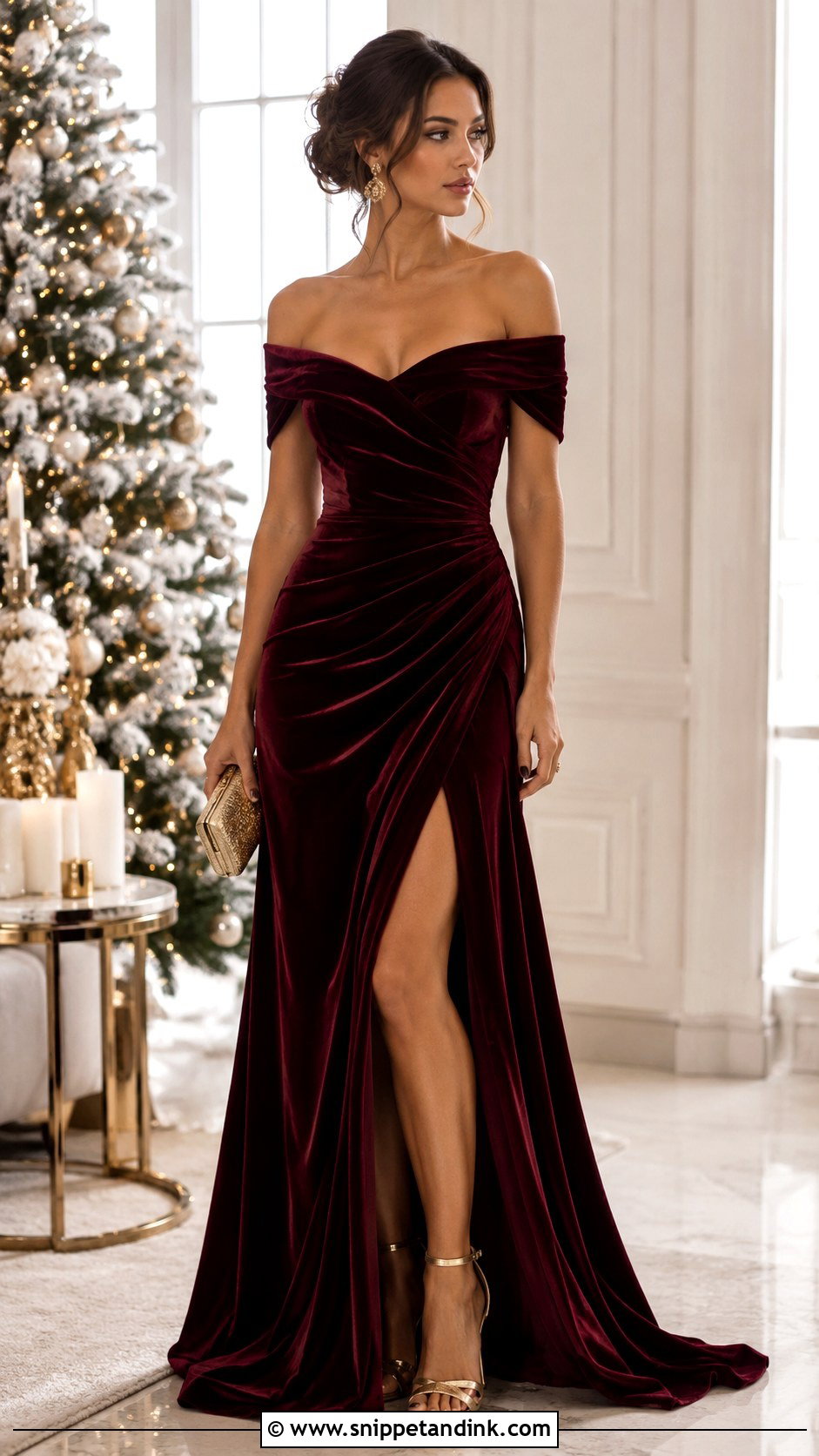
I suggest burgundy velvet for winter evening weddings and banquets because the color deepens in low light instead of going flat. Velvet is warm, though. A long-sleeved version in a heated ballroom can be a lot, so a square neckline or off-shoulder sleeves let some heat out. Keep the bodice structured and the skirt long. Gold heels and a matching clutch warm it up, with small hoops, pearl drops or a thin bracelet. A sleek bun or soft side waves.
16. Yellow Princess Gown
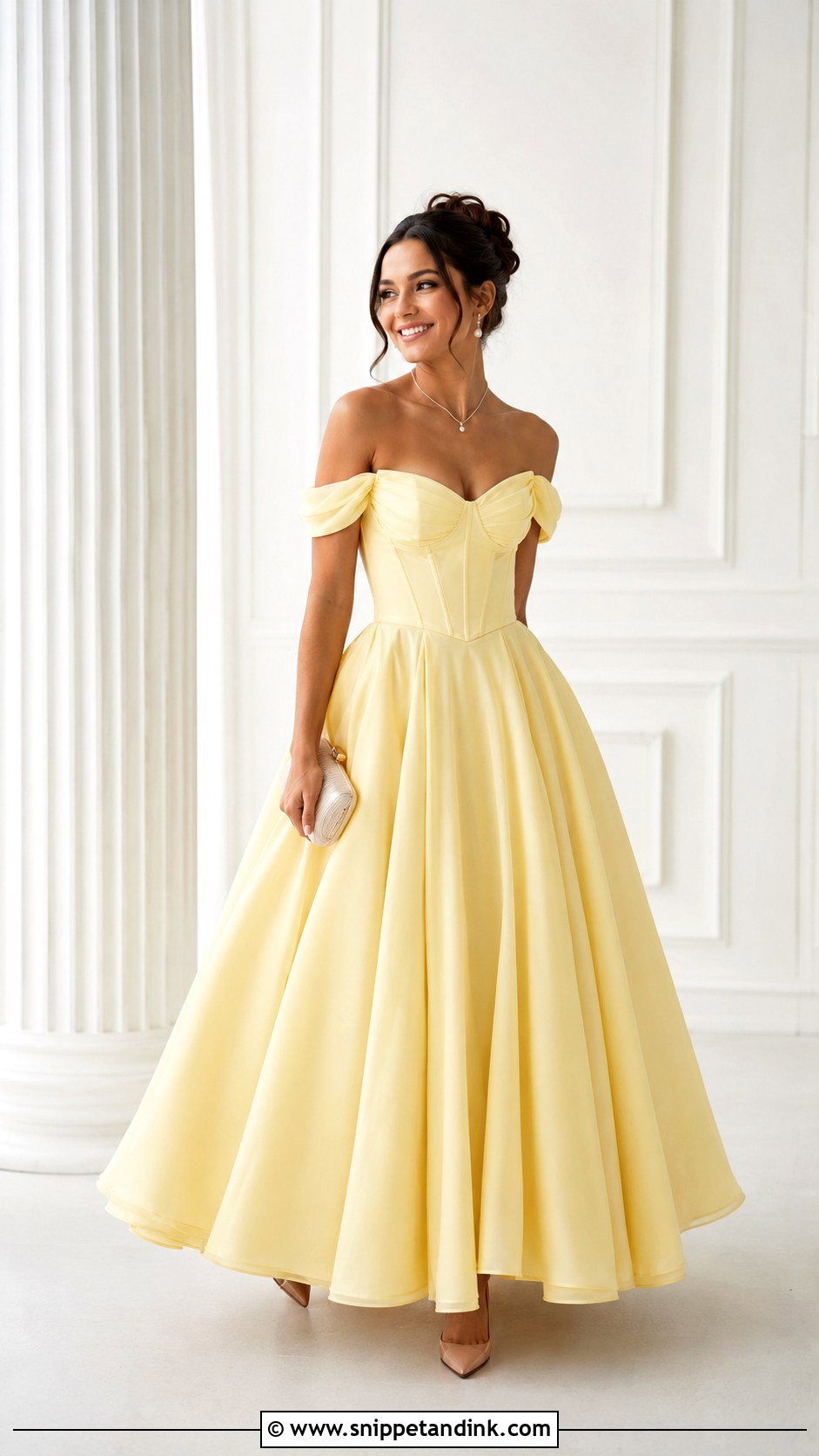
Yellow divides people, and skin tone is the reason. Soft butter yellow suits most complexions; marigold and golden yellow are lovely on olive and deeper skin but can make very fair skin look sallow. I always test yellow in daylight, never under shop lighting. A fitted bodice with a full skirt gives the classic princess shape. Nude, gold or clear heels, pearl earrings, a fine necklace and a small cream clutch calm the color. Fresh, glowy skin with a pink or peach lip.
17. Lilac Sequin Gown
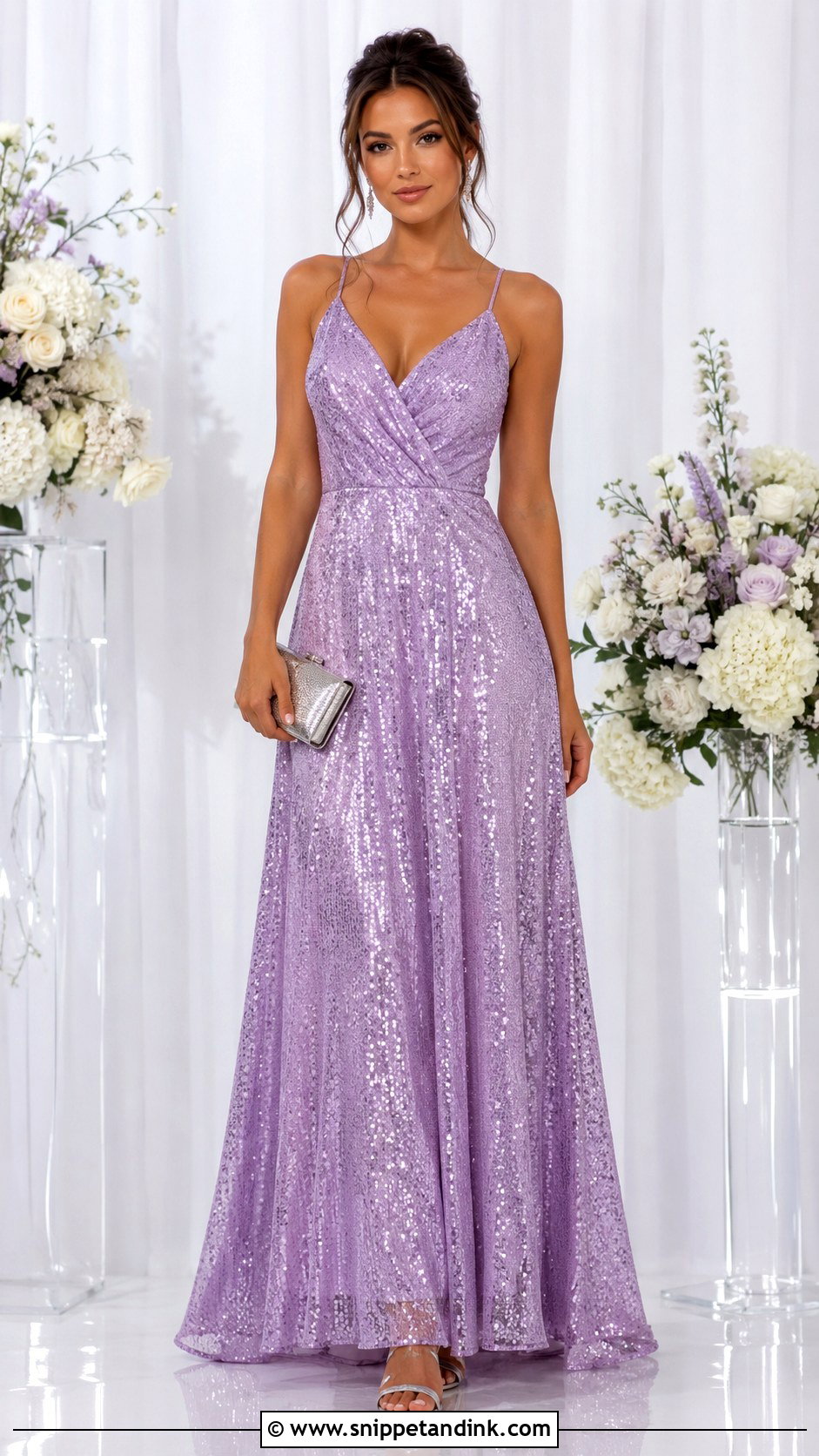
Sequins on a busy shape fight each other, so with lilac sequins I keep the cut simple: A-line, column or fit-and-flare. Sit down in it at the fitting. Sequinned seams can scratch the inner arm and the backs of the knees, and a soft full lining is worth asking for. Silver heels, clear straps or pale lavender shoes all work, with a small plain clutch. If the neckline is detailed, skip the necklace and wear earrings only. Loose curls and glossy makeup suit an evening party where the cameras are busy.
18. Floral Embroidered Gown
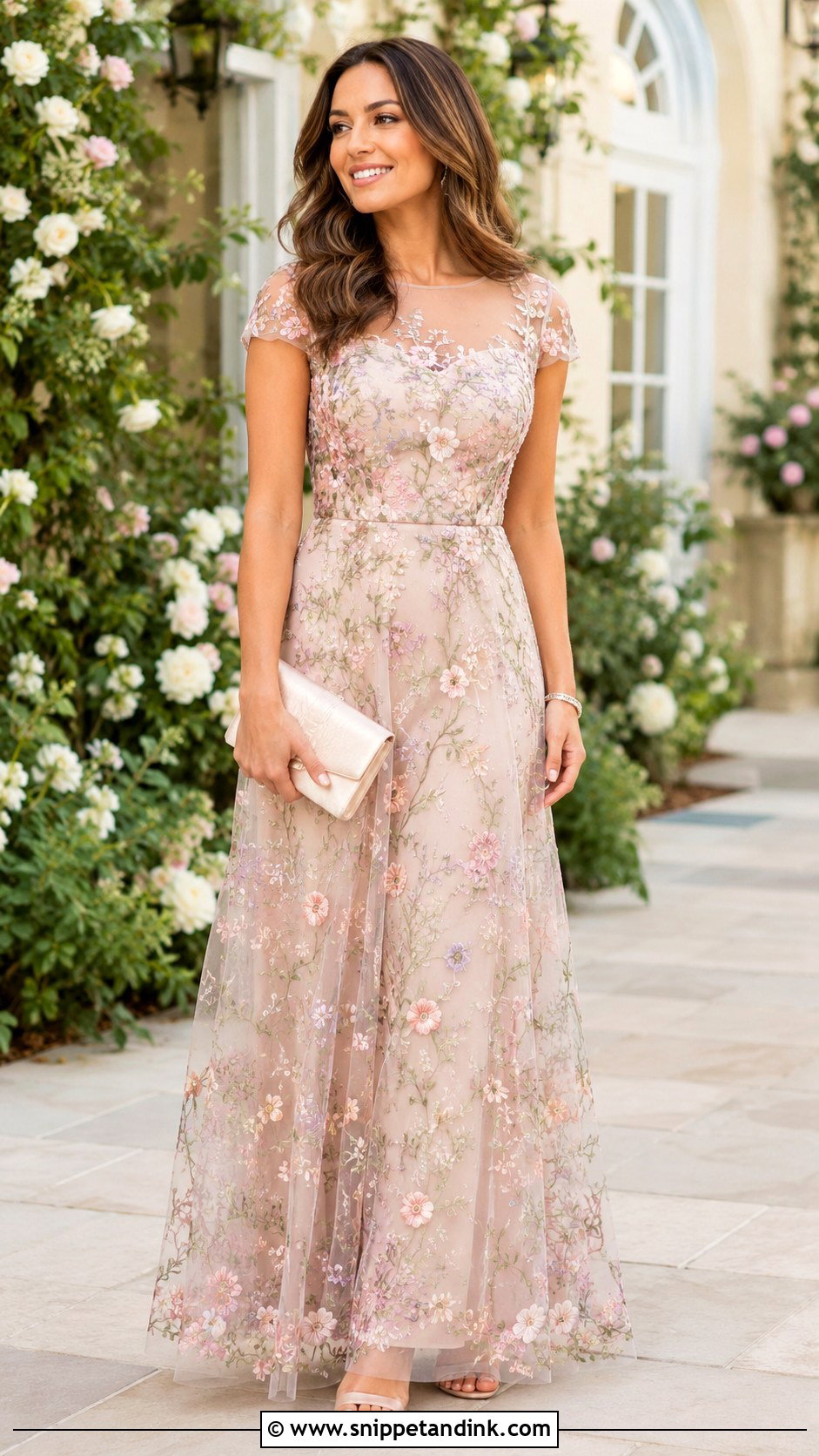
Embroidery gives the painted-garden effect without the bulk of appliqué, and because it’s stitched into the fabric it survives a long day better than glued embellishment. Where it sits changes your shape: at the waist it defines, at the hem it draws the eye down and adds visual weight below. Blush, sage, ivory, lavender and blue grounds all suit it. Nude heels keep the stitching center stage, with simple earrings, a satin clutch and a slim bracelet. Relaxed, soft hair fits a garden formal or spring gala.
19. Corset Ball Gown
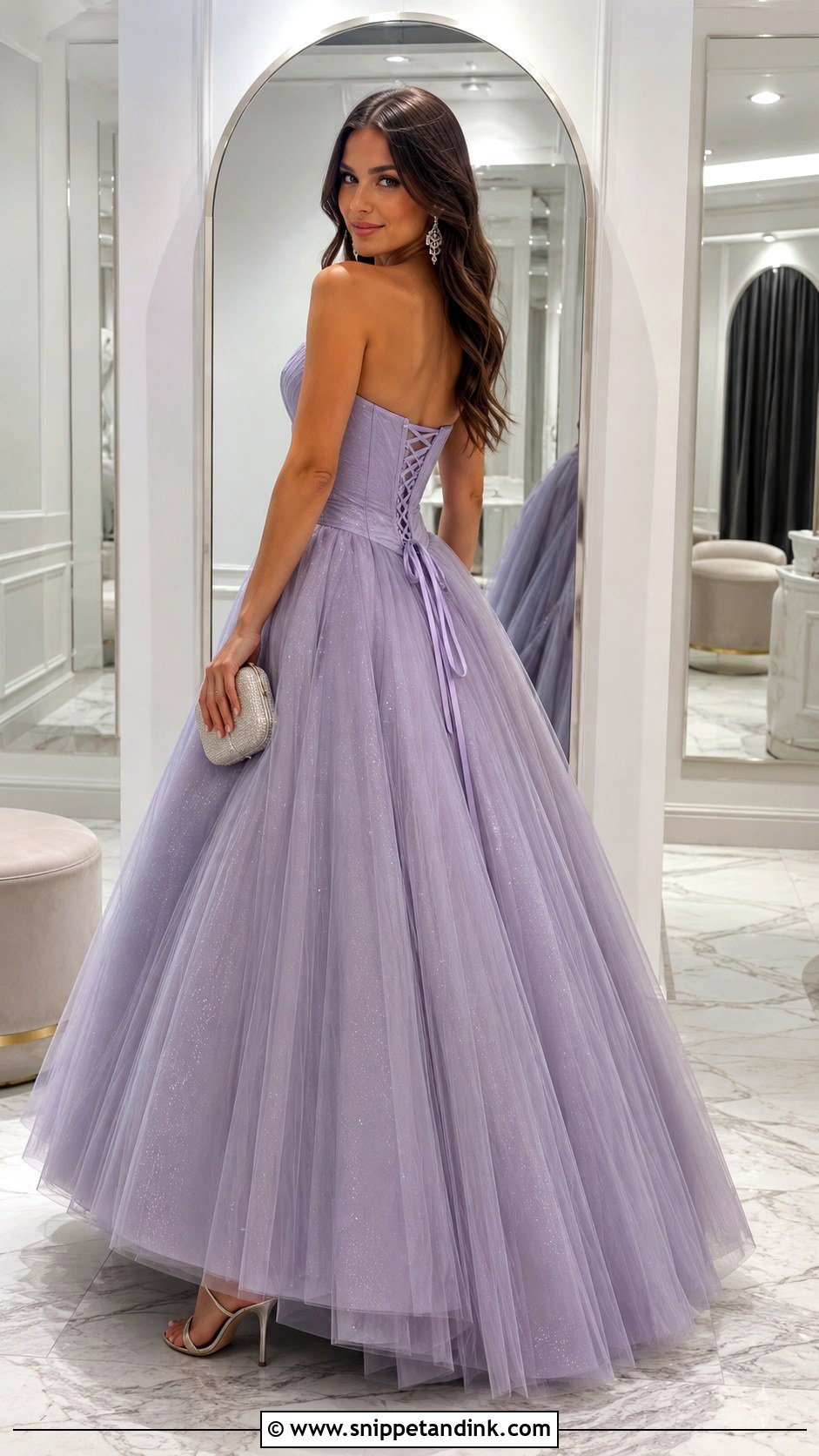
This is the gown I’m asked for most, and the one most often bought in the wrong size. A proper corset bodice with boning should hold you comfortably without the skirt doing any of the work; if you’re tugging it up in the fitting room, it doesn’t fit. A lace-up back lets you fine-tune on the day. Satin gives the smooth royal look, tulle softens it, glitter fabric makes it louder. The skirt can be heavy, so choose heels you can genuinely stand in for hours, and keep accessories to a small clutch, earrings and a bracelet. Formal balls, pageants and staged portraits suit it best.
20. Pearl Beaded Gown
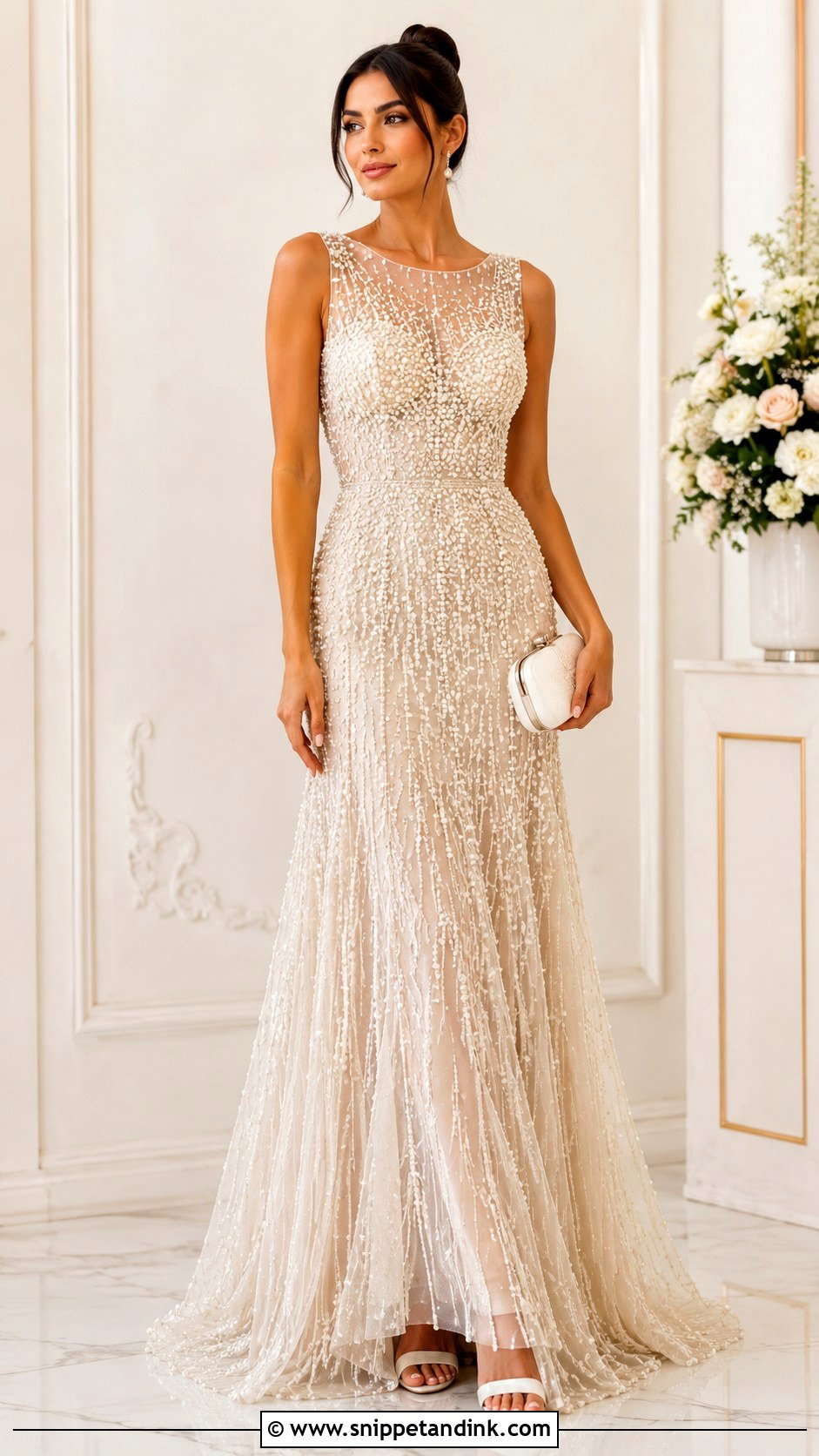
Pearls give texture without the hard flash of sequins, which is why I reach for them when a client wants detail but finds sparkle too much. Check how they’re attached: pearls sewn on individually and knotted hold up, while pearls on one long running thread can drop a whole row if that thread snaps. Ivory, champagne, blush and pale blue bases all work. Pearl earrings, satin heels, a clean clutch, and no heavy necklace over a beaded bodice. A smooth updo shows off the detail at the neckline.
21. Sheer Sleeve Gown
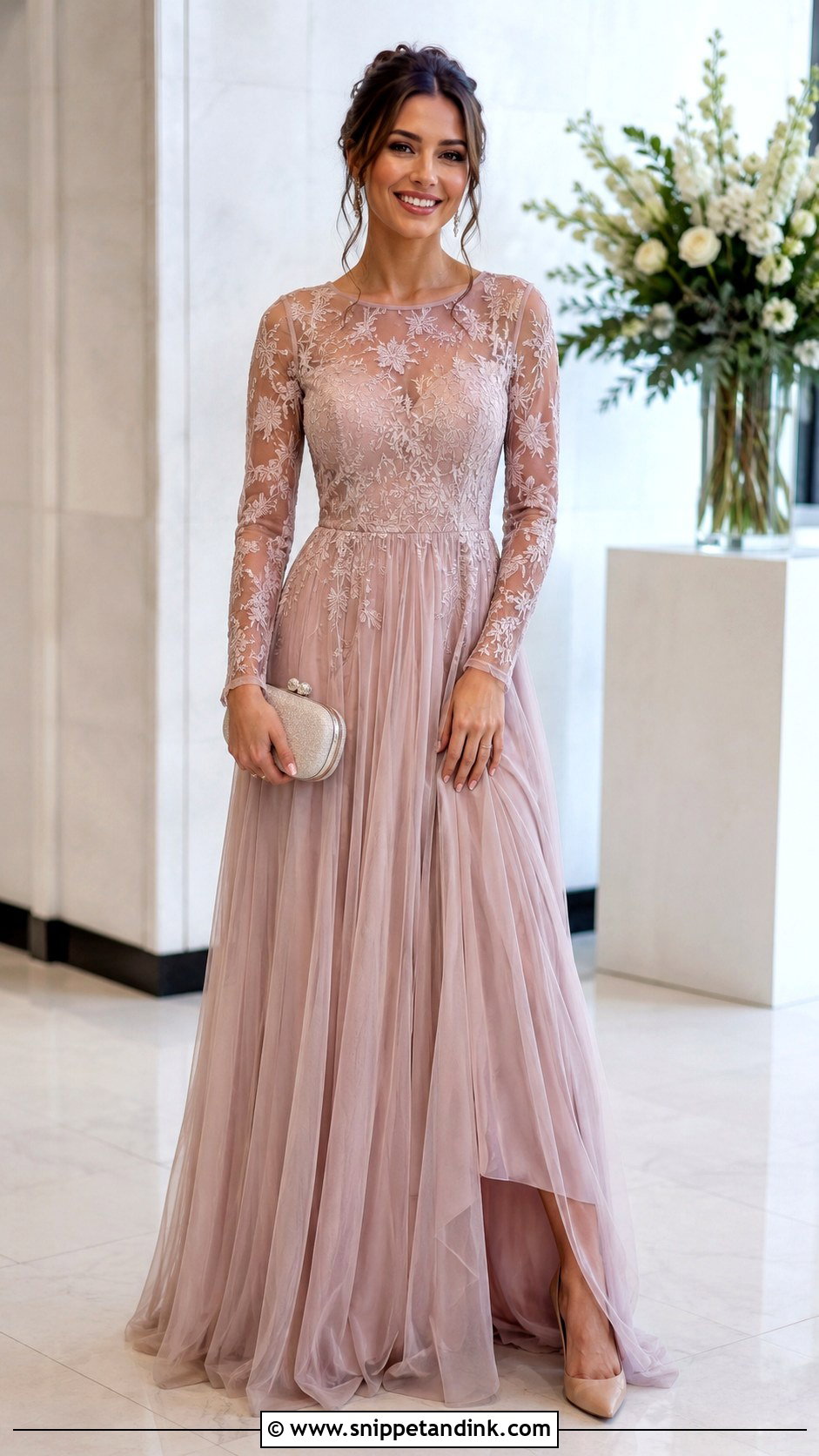
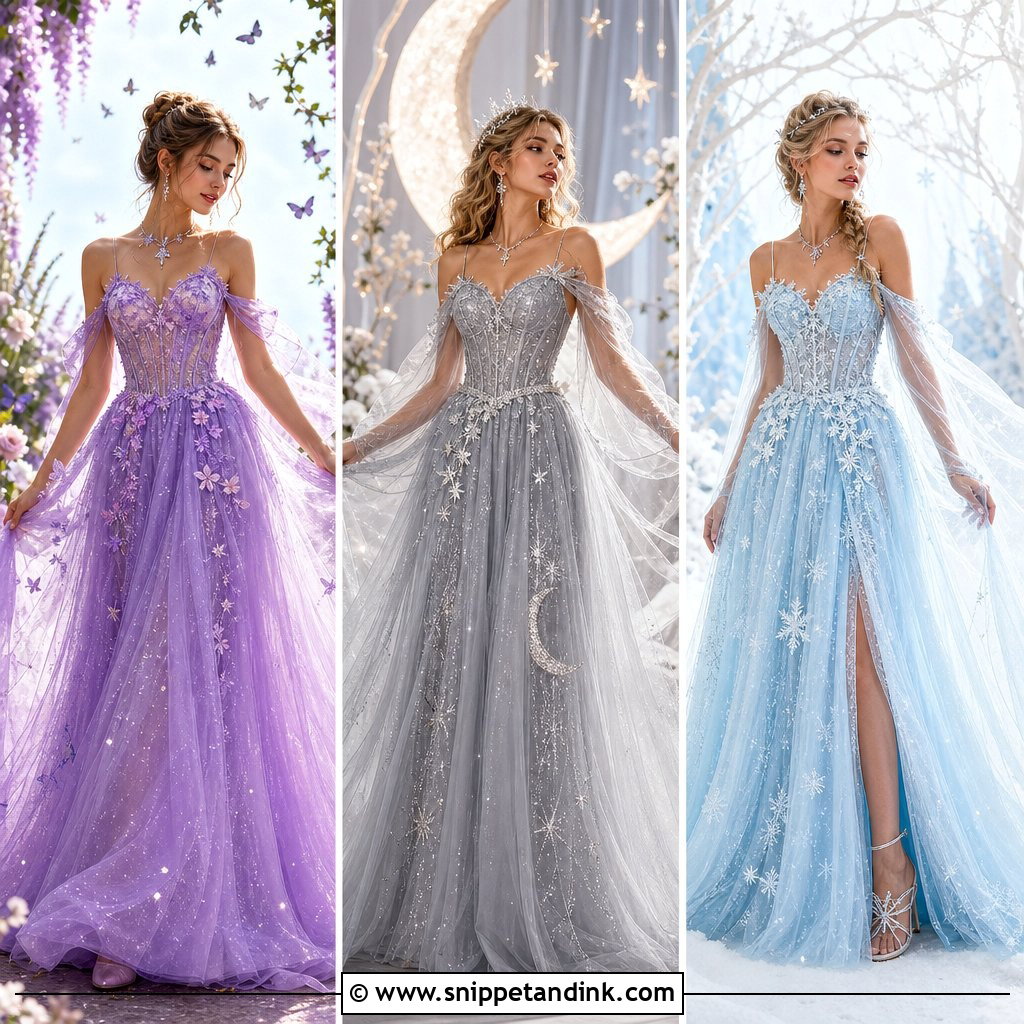
Sheer sleeves are my answer for anyone who wants coverage without overheating. Tulle and chiffon sleeves are light enough for a summer evening; lace and beaded sleeves are warmer and stiffer, so at the fitting I have you cross your arms and hug yourself to check they don’t bind at the elbow. Puffed sleeves widen the shoulder, which balances a full skirt but can swamp a petite frame. Keep the bodice fitted and the skirt flowing. Nude, silver or matching heels, a small clutch, and a low bun or soft waves.
22. Tiered Tulle Gown
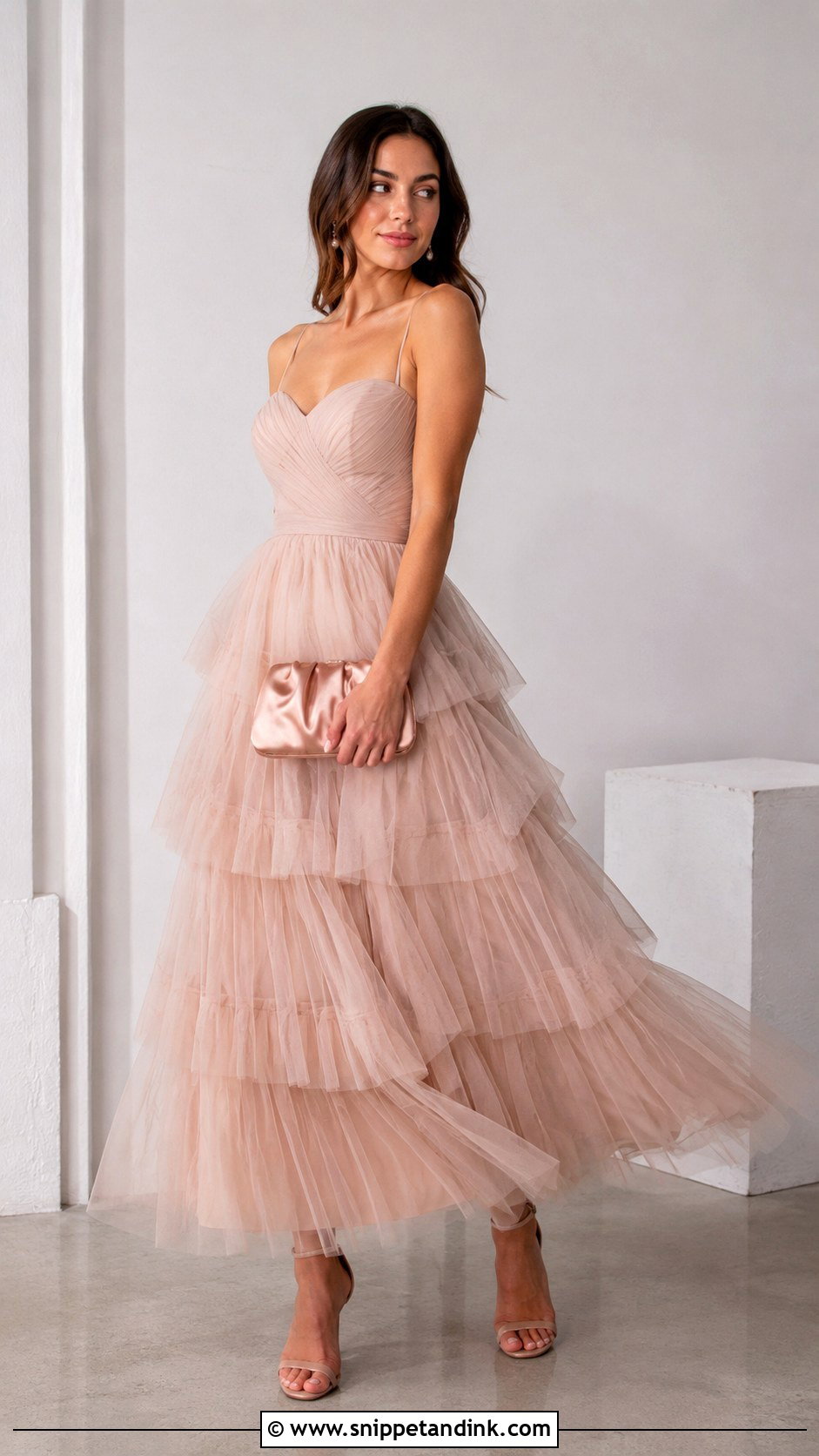
A tiered tulle gown moves from every angle because each tier swings on its own. Tier scale should follow height: on petite frames I go for narrower tiers and a defined waist, while taller wearers can carry deep tiers and extra length. Keep the bodice fitted so the skirt doesn’t swallow you. Blush, powder blue, lilac, ivory and sage all suit tulle. Simple heels, small earrings and a satin clutch. Outdoors, watch rough stone steps, since tulle snags easily.
23. Sage Green Gown
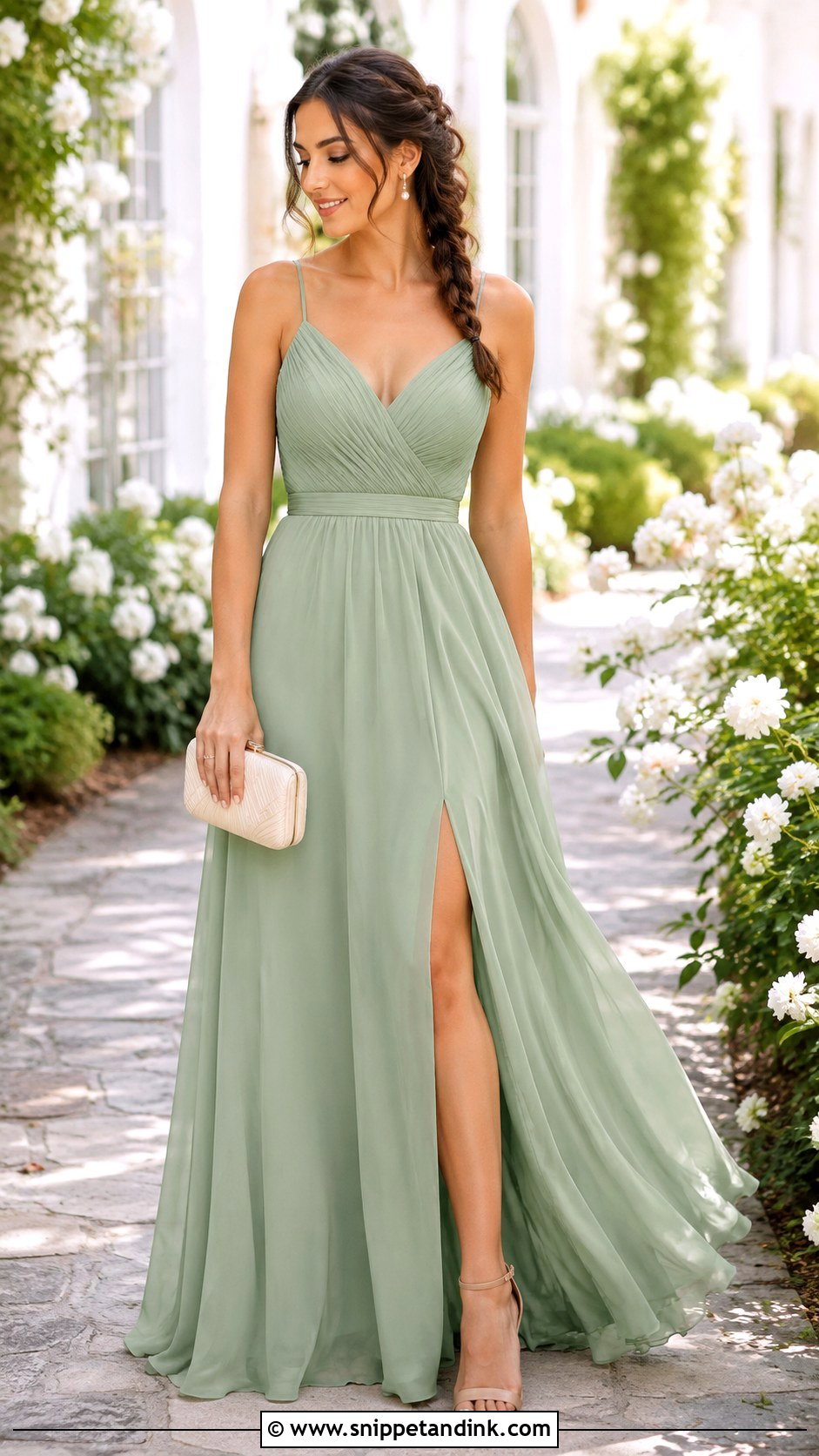
Sage is muted enough to feel modern and soft enough to feel romantic, and it flatters more people than brighter greens. Chiffon or tulle in an A-line suits it best, because the color reads gently when the fabric moves. One thing to know: sage shifts between grey and green with the light, so in outdoor shade it can look greyer than it did in the shop. Nude heels, pearl earrings and a cream clutch; gold jewelry warms it up. Peach blush, neutral eyes, and a loose bun or a small braid.
24. Rose Gold Gown
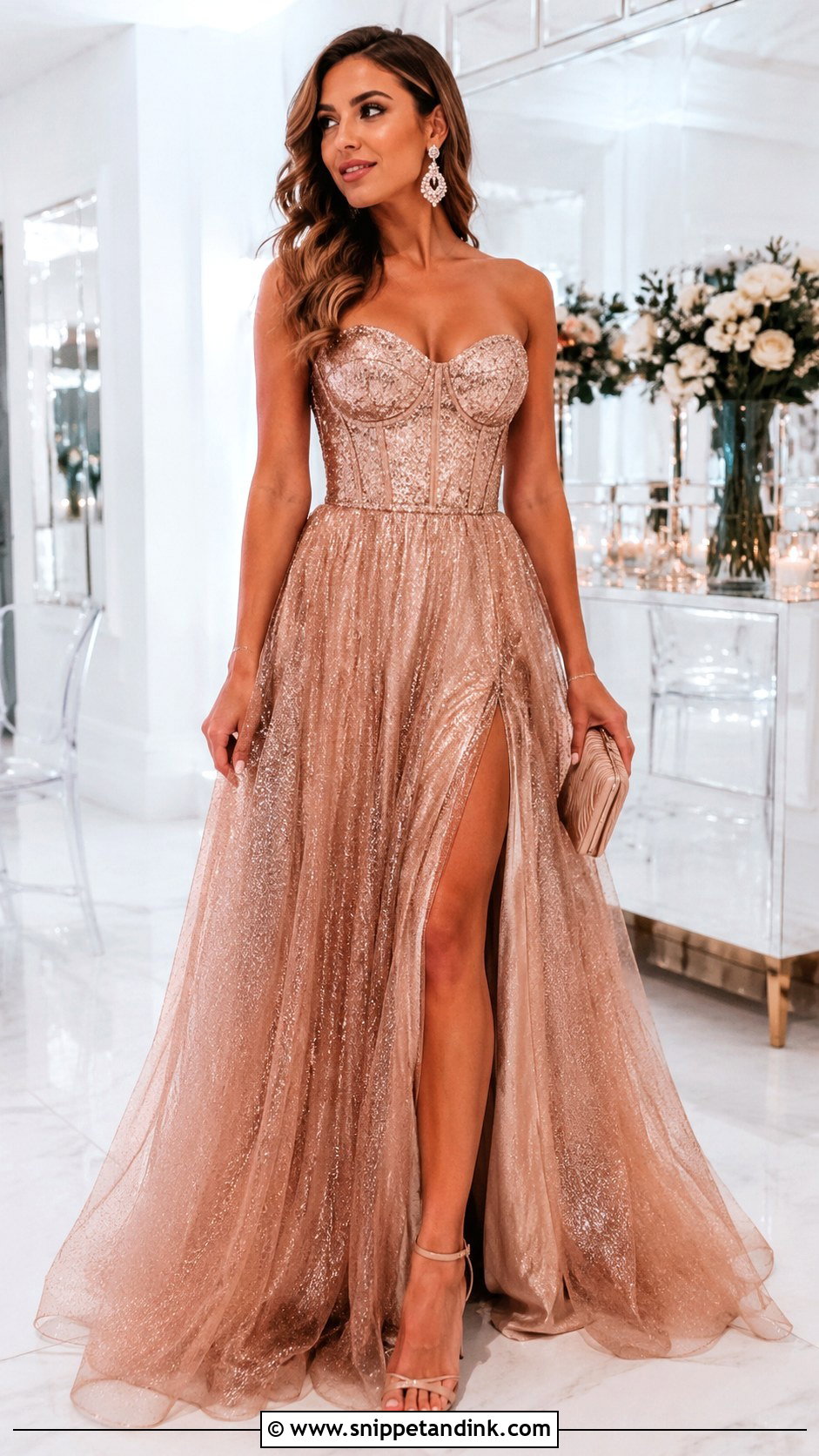
Rose gold sits easily on warm and neutral skin, and it’s less expected than plain gold or silver. The risk is too much shine from head to toe, so I balance a sequinned or metallic tulle skirt with a fitted, quieter bodice. Soft satin with a rose-gold sheen is the subtle version. Nude heels, rose-gold earrings and a small blush clutch. Keep hair and makeup soft: a glossy lip, loose waves and glowing skin rather than heavy contour.

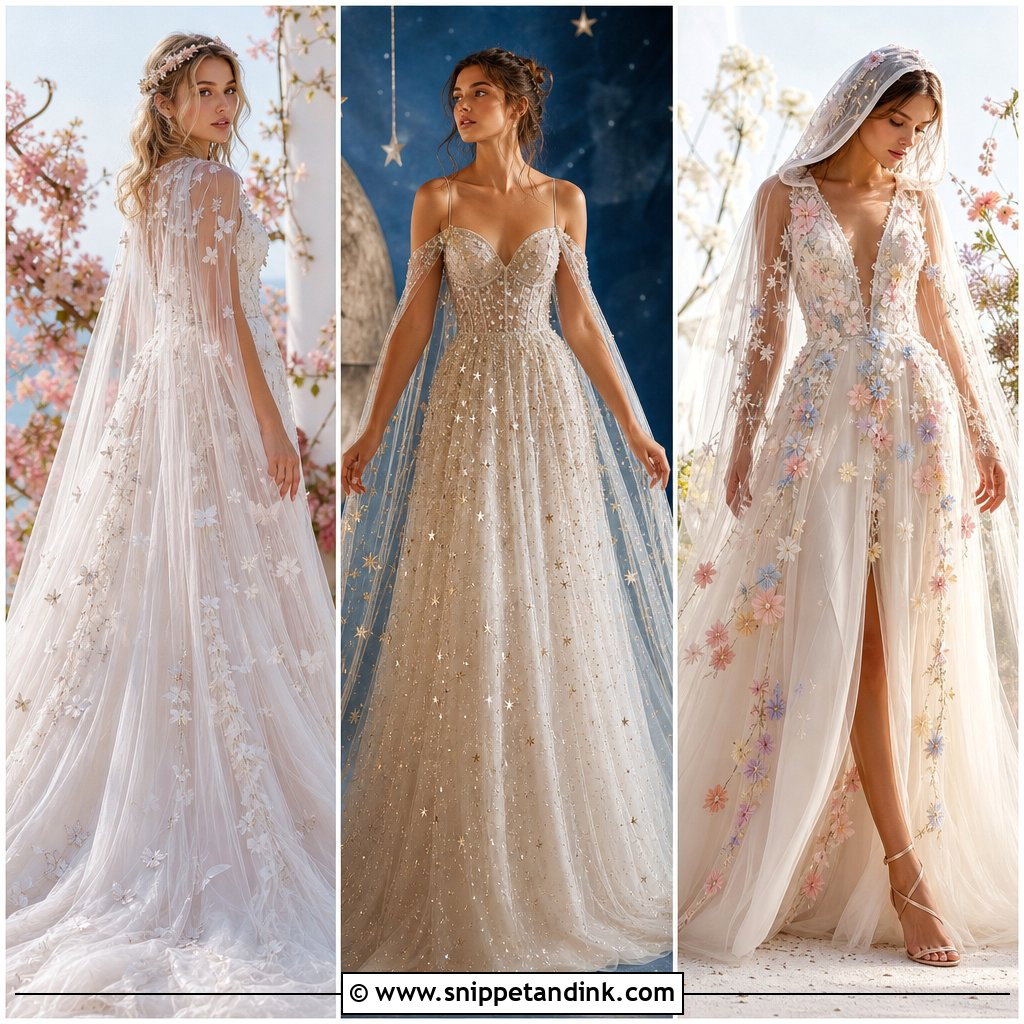
25. Cape Sleeve Gown
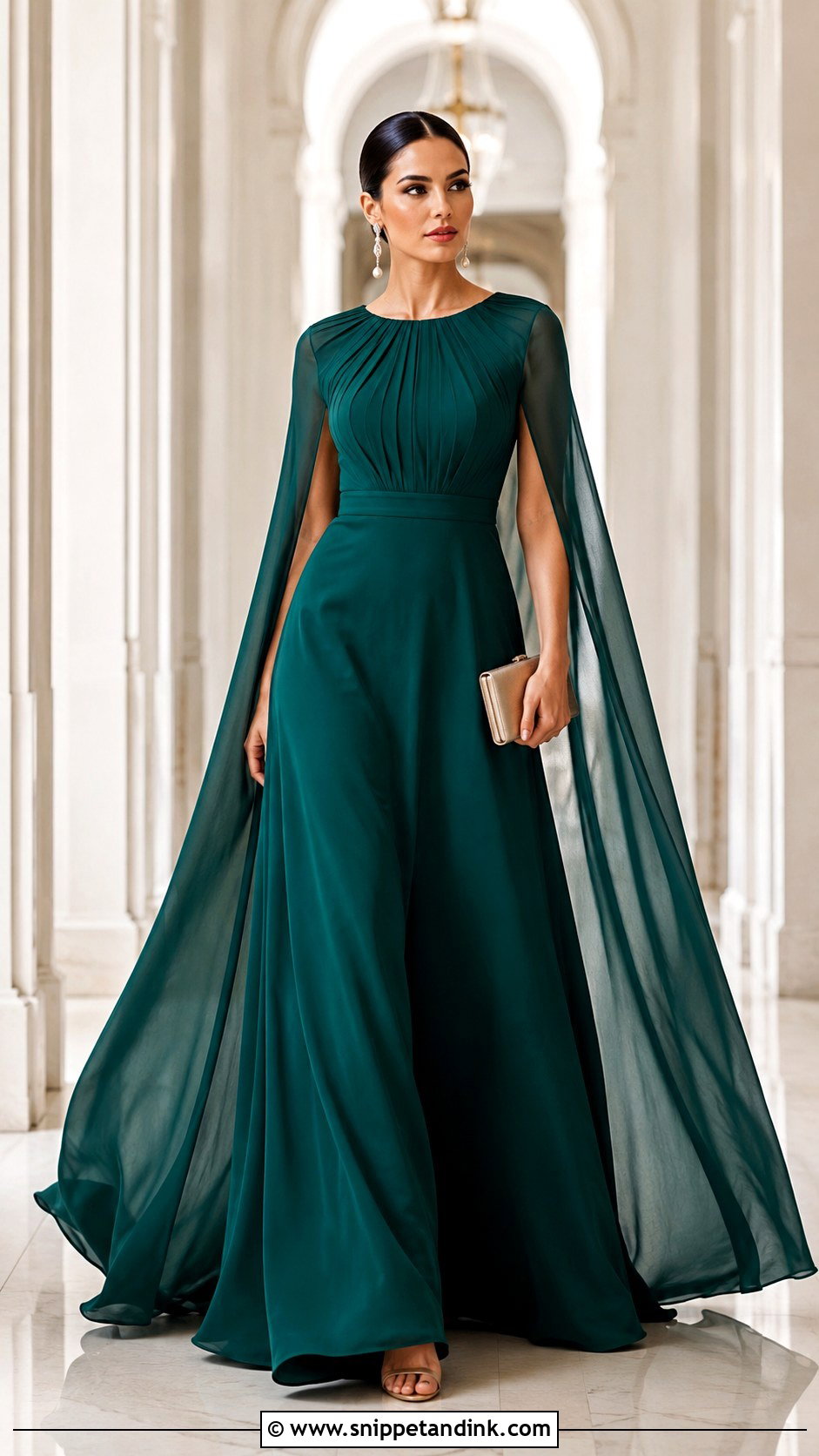
A cape gives drama without a huge skirt, which makes it practical for venues with narrow aisles or stairs. Sheer tulle or chiffon capes float as you walk; embellished ones hang heavier and stay put. Check how the cape attaches at the shoulder, because snap-on capes can drift sideways when you hug people. It works over an A-line, a column or a ball gown. Soft colors read romantic and jewel tones read powerful. Simple heels, drop earrings, a sleek clutch, and a low bun so the back detail stays visible from behind.
Sitting, Dancing and Bustling a Full Skirt
A ball gown that looks magical standing still can be miserable by the third hour if nobody planned how you’ll move in it. I walk every client through the evening at the final fitting, because the problems are predictable.
Getting in and out of a chair
Gather the back of the skirt with one hand as you sit, so you’re not crushing the train or the hoop. If the gown has a hoop or stiff petticoat, ask whether it’s sewn in or separate; a separate one can come off for dinner and go back on for photos.
Trains and the dance floor
Any train longer than a sweep needs a bustle, and someone besides you must know how it works. Have your maid of honor practice it at the last fitting, ideally twice, and photograph the hooks or ribbons with her phone. A wrist loop is the quick fix if a bustle isn’t possible, but it gets tiring on a long night.
Fittings, Hems and the Shoes That Set Them
Alteration timing catches people out. I like the first fitting about six to eight weeks before the event, with one or two more after it, and a heavily embellished or corseted gown may need longer. Delivery times for made-to-order gowns vary a lot, so ask the shop for a date in writing.
Bring the exact shoes you’ll wear to every fitting. The hem is cut to that heel height, and switching to flats later leaves you stepping on your skirt all night. If you’ll change into flats for dancing, ask for the hem to be set at a height that works for both, usually just skimming the floor in the heels.
Wearing a Storybook Gown Past Midnight
A storybook look should never feel like dressing up as someone else. The gowns that work are the ones you can sit, dance and hug in, in a color that suits you in daylight, with accessories that stay out of the dress’s way. Blue tulle, pearl beading, a sweeping cape: whichever you lean toward, trust the one whose fabric and fit you’d happily live with for ten hours, and let the gown carry the evening.
You'll Like These Ideas:







Leave a Reply