
Dusty blue wedding nails are the quietest way I know to wear something blue. The grey in the shade stops it reading as a statement, so it sits comfortably next to a white or ivory gown, silver jewelry, pearls and bridesmaids in the same color. It’s also one of the few colors I can put on a bride, her mother and a guest without anyone looking out of place. Below are twenty sets, from a micro French to chrome, florals and shimmer, with what I’d watch for on each: the shape it needs, how it wears, and where it tends to go wrong.
Pale Blue Wears Best in Gel, and Here’s When to Book It
Pastel blues are stubborn to apply. Most need two or three thin coats to cover without streaks, and a thick single coat of gel wrinkles under the lamp. That’s one reason I recommend gel or a builder gel overlay for weddings: it’s fully cured when you leave, so there’s no overnight denting, and it lasts through the honeymoon. Regular polish is fine if you’d rather avoid gel, but it takes many hours to harden completely, and a dent shows more in dusty blue than in a nude.
Appointment timing
- Gel or builder gel: one to three days before, so there’s almost no regrowth gap at the cuticle in close-ups.
- Regular polish: the day before, followed by an evening without hot water, washing up or digging through bags.
- A trial: a few weeks out if you’re trying chrome, foil or a new shade, so you can see how it wears over a normal week.
- Bridesmaids: spread across the two days before, never all crammed into the wedding morning.
1. Dusty Blue French Tip Wedding Nails
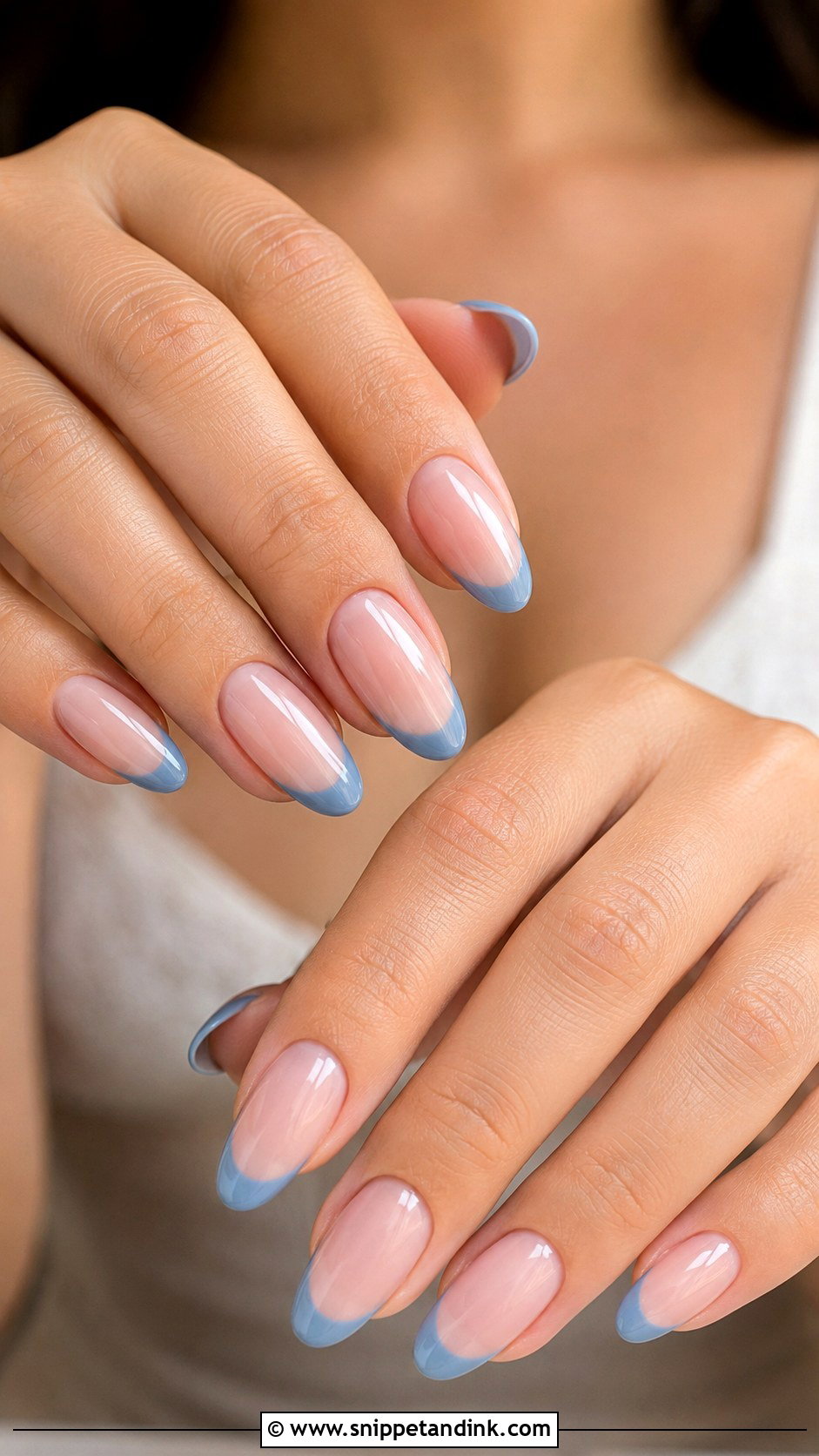
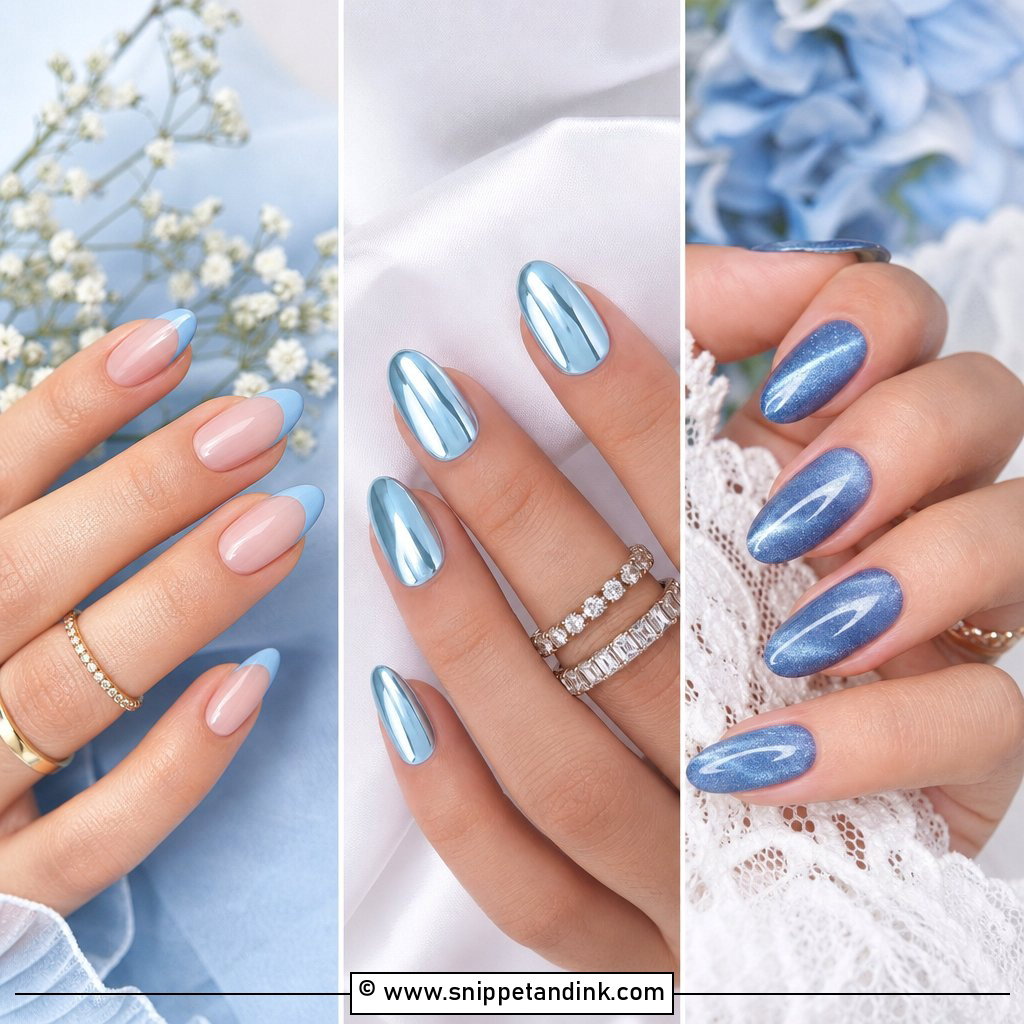
Dusty blue French tip wedding nails swap the usual white edge for blue, which makes the classic bridal manicure feel personal. The base decides how clean it looks. A sheer pink or milky nude that matches your nail bed lets the tip float, while a base that’s too opaque makes the nail look painted twice. I draw the smile line to follow your natural free edge, thin for a micro French or a little deeper for more color, and on short nails I keep it thin so the nail doesn’t look shorter. Almond, oval and short square shapes suit it best.
2. Dusty Blue Chrome Wedding Nails
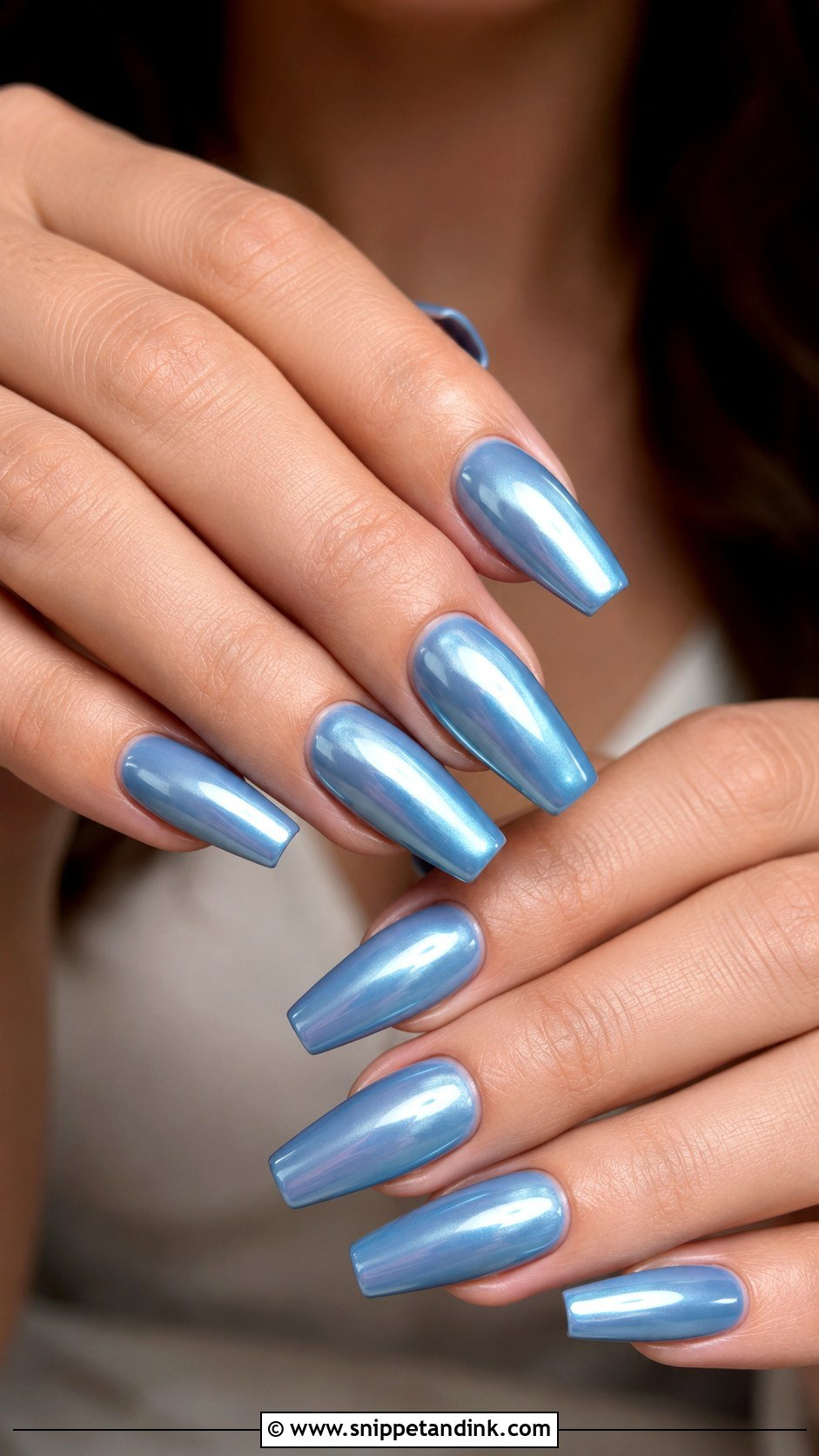
On dusty blue, chrome gives a pearly glow rather than a mirror, as long as you ask for a soft pearl or aurora powder and not a full metallic. That’s the difference between bridal and futuristic. Chrome is rubbed into a no-wipe top coat and then sealed, and the free edge needs capping well, because chrome is the first thing to wear at the tips when you’re typing or tearing open cards. Almond and coffin shapes show the shine best. It’s a natural partner for satin or a cool-toned beaded gown.
3. Dusty Blue Ombre Wedding Nails
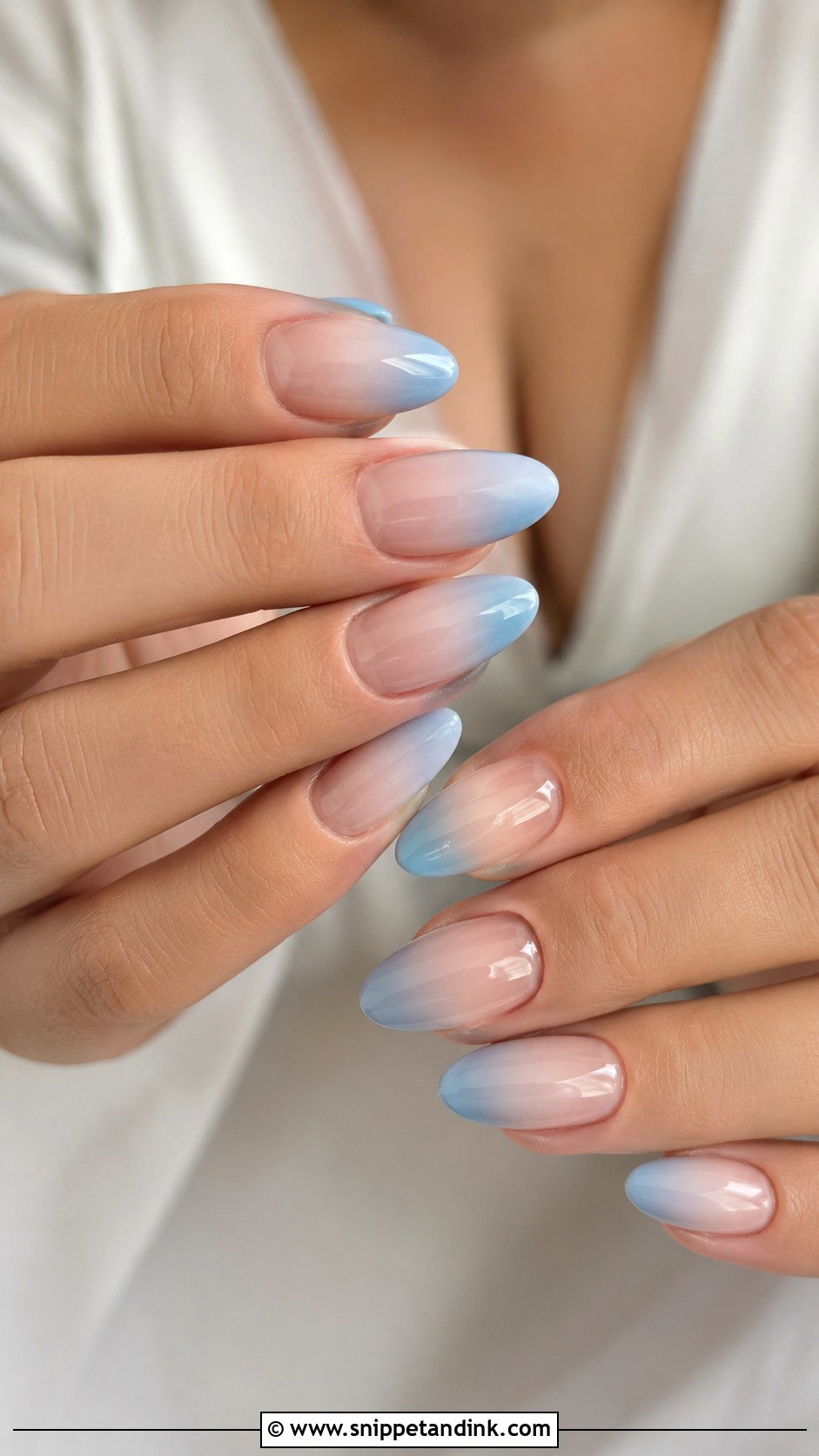
Dusty blue ombre wedding nails fade from sheer nude at the cuticle to blue at the tip, so the color reads delicately up close. I sponge or airbrush it in thin layers. One heavy dab leaves a visible band instead of a gradient. Longer almond, coffin and ballerina nails give the blend more room, and on very short nails the fade compresses into something closer to a dark tip. A glossy top coat smooths the sponge texture, and a whisper of shimmer on top adds a little sparkle.
4. Dusty Blue Floral Wedding Nails
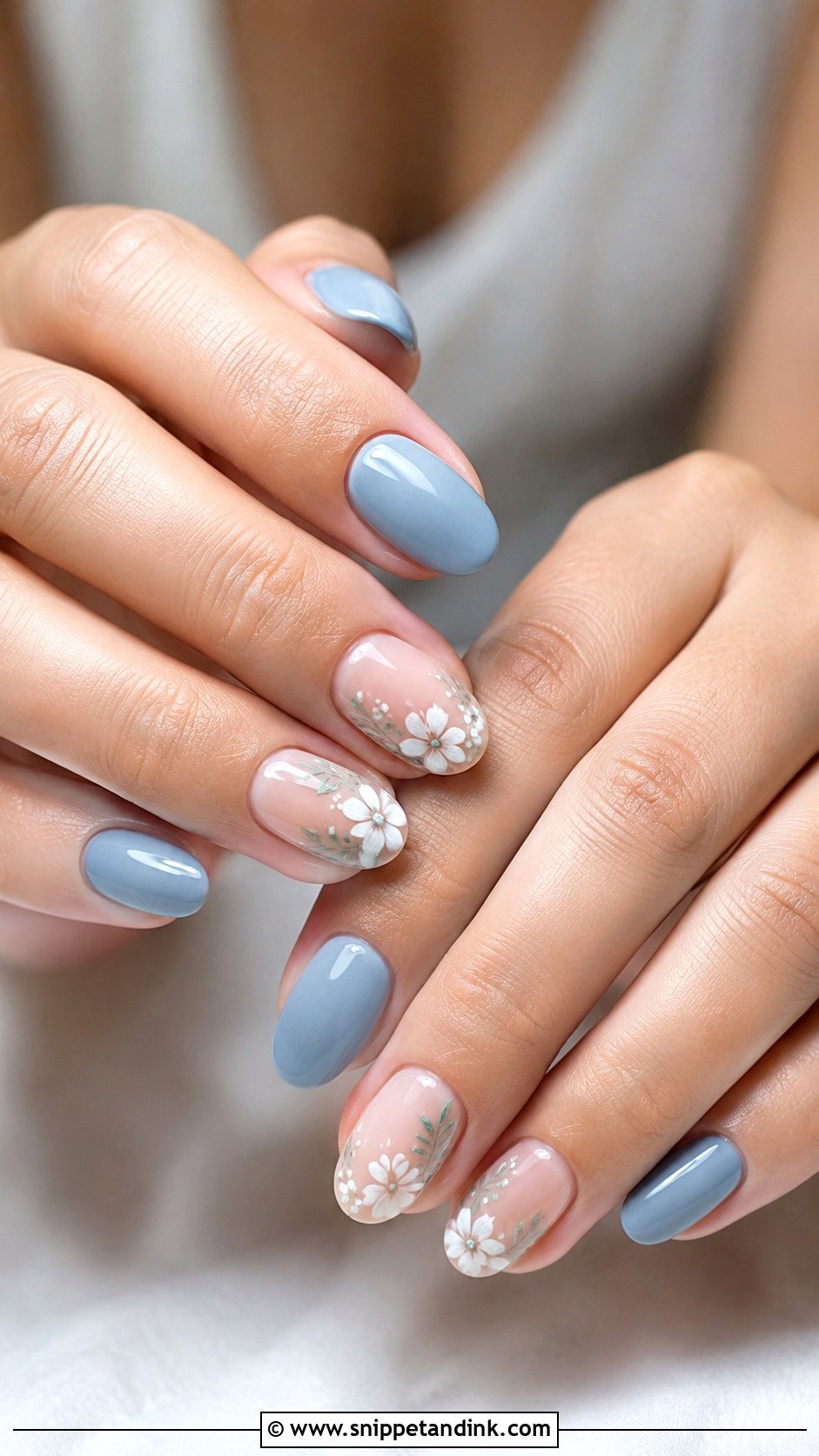
With hand-painted flowers, I’d keep them to one or two accent nails. Small white blossoms, fine green leaves or pale blush petals on a dusty blue base look like a garden; on all ten nails they get busy in ring photos. The rest can stay solid blue, sheer nude or milky white. I paint florals with a thin liner brush in gel so every petal sits flat under the top coat, which also stops them catching on lace. Short ovals make the flowers look sweet, and almonds stretch them out. Spring and outdoor ceremonies suit this set best.
5. Dusty Blue And White Wedding Nails
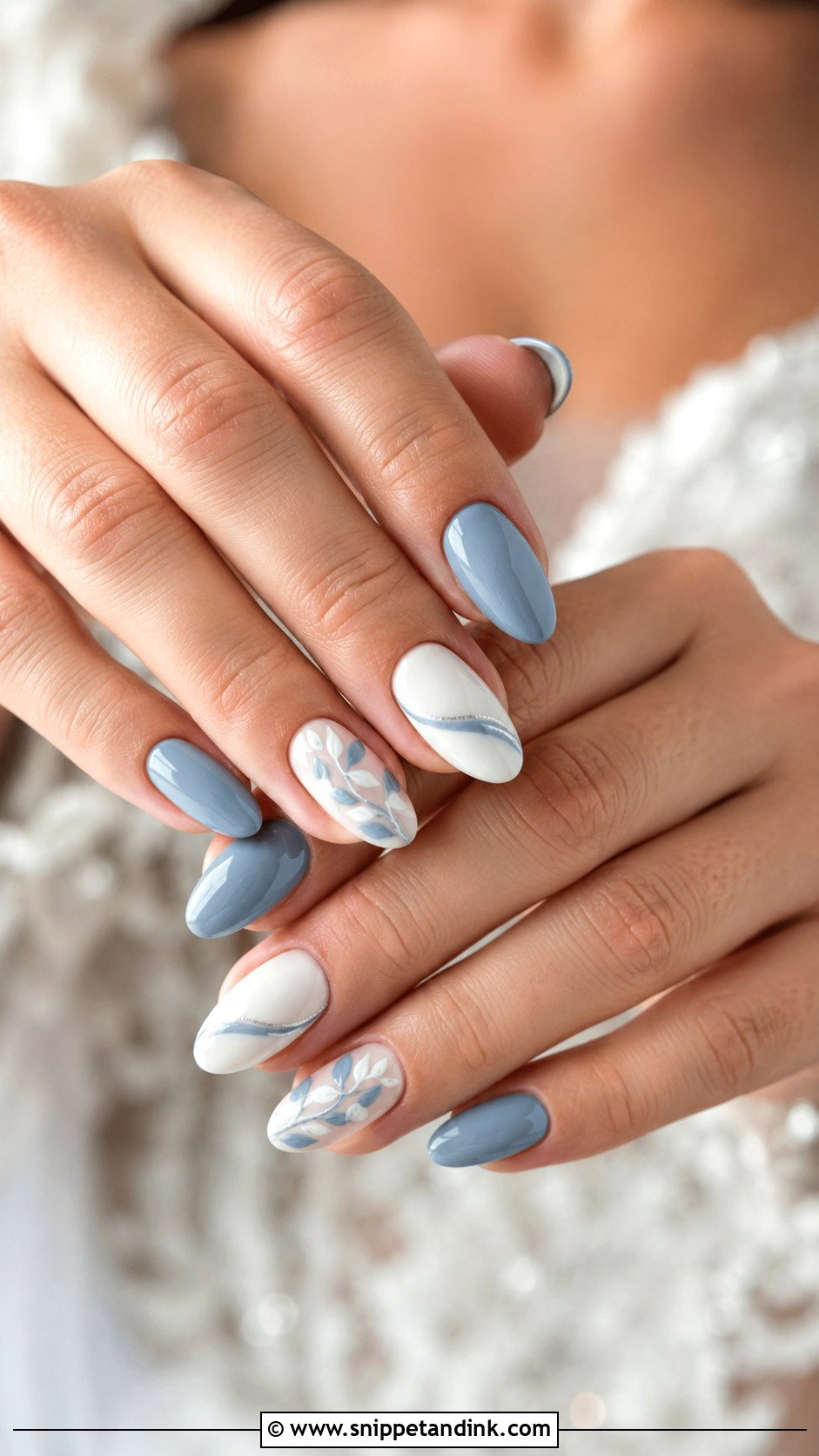
Blue and white is crisp and very bridal, done as alternating solid nails, French tips, swirls or a milky base with blue accents. I use white as the lighter anchor and blue as the statement. The reverse, mostly white with a few blue nails, can look like correction fluid in flash photos unless the white is milky rather than stark. It sits well with lace, tulle or pearl detail on the dress. Gloss is classic; a soft matte top coat feels more modern.
6. Dusty Blue Glitter Wedding Nails
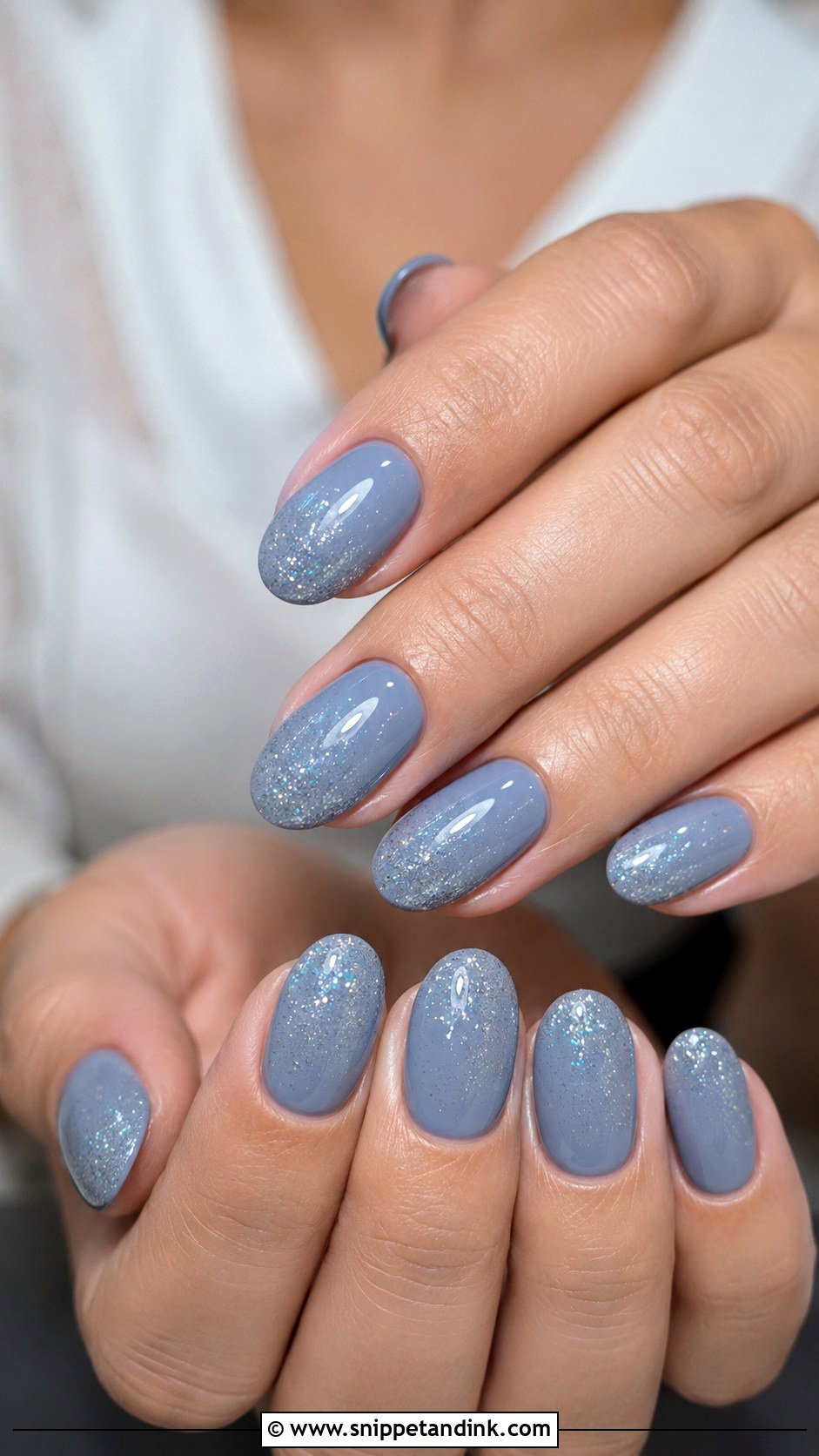
Fine shimmer, not chunky glitter, is what keeps a sparkly set refined. A dusty blue base with silver micro-glitter catches light during the vows and in ring shots without looking like a party manicure. I’d fade it down from the tip rather than packing it on, which also hides grow-out better than a full glitter nail. Glitter needs an extra layer of top coat to bury its texture, or it snags on tulle. Pair it with silver jewelry or crystal hair pins, and keep the sparkle to a few nails if you want it understated.
7. Dusty Blue Matte Wedding Nails
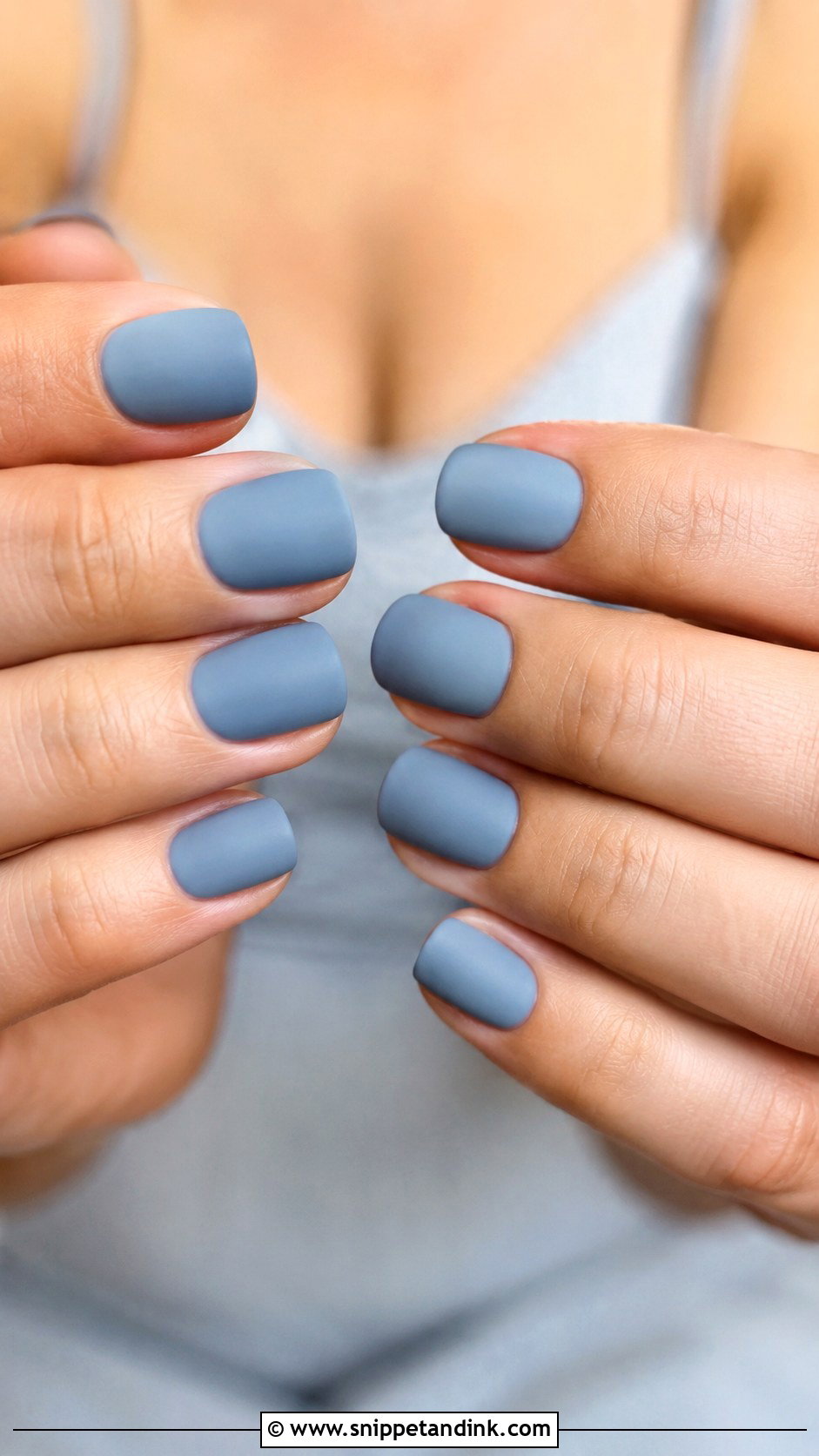
Matte dusty blue looks powdery and calm, and it shows every flaw. Ridges, a lumpy cuticle line and uneven polish all stand out under a matte top coat that gloss would have hidden, so I spend extra time on prep and leveling with this one. Matte also picks up oil from hand cream and can turn patchy and shiny over a few days, so keep lotion off your nails on the day. Short square, oval and almond shapes all suit it. Thin white line art or a glossy French tip gives it a finishing detail.
8. Dusty Blue Pearl Wedding Nails
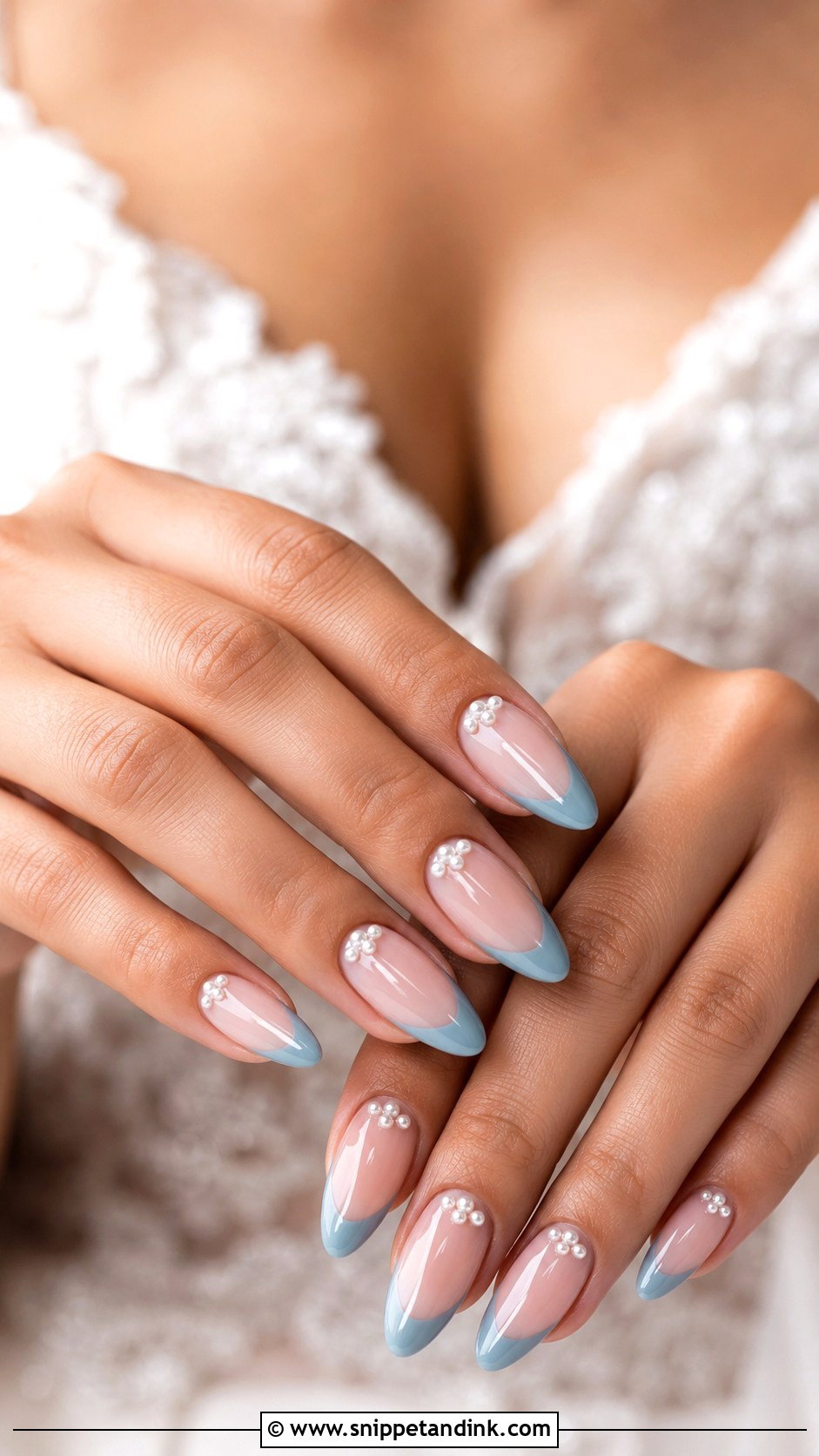
Pearls and blue cover something blue and a classic bridal touch in one set. Tiny pearls near the cuticle, along a French tip or on one accent nail look refined; a full blue base with small pearls in a curve is bolder. Here’s the catch I always raise: 3D embellishments snag on veils, lace sleeves and knitwear, and a pearl that pops off on the morning is gone for good. I set them in builder gel, keep them small and flat, and place them near the cuticle, away from the free edge where most snags happen.
9. Dusty Blue Lace Wedding Nails
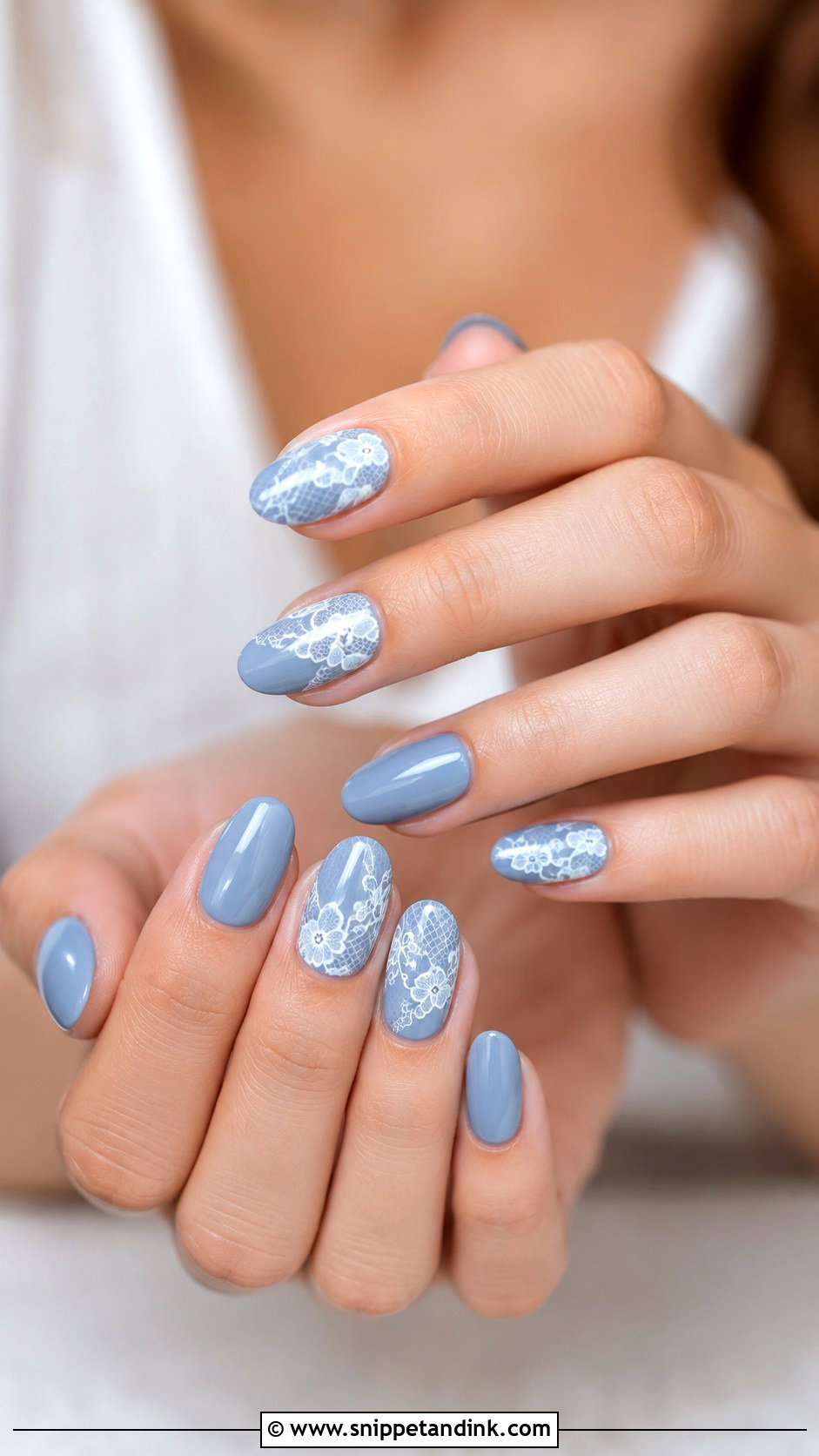
Lace nail art is built from fine lines, dots and tiny floral shapes in white over a dusty blue or sheer nude base, so it can echo the detail of your dress. Every motif is freehand, which makes this the slowest set on the list. Book a longer appointment and ask to see the artist’s own lace work first. Stamping plates give a quicker, very even lace pattern, though it looks less hand-done. Almond and oval shapes suit it. Matte gives a fabric-like effect, and with lace sleeves or embroidery on the gown it ties your hands to the dress.
10. Dusty Blue Short Wedding Nails
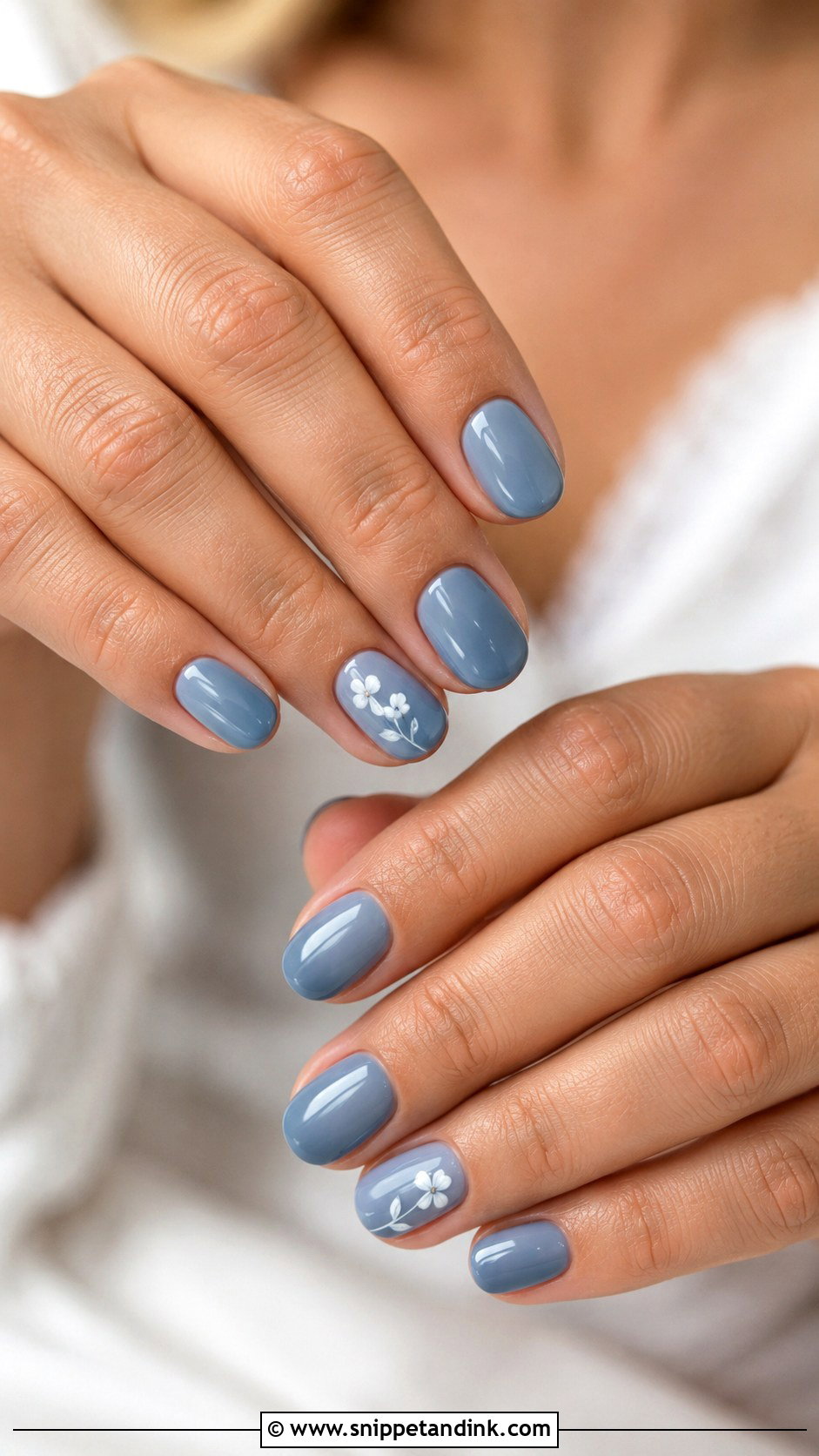
Short nails can absolutely look bridal, and on a long day they’re the most practical: no snagged veil, no fight with earring backs, no trouble holding a phone. What makes them look intentional is a neat shape, rounded, oval or short square, and a smooth, even color. A glossy dusty blue alone is plenty. A thin white French or one floral accent adds detail if you want it. I’d suggest this length for bridesmaids especially, because the shade forgives small differences in length across a group.
11. Dusty Blue Almond Wedding Nails
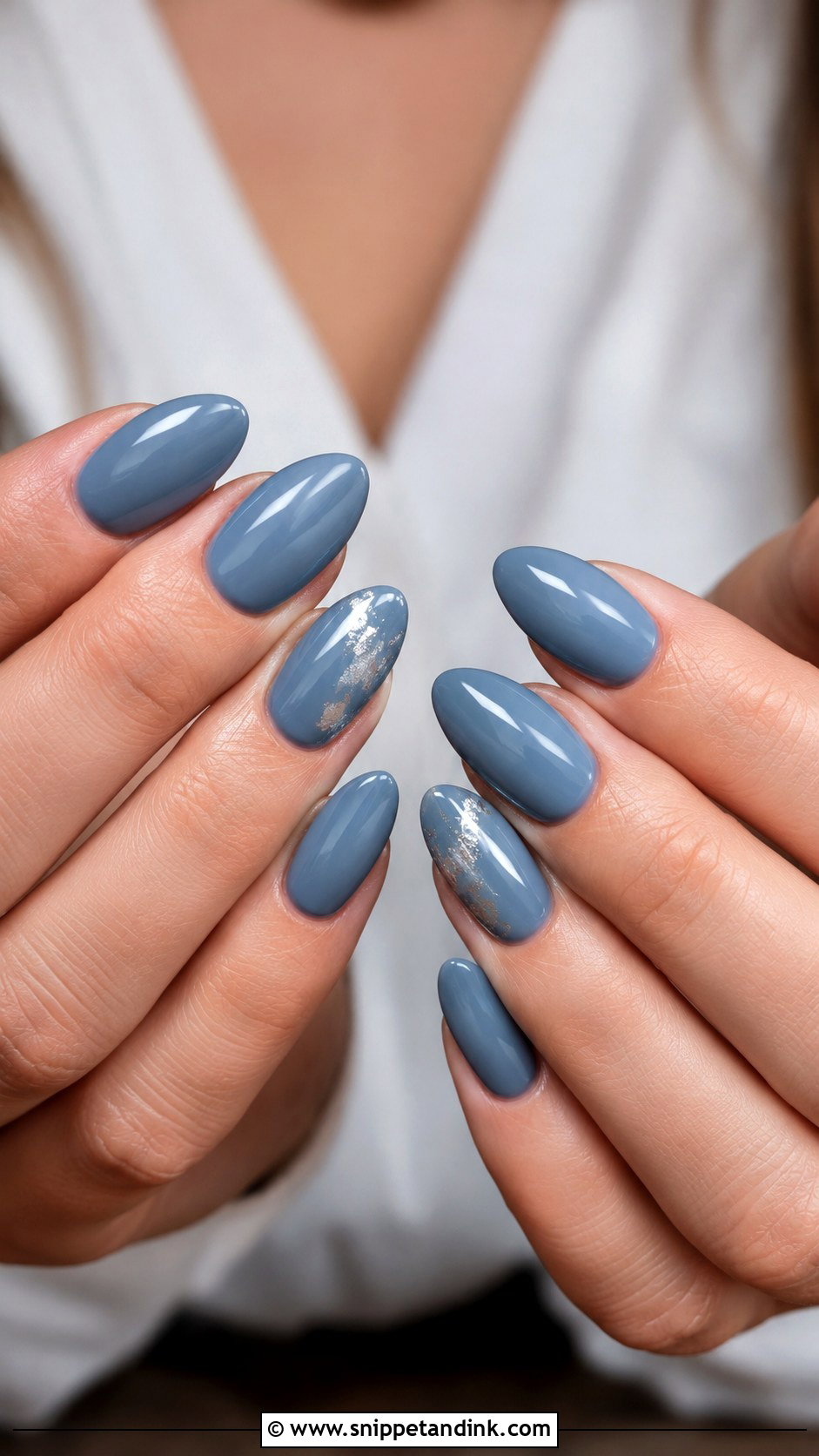
Almond lengthens the fingers, which is why so many brides ask for it with ring shots in mind. The tapered tip makes a creamy dusty blue look graceful even as a plain glossy set, and it leaves room for a French, an ombre, chrome or a small floral. Almond is a little weaker at the tip than square, so on natural nails I keep it medium length, and on thin, bendy nails a gel overlay helps prevent a break the week of the wedding. Silver foil or a few pearls add detail.
12. Dusty Blue Coffin Wedding Nails
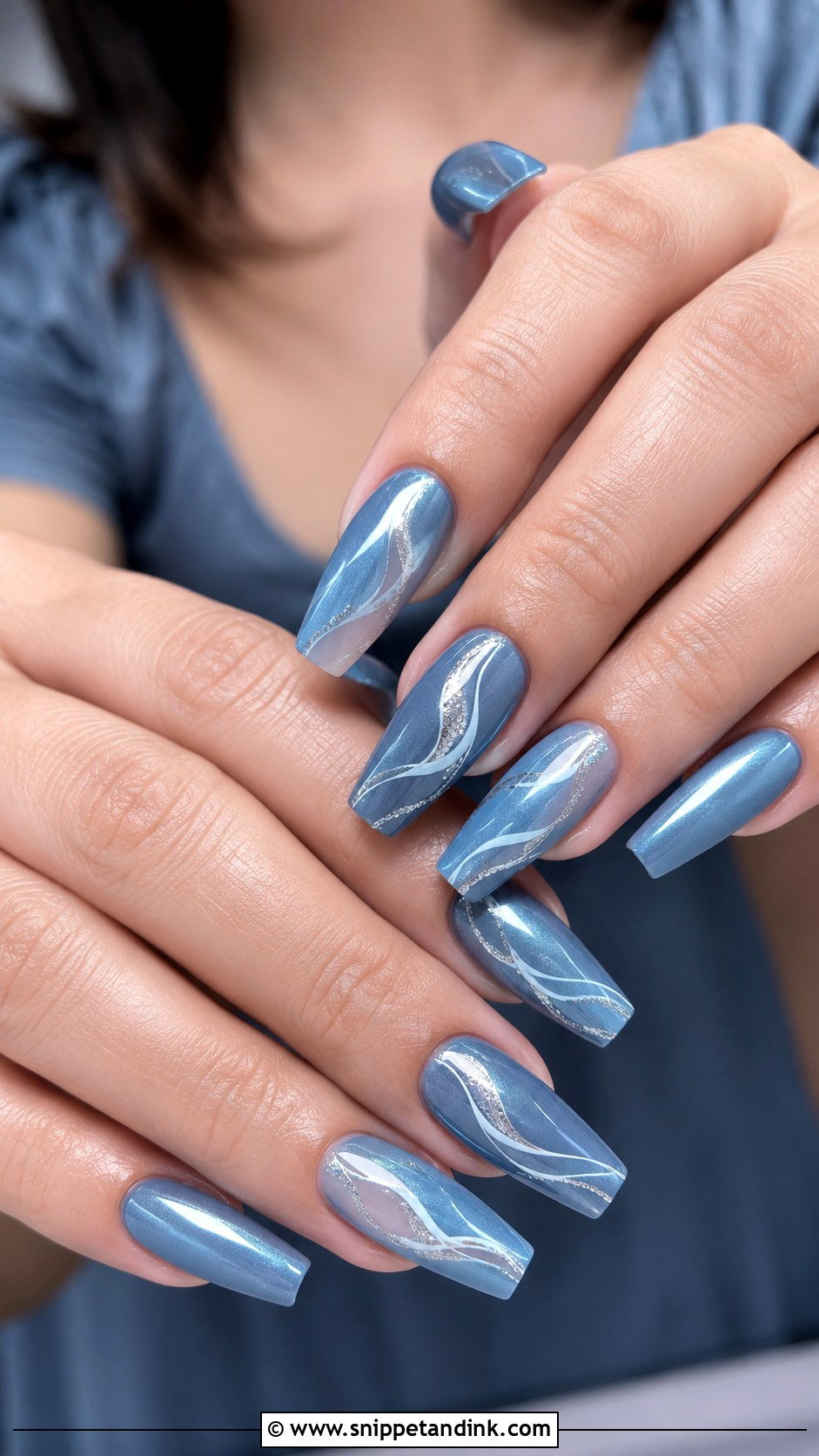
Coffin is the statement shape here: tapered sides with a flat tip that feels modern next to a sleek or structured gown, while the dusty blue softens its edge. Chrome, a glitter ombre or white swirls dress it up. I’d keep it medium rather than long. Very long coffins need extensions, change the way you hold the bouquet, and can pop off when caught, and that flat tip is where chips start. Medium length still gives plenty of space for nail art.
13. Dusty Blue Square Wedding Nails
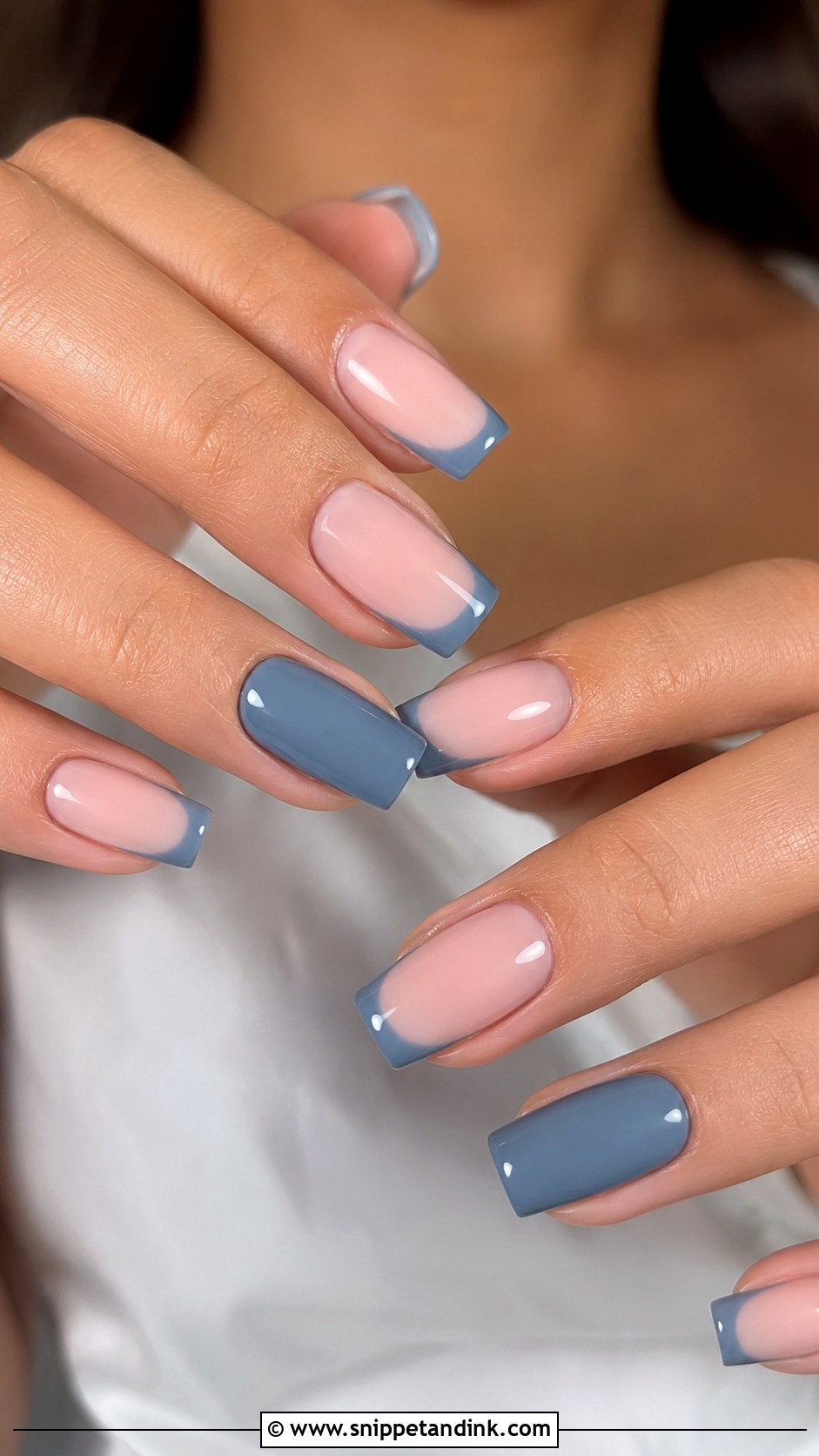
Square is neat and sturdy, and the straight edge gives a muted blue a clean finish. Short square takes a solid color well, and medium square has room for a French tip, chrome or small florals. A sheer nude base with blue tips is the lighter version. The detail I fuss over is the corners. Sharp corners catch on fabric and chip first, so I soften them slightly toward a squoval for anyone who’ll be helping set up the venue. Guests and bridesmaids get on well with this shape.
14. Dusty Blue Swirl Wedding Nails
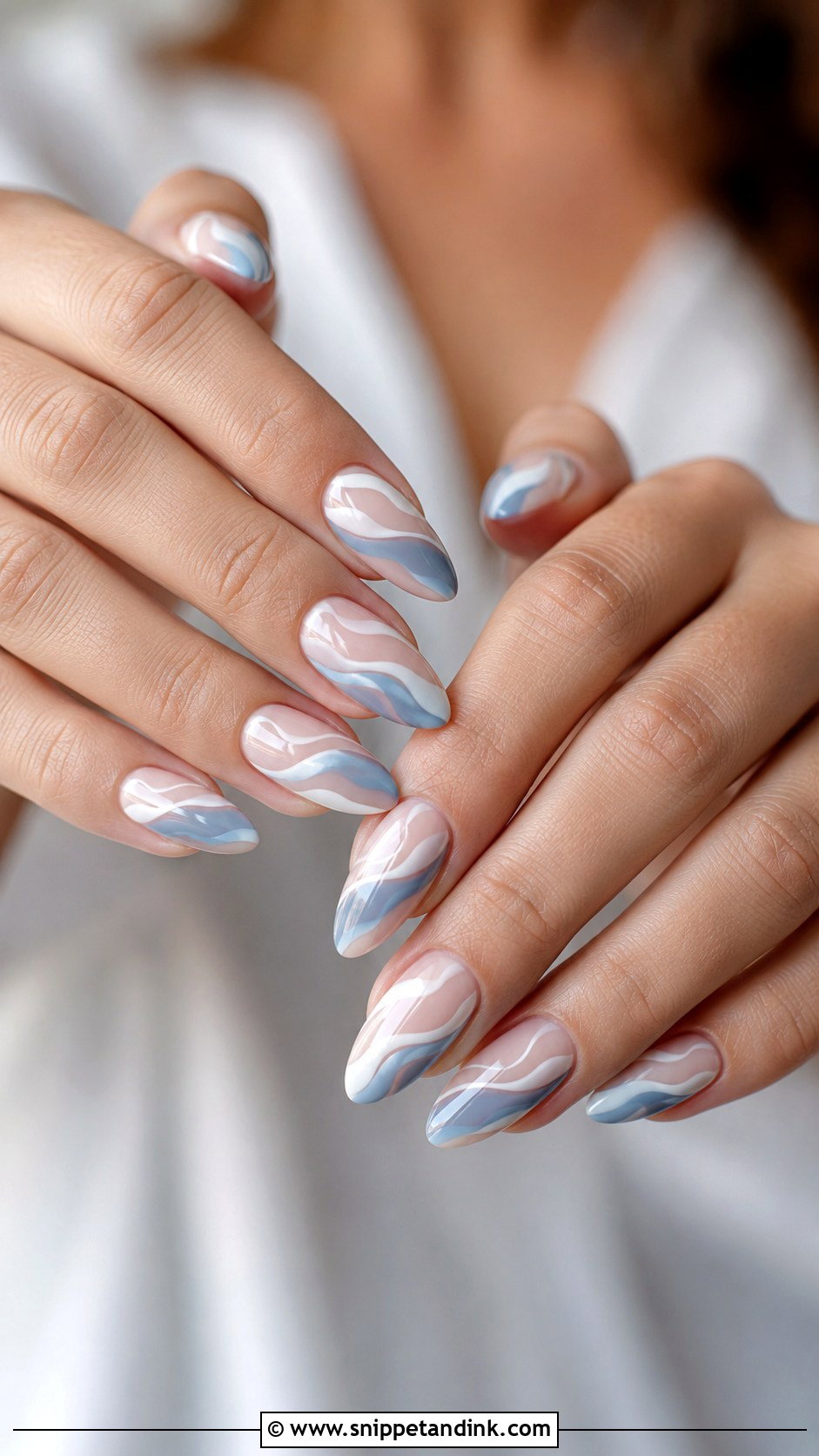
Swirls give nail art movement without being loud. Curved dusty blue lines over a nude, milky or sheer pink base, with an optional strand of white or silver, suit chiffon dresses and soft waves. Line weight is everything. I paint them with a long, thin striper brush and keep each line fine, because thick swirls look retro and heavy. Almond and oval nails make the curves flow; square nails give a cleaner contrast.
15. Dusty Blue Silver Wedding Nails
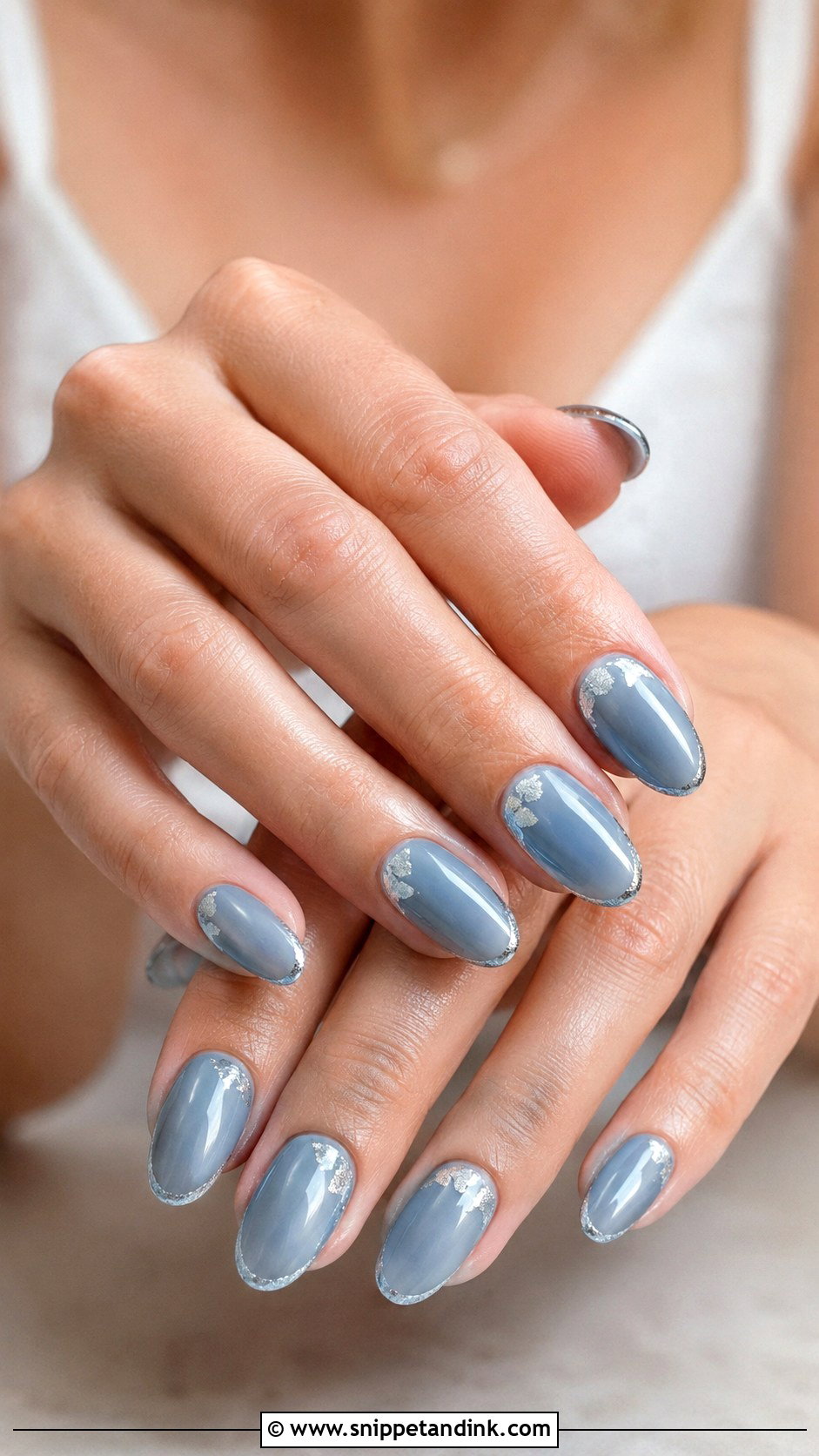
Silver brightens the muted blue and suits platinum or white gold rings, silver jewelry and crystal hair accessories. Thin silver French outlines, foil flakes, a glitter cuticle line or one metallic accent nail each give a different amount of shine. I prefer fine detail to heavy glitter, since the ring is already the most reflective thing on your hand and the nails shouldn’t compete with it. Foil needs its own sealing layer, or the edges lift within days. Keep the base dusty blue and the silver sparing.
16. Dusty Blue Gold Wedding Nails
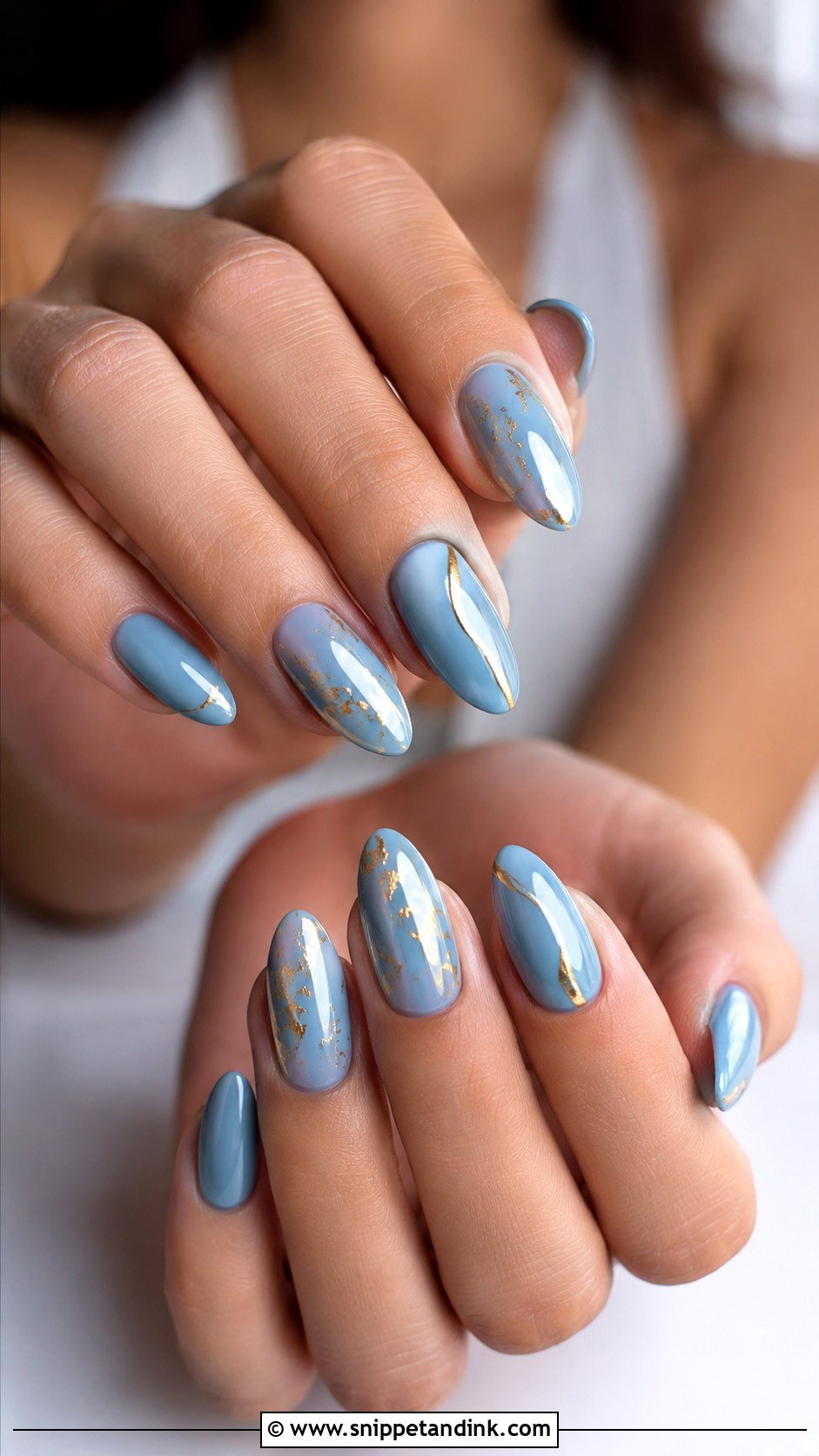
Gold gives a warmer contrast, suited to gold jewelry, champagne or ivory gowns and warm neutral palettes. Fine gold foil over dusty blue looks organic, while gold French outlines, tiny dots or a shimmer accent are more controlled. Match the gold to your ring. Nail foils come in yellow, rose and white gold, and a yellow foil beside a rose gold band looks off in close-up photos. Keep the gold light and let the blue lead. Almond, oval and short square nails all suit it.
17. Dusty Blue Marble Wedding Nails
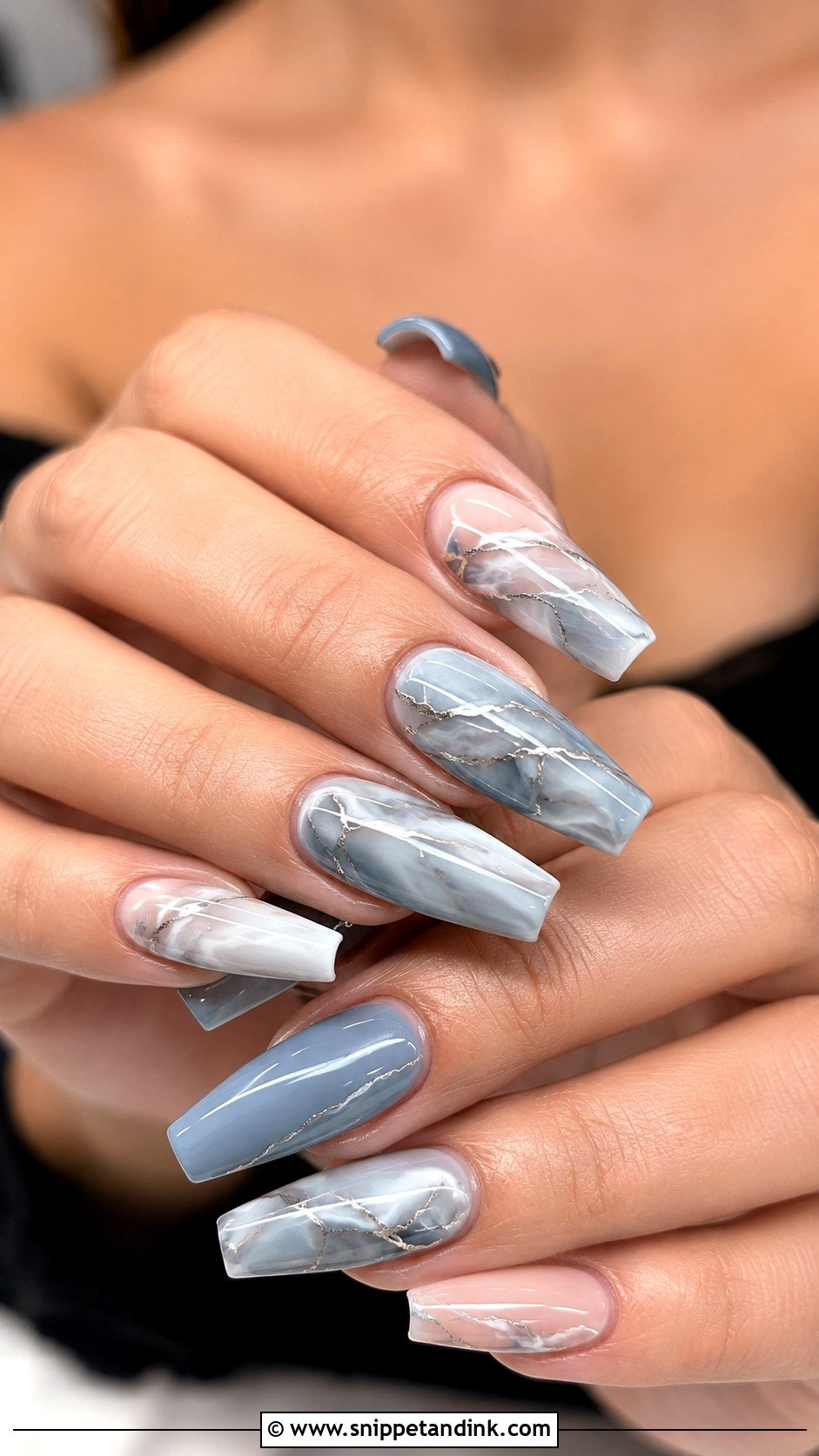
Dusty blue marble wedding nails blend blue, white, grey and sheer nude into a stone-like effect, sometimes with a fine silver or gold vein. I build marble with a blooming gel or by dragging wet colors together, so no two nails come out alike. That’s the appeal, but if you want both hands to match perfectly, pick another design. Put marble on a few accent nails and keep the rest solid blue or milky white. Coffin and almond shapes show the pattern clearly; on short nails it reads more minimal.
18. Dusty Blue Accent Wedding Nails
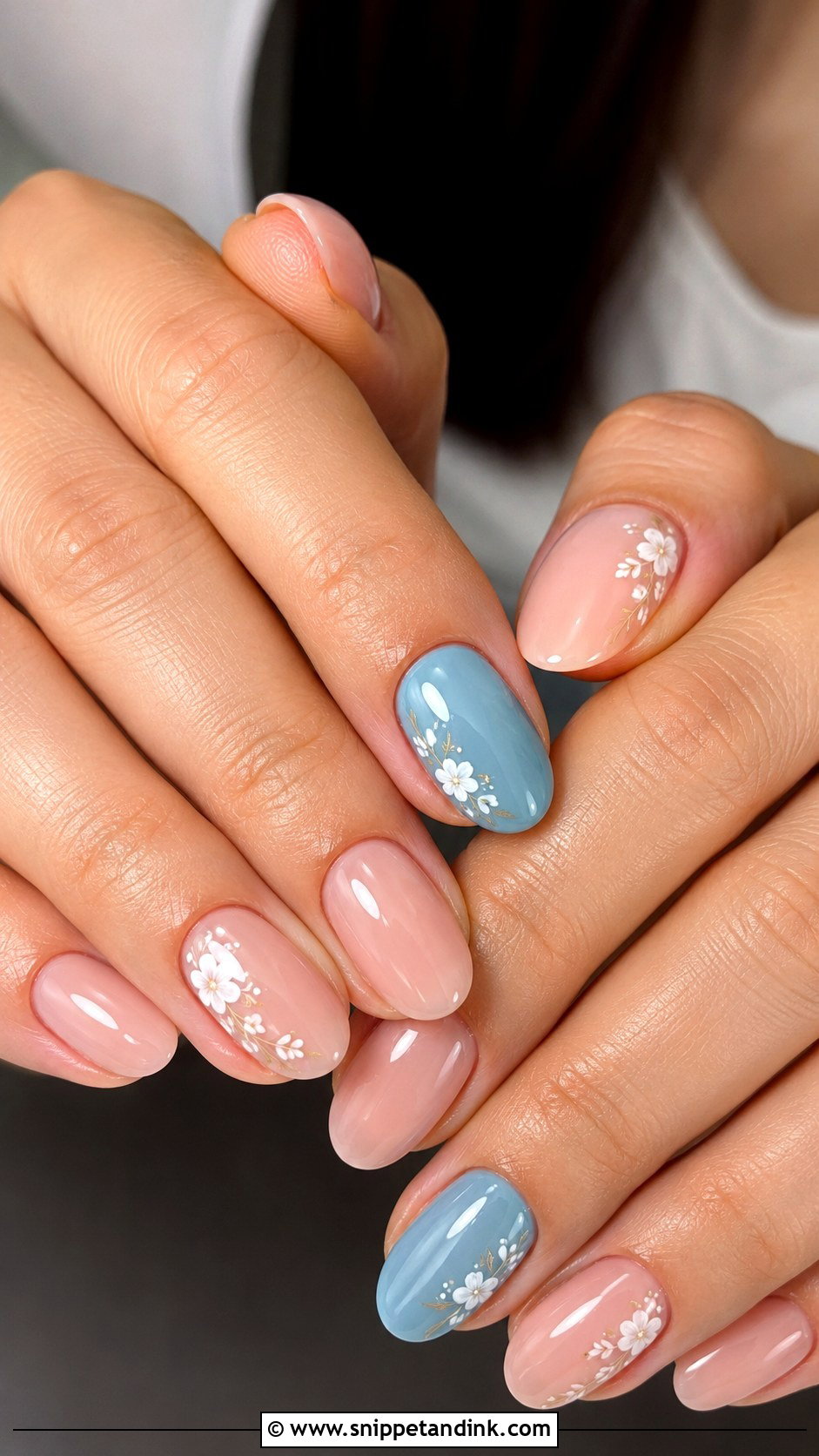
If you only want a hint of blue, one or two accent nails are enough. The rest stay sheer pink, nude, milky white or a classic French, and the accent carries the color: a blue flower, a blue tip, soft chrome or a tiny dusty blue heart. I usually put it on the ring finger, since that nail appears in every ring close-up, though some brides prefer the left thumb so it stays a private detail. It’s a smart route when the dress, bouquet or jewelry already has strong detail.
19. Dusty Blue Bridal Party Nails
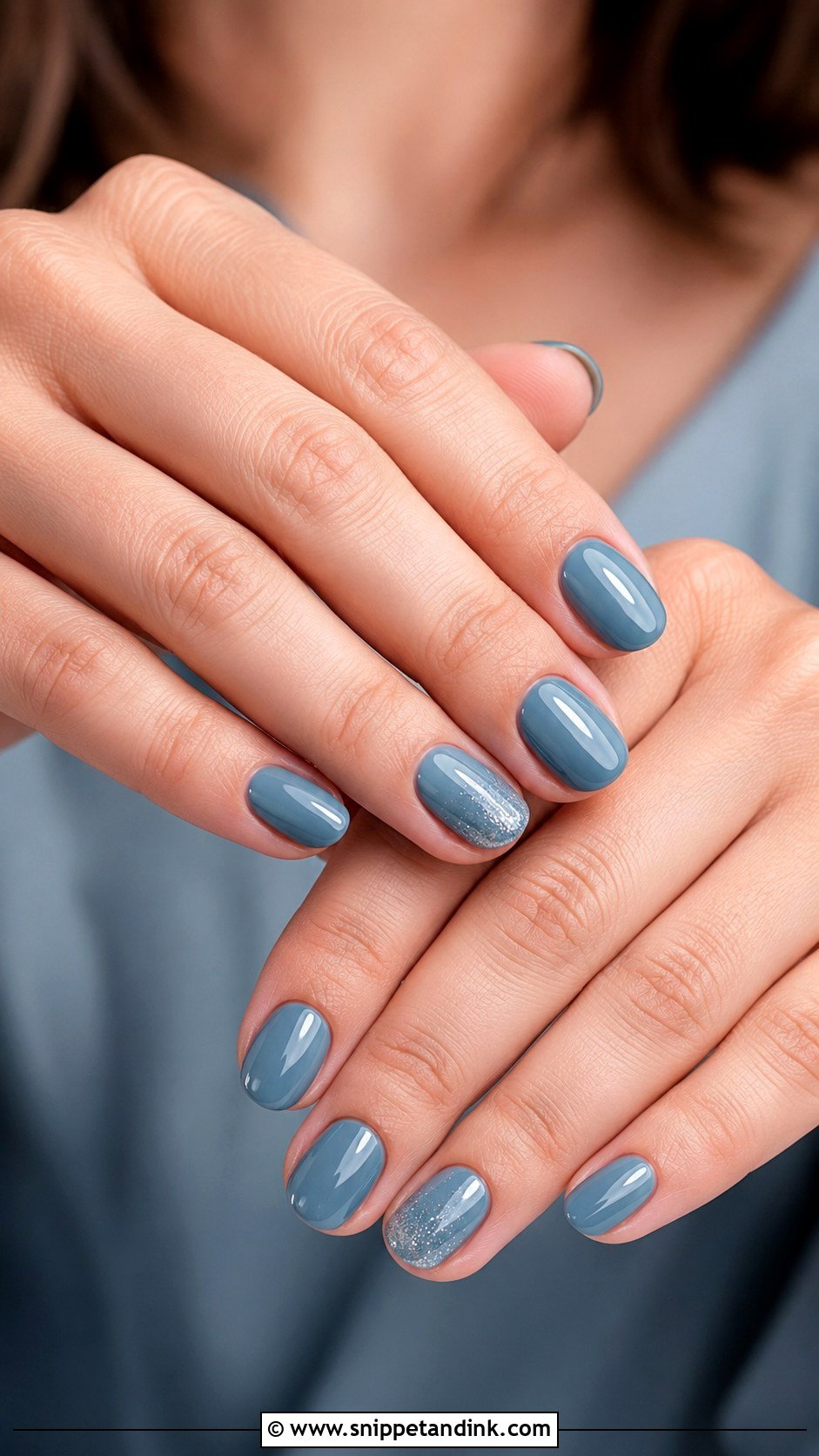
Dusty blue bridal party nails coordinate a group without forcing everyone into one look, and the shade sits well beside dusty blue dresses, navy or grey suits and pastel palettes. For groups, I agree on one polish and one finish, then let each person keep her own length and shape. A short square and a long almond in the same blue look coordinated; identical nail art on wildly different lengths does not. If several people are booked, spread the appointments across the two days before the wedding so nobody is rushed.
20. Dusty Blue Wedding Guest Nails
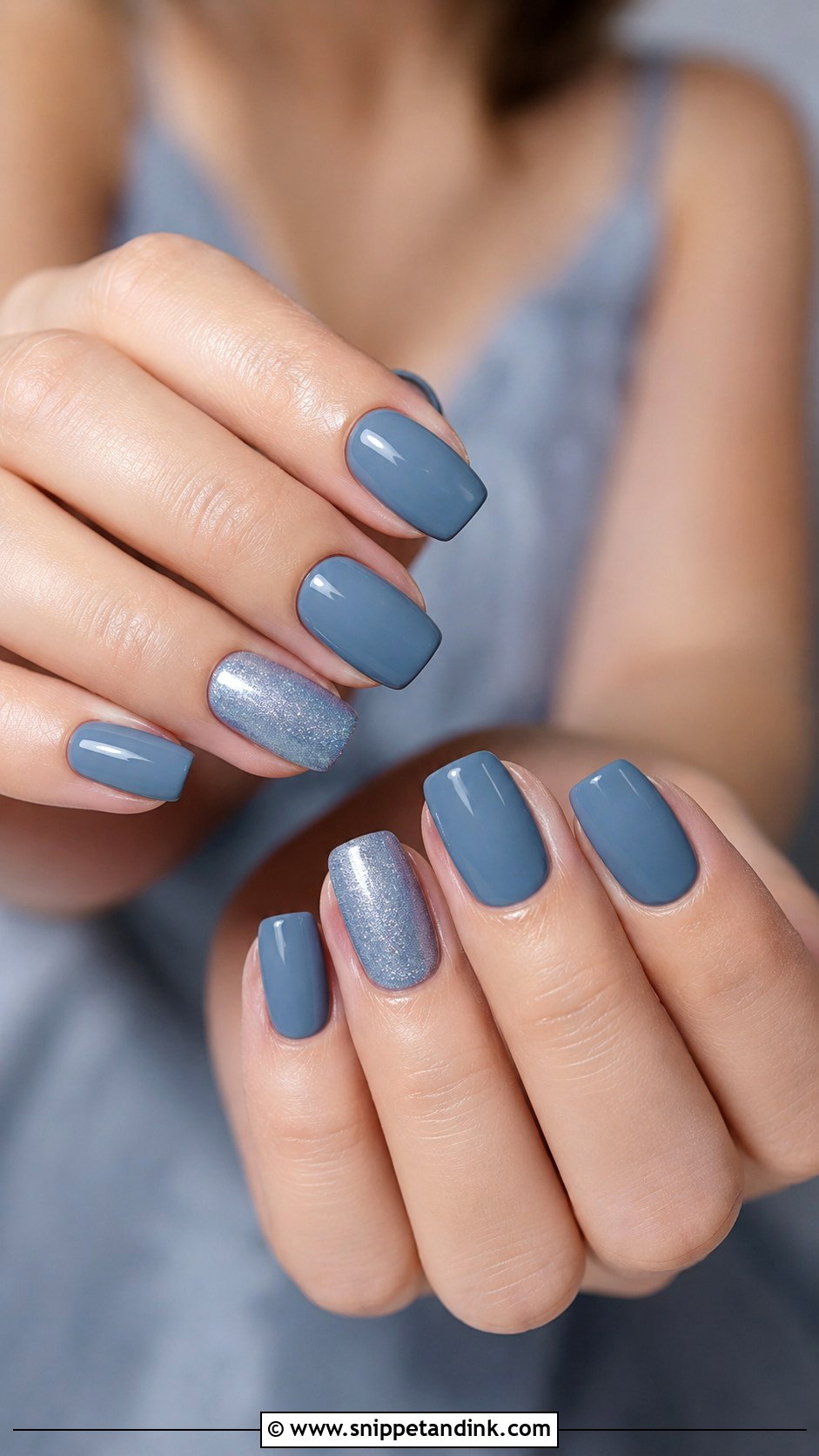
As a guest, dusty blue lets you dress up your hands without pulling eyes from the bride. A glossy blue goes with neutral, silver, navy, blush, grey or floral outfits. A blue French tip over a nude base is softer, and a little chrome or silver foil suits a formal evening. Short and medium lengths are the practical choice if you’ll be dancing or holding a glass all night. It’s worth checking whether the bridesmaids are wearing this exact shade, since some brides like to keep it for their group.
Not Every Dusty Blue Flatters Every Hand
Dusty blues range from grey-heavy shades to ones with a hint of periwinkle or green, and skin undertone changes how each reads. On cool, pink-toned skin the greyer versions look clean. On warm or olive skin, a very grey blue can make the hand look slightly sallow, and a shade with a little more blue or a soft periwinkle lean usually sits better. On deep skin tones the palest pastels can look chalky, while a mid-tone dusty blue with more pigment looks rich. Judge any shade painted on your own nail, in daylight, never on a swatch stick.
Pearls, Foil and Chrome on a Day Full of Lace and Tulle
A wedding day is harder on nails than an ordinary week. You’ll be pulled into sleeves, gripping a bouquet stem, pinning a veil and hugging relatives in knitwear, and raised details take the punishment. I keep pearls and gems flat and set in gel close to the cuticle, and I wrap the top coat over the free edge on chrome and foil. Tuck a nail file and a small bottle of clear top coat into the emergency kit. If something lifts, a dab of top coat holds it until the photos are done, whereas picking at it only makes it worse.
Your Dress Fabric Should Pick the Finish
Dusty blue can be classic as a French tip, romantic with flowers, modern in chrome or polished with pearls and metal, and it’s subtle enough for a bride, a bridesmaid or a guest. To decide, I look at the dress fabric first. Satin and silk suit chrome and gloss, lace and tulle suit painted detail kept flat, and matte belongs with crepe or a minimal gown. Then I look at the metal of your ring, and then at how much you use your hands. A simple glossy blue is never wrong. The details are what make it yours.
You'll Like These Ideas:


Leave a Reply