
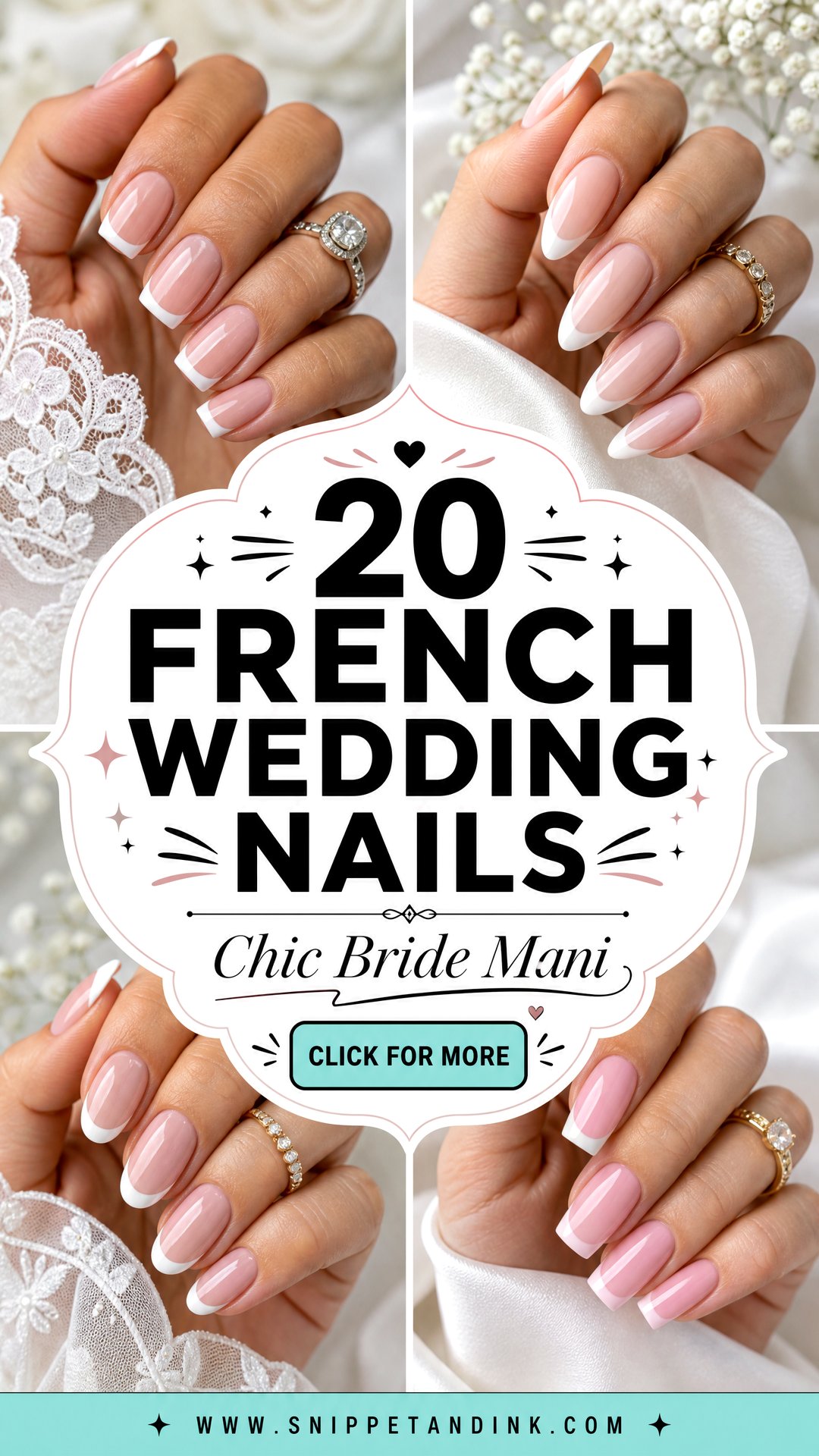
Ask a room of brides what nails they want and a good half will say “something French, but not too French.” I know exactly what they mean. A French manicure sits well beside a ring, a bouquet, lace sleeves or a satin gown, but the thick white tip of the past now looks heavy. The sets I paint for weddings are lighter: micro tips, milky bases, pearl chrome, sheer pink, an almond shape. Here are twenty of them, from a plain white tip to lace, florals and a pale blue edge, with my notes on what each one asks of your nails and where it can go wrong.
Bring the Ring, a Dress Swatch and Your Tan Date to the Trial
A trial manicure is where most of the decisions get made, and it goes much better when you arrive with the right things. A French set looks simple, so small mismatches show: a white that’s bluer than the dress, a shape that fights the ring, a base that changes colour once you’ve tanned.
- Your engagement ring and, if you have it, the wedding band. I check tip colour and nail length against the metal and the setting.
- A fabric swatch or a clear photo of your dress in daylight. It’s the easiest way to choose between white, soft white and ivory.
- Two or three photos of sets you like, and one you don’t. The one you dislike often tells me more.
- Your tan plans. A spray tan or self-tan shifts which nude looks natural, so the final base should be picked with that in mind.
- How your hands are used day to day. If you type, garden or work with gloves, length and shape need to fit that.
Wear the trial set for at least a few days. You’ll learn whether the length annoys you, whether the shape catches on things and whether the colour still looks right indoors at night. That is the best time to change your mind, and it’s much easier than changing it the morning before the wedding.
1. Classic French Wedding Nails
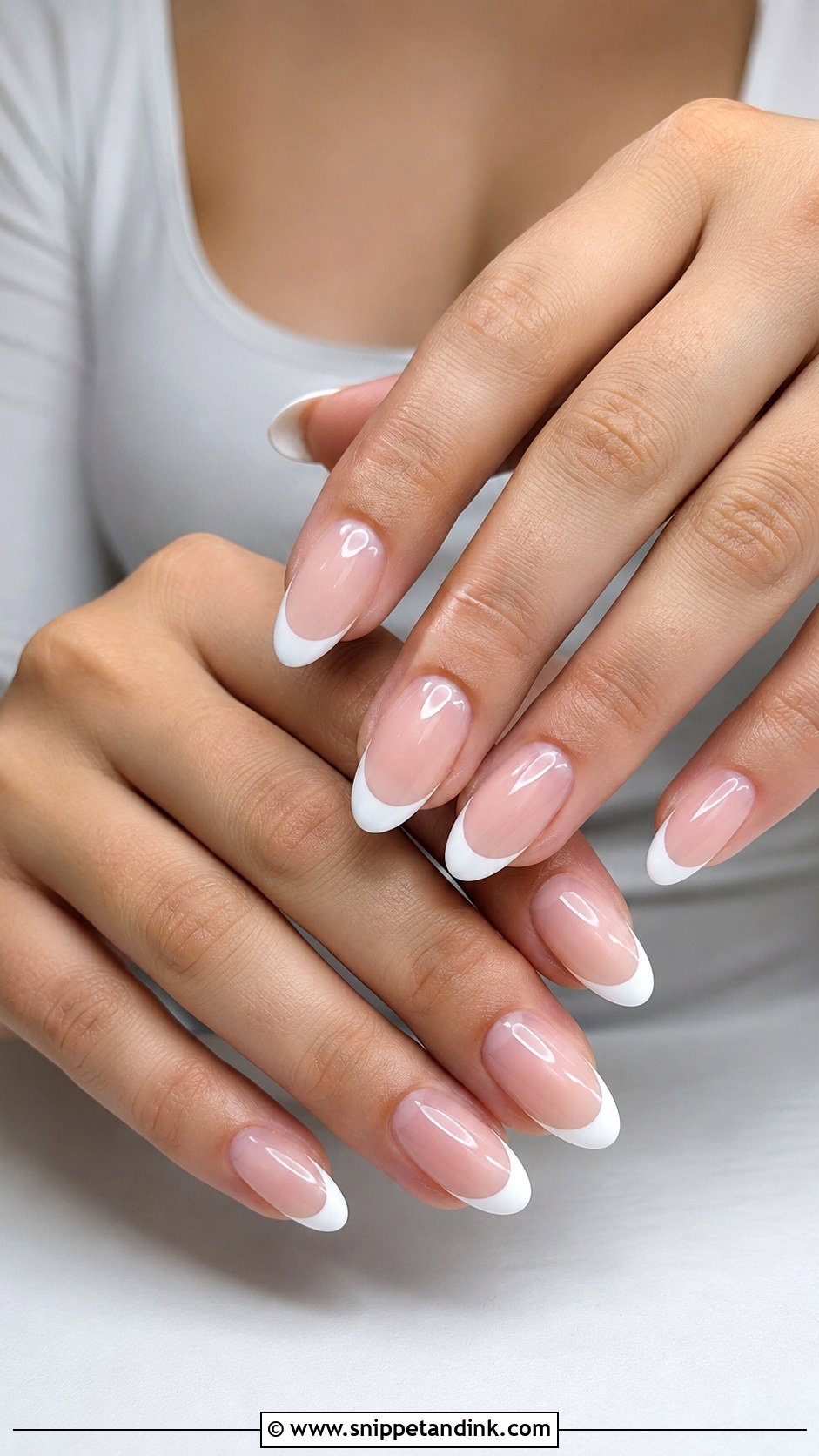
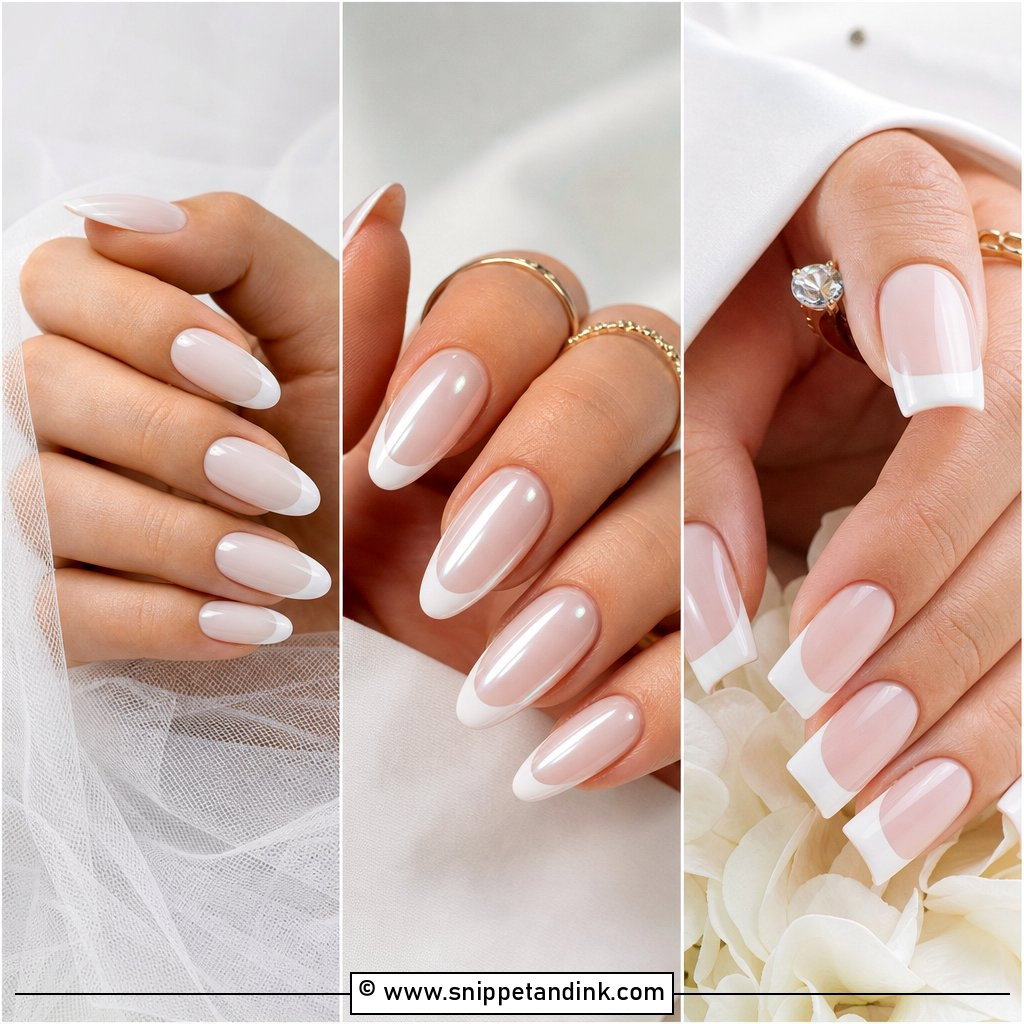
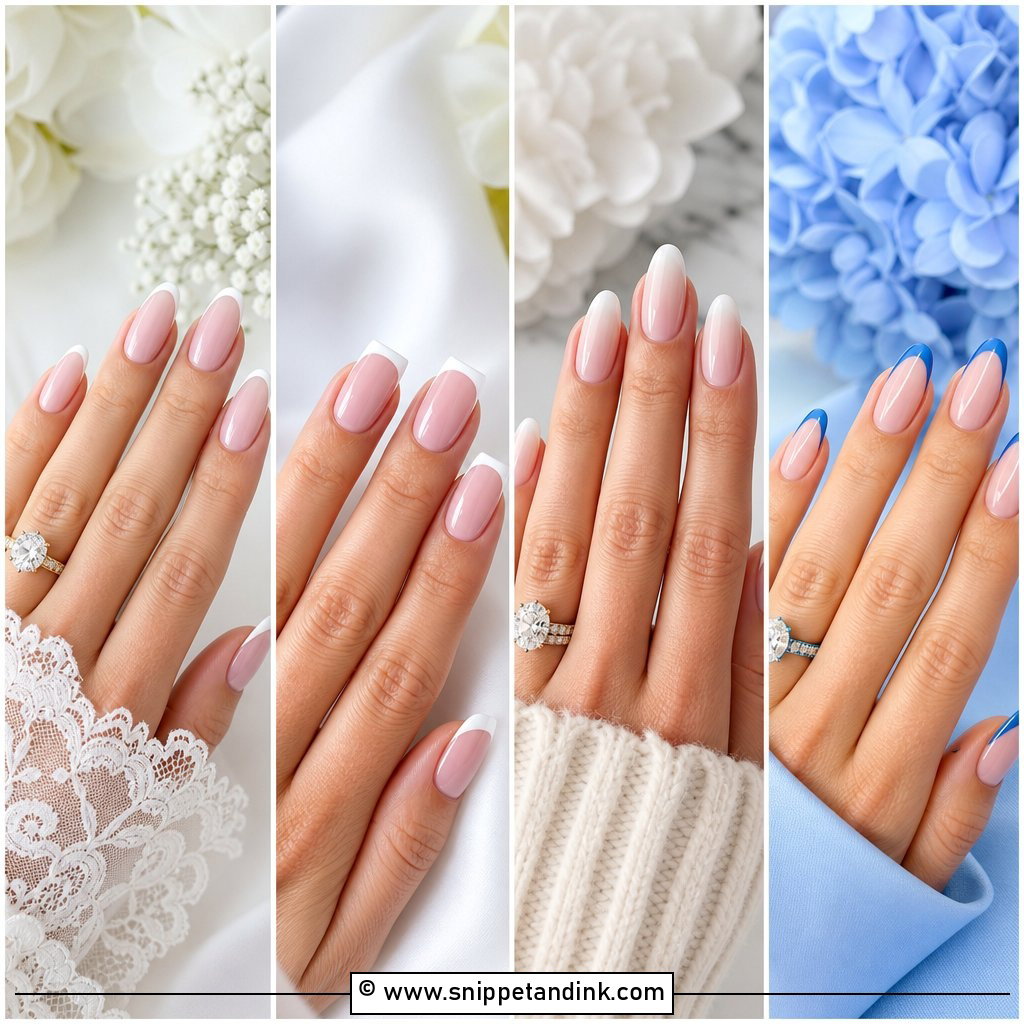
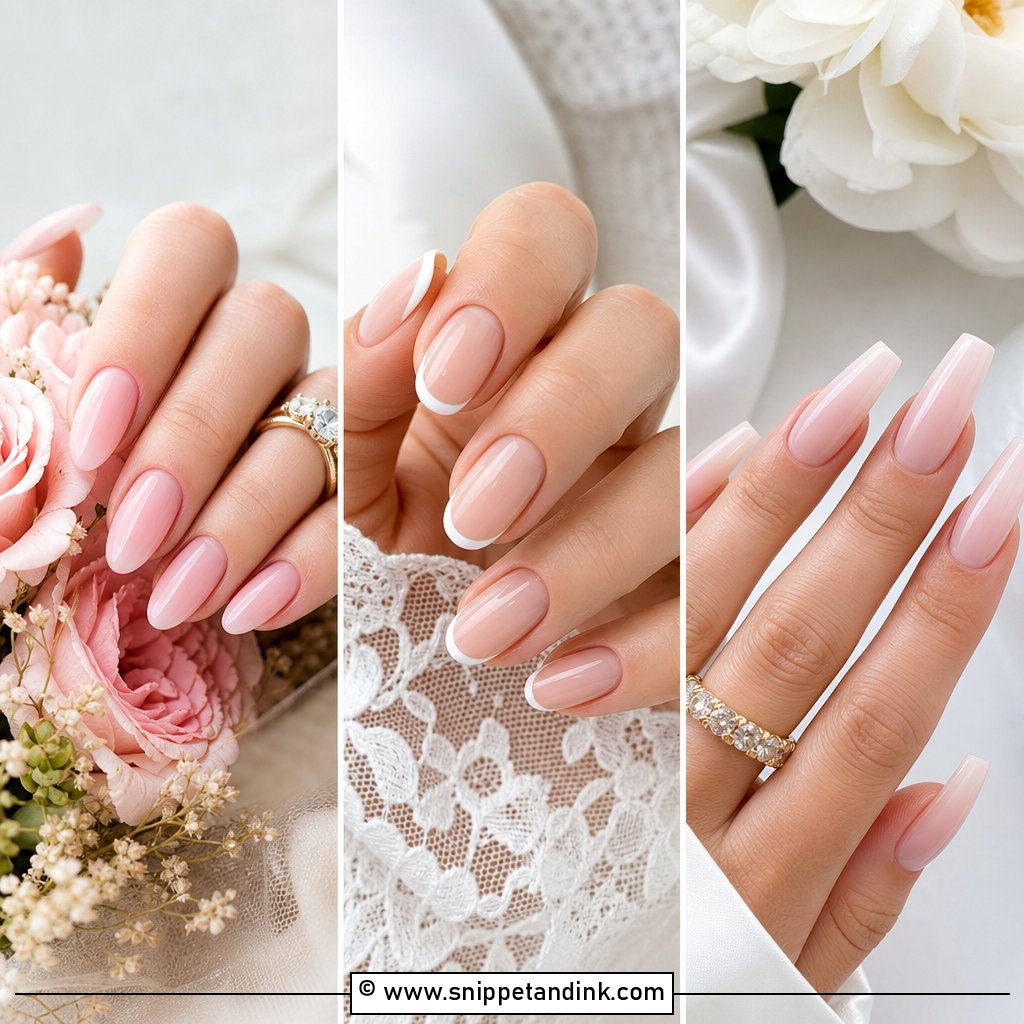
Sheer pink or nude base, clean white tip. It works at every length, though it sits most naturally on a soft almond or oval. Lace, satin, tulle or beading on the dress won’t fight it. What makes it look current rather than dated is the smile line: thin, evenly curved, and matched across all ten nails. I check symmetry by holding both hands side by side before curing, since one tip set higher than its neighbour stands out in a ring close-up.
2. Micro French Wedding Nails
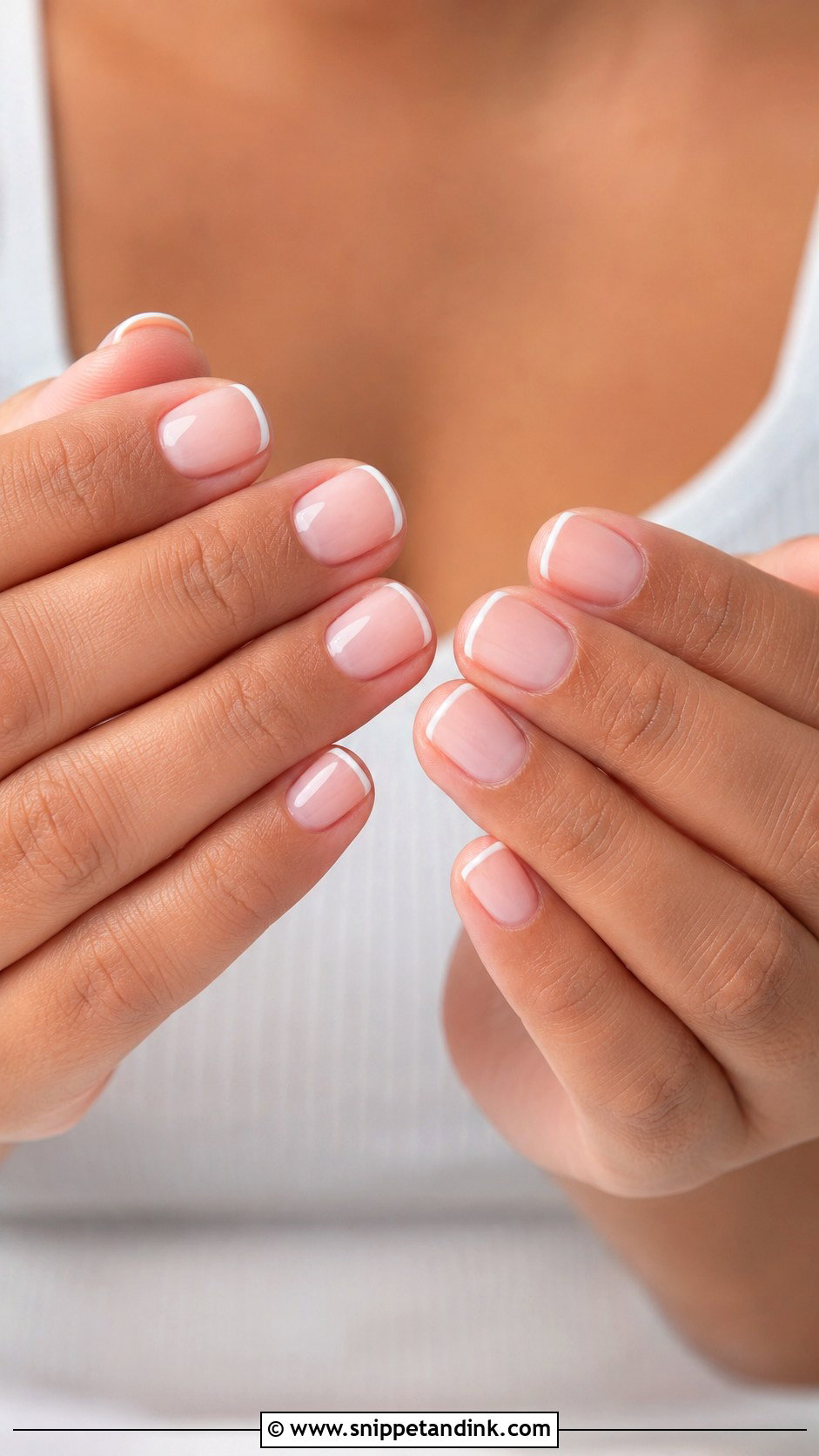
A very thin white line across the free edge gives the French effect at a whisper. It suits minimal jewelry, a simple gown and light makeup. Sheer pink, peachy nude or milky bases keep it looking healthy. Micro French tips are kind to short nails, since they don’t visually shorten the nail bed. Rounded square, oval and almond are the softest shapes. My one note: a line this thin needs a smooth, even free edge, so expect a careful file and shape first.
3. Milky French Wedding Nails
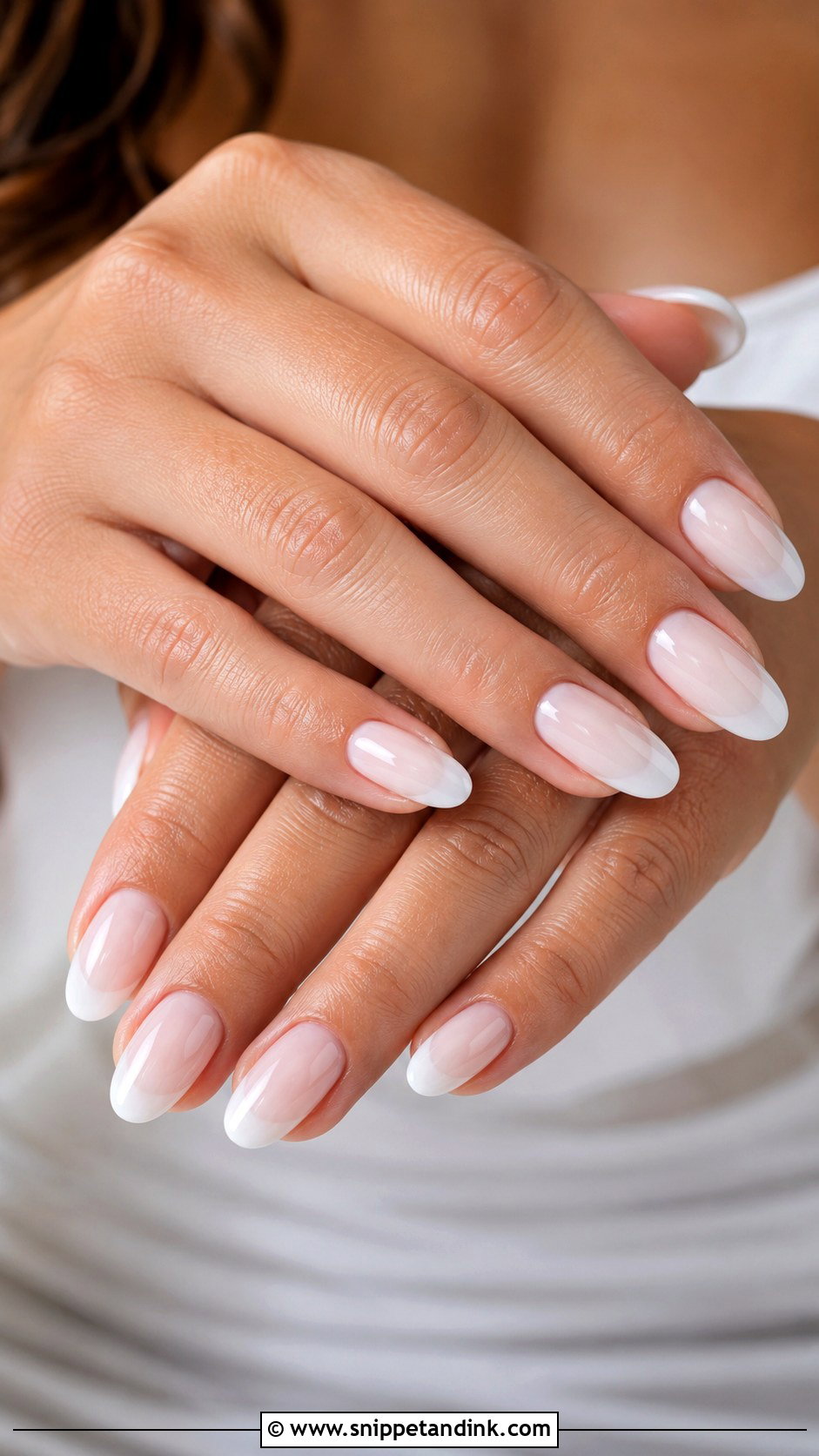
Swap the clear base for a semi-sheer milky white or milky pink, then add a soft tip. The two blend, so the line looks gentle rather than sharp. I like milky bases for nails with ridges or slight discolouration, because the translucent white smooths everything out visually. Oval and almond suit it. Just watch the opacity. Two thin coats look like glowing skin; three thick ones start to look like correction fluid.
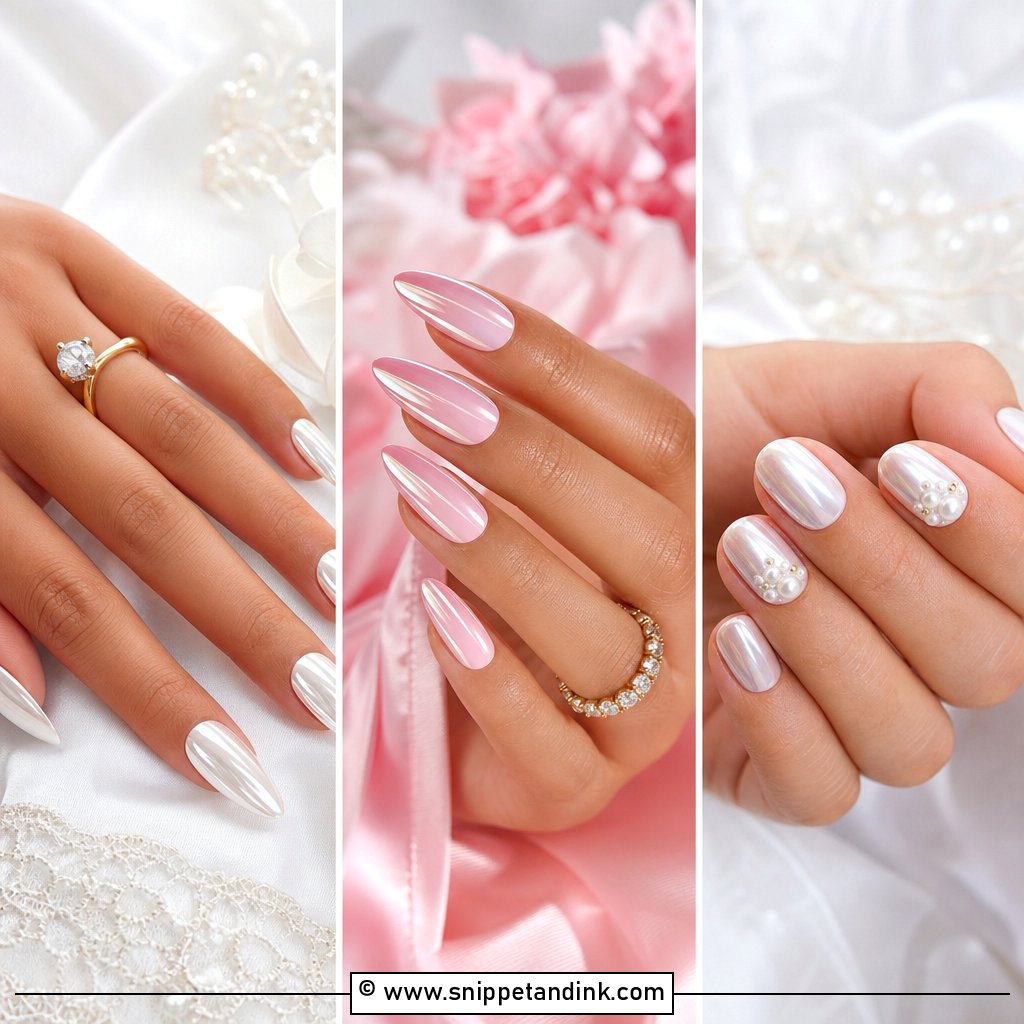
4. Pearl Chrome French Wedding Nails
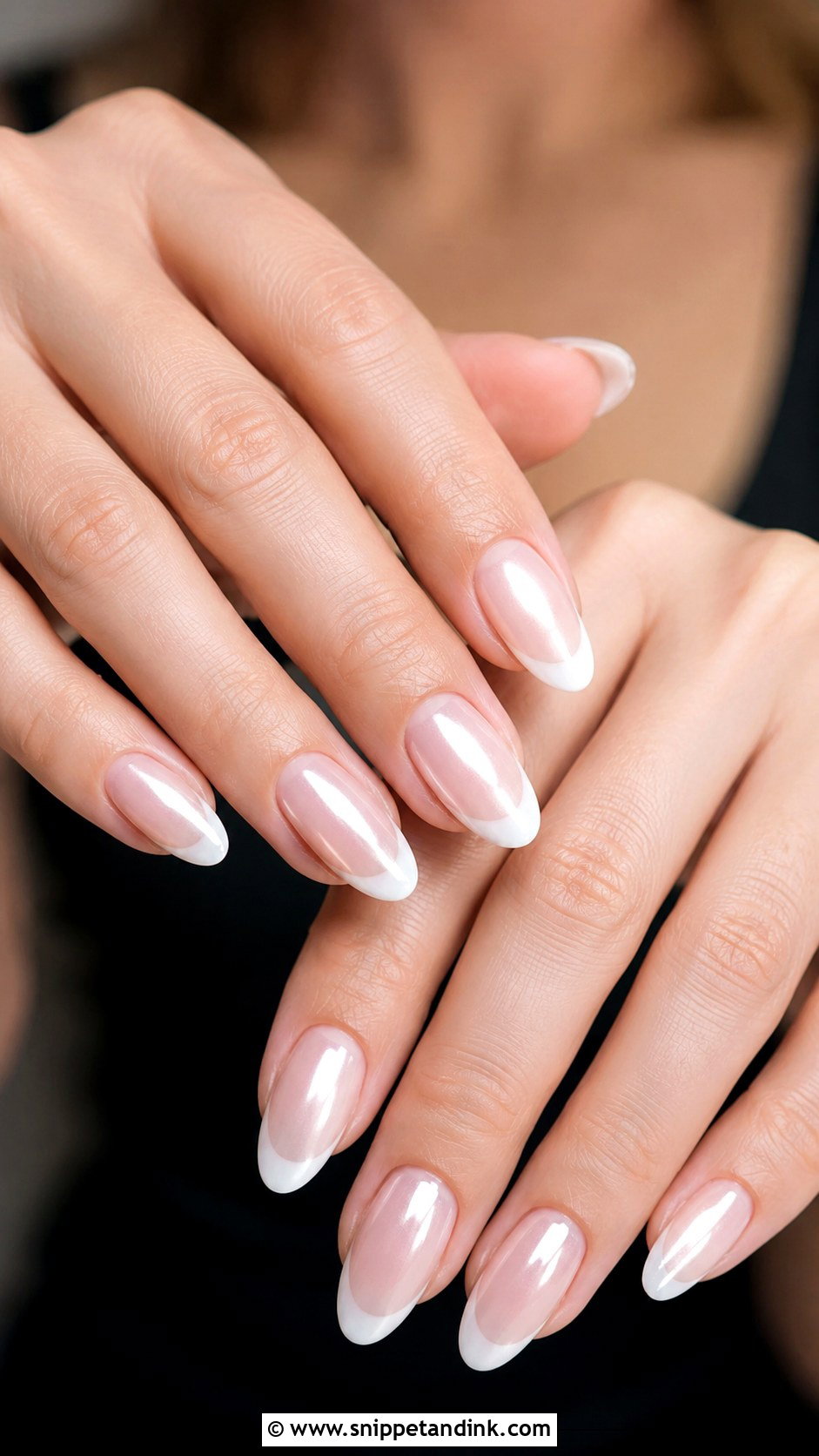
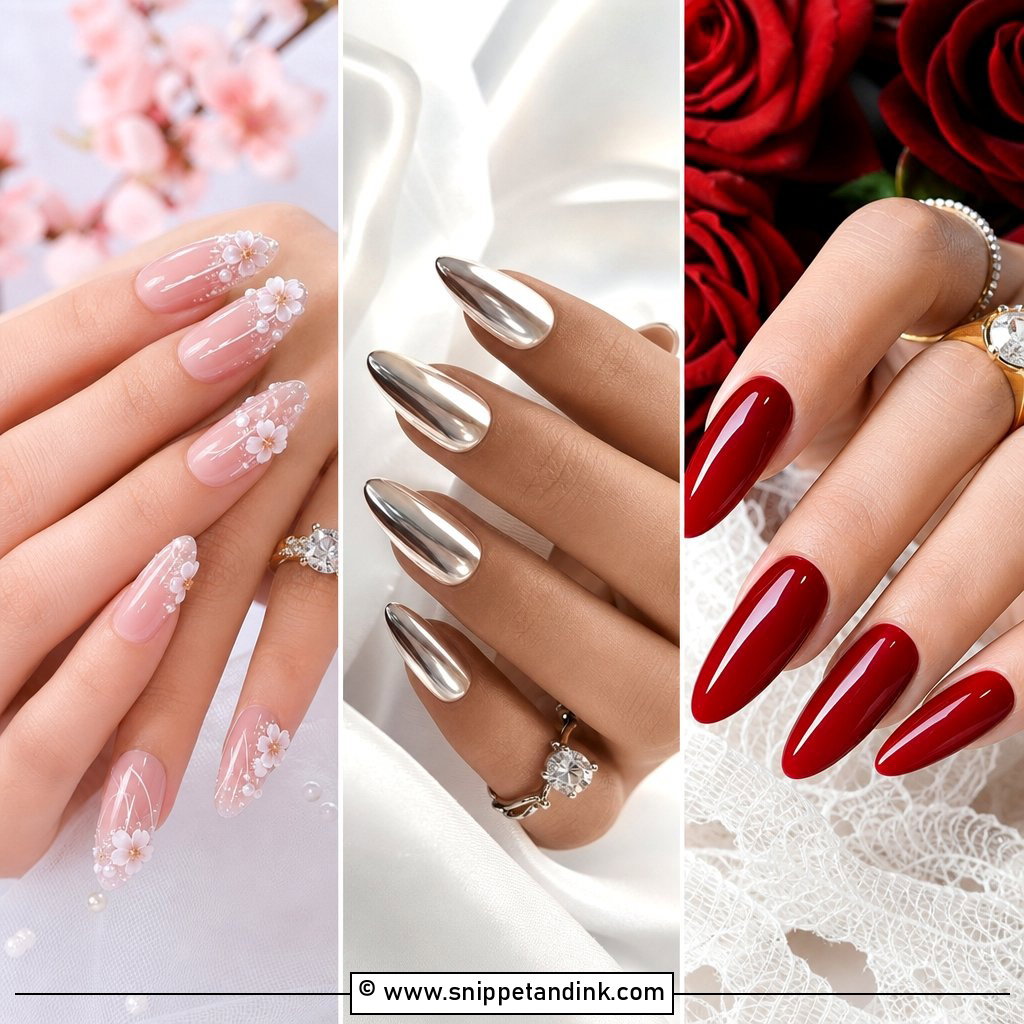
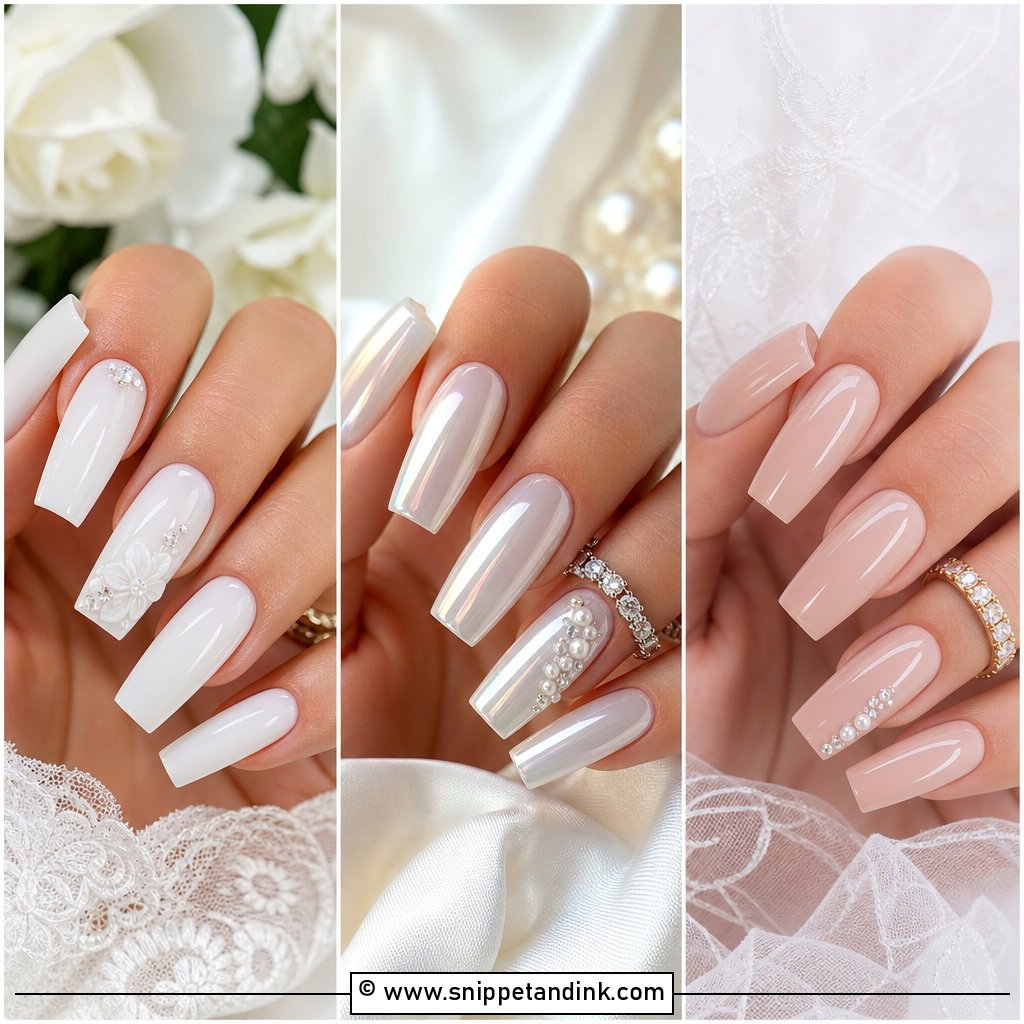
A fine pearl powder over a French set, either across the whole nail or just the tips, gives a light sheen that moves as your hand moves. It sits well with ivory gowns, pearl earrings and satin. Chrome magnifies any texture under it, so I spend extra time levelling the base. Soft almond or oval keeps the shine delicate. On a long square nail the same shine starts to look more like a mirror than a pearl.
5. Almond French Wedding Nails
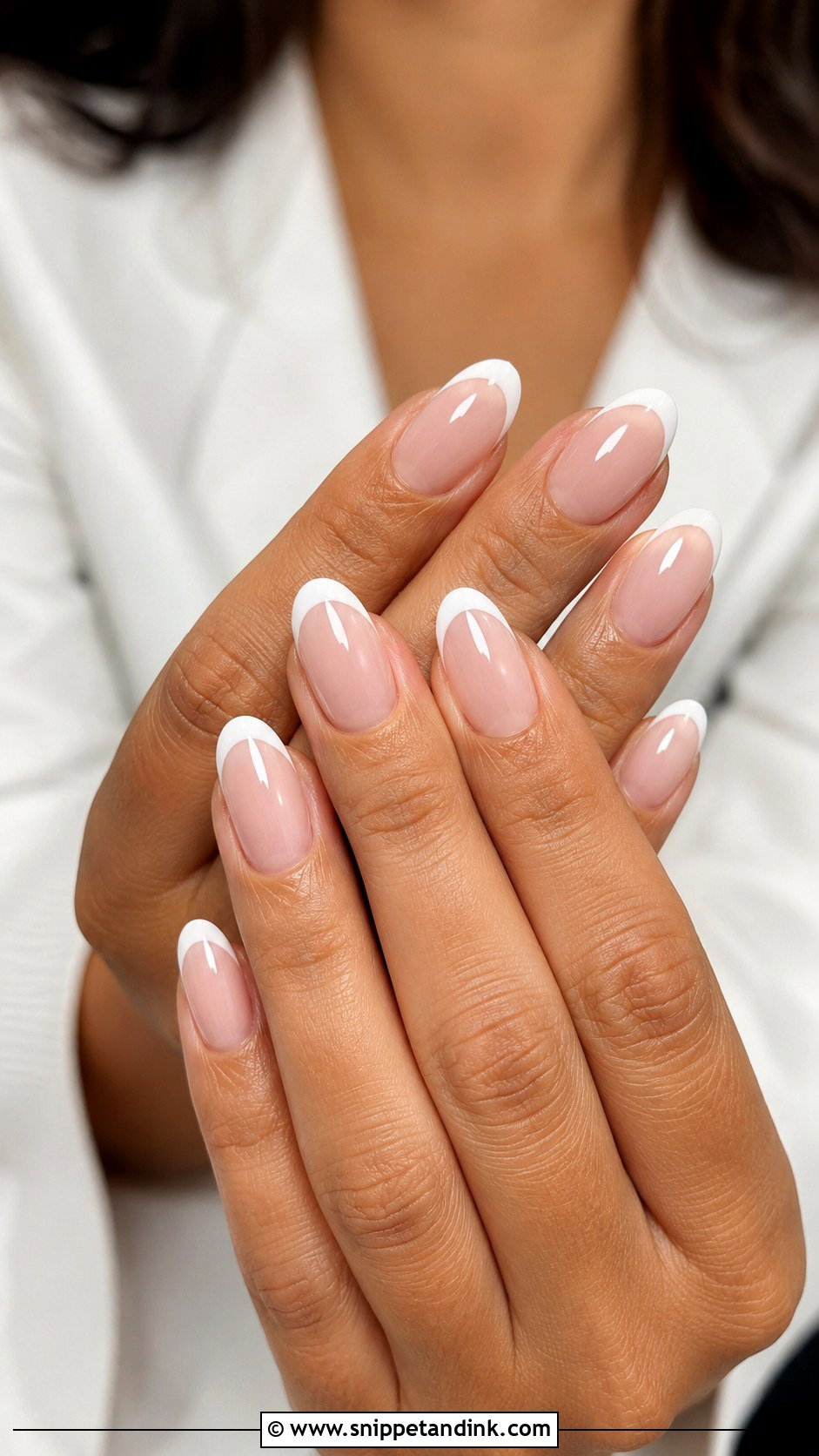
Almond French wedding nails taper at the sides and round at the tip, so they lengthen the fingers without the sharpness of a stiletto. Soft pink with a thin white tip is the classic version; pearl chrome, tiny gems or a milky base are easy variations. Keep the white curved to follow the almond, not cut straight across. If your natural nails are thin, ask for builder gel underneath: the narrow tip of an almond is where natural nails snap first.
6. Short French Wedding Nails
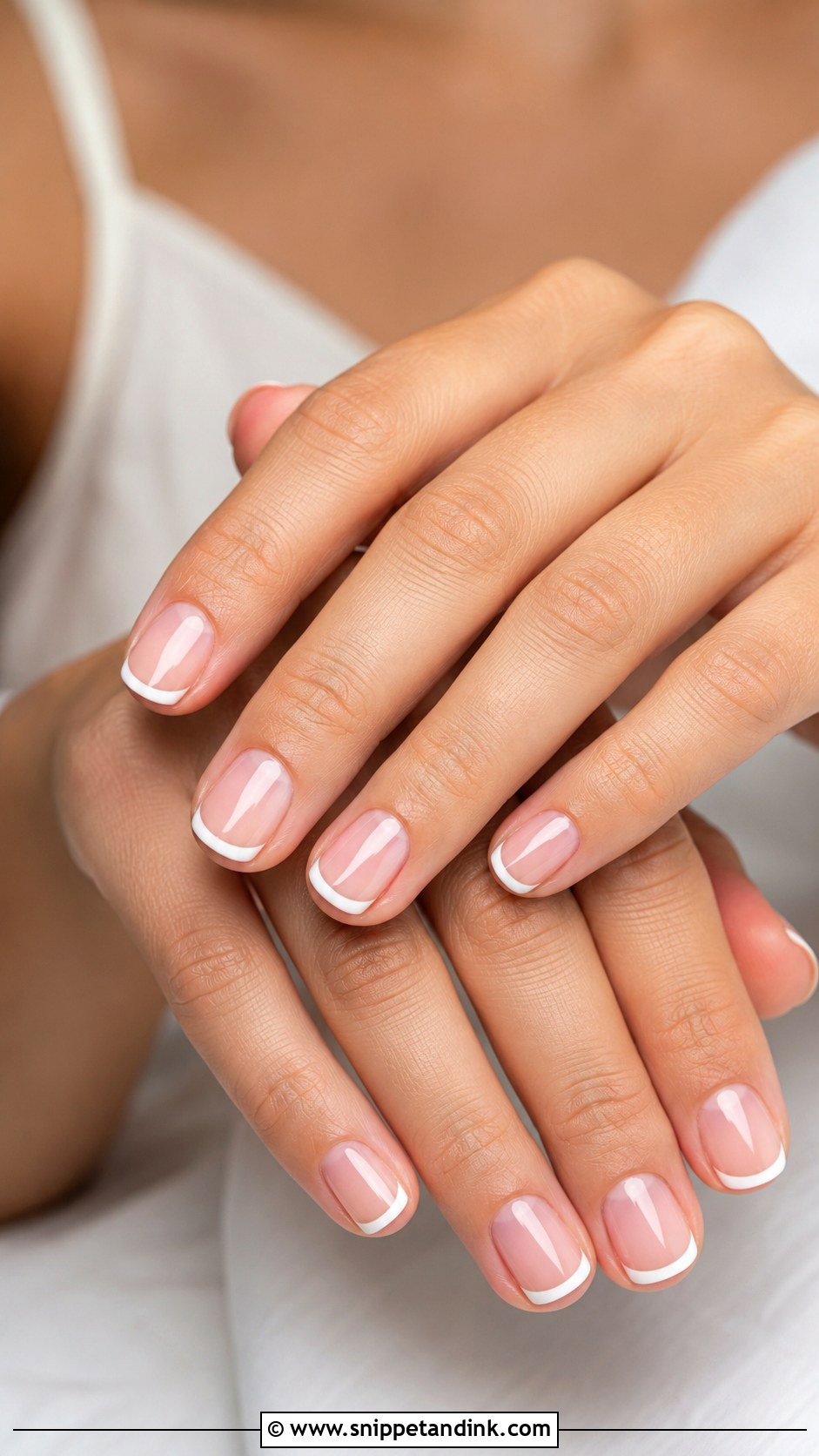
No extensions needed. A short oval or rounded square with sheer pink and a thin white tip looks neat and comfortable, and it suits brides who never wear long nails or who will be handling a lot on the day. It also stays out of the way in ring photos. I’d keep the tip very slim, since a deep band makes short nails look stubby. With short nails the cuticles are on show, so I spend most of the appointment on prep. Finish with a high gloss.
7. Square French Wedding Nails
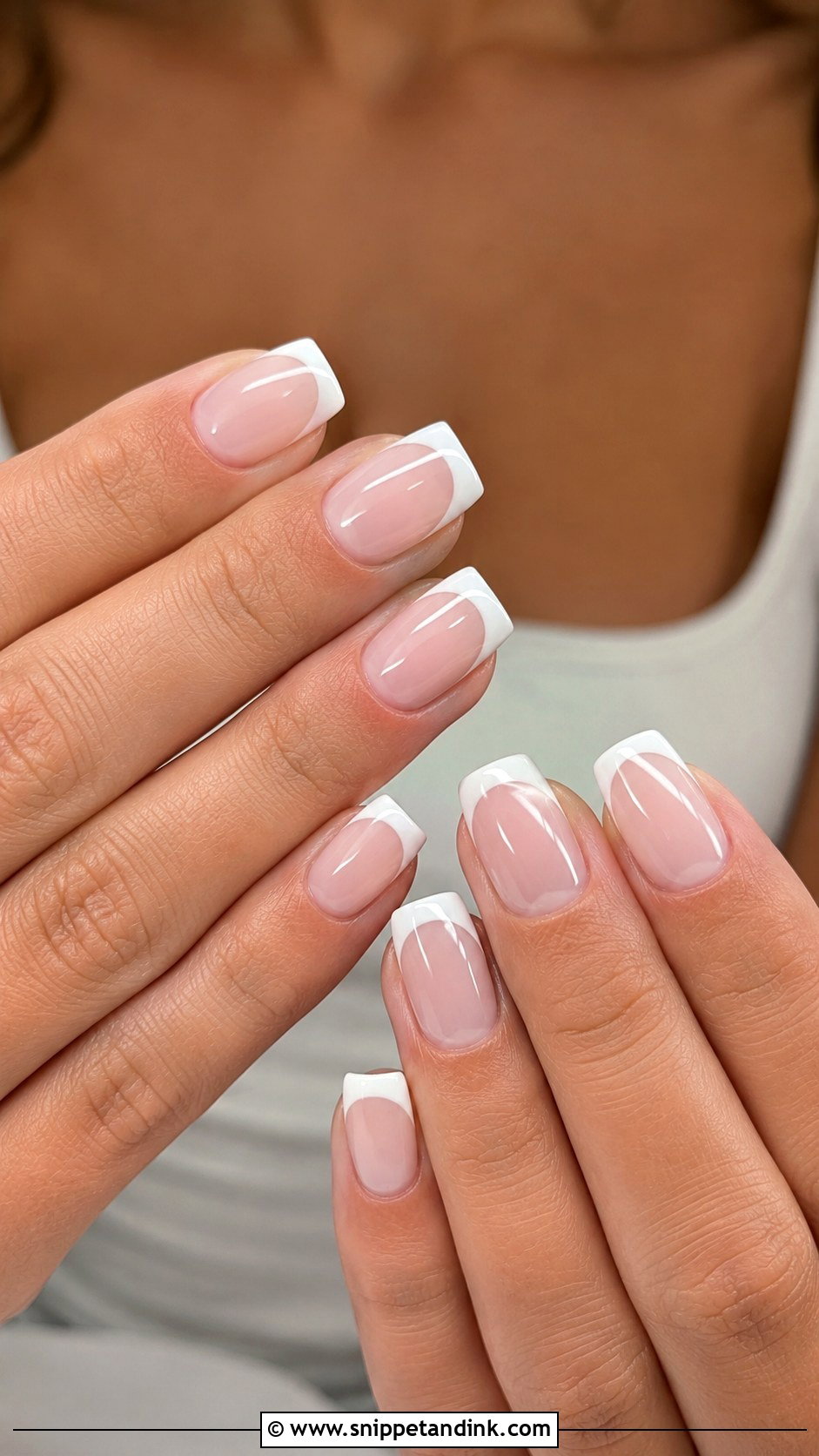
Square gives the French its crispest edge. I always soften the corners slightly, because sharp corners snag lace and tights and chip first. A sheer nude or pink base with white tips suits structured gowns and sleek hair. Square works at any length you’re comfortable with. On a square tip I often swap stark white for a creamy white, which looks sharper in photos because it doesn’t flare under flash.
8. Oval French Wedding Nails
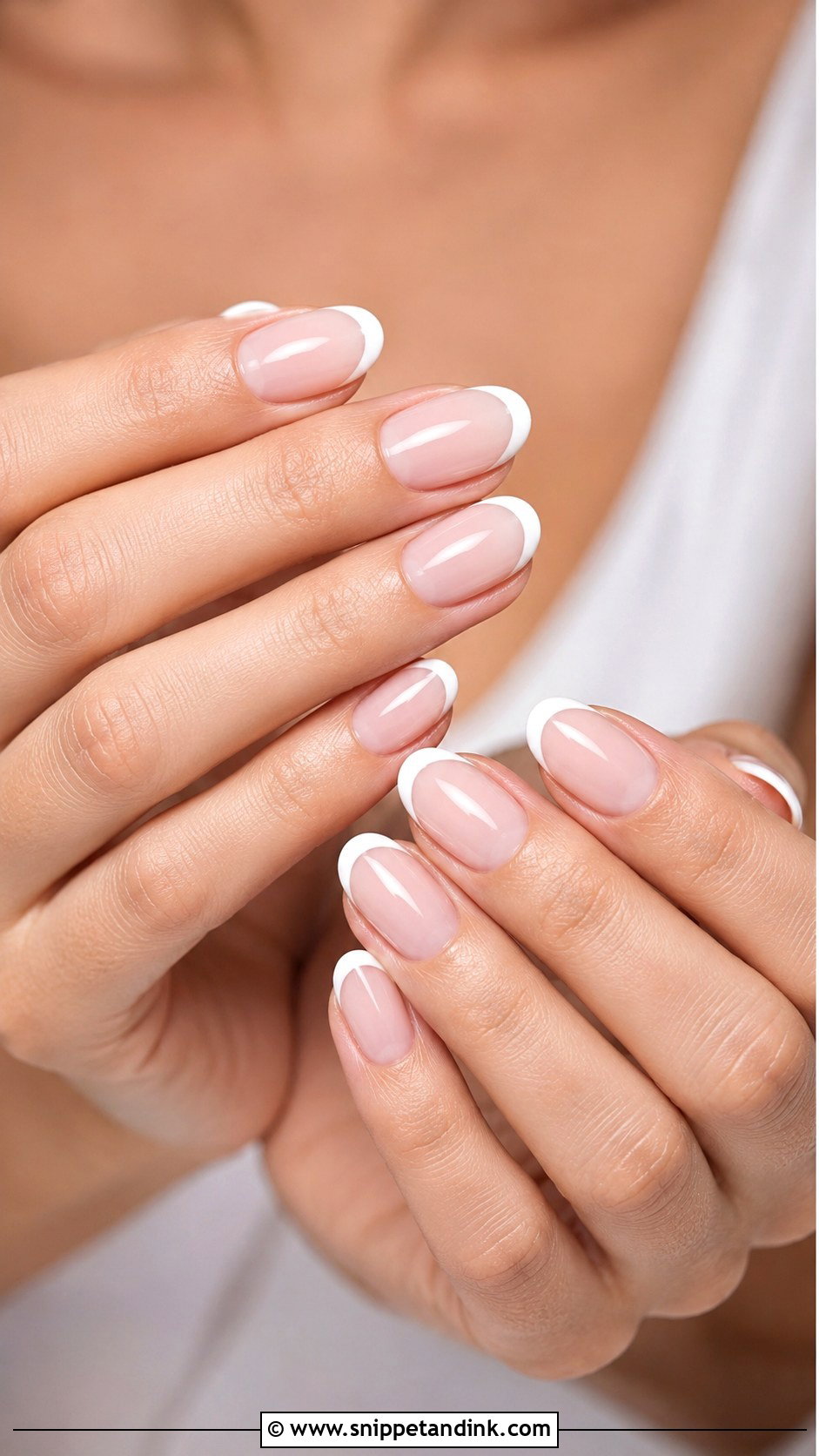
An oval follows the curve of the fingertip, so it suits most hands and is very hard to break. A sheer blush base with fine white tips is the classic pairing, and a light pearl top coat adds a little glow. Ovals make nails look longer while staying natural. Keep three things in balance: thin tips, smooth sidewalls and a glossy finish. It goes well with lace, soft waves and classic bridal makeup.
9. Pink French Wedding Nails
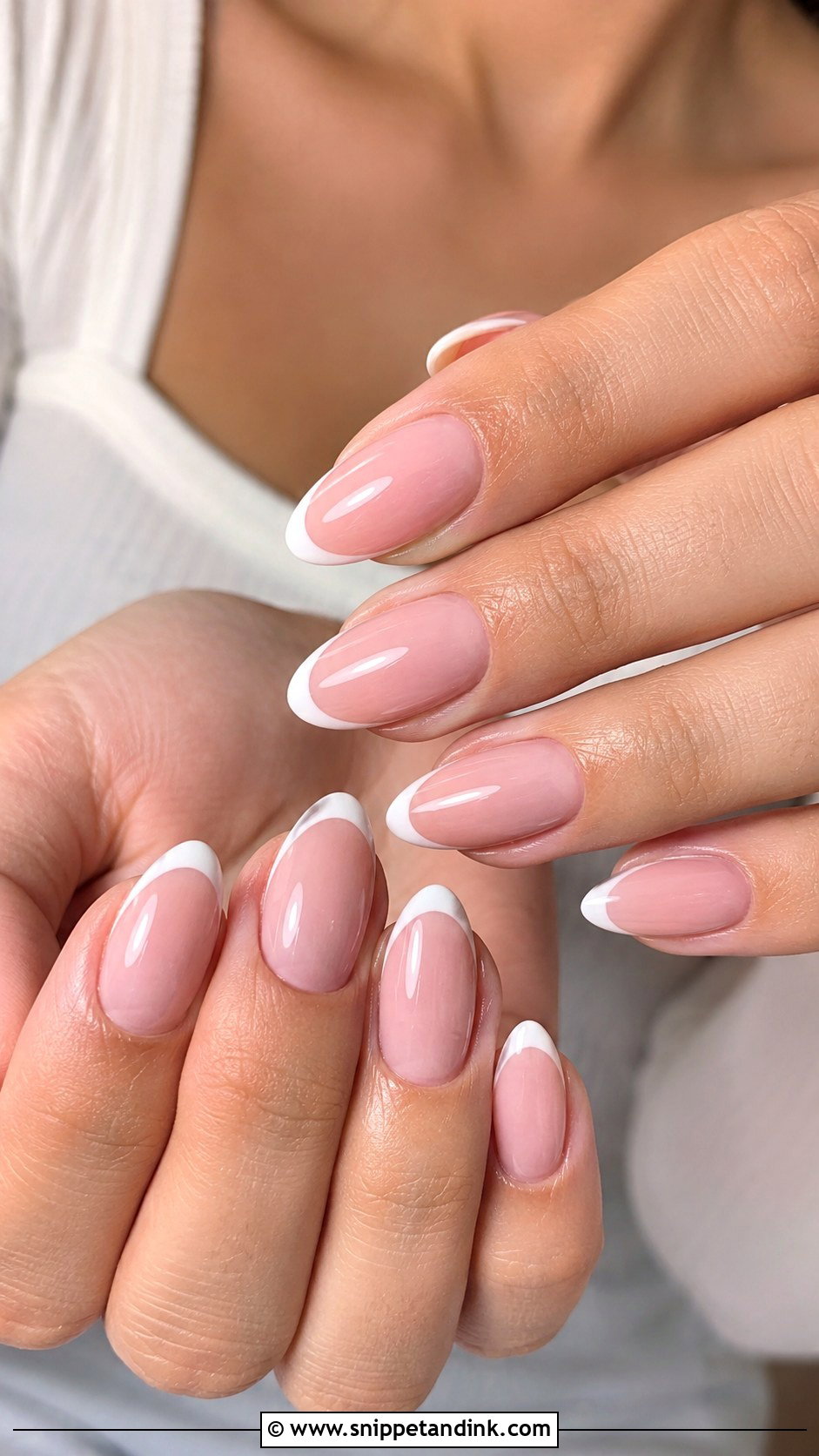
A sheer baby, blush or rose-pink base under white tips warms the classic French. It ties in nicely if your bouquet or makeup has pink in it. Pink isn’t one colour, though. Cool pinks can look slightly purple against olive or warm skin, so I’d go peachier there; on very fair skin a strong pink can make the fingers look red. Medium almond or oval suits it.
10. Nude French Wedding Nails
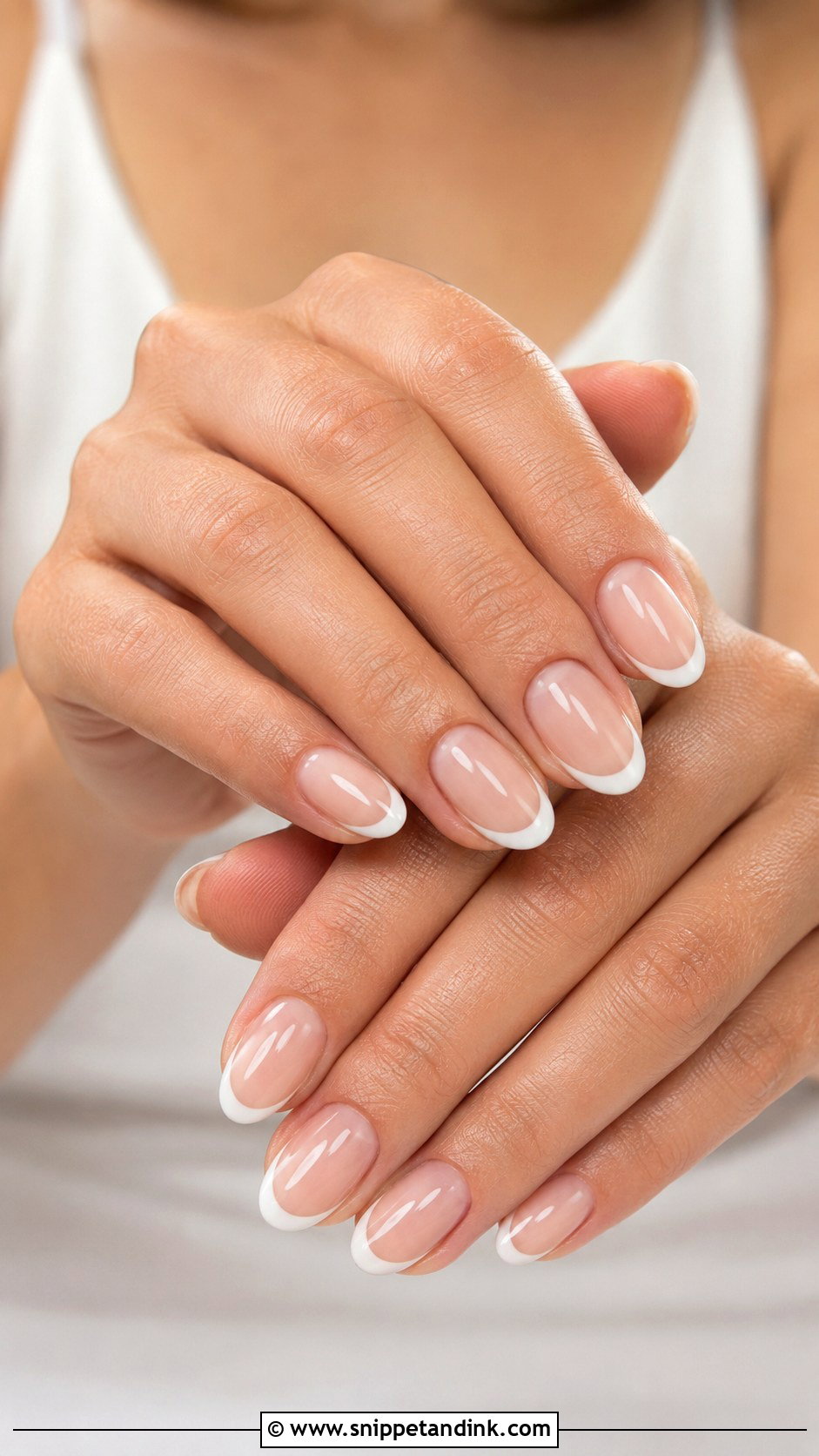
The base here is meant to match or gently complement your skin, with the tip adding definition. That makes the shade choice the entire design. Beige, peach, pink or caramel nudes can all work, but only the one that matches your undertone looks like skin; the others look like paint. I swatch two or three on your nails and look in daylight. The finished hand should look polished rather than painted. Keep a glossy finish.
11. White French Wedding Nails
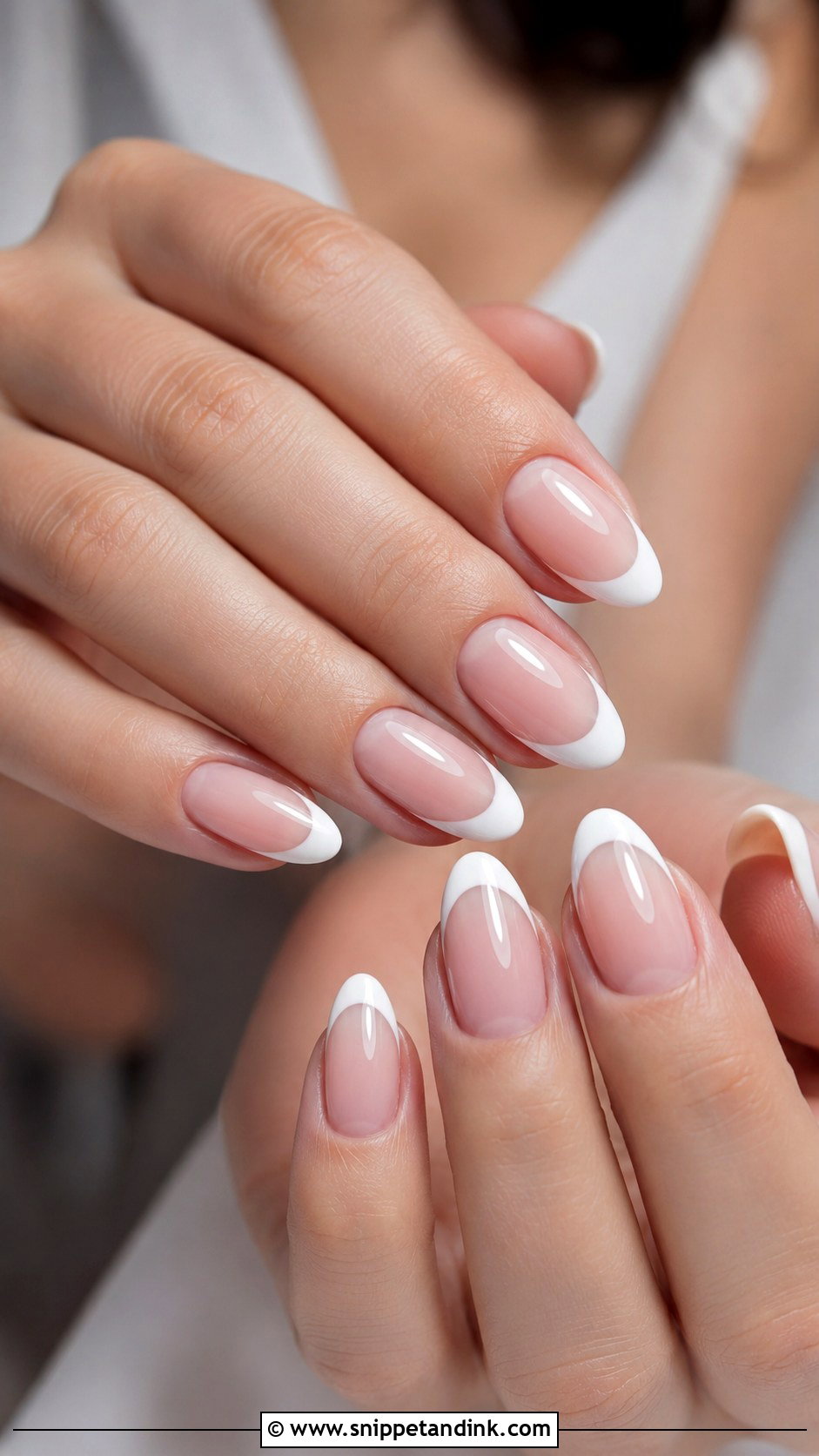
White tips on a soft nude or pink base echo the gown and look crisp in bouquet and ring close-ups. Thinner, slightly rounded tips read modern; a deeper tip on longer almond or square nails looks more traditional. I usually mix in a touch of nude to soften pure white, because very bright white can look blue next to an ivory dress. Diamonds, pearls and classic veils sit naturally with it.
12. Glitter French Wedding Nails
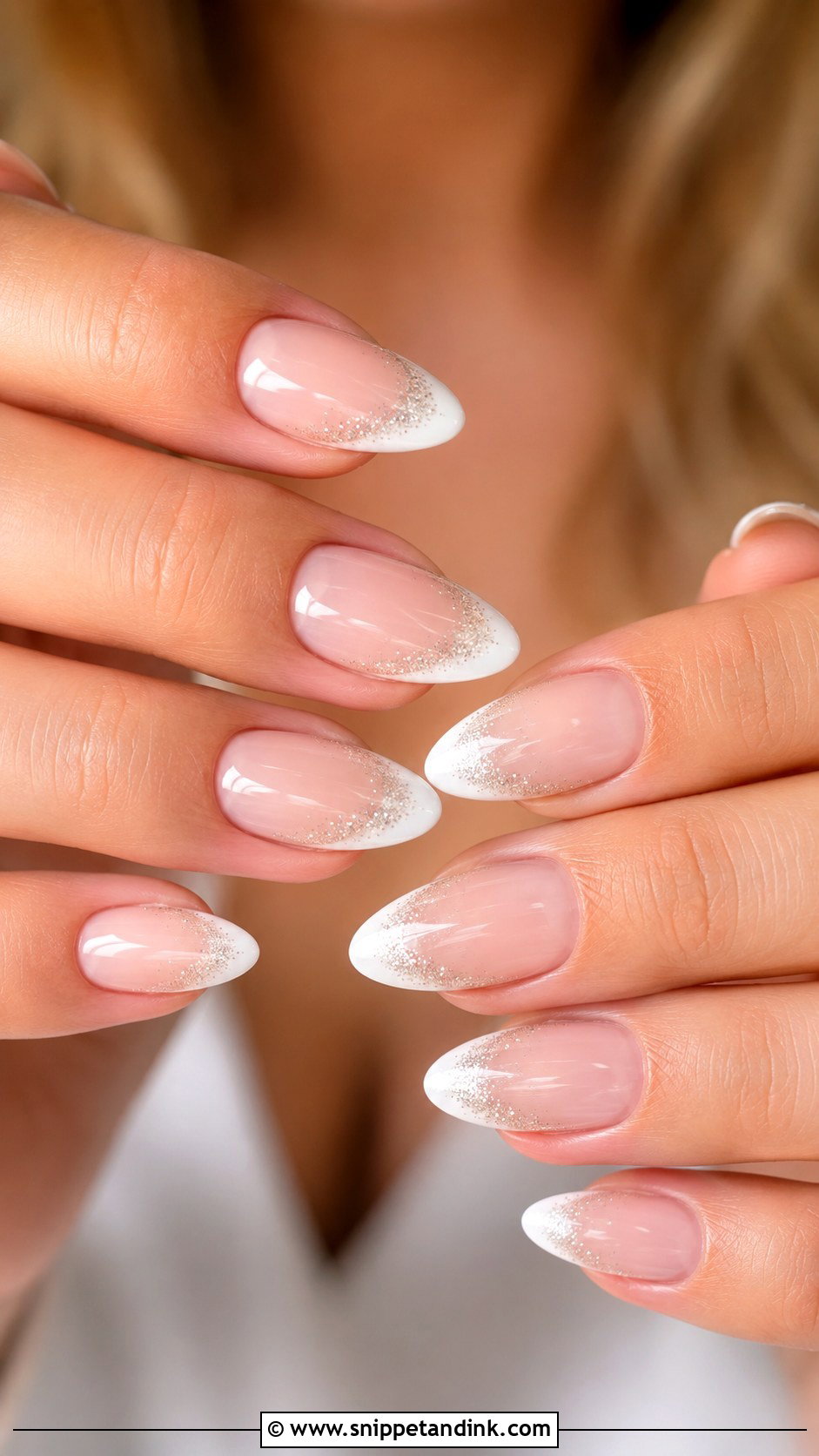
Fine glitter laid along the tip or blended over the white edge catches light without covering the whole nail. Silver, champagne, pearl and soft rose-gold suit weddings; a sheer pink or nude base keeps the sparkle under control. It suits evening receptions, crystal accessories and gowns with light beading. Fine glitter matters for practical reasons too: coarse flakes are hard to seal flat, so the tip feels rough and catches on hair and tulle.
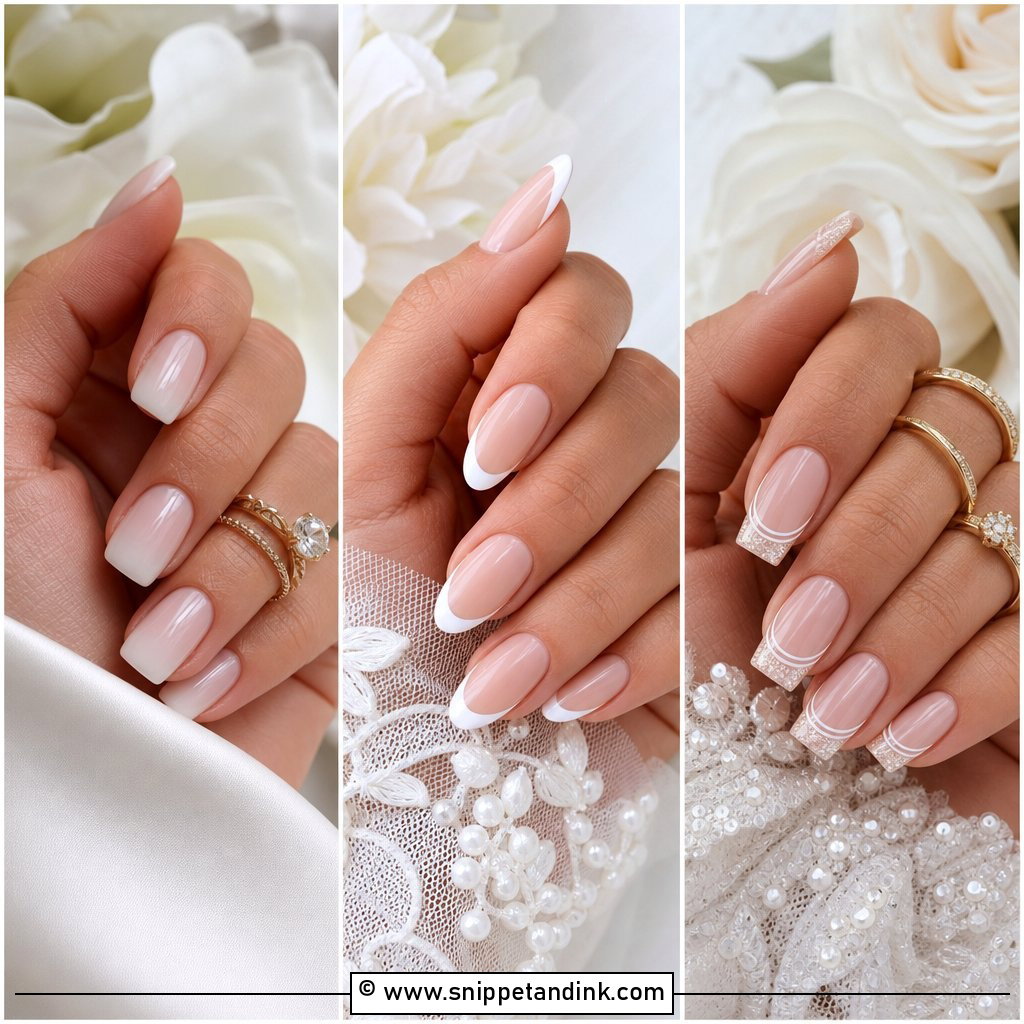
13. Ombre French Wedding Nails
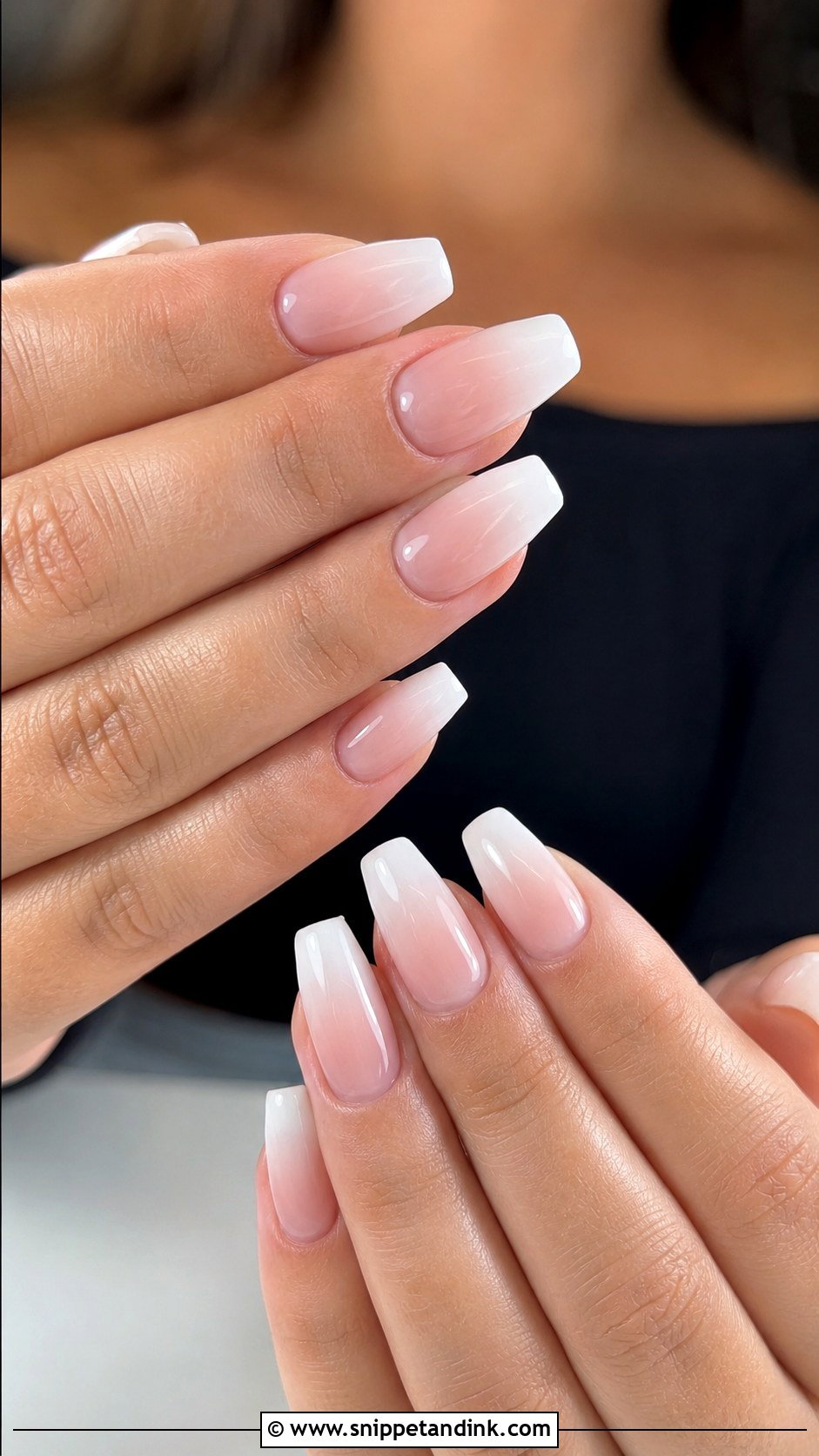
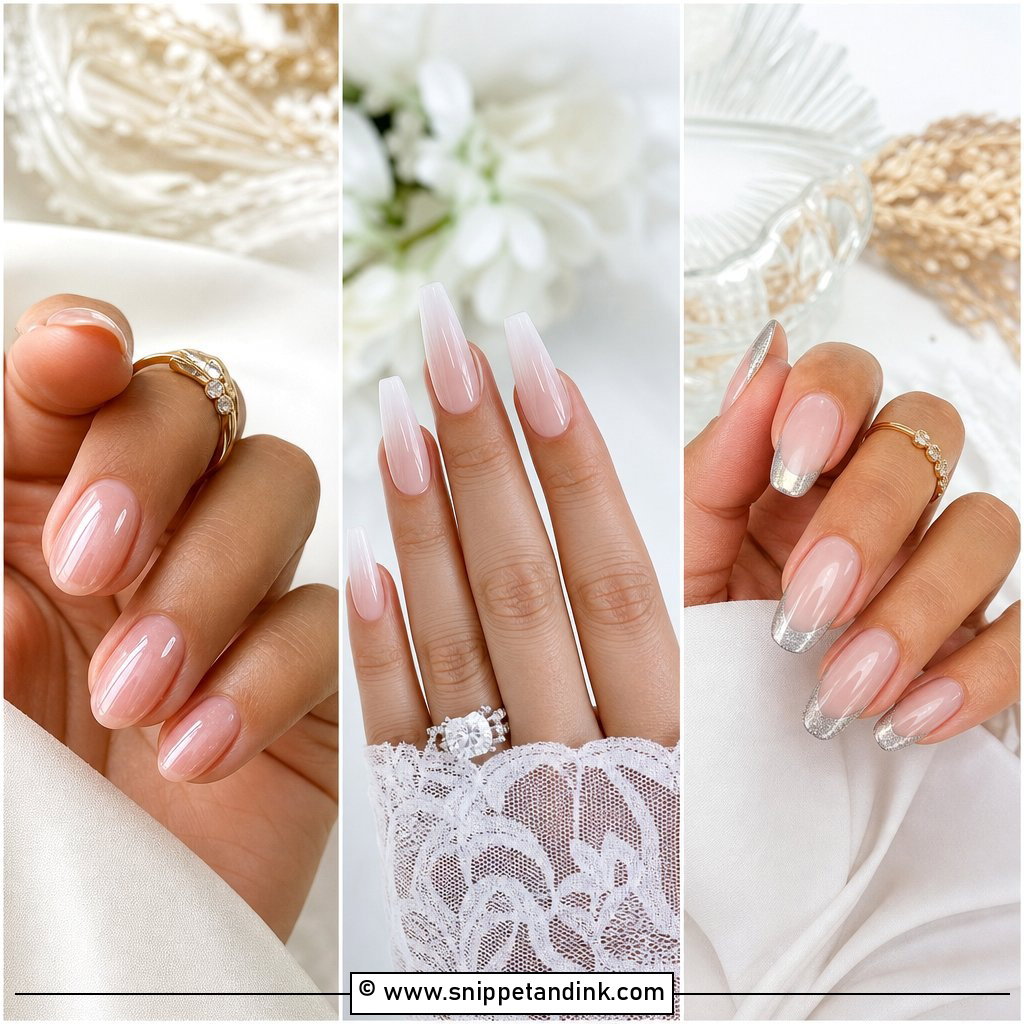
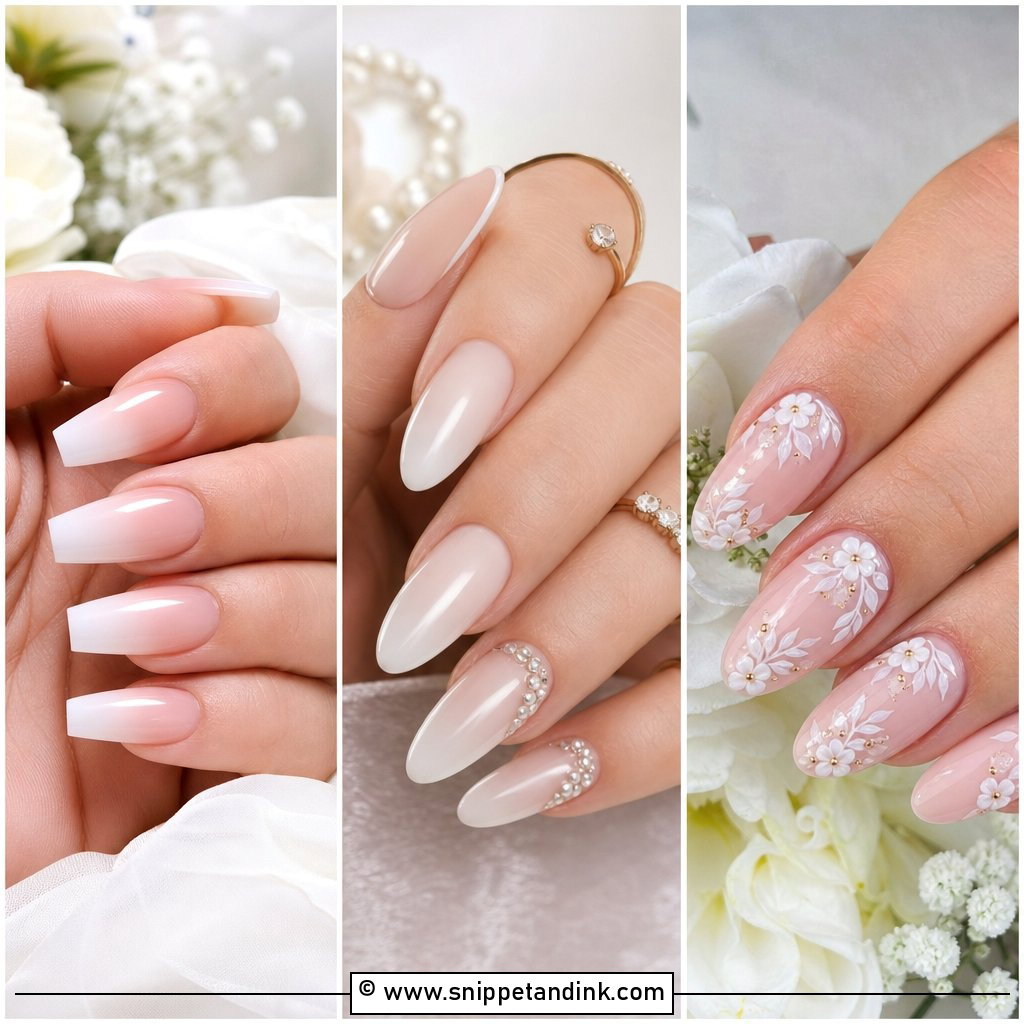
Ombre French wedding nails, often called baby boomer, fade the white into a pink, nude or milky base with no hard line at all. The lack of a line is also practical. Regrowth at the cuticle hardly shows on a fade, so this is the French style I’d suggest if your appointment has to be several days before the wedding. Almond, oval and coffin give the gradient room to travel. Use sheer colours and a glossy or pearl finish.
14. Pearl Accent French Wedding Nails
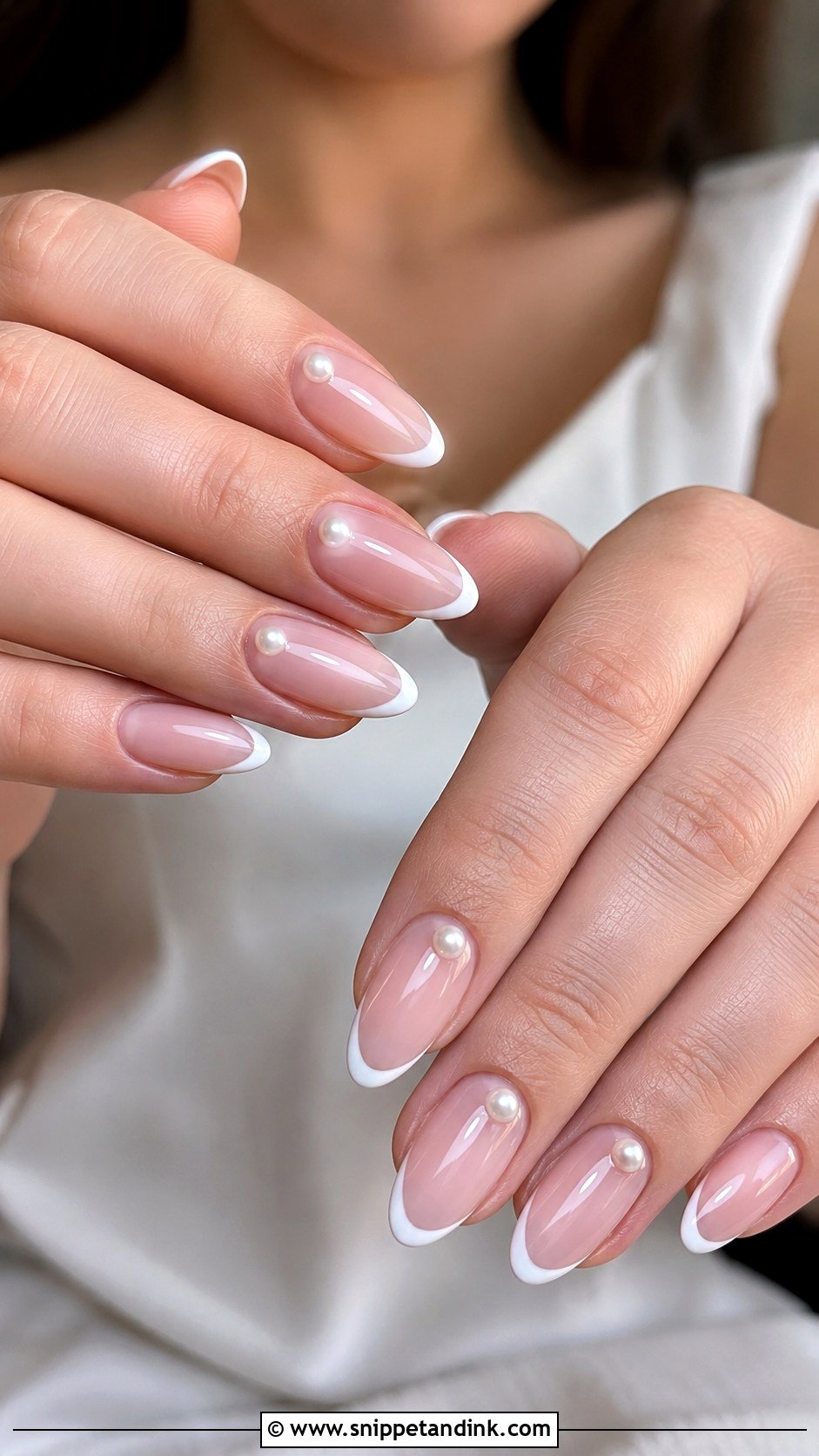
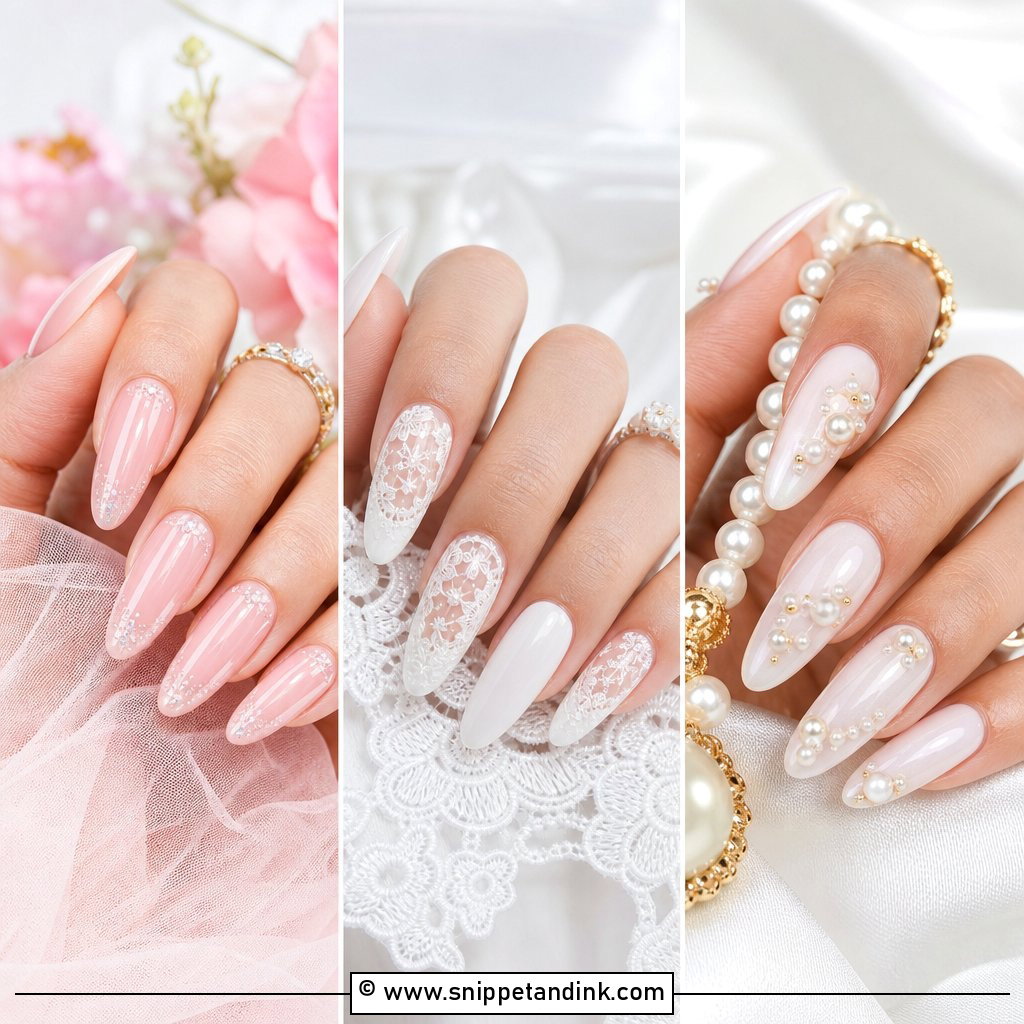
Tiny pearls placed near the cuticle, along one side or on a single accent nail add texture with obvious bridal meaning. Small, flat-backed pearls are the comfortable choice; domed ones catch on veils and knitwear. I’d keep them to one or two nails per hand. They tie in with pearl earrings, pearl-edged veils and beaded gowns. A sheer pink base and thin white tips underneath keep the set classic.
15. Lace French Wedding Nails
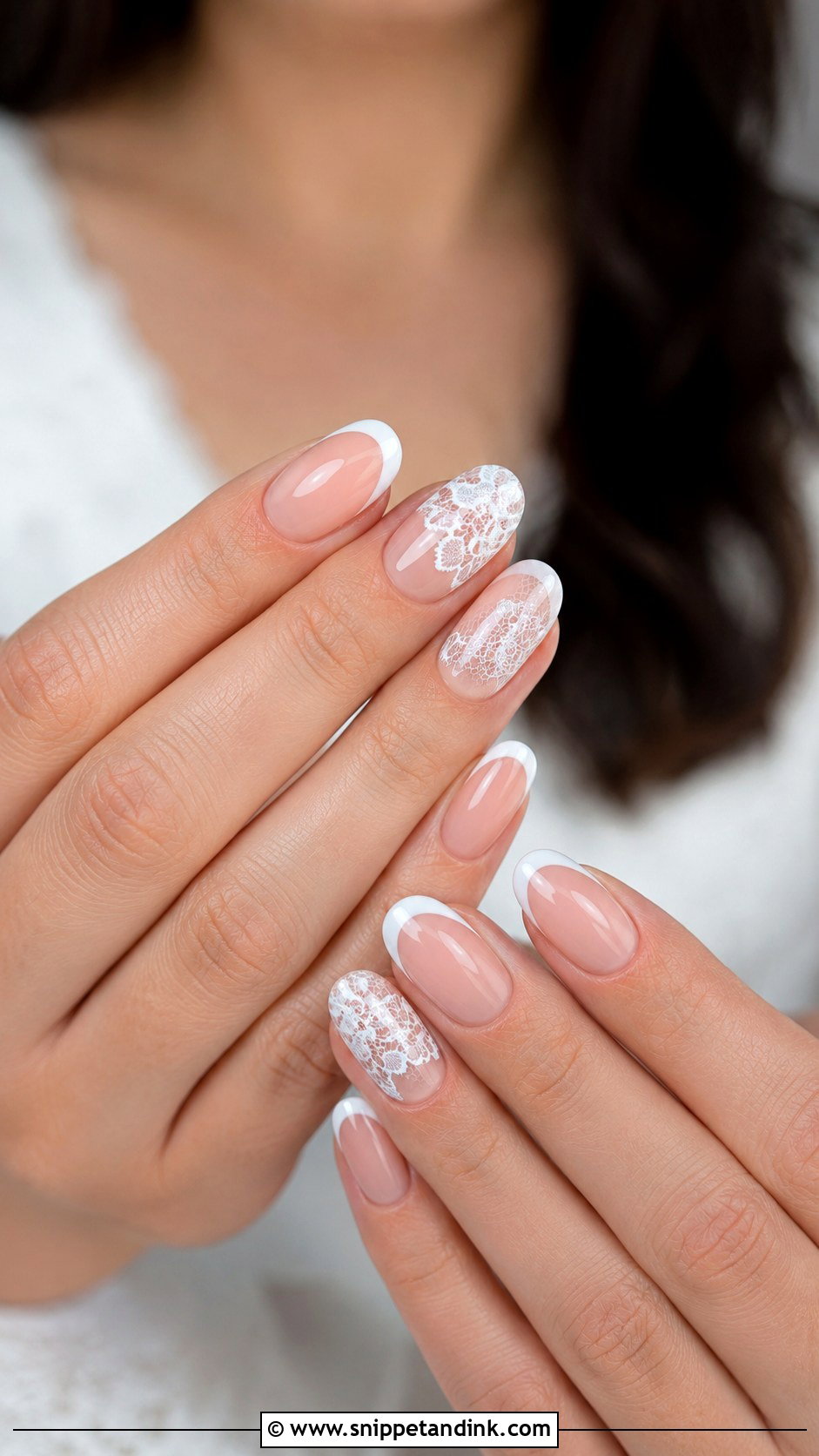
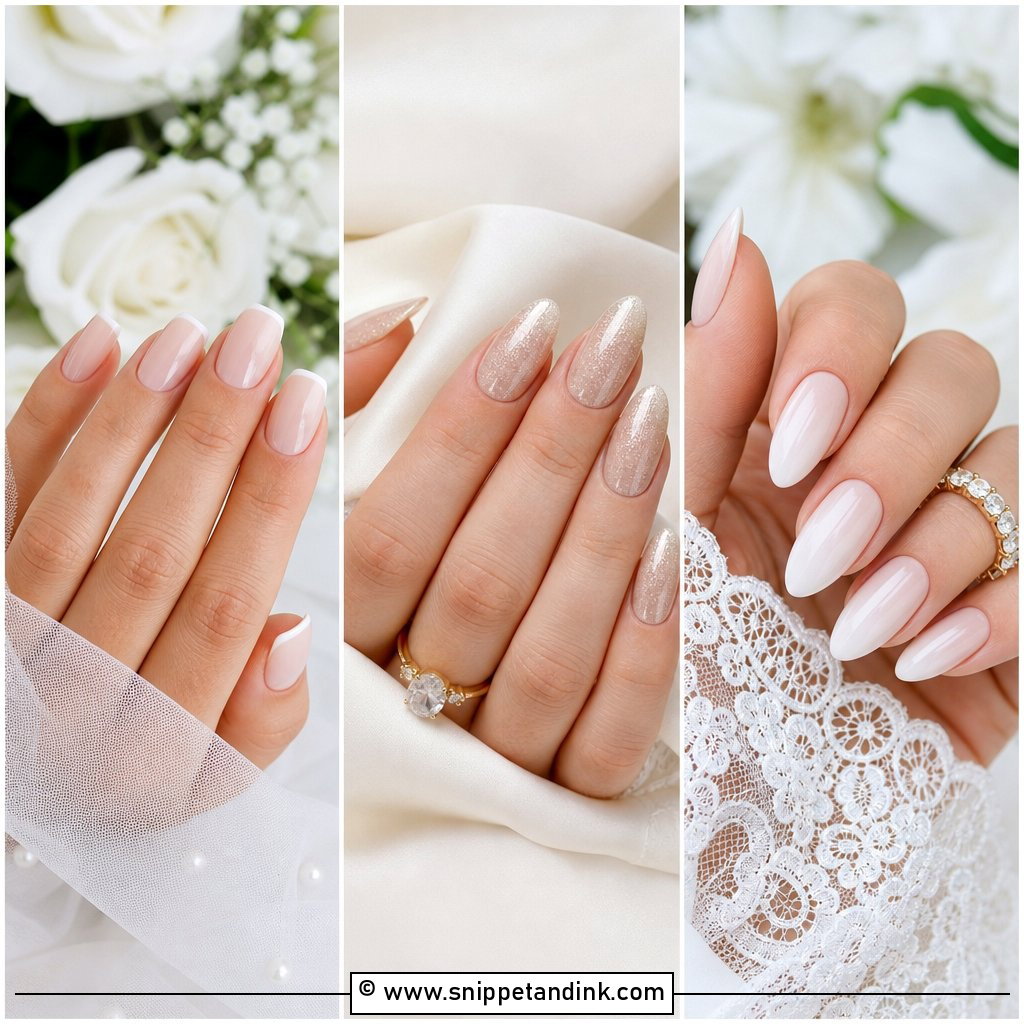
Lace art on one or two accent nails, painted freehand or stamped, links the nails to a lace bodice, sleeves or floral embroidery. Stamping gives very clean lines; freehand lets me copy the exact motif from your dress, so bring a close-up photo. Leave the remaining nails as plain French tips so the set doesn’t look crowded. A medium oval or almond gives the pattern room to show.
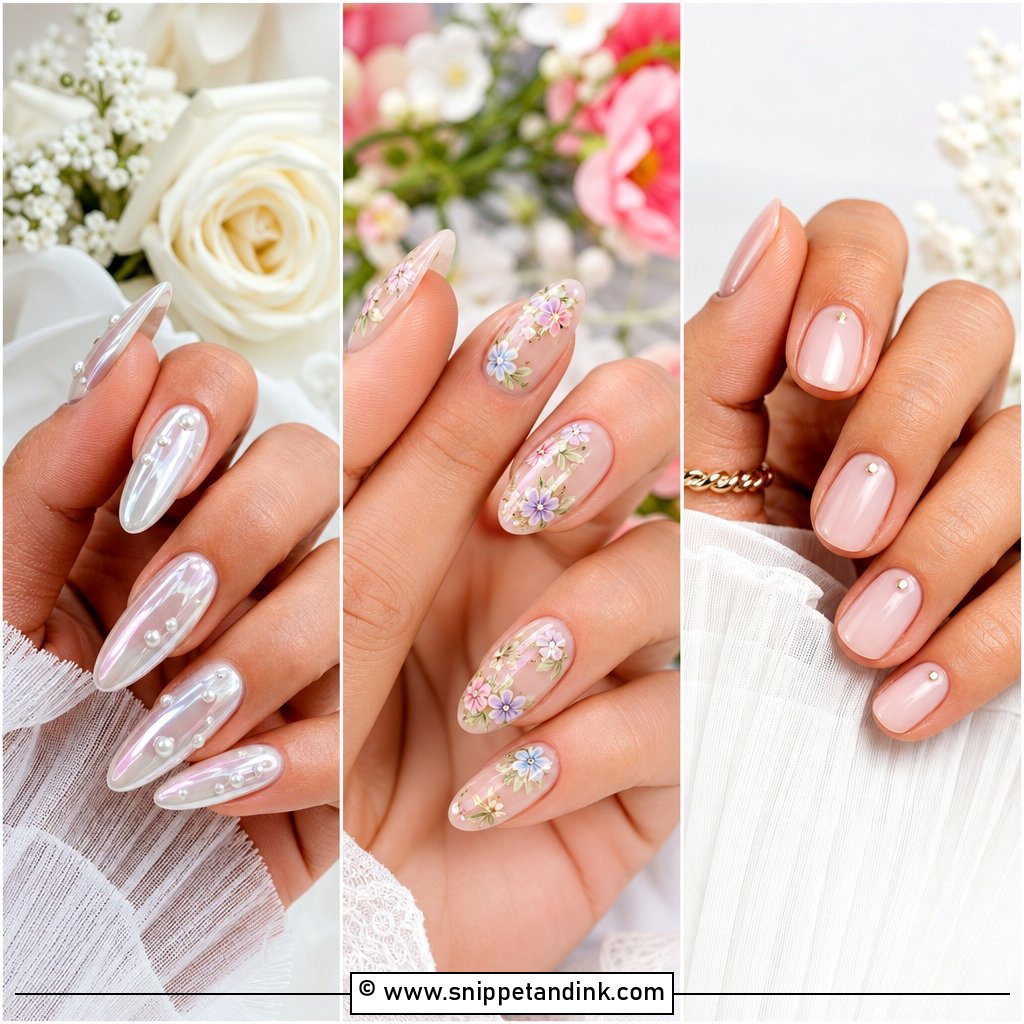
16. Floral French Wedding Nails
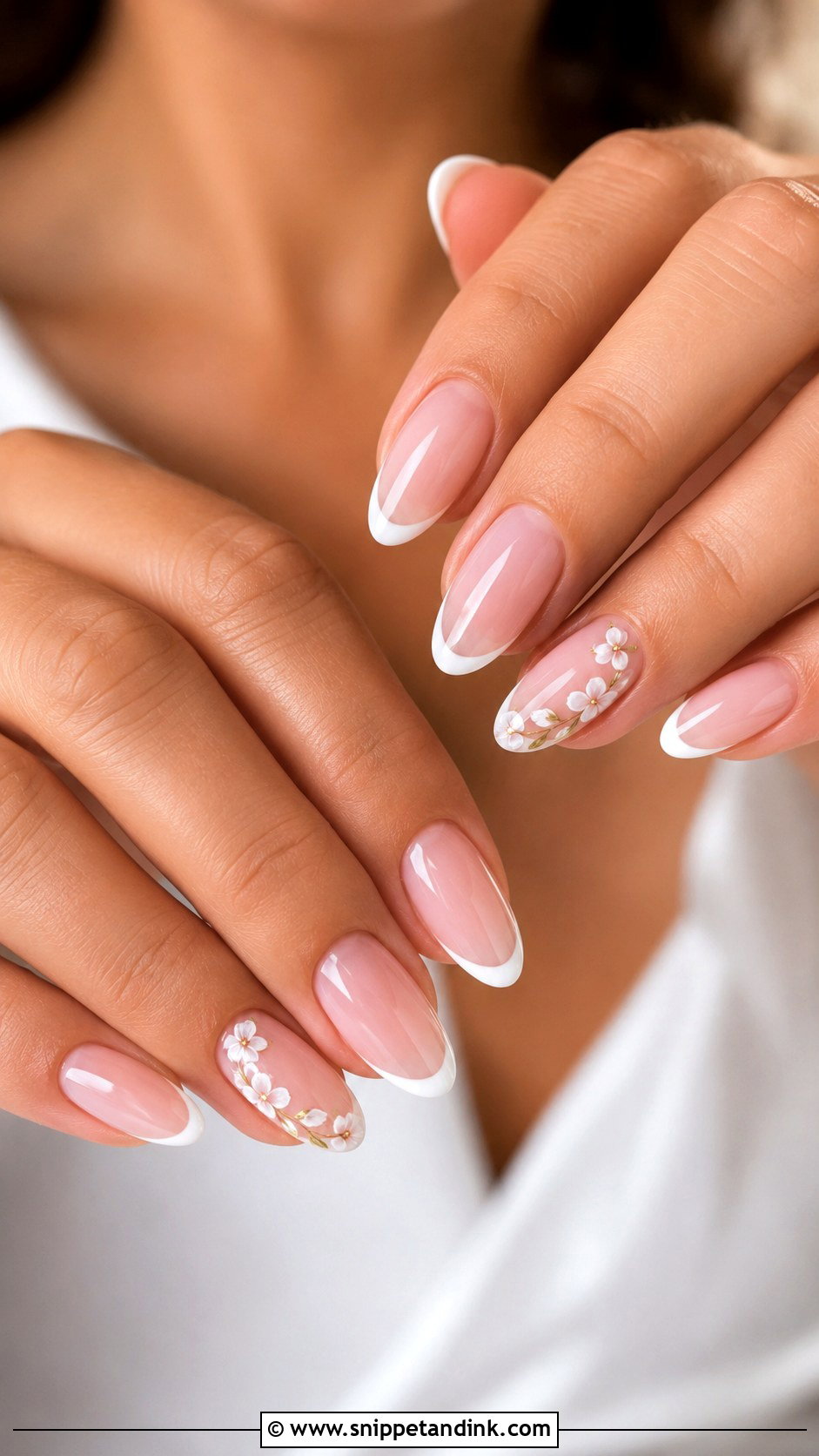
Small white flowers, blush petals or fine leaves on one or two nails keep a French set soft without making it look playful. The base stays sheer and the tips white or milky. Garden, spring and outdoor weddings suit it. The line work has to be fine, or the petals blur into dots in photos. A glossy finish keeps it clean, while a pearl top coat gives a slightly softer sheen.
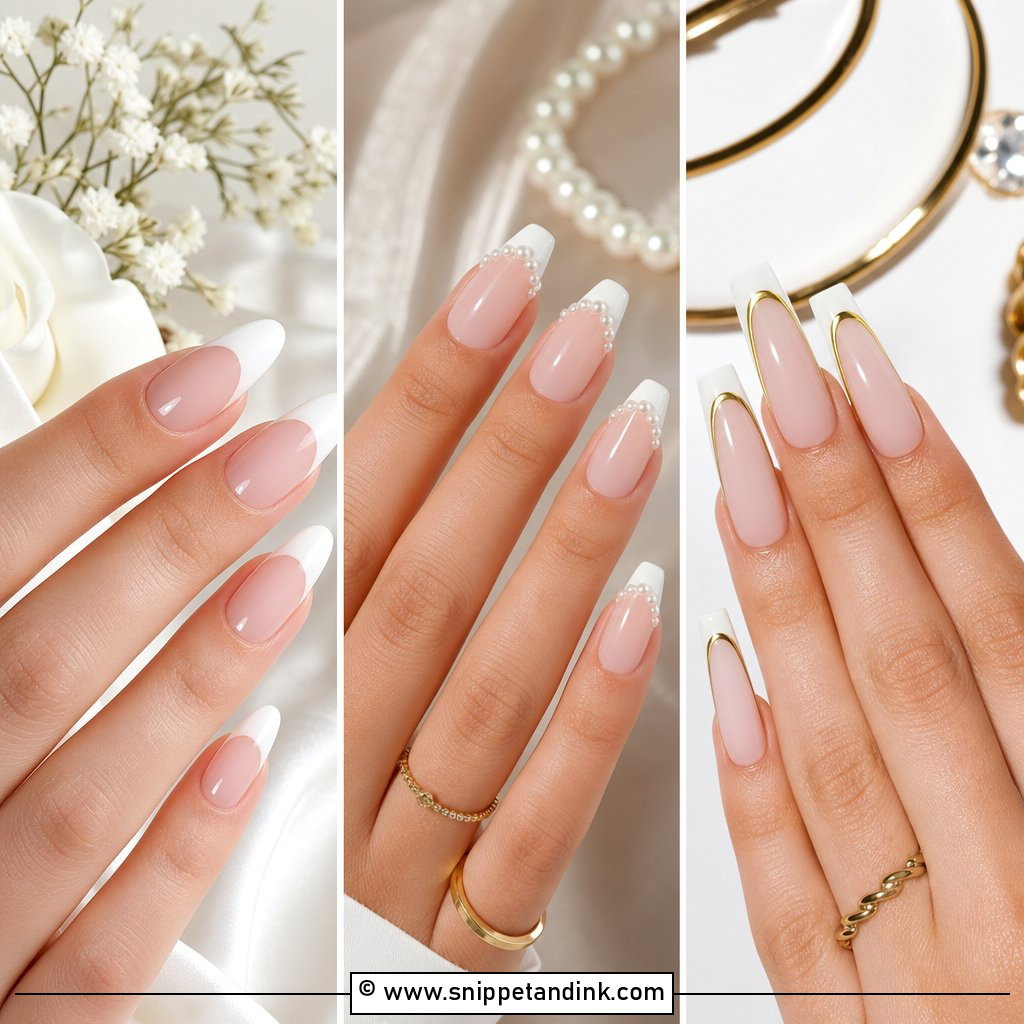
17. Double French Wedding Nails
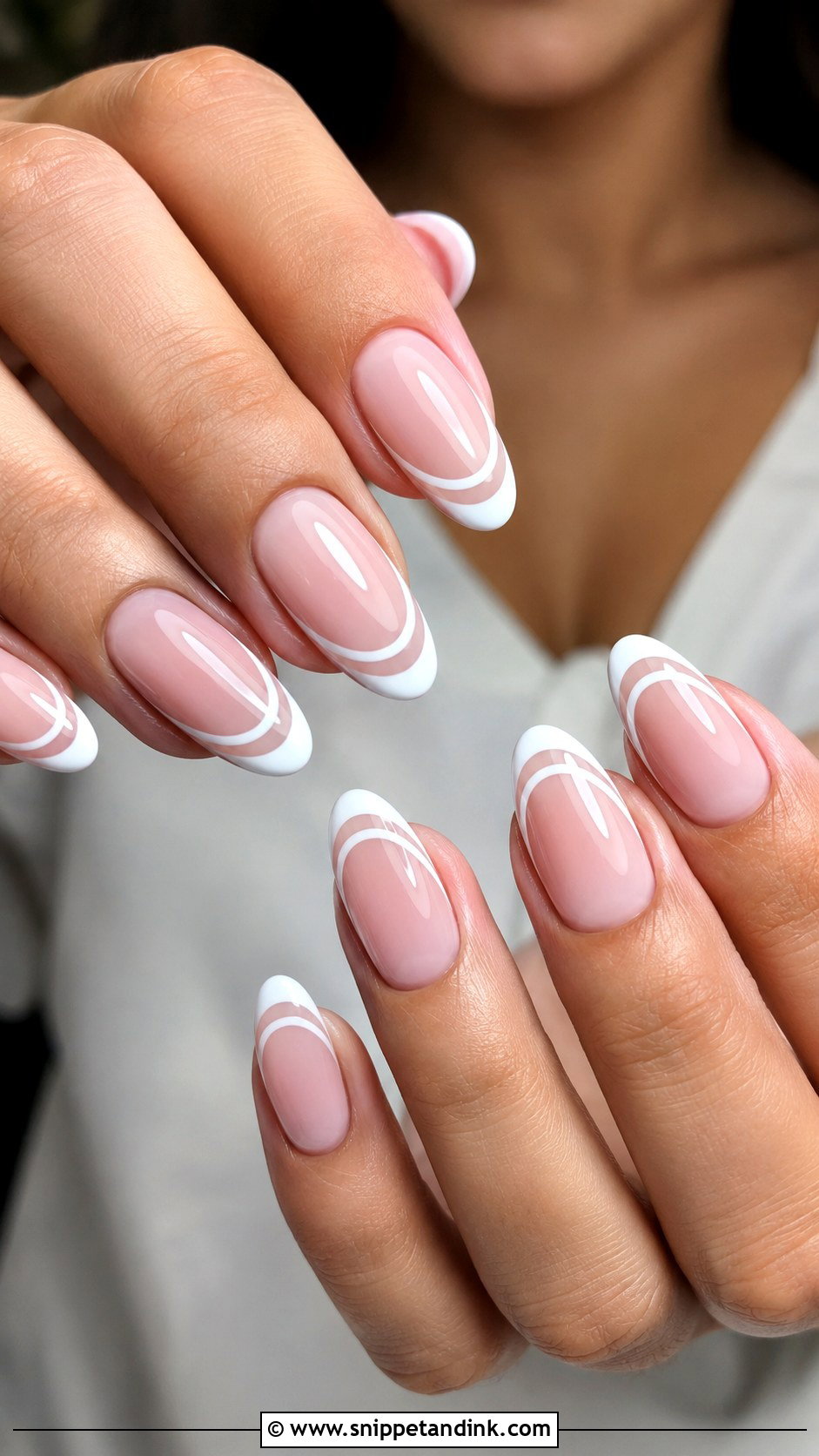
Double French adds a second fine line, either just under the white tip or near the cuticle, in white, silver, pearl or soft champagne. It brings structure without being loud. Almond and square show the lines clearly. Both lines need the same thickness and spacing on every finger, which is slow work, so allow a bit longer at the appointment. A sheer pink or nude base keeps the lines readable.
18. Reverse French Wedding Nails
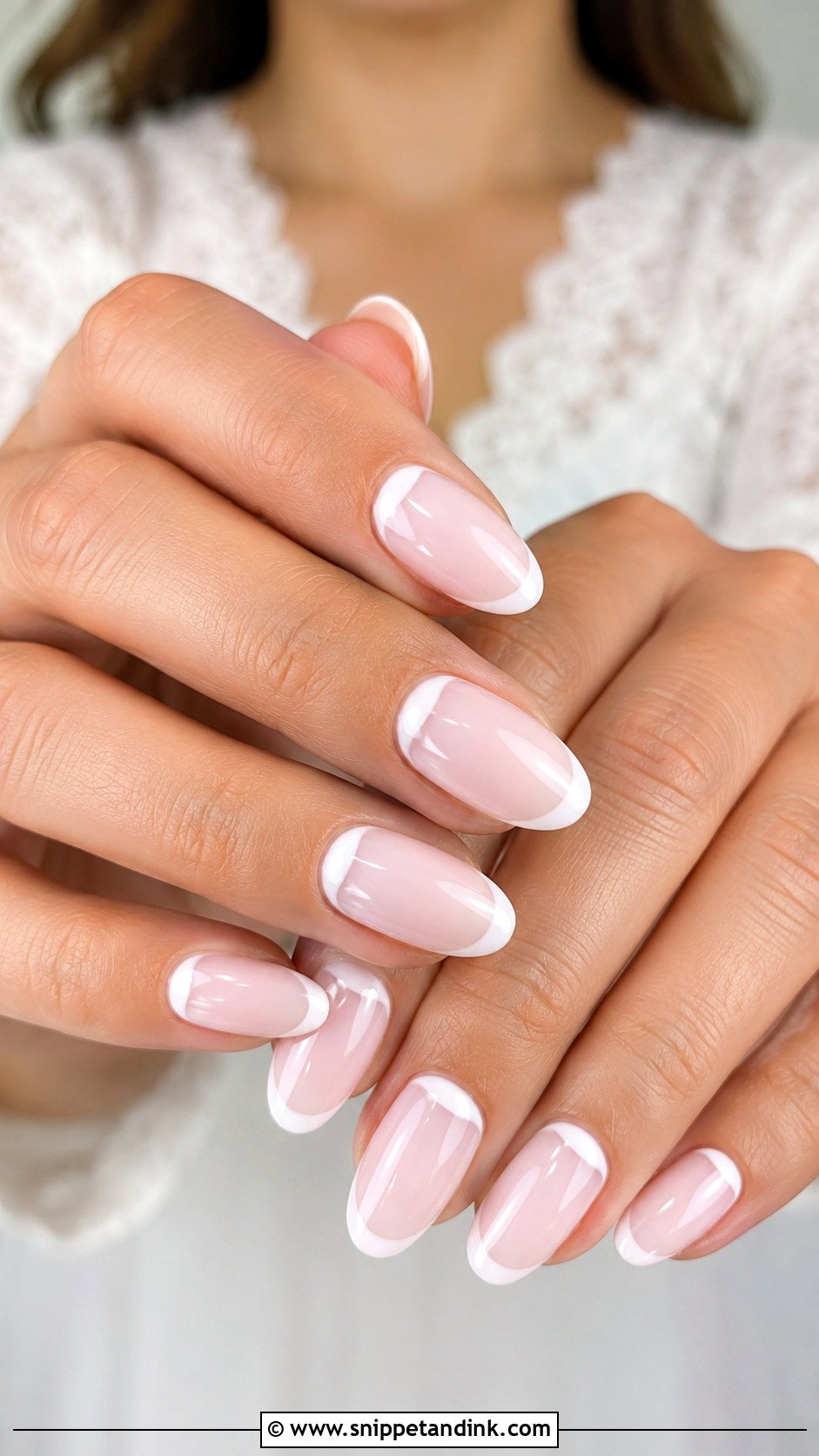
Reverse French moves the detail to the cuticle: a fine white, pearl or champagne curve around the base of the nail on a sheer pink or milky colour, sometimes with a soft tip too. It’s minimal and a little unexpected. Here’s what nobody mentions. Because the line sits at the cuticle, growth shows within days as a gap between line and skin. Book it no more than a day or two before the wedding. Keep the lines thin and the finish glossy.
19. Champagne French Wedding Nails
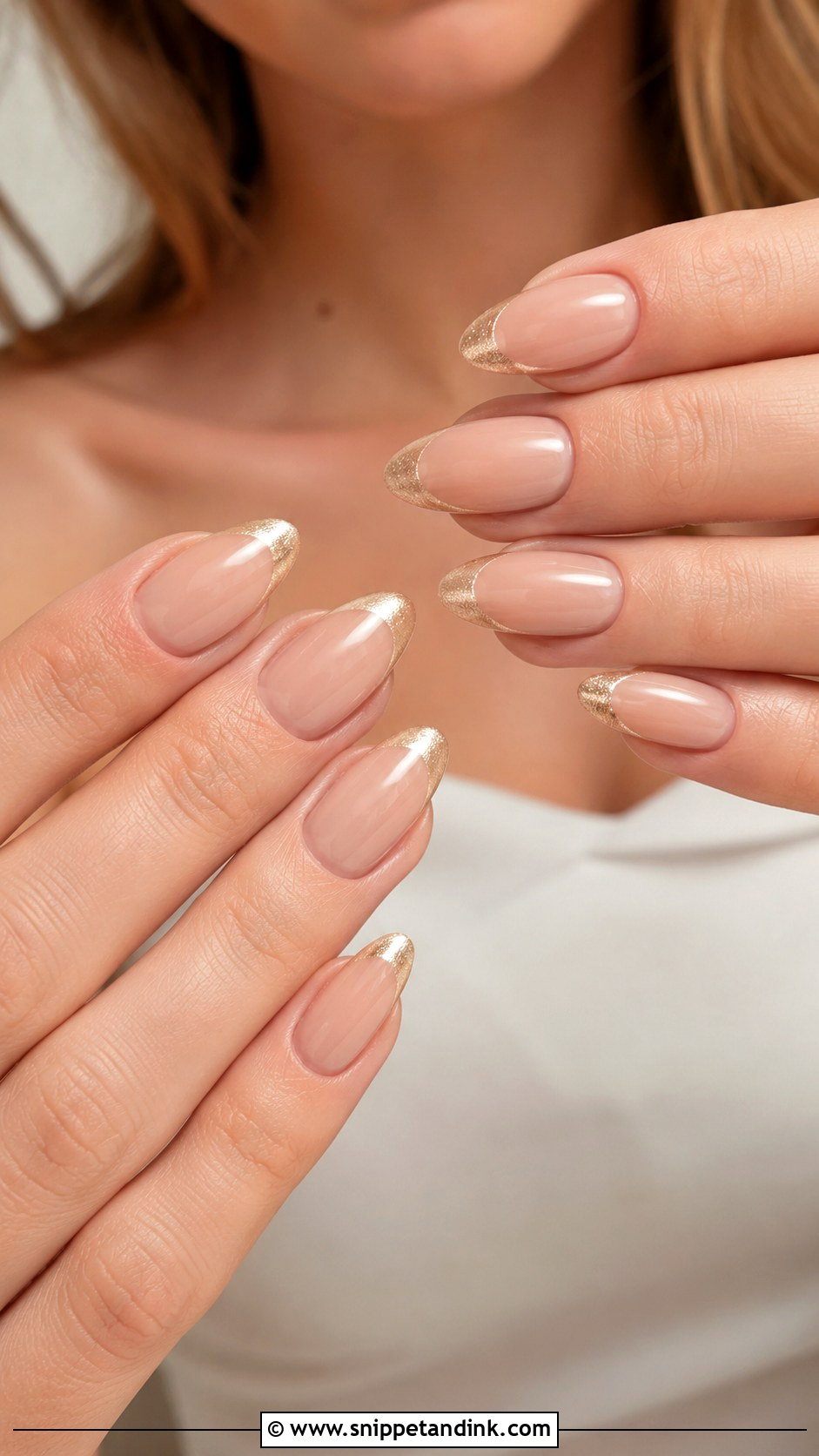
Champagne tips replace white with a soft metallic beige or warm ivory shimmer. They glow next to gold jewelry, warm makeup and ivory gowns, and they’re a good option for brides who find white too stark. Sheer nude, blush or milky pink all work as the base. Fall weddings and evening ceremonies suit the warmth. Pick fine shimmer over chunky glitter so the tip stays smooth and even.
20. Blue French Wedding Nails
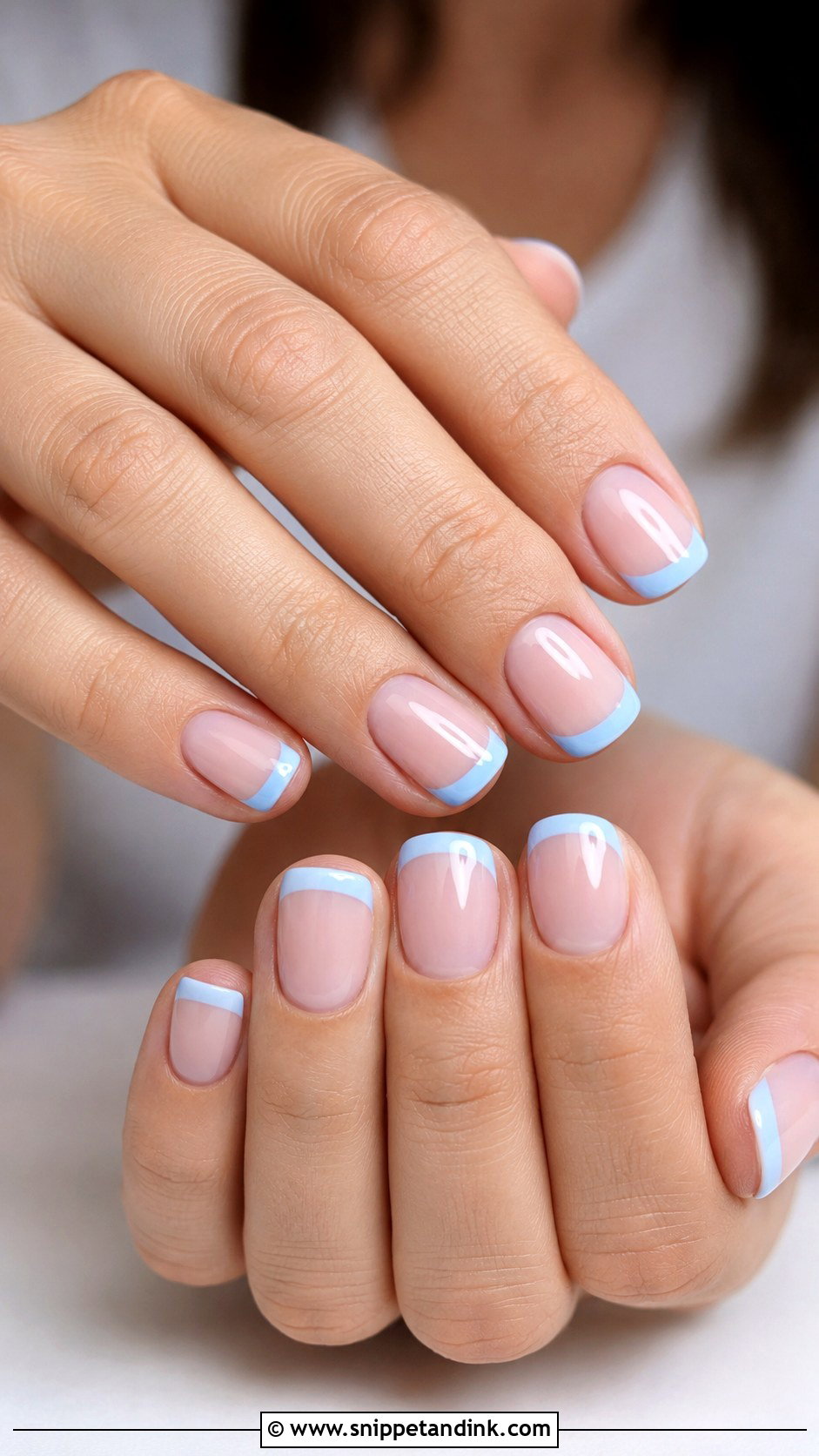
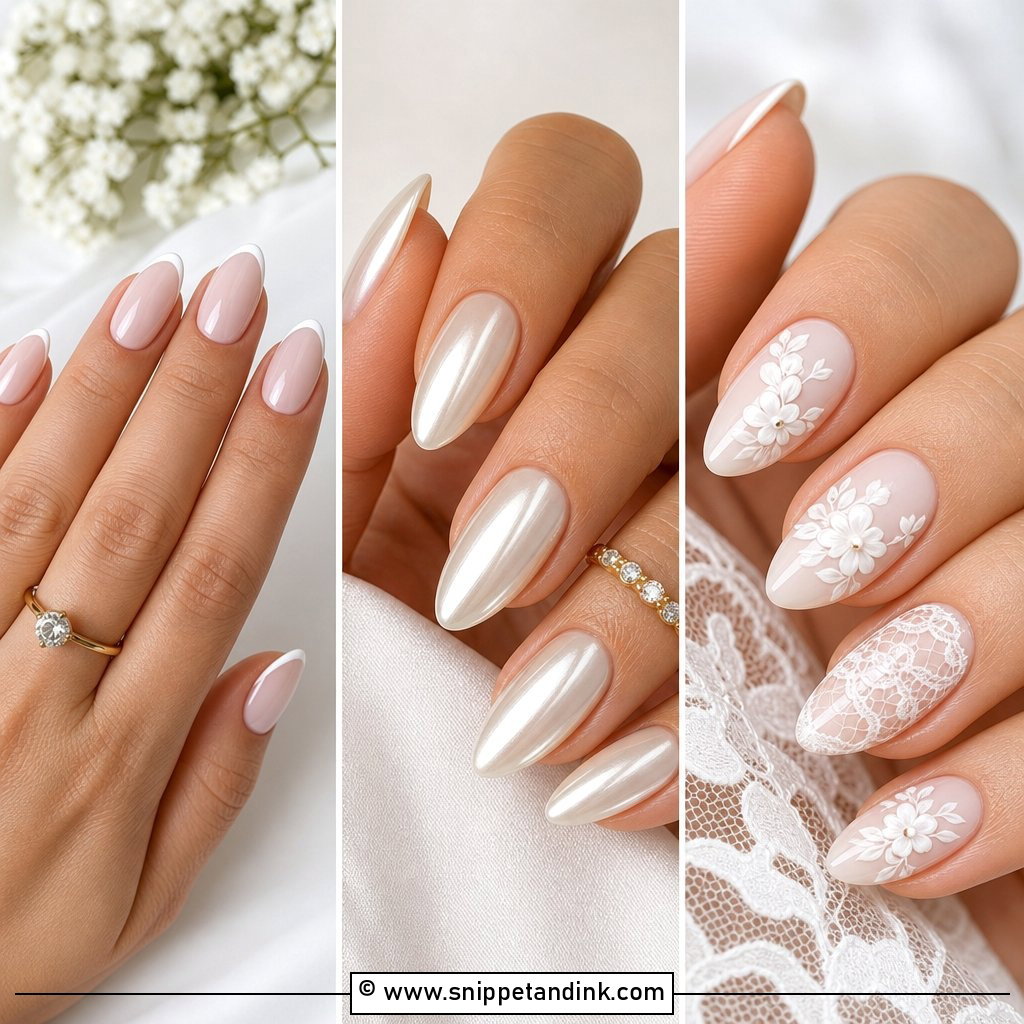
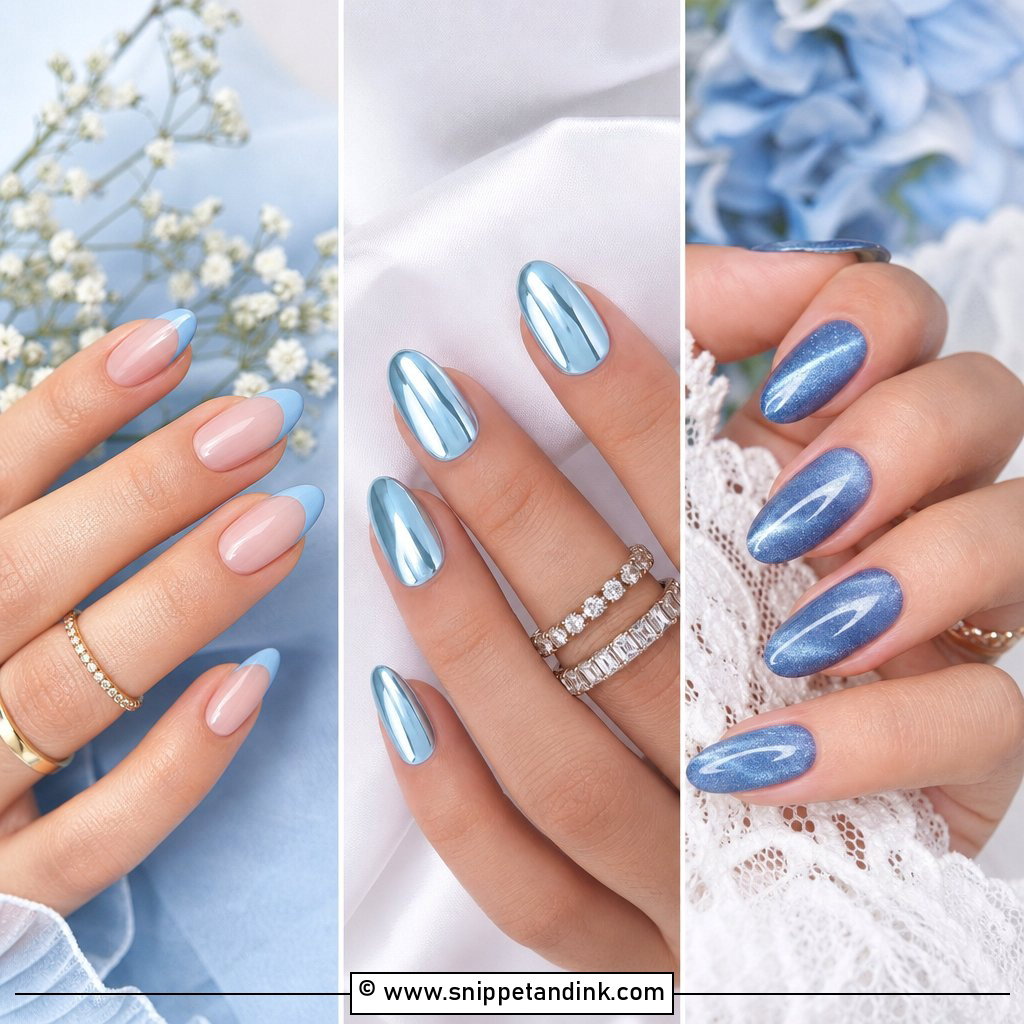
Pale blue tips are an easy something blue. Powder, icy or pale blue on every nail is one approach; a single blue accent nail among white tips is the quieter one. I’d keep the blue muted. Brighter blues look sharp in daylight but can turn almost navy under warm indoor lighting. Short oval, almond or rounded square suits it. Finish with a glossy top coat.
Coordinating Bridesmaids, Mothers and the Groom’s Hands
A French manicure scales well across a wedding party because there are so many quiet versions of it. The easiest approach is to keep everyone on the same base colour and let the details belong to the bride.
Bridesmaids
Give them the same sheer base and a plain thin tip, or a micro tip, and keep pearls, chrome or lace for the bride. Shapes don’t need to match exactly; a squoval on one and an oval on another is fine, since nobody compares nails across a row of bouquets. If the group is large, book them in pairs rather than one long chain, so nobody ends up with a chip by the time the last person is done.
Mothers and older relatives
A soft white or ivory tip on a slightly warmer nude is usually more comfortable than bright white, and a shorter oval is easy to live with. Gel is worth it for anyone who will be hugging guests and holding glasses for hours.
The groom
A tidy shape, pushed-back cuticles, a buff and a clear matte or satin top coat. His hand sits next to yours in the ring photos, and a little care there makes a real difference without anyone noticing he’s had a manicure.
Is One White Line Enough? Usually, Yes
A French manicure can now be much more than a single white tip. Classic, nude, oval and short versions stay traditional; micro tips, pearl chrome, double lines, ombre fades and champagne shimmer bring it up to date. Lace, florals, pearls or a pale blue edge add something personal. Match the set to your dress, ring, skin tone and how comfortable you are with length, and keep the finish clean. Done that way, your bridal nails will look just as fresh at the last dance as they did when you put the ring on.
You'll Like These Ideas:


Leave a Reply