
Blue is the easiest way I know to carry your “something blue” on your hands without giving up a clean bridal manicure. The shade does most of the work: a powder blue French tip barely registers from across the room, while navy chrome reads from the back row of the ceremony. Before I mix anything, I look at the gown fabric, the metal of the ring and how hard the bride uses her hands in the week before. Below are thirty blue sets I’d happily paint for a bride, a bridesmaid or a mother of the bride, with notes on which shapes, lengths and finishes each one actually suits.
Why Some Blues Turn Grey or Green on Your Hands
Blue is a cool color, and how it sits against your skin decides whether it looks fresh or faintly sickly. Before a bride commits to a shade, I paint a swatch on one nail and look at it in daylight, next to her ring and a scrap of her dress fabric. A rough guide to what I usually see:
- Cool or pink undertones: icy, powder and periwinkle blues look clean, and navy reads crisp rather than heavy.
- Warm, golden or olive undertones: very icy pastels can turn hands greyish. Dusty blue, denim and blues with a hint of green in them sit more comfortably, and gold accents help.
- Deep skin tones: pale milky blues can look chalky. Cornflower, cobalt and royal blue look deliberate, or I layer a pastel over a sheer warm base.
Check the shade against your gown too. A blue that looks lovely next to bright white can look slightly dirty beside ivory or champagne, so for those dresses I go a touch greyer or dustier.
1. Baby Blue French Wedding Nails
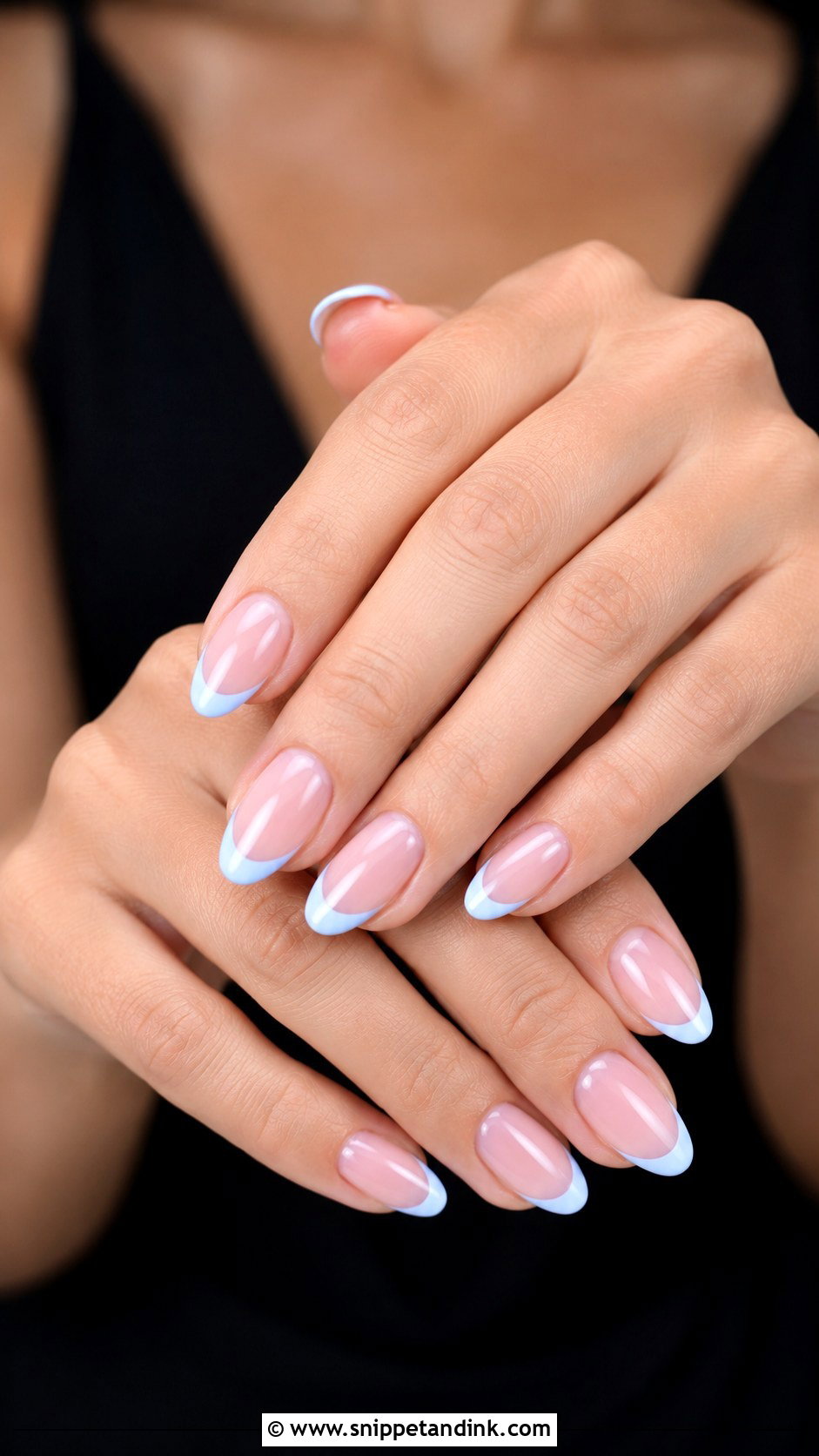
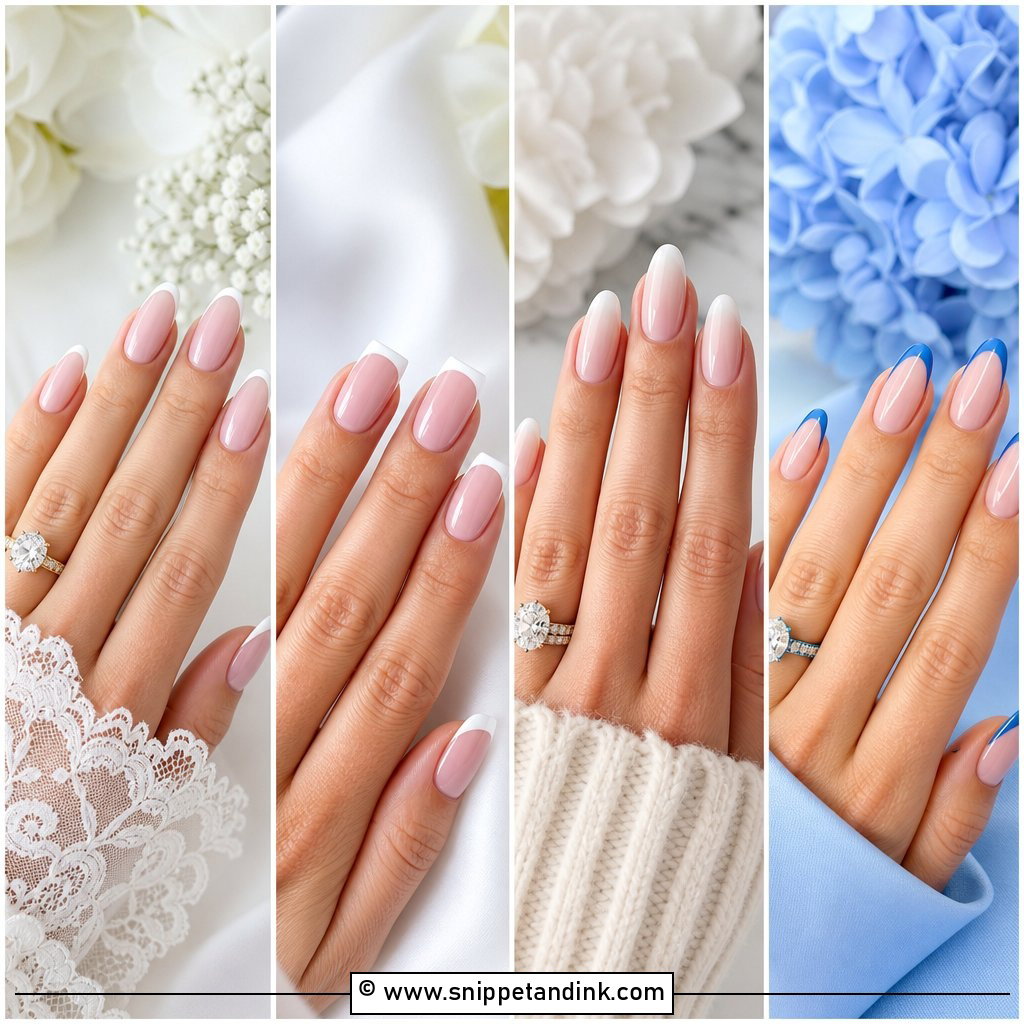
This is the set I suggest most often to brides who want a classic bridal manicure with one quiet change. The base stays sheer pink, nude or milky white, and only the smile line turns blue, so the ring and the bouquet still lead in photos. Pale blue on a tip shows every wobble, so I paint it in two thin passes rather than one thick one. On short nails I keep the line micro thin, because a deep tip makes a short nail look shorter. A deeper French only works once there’s some free edge to carry it.
2. Milky Blue Wedding Nails
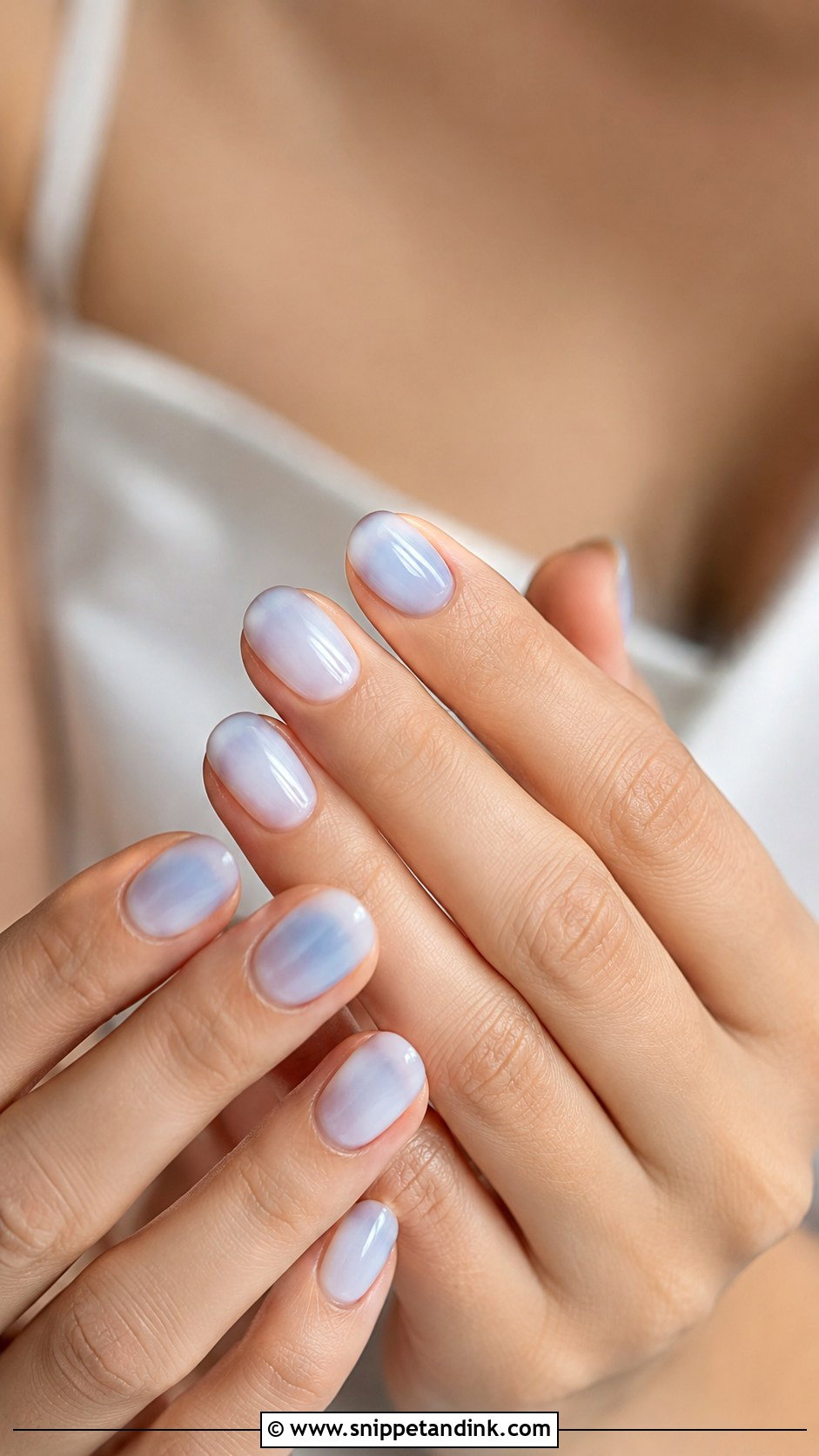
Milky blue is a pastel blue cut with translucent white, which gives a cloudy, soft-focus finish instead of flat color. Brides who normally wear neutrals usually feel most at home here. The catch is that milky shades streak easily, so I build them in three sheer layers and check the nail in daylight before curing the last one. Plain and glossy is enough. If you want something more bridal, two or three tiny pearls on the ring finger will do it.
3. Blue Chrome Wedding Nails
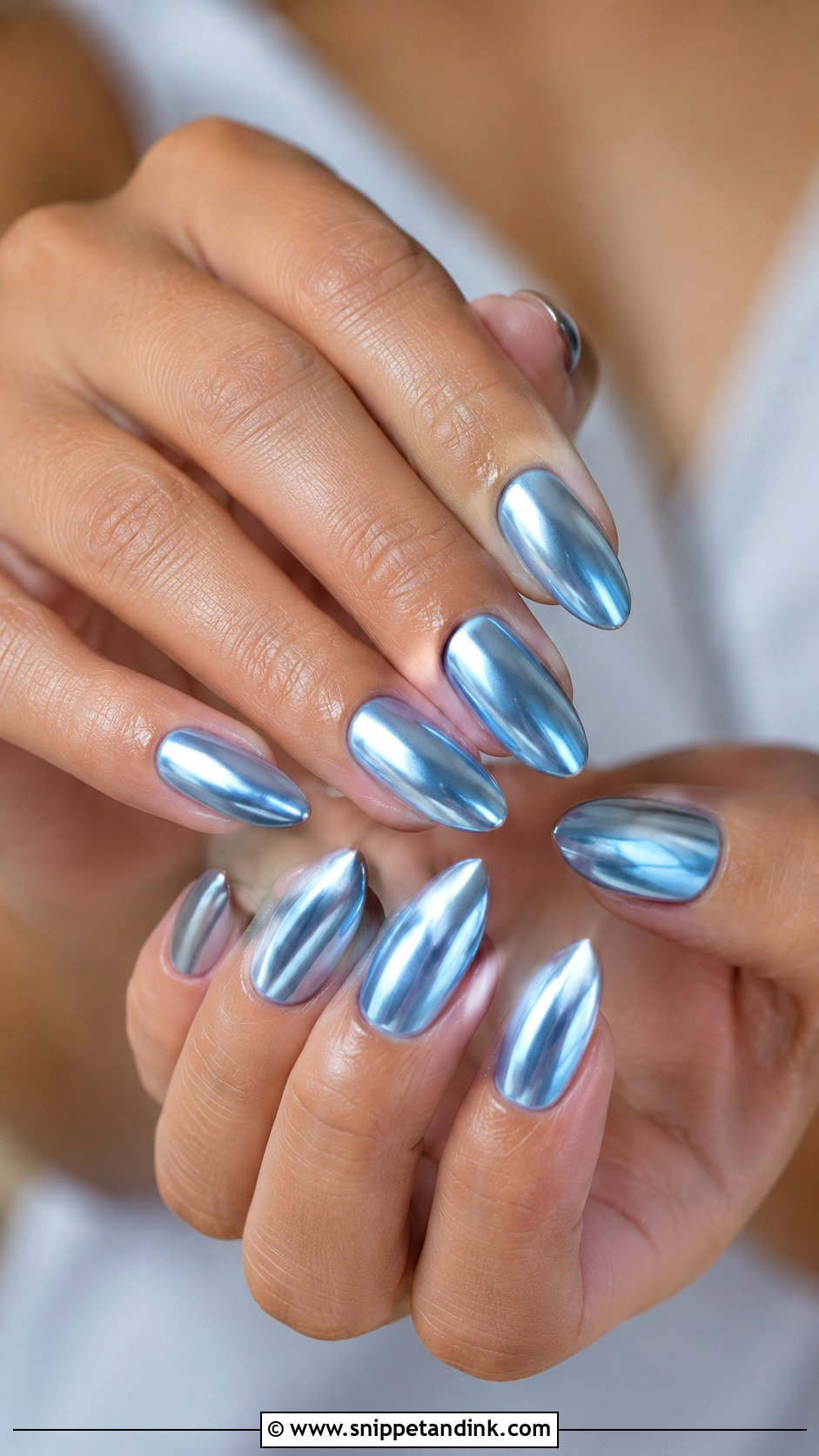
Chrome is a fine powder buffed over a cured, no-wipe top coat, and it reflects whatever light hits it. That’s the appeal and the risk: under a camera flash, a dark metallic blue can flare almost white in close-ups. For brides I usually go lighter, icy or powder blue chrome, which shifts gently rather than glaring. Almond and coffin shapes show the reflection best because the light runs down a longer surface. If a full chrome set feels like too much, I’ll chrome just the tips. It sits far better beside satin and silver jewelry than beside matte crepe.
4. Dusty Blue Floral Wedding Nails
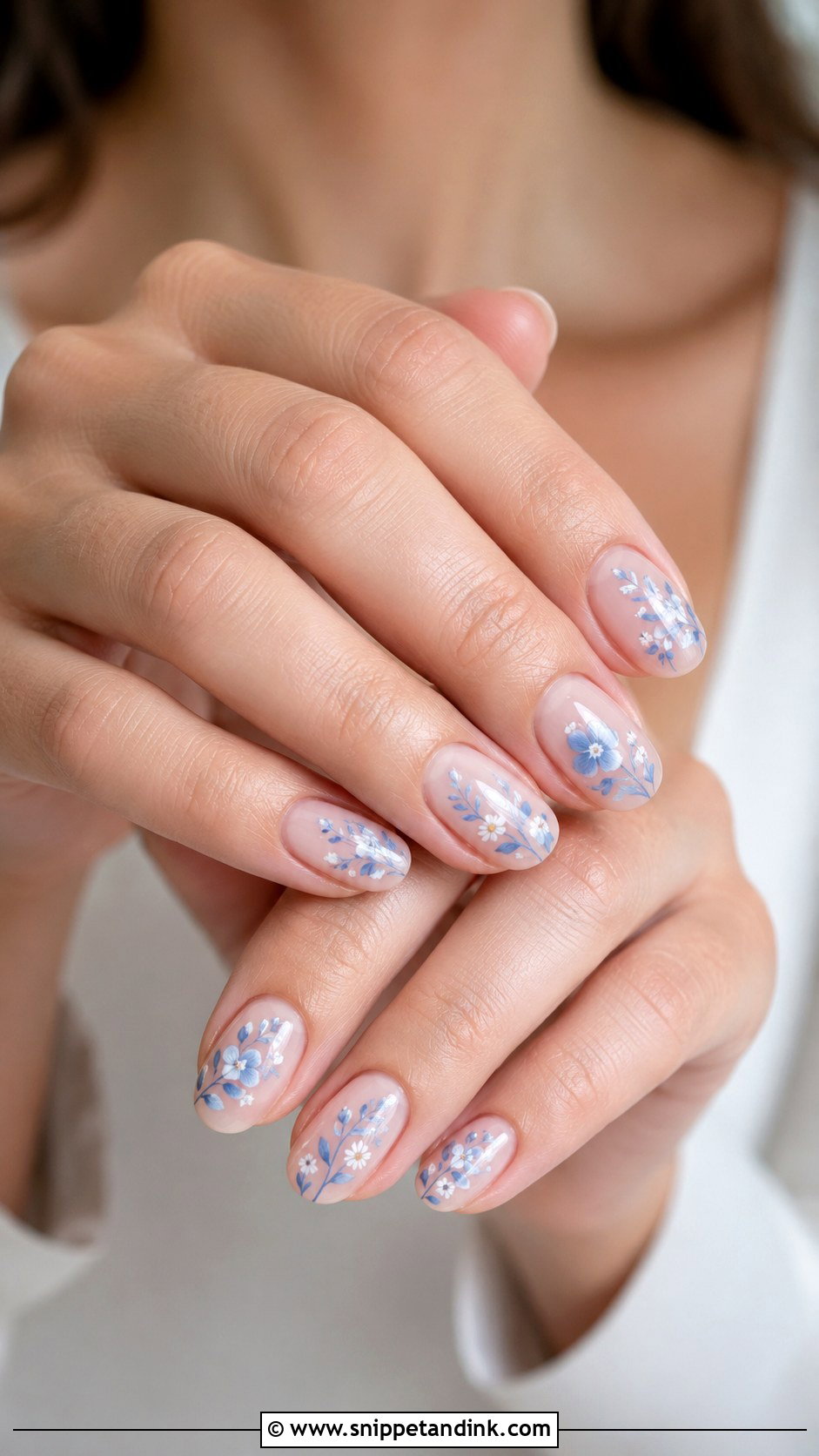
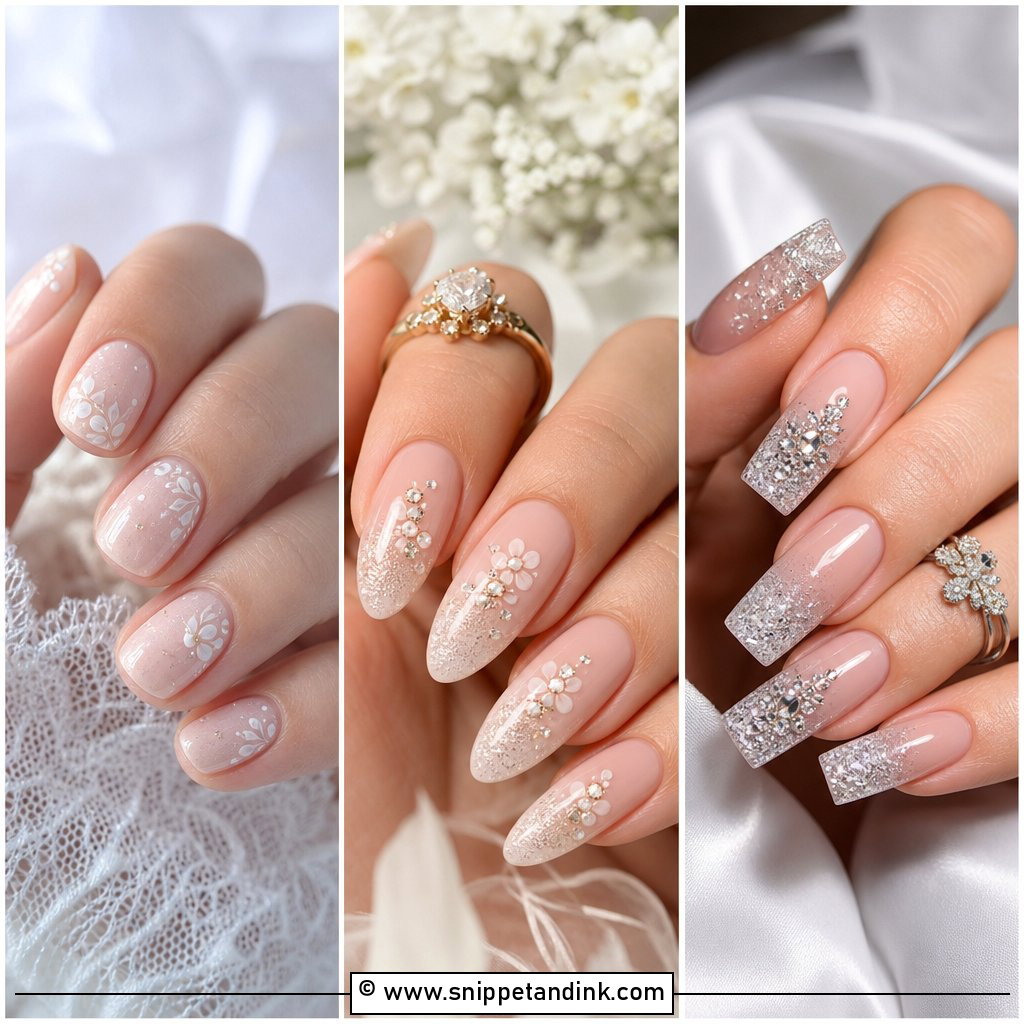
Dusty blue sits close to most wedding florals, so it’s easy to coordinate with a white, blush, cream or sage palette. I hand paint the flowers with a fine liner brush over a sheer nude or milky base, keeping each bloom to four or five petals so it still reads as a flower at ring-photo distance. Watercolor blooms are softer again; they’re made by dabbing thinned gel and letting it bleed before curing. On short nails I limit florals to one or two accents, because a busy pattern on a small canvas looks crowded.
5. Navy Blue Wedding Nails
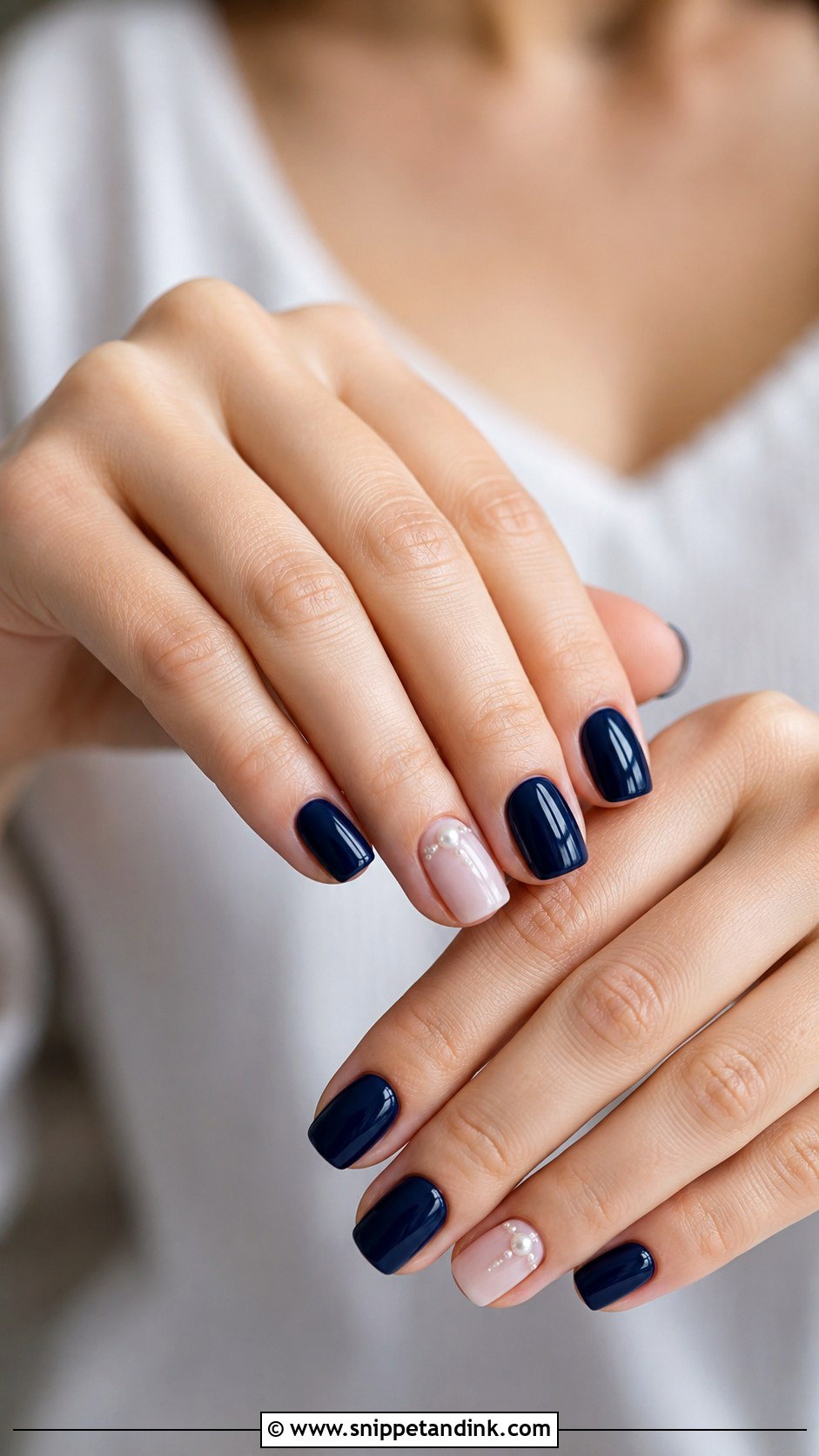
Navy is the formal end of the blue range, and it suits evening and winter weddings, black tie, and brides wearing silver, pearl or sapphire. My honest caution: dark shades show every chip at the free edge, and they’re the most likely to stain a bare nail, so I always use a base coat and cap the tip. A short, soft shape (oval or squoval) gives the most refined result. One milky accent nail or a thin gold French outline makes it feel bridal rather than office-ready.
6. Blue Ombré Wedding Nails
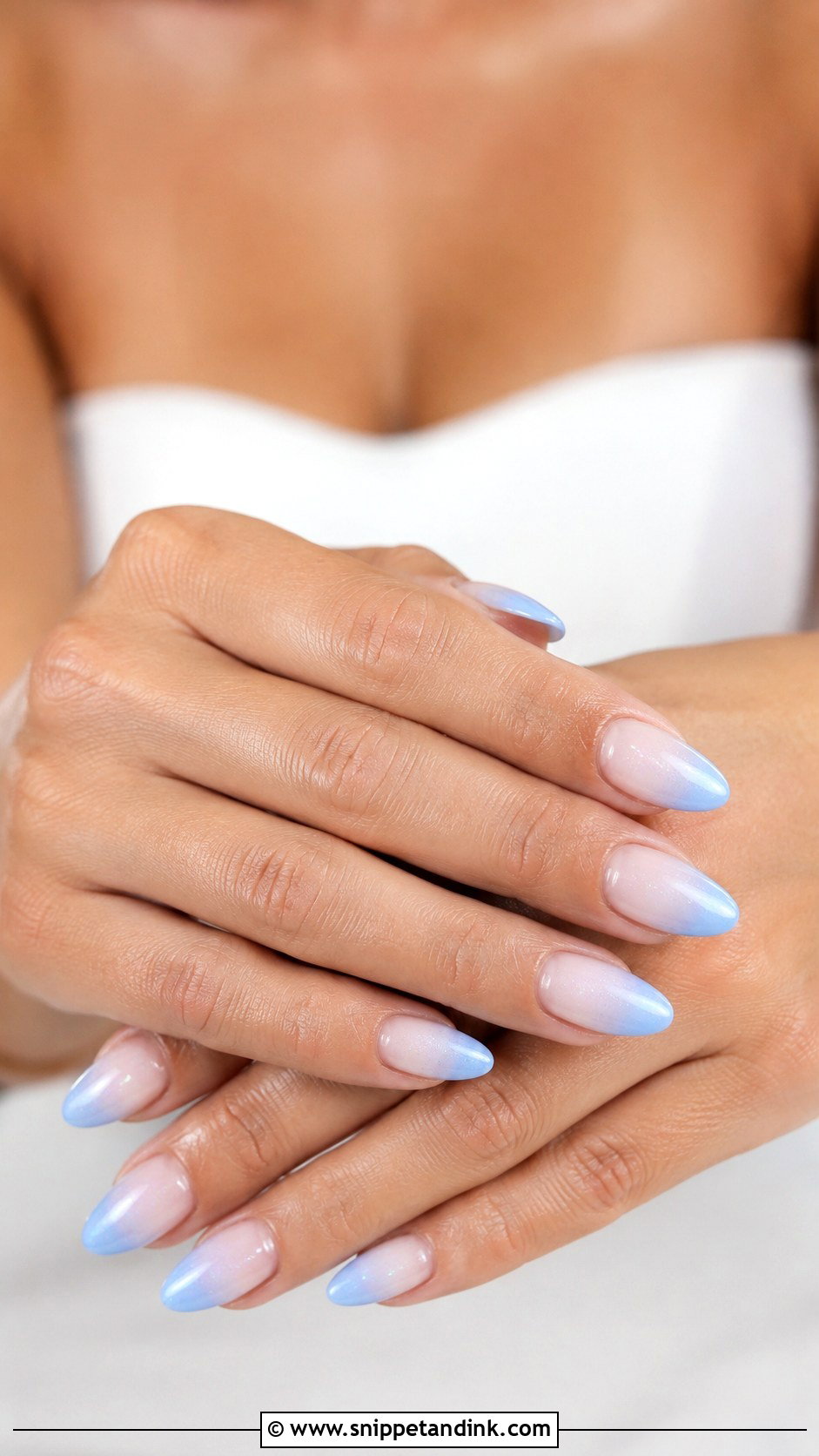
Ombré fades one shade into another: milky white into baby blue, nude into sky blue, pale blue into icy tips. With no hard line, it’s forgiving on uneven nail beds, and it grows out more gracefully than a solid color if your manicure needs to last through the honeymoon. I build gel ombré in thin sponged layers; rushing it leaves visible bands in close-ups. Almond, oval and ballerina shapes carry the fade best. A shimmer top coat is all the extra detail it needs.
7. Blue Pearl Wedding Nails
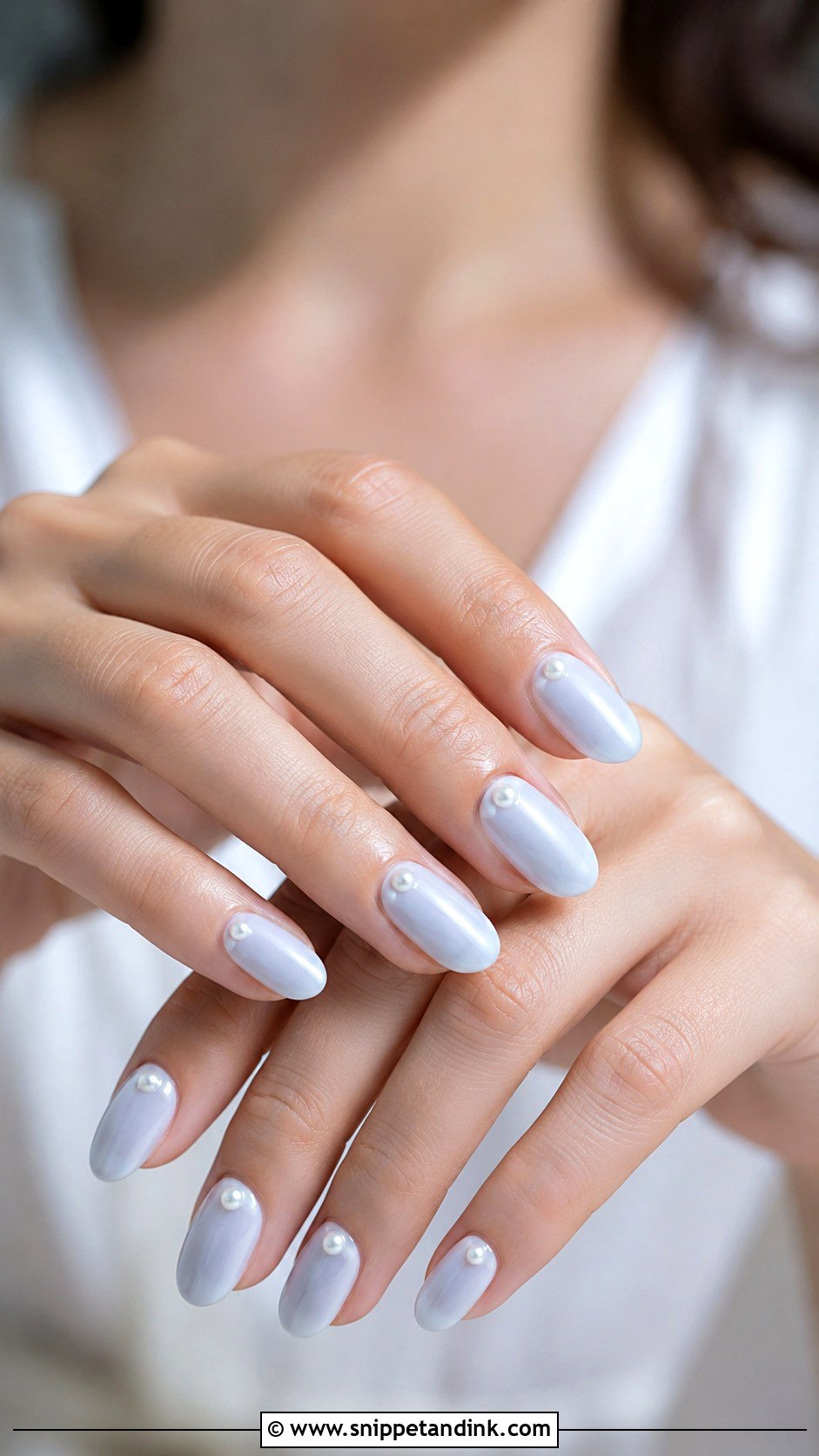
Blue and pearls are both traditional bridal touches, so pairing them rarely looks forced. I set the pearls into gel near the cuticle or along the smile line, over sheer blue, milky blue or a pale nude. Size matters more than placement: flat-back pearls much bigger than a couple of millimeters snag on lace, tulle and hair. So I keep them tiny, spaced out, and on only one or two nails if you’re wearing a fine veil. If your dress has pearl buttons, this one practically chooses itself.
8. Blue And White Wedding Nails
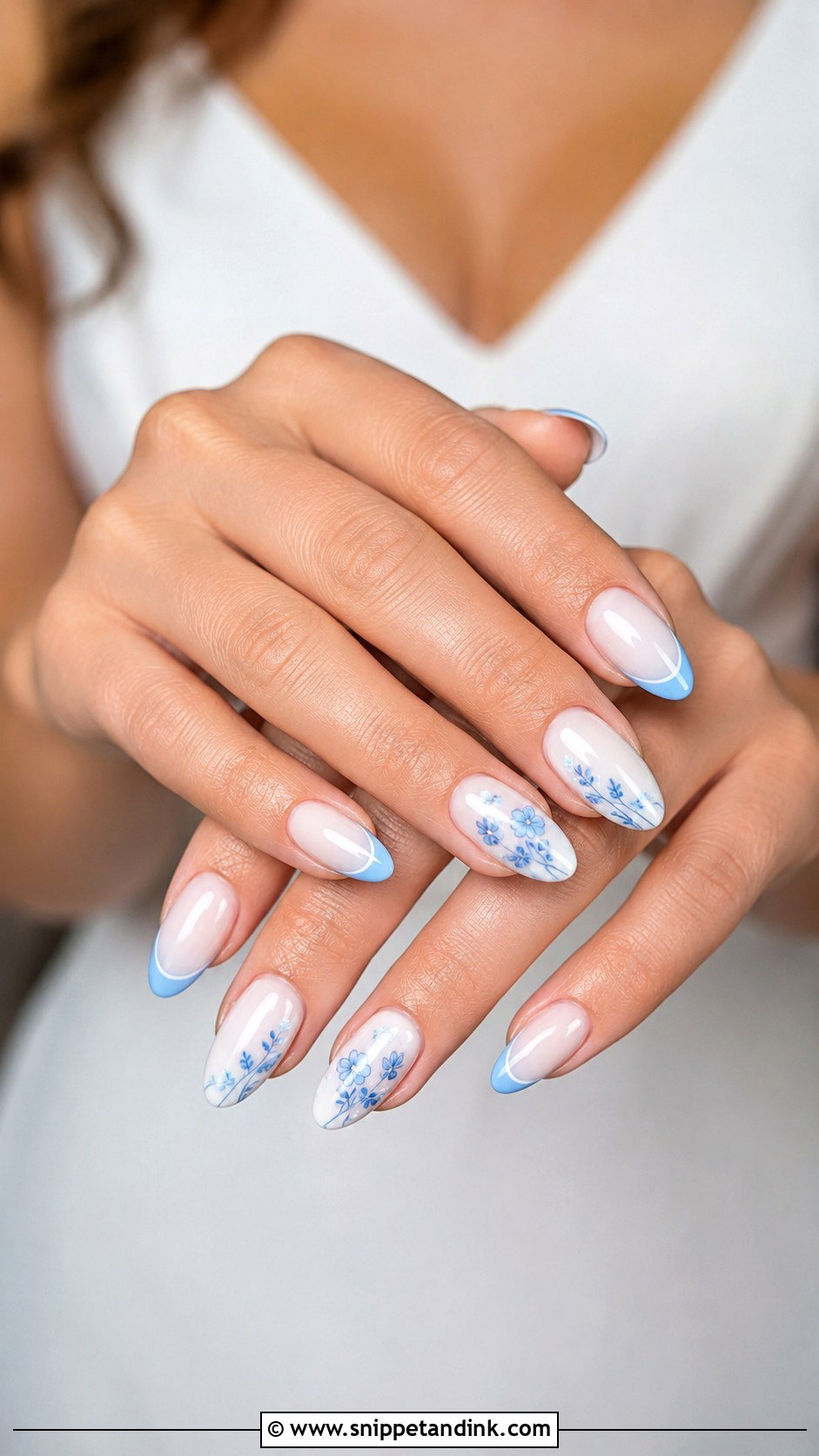
White and blue together are crisp and very easy to read in photos. You can run white tips with blue florals, blue tips over milky white, or alternate full nails for something bolder. The real decision is contrast. Baby blue with milky white stays soft; navy with bright white turns graphic, almost nautical, which suits a beach or yacht wedding more than a lace ballroom gown. Keep the art balanced across both hands, since pattern on all ten nails tips into busy fast.
9. Light Blue Wedding Nails
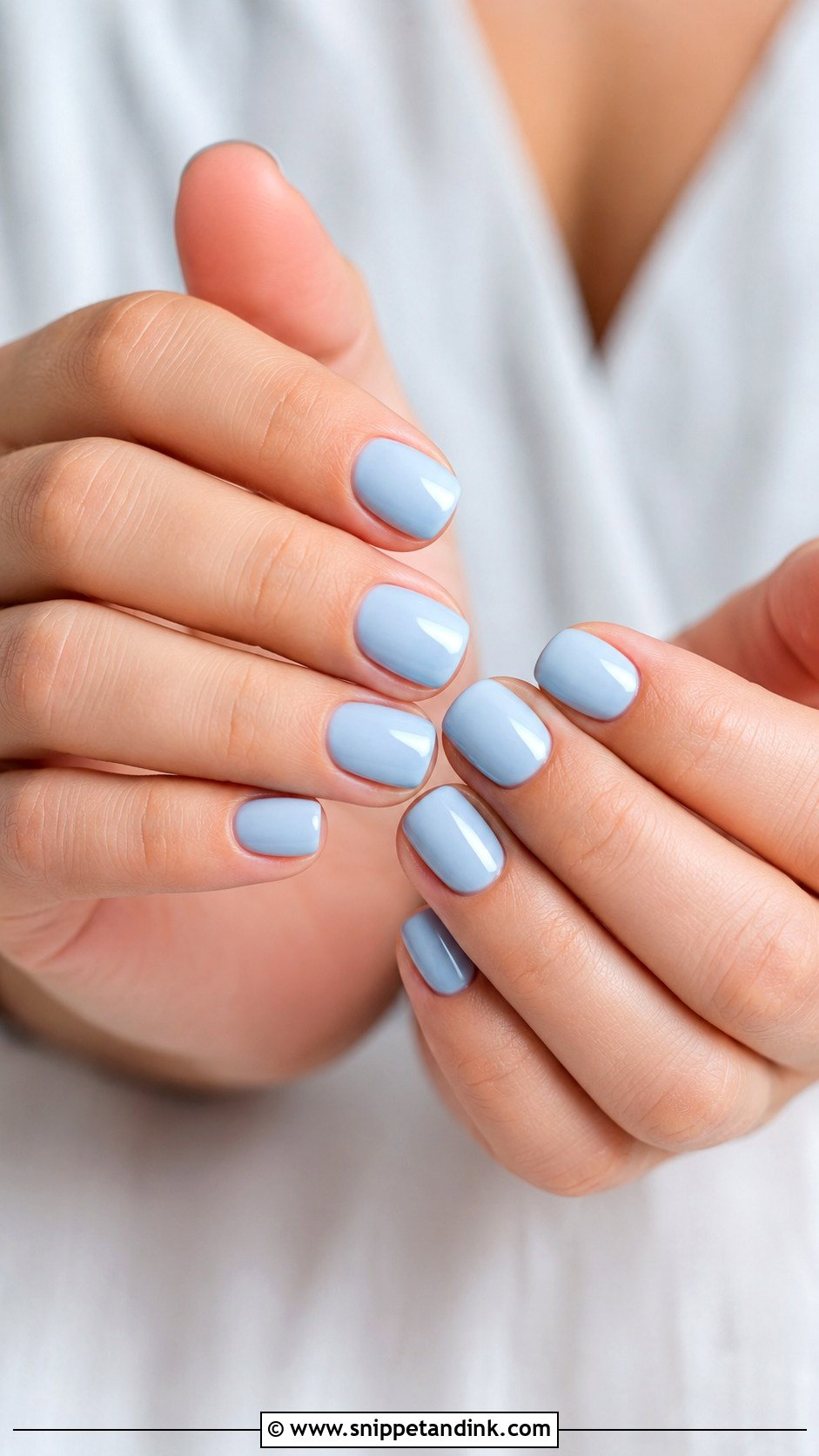
A solid pastel blue is the least fussy option here, and that’s its strength. Short nails look clean in it; longer almond nails look graceful. Pastels are the hardest shades to lay down evenly, though, so at home expect three thin coats. Very pale blue can also wash out to near-white under strong flash, which is why I sometimes nudge a bride one step deeper than the shade she first picked. A thin white tip or a sheer shimmer layer adds interest if plain feels too plain, and the shade is an easy match for bridesmaids in powder or sky blue.
10. Blue Glitter Wedding Nails
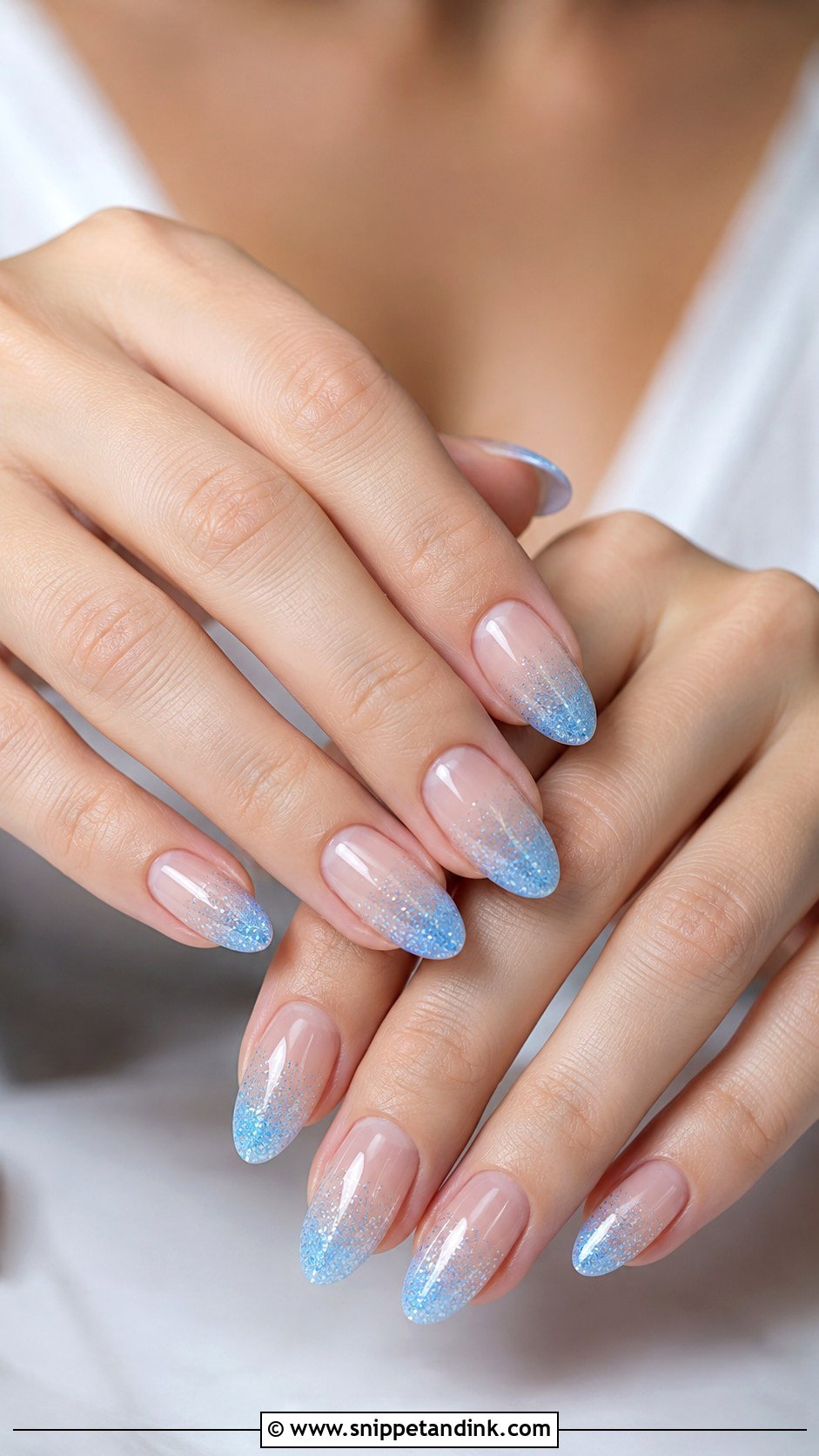
Glitter belongs in a wedding set as long as it’s fine glitter. Chunky flakes catch light unevenly and look rough in macro ring shots, while a dense, fine shimmer reads as sparkle. I like a pale blue glitter fade from the tip over a nude or milky base; navy glitter suits an evening or winter reception. Know before you book that glitter gel is the slowest to remove, so plan a proper soak-off after the honeymoon rather than picking at it. Full set or accents, it needs a thick, smooth top coat.
11. Blue Lace Wedding Nails
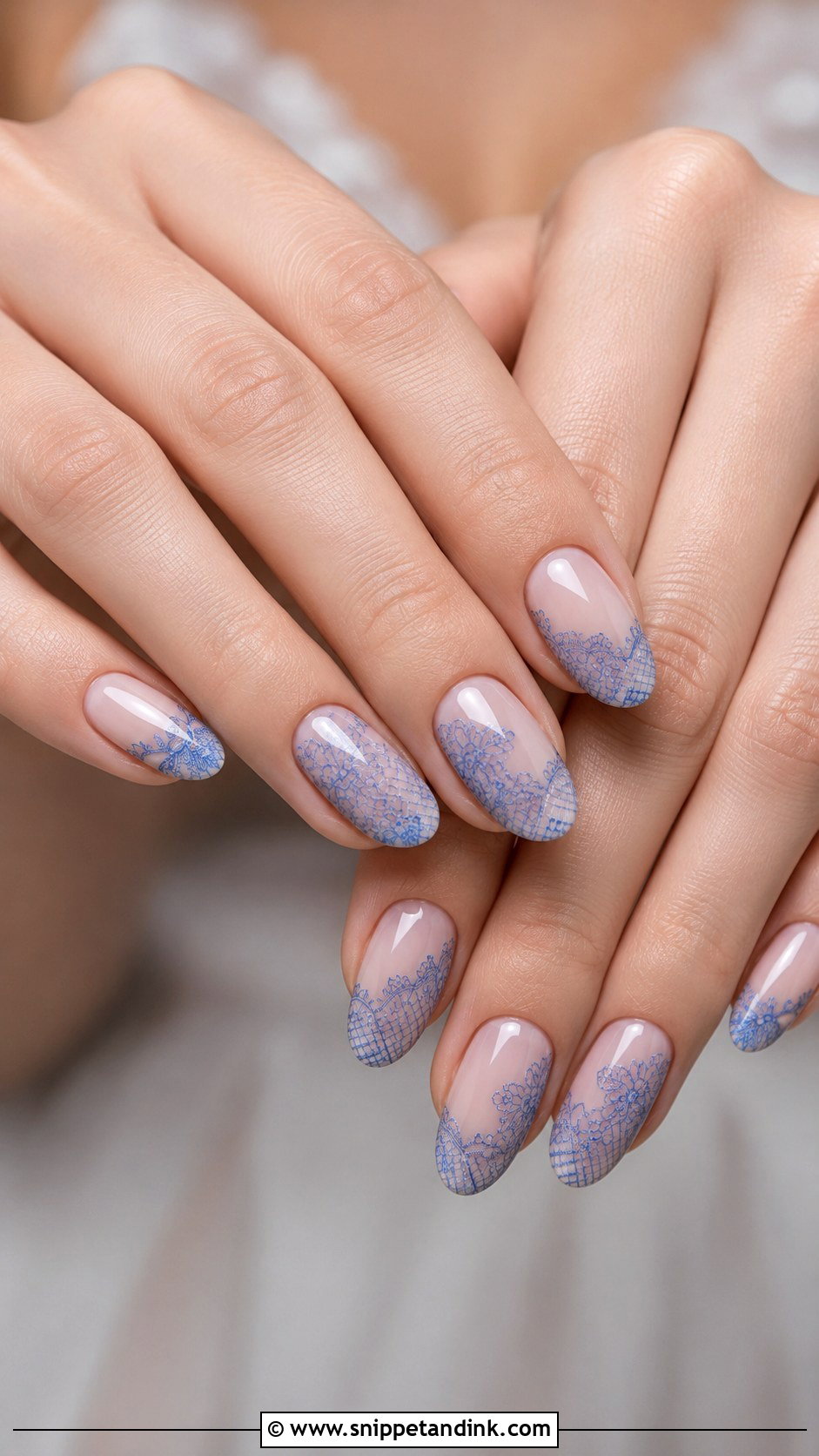
Lace nail art is fine linework, stamped or hand painted over a sheer nude, blush or milky base, meant to echo the lace on a gown or veil. Bring a close-up photo of your actual lace to the appointment. I’d much rather copy its real motif, the scallop or the floral repeat, than paint a generic pattern. Pale or dusty blue keeps the effect soft. For a more modern version, I put the lace on the ring fingers only and leave the rest as blue French tips.
12. Blue Marble Wedding Nails
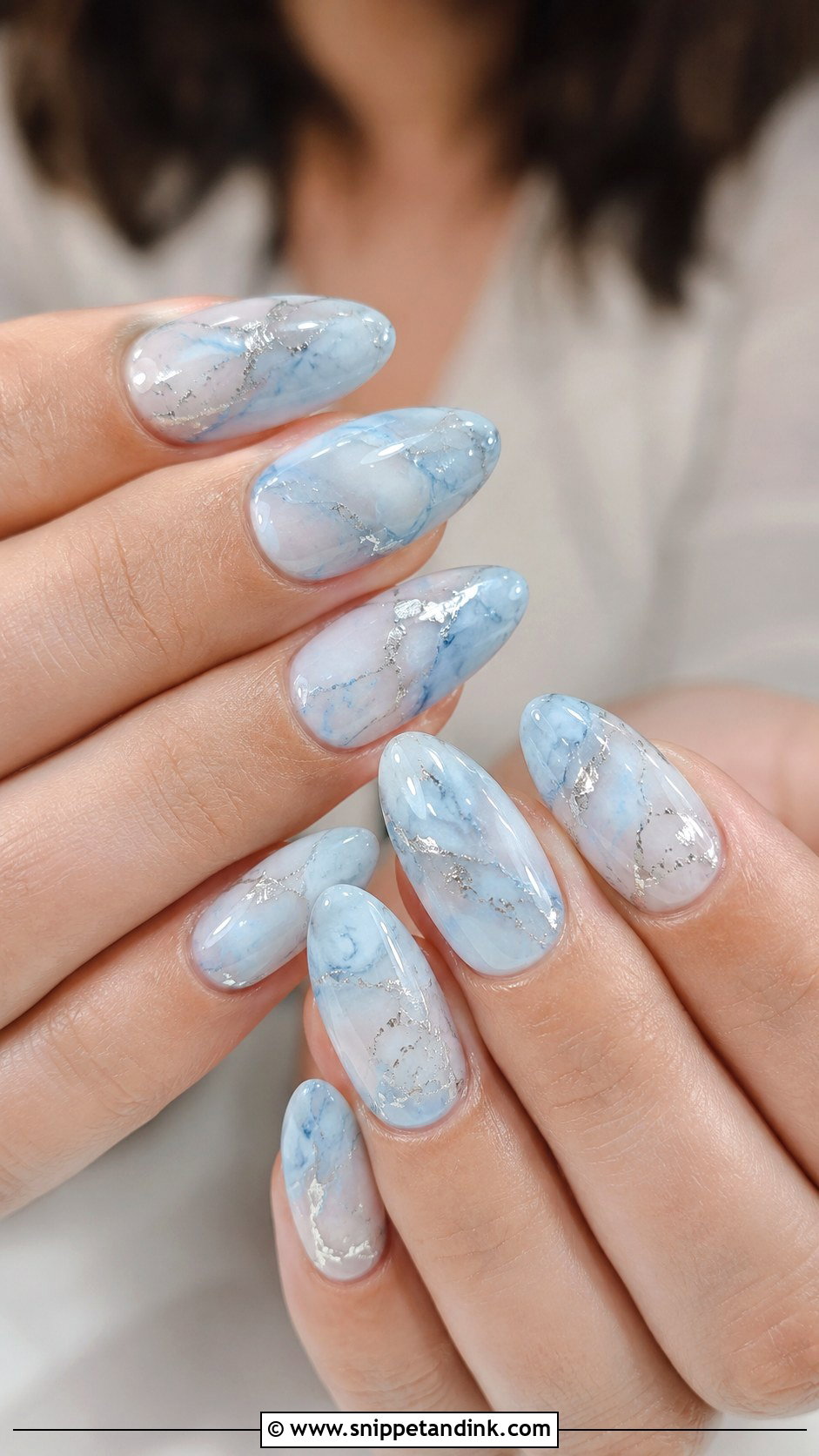
Marble suits brides drawn to unique manicures who still don’t want heavy art. Pale blue, white and sheer nude are blended wet, then veined with a fine brush, so no two nails ever match exactly. Ask for thin, wispy veins; thick dark ones start to look like a kitchen countertop. A fleck of silver foil adds a little luxury without taking over. The pattern needs room to move, so medium almond, oval or coffin nails show it far better than very short ones.
13. Blue Velvet Wedding Nails
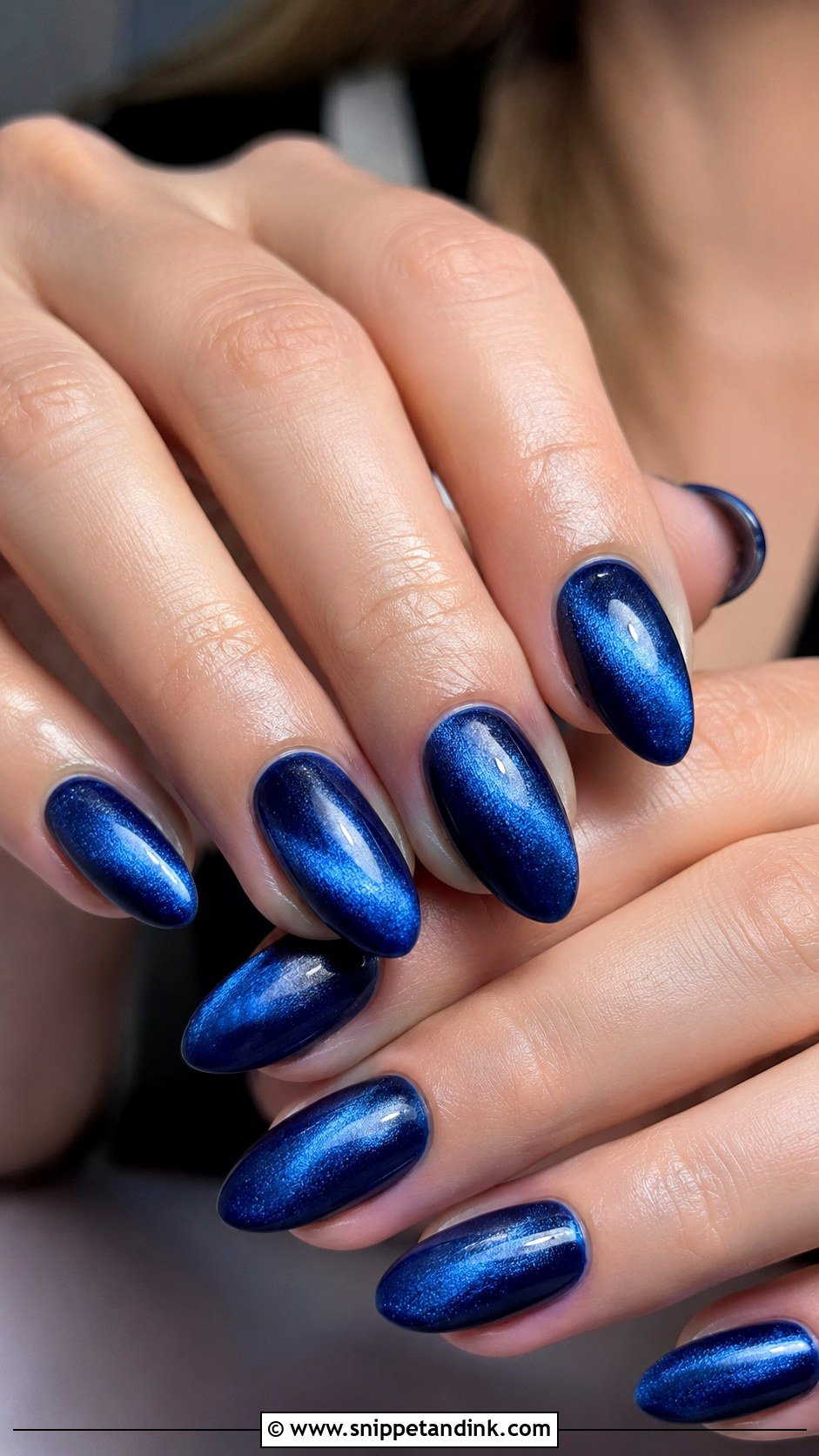
Velvet nails use magnetic gel packed with fine metallic particles. Instead of pulling them into one line like a cat eye, I sweep the magnet across the whole nail, which leaves a plush, diffused glow. Pale blue reads icy and navy reads rich. Timing is everything with this finish: the particles settle back flat within seconds, so each nail goes straight under the lamp after the magnet. Keep the design plain and let the movement do the work, ideally beside silver jewelry or a satin gown.
14. Blue Cat Eye Wedding Nails
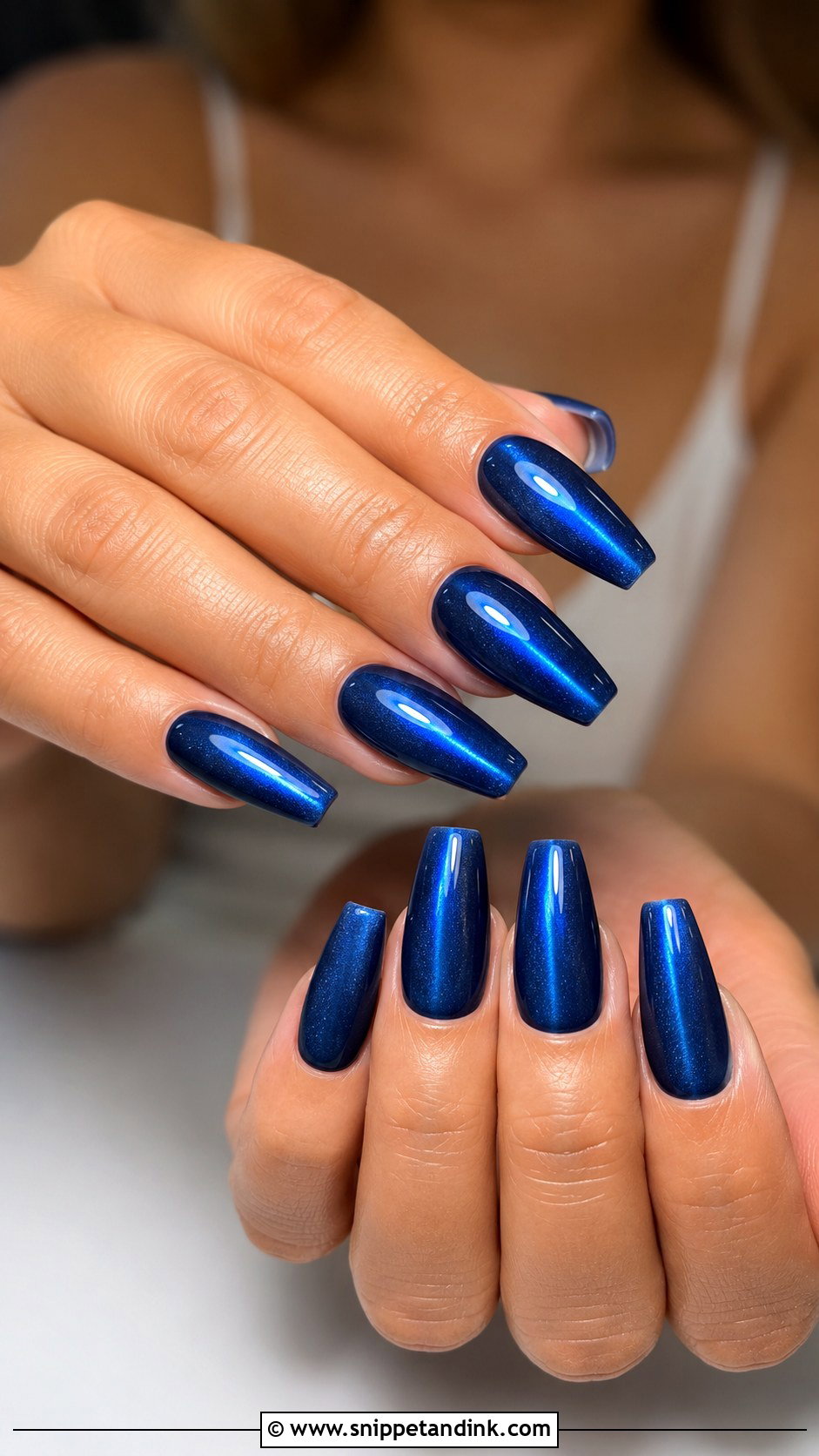
The glowing line on these nails comes from a magnet held above wet magnetic gel, pulling the particles into one bright band before curing. Blue cat eye wedding nails look most refined in icy blue, denim or sapphire; very bright cobalt leans more party than ceremony. Almond and coffin shapes let the line run the full length of the nail. If a full set feels strong, alternate with sheer nude nails. Because the line changes with every angle, it photographs best with your hand tilted slightly toward the light.
15. Blue Aura Wedding Nails
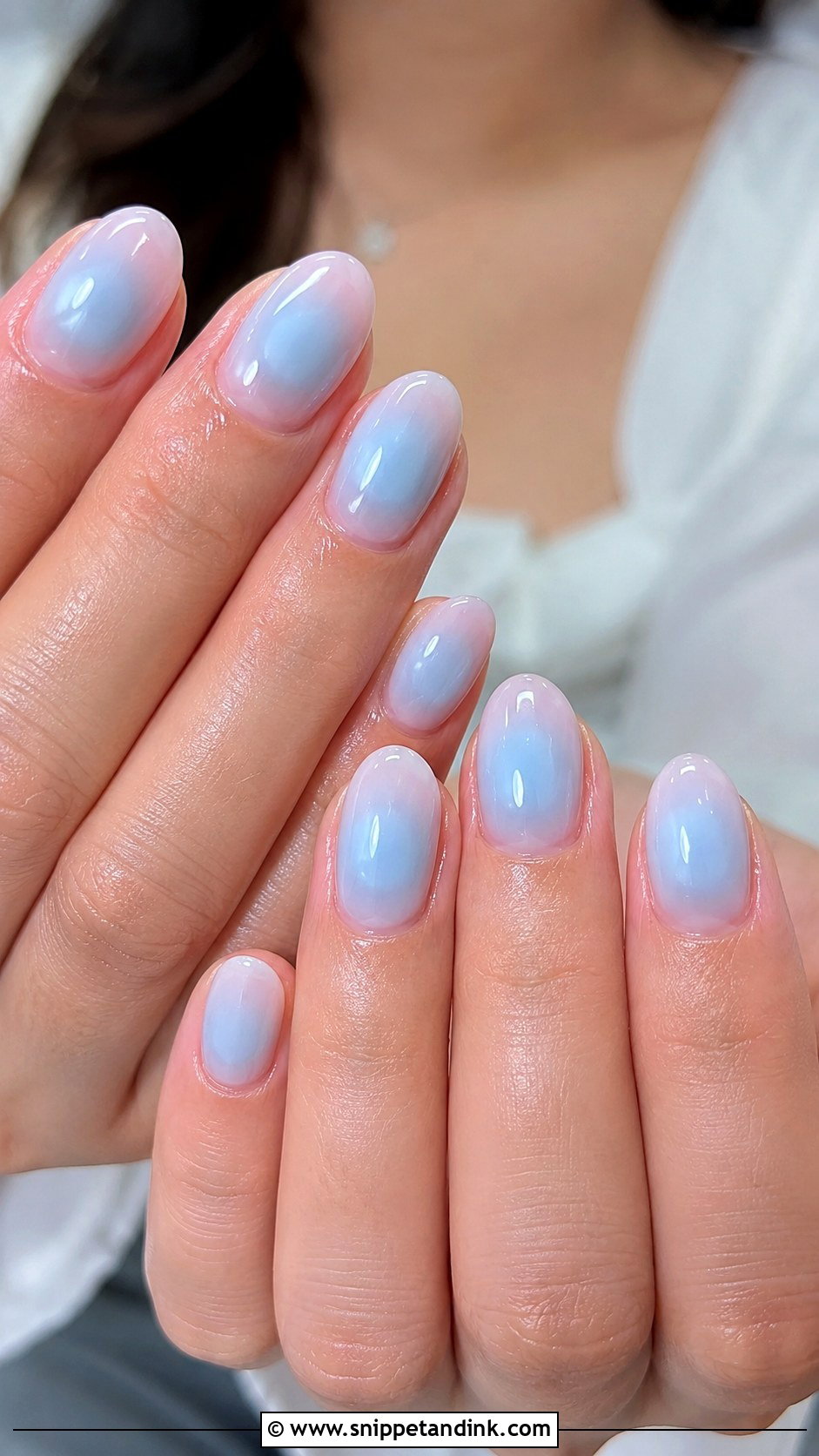
Aura nails are airbrushed or sponged: a soft blue glow in the center fading out to a nude, pink or milky edge. From across a room they read as one soft color, and only up close do you see the gradient. I prefer an airbrush, because sponging can leave a faint hard ring around the glow. Pale blue is airy, deeper blue moodier. Rounded shapes frame the center best, and if you add anything, keep it to one small pearl or white dot near the cuticle.
16. Blue Swirl Wedding Nails
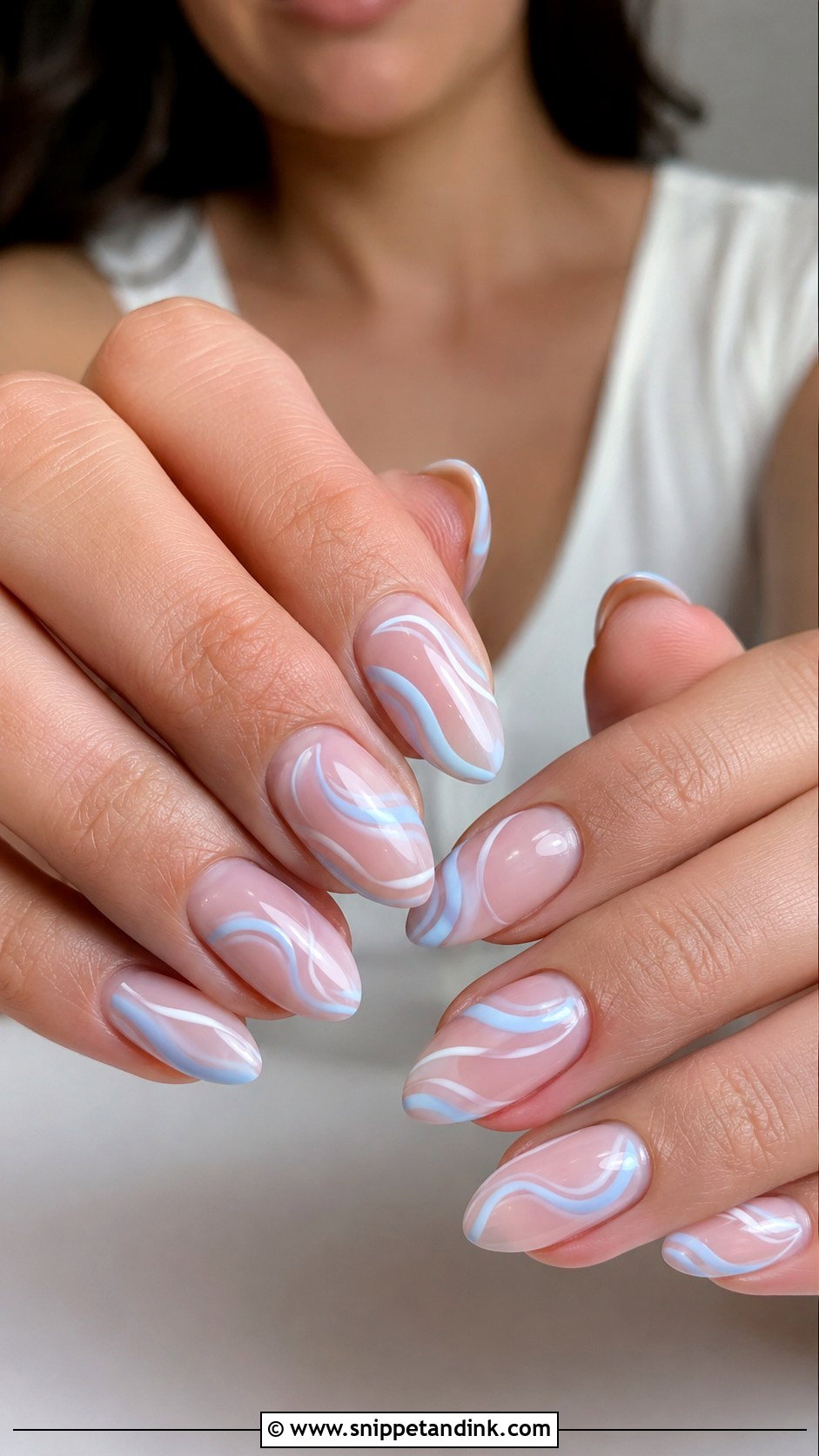
Swirls are thin curved lines over a nude, sheer pink or milky base, giving movement without covering the nail. Baby blue swirls feel delicate, while navy swirls look graphic and formal. I use a long, thin liner brush and let each curve follow the nail’s own outline, which is why almond, oval and long square nails suit this best. Spacing is where swirl sets go wrong; overlap too many lines and the hand looks busy. For bridesmaids, each can wear a slightly different swirl in the same shade.
17. Blue French Tip Wedding Nails
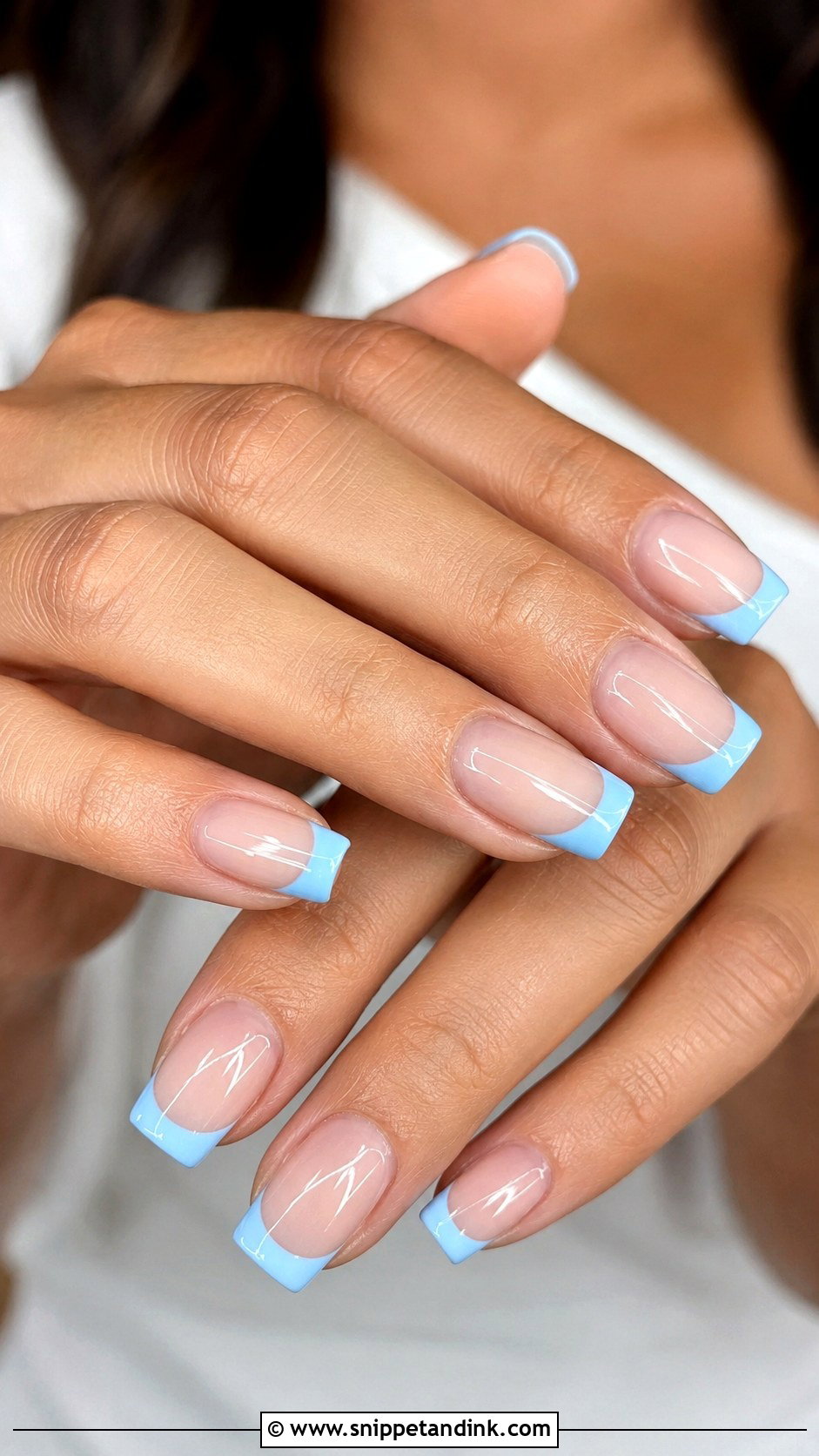
Swapping white tips for blue is probably the smallest change that makes a French manicure feel personal. Powder, icy and dusty blue keep it traditional; navy or cobalt add contrast. It works on nearly every length, from short square to long almond. Thin tips over sheer pink are the most delicate version, and a deeper smile line is the bolder one. The first thing I check is that the smile line mirrors the curve of your cuticle. If it doesn’t, the tip looks crooked in every ring shot.
18. Blue Reverse French Wedding Nails
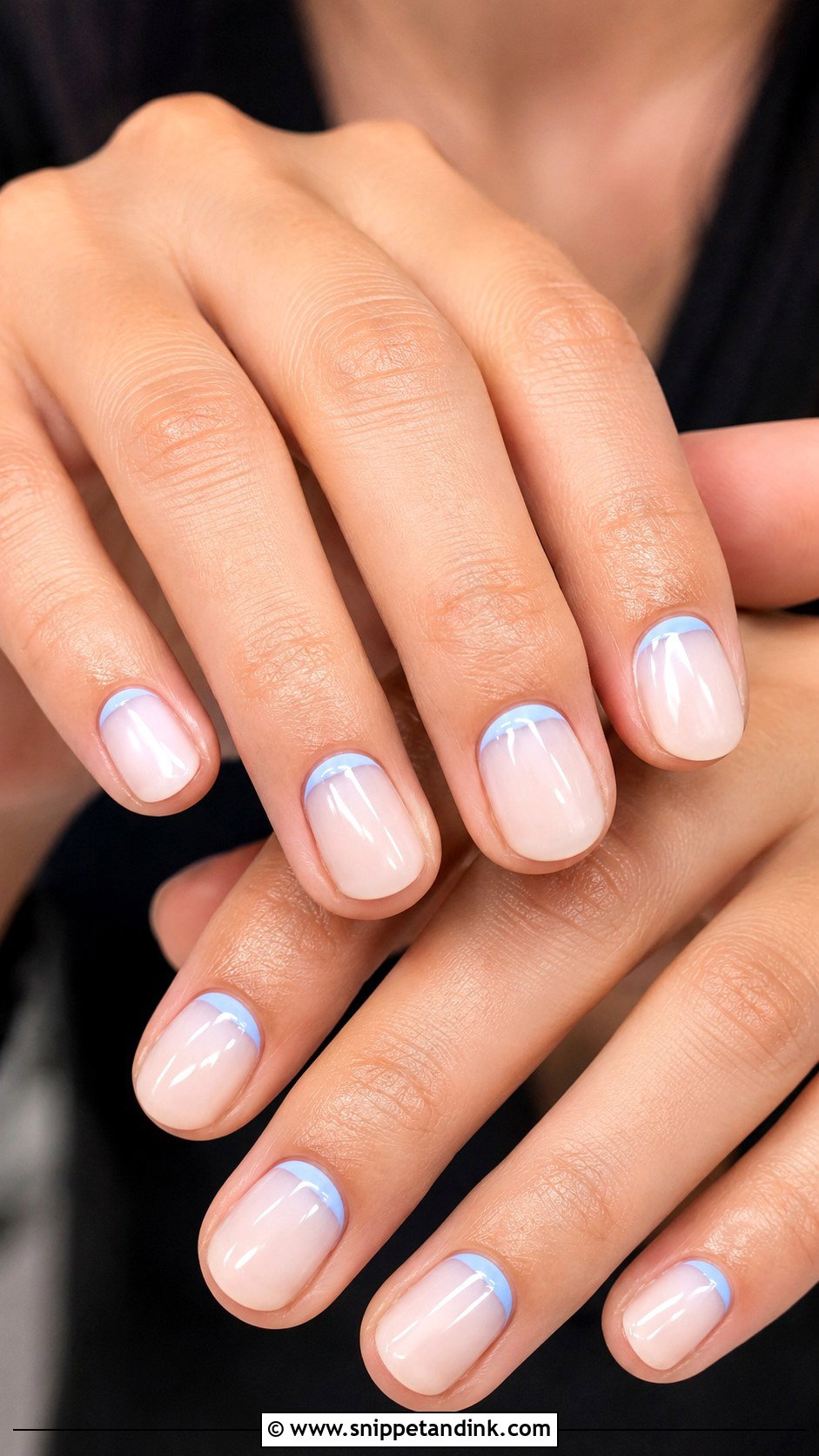
Here the color sits at the cuticle as a thin half-moon instead of at the tip, over a sheer nude or milky base. Short nails are where this shines, since it needs no length at all. My one practical note: color at the cuticle shows regrowth sooner than a tip, so book this one within a couple of days of the wedding, not a week before. Pale blue keeps the “something blue” subtle, and navy adds contrast. A fine silver line tracing the half-moon is plenty.
19. Blue Coffin Wedding Nails
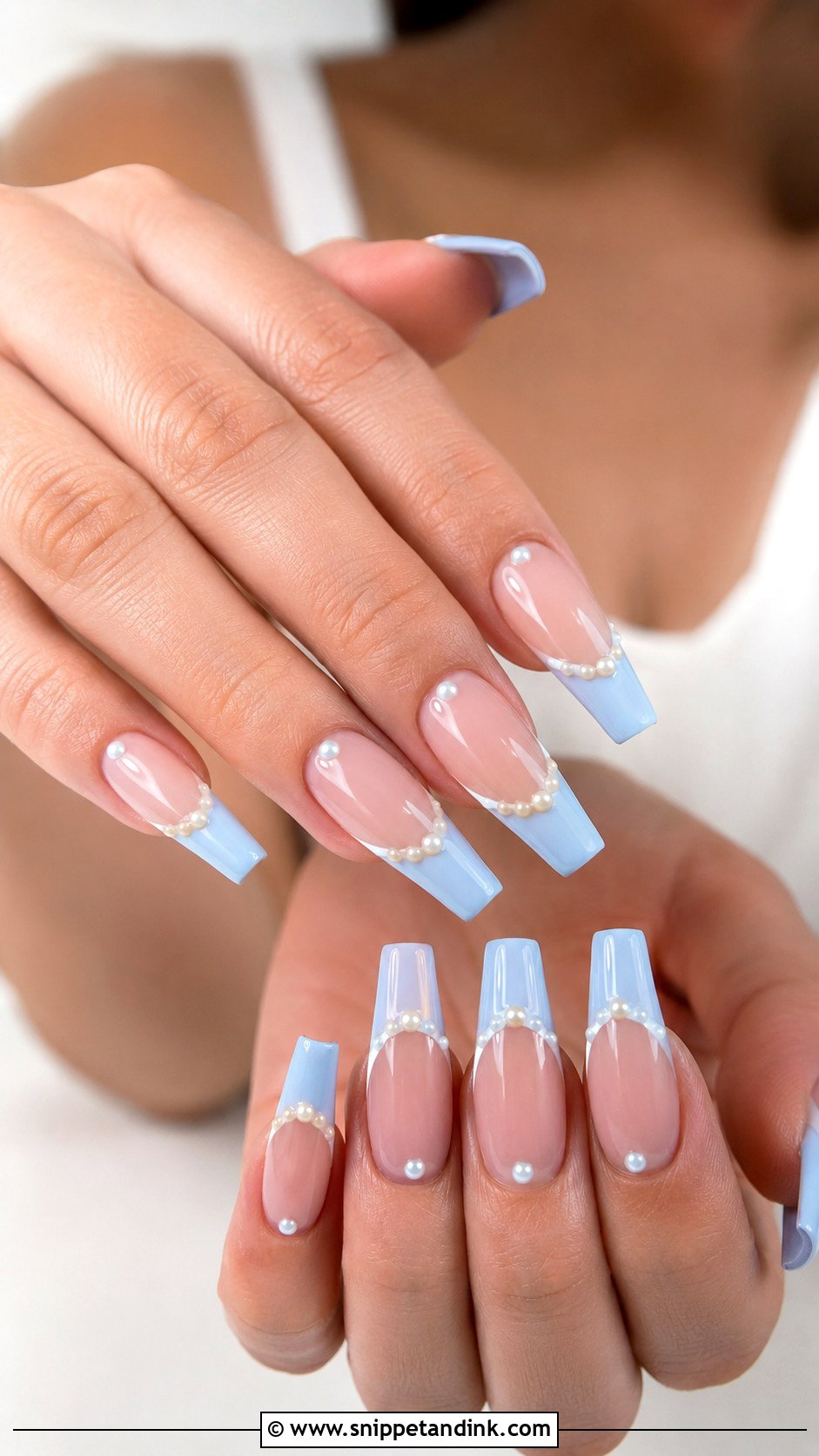
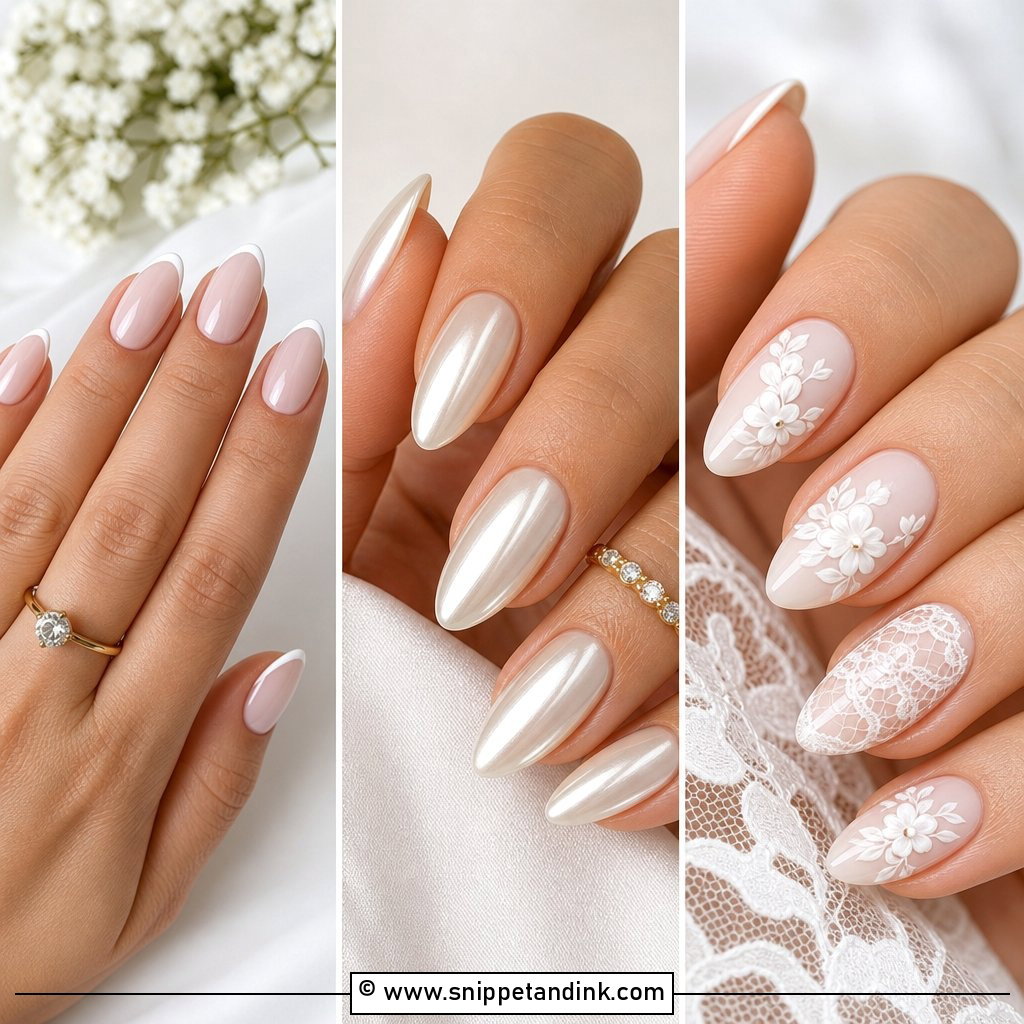
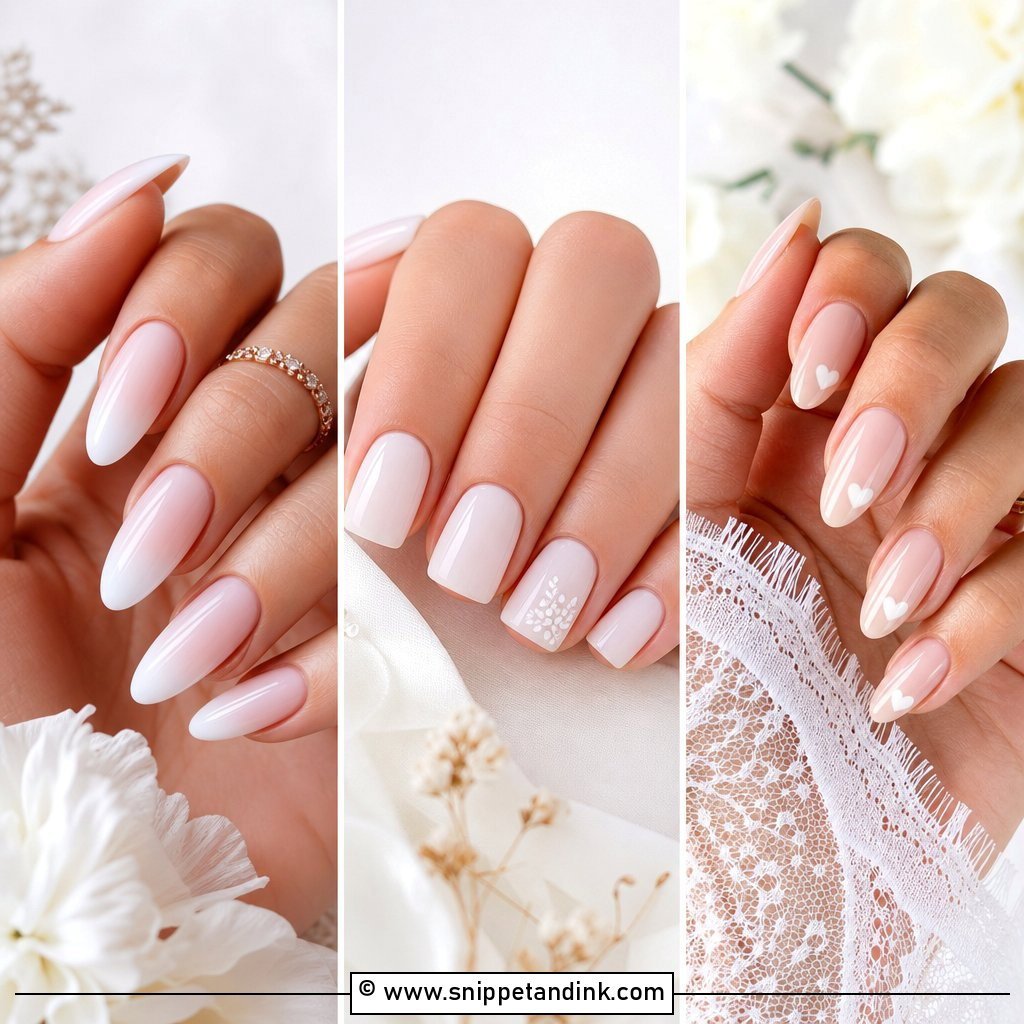
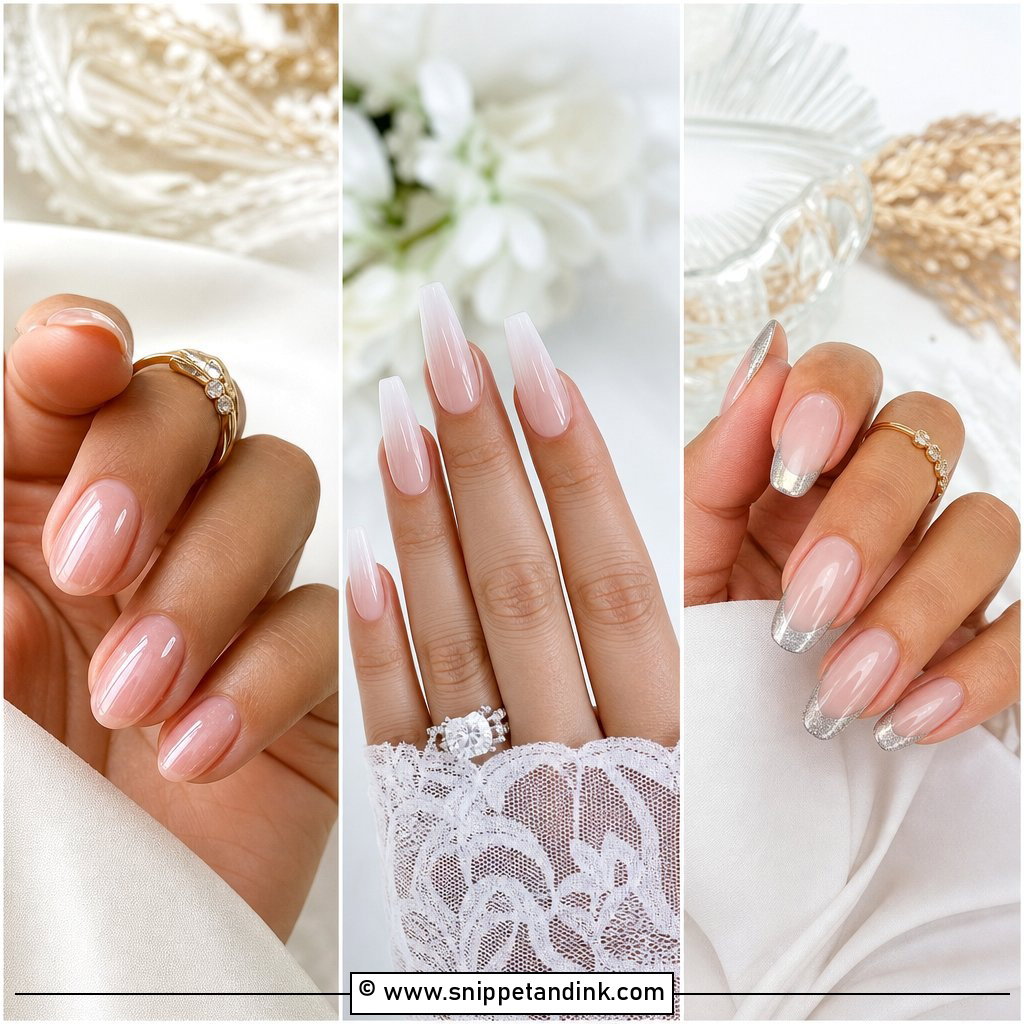
Coffin is long with a flat tip, and it gives you the most surface of any shape here, enough for chrome, ombré, florals or pearls. It also has squared corners that catch on veils, hair and lace, and it takes some getting used to if you don’t normally wear length. If you can, wear a set like this for a few days before the wedding to learn your hands again. Pale shades and a sheer base keep it bridal; navy tips over nude make it formal. Keep the art restrained, because the shape already says a lot.
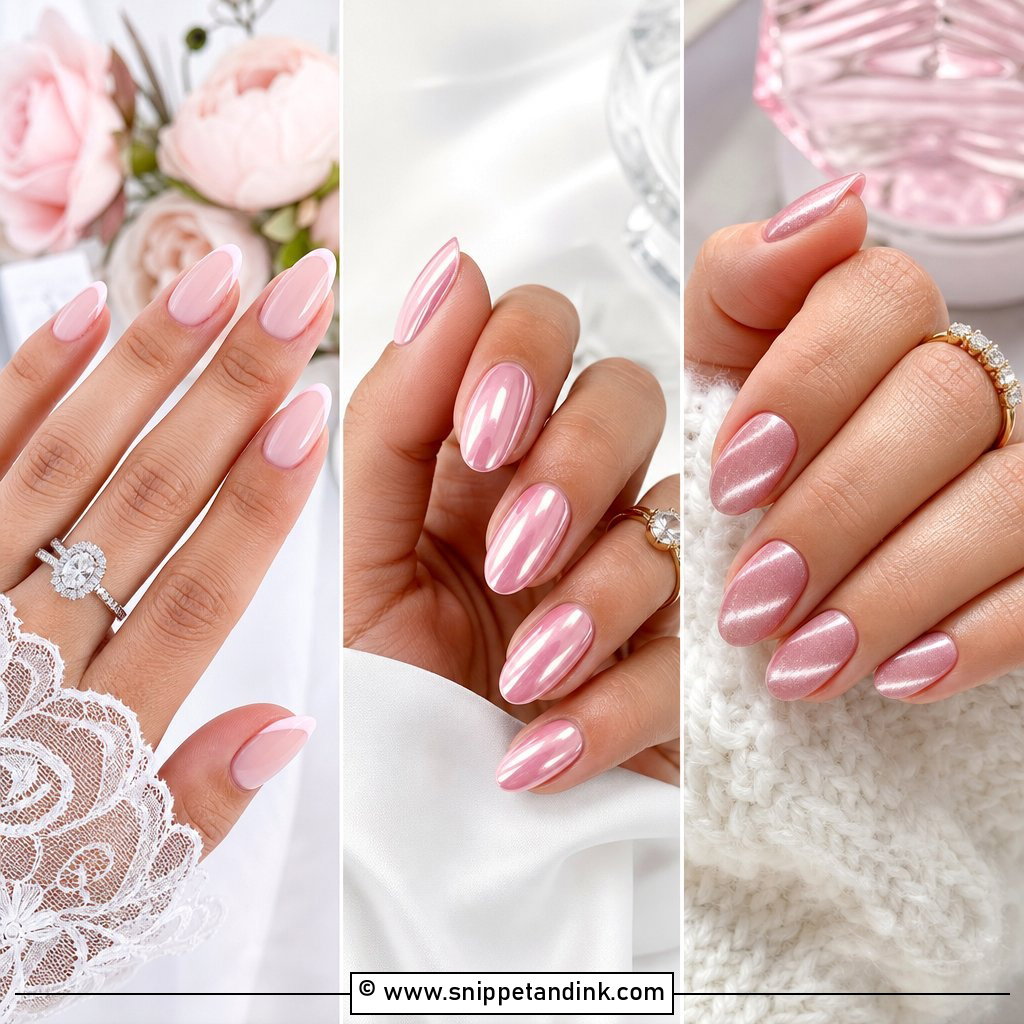
20. Blue Almond Wedding Nails
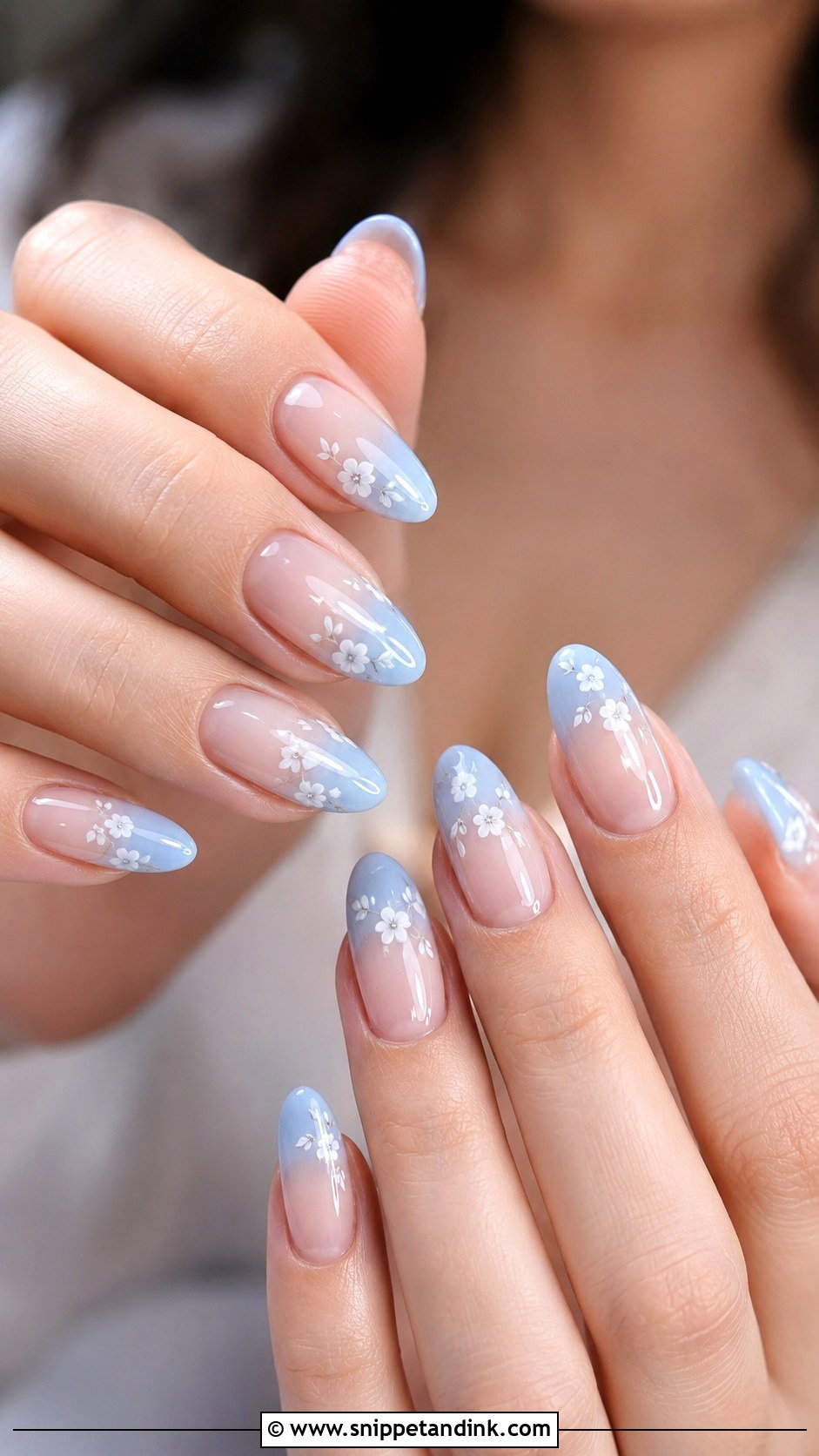
Almond is the shape I recommend most to brides, because it lengthens the fingers in close ring photos and bouquet shots. Nearly every design on this list sits well on it: soft French tips, milky blue, ombré, tiny florals. A sheer nude with baby blue tips is the classic version; navy chrome or sapphire cat eye goes bolder. Almond also works short, so you can keep the length modest if you type all day or work with your hands. Finish with high gloss.
21. Short Blue Wedding Nails
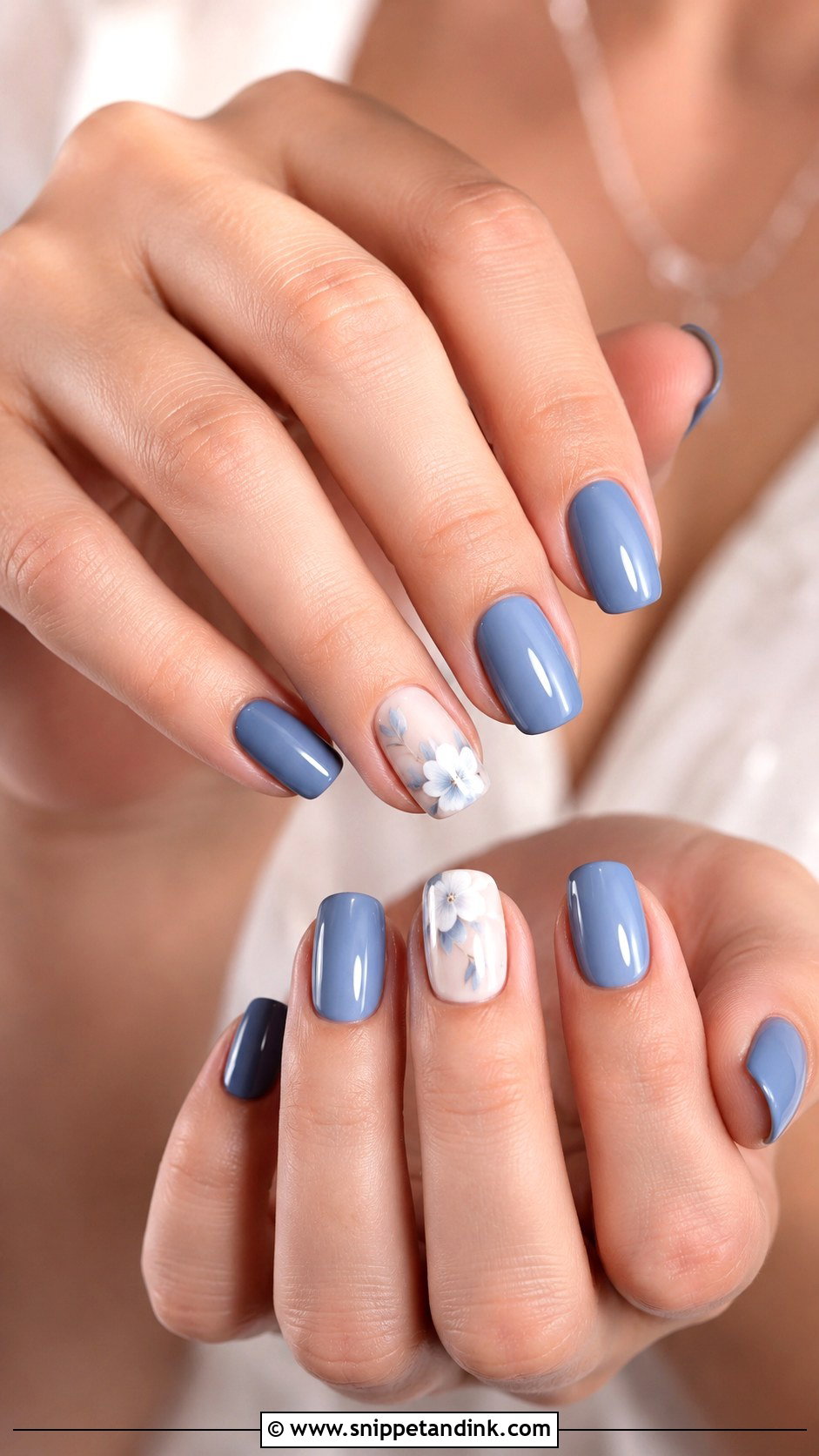
Short nails don’t need to apologize. A neat squoval or oval in baby blue, a thin blue French tip or a milky blue glaze looks just as finished as length, and it’s far more practical through a day of hugging, holding a bouquet and eating with your hands. My rule for short sets is immaculate cuticle work, because there’s less nail to distract from a ragged edge. Lighter blues look fresh on short nails; navy looks chic. One fine glitter accent is all the sparkle a short set needs.
22. Blue Square Wedding Nails
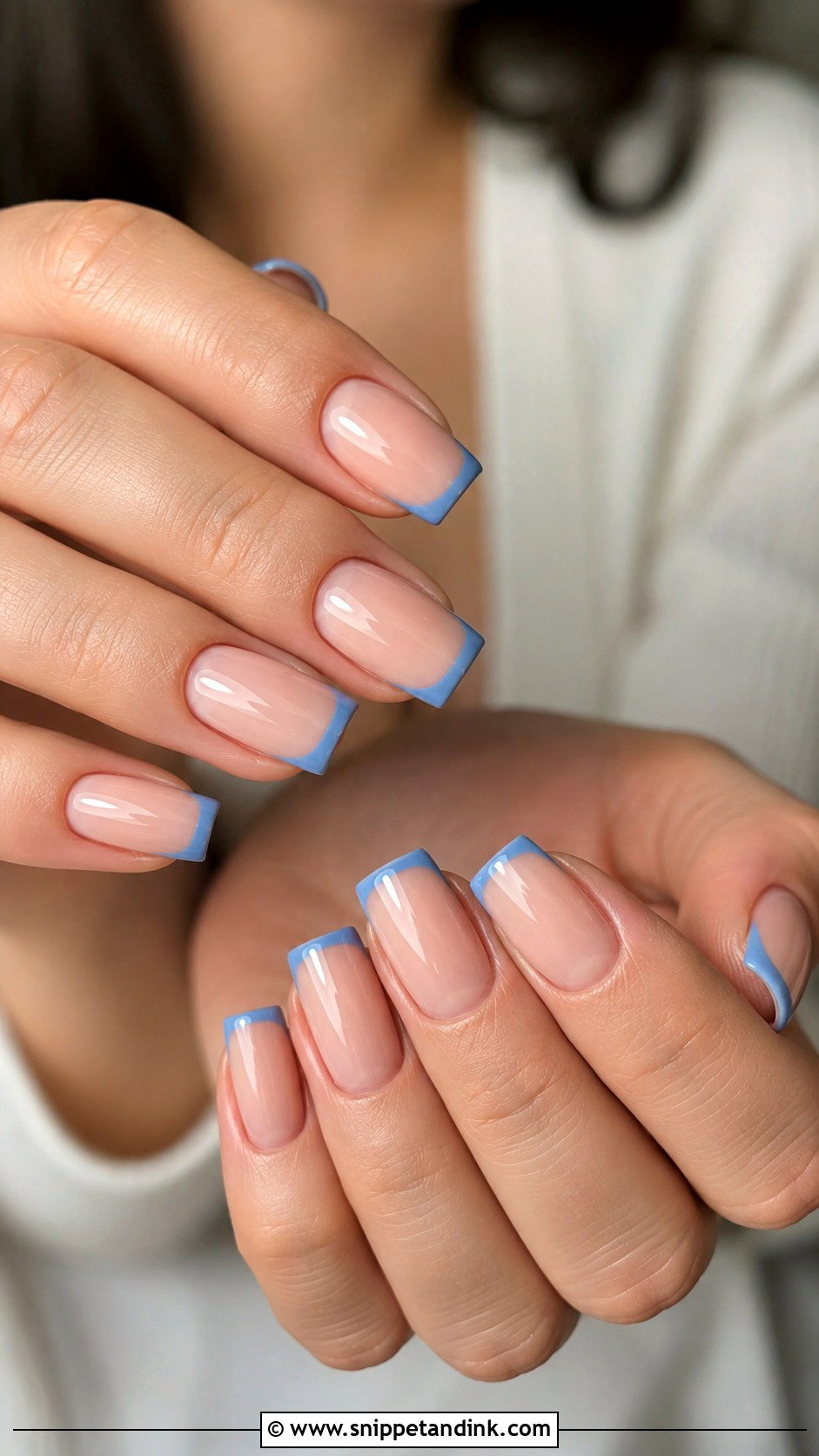
A straight free edge makes French tips look crisp, especially a thin, even blue tip. Short square nails with baby blue tips suit a minimal bride; medium square can take marble, chrome or florals. Sharp corners chip and catch, though, so I usually file a soft squoval unless a bride specifically asks for a true square. Dusty blue, powder blue and navy all sit well on this shape. Keep the color placement matched across both hands, since a square edge exaggerates any unevenness.
23. Blue Wedding Nails With Rhinestones
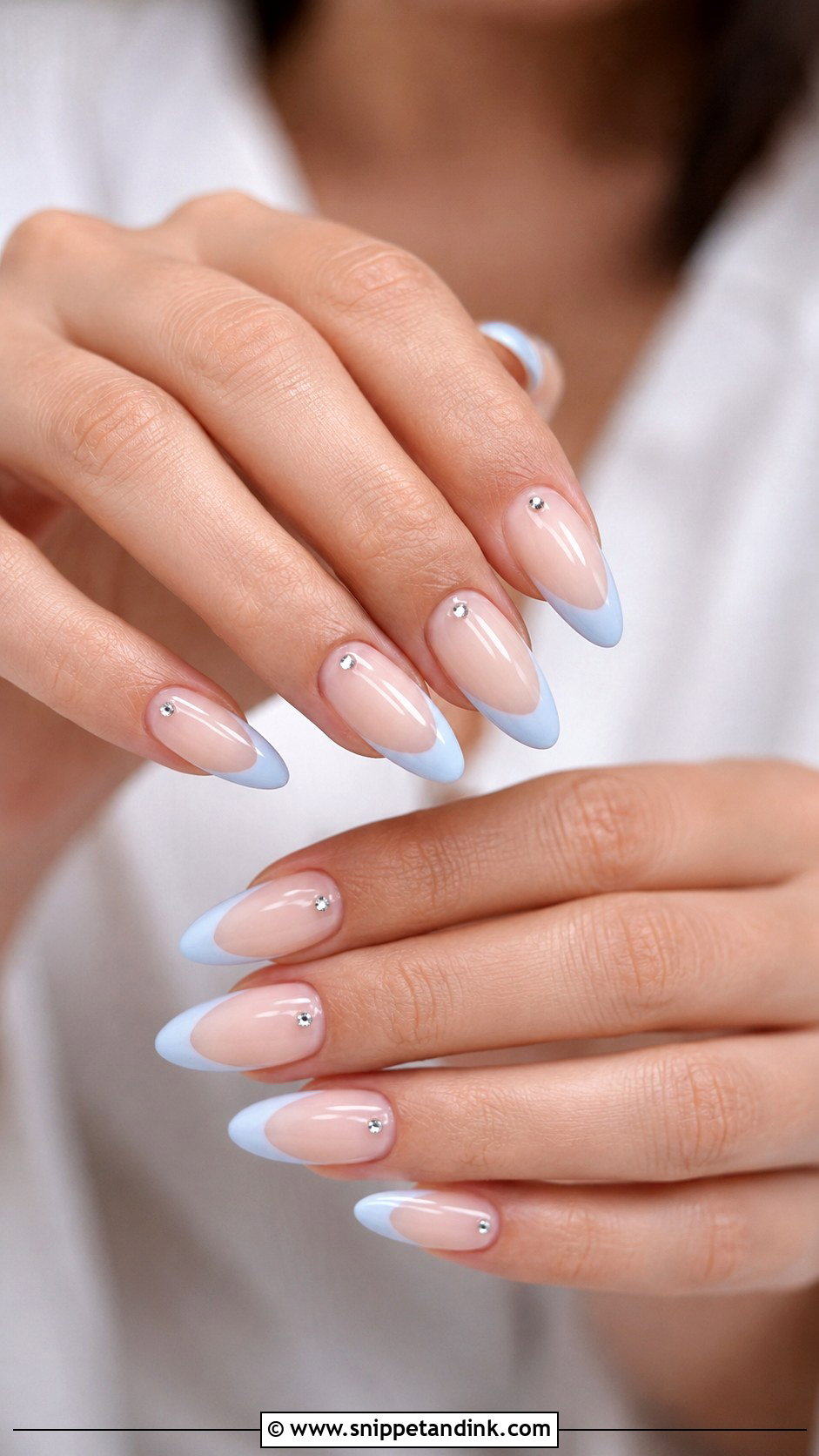
The bridal version of a crystal set uses a few small stones placed with intent: near the cuticle, along a French line or on one accent nail. A sheer nude with blue tips and tiny crystals looks refined; pale blue with a single crystal accent looks soft. I set each stone in builder gel and run top coat around its edge rather than over the facets, so it keeps its sparkle and stays put. Large stones on every nail snag tulle and pull hair, so I’d steer you away from that for the wedding itself. Silver-toned crystals go best with icy blue, baby blue and navy.
24. Blue Wedding Nails With Gold
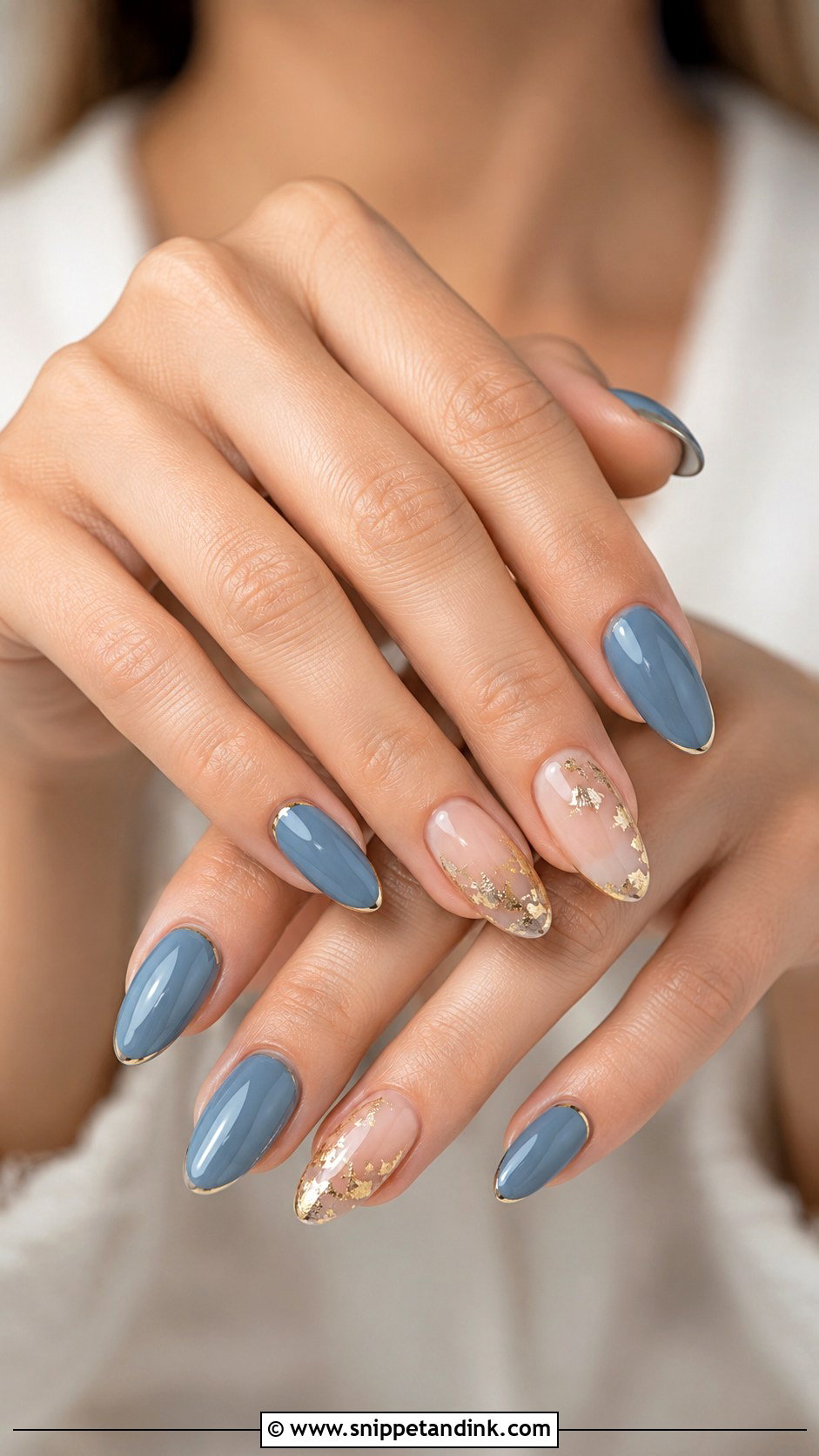
Gold warms blue up, which makes it a natural partner if your rings are yellow gold. Dusty blue, navy, royal blue and pastel blue all take it well. Gold foil over milky blue, a fine gold line outlining blue tips, or small gold accents on floral nails are the usual routes. Foil wrinkles and lifts at the edges if the top coat over it is too thin, so it needs a full, smooth seal. Thin, scattered gold reads bridal; navy with heavier foil reads formal.
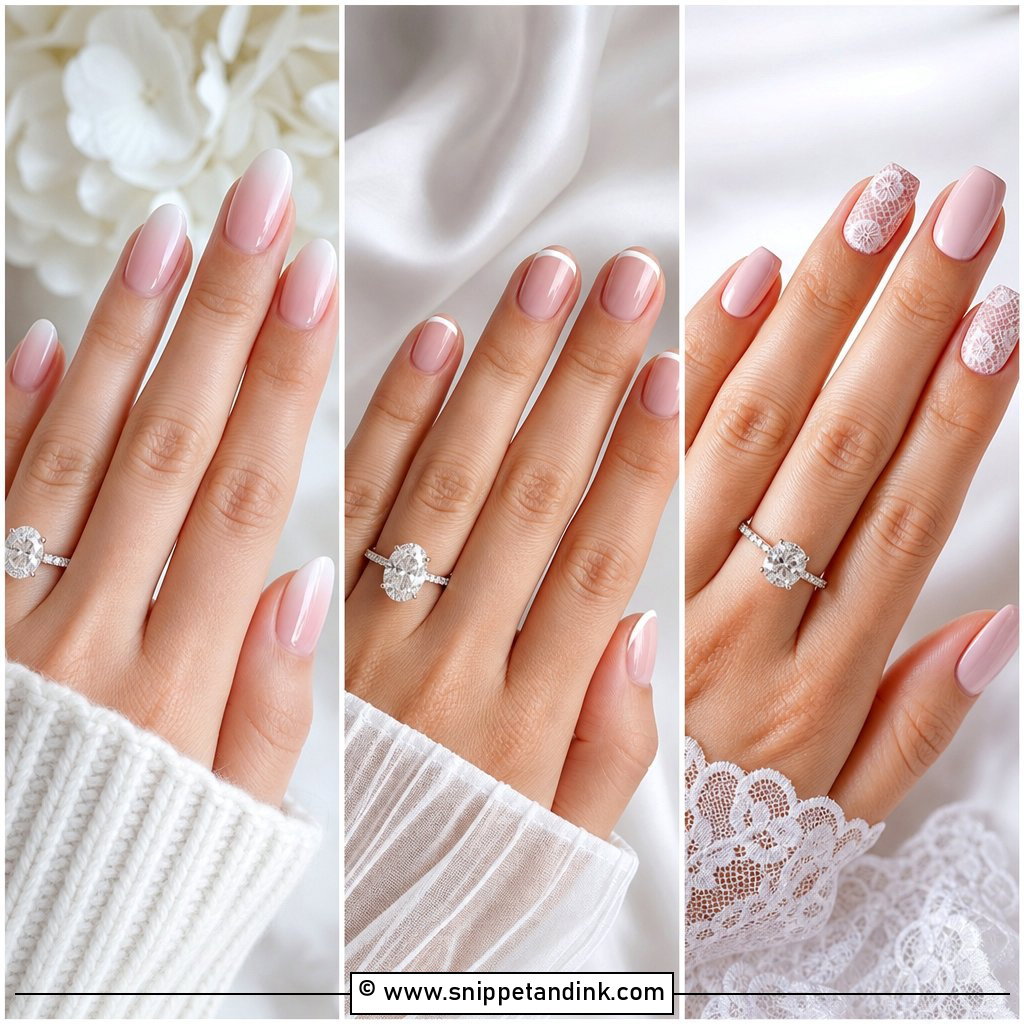
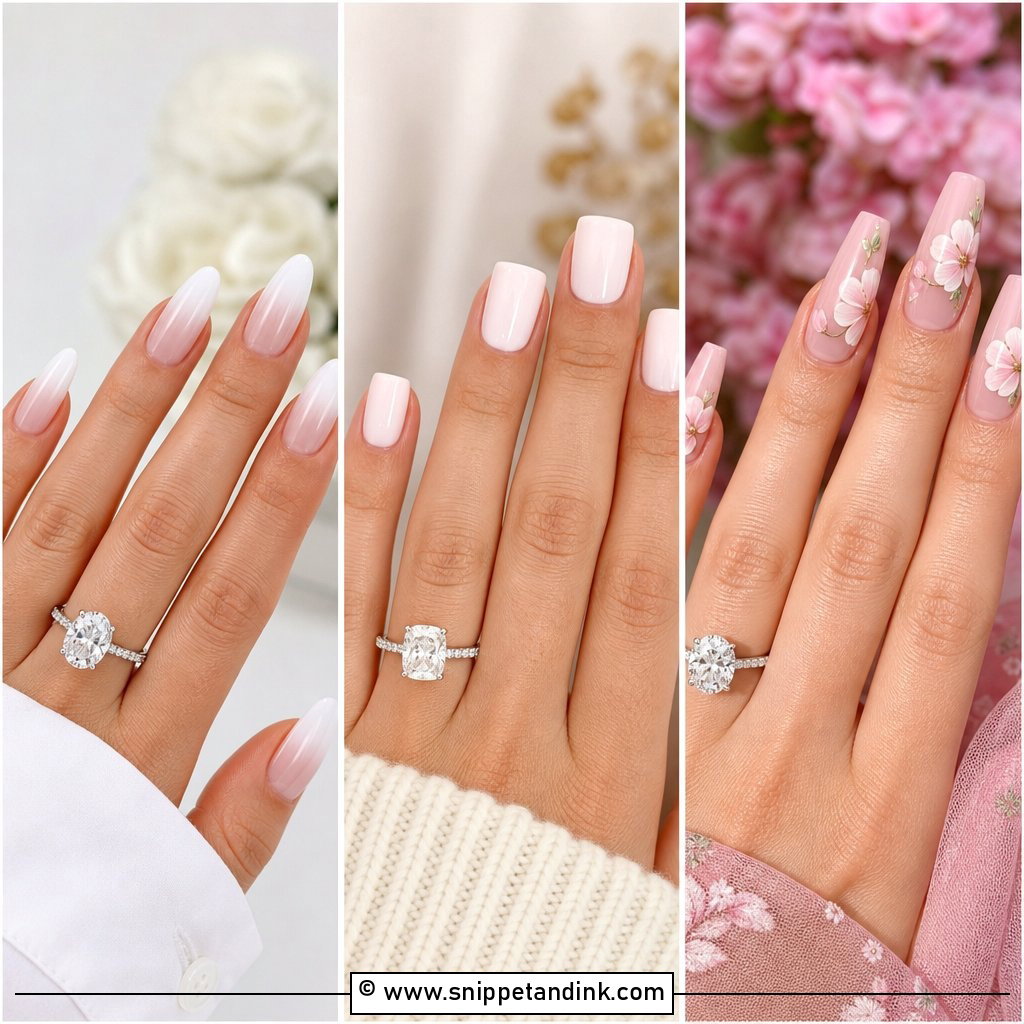
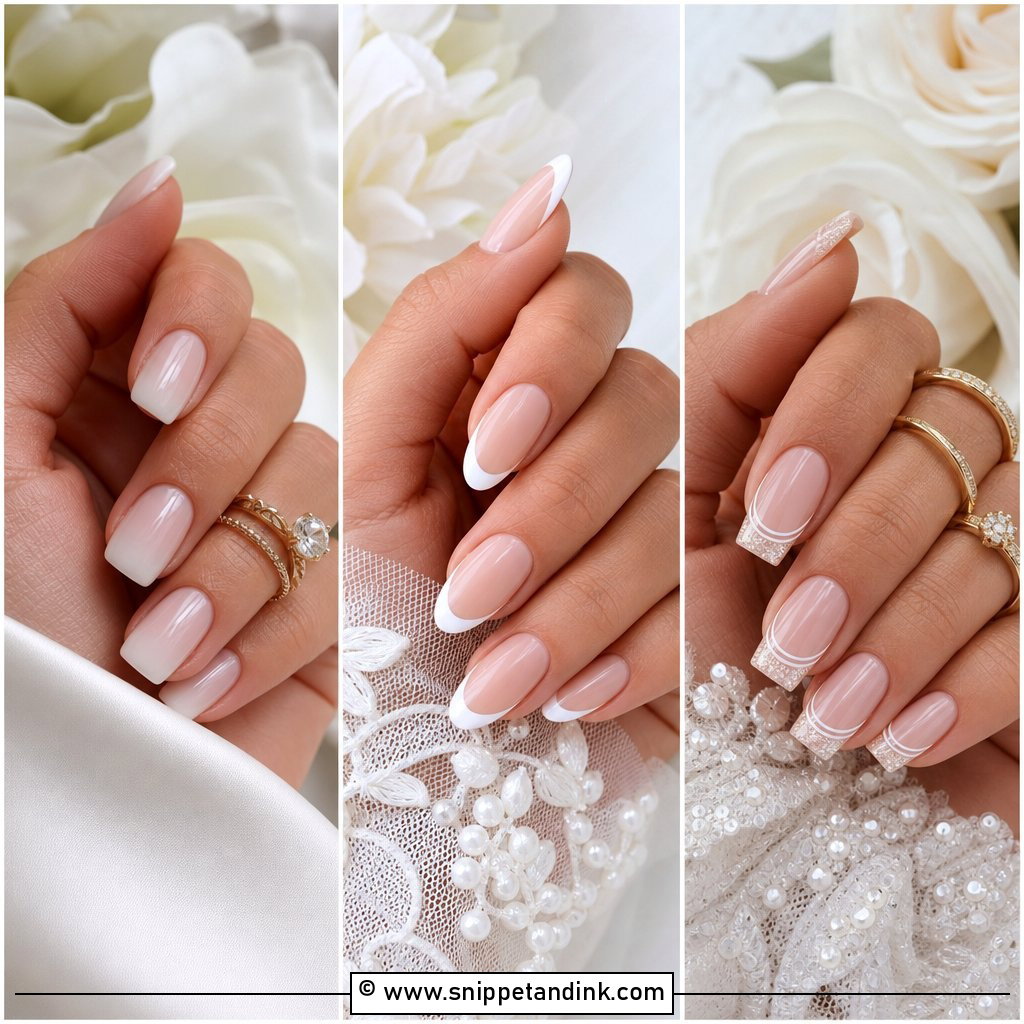
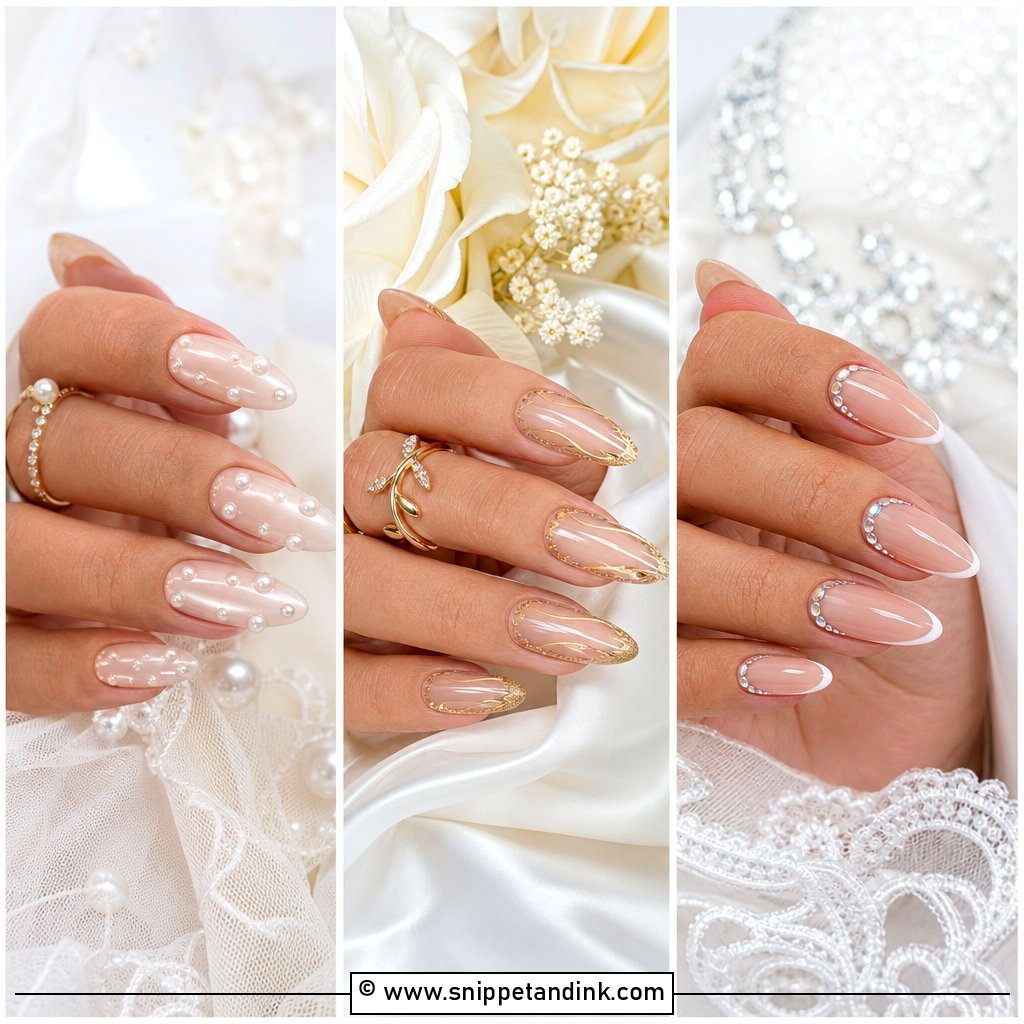
25. Blue Wedding Nails With Silver
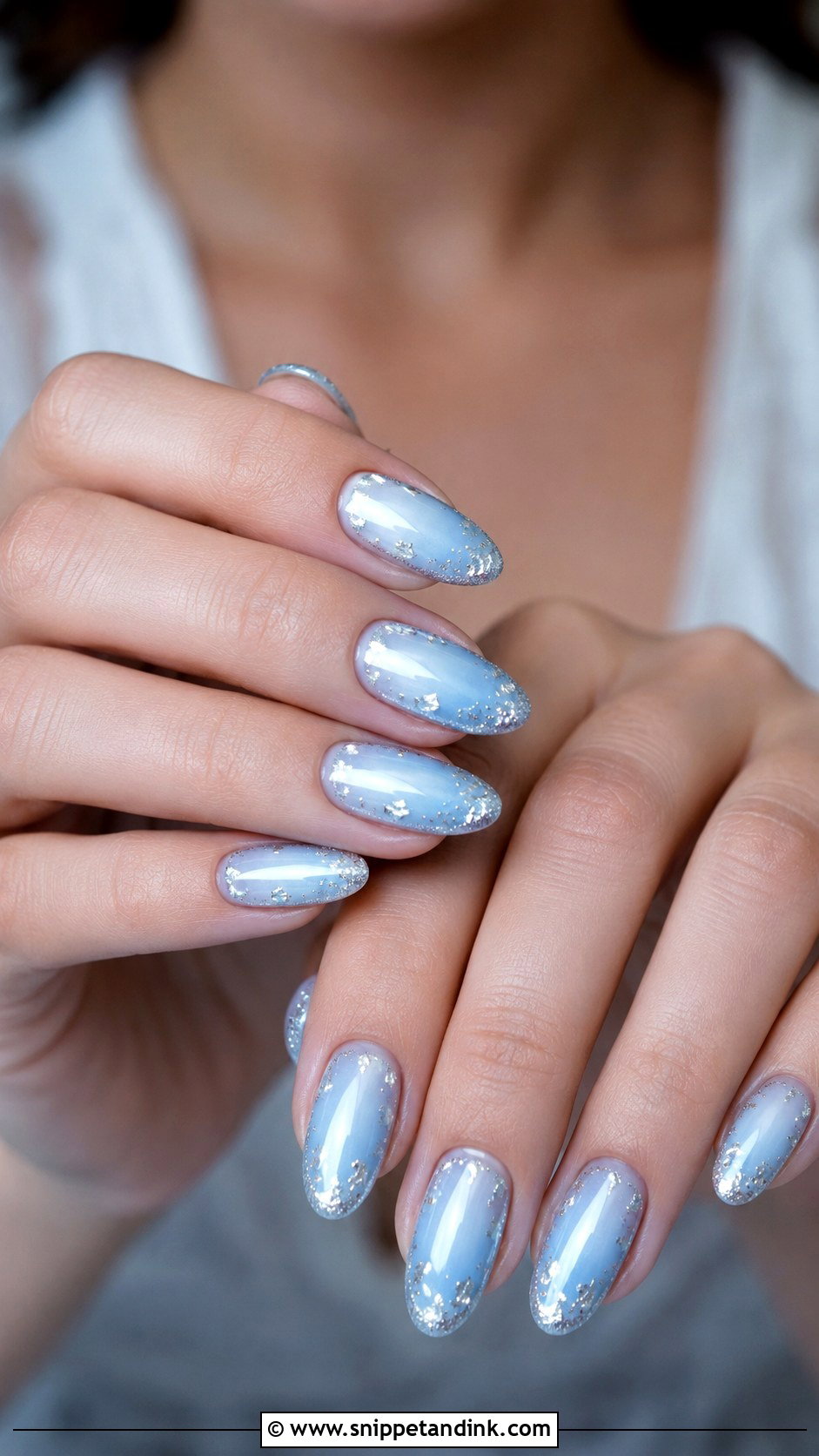
Silver belongs with the cool blues: icy, powder, navy and chrome. It’s the obvious match for platinum, white gold or diamond jewelry, and for winter or evening weddings. Options run from silver glitter tips to a fine outline, tiny stars or foil accents over a soft blue base. My minimal version is a sheer nude, blue French tips and a hairline of silver just below. The dramatic one is blue chrome with silver stones. Either way, I keep the accents sparse, since silver gets crowded quickly.
26. Royal Blue Wedding Nails
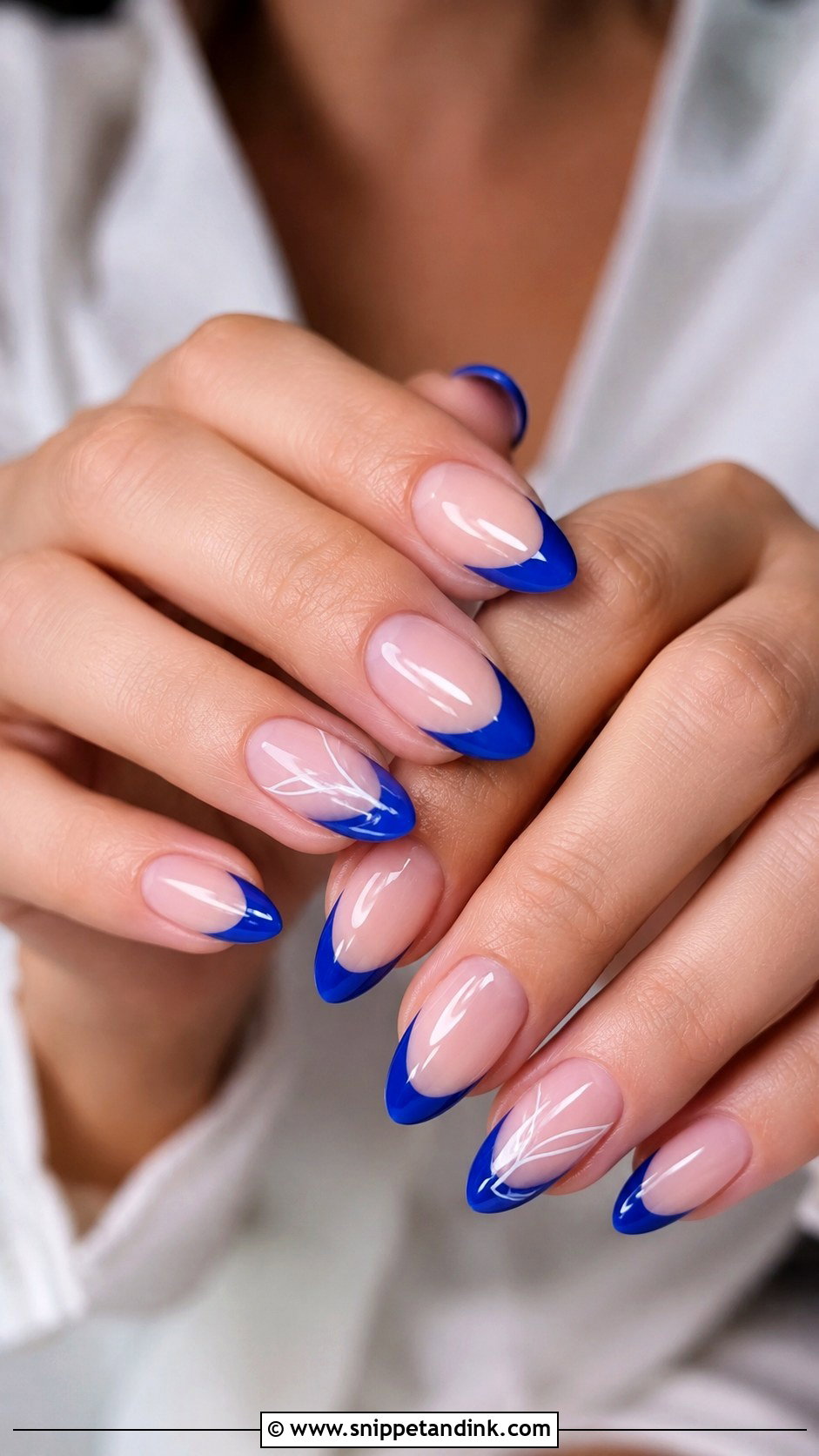
Royal blue is vivid enough that it needs very little help from nail art. A glossy full set looks sharp on short square nails, and royal blue tips look striking on almond. It’s a strong match for cultural celebrations and receptions with blue decor, and if your “something blue” is meant to be seen, this is the shade. Bright blues can look harsh against very fair or very warm skin in close-up, so I always swatch it beside the hand first. Nude, white or pearl accents calm it down.
27. Icy Blue Wedding Nails
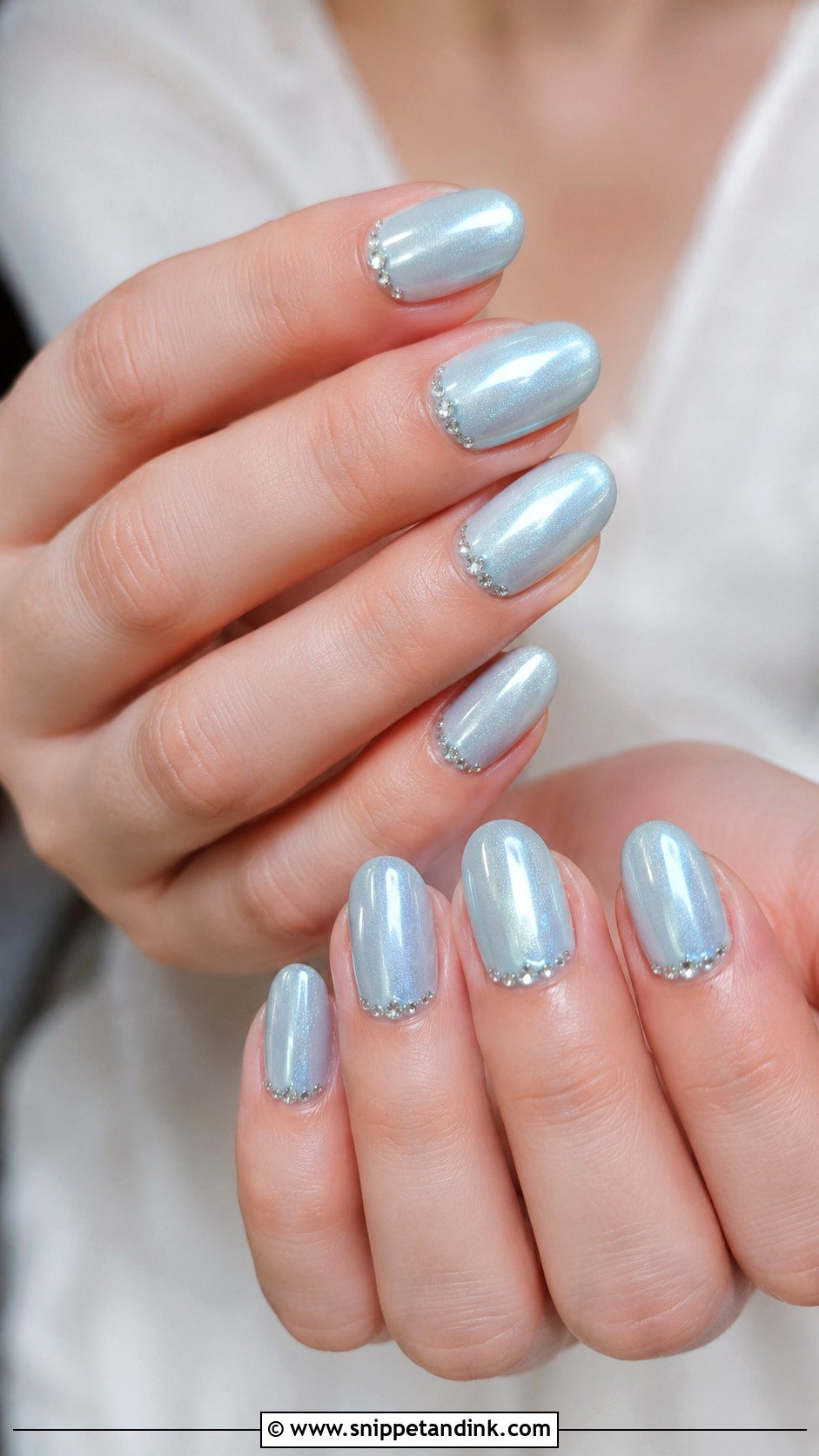
Icy blue sits between pale blue and silver, with a cool, faint shimmer that suits gowns with silver beading and snowy winter palettes. A glossy full set looks fresh; icy chrome feels more modern. Short ovals keep it delicate and almonds make it more formal. Because it’s so cool-toned, on warm or olive skin I sometimes warm the base underneath so the hands don’t look chilly. A few tiny pearls or a whisper of silver glitter is enough sparkle.
28. Blue Wedding Nails With Bows
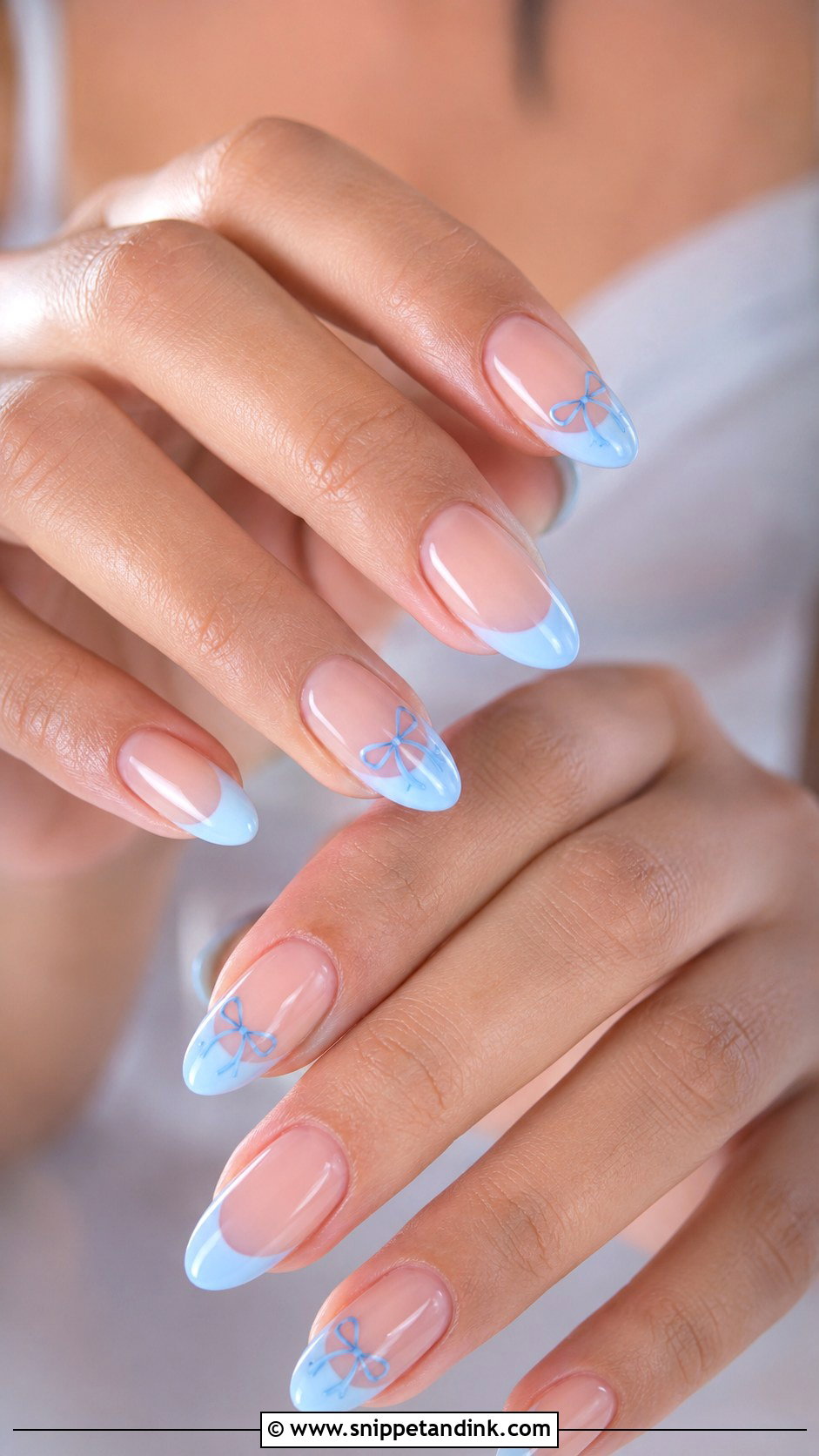
Bows are sweet, and the work here is keeping them grown-up. I paint them fine-line and small on one or two accent nails over a sheer pink or milky base, with the other eight as baby blue French tips or milky blue polish. Big 3D bows photograph well but catch on everything and break off, so I’d skip them on the wedding day itself. This set makes the most sense when your dress has its own bow detail, or alongside pearl accessories. Almond and oval feel graceful; short square feels playful.
29. Blue Wedding Nails With Hearts
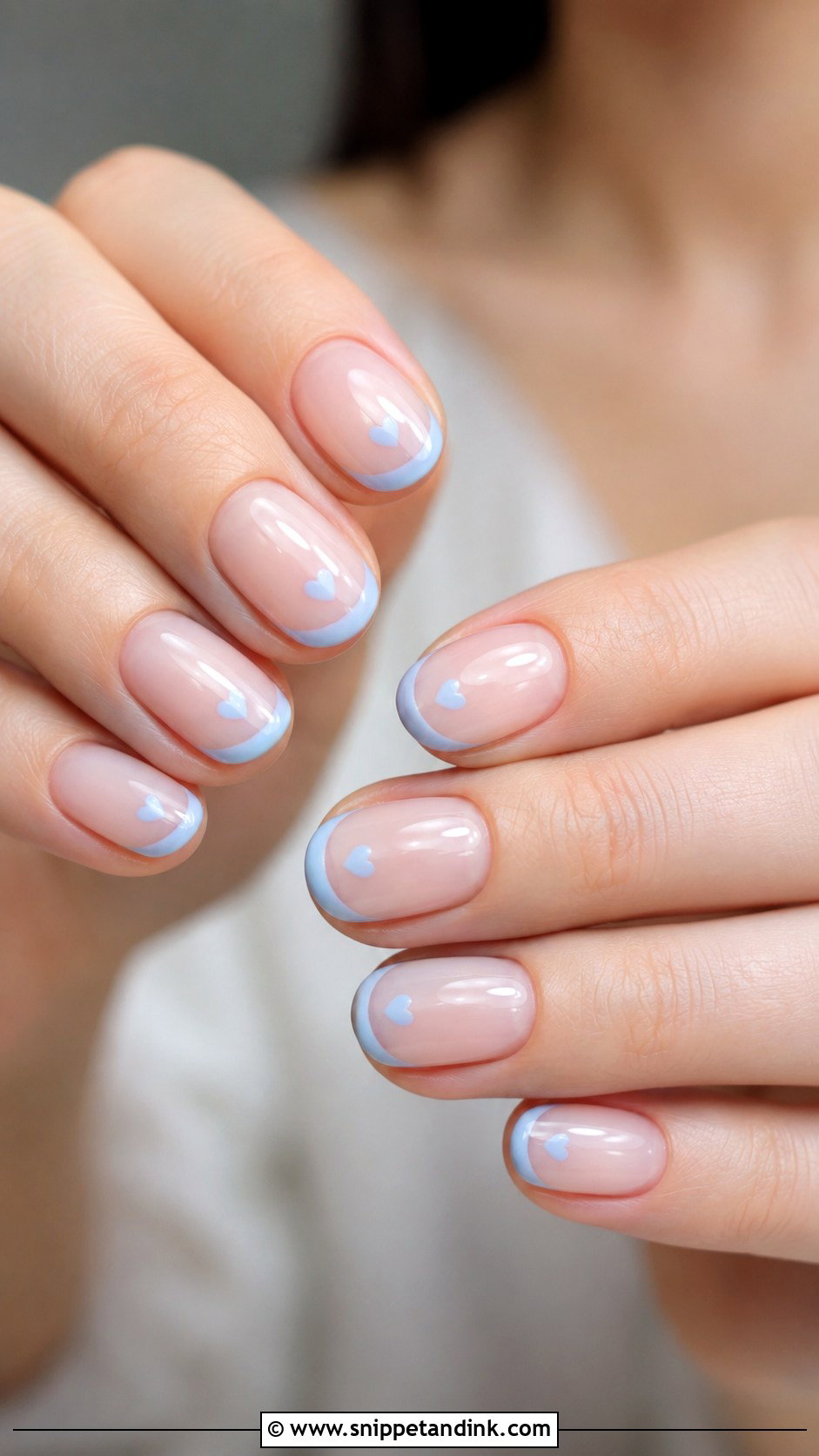
Tiny hearts on a nude or milky base stay subtle as long as they’re small and evenly placed. I usually put them on the ring fingers only and pair the rest with blue French tips, soft ombré or a sheer blue. Baby blue hearts feel playful, navy ones more refined. Freehand hearts are never perfectly identical, and I’d count that as charm rather than a flaw. The same set suits a bridal shower, engagement photos or a courthouse ceremony.
30. Blue Wedding Nails For Bridesmaids
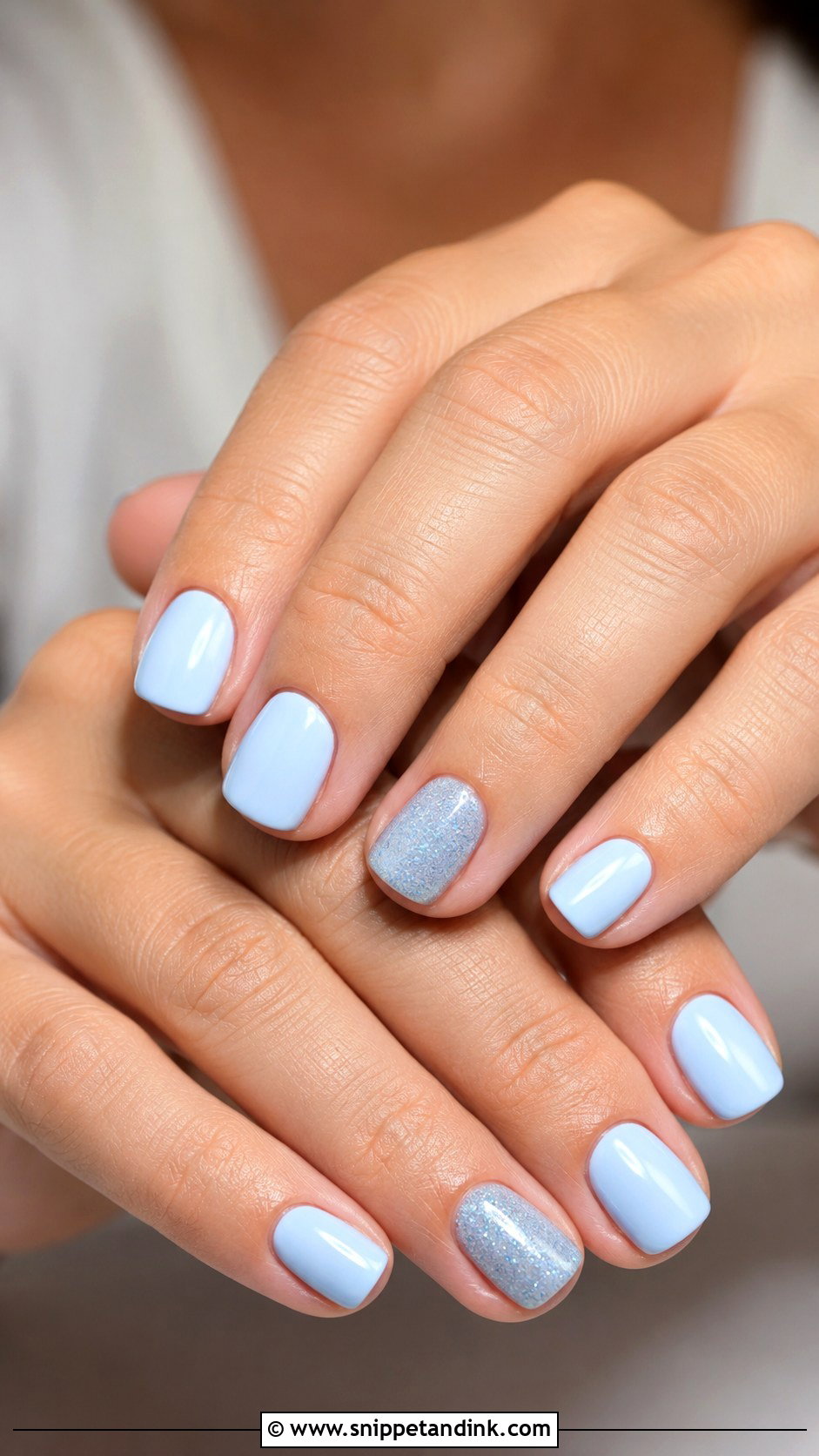
Coordinating a bridal party doesn’t mean ten identical manicures. My approach is for the bride to pick one blue shade, then let each bridesmaid choose a design in that shade that suits her own nail length. Blue wedding nails for bridesmaids chosen this way look connected in group photos, and nobody gets stuck with a shape she can’t wear. Short square nails can wear solid blue; almond nails can carry ombré or florals. Unless the bride wants a bold look, keep the bridesmaids a shade softer than she is.
Timing a Blue Set Around the Wedding Week
Gel or builder gel is what I’d book for the wedding itself. Regular polish rarely gets through a day of hugs, bouquets and dancing without a chip, and blue chips show far more than nude ones. I schedule the appointment one or two days before. Any earlier and regrowth shows at the cuticle in ring close-ups; on the morning itself, there’s no time to fix a broken nail.
Do a trial for anything new
If you’ve never worn chrome, cat eye, rhinestones or a long coffin shape, have a trial set done a few weeks out. You’ll see how the blue looks in your own phone photos, how the length feels when you type or fasten jewelry, and whether the shade still suits you after a week of wear.
What a Blue Manicure Needs on the Day and After
- Put a nail file and cuticle oil in the emergency kit. A snag on tulle is usually a rough edge, not a broken nail, and a file fixes it in seconds.
- Ask for the free edge to be capped, especially with navy and royal blue, which wear at the tip first.
- Wear gloves for dishes and cleaning in the days before the wedding; hot water and detergent are what lift gel at the edges.
- After the honeymoon, have gel soaked off properly rather than peeled. Peeling takes layers of nail with it, and any faint blue tint left on a bare nail fades with a gentle buff or a few weeks of growth.
From Powder Blue Tips to Navy Chrome
Blue covers a lot of ground, from a barely there powder French tip to navy chrome that reads across a ballroom. Start with what you’ll be wearing and holding: the metal of your ring, the fabric and color of your gown, the length of your veil. Then decide how visible you want your “something blue” to be. Soft blues keep it private; deep blues, chrome and cat eye make it obvious. Bring a fabric swatch and your ring to the appointment, and a good nail artist can match everything else from there.
You'll Like These Ideas:


Leave a Reply