
Faerie dressing walks a fine line. Done well, it looks like a bride who wandered out of an old garden; overdone, it looks like a costume hire. In my fittings the difference almost always comes down to fabric and restraint: flowing tulle, botanical lace, sheer sleeves and colours borrowed from petals and moss, then only one or two accessories that carry the theme. Floral hairpieces, nature-inspired jewelry and a light veil all help, as long as they’re not all worn at once. The gowns below run from classic ivory to green, black and iridescent, with modest, maternity and plus-size options, for a woodland clearing, a barn or a formal room.
What a Woodland Ceremony Does to Tulle Hems and Satin Shoes
Most faerie gowns are bought for outdoor weddings, and the outdoors is hard on delicate fabric. I’d rather a bride plans for it than discovers it on the walk to the ceremony.
- Tulle hems pick up everything: twigs, burrs, seed heads and mud. Ask the seamstress to take the hem up so it just clears the ground in your shoes, and bring a soft clothes brush.
- Morning dew soaks through tulle and chiffon fast, then wicks upward. If you’re walking through long grass, plan portraits after it dries or keep the skirt lifted.
- Satin shoes stain on wet grass and sink into soft soil. Low block heels, flat sandals or heel protectors are worth it, and I’d always bring a second pair.
- Brambles and rough bark snag chiffon and crochet lace. Scout the photo spot before the day and clear or avoid anything thorny.
- Light colours show pollen. Lily pollen in particular stains, so ask your florist to remove the stamens from any lilies near the gown.
None of this means avoiding a woodland ceremony. It just means choosing the hem, the shoes and the route with the ground in mind.
1. Floral Embroidered Faerie Wedding Dress
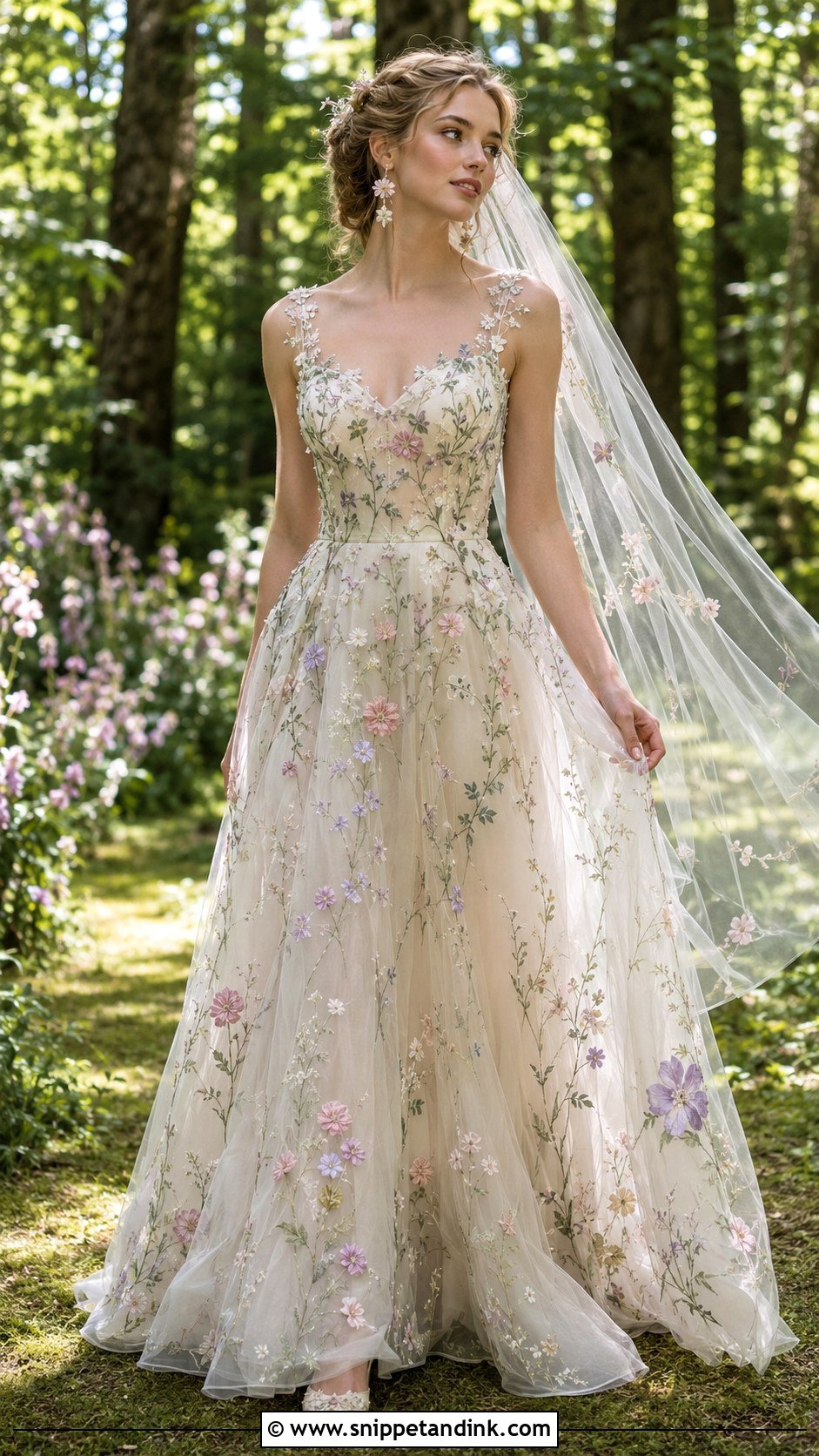
Embroidered vines and small flowers on an A-line gown connect naturally with an outdoor ceremony. Soft pink, lavender, sage and ivory threads add colour without overwhelming the dress, and a sheer neckline or illusion straps make the flowers seem to float on the skin. The one thing I check with coloured embroidery is how it sits next to your skin tone in daylight, since lavender thread can read grey on cool skin. A loose braid, pressed-flower earrings and a fingertip veil suit it. Wear flats or low block heels on grass, and keep the bouquet a little wild.
2. Layered Tulle Faerie Wedding Dress
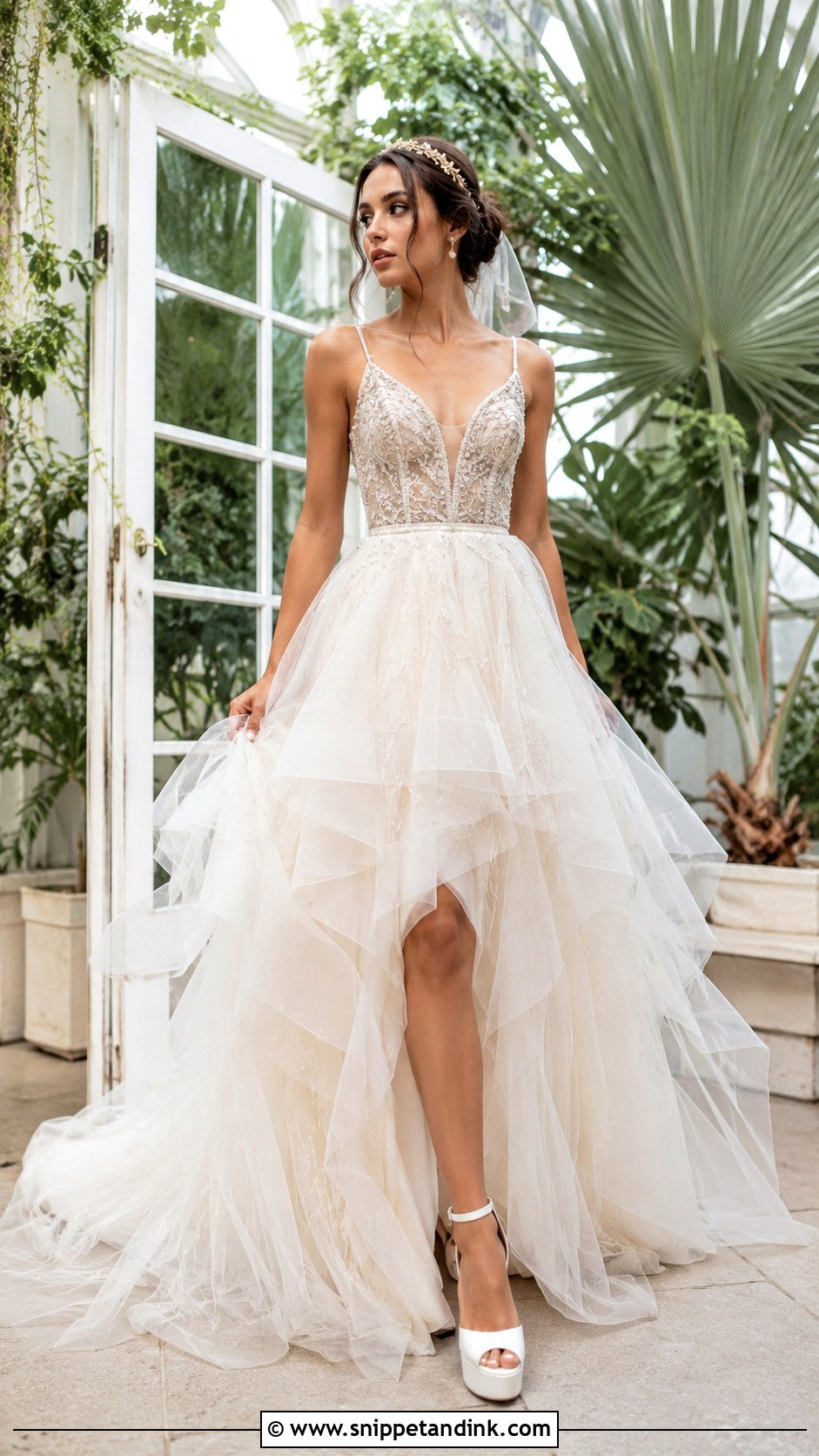
Several layers of fine tulle over a fitted bodice give that floating walk everyone wants from a faerie gown. Scattered crystals or tiny appliqués catch light without weighing it down. With this much volume, I’d keep everything else small: pearl drops and a narrow vine headband are enough. Platform sandals or cushioned block heels add height without sinking into soft ground. Tulle layers cling to each other with static in dry, cool air, so a light mist of anti-static spray on the underskirt before you dress helps the layers move separately. A short veil keeps the silhouette light.
3. Lace Bell Sleeve Faerie Wedding Dress
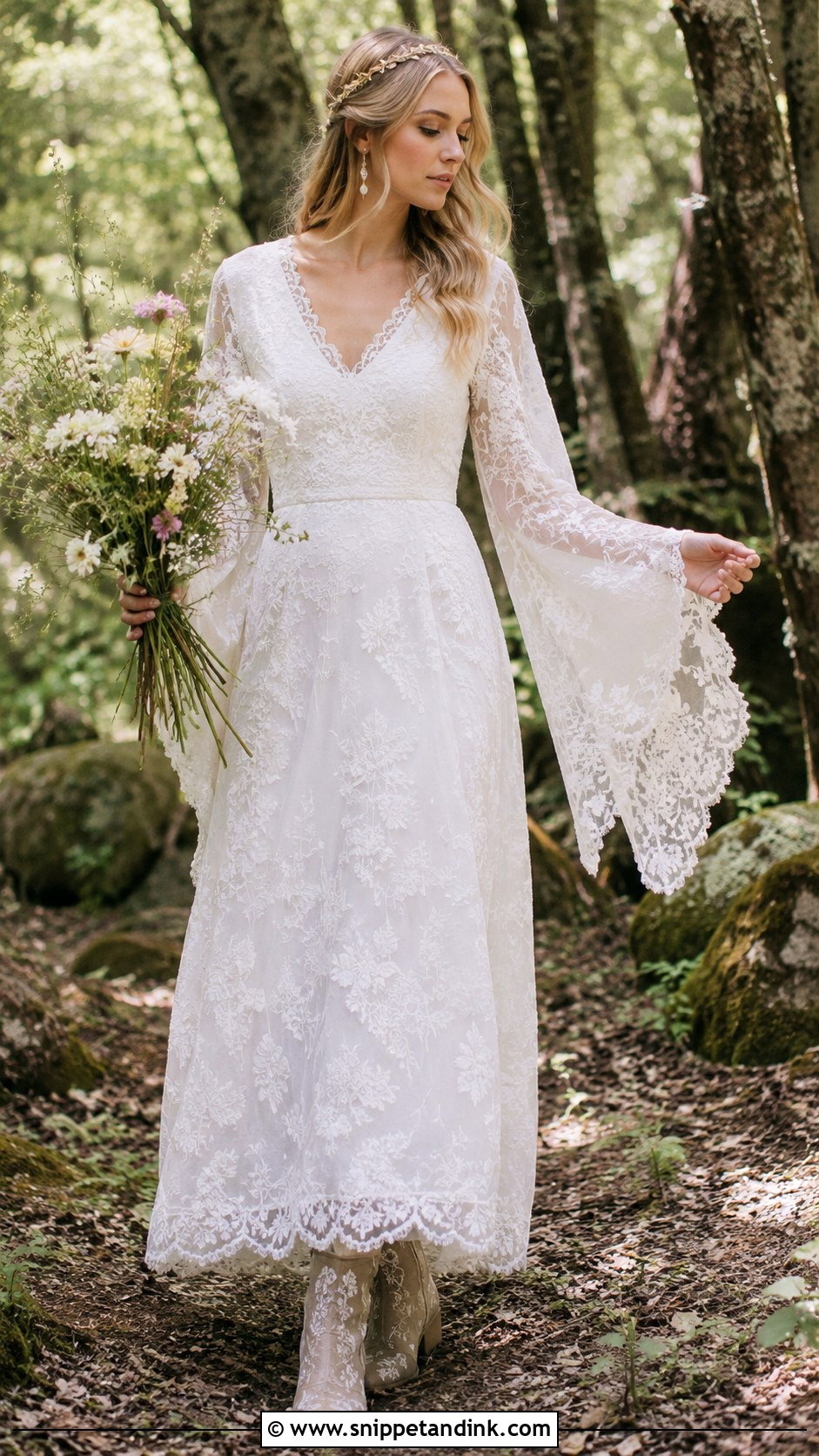
Bell sleeves bring a medieval note, and they need soft lace to work. Stiff lace sticks out like a funnel when you lift your arms; soft lace drapes. Botanical motifs, ferns or wildflowers suit the theme. A fitted bodice and flowing A-line balance the width at the wrists. Be aware that long open sleeves dip into everything at dinner, from soup to candle flames. Style it with a half-up look, a slim gold circlet and small moonstone earrings, and choose ankle boots for a forest or lace flats for a garden.
4. Chiffon Cape Sleeve Faerie Wedding Dress
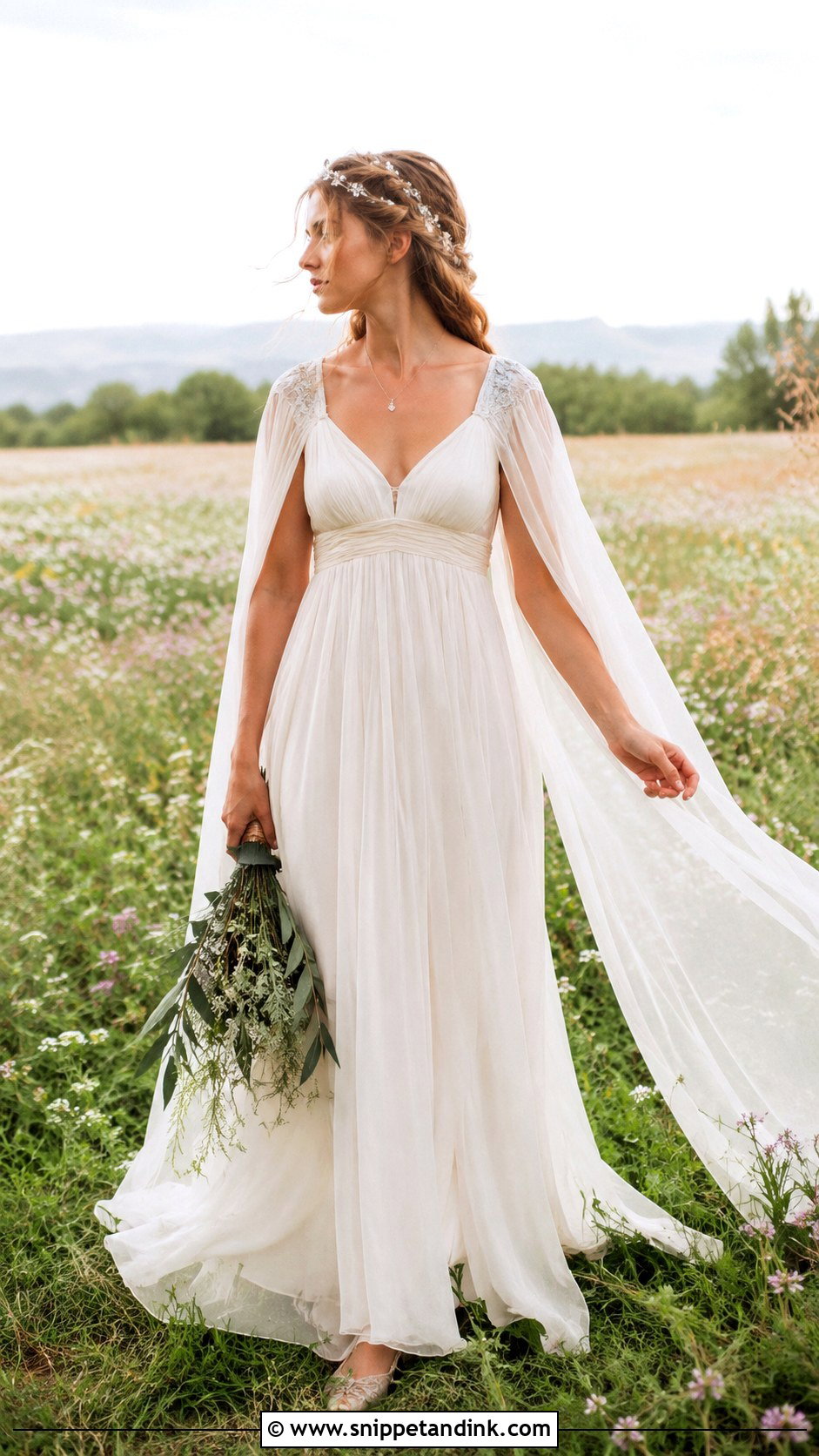
Chiffon cape sleeves give you movement behind you as you walk, without the weight of a full bridal cape. They attach at the shoulders of an empire-waist or A-line gown and should fall close to the skirt, ending in a short train. Chiffon frays easily, so check that the edges are rolled and stitched rather than cut raw. A crystal hair vine and a fine pendant add a little sparkle. Metallic flats suit the jewelry, and a narrow bouquet of white flowers with trailing greenery keeps the line long. A breezy hilltop or a sunset portrait shows the panels at their best.
5. Green Ombre Faerie Wedding Dress
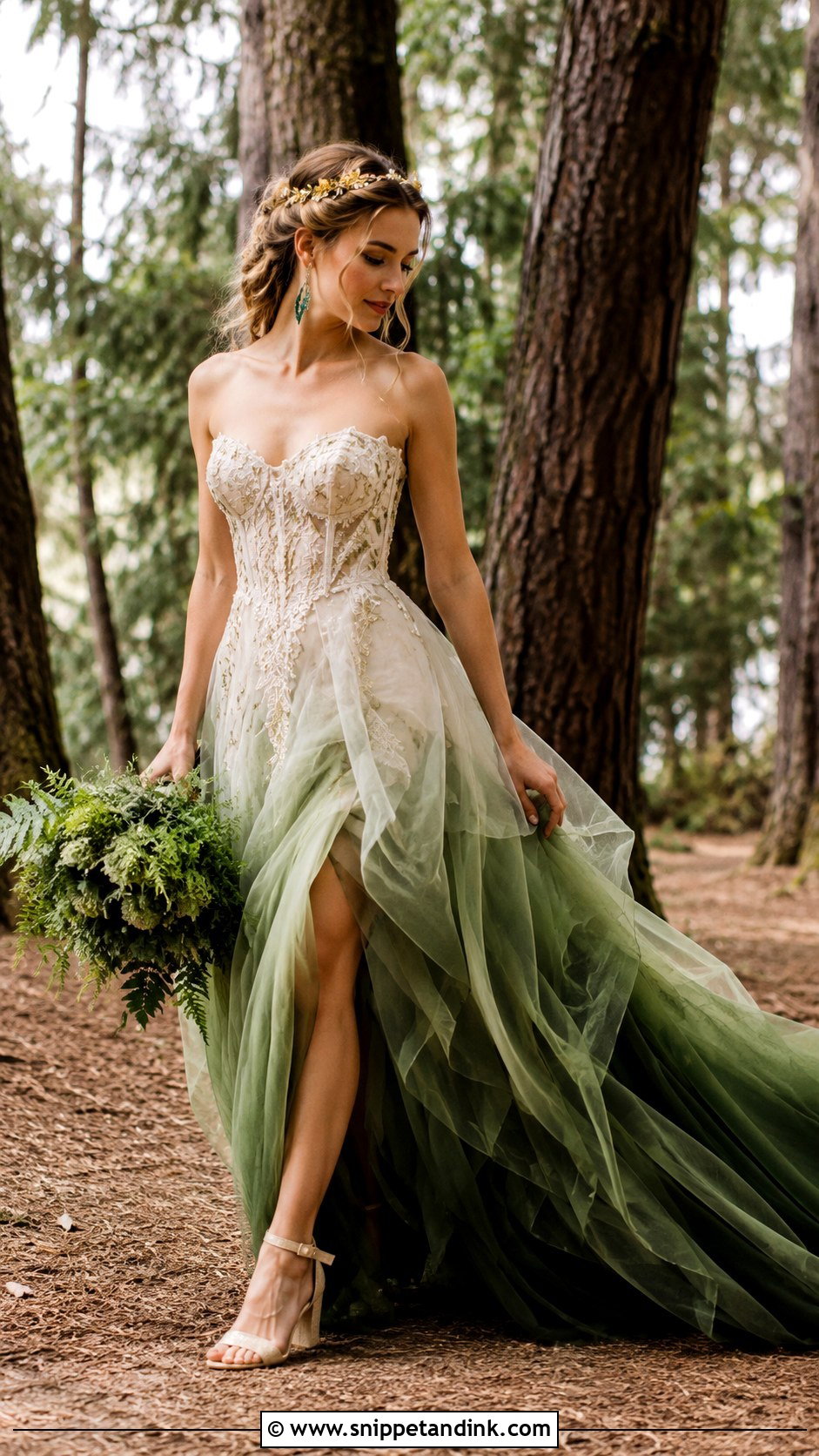
A green ombre faerie wedding dress starts ivory or pale champagne at the bodice and deepens toward sage or forest green at the hem. Layered chiffon or tulle blends the colours most smoothly. A gradient that changes too fast reads as two separate fabrics, so look for at least a hand’s width of blend between shades. Keep the bodice plain, perhaps with a few leaf appliqués or fine gold thread. A delicate gold headpiece, emerald earrings and brown or champagne block heels suit it, with ferns and white flowers in the bouquet. Ask your photographer to place you against something lighter, so the green doesn’t merge into the trees.
6. Blush Floral Faerie Wedding Dress
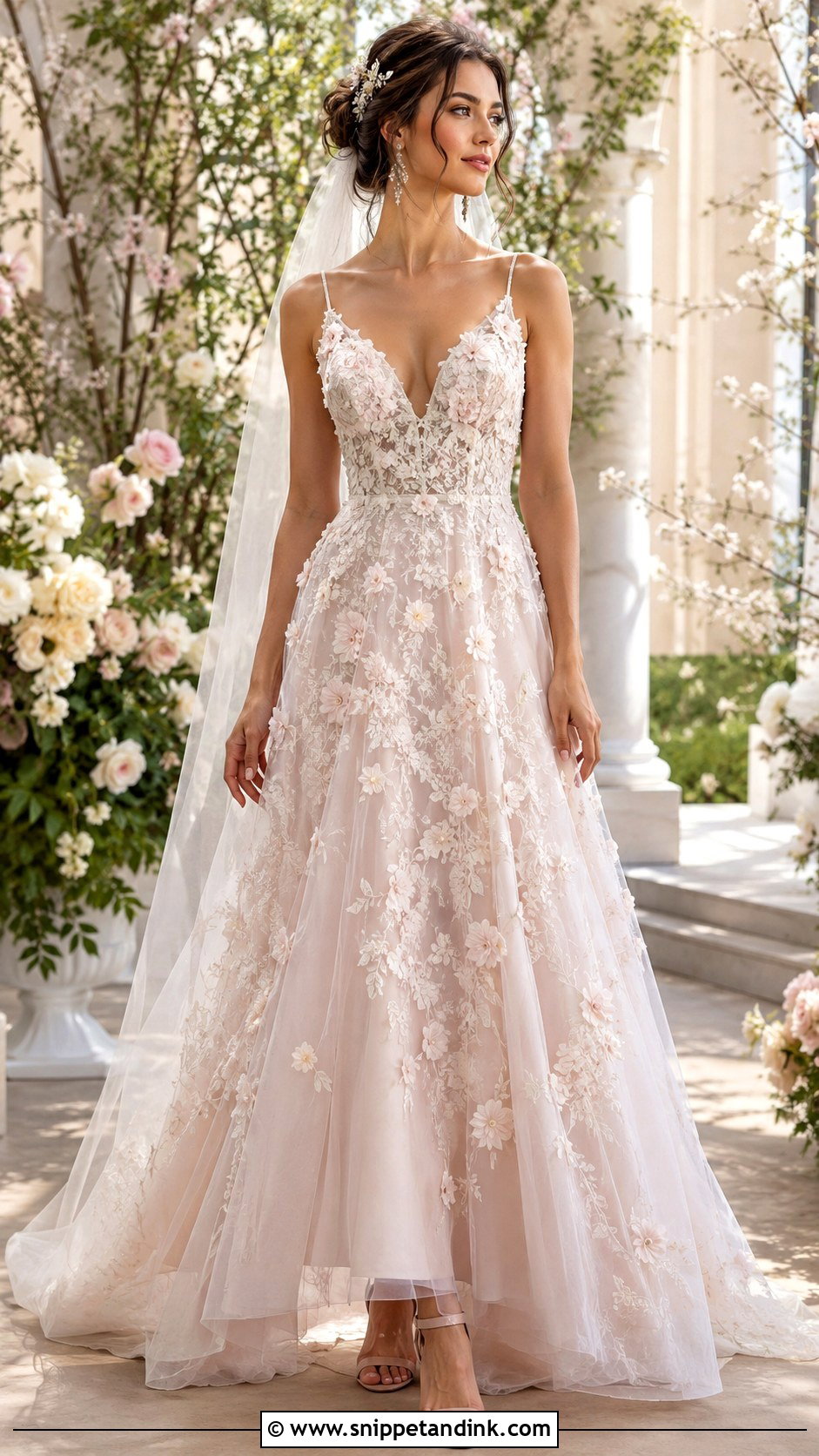
Blush under ivory lace gives a warm glow while still reading as bridal. I usually pair a pale blush underlayer with ivory floral lace over an A-line or gently fitted shape. A few 3D petals at the neckline add texture; keep the skirt cleaner. Hold the lace against your face in daylight before committing, since some blush linings go peach under warm lighting. Rose-gold jewelry, a loose low bun and a small floral comb above the veil suit it, with nude block-heel sandals and a bouquet in cream, pale pink and muted mauve.
7. Corset Bodice Faerie Wedding Dress
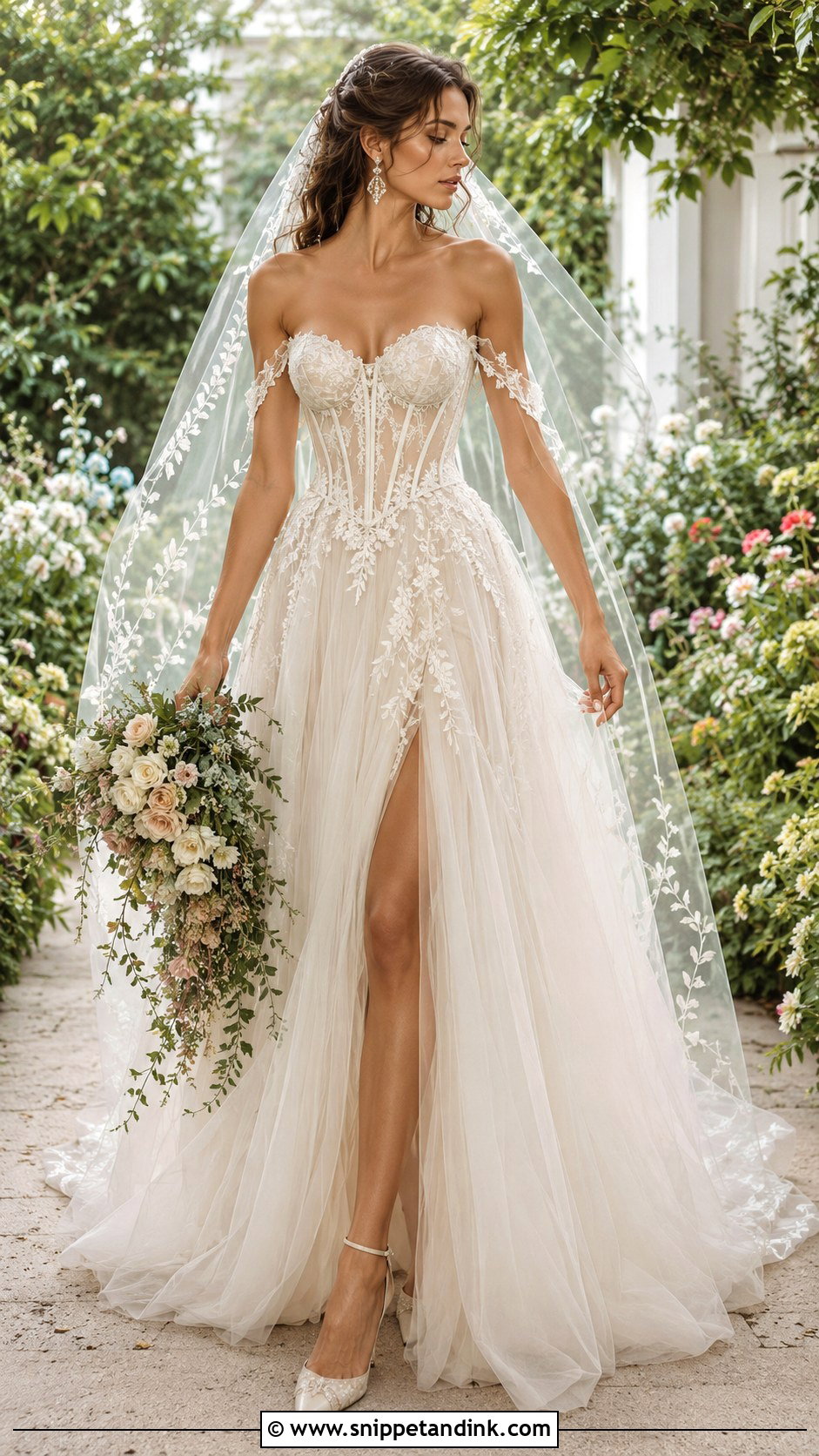
A visible corset gives a faerie gown structure without losing its softness, and the boning is where comfort is won or lost. Flexible spiral steel bends with you; stiff plastic boning tends to dig in when you sit on a low bench or the ground for portraits. Lace or embroidered panels can run from the bodice into a tulle skirt, and a basque waist makes the transition elegant. Pair it with a cathedral veil with a little vine embroidery, crystal earrings and pointed satin heels. Breathe deeply and sit at every fitting before you sign off.
8. Off-Shoulder Leaf Appliqué Faerie Wedding Dress
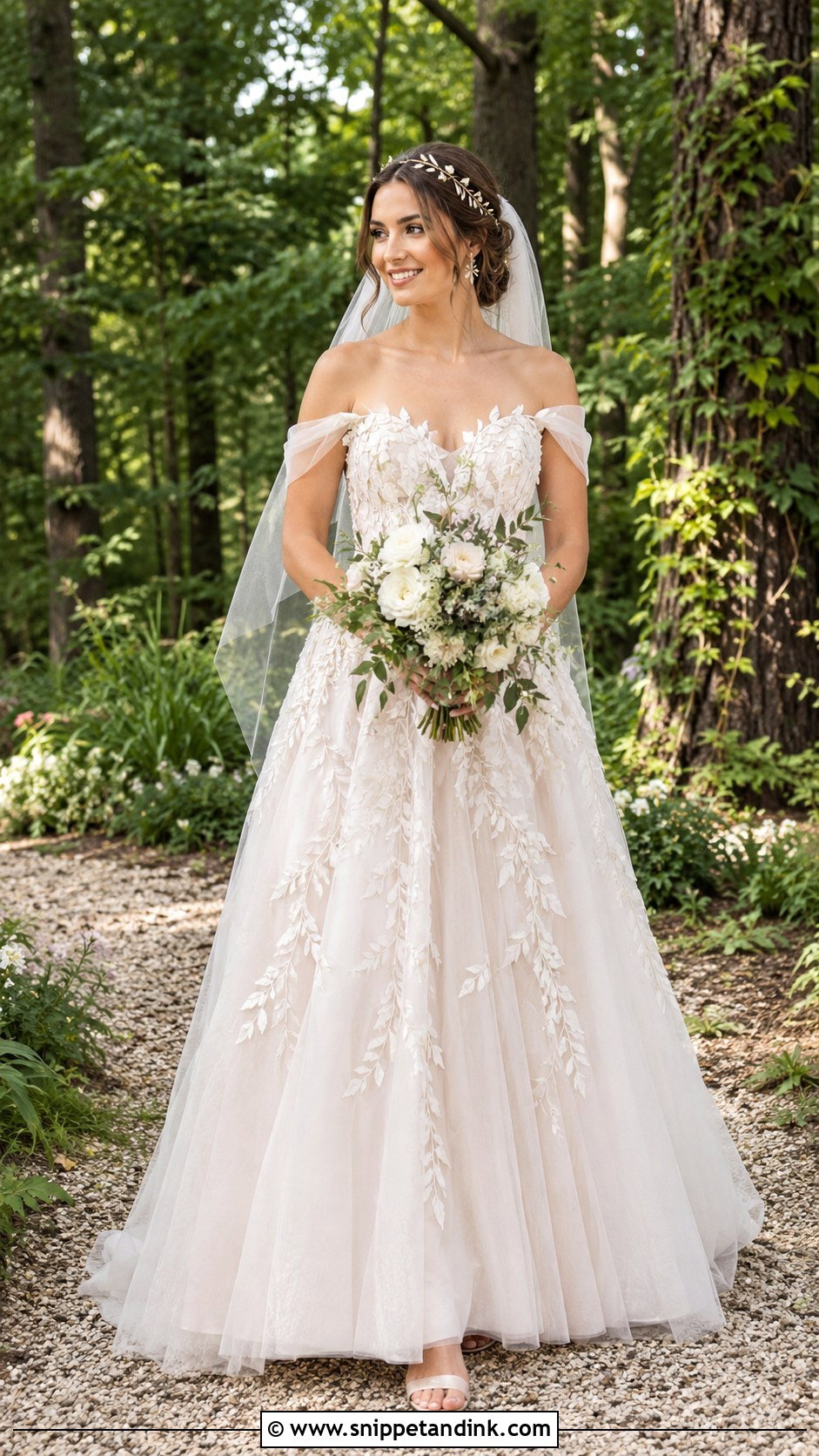
Leaf appliqués climbing across the bodice and thinning toward the hem give the gown a sense of growth. Off-shoulder straps in soft tulle should rest on the upper arms without cutting in, so lift your arms at the fitting to check they don’t creep up. A loose updo keeps the neckline visible. Leaf earrings, a fine vine headband and comfortable ivory heels suit it. Leave the veil plain; with appliqués this busy, a decorated veil is too much. A round bouquet of white flowers and slender branches finishes the look.
9. High Neck Lace Faerie Wedding Dress
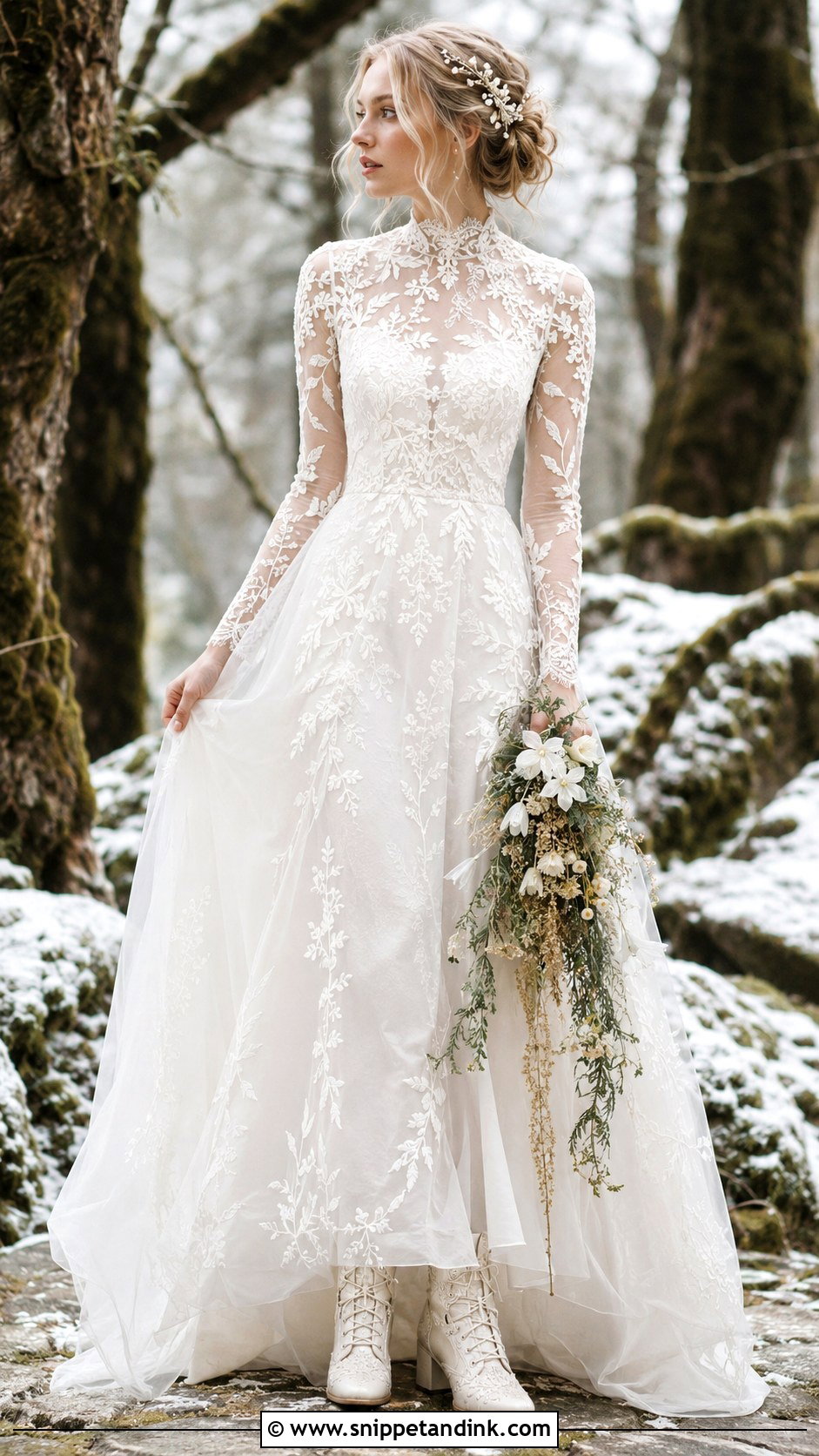
A high neck in light illusion lace looks delicate rather than buttoned up, especially with botanical motifs at the collar. Long fitted sleeves and a flowing chiffon or tulle skirt keep it graceful, and an open or illusion back adds contrast. This is a natural autumn or winter gown. Pearl hairpins, small drops and a low braided bun suit it, and skip the necklace entirely. Closed-toe heels or embroidered ankle boots keep your feet dry outdoors, and a long narrow bouquet won’t hide the bodice.
10. Tea Length Faerie Wedding Dress
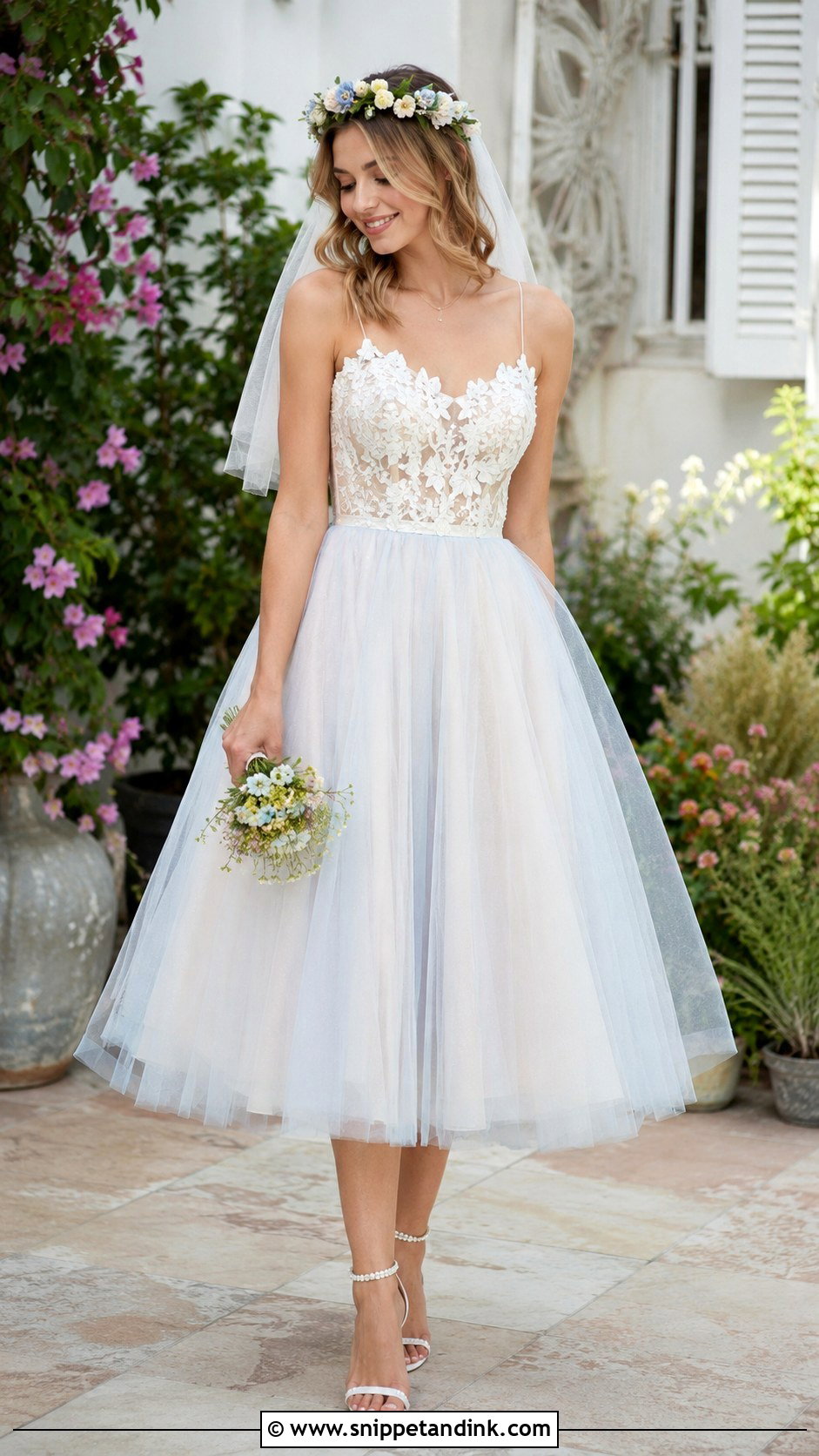
Tea length is the most practical faerie gown on this list, ending between knee and ankle and clearing wet grass and roots entirely. A fitted floral-lace bodice over a soft tulle skirt keeps it light; a hint of pale blue or blush in the layers adds a little magic. Your shoes will be seen all day, so make them deliberate: embroidered flats, pearl-trimmed heels or fine ankle straps. A short veil, a floral crown and a small bouquet keep the proportions right. Garden parties, courthouse ceremonies and long nights of dancing suit it.
11. Boho Crochet Lace Faerie Wedding Dress
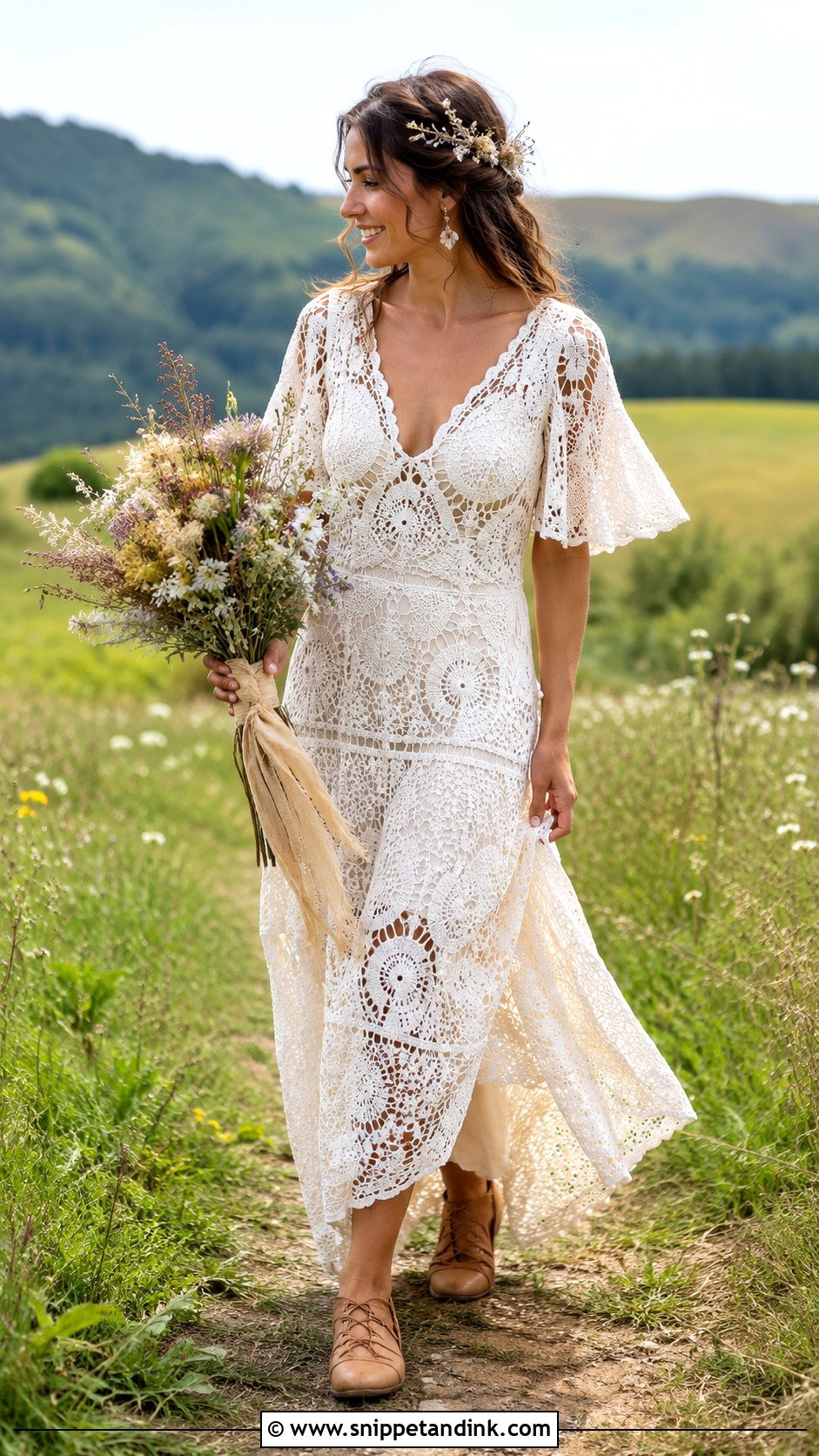
Crochet lace takes the faerie look in a relaxed, bohemian direction. Look for openwork lace over a comfortable lining on an easy A-line with a defined waist, and flutter or loose long sleeves. Crochet stretches and snags more than woven lace, so ask how it’s backed and keep rough jewelry away from it. A loose braid, a dried-flower comb and simple gemstone earrings suit it. Tan sandals, lace-up flats or low suede boots work depending on the weather, and a wildflower bouquet tied with raw silk ribbon finishes a meadow or barn wedding.
12. Celestial Faerie Wedding Dress
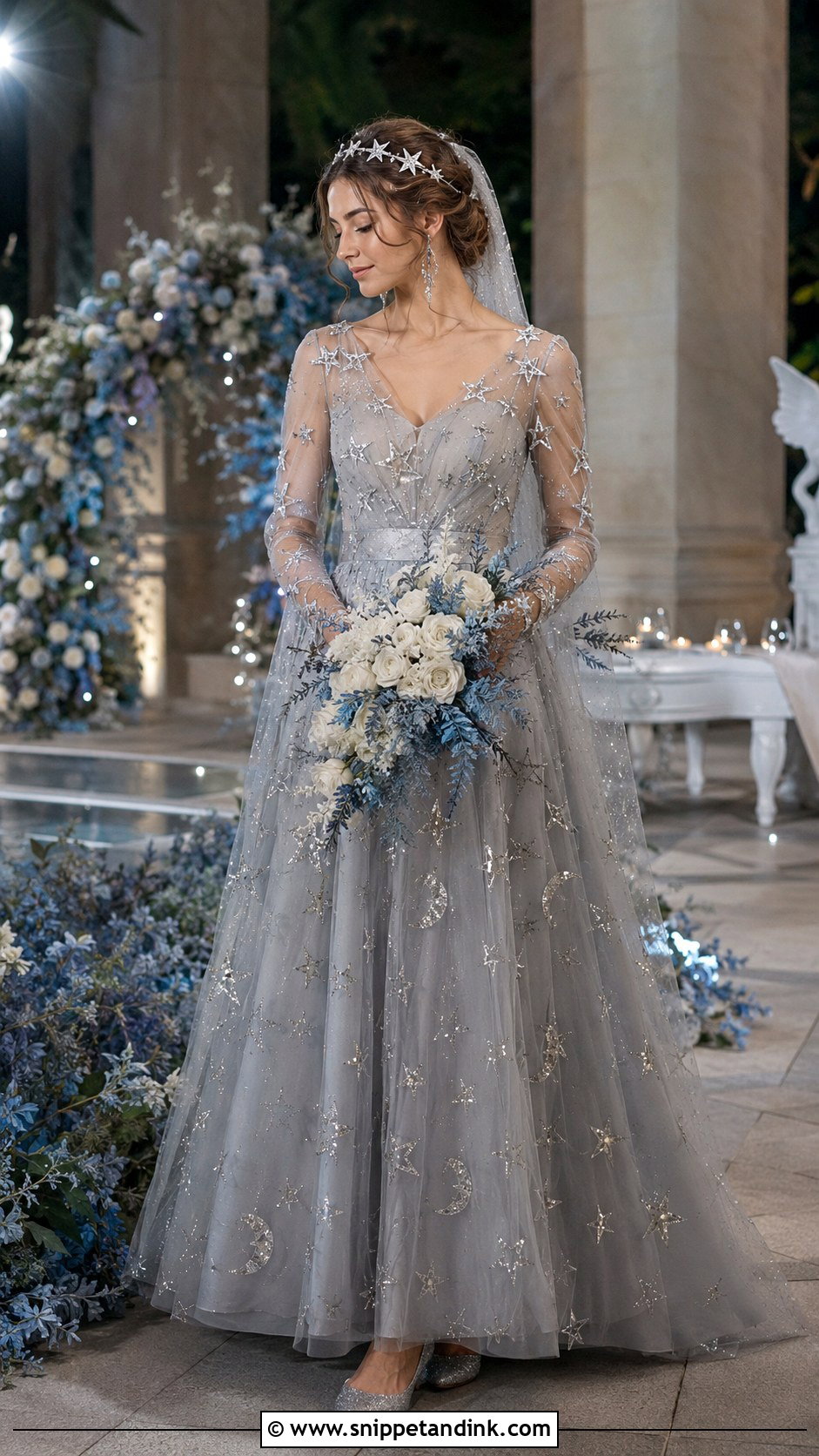
Stars, moons, and tiny crystals give a faerie gown a night-sky feel. Start with midnight-blue, silver-grey or ivory tulle with fine metallic embroidery; an illusion neckline and sheer sleeves make the motifs look suspended. Darker tulle shows every speck of lint and pollen, so keep a lint roller in the bridal bag. A fitted waist and sweeping A-line keep it bridal. Add a slim star headband, silver drops and a veil with tiny sparkles. White flowers with blue-grey foliage tie the bouquet to the gown, and an evening ceremony suits it best.
13. Butterfly Appliqué Faerie Wedding Dress
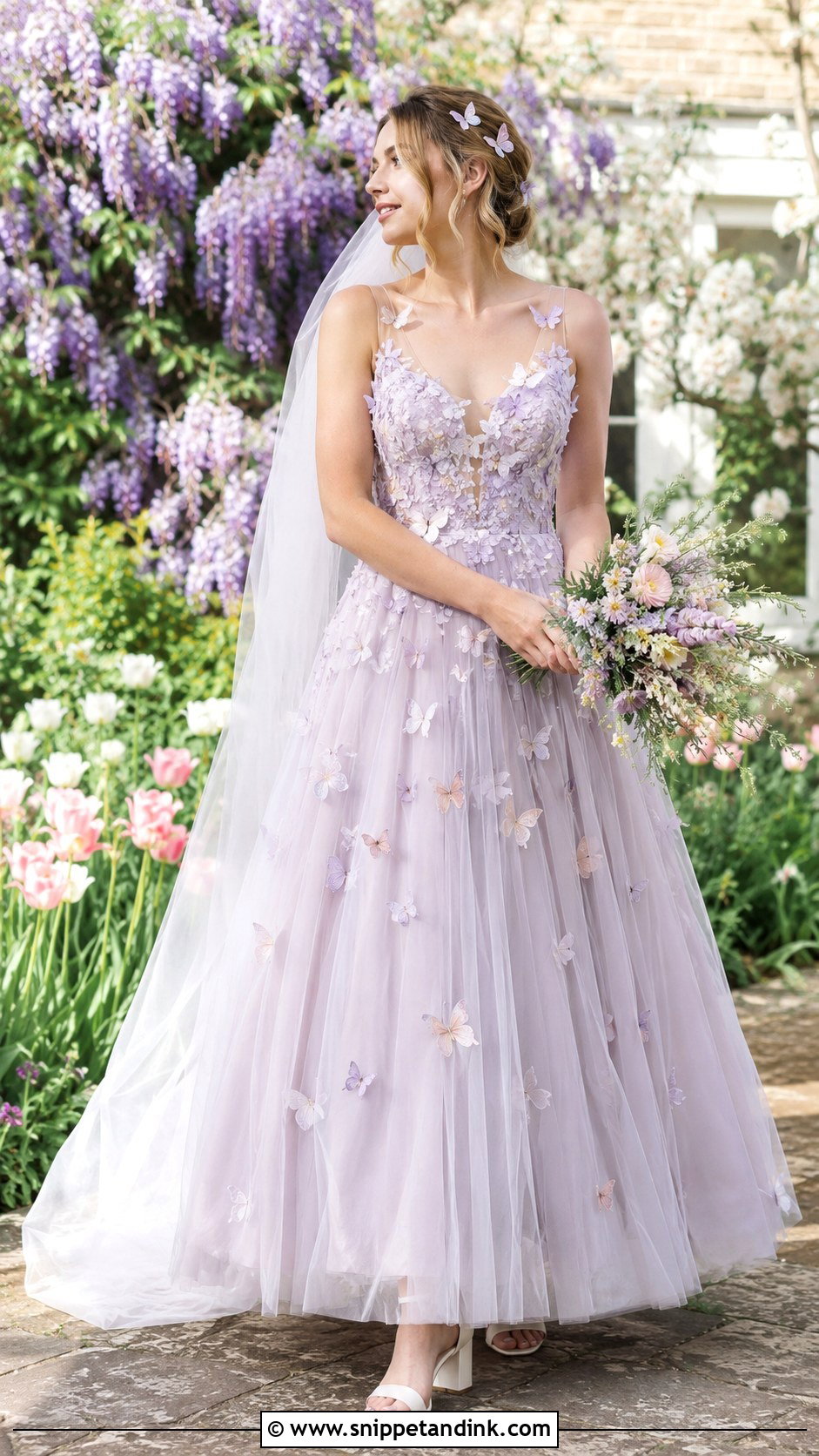
Butterfly appliqués stay grown-up when they’re small and placed with care. I prefer them concentrated at the bodice of an ivory or pale lavender tulle gown, then scattered thinly down the skirt. Dimensional wings are fragile, so check they’re tacked down at the body and not just glued. A strapless or sleeveless neckline gives them a clean background. A plain veil, butterfly hairpins and minimal studs are enough, with ivory block heels. Keep any other butterfly touches to one or two pieces in total.
14. Velvet Winter Faerie Wedding Dress
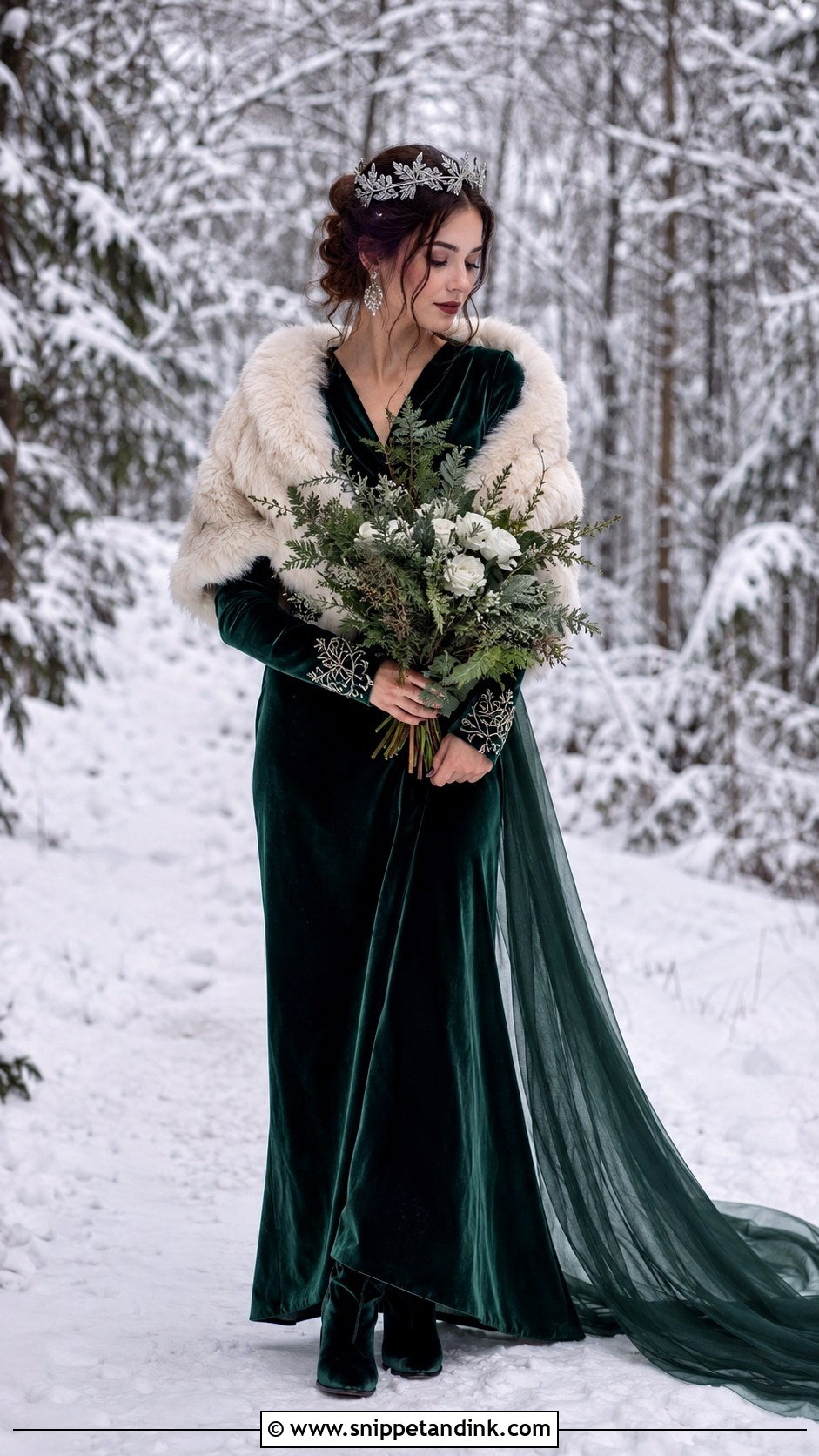
Velvet is the faerie gown for winter. An ivory, silver or deep green velvet dress with long sleeves and a gently flared skirt keeps you warm, and a square neckline gives structure. Velvet crushes and shows pressure marks, so it should be hung, never folded, and steamed from the inside only. Embroidered cuffs or a detachable chiffon train add lighter texture. A faux-fur wrap or lined hooded cape works for outdoor photos. Velvet ankle boots, crystal earrings and a metallic leaf crown suit it, with evergreens and white flowers in the bouquet.

15. Silk Slip Faerie Wedding Dress With Cape
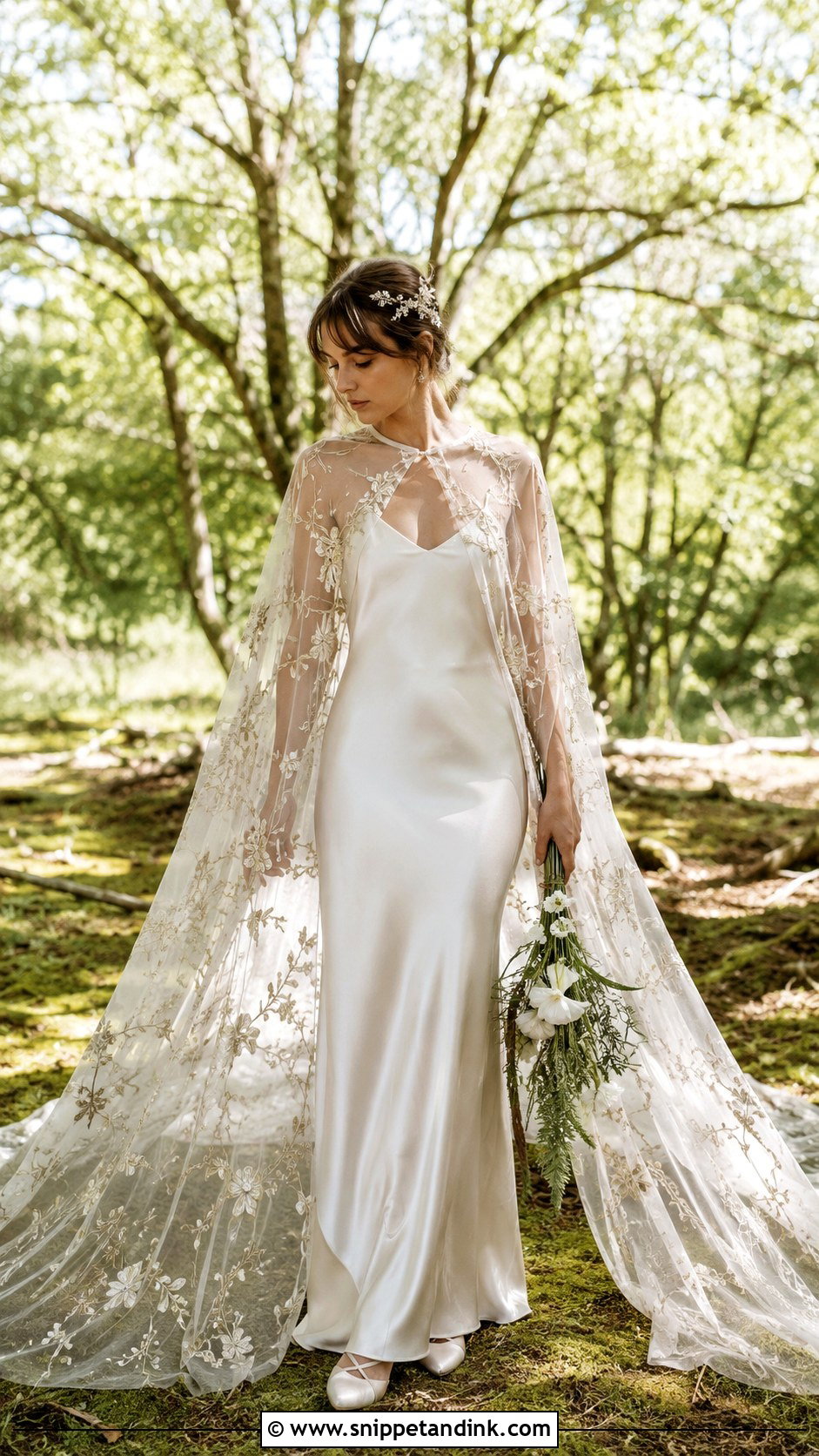
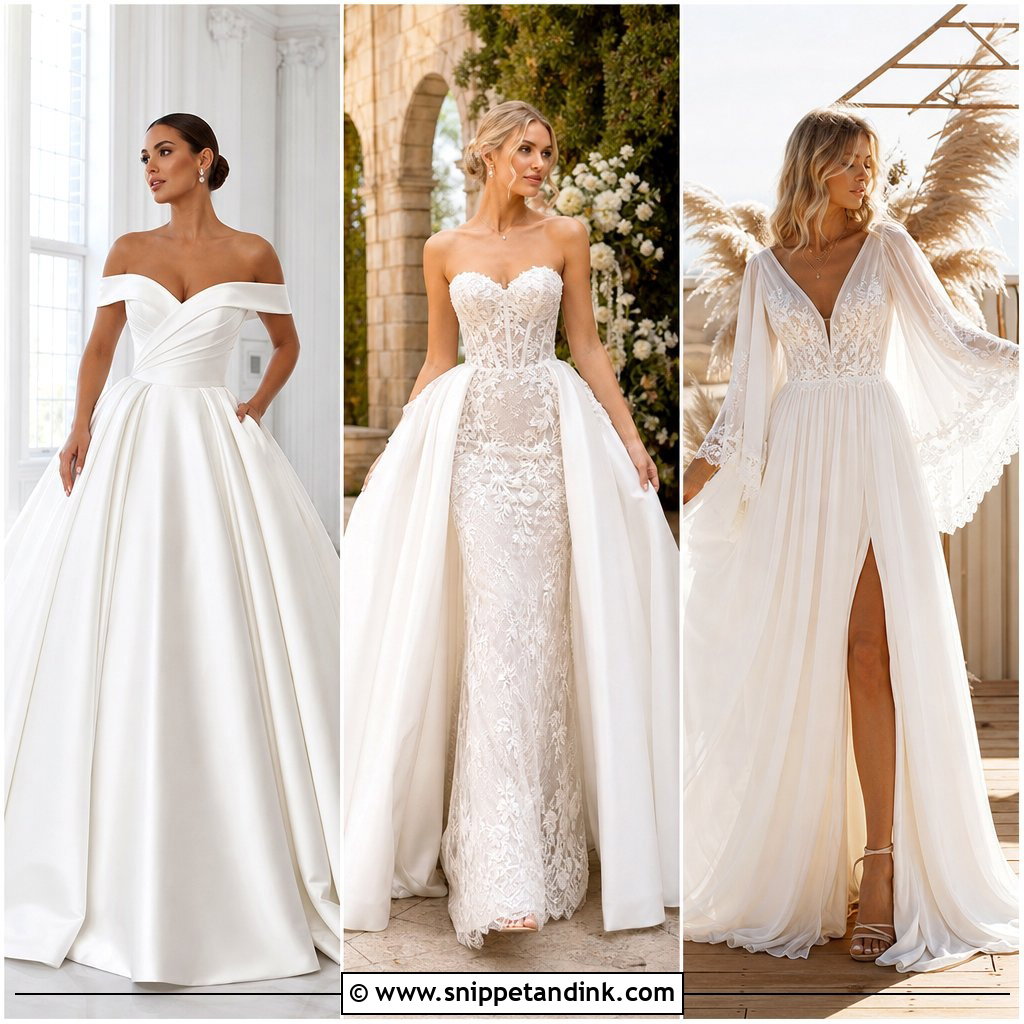
Smooth silk under detailed tulle is a modern take on the theme. A bias-cut ivory slip with a softly draped neckline goes under a sheer cathedral-length cape embroidered with vines, small flowers or beads. Bias-cut silk shows every line beneath it, so sort your underwear before the first fitting. A crystal comb, small earrings and pointed satin flats or low heels finish it, with a long-stemmed minimal bouquet. Wear the cape for the ceremony and take it off for dinner, and you have an easier silhouette for dancing.
16. Plus Size A-Line Faerie Wedding Dress
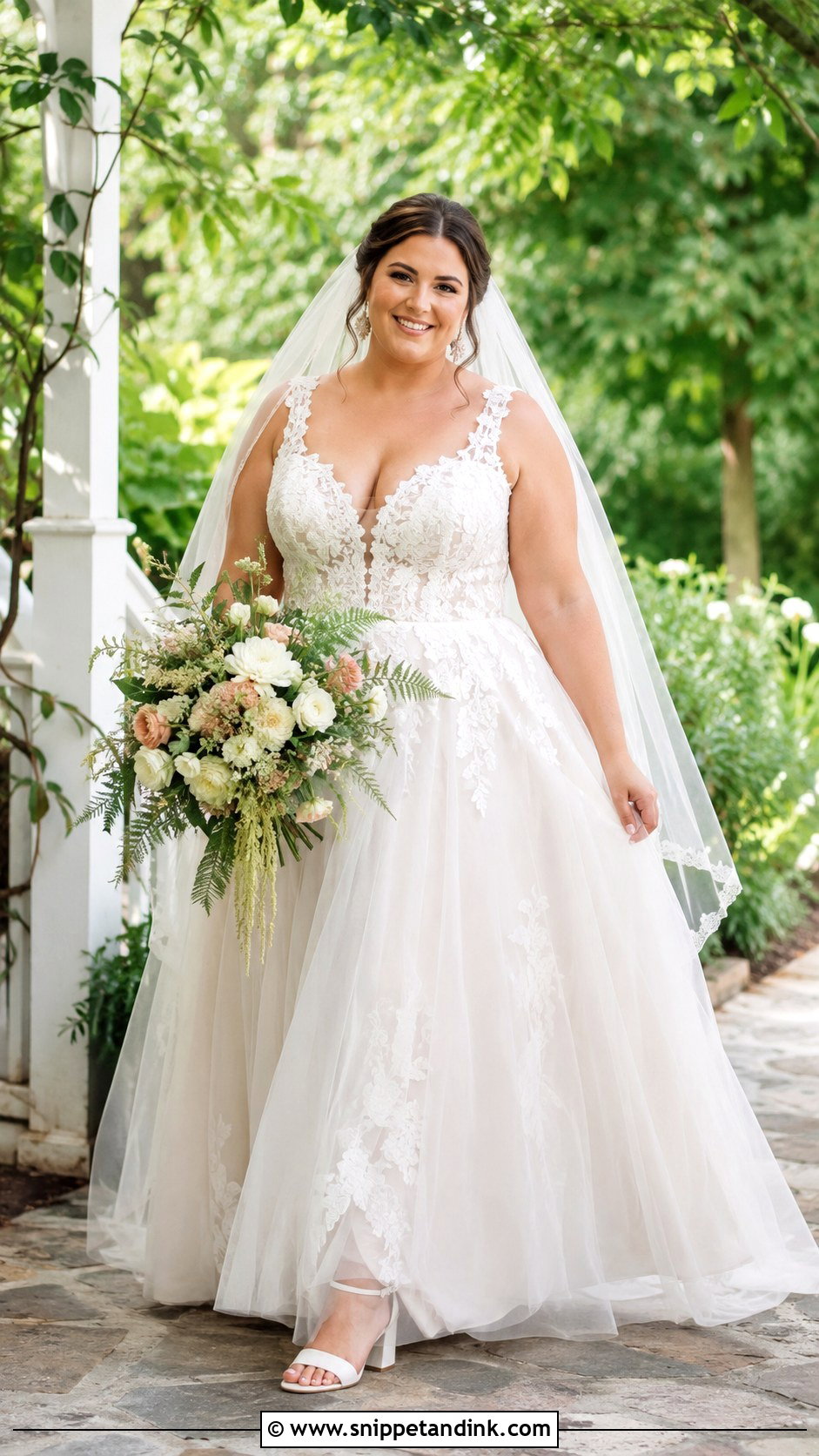
An A-line gives comfort, movement and dependable support at any size, and the right foundation is what makes a faerie gown feel light rather than heavy. Look for a structured bodice, adjustable or wide straps and a skirt that floats away from the waist. Botanical lace, scattered appliqués and a little sparkle give detail without bulk. I always alter to the bride’s own body, never to a sample size, and I’d ask about sewn-in cups and a firm waist stay. A low block heel, floral earrings, a fingertip veil and a loose updo complete it. Sit, walk, hug and dance before you approve the fit.
17. Maternity Empire Waist Faerie Wedding Dress
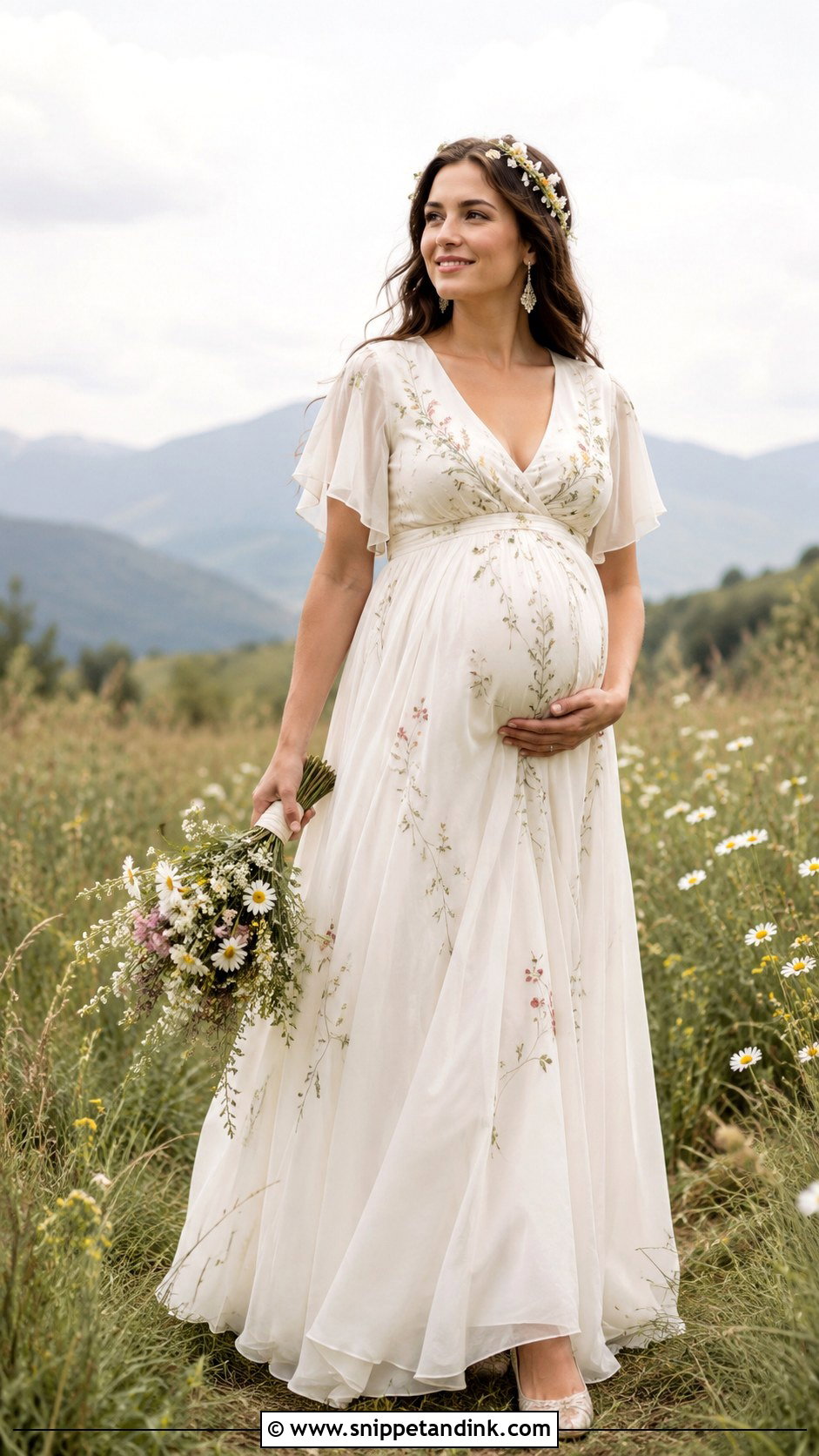
An empire waist sits just under the bust and lets a chiffon or tulle skirt flow over a bump without pressure. Lace-up backs or a flexible lining make room for changes in the last weeks before the wedding. Flutter sleeves, floral embroidery and soft ivory or blush keep the magic. I’d book the final fitting as close to the wedding as the seamstress allows, often within the last two weeks. Cushioned flats, small botanical earrings and a light floral headband suit it, and avoid heavy trains. Hold the bouquet slightly to the side so the gown shows.
18. Modest Long Sleeve Faerie Wedding Dress
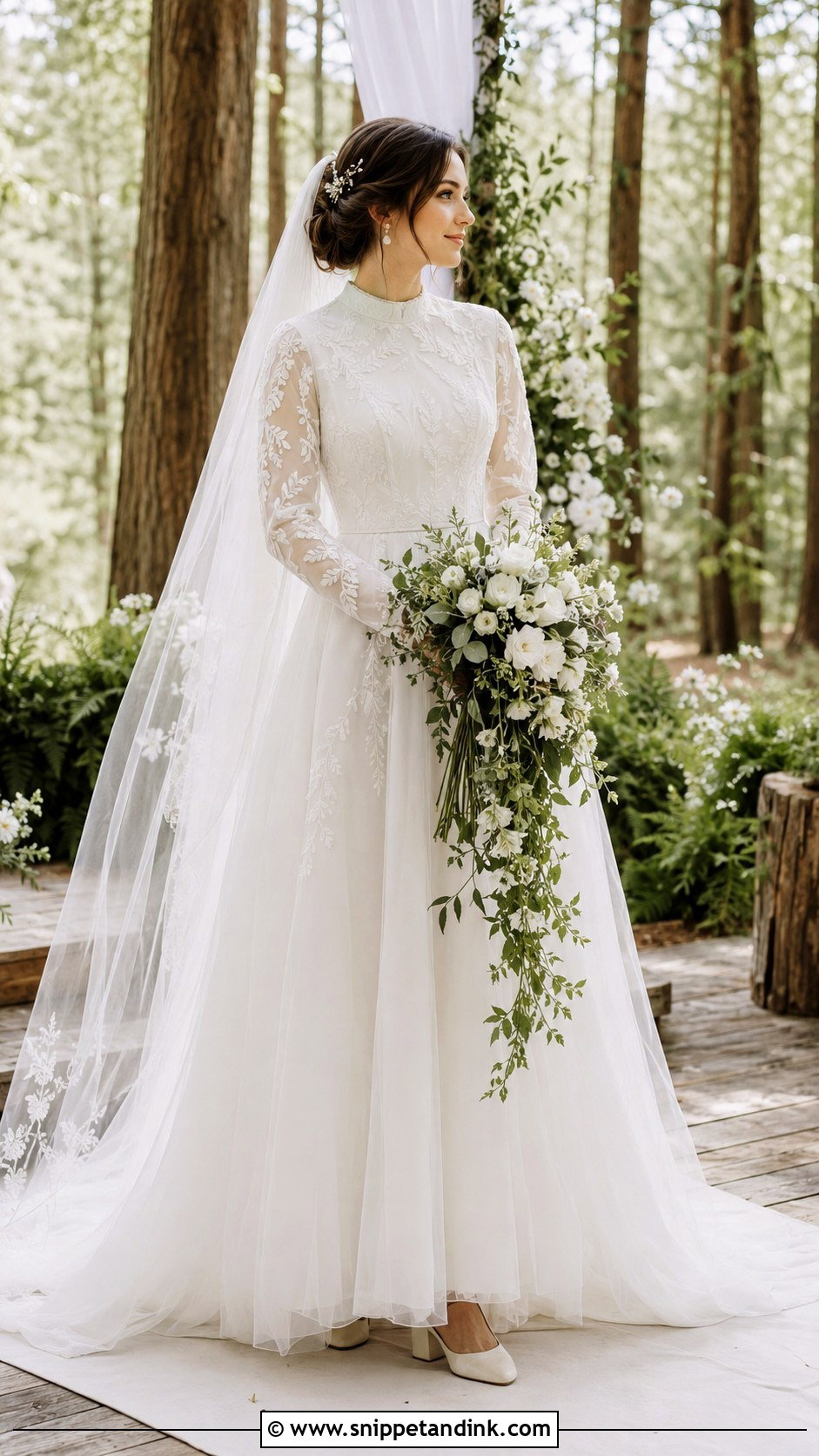
A modest faerie gown can still feel enchanted. Look for a floor-length A-line with an opaque bodice, a high or softly rounded neckline and long sleeves in botanical lace. A lined tulle skirt adds movement. Fine vine embroidery or small appliqués across the shoulders and waist give texture. Sleeve fit is where modest gowns often struggle, so reach forward and over your head at fittings. A long veil, pearl drops, closed-toe block heels and a braided updo with a leaf comb suit it, and a cascading bouquet echoes the long lines.
19. Black Faerie Wedding Dress
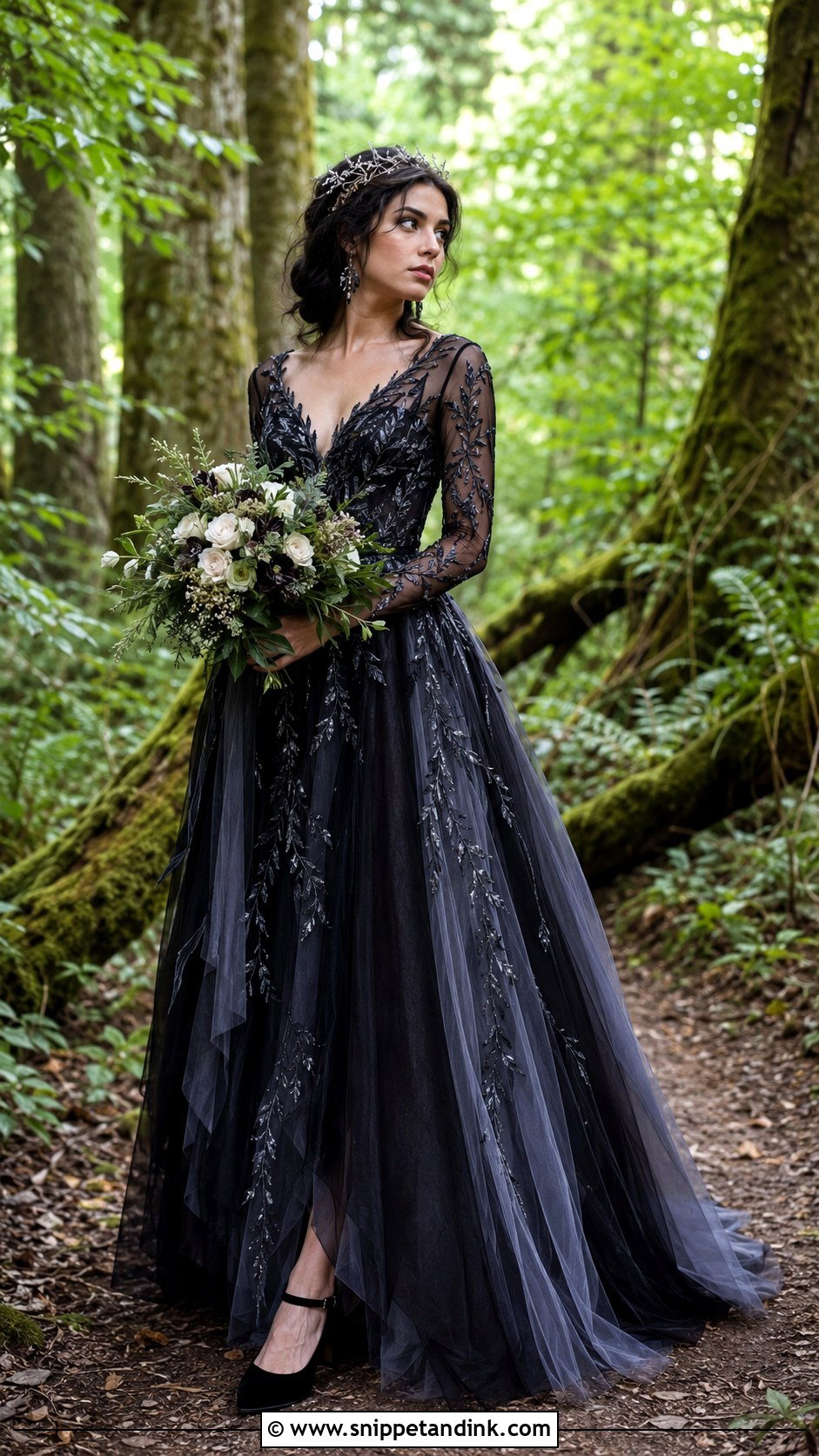
Black tulle over a charcoal or muted green lining gives dimension in daylight; solid black with no lining just reads flat. Dark leaf appliqués, floral embroidery or subtle beading add texture, and an A-line with sheer sleeves keeps the flowing faerie shape. A silver branch headpiece, smoky gemstone earrings and black velvet flats suit it. Carry pale flowers with deep greenery for contrast, otherwise the bouquet disappears against the dress. A charcoal veil works, but if the gown is heavily decorated, a simple hairpiece is better.
20. Iridescent Faerie Wedding Dress
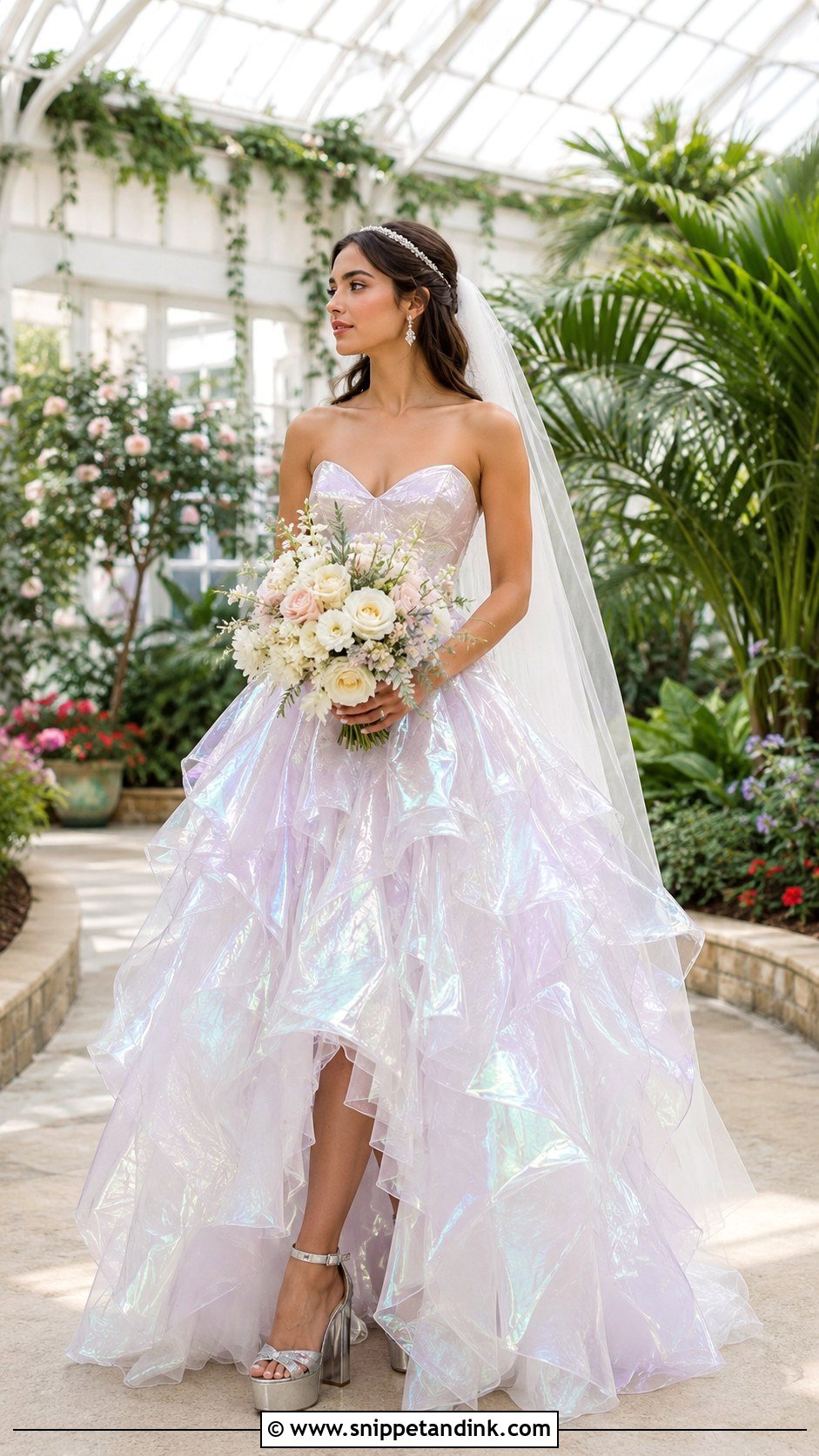
An iridescent gown shifts colour as you move from shade into sun. Translucent organza or layered tulle with a soft pearl, lavender, blue or green sheen gives the most subtle effect; strong iridescence can look synthetic up close. A fitted bodice and full A-line give it a recognisable bridal shape. Keep decoration minimal, since the fabric does the work. Crystal earrings, a simple silver headband and clear or metallic block heels suit it, with a plain fingertip veil. View the fabric in daylight and under indoor lights before you buy, because the sheen can change completely.
Flower Crowns and Hair Vines That Last Past the First Dance
Fresh flowers in the hair are the faerie look’s signature, and also the first thing to wilt. They sit out of water against warm skin for hours, so the choice of bloom matters more than the design.
Flowers that hold up
Spray roses, waxflower, statice, small orchids, ruscus and eucalyptus all cope well out of water. Baby’s breath lasts too, though some people find its scent strong up close. Gardenias, hydrangeas, sweet peas and fine poppies wilt or bruise quickly and are better kept in the bouquet.
Timing and weight
Ask your florist to make the crown the day before or that morning and keep it chilled, misted lightly, until you put it on. A full crown is heavier than it looks, so your hairstylist should anchor it with pins crossed through a braid or a section of backcombed hair rather than balancing it on top.
If your ceremony is long and hot, or you want to keep the piece, a crown of dried flowers or good silk blooms is the sensible choice. I’d also do a trial with your hair and veil together, because a crown and a veil comb often fight for the same spot.
Magic in One Detail, Comfort in Everything Else
The faerie brides I remember combined one fantasy detail with real practicality. Flowing fabric, floral embroidery, leaf appliqués, soft colour and delicate accessories create magic without tipping into theatre. Think about your venue, the season, your shoes and how much support you need before you choose. Then test how the full outfit moves, photographs and feels when you sit or dance. Ivory, woodland green, blush, black or iridescent can all work. Pick the one magical feature you love most and build the rest of the outfit around it.
You'll Like These Ideas:











Leave a Reply