
In a fitting room I rarely let a bride judge a gown by its neckline alone. Detail work only makes sense once you see it with the shoes, the veil and the way you actually stand. Lace, boning, a dropped Basque waist, bows, raised flowers, pearl beading and detachable skirts are all back in the sample racks right now, and each one changes how a dress sits, moves and creases. Below are twenty dresses with the notes I’d give you at an appointment: what to look for inside the bodice, what to test before you commit, and what to keep simple around them. Some suit a ballroom, some a garden, some a courthouse, and a few suit almost nobody until the fit is right.
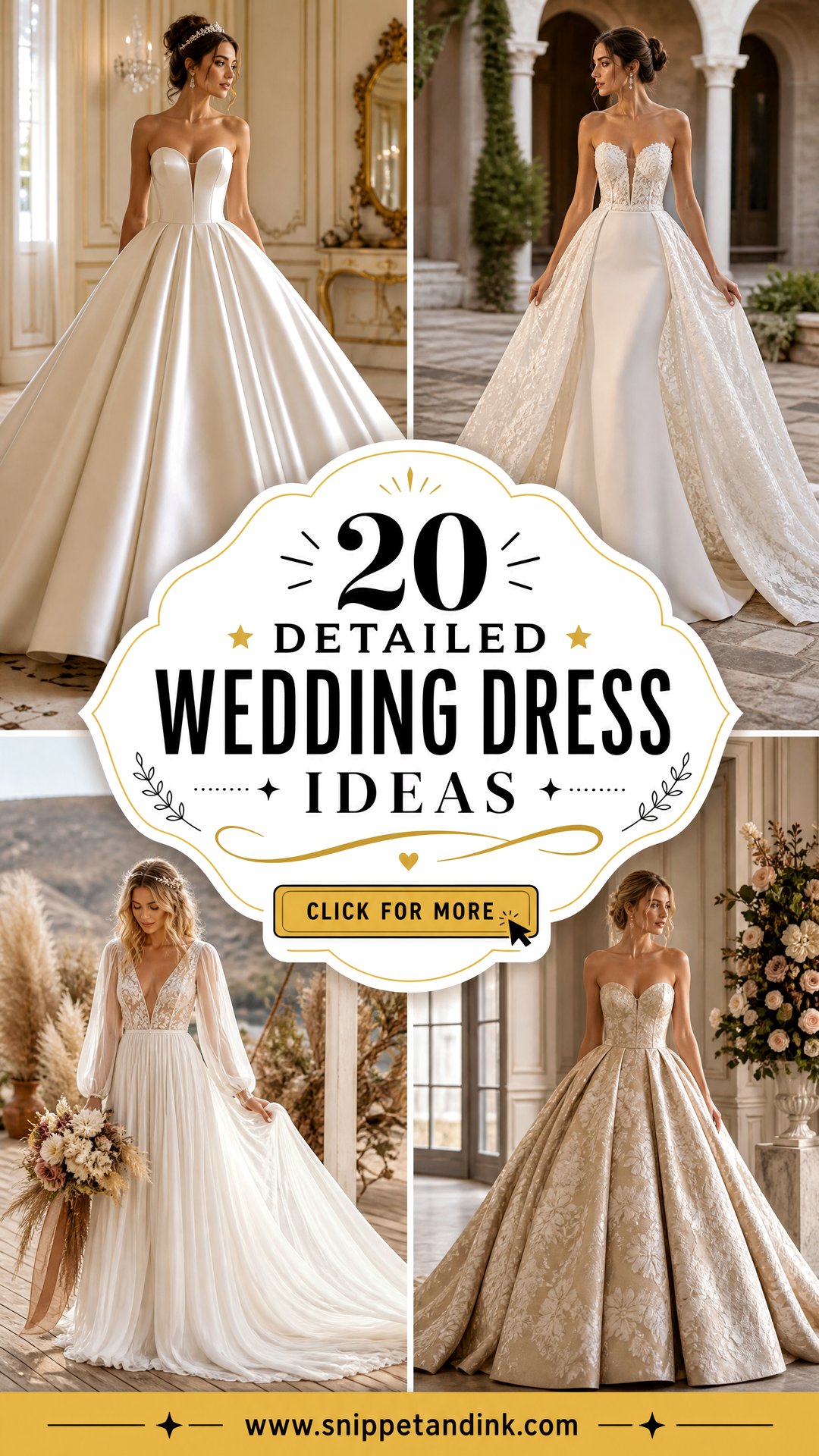
Testing Detail Work in the Fitting Room
Sample gowns hide a lot. They’re clipped at the back to fit whoever is standing in them, and the bright, cool lighting in most bridal shops flatters lace and beading. So I treat every appointment as a test, not a fashion show.
- Turn the bodice inside out if the consultant allows it. Real boning, a full lining and finished seams tell you more about how the dress will wear than the outside does.
- Sit on a hard chair for a full minute. Corsetry, Basque points and beaded seats all show their problems sitting, not standing.
- Lift both arms and hug the person you came with. Off-shoulder bands, halters and lace sleeves either stay put or they don’t.
- Ask to step near a window. Champagne, ivory and pearl look different in daylight than under shop bulbs.
- Ask how the train bustles and how many points it uses. A heavy train on one hook pulls the whole skirt.
I also ask brides to bring one honest friend rather than a crowd. Too many opinions and you’ll choose the dress that looked best for thirty seconds on a pedestal, not the one you’ll still be comfortable in at midnight.
1. Classic A-Line Wedding Dress
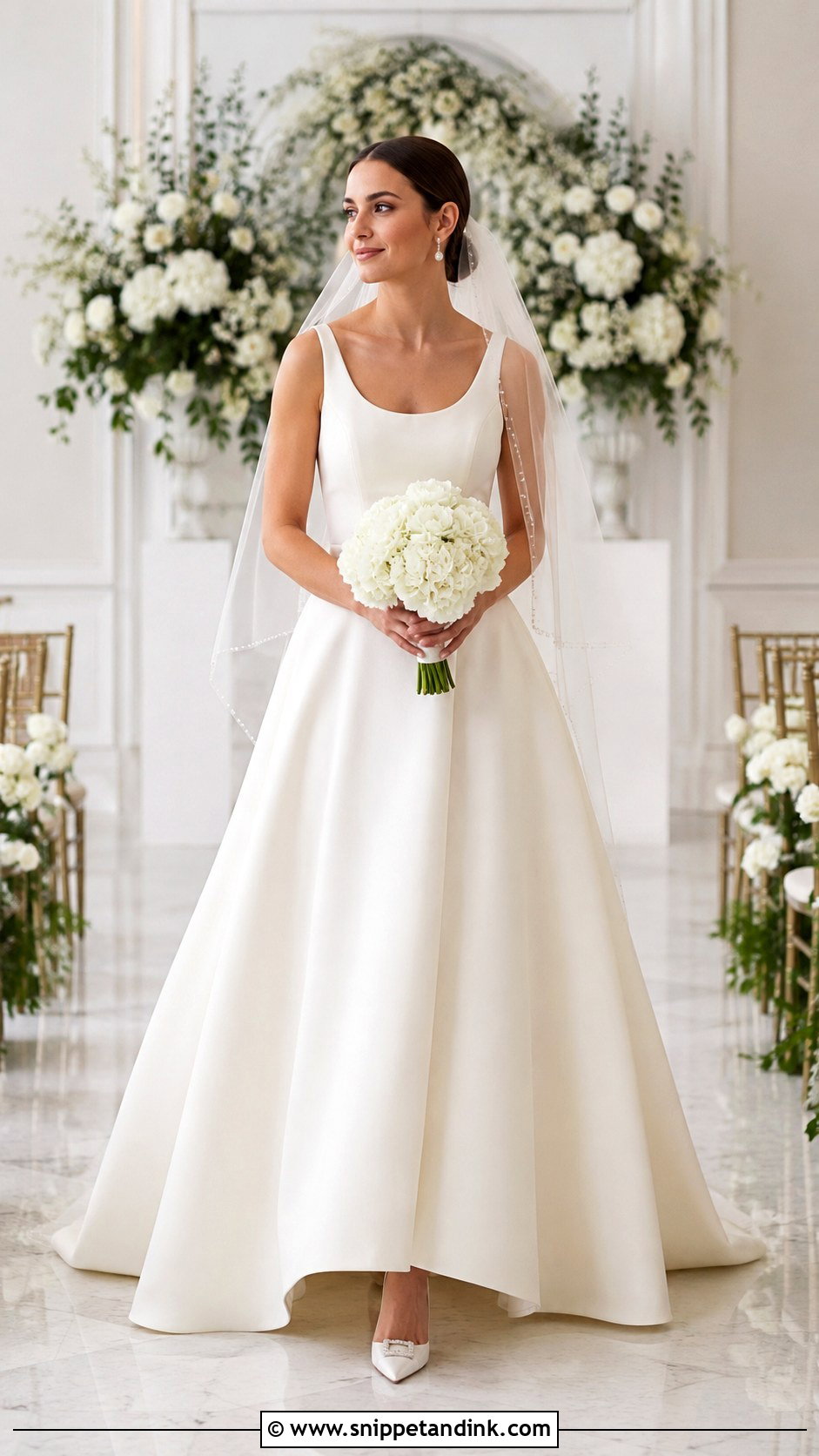
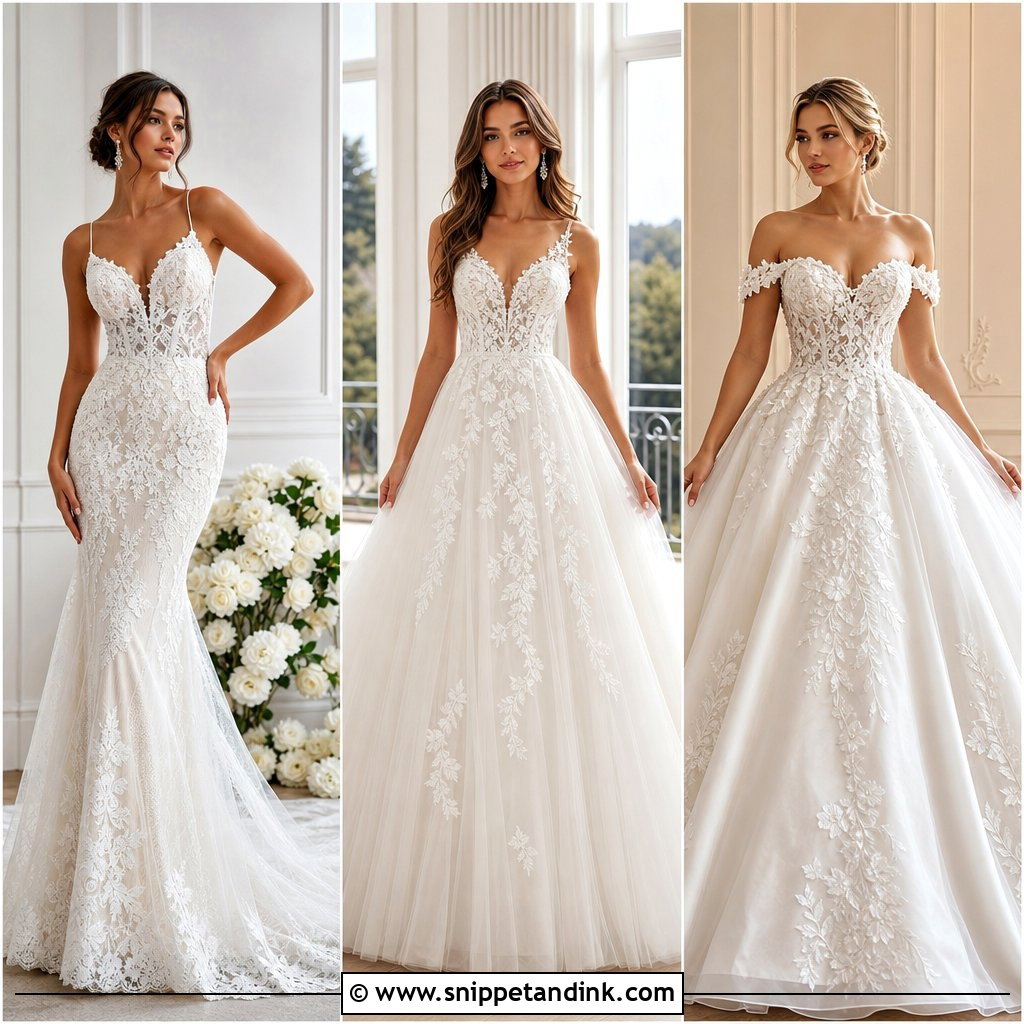
If a bride walks in unsure of her shape, an A-line is usually the first dress I pull. The skirt widens gradually from the waist, so it forgives a lot and still reads as a proper gown. Pair a structured bodice with a scoop, V-neck or soft sweetheart neckline. Matte satin gives the cleanest formal finish; chiffon or layered tulle is lighter for an outdoor ceremony. Pointed ivory pumps, pearl drops and a fingertip veil that stops before the hem keep the outline visible, and a compact bouquet holds the proportions. Straps, sleeves or internal corsetry can all be added. Spend your alteration money on the waist and hem, because that is where an A-line either looks made for you or borrowed.
2. Satin Ball Gown Wedding Dress
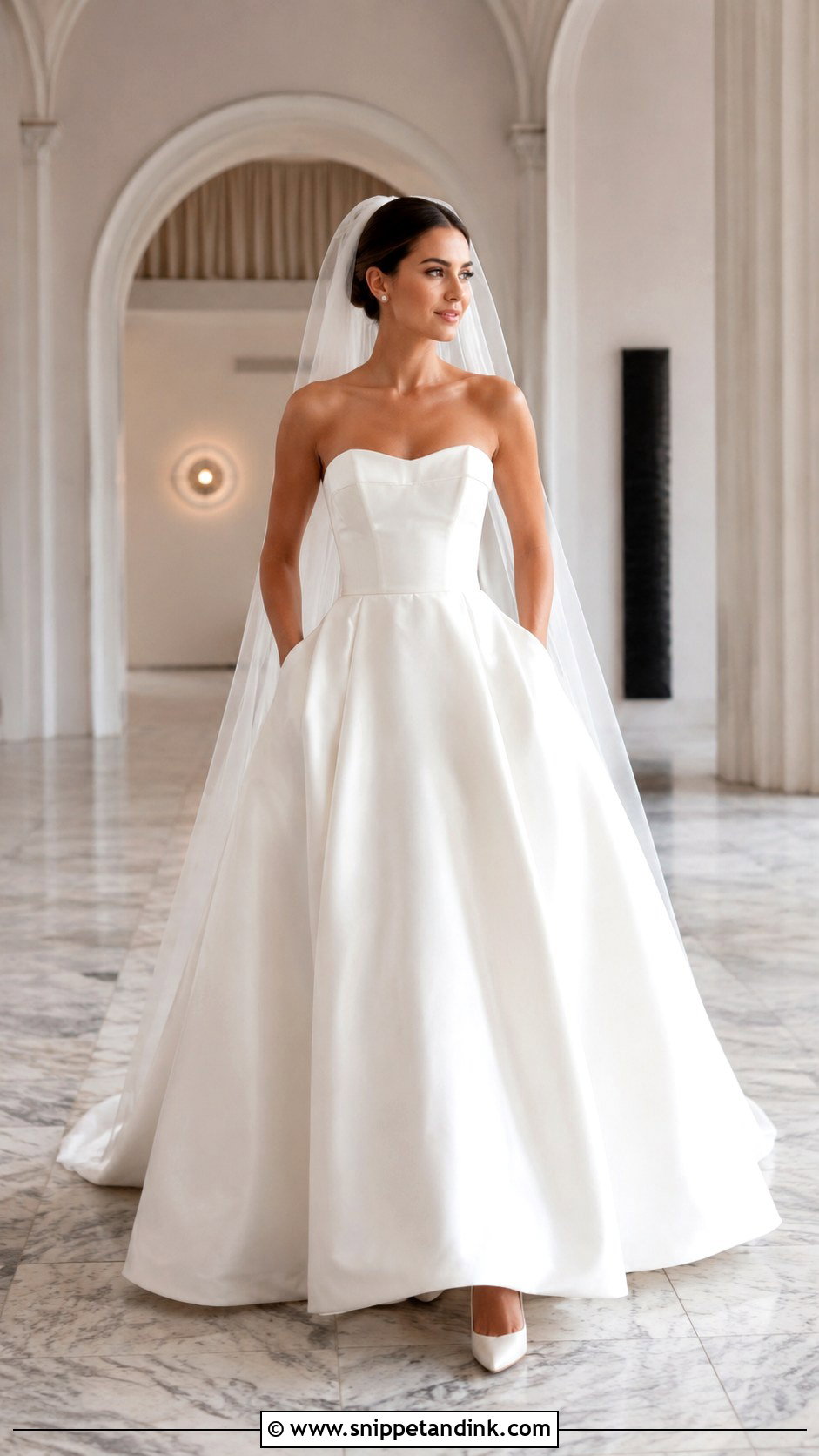
A satin ball gown is about the entrance. Heavyweight satin holds the full skirt without needing a crinoline the size of a tent, and the fitted bodice gives you a defined waist. A strapless scoop looks current; wide shoulder straps help if you want support without wiring. Because the skirt does the talking, I keep the rest quiet: crystal studs, a sleek bun, a chapel-length veil. Choose block heels or closed pumps you can actually feel the floor in, since you won’t see your feet under that hem. Hidden pockets are worth asking for. Ask about the bustle before alterations begin, too. A long satin train needs several anchor points, and a single hook will drag the skirt sideways by the second hour of dancing.
3. Lace Mermaid Wedding Dress
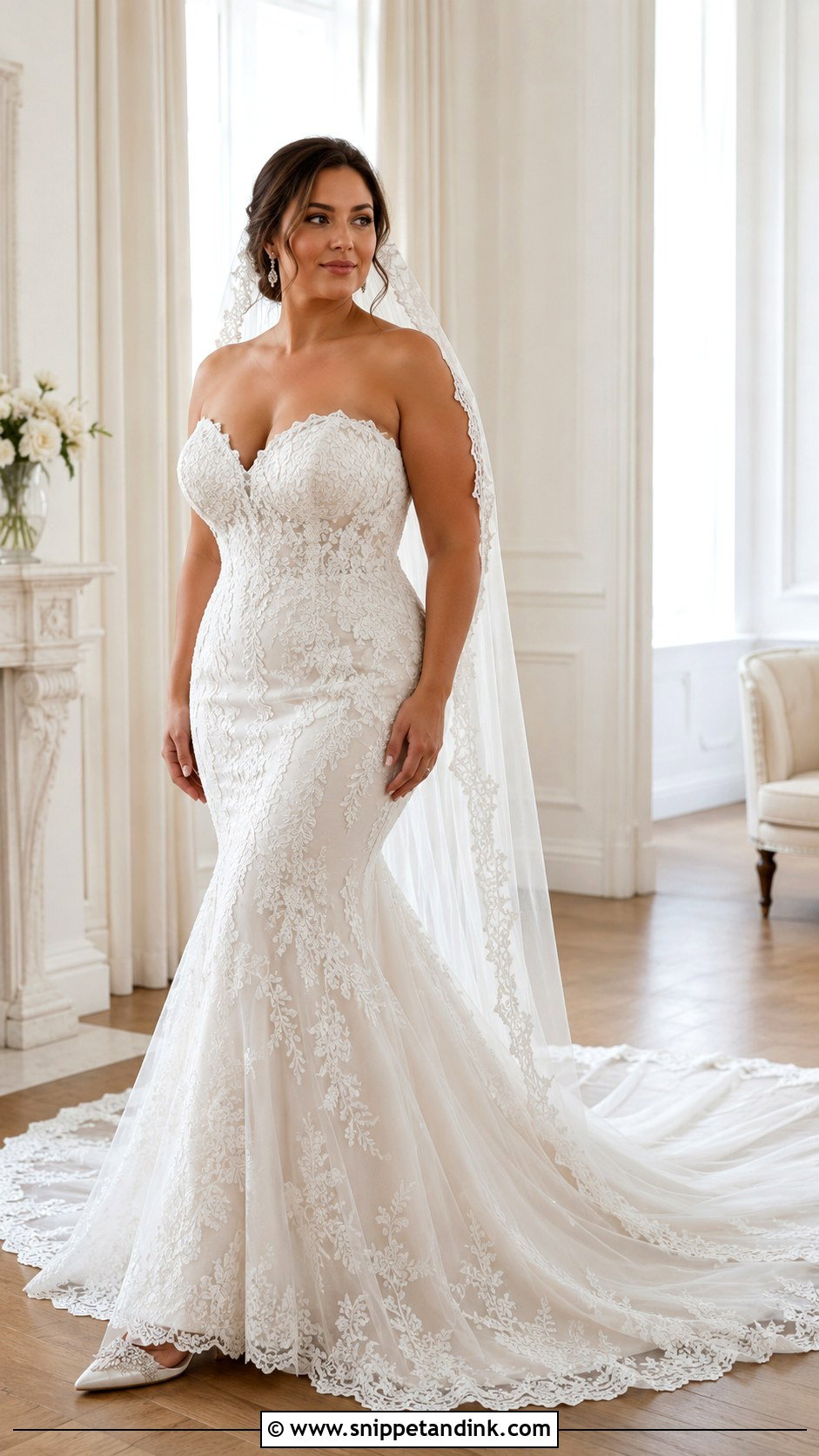
Mermaid gowns are the dress I make brides walk in most. The skirt follows the body to the knee before it flares, which looks romantic standing still and can feel like a hobble on stairs. Look for firm lining, supportive boning and lace motifs placed to shape you rather than add bulk at the hip. Sweetheart and off-the-shoulder necklines both follow the curve, and a tulle flare adds movement. A lace-edged veil, delicate earrings and pointed heels you can manage are enough; I usually skip the necklace. At every fitting, sit, walk and climb a step. If any of that is a struggle, ask for the flare to start a few inches higher. It still reads as a mermaid, and you can get into a car.
4. Square Neck Column Wedding Dress
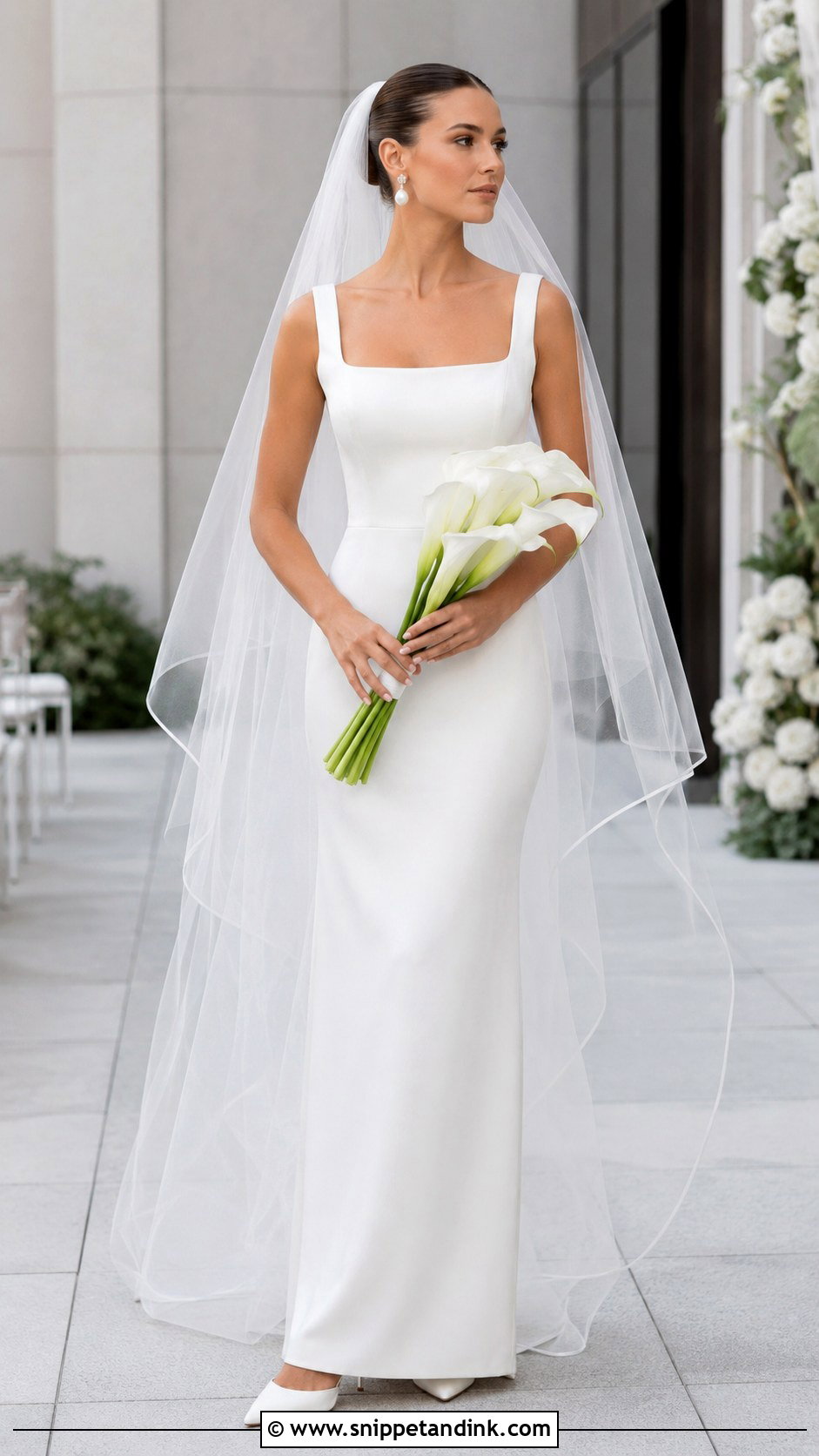
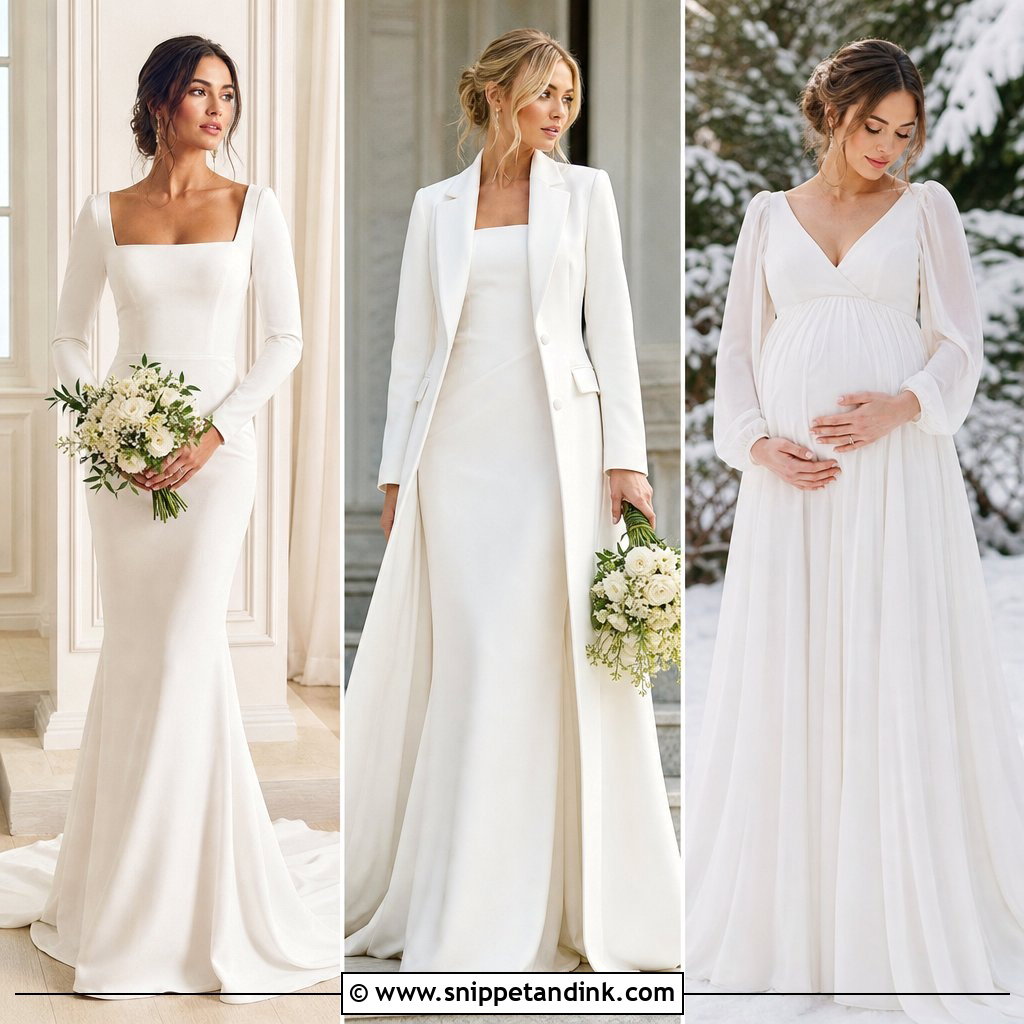
A square neck column is the plainest dress here and the least forgiving. The straight neckline frames the collarbone and the skirt falls without a flare, so there is nothing to hide a seam that pulls. Silk crepe moves fluidly; structured satin gives sharper edges. Wide straps cover a bra and balance broad shoulders. I’d style it with sculptural pearl earrings, a low bun, pointed slingbacks and a narrow bouquet of calla lilies, then pick the veil length by mood: cathedral for drama, short for a minimal look. Budget for careful tailoring at the bust, waist and hips. On crepe, one tight seam shows as a diagonal drag line in every photo.
5. Basque Waist Wedding Dress
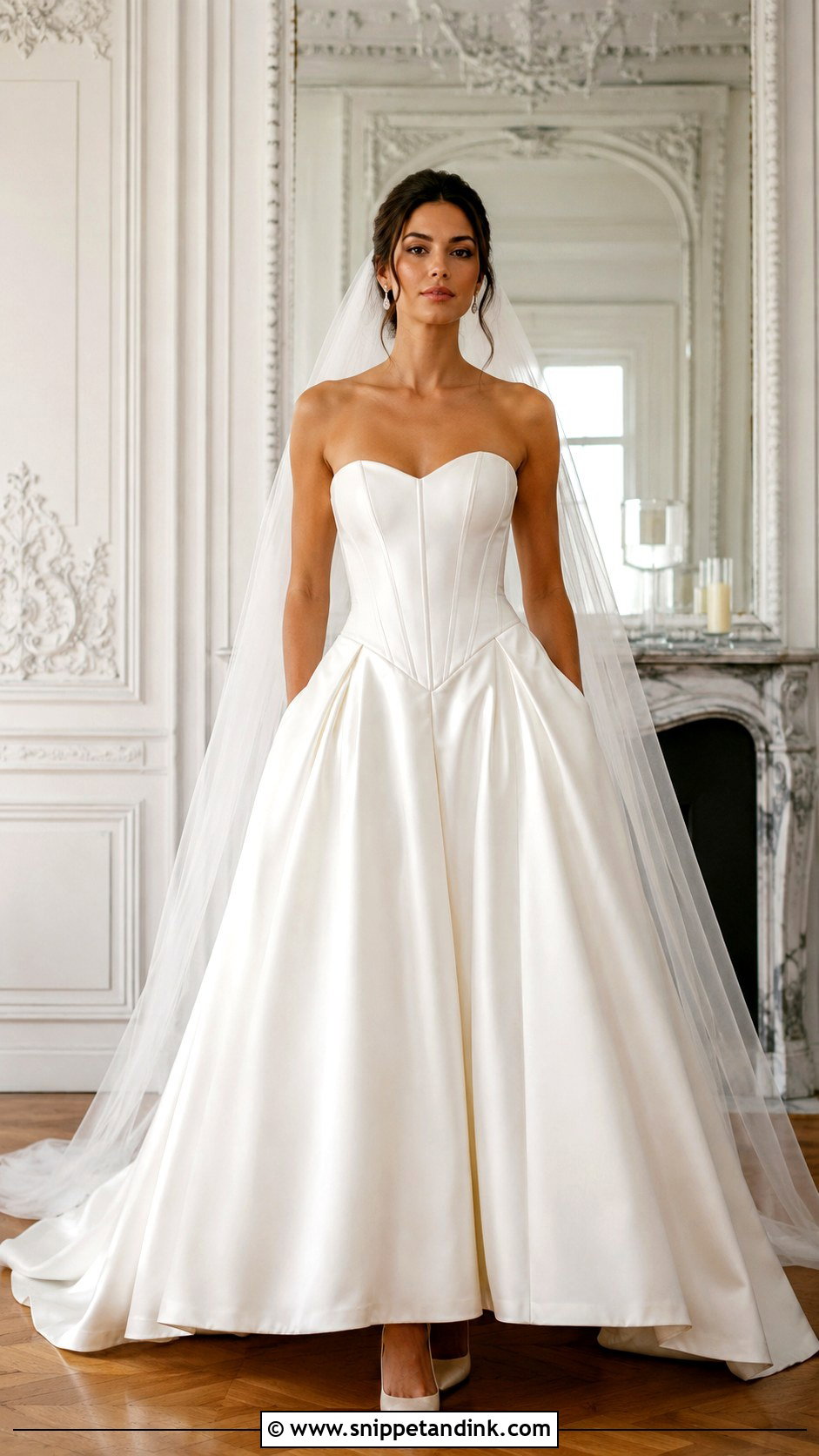
A Basque waist dips into a point below your natural waist, which lengthens the torso and gives a very defined line. Pair it with a full satin or tulle skirt for a regal effect, or a softer A-line if you don’t want the volume. Exposed corset seams show off the structure; covered boning looks smoother and more traditional. Drop earrings, a long plain veil and almond-toe heels finish it, and I’d leave out an ornate necklace when the bodice is already busy. The one thing I watch at every fitting is the point itself. Sit down. If the tip digs into your lap or pushes forward, the bodice is too long for your torso and needs shortening, not just taking in.
6. Off-the-Shoulder Corset Wedding Dress
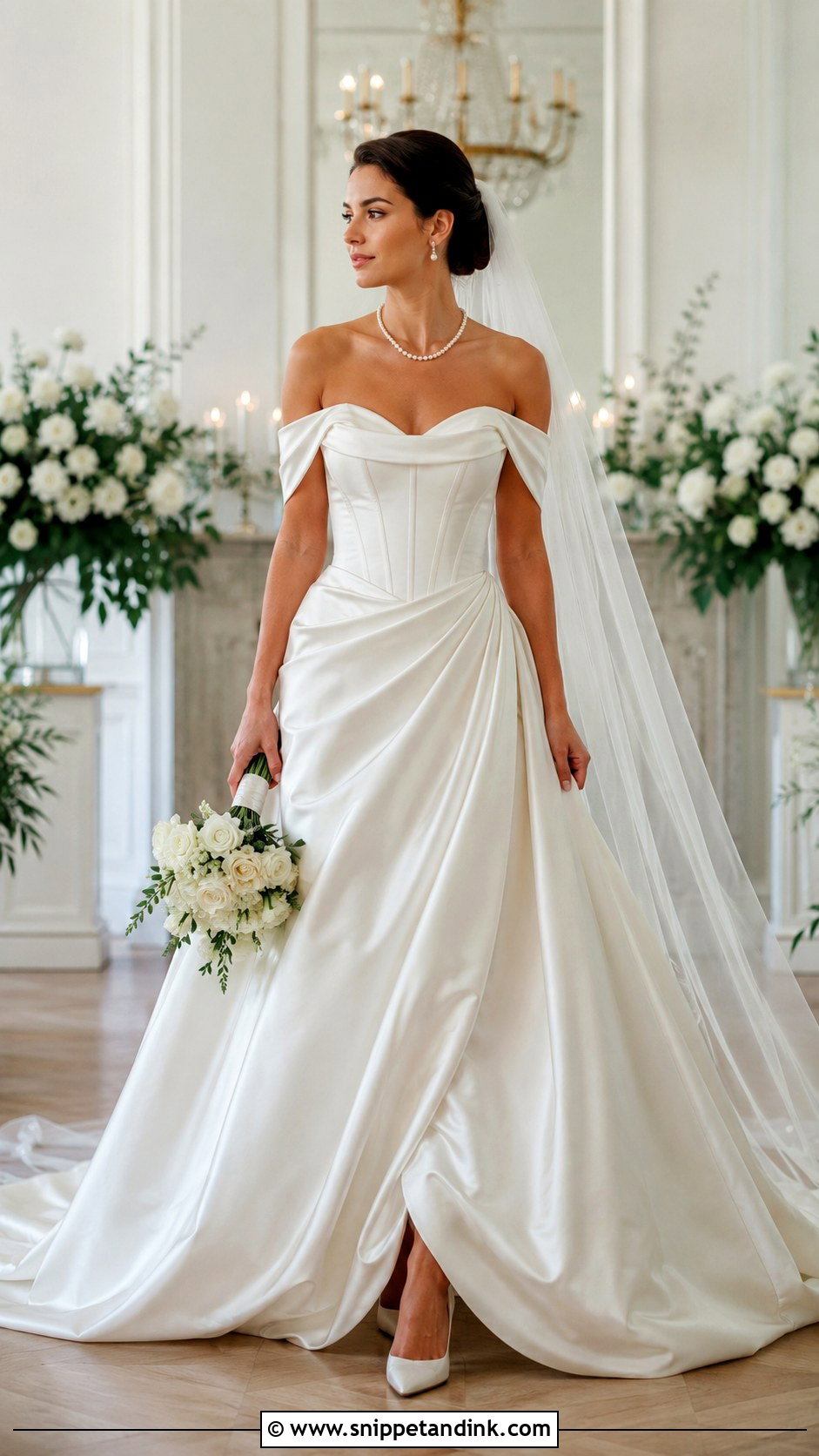
An off-the-shoulder corset has to stay up on its own, and that comes from the inside. Look for real boning, built-in cups and sleeves or bands that sit on the upper arm without cutting in. A gathered skirt softens the fitted top; satin gives a more architectural line. Style the open neckline with a short pearl strand, small drops and hair swept back, and attach a sheer veil beneath the style. At fittings I ask brides to raise both arms, hug me and sit. If the bands slide or you find yourself hitching the bodice up, it isn’t fitted yet. For a cold season, a tailored cape or removable long sleeves give cover for outdoor photos.
7. Long Sleeve Lace Wedding Dress
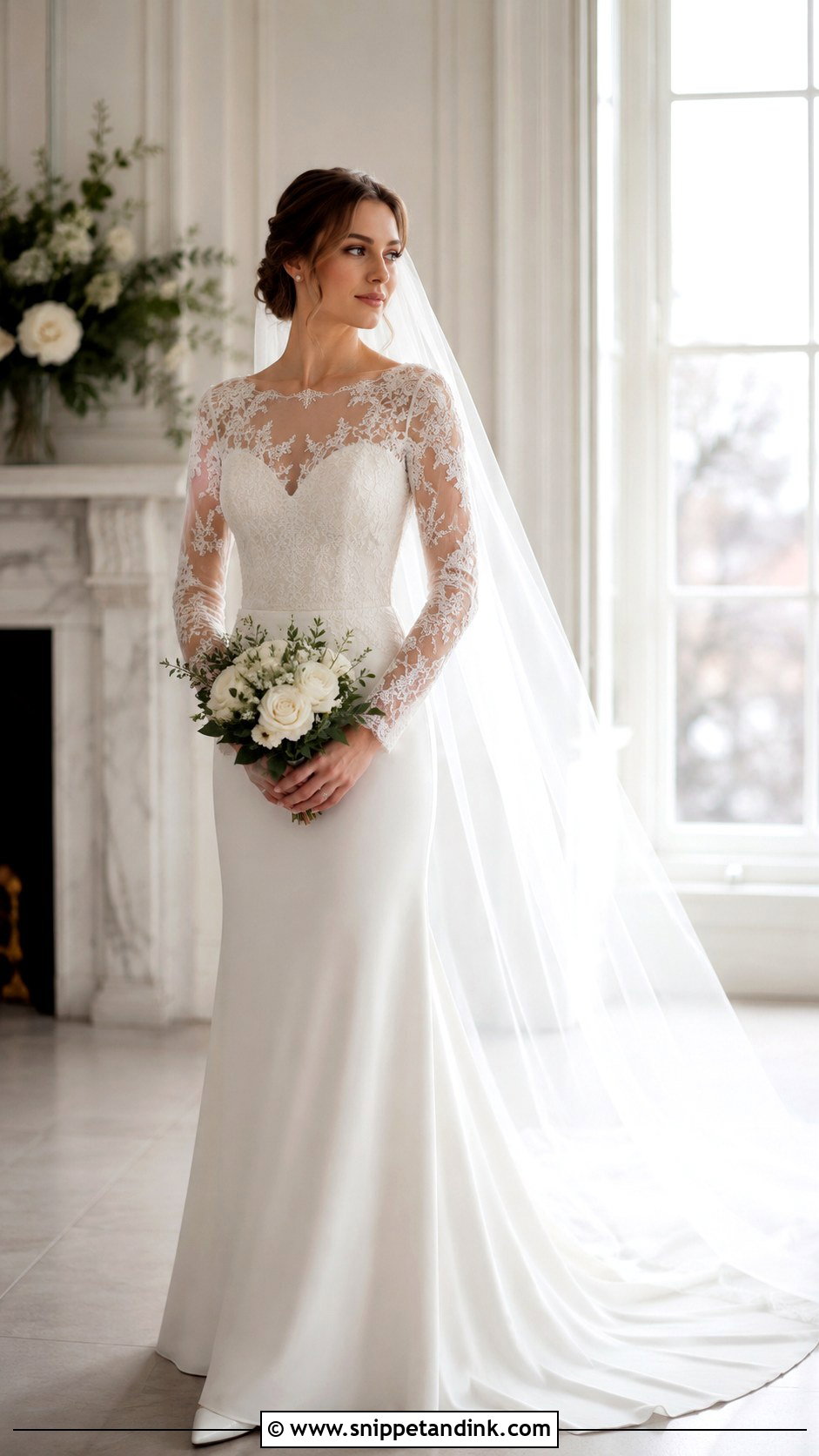
Lace sleeves suit autumn and winter ceremonies, but comfort lives in the details you can’t see in a photo. Choose lace with some stretch, flat underarm seams and enough room at the elbow to bend your arm to eat. An illusion neckline gives cover; a V-neck or open back keeps it light. The lace can stop at the bodice above a crepe A-line skirt or run through the whole gown. Pearl studs, low satin pumps and a plain tulle veil let the pattern lead, and a loose chignon shows the neck and back. Ask your seamstress to fit each sleeve separately. Most of us have one arm slightly longer, and a cuff that hits the wrist bone on one side and the thumb on the other is obvious when you hold the bouquet.
8. Minimal Silk Slip Wedding Dress
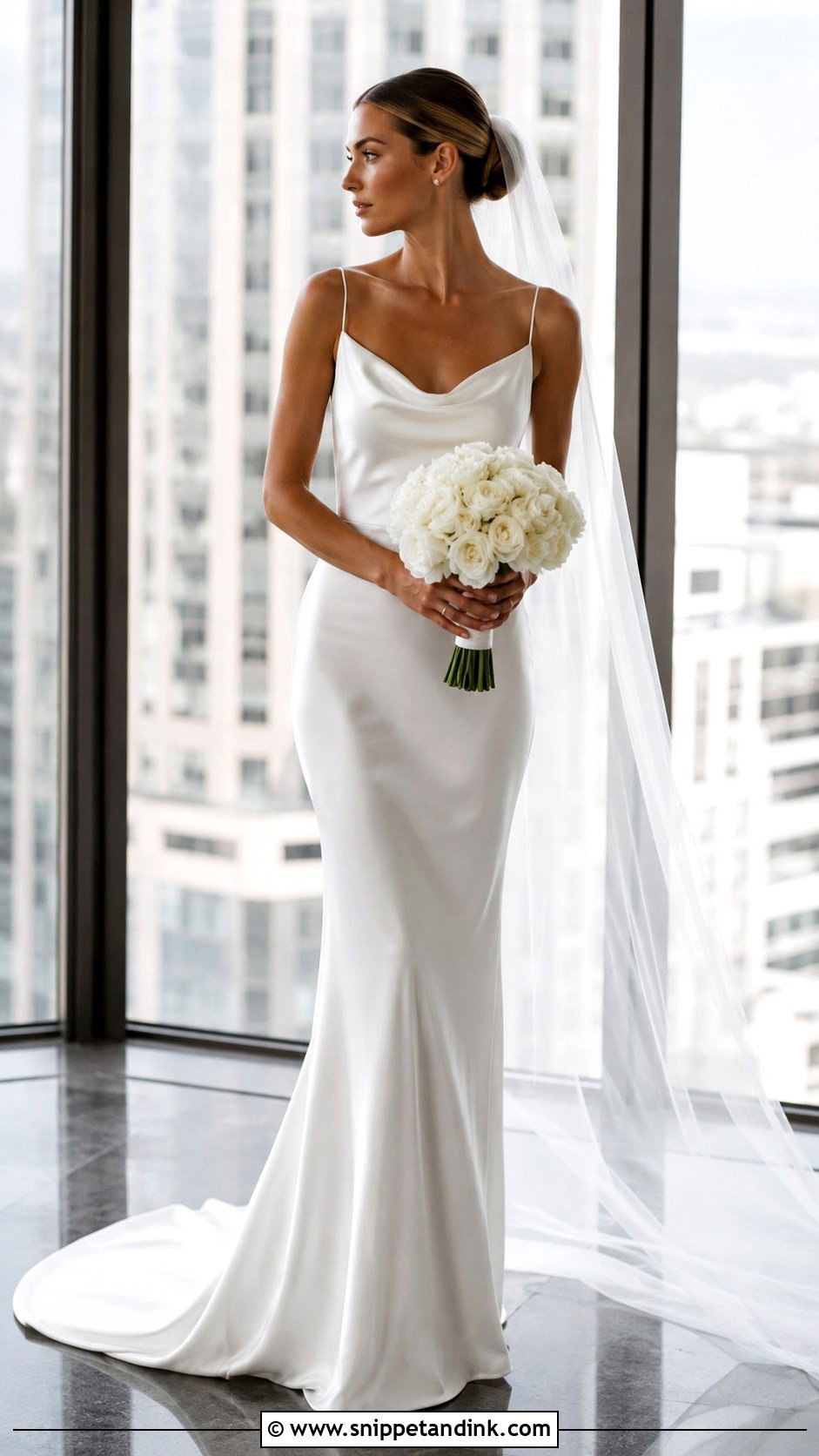
Silk slips look simple and are the hardest dresses to wear well. A bias-cut design should skim rather than cling, with adjustable straps or a draped cowl. Charmeuse has the most glow; crepe-backed satin is heavier and more forgiving over the hips. Sleek slingbacks, small studs, a narrow cathedral veil, a neat bun and a simple bouquet suit it. Wear smooth, laser-cut underwear to every fitting, because bias silk shows every line and ridge. Have it steamed professionally on the day, never ironed, since a hot iron can leave a permanent shine on silk. If you need more support, ask about sewn-in cups. It suits a city ceremony, an intimate dinner or a warm evening.
9. 3D Floral Tulle Wedding Dress
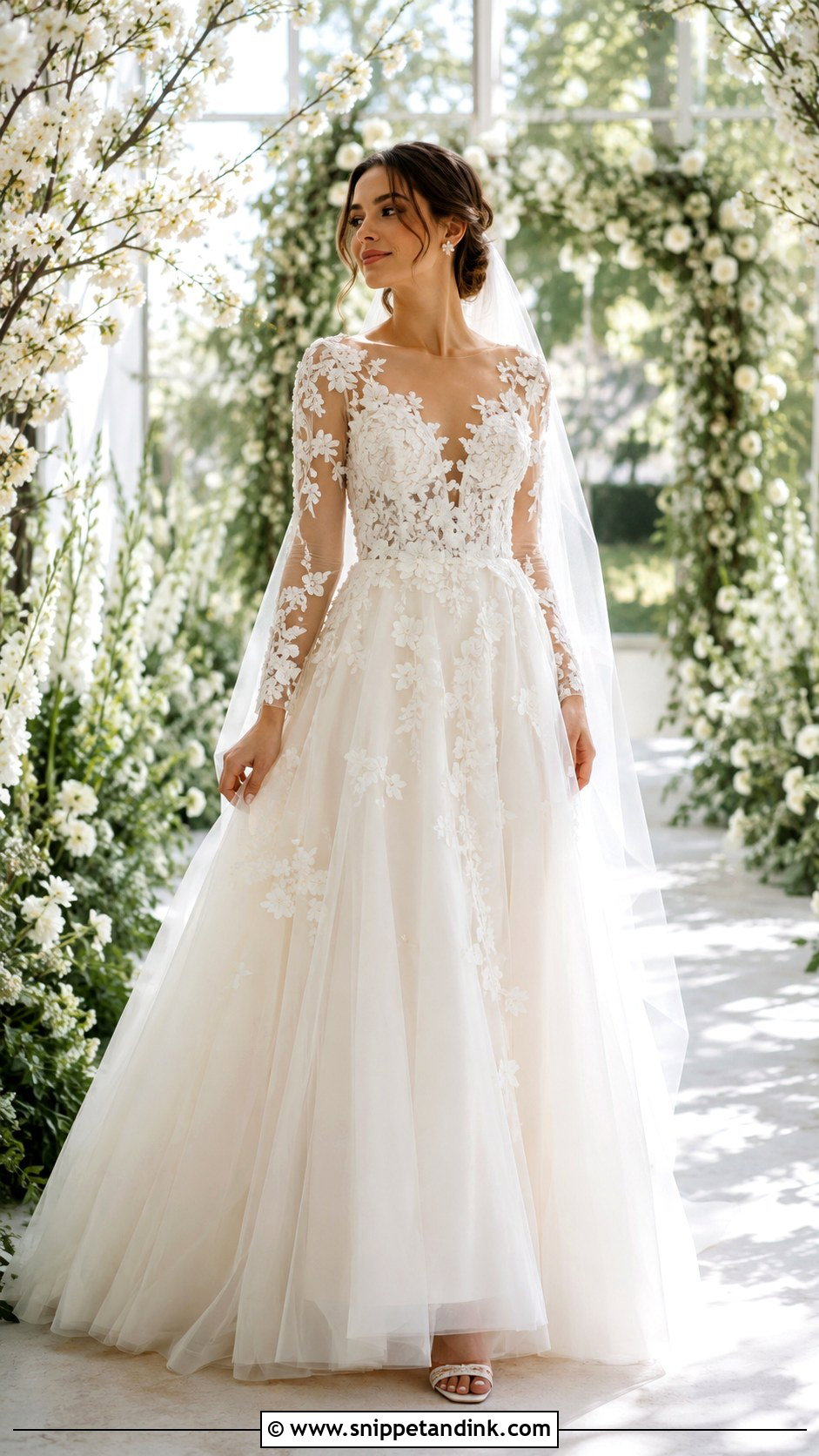
Three-dimensional flowers are what make this dress, and their placement decides whether it looks like a garden or a costume. I like appliqués clustered on the bodice and thinning out down the skirt, or scattered over sheer sleeves. An A-line gives the petals room to move; a fitted shape is bolder. Keep the veil plain so the raised work stays visible, and choose simple ivory sandals and tiny earrings. Hold the bouquet slightly smaller than the skirt and loosely arranged. Before you buy, run your hand over every flower near the arms and waist. Petals that are only tacked at the centre catch on lace sleeves and bouquet wire and can come away during the hugs.


10. High Neck Lace Wedding Dress
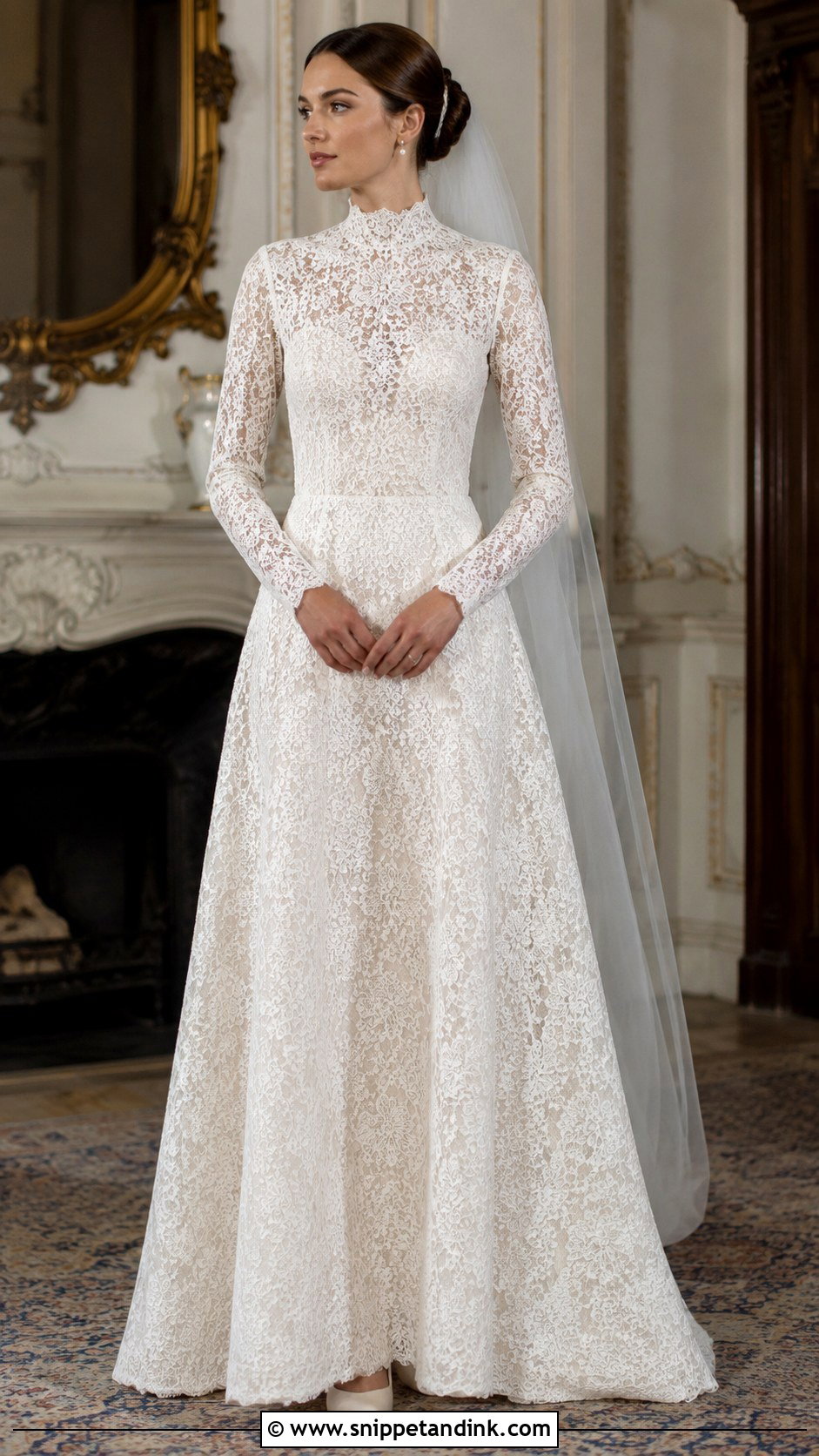
A high lace neck reads vintage, and the lace needs to be fine or it feels like a collar on a winter coat. A fitted bodice into a soft A-line is the classic version; a slim column skirt modernises it. Long sleeves add formality, and a sleeveless high neck works in warm weather. Pearl buttons, studs, a polished low bun and pointed closed shoes are all it needs. Skip the necklace and let the lace frame the face. Attach the veil beneath the bun so nothing crowds the neckline. Turn your head side to side in the fitting room. If the collar scratches or presses on your throat now, it will feel twice as tight by the speeches.
11. Halter Neck Wedding Dress
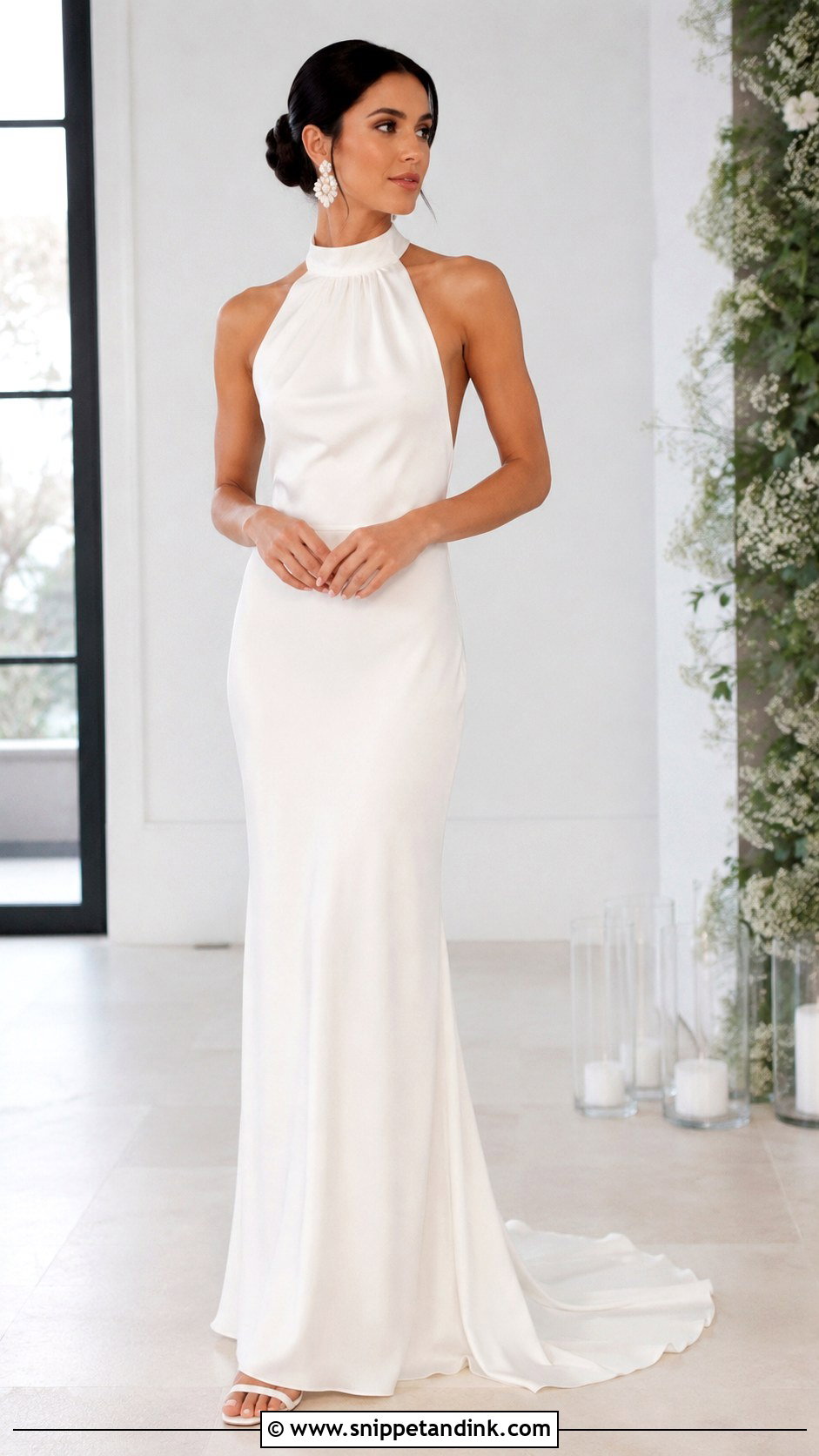
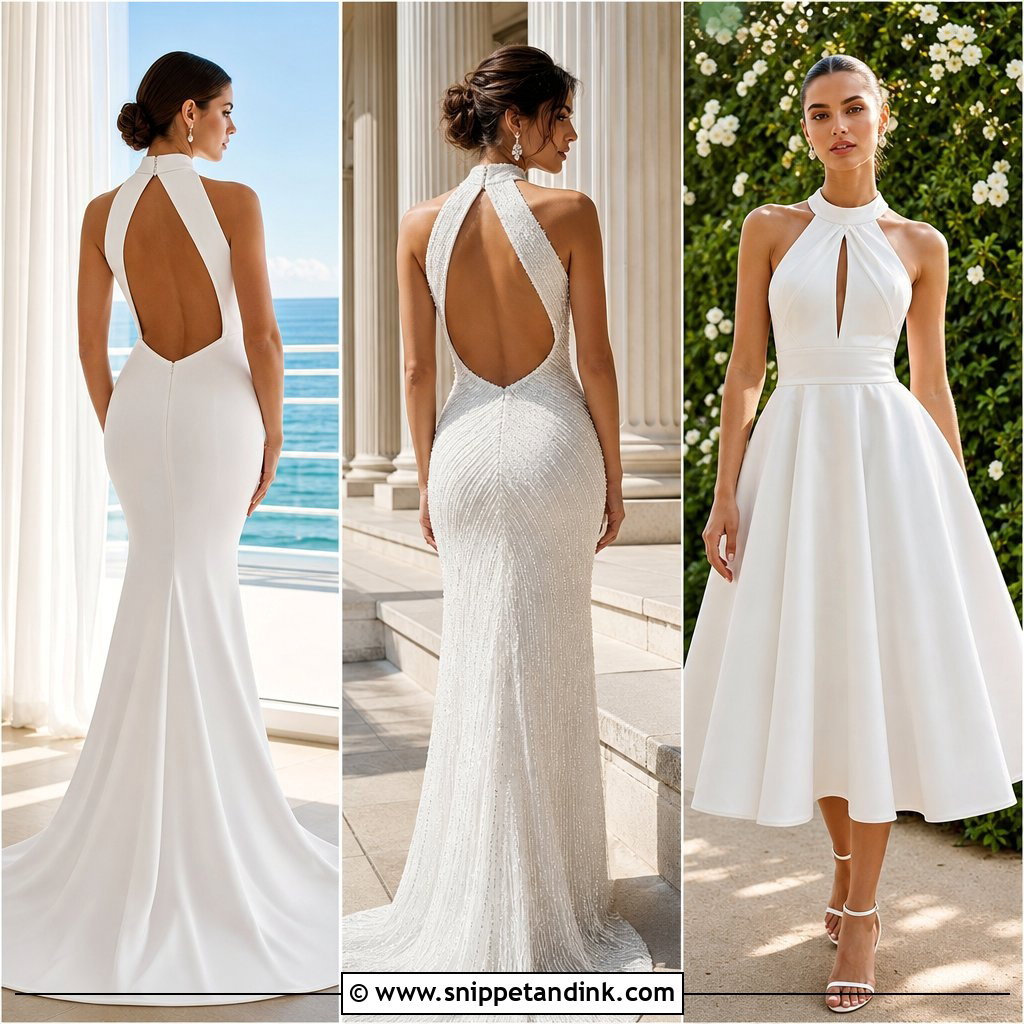
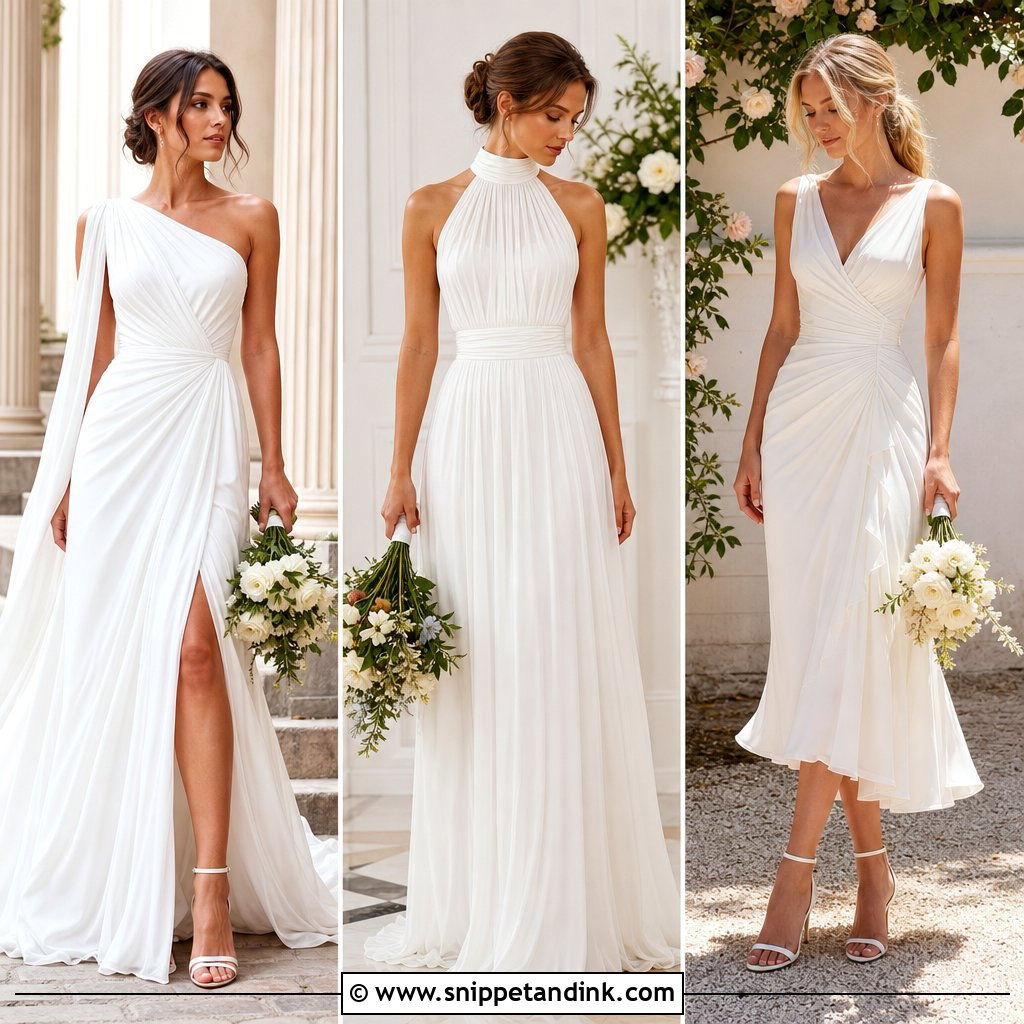
Halter necks pull the eye up to the shoulders and face. The neckline can be draped, sharply tailored or gathered into a narrow band. A column skirt suits a city ceremony; a flowing A-line suits an outdoor one. An open back balances the covered front. I’d go for statement earrings, a smooth updo and sleek white sandals or pumps, and skip the necklace entirely. The thing to check is weight. If the bust support lives only in the strap around your neck, you’ll have a headache by the evening. Ask for support built into the bodice so the halter is just holding position.
12. One-Shoulder Draped Wedding Dress
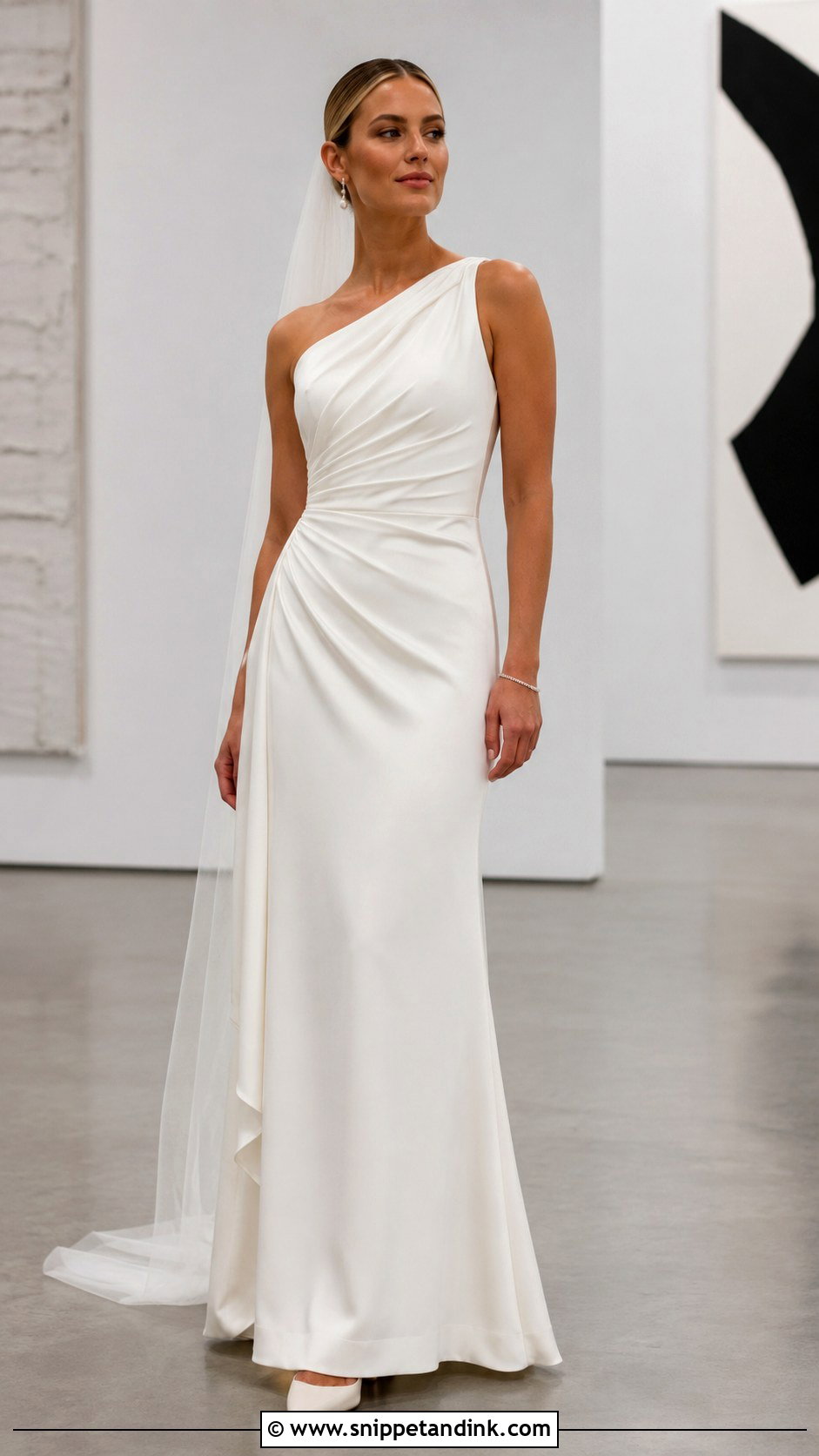
A one-shoulder drape feels fresh because it’s asymmetric. Soft crepe, satin or chiffon all fold well across the bodice and waist. A column skirt looks statuesque; an A-line gives more room to move. Keep the accessories light and balanced: a slim bracelet, small earrings, a smooth clutch later on. Set a low side bun on the bare side so the strap stays visible, and attach a simple veil at the back of the head. At fittings, lift your arm on the strapped side and make sure the drape doesn’t creep or pucker. Well-placed gathering at the waist also softens the middle in photos.
13. Tea-Length Wedding Dress
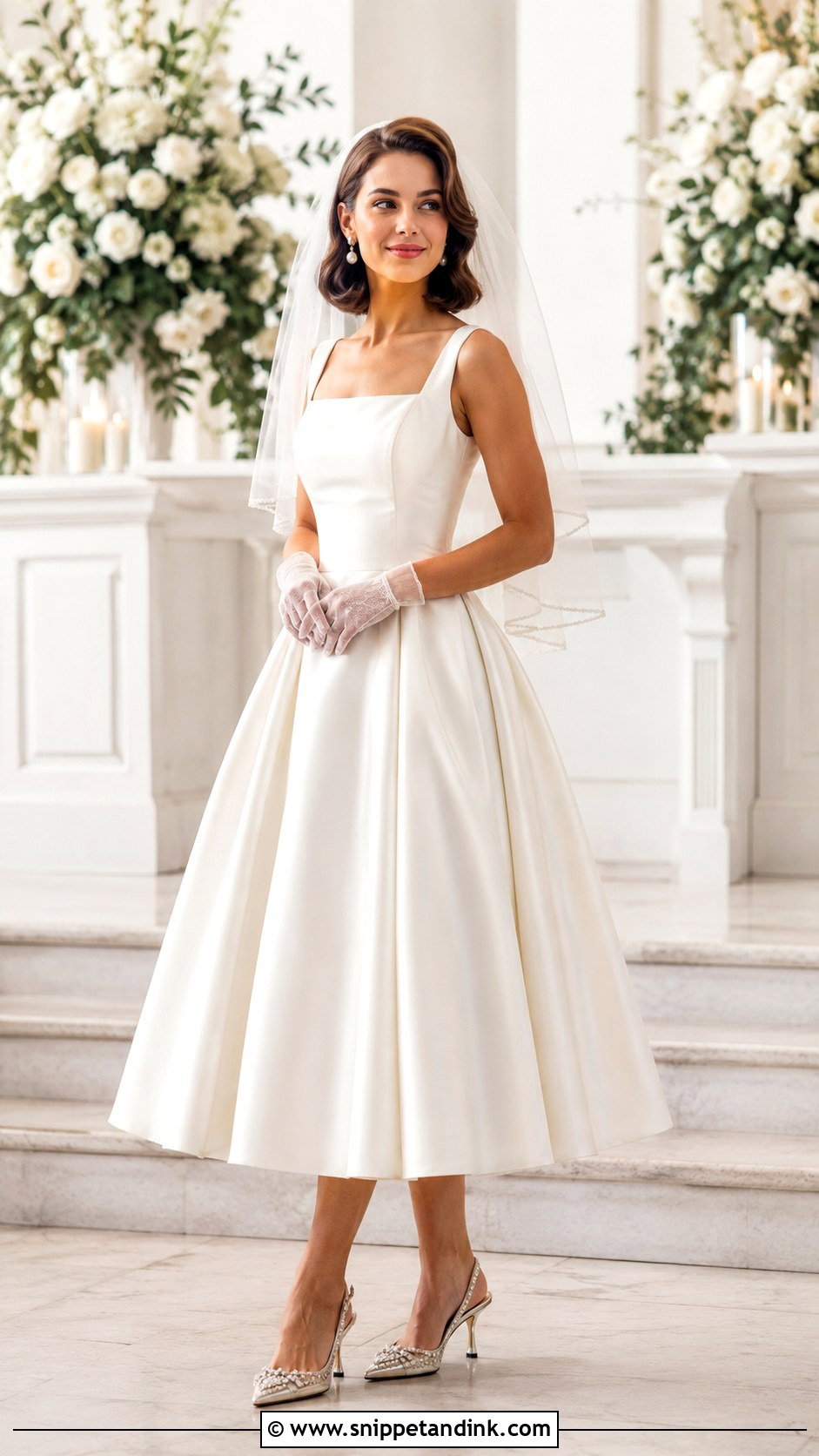
Tea length falls between the knee and ankle, so your shoes become part of the dress. A fitted bodice with a full satin or tulle skirt gives a retro shape; clean crepe looks modern. Pointed pumps, embellished slingbacks or polished block heels all work if you can stand in them for hours. Pearl earrings, short gloves and a birdcage or shoulder-length veil make it bridal without tipping into fancy dress. Length is the whole thing here. Bring the exact wedding shoes to the hemming fitting. Even a half-inch heel difference changes where the skirt hits your calf, and that’s the line everyone sees.
14. Bridal Mini Wedding Dress
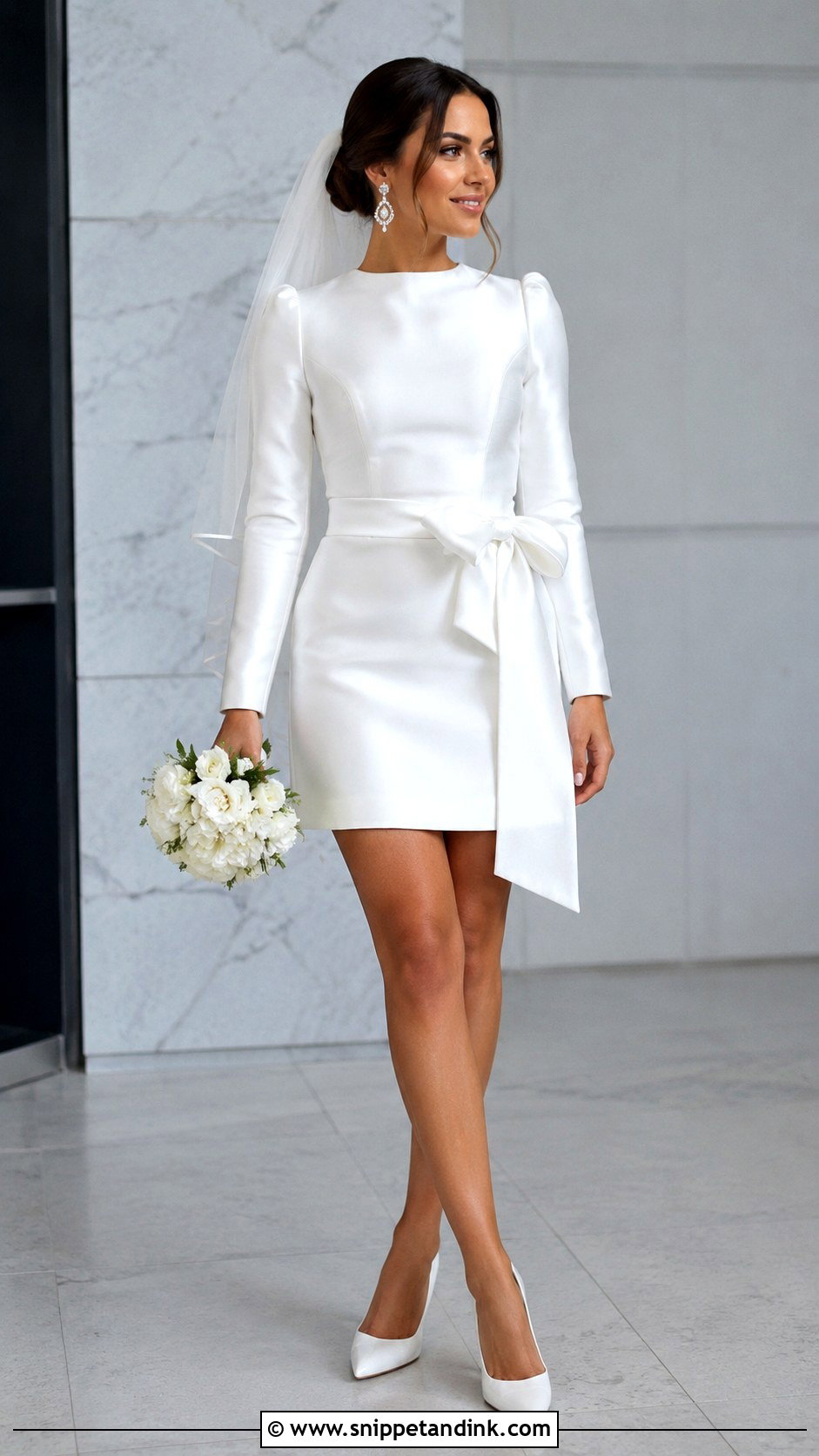
A mini works for a courthouse wedding, a casual party or an evening change. Structured satin makes a short dress look intentional; fringe, bows, lace or floral appliqués add movement. If the hem feels exposed, balance it with a higher neckline, long sleeves or a tailored jacket. Pointed pumps, block-heel sandals or smart flats all suit. Statement earrings and a short veil keep it clearly bridal. Sit and dance in it before you buy, because a mini that rides up becomes the thing you fidget with all night. Built-in shorts or a slippery lining help. A well-cut one also gets worn again, which is rarely true of a ball gown.


15. Wedding Dress With Detachable Overskirt
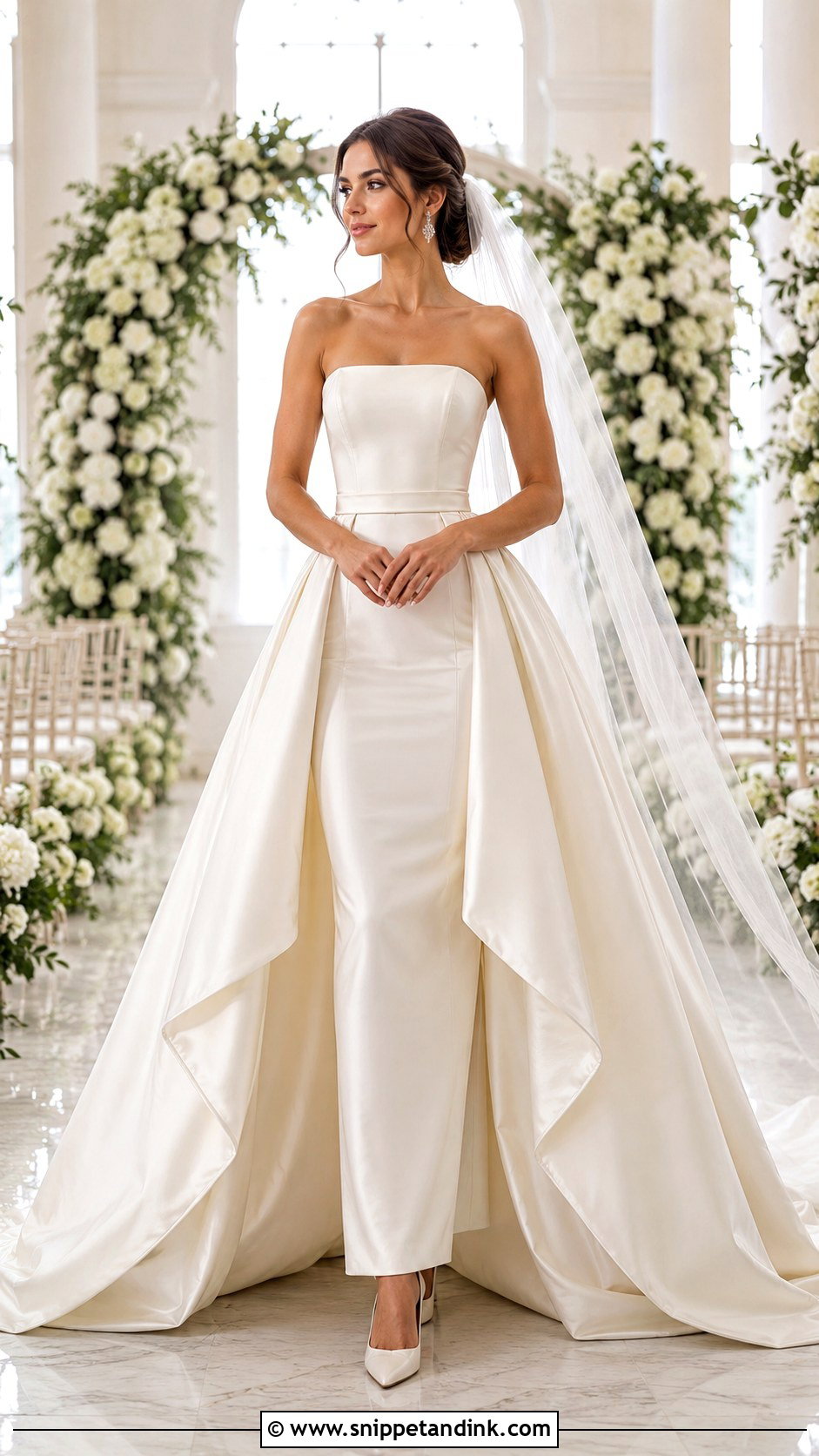
A detachable overskirt gives you two looks without a second dress. Start from a fitted column, sheath or mermaid base, add a full satin or tulle overskirt for the ceremony, then unhook it before dancing. The join should sit flat at the waist and hide under a belt, bow or placed seam. A long veil and classic pumps suit the ceremony version; statement earrings or a shorter veil mark the change. Practise taking it off at least twice before the wedding, with the person who’ll help you. Bring them to a fitting. Then check the base dress from every side with the skirt removed, because some bases have unfinished hooks or a raw-looking waistband.
16. Cape Sleeve Wedding Dress
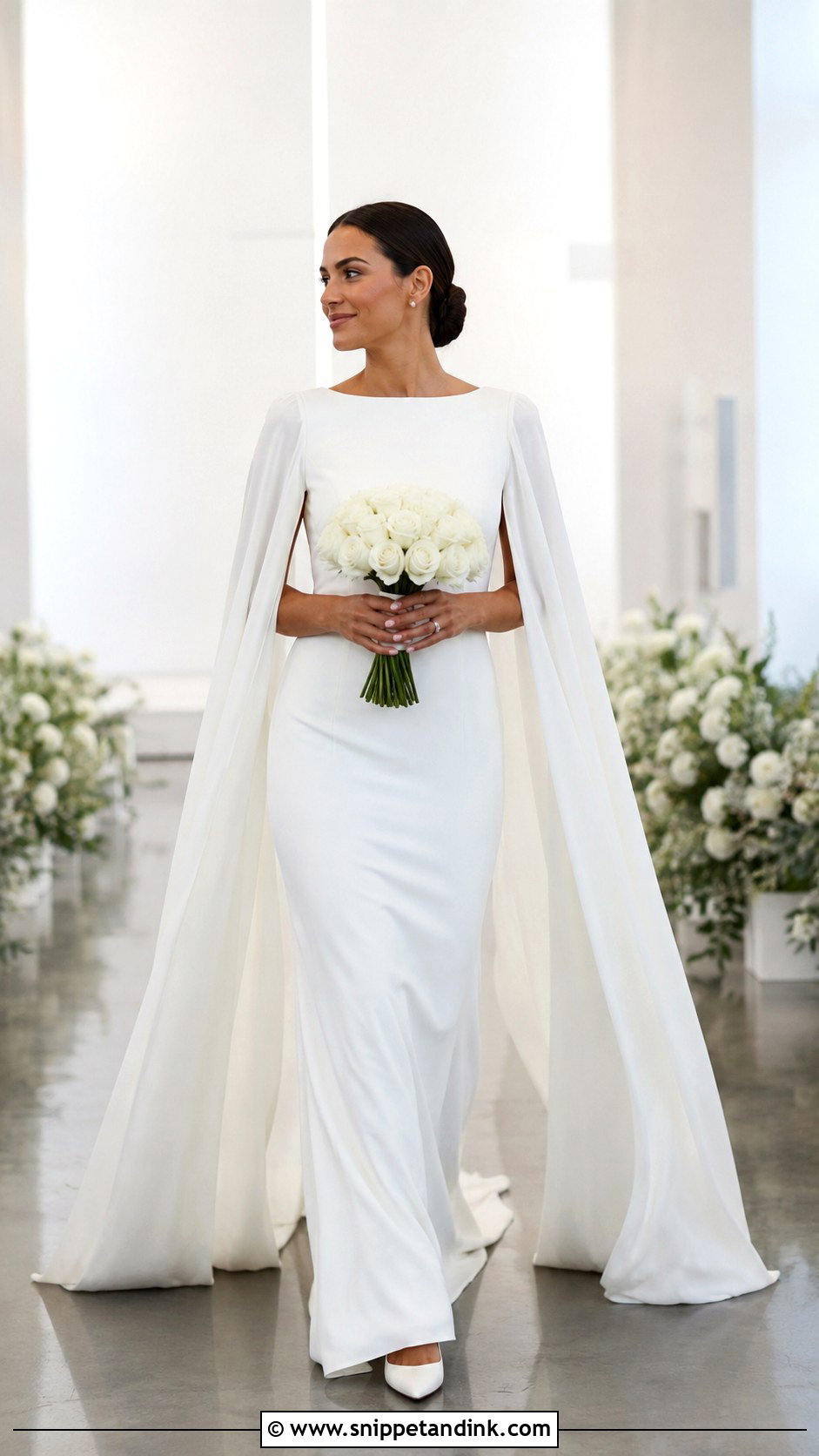
Cape sleeves add movement and cover in one piece. Choose a clean crepe column with panels fixed at the shoulders, or a chiffon A-line with softer, more transparent layers. A long cape can stand in for a veil, especially if it trails. Sleek heels, small earrings and a low bun keep the shoulders clear, and I’d avoid a large necklace or a busy bouquet. Think about the venue before choosing length. Floor-length panels look grand in a big room but turn into sails outside; elbow length is easier in the open air. Walk briskly in it at the fitting and see where the fabric ends up.
17. Bow Back Wedding Dress
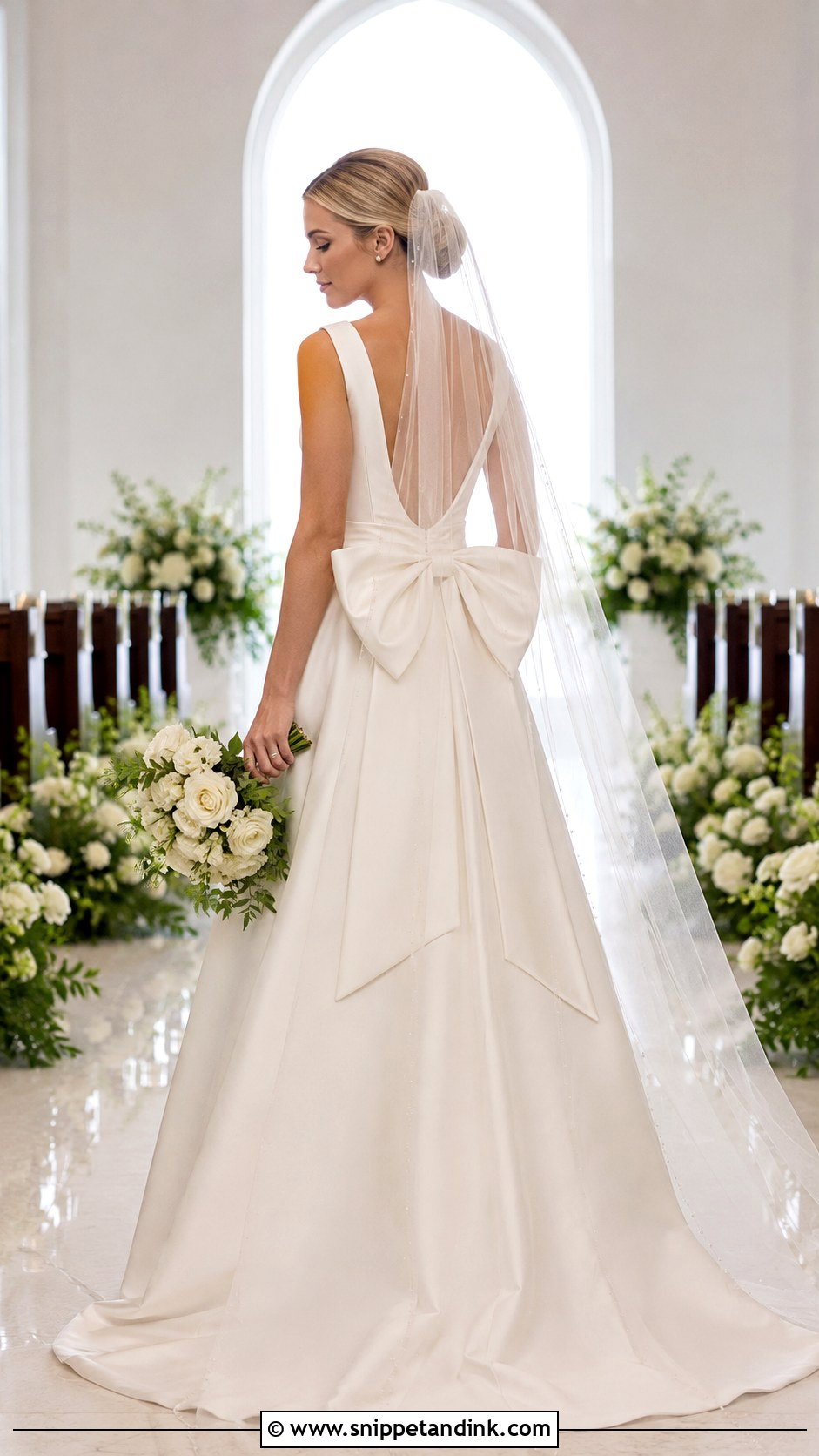
A bow at the back makes the walk away as memorable as the walk in. A clean satin column or A-line is the best background, with the bow at the waist, shoulders or upper back. A removable bow gives you a simpler reception look. A low bun, sheer cathedral veil, pearl studs and closed pumps suit it. Place the veil comb so the tulle falls over the bow without flattening it. Scale matters: a full skirt carries an oversized bow, but a narrow gown needs a slimmer one. Sit down and lean back in a chair. Stiffened loops can crush and stay crushed, so ask whether they’re interfaced to spring back.
18. Pearl Beaded Wedding Dress
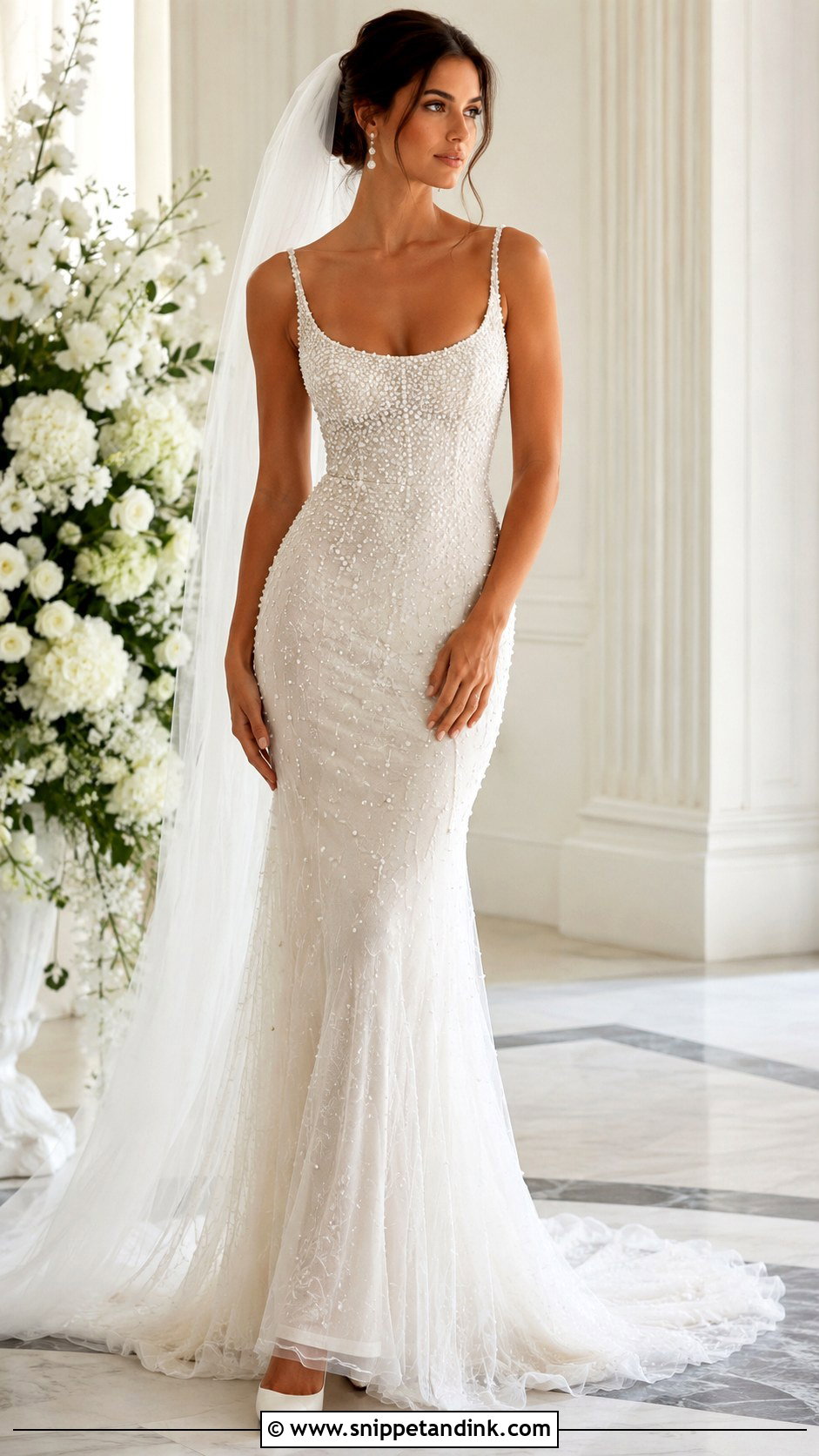
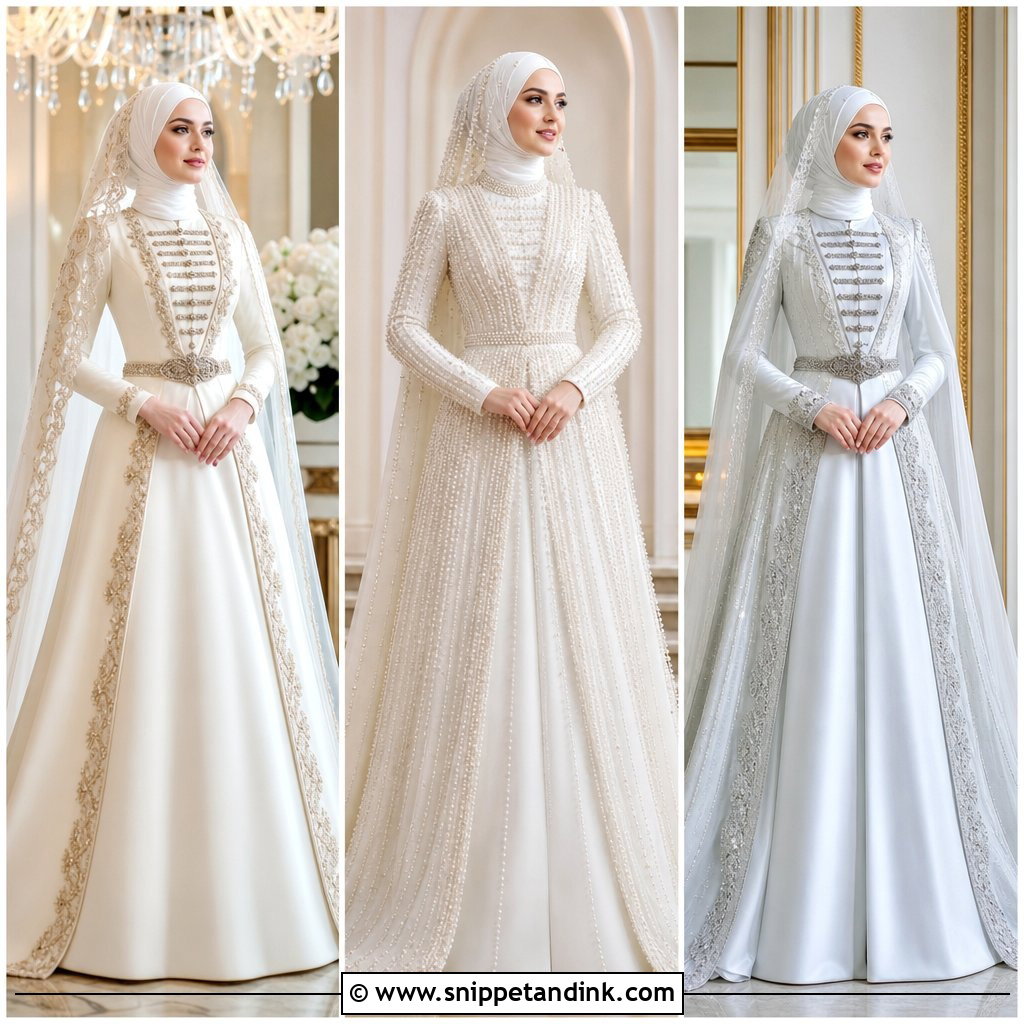
Pearl beading gives a soft glow rather than sparkle, which I find flattering in daylight. Choose scattered pearls over tulle on a fitted bodice, or a fully beaded column for more impact. A simple scoop or sweetheart neckline keeps attention on the surface. Make sure sheer areas are lined so you’re covered and supported. Plain satin heels, small pearl earrings and an unembellished veil are plenty. Ask your florist for a smooth ribbon wrap, since rough twine catches beads. Inspect the underarms and the seat for scratchy beads or loose threads. A fully beaded gown can be surprisingly heavy, so strong straps, firm tailoring and a well-anchored bustle matter more here than on any other dress.
19. Boho Chiffon Wedding Dress
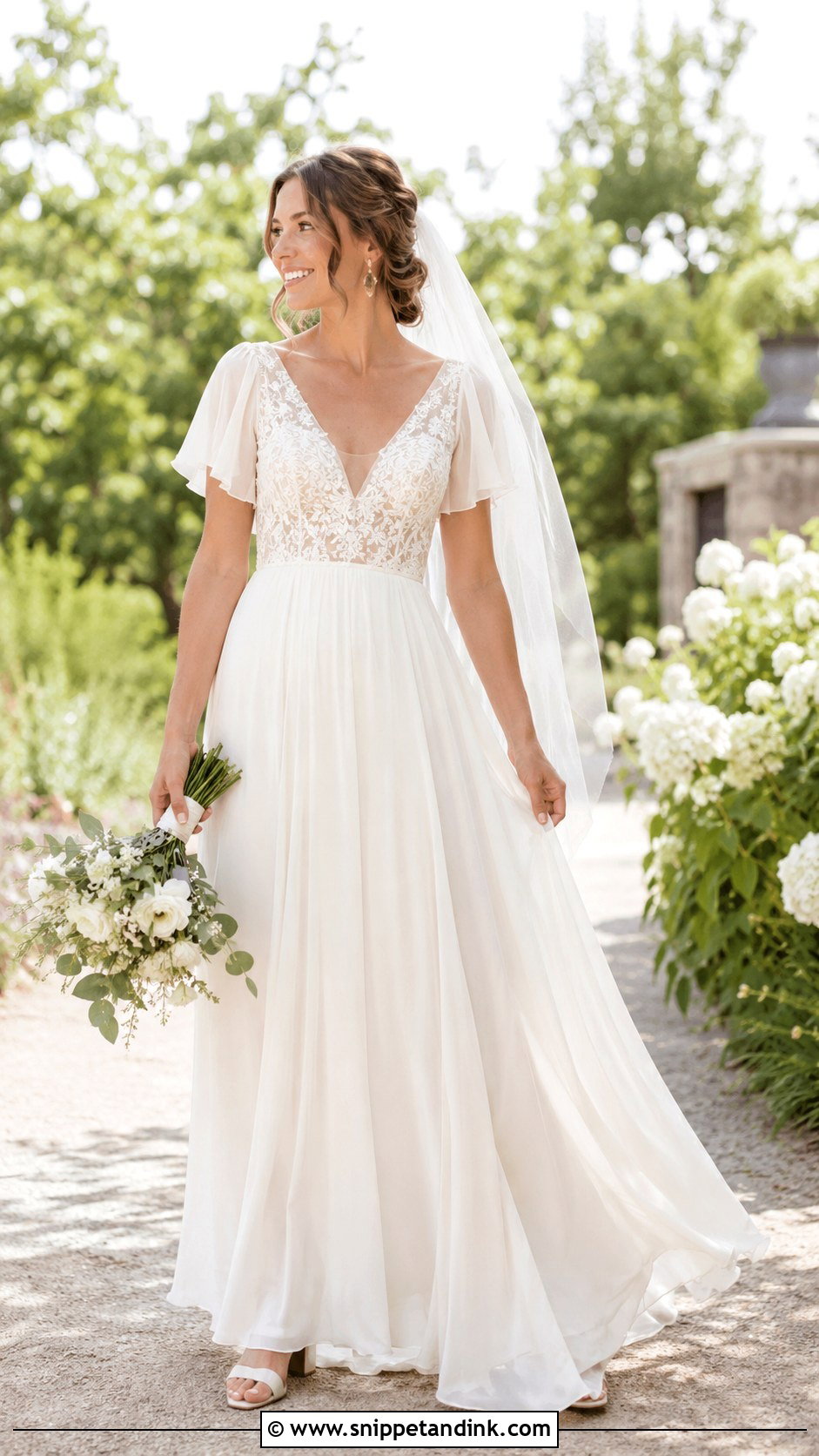
Chiffon is light and easy outside, and it reacts to every breeze. A flowing A-line with a softly fitted lace or pleated bodice is the usual shape, with flutter sleeves, a V-neck or a low back. Block-heel sandals sink less into a lawn. Delicate gold earrings, a loose bouquet and a hair vine or plain fingertip veil finish it. Ask for a secure lining so the skirt doesn’t blow translucent against your legs, and keep the train short on grass, sand or gravel. Hem it to just clear the ground in your wedding shoes. It should look relaxed but still dressed for a ceremony, not like a beach cover-up.
20. Champagne Floral Jacquard Wedding Dress
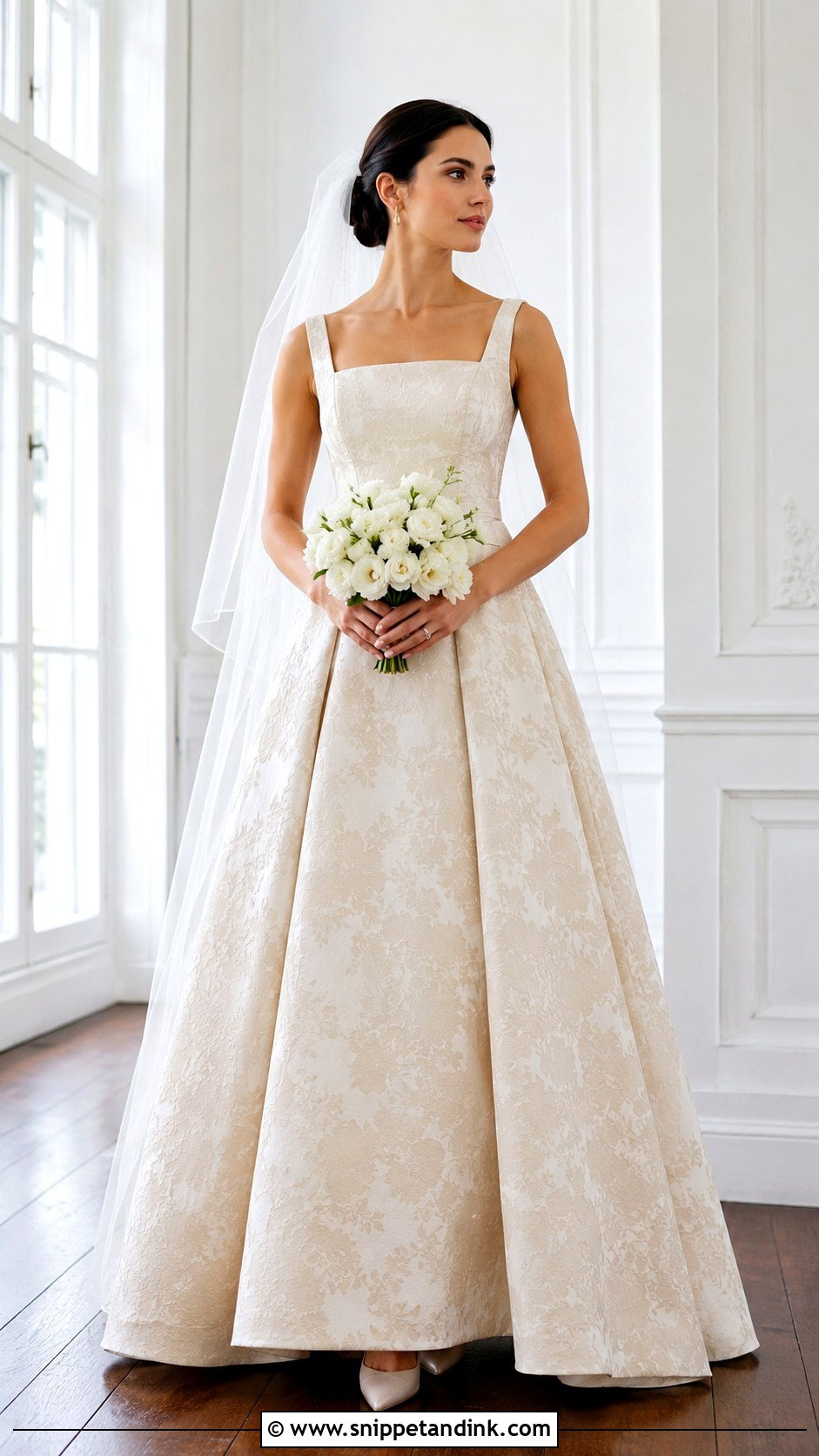
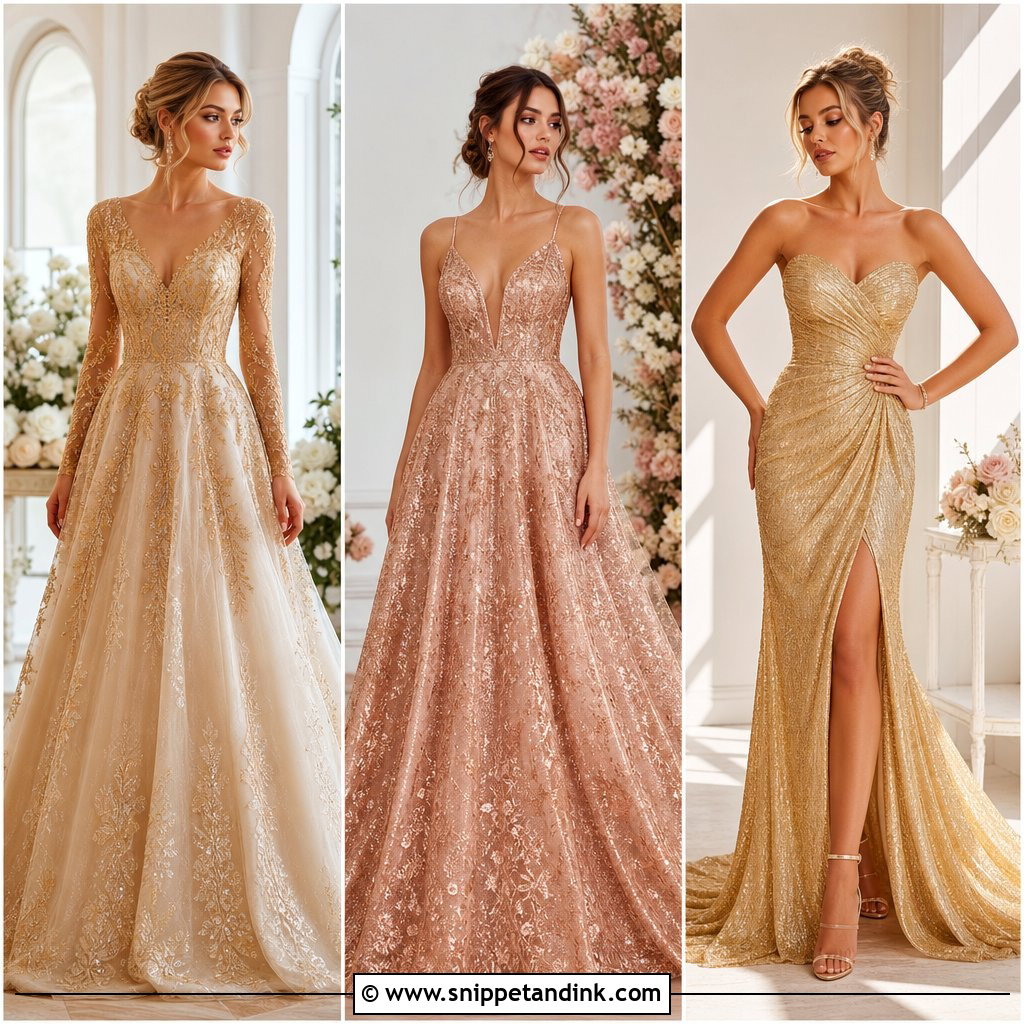
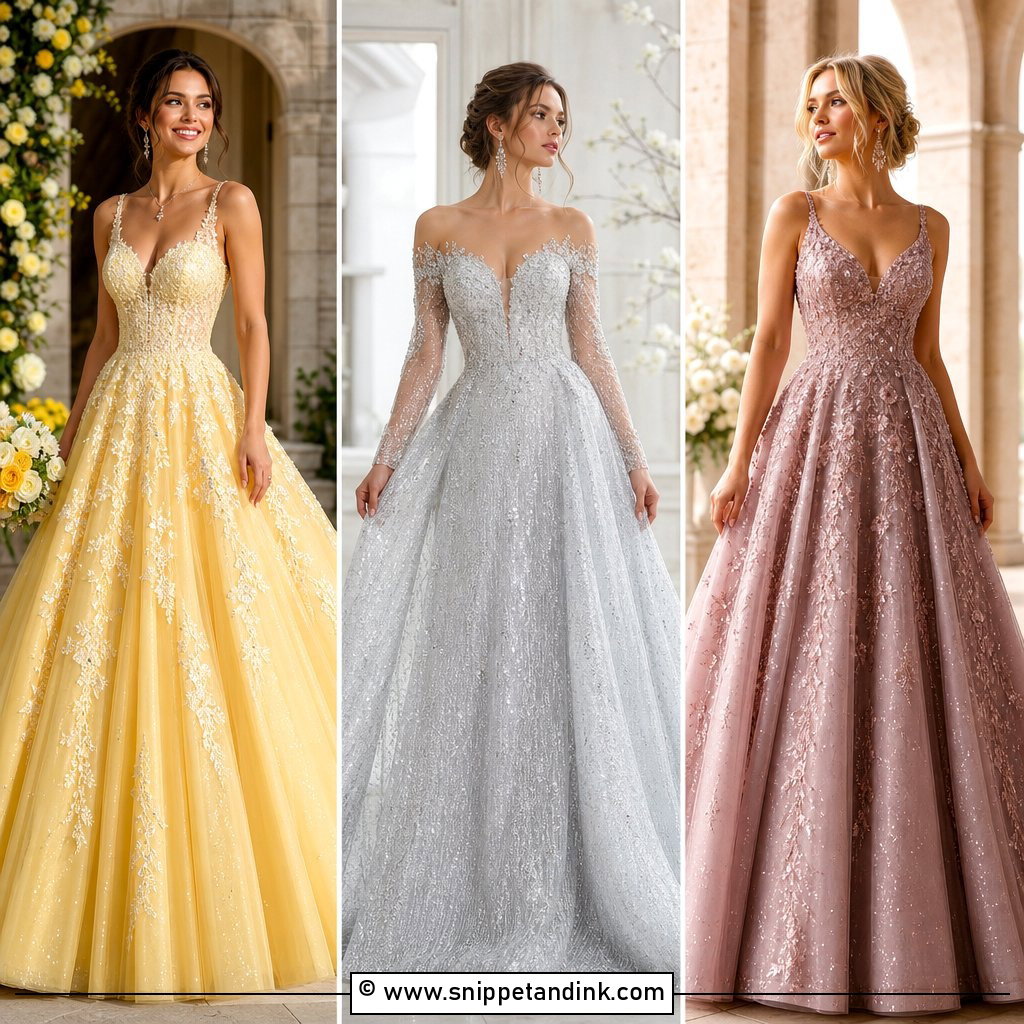
Champagne jacquard brings colour and a woven pattern for brides who don’t want plain white. The weave looks richest on a structured ball gown, tea-length dress or sculpted A-line. Hold the shade to your face in daylight; champagne, pale gold and soft ivory flatter different undertones, and some can make skin look sallow. A square neckline or strapless bodice keeps the shape clean so the fabric can decorate. Neutral satin pumps, understated gold earrings and a plain ivory veil keep the outfit calm, and the bouquet should be simple. View the fabric in daylight and under warm indoor bulbs before you decide. Metallic threads can flash brassy in flash photography.
How Far Ahead a Detailed Gown Needs Ordering
Most bridal gowns are made to order after you choose them, not pulled from a stockroom. Production times vary by designer, but several months is normal, and heavily beaded or hand-appliquéd dresses tend to take longer than plain crepe. I’d start shopping about nine to twelve months out if you can, and treat anything under six months as a reason to look at samples or ready-to-wear.
Then leave room for alterations. Expect two or three fittings spread over the last couple of months, with the final one a week or two before the wedding. Detailed gowns need more time here: lace has to be cut around and re-stitched by hand at the hem, and beading has to be removed and replaced at any seam that moves. Ask your seamstress for a timeline when you book, not after the dress arrives.
Pressing, Hanging and Packing a Dress With Raised Detail
Once the dress comes home, hang it from its internal loops, not the shoulders, so heavy skirts don’t stretch the straps. Keep it in a breathable cotton bag away from sunlight. Plastic traps moisture and can yellow ivory fabric.
- Steam from the inside or from a distance. Never press beading, sequins or 3D flowers with an iron.
- If you’re travelling, carry it on rather than checking it, folded with tissue in the creases.
- Pack a small kit for the day: a needle threaded in ivory, a few safety pins, a white chalk stick for marks and clear tape for a loose hem.
- After the wedding, get it to a specialist cleaner within a few weeks. Sugar and drink spills are invisible at first and turn brown over time.
Sit Down, Raise Your Arms, Then Decide
The dress you remember fondly is rarely the one with the most going on. It’s the one that holds you up, suits the room and lets you forget about it once the music starts. Use these twenty as a starting point, then try fabrics, necklines and skirt shapes in person. Bring your real underwear and shoes to every fitting, and ask someone to photograph you from the front, side and back in the shop. Pay as much attention to how the neckline, waist, sleeves and train feel as to how they look. Clean satin, raised flowers, lace or chiffon can all work, but only good tailoring makes any of them feel like yours.
You'll Like These Ideas:









Leave a Reply