
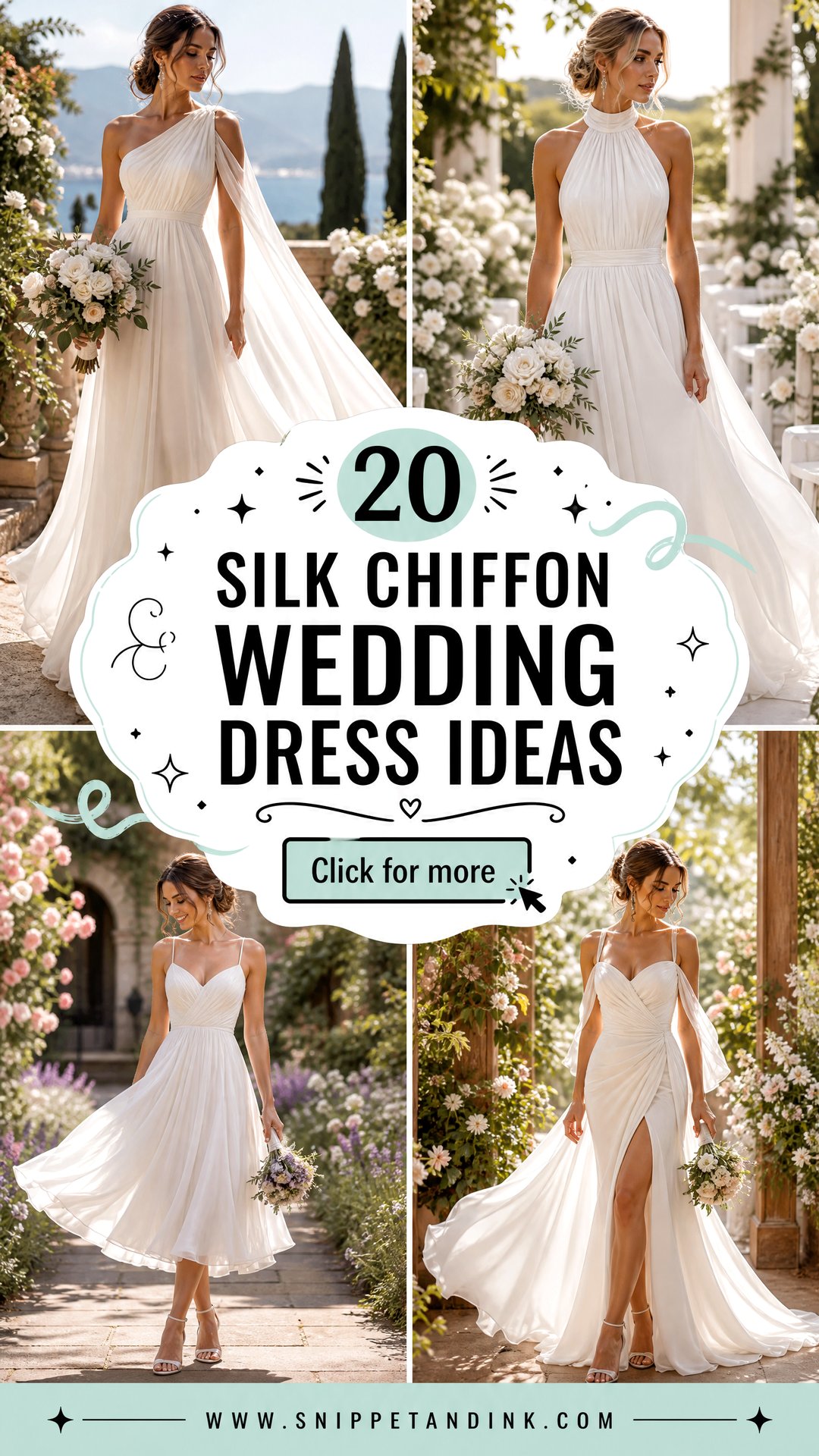
What Silk Chiffon Is Like to Wear for Twelve Hours
Silk chiffon is a sheer, loosely twisted plain weave. That open weave is why it floats, and also why it behaves differently from satin or crepe once you’re in it. Before you fall for a style, it helps to know what I check when a bride steps into a chiffon gown.
- Opacity. One layer of chiffon is see-through. Most gowns use two to four layers over a lining, so stand with a window or bright light behind you and ask a friend to look.
- Snags. The weave catches on rough bracelets, beaded clutches, brick walls and even some bouquet wrap. I tell brides to check every piece of jewelry against a scrap of the fabric.
- Creasing. Silk chiffon creases where you sit, but because it’s so light, the folds tend to drop out once you stand up and walk for a few minutes.
- Water. Silk can water-spot, so a sudden shower or a splashed drink leaves a mark until it’s dried evenly or cleaned.
You’ll also see polyester chiffon in many salons. It’s cheaper, holds pleats firmly and is harder to mark, but it breathes less and can cling with static in dry, air-conditioned rooms. Neither is wrong. I simply want you to know which one you’re trying on, because the label sometimes just says chiffon.
1. A-Line Silk Chiffon Wedding Dress
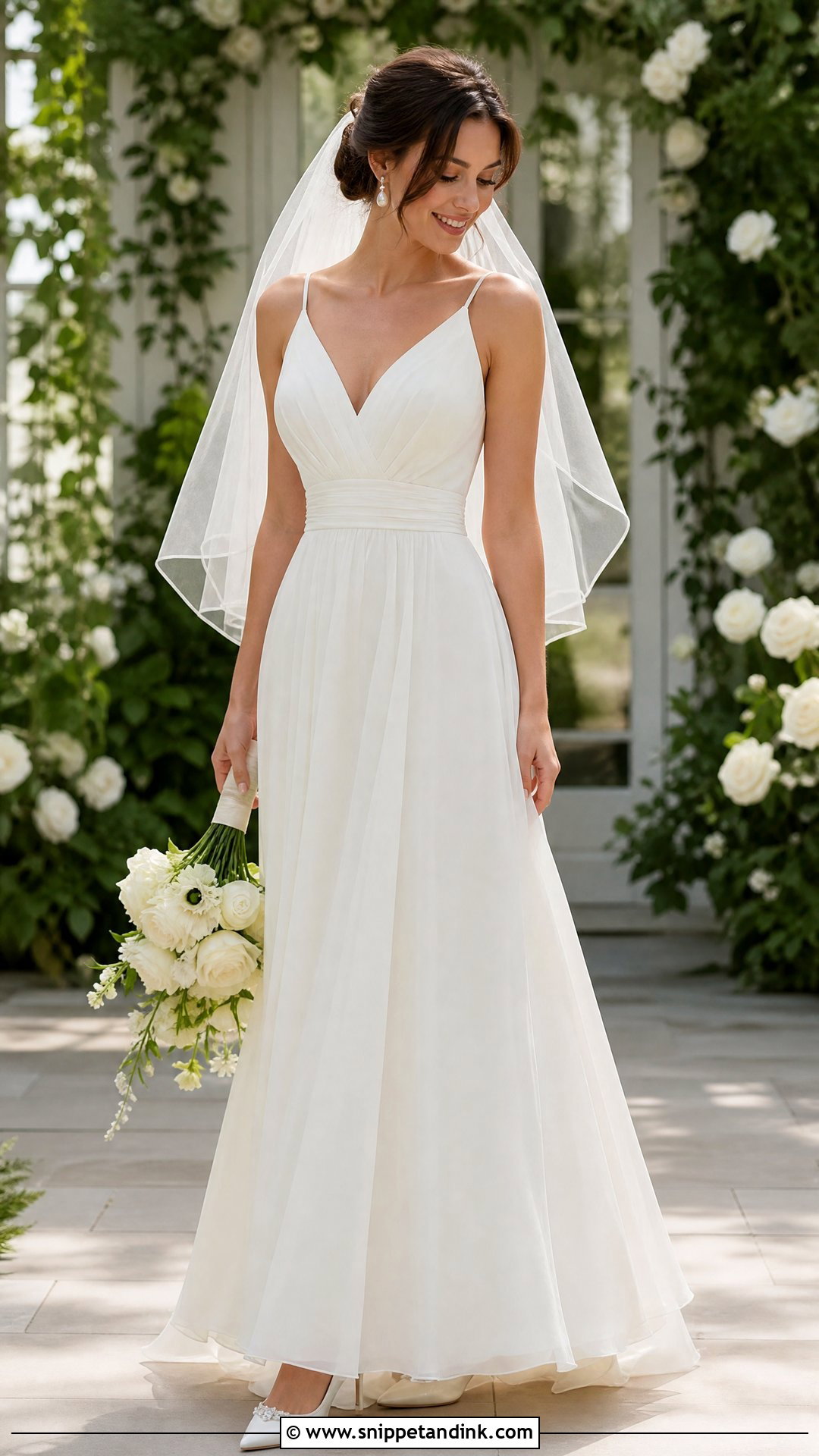
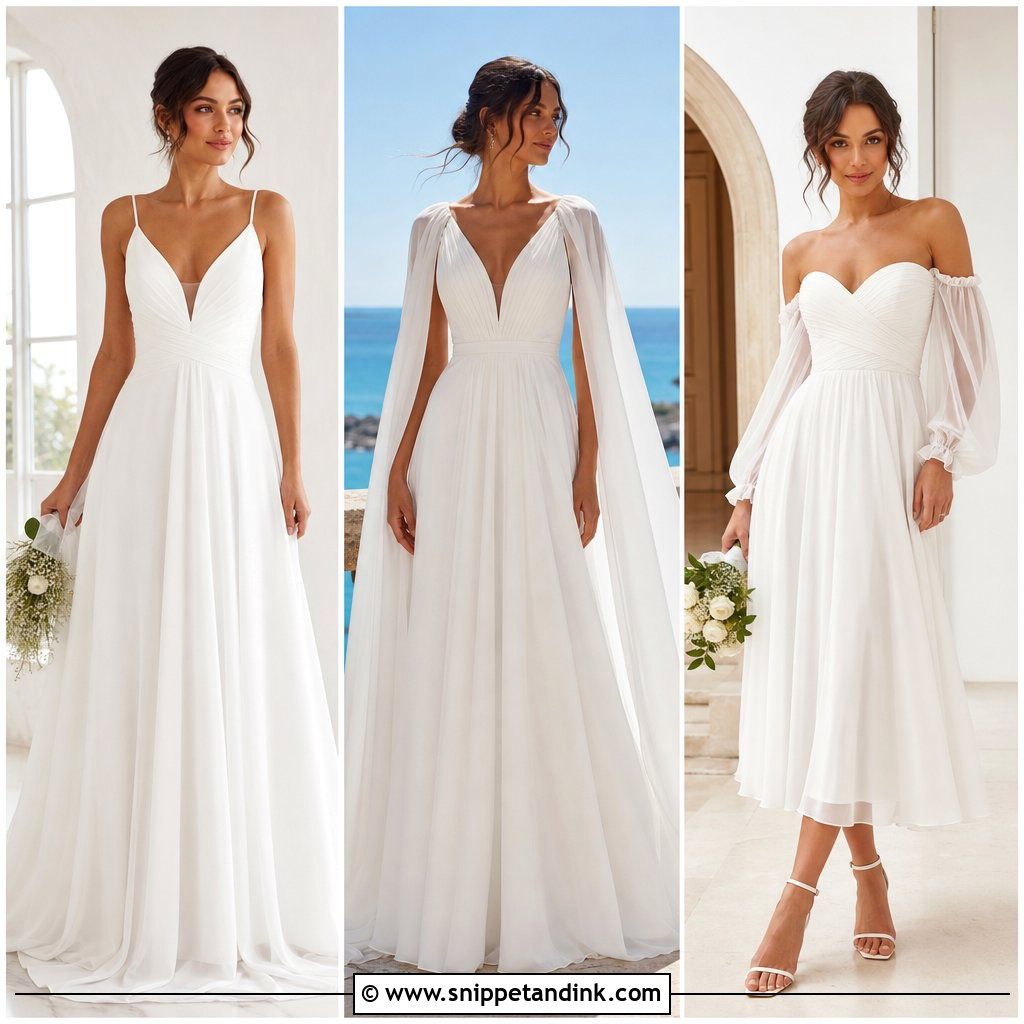
The A-line is where I start most chiffon fittings, because the fabric needs room to fall and this shape gives it that room from the natural waist down. A lined bodice with a V-neck and thin straps keeps the top neat, and a little gathering at the waist hides the seam where several sheer layers meet. Pearl drops, an elbow-length veil and pointed ivory heels finish it without weighing it down, and a small bunch of white garden roses suits the scale. Hem it while you stand in your actual wedding shoes. Chiffon is hemmed with a tiny rolled edge, and a quarter inch too long means you’ll be stepping on it all night.
2. Off-Shoulder Silk Chiffon Wedding Dress
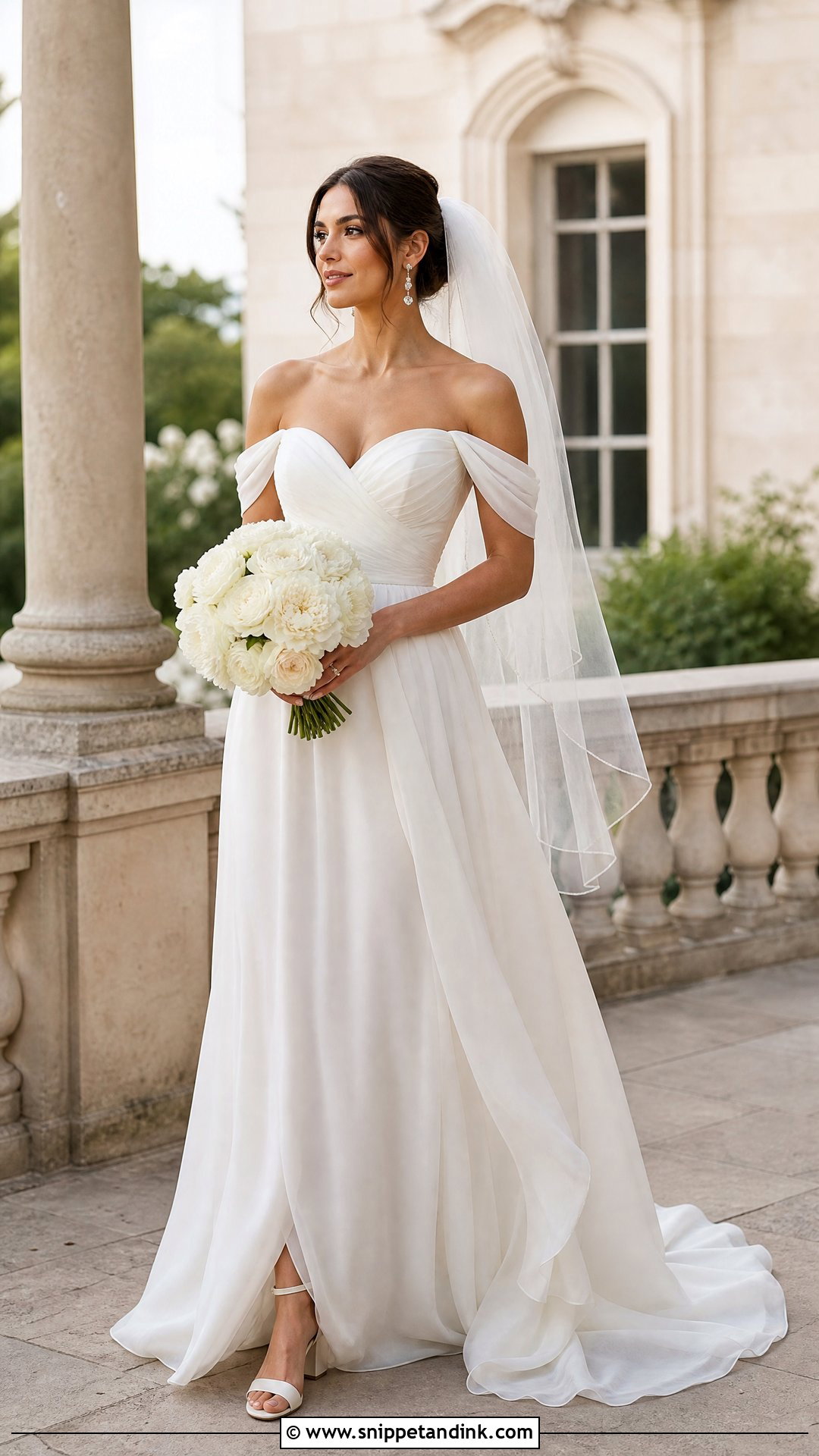
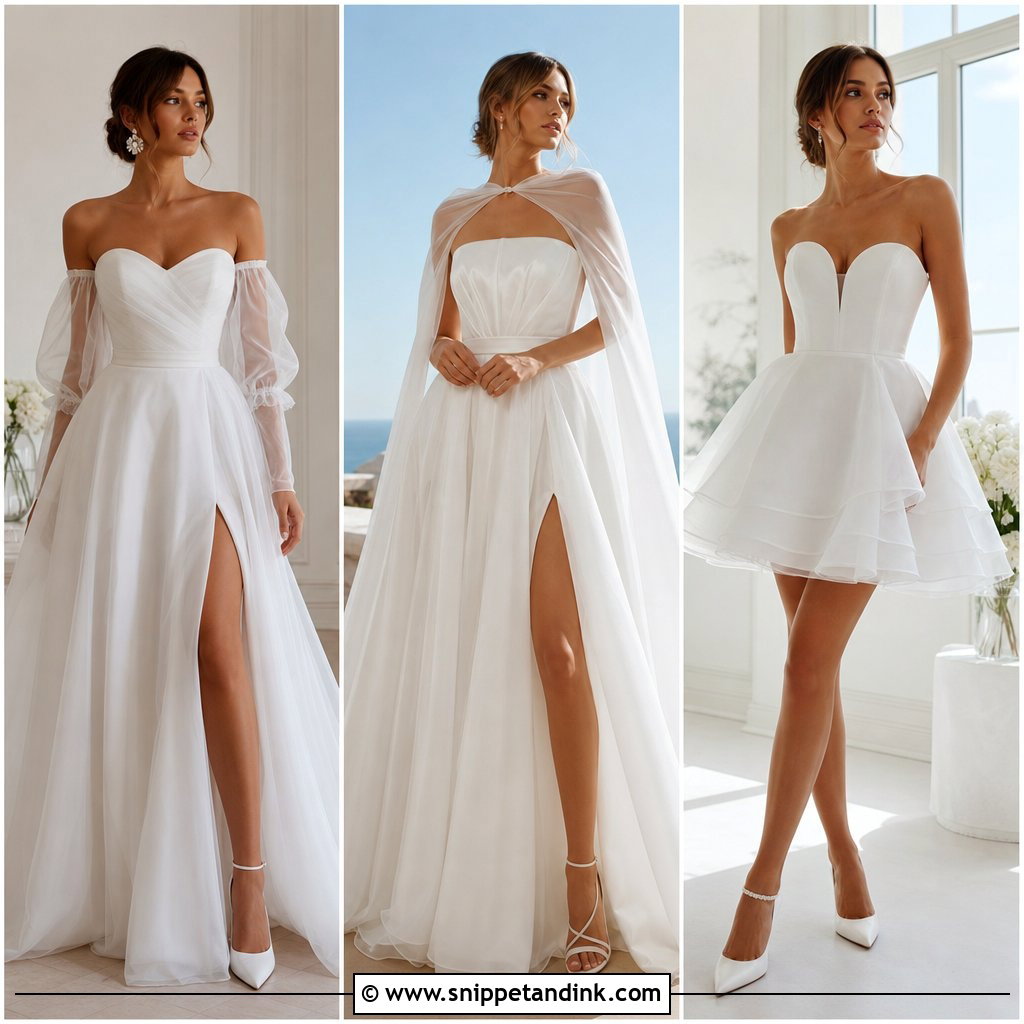
An off-shoulder neckline only works in chiffon if the bodice underneath is doing the holding. I look for a boned sweetheart base with the chiffon panels draped over it, so the sleeves rest on the upper arm instead of being expected to keep anything up. The floor-length skirt then moves freely as you walk. Keep the jewelry to a fine pendant and small crystal studs, and tuck a fingertip veil under a low bun. Block heels are kinder than stilettos on lawns. At the fitting, hug someone and reach for a glass: if the sleeves ride up or dig in, ask for the elastic or tacking to be adjusted, because that’s the movement you’ll repeat a hundred times at the reception.
3. Long Sleeve Silk Chiffon Wedding Dress
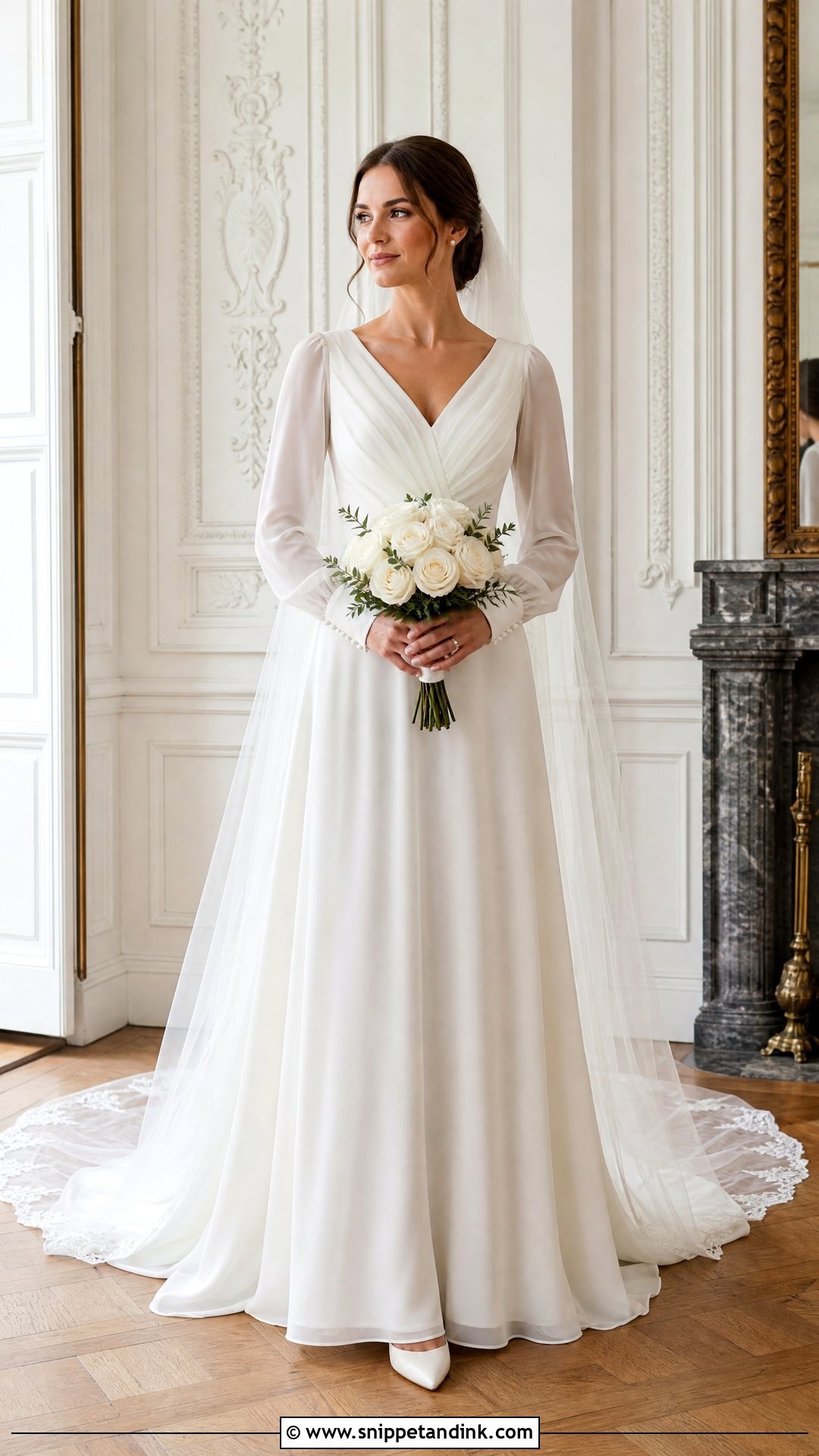
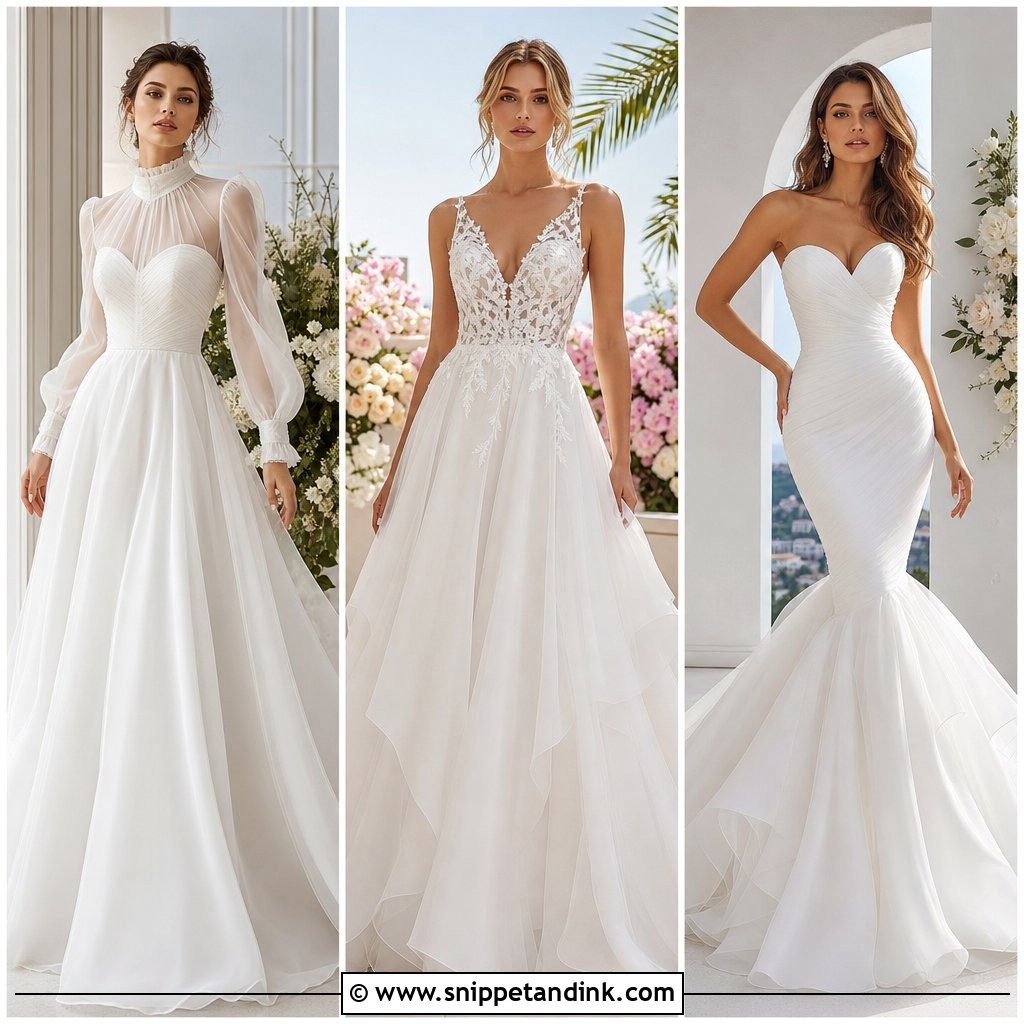
Sheer chiffon sleeves give coverage without the heat of lace, which is why I suggest them for autumn and winter weddings in warm, air-conditioned rooms. The sleeve should be fitted but not tight; chiffon has no stretch, so a sleeve cut snug at the bicep will pull at the shoulder seam every time you lift your arm. Covered buttons at the cuff, a fully lined bodice and a bateau or modest V-neck keep it graceful, and an A-line skirt stops all that coverage from looking stern. A cathedral veil, pearl studs and closed ivory pumps go with it, and a low twisted bun keeps the sleeves and neckline on show.
4. Strapless Silk Chiffon Wedding Dress
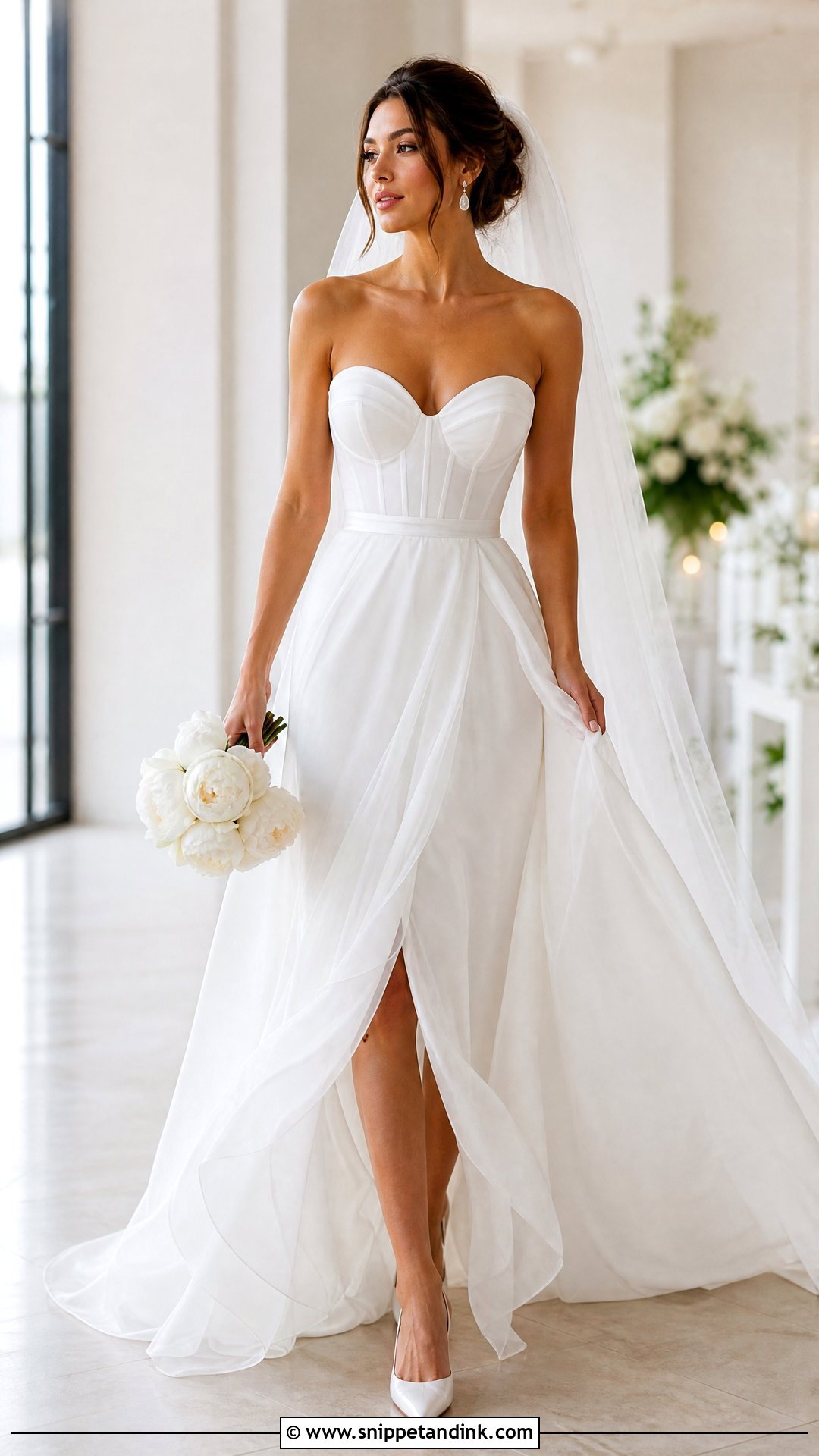
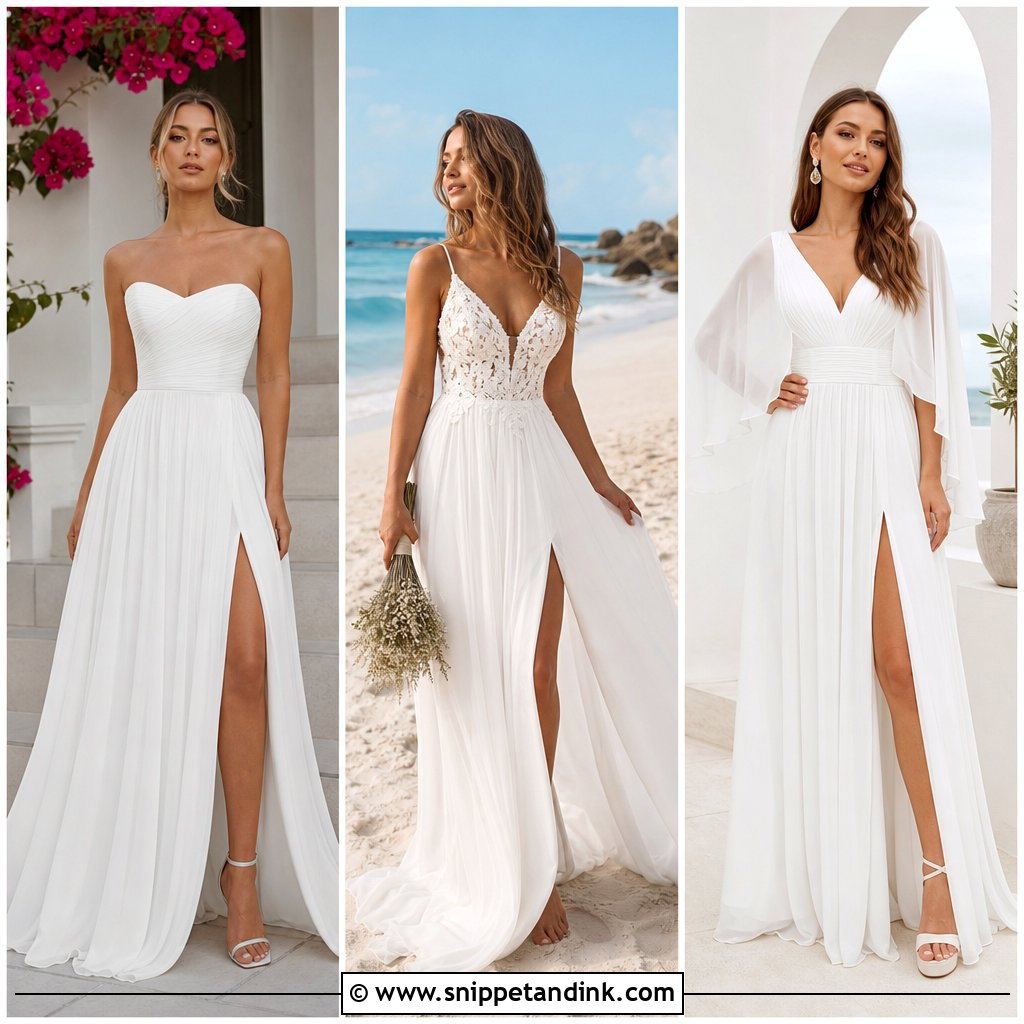
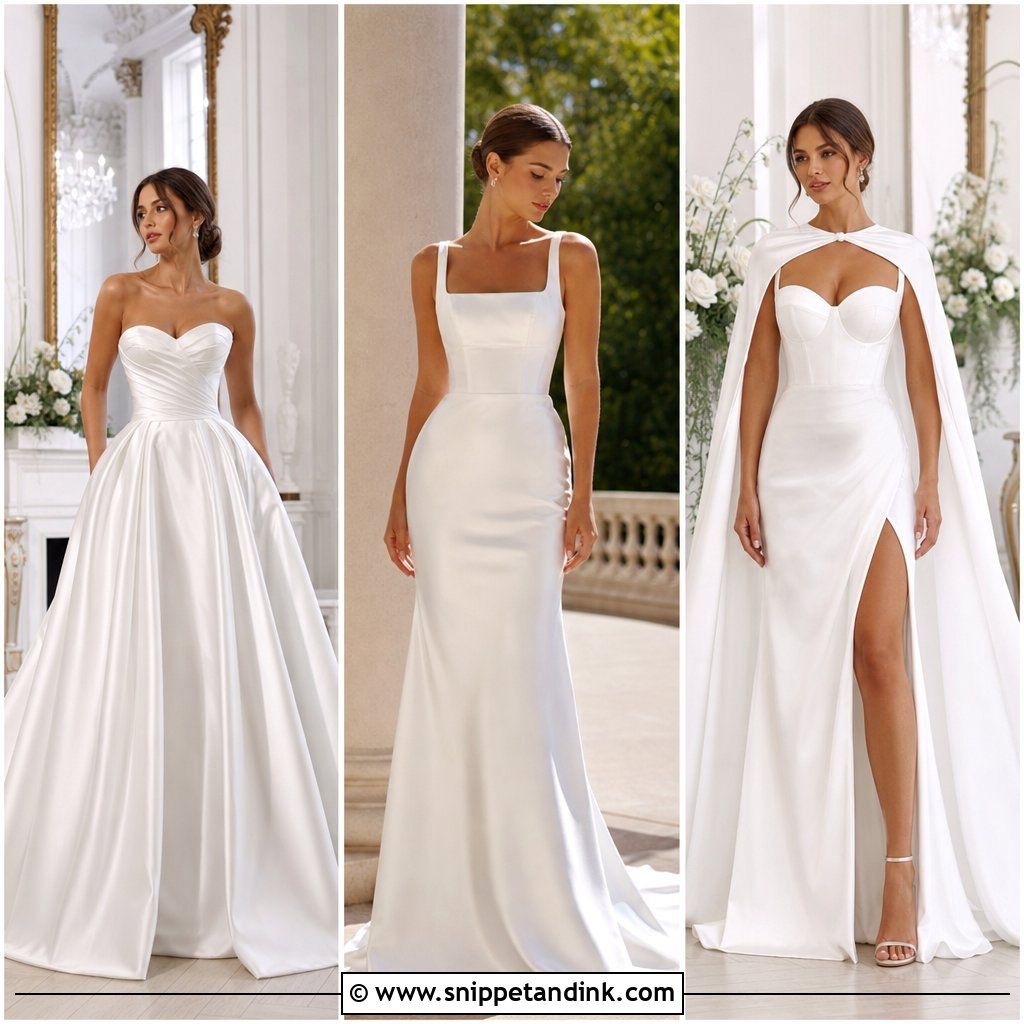
Strapless chiffon is really a structured gown wearing a soft skirt. Everything depends on the corseted sweetheart bodice: boning placed to your ribcage, cups sewn in, and a waist stay that takes the weight of the skirt off your bust. Without that, the chiffon drags the bodice down within an hour and you spend the ceremony hitching it up. Keep the skirt to layered chiffon with minimal gathering, and use a narrow satin band if you want a clear line between top and bottom. A light chapel veil, teardrop earrings and slingback heels are enough. My test at the final fitting is simple: arms overhead, then sit, then bend to pick something up. If the neckline moves, it goes back to the seamstress.
5. Square Neck Silk Chiffon Wedding Dress
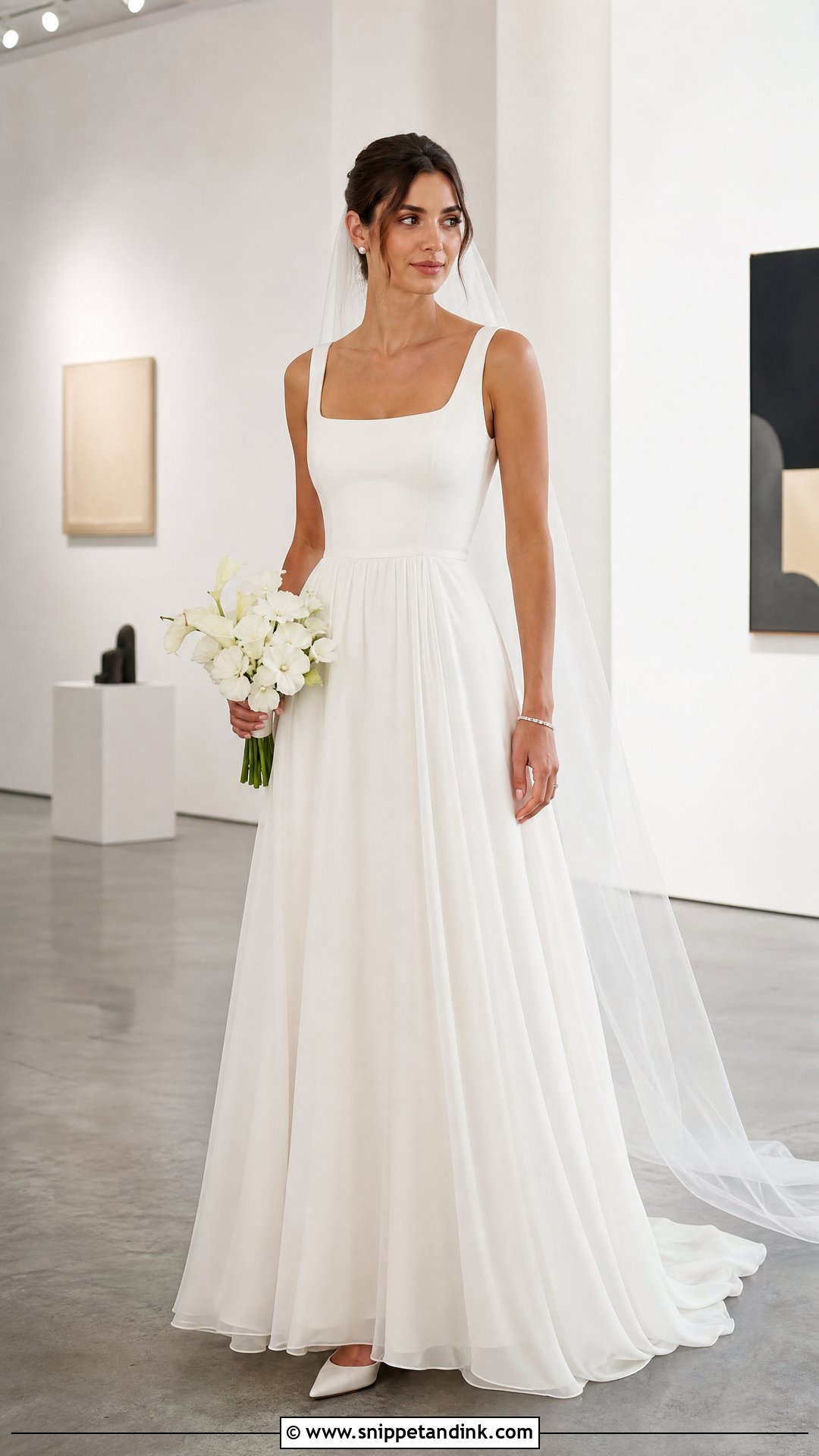
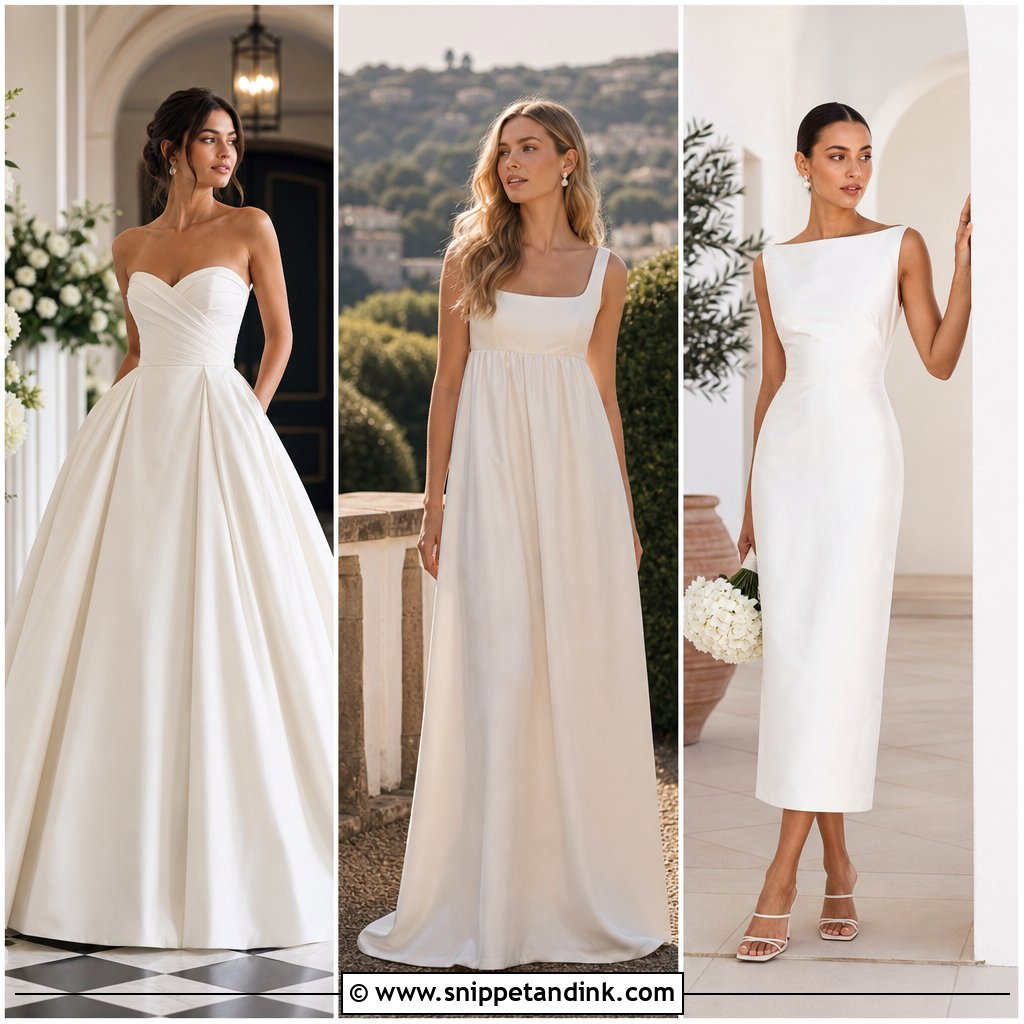
A square neckline is one of the most flattering frames for the collarbone, and chiffon softens its hard corners nicely. Wide straps, a fitted bodice and a gathered A-line skirt over a smooth lining keep it calm. I’d keep the jewelry to studs and a fine tennis bracelet, with a raw-edge or plain veil rather than lace trim. The thing I watch on this cut is the neckline gaping at the corners when you lean forward; it’s a common issue and an easy fix if the seamstress takes it in while you’re seated. Beyond that, resist adding beading. Plain chiffon in motion is the whole point of the dress.
6. Halter Silk Chiffon Wedding Dress
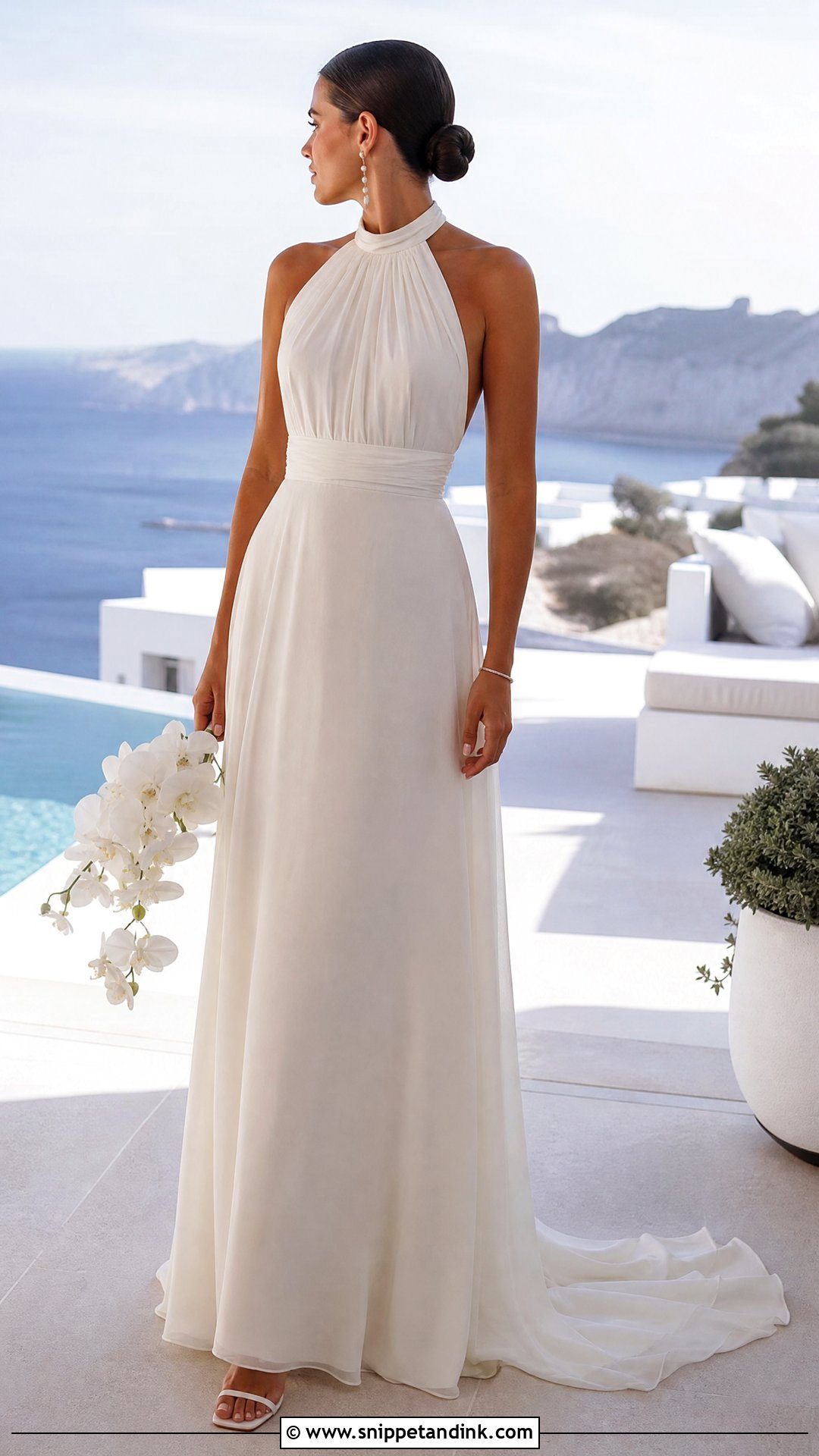
Would you like the top sleek and the skirt loose? A halter silk chiffon wedding dress does exactly that. The gathered neckline ties or fastens at the nape, so check that the fastening is a hook or button rather than a bow alone, since a chiffon tie can slip by the evening. A fitted waistband and long uninterrupted skirt layers keep the vertical line clean. Skip the necklace and let long drop earrings do the work. Wear your hair up or in a low ponytail so the open back shows, and choose a fingertip veil you can take off after the ceremony. Halters are my first suggestion for warm coastal weddings because the shoulders stay cool.
7. One-Shoulder Silk Chiffon Wedding Dress
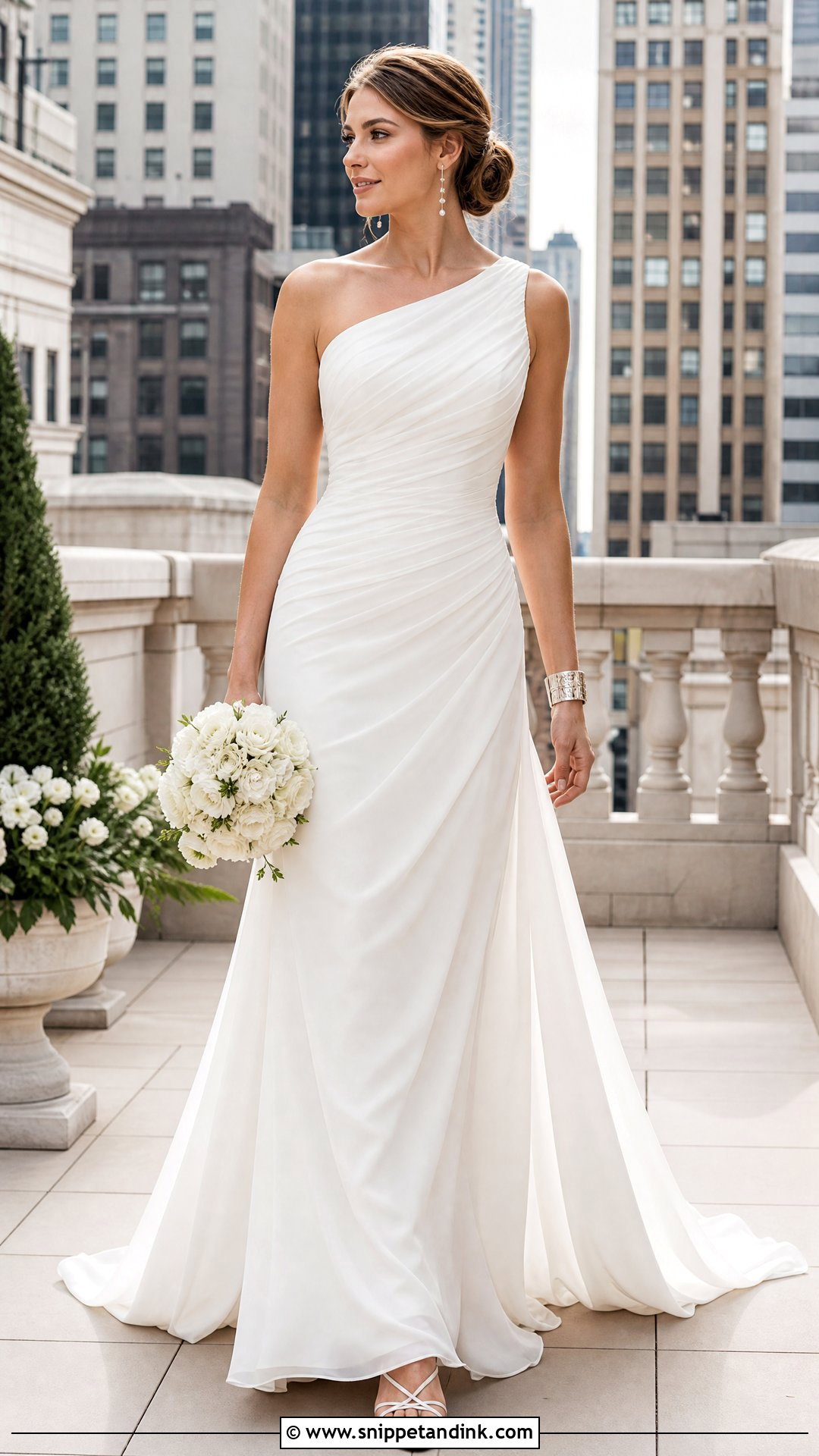
One-shoulder gowns get their drama from the diagonal, so the ruching across the bodice has to be stitched to a lining underneath, not floating. Loose ruching on chiffon shifts as you move and starts to look rumpled. A gently flared skirt balances the strong neckline and leaves you room to dance. I pair it with either one statement earring on the bare side or slim matching drops, a smooth cuff and strappy ivory heels. Sweep the hair to a low bun on the uncovered side so the shape reads clearly. A veil is optional; if you want one, a plain chapel length sits behind without hiding the shoulder line. Hotel ballrooms and rooftops suit this cut best.
8. Drop Waist Silk Chiffon Wedding Dress
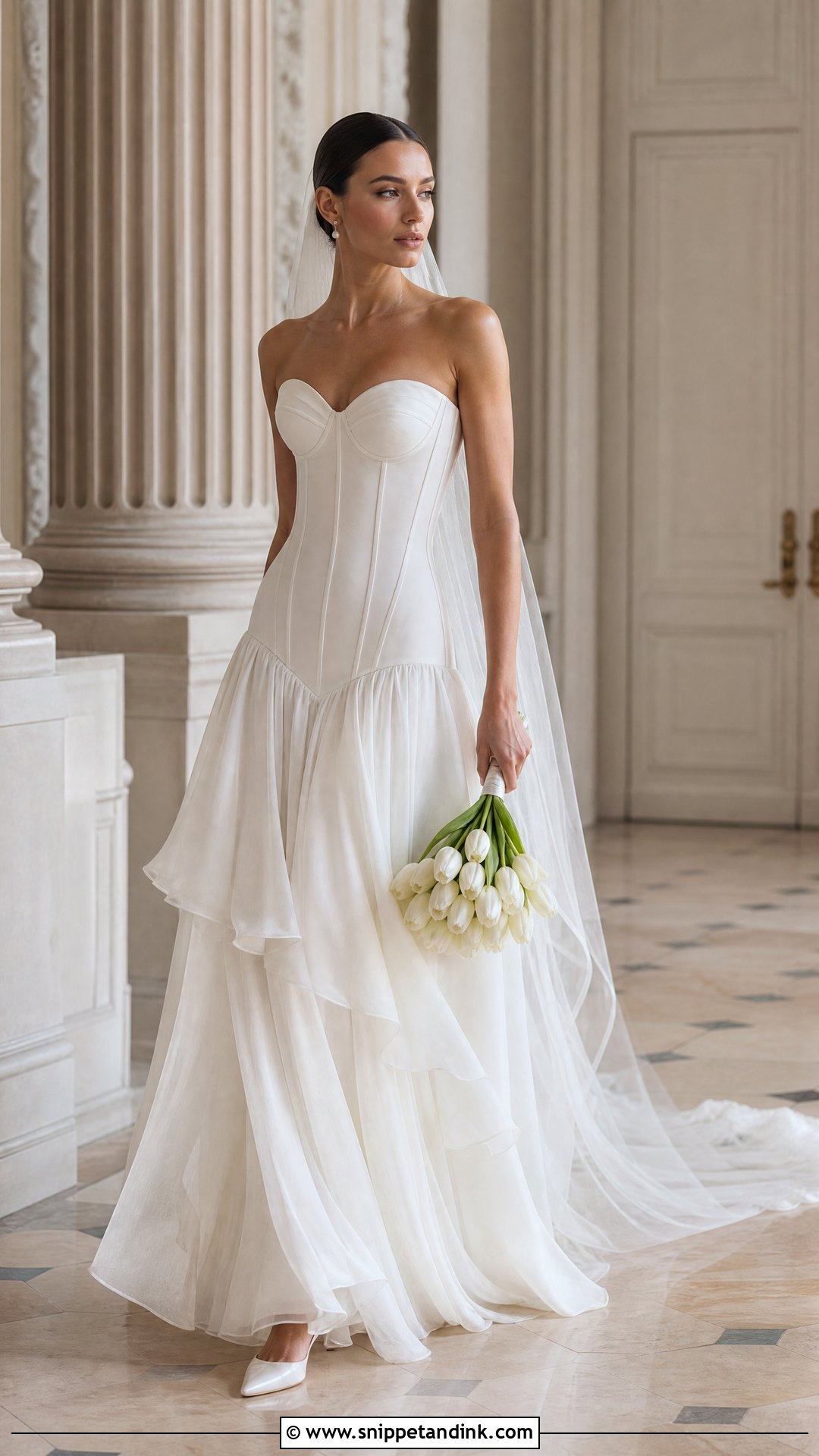
Where the drop waist lands decides whether this dress flatters you. It should sit a few inches below your natural waist, at a point that lengthens your torso, not at the widest part of the hip, which is the mistake I see most often on sample gowns. A longline corset gives that line its shape, a modified sweetheart neckline softens it, and the chiffon layers release from the seam. A narrow cathedral veil, pearl earrings and pointed satin heels keep it balanced, with hair in a smooth bun. At every fitting, sit down in it. Longline bodices can press into the hips when seated, and you’ll be sitting for the meal and the speeches.
9. Boho Silk Chiffon Wedding Dress
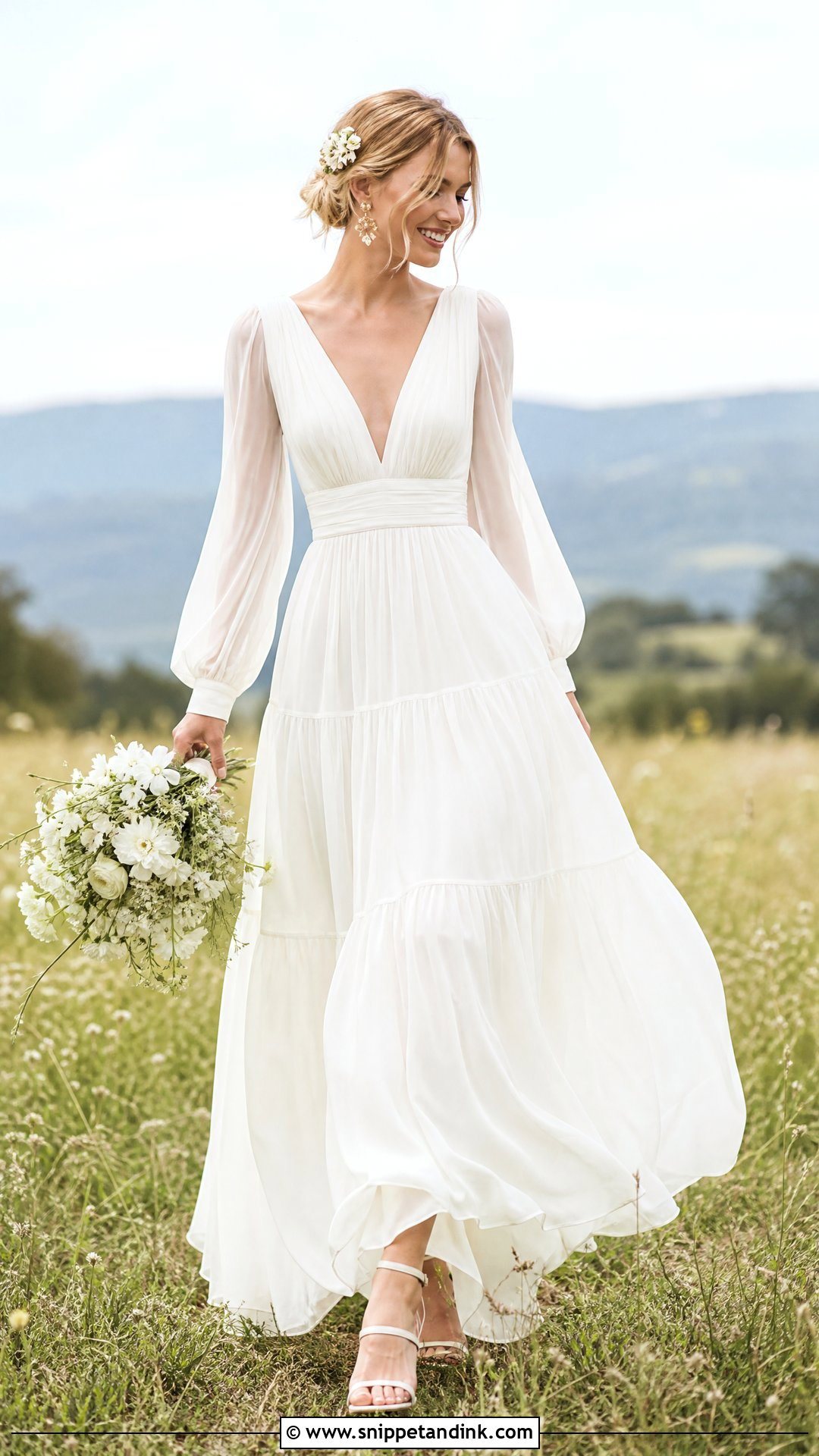
Boho chiffon should look relaxed, but I’m strict with it at fittings because loose sleeves and tiers can tip into shapeless very quickly. A lined V-neck bodice, a softly defined waist and semi-sheer bishop sleeves with narrow cuffs keep the outline readable. If the skirt is tiered, two or three controlled tiers is plenty. Textured gold earrings, a floral comb and soft leather sandals suit it, with a barely there veil or a chiffon ribbon in the hair. Watch the sleeves at meal time: wide bishop sleeves drift into plates and candle flames, so a cuff that sits close at the wrist is worth asking for.
10. Cape Sleeve Silk Chiffon Wedding Dress
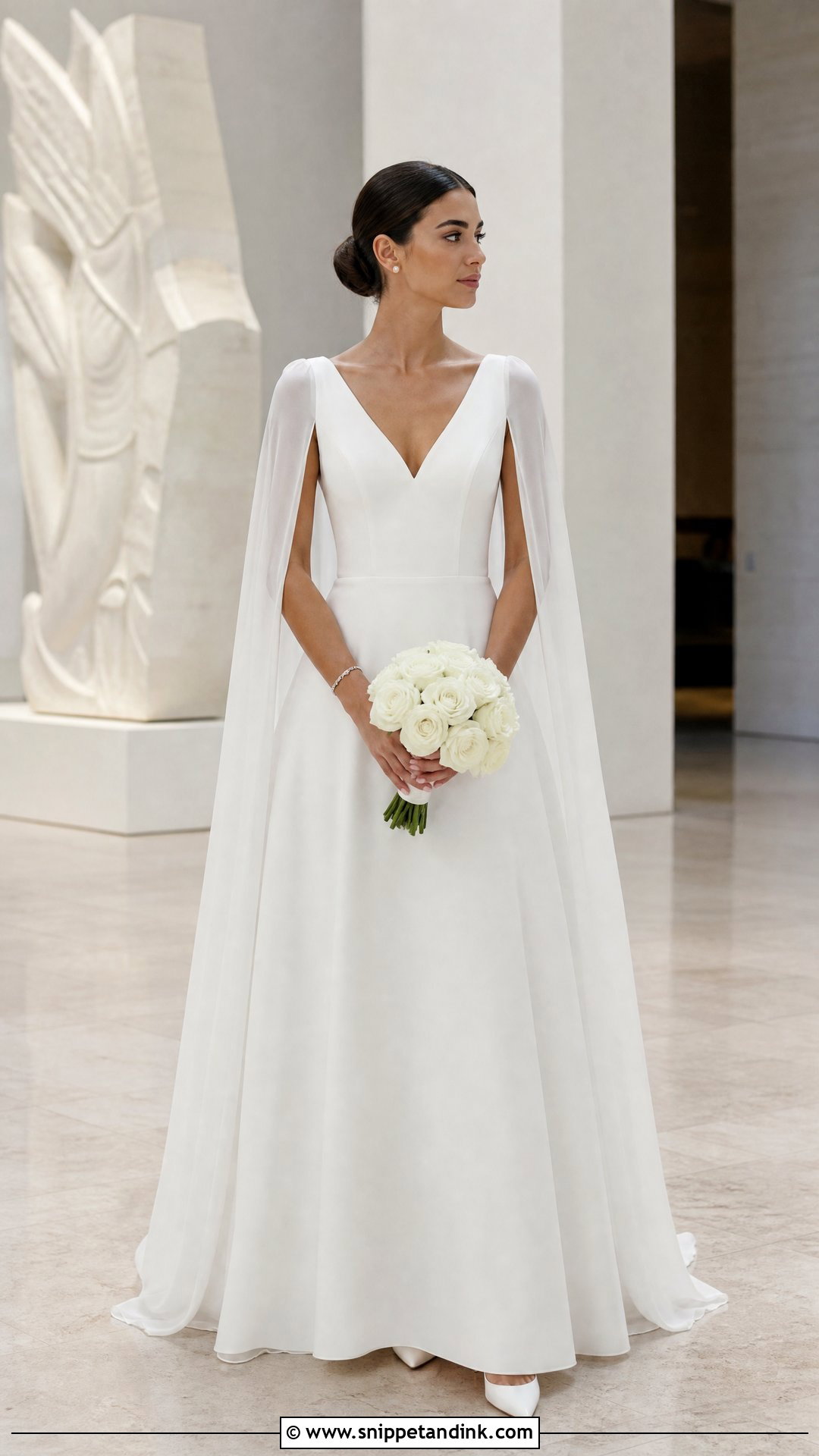
Cape sleeves are lightweight chiffon panels attached at the shoulder that fall behind the arms when you walk. They transform a plain column or A-line gown, and I’d keep everything else quiet: pearl studs, one fine bracelet, pointed ivory heels and a sleek low bun. If the cape panels run long into a train, drop the veil, since two sheer layers behind you tangle and photograph as a blur. Check the length while holding your bouquet. Panels that reach past the hands get caught in stems and in your partner’s arm during the recessional.
11. Pleated Silk Chiffon Wedding Dress
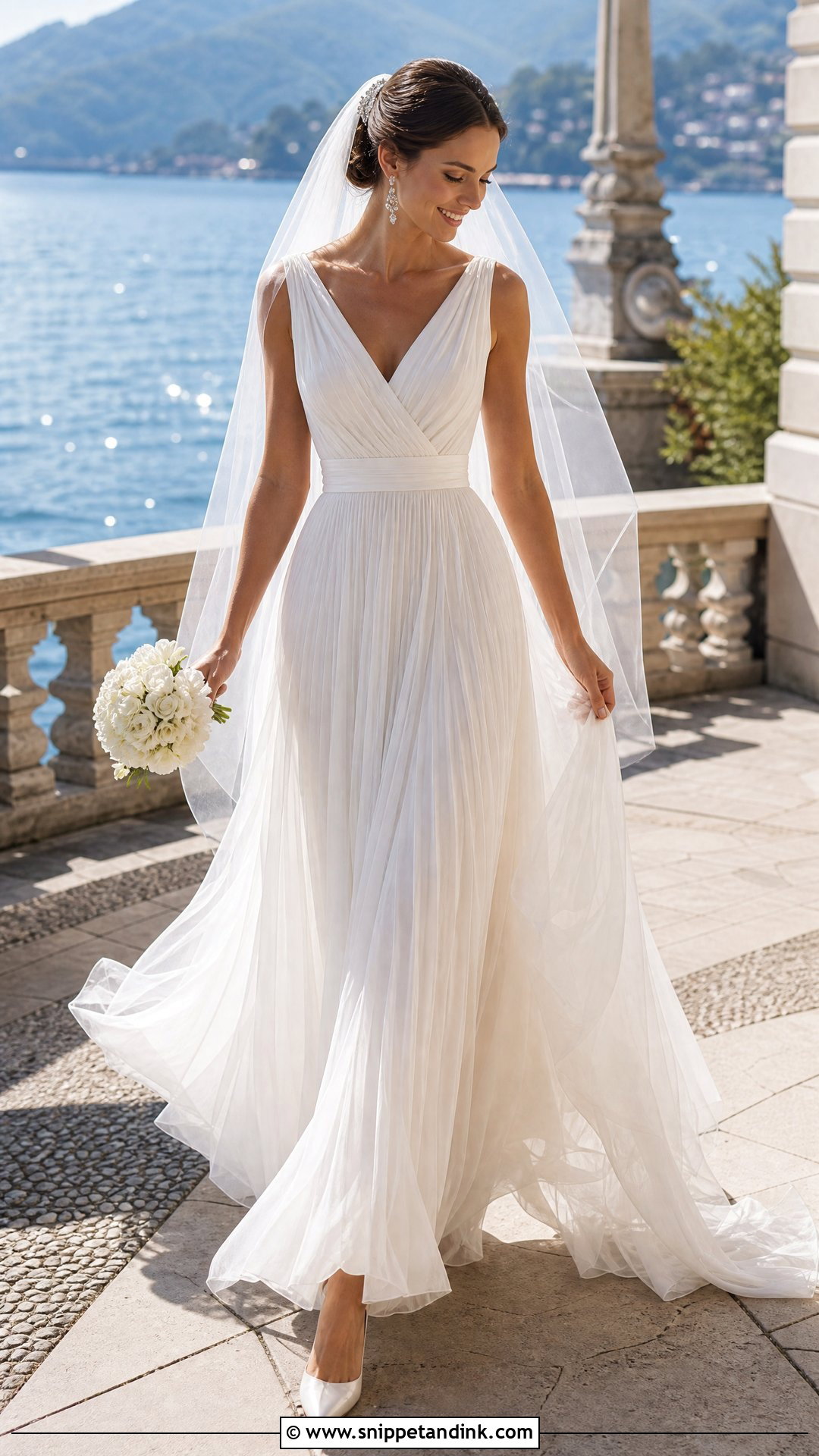
Fine pleating gives chiffon a crisp texture, and it’s one place where I’ll mention fibre honestly: pure silk chiffon doesn’t hold a permanent pleat the way polyester does, so silk pleats are usually set and may relax with steam or humidity. Ask the salon how theirs are made. A crossover V-neck bodice with narrow vertical pleats, continued down an A-line skirt, draws long lines from waist to floor. Crystal studs, a slim comb and low pointed heels finish it, and the veil should have a plain edge so it doesn’t fight the texture. After the hem and waist are altered, have the seamstress check that the pleats still fall straight; taking in a pleated waist can twist them.
12. Floral Silk Chiffon Wedding Dress
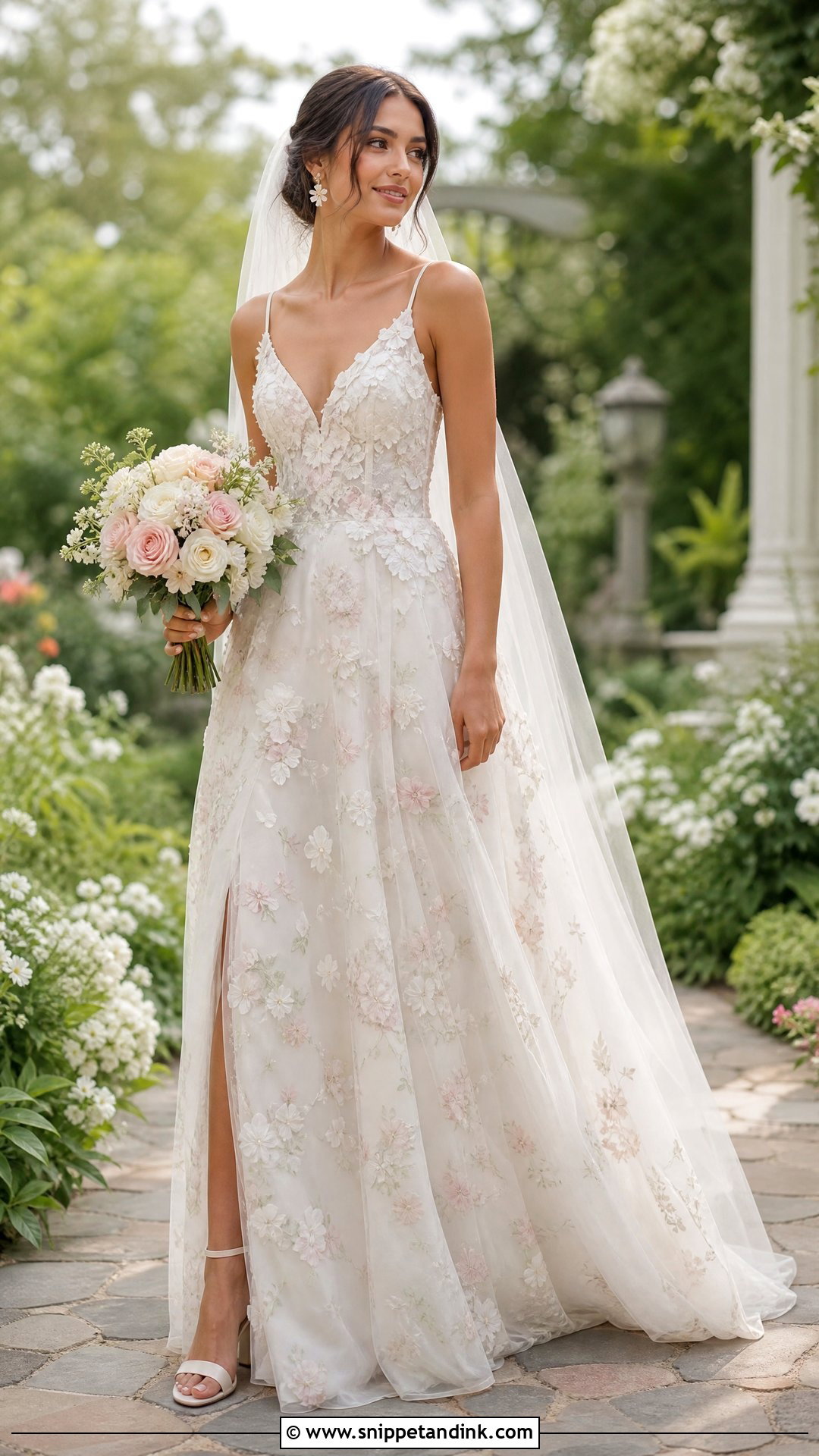
Floral appliqué on chiffon looks best when it thins out toward the hem, scattered on the bodice and fading down the skirt. Heavy flowers placed low will pull the light fabric and spoil the drape. A simple A-line base with thin straps or cap sleeves keeps the gown airy. I’d pair it with floral pearl earrings, ankle-strap heels and a plain chapel veil, and wear loose waves or a low textured bun with one small floral pin. Choose a bouquet of white and blush garden roses that echoes the gown rather than copying it. Every extra bead adds weight, so if you’re tempted to add sparkle, keep it to the flower centres.
13. High Neck Silk Chiffon Wedding Dress
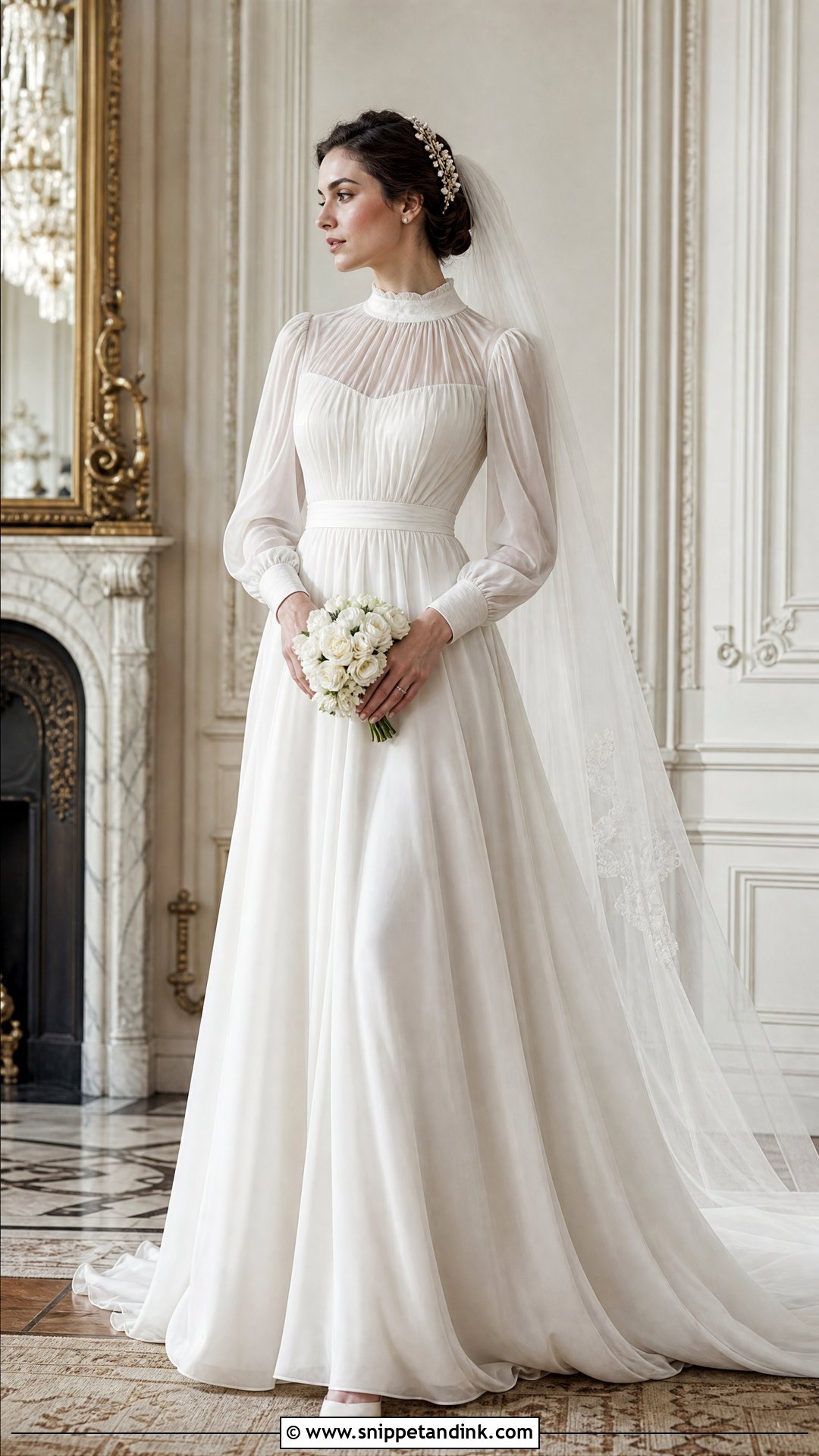
A high neck in chiffon is usually a sheer yoke over a lined bodice, which gives coverage with a lot of air. The neckline is the fiddly part. I’d want it measured with your head turned and chin down, because a collar that’s comfortable standing still can press when you look down at your rings. A defined waist and fluid A-line skirt keep the covered top from feeling heavy. Pearl studs, an antique-style comb and closed-toe ivory heels suit it, with a low chignon and a narrow cathedral veil pinned at the back of the style so it falls behind rather than over the shoulders. Historic houses and cooler months are its natural setting.
14. Wrap Silk Chiffon Wedding Dress
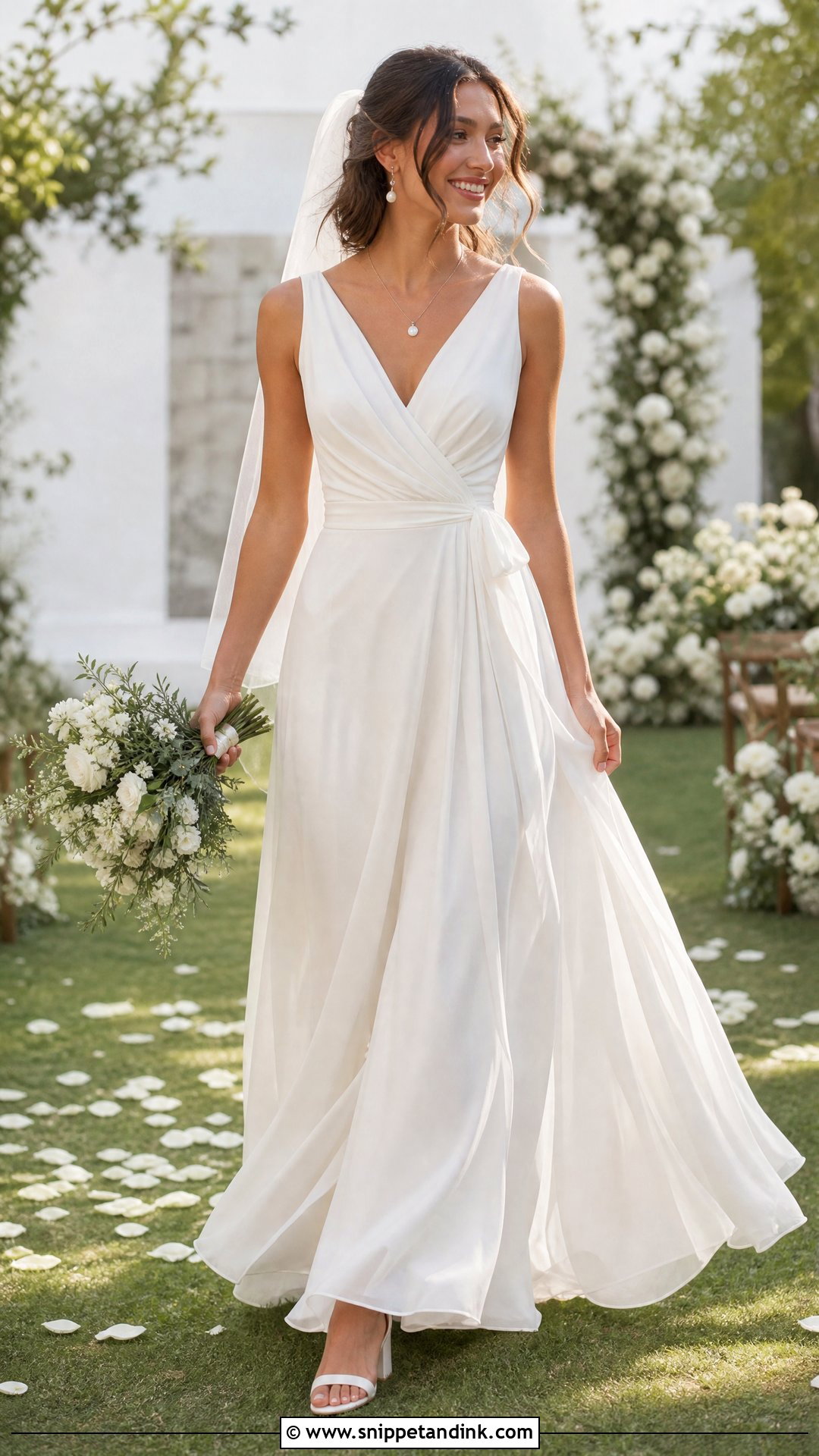
With wrap styles I always recommend a faux wrap, where the crossover is stitched in place, rather than a real tied wrap. A tied chiffon wrap will work loose by the dancing. The V-neck, ruched waist and flowing skirt give the same diagonal lines with none of the worry. Pearl drops, a simple pendant and block-heel sandals keep it relaxed, with a shoulder-length veil and soft pinned waves. Fashion tape is fine as a backup, but if the neckline only stays in place because of tape, the fit isn’t finished. Move, twist and lean forward at your last fitting and watch the crossover.

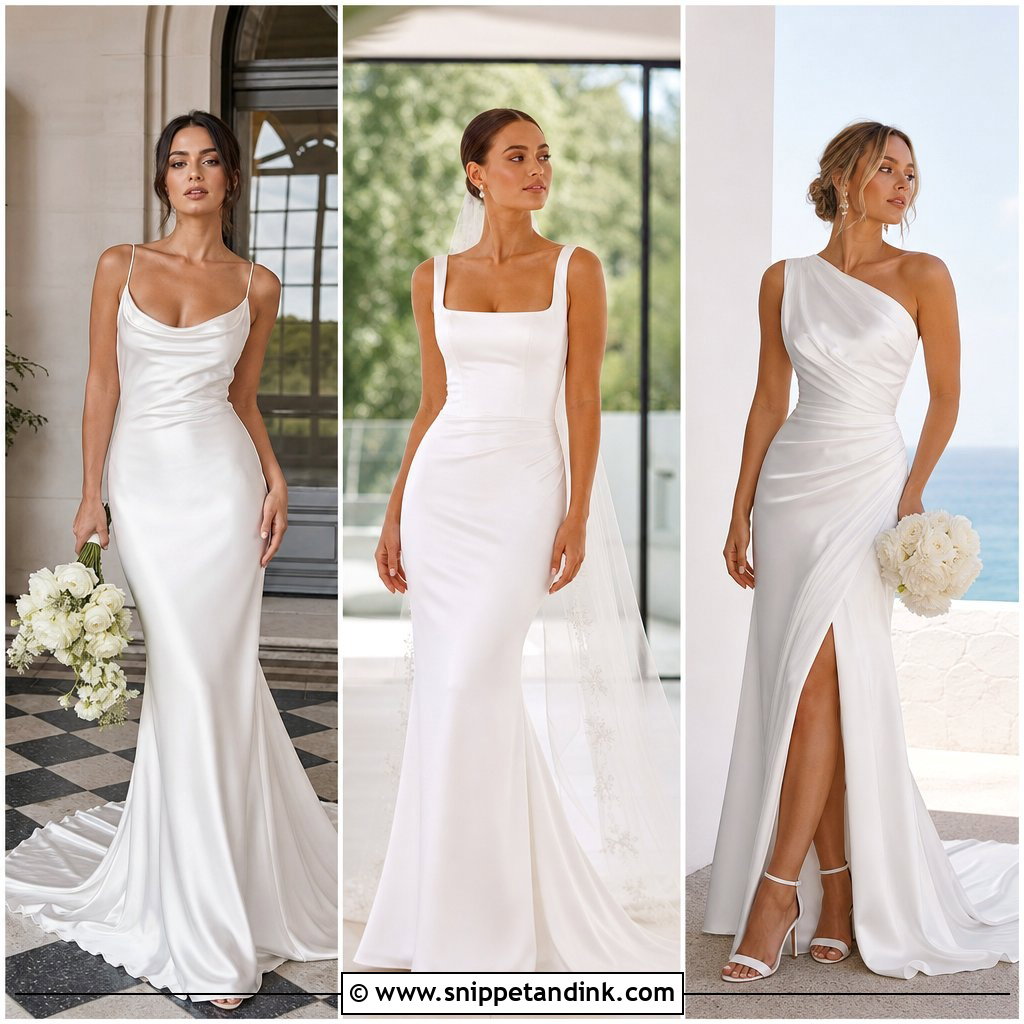
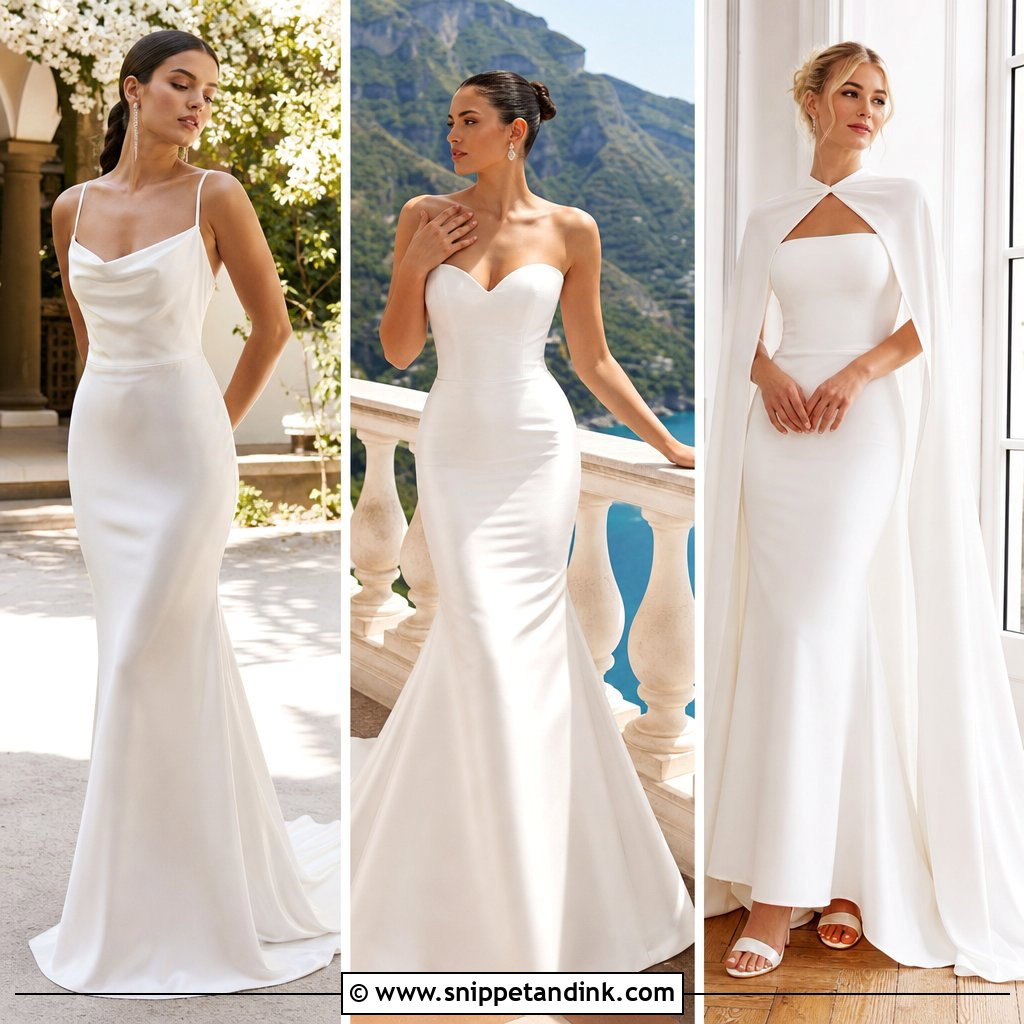
15. Sheath Silk Chiffon Wedding Dress
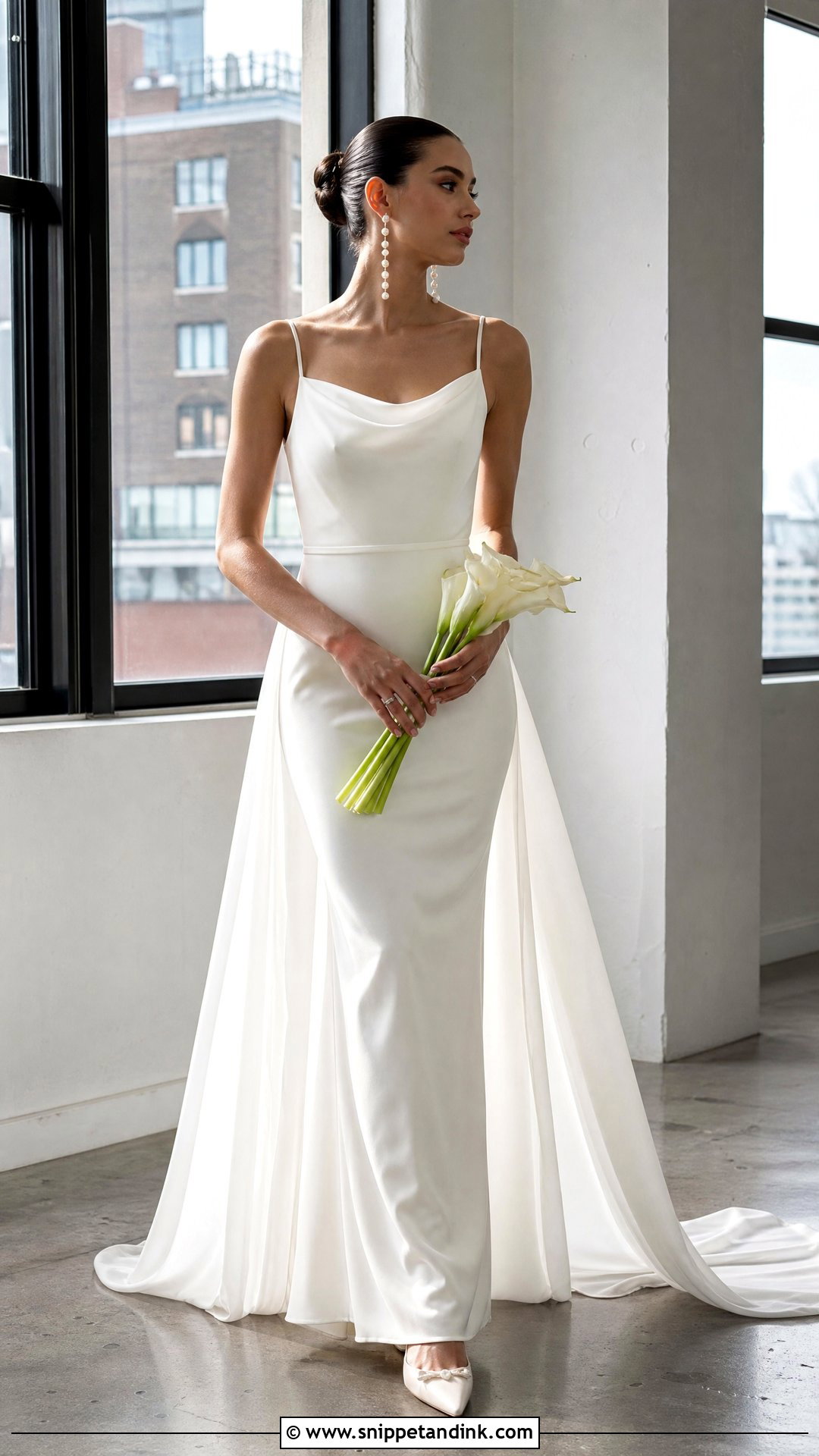
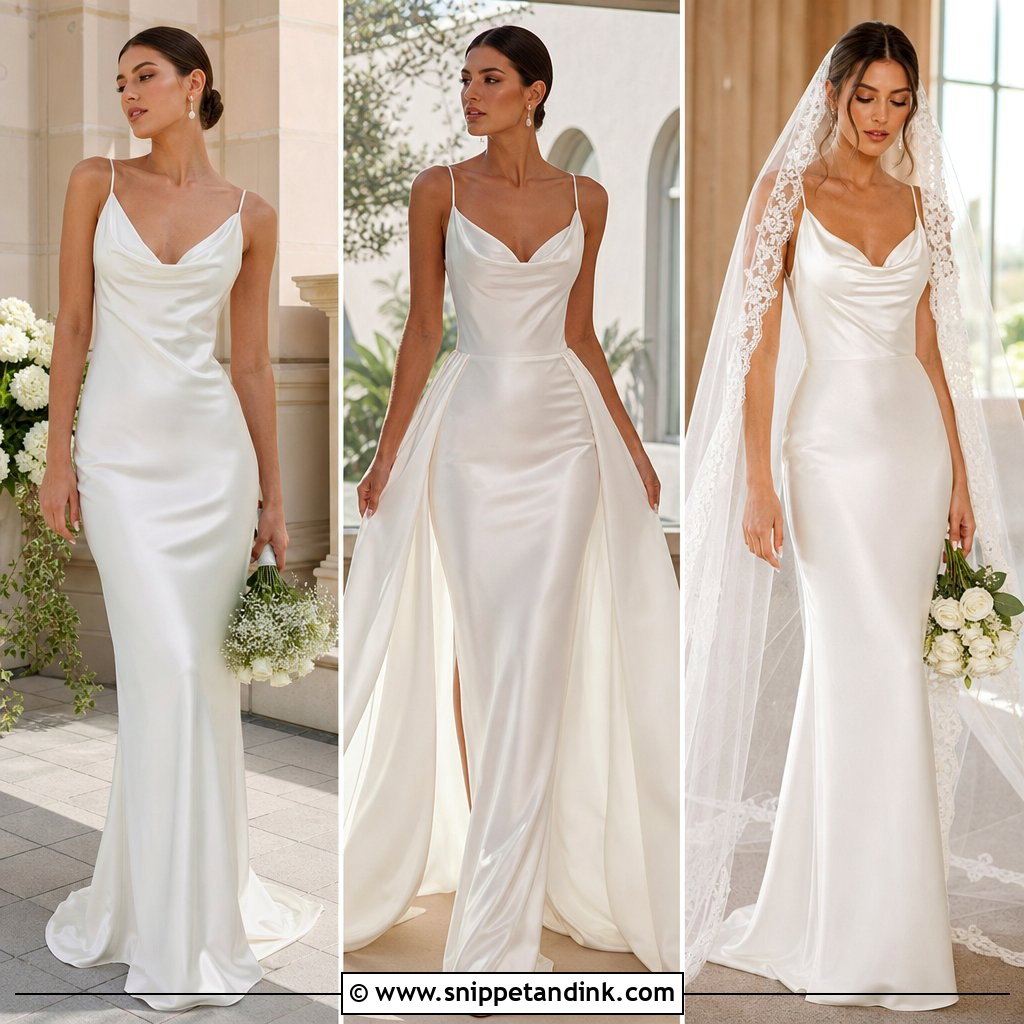
A chiffon sheath with a detachable train is a smart two-part outfit: the train for the aisle, then off for dinner and dancing. The base gown can have a soft cowl or V-neck with narrow straps and a lining cut to skim, not cling. Ask how the train attaches. Hidden hooks or snaps at the waist are faster to remove than buttons, and someone other than you will be doing it, so show your maid of honour before the day. Long pearl earrings, a sleek bun and pointed heels finish it, with a narrow bouquet of calla lilies or orchids. Because a sheath shows everything underneath, bring your actual underwear to every fitting.
16. Tea-Length Silk Chiffon Wedding Dress
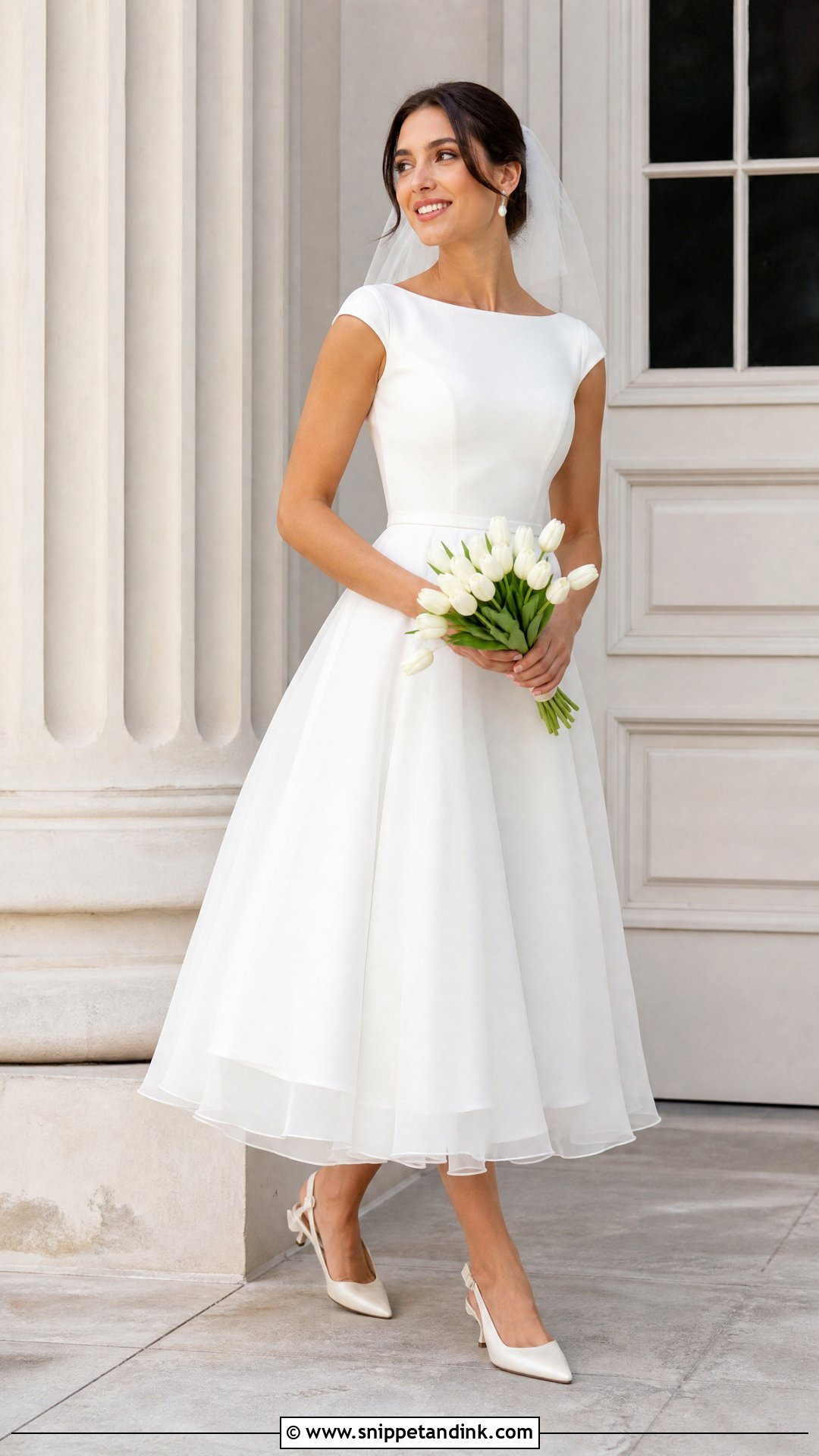
Tea length lands between knee and ankle, and the exact point matters more than with any other hemline. On most people the narrowest part of the calf is the most flattering finish; a hem that stops at the widest part shortens the leg. A fitted bateau or sweetheart bodice over a few controlled chiffon layers keeps it from looking like a stiff party dress. Your shoes are on show, so pick them early: pointed slingbacks, ankle-strap pumps or embellished flats. Pearl earrings, optional short gloves and a birdcage or shoulder-length veil complete it. I suggest this length for courthouse ceremonies and daytime parties.
17. Champagne Silk Chiffon Wedding Dress
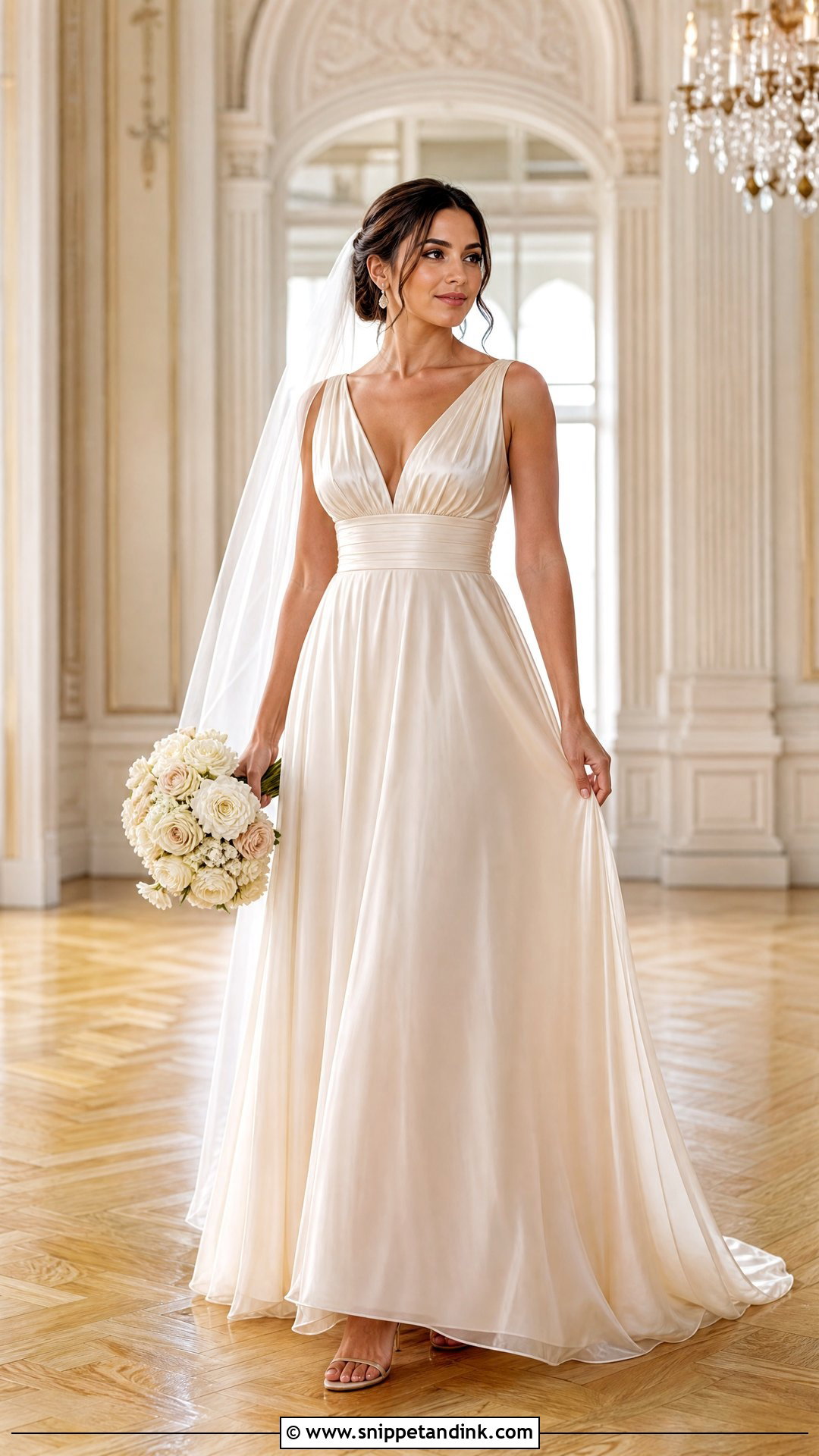
Champagne chiffon is usually created by layering paler chiffon over a warmer lining, so the colour shifts as the layers move. That depth is lovely, but it also means the shade can look peachy in tungsten light and almost grey in shade. Always look at a swatch outdoors and under lighting similar to your venue’s before you commit. A V-neck A-line with a defined waistband lets the colour do the talking. Gold pearl earrings, champagne heels and an ivory veil that complements rather than matches work well, and so does warm bronze eye makeup with a neutral rose lip. Cream roses and white ranunculus suit sunset and autumn weddings.
18. Ruched Silk Chiffon Wedding Dress
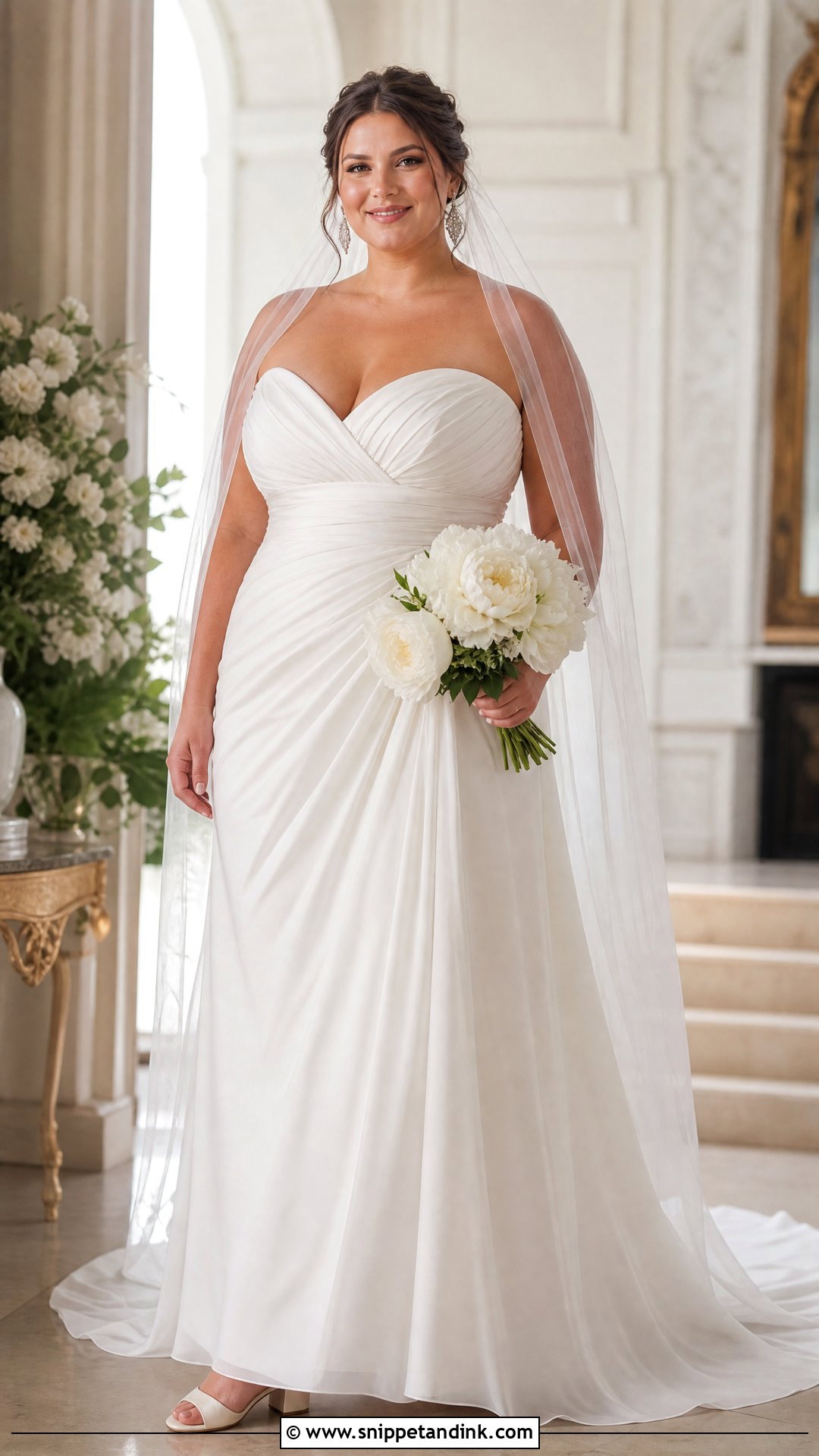
Ruching across the bodice is one of the most adaptable details I work with, because the gathers can be angled to place the eye wherever you like. Diagonal gathers on a supported V-neck or sweetheart bodice, then a wide waistband and a fluid A-line skirt, create shape without needing a tight fit. Add a chapel veil, crystal drops and supportive block heels, with a side-parted low bun. The real value is customization: the waist seam and the angle of the ruching can be moved to suit straight, petite, curvy, and plus-size brides. Buy your shapewear only once the lining is fitted, or you’ll be fitting the dress to the wrong base.
19. Maternity Silk Chiffon Wedding Dress
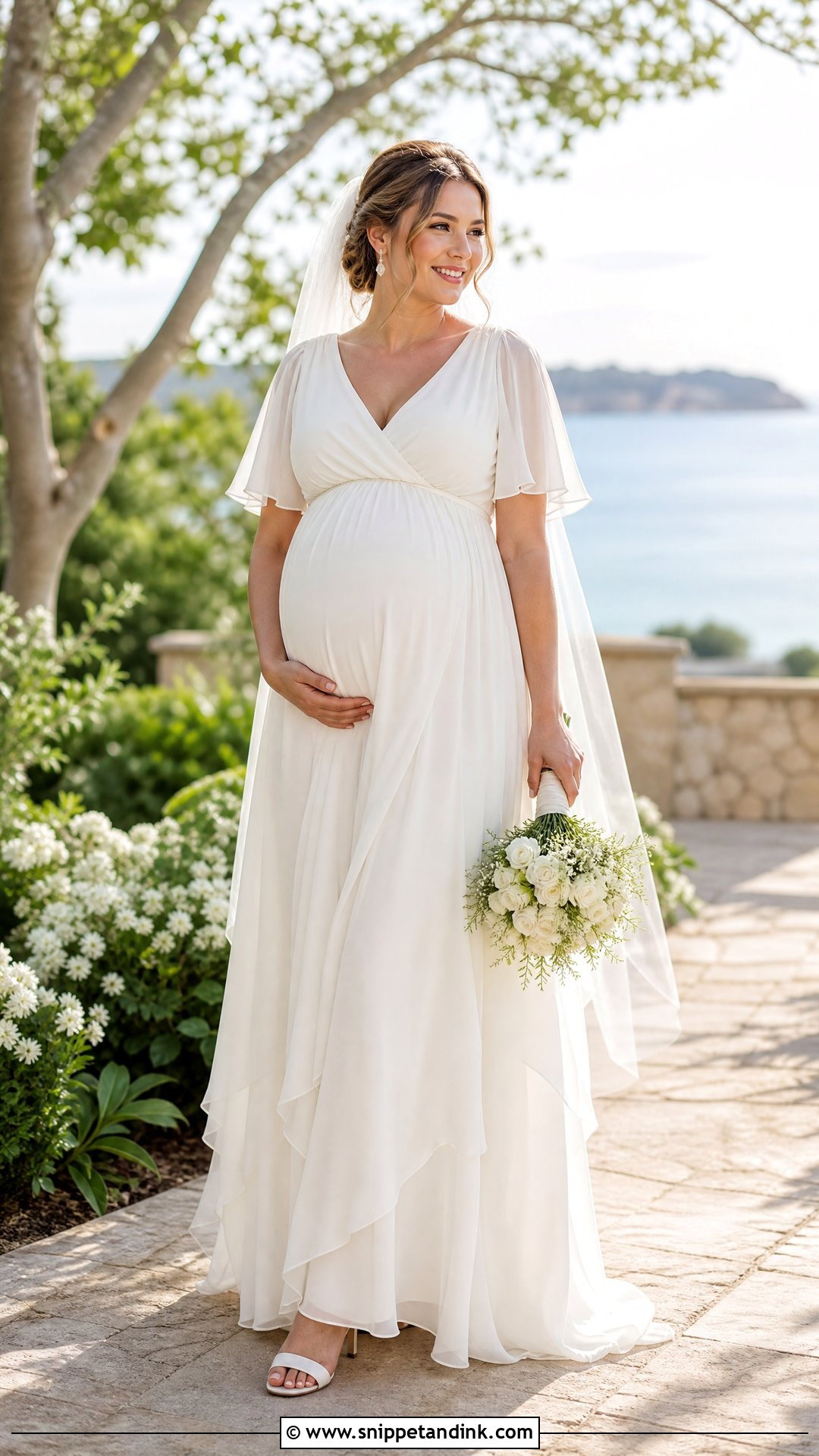
Timing is everything with a maternity silk chiffon wedding dress. An empire waist sitting under the bust lets the layered skirt fall over the bump, and a crossover V-neck with supportive straps or flutter sleeves gives room as the bust changes. I schedule the final fitting as close to the date as the seamstress will allow, often within a week or two, and choose a design with side seams that can be let out. Avoid heavy trains and long rows of buttons. Light earrings, cushioned low heels, a fingertip veil and a loose updo keep you comfortable, and a breathable lining matters more than any trim, since you’ll feel warmer than usual.

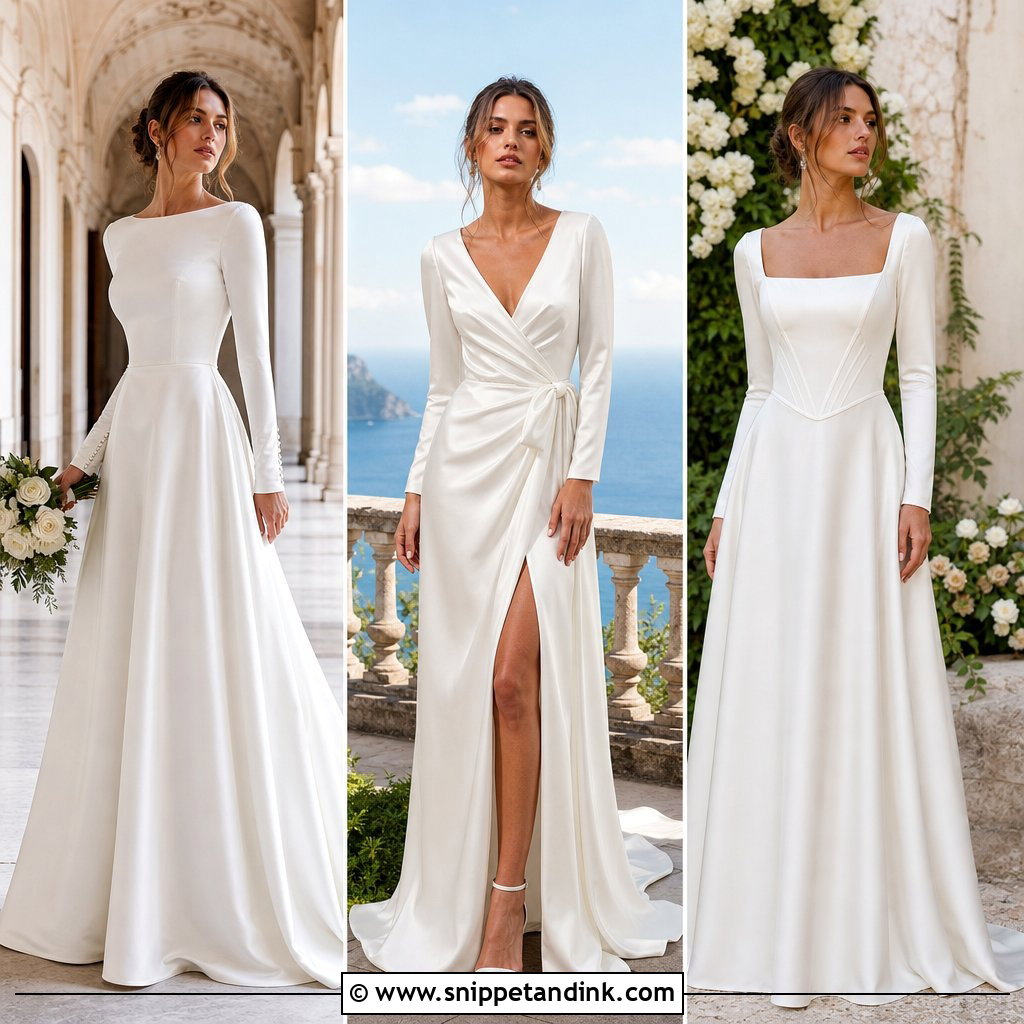

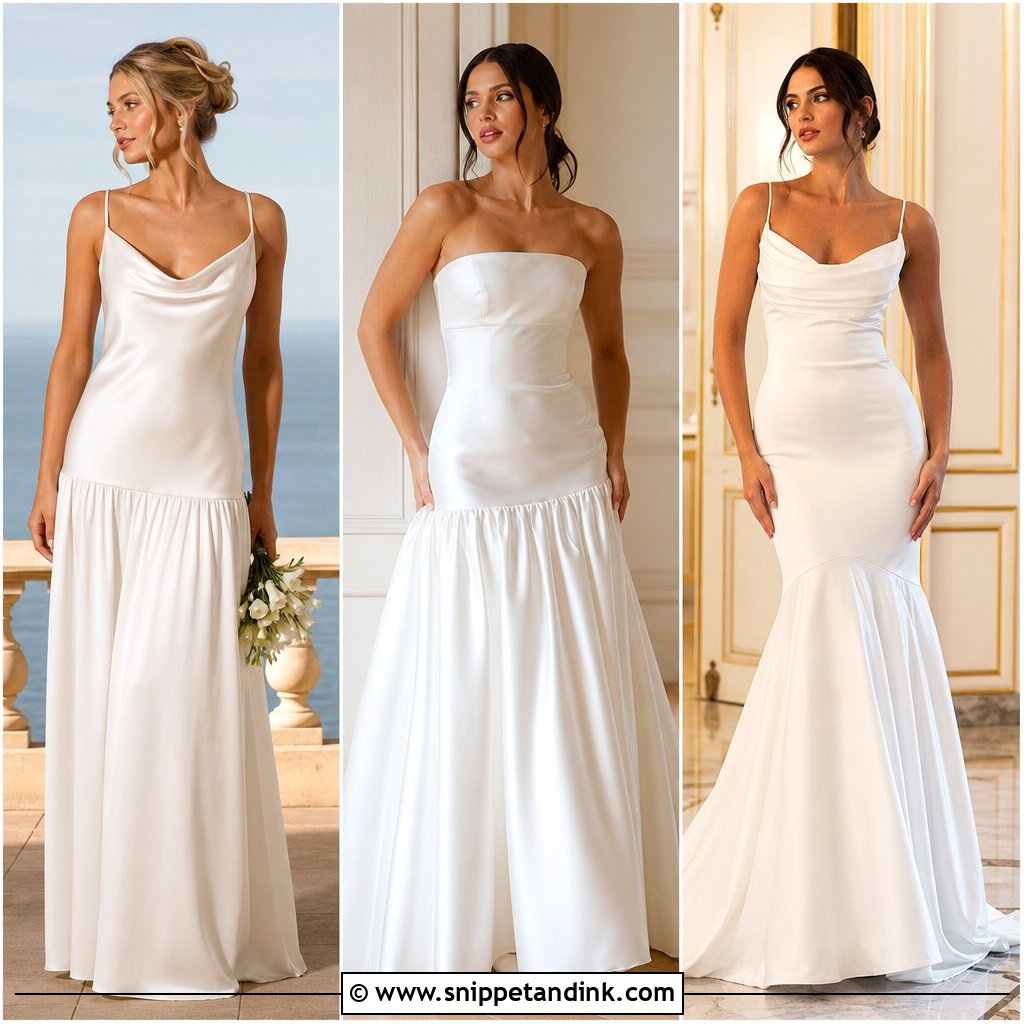

20. Beach Silk Chiffon Wedding Dress
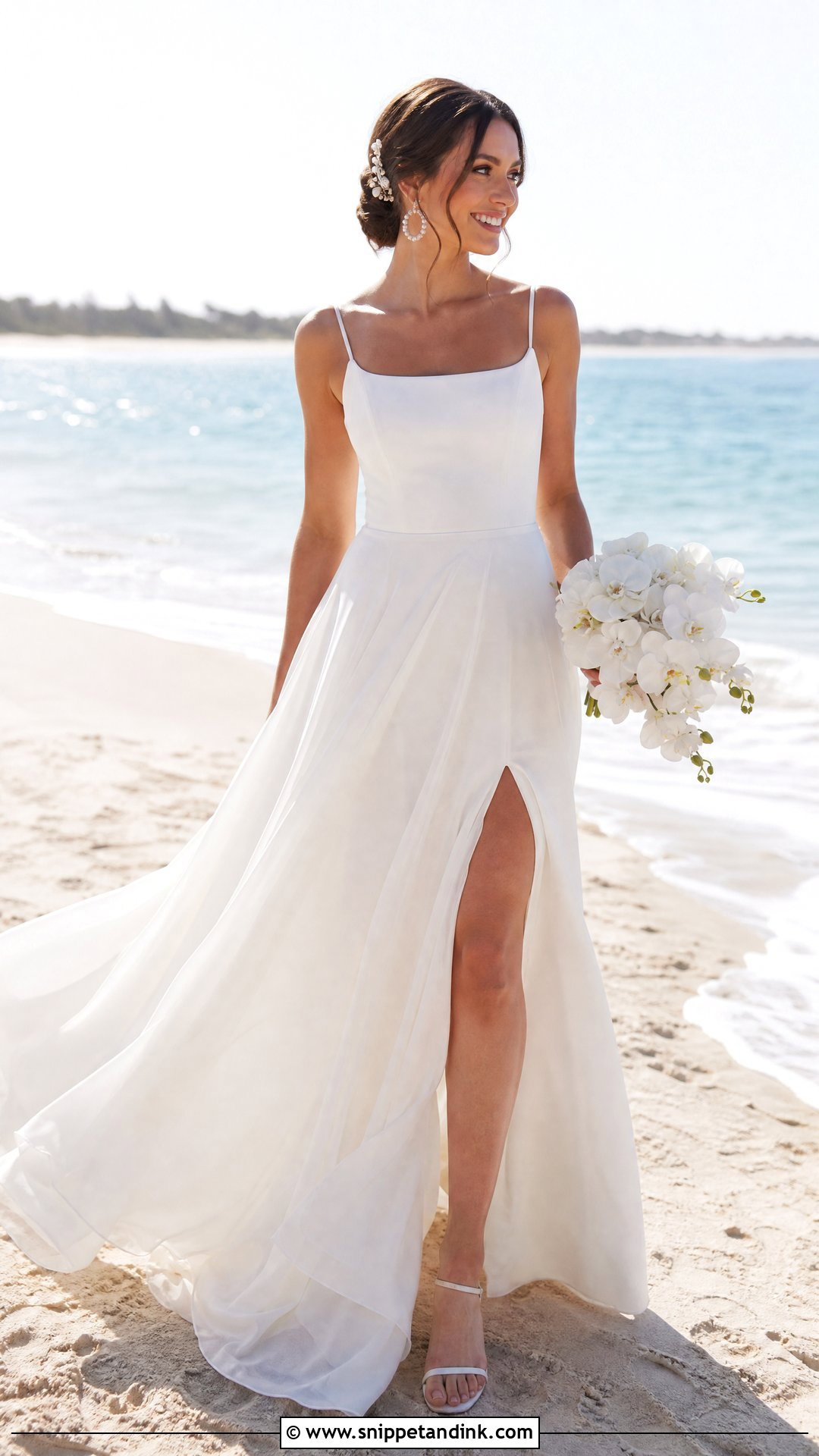
On a beach, chiffon catches the wind like a sail, which is either magical or annoying depending on the length. I keep the hem just skimming the sand, never pooling, and like a modest side slit so you can walk on uneven ground. Slim straps, a lined fitted bodice and a light A-line skirt are enough. Flat sandals, pearl hoops and a comb that anchors windswept waves suit it. Swap a long veil for a short one or a chiffon ribbon, otherwise it will blow across your face in every portrait. A wrist loop or discreet bustle lets you lift the train between ceremony, photos and reception, and keeps it out of wet sand.
Steaming, Transporting and Storing a Chiffon Gown
Chiffon is easy to rescue on the morning if you know what not to do. I never put an iron directly on silk chiffon. A handheld steamer on a low setting, held a few inches away and worked from the inside of the skirt, lifts travel creases in minutes. Test it first on a hidden seam allowance, since some silks mark if they get too wet.
Travelling with it
Ask the salon to stuff the bodice and fold the skirt over acid-free tissue in a breathable garment bag. On a flight, carry it on rather than checking it. When you arrive, hang it from the inner loops, not the straps, so the weight of the skirt doesn’t stretch the shoulders.
After the wedding
Get it to a specialist cleaner within a few weeks. Sugar from champagne or cake can be invisible on the night and turn yellow months later, and the hem will be carrying grass, sand or dance floor dirt. For long-term storage, keep it folded in acid-free tissue inside a cotton bag or archival box, somewhere cool and dark. Plastic traps moisture, and a chiffon gown left hanging for years can slowly drop and distort at the shoulders.
Fit the Fabric First, Then Style Around It
Silk chiffon can be cut into almost any bridal shape, from a tea-length party dress to a corseted strapless gown, and each one moves differently. What changes the result most is what’s underneath: the lining, the waist placement and how the bodice is supported. Settle those at your fittings, bringing your real shoes and underwear every time, and think about the weather and ground you’ll actually be standing on. Accessories come last. A plain veil and a few good pieces of jewelry will always sit better against chiffon than a lot of sparkle competing with its movement.
You'll Like These Ideas:





Leave a Reply