
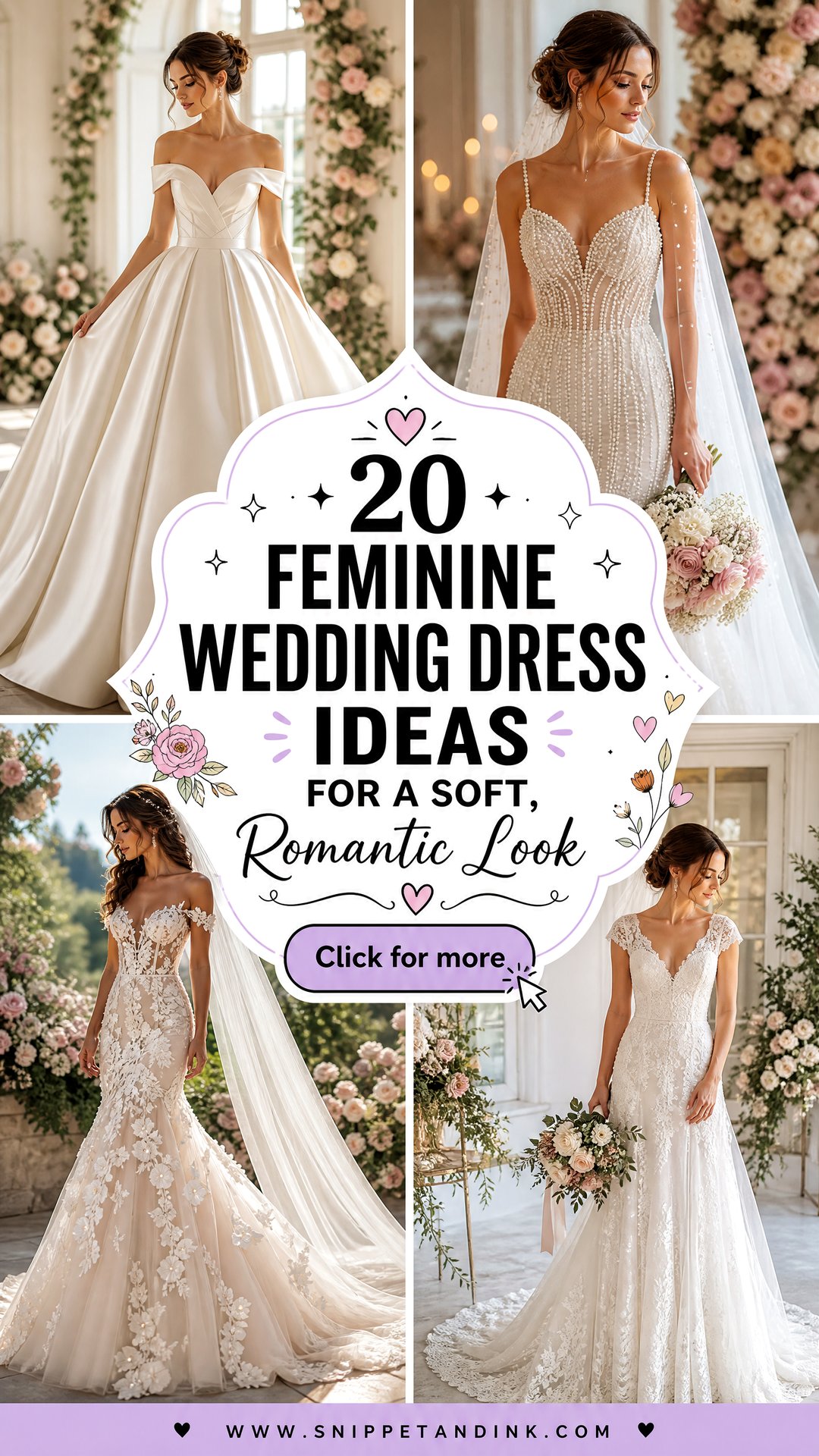
Soft Gowns Live or Die by the Fabric, Not the Photo
Most brides arrive at an appointment with screenshots of a silhouette. I ask about the venue and the month first, because the same A-line reads very differently in heavy satin than in chiffon, and the fabric decides how the dress behaves on the day.
- Tulle and chiffon are light and move with you, so they suit summer, gardens and long dancing. They crush less than satin but snag on beading, bracelets and rough stone.
- Satin and mikado hold structure and look formal, but they show creases after sitting and feel warm in a marquee in July.
- Lace hides small creases well. The lining underneath matters more than the lace itself for comfort and coverage.
- Crepe is smooth and modern, and it skims the body, so it shows underwear lines and needs accurate fitting.
In the fitting room, sit on a chair for a couple of minutes, then stand and look at the skirt. That small test tells me more about how the gown will look in the reception photos than any number of mirror turns.
Timing the order
Made-to-order gowns usually take several months to arrive, and alterations need two or three fittings on top of that. I’d aim to order roughly eight to ten months out where you can, and keep the final fitting within a few weeks of the wedding so any change in your shape is caught.
1. Lace A-Line Wedding Dress
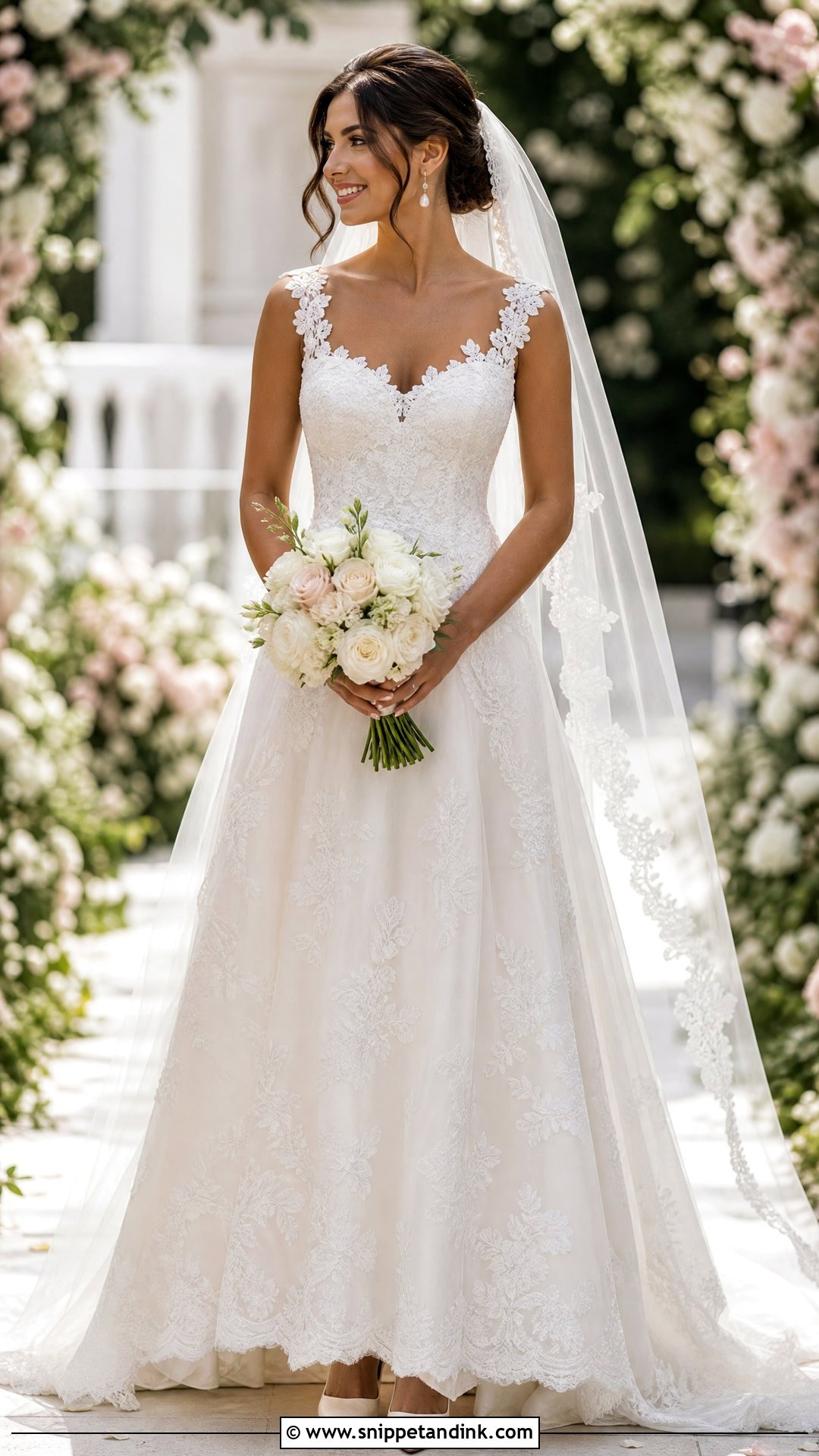
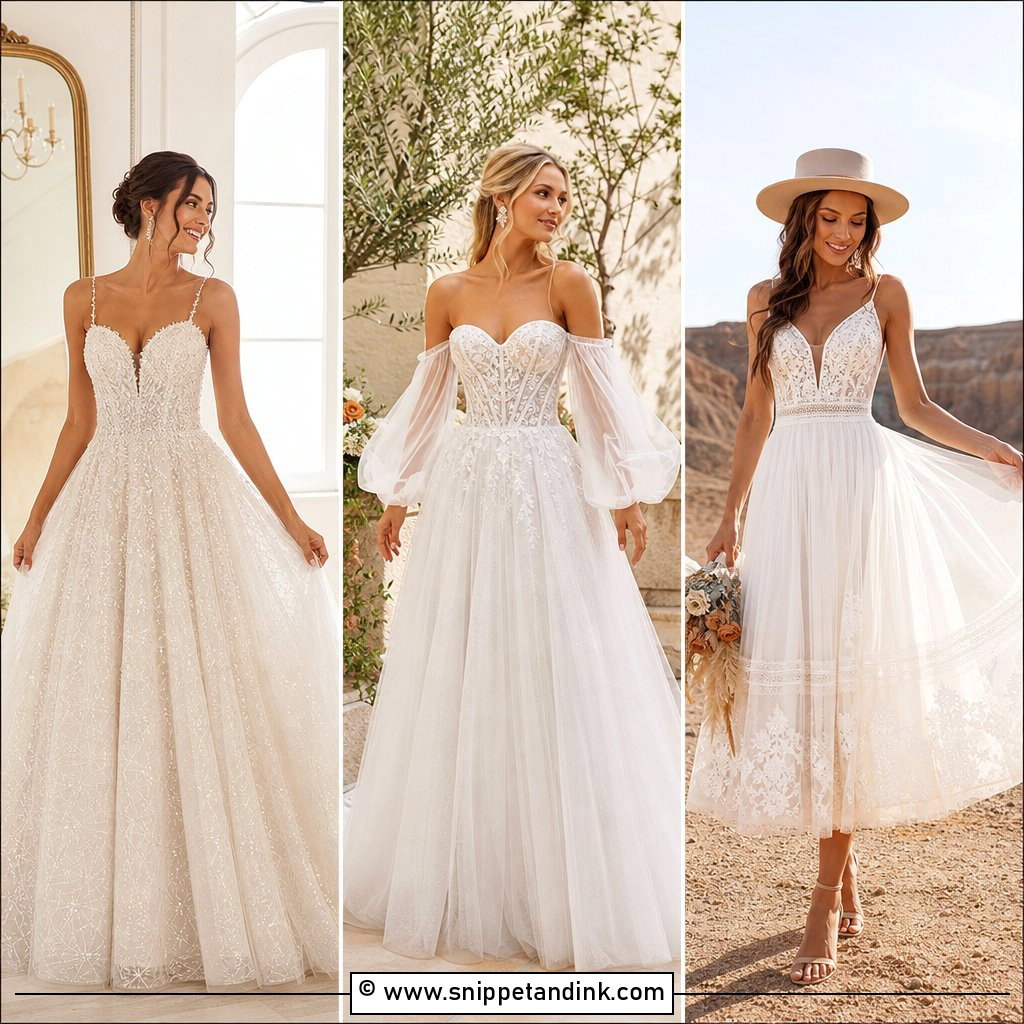
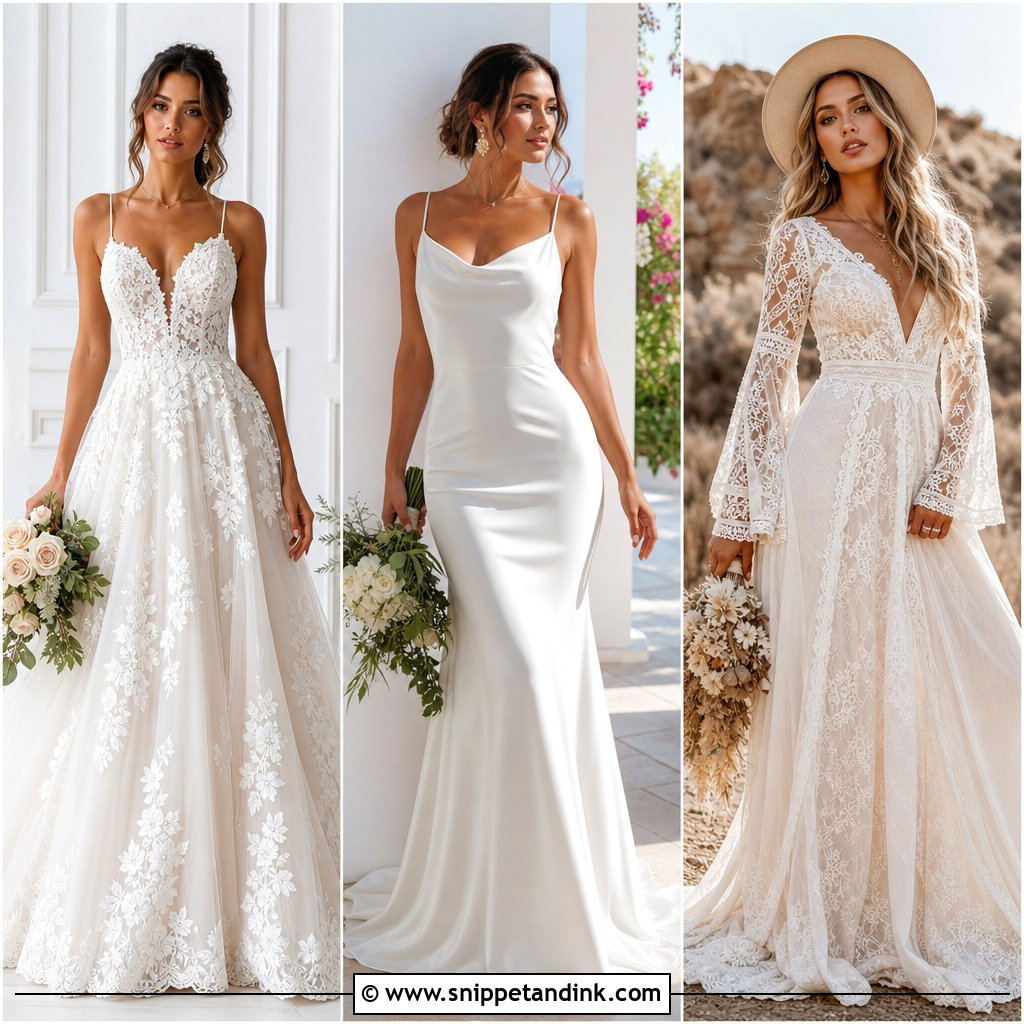
Lace on an A-line is where I start most brides who say they want something soft but not theatrical. The fitted bodice holds the lace flat against the ribs, the natural waist gives the eye a resting point, and the skirt opens gradually, so the hips have room to move. I’d add a fingertip veil with a narrow lace edge rather than a wide border, because two heavy laces side by side start to argue. Pointed ivory pumps lengthen the leg line, pearl drops catch light near the face, and a loose low bun keeps the neckline clear. For an outdoor ceremony, ask what the lining is made of: lightweight lace over a polyester lining can trap heat, while a breathable lining makes walking, sitting and dancing far more bearable.
2. Satin Ball Gown Wedding Dress
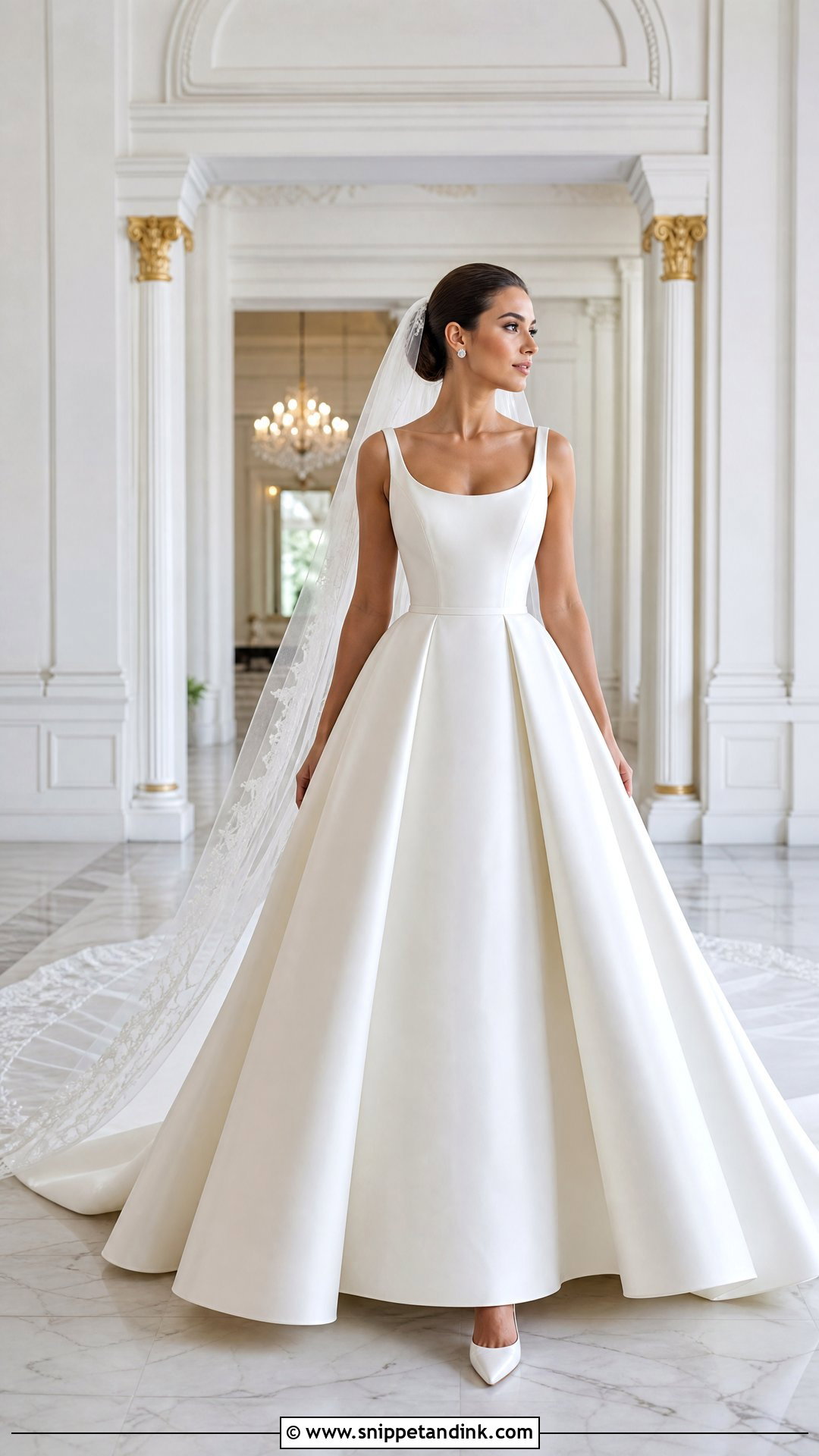
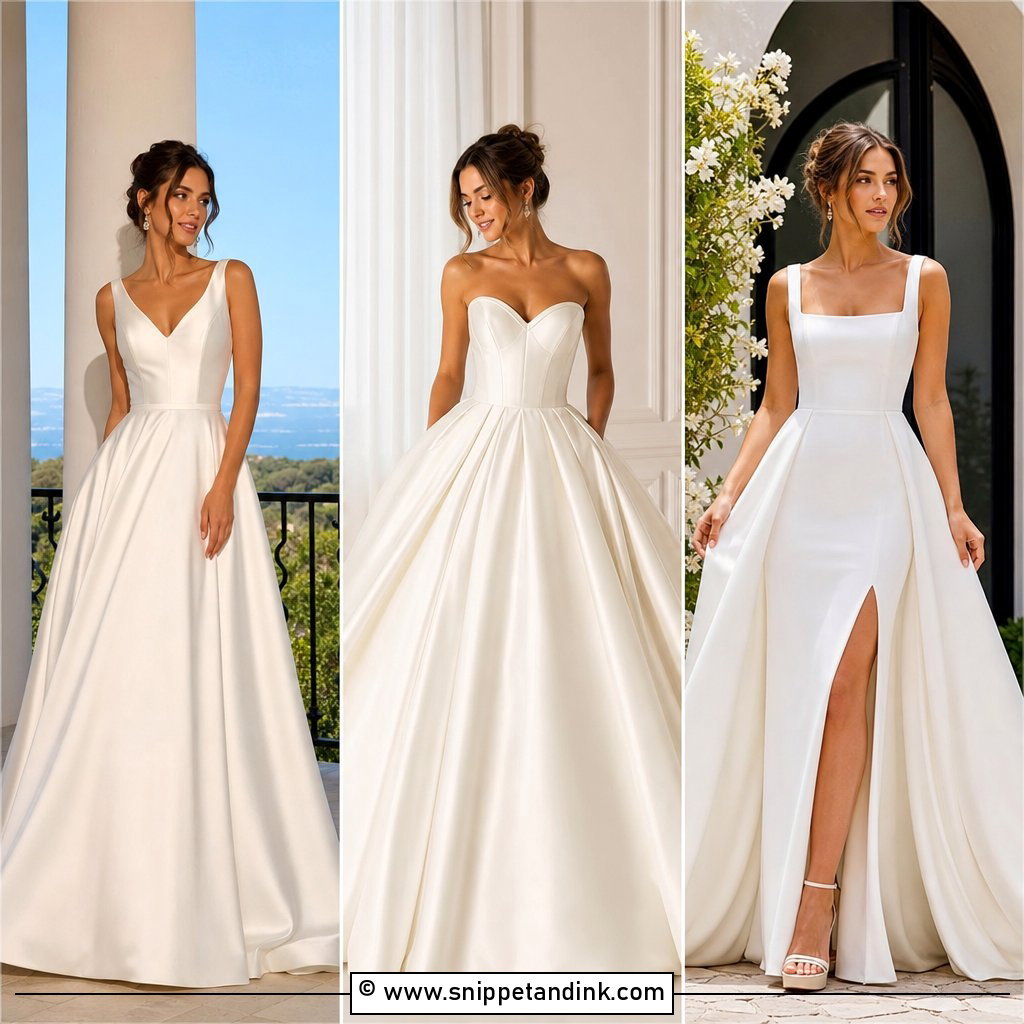
Satin does the work here, so the ball gown itself can stay plain. I look for a structured bodice with a softly curved neckline and a full skirt in clean, pressed pleats rather than heavy embellishment, because satin’s sheen already reads as decoration from the back of a church. A cathedral veil suits a formal ceremony; a shorter blusher keeps it quieter. Crystal studs, one slim bracelet and pointed satin heels are plenty. The thing I always raise at a first appointment is weight. A full satin skirt over layers of crinoline gets heavy by hour six, so ask about a lighter internal hoop or horsehair support, and have the bustle shown to you before the final fitting, not on the morning.
3. Basque Waist Wedding Dress
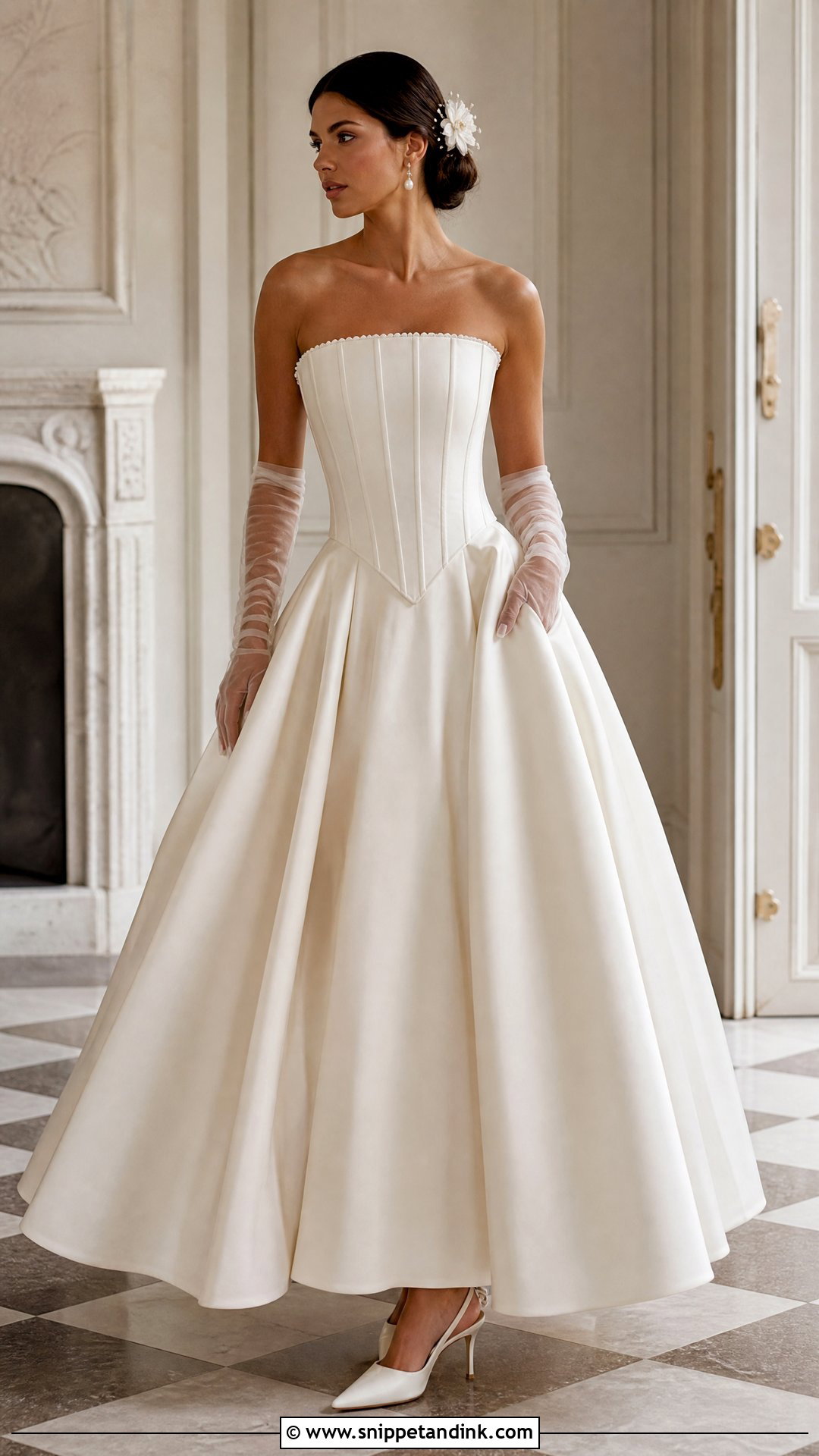
The basque waist dips into a shallow V at centre front, which draws the eye downward and makes the torso look longer than a straight waistline does. It pairs naturally with a corset-inspired top and a flowing satin or tulle skirt. This is the cut where alterations matter most to me: if the point of the V sits even slightly off centre, or the bodice pinches at the side seams, everyone notices. A chapel-length veil leaves the waist visible. Pearl earrings, ivory slingbacks and a small floral comb above a low bun are enough, and detachable sheer gloves add a historical note if you like that. I’d keep everything else quiet, since the waistline is the detail people will remember.
4. Off-the-Shoulder Tulle Wedding Dress
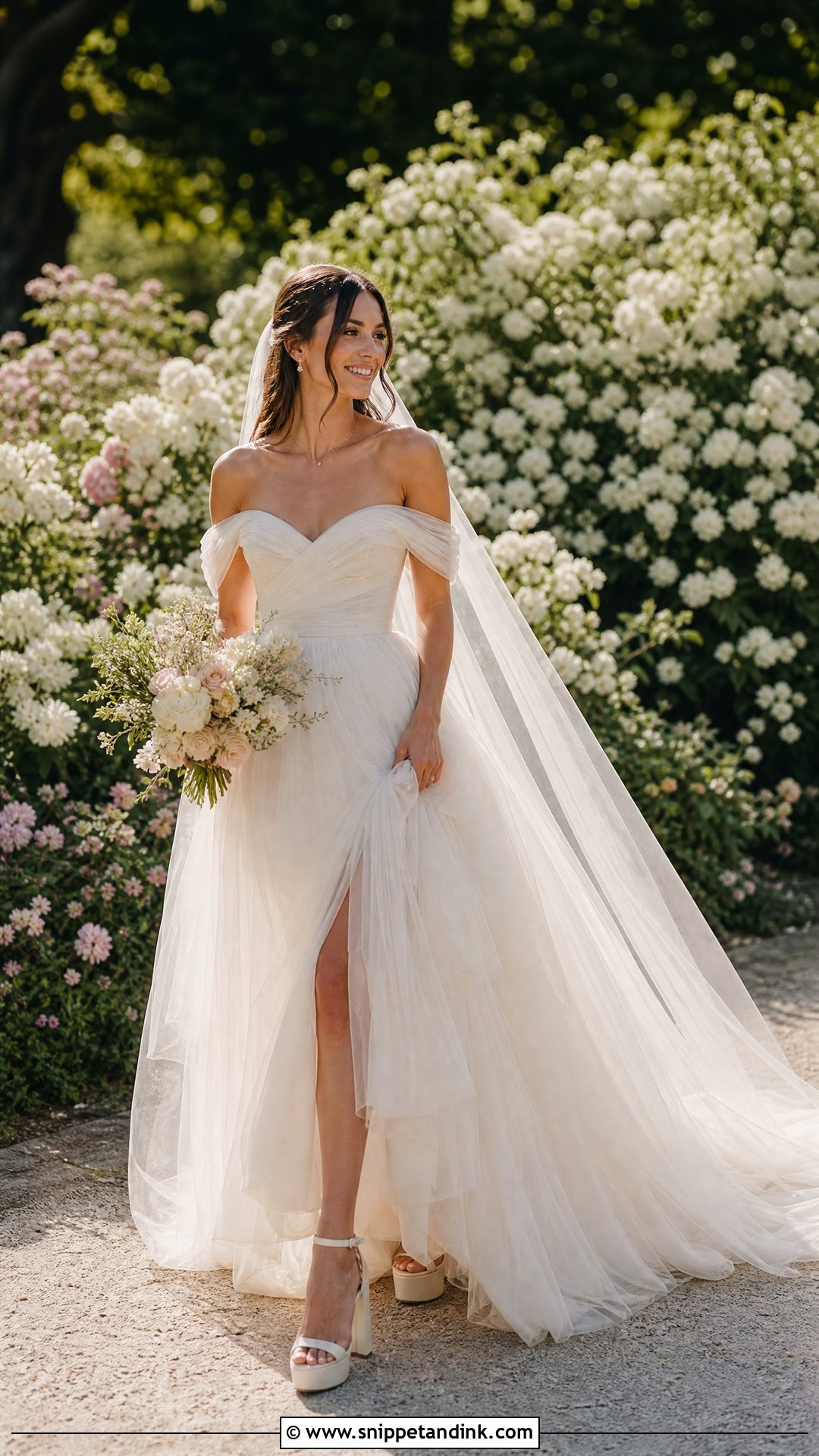
Off-the-shoulder tulle is romantic, but it only stays that way if the bodice underneath is built properly. The draped sleeves rest on the upper arm, not the shoulder, so the gown relies on boning and a firm inner band to stay up. I ask brides to lift their arms and hug someone at the fitting; if the sleeves ride up or the bodice slips, it needs more structure before anything else. A delicate pendant, small pearls and a fine bracelet are all the neckline can take. Wear a loose updo or waves swept back, choose ivory block heels for a lawn ceremony so you don’t sink, and let a sheer veil fall just beyond the train.
5. Long Sleeve Lace Wedding Dress
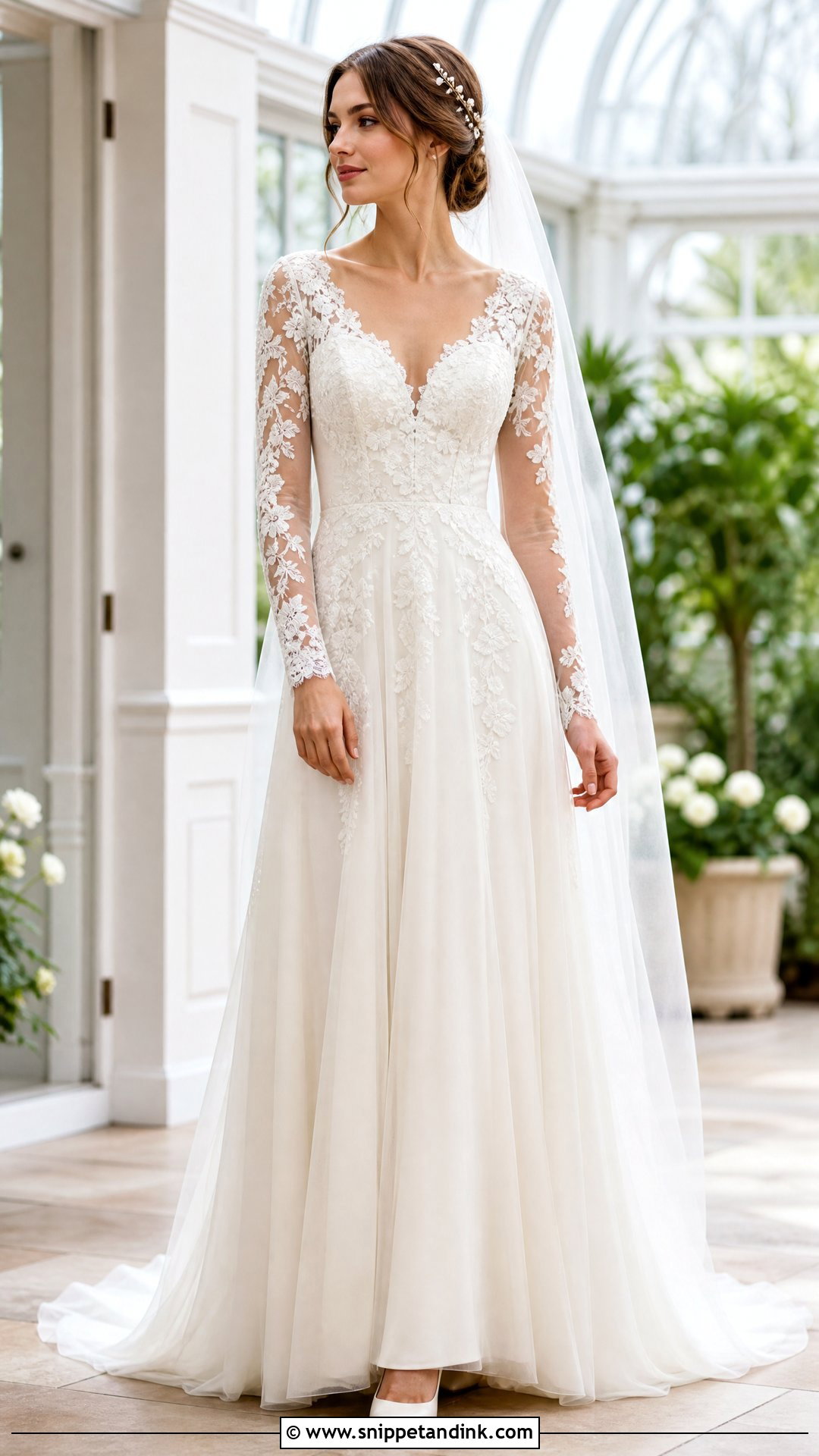
Long lace sleeves give coverage without weight if you choose the right kind. I steer brides toward sheer fitted sleeves with scattered appliqués rather than fully lined lace, which can look heavy in photos and feel hot by the reception. A soft V or bateau neckline keeps the upper body open. Closed-toe ivory pumps and a plain tulle veil let the lace stay the only texture, and a few pearl pins in a textured bun echo it without matching it. For a cold-weather ceremony, a clean ivory wrap comes off indoors. Before alterations are finished, bend, reach and lift your arms: a sleeve set slightly too low at the shoulder will pull the whole bodice up every time you wave.
6. 3D Floral Wedding Dress
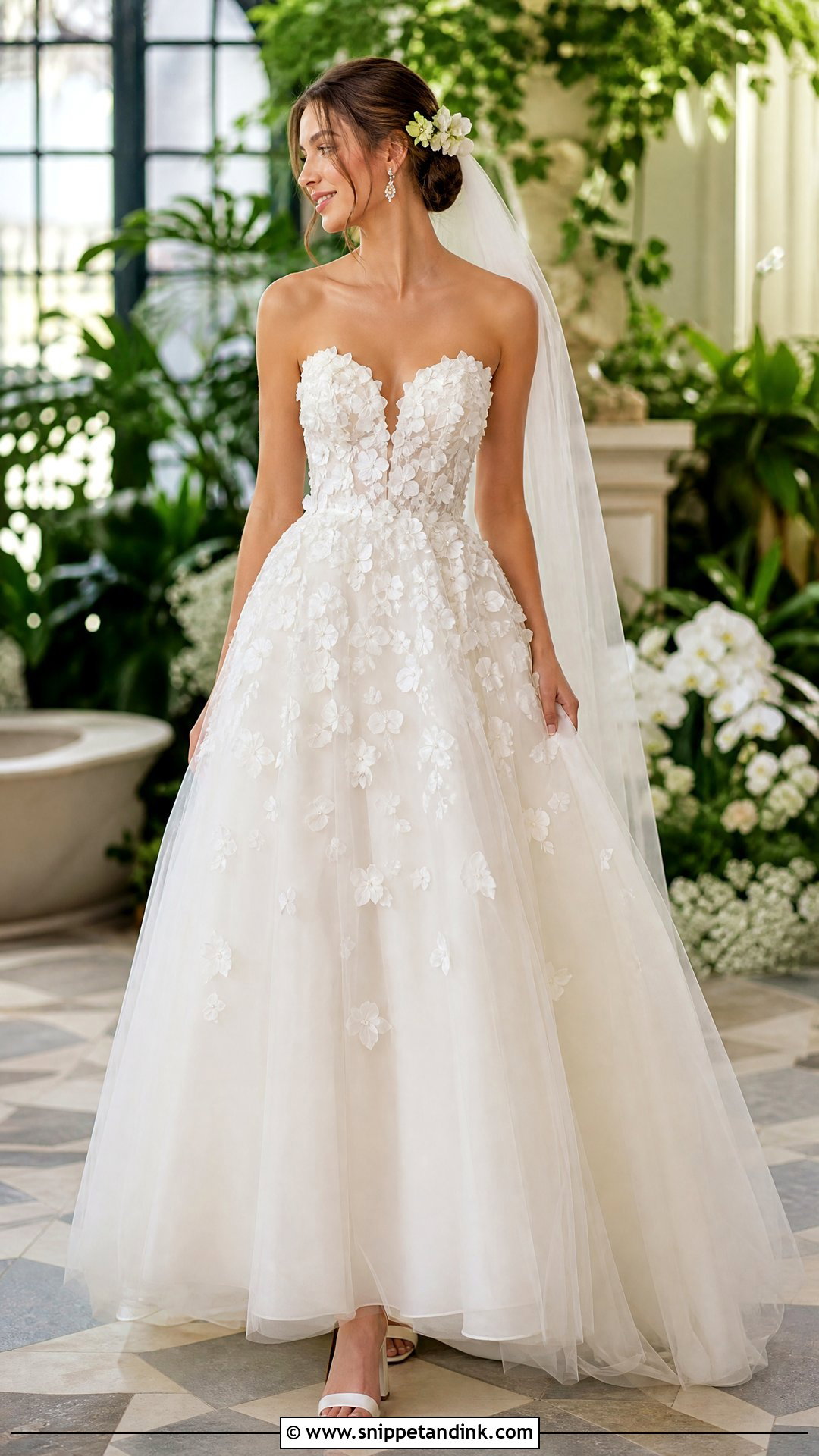
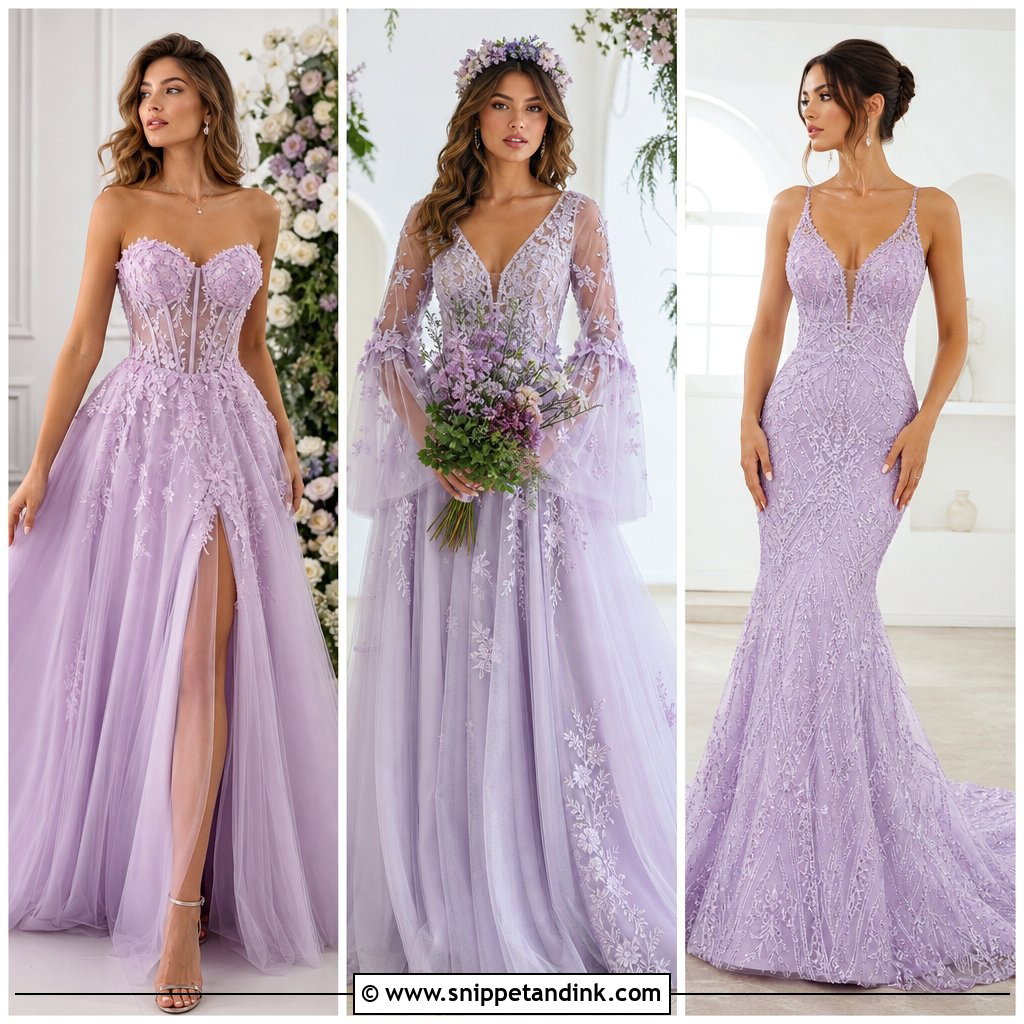
Three-dimensional flowers add texture you can see from across a room, and placement decides whether they flatter or overwhelm. I like them concentrated on the bodice and thinning out as they travel down a tulle skirt, so the weight of decoration sits near your face. A strapless or softly scooped neckline gives the blooms space. Keep the veil plain, with no lace or beading, otherwise it competes and snags on the petals. One practical point: raised appliqués catch on bouquets, sleeves and hugs, so check how firmly each is stitched. A few fresh flowers in a low bun suit a garden or botanical venue, but only a few.
7. Pearl Beaded Wedding Dress
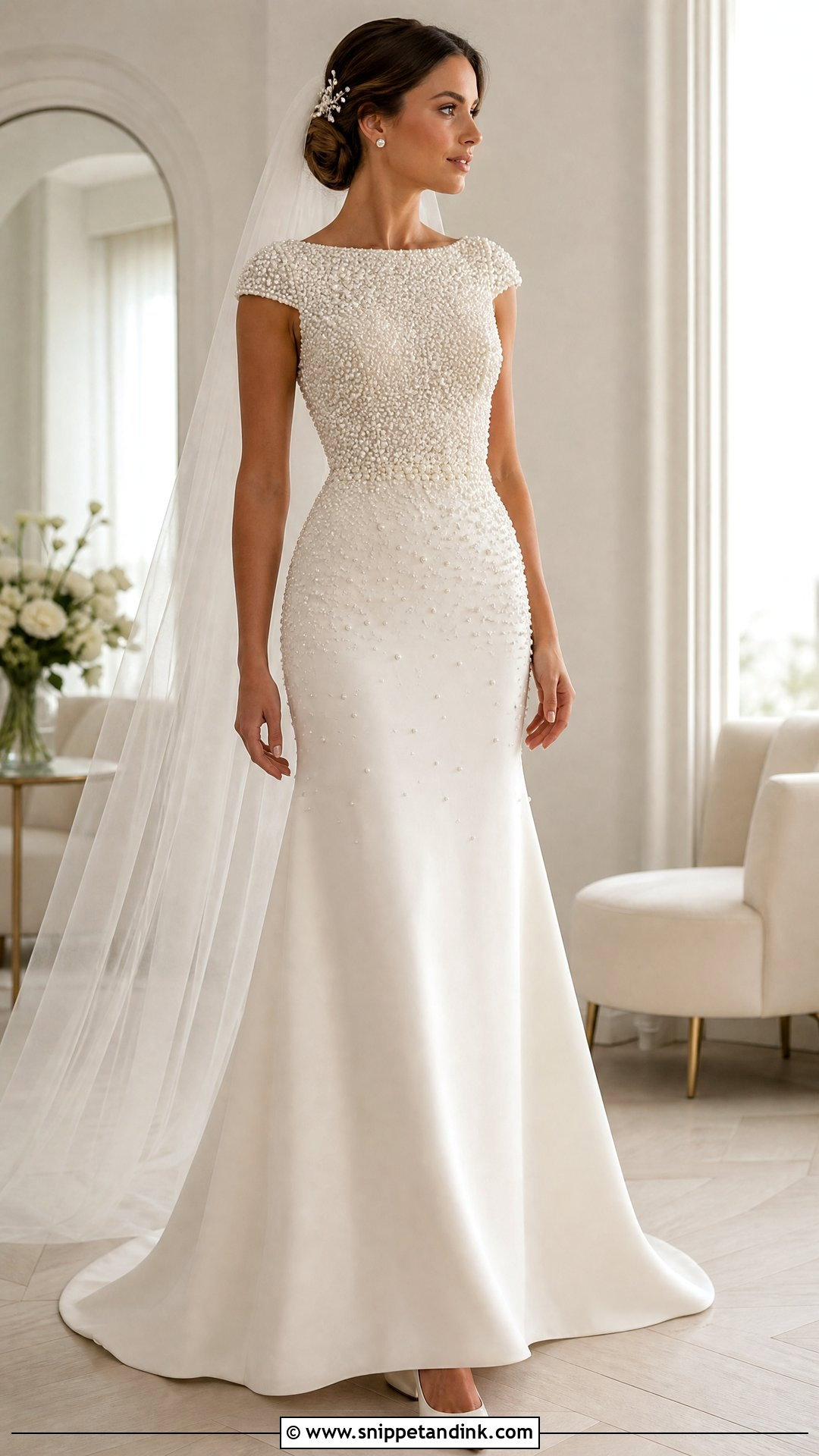
Pearls give a soft glow rather than sparkle, which is why I suggest them to brides who find crystals too bright. Look for pearls scattered across the bodice, neckline or sheer sleeves with bare fabric left between them; a fully encrusted bodice gets heavy and loses that luminous quality. An A-line or fitted column keeps the line clean. Echo the theme with pearl studs and a single hair accessory, not a matching set. Pointed satin heels, a structured ivory clutch and a plain chapel veil finish it. Before you buy, run your hand over the beadwork and drape the veil over it. Loose pearls and veils that catch on them are the two problems I see most with this style.
8. Square Neck Wedding Dress
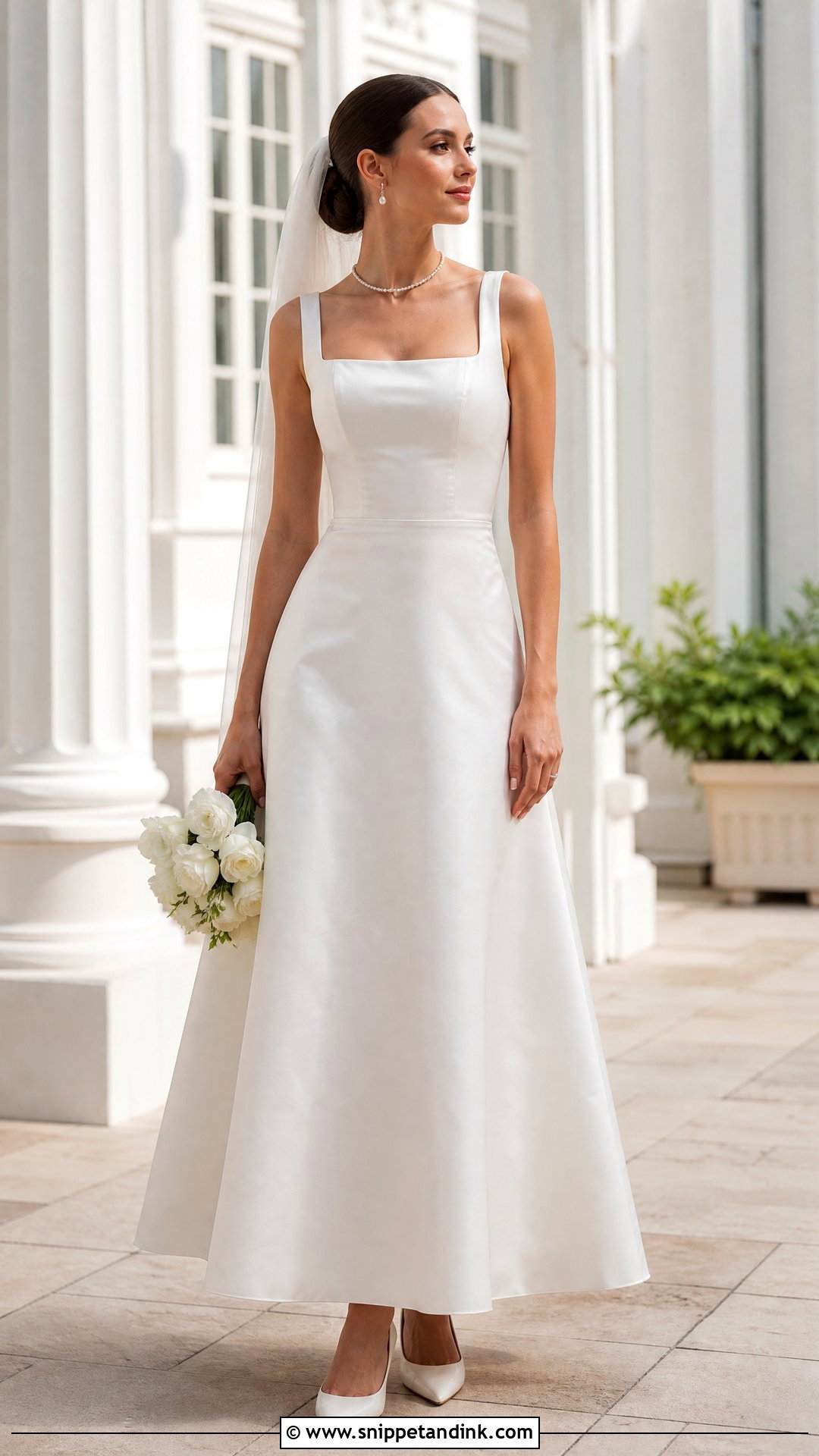
A square neckline is clean and classic, and it frames the collarbone with wide straps that spread support across the shoulders. Pair it with a fitted bodice and a softly flared skirt in satin, crepe or floral jacquard. A short pearl necklace or fine pendant can fill the open space, and drop earrings with a smooth low bun keep the lines tidy. I’d choose almond-toe pumps over sharp points here, since the rounded toe softens the geometry of the neckline. This is a cut that depends entirely on tailoring: the straight edge has to sit flat against the chest, and if it gapes when you lean forward, ask your seamstress to take it in at the side seams.
9. Scoop Neck Wedding Dress
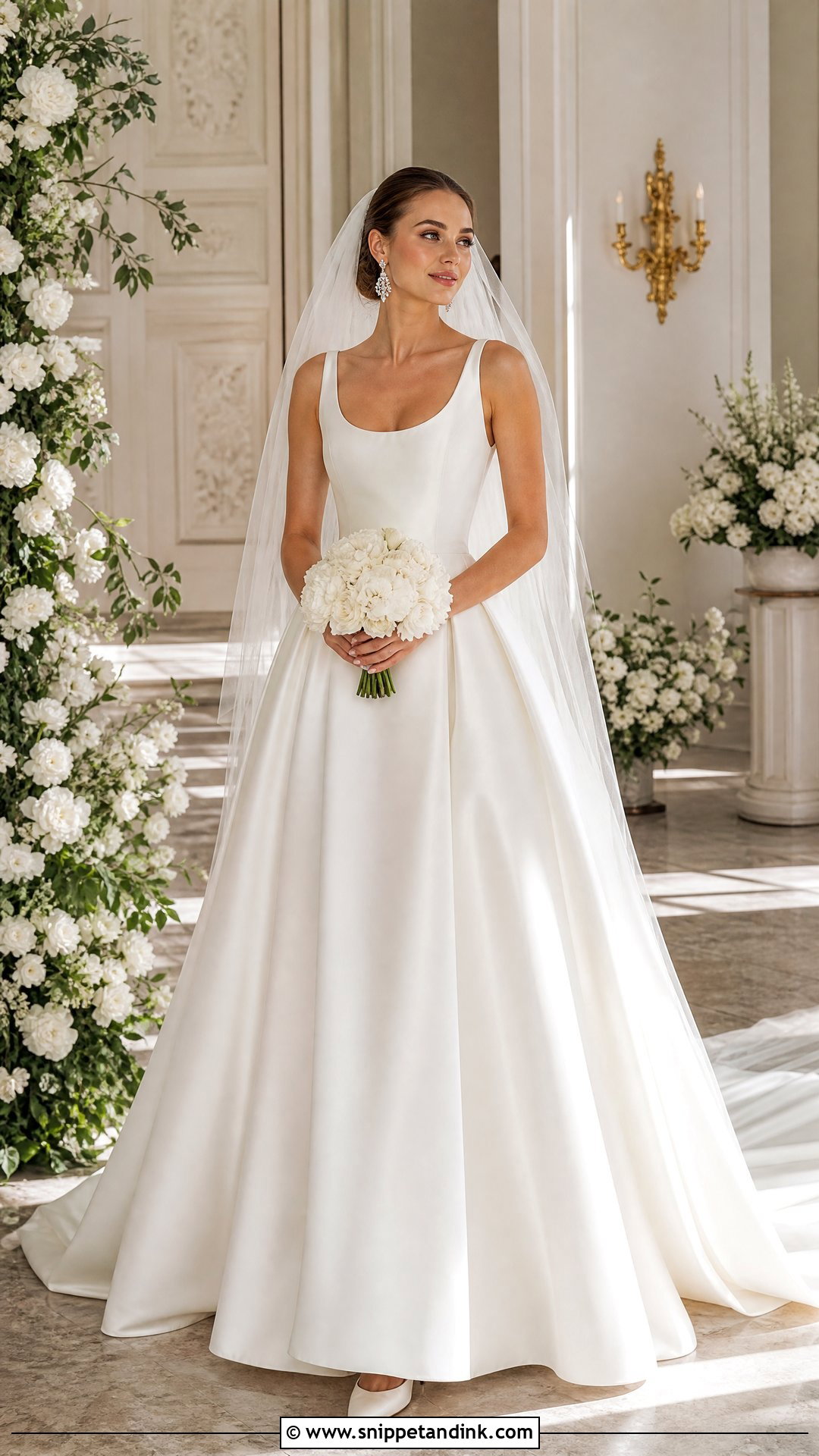
A scoop neck frames the face and décolletage with a gentle curve, and it suits more bust shapes than people expect. I usually pair it with a fitted satin bodice, wider straps for support, and either an A-line or a full pleated skirt. Small diamond or crystal earrings and a sheer cathedral veil are enough. Decide on hair based on how much neckline you want seen: polished waves cover more, a half-up style shows some, and a smooth low chignon shows all of it. During fittings, sit down. A scoop that looks right standing can gape at the centre when you’re seated at dinner, and that’s the moment to ask for adjustments.
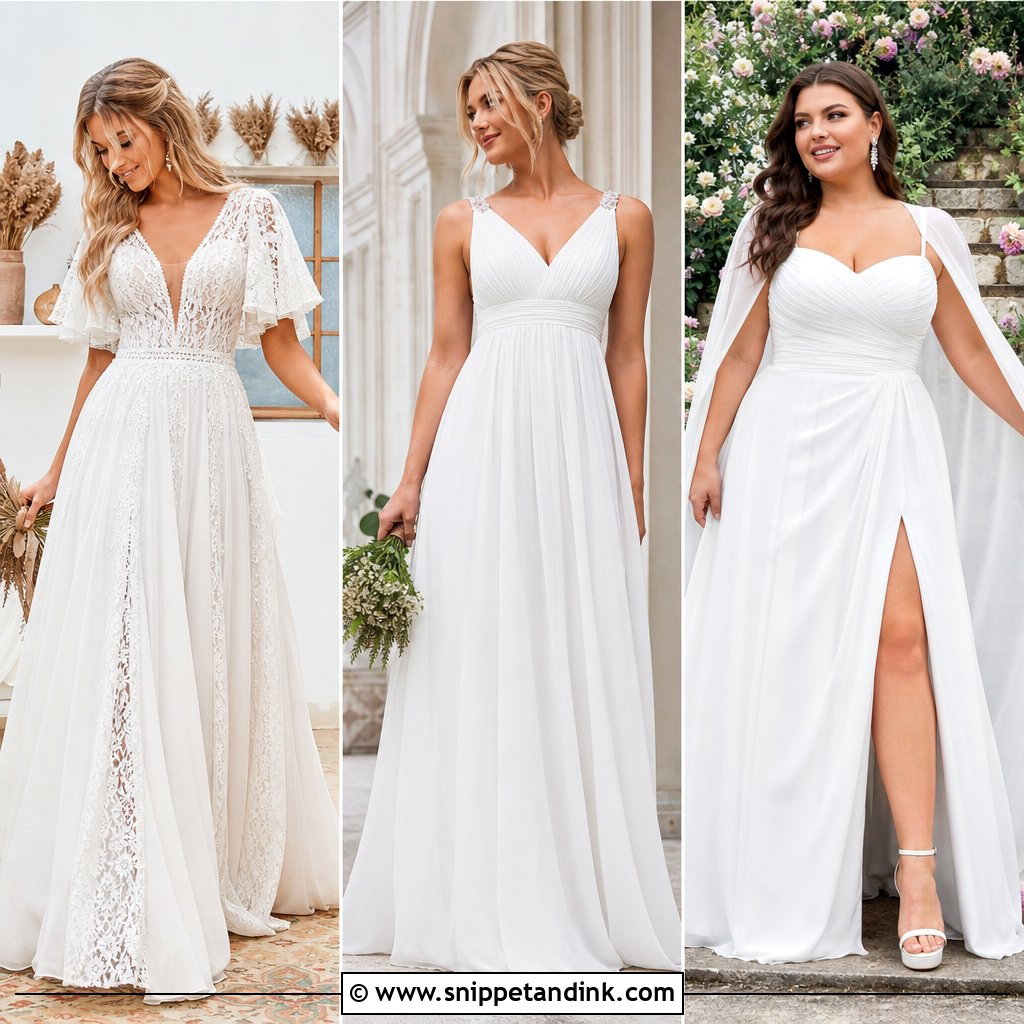
10. Draped Chiffon Wedding Dress
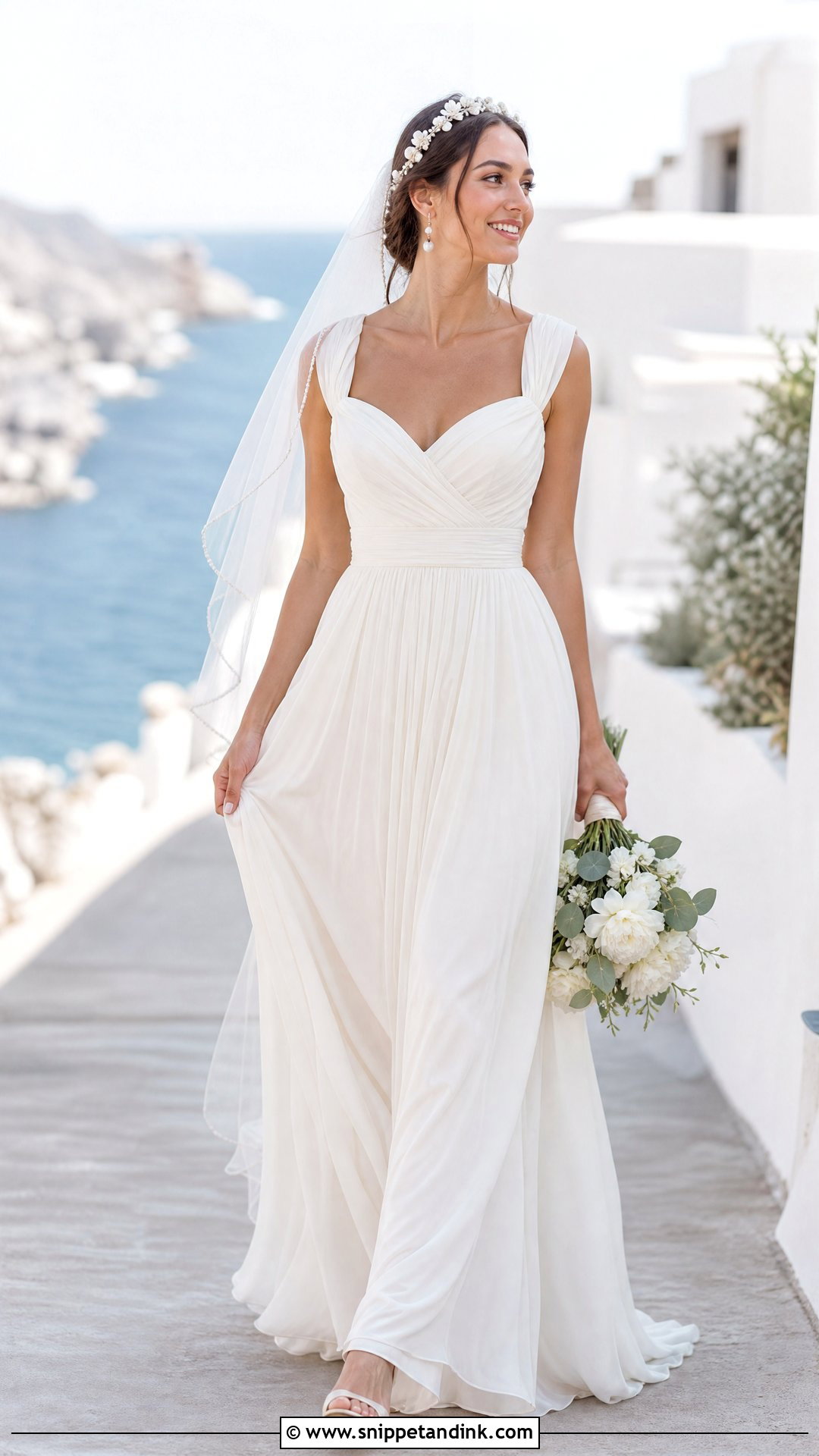
Chiffon moves with every step, which is its whole appeal. I look for a draped bodice, a softly defined waist and a skirt that skims rather than clings; gentle gathers give shape without stiffness. Footwear depends on the ground, so choose metallic sandals for stone or ivory block heels for grass. A narrow floral headband, drop earrings and a lightweight fingertip veil keep the mood airy, and loose waves or a softly twisted updo follow the fabric’s movement. The problem with chiffon is that it can be sheer. I always look at the lining in daylight and under a flash, because backlighting in an outdoor ceremony shows far more than a fitting room does.
11. Ruffle Tiered Wedding Dress
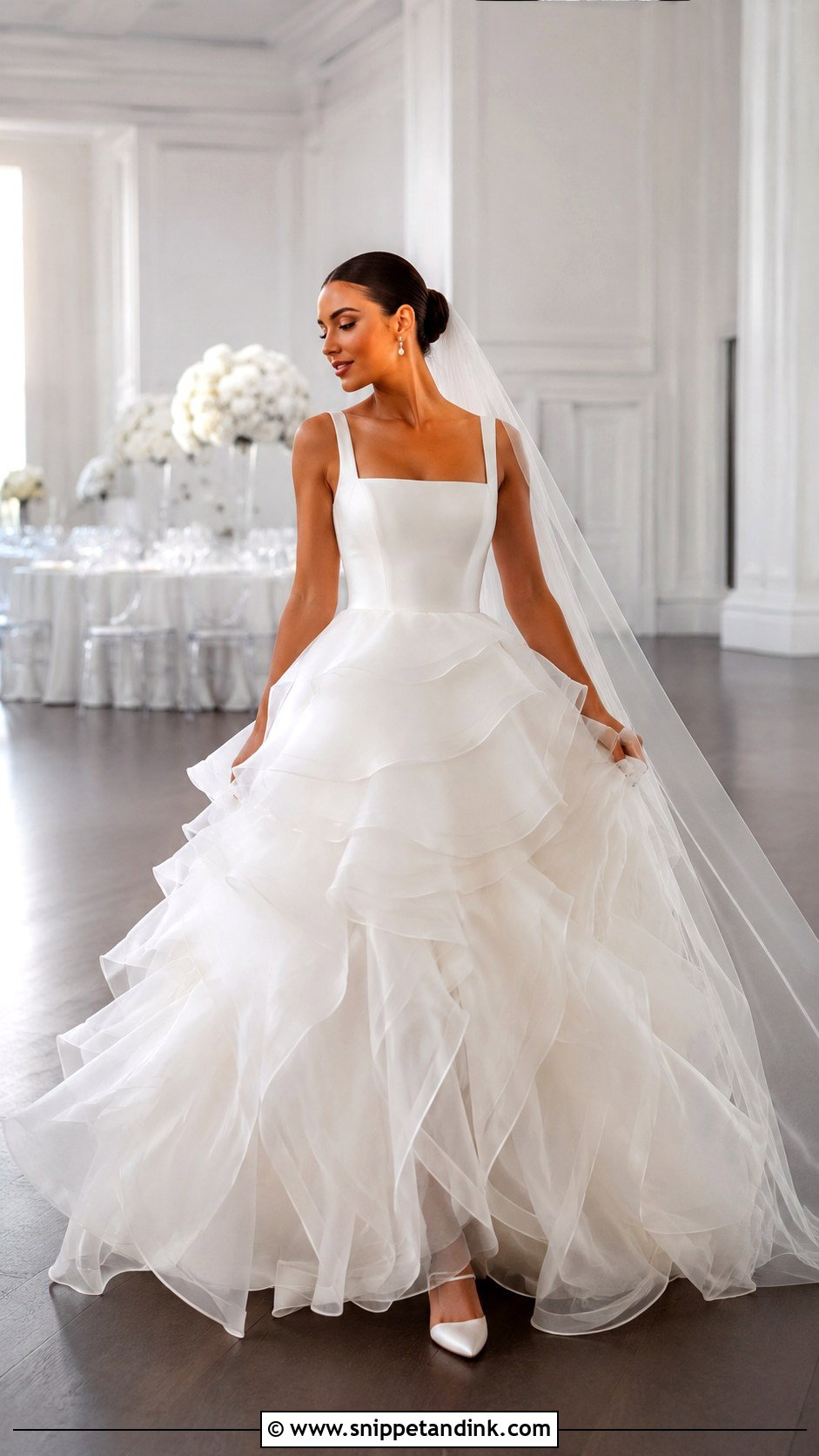
A ruffle tiered wedding dress brings volume and movement, but the fabric decides whether it looks light or bulky. Soft organza or tulle tiers fall smoothly; stiffer fabrics stack up and widen the hips. A simple fitted bodice balances all that texture below. I keep jewellery to pearl studs or small crystal drops, the veil plain and the hair sleek, because a tiered skirt is already busy. For an outdoor wedding, ask how the bustle works with tiers. Some layers need several hooks each, and a bustle that drops halfway through the first dance is a common complaint with this style.
12. Bow Back Wedding Dress
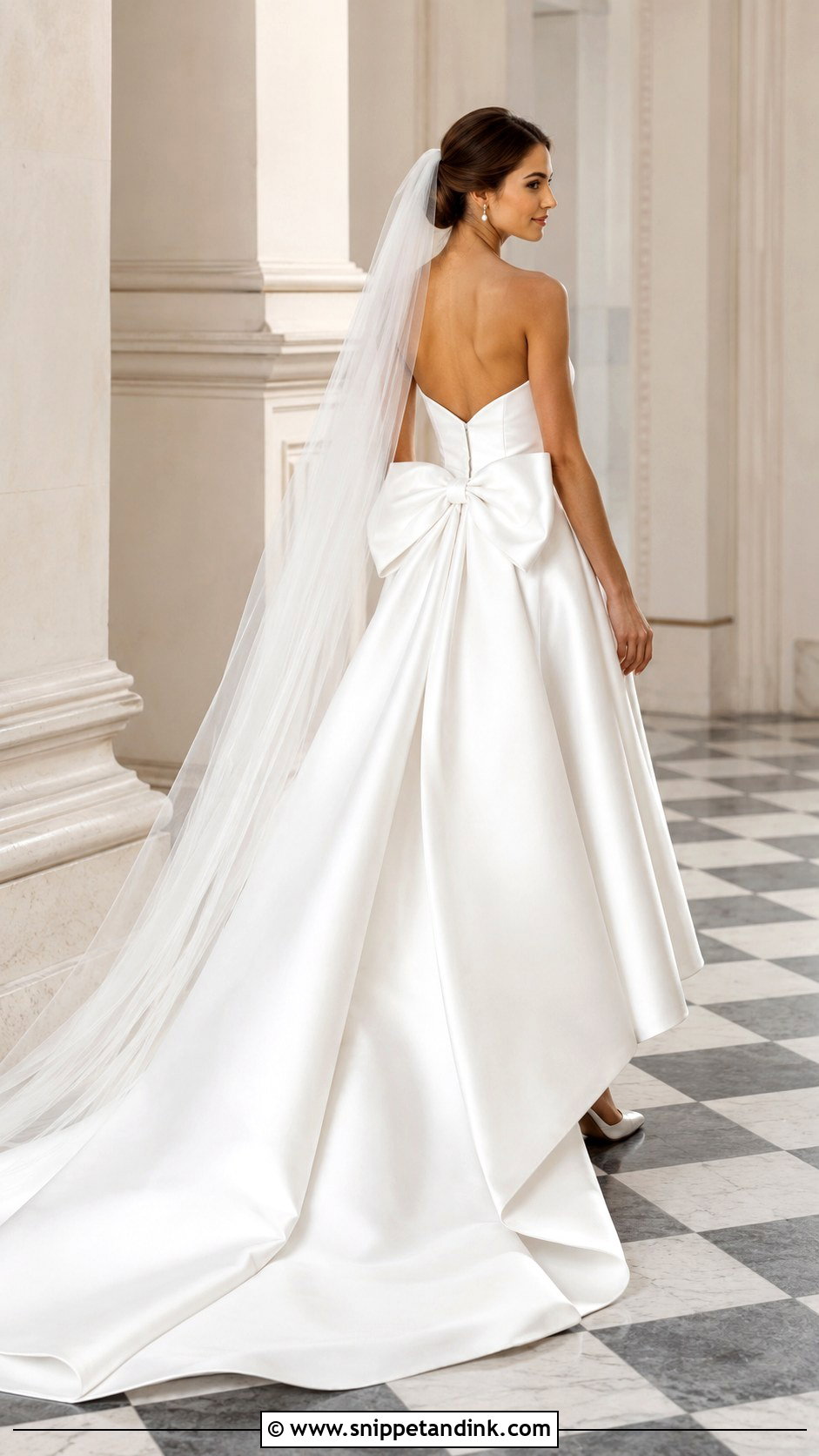
A bow at the back gives guests something to look at during the ceremony, when they spend most of their time behind you. Choose a structured satin gown with a bow sized to your frame and placed at the waist or the top of the train; a bow that’s too large drags the eye down. The front can stay strapless, square or softly scooped. I’d plan a veil you can remove after the ceremony so the bow shows at the reception. If it’s detachable, have a bridesmaid practise fastening it before the day. Bows tend to twist or droop once you’ve been sitting, and a quick re-fix between photos keeps it looking crisp.
13. Floral Appliqué Mermaid Wedding Dress
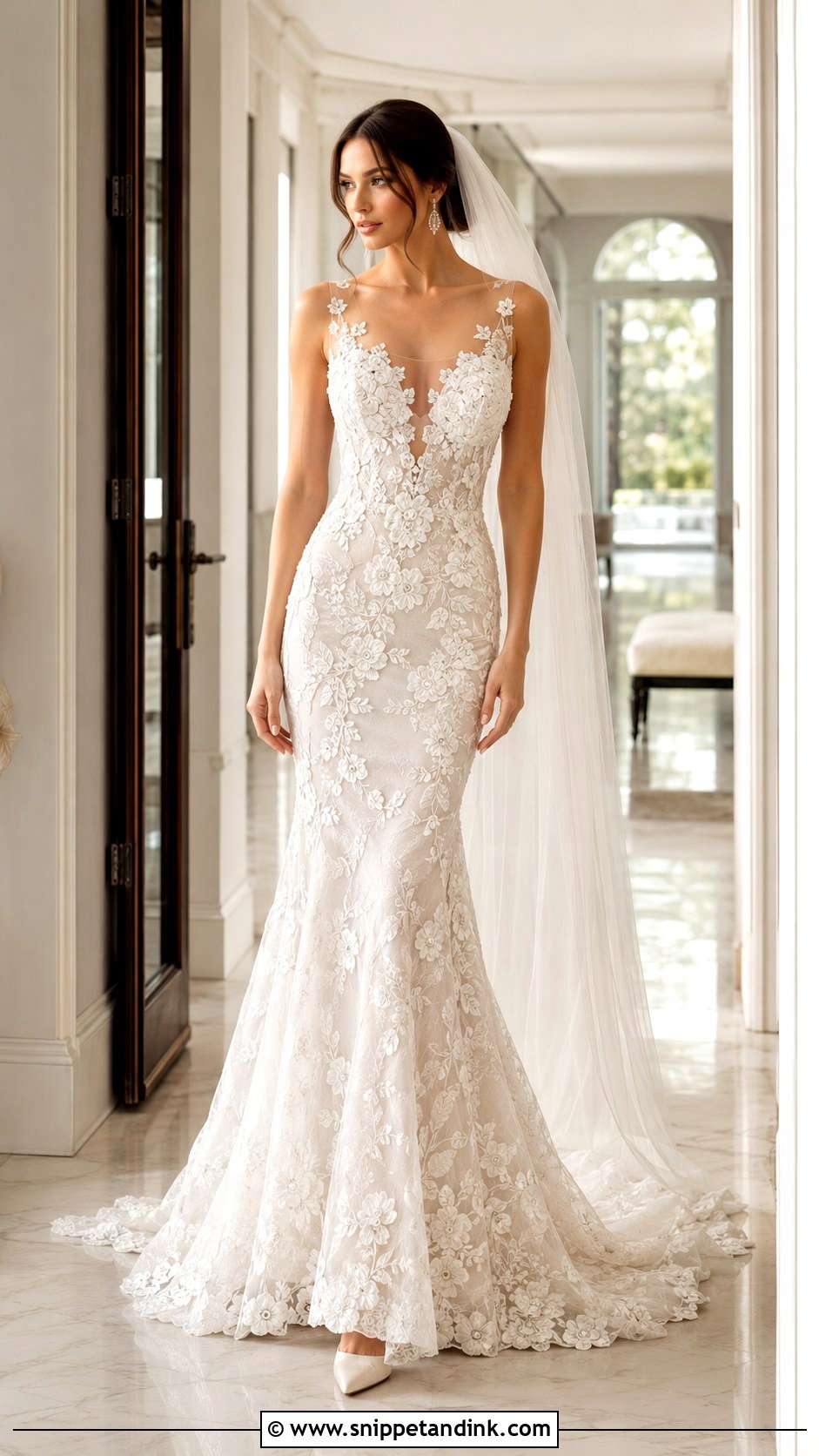
A mermaid cut follows the torso and hips before flaring near the knee, and appliqués soften what can otherwise look severe. I check that the lace flows across the body in organic shapes rather than stopping in a hard horizontal line, which cuts the figure in half in photos. A simple veil, drop earrings and pointed ivory heels hidden under the hem keep the focus on the shape. Wear a side-parted wave or a sleek low bun. The honest trade-off is movement: sit, climb a few steps and try a dance step before alterations are approved. If you feel restricted, ask whether the flare point can be raised slightly, which gives more room to walk.
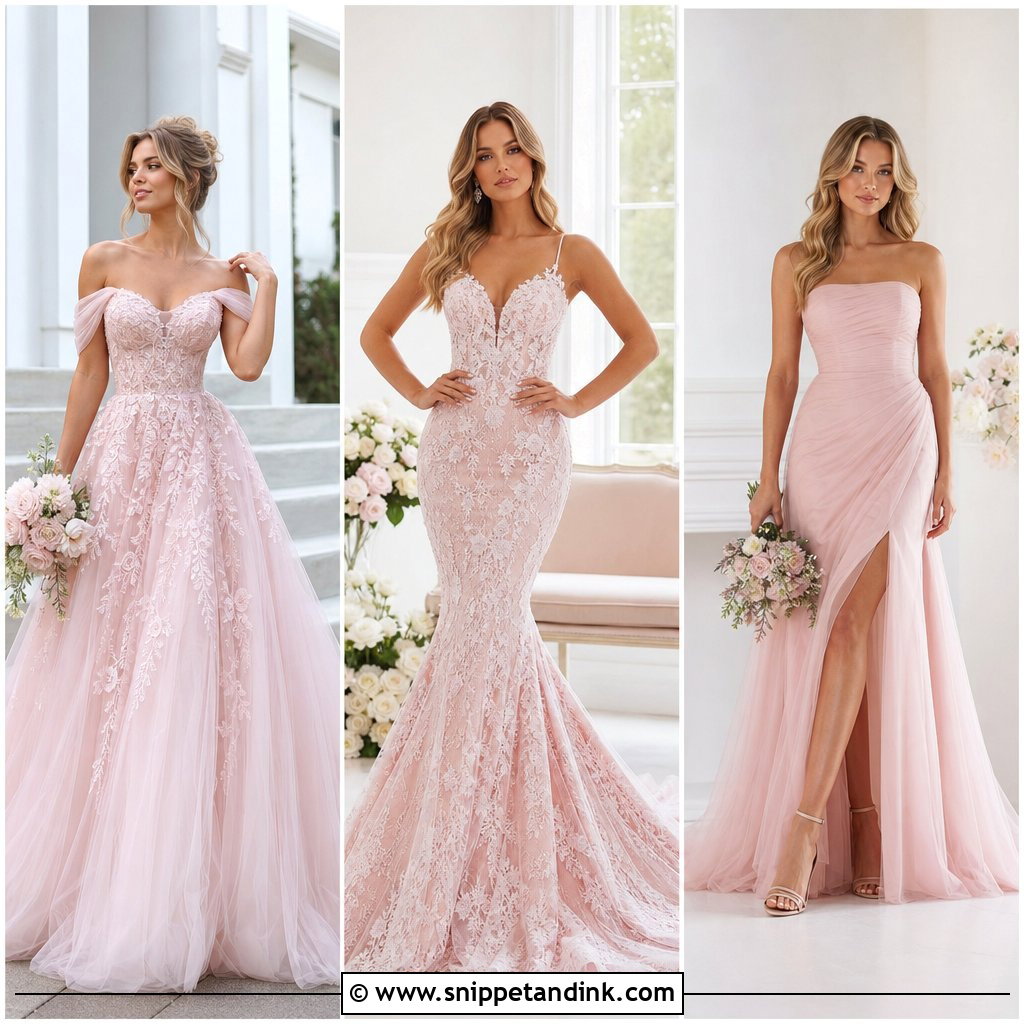
14. Blush Wedding Dress
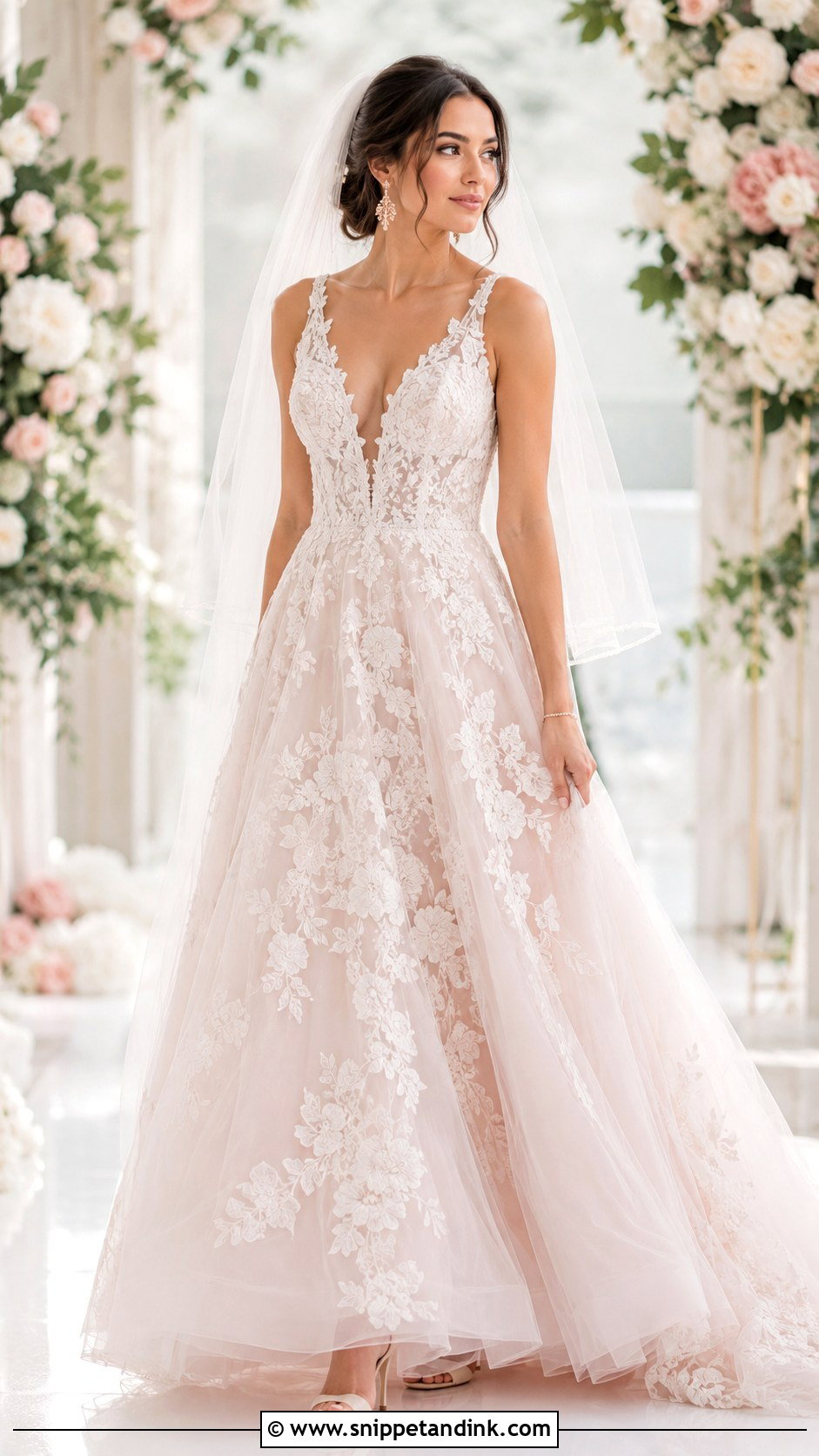
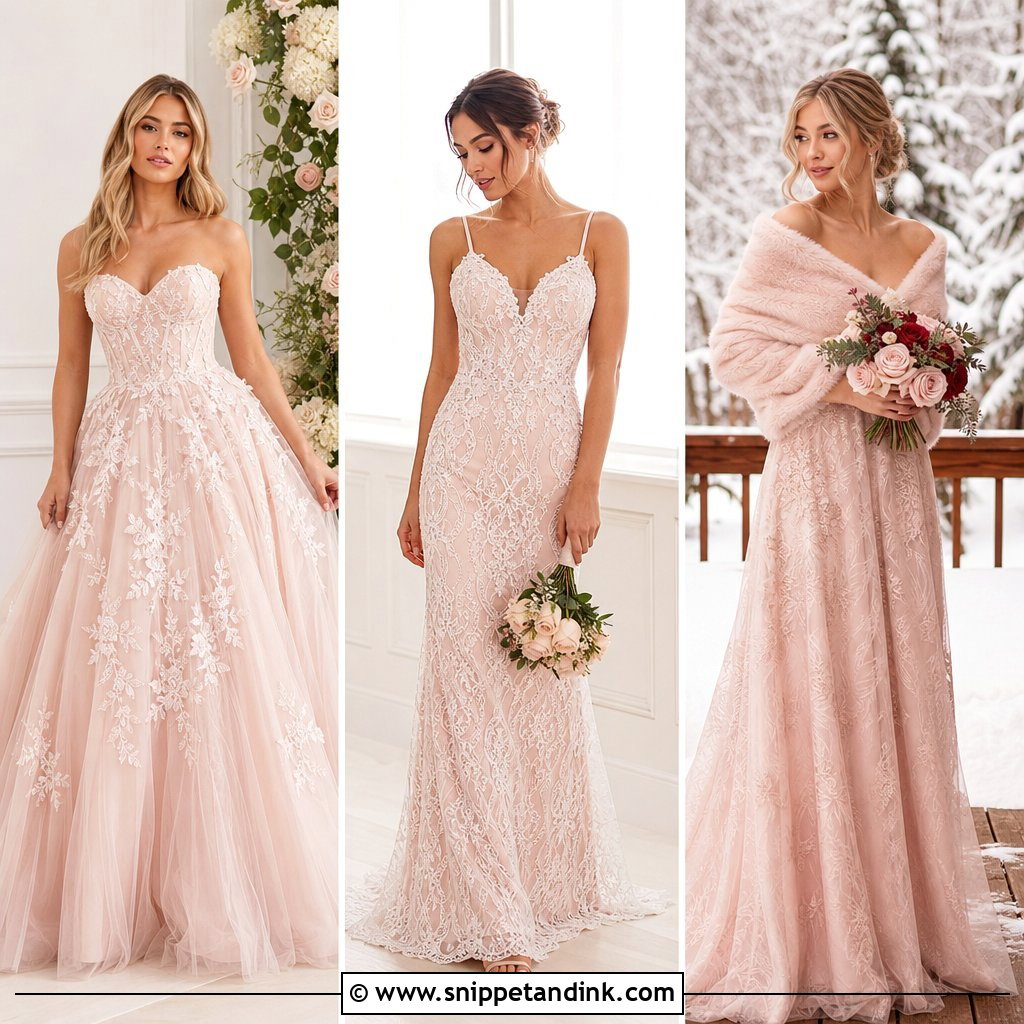
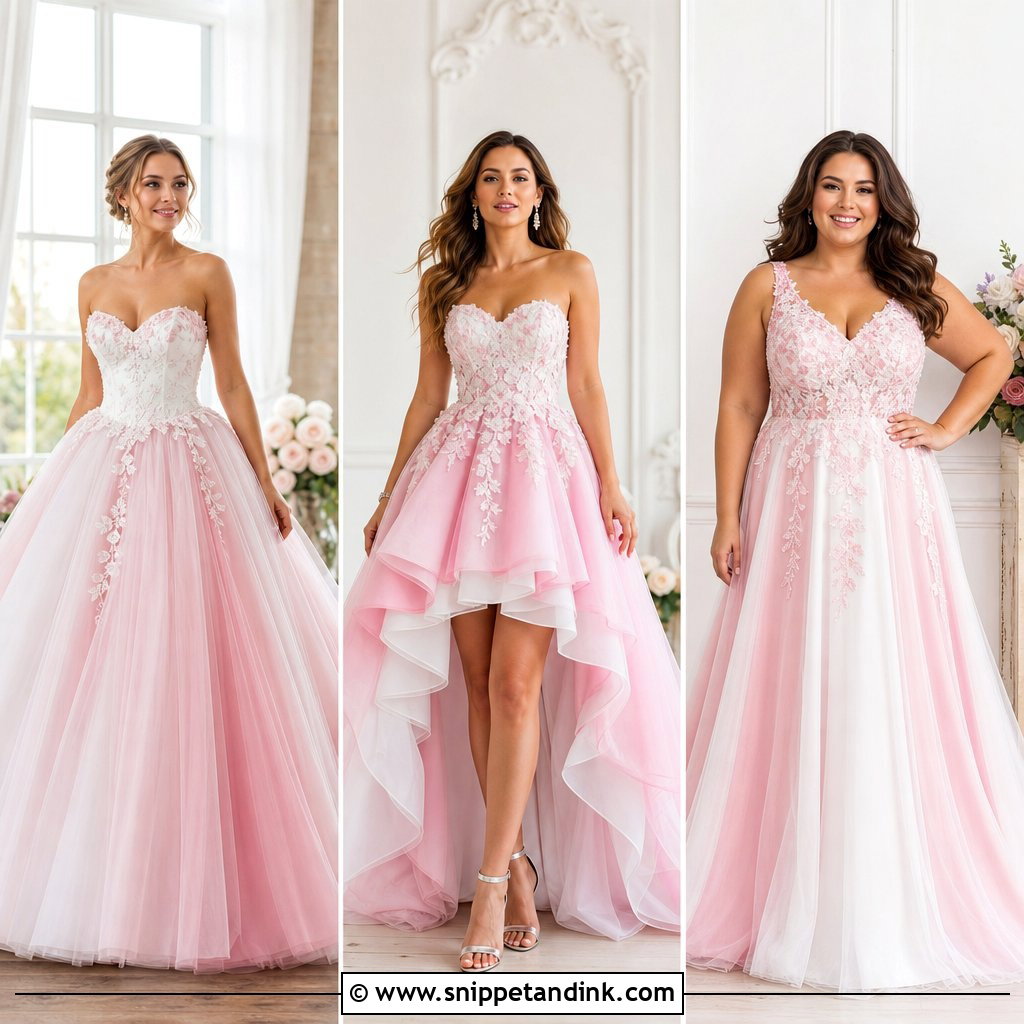
Blush is still clearly bridal, just warmer than ivory. The most flattering versions I see have a pale pink or nude lining beneath white lace or tulle, which adds depth and makes appliqués stand out in photos. Don’t chase a matching shoe; ivory reads cleaner than a pink that’s a shade off. Rose-gold earrings, a delicate bracelet and a sheer ivory veil complement the colour, and rosy cheeks with a natural lip keep the face in the same family. Always look at the gown by a window. Shop lighting is often warm, and a blush that looks peachy indoors can turn grey or salmon in daylight against some skin tones.
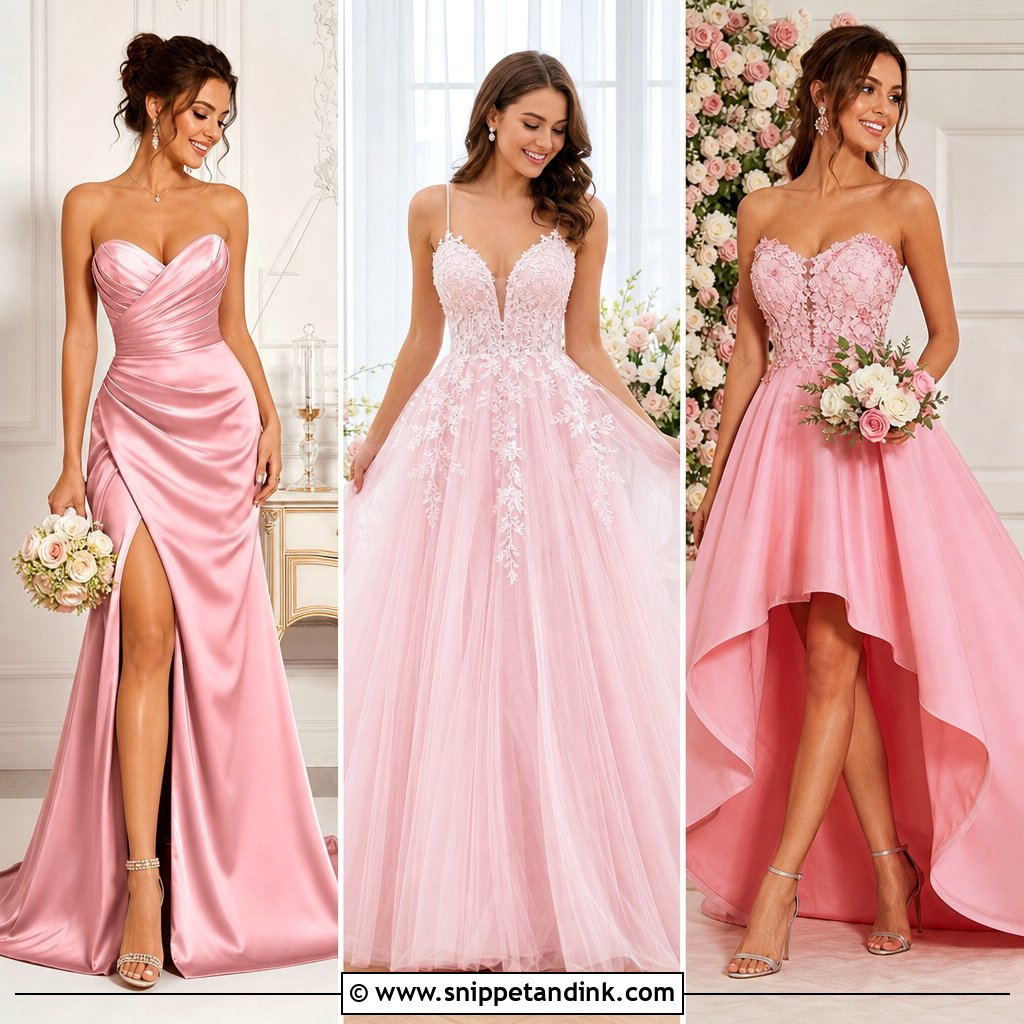
15. Tea-Length Wedding Dress
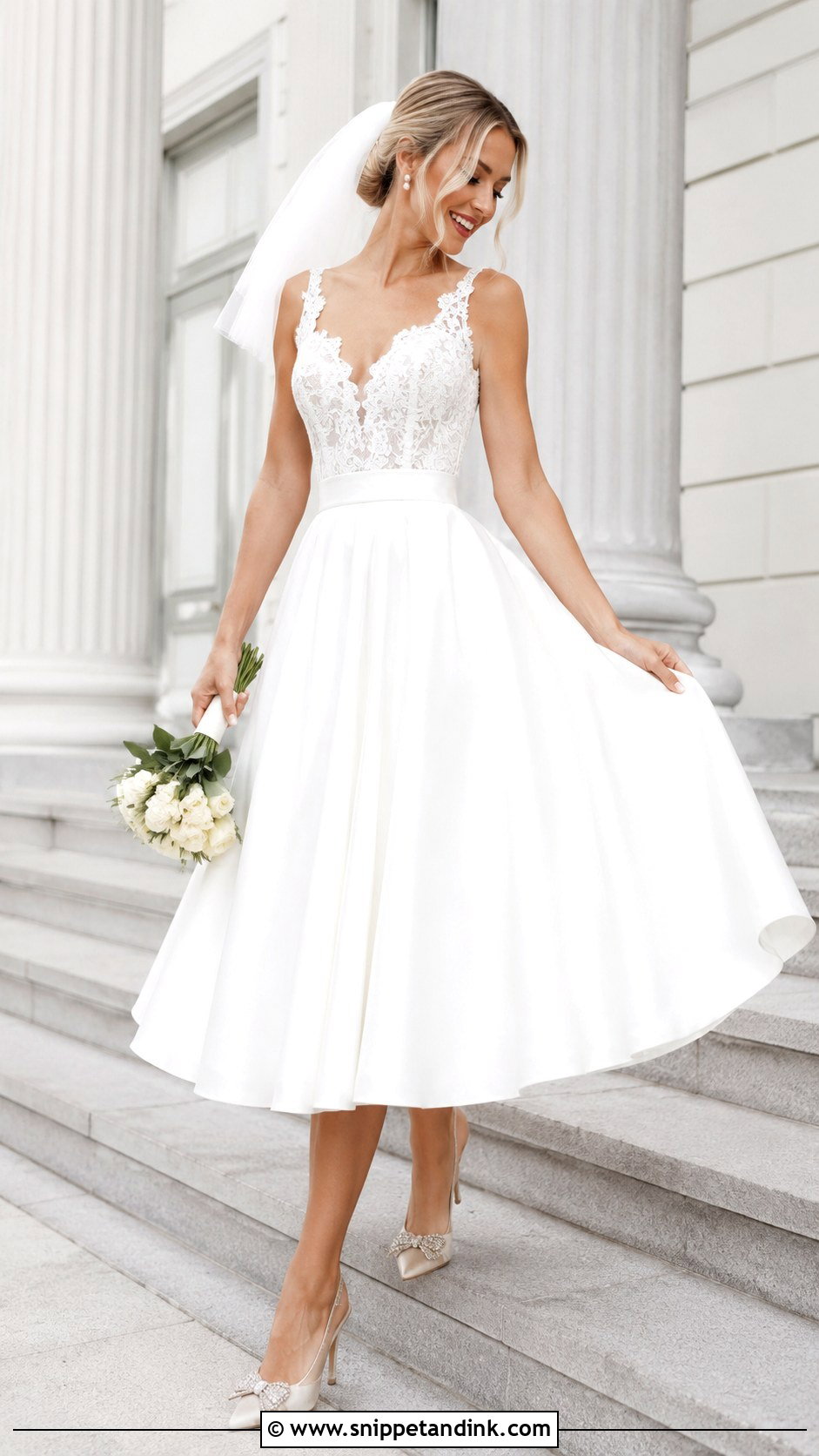
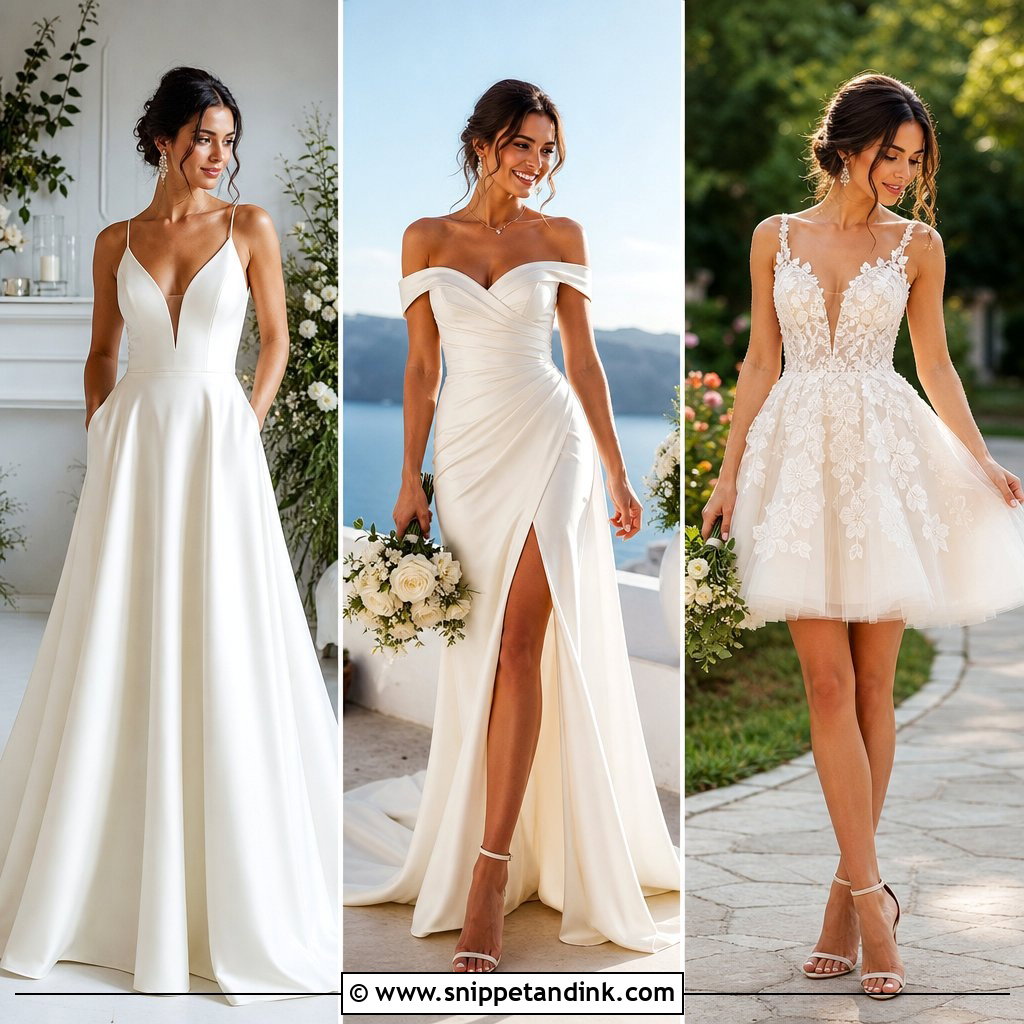
A tea-length dress shows off the shoes and makes moving around easy, which is why I often suggest it for courthouse ceremonies, daytime parties or a reception change. Choose a fitted bodice with a defined waist and a hem between the knee and ankle; satin feels formal, lace softer, layered tulle more playful. Since the shoes are on show, pick pointed pumps, embellished slingbacks or refined block heels with care. A birdcage veil, short tulle veil or pearl headband suits the shorter length, and a mini bouquet keeps proportions right. The hem is everything here, so check it from all sides in a mirror. An uneven tea-length hem is far more visible than one on a floor-length gown.
16. High-Neck Victorian Wedding Dress
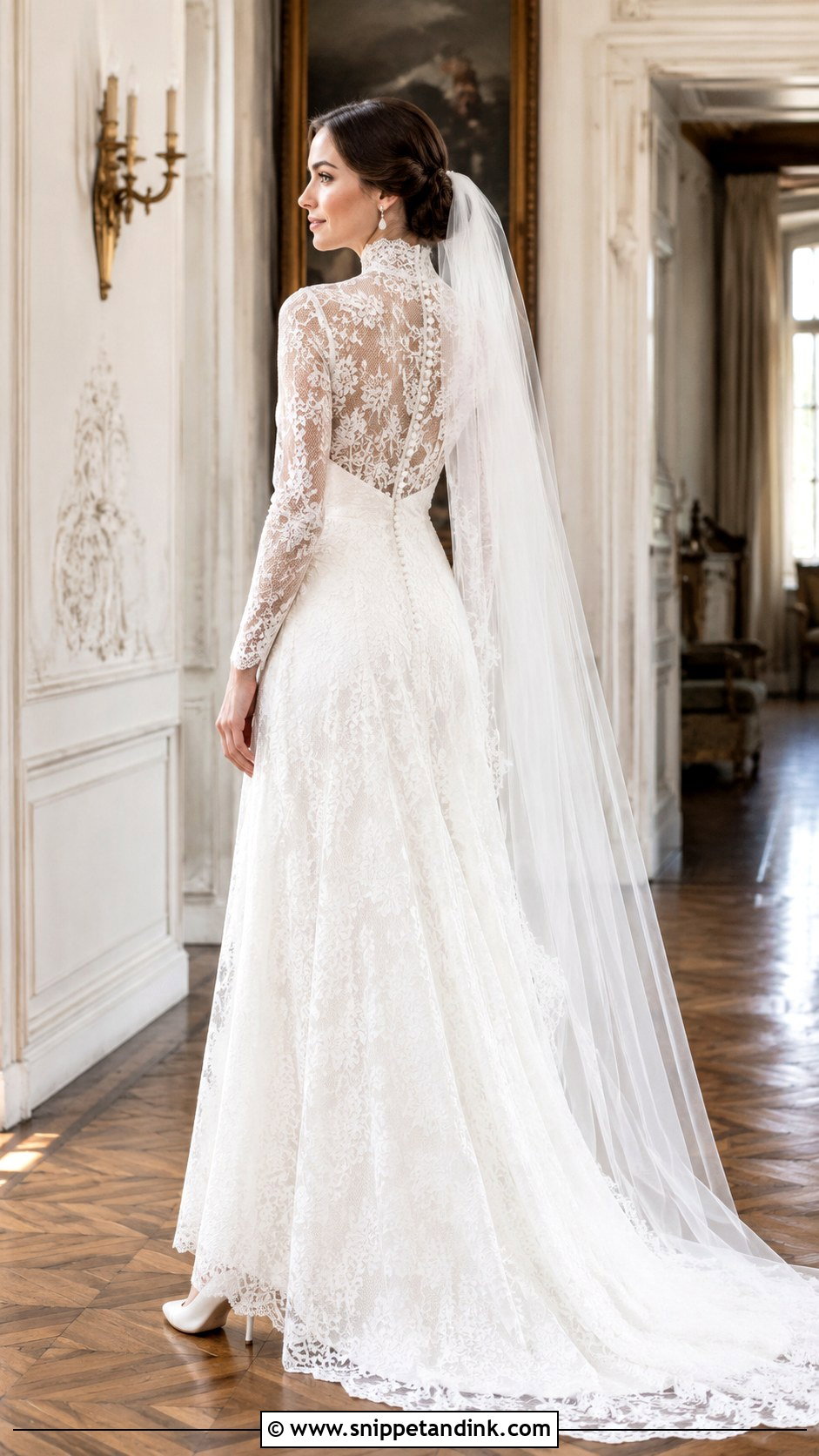
A high-neck Victorian wedding dress stays feminine when the lace is sheer and the proportions are right. I look for a fitted lace neckline over a smooth inner bodice, a defined waist and a flowing skirt; covered buttons down the back give period detail without tipping into costume. Skip the necklace and wear pearl drops, closed-toe pumps and a low textured bun. Attach the veil below the bun so it doesn’t crowd the collar. My main test with this style is turning your head side to side: a collar that’s half a centimetre too snug will rub and leave a red mark by the speeches.
17. Cap Sleeve Wedding Dress
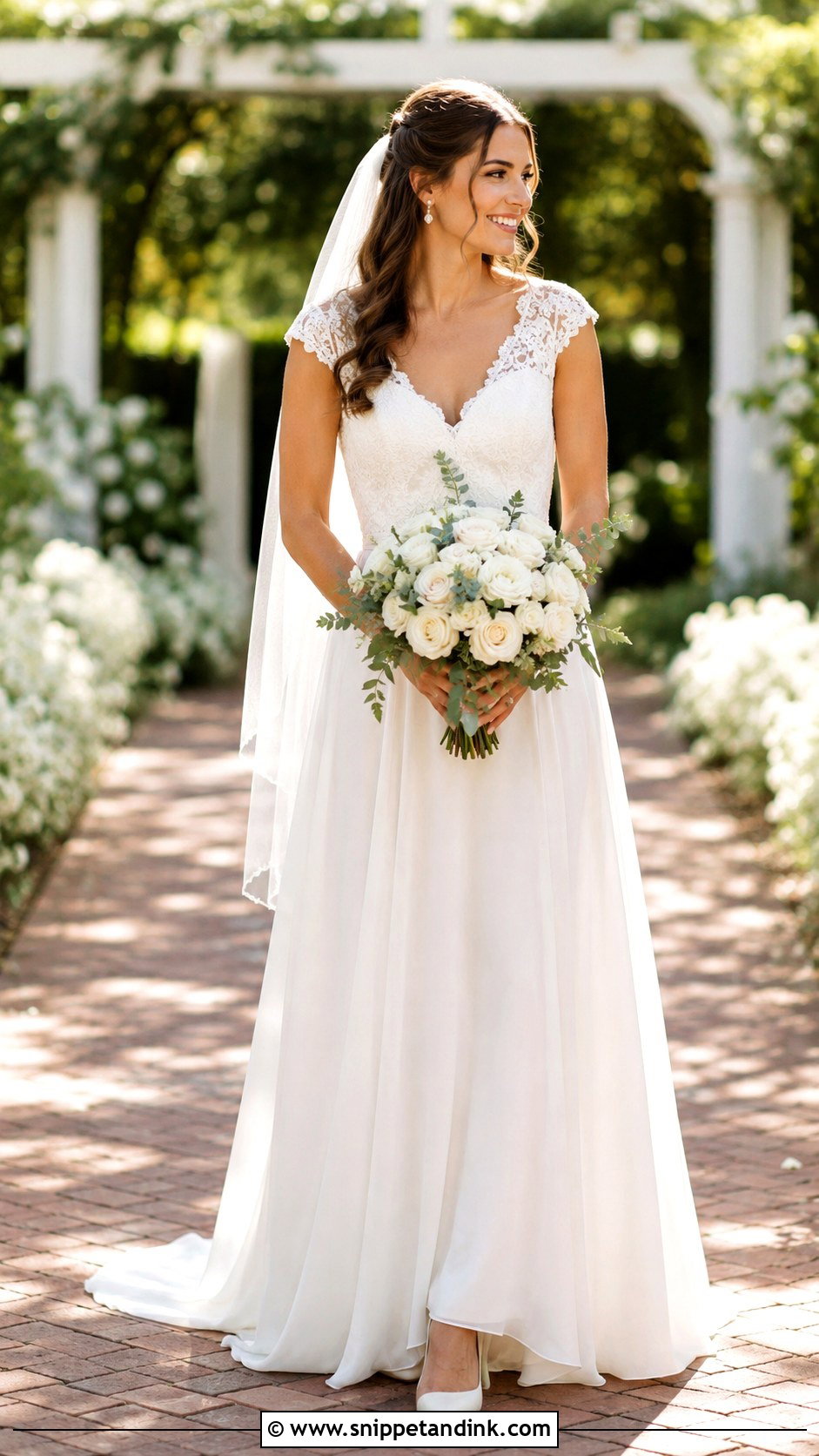
Cap sleeves offer a little coverage while leaving the arms open. I prefer delicate lace sleeves running from a fitted bodice into an A-line skirt in chiffon, tulle or satin, and a V or soft scoop neckline lengthens the upper body against that short sleeve. Pearl earrings, ivory pumps and a fingertip veil with minimal trim finish it, and a half-up style keeps softness around the face while showing the sleeve. During fittings, raise and rotate your arms. The sleeve edge should sit smoothly without biting into the arm, and if the bodice lifts when you reach, the sleeve needs to be reset rather than tightened.
18. Detachable Overskirt Wedding Dress
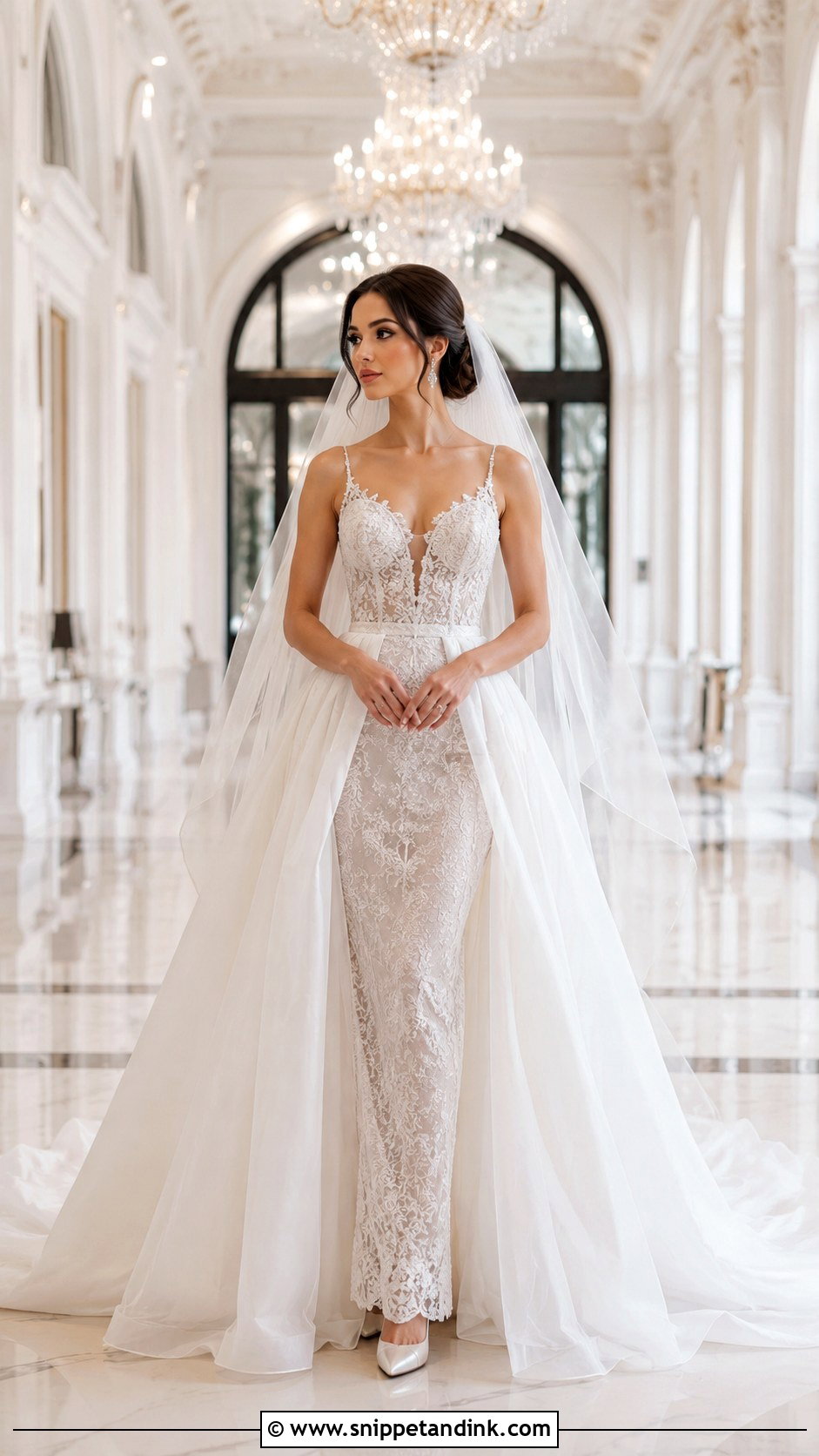
A detachable overskirt gives you two looks without a full change. Start with a fitted lace, crepe or satin gown, add a full tulle or organza overskirt for the ceremony, then take it off for the reception and dance in the slimmer shape. Keep the same pointed heels, drop earrings and updo for both, and remove the cathedral veil after portraits. I ask the seamstress to hide the waistband attachment and to show a bridesmaid how to release it. Practise the removal once at your last fitting; snaps and hooks that feel simple in a fitting room can be fiddly in a dark corridor with a full skirt.
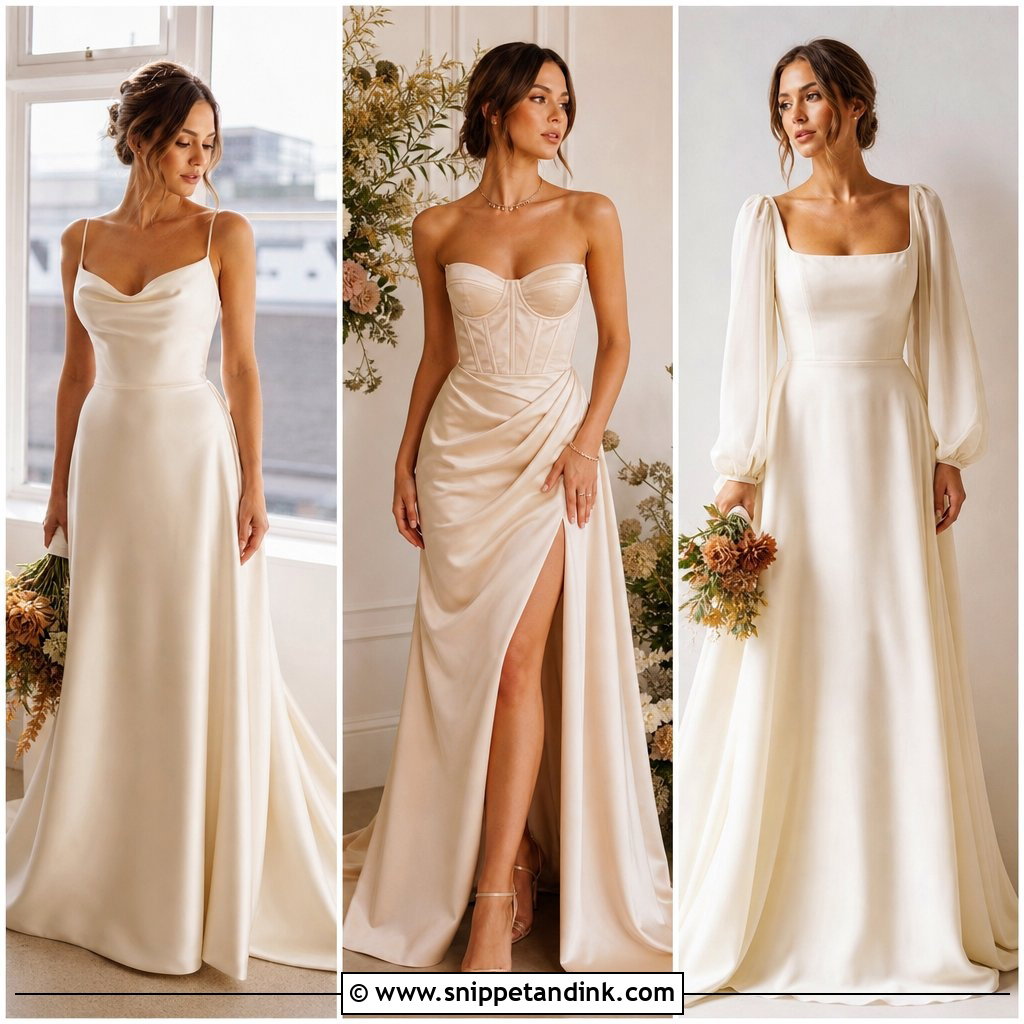
19. Slip Wedding Dress With Lace Veil
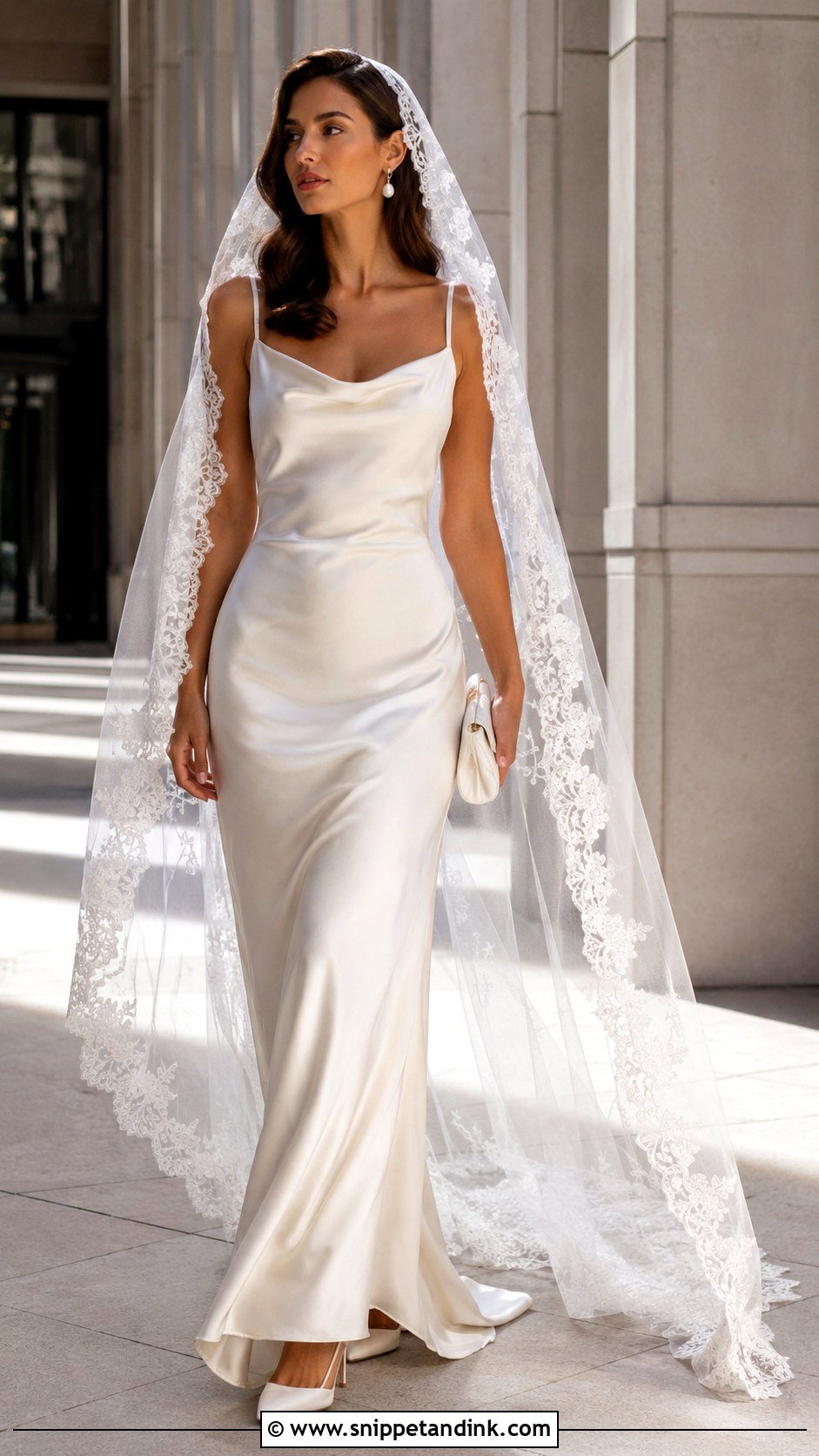
A slip dress is a plain canvas, and the accessories decide how romantic it gets. Choose fluid silk or satin with a draped neckline, narrow straps and a bias-cut skirt that follows the body without gripping it. An ornate lace veil supplies the bridal detail. Pearl drops, pointed slingbacks and a small satin clutch complete it, with smooth waves or a low bun. Underwear is the first thing I sort with this cut. Bias-cut satin shows every line and seam, so bring the exact underwear you’ll wear to every fitting, and check the dress in bright daylight before the hem is finalised.
20. Puff Sleeve Wedding Dress
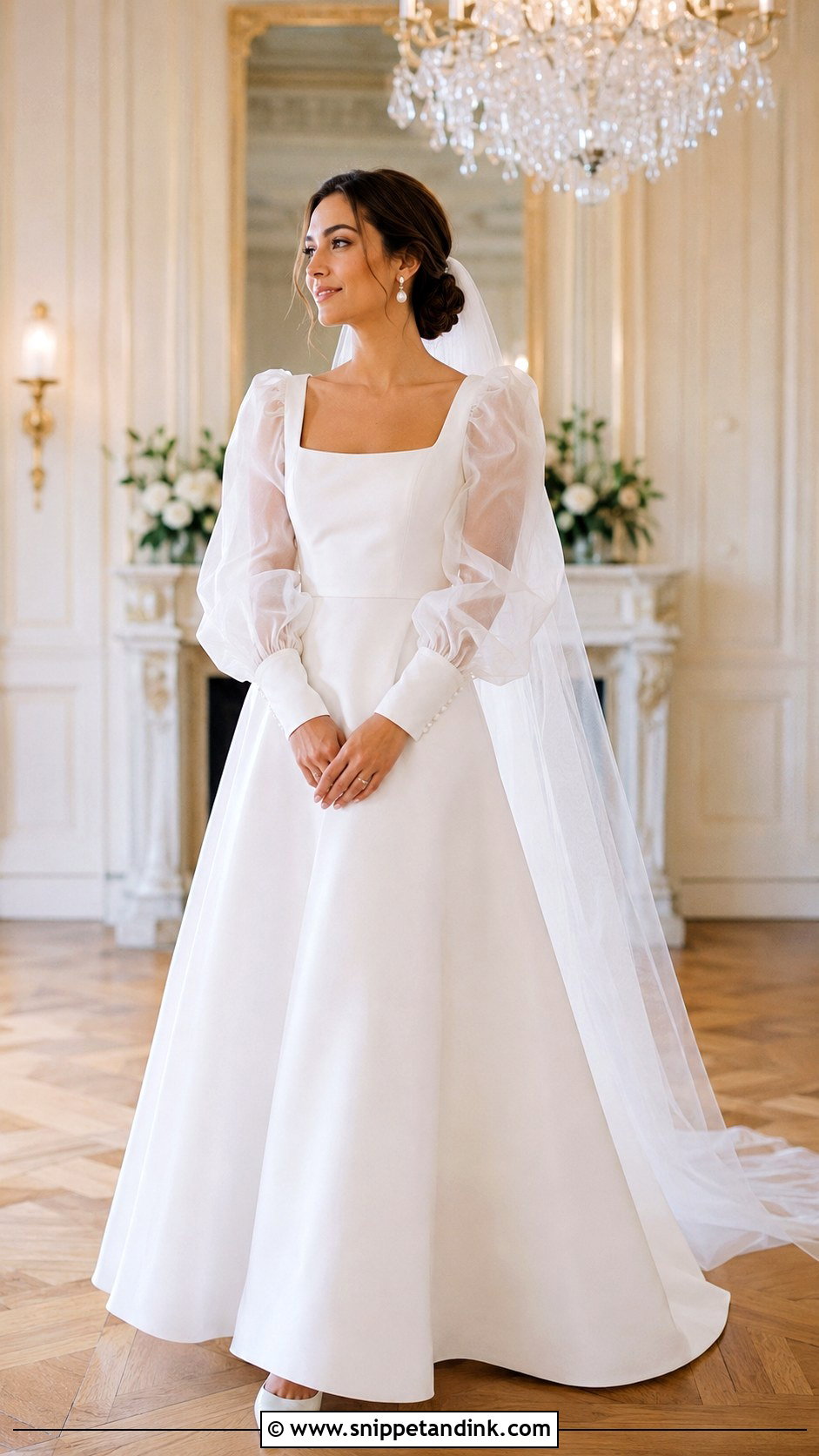
A puff sleeve wedding dress adds volume at the shoulder and a storybook feel. Sheer organza or tulle sleeves with fitted cuffs stay light; opaque fabric in the same shape can look bulky on camera. Balance them with a clean bodice, a defined waist and a simple A-line skirt. Detachable sleeves let you streamline later. Small pearl earrings, satin pumps and a plain chapel veil suit it, and a low bun stops hair adding more volume near the face. Test the cuffs and elastic for an hour, not a minute. You’ll be hugging guests and holding a bouquet, and tight elastic starts to dig in long before the reception ends.
Lace, Chiffon and Satin Once the Party Is Over
Soft gowns pick up more on the day than people expect: grass on the hem, makeup at the neckline, a splash of wine on tulle. What you do in the first few weeks decides whether those marks lift or set.
- Hang the gown inside out by its hanging loops, not the straps, so the weight of the skirt doesn’t stretch the shoulders.
- Don’t rub stains. Blot gently and leave the rest to a specialist cleaner, telling them what each mark is. Sugar from drinks is invisible at first but can yellow later.
- Get it cleaned within a month or two. Body oils and spills oxidise over time and become much harder to shift.
- Store it flat in an acid-free box with acid-free tissue between the folds, in a cool, dark cupboard. Plastic dry-cleaning bags trap moisture and can yellow ivory.
Pearls and appliqués need a cleaner who hand-finishes; steaming directly over raised flowers flattens them. If you plan to keep the veil, store it separately and rolled rather than folded, since tulle holds a crease for a long time.
The Dress You Can Sit, Hug and Dance In
A gown is right when it suits your taste and you forget about it after the first hour. Across lace, satin, chiffon, corset waists, statement sleeves, floral detail and modern convertible designs, the same checks apply. Look at the back as carefully as the front, and test movement, neckline support, fabric weight, the train and the bustle in natural light. Let shoes, veil, jewellery and hair follow the silhouette rather than compete with it. If I could keep only one piece of advice, it would be to leave time and budget for alterations, because a well-fitted dress is the one you stop thinking about.
You'll Like These Ideas:



Leave a Reply