
Most of the gowns I pull for fittings are not pure white at all. Ivory, cream, pearl, oyster, champagne and antique white all carry a little warmth in the fibre, and that warmth is what stops a dress from glaring under a flash or looking blue in shade. I see off white work in a candlelit barn, a courthouse hallway and a hotel ballroom alike, because the tone adapts to the light rather than fighting it. Below are thirty shapes and fabrics I’d happily put a bride in, from plain satin to lace sleeves, corsets, minis and jumpsuits, with notes on what each one asks of you on the day.

Ivory or Champagne? Testing the Shade Against Your Own Skin
Off white is not one colour. Ivory has a yellow undertone, oyster leans slightly grey, champagne carries a pink or gold warmth, and cream sits somewhere between ivory and soft yellow. Each designer names their shades differently, so I never trust the label on its own.
At an appointment, I ask the bride to stand by a window and hold two swatches under her chin. The right shade makes the skin look rested; the wrong one makes it look tired or sallow. Very pale, pink-toned skin often glows in oyster or soft ivory, while olive and deeper skin tones usually come alive in champagne and warmer creams. These are starting points, not rules, and your own eyes in daylight should overrule them.
- Look at the swatch in daylight and under warm bulbs, since venues rarely have neutral light.
- Check the lining as well as the outer fabric. A nude or champagne lining shifts the tone of lace and tulle.
- Take a phone photo with flash. Fabrics that look the same in person can separate on camera.
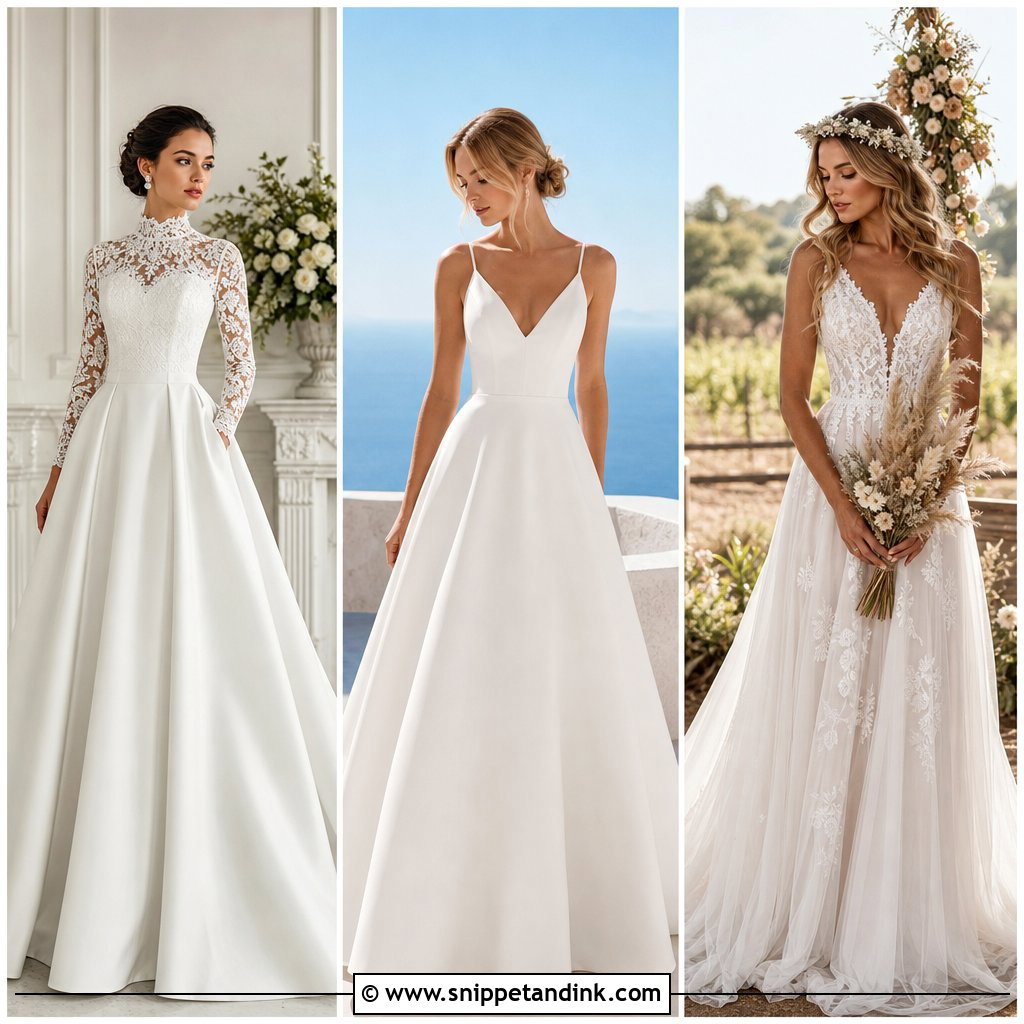
1. Off White Satin A Line Wedding Dress
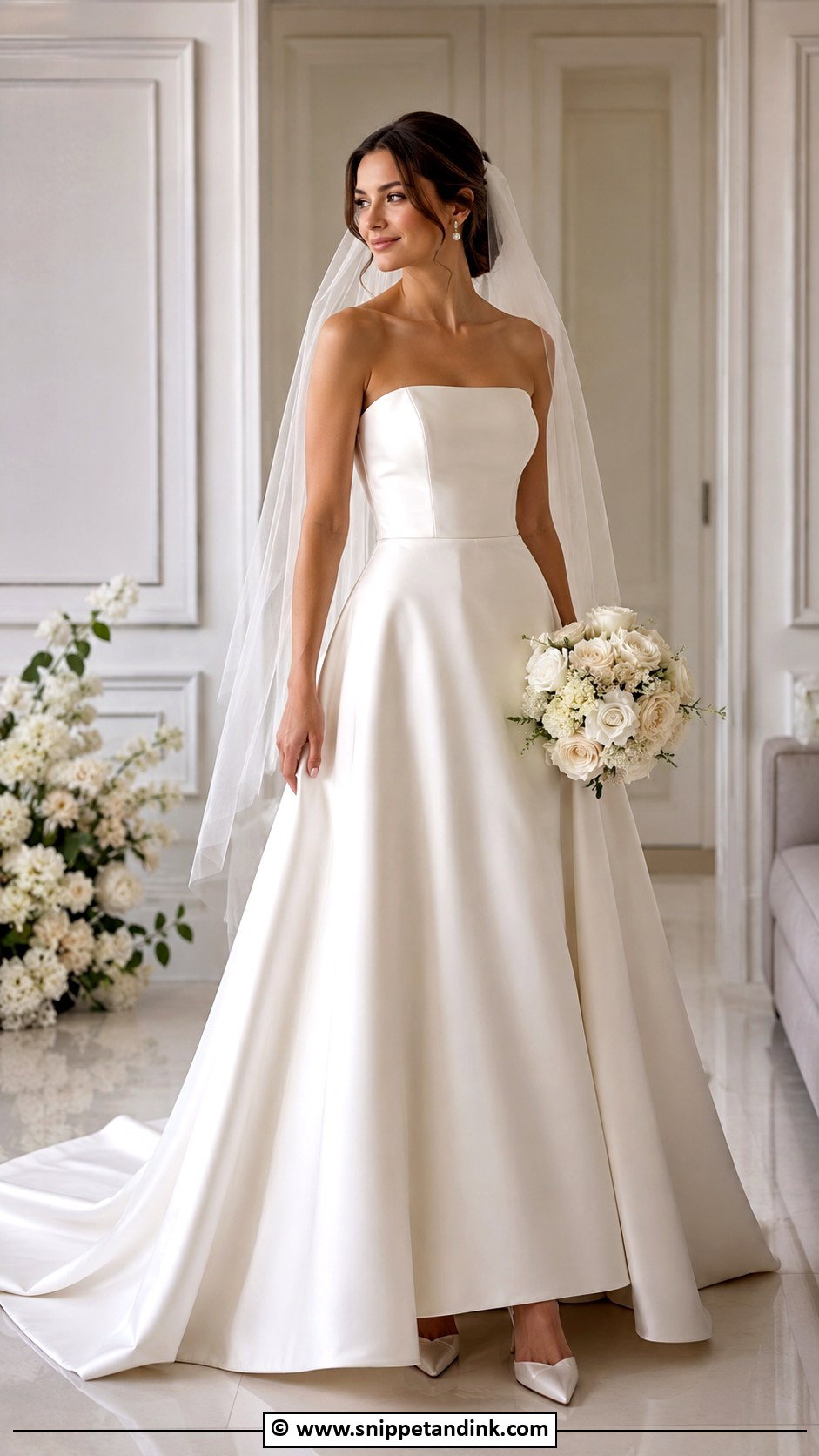
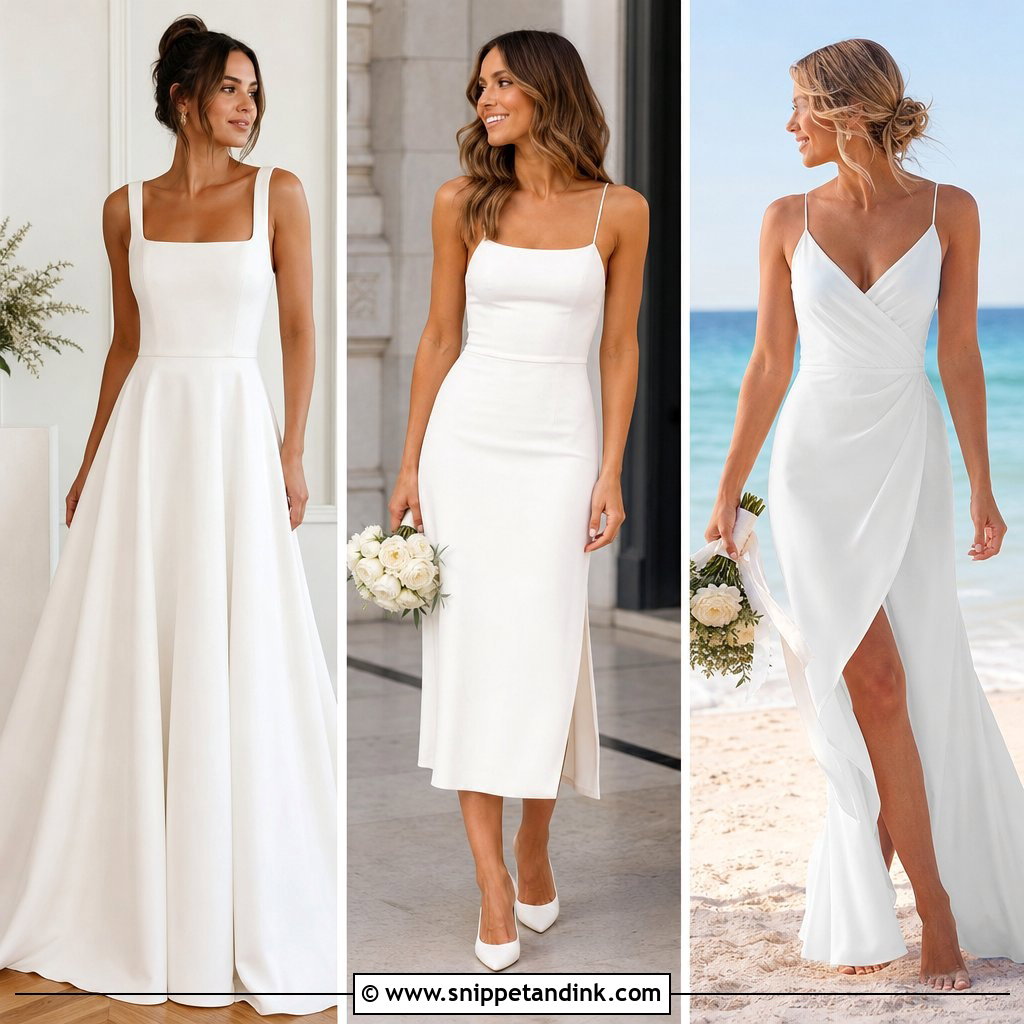
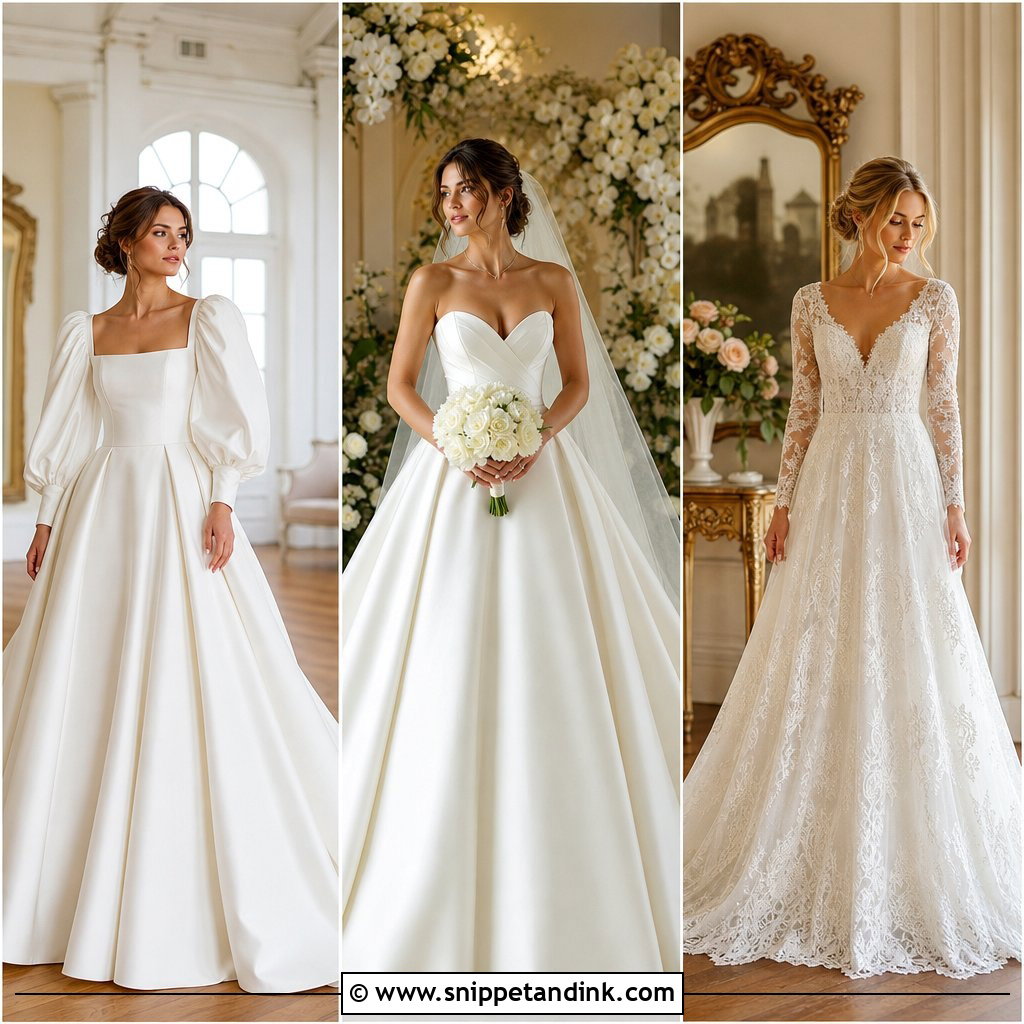
If a bride walks in unsure of her shape, a satin A-line is usually the first dress I zip her into. The bodice holds the waist and the skirt clears the hips, so it forgives a lot without looking safe. Ivory satin reads warm; oyster sits a shade cooler and suits pinker skin. One thing to watch: heavy satin shows every crease from the car ride, so have it steamed at the venue, not at home.
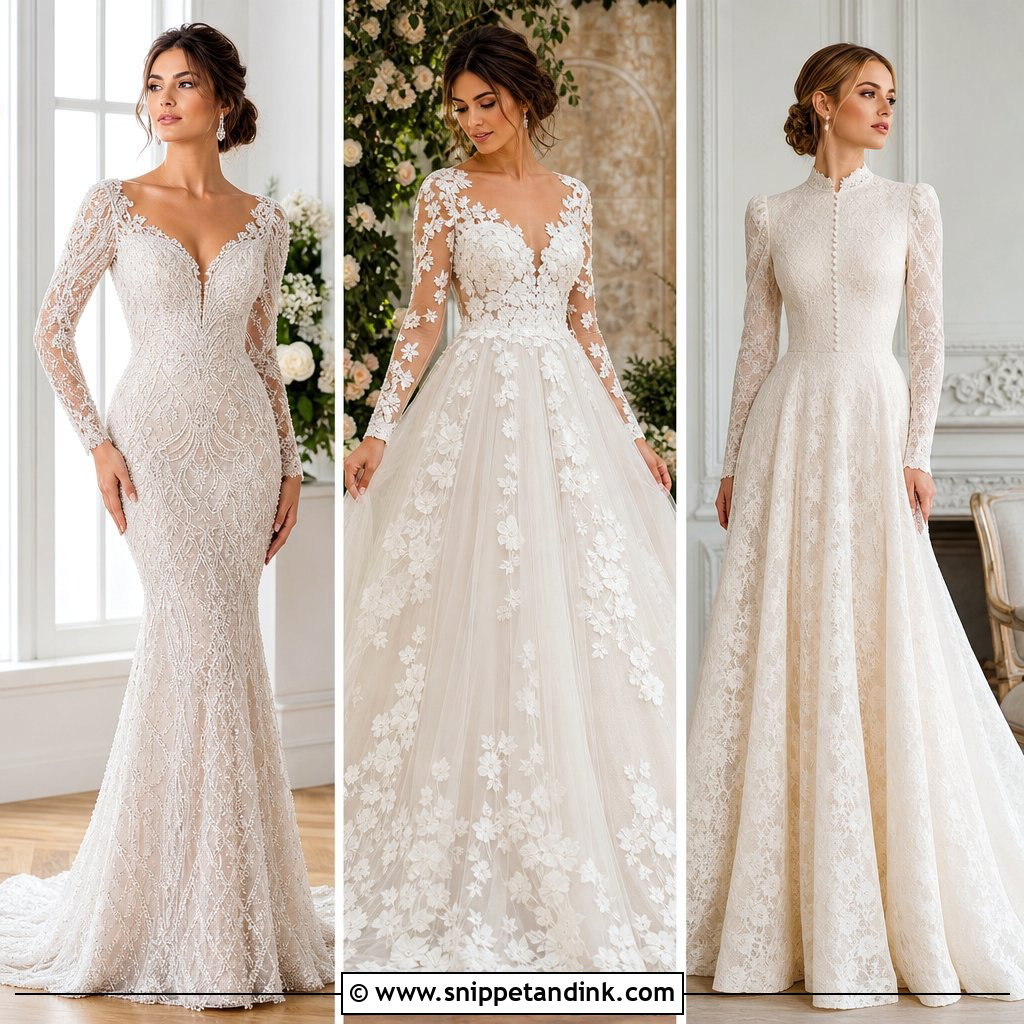
2. Off White Lace Long Sleeve Wedding Dress
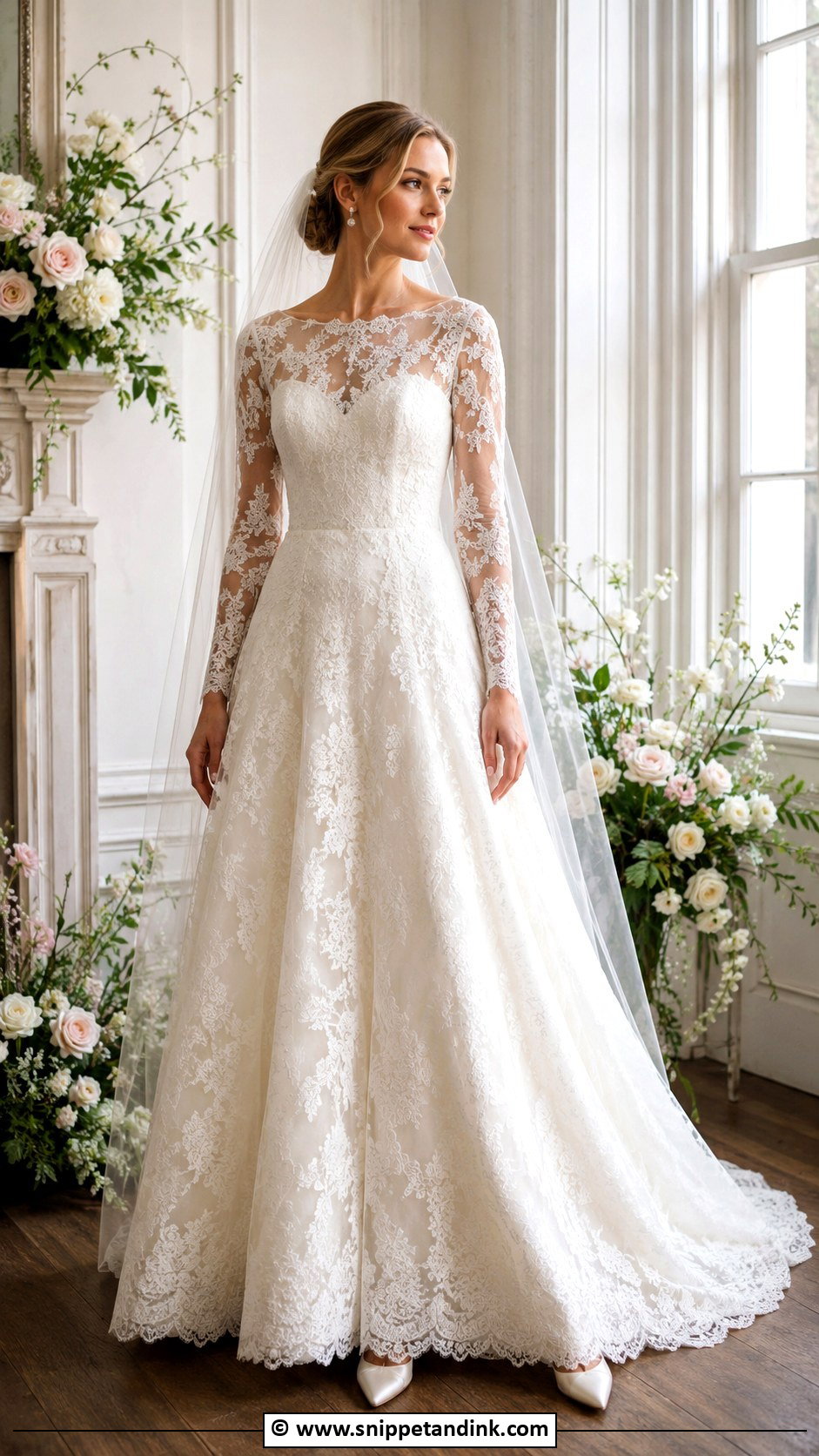
Lace sleeves on an off white base look softer than the same lace on bright white, because the pattern doesn’t stand out so sharply against the skin. I steer autumn, winter and early spring brides toward this one, especially in older buildings with wood and stone. Before you commit, raise both arms in the fitting room. Sheer sleeves set too tight at the armhole will pull the whole bodice up when you hug people, and that is the moment everyone photographs. When the lace is busy, I keep the jewellery to small pearl studs.
3. Off White Strapless Ball Gown Wedding Dress
A strapless ball gown needs a bodice that does the work by itself, and in off white the volume looks warm rather than sugary. I always check for internal boning and a waist stay, a grosgrain band inside that anchors the dress so you aren’t hitching it up all night. Ballrooms and big estates suit the scale. Hidden heels are fine here, but hem the skirt to the shoes you will actually wear, or you will trip on the first step down the aisle.
4. Off White Off Shoulder Wedding Dress
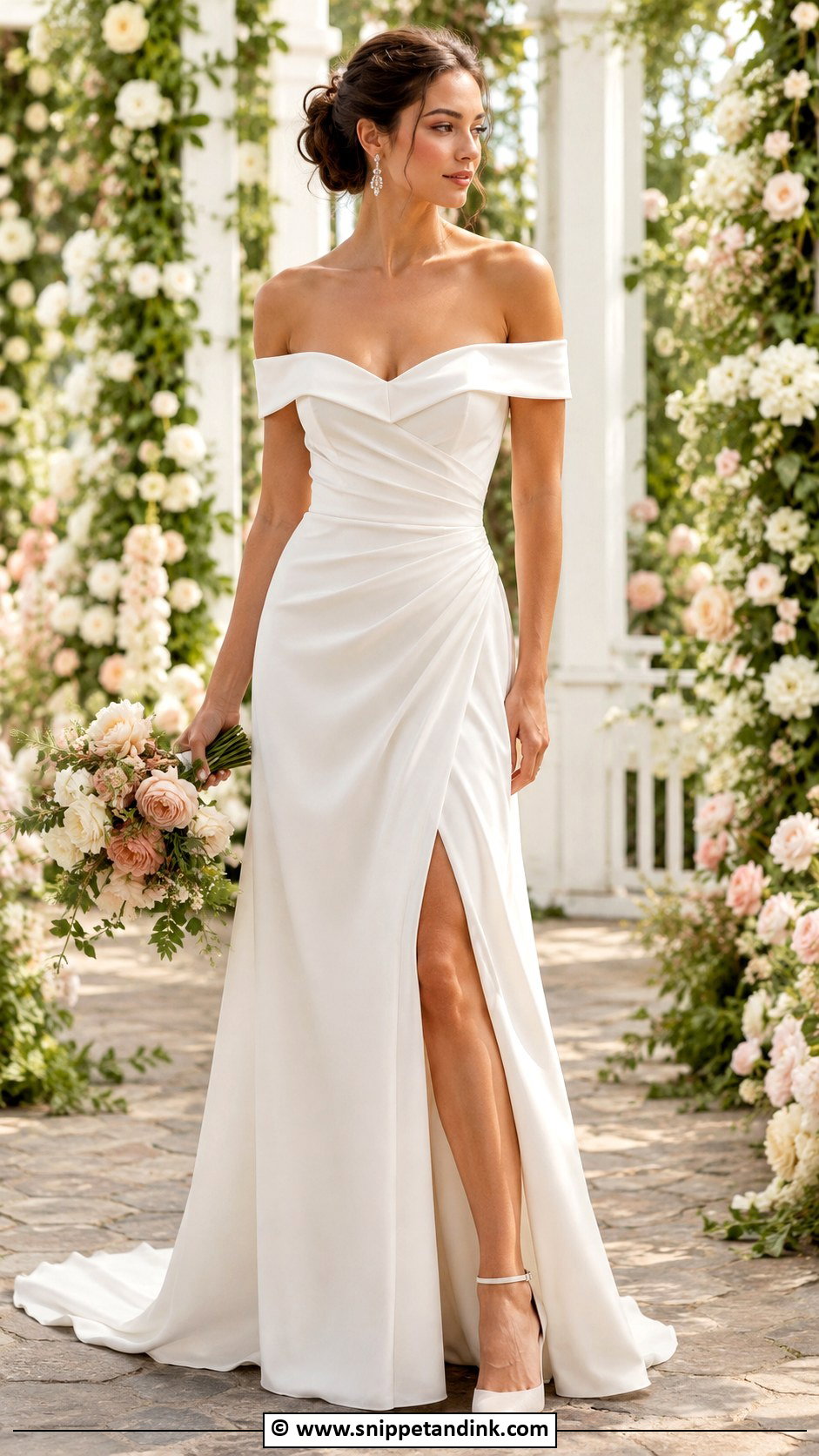
Off shoulder straps sit on the upper arm, so they frame the collarbone and leave the neck clean for drop earrings. The catch is movement: if the band is cut loose, it slides when you lift your arms, and if it’s tight, it cuts in by the reception. I ask brides to mime throwing a bouquet during the fitting. Satin, crepe, mikado and lace all hold this neckline well, and nude or ivory heels keep the eye on the shoulders.
5. Off White Square Neck Wedding Dress
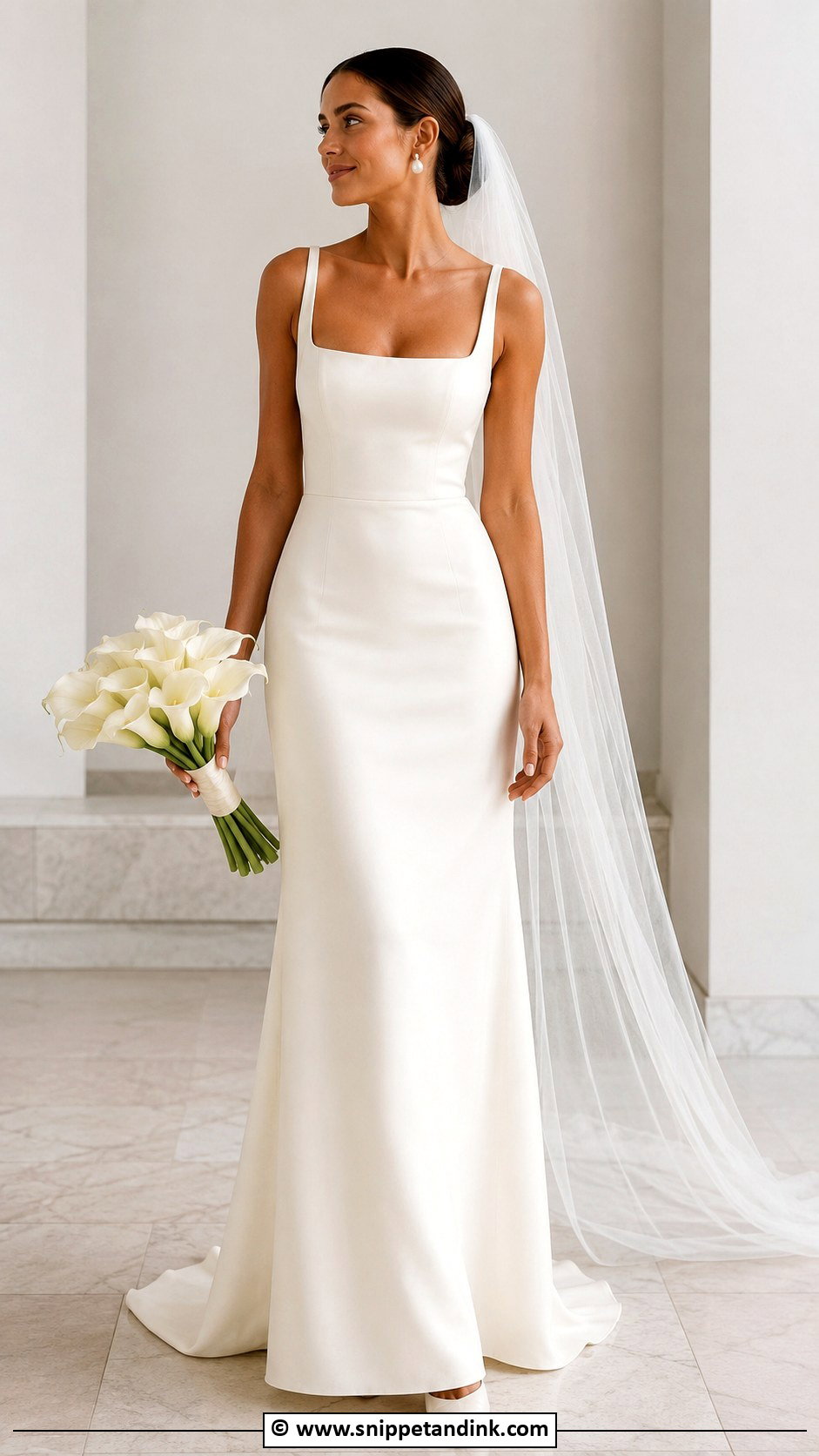
A square neck gives the chest a clean frame and suits a lot of figures because the straight line balances the shoulders. In crepe or satin it reads modern; in lace it leans vintage. I reach for it when a bride needs support but hates anything high at the throat, and it takes thick straps, thin straps or long sleeves equally well. Keep the earrings small and let the neckline be the geometry.
6. Off White Corset Wedding Dress
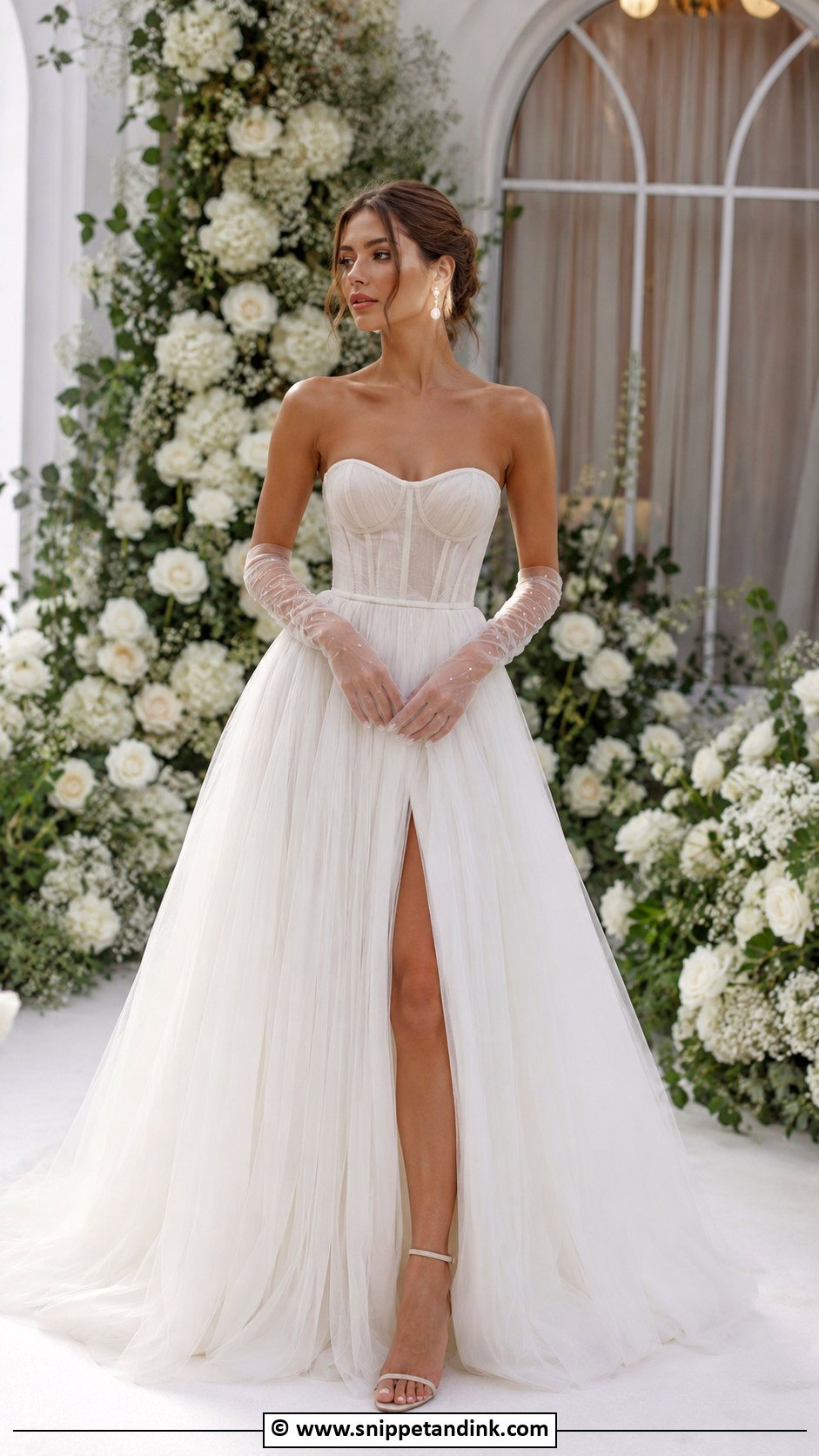
Corset bodices do the shaping for you, so I rarely add much on top. Soft ivory tulle over a corset looks dreamy; structured satin looks sharper. Visible boning is a design choice, and if it’s on show, keep the skirt plain so the eye has somewhere to rest. Sit down in it before you buy. A corset that fits standing can dig under the ribs once you’re seated at dinner for two hours.
7. Off White Mermaid Wedding Dress
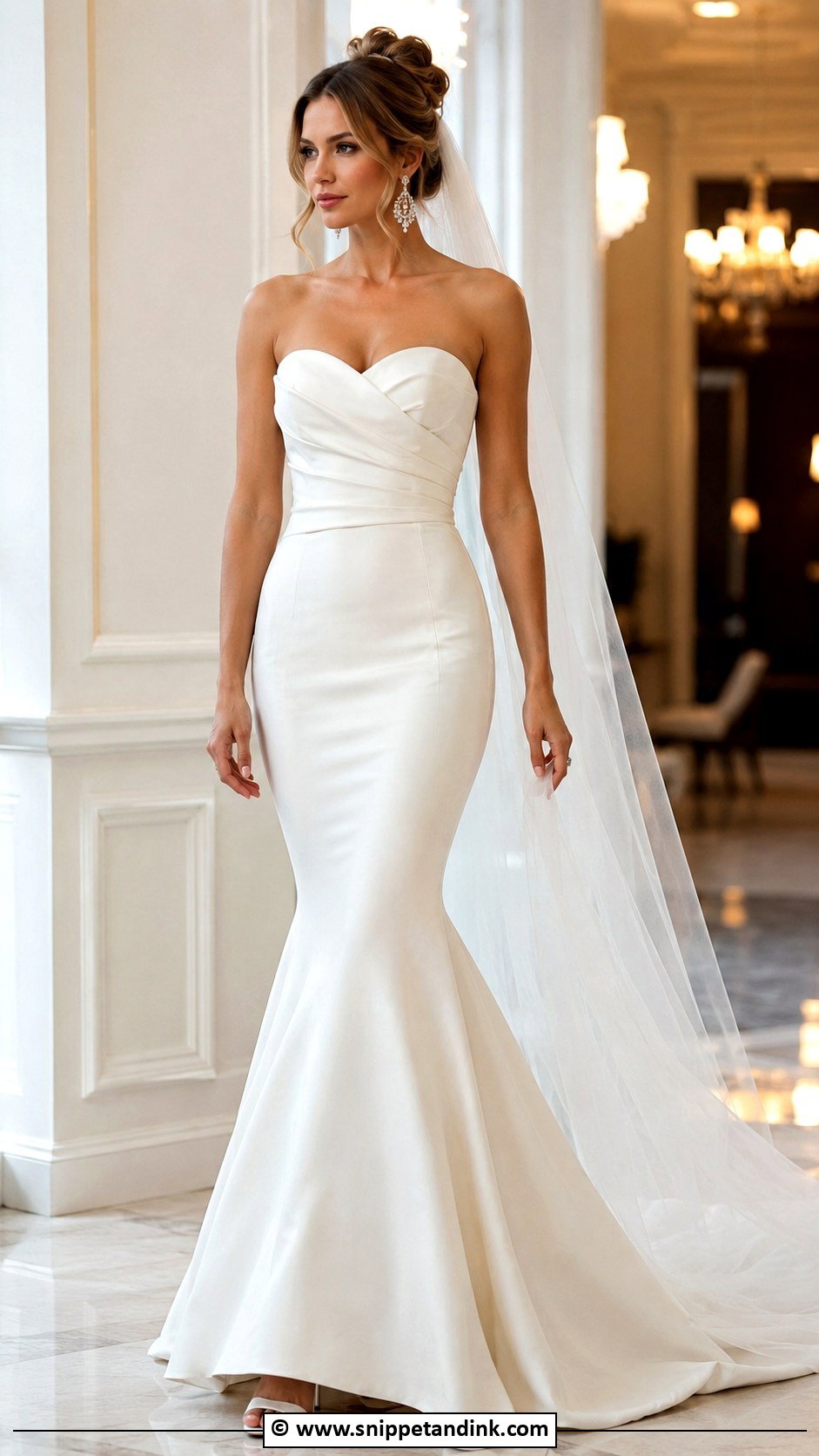
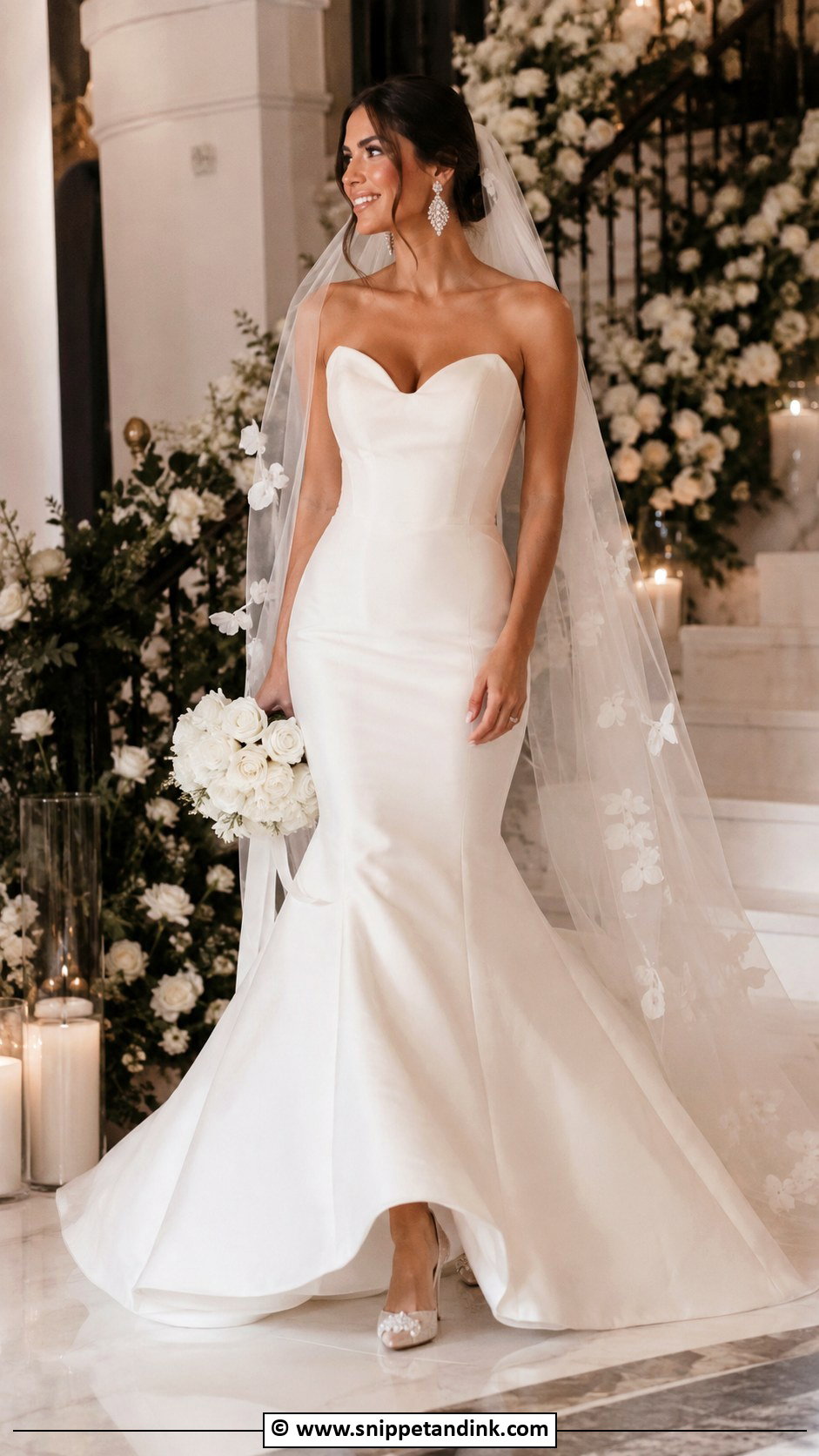
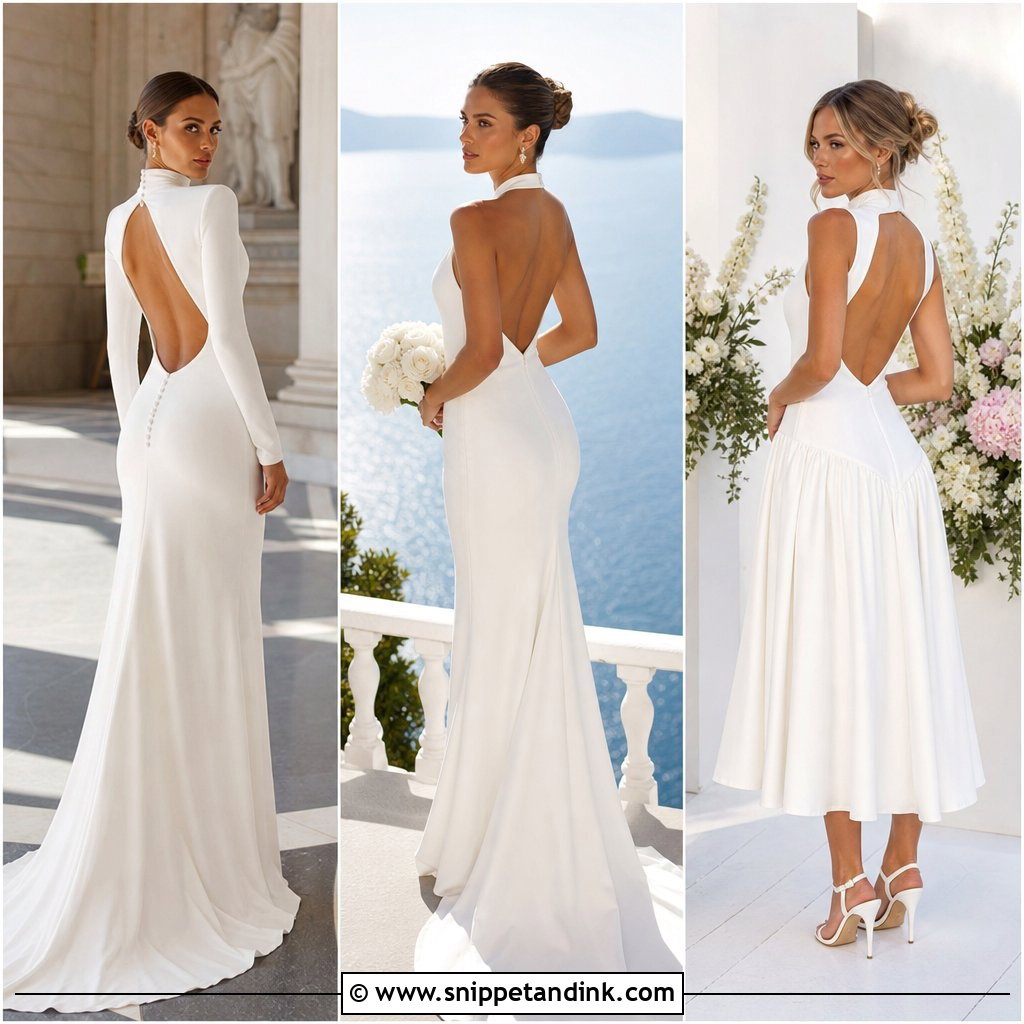
Mermaid gowns follow you through the waist and hips and only release around the knee, which means the fit has to be close to perfect. In ivory crepe the line is sleek; in lace it becomes more detailed and forgiving of small fit issues. My first test is always the stairs. If you can’t take a normal step up without hiking the skirt, ask your seamstress to move the flare point a few centimetres higher. A long veil and a heel help balance the fitted shape for evening and black-tie weddings.
8. Off White Sheath Wedding Dress
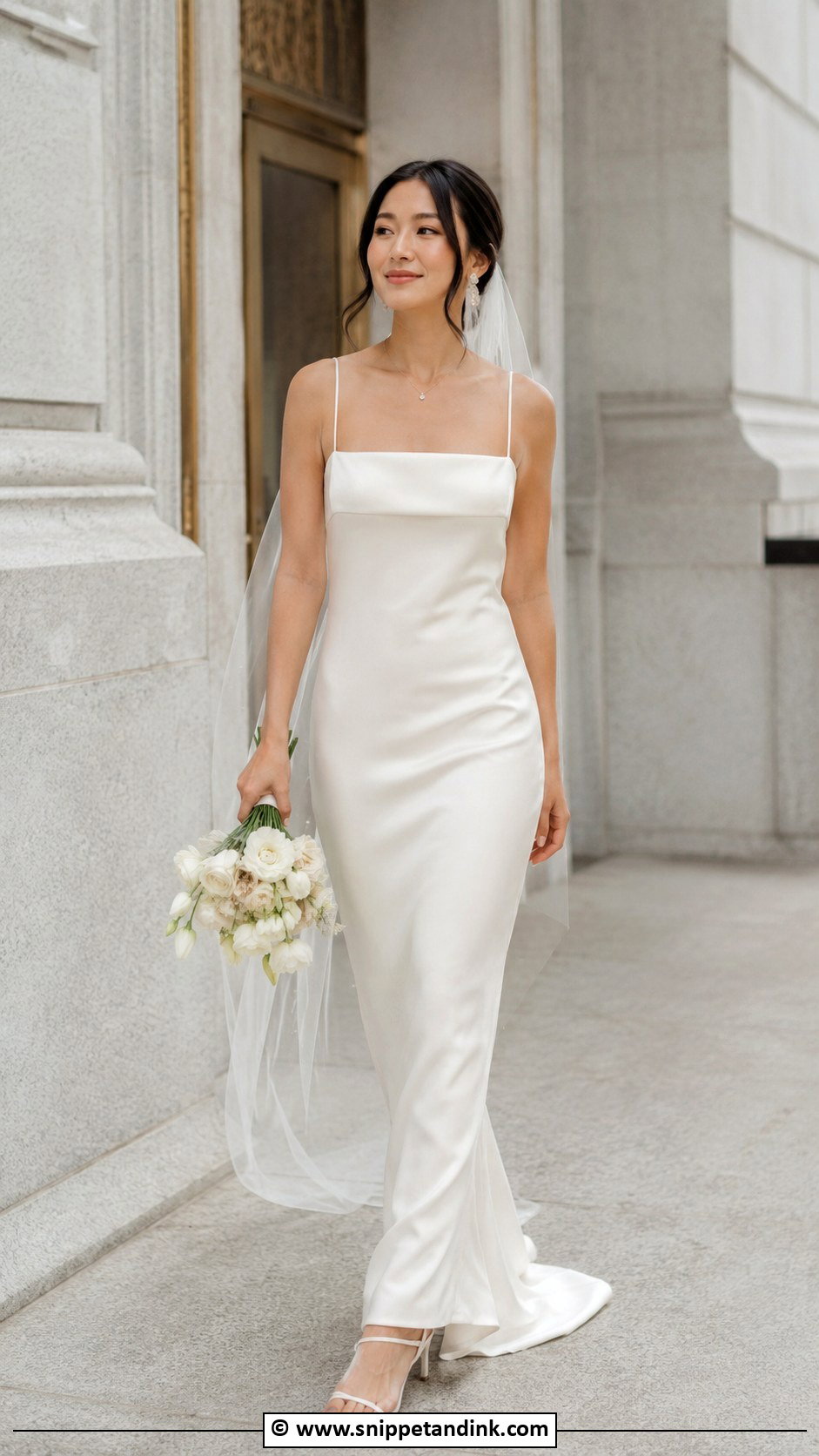
A sheath skims the body with no volume, so it travels well and suits beaches, rooftops and small registry ceremonies. Crepe gives a clean surface, silk is softer, and lace adds texture where a plain sheath might feel too bare. The honest downside is that a sheath shows the line of everything underneath it. I send brides to their fitting in the exact underwear they plan to wear, never a guess.
9. Off White Slip Wedding Dress
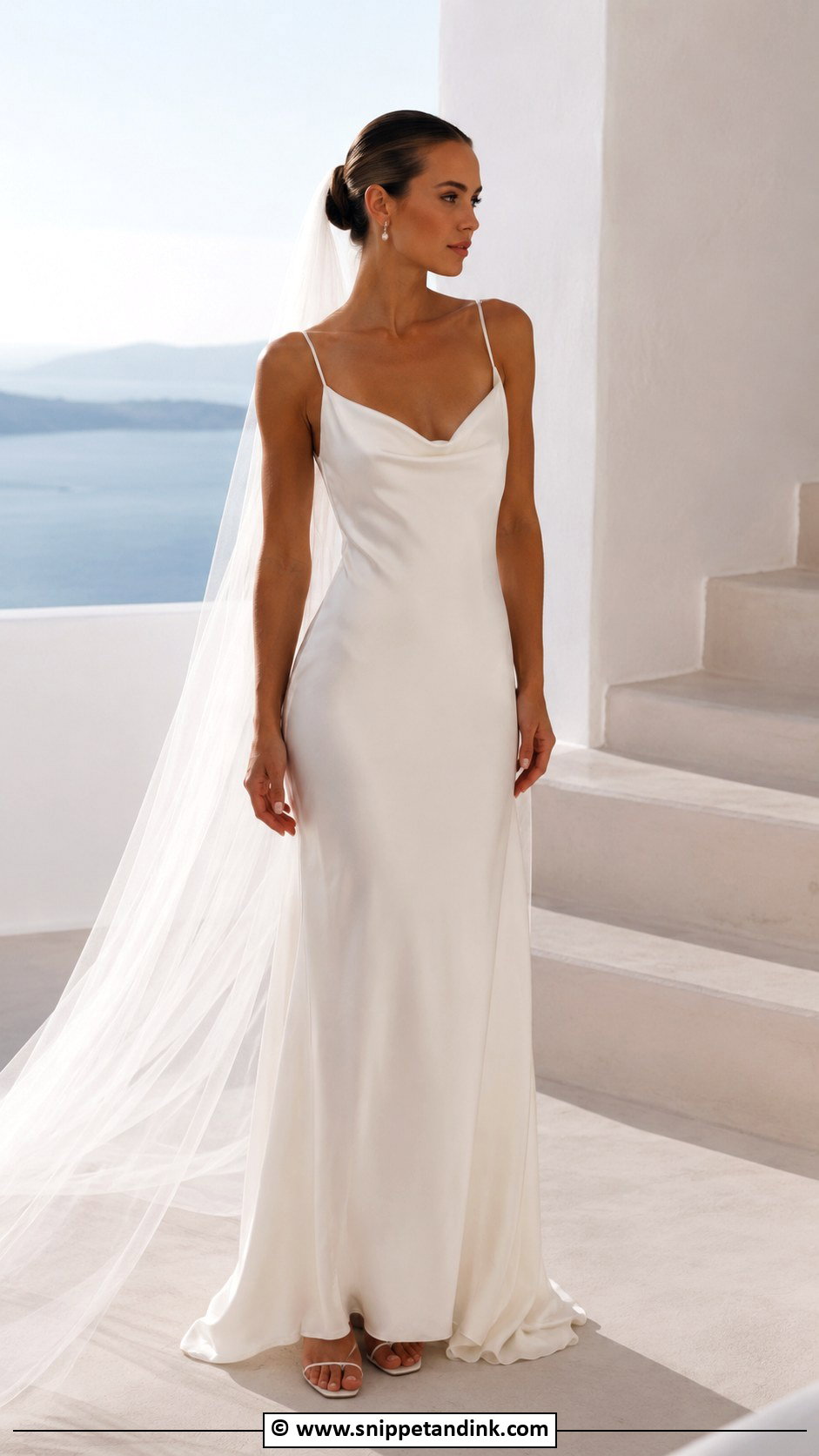
Bias-cut slips move with you because the fabric is cut on the diagonal of the weave, which gives it stretch without any elastic. That same cut clings, so it suits brides who are comfortable with a close drape. Ivory silk catches light gently. I often suggest a sheer cape or cropped jacket for the ceremony, then take it off for dancing, so you get two looks from one dress.
10. Off White Tea Length Wedding Dress
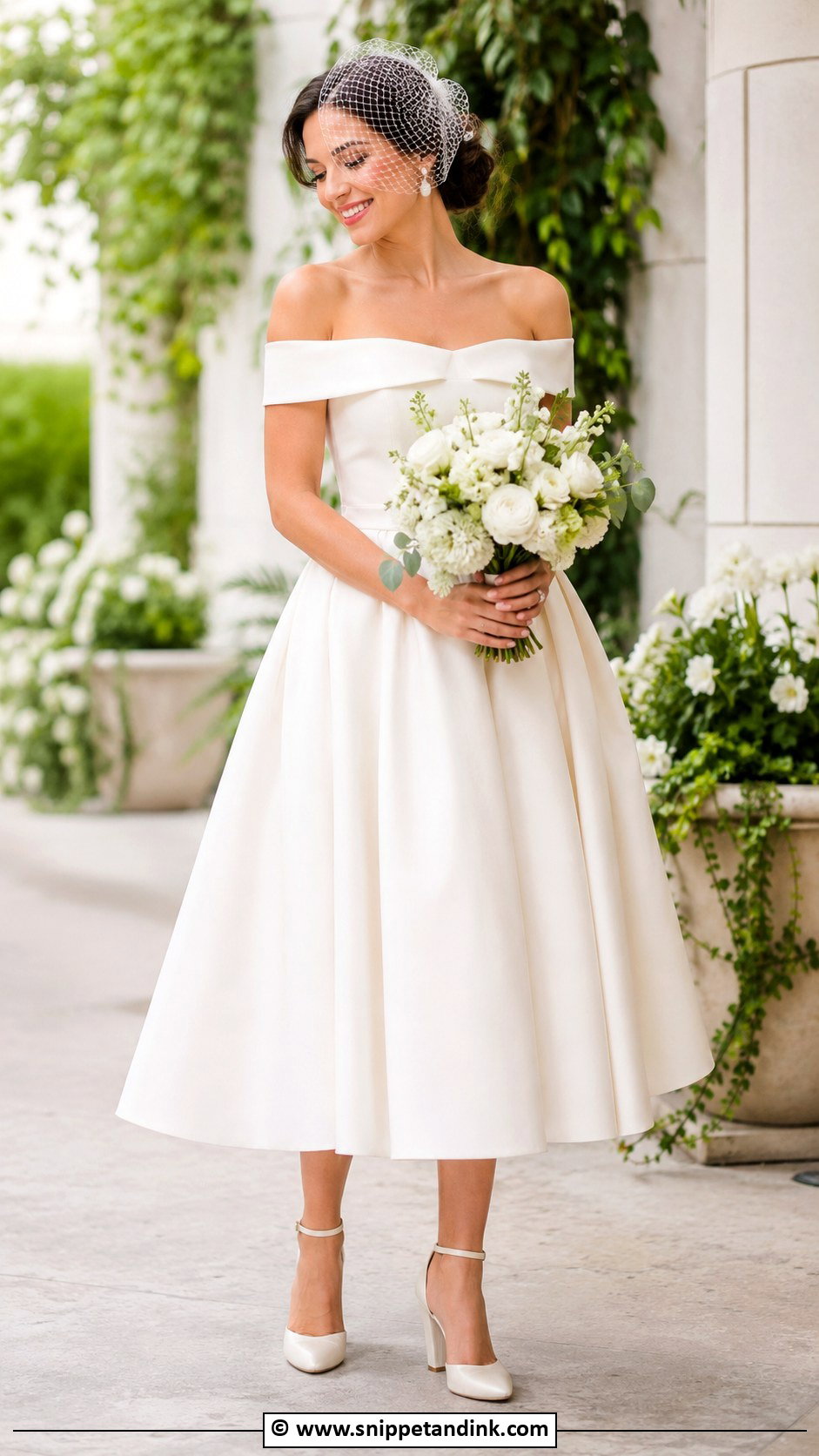
A tea length off white wedding dress stops between knee and ankle, so your shoes become part of the outfit whether you planned it or not. I tell brides to choose the shoe before the final hem, since a block heel and a pointed pump change where the skirt falls by a surprising amount. A fitted bodice with a full skirt gives the classic fifties line. Short gloves or a birdcage veil push it further toward retro; leave them off and it reads as a smart city wedding.
11. Off White Mini Wedding Dress
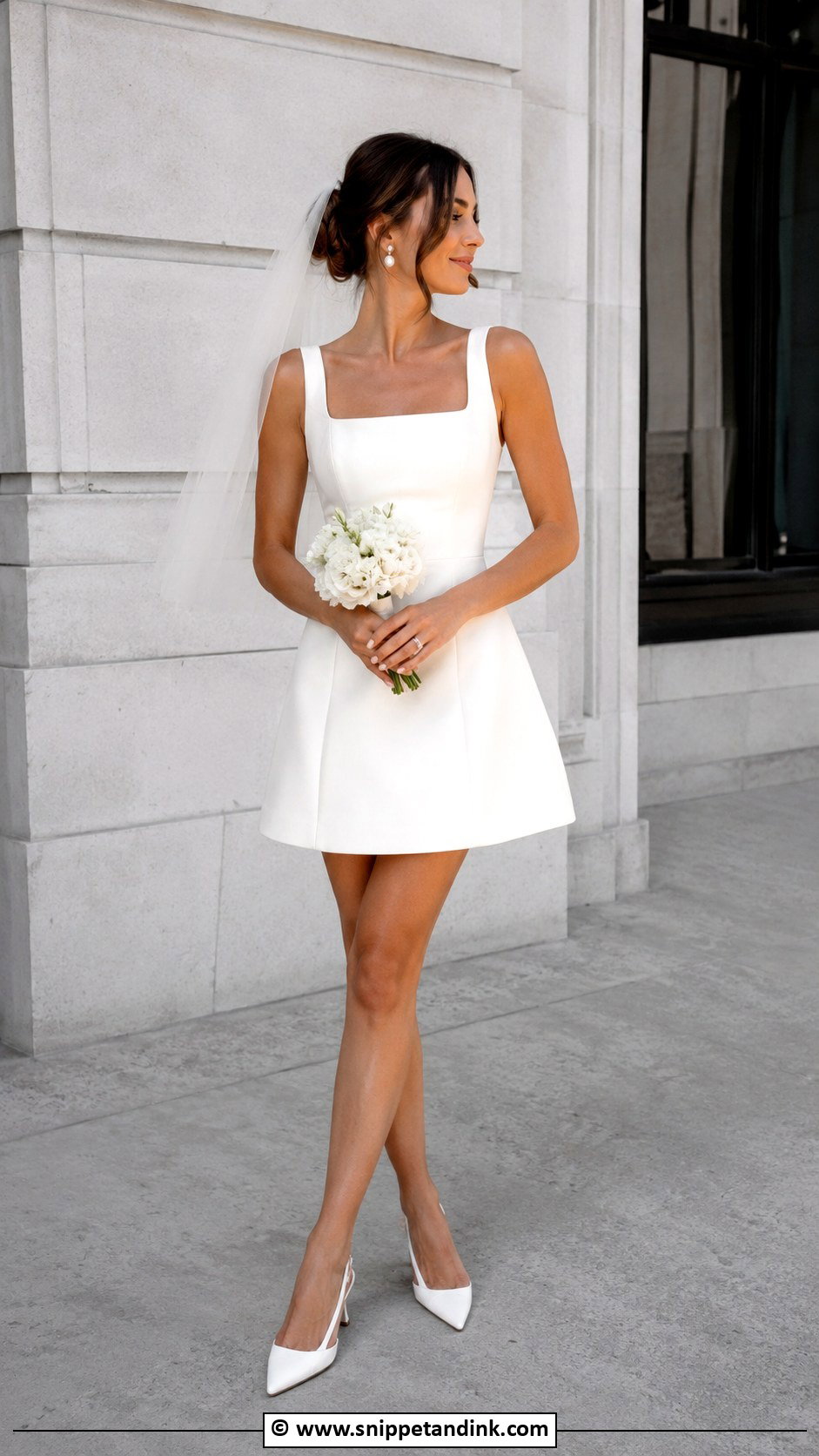
Minis work best for the courthouse, the reception change or the after-party. Structure is what keeps a short dress looking bridal; a soft jersey mini can look like going-out clothes. I look for tailored seams or a stiff shift shape. Sheer tights, slingbacks and a small veil or satin headband make the hem feel deliberate, and you can actually dance in it.
12. Off White High Low Wedding Dress
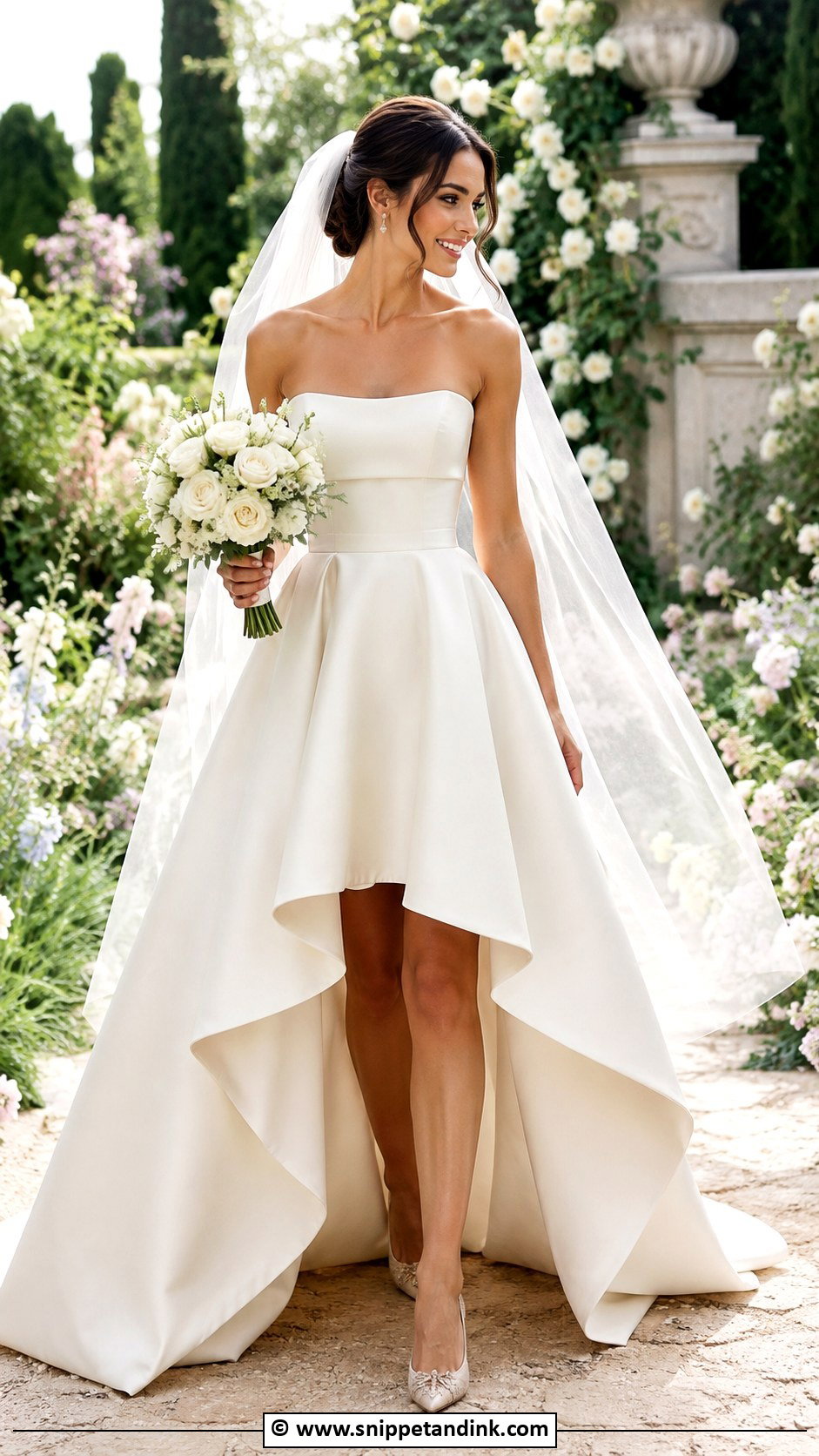
High low hems show off the shoes and keep the front clear for walking, while the back still trails like a ceremony dress. Outdoor venues suit it because the front won’t drag through wet grass. Tulle, organza, satin and mikado all hold the curve of the hem, though tulle is the most forgiving if the cut isn’t perfect. Wear shoes you’re proud of; they are on show the whole day.
13. Off White Tulle Wedding Dress
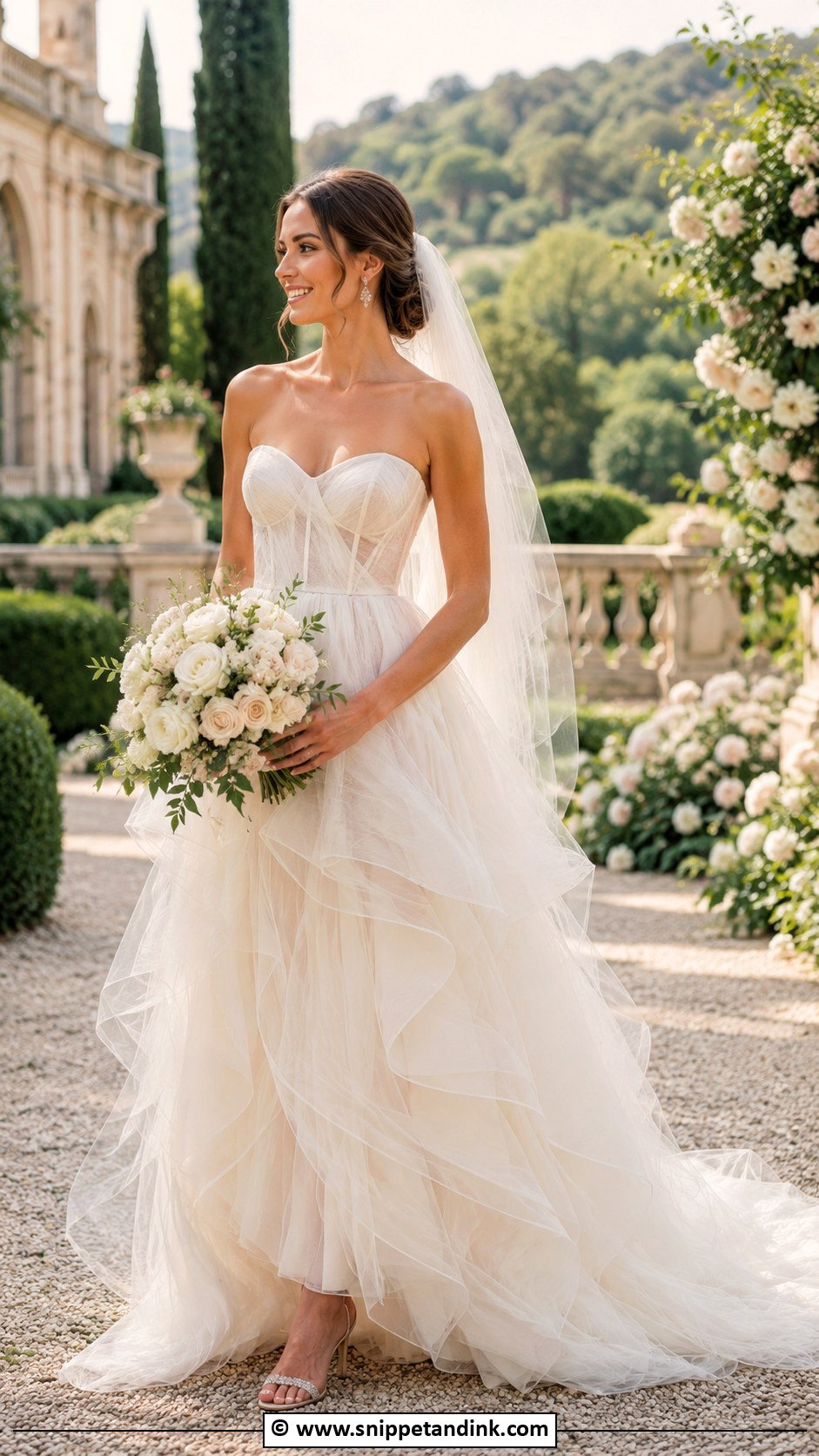
Tulle is lighter than it looks and layers well over ivory, blush or champagne lining, which changes the tone of the whole skirt. I always hold the lining colour up in daylight, because a champagne slip under ivory tulle can read pink in photos. Keep the bodice fitted so the volume has a waist to come from. The fabric snags on rough stone and bouquet wire, so I warn garden brides to watch where they sit.
14. Off White Organza Wedding Dress
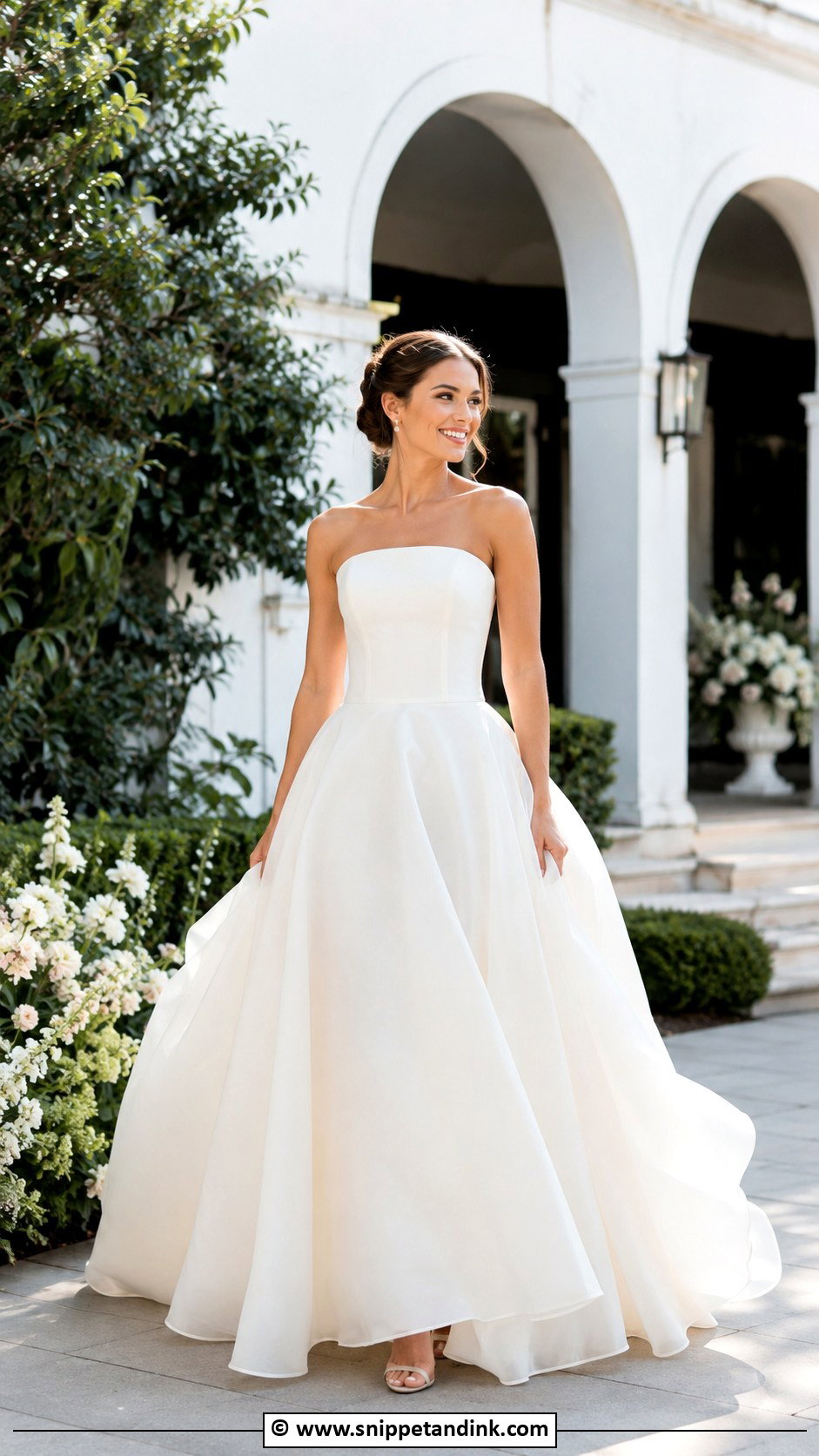
Organza is crisp where tulle is soft, so it gives a full skirt without heavy layers underneath. It holds bows, puff sleeves and clean strapless bodices without collapsing. In spring and summer it stays cool because the weave is so open. The one thing I flag is creasing: organza marks sharply if it’s crushed, so it needs to travel hanging, not folded in a suitcase.
15. Off White Crepe Wedding Dress
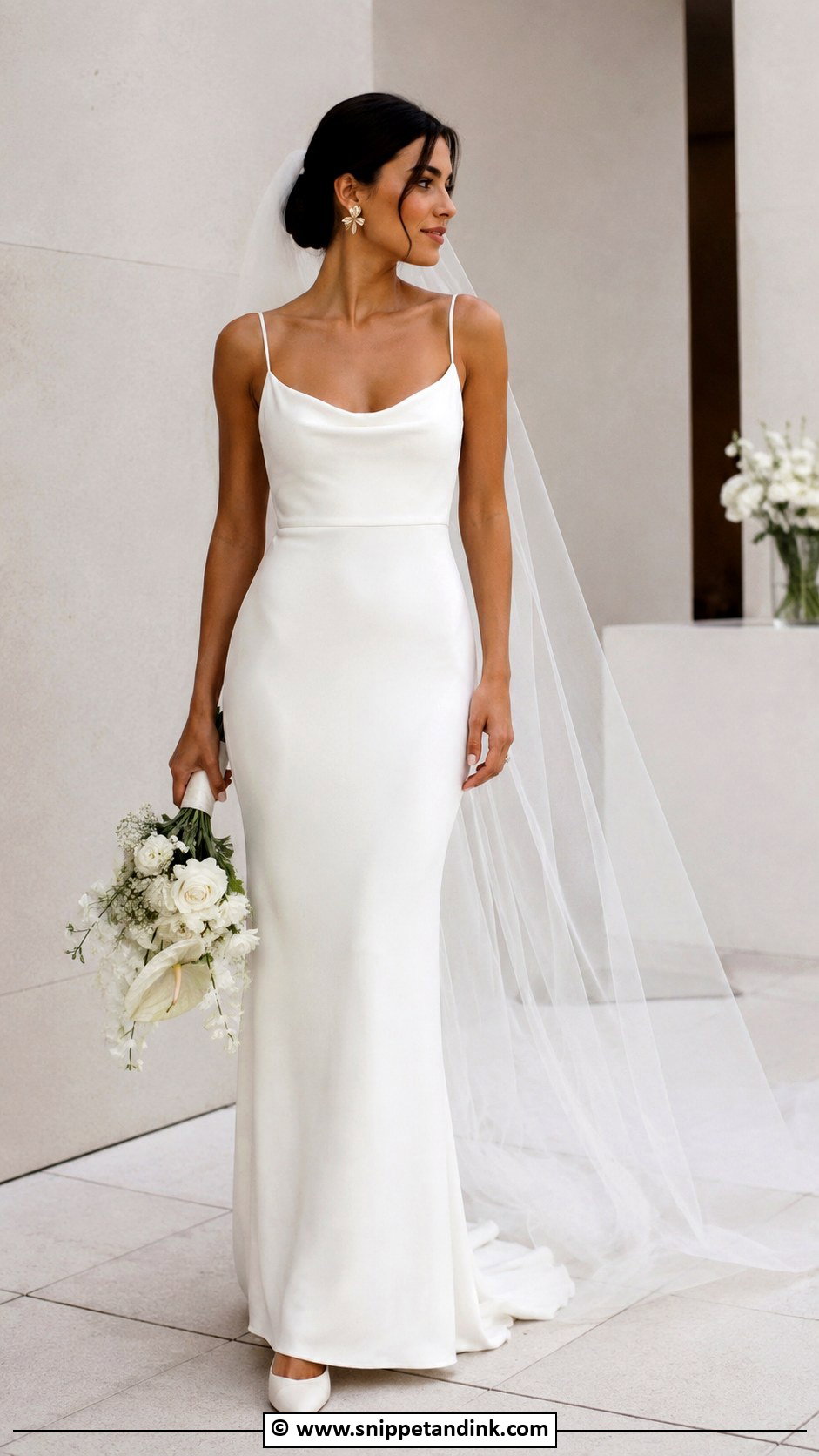
Crepe has weight and a matte face, so it falls straight and never looks shiny in flash photos. It’s my default fabric for sheath gowns, square necks and long sleeves. A plain crepe dress lives or dies on tailoring, and I’d rather a bride spend on a good seamstress than on extra detail. A long veil adds softness if the gown feels too stark at the final fitting.
16. Off White Floral Applique Wedding Dress
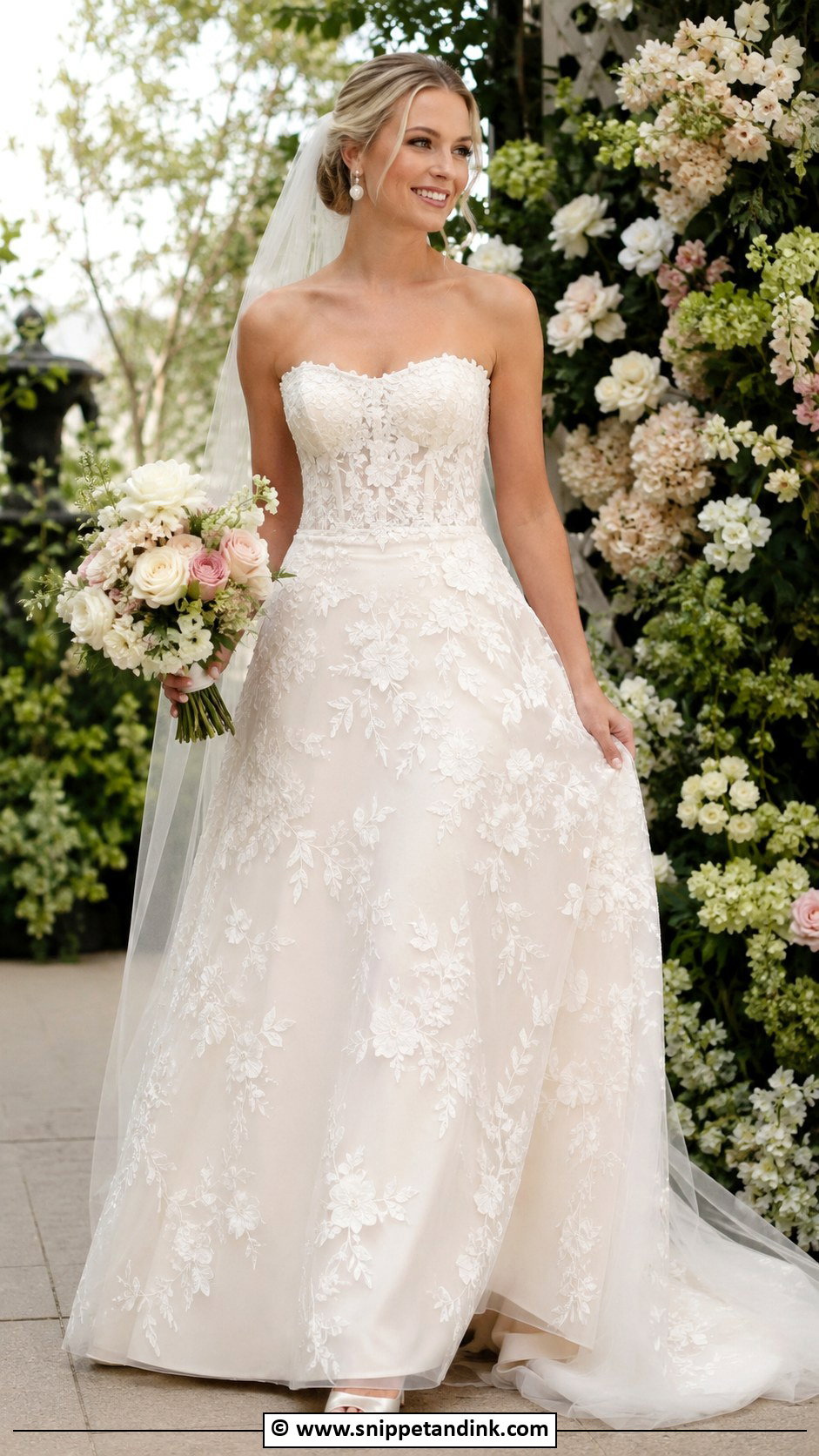
Floral appliqué ranges from flat tonal lace motifs to raised three-dimensional petals with beads stitched into the centres. The raised kind catches shadow, which gives depth in photos but also snags on bracelets. Choose an A-line or fitted shape depending on how much drama you want. Where the flowers run from bodice to hem, I keep jewellery almost bare.
17. Off White Beaded Wedding Dress
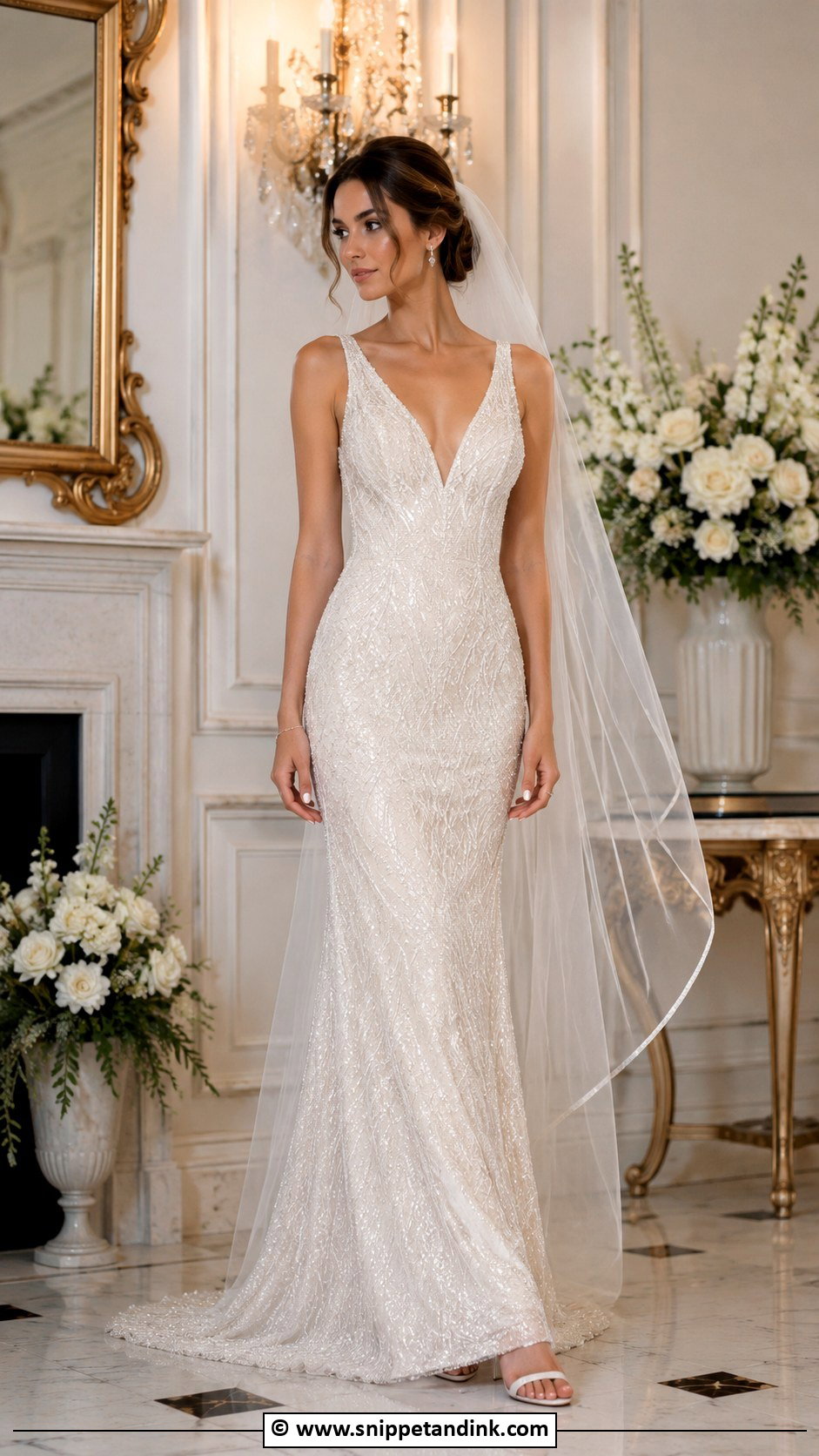
Beading on an off white base sparkles more gently than the same beads on white, which suits evening ceremonies in hotels and ballrooms. Allover beading is glamorous; a beaded neckline or hem is quieter. Ask to lift the dress before you buy. Fully beaded gowns can be heavy enough to tire the shoulders by the first dance, and a smooth inner lining stops the bead backs scratching the skin.
18. Off White Pearl Wedding Dress
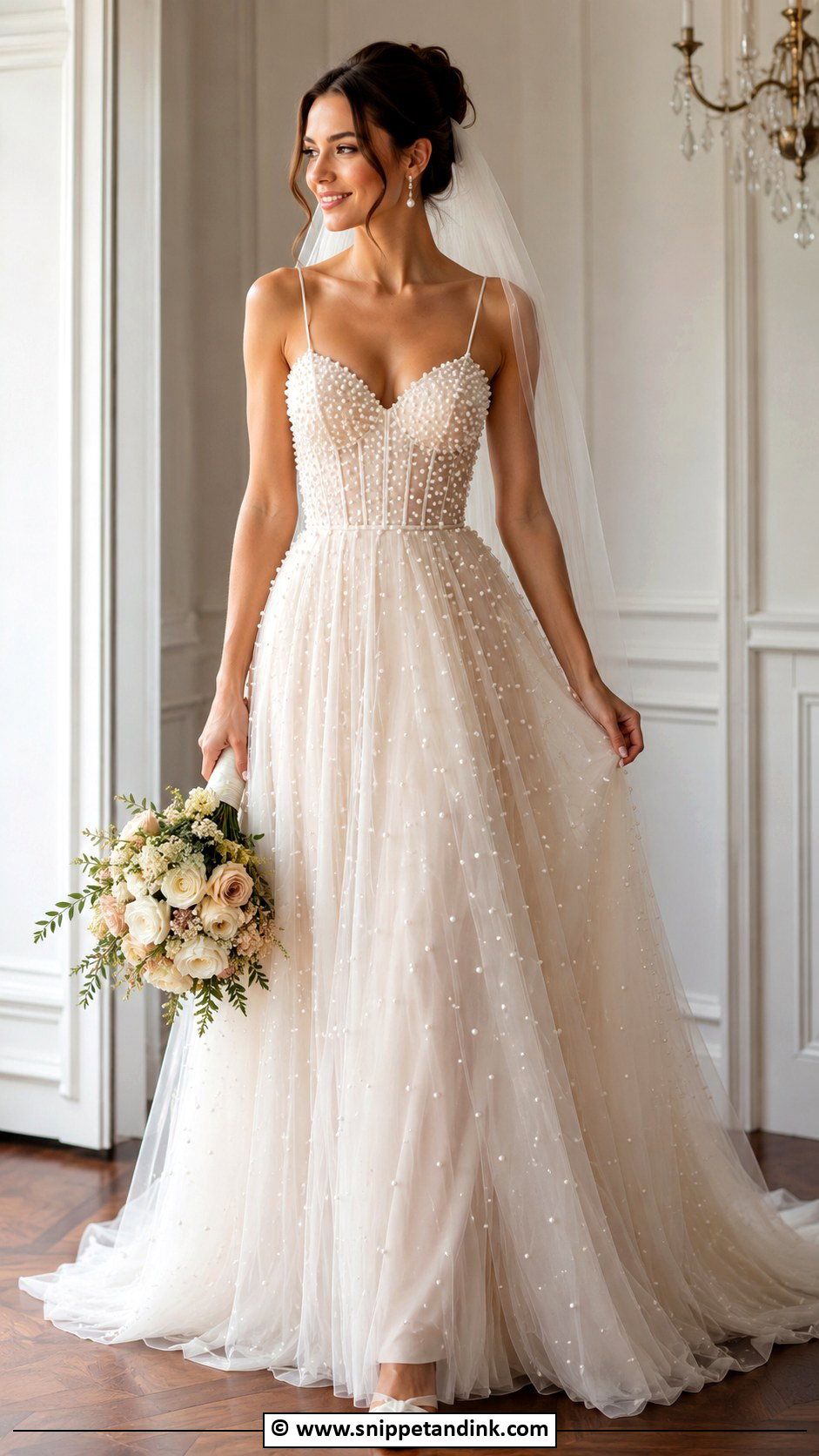
Pearls can be scattered across tulle, set along the straps, sewn onto sleeves or used as buttons down the back. Because they’re already there, I’d skip a big pearl necklace; matching studs and satin heels are enough. Check how they’re attached. Glued pearls pop off over a long day, while hand-sewn ones stay put. It suits brides who want texture without sparkle.
19. Off White Bow Back Wedding Dress
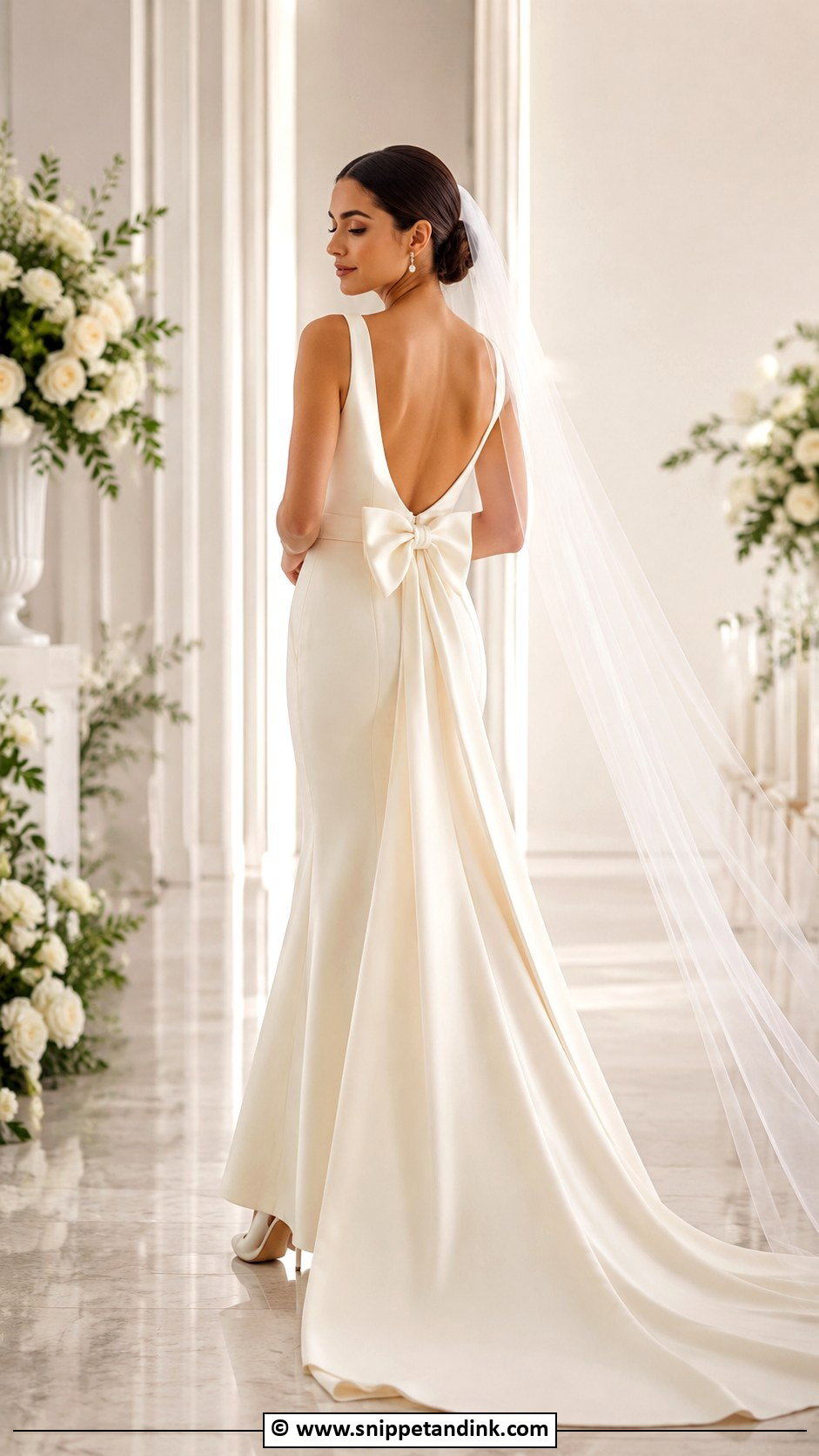
A bow at the back gives guests something to look at during the whole ceremony, since that is the view they get. In off white the bow reads soft rather than loud. On a column gown it looks modern; on a full skirt it looks classic. Plan the veil around it, either short enough to sit above the bow or removed after the vows, so the detail isn’t hidden all day.

20. Off White Drop Waist Wedding Dress
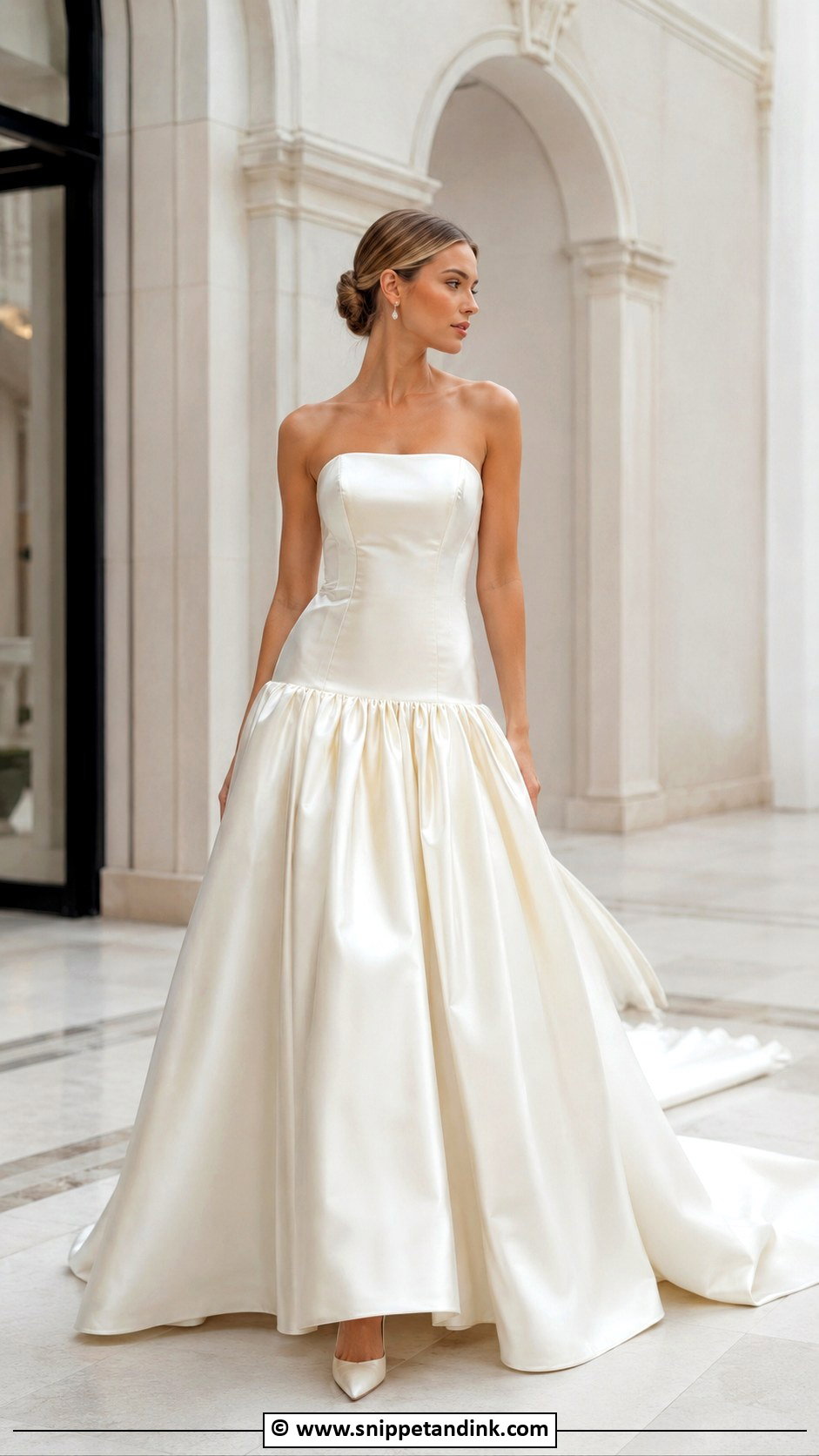
A drop waist lengthens the bodice below the natural waist, which makes the torso look longer before the skirt begins. Satin, mikado and taffeta give it the crisp line it needs. It isn’t for everyone: on a short torso it can make the legs look shorter, so I always try it next to a natural-waist version. With a full skirt, I keep the neckline plain to hold the proportions.
21. Off White Basque Waist Wedding Dress
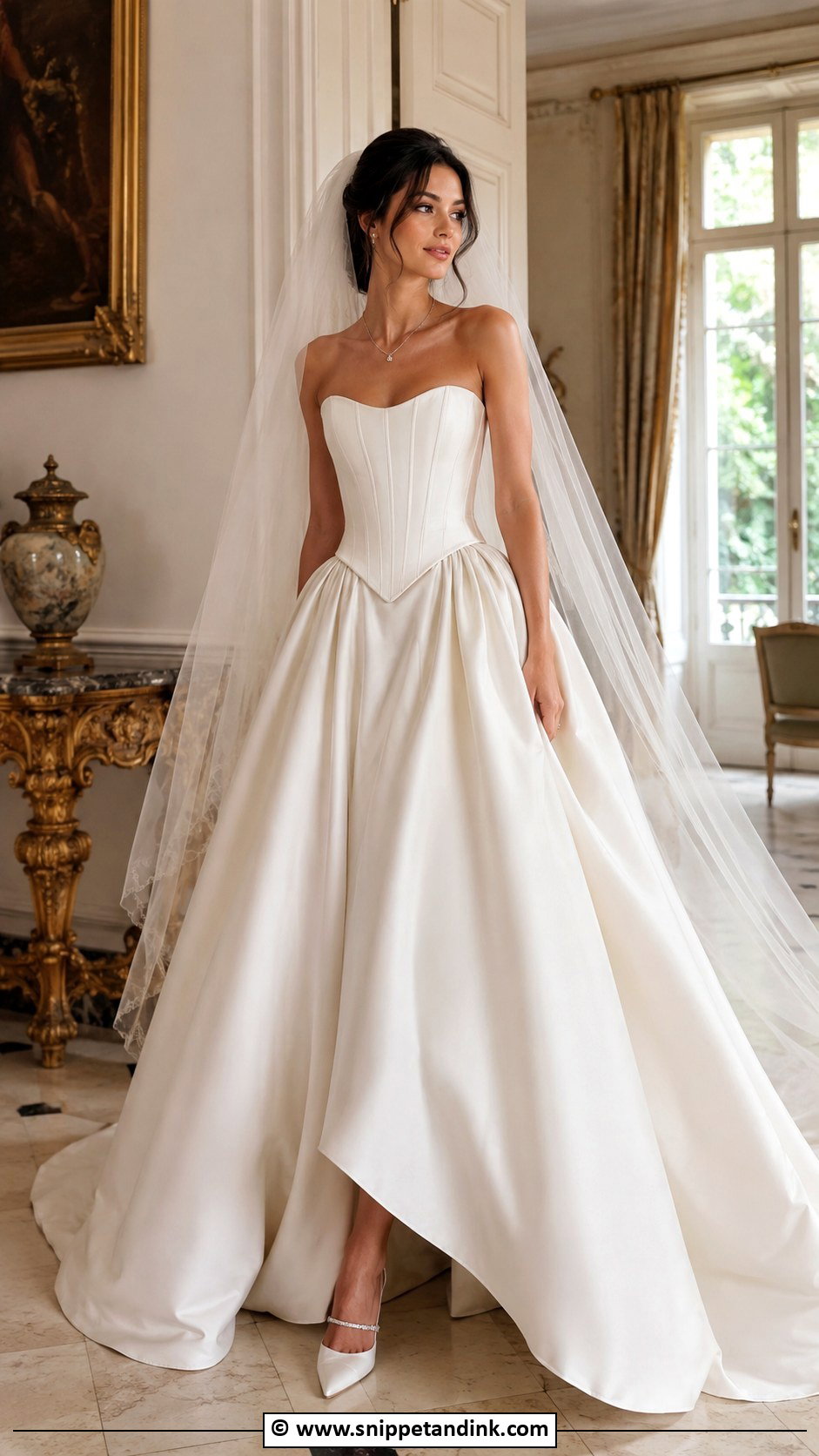
A basque waist wedding dress dips into a V at the front, which draws the eye down and gives a sculpted, slightly historical shape. It pairs naturally with corset bodices and full skirts in lace or satin. The point has to sit exactly at centre front, so I check it while the bride is seated as well as standing. With a detailed bodice, a long veil and plain hair are all you need.
22. Off White Halter Wedding Dress
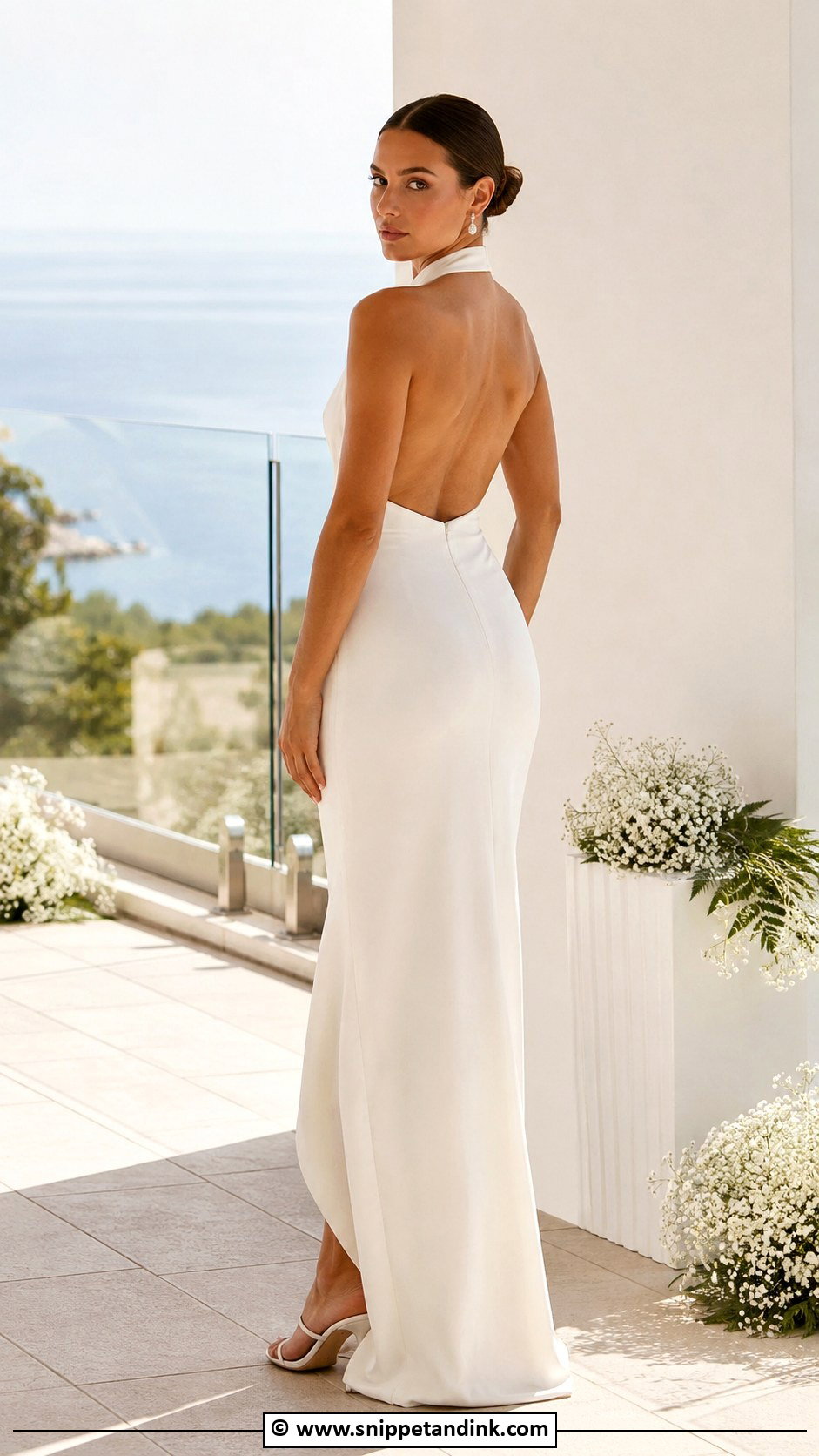
Halters pull the eye to the shoulders and leave the back open, which suits column skirts and fluid satin. Destination and rooftop weddings are a natural fit because there’s nothing heavy on the arms. Skip a necklace entirely; the neckline is already doing that job. I do check the neck strap after an hour of wear, as a thin tie can start to rub.
23. Off White One Shoulder Wedding Dress
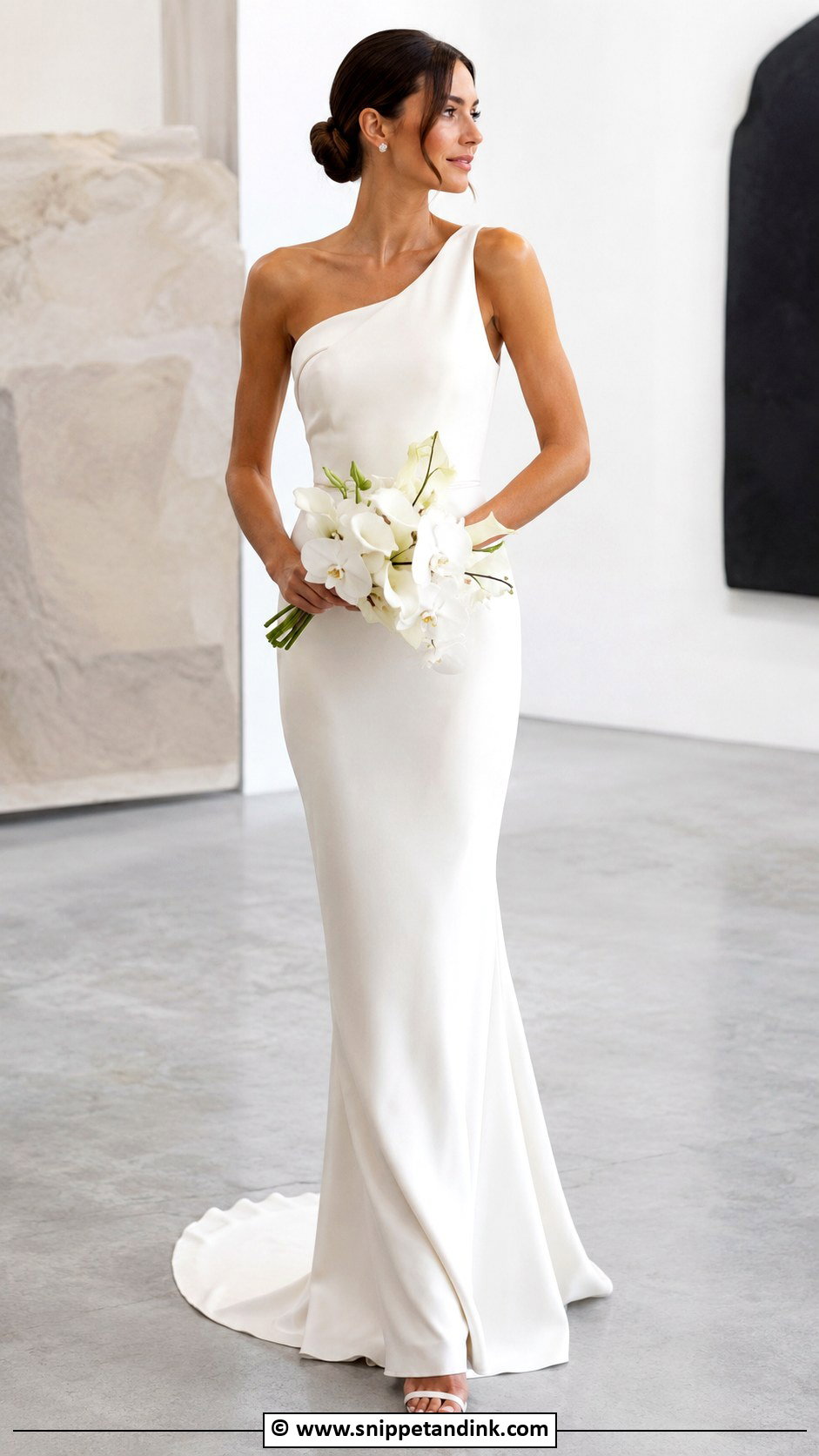
One shoulder dresses feel modern because the asymmetry does the work without any extra detail. Crepe, satin and draped silk all suit it. Wear one statement earring on the bare side or simple studs, and leave the neck clear. The off white tone softens what can otherwise look quite sharp. Brides with a strong strap-mark tan should know it will show on one side only.
24. Off White Cape Wedding Dress
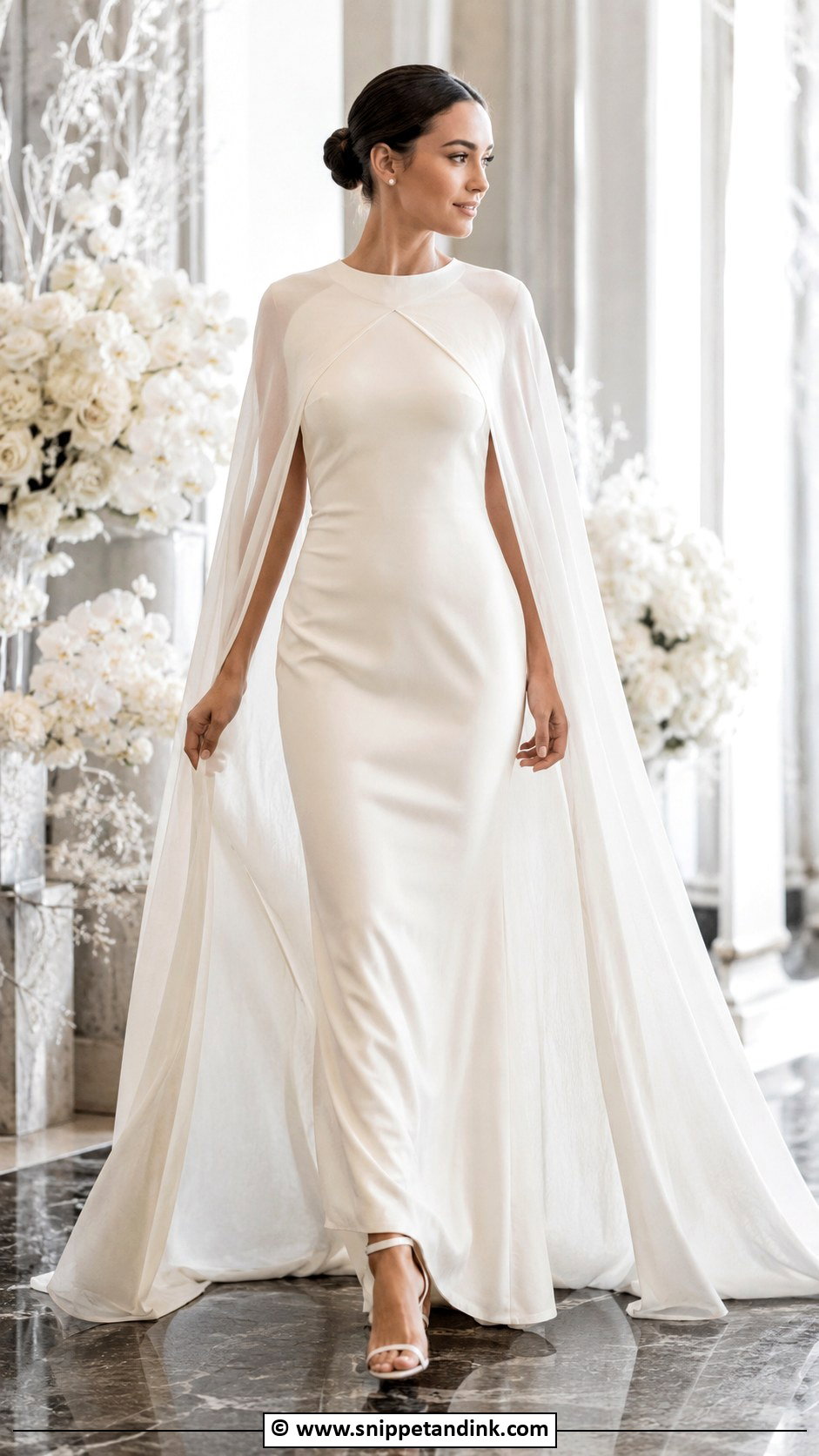
A cape gives you the drama of a veil without anything on your head, and it moves in a way that suits architectural venues. Sheer, lace and satin shoulder capes each change the mood of a simple sheath or strapless gown. I like that it’s removable: shoulder coverage for a religious ceremony, then off for the reception. Keep jewellery minimal so the cape stays the focus. Ask how it fastens, because a cape that slips back pulls at the neck.
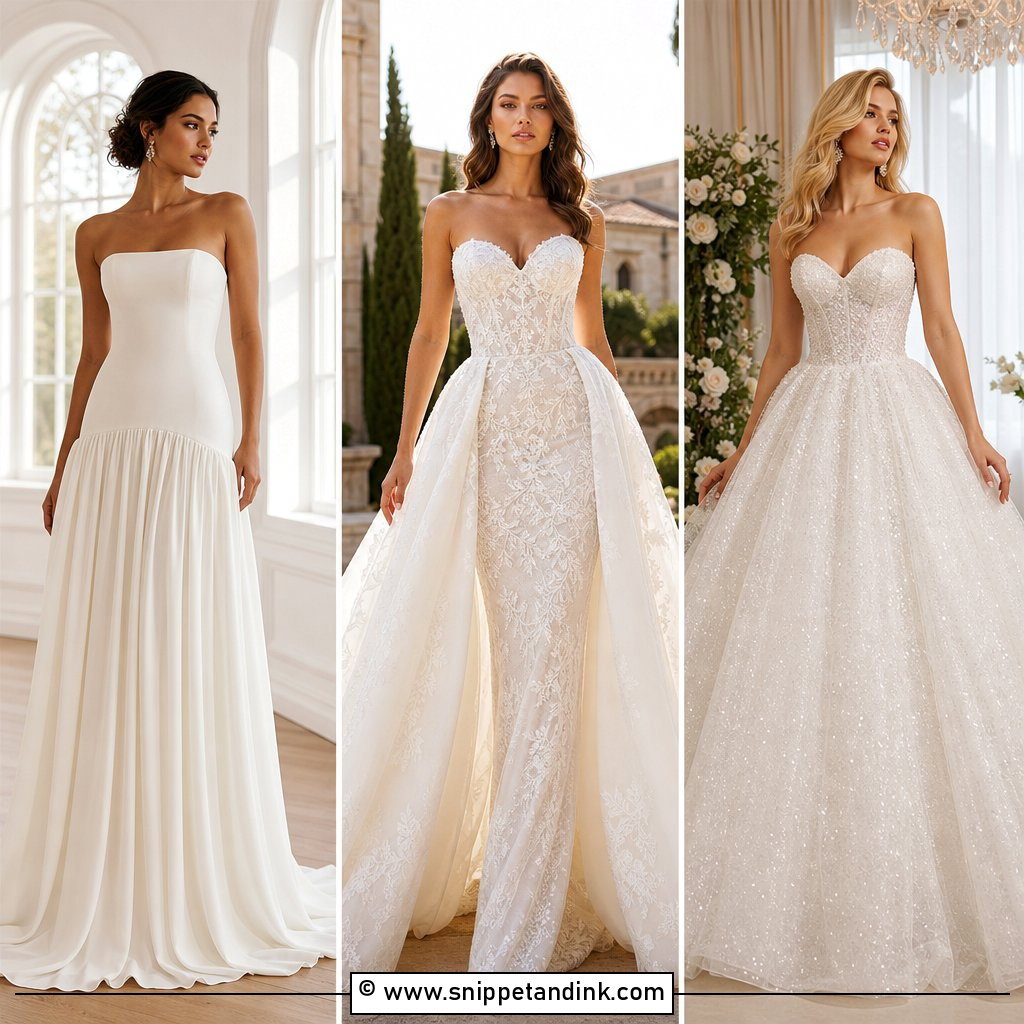
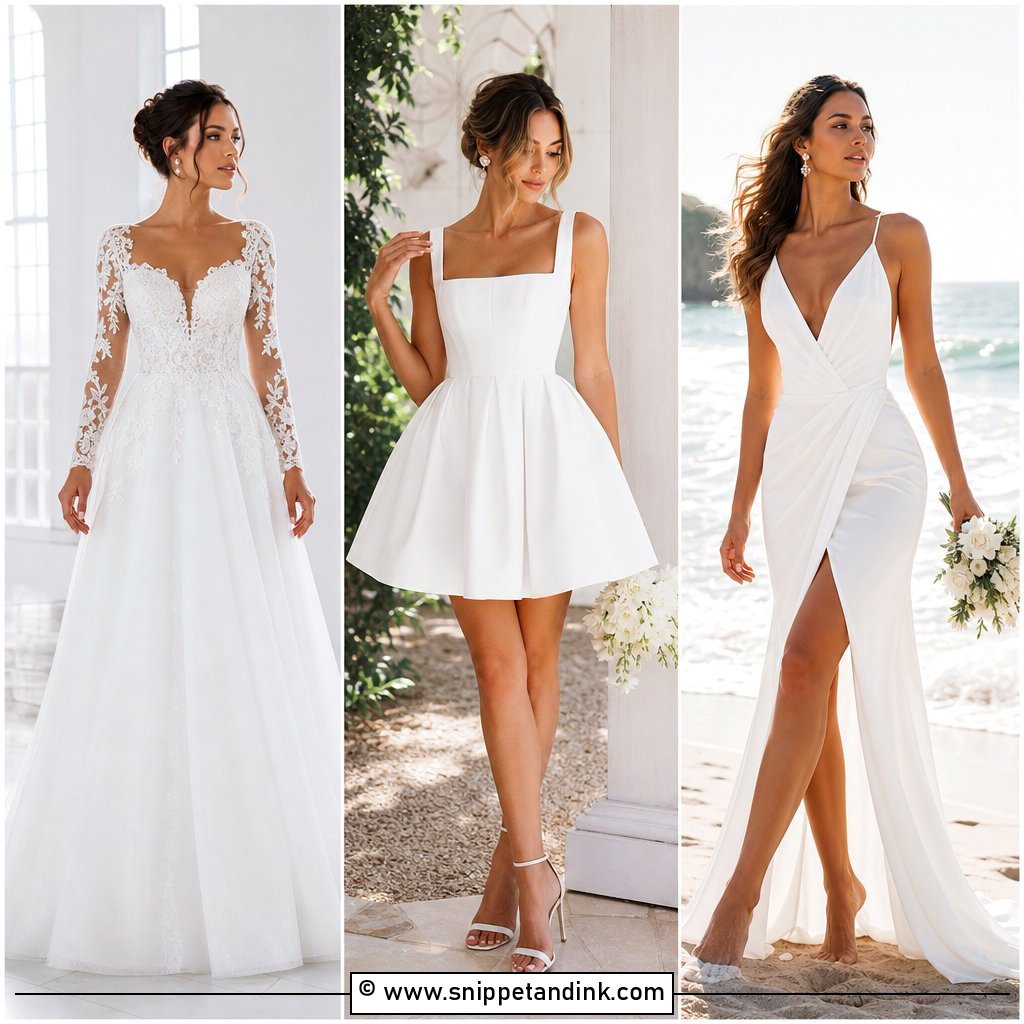
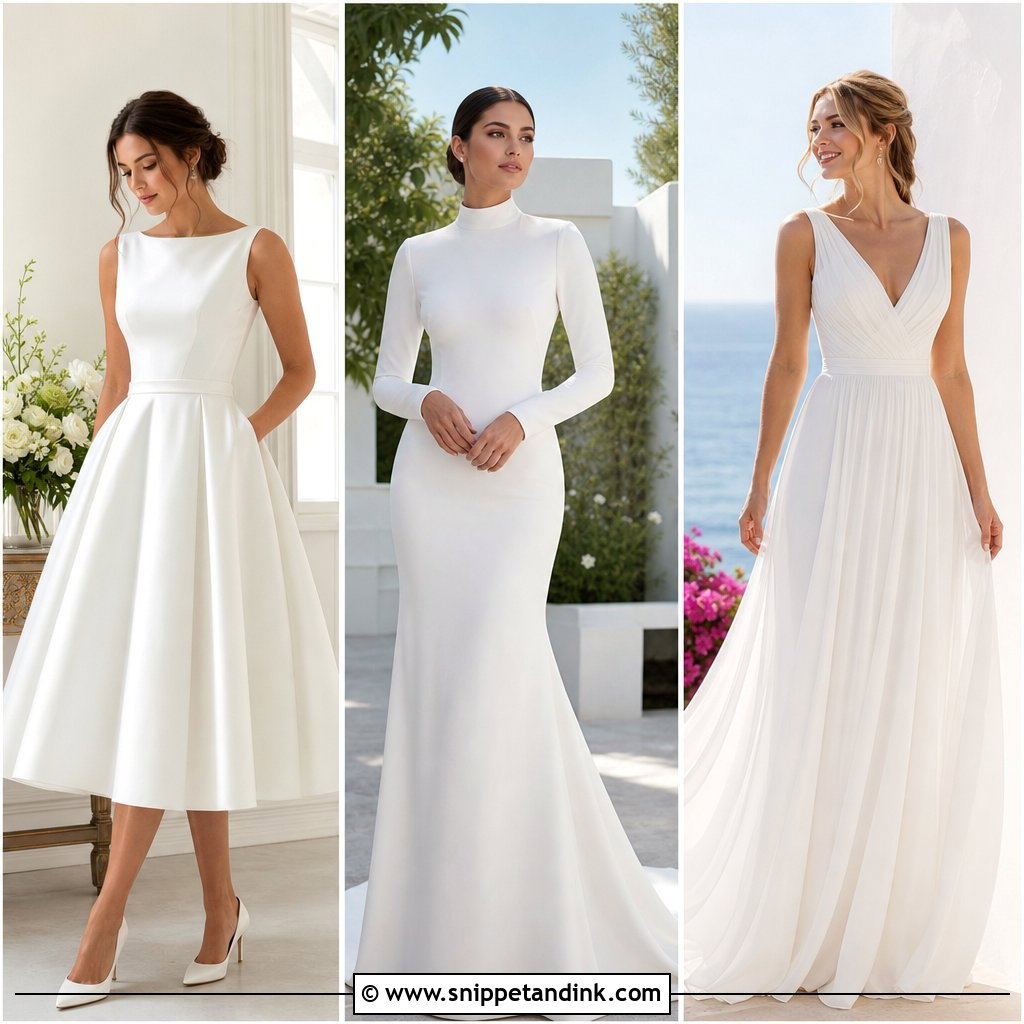


25. Off White Detachable Skirt Wedding Dress
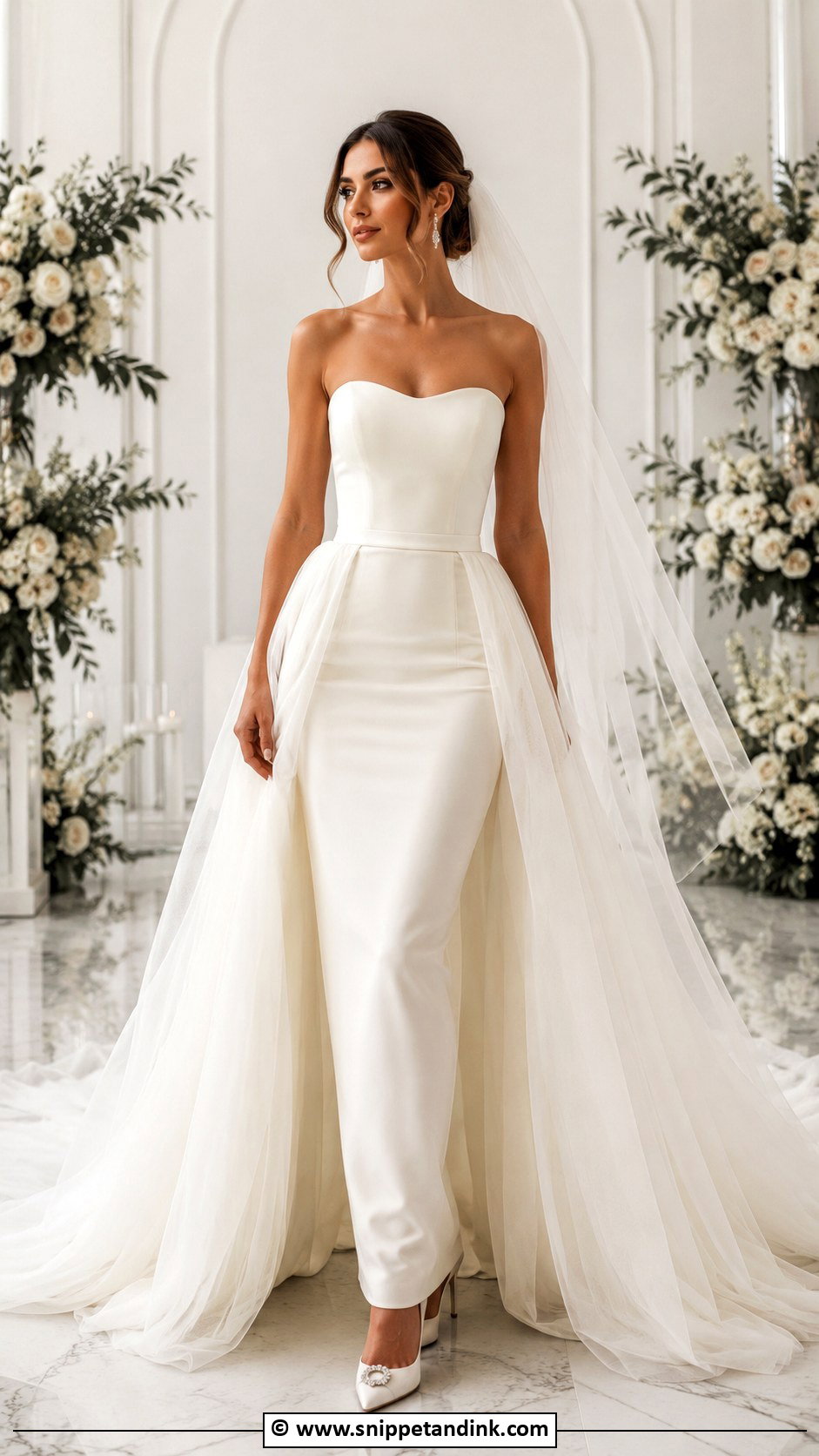
A detachable skirt wedding dress gives you a full overskirt for the aisle and a slimmer dress for dancing, with no second outfit to buy. Satin, tulle and organza overskirts all work over a fitted bodice, a mini or a jumpsuit. Practise taking the skirt off before the day. Hooks and snaps that look simple can be fiddly with nervous hands, so I always name one bridesmaid as the person who knows how it comes off.
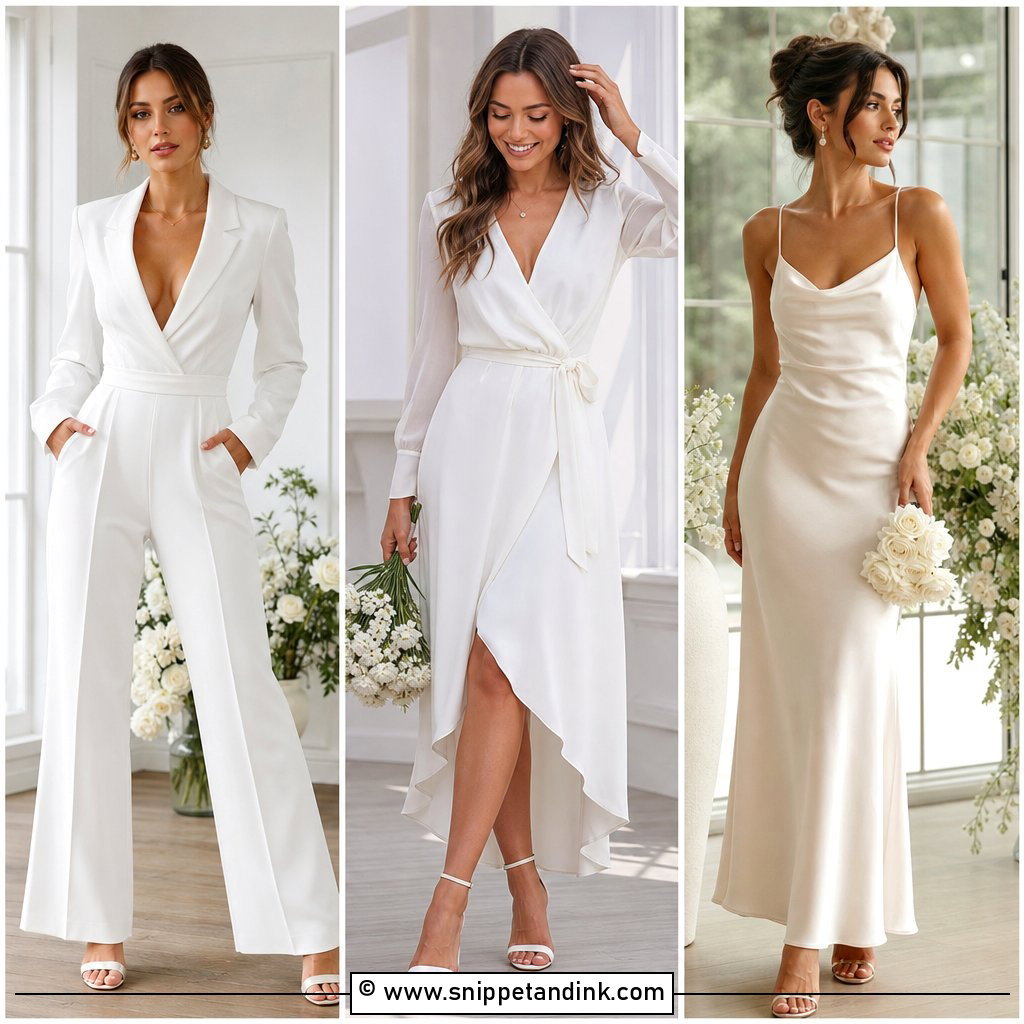
26. Off White Bridal Pantsuit
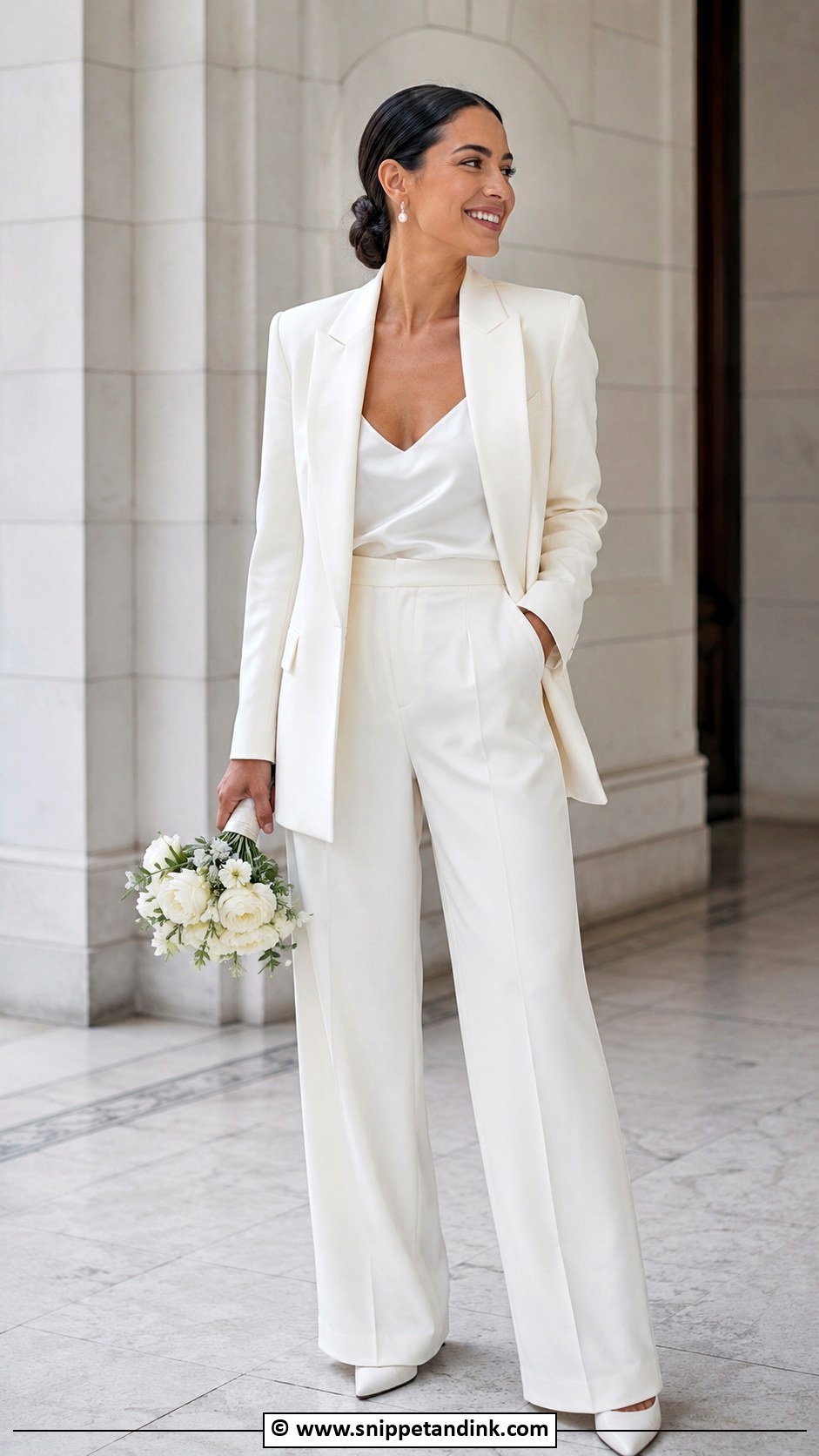
A tailored blazer and wide-leg trousers make a clean, confident silhouette for a bride who never wanted a gown. Under the jacket you can wear a silk camisole, a lace bodysuit or nothing at all if the blazer closes high. A short veil or bridal headband marks it as wedding clothing rather than office wear. Get the trouser hem done with your shoes on. Wide legs that drag look sloppy faster than any skirt.
27. Off White Bridal Jumpsuit
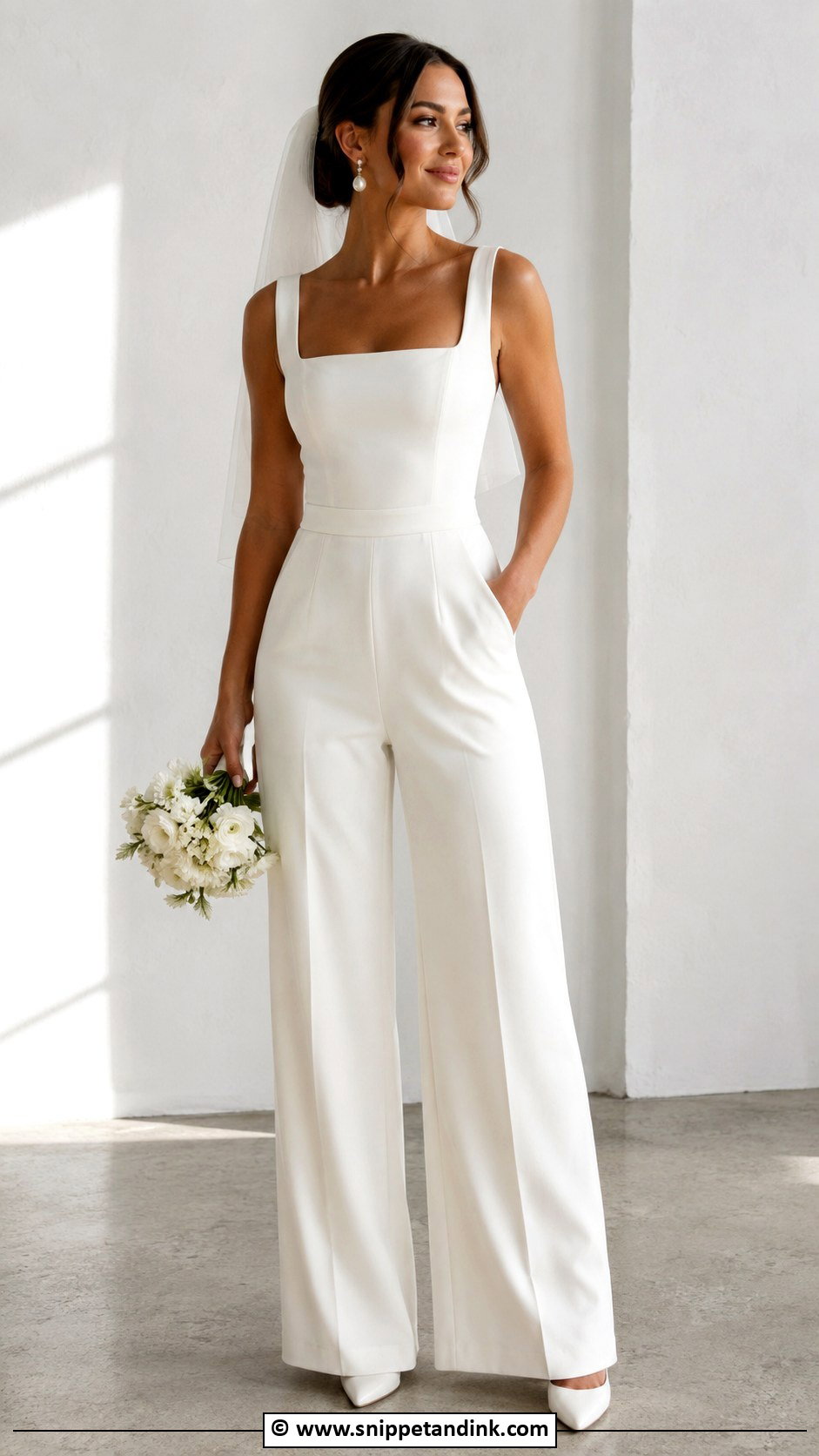
An off white bridal jumpsuit is easy to move in, which is why so many brides change into one for the reception. Crepe and satin drape smoothly; look for a fitted waist and either a structured bodice or a good sleeve. A cape, train or detachable overskirt adds ceremony drama. The practical question I always raise is the bathroom: check how the jumpsuit opens before you fall in love with it.
28. Off White Two Piece Wedding Dress
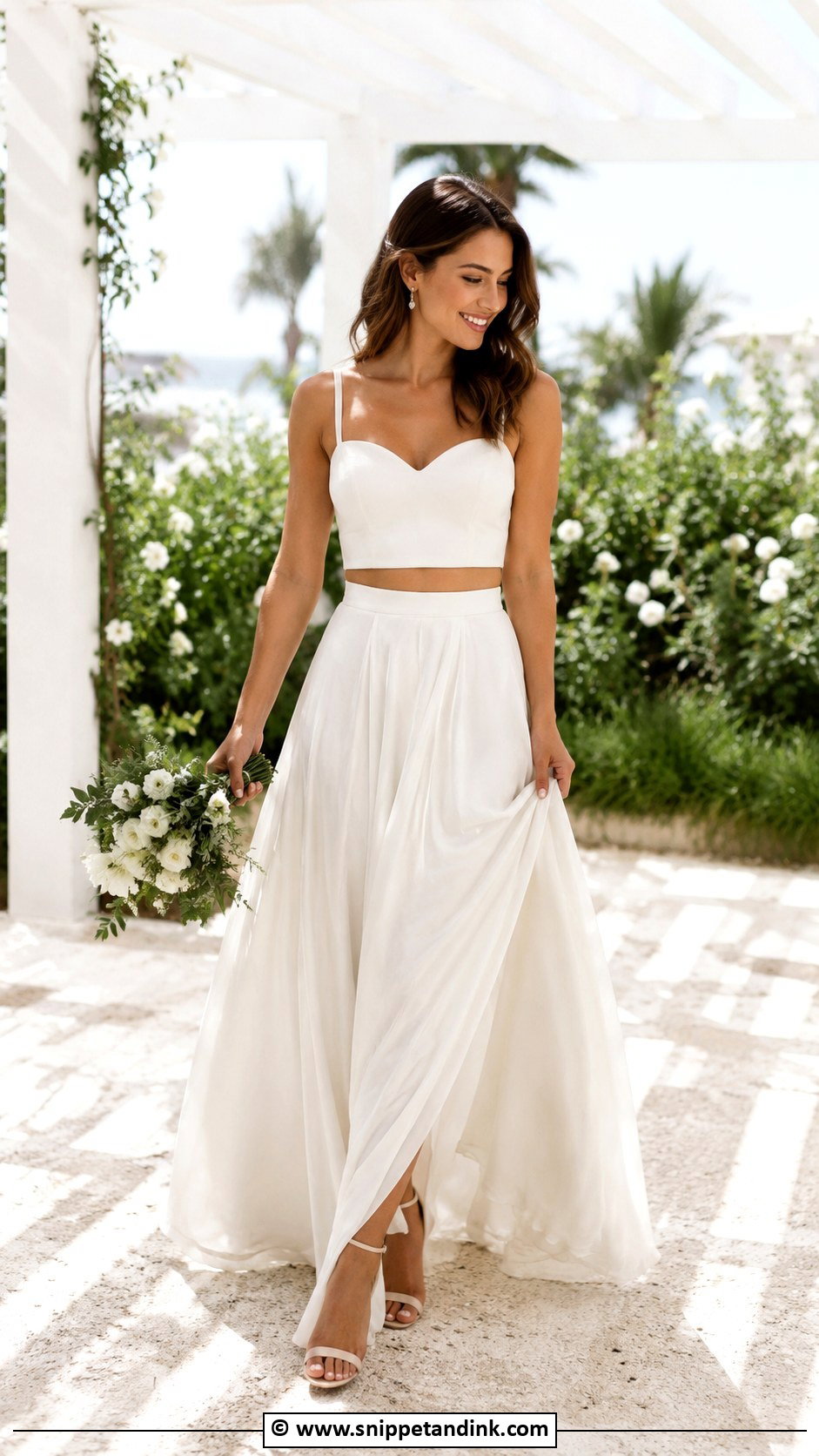
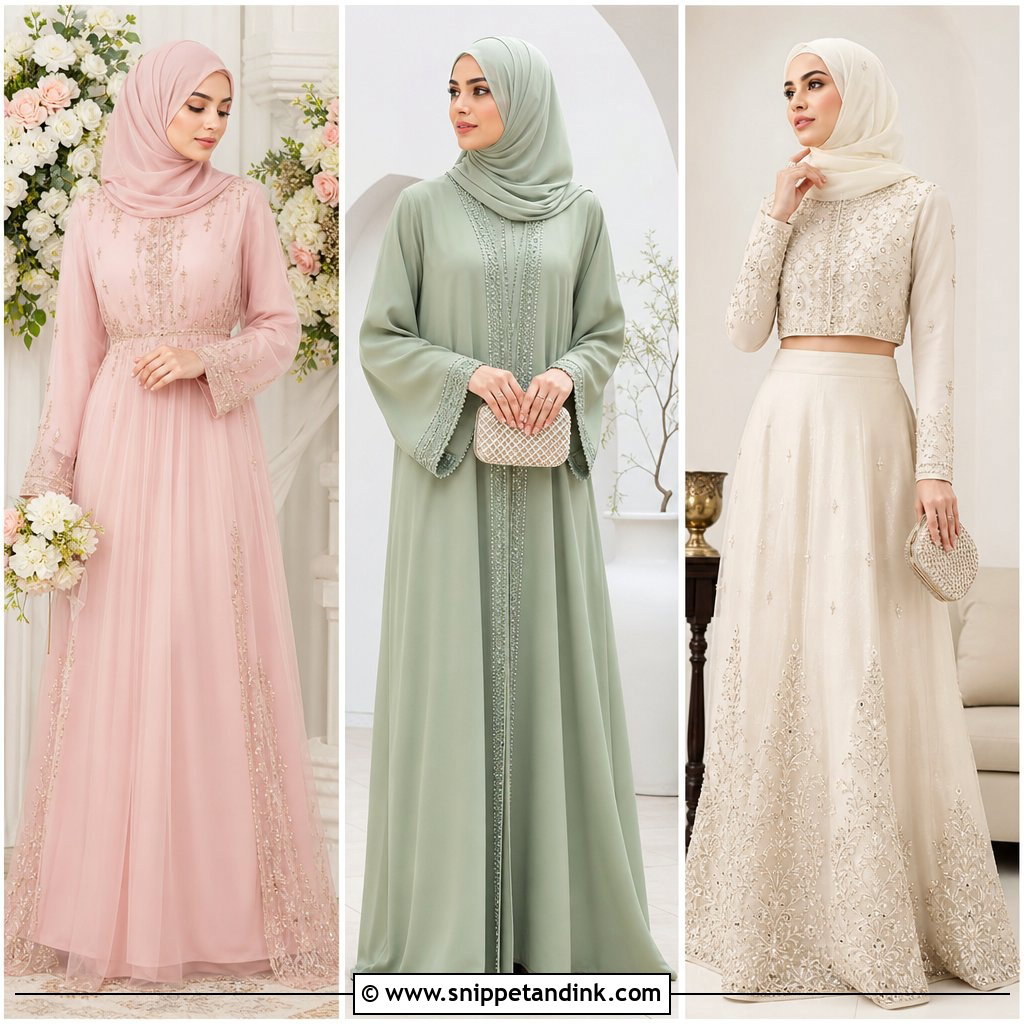
Two piece sets pair a crop top with a high-waisted skirt, and they look bridal when the fabric is formal and the fit is exact. Lace softens it, satin polishes it, crepe keeps it clean. They suit beach weddings and relaxed garden ceremonies. A real advantage is fitting: the top and skirt can be altered separately, which helps if you’re a different size above and below the waist. I keep the gap of skin small if you want the photos to age well.
29. Off White Vintage Wedding Dress
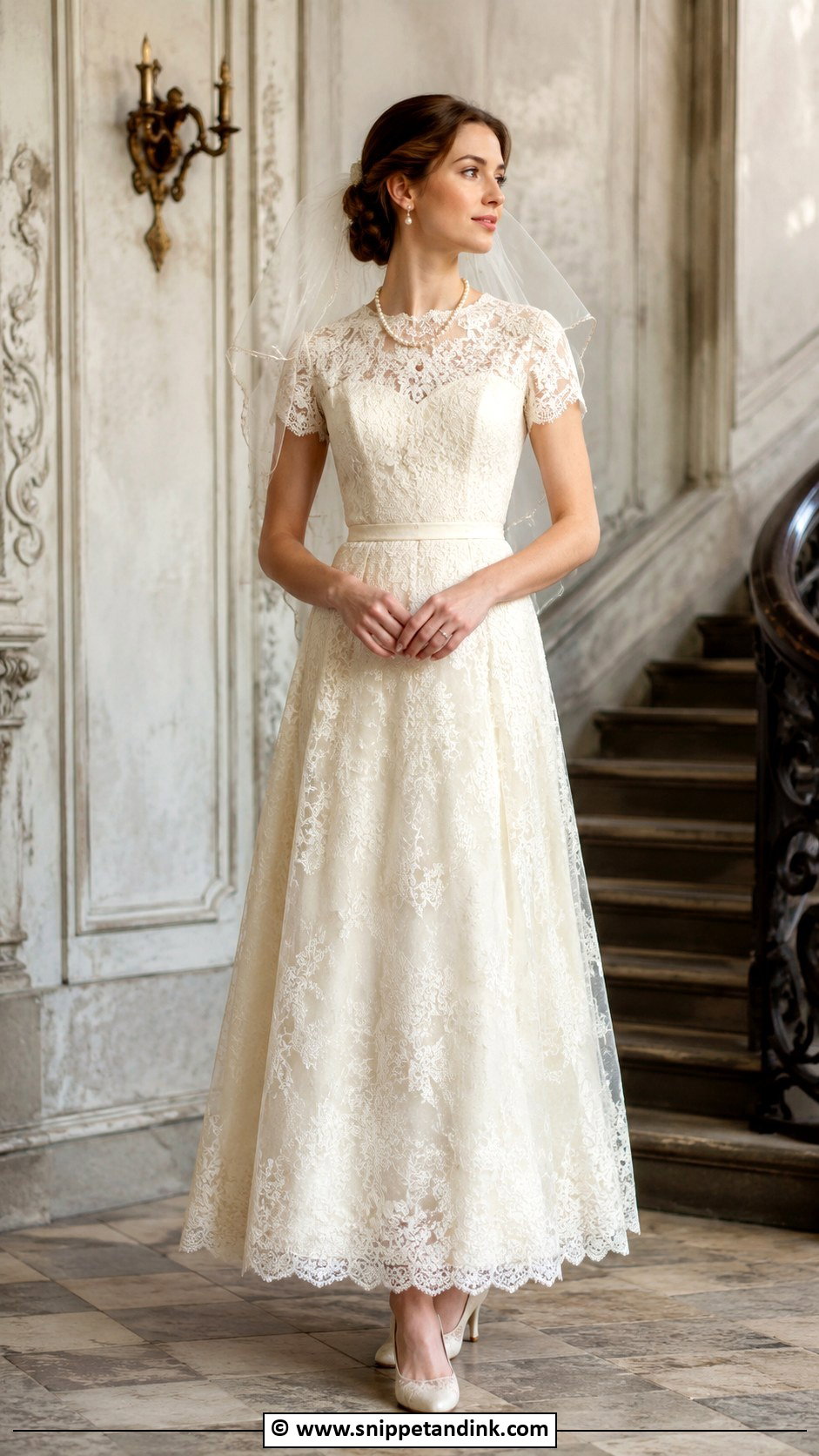
Vintage-inspired details include lace sleeves, covered buttons, high necks, tea length hems and soft puff sleeves. Off white helps here because true antique gowns have already aged to ivory, so a new dress in that tone sits comfortably beside them. If you’re wearing a genuine vintage piece, get a specialist to look at the fabric early. Old silk can split at the seams under alteration, and that needs time to fix.
30. Off White Beach Wedding Dress
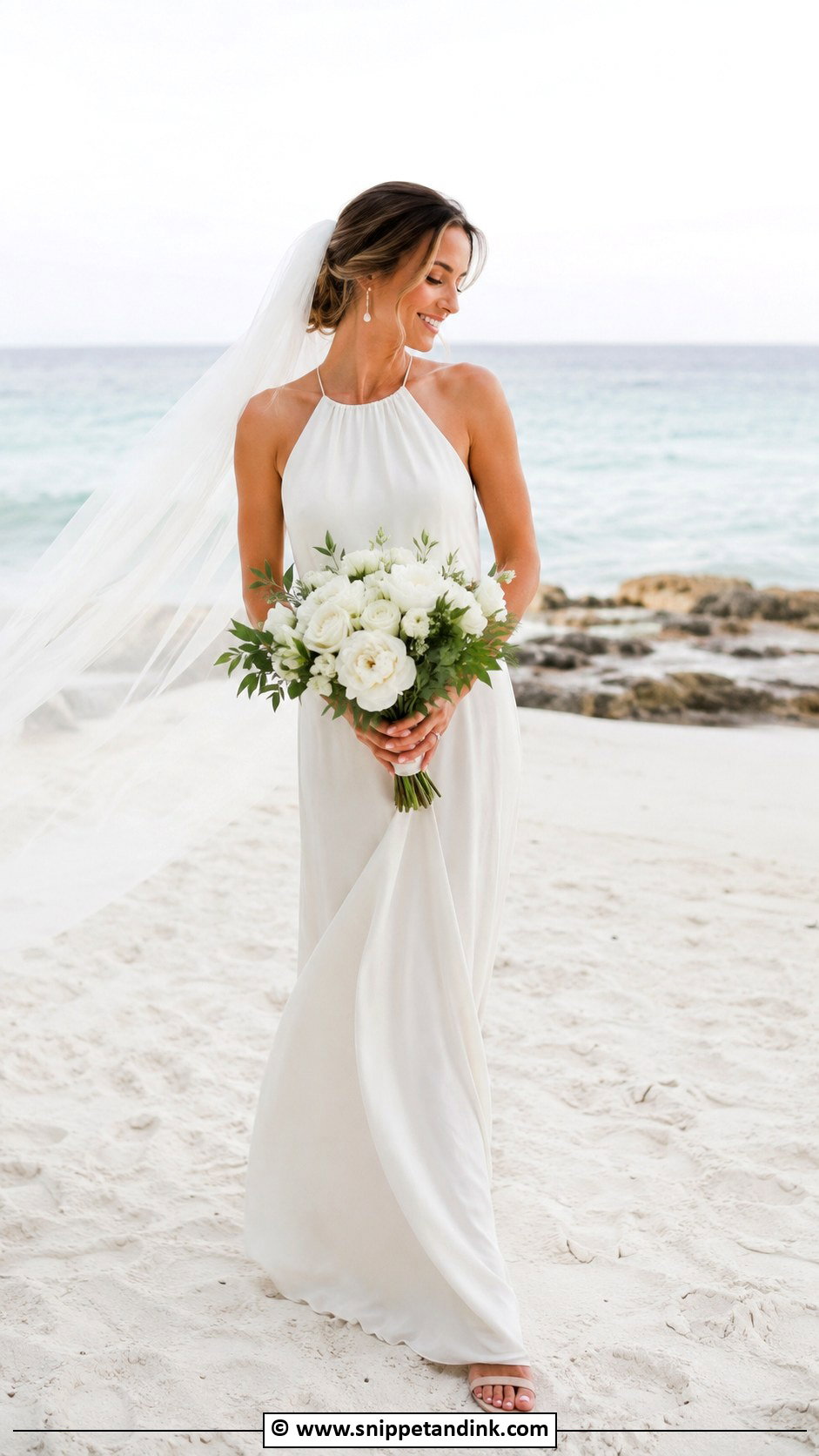
An off white beach wedding dress needs to breathe and move, so I lean on chiffon, silk, crepe and light lace rather than heavy satin. A sheath, slip, simple A-line or halter all handle wind well. Flat sandals or a low block heel save you from sinking into sand. Choose a veil that’s short or weighted at the hem; a long sheer one will wrap around your face in a sea breeze. Against sand and water, the warmer tone looks softer than bright white.
Matching Veil, Shoes and Lace So Nothing Looks Grey
The most common styling mistake I fix is a bright white veil on an ivory dress. Next to the warmer gown, the white tulle looks blue, and the dress suddenly looks dirty instead of warm. Order the veil in the same shade family as the gown, ideally from the same bridal shop so they can match the dye lot.
Shoes and accessories follow the same logic. Satin shoes come in ivory and white; pick the one that matches the dress fabric, not the box photo. Pearls also vary in tone, and a cream pearl reads better against off white than a stark white one.
Caring for an Off White Dress From Fitting Day to Storage
Off white hides a little more than bright white, but the hem will still pick up dust and grass. On the day, a bridesmaid with a white cloth and plain water can blot small marks; rubbing spreads them and roughens satin. Leave oil, wine and makeup stains for a specialist cleaner.
- Get the gown professionally cleaned within a few weeks, before sugar-based stains like champagne turn brown with time.
- Store it flat or loosely folded in acid-free tissue inside a breathable cotton bag or acid-free box.
- Keep it out of plastic dry-cleaning covers, which trap moisture and can yellow the fabric.
- Choose a cool, dark cupboard rather than an attic or basement, where heat and damp do the most harm.
The Off White Gown You Stop Fidgeting In
Start with where you’re marrying and how you want to move, then let the fabric and shade follow. Ivory satin, cream lace, champagne tulle, pearl details and separates all sit inside the off white family, and each one photographs warmer than bright white. Try at least one dress outside your comfort zone at the fitting. Brides often surprise themselves, and the dress that feels like you is usually the one you stop fidgeting in.
You'll Like These Ideas:







Leave a Reply