
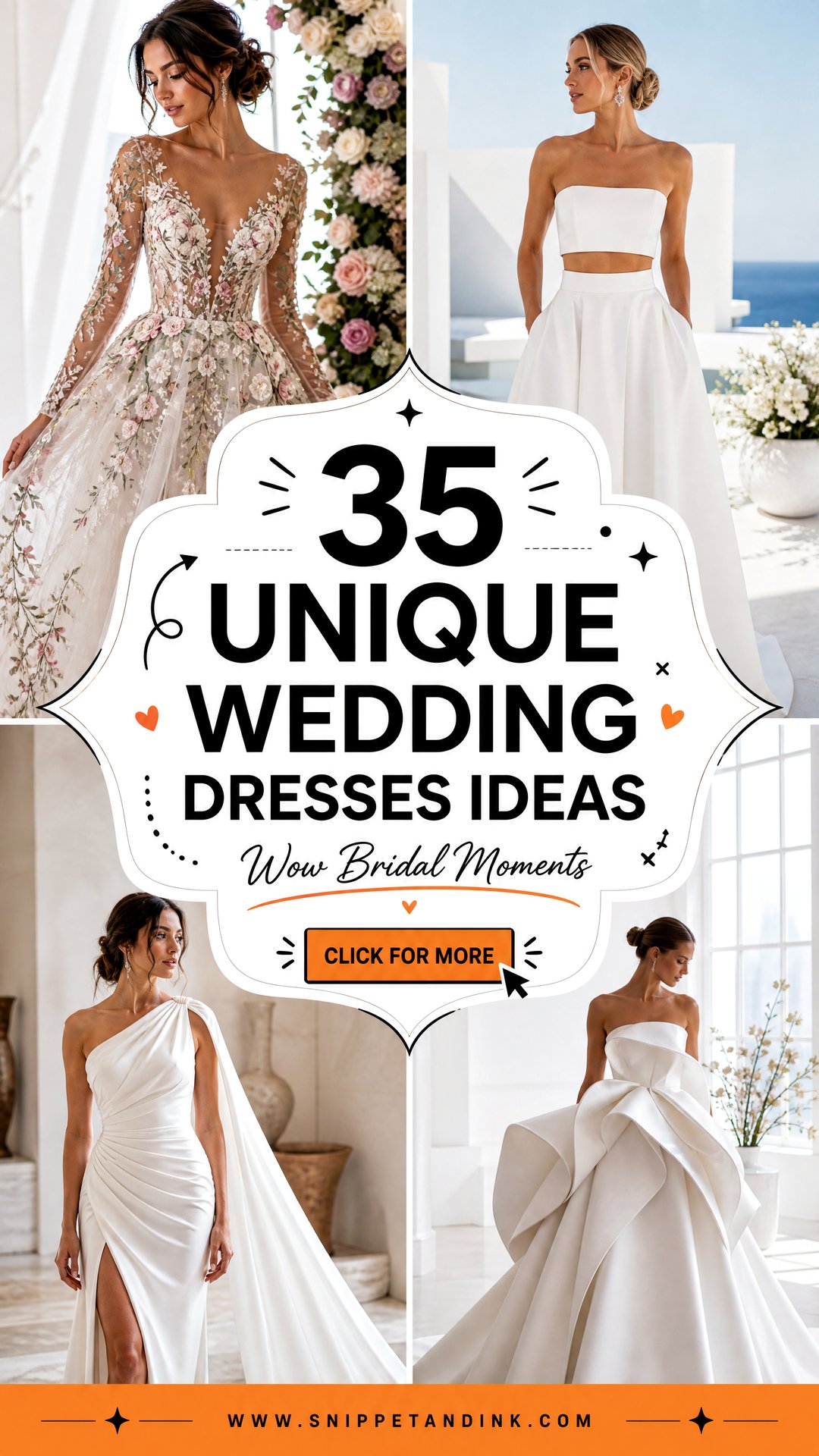
Most brides who ask me for something different don’t actually want strange. They want a dress that looks like them rather than like the sample everyone else tried. That can mean a satin slip, a jumpsuit, a colored gown, feathers or a sculpted bodice, but each of those has practical consequences for fit, comfort and what the ceremony allows. These thirty-five ideas, with their own brand of wow style, come with the notes I give at appointments: what each one asks of your body, your venue and your seamstress.
Trying On Designs Your Local Bridal Shop Won’t Stock
The hardest part of an unconventional dress is often getting into one before you buy. Many bridal boutiques carry mostly classic shapes, so a jumpsuit, colored gown or sculptural piece may not be on the rail. Here is how I help brides work around that:
- Try the shape, not the exact dress. Any shop with a drop waist, halter or column will show you whether the silhouette suits you.
- Ask about trunk shows, when a designer’s full collection visits a boutique for a few days.
- Look at evening and ready-to-wear lines, which often have bolder designs and quicker delivery.
- Order fabric swatches before committing online, and check the return policy in writing.
- Have measurements taken by a seamstress, not at home, before ordering anything made to measure.
Leave extra time for alterations on non-bridal garments. Evening dresses are cut with smaller seam allowances, so there’s less room to let them out.
1. Satin Slip Wedding Dress
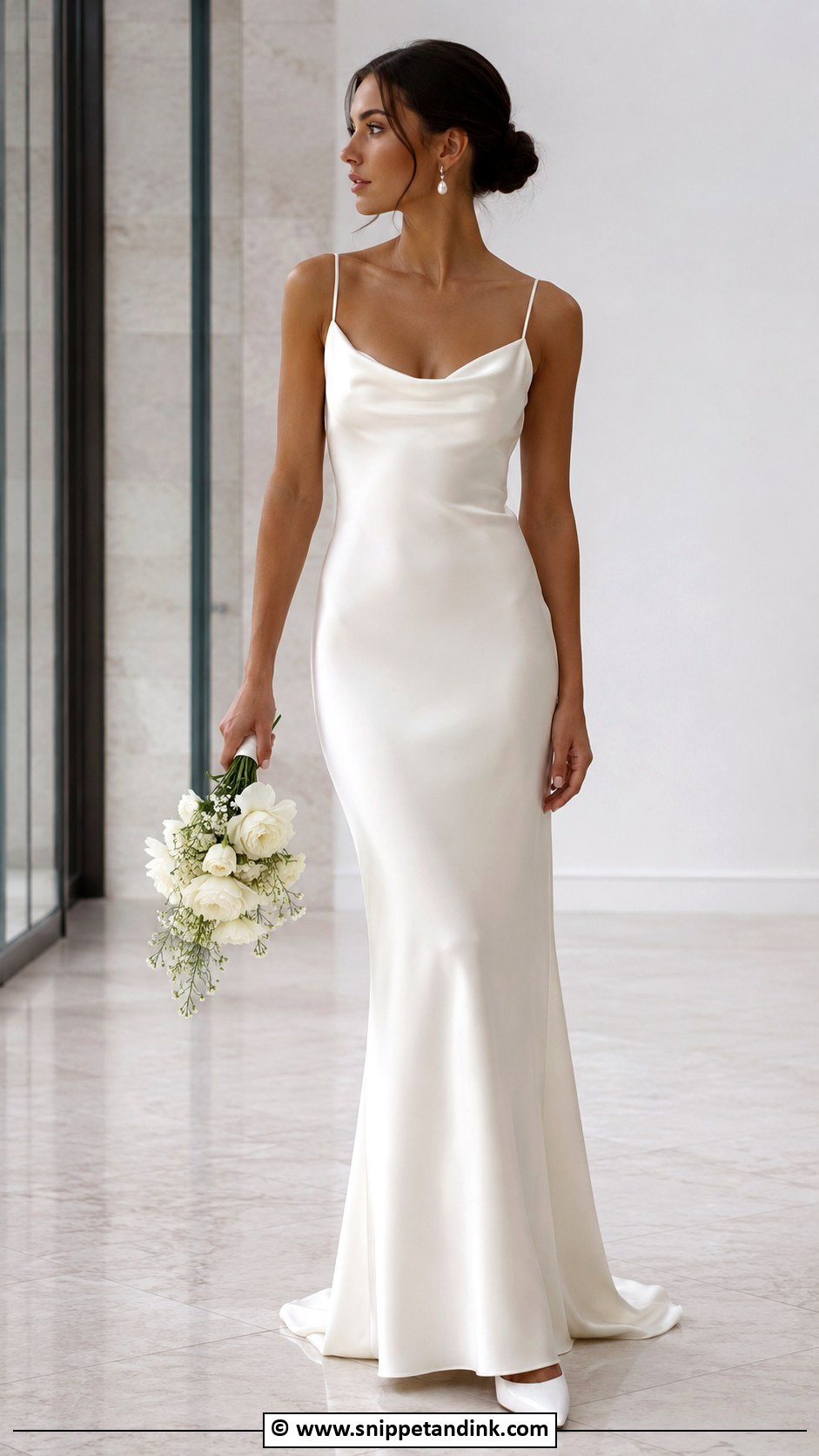
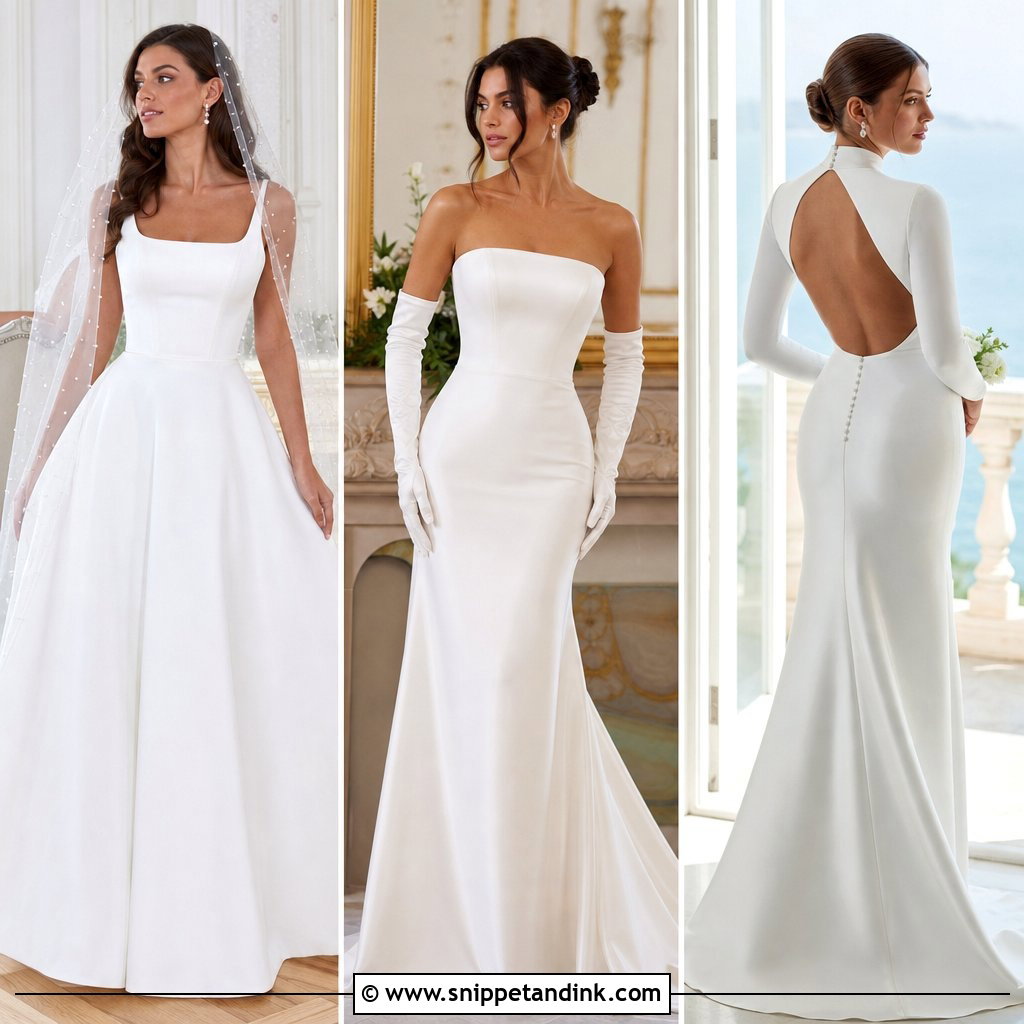
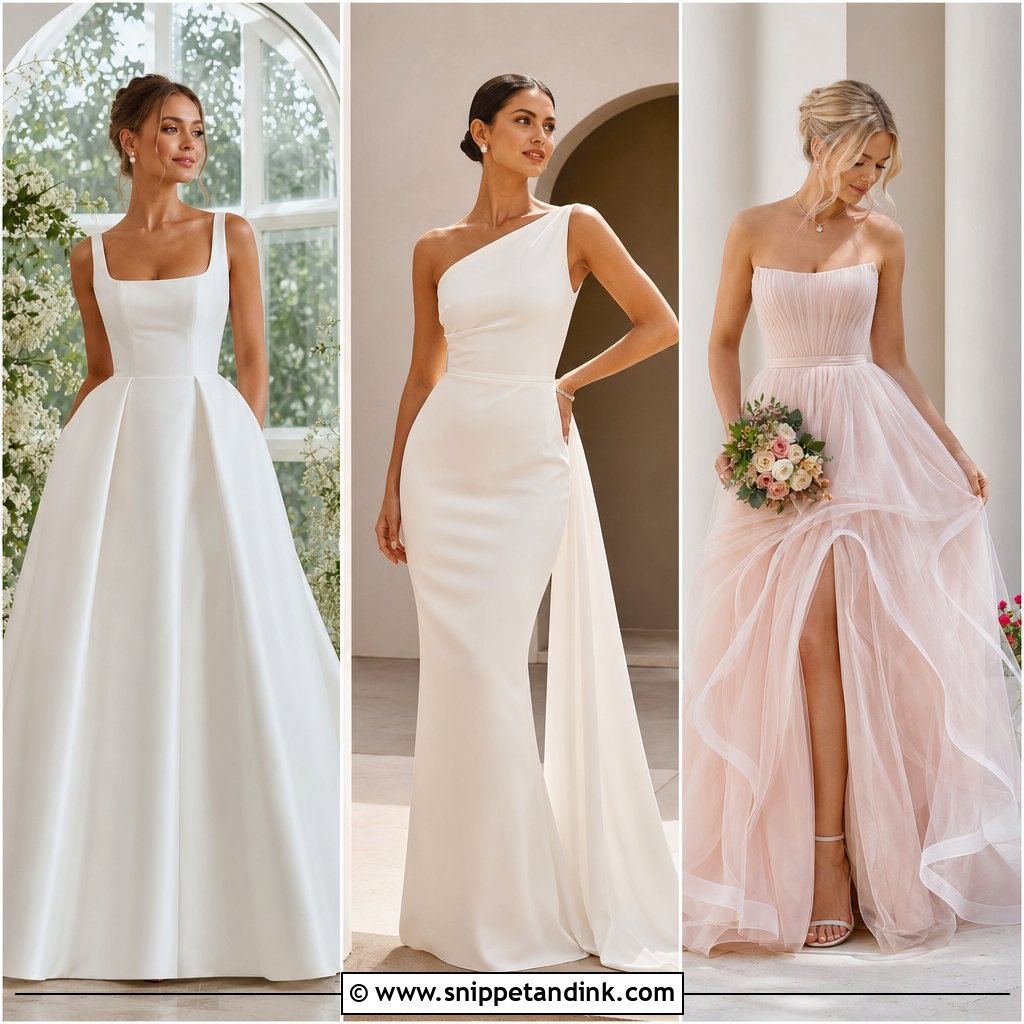
A satin slip wedding dress looks easy in pictures and is anything but in the fitting room. It’s usually cut on the bias, so the fabric stretches diagonally and clings to whatever is underneath. Plan your underwear first, then fit the dress. Heavier satin is kinder than thin charmeuse, which shows every line. A cowl or square neck, pearl drops and a low bun suit it, and a sheer cape handles cooler evenings. City halls, beaches and small ceremonies are its natural setting.
2. Drop Waist Wedding Dress
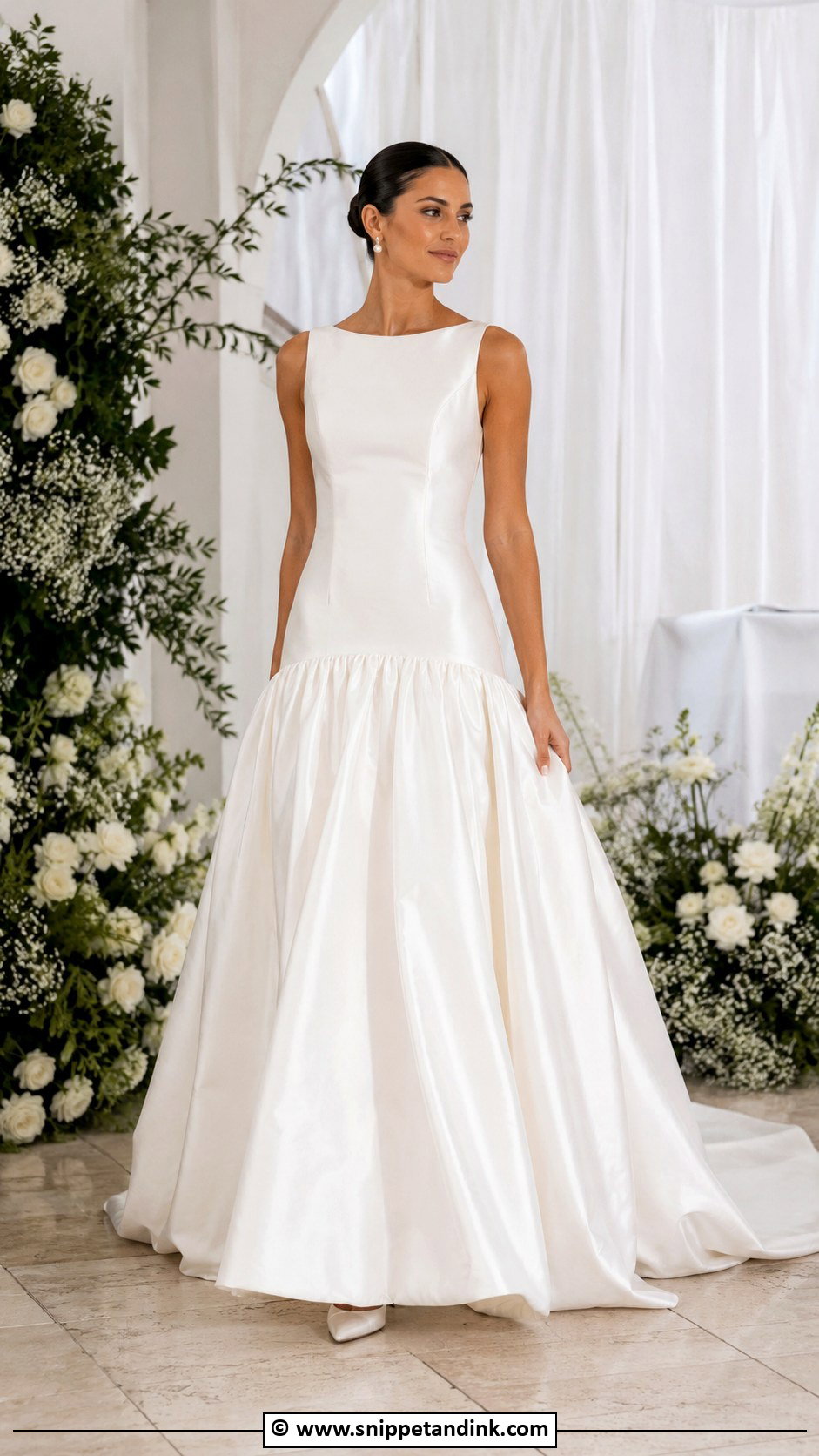
The drop waist moves the seam down to the hip, then lets the skirt open out. It lengthens the torso, which flatters brides with a short waist, but it can make a long torso look longer still, so this is one shape I’d try on before ordering. Satin reads modern, tulle soft and lace vintage. A cathedral veil adds drama; pearl studs and simple heels keep it fresh. It gives structure without the weight of a princess skirt.
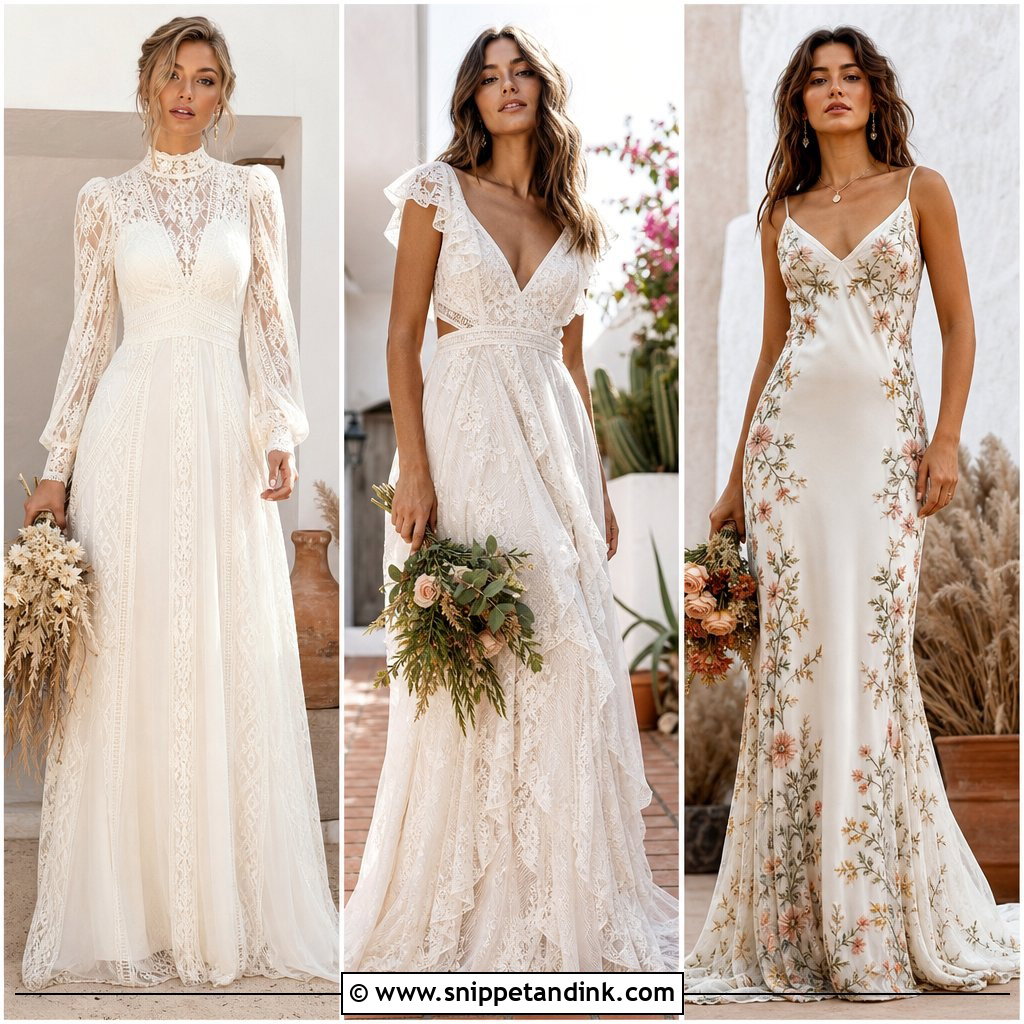
3. Floral Embroidered Wedding Dress
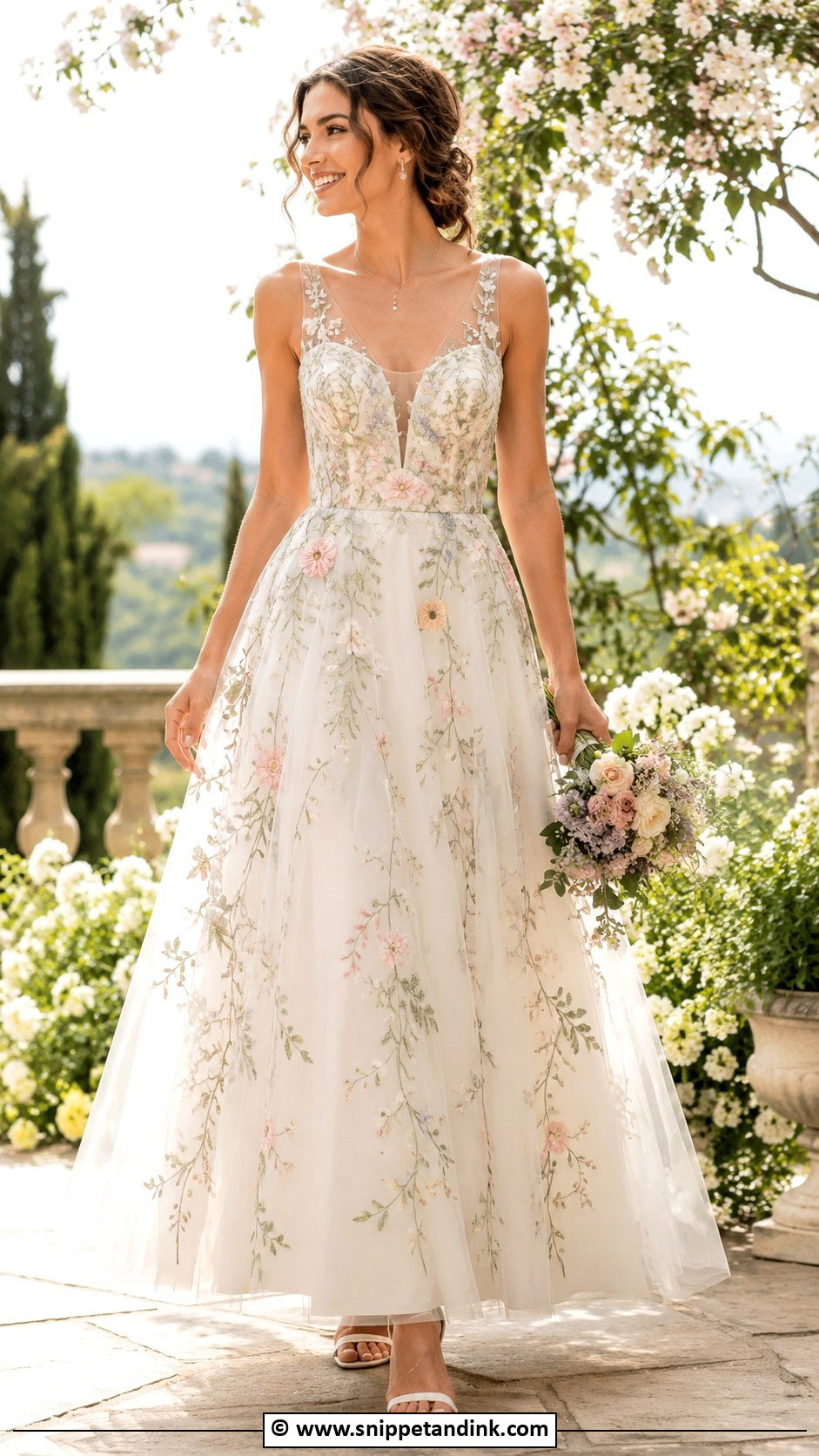
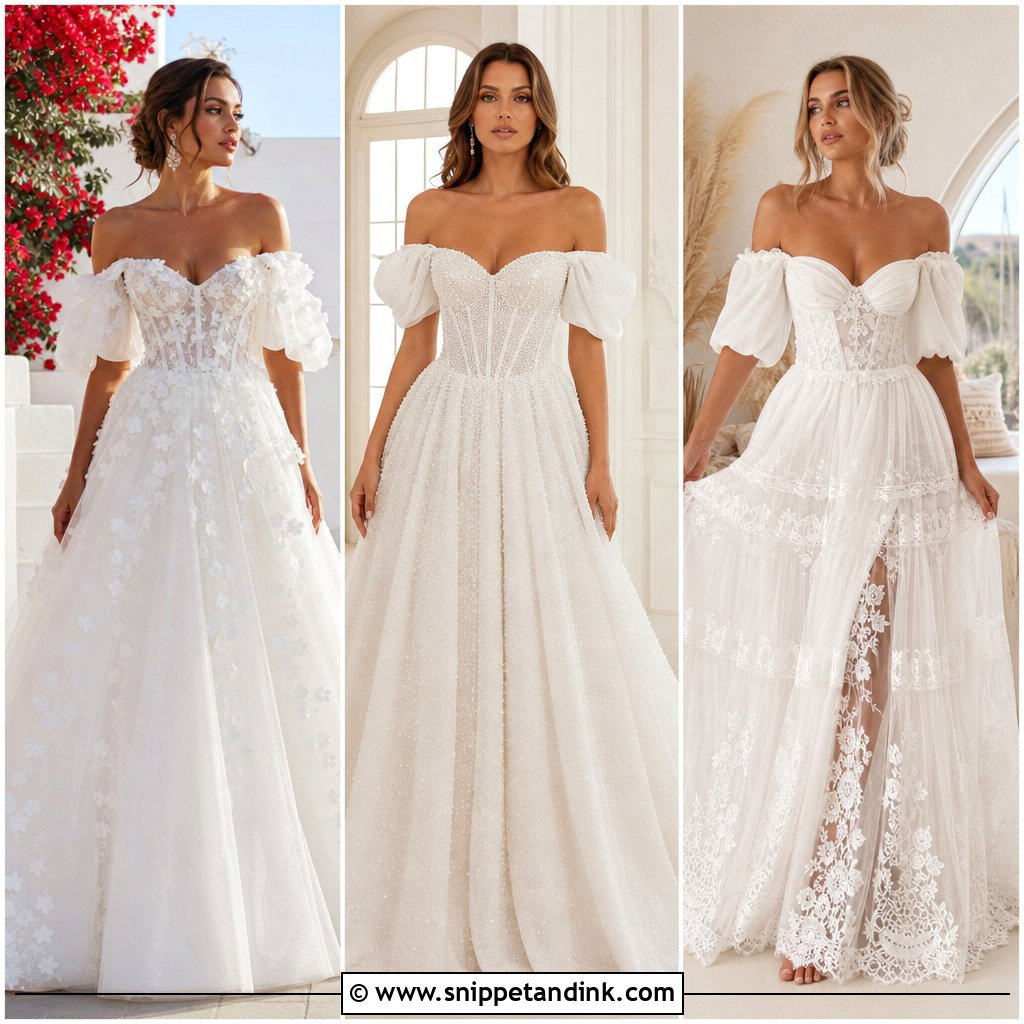
Embroidered flowers, vines or dimensional appliqués give a gown texture that plain fabric can’t. Ivory-on-ivory is subtle; pastel threads look more like artwork. Colored embroidery changes the bouquet conversation too, since the florist should pull one or two tones from the stitching rather than add new ones. Keep earrings delicate and the veil plain. Spring and outdoor weddings suit this best, where daylight shows the stitch work.
4. Short Wedding Dress
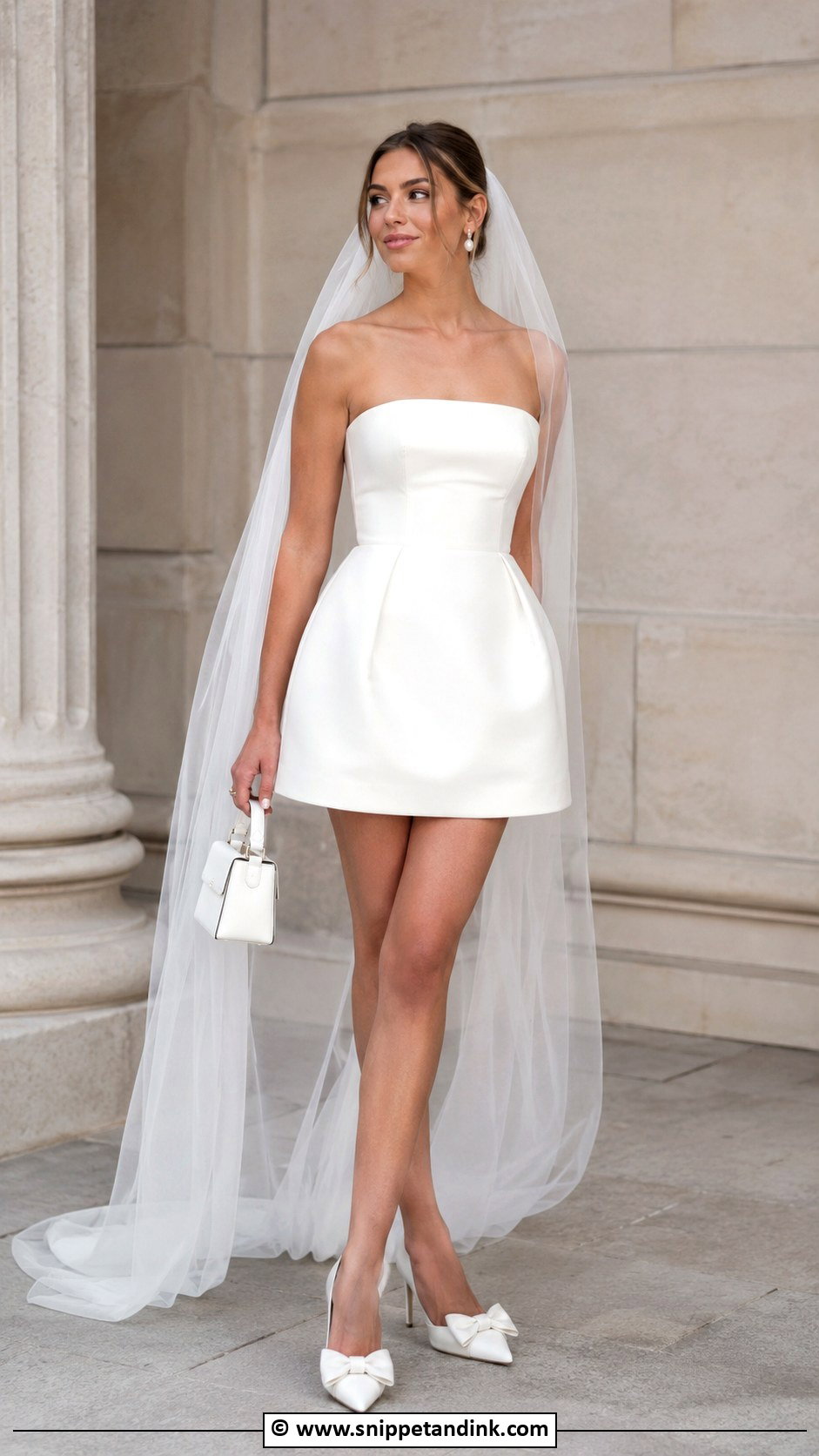
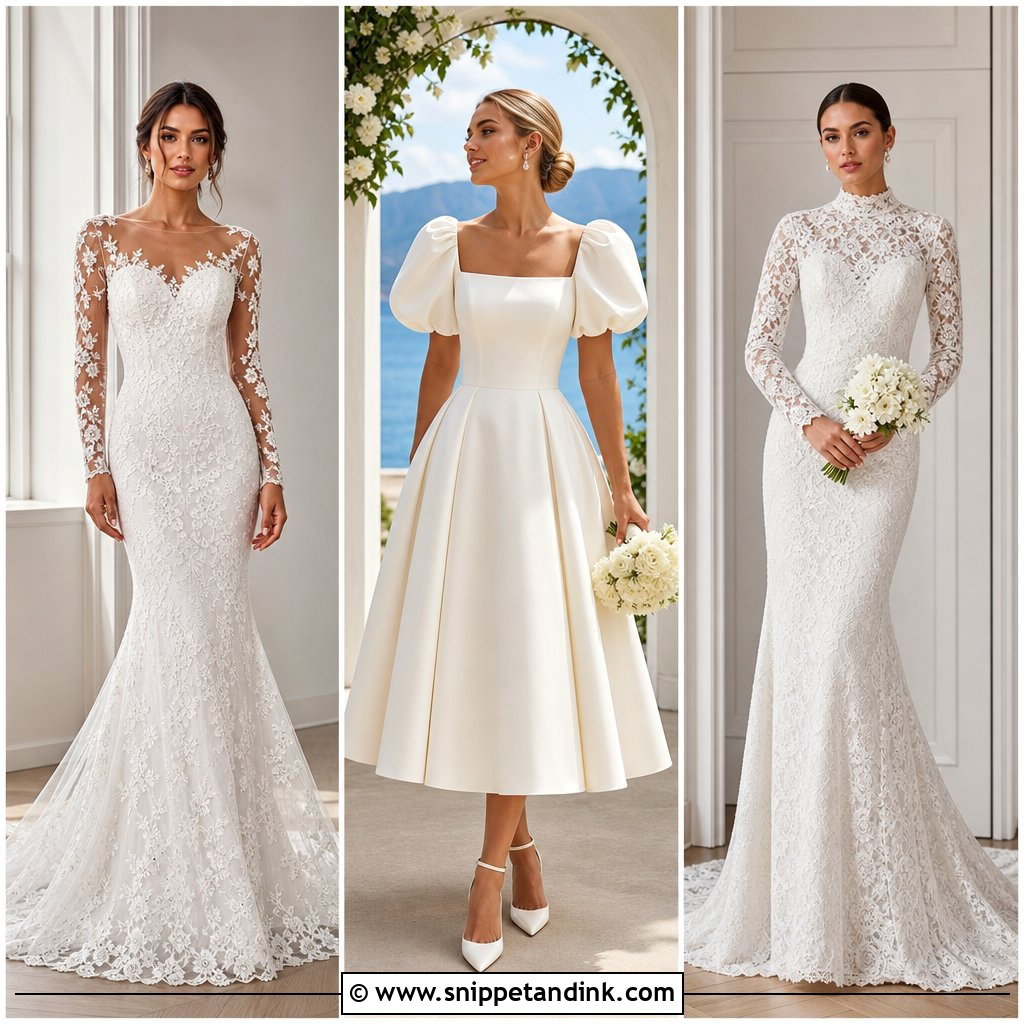
Short dresses are back for courthouse ceremonies, rehearsals, reception changes and whole wedding days. A tailored mini with a square neck looks modern; tea length with a full skirt feels sweet. The fabric does the bridal work here, so choose satin, mikado, lace or crepe rather than a casual cotton. Bow heels, pearl earrings and a small structured bag finish it. Add a long veil and the contrast between short hem and flowing tulle is striking. Hem it with your exact shoes on.
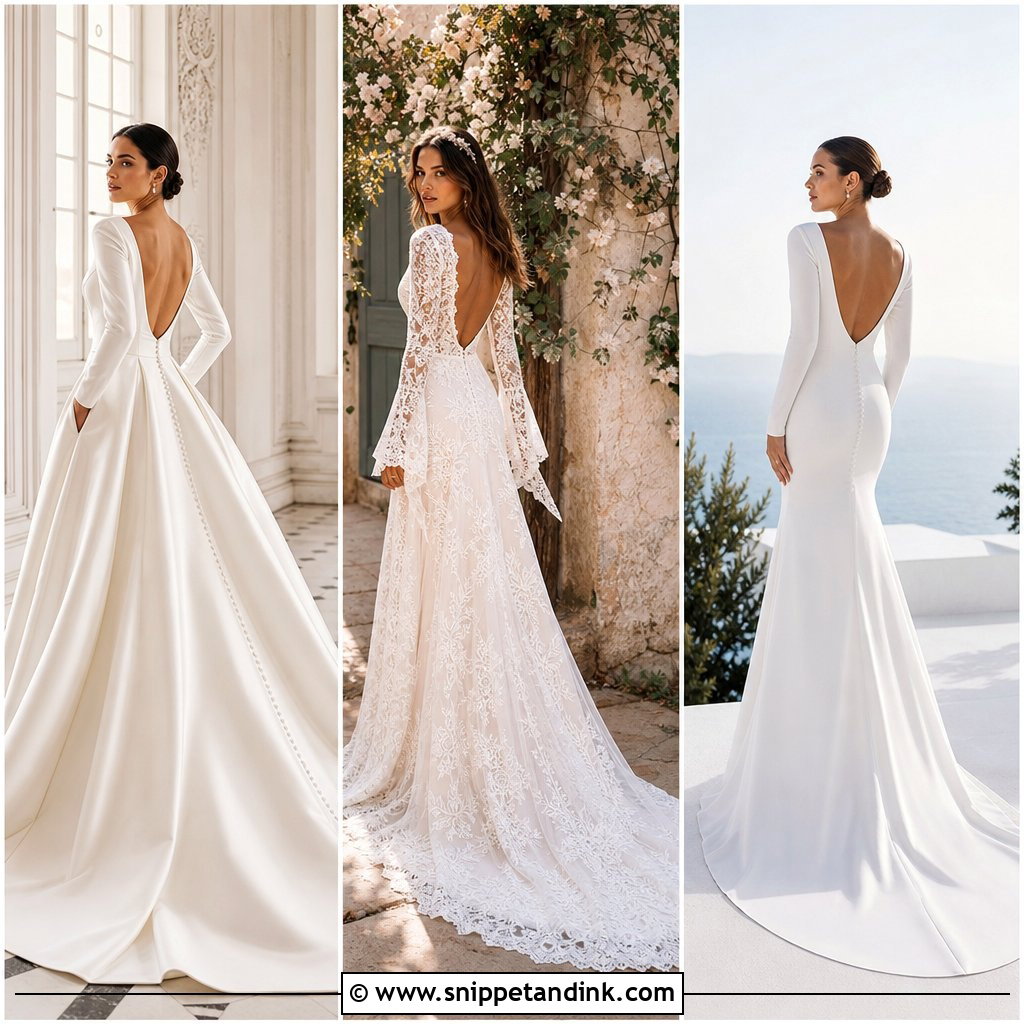
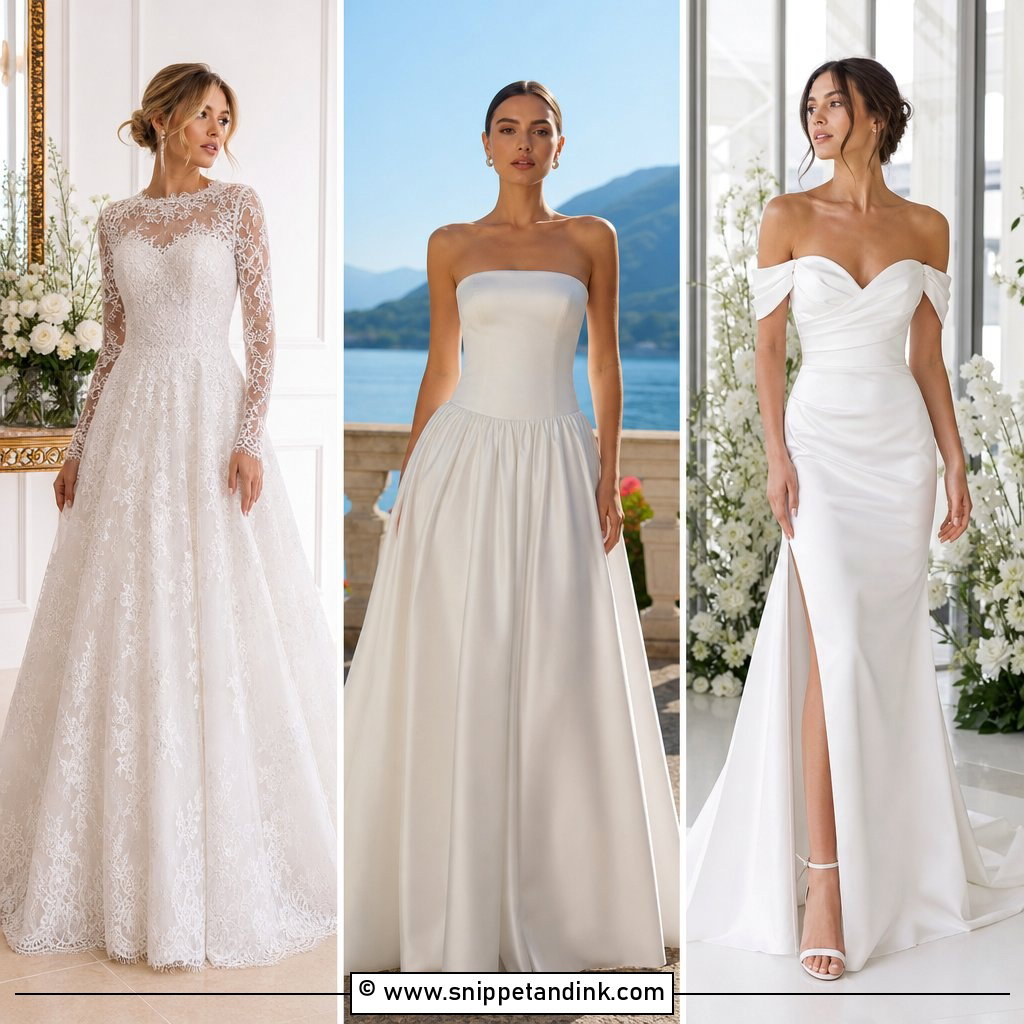
5. Lace Long Sleeve Wedding Dress
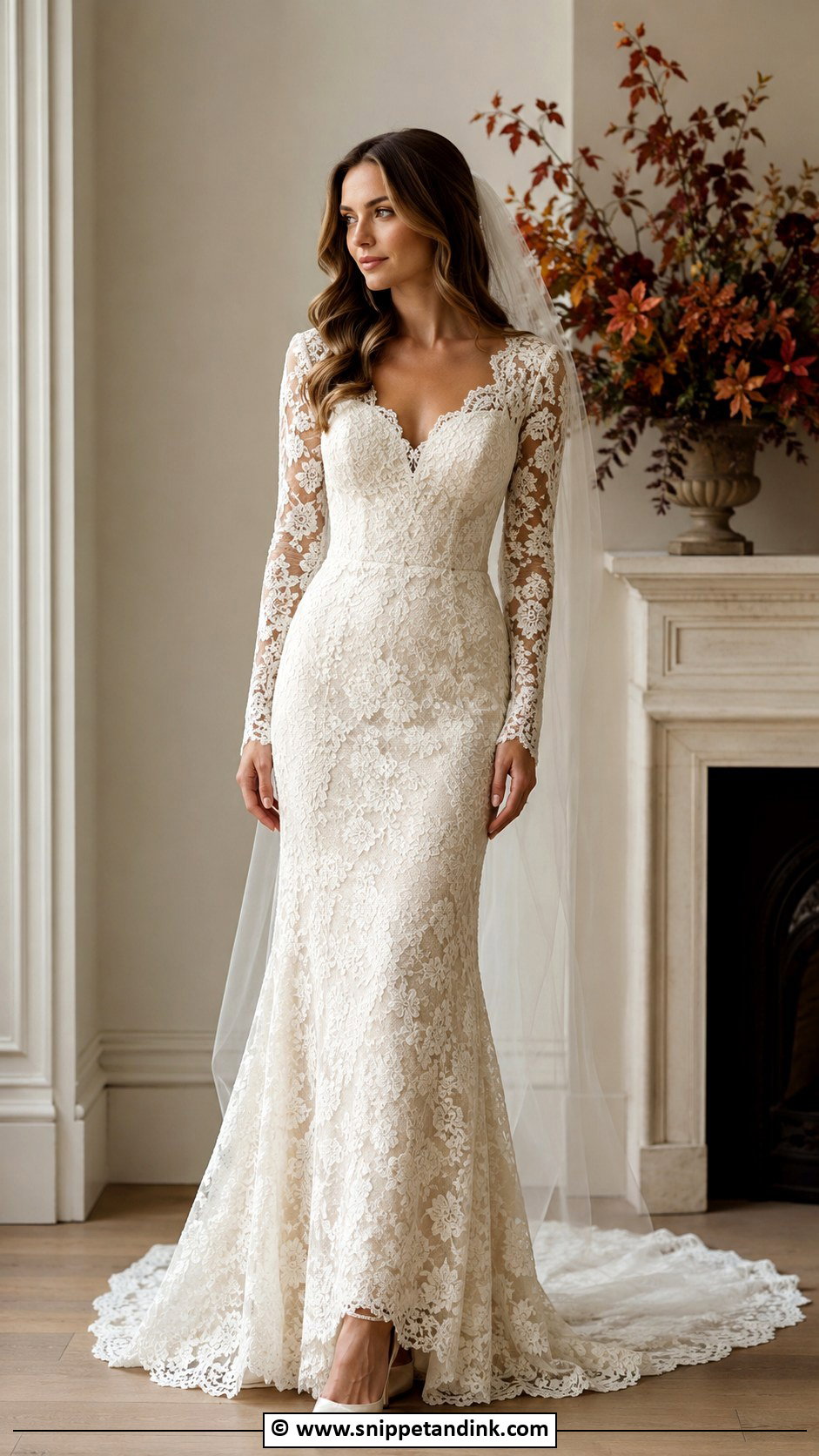
Long lace sleeves are traditional, but the cut of the sleeve decides how individual it looks: sheer and fitted, vintage-style with buttons, or slightly puffed. Allover lace is classic; lace on just the sleeves and bodice is lighter. The test I always do is the bouquet hold. Bend your arms for a minute and see if the sleeve pulls at the shoulder. Satin heels, soft waves and a plain veil let the lace lead. It’s lovely in black-and-white photography and suits autumn and winter.
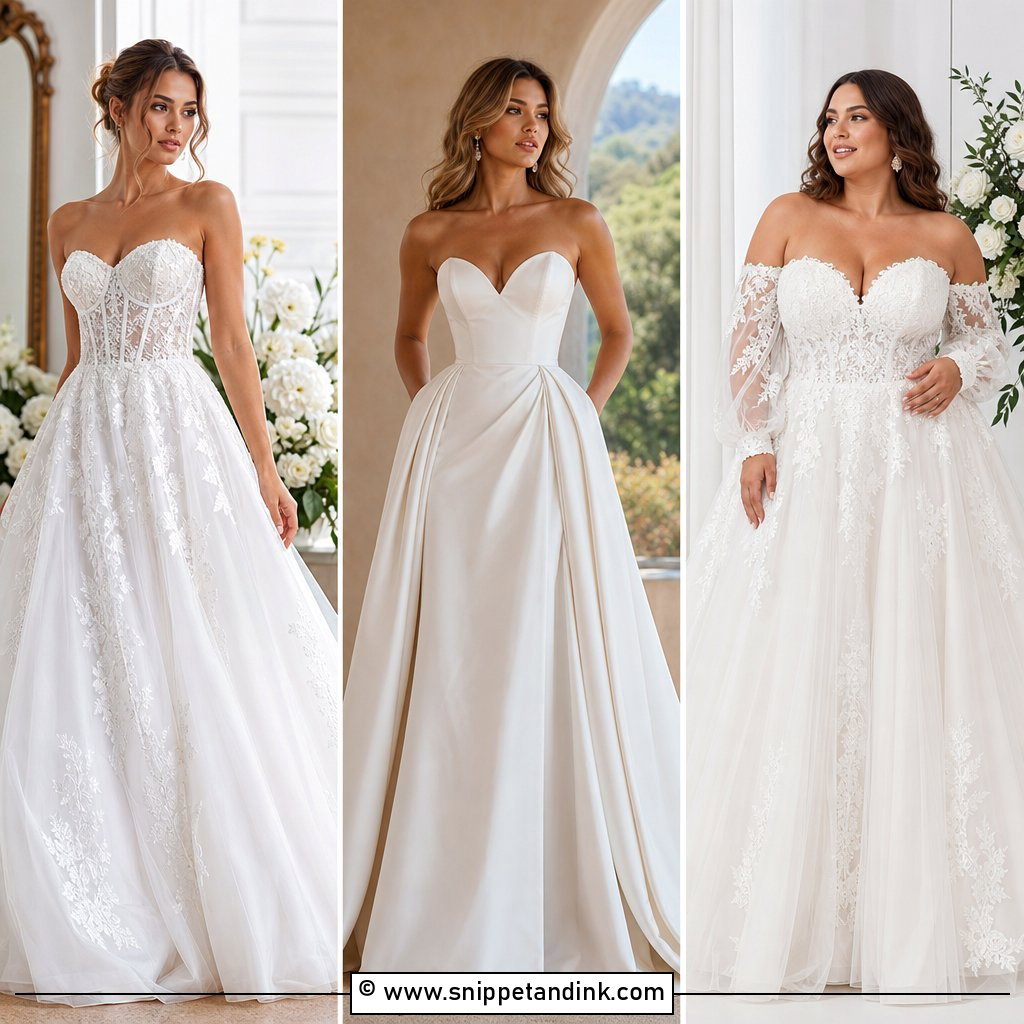
6. Corset Wedding Dress
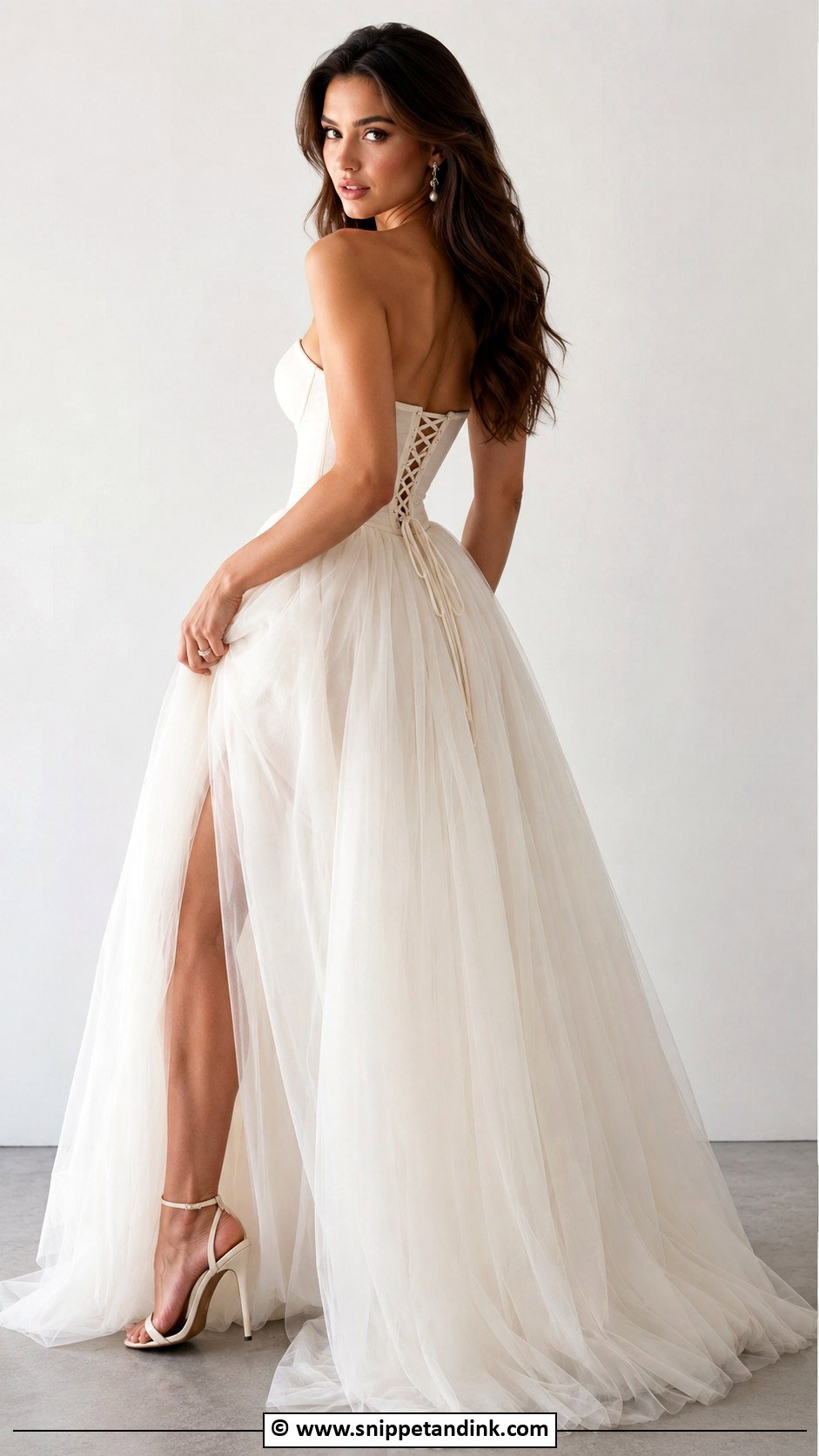
A corset bodice uses boning and shaped seams to hold the waist and bust, which is why brides who dislike bras love it. Satin corsets look sleek, lace soft, and exposed boning editorial. Balance it with an A-line, tulle or column skirt. My check at fittings is breathing: sit, eat a few bites, laugh. A corset fitted while you’re holding your breath in the mirror will be tight by dinner. A fine necklace, soft veil and heeled sandals are enough.
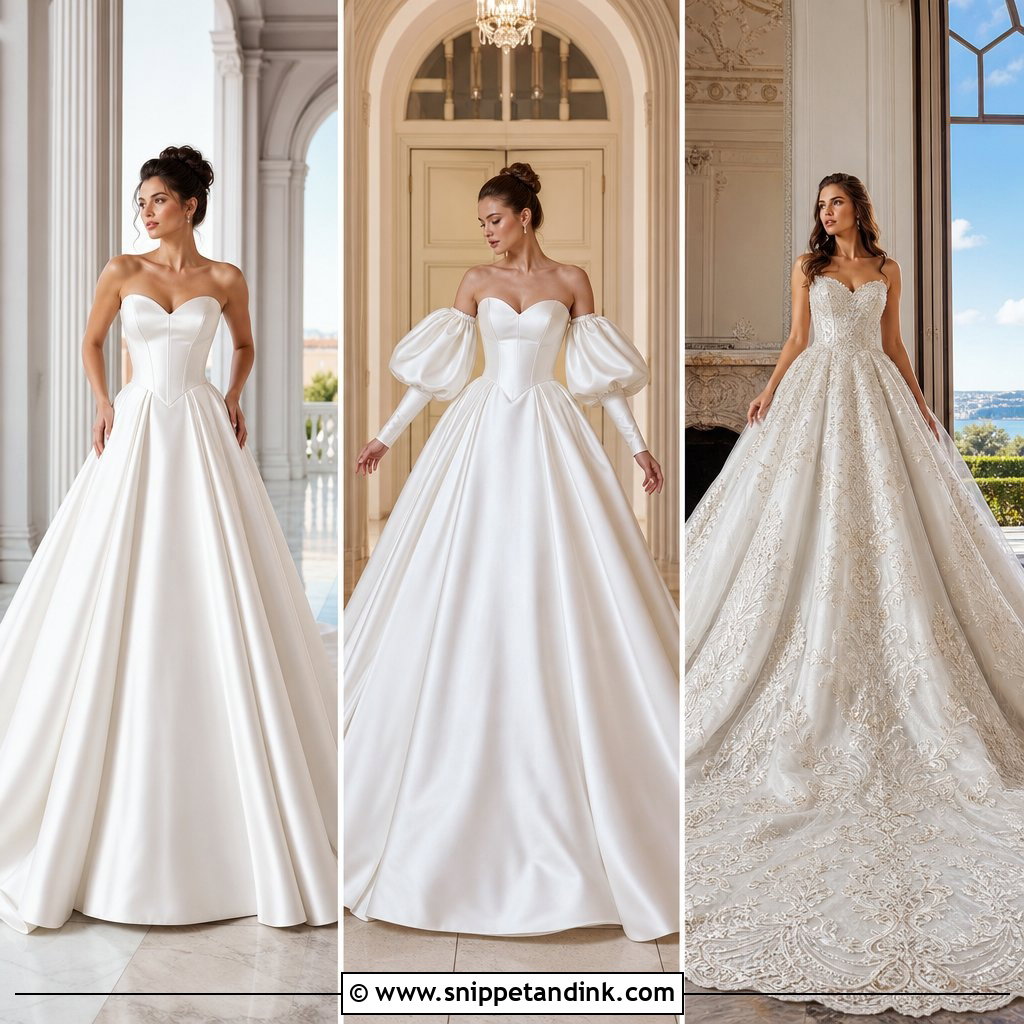
7. Tulle Ball Gown Wedding Dress
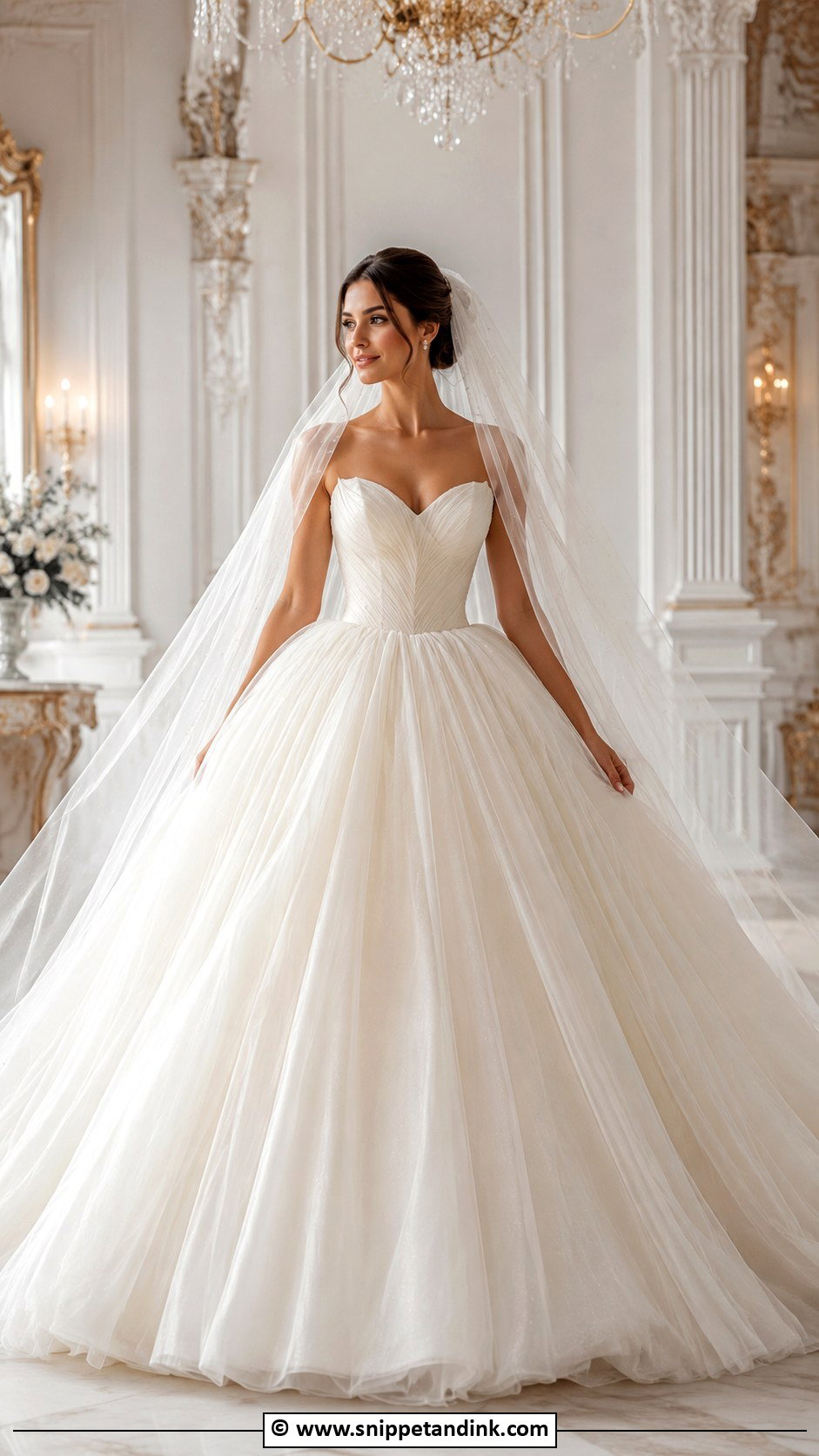
Tulle gives the most volume for the least weight, so a tulle ball gown floats rather than drags. Modern details like a square neck, a basque waist, a big bow or a little shimmer keep it from looking like every other ball gown. Ivory is dreamy; blush or champagne warms it. The skirt takes up a lot of room, so check doorways, aisles and the car before the day. A delicate tiara, pearl studs and hidden heels finish it. Ballrooms and wide outdoor spaces suit it best.
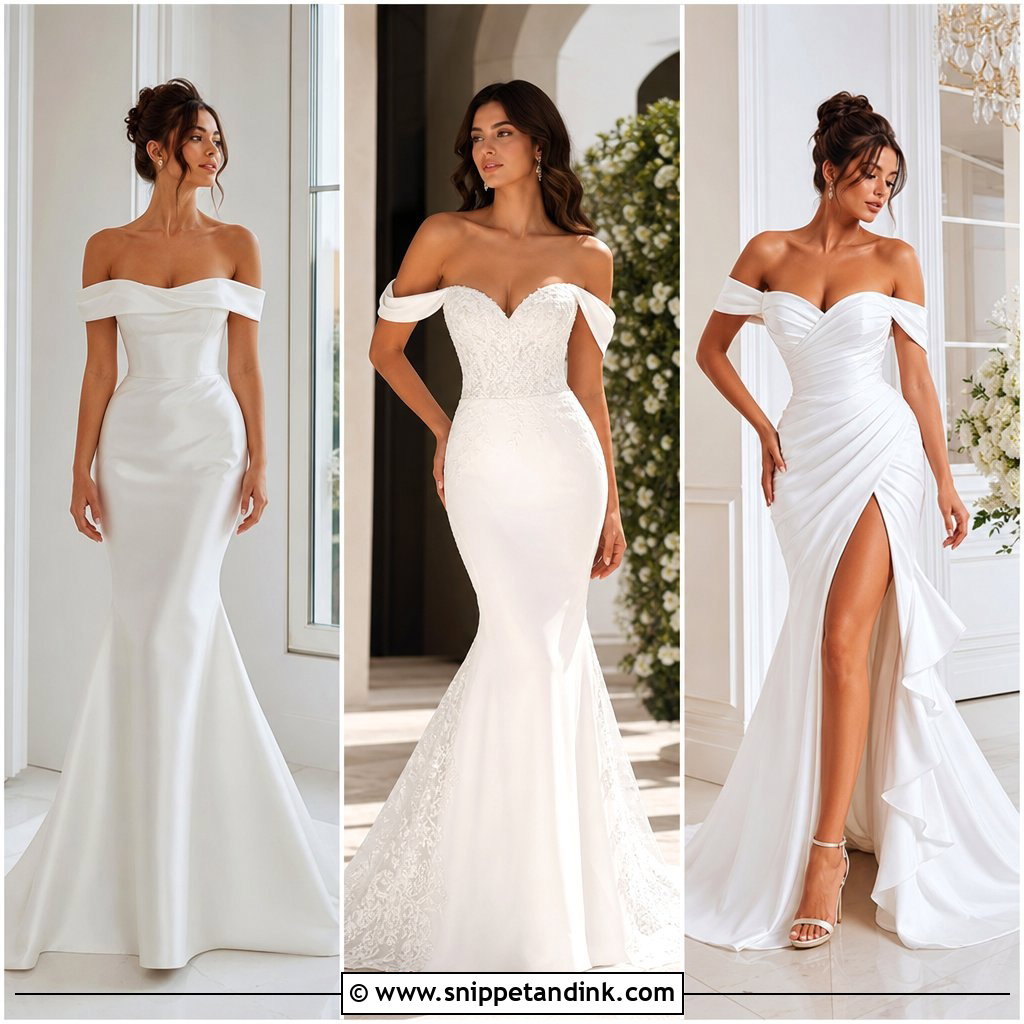
8. Off Shoulder Wedding Dress
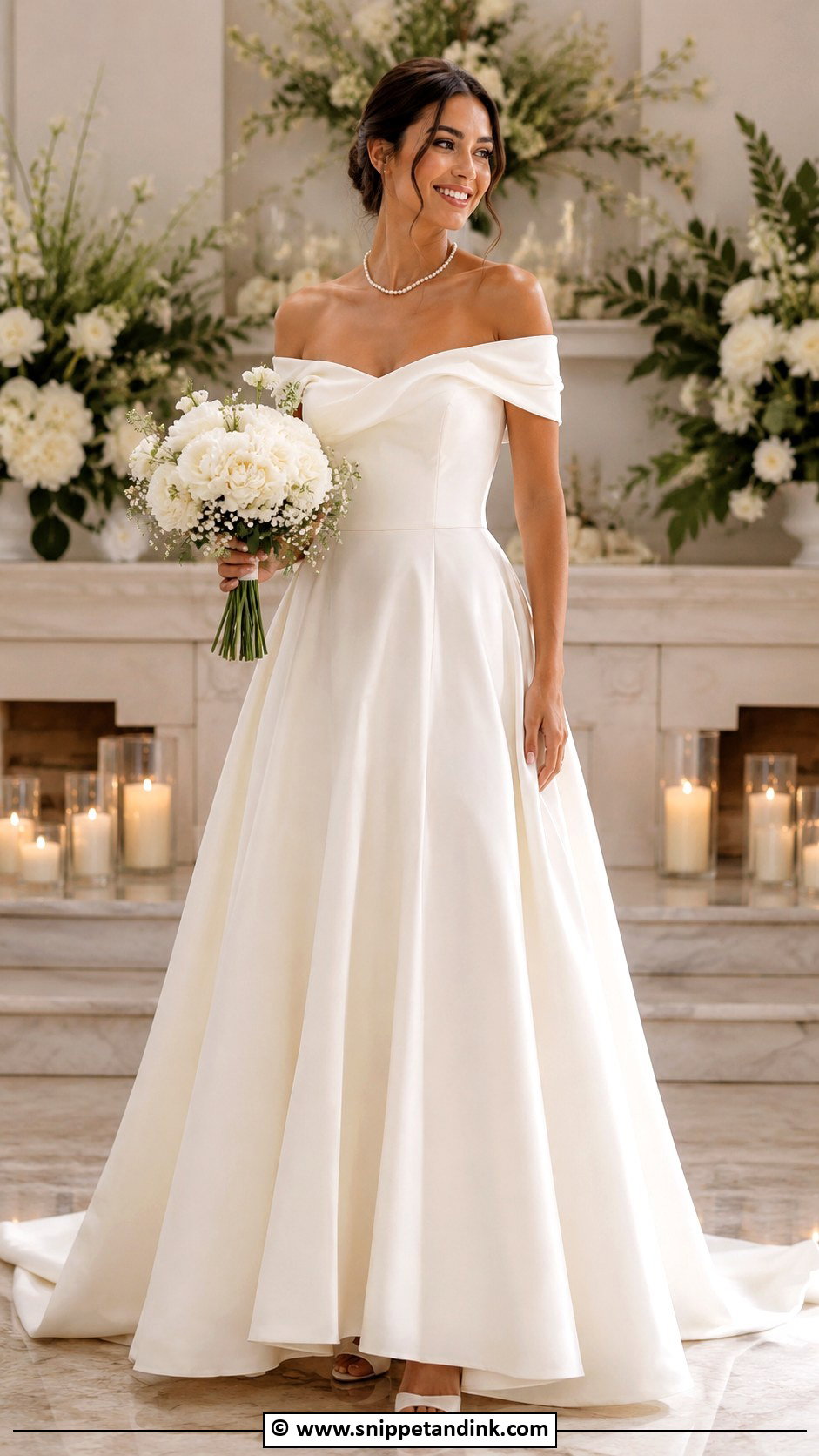
Off-shoulder necklines frame the collarbones and shoulders without much detail needed elsewhere. Structured bands look sculptural; draped ones fall softly around the arms. The band must stay put when you lift your arms, so ask about silicone grip tape inside. A mermaid skirt is glamorous; an A-line is softer. A pearl choker, drop earrings or no necklace at all. Wear your hair up to keep the shoulders visible.
9. Colored Wedding Dress
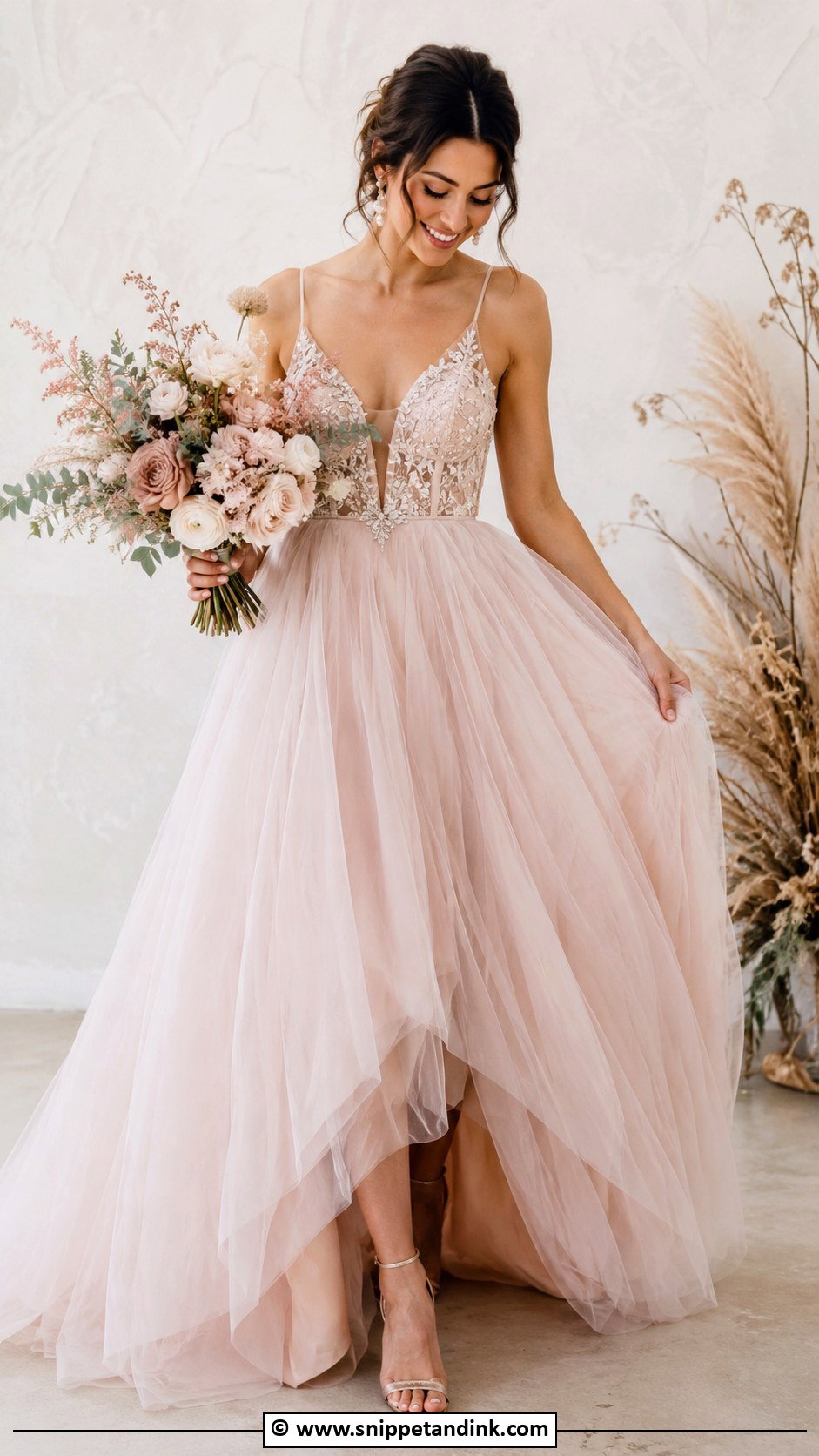
Blush, champagne, pale blue, buttercream, lavender and silver all read bridal while adding personality. The one rule: hold the actual fabric up to your face in daylight. Pale blue makes some skin tones look cool and tired, and champagne can disappear against warm complexions. Blush tulle is romantic; champagne satin warm. Keep accessories simple so the color looks chosen. Metallic heels, pearl earrings and a tonal bouquet tie it in.
10. Cape Wedding Dress
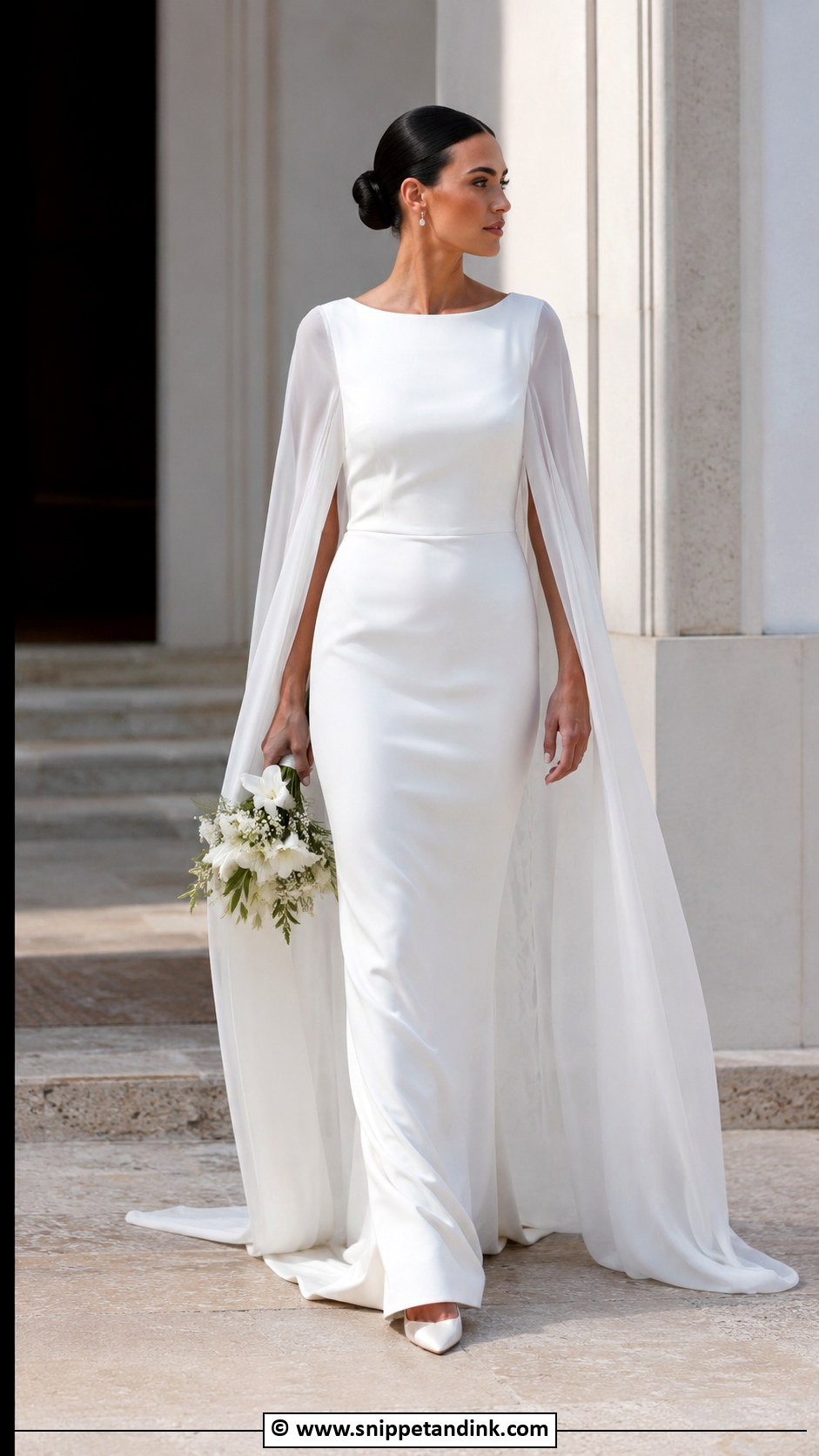
A cape replaces the veil, so your hair and face stay uncovered while you still get movement down the aisle. Capes can be sheer, lace, satin or beaded, and many are detachable for the reception. A plain crepe dress with a long cape looks strong; lace over a fitted gown feels soft. Ask how the cape attaches. Snaps at the shoulder are quicker to remove than hooks inside the neckline. Clean heels, small earrings and sleek hair.
11. High Neck Wedding Dress
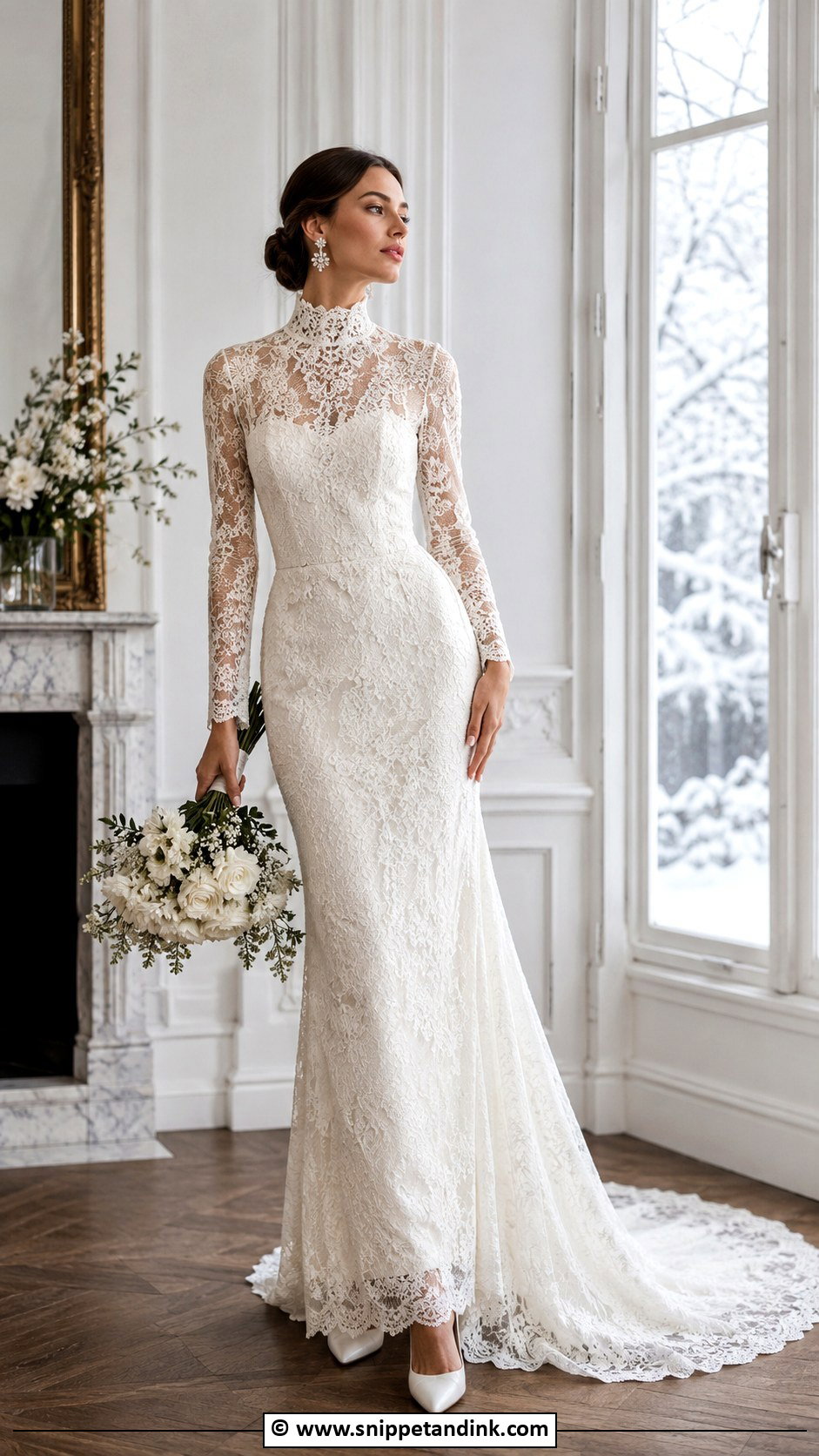
High necks draw the eye up to the face and give a long, upright frame. They work with sleek fabrics, lace overlays and sheer illusion panels. Fitted versions look statuesque; lace high necks feel vintage. Skip necklaces and go with earrings. The collar should sit comfortably when you sit and turn your head, so check it seated. A low bun or polished ponytail keeps it clean. Formal ceremonies and winter weddings suit it.
12. Square Neck Wedding Dress
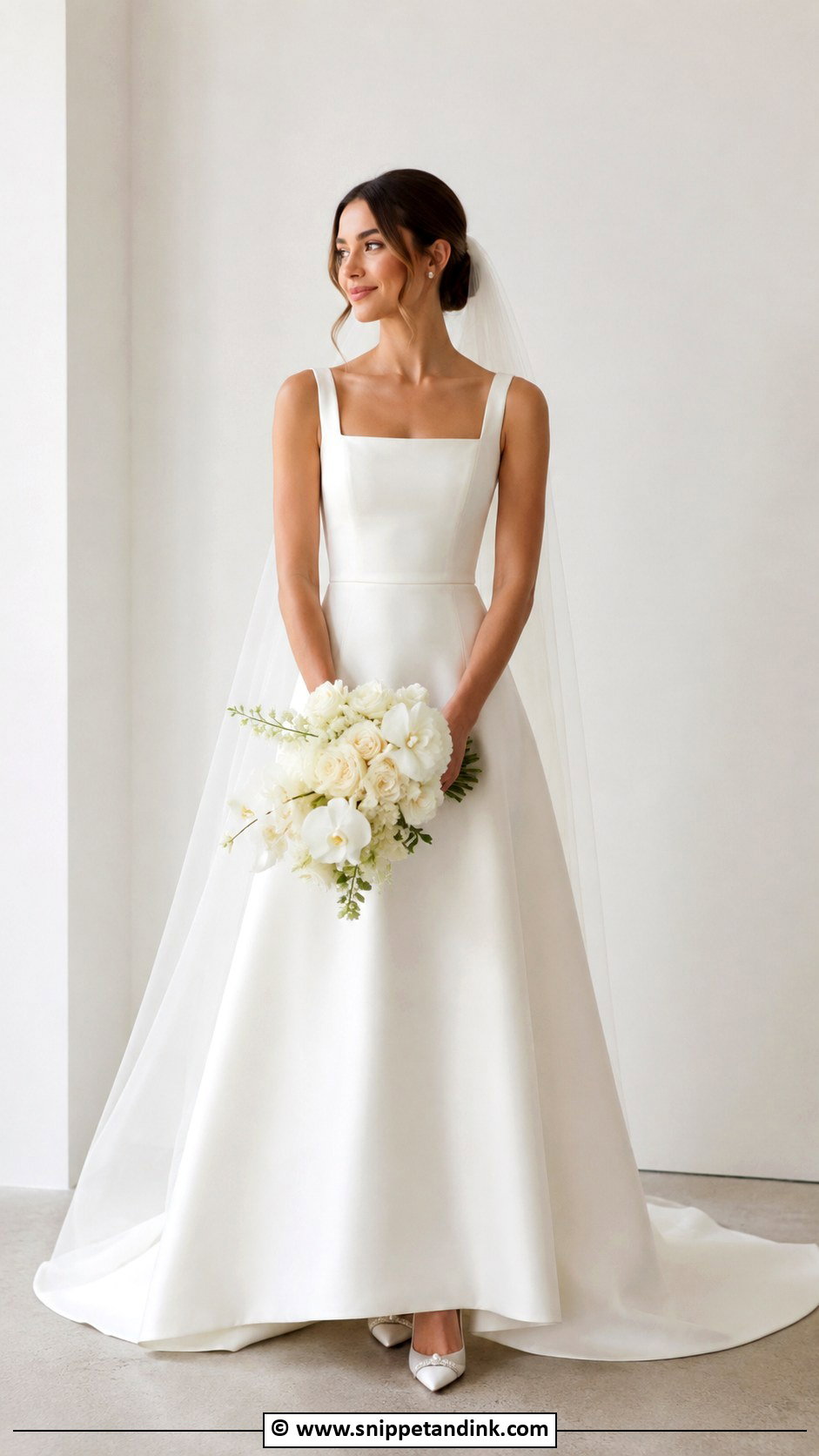
A square neckline frames the collarbones with straight lines and works on slips, A-lines, fitted crepe and ball gowns alike. Wide straps are supportive and comfortable on fuller busts; delicate straps look lighter but need a well-built bodice underneath. Pearl studs, a simple bracelet and pointed heels. A sheer veil or loose low bun adds softness. It suits brides wanting something classic but not covered in embellishment.
13. Bow Back Wedding Dress
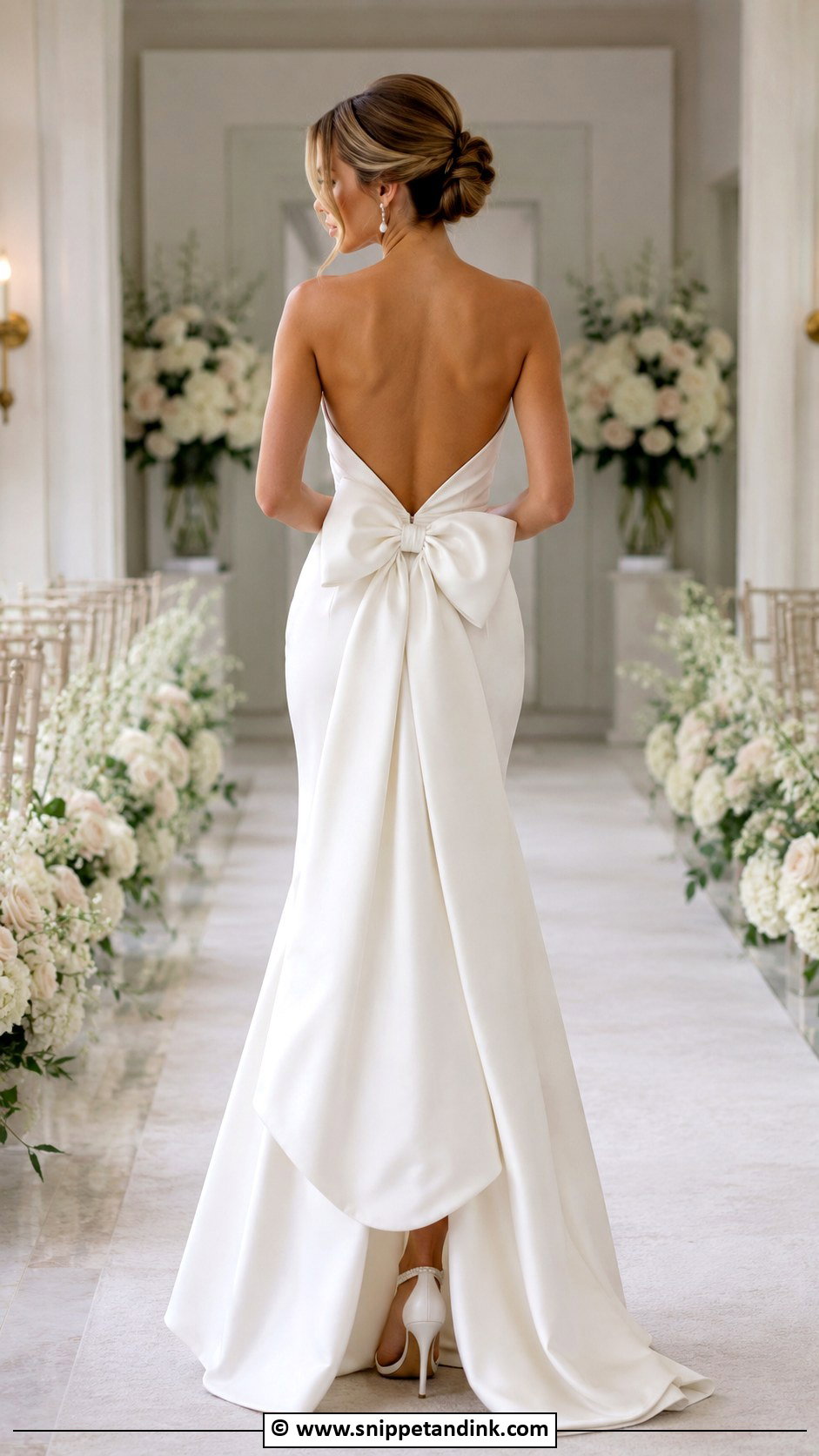
During the ceremony your guests mostly see your back, so a bow there makes sense. Small and delicate, oversized and dramatic, or detachable: the bow sets the mood. Satin with a big bow looks editorial; lace with a soft bow, sweet. The practical catch is sitting. Large bows crush against chairs, so ask whether yours can be unpinned for dinner. Keep the front simple, wear an updo, and match the shoes to the dress fabric.
14. Beaded Wedding Dress
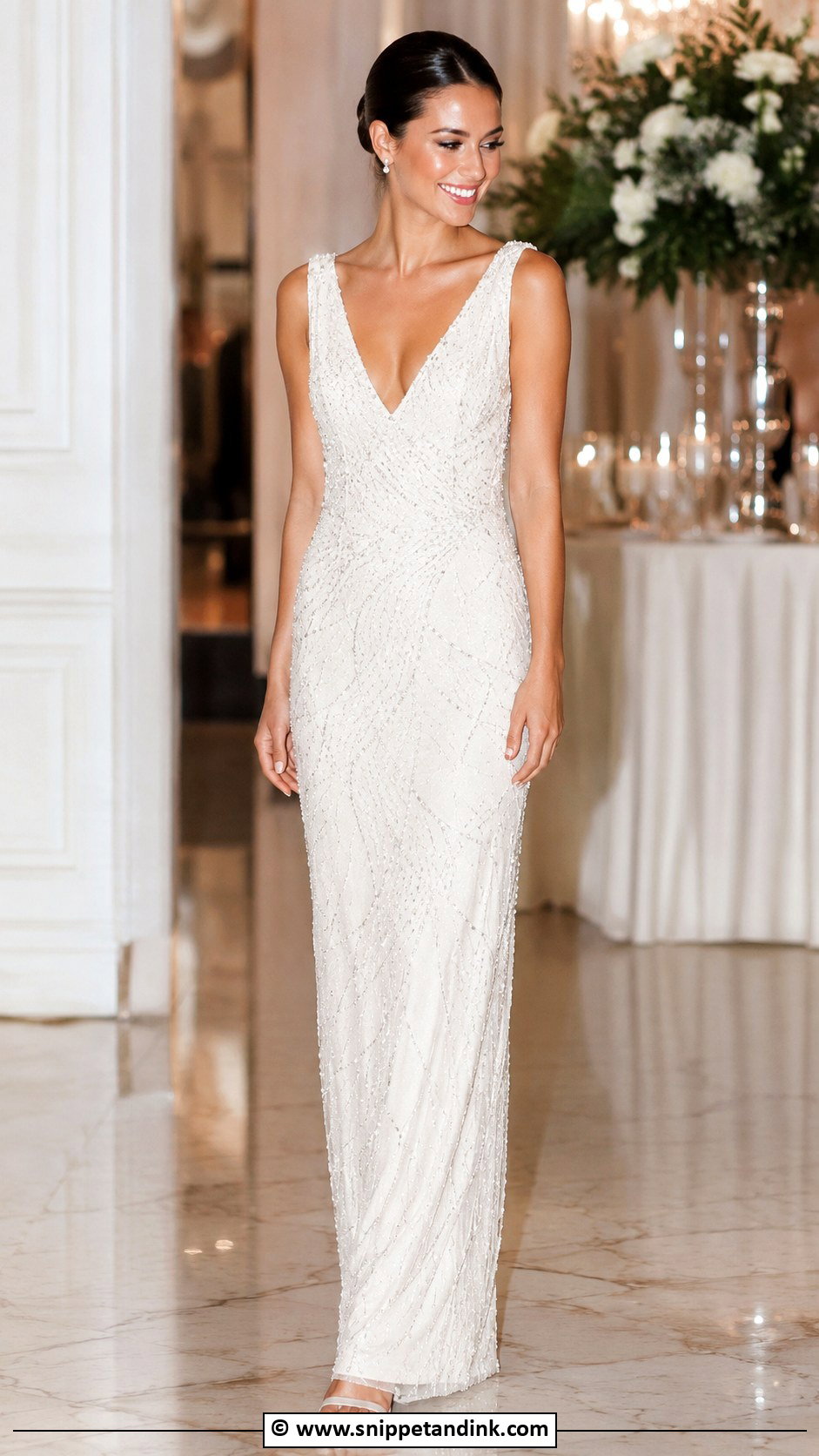
Beading catches light without the harshness of sequins: tiny pearls, crystals or glass beads in patterns like vines, stars, art deco lines or scattered dots. Fitted beaded gowns are glamorous; beaded A-lines easier to wear. Heavy beading adds real weight, which drags on shoulder straps by evening, so check the straps and bodice support. Simple heels, small earrings and smooth hair. Evening receptions and formal venues suit it.
15. Feather Trim Wedding Dress
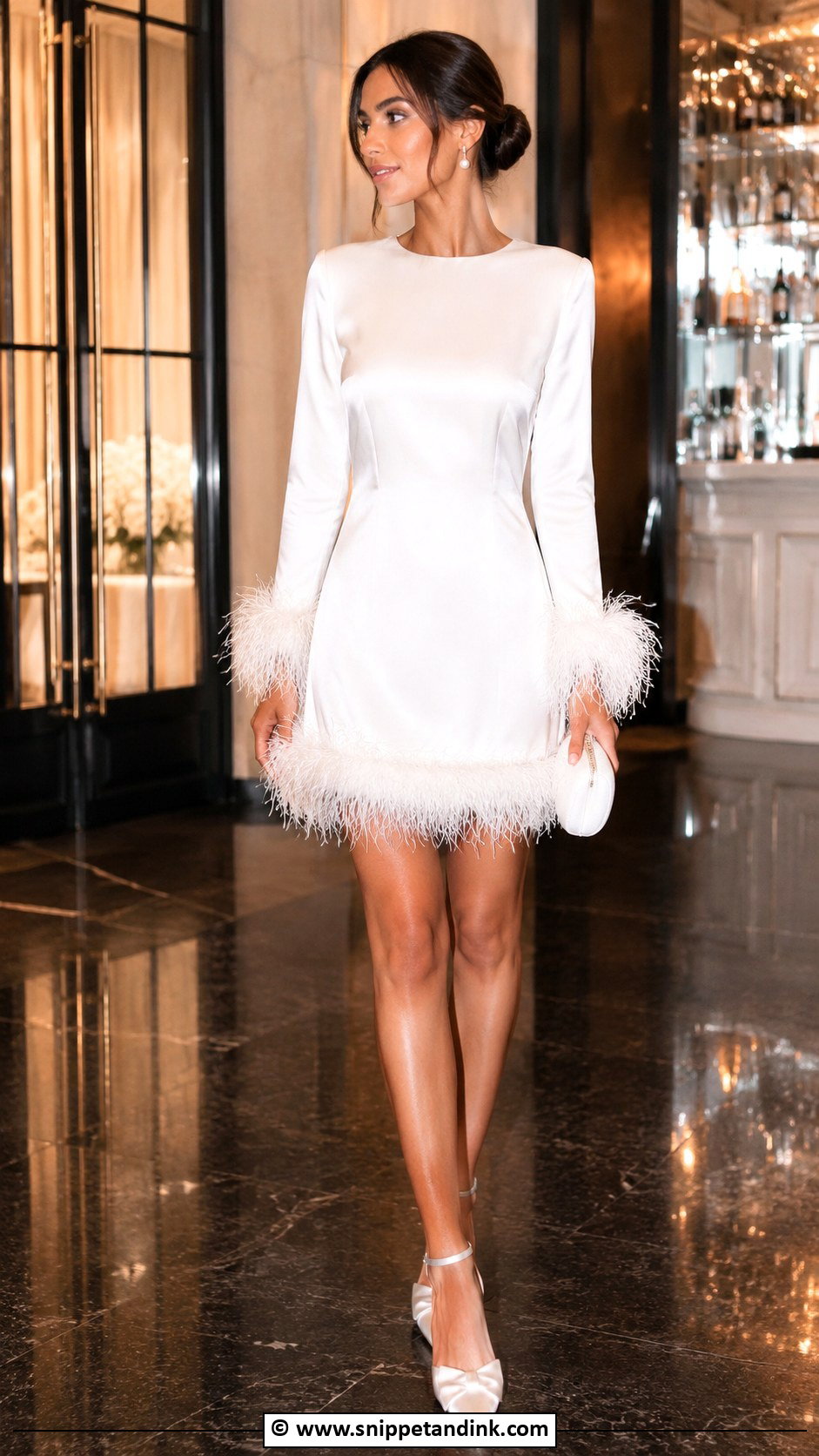
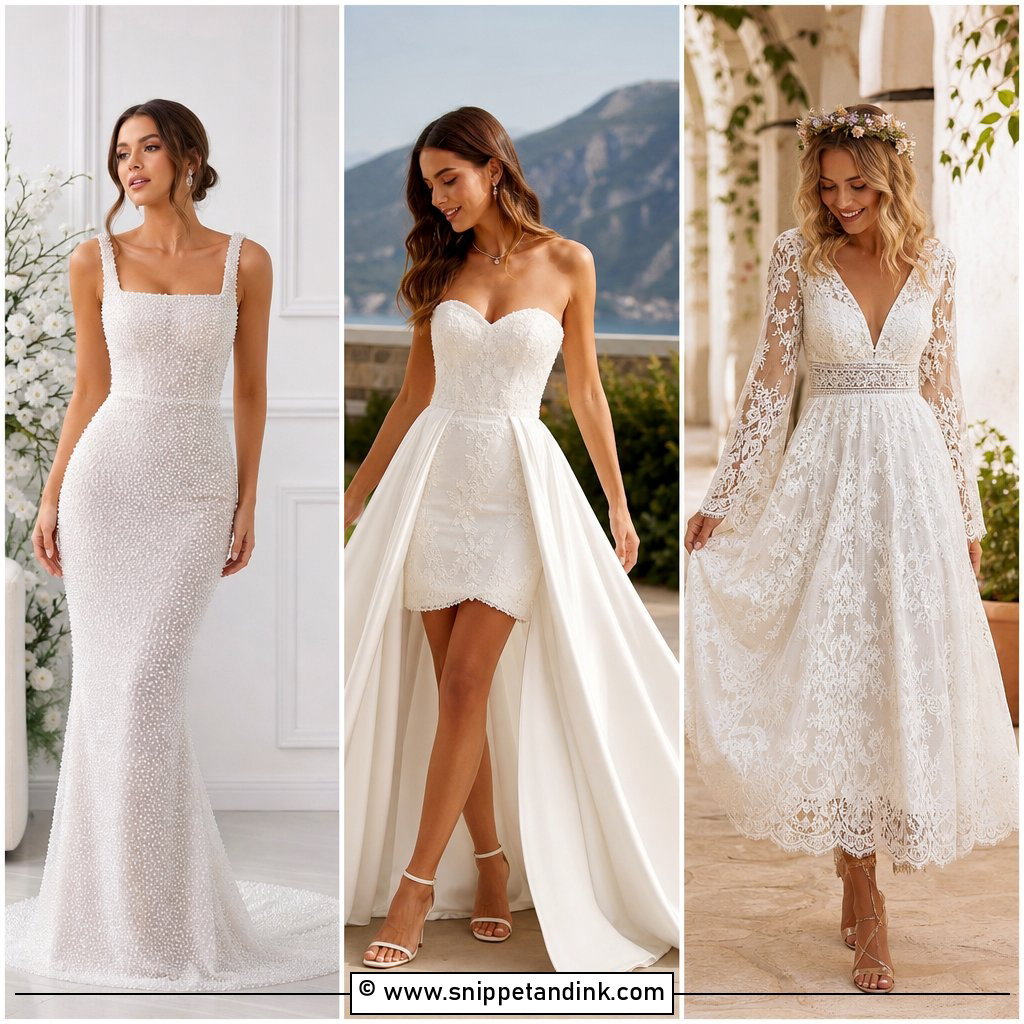
Feathers at the hem, sleeves, neckline or cuffs add movement and a playful feel. The aim is balanced, not costume. A short feather-hem dress is a fun reception change; feather cuffs on a sleek gown look chic. White or ivory feathers read most bridal. Feathers shed and dislike humidity, so keep them away from rain and candle flames. Satin heels, a small clutch and very little jewelry. Rooftops and city venues suit it.
16. Pearl Wedding Dress
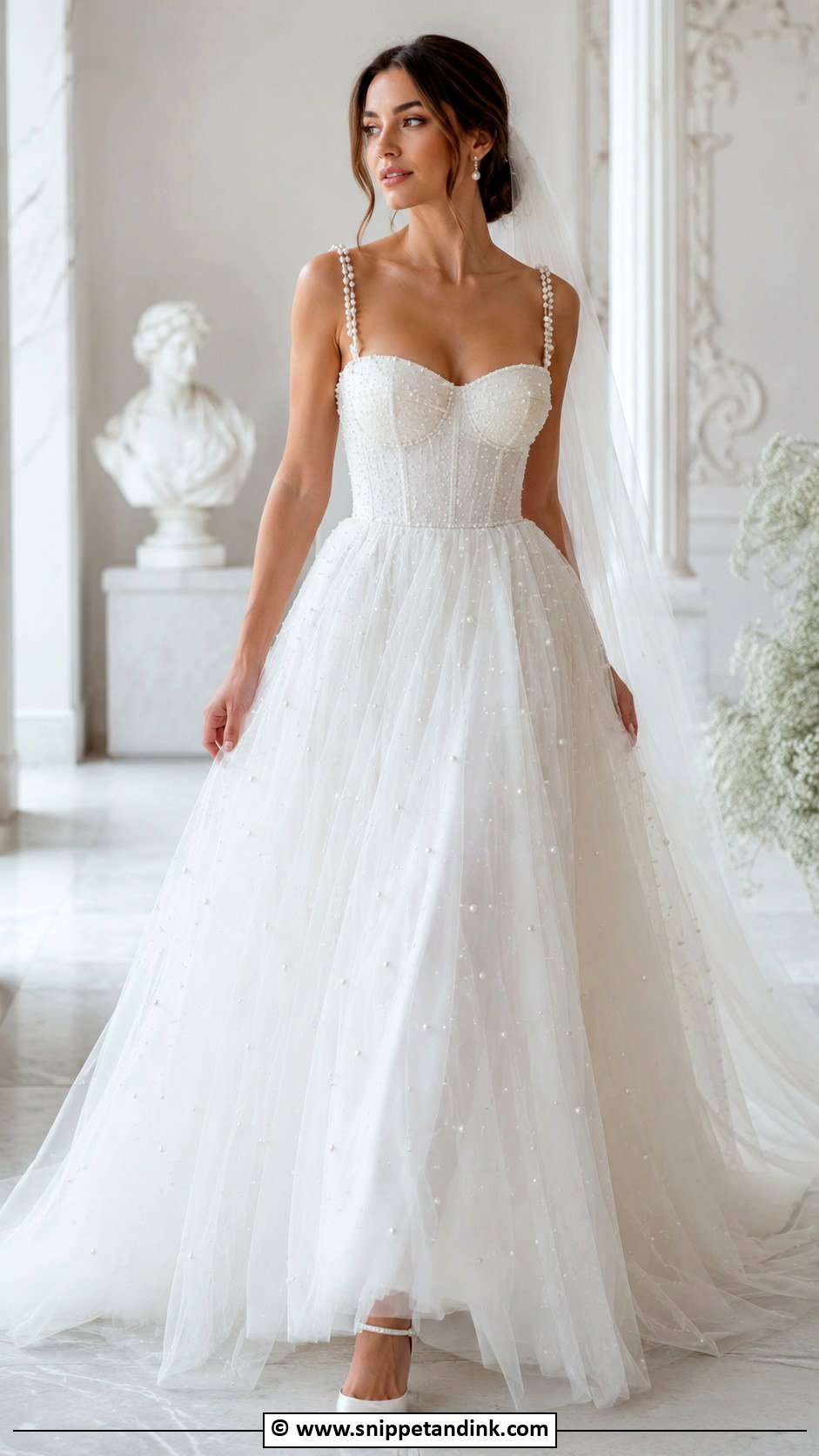
Pearls scattered on tulle, stitched along sleeves or used on straps add soft dimension that shows up close. A pearl-covered sheer overlay looks romantic; crepe with pearl straps looks minimal. Check how the pearls are attached. Individually knotted pearls hold better than glued ones, which can pop off during hugs. Pearl earrings, satin pumps and a soft veil, but don’t add a pearl necklace too, or the effect gets crowded.
17. Two Piece Wedding Dress
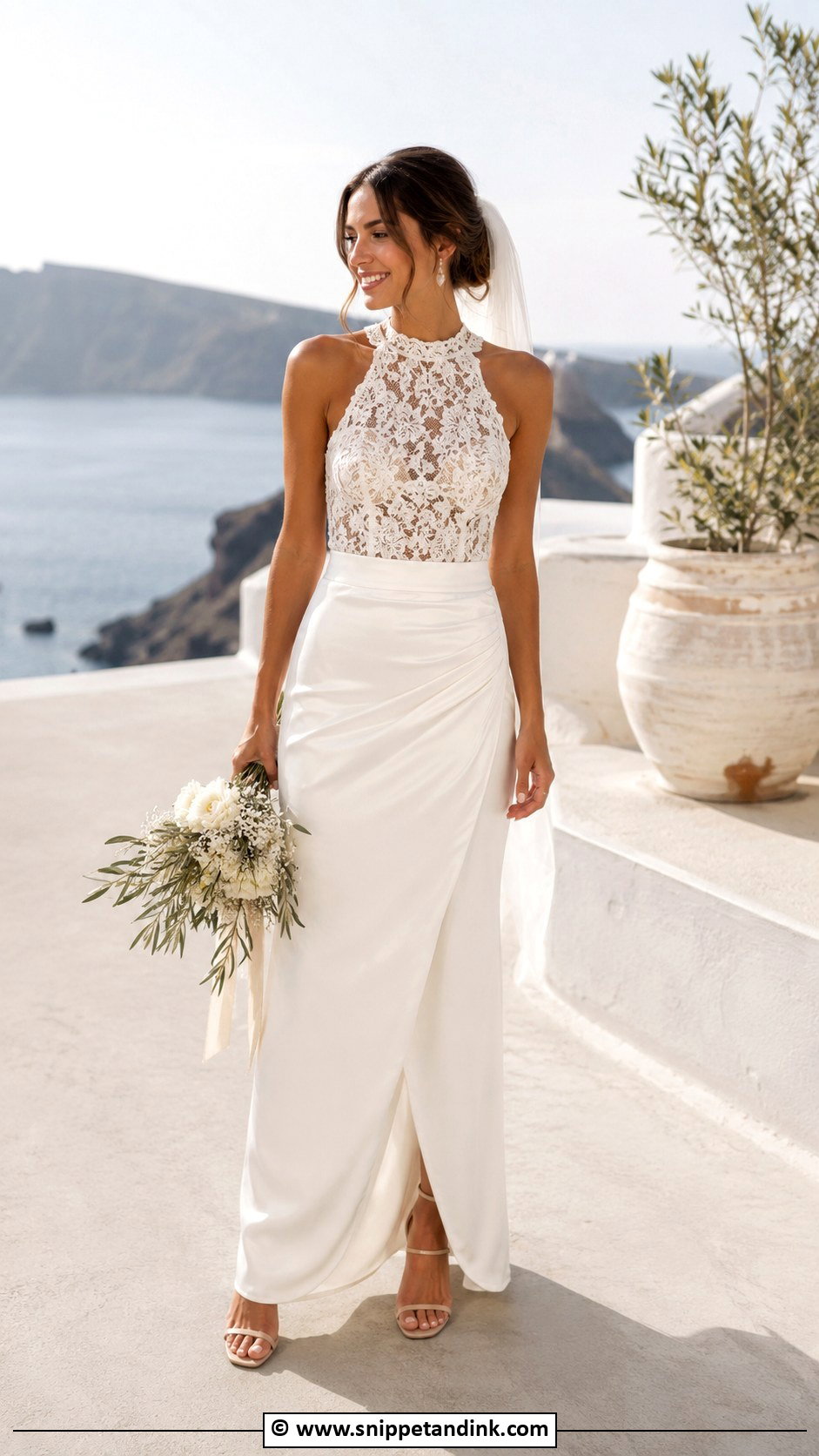
A two-piece pairs a bridal top with a matching skirt, and it solves a fit problem many brides have: different sizes on top and bottom. Cropped blouses, structured corsets and lace overlays all work. A high-waisted skirt keeps a hint of skin elegant. Matching fabrics give a continuous line; lace with satin adds texture. Heeled sandals, dainty earrings and a sleek veil. Destination and relaxed celebrations suit it.
18. Jumpsuit Wedding Dress
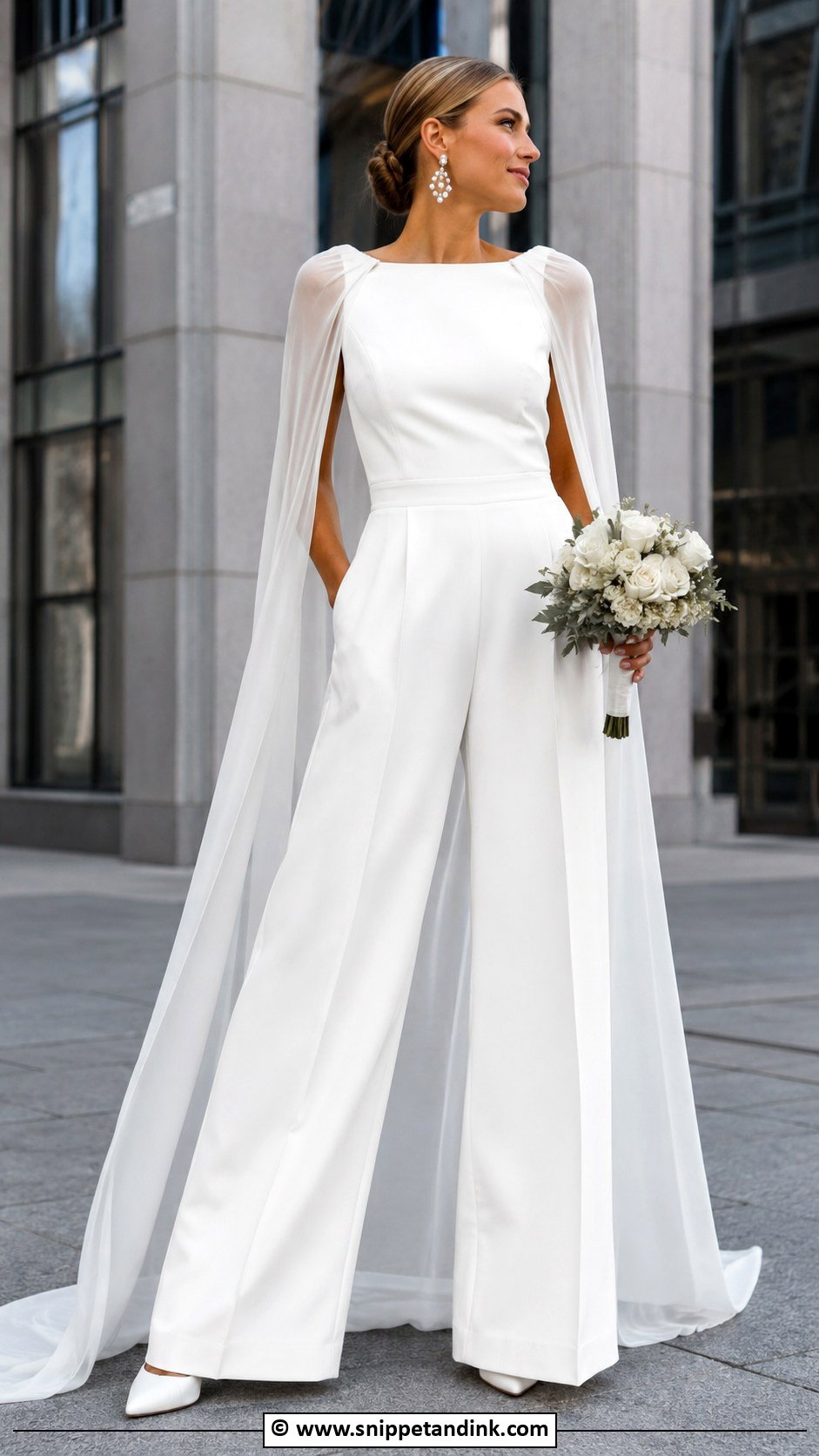
A jumpsuit gives bridal polish with the ease of trousers. Wide legs, a fitted bodice and quality fabric, crepe, heavy satin or lace, keep it formal. A detachable skirt or cape adds drama for the ceremony and comes off for dancing. One practical point I always raise: bathroom trips. A side zip is far easier than a long back zip. Pointed heels, statement earrings and a sleek clutch. Courthouse weddings and modern venues suit it.
19. Detachable Skirt Wedding Dress
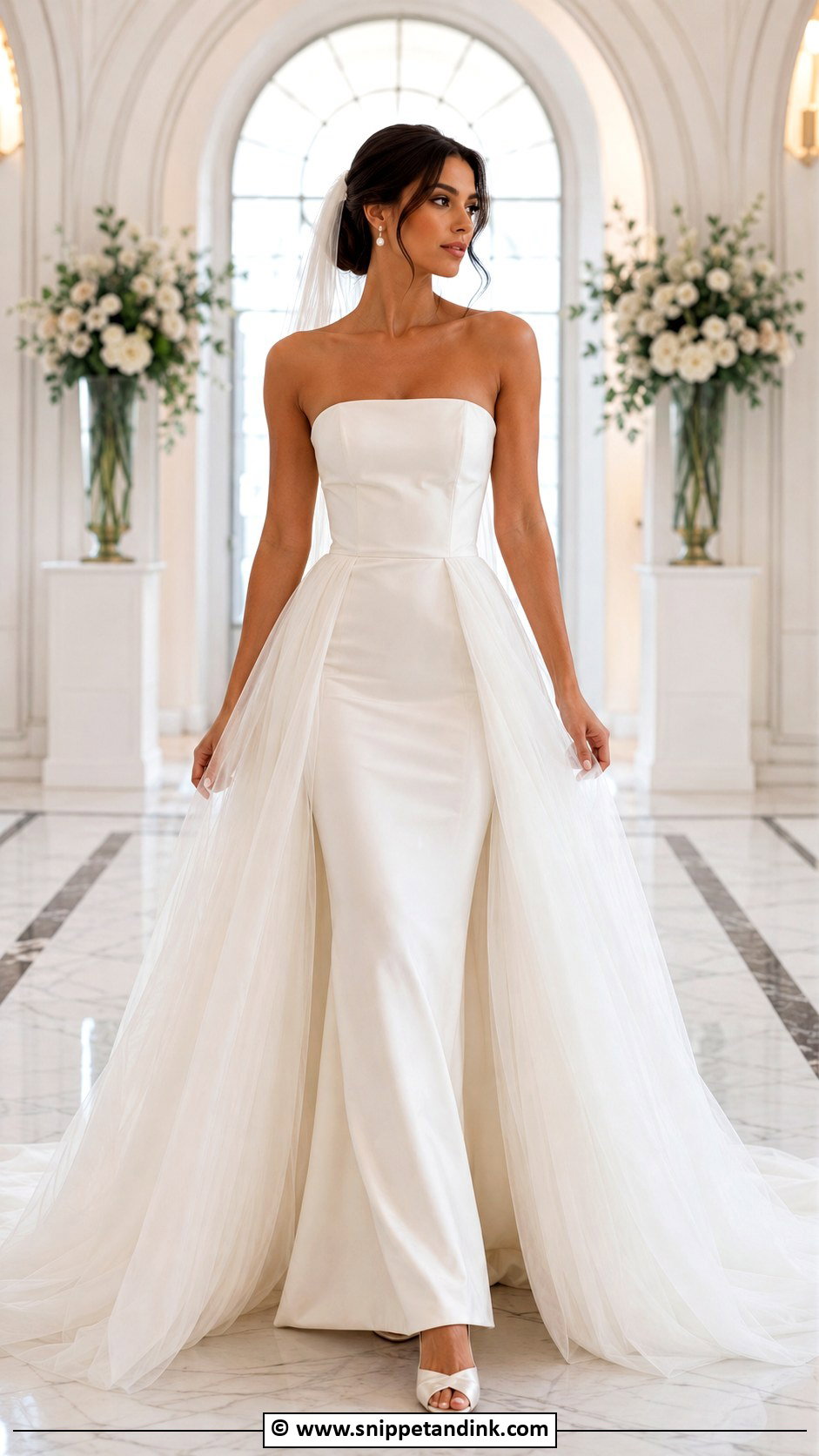
A detachable skirt wedding dress gives you two looks in one. The overskirt adds volume and length for the ceremony and comes off to reveal a fitted gown, mini or column beneath. The base dress must fit perfectly on its own, since that’s what you’ll dance in. Tulle overskirts are soft, satin structured, lace romantic. Practice removing it with whoever will help on the day. Classic heels and a veil that works with both versions.
20. Bubble Hem Wedding Dress
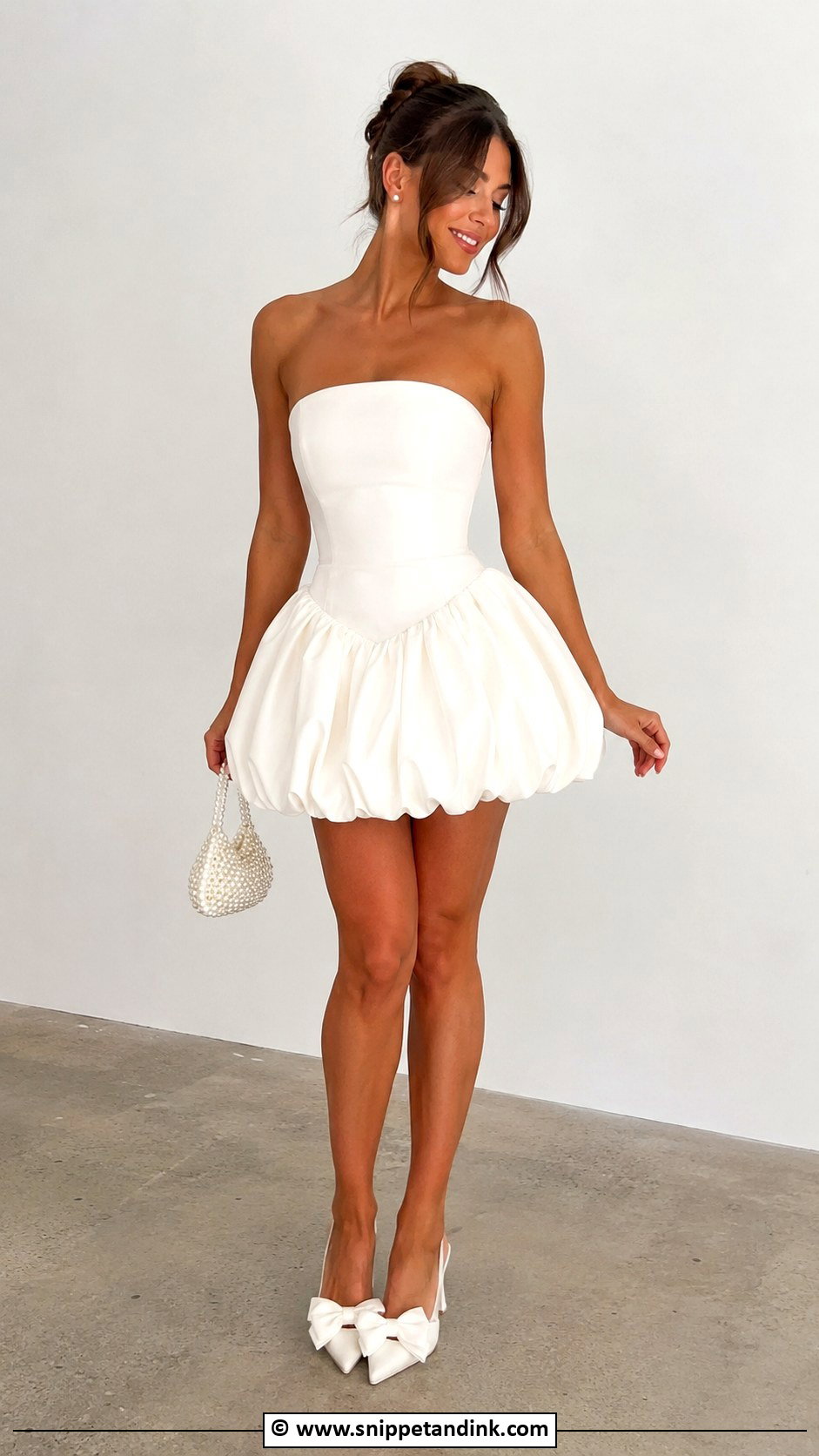
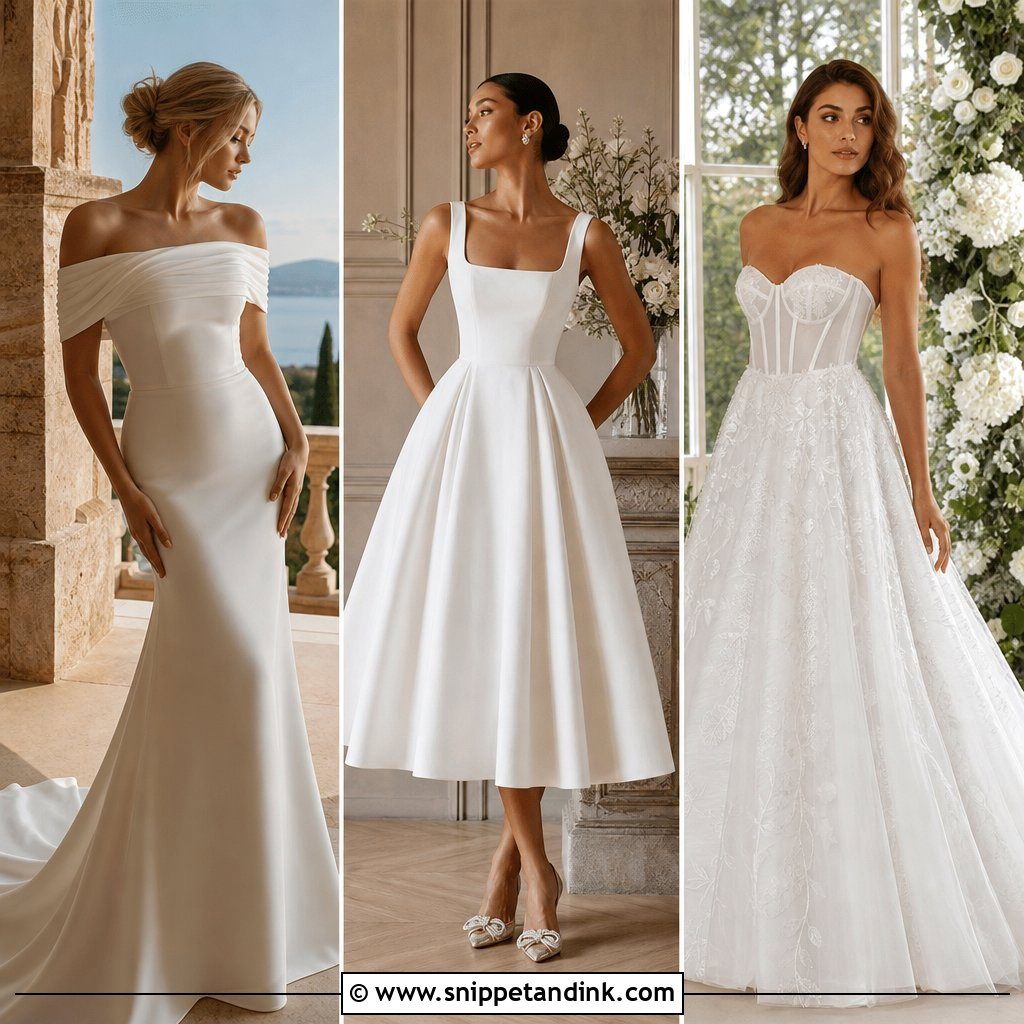
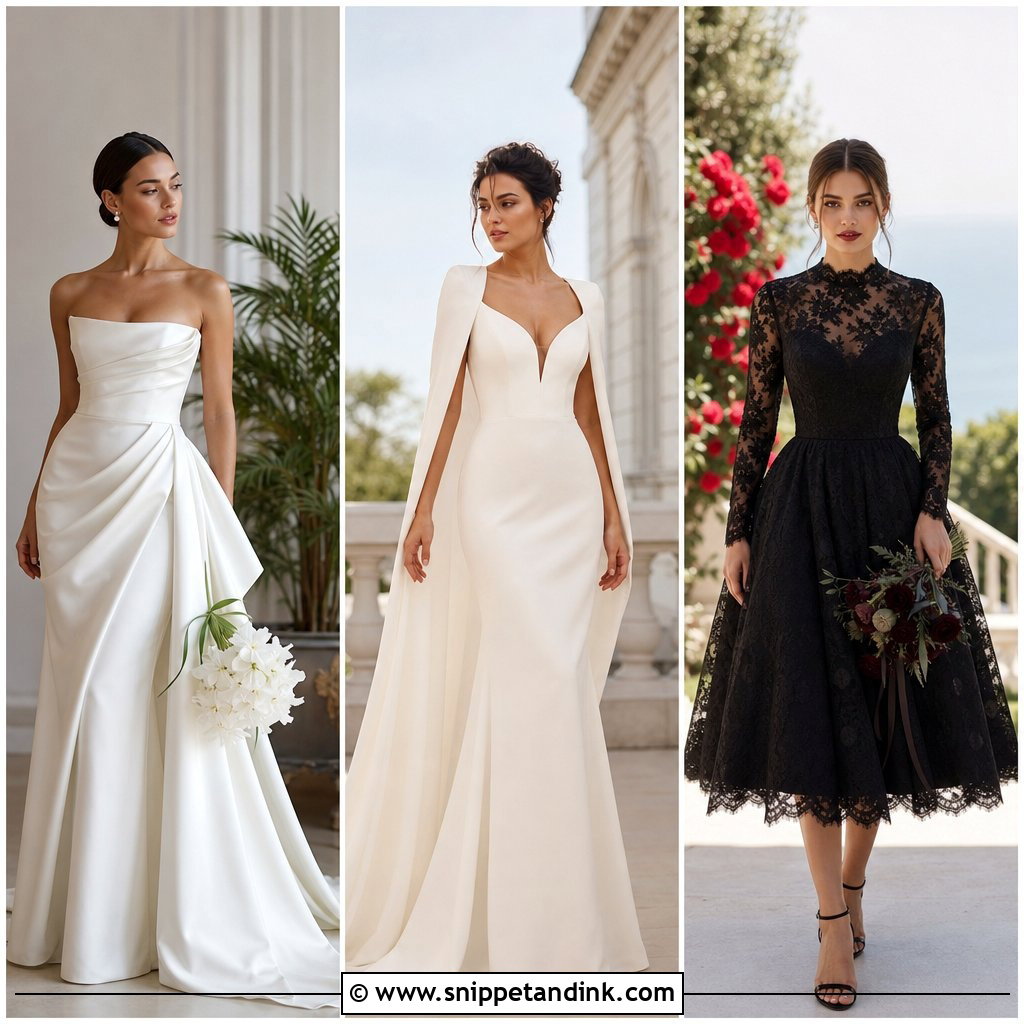
A bubble hem is gathered and tucked under to make a rounded edge, and it only shows at mini, midi or high-low lengths. Crisp fabrics like mikado, taffeta or organza hold the puff; soft fabrics collapse. It suits reception changes, courthouse ceremonies and bridal showers; for a full day, a longer bubble skirt with a fitted bodice. Sitting flattens the bubble a little, so fluff it before photos. Sleek heels, pearl studs and a small structured bag.
21. High Low Wedding Dress
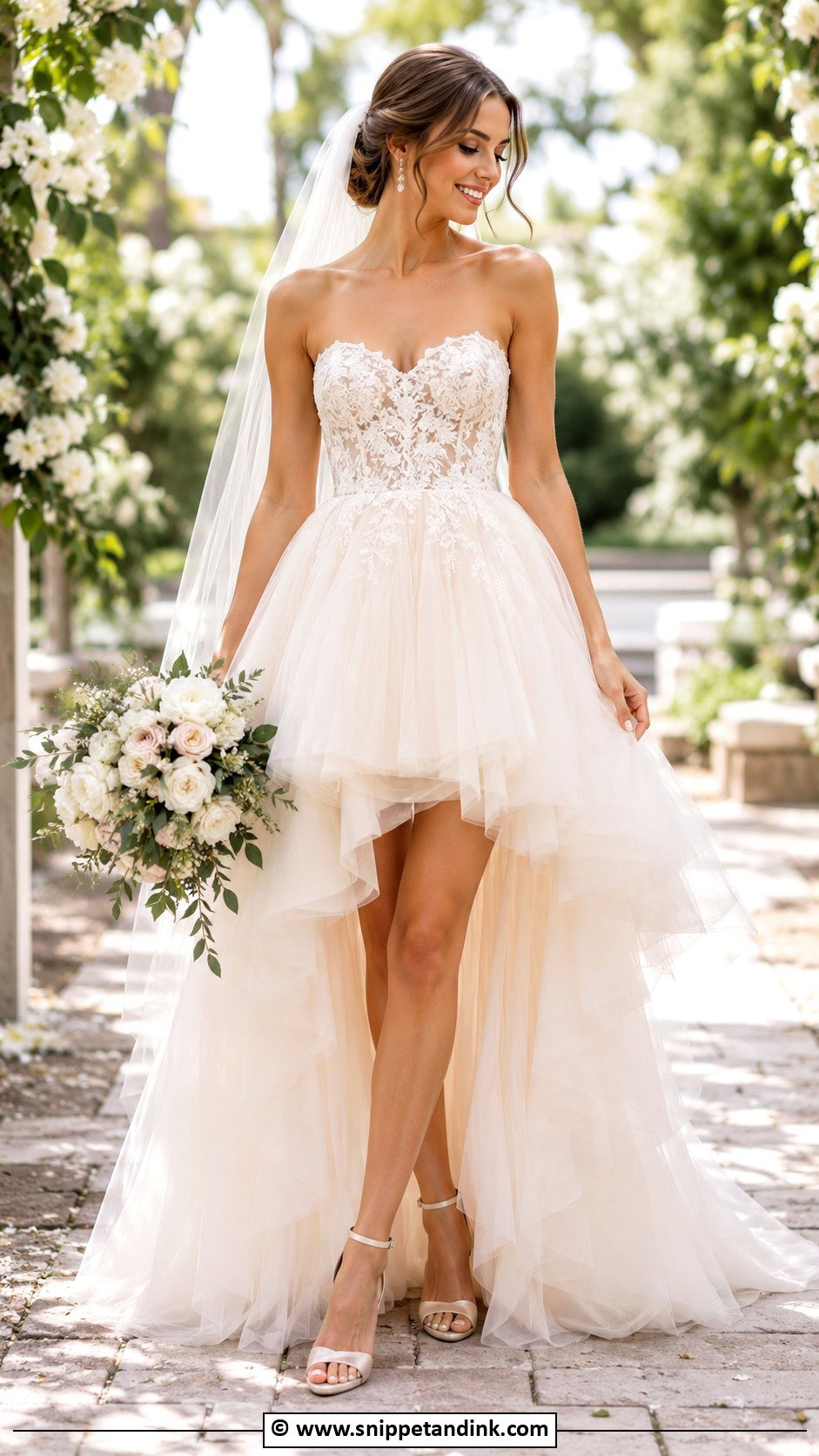
High-low hems show your shoes in front and keep a formal length behind. They suit outdoor venues where a full-length front would drag in grass. Satin, tulle, organza and lace all work. Because the shoes are on show, they become a real part of the look, so pick them before the hem is set. Drop earrings, a clean veil and a loose bouquet. It gives a full skirt with a lighter feel.
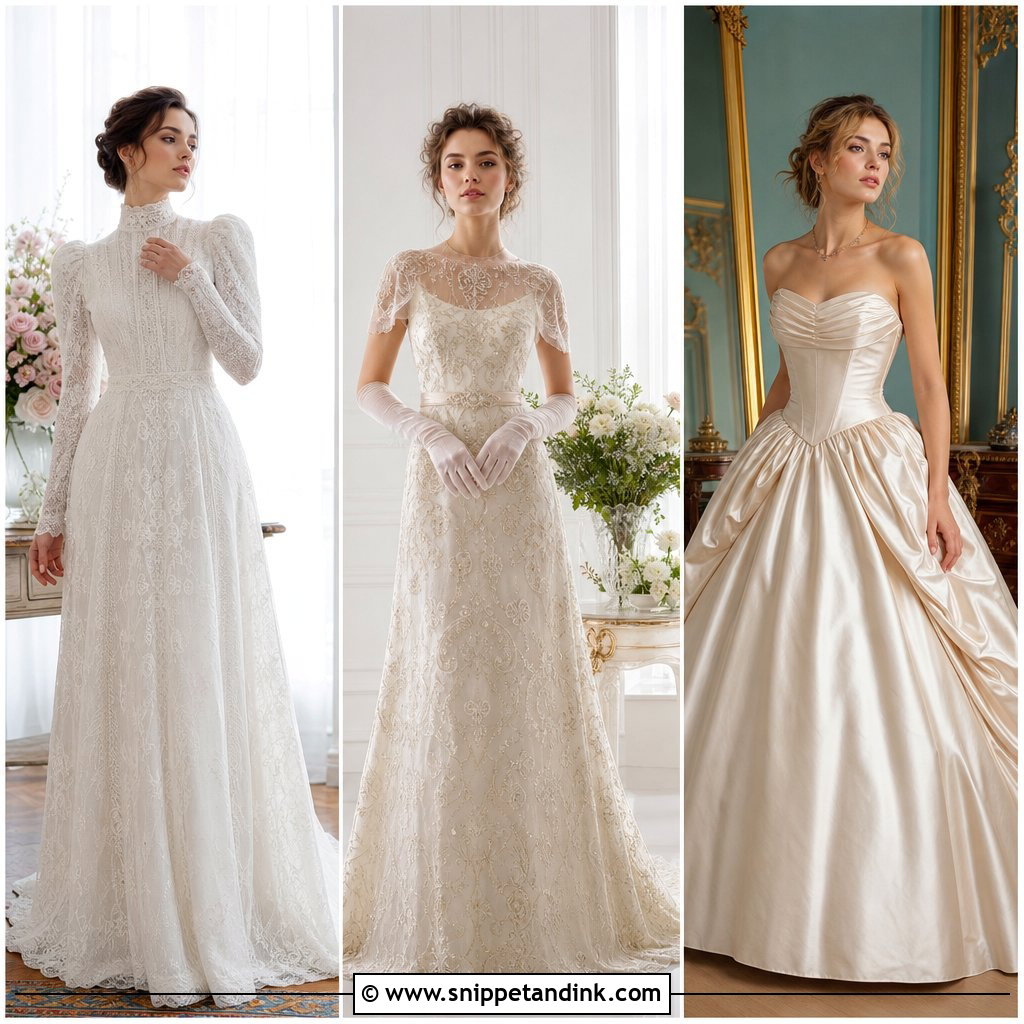
22. Vintage Inspired Wedding Dress
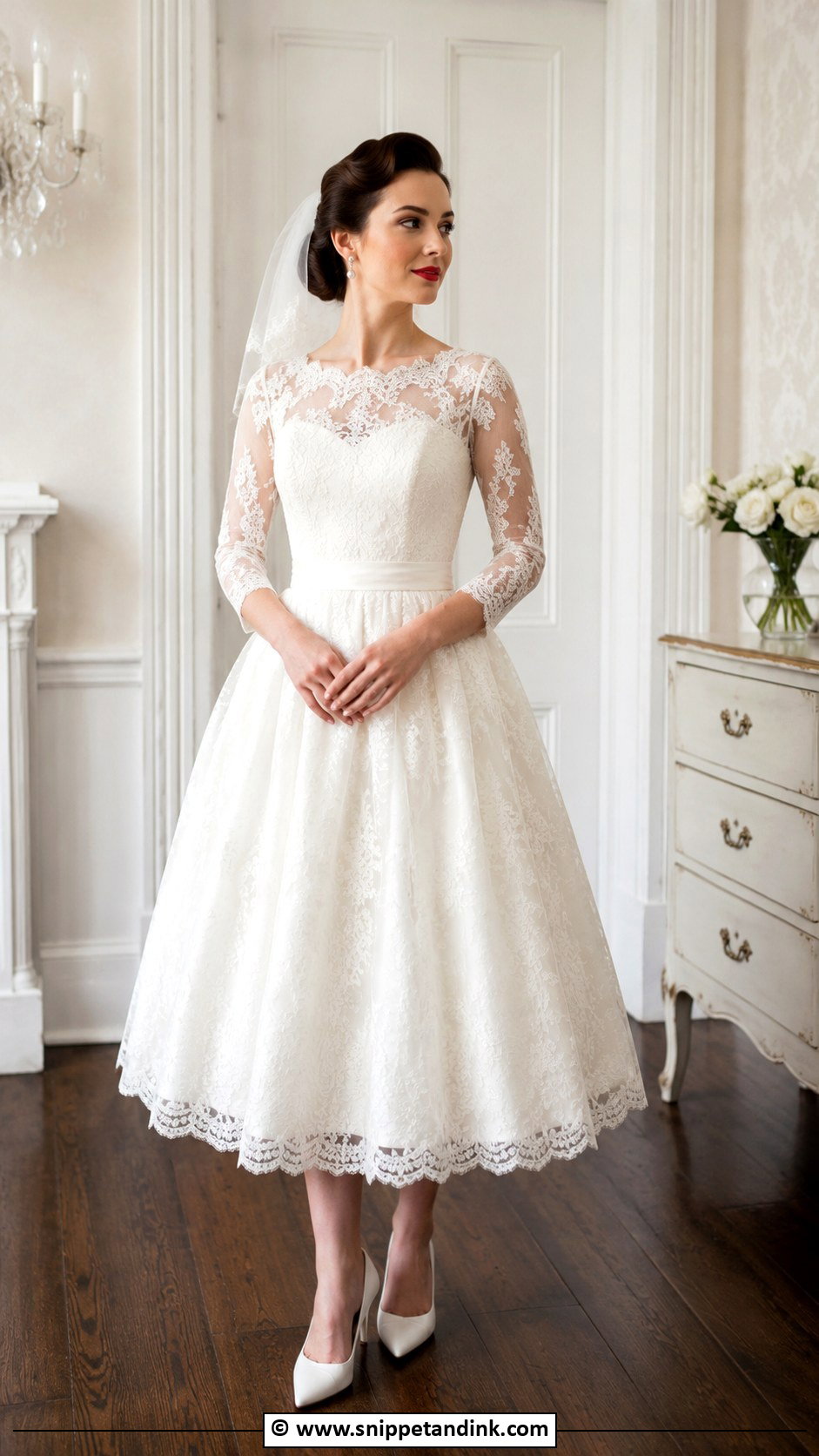
A vintage inspired wedding dress borrows from a decade: 1920s beading, 1950s tea-length volume, 1970s sleeves, 1990s minimal satin. My rule is one vintage element and modern styling around it, or it starts to look like a costume. Lace sleeves with clean heels. A beaded sheath with soft waves. Tea length with pointed pumps and a short veil. Sentimental brides often love this route.
23. Black And White Wedding Dress
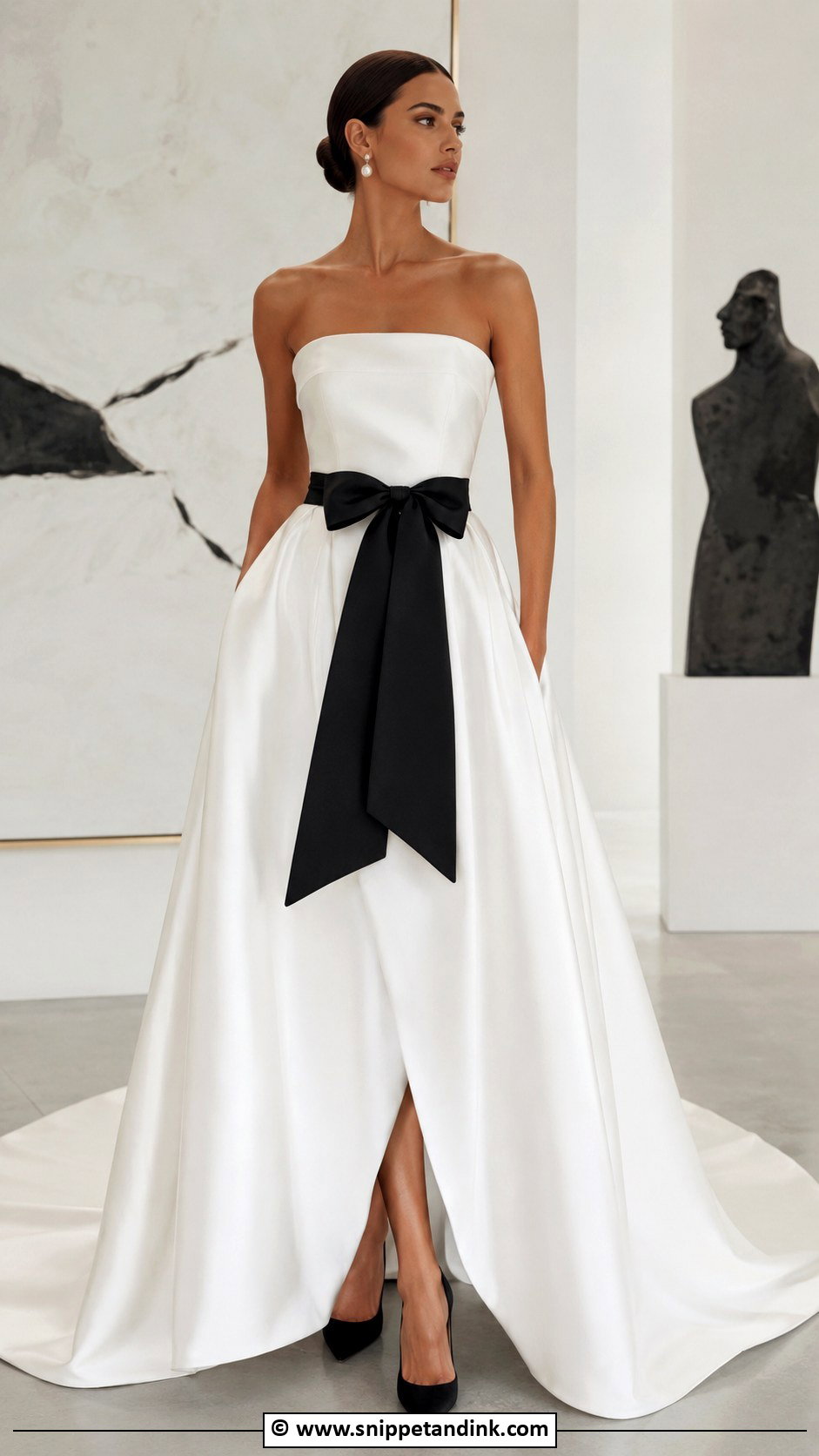
Black accents on a white gown, a bow, sash, gloves, embroidery, piping or floral appliqué, add definition and look striking in photographs. A white satin dress with a black bow is chic; lace with black flowers is artistic. Ask about dye stability, because black trim on white fabric can bleed if it gets wet or is cleaned carelessly. Black heels, pearls or a hair ribbon. City and gallery venues suit it.
24. Ruffle Wedding Dress
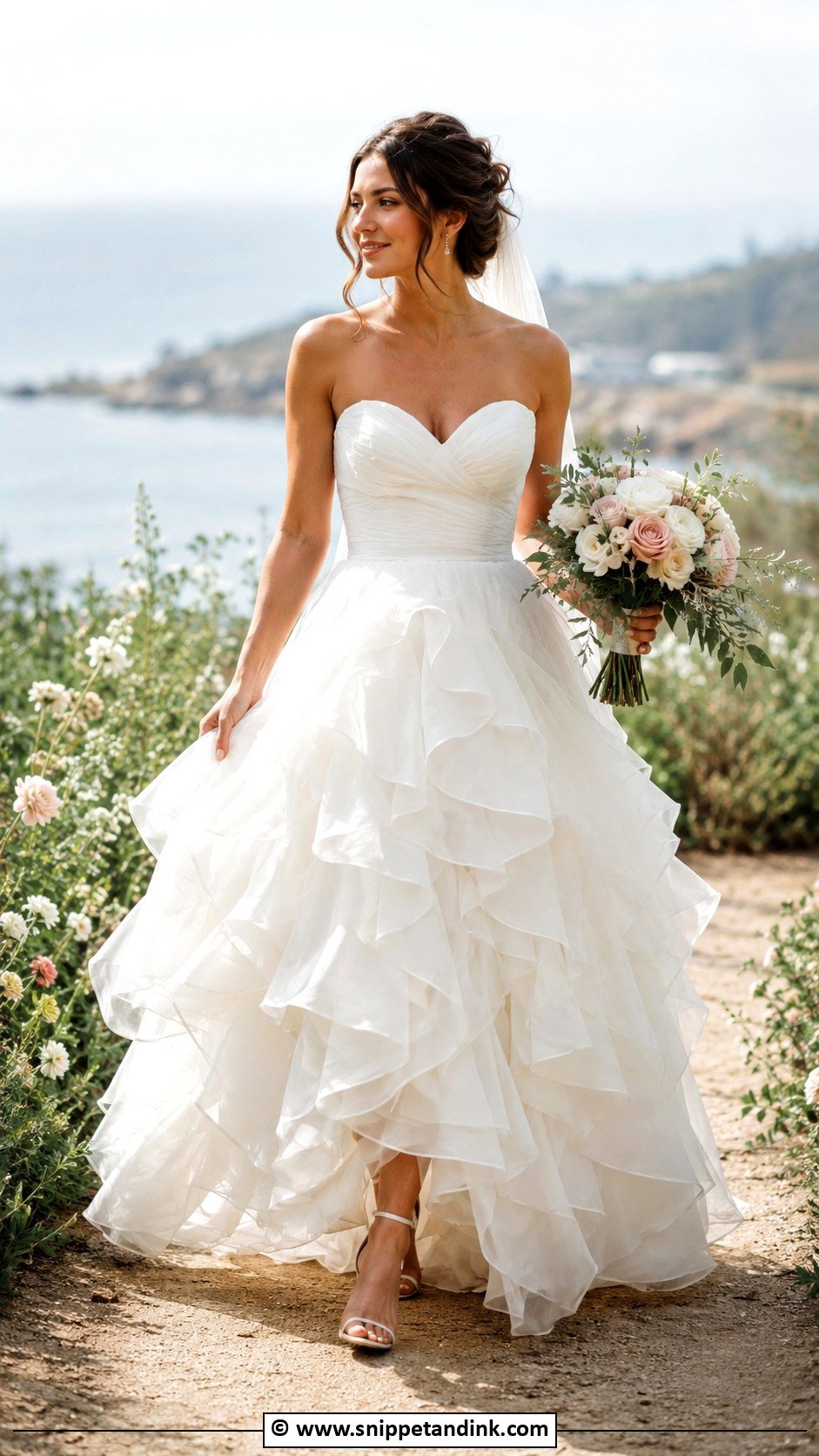
Ruffles add movement and soft volume. Subtle ones at the neckline are easy; dramatic tiers across the skirt take over the whole dress. For a modern look, clean layered organza or asymmetric ruffles beat fussy frills. Chiffon ruffles go limp in humidity, so for coastal weddings, I’d pick organza. A fitted bodice and plain veil balance it. Delicate heels, small earrings and a natural-shaped bouquet.
25. Minimal Crepe Wedding Dress
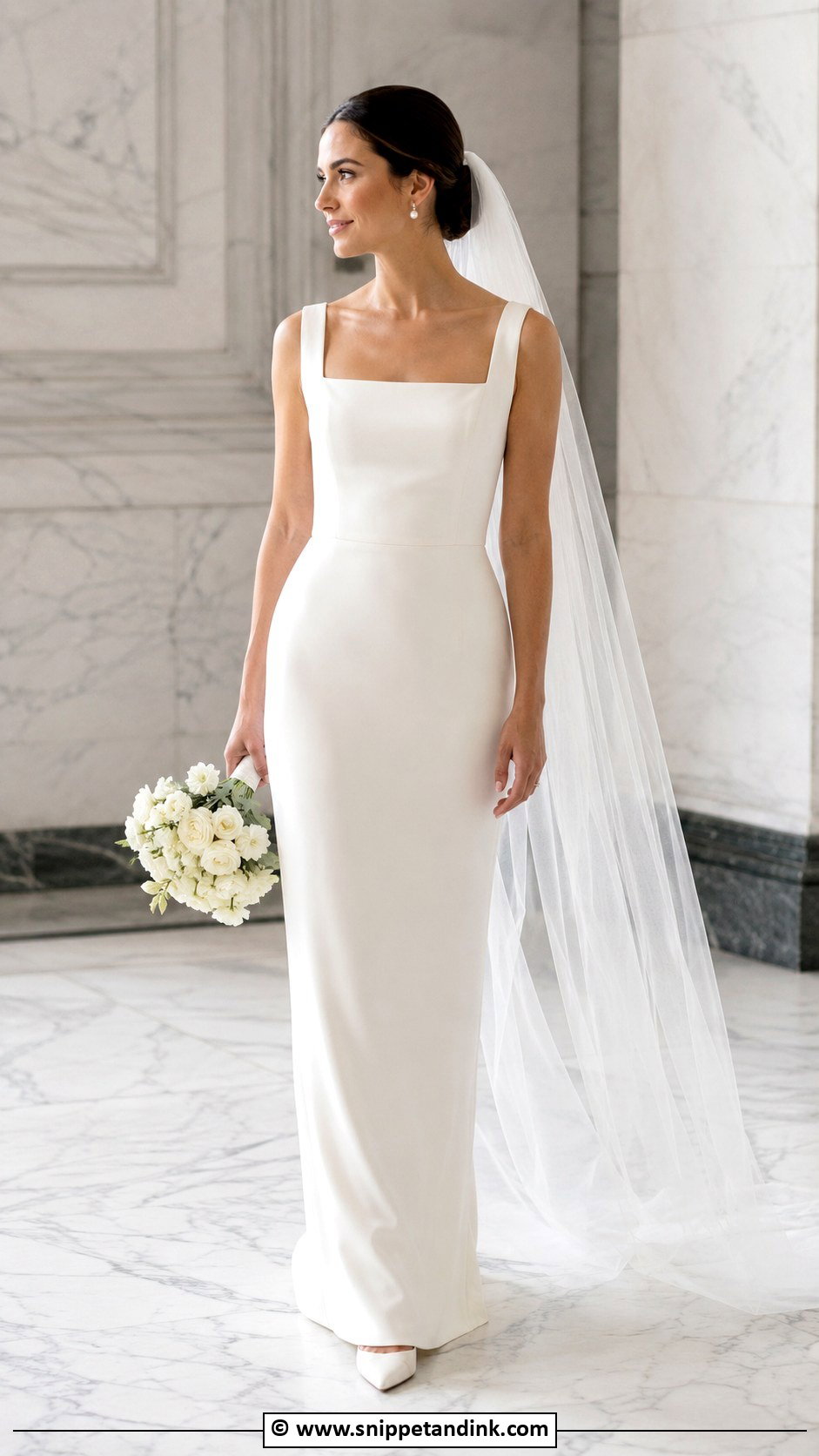
A minimal crepe wedding dress has a matte finish and relies entirely on tailoring: neckline, proportion and fit. Columns, sheaths and fit-and-flares suit it. Crepe is forgiving to sit in and creases less than satin, but it shows any line underneath, so underwear must be invisible. A square, bateau or strapless neck. Buttons down the back or a subtle slit add detail. Pearl earrings, pointed heels and a long veil.
26. Sheer Sleeve Wedding Dress
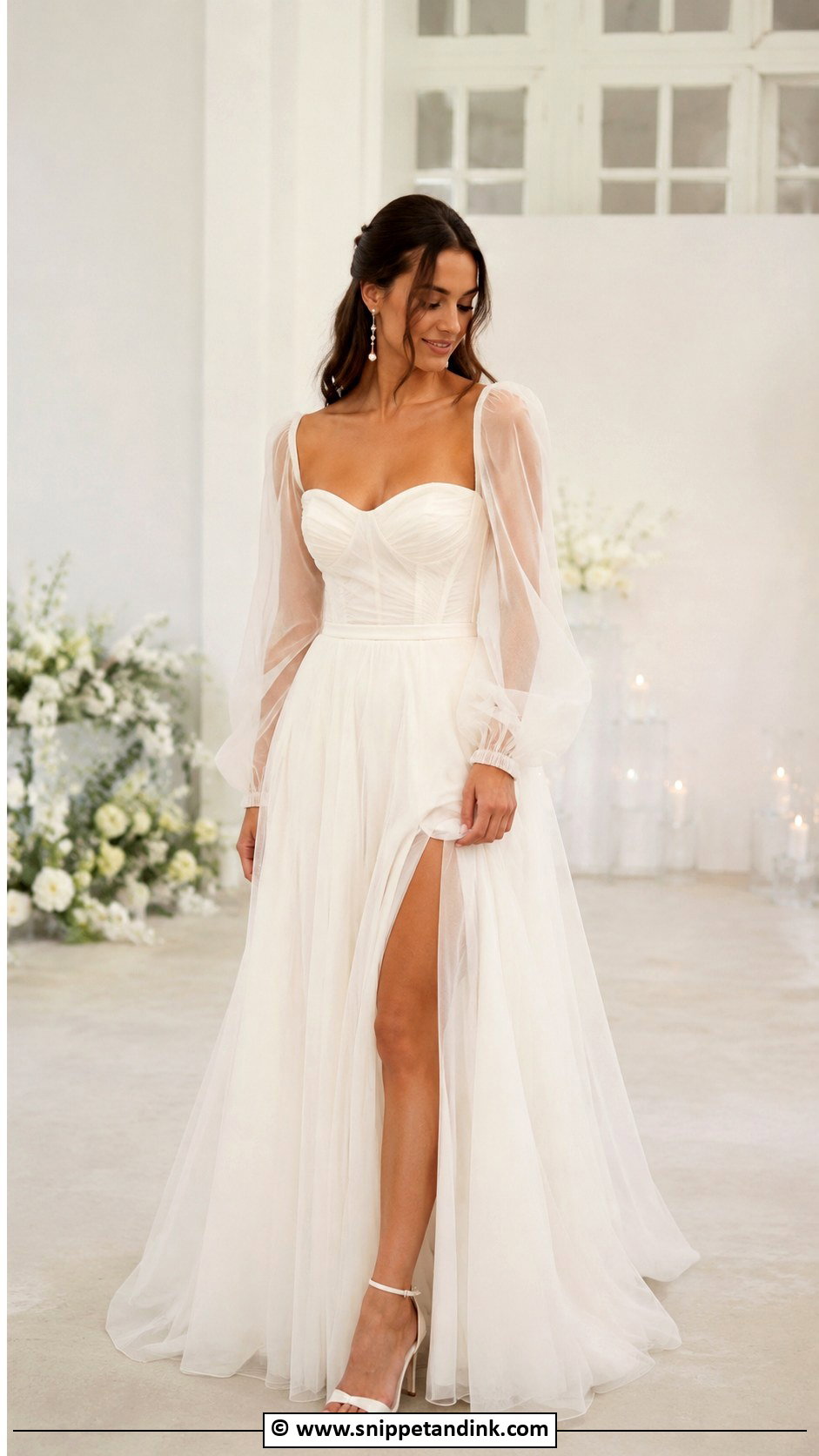
Sheer sleeves in tulle, lace, organza or chiffon cover the arms without weight. They can be fitted, puffed, fluttered or detachable. Plain sheer looks clean; lace appliqués soften; pearl details add texture. Match the sleeve’s sheer base to your skin tone, as a mismatched shade looks grey or orange in photos. A low bun, delicate earrings and satin heels. Comfortable in any season.
27. Tiered Skirt Wedding Dress
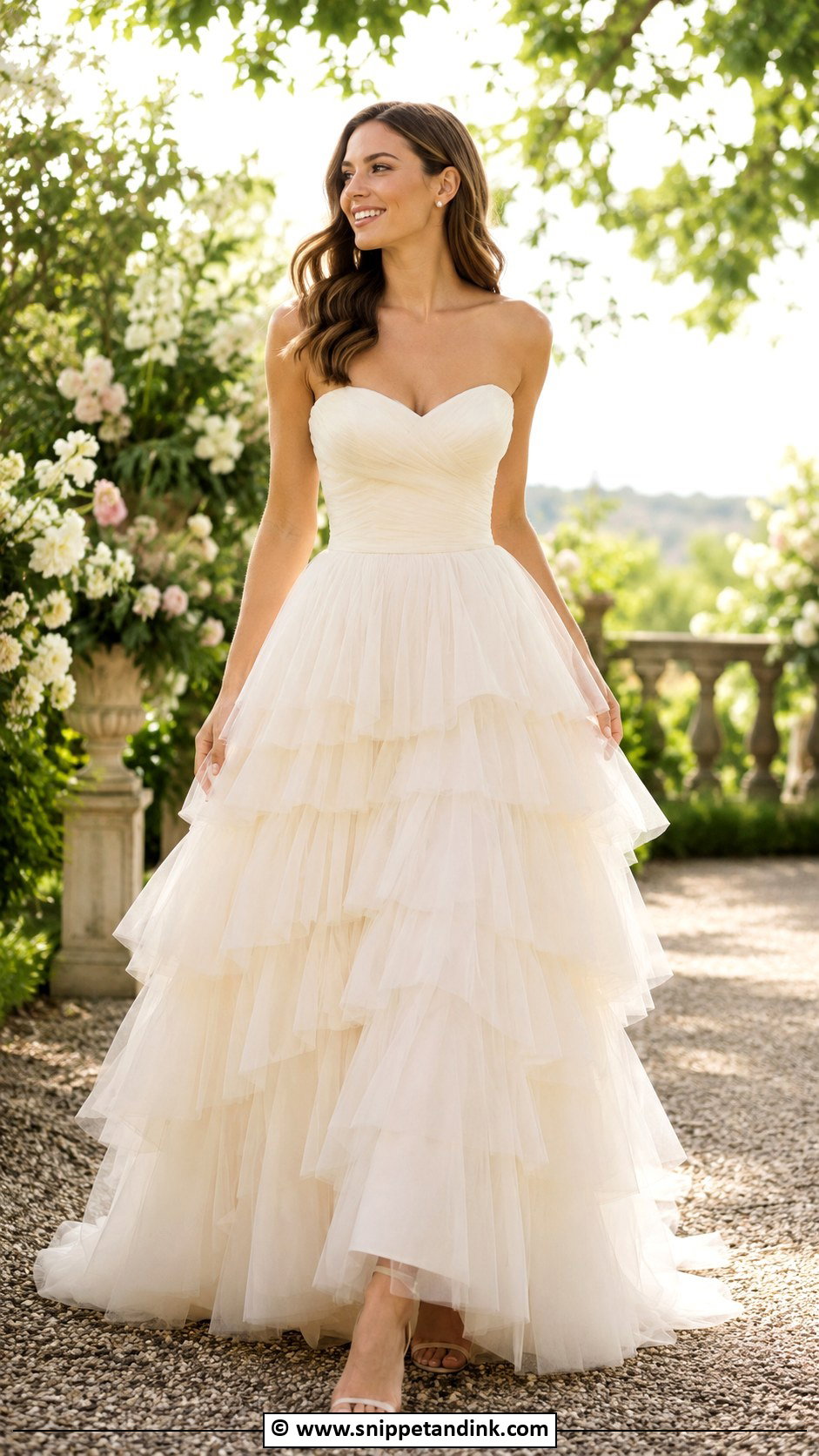
Tiers build movement through layers rather than one heavy skirt. Tulle tiers float; organza tiers look sculptural. A fitted bodice balances them. Tiers catch the light as you walk, turn and pose outdoors. Every tier is a separate hem, so alterations take longer. Small earrings and clean heels. A fingertip veil or none, depending on how busy the skirt already is.
28. Halter Wedding Dress
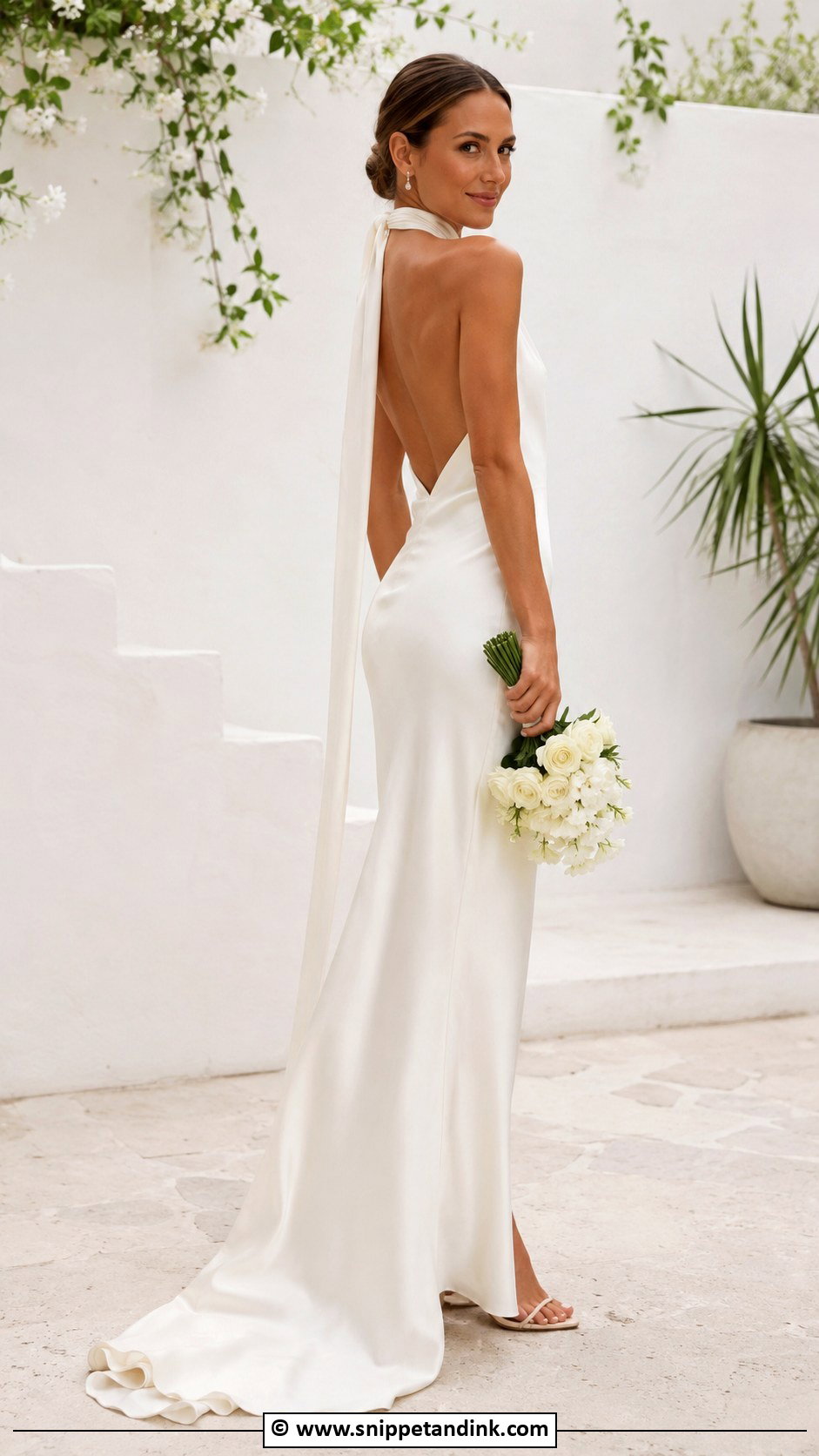
Halters highlight the shoulders and work especially well on athletic frames. A satin halter slip is minimal; lace feels romantic; a high halter with an open back surprises from behind. The neck strap carries weight, so heavy fabrics can strain the neck by late evening. Skip the necklace, choose earrings, and wear hair up. Warm-weather and beach weddings suit it.
29. One Shoulder Wedding Dress
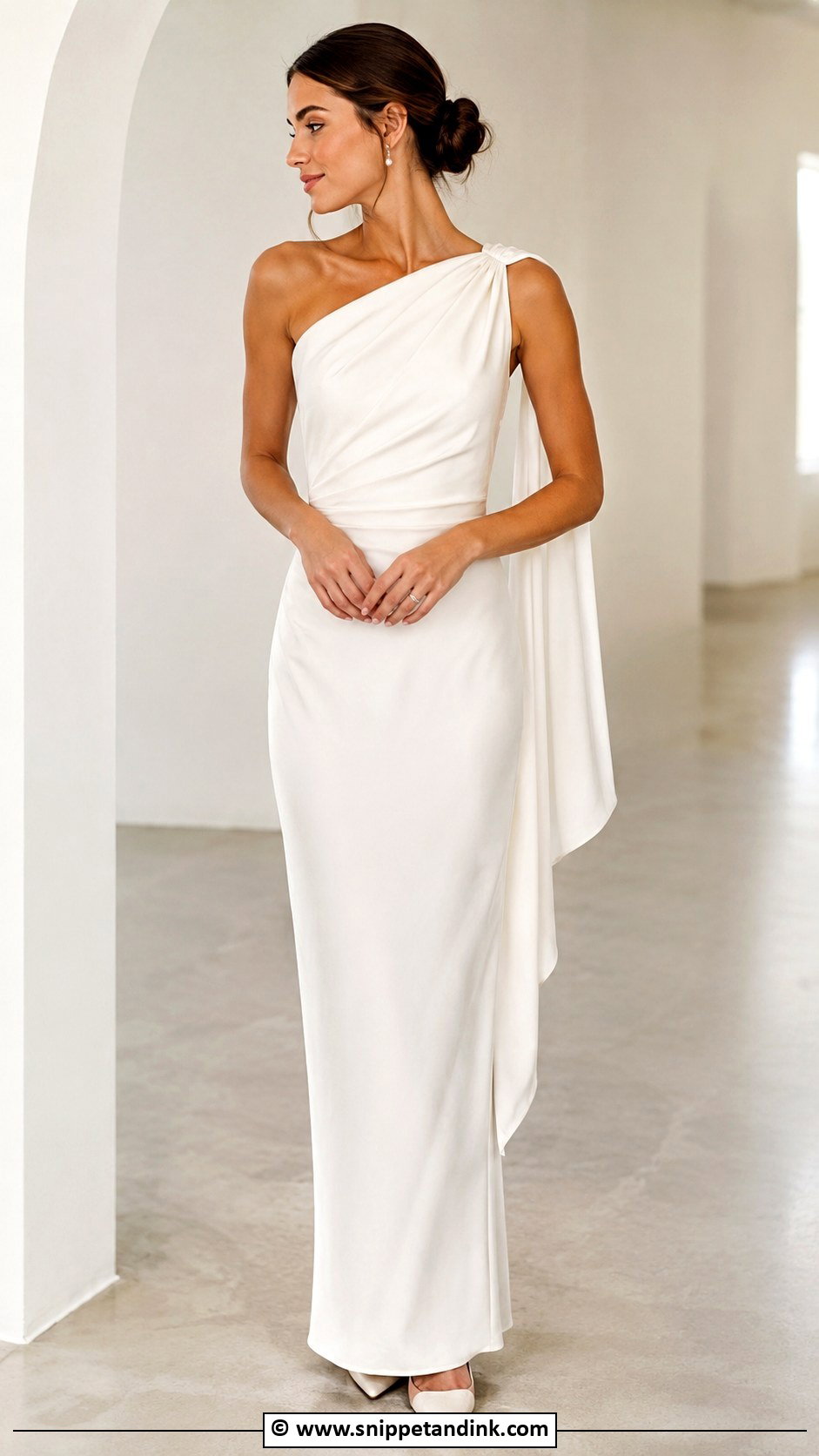
One shoulder gives a strong diagonal line without embellishment. The strap may be sleek, draped, ruffled or finished with a bow. Fitted crepe looks polished; flowing chiffon softer. Because a single strap does all the holding, the bodice must have its own internal support. Simple earrings, no necklace, and a low bun on the opposite side to the strap. City, resort and formal settings suit it.
30. Tea Length Wedding Dress
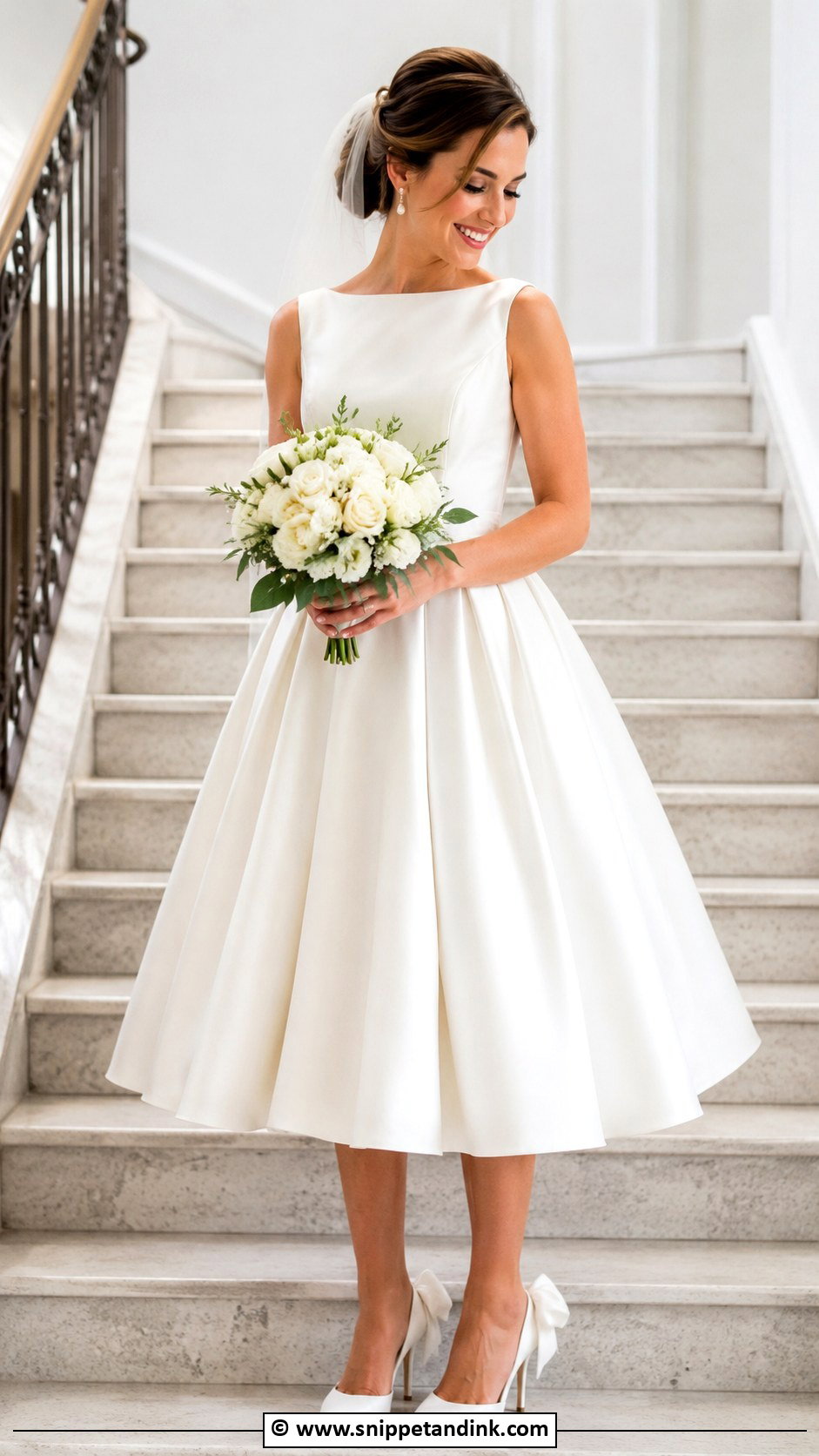
Tea length falls between knee and ankle. It’s practical, vintage-flavored and shows off your shoes, so choose ones with character: satin pumps, bow heels or embellished flats. A fitted bodice and full skirt is classic; a slim tea-length cut is modern. Add pearl earrings, a short veil and a small bouquet. Garden venues and courthouse ceremonies suit it.
31. Sequin Wedding Dress
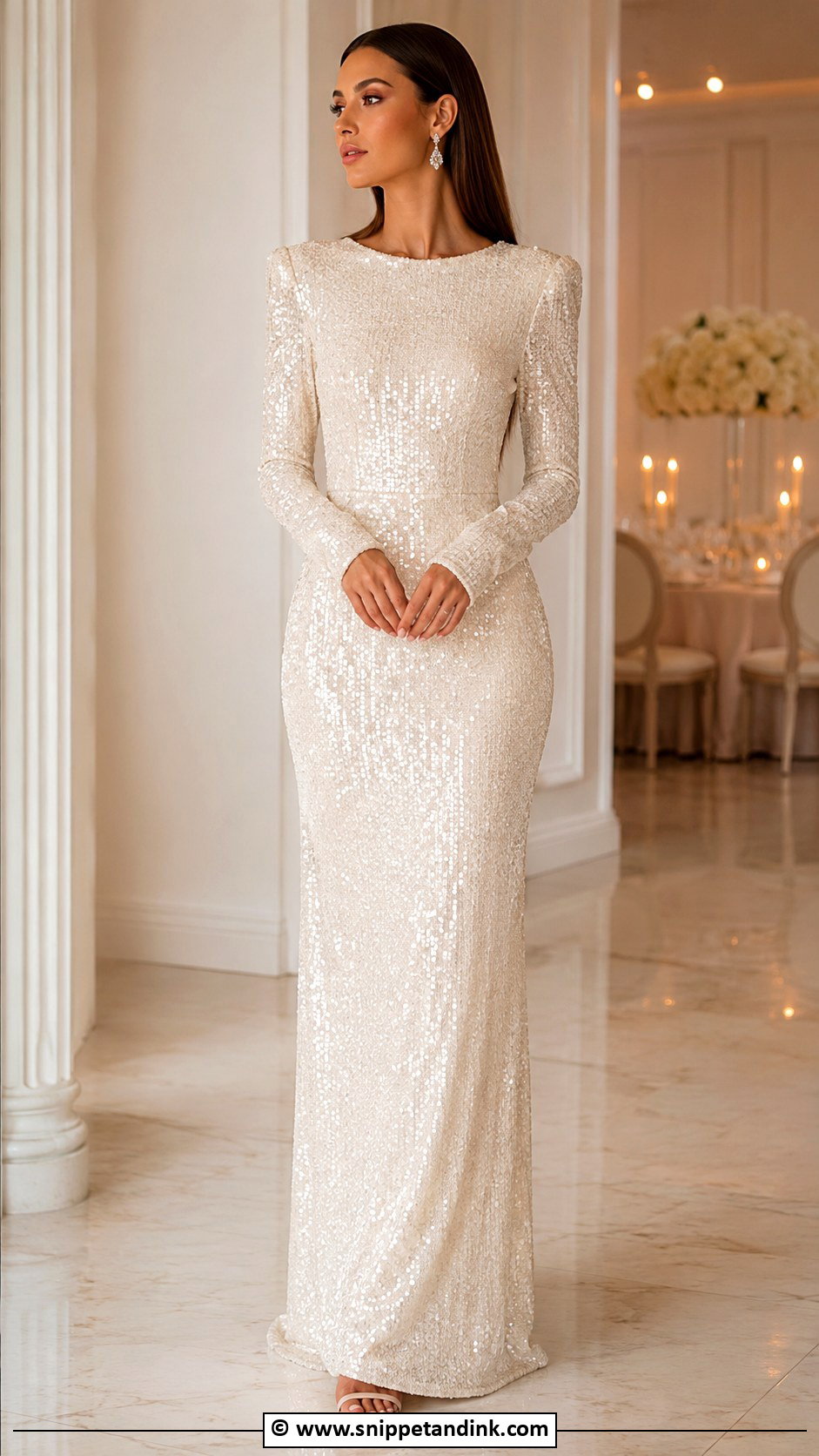
Bridal sequins work best soft and tonal: ivory, champagne, pearl or silver, glowing rather than glaring. A column keeps the sparkle sleek; long sleeves feel glamorous and covered. Sequins scratch at the underarm and inner arm, so try moving your arms for a few minutes in the shop. A matte veil or none balances the shine. Simple heels and minimal jewelry. Evening celebrations and modern ballrooms suit it.
32. Sculptural Wedding Dress
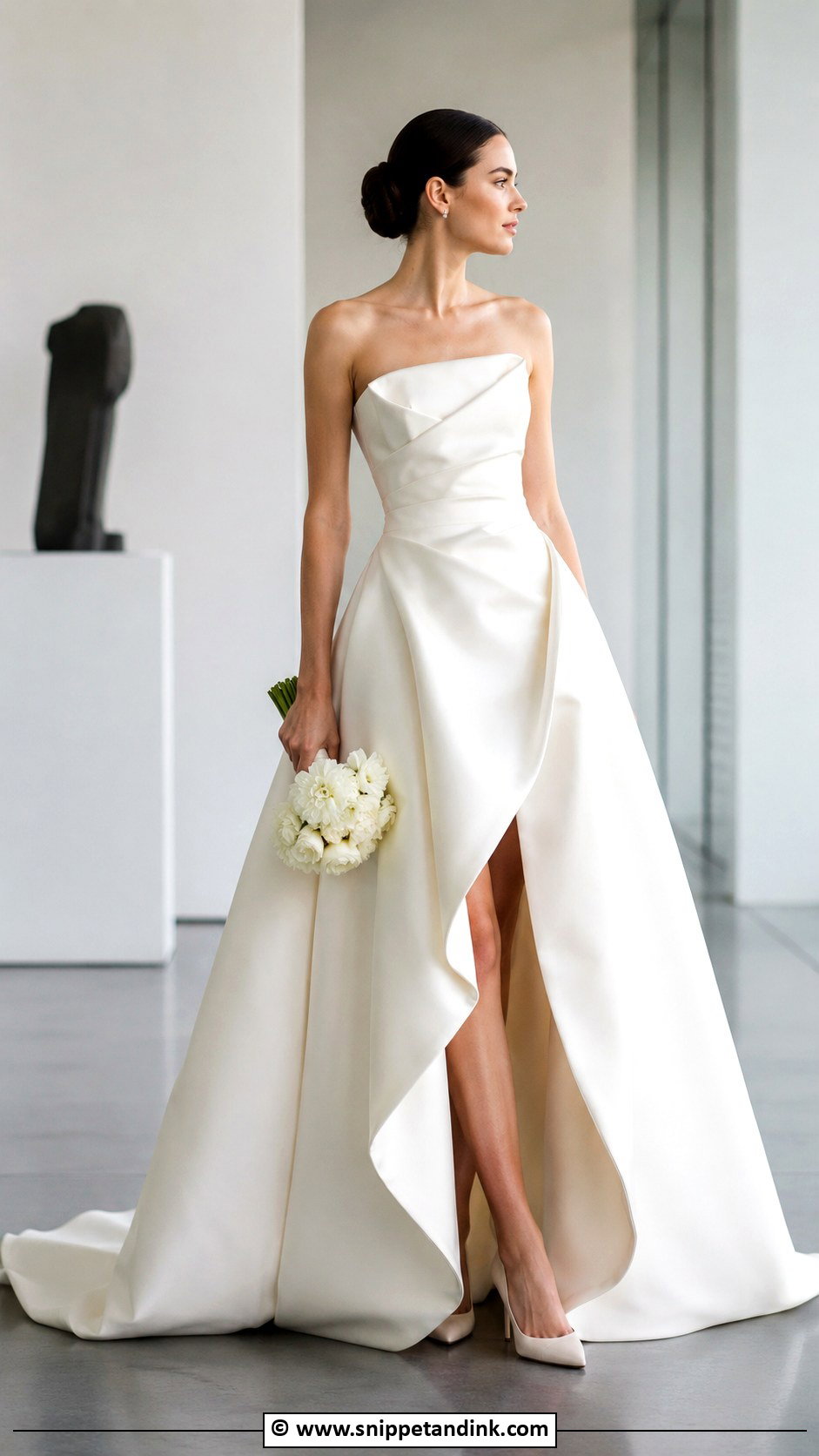
Sculptural gowns are about shape: folded bodices, deep pleats, structured skirts and architectural necklines. Mikado, satin, taffeta and faille hold that structure. These gowns rarely bend, so check you can sit, get in a car and climb stairs. Sleek heels, small earrings and smooth hair, and very few accessories. Museums, modern venues and minimalist spaces suit it.
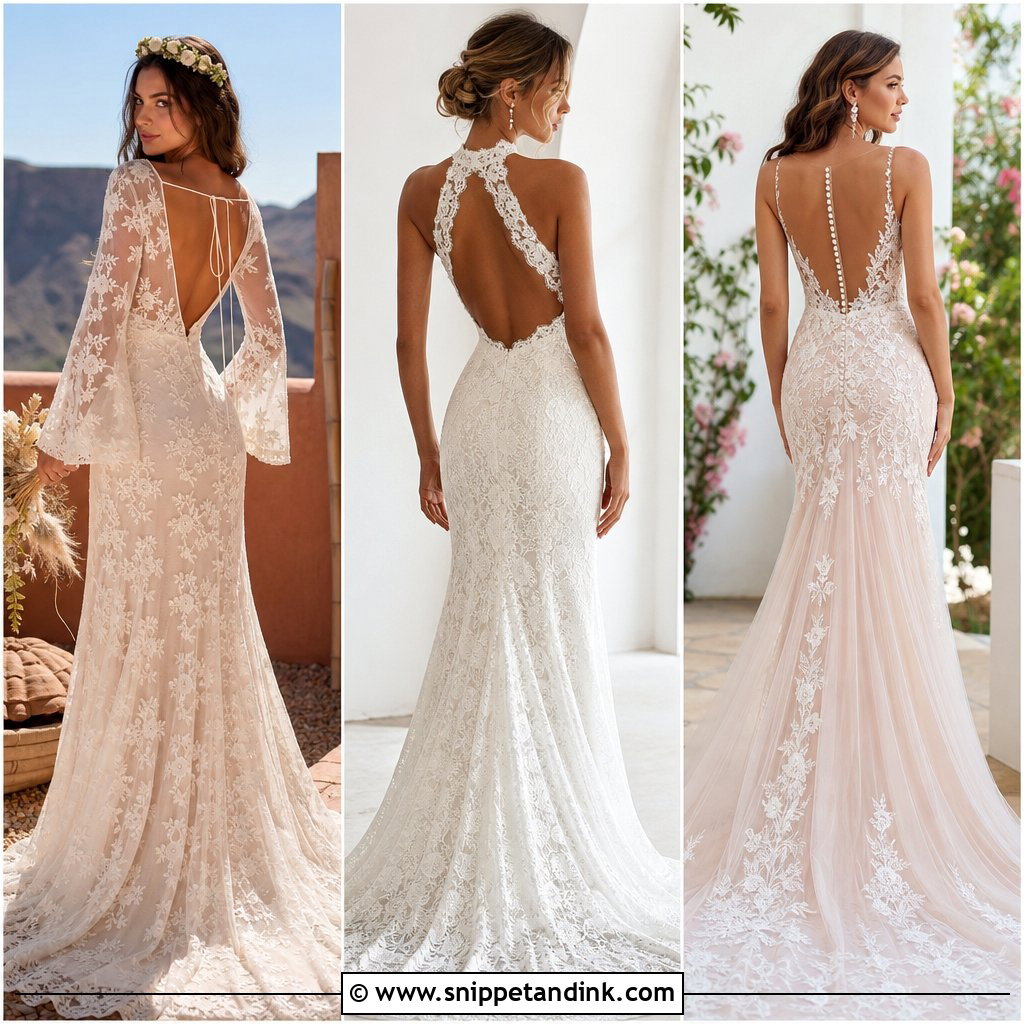
33. Boho Lace Wedding Dress
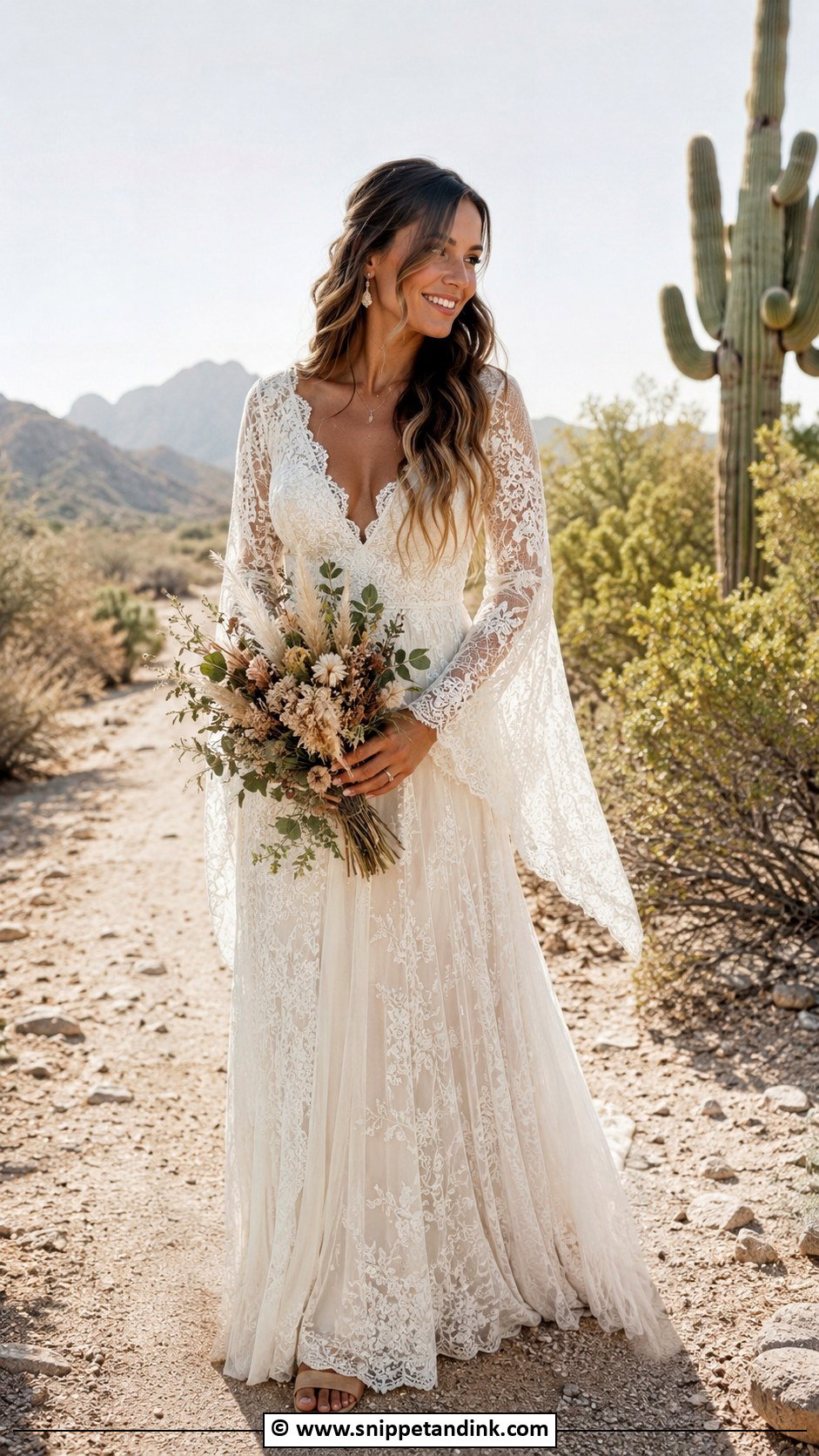
Boho lace means soft lace, flowing skirts, open backs, bell sleeves and crochet-style detail. It should move easily, never feel stiff. Soft waves, simple sandals and natural makeup suit it. A floral comb or light veil completes it. Bell sleeves drag through cake and candle flames, so watch them at the reception. Outdoor, desert, garden and beach weddings suit this relaxed shape.
34. Blazer Wedding Dress
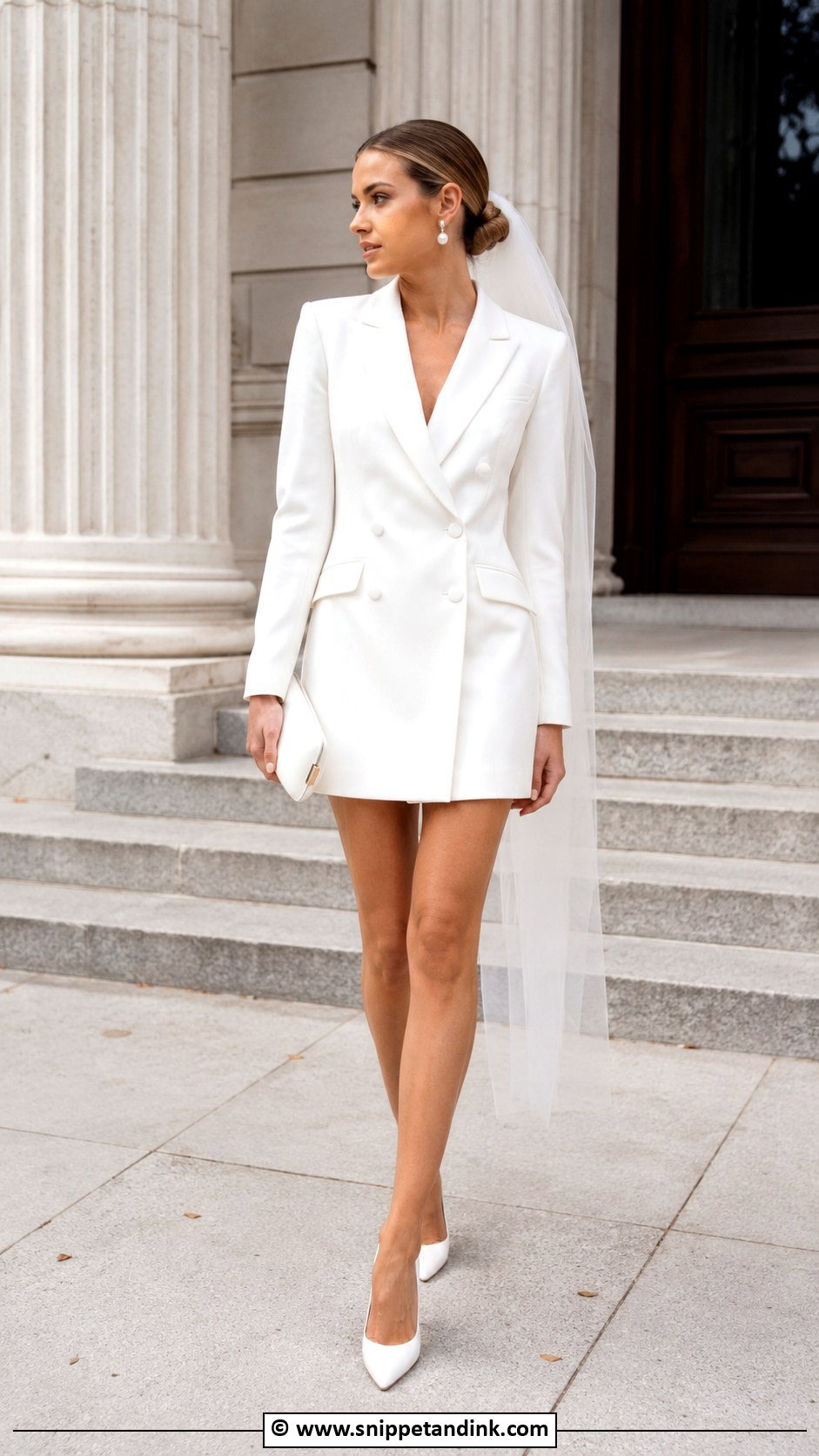
Blazer dresses bring tailoring into bridal: a mini cut like a long blazer, a gown with lapels, or a structured jacket over a slip. Ivory crepe, satin or wool blend depending on season. The shoulders must fit off the rack, because altering a tailored shoulder is difficult and costly. Pointed heels, pearl earrings and a sleek clutch. A birdcage veil or simple headband adds a bridal touch. Courthouse and city weddings suit it.
35. Convertible Wedding Dress
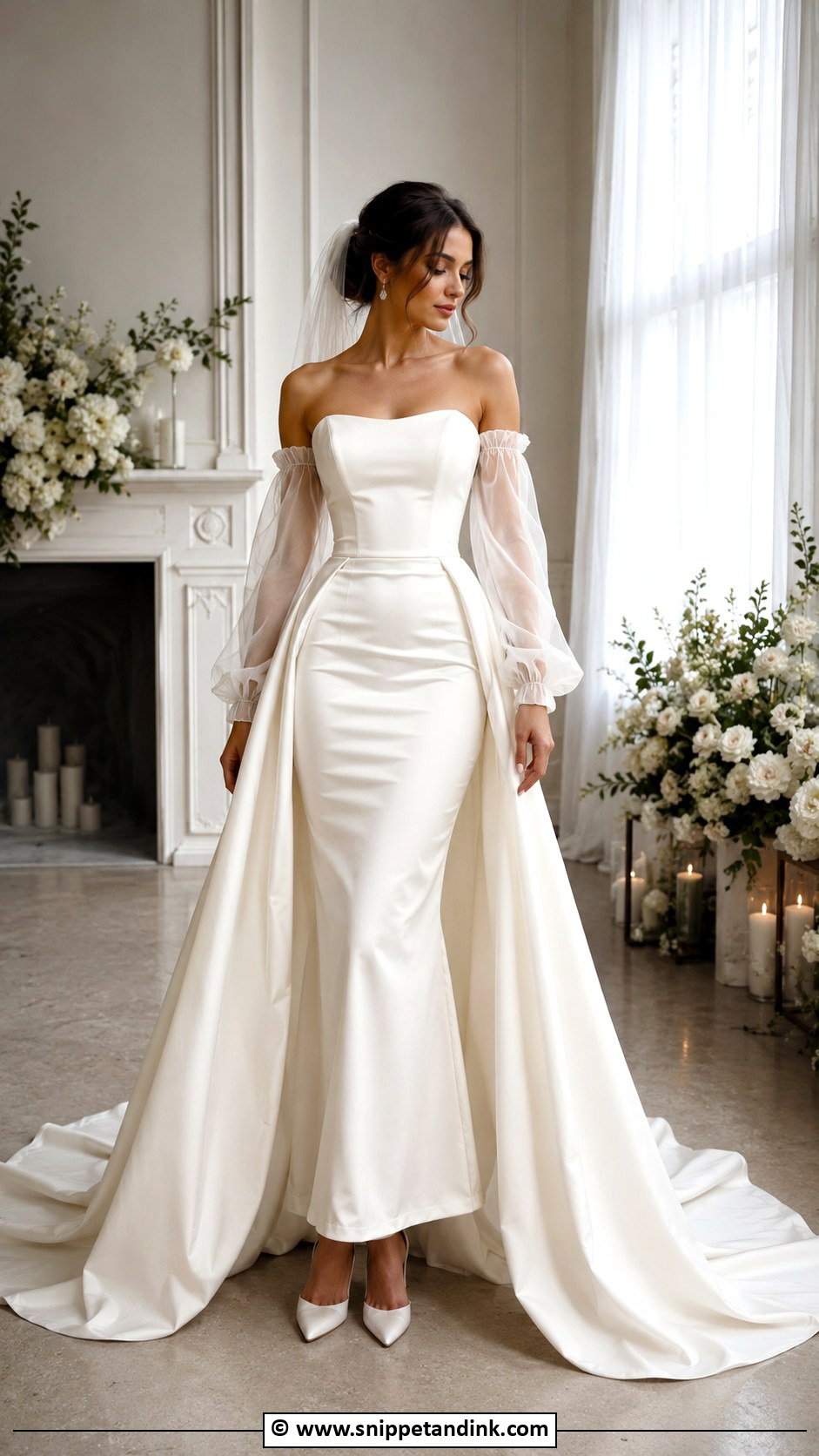
A convertible wedding dress has removable sleeves, a detachable train, an overskirt, a cape or adjustable straps. Wear the full version for the ceremony and strip back for the reception. Choose a base dress you love on its own, because that’s your second look. Practice the change with your helper beforehand. Simple heels and earrings that work with every version.
Rain, Wind and Heat Are Harder on Statement Details
Unusual dresses tend to rely on delicate details, and the weather finds them first. Feathers clump and droop in damp air. Organza and taffeta show water spots. Chiffon ruffles flatten in humidity, and a big satin bow collapses after a downpour. Long capes and trains turn into sails on a windy cliff or rooftop.
For an outdoor wedding, I ask brides to picture the worst likely weather and choose details that survive it. Pack a large clear umbrella, a lint roller for feathers, a small steamer at the venue, and a few clear elastic loops your helper can use to anchor a cape to your wrists. If the forecast turns, a detachable piece can stay inside until the sky clears, which is one more reason I like convertible designs for open-air venues.
Will Your Ceremony Venue Accept a Short, Sheer or Colored Dress?
Some houses of worship have dress expectations, such as covered shoulders, no visible midriff or a modest neckline, and a few prefer white. Ask your officiant early, before you order. A dress that doesn’t meet the rules can still work with a removable layer.
- A sheer bolero or cape that comes off after the ceremony.
- Detachable sleeves for a strapless or halter dress.
- A lace overlay or long skirt over a short dress or jumpsuit.
- A shawl in matching fabric for a colored gown at a conservative service.
Family expectations matter too. If grandparents may be surprised by black accents or a blush gown, show them a photo beforehand. It takes the shock out of the moment and usually turns doubters into fans.
Does It Still Feel Like You After the First Hour?
An unusual dress can be dramatic, minimal, colorful, vintage, structured or soft. It doesn’t need to follow every trend, only to suit your personality, venue and comfort. Think about how it moves, how it photographs and how it handles a full day of sitting, hugging and dancing. A satin slip, an embroidered gown, a tailored blazer dress or a convertible design will all look right if the fit is right and you feel at home in it.
You'll Like These Ideas:








Leave a Reply