
When a bride tells me she wants something soft, she rarely means a single fabric or shape. She means a dress that moves, doesn’t dig in, and doesn’t look like it’s wearing her. Right now that shows up as sheer layers, fine lace, gentle ruching, pearl details, slip cuts, pastel tones and flowing fabric with no heavy structure. It can be minimal or vintage or boho; the fabric and finishing decide which. Softness is also something you feel, so it matters how a dress sits on your body over a whole day, not just how it looks in a photo. Below are 25 soft looks, with notes on how each fabric and shape actually behaves when you wear it.
Scrunch, Hold Up, Sit Down: Testing Fabric at an Appointment
Soft fabrics vary hugely in quality, and photos hide the difference. These are the quick checks I do on every dress before a bride falls for it.
- Scrunch a corner of the skirt in your fist for a few seconds. If it stays deeply creased, it will look crumpled after the car ride.
- Hold the skirt up to a window. If you can see your hand clearly, it needs another lining layer for an outdoor ceremony.
- Sit down for a couple of minutes, then stand. Look at the lap and the back of the skirt for creasing and seat marks.
- Rub the inside seams on your forearm. Scratchy seams or lace edges will irritate your skin over many hours.
- Walk across the room and turn. Soft fabric should move with you, not cling to your legs or swing stiffly.
None of these tests mean a dress is wrong for you. They tell you what you’re signing up for: a steamer on the morning, an added lining, a soft facing on a seam. It’s much easier to plan those things now than to discover them on the day.
1. Soft Tulle Wedding Dress
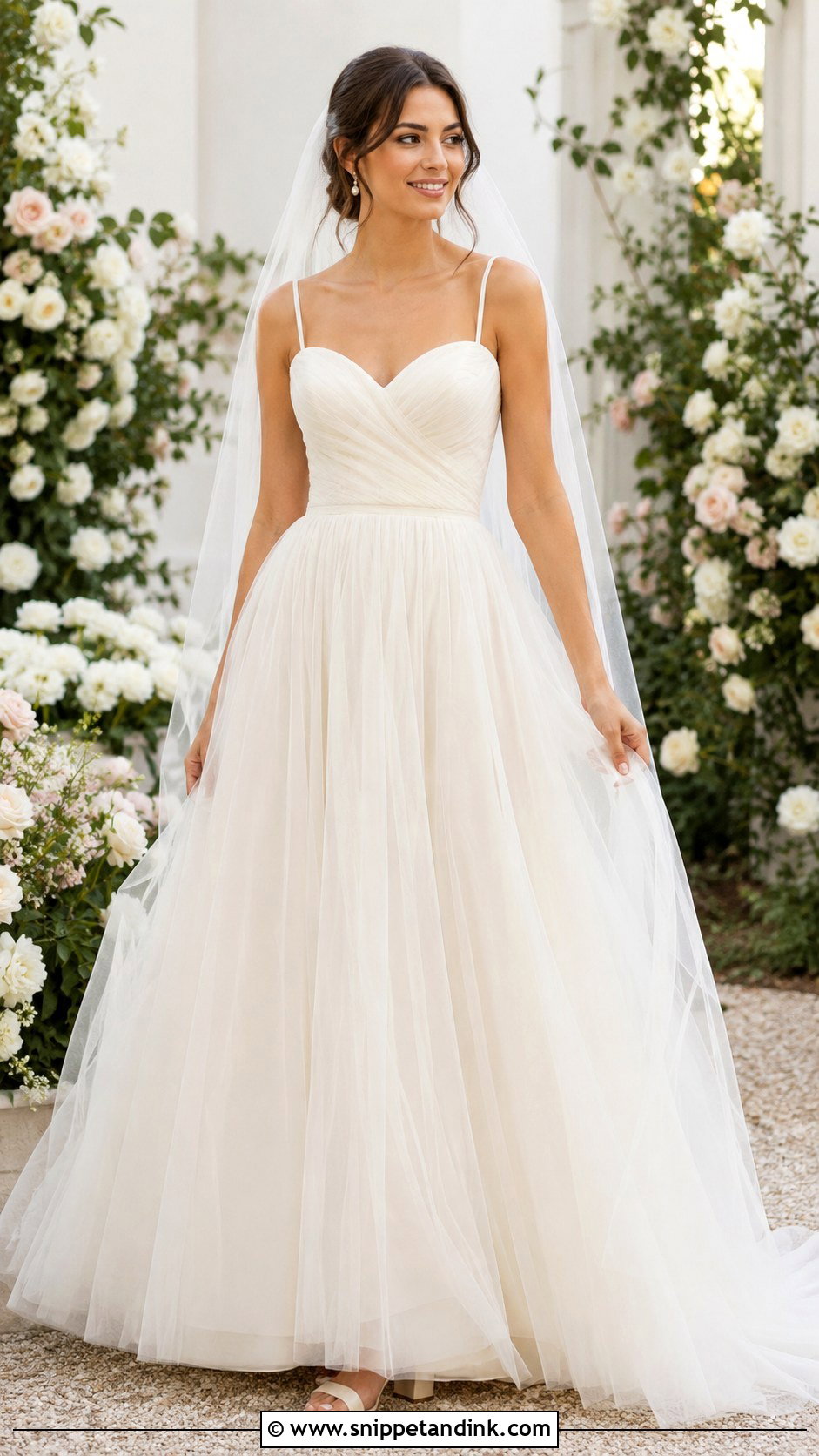
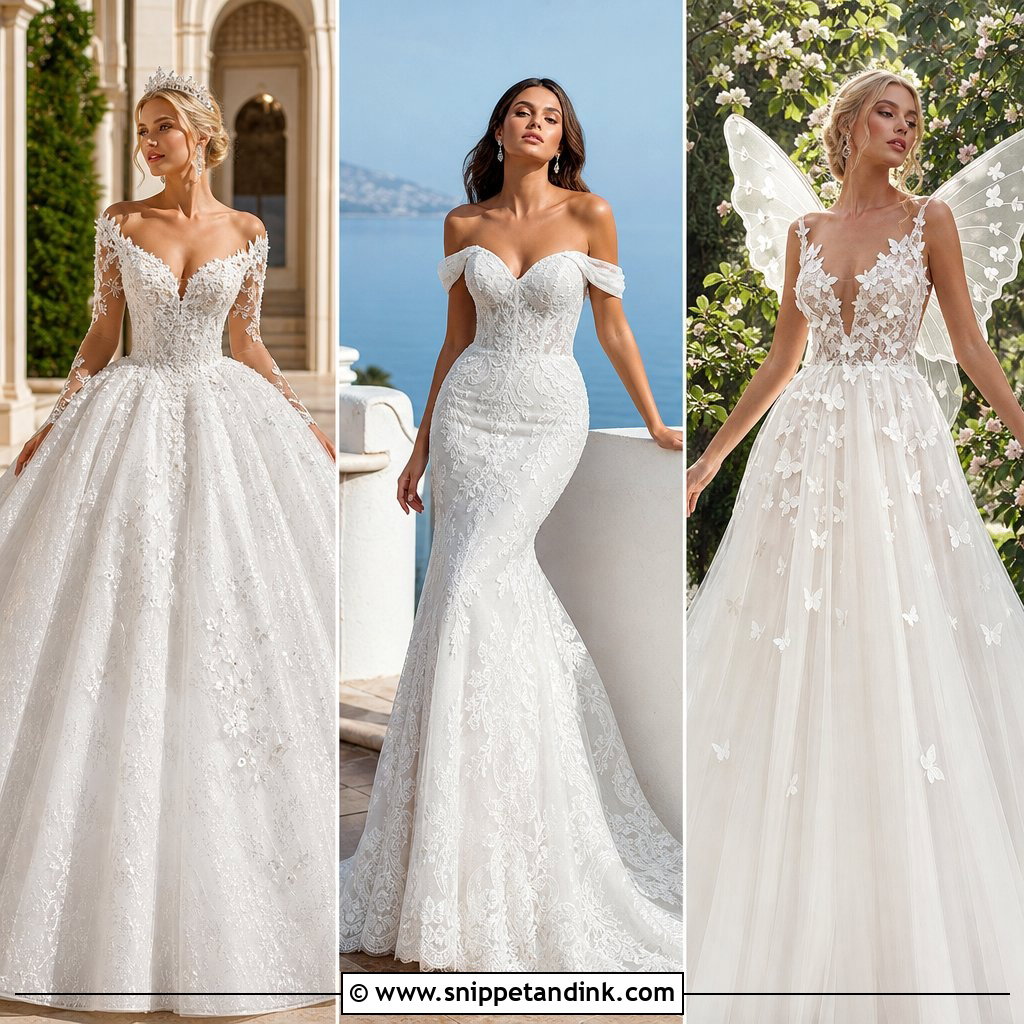
Tulle floats when it’s fine and layered over a smooth lining; coarse net looks stiff no matter how many layers you add. I always ask to touch the skirt before anything else. A fitted bodice, a gentle sweetheart neckline and thin straps keep the top light. Pearl earrings, a sheer fingertip veil and satin block heels finish it. If you want volume without weight, ask for fewer layers or a soft A-line rather than a crinoline. Gardens and warm-season venues suit it, and it moves well when you walk.
2. Soft Lace Wedding Dress
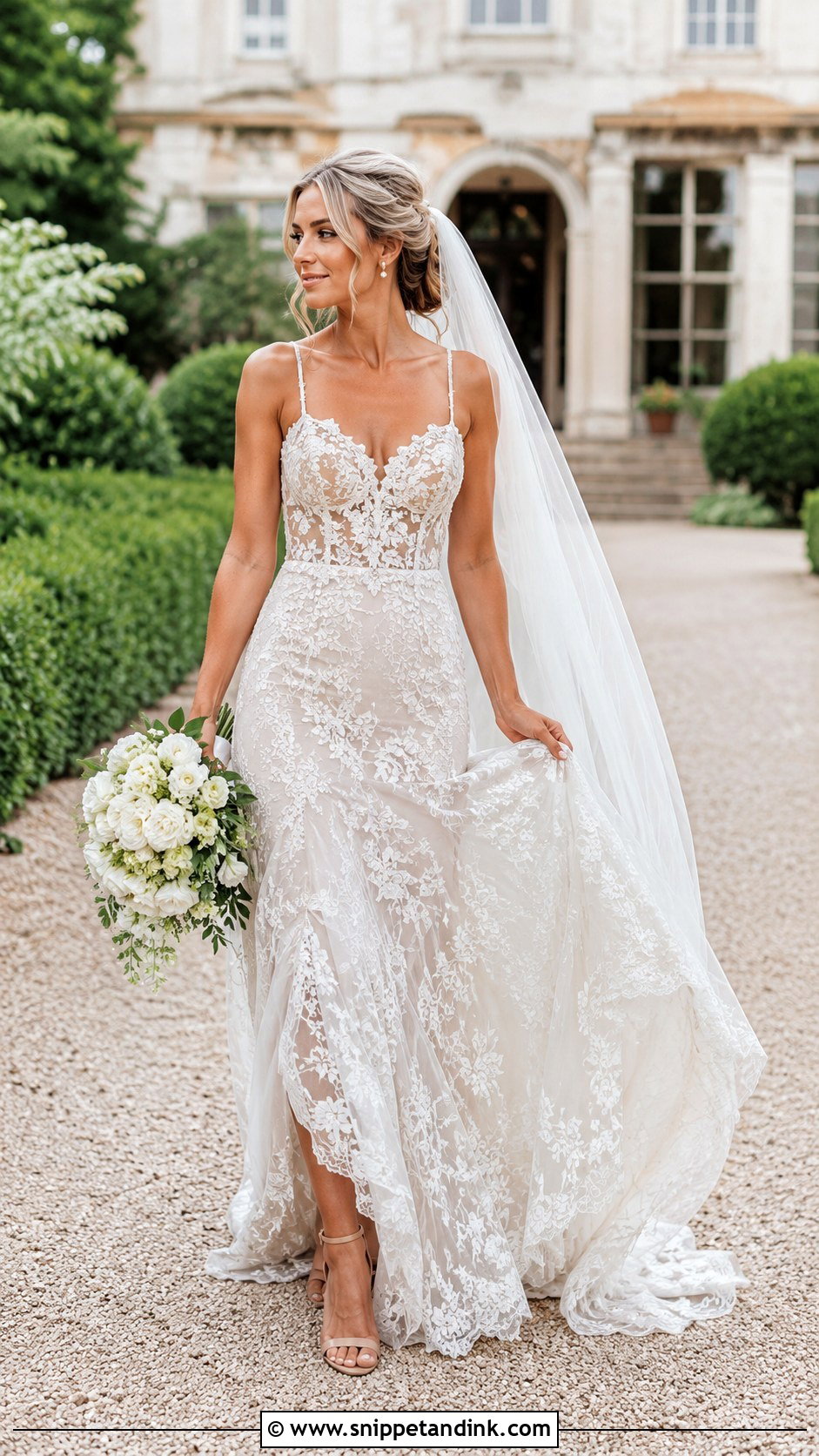
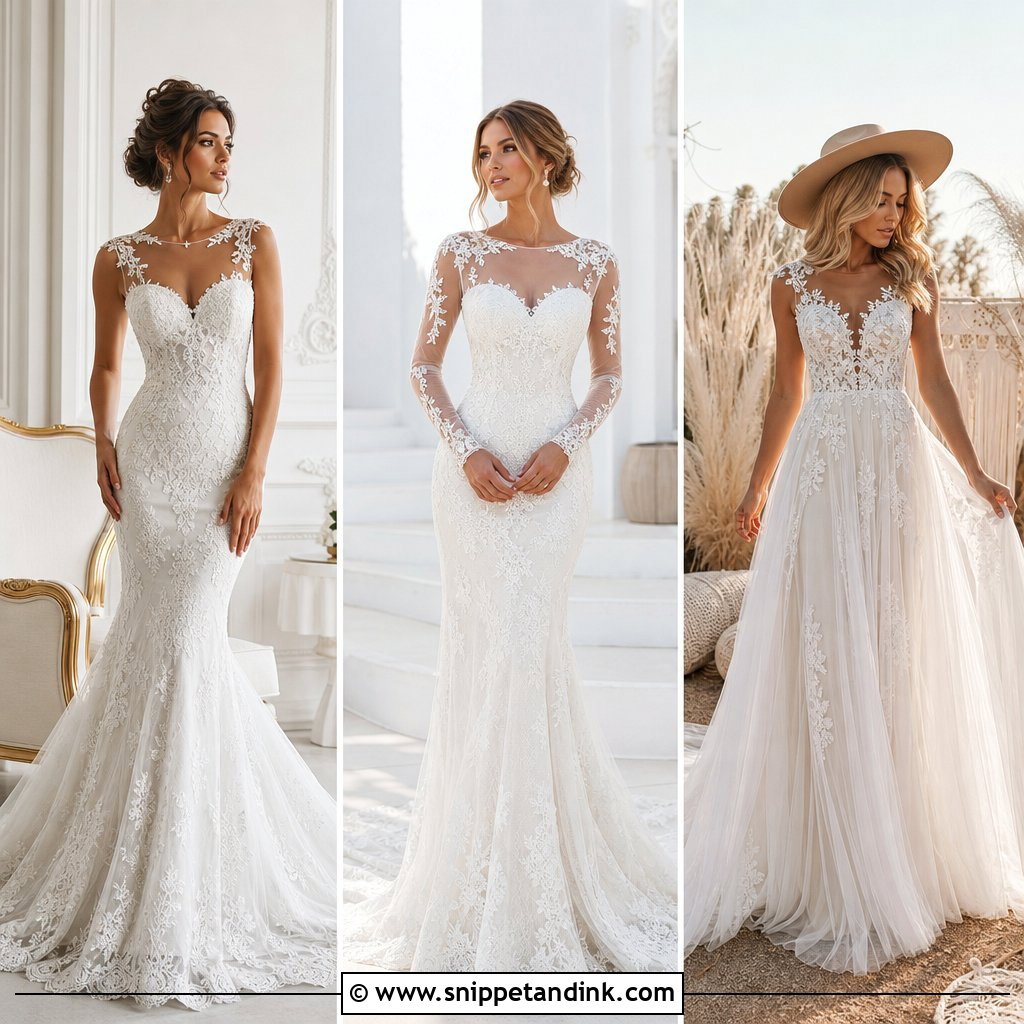
Fine lace is what makes a lace dress feel soft. Delicate floral lace, eyelash lace with its feathered edges or soft Chantilly lace drape against the body; heavy guipure stands away from it. A fitted bodice over a flowing skirt, with a V or bateau neckline, keeps it graceful. Pearl studs, a low bun, nude heels and a thin veil leave the lace in charge. Lace sleeves add coverage without much weight. Estates and vintage-styled weddings suit it, and lace hides small creases better than most fabrics.
3. Soft Satin Wedding Dress
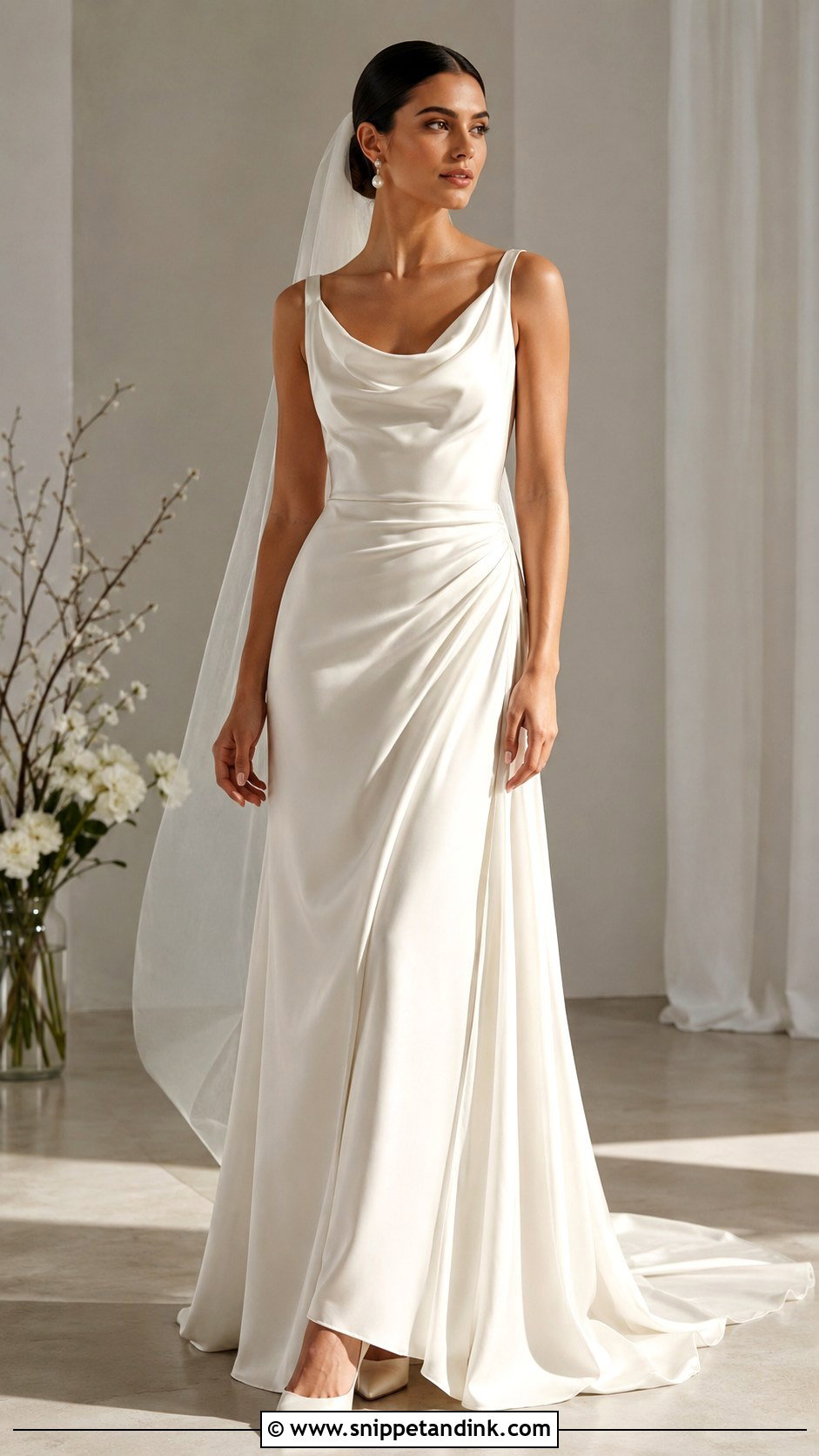
Satin is soft in a different way: through its glow and drape rather than texture. A bias cut, an A-line or a softly draped bodice lets it fall smoothly without rigid structure. Ivory, pearl and champagne satin warm the skin. Pointed satin pumps, pearl drops and a sleek veil are all it needs. The trade-off is creasing. Satin marks where you sit, so I’d steam it right before the ceremony and ask the bride to perch rather than lean back in the car. Hotels and modern venues suit it.
4. Soft Chiffon Wedding Dress
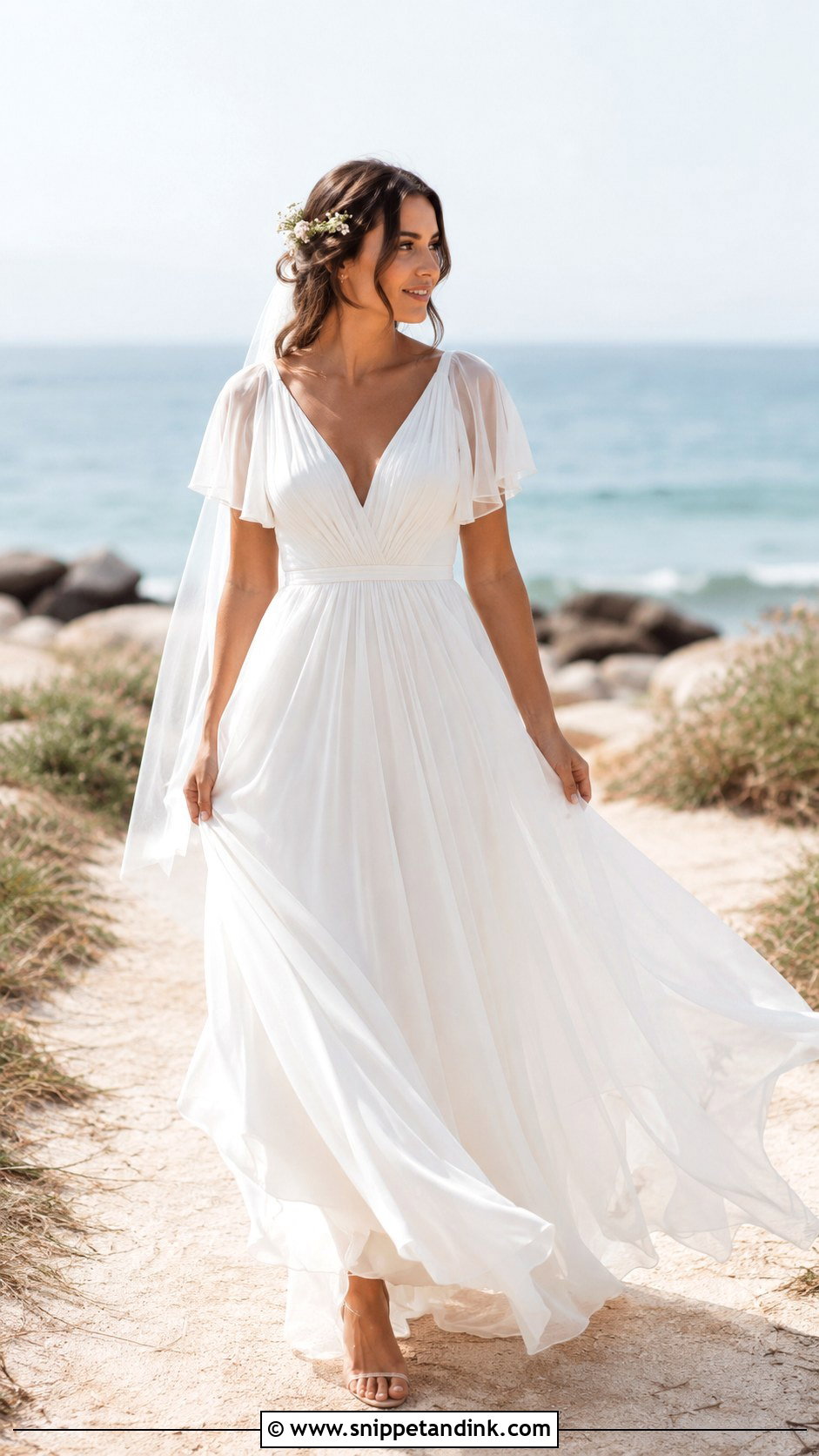
Chiffon feels light, breezy, and graceful because it hangs rather than holds a shape. A gathered bodice, empire waist, flutter sleeves or a flowing A-line suit it. Barely-there sandals, a soft veil and floral hair pins keep the look relaxed. Chiffon skims rather than squeezes, which is why I often suggest it to plus-size brides who want comfort and movement. Insist on a lined version: unlined pale chiffon turns sheer in sunlight. It’s my first choice for beaches and hot destinations.
5. Soft Organza Wedding Dress
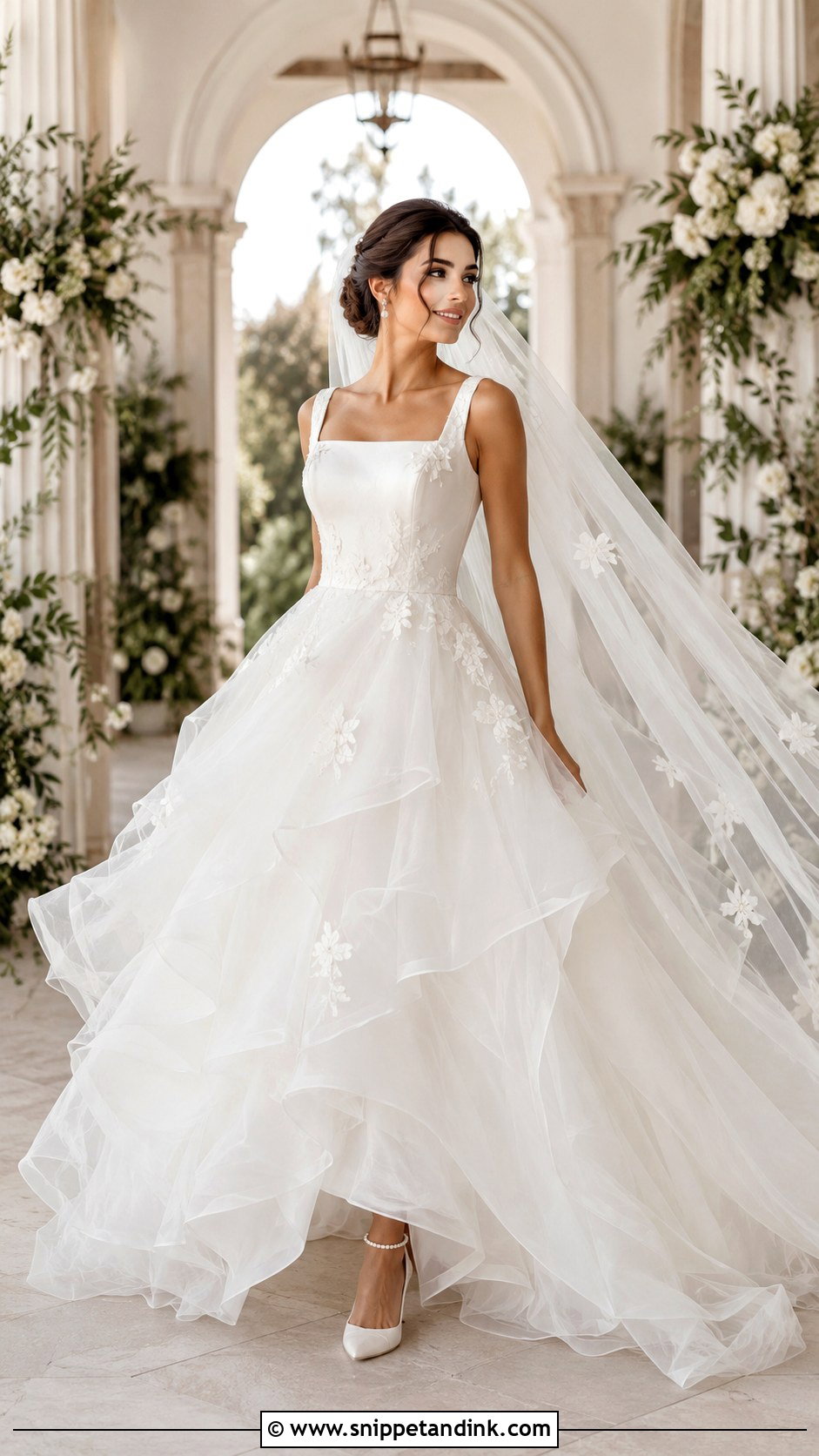
Organza is the fabric I reach for when a bride wants volume but hates weight. It’s crisp enough to hold a full skirt, yet light and slightly translucent, so layers look airy rather than solid. A simple bodice over layered organza with a few floral appliqués is enough. Pearl heels, a cathedral veil and a neat updo to show the neckline finish it. Organza creases sharply if crushed, so travel with it hung in a long bag. Ballrooms and gardens both suit it.
6. Soft A Line Wedding Dress
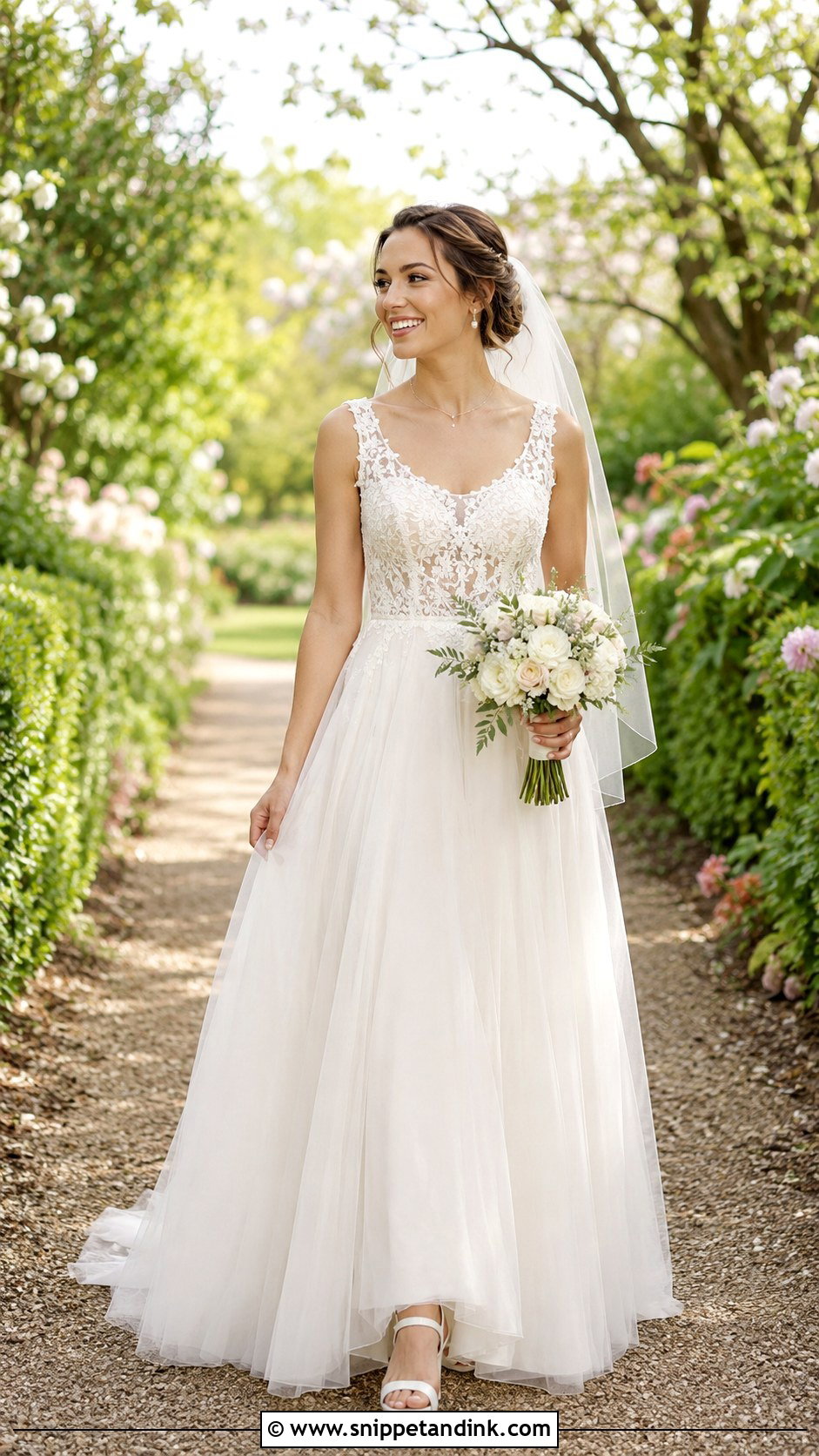
An A-line fits through the bodice and widens gently from the waist, so it gives shape without squeezing anywhere. In tulle, chiffon, lace or satin it reads romantic. A sweetheart, scoop or off-shoulder neckline softens it further. Comfortable heels, a simple veil and a small bouquet keep it balanced. If you’re unsure where to start, this is the shape I’d try on first, because it shows you how different fabrics feel on the same silhouette.
7. Soft Ball Gown Wedding Dress
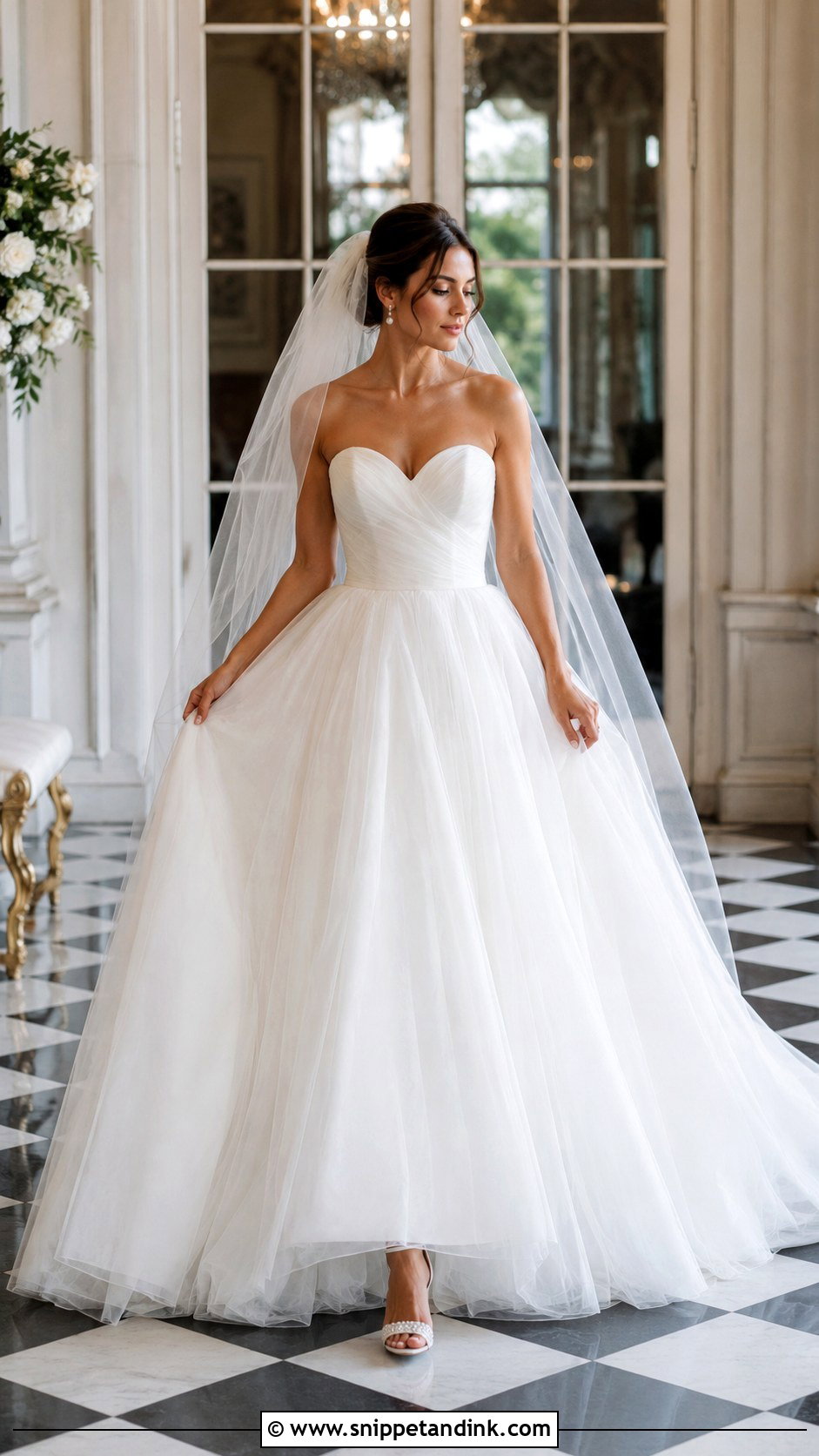
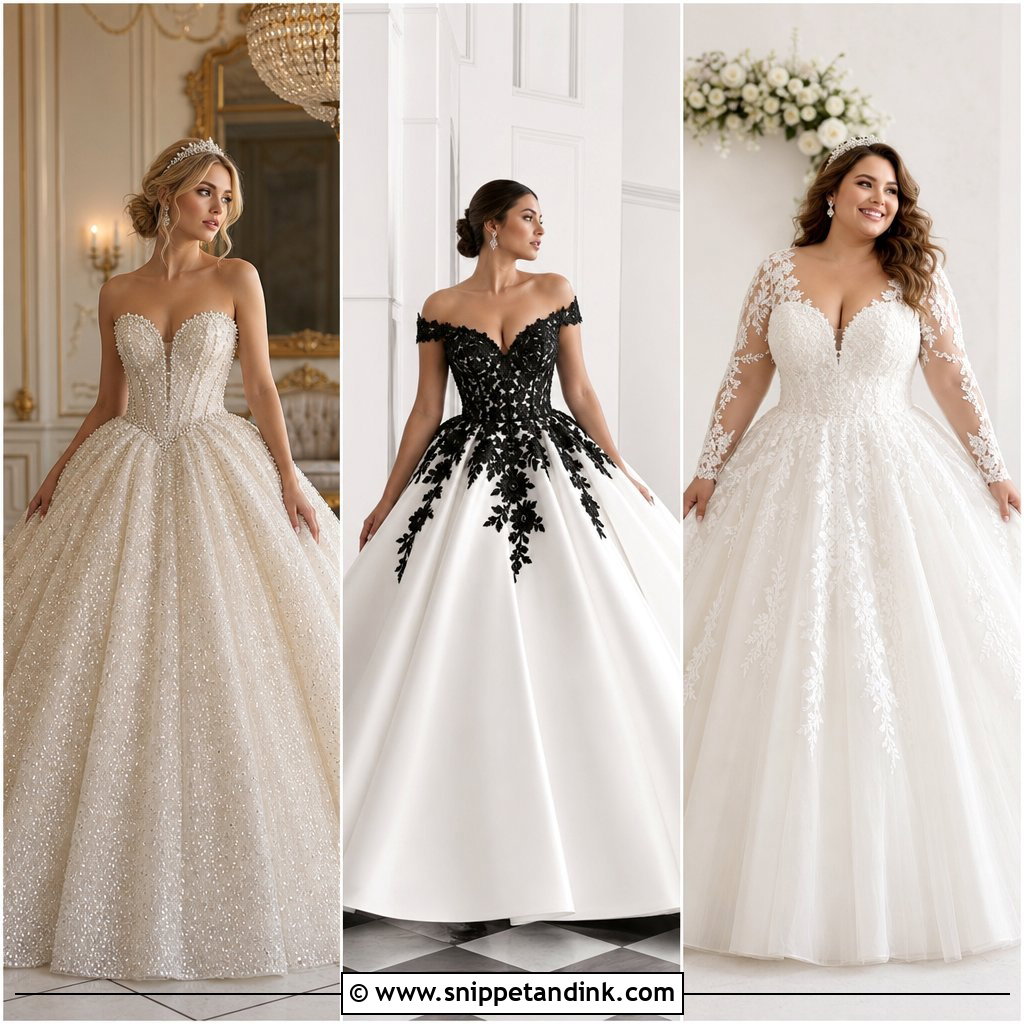
A ball gown can still feel soft if you swap heavy satin for tulle, organza or airy lace. A fitted bodice over a floating skirt keeps the princess shape without the weight. Keep the neckline simple: sweetheart, square or off-shoulder. Pearl earrings, a sheer veil and elegant heels finish it. A skirt this size needs space, so it suits larger venues and estates. Ask for a lightweight lining and a sturdy bustle, so you can dance after the ceremony.
8. Soft Mermaid Wedding Dress
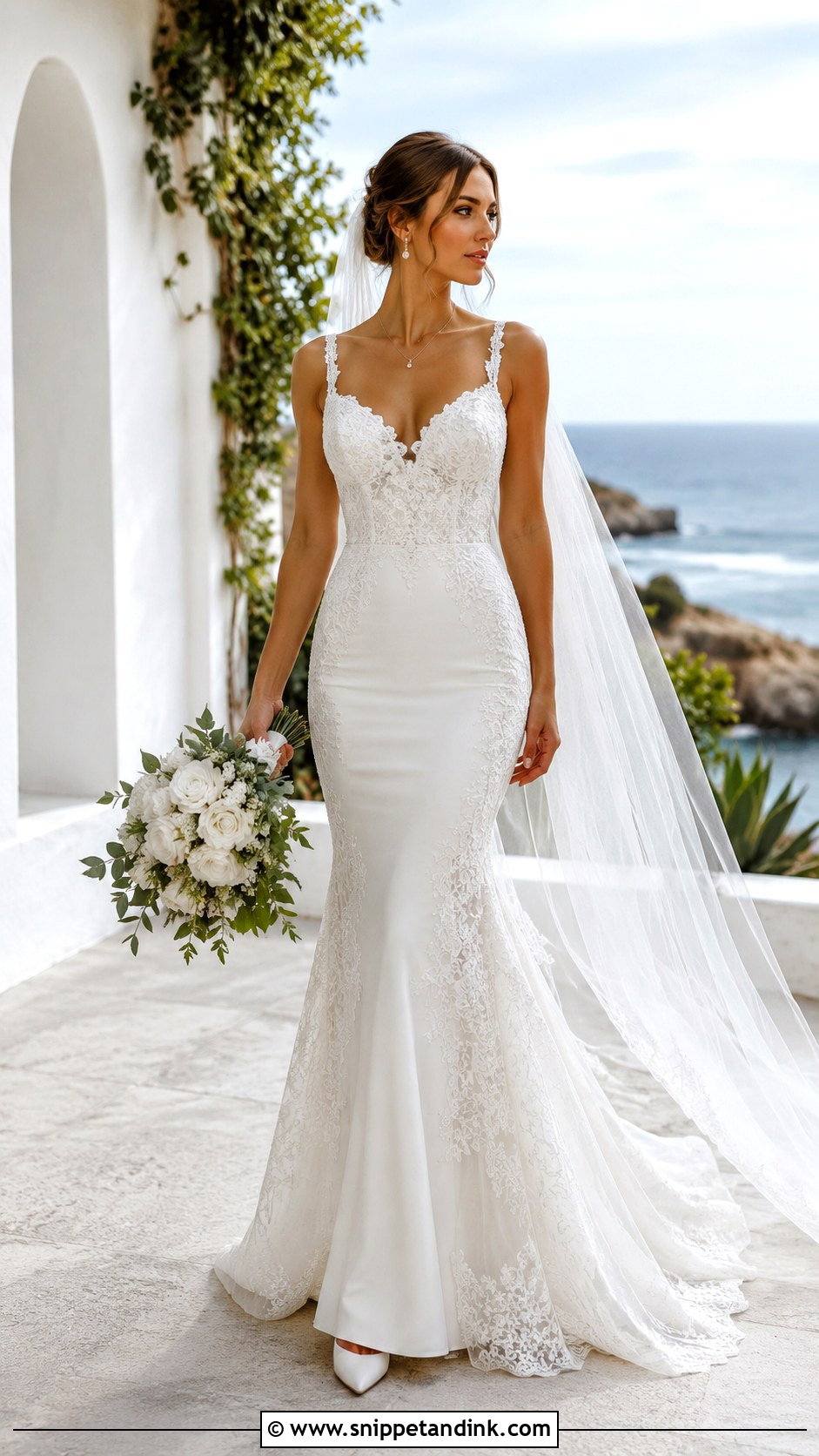
A mermaid can feel soft if the fabric moves. Stretch crepe, fine lace or lightweight tulle overlays follow the body without the rigid construction of a heavily boned gown. A gentle flare below the knee, illusion lace or a draped bodice softens the outline. Pointed heels, a long veil and simple jewelry lengthen the body. The fit check I always do is the step test: walk, climb a stair and sit, because a mermaid set too tight at the knee will stop you doing all three.
9. Soft Slip Wedding Dress
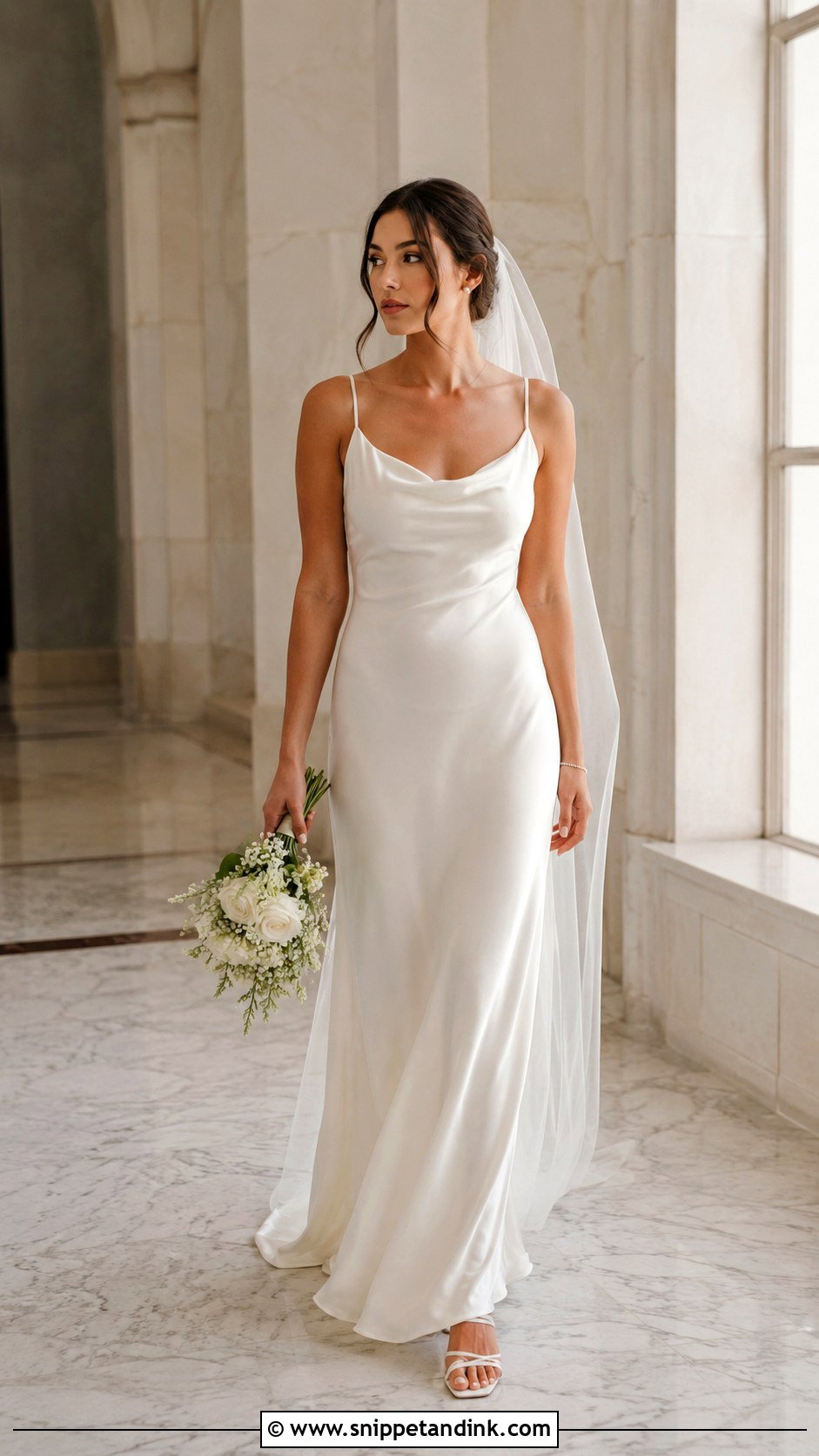
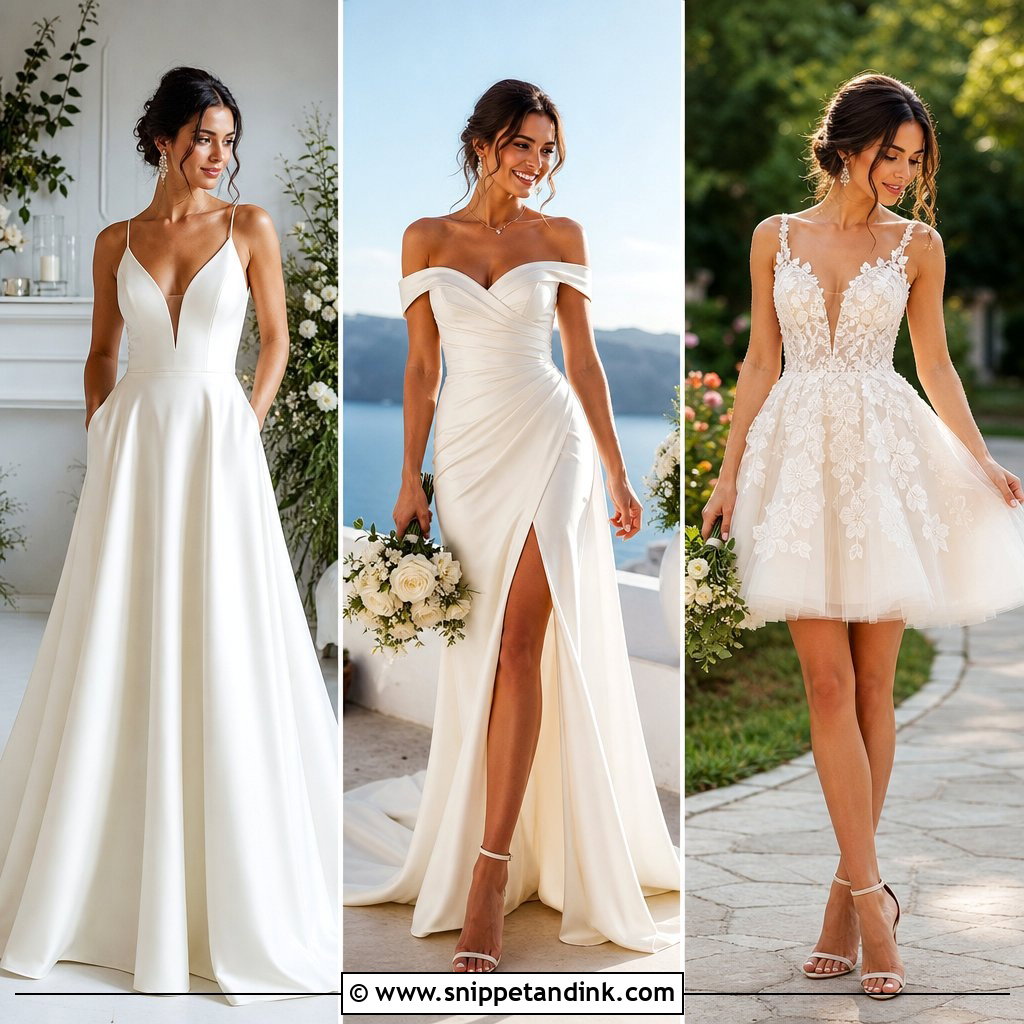
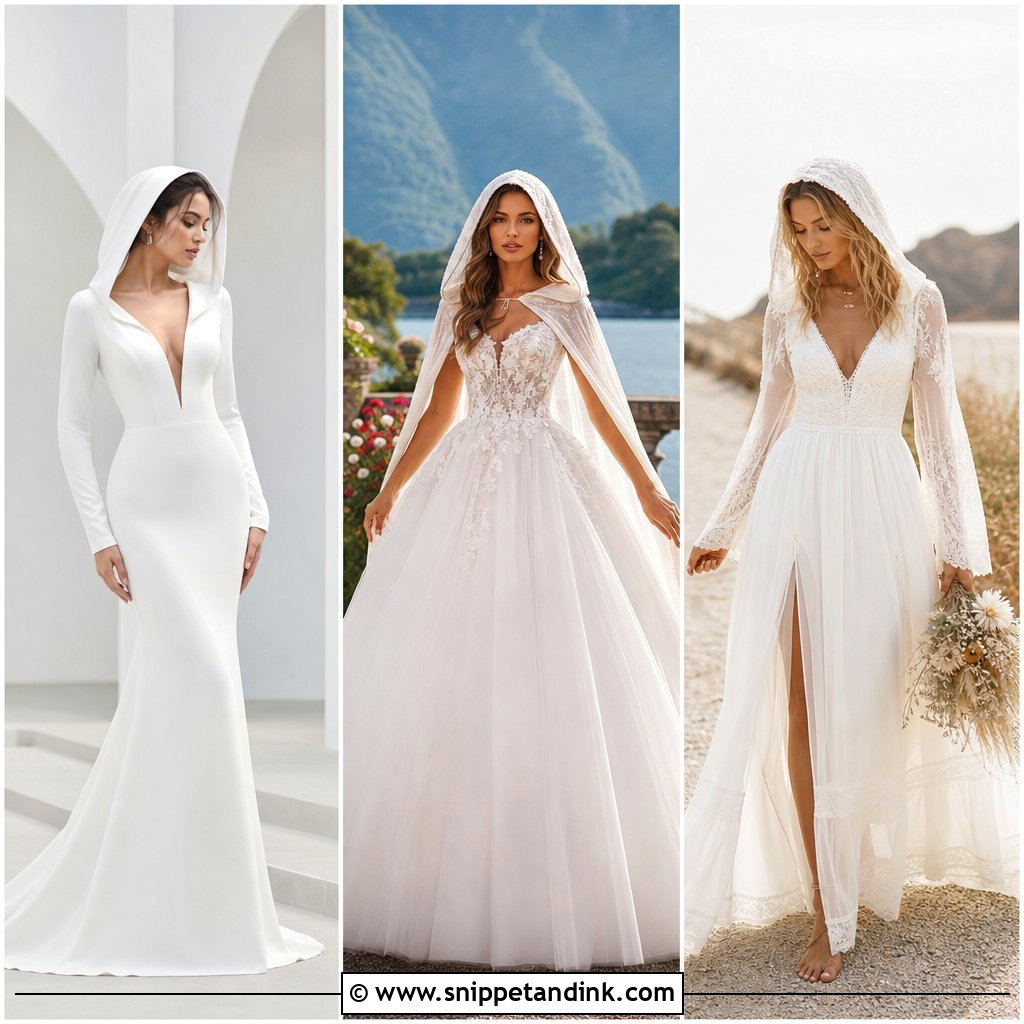
A slip is simplicity itself: a bias cut, thin straps and a fluid fall in silk, satin or crepe. Choosing ivory, pearl or champagne over stark white makes it look softer. A sheer veil, pearl earrings, strappy sandals and a delicate bracelet are enough. Bias-cut fabric stretches as it hangs, so a good seamstress lets the dress rest before hemming. For more coverage at the ceremony, add a sheer cape, lace bolero or light scarf and take it off for the reception. Courthouses and elopements suit it.
10. Soft Boho Wedding Dress
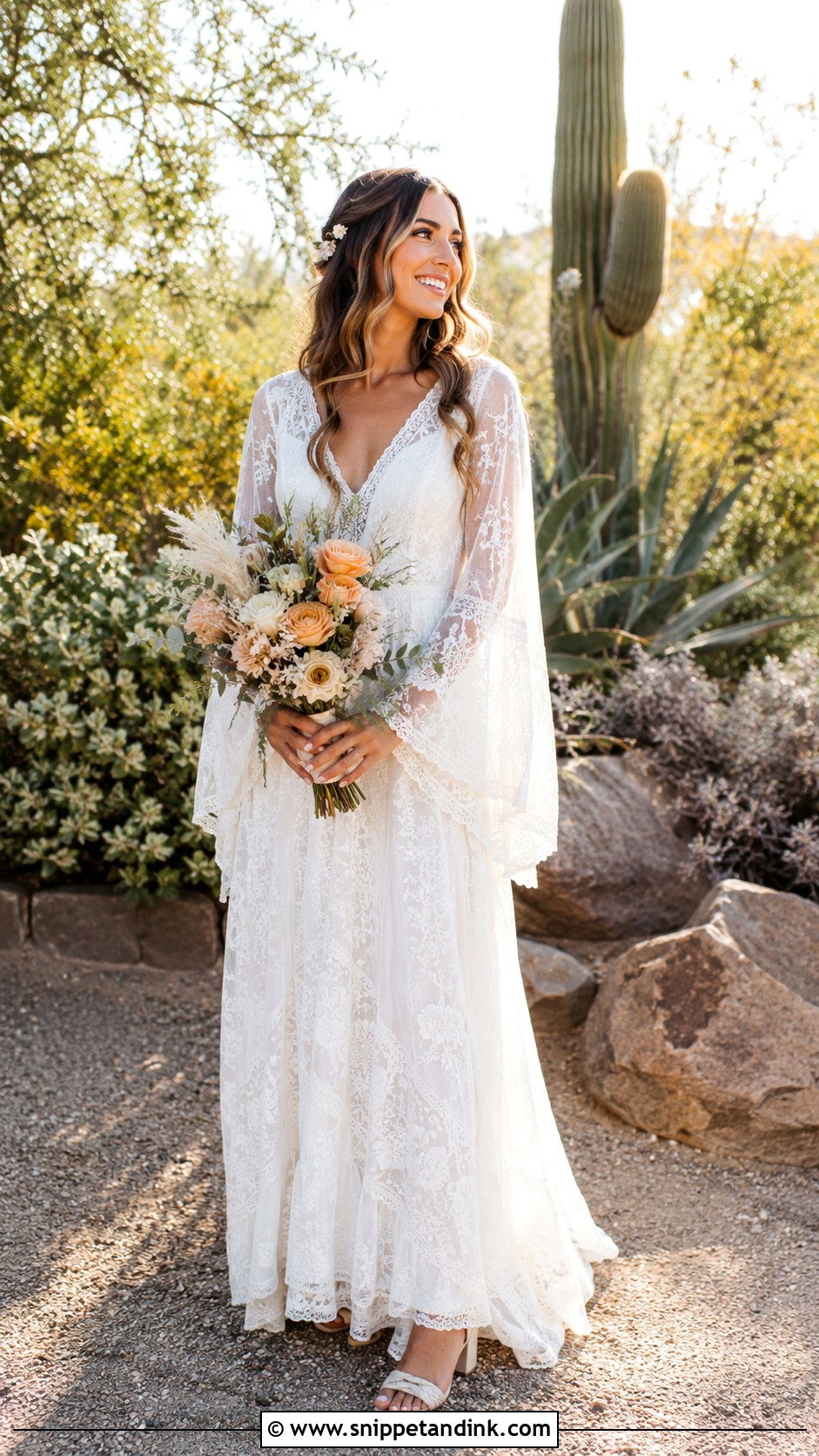
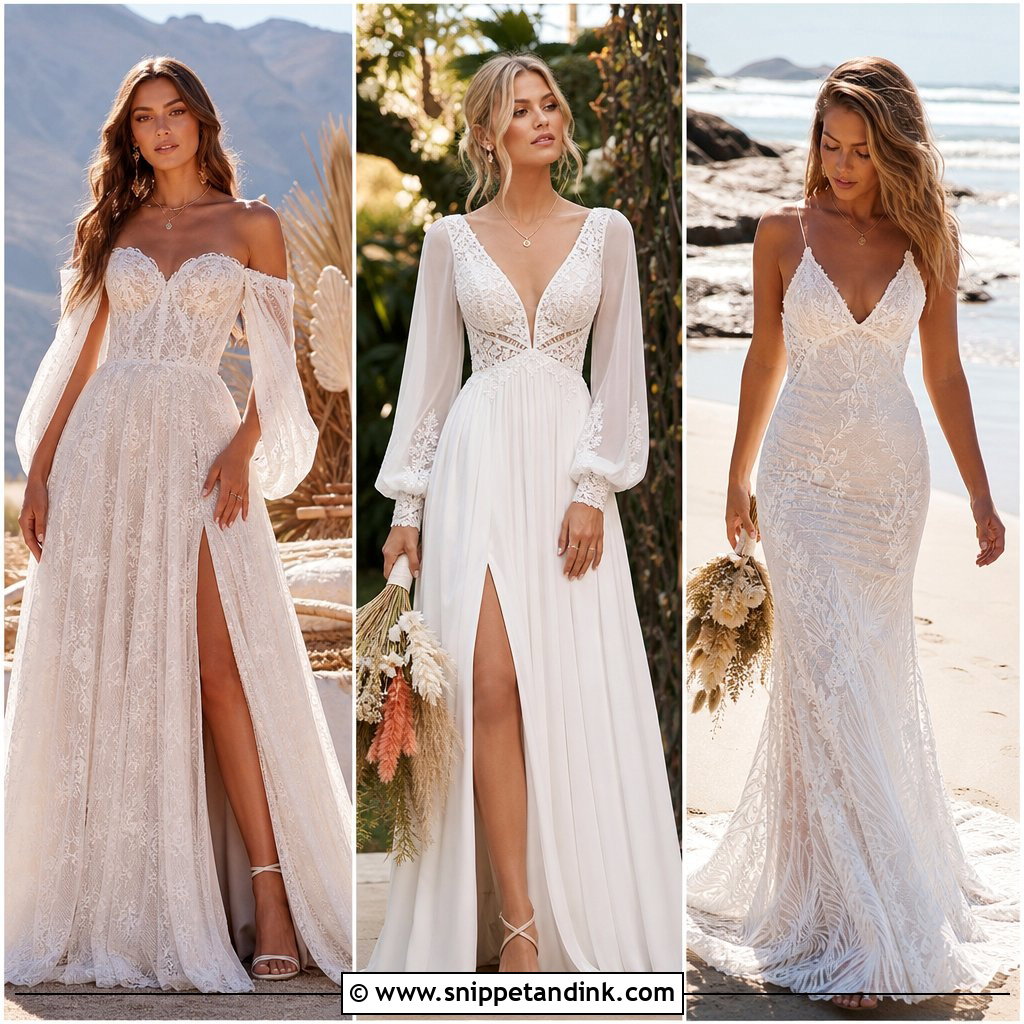
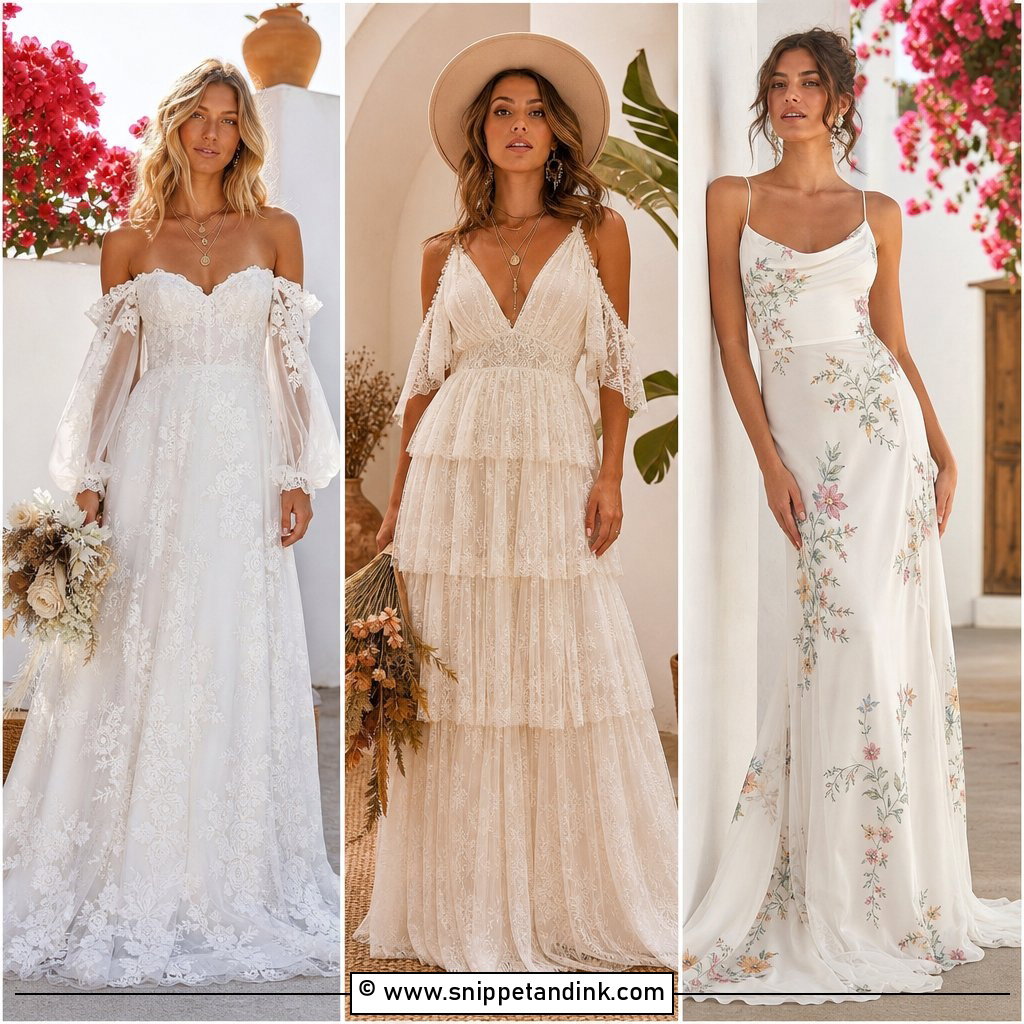
Boho is soft when it’s light and creamy, and messy when it’s overloaded. Flowing sleeves, lightweight lace, gentle embroidery and an easy skirt carry the mood. A V-neck, an open back or an empire waist give it a free-spirited feel. Loose waves, floral hair pins, block-heel sandals and a simple veil finish it. Keep the colors creamy and the accessories few. It suits deserts, beaches and backyards, though open lace snags easily on rough wooden seats.
11. Soft Vintage Wedding Dress
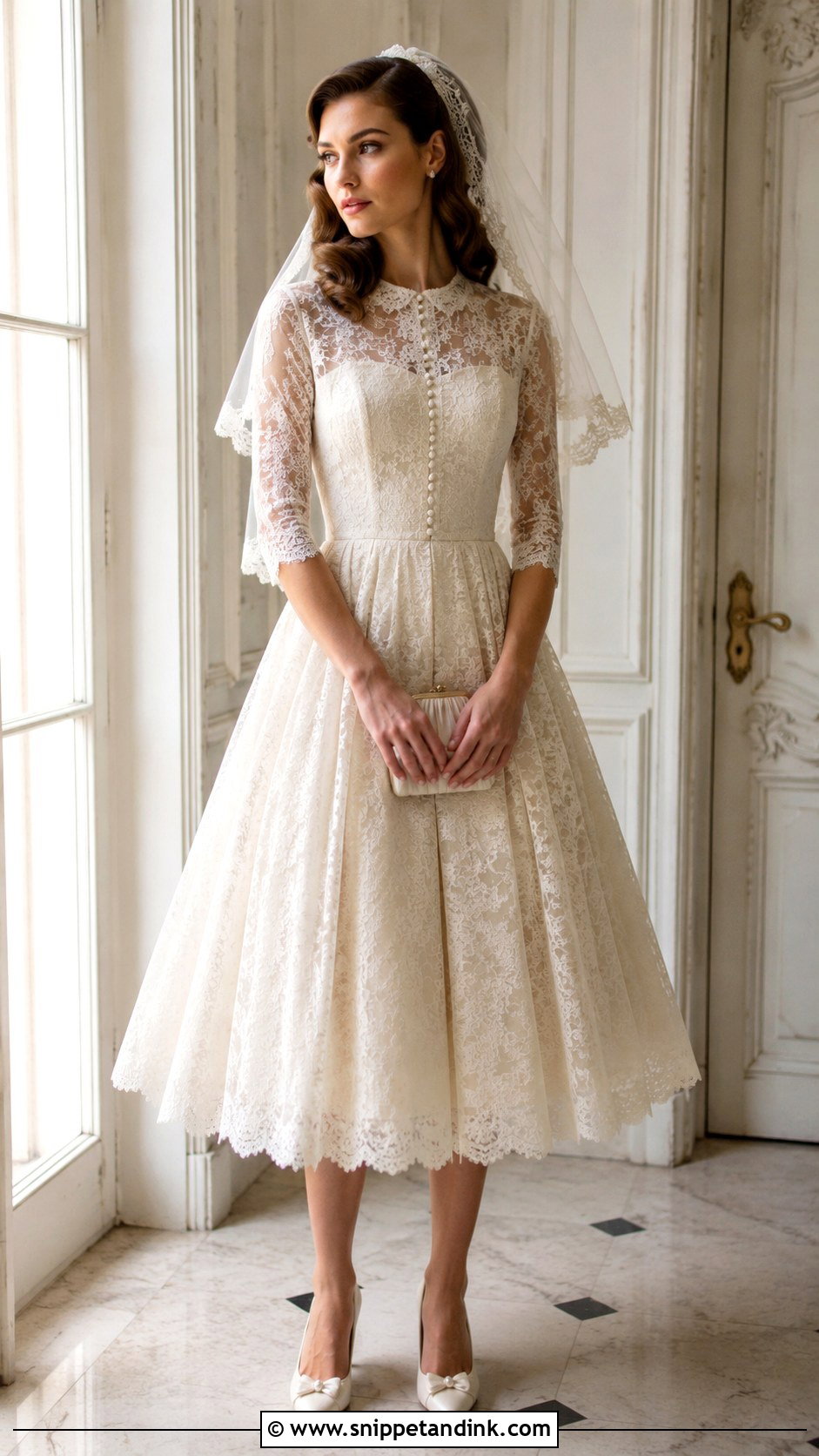
A little old-fashioned romance works best in small doses. Delicate lace, covered buttons, a tea-length skirt, a high neck, puff sleeves or soft satin draping each say vintage. Choose one or two of these, not all of them. A lace midi with pearl pumps feels charming; a long-sleeve gown with a soft veil feels classic. Heirloom-style earrings, a small clutch and soft waves complete it. Historic venues and gardens suit this best.
12. Soft Romantic Wedding Dress
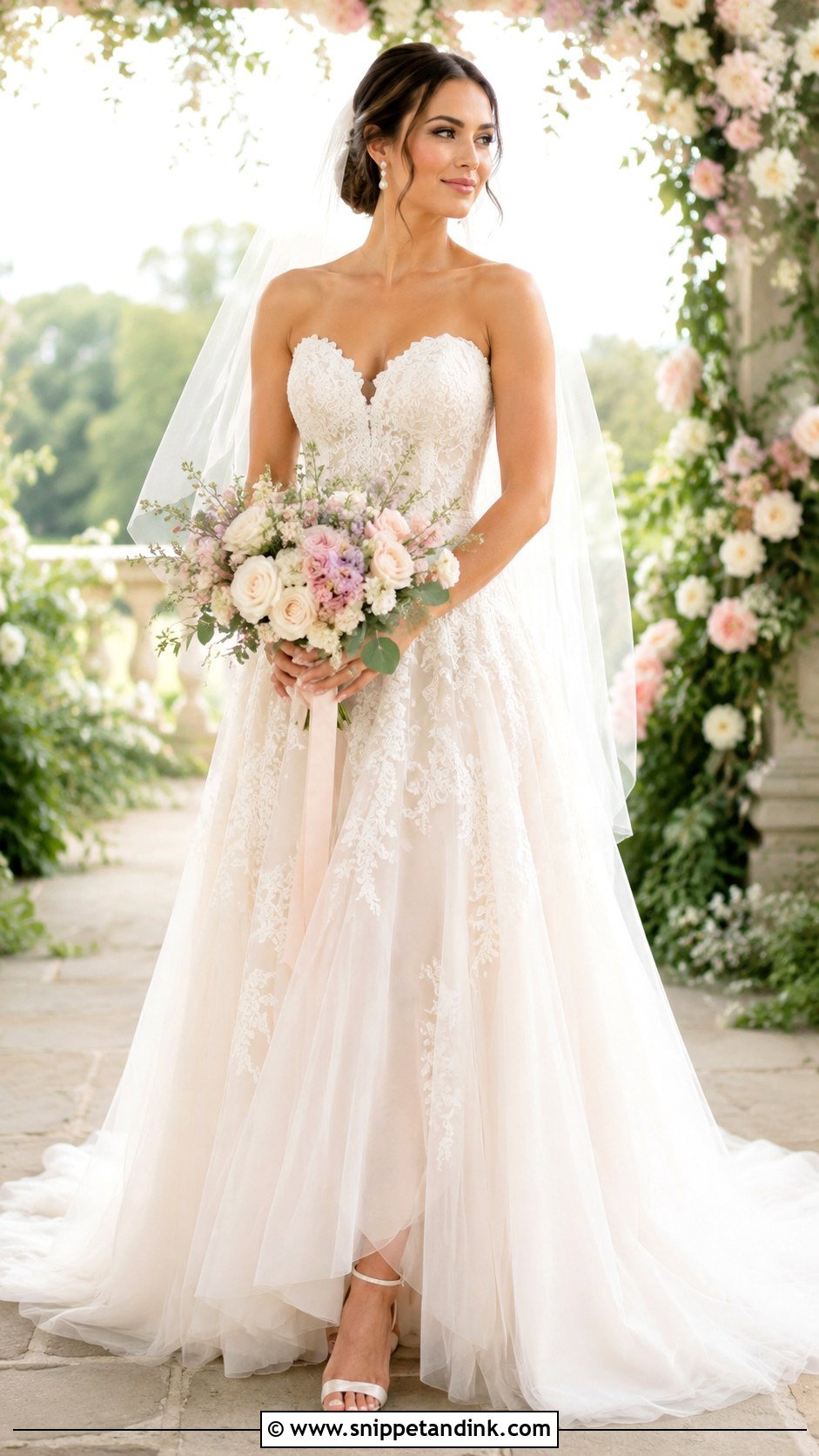
Romance in a dress usually comes from small things: a flowing fabric, floral lace, a little sparkle, soft sleeves or a graceful neckline. A sweetheart bodice on an A-line skirt is the classic version; a lace gown with sheer sleeves is more delicate. Keep accessories light with pearl earrings, a soft veil and ivory heels. To stop it looking dated, pair it with clean makeup, natural hair texture and a bouquet of soft neutrals or pastels. Gardens, estates and ballrooms all suit it.
13. Soft Blush Wedding Dress
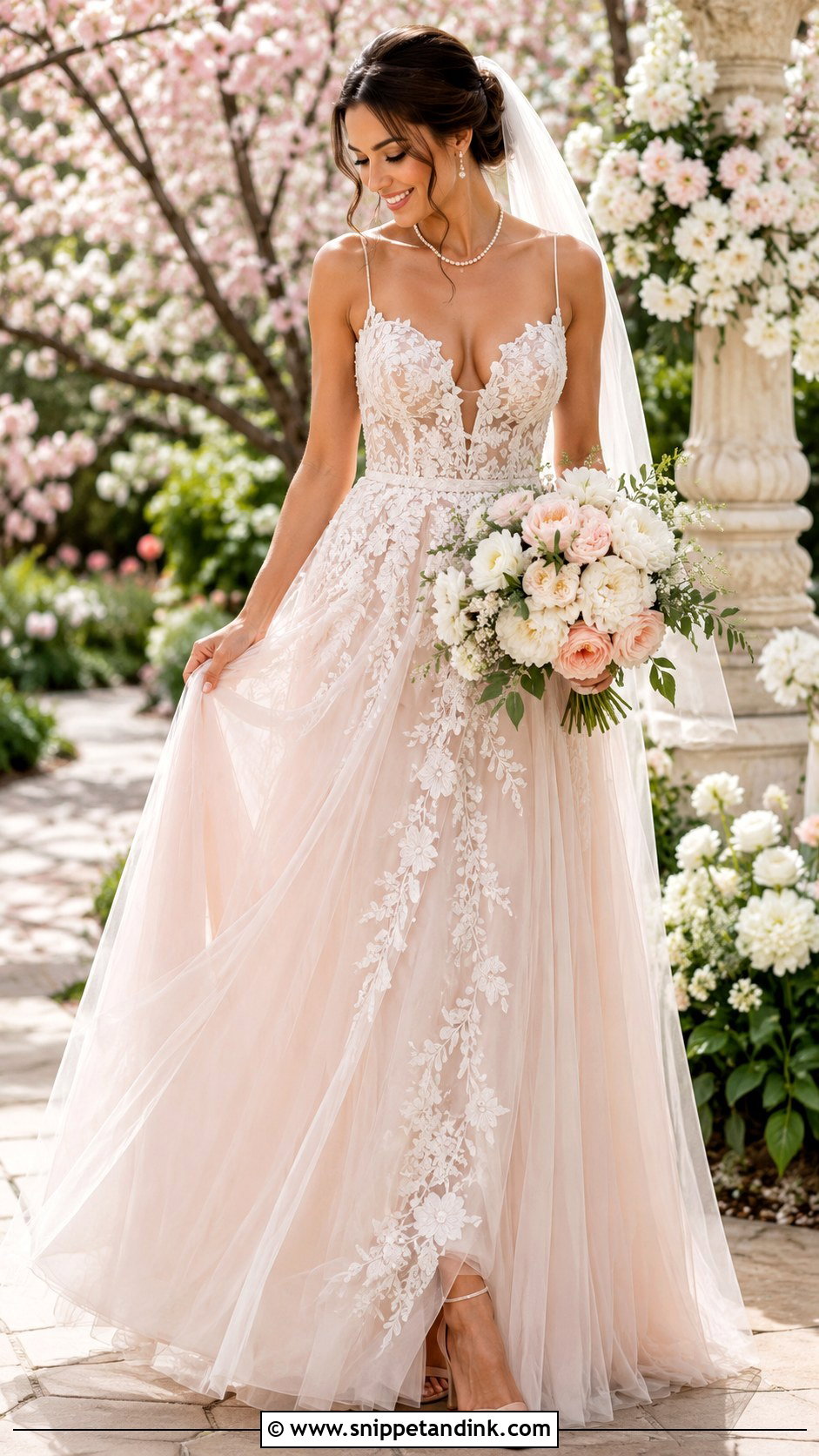
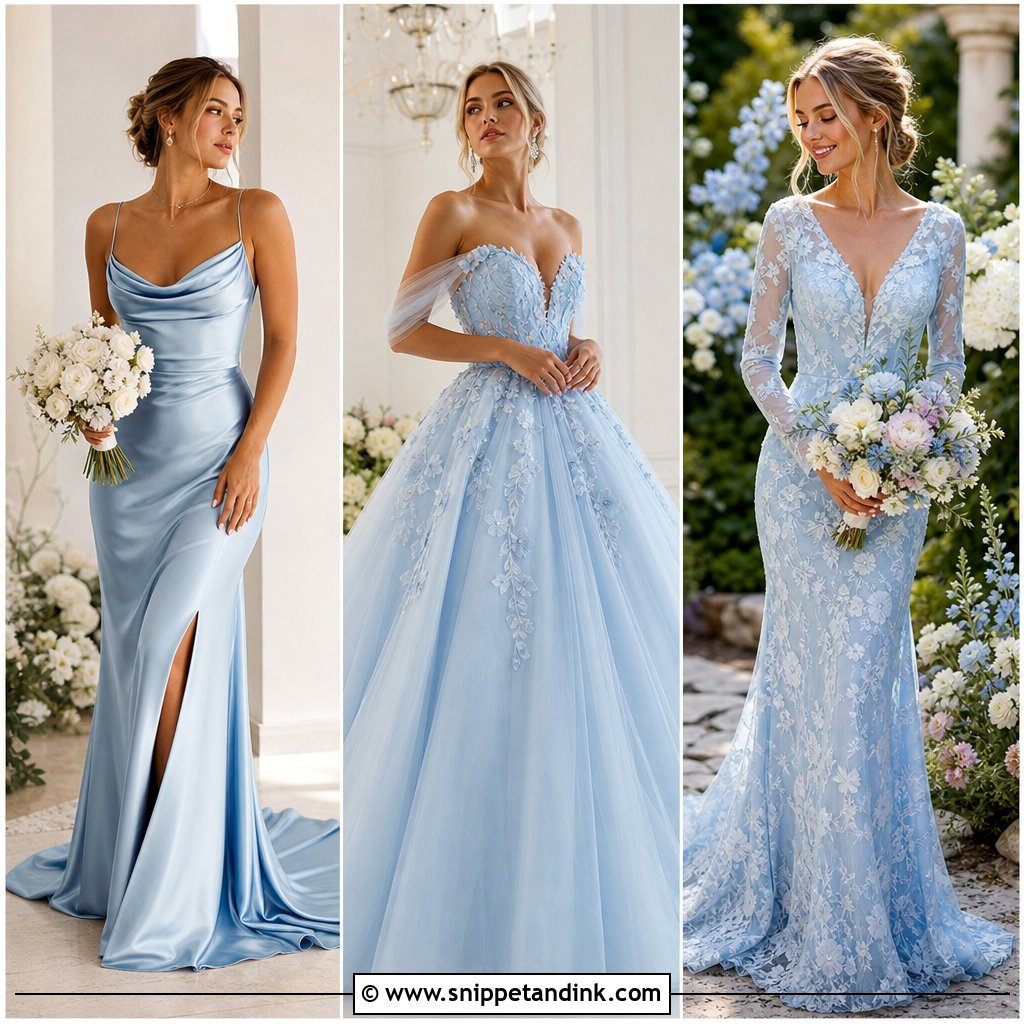
Blush adds warmth to the skin and color to the dress without losing the bridal feeling. Tulle, chiffon, lace and satin all come in soft blush. An ivory lace over a blush underlay is my favourite version, because the color glows through gently. Nude heels, pearl jewelry and a simple veil keep it elegant. If color makes you nervous, start with a gown that only has a blush lining or a little pink embroidery. It suits spring and garden settings.
14. Soft Ivory Wedding Dress
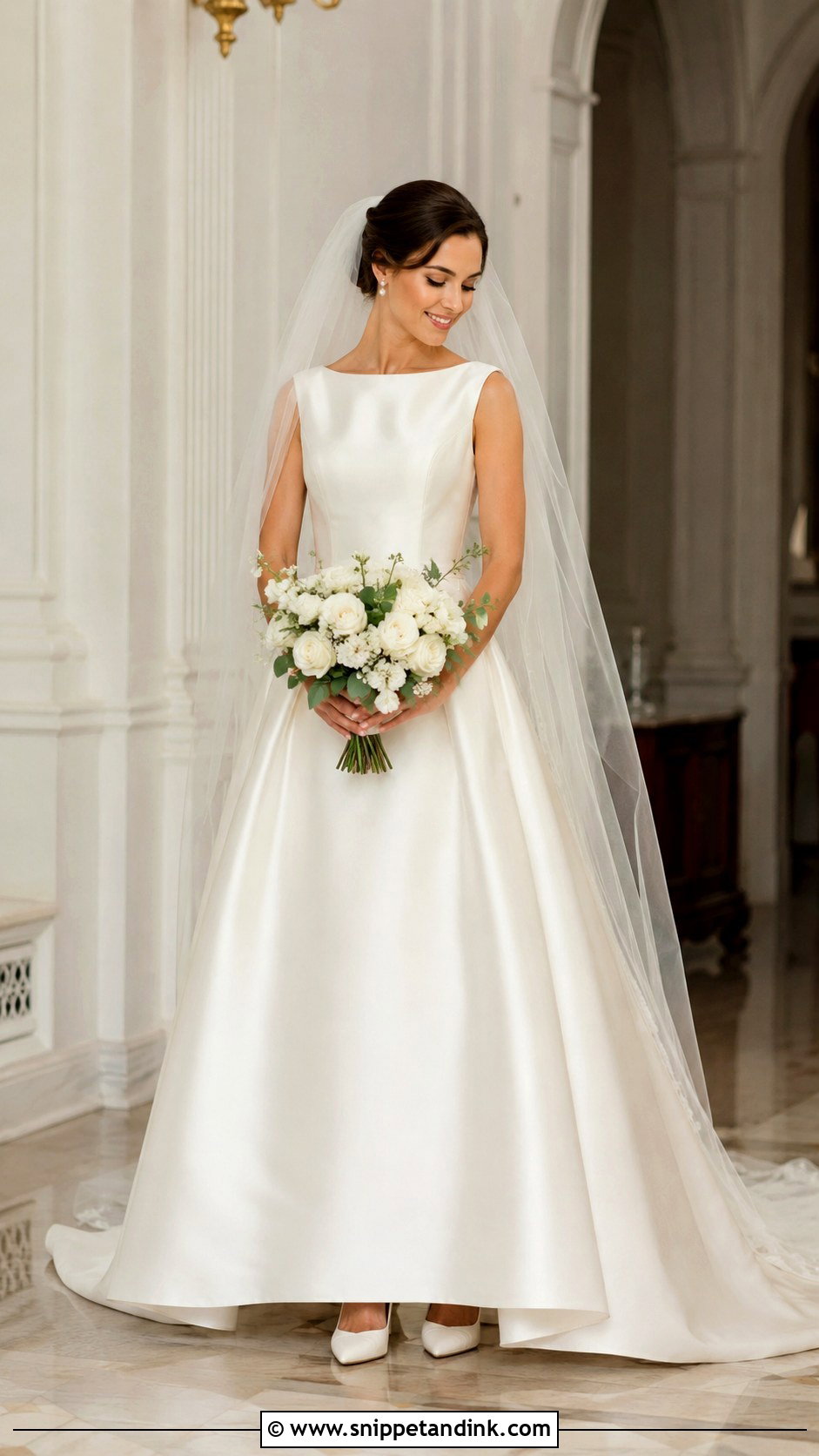
Ivory is softer than bright white and flatters more skin tones because it has a little warmth. It works in satin, lace, tulle, chiffon and crepe, and in any silhouette. Ivory heels, pearl earrings and a veil in exactly the same tone keep it polished. That match matters more than people think: a white veil over an ivory dress makes the dress look yellowed. Compare ivory shades side by side in daylight, as some lean creamy and others sit very close to white.


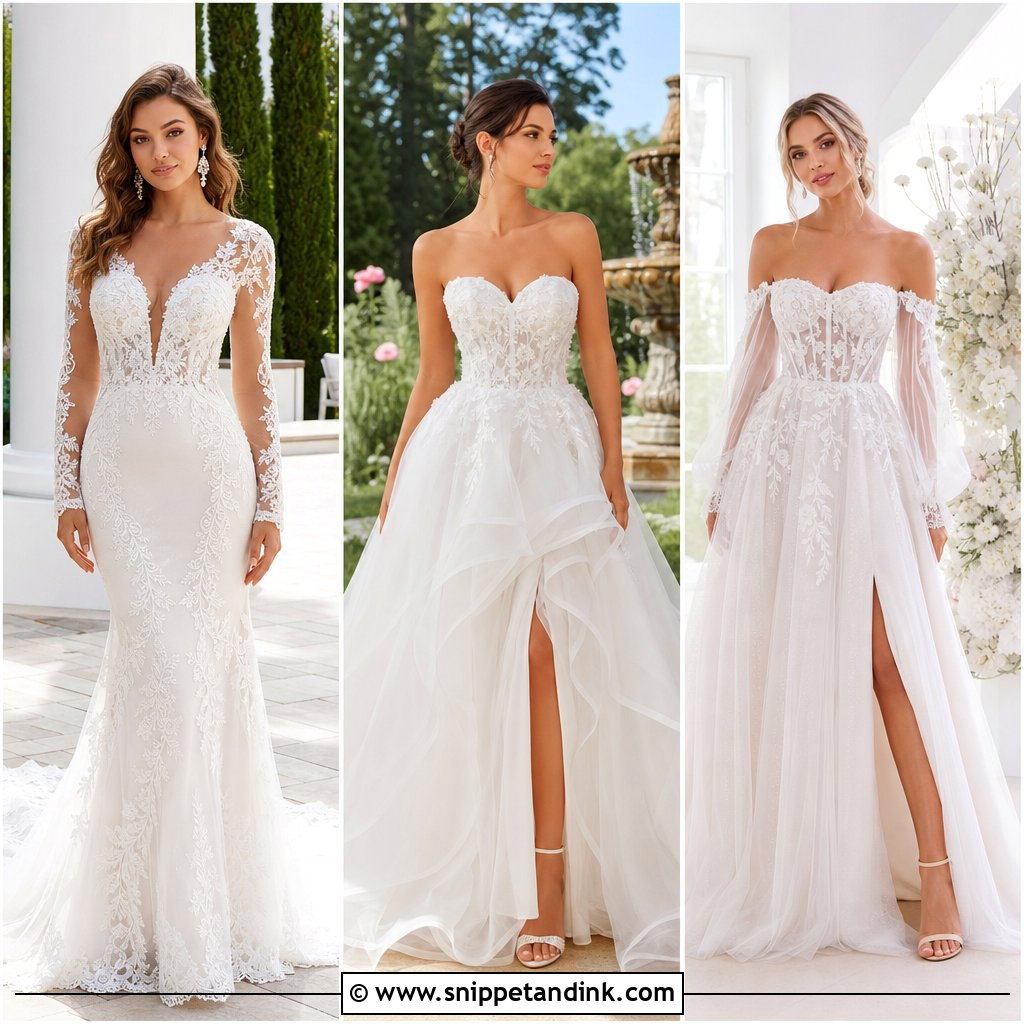
15. Soft Champagne Wedding Dress
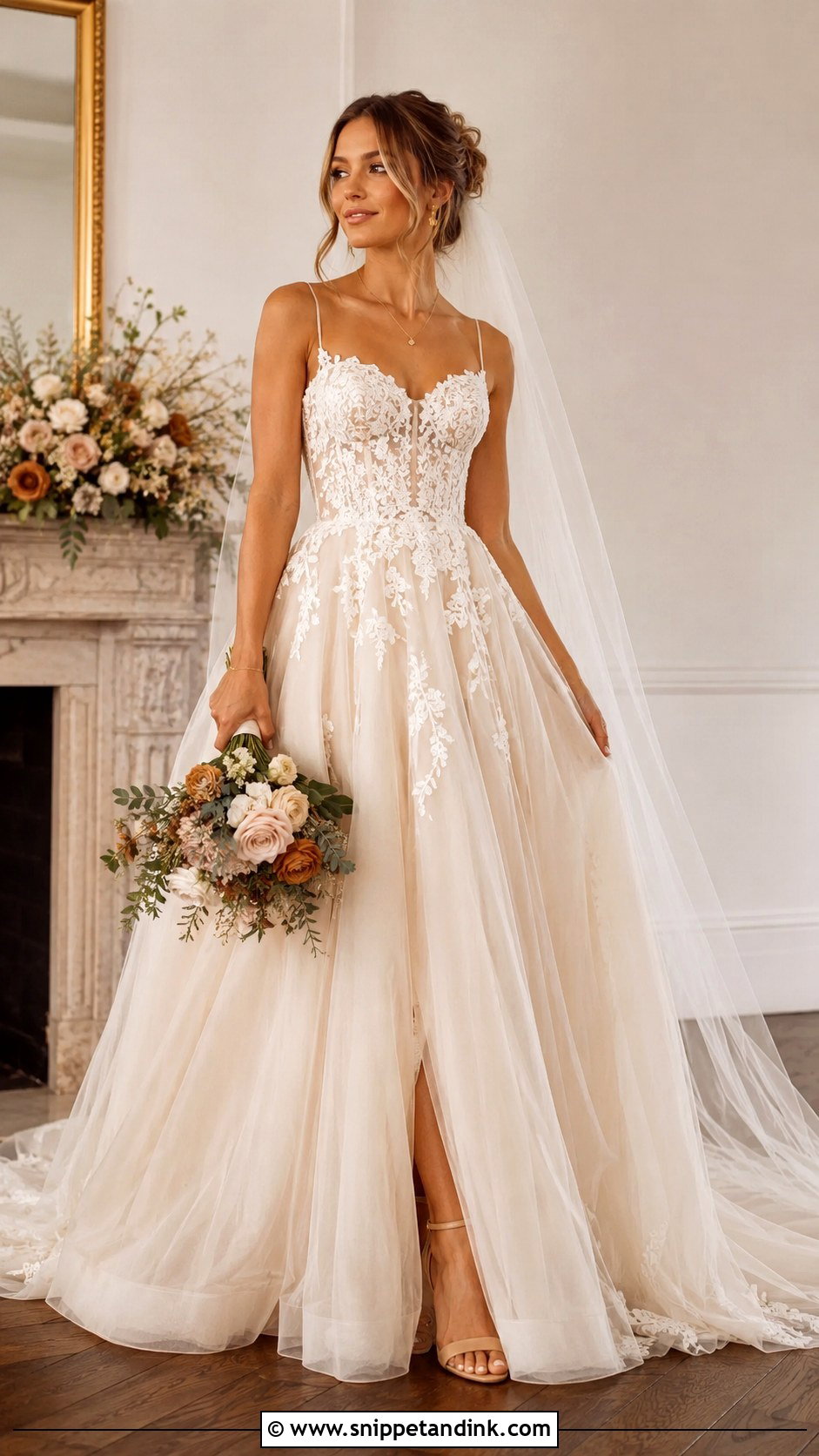
Champagne adds warmth and depth under ivory lace, soft tulle or satin, and it’s flattering at autumn weddings and evening ceremonies. A champagne A-line feels romantic, a satin slip minimal, a lace gown vintage. Nude heels, gold-toned jewelry and a sheer ivory veil suit it. Avoid fabrics with a metallic sheen, which turn champagne brassy in flash photos. If your palette includes beige, cream, taupe or muted florals, champagne blends right in.
16. Soft Floral Wedding Dress
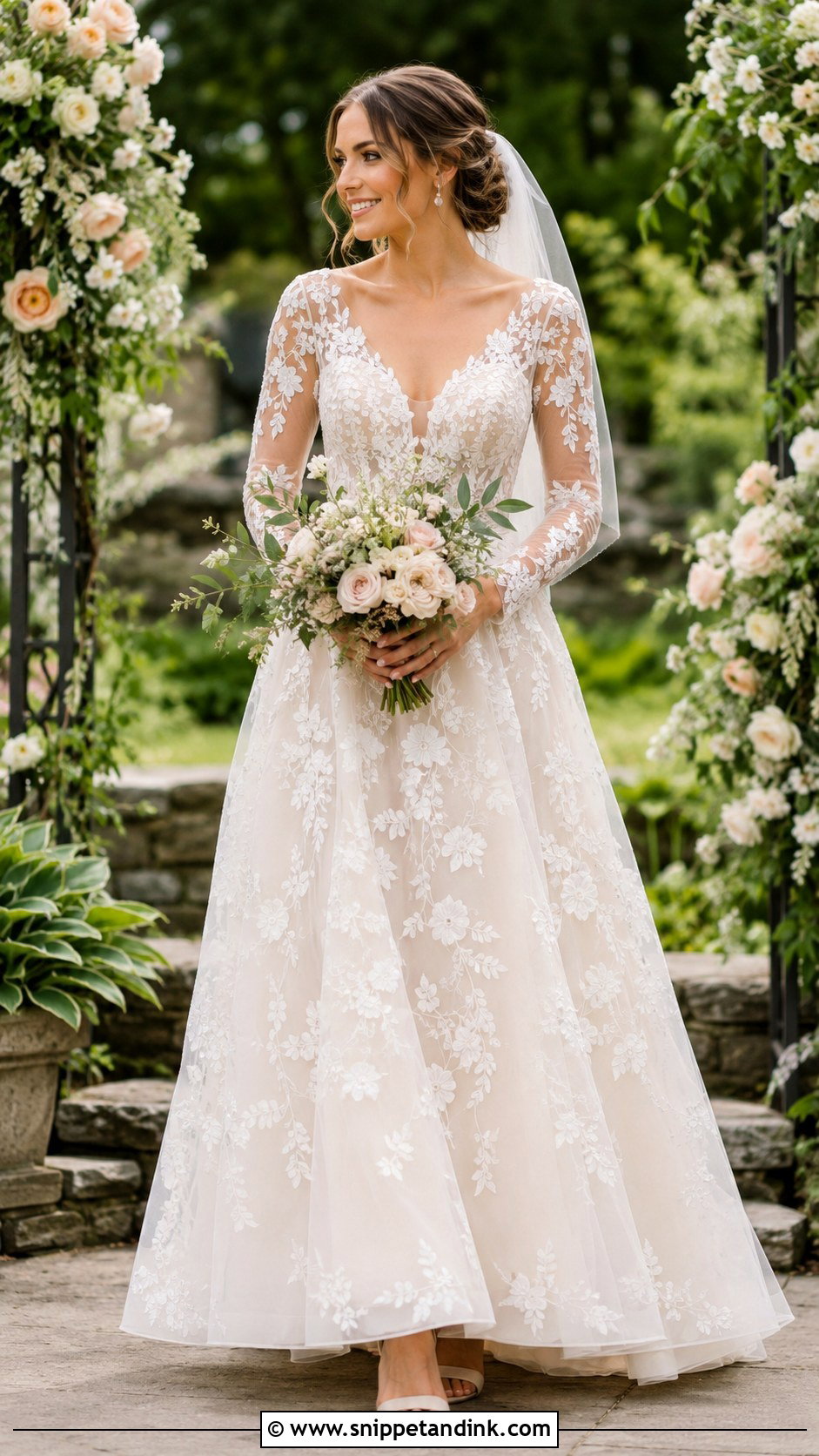
Florals in fabric, from floral lace to embroidered flowers, 3D appliqués or a faint print, give a soft, nature-inspired look. Ivory on ivory is the most timeless; pale blush, blue or champagne flowers make it more personal. Keep the silhouette plain so the flowers don’t look busy. A soft A-line, sheer sleeves or a fitted bodice all suit it. Delicate earrings, a clean veil and neutral heels finish it. Ask how 3D petals are attached, as loose ones catch on bouquets and lace veils.
17. Soft Pearl Wedding Dress
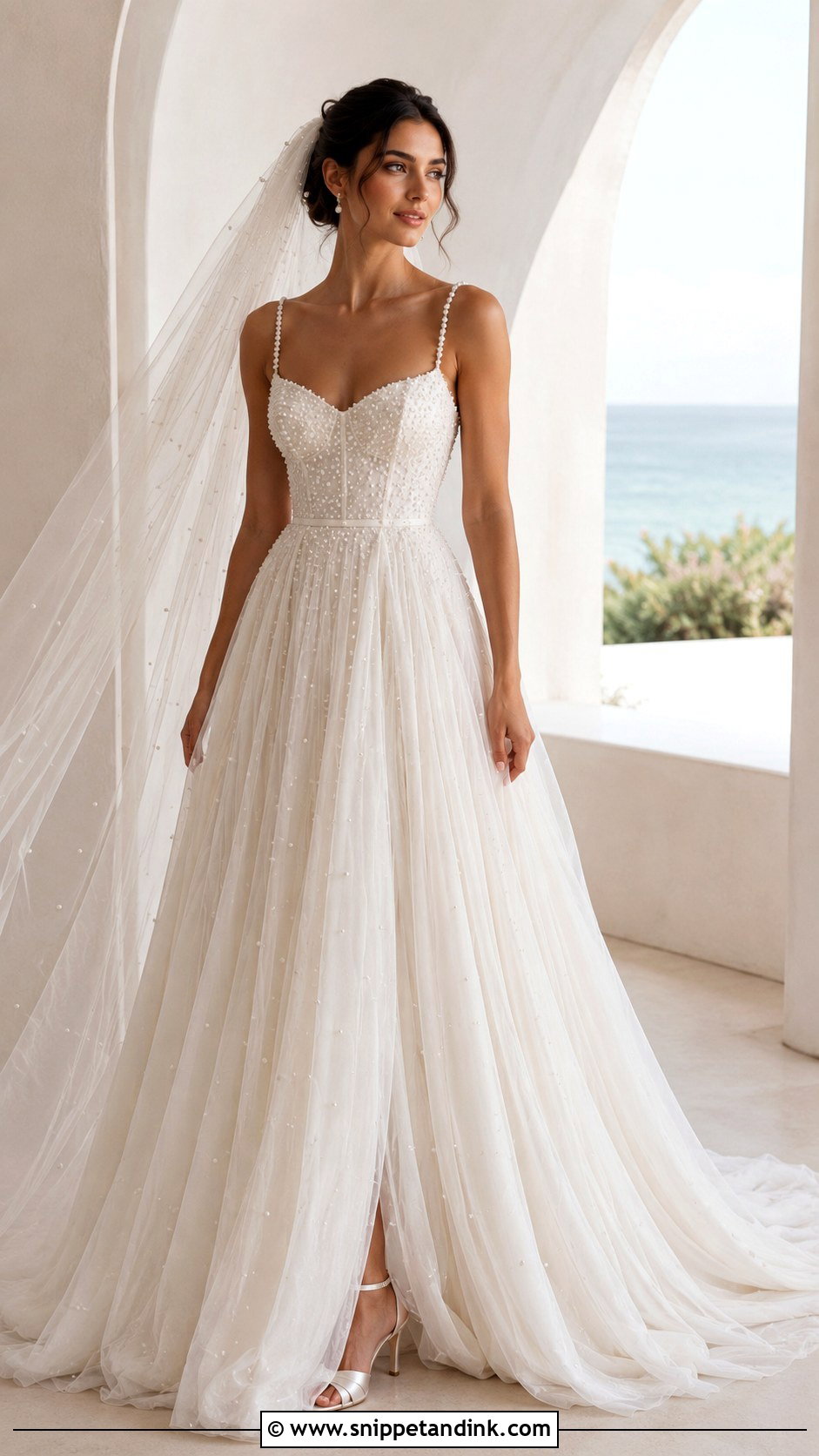
Pearls give a gentle shine where crystals give sparkle. They can sit on the bodice, straps, sleeves or veil, and scattered pearls look softer than dense beading. A crepe gown with pearl straps feels modern; tulle with pearl accents feels dreamy. Pearl earrings, satin heels and a simple veil keep it cohesive, with fresh, glowing makeup. Pearls catch light softly in photos. Check how they’re sewn: individually knotted pearls stay put; pearls on a running thread can unravel in a line if one snaps.
18. Soft Off Shoulder Wedding Dress
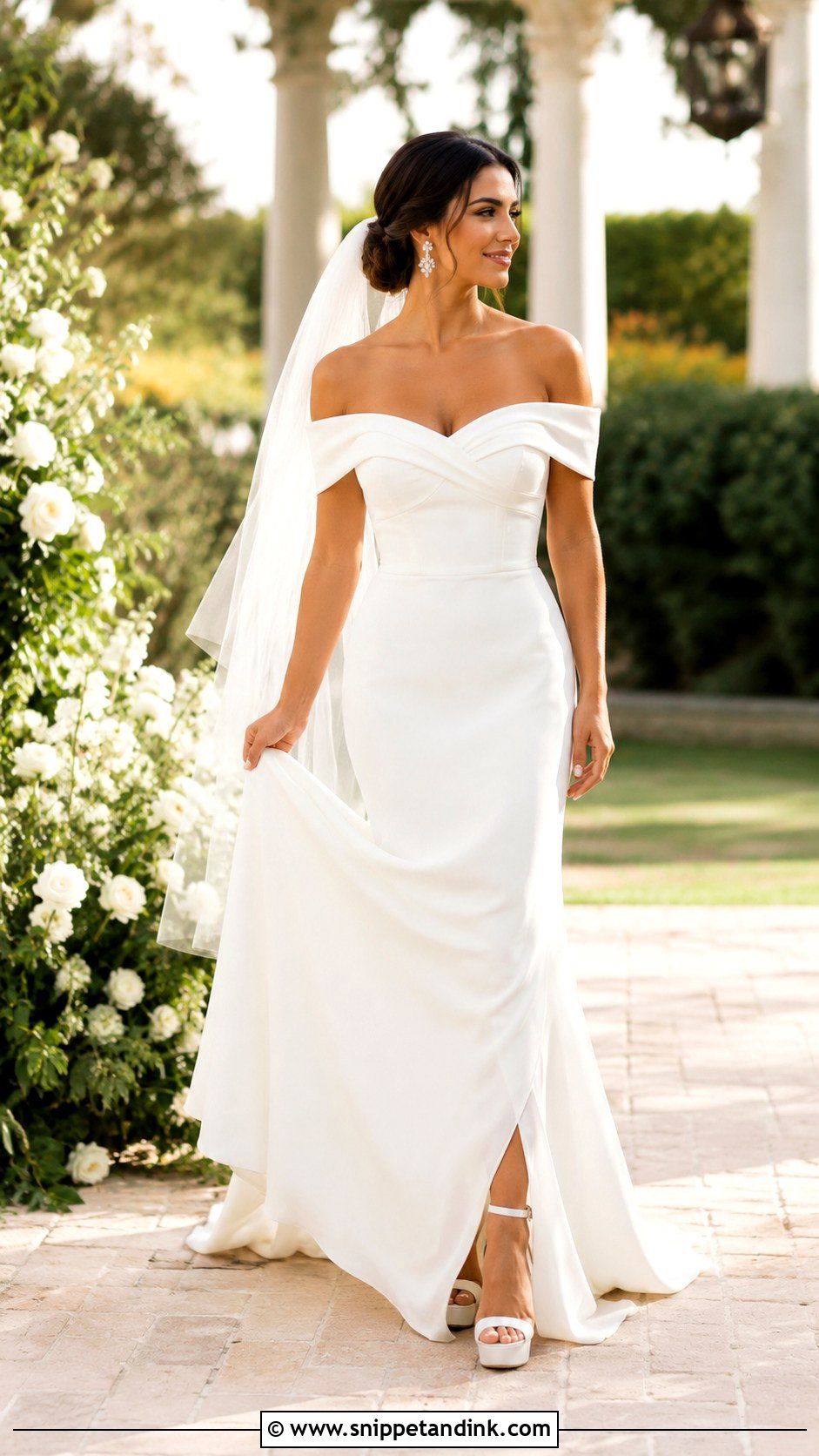
An off-shoulder neckline frames the collarbone and gives a graceful line. Draped sleeves, lace sleeves or a soft folded neckline are the gentlest versions. It works on an A-line, a fitted crepe dress or a soft ball gown. Wear either a simple necklace or statement earrings, not both, and choose a low bun or soft waves. Support is the worry with this neckline, so look for built-in structure or detachable sleeves. Raise your arms at the fitting; the bodice should stay where it is.
19. Soft Square Neck Wedding Dress
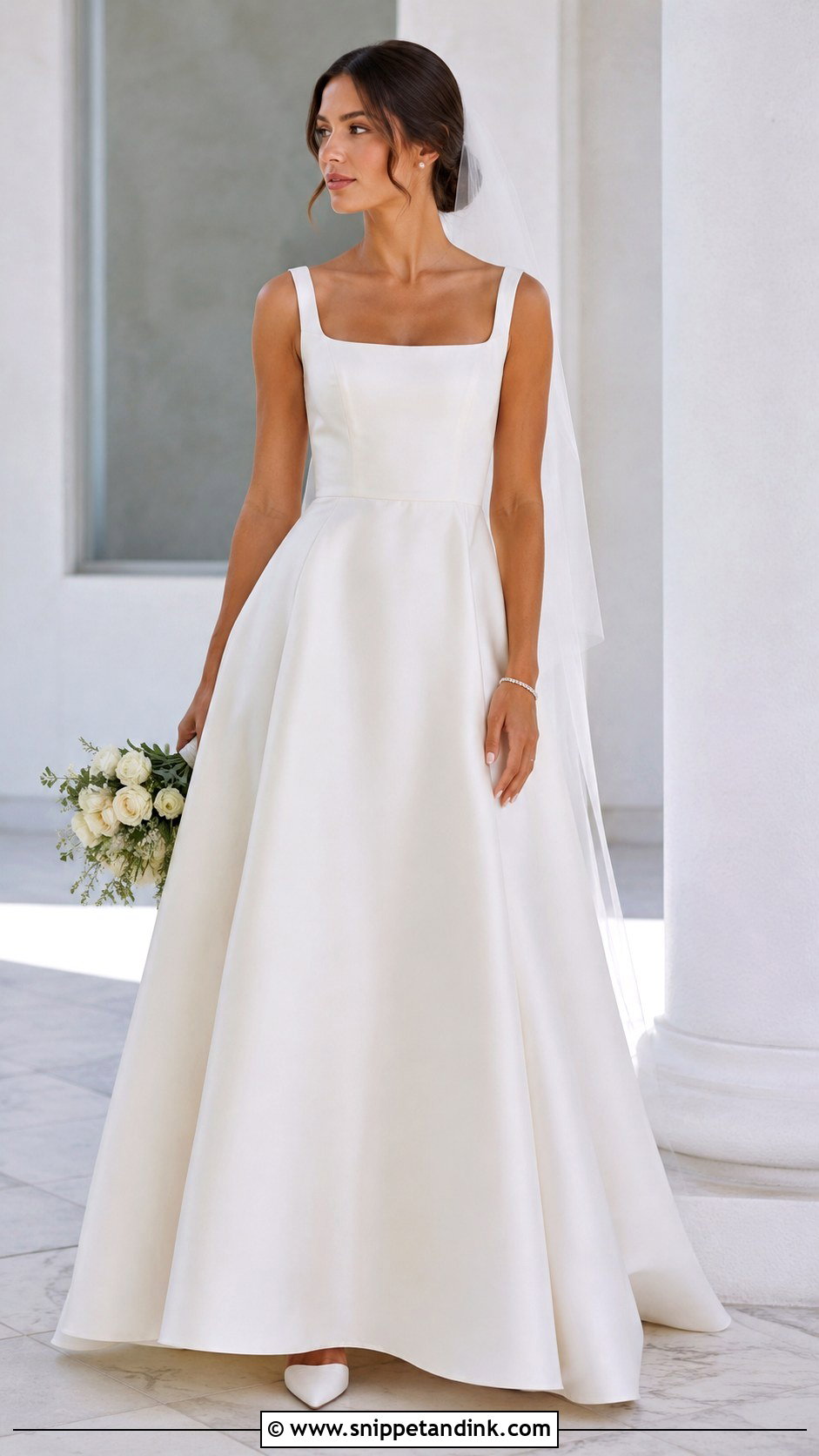
A square neck is clean and modern, yet it still reads romantic in the right fabric. On an A-line it feels classic; on a slip it feels minimal. Satin, crepe, lace and tulle all work. Pearl studs, a delicate bracelet and pointed heels finish it, and the open neckline leaves room for a veil. To keep it soft rather than severe, choose slightly rounded corners, gentle straps and a fabric that drapes. Check the corners stay flat when you breathe in.

20. Soft Long Sleeve Wedding Dress
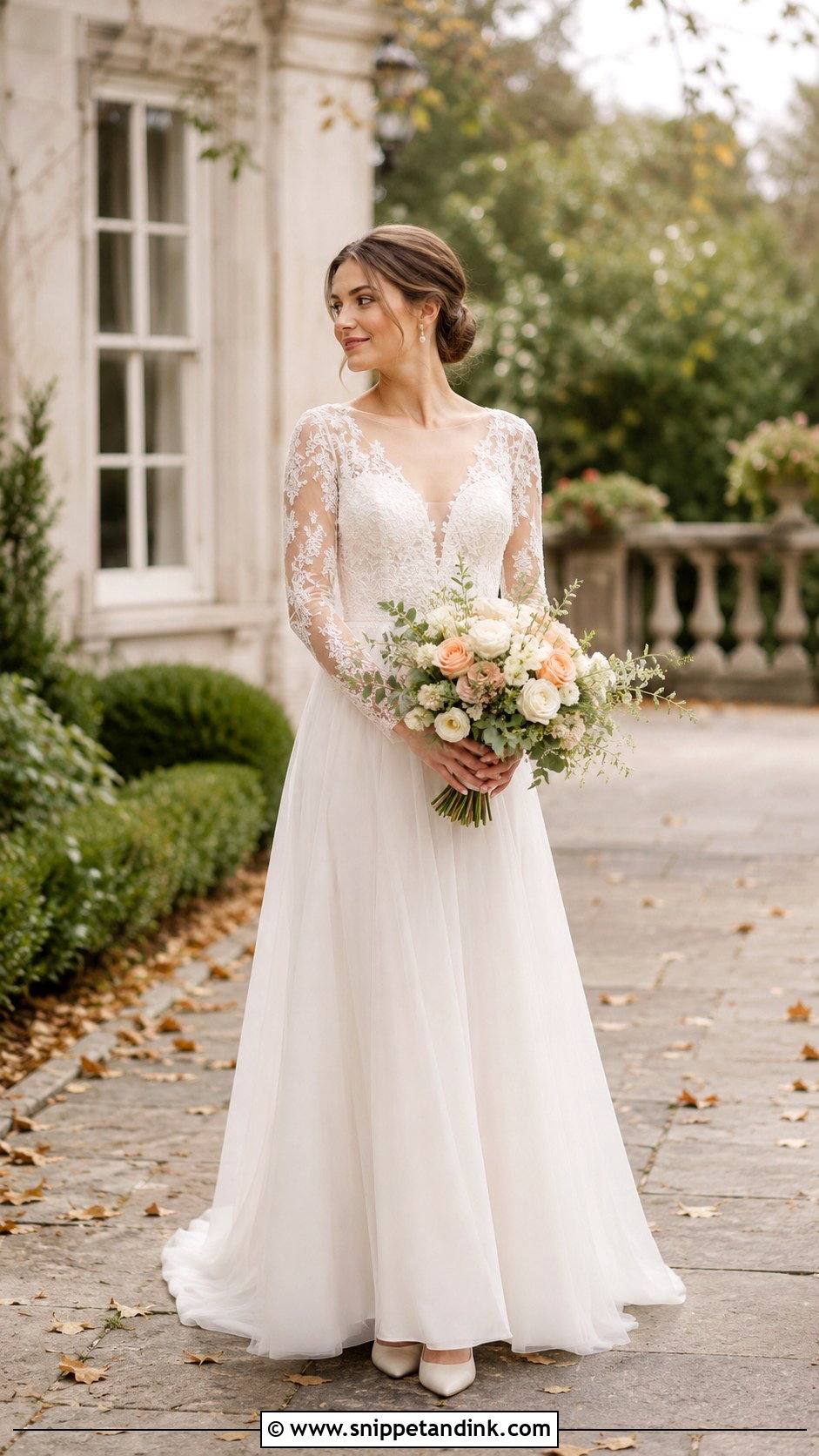
Sheer sleeves in lace, chiffon or tulle give coverage while staying light enough for spring, and breathable fabric makes them work even in summer. A fitted bodice with flowing sleeves feels romantic; a crepe gown with sheer sleeves feels modern. A low bun, pearl earrings and soft heels finish it. In close-up photos, sleeves add detail around your hands and bouquet. Lift and bend your arms at the fitting, because sleeves set too tight at the shoulder will stop you hugging anyone.
21. Soft Puff Sleeve Wedding Dress
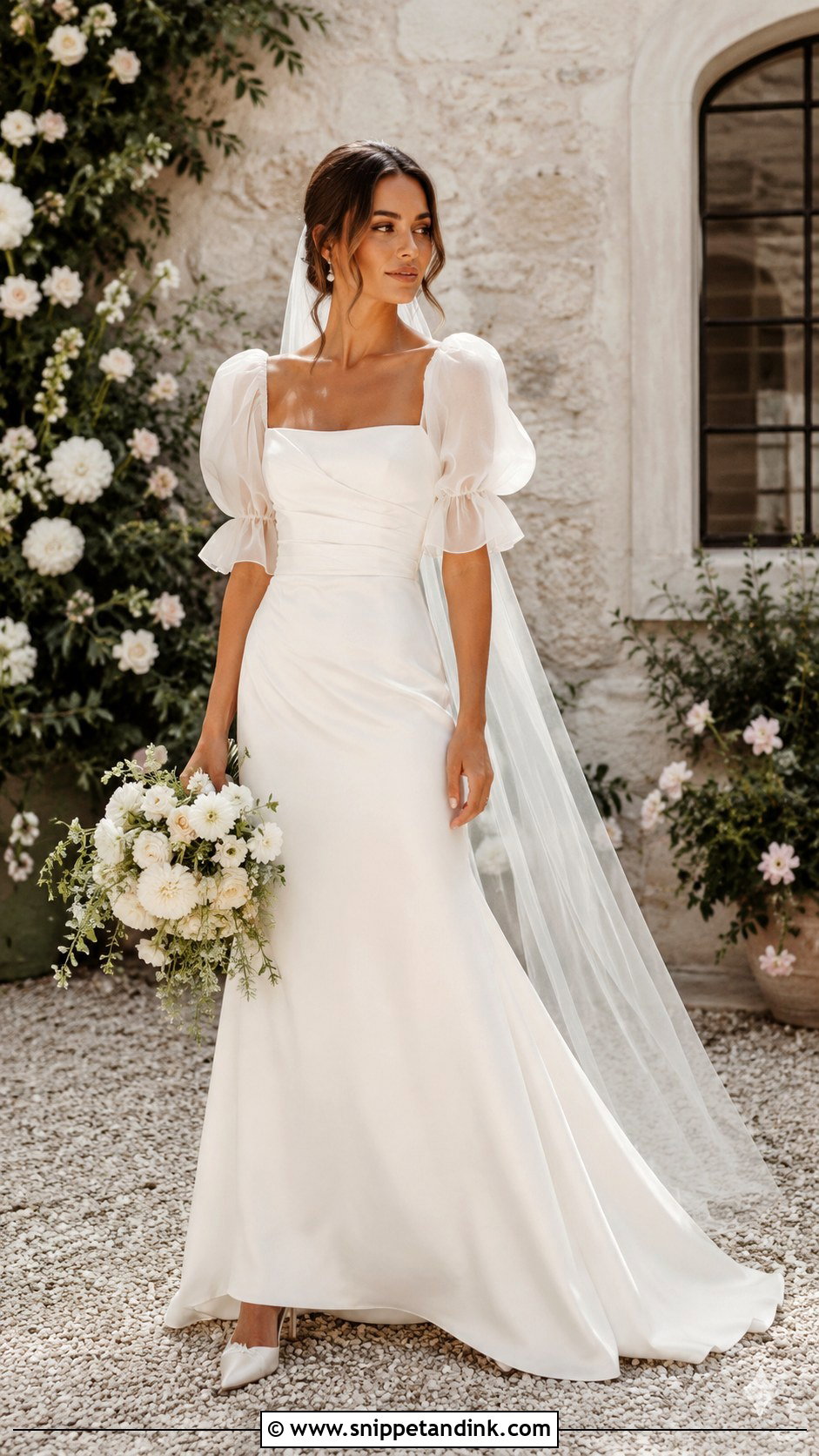
Puff sleeves look sweet rather than childish when they’re light: tulle, organza or chiffon with airy volume. A fitted bodice balances them, and an A-line or slim skirt keeps the shape grown-up. Detachable puffs give you two looks in one day, sleeves for the ceremony and bare shoulders for the party. Simple earrings, a clean veil and soft satin heels finish it. Keep the rest plain so the sleeves read as a choice.
22. Soft Corset Wedding Dress
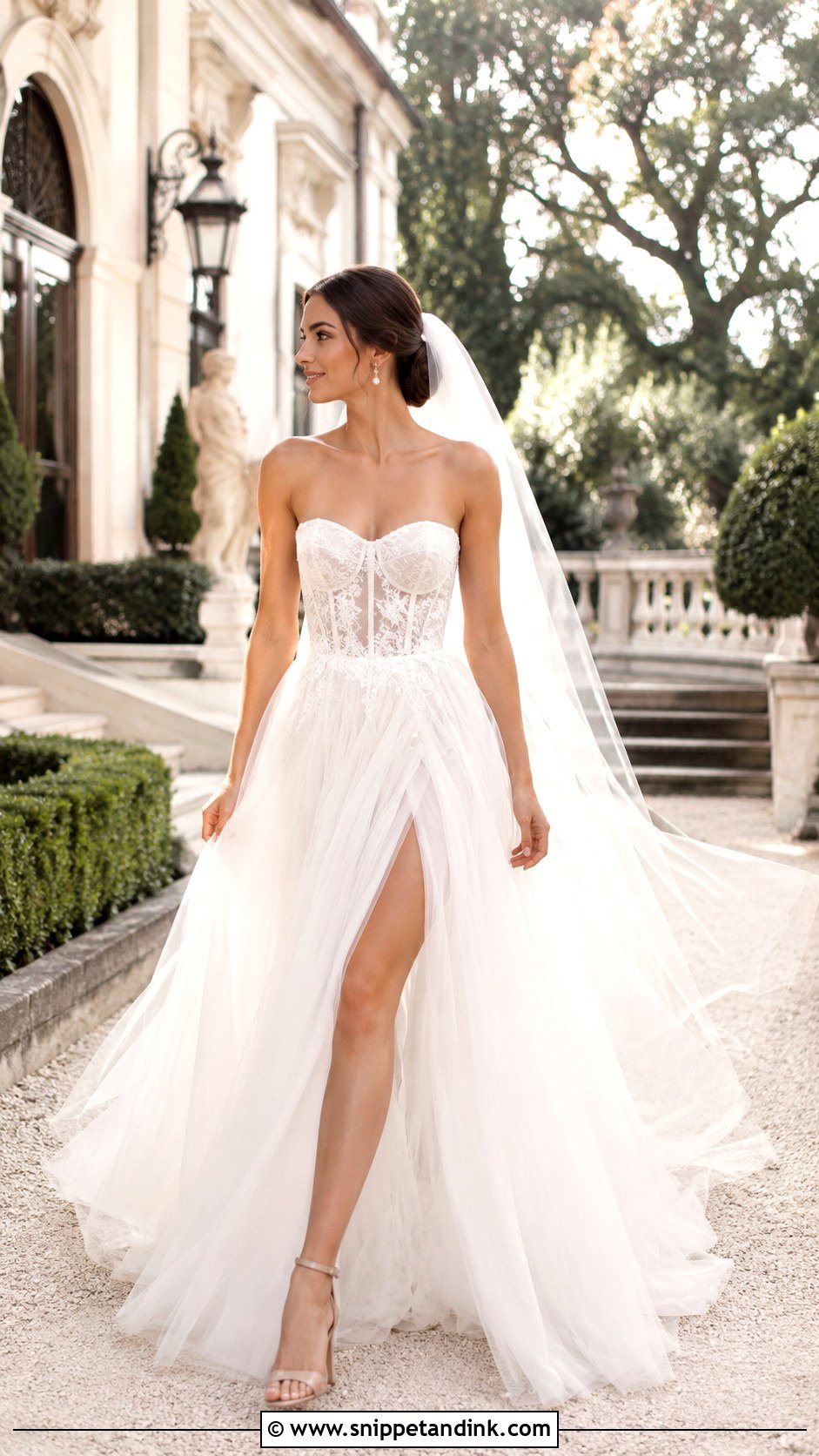
A corset can be soft when it’s built from sheer layers, lace, tulle or smooth satin with rounded boning lines and a comfortable inner lining. The skirt should flow away from the body. A sheer veil, pearl drops and neutral heels complete it. I always ask brides to sit for ten minutes in a corset at the fitting, because it must support without pinching under the ribs during dinner. A good corset should feel secure, never restrictive.
23. Soft Ruffle Wedding Dress
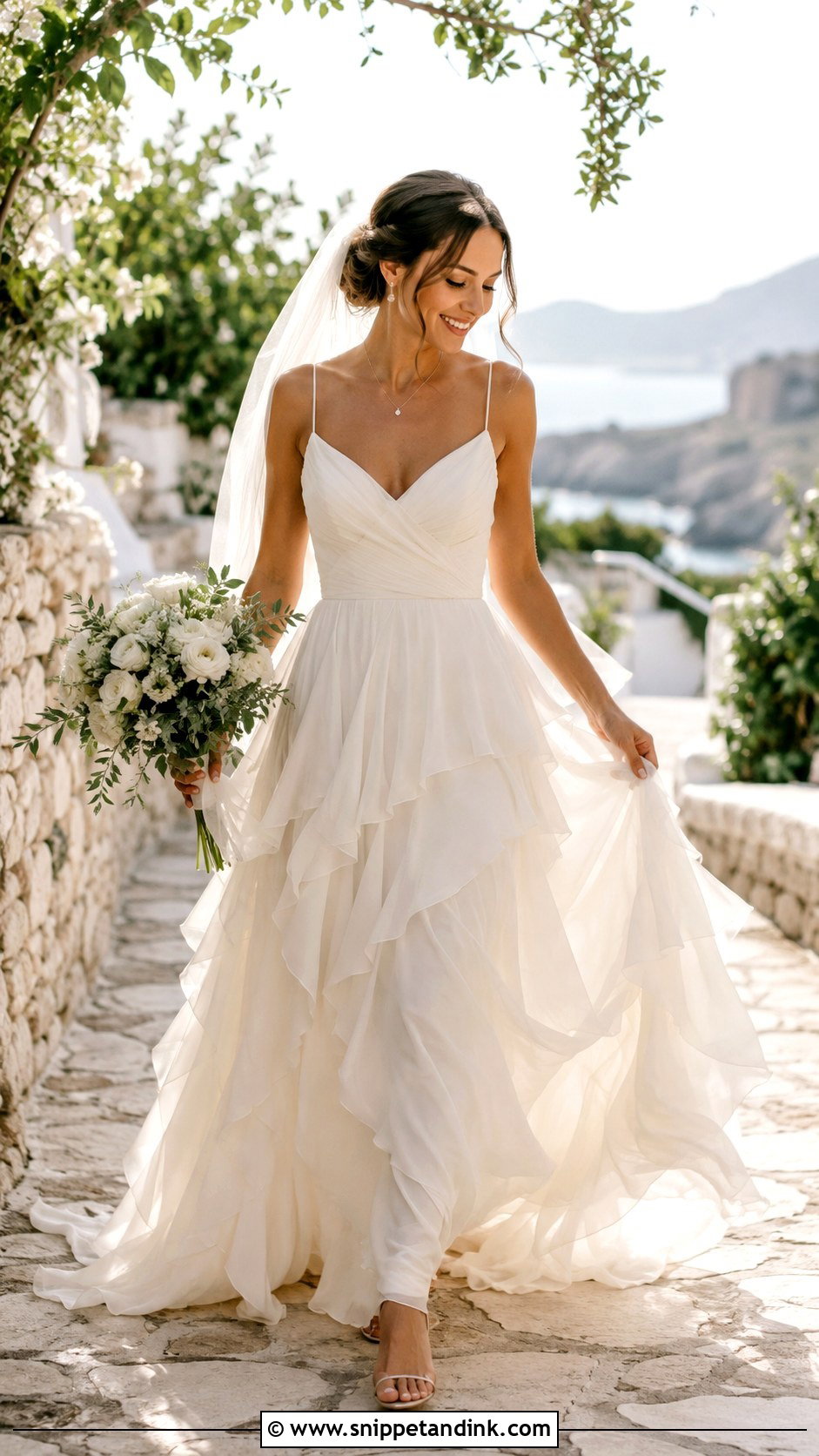
Ruffles work in light fabrics, such as tulle, chiffon or organza, where they float instead of weighing the skirt down. A soft ruffle wedding dress with gentle tiers, sleeve ruffles or a ruffled neckline stays balanced if the bodice is clean. Simple heels, delicate jewelry and a plain veil let the texture lead. Ruffles come alive when you walk, dance and turn, which makes them good for outdoor and destination weddings. Steam them from the inside, as pressing flattens the edges.
24. Soft Tea Length Wedding Dress
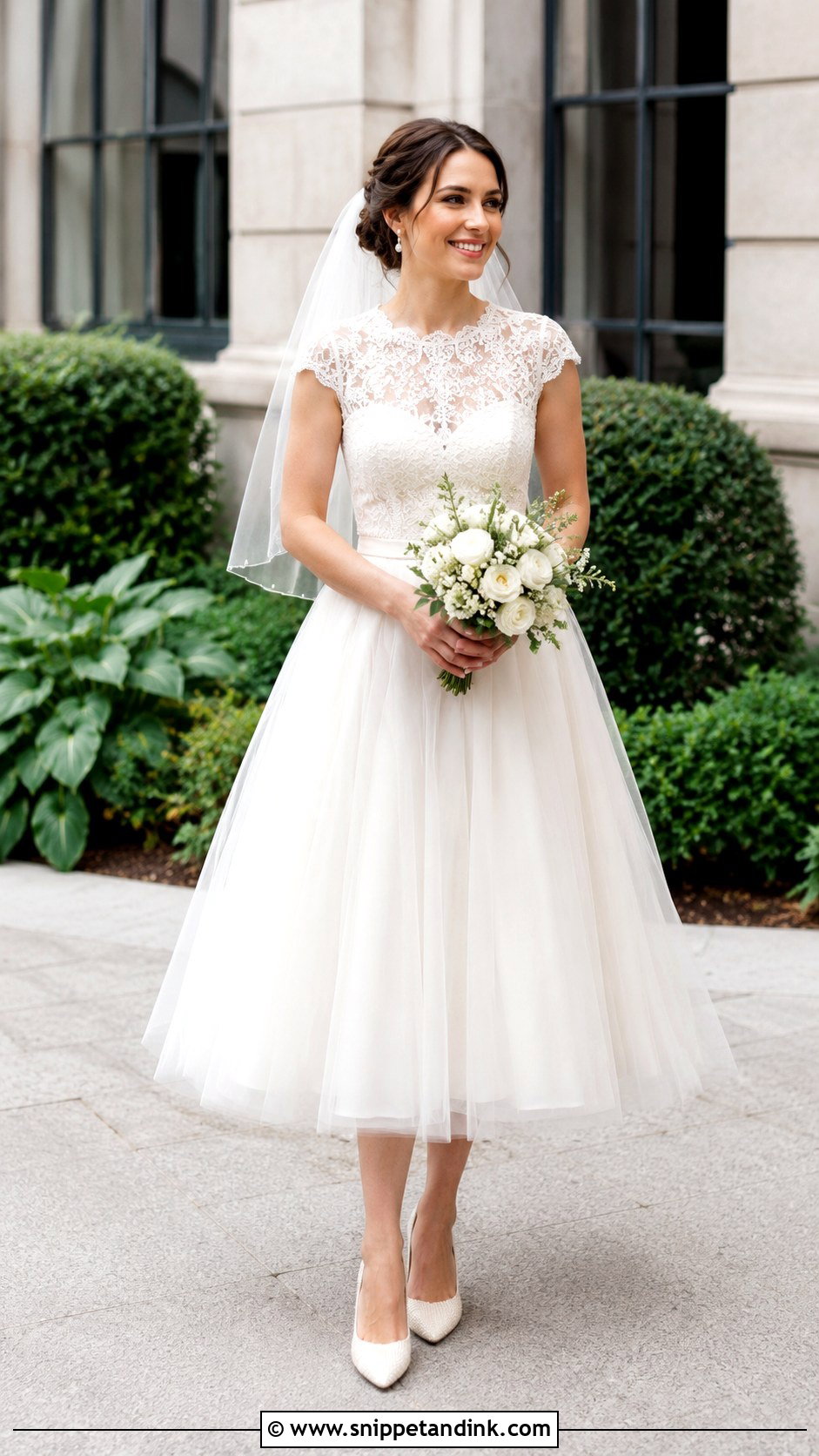
Tea length falls between knee and ankle, so you can walk, dance and climb steps freely. Lace, tulle, satin or organza keep it bridal. A fitted bodice with a soft full skirt gives a classic shape; a plain satin midi is more modern. Pointed pumps, pearl earrings and a short veil or bow suit it. Because the shoes are visible, buy a pair that’s special but tested for comfort. It suits courthouses, gardens and relaxed receptions.

25. Soft Minimal Wedding Dress
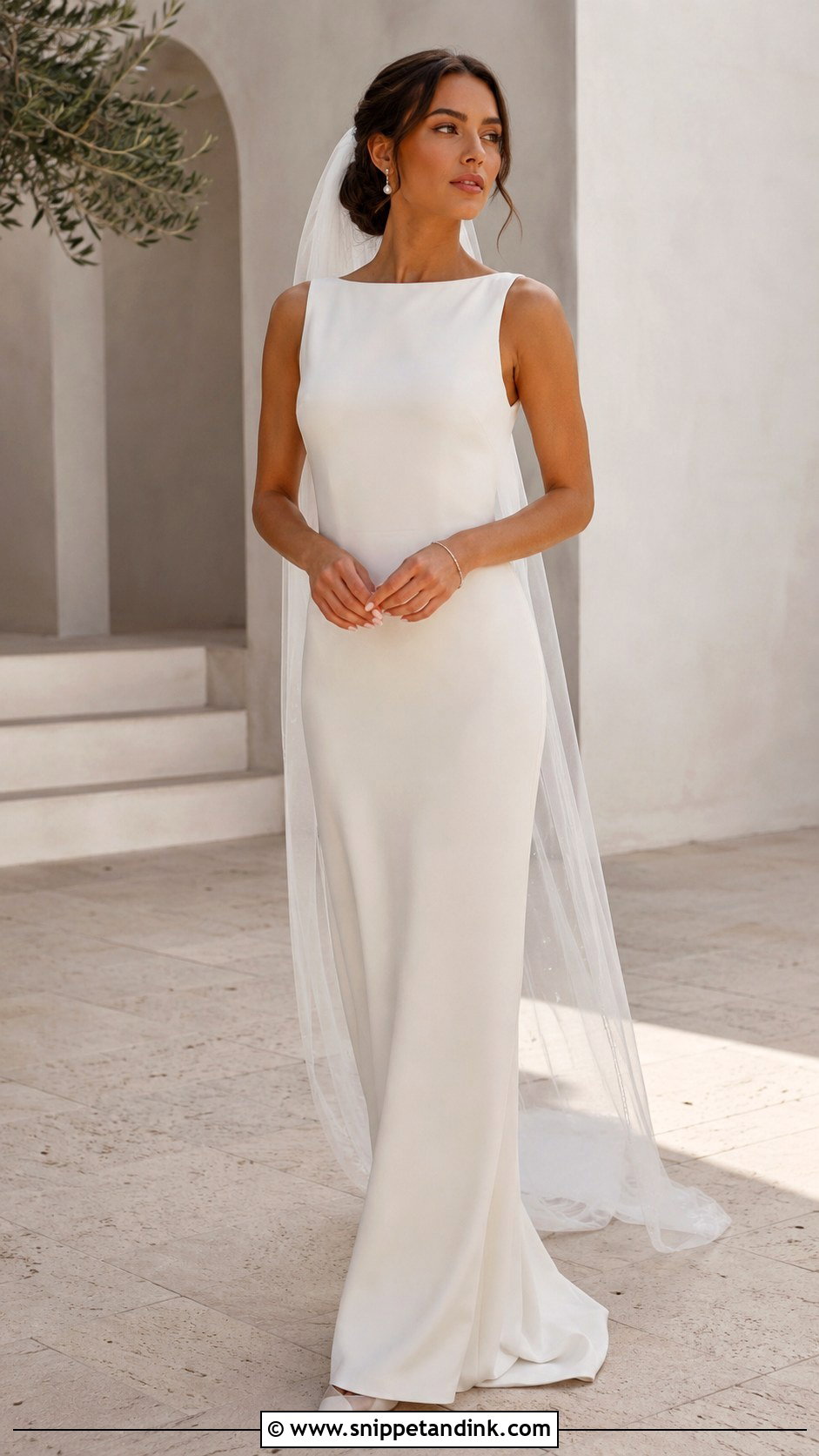
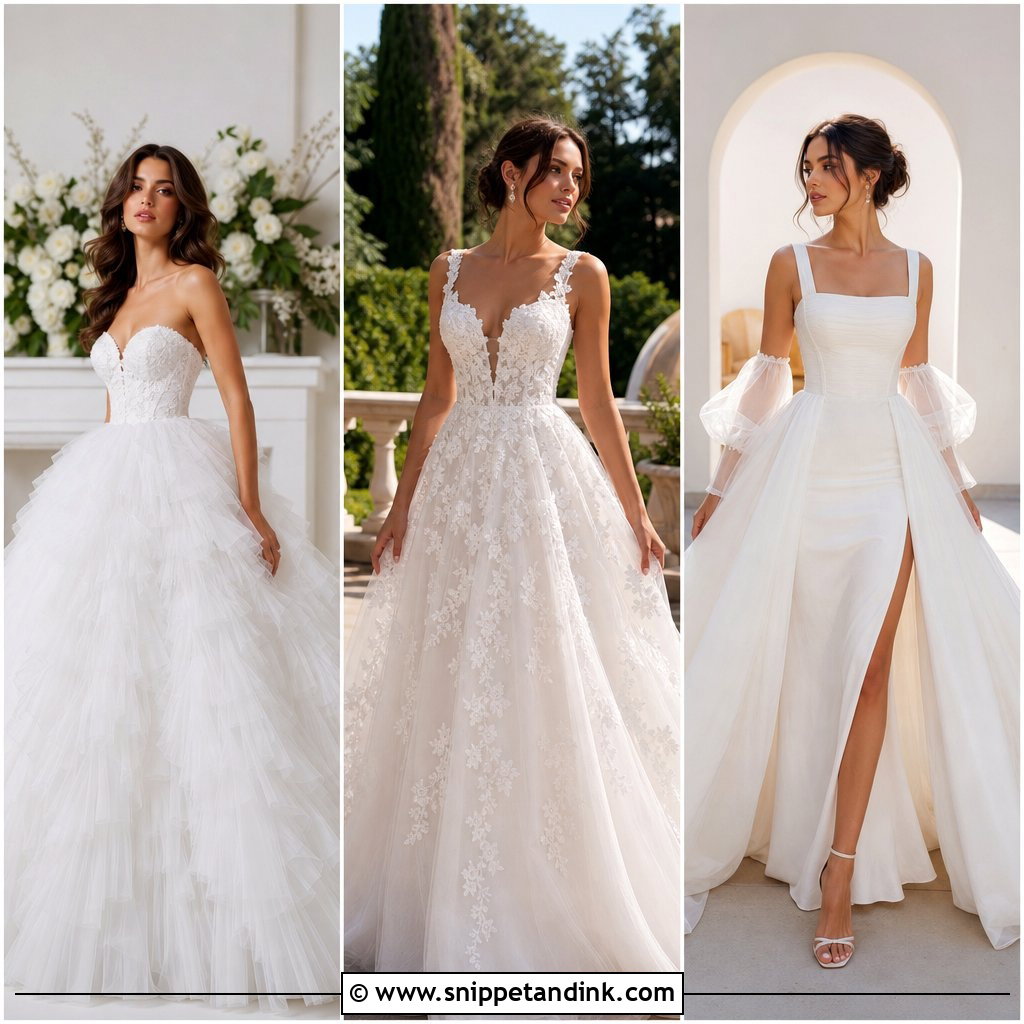
A minimal dress shows how soft a plain gown can be with the right fit. A crepe column, a satin slip or a plain A-line relies on drape, neckline and color rather than embellishment. Pearl earrings, a sheer veil, smooth heels and natural makeup complete it. Modern venues, destinations and courthouses suit it. With nothing to distract the eye, every seam shows, so put your budget into tailoring and expect a careful final fitting close to the date.
The Morning-Of Routine for Delicate Fabrics
Light fabrics are the most likely to get crushed on the way to the venue. Collect the dress from the shop pressed and hang it as soon as you get home, in its bag, from something high enough that the hem doesn’t touch the floor.
Steaming without damage
- Never iron tulle or organza directly; the heat can melt or shine synthetic fibers.
- Use a hand steamer, held a little away from the fabric, and work from the inside of the skirt where you can.
- Let satin cool and dry completely before you sit in it, or the creases come straight back.
- Test any steamer on a hidden seam first, as some units spit water and leave marks on pale satin.
Ask someone in your wedding party to own this job. She should steam the dress about an hour before you get into it, then keep it hanging until the moment you step in. In the car, gather the skirt onto your lap rather than sitting on it, and give it a quick shake out when you arrive.
Softness You Can Feel, Not Just See
A soft bridal look can come from airy tulle, delicate lace, smooth satin, flowing chiffon, pearls, blush color, gentle sleeves or a minimal shape. None of it needs a heavy or dramatic gown. The right one depends on your venue, season, body and style. Try different fabrics, since softness is something you feel as much as see. Notice how each dress moves, how comfortable it is after twenty minutes, and how it looks in natural light. When it feels easy to wear, the rest of the outfit falls into place.
You'll Like These Ideas:










Leave a Reply