
Tiers are horizontal bands of fabric stacked down a skirt, and they give a gown movement in a way a plain skirt can’t. The same idea looks completely different depending on the cloth: a layered skirt in tulle floats, organza holds a crisp outline, satin looks polished and lace turns vintage. Bridal design right now favours soft volume, corset bodices, basque waists and detachable pieces, and tiers sit comfortably alongside all of them. In fittings, the details I spend most time on are where the tiers start, how deep each one is and what the fabric does when you sit. Here are the tiered gowns I’d style, from ballroom to courthouse.
Where the First Tier Starts Changes Your Whole Shape
Two gowns with the same fabric and the same number of tiers can look completely different on you because of where the first tier begins. A tier that starts high, near the hip bone, adds width there. One that starts lower, around mid-thigh, keeps your hips and waist visible and pushes the volume down to the hem.
Tier depth matters just as much. Many shallow tiers read busy and youthful; three or four deep tiers look calmer and more grown-up. As a rough rule I use at fittings:
- Petite or short-waisted brides usually look best with fewer, deeper tiers starting lower on the skirt.
- Tall brides can carry many shallow tiers and a high starting point without being overwhelmed.
- Fuller hips suit soft fabric that collapses slightly, like chiffon or soft tulle, rather than stiff organza that stands away.
- If you want a slim look at the top, ask for the bodice lining to continue past the waist so the first tier has something smooth to sit on.
Bring a photo of yourself in the dress to the second fitting and look at it small, like a thumbnail. If your eye lands on the hips before your face, the tiers are starting in the wrong place.
1. Tiered Tulle Ball Gown Wedding Dress
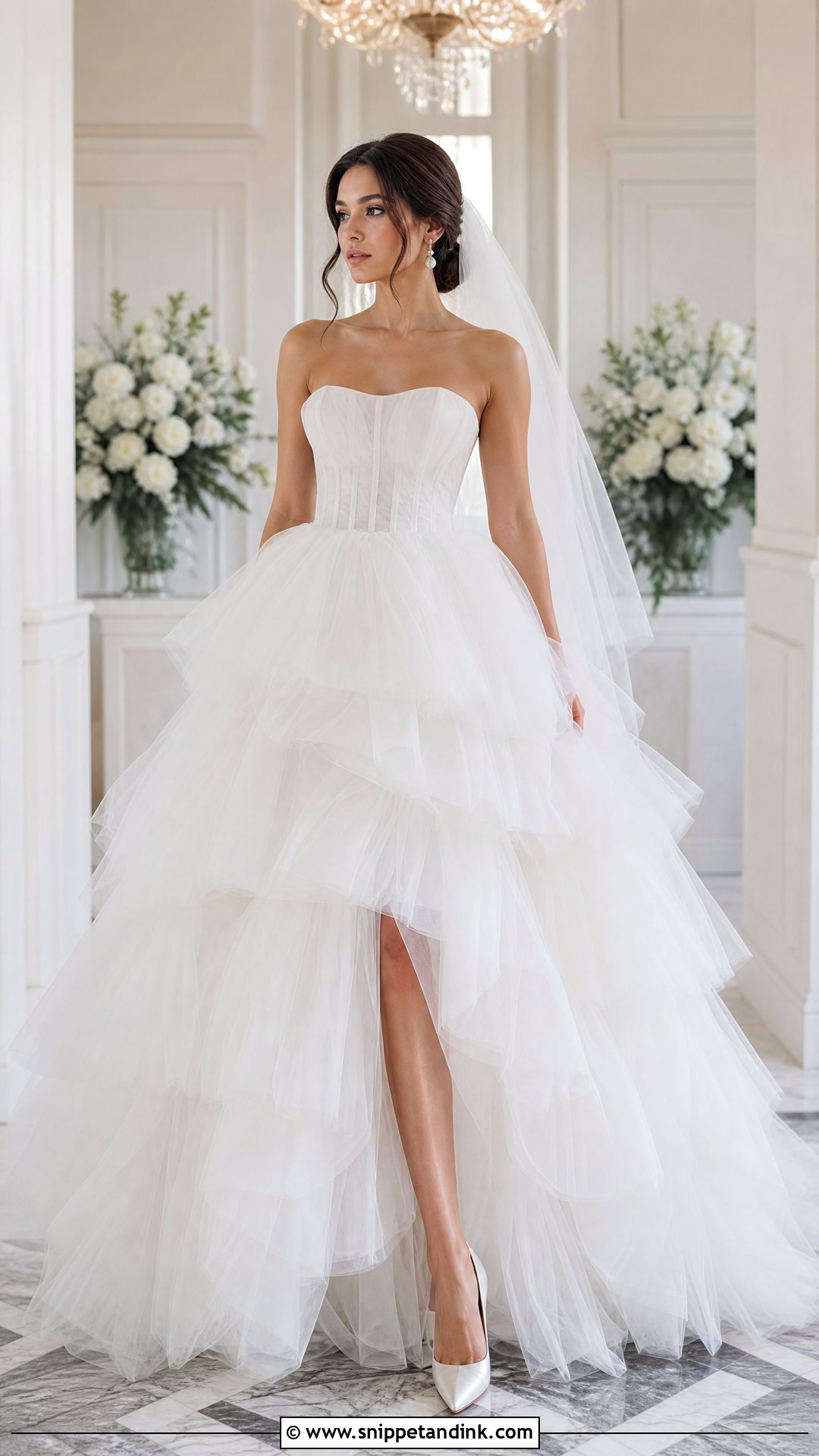
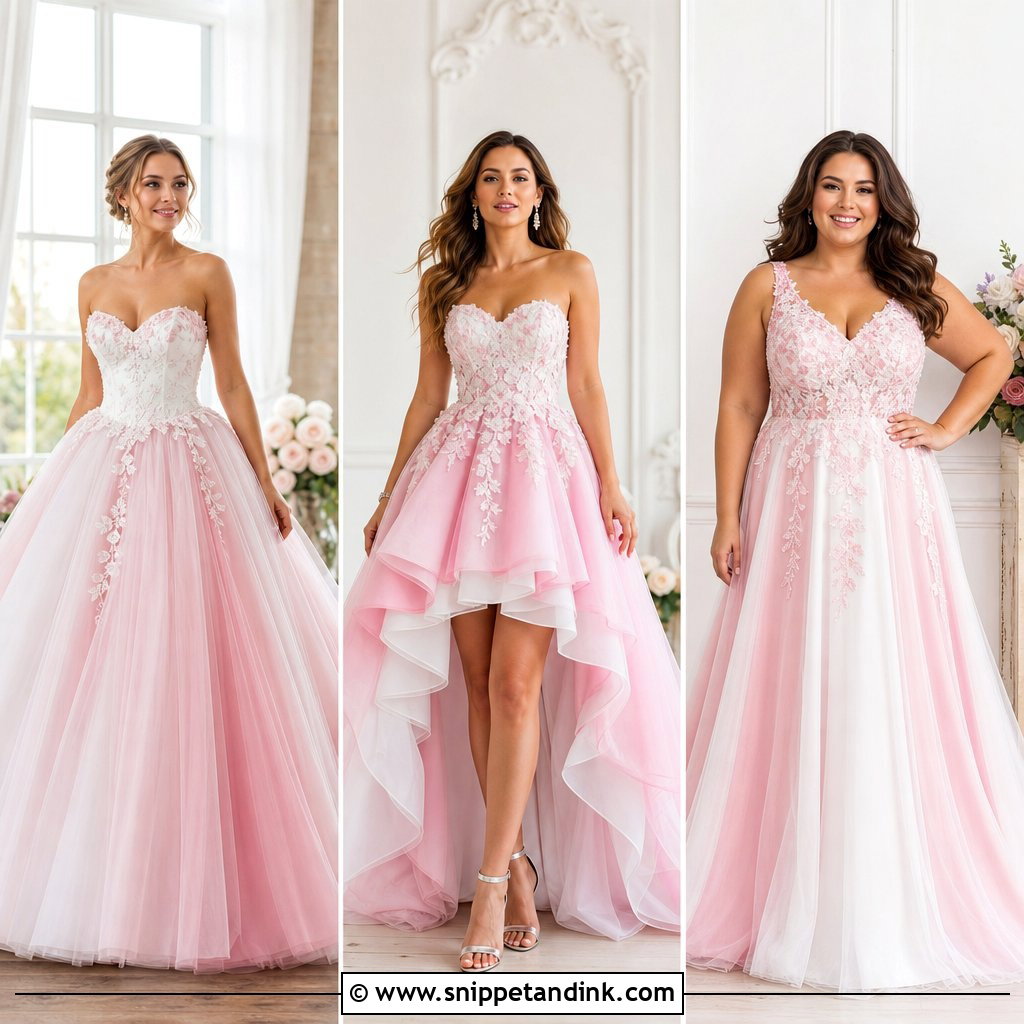
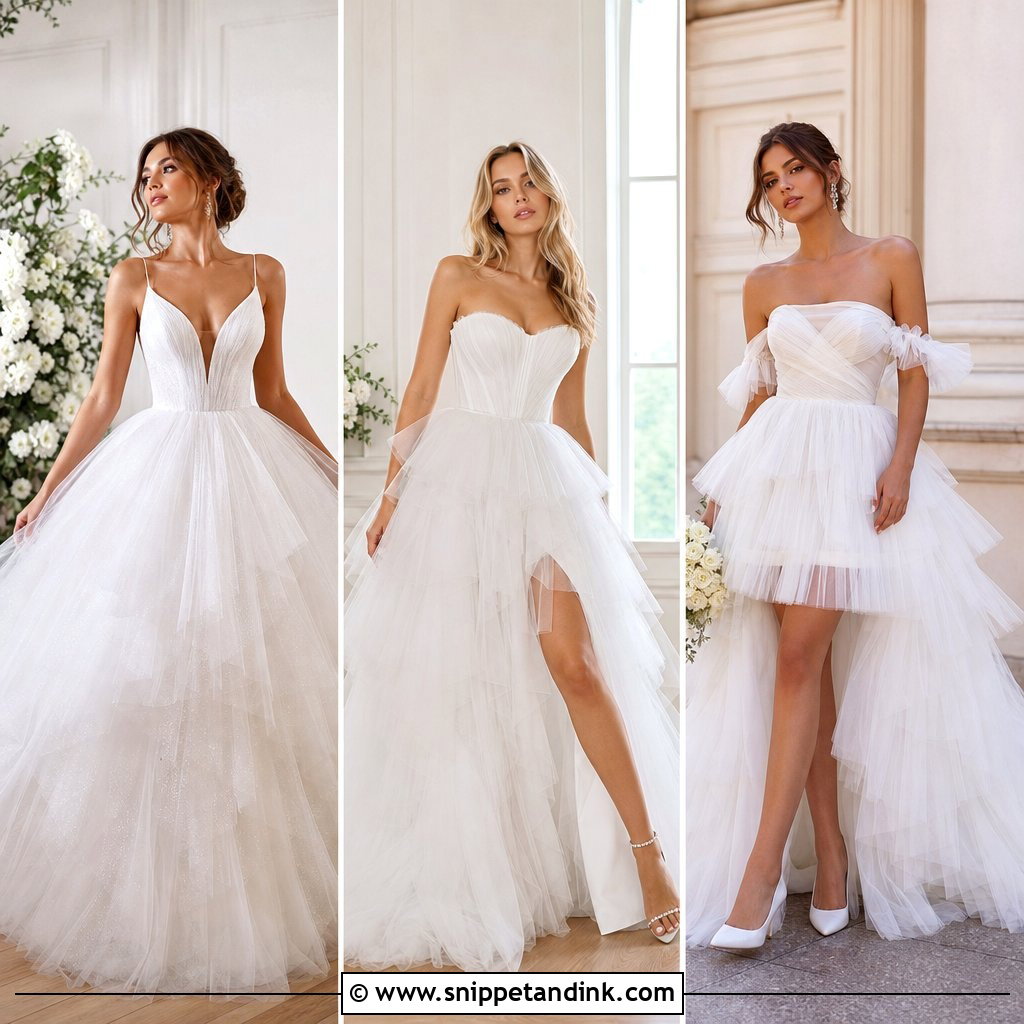
Stacked tulle gives the cloud skirt most brides picture first. Because it’s soft, the volume reads full without much weight, and a fitted bodice keeps it from swallowing you: a strapless corset, a scoop neck or fine spaghetti straps. If you’re petite, ask for the tiers to begin lower on the skirt so your waist and torso still show. Pearl drops, a sheer fingertip veil and pointed satin heels finish it. Keep the bouquet to white roses or peonies.
2. Tiered Organza Wedding Dress
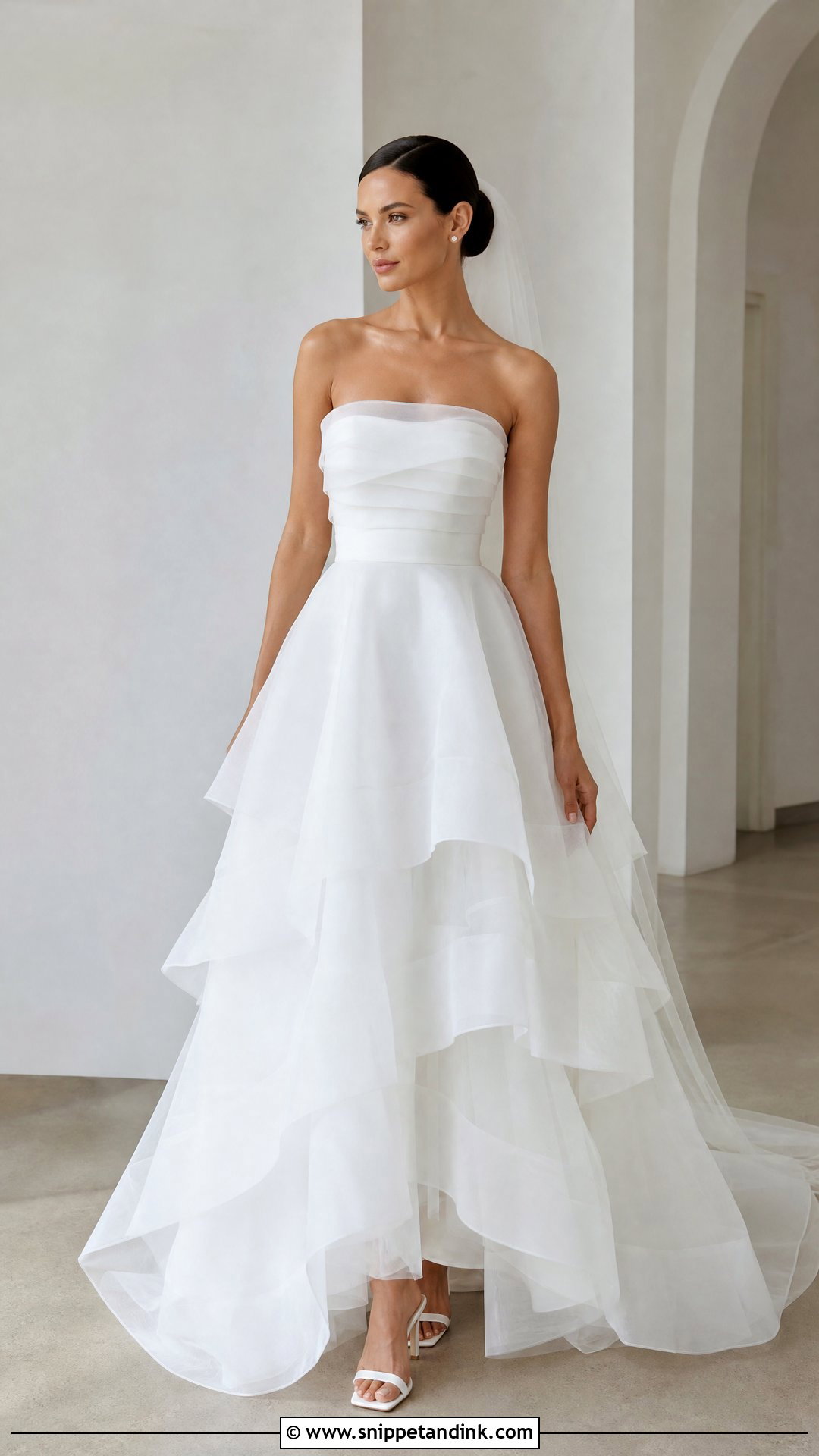
Organza is stiffer than tulle, so each tier keeps a sculpted edge rather than melting into the next. That makes it the tiered gown for a bride who wants volume without princess. An open neckline, strapless or off-shoulder, stops the top half looking crowded next to a structured skirt. Organza creases sharply when crushed in a car, so I travel with a handheld steamer for this one. A narrow veil and a smooth low bun keep the lines clean.
3. Tiered Lace Wedding Dress
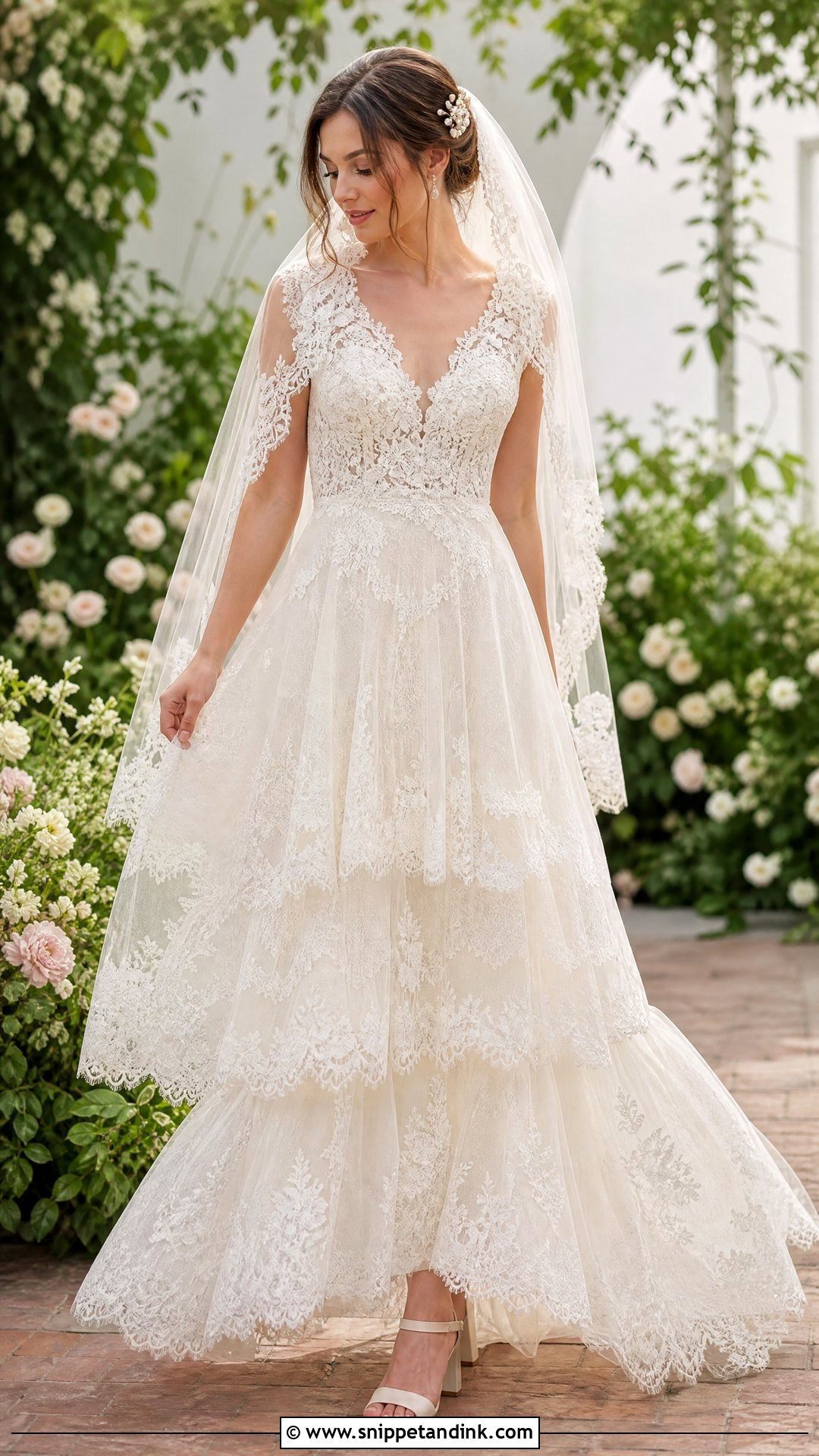
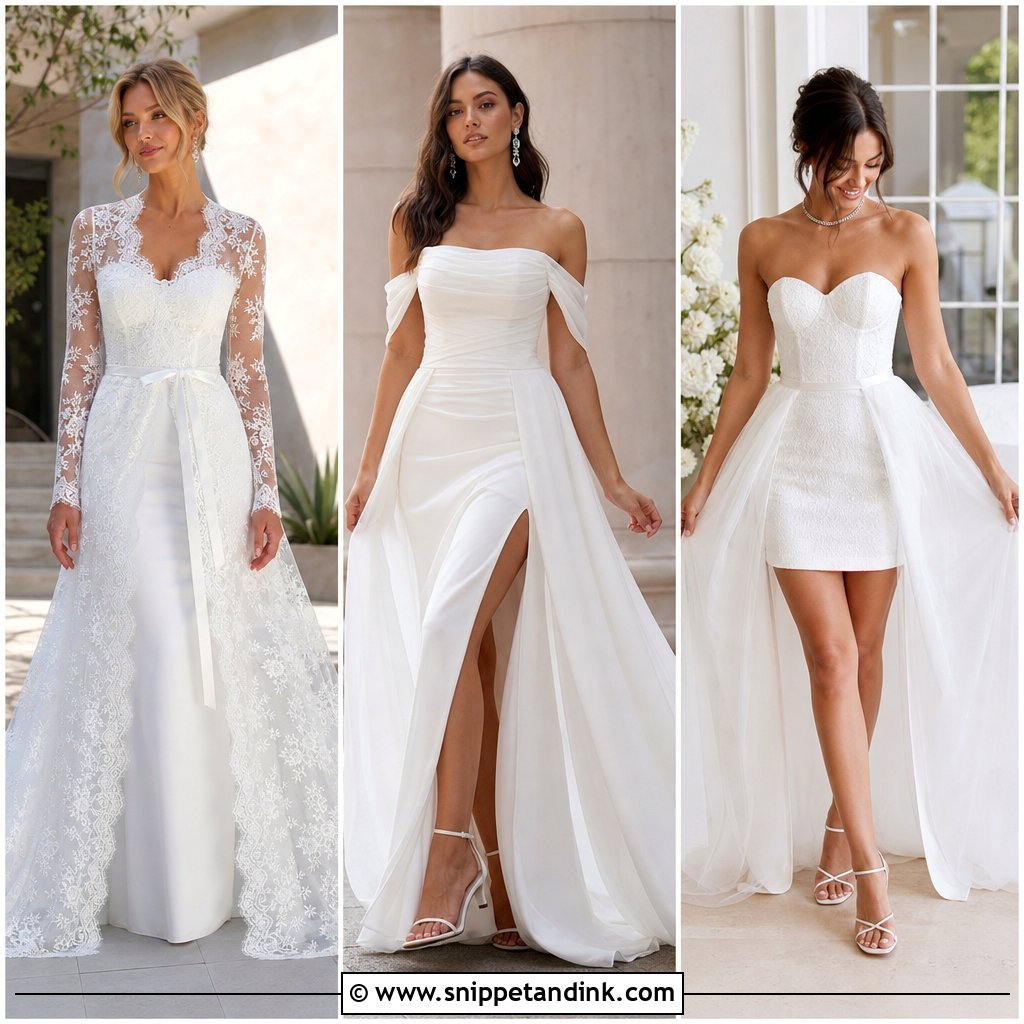
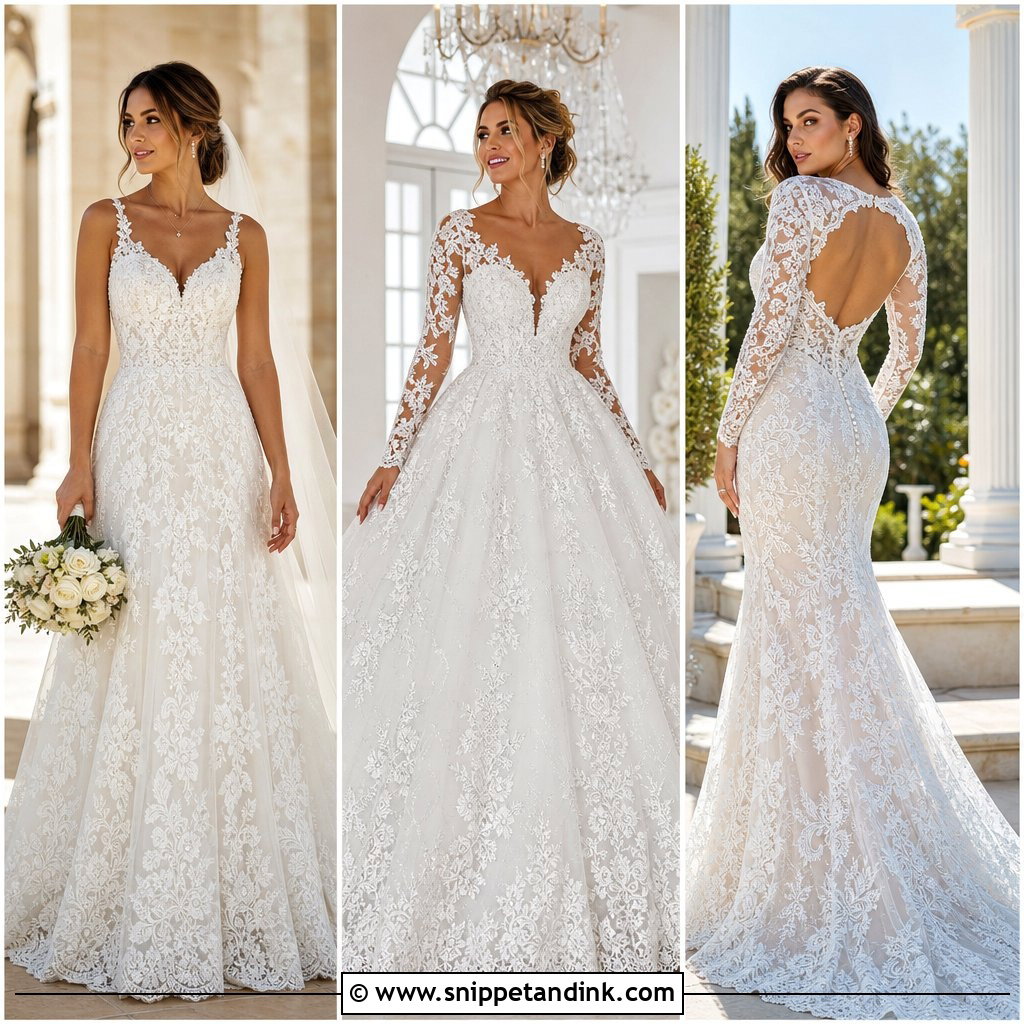
Lace tiers bring texture and a slightly vintage mood. Chantilly lace is fine and light, while embroidered floral lace makes more of a statement. Scalloped edges on each tier look lovely but add weight at the hem, so check that the skirt still swings when you walk. A matching lace bodice with sheer sleeves or a sweetheart neck holds the look together. Soft waves, pearl pins and ivory block heels suit garden and historic venues.
4. Tiered Satin Wedding Dress
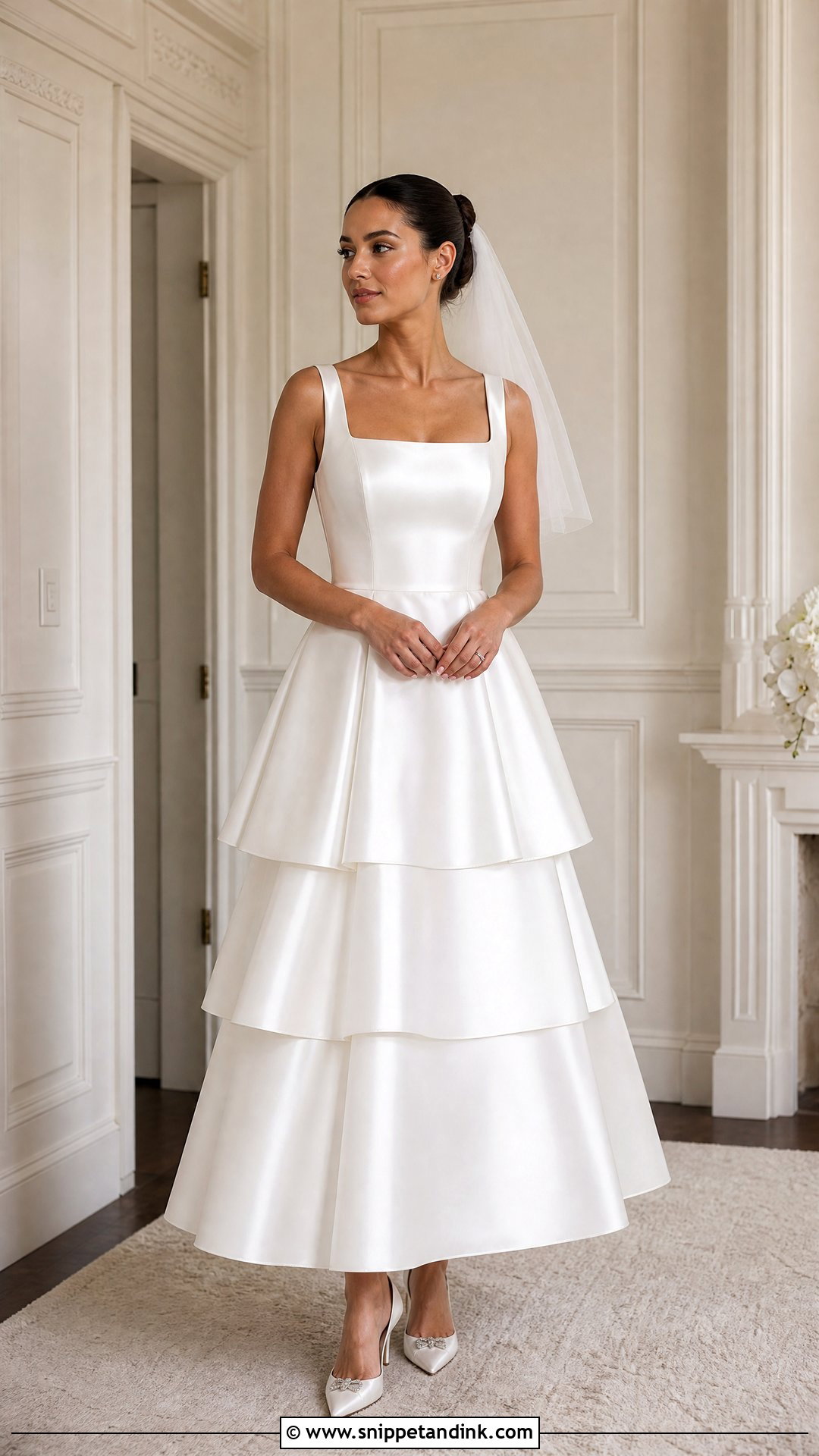
Satin tiers look smoother and more refined than whimsical, which suits a structured bodice, square neck or basque waist. They also show every crease, so each tier needs to be steamed separately after you’ve travelled in it. I’d keep jewelry to crystal studs and a slim bracelet. A short veil or polished bun stops the full skirt tipping into overly formal.
5. Tiered Ruffle Wedding Dress
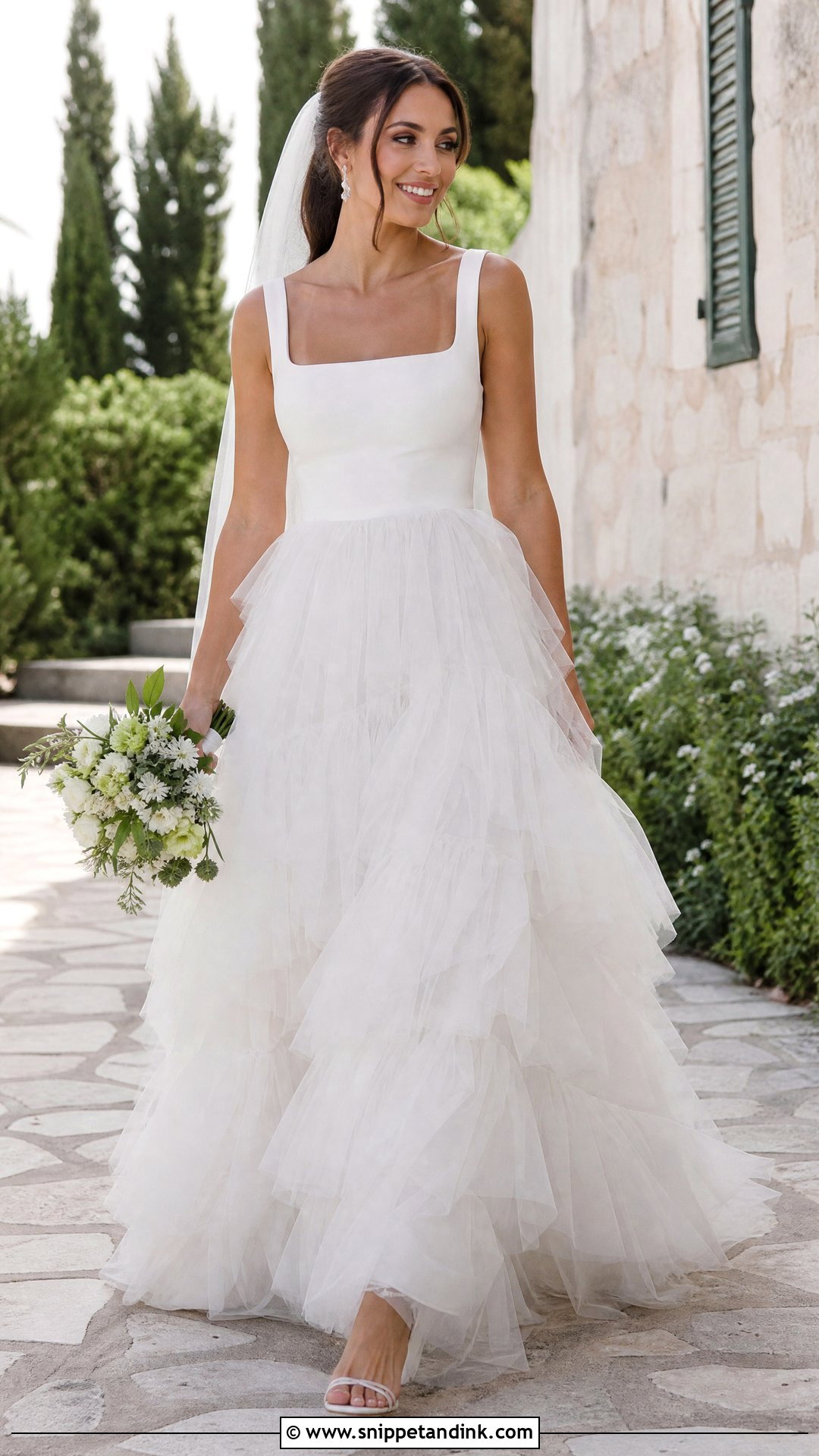
Ruffled tiers are about movement, and the fabric sets the tone: tulle flutters, organza looks editorial. Keep the bodice clean, a strapless corset, plain V-neck or fitted crepe, or the whole dress turns busy. Ruffles at the hem collect dust on outdoor ground, so I’d hem this one a little higher for a garden or barn. It comes alive walking and dancing, which is where your photographer should catch it.
6. Tiered A Line Wedding Dress
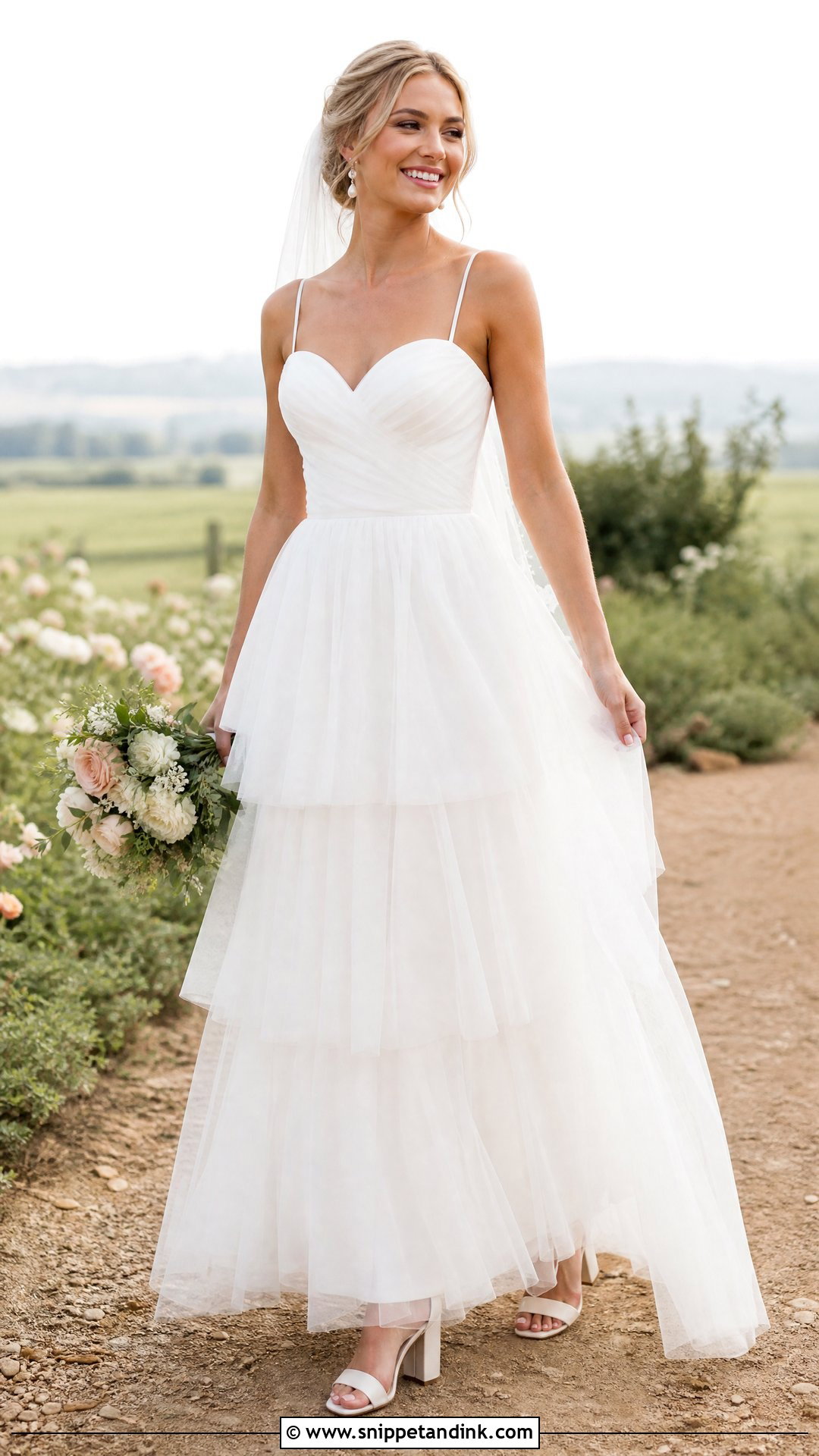
An A-line is the easiest tiered shape to live in, with movement and none of the ball-gown weight. The skirt eases away from the waist, which flatters most bodies. Soft tulle or chiffon tiers feel airy; satin tiers look more polished. A fitted bodice with straps gives support for a full day. Comfortable block heels make sense here, since this is the dress for outdoor and destination weddings.
7. Tiered Mermaid Wedding Dress
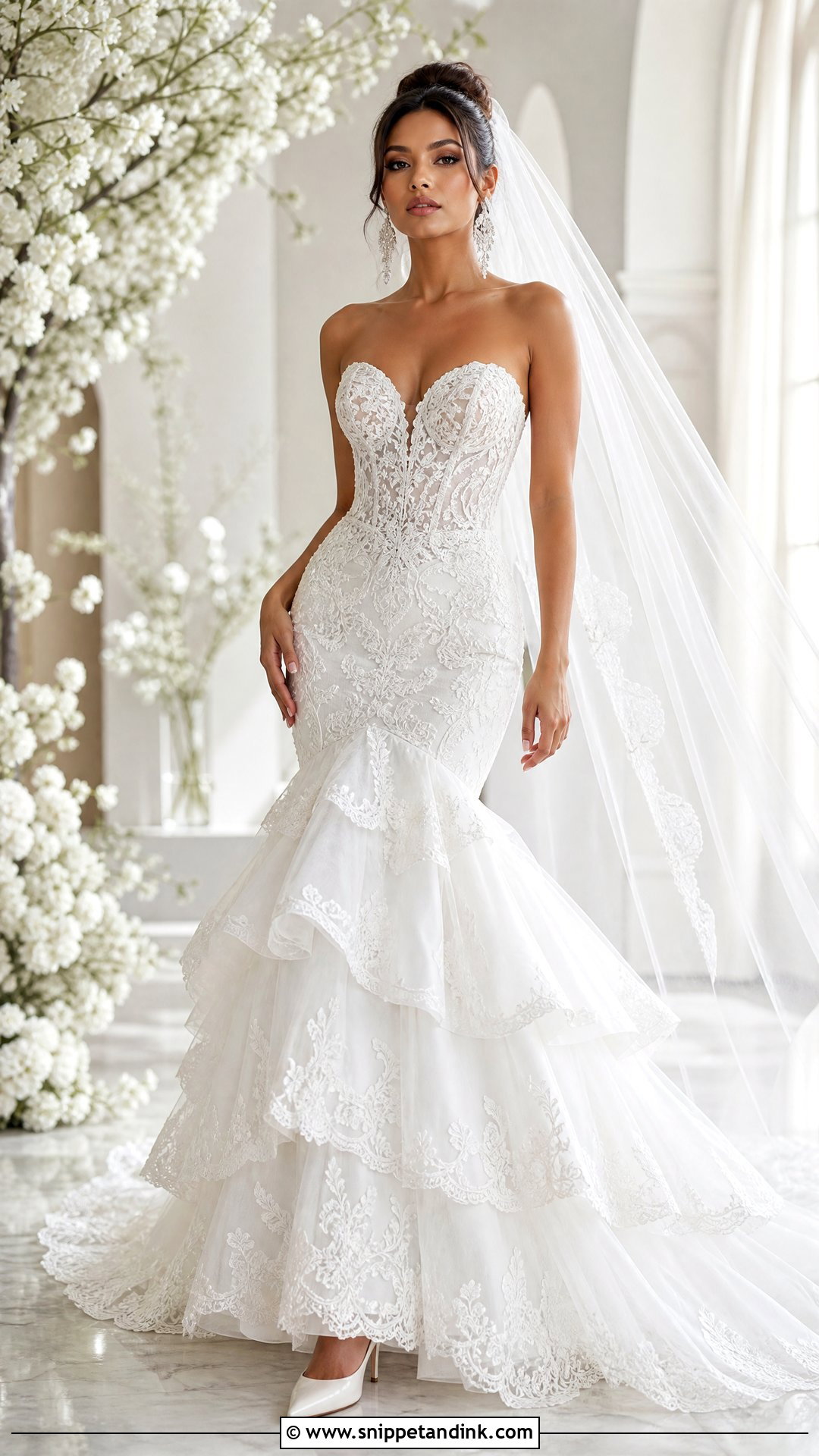
Here the bodice and hips stay sleek and the tiers burst out from the knee or lower thigh. The point where the flare starts is everything: too high and it cuts your leg, too low and you’ll shuffle. I always do a walking test and a stair test in this silhouette. The tiers should be light enough to move, so lace, tulle and soft organza beat satin. A long veil and pointed heels lengthen the line.
8. Tiered Strapless Wedding Dress
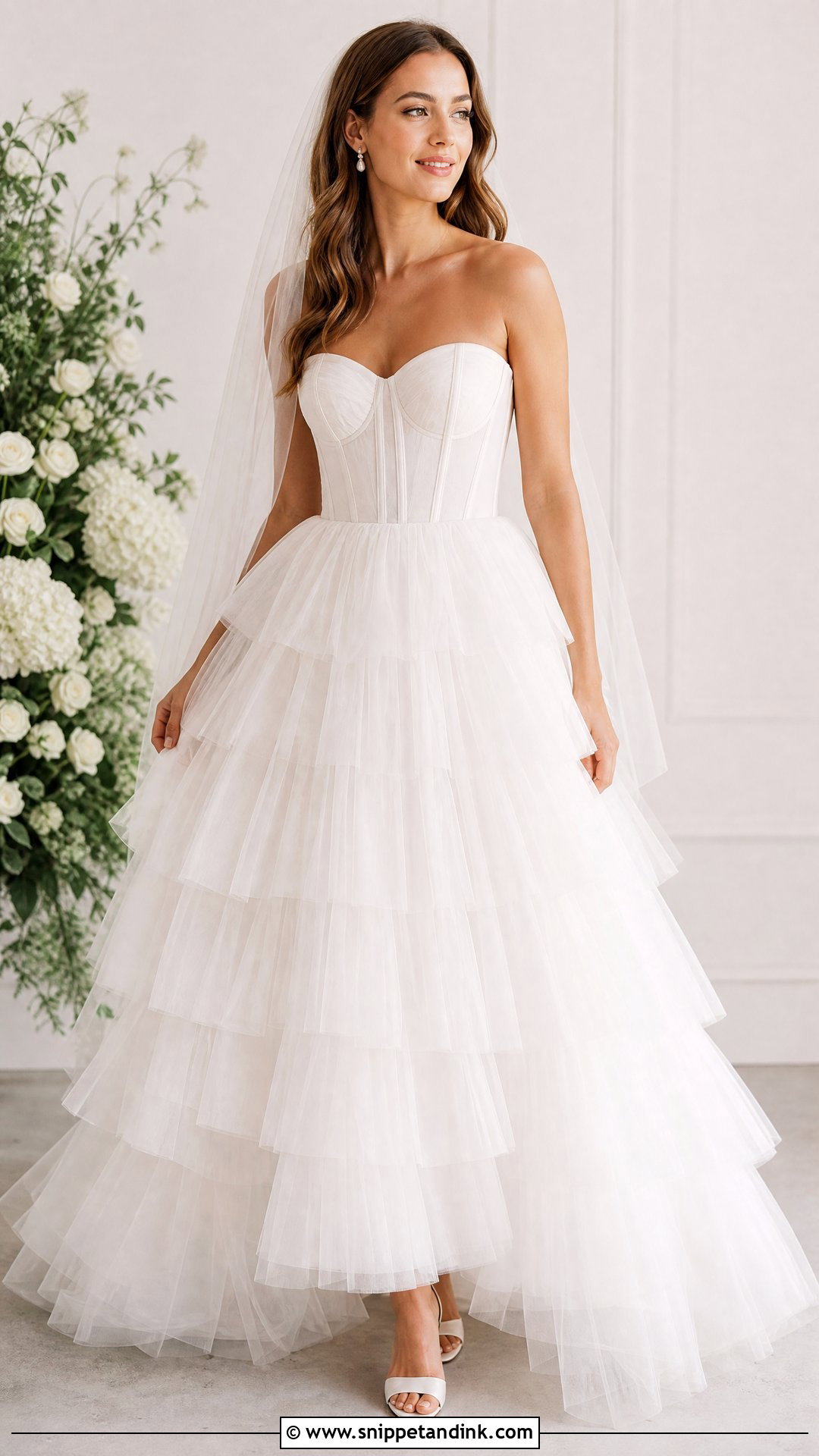
An open strapless neckline balances a busy layered skirt. A corset bodice is the safer choice because it does the holding, so you’re not hitching the dress up all evening. Accessories can go classic with pearls or modern with sculptural earrings. If the skirt is long and full, platform heels give height without the wobble of stilettos under all that fabric. A simple veil and soft waves finish it.
9. Tiered Off Shoulder Wedding Dress
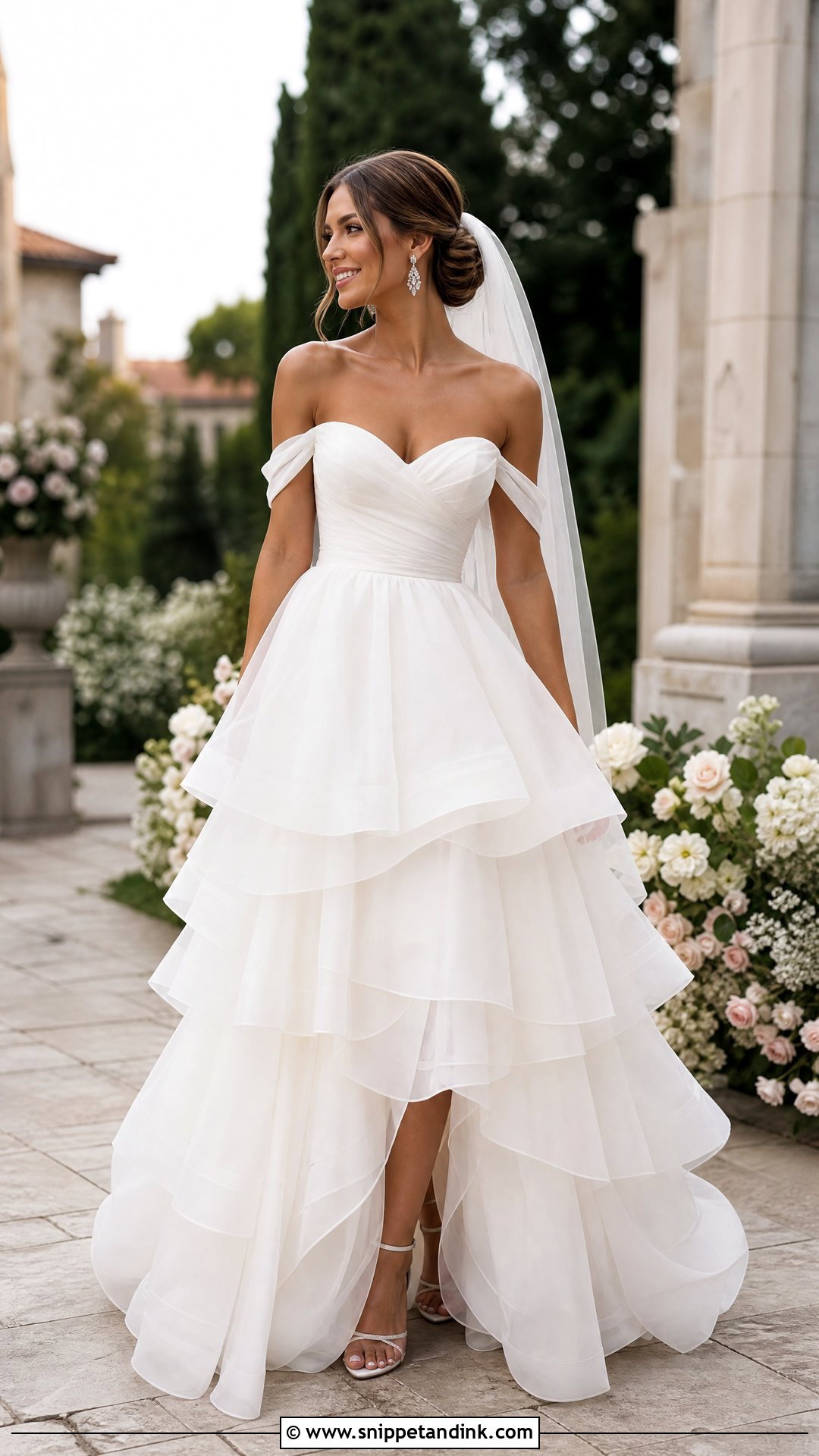
Bare shoulders soften a full skirt, and tulle, organza or lace suit the shape best. Keep the bodice snug, because an off-shoulder neckline on a heavy tiered skirt can be dragged down by the weight. A low bun or half-up style shows the shoulders. Add a delicate necklace only if the neckline leaves room. It works in formal venues and gardens alike.
10. Tiered Long Sleeve Wedding Dress
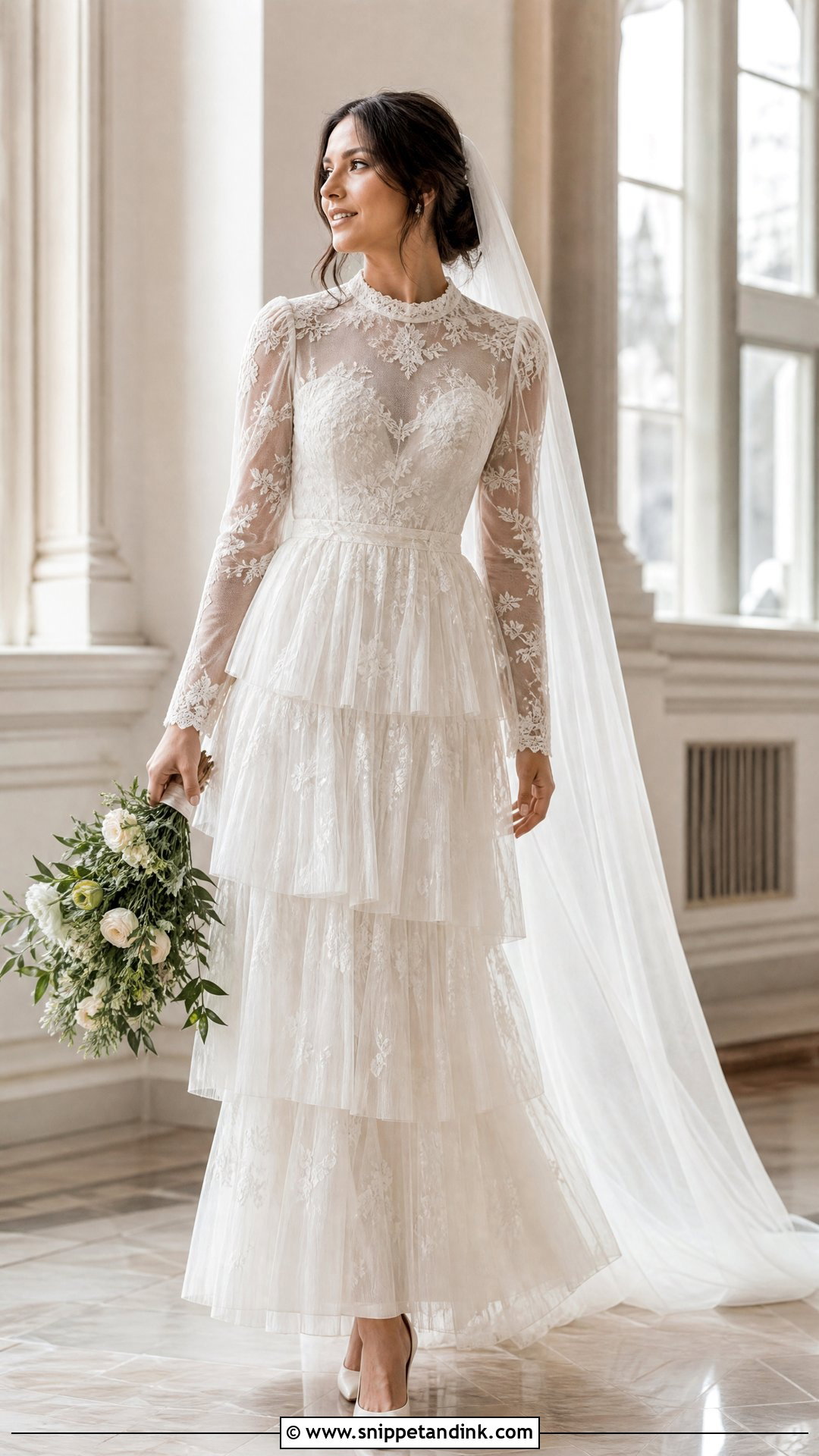
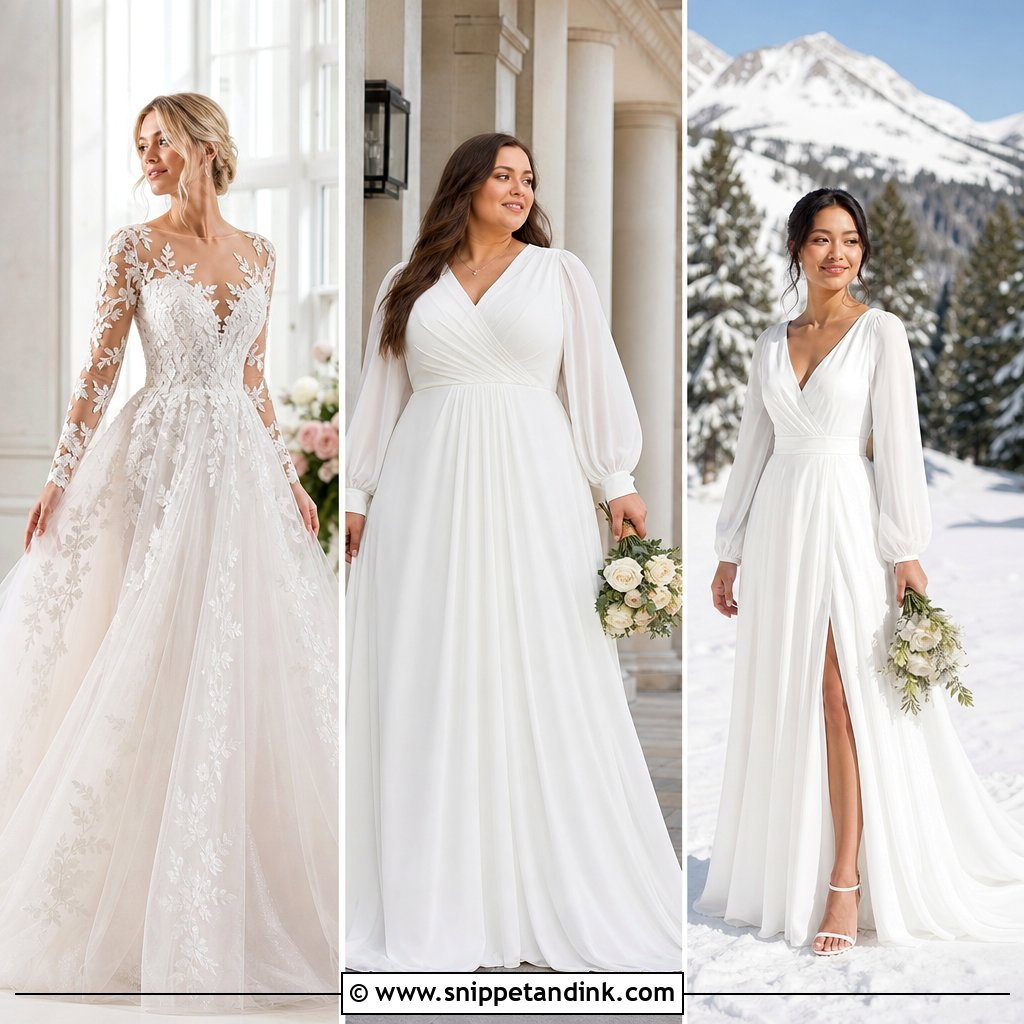
Long sleeves give coverage for autumn and winter, and the tiered skirt keeps them from feeling stern. Sheer lace sleeves are lighter; satin or crepe looks sleek. With a very full skirt, keep the sleeves plain so the top half doesn’t compete. A defined waist is non-negotiable here. Pearl studs, closed-toe heels and a low chignon keep the neckline clean.
11. Tiered Corset Wedding Dress
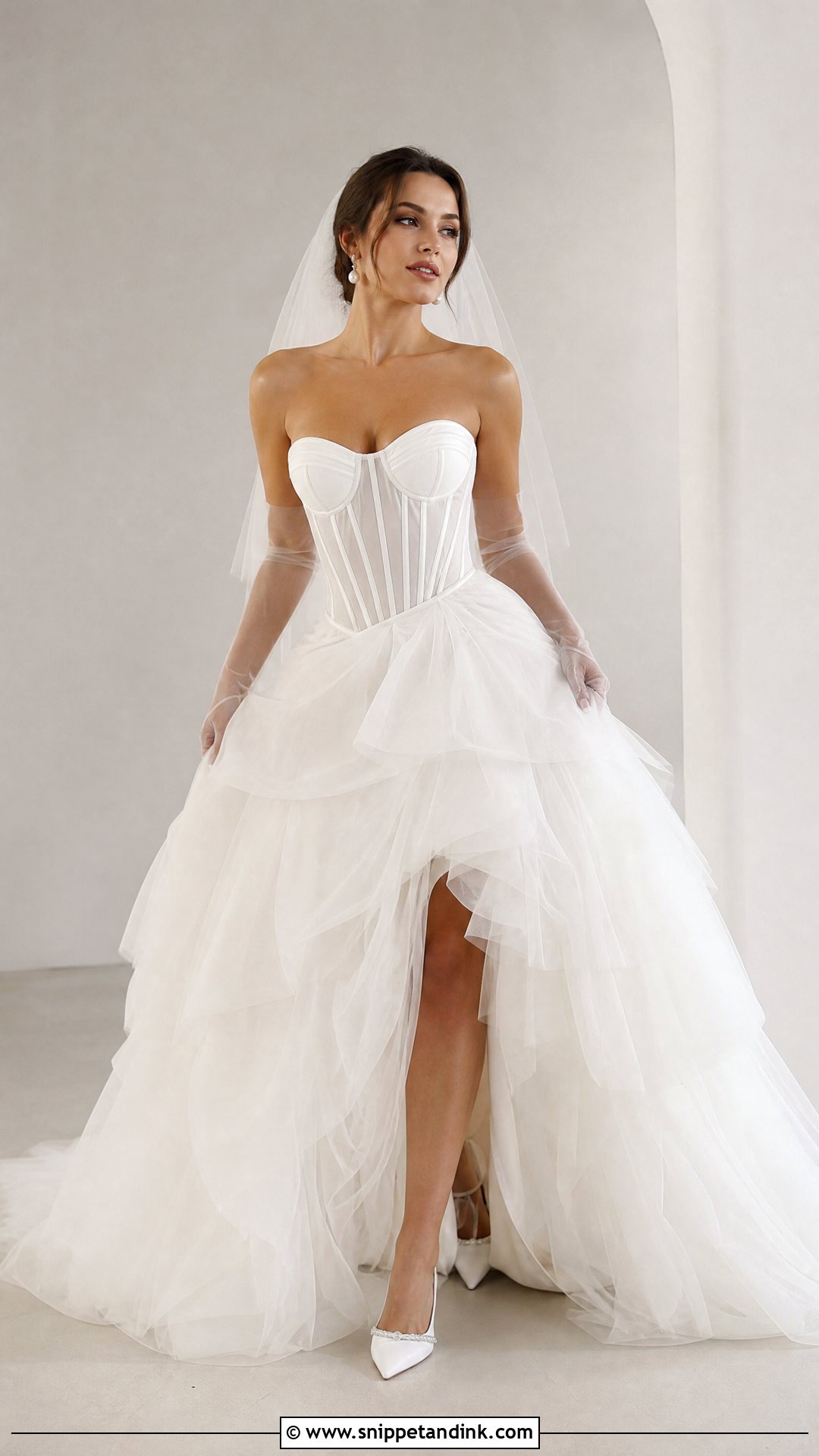
Pairing a boned bodice with a soft tiered skirt is the most current way to wear this shape. The corset holds you in and the layers loosen everything below. Look for subtle boning, a sweetheart neckline or a basque waist. Sit and eat a little at your fitting; a corset that’s comfortable standing can bite when you’re seated for dinner. Sheer gloves are a nice fashion touch.
12. Tiered Basque Waist Wedding Dress
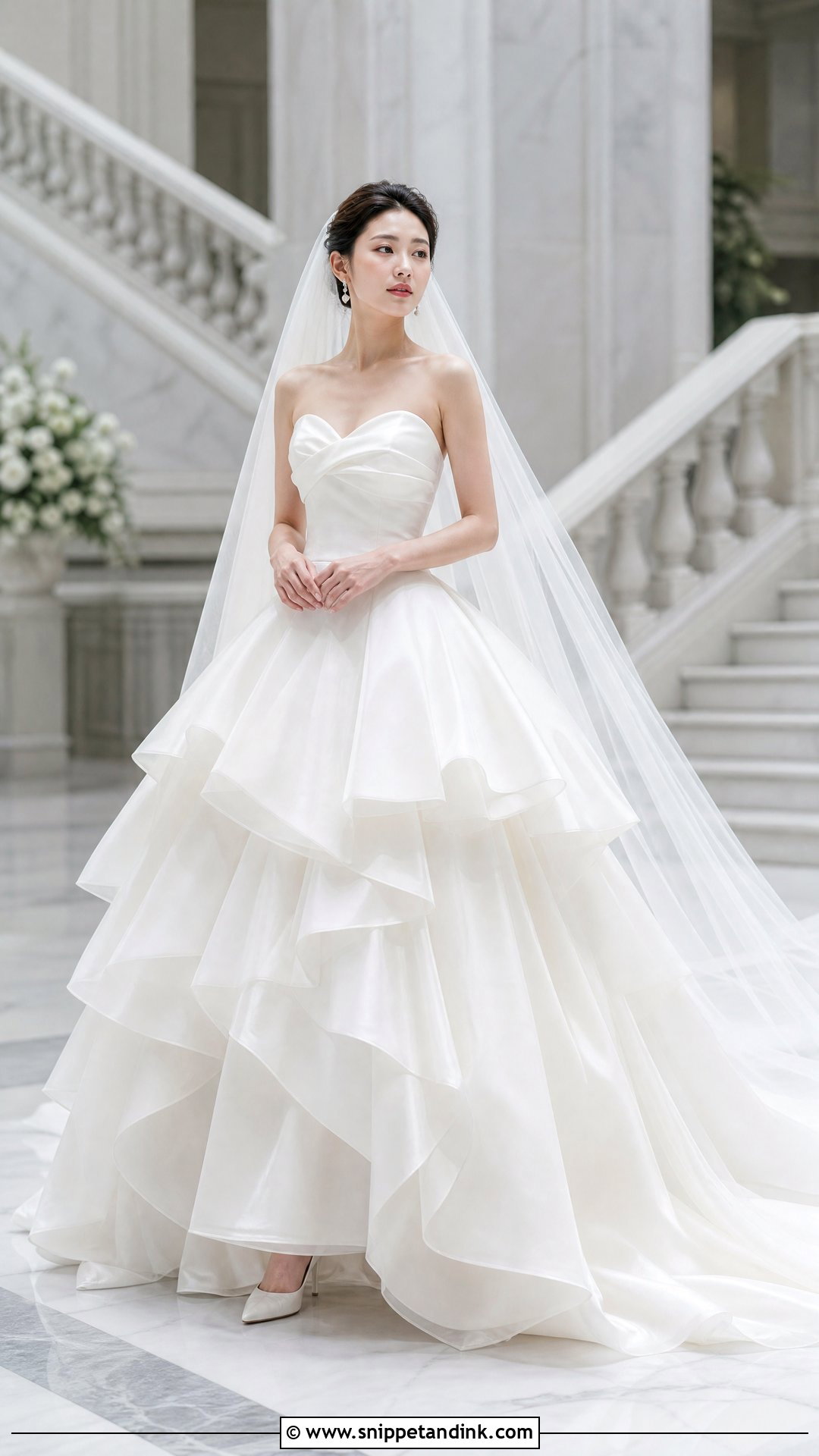
The basque waist dips into a V below the natural waist, lengthening the torso before the tiers take over. Satin, organza and layered tulle all keep that V visible. It needs a clean upper body, strapless or off-shoulder, and suits a cathedral veil and pointed heels. I’d be careful with very short torsos, since the dropped point can sit uncomfortably low when you sit. It looks strongest from the front and side.
13. Tiered Chiffon Wedding Dress
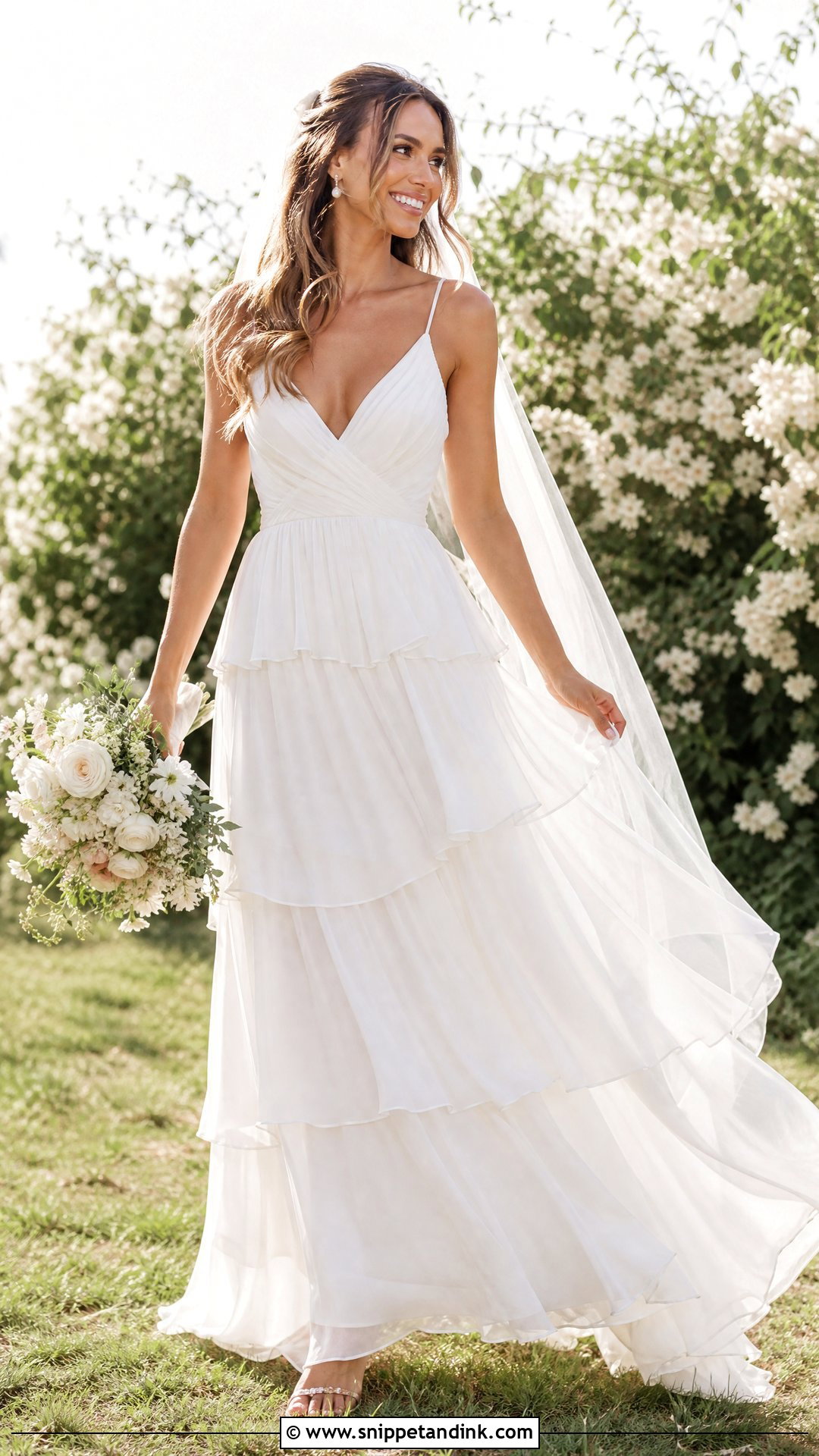
Chiffon tiers are soft and catch the breeze, so this is my pick for beach, garden and warm-weather weddings. They feel lighter than tulle or organza and drape rather than puff. A V-neck, flutter sleeves or fine straps suit the fabric. Chiffon shows sweat marks on a hot day more than tulle does, so a breathable lining matters. Sandals, pearl earrings and loose waves keep it relaxed.
14. Tiered Beach Wedding Dress
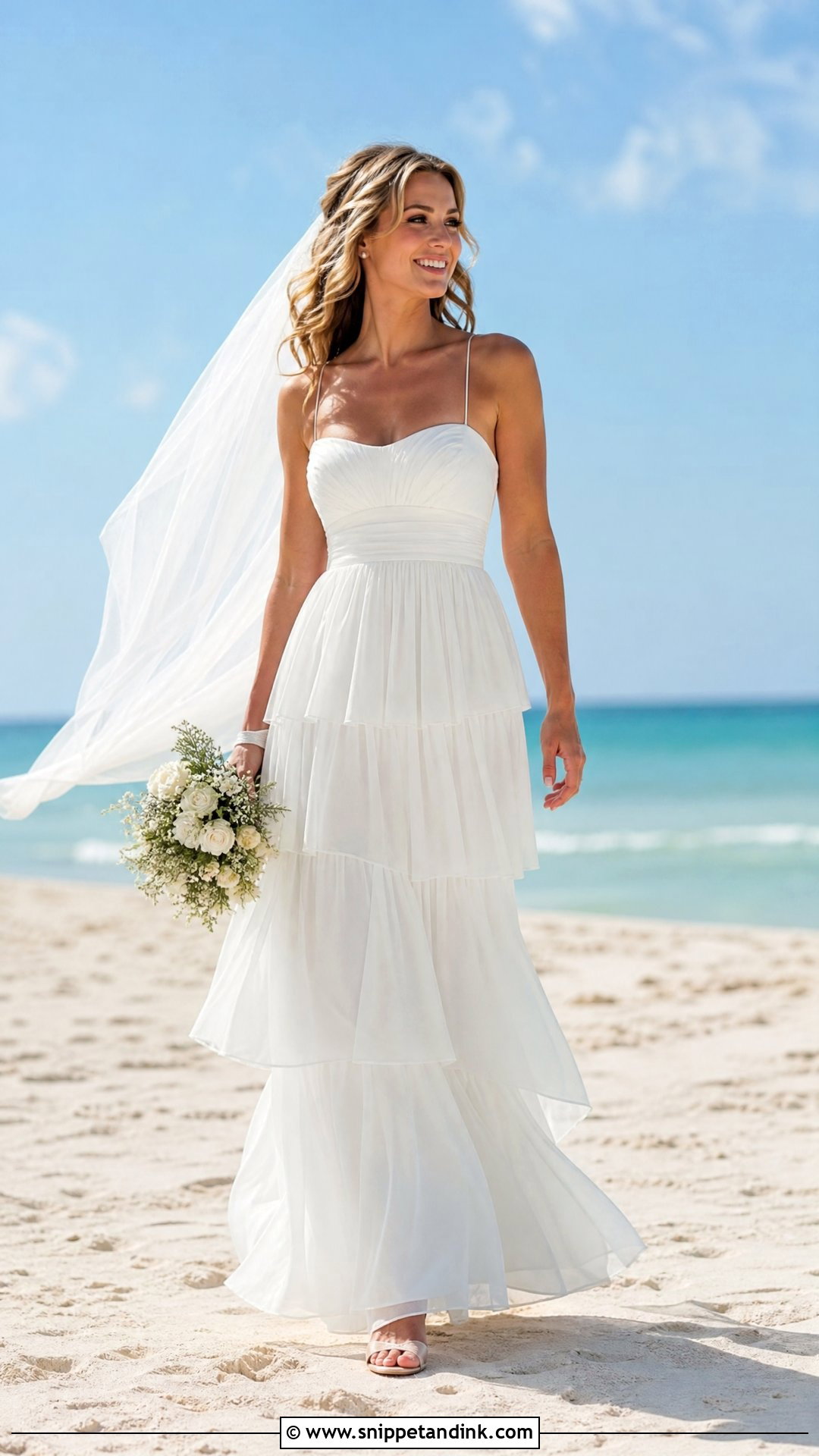
On sand, the dress must be light and narrow at the hem, or every step drags a wide skirt through wet grains. Soft chiffon, airy tulle or light lace beat satin. Pick tiers that fall close to the body rather than flaring wide. Flat sandals are a must. A breezy veil that moves freely suits the setting, and a loose updo keeps hair off a sweaty neck.
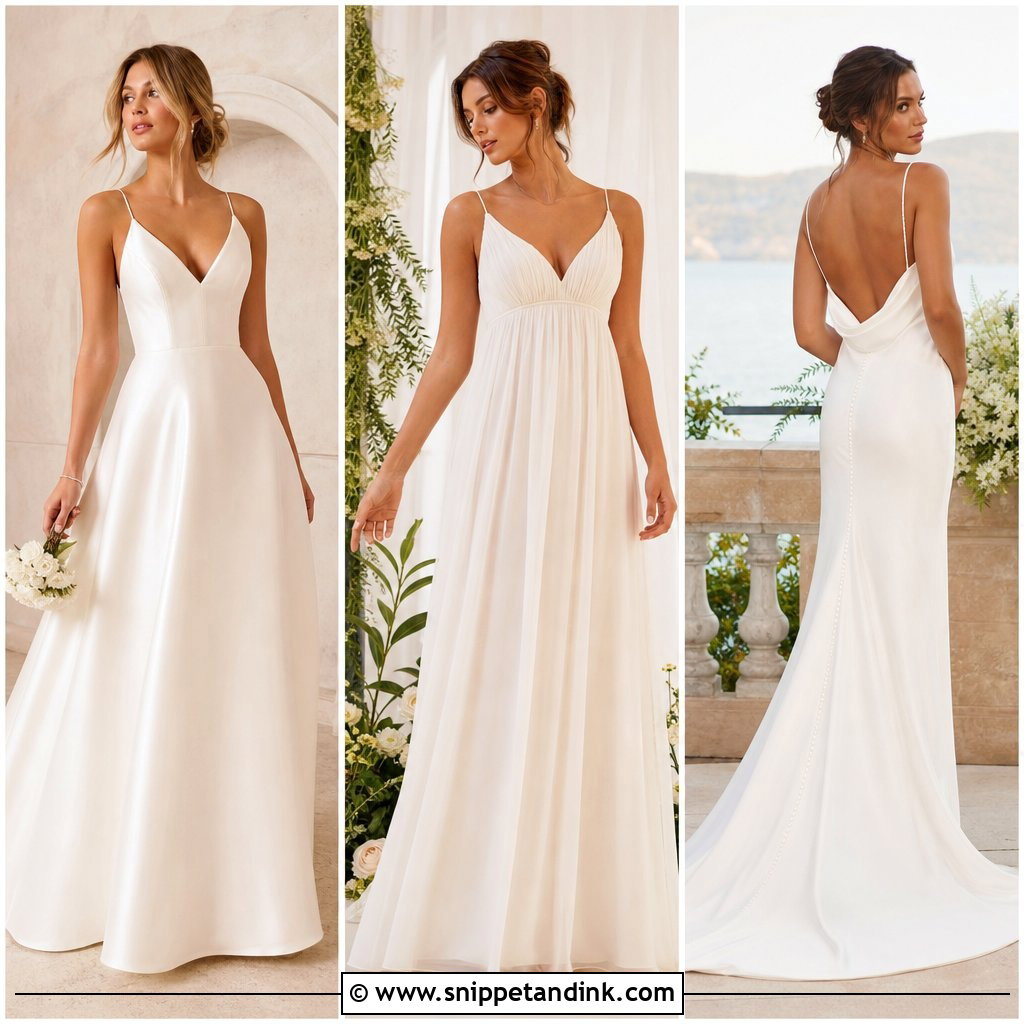

15. Tiered Garden Wedding Dress
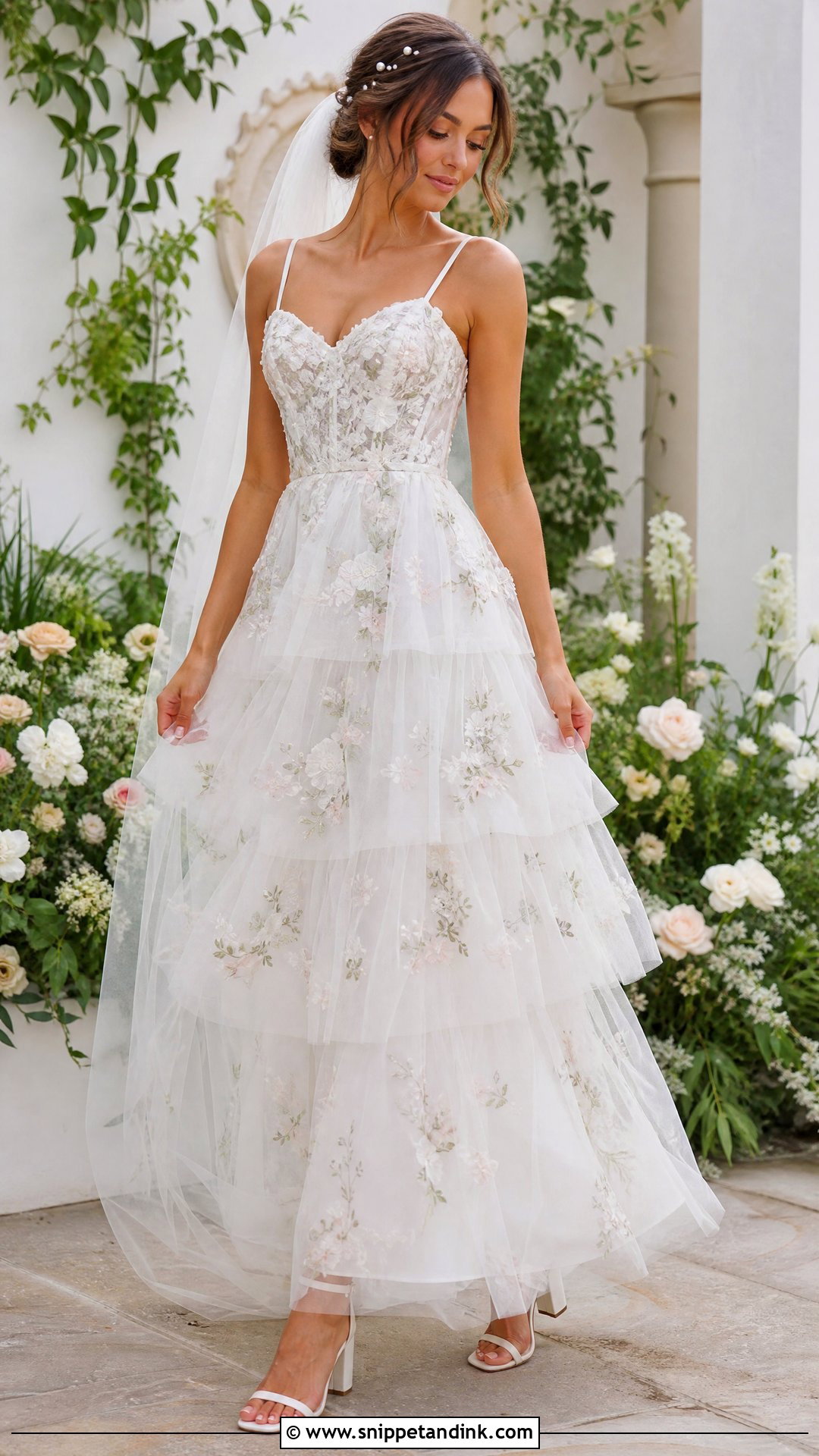
Gardens call for softer tiers in floral lace, embroidered tulle or delicate chiffon. Stiff tiers look out of place on a casual lawn. A fitted bodice with thin straps or off-shoulder sleeves keeps it feminine, and block heels won’t sink into grass. Grass stains on a trailing tier are common, so I’d keep the back hem just off the ground. Garden roses, sweet peas and greenery complete it.
16. Tiered Courthouse Wedding Dress
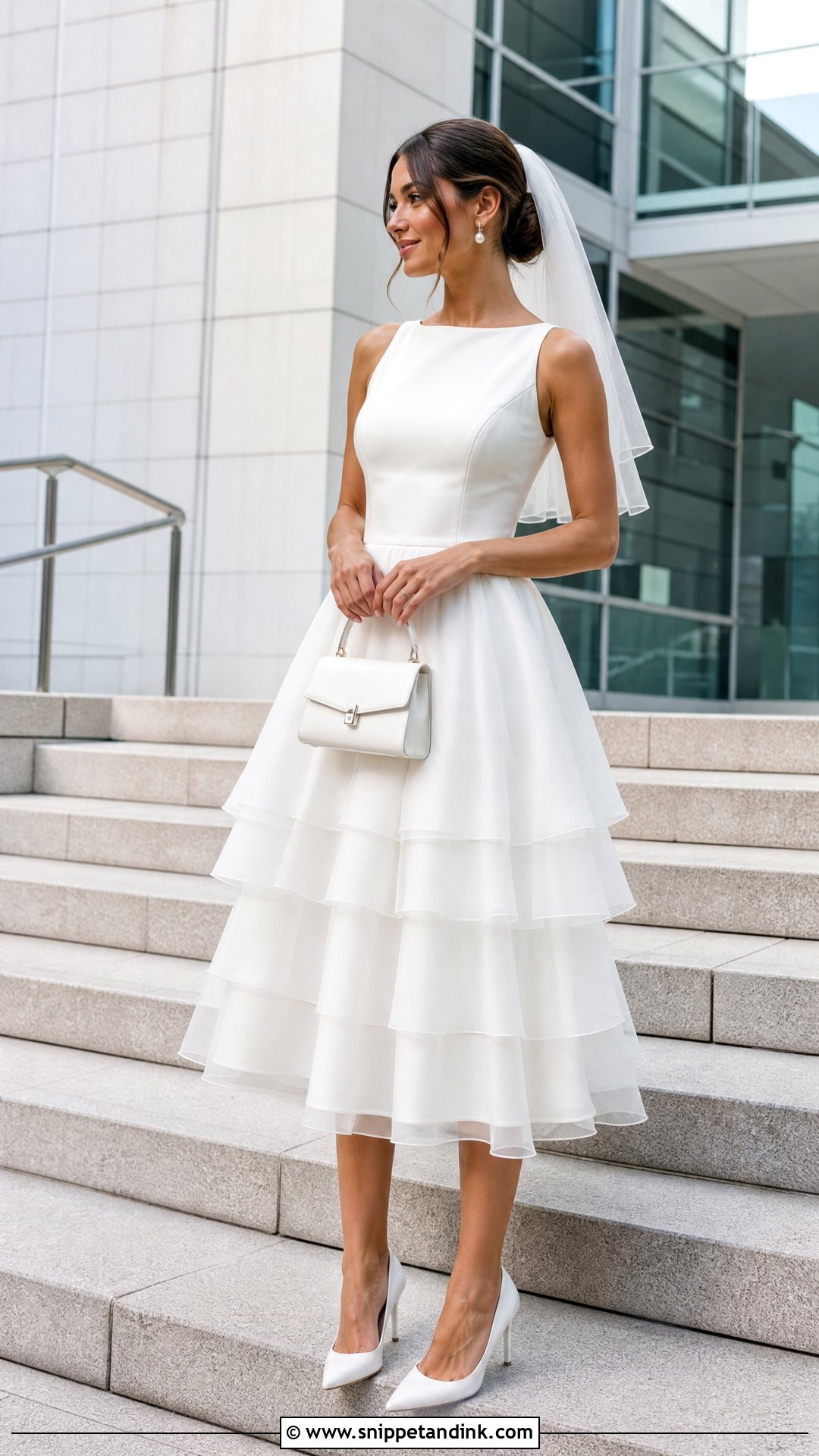
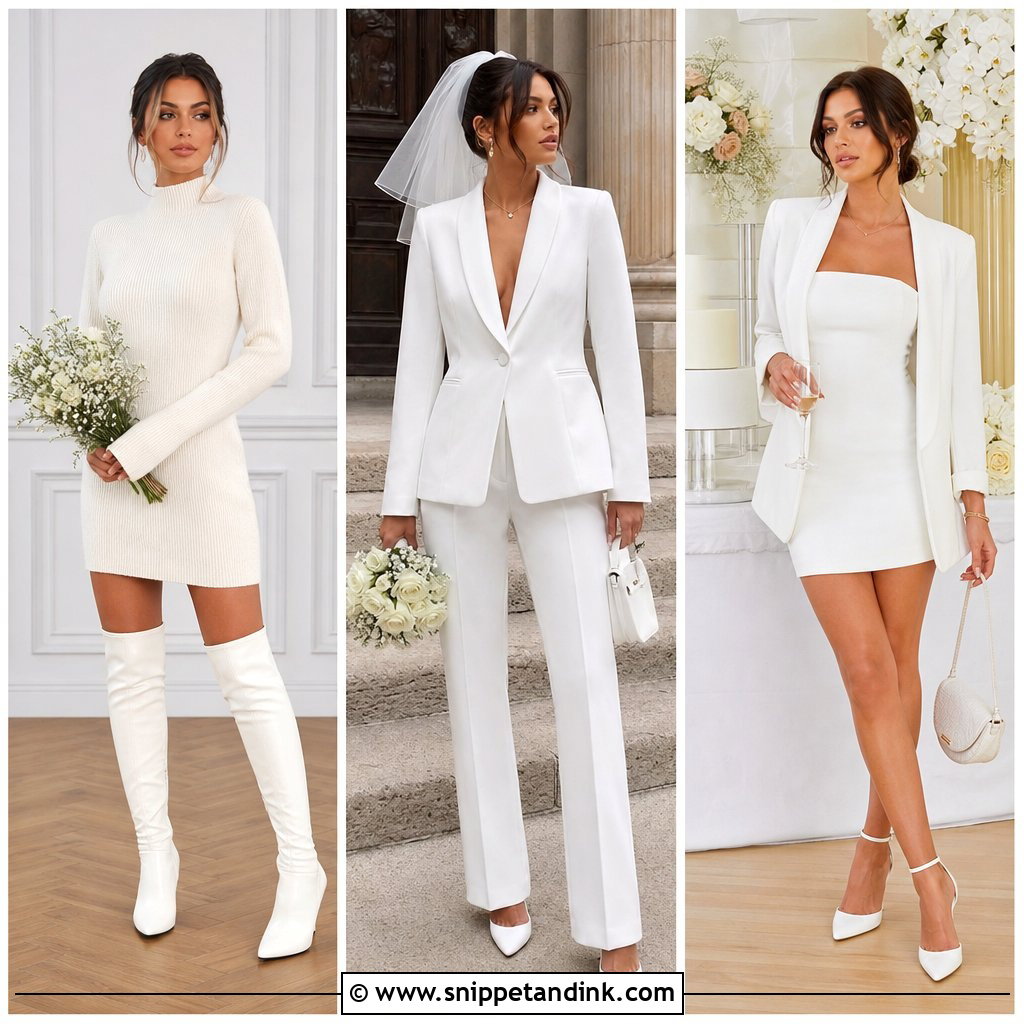
For a courthouse, keep the tiers small and the length short. A knee-length tulle dress, a tea-length organza gown or a satin mini with a tiered hem all read bridal without being overdone. Pointed pumps, pearl earrings and a small structured bag suit civil ceremonies and city photos. A plain version can be worn again, which makes it good value.
17. Tiered Tea Length Wedding Dress
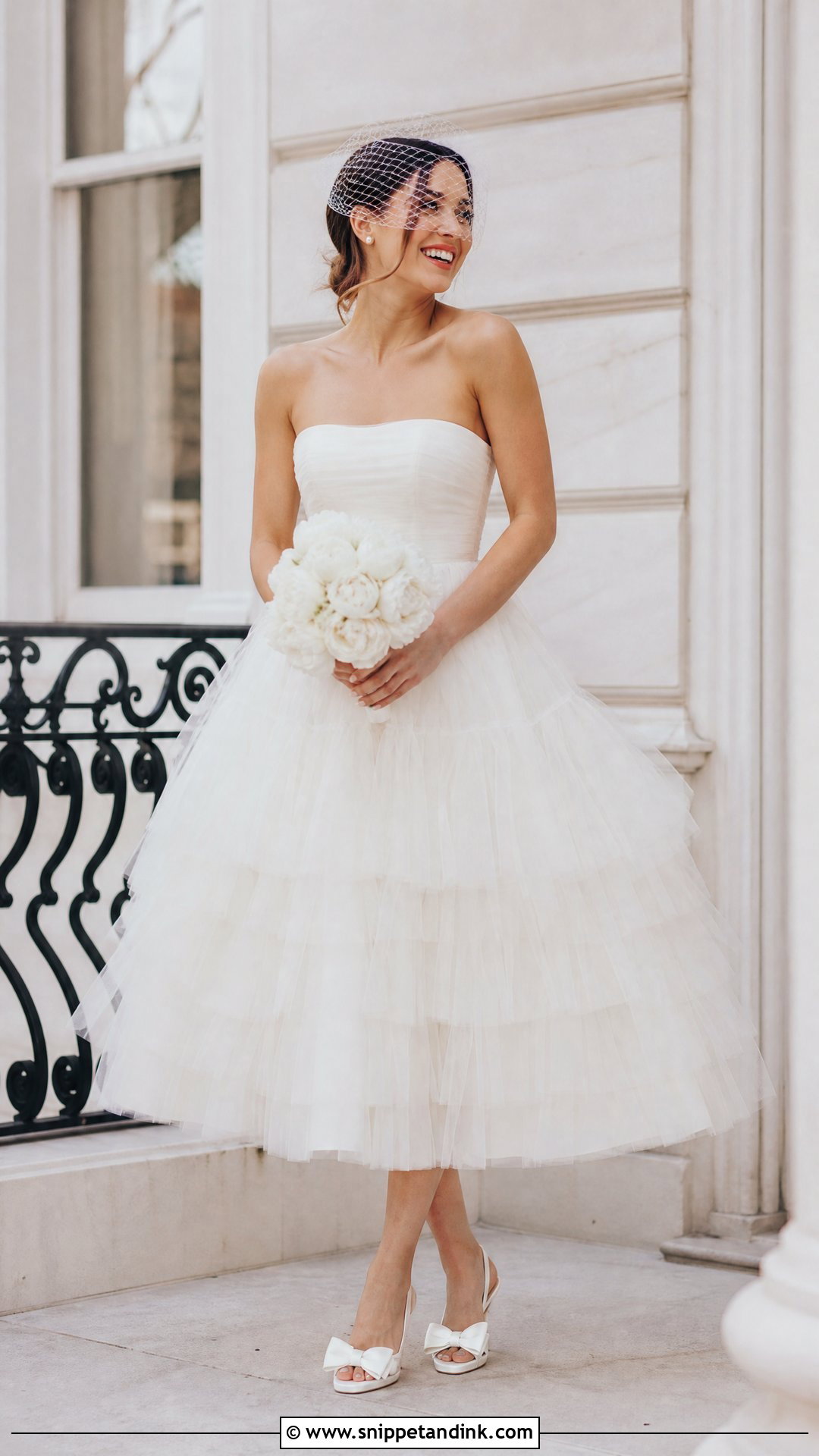
Tea length lands between knee and ankle, so your shoes become part of the outfit: satin pumps, bow heels or embellished flats. Tulle tiers give a retro bridal feel, and organza looks cleaner. A fitted bodice, bateau neck or strapless top balances the shorter skirt. Have the length set while wearing your actual shoes; a centimetre makes a big difference at this hemline.
18. Tiered Mini Wedding Dress
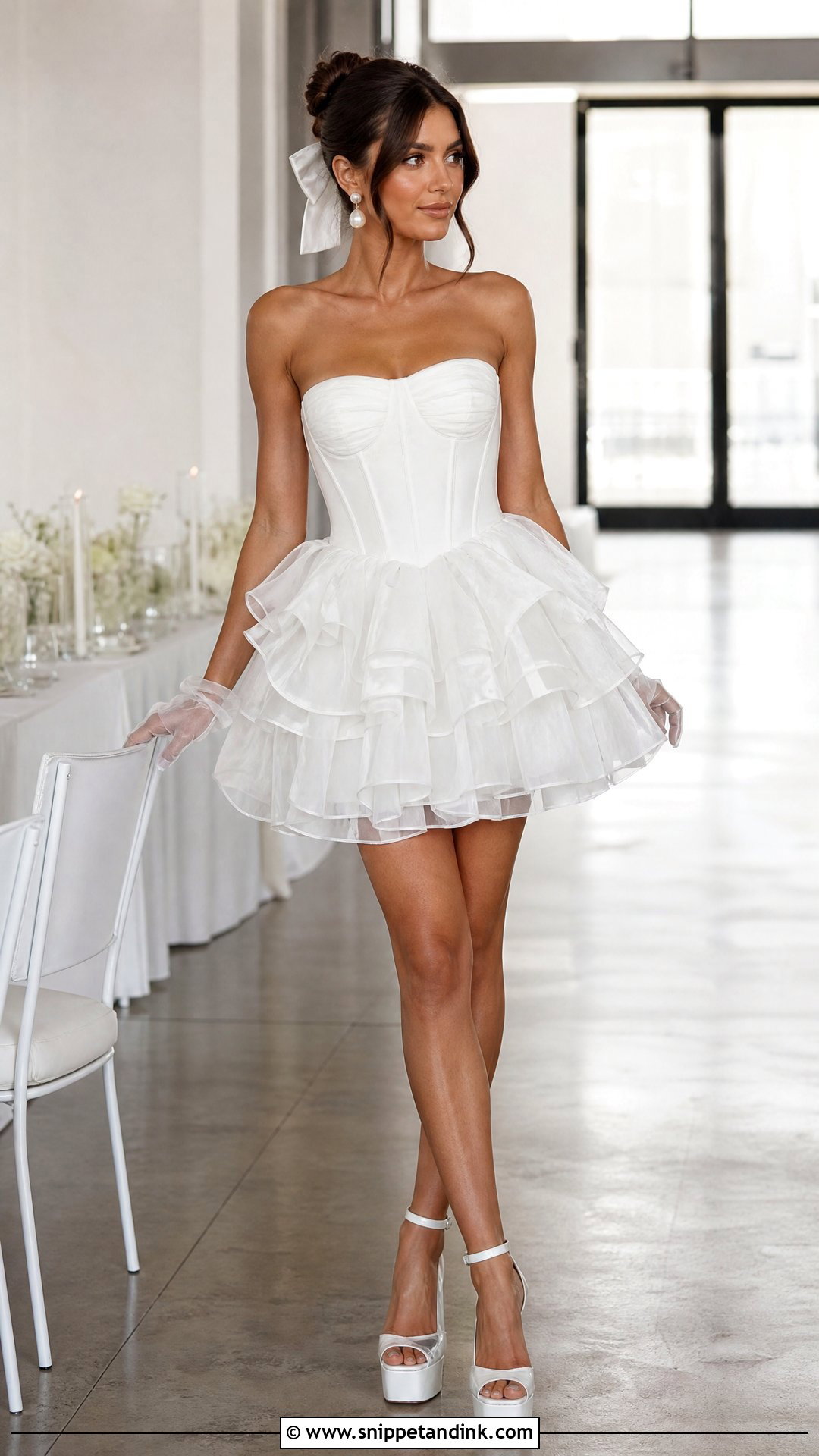
A tiered mini is the reception change I suggest most, because it moves and needs almost no managing. Tulle, organza or feather-light ruffles add texture, while a structured bodice stops it looking casual. Check the length sitting down; tiered minis ride up more than straight ones. Platform heels, pearl earrings and a mini veil or bow keep it bridal.
19. Tiered High Low Wedding Dress
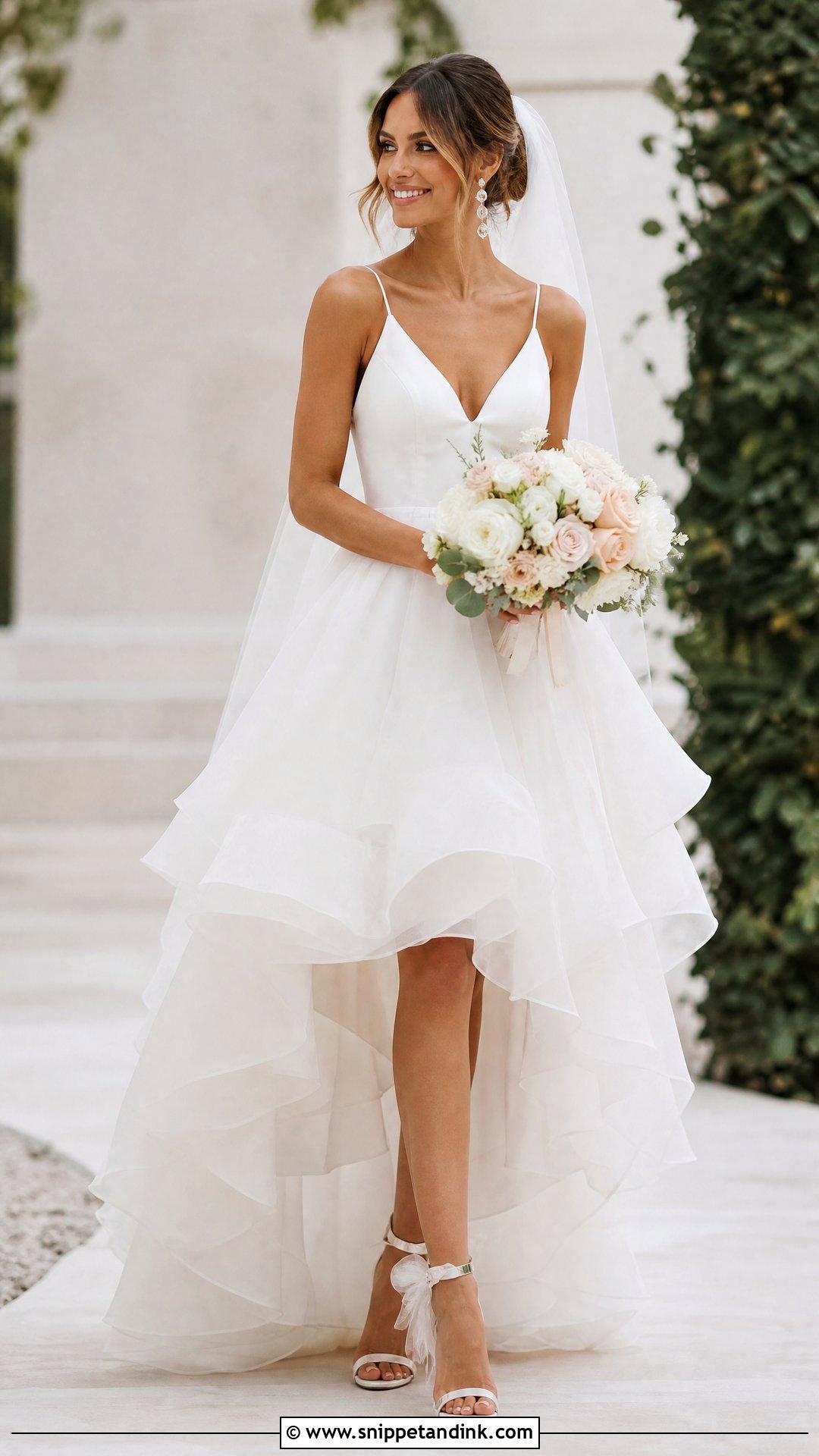
A high-low hem gives you a train-like back with a front that clears your shoes. Organza, tulle and layered lace suit it. Your heels will be on show in every photo, so choose them with care. Ask how the back tiers bustle, because a high-low with a long back can trip you on the dance floor if it isn’t lifted. Hold the bouquet low and to one side so it doesn’t hide the front hem.
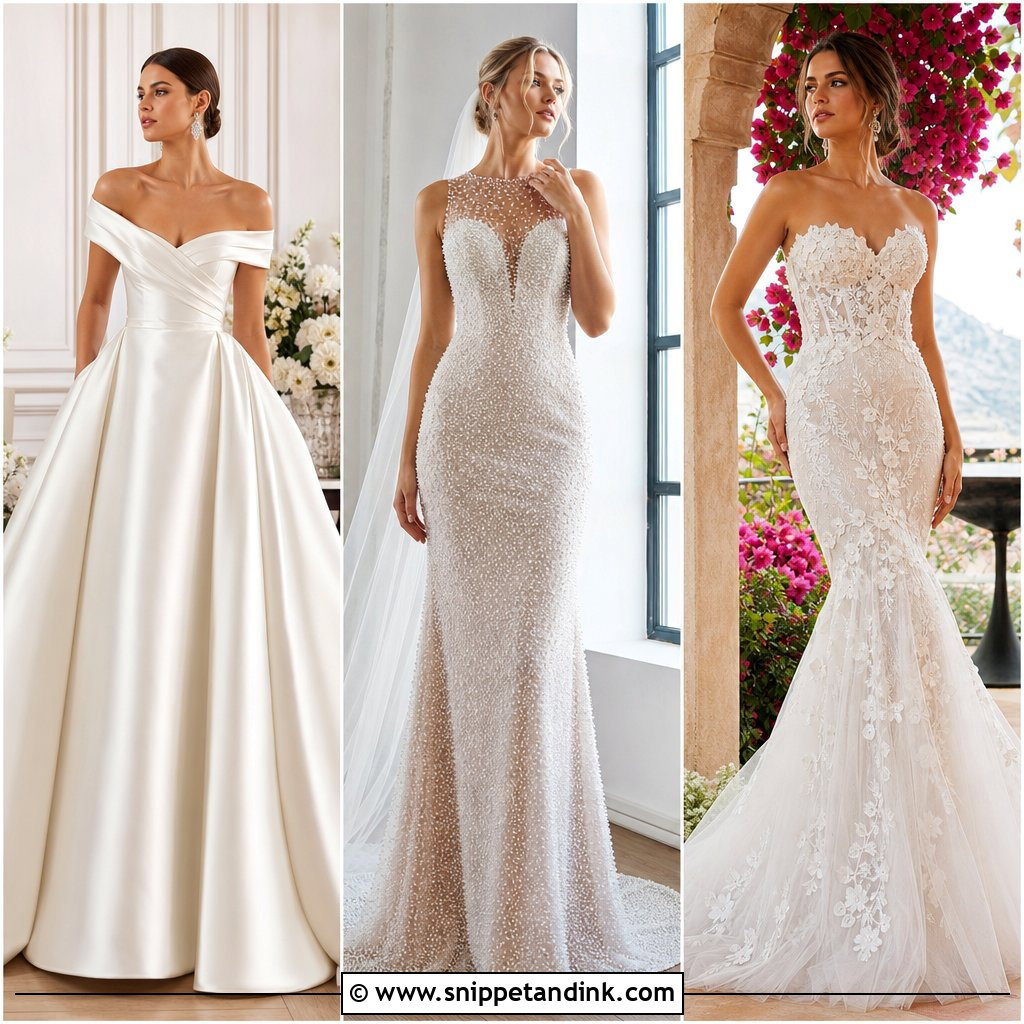

20. Tiered Floral Wedding Dress
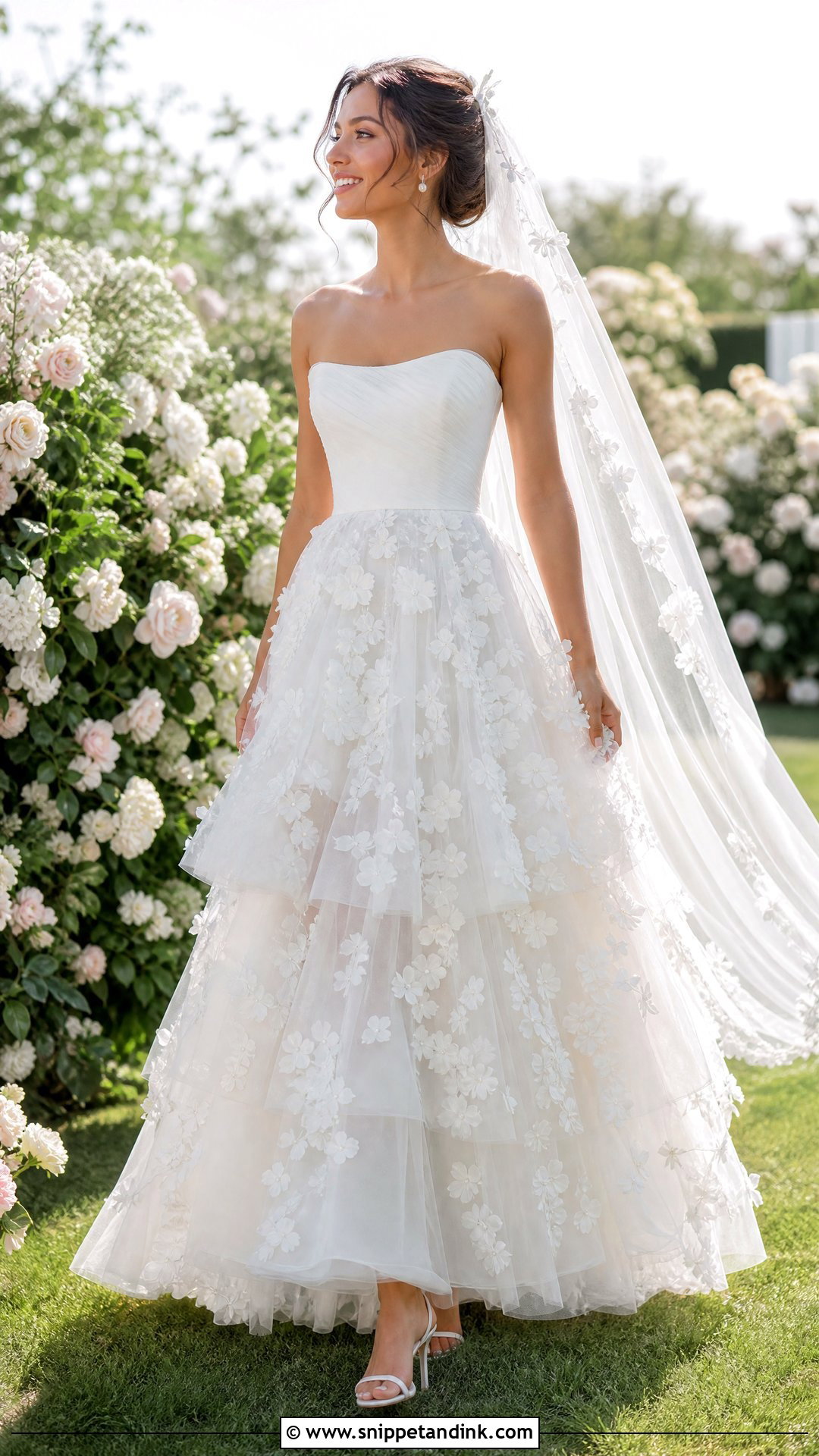
Flowers on tiers gain depth as the layers move. They might be lace, embroidery, appliqué or a soft print. Heavy appliqué on the skirt needs a plain bodice; scattered florals can travel all over. Appliqué flowers on lower tiers catch on heels, so check how high they start. Spring, summer and garden weddings suit it best.
21. Tiered Boho Wedding Dress
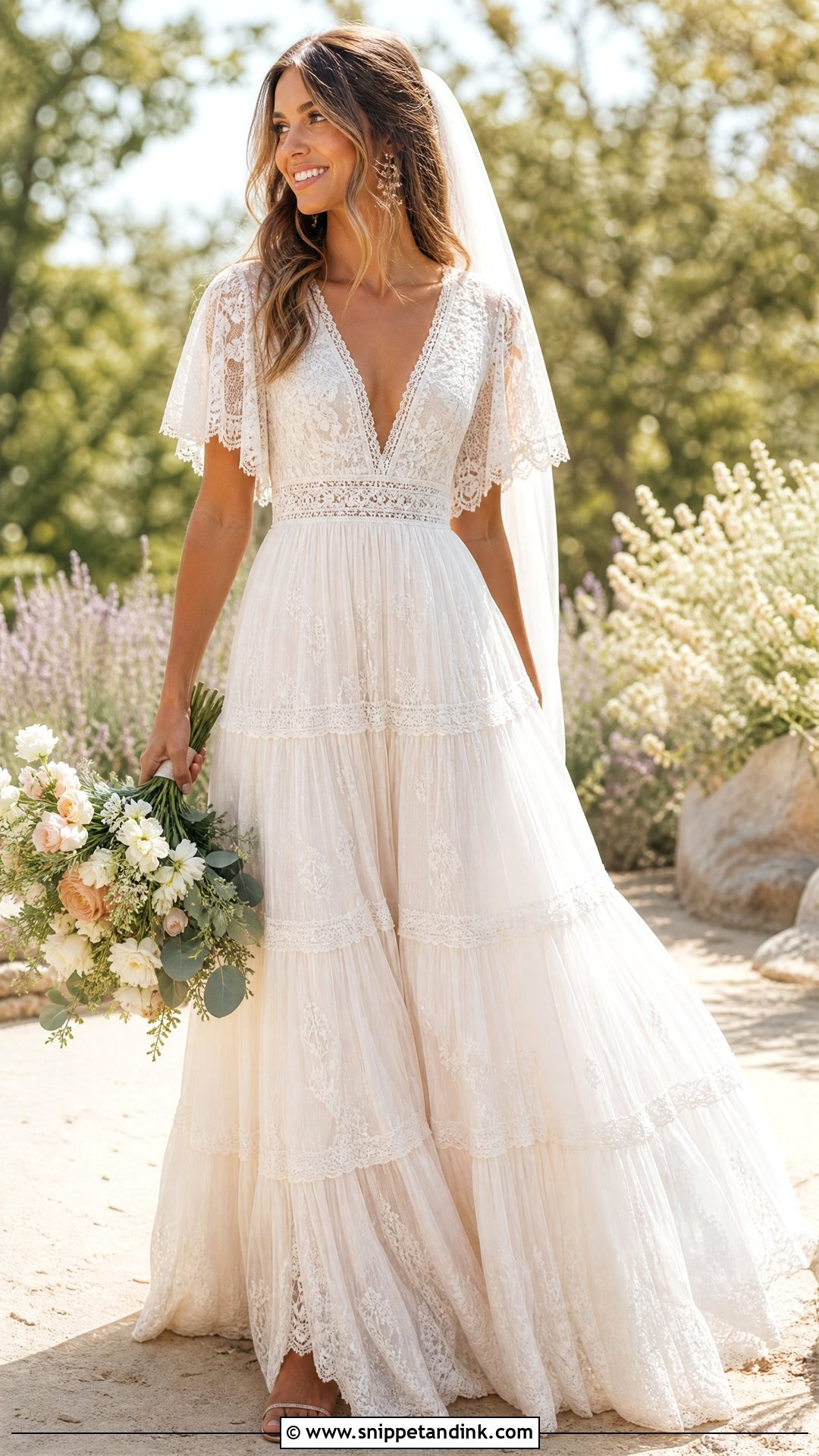
A tiered boho wedding dress is soft lace or chiffon tiers with flutter sleeves on a flowing A-line, and it should look relaxed rather than built. Loose waves, delicate earrings and sandals or block heels suit it. A floral comb or plain veil keeps it bridal without formality. Keep the bouquet organic, with greenery and loose blooms.
22. Tiered Vintage Wedding Dress
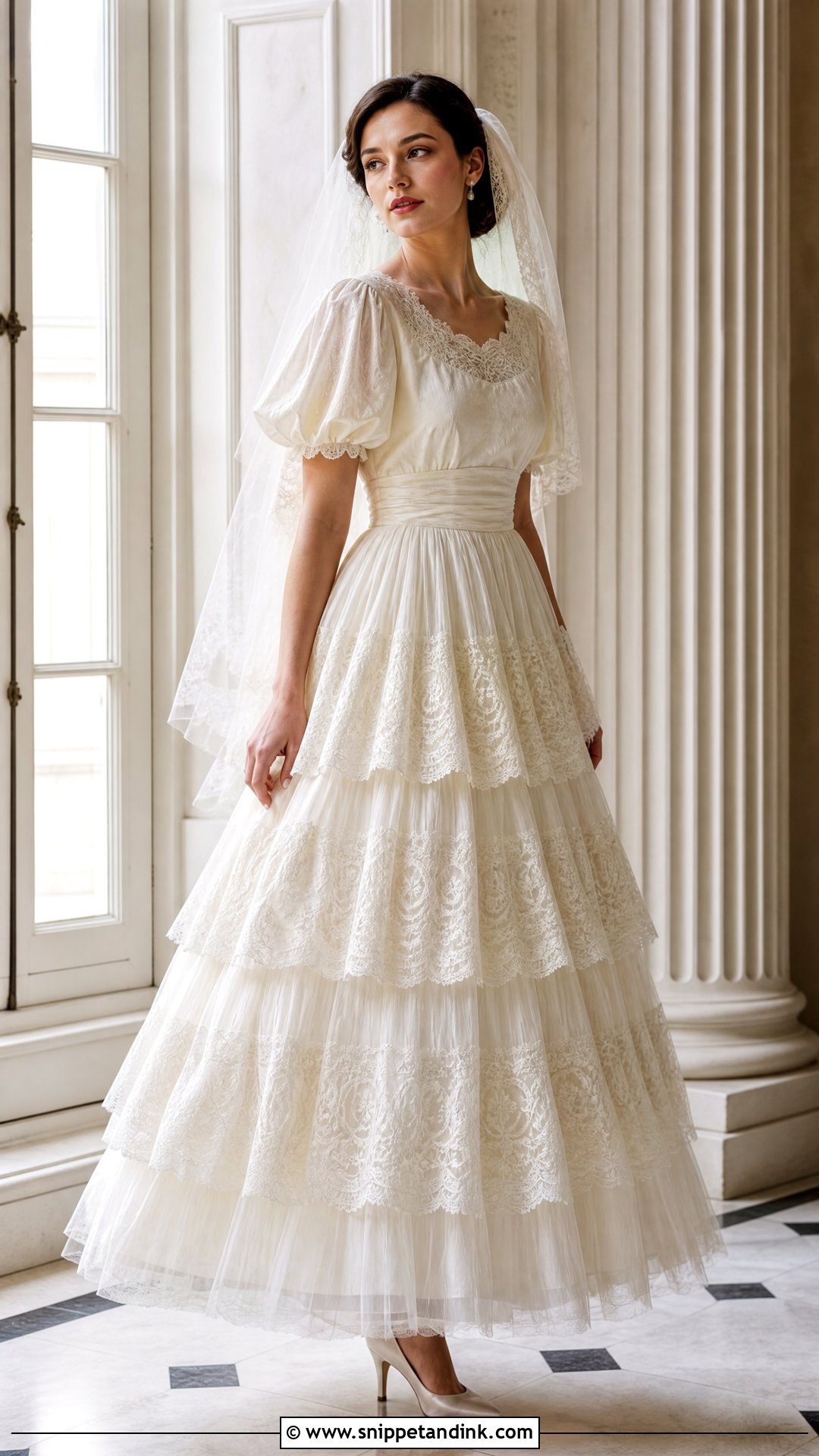
A tiered vintage wedding dress can borrow from the 1970s, the 1950s or Edwardian dresses: lace tiers, high necks, puff sleeves and tea-length hems. A fitted waist is essential, because vintage tiered shapes can look like a nightgown without one. Keep the styling clean with pearl earrings, satin pumps and a soft veil. It suits heirloom details, such as a family brooch pinned at the waist.
23. Tiered Plus Size Wedding Dress
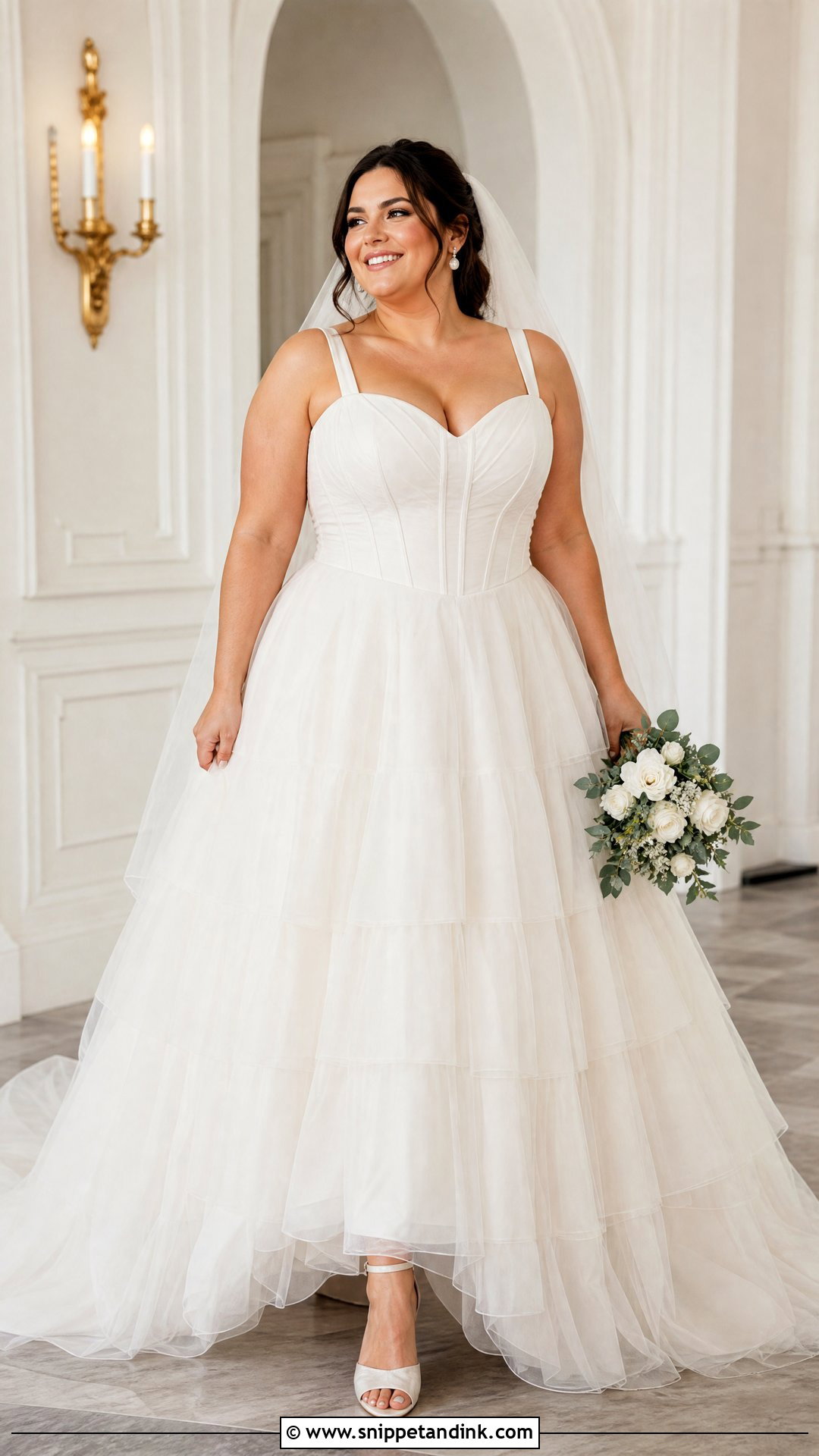
Tiers flatter plus-size figures when the volume is placed carefully. The widest tier shouldn’t land at your widest point; I want the first flare starting just below the waist and the tiers falling smoothly from there. A-line and ball gown shapes balance the most. A supportive bodice with straps, sleeves or a corset is worth the fitting time. Choose a veil scaled to the skirt so neither overwhelms the other.
24. Tiered Simple Wedding Dress
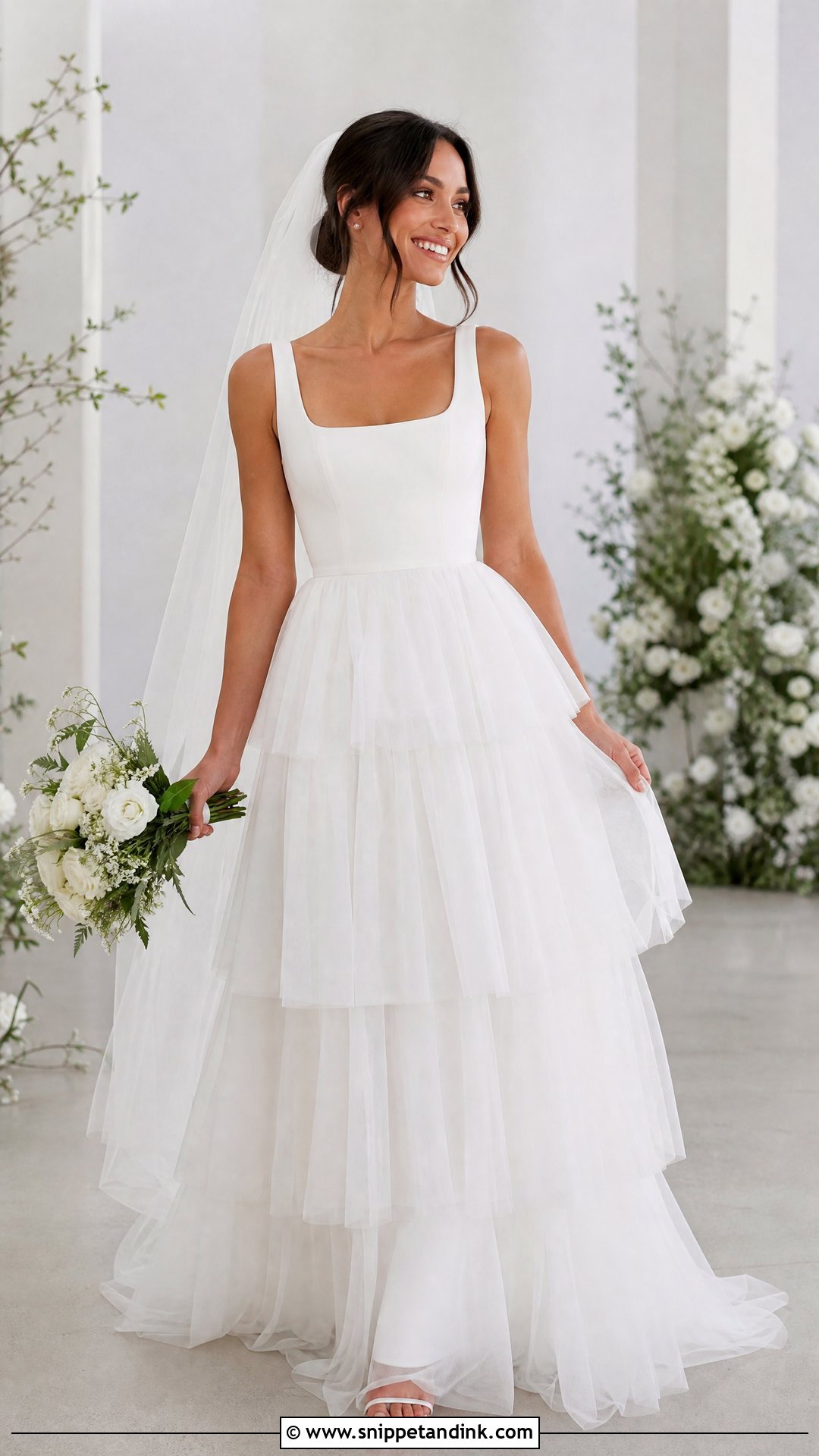
A pared-back tiered gown gets its interest from smooth bands of satin, crepe, chiffon or soft tulle rather than ruffles. A plain bodice with a square, scoop or strapless neck keeps it minimal. Each seam between tiers has to sit perfectly level, because in a plain dress nothing hides a wobbly line. Pearl studs and sleek heels are plenty.
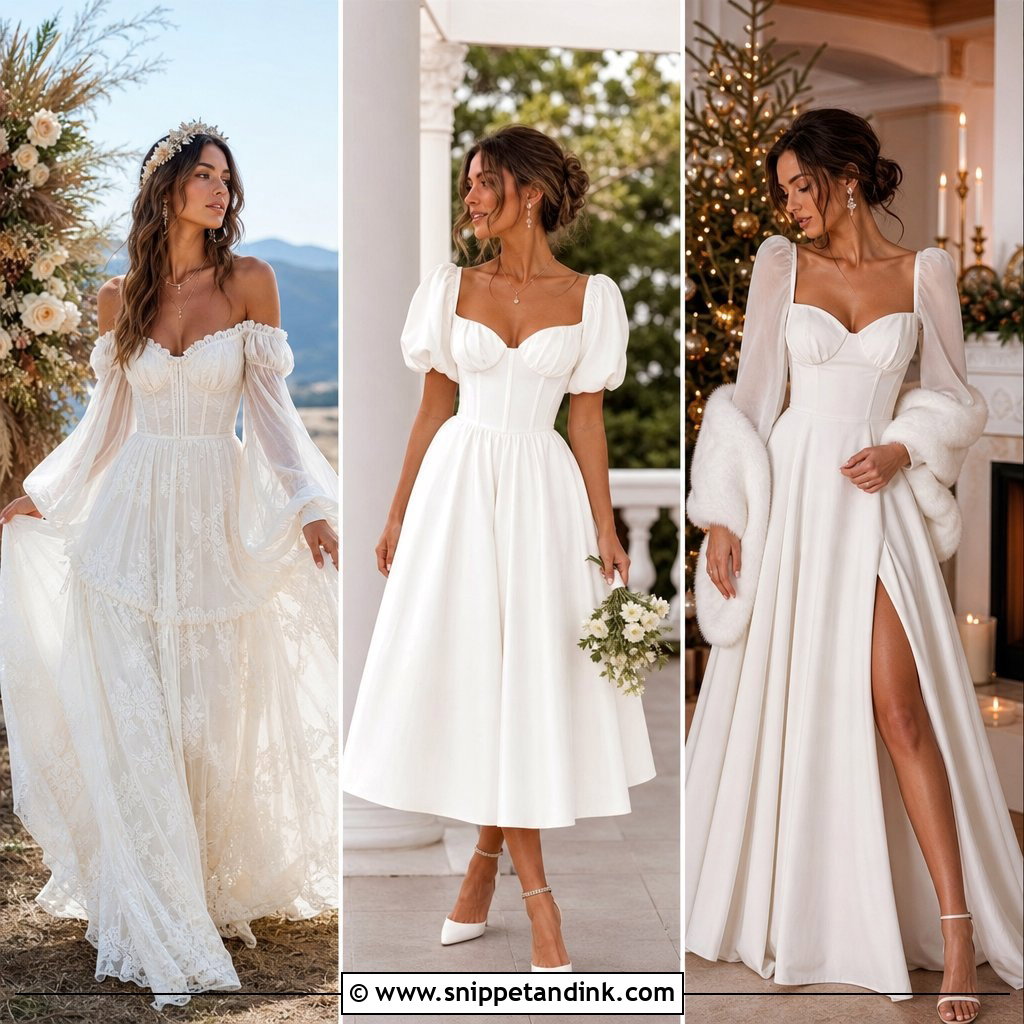
25. Tiered Reception Wedding Dress
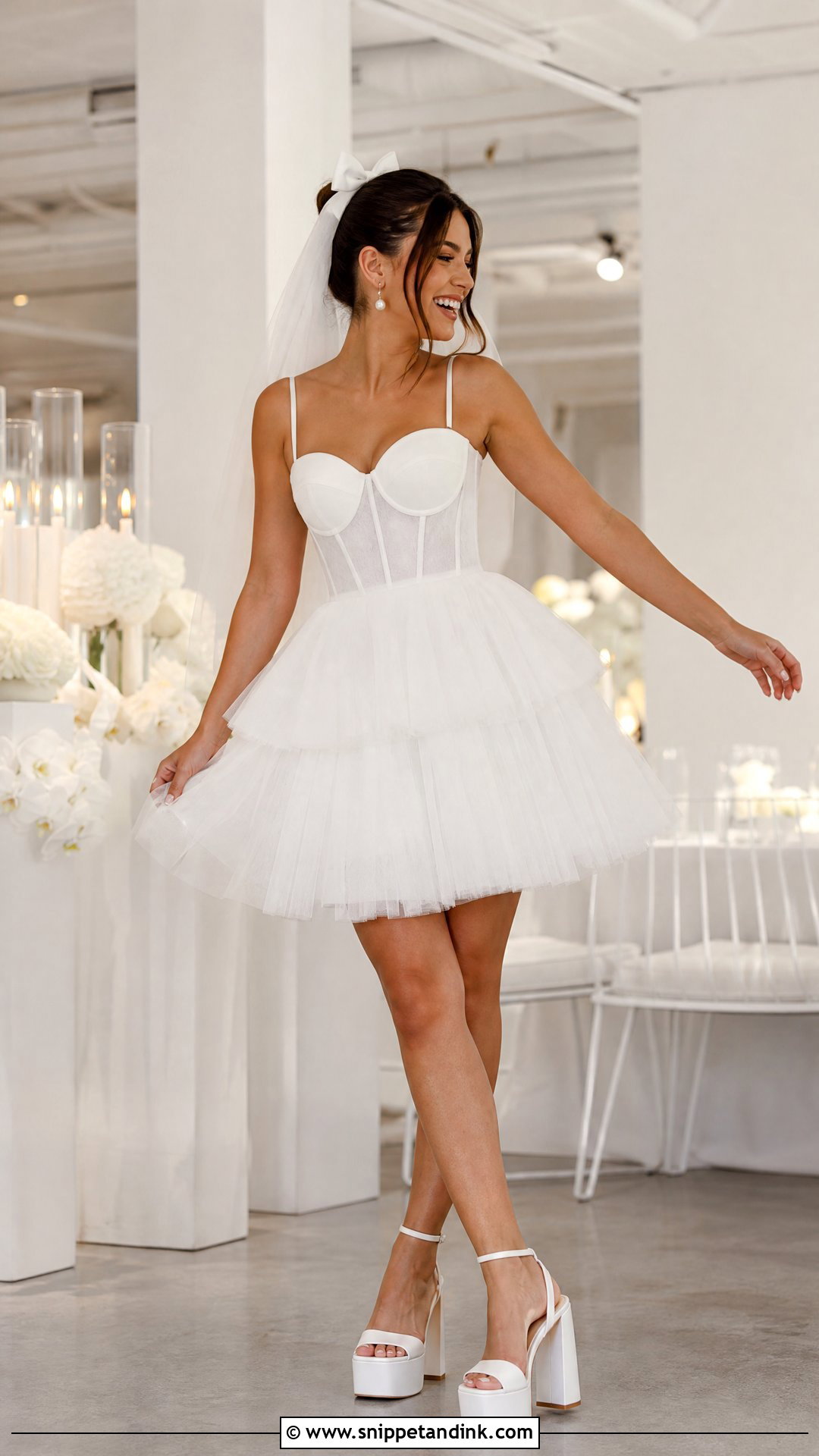
For the second look, choose a mini, tea-length or high-low tiered dress that you can dance in. Tulle and organza add movement without weight. Comfortable platform heels, pearl earrings and a playful bow or short veil keep it bridal. If your ceremony gown was formal, this change gives the evening a fresh energy. Sit, raise your arms and dance in it at the fitting so you won’t be adjusting it all night.
Bustling, Sitting and Climbing Stairs in Layers
Tiered skirts behave differently from plain ones once the ceremony is over. Each tier is a separate layer, so a standard bustle can pull the top tier up and leave the lower ones hanging, which looks messy. Ask your seamstress for bustle points that catch the lining underneath, or a ballroom bustle that tucks the train under, so the tiers stay in order.
Seating is the other surprise. Stiff tiers push forward when you sit, and you can end up with a wall of organza in your lap at dinner. Practise sitting by gathering the back of the skirt and sweeping it slightly to the side as you go down.
- Hem the dress with your actual wedding shoes on, and check every tier, not just the bottom one.
- On stairs, lift the front with both hands from the side seams, not the top tier, which can tear at the join.
- Pack the dress in a long bag with tissue between tiers so they don’t crush flat in transit.
- Steam each tier on its own from the inside, keeping the steamer a hand’s width away, and let the dress hang dry before anyone sits in it.
Tulle, Organza or Satin? Let Your Venue Decide
Tiered gowns change character with the fabric. Tulle floats, organza holds a shape, satin looks polished and lace brings detail. Your venue, comfort and proportions matter more than any trend, and a fitted bodice almost always balances the layers. From a grand ball gown to a reception mini, try the dress walking, sitting and on stairs before you decide.
You'll Like These Ideas:







Leave a Reply