
Lace has a reputation for being heavy and formal, and it doesn’t have to be either. A flowy lace dress is really a pairing: lace where you want detail, and a soft skirt fabric where you want movement. The lace itself can read classic, boho or modern depending on the motif and how it’s placed, from fine Chantilly to botanical appliqués over a corseted or basque bodice. When I style a lace gown, I start with the venue and the season, then pick a light veil, shoes you can actually walk in and jewelry that sits beside the pattern without fighting it. The looks below come with those choices already made.
Lace Weight Decides How Much the Skirt Can Float
The word lace covers fabrics that behave very differently. Before you fall for a picture, it helps to know which one you’re looking at, because it decides how much the dress can move and how it feels after six hours.
Chantilly
Fine and flat, with delicate motifs outlined in thin thread on a sheer net. It’s the lightest lace I work with, so it suits sleeves, overlays and flowy skirts. The trade-off is fragility; it snags on rings and bracelets.
Alençon
Recognisable by the raised cord that outlines each motif. It has more body, holds shape on a bodice and shows up well in photos. Too much of it on a skirt will make the skirt stand rather than flow.
Guipure and Venise
No net background; the motifs are linked by bars, so the lace is thick and sculptural. Lovely as a bodice or an edging on a boho gown, but heavy enough that I rarely use it over a whole skirt you want to float.
My rule of thumb: heavier lace above the waist, lighter lace or none below it. Rub the lace against the inside of your arm in the shop too. Some corded and guipure laces are scratchy against skin, and that’s worth knowing before the sleeves are fitted.
1. A-Line Floral Lace Wedding Dress
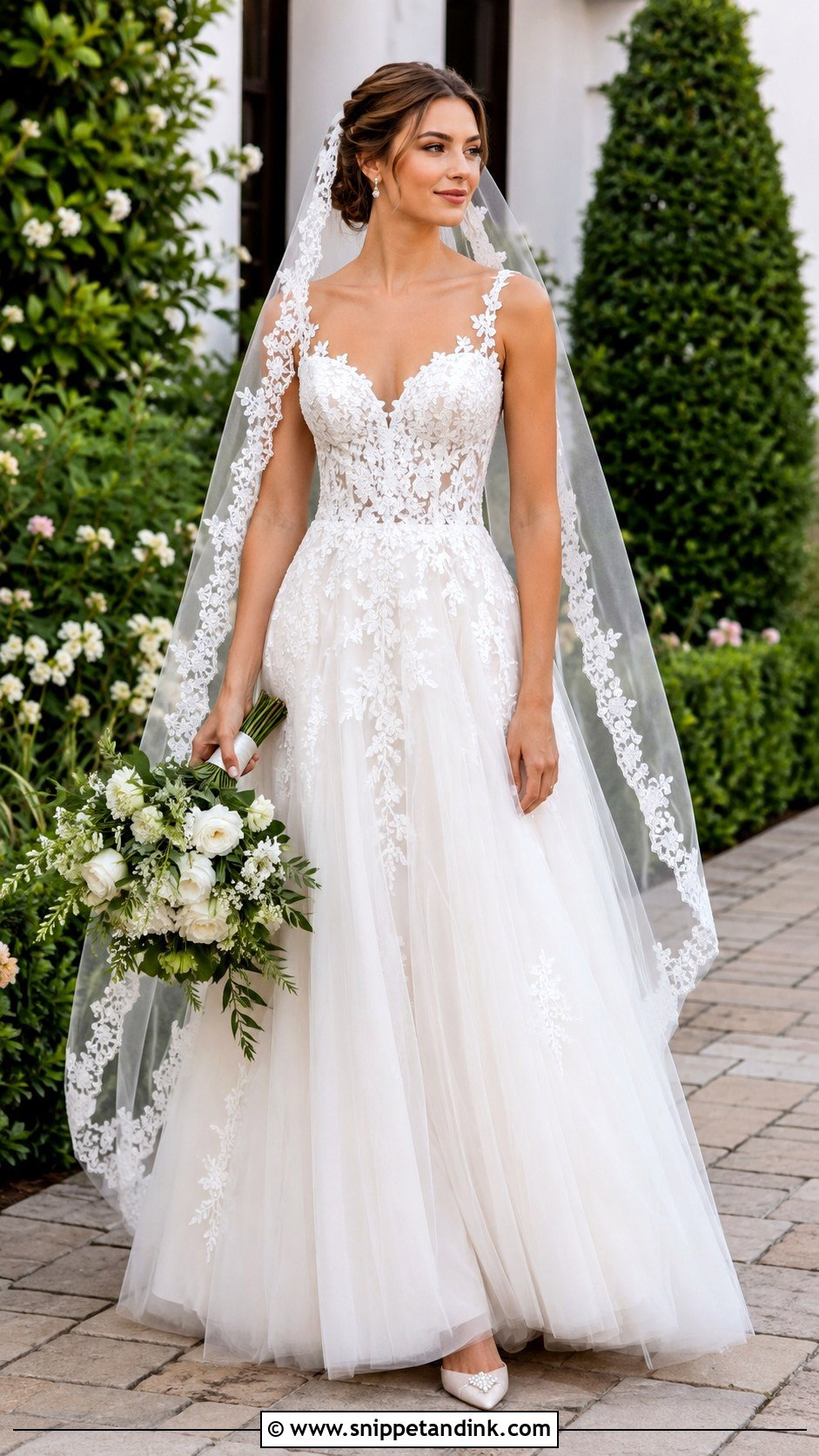
Botanical appliqués scattered from a fitted bodice down into a chiffon or tulle skirt are the easiest way into lace, because the pattern thins out exactly where you want the skirt to move. A V-neck lengthens the torso; wider straps feel more secure. I’d add a fingertip veil edged in the same lace, pearl drops and pointed flats or low block heels, with a loosely gathered bouquet of white flowers and greenery. Keep the hair to a low textured bun. One thing to check on the rail: appliqués placed by hand sit more naturally than lace cut on a machine-printed line, and you can usually tell by running a finger along the edges.
2. Long Sleeve Chantilly Lace Wedding Dress
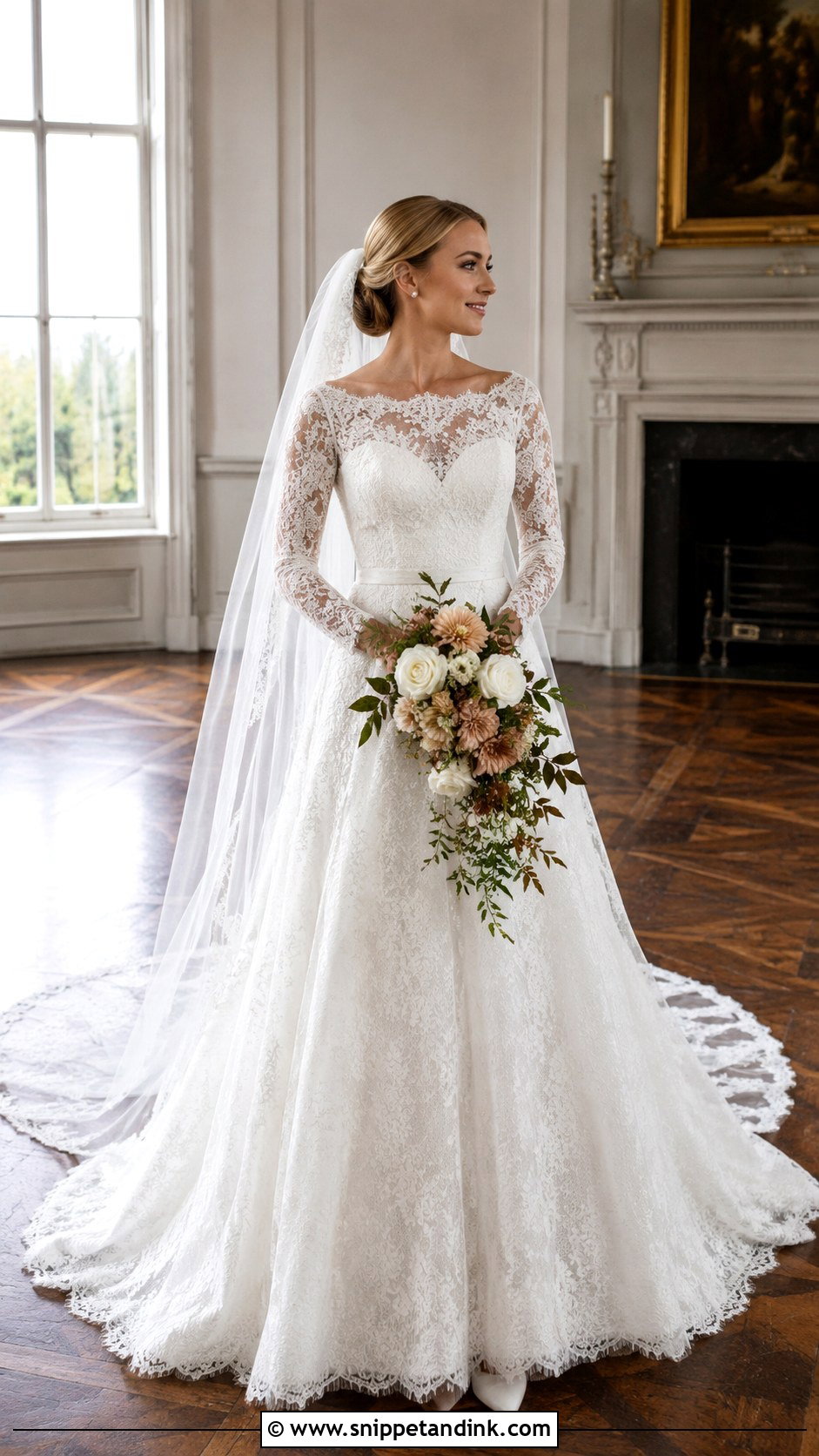
Fine Chantilly lace is so light it barely registers on the arm, so long sleeves in it don’t feel warm the way people expect. That’s why I love it for sleeves: sheer, fitted, and paired with a softly shaped bodice and an A-line skirt that moves when you walk. A bateau or gentle scoop neckline balances all that pattern. Style it with a plain cathedral veil, small pearl studs and satin pumps with a heel you can stand in, and pull the hair into a low chignon so nothing covers the sleeves. It’s my first suggestion for an autumn or winter ceremony indoors. Ask for an ivory lining underneath; it makes the lace pattern stand out clearly.
3. Off-Shoulder Lace Wedding Dress
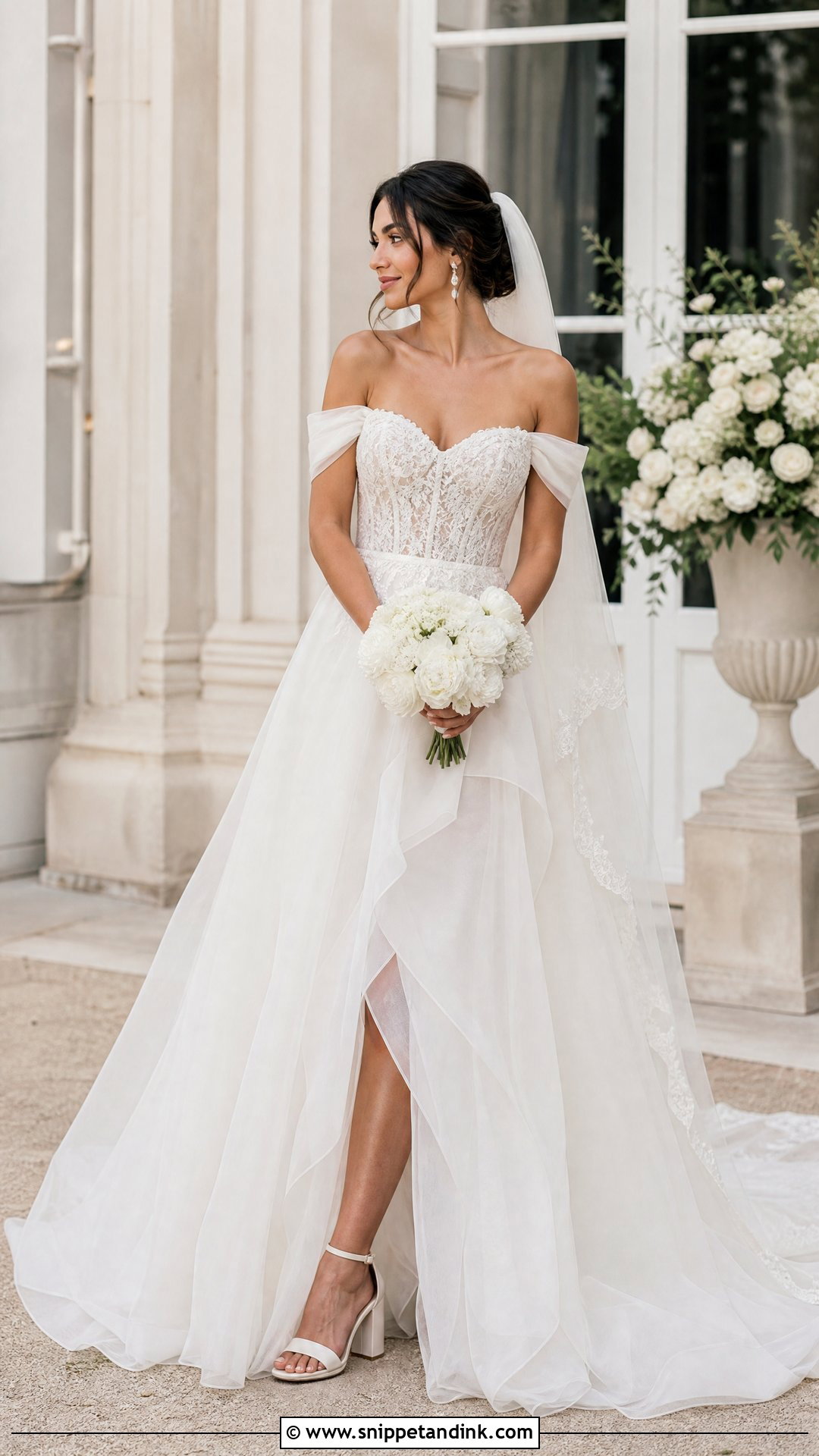
Off-shoulder lace bands need to rest securely on the upper arm, and they only do that when a structured bodice is holding everything up. Lace has a little give, so a band that feels snug at the fitting can loosen over a long day. A lightweight organza or tulle skirt keeps the rest airy. I’d finish it with a delicate pendant, drop earrings and a sheer chapel veil tucked beneath a loose updo, plus ivory block-heel sandals for an outdoor venue. Skip a big necklace or a lace-heavy veil; the neckline is already the detail. A small rounded bouquet is enough.
4. Square Neck Lace Wedding Dress
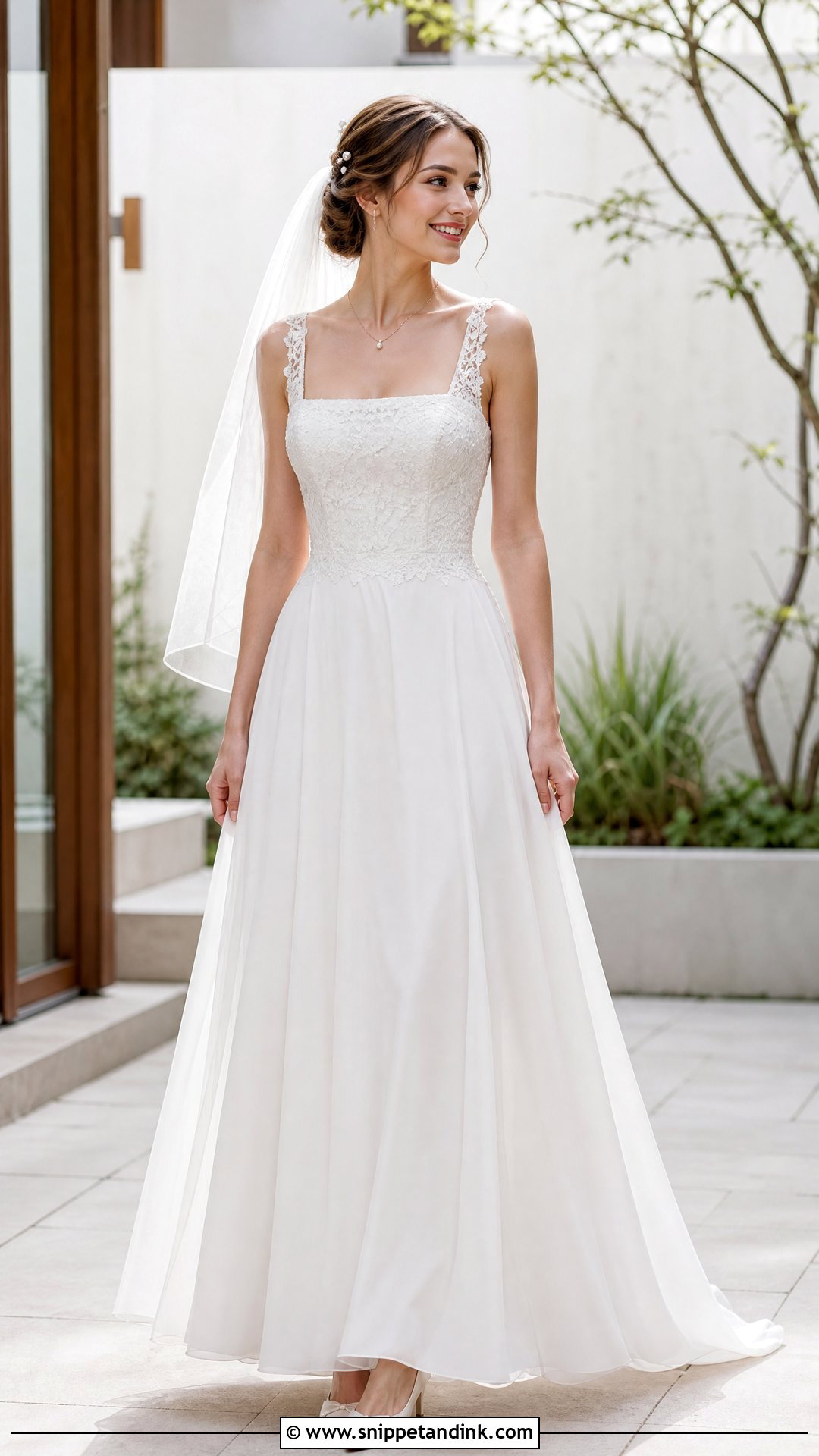
A square neckline in lace looks crisp because the straight edge contrasts with the curves of the pattern. Pair a fitted lace bodice and supportive straps with a soft A-line skirt in chiffon, organza or tulle. That straight neckline is a good frame for a short pearl strand or fine gold pendant. A light veil without a heavy border, pearl hairpins and ivory kitten heels finish it, with a smooth bun or half-up style so the square shape stays visible. If the bodice lace is intricate, I keep the skirt plain. Two busy halves cancel each other out.
5. V-Neck Lace Wedding Dress
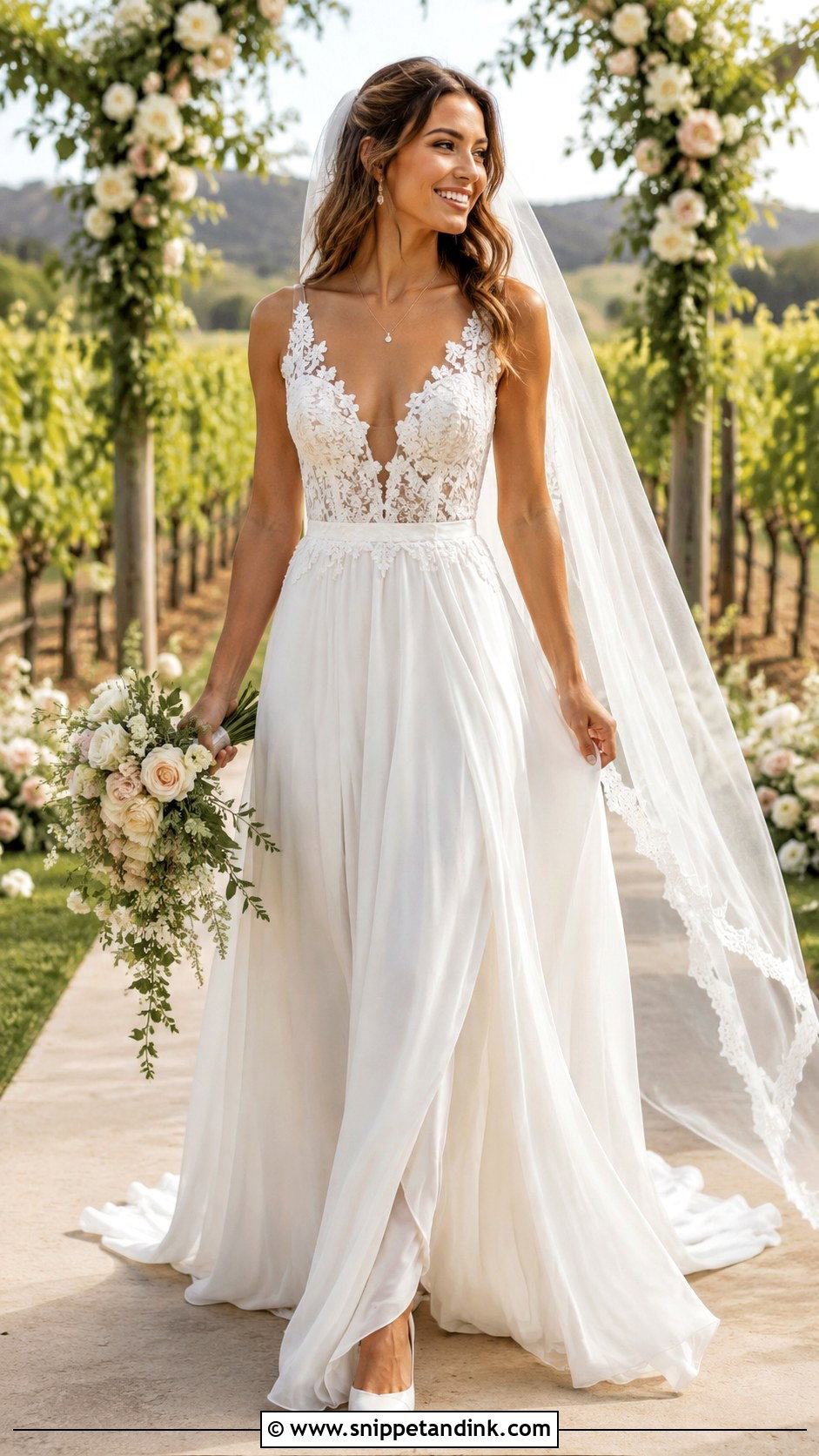
A V-neck in lace gives length to the upper body, but depth is the question I always ask about first. If you plan to dance all night, choose a V that feels secure rather than dramatic, or ask for a sheer mesh insert behind the lace. Floral lace over the bodice can flow into a gathered chiffon skirt. A thin pendant, matching earrings and a plain chapel veil keep things calm; pointed flats, slingbacks or block heels depend on the ground. A low ponytail with soft waves suits a vineyard or beach. Carry a cascading bouquet to echo the long line of the neckline.
6. Boho Bell Sleeve Lace Wedding Dress
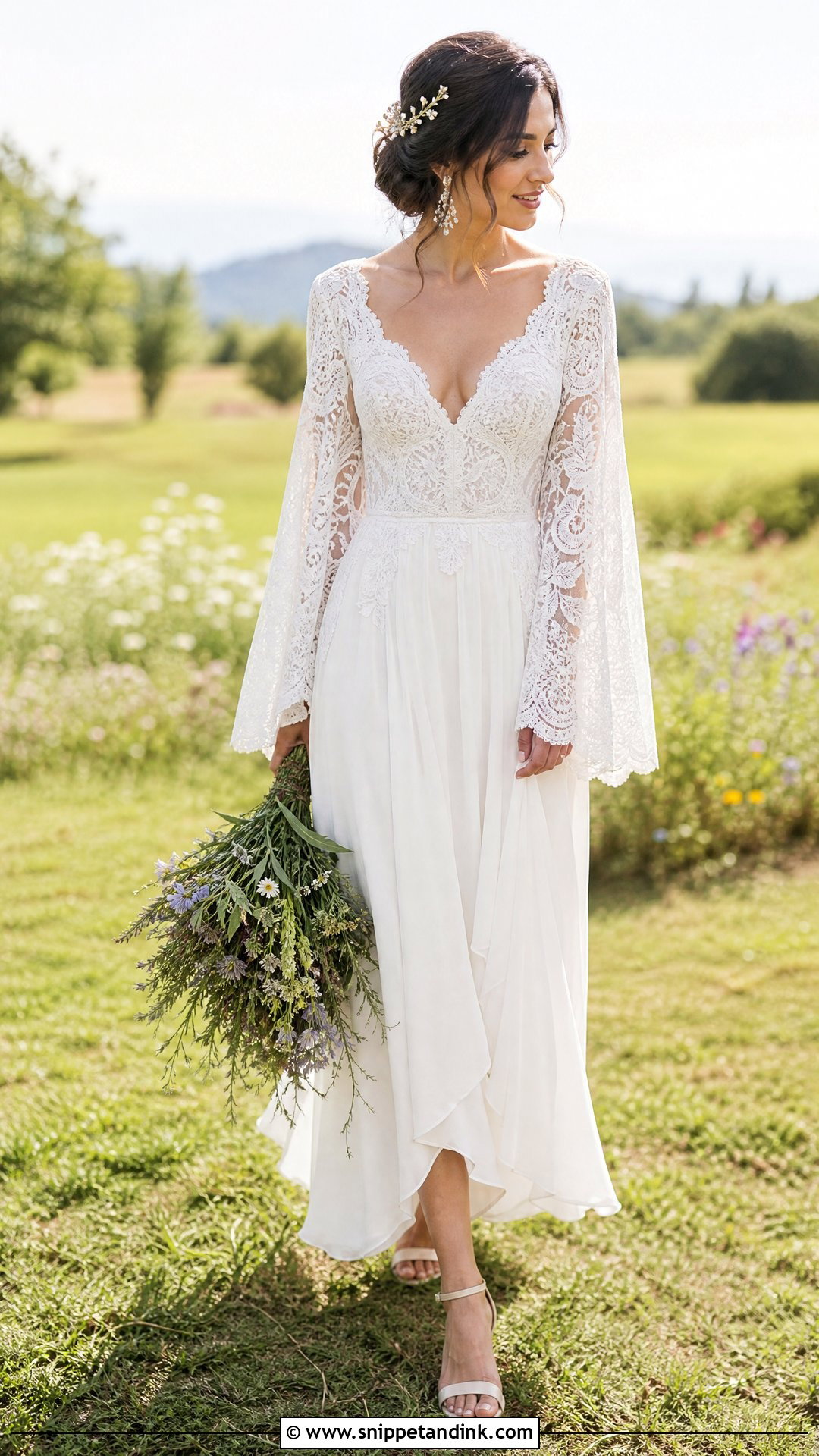
Bell sleeves give a lace dress a relaxed bohemian character, and crochet-style or botanical lace suits them better than fine floral. The sleeve should widen below the elbow but stop short of your fingertips; otherwise it drags through your dinner and hides your hands in every ring photo. A lightly fitted bodice and fluid chiffon skirt keep it comfortable. Loose waves, a delicate floral comb and small hoops or drops are all it needs. On dry outdoor ground, suede-toned block heels; at a destination, ivory sandals. Choose a veil or a cape, not both, because either one will bury the sleeves.
7. Empire Waist Lace Wedding Dress
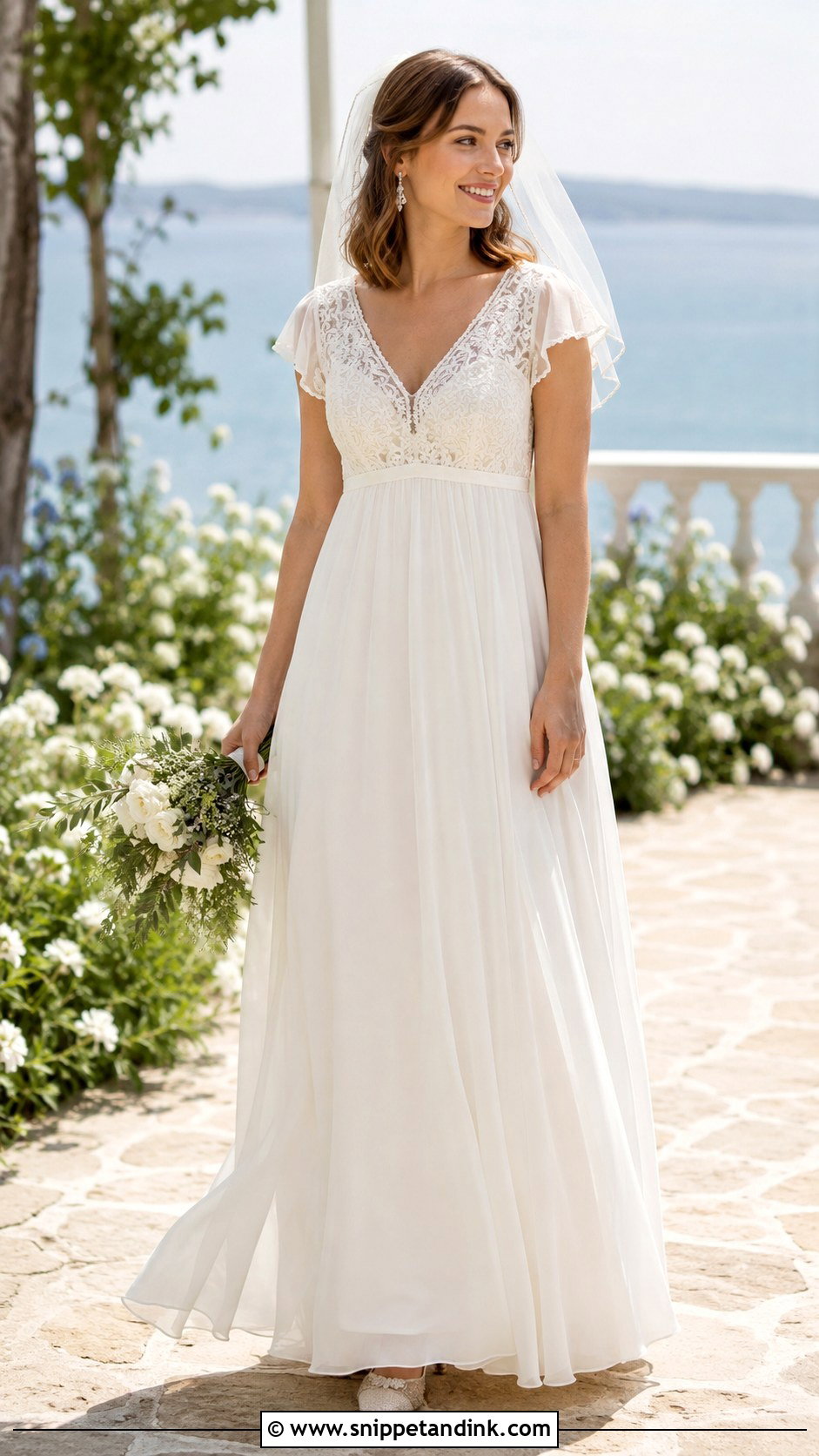
With an empire waist, the seam sits just below the bust and the skirt falls freely, so lace stays up top while chiffon takes care of the drape. Pick a lace bodice with wider straps or flutter sleeves for coverage. A narrow ribbon at the waist marks the line without adding bulk. Small crystal earrings, a shoulder-length veil and low heels or embellished flats suit the easy shape, and a half-up style follows the raised waist nicely. I’d keep the bouquet light and loose. A tight round bouquet held at the waist covers the very seam that defines this dress.
8. Basque Waist Lace Wedding Dress
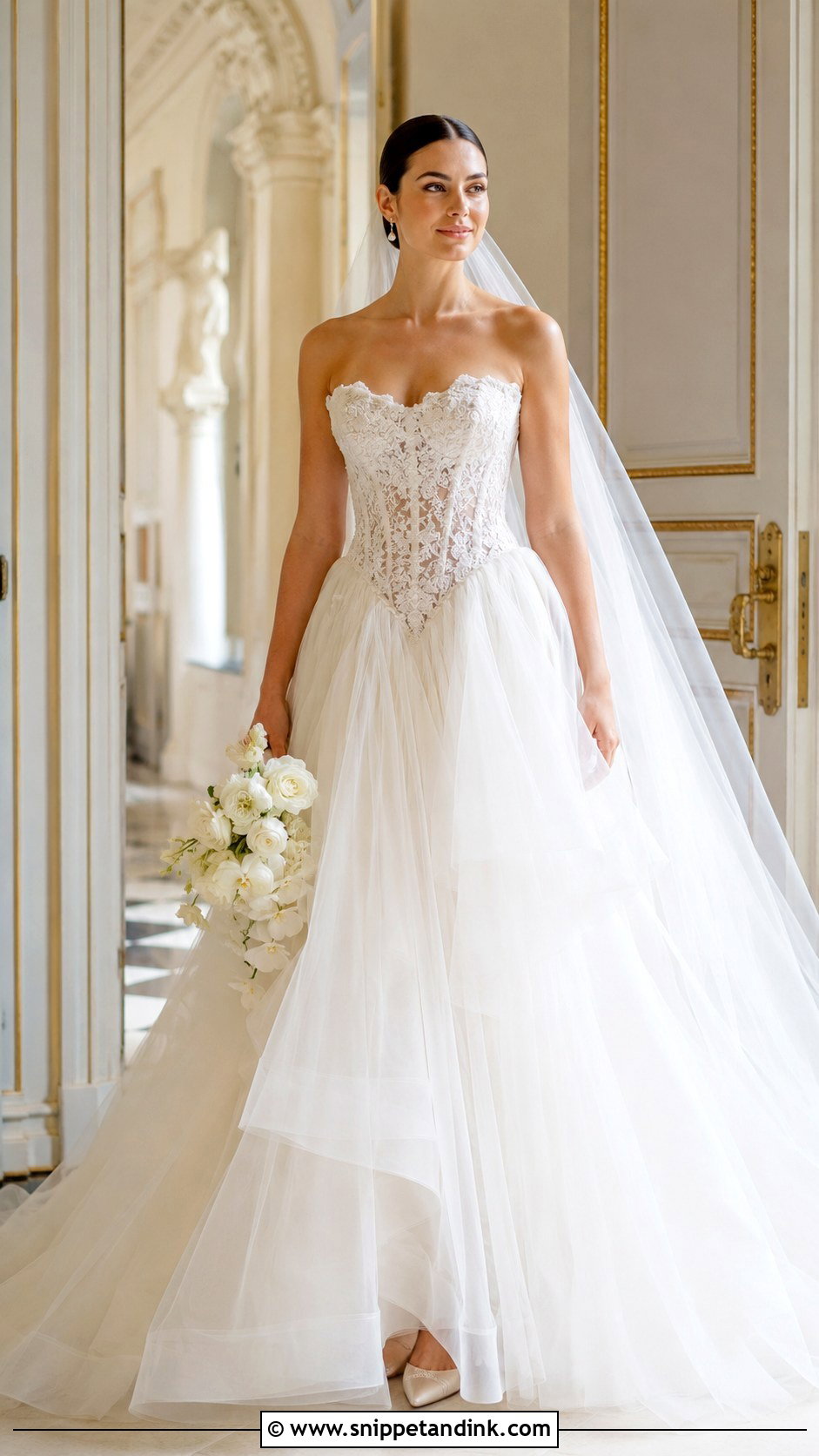
A basque waist dips into a V below the natural waist, then the skirt flows from that point, so it lengthens the torso and gives a sculpted look. If comfort matters to you, I’d ask for soft boning rather than a rigid bodice. You’ll feel the difference by the second hour of the reception. Layered tulle or silk organza gives volume without turning it into a ball gown. A long plain veil, pearl drops, sleek ivory pumps and a neat bun or waved side part keep the waist and neckline in view. The waistline is already the focal point, so I don’t add more embellishment. A structured bouquet of white roses contrasts with the flowing skirt.
9. Strapless Corset Lace Wedding Dress
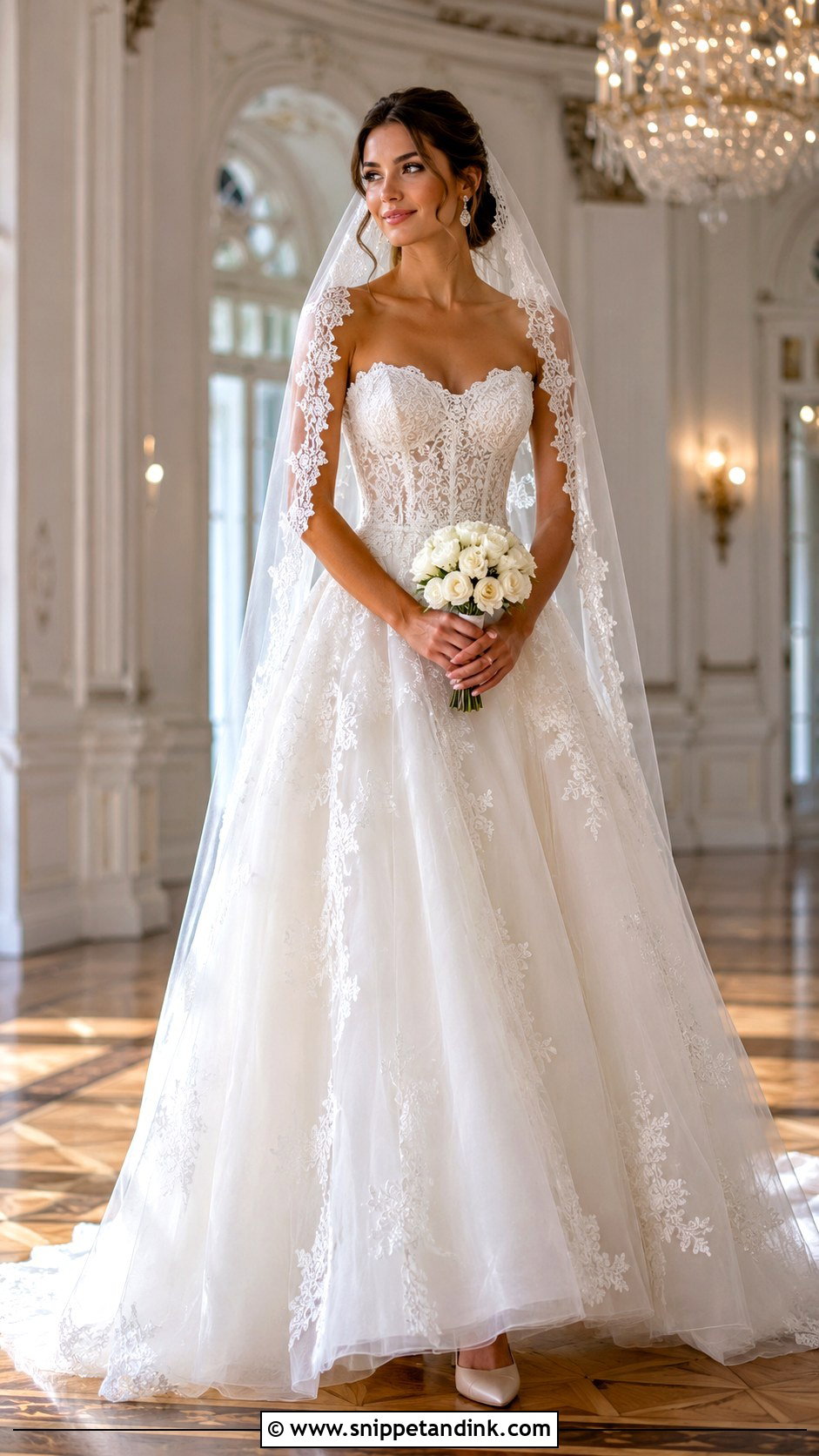
A strapless corset bodice gives definition while the lace keeps it from looking severe. Look for proper internal construction, a gently curved neckline and lace that carries from the bodice onto the upper skirt rather than stopping abruptly at the waist seam. A full tulle or organza A-line balances the fitted top. A lace-trimmed fingertip veil, delicate drops and closed ivory heels complete it, with a polished updo so the neckline shows. Keep a light wrap nearby for a cool evening. At every fitting, sit, walk and raise your arms. If you’re conscious of the bodice when you breathe, it’s too tight.
10. Lace and Chiffon Wedding Dress
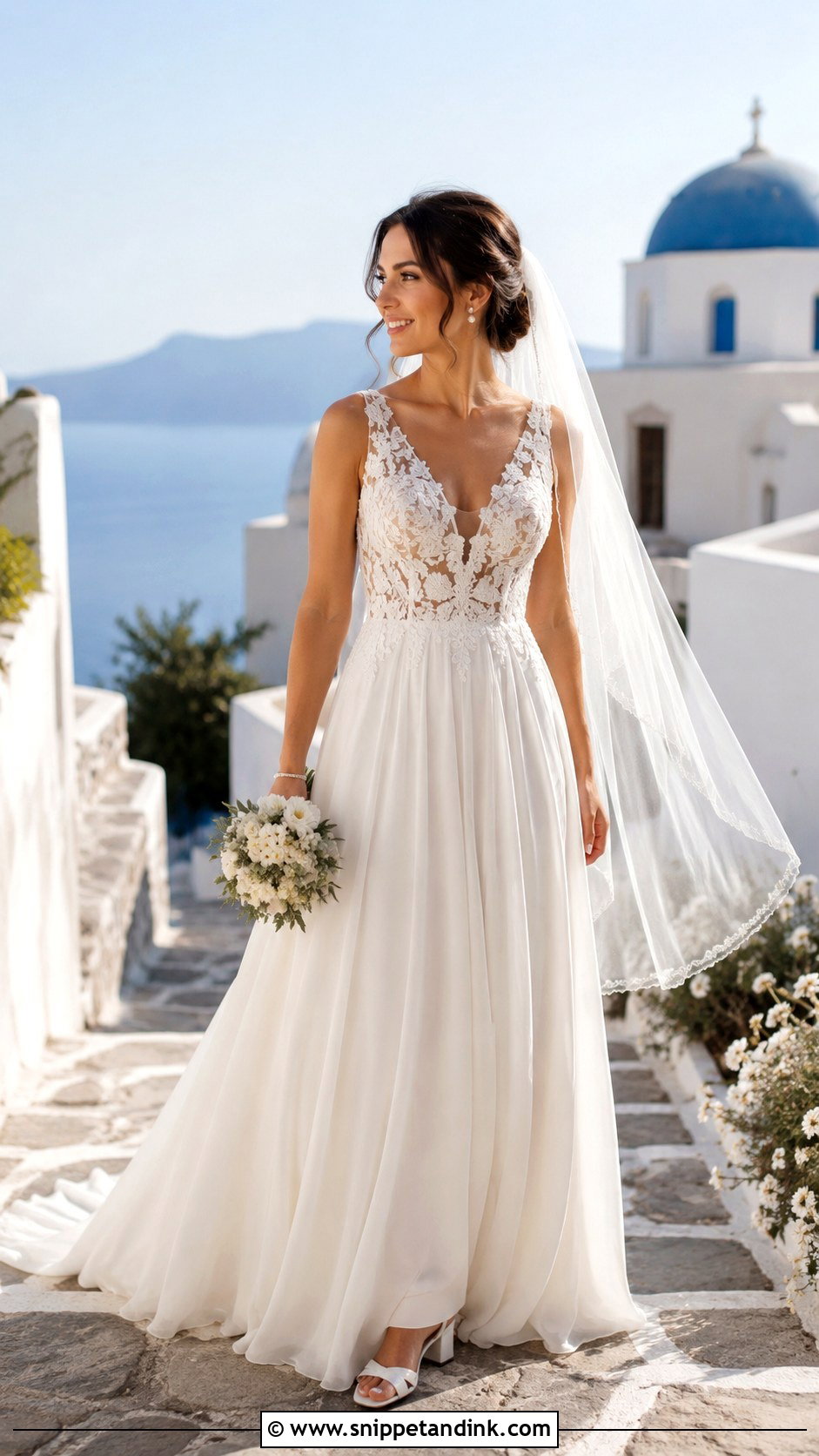
This is the pairing I suggest most for warm weather: a lace bodice with floral appliqués and a natural waist, then a chiffon skirt falling in soft vertical folds. The test is the skirt. If it clings to your legs rather than hanging, it needs a smoother lining underneath. Pearl studs, a fine bracelet and a sheer chapel veil keep it cohesive, with low block heels or flats for comfort and a loose bun or curled half-up style. It’s practical for destination weddings and uneven ground. Carry a compact bouquet so the lace at the waist stays visible.
11. Lace and Tulle Wedding Dress
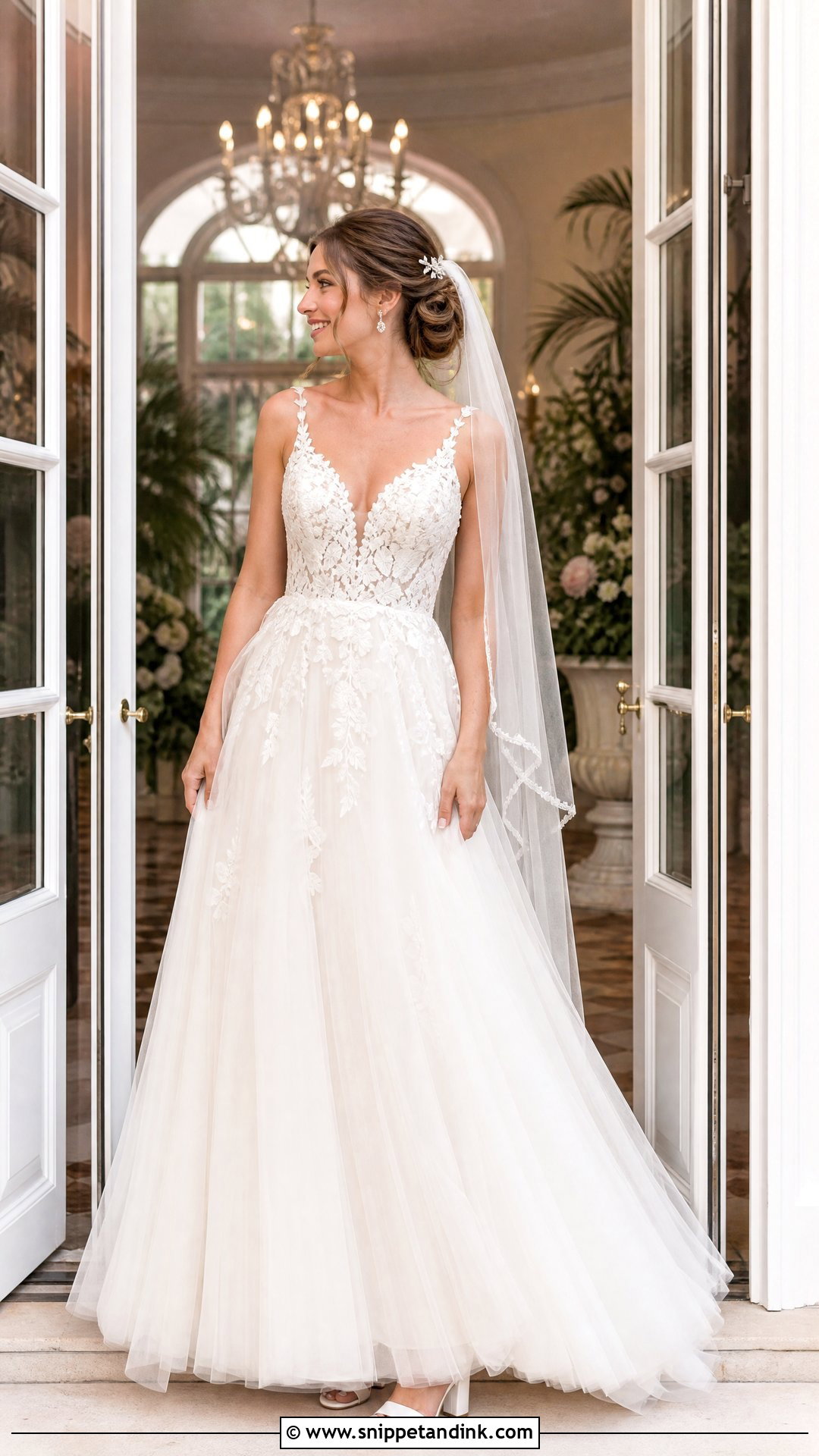
Tulle gives lace volume without weight, as long as the layers are fine and soft rather than stiff netting. I look for a fitted floral lace bodice whose appliqués drift below the waist onto the tulle, so the change between the two fabrics isn’t a hard line. A narrow tulle veil, crystal studs and satin block heels suit it, with a twisted updo and a small comb. If the skirt has sparkle or embroidery, cut the jewelry back. A round bouquet of white seasonal flowers gives a bit of structure against all that air. Ask how many tulle layers there are; more layers mean more volume, and more fabric to bustle.
12. Open Back Lace Wedding Dress
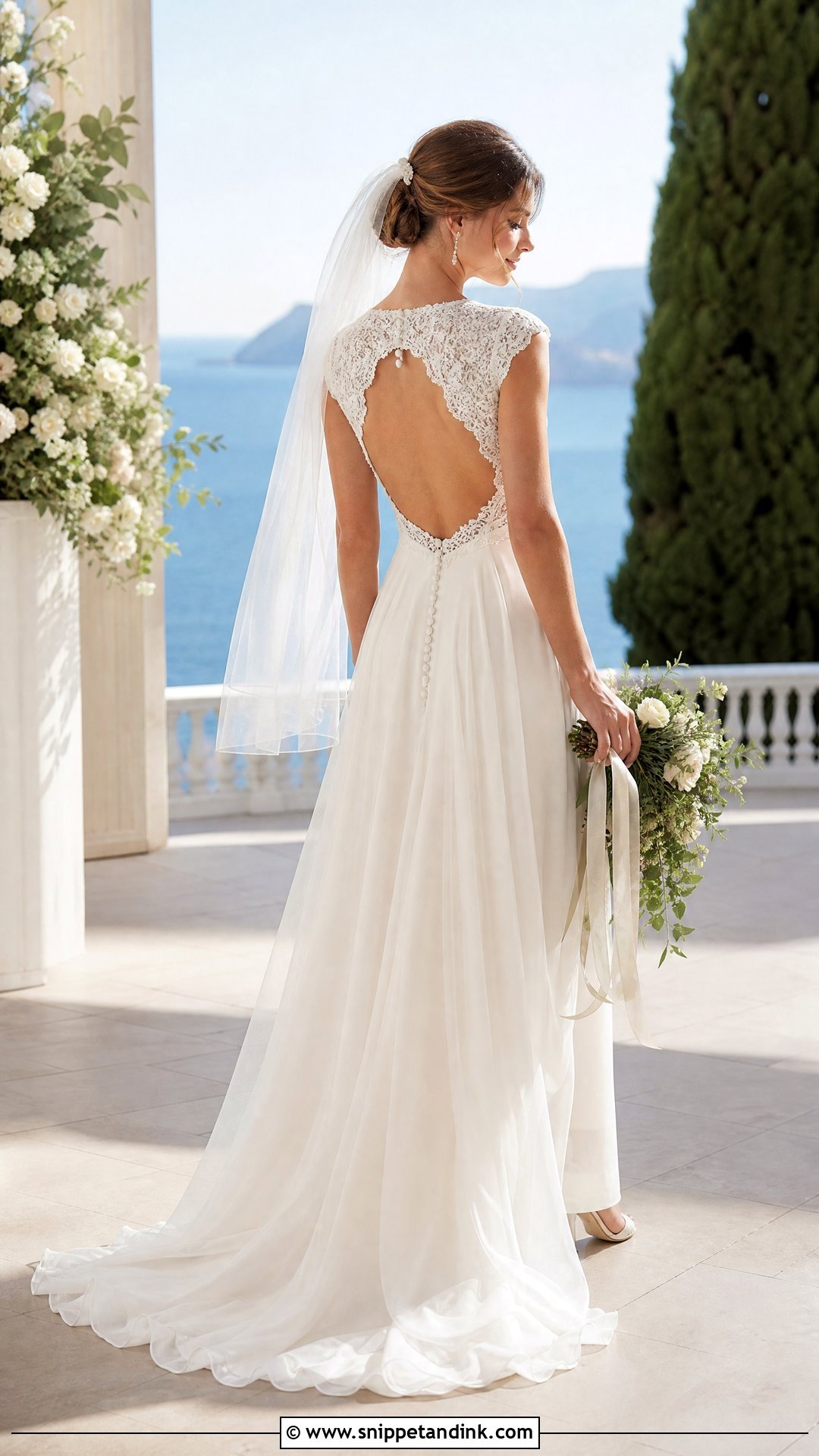
An open back means the gown is seen from behind for most of the ceremony, so I give it as much attention as the front. Supportive straps and secure side panels matter more than the size of the opening, which should match the coverage you want. Lace edging or covered buttons can trace the shape. A low bun, a veil attached beneath it and slender drops show off the back, and low heels or flats let you walk confidently as the train moves. Sort out undergarments early. An open back often needs cups sewn into the bodice, and that’s a job for your seamstress, not for the morning of.
13. High Neck Lace Wedding Dress
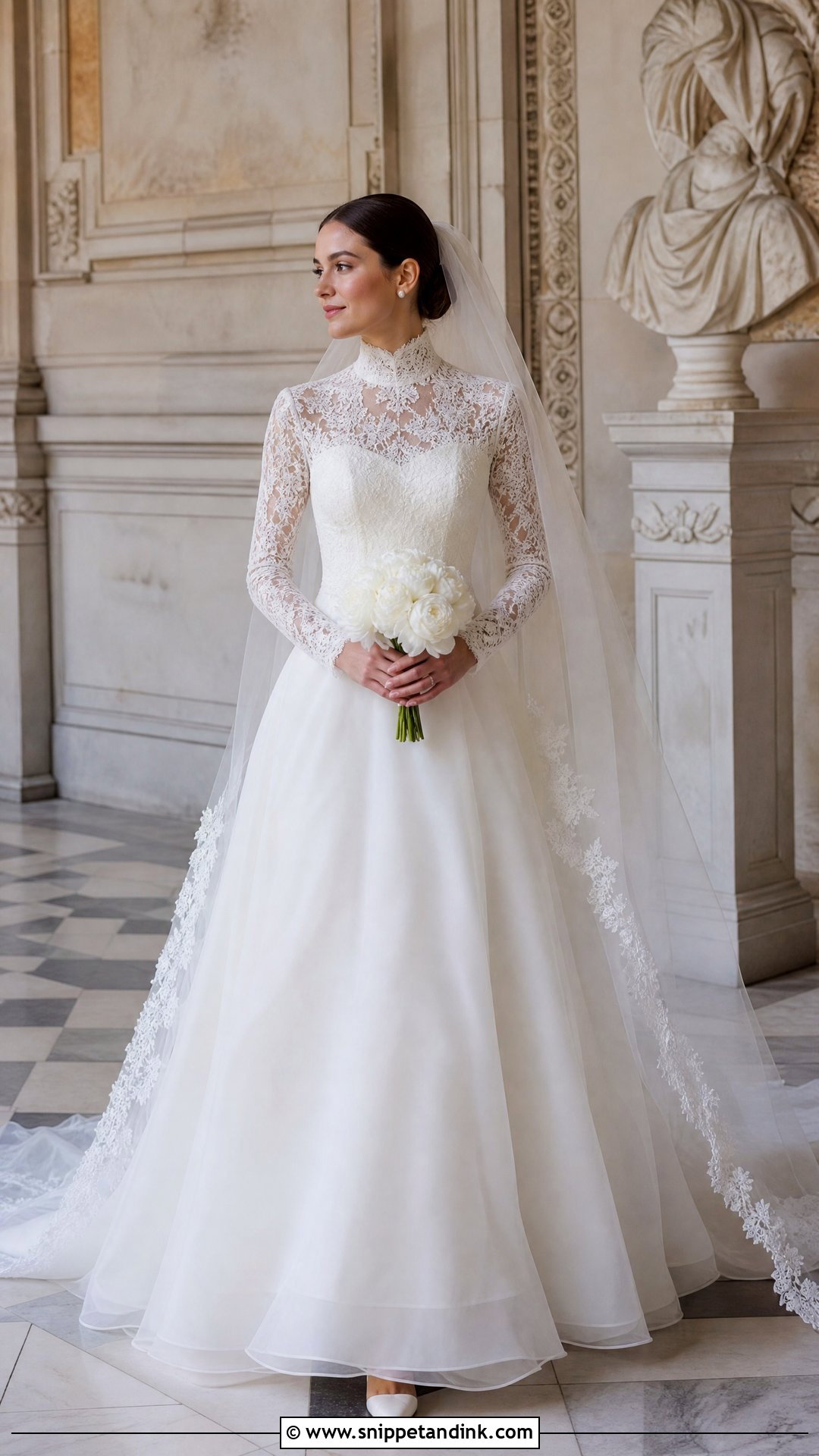
A high lace neckline gives coverage that still feels soft, because sheer lace shows skin through the pattern. Choose lightweight lace with a comfortable collar and a lining that stops below the neckline, plus an A-line chiffon or organza skirt so it doesn’t feel stiff. No necklace; pearl studs or small crystals instead. A plain cathedral veil, sleek low bun and pointed ivory shoes keep the lines clean. It’s a natural fit for cooler weddings and historic venues. Turn your head side to side at the fitting. A lace collar with a scratchy edge will bother you all day, and a soft binding fixes it.
14. Cap Sleeve Lace Wedding Dress
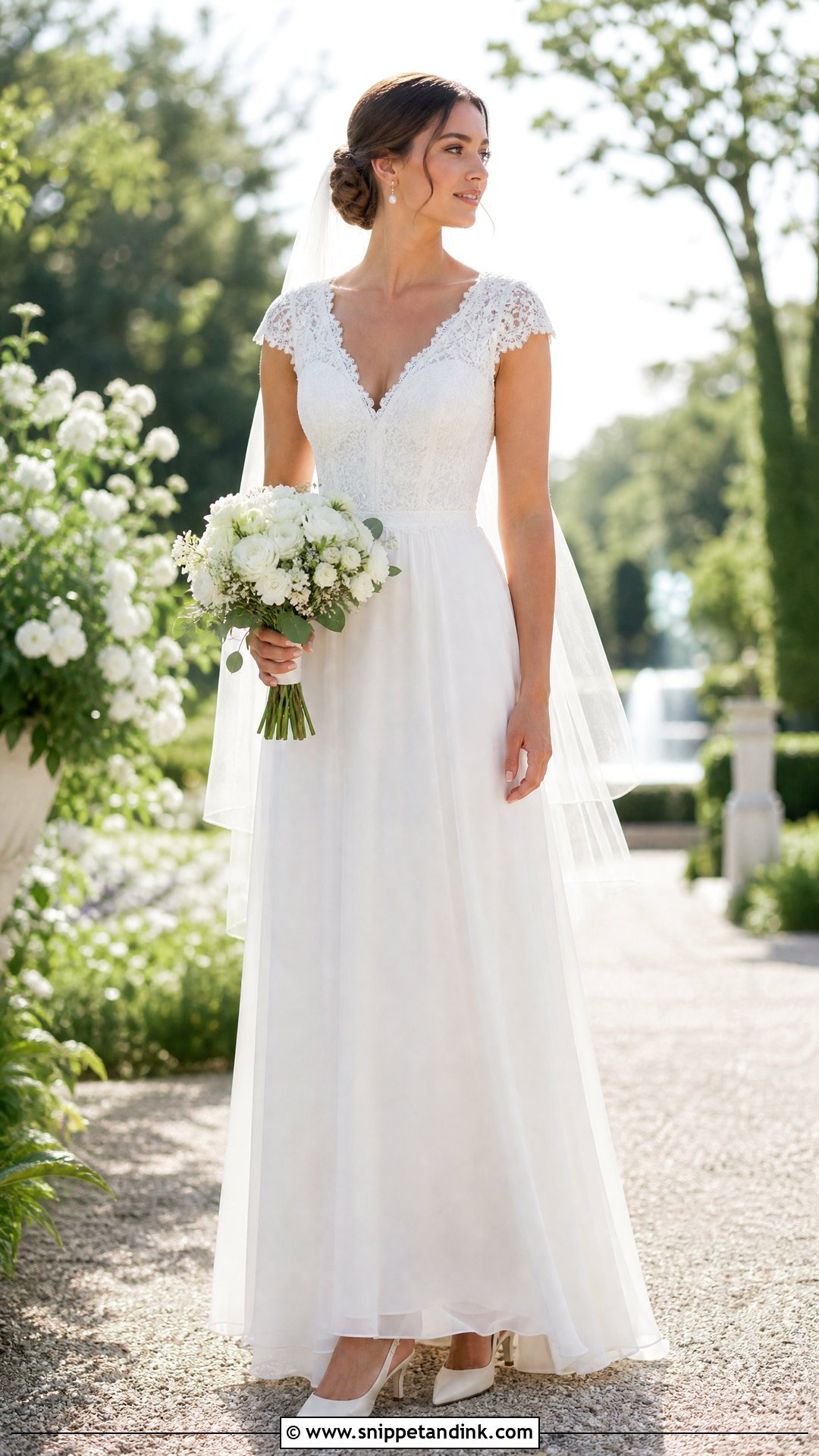
Cap sleeves give a little coverage to a flowy lace wedding dress while leaving the shoulder free. The lace should curve smoothly over the shoulder rather than ending in a stiff edge, which tends to stick out. A scoop or V bodice and a chiffon or soft tulle skirt keep the movement easy. Add a fingertip veil, pearl earrings and ivory slingbacks, with a half-up style or low braided bun so the sleeves stay visible. Raise your arms at the fitting; if the sleeves pull, the underarm seam can usually be adjusted. A medium bouquet of soft white blooms finishes it.
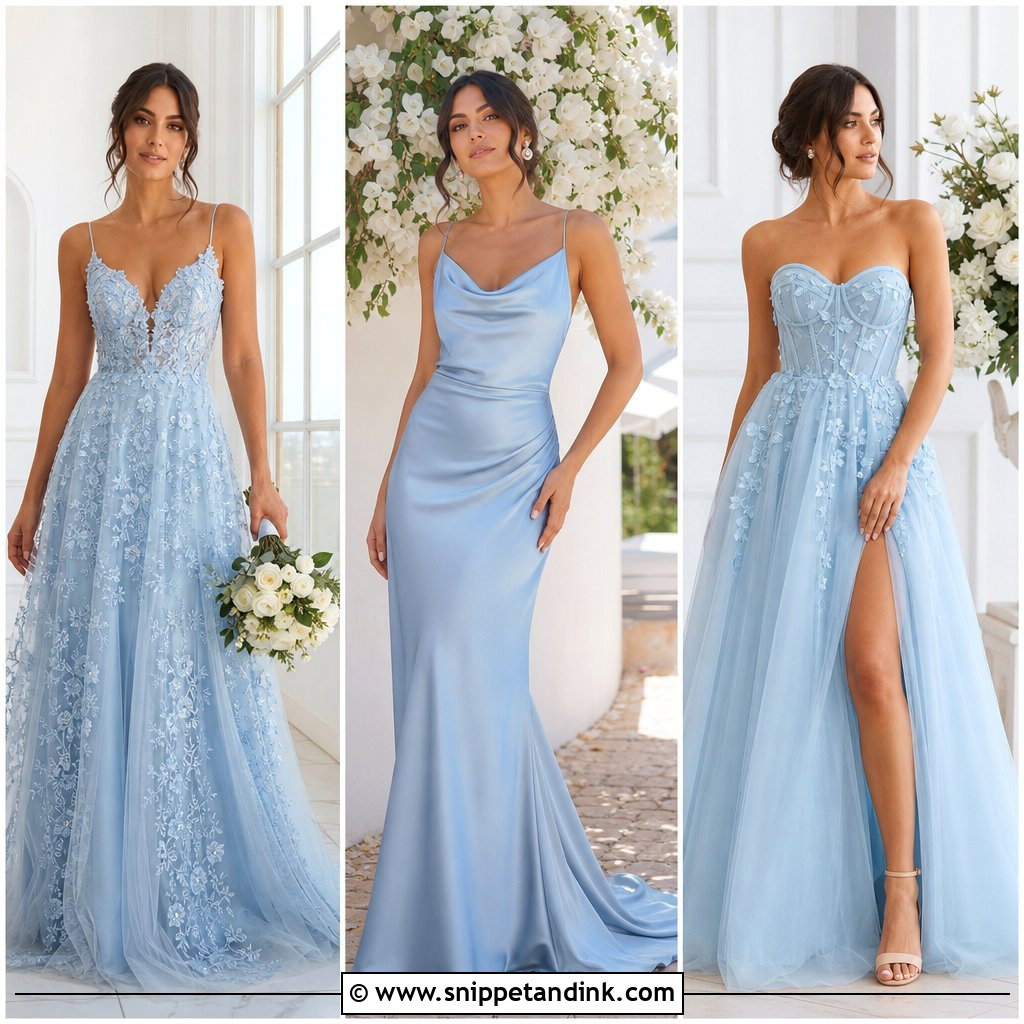

15. Plus Size A-Line Lace Wedding Dress
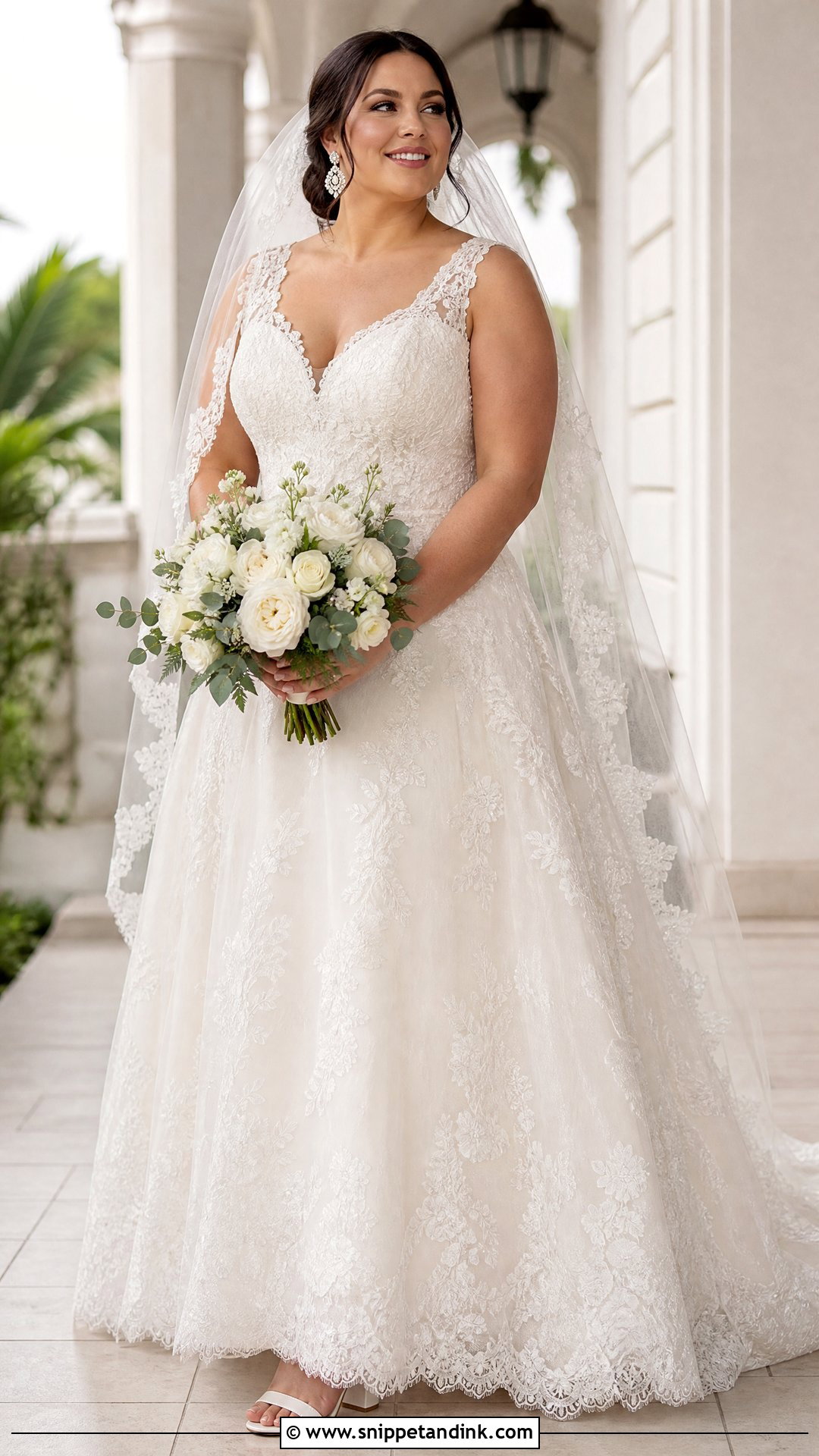
For a plus-size A-line in lace, I build from support out. Comfortable boning, an adjustable back, wider straps or sleeves, whatever you prefer, then a defined natural waist and a fluid skirt that moves without weighing on you. Lace placement is personal. Some brides want full coverage, others want appliqués concentrated at the neckline and waist, and both are right. Supportive block heels, a lace-edged veil, statement earrings and a secure low updo complete the look. Bring your actual undergarments to every fitting so the alterations are accurate. A bouquet in proportion to the skirt keeps it balanced.
16. Petite Lace Wedding Dress
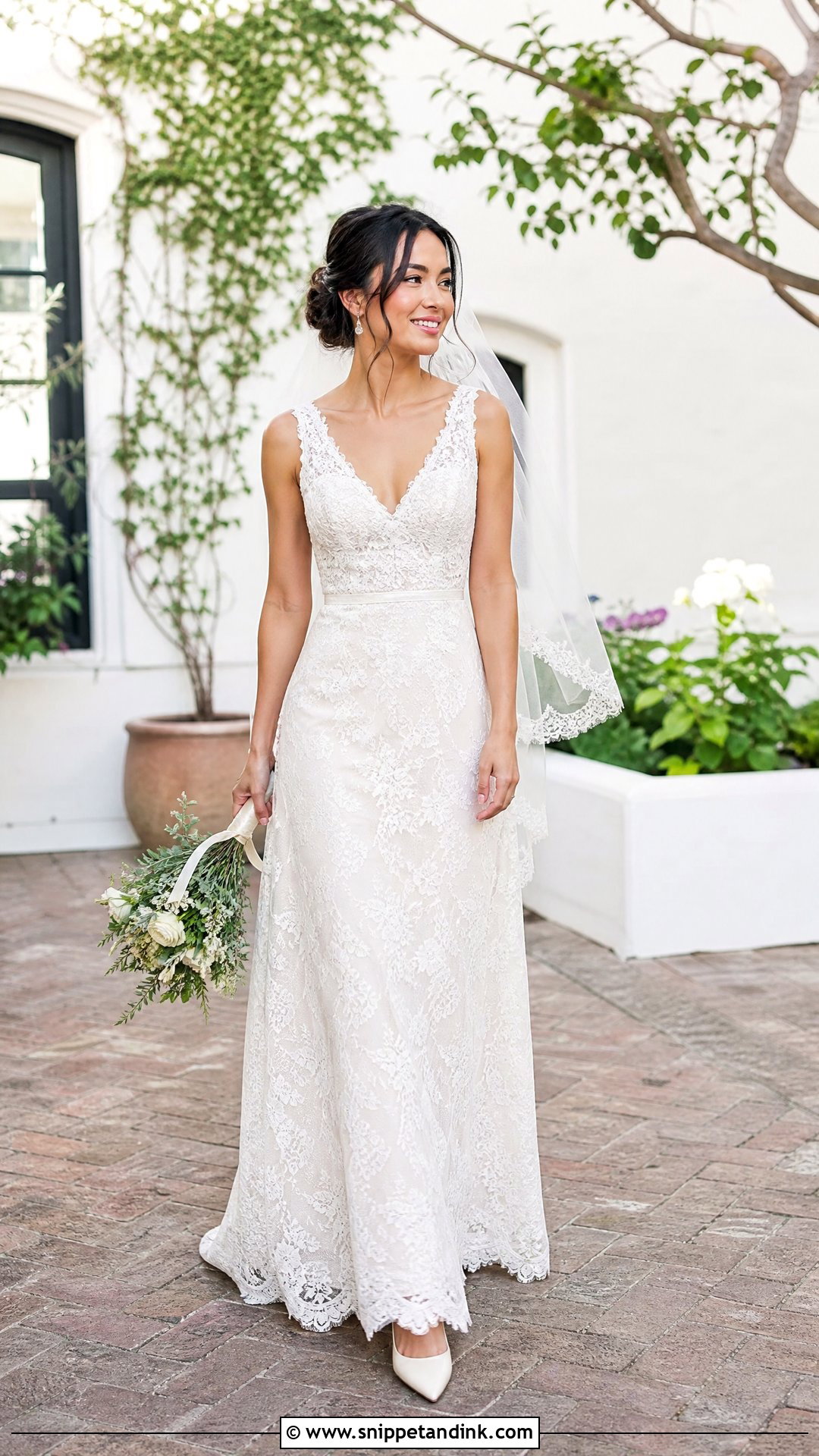
On a petite frame, the scale of the lace matters more than anything else. Large motifs can swamp you, while smaller ones let the dress breathe. A soft A-line or narrow empire shape with a defined waist keeps vertical lines unbroken, and a V or square neck adds clean definition. I’d choose pointed heels, a narrow bouquet and a fingertip or chapel veil rather than a very wide one, with a high bun or lifted half-up style for height. Too many skirt layers will look heavy on you. Hemming is the delicate part, because a lace border has to be moved up rather than simply cut.
17. Maternity Empire Lace Wedding Dress
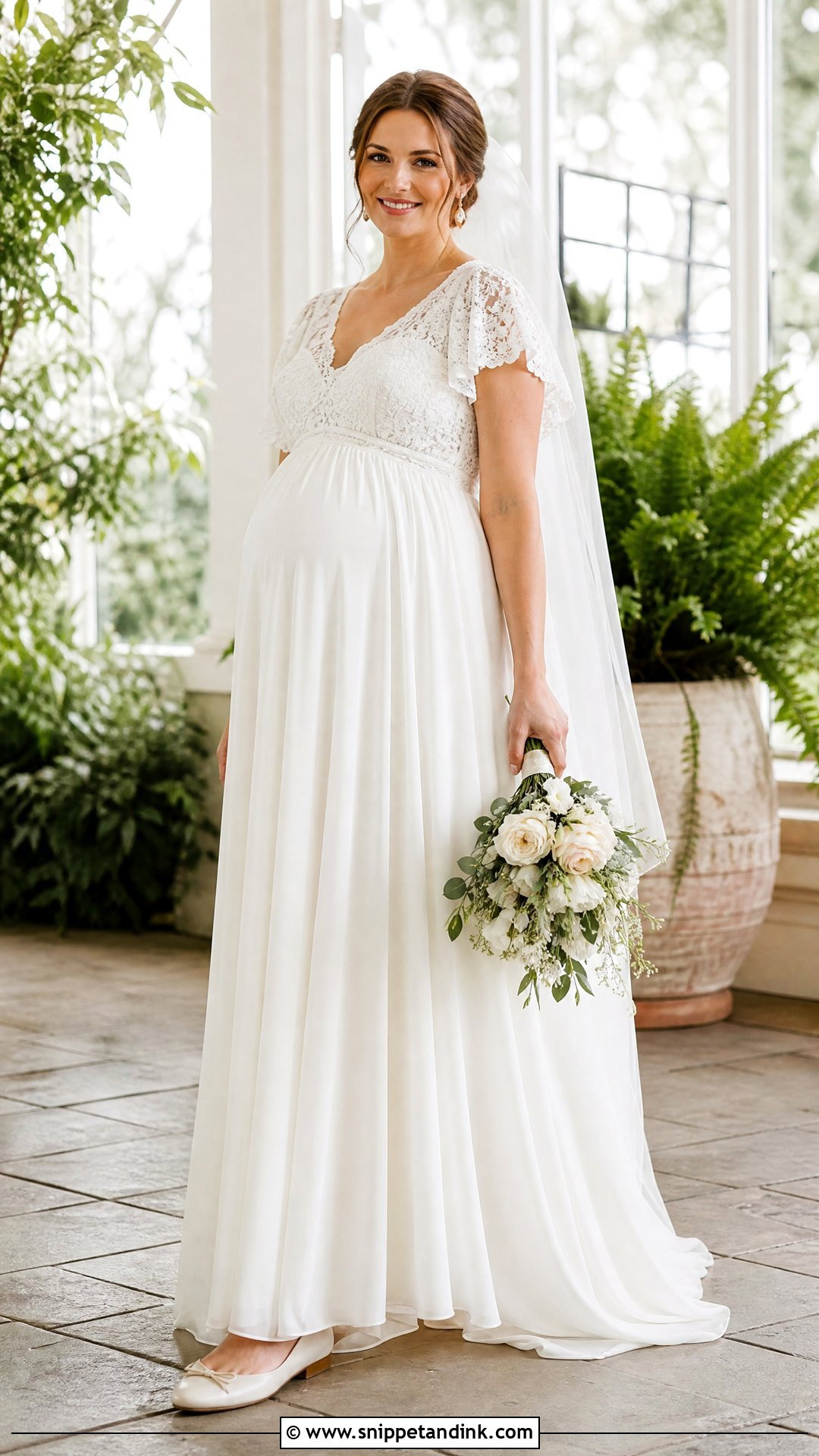
An empire lace bodice with an under-bust seam gives room through the middle, and a light chiffon skirt falls freely over a bump without tight gathering. Flutter sleeves, wider straps or an illusion neckline add coverage. Cushioned flats or low block heels, small drops and a shoulder-length veil keep the weight off, with a loose updo and soft bouquet. Plan the final fitting close to the date, because measurements change quickly, and your seamstress will tell you how close she can safely leave it. Breathable lining and a hem you can’t trip on matter most here.
18. Beach Lace Wedding Dress
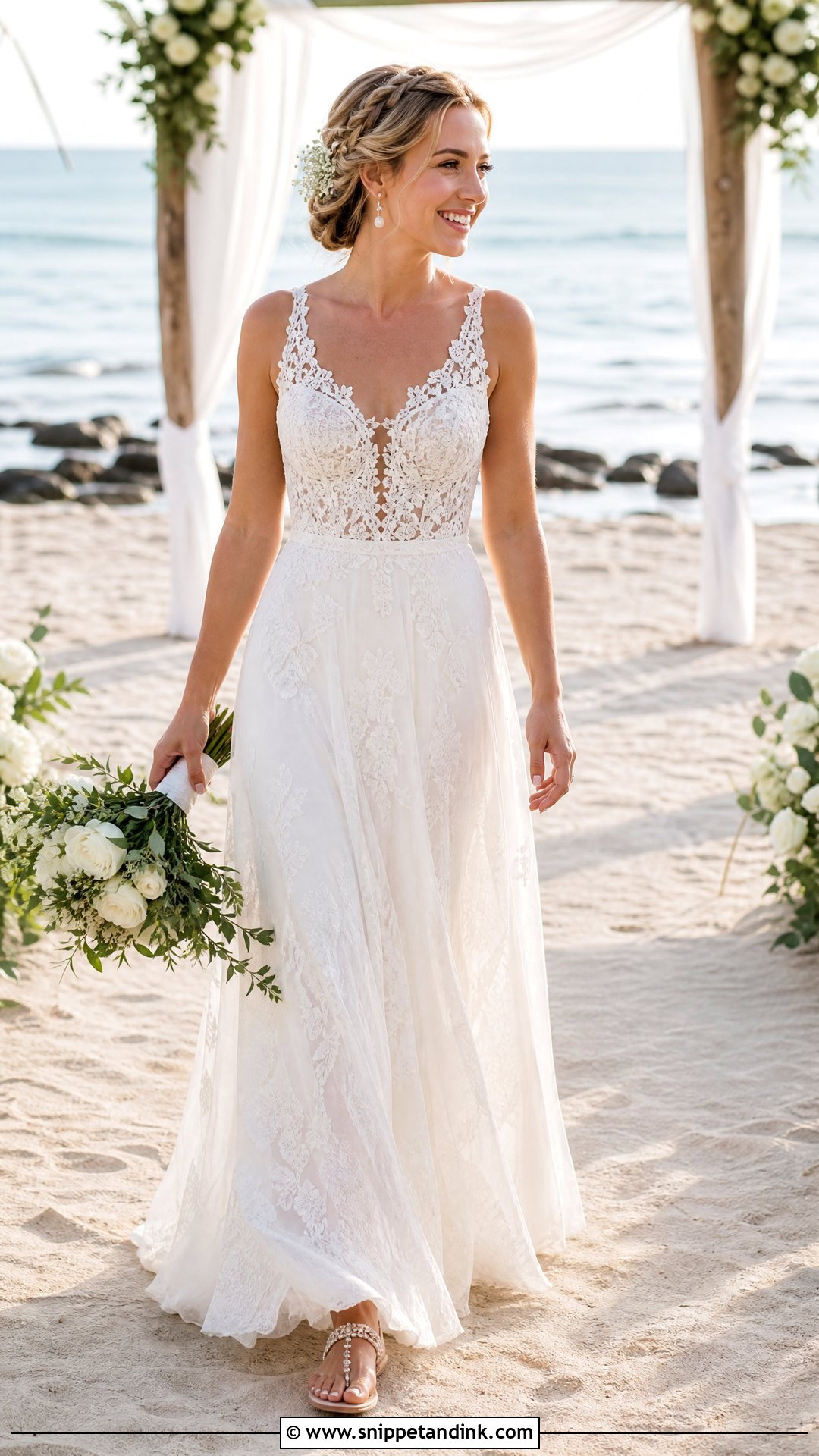
A beach lace wedding dress has to cope with sand, wind and heat, so I keep it lean. Breathable lace over a soft lining, a narrow A-line or empire skirt and very few layers. A V-neck, halter or strapped bodice stays put in a breeze. Flat embellished sandals, pearl earrings and a short veil or comb finish it, with loose waves or a textured low bun. Skip a long train unless there’s a runner or firm surface; lace drags sand into every scallop. White flowers and fresh greenery are plenty for the bouquet.
19. Garden Lace Wedding Dress
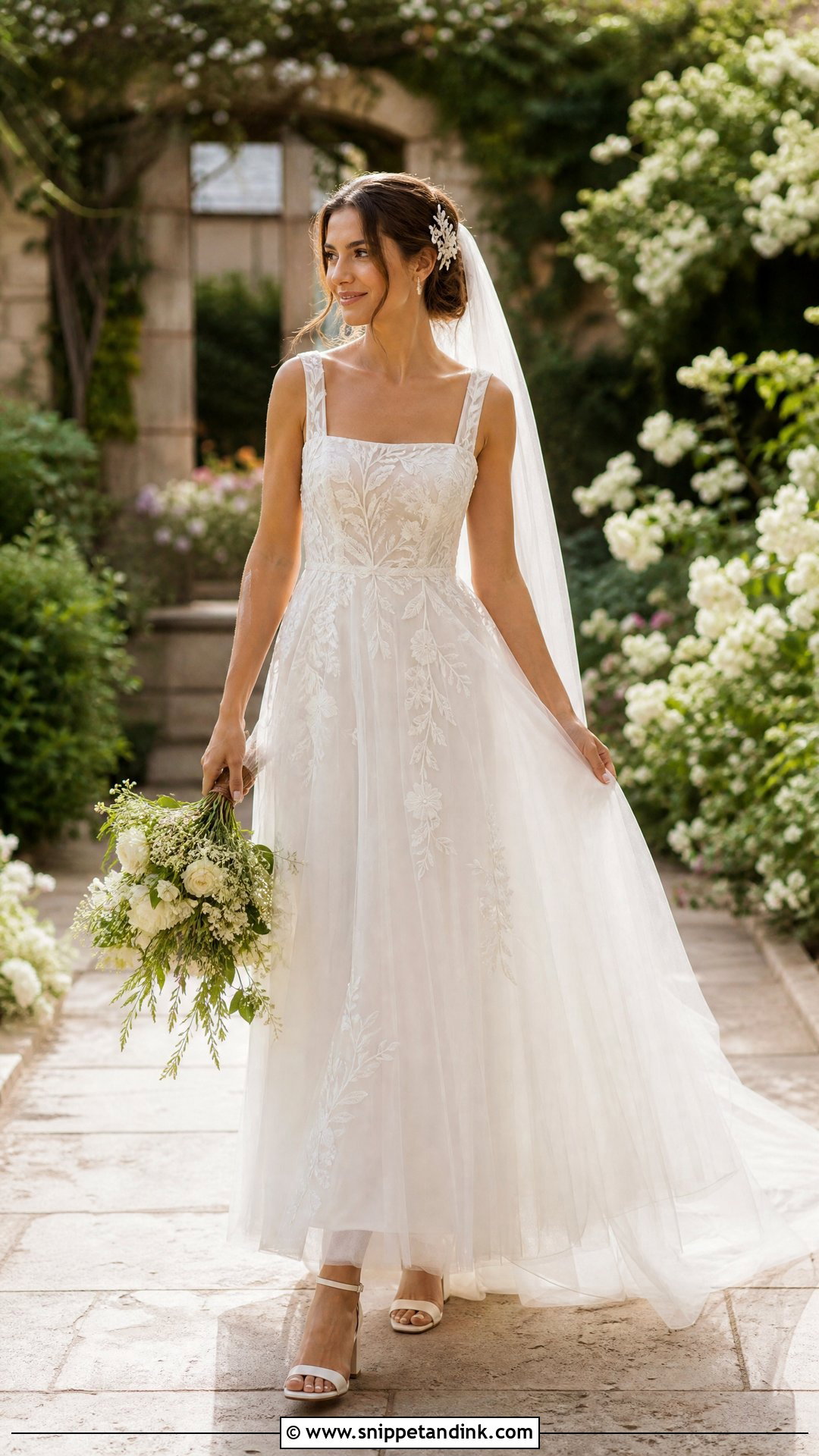
Leafy lace on a garden dress makes the gown look like it belongs in the setting. I’d choose an A-line with botanical appliqués, a soft tulle skirt and a square, scoop or V bodice, then sheer long sleeves or fine straps depending on the season. Block heels won’t sink into the lawn. A floral comb, a simple lightly edged veil and loose bun or half-up waves keep it approachable. Pick a bouquet that echoes the lace rather than matching it exactly, since an exact match flattens both. Keep the train moderate; gardens have gravel, damp grass and stems that catch lace.



20. Cathedral Train Lace Wedding Dress
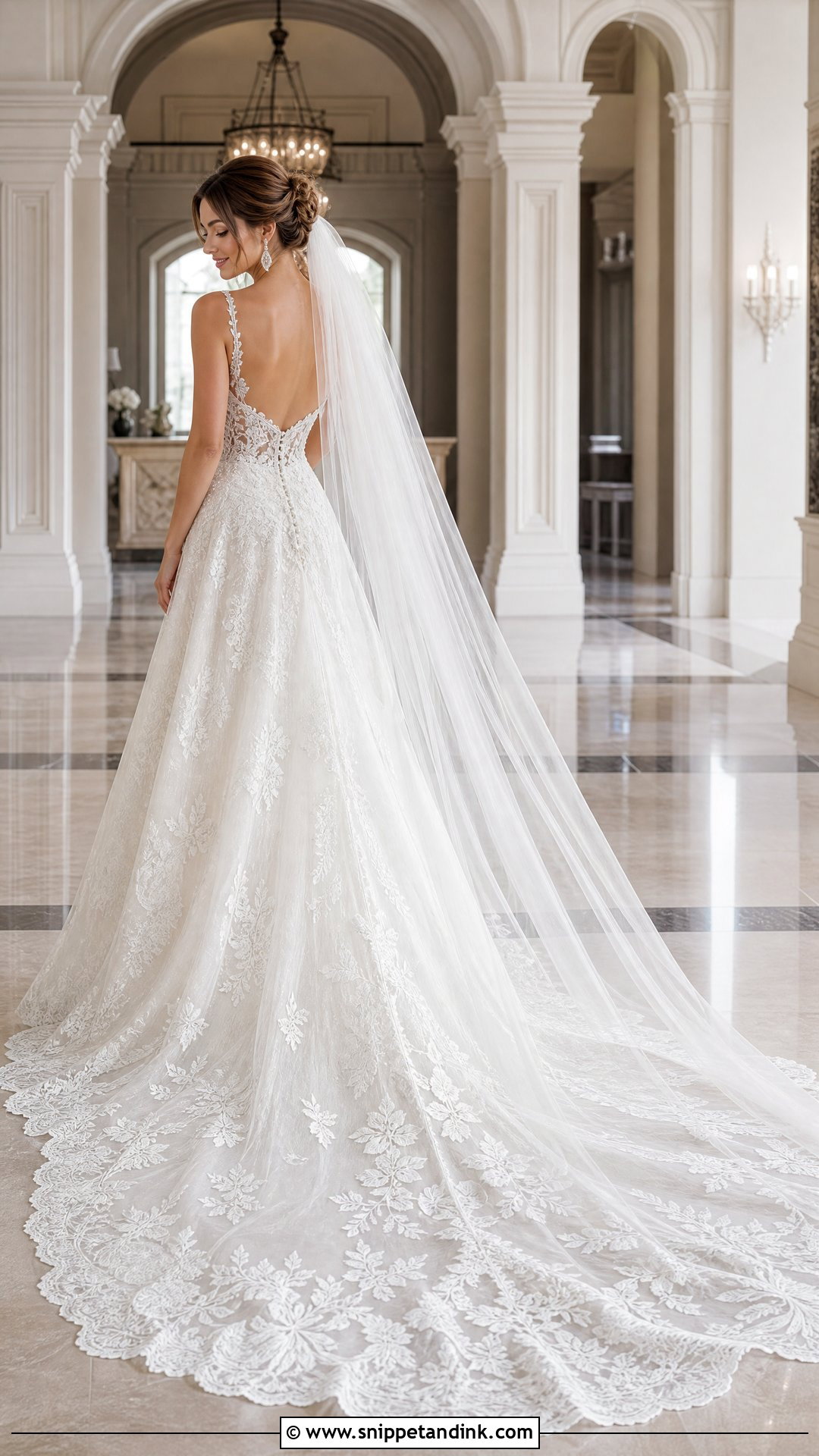
A cathedral train turns lace into the main event, especially when the appliqués grow denser toward the end of the train. A structured bodice counterbalances all that fabric behind you so the dress doesn’t pull backward on your shoulders. A plain cathedral veil, crystal drops and comfortable satin heels, plus a polished updo, keep the back visible and make veil placement simple. This one needs space: a wide aisle, a grand room, steps that suit a sweep of fabric. Ask about the bustle early. Lace trains are heavy, and the bustle points need to be strong enough for a night of dancing.
Altering Lace Without Losing the Scalloped Edge
Lace hems and sleeve cuffs often finish with a scalloped border, and that border can’t just be cut shorter. To take up the length, a seamstress usually removes the border, trims the skirt, then hand-stitches the scallop back on at the new height. Appliqué lace is moved the same way, motif by motif. It’s slow, skilled work, so expect lace alterations to take longer and cost more than on a plain gown.
- Ask at your first fitting whether the hem border will be lifted or replaced.
- Bring your wedding shoes; length is set from the floor with them on.
- If you’re adding sleeves or a lace back, ask whether matching lace is available from the dress maker before anything is cut.
- Leave room for a final fitting near the date to check the bustle and hem together.
The Lining Shade Changes the Lace
Under the same lace, a skin-tone lining makes the pattern look as though it’s sitting straight on your skin, while an ivory or white lining gives the motifs a clear outline and more contrast. Neither is wrong. If you want the lace to read clearly in photos, especially in bright sun, ivory usually wins. If you want a lighter, barely there look, ask to see a skin-tone lining that matches you, not the shop’s default nude, which can look grey on deeper or warmer skin.
Lace Comes Down to Fit, Lining and How Long You’ll Wear It
Lace can do far more than the classic ballgown look, and the trick is pairing it with the right skirt and silhouette. A-line skirts, empire waists, soft tulle and fluid chiffon all bring movement, while necklines and sleeves set your coverage. Before you decide, picture your venue, the weather, the ground and how many hours you’ll be on your feet. At fittings, sit, walk and lift your arms. Then add shoes you can last in, jewelry that sits beside the lace, and a veil or comb that suits the design. The right one feels secure and like you.
You'll Like These Ideas:




Leave a Reply