
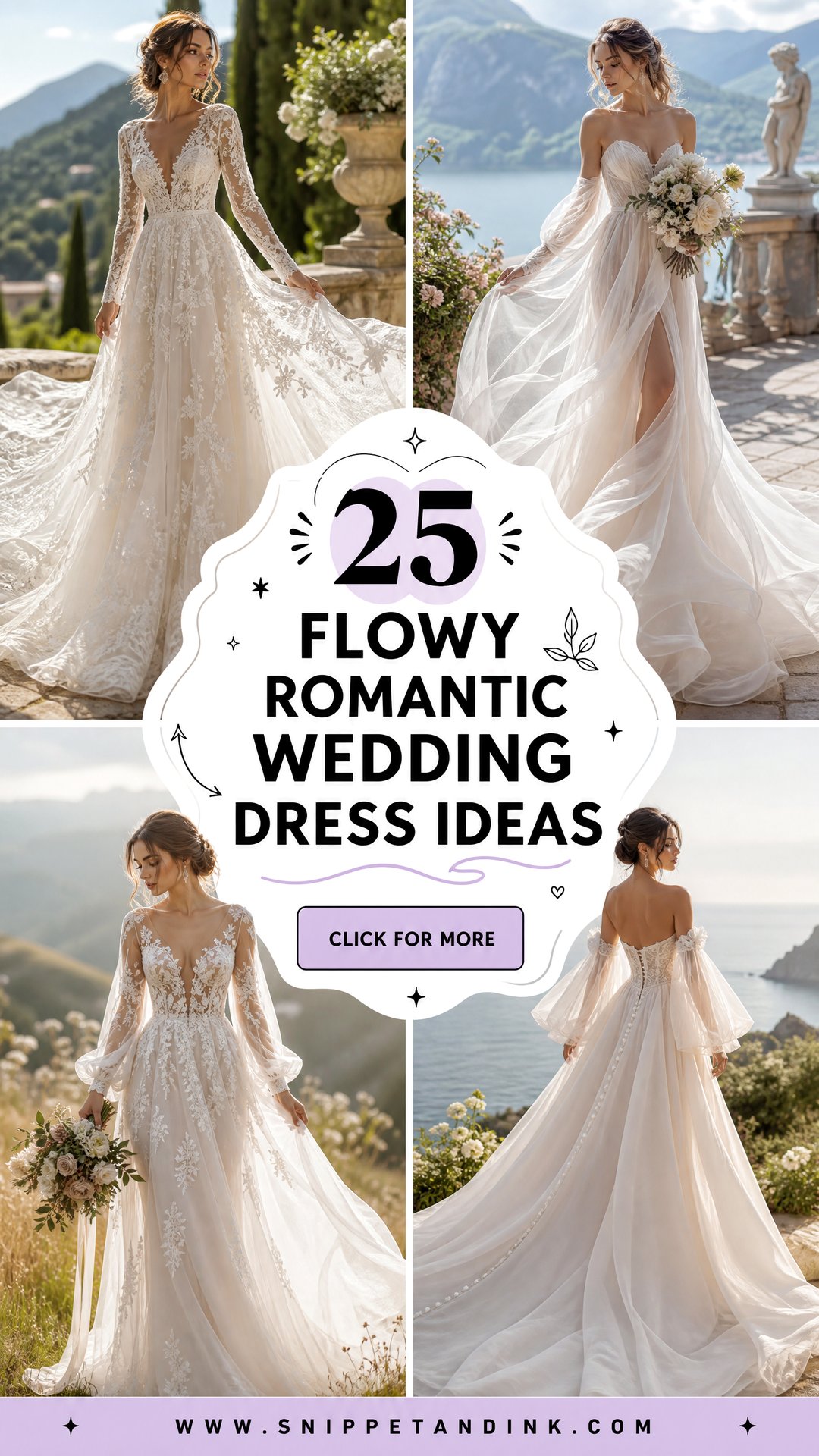
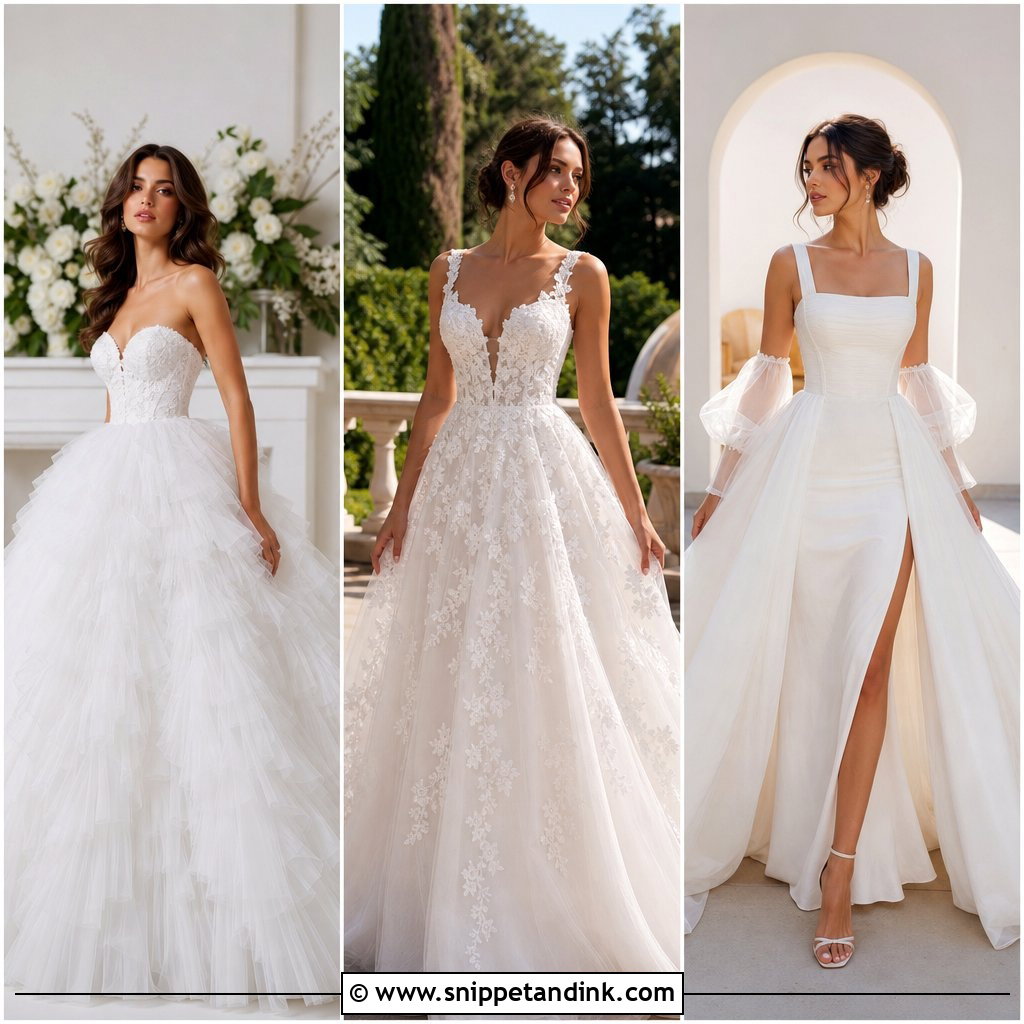
Movement is the whole point of the gowns below. Chiffon, tulle, organza, soft lace, crepe and silk blends all fall away from the body and lift a little as you walk, which is why they suit gardens, beaches, estates and even a classic ballroom. The range is wider than people assume: a simple chiffon A-line dress, a long-sleeve lace gown, a tiered tulle skirt or a floral appliqué design can all feel light if the fabric is cut to drape. I’ve gathered 25 of them here, with notes on what each fabric and neckline does once you’re actually wearing it.
Does It Actually Move When You Walk?
Flowy is the word nearly every bride uses at the first appointment, and it means different things in different fabrics. A gown can look airy on the hanger and hang flat once it’s on, usually because the lining is heavier than the outer layer. Before I let anyone fall for a dress in this style, I put it through a short test.
- Walk the length of the room at your real pace and watch the side view in the mirror. The skirt should swing a beat behind you.
- Turn quickly. Chiffon and soft tulle flare and settle; organza holds its shape and rustles.
- Stand near an open door or fan if the boutique allows it. A skirt that moves in a light draft will move at an outdoor ceremony.
- Sit down, stand up again and count the creases.
If the outer fabric is light but the skirt still feels stiff, ask what the lining is made of. A softer lining can sometimes be swapped in at alterations, and it changes the drape more than almost any other adjustment.
1. Chiffon A Line Wedding Dress
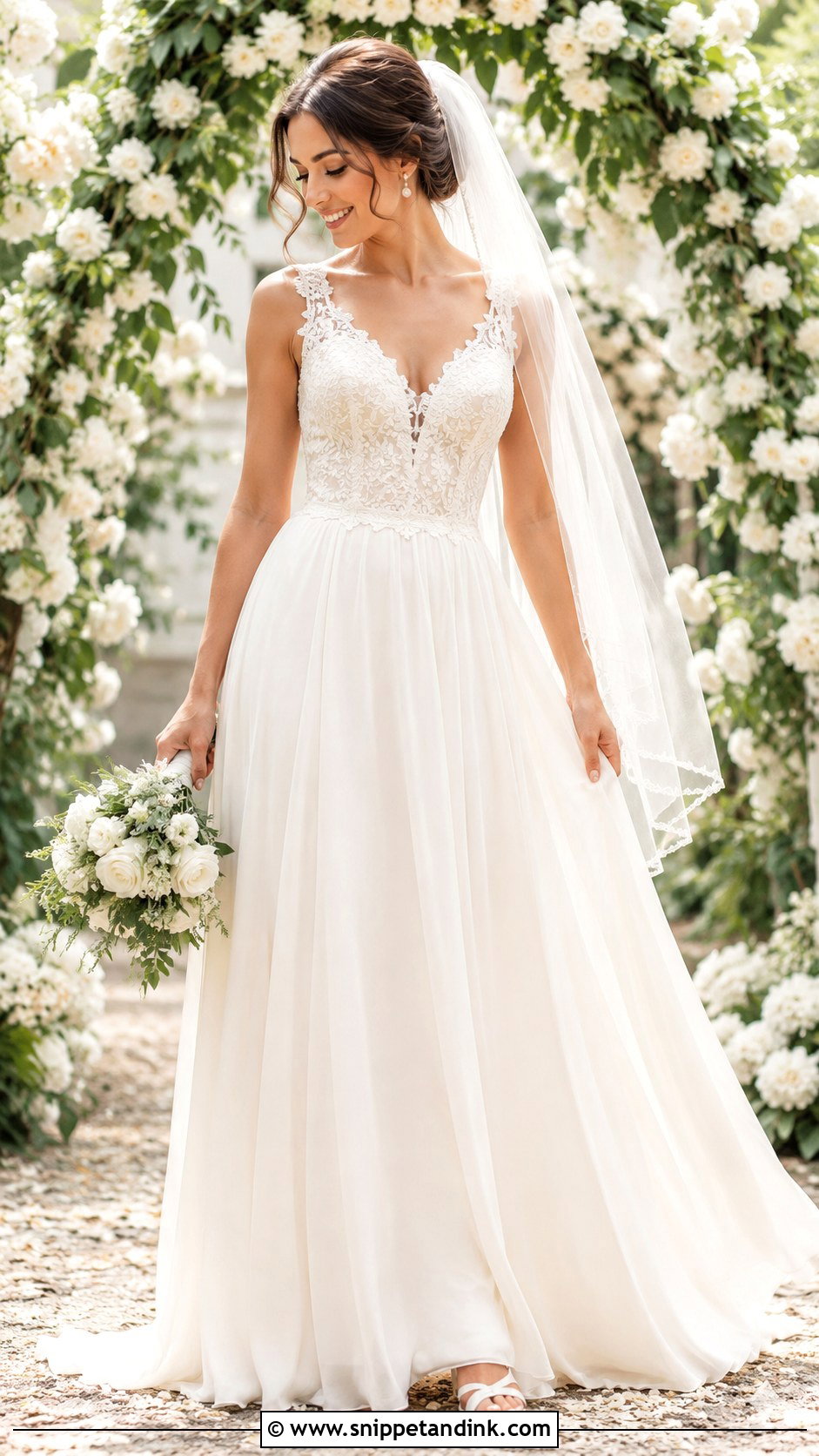
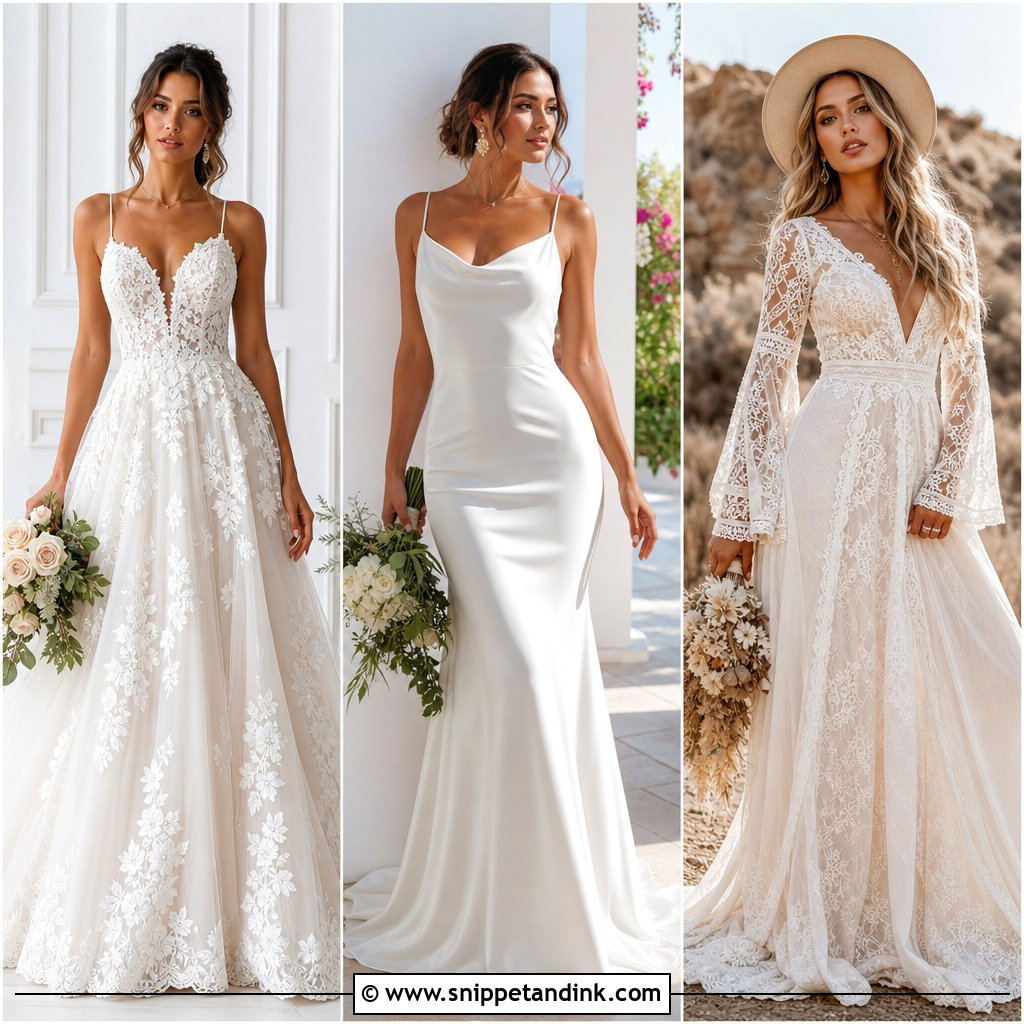
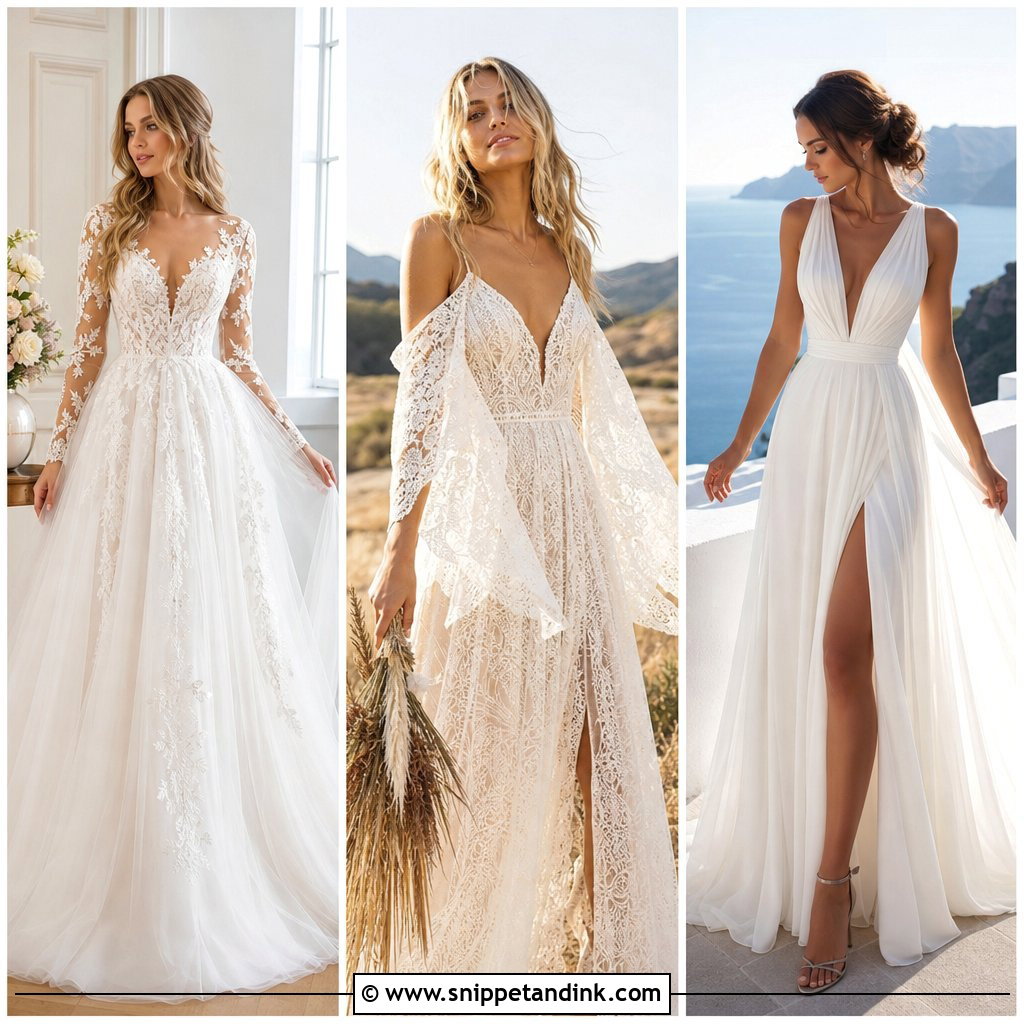
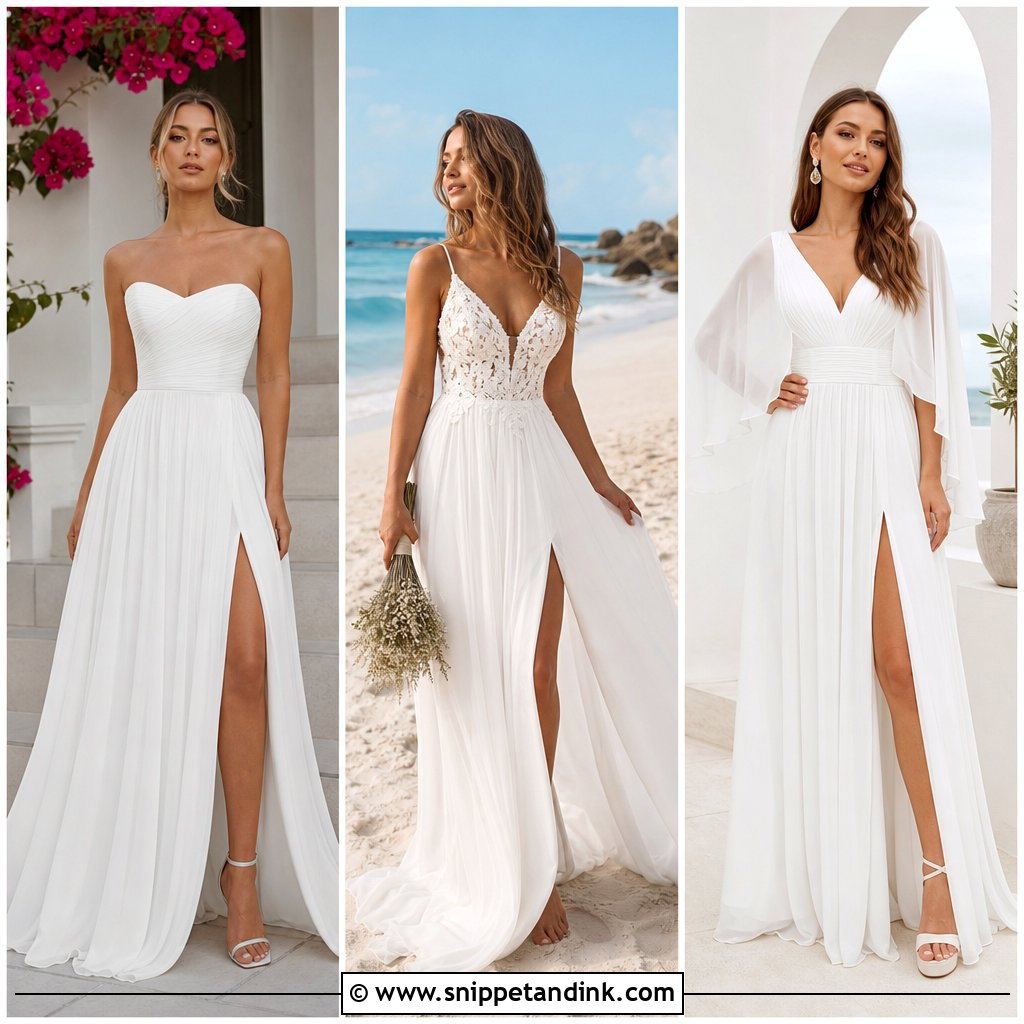
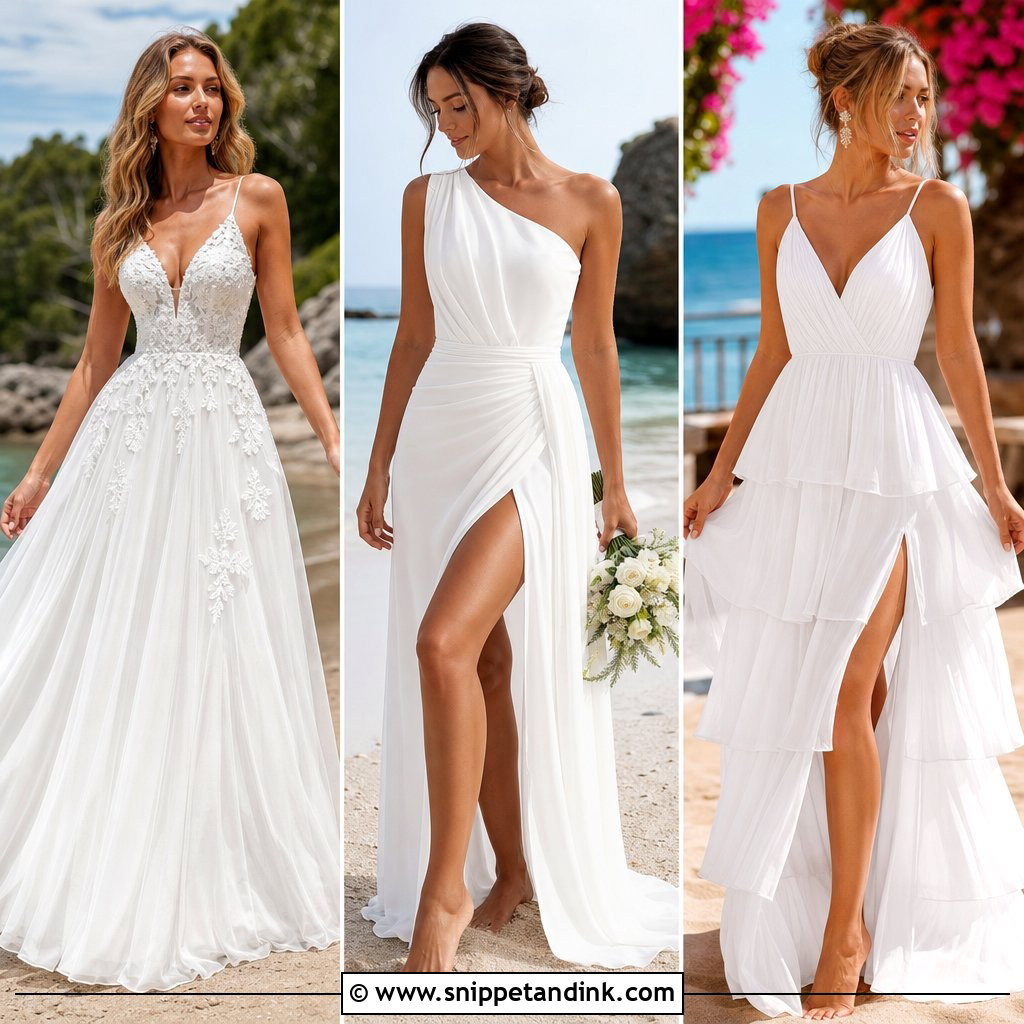
Chiffon A-lines are the dresses I watch brides relax in. The bodice gives gentle shape, and from the waist the skirt drops in light layers that catch every breeze outdoors. It defines the waist without clinging at the hips or thighs, which is why it suits so many figures. Delicate straps, a sweetheart neckline or a little floral lace on the bodice adds romance. One caution: a single layer of chiffon shows sweat at the underarm and back in heat, so I look for a lined bodice. Fingertip veil, pearl earrings and nude block heels.
2. Tulle Ball Gown Wedding Dress
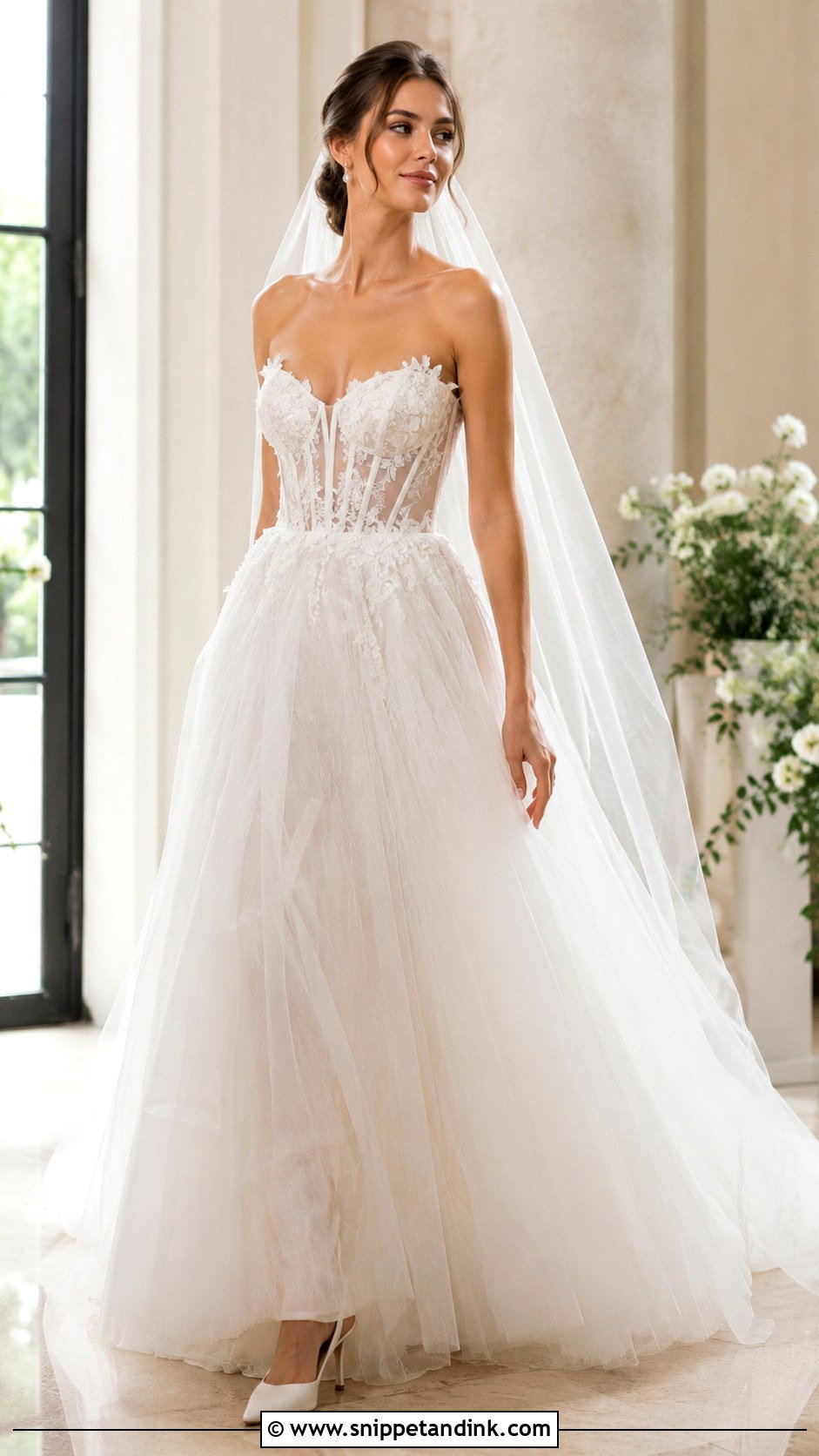
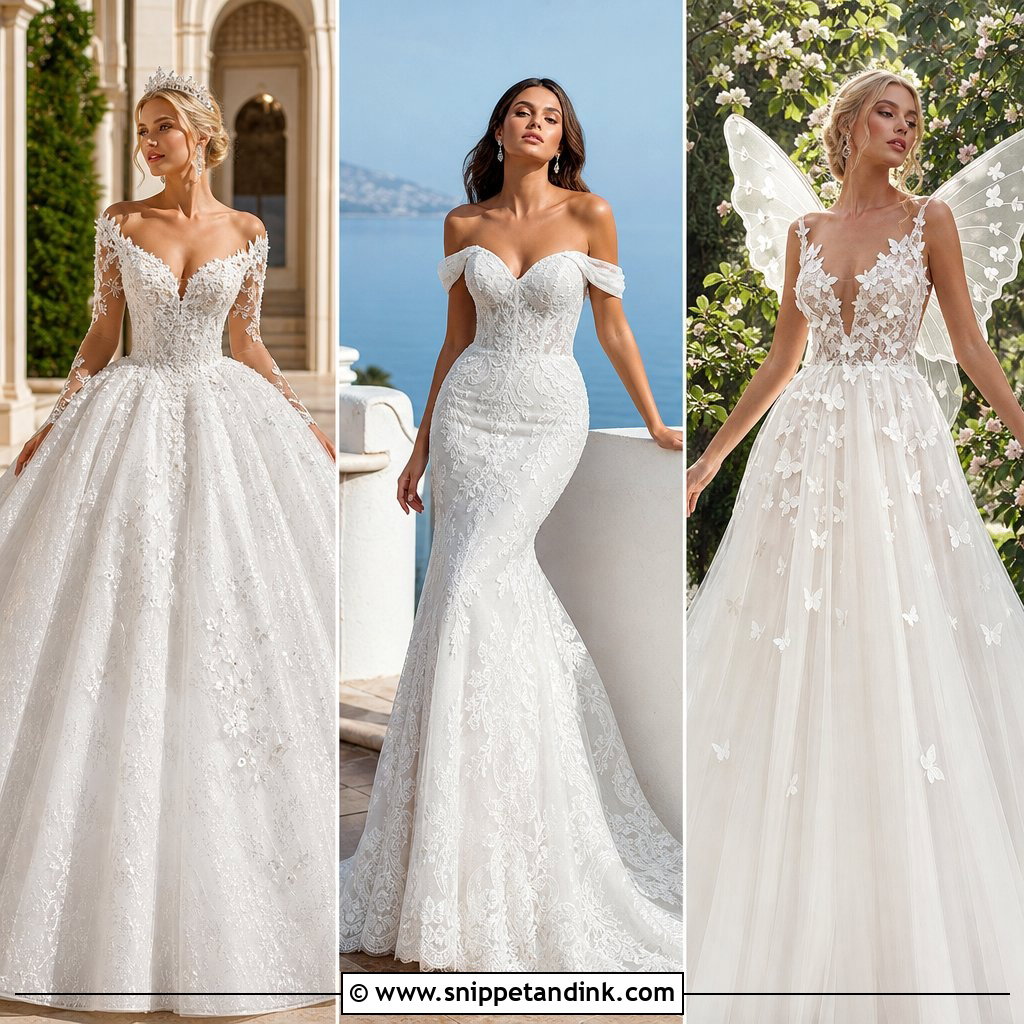
Fine tulle is how you get a fairytale skirt that doesn’t weigh you down. Ask how many layers there are and whether there’s a crinoline underneath; soft, many-layered tulle builds volume without the bulk of a hooped skirt, and it lets you sit and dance. A sheer corset bodice, floral appliqués or a scoop neck keeps it modern. Garden venues, estates and formal indoor ceremonies all suit it. Keep the rest small: a simple veil, satin heels, drop earrings.
3. Off Shoulder Wedding Dress
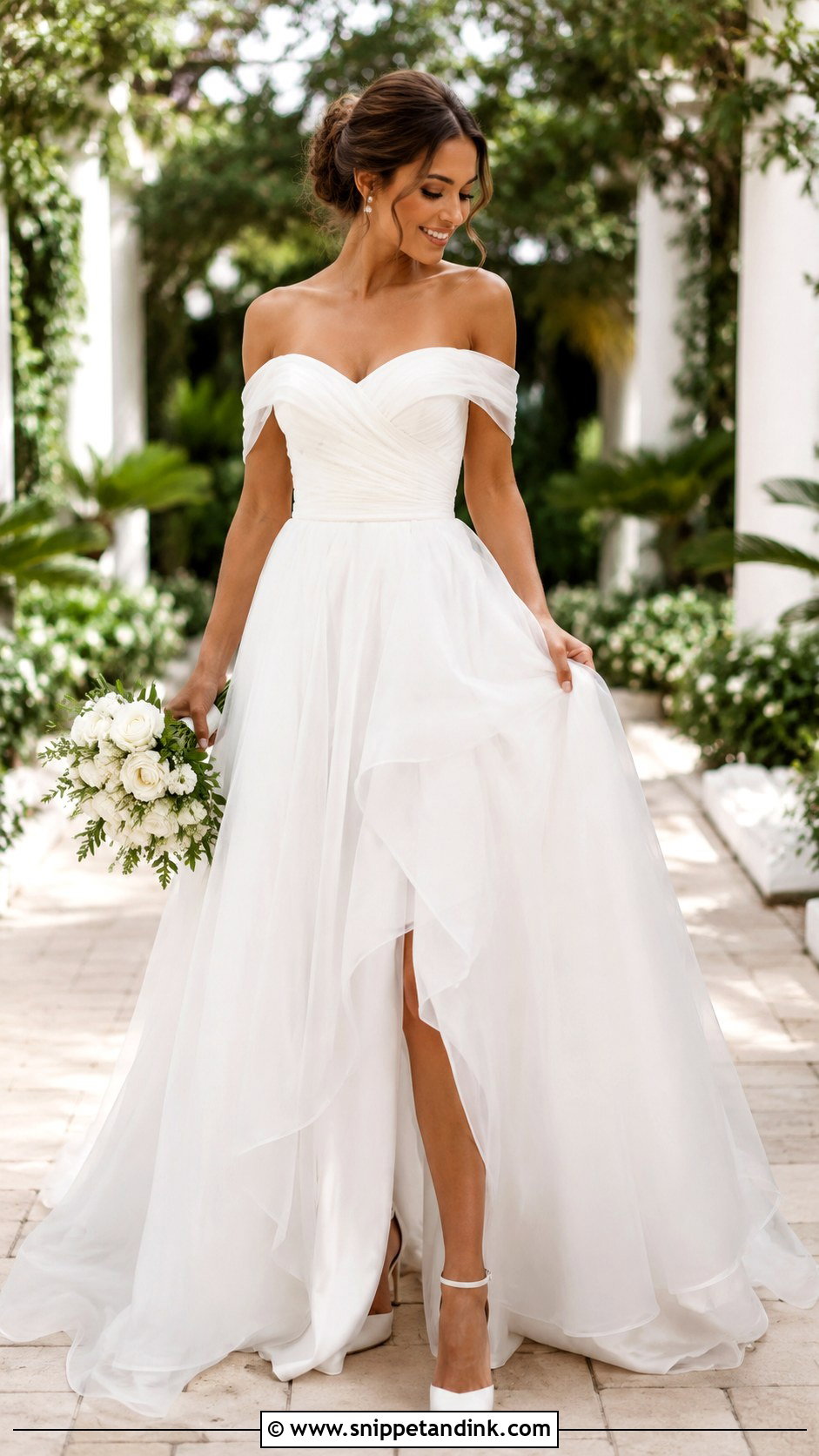
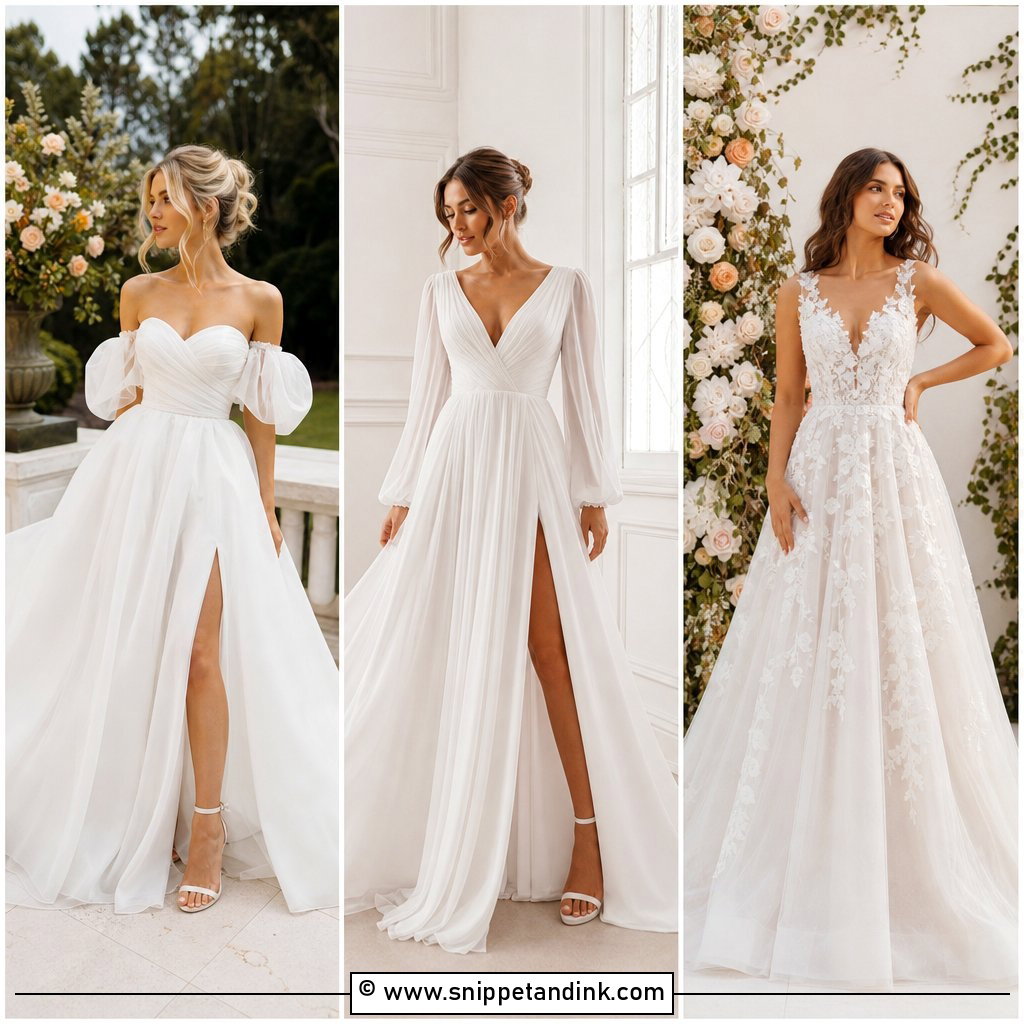
The off-shoulder line frames the neck and shoulders softly, and it pairs naturally with a flowing chiffon or organza skirt. Draped, folded or lace-edged, the neckline is the detail, so an updo makes sense. My concern with this cut is always security. Look for hidden boning in the bodice and a band that grips without digging in; if you can’t raise your arms without hitching it up afterward, it needs adjusting. Pearl studs, a simple bracelet and pointed heels.
4. Long Sleeve Lace Wedding Dress
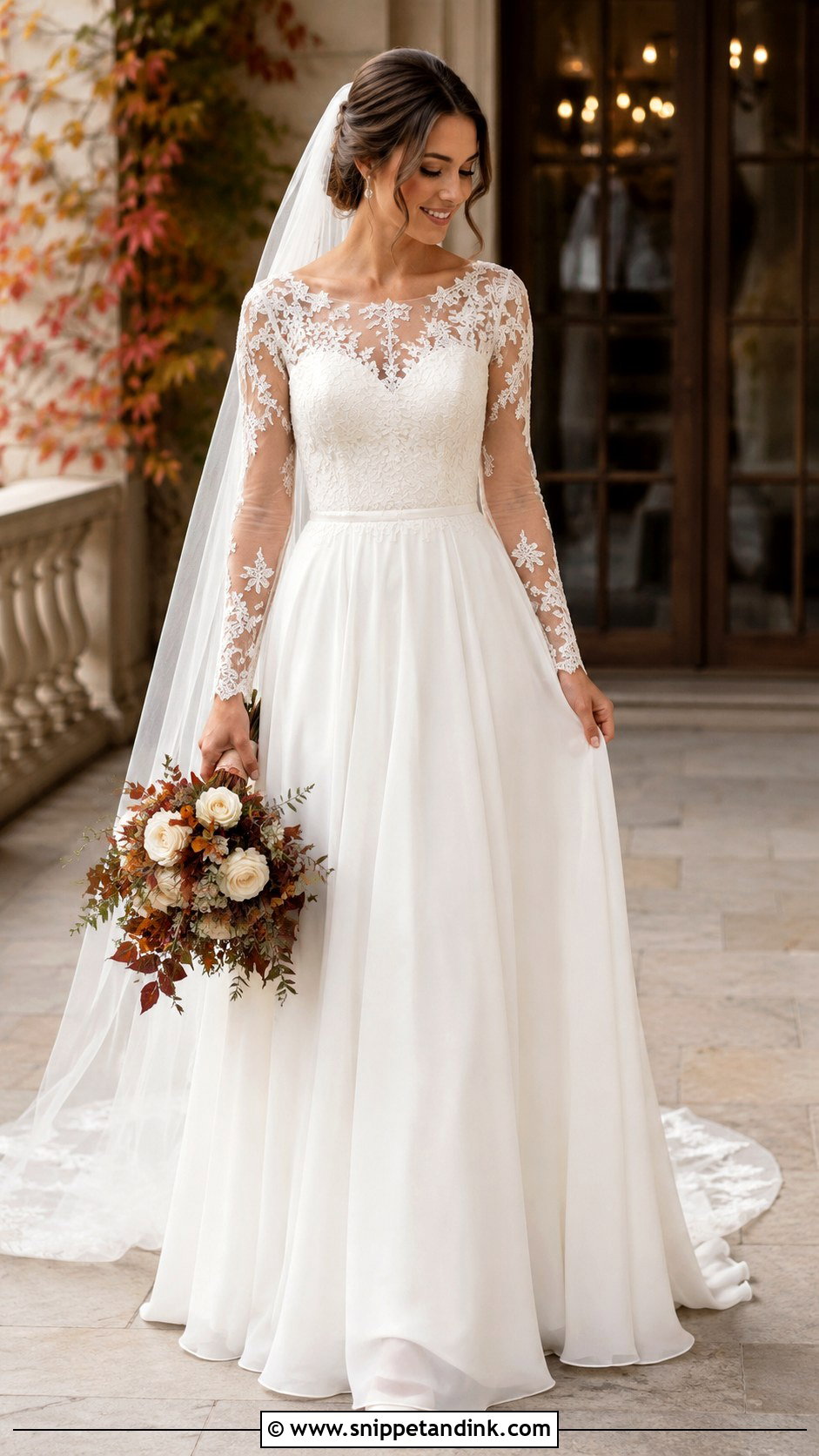
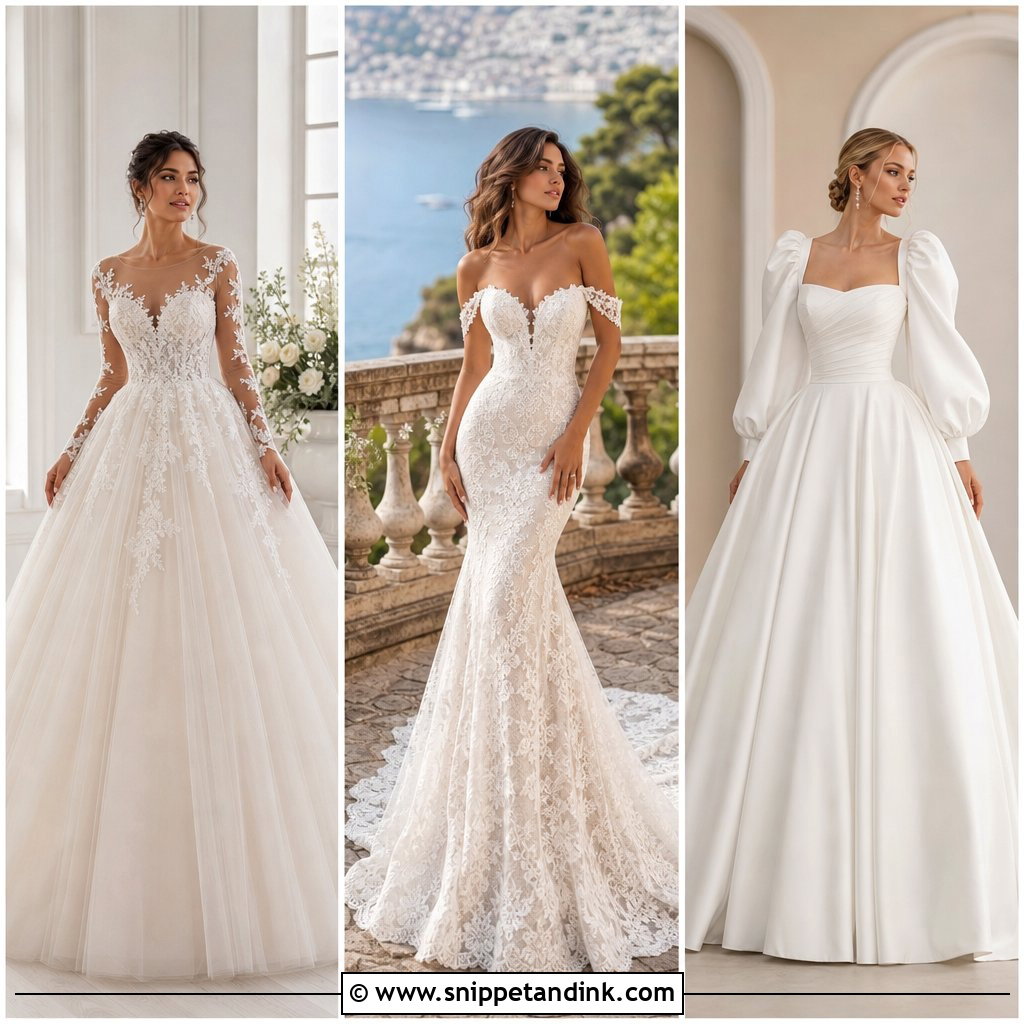
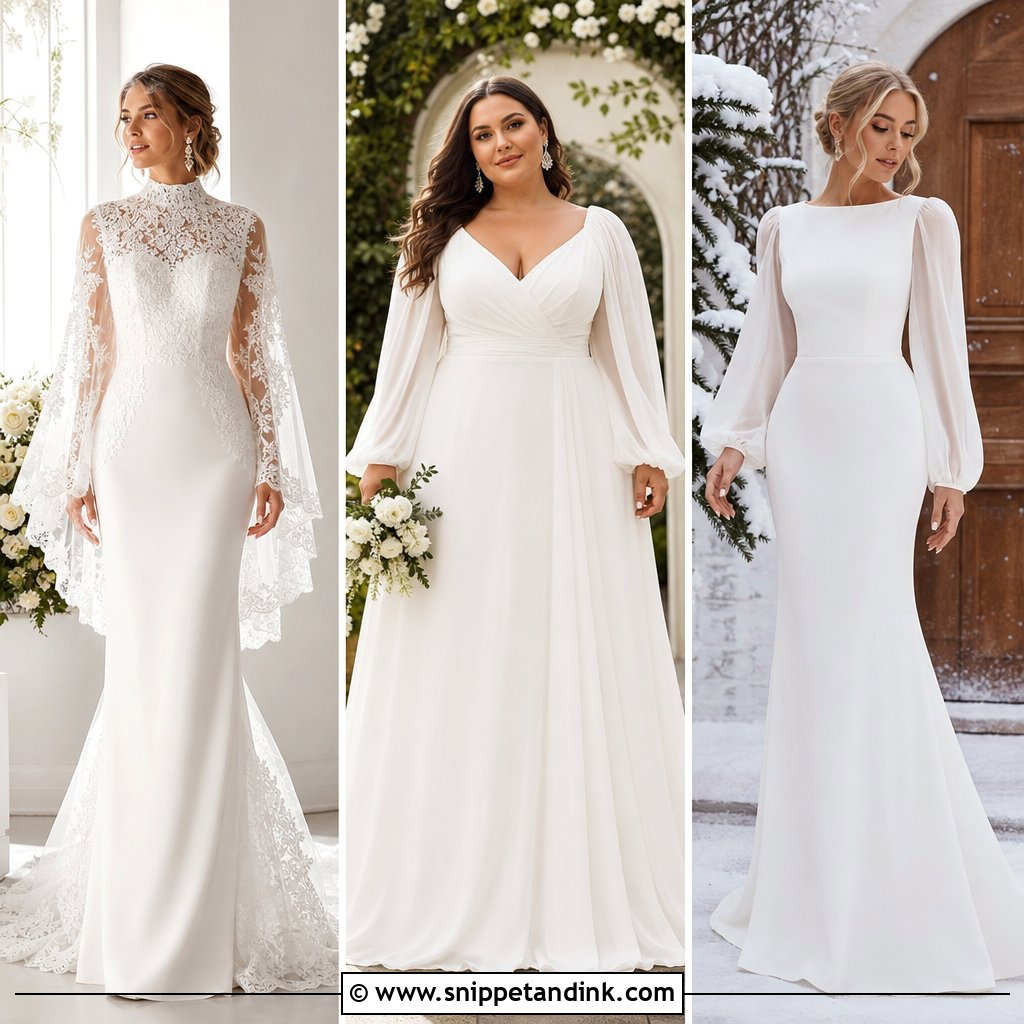
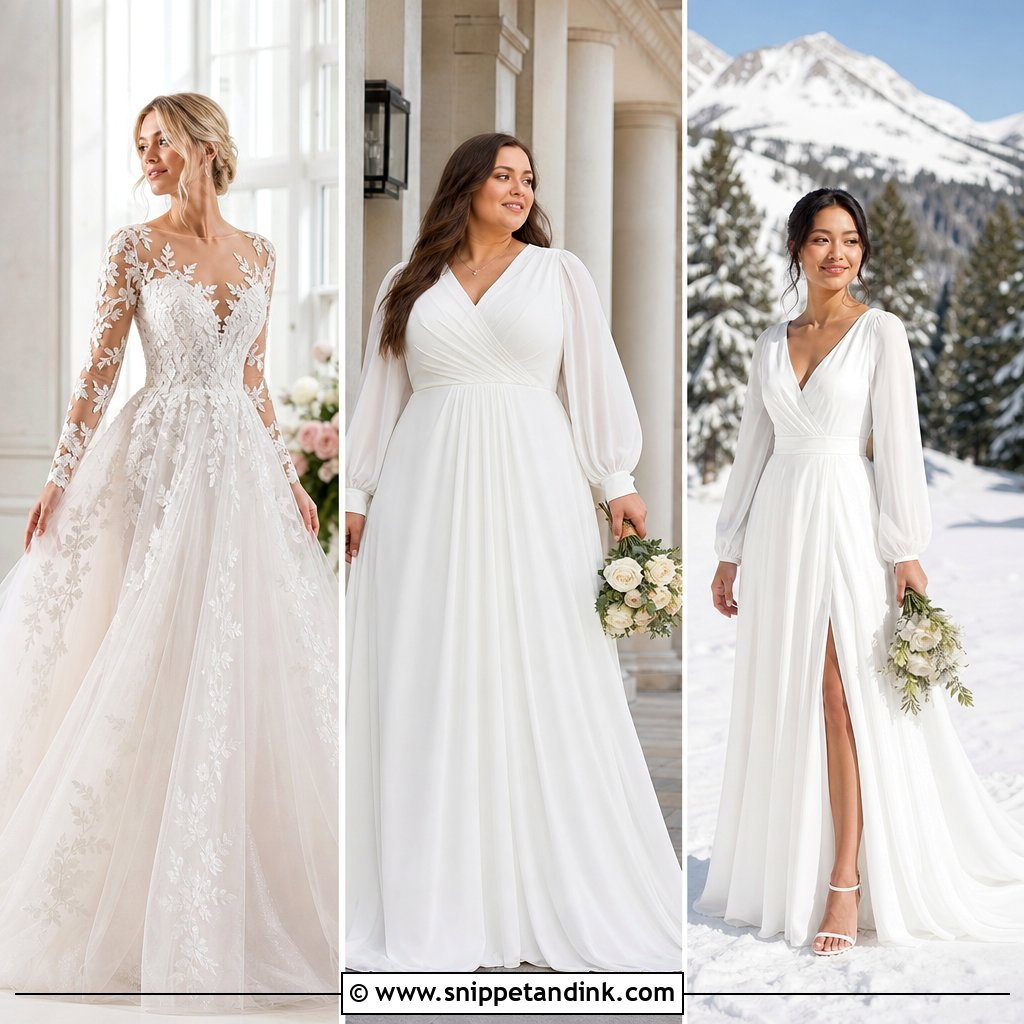
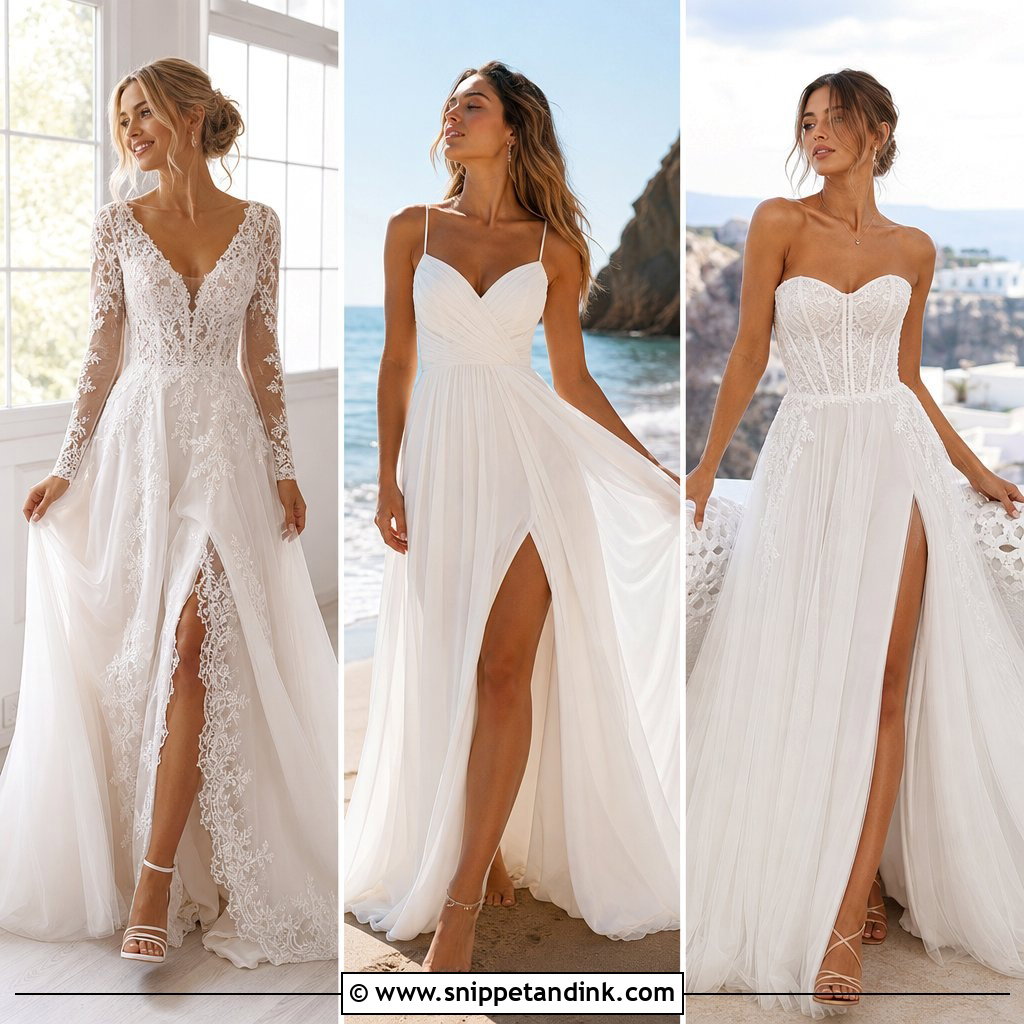
Coverage and romance meet in a long sleeve lace wedding dress, as long as the skirt stays light. Sheer floral sleeves with scalloped cuffs or fine embroidery over a chiffon, tulle or crepe skirt keep the whole thing balanced. It’s a natural fit for fall, winter and evening weddings; for spring I’d choose an unlined sleeve so it breathes. Lace sleeves are fiddly to alter once cut, so get the length right at the first fitting. A low bun, soft veil and simple earrings.
5. Floral Applique Wedding Dress
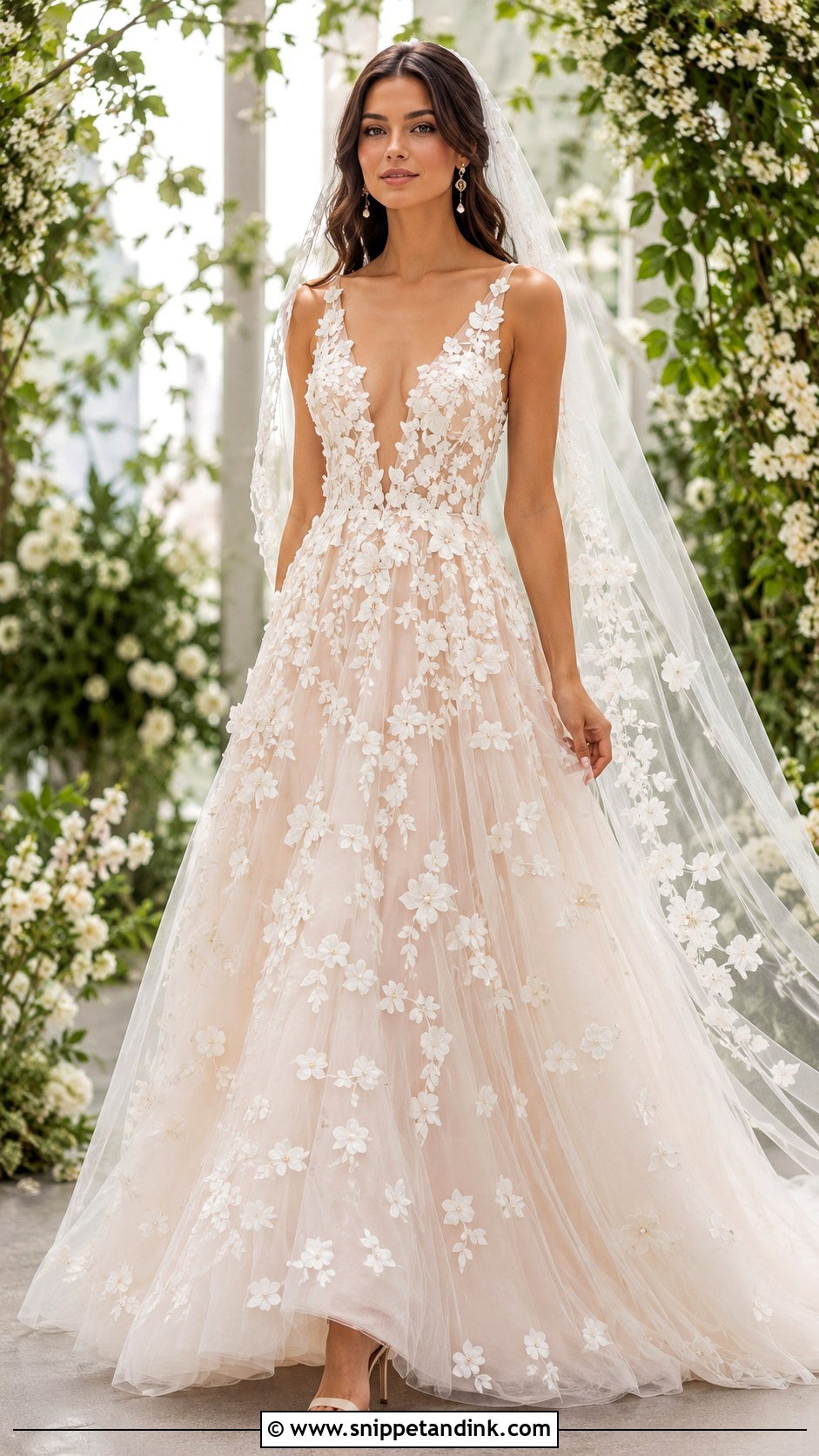
Scattered appliqués over sheer tulle or organza give a flowy dress texture without making it ornate. The flowers sit on the surface and add dimension at the bodice, sleeves or skirt, and they look most natural when they trail and thin out toward the hem. Garden and spring weddings suit it. If you match the veil’s floral accents to the gown, ask the boutique whether both come from the same lace supplier, because ivories vary more than you’d think. Delicate heels and soft makeup.
6. Simple Crepe Wedding Dress
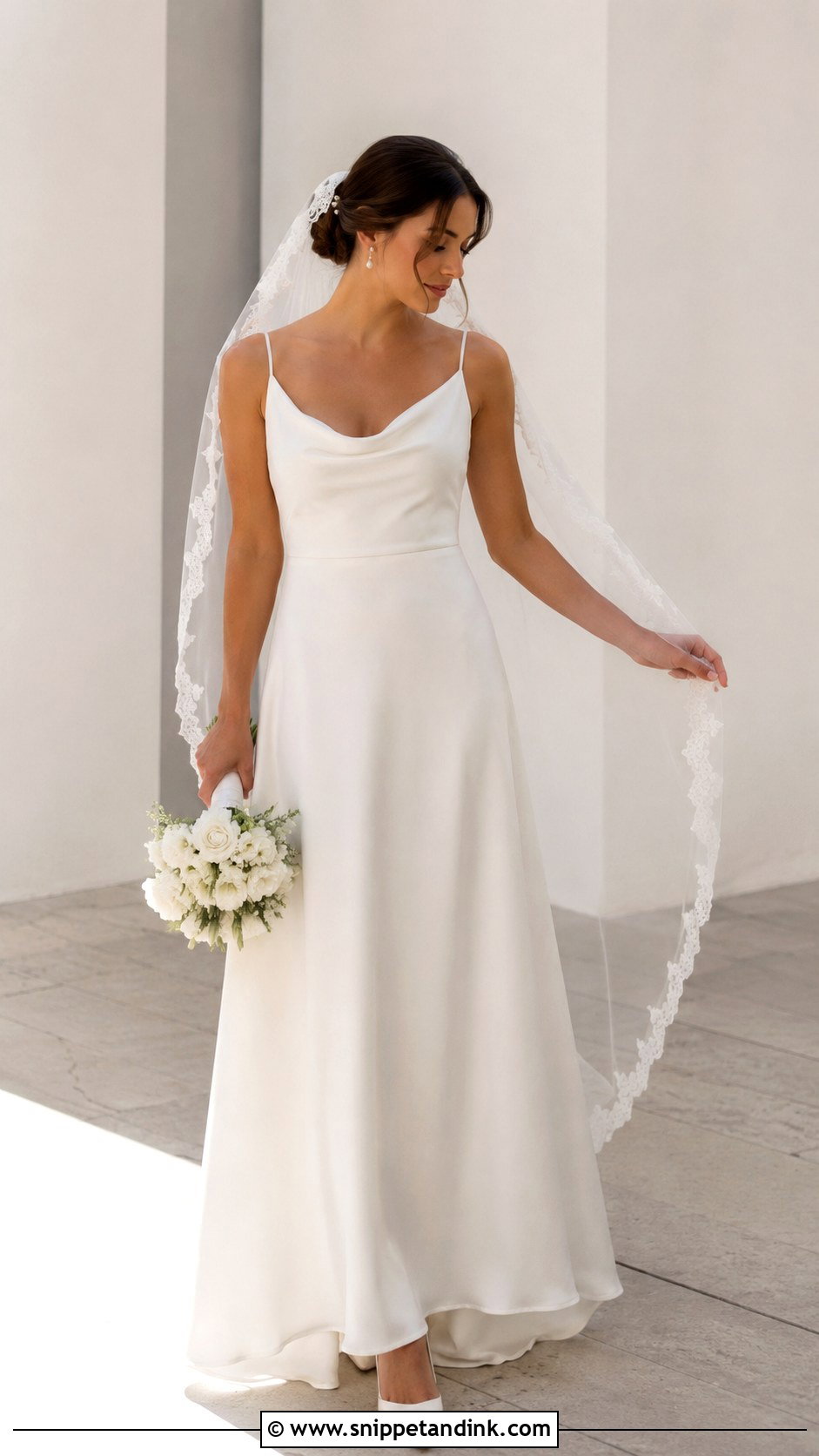
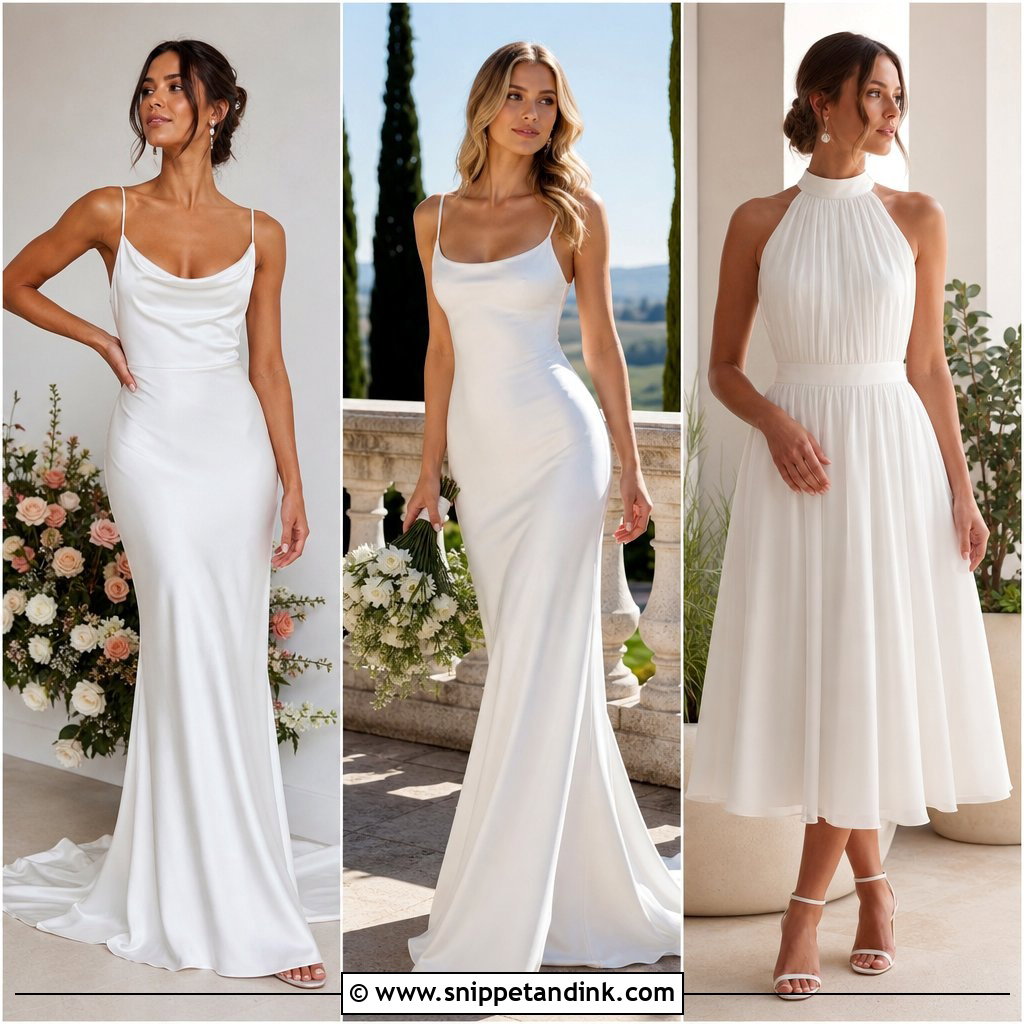
Crepe surprises people. It has no shine and no ornament, yet it drapes softly and moves well when cut as a relaxed A-line or with a soft train or cowl neckline. Minimalist brides like it because it never looks stiff. The trade-off is honesty: crepe skims everything, so the fit through the hips needs to be precise and your underwear invisible. Bring the romance in with a lace-trimmed veil, pearl hair pins or satin heels.
7. Boho Lace Wedding Dress
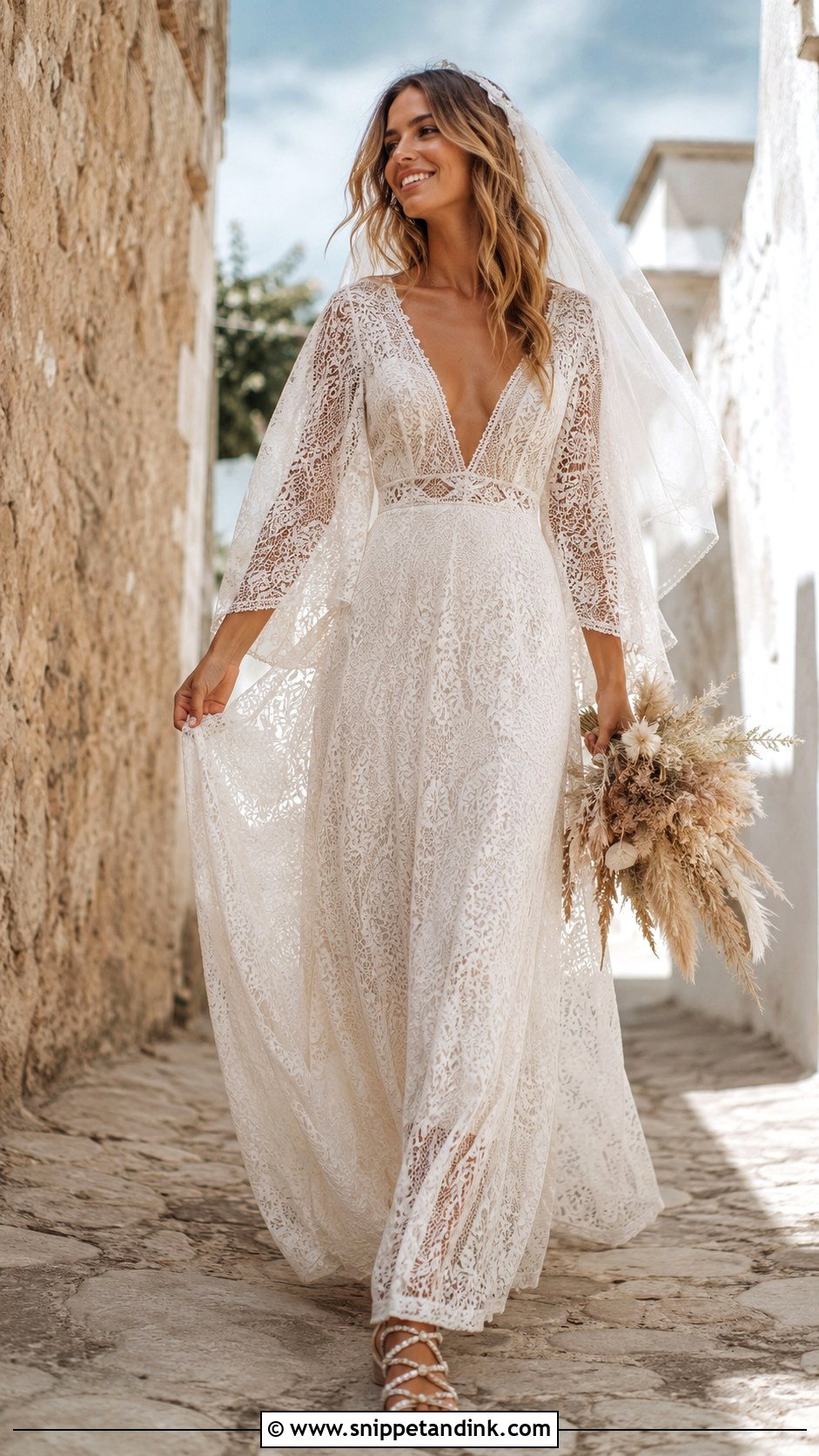
Boho lace is about ease. Soft lace, loose sleeves, an unstructured skirt and an open back or flutter sleeve should look like you could sit on a rug in it, and usually you can. Outdoor, beach, desert and rustic garden weddings suit it. I steer brides away from heavy jewelry here, because the style falls apart once it looks fussy. Loose waves, a sheer veil, block heels or embellished sandals. Check the sleeve lace, though: open crochet-style lace catches on rings.
8. Bishop Sleeve Wedding Dress
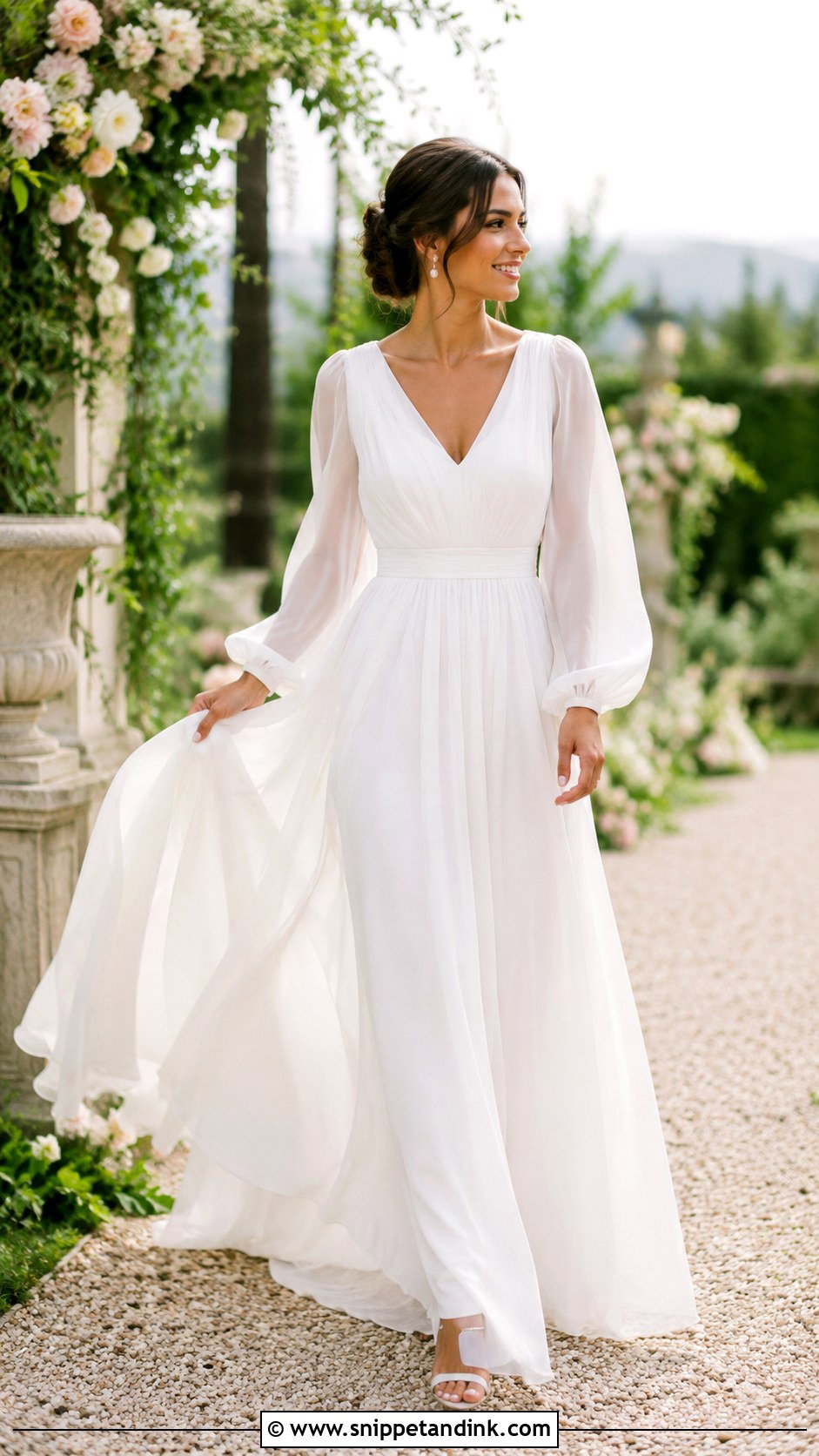
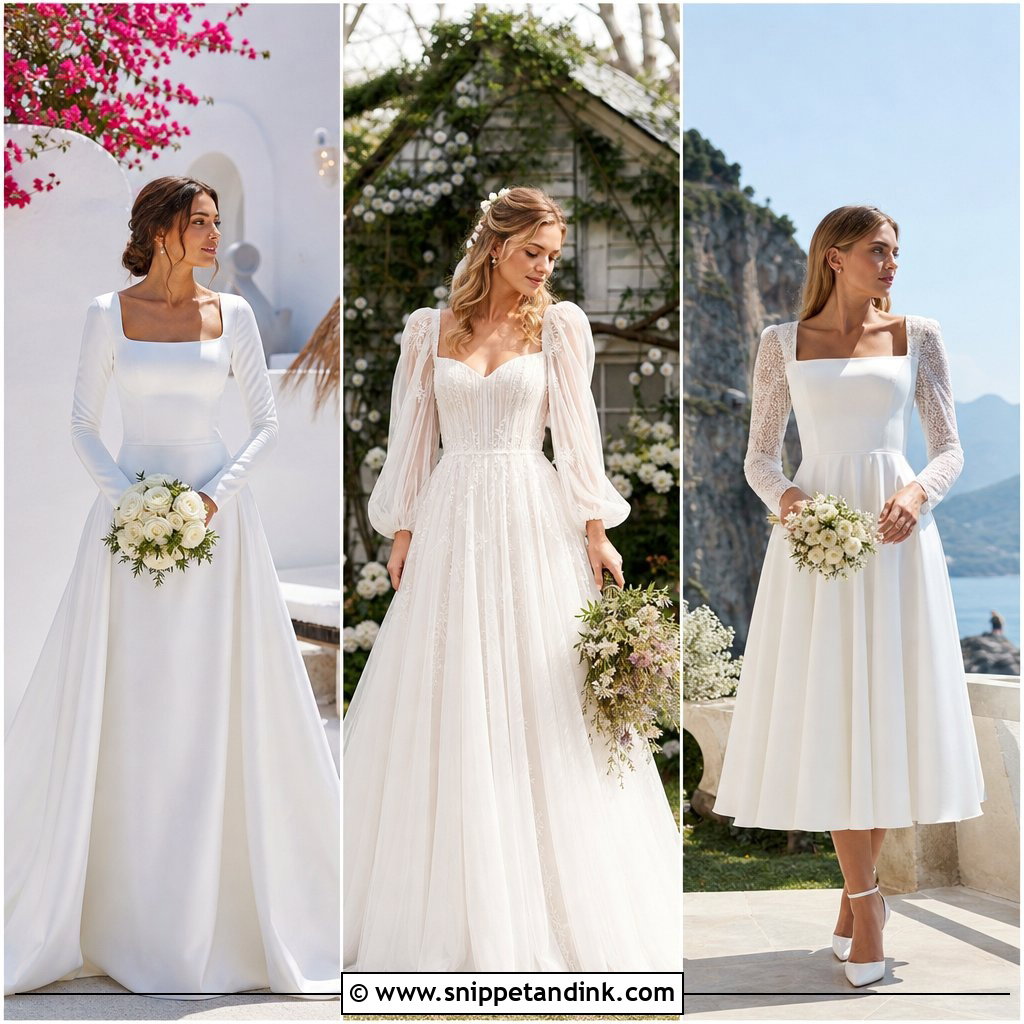
Bishop sleeves are full through the arm and gathered at a cuff, so they move every time you gesture. That’s the charm. A simple bodice balances the volume, a V or square neckline keeps it fresh, and a chiffon, organza or tulle skirt finishes the line. They suit cooler seasons and outdoor ceremonies. The practical thing I watch is the cuff: too tight and it pinches once hands swell in the evening, too loose and the sleeve trails through the cake frosting. Low bun, pearl earrings, slim heels.
9. Square Neck Wedding Dress
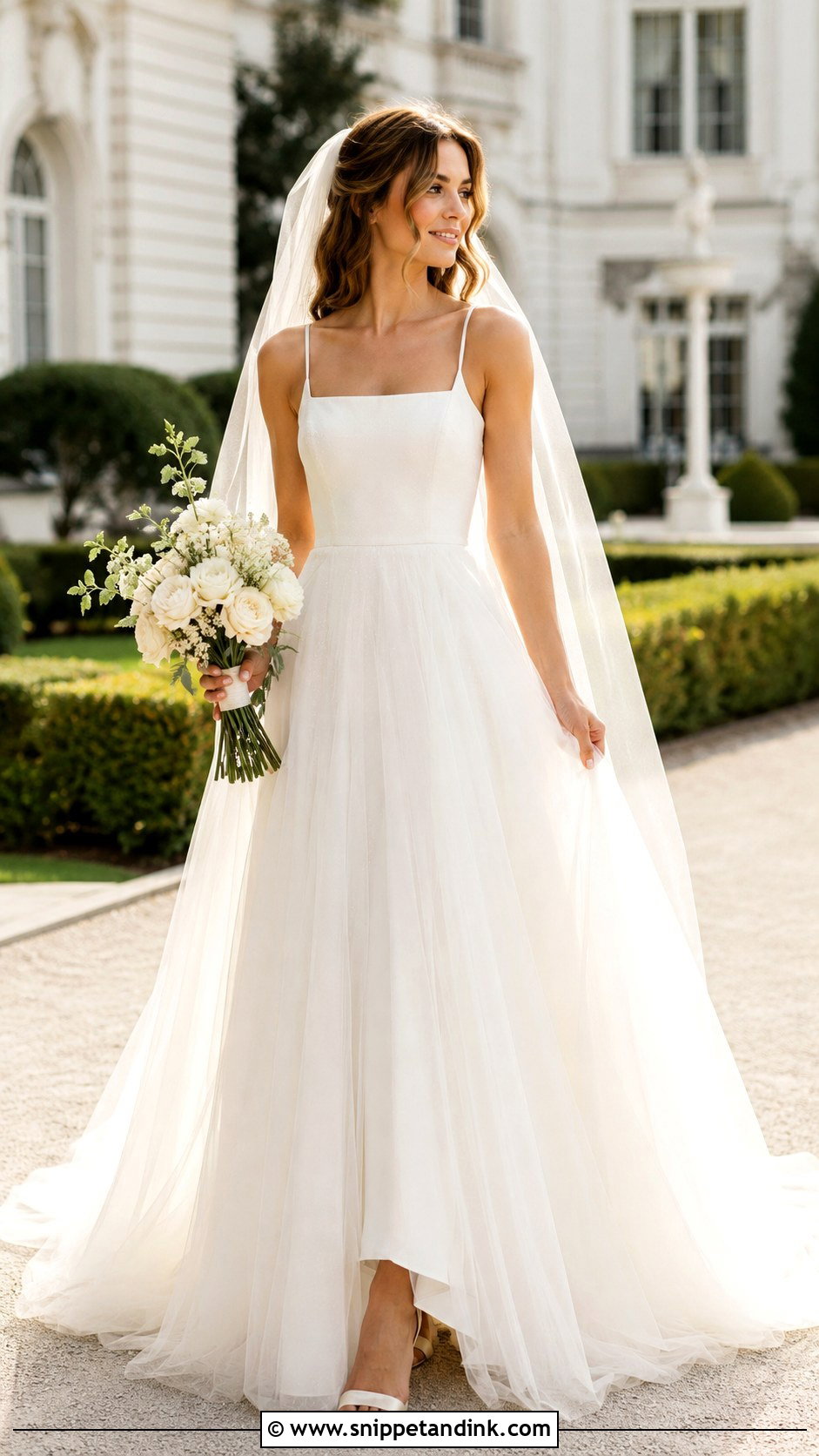
A square neckline frames the collarbone with a quiet vintage touch, and on a soft A-line in chiffon, organza or tulle it never looks severe. Thin straps read delicate; long sleeves read classic. It balances most body types because the straight edge adds a little structure at the shoulders. I always check where the corners land. They should sit inside the line of your shoulder, not out at the edge where they gape. A simple veil, soft curls and well-fitted bridal shoes.
10. Sweetheart Neck Wedding Dress
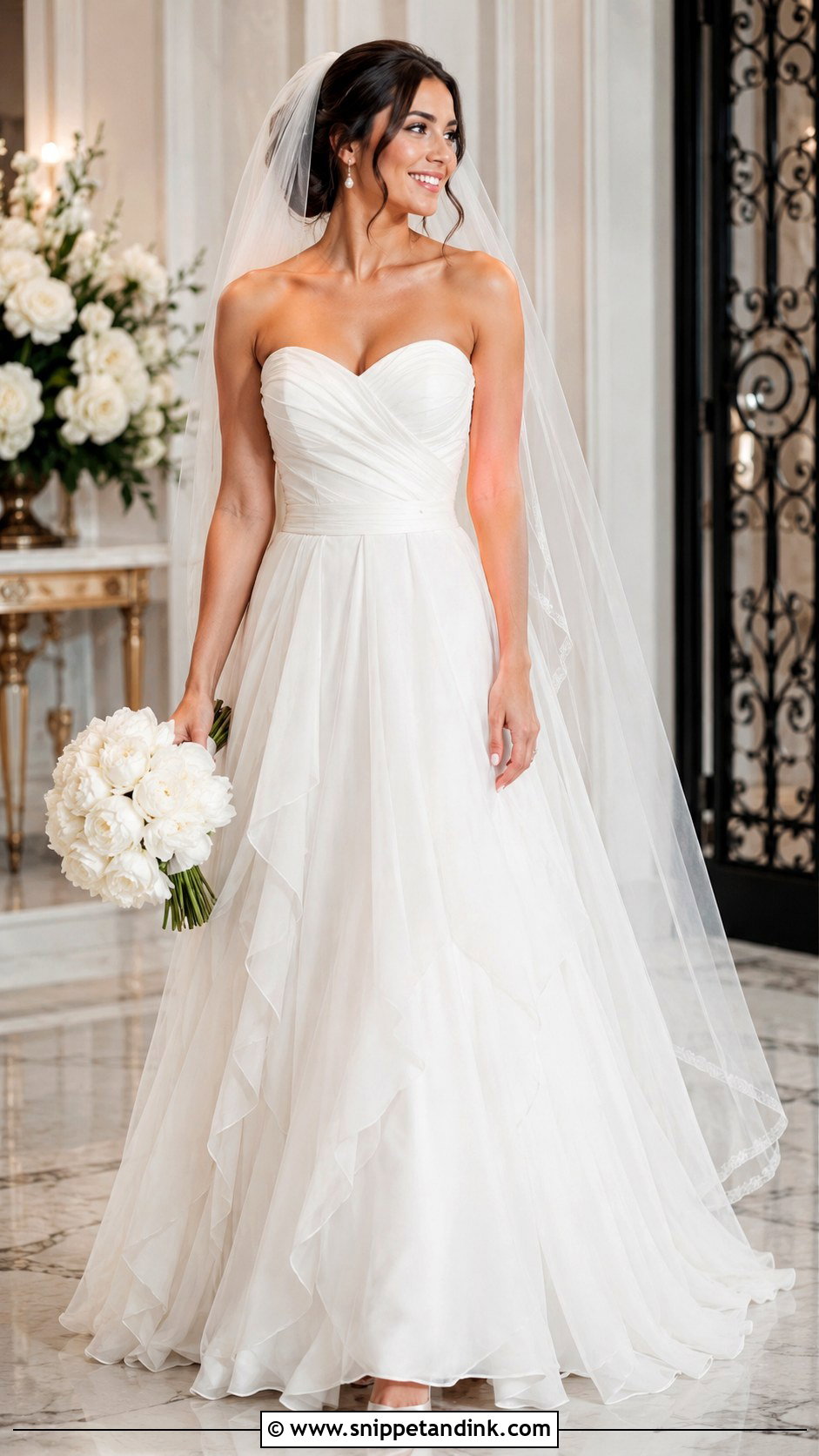
The sweetheart curve softens the upper body, and over a layered tulle or chiffon skirt it reads feminine without drama. Strapless, thin straps or detachable sleeves change the season it suits, and light lace, floral embroidery or soft ruching add bodice detail. A strapless sweetheart relies entirely on internal structure and fit at the ribcage, so it needs the most careful fitting of any neckline here. Chapel veil, pearl earrings, satin heels.
11. Empire Waist Wedding Dress
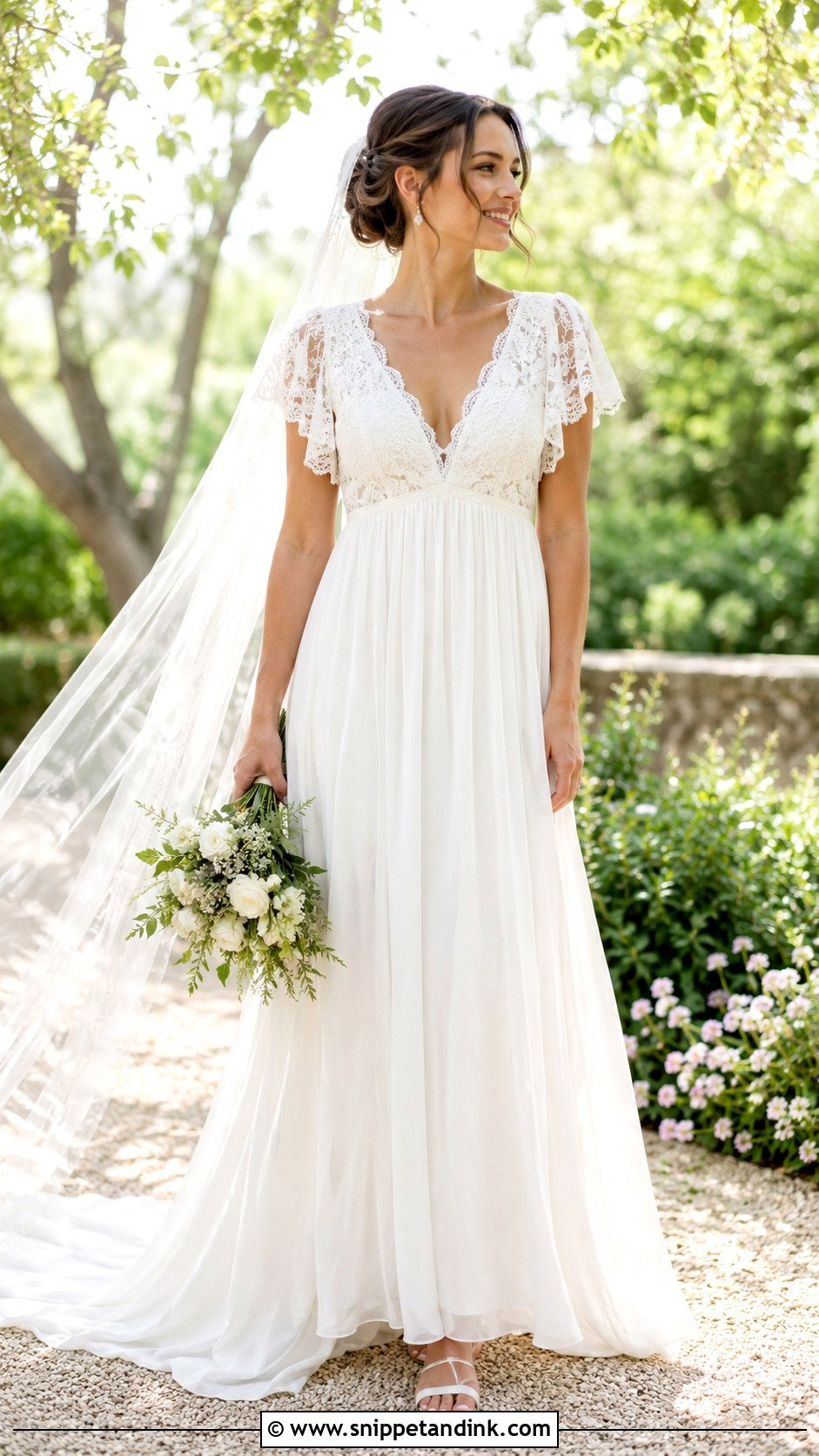
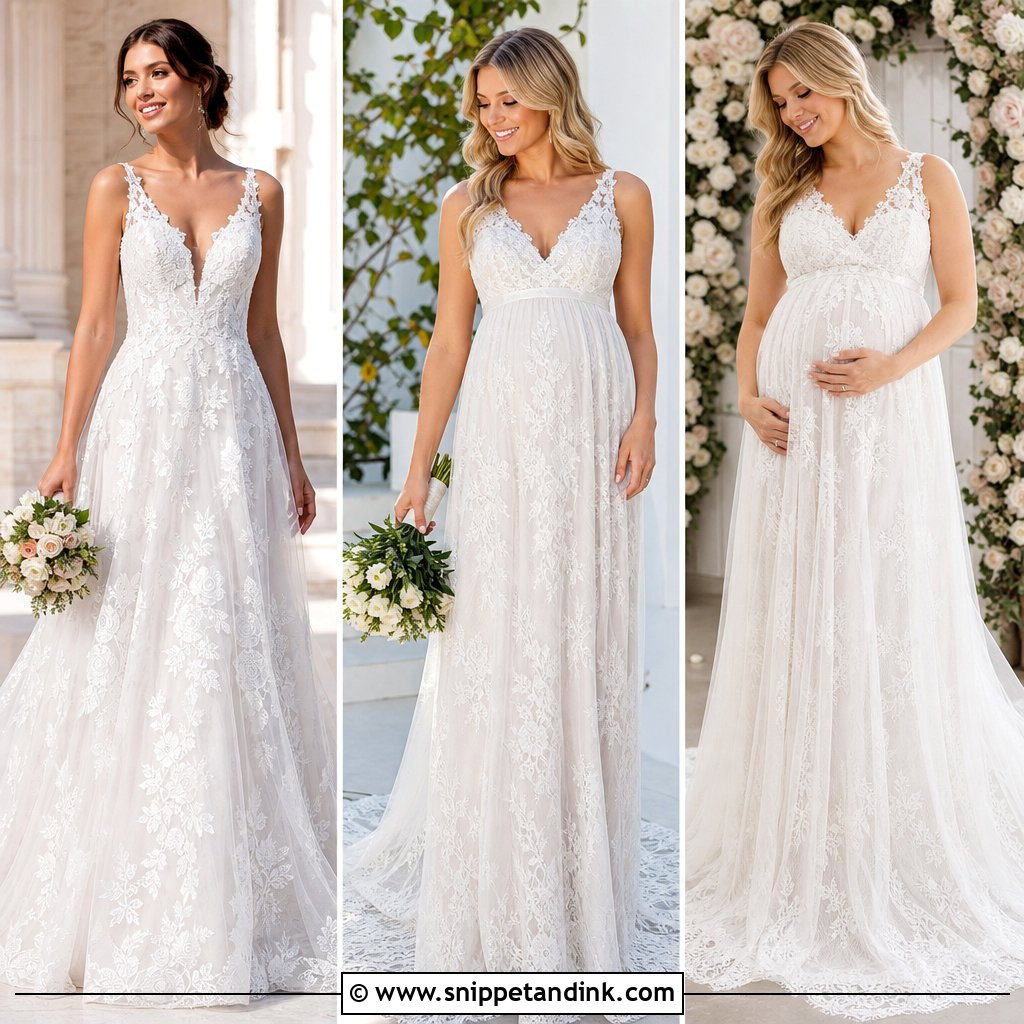
With the waist raised to just under the bust, an empire dress falls long and loose from there, which makes it one of the most comfortable gowns to spend a whole day in. It can also lengthen petite brides visually. Chiffon, soft tulle or a silk-like fabric gives the most fluid fall. One fit point I watch: the band under the bust has to sit flat, or it creeps up when you raise your arms. A lace bodice or flutter sleeve adds charm; simple earrings, a soft veil and low heels or sandals finish it.
12. Flutter Sleeve Wedding Dress
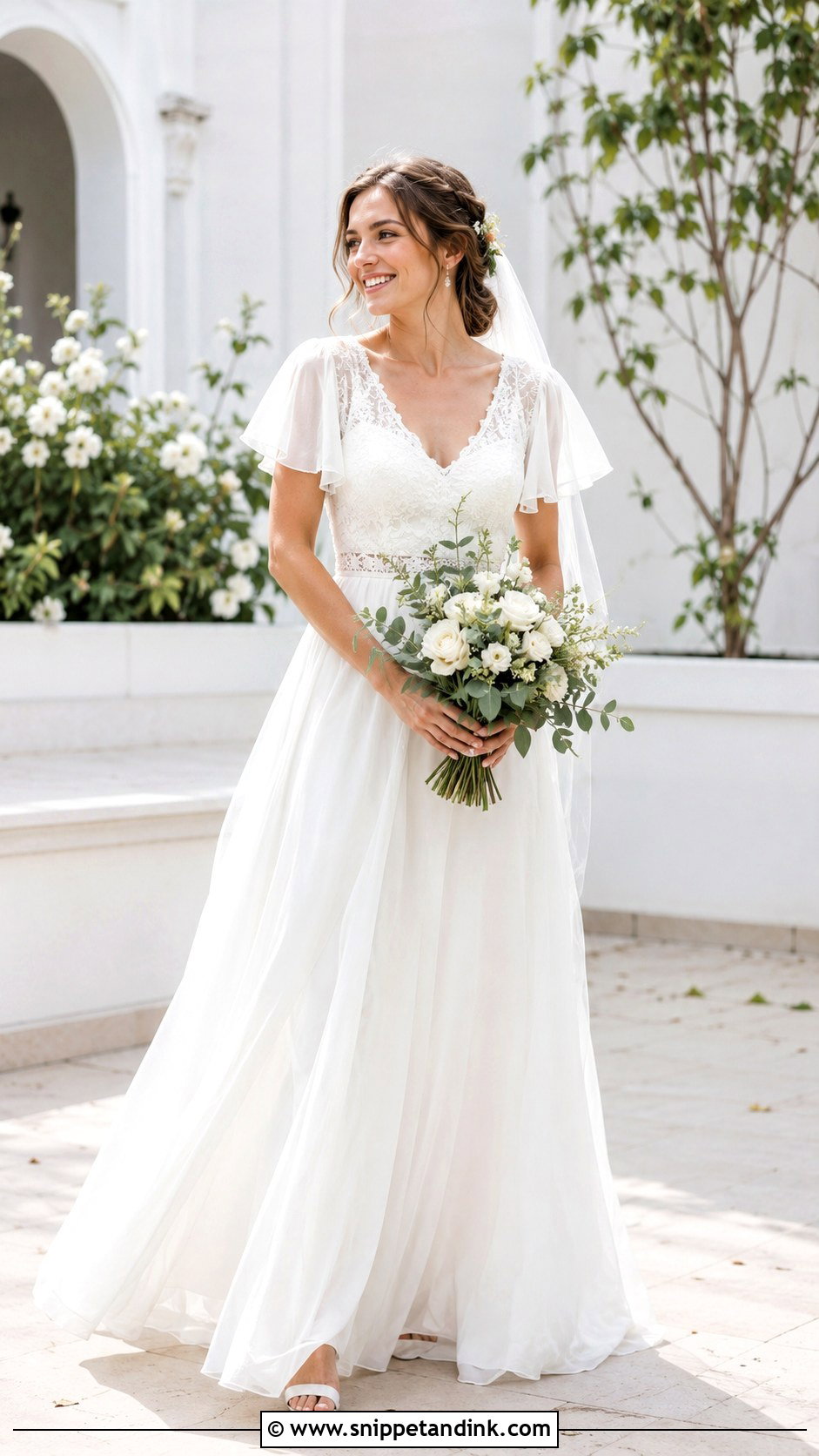
Sleeves that skim the upper arm without covering it are the reason a flutter sleeve wedding dress feels so wearable. There’s no fitted band, so they never restrict movement, and they lift slightly when you walk. Spring, summer and outdoor weddings suit them. Pair them with a chiffon A-line, a soft lace bodice or an empire waist, but pick one or two romantic details rather than all of them. Simple veil, floral hair pins, comfortable heels.
13. Tiered Tulle Wedding Dress
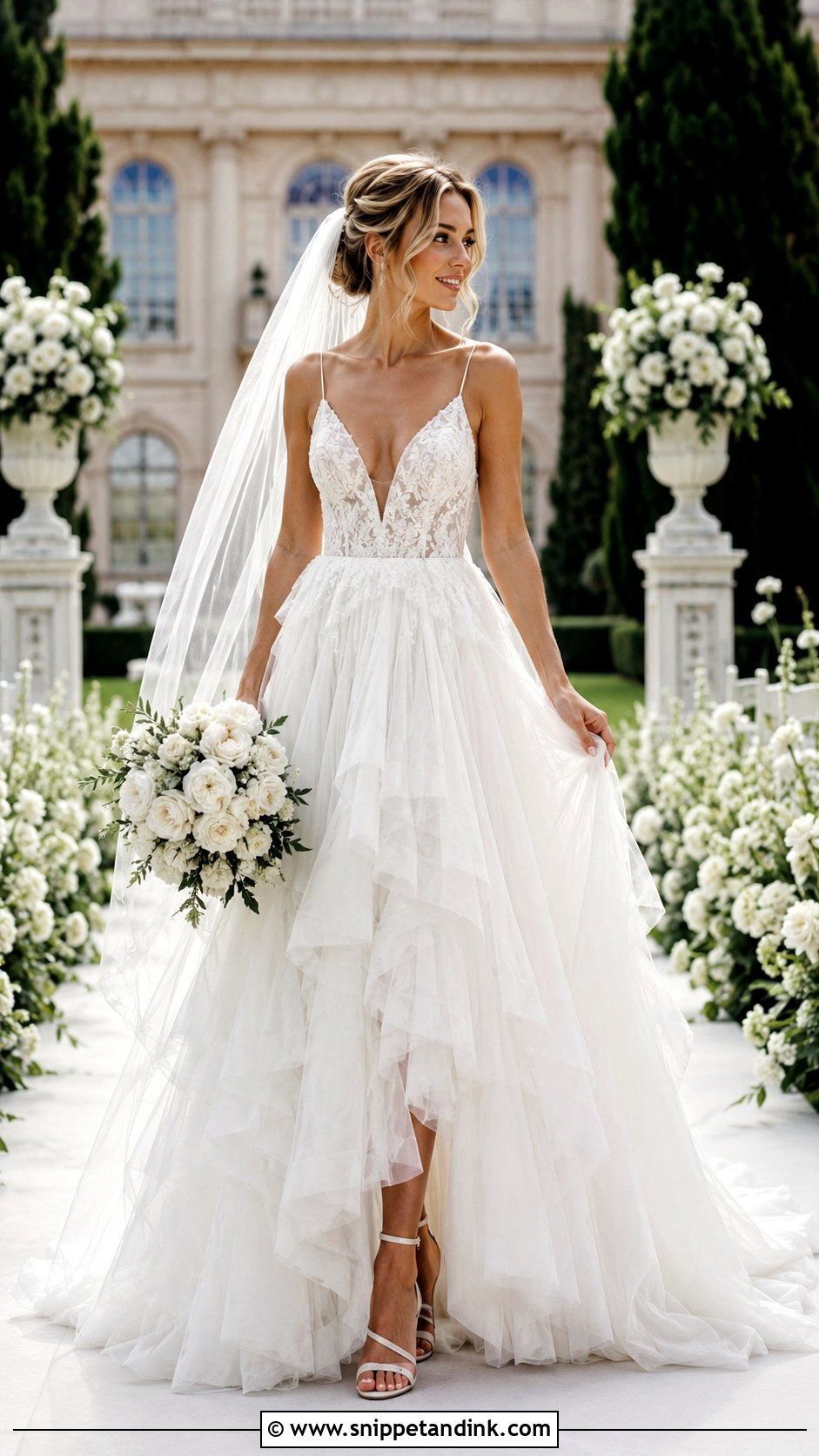
Stepped tiers give a tulle skirt movement and texture without any beading. They can be barely visible or clearly layered. Fine, soft tulle lets the tiers float, while stiff netting makes them stand out like a petticoat, which I’d avoid unless that’s exactly the look you want. A fitted bodice and soft neckline balance all that skirt, and in photos each tier picks up its own light. Minimal jewelry, a simple veil, elegant heels. Garden and estate weddings.
14. Organza Wedding Dress
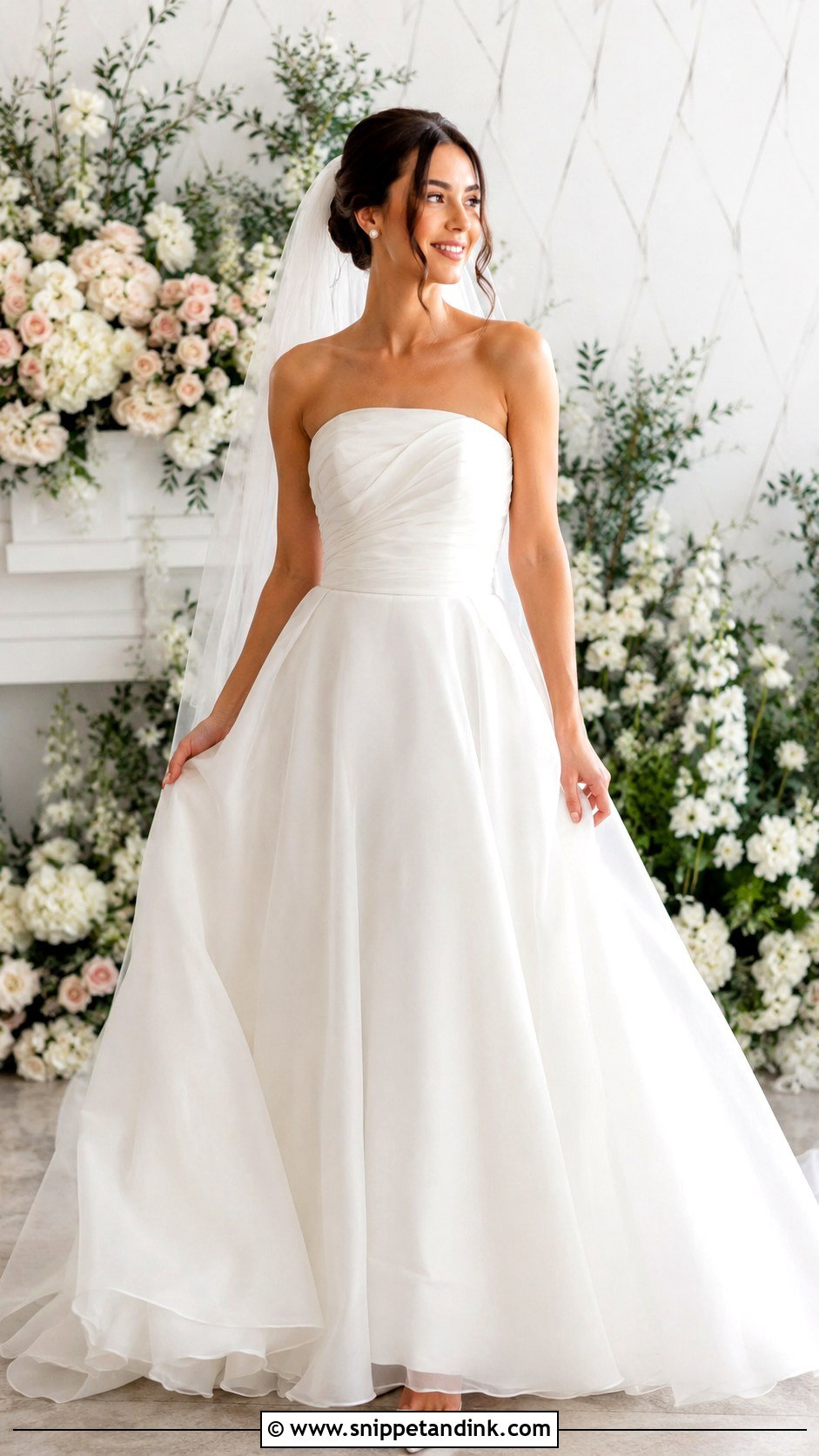
Organza is crisp and sheer at once, so it gives volume and shape while staying light. A-line and ball gown silhouettes both hold up well in it. The flip side is that it creases sharply and crushes if you sit on the folds, so I always show brides how to gather the back before sitting. Soft draping, floral appliqués or a gathered bodice keep it romantic. Pearl earrings, a soft veil and classic heels. It catches daylight well, which makes it a fresh outdoor choice.
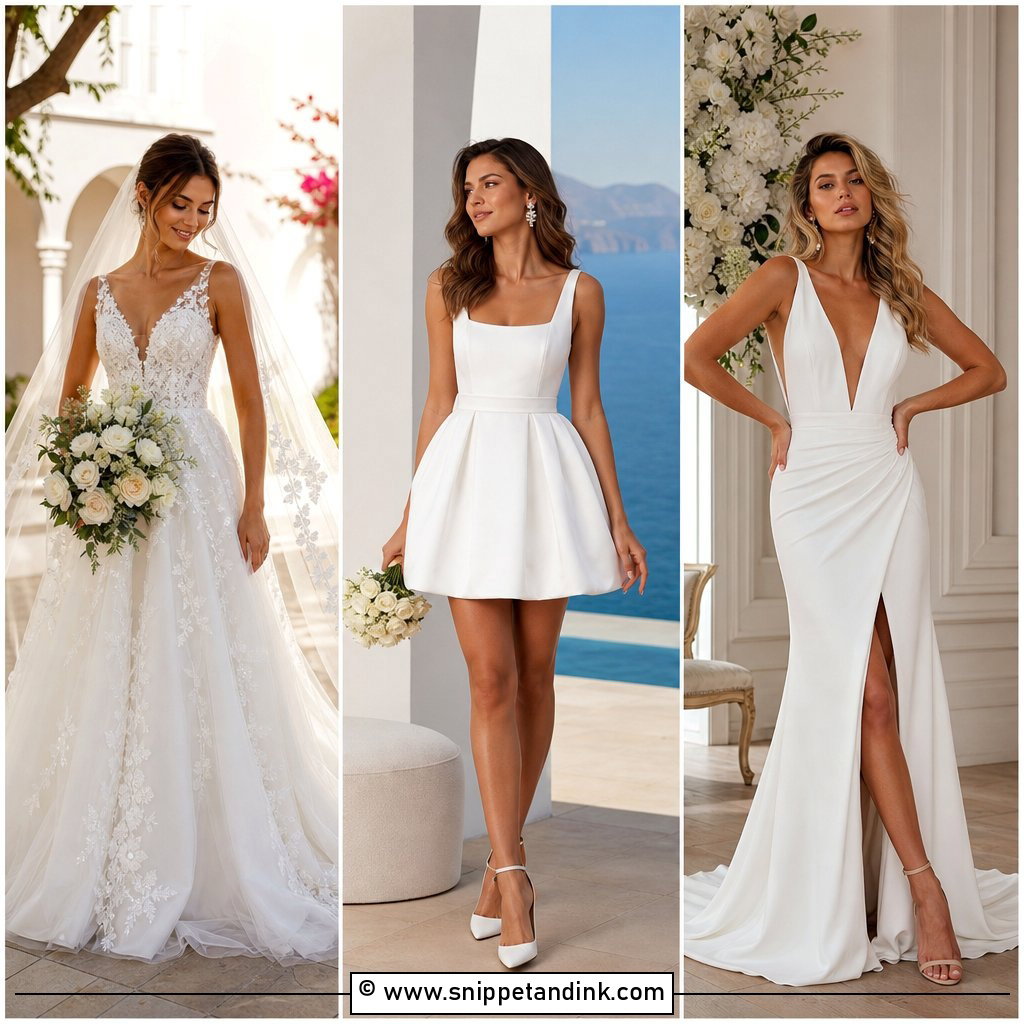
15. Sheer Sleeve Wedding Dress
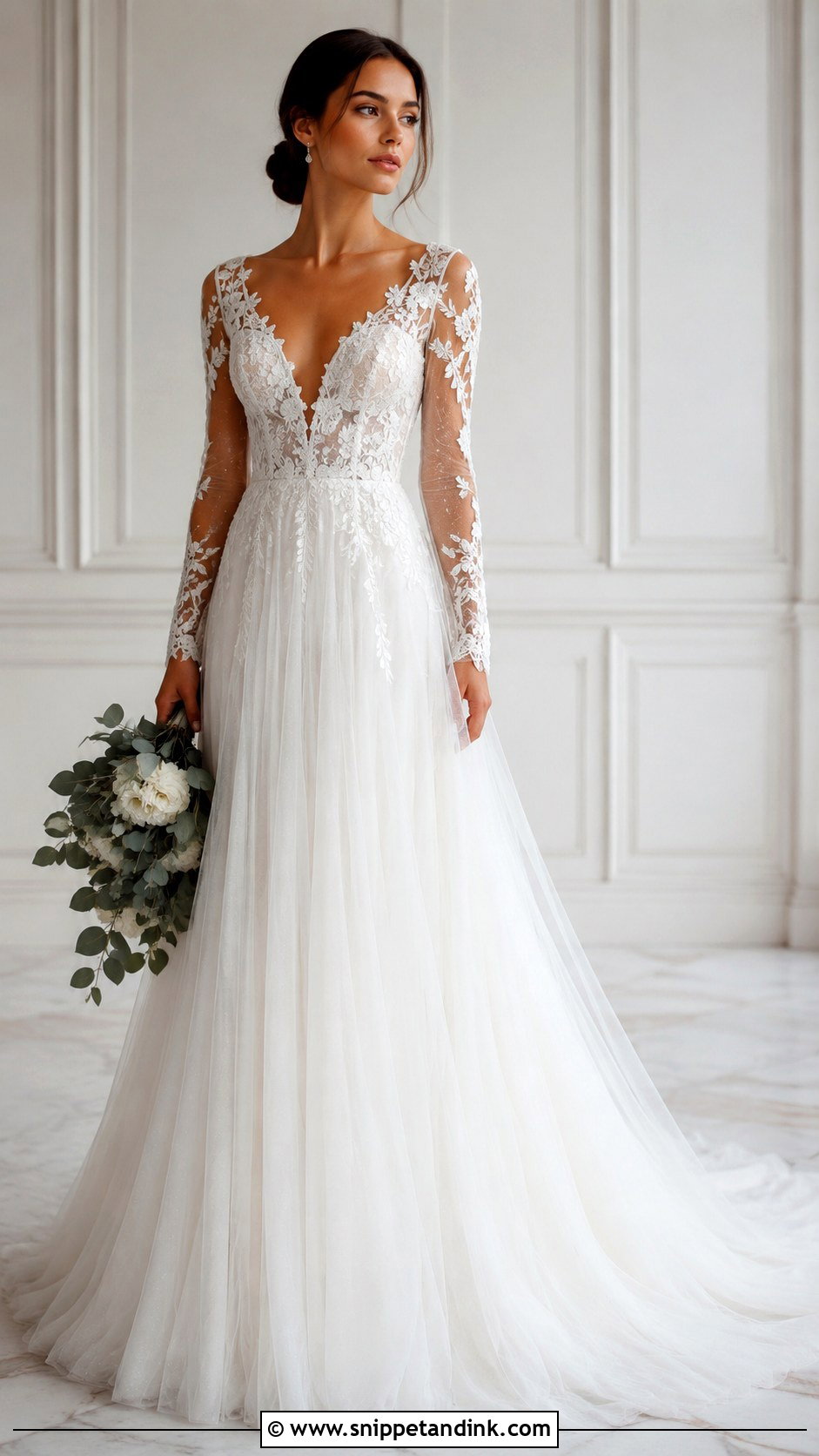
Tulle, lace or organza sleeves with fine embroidery or tiny appliqués let skin show softly through, so you get coverage that still looks light. Balance them with a flowing skirt, a fitted bodice and perhaps a soft train. The thing to get right is color: the sleeve tulle should be close to your skin tone or the dress’s ivory, otherwise it reads as a separate garment. Style it with a low bun, small earrings and a veil that doesn’t compete. A good answer for modesty without heaviness.
16. Spaghetti Strap Wedding Dress
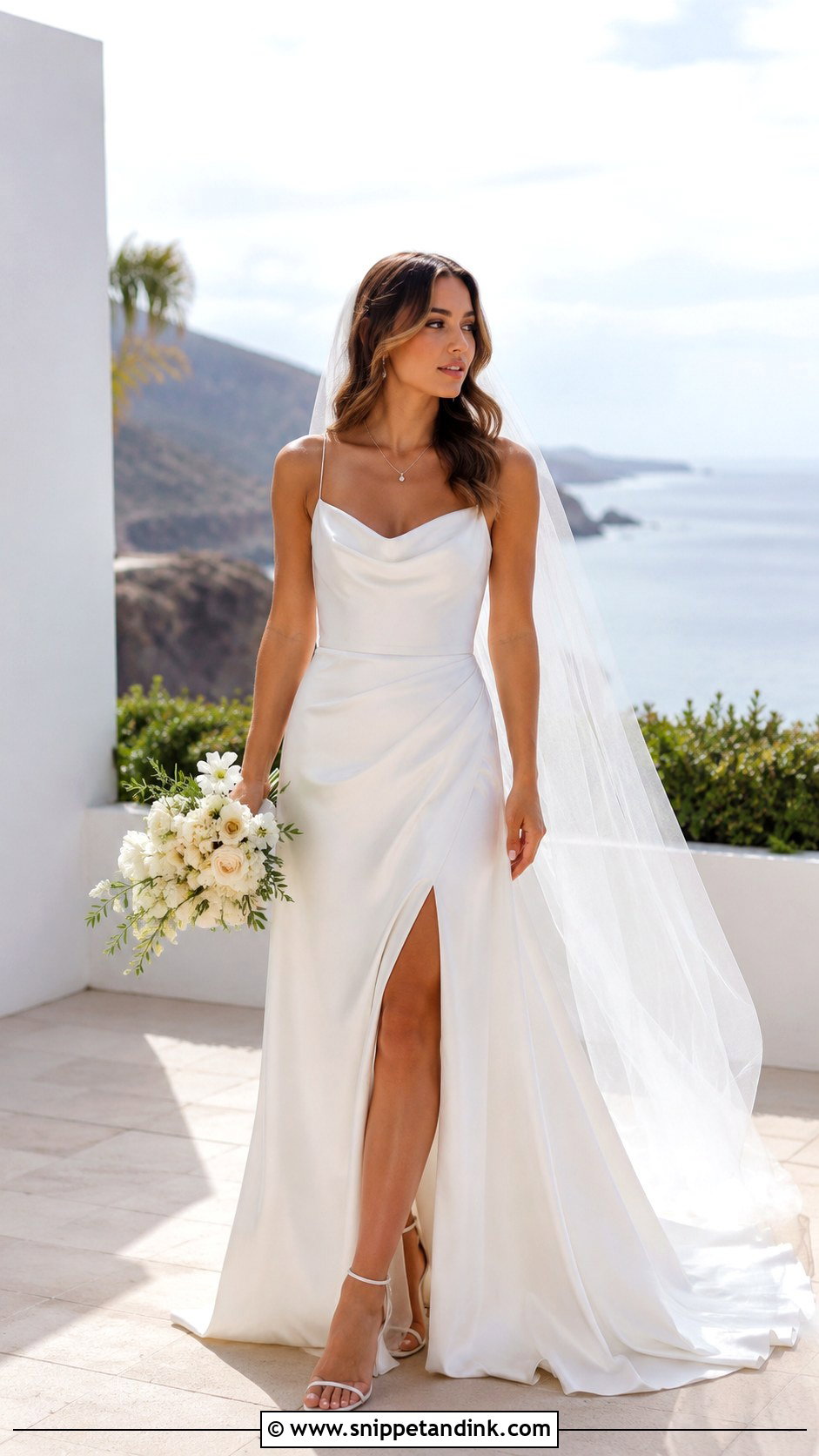
Thin straps keep the shoulders bare and the upper body light, so a spaghetti strap wedding dress in chiffon, silk or light crepe is about as unfussy as bridal gets. A cowl neck, lace bodice or small floral detail makes it personal. Beach weddings and relaxed summer venues suit it. Those straps carry no support, so fuller-busted brides usually need built-in cups or a corset base inside. Sheer veil, a dainty necklace, strappy heels. For a covered ceremony, add a sheer cape or detachable sleeves and take them off later.
17. V Neck Wedding Dress
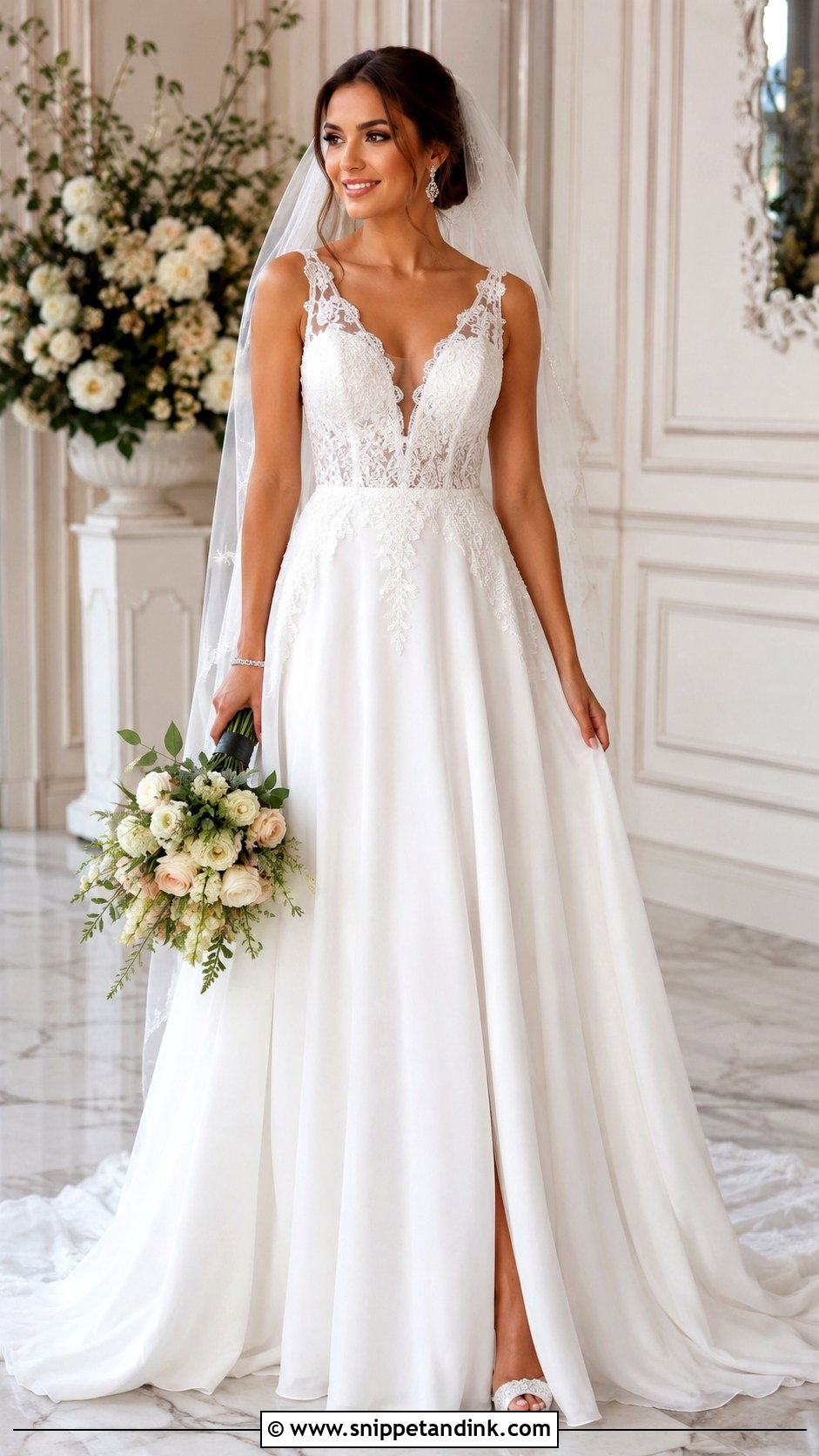
A V-neck draws the eye vertically, which lengthens the torso and balances broader shoulders. Shallow is classic; deeper is modern. Over a flowing A-line skirt with lace trim, floral embroidery or light pleating, it stays soft. Deep plunges need mesh or tape to stay in place, so lean forward in the fitting room and see what moves. Wear a pendant only if the neckline is plain; otherwise let earrings and a veil carry it. Formal and outdoor weddings alike.
18. Drop Waist Wedding Dress
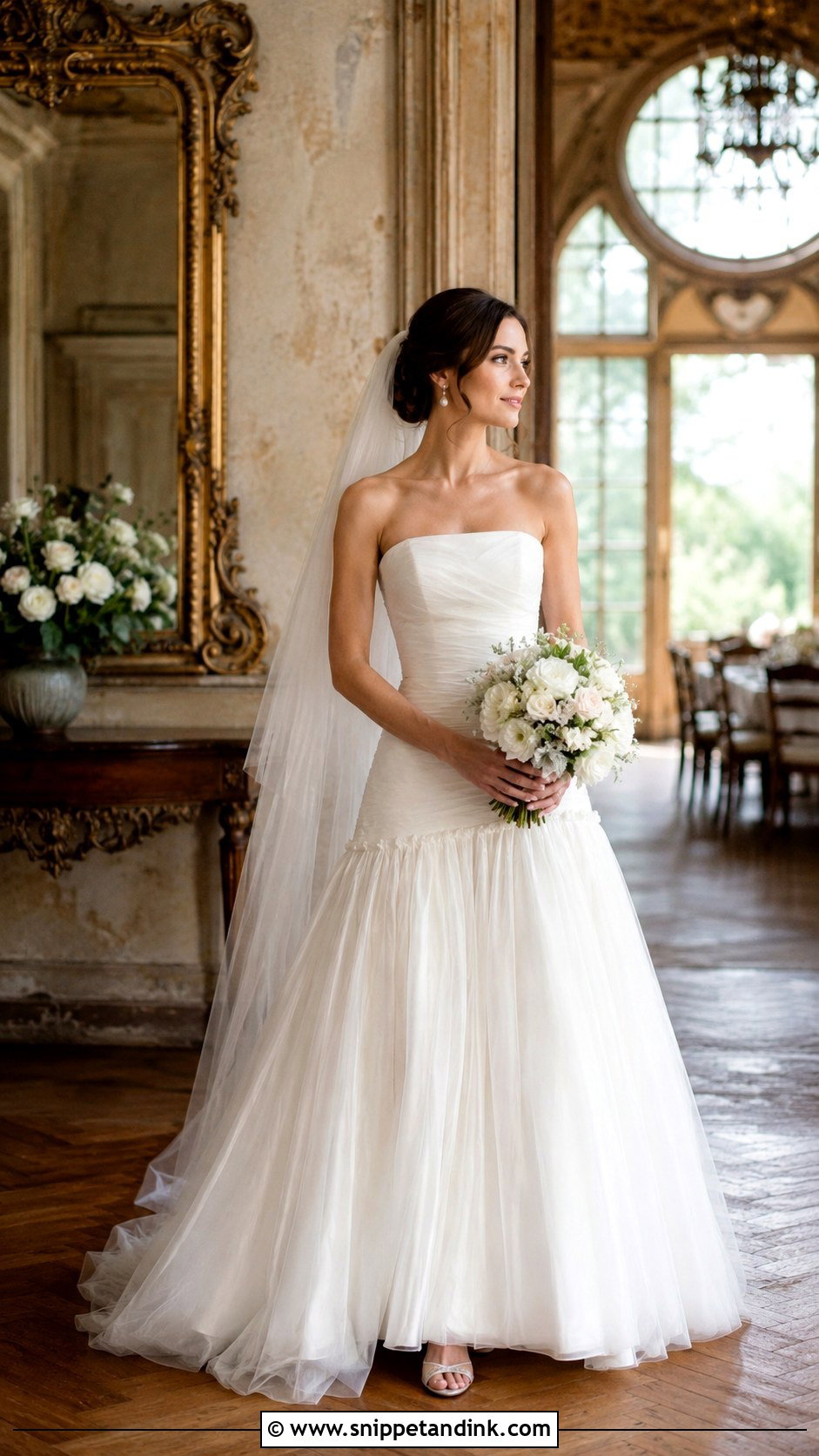
Drop waists start the skirt at the lower hip, so the torso looks longer and the dress takes on an almost vintage line. Soft tulle, chiffon or organza layers keep it from stiffening, and a basque bodice, lace trim or fine straps add detail. The seam has to hit your hip precisely. An inch too high or low and the proportion looks off, which is why I’d only buy this one where alterations are part of the plan. Long veil, pearl earrings, simple heels.
19. Pleated Chiffon Wedding Dress
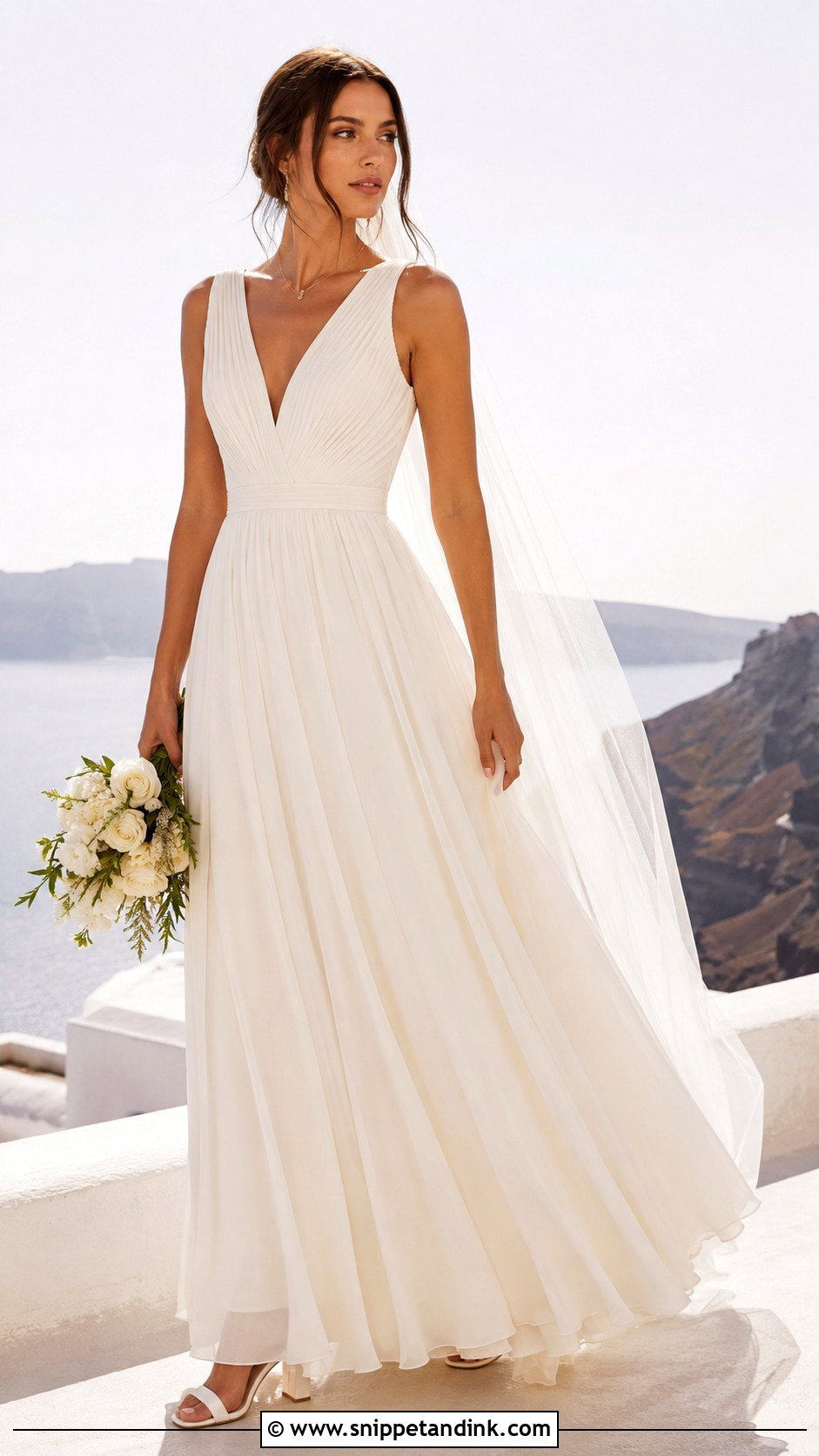
Pleats give chiffon texture without lace, sparkle or beading, and they help the skirt fall cleanly from the waist. A pleated bodice shapes the upper body gently too. Ivory, champagne or warm white suits the softness of the fabric. Pleats don’t forgive a careless press, so make sure whoever steams the dress works along the fold lines rather than across them. Minimal jewelry, a clean veil, block heels. Mostly destination and outdoor weddings.

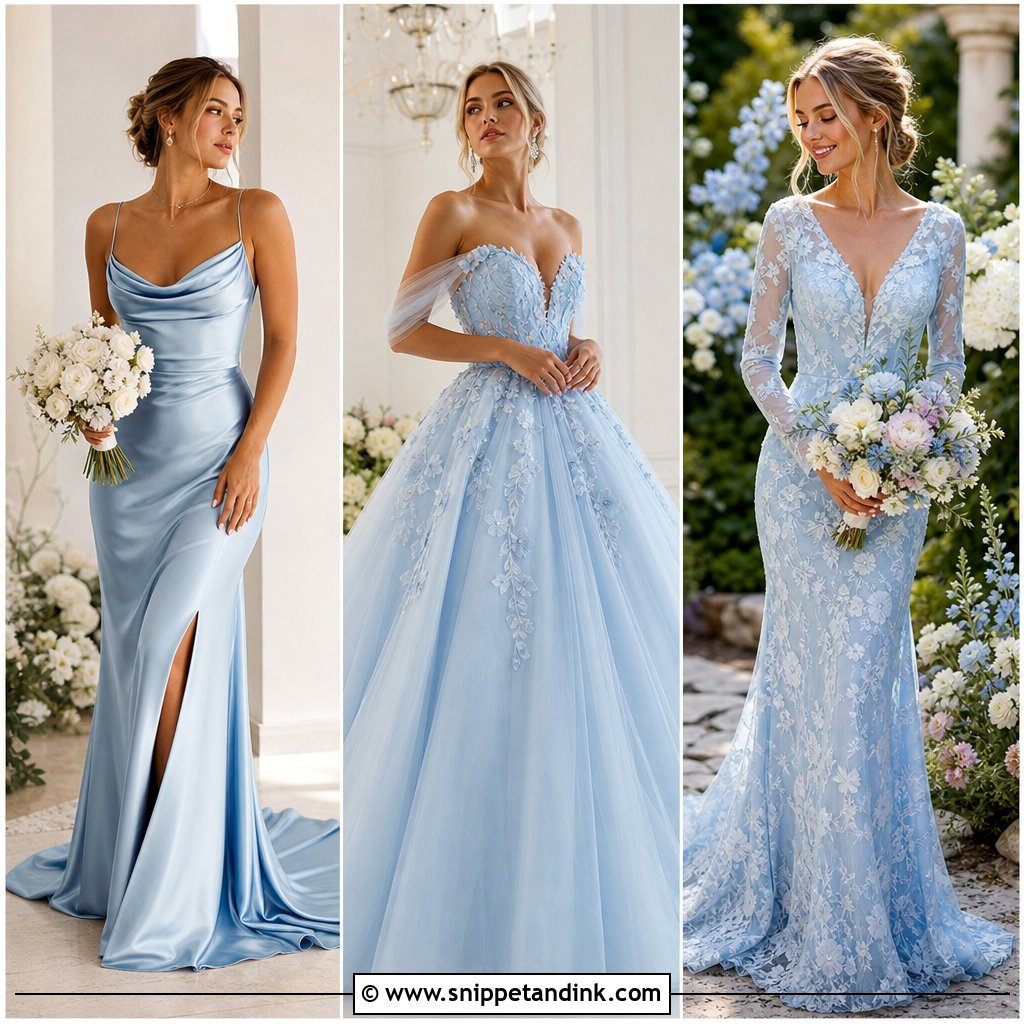

20. Cap Sleeve Wedding Dress
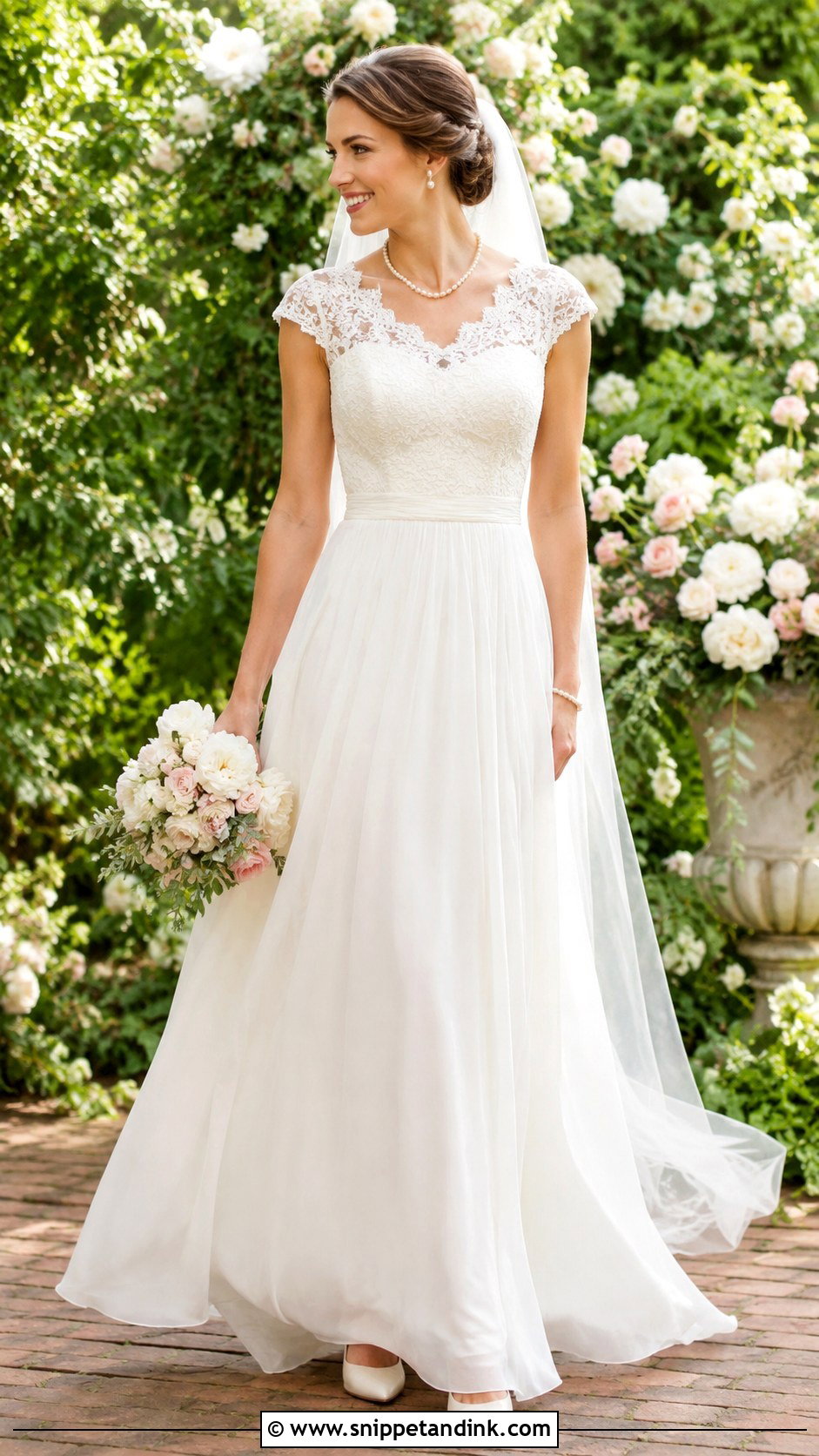
Cap sleeves cover just the top of the shoulder, framing it without hiding it. They suit lace, tulle or soft crepe bodices over an A-line skirt in chiffon or layered tulle, and they have a sweet, classic quality that matches garden weddings, traditional venues and daytime ceremonies. Watch the fit at the armhole; a cap sleeve that cuts into the arm is uncomfortable by the second hour. Soft updo, pearl accessories, a veil with delicate edging.
21. Backless Wedding Dress
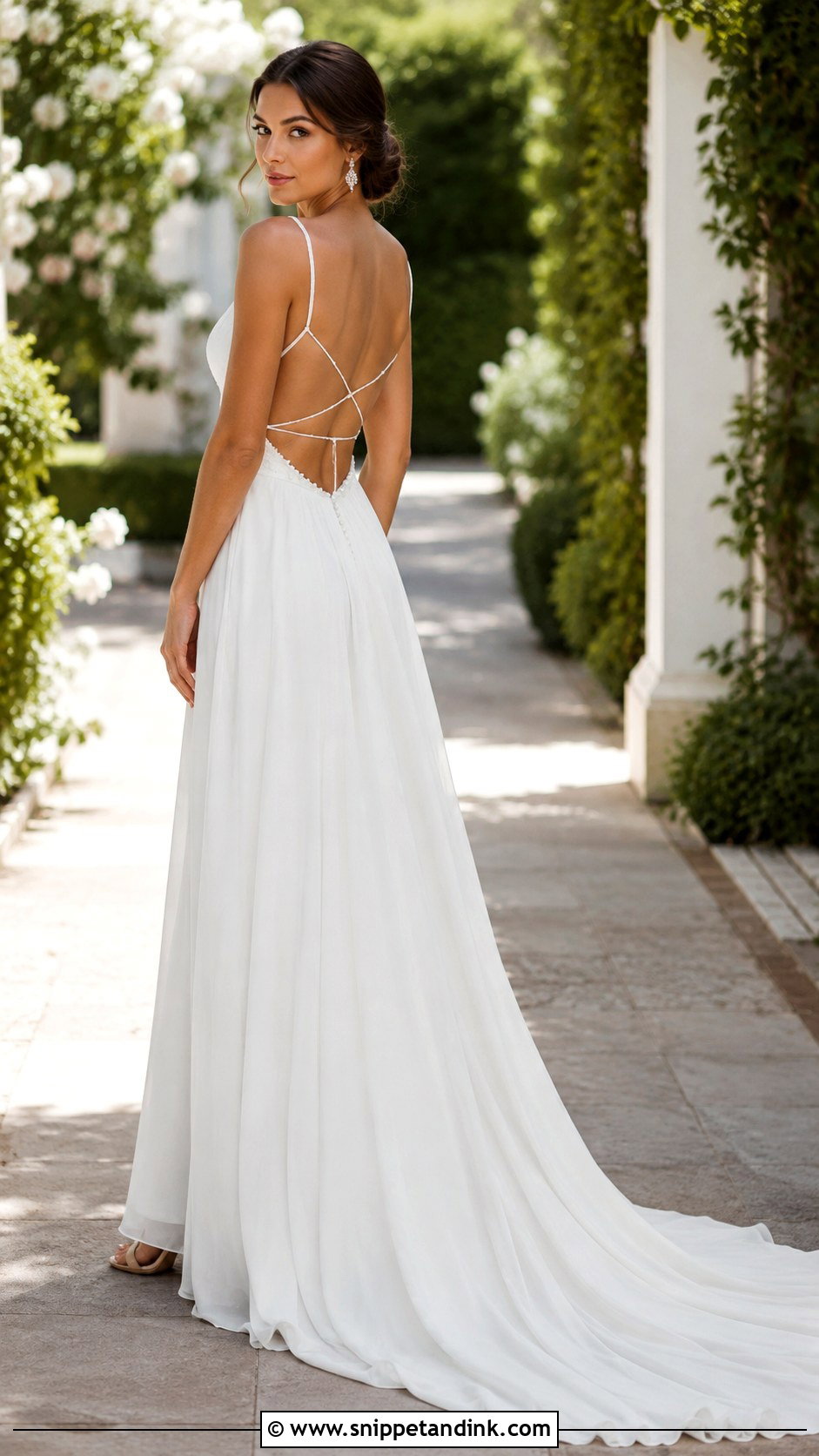
An open back needs everything else to stay soft: a flowing skirt, delicate straps, a graceful train. Lace edges, pearl buttons or sheer panels add detail without making it bold. I especially like it for outdoor and warm-weather weddings, since the back is what most guests see during the vows. Ask about support before you fall for one; hidden structure or illusion mesh carries the bust when there’s no back band. Keep accessories minimal, and wear a low bun to show the line, with drop earrings and simple heels.
22. High Neck Lace Wedding Dress
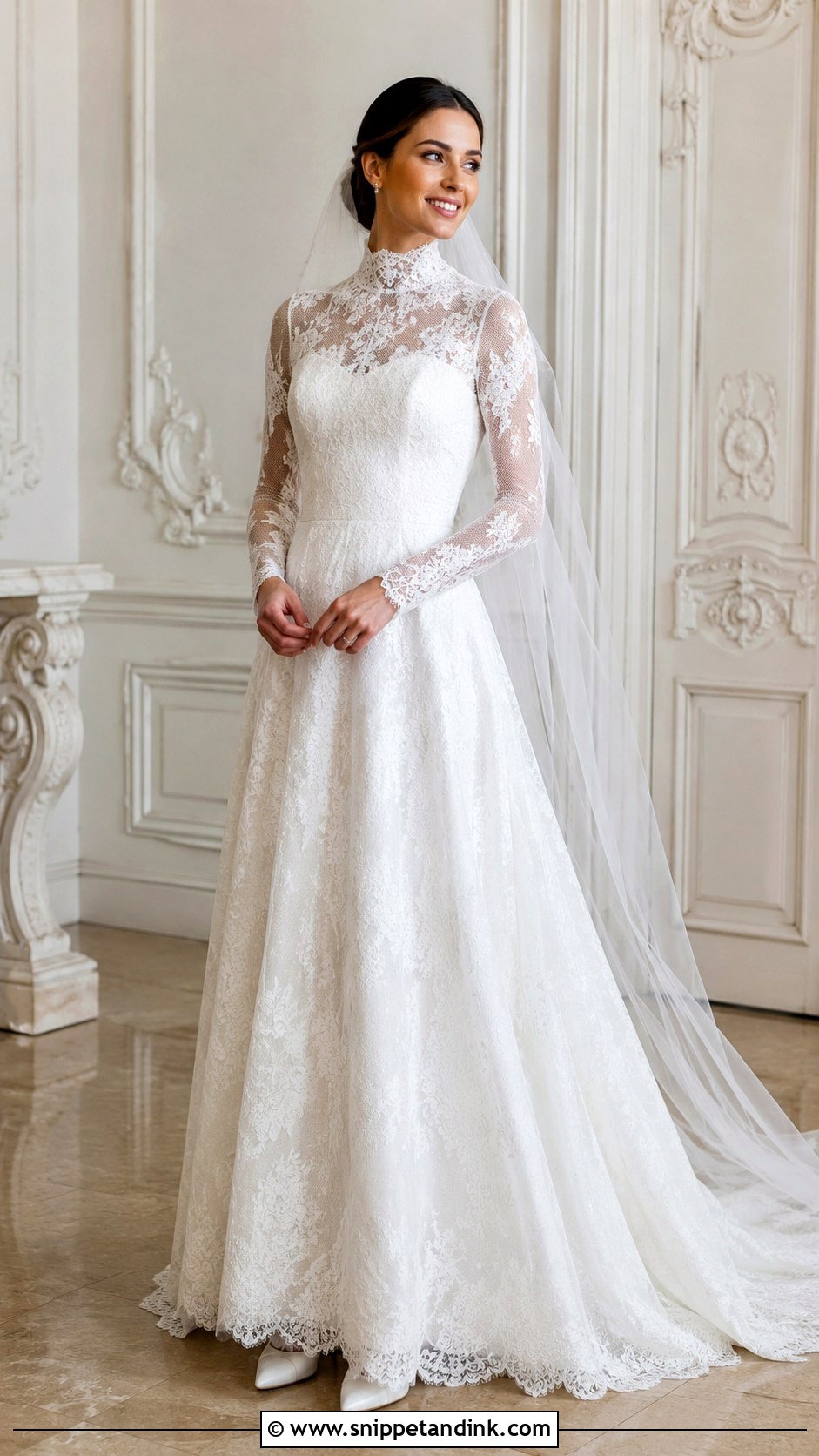
Sheer lace up to the throat gives coverage with a vintage feel, and over a chiffon, tulle or organza skirt the gown stays light. Formal weddings, estates and cooler months suit it. Wear your hair pulled back so the lace at the neck shows. The collar should lie flat without pulling; if it gapes above the zip, a small hidden hook usually fixes it. Small earrings and perhaps a fine bracelet are enough.
23. Satin And Tulle Wedding Dress
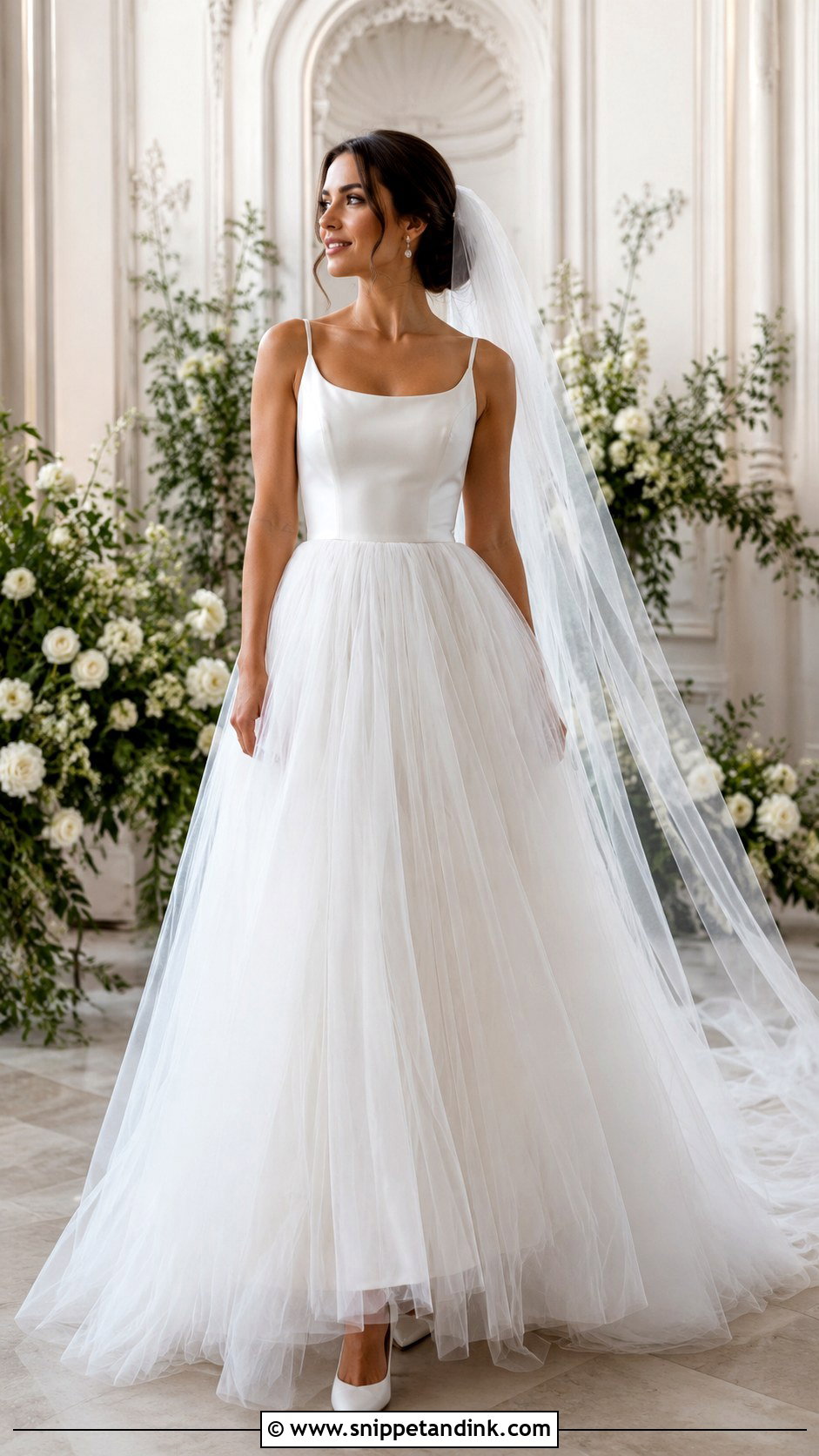
Satin on top, tulle below. The bodice gives smooth structure and the skirt adds air, a contrast that suits brides who want romance without something too fragile. A sweetheart, a draped satin top or a floral tulle overlay ties the two fabrics together. Ask whether the satin and tulle are the same ivory in daylight; mismatched whites between fabrics show up more in photos than in the mirror. Simple veil, satin heels. Formal venues and gardens both work.
24. Detachable Sleeve Wedding Dress
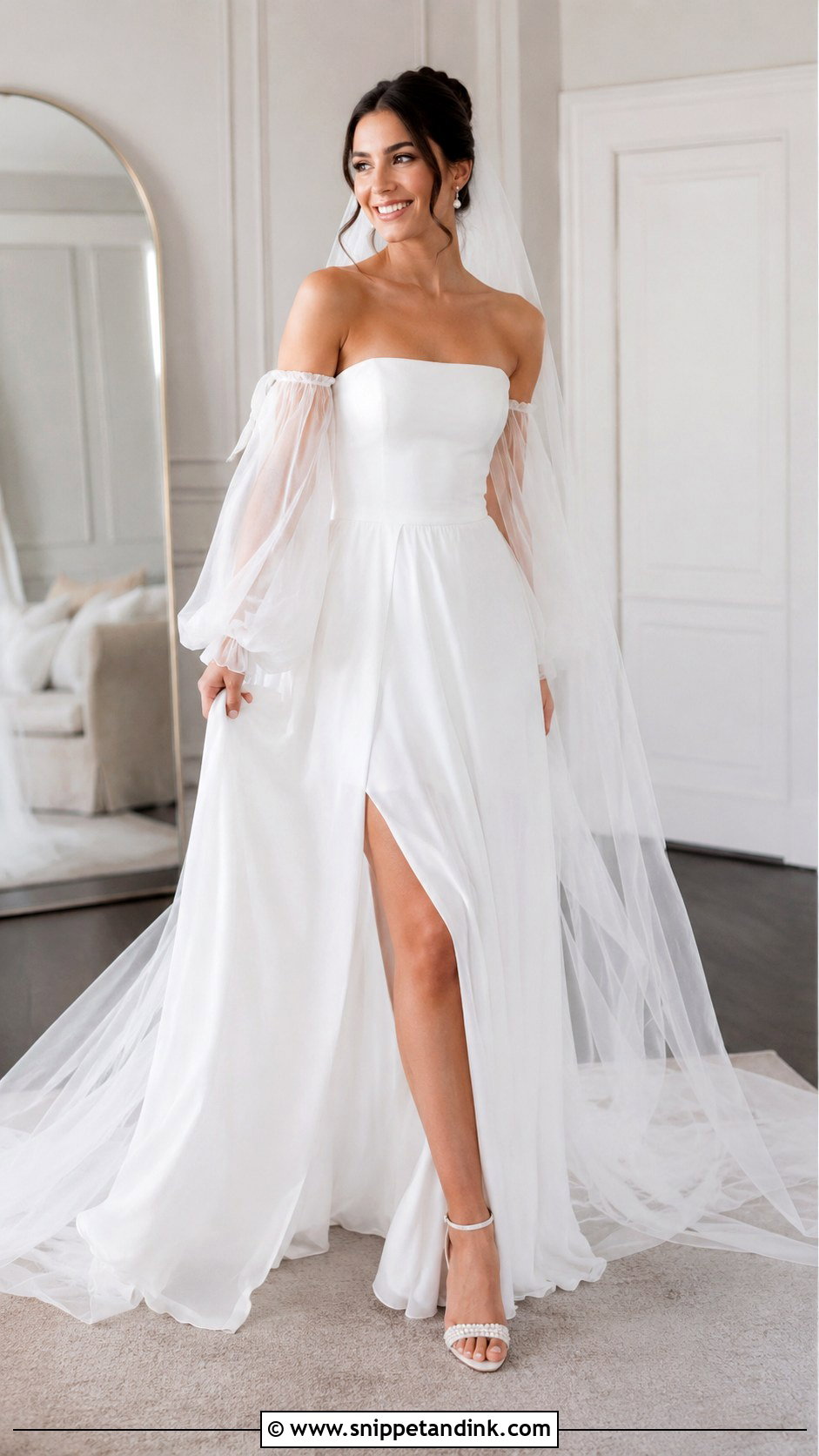
Removable sleeves give you a ceremony look and a lighter reception look from one dress. Soft tulle puffs, sheer bishop sleeves or lace off-shoulder sleeves all suit a flowy gown, provided the bodice is clean enough that the sleeves look intended. Find out how they attach, with snaps, elastic or hooks, and practice taking them off. Wear a veil for the ceremony and switch to statement earrings later if you want the change to show.

25. Floral Veil Wedding Dress
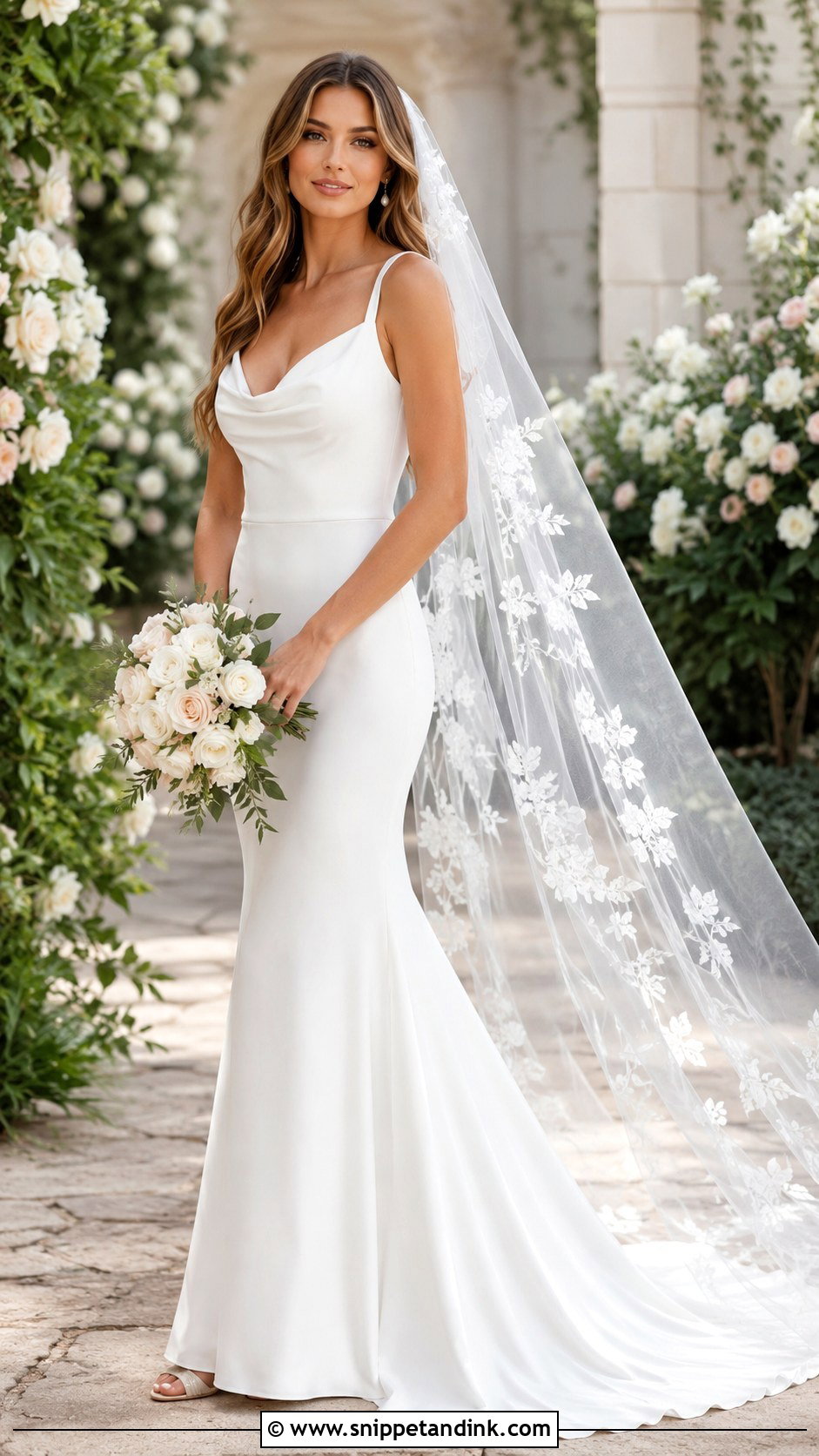
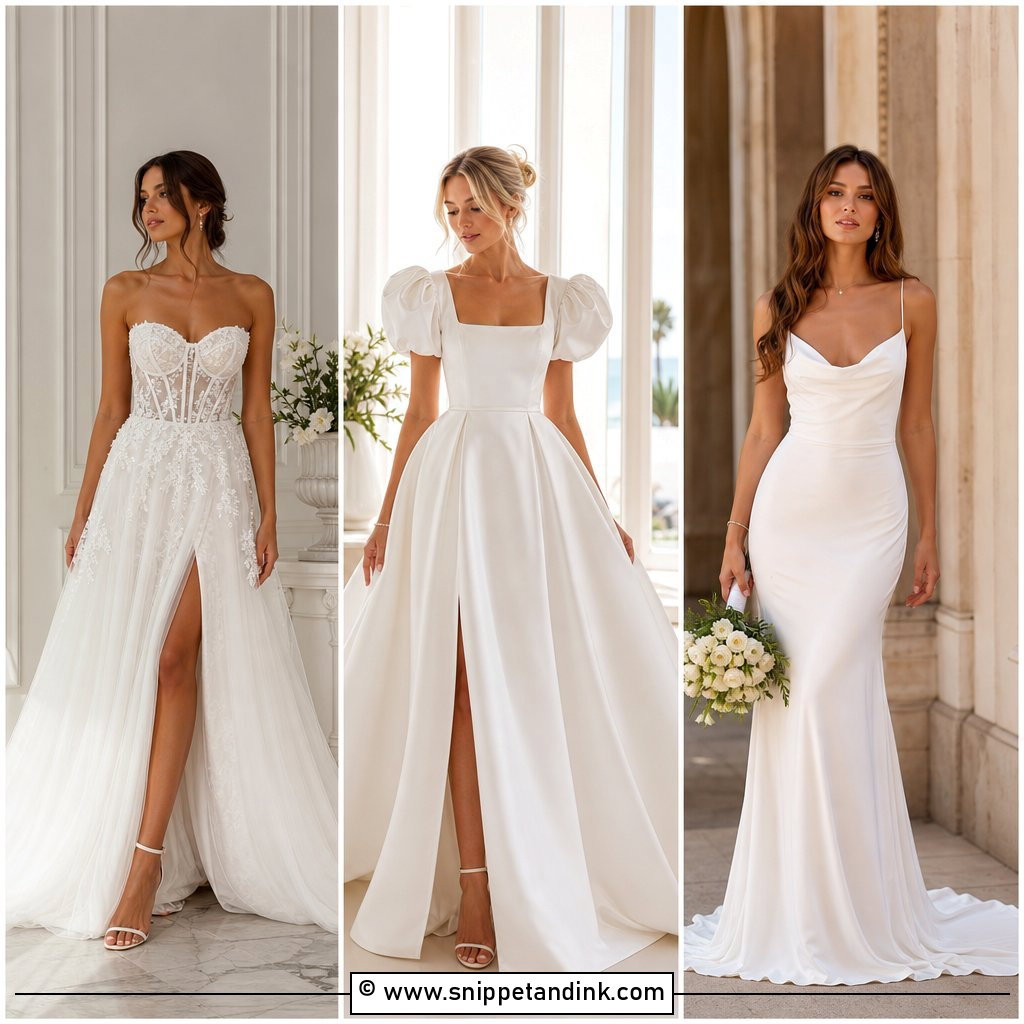
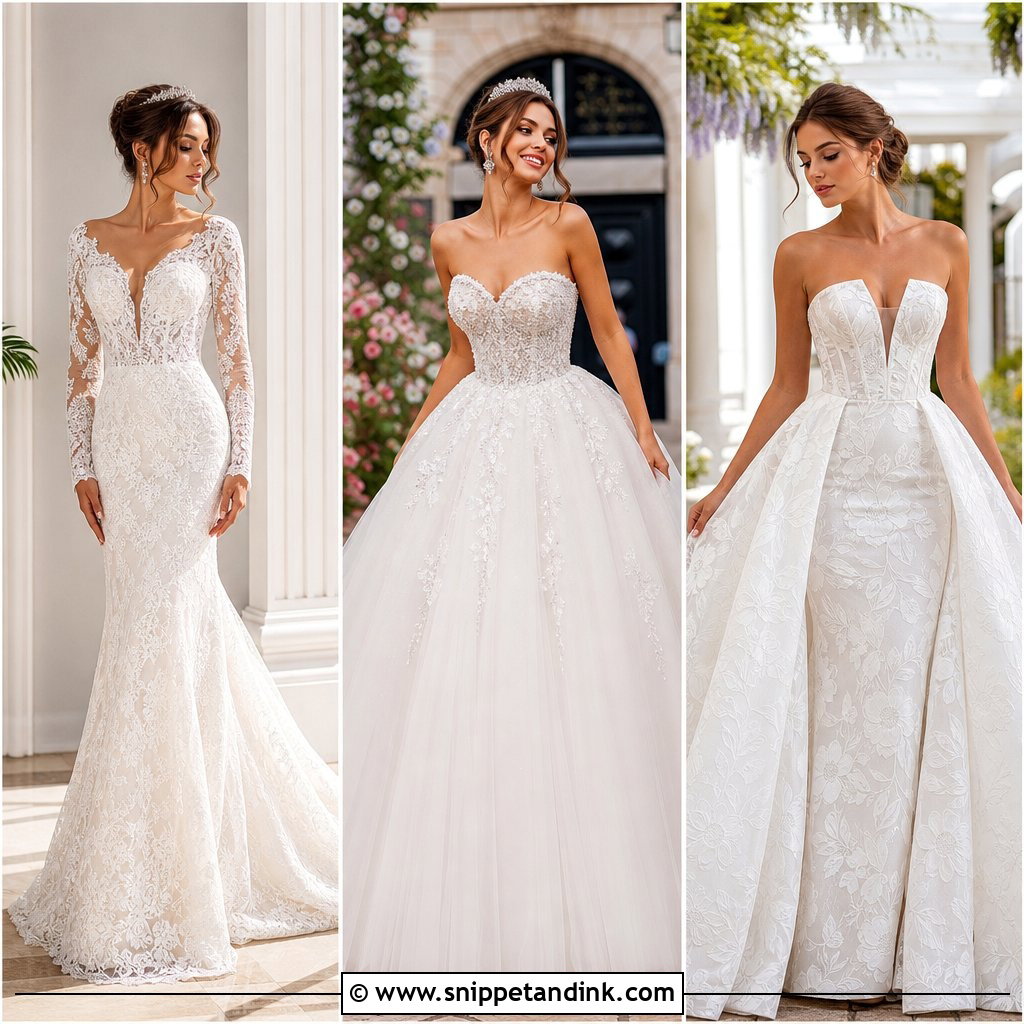
Put the flowers on the veil and the dress can stay plain. A simple chiffon, crepe or soft tulle gown with an embroidered or appliquéd veil gives you floral texture without a detailed dress, and the veil moves as you walk, which adds to the floating feel. Keep the neckline simple and the accessories quiet. Embroidered veils are heavier than plain ones, so I ask for a strong comb. Soft waves, pearl earrings, classic heels.
Light Fabrics Turn Sheer in Sunlight
The airiest fabrics on this list share one weakness: backlight. Chiffon, tulle and fine organza can go see-through when the sun is behind you, and outdoor ceremonies often place the bride in exactly that spot. Boutique lighting comes from above, so it won’t show you.
I ask brides to stand in a doorway with daylight behind them while someone takes a phone photo. If your legs show, ask about an extra lining layer or a slip cut to the skirt’s shape. Skin-toned underwear matters more than white here, since white shows through ivory.
Wind, Stairs and a Train That Won’t Sit Still
Light dresses are at their most charming and most unruly outdoors. A breeze lifts chiffon trains and wraps veils around faces, so I plan a few small things ahead of time.
- Bustle the train for any walk over gravel or uneven paving, and let it down only for the ceremony and portraits.
- Give one bridesmaid the job of straightening the train when you reach the altar, because the photographer starts shooting the second you stop.
- On stairs, lift the skirt from the sides rather than the center front so the hem stays level.
- Carry a small anti-static spray. Chiffon and tulle cling to legs and tights in dry air.
- Anchor the veil comb with two crossed pins underneath so a gust can’t pull it loose.
Fabric First, Then Everything Else
If I had to boil this list down, it would be this: settle the fabric before the shape. Chiffon, tulle, organza, lace and crepe each move differently, and once you know which one you like on your body, the necklines and sleeves above become small decisions. Think about the venue, the season and how much detail you want. A simple dress turns romantic with the right veil, sleeves or flowers, and a detailed one still feels light if the fabric moves. Wear the one you forget you’re wearing.
You'll Like These Ideas:




Leave a Reply