
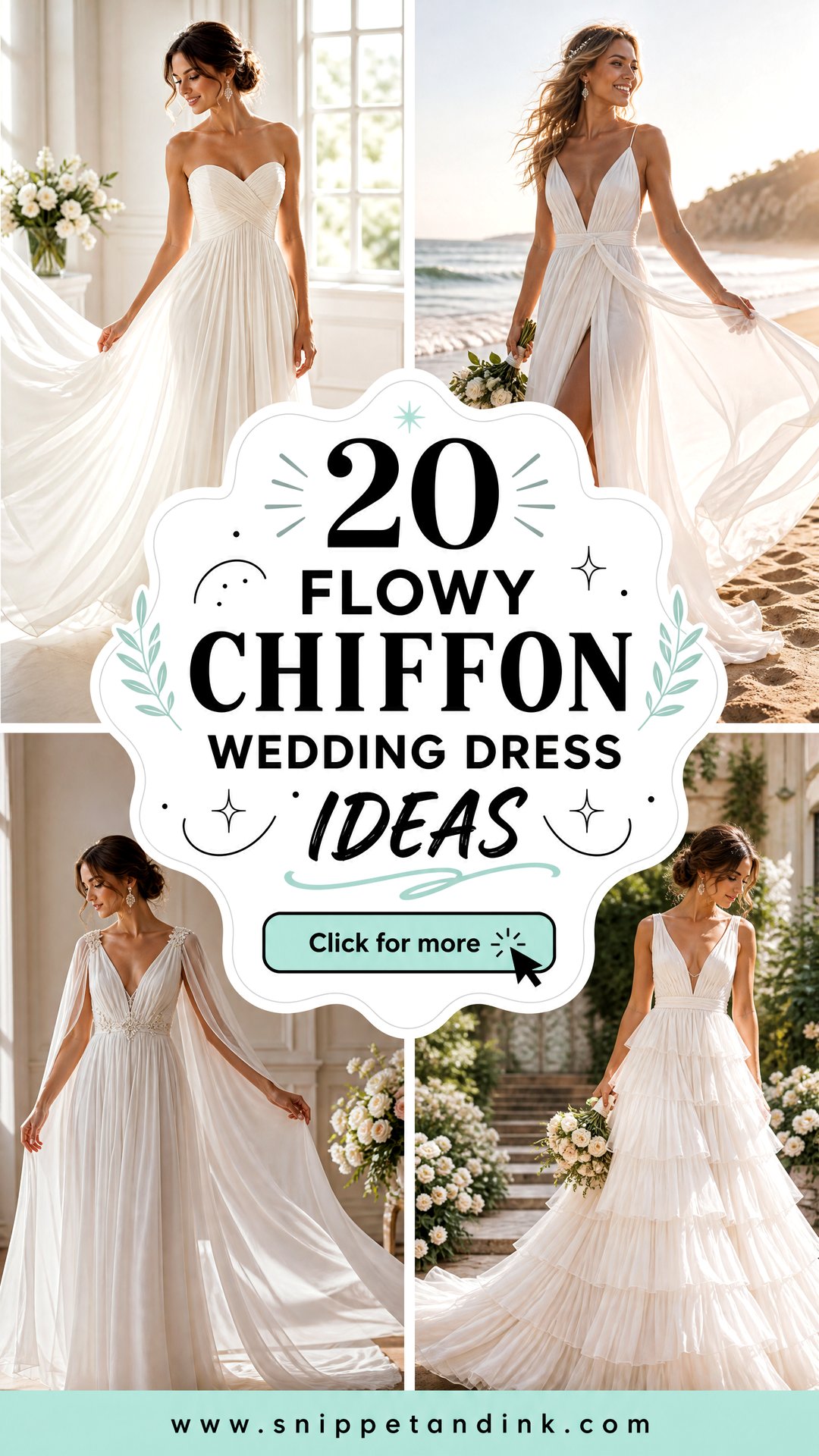
Chiffon is the fabric I reach for when a bride tells me she wants to feel the skirt move but not carry it. It’s a plain-weave sheer made from twisted yarns, which is why it floats and why it never holds a shape on its own. That one fact drives almost every styling decision below: the bodice needs real support underneath, the hem needs patient finishing, and the accessories have to stay light enough not to drag the fabric down. You’ll see it cut as A-lines, empire waists, sheaths, pleated skirts and layered tiers, often paired with lace, draping or removable sleeves. Each of the twenty looks here comes with the shoes, veil and flowers I’d put with it, plus the fitting checks I’d make before saying yes.
Silk or Polyester Chiffon? What the Label Changes on Your Wedding Day
Two dresses can both say chiffon and behave quite differently. Silk chiffon is softer, breathes better in heat and has a slightly matte, cloudy look. It also marks easily, frays readily at cut edges and shows water spots, so it asks for more care. Polyester chiffon is more forgiving: it shrugs off light creasing, survives a drizzle and usually costs less, but it can feel warmer against the skin and builds up static on a dry day.
When I take a bride to try on chiffon, these are the things I check before we talk about style:
- How many layers the skirt has. Two or three layers over a lining give that cloudlike float; a single layer can look thin and see-through in sunlight.
- The lining fabric. A smooth lining stops chiffon clinging to your legs and reduces static. Ask what it is and whether it’s breathable.
- The hem finish. A narrow rolled hem is the classic finish on chiffon and is slow to redo, which affects your alteration timeline.
- How it looks outdoors. Step near a window or outside if the shop allows it. Chiffon that looks opaque under boutique lights can turn sheer in daylight.
Neither fabric is the better choice by default. For a hot outdoor day I lean toward silk or a breathable blend; for a long travel day or a destination wedding, polyester’s resilience earns its place.
1. A-Line Chiffon Wedding Dress
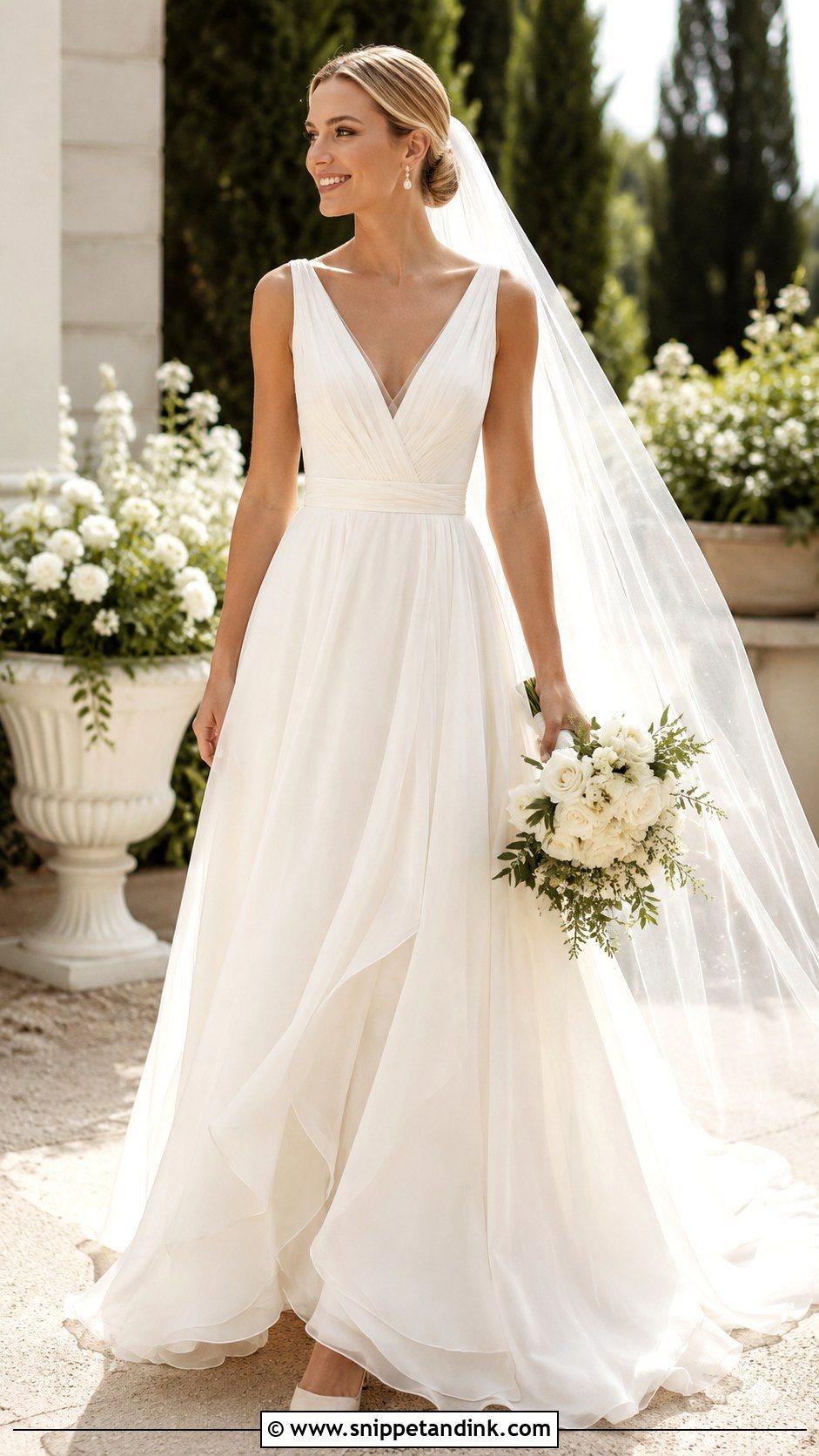
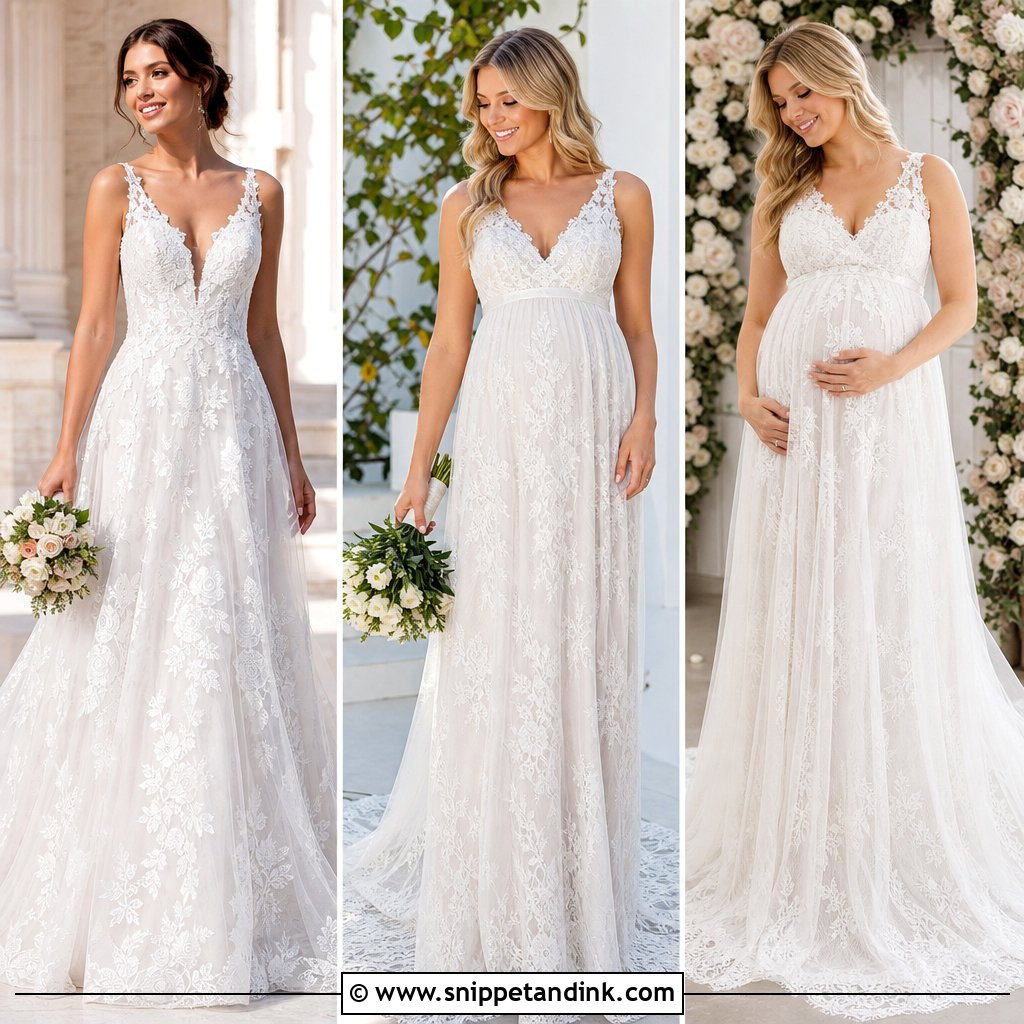
This is the shape I suggest when a bride isn’t sure where to start, because an A-line lets chiffon do what it does best without asking it to hold structure. The bodice should be lined and fitted to the natural waist, then the skirt layers open from there. A modest V or scoop neckline with narrow straps keeps it clean. I’d style it with pearl drops, a fingertip veil, ivory pointed pumps and a small bouquet of white roses and greenery, swapping to block-heel sandals on grass. One honest warning: on the hanger an unlined chiffon bodice looks fine and then collapses on the body, so ask what’s inside it before you fall for it.
2. V-Neck Chiffon Wedding Dress
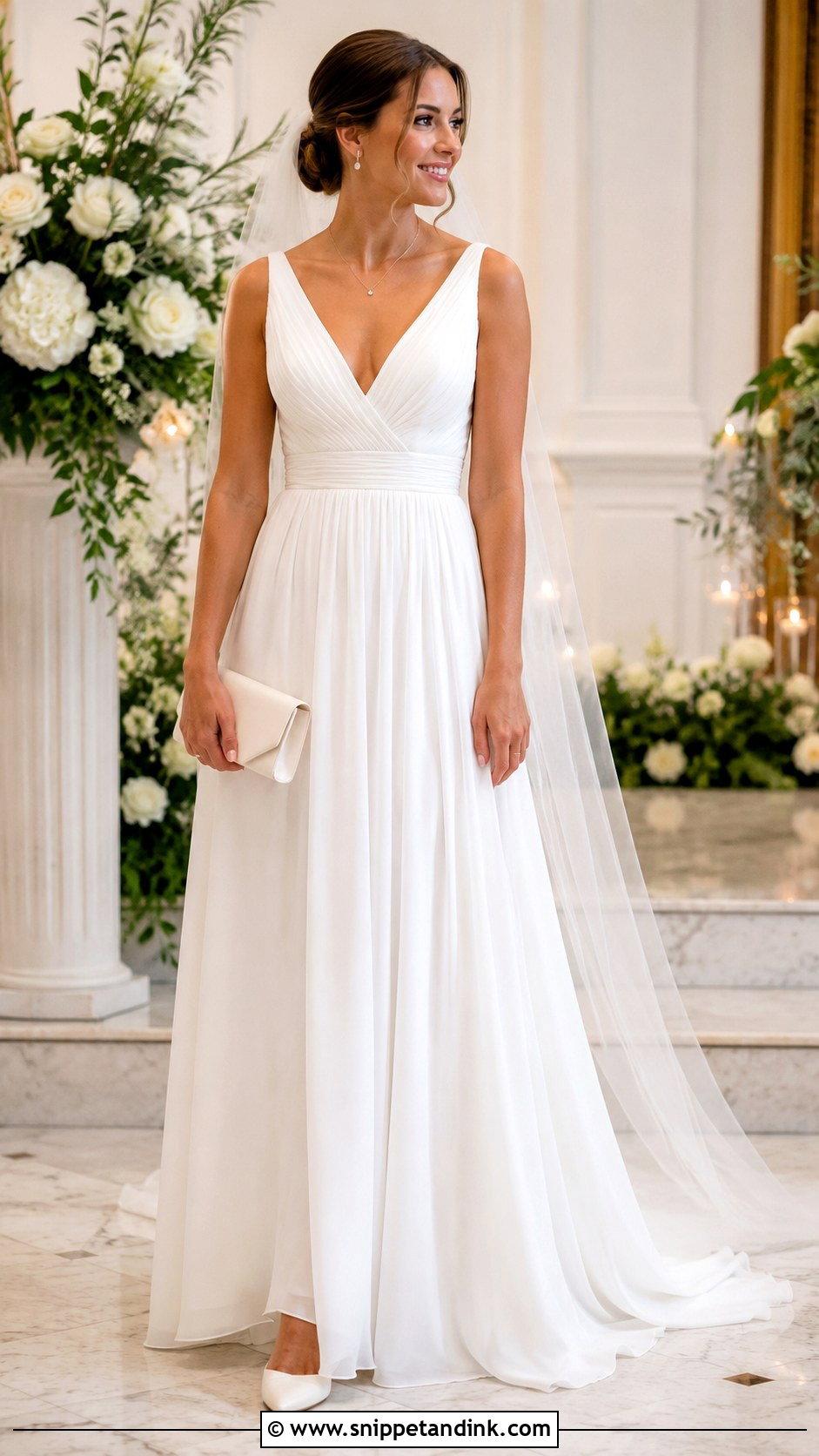
A V-neck lengthens the upper body, and in chiffon the soft gathers at the bodice keep the line from looking severe. Look for a fitted waistband under those gathers; without it the fabric drifts and the V widens through the day. Wider straps carry more support, narrow ones read more delicate. I’d finish it with a fine pendant, a low bun, a sheer chapel veil and slingbacks you can stand in. If the V is deep, ask your seamstress for a strip of skin-tone mesh across the gap. It disappears in photos and saves you from adjusting the neckline every time you hug someone.
3. Long Sleeve Chiffon Wedding Dress
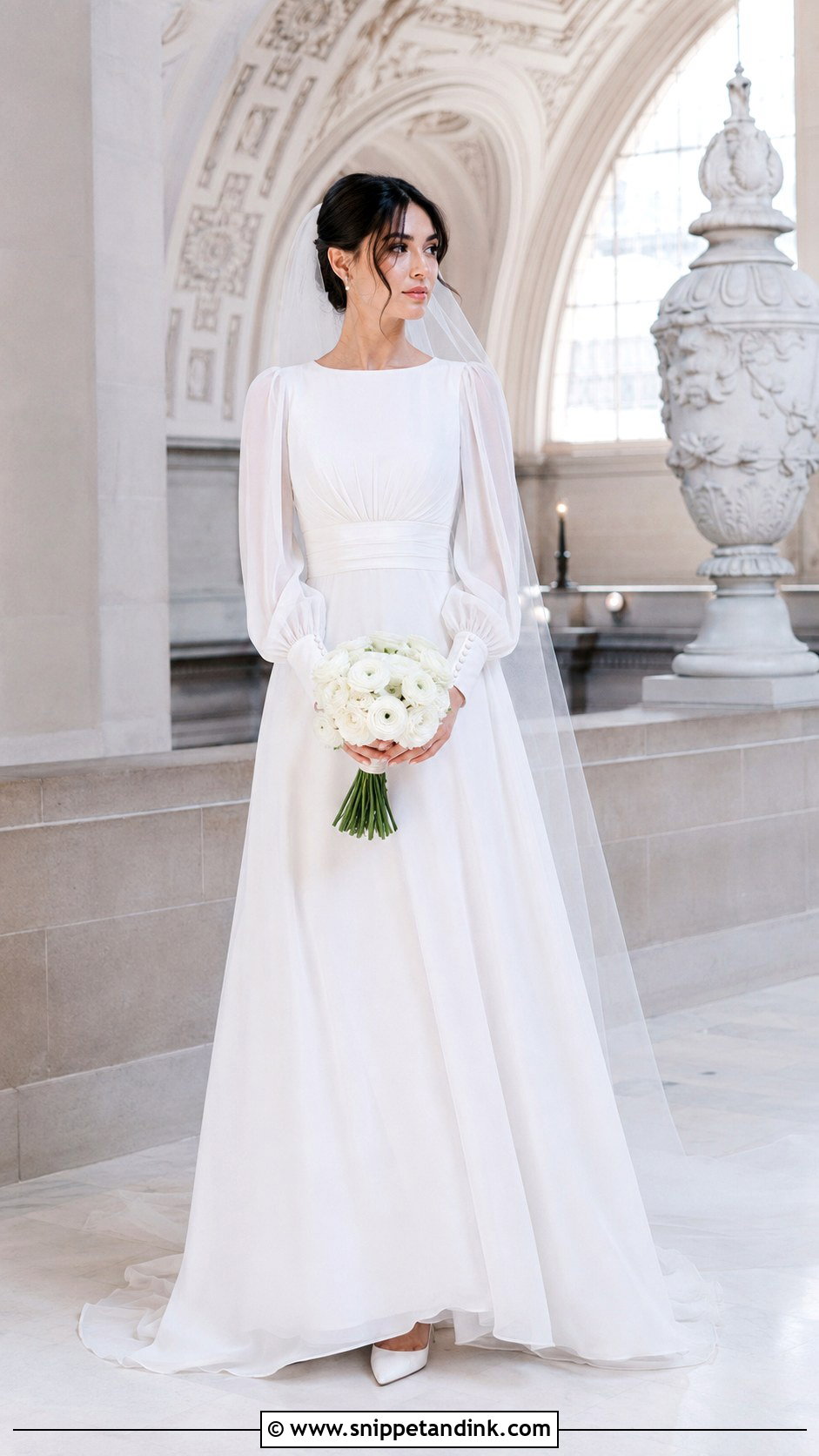
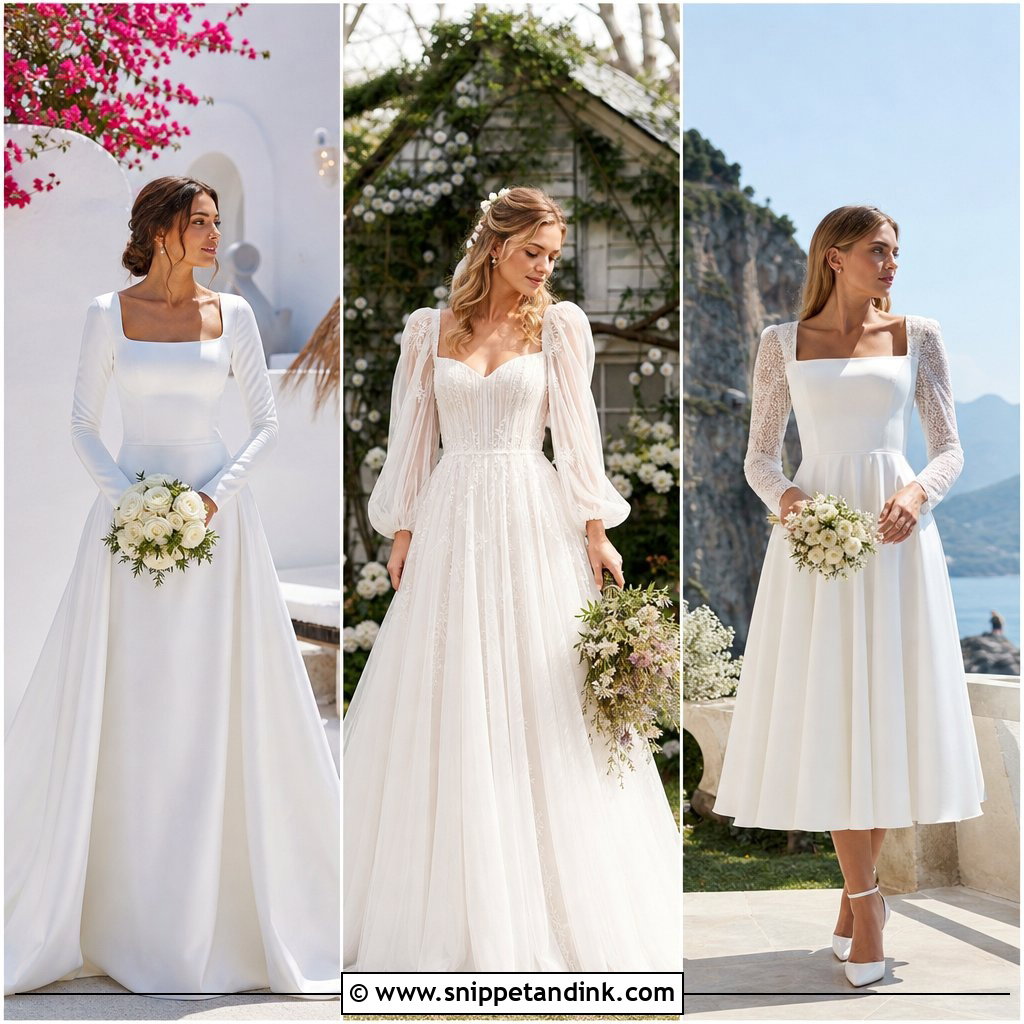
Sheer bishop sleeves give coverage without weight, and they’re one of the most comfortable sleeve choices I fit. The fullness gathers into a narrow cuff, often closed with covered buttons, so the arm moves freely inside. Pair them with a fitted natural-waist bodice and an A-line skirt, then keep the rest quiet: pearl studs, a low textured bun, closed ivory heels, a plain chapel veil and white ranunculus with trailing greenery. The thing I check every time is the armhole. If it’s cut high and tight, the sleeve pulls the whole bodice up when you raise your arm, and that only shows up once you’re dancing.
4. Off-Shoulder Chiffon Wedding Dress
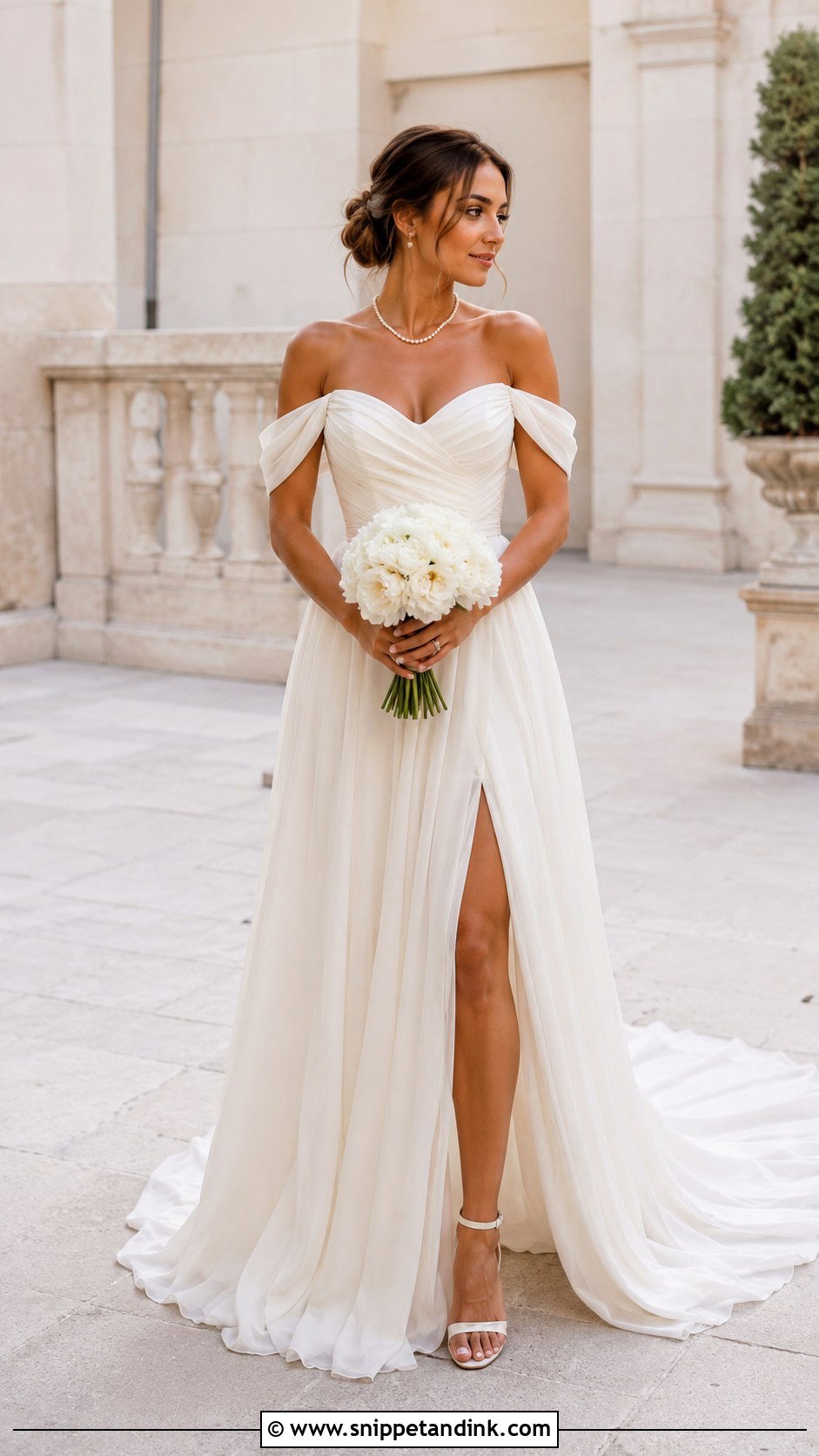
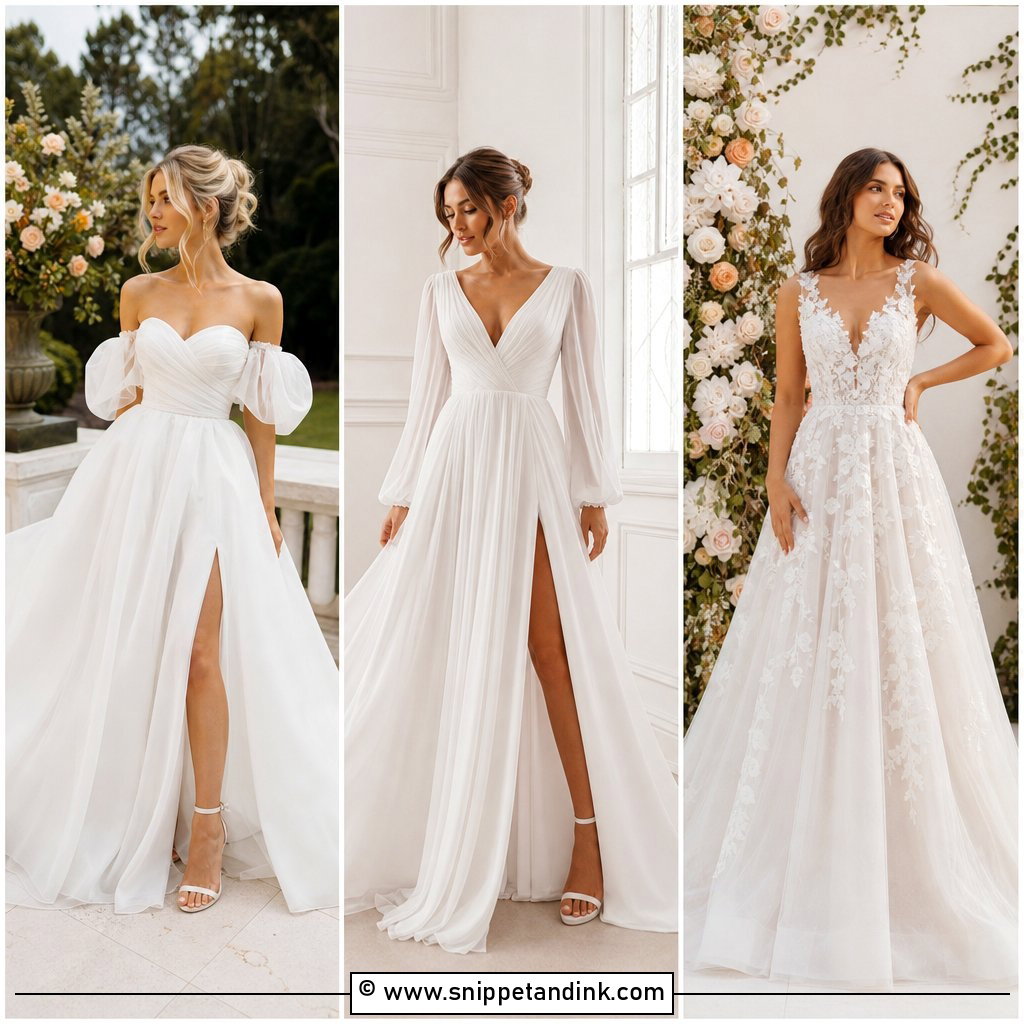
Off-shoulder chiffon frames the collarbones softly, but the bands are doing more work than they look. They sit on the upper arm, so they need to be anchored to a supportive fitted bodice, not just stitched to the neckline. A lightly gathered skirt and short train keep the proportions calm. I like a short pearl strand or delicate choker here, small earrings, a loose low bun and a plain veil set beneath it. Ankle-strap heels suit an indoor room; block heels are steadier on a lawn. At the fitting, hug your partner and lift a glass. If the bands ride up or pin your arms, they need adjusting before anything else.
5. Strapless Chiffon Wedding Dress
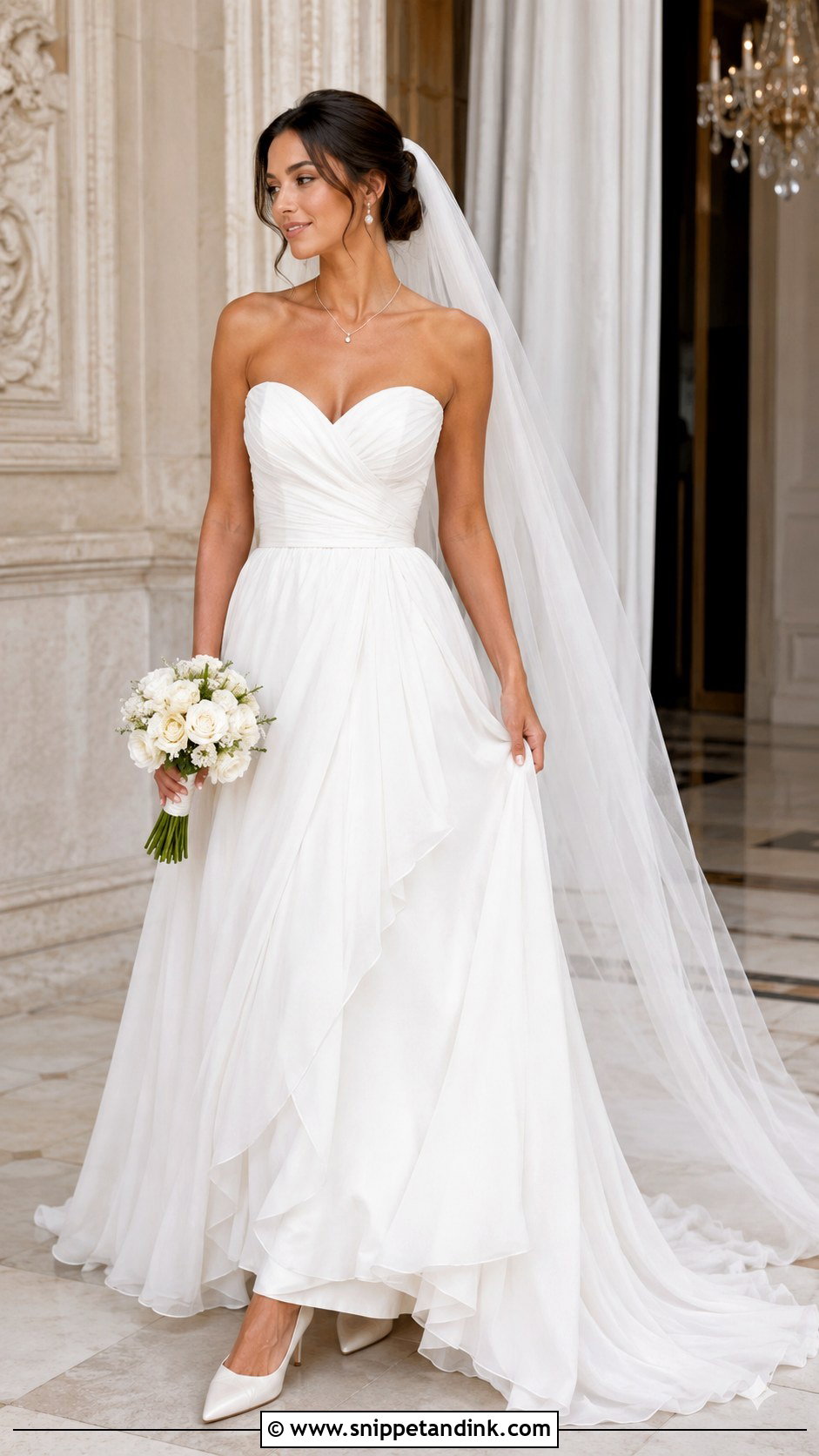
Strapless chiffon only feels weightless when the bodice underneath is built properly. I look for a draped sweetheart with internal boning and a defined waist, because chiffon itself will slide straight down. A layered skirt gives fullness while staying far lighter than a ball gown. Style it with a collarbone-length necklace, pearl earrings, a smooth updo and a cathedral veil for the ceremony, or trade the necklace for statement earrings and a shorter veil somewhere relaxed. Ask your tailor to secure the bodice firmly without strangling it. You should be able to sit, walk and raise your arms without hitching the neckline once.
6. Empire Waist Chiffon Wedding Dress
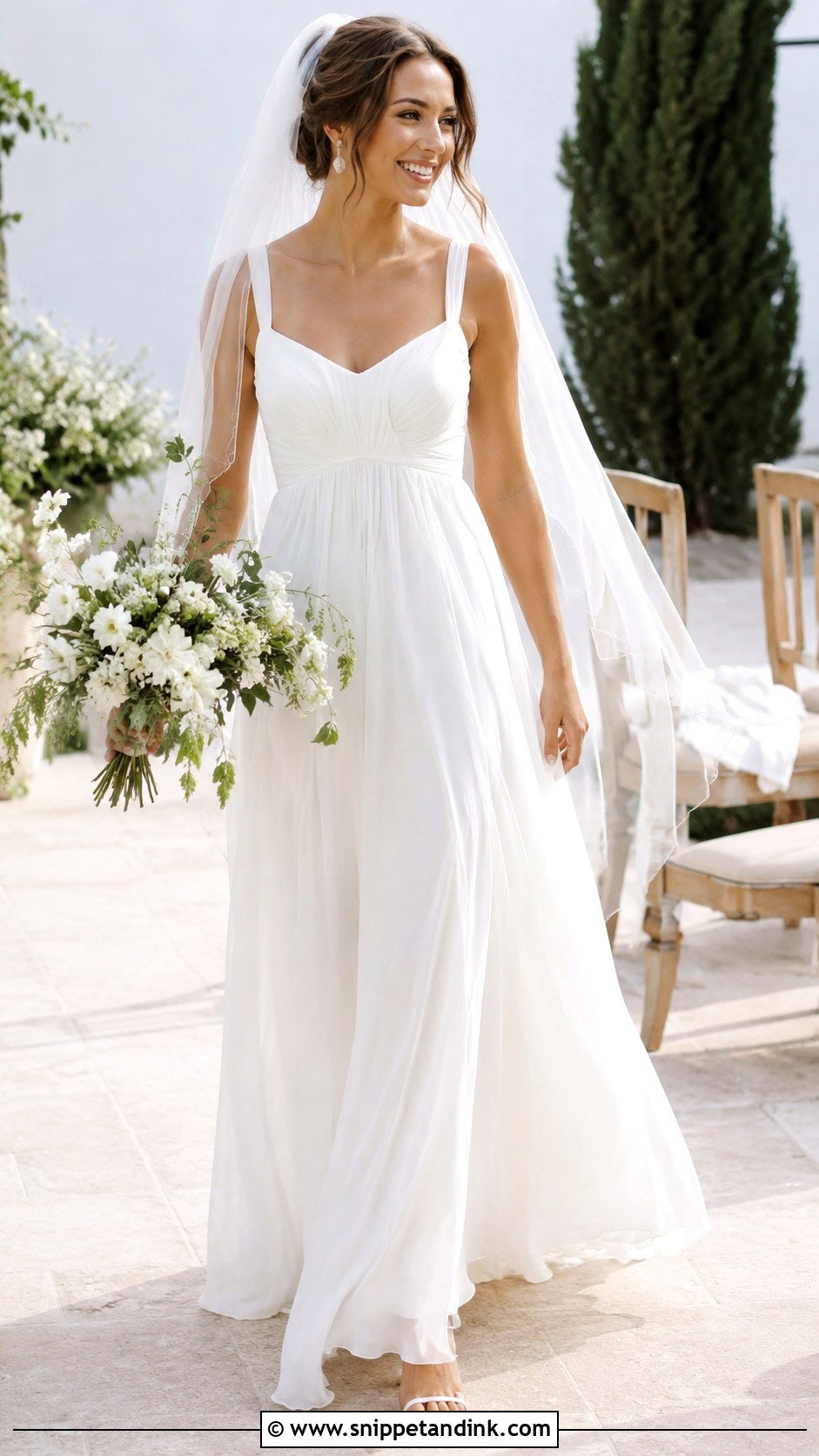
An empire-waist chiffon gown puts the seam just under the bust and lets the skirt fall straight from there, which gives chiffon the most room to move of any shape on this list. A softly gathered bodice with wide straps or flutter sleeves keeps it comfortable. I’d add delicate drops, low block-heel sandals, a simple comb, a fingertip veil and loose sweet peas. Skip a wide belt at that raised waist; it chops the long line in half. Narrow beading or tonal embroidery does the job better. The hem is where I’m strict: it should skim the shoe, not pool, because a loose skirt that’s too long gets stepped on with every stride.
7. Lace Bodice Chiffon Wedding Dress
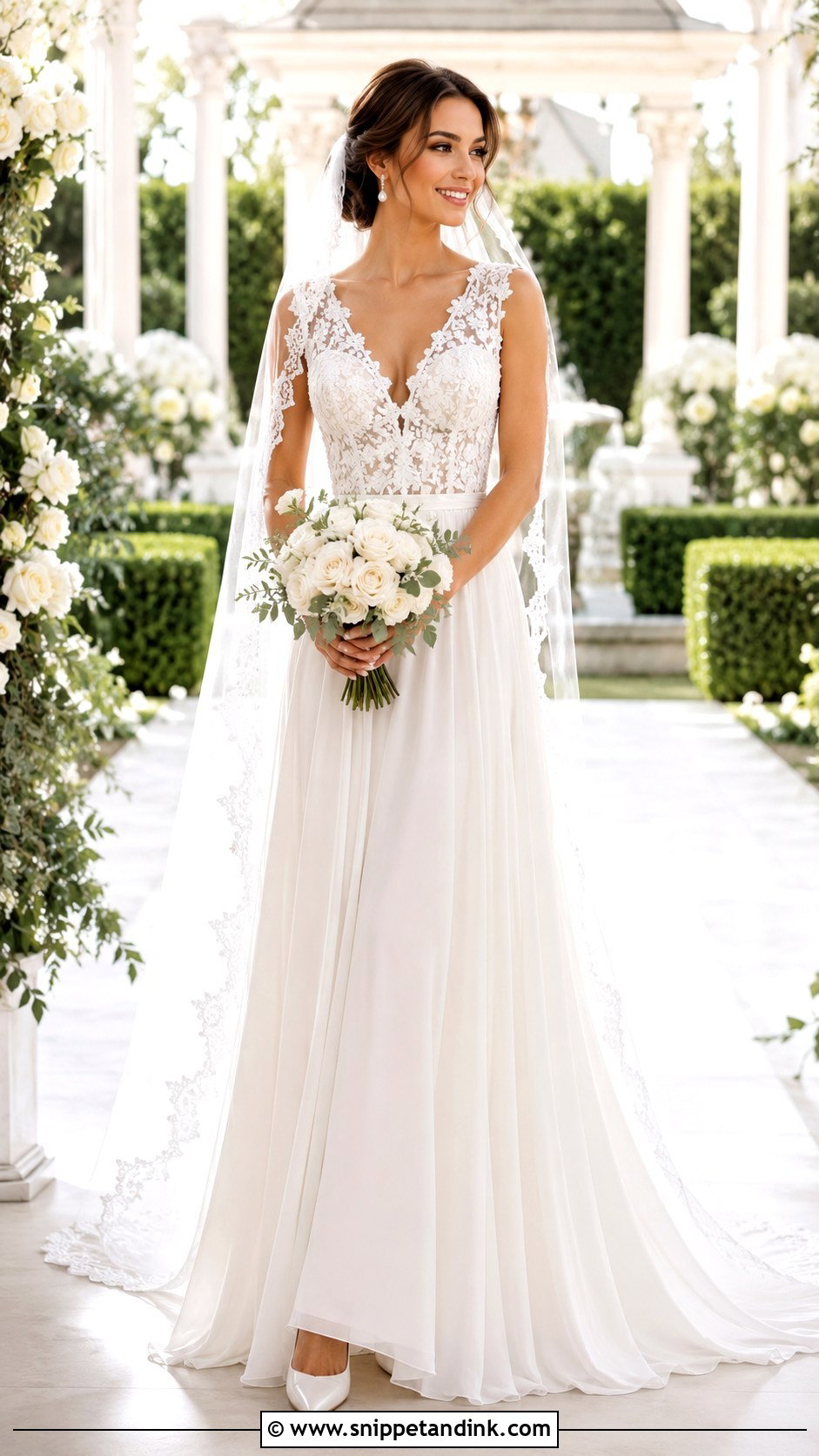
Lace and chiffon sit well together when the lace stays above the waist. Start with a fitted lace bodice, a modest V or scoop, maybe illusion straps, and have the lace finish cleanly at the natural waist before a plain chiffon skirt takes over. That contrast is what keeps it from looking busy. Pearl earrings, ivory pumps, a lace-edged veil and white roses are enough. If the lace motifs are large, I pull the jewelry back and simplify the hair. Prefer more coverage? Ask for a lined bodice rather than exposed illusion panels. A smooth underskirt matters more than people expect, since it stops the sheer outer layers clinging to your legs.
8. Boho Chiffon Wedding Dress
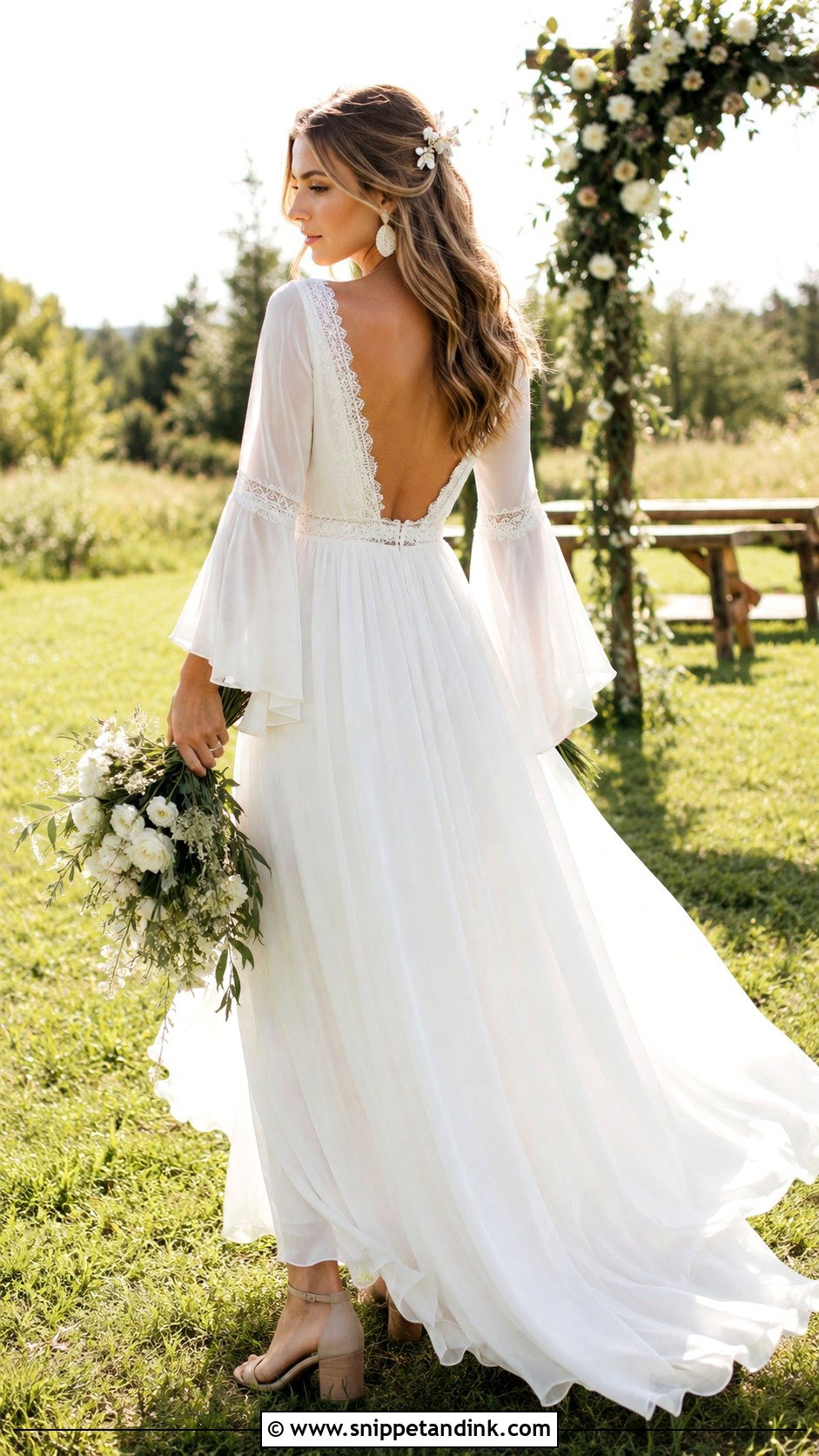
Boho is the style I see go wrong most often, because “relaxed” gets read as “unplanned”. A flowing gown with a lace-trimmed bodice, open back, natural waist and gathered skirt is the base. Flutter or bell sleeves add movement, but I check their length against the hands; if they swallow your fingers, the ring shots suffer. Style it with a floral comb, loose waves, textured drops and neutral block-heel sandals, plus white flowers with grasses. Then stop adding things. For an outdoor site, ask for a sweep train with a secure bustle, since a long chiffon train outside collects every leaf on the path.
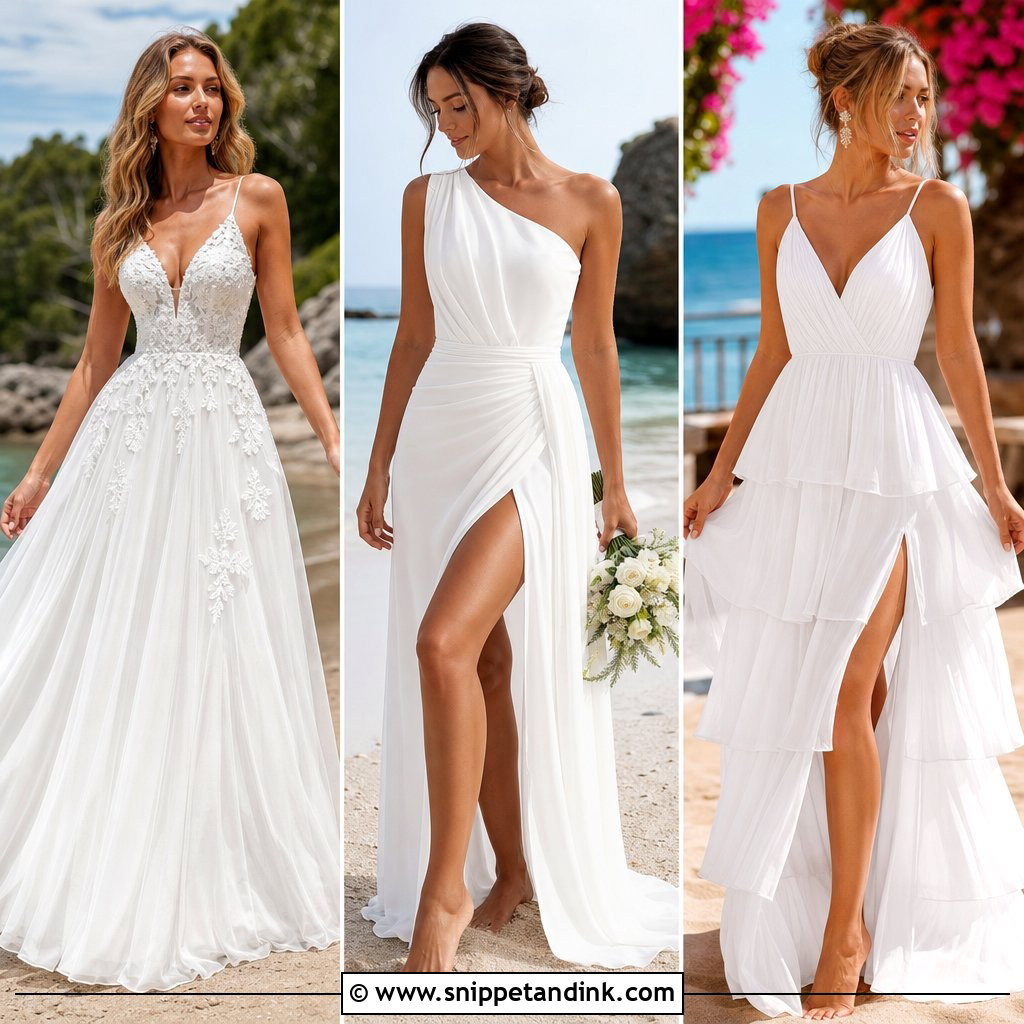
9. Beach Chiffon Wedding Dress
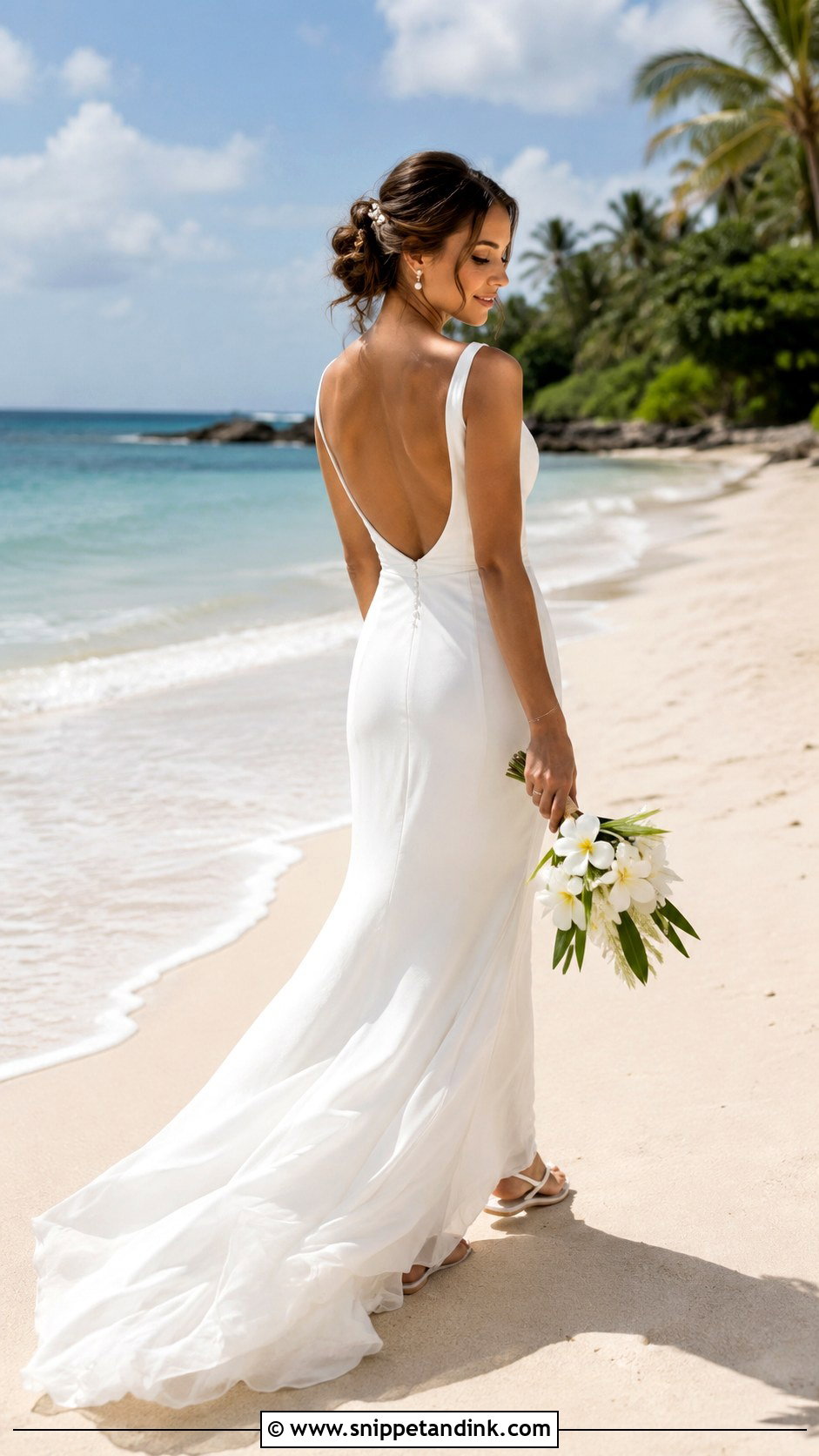
On a beach the wind does half the styling, and chiffon responds to it more than any other bridal fabric. I steer brides toward a light sheath or narrow A-line with secure straps, a lined bodice and only a short sweep train. A halter, V or open back all suit the setting and still read clearly as bridal. Pearl hairpins, small earrings, flat bridal sandals and a short veil or detachable chiffon cape finish it. Leave the long veil at home if the forecast is breezy; it will wrap around your face during the vows. Hem the dress with the flats you’ll actually wear so it clears the sand and you aren’t lifting your skirt with every step.
10. Pleated Chiffon Wedding Dress
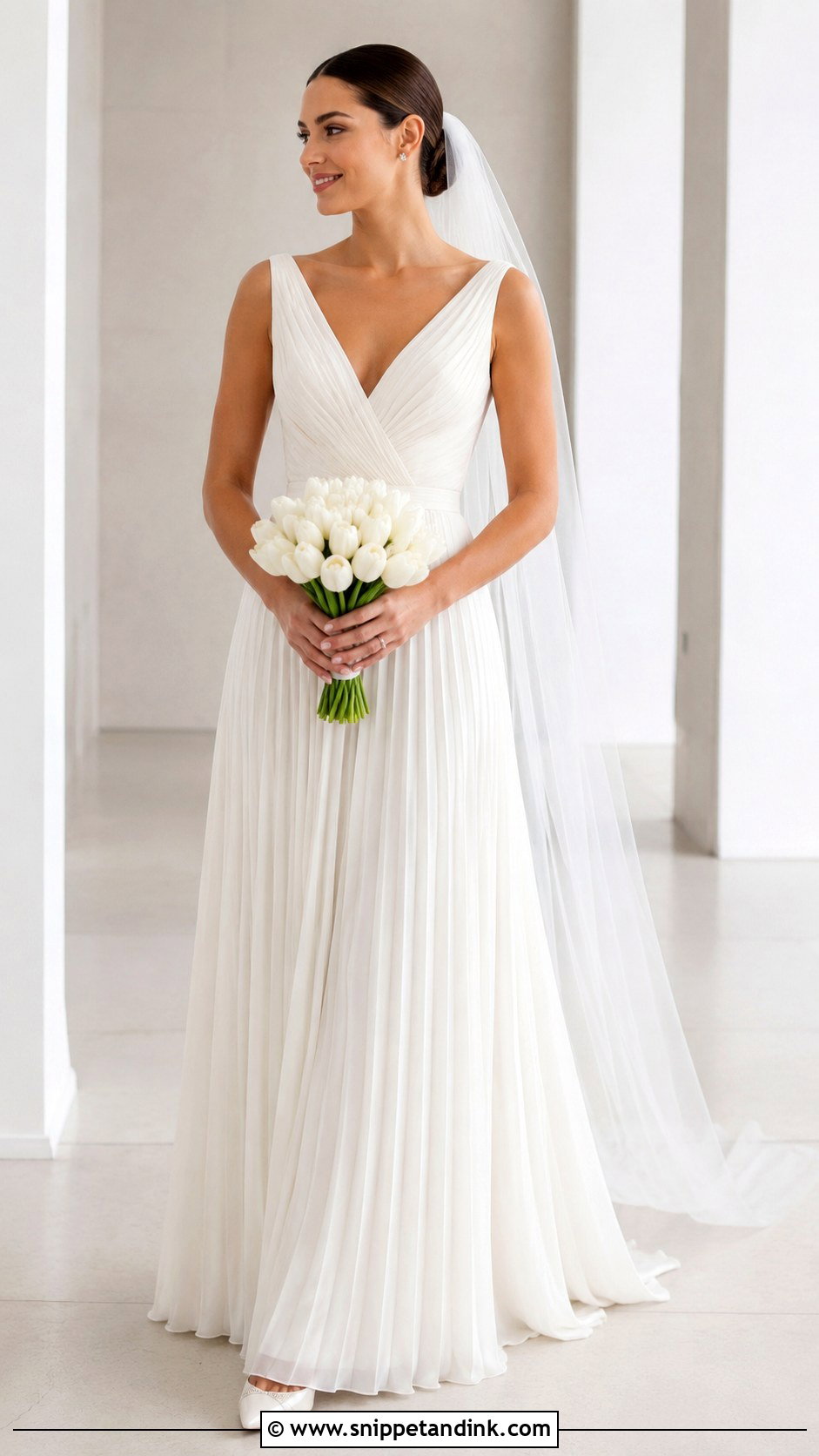
Fine pleating gives chiffon a little definition while keeping it fluid. I look for a wrap-style bodice, a defined natural waist and vertical pleats running the full skirt, which should open as you walk rather than standing out stiffly. Crystal studs, a sleek low bun, a narrow waist-length veil and ivory slingbacks keep it crisp, and white tulips echo the straight lines. Avoid a heavily embellished belt; it fights the texture. At alterations, check the pleats hang evenly at the sides and back. And please don’t let anyone iron it the morning of. Pleated chiffon gets a gentle steam from a distance, because direct heat can flatten the pleats permanently.
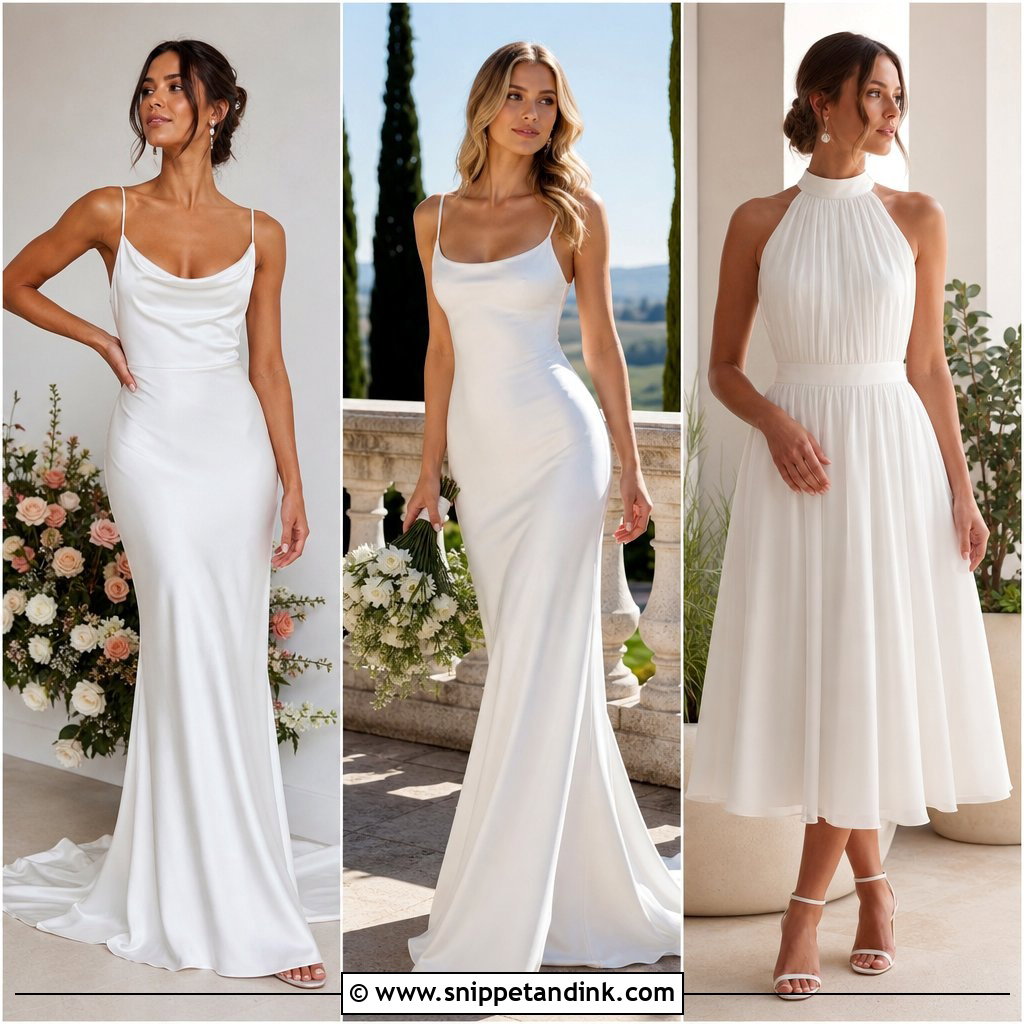
11. Halter Neck Chiffon Wedding Dress
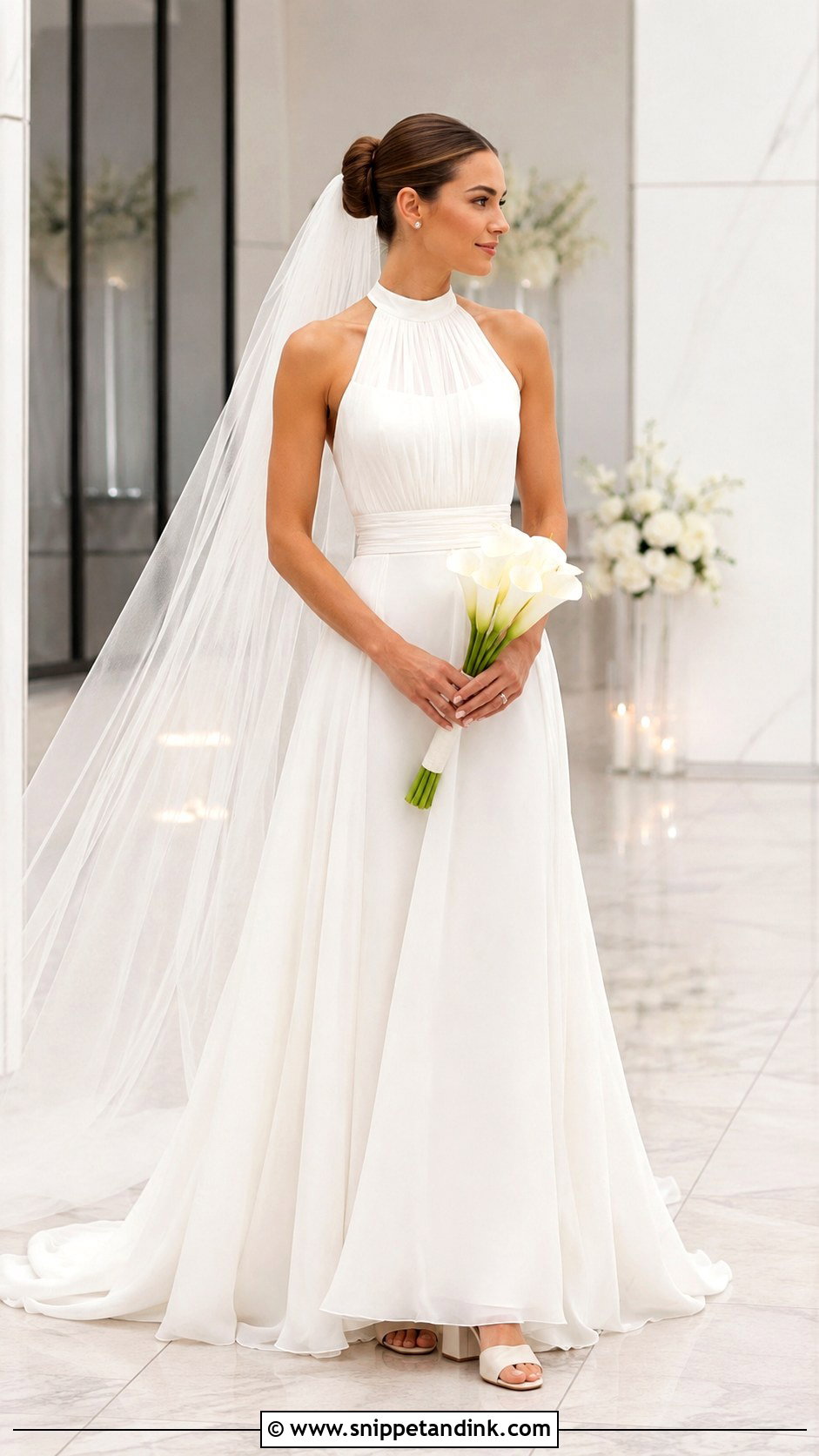
A halter draws the eye up and makes a long, narrow silhouette. The fit around the neck is everything: it shouldn’t pull, gape or press, because after a few hours a tight halter strap gives you a headache. A softly defined waist and flowing A-line skirt balance the structured top. I’d go with small studs, no necklace, a polished bun and a long veil attached below the hair so it doesn’t tug on the strap. Platform sandals or block heels give height with more stability than stilettos, and slim calla lilies suit the shape. Wear your actual bra or bodice tape to every fitting, since a halter back leaves very few places to hide support.
12. One-Shoulder Chiffon Wedding Dress
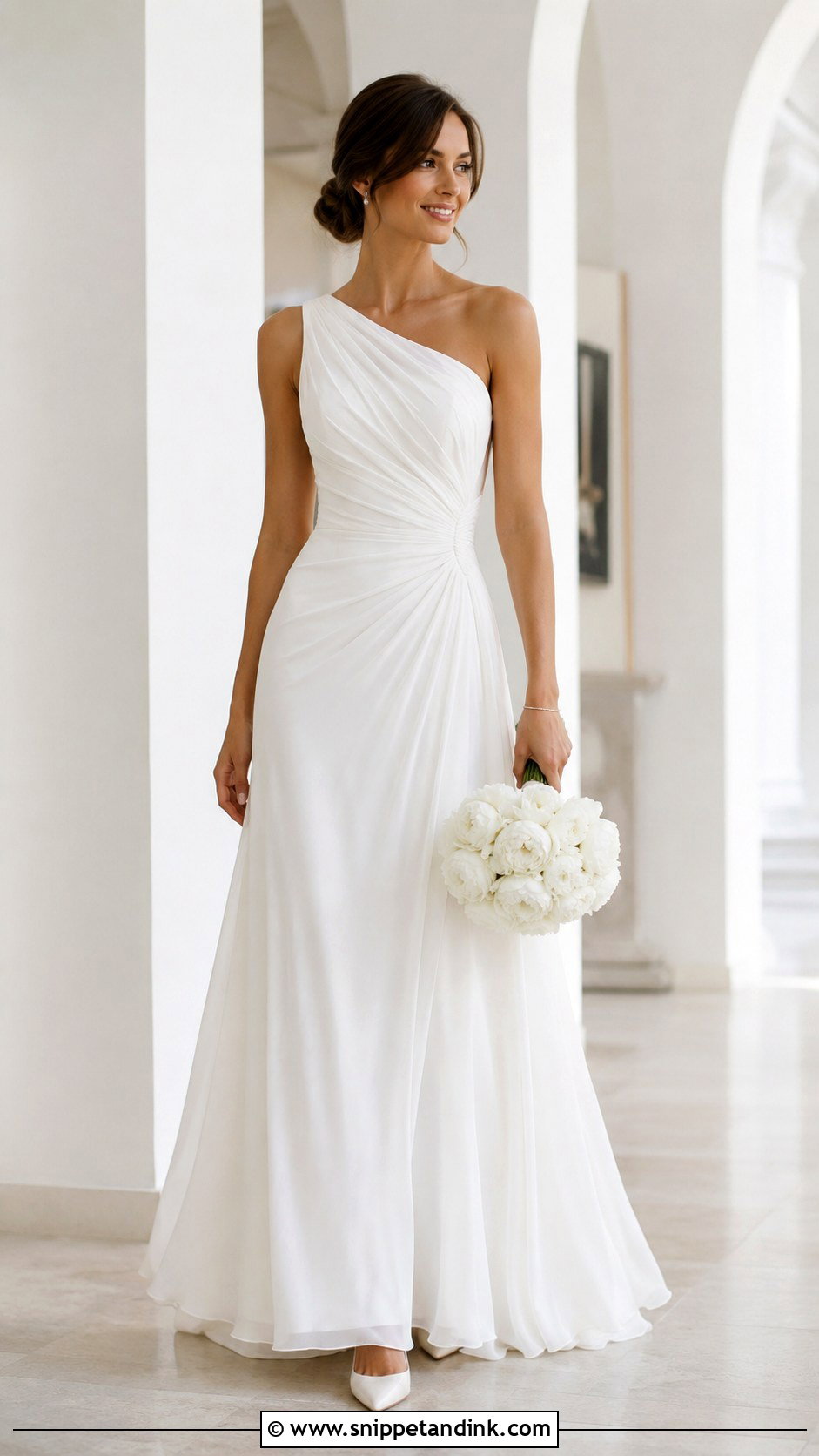
The diagonal of a one-shoulder neckline is enough decoration on its own. A ruched, fitted bodice holds the asymmetry, and a gently flared skirt keeps the rest soft. Pick a design with one clean shoulder strap or a single draped sleeve, not both. I’d add a bracelet, small earrings, a side-parted low bun and pointed heels, and leave the neck bare. A cathedral veil makes it formal, a jeweled comb suits a smaller day, and a rounded bouquet softens the angles. Tailoring shows more on asymmetry than anywhere else, so check the strap lies flat and the hem is level on both sides.
13. Square Neck Chiffon Wedding Dress
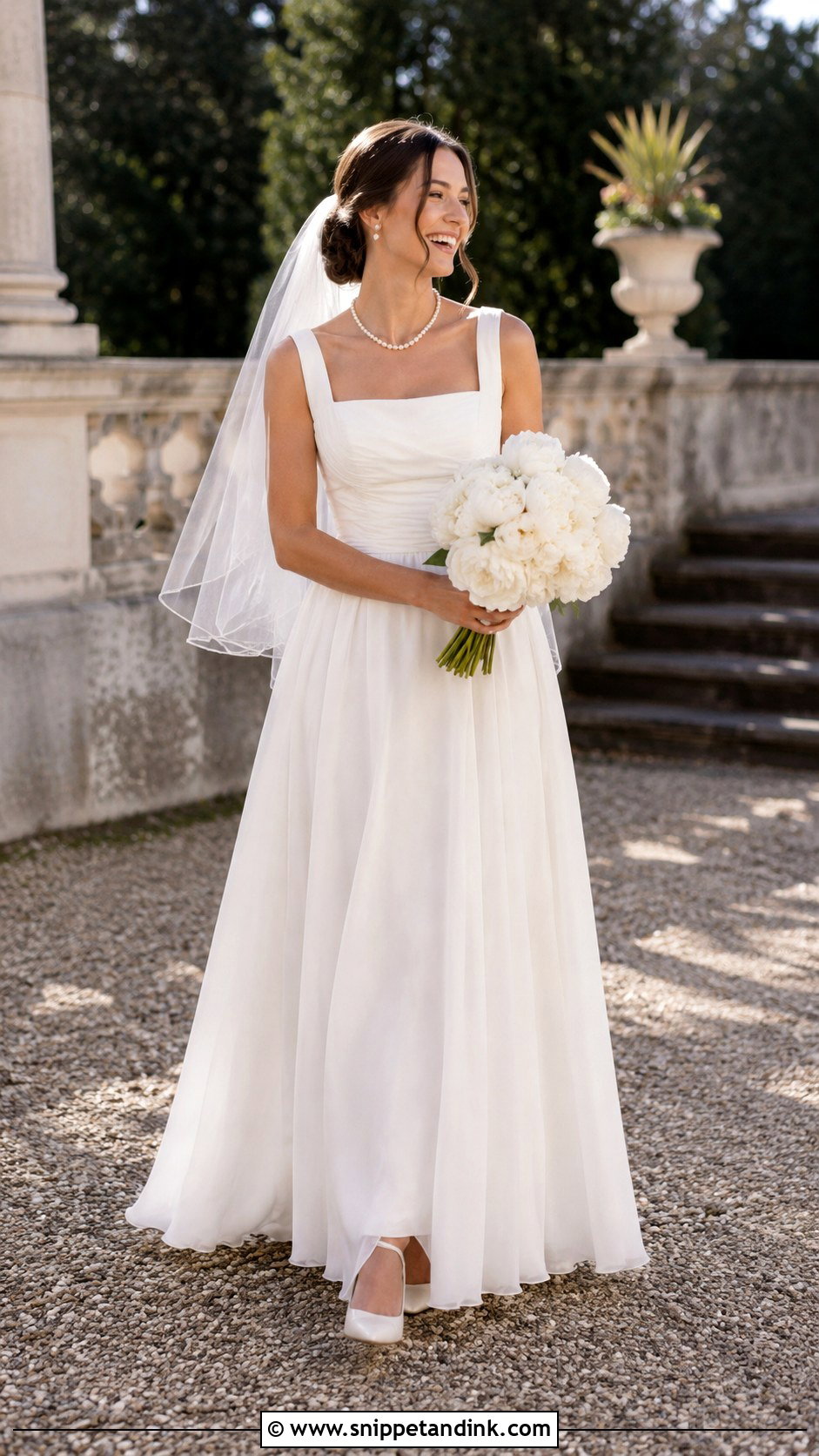
A square neckline frames the collarbones with a neat edge, and it’s a shape that reads classic and modern at the same time. Wide straps, a supportive lining and a softly gathered A-line skirt are the usual build. I’d style it with a short pearl strand, a low chignon, a fingertip veil, ivory block-heel pumps and peonies or garden roses for curves against the straight line. The risk with a wide square cut is the straps sliding off the shoulder, so swing your arms forward at the fitting and watch them. Keep any lace or beading subtle; the neckline’s geometry is the point. It suits brides who want structure up top and freedom below.
14. Cowl Neck Chiffon Wedding Dress
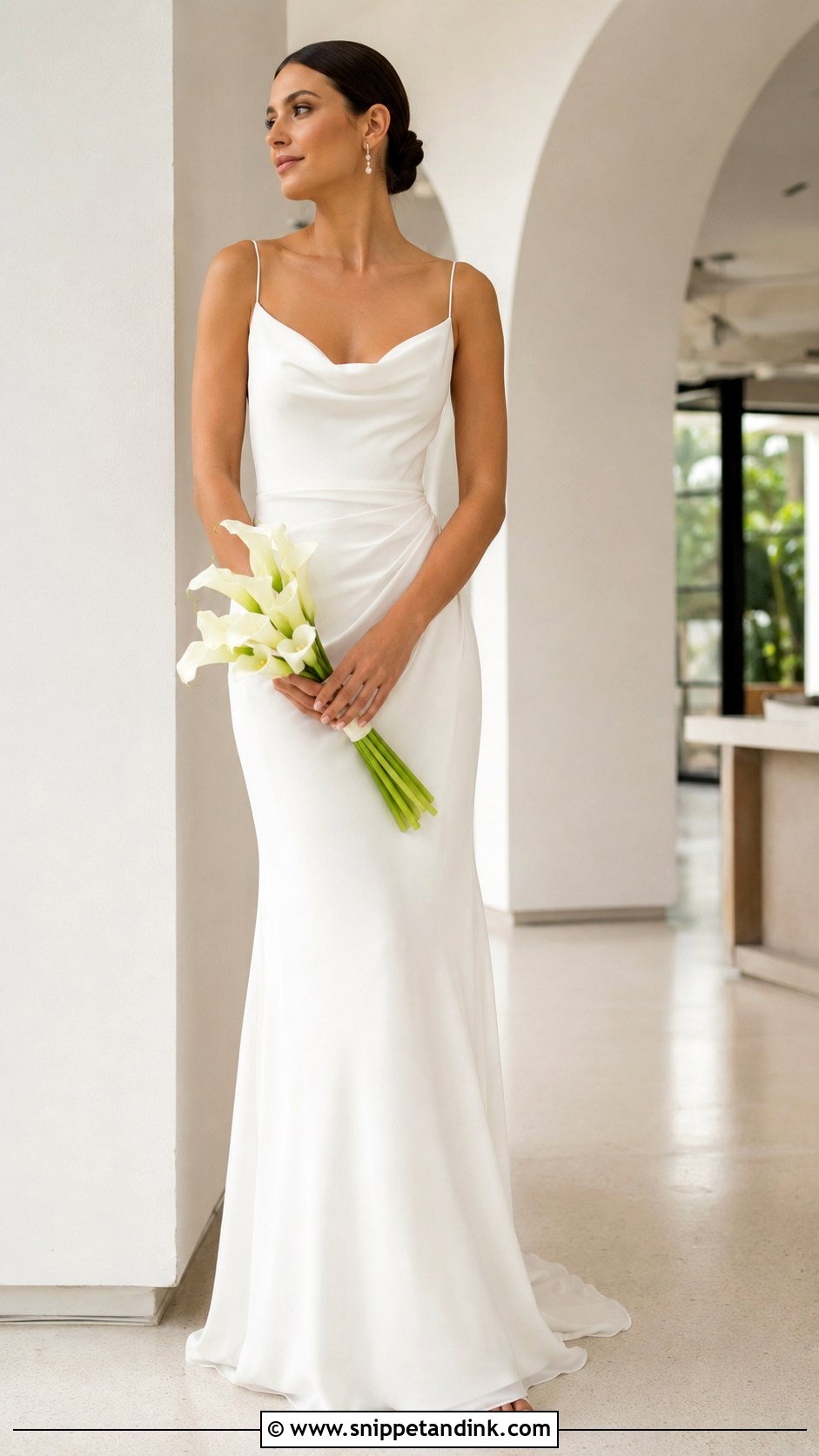
A cowl neckline is draping in its simplest form, and chiffon falls into those folds more softly than satin does. Look for controlled folds at the front, narrow straps and a lightly shaped waist, with either a fluid sheath skirt or a subtle A-line. Fine drops, a smooth bun, a chiffon scarf or plain veil and minimal sandals keep it spare, and calla lilies or orchids suit its clean character. Don’t bother with a necklace; it vanishes into the drape. My test for a cowl is to sit down and lean toward the table. If the neckline opens more than you’re comfortable with, ask for a hidden stitch or a weighted hem inside the fold.
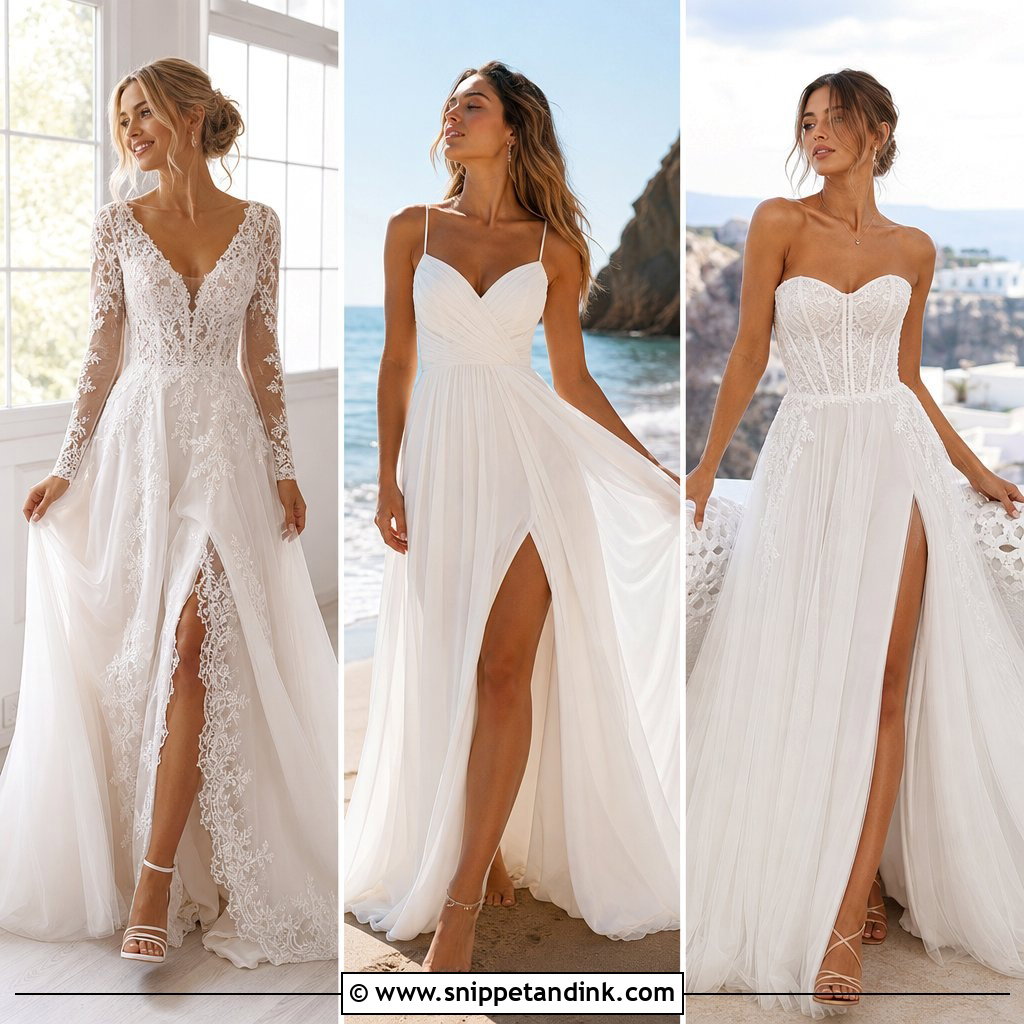

15. Chiffon Cape Sleeve Wedding Dress
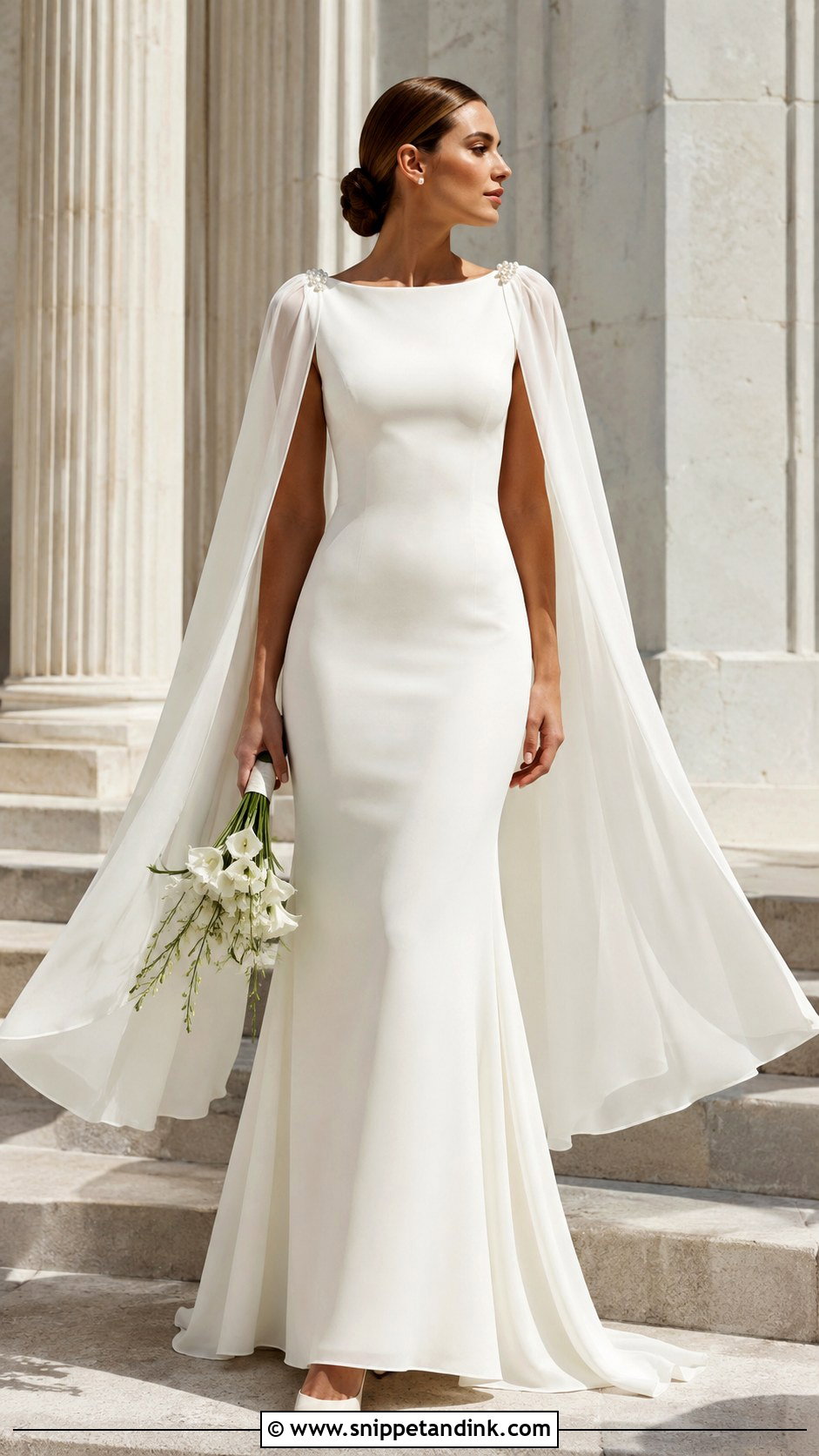
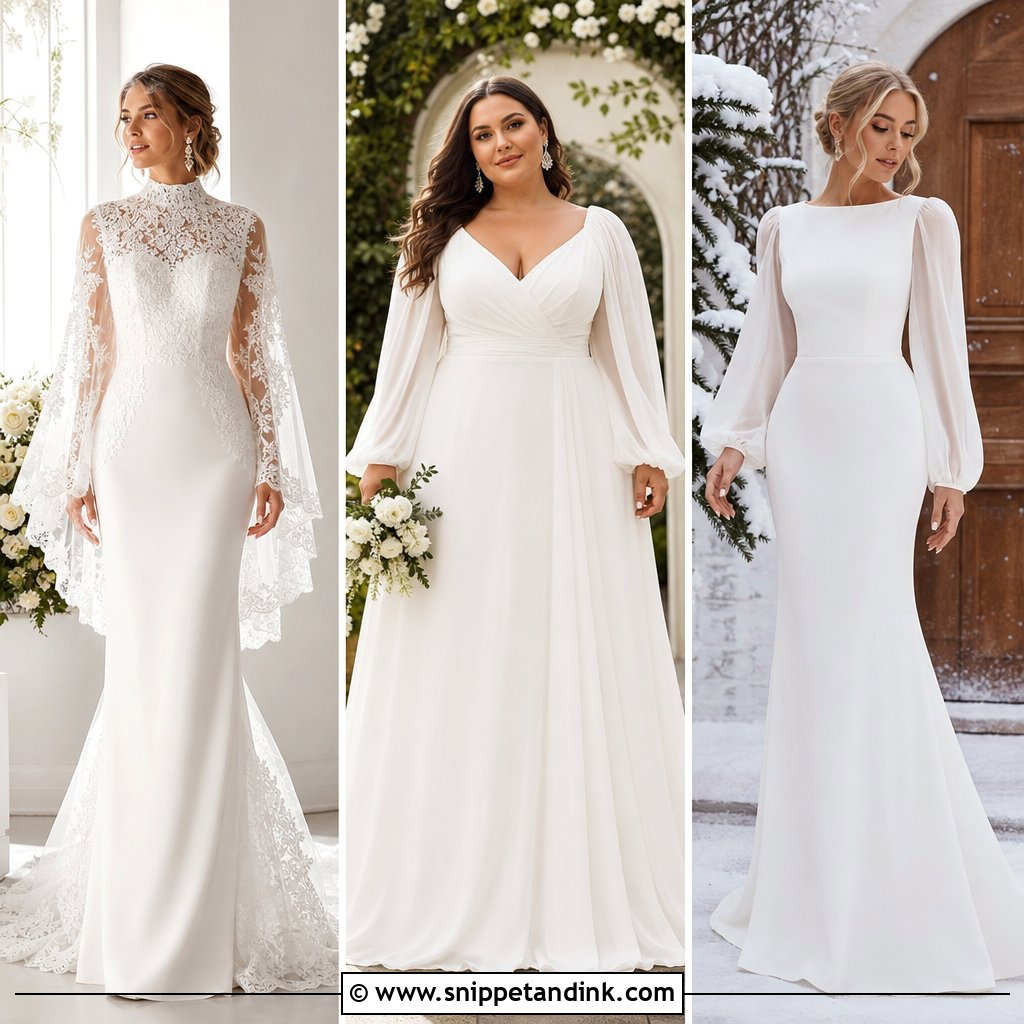
Cape sleeves create a dramatic outline that still moves, which a structured jacket never will. Start with a clean chiffon sheath or A-line, a fitted bodice and a simple neckline, then let the cape panels run from the shoulders to the elbow, wrist or floor. With a cape past the waist I usually skip the veil entirely; two sheer layers competing at the back just tangle. Pearl studs, a low bun, pointed heels and a slim bouquet are plenty. If the cape is detachable, take it off before dancing for a simpler reception look. Check it doesn’t bunch under your arms when you hold the bouquet.
16. Tiered Chiffon Wedding Dress
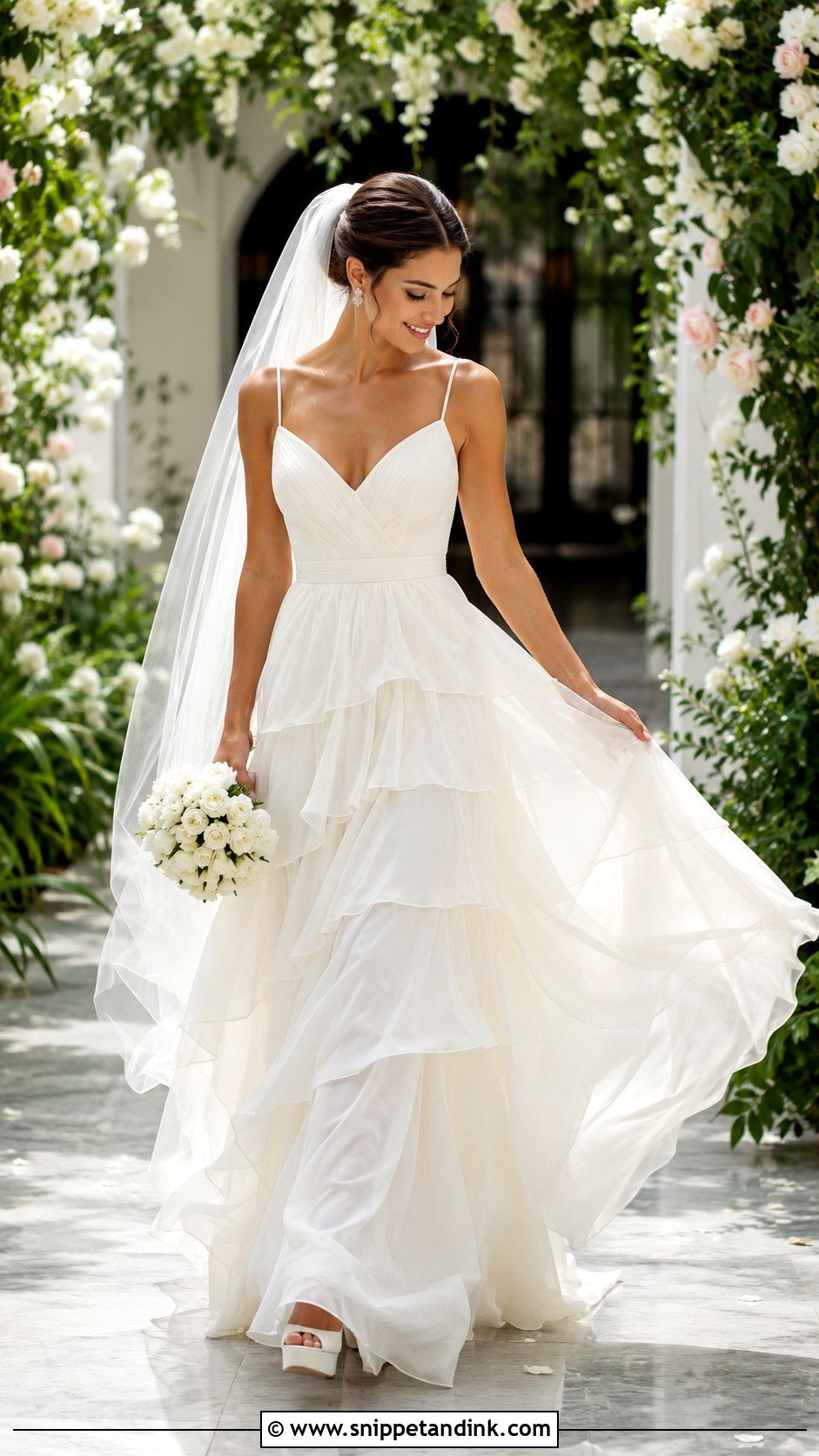
Tiers give chiffon real volume without the rigid shape of a ball gown. I prefer narrow, soft tiers that widen gradually toward the hem; short, tightly gathered ruffles tend to look fussy and add bulk where you least want it. A fitted bodice and defined waist hold it together. Keep the rest simple: plain earrings, a clean updo, a plain veil and platform heels hidden under the skirt, with a small bouquet so the dress isn’t overwhelmed. At alterations, walk around the mirror and check each tier sits level, because one dipping tier is very visible. A wrist loop or bustle makes the layered train far easier to manage.
17. High-Low Chiffon Wedding Dress
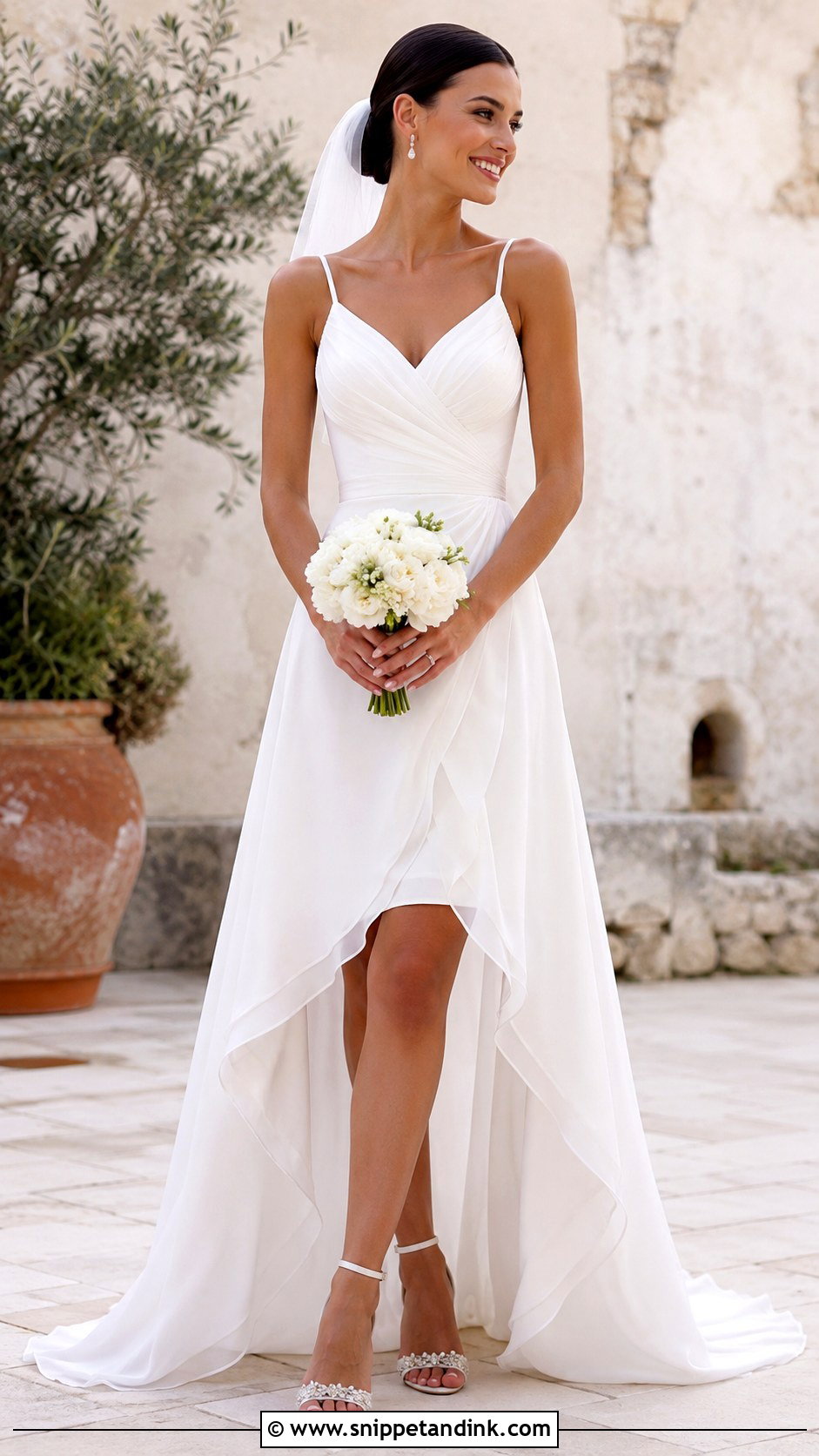
A high-low hem turns your shoes into part of the outfit, so plan them as carefully as the dress. The skirt should slope gradually from front to back; an abrupt cut looks like an alteration gone wrong. A fitted V or wrap bodice balances the uneven hem. I’d add embellished ivory heels, delicate earrings, a sleek ponytail or low bun, a short veil and a compact bouquet that doesn’t hide the front. It suits a courthouse, a destination trip or a relaxed garden. If the back forms a train, add a bustle or wrist loop. Wear the shoes to every fitting and choose a pair you can stand in for hours, since everyone will see them.
18. Tea-Length Chiffon Wedding Dress
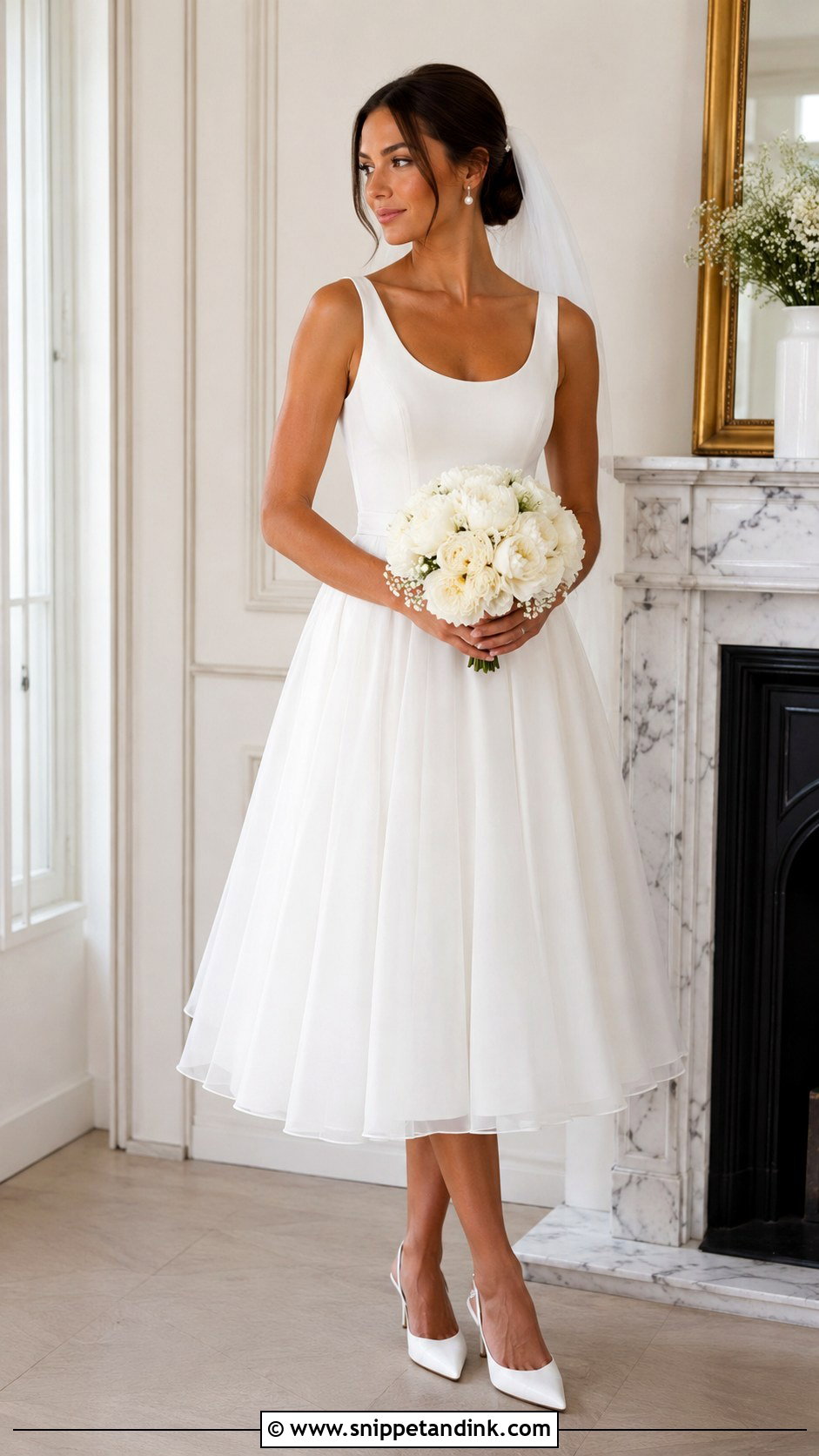
Tea length lands between the knee and the ankle, and it carries a vintage feel without trying. A fitted bodice over a layered A-line skirt gives movement without too much volume, and a scoop, V or short flutter sleeve keeps the top soft. Pointed slingbacks, pearl earrings, a birdcage or short tulle veil and a rounded bouquet finish it. The shoes are on show the whole day, so treat them as a real choice, not an afterthought. Where exactly the hem lands changes everything, and I always pin it at two or three heights and look from the side before cutting. Good fabric and tailoring keep a shorter dress feeling bridal rather than casual.
19. Plus Size Chiffon Wedding Dress
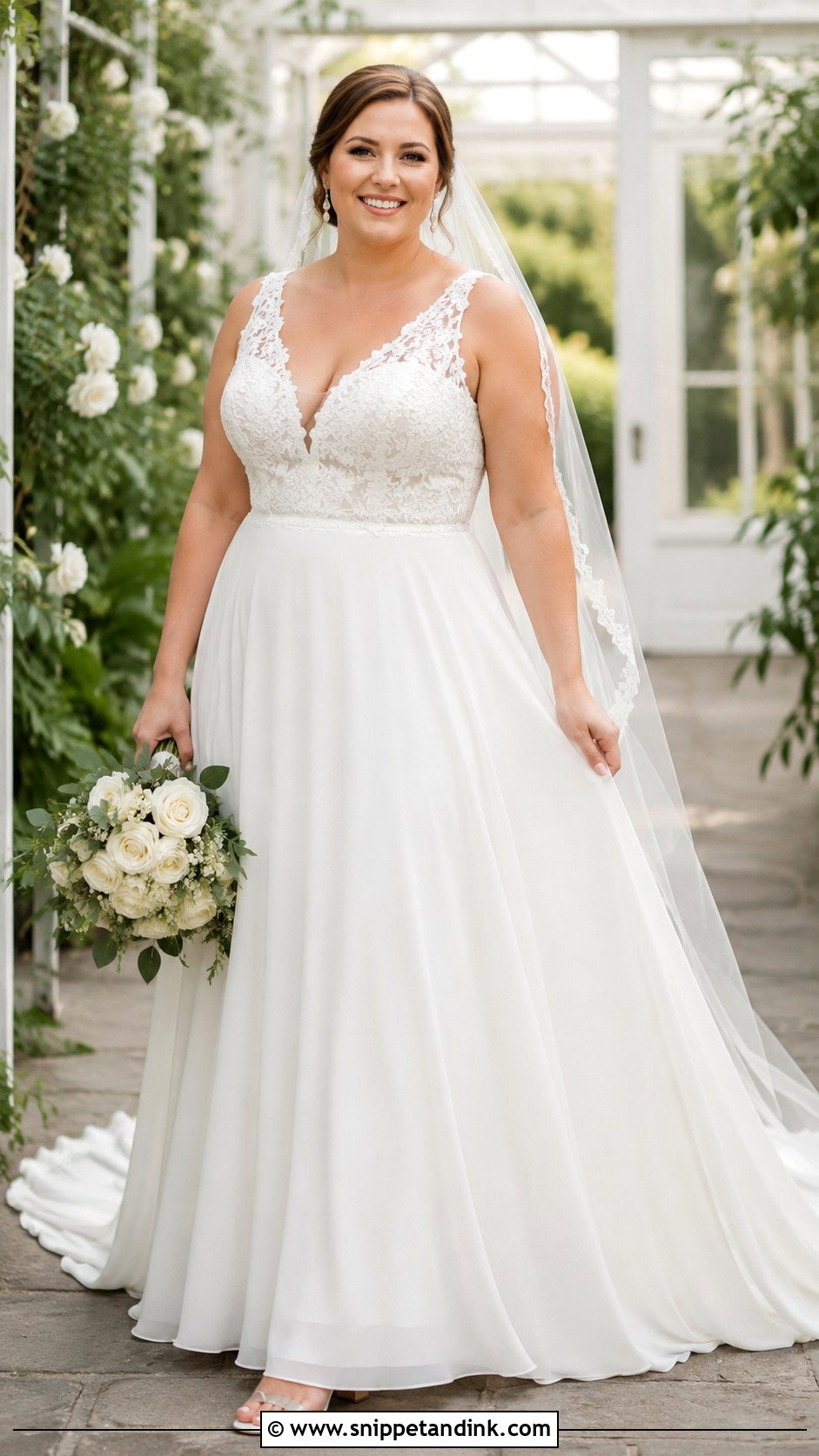
For a plus-size chiffon gown, support comes first and the rest follows. I usually start from an A-line with a structured lace bodice, a defined natural waist and a layered skirt that falls smoothly instead of adding bulk. Wide straps or sheer sleeves give coverage while keeping the fabric airy. A chapel veil, comfortable block heels, pearl drops and a medium bouquet in proportion to the dress complete it. I don’t believe in rules about which necklines are “flattering”; I care whether the support is secure, whether you can move, and what you want people to see. Try a sample close to your size where possible, then walk, sit, turn and lift your arms in it.



20. Floral Applique Chiffon Wedding Dress
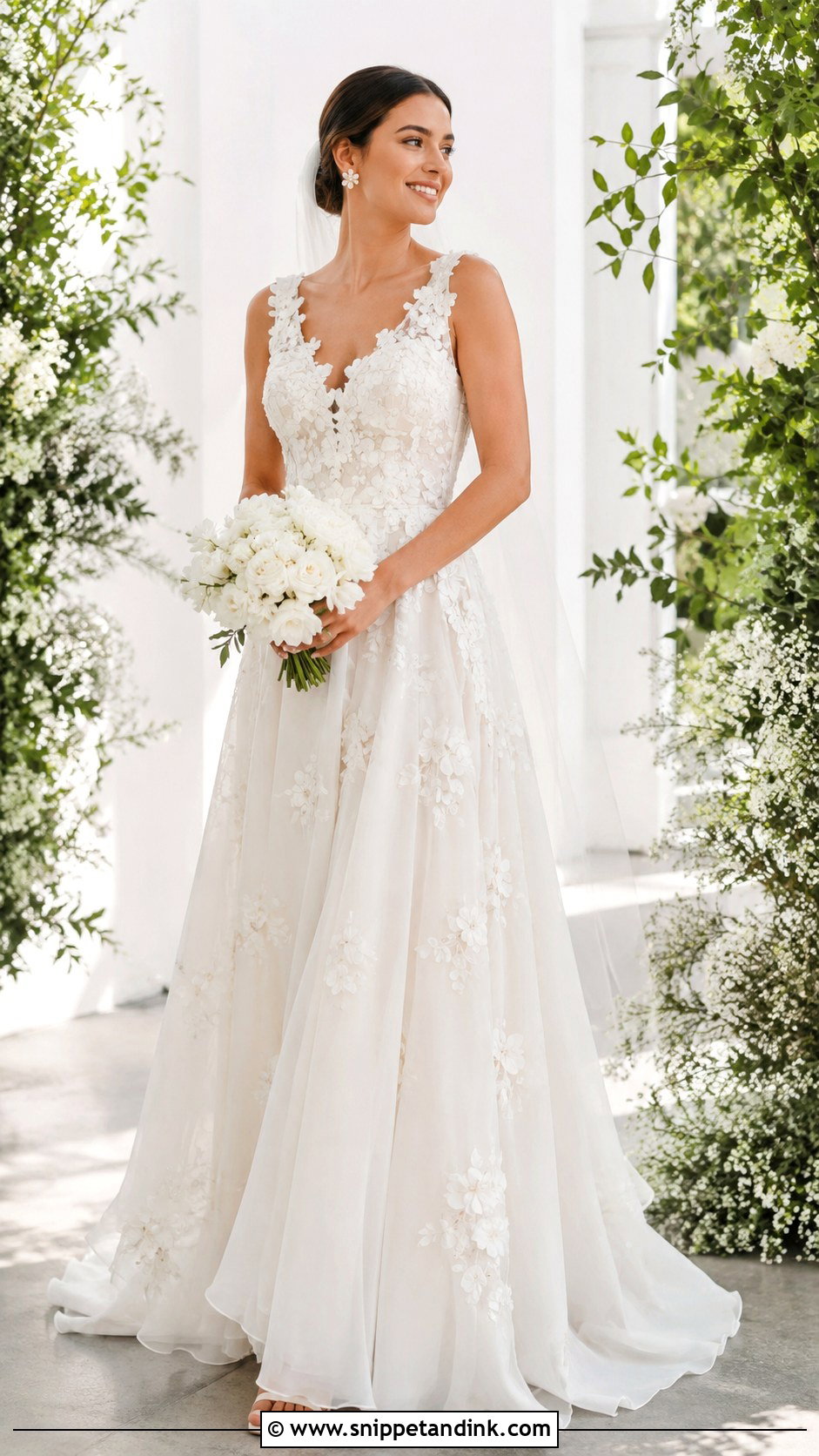
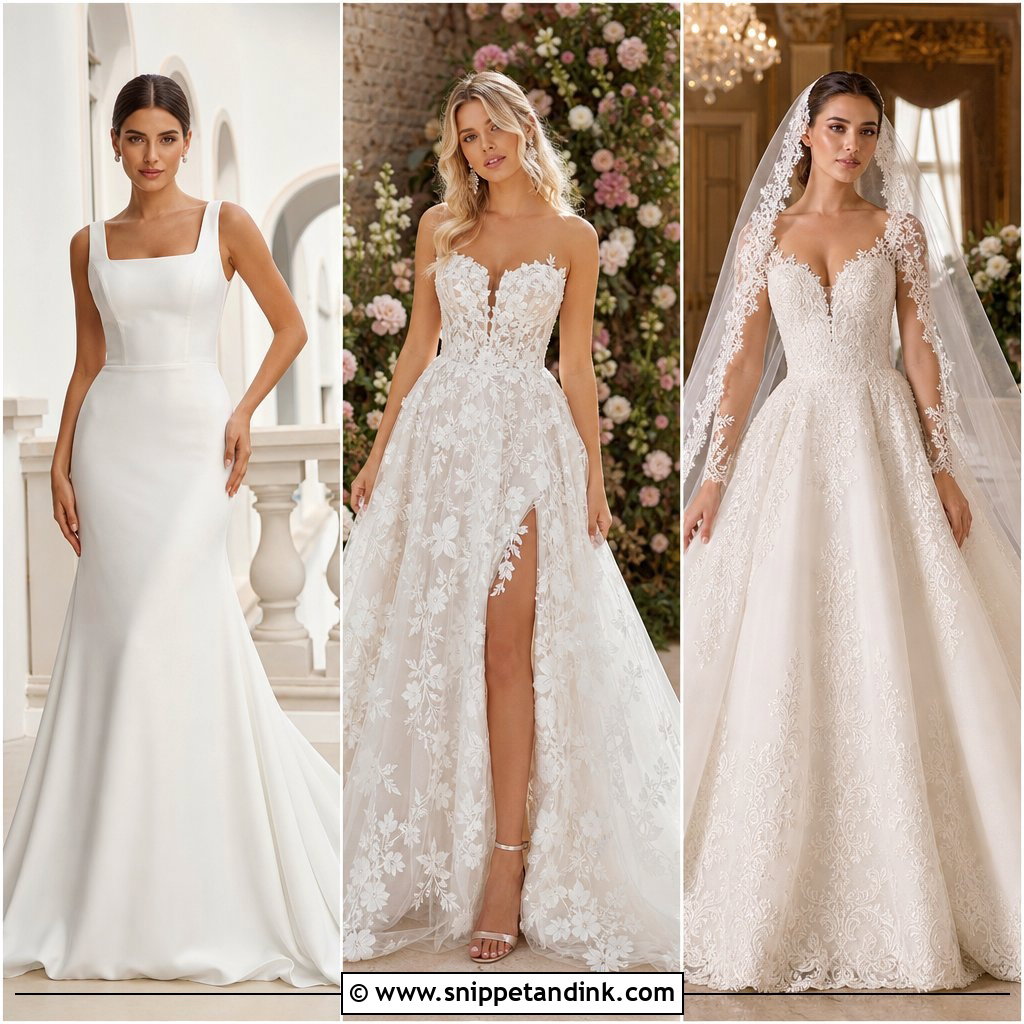
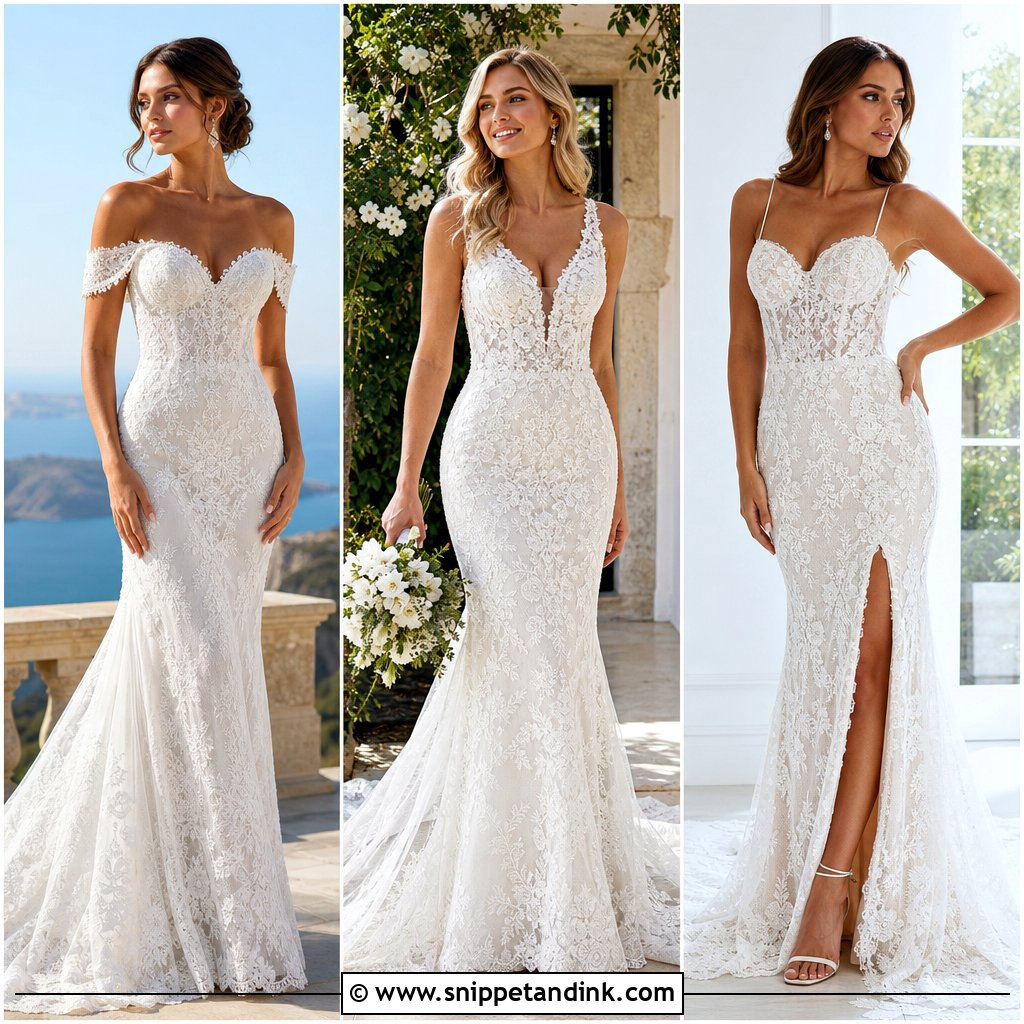
Floral appliqués add dimension to chiffon without stiffening it. The placement I like best clusters three-dimensional flowers at the neckline, straps or waist, then scatters them more loosely down the skirt so the fabric still moves. Small floral earrings, a loose low bun, a plain veil and barely embellished heels keep the focus there, and a single-variety bouquet avoids a clash of florals. Large blooms are popular right now, but smaller tonal flowers give the same idea a quieter finish. Before you buy, turn a few appliqués over and check the stitching. Raised petals catch on bracelets and bouquet wire, so I keep jewelry smooth with this one.
Why Chiffon Alterations Need Extra Weeks
Chiffon is slippery to cut and sew, and a multi-layer skirt means every layer is hemmed separately, often by hand with a rolled edge. That’s why I tell brides to plan more time for alterations on a chiffon gown than on a satin one. Book your first fitting a few months ahead, bring the exact shoes and undergarments, and expect at least two fittings plus a final check close to the date.
Ask your seamstress whether she’ll shorten from the waist or the hem. On some layered skirts, lifting from the waistband preserves a delicate original hem, though it changes how the bodice sits, so it’s a decision to make together.
Steaming, Packing and Small Rescues on the Morning
Chiffon creases in transit but releases them quickly. Hang the gown the night before in a cool room, then use a handheld steamer held a few inches away, working from the inside of the skirt where possible. Never press an iron directly on it; the fabric can scorch or go shiny, and pleats can flatten for good.
What goes in my emergency kit for a chiffon dress
- Clear nail polish to stop a small run or snag from spreading.
- White chalk to soften a light mark until after photos.
- Anti-static spray for a dry or air-conditioned venue.
- A few safety pins and a needle threaded in ivory for a dropped bustle loop.
If something spills, blot it gently with a clean white cloth and leave it. Rubbing chiffon roughs up the surface and spreads the stain, and a professional cleaner can deal with it properly after the wedding.
Chiffon That Moves as Well at Midnight as at the Aisle
The test I give every chiffon dress is simple: does it look as good walking as it does standing for the mirror? From supported A-lines and lace bodices to halters, capes and appliqués, the shape matters less than how the bodice is built underneath and how the hem is finished. Think about your venue, the weather, the ground you’ll walk on, your undergarments and your shoes before deciding, and bring all of them to your fittings. Keep accessories light so they don’t pull at the fabric. If you can walk, sit, hug and dance in it without adjusting anything, you’ve found the right one.
You'll Like These Ideas:


Leave a Reply