
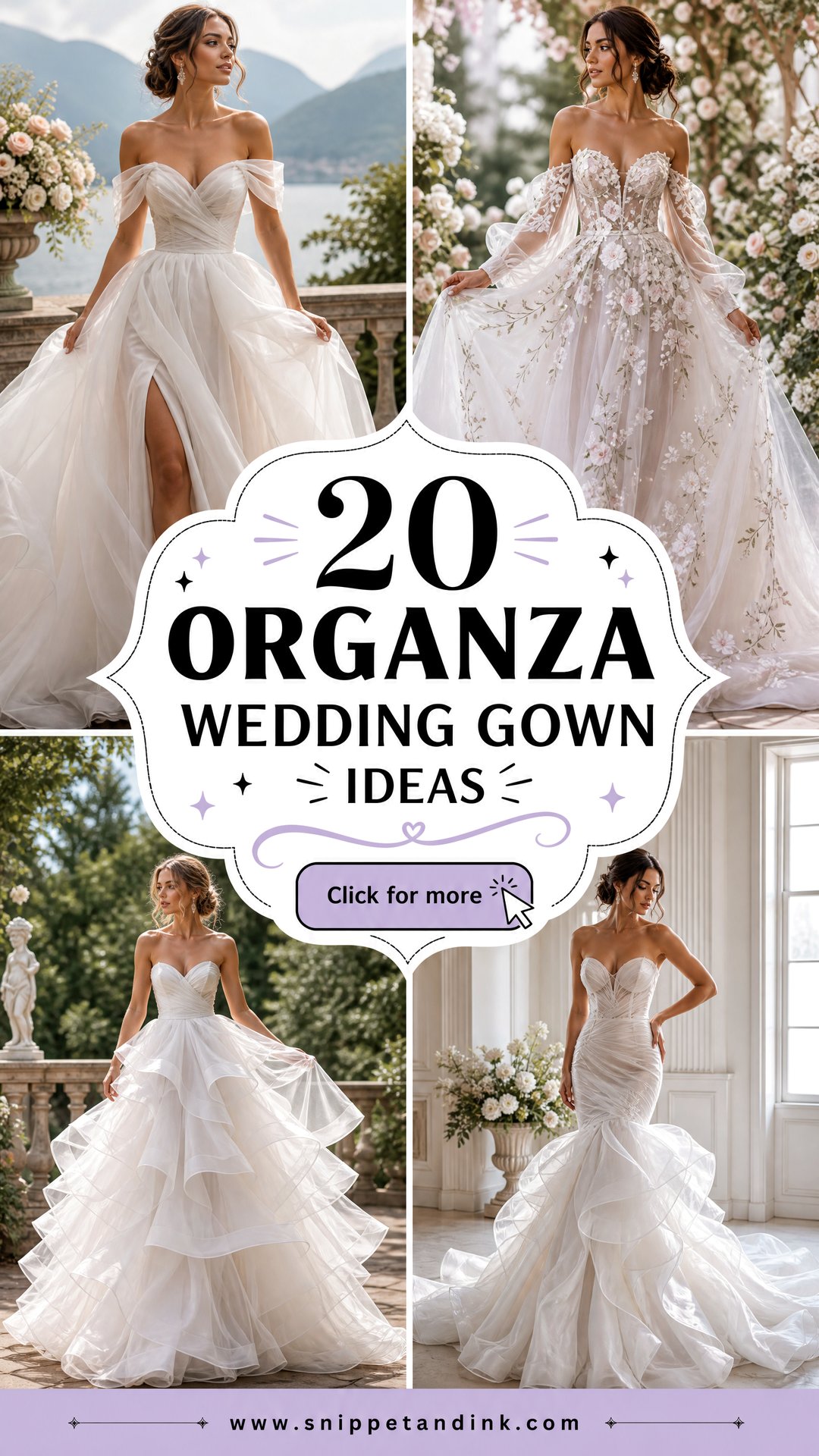
Organza is the fabric I reach for when a bride wants volume without weight. It’s a tightly twisted, plain-woven sheer, so it holds a shape that tulle can’t and still lets light pass through every layer. That’s why it turns up on slim A-lines, Basque-waisted ball gowns, sculpted sleeves and dimensional flowers alike. On camera, the semi-sheer layers read as depth rather than bulk, which is most of its appeal. What I ask brides to judge together is neckline, waist placement, skirt volume, underlining and train length, because organza exaggerates whatever proportion you give it. The twenty gowns below run from very quiet to very dramatic.
Silk Organza or Polyester? Let Your Fingers Decide
Most organza gowns in bridal shops are polyester, and silk organza usually appears at the higher end or in made-to-measure work. Both are sheer, crisp plain weaves, but they don’t behave the same once you’re wearing them, so I always ask the consultant which one I’m holding.
- Silk organza has a softer hand and a glow rather than a shine. It creases readily but releases those creases with steam, and drops of water can leave marks on it.
- Polyester organza is stiffer and brighter. It holds heat-set pleats and resists creasing a little better, but it builds static on dry days and will melt under a hot iron.
My quick test in the shop: gather a fistful of the skirt hem, squeeze it for ten seconds and let go. What you see is roughly how the skirt will look after a car ride and a seated dinner. Then hold the skirt up to the window. Organza alone is see-through, so the opacity comes from whatever sits beneath it, and you want to know whether that’s tulle, satin lining or a crinoline, because the number of layers decides both the weight and how warm the dress feels by evening.
1. Strapless Organza A-Line Wedding Gown
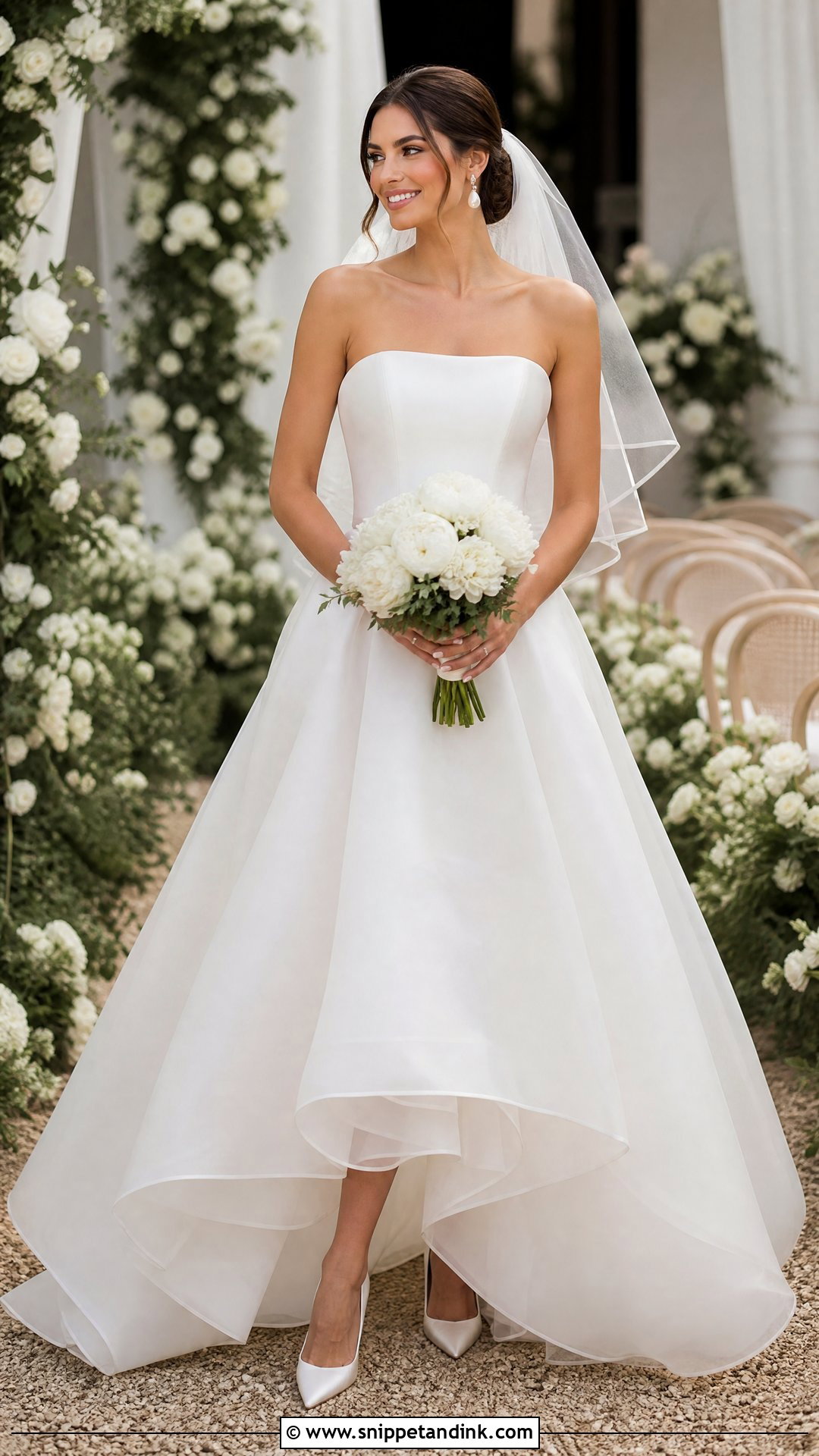
This is the shape I start most organza appointments with, because it shows how the fabric moves before any detail gets involved. The bodice needs real internal structure, boning plus a waist stay, since organza has no grip of its own and will creep down a strapless top. Above that, a softly curved neckline; below it, a skirt that widens gradually from the natural waist over several sheer layers. Pearl drops, a fingertip veil and a small green-led bouquet are all it wants. At every fitting I have the bride sit, walk and lift both arms over her head. If the bodice gaps or travels, it needs taking in at the waist, not a tighter neckline.
2. Basque Waist Organza Ball Gown
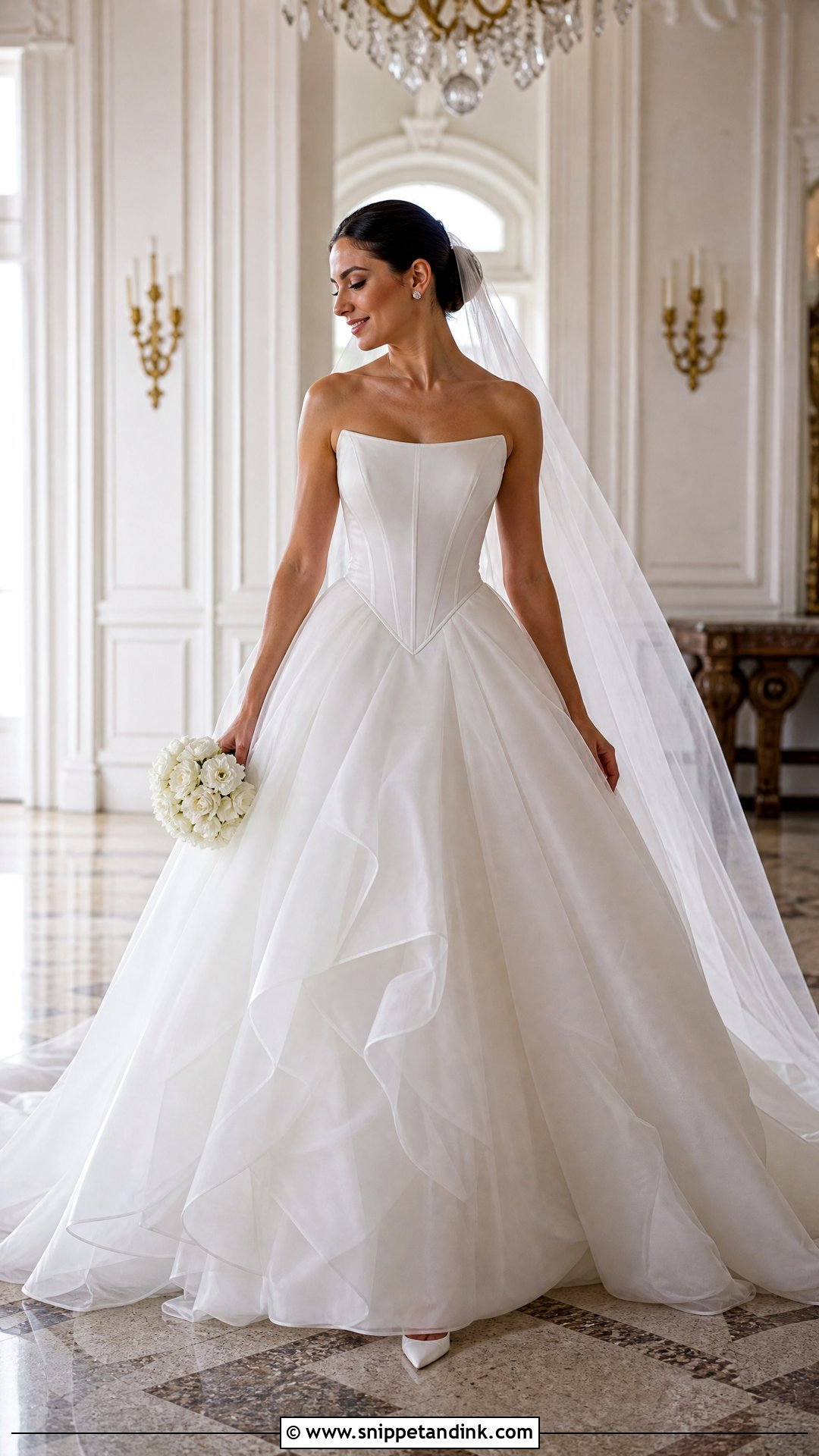
A Basque waist dips into a soft V at centre front, and on a full organza skirt it does two jobs: it lengthens the torso and gives all that volume a clean point to spring from. Keep the bodice plain so the V stays the focal point, then let a cathedral veil and crystal studs do the rest. If your torso is short, ask for a shallower point; a deep V on a short body pushes the skirt up toward the bust. My real concern with this one is weight. Several organza layers over a supportive underskirt can be far heavier than they look, so lift the finished skirt yourself and ask exactly how the bustle will carry it before you commit.
3. Off-Shoulder Organza Wedding Gown
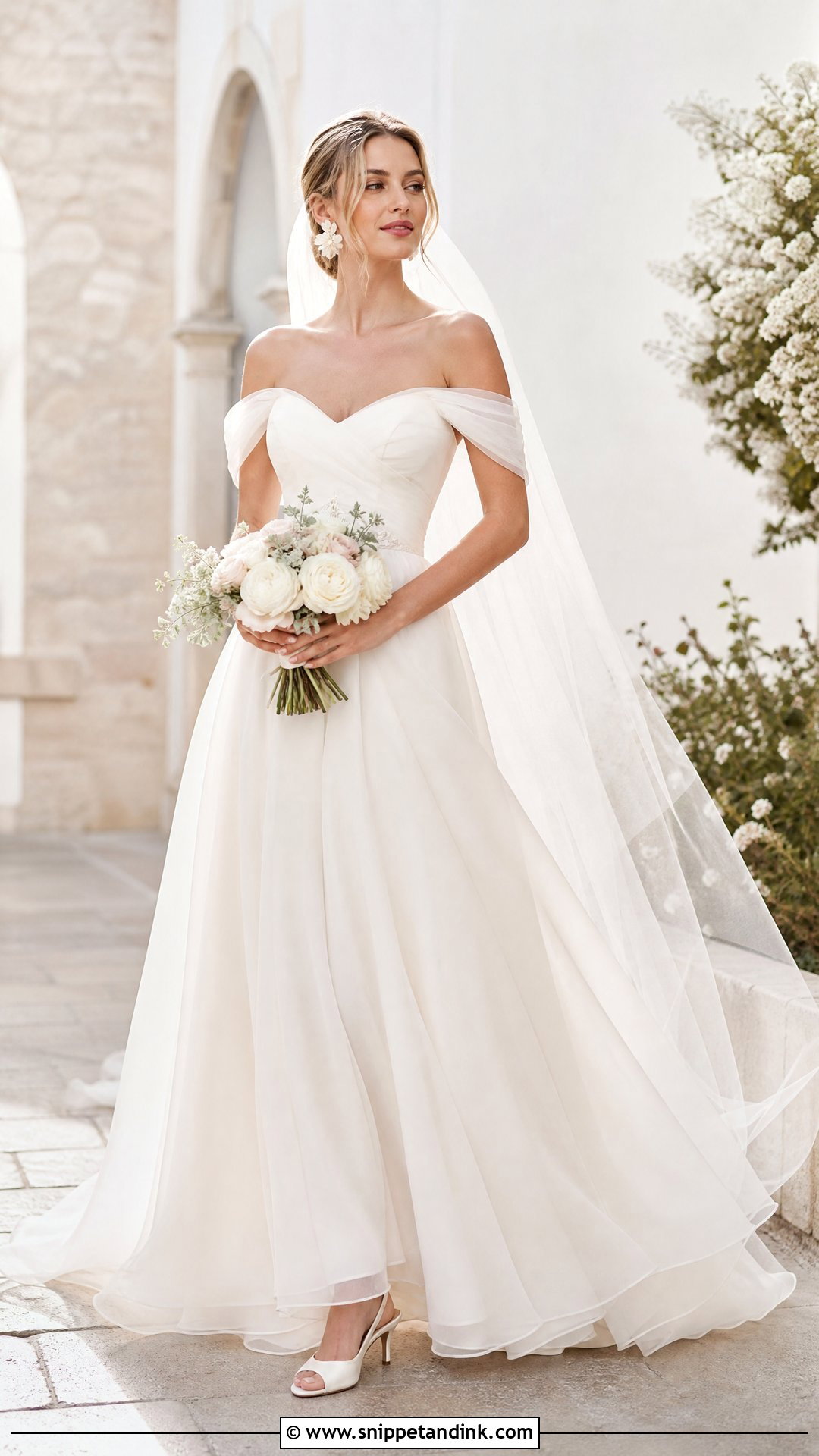
Off-shoulder bands are where I see the most fitting trouble in organza. The fabric is crisp, so a band that’s even slightly loose stands away from the arm instead of lying against it. A fitted bodice has to carry all the support, with the folded bands or detachable sleeves only framing the shoulders. A full A-line keeps it traditional; a slimmer skirt reads cleaner. I’d leave the necklace off entirely and attach the veil below the updo so it doesn’t fight the neckline. Before final alterations, hug someone and try a few dance moves, because bands that pin your arms to your sides show up in every reception photo. Detachable pieces let you strip back to a strapless gown later in the night.
4. Long-Sleeve Organza Wedding Gown
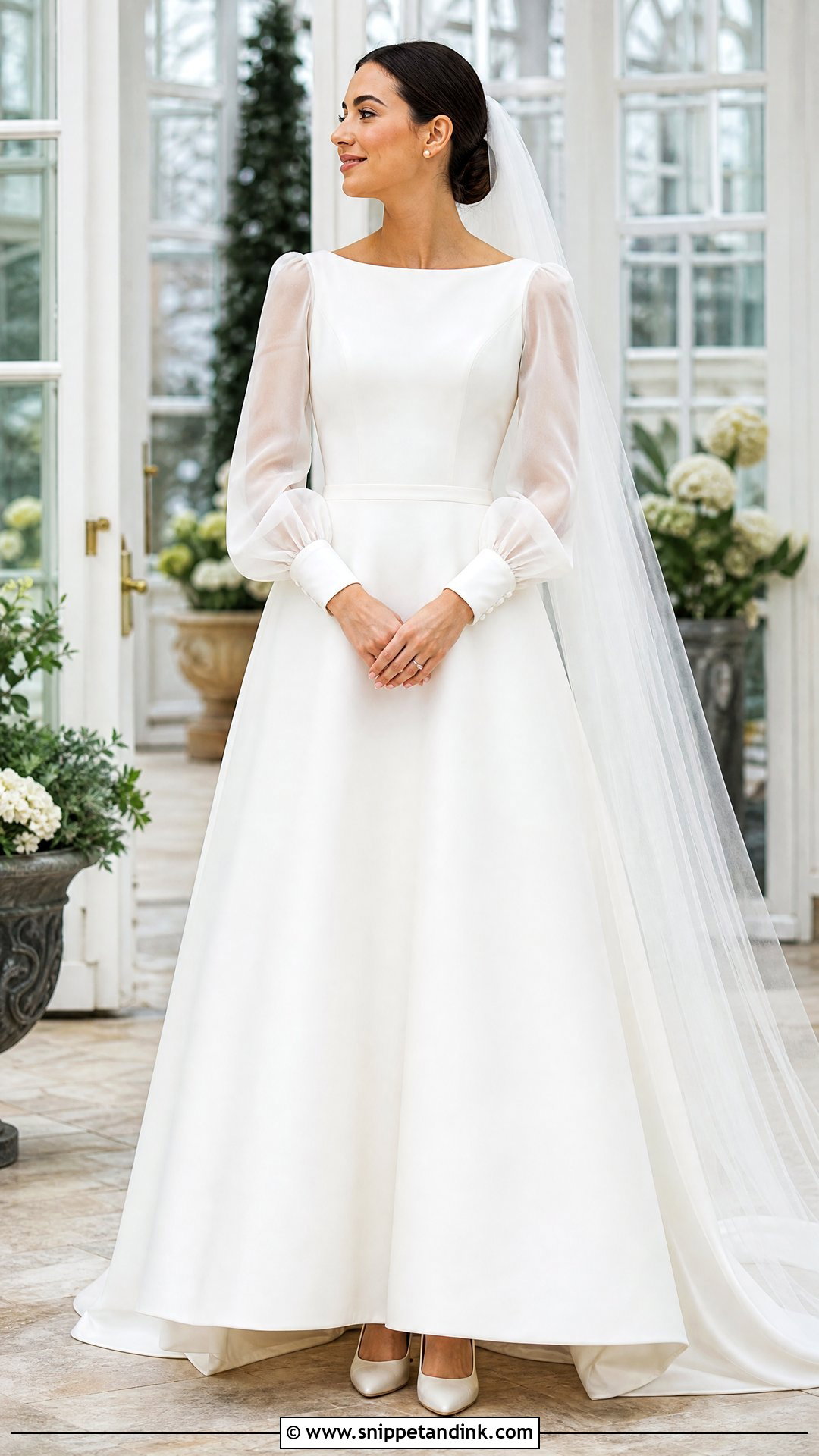
Sheer organza sleeves give coverage without the heaviness of lace or crepe, which is why I suggest them to autumn and winter brides who still want something airy. Gathered into narrow cuffs over an opaque bodice, they look light even in a cold room. A bateau or square neck balances the sleeve volume. The cut needs ease at the elbow, because organza has no stretch at all and a tight sleeve drags the shoulder seam forward every time you bend your arm. Plain sleeves suit a minimalist, while a few appliqués at the cuff add interest without making the whole gown busy. Pearl studs, a low bun and a plain-edged chapel veil are enough.
5. Puff-Sleeve Organza Wedding Gown
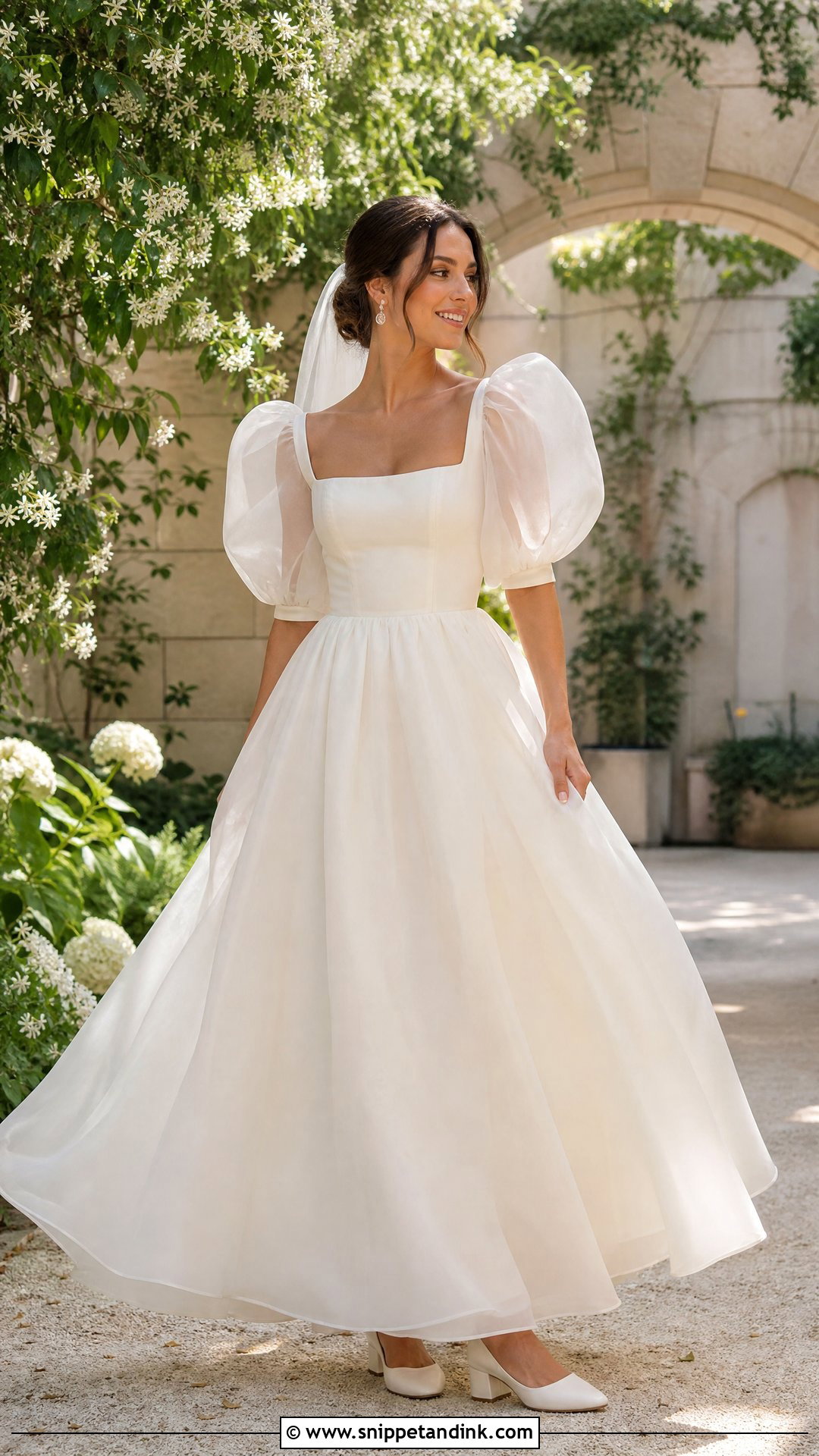
Puffs are the one sleeve organza does better than almost any other fabric, because its stiffness holds the rounded shape without padding. Organza puff sleeves on a sweetheart or square-neck bodice, over a defined waist and an A-line skirt, look romantic but deliberate. Short puffs read playful; elbow or full-length versions are far more dramatic. What usually goes wrong is the elastic. A band tight enough to hold the sleeve up often leaves red marks by evening, so I ask for a slightly wider band or internal tulle support instead. A smooth chignon and low block heels keep everything else calm, and detachable sleeves are worth asking about if you’d like a second look.
6. Square-Neck Organza Wedding Gown
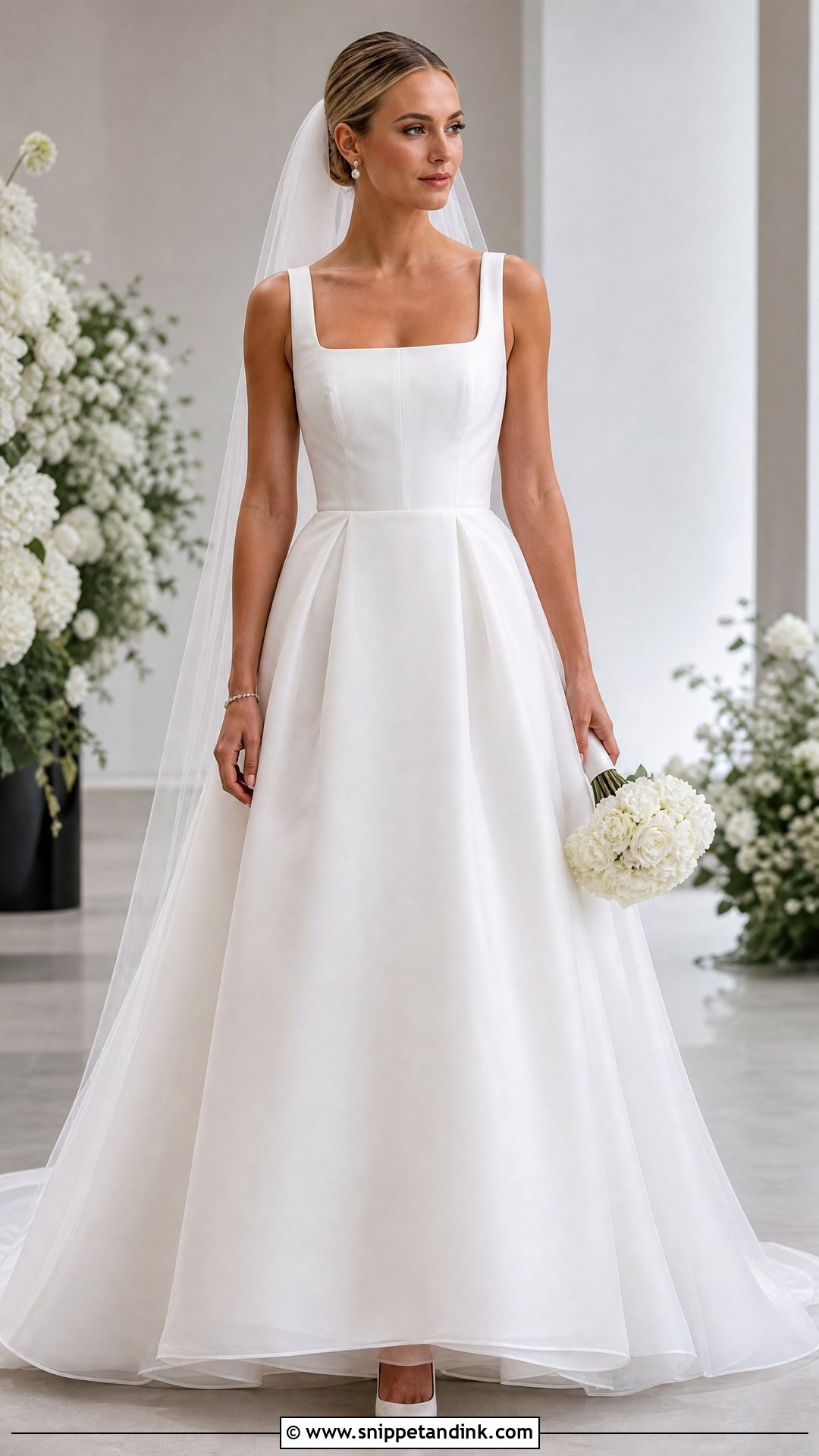
Square necks need precise tailoring, and on organza every mistake shows. The top edge must lie flat against the chest. If it gapes at the corners, the crisp fabric holds that gap open and you’ll see it in every side-on photo. Wide straps and a structured bodice make this a sensible pick for brides who don’t trust strapless designs, and the straps hide the foundation underneath. I like the straight lines carried through a natural waist into a smooth A-line, or soft pleats for more movement. If you add a ribbon at the waist, match it to the gown; a contrast sash cuts the figure in two. A sleek bun and simple studs suit this neckline best.
7. High-Neck Organza Wedding Gown
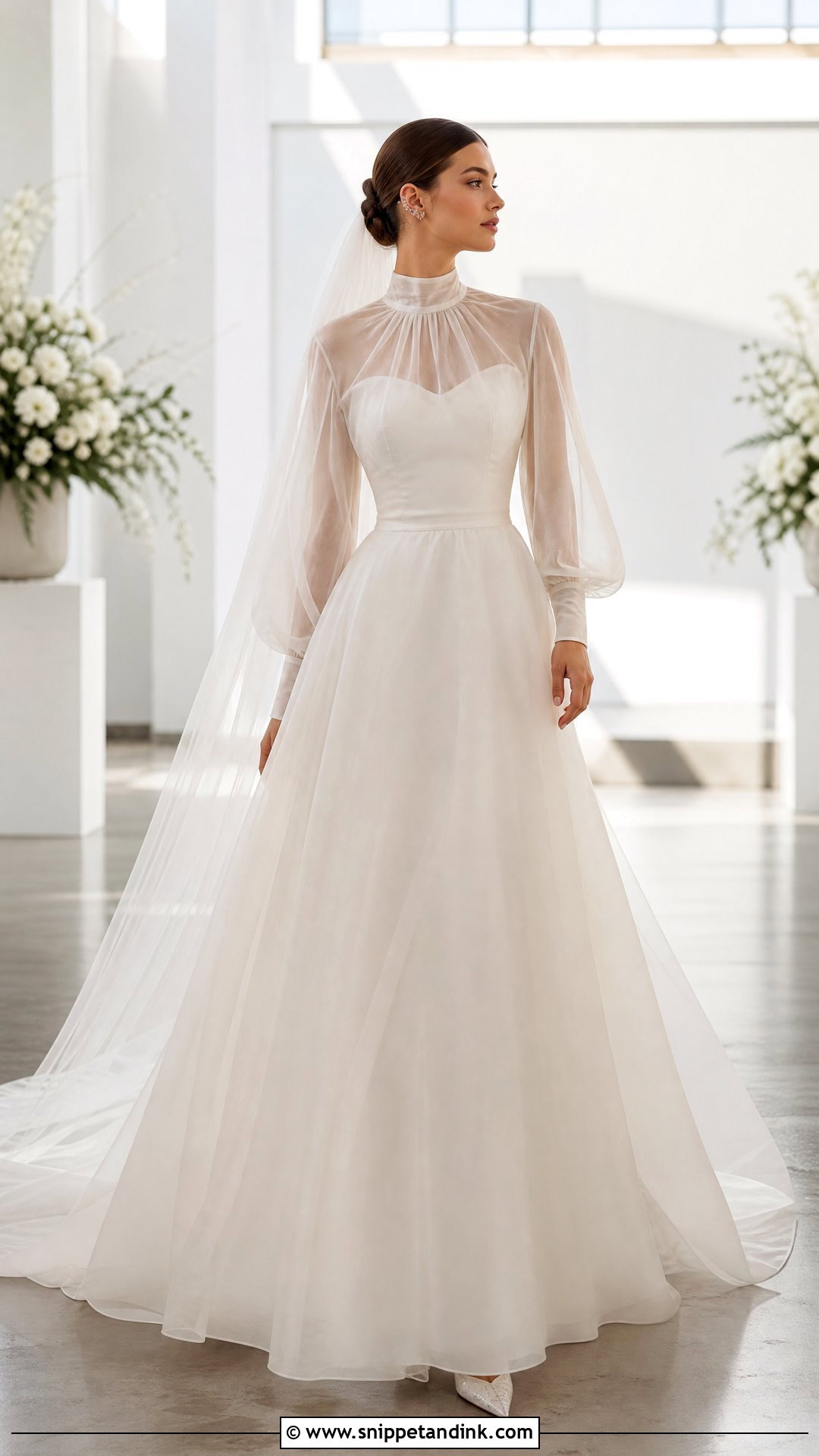
The high necks I like best use a sheer organza upper bodice over a lined sweetheart or bateau foundation, so you get coverage while skin still shows faintly through. Ask for a softly gathered neckline rather than a stand collar; firm organza collars press into the throat when you look down. Long sheer sleeves make it fully covered, and a sleeveless high neck feels more current. Wear no necklace, keep the hair in a low knot, and fix the veil beneath the knot so it falls behind the collar. At alterations, turn your head fully both ways and glance down at your bouquet. If the collar rubs now, it will be raw by the speeches. Covered buttons down the back add detail without fuss.
8. Sweetheart Corset Organza Wedding Gown
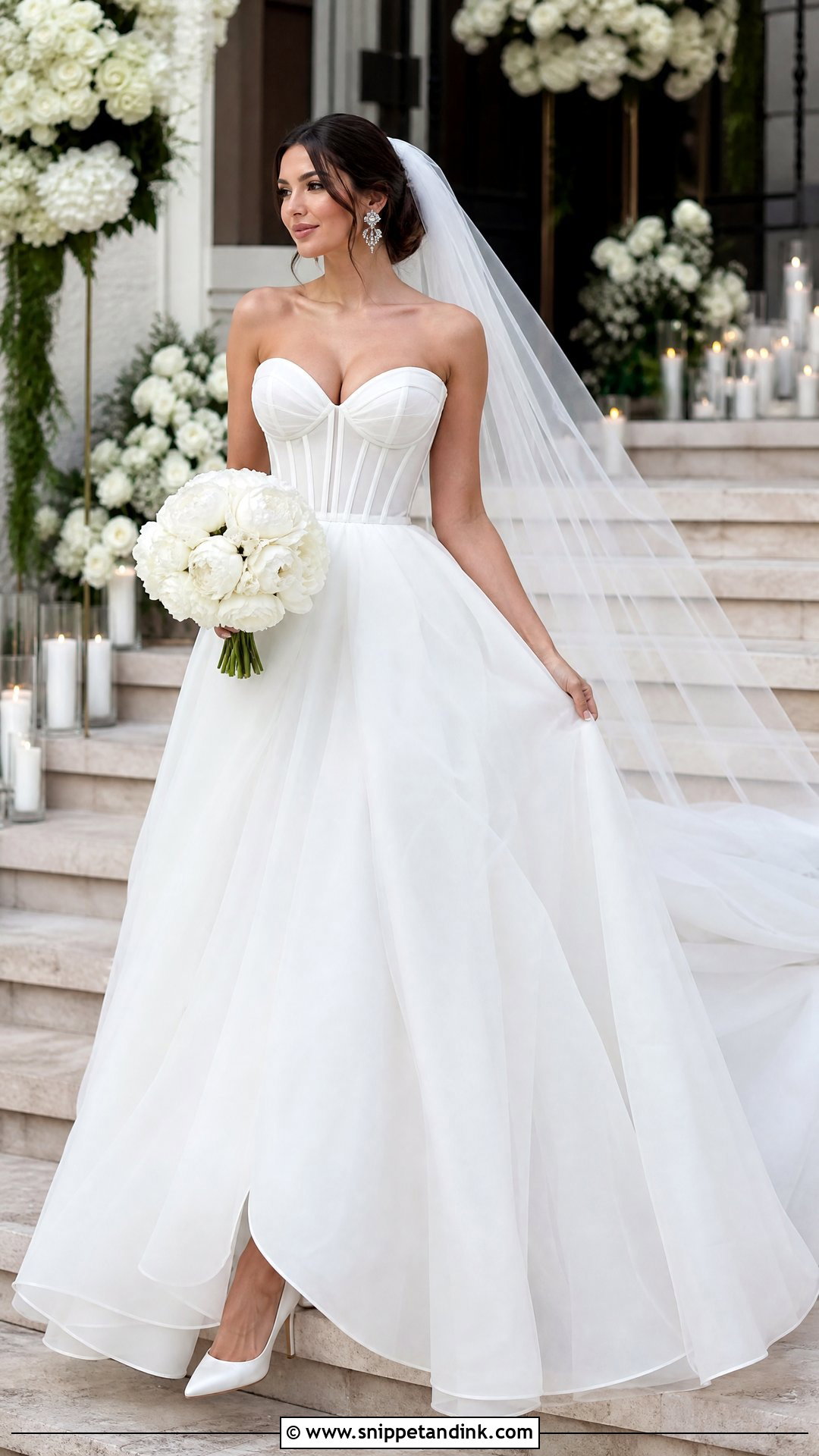
A corset bodice is what lets a big organza skirt look controlled instead of collapsing at the waist. I look for proper boning, smooth cups and a sweetheart line that follows the bust rather than plunging. Exposed boning channels feel modern; a fully lined bodice is more traditional. The structure should hold you from the waist upward. If you feel the neckline digging in, the corset is doing its work in the wrong place, and the fix is at the waist seam, not the top edge. Go easy on sparkle, because a cathedral veil and crystal earrings are plenty beside corsetry and skirt volume. Tonal channels under a thin organza overlay soften the look if visible boning feels too bold.
9. Minimalist Organza Wedding Gown
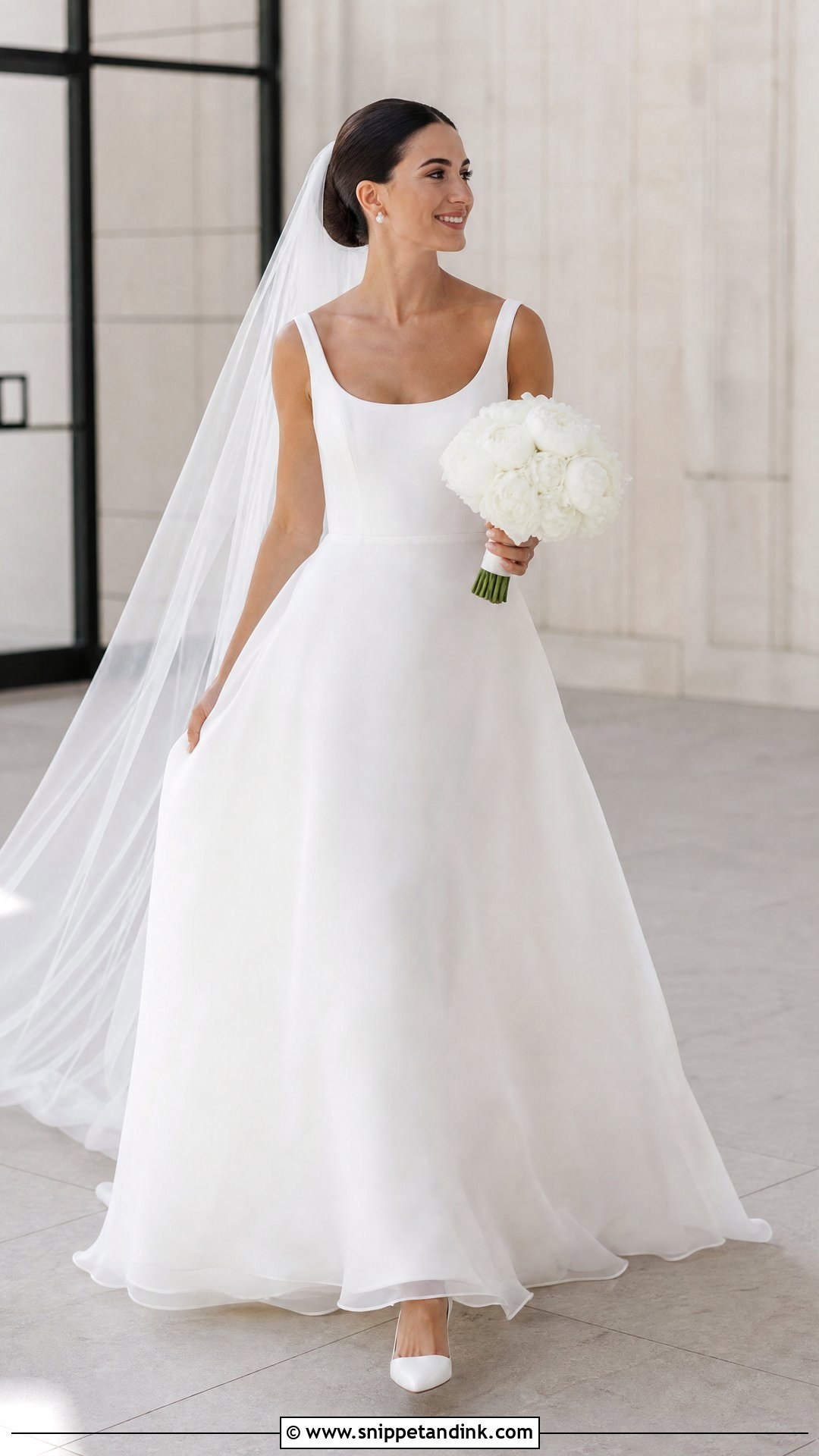
Plain organza hides nothing, so a minimalist gown is really a test of the seamstress. A sleeveless A-line gown with a softly draped bodice, natural waist and unembellished skirt lets the fabric’s sheen and movement carry the whole look. When I fit one, I check that the hem floats level all the way round, the bodice lies without ripples and the skirt pleats fall evenly from the waist. Pearl button earrings, a smooth veil and a bouquet of one flower variety are all it needs. A row of covered back buttons or a narrow organza sash adds a quiet detail.
10. Floral Organza Wedding Gown
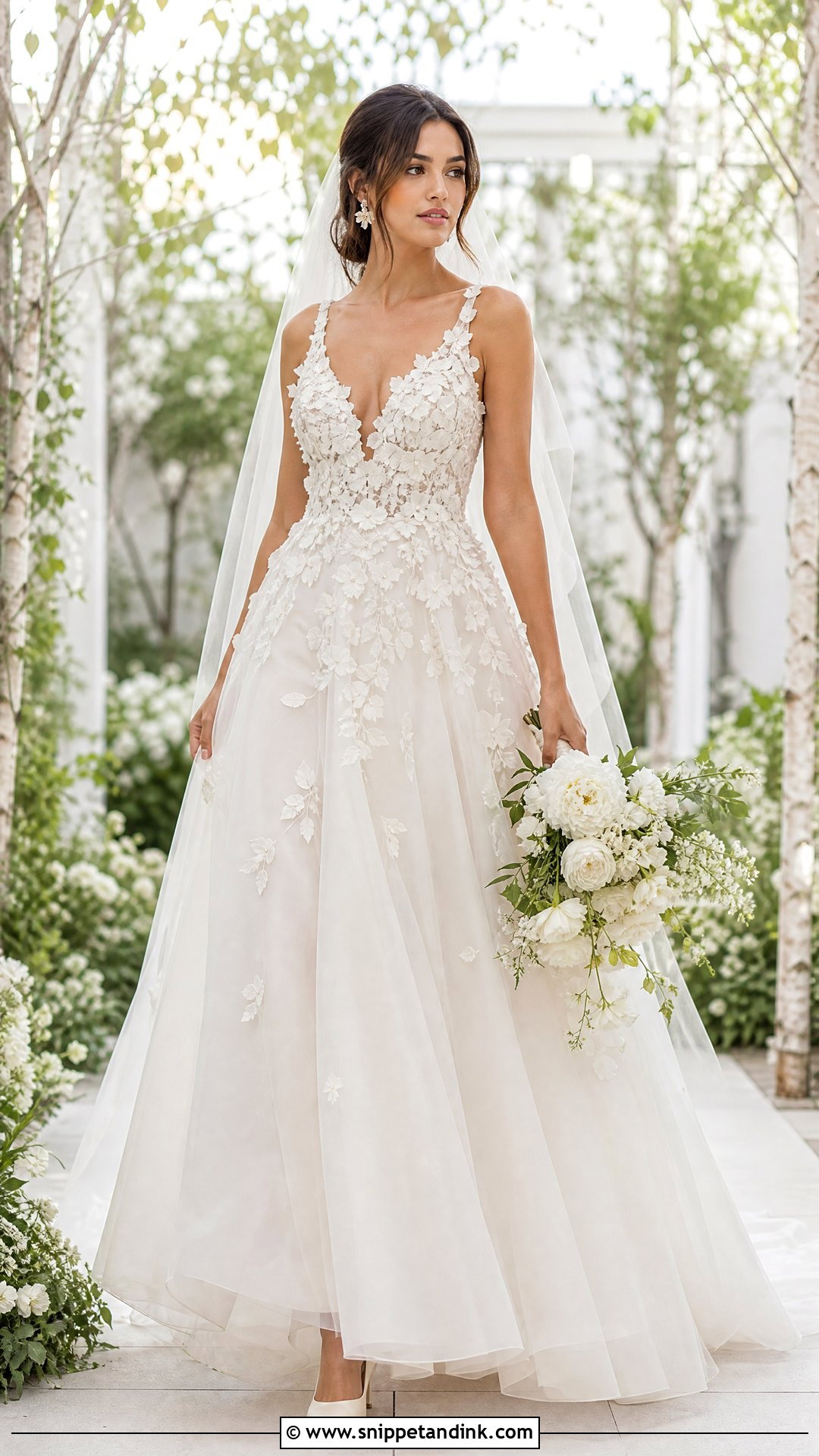
Dimensional flowers turn plain organza into the centerpiece, and placement matters more than quantity. I prefer appliqués concentrated around the bodice and waist with a few petals or vines drifting onto the skirt, which defines the figure without dragging the skirt down. Floral trims and hand-painted botanical details are another route if you want colour without bulk. Let the bouquet echo the gown’s flowers loosely rather than copy them, and keep the hair tidy. The practical problem is friction. Petals under the arms, at the waist or across the seat get crushed or scratch when you sit, so I go through every appliqué at fittings and move the ones that sit in contact zones.
11. Embroidered Organza Wedding Gown
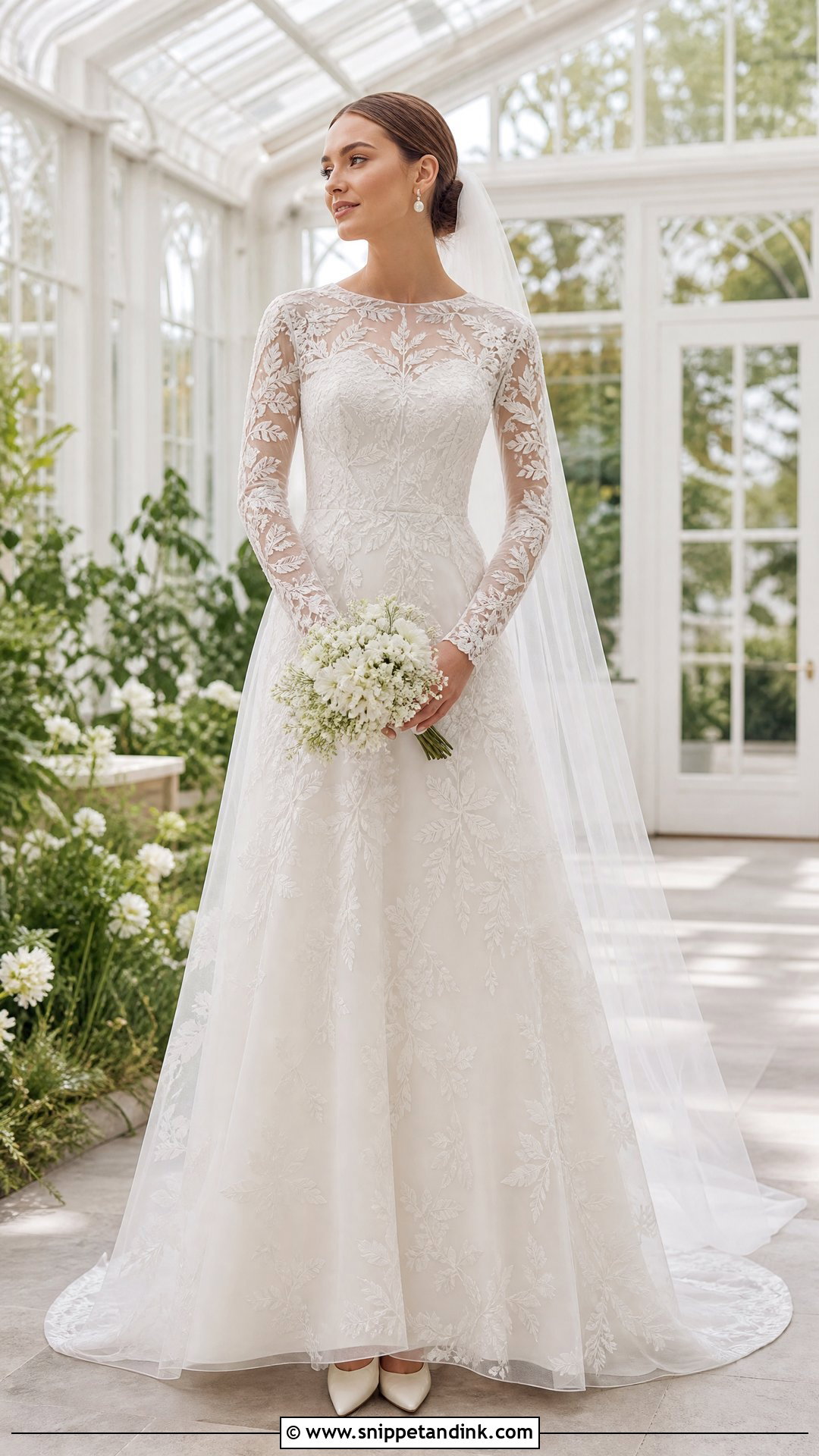
Embroidery on organza sits on a see-through ground, so every stitch is visible from both sides. In tonal ivory or pale champagne thread that’s exactly the charm; contrast colours start to look busy fast. Botanical vines that begin at the bodice and thin out down the skirt keep the eye travelling. I always ask how the back of the embroidery is finished, because loose thread tails show through sheer fabric as little shadows. Look at the gown in daylight and indoor light too, since some threads carry a sheen that flashes under a camera. For restraint, keep the work to the neckline, cuffs or train and leave the rest clean.
12. Pleated Organza Wedding Gown
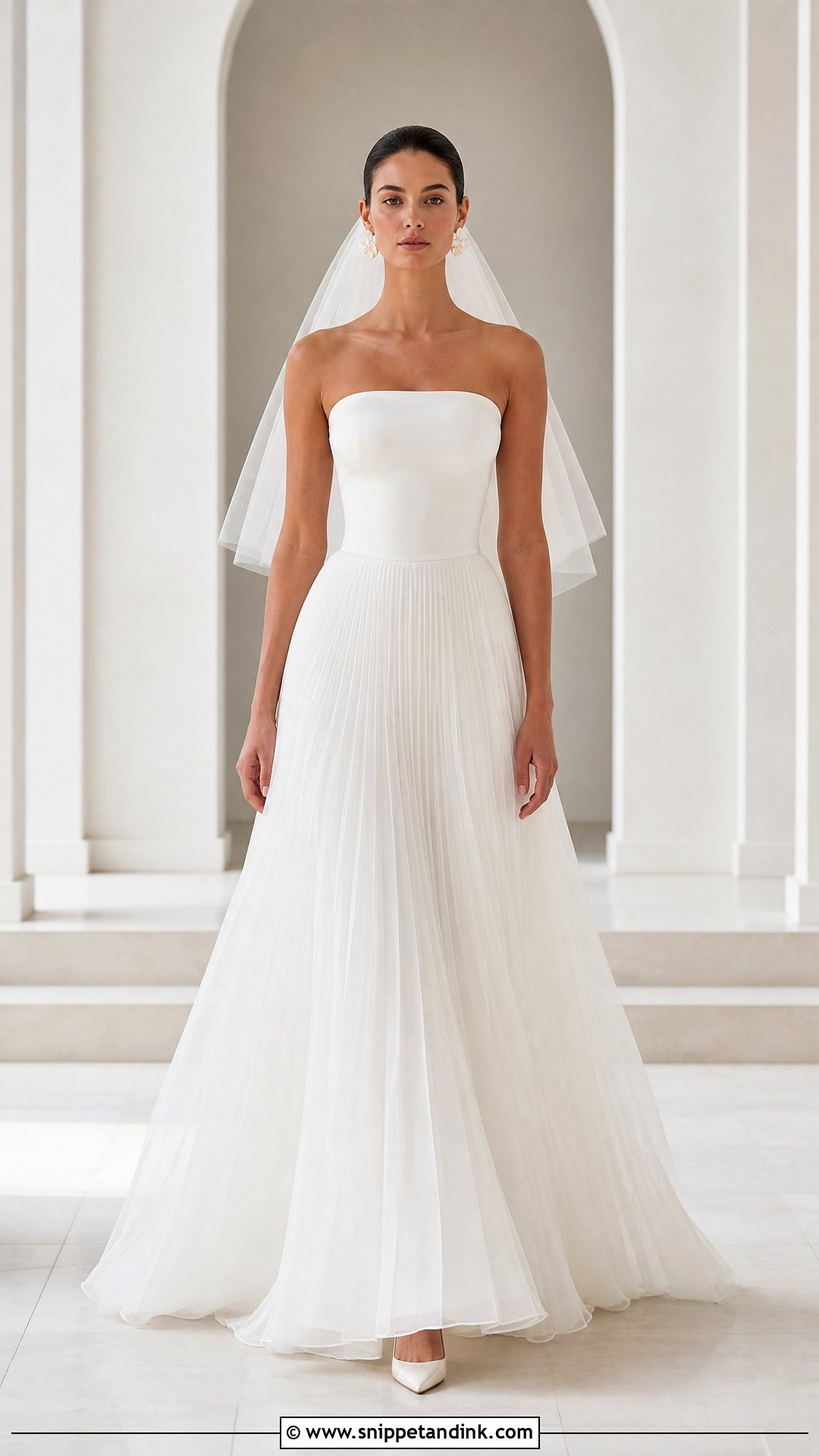
Pleated organza gives controlled texture that stays crisp all day, which isn’t true of most pleated fabrics. Narrow sunray pleats fanning from the waist look fluid, while broad knife pleats are architectural. Polyester organza holds heat-set pleats permanently; silk pleats are softer and can relax under steam, so ask which one you’re buying. Keep the bodice clean and the bouquet small so the waist isn’t hidden. At alterations, ask how the hem will be taken up without breaking the pleat line, and tell whoever steams the dress that morning not to press it flat. If all-over pleating feels like too much, use it only on the skirt or sleeves.
13. Tiered Organza Wedding Gown
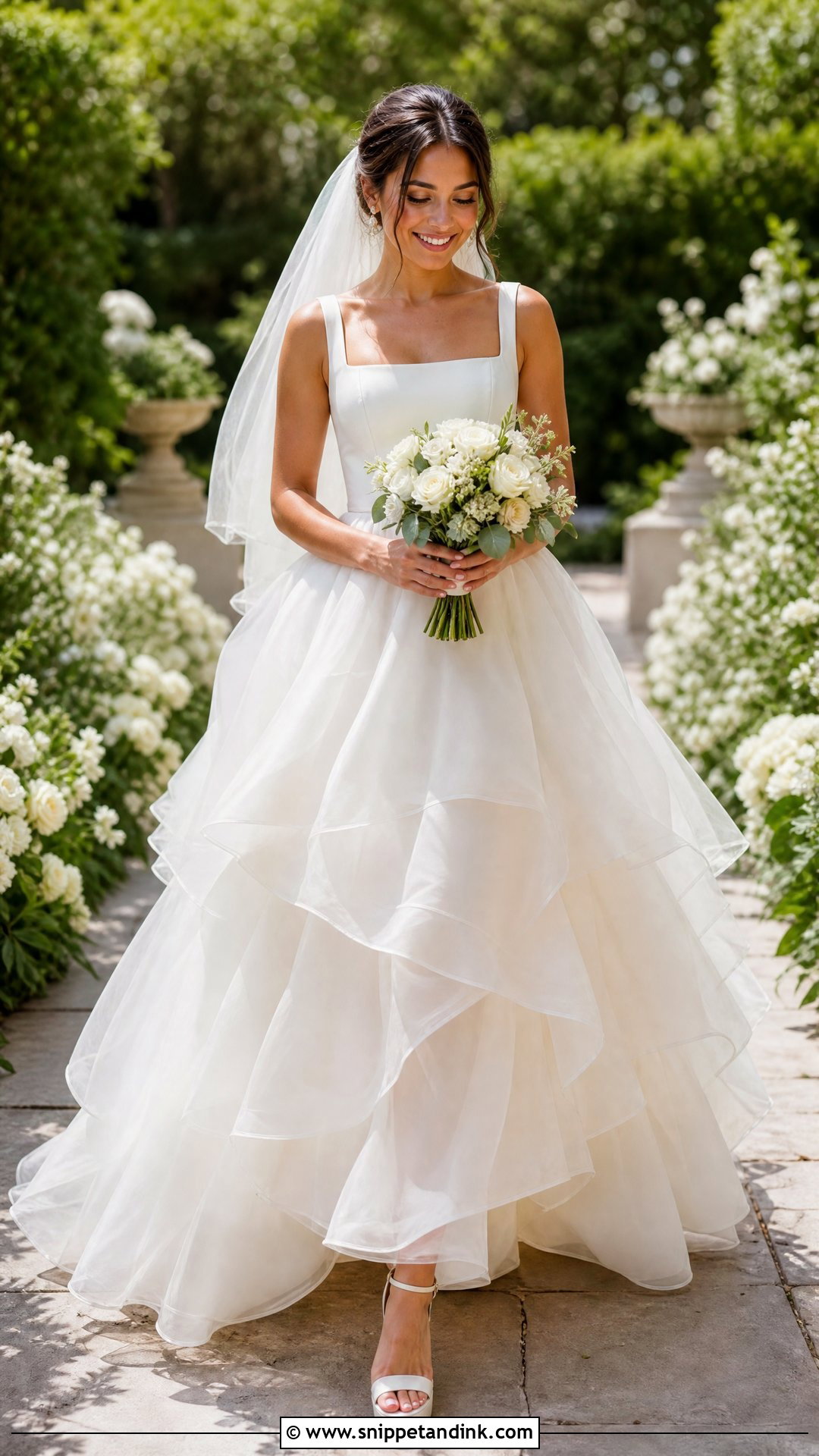
Tiers are fun and very easy to overdo. Wide, softly gathered tiers look intentional; lots of narrow ones begin to look like costume. A fitted strapless or sleeveless bodice keeps the skirt in proportion. If you’re petite, start the first tier below the hip and stop at three or four so you don’t lose height, while taller brides can carry wider spacing. Every tier edge is somewhere for a heel to catch, so I have brides walk on carpet, grass and stairs at fittings. Plan a multi-point bustle as well, because a tiered train is bulky to lift.
14. Asymmetrical Organza Wedding Gown
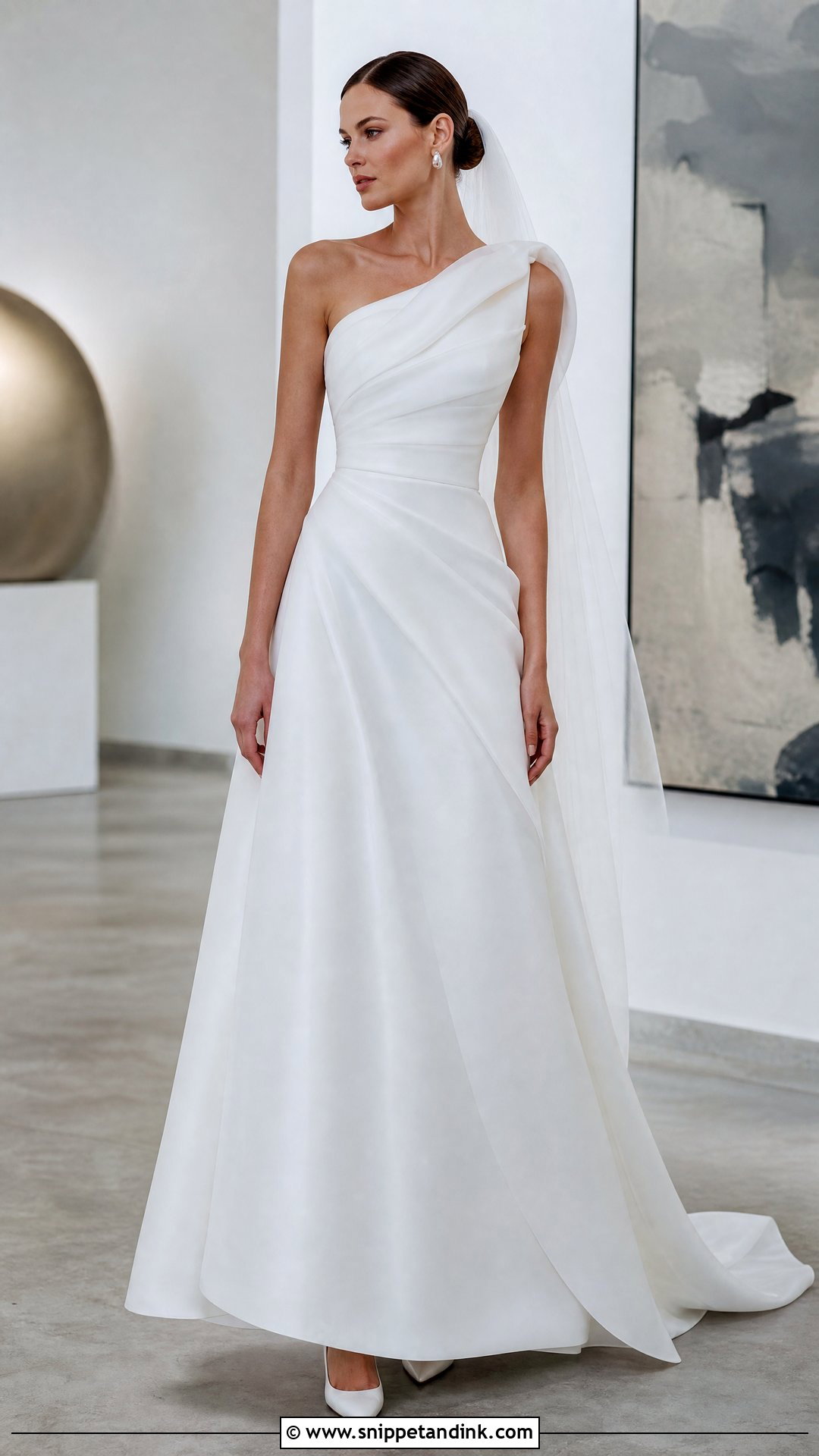
An asymmetrical organza gown gets its interest from structure rather than decoration, so I’d keep everything else quiet. One shoulder, a diagonal neckline or a soft panel across the torso is enough; balance it with a smooth A-line or a controlled side drape. Wear a single sculptural earring on the bare side and set the veil away from the strap. The fitting is unforgiving here. Diagonal seams on crisp fabric twist if the bodice isn’t cut evenly, and the skew is obvious straight away. Walk, sit and turn during alterations, and watch whether the drape settles back where it should.
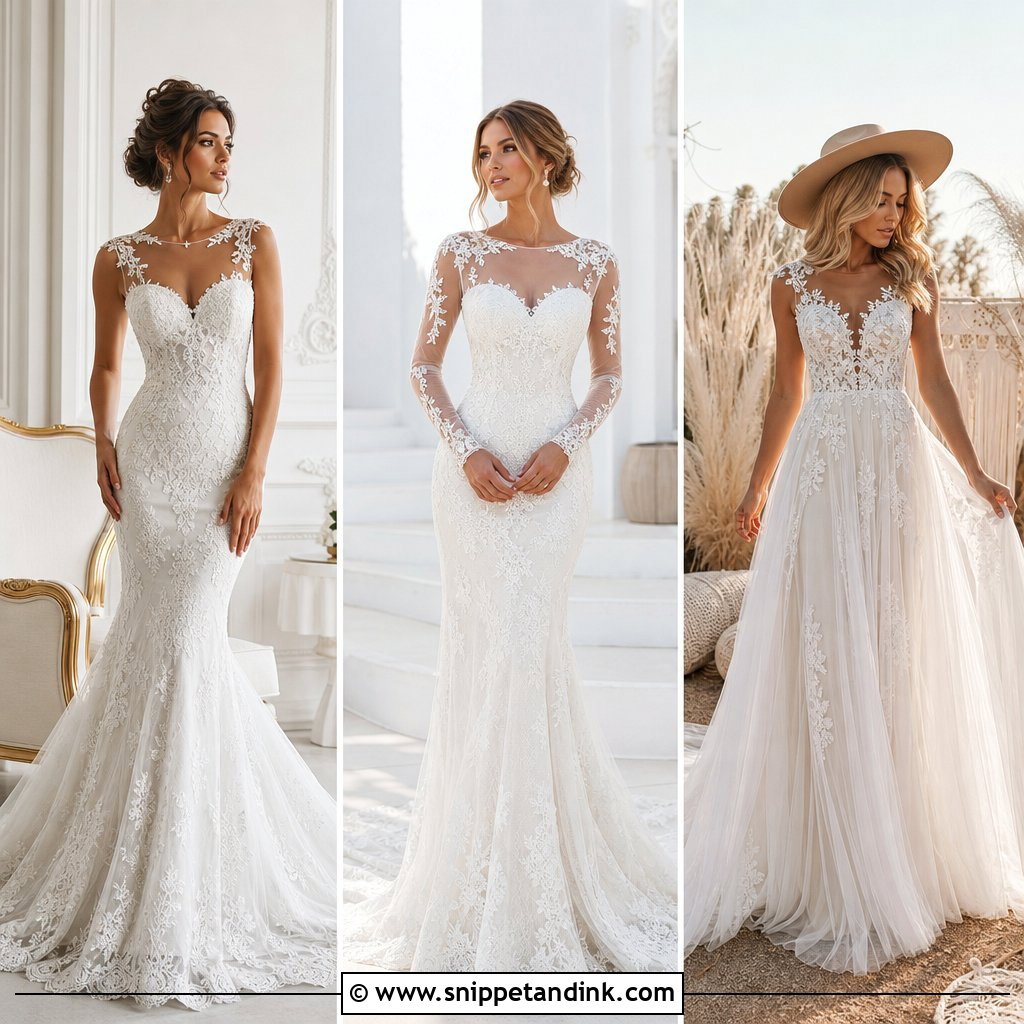


15. Drop-Waist Organza Wedding Gown
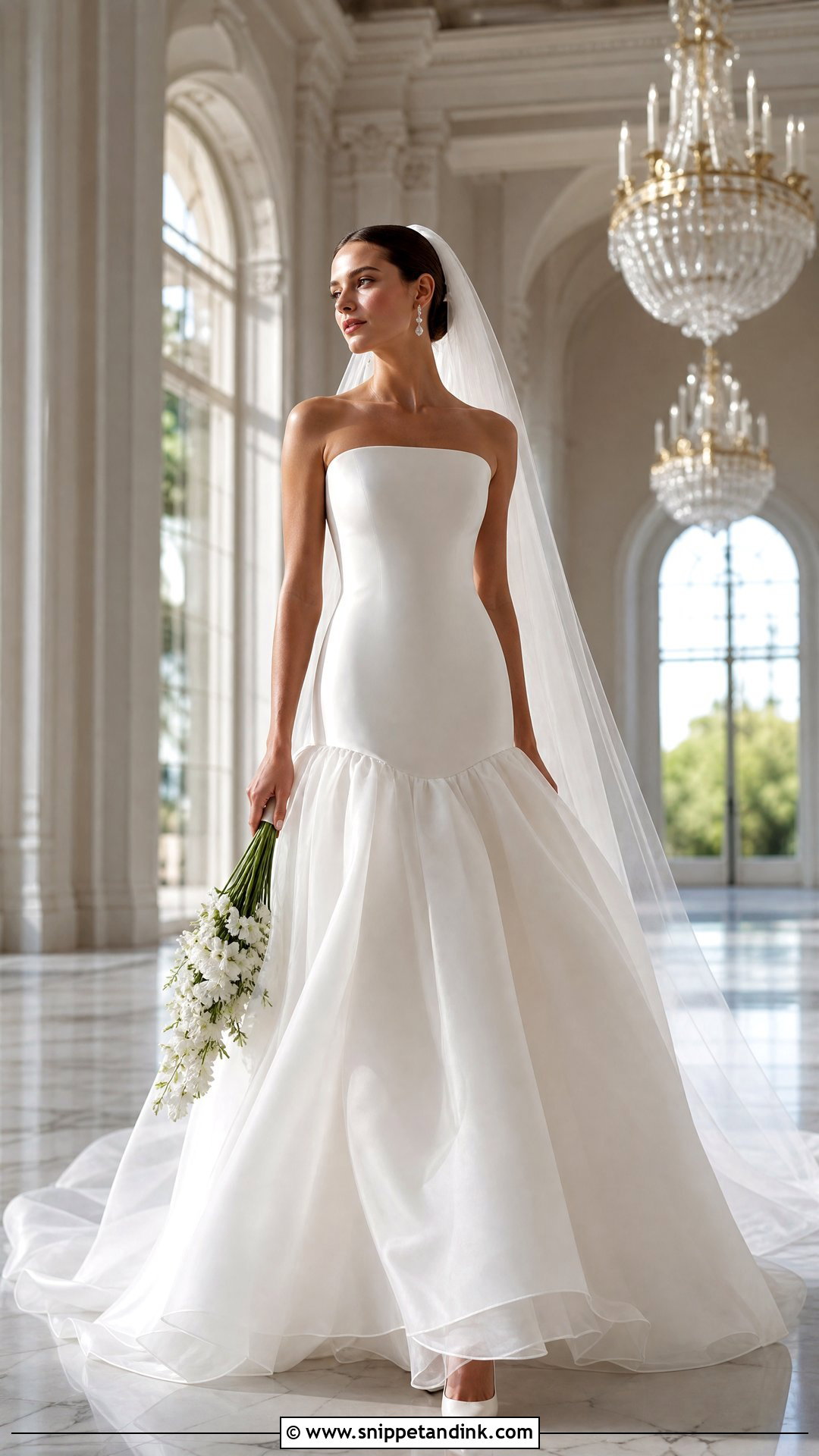
A drop waist carries the fitted bodice below the natural waist before the skirt opens, so all the volume sits low around the hip and the torso looks long and sculpted. A curved or V-shaped seam makes that transition smoother than a straight one, and any embellishment should stay above the line. The common mistake is fitting it too tight through the hip, which makes sitting and stairs hard work, so test both at every fitting. Carry a narrow bouquet that won’t hide the extended bodice. A floating organza overlay softens the definition if you want it less sharp, and slim straps add security to a strapless version.
16. Mermaid Organza Wedding Gown
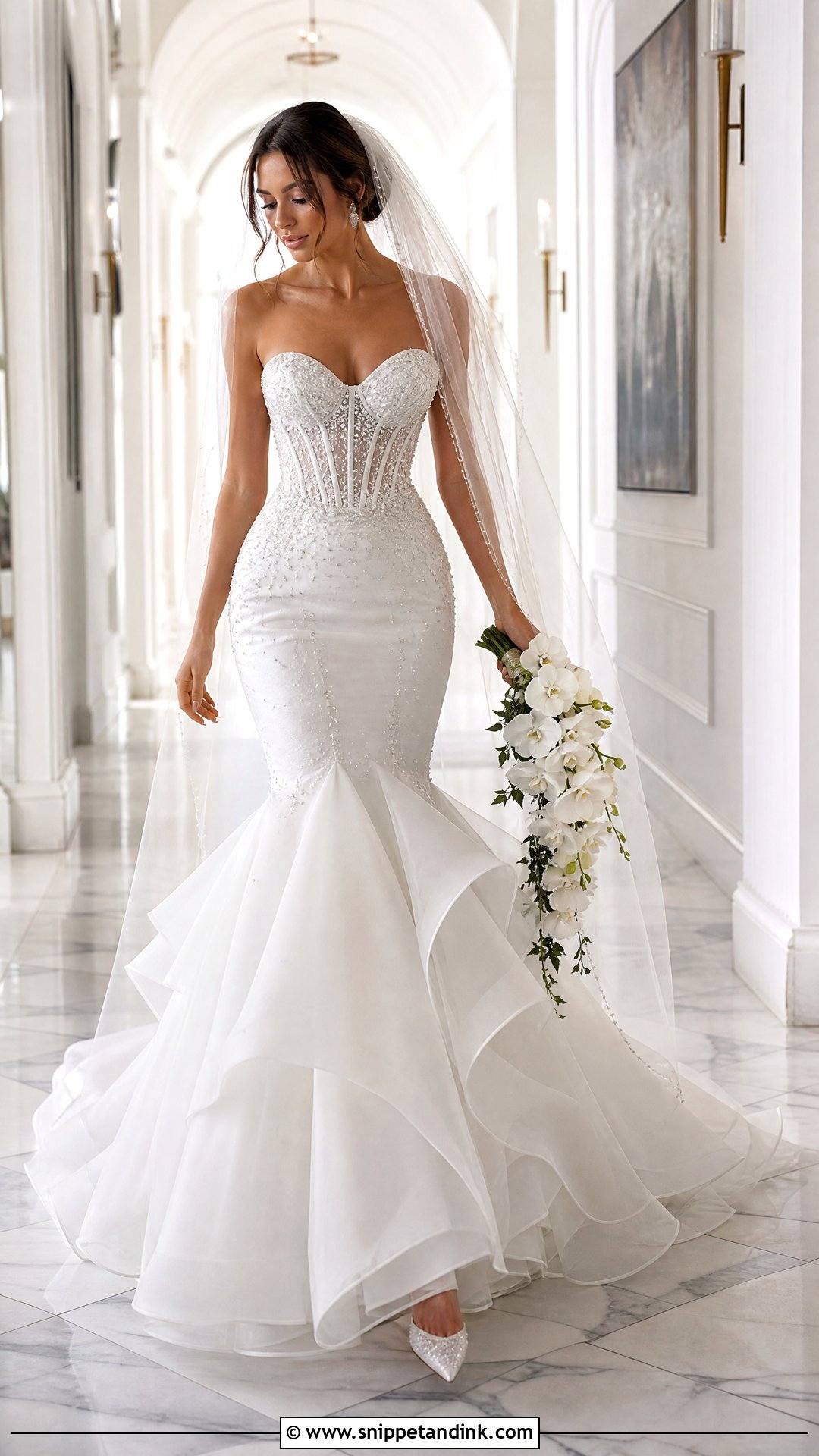
Organza mermaids are easier to wear than satin ones. The fabric holds a flare with fewer underlayers, so the skirt stays lighter. I set the flare at or just above the knee; any lower and you’ll be taking tiny steps all day. A smooth corset bodice with no beading across the hips keeps the seam lines clean, and crystal studs with a fingertip veil are plenty. During fittings, take real strides, sit and climb a few stairs. Plan for a removable train or a bustle, and if you want softer drama, curved godets look better than stiff ruffles.
17. Organza Wedding Gown With Detachable Overskirt
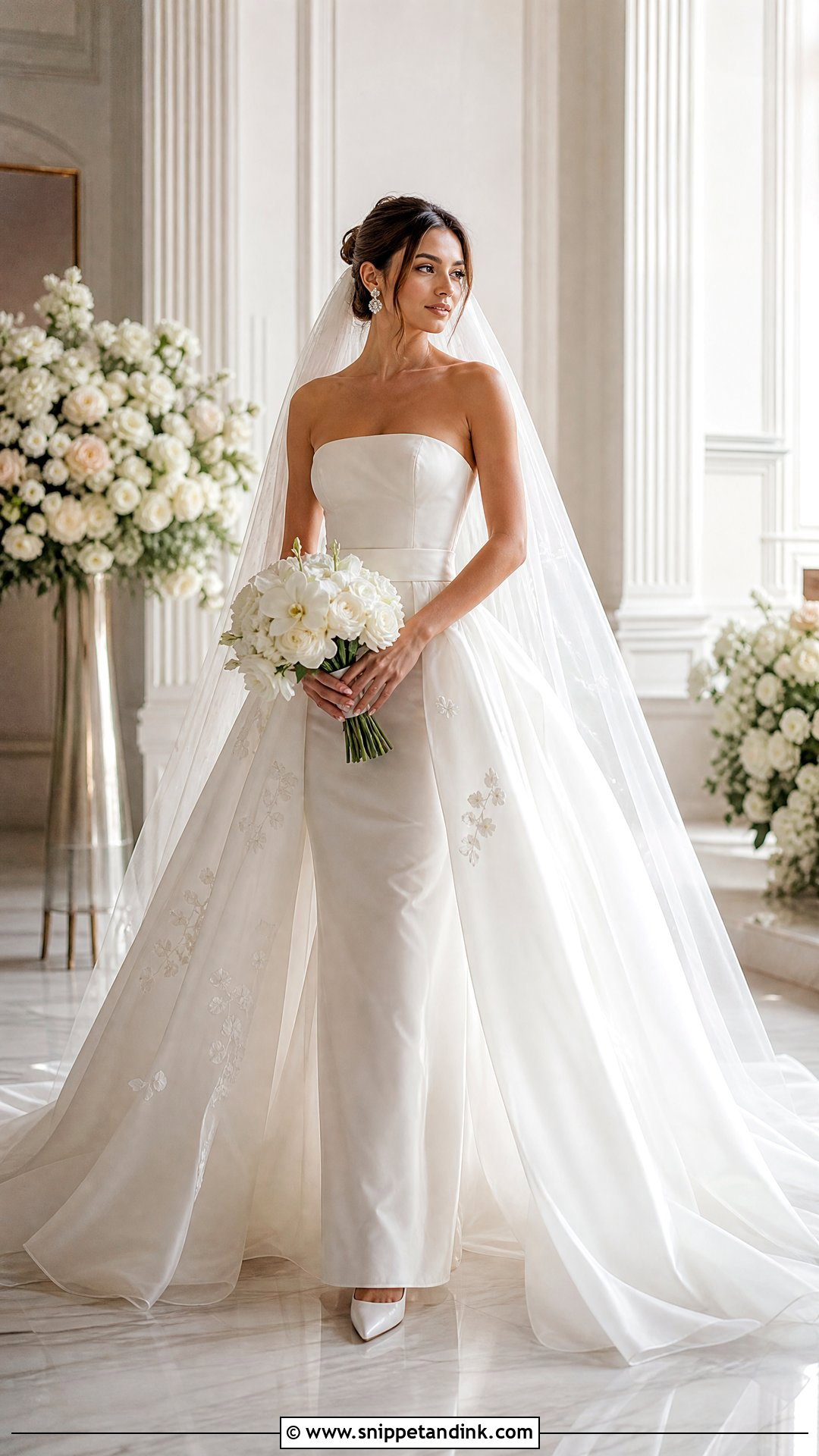
A detachable overskirt gives you two silhouettes from one dress. Over a fitted column, sheath or soft mermaid it reads as a full ceremony gown; unhook it and you have a streamlined reception look. The attachment is the first thing I examine. Hooks or snaps should hide under a sash, seam or row of buttons and lie flat, because organza puckers where it’s gathered onto a hidden band. Practise taking it off and putting it back on before the day, with the one person who’ll be helping you. The underdress has to look finished on its own, with a clean hem and enough room to dance, and smaller earrings suit the second look.
18. Bow-Back Organza Wedding Gown
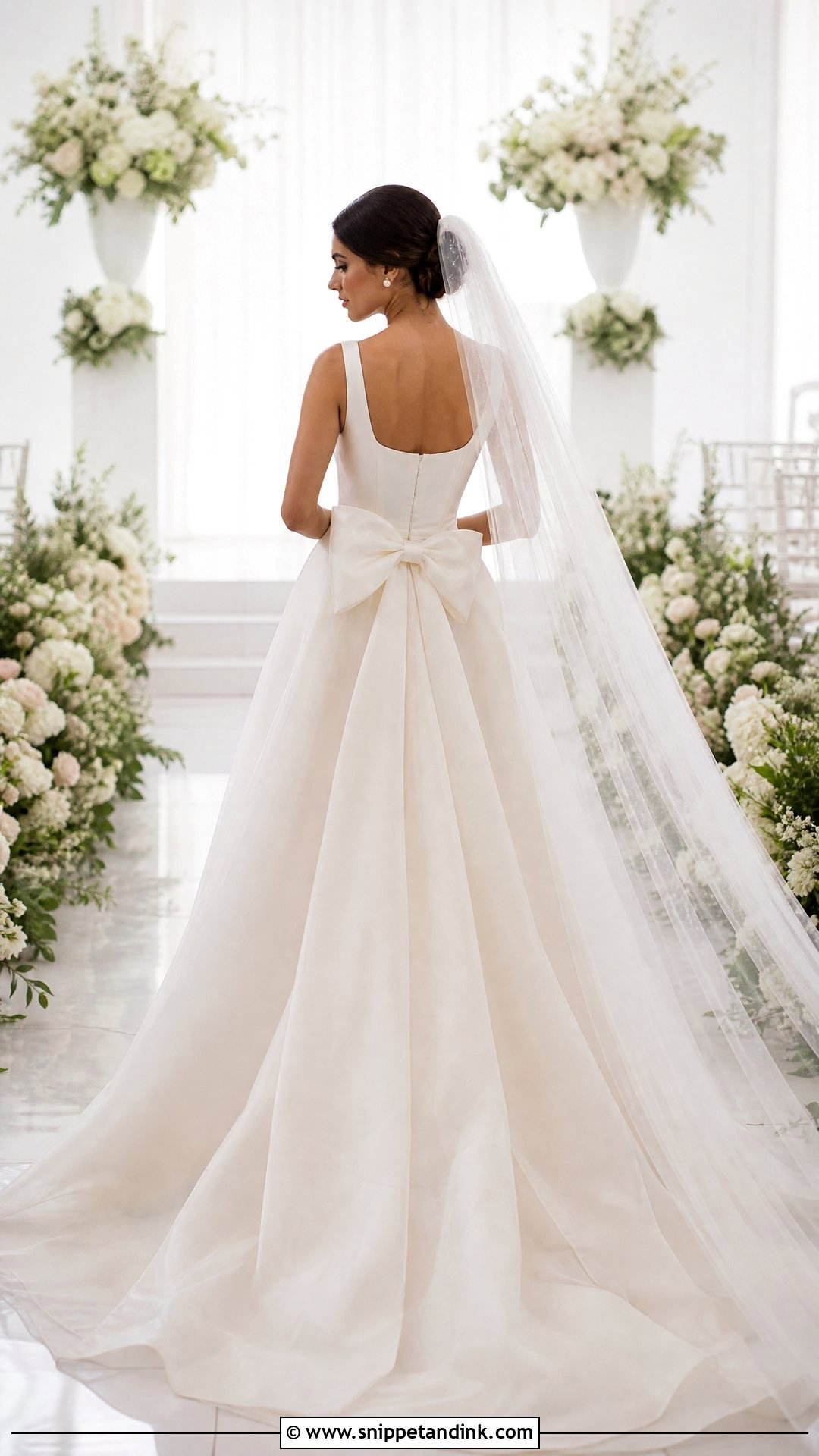
A bow at the back gives guests something to look at during the ceremony without crowding the front of the gown. A medium structured bow at the waist is classic; long soft tails move more. Organza loops keep their shape well, but they crush if you lean back in a dining chair for an hour, so ask whether yours is removable. Watch the veil length too. A veil ending right over the bow blurs it in photos, so stop it above the bow or let it run well past. A plain square neck or strapless bodice, a low bun and pearl studs keep the focus where you want it.
19. Blush Organza Wedding Gown
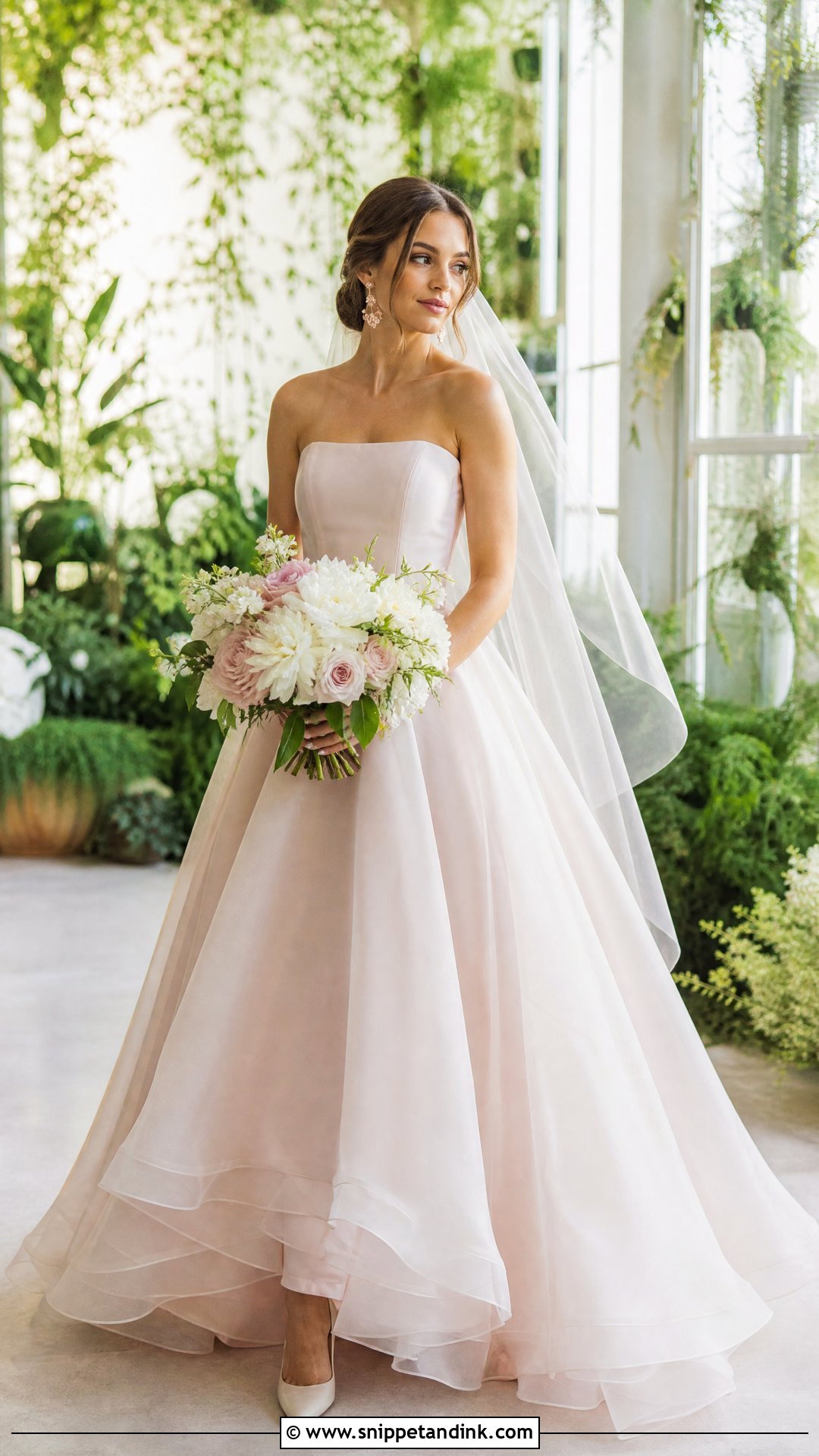
A blush organza gown gives a whisper of colour and still reads as bridal. Usually the colour comes from a pale pink or rose-beige lining under ivory organza, and the sheer layer softens it so the tone shifts as the skirt moves. Blush is tricky under light. Warm venue bulbs can push it toward peach and flash can wash it out, so I always have brides look at it in daylight, under indoor lights and with a phone flash before deciding. If you only want a hint, keep the bodice ivory and put the blush under the skirt. Choose a tonal ivory veil, since bright white beside blush makes the dress look dingy.



20. Cape-Sleeve Organza Wedding Gown
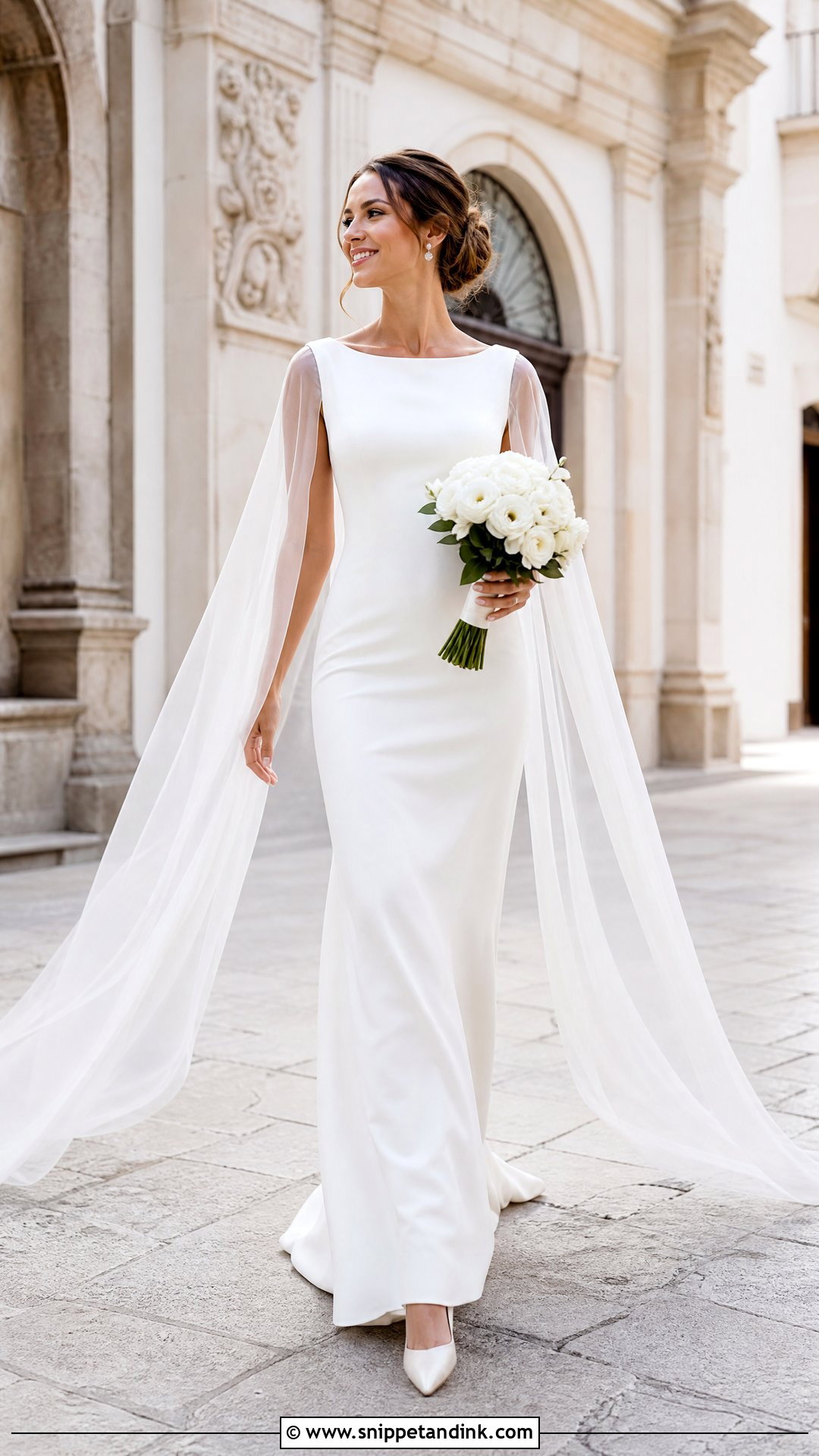
Cape sleeves are the most theatrical detail here, and organza suits them because it floats rather than hangs. The cape can start at the shoulders, neckline or back and fall anywhere from the elbow to the train. Keep the gown underneath to a clean column or A-line, and pick the cape or a long veil, not both; together they become a tangle of sheer layers. I check that the cape clears the hands when the arms are relaxed and doesn’t drag the neckline backward as you walk. For outdoor ceremonies, a lightly weighted hem keeps long panels from flying in the wind. A detachable version lets you show the gown’s own shape later.
Getting an Organza Gown to the Aisle Crease-Free
Organza creases at sharp angles, and a crease in a sheer fabric catches light along its whole length. I transport these gowns hanging at full length with tissue loosely inside the skirt, never folded over a car seat. Then I leave time to steam at the venue.
- Hang the gown from a door frame or rail high enough that the train doesn’t pool on the floor.
- Test the steamer on an inside seam allowance before touching anything visible.
- Steam from inside the skirt, keeping the head moving and a few centimetres off the fabric.
- On silk, never spray water directly onto the organza, since it can spot.
- Let the gown hang for a while afterward so the fabric dries and sets before you step in.
Snags are the other risk. Bracelets with open clasps, beaded bridesmaid dresses, brick walls and the hook side of Velcro all catch organza. If a thread pulls, don’t cut it. Ease the fabric gently along the grain on either side and the loop usually sinks back in.
Once the Party Ends, Clean It Fast and Store It Loose
I tell brides to get an organza gown to a specialist cleaner within a few weeks. Champagne, sugar and sweat dry invisible, then oxidise into yellow-brown marks over the following months, and by then they’re much harder to lift. For storage, fold the gown loosely with acid-free tissue in every fold and keep it in an acid-free box or breathable cotton bag, away from light and damp. Sealed plastic traps moisture. I’d also avoid long-term hanging for a heavy skirt, because the weight slowly stretches the shoulders, and refolding along different lines every year or so stops permanent crease marks setting in.
Organza Holds Whatever Shape You Give It
These gowns range from a quiet A-line to a ball gown with a Basque point, yet the fabric behaves the same way in all of them: it holds the shape it’s given and shows every seam. Start with the silhouette you keep coming back to, then judge the practical side, meaning bodice support, how the sleeves move, skirt weight, train length and bustle. Keep accessories behind the gown’s strongest feature and look at it in both daylight and indoor light. Pick details because you like them, not because they’re in this season’s collections. Then take the styles you saved to your appointments and try on the closest ones.
You'll Like These Ideas:












Leave a Reply