
Most brides who come to me asking for white end up happier in ivory. It has a little cream in it, so it sits more gently against most skin tones and makes a plain satin look richer, yet nobody at the ceremony will read it as anything but bridal. The twenty gowns below cover a wide range, from bias-cut silk and narrow columns to full ball gowns, lace mermaids and a corset two-piece. Right now the strongest bridal collections lean on fabric and cut rather than surface sparkle, which suits ivory well because the shade shows off texture. Treat each idea as a full outfit: I talk about the veil, shoes and bouquet with every gown, because those are the pieces that decide whether a dress feels finished or half-styled.
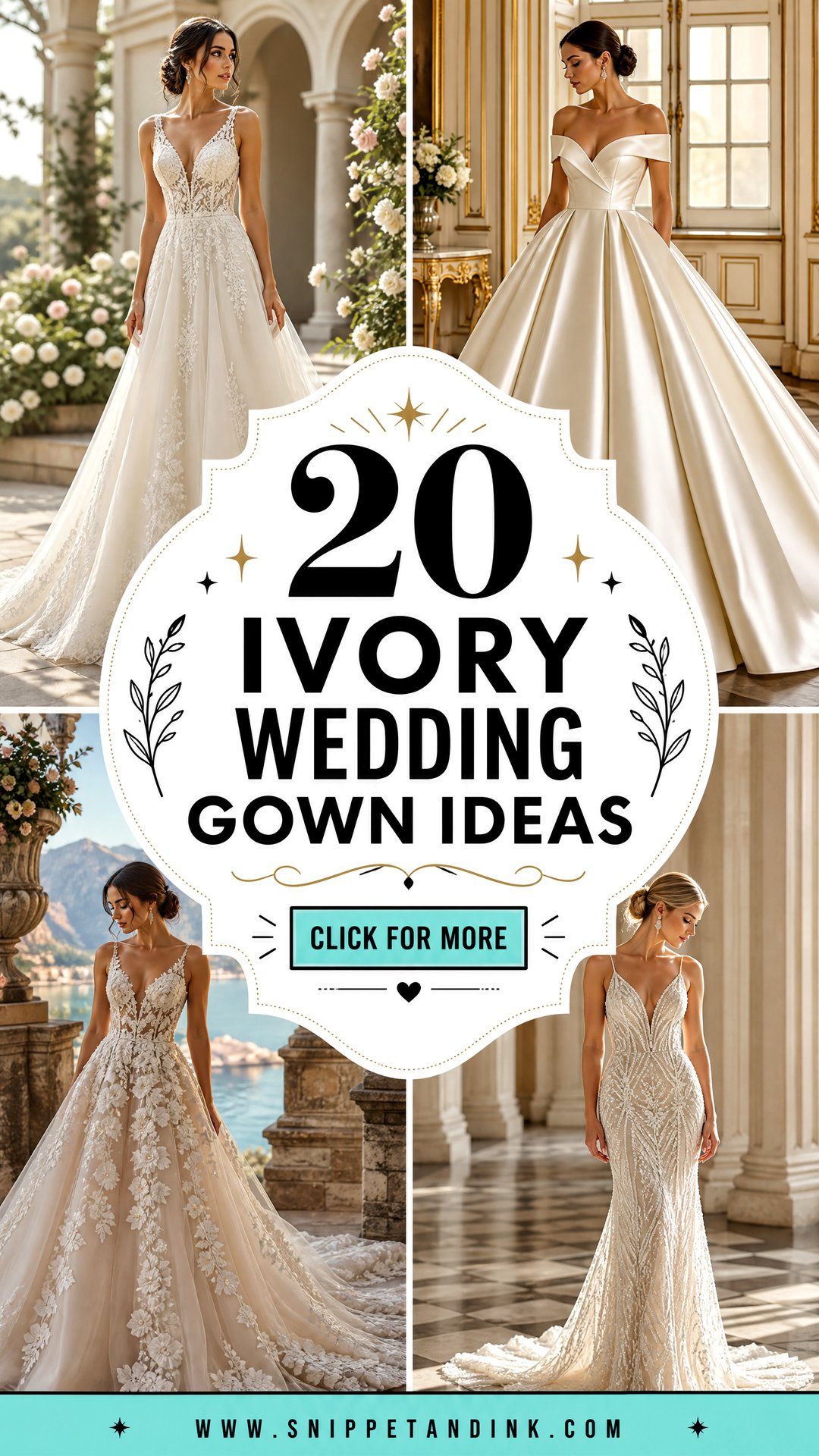
Ivory Changes Shade Depending on the Fabric and the Light
There is no single ivory. Every bridal house dyes to its own standard, and the same named shade can look almost white in silk, slightly yellow in polyester satin and pinker in lace with a nude lining. Before you fall for a gown, it helps to know how ivory behaves so you aren’t surprised at the first fitting.
Test it against your skin in daylight
Bridal shop lighting is usually warm and flattering. I always walk a bride to a window, or outside if the shop allows it, and hold the bodice near her face. Fair skin with pink undertones often looks best with a softer ivory that has less yellow; olive and deeper skin tones usually suit a warmer, creamier ivory. If the gown makes your skin look grey or your teeth look yellow, the shade is wrong, however much you love the cut.
Match everything else to a swatch, not a name
- Ask the shop for a small fabric swatch cut from the hem allowance or a sample card in the same dye lot.
- Take it to veil, shoe and sash appointments. A veil labelled ivory by one maker can look whiter than your dress by another.
- For a gown that combines lace and satin, check both fabrics side by side, since they rarely take dye identically.
- Give the swatch to your florist too, so white flowers don’t make the dress look dingy next to them.
Brilliant white blooms next to ivory can make the gown look faintly yellow in photos. Cream roses, garden roses and flowers with a touch of blush sit far more kindly beside it.
1. Ivory A-Line Wedding Gown
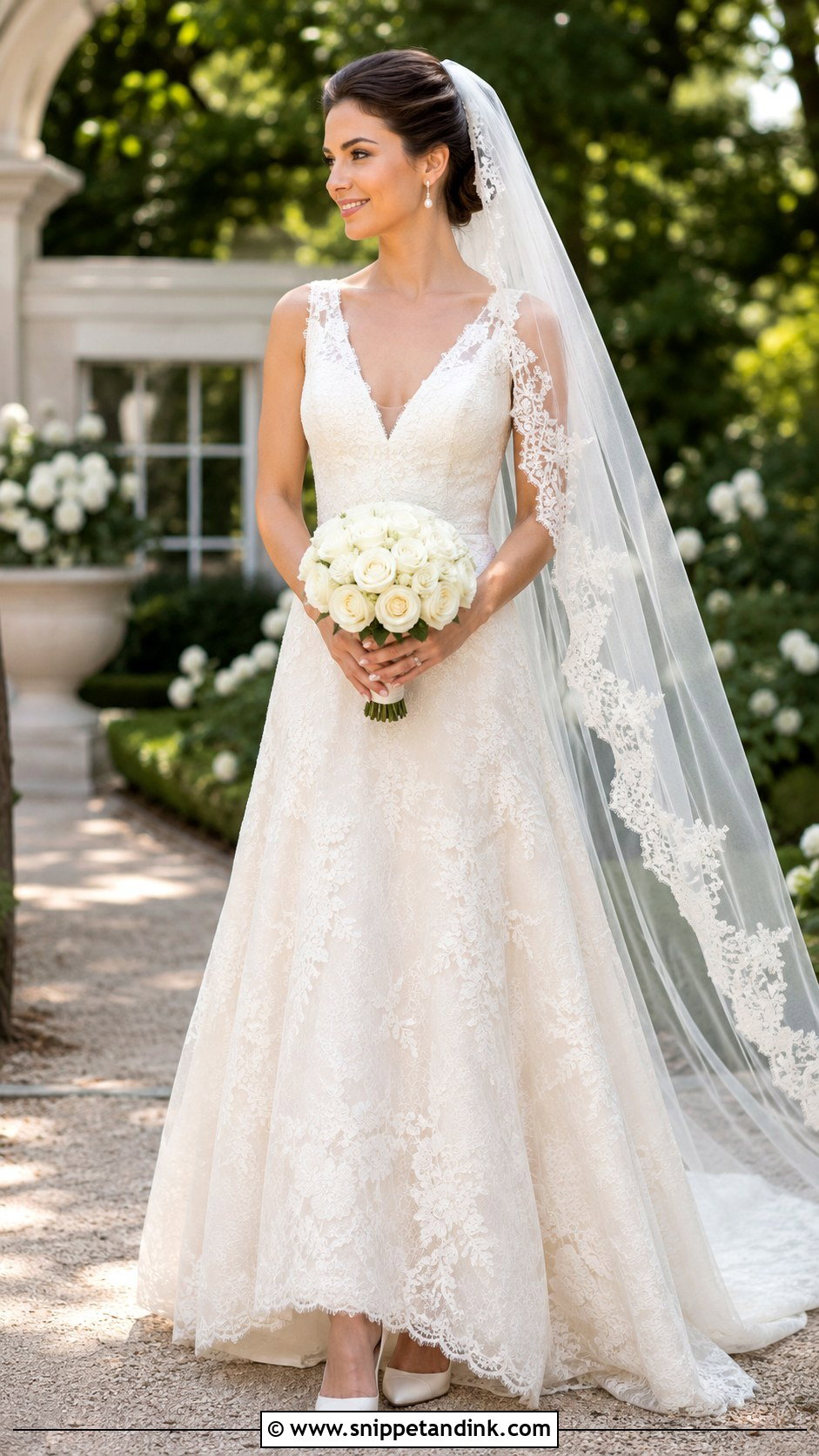
The A-line is the shape I pull first for a bride who doesn’t yet know what she wants, because it defines the waist and then simply gets out of the way. Look for a skirt that flares from the natural waist without layers of crinoline underneath; too much volume turns it into a ball gown by accident. A soft V-neck or scoop neckline keeps the chest open, and a few lace appliqués are plenty. I’d style it with pointed ivory pumps, pearl drops and a fingertip veil with a narrow lace edge, plus a compact bouquet of white roses held low enough not to hide the bodice. If lace isn’t you, the same shape in crepe looks crisp and modern. The alterations that matter most here are at the shoulders and waist, since a strap that slips even a centimetre pulls the whole line off.
2. Ivory Satin Ball Gown
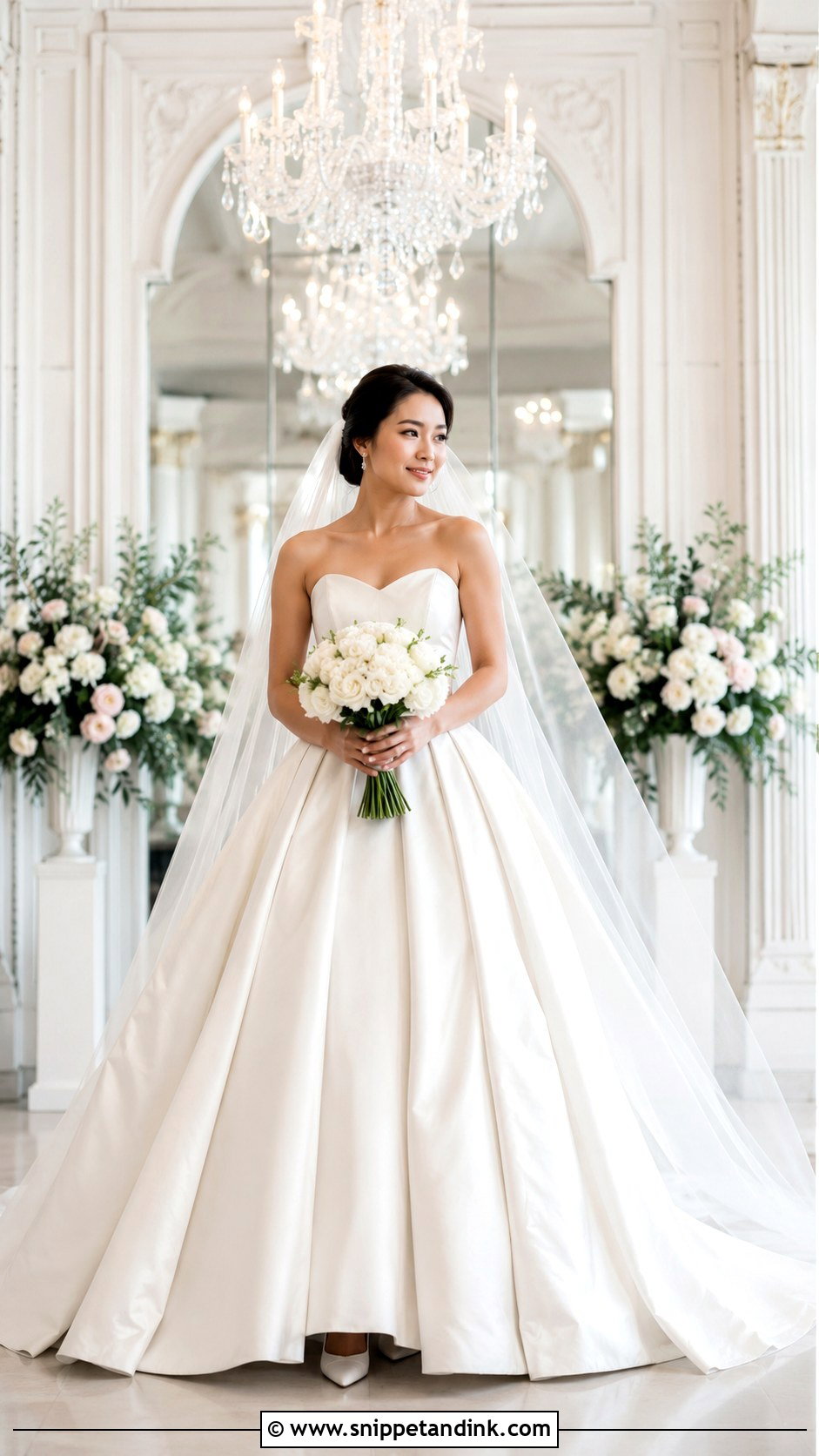
Satin is the most honest fabric in bridal: it shows every fold, every pull at a seam, every crease from the car. That’s exactly why a plain ivory satin or Mikado ball gown looks so grand when it’s fitted well, and so tired when it isn’t. Choose a structured strapless bodice with a softly curved neckline and let the skirt do the talking, with no beading needed. A cathedral veil with a raw edge, crystal studs, satin closed-toe heels and a low polished bun finish it. Carry a long-stemmed bouquet to balance the width of the skirt. Book a professional steam for the morning itself, not the day before, and ask for hidden side-seam pockets; they don’t disturb the skirt at all.
3. Ivory Lace Mermaid Wedding Gown
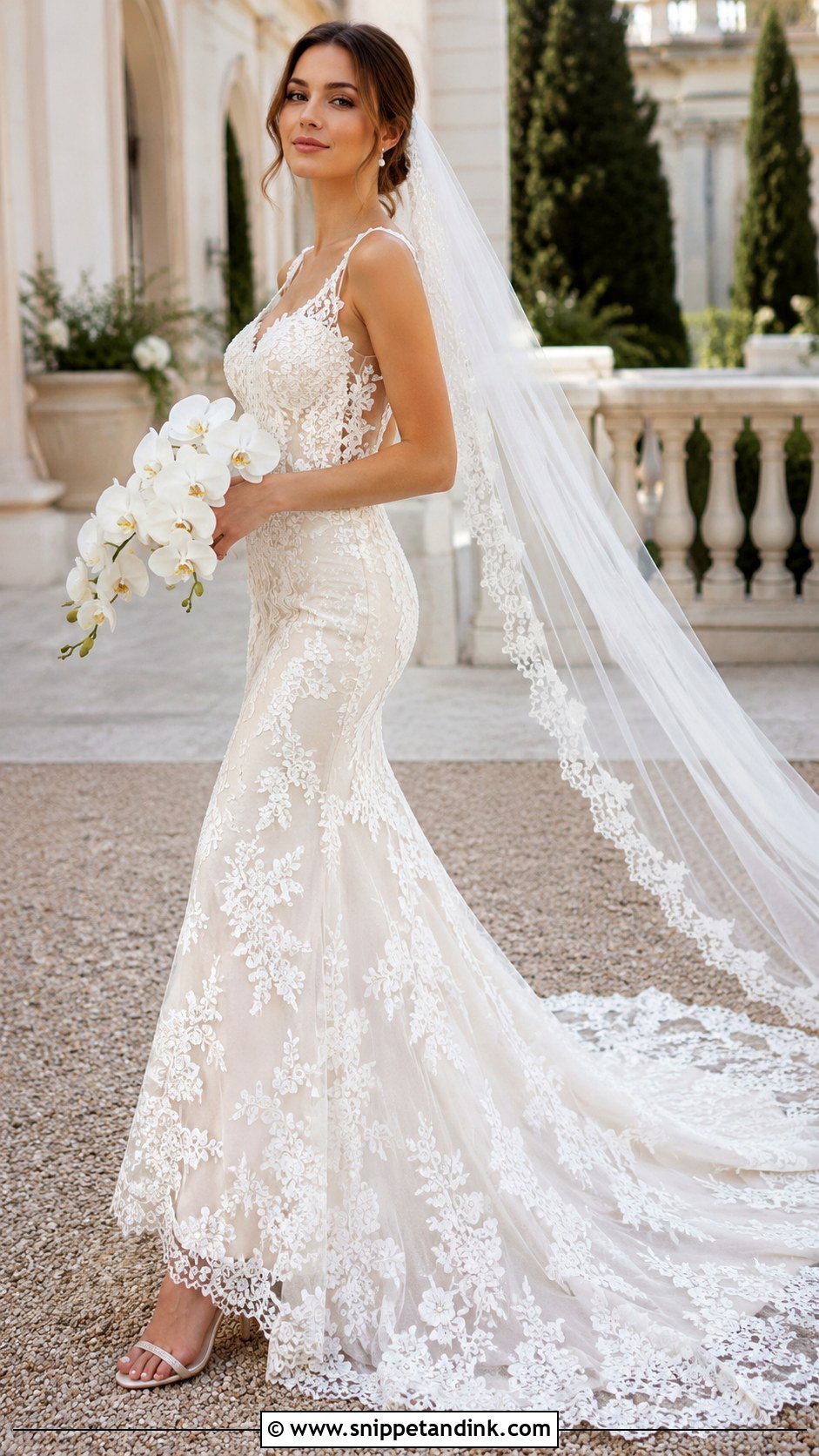
A lace mermaid is fitted from bust to knee, so the bodice has to genuinely support you rather than rely on the lace to hold things in. The lining colour changes the whole dress: floral lace over a matching ivory lining reads soft and tonal, while a nude lining makes the motifs stand out sharply in photos. I keep accessories light with this one, maybe slim block-heel sandals, a chapel veil with a lace edge and small pearl or diamond studs. A narrow bouquet of orchids or calla lilies follows the gown’s line. At every fitting I make the bride sit, walk and climb a step, because the knee flare is where mermaids restrict movement. Plan a strong bustle too, since lace trains snag on chair legs.
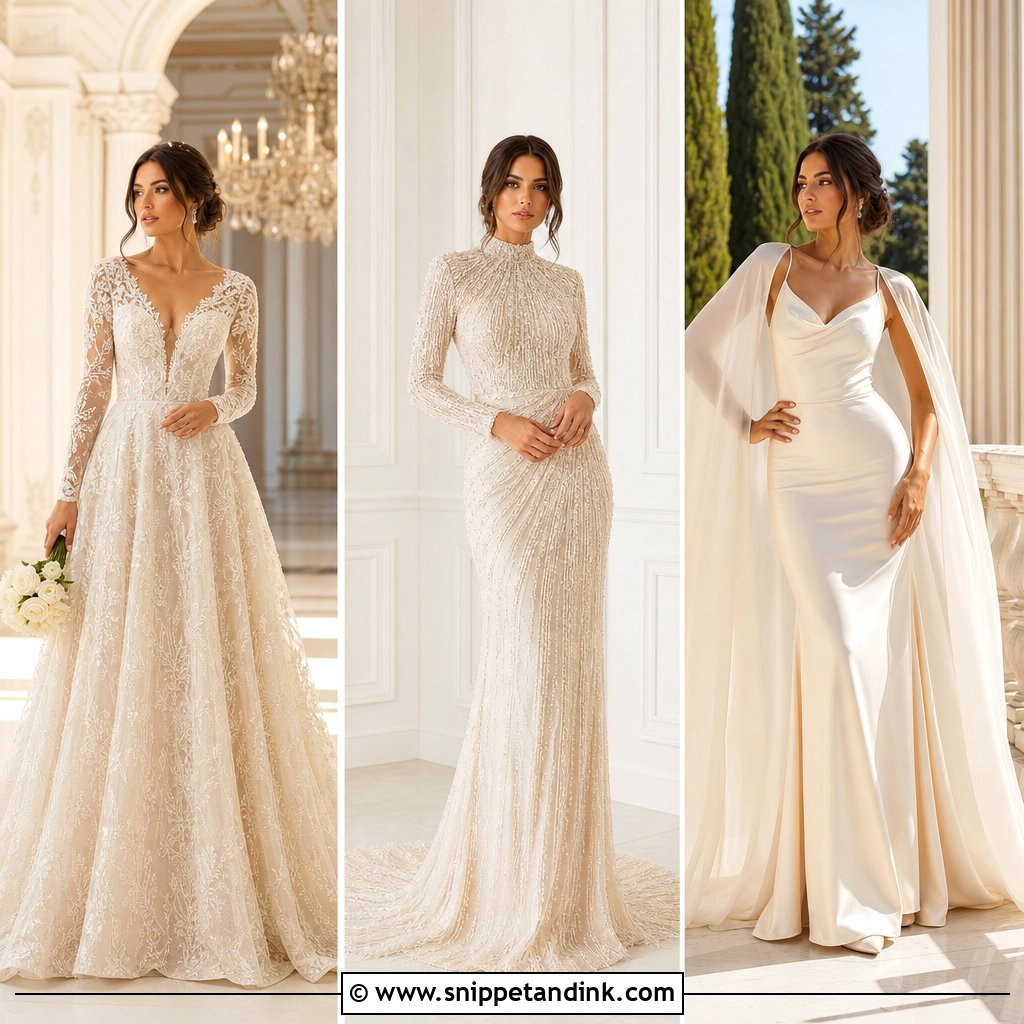
4. Ivory Long Sleeve Wedding Gown
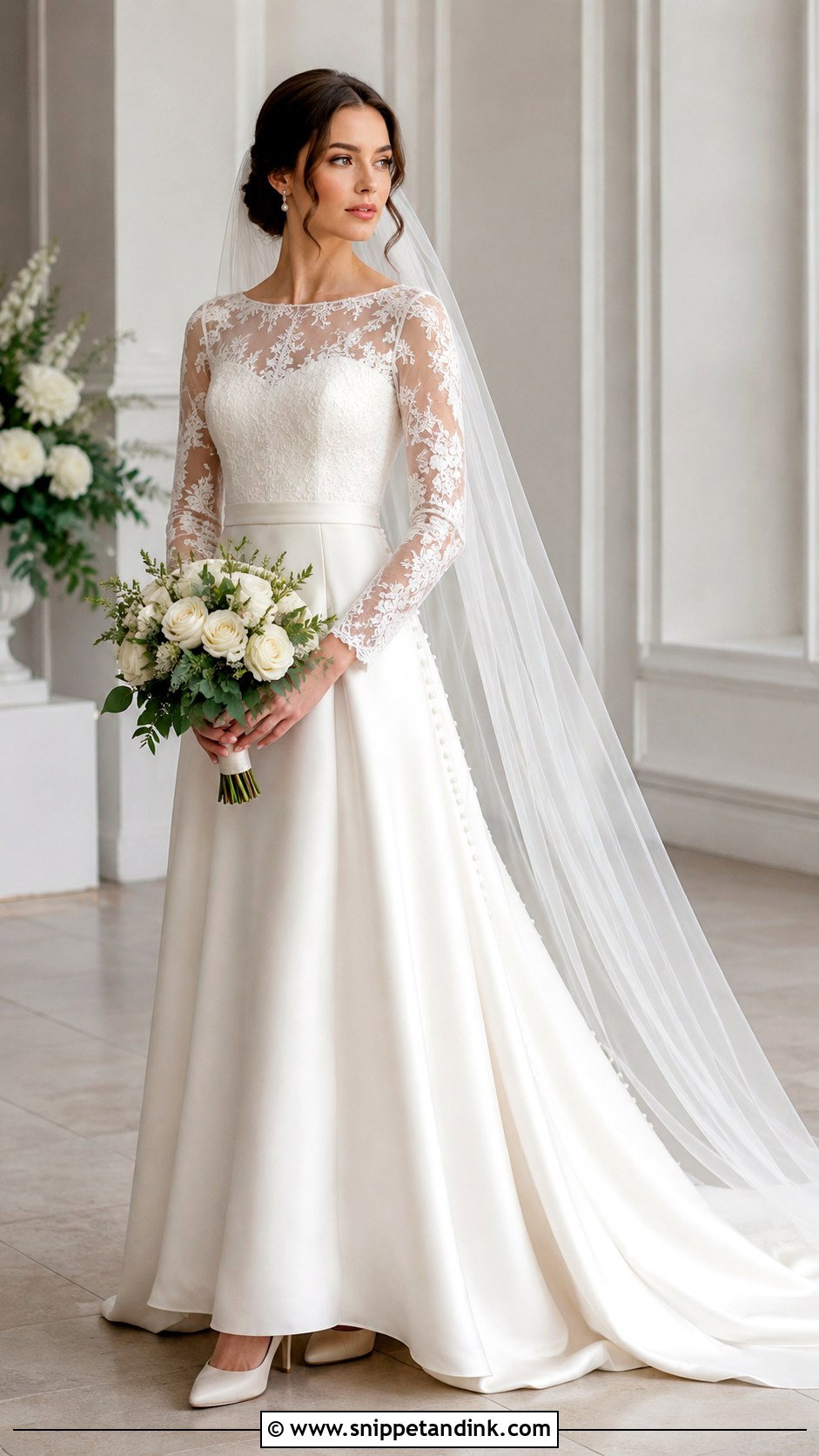
For a winter or late autumn wedding, sleeves stop you from spending the evening in a borrowed cardigan. A fitted lace bodice with illusion sleeves stays delicate, while crepe with opaque sleeves feels clean and modern. The thing I check first is the armhole: if it’s cut too low, you can’t lift your arms to hug anyone without the whole bodice riding up. Keep a defined waist and a flowing skirt so the extra fabric on the arms doesn’t look heavy. Closed-toe heels, a simple cathedral veil, pearl earrings and a low chignon complete it, with seasonal greenery in the bouquet. Covered buttons and wrist loops at the cuff are worth the small extra cost.
5. Ivory Strapless Corset Wedding Gown
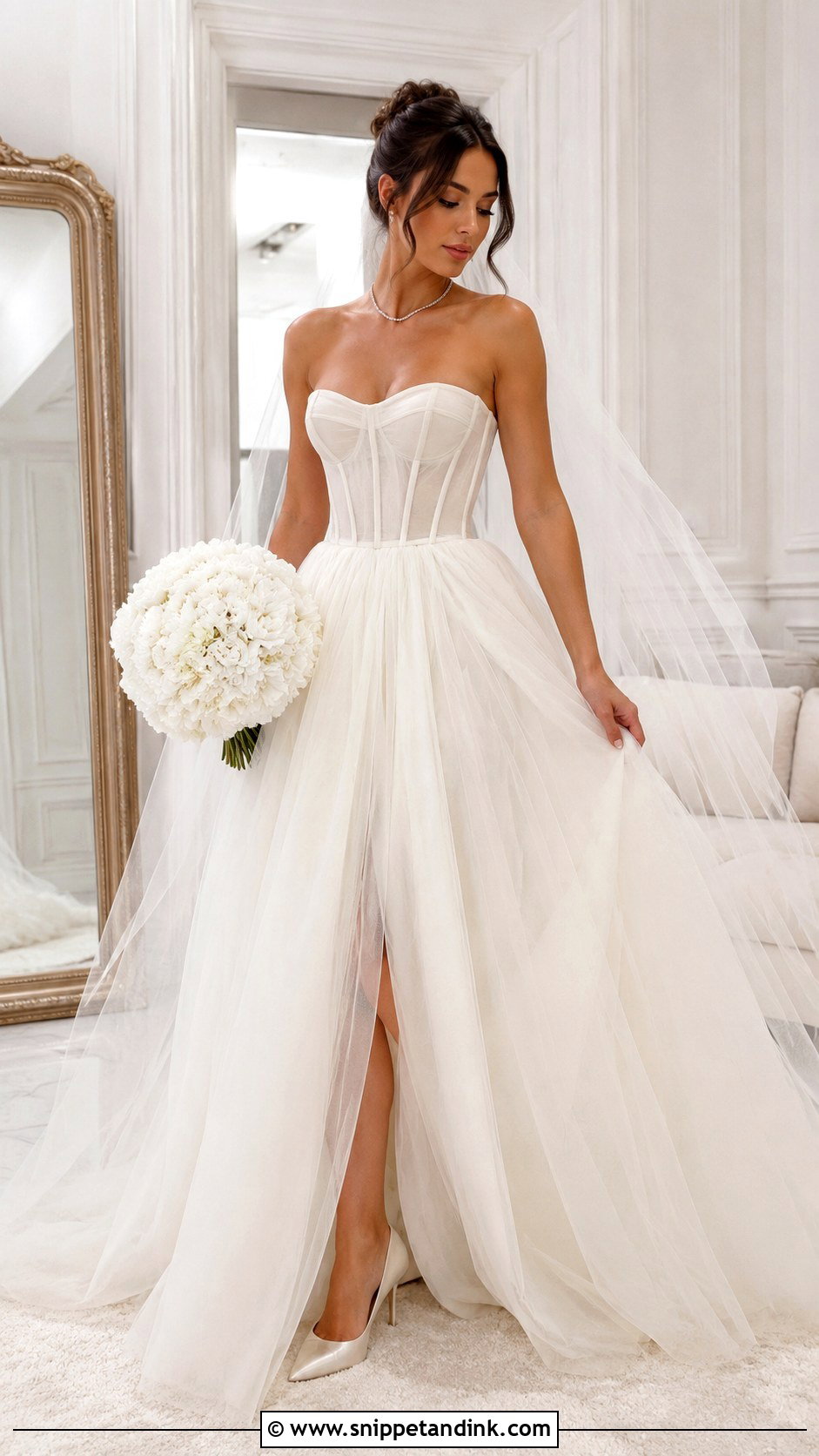
Strapless corsets live or die on the boning. A well-built bodice holds you up on its own; a weak one creeps down all evening and you’ll spend the reception hitching it. Fit it while wearing the exact undergarments and shoes you’ll wear on the day, because even a different bra changes how the dipped neckline sits. Over the corset you can choose tulle for lightness or satin for formality, and that one choice sets the mood of the gown. A sheer cathedral veil softens bare shoulders, and a short pearl strand or tennis necklace fills the open neckline. If you think you’ll want coverage later, ask for detachable sleeves cut from the gown’s own fabric rather than a store-bought wrap.
6. Ivory Square Neck Wedding Gown
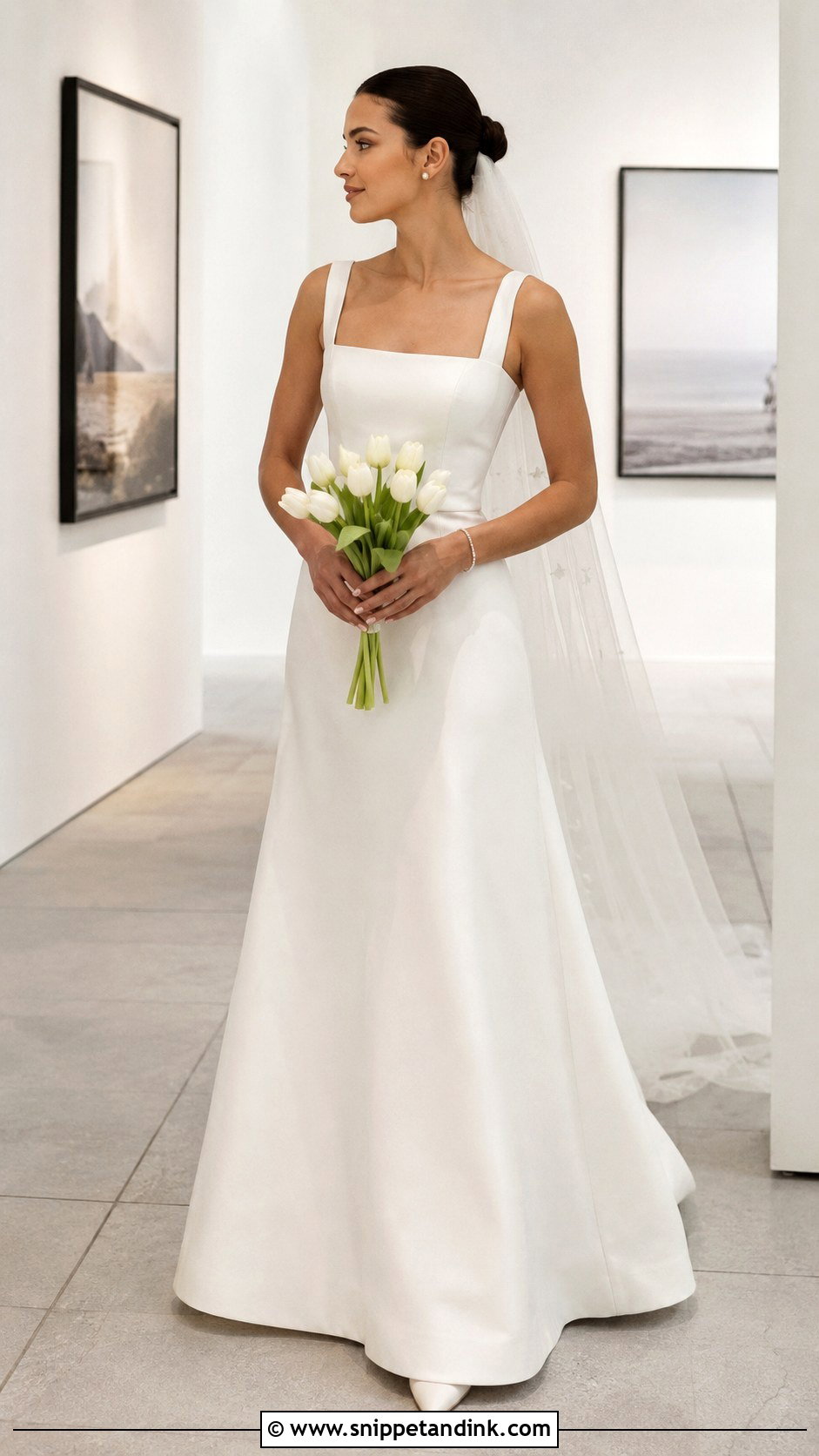
A square neck is all geometry, so it only works if the corners stay sharp. The common problem is gaping at the top edge when you lean forward or sit, which a good seamstress fixes with a little stay tape inside the neckline. Wide straps and a fitted bodice support the shape, over an A-line or column skirt. Silk crepe gives fluid movement; heavier satin keeps the neckline crisper. I’d skip necklaces entirely and choose pearl studs, a thin bracelet and pointed heels in ivory or soft metallic leather. Attach the veil underneath a sleek bun so nothing interrupts the collarbone, and keep the bouquet single-flower, such as white tulips or callas.
7. Ivory Off Shoulder Wedding Gown
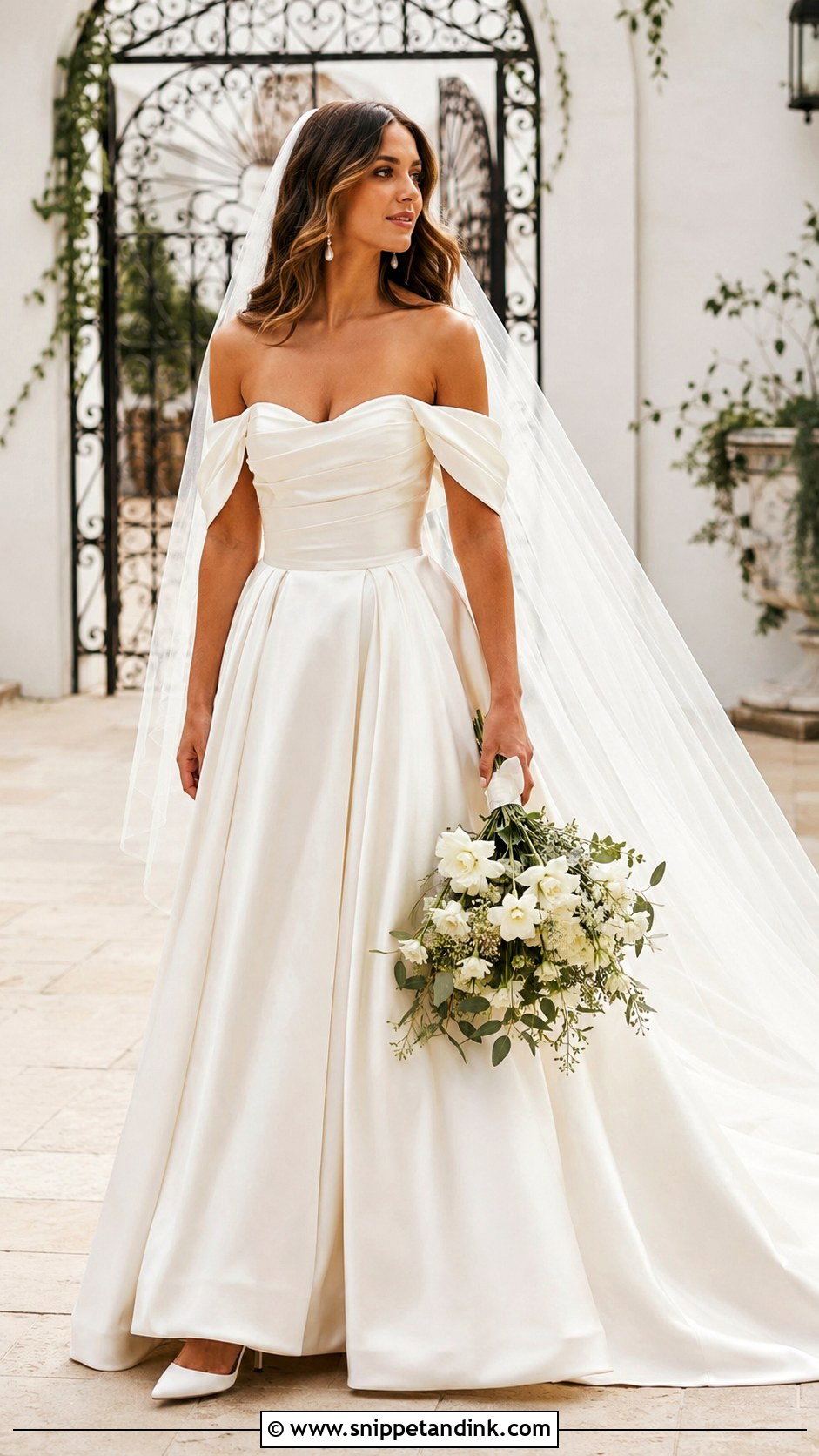
Off-shoulder sleeves frame the face better than almost any neckline, but they come with one trade-off brides rarely hear about: they limit how high you can raise your arms. At fittings I ask brides to mimic throwing a bouquet and hugging a tall relative, and if the sleeves cut into the upper arm, we adjust before the hem is touched. Draped sleeves suit a structured satin ball gown; fitted lace sleeves suit a slimmer fit-and-flare. Pair it with a collarbone-length necklace, drop earrings and low satin heels you can dance in. Set a chapel veil at the back of soft waves so it doesn’t cover the shoulders. Detachable off-shoulder straps give you the option of going strapless later in the night.
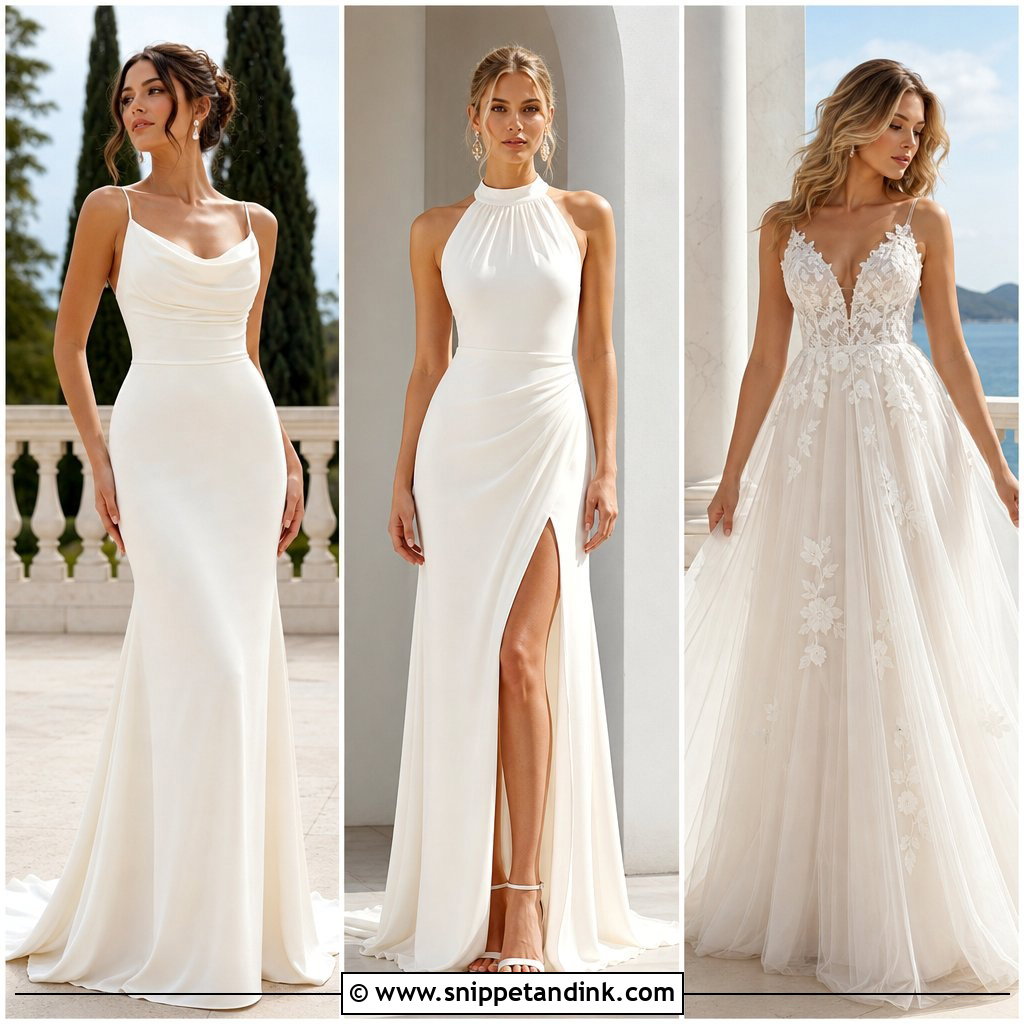
8. Ivory Silk Slip Wedding Gown
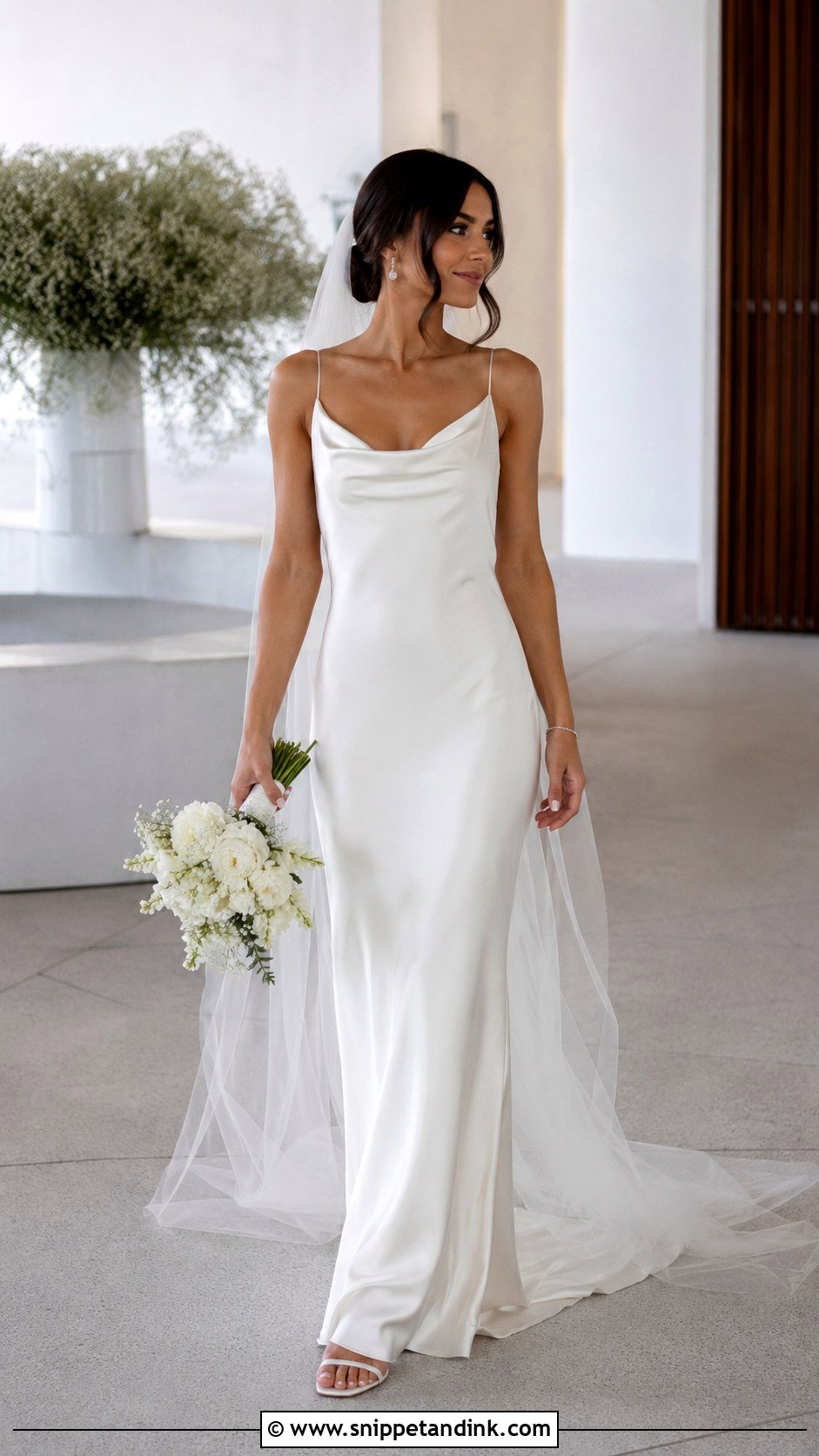
Silk slips are the most unforgiving gown in this list, and I say that as someone who loves them. A bias-cut skirt moves like water, but it also shows every line beneath it, so plan smooth, no-line underwear before your first fitting rather than after. A cowl or straight neckline with narrow straps keeps it simple. A long sheer veil adds ceremony drama, then comes off to show the clean back. Fine drop earrings, a thin bracelet and strappy heels are enough jewellery. Ask whether discreet internal cups or a light inner layer can be added for support. For a chilly evening, a matching silk cape or a fitted bridal jacket looks far better than a contrasting shawl.
9. Ivory Basque Waist Wedding Gown
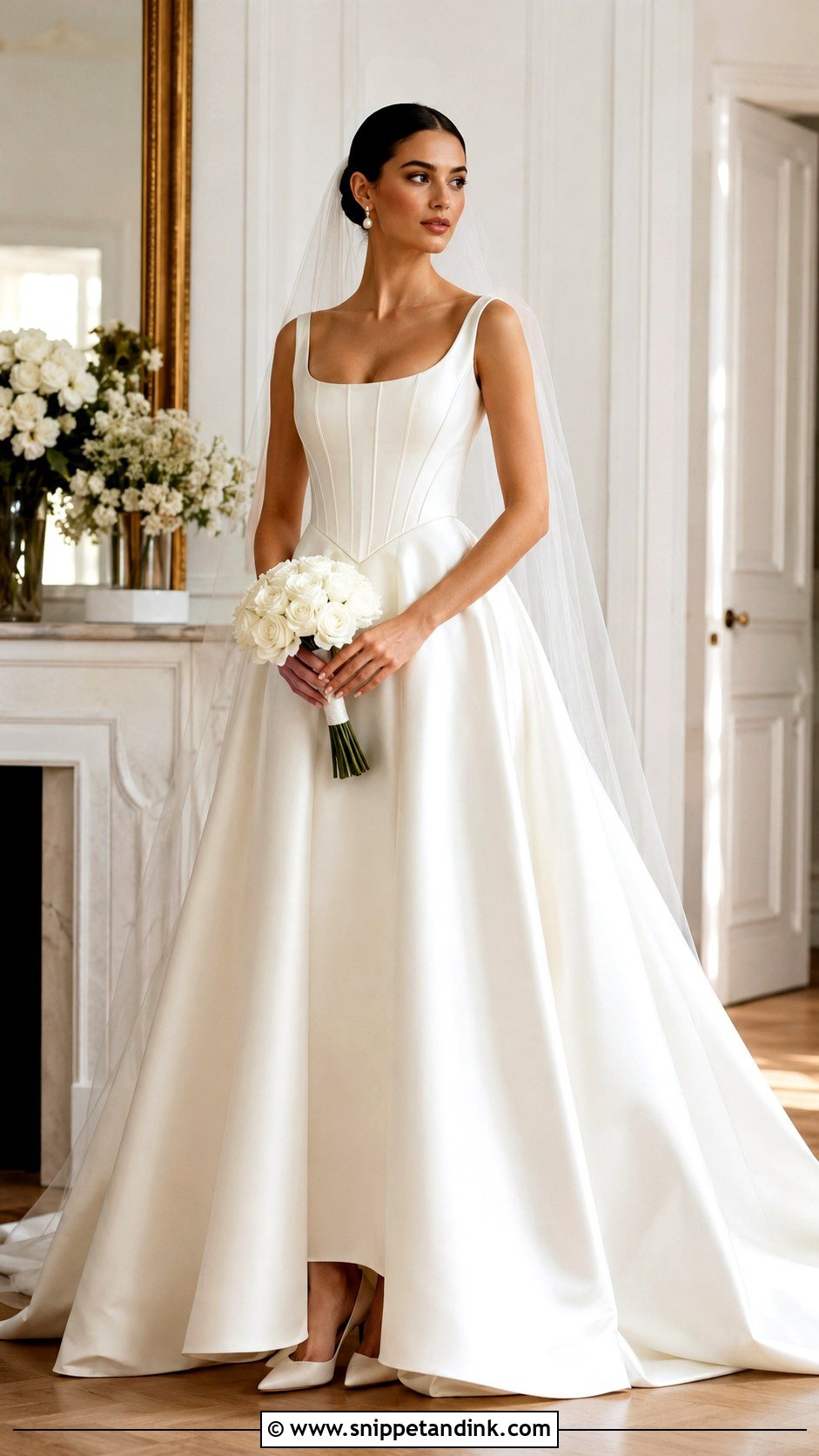
The pointed basque waist dips below the natural waistline in a V, which visually lengthens the torso and balances fuller hips. That’s why an ivory basque waist wedding gown is one of the shapes I suggest most often to pear-shaped brides. It sits best on a fitted corset bodice with a full satin or tulle skirt. The point itself must lie flat; if it folds or buckles when you sit, the bodice is either too long or too tight. A scoop, square or strapless neckline all work, depending on coverage. Keep the bouquet compact and the hair polished so the waist stays visible, and never add a belt, since it would hide the very seam you chose the dress for.
10. Ivory Floral Appliqué Wedding Gown
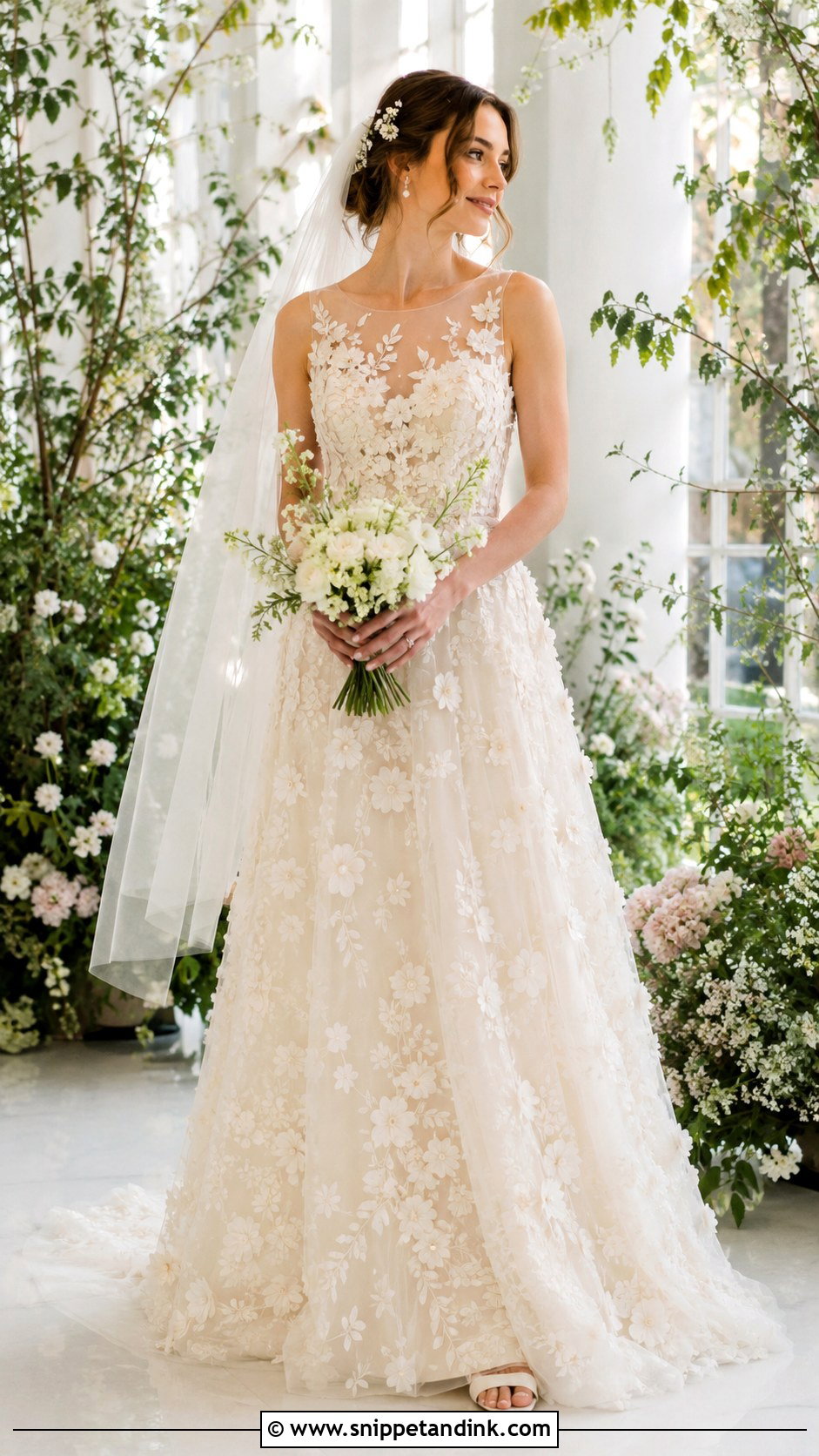
Floral appliqué gowns have flowers stitched on by hand, and that placement is something I inspect closely at the first fitting. When a seam is taken in, appliqués sitting across it may need lifting and re-sewing, which adds time and cost to alterations. A soft A-line keeps the decorated surface from feeling heavy, and a sheer neckline lets the blossoms look like they’re floating. Floral hairpins, pearl earrings and pale sandals continue the theme. Choose a plain tulle veil; a lace-edged one would fight the appliqués. If the petals are three-dimensional, transport the gown flat or hung in a deep bag and steam from a distance, because direct heat crushes raised petals.
11. Ivory Beaded Wedding Gown
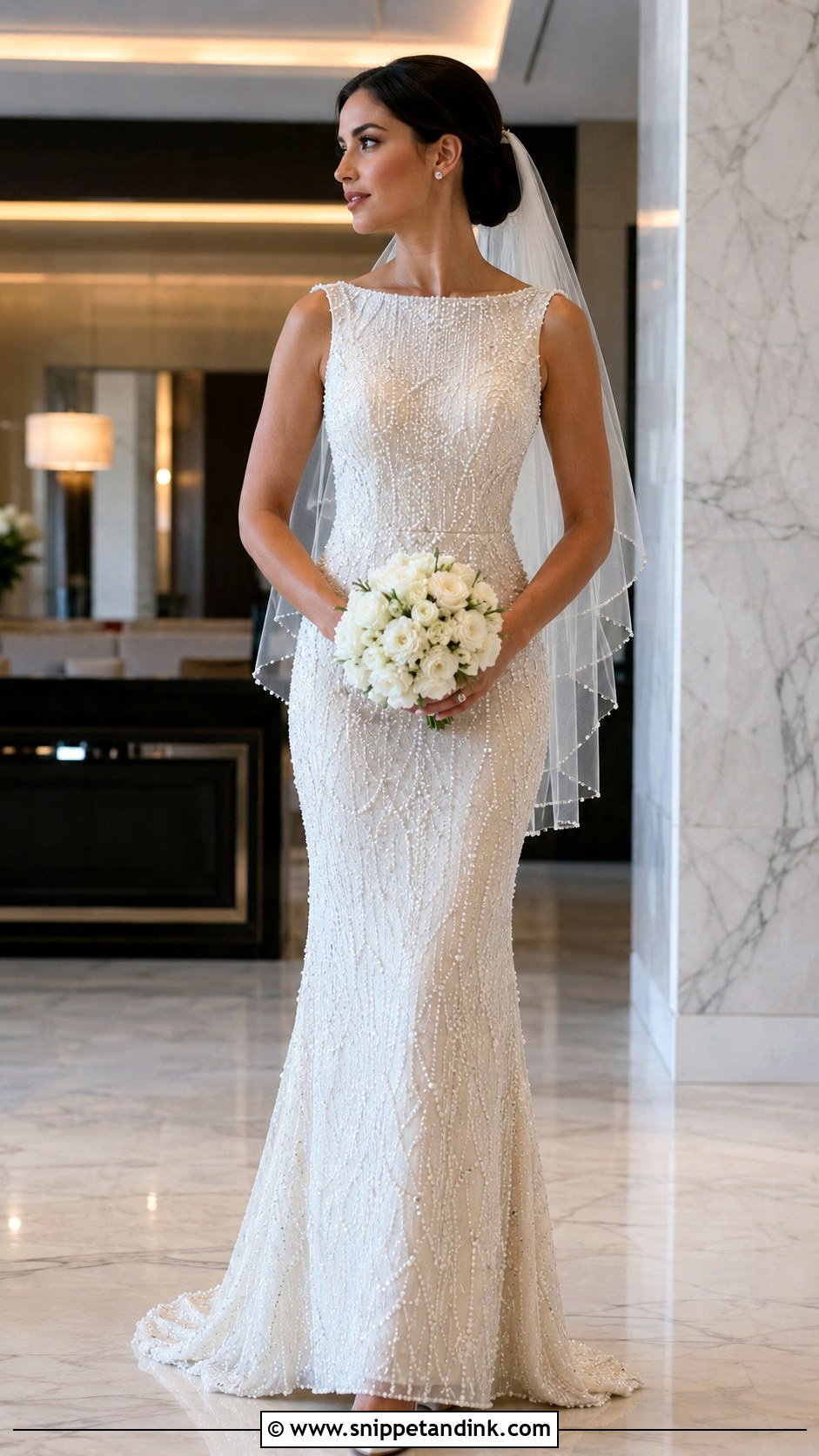
Beading changes with movement, catching light as you walk in a way plain fabric can’t. It also adds weight, sometimes a lot of it, so I always have brides wear a beaded gown for a full ten minutes at the fitting before deciding. Stick to one type of beadwork, whether pearl, crystal or tonal glass, rather than mixing all three. A fitted sheath or gentle flare keeps the pattern readable from neckline to hem. Pair with satin heels, stud earrings, a plain fingertip veil and a small bouquet. Ask the seamstress to check for loose threads and reinforce them, and make sure the bustle points are anchored to fabric that can bear the weight of a beaded train.
12. Ivory High Neck Wedding Gown
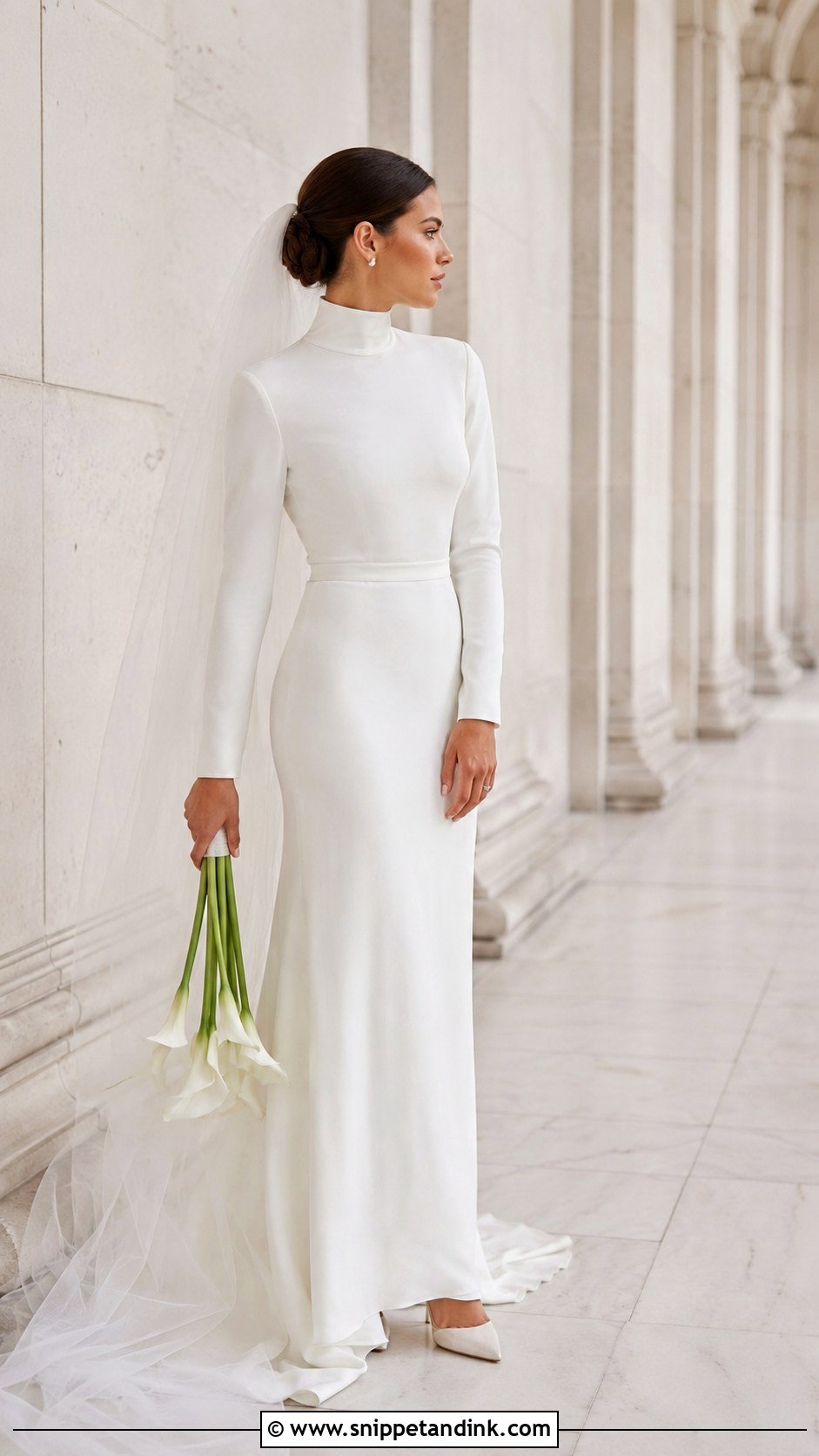
A high neck gives coverage and still reads as fashion rather than modesty, especially in smooth crepe. Lace versions are softer. The detail that ruins high necks is a collar cut a touch too snug, which rubs by mid-afternoon, so I have brides turn their head fully both ways during fittings. Balance the neckline with fitted sleeves, a defined waist and a fluid skirt. No necklace: small earrings, a narrow bracelet and pointed ivory heels are plenty. Hair goes up or swept back, and the veil is pinned beneath the style so it doesn’t add bulk at the shoulders. Carry a long-stemmed bouquet low, and check that every back button has a discreet loop.
13. Ivory Wedding Gown With Cape
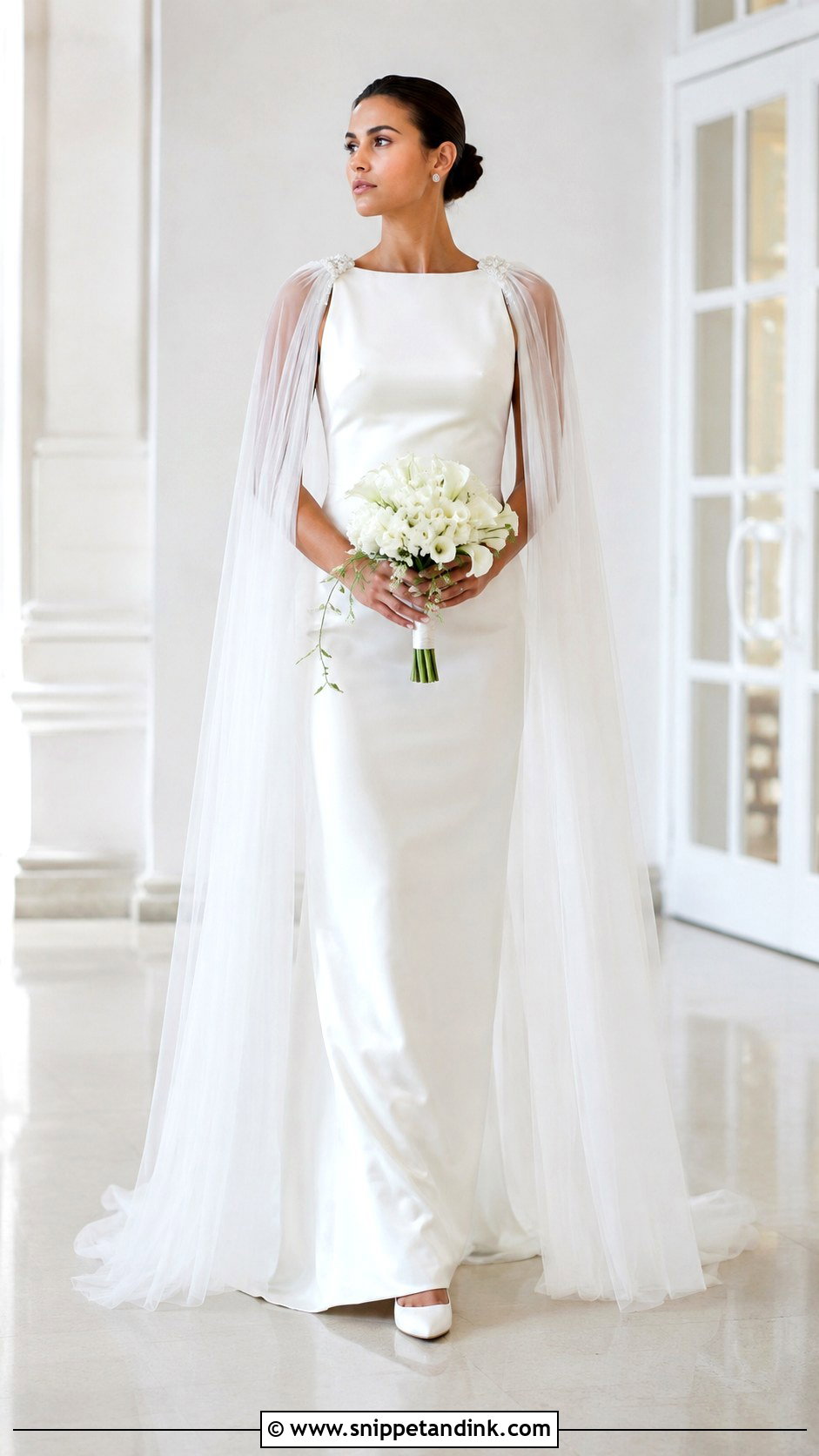
A cape gives you a veil’s drama without anything pinned to your head, which matters for brides who hate the feel of combs. Start with a clean column, A-line or fit-and-flare so the extra layer has space to show. Tulle capes feel light; satin capes hold more structure and suit cooler months. The fastenings should be covered snaps or hooks matched to the dress, attached at the shoulder or neckline. I’d keep the hair smooth, because loose curls tangle in a cape within minutes. Crystal studs, closed-toe heels and a streamlined bouquet finish it. Make sure you can remove it quickly after the ceremony, and that its length suits the gown’s train so the two don’t bunch together.
14. Ivory Bow Back Wedding Gown
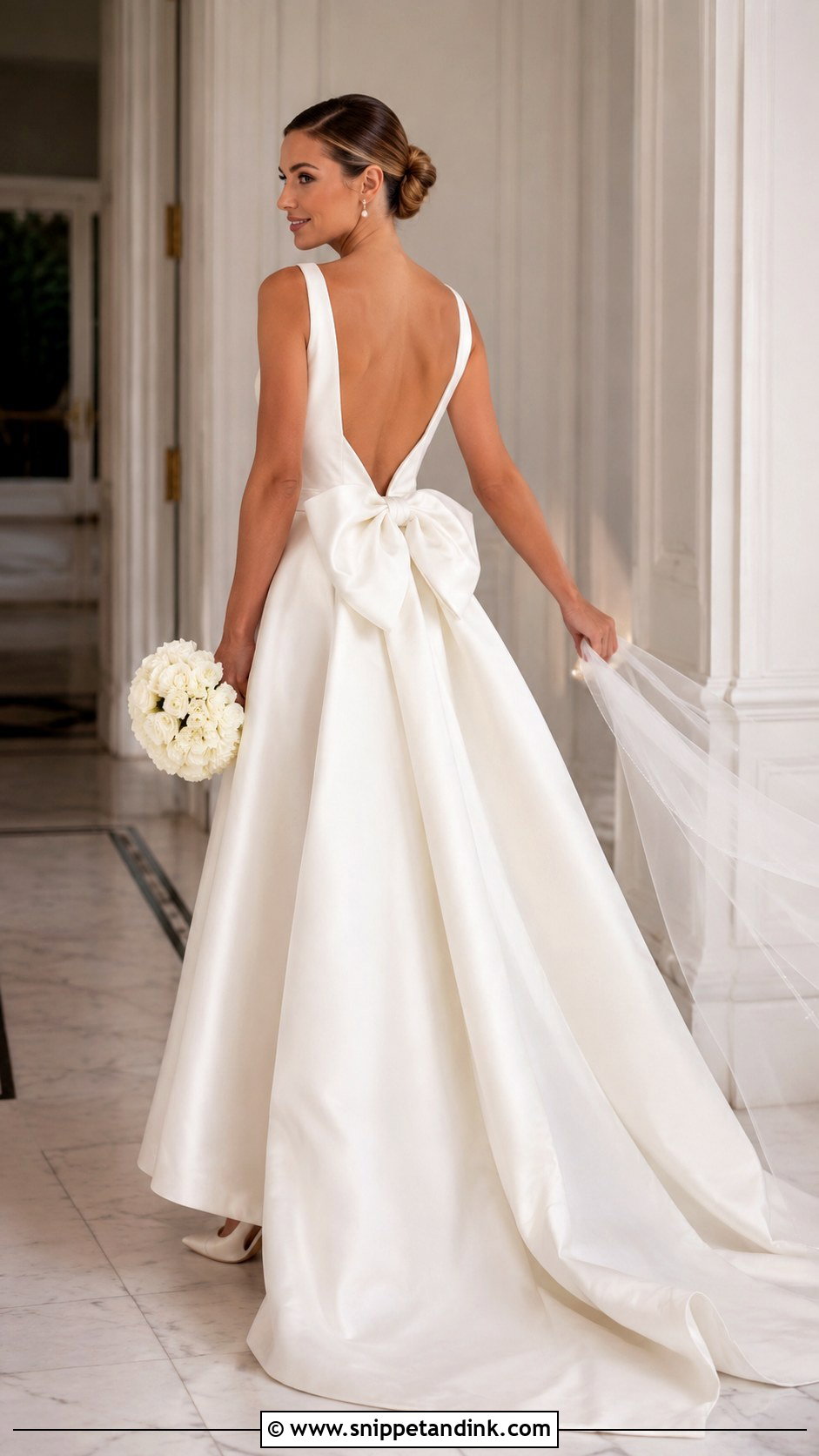
Half of your ceremony photos are taken from behind, which is the whole argument for an ivory bow back gown. The bow suits a sleek satin column, a structured A-line or a strapless ball gown with a plain front. Size it to your frame: an oversized bow on a petite bride swallows the waist. Simple earrings, pointed ivory pumps and a sheer ceremony veil keep the front quiet. Take the veil off after the vows so the bow shows, and wear a low bun. The practical worry is crushing, so check that the bow has internal structure or interfacing and ask whether it can be made detachable for the car ride and dinner.


15. Ivory Wedding Gown With Detachable Sleeves
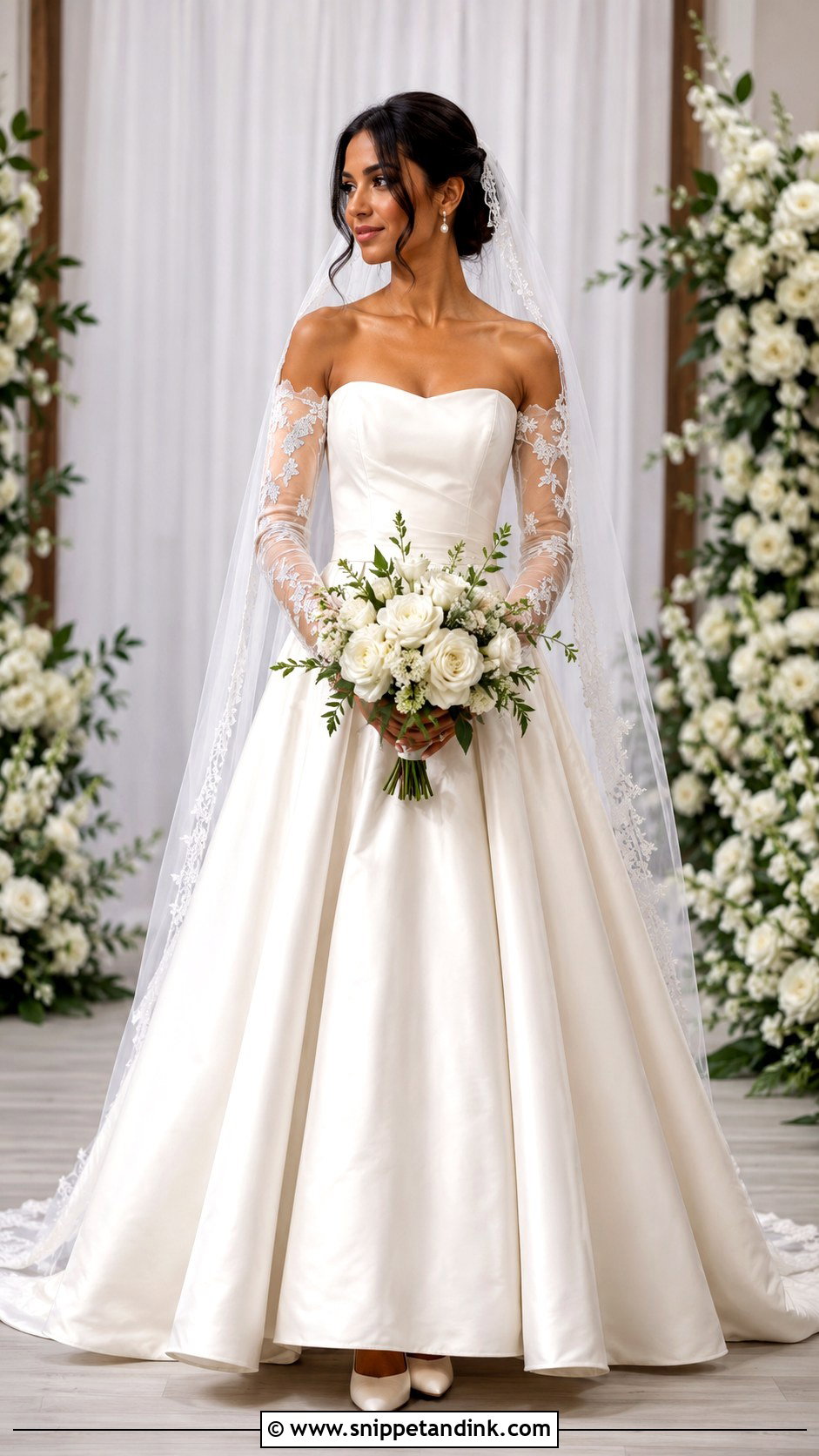
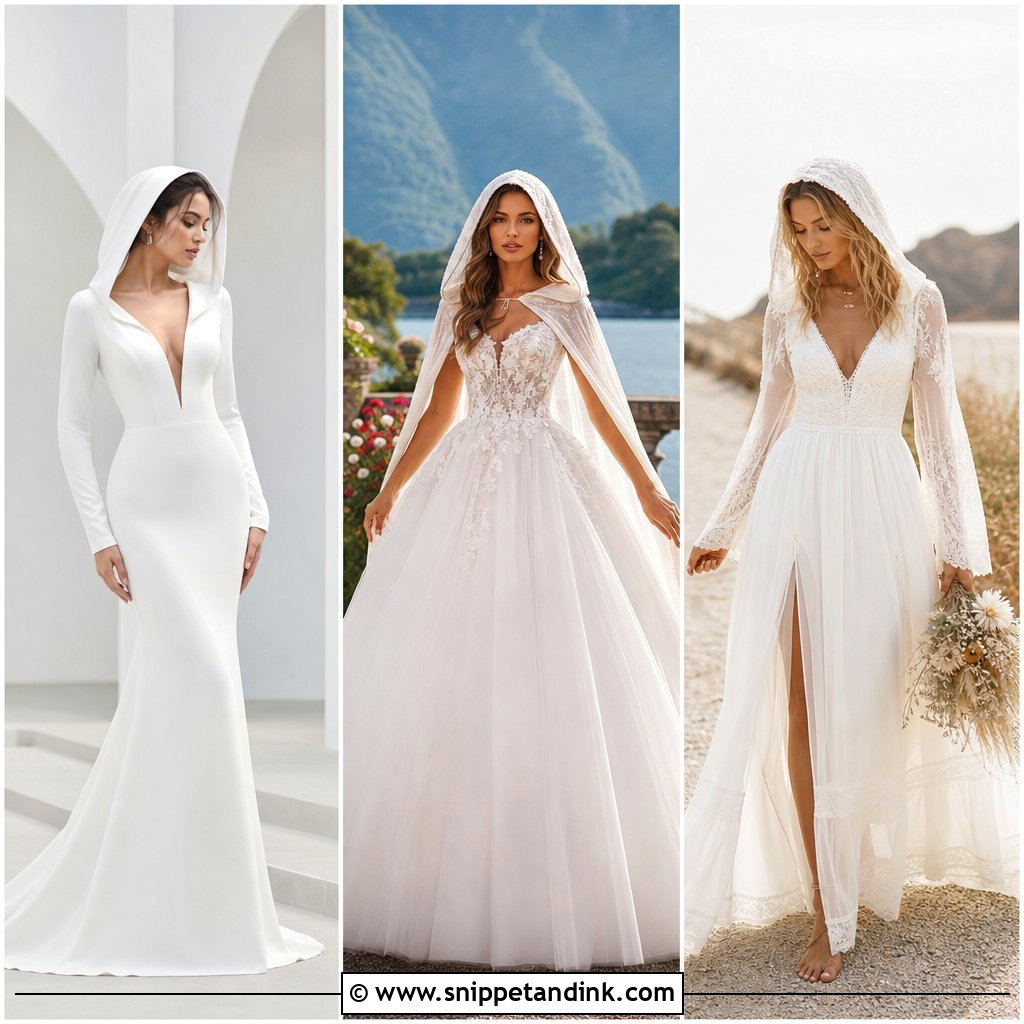
Detachable sleeves give you two looks from one dress, which is often cheaper than buying a second reception gown. Start with a strapless or sleeveless fitted bodice and add lace, tulle or satin sleeves for the ceremony. Long fitted sleeves feel traditional; draped off-shoulder pieces are softer. Wear them with a chapel veil, pearl earrings and closed-toe heels, then after dinner remove sleeves and veil and switch to a sparkling bracelet or bolder earrings. Keep the same shoes and bouquet so the change looks planned. I test every fastening by having the bride raise both arms, because hooks that pop under strain are the usual failure. Bag and label the sleeves afterwards so they don’t get lost in the venue.
16. Ivory Tea Length Wedding Gown
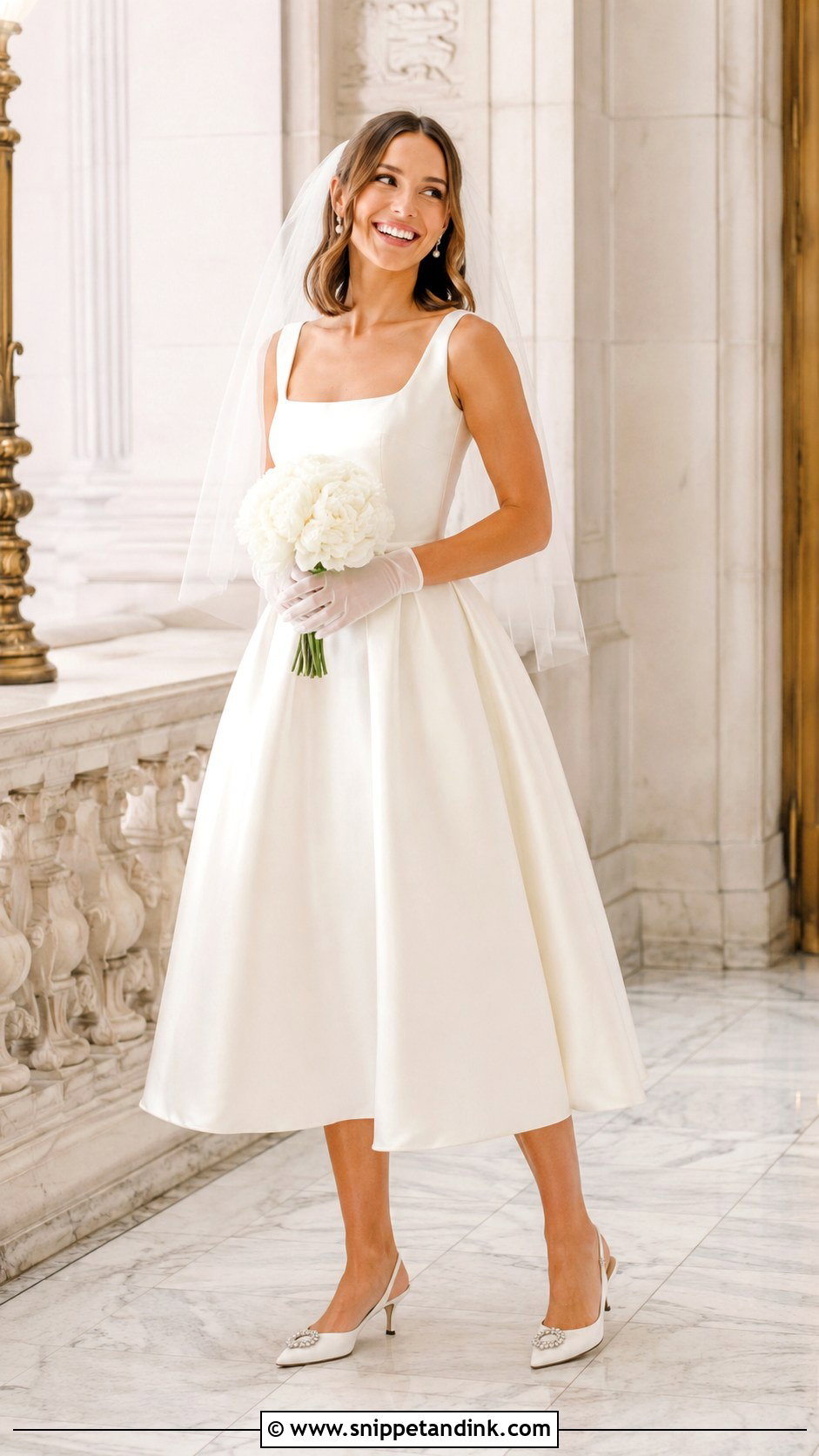
Tea length is a dress you can actually move in, and it puts your shoes on show, so choose them first. The hem lands between the knee and ankle, and because it’s so visible, it must hang perfectly level. Pointed pumps, slingbacks or embellished block heels all suit it. Pearl earrings, short gloves if you like them and a birdcage or shoulder-length veil match the shorter proportions. Satin gives a crisp, retro skirt; tulle or lace feels lighter. Bring your exact wedding shoes to every fitting, since a heel height change of even two centimetres shifts the hem. Then walk and turn in front of a mirror to check it swings evenly.
17. Ivory Column Wedding Gown
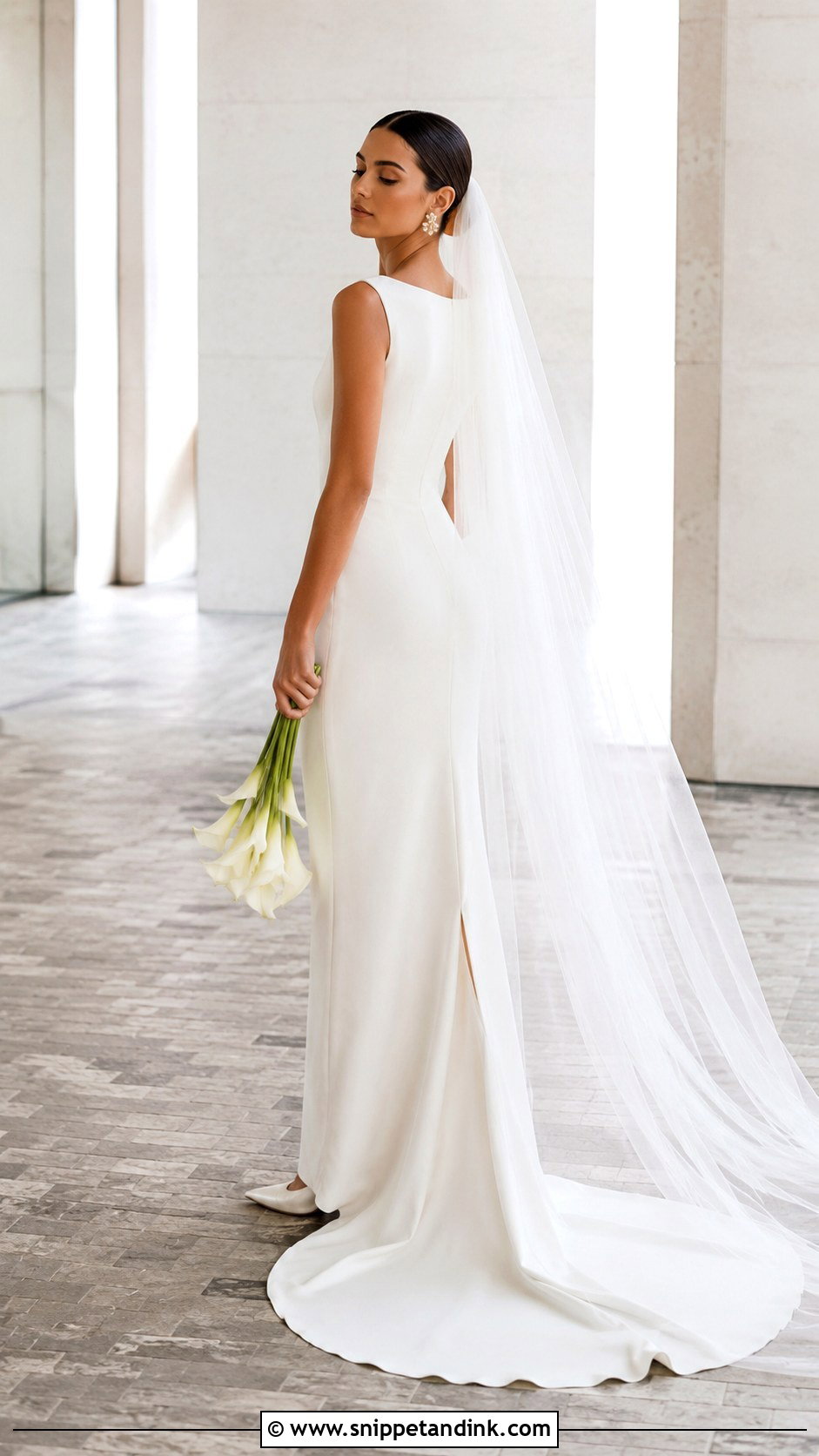
A column is one long vertical line, and it rewards good fabric more than any other shape here. Substantial crepe or heavy satin skims the body; thin fabric clings and shows everything. A bateau, scoop or asymmetric neckline adds interest without breaking the line. I’d pair it with pointed heels, sculptural earrings and a sleek low bun, plus a cathedral veil for ceremony drama that doesn’t add width at the waist. A narrow bouquet of callas or long-stemmed roses follows the vertical. The real issue is stride: test whether you can climb stairs and sit down. If not, a back slit or a hidden stretch panel solves it. The hem needs to be precise, since extra length here is a trip hazard.
18. Ivory Pleated Chiffon Wedding Gown
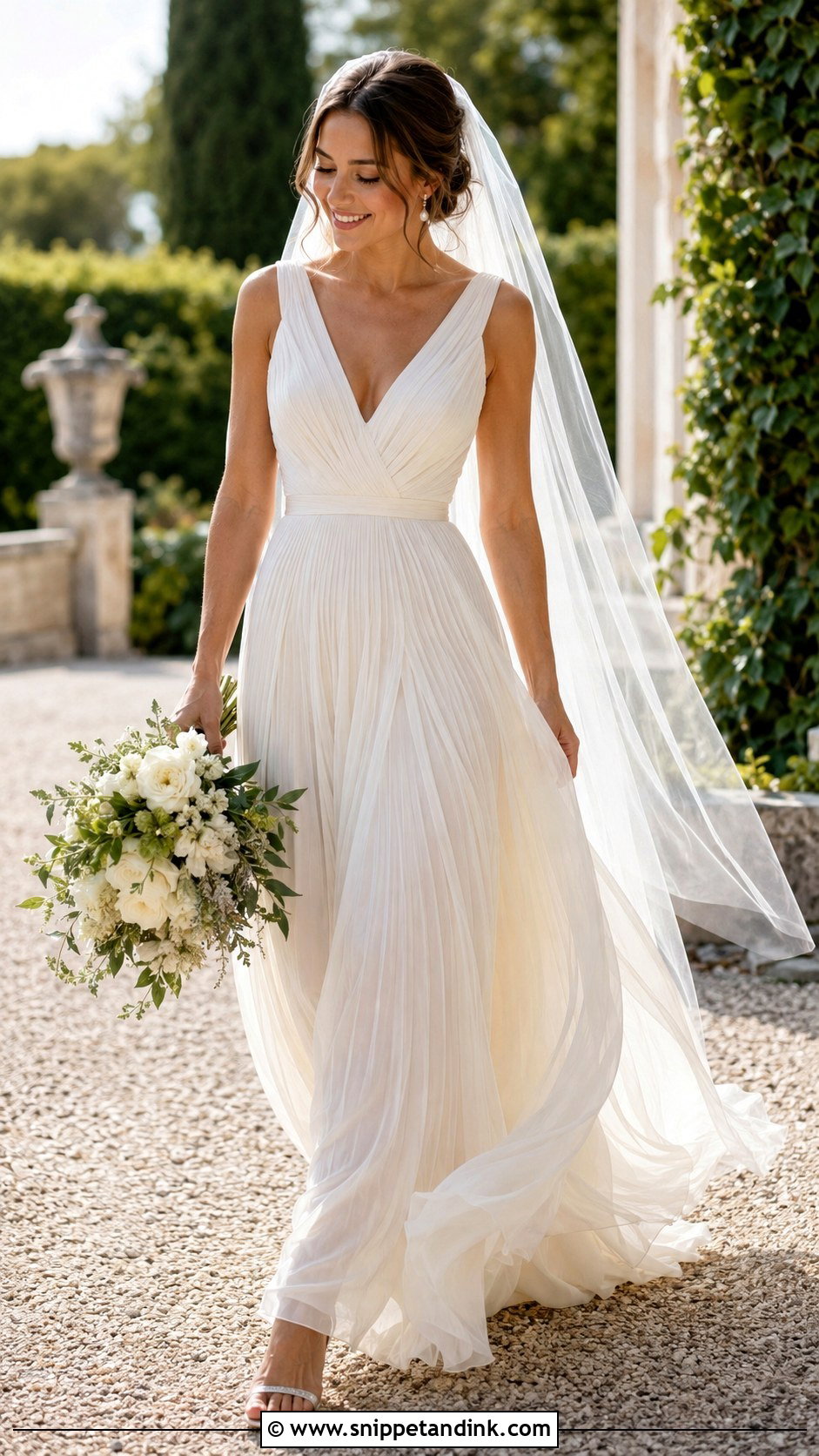
Pleated chiffon moves with every step, and that movement is the main reason to choose an ivory pleated chiffon wedding gown. The fine pleats add texture without weight. Pair the flowing skirt with a supportive fitted bodice and a soft V or gathered neckline. Delicate sandals, pearl earrings, an airy fingertip veil and a loose bouquet with pale greenery suit its relaxed mood, as does a braided updo. Outdoors, chiffon lifts in the slightest breeze, so I check that the lining has enough weight to keep the skirt from billowing and turning see-through in sunlight. Hang it as soon as you arrive at the venue, keep a hand steamer nearby, and avoid jewellery with prongs that can snag the threads.
19. Ivory Jacquard Wedding Gown
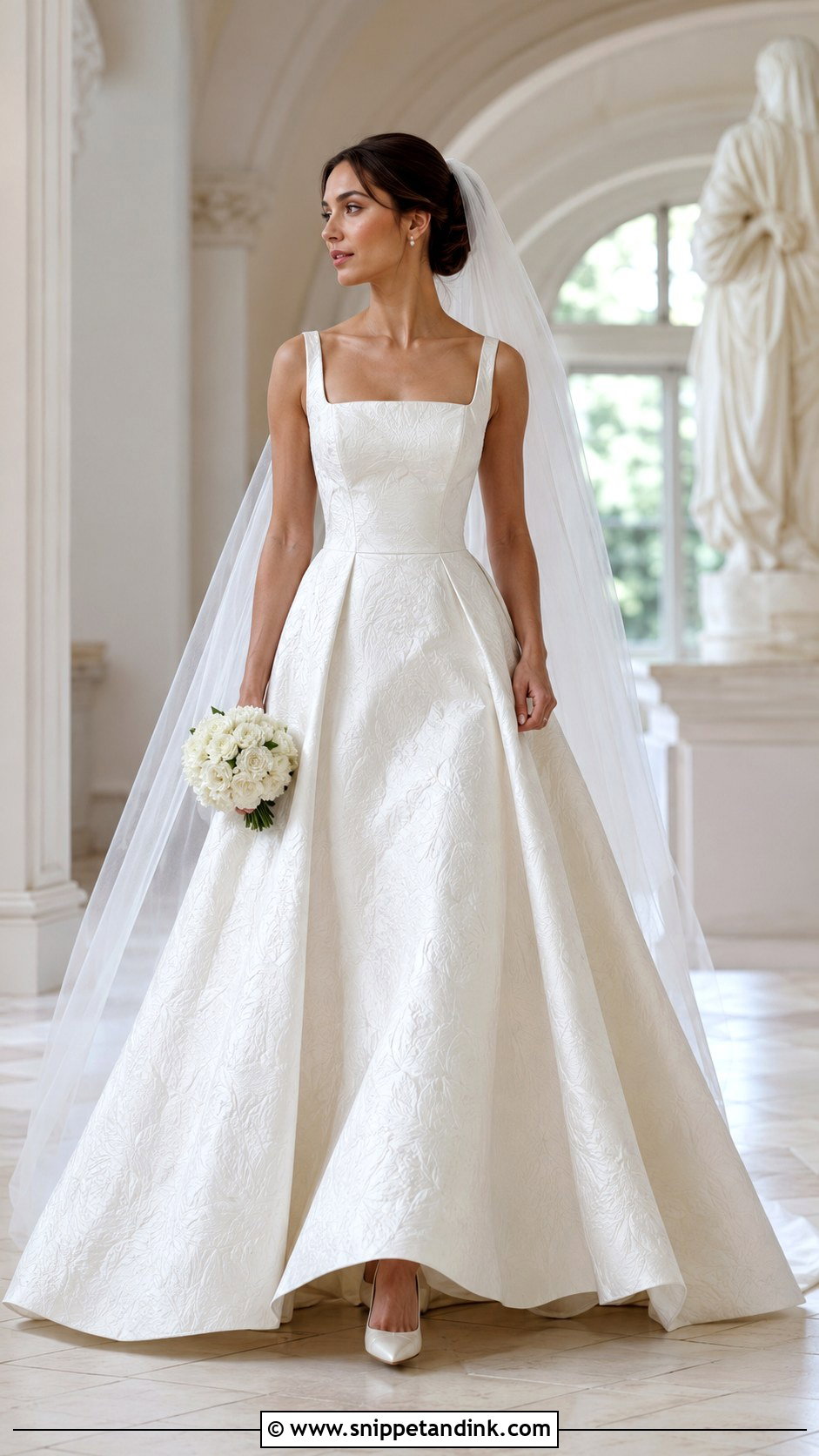
Jacquard is woven, not embroidered, so the pattern is part of the cloth itself. That makes an ivory jacquard wedding gown rich-looking without a single crystal. The fabric is thick and holds shape well, which is why it suits a structured ball gown or A-line. A strapless, square or scooped neckline keeps the bodice clean. Pearl studs, satin pumps and a plain cathedral veil are all it needs, with an understated bouquet. The trade-off is heat: jacquard can be heavy and warm, so for a summer wedding wear it for a while at the fitting before committing. Ask for a strong bustle that can hold the weight of the train.

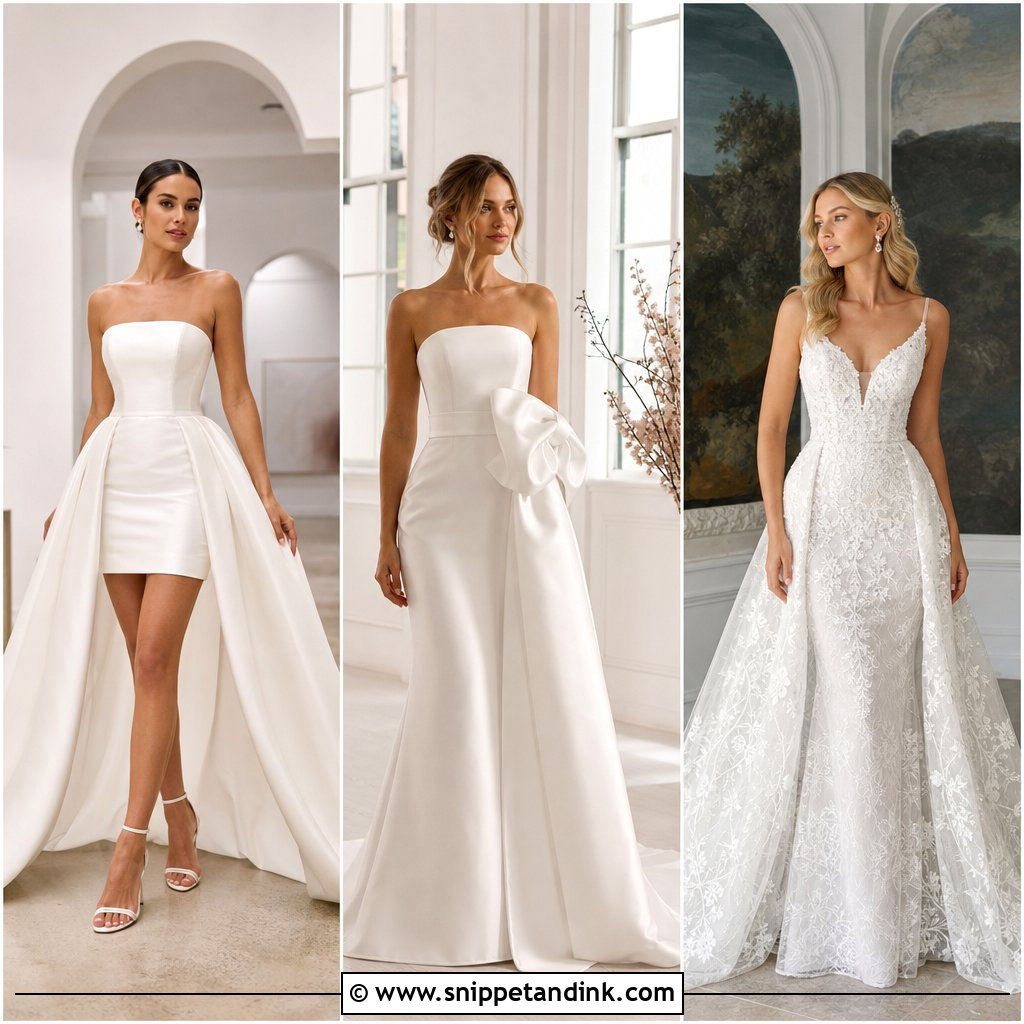

20. Ivory Two Piece Wedding Gown
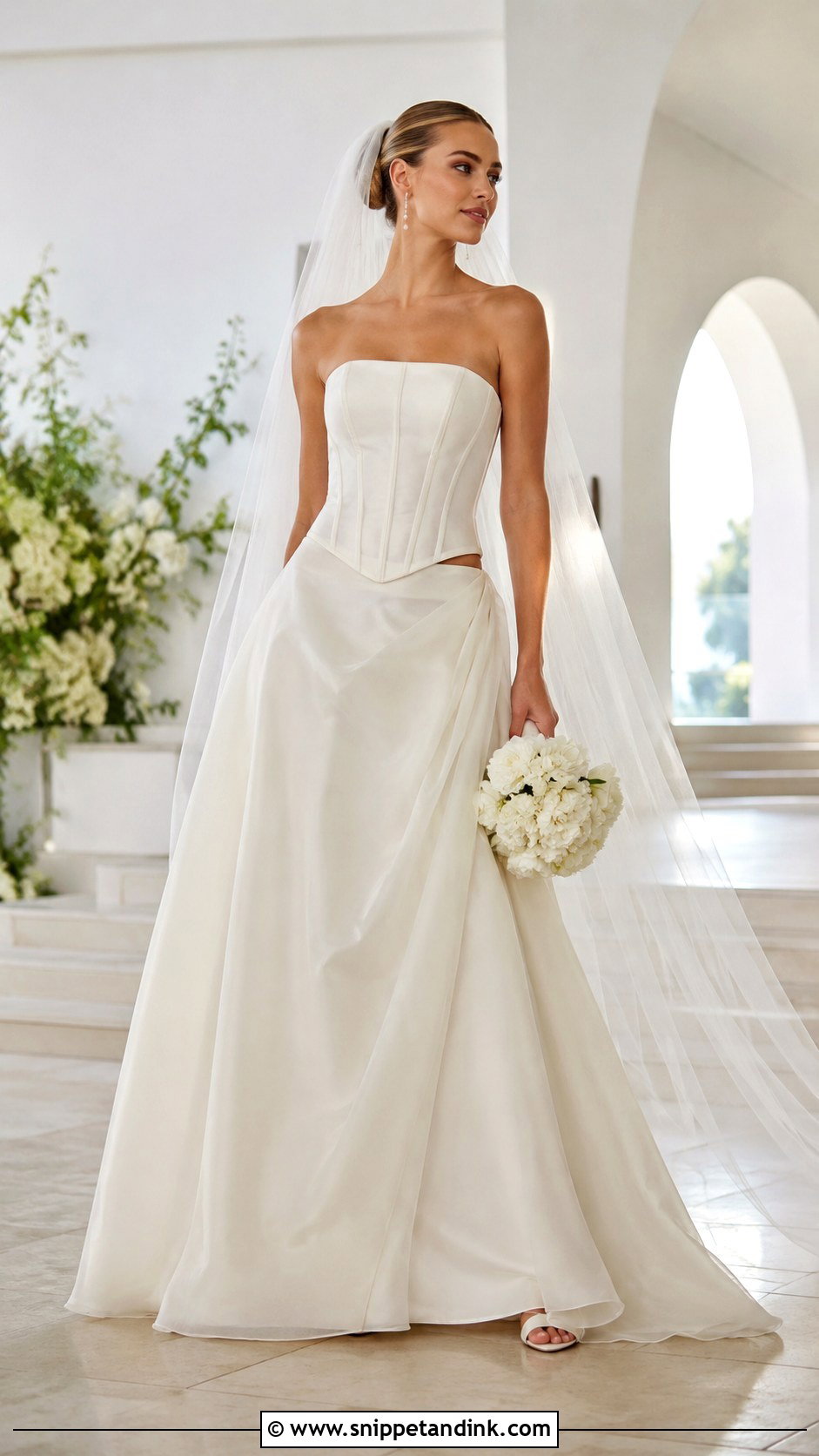
A two-piece gives you fit flexibility that a single dress can’t, since top and skirt can be sized separately. Pair a structured corset top with a full matching skirt in satin, tulle or organza, and make sure the two pieces meet or overlap cleanly so there’s no gap when you lift your arms. A long veil, delicate earrings and ivory heels keep it formal. For more coverage, a sheer fitted layer beneath the bodice or detachable sleeves both work. The biggest risk is colour: two ivory fabrics from different mills can look different side by side. I always ask brides to order both pieces together from the same maker so the shades match.
Caring for an Ivory Gown From the Last Fitting to Long After the Wedding
Ivory is forgiving of tiny marks in a way bright white isn’t, but it still needs handling with care, and the fabric decides most of the rules.
The week of the wedding
- Collect the gown no more than a few days ahead and hang it from its internal ribbon loops, not the shoulders, so heavy skirts don’t stretch the straps.
- Leave it in a breathable cotton garment bag. Plastic traps moisture and can mark silk.
- Steam on the morning, holding the nozzle a hand’s width away. Satin and Mikado can water-spot if the steam spits, so test inside the hem first.
- Learn the bustle with your maid of honour at the last fitting. Film it on your phone, since bustles often use colour-coded loops that are easy to forget.
Small emergencies on the day
Keep a kit with white chalk, a clean white cloth, safety pins, a needle with ivory thread and clear nail polish for small runs in tulle. White chalk rubbed gently into a light makeup or wine mark hides it well enough for photos. Never scrub; dab instead, and leave real stain removal to the cleaner.
After the wedding
Take the gown to a specialist bridal cleaner within a few weeks, and point out any spills, even clear ones like champagne or sugar, because they can oxidise into brown marks months later. For storage, ask for acid-free tissue and an acid-free box, keep it somewhere cool and dark away from a loft or garage, and refold it along new lines once a year so the creases don’t set. Stored that way, ivory holds its tone far better than a gown kept in plastic.
Ivory Works Across Twenty Silhouettes, So Start From the Shape
Ivory adapts to almost any silhouette here. A satin ball gown feels formal and grand, while a silk slip feels pared back, and lace, appliqué, jacquard, beading, capes, bows and detachable sleeves each give you another way to make the dress your own. My advice is to settle on the silhouette first, since that’s what decides comfort and suits the venue, then layer fabric, neckline and accessories on top. Try at least one shape you’d never have picked, and have someone photograph you in each dress from the front, side and back. The ivory gown to buy is the one you forget you’re wearing after an hour.
You'll Like These Ideas:












Leave a Reply