
Illusion is a construction trick: fine tulle or mesh laid across the neckline, bodice, sleeves, sides or back so that lace, beading or embroidery appears to sit straight on the skin. It shows up on romantic ball gowns, close-fitting sheaths, modest high necks, deep plunges and very plain modern dresses alike. In the shop I steer brides toward four things before the pretty parts: the mesh color, where the appliqués land, what’s holding the dress up inside, and how the whole thing fits when they move. Good mesh blends into your complexion and lies smooth, and your accessories should show the detailing off instead of covering it. The complete looks below range from formal to relaxed, and from vintage to very current.
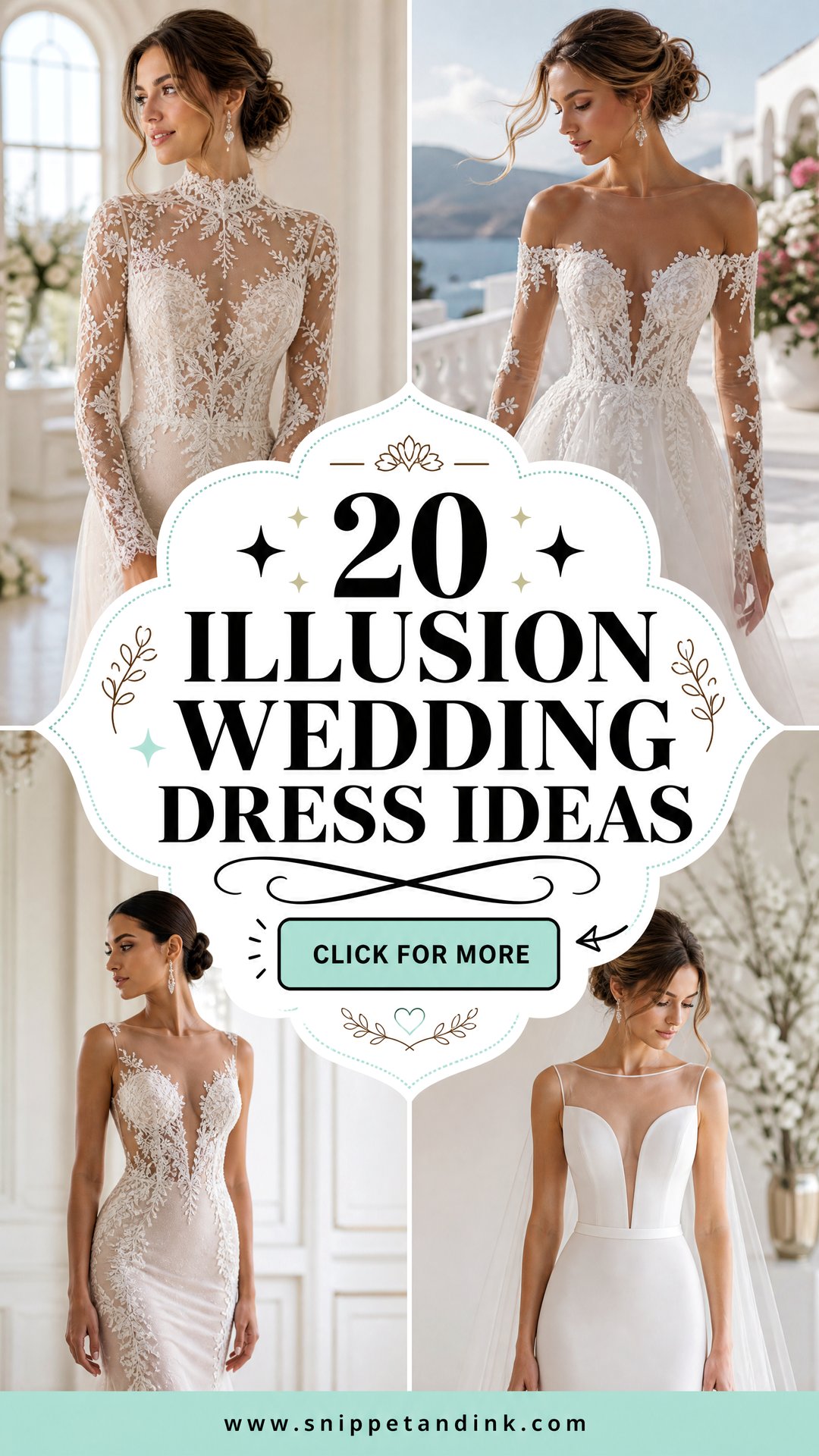
Neck, Sleeves, Back or Sides: Each Placement Has Its Own Rules
Illusion mesh behaves differently depending on where it sits, and so do the accessories and alterations around it. Before falling for a gown, I’d think about which area you want sheer.
Neckline and yoke
The most forgiving placement. It mostly decorates, while the bodice underneath does the supporting. It does limit necklaces, and it shows makeup transfer more than anything else on the dress.
Sleeves
Comfort depends on the armhole and how much the mesh stretches. Taking sleeves in is easy; letting them out often isn’t.
Back
Rules out a standard bra, so cups usually get sewn in. The back also carries the zip or buttons, which is where mesh tends to buckle.
Side panels and corset bodices
The most demanding. Mesh sits over the ribs and waist, where the dress needs the most structure, so boning and lining have to be excellent. Small fit errors show here first.
1. Illusion Neckline A-Line Wedding Dress
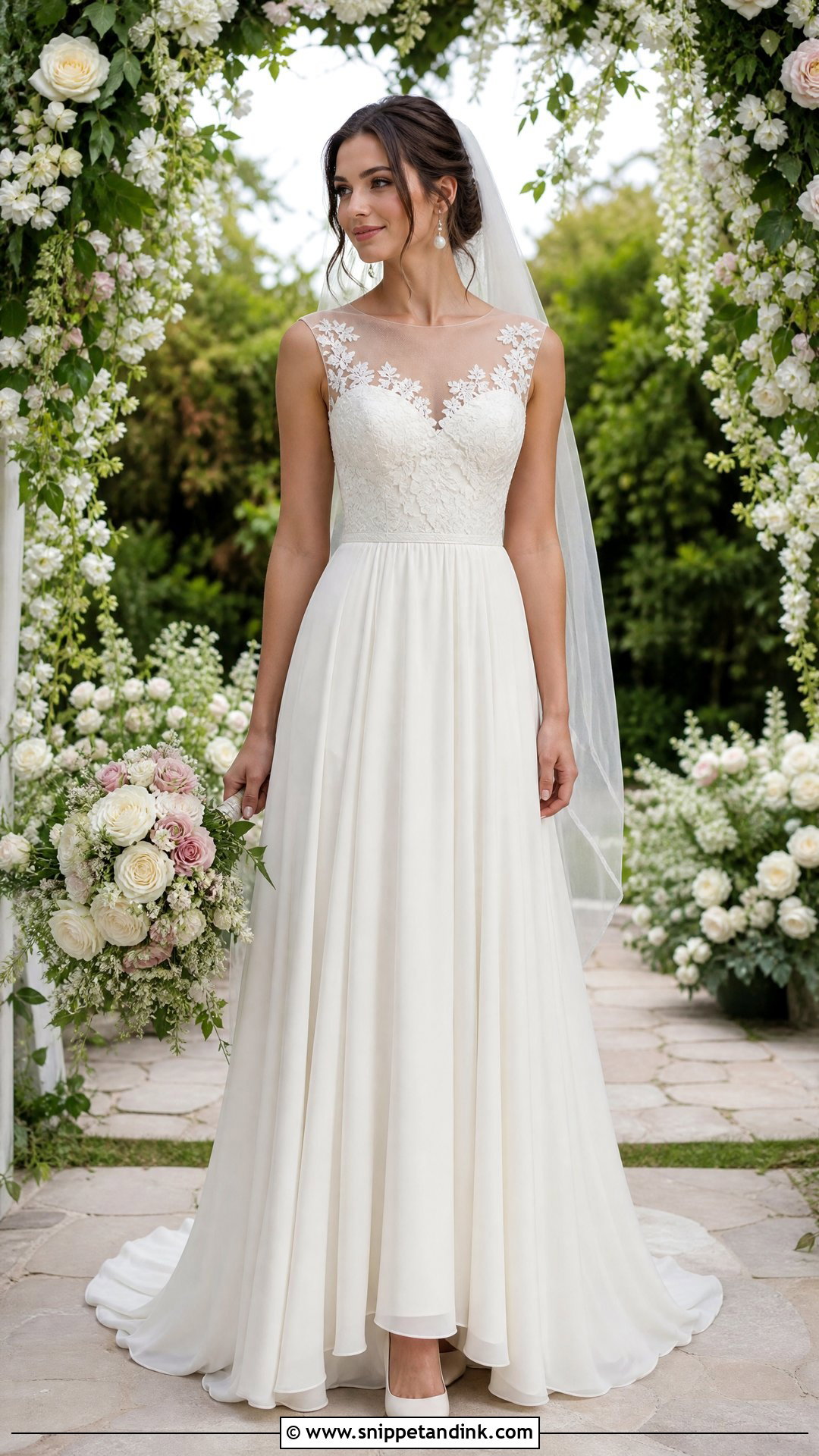
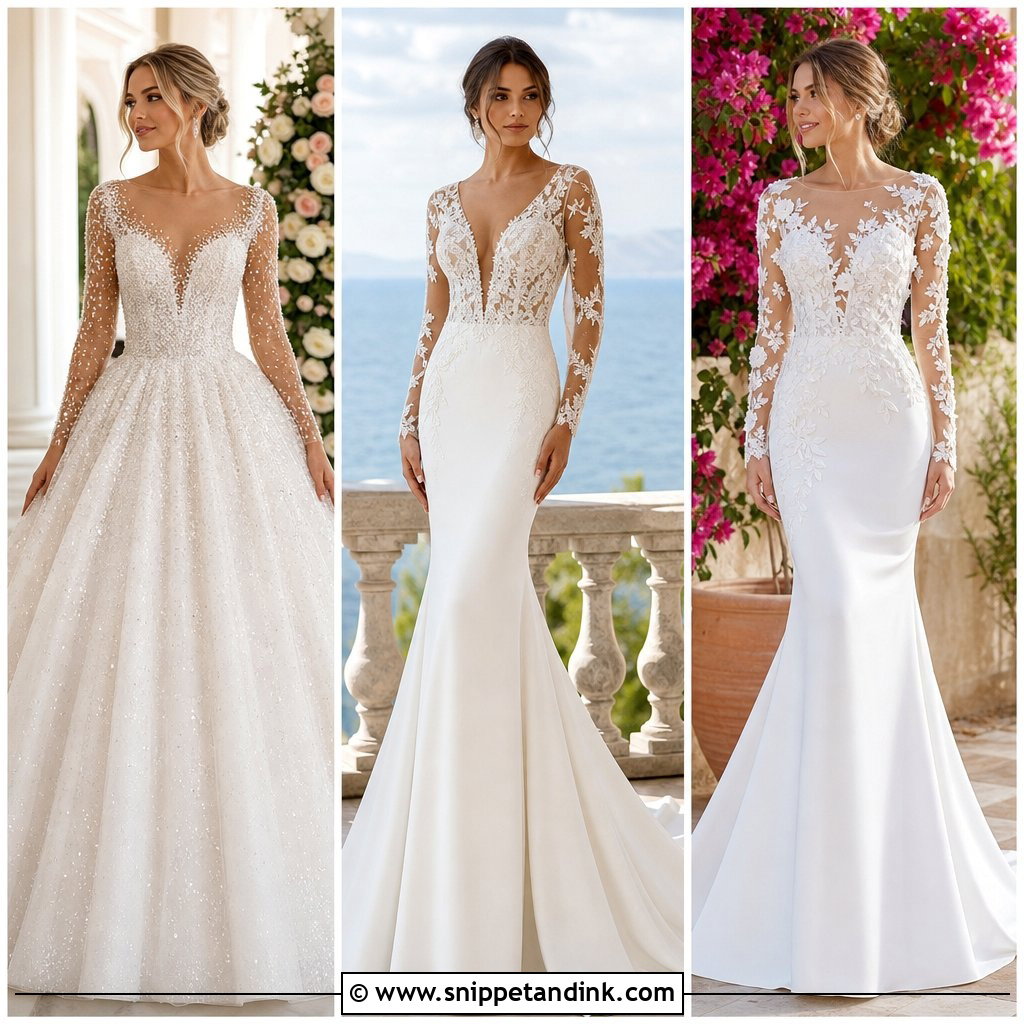
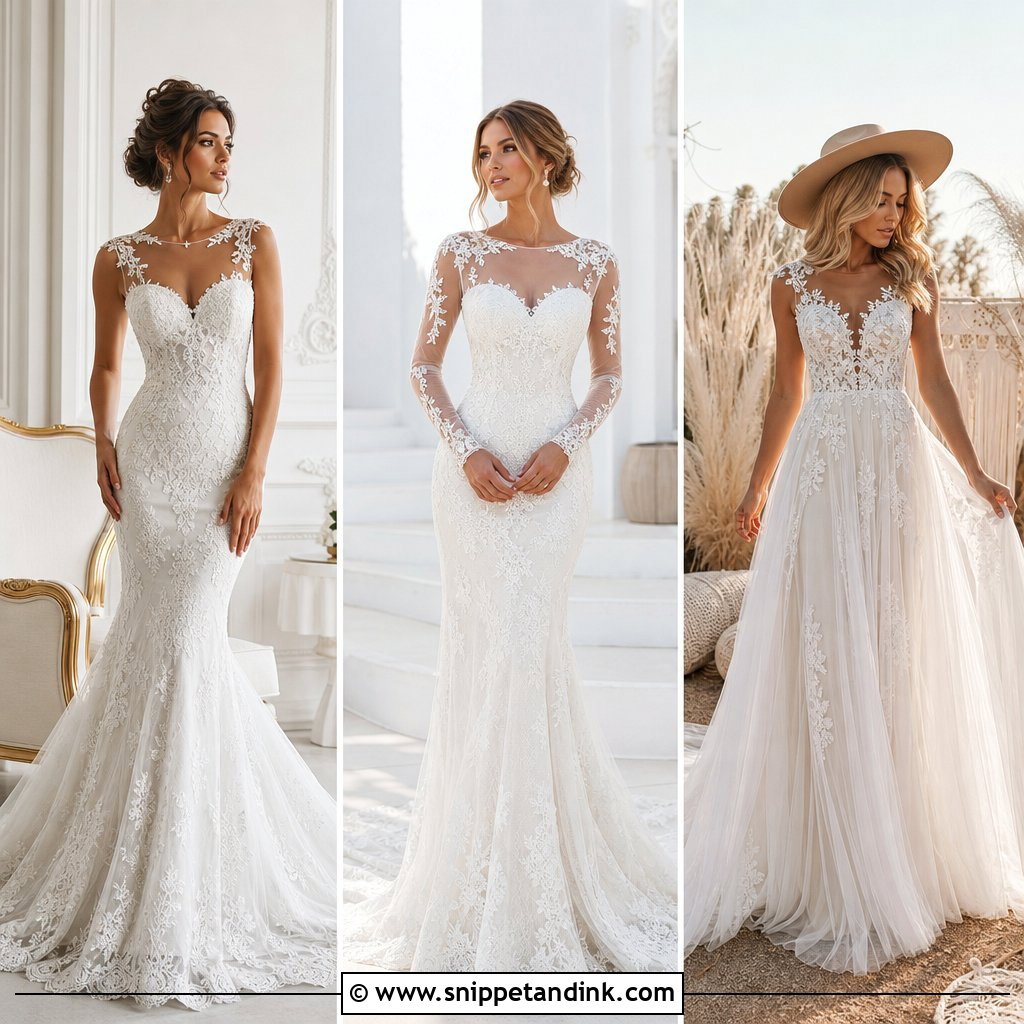
An illusion neckline on an A-line is the gentlest entry point into this style. A fitted lace bodice, sheer mesh over the collarbone and a slowly widening chiffon or tulle skirt give coverage and shape in equal measure, with small florals framing the neckline so the top stays light. Pearl drops, an airy fingertip veil, pointed ivory pumps and a low bun complete it. Gardens and classic venues suit it well. Mesh over the shoulders has to be fitted snugly; if it’s even slightly loose, it ripples into small horizontal folds the moment you sit or reach.
2. Illusion Sleeve Lace Wedding Dress
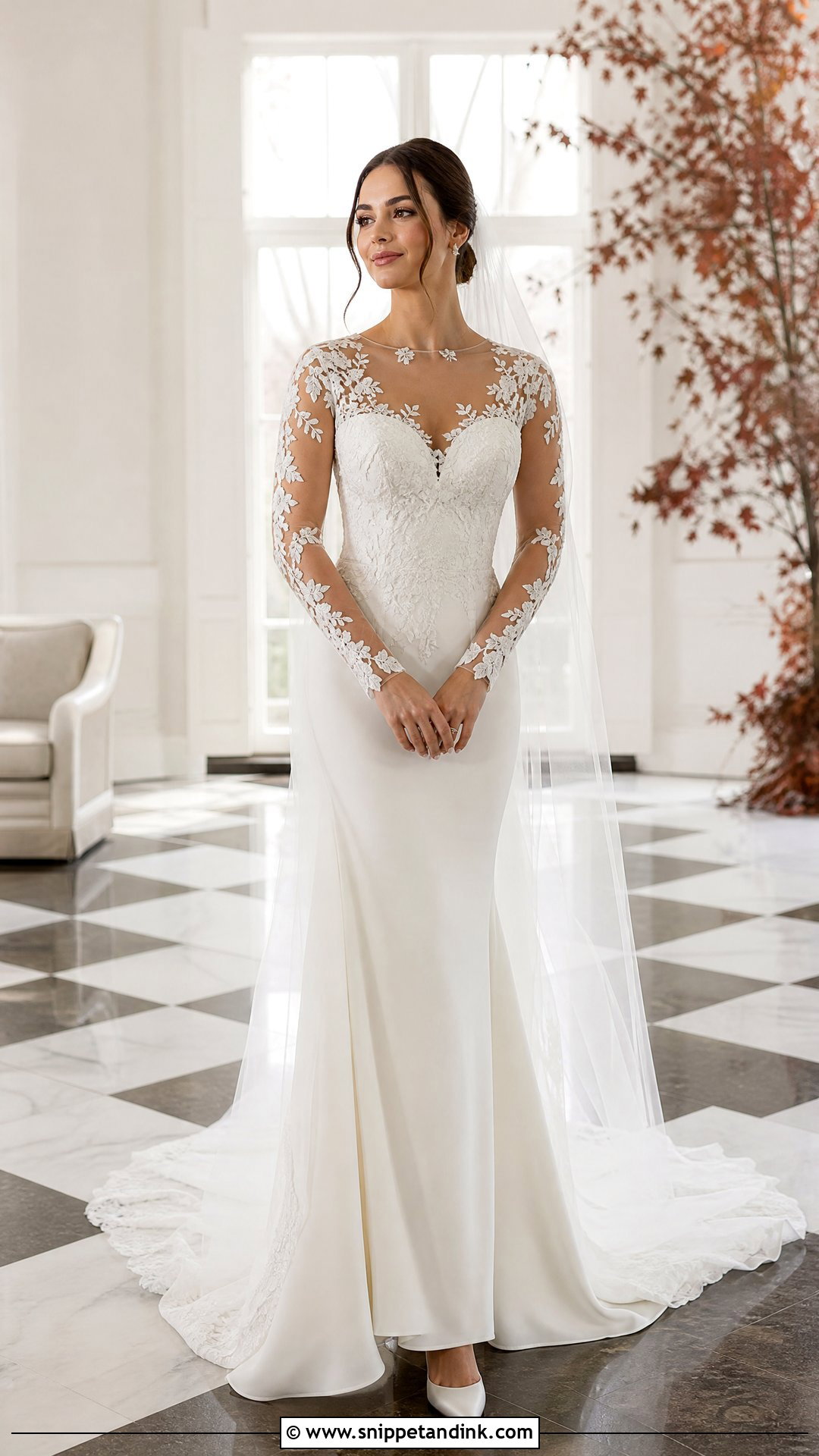
Lace on sheer sleeves looks detailed but stays light, provided the appliqués run naturally from bodice to wrist rather than stopping abruptly at the shoulder. A fitted waist and flowing skirt keep long sleeves from dominating. Covered buttons at the cuffs add a classic note, and a simple cathedral veil makes it formal; small crystal studs and closed-toe satin heels keep attention on the lace. I’d save it for fall, winter or an air-conditioned room. Bend your elbows and roll your shoulders at fittings. Mesh should hold you without pinching anywhere.
3. Illusion Back Mermaid Wedding Dress
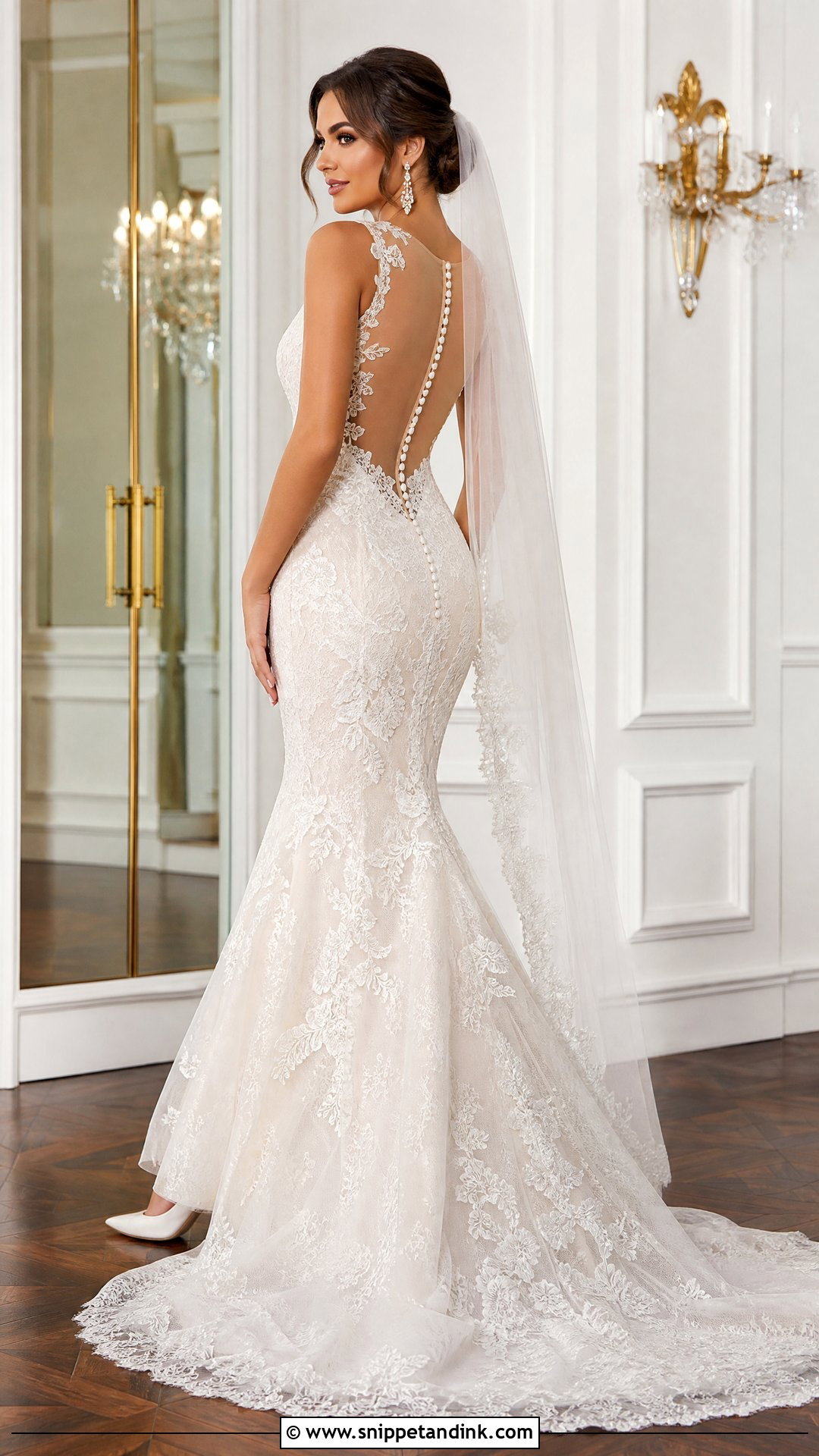
A mermaid with an illusion back is built for the walk up the aisle and the walk back down. Fitted lace follows the waist and hips and flares near the knee, while behind, appliqués on transparent mesh look painted onto the skin, sometimes with a line of covered buttons down the center. A polished updo, long drop earrings, pointed pumps and a sheer veil that comes off after the ceremony finish it. The weak point on this style is the zip. Where a zip meets sheer mesh, the mesh can buckle beside it, so walk and sit at every fitting and have the seamstress check the back is lying flat.
4. Illusion Plunging Neckline Wedding Dress
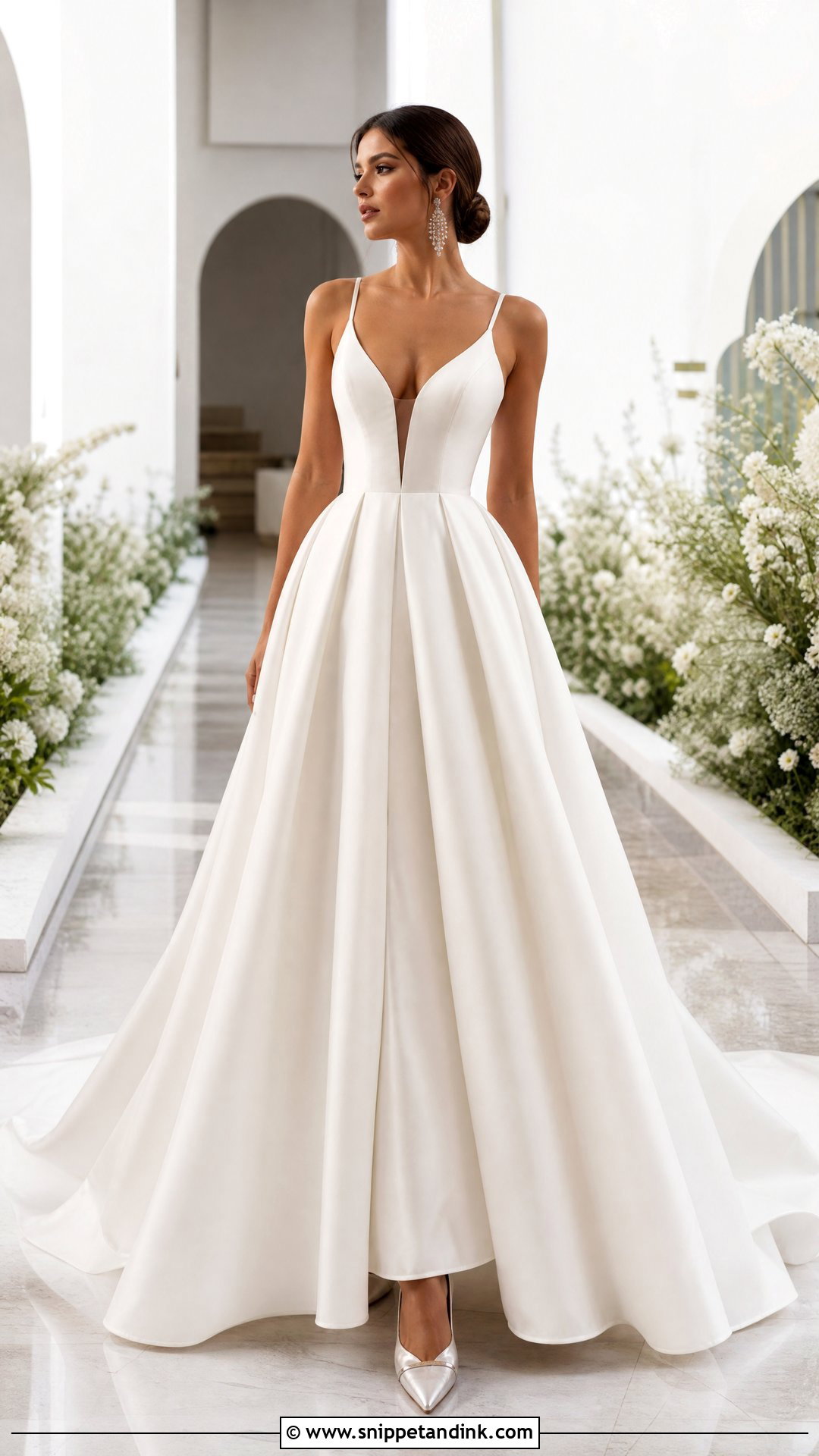
A plunging neckline stays refined when near-invisible mesh holds it. Look for a deep V bodice with structured cups and a narrow mesh insert, over a full A-line or ball gown skirt that balances the bold top. Statement earrings, a smooth low bun and simple satin heels complete it, and skip the necklace; it competes with the V and can snag the mesh. It belongs in a modern ballroom or a formal indoor venue. The test I always run on a plunge: lean forward as if signing the register. If the cups gape, the bodice needs taking in before anything else is touched.
5. Illusion High Neck Wedding Dress
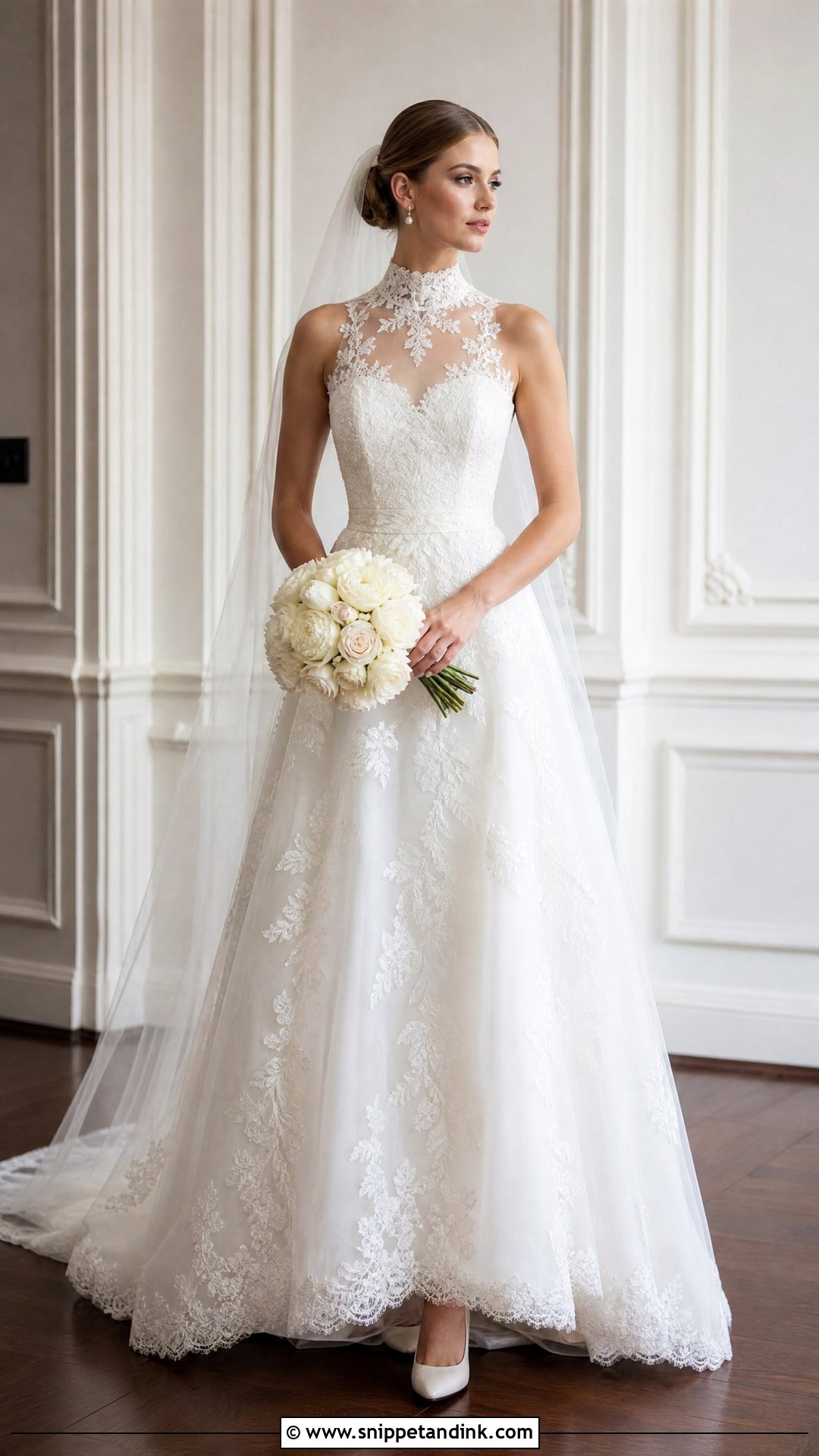
A high illusion neck gives coverage without heaviness. Fine tulle rises from a sweetheart or scoop bodice to the base of the neck, and lace motifs, tiny pearls or fine embroidery can build a collar effect. A clean A-line skirt keeps it balanced and easy to move in. Pearl earrings, a sleek chignon, a narrow chapel veil and closed-toe pumps or low block heels complete it. Avoid bulky necklaces, which hide the neckline and pull threads. Turn your head fully both ways at the fitting; a high collar that buckles at the side of the neck needs reshaping, not just loosening.
6. Illusion Off-Shoulder Wedding Dress
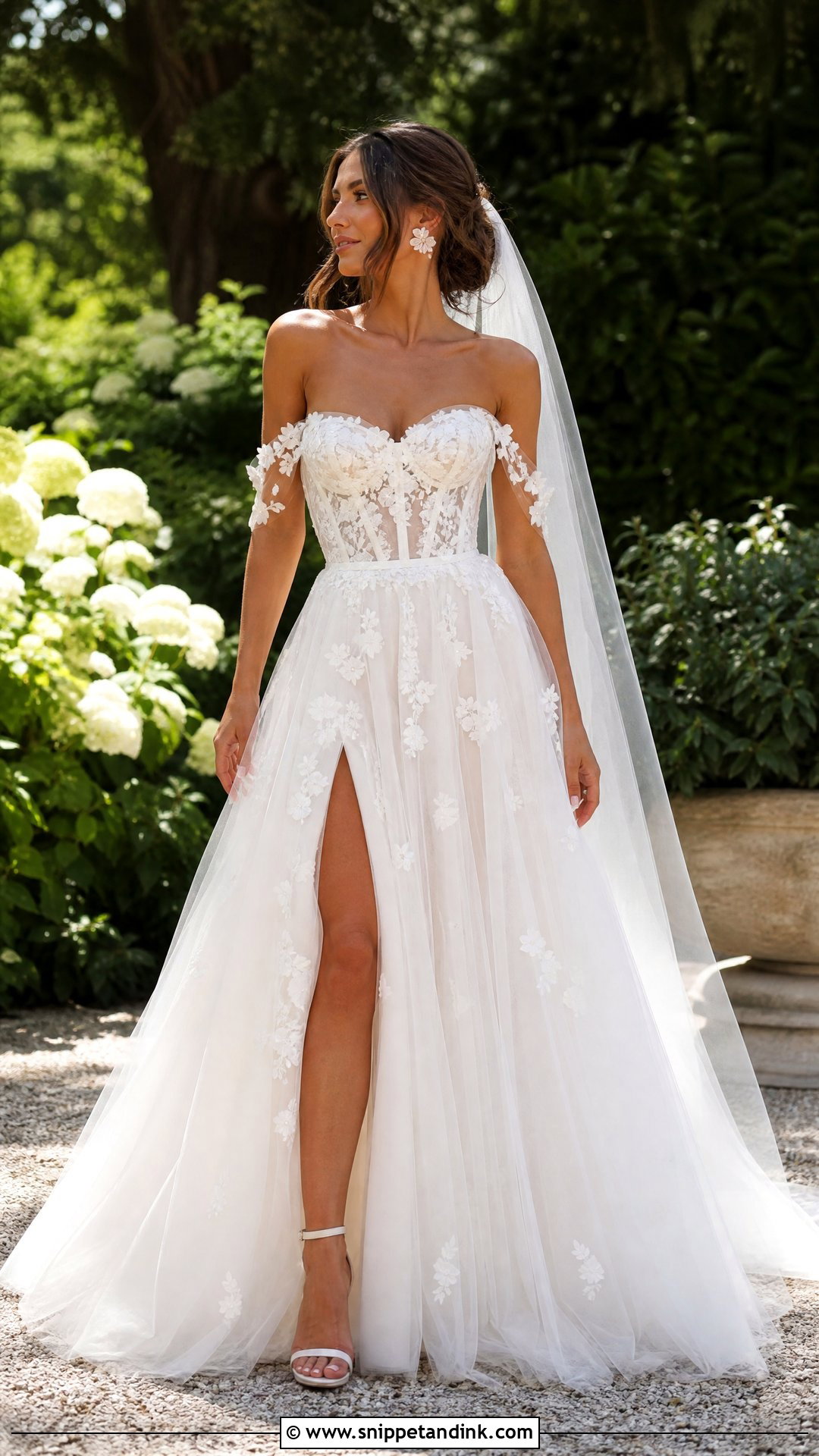
Off-shoulder straps alone tend to slip, and an illusion panel across the shoulders solves that by tying them to the bodice. Look for lace tracing the shoulders into a supportive fitted bodice, a defined waist and a flowing tulle skirt. Floral earrings, a loose low bun and a light veil set beneath it complete the look, with ivory heels that have ankle support for garden paths. The panel should be matte enough not to shine against the skin. Push your arms forward and up during the fitting; if the shoulder lace curls at the edge, the mesh is cut a fraction too tight.
7. Illusion Cap Sleeve Ball Gown
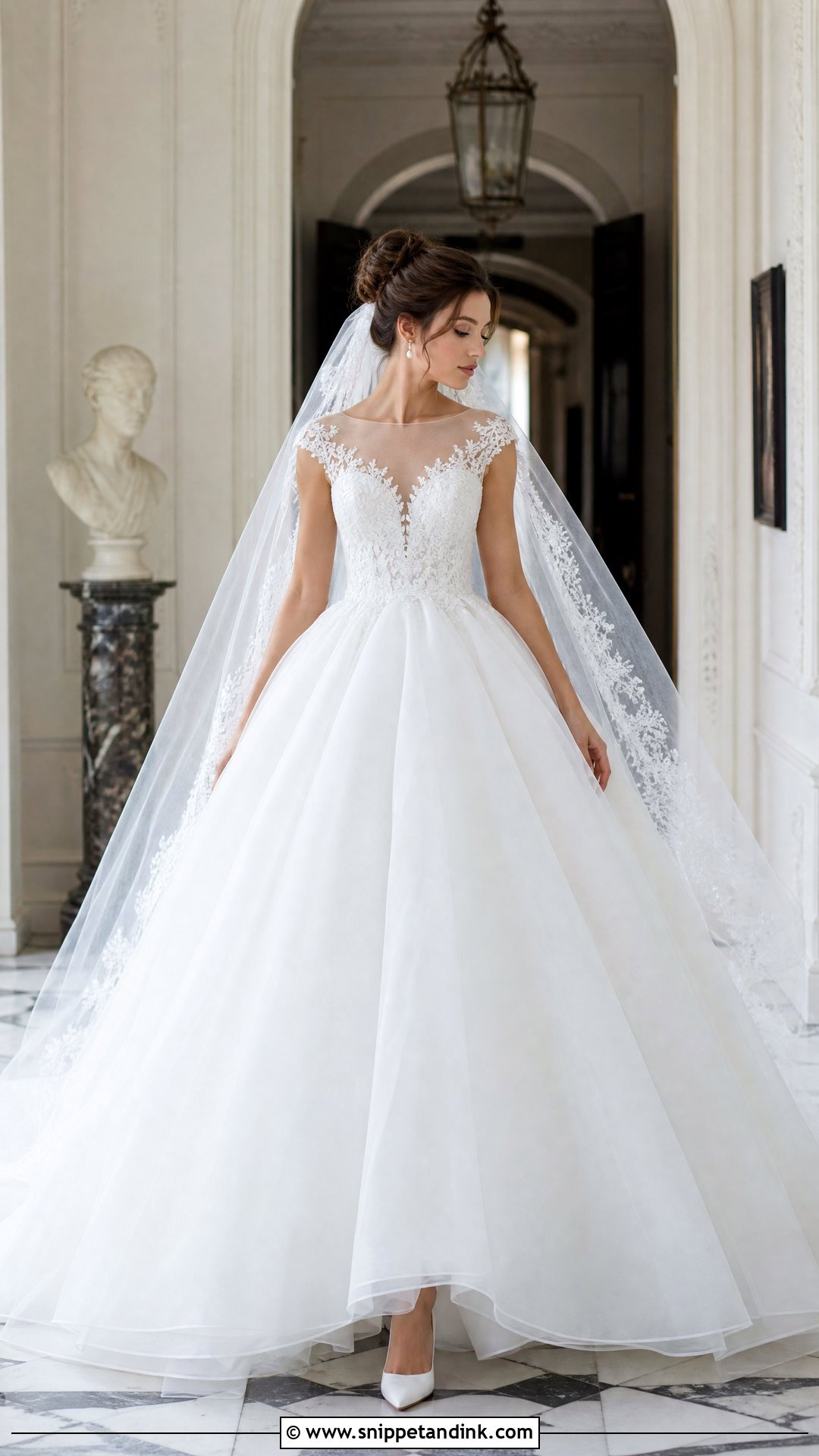
A cap sleeve ball gown is classic, with just a touch of coverage at the shoulder. A structured bodice under sheer tulle and lace that spills slightly over the shoulders balances a full satin, organza or layered tulle skirt. A cathedral veil, pearl earrings and classic pointed pumps finish it, with a neat updo so loose hair doesn’t tangle in the appliqués. It suits grand indoor venues and formal ceremonies. Armholes are where cap sleeves fail. Check them closely during alterations, because a tight one will stop you hugging anyone with both arms.
8. Illusion Bodice Princess Wedding Dress
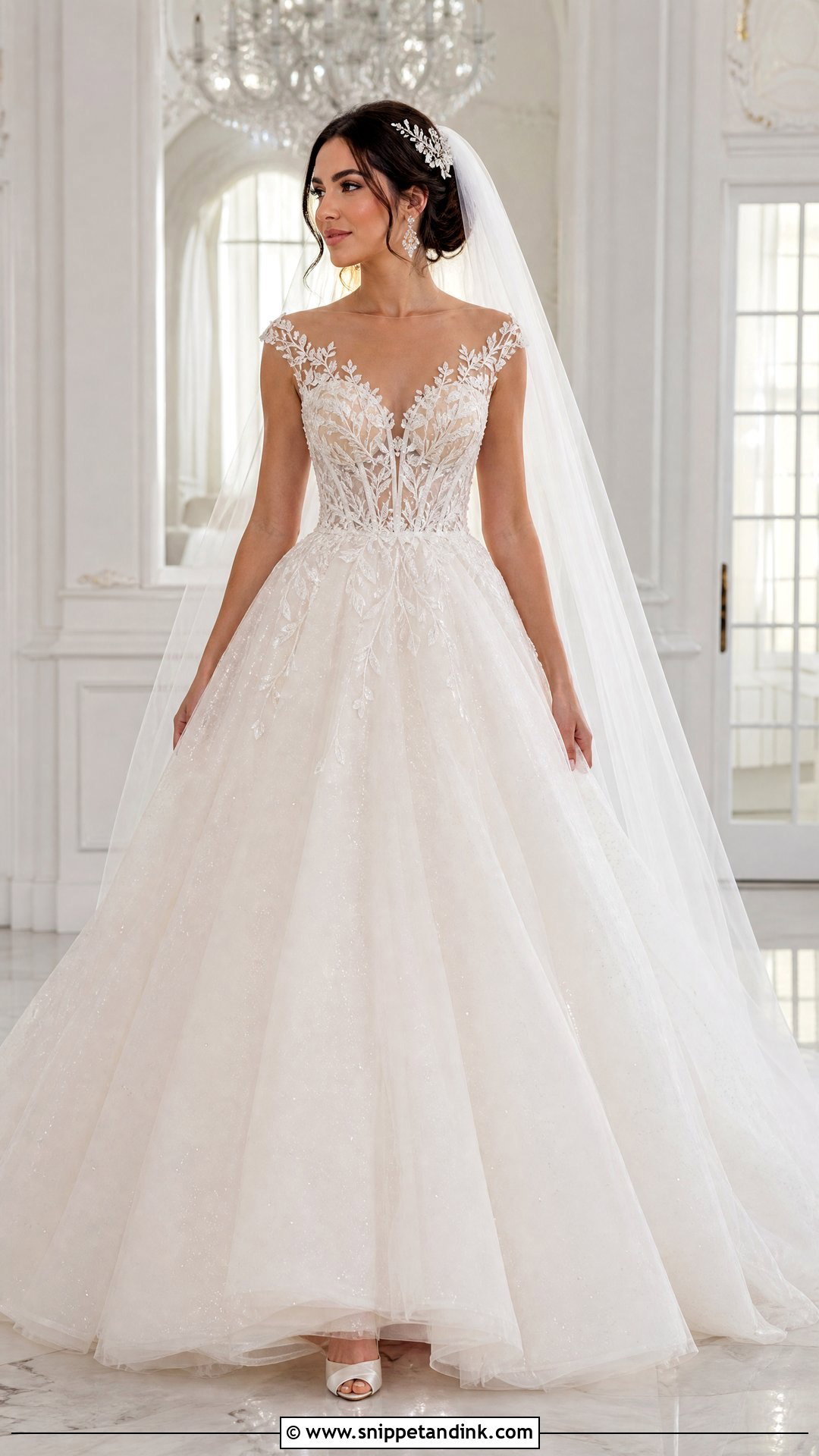
A princess gown with an illusion bodice pairs volume with a delicate top. Choose a structured corset base covered in skin-tone mesh, with embroidered vines and lace placed with care, and a full layered skirt for drama. A crystal comb, a long plain veil and satin heels are enough; keep other jewelry minimal. It fits hotel ballrooms, estates and settings where a big skirt makes sense. Ask the consultant to photograph you with flash on her phone before deciding. Embroidery that looks even in the mirror can show gaps or a lopsided line once the flash flattens everything, and it’s far easier to adjust before the order is placed.
9. Illusion Side Panel Wedding Dress
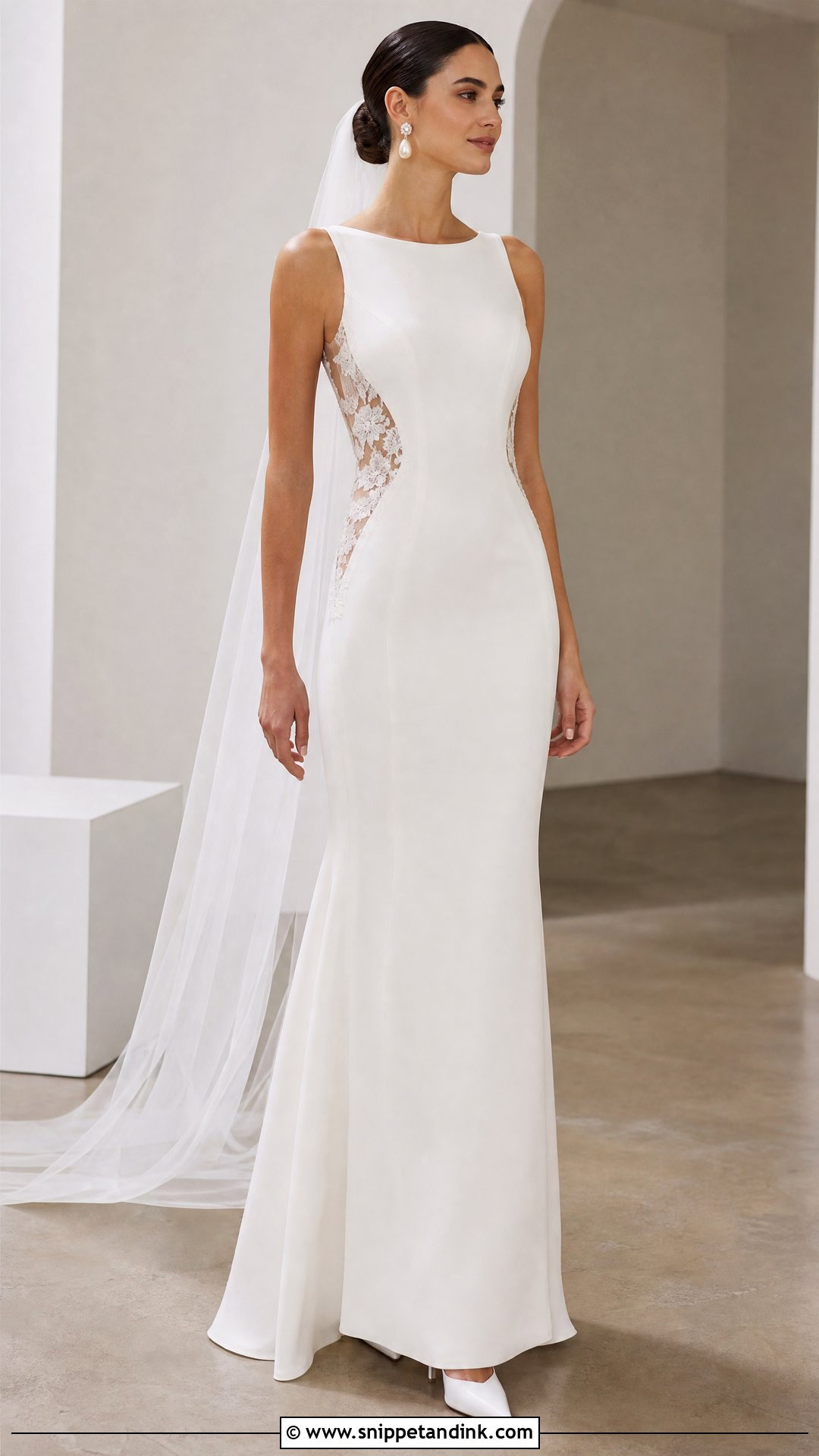
Side panels sculpt a contemporary shape without extra decoration, and crepe is the best partner because its plain surface sets off the sheer inserts. Edge the panels with fine lace or subtle beading so they blend into the opaque bodice. Sleek earrings, a structured low bun, pointed pumps and a plain chapel veil keep it streamlined. Mesh on its own doesn’t support anything, so the dress needs cups, boning or a firm lining doing that work. In bright light, look at both sides in a three-way mirror. Panels drift slightly asymmetric more often than you’d think, and they must lie flat against the ribs.
10. Illusion Back Satin Wedding Dress
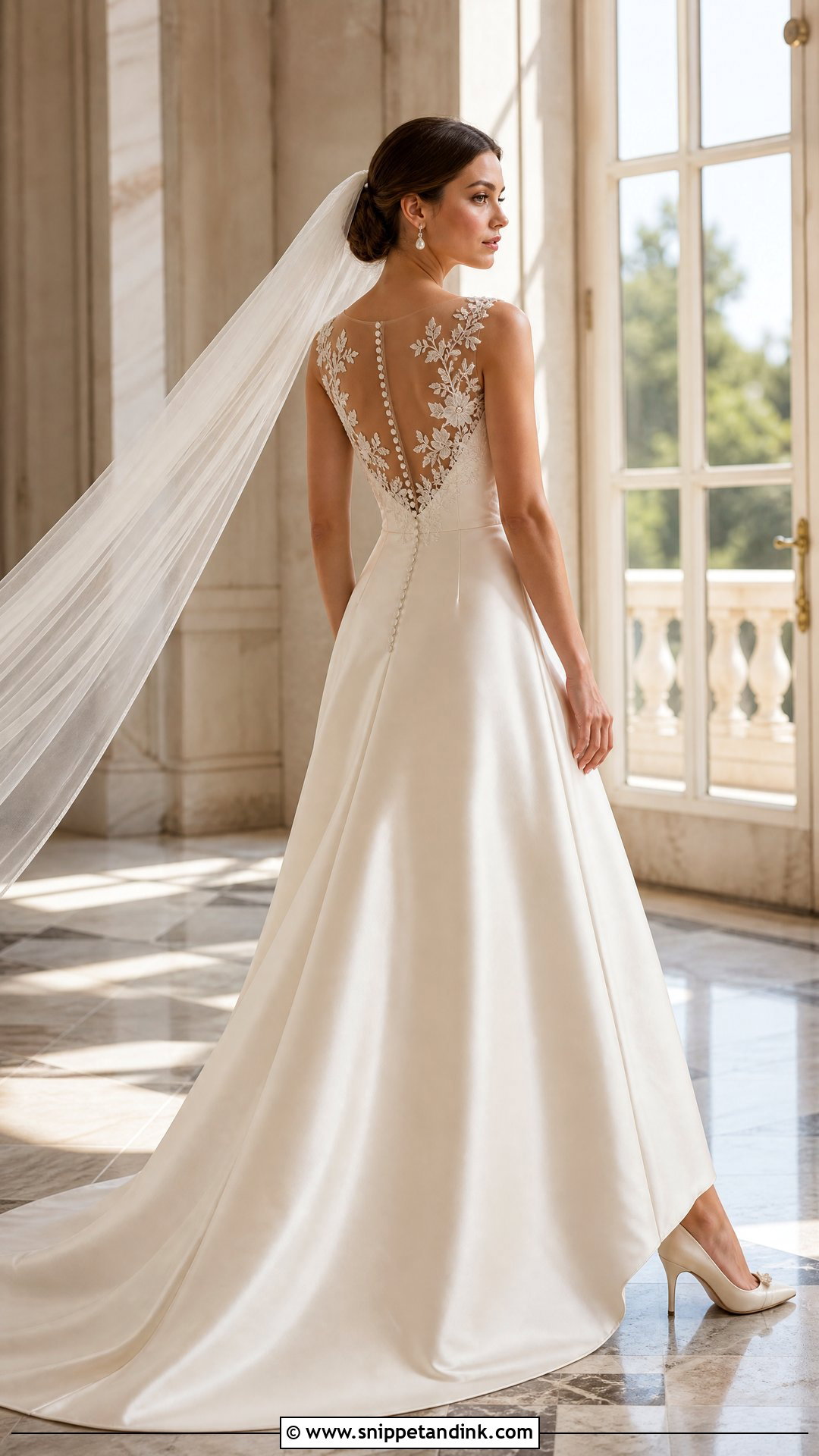
Satin with an illusion back plays smooth against sheer. Choose a clean A-line or fit-and-flare with a plain front, a defined waist and a back decorated with lace vines or covered buttons, so the back becomes the focal point. A low bun or side-swept hair keeps it visible. Pearl drops, satin pumps and a light veil without heavy embellishment complete a look that sits comfortably at a formal ceremony or a minimalist venue. Satin is heavier than the mesh it joins, so the join near the shoulders and zip can gap when you sit. Have the seamstress check it seated, not just standing.
11. Illusion Corset Wedding Dress
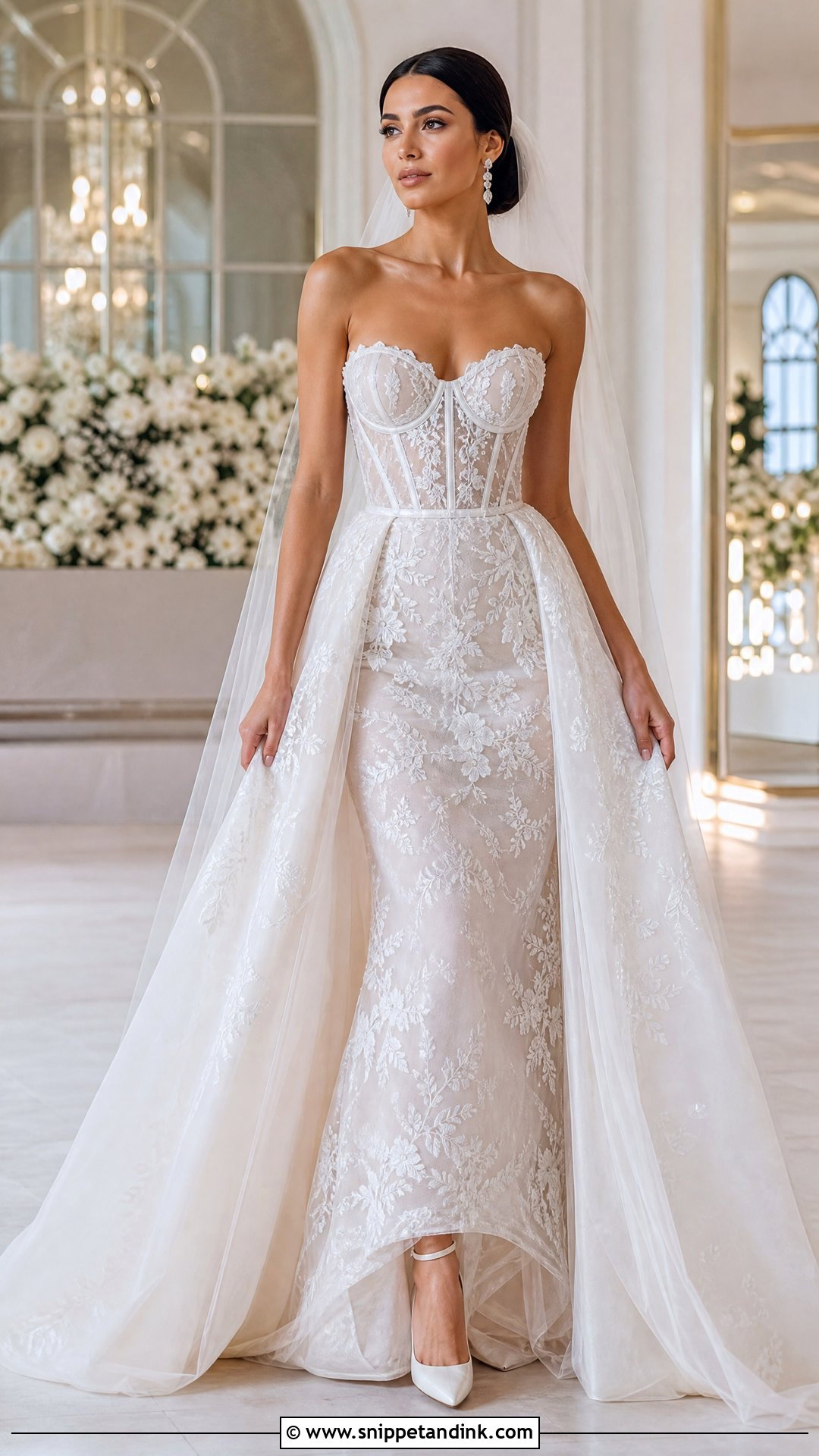
An illusion corset puts its structure on show. Pick a bodice with visible boning, supportive cups and sheer panels softened by florals or small pearls, over an A-line skirt for balance. A detachable overskirt gives ceremony drama and leaves a lighter base for dancing. Crystal earrings, a clean updo and pointed ivory heels finish it, with a plain veil if the corset is already embroidered. The question I ask at fittings: are you adjusting it? If you tug at the top every few minutes, the corset isn’t fitted yet. A good one lets you breathe, sit and dance without touching it.
12. Illusion Bateau Neck Wedding Dress
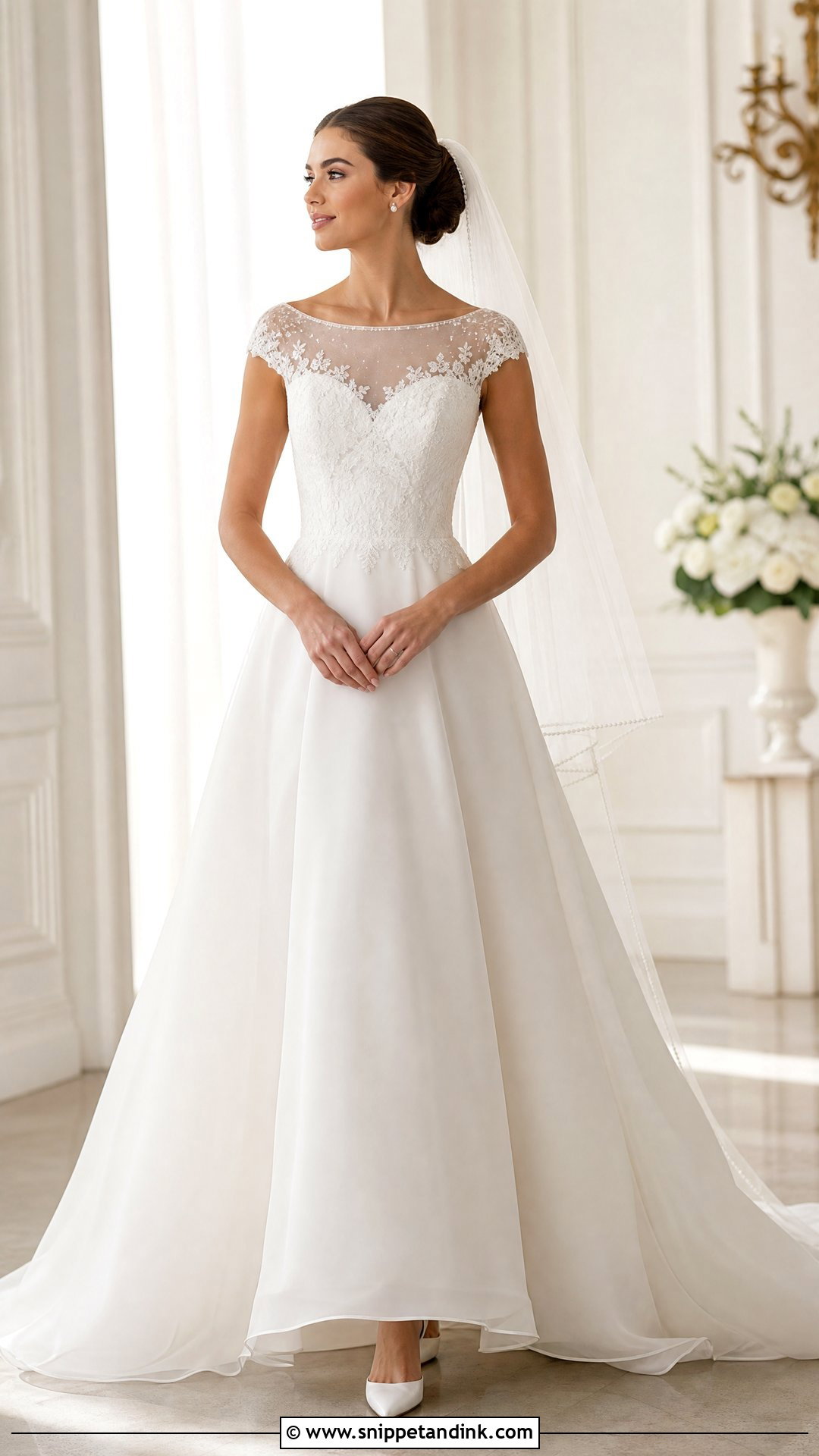
A bateau illusion neckline runs across the collarbones and frames the face. Look for a fitted lace bodice under mesh that extends from shoulder to shoulder, with a flowing chiffon or organza skirt to soften the wide line. Pearl studs, a smooth updo, a fingertip veil at the back of the hair and low pointed heels keep it refined; no necklace needed. It suits classic, vintage-leaning and understated ceremonies. Shoulder seams on a bateau must sit exactly on top of the shoulder. Too far out and the mesh slides toward the arm and wrinkles at the underarm.
13. Illusion Three-Quarter Sleeve Wedding Dress
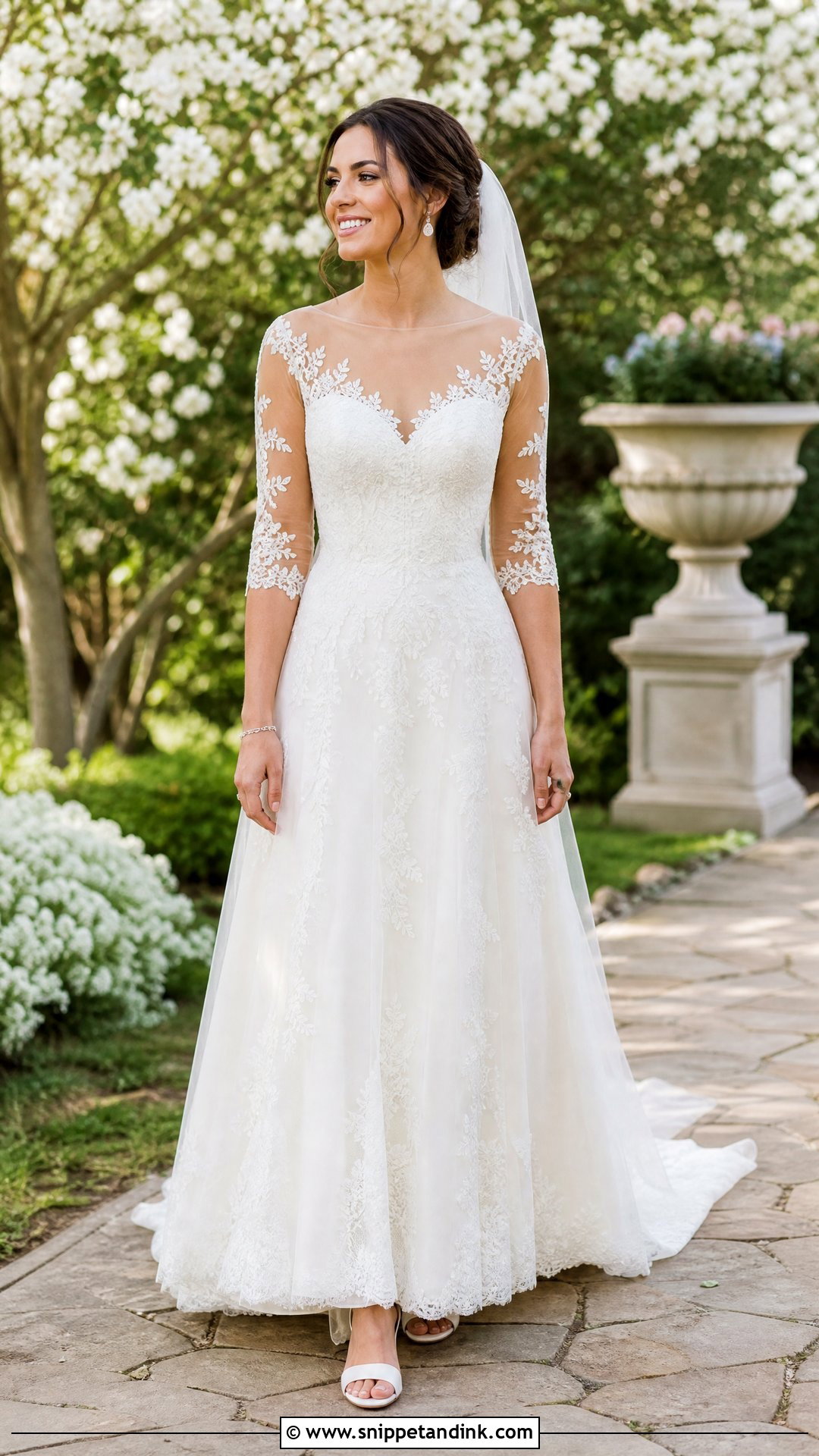
Three-quarter sleeves cover the arm but leave the wrist free, which feels lighter and shows off a bracelet. Choose a fitted lace bodice with sheer sleeves ending below the elbow and a softly flared A-line skirt, with appliqués thinning out as they travel down the arm. Pearl earrings, a delicate bracelet, a simple veil and comfortable block heels suit it, especially on grass, gravel or old floors. Spring and fall weddings are its natural season. The sleeve edge sits right where the forearm widens, so bend your elbow fully at the fitting; a tight edge rides up and stays there.
14. Illusion Scoop Neck Wedding Dress
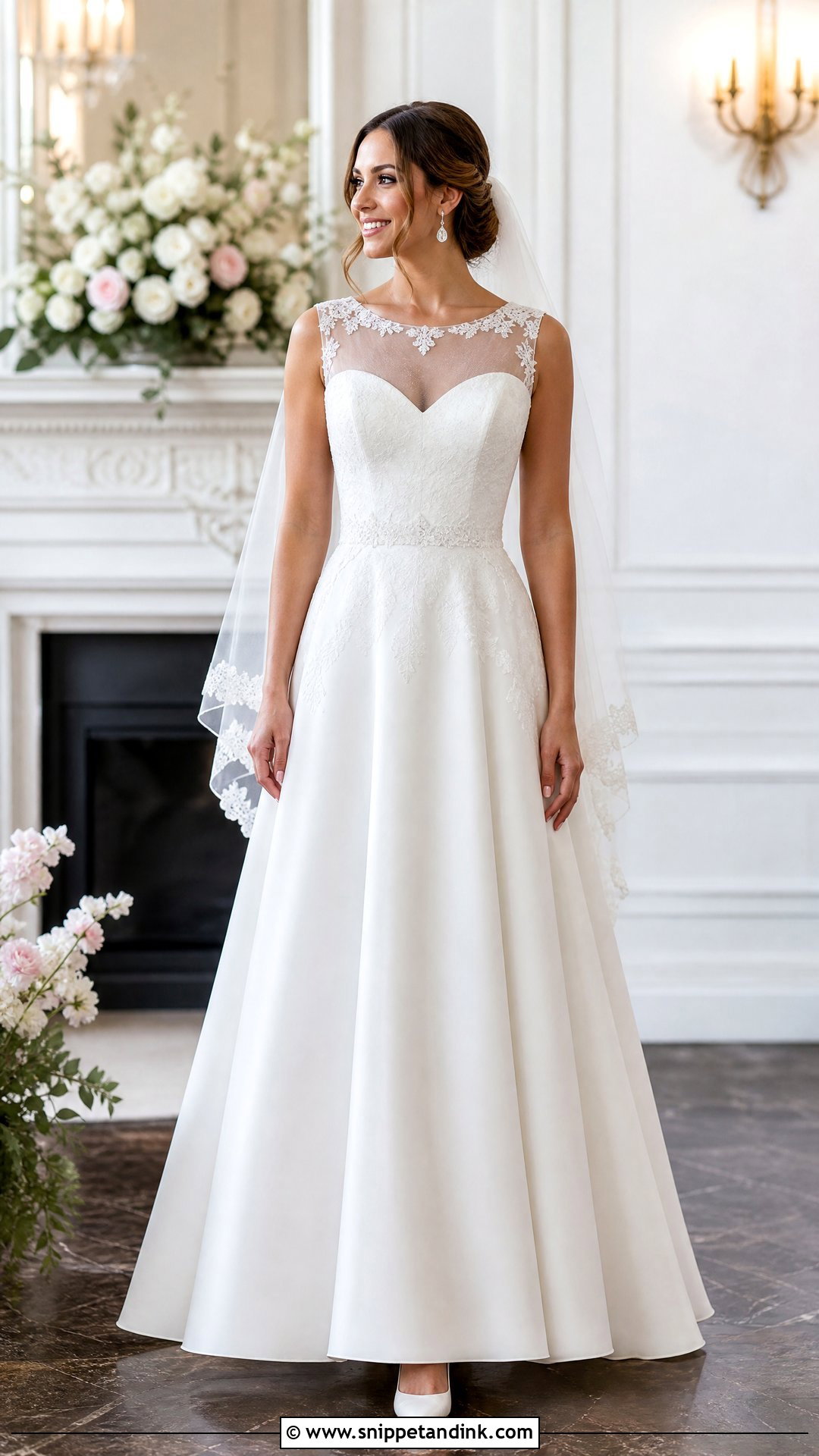
A scoop illusion neckline is the soft middle ground between a plunge and a high neck. Start with a sweetheart bodice and add sheer mesh shaped into a rounded line above it, with small lace motifs tracing the curve. A waist-skimming A-line skirt keeps the shape easy to wear. Teardrop earrings, a loose chignon, a fingertip veil and low satin pumps complete it. It suits brides who want secure coverage with an open shape. Choose matte mesh close to your complexion. Then sit down in it, since a scoop that wrinkles when seated usually means the bodice length or shoulder needs a small adjustment.

15. Illusion Keyhole Back Wedding Dress
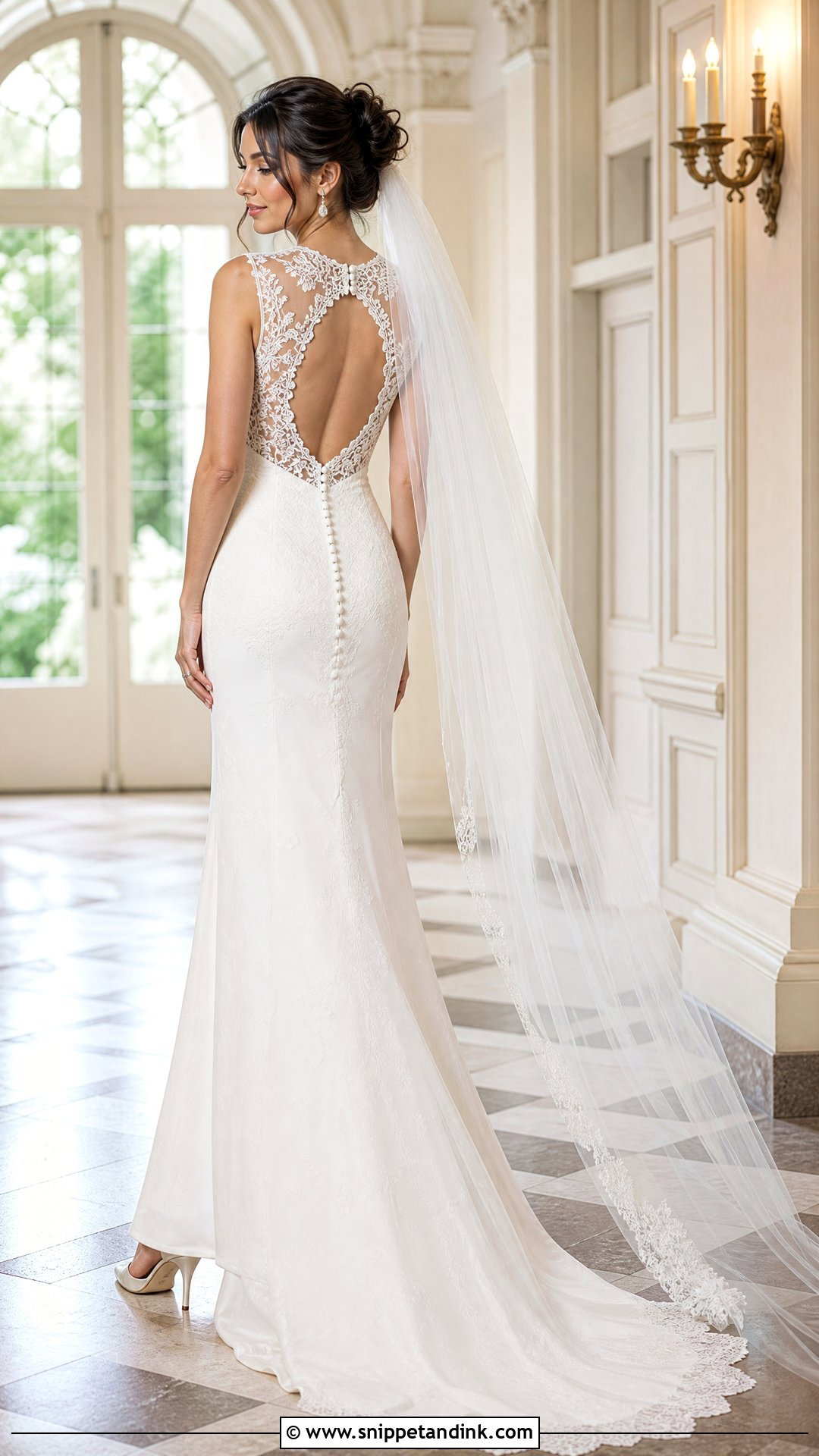
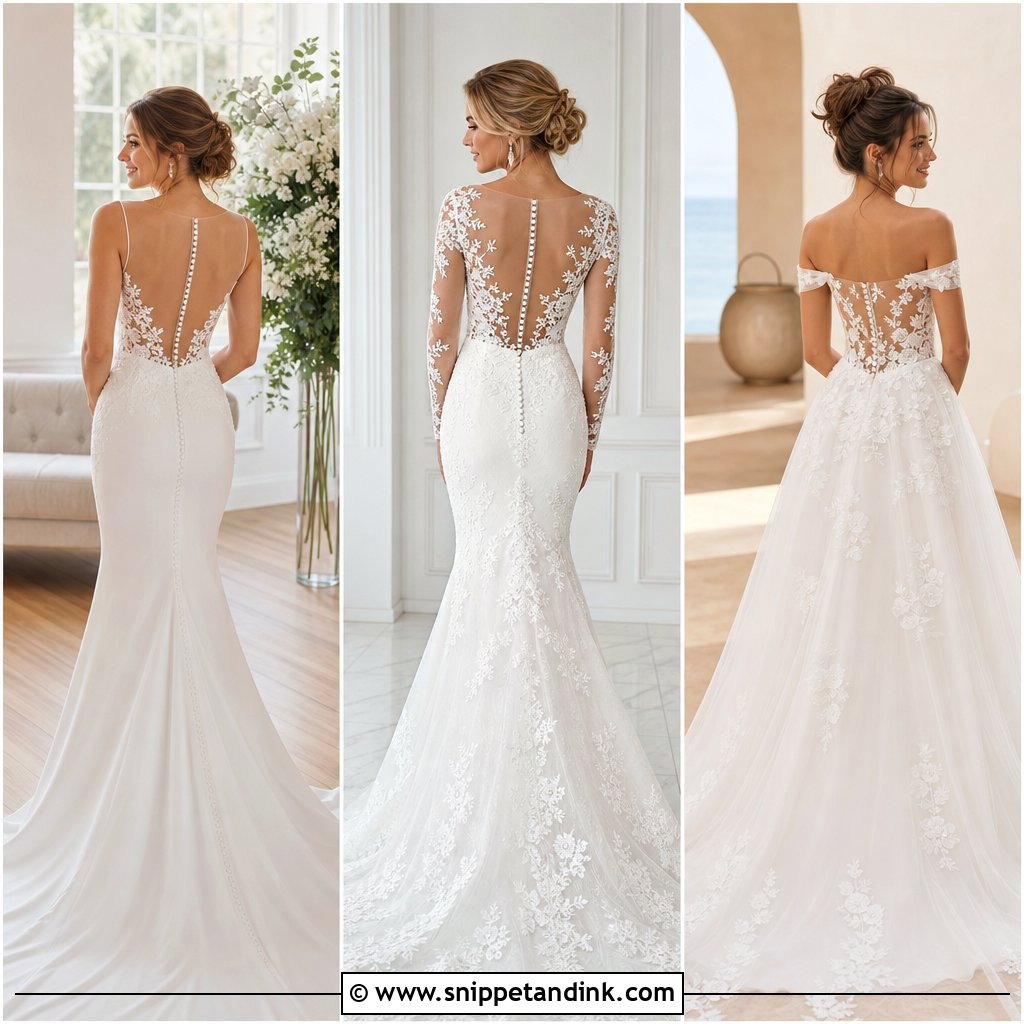
An illusion keyhole back shows a shape without baring the whole back. Choose a lace or crepe gown with mesh around an oval, teardrop or narrow keyhole, perhaps with covered buttons emphasizing the center line, and a fitted A-line or sheath skirt. Wear your hair up, pick a veil that comes off easily, and add delicate earrings and pointed heels; back necklaces snag tulle and fight the keyhole. You can’t see your own back properly in a mirror, so ask someone to photograph it at each fitting. Those photos show appliqué placement, mesh color, zip alignment and symmetry far better.
16. Illusion Sheath Wedding Dress
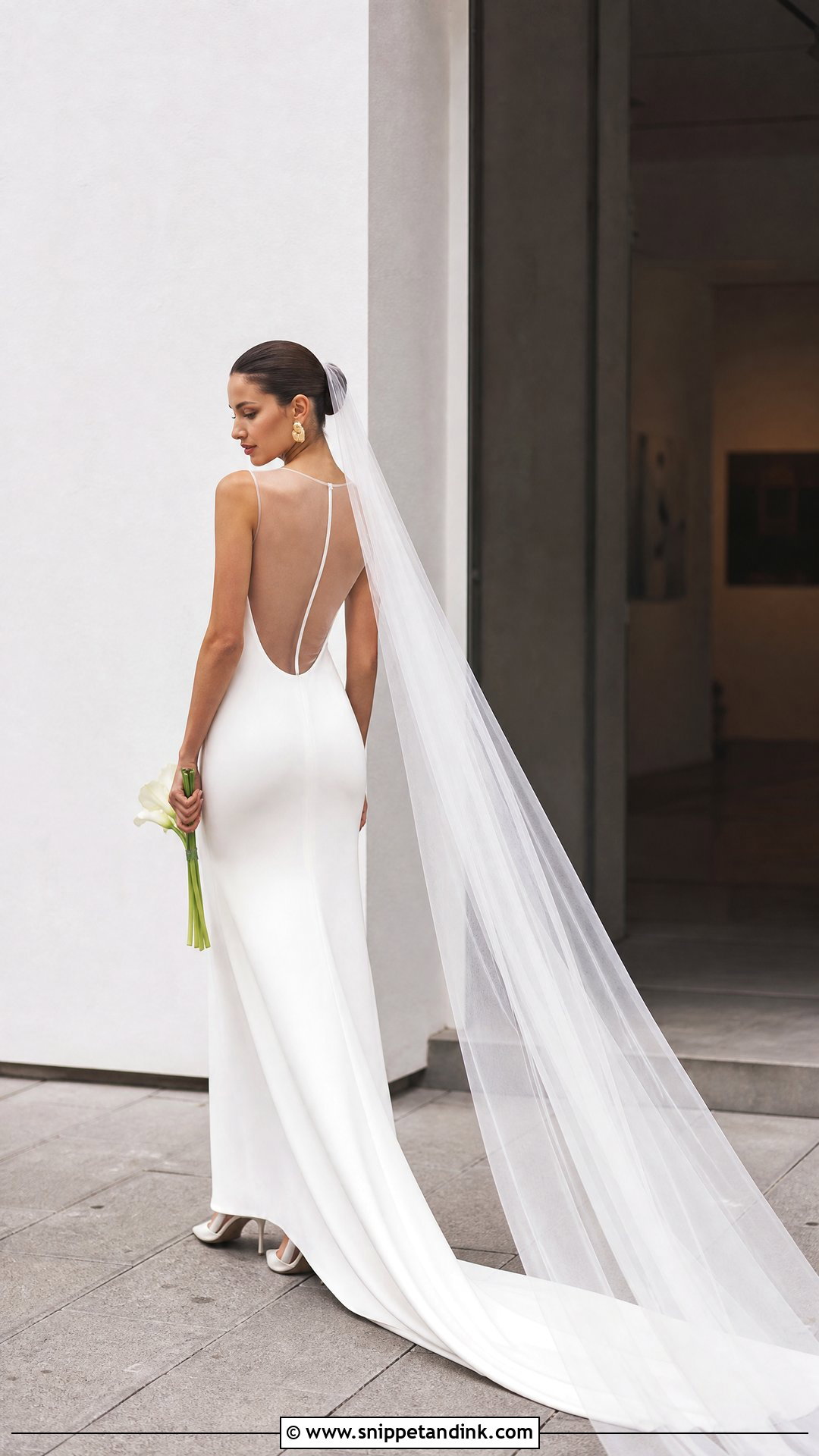
A sheath with illusion details is light and streamlined, suited to modern or relaxed weddings. Choose narrow crepe or lace with a sheer neckline, a low illusion back or subtle mesh side panels; with a skirt this close to the body, simple detailing balances better than dense embellishment. Sculptural earrings, a sleek bun, pointed slingbacks and a narrow chapel veil complete it. Lofts, galleries, coastal venues and smaller weddings suit it best. Check the skirt lining in strong light, because unlined or thinly lined sheaths can turn transparent in sunlight. Take a full stride too; a sheath that’s tight at the knee forces small steps all day.
17. Floral Illusion Wedding Dress
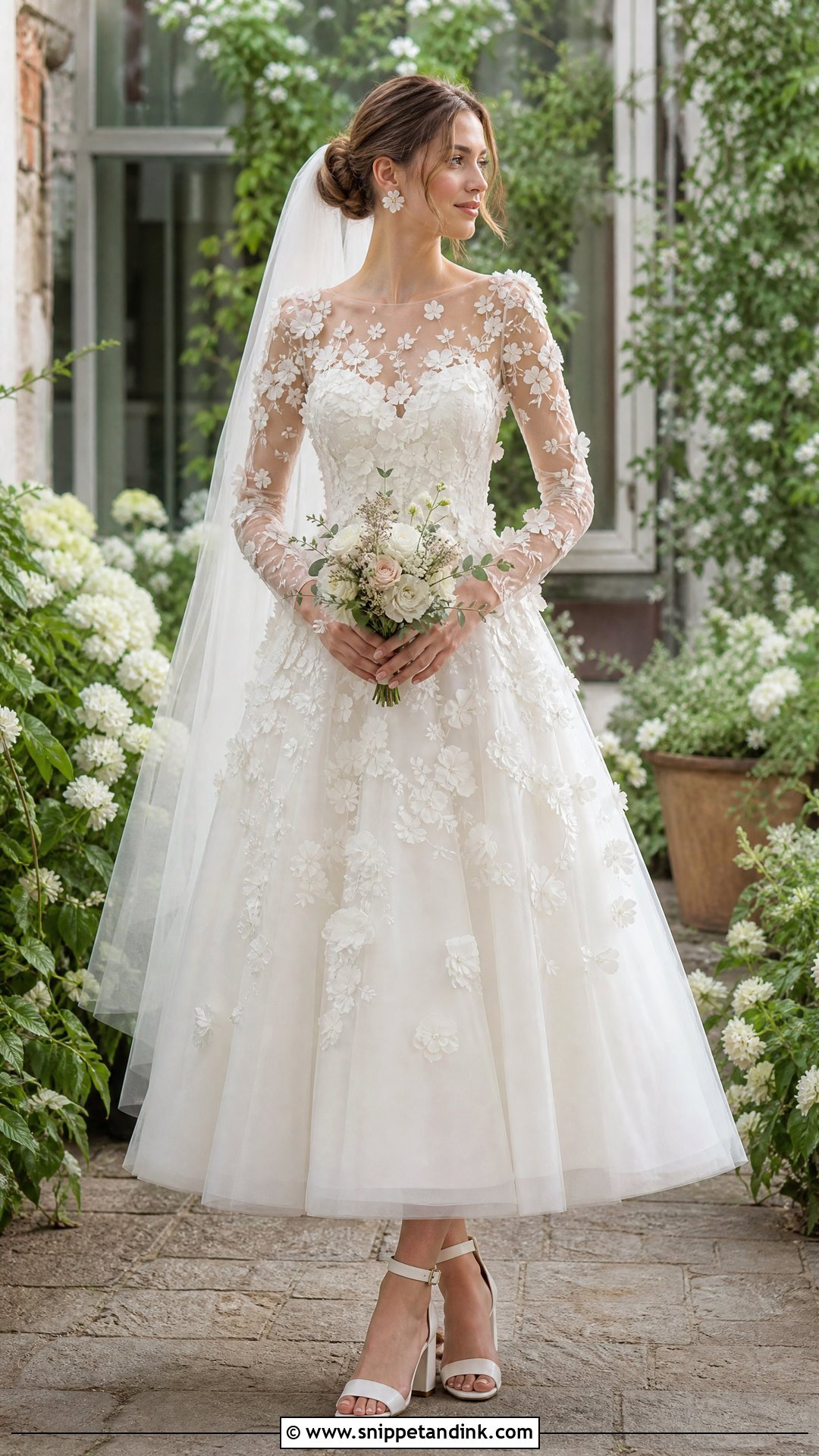
Three-dimensional flowers turn sheer tulle into a garden piece. Choose a gown with floral appliqués scattered across the illusion neckline, bodice, sleeves and upper skirt, and an A-line so the texture stays airy. Small flower earrings, a soft low bun, a plain veil, ivory block heels for garden paths and a restrained bouquet keep the gown the focus. Raised petals are often attached only at their centers, and their loose edges catch on veil tulle. A good alterations specialist can tack them down, reinforce the delicate ones and shift any that land awkwardly on a seam or cup edge.
18. Beaded Illusion Wedding Dress
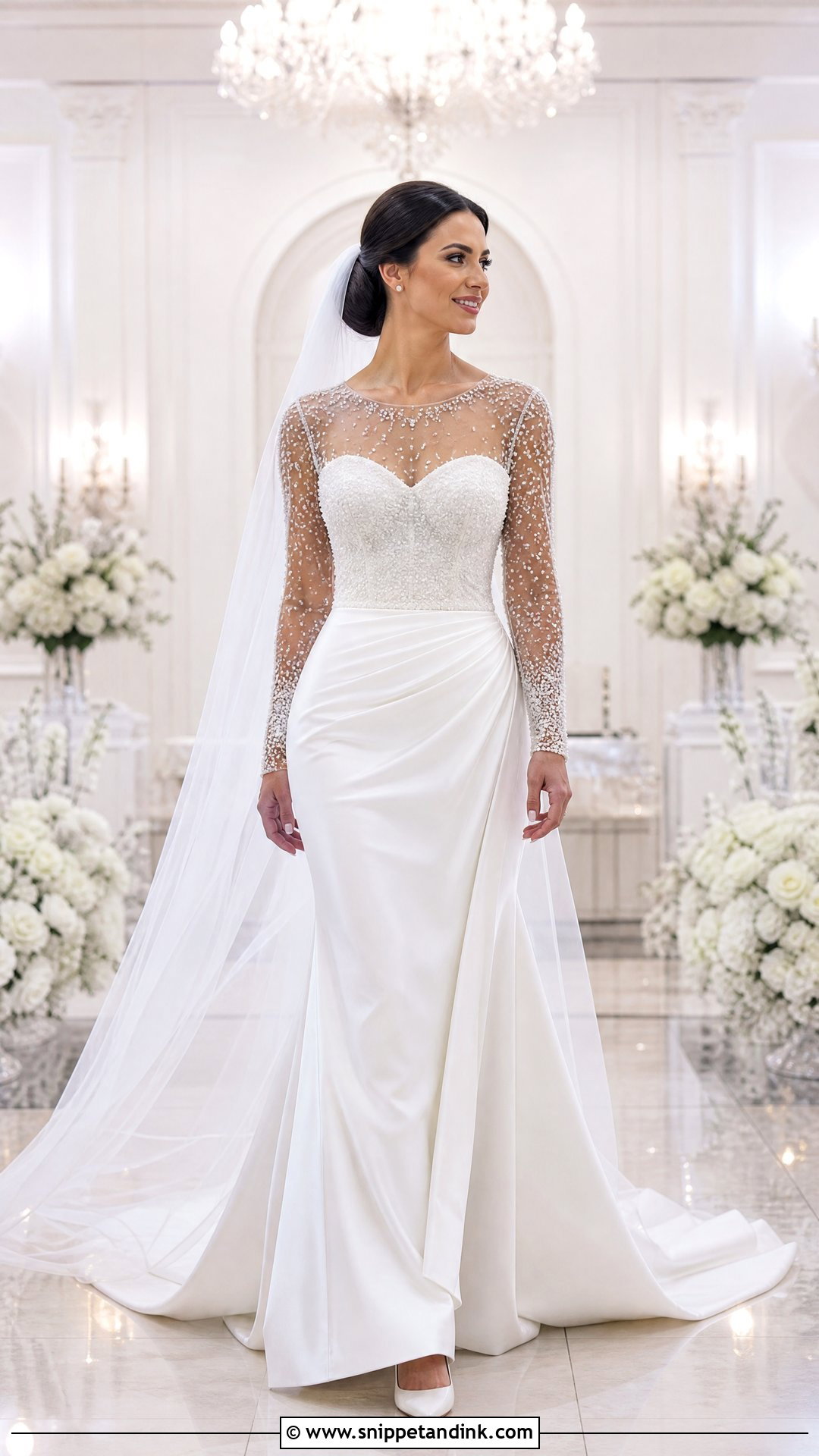
Beaded illusion brings controlled sparkle to an evening wedding. Look for transparent tulle with crystals, pearls or sequins across the neckline and sleeves, a fitted bodice and a smooth satin or crepe skirt so it stays sophisticated. Simple studs, a polished bun, metallic or ivory pumps and an unembellished veil that glides over the beadwork finish it. Run your hand along the inside before you buy; bead backing and knots can rub. Beaded mesh is heavier than plain mesh, so shoulders and waist must fit precisely, otherwise the weight drags the neckline down over the evening.
19. Minimalist Illusion Wedding Dress
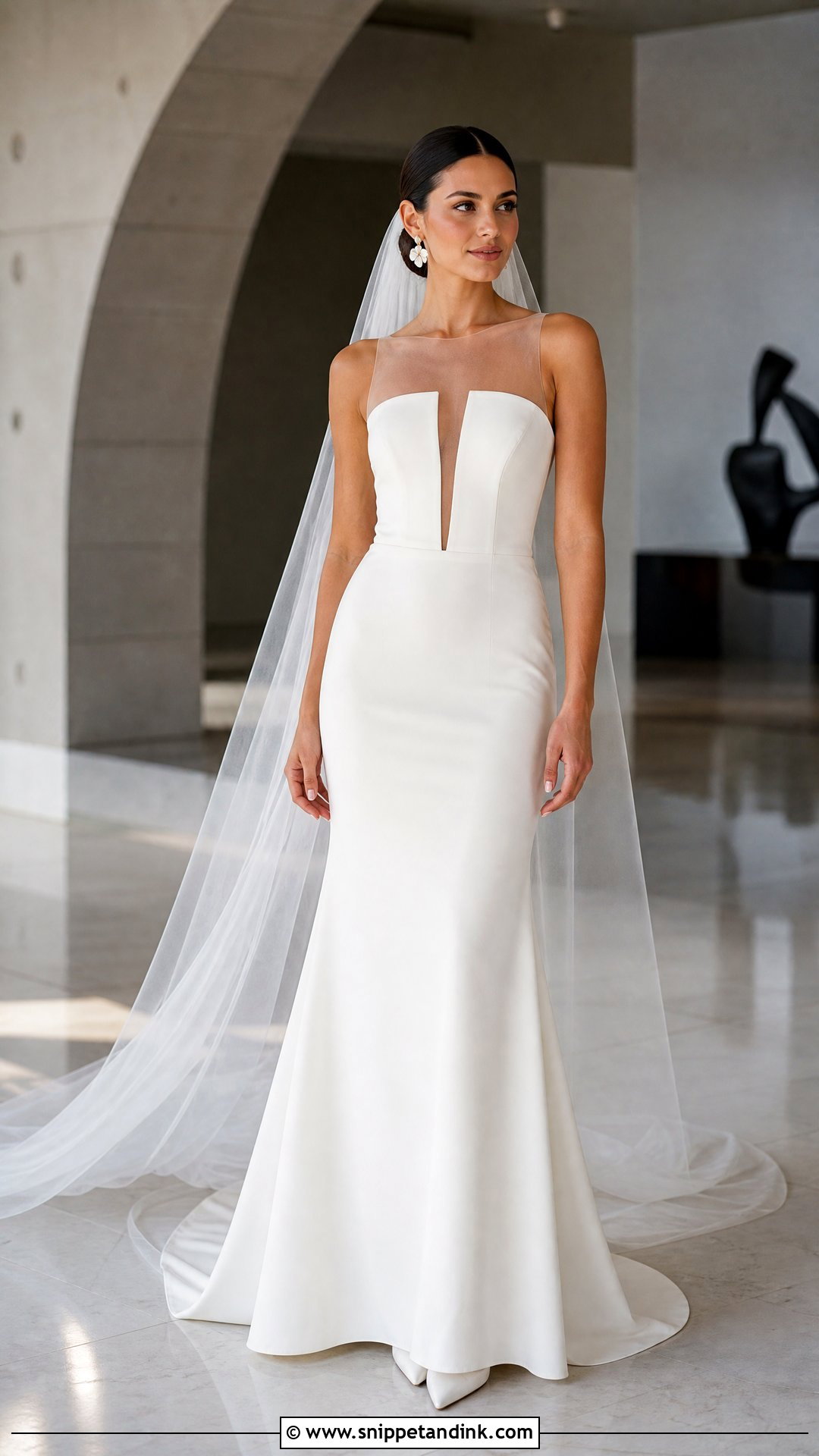
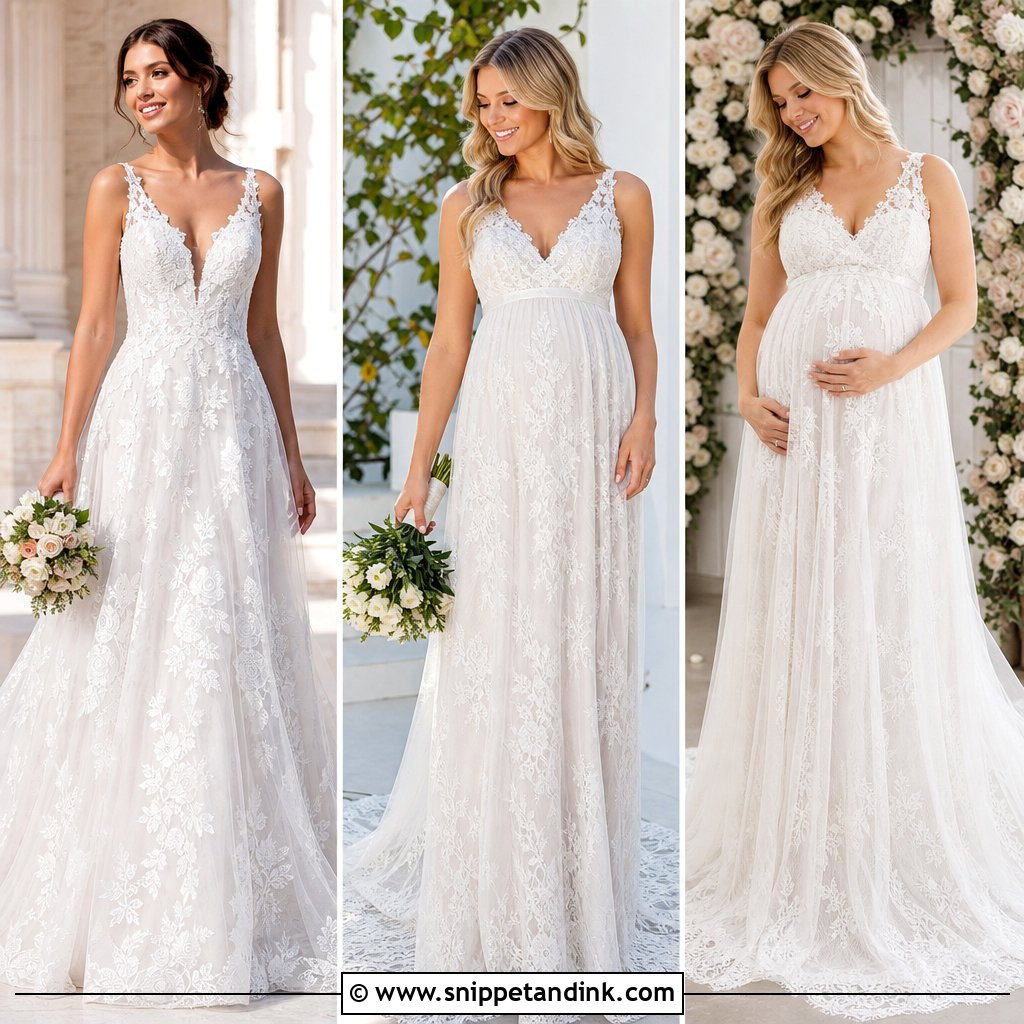
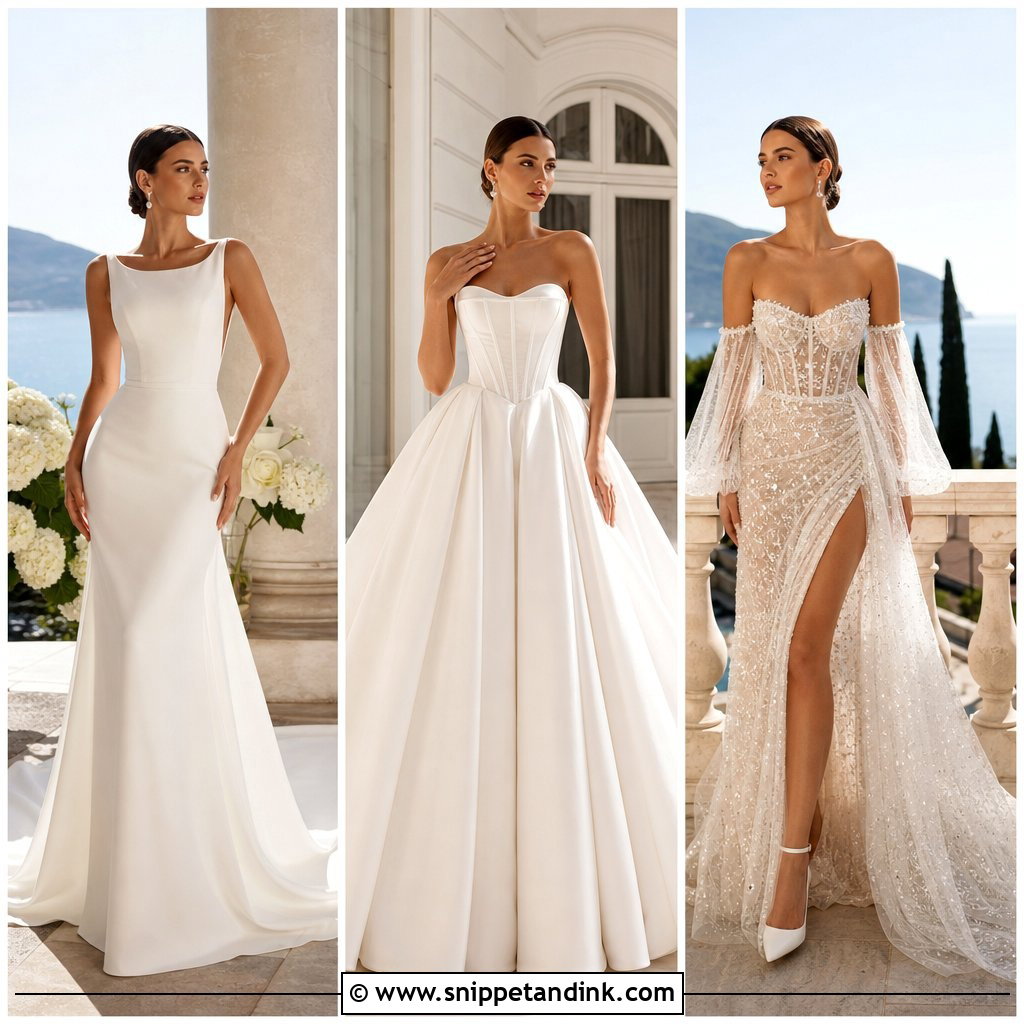
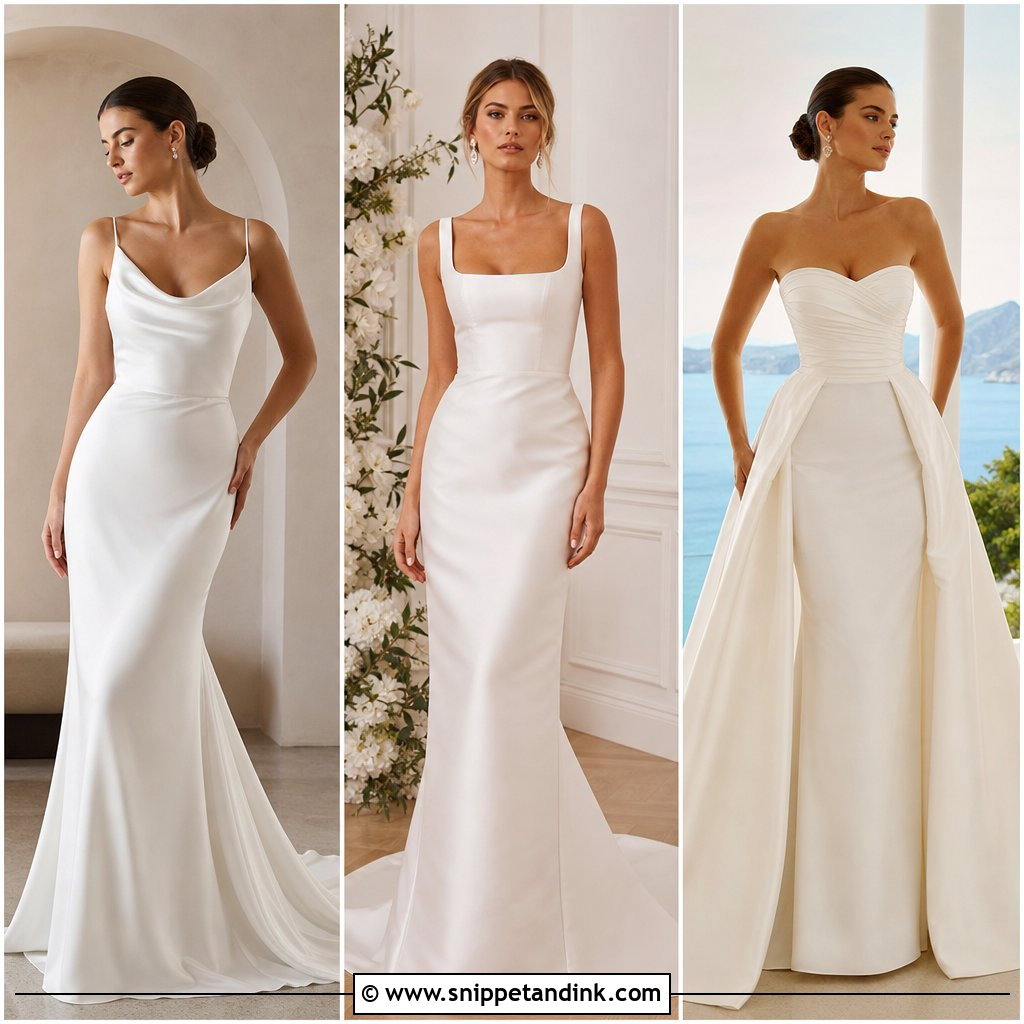
Minimalist brides can use illusion with no lace, crystals or appliqués at all. Choose a clean crepe gown with a smooth mesh neckline, narrow plunge insert or sheer back panel, in a column or fit-and-flare, and let precise seams provide the interest. Sculptural earrings, a sleek center-part bun and pointed pumps suit it, with a plain cathedral veil for the ceremony that comes off afterward. Nothing covers the mesh here, so its color and finish are on full view. I’d compare several shades in daylight and choose a fine, matte mesh over a shiny tulle. Every edge has to lie flat and every join between mesh and crepe has to look deliberate.
20. Plus Size Illusion Wedding Dress
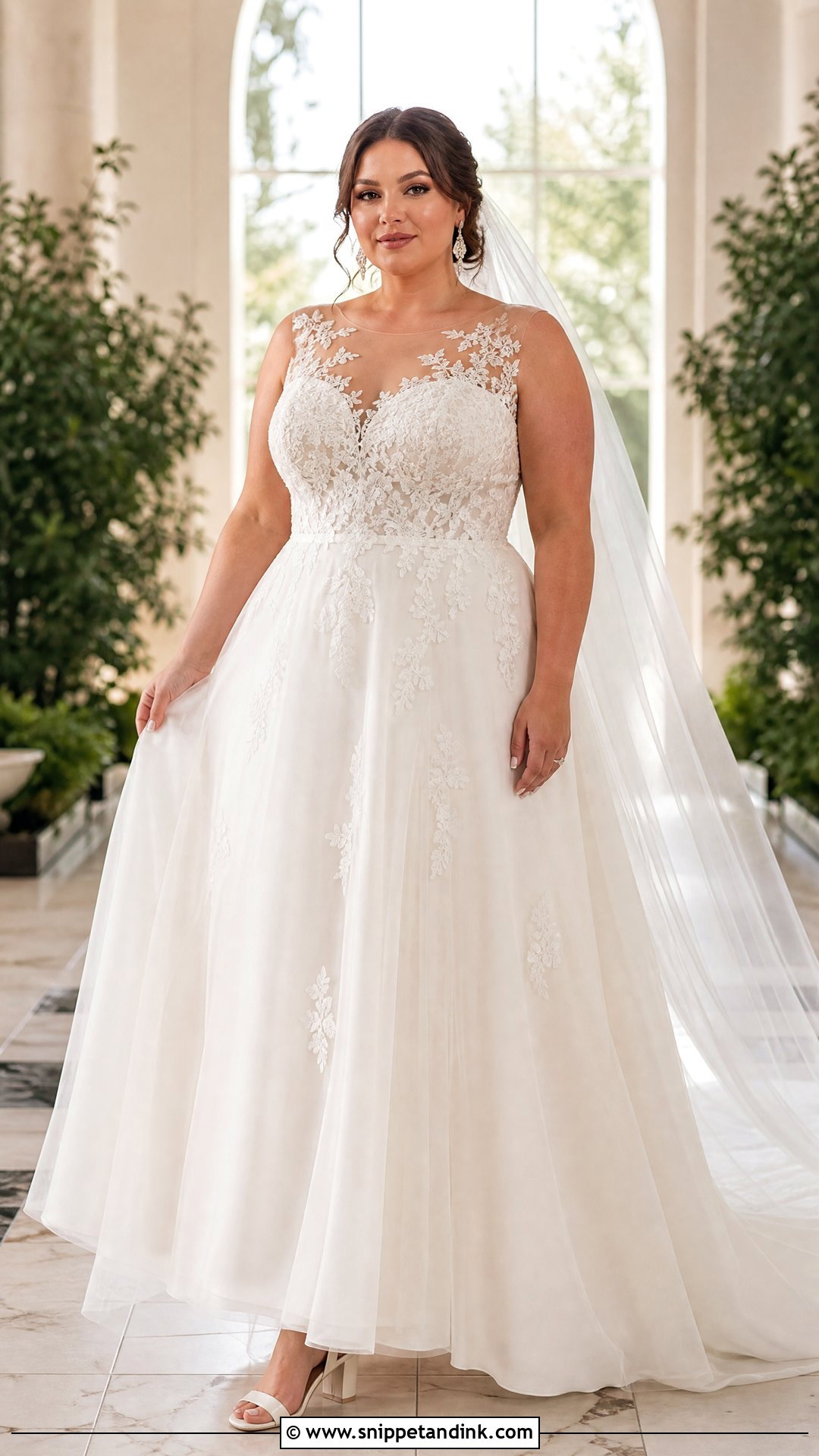
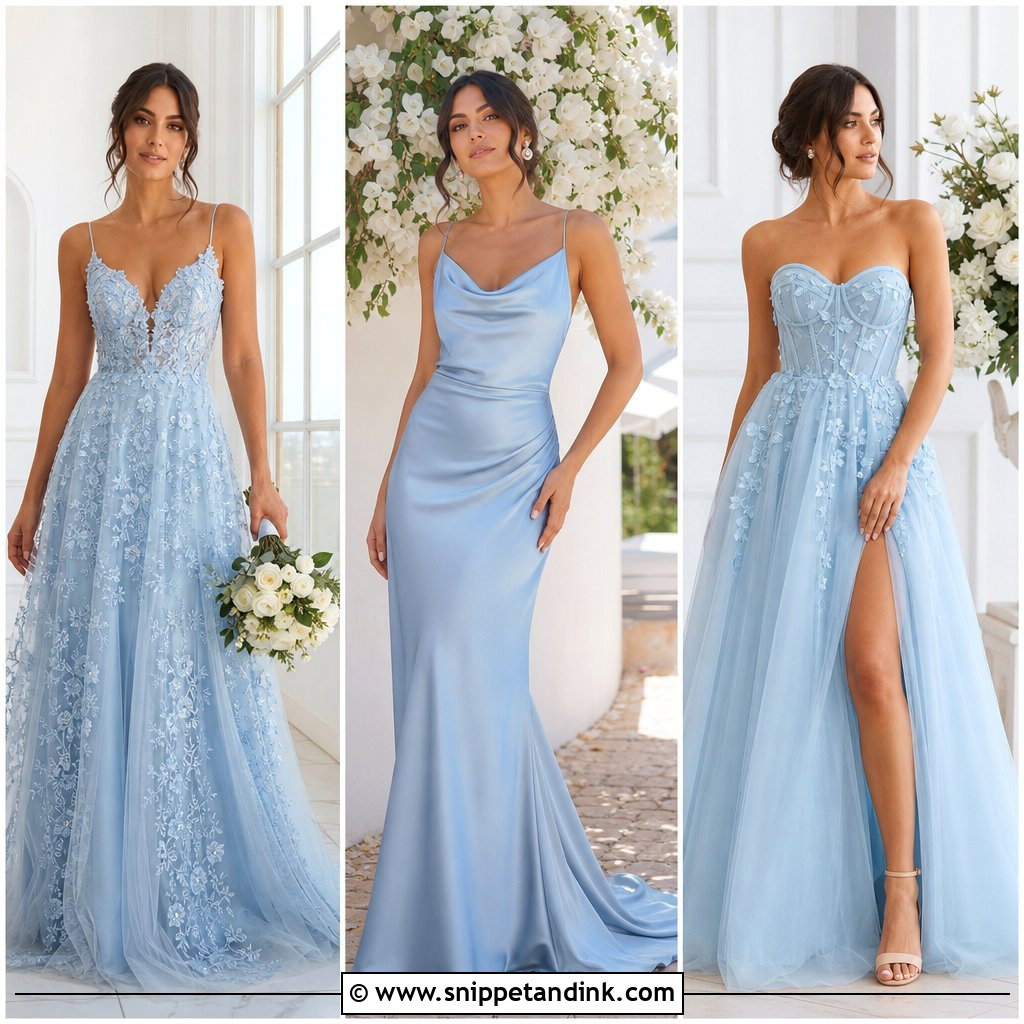
A plus-size illusion gown needs dependable support behind the detail. Consider an A-line or fit-and-flare with structured cups, flexible boning and sheer panels placed over a secure foundation, with lace defining the neckline and waist. Statement earrings, a supportive block heel and a veil length that suits the skirt complete it. Ask the salon for samples close to your size; judging straps and mesh placement on a sample several sizes off tells you very little. During alterations, sit, walk, hug and dance. The right gown stays where it should without straps digging into the shoulders or needing constant hitching.
Custom Mesh Shades Add Time to the Order
Most bridal gowns are made to order after you choose them, and production often takes several months. Requests that touch the illusion work, such as a different mesh shade, extra appliqués to reduce sheerness or sewn-in cups, can add time and sometimes cost. Lead times vary a lot between designers and shops, so ask for the expected arrival date in writing and work back from your wedding.
Leave room for alterations too. Fitted illusion gowns usually need two or three appointments, with the last one close enough to the wedding that your measurements won’t change much afterward. Bring your actual shoes and undergarments to every one.
Getting Into the Dress Without Marking the Mesh
Sheer necklines and sleeves pick up foundation, bronzer and lipstick more easily than any other part of a gown, and a smudge on mesh rarely comes out cleanly on the day. On the morning, I follow a simple order.
- Finish and set makeup on the face, neck and chest, and let any body products dry fully.
- Step into the gown from the floor rather than pulling it over your head.
- Drape a thin scarf or a makeup hood over your face if anything has to pass near it.
- Ease the sleeves on with your hand balled into a fist so rings and nails don’t catch the mesh.
Mesh, Support and Movement Matter More Than the Lace
A good illusion gown balances sheer detail with solid construction, honest coverage and easy movement. It can lean toward a high-neck lace ball gown or a plain crepe sheath and still work, as long as the mesh suits your complexion, the appliqués look placed on purpose, and the internal support keeps everything where it belongs. Look at the dress in daylight, indoor light and flash, and move in it, especially with sleeves, fitted backs and plunges. Keep jewelry simple when the bodice is busy, wear your hair so the best detail shows, and pick the gown that still feels like you after a long day in it.
You'll Like These Ideas:












Leave a Reply