
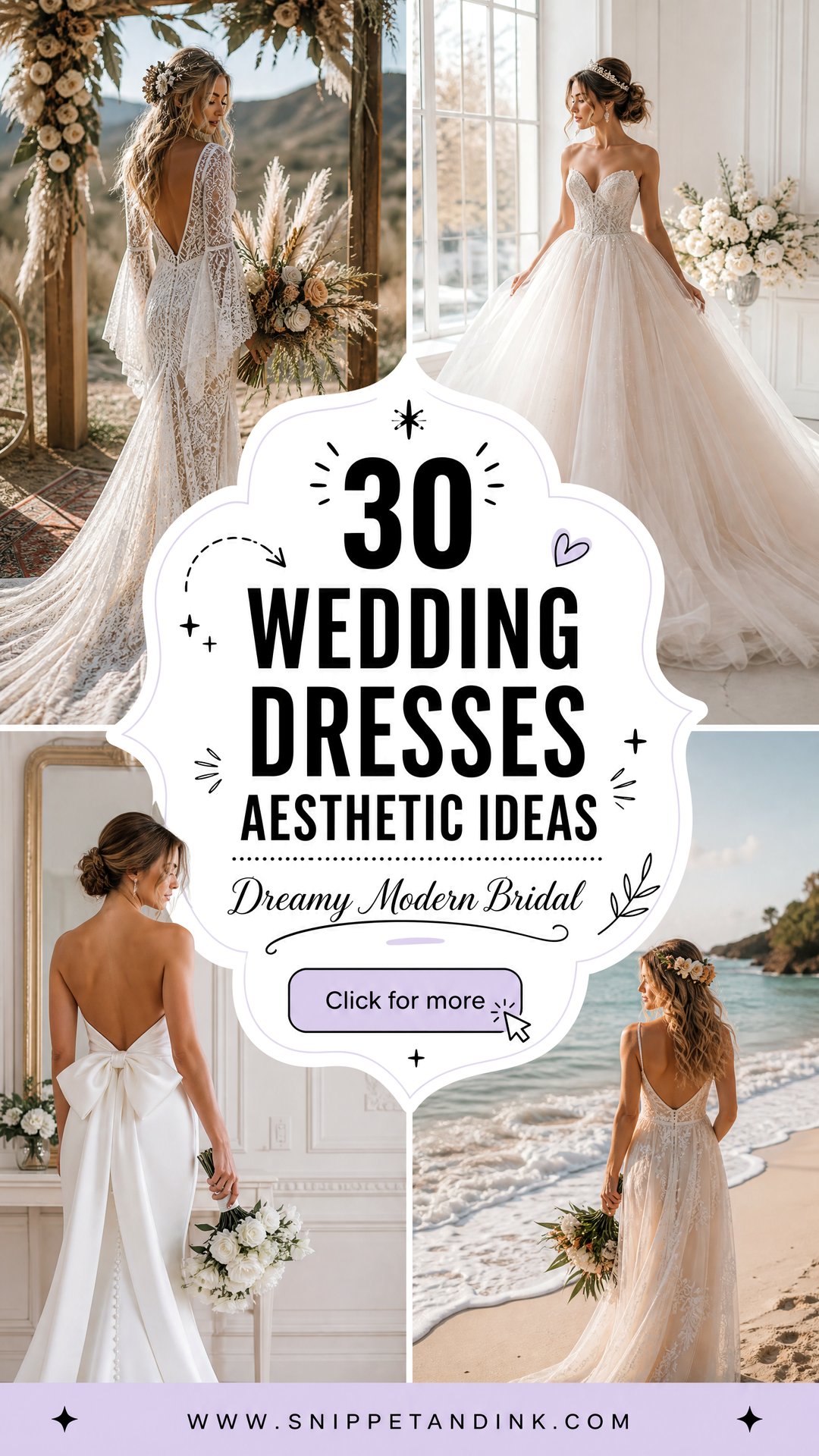
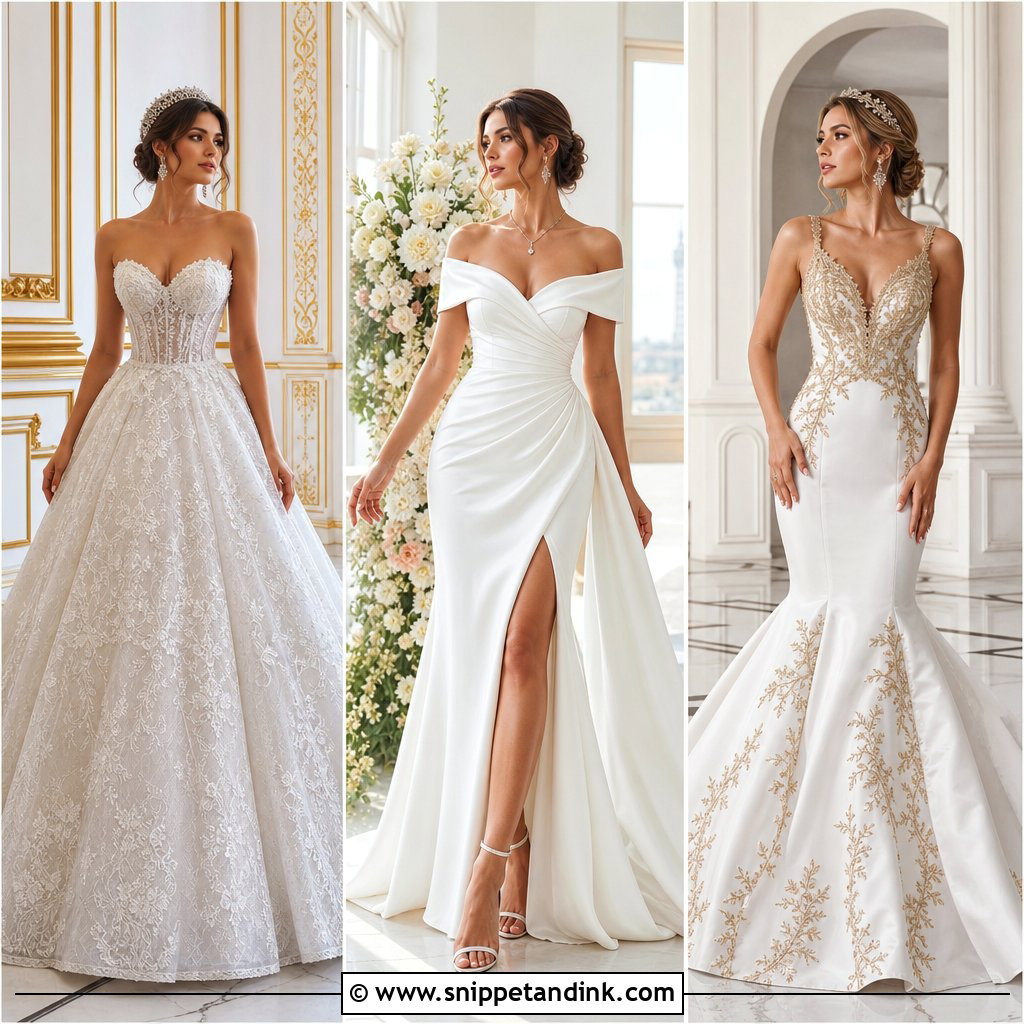
Most brides arrive at their first appointment with a mood rather than a dress in mind. They know they want something that feels clean, or soft, or a bit old Hollywood, but they can’t yet name the silhouette. My job is to translate that feeling into fabric, neckline and shape, and then make sure the shoes, veil and flowers belong to the same story. These thirty looks cover that whole range, from minimal satin to blush tulle and black-and-white contrast, with notes on how each one behaves once you’re actually wearing it.
Turning Hundreds of Saved Pictures Into a Brief for Your Appointment
Brides often show me a board of two hundred images and say they like all of them. That’s normal, and it’s useful, because the pattern is hiding in there. Before your first appointment, I’d go through your saved pictures and do three things.
- Sort them by silhouette, not by mood. You’ll usually find most of them are one or two shapes, even if the styling varies.
- Look at the necklines. Brides almost always lean consistently toward one or two, and that narrows the rack fast.
- Pick three images you’d be happy to wear tomorrow and one you definitely wouldn’t. The one you’d reject tells me as much as the three you love.
Bring those four pictures to the appointment rather than the whole board. Tell your stylist what you’ll be doing on the day as well: an outdoor ceremony, a long dinner, a lot of dancing. A dress that looks right in a photo but stops you sitting comfortably for three hours isn’t the right dress.
Try on one dress outside your comfort zone too. It happens often that the dress a bride chooses is the one she nearly didn’t try on, because pictures of a shape on a model tell you very little about how it sits on you.
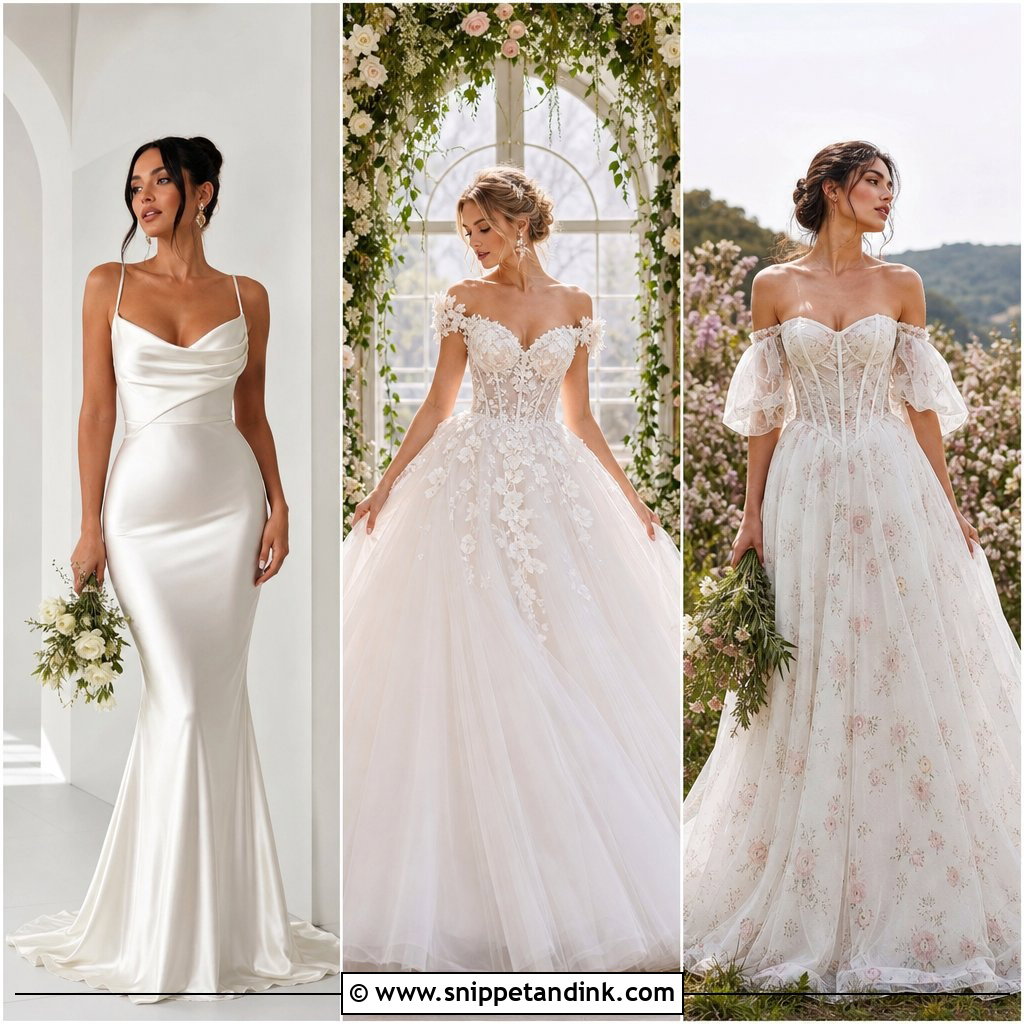
1. Minimalist Satin Wedding Dress
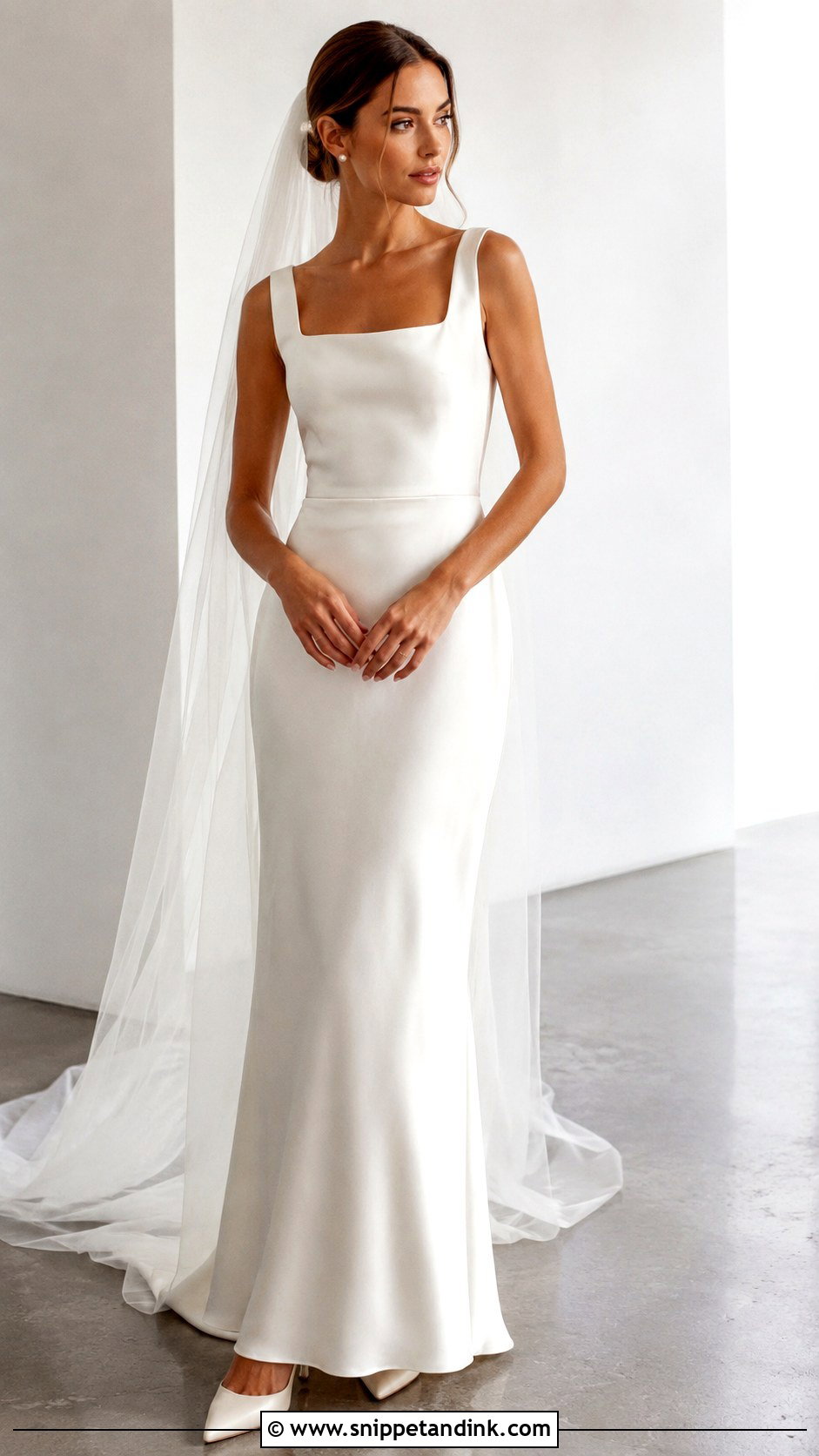
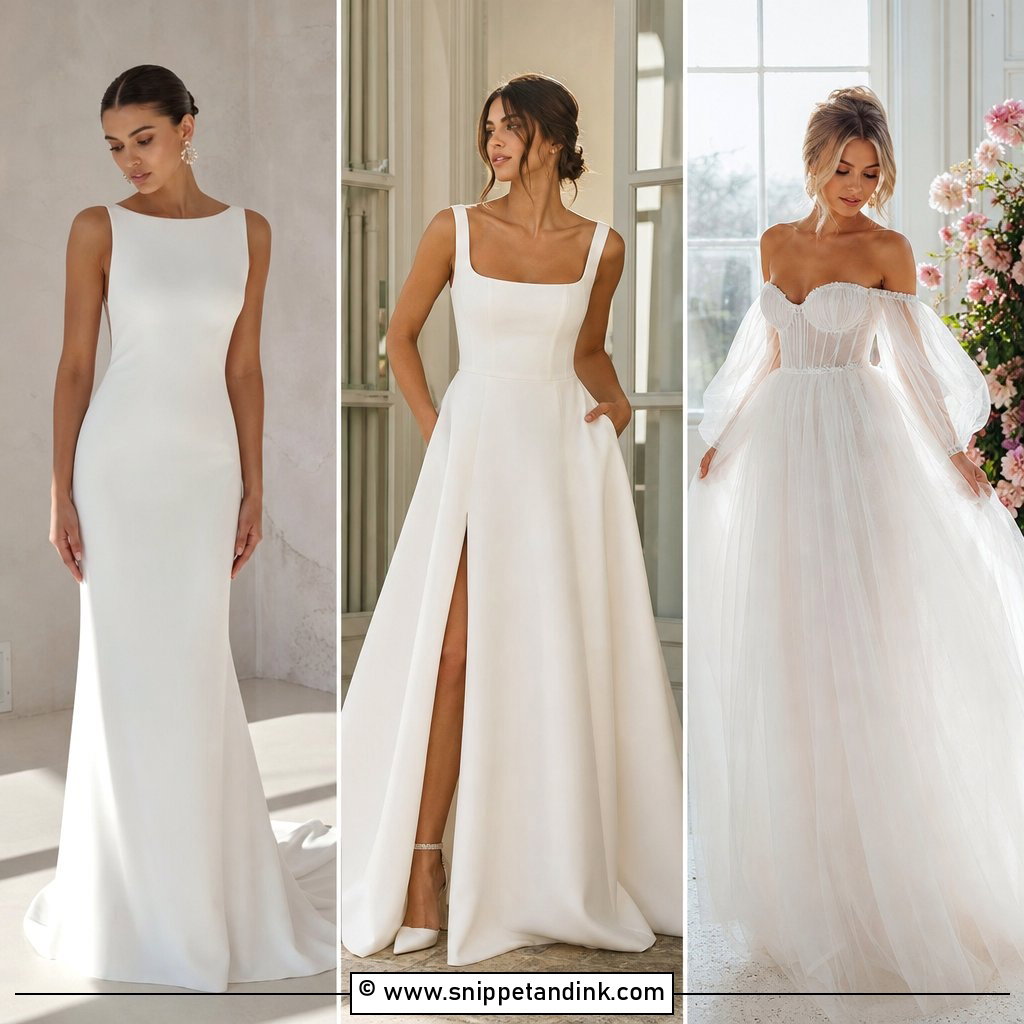
Minimal satin looks simple in a picture and is the hardest look to execute well. With no lace or beading, the cut and the fabric quality carry everything. A bias cut drapes closest to the body; a sheath or soft A-line is more forgiving. Square, bateau or slim-strap necklines keep it modern. I always warn brides that cheap satin creases badly and shows every bump of the underwear, so this is where I’d spend the budget. A long plain veil and white orchids or calla lilies keep the mood calm.
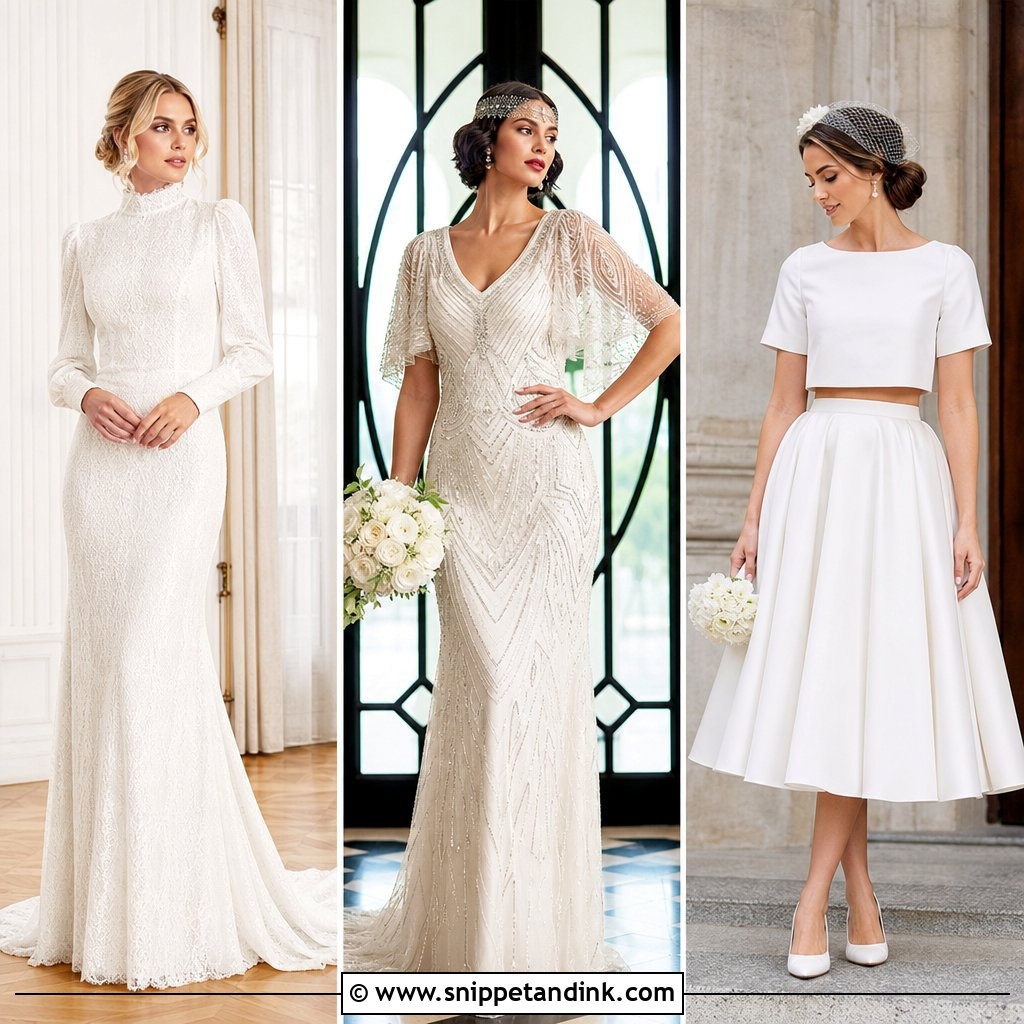
2. Lace Long Sleeve Wedding Dress
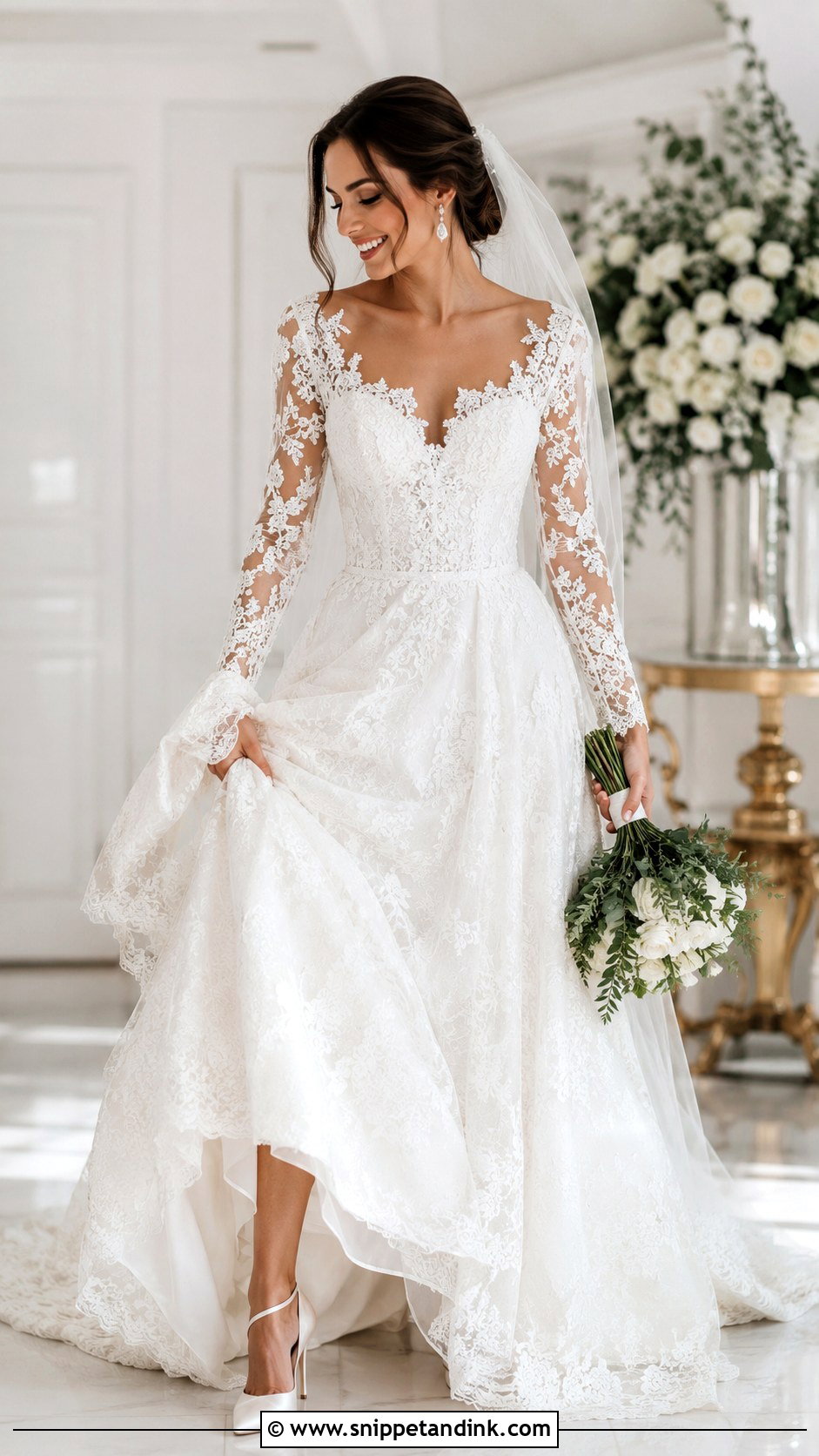
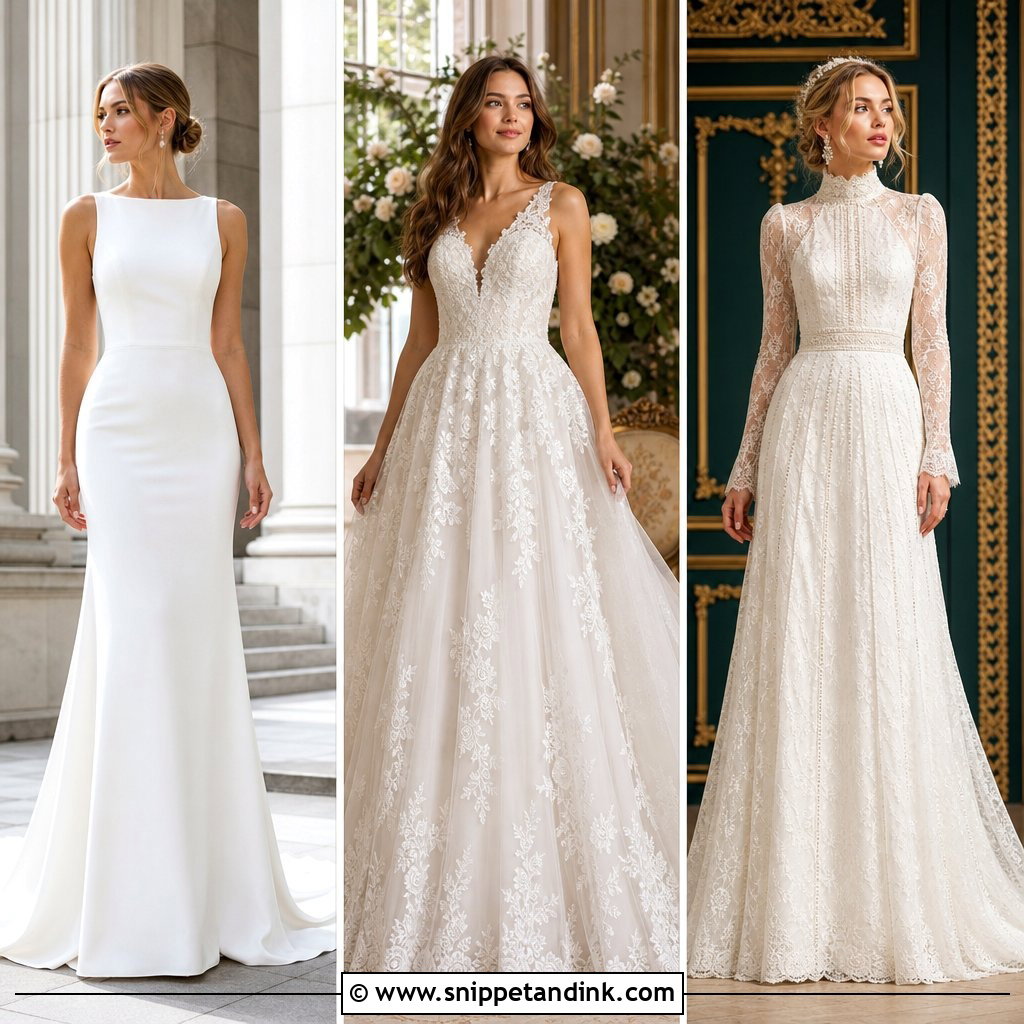
Lace sleeves give coverage and texture at once. Delicate floral lace or illusion sleeves over a fitted bodice and soft skirt read romantic. Heavier corded lace is warmer and suits autumn and winter, while lighter Chantilly lace works in spring. When the lace is busy, skip the necklace altogether. A soft updo lets the sleeves and neckline show. Check that the lace at the wrist ends cleanly; a scalloped cuff looks finished, a cut edge looks cheap.
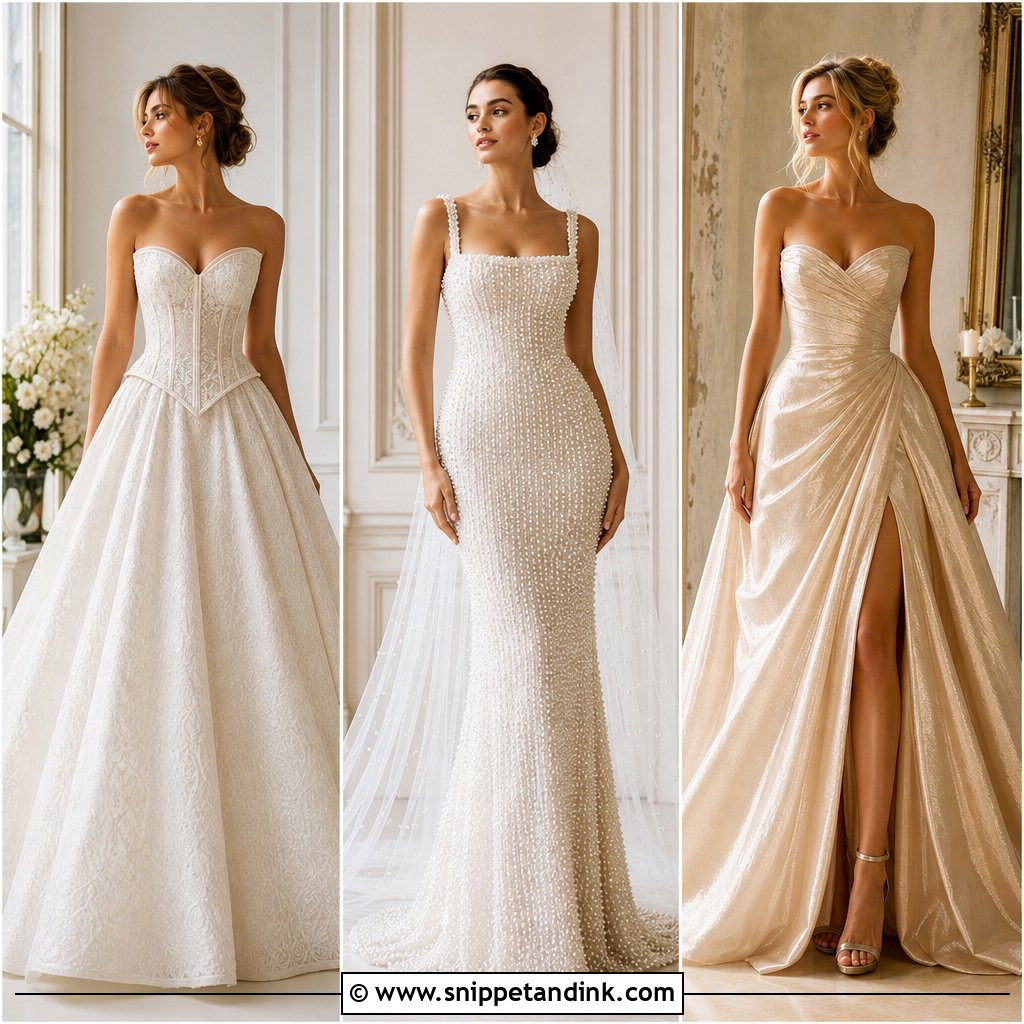
3. Princess Ball Gown Wedding Dress
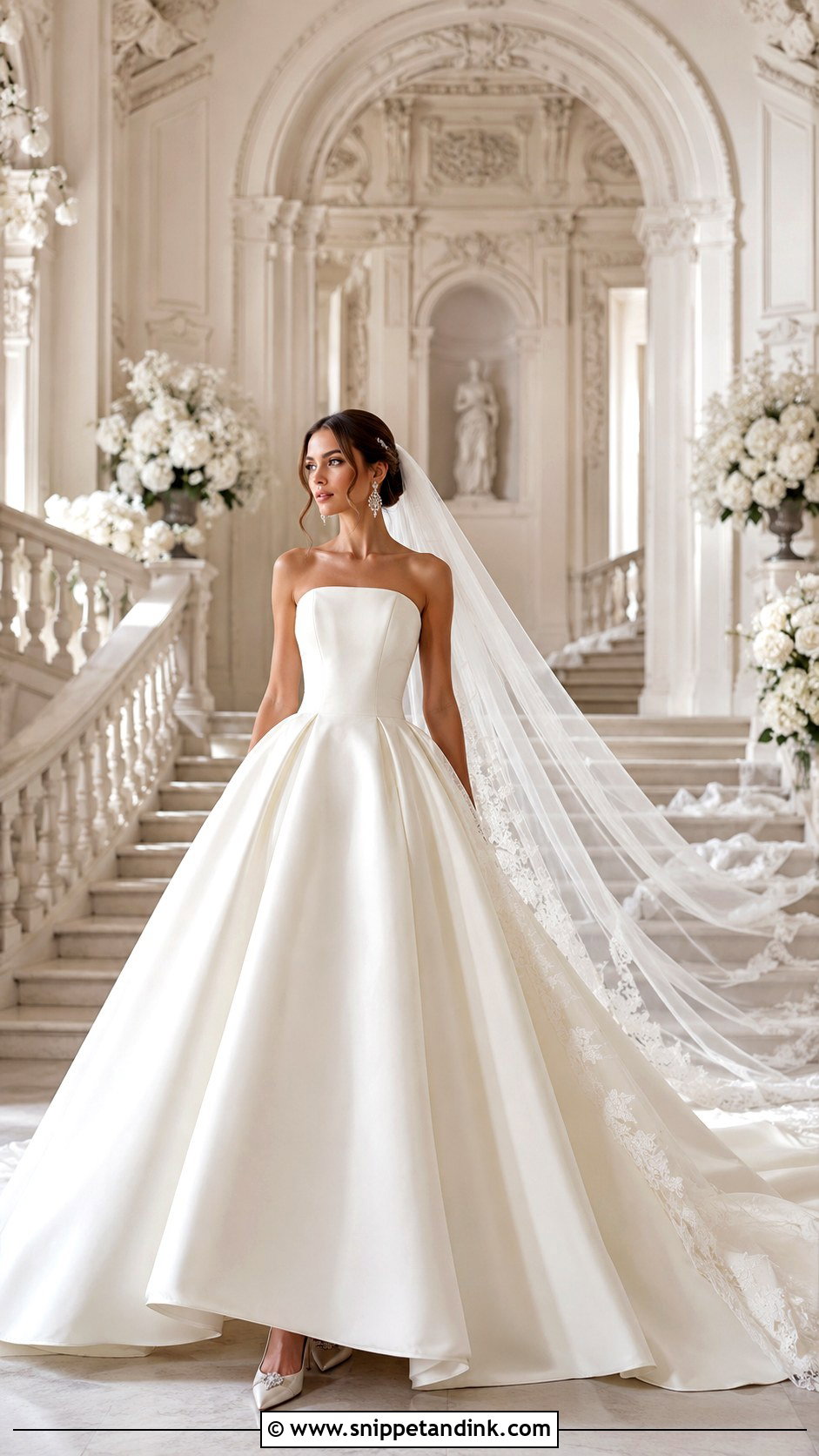
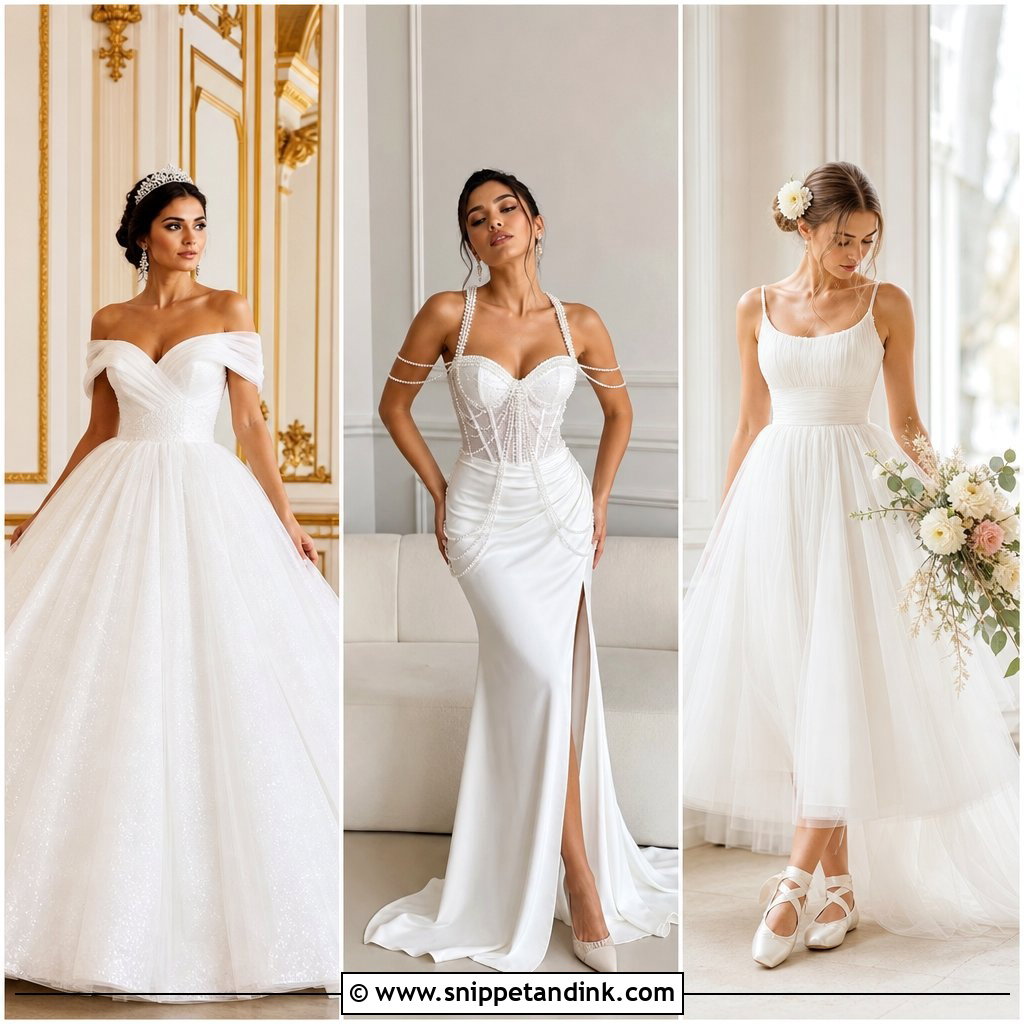
A princess ball gown wedding dress needs space: a long aisle, a high ceiling, a staircase. In a small room it overwhelms everything. The full skirt and fitted bodice are the classic fairytale shape, and the fabric changes the mood: mikado and satin hold structure, tulle and organza float. To keep it current, I pick one strong feature, like a sculpted neckline or a bow at the back, rather than several. Remember a ball gown is heavy and wide, so plan how you’ll get in and out of the car.
4. Boho Lace Wedding Dress
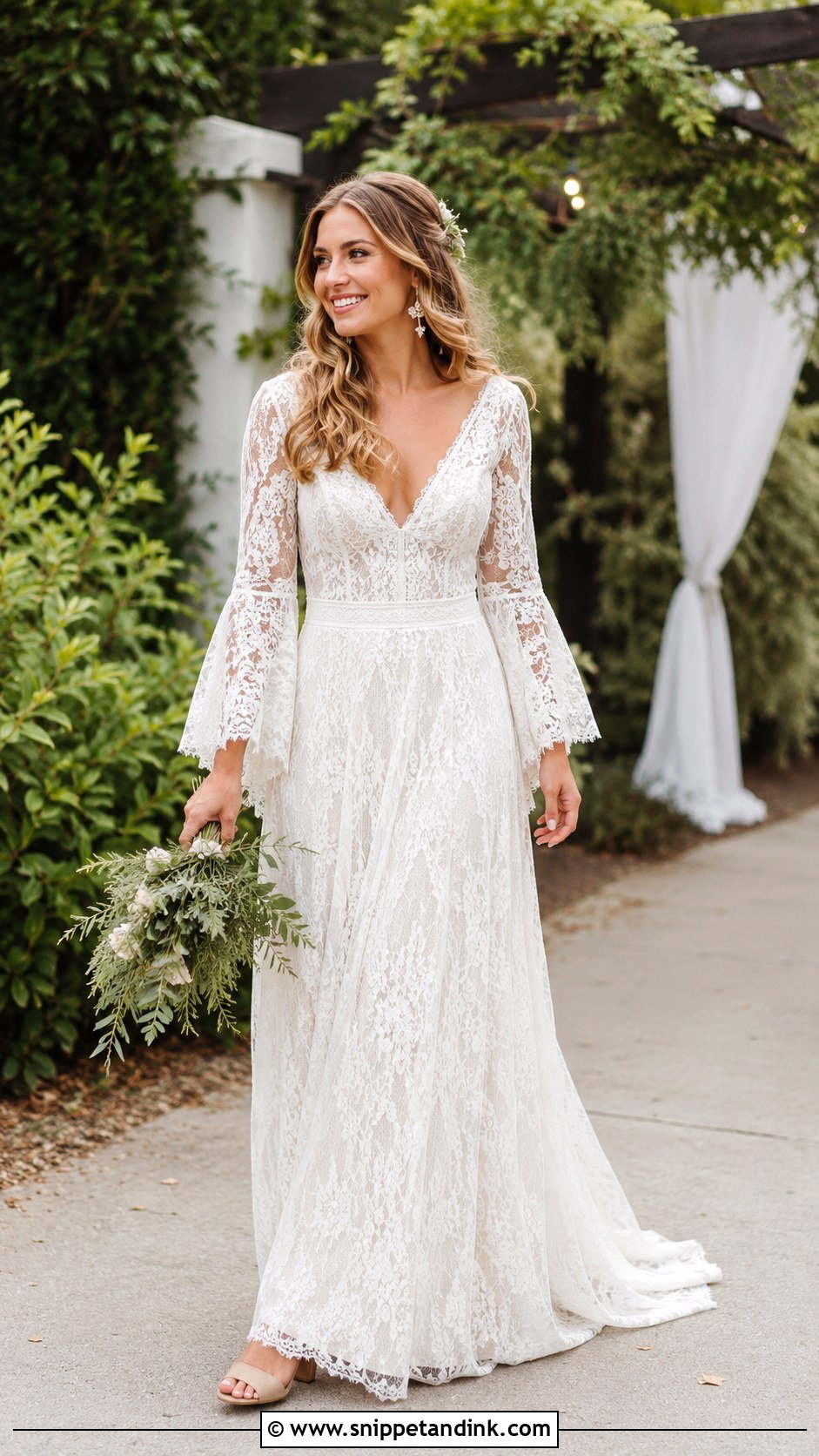
Boho lace is about comfort and movement. Soft lace, bell sleeves, a flowing skirt and a relaxed fit let you sit on a hay bale or walk across a field without thinking about it. Loose waves and sandals or low block heels suit the look, and a lace-trimmed veil or floral hairpiece adds a bridal touch. Keep the bouquet loose, with wildflowers or dried textures. I steer brides away from stiff structure here; boning and heavy satin fight the whole feel.
5. Mermaid Wedding Dress
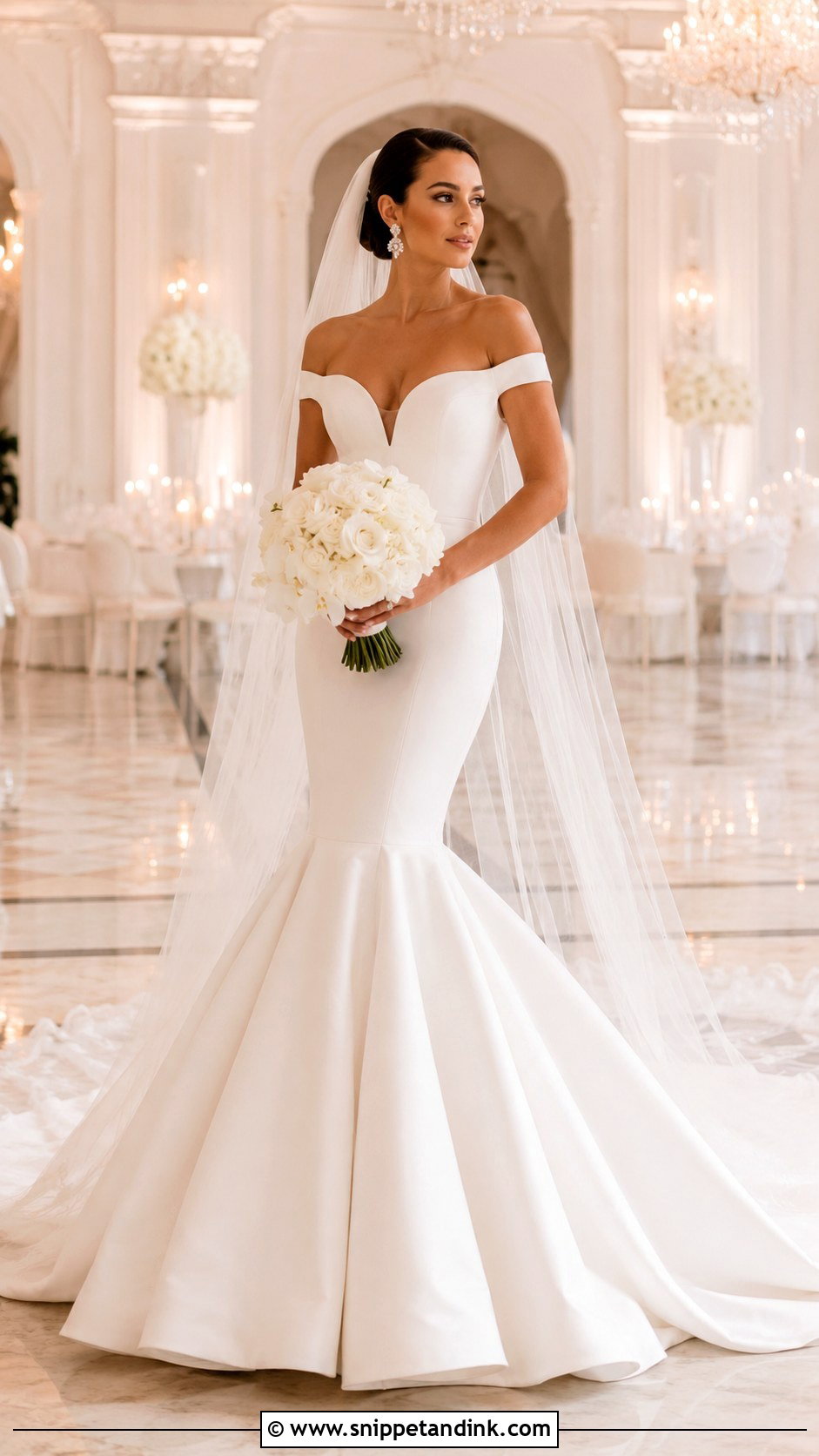
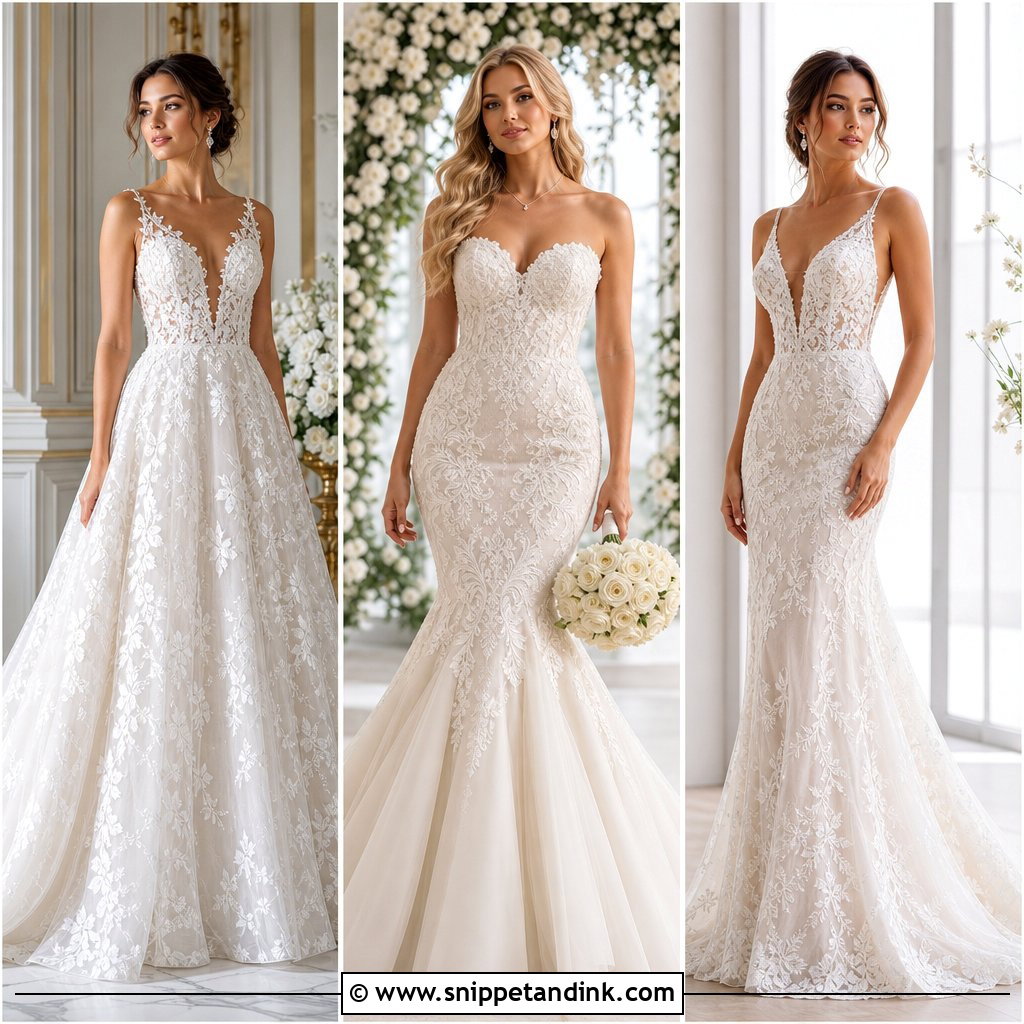
A mermaid dress fits closely through the bodice, waist and hips, then flares near the knee or lower thigh. It’s dramatic and flattering, but you trade comfort for it: you’ll walk with shorter steps, and sitting takes practice. Satin, crepe, lace or beading set how much drama you get. High heels lengthen the line, and a long veil balances the flare. Keep the bouquet slim so it doesn’t hide the shape. I’d book this for an evening wedding with a seated dinner, not a barn dance.
6. A Line Wedding Dress
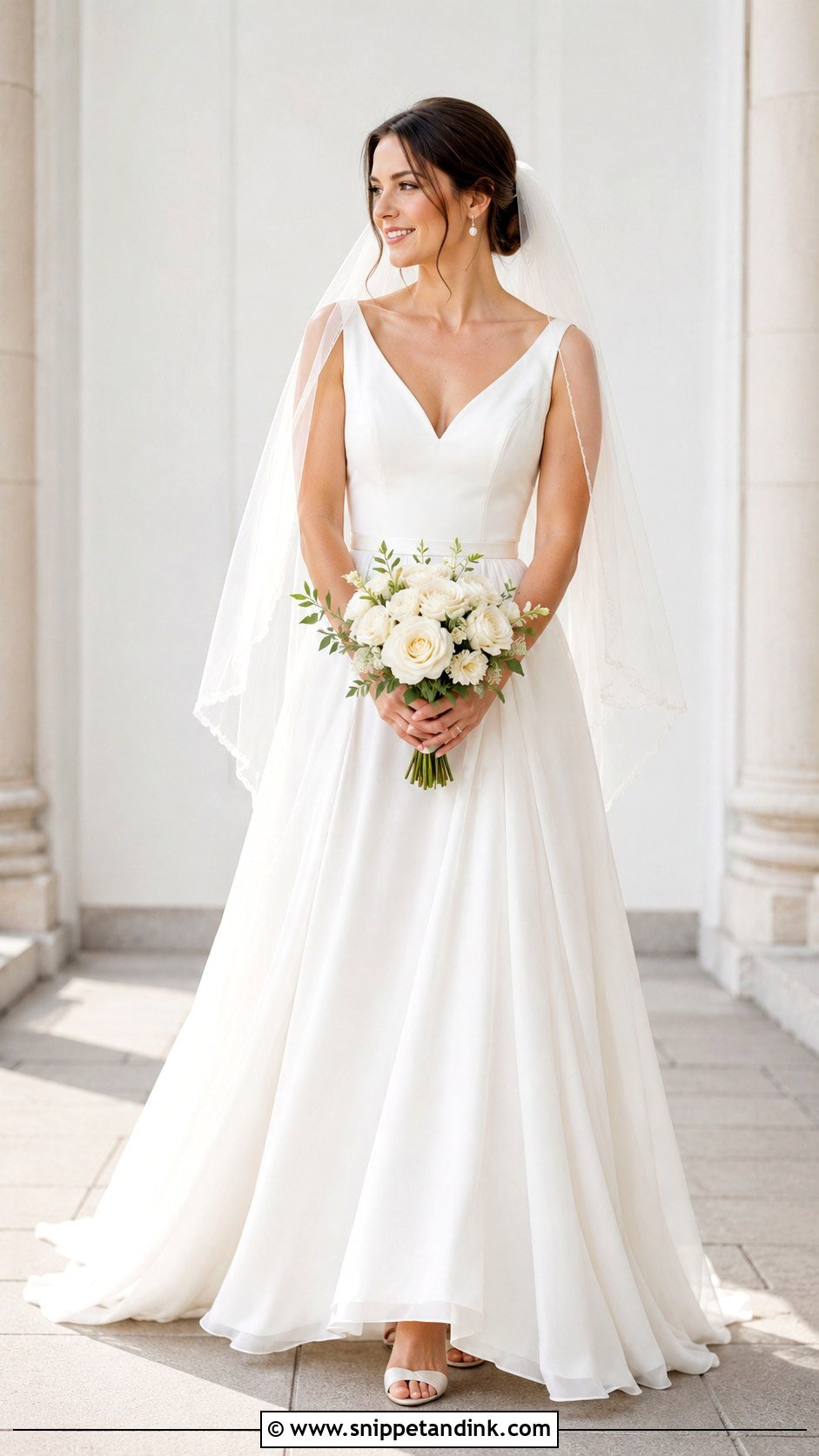
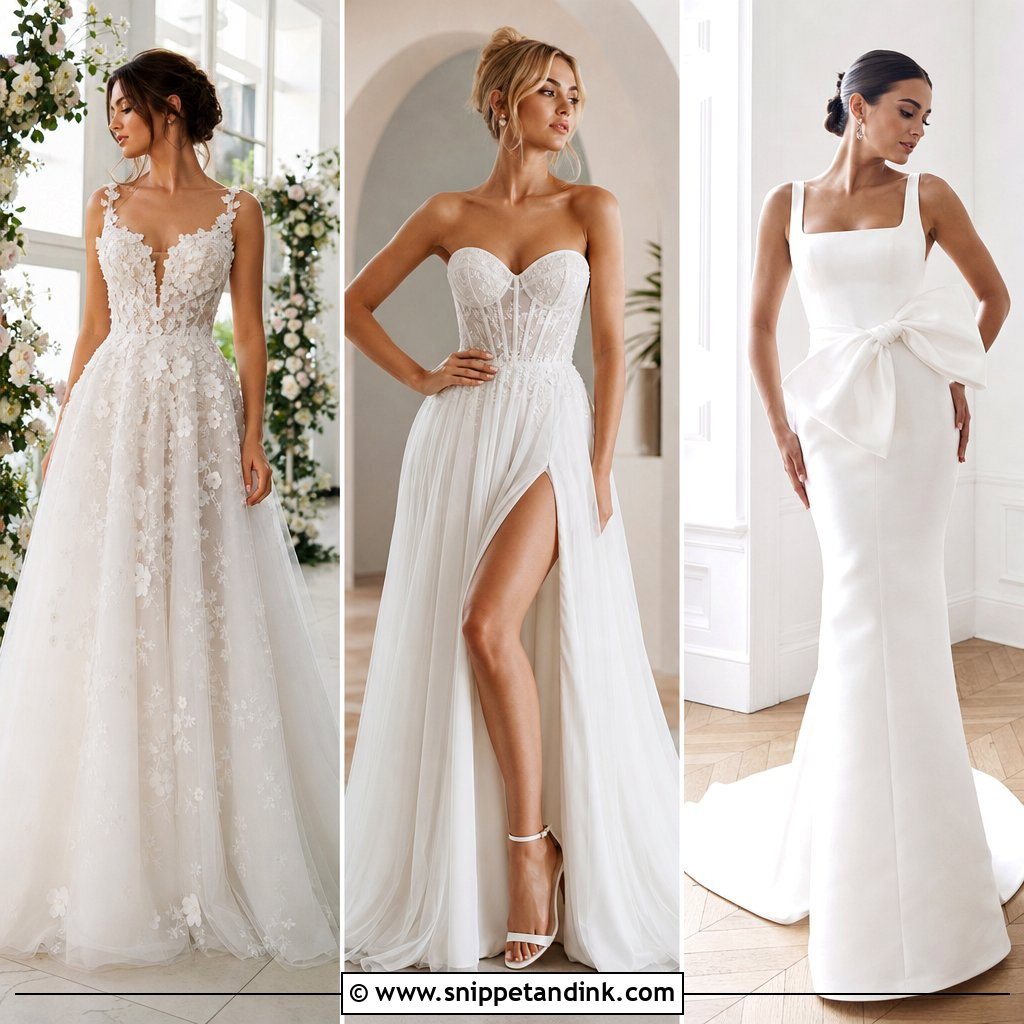
An A-line is the shape I’d suggest when a bride isn’t sure where to start. Fitted through the bodice, widening gently from the waist, it suits most bodies, venues and seasons. Chiffon gives movement, satin gives structure, tulle gives romance, lace gives texture. A belt can add definition if the dress is very plain. Because it’s so easy to wear, the fabric choice becomes the main way to express your style.
7. Off The Shoulder Wedding Dress
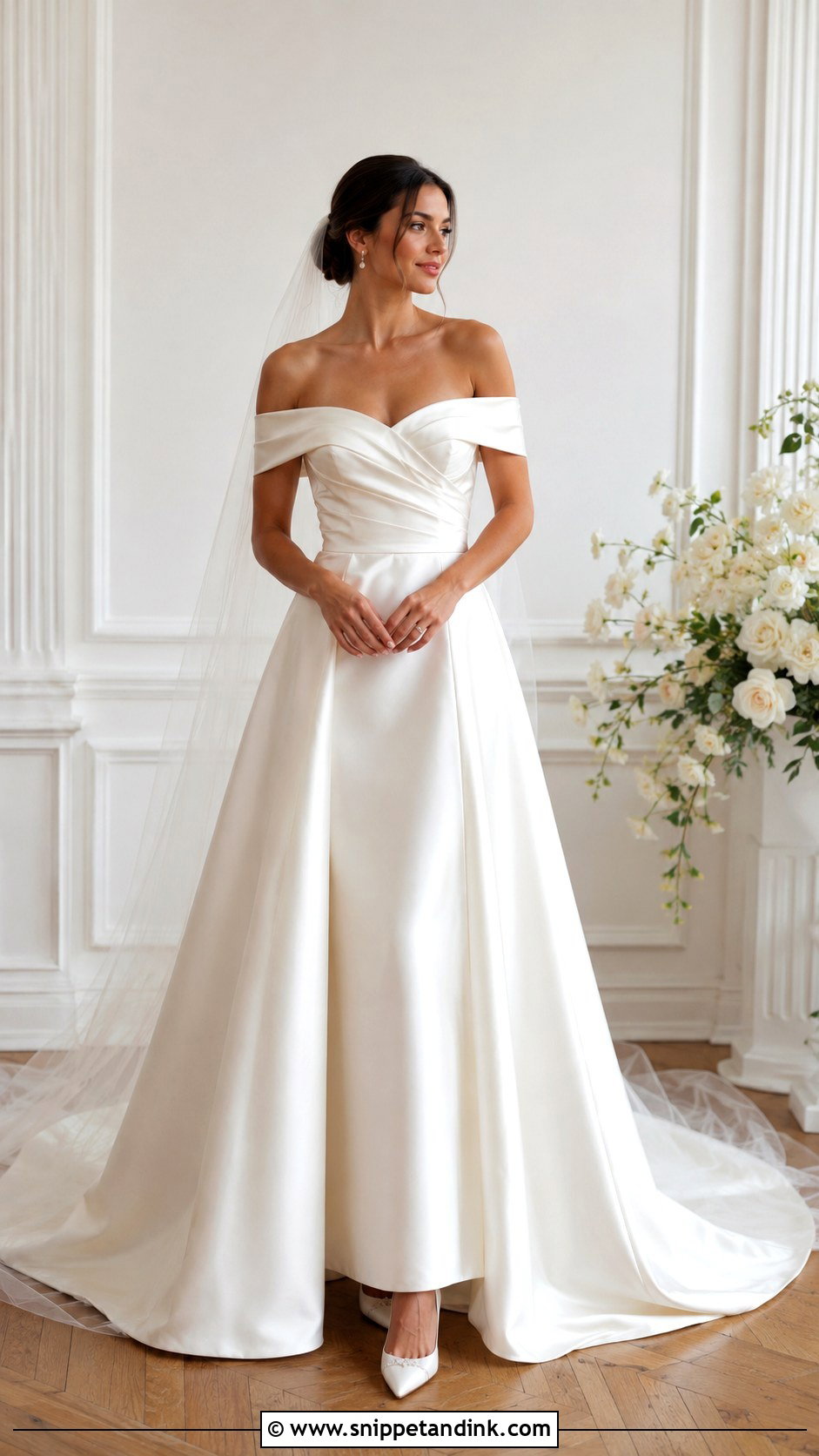
Off-shoulder necklines frame the collarbone and look soft in photos. A fitted crepe gown makes the look sleek; a tulle or satin skirt makes it classic. Skip the necklace and wear drop earrings, with hair swept back or up. The practical problem is support: the band across the upper arms slides down when you lift your arms. I test it with a hug and a raised bouquet at every fitting and add silicone grip tape inside the band if it moves.
8. Square Neck Wedding Dress
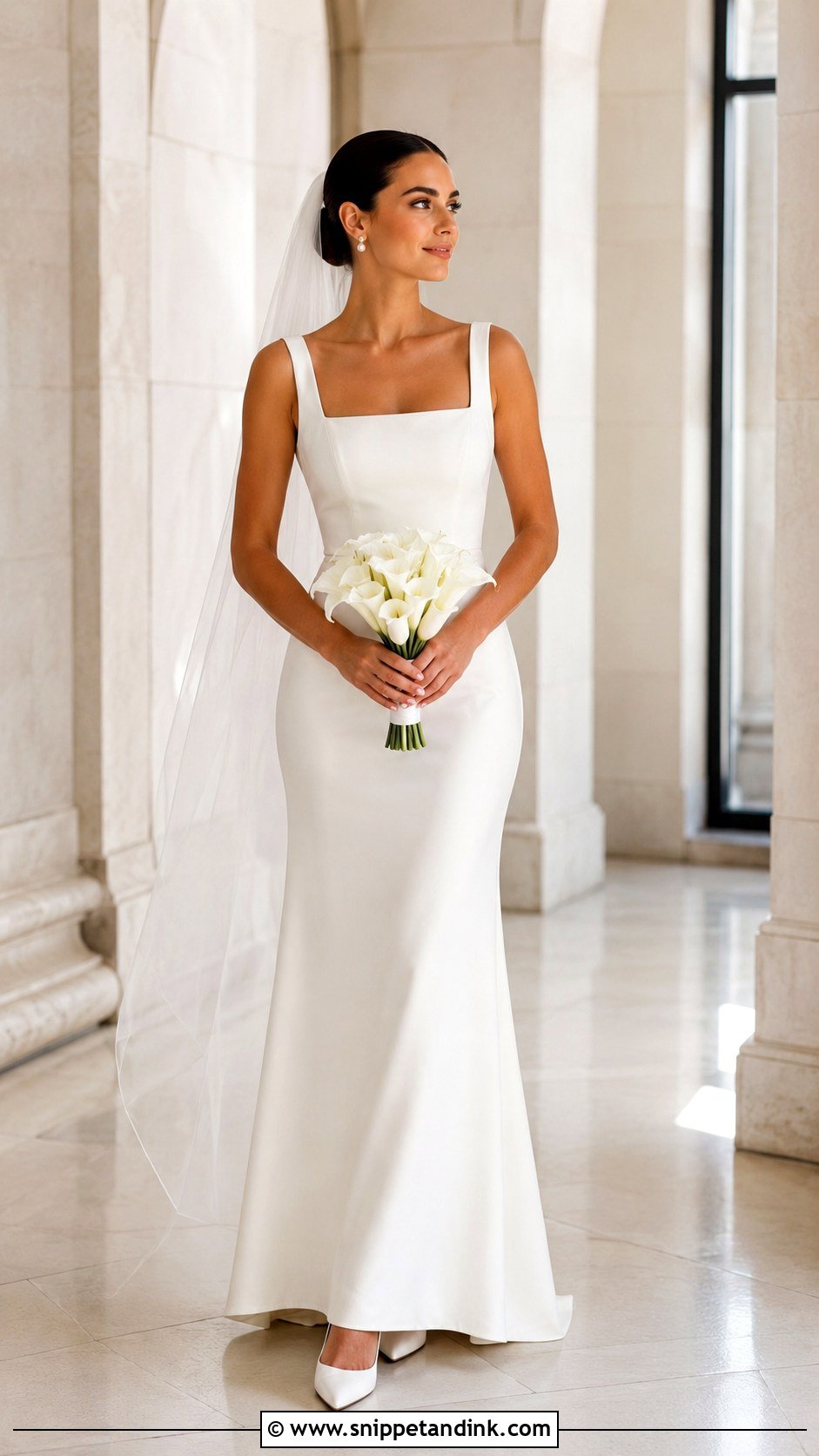
A square neckline frames the collarbone with a straight line that suits fitted bodices, lace dresses and full skirts. Wide straps and satin, crepe or mikado keep it clean. Pearl earrings, a smooth bun and pointed heels finish it. It pairs neatly with a simple veil, since the crisp lines don’t compete with anything. The fit detail I watch is the corners: if the bodice is a touch big, they gape when you lean forward to sign the register.
9. Strapless Wedding Dress
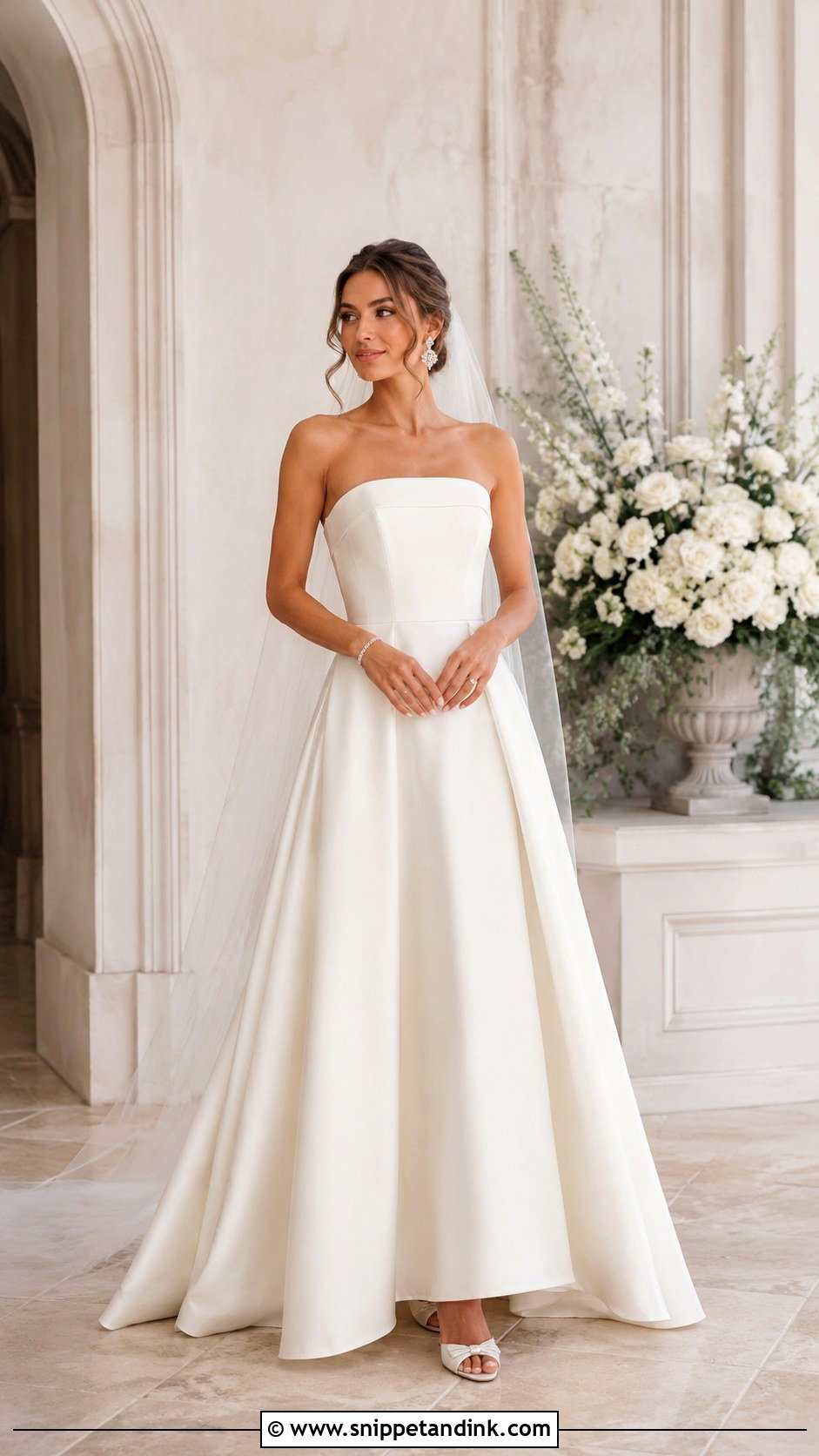
Strapless gowns work with almost every silhouette, from mermaid to ball gown to column. That flexibility is why they stay popular. The catch is the bodice, which has to hold itself up all day. Good boning and a closely fitted band at the bust and waist matter more than any design detail. Statement earrings and a bracelet replace a necklace. Hair is up to you, since there’s nothing at the shoulder to clash with.
10. High Neck Wedding Dress
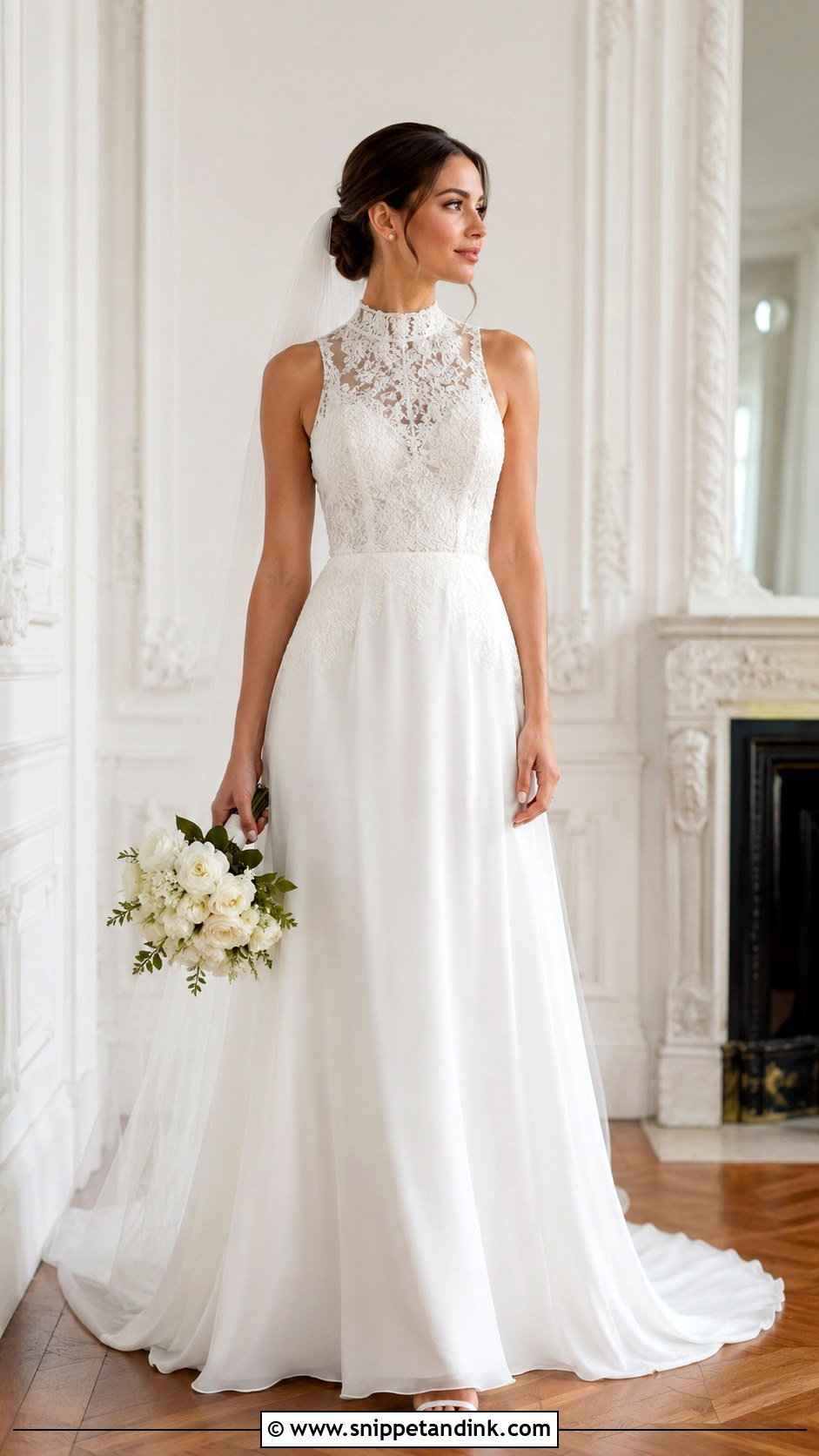
A high neck gives coverage and a slightly regal look. Lace, crepe, satin and illusion fabrics all work. A fitted column feels modern; a full skirt feels formal. Skip necklaces and choose earrings instead, and keep the hair up or tucked back so the neckline shows. I’d check the collar while turning your head and sitting down; a high neck that’s even a little tight gets uncomfortable over hours.
11. Drop Waist Wedding Dress
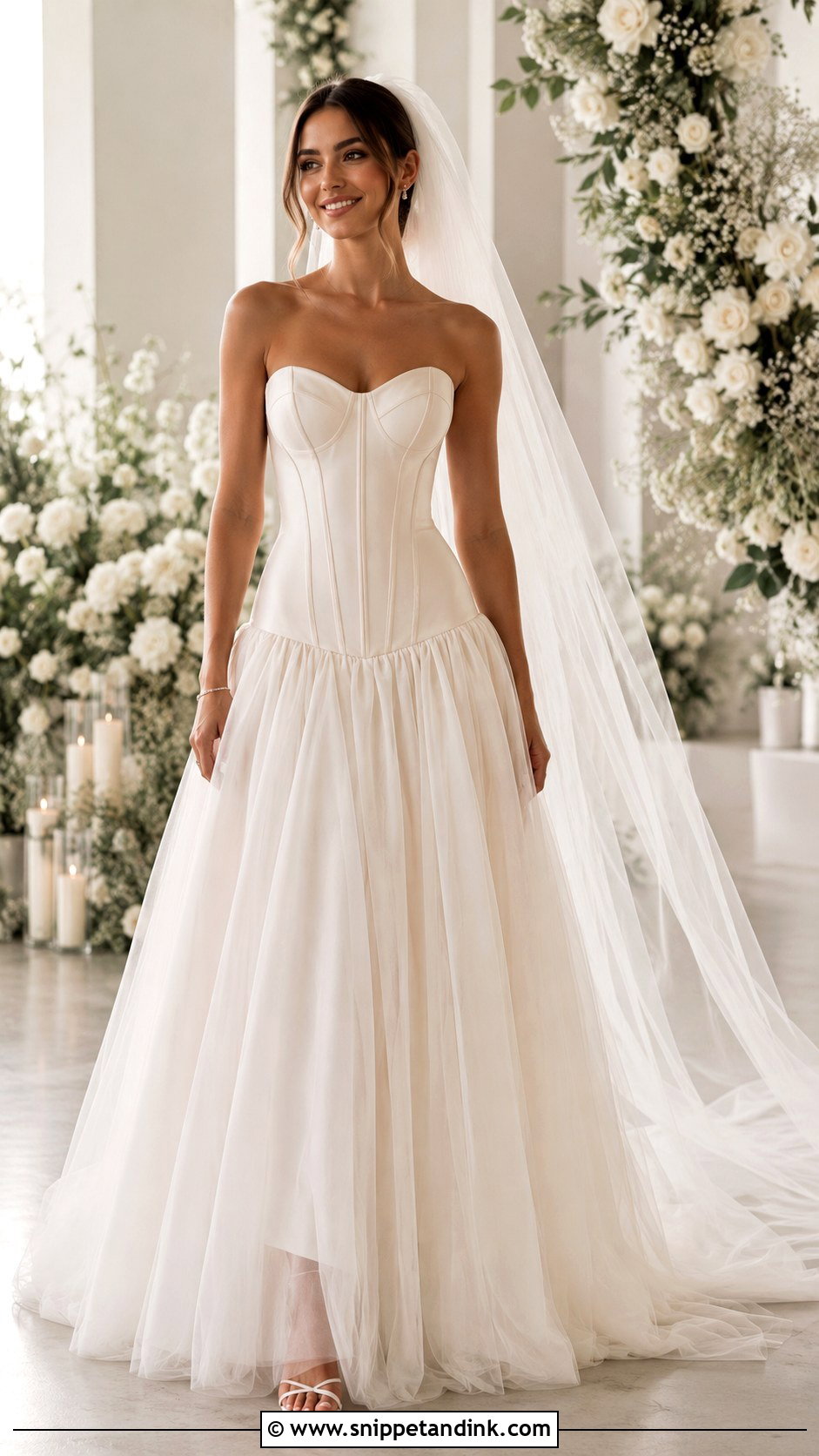
A drop waist moves the seam down toward the hips, which lengthens the torso before the skirt opens. It has a vintage feel and looks different from a standard A-line without being difficult to wear. Satin gives structure; tulle gives softness. It suits a long-waisted or straight figure best; on a short torso, a dropped seam can shorten the legs. I’d try it beside an A-line at the same appointment to compare.
12. Corset Wedding Dress
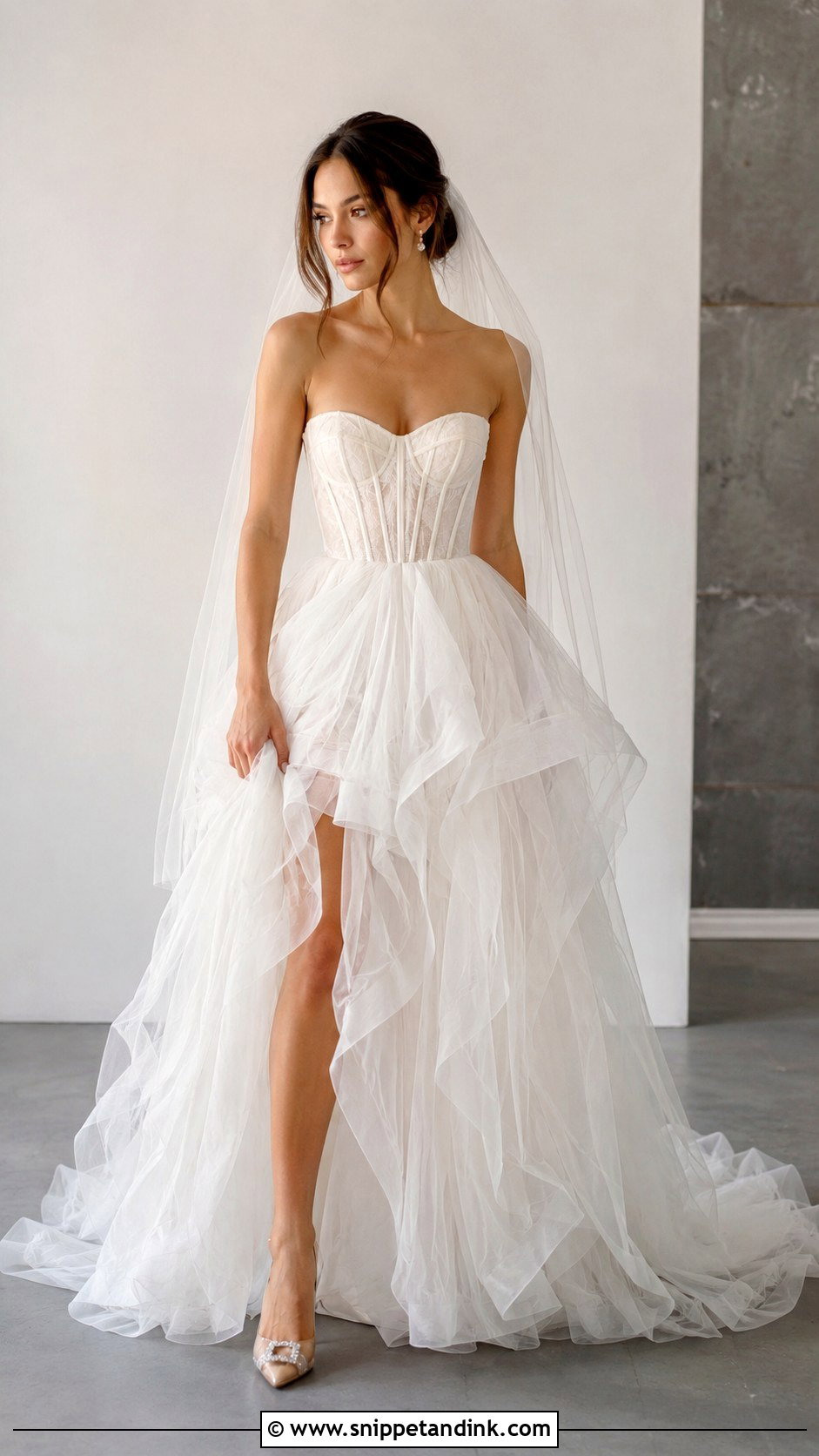
A corset wedding dress defines the waist and gives the strongest silhouette here. Visible boning, lace-up backs, sheer panels or structured satin each change the look. I balance a structured corset with a softer skirt in tulle, organza or flowing satin. The fitting is crucial: a corset that’s too tight makes eating and breathing hard, while one that’s too loose lets the boning dig in. A lace-up back gives you some room to adjust on the day.
13. Floral Embroidered Wedding Dress
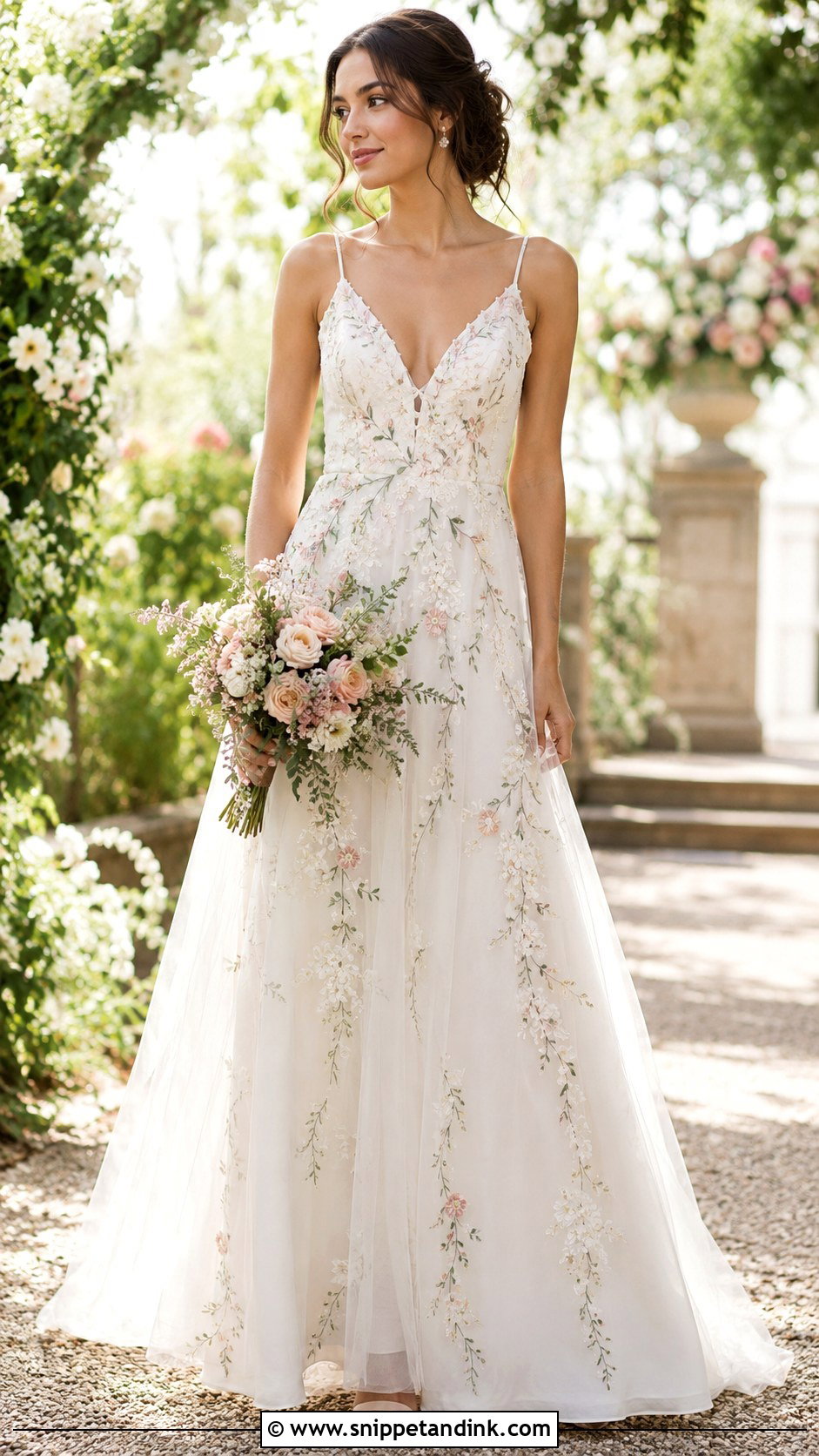
Floral embroidery brings texture and a personal touch. Soft threadwork, 3D flowers, vine patterns or appliqués can cover the bodice and skirt. White-on-white looks subtle; blush, green or pastel threads lean into a garden mood. I pick out one or two tones from the embroidery for the bouquet so the outfit feels joined up. Keep the jewelry small and decide on the veil by how much embroidery you want to cover.
14. Vintage Tea Length Wedding Dress
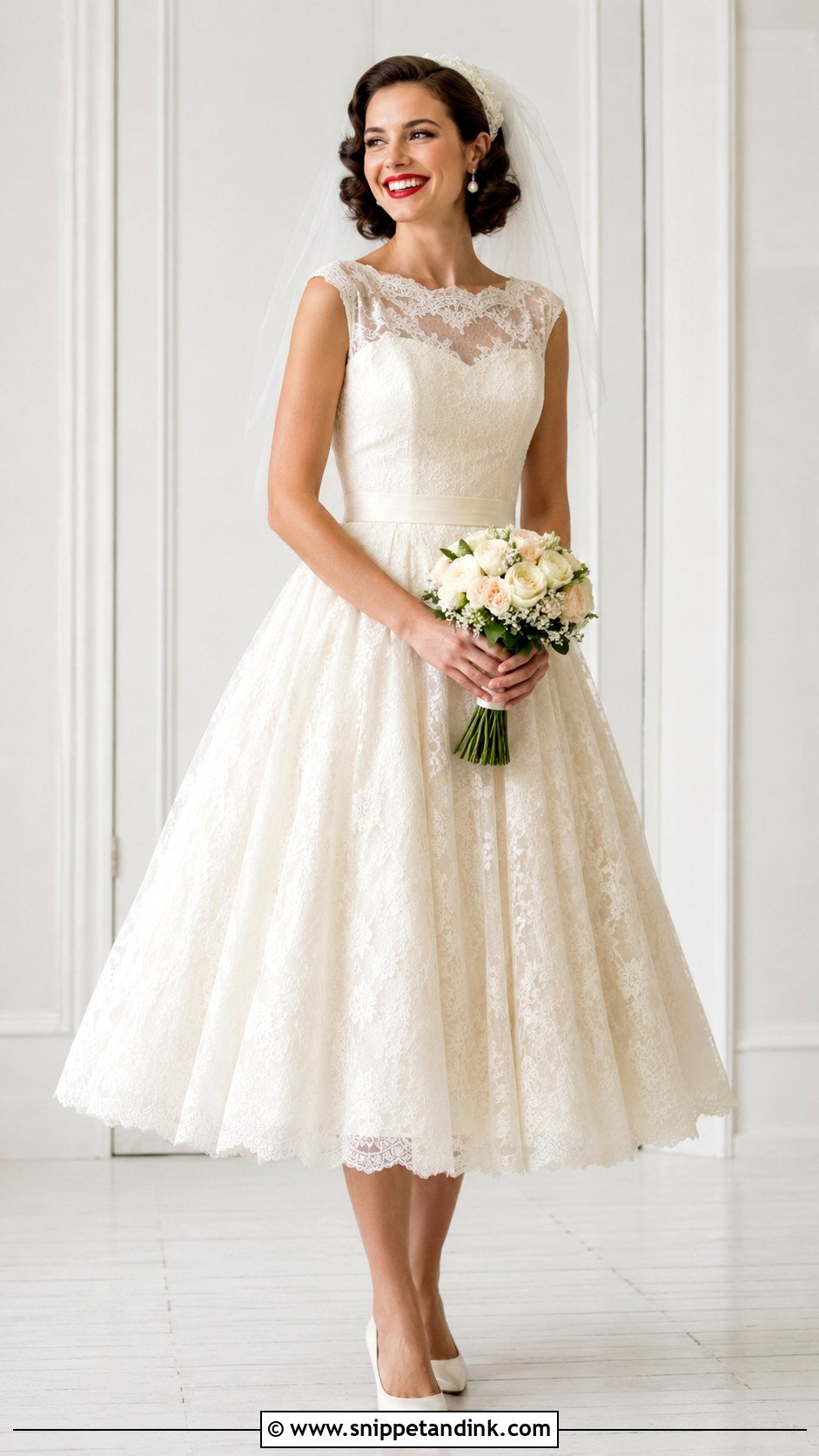
Tea length shows the shoes, so they become part of the outfit: pointed pumps, slingbacks or embellished block heels. Lace, satin, tulle or organza all suit the retro mood. A birdcage veil and soft curls lean into vintage. The risk is drifting into costume, so I keep one or two vintage references rather than a full period outfit. It’s also one of the easiest lengths to dance in.
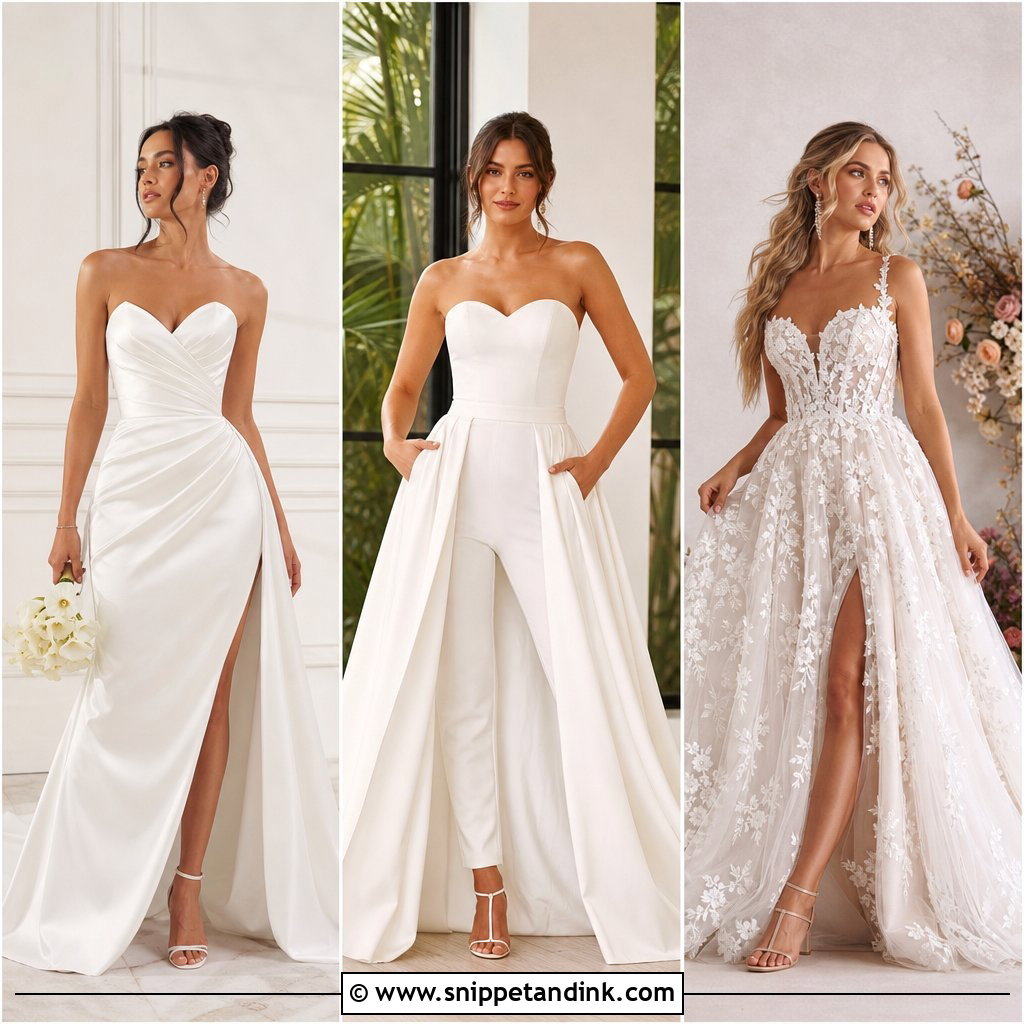

15. Modern Short Wedding Dress
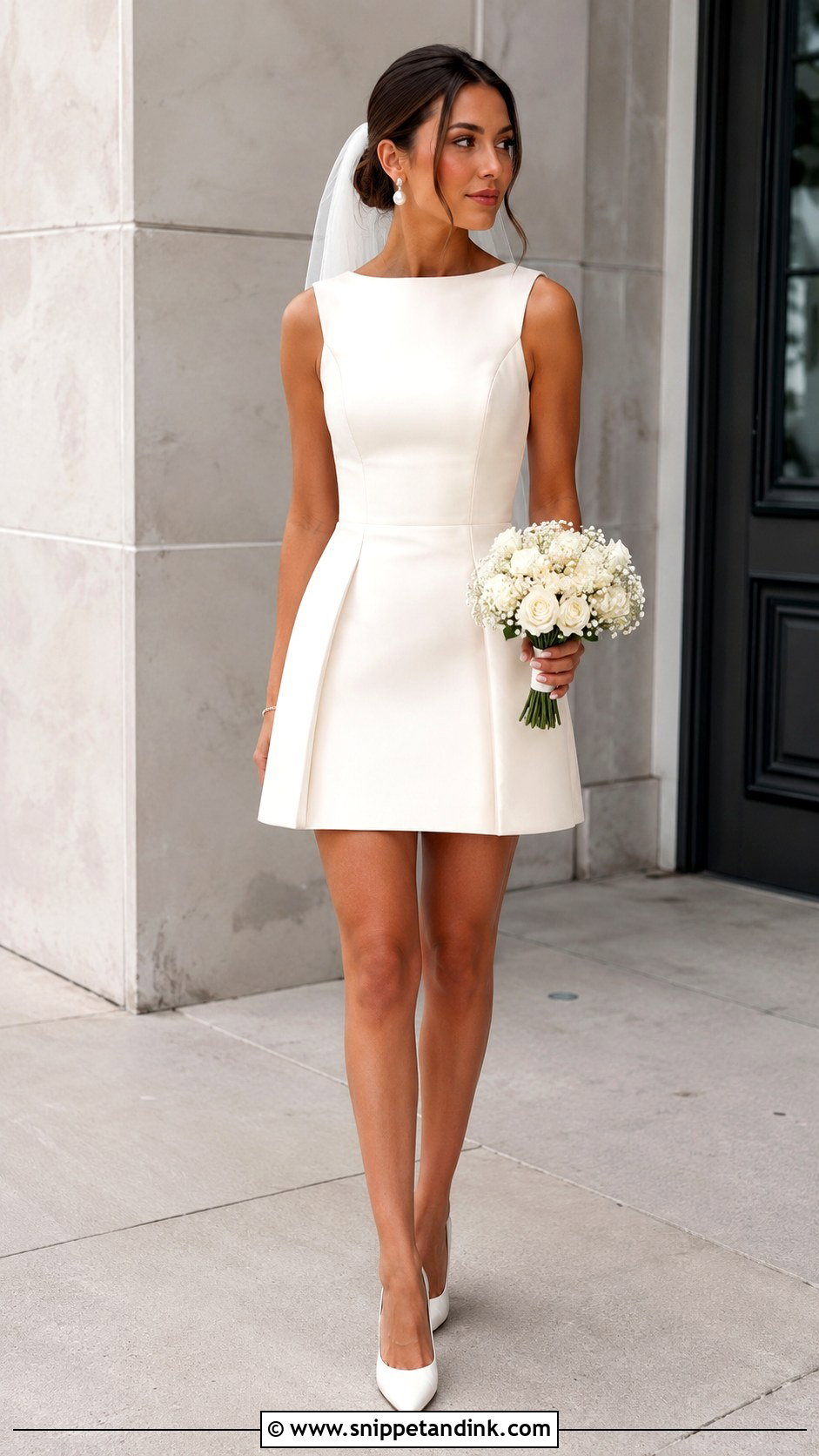
Short dresses suit courthouses, elopements, after-parties and casual receptions, and they’re the easiest outfit to move in. A structured mini, a blazer dress or a fit-and-flare in satin, crepe or mikado keeps it looking bridal. The accessories carry more weight here: a mini veil, a bridal headband and good shoes stop it reading like a party dress. Check the length when you sit; minis ride up further than you expect.
16. Slip Wedding Dress
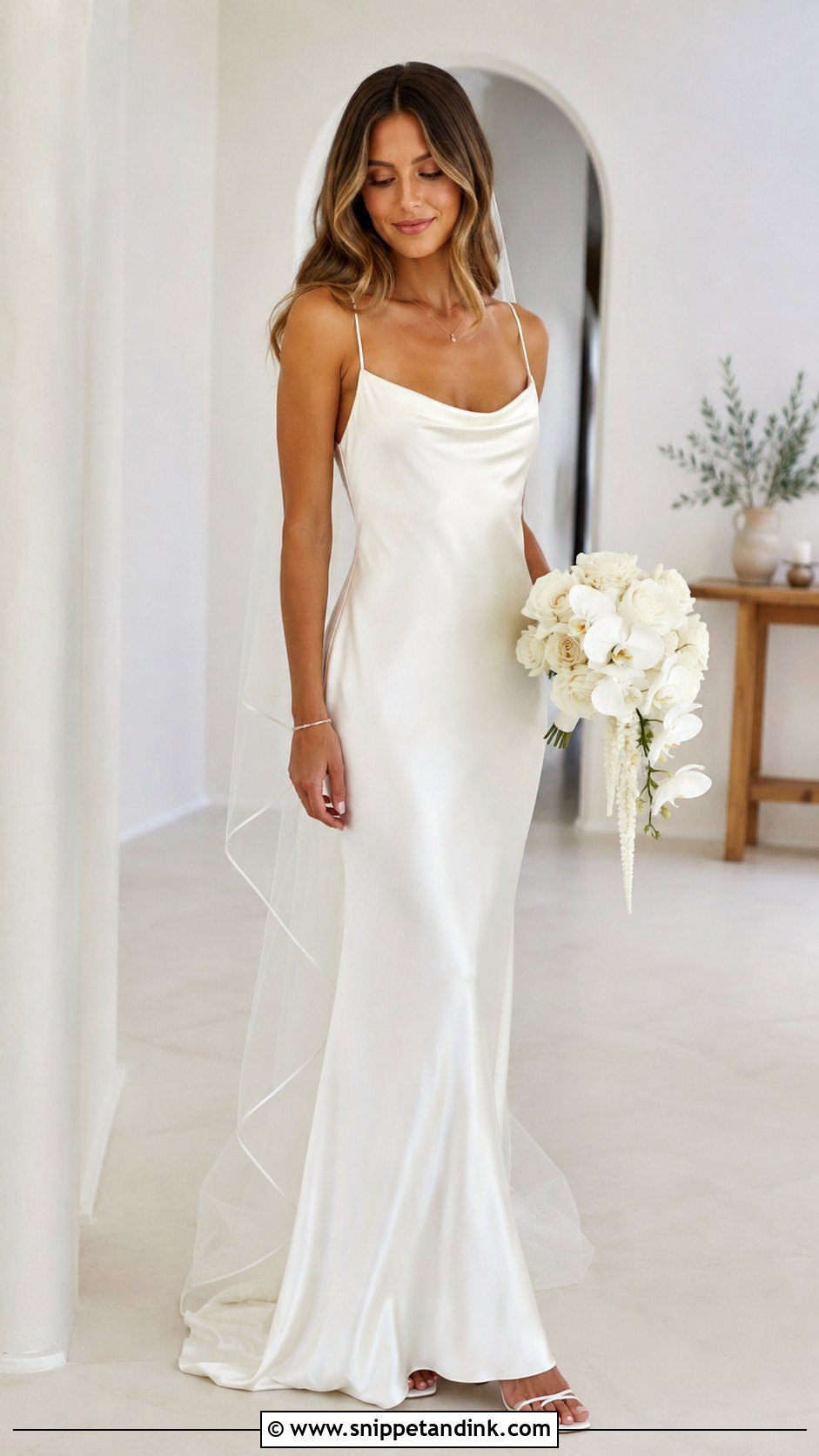
A slip dress looks simple, but the fit and fabric are everything. It skims the body, so it shows every line beneath it, which means smooth, edge-free underwear and often a fitted slip underneath. Ivory satin, silk or charmeuse give an elegant finish; cheaper satin can look shiny and thin. Strappy heels, a sheer veil and a low bun suit beach weddings, city elopements and intimate ceremonies. Add a cape, shawl or coat if you need more coverage.
17. Beaded Wedding Dress
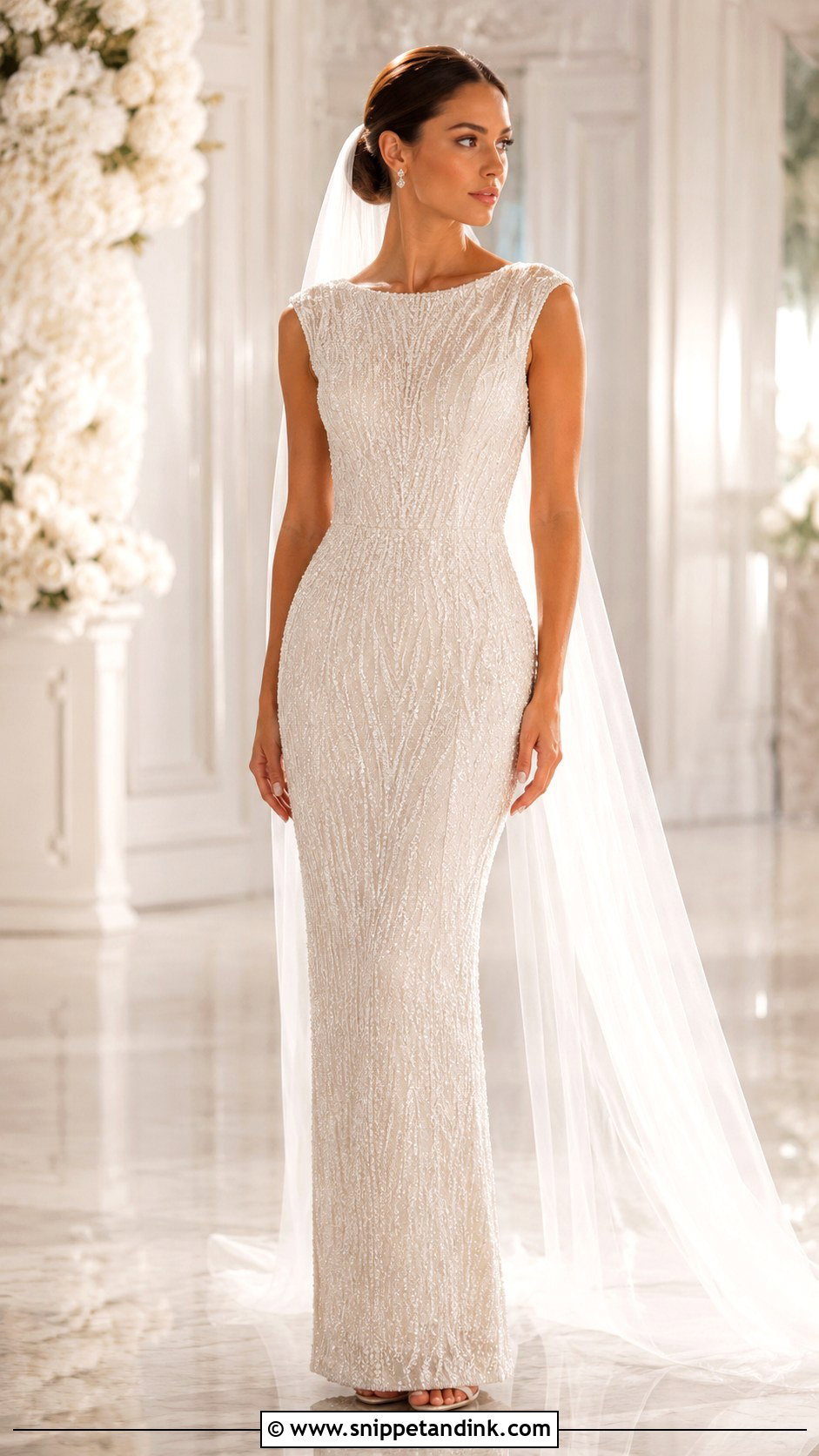
Beading catches light and makes a dress glamorous. Allover beading gives high drama; beadwork along the bodice, sleeves or skirt is softer. Keep accessories quiet, since the dress already shines. Before buying, I check two things: weight, because heavily beaded gowns get tiring, and lining, because beads on the inner arms can rub the skin through a long day. Evening weddings, hotels and formal receptions show beading at its best.
18. Tulle Wedding Dress
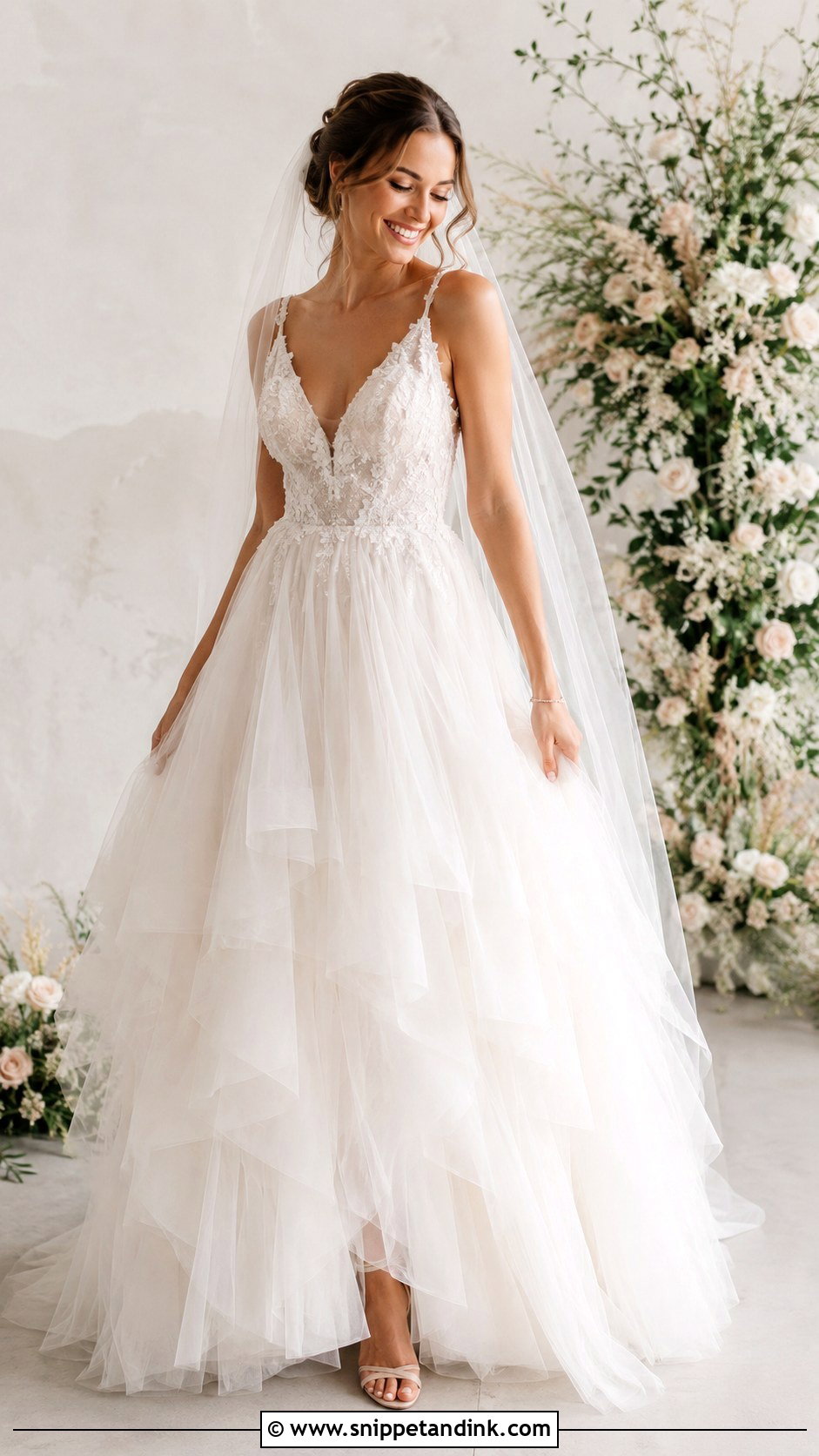
Tulle creates soft volume and movement. It can be layered into a full skirt, used as an overskirt or made into sheer sleeves. A tulle A-line with a fitted bodice is romantic; a layered ball gown is more dramatic. Because tulle has texture, keep the accessories minimal. It’s light to wear but catches on everything: bracelets, rough stone floors, shoe buckles. I’d check the shoes for hooks or straps that might snag the hem.
19. Organza Wedding Dress
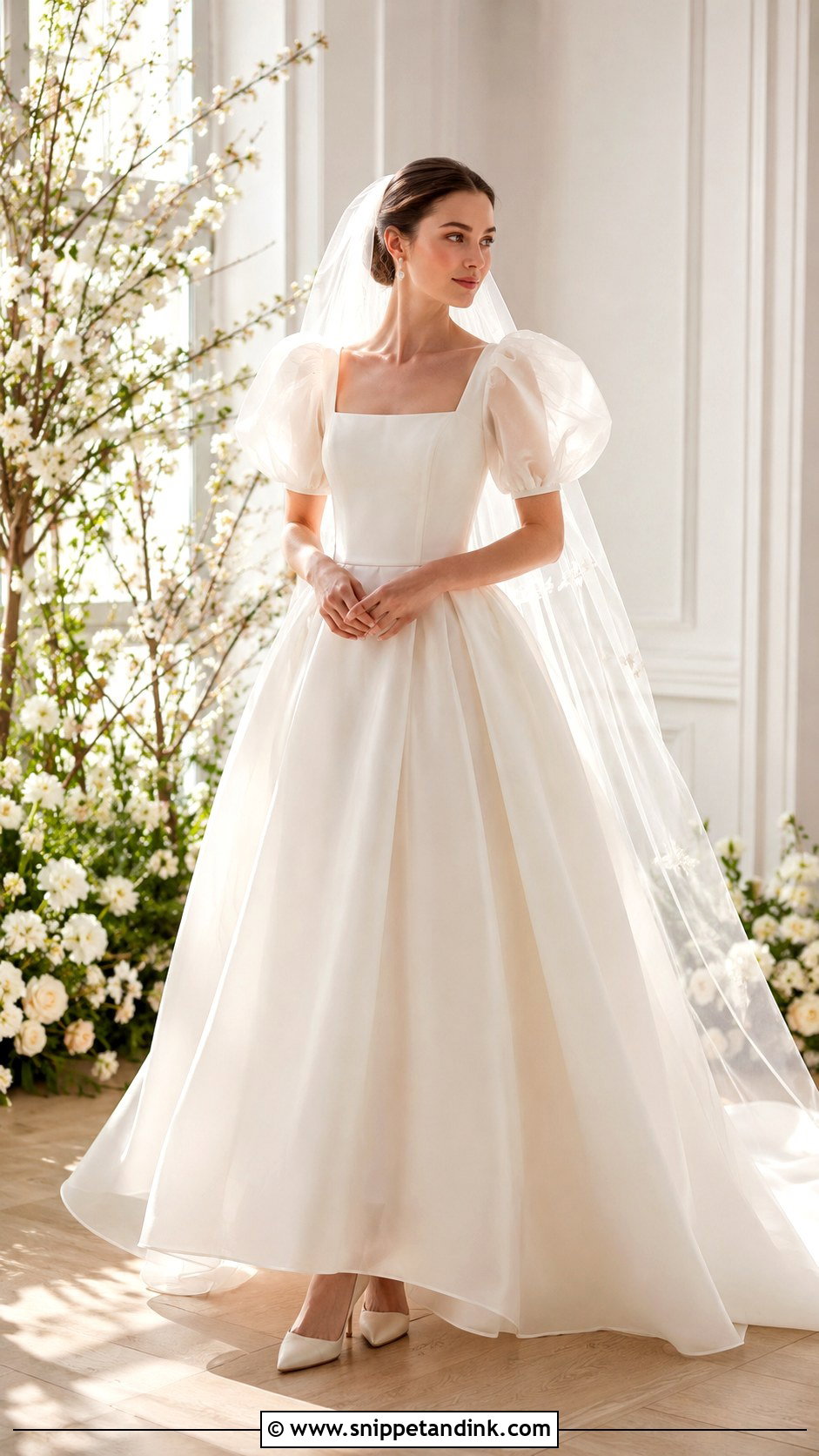
Organza sits between chiffon and satin: crisp and structured, but still airy. An organza A-line, a full skirt or sculpted sleeves give a modern shape. The fabric holds volume without weight, which suits spring, summer and daytime weddings. It does crease sharply, though, especially when you sit, so I always plan a quick steam between ceremony and reception. Satin heels and a sheer veil keep the lightness going.



20. Crepe Column Wedding Dress
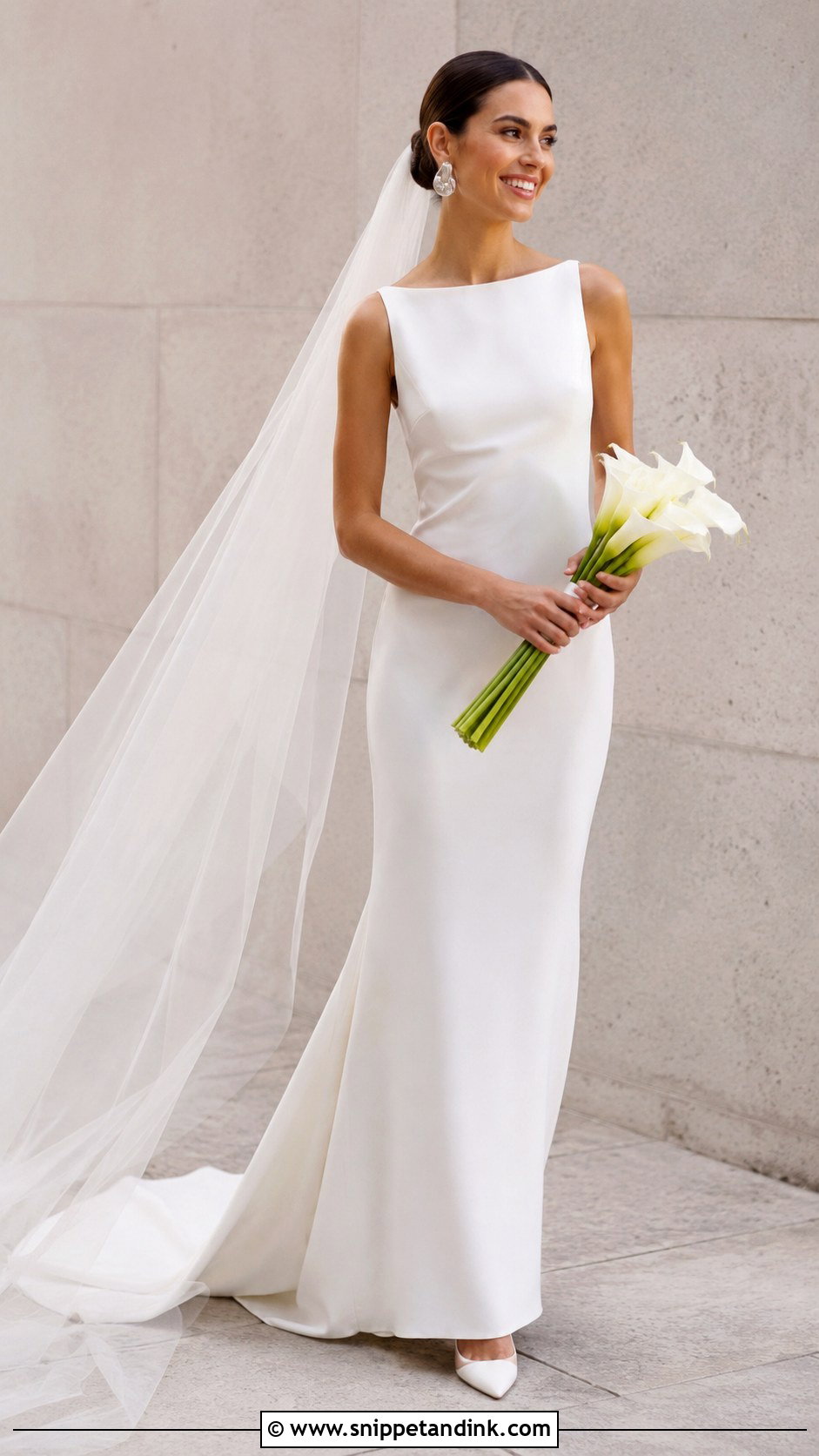
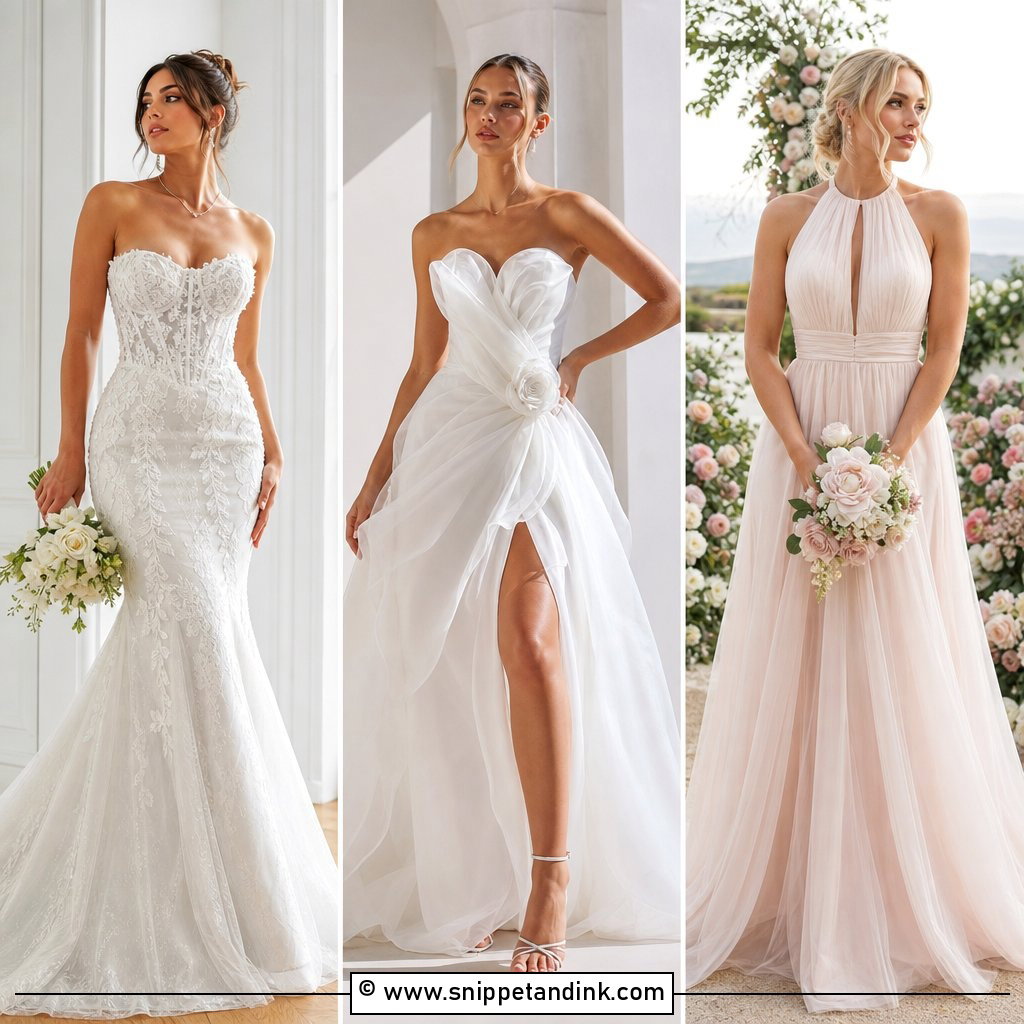
A crepe column is sleek and modern, and the fabric has enough weight to smooth the shape while staying comfortable. Bateau, square or plunging-back versions and long sleeves change how much skin you show. Tailoring makes or breaks this dress, as a column can’t hide anything, so alterations must be precise. Pointed heels and sculptural earrings suit it, and so do city venues, rooftops and art spaces. Keep the bouquet narrow so it doesn’t break the line.
21. Bow Back Wedding Dress
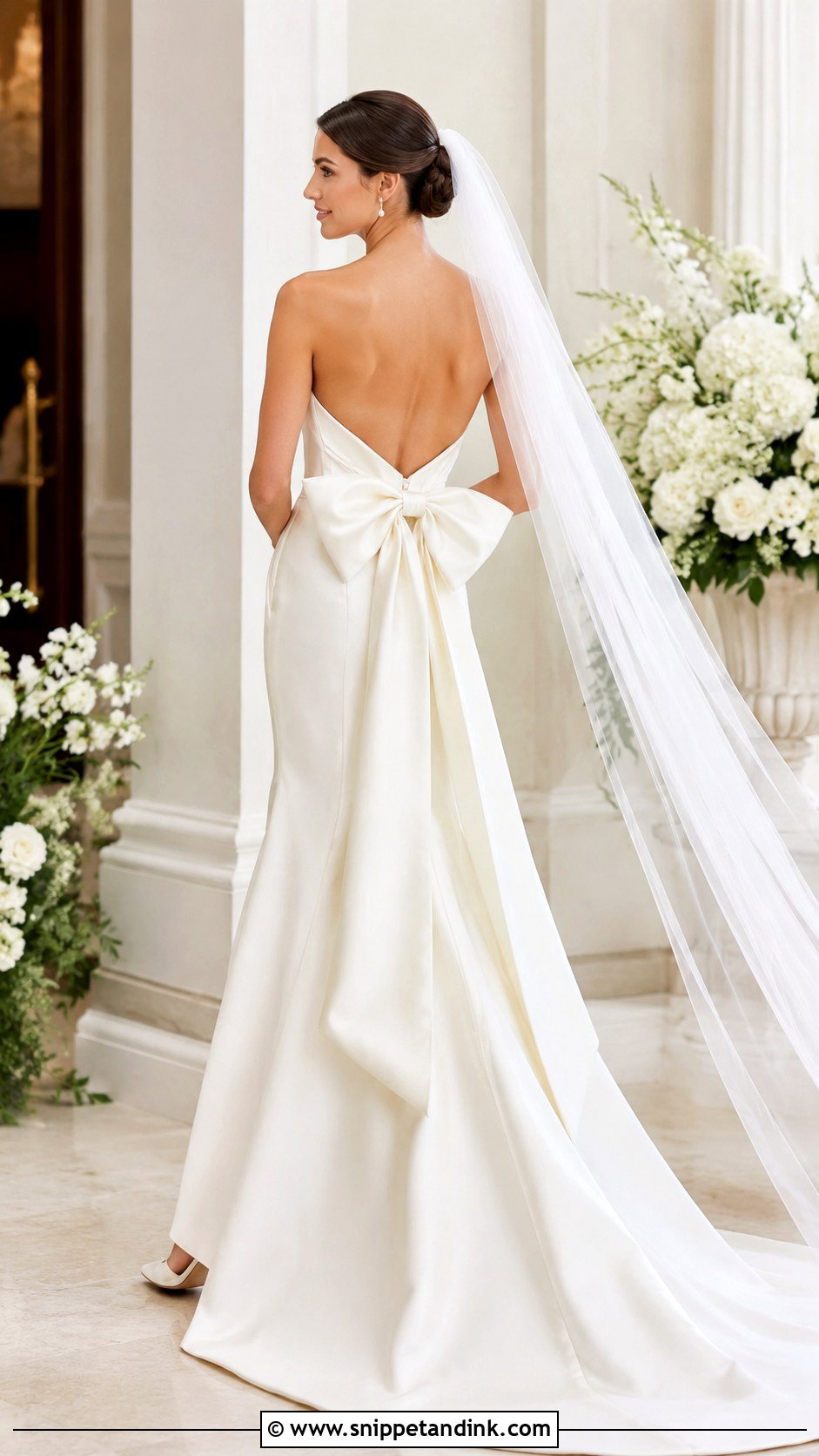
A bow at the back puts the detail where guests look during the ceremony, while the front stays clean. It can be oversized and dramatic, small and delicate, or attached to a removable sash. On plain satin or mikado, the bow becomes the focus. Place the veil low so it doesn’t hide the bow. Check that the bow is tacked in place; a loosely tied bow can droop after a few hours of sitting and dancing.
22. Cape Wedding Dress
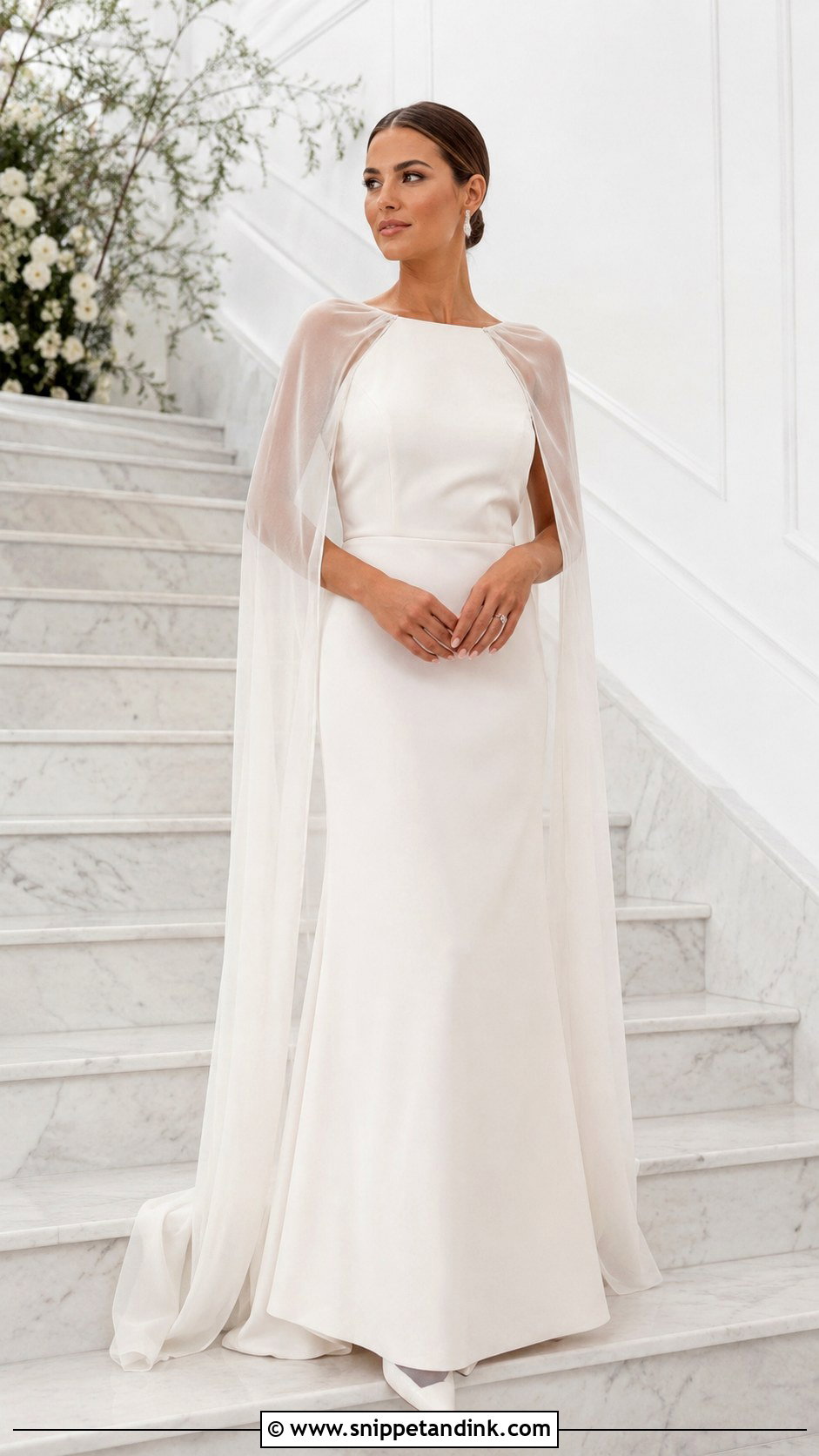
A cape wedding dress gives drama and coverage while looking modern. The cape can be sheer, lace, satin, tulle or lightly embellished, and it can replace a veil or come off after the ceremony. A sleek gown underneath, like a crepe column, satin sheath or fitted A-line, lets the cape move. I’d keep jewelry simple. The cape needs secure attachment points, so plan them with your seamstress.
23. Detachable Overskirt Wedding Dress
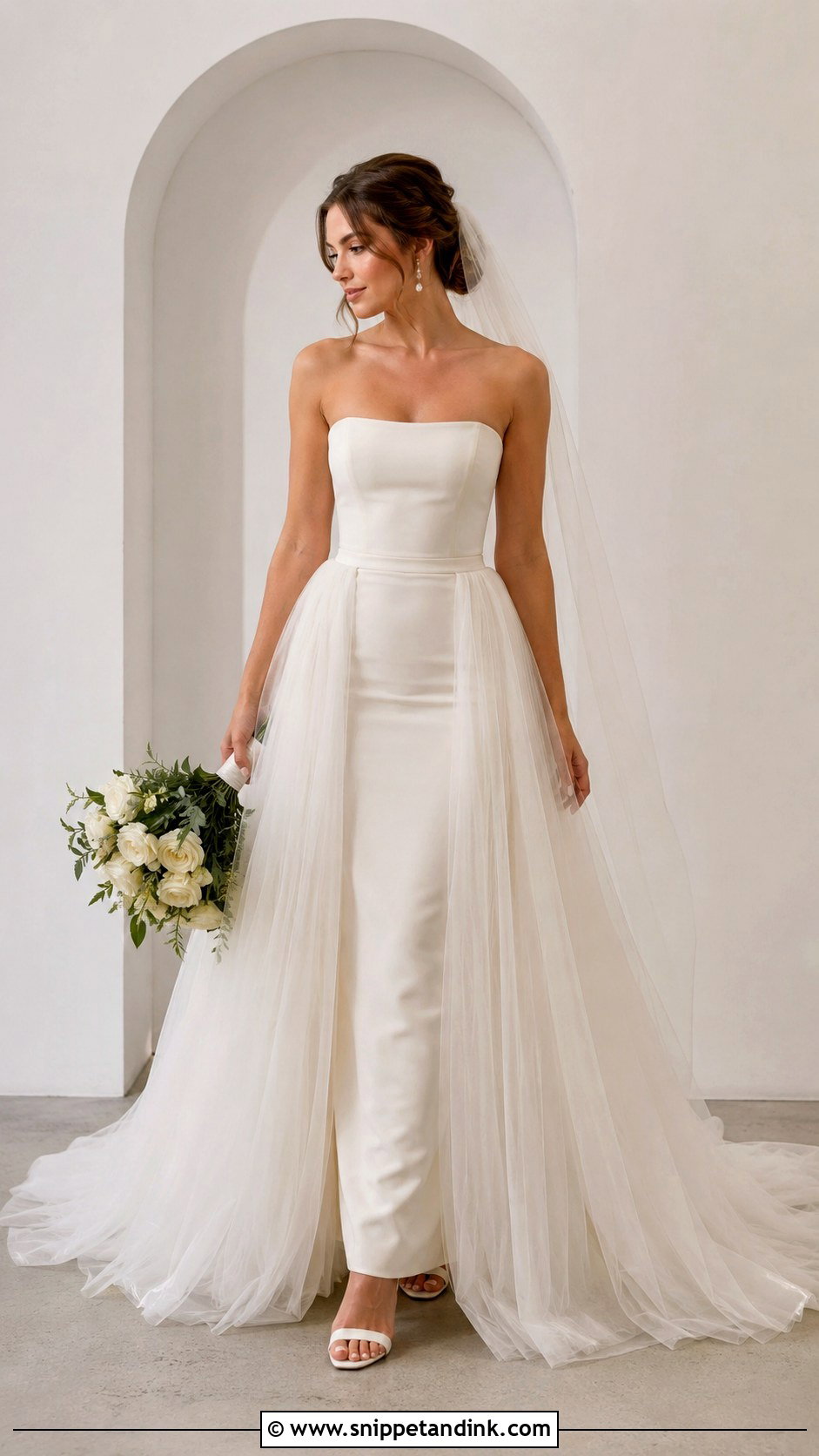
A detachable overskirt wedding dress gives volume for the ceremony and a slimmer dress for the reception. It works over fitted crepe, satin sheaths, lace gowns and simple columns. Choose earrings that suit both versions of the outfit. The overskirt can be tulle, organza, satin or lace. Practise taking it off with whoever will help on the day, since the hooks at the waist are fiddly behind your own back.
24. Blush Wedding Dress
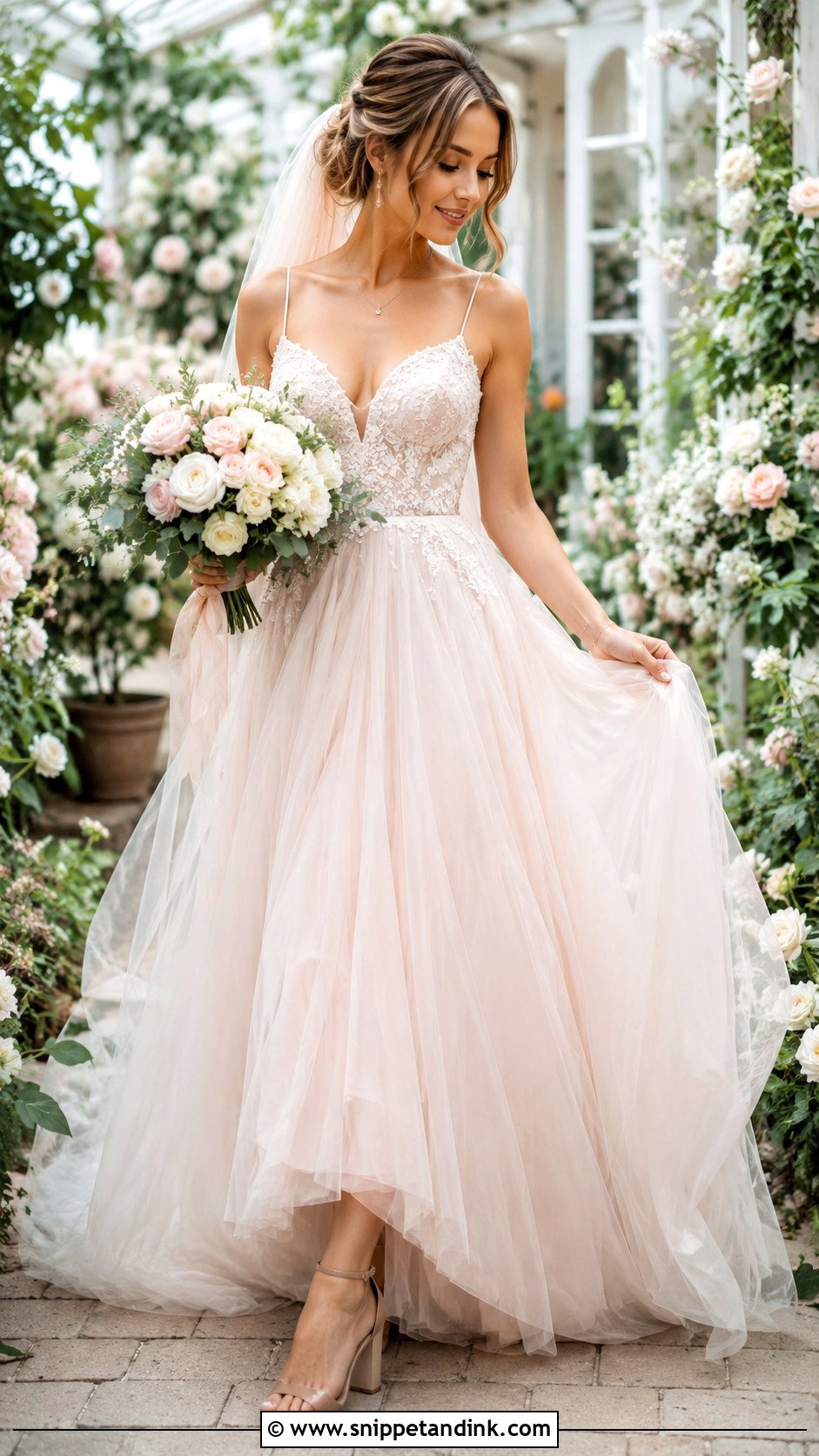
Blush ranges from barely pink to a warm rosy beige, and the shade matters more than you’d think. Pinker blushes can clash with very warm or ruddy skin; beige-leaning blushes are more forgiving. It sits well with tulle, lace, satin and floral embroidery. Nude or ivory heels, rose-gold jewelry and a bouquet in cream and soft green keep it romantic rather than sugary. Natural light shows blush at its best; under warm indoor lighting, it can look like plain ivory.

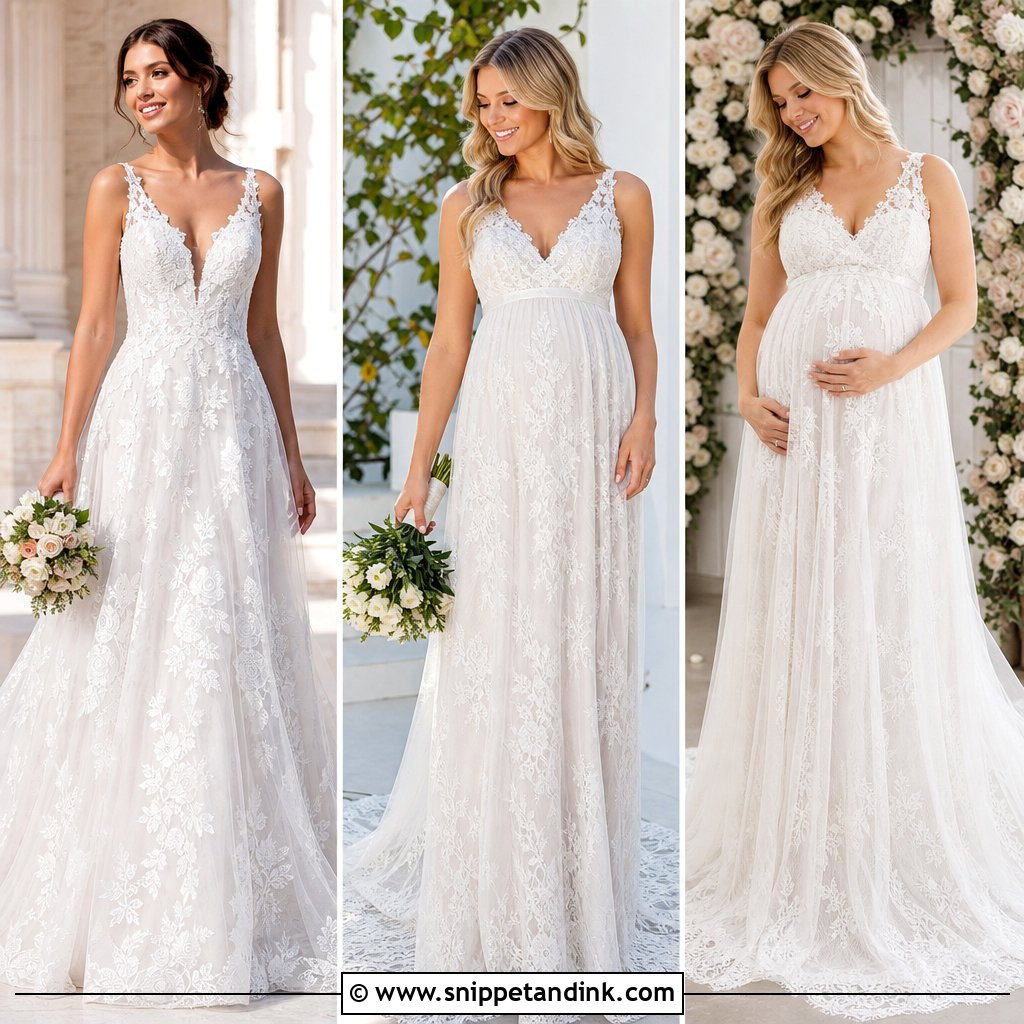

25. Champagne Wedding Dress
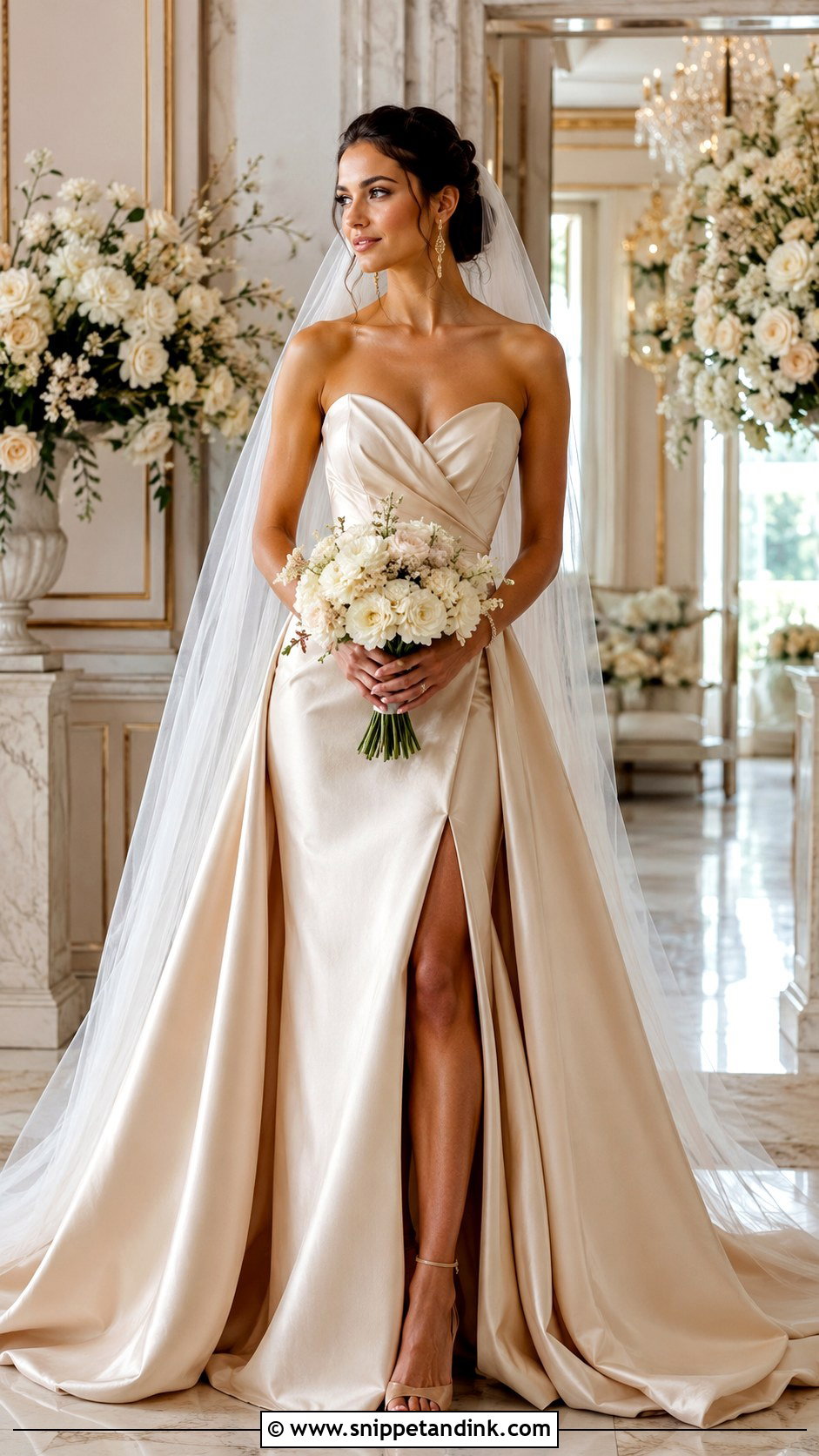
Champagne sits between ivory, beige and soft gold, and it flatters many skin tones, especially warmer ones. Satin gives it a glow; lace gives romance; beading adds shine. Gold or nude heels and a bouquet in ivory, cream and taupe suit it. A simple veil softens the warmth. It works well for evening weddings and historic venues. Bear in mind that some champagne fabrics look almost skin-coloured in flash photography, so test it in a few photos before you commit.
26. Black And White Wedding Dress
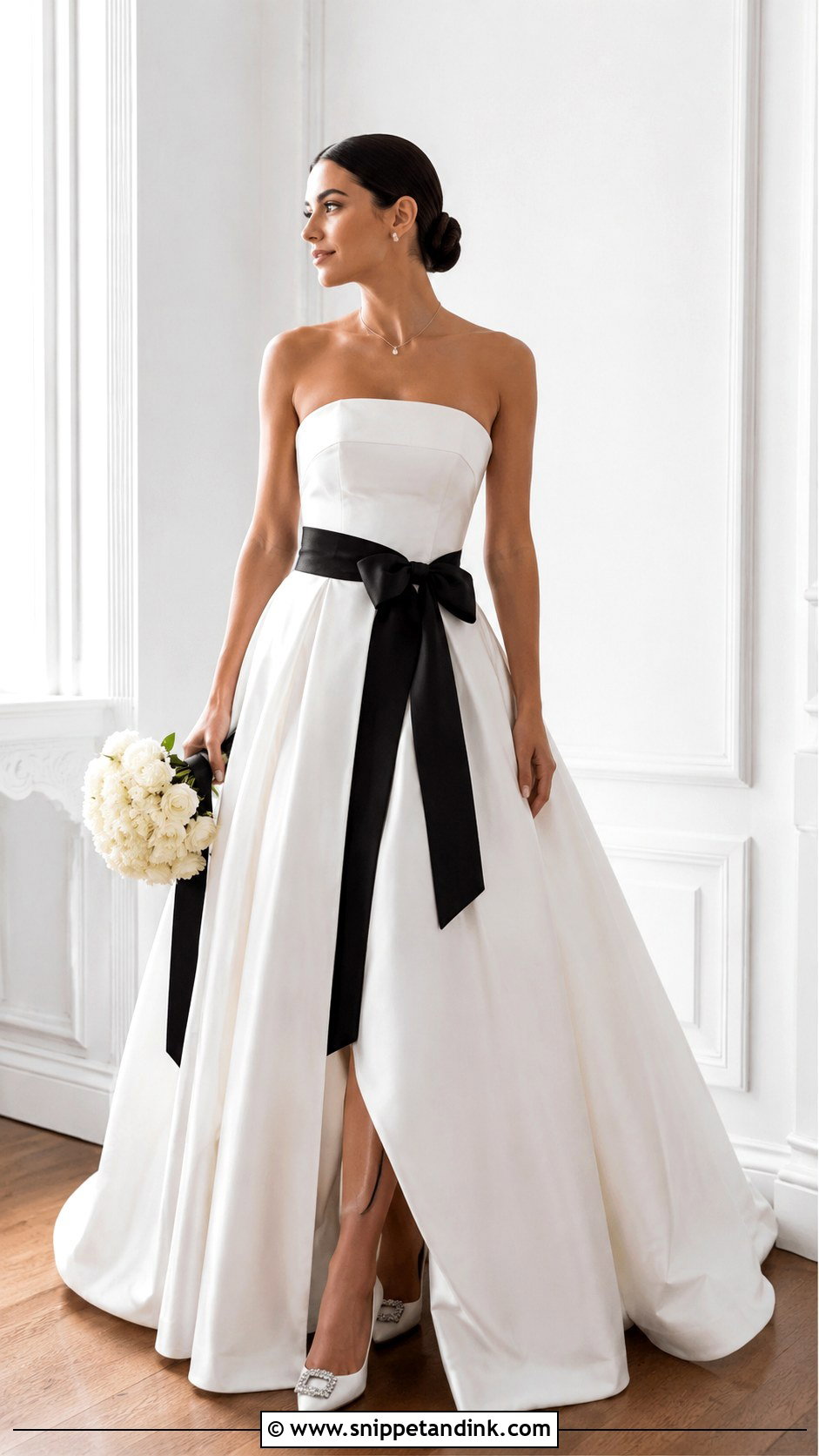
Black on a white gown is a graphic statement, and it only works with restraint. A black bow, black gloves, black trim, a sash or black floral embroidery on a white dress is plenty; one or two details are usually enough. Keep the silhouette classic so the contrast looks deliberate. A white bouquet with a dark ribbon ties it together. Modern venues and black-tie celebrations suit it best. Check that the black dye won’t run onto the white if it gets wet.
27. Beach Wedding Dress
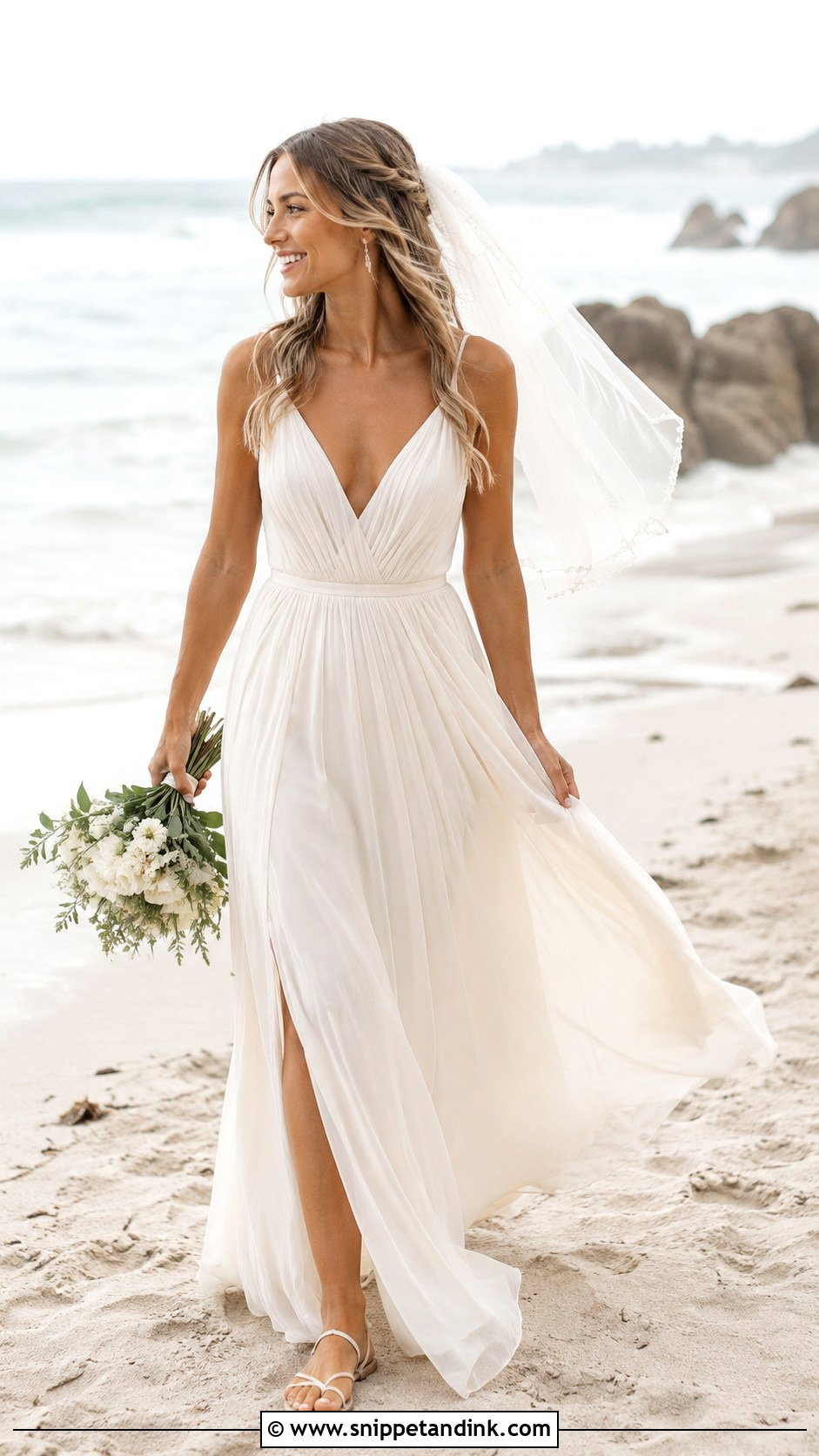
A beach dress has to be light, breathable and easy to walk in on sand. Chiffon, soft lace, crepe or a simple slip are good choices; heavy trains aren’t, unless they’re detachable. Flat sandals or low block heels are better than stilettos, which sink. Choose a veil that won’t fight the wind: a shorter veil or a hair accessory. Loose waves or a soft updo suit the setting. I’d also bring a spare hem tape, since sand and salt can catch and pull at a fine hem.
28. Garden Wedding Dress
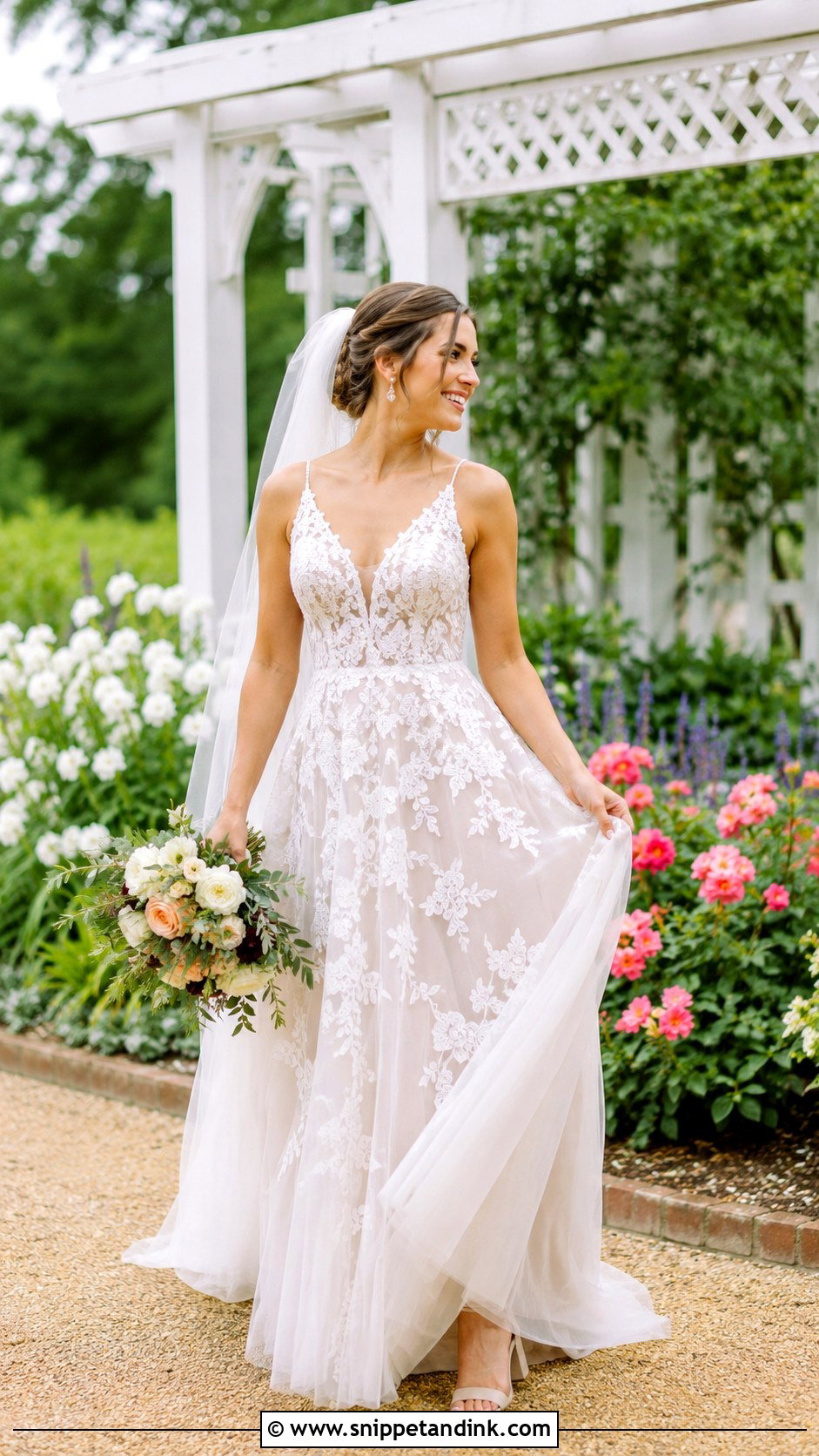
Garden weddings call for floral lace, embroidered tulle, chiffon, organza and A-line shapes. Details like flutter sleeves, delicate straps or a light train add movement. Pick block heels or flats that won’t sink into grass. Pearl earrings, a soft veil and a seasonal bouquet suit the setting. Watch the hem: dew and grass stain a long white hem quickly, so a shorter train or a quick bustle before you walk on the lawn is wise.
29. Courthouse Wedding Dress
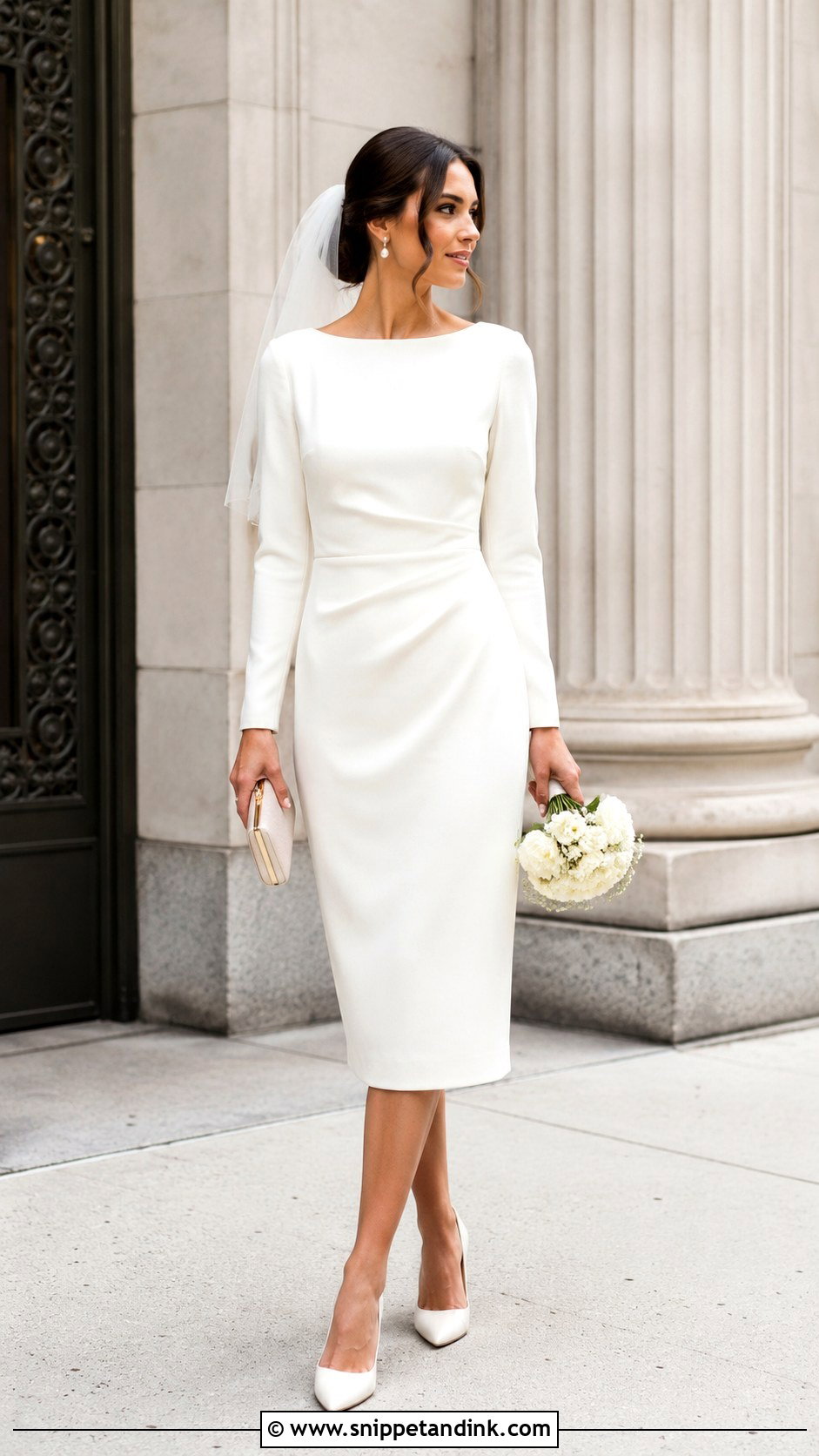
A courthouse calls for tailoring over volume. A tailored midi, sleek mini, satin slip, crepe column or suit-inspired dress all work. Chic pumps, a structured clutch, pearl earrings and a short veil or headband finish it. Because the setting is simple, fit and clean accessories matter more than anywhere else. A small bouquet adds a bridal note without feeling over the top. Intimate weddings and city ceremonies suit this kind of quiet confidence.
30. Reception Wedding Dress
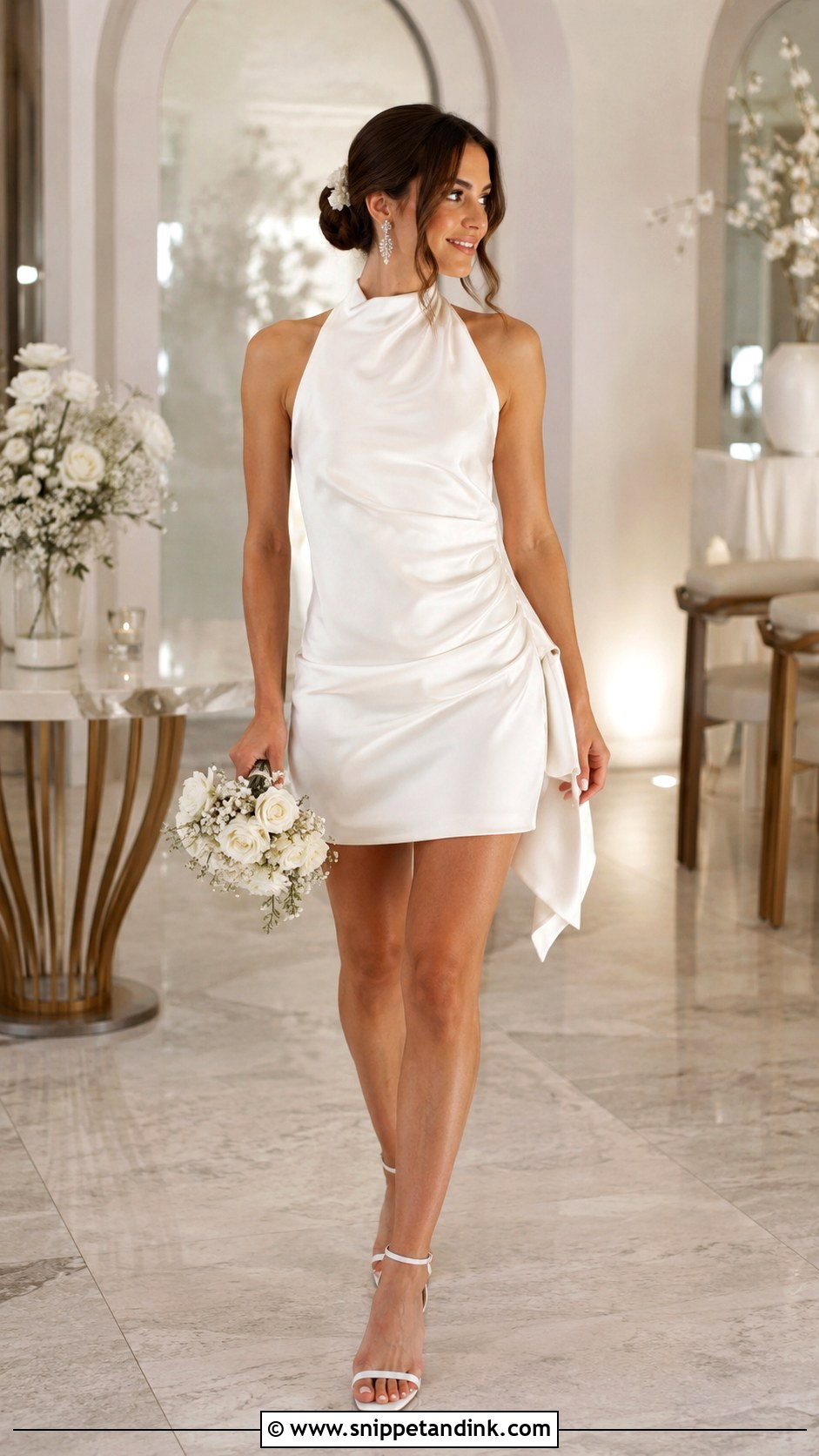
A reception dress is for moving: shorter, lighter, easier to dance in. A satin mini, a feather-trimmed dress, a beaded sheath, a tea-length gown or a simple slip all work. I like to keep it connected to the ceremony look through one detail: the same earrings, the same fabric or the same shade of white. Comfortable heels and a fun hair accessory finish it. Plan when you’ll change and where, so you don’t lose an hour of your own party.
Ivory, Champagne or Blush Next to Your Skin
Bright white, ivory, champagne and blush look interchangeable on a screen, and they’re not. Shade affects how your skin looks in photos far more than most brides expect, so I hold a few swatches under the bride’s chin in daylight before we decide.
Cool and fair skin
Bright white and soft white tend to look crisp. Champagne can sometimes wash cool skin out, making it look tired rather than warm.
Warm, olive and deeper skin
Ivory, champagne and beige-leaning blush usually glow. Stark white can look harsh next to warm undertones, especially in strong sun.
These are starting points, not rules. Try the shades on yourself and take photos on your phone both with and without flash. The camera picks up differences that the shop mirror hides, and that’s how most people will see the dress afterwards. Once you’ve chosen the shade, match the veil, shoes and any topper to it, since a slightly different white beside your dress always shows in pictures.
A Dress That Matches How You Want the Day to Feel
The right look feels like you, suits your venue and lets you move through the day comfortably. Bridal style covers a lot of ground, from minimal satin and romantic lace to black accents, short courthouse dresses and dramatic capes. Before you shop, think about comfort, alterations, fabric, season and the whole outfit from shoes to veil. The dress matters, but the full styling creates the mood. Start with what you’re drawn to, then personalise the details until it feels natural.
You'll Like These Ideas:




Leave a Reply